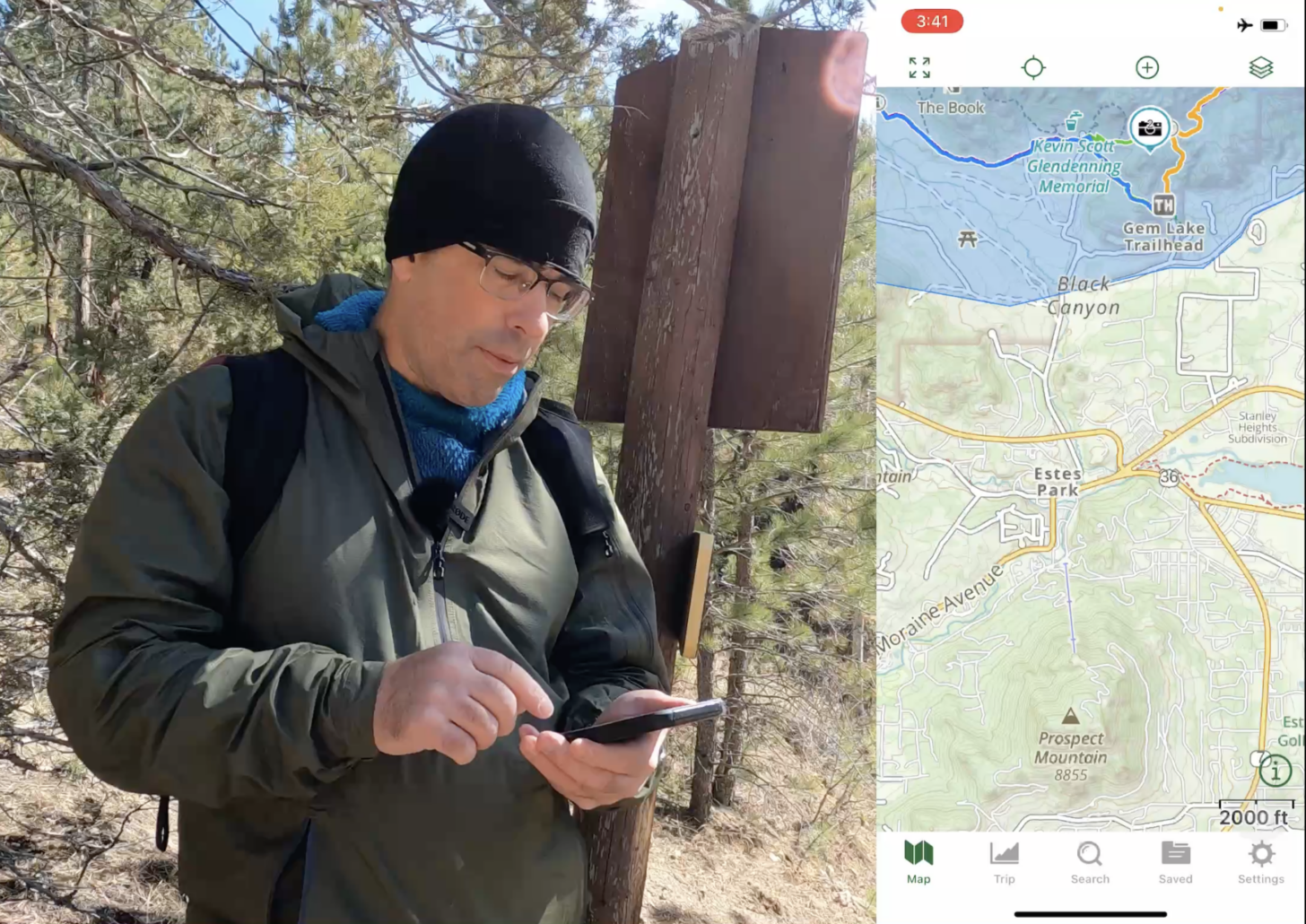
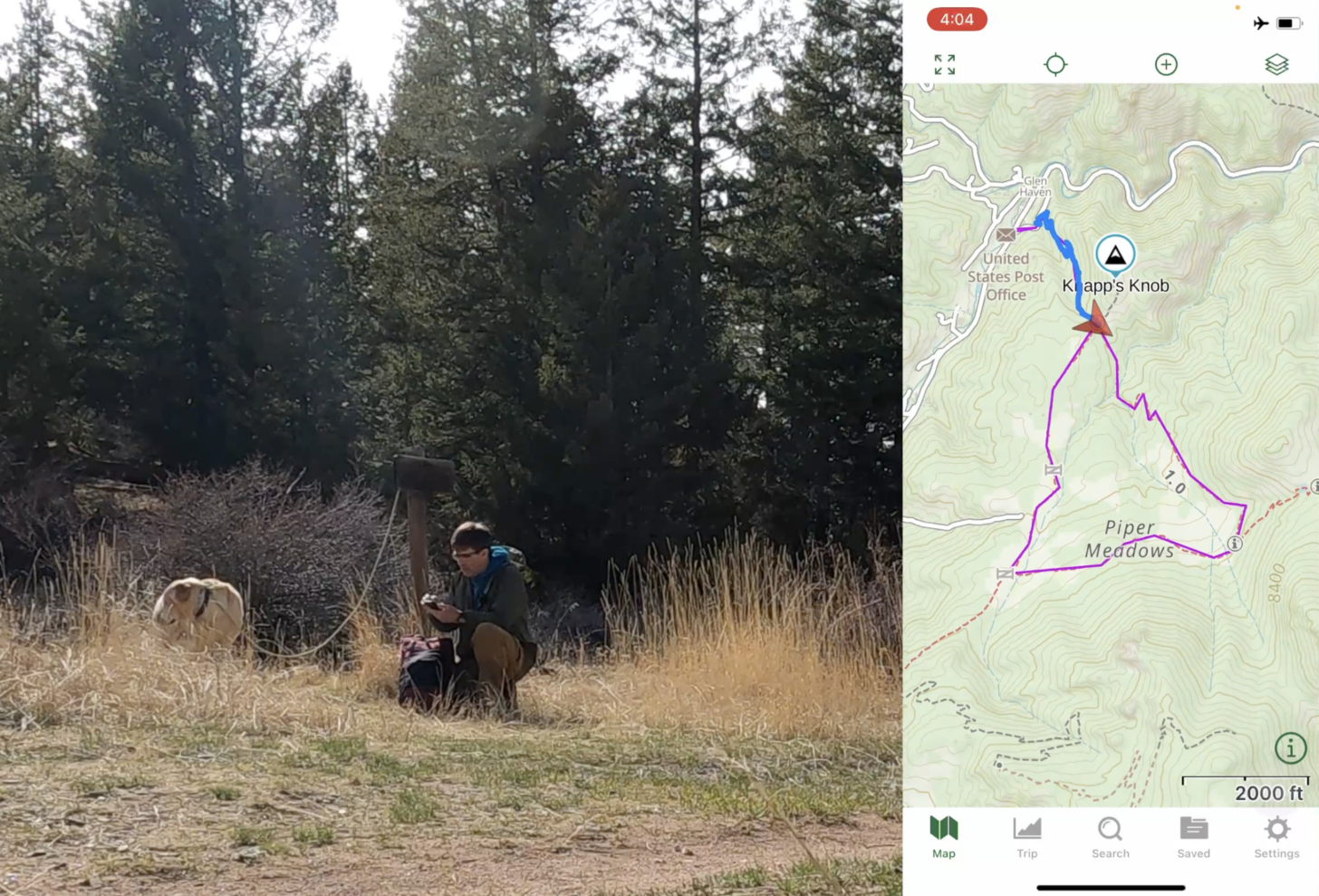
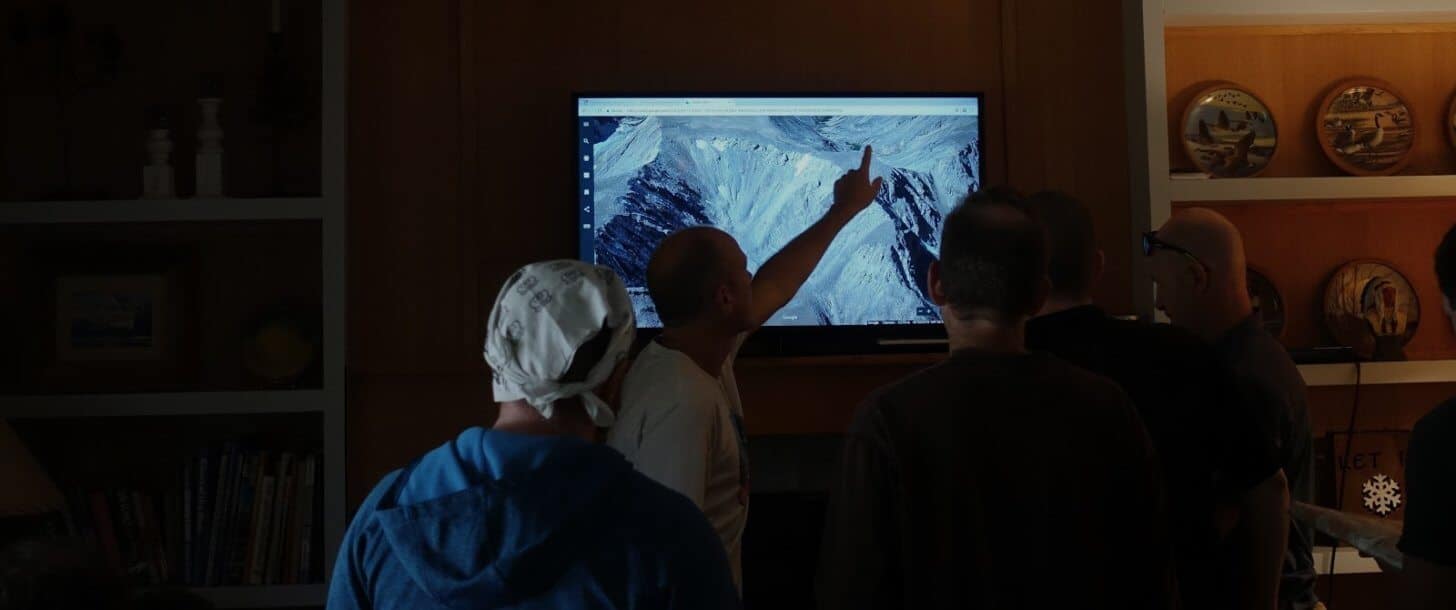
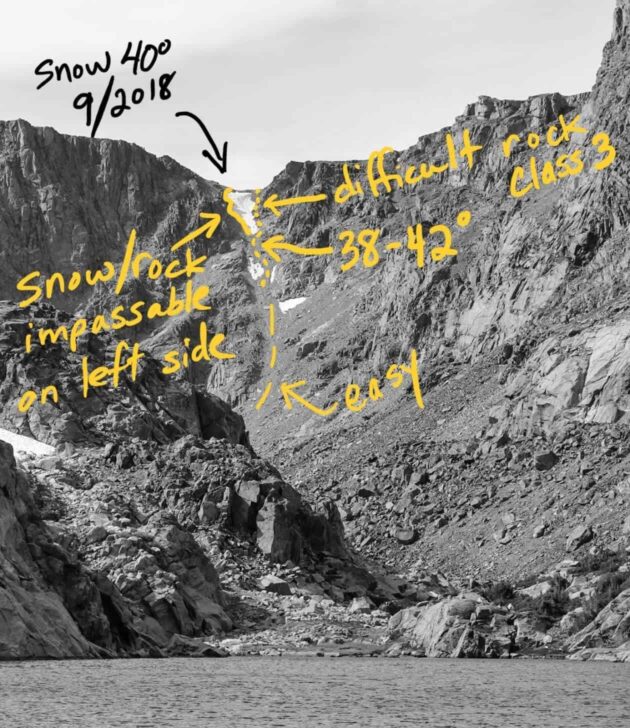
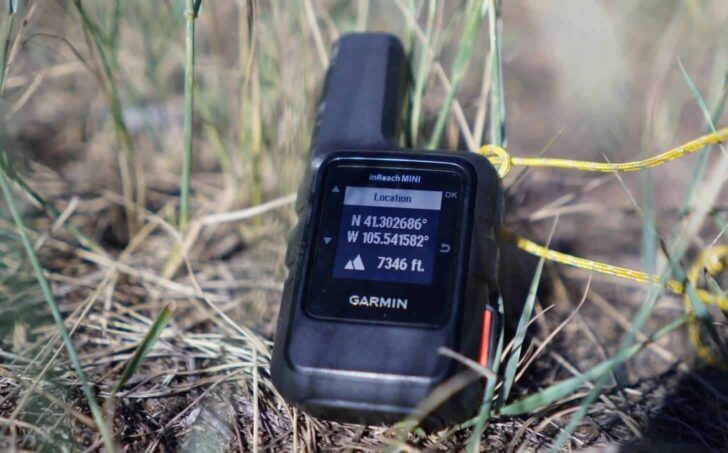
In this video, I will cover various types of navigation and communications devices, their benefits and limitations, and use case scenarios where you might use one or a combination of multiple devices.
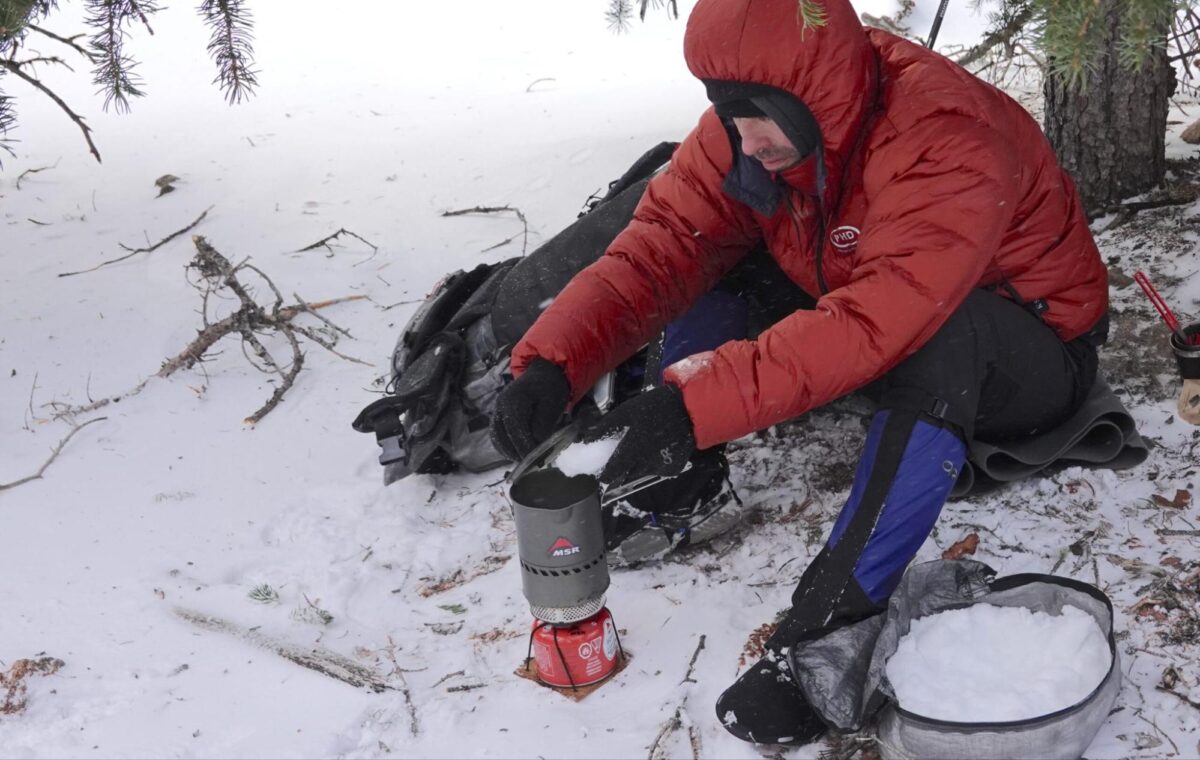
In episode 98 of the Backpacking Light podcast we’re going to learn how to get the most out of your ultralight canister stove for winter backpacking.
Episode Sponsor
Today’s episode of the Backpacking Light Podcast is sponsored by Garage Grown Gear, your hub for all things ultralight. Garage Grown Gear is dedicated to supporting the growth of small and cottage brands, selling the outdoor gear we love, telling the stories we find thought provoking, and striving to cultivate an inclusive, approachable, and curious outdoor community. Great gear helps people get outside, and getting outside matters.
Listen
Summary
In episode 98 of the Backpacking Light podcast we’re going to learn how to get the most out of your ultralight canister stove for winter backpacking.
Backpacking Light presents TRAIL DAYS ONLINE! – a live, online user conference featuring backcountry experts and enthusiasts presenting on the topics of outdoor gear materials, design, and engineering; backcountry skills trends and experiments; make your own gear techniques and projects; backcountry routes, trips, and trails; outdoor industry trends related to hiking, backpacking, and other backcountry activities; and more.
3 unique challenges for backcountry cooking in the winter – (1) water is frozen, (2) cold and windy weather places demands on your stove system, and (3) the consequences of cooking system failure are more severe
Higher capacity stove pots make snow melting more efficient
Pros and cons of liquid gas and liquid petrol stoves
How to keep your fuel canister warm in winter conditions – warming prior to use, warm water baths, using hand warmers under the canister, infrared reflection screens, using copper wire and Moulder strips to transfer heat from the flame to the canister
Advantages and disadvantages from integrated canister stove systems, remote canister stove systems, and inverted canister stove systems
Executive Producer - Backpacking Light; Show Director and Host - Ryan Jordan; Producer - Chase Jordan; Theme music: Look for Me in the Mountains written by Chris Cunningham and Ryan Jordan, performed by Chris Cunningham (acoustic guitar, lead and harmony vocals, harmonica), Chad Langford (upright bass), and Tom Murphy (mandolin), produced by Basecamp Studios in Bozeman, Montana.
Sponsorship Policy: Backpacking Light does not accept compensation or donated/discounted products in exchange for product mentions or placements in editorial coverage, including any podcast episode content not excplicitly identified as sponsored content. Some (but not all) of the links in these show notes may be affiliate links. Learn more about affiliate commissions, influencer marketing, and our consumer advocacy work by reading our article Stop wasting money on gear.
Using an Ursack: Techniques and Supplies for Packing and Using an Ursack – February 8, 2024
Trail Days Online 2024 – February 22-24, 2024
Check out all of our upcoming events on the Backpacking Light Events Calendar!
Main Topic: Hiking with Dogs
Our guest today is Dave Swink. Dave is a long-time member of the Backpacking Light Community, he is also a guide and instructor in Backpacking Light’s Wilderness Adventures Program. Dave is an accomplished long-distance hiker, and resides with his wife and canine friend in Boulder, Colorado. He joins me today in a discussion about what it’s like to hike with your dog. Enjoy the interview.
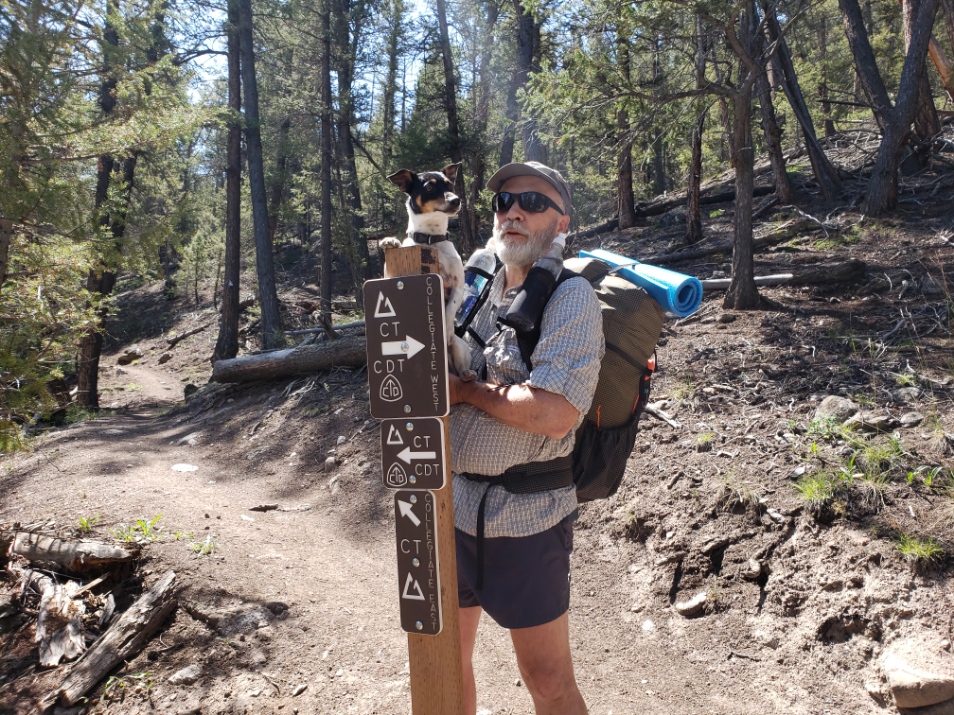
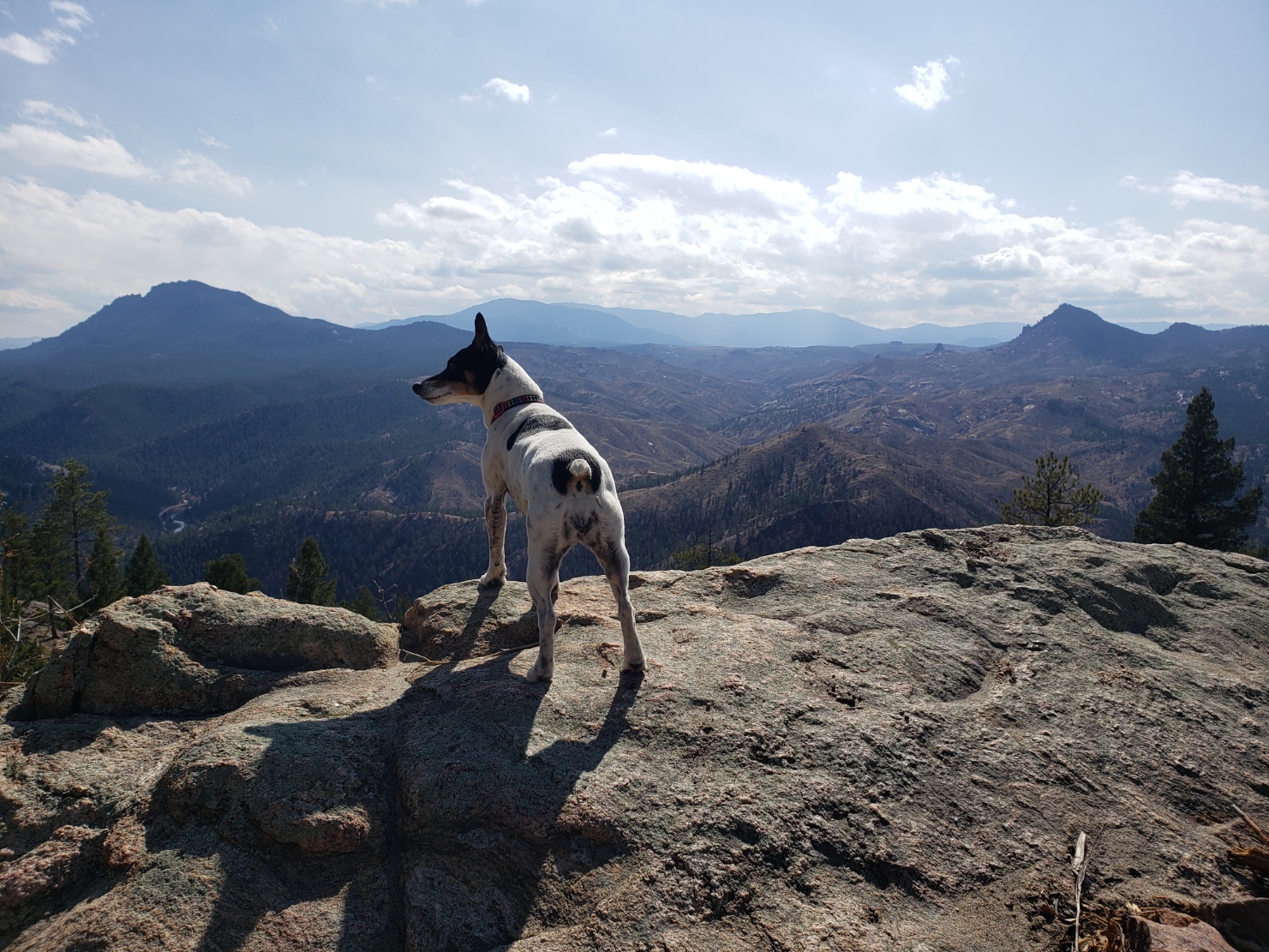
Dave Swink and Kokopelli on the CDT.
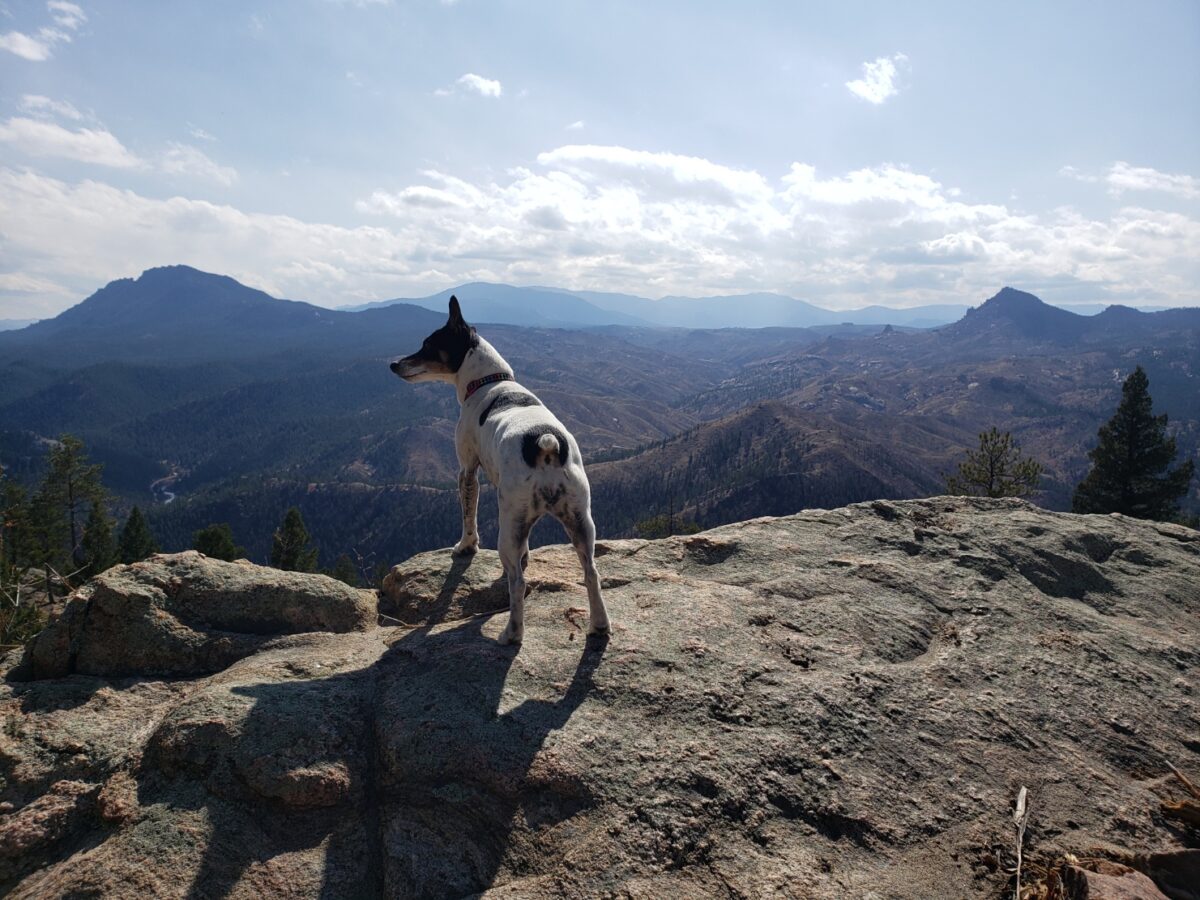
Kokopelli on the Colorado Trail.
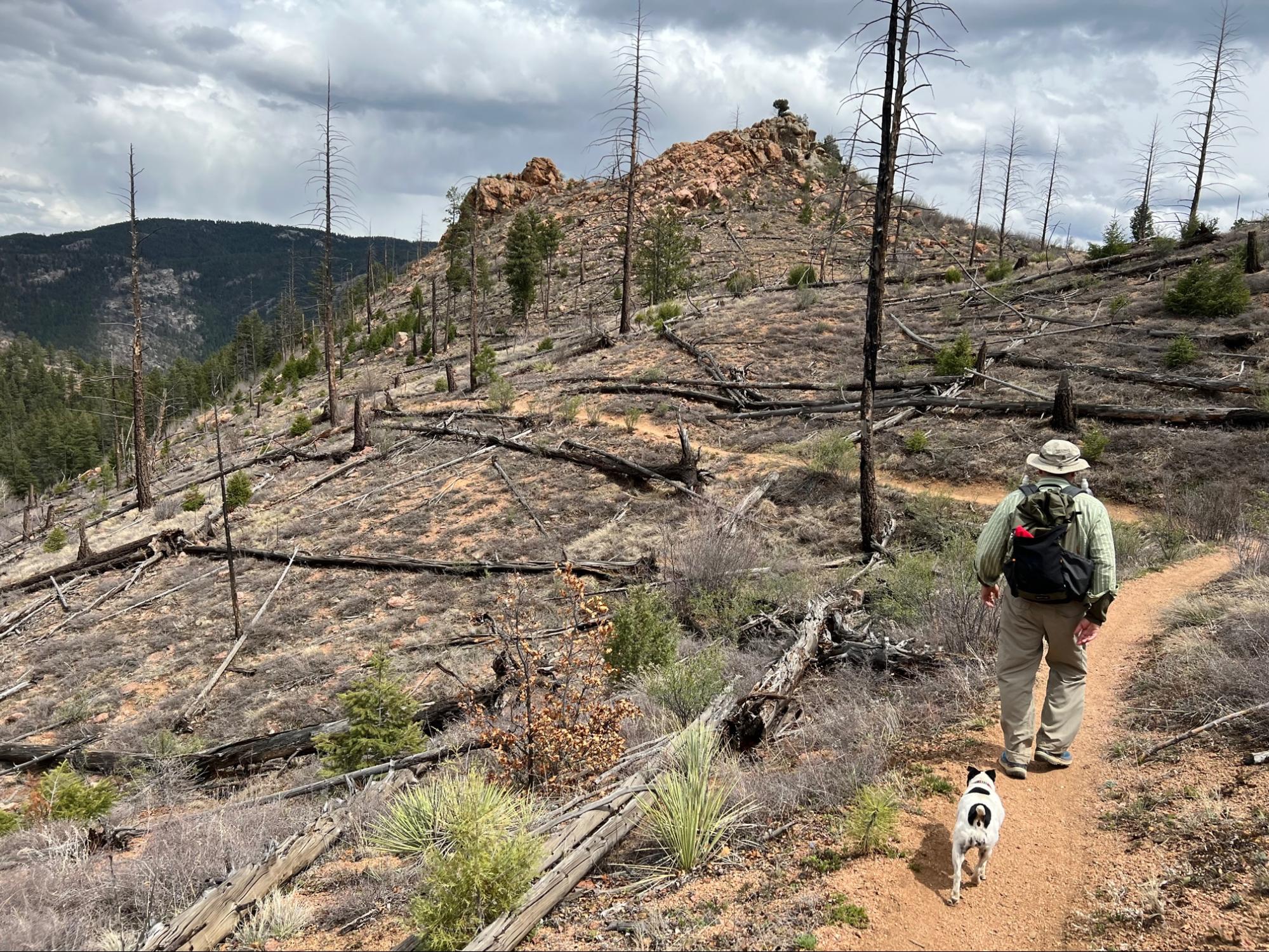
Kokopelli and Dave hiking through a burn area along the Colorado Trail.
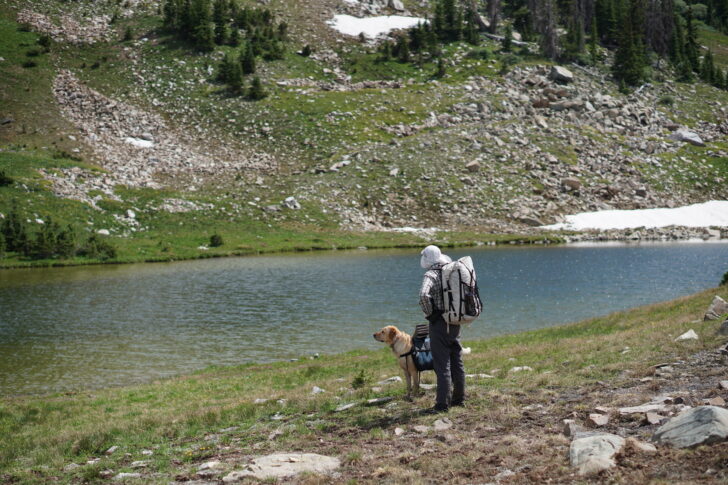
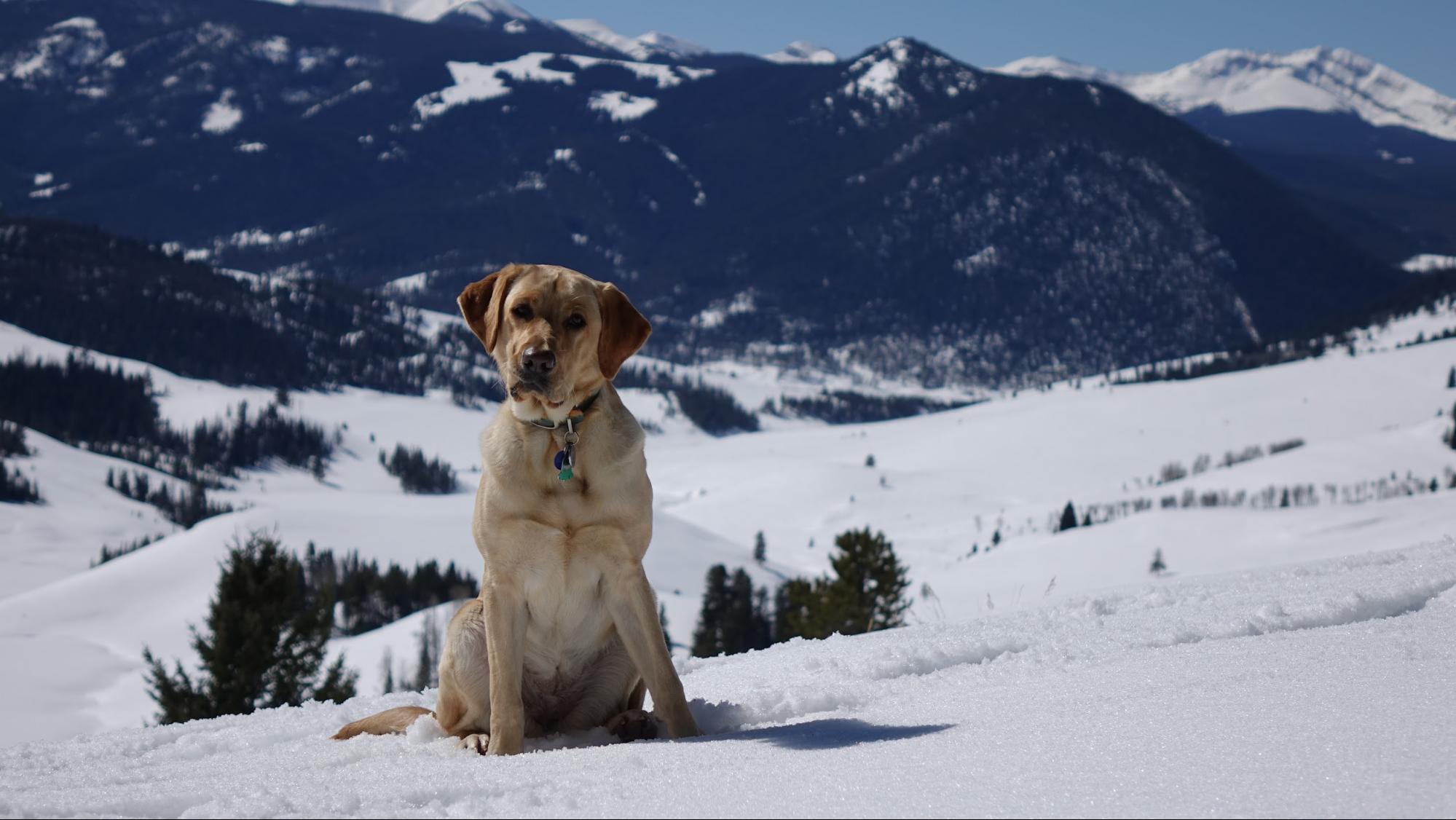
Sierra and Chase Jordan at the shore of an off-trail lake in the Medicine Bow Mountains.Sierra sitting in the snow on a winter backpacking trip.
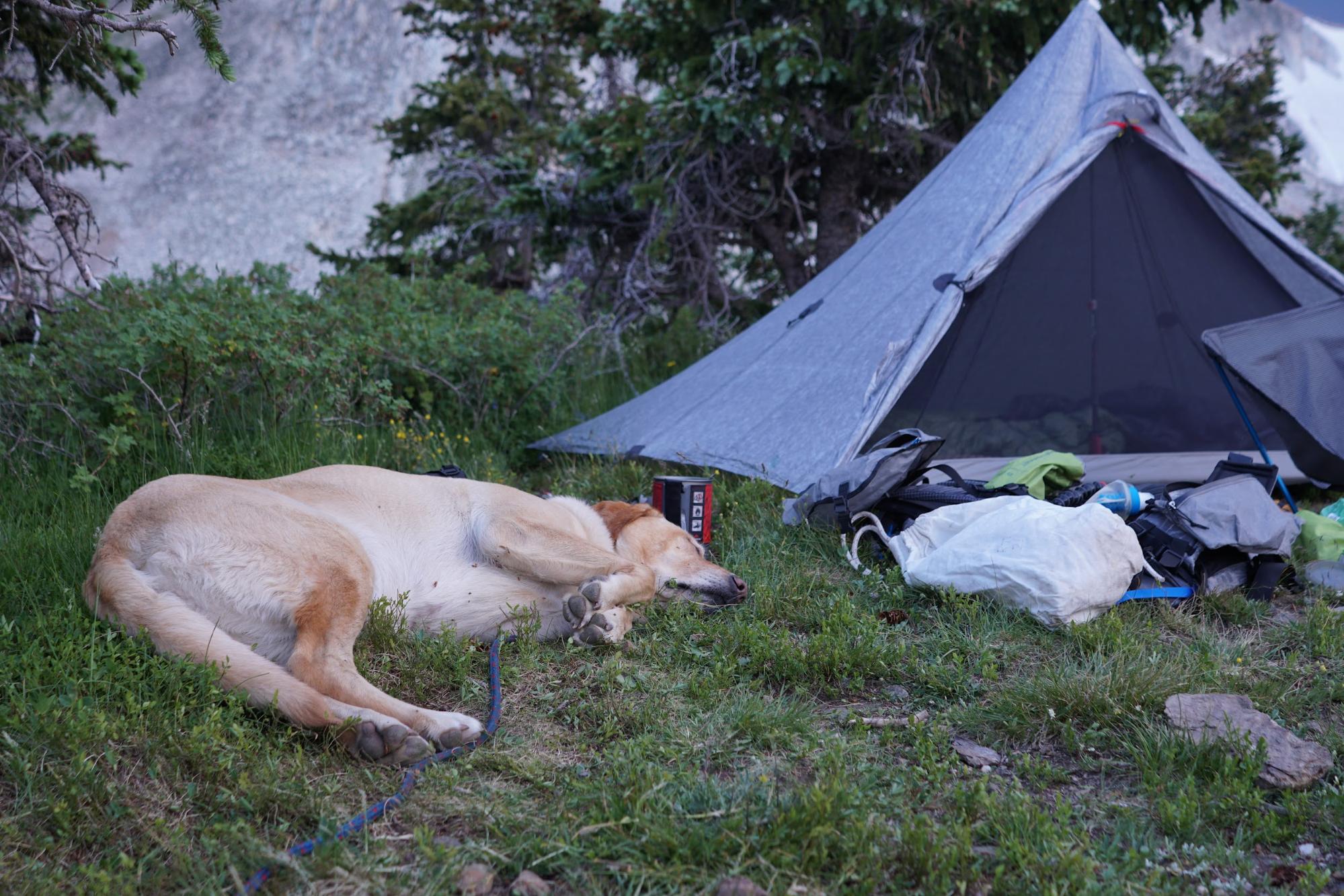
Sierra sacked out after a long day of sniffing and exploring in the mountains.
Executive Producer - Backpacking Light; Show Director and Host - Ryan Jordan; Producer - Chase Jordan; Theme music: Look for Me in the Mountains written by Chris Cunningham and Ryan Jordan, performed by Chris Cunningham (acoustic guitar, lead and harmony vocals, harmonica), Chad Langford (upright bass), and Tom Murphy (mandolin), produced by Basecamp Studios in Bozeman, Montana.
Sponsorship Policy: Backpacking Light does not accept compensation or donated/discounted products in exchange for product mentions or placements in editorial coverage, including any podcast episode content not excplicitly identified as sponsored content. Some (but not all) of the links in these show notes may be affiliate links. Learn more about affiliate commissions, influencer marketing, and our consumer advocacy work by reading our article Stop wasting money on gear.
Main Topic: Building Resilience for Backcountry Adversity
Defining resilience – responding to adversity in a constructive manner; the physical, mental, and emotional components of resilience; contrasting urban and wilderness resilience
Characteristics of resilience:
Adaptability – flexibility, problem-solving skills, having a learning mindset, resourcefulness, emotional regulation
Burst strength – maintain mental, physical, and emotional stamina, solve complex problems rapidly, channel intense and positive emotions, maintain high levels of focused energy
Stamina – physical endurance, patience
Developing resilience for backcountry adversity – build physical fitness, develop wilderness skills, develop mental conditioning, detailed route and trip planning, nurturing a positive mindset, develop a sense of self-sufficiency
Listener Q&A
Can I reuse Cook-In-Bags from Packit Gourmet? They are listed as single-use, and I don’t see the point of buying a bag that isn’t reusable! – Luke Russel, via Email
How do you get over-packing your fears? I still get the one question that pops in my head – “what if?” – @goodrows_adventures, via Instagram
I’m new to backpacking fitness training and am pretty sedentary! How do I get started – @seasonal_crafter, via Instagram
Is the best way to train for backpacking, hiking with your pack or equivalent weight? – @jpbalisteri, via Instagram
Executive Producer - Backpacking Light; Show Director and Host - Ryan Jordan; Producer - Chase Jordan; Theme music: Look for Me in the Mountains written by Chris Cunningham and Ryan Jordan, performed by Chris Cunningham (acoustic guitar, lead and harmony vocals, harmonica), Chad Langford (upright bass), and Tom Murphy (mandolin), produced by Basecamp Studios in Bozeman, Montana.
Sponsorship Policy: Backpacking Light does not accept compensation or donated/discounted products in exchange for product mentions or placements in editorial coverage, including any podcast episode content not excplicitly identified as sponsored content. Some (but not all) of the links in these show notes may be affiliate links. Learn more about affiliate commissions, influencer marketing, and our consumer advocacy work by reading our article Stop wasting money on gear.
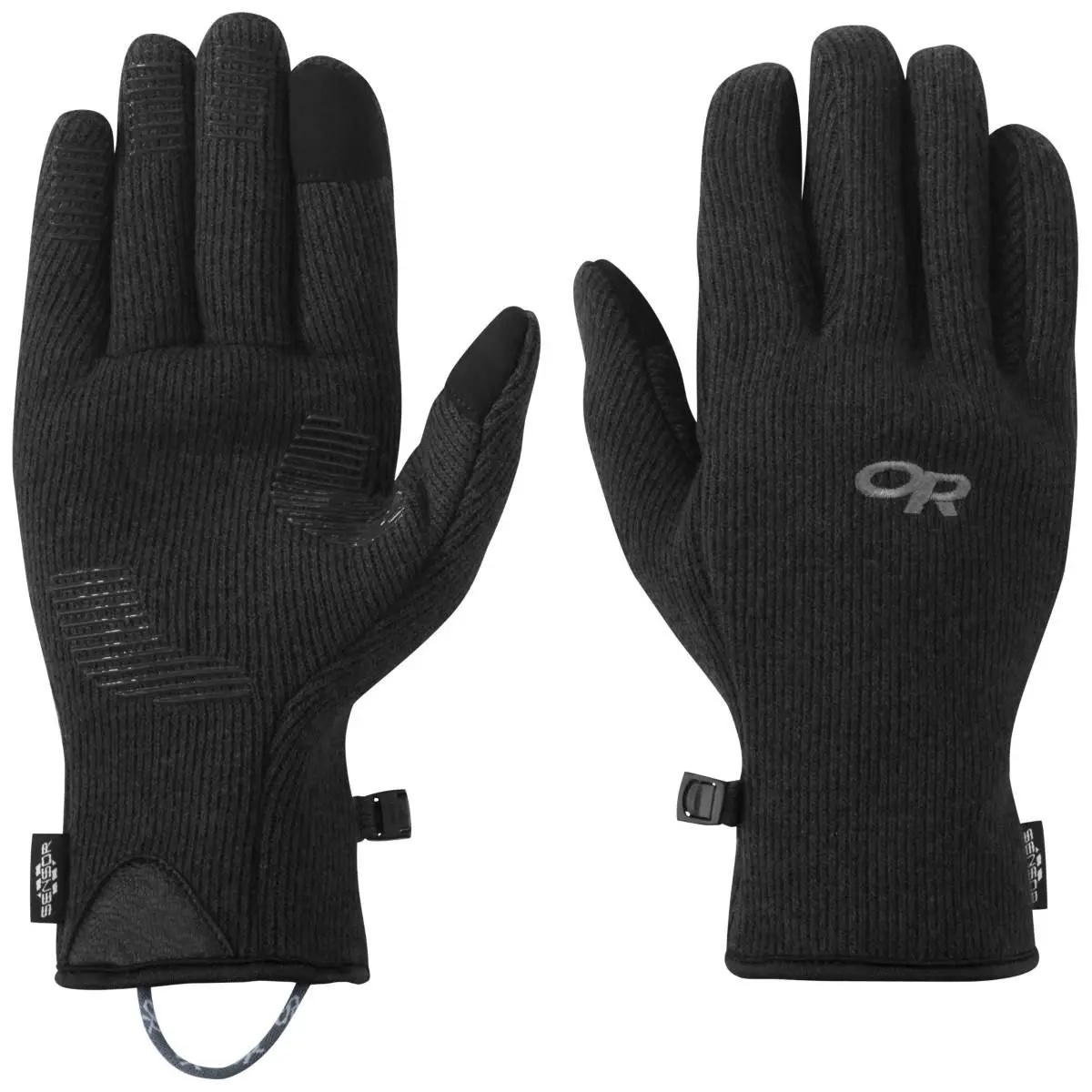
The Outdoor Research Flurry Sensor Glove (2.5 oz / 71 g, $40) is the warmest glove I’ve found that I can use effectively with a smartphone.
Update: Long Term Review (January 13, 2024)
I’ve used Outdoor Research Flurry Sensor Gloves since Fall of 2020. I’m on my second pair, and combined, my two pair have endured more than 200 days in the backcountry, including about 50 days as my primary work-glove (constant-wear) for winter backpacking when temperatures are below freezing.
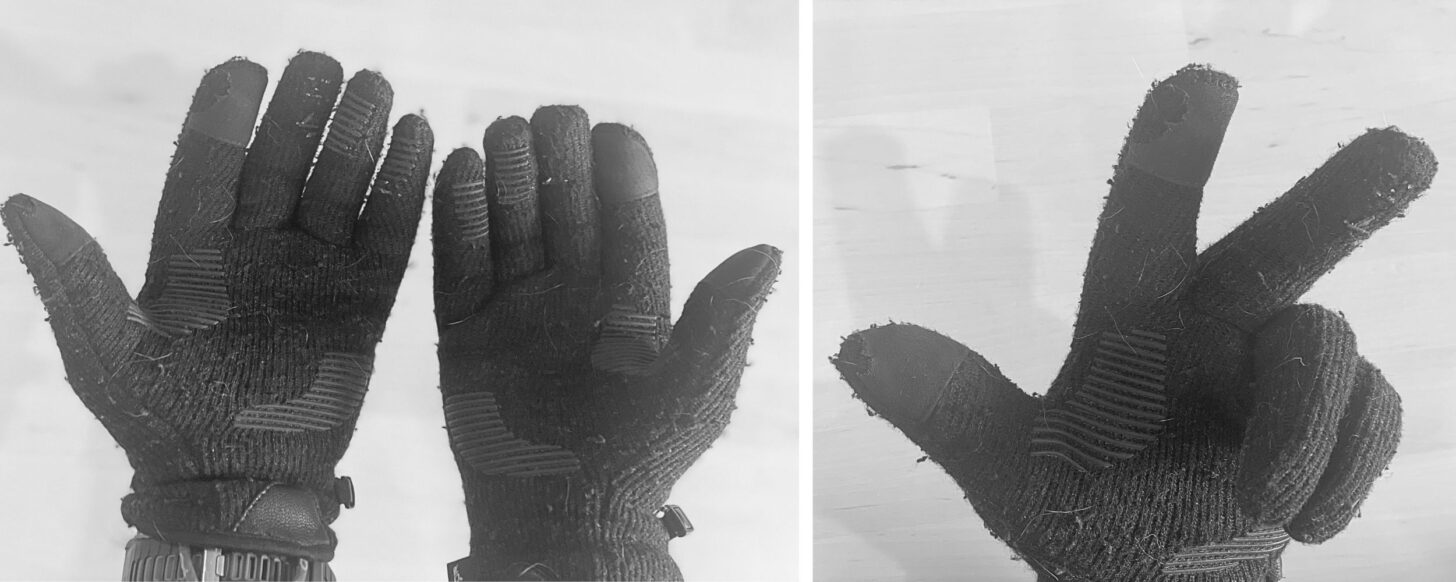
Left: overall wear on a pair of Outdoor Research Flurry Sensor Gloves after about 100 days of heavy use. Right: specific high-wear areas include the index finger e-tip sensor fabric, PU grip lines (especially on the middle finger), and general pilling of the outer wool fabric face. All in all, these gloves have held up extremely well over heavy use.
Notes:
The e-tip finger sensor pads used to operate touchscreens have a relatively long lifespan (as far as these sensor fabrics go), but after using these gloves extensively for the past 3+ years, I’ve discovered less utility out of having a glove with touchscreen capabilities. For very cold winter conditions, I find myself using cameras and GPS units with buttons instead of touchscreens (for a variety of reasons that I’ve outlined in the recent Member Q&A event about nav & com devices). That said, the e-tip sensor fabrics on the Flurry gloves have worn out faster than the fabric or seams.
Having a fabric glove with “grippy” dots or patterns on it is a nice-to-have feature for handling trekking poles and other tools that I use in the winter (including a stake hammer and ice axe). On the Flurry Sensor Gloves, this was the first area to wear out, and the grip pattern began flaking off after about 30 days of heavy use. For me, not a deal-breaker – I would buy the gloves again (and I did), but it’s disappointing nonetheless.
The outstanding feature of the Outdoor Research Flurry Sensor Gloves is still its bicomponent fabric construction that includes a soft inside fleece lining and an outer high-loft knit wool. They are warm, comfortable, and fire-resistant (great for fires and stove use). And it’s for this reason that the Outdoor Research Flurry Sensor Gloves remain in my winter kit and won’t be replaced anytime soon!
Outdoor Research Flurry Sensor Gloves (photo: Outdoor Research).
The unique feature of the OR Flurry Sensor gloves is their warm fabric construction. The gloves are made with a two-layer fabric branded as Alpin-Wool Plus 2L. The outer layer is a woven blend of wool and nylon, which provides durability and weather-resistance due to the hydrophobicity of those fibers. The inner layer is a thin nylon fleece with a soft polyester inside surface, which provides next-to-skin comfort.
About This Review
In this review, I summarize the highlights of the Outdoor Research Flurry Sensor Glove, after using it for approximately 30 days over the 2020-2021 winter season in Northern Colorado and Southeast Wyoming.
Other Features: pull-on cord loops, side-release buckle clips to keep the pair together in storage, anti-slip silicone palm print, tapered wrist gauntlet, touchscreen-compatible suede thumb and index fingertips
Weight: 2.5 oz (71 g) – size small (actual measured weight of my gloves)
MSRP: $40
Performance Analysis
Since this is a Limited Review, a detailed analysis of durability based on long-term use will not be presented. Otherwise, performance observations and issues are noted below.
Warmth
The Outdoor Research Flurry Sensor Gloves are the warmest gloves I’ve ever worn that weigh less than 3 oz (85 g) in real-world conditions where you experience wind, rain, and snow. They don’t block high winds, but they are more wind-resistant than pile fleece. They don’t prevent the penetration of moisture but they are more precipitation-resistant than polyester fleece (because of the wool/nylon outer layer) and absorb less water than 100% wool (because of the blend of wool with nylon and polyester) for the weight. This all contributes to their warmth and should be considered as much as their pure insulation (e.g., “clo”) value.
On several occasions, I’ve worn them in cold (well below freezing) and snowy conditions to the point where an icy crust formed on the outside of the glove fabric – and my hands stayed warm. My only cold spots were my thumbs while using trekking poles. This area of weakness isn’t unique to these gloves.
Wind and Snow Resistance
I’ve worn the Outdoor Research Flurry Sensor Glove while trekking and performing camp chores in several winter storms. They are not an all-conditions glove. They lack a membrane or outer shell layer for blocking wind and precipitation.
However, their loft makes them comfortably warm for trekking down to temperatures near or below freezing with little wind, and for performing camp chores at colder temperatures.
For temperatures below freezing with moderate wind, I prefer a shelled mitten for warmth, especially when carrying trekking poles, which makes hands colder (poorer circulation resulting from gripping the pole).
In heavy wet snow or cold rain falling at temperatures near freezing, the Flurry Sensor Gloves will wet out. However, for drier snow falling at colder temperatures, I found them to be unexpectedly resistant to moisture reaching the skin of my hands. The more I use these gloves in the winter, the less anxiety I have about them getting wet in snowy, cold conditions.
The Flurry Sensor Gloves are warmer than the gloves I am replacing them with – the Outdoor Research Vigor Sensor Gloves. The Vigor lacks a water-resistant outer layer, and their hydrophilic polyester construction absorbs precipitation that results in cold hands.
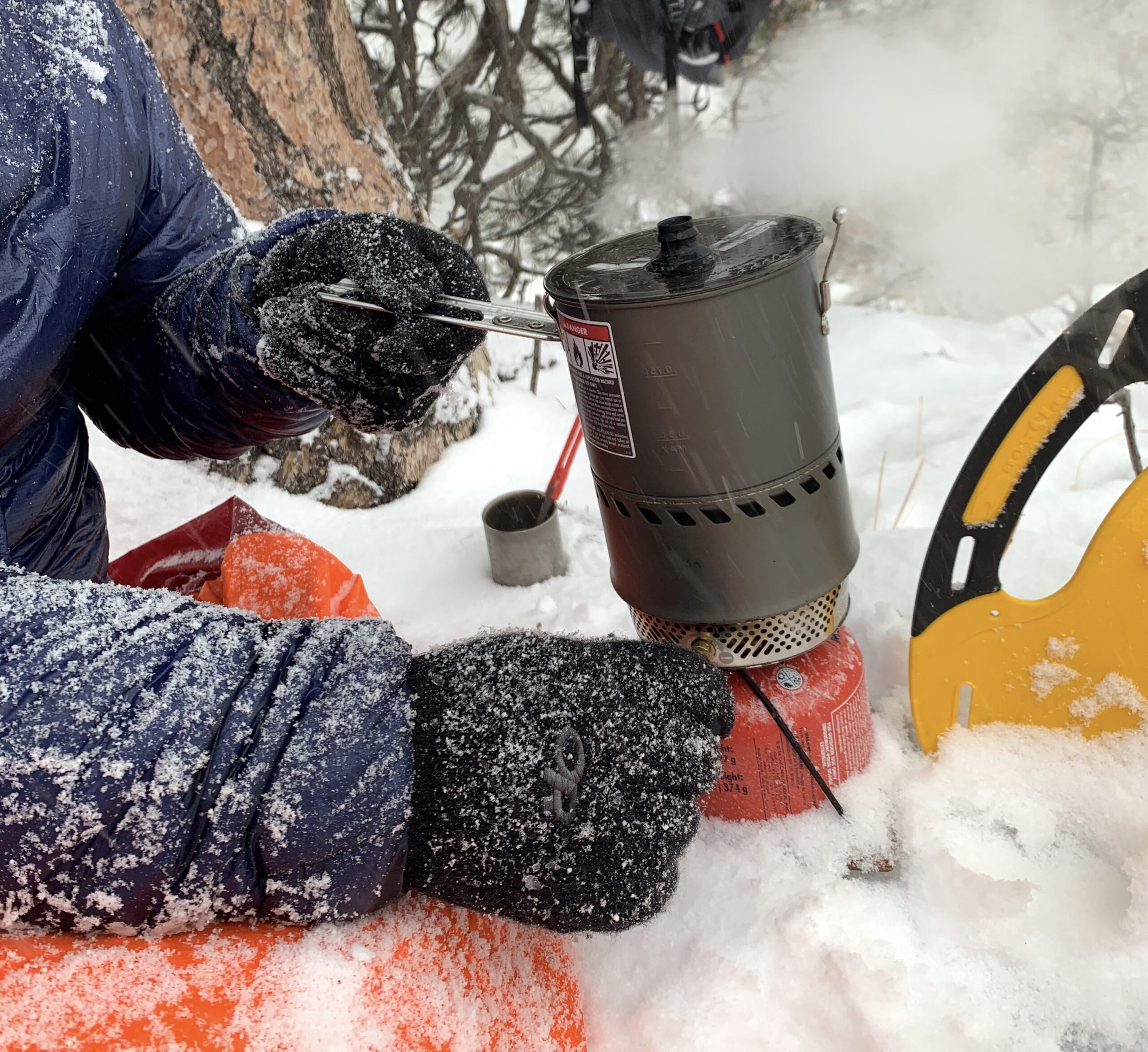
Operating my stove while in my bivy sack, wearing the Outdoor Research Flurry Sensor Glove during a winter storm.
Water Absorption & Dry Time
Keeping your hands dry in cold, wet conditions is a big deal.
The amount of water a fabric absorbs depends on several factors, including fiber material, yarn construction, fabric knit or weave structure, and thickness. The dry time of fabric also depends on several factors, including environmental conditions (temperature, wind, humidity, solar heating), the amount of body heat being generated (if the garment is worn), and of course, the amount of water absorbed into the garment.
This latter factor – the amount of water absorbed into the garment – is generally the dominant factor controlling the dry time of a garment, which is often limited by the physics of heat transfer driving the evaporation of water from a garment (which is related to heat loss from your hands over the course of several hours). So when a garment manufacturer claims that their garments dry fast – be wary. They may not understand these concepts, or they may be trying to tell you that they just absorb less water.
And we all know, generally, that lighter garments absorb less water than heavier garments!
Fiber structure and hydrophobicity play a role in dry time as well, but under most conditions, it’s relatively minor. Because wool fibers are porous and can absorb water into the fiber, they release water more slowly than either nylon or polyester. However, polyester is more hydrophilic relative to nylon or wool, and polyester fabrics are capable of absorbing enormous quantities of water.
I compared the water absorption of the Outdoor Research Flurry Sensor Glove with two other models of lightweight gloves in my stash:
The following table compares their fiber composition:
Nylon
Polyester
Wool
Spandex
Other
OR Flurry
11%
63%
26%
-
synthetic suede fingertips on thumb and index finger (80% polyester, 20% polyurethane)
Columbia Fast Trek
-
100%
-
-
synthetic suide palm patch, composition unknown
OR Vigor
-
93%
-
7%
synthetic suede fingertips on thumb and index finger (76% polyester, 17% nylon, 7% spandex)
Water absorption capacity was measured by soaking the gloves in water, wringing them out as much as possible, and measuring their wet weight. The following table compares water absorption capacity for the three gloves:
Dry Weight
Wet Weight
Water Weight
% of Dry Wt as Water
OR Flurry
1.2 oz (34 g)
2.8 oz (79 g)
1.6 oz (45 g)
133%
Columbia Fleece
0.9 oz (26 g)
2.5 oz (71 g)
1.6 oz (45 g)
178%
OR Vigor
1.3 oz (37 g)
3.1 oz (88 g)
1.8 oz (51 g)
138%
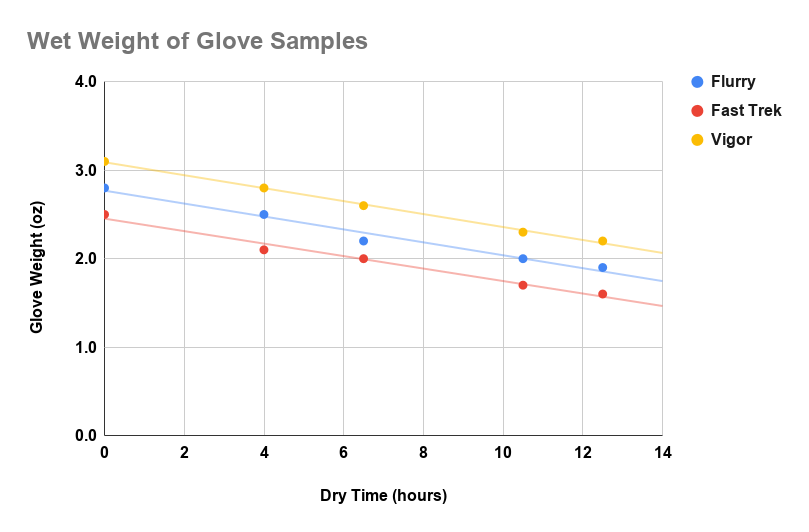
To test the drying rate, I soaked the gloves in room-temperature water, wrung out as much water as possible, laid them on a flat table indoors, and monitored the weight over time. The following chart compares their drying rate:
Drying rate of gloves compared, after initially saturating them and wringing them out as much as possible.
In addition, the gloves were weighed after 24 hours. Here’s the remaining water weight for each glove:
Outdoor Research Flurry Sensor Glove: 0.1 oz (3 g)
Columbia Fast Trek Fleece Glove: 0.0 oz (0 g) – i.e., completely dry
Outdoor Research Vigor Sensor Glove: 0.3 oz (9 g)
The graph above, along with other data I’ve collected through the years, confirms some important information:
The rate of dry time of waterlogged fabrics in the same environment doesn’t really vary much with respect to fiber type, fabric structure (knit/weave type), or thickness. It’s relatively constant. If you dry a garment when you lay it on a rock in the sun, hang it from a tree, put it in a mesh storage pocket in your tent, wear it while hiking, or tuck it inside your base layer next to your belly while you sleep, the drying rate (the rate at which water leaves the garment) won’t change much from garment to garment (even though the method of drying may affect the drying rate).
Because of this (#1 above), it’s really important to be able to wring as much moisture out of your garment as possible if it does get wet.
Dexterity
There’s a notable difference between typical cold-weather glove liners like the OR Vigor and the Outdoor Research Flurry Sensor Glove in terms of loft and bulk. The latter is more like a double-faced pile fleece glove, but with better dexterity.
I was easily able to perform the following tasks while wearing the Flurry Sensor Gloves:
Typing text with my thumbs on a smartphone while using the Outdoor Research Flurry Sensor Gloves requires that autocorrect be shifted into overdrive! However, it wasn’t a terrible experience. The suede sensor tips on the thumbs and index fingers allow for precise tapping that far exceeded my expectations for a glove this thick.
Thumb-and-finger gestures were a piece of cake. Swiping and pinching gestures were reliably precise, and I was able to use all features of my smartphone GPS app (Gaia) with no issues.
Durability
Wool gloves (especially those made with merino wool) are generally not as durable as nylon fleece. However, the nylon-wool fiber blend of the Outdoor Research Flurry Sensor Gloves is plenty durable enough for routine use as a trekking and camping glove. I certainly don’t use them to gather firewood, scramble up a talus slope, or pull a Spectra cord bear bag line – I wouldn’t do these things with any glove knit with soft fibers.
Without having more than 40 days of experience with these gloves, I’m hesitant to comment on their long-term durability. I’m expecting at some point, the knit will begin to unravel or the fingertips will develop holes. This is how the rest of my soft-fiber gloves fail (especially those made with polyester fabrics). However, there doesn’t seem to be any unusual wear so far, and I’ve worn out other soft-fiber gloves in far less time.
What Makes the Outdoor Research Flurry Sensor Gloves Unique?
Traditional polyester fleece gloves like the Columbia Fast Trek Gloves are generally poorly wind- and water-resistant, and lack durability and dexterity.
So-called high-performance wind-resistant polyester fleece gloves like the Outdoor Research Vigor offer better wind-resistance and dexterity but still absorb enormous amounts of water.
The Outdoor Research Flurry Sensor Glove solves many of these issues:
Nylon-wool blend used in the face fabric is durable, water-resistant, and provides good loft for warmth.
A sophisticated pattern allows for a close fit without being restrictive, which improves dexterity, smartphone use, and overall comfort.
Compared To…
The following table compares the performance characteristics of the Outdoor Research Flurry Sensor to two other glove models that I have used extensively for several years:
The Vigor’s hydrophilic fibers hold on to water for a long time.
Polyester fibers of the Fast Trek and Vigor readily absorb rain and snow.
The Fast Trek’s soft fleece weave is very porous.
The Fast Trek is a cheap and simple glove without an ergonomic fit.
The Flurry is the highest loft glove.
The Flurry has the dryest feel next to the skin when wet.
Polyester gloves wear out more quickly than nylon and nylon-wool blends.
Handwear System Integration
Used on its own, the Outdoor Research Flurry Sensor Glove is light enough for summer backpacking.
In wet environments, for fringe-season use, or multi-day winter trips when I absolutely need to keep them as dry as possible in winter storms, I’ll pair it with a lightweight shell mitt like the REI Minimalist GTX Mitten Shells.
And for the deep cold of winter, adding a plush hand parka over the Flurry Sensor Gloves would provide insurance in the coldest temperatures – at least while in camp. For cold-temperature trekking, I prefer the additional insurance of an insulated vapor barrier mitten – worn over very thin merino wool liners.
Strengths and Limitations
Strengths
High warmth-(loft)-to-weight ratio
Durable outer face fabric (wool-nylon blend)
Hydrophobic outer face fabric is weather-resistant
Good dexterity for smartphone use and other fine motor tasks
Limitations
Slightly heavier and much more expensive than cheap polyester fleece gloves
Review Rating: Highly Recommended
Based on my experience with the Outdoor Research Flurry Sensor Glove, it will now replace my Outdoor Research Vigor Sensor Gloves in all seasons. The latter design (wind-resistant 400-weight polyester fleece) has been my go-to type of glove for a long time. However, its fingertips wear out quickly, it offers nearly zero resistance to rain and snow because of its hydrophilicity, and it lacks the warmth (loft) needed for wintry temperatures.
I’m most impressed by the Flurry Sensor’s fit and dexterity, use with a smartphone, weather resistance, and warmth. This makes it my primary glove for all four seasons, and it’s earned a well-deserved spot on my winter gear list.
Product mentions in this article are made by the author with no compensation in return. In addition, Backpacking Light does not accept compensation or donated/discounted products in exchange for product mentions or placements in editorial coverage.
Some (but not all) of the links in this review may be affiliate links. If you click on one of these links and visit one of our affiliate partners (usually a retailer site), and subsequently place an order with that retailer, we receive a commission on your entire order, which varies between 3% and 15% of the purchase price. Affiliate commissions represent less than 15% of Backpacking Light's gross revenue. More than 70% of our revenue comes from Membership Fees. So if you'd really like to support our work, don't buy gear you don't need - support our consumer advocacy work and become a Member instead.
Learn more about affiliate commissions, influencer marketing, and our consumer advocacy work by reading our article Stop wasting money on gear.
In episode 95 of the Backpacking Light podcast we’re going to learn about the types of natural fibers that make up the fabrics we use for base layer and insulating apparel.
Episode Sponsor
This episode of the backpacking light podcast is sponsored by ARMS OF ANDES, manufacturer of premium base layer apparel made with alpaca wool. Backpacking Light podcast listeners can enjoy 15% off with the coupon code ALPACALIGHT at armsofandes.com.
Listen
Summary
In episode 95 of the Backpacking Light podcast we’re going to learn about the types of natural fibers that make up the fabrics we use for base layer and insulating apparel.
triangular baffles made with reflective surfaces (isolate air movement)
horizontal aluminized surfaces that allow for convective air movement up and down the length of the pad
Main Topic: Fundamentals of Natural Fibers
The primary differences between natural fibers and synthetic fibers – source, moisture management, thermal properties, durability, comfort and feel, odor resistance, environmental impact, care and maintenance, cost
Comparing the structure of plant-based and animal-based fibers – cellulose vs protein structures, microscopic structure, absorbency vs thermal properties
Merino Sheep Wool vs Other Kinds of Wool – fiber diameter and fineness, crimp, strength and durability, comfort and feel, breathability and moisture management, odor resistance, price, and availability
Merino sheep wool vs Alpaca Wool – fiber texture and softness, warmth and insulation, weight, moisture wicking and breathability, hypoallergenic properties, durability and elasticity, odor resistance, price and availability, environmental impact
Comparing and Contrasting Huacaya Alpaca Wool and Suri Alpaca Wool
Q&A
What’s the best baselayer that works with a waterproof-nonbreathable jacket like those from Lightheart Gear and Antigravity Gear?
What’s the difference between fishnet baselayers from Brynje and those from Wiggy’s and others?
Executive Producer - Backpacking Light; Show Director and Host - Ryan Jordan; Producer - Chase Jordan; Theme music: Look for Me in the Mountains written by Chris Cunningham and Ryan Jordan, performed by Chris Cunningham (acoustic guitar, lead and harmony vocals, harmonica), Chad Langford (upright bass), and Tom Murphy (mandolin), produced by Basecamp Studios in Bozeman, Montana.
Sponsorship Policy: Backpacking Light does not accept compensation or donated/discounted products in exchange for product mentions or placements in editorial coverage, including any podcast episode content not excplicitly identified as sponsored content. Some (but not all) of the links in these show notes may be affiliate links. Learn more about affiliate commissions, influencer marketing, and our consumer advocacy work by reading our article Stop wasting money on gear.
A curry dinner explodes during this overnight trek inspired by a winter storm warning.
Stephanie dropped me off at the trailhead at dusk with my planned destination being a dry ridge about 600 feet of climbing higher. I had crossed this ridge once before on a previous trip and thought that it would make a nice campsite.
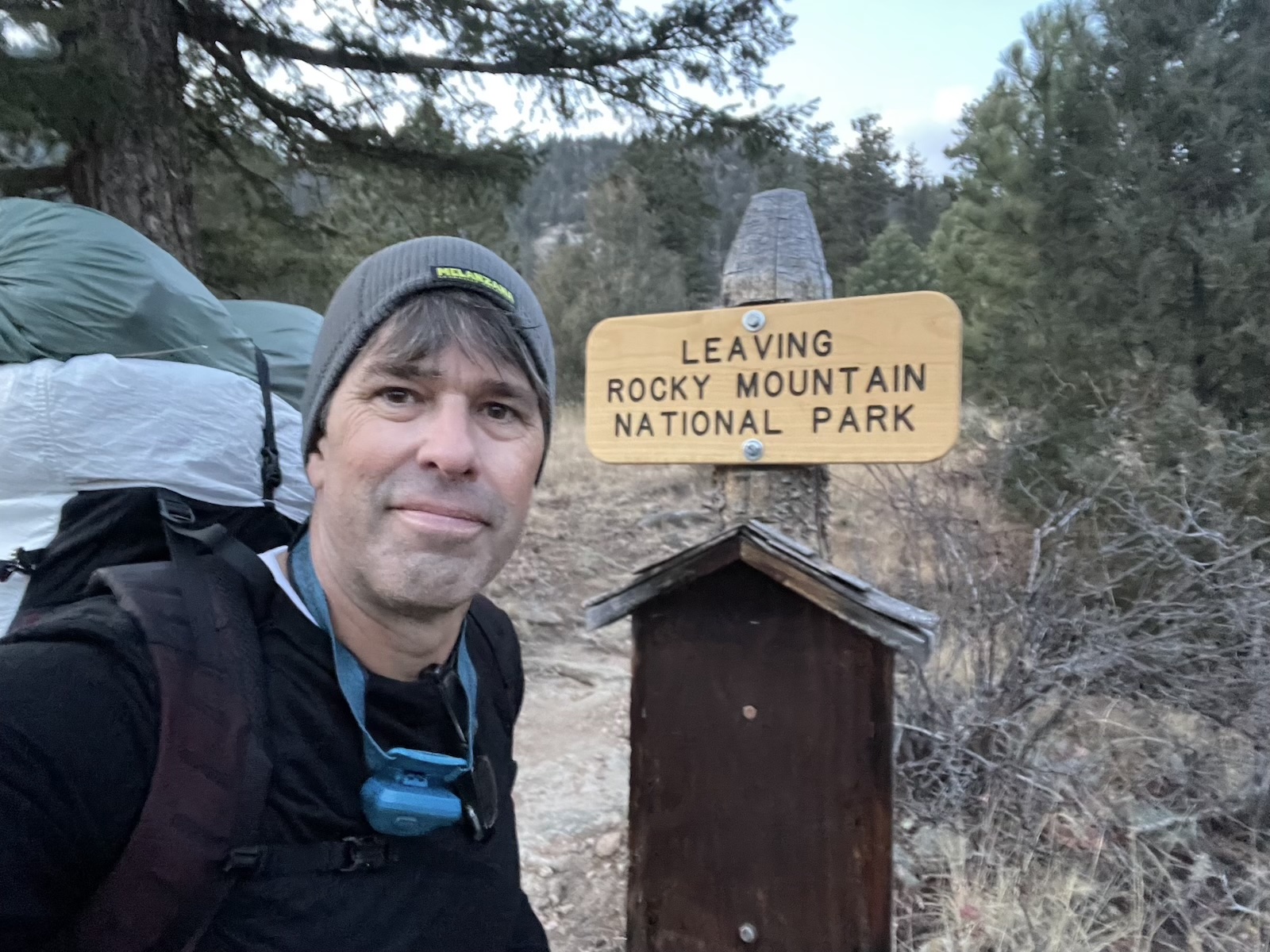
Although my trailhead was located within the confines of Rocky Mountain National Park, I soon exited the park boundary. I would need no reservations for camping tonight.
After 15 minutes of climbing, I stopped to make some pack adjustments and looked back down to the valley. A small herd of elk was feeding on meadow grasses, and the bull was bugling. A hundred yards upstream, a large cow moose was munching in the willows. Three deer were moseying along the valley trail between them.
I feel fortunate to live in a place where I can be at a National Park trailhead within 10 minutes of my home, and where I can see big game animals every day. This morning, a herd of 300 elk walked through the parking lot of our apartment building. We watched them from our deck.
After adjusting my pack, I shed my rain jacket, as I was starting the steep climb to the ridge. The temperature was below freezing, but a fishnet tank top and an alpaca long-sleeve crew would be plenty of insulation while hiking uphill.
I placed my headlamp around my neck, I would need it soon.
At the National Park-Wilderness boundary.
This would be a quick trip, less than 24 hours, and only about 9 miles. I had one singular purpose: collect more tent-testing data for my “How do ultralight double-wall tents perform in the winter?” project. Tonight’s home would be the Tarptent Dipole 1 DW.
I arrived at the crest of the ridge well after dark, but the rising full moon helped me avoid destroying my night vision, and my headlamp stayed off. After I found a spot to pitch, I clicked it on, flooding the area with 400 lumens of LED light, and removed my pack.
My campsite was nestled in a copse of pine trees – a mix of ponderosa and limber pines at about 8,600 feet. The forest floor was soft, duffy, and dry. That would change overnight. The winter storm warning issued a few hours ago called for heavy snowfall that would start in a few hours.
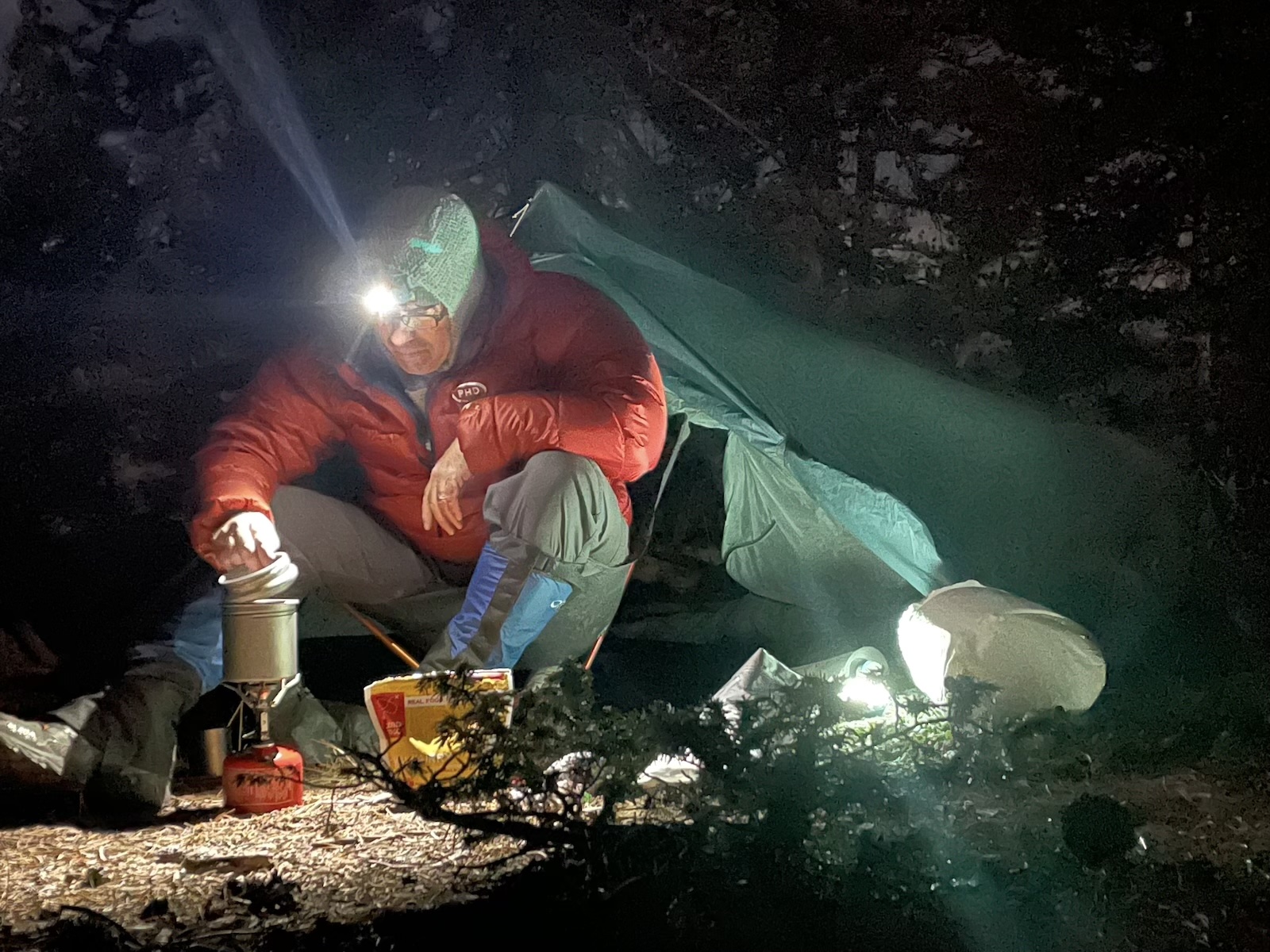
After pitching the shelter and setting up my bed, I boiled water for dinner – a package of Good To-Go Thai Curry. After filling the bag and sealing it, I stuffed it in my down parka while it rehydrated – a process I’ve done hundreds of times. I love the feeling of heat against my belly on a cold night.
Boiling water for Thai Curry.
For the next 10 minutes, I organized gear, made some tent guyline adjustments to prepare for heavy snow, and enjoyed the aura of the brightening moon as it rose above the tops of the trees.
And then, I felt an unusual amount of heat coming from my freeze-dried dinner.
When I realized what had happened, I panicked. My clothing was being soaked by food slop from a leaky bag. I opened the bottom of my parka hem and let the package fall to the ground, then started yanking my clothes off. First, the parka – with its inside fabric (and some insulation) fully soaked. My Alpha 60, alpaca, and fishnet layers were also soaked, as well as the tops of my underwear and pants. What a mess.
I figured on just washing my clothes out in the creek, but then remembered that I was dry-camping, and the nearest water source was an hour’s walk in the dark. I only had about 3 liters of water with me, so I did the best I could to wash as much out of the down parka as possible (the most critical layer). I was able to wash and rinse the fishnet and alpaca layers well enough, but the Alpha 60 layer was not salvageable. I used a wetted bandana to wipe the residue off my pants and underwear.
Through most of this process, I was cursing the zipper people at Good To-Go, thinking that maybe they had taken their Food Packaging 101 class online during the pandemic, compromising their education.
But after my clothes were washed, draped over limber pine branches, and starting to freeze, I realized that I was standing shirtless on a moonlit night in the middle of the forest with temperatures in the mid-20s F and dropping.
I started to laugh and then realized I was shivering.
I quickly donned my curry-odored base layers and down jacket, wondering what the resident bears were up to (hyperphagia) and where they were (I saw no tracks on the way up to my camp). I stowed my Alpha hoody in a gallon ziplock and stuffed it into my Ursack.
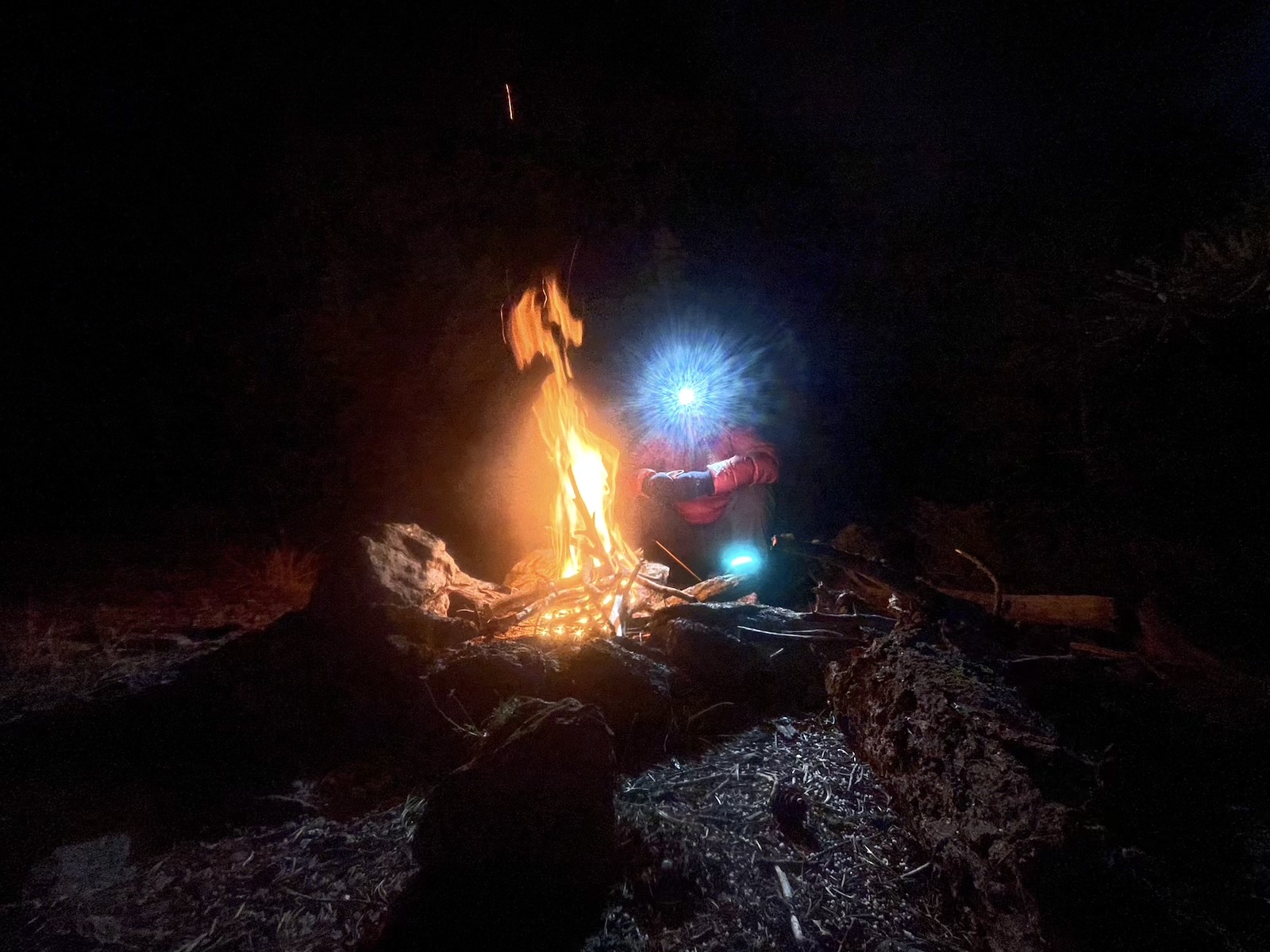
Still shivering, and now wearing half-frozen base layers against my skin, I started to gather wood for a warming fire (another advantage of camping outside the Park boundary).
Within 10 minutes, I had a nice blaze going, so I removed my layers again and spread them to dry in front of the fire, enjoying the radiant heat from the flames on the bare skin of my torso.
I spent the next hour warming up and drying clothes, and eating my now-lukewarm Thai curry. Which, incidentally, was quite delicious. Its flavor motivated me to forgive the zipper people.
Warming up by the fire.
I spent a few minutes collecting data. The sky was clear, and the outside temperature was 23 degrees F. The temperature inside my tent – without me inside of it – was 28 degrees F. I was surprised and pleased that the tent fabrics were providing some protection against radiative heat losses to the clear night sky. I’d never seen a difference this dramatic in a single wall tent, or a tent with a DCF fly.
After my layers dried, I put them on again, doused the fire with sand, and retired to my tent.
I turned my lantern on 80s mood mode, and wrote for a while, a thousand words that would provide the first draft of the introduction to my Tarptent Dipole 1 DW Review. After half an hour, I collected some more data. Still 23 degrees F outside, but now a balmy 35 inside my tent. I made the decision not to sleep with my water bottles inside my quilt.
I stripped off my parka, cinched the collar of my quilt, and closed my eyes. I noted that the tent smelled like an Indian restaurant. I listened for the footsteps of a bear but heard nothing more than the gentle hooting of an owl a few trees down. That lone sound of the forest night lulled me to sleep quickly.
I had given some thought to the idea that my odoriferous state during hyperphagia season was not the ideal manifestation of LNT No. 6 (Respect Wildlife). But the idea of bagging camp in the dark and stumbling down steep terrain came with its own set of risks. I opted to stay and camp on this trip, in an area where black bear density is relatively low (I may have made a different decision if I were camping in grizzly bear habitat). While I do adhere to strict formulas in life-and-death situations (e.g., press the SOS button on my inReach if I break my leg with a compound fracture) or in situations where choices are easy (e.g., don’t camp within 100 feet of a stream or lake), the hazard-risk matrix becomes murkier when facing decisions where all choices are problematic.
I awoke a few hours later to the familiar sound of light snow pattering on the tent fly. The outside temperature was 24 degrees F, and the inside temperature was 36 degrees F. I wiped my hand across the inside walls of the inner tent. No condensation. I checked the humidity levels on my sensors. Outside: 95%, inside: 85%. I fell back asleep.
A loud whoosh woke me up at 2 AM. It startled and confused me at first. Then, I realized it was snow sloughing off the sidewalls of the tent. I shined my headlamp around and noticed snow accumulating on the tent fly. When camping in ultralight tents, I usually make a habit of banging the tent walls to knock the snow off, to avoid the inevitable snow loading that collapses trekking pole-supported tents during snowstorms.
I decided to ignore the accumulating snow instead. Let’s see what happens. I fell back asleep.
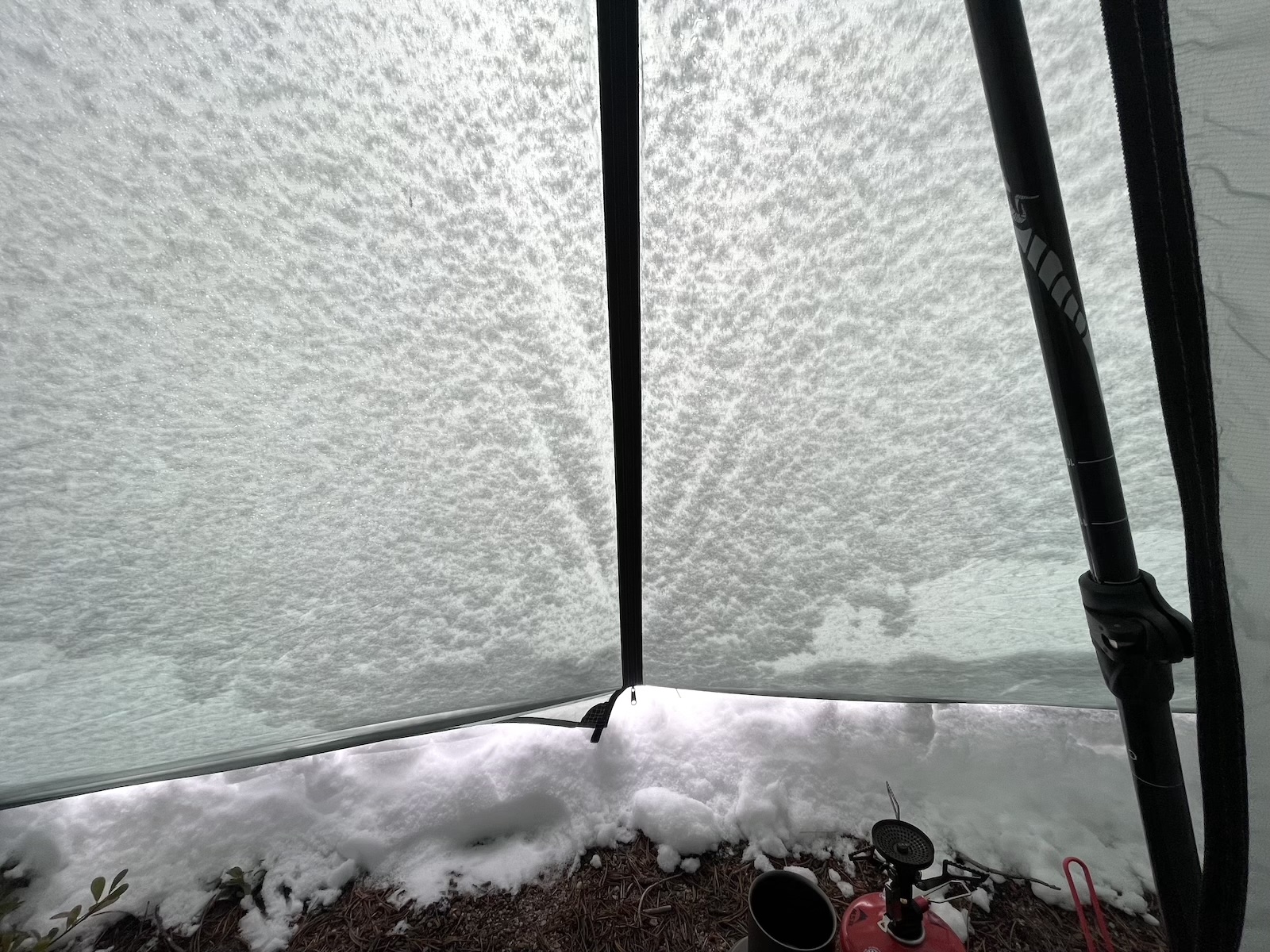
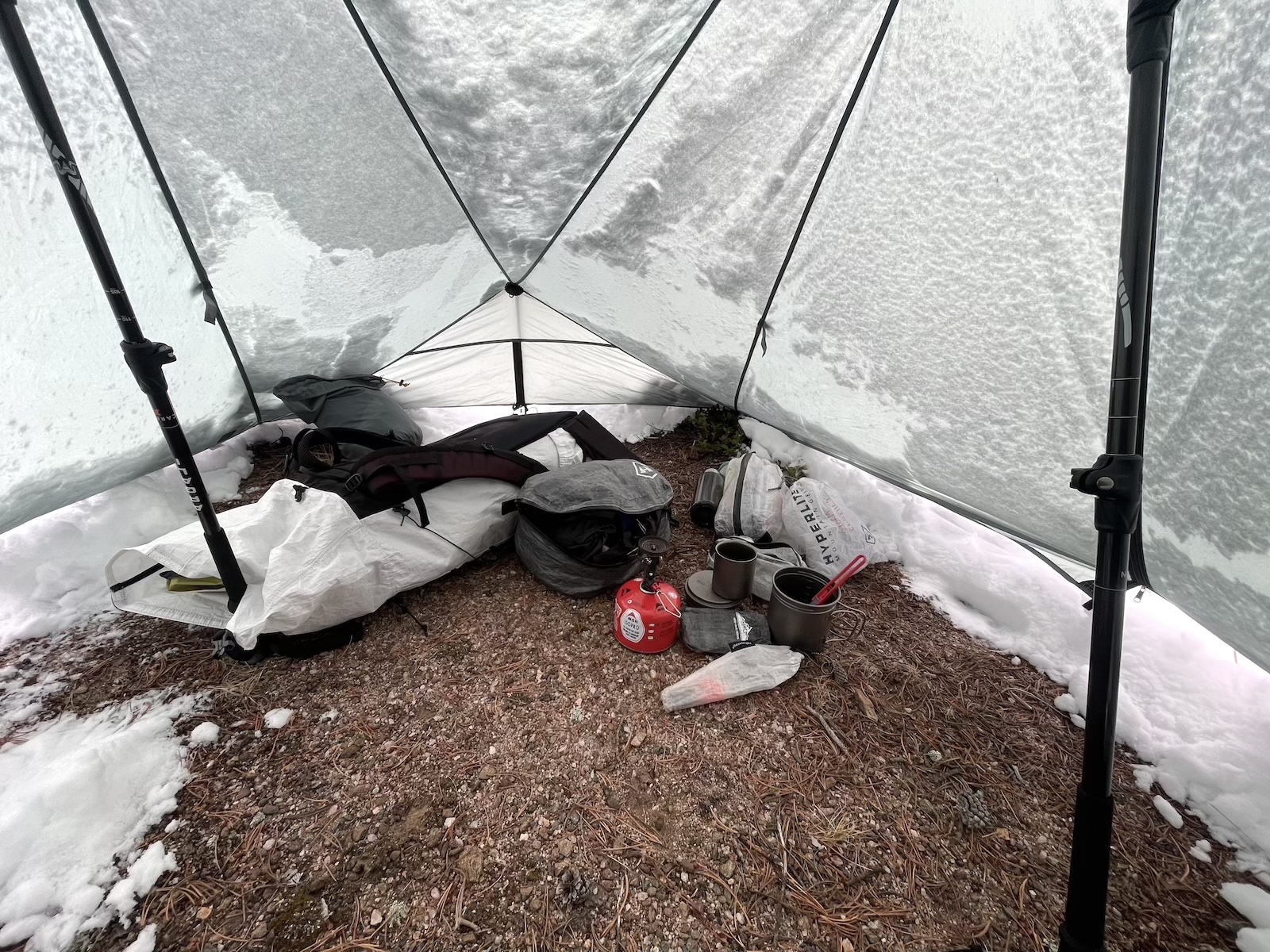
The whooshes came frequently throughout the night. Snow accumulated, and then avalanched, off both the sidewalls and roof panels of the Dipole 1 DW. I was surprised, and happy, thinking that this tent could become a legitimate candidate for a treeline winter tent.
And I was warm. In reviewing my sensor data the next morning, the inside of the tent was always at least 9 degrees F warmer than the outside air temperature, and the inside humidity never exceeded 95%. When I checked for condensation accumulation on the inner tent when I woke up at sunrise, I found nothing more than a very thin film of moisture.
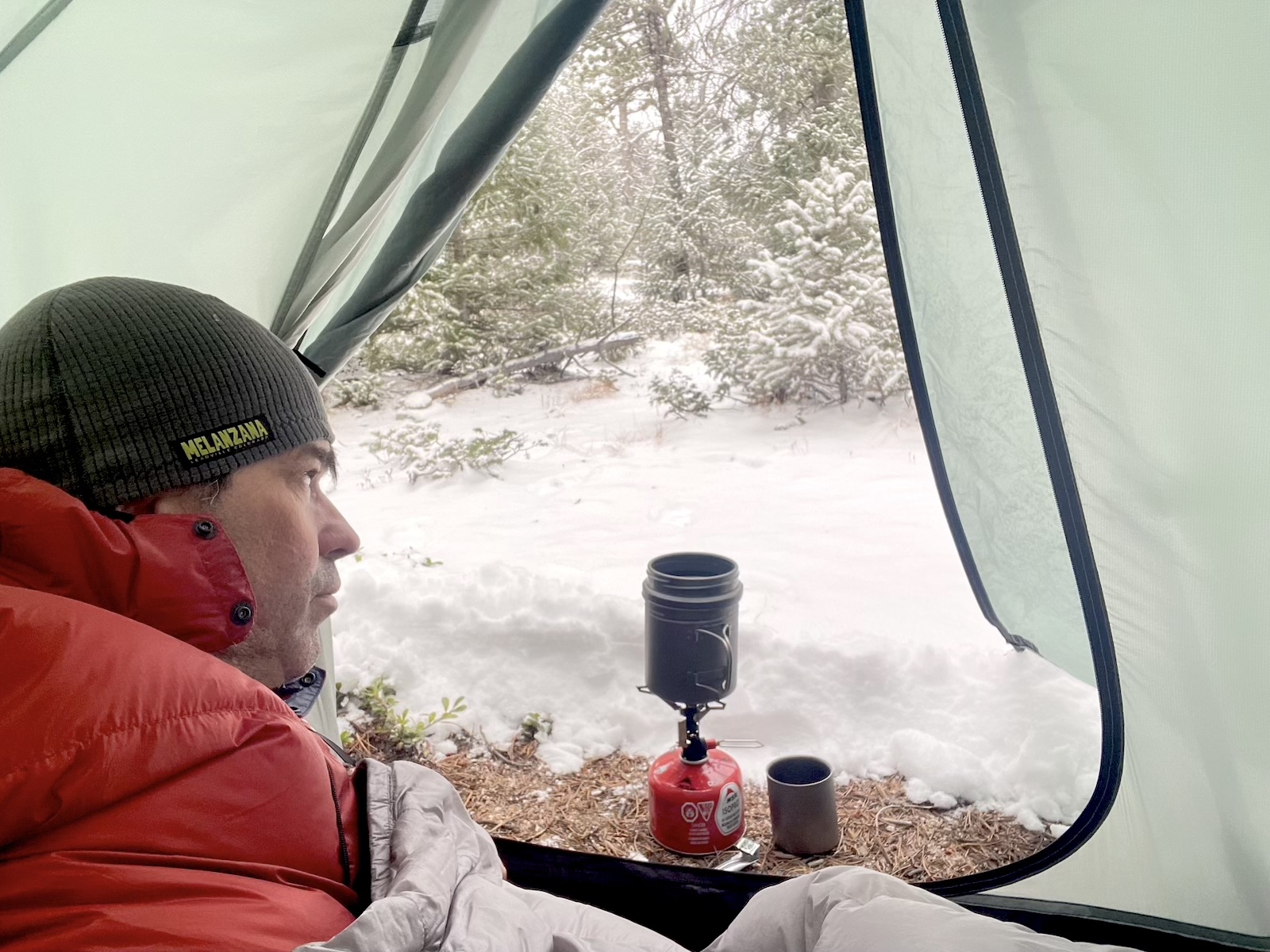
When it was light enough to see without a headlamp, I unzipped the inner tent door and smiled at the snow that had accumulated around the vestibule perimeter. Our second winter storm! This is my favorite season for backcountry exploration.
Several inches of new snow.
Remaining tucked inside my quilt, I managed to fill my BOT with water, light the stove, and start the first morning brew. I poured the first batch into my new mug, unzipped the vestibule, and watched the snow continue to fall as a brown hare twitched its ears from thirty feet away whenever I slurped.
I finished my coffee and reluctantly exited my tent to empty my bladder. The snow crunched under my down booties and heavy snowfall was starting to wet my curried alpaca pajama top. I hustled back into my shelter, zipped myself in, shimmied into my quilt, and fell back asleep as another whoosh of snow fell off the walls of the tent.
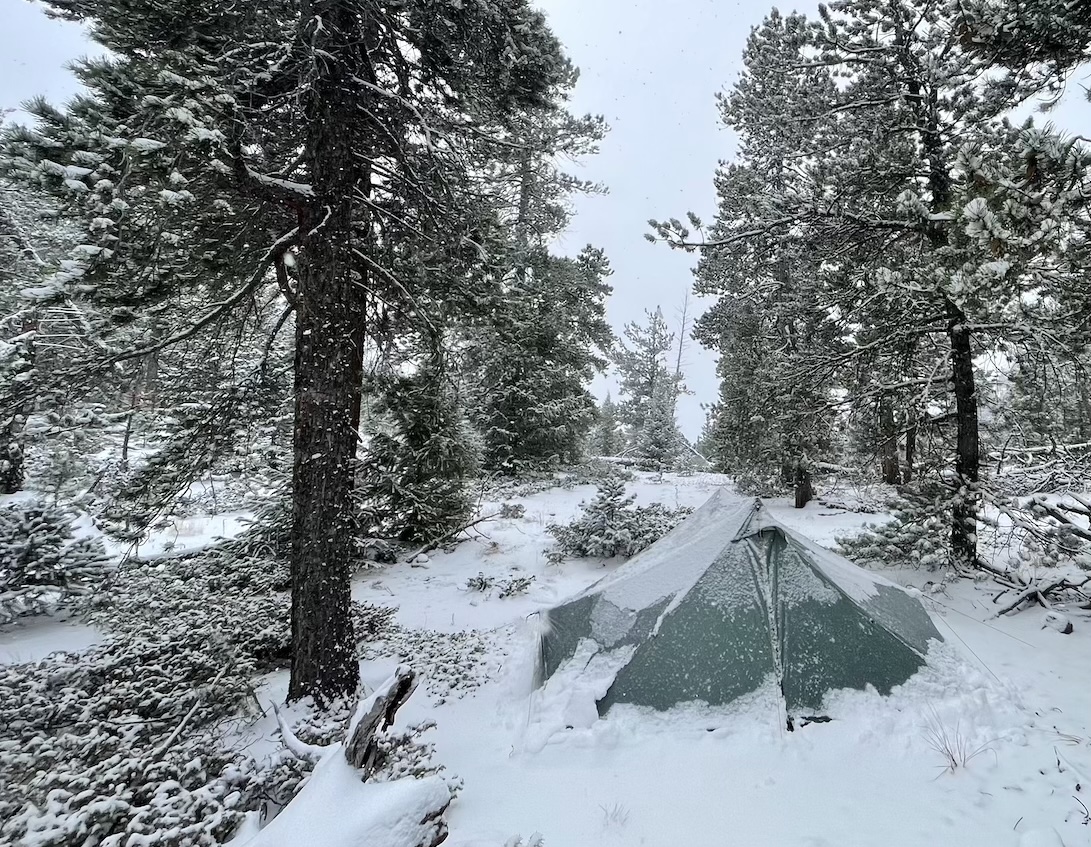
Snow accumulating on the vestibule doors of the Dipole 1 DW.
When I woke again, it was to another whoosh. I unzipped the door to the inner tent a little, peered out, and noticed that a few more inches had fallen. It was snowing heavily. I donned my parka, wrote a few hundred words more, and then felt the urgency to break camp so I could meet Stephanie and Chase at an afternoon rendezvous at an alpine lake in Rocky Mountain National Park.
I packed my quilt and pad, and not wanting to pack up or cook under falling snow, I unclipped the inner tent from the fly and packed it away. This left me with plenty of room under the fly to sit in my chair, cook a hot breakfast, and pack up my gear without exposing myself to the snowstorm.
Escaping the storm under the Dipole 1 DW fly, sans inner.
Finally, it was go time. Everything was in my pack except the tent fly, and I was dressed for trekking in blizzard conditions.
Within two minutes, I had exited the tent, unpitched it, packed it up, and was on my way. I started out wearing spikes but quickly removed them. The temperature was in the high 20s F and snow was balling underneath the crampons. The bare lug soles of my boots would fare much better for the rest of the day.
I staggered down the slippery slope back to the valley where I started my hike, keeping my eye out for bull elk and moose, who are sort of agitated this time of year. When I reached the valley floor and the trail, I moderated my pace to keep my heart rate well below my aerobic threshold. This hike was not to be a training-stress hike, as I was still recovering from the flu that I enjoyed on my last adventure a few weeks ago.
The snow eased up a bit as I crossed a stream and peered into its deep pools looking for trout. I spotted four and instantly regretted not packing my tenkara rod.
As I left the stream, the elevation gain met me. I monitored my watch continuously, to make sure I wasn’t overexerting myself. It didn’t take much for me to slow to a crawl as I climbed. As I watched my pace dip below 1 mph, I reminded myself that I was recovering from illness, and it was OK. Nevertheless, it was demoralizing.
I didn’t take any breaks and just kept plugging along to Rendezvous Lake.
I arrived about a half hour before our meetup time, so I found shelter under a thousand-year-old bristlecone and fetched my stove.
It was late in the day, and I was trying to create new sleep habits, so I made a mocha cuppa with Swiss Miss and decaf, and discovered that it was a new, but immensely enjoyable afternoon drink!
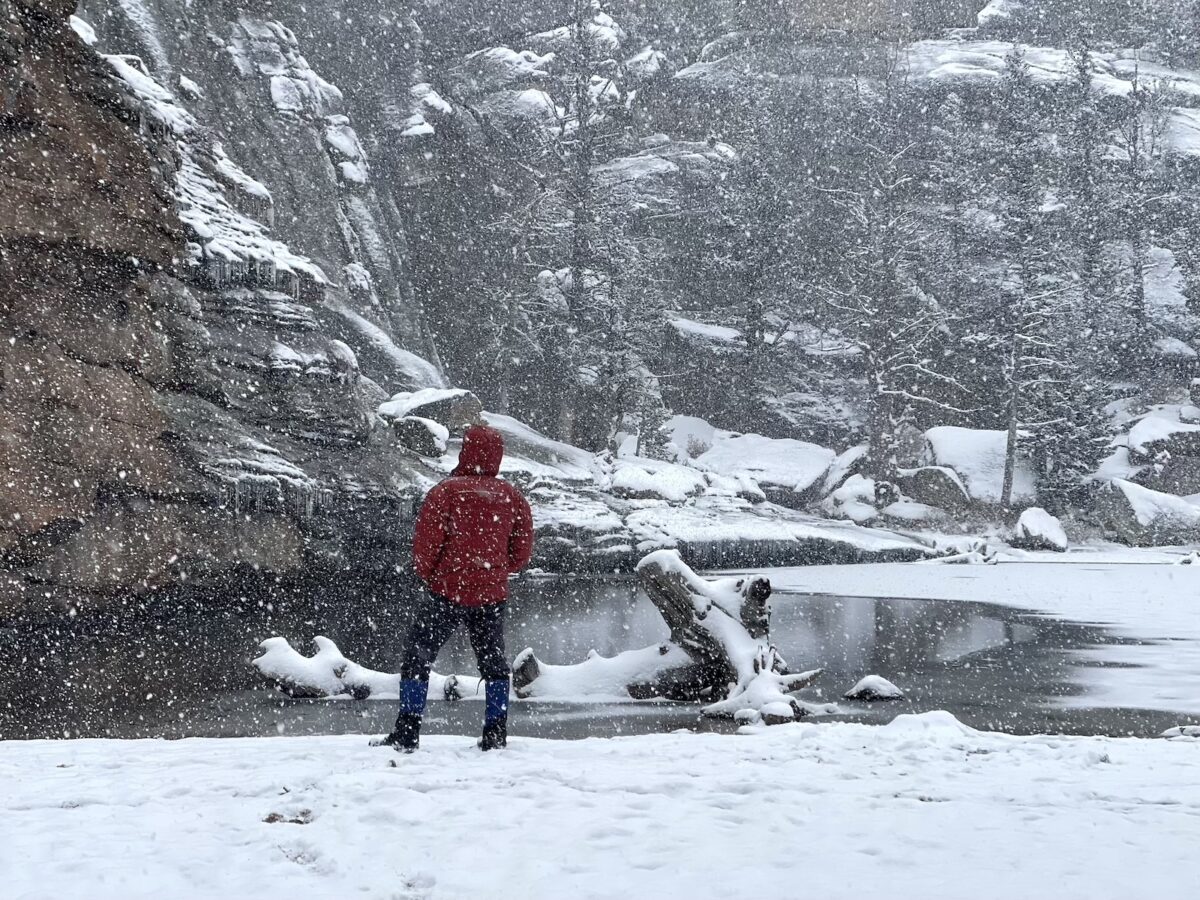
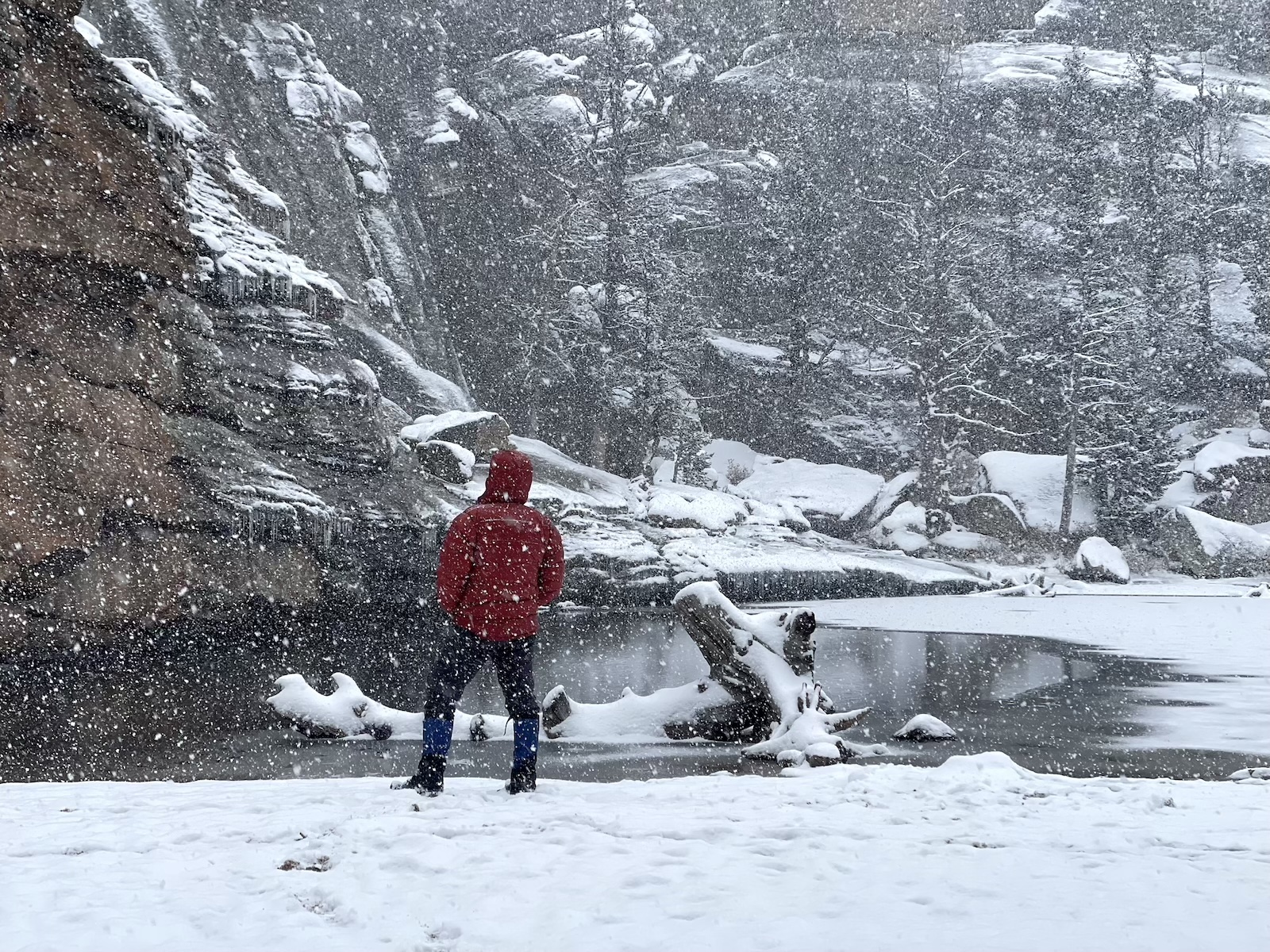
The snow started to fall heavily, so I donned my parka and meditated, alone, towards the small bit of water that remained unfrozen, focusing on the dripping icicles hanging from the rock cliff that framed the lake.
Meditating in the storm at Rendezvous Lake.
I caught some movement out of the corner of my eye to my right and peered through the fog-snow to the other side of the lake, where an apparition was emerging towards the shoreline. We waved at each other. In a few minutes, Stephanie and Chase greeted me and we snapped a few photos.
I was chilled, so I kept my down parka on as I slung my pack over my shoulder. I rarely hike in high-loft insulation, but today, I appreciated being warm and cozy during the final two miles of my hike down to the trailhead.
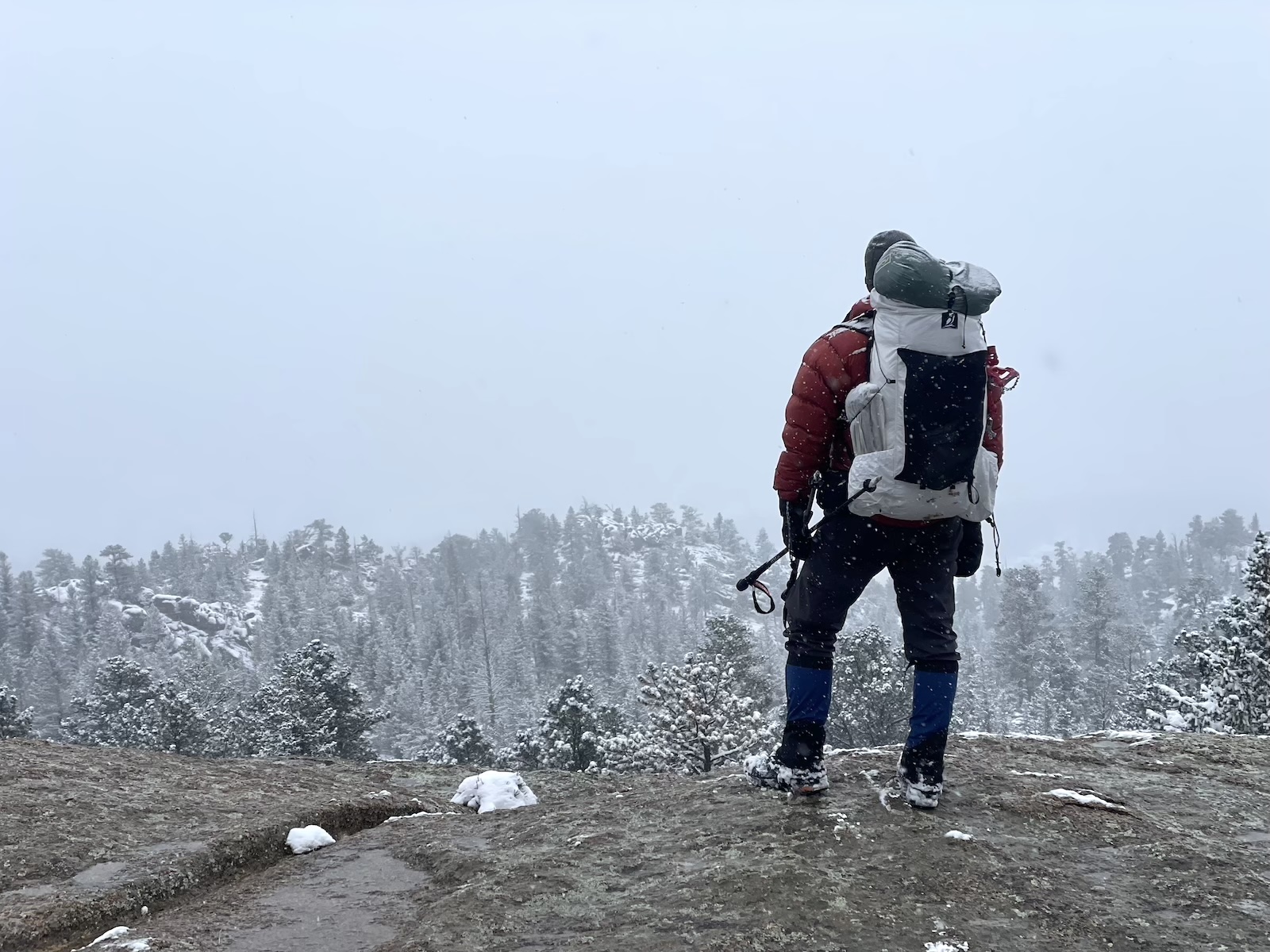
Hiking the last few miles in my parka as the temperature drops.
Gear Notes
Shelter – Tarptent Dipole 1 DW. This trip really hit the sweet spot of comfort for an ultralight double-walled tent. Temperatures a few degrees below freezing, which allowed for temperatures inside the tent to climb to a few degrees above freezing with no condensation inside. Very impressive snow-loading and snow-shedding capability. No deformation of shelter under a moderate snow load.
Sleeping Pad – Nemo Tensor Extreme. Although I appreciate the warmth of this pad in cold temperatures, it’s the stability (and how it translates to comfort for me) that I’m most excited about. A big step up in comfort over the Nemo Tensor Ultralight Insulated pad I’ve been using for the past several years.
Sleeping Bag – Hyperlite Mountain Gear 20 Quilt. Paired with a variety of high-loft winter insulating layers, this quilt is the core of my winter sleep system when I’m spending the night in a tent (and out of the wind) and am not expecting temperatures inside the tent to go below about 5 degrees F. The wide girth accommodates the added loft of my winter parkas and insulating pants.
Pack – Outdoor Vitals CS40. My first trip with this pack. It’s a little small for winter backpacking, but I didn’t have high-volume winter gear on this trip. It features a slim (as opposed to bulbous) packbag, a carbon fiber internal frame, and generously-padded shoulder straps, hip belt, and back panel. Tiny buckles were hard to use while wearing mitten shells.
Parka – PhD Yukon K Hoodie. My torso insulation of choice for temperatures down to about 15 degrees F.
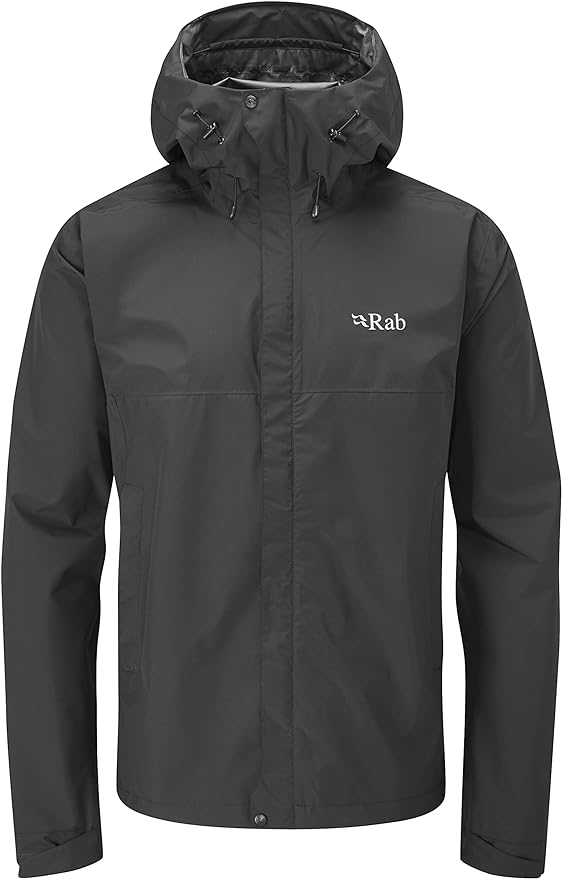
Rain Jacket – Outdoor Vitals Tushar Rain Jacket. Nice fit and the fabric has a durable, stiff hand that makes this feel like a high-end jacket when you first wear it. Lack of ventilation features (tiny pit zips, a small mesh-backed chest pocket, and no ventilation control at the wrist cuffs) make for a clammy affair when working hard. Might be a good option for those who want durability but in a minimalist jacket design that spends most of its time in your pack and works well enough for the occasional rainstorm.
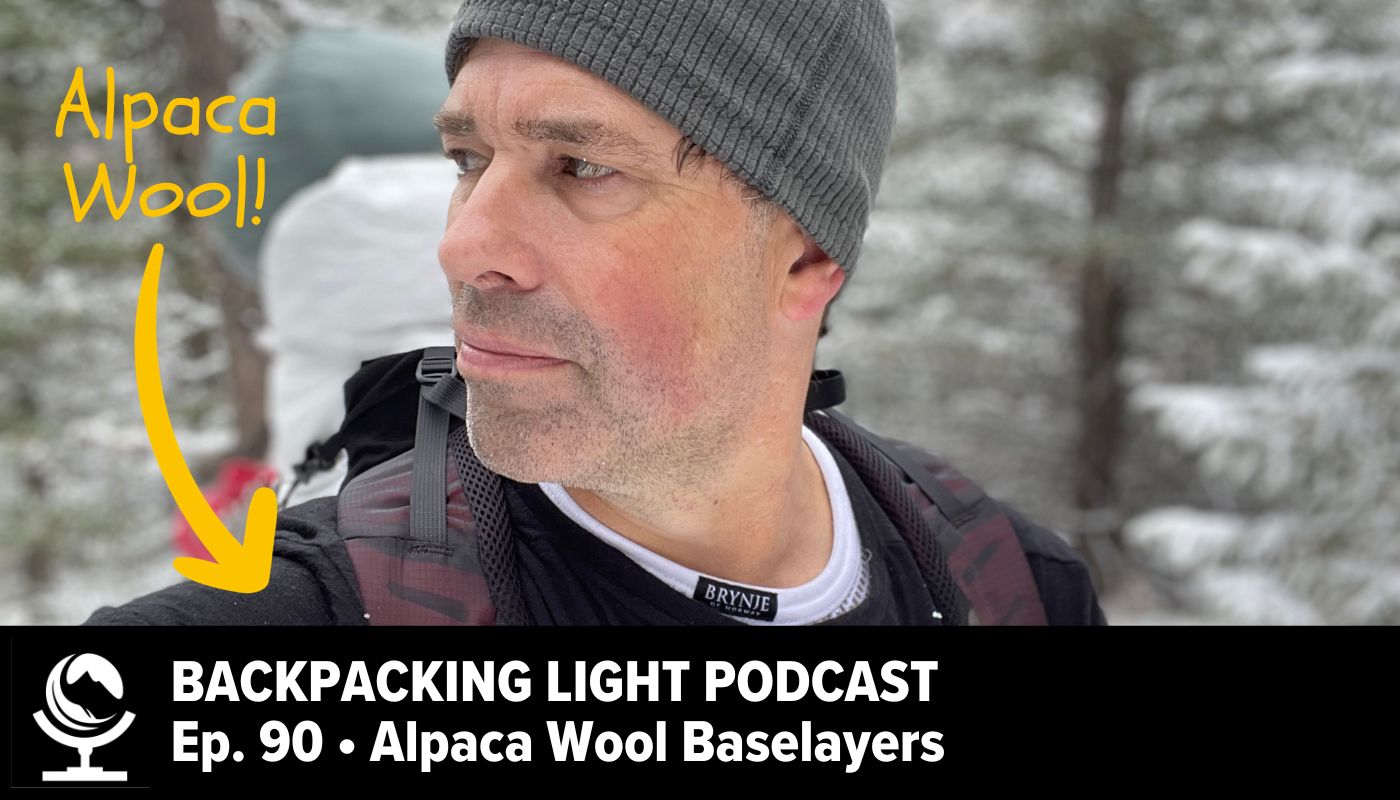
Base Layers – Brynje + Arms of Andes. I’ve been experimenting more with alpaca wool this season, and am finally ready to replace my merino layers with it. It has a slightly higher warmth-to-weight ratio and is more hydrophobic than my merino options. That means I can sense perspiration before it starts to wet out my base layer, which I have a harder time doing with Merino wool fabrics.
Mid Layers – Senchi Designs Alpha 60 Hoodie and Leggings. The warmth-to-weight ratio of Alpha 60 blows my mind. If not for its limited durability, the Alpha 60 Hoodie would be my favorite cool-weather hiking layer (worn over a Brynje fishnet t-shirt). However, I have to relegate this to a mid-layer that I take for cold-weather insurance. I do sleep in both, which makes for luxurious pajamas!
Shoes – La Sportiva Ultra Raptor Mid GTX Wide. The wide forefoot, very lightweight, and terrific traction on snow makes these my favorite boots for mild winter conditions. I sized them two sizes larger than my foot size to accommodate boot-weight hiking socks and a layer of Goretex socks if needed.
Gaiters – Outdoor Research Verglas. More nimble than OR Rocky Mountain High Gaiters, and lighter than OR Crocodiles, the Verglas is what a lightweight winter gaiter should be. It offers durability (Cordura lower) and security (straps instead of cords) that ultralight gaiters can’t provide.
Booties – Goosefeet Gear Down Socks. I bring these when I know low temperatures are going to be well below freezing, and only wear them for sleeping or hanging out in the tent. If the forest floor isn’t too covered with poky litter, I’ll just wear these outside during middle-of-the-night nature calls.
Firestarting Kit – Tinder-Quik + Firesteel. This was the first fire I’ve built in more than a year. I’m glad I still had a tiny firestarting kit tucked away in my “just-in-case” supply bag.
Gloves – Outdoor Research Flurry Sensor. My favorite cold-weather glove. The hydrophobic wool outer prevents light snow from absorbing into it, and the inner fleece liner is cozy. They fit me well and I can perform most tasks while wearing them. Very warm for their weight.
Overmitts – Outdoor Research Revel Shell Mitts. Essential when temperatures drop or I have to hike or deal with the tent or collect firewood in snowy conditions.
Lantern – Black Diamond Moji +Lantern. For 2.6 ounces, it’s a bit of an unnecessary luxury item in an ultralight backpacking kit but provides nice mood lighting both in and out of the tent during the longer nights of the fall and winter seasons.
Dinner – Good To-Go Thai Curry. An outstanding dish, just be careful with the bag zipper while rehydrating!
Tarptent Dipole 1 DW.
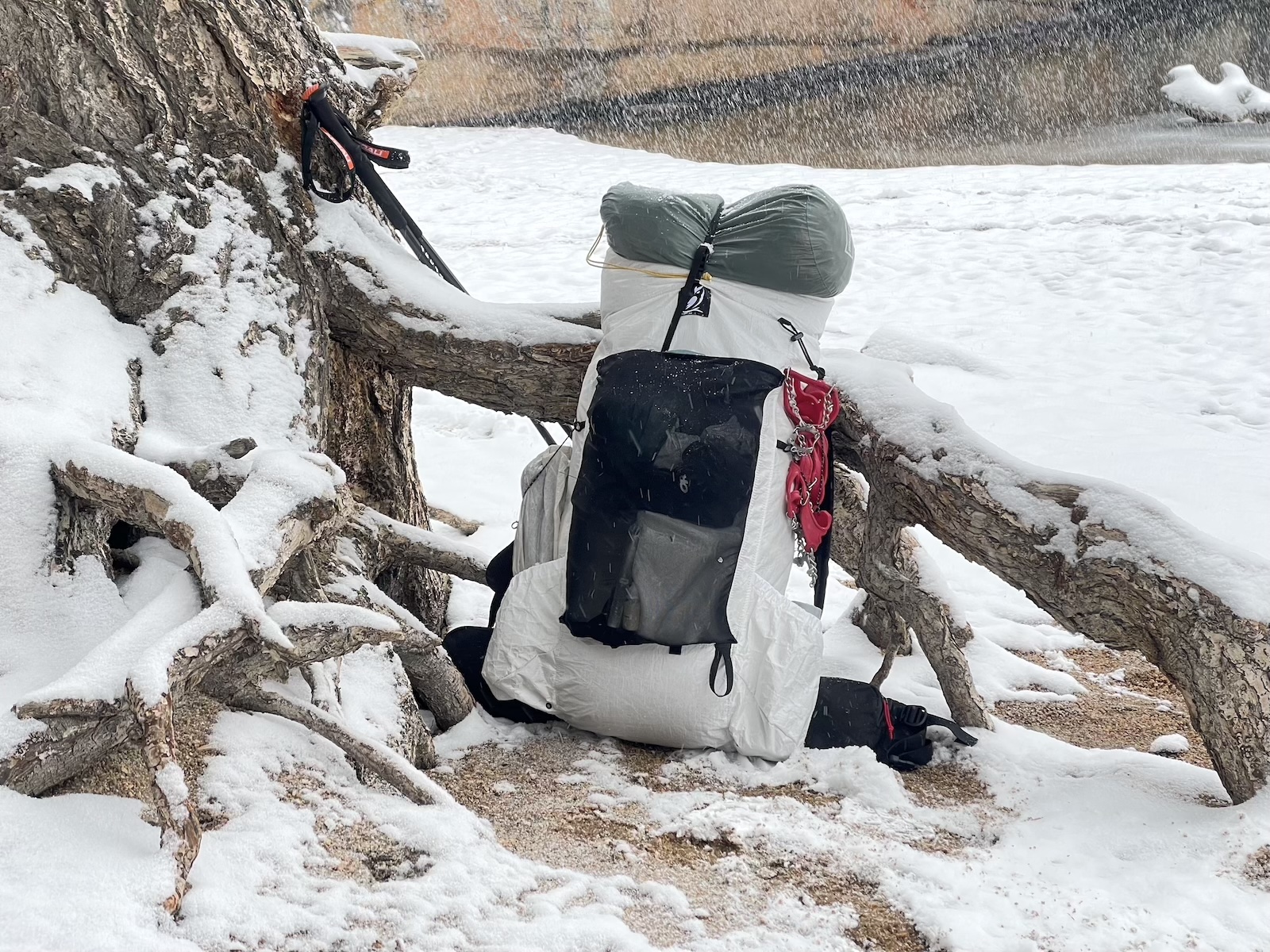
Outdoor Vitals CS40 Backpack.
Curry-stained clothing gets stored here overnight.
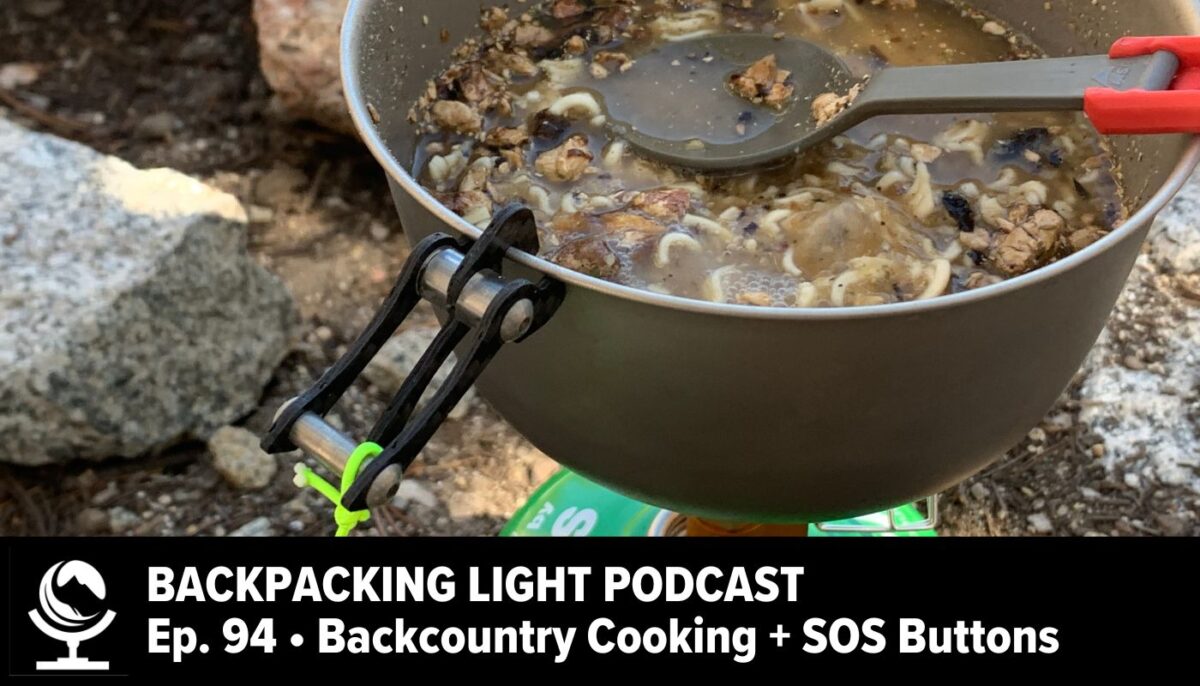
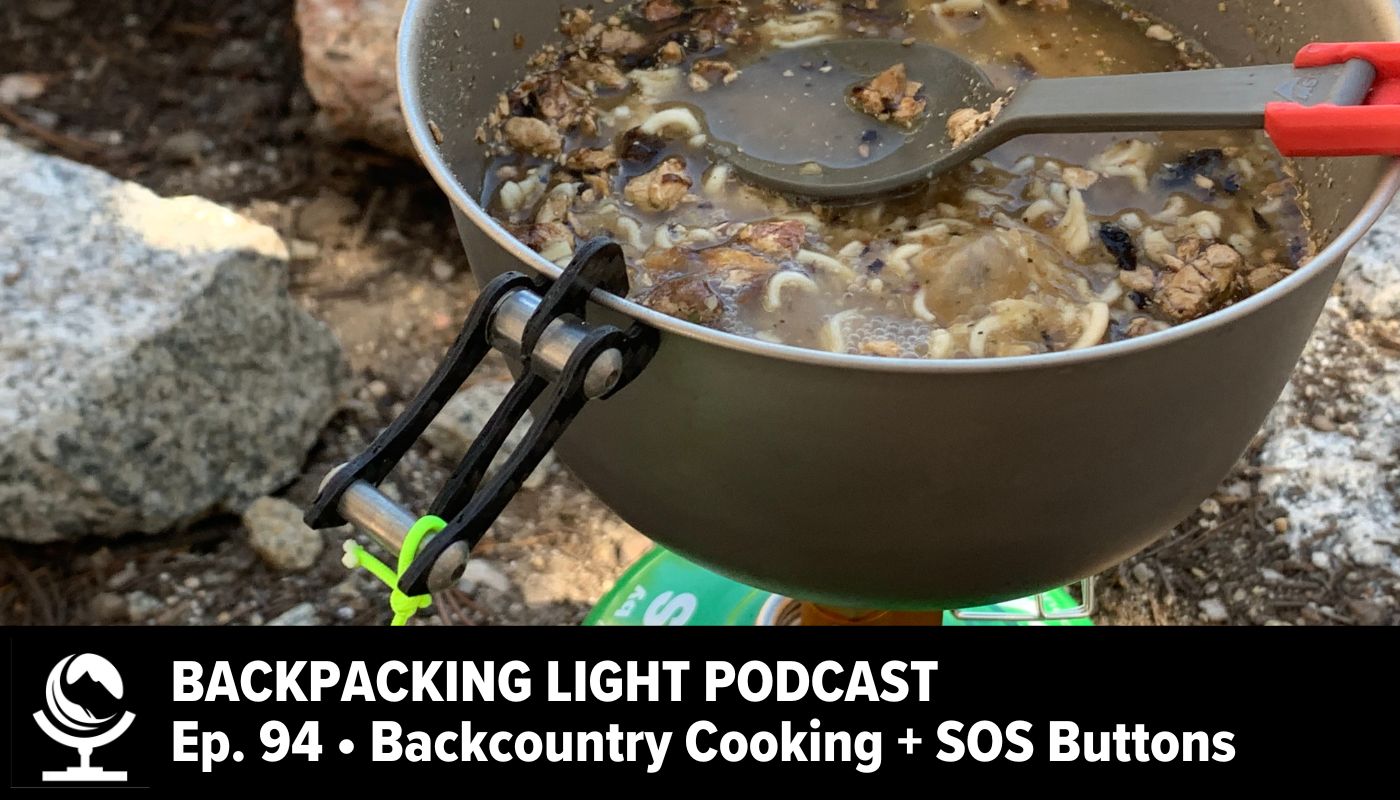
In today’s episode of the Backpacking Light podcast we’re going to talk about pressing the SOS button, as well as gear and best practices for backcountry cooking in ultralight style.
Episode Sponsor: Zoleo
Never worry about ‘no cell signal’ again! ZOLEO connects with your smartphone to provide seamless global messaging that follows you in and out of cell coverage – plus added safety features such as 24/7 progressive SOS alerting and non-emergency medical advice that you can count on! Use code BACKPACKING LIGHT to enjoy a FREE activation ($20 value) on your monthly service plan! Also, receive a free 6-month Gaia Premium membership when you activate your ZOLEO device by January 31, 2024.
In today’s episode of the Backpacking Light podcast we’re going to talk about pressing the SOS button, as well as gear and best practices for backcountry cooking in ultralight style.
In this Episode:
What’s New at Backpacking Light?
Enter the ZOLEO x Backpacking Light Giveaway before December 19 to win a free ZOLEO Satellite Communicator, one year of ZOLEO service, and a Backpacking Light Unlimited Annual Membership.
Watch our latest Office Hours event and learn about how to manage animal encounters in the backcountry.
We announced the dates for Trail Days Online 2024 – February 22, 23, and 24th! Interested in applying to become a speaker? Fill out the application here.
Forum: Rehydrate Meals in Your Pot (featuring Backpacking Light Member Monte Masterson’s idea for lining an eating bowl with aluminum foil to minimize cleanup)
Website: Trailcooking.com (owned and managed by Backpacking Light Member Sarah Kirkconnell)
Executive Producer - Backpacking Light; Show Director and Host - Ryan Jordan; Producer - Chase Jordan; Theme music: Look for Me in the Mountains written by Chris Cunningham and Ryan Jordan, performed by Chris Cunningham (acoustic guitar, lead and harmony vocals, harmonica), Chad Langford (upright bass), and Tom Murphy (mandolin), produced by Basecamp Studios in Bozeman, Montana.
Sponsorship Policy: Backpacking Light does not accept compensation or donated/discounted products in exchange for product mentions or placements in editorial coverage, including any podcast episode content not excplicitly identified as sponsored content. Some (but not all) of the links in these show notes may be affiliate links. Learn more about affiliate commissions, influencer marketing, and our consumer advocacy work by reading our article Stop wasting money on gear.
Our staff selects their favorite hiking, backpacking, and other backcountry gear that they’ve used over the past year – the next edition of our infamous Staff Picks!
Introduction
Each year, our staff selects their favorite backcountry gear from the past 12 months, and we look forward to you sharing your favorite gear of the year as well in the forum comments below!
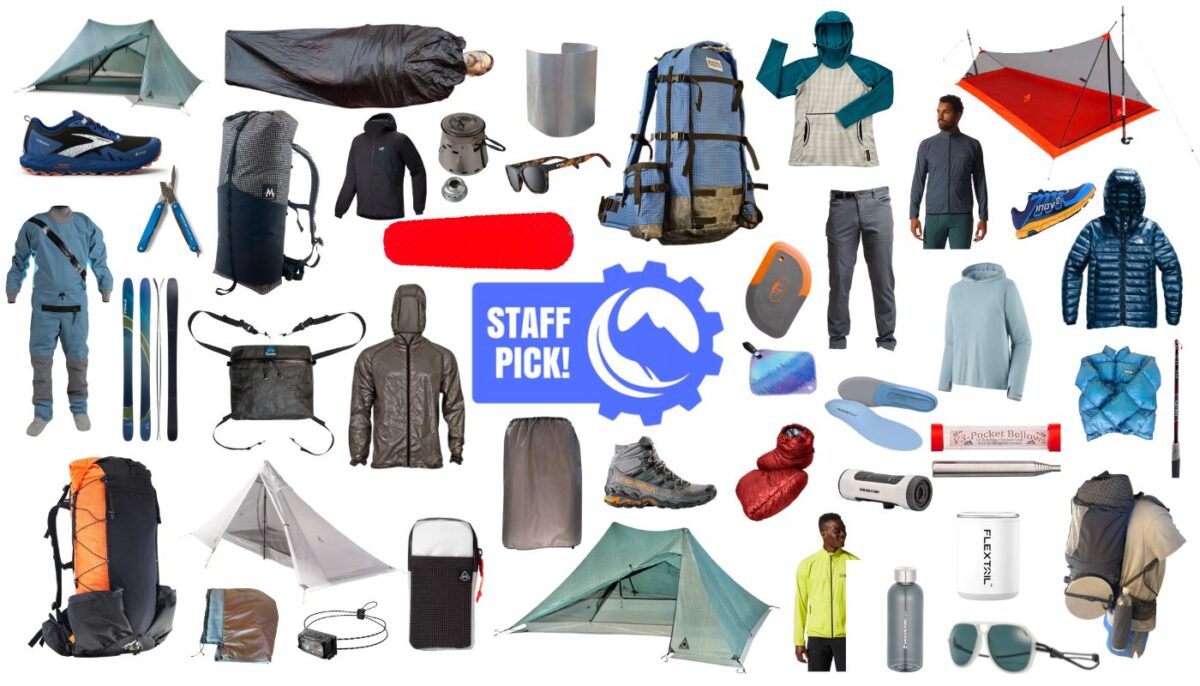
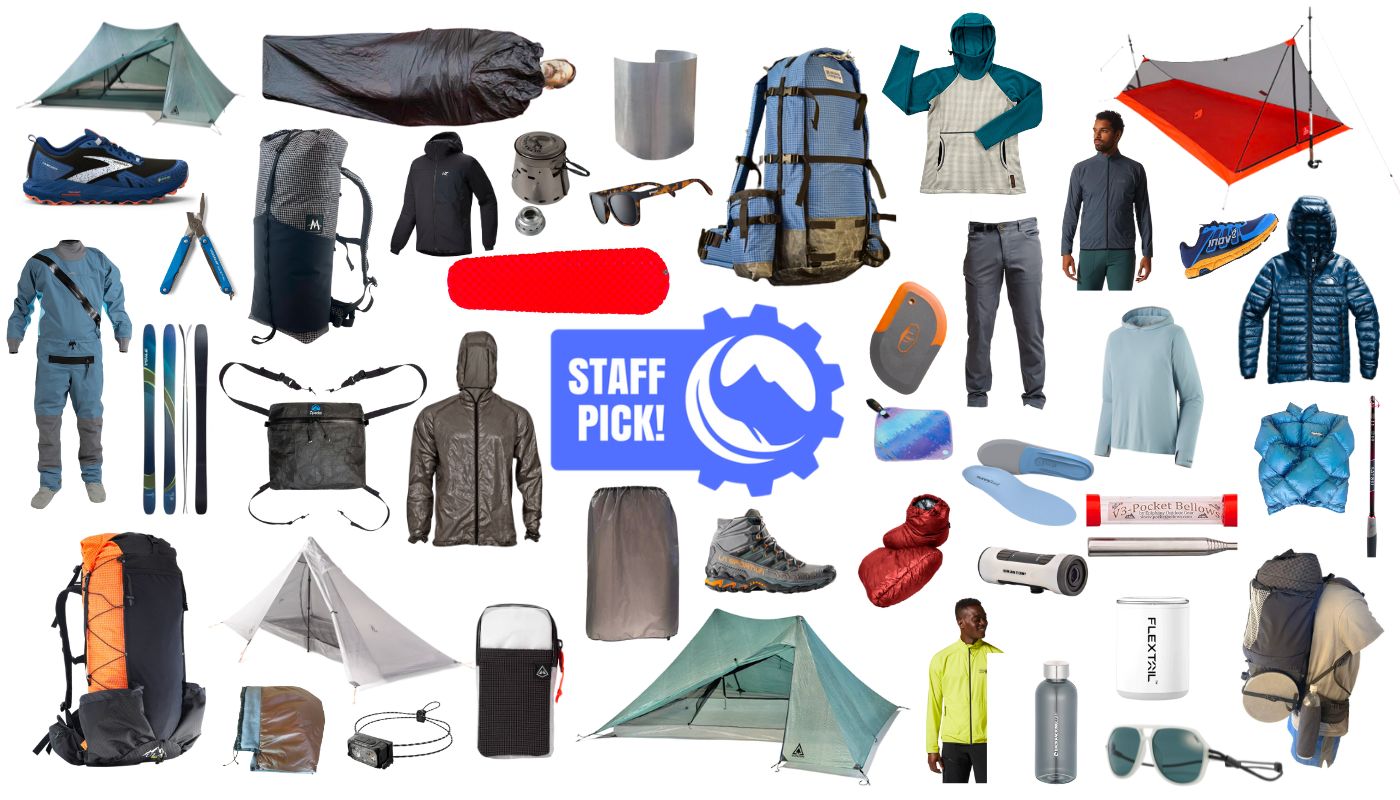
Some of the gear chosen by staff, contributors, and grant recipients. Scroll through the article to learn more.
Our Staff
This year’s Staff Picks contributors are:
Matthew King – Community Moderator
Bill Budney – Contributing Author
Atif Khan – Contributing Author
Jeff de Graffenried – Contributing Author
Chase Jordan – Production Editor
Mark Wetherington – Contributing Author
Isaac Simons – Contributing Author
Drew Smith – Contributing Author
Ben Kilbourne – Contributing Author
Sarah Bennett – Contributing Author
Iago Vazquez – Contributing Author
James Montavon – Contributing Author
Ryan Jordan – Owner/Founder
Stephanie Jordan – Owner/Founder
Stephen Seeber – Contributing Author
Anna Swarts – Instructor
Table of Contents
Table of Contents • Note: if this is a members-only article, some sections may only be available to Premium or Unlimited Members.
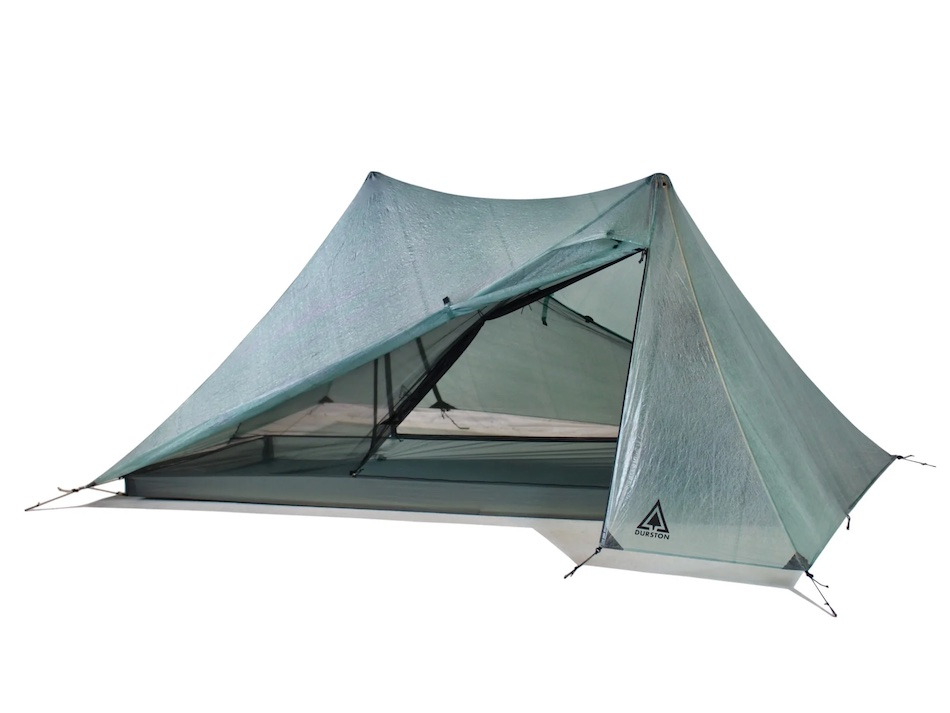
Durston Gear X-Mid Pro 1. Photo Credit: Durston Gear
As close as you can get to a one-size-fits all backcountry shelter. Luxuriously spacious, with ample vestibules and interior storage, the X-Mid Pro 1 boasts a thin and flexible Dyneema fabric that resists absorption during downpours, avoiding the sag and increased weight that such fabrics as silpoly take on with water. For a fully-enclosed trekking pole shelter, you can do no better. – Isaac Simons
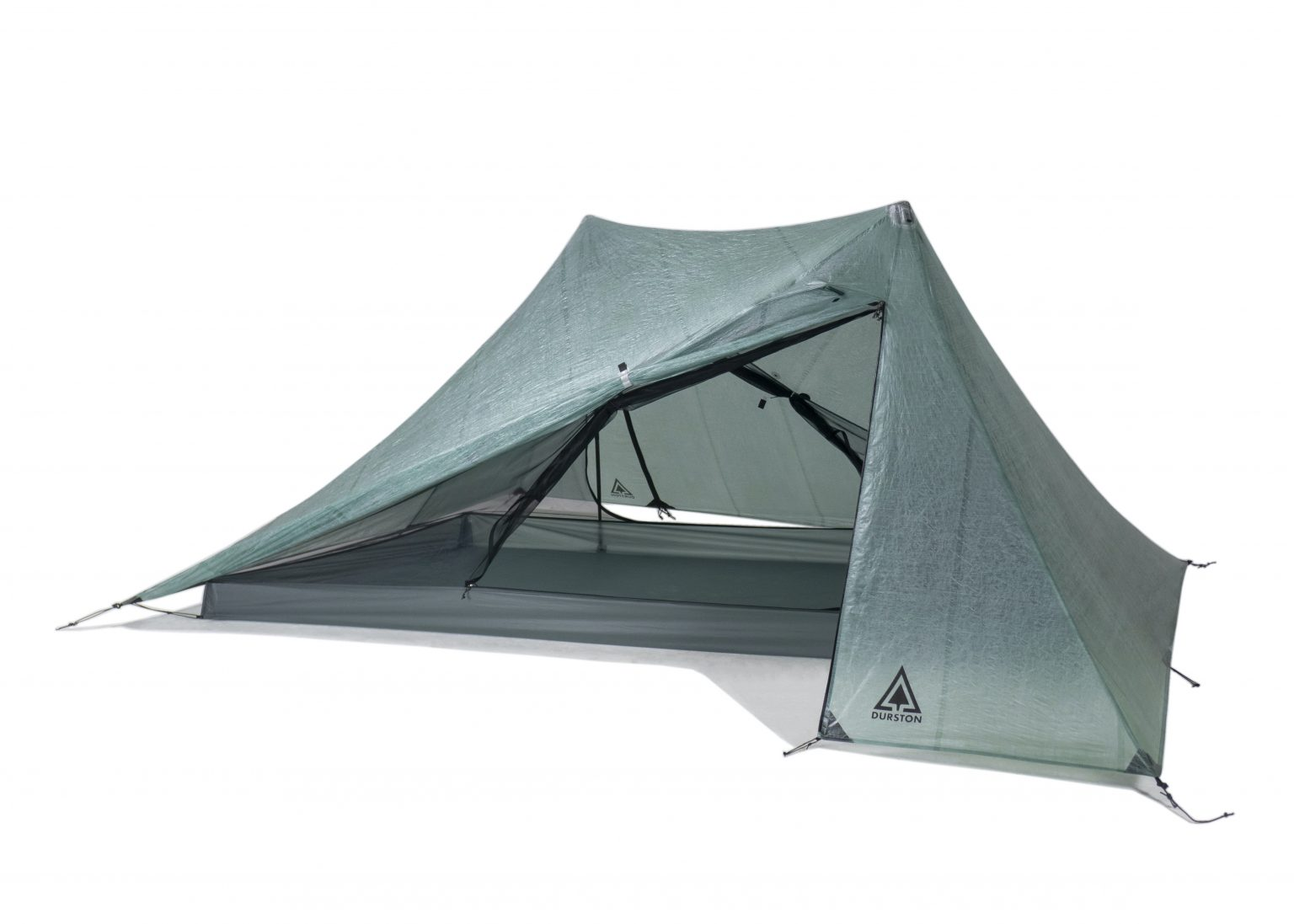
Durston Gear X-Mid Pro 2. Photo Credit: Durston Gear
This X-Mid Pro 2 is about as perfect as it gets for three-season backpacking in the Northern Rockies. Lightweight, roomy even with two people inside, handles storms well, and is easy to set up. I couldn’t be happier with this tent, whether I’m hiking solo or with a partner. – Mark Wetherington
The Hyperlite Mountain Gear Mid 1 nestled next to a high lake in the Colorado Rockies. Photo Credit: Chase Jordan
When I’m choosing my shelters, ease and speed of setup is a key consideration for me – I don’t go on backpacking treks to set up camp, but often to spend time exploring, being inspired, or catching monster trout in alpine lakes. The Hyperlite Mountain Gear Mid 1 found its way into my backpack several times this year because of how easy it was to set up, with the integrated inner staying dry when pitching it in stormy conditions while providing added comfort during mosquito season. This is by far my favorite integrated shelter for these reasons – and I expect it to be one of the primary shelters I’m using for years to come. – Chase Jordan
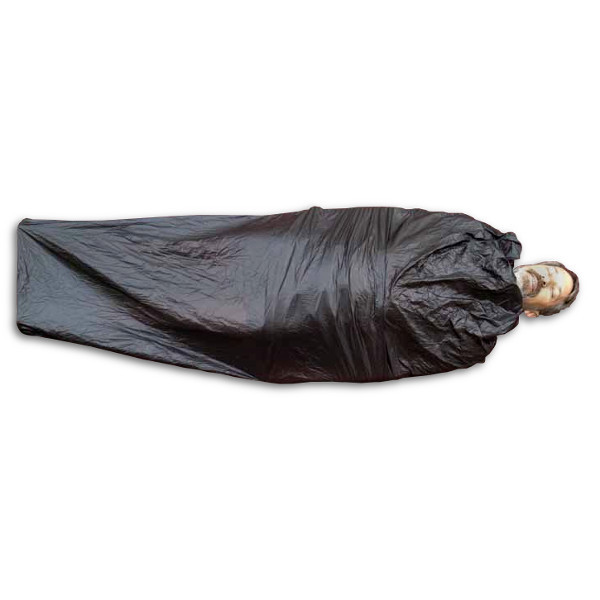
MLD markets the Mountain Laurel Designs Sleeping Bag Liner as a bag liner, but I find it to be an excellent minimalist bivy sack. It weighs in at 3.0 oz (85 g) and has no hood and no zippers. It is just a tapered cylinder of 10D nylon with a drawstring opening at the top. Despite this lightweight and simplicity, the liner does a number of things for me. It keeps drafts out of my quilt. It adds a few degrees of warmth. It is not waterproof, but is water-repellent enough to keep dew at bay when cowboy camping, and to stop rain splash when tarping. It keeps mosquitoes and ants off my body. It can be used as a lightweight bag on warm summer nights. Despite the lack of a zipper, I find it easy enough to pull down and exit from when nature calls. It lacks a hood, but the hood of my windshirt works just fine in that capacity when needed. Being a bag liner, it is cut slimmer than a true bivy sack: 54 in /140 cm circumference at the shoulder. Most bivys are > 70 in /175 cm. At 165 lbs/75 kg with a 20° F/-8° C quilt, I find it plenty roomy. If you are much larger or are using a warmer bag, you could find it too small. But if the MLD bag liner is not too small for you, it provides most of the functions of a true bivy sack for minimal weight and expense. It is very much worth considering as an addition to your sleep system. – Drew Smith
Sea to Summit Comfort Plus Insulated Air Sleeping Mat. Photo Credit: Sea to Summit
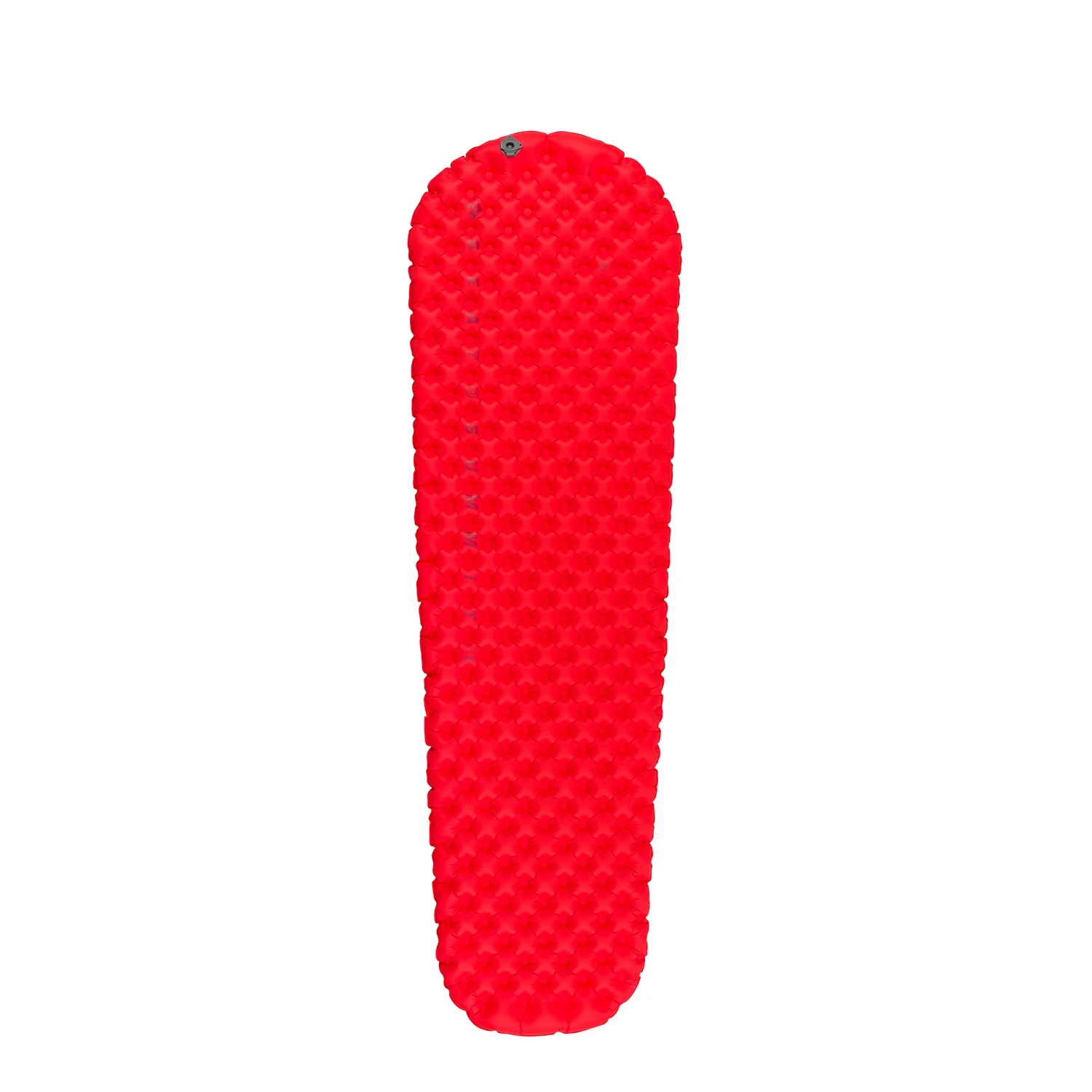
If your sleep system is preventing you from enjoying backpacking, the Sea to Summit Comfort Plus Insulated Air Sleeping Mat is the pad to get. I’m a female side sleeper that’s prone to lower back pain, and I have slept on this pad for weeks at a time without any back spasms. The trick is to overinflate the bottom and under inflate the top, so that one’s hips can sink into the pad without hitting the ground. At 29.8 oz, it’s on the heavier side for a backpacking mat – but as someone who needs the back support, the extra weight is absolutely worth it. – Sarah Bennett
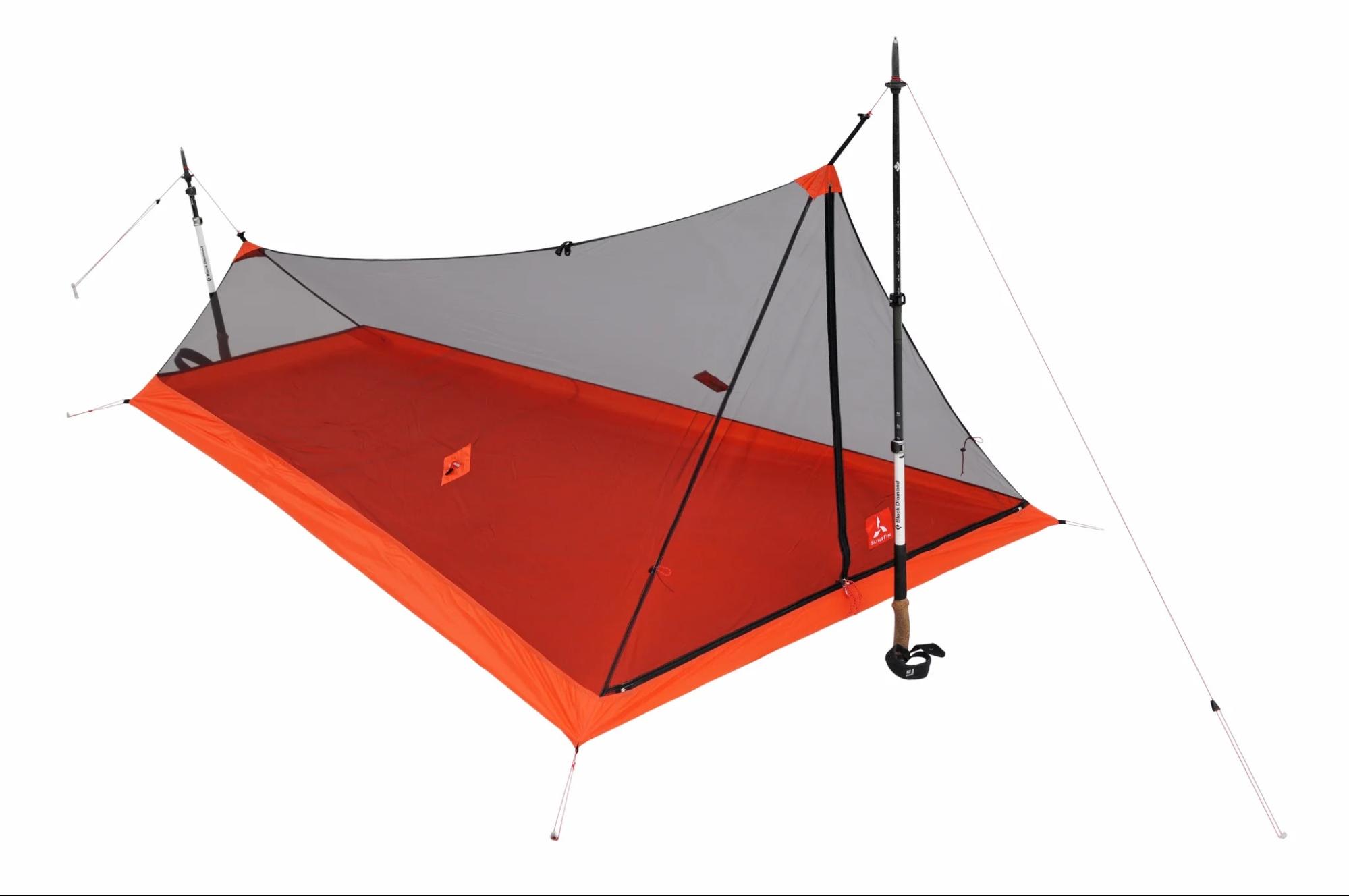
I purchased the SlingFin SplitWing Mesh Body as a standalone piece for my hike through Majete National Park in Malawi. I cowboy camped and needed an ultralight net in case there were mosquitos. There were, and this shelter worked great. It is ultralight, packs super small, and when others were swatting at mosquitoes all night, I was piecefully enjoying the view of the stars through the net. As a bonus, I can also use it with my HMG flat tarp too. – Jeff de Graffenried
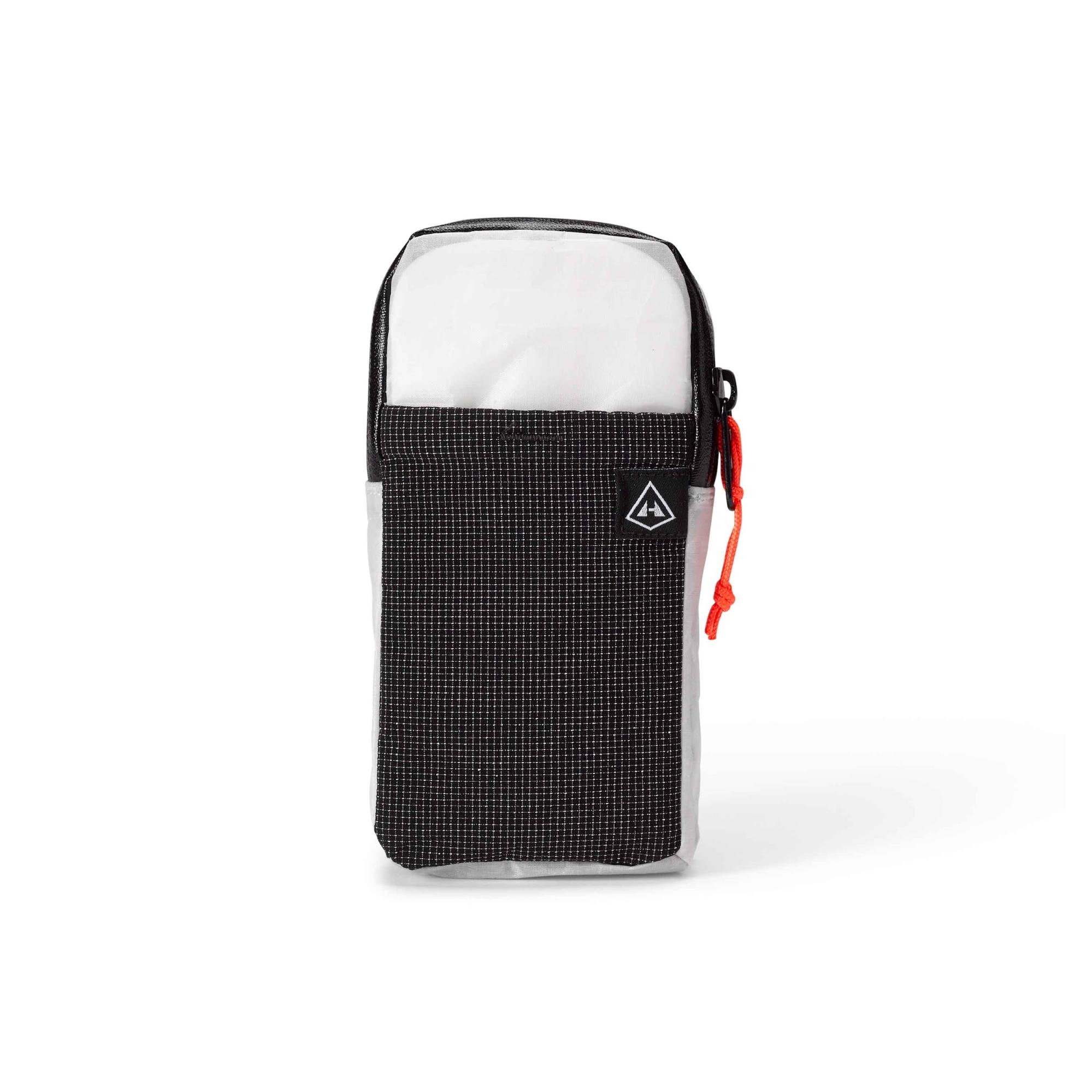
This item is so useful, I wore out the first one and had to replace it. This lightweight, waterproof pocket can hold two phones (if packed tightly together), and a recharger cord, etc. in the outside mesh pocket. It is durable, adjustable and I have found it an essential piece of gear. – Jeff de Graffenried
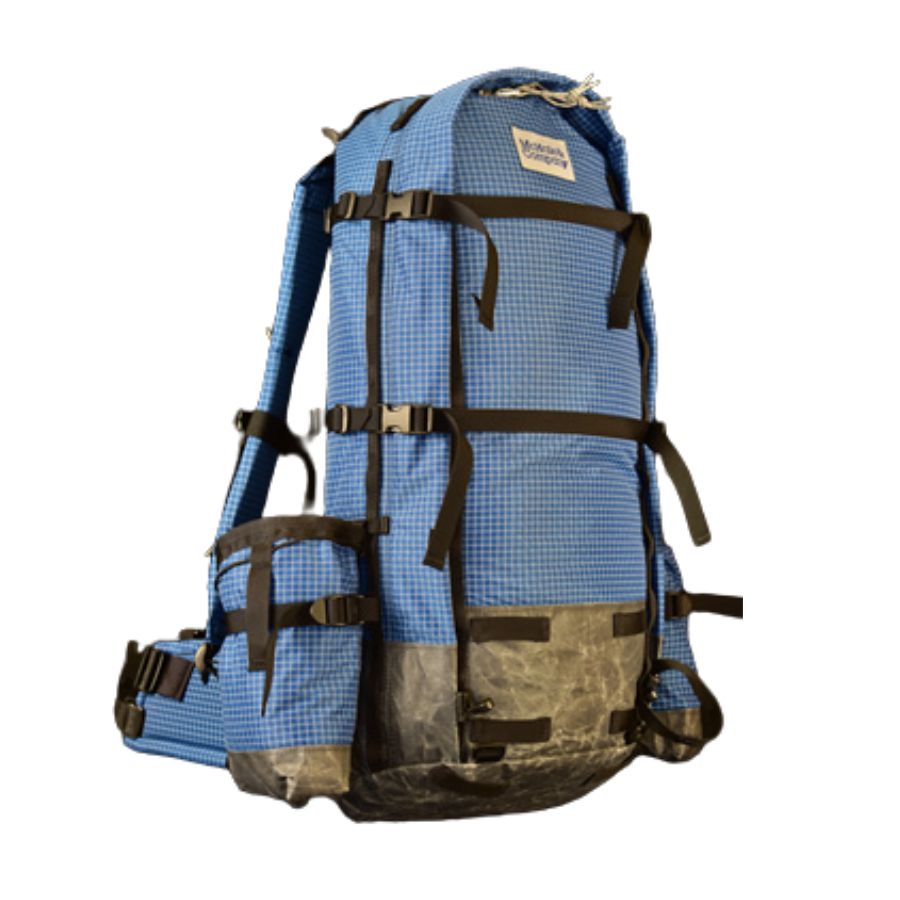
After owning several packs over the decades, I have settled on a custom-fitted McHale. This 1.9 lb internal frame works as a 50 L pack for weekend walks and expands into a 100 L desert crosser for 70 lb water and food hauls. – Atif Khan
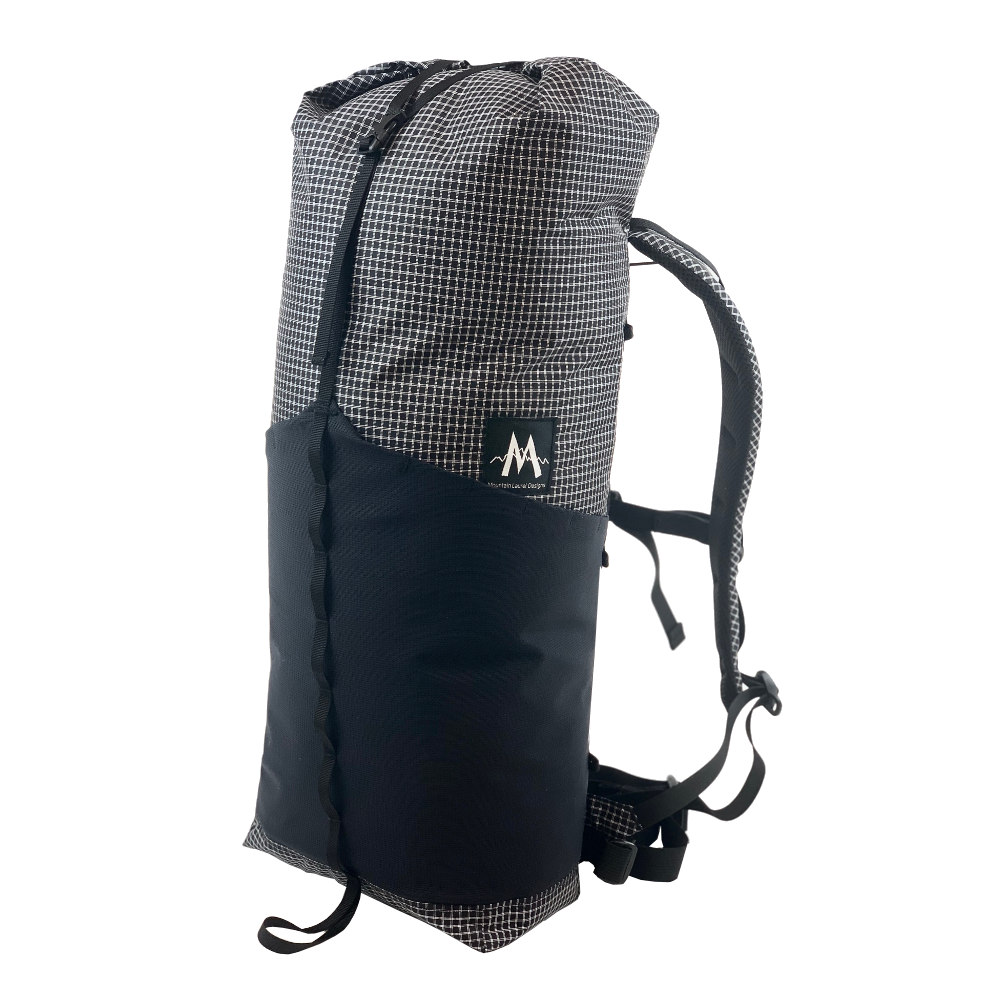
I think MLD makes the best shoulder straps in the business. The size of this pack is great for day hikes and has room for use as a light travel pack or for lighter overnight trips in the woods. The stretch wraparound exterior pocket is a great solution for flexible storage on the go. I thought I might not like having everything in one big pocket but it’s great for water bottles, snacks, a collapsed trekking pole or shell. – Matthew King
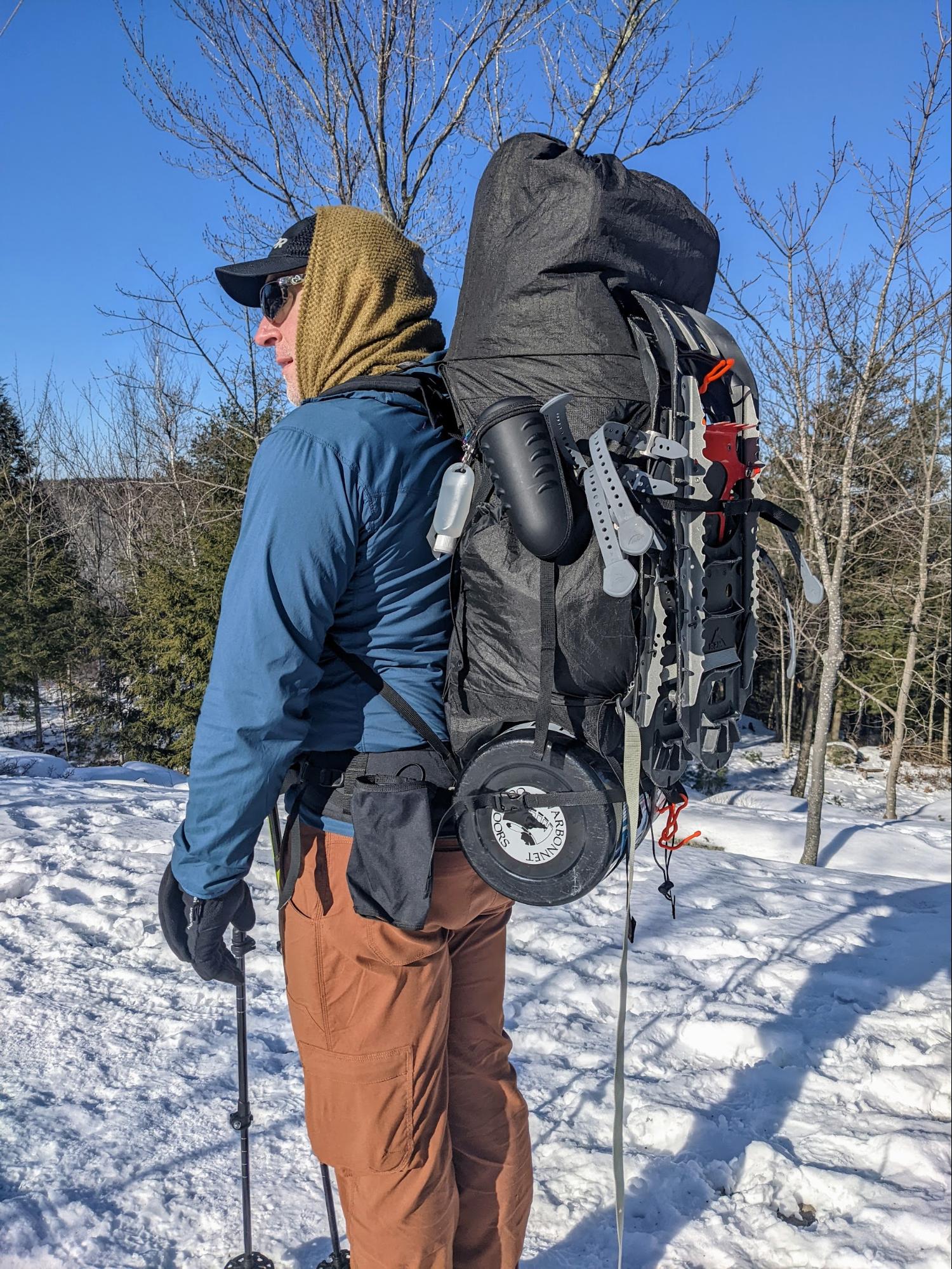
Iago Vazquez wearing his Nunatak Bears Ears Backpack on a snowy day. Photo Credit: Iago Vazquez
Backpacking in areas where bear canisters are required, the Nunatak Bears Ears line of packs provides comfortable “outside the pack” carry. I have carried up to 35 lbs in the pack without any discomfort. Additionally, this canister attachment option does not interfere with accessing the rest of your gear as opposed to lashing the canister to the top of your pack or placing it inside your pack. And finally, the water bottle pockets are highly accessible without interfering with hipbelt pockets or side pockets. – Iago Vazquez
Stephanie Jordan wearing her ULA Ohm Backpack next to Chase and his HMG Northrim Backpack. Photo Credit: Ryan Jordan.
Unlike most Ultra-fabric packs, the ULA Ohm’s ripstop is highly water resistant. My gear survived torrential rains during a summer backpacking trip into Rocky Mountain National Park this summer – without a pack liner. Fine fit adjustments and a supportive but pliable frame make this one of the most comfortable packs I’ve worn, given my spondylolisthesis. – Stephanie Jordan
Learn more about the ULA Ohm Backpack in the Backpacking Light Gear Shop.
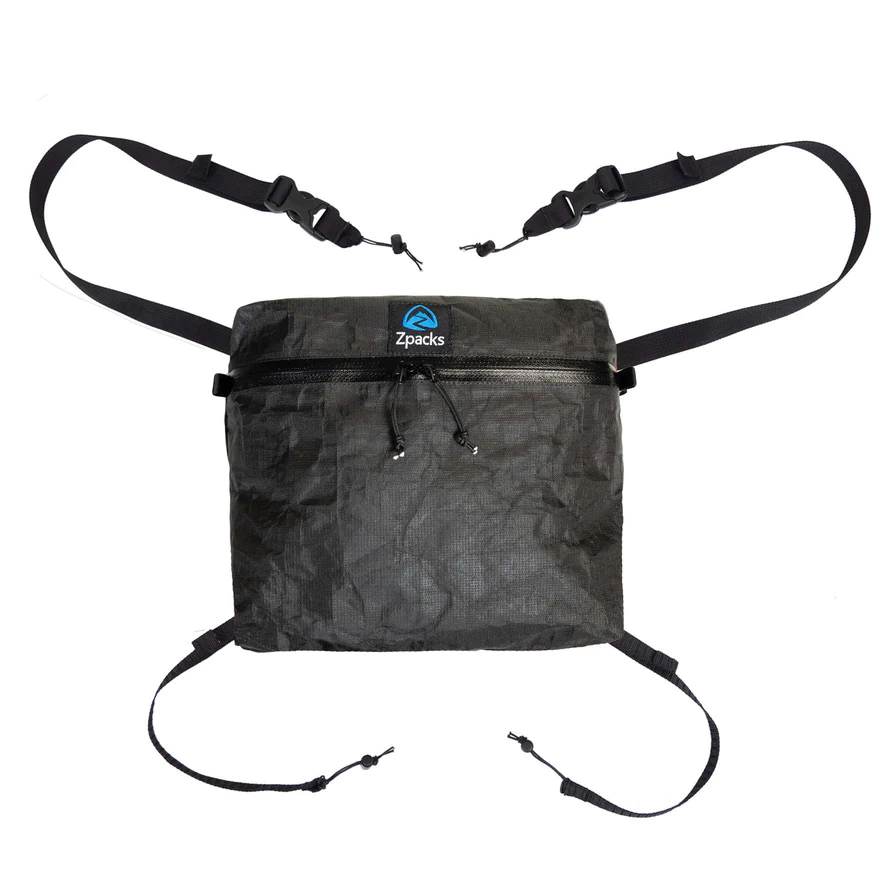
It is invaluable to keep a number of small pieces handy. I had no problem attaching the Zpacks Ultralight Multi-Pack to other brands of packs as long as the shoulder straps had some loops or daisy chains. Initially, I was clipping all four points, but eventually, I just decided to attach two on one side and the top one on the opposite side. This simplifies putting the backpack on and taking it off. – Iago Vazquez
James wearing hisArc’teryx Proton LT Hoody during a beautiful mountain evening. Photo Credit: James Montavon
The Arc’teryx Proton LT jacket has been my favorite in the past year because it has a very large range of comfortable temperatures and activity levels. On warmer and drier trips, this is my only extra layer, replacing both a fleece and a rain jacket; on colder or wetter trips, it layers well with other gear and keeps me comfortable without sweating. – James Montavon
The Enlightened Equipment Copperfield Windshirt is a super ultralight 2 oz windshirt that squishes to the size of a tennis ball in my pack. I carry this in the Summer just in case. Extremely high MVTR and moderate CFM for an excellent balance of breathability and wind resistance. – Bill Budney
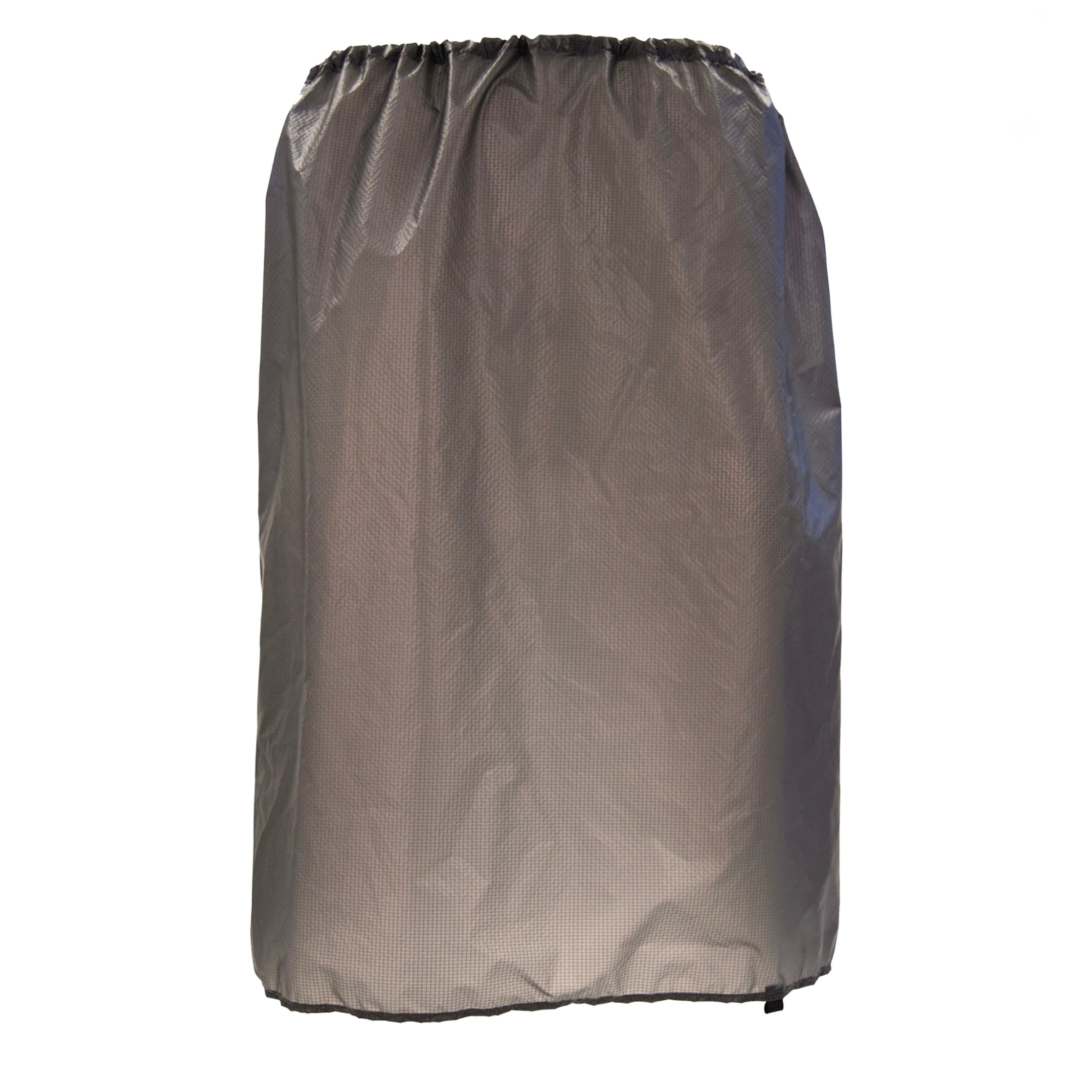
Looking like a cross between a shopping bag and a kilt, this nifty piece of kit carries the dual benefits of keeping your base weight low while enabling you to reenact your favorite scenes from Braveheart. If you’re a lightweight hiker who favors shorts over pants and quick-drying trail runners over boots, the rain wrap serves as a perfect compliment, covering that portion which would become waterlogged while hiking through rain and nothing more. – Isaac Simons
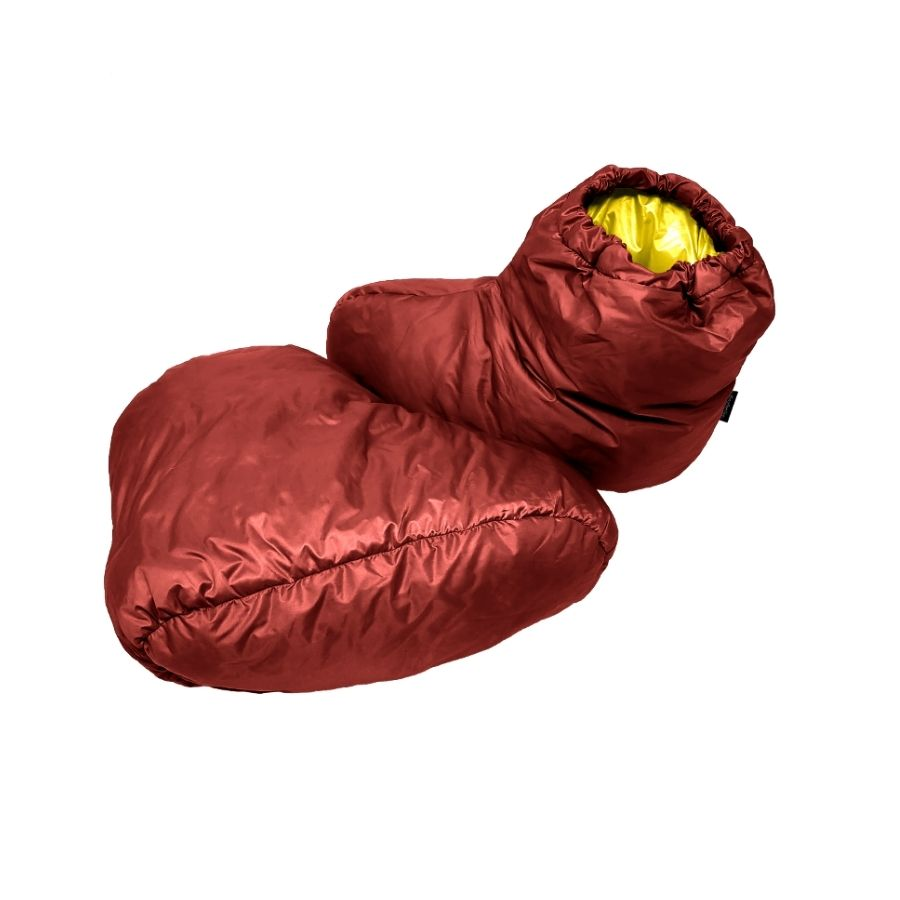
These were a real surprise. I purchased them to try out and to keep my feet warm on the trail. They do that wonderfully, but they are so comfy I wear them at home too. Who knew my feet had been looking for these little gems. As a bonus and with the elastic ankle band, they essentially disappear when packing. Stuff them into your sleeping bag/quilt so they are there when you need them, or into one another, or a tiny stuff sack, like the one provided by GFG. Either way they pack down so small you will not even know they are there. – Jeff de Graffenried
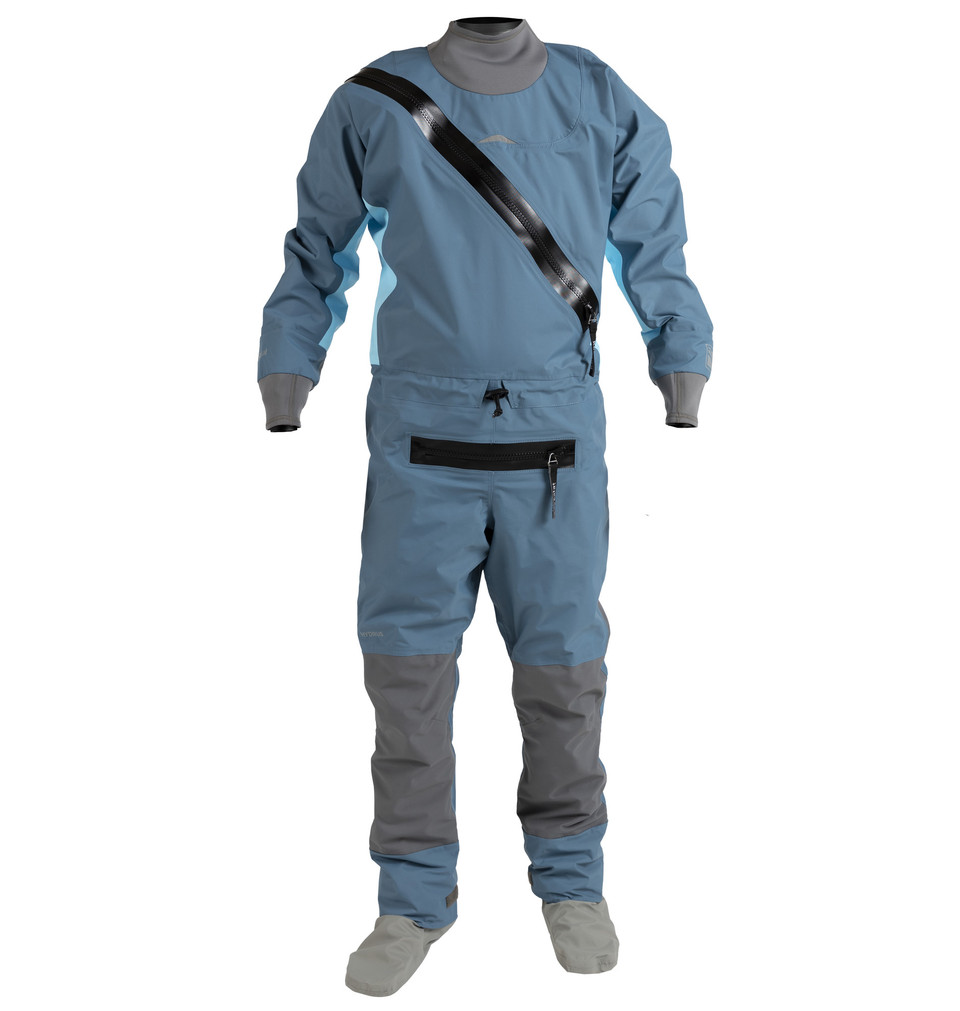
Kōkatat Swift Entry Dry Suit. Photo Credit: Kōkatat
Solid protection from cold air and water in a 2+ pound package. This light drysuit seems ideal for UL folks who are hiking a bunch just to get to the river. They make a version with socks, but I prefer the versatile no-sock version because it allows me to wear my hiking shoes on the river. Layer an alpha fleece underneath to stave off the Covid chills when paddling through remote parts of Alaska. – Ben Kilbourne
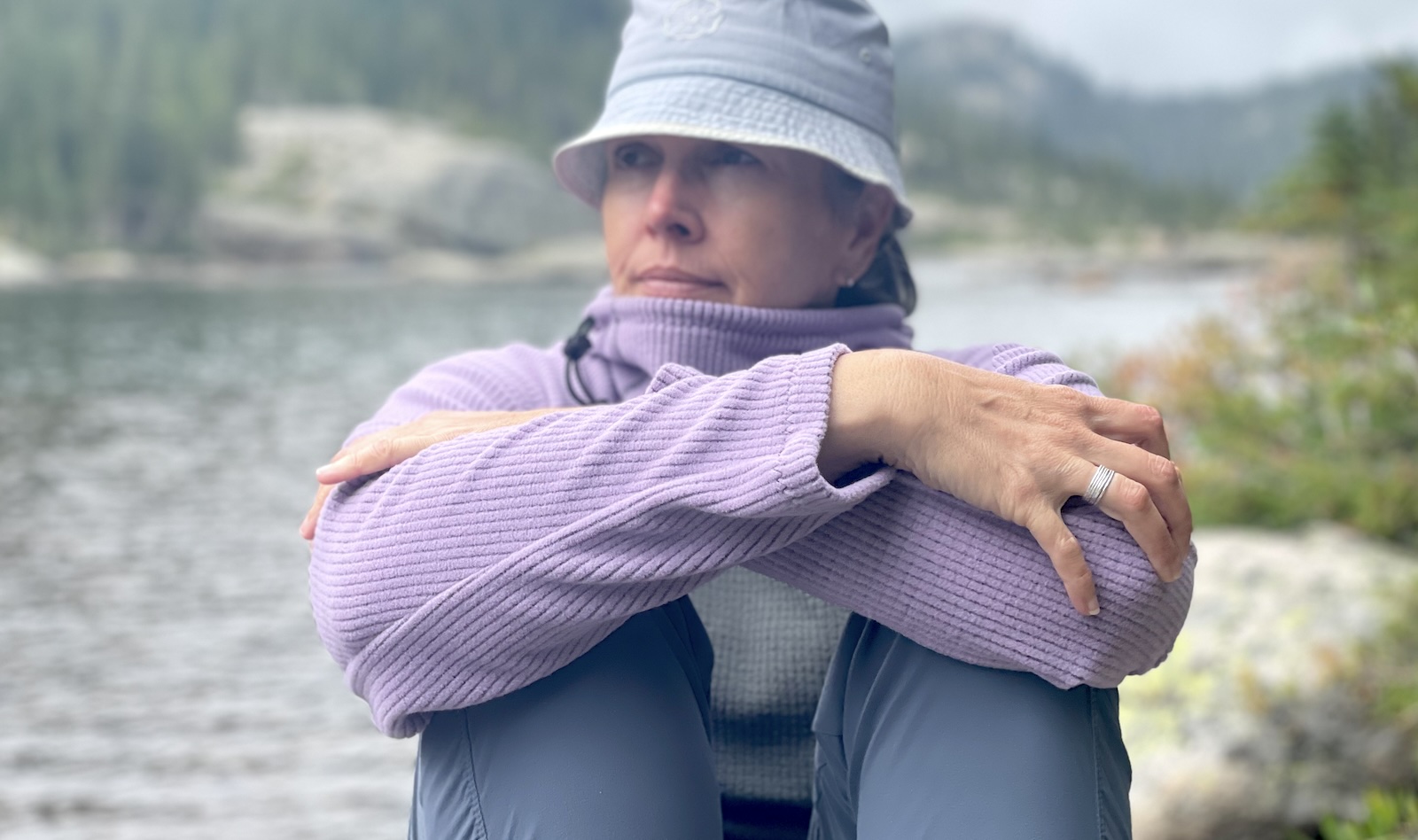
Melanzana is famous for long wait times and a purchasing process that requires scheduling in-person appointments months in advance at their Leadville, CO store. We happened to drop in one day, and I found a Melanzana Micro-Grid Hoodie in my size and color on their (small) rack of “in-stock” items. My favorite features are the high-rise neckline, hand-warming kangaroo pocket, long length, breathable grid fleece, and the fact that this incredibly successful company employs dozens of people in a tiny mountain town. – Stephanie Jordan
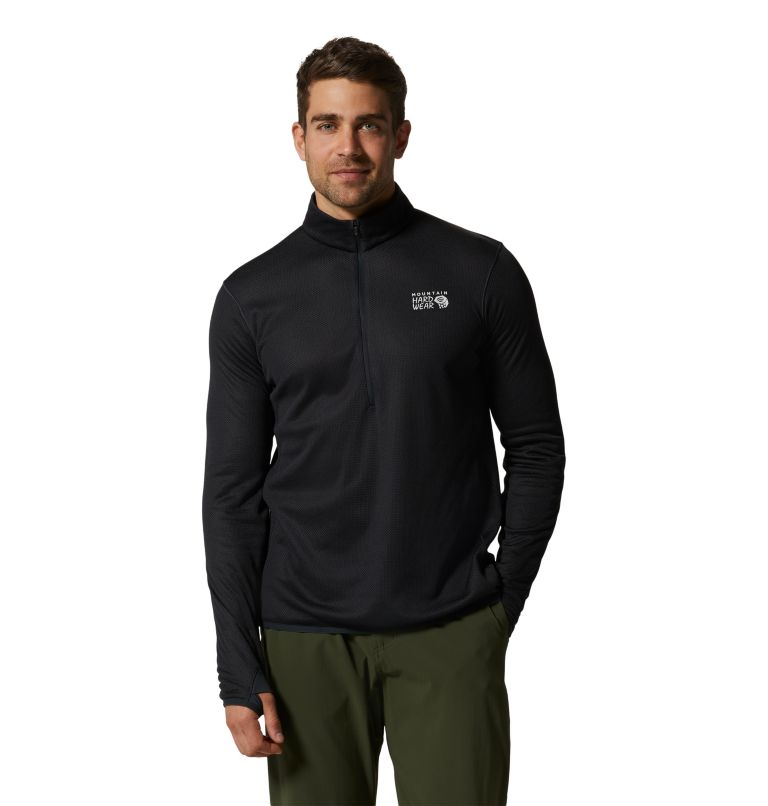
I’ve been wearing the Mountain Hardwear Airmesh Half-Zip everywhere. Looks great around town and performs well in a wide variety of conditions on the trail. I prefer the zipper for dumping heat when it gets too warm, and don’t need yet another layer with a hood. I might also like a Senchi Designs Alpha 90 Crewneck with Half Zip if I could get one (for most of the same reasons). – Bill Budney
Mountain Hardware Kor Airshell Full Zip Jacket. Photo Credit: Mountain Hardware.
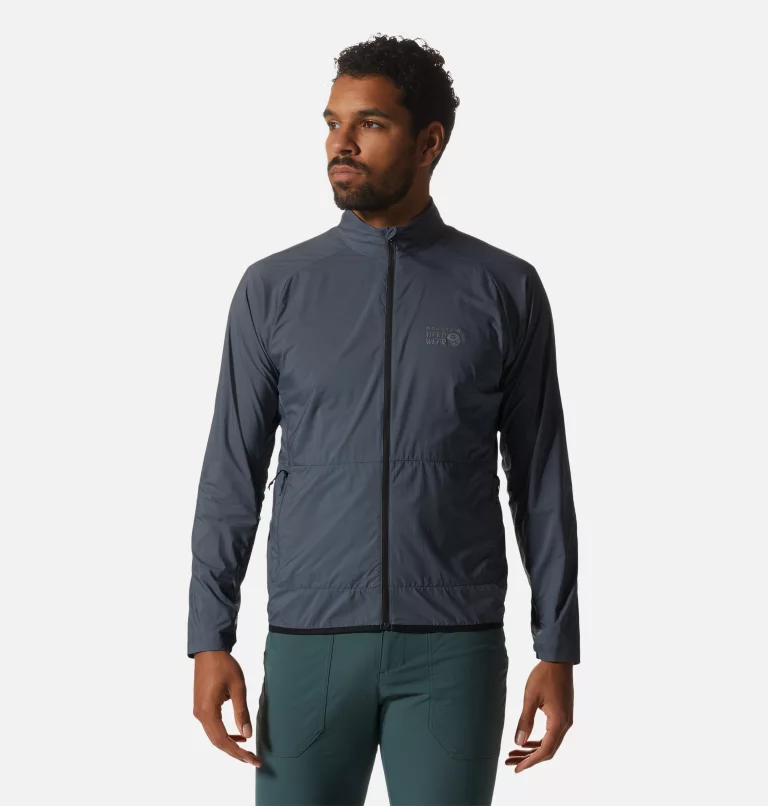
The Mountain Hardware Kor Airshell Full Zip Jacket is perhaps the best lightweight windshirt this year. Made of Pertex Quantum Air, it has extremely high MVTR and moderate CFM: The ideal combination for excellent balance of breathability and wind resistance. Weighs 5 oz, which is 2 oz less than the Black Diamond Alpine Start (which I also like). – Bill Budney
Anna Swarts wearing her North Face Summit L3 Down Hoodie. Photo Credit: Anna Swarts
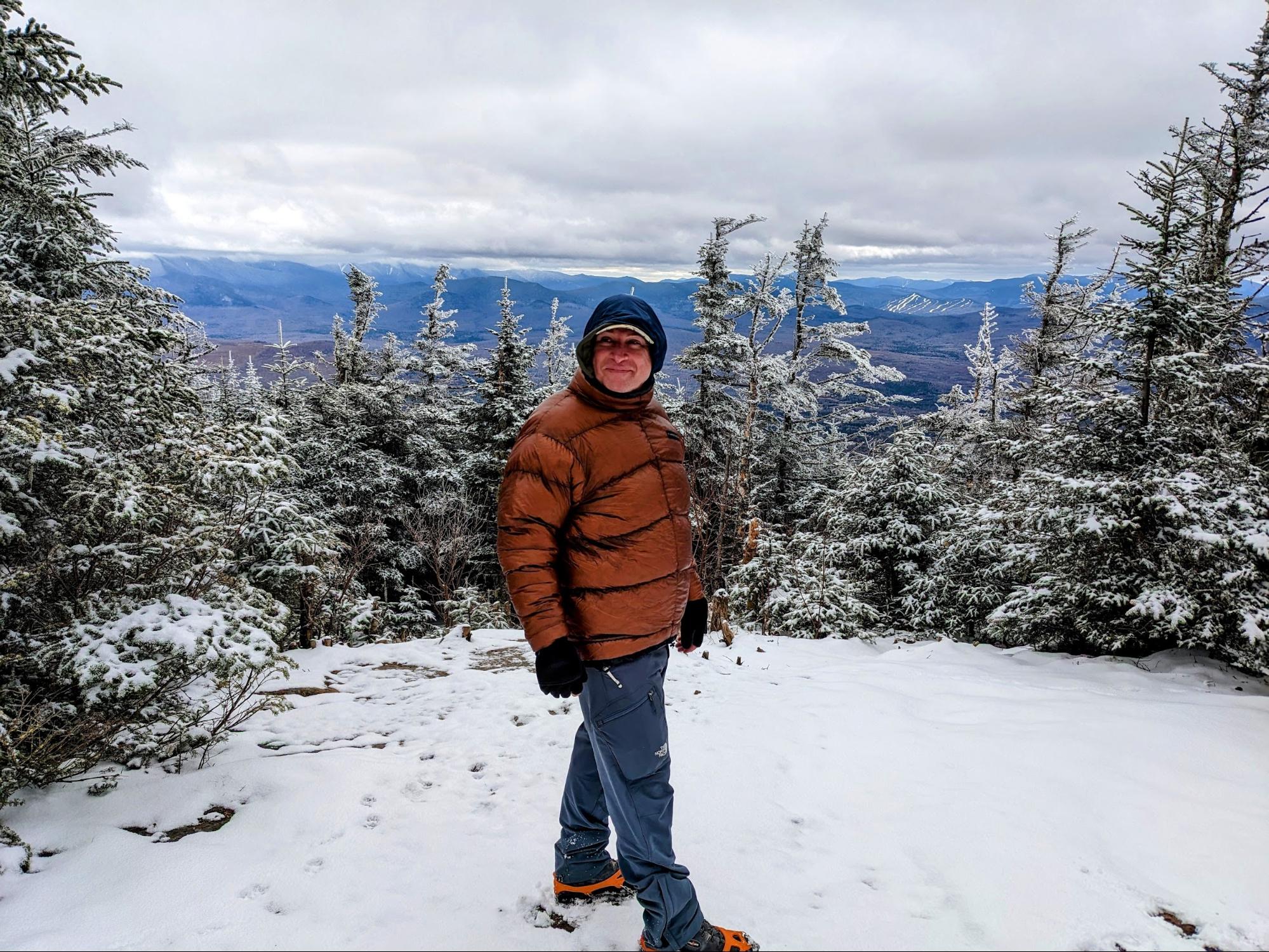
While this jacket looks a bit shiny (I usually go for a more matte look), it more than makes up for it in coziness. I love that I can pull it down past my hips for added warmth, it has a nice deep hood, and that it fits closely for no drafts. – Anna Swarts
James Montavaon wearing his Outdoor Vitals Satu Adventure Pants. Photo Credit: James Montavon
These pants are my go-to pants for anything that’s too cool for hiking in shorts. I like the big side vents for when I want to spill heat quickly, and the cinch cords at the bottom of the pant legs can hook on to my bootlaces and make a decent seal to keep out snow. They also look nice enough that I can wear them in many settings. I took my tan pair as my only pants for a conference in London, then used them to hike in Iceland on the way home! – James Montavon
Whether it’s hiking during a thunderstorm in the Colorado Rockies, walking through the remnants of a tropical storm on the eastern seaboard, or hiking through sleet and snow in New England, this jacket has kept me dry regardless of the conditions. Plus, it’s manufactured from 77% recycled material and is manufactured without using long chain fluorocarbons for a more environmentally friendly rain jacket! – Chase Jordan
Patagonia Tropic Comfort Plus Sun Hoodie. Photo Credit: Patagonia.
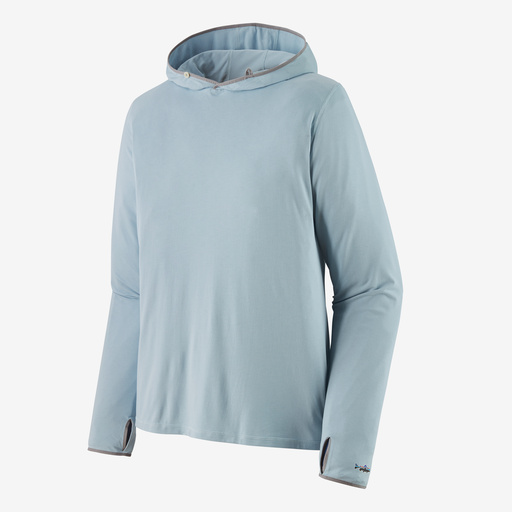
I know this was recalled but I wear a hat under it anyways. I haven’t found anything cooler or more comfortable in the desert where I do most of my hiking. Love the fit, the hood is great and the long sleeves that cover my hands. I’m so happy to have three of these. – Matthew King
Iago wears his Timmermade SUL 1.5 Down Sweater in a snowy subalpine forest. Photo Credit: Iago Vazquez
The warmth/loft, weight and price ratio is outstanding. As an added bonus, you can have it custom tailored to your body type. While I often leave it home in the summer, it has gone on every cold weather trip. One may notice the lack of features. No zippers, no hoods, no pockets. This is intentional in order to enhance the performance over more popular urban fashion oriented pieces. Pockets could be detrimental, since stuffing pockets with heavy stuff can diminish loft. If I need a hood in camp, I just grab whatever I brought to insulate my head while sleeping in my quilt, which often is a beanie or down hoodie. Also, I prefer having my head insulated independently from my body, since it gives me more options for thermoregulation. And lastly, a zipper may make it easier to put the garment on and take it off, but puffy coats glide easily over other layers, so I do not particularly miss the zipper and I prefer the weight reduction of not having a zipper, plus draft baffle and zipper slider protection. If I need to vent via a zipper, I probably do not need heavy down insulation. Personally, it is the perfect insulating piece. – Iago Vazquez
Timmermade SUL Waterbear Hood. Photo Credit: Timmermade
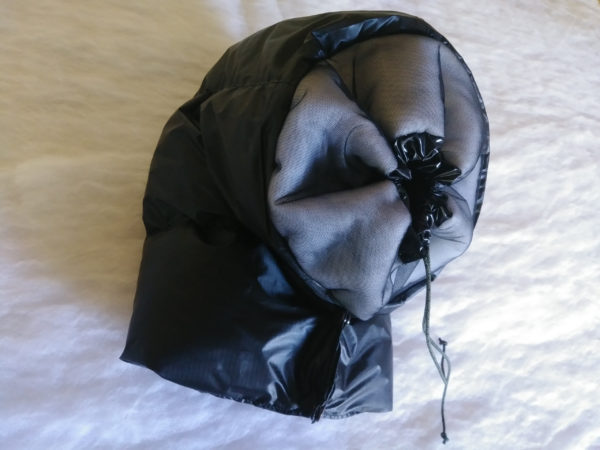
When the weather turns cold, and bedtime arrives, I often sleep poorly from breathing frigid air. I found the famous Sockel on Backpackinglight, made one, and used it for some time. This year, I purchased a Climashield Waterbear hood. The front of the Waterbear hood tightens to form a small opening that can encircle your mouth and nose. When positioned satisfactorily, it warms incoming air. A very clever feature is the portion of the hood that tightens around your nose and mouth—insulation in this area is enclosed by mesh rather than a solid polyester fabric. The mesh supports rapid drying of the moisture from your breath that condenses on the cold hood surfaces. This product is not without drawbacks. The drawstrings are short, thin, and difficult to tie and untie, especially in the cold. The tiny snaps that close the hood around your neck are also tricky to use. I added a cord lock to control the strings and some Velcro to replace the snaps. I wish the hood opening could be secured so the Waterbear could be worn around camp without covering my eyes. Despite these design flaws, I have found it can work effectively, and the quality of my sleep has improved. – Stephen Seeber
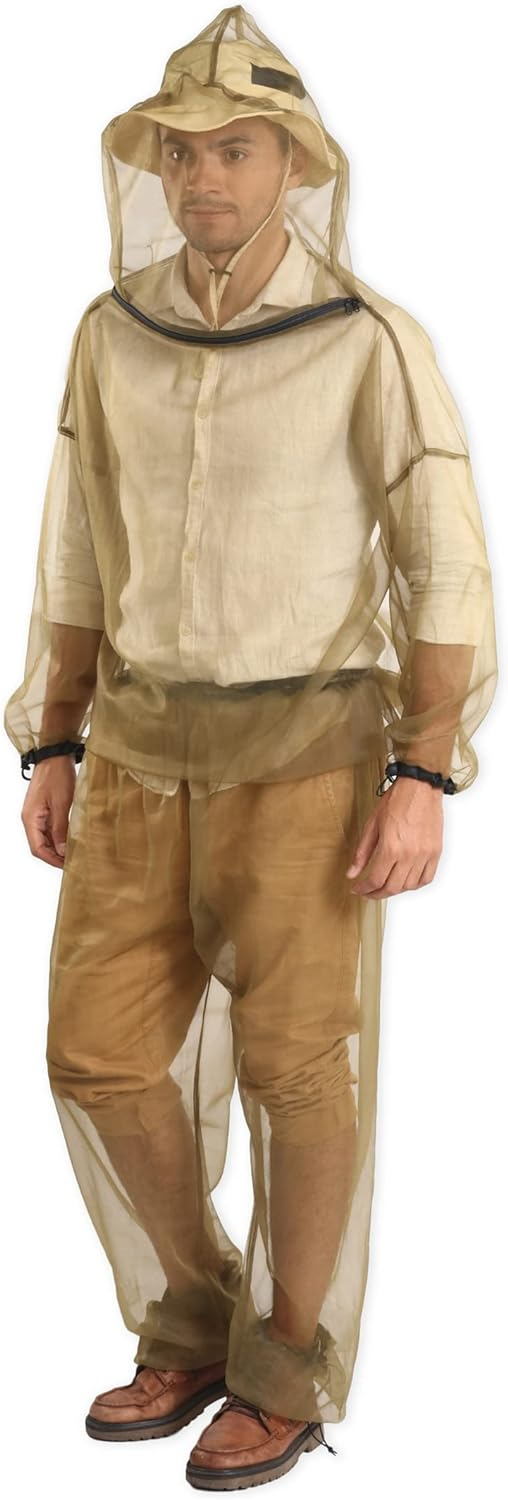
Tough Outdoors Bug Net Jacket and Pants. Photo Credit: Amazon
Listen, you’re going to stand out. But I promise that the deeper into mosquito country you get, the more people will revere you as a complete genius. Over the summer, this Bug Suit let me sit outside, cook dinner and clean everyone’s dishes while my guests hid from the mosquito hordes in their tents. It’s reusable and lightweight, and it didn’t pollute my body or the environment with toxic DEET. I’ve even used it as an insulation layer under my rain pants and as a makeshift sun shirt. I don’t care what anyone says, I am absolutely obsessed with it. – Sarah Bennett
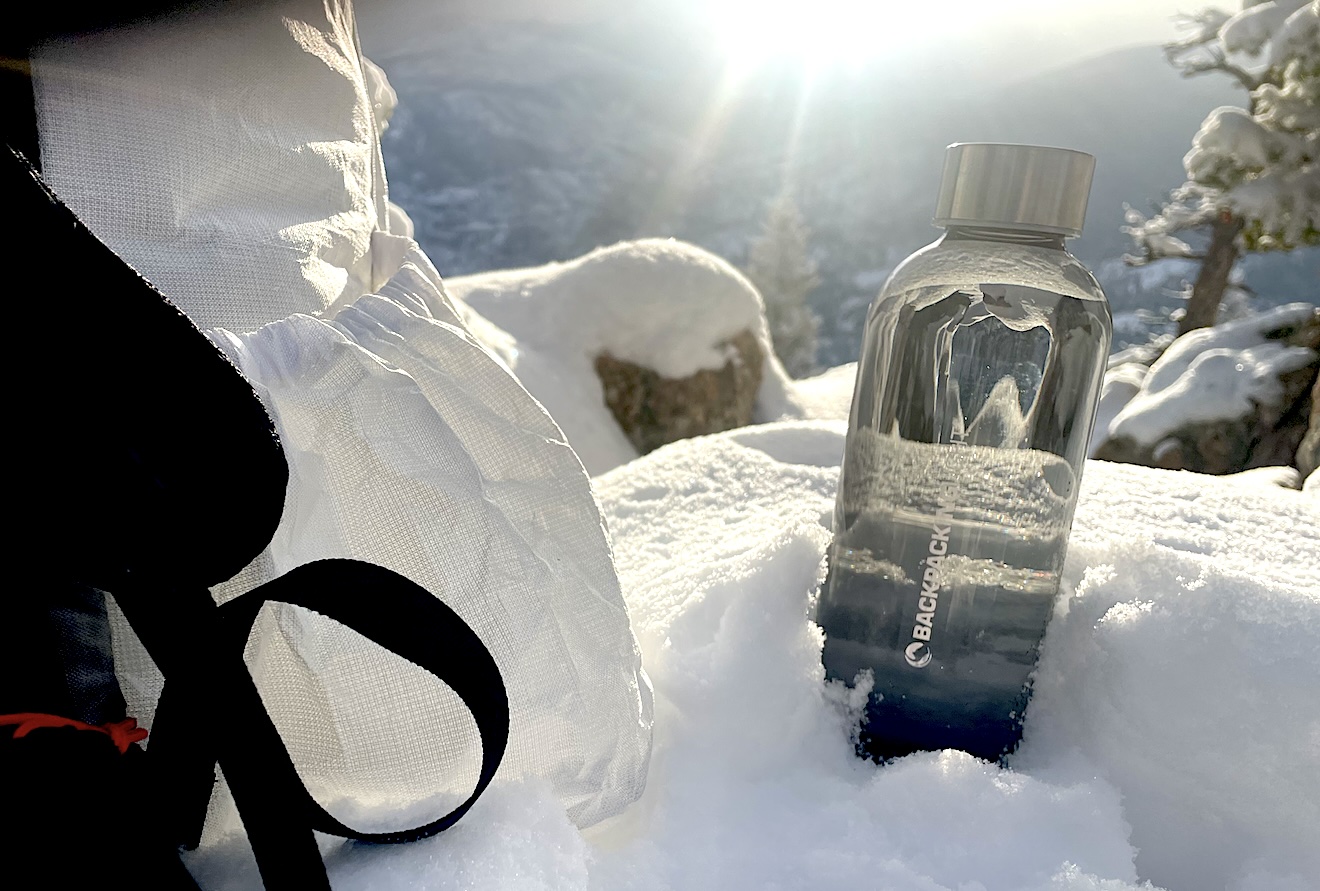
Backpacking Light Tritan Bottle. Photo Credit: Ryan Jordan
I’ve been trying to source a thin-walled Tritan bottle for years. I wanted something a little lighter and a little larger than a 16-oz Nalgene, and with a narrower mouth for easier glugging. This bottle size is perfect for me, and it fits well into all of my shoulder strap pouches. No more Smartwater bottle waste for me. – Ryan Jordan
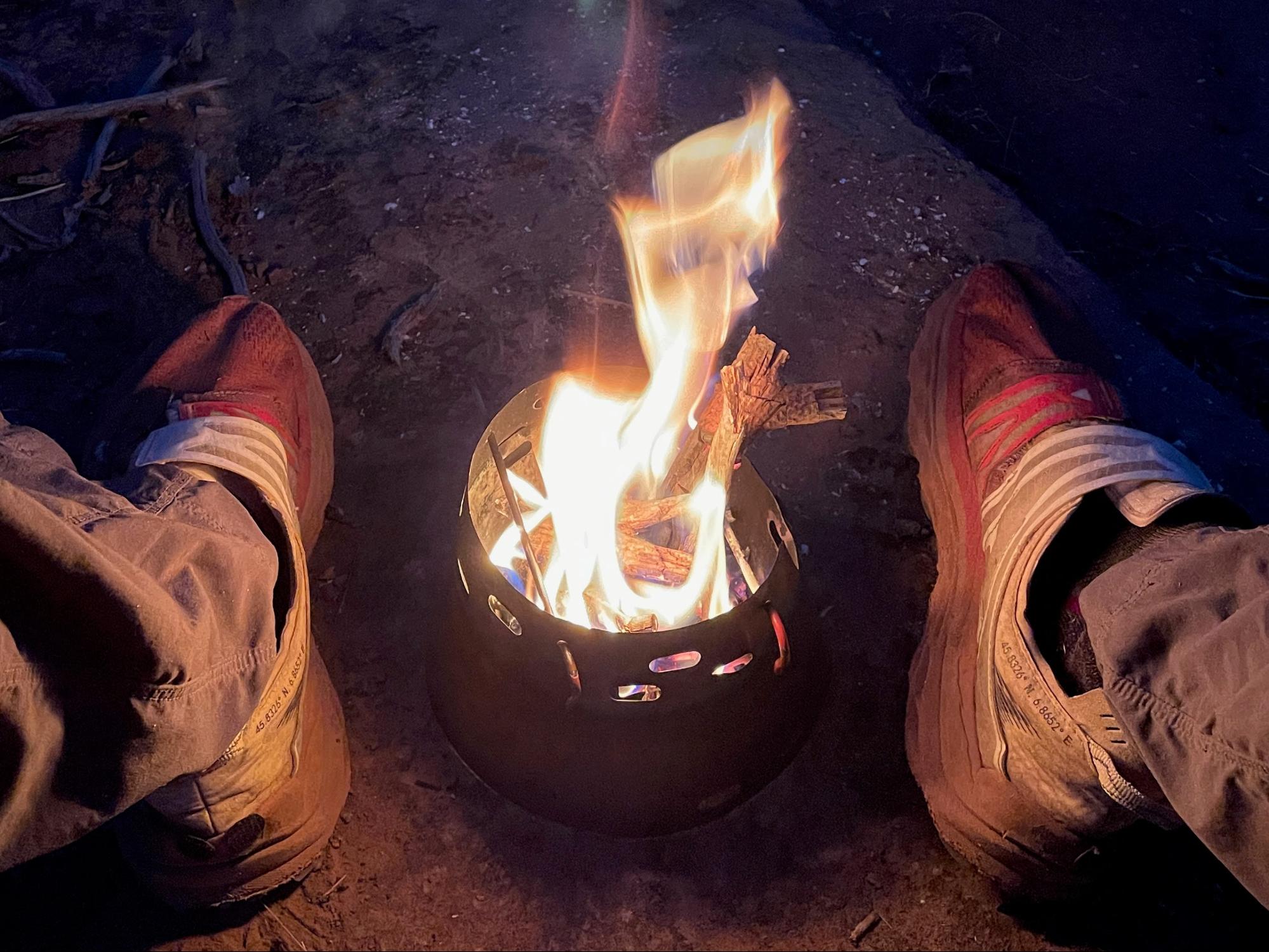
Drew Smith cooking over his Trail Designs Caldera Cone Sidewinder Ti-Tri. Photo Credit: Drew Smith
The design of this backcountry classic has changed hardly at all in the decade-plus since I acquired mine. And why should it? The Caldera Cone system is versatile, light, compact and efficient. It is a masterpiece of elegant design and function. The Caldera Cone enables you to cook with alcohol, Esbit tablets or twigs. It can be ordered to fit a wide variety of pots from 0.6 to 2.0 L capacity. The components are stowed inside the pot, and the whole outfit will weigh in at 7 – 11 oz (200 – 300 g) depending on configuration.Sure, canister stoves are more powerful and convenient. I typically take my Soto Amicus on long hikes where I’ll be doing 20+ miles per day and resupplying. Canisters are now more readily available than fuel alcohol in trail towns. But for shorter trips, where making miles is not such a priority, I usually prefer the quiet and aesthetics of a well-designed alcohol stove system. I don’t mind waiting an extra three minutes for my water to boil while I watch the sun set and listen to birds sing. And I’ve especially come to appreciate the option of a wood fire in shoulder season. A small fire on cold early nights means I can spend another hour or two outside before retiring to the confines of my tent. With its gasifying insert and titanium ash pan, the Caldera Cone does not scorch the ground and it burns twigs down to a fine ash that can be dispersed easily. The stove enables something pretty close to a true LNT campfire.The Caldera Cone system is not the lightest, most powerful or most efficient stove system. But in the right context it is perhaps the most satisfying. – Drew Smith
Evan Willams Bourbon Whiskey. Photo Credit: Evan Williams
Many people consider whiskey to be a heavy luxury item incompatible with hiking fast and light. This belief is mistaken. An ounce of whiskey provides 90-100 calories of food energy. It is only slightly less energy-dense than dry pasta (106 Cal/oz). To be sure, whiskey calories are the emptiest of empty calories. But when you are out on a hike, especially a long hike, empty calories are a positive good. Whisky, unlike pasta, provides a number of benefits beyond calories. A few sips in the evening are an excellent way to put a mellow end to the day and facilitate sleep. If you want to make new trail friends, there is no better opener than offering a shot to your campsite neighbor. Whisky can also be pressed into service as a solvent, a disinfectant or a fuel, although it is not really very good at any of these tasks. Whisky is at its best when ingested internally in moderate amounts in beautiful outdoor settings with convivial companions. No one will mistake Evan Williams for a top-shelf whiskey. But it is not at all bad, and is in fact better than many nationally advertised brands. It is inexpensive and commonly found in trail town stores. Best of all, it comes in a lightweight unbreakable plastic bottle which can be reused and repurposed. If one were to design a whiskey specifically for hikers, it would look like this. – Drew Smith
Six Moon Designs Ursack Aluminum Liners. Photo Credit: Six Moon Designs
Ursacks are by far my favorite way to store food and smellables in the backcountry. With Rocky Mountain National Park allowing Ursacks only with the aluminum liner, it’s a no brainer to add these to my kit. – Chase Jordan
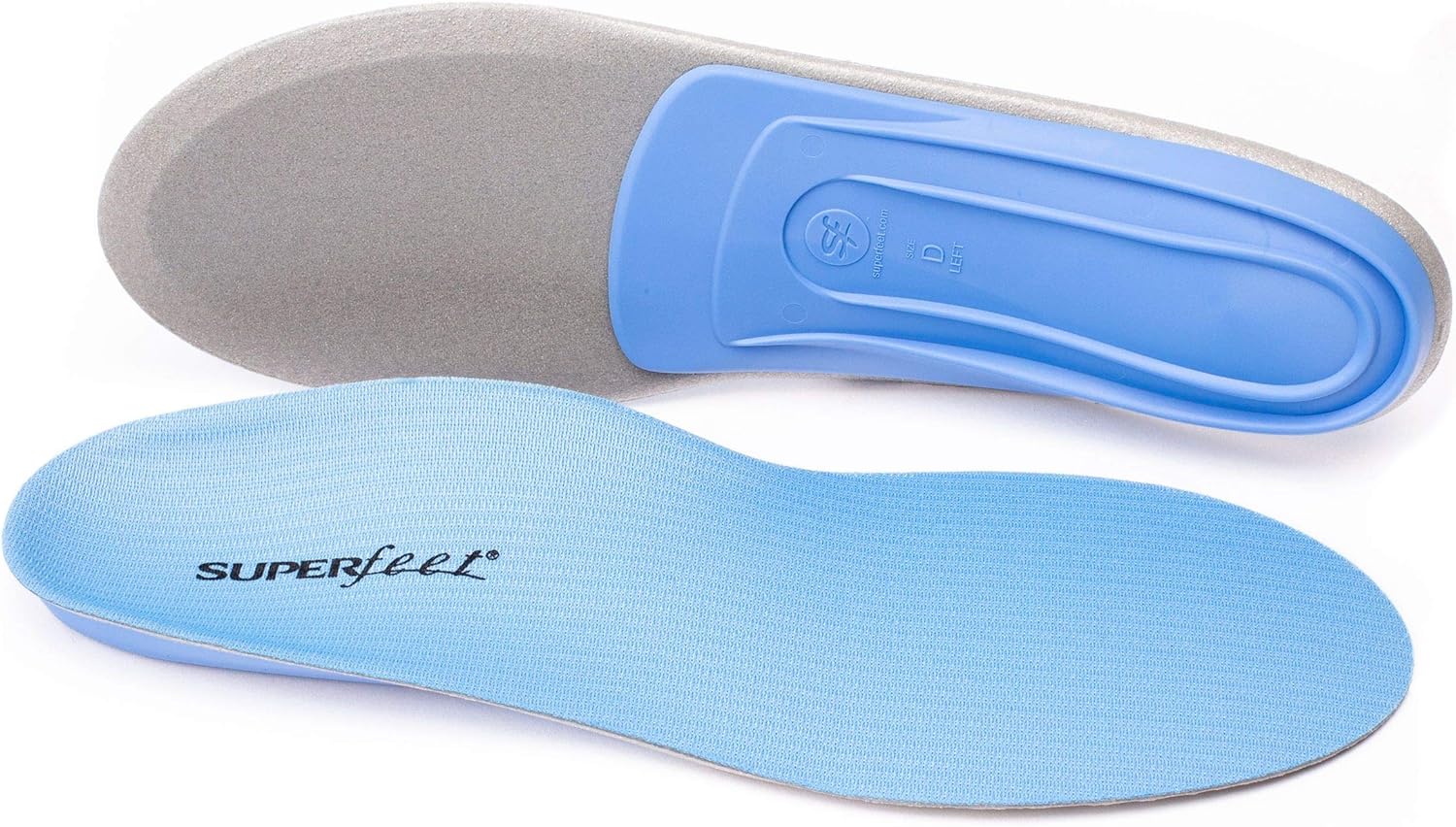
Superfeet All Purpose Support Medium Arch Insoles. Photo: Superfeet
I have found something that works for me and it still works. This is a magic combination where my feet are comfortable when hiking. Quick drying, reasonable durability, good grip… I hope everyone can find a footwear setup that works as well as these do for me. – Matthew King
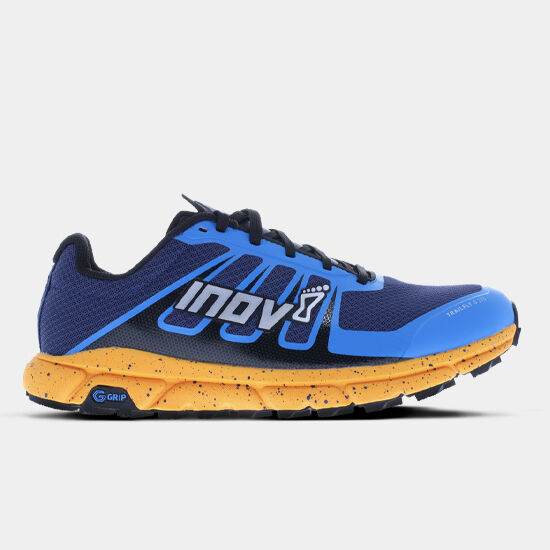
While such ubiquitous brands as Altra and Topo Athletic boast the California King of toe boxes, there are those backcountry outings which call for a narrower margin of error. Class 3 scrambling, for instance, as well as downhill trail running, benefit from a tighter fit and increased sensitivity to rapid directional shifts. For this, I’ve become a firm believer in Innov8, a UK-based shoe manufacturer. Their Trailfly G270 V2 boasts not only more letters and numbers than the average military fighter jet, but incredible traction, flawless responsiveness, and hardly more weight than you’d find in a bedtime slipper. The consequence of this, however, is that after a long day in the mountains your feet might feel a bit less like they’ve been lounging at the spa than they would with other brands. Still, when the terrain demands it, the trade off is well worth it. – Isaac Simons
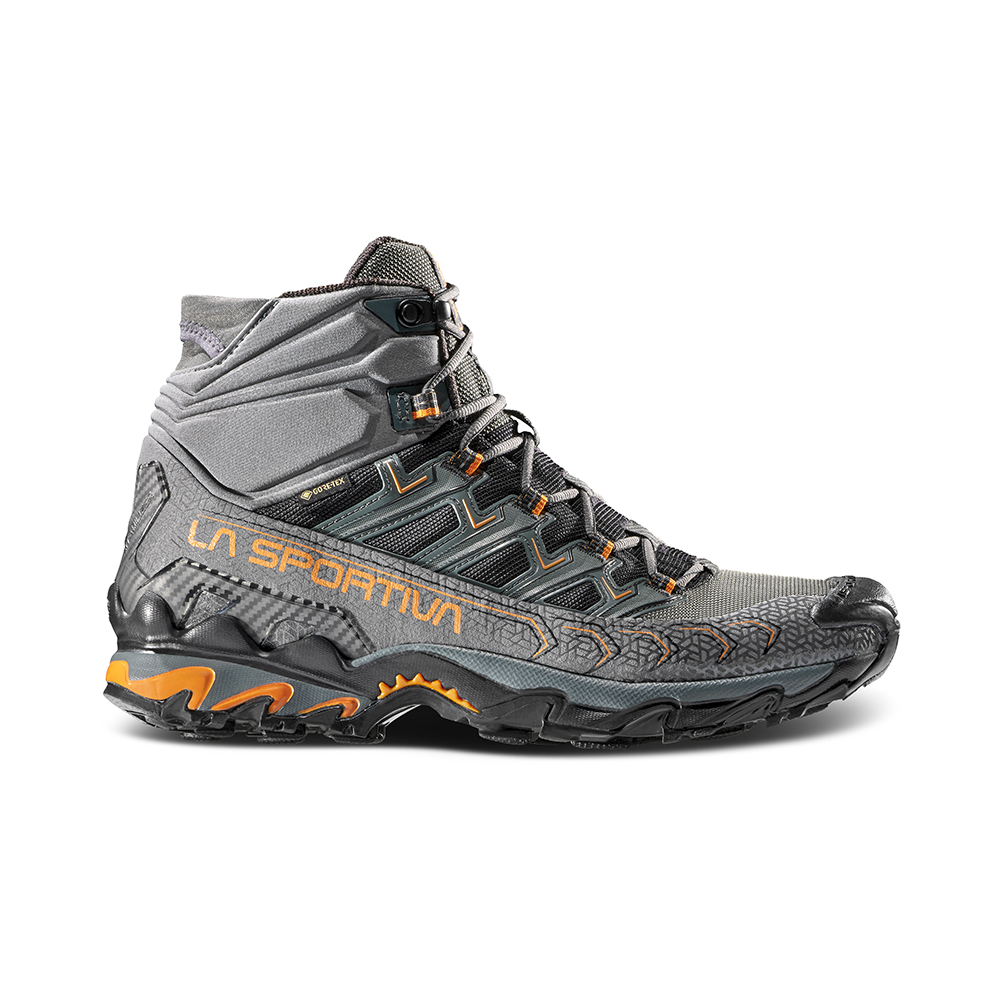
La Sportiva Ultra Raptor II Mid GTX Hiking Boots. Photo Credit: La Sportiva
Built on a trail running last, a boot with waterproofing and a sticky sole that “works when wet” is practical footwear for the snowy terrain of winter and sloppy mess of spring. The fact that La Sportiva is releasing a mid height version of the Ultra Raptor GTX in a wide model means I get a much better fit with the multiple sock layers (heavy boot sock + Goretex sock) that I normally wear in the winter. No more cramped toes or grossly oversized boots! – Ryan Jordan
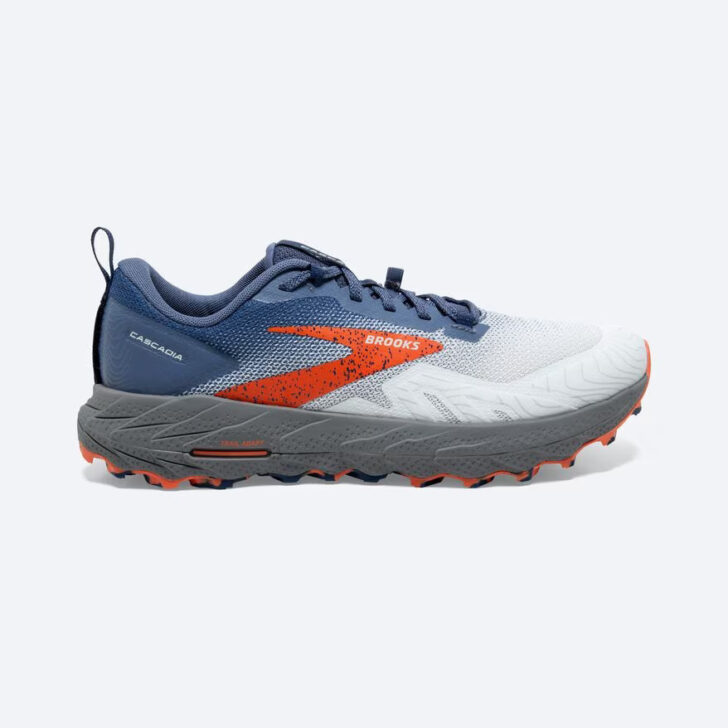
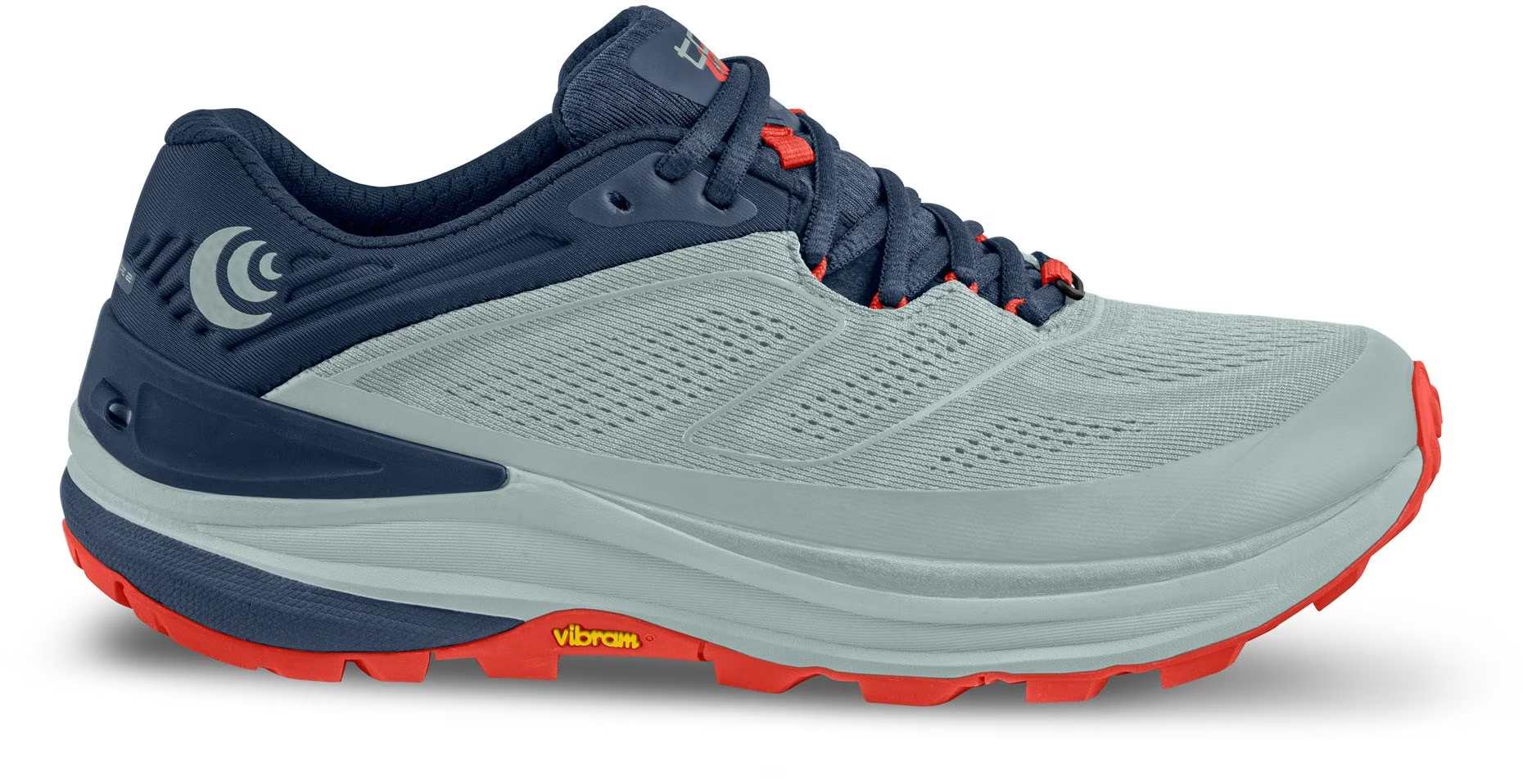
Topo Athletic Ultraventure 2 Trail Running Shoes. Photo Credit: REI
While all trail runner style shoes suffer from a lack of durability, especially when used for cross-country travel and scrambling on talus, I’ve found these to be one of the more long-lasting shoes. They’re great for the types of backpacking trips I do most often and are really comfortable on the varieties of trail and terrain in the Northern Rockies. – Mark Wetherington
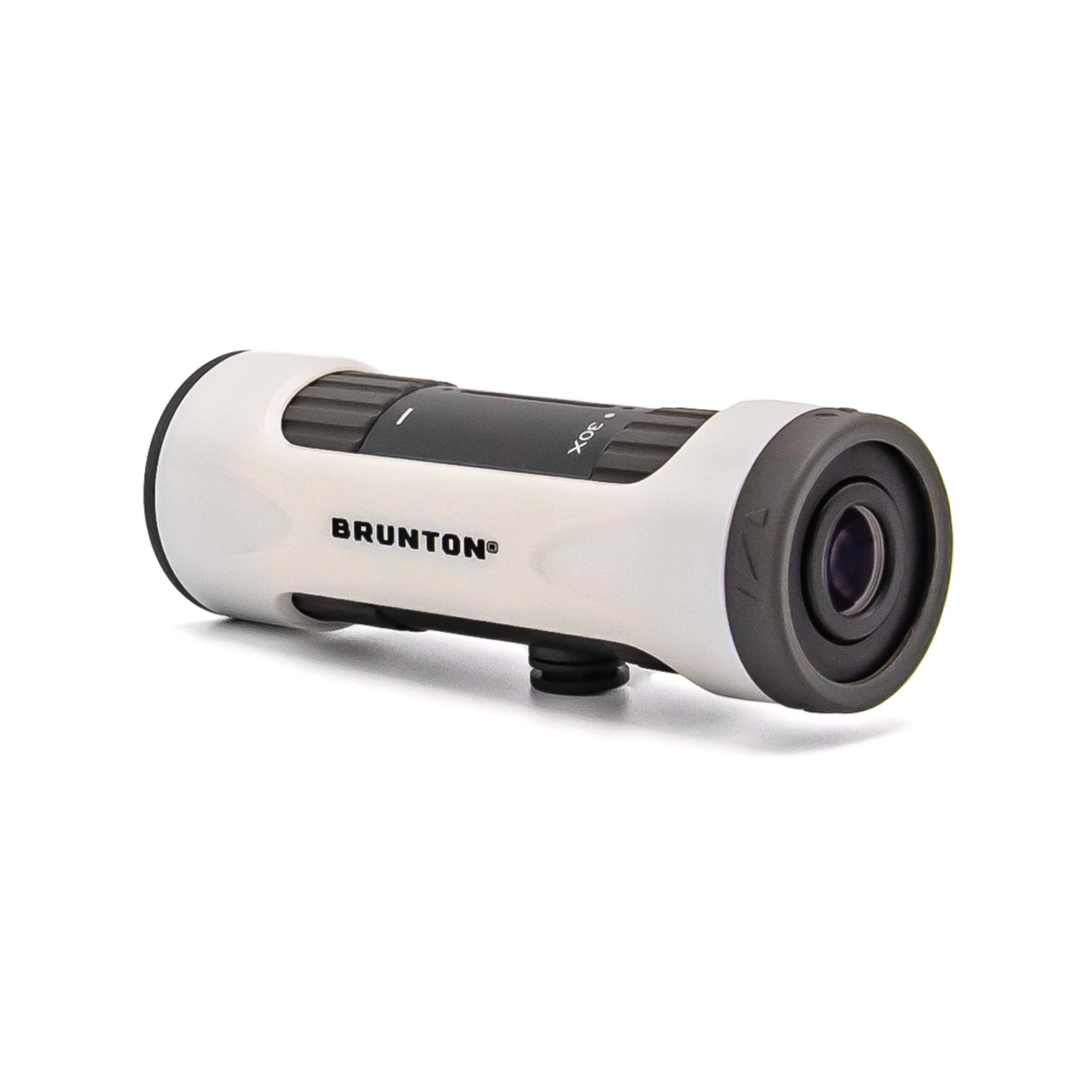
For only 1.8 oz (51 g), I can now save hours of unnecessary walking by identifying potential obstructions several kilometers in advance when exploring unknown and rugged terrain. – Atif Khan
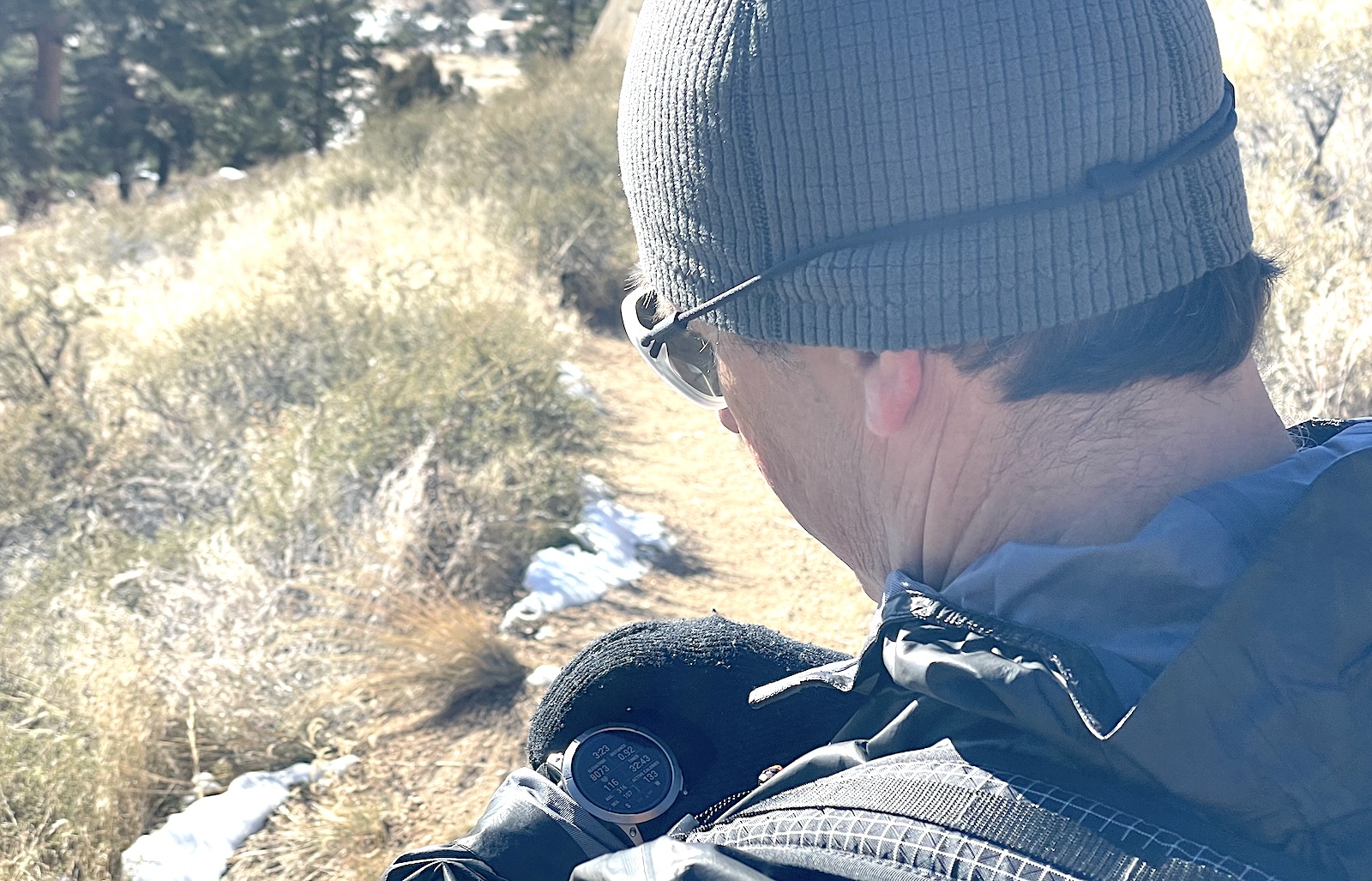
Ryan Jordan looking at his Garmin Epix 2 Pro Watch on a sunny day. Photo Credit: Ryan Jordan
After several years, I retired my Garmin Fenix 5XS and replaced it with the Garmin Epix 2 Pro. Functionally, they are quite similar: full ABC (altitude-barometer-compass), GPS (Global Positioning System), and physiological monitoring (heart rate, heart rate variability, sleep tracking, and blood oxygen concentration). However, the Epix represents an enormous performance upgrade for me. I opted for the 51 mm watch diameter, which translates into a nice big AMOLED screen and more than enough battery life for my longest expeditions. The Epix 2 Pro is always on my wrist and is an essential companion for both my training and research. – Ryan Jordan
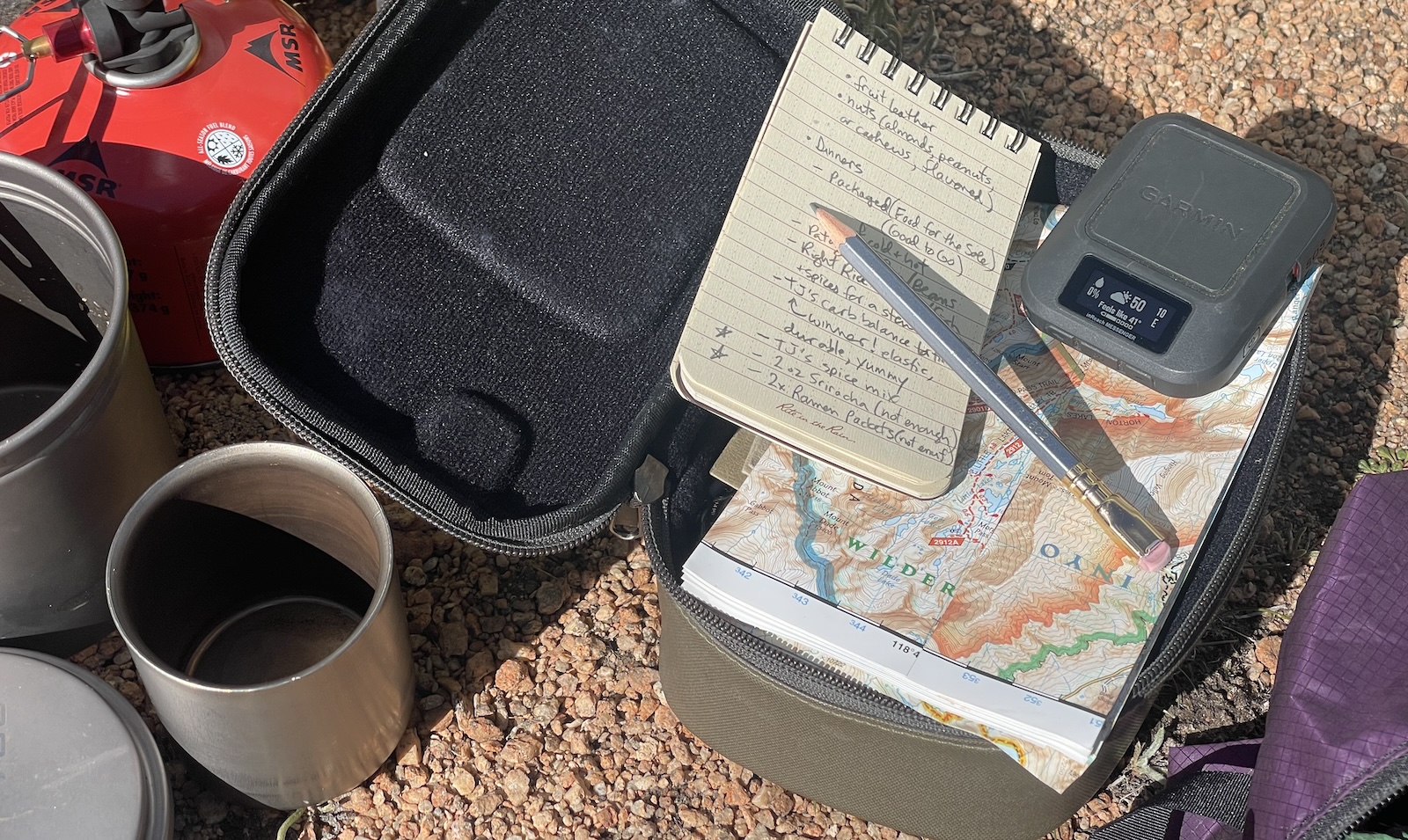
The Garmin inReach Messenger next to a notebook, pencil, map, and coffee cup. Photo Credit: Ryan Jordan
I made the switch this year from the Garmin inReach Mini 2 to a Garmin inReach Messenger. I find myself relying less on GPS devices and no longer need GPS navigation in a device other than my smartphone (which is a backup to my primary form of navigation, a map and compass). In addition, the inReach Messenger offers better battery life, reverse charging, and a slimmer, more pocketable form factor. – Ryan Jordan
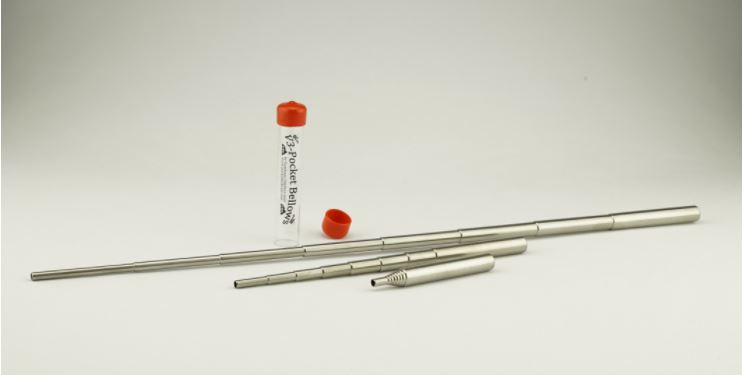
I don’t often make a fire in the backcountry, but when I do, this tiny tube is well worth the weight. It allows you to very precisely deliver oxygen where it’s needed. It works well enough that after accidentally leaving our real bellows at a yurt, we’ve just used this little guy instead for backyard and car camping fires. – James Montavon
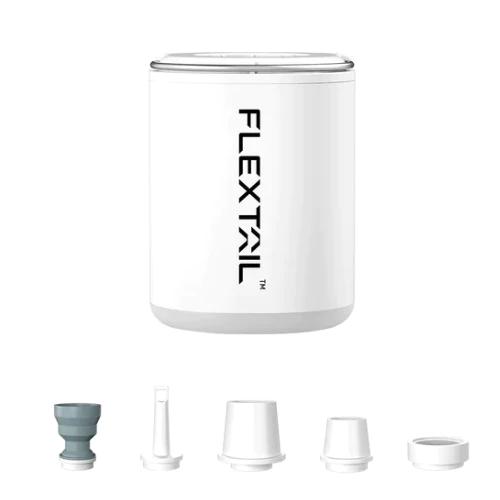
At the end of a long day on the trails, I have never looked forward to inflating my sleeping pad with my overtaxed lungs. So, I was delighted when pump sacks were introduced. Unfortunately, using a pump sack in my tent could be awkward and time-consuming, depending on the attachment mechanism. So, I was delighted when I saw that Thermarest was selling a little battery-powered pump for their sleeping pads. I bought one immediately and never looked back. However, I was unhappy that the pump was slow to fill the sleeping pad, and the pump lacked sufficient power to inflate the pad completely- I had to blow into the partially filled pad to reach full capacity. So, I was delighted when I read about the Tiny Pump 2X. I assumed the 2x meant it pumped faster than what I was using, and it did! It is powerful enough to pump the sleeping pad to full capacity. It also has a LED light so I can hang it up and illuminate all my tasks after the sun goes down. Be careful with the light; it uses more of the rechargeable battery than sleeping pad inflation. The only real drawback is that the pump blows so much air it is noisy. Don’t disturb your neighbors! – Stephen Seeber
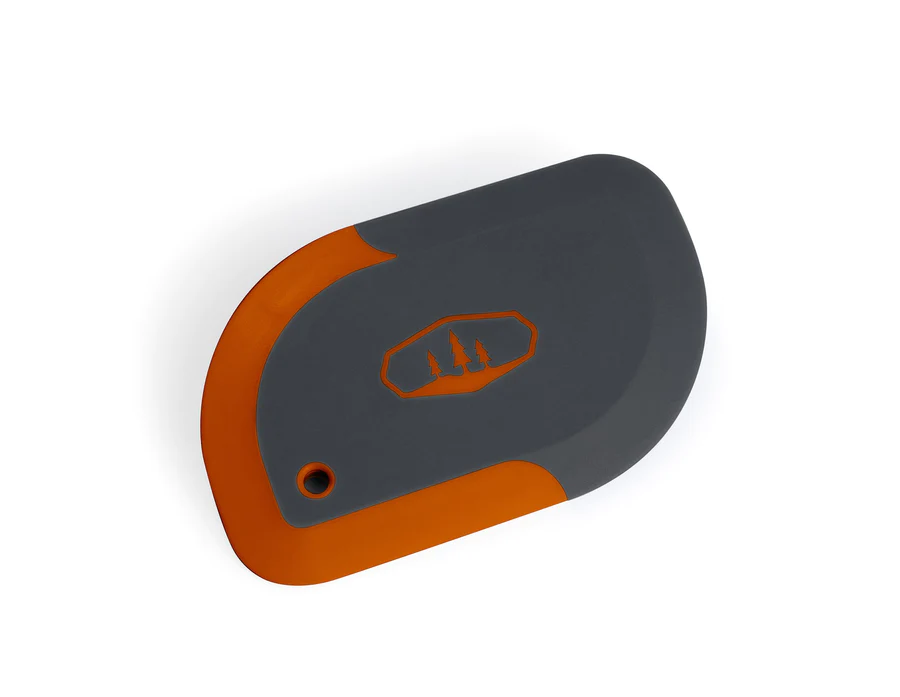
This little scraper is my favorite cleanup tool when I cook real meals on the trail. The silicone end acts as a spatula, letting me get every last morsel off of my pots and pans and into my belly. The plastic end is tough enough to scrape caked-on bits of food and the occasional burned bits off of the bottom of a pot, without actually damaging the pot. It’s basically indestructible and it comes with me on every commercial trip I run. – Sarah Bennett
Anna Swarts wearing her Goodr OG Sunglasses. Photo Credit: Anna Swarts
These hit the sweet spot for me as being high enough quality to have what I want (polarized lenses and clarity) while also being inexpensive. I love how they don’t bounce or slip off when I sweat or run. – Anna Swarts
Healthy Sense of Humor and Hype
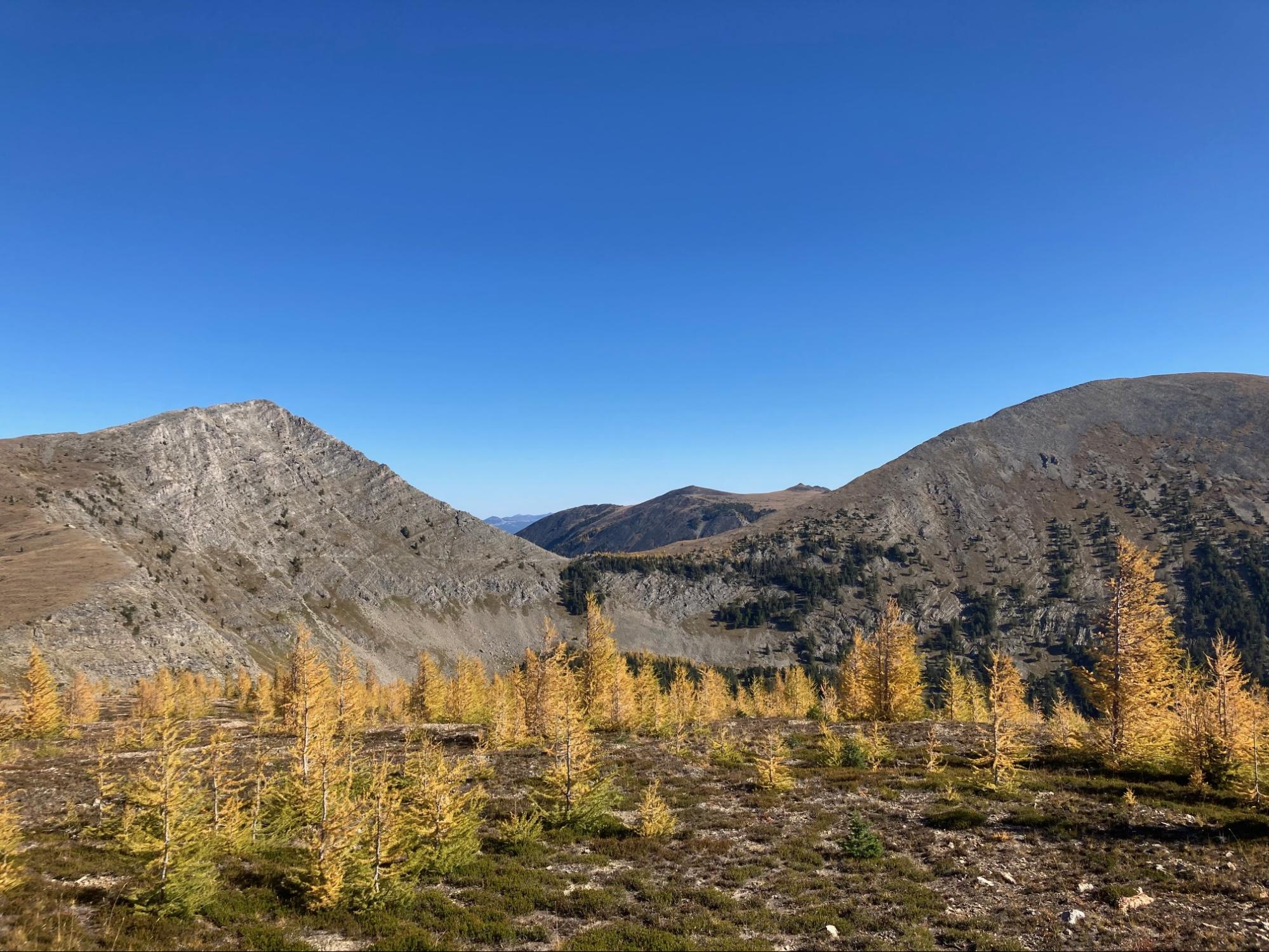
Larchapalooza! Photo Credit: Mark Wetherington
This year I wanted to get friends and acquaintances hyped about backpacking trips. I started hyping up a series of backpacking trips and dayhikes in late September that focused on seeing alpine larch in its golden autumn splendor and dubbed it “Larchapalooza” (photo attached). A second series of trips focused on visiting natural hot springs in early October, which was called “Soaktober”. This led to a lot more interest and enthusiasm (both in myself and others) than when it was “only” framed as a backpacking trip to a cool area. The power of branding, I suppose! – Mark Wetherington
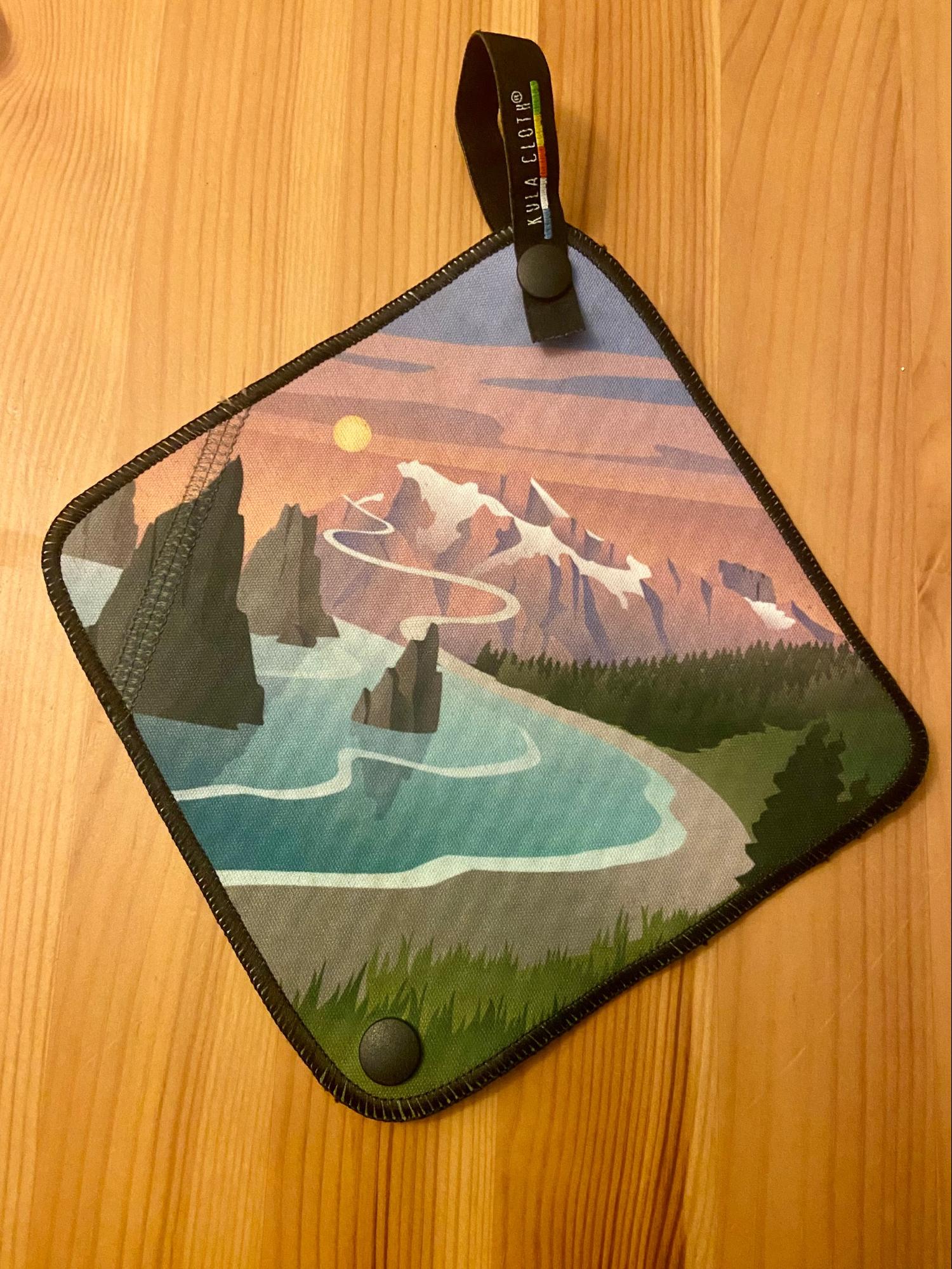
Anna Swarts’ Kula Cloth. Photo Credit: Anna Swarts
I went many years without one because I figured it couldn’t be that much better than the generic piece of cloth I had been using. However, I’m finding that it really is as great as everyone says. Not only does it feel more sanitary but it also has a fun design for one of my favorite trails (the PNT). Their customer service was top notch too! – Anna Swarts
Learn more about the Kula Cloth in the Backpacking Light Gear Shop.
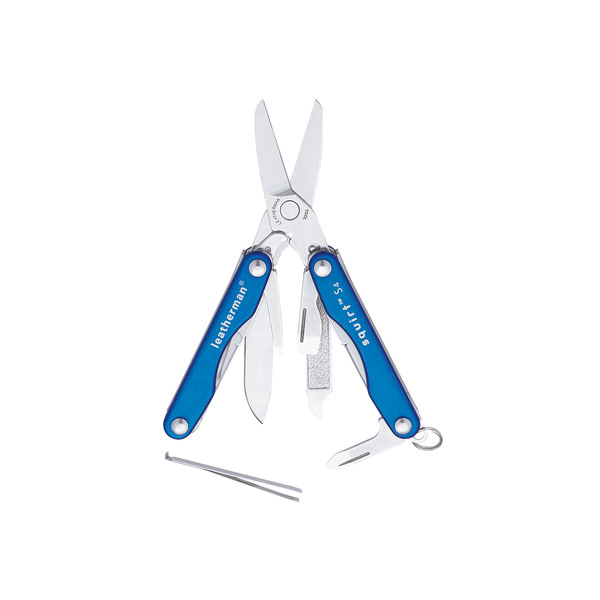
This is the lightest multi-tool with a plier I can find, weighing in at only 1.9 oz (54g). Having this tool in my kit helps simplify zipper repair while in the field. – Atif Khan
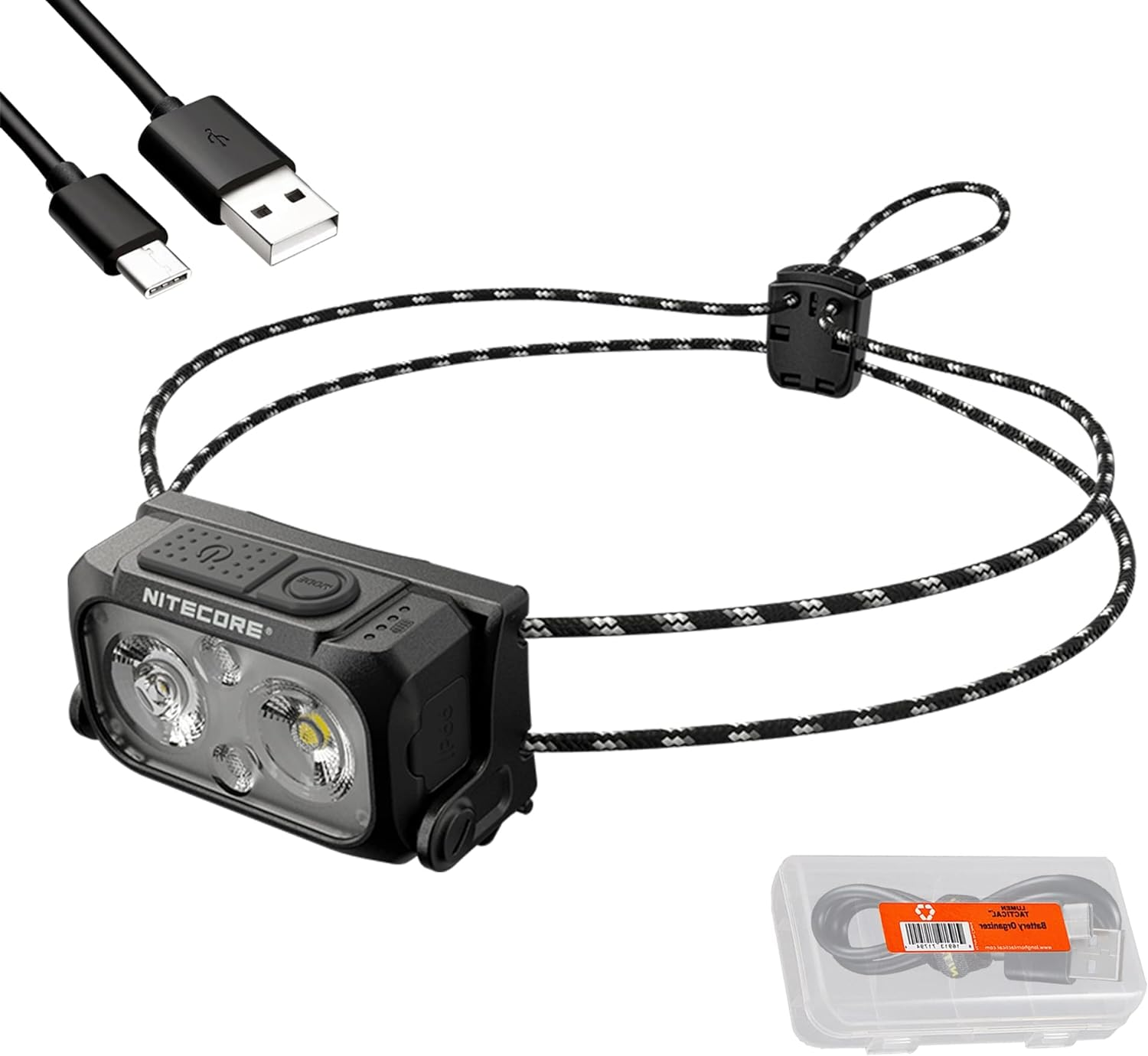
At about half or a third the weight of most similarly-rated headlamps, as well as comparable features, I can’t find a good reason not to take it on most trips. – Ben Kilbourne
Ryan Jordan wearing his Ombraz sunglasses. Photo Credit: Ryan Jordan
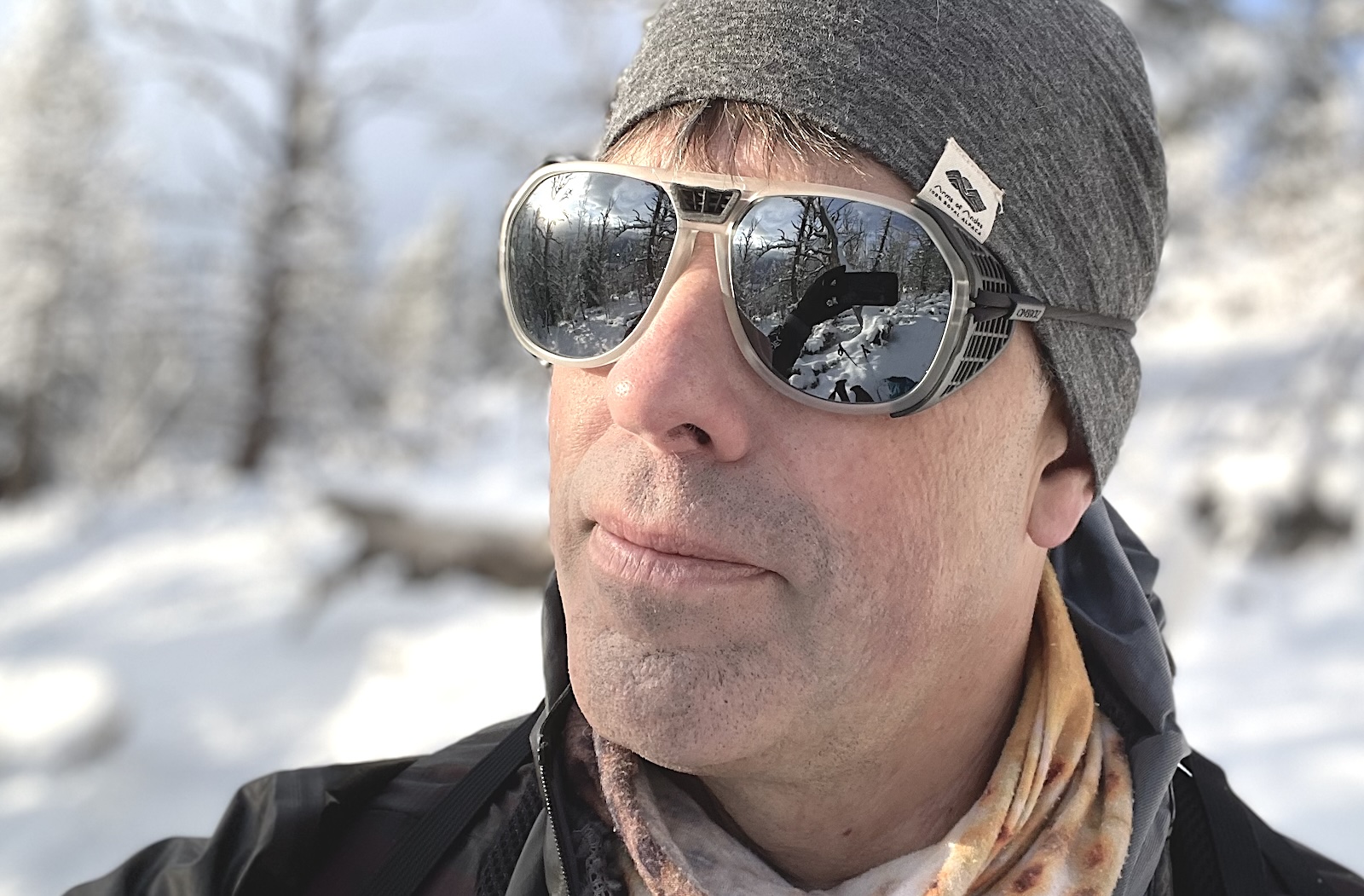
After decades wearing conventional sunglasses, I smacked my head when I first put on a pair of Ombraz armless sunglasses. The concept is brilliant – no more interference with headwear layers, whether the cord is worn under or on top of my hats or hoods. A huge bonus are Zeiss Optics lenses for gorgeous clarity and polarization with no distortion. And they’re light! – Ryan Jordan
Learn more about Ombraz Sunglasses in the Backpacking Light Gear Shop.
Stephanie and her catch with her Tenkara USA Satoki Rod. Photo Credit: Ryan Jordan
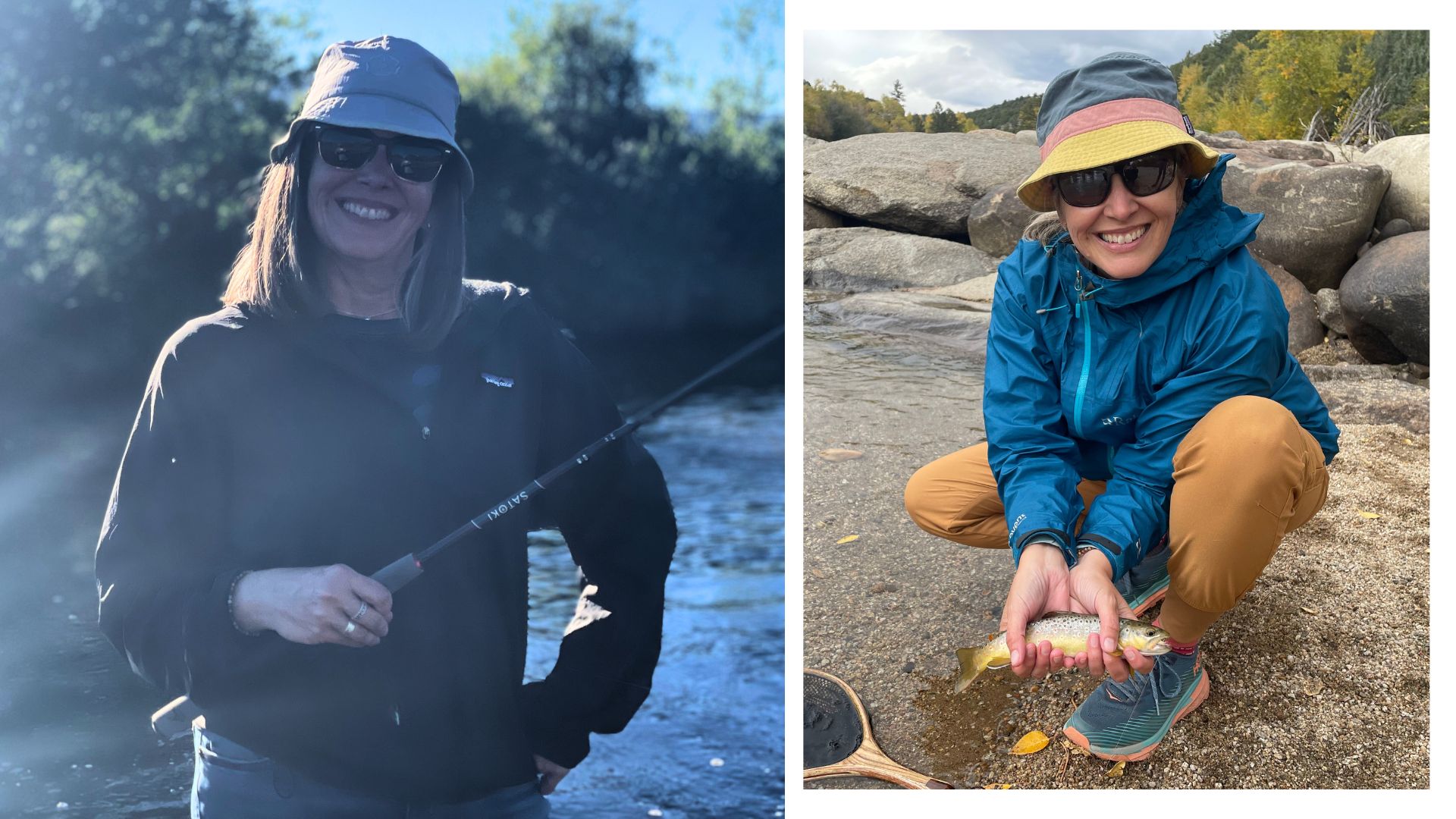
I’ve never been a fan of adjustable zoom tenkara rods in the past – too much fiddling and the longest lengths are often cumbersome. The Tenkara USA Satoki is easy to cast, and this year during high water on the Arkansas River (CO), it gave me the reach to find narrow feeding lanes of wary brown trout at dusk on the opposite side of the main current. – Stephanie Jordan
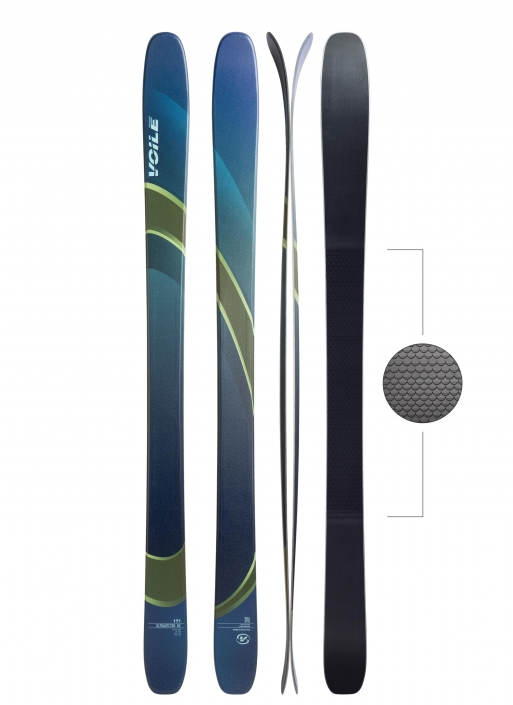
This is a super fun all-around backcountry touring ski with the added versatility of scales. It’s awesome for winter overnighters where you have a long approach over rolling terrain. Just leave the skins in the pack until you get to the steeper stuff. Voile skis are light, and these are no exception, but they’re also not too light. At around 1570 grams in a size 177 they’re in that sweet spot where they still perform well turning at speed in spring conditions. – Ben Kilbourne
DISCLOSURE (Updated April 9, 2024)
Backpacking Light does not accept compensation or donated/discounted products in exchange for product mentions or placements in editorial coverage.
Some (but not all) of the links in this review may be affiliate links. If you click on one of these links and visit one of our affiliate partners (usually a retailer site), and subsequently place an order with that retailer, we receive a commission on your entire order, which varies between 3% and 15% of the purchase price. Affiliate commissions represent less than 15% of Backpacking Light's gross revenue. More than 70% of our revenue comes from Membership Fees. So if you'd really like to support our work, don't buy gear you don't need - support our consumer advocacy work and become a Member instead.
Learn more about affiliate commissions, influencer marketing, and our consumer advocacy work by reading our article Stop wasting money on gear.
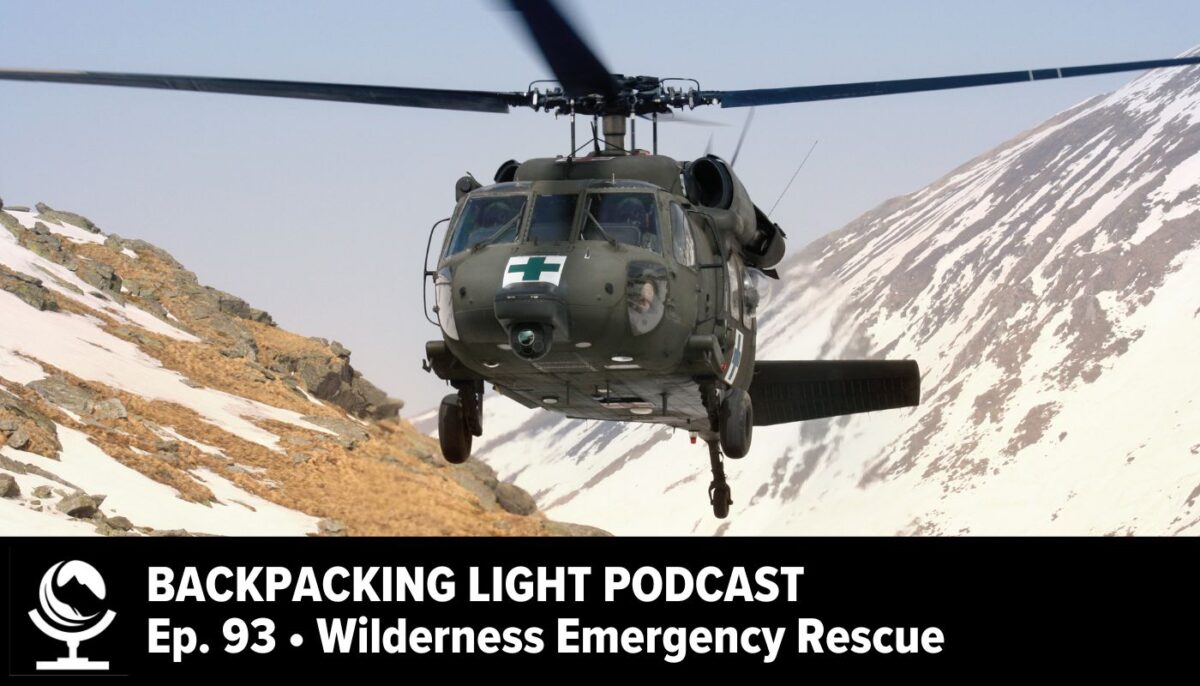
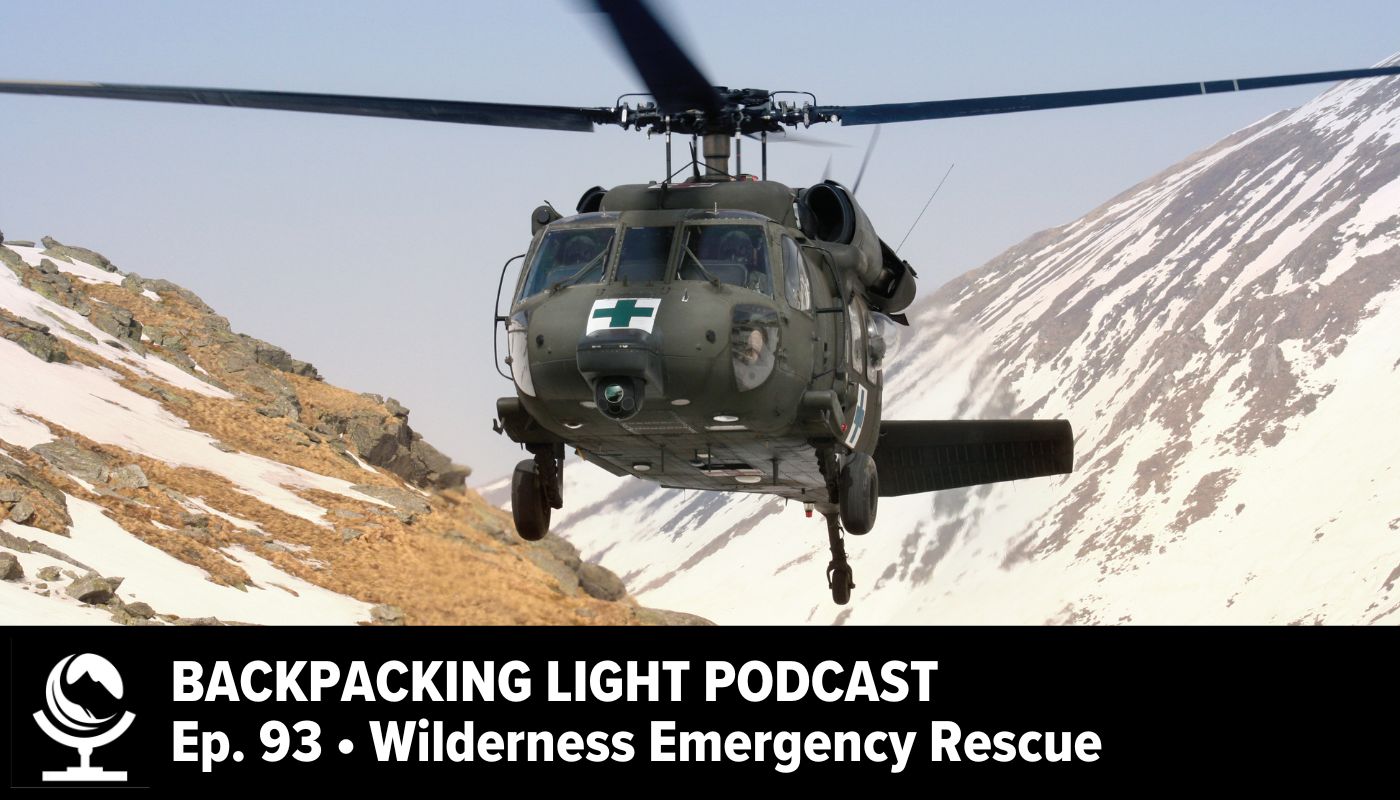
In today’s episode of the Backpacking Light podcast, we’re going to talk about wilderness emergency rescue from the very different and unique perspective of an air ambulance service operating in the Canadian Wilderness.
Episode Sponsor: Zoleo
For anyone who ventures beyond cell coverage, ZOLEO provides seamless messaging anywhere on Earth. Only ZOLEO automatically transmits messages via the Iridium satellite network, cellular, and Wi-Fi using the lowest-cost network available! Plus, safety features like progressive SOS alerting, non-emergency medical advice, check-in, weather forecasts, and location sharing provide extra peace of mind for you and everyone at home.
In today’s episode of the Backpacking Light podcast, we’re going to talk about wilderness emergency rescue from the very different and unique perspective of an air ambulance service operating in the Canadian Wilderness.
In this Episode:
What’s New at Backpacking Light?
November 22nd and 29th Newsletters – The relationship between the difficulty of a hike and the metabolic energetics of hiking.
Our guest this week is Miles Randell. Miles is the president of TEAAM Aeromedical, a very unique aeromedical rescue program operating in Canada. Miles and his staff are very experienced technicians in the areas of emergency services, advanced life support, and wilderness rescue. TEAAM is a nonprofit, membership-based organization that provides a pretty unique service to its members that has the potential to radically change how people are treated, rescued, and transported in wilderness emergency situations.
Executive Producer - Backpacking Light; Show Director and Host - Ryan Jordan; Producer - Chase Jordan; Theme music: Look for Me in the Mountains written by Chris Cunningham and Ryan Jordan, performed by Chris Cunningham (acoustic guitar, lead and harmony vocals, harmonica), Chad Langford (upright bass), and Tom Murphy (mandolin), produced by Basecamp Studios in Bozeman, Montana.
Sponsorship Policy: Backpacking Light does not accept compensation or donated/discounted products in exchange for product mentions or placements in editorial coverage, including any podcast episode content not excplicitly identified as sponsored content. Some (but not all) of the links in these show notes may be affiliate links. Learn more about affiliate commissions, influencer marketing, and our consumer advocacy work by reading our article Stop wasting money on gear.
America’s National Parks each have different food storage requirements for backpackers. This article discusses the requirements, various options, and focuses on what bear canisters are exemplary options, and why.
In today’s episode of the Backpacking Light Podcast we’re going to talk about a very unique way to enjoy tenkara fly fishing in the backcountry, and the idea of minimalism vs. performance minimalism.
Episode Sponsor
Today’s episode of the Backpacking Light Podcast is sponsored by Tenkara USA, America’s first and oldest producer of high-quality tenkara rods that reflect the simplicity and beauty of backcountry fly fishing. Backpacking Light Podcast listeners can enjoy 15% off your entire order with the coupon code BPTUSA15 at tenkarausa.com.
Listen
Summary
In today’s episode of the Backpacking Light Podcast we’re going to talk about a very unique way to enjoy tenkara fly fishing in the backcountry, and the idea of minimalism vs. performance minimalism.
Our guest this week is Bryon Powell. We don’t even know where to start with Bryon, he has been an Unlimited Member in the Backpacking Light Community since – get this – October, 2007 – more than 16 years! He’s one of the most inspiring people we’ve ever had the privilege of interviewing. Bryon’s the founding editor of irunfar.com and currently calls Silverton, Colorado, his home. He has a very, very long list of trail running and ultrarunning accolades, and is also a very accomplished backpacking and fastpacking practitioner. But what interests us the most about Bryon is his passion for backcountry fly fishing, and specifically, for tenkara fly fishing, and the extent to which he blends fly fishing and long-distance backcountry travel not only to maximize his enjoyment of vast wilderness landscapes, but his enjoyment of the fisheries that they harbor.
Executive Producer - Backpacking Light; Show Director and Host - Ryan Jordan; Producer - Chase Jordan; Theme music: Look for Me in the Mountains written by Chris Cunningham and Ryan Jordan, performed by Chris Cunningham (acoustic guitar, lead and harmony vocals, harmonica), Chad Langford (upright bass), and Tom Murphy (mandolin), produced by Basecamp Studios in Bozeman, Montana.
Sponsorship Policy: Backpacking Light does not accept compensation or donated/discounted products in exchange for product mentions or placements in editorial coverage, including any podcast episode content not excplicitly identified as sponsored content. Some (but not all) of the links in these show notes may be affiliate links. Learn more about affiliate commissions, influencer marketing, and our consumer advocacy work by reading our article Stop wasting money on gear.
A curated guide to Backpacking Light resources on how to plan a backpacking trip – gear, skills, podcasts, forums, research, education, and more.
Welcome to the Backpacking Trip Planning Resources Trailhead
How to plan a backpacking trip? That’s the biggest question – more than “what gear to use” or “what trails to hike” – that beginning backpackers ask. Planning a backpacking trip, even a short one, can feel overwhelming. That’s because there’s a large variety of tools and skills to learn, and it’s hard to know where to start.
This article is one of Backpacking Light’s curated gateway pages (a trailhead, so to speak). Think of it as a starting point. Here, you’ll find information and resources about how to plan a backpacking trip. We’ve got lists of our favorite software, gear guides for navigation and trip planning, video and podcast embeds, and other trip-planning resources. You’ll learn how to spot potential water sources on a map, how to anticipate elevation gain, how to plan for longer trips, how to identify great backpacking trails, and more. You might be planning your first backpacking trip or your 50th, but either way, we think you’ll find something useful.
About this Trailhead: Curated and maintained by our staff, this Trailhead page includes an overview of the topic and links to information and resources at the Backpacking Light website. Those resources may consist of gear reviews, technology and testing, research, skills articles, online education (webinars, masterclasses, or other types of online courses), podcast episodes, forum threads, product recommendations, and other discovery tools, including our Gear Finder, Gear Shop, and Site Search engine.
Planning a backpacking trip involves choosing the correct tools and strategies. Photo: Stephanie Jordan
Navigating this Trailhead
Table of Contents • Note: if this is a members-only article, some sections may only be available to Premium or Unlimited Members.
Backpacking Trip Planning Education at Backpacking Light
One of our preferred trip planning and navigational software tools at is Gaia GPS. The following material demonstrates how to use it, as well as other trip planning and navigational skills:
There are many software tools that are useful for planning backpacking trips. The following are examples of some that our staff and authors use on a regular basis, as well as some of the features that set them apart:
Gaia GPS Software – online mapping, beautiful map layers, premium version, very nice user interface, powerful route planning features, GPS import/export, desktop and mobile versions, and regular updates. In addition to route planning, we use this for real-time navigation on a smartphone as well.
Caltopo – Powerful and feature-rich mapping software. Also has a mobile app.
Fatmap -beautiful and user-friendly 3D maps that can download to your phone for offline functionality.
FarOut (formally Guthook) – trail resources for popular long-distance trails. The go-to choice for thru-hikers.
Orbit Satellite Tracking – a smartphone app used to monitor satellite positions, which can help optimize your use of a satellite communicator or GPS device.
Using digital tools like 3D mapping software can streamline trip planning considerably. Photo: Ryan Jordan
Trip Planning
Our content library features several podcasts to help you plan your trip. If you are looking to supplement traditional route planning tools such as paper maps with modern digital tools to create a powerful and flexible route-planning system, check out:
Information from other trusted backpackers can be very helpful when planning a backpacking trip. Photo: Ryan Jordan
Backcountry Navigation
Whether you are using a GPS, map and compass, or an alternative navigational strategy when in the wilderness, know your gear and how to use it is very important:
The lightest and most reliable satellite messenger on the market is the Garmin inReach Mini 2. It integrates with the Garmin Fenix series of watches, allowing for fitness monitoring in addition to GPS and altimeter use.
When using electronics in the backcountry, managing your battery life is an important skill. To learn more about managing your battery life, check out:
The (recently updated) Garmin inReach Mini is the gold standard for light-and-functional satellite communicators, but more and more competitors are coming onto the market. Photo: Ryan Jordan
Stories about Backpacking Trip Planning and Navigation
Are you curious about how Backpacking Light authors are using software, electronics, and their navigational skills to assist their adventures? Check out these articles from backpacking
Check out a story about planning a solo backpacking trip for the first time:
Navigation doesn’t just begin when you hit the trail, but when you have to get on the trail. Whether by bike or by bus, there are other ways to get to your trailhead.
Long time Backpacking Light author Emylene VanderVeldon’s story “Escape from COVID-19 at Corona Ridge” is a rollicking adventure tale with lots of good route planning details. Photo: Emylene VanderVeldon
What do Backpacking Light Members say about Navigation and Planning?
We have an entire forum topic dedicated to trip planning where you can solicit ideas and feedback about specific locations from other community members:
Browse our curated recommendations for navigation and electronics in the Backpacking Light Gear Shop. The Gear Shop is a product research & discovery tool to explore Member gear reviews, Gear Swap (used gear) listings, and more info about specific products recommended by our staff and members.
Planning a trip doesn’t have to be hard. It can be fun – especially with some help! Photo: Ryan Jordan
Help us Maintain this Page
If you found value in other related resources at Backpacking Light that you’d like to share with our community, please post them in the comments section below. No external links or resources, please – there are other places in our forums appropriate for that.
In episode 91 of the Backpacking Light podcast we’re going to talk about fishnet base layers and the Swedish ideal of lagom.
Episode Sponsor
This episode of the Backpacking Light Podcast is sponsored by BRYNJE, manufacturer of premium fishnet (open mesh) base layer apparel made with Schoeller polycolon and merino wool. Backpacking Light podcast listeners can enjoy 10% off with the coupon code BPL10 at brynjeusa.com.
Listen
Summary
In today’s episode of the Backpacking Light podcast we’re going to talk about fishnet base layers and the Swedish ideal of lagom.
Our guest this week is Jeff Jacobs of Brynje USA. Jeff’s dad was an Olympic nordic ski racer at the Oslo Olympics 1952, and at the time became enamored with the Scandinavian idea that a mesh, or fishnet-style base layer, was the optimal fabric design for wearing next to your skin in cold conditions during high exertion activities. Mr. Jacobs started importing Norwegian fishnet base layers to the United States, and his son, Jeff, picked up the torch and expanded the market through Brynje’s USA division. Jeff joins me today where we talk about the fundamental design of Brynje fishnet, the role of fiber types, and how fishnet is incorporated into layering systems for both cold and warm weather hiking and backpacking.
Executive Producer - Backpacking Light; Show Director and Host - Ryan Jordan; Producer - Chase Jordan; Theme music: Look for Me in the Mountains written by Chris Cunningham and Ryan Jordan, performed by Chris Cunningham (acoustic guitar, lead and harmony vocals, harmonica), Chad Langford (upright bass), and Tom Murphy (mandolin), produced by Basecamp Studios in Bozeman, Montana.
Sponsorship Policy: Backpacking Light does not accept compensation or donated/discounted products in exchange for product mentions or placements in editorial coverage, including any podcast episode content not excplicitly identified as sponsored content. Some (but not all) of the links in these show notes may be affiliate links. Learn more about affiliate commissions, influencer marketing, and our consumer advocacy work by reading our article Stop wasting money on gear.
In today’s episode of the Backpacking Light podcast we’re going to talk about four season tents, a new ABC watch that could dethrone the Garmin Fenix, and alpaca wool fabrics used for next-to-skin base layer apparel.
Episode Sponsor
This episode of the backpacking light podcast is sponsored by ARMS OF ANDES, manufacturer of premium base layer apparel made with alpaca wool. Backpacking Light podcast listeners can enjoy 15% off with the coupon code ALPACALIGHT at armsofandes.com.
Listen
Summary
In today’s episode of the Backpacking Light podcast we’re going to talk about four season tents, a new ABC watch that could dethrone the Garmin Fenix, and alpaca wool fabrics used for next-to-skin base layer apparel.
Our guests this week are Meli and Rensso Hinostroza, co-founders of the alpaca wool apparel manufacturer Arms of Andes. We have a wide-ranging conversation about alpaca farming, alpaca fiber characteristics, the performance benefits of base layer apparel made with alpaca wool fabrics, and the sustainability of alpaca wool vs. merino wool and synthetic apparel.
Executive Producer - Backpacking Light; Show Director and Host - Ryan Jordan; Producer - Chase Jordan; Theme music: Look for Me in the Mountains written by Chris Cunningham and Ryan Jordan, performed by Chris Cunningham (acoustic guitar, lead and harmony vocals, harmonica), Chad Langford (upright bass), and Tom Murphy (mandolin), produced by Basecamp Studios in Bozeman, Montana.
Sponsorship Policy: Backpacking Light does not accept compensation or donated/discounted products in exchange for product mentions or placements in editorial coverage, including any podcast episode content not excplicitly identified as sponsored content. Some (but not all) of the links in these show notes may be affiliate links. Learn more about affiliate commissions, influencer marketing, and our consumer advocacy work by reading our article Stop wasting money on gear.
Membership Required
This feature requires an active Backpacking Light Membership.
Premium Articles
You're currently viewing a free preview of a member exclusive premium article. Our premium articles include in depth journalism and insights from the Backpacking Light editorial team.
Get full article access by subscribing to a Premium or Unlimited Backpacking Light membership!




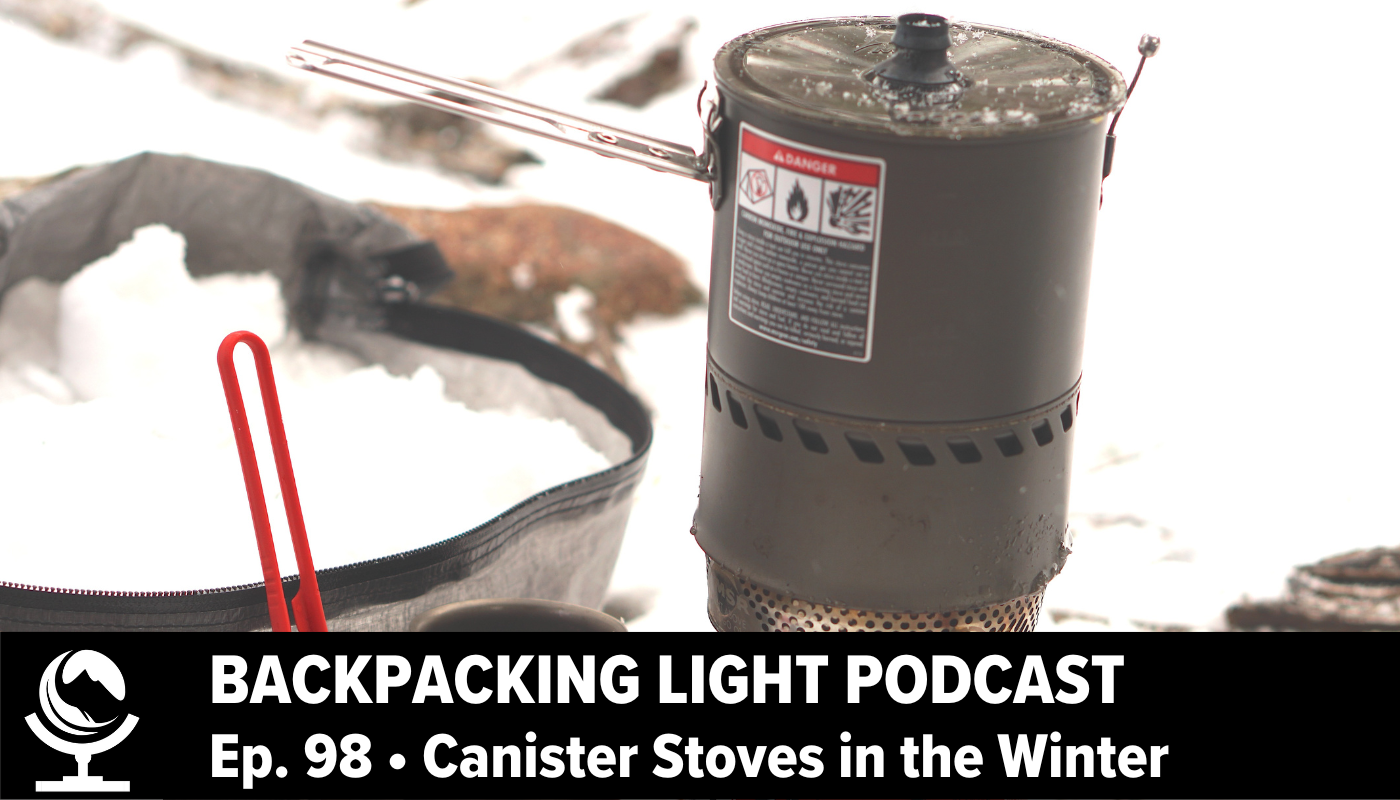 In this Episode: