


Introduction
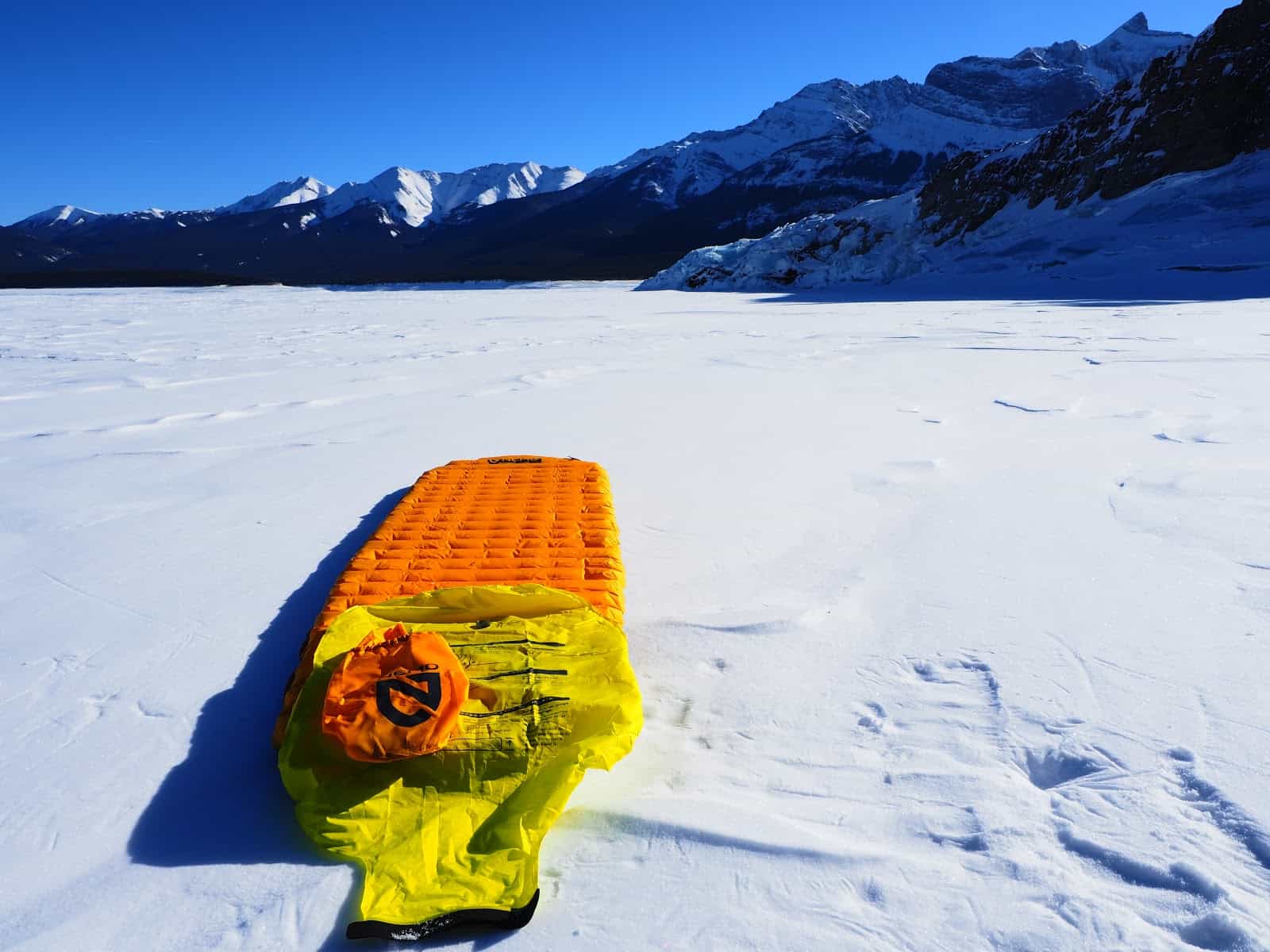
This Nemo Equipment Tensor Insulated Sleeping Pad review presents the performance of a lightweight, quiet, stable, and comfortable sleeping pad targeted to the backpacking community. The Nemo Tensor sleeping pad line offers a variety of shapes (as well as insulated and non-insulated models) to address the needs of a wide range of sleepers.
Features and Specifications
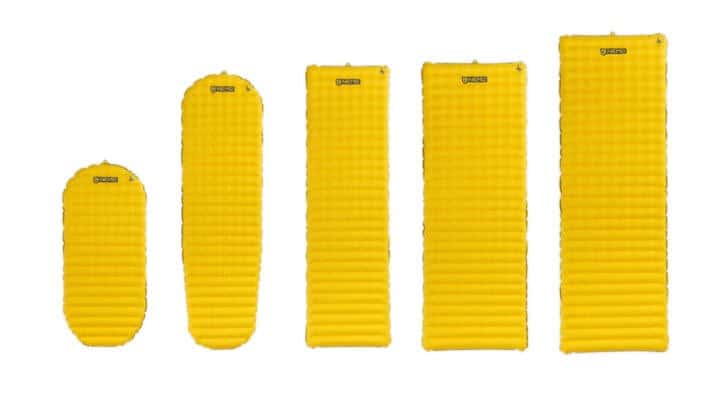
For this review, we will focus on the insulated style and the regular mummy size (the format I chose to test). Specifications for the other formats are available on the manufacturer’s website. Backpacking Light publisher Ryan Jordan owns and uses the insulated style regular wide size and features that pad in several videos on the Backpacking Light YouTube channel. Ryan’s comments are included in the Review Rating below, as well.
Features
- compatible with the Nemo Vortex pump sack
- low profile two-function valve with a one-way airflow diaphragm and rapid deflation option
- interior baffles for body weight and movement stabilization
- 20 denier polyurethane-coated polyester fabric
- thermal (metalized) film insulation (low-noise)
- lifetime warranty
- included: sleeping pad, velcro strap, repair kit, pump sack, drawstring stuff sack
- color
- insulated: marigold
- uninsulated: elite yellow
Specifications
- available in five shapes and sizes:
- mummy (short length): 48 x 20 in (122 x 51 cm)
- mummy (regular length): 72 x 20 in (183 x 51 cm)
- rectangular (regular width): 72 x 20 in (183 x 51 cm)
- rectangular (wide width): 72 x 25 in (183 x 64 cm)
- long wide (rectangle): 76 x 25 in (193 x 64 cm)
- thickness: 3 in (8 cm)
- packed size (regular mummy): 8 x 3 in (20 x 7.5 cm) diameter
- available in insulated and uninsulated models
- packed weight (regular mummy):
- insulated: 17 oz (490 g)
- uninsulated: 15 oz (425 g)
- minimum weight (regular mummy):
- insulated: 14 oz (410 g)
- uninsulated: 12 oz (345 g)
- temperature rating:
- insulated: 10F to 20F (-12 to -7C)
- uninsulated: 35F to 45F (2 to 7C)

Context: How I Reviewed the Nemo Tensor Insulated Sleeping Pad
When looking at inflatable sleeping pads, I consider the following to be key performance features: comfort, insulation (warmth), weight, size and shape options, durability, warranty, and price point. Of these, comfort and durability are the most subjective features, and I will address them specifically in this review.
My definition of sleeping pad comfort covers three areas: warmth, quiet (noisiness), and cushioning.
- First, I am a cold sleeper (If you are a warm sleeper, take my thoughts on insulation with a grain of salt).
- Second, I highly value quiet when I’m sleeping. Crinkle sounds drive me nuts!
- Third, I have a spinal injury history and am particular about cushioning. I am small-framed but bony, and when my hips and elbows bottom out through a pad, I notice! I have zero tolerance for lack of cushion in an air mattress. For good measure, I also had my friend Michael, who is 6’2″ (188 cm), test the mat for length and comfort.

I have reasonable expectations of sleeping pad durability. Ultralight pads made from low denier material are delicate and need to be treated with care (e.g., see Andrew’s review of the Therm-a-Rest Uberlite and Ryan’s video commentary about it). No one wants to wake up on a flat pad. It happens but is avoided for the most part with appropriate precautions. My precautions include:
- protecting the sleeping pad by storing it in a stuff sack
- using some type of shelter floor (maybe even in addition to a footprint) or durable ground cloth
- avoiding packing it next to pointy objects such as micro-spikes, and
- only using the pad on a clean(ish) ground surface free of sharp debris (e.g., abrasive rocks and pointy forest litter).
I cannot verify how durable the mat is in other contexts: I didn’t test it using it as part of a chair kit, without a groundsheet, or without a stuff sack.
Description of Field Testing
For me, the 2019 backpacking season was full of new experiences, environments, and climates.
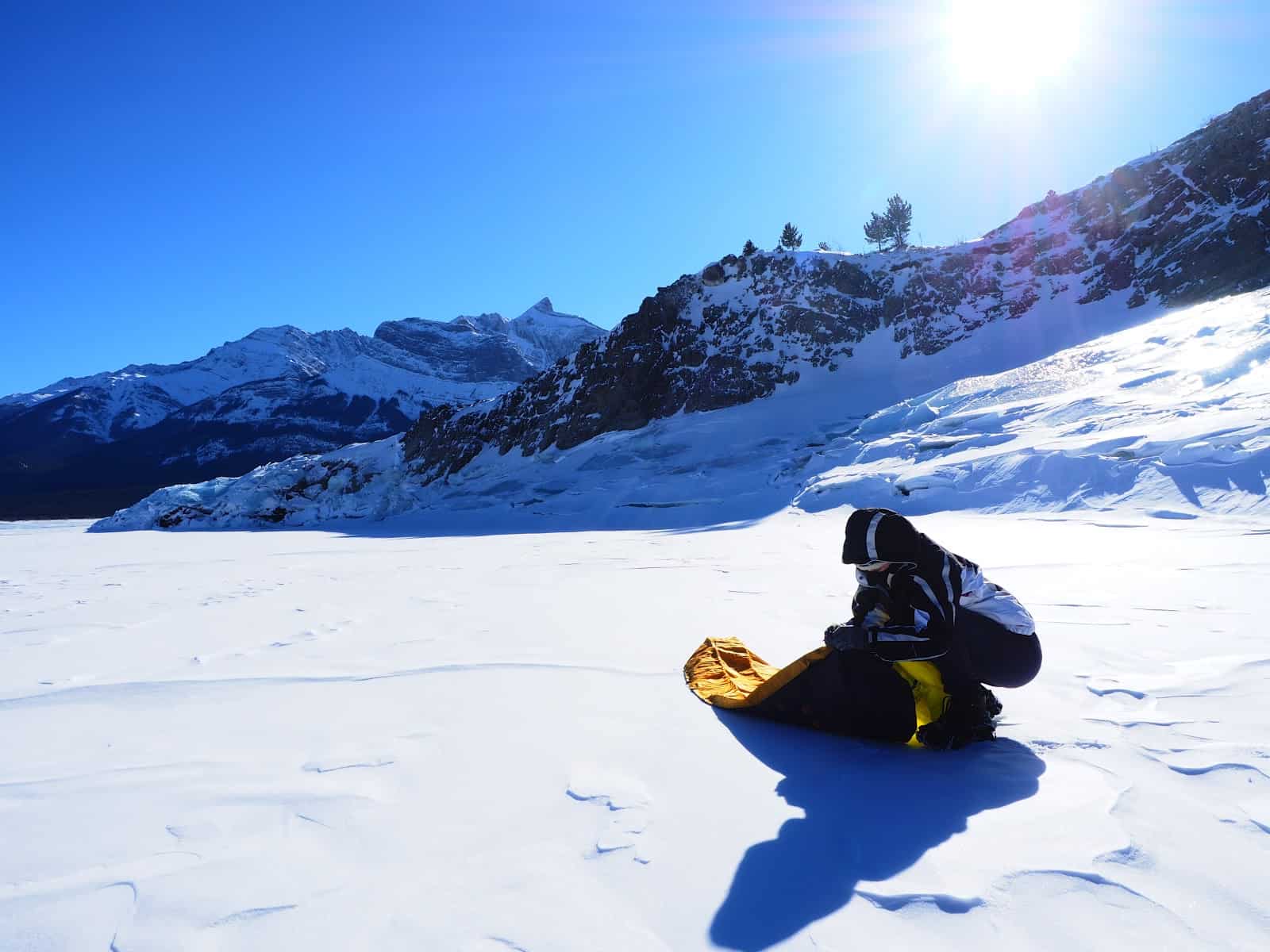
Specifically, I tested the Nemo Tensor Insulated Sleeping Pad while canoeing in Canada’s Northwest Territories and backpacking in Alberta’s Rocky Mountain range. The cold, humid environment made for ideal testing conditions. As I continue to use the Nemo Tensor, I’m happy to answer further questions in the comments section of this article.
Performance Assessment of the Nemo Tensor Insulated Sleeping Pad
My performance assessment of the Nemo Equipment Tensor Sleeping Pad addresses:
- comfort
- stability
- quiet
- insulation
- durability
- valve functionality
- pump functionality
Member Exclusive
A Premium or Unlimited Membership* is required to view the rest of this article.
* A Basic Membership is required to view Member Q&A events


Discussion
Become a member to post in the forums.
Companion forum thread to: Nemo Tensor Insulated Sleeping Pad Review
This Nemo Tensor Insulated Sleeping Pad review takes an in-depth look at the sleeping pad’s comfort, stability, insulative properties, & more!
I’ve used the long-wide Tensor Insulated on a handful of nights so far, and love it to the point that I’ve given away all my old pads. Agree with all of the points you made in your article.
The Vortex inflation sack works, but it’s single-use, which annoys me. I plan to purchase the 20 liter Sea to Summit Air Stream Pump Dry Sack as a replacement for that sack plus the turkey roasting bag I use for sleeping bag and clothes storage, which will save an ounce or so.
I hope Nemo redesigns the Vortex soon for better storage – that would make this product almost perfect IMO.
Thanks for the review.
— Rex
Rex – are you able to comment on the warmth of the Tensor compared to that of the Neoair XLite (regular, not xtherm)?
Never used a Neoair, the crinkling sound drove me nuts even in noisy REI stores.
My Nemo Tensor Insulated, rated 10F-20F by Nemo, seems equal or warmer than:
Maybe Emylene can chime in.
— Rex
*
Typo, I assume, under Initial Testing and First Impressions.
-4 F is not -40 C
Very well done review. GK
Quite right @Marvin Barg. Should be -41F. Which in short is cold enough to make the least sensible of us to seek shelter indoors.
I would be wary of any sleeping pad whose manufacturer doesn’t provide an R value.
John, they will soon be forced to test the R value if they want to continue selling their pads through REI.
I would like to see a comparison of the Tensor with the S2S Ether insulated. By the numbers they are very similar. Both appear to be quieter and more comfortable then the Neoair Xlite.
Hi Bill,
Where the Sea to Summit Ether fell off the competition was it’s not a 4 season pad. It’s warm enough (R 3.8) for many adventurers but not for a northern 4 season adventurer who sleeps like an icicle. I wanted desperately to do a comparison but they are really far out of class in temperature range.
I was initially interested in the STS Ether Light XT, but it is both $40 more expensive than the Tensor and filled with synthetic insulation. It is that second item that kills it for me.
JCH – What are the downsides of synthetic insulation? [Context: my daughter has a standard width Tensor, but wants to go wider, and I was looking at the Insulated Ether, probably the woman’s model, for next summer. My son and I use NeoAirs, but she doesn’t like those.]
What are the downsides of synthetic insulation?
With repeating packing and unpacking the insulation will break down and become ineffective. Synthetic insulation does not have a very long lifespan when it is repeatedly compressed. The mylar film (space blanket) radiant technologies used in the XLite and Tensor do not suffer this degradation.
Take a look at this post…the post references a different pad, but the insulation method and the issue is the same.
Like Rex above, I also now have some time on a regular-wide insulated Nemo Tensor and like it a lot. So much so that I brought it for “car” camping last weekend instead of a Thermarest Luxury Map!
Improvements/hacks I’ve made to it are as follows:
Also, I agree with Emily that the valves are hard to seat.
Tensor with trash compactor bag schnozzle and clip-on pillow.
The hole in the pillow case for the inflatable pillow valve allows for easy adjustments during the night.
Foam and inflatable pillow within the pillow case.
Neat hacks!
I usually put some seam grip dots on the back of my pillow and let them dry. They give it extra ‘traction’
I’ve also slipped my pillow into a buff ‘pillow case’ which also seems to increase ‘traction.’
I’ve never tried anchoring a pillow but I’m pretty restless and kind of cuddle the pillow between my shoulder and head.
Using a mesh stuff sack for my pillow has made it more comfortable and greatly reduced any sliding around.
Em, I totally get the needs of your trip. I just meant test the S2S Ether on its own. I’m impressed by the performance of the Vector. I may ditch the old XTherm for a Regular Wide that Nemo offers. Never understood why T-rest doesn’t offer a Regular Wide (of course I could hack down a large….).
Cheers,
Bill in Roswell GA
Ha I see! That makes sense, I’ll see if we can get one of those in the chute for review! Doesn’t hurt to try!
I’ve spent last night on bare ground with the Tensor at 10 deg F. I put a 1/8″ CCF pad underneath the torso part of it. No issues, slept warm. Tonight should be in the single digits. Gonna ditch the CCF pad.
I’m really looking forward to seeing what this pad can do in the winter on snow as our temps drop here.
Took the plunge and ordered an insulated LW Tensor…too many glowing reviews to ignore and while I have been quite happy with my XLite L, there are areas ripe for improvement, ones that the Tensor appears to address. The valve alone may be enough :)
Wow, I’m really surprised at all the positive reviews. I have one of the Insulated Long versions of the Nemo and did several instrumented tests in my back yard a couple of years ago. I slept in a single-walled shelter with an Alps Echo folding foam pad underneath the Nemo in a REI Flash Womens 30°F mummy bag. The temperature outside the tent got to 30°F, while inside it bottomed out at 37°F, and WOW was I cold. Then I tried the same setup again with a Big Agnes Lost Ranger 15°F mummy on a night that hit the same lows again, and I was STILL cold, but not as bad as with the REI bag. And yes, I had the bags fully zipped up around my head.
Then I got an Exped Synmat ul 9m, slept in the same setup with the REI 30° bag, outside temp of 29°F, inside temp of 36F, and was quite toasty.
Now, I sleep quite cold as well, but I find it hard to believe the Nemo has an R-value anywhere near 5 based on my experiences comparing it with the Exped with an R-value of 6. But hey, if it works for you, great!
“I have one of the Insulated Long versions of the Nemo and did several instrumented tests in my back yard a couple of years ago.”
The Tensor you had was the previous model. It was redesigned for 2019 with dual radiant layers and no synthetic insulation fill. There have been many people reporting similar experiences with the old model. It’s also certainly possible you would find the 2019 model still insufficient for your needs.
Thank goodness they did away with the synthetic insulation. I’ve never had a synthetic mat that worked well. I was always cold. I have down and I have ‘tin foil’ but no synthetic in my arsenal. I’m slowly replacing my synthetic quilts where I can too. They just don’t have the longevity of down.
Reflective liners are good, but they also have limits. If the first one reflects 90% of radiant heat back to you, a second layer will only reflect 9% of the total. This is barely worth it compared to the extra weight. A standard Xlite only uses one reflective barrier and internal triangular baffling. The Tensor uses two reflective barriers and larger internal baffling. So, the reflected heat is likely better with the Tensor, but, convectional losses are higher. (Smaller internal baffling means greater heat retention, as a general rule.) I suspect that Ryan will see a marked difference between with and without his 1/8″ CCF pad at 10F.
Convectional losses in inflatable pads (no insulation) are higher than self inflating or CCF pads, anyway. As you sink into the inflatable bad, it tends to wrap up around your body a bit. So, convection becomes more important than reflectivity. Reflectivity only comprises about 10-15% of your bodily heat losses anyway. We tend to ignore that as obvious with most pads, but it can get quite annoying at 20F. Even the edge bleeding can cause a bit of heat loss through convection/conduction.
Anyway, I agree 100% that down will last far longer than synthetics. Even in the best case for synthetics and worst case for down, I expect at least a 10 times longer use out of down. Average use on both is closer to 15 to 20 times or more.
Become a member to post in the forums.