


Introduction
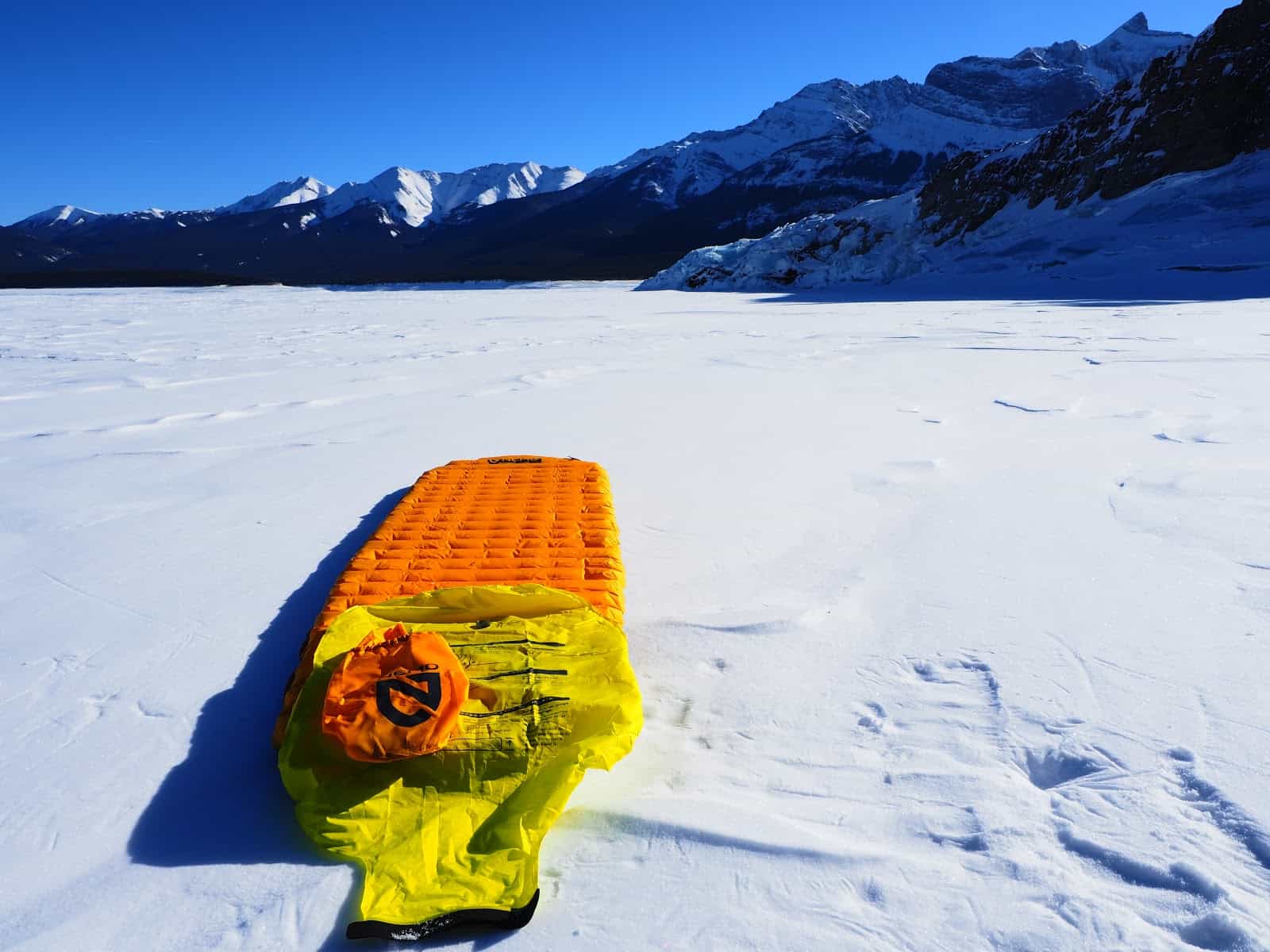
This Nemo Equipment Tensor Insulated Sleeping Pad review presents the performance of a lightweight, quiet, stable, and comfortable sleeping pad targeted to the backpacking community. The Nemo Tensor sleeping pad line offers a variety of shapes (as well as insulated and non-insulated models) to address the needs of a wide range of sleepers.
Features and Specifications
For this review, we will focus on the insulated style and the regular mummy size (the format I chose to test). Specifications for the other formats are available on the manufacturer’s website. Backpacking Light publisher Ryan Jordan owns and uses the insulated style regular wide size and features that pad in several videos on the Backpacking Light YouTube channel. Ryan’s comments are included in the Review Rating below, as well.
Features
- compatible with the Nemo Vortex pump sack
- low profile two-function valve with a one-way airflow diaphragm and rapid deflation option
- interior baffles for body weight and movement stabilization
- 20 denier polyurethane-coated polyester fabric
- thermal (metalized) film insulation (low-noise)
- lifetime warranty
- included: sleeping pad, velcro strap, repair kit, pump sack, drawstring stuff sack
- color
- insulated: marigold
- uninsulated: elite yellow
Specifications
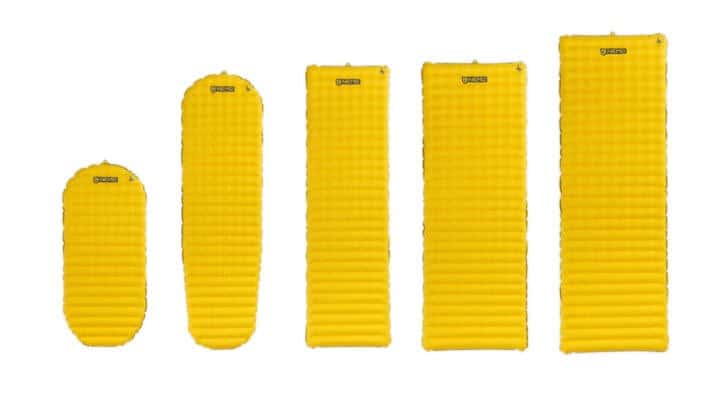
- available in five shapes and sizes:
- mummy (short length): 48 x 20 in (122 x 51 cm)
- mummy (regular length): 72 x 20 in (183 x 51 cm)
- rectangular (regular width): 72 x 20 in (183 x 51 cm)
- rectangular (wide width): 72 x 25 in (183 x 64 cm)
- long wide (rectangle): 76 x 25 in (193 x 64 cm)
- thickness: 3 in (8 cm)
- packed size (regular mummy): 8 x 3 in (20 x 7.5 cm) diameter
- available in insulated and uninsulated models
- packed weight (regular mummy):
- insulated: 17 oz (490 g)
- uninsulated: 15 oz (425 g)
- minimum weight (regular mummy):
- insulated: 14 oz (410 g)
- uninsulated: 12 oz (345 g)
- temperature rating:
- insulated: 10F to 20F (-12 to -7C)
- uninsulated: 35F to 45F (2 to 7C)

Context: How I Reviewed the Nemo Tensor Insulated Sleeping Pad
When looking at inflatable sleeping pads, I consider the following to be key performance features: comfort, insulation (warmth), weight, size and shape options, durability, warranty, and price point. Of these, comfort and durability are the most subjective features, and I will address them specifically in this review.
My definition of sleeping pad comfort covers three areas: warmth, quiet (noisiness), and cushioning.
- First, I am a cold sleeper (If you are a warm sleeper, take my thoughts on insulation with a grain of salt).
- Second, I highly value quiet when I’m sleeping. Crinkle sounds drive me nuts!
- Third, I have a spinal injury history and am particular about cushioning. I am small-framed but bony, and when my hips and elbows bottom out through a pad, I notice! I have zero tolerance for lack of cushion in an air mattress. For good measure, I also had my friend Michael, who is 6’2″ (188 cm), test the mat for length and comfort.

I have reasonable expectations of sleeping pad durability. Ultralight pads made from low denier material are delicate and need to be treated with care (e.g., see Andrew’s review of the Therm-a-Rest Uberlite and Ryan’s video commentary about it). No one wants to wake up on a flat pad. It happens but is avoided for the most part with appropriate precautions. My precautions include:
- protecting the sleeping pad by storing it in a stuff sack
- using some type of shelter floor (maybe even in addition to a footprint) or durable ground cloth
- avoiding packing it next to pointy objects such as micro-spikes, and
- only using the pad on a clean(ish) ground surface free of sharp debris (e.g., abrasive rocks and pointy forest litter).
I cannot verify how durable the mat is in other contexts: I didn’t test it using it as part of a chair kit, without a groundsheet, or without a stuff sack.
Description of Field Testing
For me, the 2019 backpacking season was full of new experiences, environments, and climates.
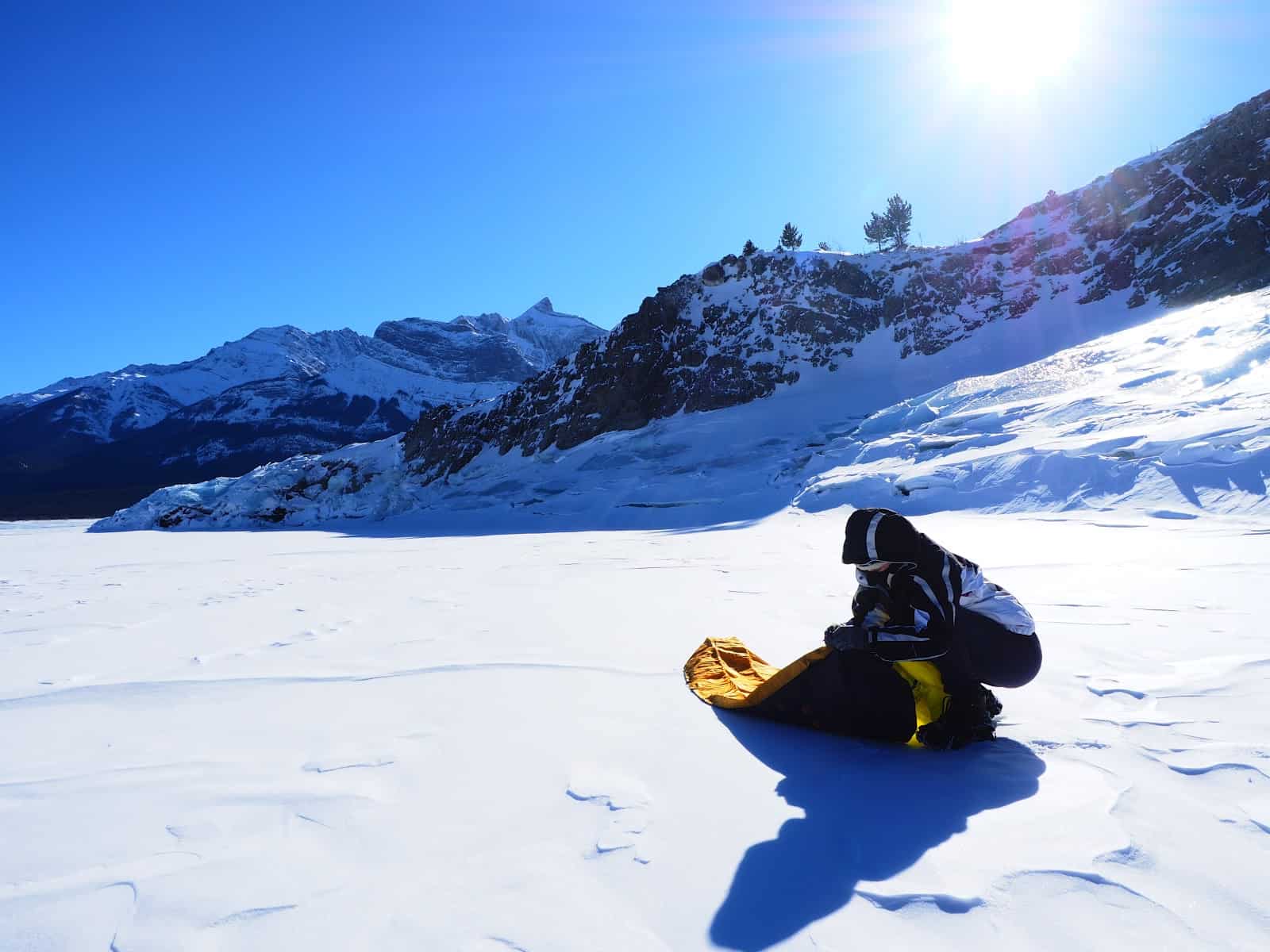
Specifically, I tested the Nemo Tensor Insulated Sleeping Pad while canoeing in Canada’s Northwest Territories and backpacking in Alberta’s Rocky Mountain range. The cold, humid environment made for ideal testing conditions. As I continue to use the Nemo Tensor, I’m happy to answer further questions in the comments section of this article.
Performance Assessment of the Nemo Tensor Insulated Sleeping Pad
My performance assessment of the Nemo Equipment Tensor Sleeping Pad addresses:
- comfort
- stability
- quiet
- insulation
- durability
- valve functionality
- pump functionality
Member Exclusive
A Premium or Unlimited Membership* is required to view the rest of this article.
* A Basic Membership is required to view Member Q&A events


Discussion
Become a member to post in the forums.
“Average use on both is closer to 15 to 20 times or more”
Especially if the synthetic insulation is regularly being compressed!
We don’t get much snow in the SE US but would think a down mat best for sleeping on it. I have been down to 15 F on my XLite and not been cold wearing a down jacket and pants inside a WM MegaLight with all down shifted to the top :)
@ryan
how did it go w/o the gossamer gear cf pad?
The Thermarest XTherm has a Limited Lifetime Warranty, not a 2 year warranty. Thermarest electronic items (i.e. NeoAir Pump) have a 2-year warranty.
Hanz (@tundra-thrasher-ouch-man-2) – so far so good. I haven’t been able to test subzero (F) yet without the pad, but single digits F and direct on snow seem to be OK so far with this pad (Nemo Tensor Insulated).
I see that REI is now listing R-values for the Tensor insulated pads – presumably tested to the new standard. The Tensor insulated is R3.5 and the Tensor Alpine is listed at R4.8. Meanwhile, the X-lite with the new valve design is listed at R4.2. There are also multiple listings for the Sea-to-Summit pads, with lower R-values for what I think are the new listings – the older listings with the previous R-values are on sale,although I don’t think there has been any change to the design.
I have been using a STS Ultralight Insulated (old R-value 3.3 / new R-value is 3.1) and I typically feel cold from below with the temp is near 30 and there is any wind. I had been considering the Regular-Wide Tensor Insulated or a STS Comfort Light Insulated (new R value is 3.7), but now will probably spring for either the Tensor Alpine in Large (I hate the 24oz weight though) or just give up and get a Thermarest X-Therm Max (I see there is a Regular-Wide size in this now). I don’t find the Thermarest X-series all that comfortable, but I need a warmer pad and would like something wider as well.
I wonder if adding a torso length 1/8 inch evazote (or similar) pad might boost your existing pad’s R value to an equal or better than a new pad and for less weight?
Also, given the BPL review of the insulated Tensor (and recommendations by BPL staff for how well it works on snow) I am a bit surprised that the REI published R value of the Tensor is that low…
I was warm sleeping on my Tensor Insulated pad on snow last weekend, although the night-time low was only 31F. I’ve previously taken it down to 25F without issue. Both times were without a supplemental foam pad. Adding a 1/8” foam pad to my old S2S Ultralight Insulated did make it feel much warmer.
Somehow the new R-value standard shows significant benefit to Thermarest pads. The Z-Lite shows an R-value of 2.6 vs the Nemo Switchback’s R-value of 2. Hard to understand how a thicker CCF pad would have a greatly lower R-value.
@johnnyh88 – this is exactly what I was wondering. Yes, REI is now publishing R values for products where previously they did not, but of what use are they? And even assuming the number is “accurate”, in that an identical test performed on each pad returned that number, does that have a direct correlation to individual experience in using the pad? Would you consider posting your gear used, i.e. quilt/bag/shelter used and clothing worn?
IOW, I would assign much more value to your (and others) reports that the Nemo Insulated Tensor was warm under X conditions than on a reported R value.
JCH – I think this has been discussed before. So long as the testing methodology is consistent, that’s what matters.
In other words, the points isn’t to be able to state that, “I was warm on an R=3.5 pad and you will be also.”
Rather, I think the point is to be able to say, “I was cold sleeping on an R=3.5 pad X. Pad Y is rated at R=3.2, so I would expect that I would feel colder using it. It’s not for me. Pad Z is rated at R=4.0, so it should be on my short list of of pads to try next.”
JCH – I have tried a 1/8 inch evazote pad under the STS UL Ins. and it just didn’t make a huge difference to me. Some recommend putting the foam pad on top of the air pad, but I have found this to be impractical (it doesn’t stay put). Also, at the end of the day, I just don’t like packing and carrying the extra volume of the foam pad.
Jeff – that’s it exactly, at least with a common standard I can figure out what works for me. Just like I know my low temp for sleeping bags is the EN comfort temp vs the Lower Limit temp. Although maybe that will change a bit with a warmer pad.
Wind seems to make a difference for me. I have wondered if the dimpled design of the STS pads allow cold air to get under the pad. Other factors could also be at play – I know the insulation does not extend to outer edge of the pad.
I would really like the Tensor Insulated to work for me because I like the regular-wide size and I have not found the thermarest x-series pads all that comfortable. I have been waiting on the new R values before pulling the trigger, and now that they are here – R3.5 just isn’t much of a Delta vs what I have. I already have a pad that works for me at 35 F and higher so I probably just need to get a warmer/heavier pad for colder temps. I don’t do winter camping, this is primarily for spring/fall temps at altitude.
The price of these pads (>$200) has gotten to the point where I don’t want to make a mistake.
JCH – I was using a single-wall tent, vestibule-door open, and a MYOG quilt with 16oz of down.
From previous experience, I know I would have been cold from the ground if using my S2S Ultralight Insulated with no 1/8” foam pad underneath.
John – what size Tensor Insulated do you have? Was your primary motivation to upgrade from the S2S pad warmth or comfort?
I have the Regular length Mummy. I wanted to find a pad that was warmer and more comfortable than the S2S Ultralight Insulated. I first tried the S2S Ether Light Insulated, but that pad was too noisy.
In my half-dozen nights of use so far, the Tensor Insulated is proving to be warmer, more comfortable, and very quiet. I sleep about 50% on my side and 50% on my back. The quietness is really nice – I don’t think I could go back to a loud pad again.
FYI:
Sleeping Pad R-Values: Not That Useful
https://backpackinglight.com/sleeping-pad-r-value-not-that-useful/
Philip Warner discusses the sudden jump in Therm-a-Rest R-values in this review and comments:
https://sectionhiker.com/therm-a-rest-xtherm-sleeping-pad-w-winglock-valve-review/
— Rex
John – for your regular mummy Tensor – do you know if the 20 inch width is for the inflated pad? One of the attractive features of the S2S pads is that their width spec. applies after inflation (vs the Thermarest pads that are definitely not 20 inches wide after inflation). I am thinking maybe the Tensor Alpine in regular mummy might be the way to go for me if it is wide enough.
Rex- Yup, I have read all of that. I get that the R-values don’t necessarily tell you what will be good for you at a given temperature – any more than a manufacturers temperature rating would. But I think if they are tested the same – at least it provides a useful point of comparison – once you have experience with a pad that has been tested to it. And as far as the new Thermarest valve design – I much prefer the valve design used by S2S (and the similar Nemo design), and I have never found the Thermarest X-series pads comfortable.
I’ve never measured the Tensor’s width. It’s not quite as wide as my S2S pad (which was spec’d at 21.5” wide). But it certainly feels wider than the Thermarest X-Lite pads. The edges of the Tensor are also more stable and don’t collapse like the X-Lite. You can always order a regular-width pad, and if it feels too narrow, then exchange it for a wide.
Become a member to post in the forums.