

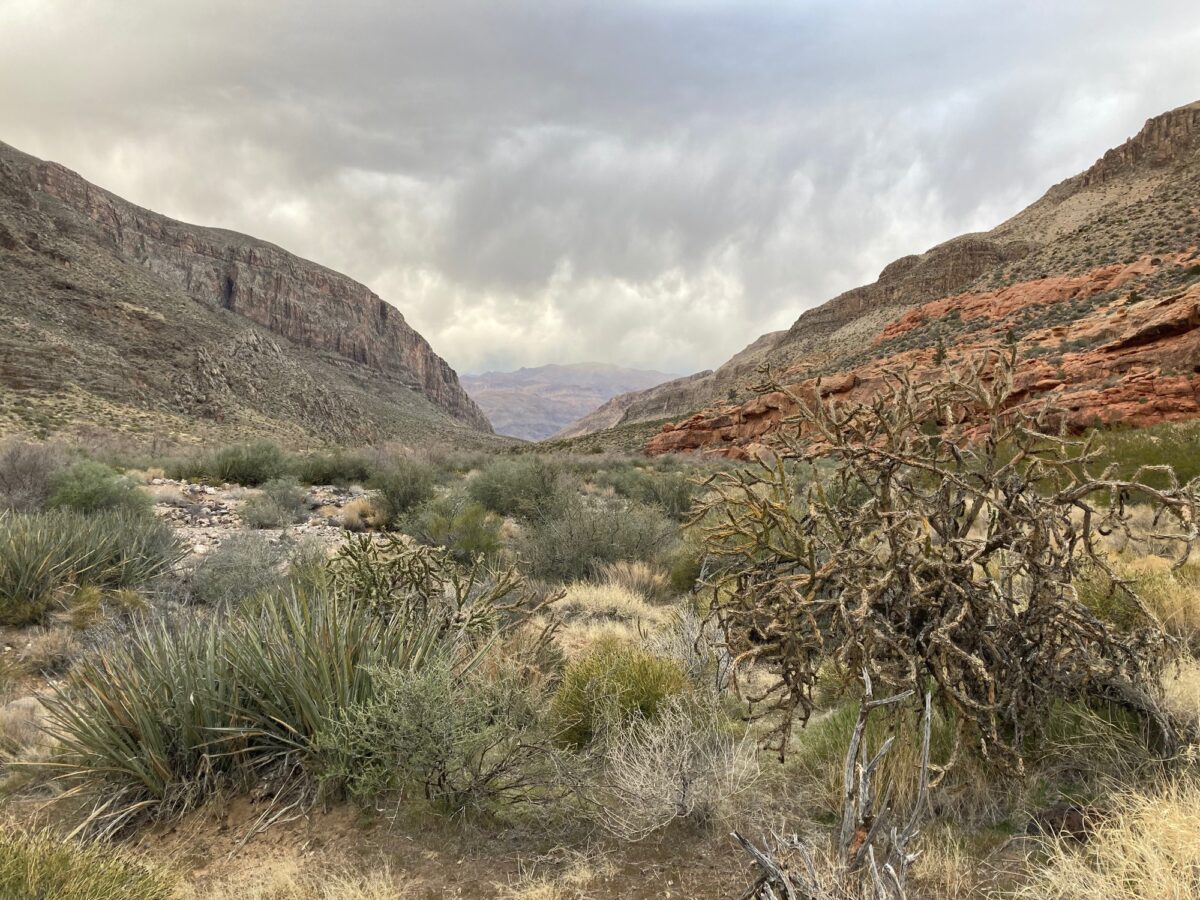
When my partner Hallie and I tried to embark on a trip to the far southwestern corner of Utah last month, I was no help at all. She would have been happy to explore almost anything, walking through any mountain range just to see what’s there, tromping off-trail between junipers, and climbing loose shaley hills to get a view of who-knows-what. But every place, to me, had an issue I couldn’t reconcile. Every place was imperfect. Or maybe not every place, but every imagined future experience in a place.
The Beaver Dam Mountains looked intriguing from St. George, Utah. They weren’t tall or jagged, but they were a place I hadn’t been. And sometimes that’s enough for me. This time, it was more than enough for Hallie, who was elated by the prospect of just being outside, cold and windy though it was. I looked down at the map and then out a window but understood neither landscape, projected or real, well enough to say, “Yes! Let’s do that!”
I felt paralyzed, and Hallie was at a loss as to how to revive me.
For one, I told her, the storms were building somewhere in the mysterious west, or at least the weather app on my phone said that was the case. That somewhere in the center of the Pacific some future desert wind, some future slickrock snow was growing, building. We had considered a packrafting loop through the reemerging Glen Canyon too, but when I imagined being on the freezing water in 20 mph winds, I got nervous and closed the CalTopo app.
I didn’t want to sit with the reality that I couldn’t control the outcome of a trip.
Of course, this is why I plan. Because the world is completely unpredictable. All futures are unknown. This is why I make spreadsheets with every piece of gear laid out before me with weights and uses clearly labeled. So I know that I can respond to rain, snow, heat, cold, darkness, and bears. Frankly, this is also why I so often overpack (I’m not the best ultralight backpacker sometimes).
All of these efforts stem from a fear of the unknown, which is an ambiguous way of saying that I’m scared of dying. They are manifestations of the desire to optimize fear out of the backpacking equation. Of course, this is an absurd attempt. It’s impossible to optimize fear out of the equation in either backpacking or human life. But the closer I get, Oliver Burkeman tells me in his book 4,000 Weeks: Time Management for Mortals, the more possible it sometimes seems. But this is a trap.
It’s a trap because it’s just never going to happen. There’s always going to be uncertainty. “Entering space and time… means letting your illusions die,” Burkeman writes. In other words, as long as you have been born – everyone reading this has – you will have to let visions of the perfect future die. So no trip is going to be perfect, ever. No reality will map onto the plan in my mind, ever. And no life will be as fulfilling as I’d hope, ever. I’ll never get to a place where I am prepared to have a child, and I’m never going to get to a place where I am prepared for everything the wilderness will throw at me.
But I can worry about it. And worry, Burkeman tells me, is an effort to assert control over the future. So, as I sat looking out the window, I worried because that felt somehow easier than sitting with the reality that I couldn’t know what any potential trip might hold.
So much of the online backpacking world today is fixated on optimization for the purpose of addressing every possible future scenario. We’re also fixated on optimizing for the lowest possible weight, the most calories per ounce, and the most warmth for weight. This is all pretty funny to me because backpacking, at its core, is kind of a pointless activity. And that pointlessness is the point. Or at least used to be. In fact, hiking is one of Oliver Burkeman’s favorite hobbies, and he writes about it in the chapter “Hiking as an End in Itself.” On a rainy walk through the high moors of the Yorkshire Dales he reflects that his leisurely country walk has two noteworthy features:
“For one thing, unlike almost everything else I do with my life, it’s not relevant to ask whether I’m any good at it: all I’m doing is walking, a skill at which I haven’t appreciably improved since around the age of four. Moreover, a country walk doesn’t have a purpose, in the sense of an outcome you’re trying to achieve or somewhere you’re trying to get…On a hike, you either follow a loop or reach a given point before turning back, so the most efficient way to reach the endpoint would be never to leave in the first place.” – Oliver Burkeman
Walking, then, is an “atelic activity,” or a pursuit with no ultimate goal or telos. Telos is the root of the term teleology, which is the idea everything has an intrinsic purpose. Aristotle – who effed things up royally in my opinion and in whose writing the idea of teleology originated – would probably question Burkeman’s view of walking.
And I can see the appeal of teleology; it orders and simplifies the world, but the world resists the idea if you really look. Just a few nights backpacking through the wilderness will remind you that the world is fundamentally random, chaotic, purposeless, uncaring, non-hierarchical, and fleeting. And then you die. It’s tempting to want to look for meaning in it, to control it. And I do – we do – all the time. But I can see that it doesn’t serve me.
So what the hell am I doing trying to reinsert purpose into a purposeless activity by worrying about the perfect experience? Why can’t I just sit with the reality that I can’t control the future or the desert or the mountains?
Well, Burkeman says, because we all do everything we can to avoid reality pretty much all the time.
To both distract from and attempt to assert control over reality, I optimize my kit, my plan, and my skills. And it works to some degree. Optimization can also be important for safety and to have a fun trip too. But it’s not lost on me that much of this effort is just a stand-in for the fact that it’s impossible to address the larger unknowns that I can’t optimize my way out of. Like death.
And that’s what this all really boils down to. We only have so much time (4,000 weeks for the average human life, actually) and we want to make sure we make good use of it. Unfortunately – and this is the really annoying kicker – we won’t. No one will ever do everything they hope to do. I’d like to visit Japan and New Zealand, but it might not happen before I kick the bucket. And that just sucks.
But the neurosis stemming from this fear is easiest to see in my hobby of backpacking because it is a problem-solving wellspring. There are endless ways for me to avoid the fact that I will never have a perfect kit by incrementally improving it. And I can avoid the fact that most trips will be imperfect and unpredictable by reducing the possibility of surprise by going out only during good weather windows while carrying a GPS app with the route clearly marked. And for each of my accomplishments, whether it’s the acquisition of the perfect 20-degree quilt or the bagging of a peak, “it’s always the case either that you haven’t achieved it yet (so you’re dissatisfied, because you don’t yet have what you desire) or that you’ve already attained it (so you’re dissatisfied, because you no longer have it as something to strive toward),” Burkeman writes. Sound familiar?
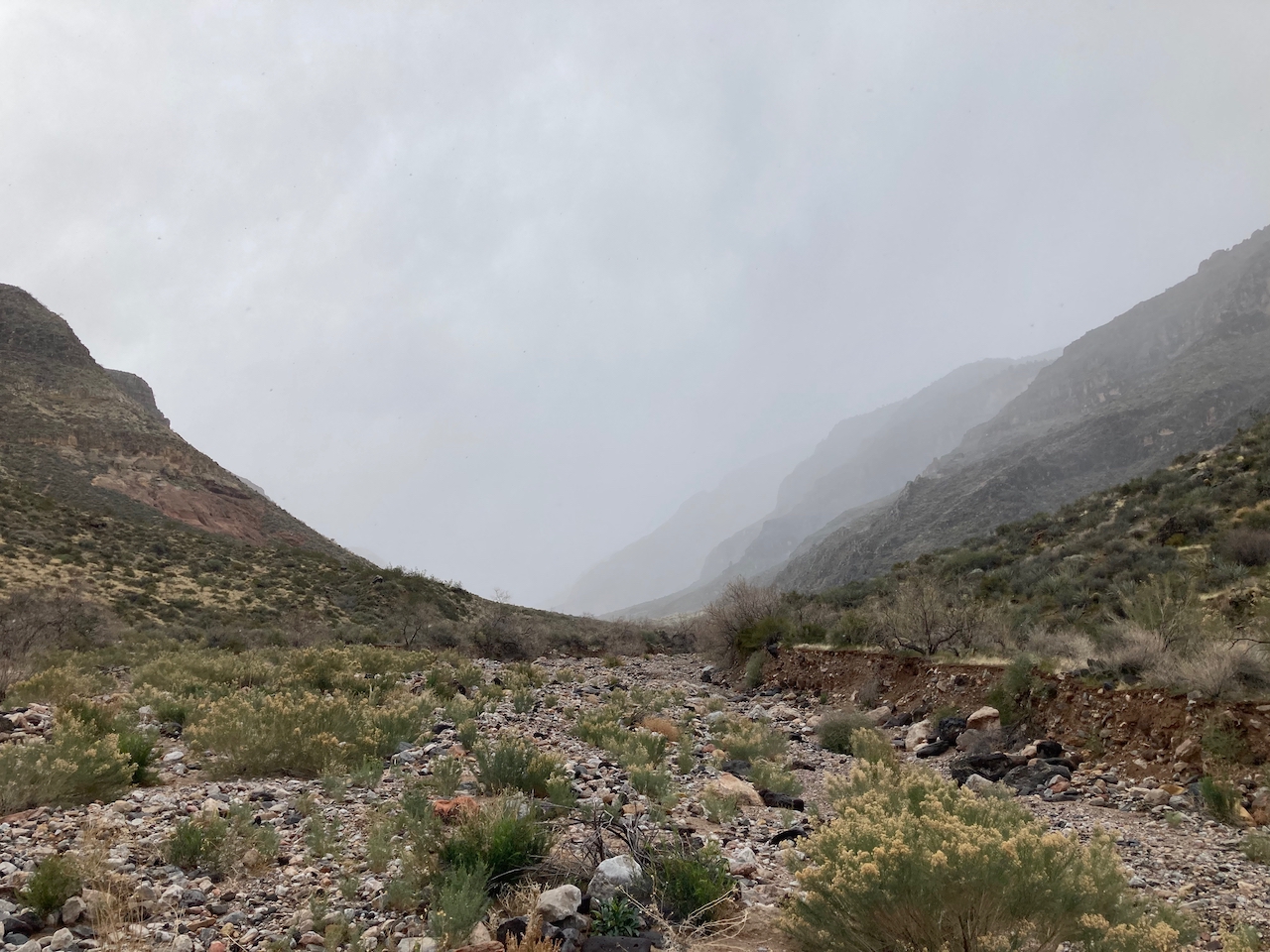
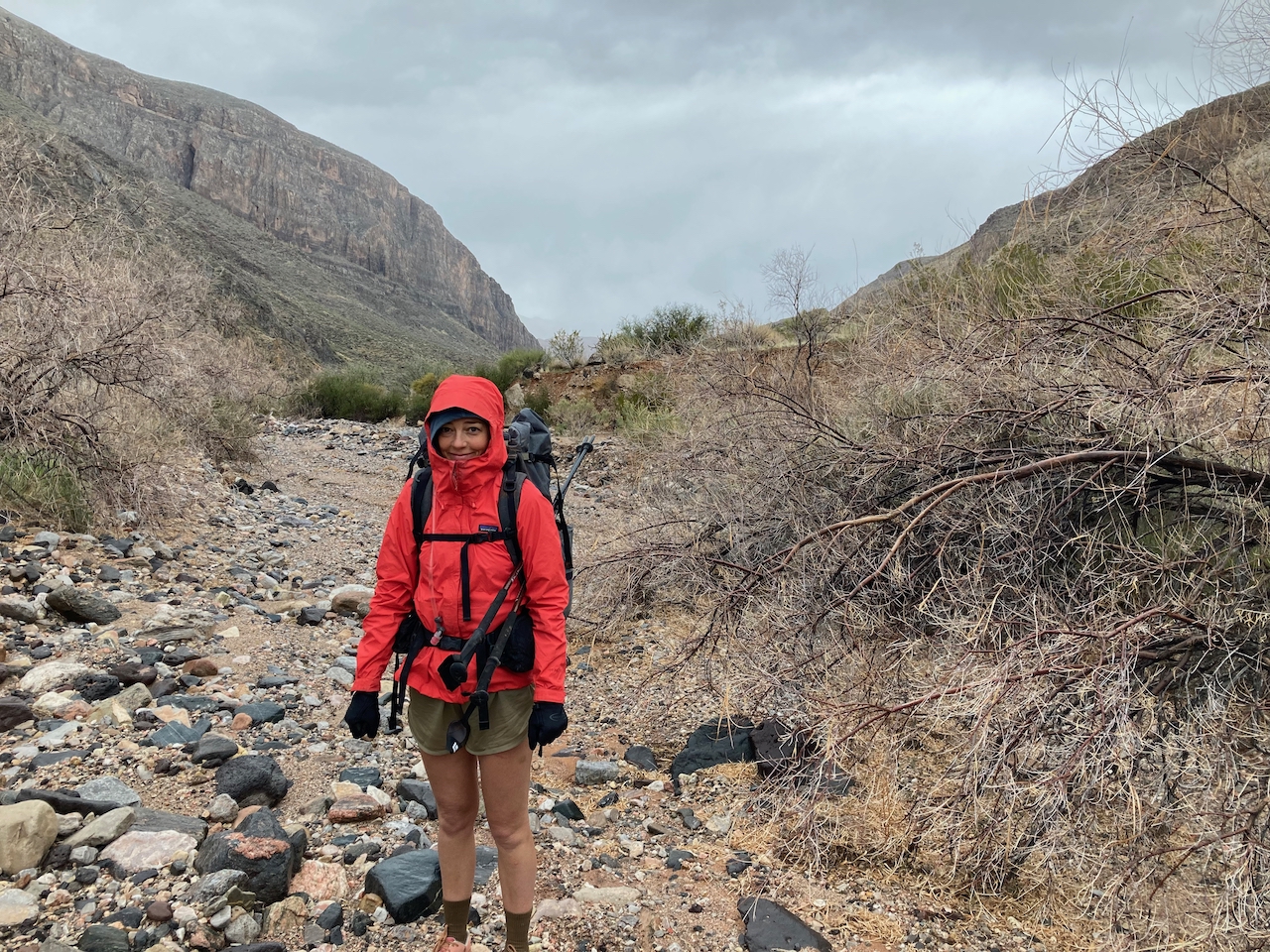
Finally, Hallie and I made a choice that was in no way perfect, but at least it was a choice. We chose a Wilderness Area in northern Arizona where neither of us had been. We crossed an Interstate on foot, removed our shoes and crossed a muddy river, and then worked our way up a widening, deepening, cobblestone canyon towards who-knows-where. It took a long time to get halfway to a water source, and there we stopped, right in the middle of the 12-mile-long gorge. As we stood there in the middle, I realized that it felt good simply to have made a choice and to have begun walking.
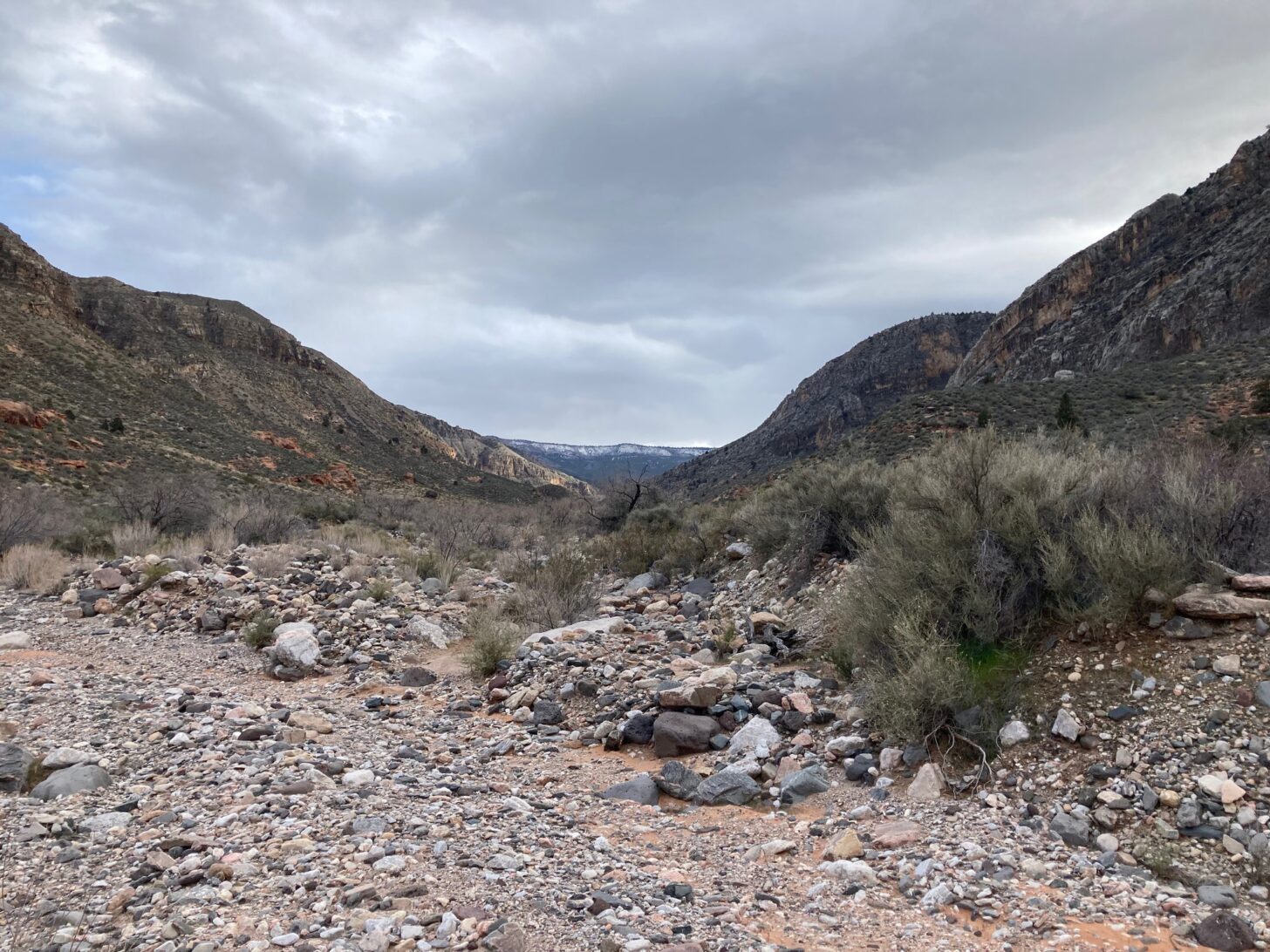
This canyon was the type of place where I wouldn’t be able to live if I didn’t have food, water, and shelter on my back. This means it was also precisely the sort of place I had feared when I was letting my neurotic, control-freak side get the better of me back at the house. A place that, I thought, wanted to kill me. But instead of futilely worrying about all that could go wrong in this unforgiving desert, I sat with the wild possibility that I could trust myself to adapt to whatever I may encounter. As that thought steeped in my stubborn mind, the landscape around me started to come into focus, to become more real.
At each end of the canyon, rain swept toward the ground in slow ghostly curtains. The cobblestones under my feet ground against one another as I shifted my weight. My hands were cold. I was starting to see, hear, feel. Then my fantasy of complete control over the future started, haltingly and with resistance, to fall away. Like Dylan, “I opened my heart to the world and the world came in.”
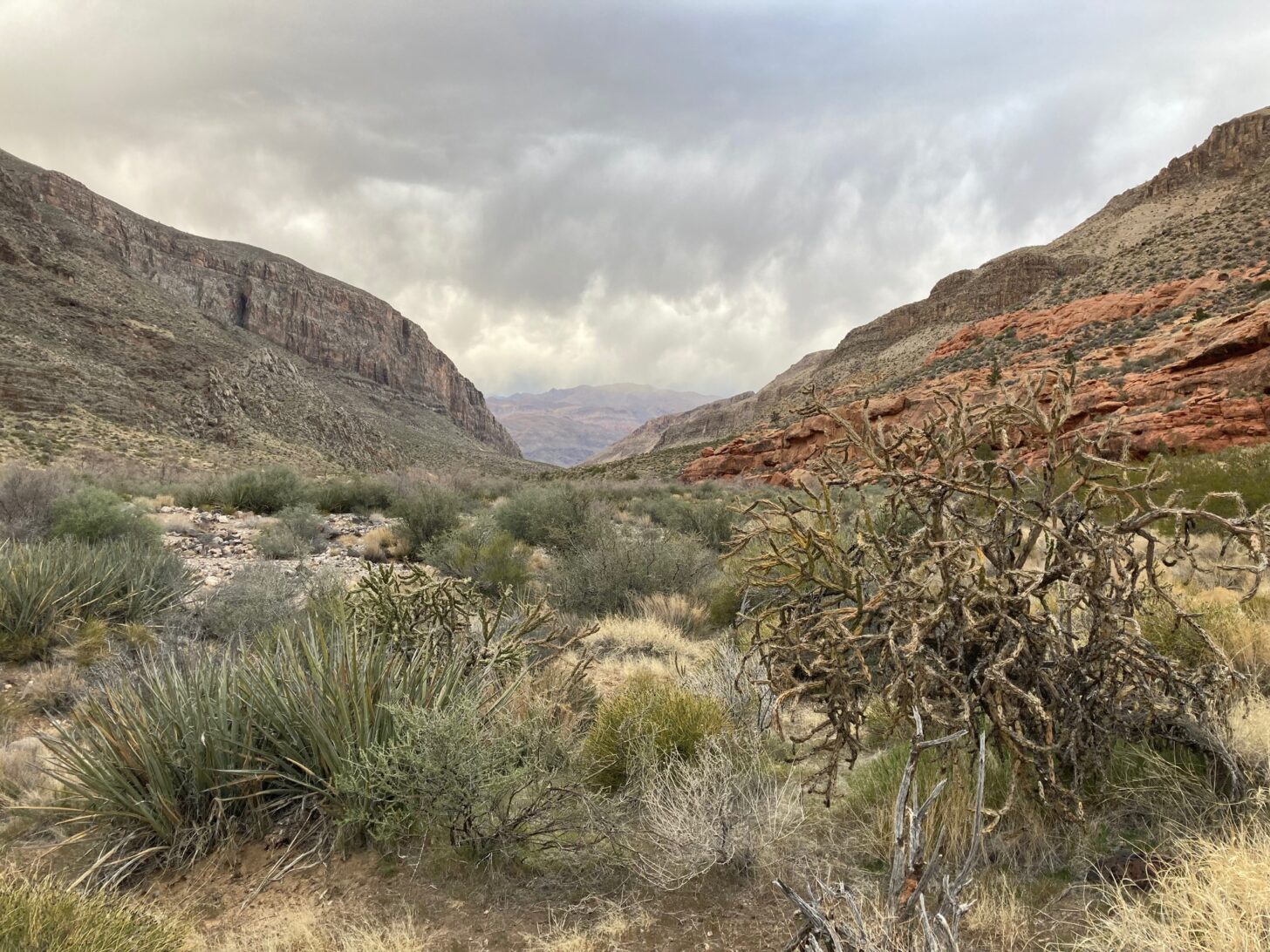
When you let your illusions die, accepting no trip will be perfect and no kit will anticipate every problem while also weighing under six pounds – when you accept that your precious time allotted for trips may never be fully optimized, “you get to actually be here.” says Burkeman. “You get to have some real purchase on life. You get to spend your finite time focused on a few things that matter to you, in themselves, right now, in this moment.”
I started to focus on what mattered, and what mattered was the place and my body in it. I began to extricate myself from the false reasons for backpacking: kit improvement, trip time-window optimization, flawless preparation. I started to return to the real point of backpacking, its utter pointlessness, and just how enjoyable that can be.
Related Content
- Read more by Ben Kilbourne.
- Want more stories of desert hiking? Start here.
- Browse more thought-provoking essays from Backpacking Light contributors.
DISCLOSURE (Updated April 9, 2024)
- Backpacking Light does not accept compensation or donated/discounted products in exchange for product mentions or placements in editorial coverage. Some (but not all) of the links in this review may be affiliate links. If you click on one of these links and visit one of our affiliate partners (usually a retailer site), and subsequently place an order with that retailer, we receive a commission on your entire order, which varies between 3% and 15% of the purchase price. Affiliate commissions represent less than 15% of Backpacking Light's gross revenue. More than 70% of our revenue comes from Membership Fees. So if you'd really like to support our work, don't buy gear you don't need - support our consumer advocacy work and become a Member instead. Learn more about affiliate commissions, influencer marketing, and our consumer advocacy work by reading our article Stop wasting money on gear.


Discussion
Become a member to post in the forums.
Companion forum thread to: Backpacking is Pointless, and That’s the Point
Maybe not everything about ultralight backpacking has to be optimized.
Schedule-wise, it’s not so much the hiking but think
real lifehome life/logistics intrudes schedule wise. Even the dedicated thru-hiker crowd mostly goes indoors for winter … or Mexico.…gear optimization
Equipment wise there’s room for more argument. There are those with full gear closets vs those making 1 packing list do multiple duties … gram weenies, oz weenies, and on the other side those with trail names known as “metric ton”. If I were to try to impress someone new to backpacking, I’d probably throw in some luxury and ditto for the colder months when the nights get long for even myself. Yet looking at a higher mileage endeavor next summer, already planning on a WPB based bivy system. We had a term in the Army .. depends on the situation.
Backpacking for me is relationship building. I now backpack a lot with my son and it is a great way to get to know each other outside of our busy regular lives.
Thank you for your thoughts. I find the concept of Dasein very helpful to work with. Erich Fromm’s To Have Or To Be might be of interest to you.
Interesting take on backpacking. My interest is not miles accrued or trails accomplished, but just spending time in nature, to witness natural beauty. Part of my preparation for a hike is learning the trees, shrubs, flowers, and wildlife that is in the area. The natural history, geology and birds. I choose places that are rich in natural interest, which is one reason I’ll never do a long trail; too much of each of those trails is really boring, through 2nd growth and clearcut forest, dirt roads through human wasteland, etc. (That kind of terrain really makes me wish I had a bike!) Even the walking isn’t that interesting for me, although it’s good for me. There is a point, for me, and nature is it. Backpacking can get me to places that you simply cannot see by car. HYOH!
I think you can have the best of both worlds, i. e. you can have your neuroses and hike, too. The neuroses come in the gear buying, planning, and fretting before the trip stages. The hiking comes in once you get out of the car and on the trail. As Ray Jardine says: “If you get out there and find you don’t have something you need, you didn’t need it anyway!” or something to that effect.
Or another way to put it: Apply the 50 year rule. Will it matter 50 years from now? If the answer is yes, then worry about it. If the answer is no, don’t worry about it.
Paralysis by analysis is never preferable to a hike!
Going somewhere is when I go to work. Or the shops, etc. Going to a destination with specific intent. Like you say, backpacking is not really about a destination, because you always end up back home. It’s filling in the time with some (Type 1??, hopefully) fun.
On a recent walk I saw a couple of sea eagles, so sat down on a cliff edge (about 200m high) to watch. I opened my cheese sandwich, while the eagle spiralled above me, then slowly spiralled down. He did a final talon dive, coming up with a fish. I got to have lunch with a sea eagle!!!!
Rest of the 2 night trip was enjoyable, a familiar track on the Tasman Peninsula, but being there at just the right moment to see something I’ve never seen before, was reason enough for a good walk. And motivation to go back.
Don’t worry about worrying, that’s why I fill my fuel tank, clean windows, check oil and tyre pressure in the car before setting out on a long drive to the trailhead. I can relax on the drive because I know I have enough fuel to get there, enough window washer for mud/rain etc. Same with the EPIRB, the first aid kit that rarely gets opened, the garbage bag and the toilet roll. Pack enough for optimal fun, and go for it. That day-old cheese sandwich tastes better if you can eat it with an eagle.
No doubt we are all different. For whatever reason, I am missing the worry gene. I always assume everything will be fine. Hence my packing list is truly there to make sure I don’t forget something important (as I’m not worried or obsessed about forgetting critical things). The internal debates about gear and buying new kit are most often fillers for the odd moments when I’m thinking about a trip and realize I can stop doing my work for a few minutes to think about something more exciting. The backpacking itself is a wonderful combination of testing my body to make sure it’s still alive and non-stop wonder at the beauty and complexity of the natural world. The solitude doesn’t hurt, either.
Become a member to post in the forums.