Articles (2020)

The Anthropology of a Trail

When we trek, we are taking the paintbrush or pencil that is the foot to the page that is the earth.

Who or what makes a trail?

I’ve often wondered this when veering off the Bonneville Shoreline trail that skirts the edge of Salt Lake City to investigate less distinct deer trails. The Bonneville Shoreline trail is a human trail today, no doubt, but when Lake Bonneville lapped at the shore between 30,000 and 13,000 years ago, bison, deer, and later Shoshone, Ute, Goshute, and other Native people surely walked the edge of the water. Then when the lake receded, it left a clear line, an obvious promenade just asking to be walked. So, who or what created this trail? Did the lake itself make it? After all, today’s trail is named after the lake. The existence of this question seems to speak of its own futility, or maybe trail-making or path-making are just more complex than they appear.

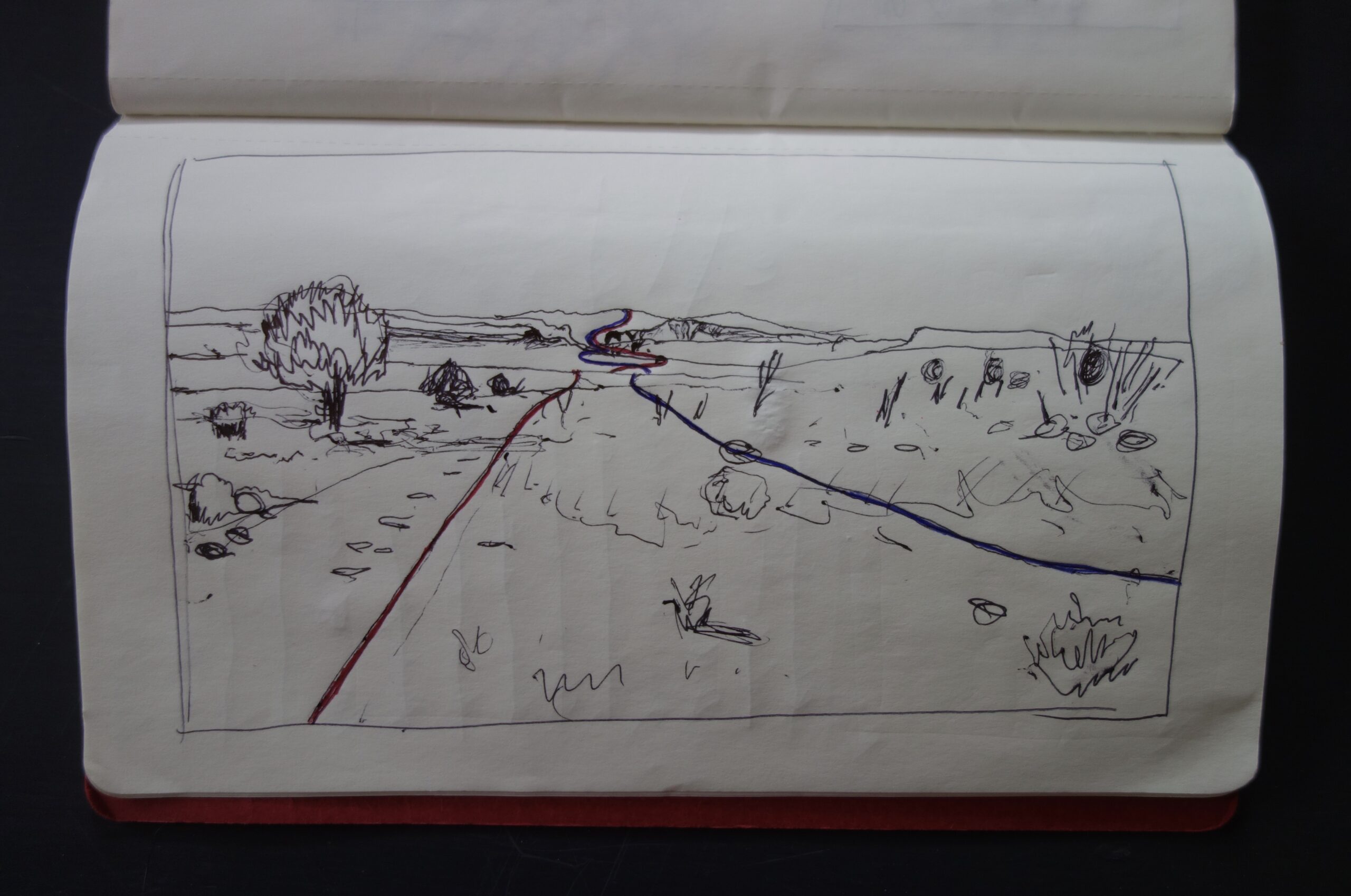
a trail vanishes into the desert
A well-worn trail and a shadow of one of its many walkers in the foothills above Salt Lake City. Photo credit: Ben Kilbourne

The word trail is used to describe the well-worn way through the woods where brush has been cleared and lichens scraped from the rocks by boot soles or the cairn-marked route across the slickrock. Some are more imaginary than others, but we call them all trails. As a noun the word means “path or track worn in wilderness,” but it functioned as a verb long before that. Trail can be traced back to the Vulgar Latin tragulare meaning “to drag,” later the French trailler meaning to “to tow; to pick up the scent of a quarry,” and later yet “to hang down loosely and flow behind,” like a sleeve.

Walking a sidehill trail through yellow grasses and scrub oak, I wonder what the deer is dragging through the wilderness to wear this line across it? Her very essence? Some sort of spirit? Maybe trail as a noun is the impression left by the life-force (whatever that is) trailing behind the body like a gown. A sort of watermark. A reference to the ghost. A finger pointing “she went this way.” Or a voice saying “she is always here, even at this moment; everyone who ever passed is still passing.” Maybe.

In some parts of the world, trails are more commonly called paths, walkways, or footpaths. As is the case with many words, there isn’t a consensus on the origin of the word path. The Old English paĂŸ or pĂŠĂŸ was a “narrow passageway or route across land, a track worn by the feet of people or animals treading it,” and it probably derived from the German pfad, but prior sources are confounding to etymologists. The closest relative to the modern path may be the Avestan (an old Iranian language) pad, which holds the same meaning as path, but no one knows for sure. In any case, definitions of trail and path both led me to the word track.

Track means “marks left behind,” and can be traced back to the Dutch trek meaning “draft” or “drawing.” Is that what we’re all doing when trekking, taking the paintbrush or pencil that is the foot to the page that is the earth? As an artist, there’s something I really love about this idea.

Trail musings from a backpacking journal.
Trail musings from a backpacking journal. Photo credit: Ben Kilbourne

Footprints Wherever I Go

Consider the line that is drawn when simply trying to find the easiest way from here to there. I walk without thinking and take the most gradual slope into a wash, follow it down, and take the most gradual way out. I see a dense copse of junipers and go around them. In a canyon bottom, I zigzag between willows, always looking for the widest gap, the most permeable route. And all the while, nearly 100% of the time, there are footprints wherever I go. Coyotes, deer, elk, bobcats, cows, horses, and humans alike chose the route that expends the least amount of energy. There is always a best way to transect a landscape, and most creatures intuitively find it.

We are collectively drawing the way that connects the land and the animal. What remains is a piece of art that is a testament to that interconnectedness.

If the trail, track, or path is a shared creation, made by the land just as much as the traveler, this means the land is more than just medium, it’s also actant, so it has some degree of agency. The trail I walked today in the Uinta Mountains traced a creek from sagebrush up through gamble oak and ponderosa to lodgepole pine and Douglas fir. It was well-worn, almost smooth in places. Trail crews cut trees year after year, so even if the trail itself was somehow suddenly gone you’d still know where to go, there’d still be a corridor. Check dams, water bars, and steps were constructed here and there to increase the longevity of the trail and prevent erosion. Within a mile, the trail crossed the frozen creek at a bridge and later crossed back over another bridge.

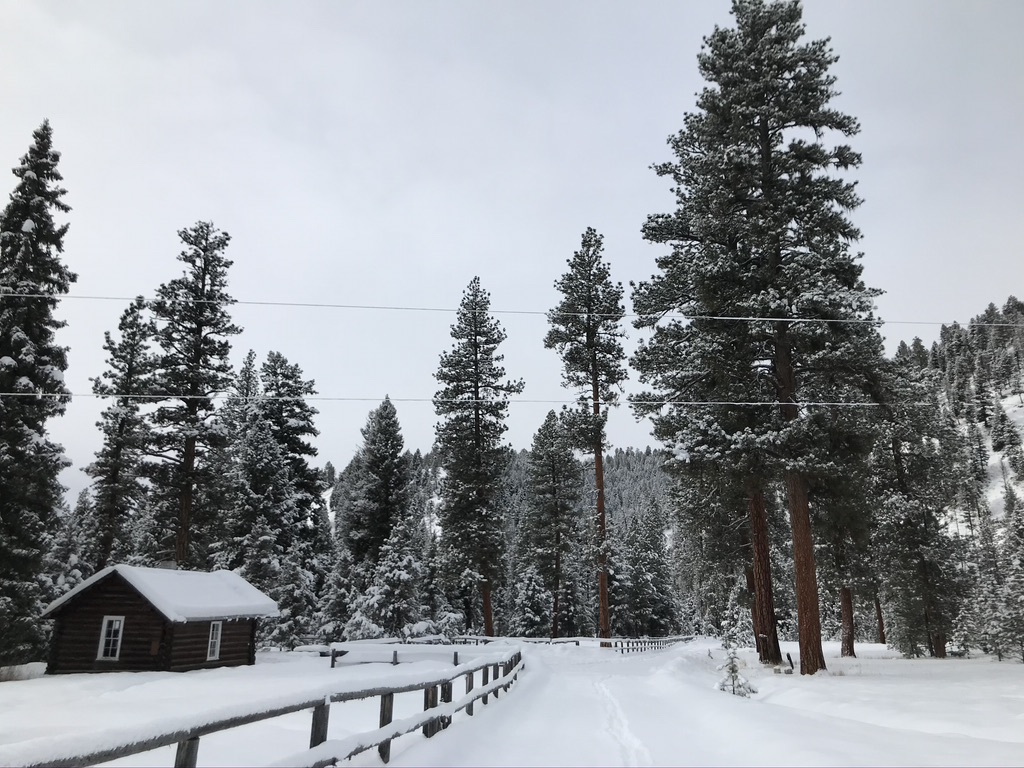
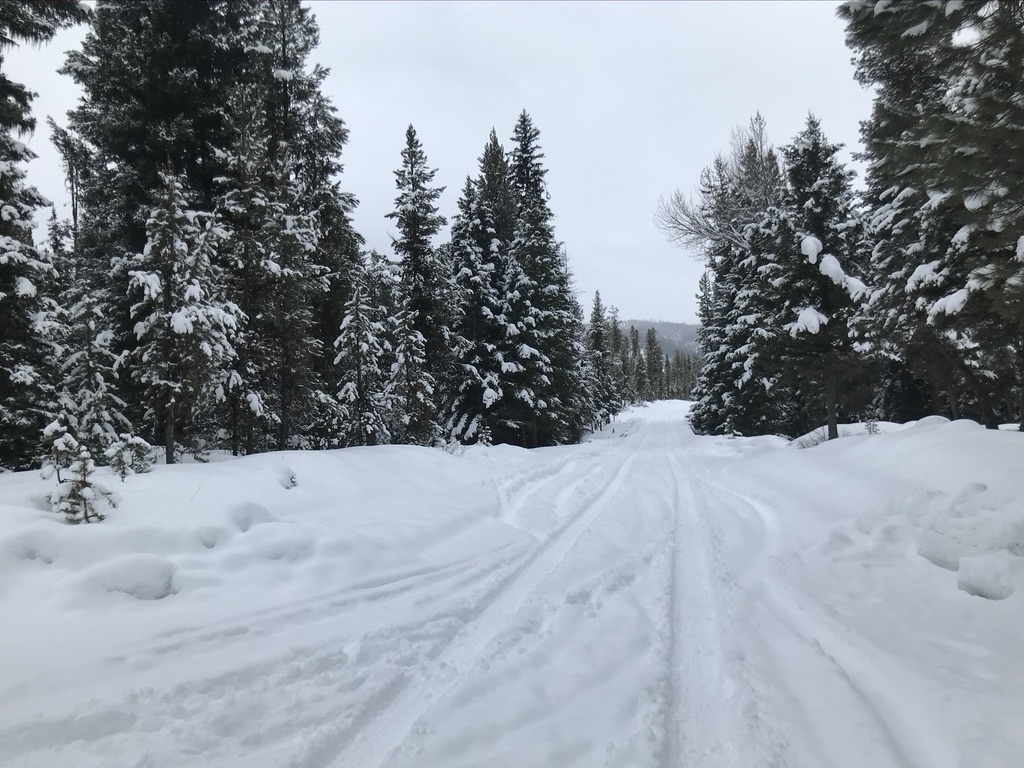
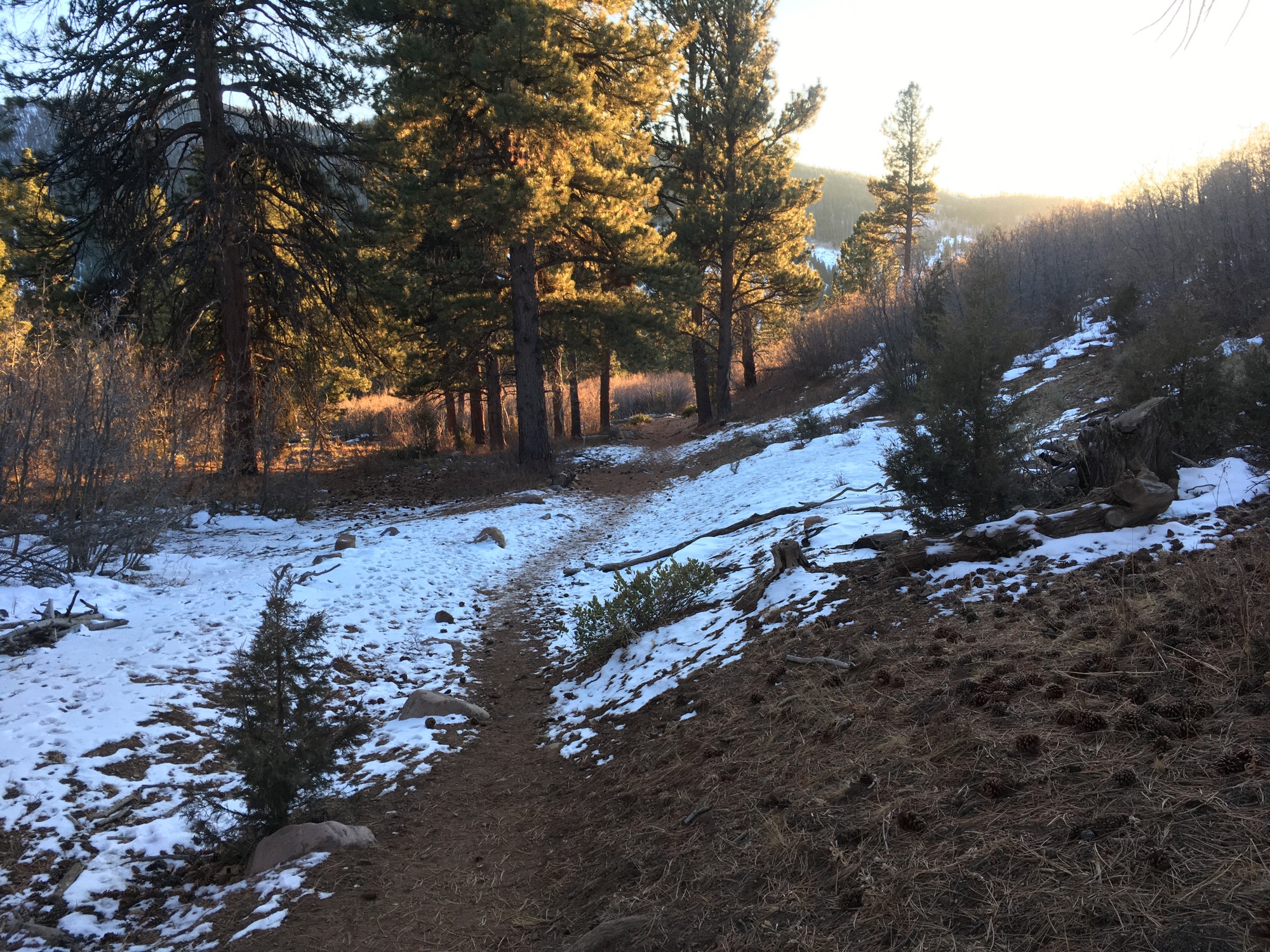
a trail with a slight dusting of snow.
A trail of unknown origin in the Uintas. Photo credit: Ben Kilbourne

These things, the human structures that make travel easy, were not always here. But the creek was, and the first travelers: deer, elk, or moose moving from the willow bottomlands to the high country pushed by the cold or the heat. They took the path of least resistance. They followed water, letting it build the trail with them. Or they followed forage, letting the seemingly random lay of the land guide them. Beyond the animal and the land, the seasons are also trail builders, how they nudge animals with more than just a little urgency to move if they want to stay alive.

Now lodgepole die and fall, and forage shifts in the climate-change era. The artist carefully draws the familiar line, a testament to interconnectedness, as the table is bumped, and the steady mark goes careening across the page. Afternoon storms are less frequent. The inkwell is spilled on the page, the brush is forgotten overnight and found in the morning caked with paint. The artist returns to the page with a pencil, trying to remember where to go, but it looks different now. Swaths of forest are burned and neon aspen shoots emerge from the black. Old springs trickle out into the devastation, pushing aside gray ash. The artist looks for the path of least resistance and draws again through the forest, past lost springs, sniffing out new ones. The artist can’t just stop. There’s always a trail to be made.

Ben’s Switchbacks

When I was 18 years old I built a trail in the hills outside of my hometown. It began near a creaking pump jack and climbed a hill, the switchbacks weaving between piñon and juniper. I followed no previous tracks, instead endeavoring simply to make the hill accessible to myself and other humans. At the top, one could walk or bike a rocky spine and then descend a more gradual hill back to the start. It’s now part of an official trail system, with a sign reading “Ben’s Switchbacks,” which gives people someone to blame. Mountain bikers can curse the amateur trail builder Ben (whoever that is) when they find themselves unable to clean every switchback. Too steep. Not enough of a platform for turning a 29” wheel. Oh well. I didn’t know what I was doing.

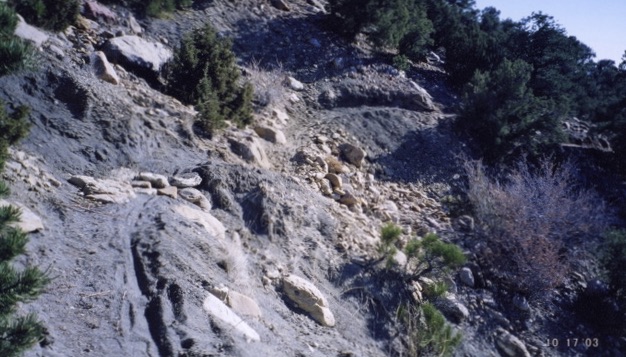
A roughly-made trail angling up a steep slope.
Ben’s Switchbacks shortly after construction in 2003. Photo credit: Ben Kilbourne

All I knew was that I wanted to make a path up the hill; I couldn’t articulate more than that at the time. But maybe I wanted to make something that would allow people to better experience the landscape without having to focus too closely on each step. Something about trails frees up your attention, where bushwhacking often steals it, and we get to know a place more easily. Maybe this is what drove me to make the trail, it’s hard to say. Maybe this is the impetus behind many human trails, I can’t be sure.

Sometimes when I visit my parents we walk Ben’s Switchbacks together. I ponder the trail’s existence, my singular desire to create it. I wonder how it may differ from the creation of other trails: the Bonneville Shoreline Trail, the Natchez Trace, the Appalachian Trail, or the little deer trails that draw lines through the snow in the foothills outside of town. I wonder if my individual agency—my desire to create—is really all that different from the collective agencies who drafted these other trails. Likely it’s not.

Related Content

DISCLOSURE (Updated April 9, 2024)

  • Backpacking Light does not accept compensation or donated/discounted products in exchange for product mentions or placements in editorial coverage. Some (but not all) of the links in this review may be affiliate links. If you click on one of these links and visit one of our affiliate partners (usually a retailer site), and subsequently place an order with that retailer, we receive a commission on your entire order, which varies between 3% and 15% of the purchase price. Affiliate commissions represent less than 15% of Backpacking Light's gross revenue. More than 70% of our revenue comes from Membership Fees. So if you'd really like to support our work, don't buy gear you don't need - support our consumer advocacy work and become a Member instead. Learn more about affiliate commissions, influencer marketing, and our consumer advocacy work by reading our article Stop wasting money on gear.
Episode 035 | Les Stroud on Raising Adventurous Children

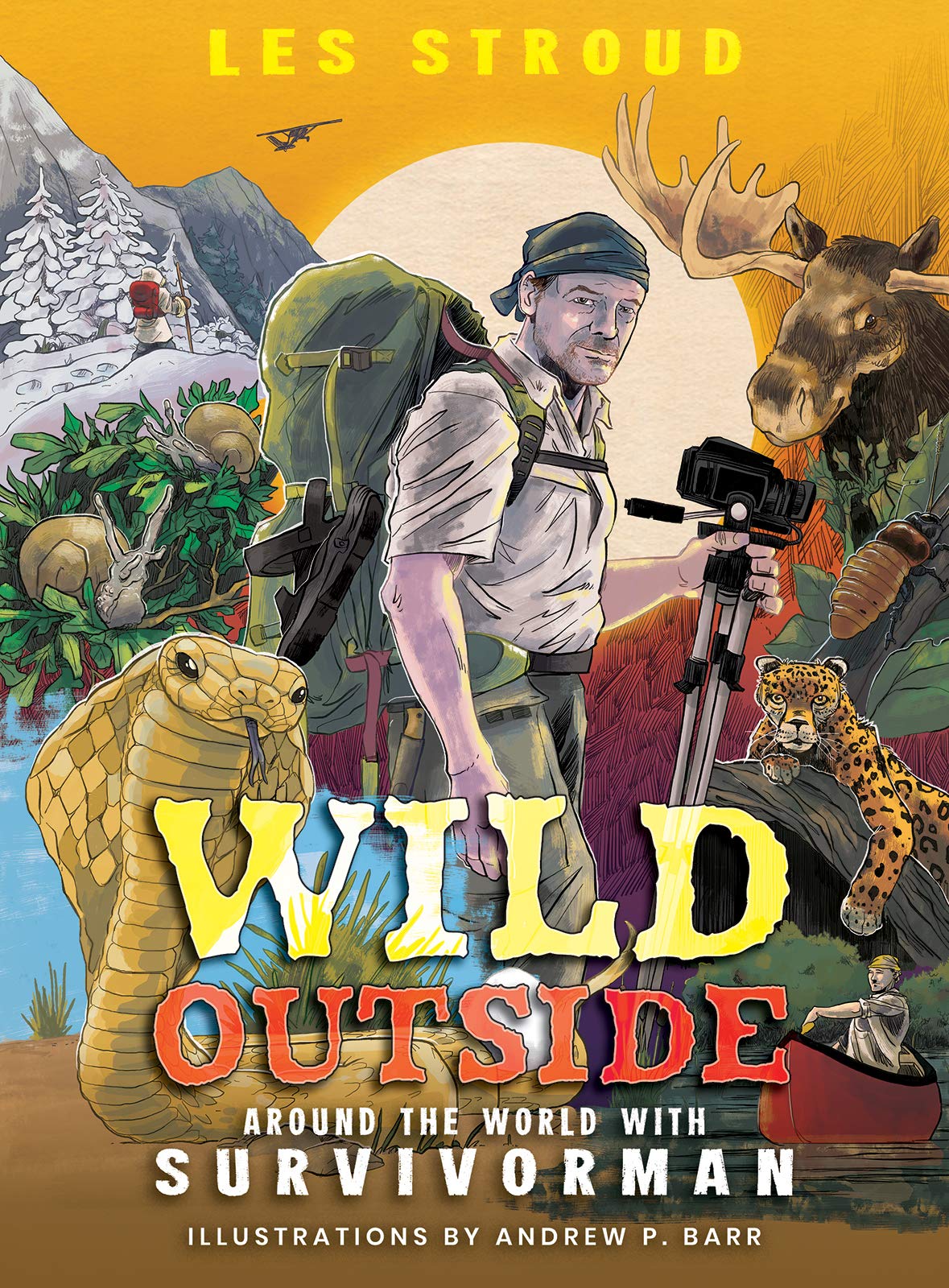
Ryan and Andrew chat with Survivorman Les Stroud about his new book, “Wild Outside.”

Stream

Summary

In this episode, Ryan and Andrew chat with Survivorman Les Stroud about his new book Wild Outside, children in the outdoors, their parents, the value of nature, and more.

Also in this episode: training and recovery tools, a new stove from Jetboil, and a book that digs deep into the housing crisis in towns that function as outdoor portals.

Outline

Catching Up

  • Ryan went on a sub-zero overnighter in a bivy!
  • Ryan’s ski set-up: same setup used in this video/field notes article – waxless (fish scale bottom) full metal-edge skis, BC NNN manual bindings, kicker skins, and insulated leather boots.
  • Andrew’s been using WHOOP and Training Peaks to gather data and modify behavior.
  • Behavior modification.

Gear and New Favorite Things

Les Stroud Interview

  • Les’ transformational experience on a backcountry canoe trek in Ontario.
  • What Les wants all people to experience in the woods.
  • Why a book for young people (Wild Outside) and why right now?
  • How Les chose which adventures to include in his book.
  • Strong thru-lines that transcend the details of bushcraft.
  • Why it’s important to connect to nature.
  • Les’ artistic vision.
  • Why Les has multiple focuses.
  • 5,000 hours into several things.
  • How parents are a barrier for children trying to connect to nature.
  • How Les’ perspective on conservation has changed over the years.
  • Why as parents we are trending towards protecting our children from discomfort.
  • How to let your kids experience risk and danger.
  • The power of education (for adults).
  • Adventure is in the backyard or down the street.
  • Sharing the outdoors with people.
  • Les’ final thoughts: we are natural things.

wild outside cover

Interview Follow-up Conversation

  • Experiential education.
  • Nature’s benefit to people.
  • Crowds and conservation.
  • How to educate yourself.

What’s New at BPL?

In the Forums

Transcript

How to Subscribe

More Episodes

Credits

  • Executive Producer - Backpacking Light; Show Director and Host - Ryan Jordan; Producer - Chase Jordan; Theme music: Look for Me in the Mountains written by Chris Cunningham and Ryan Jordan, performed by Chris Cunningham (acoustic guitar, lead and harmony vocals, harmonica), Chad Langford (upright bass), and Tom Murphy (mandolin), produced by Basecamp Studios in Bozeman, Montana.

Feedback / Tips / Questions

  • podcast@backpackinglight.com

More Backpacking Light

Disclosure

  • Sponsorship Policy: Backpacking Light does not accept compensation or donated/discounted products in exchange for product mentions or placements in editorial coverage, including any podcast episode content not excplicitly identified as sponsored content.
  • Some (but not all) of the links in these show notes may be affiliate links. If you click on one of these links and visit one of our affiliate partners (usually a retailer site), and subsequently place an order with that retailer, we receive a commission on your entire order, which varies between 3% and 15% of the purchase price. Affiliate commissions represent less than 15% of Backpacking Light's gross revenue. More than 70% of our revenue comes from Membership Fees. So if you'd really like to support our work, don't buy gear you don't need - support our consumer advocacy work and become a Member instead.
  • Learn more about affiliate commissions, influencer marketing, and our consumer advocacy work by reading our article Stop wasting money on gear.


LiteAF, Printing on DCF, and Screaming Cat Packs

Maggie takes a look at the new DCF printing technology being used by LiteAF.

I first heard about LiteAF from a friend who swung through town after finishing the CDT a few years ago. He had a striking orange and black snakeskin pack that looked like part of a Halloween costume but was actually an ultralight, Dyneema Composite Fabric (DCF) pack. It was made by LiteAF, a company I’d never heard of.

Until then, I’d only seen DCF in stock solids from companies like Zpacks and Hyperlite Mountain Gear. My own packs were muted earth tones, which made me more curious about his setup. Not curious enough to do any research though, and after he left I promptly forgot about it.

an ultralight pack with colorful swirls
This is the first printed DCF pack from LiteAF. It was a collaboration with Dutchware Gear. Photo: LiteAF

The next year, Jeff Garmire mentioned his Long Trail FKT pack was custom-made by LiteAF. He’d needed a pack that would compress tightly during the unsupported record, with all pockets accessible on the move. “That’s the snakeskin pack company!” I thought, then forgot about it again. I am nothing if not dedicated to my research.

A year later, and the company is experiencing rapidly expanding popularity in the cottage-industry backpacking world—their DCF packs have a 23-week lead time, and the orders continue to pour in.

a small, cramped garage with sewing equipment.
The original LiteAF shop (Millard’s garage, naturally) in June 2018. Photo: LiteAF

From Refrigeration Projects to Custom Made Gear

Founder Chris Millard started the company in June of 2018. He wanted to build a pack to his own specifications: stretchy mesh back pocket, water bottle pockets accessible without removing the pack, and the type of lightweight simplicity popular on long-distance trails. Other hikers seemed to agree, and two months later, Millard was so busy with packs that he quit his job managing refrigeration projects (“it totally sucked”) to build packs out of his 160-square-foot garage.

Shortly after going full-time with LiteAF, Millard partnered with Dutchware Gear to create a vibrant, custom-printed pack. Buoyed by the community response, he started buying printed DCF from Dutchware Gear and Ripstop by the Roll.

Last spring, Millard invested in his own printer and heat press to create unlimited designs, patterns, and artist collaborations. You’ll see LiteAF packs in rainbow swirls, mirrored black-and-white graphics, or an eyeball-assaulting unicorn sparkle requested by an adult with a feverish desire for a pack “a unicorn-obsessed five-year-old would love.”

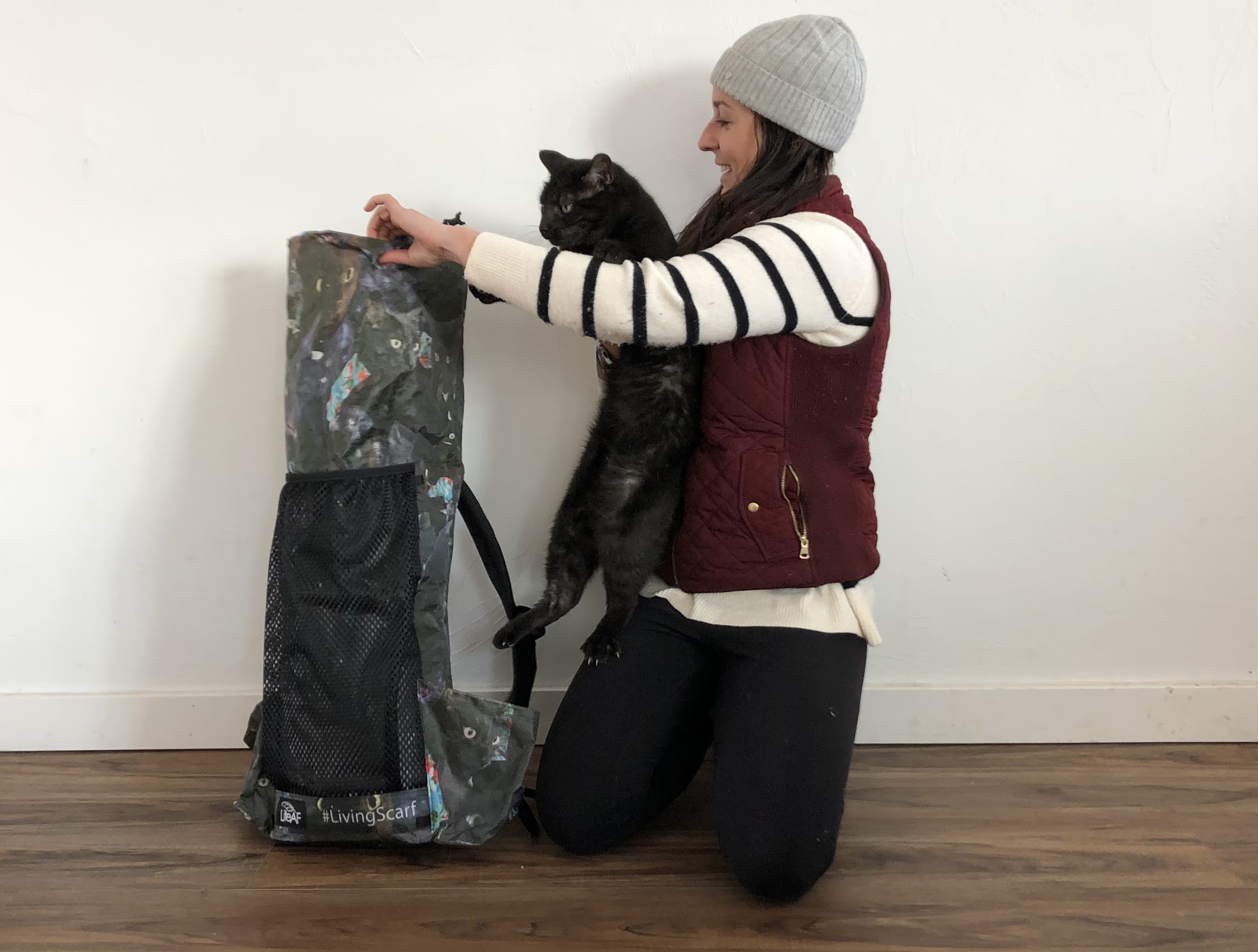
a woman trying to stuff a cat into a backpack
Trying to put my cat, Heisenberg, into the pack with his face printed on it. A very normal sentence.

The process of printing on DCF is fascinating. It’s called dye sublimation. First, the pattern or image is printed onto paper. From there, the paper is placed under the DCF—“a Dyneema sandwich,” says Millard—then the components are placed in a heat press. The heat from the press turns the liquid ink into a vapor, and the vapor is then imprinted onto the DCF. Here’s a video on the process:

Youtube video

“Dye sublimation works really well on polyester,” says Millard. “The outer coating of our DCF packs is polyester, which is why the packs come out so vibrant.”

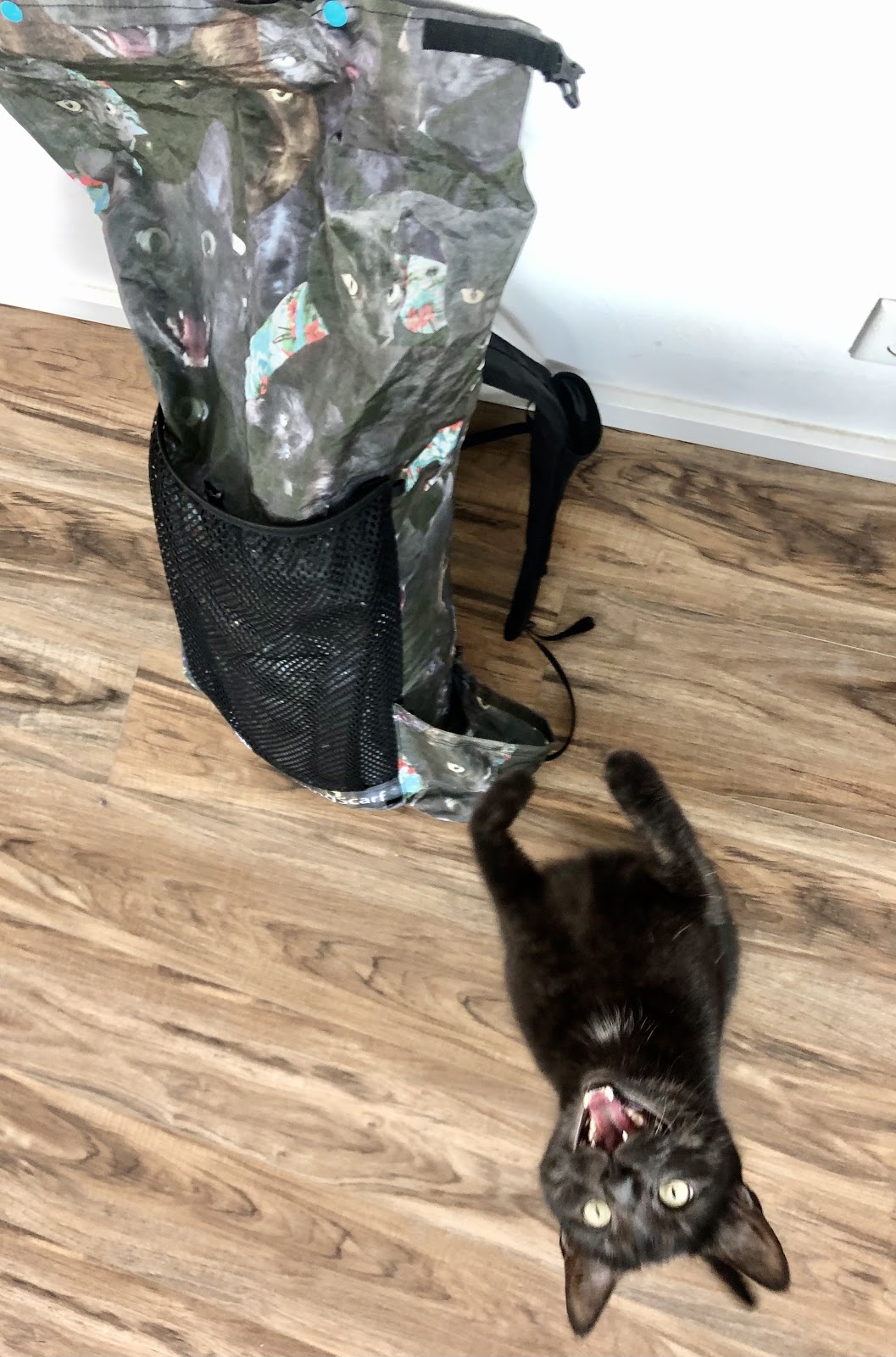
a cat screams at the camera. Next to the cat is a backpack with that cat's face on it.
The cat-themed Light AF pack I custom ordered. My cat was excited.

Making Gear Personal

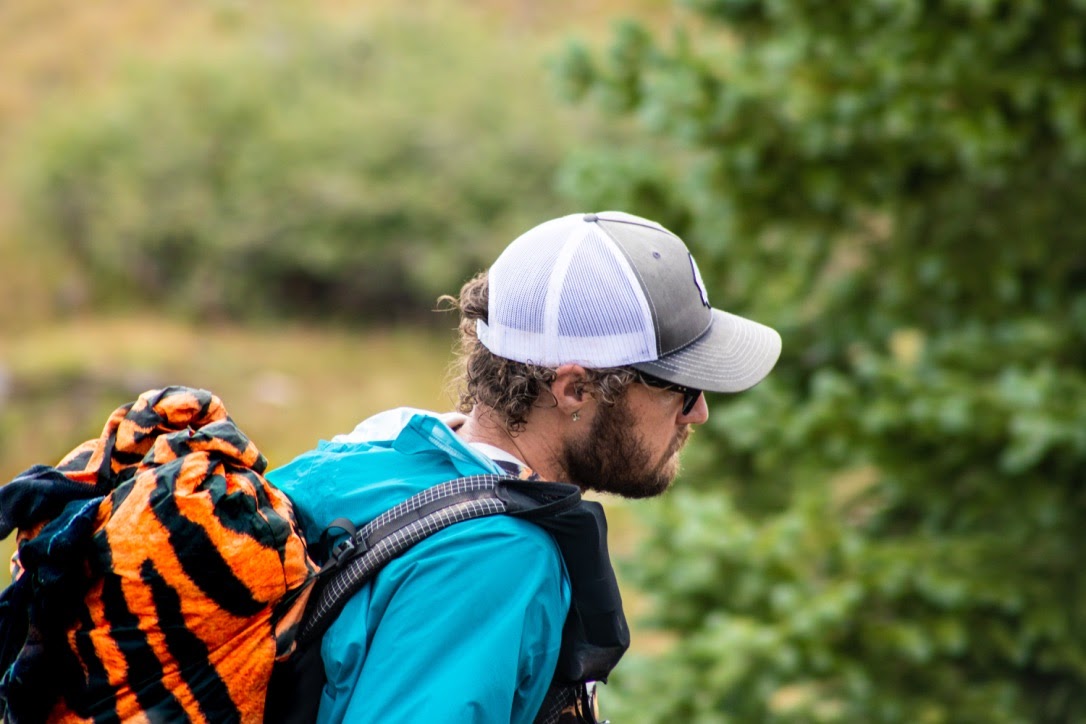
When Jeff received a LiteAF tiger-print pack for the Colorado Trail FKT in August of 2020, (disclosure: Jeff received the pack in question as part of a sponsorship program) I was envious. It was my first time seeing the latest print capabilities in person. The new pack wasn’t just a drawn pattern—I could see the actual fur of the tiger. I screeched when he opened it, which tells you a lot about the excitement in my life over the past year. I immediately wanted a pack with my insane cat’s face all over it, which also speaks to my state of mind.

a man hiking with a tiger-striped backpack
If you look closely at Jeff’s Colorado Trail pack, it’s a tiger-fur graphic, not just a pattern

A printed DCF pack is technical, ultralight backpacking gear infused with personality. You can be weird, and you can have a technical pack. For me, a pack with my cat’s face on it is a way to avoid the self-seriousness that (I think) comes with the ultralight life and helps balance out the fact that somehow all of my hiking clothes are navy blue. Printed packs are part of a growing trend towards color and uniqueness from cottage pack makers. Scrap packs are another example.

Millard has a no-error rule with everything that goes out the door. “If you have one stitch out of place on a DCF pack, that hole is there forever,” he says. “We have to toss it if something is out of place.”

Because of these standards, plus the high price of raw materials, Millard sews every DCF pack himself. He’s recently expanded to X-Pac offerings, which he leaves to his half-dozen sewers. This means the lead time on X-Pac is four weeks, compared to the 23 weeks for a DCF pack.

a sewing room with desks and sewing machines
This is the sewing room at the current LiteAF shop in New Jersey. The whole shop is 6,000 square feet.

Design-wise, LiteAF packs follow the standard of many cottage-industry packs. They have an open main compartment, a large mesh back pocket, and a focus on accessibility. The shoulder pockets, hip-belt pockets, and water-bottle pockets are designed to be accessed without taking the pack off, and the DCF construction means the material is watertight and abrasion-resistant. Roll-top closures prevent the packs from flopping around as resupply gets lower, and the largest size offered is 46 liters. The packs are customizable—from prints, to pockets, to closures.

Packing Smaller

Aside from the glory of my cat’s face on a pack, 46 liters is a size I‘ve been looking for. I’m prone to overpacking with my 60-liter pack, and I’ve comfortably packed a 45-liter bag on extended trips before. I will note that even with LiteAF’s suspension options, any ultralight pack has a weight limit, and if you aren’t a lightweight (or ultralight) backpacker, you won’t be as comfortable carrying them.

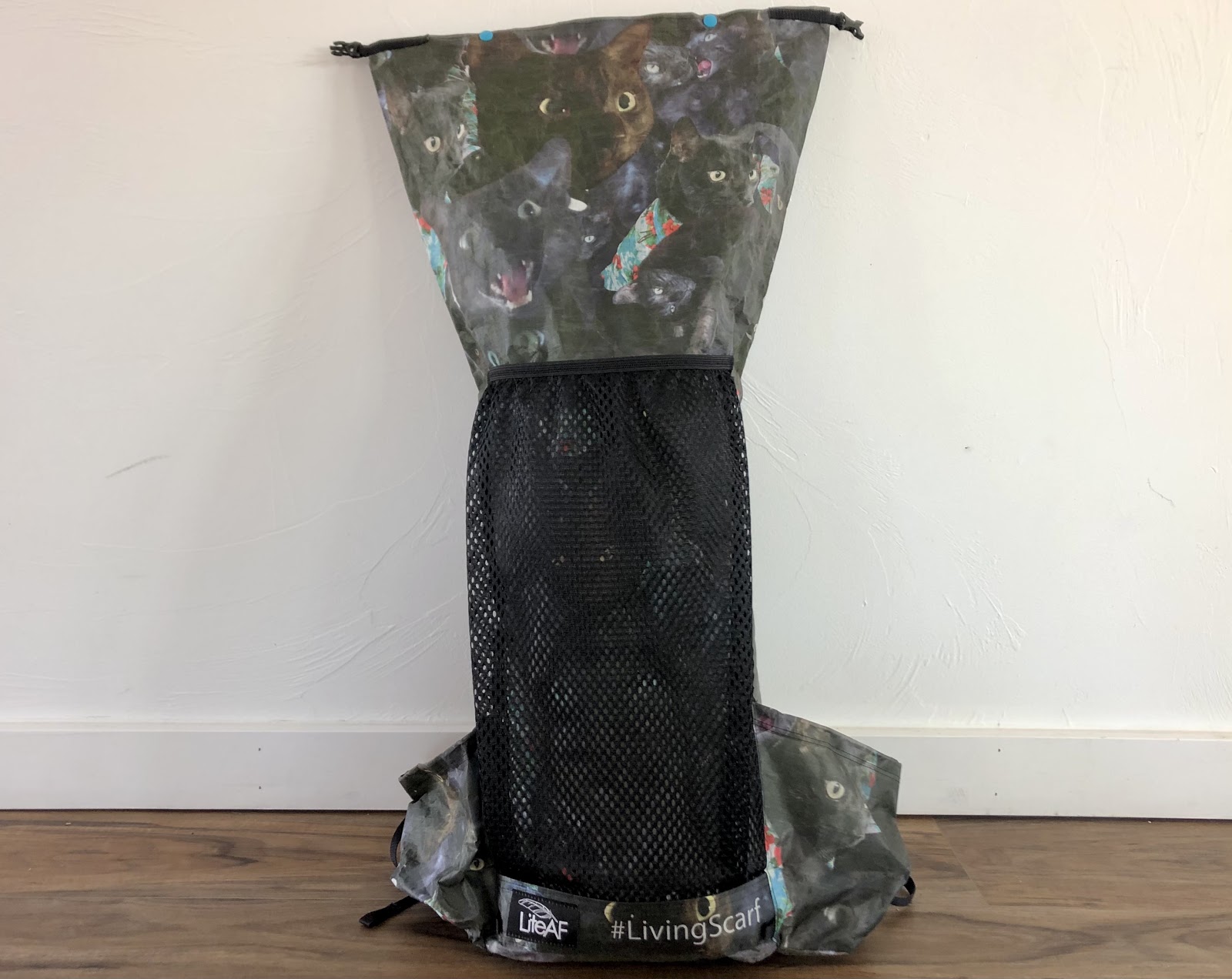
a backpack with a collage of cat faces printed on it.
The custom-printed LiteAF DCF Heisenberg pack in all its glory.

I can’t pinpoint how exactly I came up with the Heisenberg Pack, but it probably has something to do with 2020 as a whole. Regardless of the exact reason, I was not willing to pass up the opportunity to own a pack with a collage of my screaming cat on it. I shall carry this pack with pride, and relish in the opportunity to talk about Heisenberg more than I usually do. And when the conversation naturally turns to dye sublimation, now I’ll be able to contribute.

Related Content

DISCLOSURE (Updated April 9, 2024)

  • Backpacking Light does not accept compensation or donated/discounted products in exchange for product mentions or placements in editorial coverage. Some (but not all) of the links in this review may be affiliate links. If you click on one of these links and visit one of our affiliate partners (usually a retailer site), and subsequently place an order with that retailer, we receive a commission on your entire order, which varies between 3% and 15% of the purchase price. Affiliate commissions represent less than 15% of Backpacking Light's gross revenue. More than 70% of our revenue comes from Membership Fees. So if you'd really like to support our work, don't buy gear you don't need - support our consumer advocacy work and become a Member instead. Learn more about affiliate commissions, influencer marketing, and our consumer advocacy work by reading our article Stop wasting money on gear.
By the Numbers: If You Carry a Space Blanket, Buyer Beware

Stephen Seeber tests the infrared reflective properties of space blankets.

In By the Numbers, Stephen Seeber turns a critical eye towards fabrics and materials by testing for claims, degradation, and more.

Introduction

Not all space blankets are created equal. Even if they look identical to the eye, their infrared wavelength performance may be inadequate. I am in the process of building an instrument that requires radiant heat barriers that are reasonably robust. So, I thought I could cut up space blanket fabric and install it on the device. This provided me with an opportunity to test some space blankets and determine which one had the best infrared reflective properties.

I went to Dick’s Sporting Goods. They had two different space blankets available. They both sold for around $15. The first is made by Field and Stream and is called Survival Reflect Blanket. The package claims it conserves up to 90% of body heat. The second is made by Survival Outdoors Longer (SOL) and is called the SOL Survival Blanket. The same material is used in the slightly larger, and more usable, SOL Emergency Blanket. The package claims it reflects 90% of heat. I purchased both for my test.

A space blanket stretched over a device for measuring heat reflectivity.
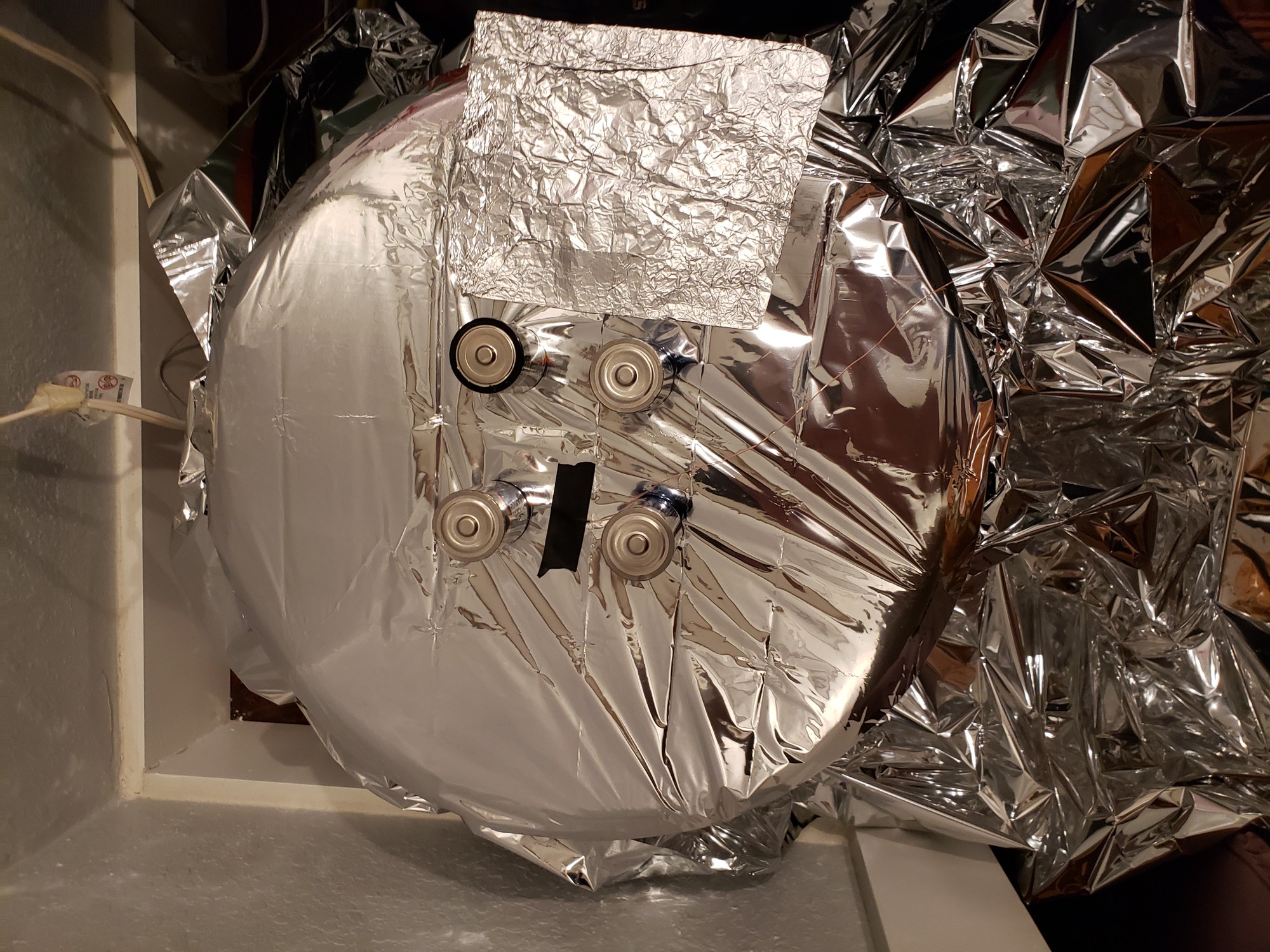
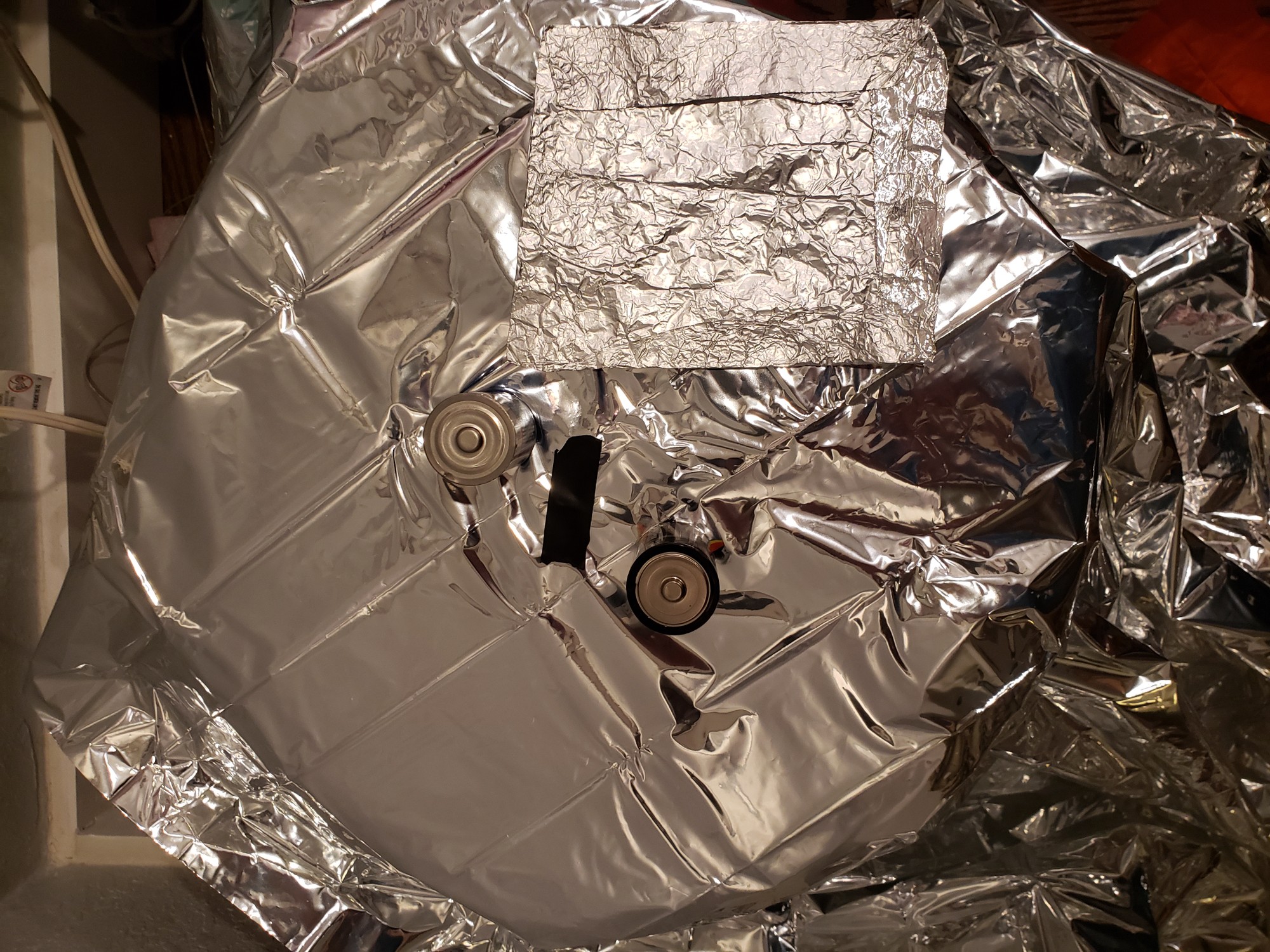
The Field and Stream Survival Reflect Blanket stretched over a permeation kettle for testing.

How a Space Blanket Works

There are several ways that heat is transferred from your body to the environment. When you are sitting on a cold rock, heat is transferred via conduction through your clothes that are in contact with the rock. The heat from your body can also be transferred by convection which means that heat from your body warms adjacent air, which then carries the heat away. When you are sweating, the sweat can evaporate. Evaporation is the process of changing from liquid to gas, and it requires heat energy which can be extracted from the skin.

Finally, any surfaces (skin or clothing) can transfer energy through radiant exchange with the ambient (as long as the ambient temperature is lower than your body or clothing surfaces). Radiant heat exchange moves heat from a hot surface to a cool surface by means of electromagnetic energy in the infrared (IR) spectrum. This spectrum extends from 0.7 to 1,000 microns wavelength. Heat transfer from the body occurs primarily in the near and middle portions of the infrared spectrum—0.7 to 25 microns.

Infrared energy, like visible light energy, can be reflected. The ability of an object to reflect infrared energy is described by a physical characteristic called emissivity, and it can be measured. A material with an emissivity of 0 is a perfect reflector—it emits no infrared energy as a result of its own temperature, but will reflect any infrared energy that strikes its surface. A material with an emissivity of 1 provides no heat reflection but is a perfect emitter of infrared energy resulting from its own temperature. All real materials have an emissivity of greater than 0 but less than 1. Aluminum foil can have an emissivity of 0.05. This means that it emits almost no infrared energy as a result of its surface temperature, but it reflects nearly all incident infrared energy. Electrical tape can have an emissivity of 0.96. It will reflect almost no incident infrared energy.

The SOL Survival Blanket stretched over a device for testing.
The SOL Survival Blanket stretched over a permeation kettle for testing.

If a material that is reflective of infrared is placed between the source of heat (your skin, for example) and the ambient, transmission of heat to the ambient can be minimized and your rate of cooling will be reduced. If the infrared material is placed directly on the skin with the reflective surface facing the skin, reflection does not occur. Instead, conductive heat transfer from the skin will heat the material. If the outward surface of the material has a high emissivity, the heat conducted into the material from the skin will be emitted to the ambient and you will continue to lose heat. Space blankets are often reflective on both sides. This means, where the blanket is warmed through direct contact with a body or clothing surface, the reflective outer surface of the fabric will limit or prevent radiant transfer that results from conductive heat transfer into the space blanket.

The most effective radiant blanket will be highly reflective of infrared on both sides. A less effective heat blanket will be highly reflective on just one side and that side should usually face the cold ambient. An ineffective space blanket will have moderate to high emissivity and will not prevent the maximum transfer of radiant energy.

Well, how can you tell which is better when you buy one? You cannot. Space blankets can have an identical appearance in visible light but can still perform very differently in the infrared wavelengths. The only way to know is to measure the emissivity, which requires, at minimum, a thermal imager.

Analysis

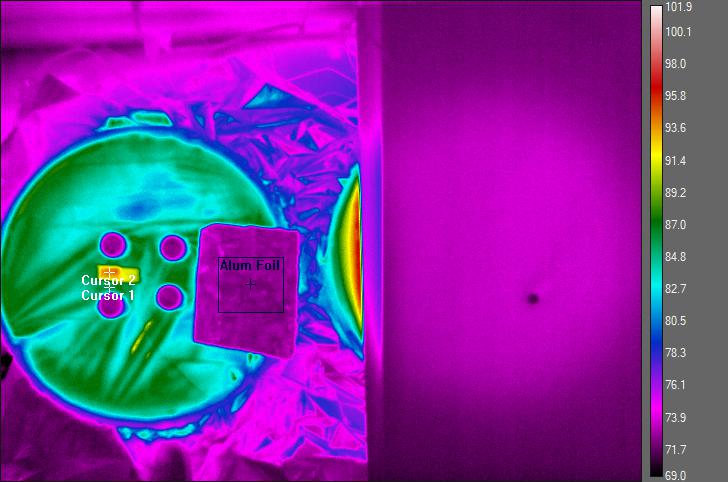
To test them, I mounted the space blankets on a permeation kettle with water heated to 120 F (48.9 C), while the room ambient is around 72 F (22.2 C). Visual inspection shows that both materials have the same appearance. With a thermal imager, a qualitative comparison is simple: A highly reflective object will show the ambient temperature when observed through the thermal imager. To that end, a piece of crinkled aluminum foil is placed on each space blanket. If the infrared image appears warmer than the aluminum foil, then the emissivity is too high for effective blanket performance. We see from the images that the Field and Stream blanket material is not a great reflector.

thermal imaging from the test
Thermal imaging of the Field and Stream Survival Reflect Blanket.

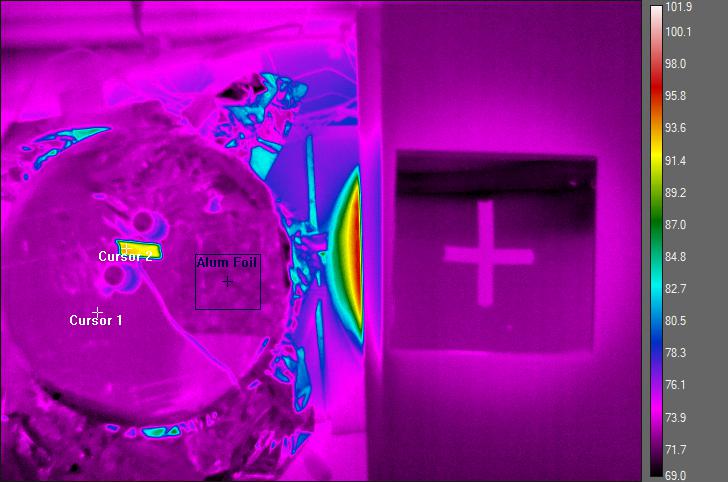
However, we see that the apparent blanket temperature of the SOL material matches the apparent temperature of the aluminum foil. Thus, the SOL blanket will be the better reflector and can be expected to provide good performance.

thermal imaging from the test
Thermal imaging of the SOL Survival Blanket

When we measure the emissivity in 8-12 microns, we find the emissivity of the Field and Stream blanket is 0.64, and the SOL emissivity is 0.13. Therefore, the SOL blanket is a much better reflector.

side-by-side thermal imaging from the test
A side-by-side comparison of the two space blankets.

How to Use the SOL Survival/Emergency Blanket

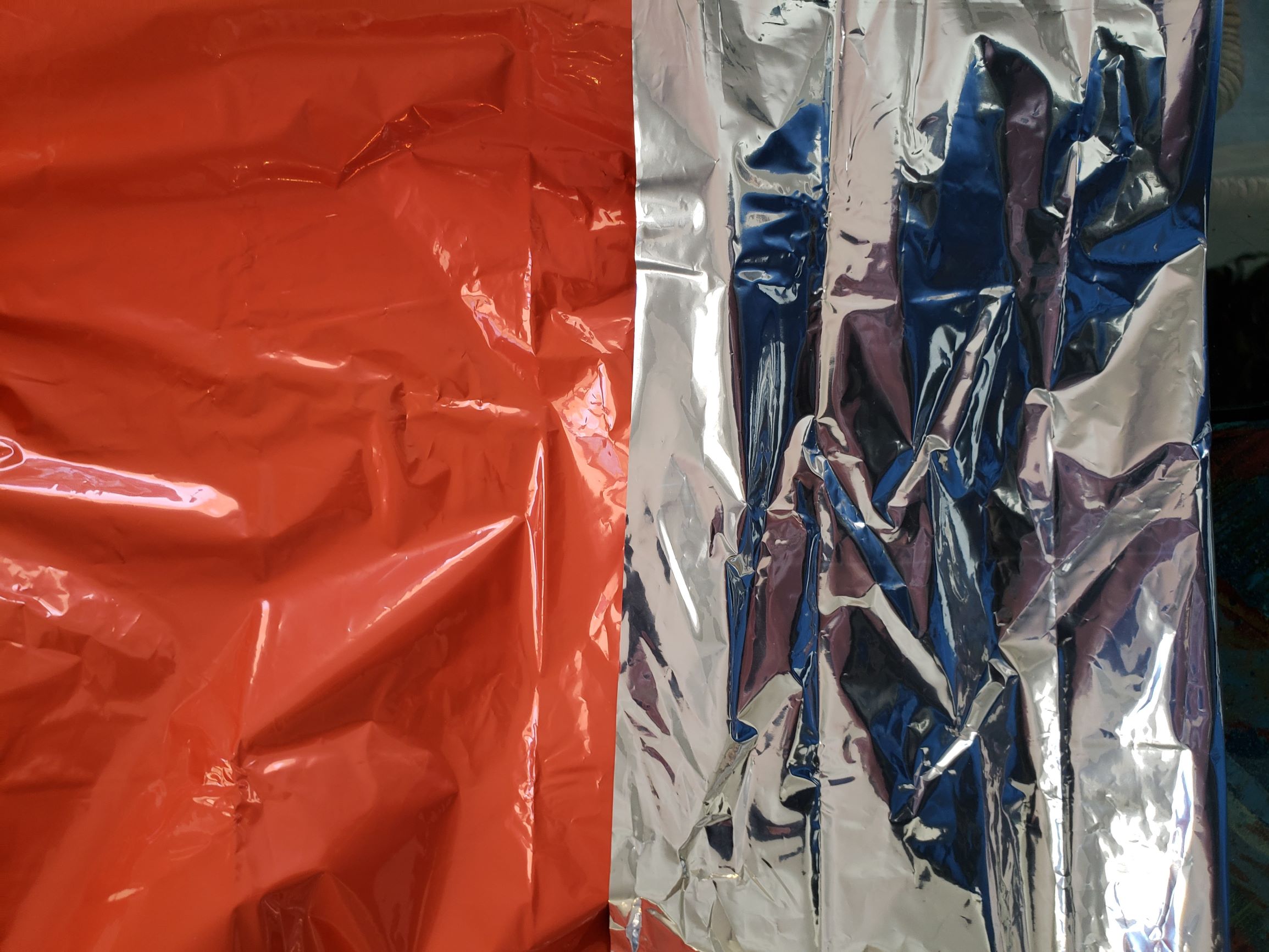
Both sides of the Field and Stream blanket have a similar finish. The SOL blanket has an orange foil appearance on one side and silver on the other. This is seen in the following image:

mylar space blanket fabric comparison, orange on left, silver on right
Front and back surface coatings on the SOL Blanket. The silver side is much lower emissivity.

The measured emissivity of the orange side is similar to that of the Field and Stream Blanket. So, the orange side is a poor reflector, compared with the silver side.

I suggest, when using the SOL blanket, the silver (shiny) side should face the ambient (outside) environment. This will provide the lowest possible radiant heat transfer. The product photograph on the package shows two people huddled together wrapped in the blanket with the orange side out. One clear advantage of the orange side out is that visibility is improved if someone is searching for you. A minor benefit of using the blanket with the orange side out is the absorption of some solar gain. However, since the orange side is still somewhat reflective, it may take some very strong sunshine to feel its heating effect.

Never use a space blanket under another layer (unless you want it to function as a vapor barrier). A layer placed over the space blanket would eliminate most of the reduction in radiant heat transfer.

Related Content

Rab Expedition Slipper and Rab Hot Socks Review

This gear review will cover two foot-insulation options from Rab; the Rab Expedition Slipper and the Rab Hot Socks. Both pieces of gear are lightweight options to add warmth to camp insulation, though they differ in terms of insulation level and type, materials, and intended use.

Introduction

This gear review will cover two foot-insulation options from Rab; the Rab Expedition Slipper ($175, 6 oz / 170 g per pair) and the Rab Hot Socks ($65, 5 oz / 135 g per pair). Both pieces of gear are lightweight options to add warmth to camp insulation, though they differ in terms of insulation level and type, materials, and intended use.

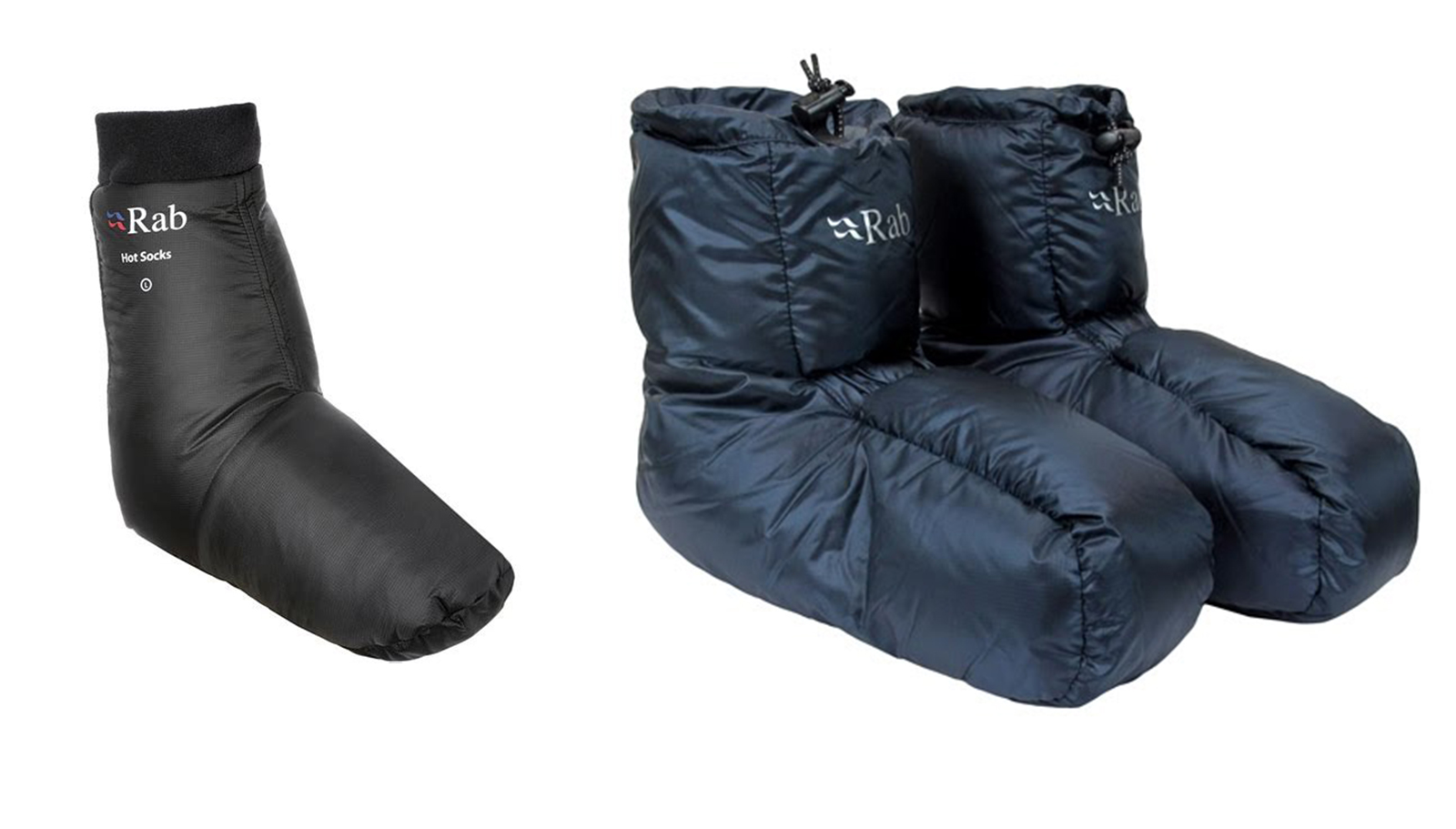
A Rab Hot Sock and Rab Expedition Slippers on a white background.
Rab Hot Socks (left) and Rab Expedition Slipper (right). Photo: Rab

The Rab Expedition Slipper is 800 FP down and intended for use inside the sleep system. The Rab Hot Socks are synthetic insulation and sport an abrasion-resistant footpad to allow for use as a camp shoe if desired.

About This Review

The Rab Expedition Slipper and Rab Hot Socks were my 2020 sleep system companions through high alpine routes, shoulder-season treks, and winter treks alike in the Canadian Rockies.

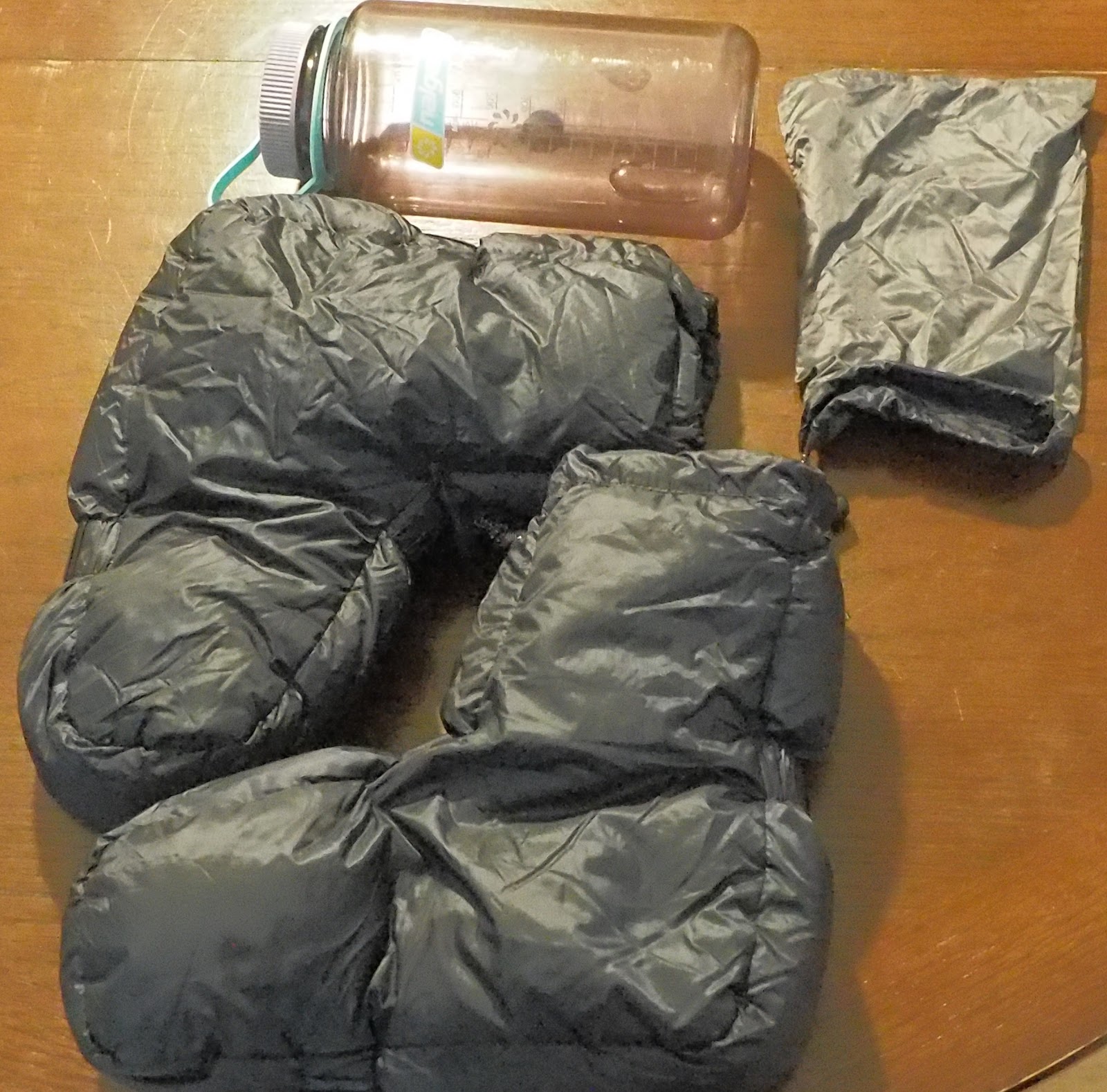
Both products in stuff sacks next to a water bottle for comparison
Rab Hot Socks, Rab Expedition Slipper, and Nalgene packed size comparison

Features and Specifications

Rab Expedition Slipper

  • 800 FP hydrophobic goose down
  • one-handed drawstring closure
  • elastic ankle-shaper
  • elastic arch-shaper
  • Pertex Quantum inner and outer
  • included stuff sack
  • hang loops
  • one-handed shock cord closure
  • claimed weight: 6 oz (170 g) per pair
  • measured weight: 5.2 oz (149 g) per pair / size: large
The Rab Expedition Slippers unpacked and next to a standard Nalgene bottle for size comparison
Rab Expedition Slipper size comparison.

Rab Hot Socks 2.0

  • Primaloft synthetic insulation
  • 500D Cordura sole
  • Pertex Quantum outer
  • stretch fleece ankle
  • fleece and Pertex Quantum inner
  • included stuff sack
  • claimed weight: 5 oz (135 g)
  • measured weight 5.4 oz (154 g) / size: extra large
The Rab Hot Socks unpacked and next to a standard Nalgene water bottle
Rab Hot Socks size comparison

Performance Analysis

Since this is a Limited Review, a detailed performance analysis based on long-term use will not be presented. Instead, performance observations and issues are noted below.

Rab Expedition Slipper

Warmth

The instant I slipped the Rab Expedition Slipper on, my feet instantly felt warmer. The 800 FP down is lofty, and the drawstring closure around the ankle ensures heat retention. This is the first slipper I’ve had that provides real four-season comfort.

Weight

Compared to packing a warmer quilt or a pair of heavy wool socks, the Rab Expedition Slipper has a small weight penalty, especially considering its warmth value. The manufacturer estimate of how much the Rab Expedition Slipper weighed was generously over the measured weight.

Comfort

The Rab Expedition Slipper has a soft Pertex Quantum inner and outer, which feels like silk on the skin and glides nicely inside a quilt or sleeping bag. The Expedition Slipper also features a loose elastic tensioner in the insole and at the ankle, making the slipper fit well around the foot.

Durability

The Rab Expedition Slipper is a slipper, not a hut bootie, and is not designed for wear outside of the quilt or for walking around.

Traction

The Rab Expedition Slipper has no traction as it is not designed for weight-bearing walks.

Packability

At about the size of a Nalgene once packed down, the Rab Expedition Slipper is a pretty tiny addition to a sleep system, though there are more packable options (like products from Goosefeet Gear).

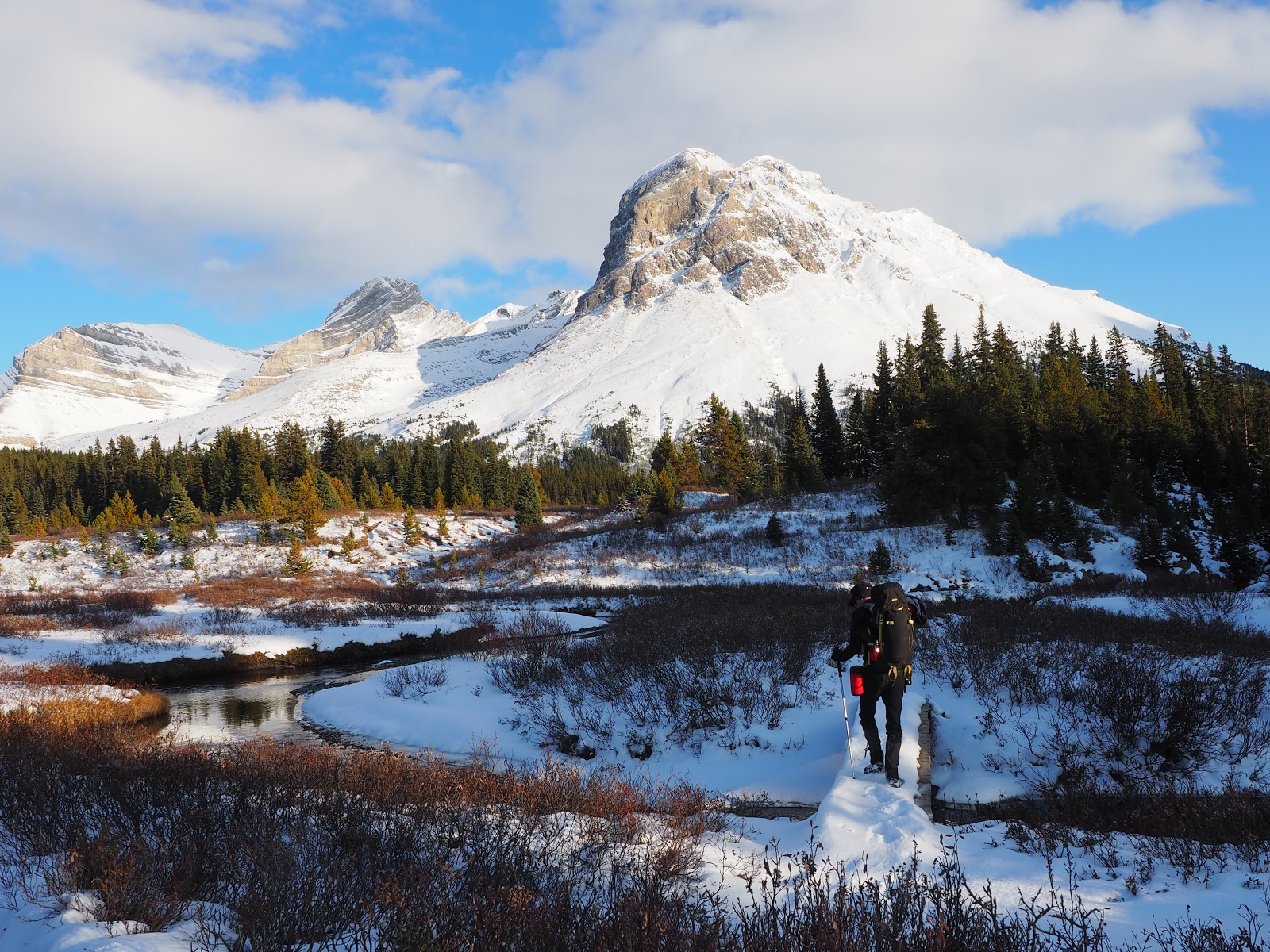
A woman crosses a snowy creek with a mountain in the background.
Sunset Pass temps dropped -2 F (-19C). It was my inspiration for more insulation for my feet on winter trips.

Rab Hot Socks

Warmth

Rab Hot Socks are moderately warm socks for wearing inside the tent. They provide additional warmth in moderate shoulder-season conditions but do not offer four-season warmth.

Weight

Rab Hot Socks are of moderate weight but do not pack the insulation punch of the Rab Expedition Slipper for slightly less weight.

Comfort

With no drawstring or elastic fittings at the ankle or insole, Rab Hot Socks feel a bit like a sloppy reading sock. They are soft on the inside but do not have the same cloud-like feeling as the Rab Expedition Slipper.

Durability

To their credit (and weight-saving detriment), Rab Hot Socks are a durable product. Their Cordura sole means if you happen to take a cautious tread, you are less likely to rip the fabric. However, walking outside your tent in any sock is an at-your-own-risk activity. I like my gear and my feet, so I wouldn’t.

Traction

Rab Hot Socks are socks. They do have Cordura soles, but I would not say that counts as traction.

Packability

Stuffing Rab Hot Socks is a bit of a chore, especially compared to their down-filled cousin, the Rab Expedition Slipper.

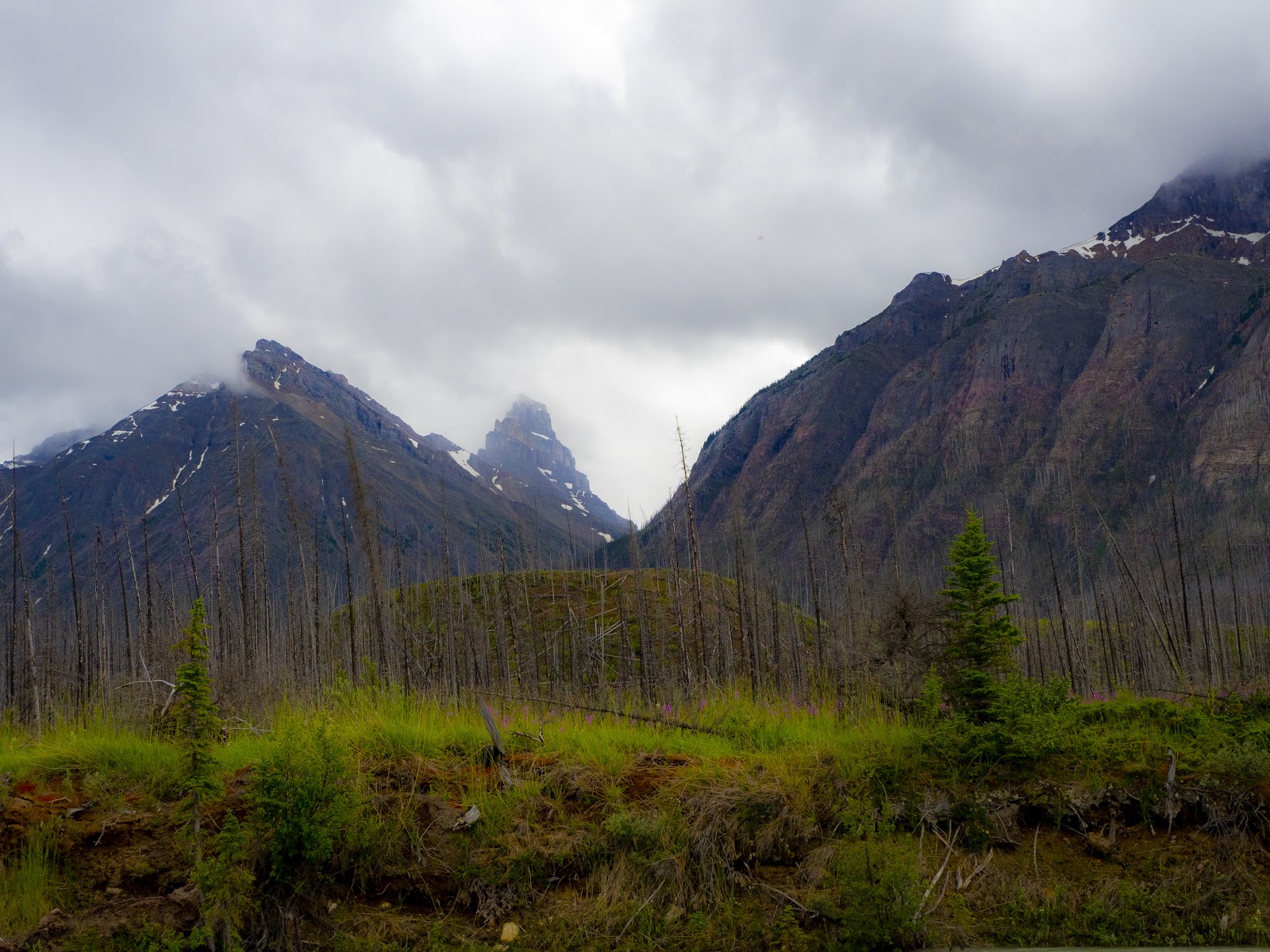
A misty mountain ridgeline with green vegetation in the foreground.
High humidity days and freezing nights on Corona Creek encouraged me to purchase the Rab Hot Socks for high alpine summer trips when the extreme insulation of down was not required.

What Makes the Rab Expedition Slipper Unique?

The Rab Expedition Slipper is one of the only widely-available (non-cottage industry) down slippers out there. Unlike most insulated slippers available from major retailers, it has soft soles that don’t interfere with using it as a sleeping sock. It also boasts one of the best anatomical designs I’ve seen for insulated sleep slippers.

  • down fill, wide availability
  • soft sole for sleeping
  • sophisticated, ergonomic design

Down Fill, Local Availability

After a few miserable winter nights where I was alternating wrapping my down puffy around my feet and my torso, I decided I needed a better system. Thick wool socks just weren’t enough. After searching several different manufacturers, I found many insulated booties were synthetic, not down, and I am partial to down. Though there is a slightly better warm-when-damp ratio for synthetic, it’s not as warm, packable, sustainable, durable, or lightweight as down. In dry winter conditions, I’d rather have the pros of down than the insurance of synthetic.

When it came to ordering a down slipper, Rab offered the most selection at local retailers. Though they were a special order, they arrived in less than a week. If I had ordered from a cottage gear company, I could have waited months for a custom product to arrive in the remote area where I live.

Soft Sole for Sleeping

Many down booties and slippers I looked at weren’t actual sleeping items; they were designed to sit and walk around in a hut or ski chalet. I needed a true down sock that was comfortable and packable. The Rab Expedition Slipper fit the bill perfectly. The soft silky fabric used in the Rab Expedition Slipper made these extremely comfortable to sleep in.

Blue down slippers against a grey background.
Rab Expedition Slippers have a soft sole, made for sleeping, not walking around in camp.

Elastic Foot Shaping

The Rab Expedition Slipper uses small pieces of elastic to create a more anatomical foot shape. The toe of the Rab Expedition Slipper provides plenty of room for a warm layer of down and air to form around the foot. Unlike other down socks and slippers (which can have a sloppy fit), I found the ergonomic design of the Rab Expedition Slipper comfortable and natural to wear.

A shot of the Rab Expedition Slippers that allow you to see the elastic panels and well-tailored fit.
The ergonomic design of the Rab Expedition Slippers makes them very comfortable, more so than other down slippers or booties I’ve used.

What Makes Rab Hot Socks Unique?

Rab Hot Socks are not as warm as a down bootie but boast the reliability of synthetic and fleece for lower-stake shoulder season or summer warmth in alpine conditions.

  • fleece synthetic insulation
  • tough sole fabric
  • excellent product availability

Fleece/Synthetic Construction

Rab Hot Socks have a synthetic fleece construction which allows them to be useful on long-term treks with high humidity where a bit of extra insulation while sleeping is required. They are comfortable and a compromise when you can’t have (or don’t need) down but still need a bit more insulation than a basic wool sock.

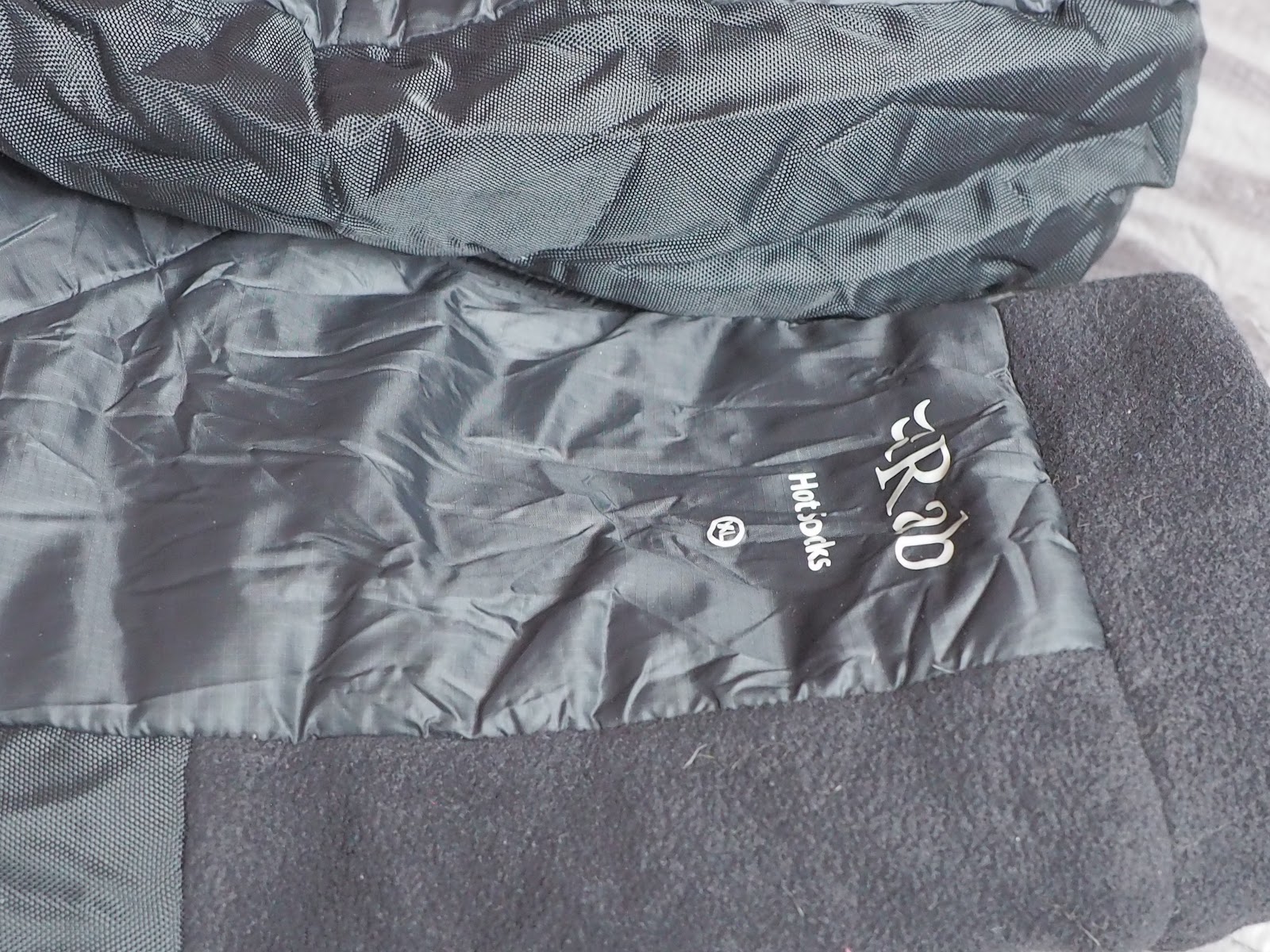
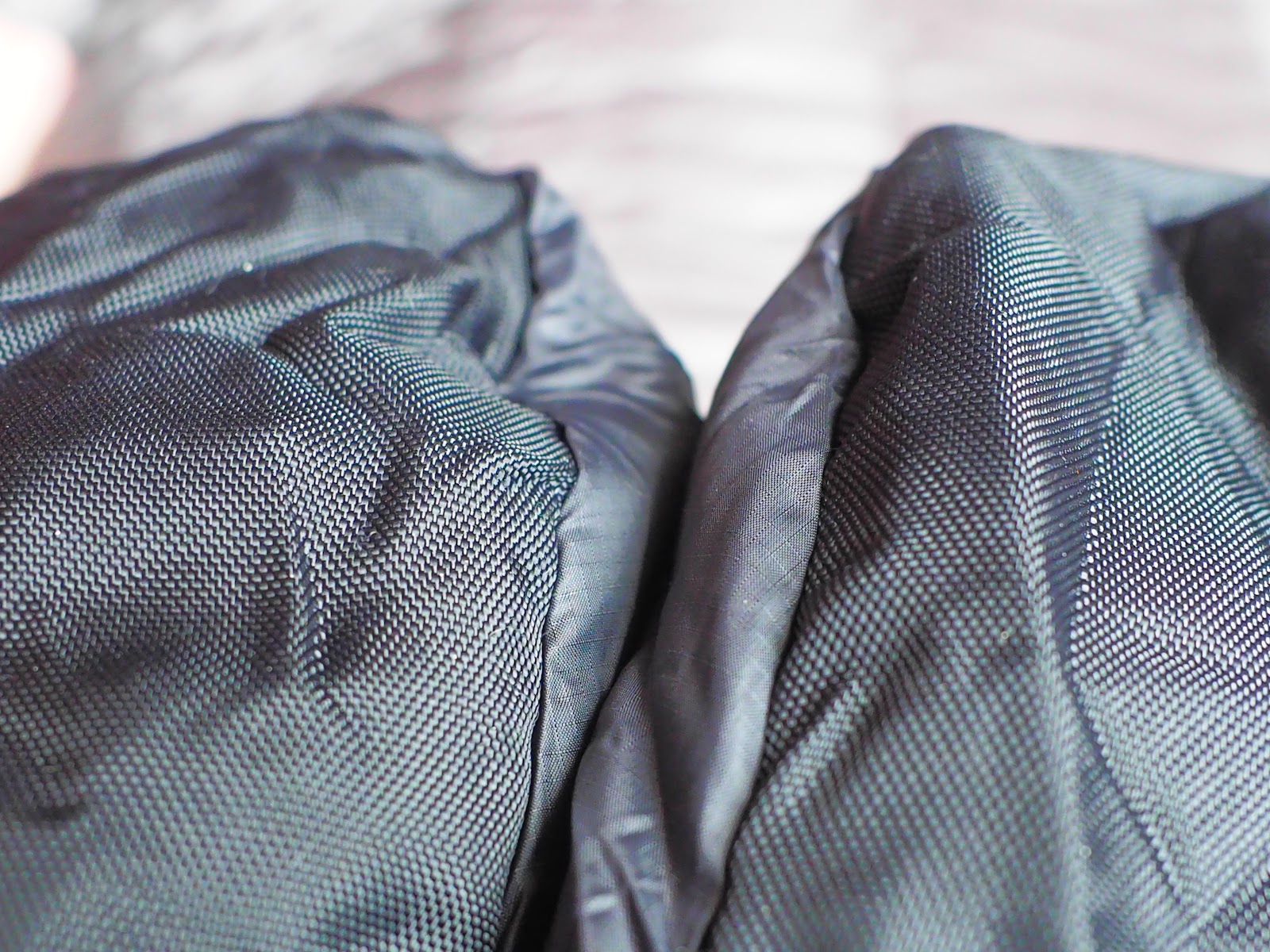
a close up of the Rab Hot Socks to illustrate the insulation and tough soles
The synthetic fleece insulation and Cordura soles on the Rab Hot Socks

Tough Sole Fabric

Rab Hot Socks’ soles are lightweight 500D Cordura; unlike some hut booties, they do not have a firm foam sole, which saves weight and makes them more packable than a hut bootie.

a close up of the tough Cordua soles, you can see their texture is different than the rest of the product.
500D Cordura Soles on the Rab Hot Socks

Product Availability

The best part about ordering gear from a big retailer is the ease of product accessibility. After my feet being cold on a trek, I decided I needed better insulation for my next trek (about a week later). I ordered Rab Hot Socks and they arrived in time for my next trip.

Rab Expedition Slipper Compared To…

Rab Expedition Slipper vs. GooseFeet Gear Down Socks

The most comparable item I found to the Rab Expedition Slipper was the GooseFeet Gear Down Socks. In my opinion, the Rab Expedition Slipper edged out GooseFeet Gear Down Socks because they had a better fit because of the instep and ankle’s elastic anatomical shaping. The Rab Expedition Slipper is also available from retail outlets and is easier to order in remote areas. However, if you have time and want a custom-made slipper, the Goosefeet Gear Down Socks are a great option.

Warmth

These two products are entirely comparable for warmth in the same category of insulation. You can, however, order a variety of insulation and fabric options from GooseFeet Gear. Goosefeet Gear offers 850 FP down, Rab offers 800 FP down. Because higher FP down offers similar warmth at a lower weight, we’ll give the edge to GooseFeet.

Edge: GooseFeet Gear Down Socks

Product Access

As with many cottage companies, I have difficulty ordering items into my remote area. If forced to choose, I almost always select a comparable product I can get at the local outdoor outfitter. Rab offers product availability from multiple retailers across North America and the world. On the other hand, this product is currently discontinued and only available at third-party retailers. So we’ll call this one a tie.

Edge: Tie

Customization

The Rab Expedition Slipper is not a customizable product; it comes in one color, one down fill level, and four sizes. GooseFeet, however, offers a rainbow of color, fabric types, and fill levels.

Edge: GooseFeet Gear Down Socks

Fit

The Rab Expedition Slipper edged out all competition when it came to fit. Its design is more complex and sewn in several pieces with elastic to ensure perfect foot fit at the ankles and instep and includes an adjustable drawstring. Though Goosefeet Gear offers the drawstring, like the Rab Hot Socks, the overall fit is sloppy compared to the anatomical fit of the Rab Expedition Slipper.

Edge: Rab Expedition Slipper

Rab Hot Socks Compared To…

Rab Hot Socks vs. Montane Prism Bootie

Rab Hot Socks are best compared to the Montane Prism Bootie. With similar synthetic insulation and harder-wearing sole, these have the option of being a hut bootie/sleep sock cross-over if you so choose. Personally, I’d rather not use anything I sleep in for any kind of walking around, but it’s a good option for anyone inclined towards a multipurpose minimalist camp shoe.

Fit

I would say the drawstring closure and foot shape of the Montane Prism Booties make them a better foot fit but the firm sole makes them less useful for sleeping in. So it is a toss-up between the two. But I would give the edge to the Montane Prism.

Edge: Montane Prism Bootie

Weight

The Montane Prism Bootie is marginally heavier ( 6 oz / 16 6g) than the Rab Hot Socks ( 5 oz / 154g).

Edge: Rab Hot Socks

Packability

Rab Hot Socks pack down smaller than the Montane Prism Bootie.

Edge: Rab Hot Socks

Price

Rab Hot Socks ($70) are a more expensive product than the Montane Prism Bootie ($55)

Edge: Montane Prism Bootie

Rab Expedition Slippers Strengths and Limitations

Strengths

  • soft, comfortable fabric and down fill
  • drawstring closure
  • elastic foot shaping

Limitations

  • a bit bulky when unstuffed
  • no slipper cup
  • no hard-wearing sole

Rab Hot Socks Strengths and Limitations

Strengths

  • harder wearing fabric
  • synthetic/down combination retains some warmth when wet
  • good insulation level for warm sleepers

Limitations

  • bulky
  • hard to stuff
  • heavier than down, less insulation
  • sloppy fit

Where to Buy

  • Buy the Rab Expedition Slippers here. Sadly the Rab Expedition Slippers are discontinued, but they are still available in a few places (I ordered a second pair in December 2020 without issue). A second choice item (which I don’t like as much) is the Rab Down Slipper. I am hoping Rab brings the Expedition Slipper back soon; I want a backup pair.
  • Buy Rab Hot Socks here.

Related Content

DISCLOSURE (Updated April 9, 2024)

  • Product mentions in this article are made by the author with no compensation in return. In addition, Backpacking Light does not accept compensation or donated/discounted products in exchange for product mentions or placements in editorial coverage.
  • Some (but not all) of the links in this review may be affiliate links. If you click on one of these links and visit one of our affiliate partners (usually a retailer site), and subsequently place an order with that retailer, we receive a commission on your entire order, which varies between 3% and 15% of the purchase price. Affiliate commissions represent less than 15% of Backpacking Light's gross revenue. More than 70% of our revenue comes from Membership Fees. So if you'd really like to support our work, don't buy gear you don't need - support our consumer advocacy work and become a Member instead.
  • Learn more about affiliate commissions, influencer marketing, and our consumer advocacy work by reading our article Stop wasting money on gear.
Unpacked: “Billionaire Wilderness” Book Review

When money and conservation collide.

As far as mountain towns go, there is perhaps no more superlative example than Jackson, Wyoming. Its proximity to Yellowstone and Grand Teton National Parks sparks recognition and interest from persons with only the most casual interest in the outdoors. When you factor in the less-heralded destinations in the vicinity—hot springs, the Gros Ventre Wilderness, rivers for trout fishing and paddlesports—and the opportunities for world-class winter recreation, then it’s no surprise that Jackson is a magnet.

The town attracts those who want to live in an area that provides them with a shorter commute to high-quality outdoor recreation than most people have to their jobs. From twenty-something seasonal employees in the guide and service industries to retired multi-millionaires (or billionaires), the mythos and landscape around Jackson create a powerful draw.

the cover art of "Billionaire Wilderness: The Ultra-wealthy and the Remaking of the American West." It&squot;s an expansive view of western mountains with a dollar sign superimposed over the landscape.
“Billionaire Wilderness: The Ultra-Wealthy and the Remaking of the American West,” by Justin Farrell. Princeton University Press, 2020.

Although I’ve yet to pass through Jackson, Wyoming or Teton County (but I have been to Jackson, Montana and its quaint hot springs lodge plenty of times), I was intrigued by the recent book Billionaire Wilderness: The Ultra-Wealthy and the Remaking of the American West by Justin Farrell. I’ve always been interested in the counties and towns that I pass through on my way to backpacking trips—from touristy spots like Gatlinburg, Tennessee and Sedona, Arizona to out-of-the-way places like Loomis, Washington, and Lemhi County, Idaho—so a book about one of the most well-known jumping-off points for outdoor recreation in the West caught my attention.

The book’s subtitle promised an analytical and thorough look at the demographics of Teton County, the impacts, influences, and opinions of its most wealthy citizens, and the role played by the natural landscape in the area’s culture.

“…a more virtuous and deserving version of themselves.”

The book more than delivered on these promises. Copious graphs, interview excerpts, and original research provided a depth that was illuminating and somewhat unexpected for a book intended for a general (i.e. non-academic) audience. The complex relationships between the wealthiest residents, the nonprofits they supported, the communities where they lived, and their outsized impact on day-to-day issues that affected the average resident (such as affordable housing) were all examined in detail.

Like most people who enjoy open spaces, I’ve generally thought of organizations focused on land preservation and limiting development to unquestionably be “the good guys.” This book made me realize that there is considerable nuance involved and often scant attention paid to the unintended consequences of such efforts—particularly that by locking up land in conservation easements in areas with limited options for building that available housing becomes much more expensive. This eventually prices out the people that live and work in the communities, which ultimately changes the character of a place.

The interviews with the ultra-wealthy of Jackson and Teton County, as well as the folks who worked for them, were fascinating and gave humanity to issues of inequality and privilege that are often rendered in the abstract. Along with the impeccable documentation of cost-of-living and availability of housing in the area and other changes over time, such interviews were one of the strongest areas of the book. Farrell’s portrayal of his subjects and their impacts on the area in which they reside is systematic and not overly sympathetic—which should be expected given that the author is a sociology professor at Yale. His thesis that “the affluent of Teton County are people burdened by stigmas, guilt, and status anxiety—and they appropriate nature and rural people to create more virtuous and deserving versions of themselves” is fully borne out by his book.

Zoom Towns

Reading this book caused me to look a bit more critically at my own community in western Montana and the similarities it has with a place like Jackson. While it is a much more affordable town and nowhere near the tourist destination that Jackson is, certain themes are now more apparent and the potential long-term impacts of changes in its demographics and industries became a bit more concerning. These issues aren’t unique to Jackson, of course, although they are certainly most apparent and pervasive there.

It will be interesting to see how the dynamics of other Western mountain towns change as their demographics began to follow a similar trend, especially given the “Zoom town” phenomenon—where persons who can work remotely are relocating from cities to mountain towns that are ostensibly more desirable places to live. A recent article in High Country News details how conflict can arise between the primary residents and the elites of a community and is filled with quotes and descriptions of challenges that are eerily familiar after having read “Billionaire Wilderness.”

While certainly not a book about backpacking, or even intended for persons interested in the outdoors, Farrell’s book will likely be of special interest to backpackers who live in—or those who are contemplating moving to—mountain towns in the west. It is also a worthwhile read for those who pass through these places and are curious about the demographics and social structures of the towns where they get gas, a last-minute fuel canister, a meal, or a hotel room on their way to and from national parks and wilderness areas in the west.

Who is this book for?

This book is intended for a general audience, at least according to the publisher, but with all the figures, graphs, and the often dry academic prose I found it to be written for the average reader in about the same way that a Z-packs Duplex shelter or a Hyperlite Mountain Gear pack is designed (and priced) for the average backpacker. The topic is fascinating and the research is impeccable, but a more informal format and conversational tone would have made this important topic more accessible to a wider audience.

Related Content

Winter Backpacking on Packed-Snow Trails (Gear List)

A winter backpacking gear list for hiking on packed-snow trails in dry (low-humidity) climates.

Introduction

There is a big difference between winter backpacking on highly-trafficked, packed snow trail corridors and winter backpacking in deep powder snow. This article offers some insight into how to pack for trips where you’re hiking predominantly on packed snow trails.

Hiking on packed snow trails is less intimidating than hiking in deep snow on snowshoes or skis, and if you’re into high-mileage trips, hiking packed snow trails allows you to cover a lot of distance. Areas where frequent human overland traffic (i.e., hiking, ski, snowshoe, fatbike, or snowmobile) keep trail corridors packed down provide opportunities that are more accessible to beginning and intermediate backpackers. US ranges that come to mind include the Whites and Adirondacks of the NE, the Rockies of SW Montana, NW and SE Wyoming, and N Colorado, and the coastal ranges of the California E Sierra, E Oregon, and N Cascades of Washington. Backpacking in deep snow, in remote wilderness far from trailheads and population centers – that’s a subject for another day.

I first published a winter backpacking gear list here in 2004, which was subsequently updated in 2014. That gear list was tailored for camping in snow shelters, and included various luxuries such as a saw, for cutting firewood and limbs to help add snow shelter structure.

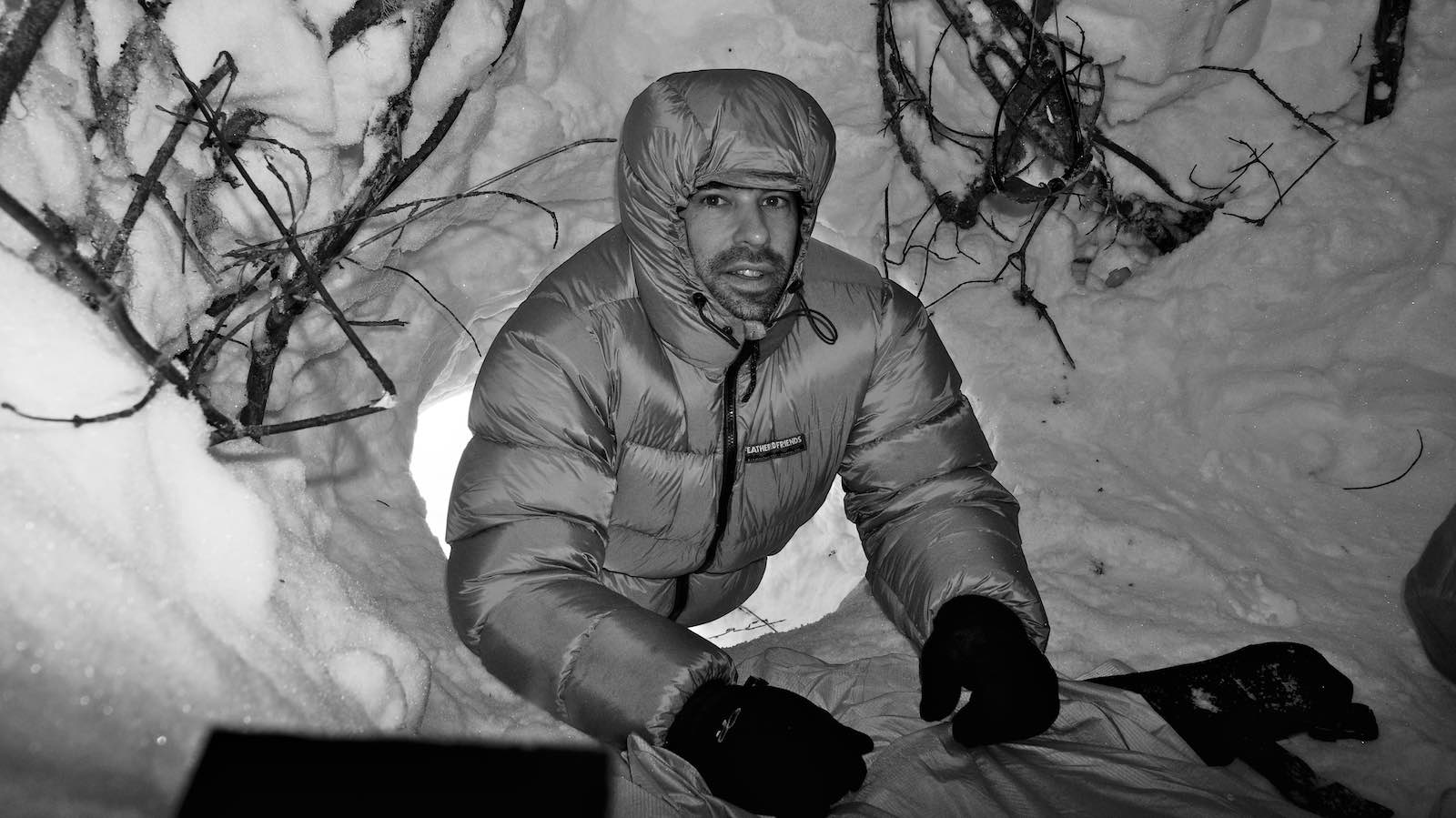
person wearing down parka inside a snow cave
Ca. 2014 inside a makeshift winter snow cave built adjacent to a forest of shallow snow (snowpack is only about 5 ft / 1.5 m deep). Mill Creek Valley, Montana. Photo credit: Ryan Jordan

In contrast, this article will focus less on camping and in-camp comfort and more on what I’m currently using when I’m trying to cover more miles. Consequently, this kit is tuned (for me) for efficiency (spending less time doing things involving gear) rather than minimizing every last ounce.

Some examples reflecting these choices include:

  • Shelter – Choosing a lightweight tarp and bivy sack instead of a winter tent, but enjoying the comfort and warmth of a two-pad bed and mummy sleeping bag.
  • Cooking – Choosing a stove that can melt snow as fast as possible, even in stormy conditions, rather than an ultralight stove that might require more care and fiddling to get the most out of it in winter conditions.

Summary of Context

  • Locale – SE Wyoming / N Colorado (I currently live in Laramie, WY and my “home” hiking ranges include the Snowy and Sherman Ranges in WY and RMNP and surrounding areas in CO)
  • Elevation – 8,000 to 12,000 ft (2440 to 3660 m)
  • Terrain – mostly highly-trafficked trails, packed snow and ice, some deep snow / off-trail
  • High temperatures – 10 to 32 F (-12 to 0 C)
  • Low temperatures – 0 to 20 F (-18 to -7 C)
  • Winds moderate (up to 20 mph / 32 kph) in the forest; high (up to 50 mph / 80 kph or more) above the treeline

Download: our printable winter backpacking gear list (PDF)

Note: all weights reported in this article are the directly measured weights of my gear, not the manufacturer-reported weights.

Footwear & Traction System

For high-mileage winter treks, I’ll hike highly-trafficked, snow-packed (and sometimes icy) trail corridors most of the time. That’s my rationale for building a lightweight, comfortable footwear system with a spike-based traction device instead of snowshoes or skis.

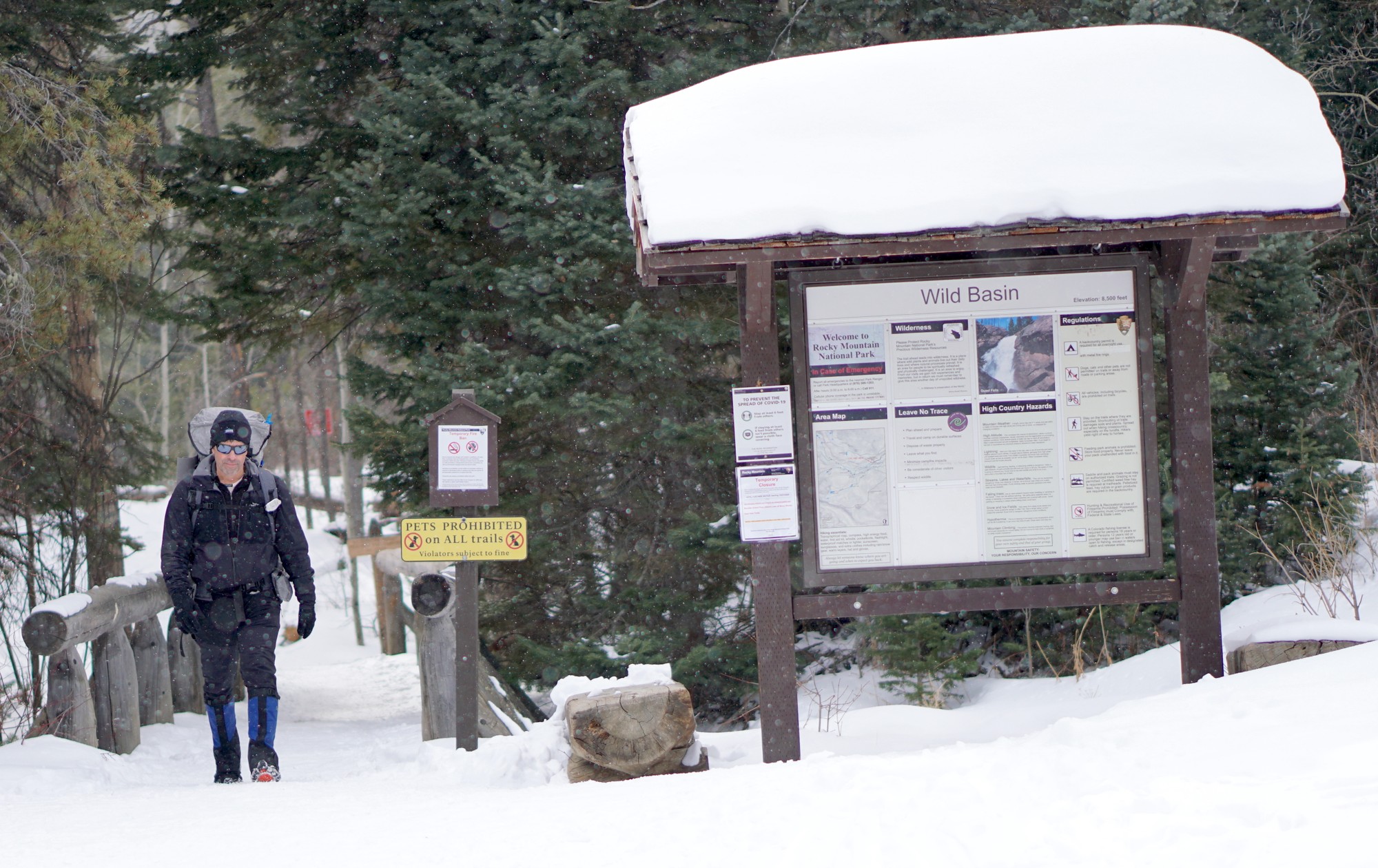
man hiking on bridge next to sign that reads "wild basin"
This article features a gear list that is tuned to dry, cold, snowy, forested environments where trails receive enough traffic to stay (for the most part) packed enough to use traction spikes instead of skis or snowshoes, like this one in Rocky Mountain National Park. Photo credit: Stephanie Jordan

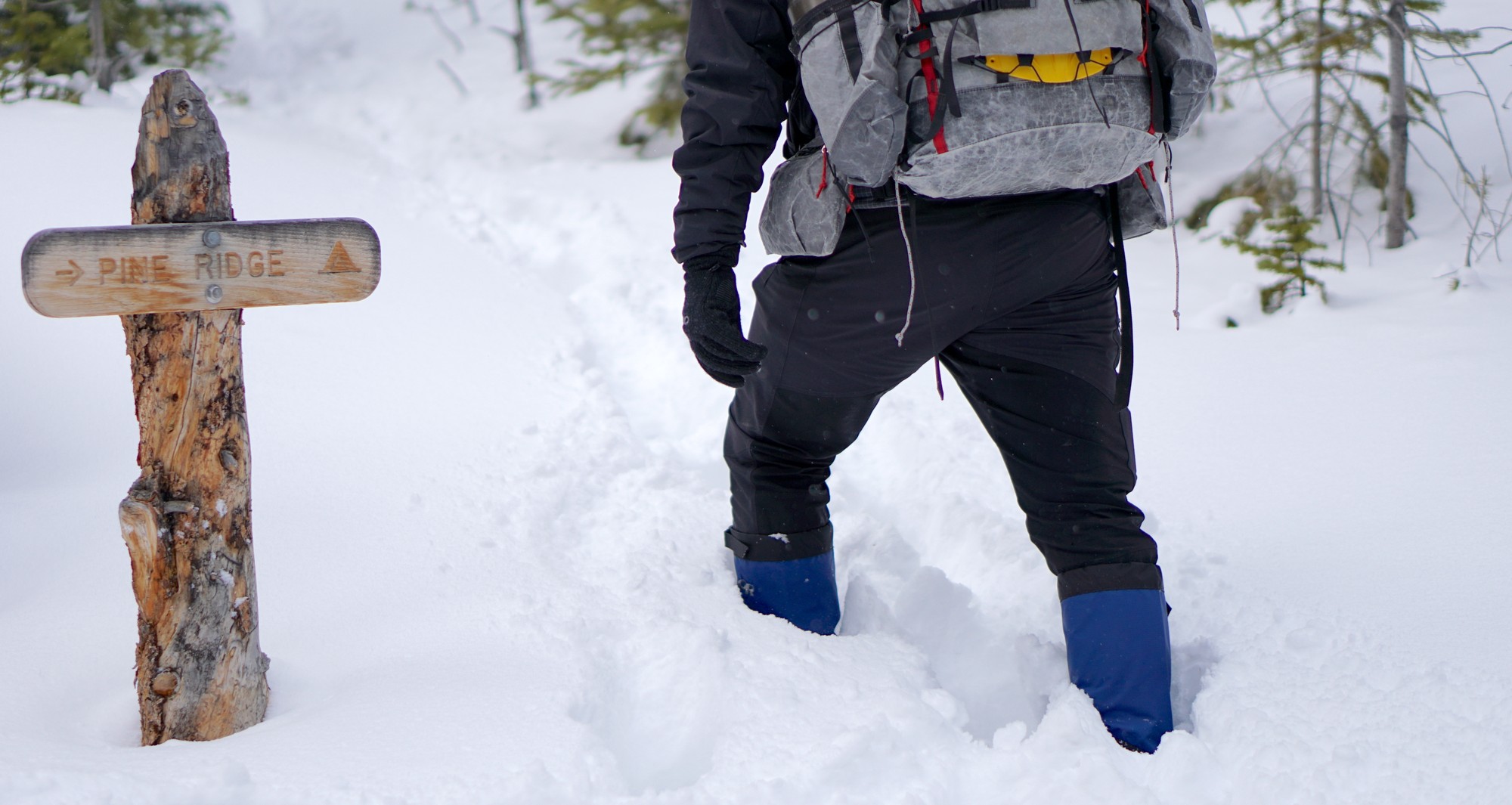
However, I’ll camp a few hundred yards away from those corridors, which may require me to walk through deeper snow to find campsites. I don’t really want to haul the weight of snowshoes just for this, so will rely on waterproof shoes and high gaiters to keep my feet as dry as possible while post-holing through deep snow.

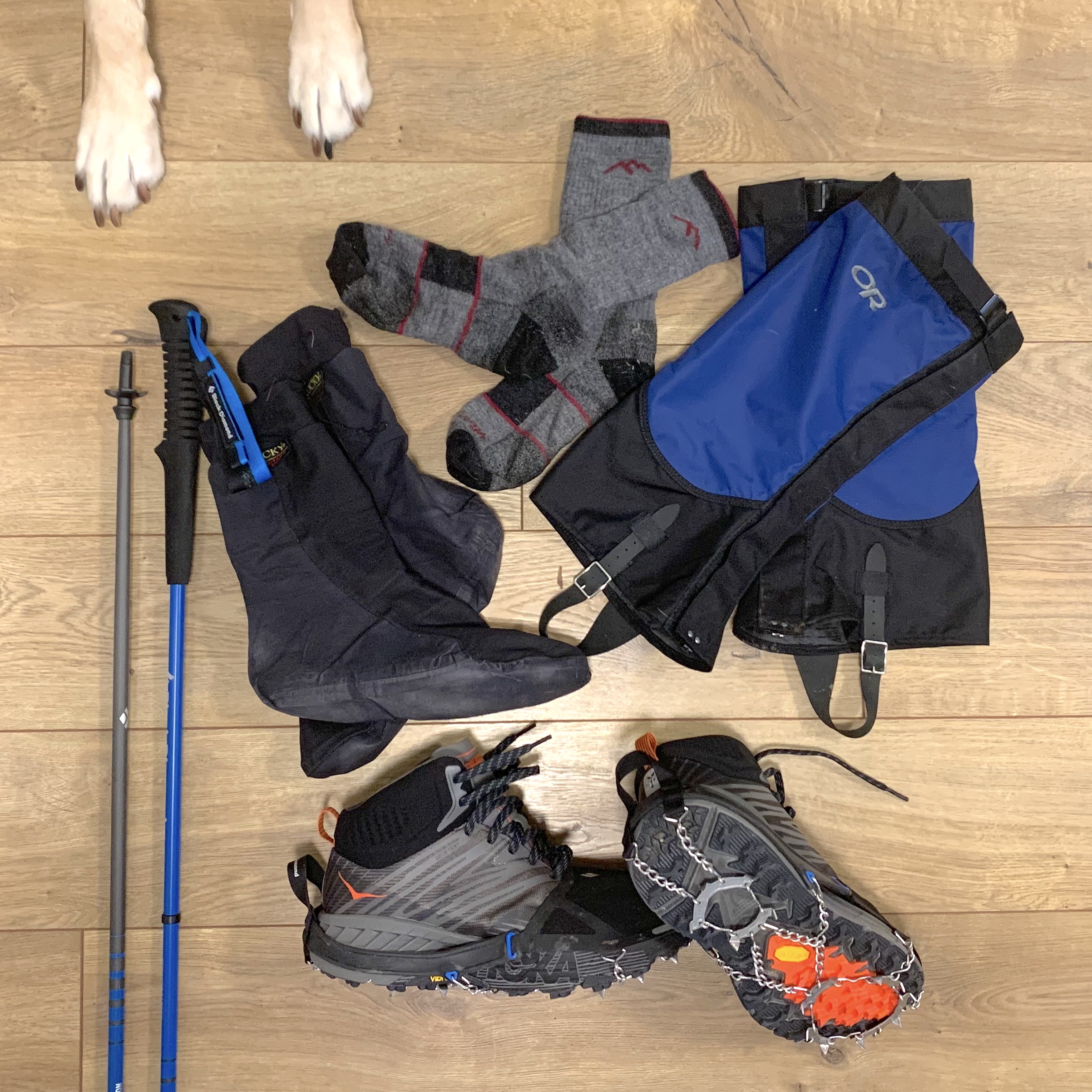
layout of trekking poles, waterproof socks, wool socks, gaiters, shoes, and traction spikes
Footwear and traction system. Photo credit: Ryan Jordan

Footwear & Traction Gear Notes:

  • TRAIL RUNNING SHOES / Hoka Speedgoat Mid GTX 2 (Size 9.5) / 26.0 oz (737 g) / high stack height provides good insulation from cold snow and ice, sized up one half to full size to accommodate thicker socks and sometimes, a waterproof sock
  • TRACTION SPIKES / Black Diamond Distance Traction Spikes (Size L) / 8.2 oz (232 g) / soft-shell toe cover prevents snow and ice buildup on laces, and shorter spikes allow for less tripping while moving fast on icy trails
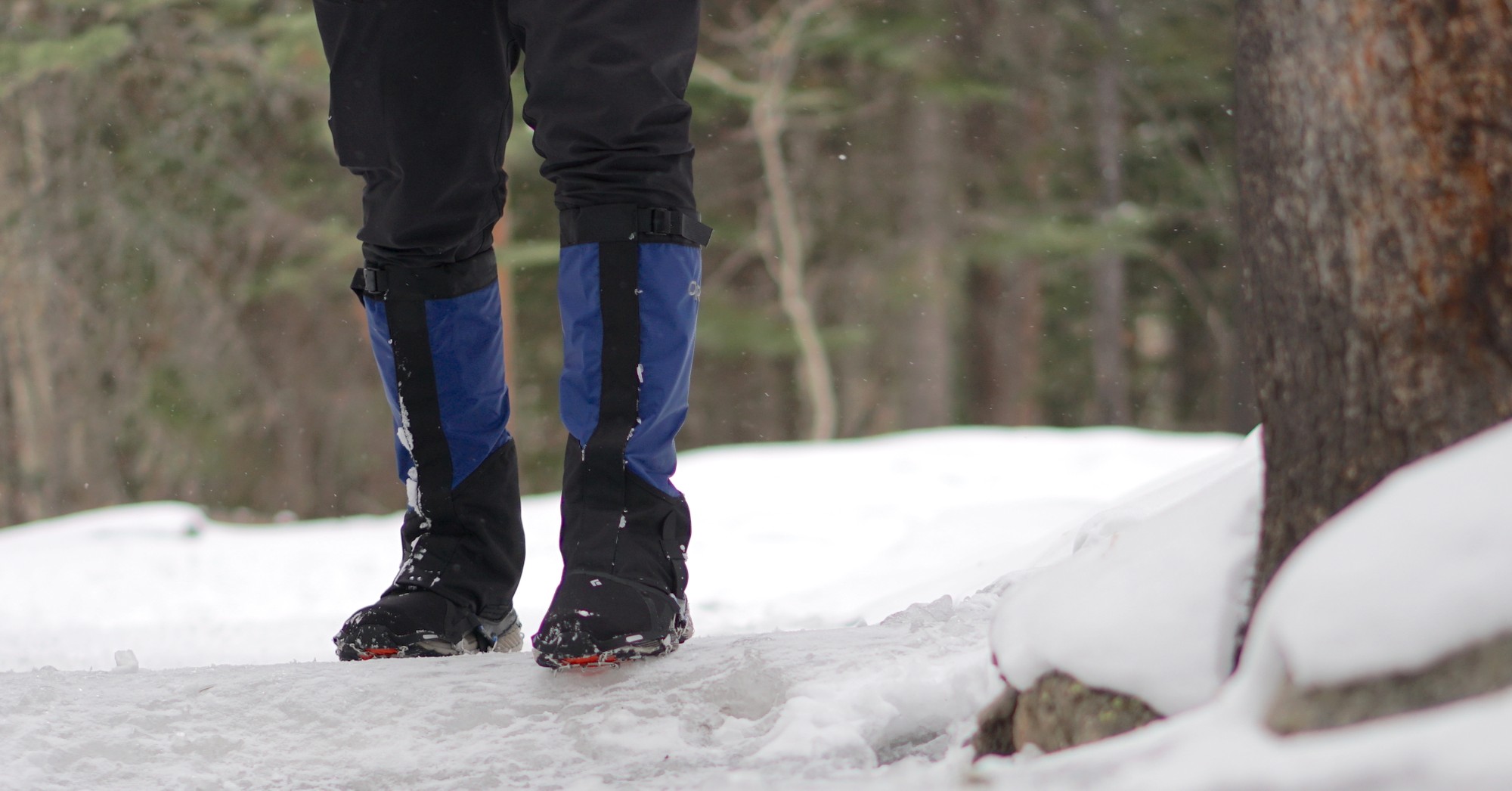
  • CALF-HEIGHT GAITERS / Outdoor Research Verglas Gaiters (Size M) / 6.5 oz (184 g) / not as light as so-called ultralight gaiters, but packcloth ankle area is more durable for forest bushwhacking and errant spike-pokes from the other foot; I prefer the OR Helium Gaiter when I know I won’t be bushwhacking much
  • WARM SOCKS / Darn Tough Full Cushion Boot Socks / 3.3 oz (94 g) / provides good insulation in cold temps
  • WATERPROOF SOCKS / Rocky Gore-Tex Socks / 2.9 oz (82 g) / for hiking in extreme cold, and for added comfort when in camp; size up two (or more) full sizes to make them easier to take on and off, and to layer over thick insulating hiking socks
  • ULTRALIGHT TREKKING POLES / Black Diamond Distance Carbon Running Poles / 6.4 oz (181 g) / adjustability isn’t needed for pitching the tarp in a storm pitch, snow baskets not needed for hiking on packed trails
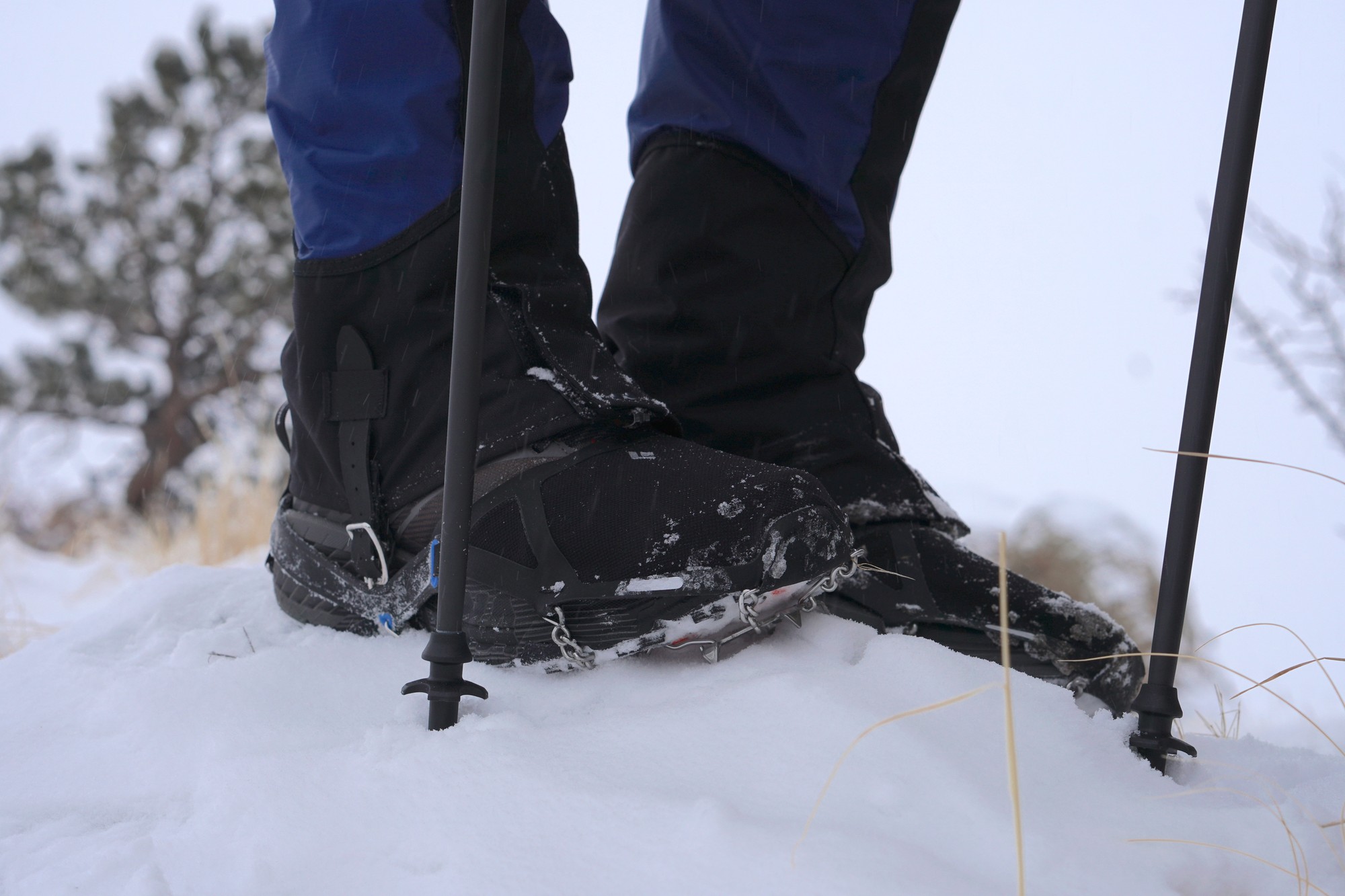
lower legs of a hiker wearing boots and gaiters, with traction spikes affixed to the boots; and trekking poles
A winter backpacking footwear and traction system includes five components: socks, shoes, gaiters, a traction device (e.g., spikes), and trekking poles. Photo credit: Ryan Jordan
man hiking through deep snow en route to a campsite
When hiking off-trail the snow surface often transitions from packed to powder. You’ll need some type of gaiter to prevent snow ingress into the tops of your shoes. Gaiters help keep your feet dry while winter backpacking. Here, we leave the packed trail and trudge through untracked snow to a campsite. Photo credit: Stephanie Jordan
person standing on an icy trail wearing traction spikes
Taking advantage of traction spikes on a water-iced trail in Rocky Mountain National Park. During winter, ice dams can divert streamflow into trail corridors, creating a slick mess of ice that persists until the spring thaw. Photo credit: Ryan Jordan

Clothing System

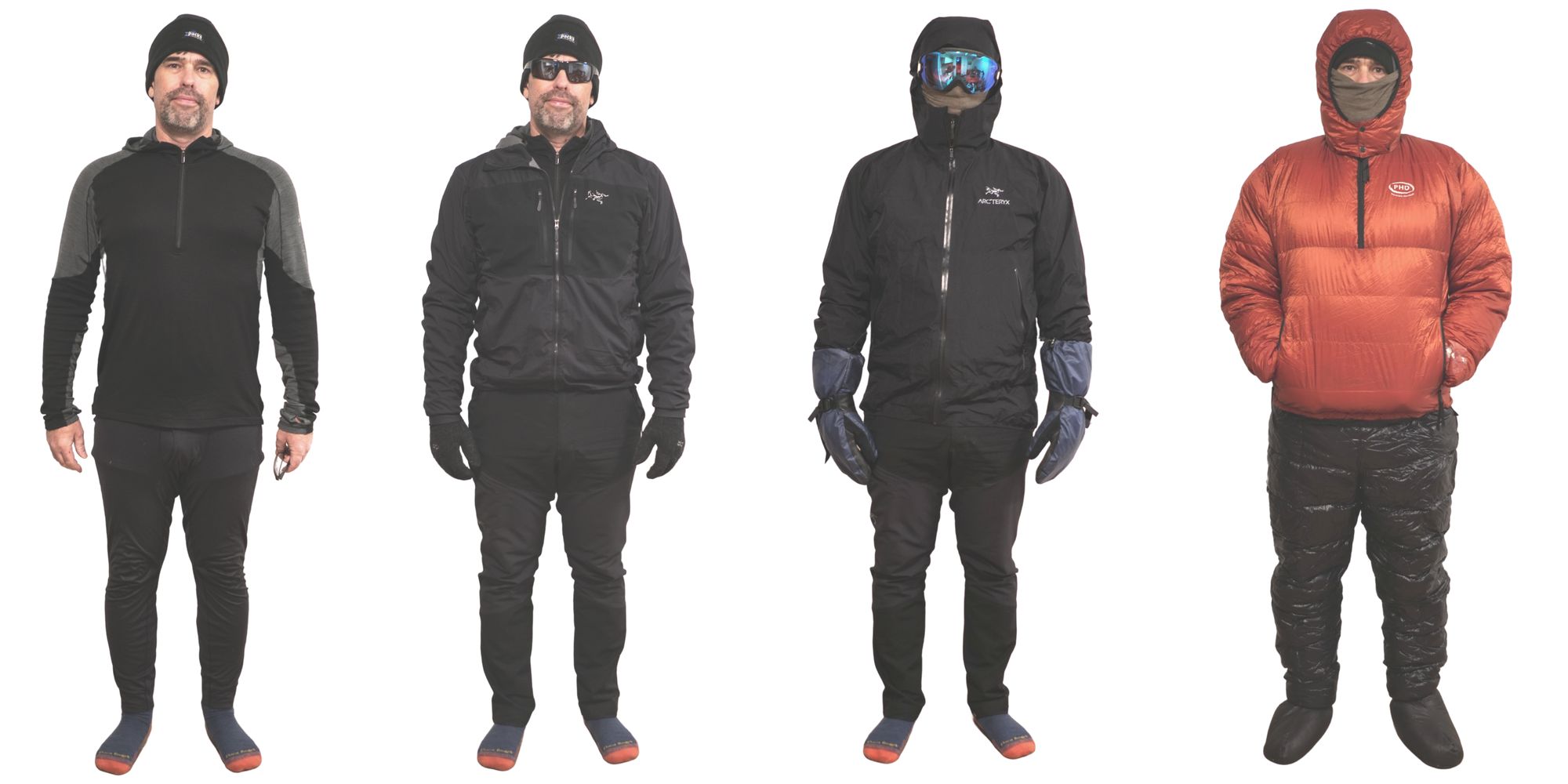
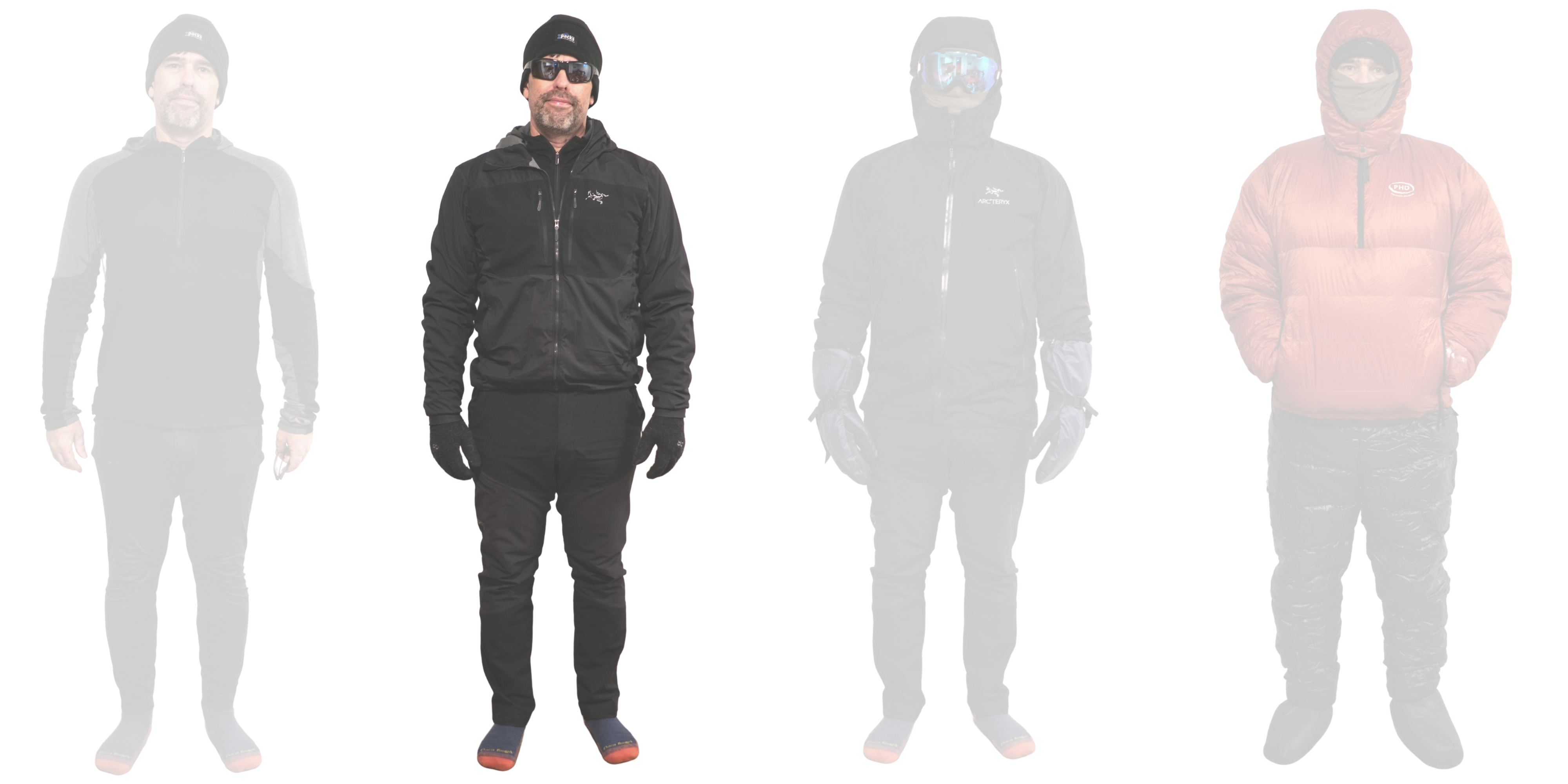
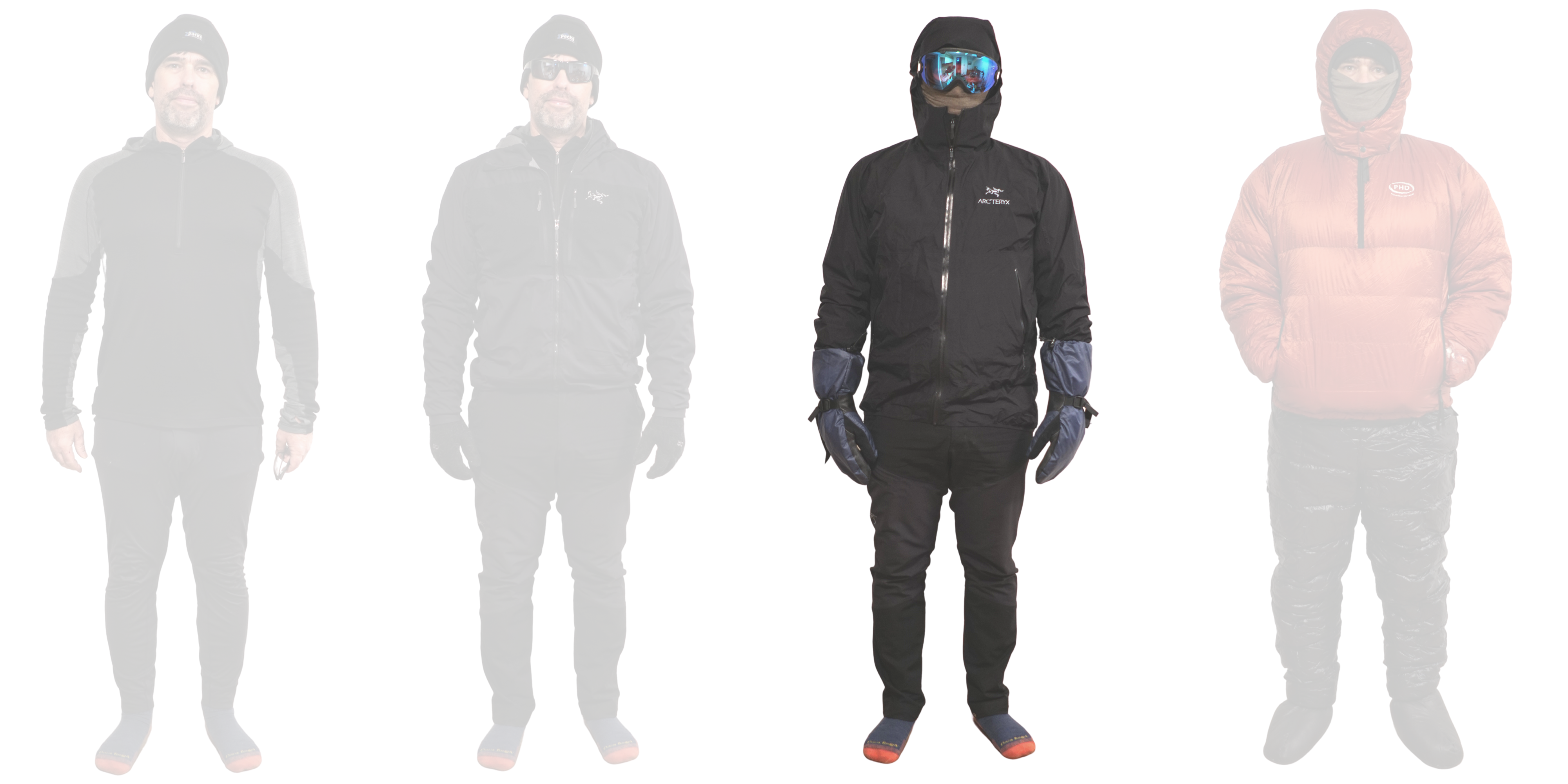
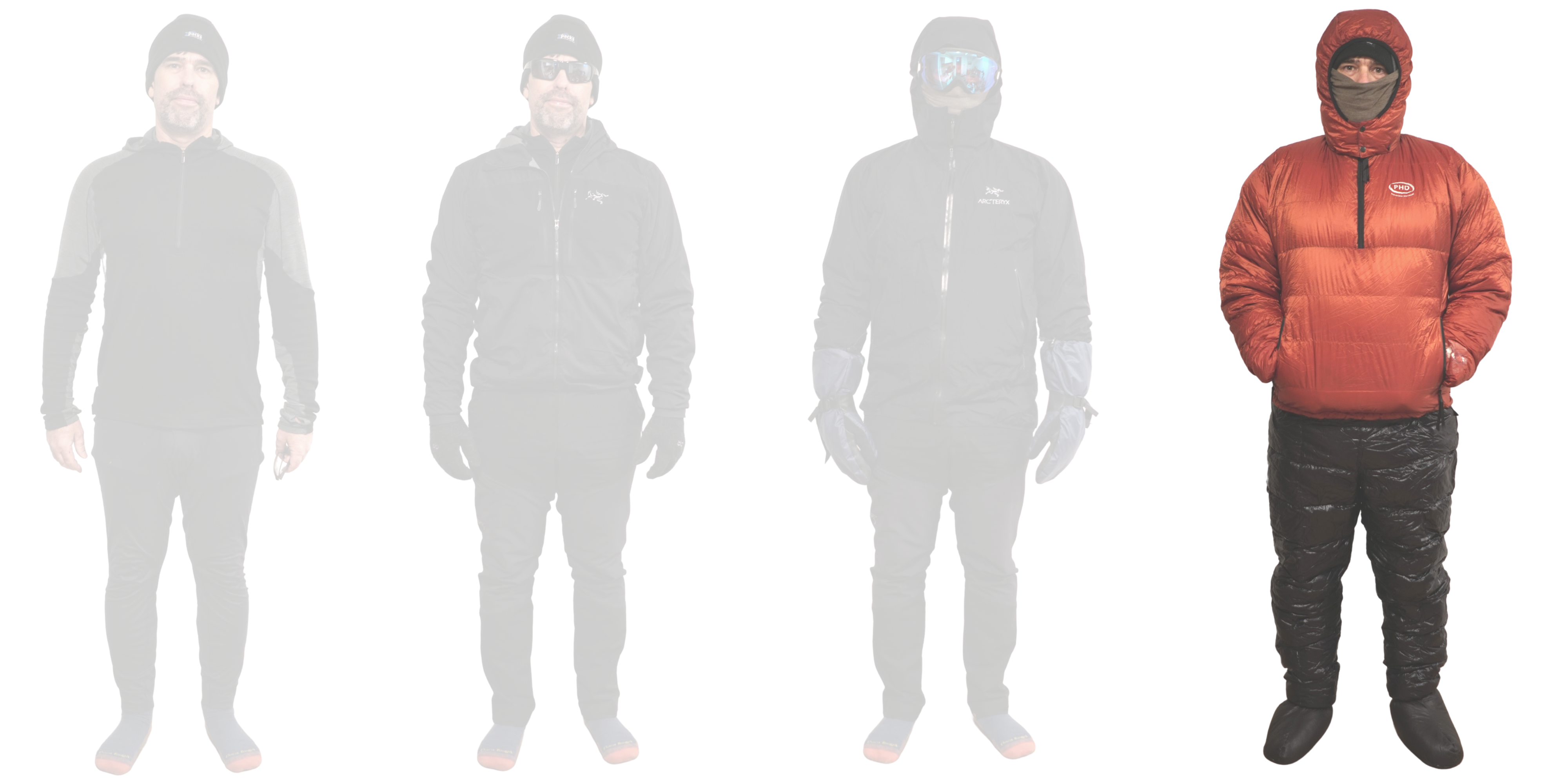
I like to think of my clothing in four layers:

  • base – my next-to-skin layers
  • hike – the clothing I wear for most conditions on the trail during the daytime
  • storm – the clothing I add when temperature drops, precipitation gets heavy, or the wind increases
  • camp – the insulation I use in camp while inactive, or in the sleeping bag on the coldest nights
a 4-panel image showing base layer clothing, hiking clothing, storm clothing, and camp clothing
My four layering systems, L to R: base, hike, storm, camp. Photo credit: Ryan Jordan

Based on the conditions I’m expecting, I’d rather adjust the insulating capacity or storm-resistance of the pieces in any of these layers than adding more layers, which adds complexity to the system.

That said, I may not have the flexibility to pick and choose from various pieces of gear, so adding a layer becomes both practical and economical. For example, I own one active insulating jacket right now, and I’d be more apt to add my synthetic insulated vest to boost my hiking clothing warmth rather than add a new, more insulated active layer to my already-cluttered gear closet.

Hiking Clothing

The wind blows almost continuously in the winter season where I normally hike (SE Wyoming and N Colorado), so my standard hiking clothing is tuned to that normality. On a typical winter day, the temperature is 10 to 25 deg F (-12 to -4 deg C), with winds blowing in the range of 10 to 20 mph (16 to 32 kph). And so I dress for the wind chill temperature, not the ambient temperature. For example, on a day where the ambient temperature is 15 deg F (-5 deg C) and the wind is blowing 15 mph (24 kph), the wind chill temperature will be around 6 deg F (-14 deg C) (online wind chill calculator).

If I’m expecting cooler temperatures, I’ll increase my base layer weight, the weight of my active insulation layer, or just add an additional long or short sleeve crew base layer under the merino hoody. In addition, if I’m expecting colder temperatures and wind, and plan to wear the vapor barrier mitts most of the time while hiking, I’ll replace the heavier fleece gloves with a thinner fleece liner for a two-layer mitten system that allows me to take the mitten off for a few minutes without suffering cold hands in very windy conditions.

a 4-panel image showing base layer clothing, hiking clothing, storm clothing, and camp clothing, with base layer clothing highlighted
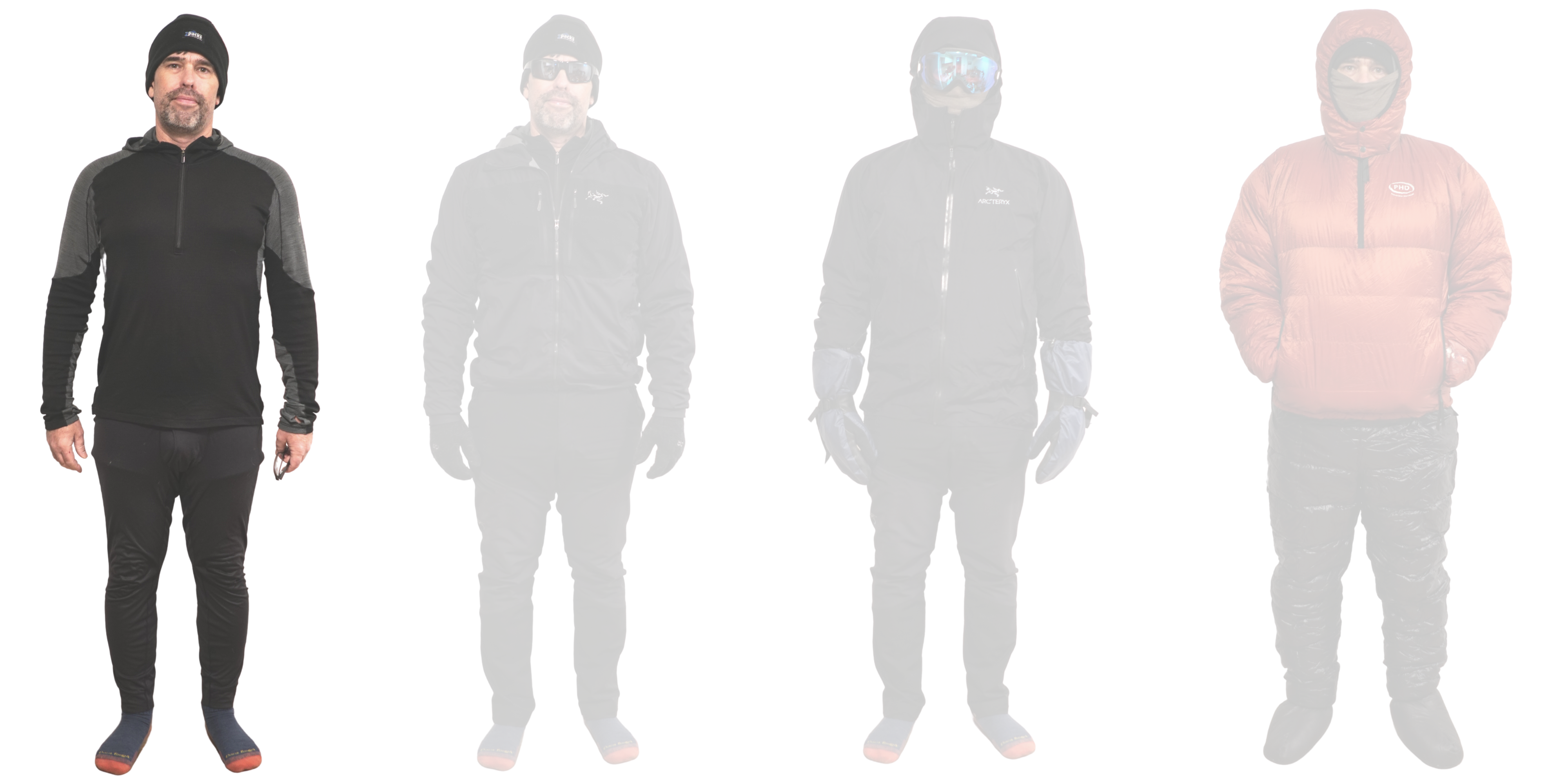
BASE – base layer top (a merino hoody) and bottom (lightweight long underwear over merino boxer-briefs). Worn by themselves in the sleeping bag or the hoody by itself in exceptionally warm and sunny conditions. Photo credit: Ryan Jordan
a 4-panel image showing base layer clothing, hiking clothing, storm clothing, and camp clothing, with hiking clothing highlighted
HIKE – hiking clothes, which are worn most of the time on the trail, are worn over the base layers and include an active insulation jacket, softshell pant, and fleece gloves. Photo credit: Ryan Jordan

Hiking Clothing Notes:

  • UNDERWEAR / Smartwool Merino 150 Boxer Brief / 3.1 oz (88 g) / lacks durability for long-distance days in the summer, but cozy and warm for winter hiking
  • BASE LAYER BOTTOMS / Patagonia Lightweight Capilene Long Underwear Bottoms / 3.5 oz (99 g) / combine with soft-shell pants for a breathable pant system for winter cold and wind
  • SOFTSHELL PANTS / Arc’teryx Sigma FL Pant / 12.6 oz (357 g) / blocks moderate wind while remaining breathable; sheds snow well; stretchy comfort for mobility
  • BASE LAYER TOP / Smartwool PhD Light Hoody / 9.2 oz (261 g) / a cozy hood makes this a comfy layer
  • ACTIVE LAYER SHELL / Arc’teryx Proton FL Hoody / 11.1 oz (315 g) / highly-breathable, lightly-insulated wind shirt
  • BEANIE HAT / ZPacks Fleece Beanie / 0.9 oz (26 g) / light beanie combines with base layer and wind shirt hoods for adjustment to changes in cold and wind – I generally prefer a full-loft double-layer fleece beanie like this in the winter because of its balance of breathability vs. wind resistance
  • FLEECE GLOVES / Outdoor Research Flurry Sensor / 2.5 oz (71 g) / for temperatures not requiring insulated mitts / high loft, good moisture and wind resistance, outstanding dexterity, and terrific fingertip sensor, especially with a smartphone GPS app
  • SUNGLASSES / Smith Photochromic & Polarized / 1.4 oz (40 g) / sophisticated tech lens provides visual acuity in rapidly changing light during unstable winter weather, weight incudes a Pilotfish retainer strap
man backpacking on a winter trail
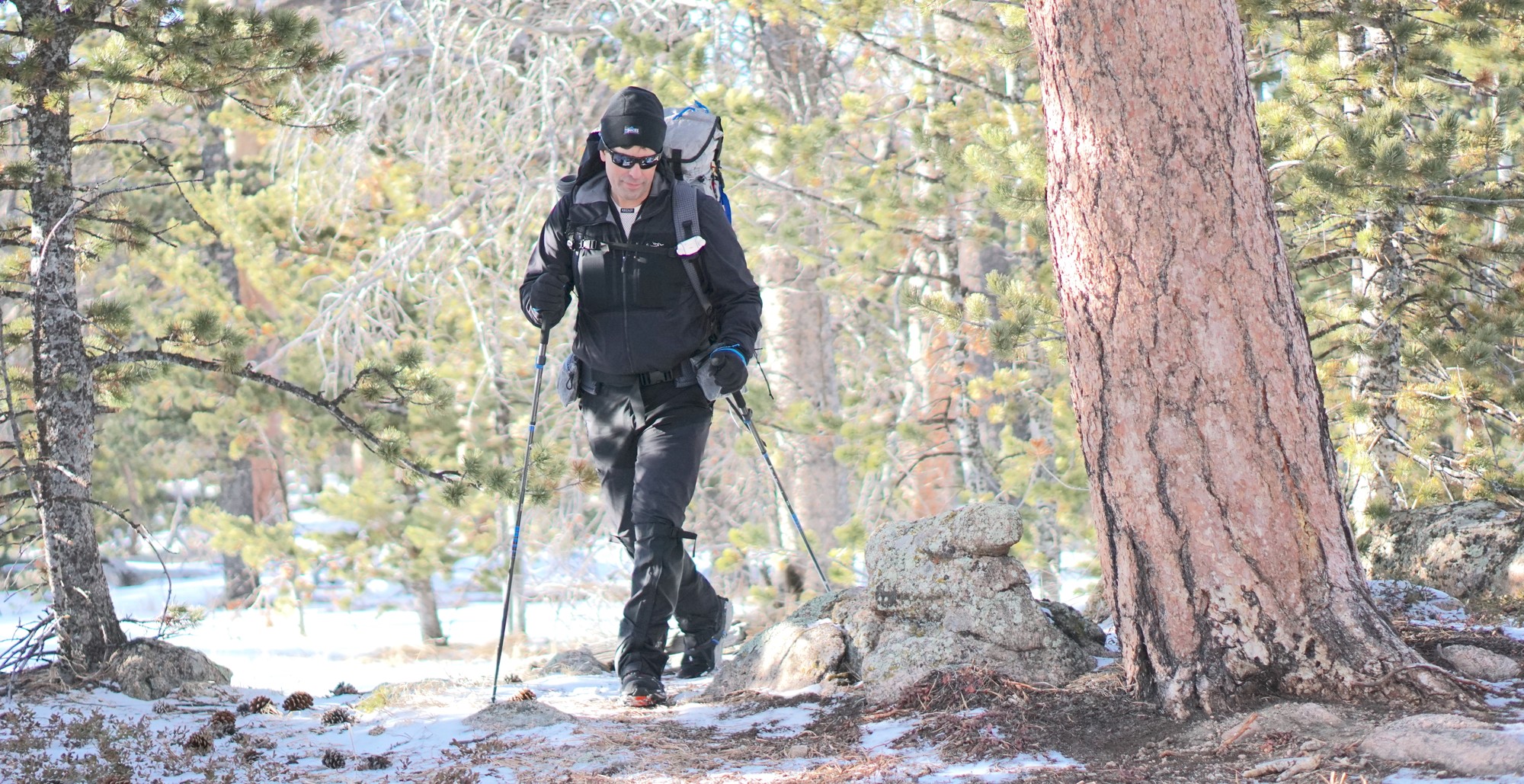
When the weather is fair but temperatures are cold, I like to wear a softshell jacket and pants over a baselayer hoody and long johns, with a thin hat and liner gloves. Photo credit: Stephanie Jordan

Storm Clothing

Additional storm clothing is predicated on the idea that I need to preserve body heat leaks and blowing spindrift ingress into my clothing system. If the weather forecast is calling for colder temperatures or higher winds, I’ll add a high-loft pile balaclava.

a 4-panel image showing base layer clothing, hiking clothing, storm clothing, and camp clothing, with storm clothing highlighted
STORM – storm clothing layers over the hiking clothing and includes a merino neck gaiter, snow goggles, insulated mittens, and a waterproof-breathable jacket. Photo credit: Ryan Jordan

Storm Clothing Notes:

  • STORM SHELL / Arc’teryx Zeta FL Jacket (Size L for layering) / 7.6 oz (215 g) / waterproof-breathable hardshell not usually needed in sub-freezing conditions when snowfall is light but essential when wind chills approach 0 F or colder or during heavy snowfall
  • WATER-RESISTANT INSULATED MITTENS / RBH Designs Ultralight Vapor Mitts / 6.6 oz (187 g) / critical insurance in cold temperatures when the wind is blowing
  • NECK GAITER / Merino Buff / 1.7 oz (48 g) / helps seal head and neck area in very cold temps
  • SNOW GOGGLES / Smith Chromapop Snow Goggles / 4.9 oz (139 g) / for blizzards, light-responsive in sunny vs. overcast conditions, weight includes microfiber sleeve
man hiking in a winter storm
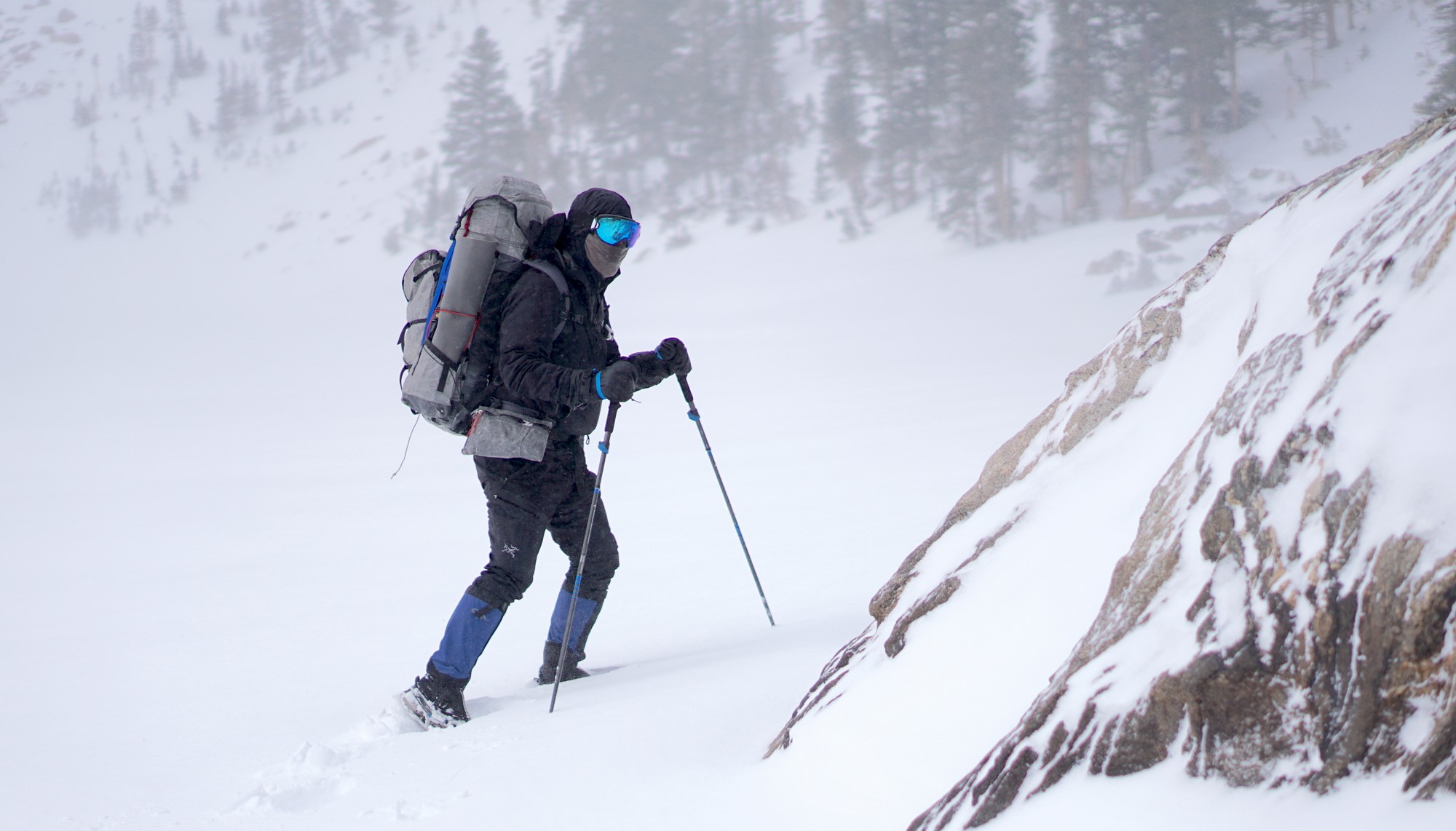
Donned with storm gear near the treeline in Rocky Mountain National Park – vapor barrier mittens, hardshell jacket, merino wool neck gaiter, and snow goggles. Photo credit: Ryan Jordan

In-Camp Clothing

My in-camp clothing meets one spec: maximum warmth-to-weight ratio. I would adjust the jacket, pants, and booties for more extreme (colder) conditions.

a 4-panel image showing base layer clothing, hiking clothing, storm clothing, and camp clothing, with camp clothing highlighted
CAMP – clothing for maximum insulation, layered over hiking and/or storm clothing in the evenings and early mornings, and layered inside the sleeping bag on the coldest nights. Camp clothes include an insulated hoody, the merino neck gaiter, insulated pants, and insulated booties. Photo credit: Ryan Jordan

In-Camp Clothing Notes

  • INSULATED PANTS / Western Mountaineering Flash Down Pants / 6.6 oz (187 g) / pull-on style difficult to use with shoes and spikes but lighter than side zip styles; would upgrade to a more insulated, side-zip pant in sub-zero F temperatures
  • INSULATED JACKET / PhD Yukon K Hoody / 12.4 oz (352 g) / pullover-style, very warm hood; would upgrade to a heavier jacket in sub-zero F temperatures
  • EXTRA SOCKS / Darn Tough Full Cushion Boot Socks / 3.3 oz (94 g) / dry socks for night
  • INSULATED BOOTIES / Goosefeet Down Socks / 2.1 oz (60 g) / warmth while in sleeping bag and during late-night calls of nature
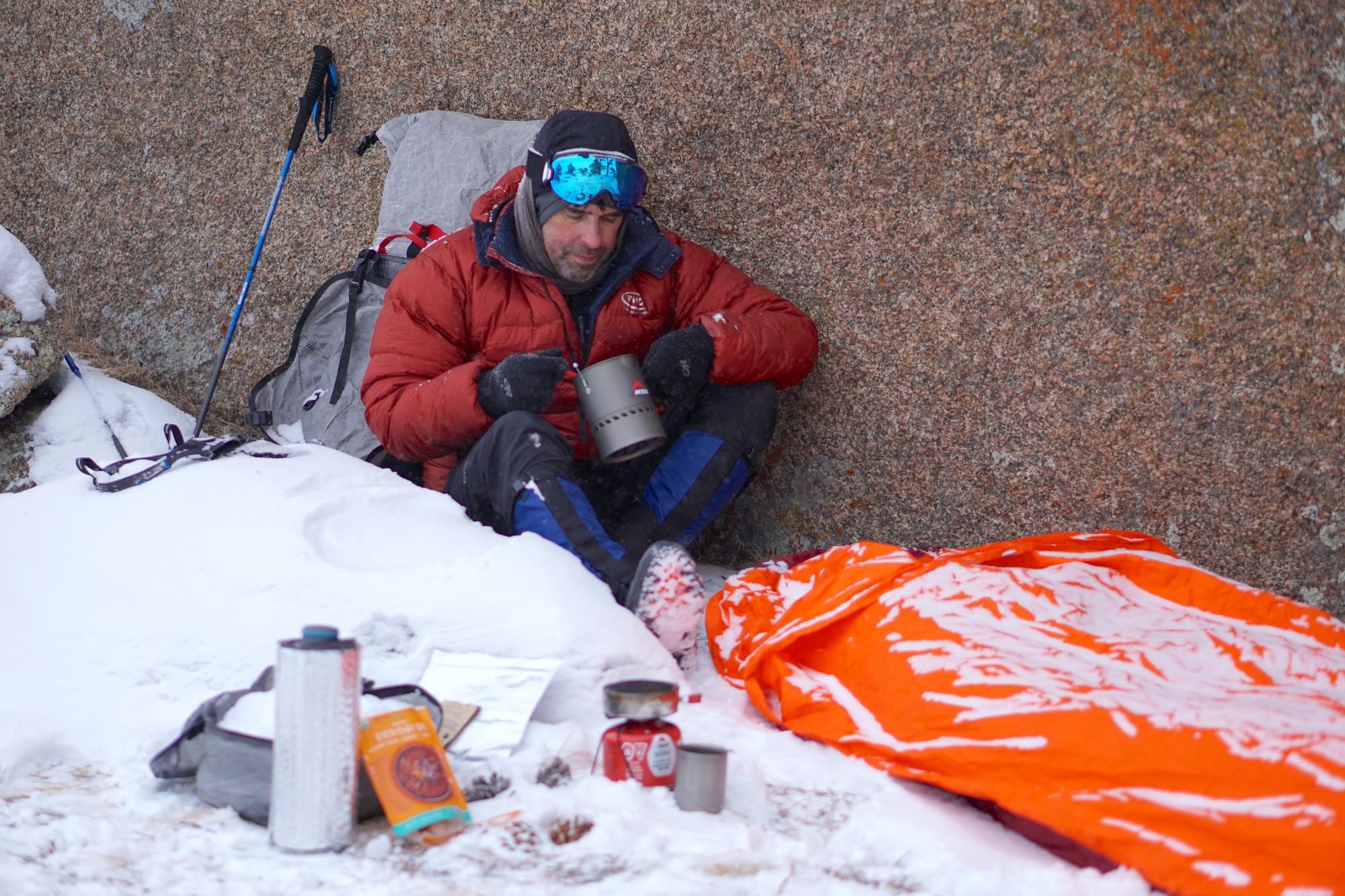
man eating soup wearing a down parka at a bivy camp in the snow
Insulated clothing with as high of a warmth-to-weight ratio as possible is some of the most important gear you can carry in the winter. I’ve regretted purchasing a bunch of other gear, but I’ve never regretted the money I’ve spent on ultralight, high-fill down winter gear – my parka, down pants, sleeping bag, and booties. Photo credit: Ryan Jordan

Sleeping & Shelter

On most nights, I would find a sheltered camp deep in the forest. The mountains of SE Wyoming and N Colorado enjoy a high density of Sherman granite rock outcroppings, and it’s not often difficult to find sheltered places to sleep within their nooks and crannies. So the tarp usually stays in my pack, and the bivy is my main shelter. I’ll pitch the tarp at forested campsites during heavy snow events for some entry/exit protection for the bivy sack, or for a sheltered cooking site.

There’s a compelling argument to use a small pyramid instead of a tarp. Pyramids are easier to pitch and offer full-perimeter protection. I waffle back and forth between the two during the winter, as I really enjoy the creativity and art that comes with pitching a tarp in various configurations.

For subzero F (< -18 C) low temperatures, I add a synthetic overquilt to my mummy bag, and a thicker closed-cell foam pad.

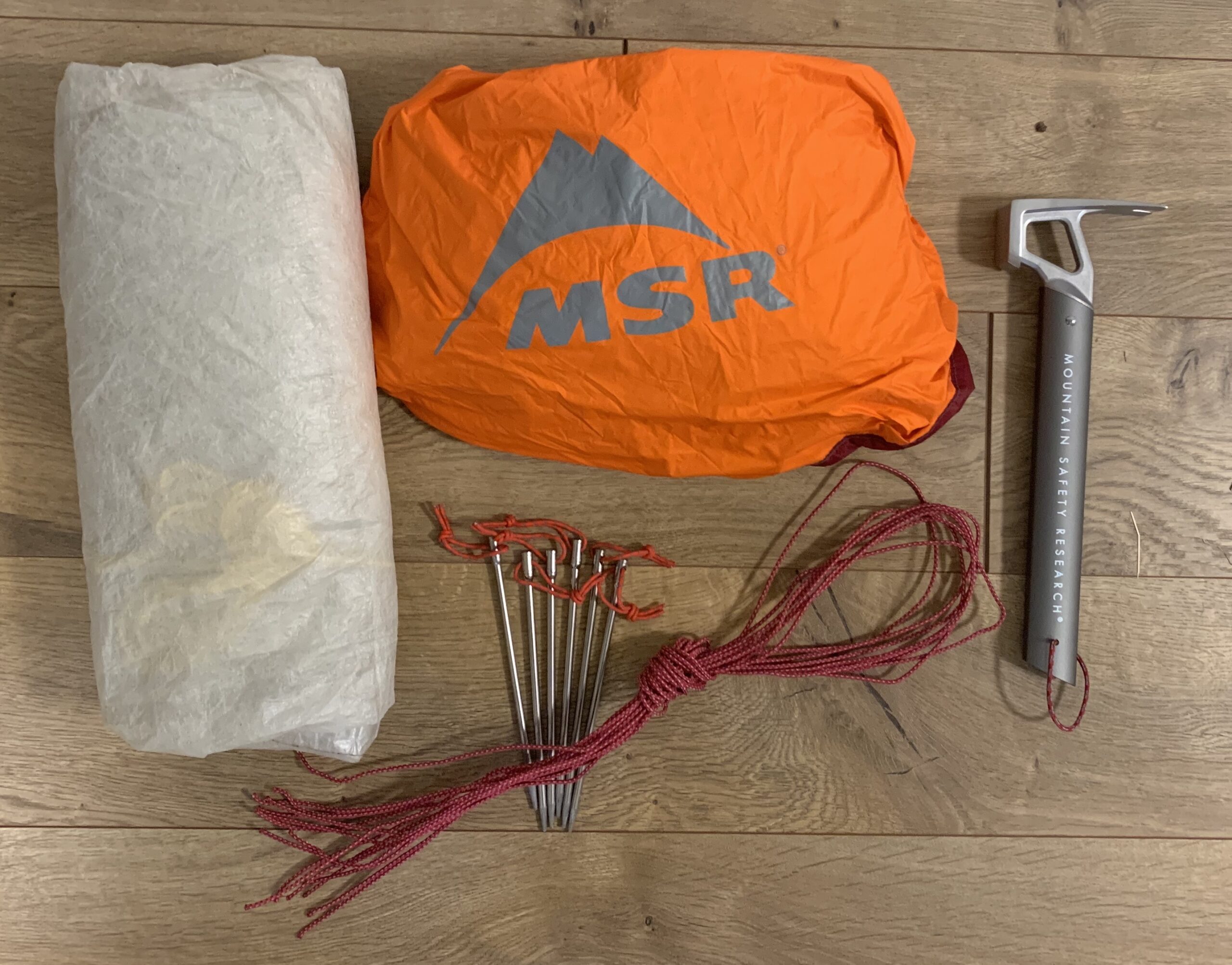
tarp, bivy sack, nail stakes, extra guylines, and a stake hammer
Shelter gear for winter below the treeline – tarp, bivy sack, nail stakes, and extra guylines for tying the tarp to trees or rigging deadmen anchors from sticks. On rare occasions, I would bring a very light ice climbing or geologist’s hammer for pounding stakes into frozen ground. That’s not necessary in most forested locations, but I’ve found a hammer to be increasingly useful since moving to SE Wyoming several years ago. Here, low snowpack at moderate elevations (8,000 to 10,000 ft /2,400 to 3,000 m) and frigid winters make it nearly impossible to push stakes into the ground – and most of the rocks are frozen into the ground as well and very difficult to remove. A stake hammer can save enormous time and energy in some cases. Photo credit: Ryan Jordan
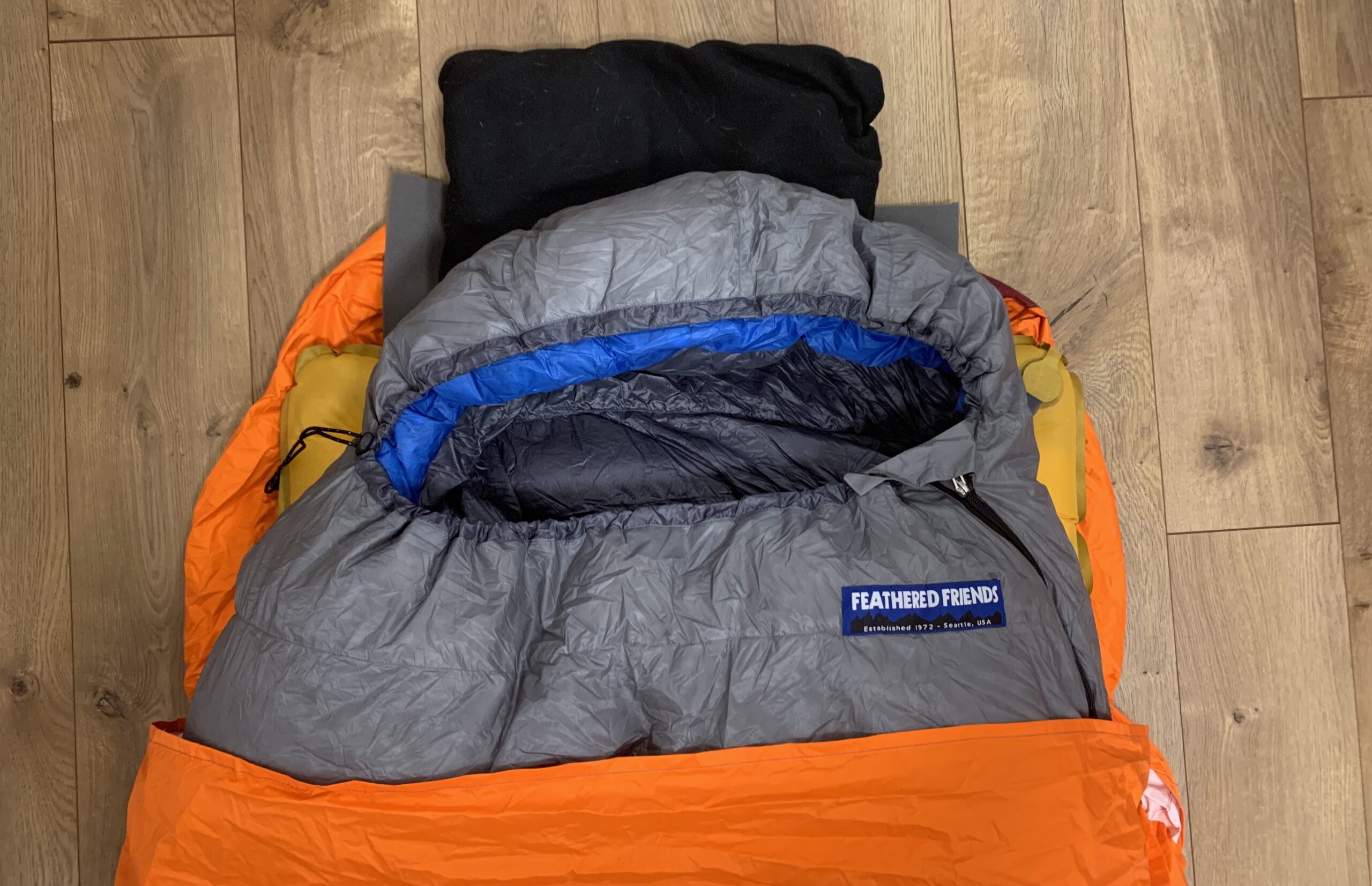
layout of a winter backpacking bed - bivy sack, sleeping bag, inflatable pad, closed cell foam pad, and pillow.
For me, the bed is my line of defense against the worst storms. It’s cozy, warm, and comfortable. The key components are the bivy sack (orange), the sleeping bag, the insulated inflatable pad (yellow), the closed-cell foam pad (gray), and the pillow (black). Add earplugs and hunker down for a night of winter bliss! Photo credit: Ryan Jordan

Sleeping and Shelter Notes

  • SNOW SHOVEL / Snowclaw Guide Shovel / 6.4 oz (181 g) / for sculpting campsite and bed
  • SHELTER / Hyperlite Mountain Gear 8’6″ x 8’6″ Flat Tarp / 13.6 oz (346 g) / rarely pitched, except for cooking and shelter in heavy snow or high wind (included in weight – stuff sack and guylines on all attachment points)
  • BIVY SACK / MSR Pro Bivy / 8.6 oz (244 g) / fast and simple shelter without having to deal with stakes and guylines in winter
  • STAKES / Vargo Titanium Nail Stakes / 0.5 oz (14 g) ea / used with the shelter for frozen ground; don’t opt for so-called ultralight versions of nail pegs (e.g., from Toaks or Vargo) – they aren’t strong enough for frozen ground
  • EXTRA GUYLINE CORD / 32 ft x MSR Ultralight Utility Cord / 1.2 oz (34 g) / extra guyline lengths for pitching the shelter in deep snow, using sticks as deadman anchors, or rigging to trees
  • SLEEPING BAG / Feathered Friends Lark UL 10 / 31.2 oz (885 g) / cozy and warm winter bag with water-resistant shell helps manage condensation in bivy; would upgrade to a warmer bag in sub-zero F temperatures, but when combined with in-camp insulating clothing, this is comfortable down to about -5 F (-21 C) for me while sleeping in a bivy sack on a windy night
  • INFLATABLE SLEEPING PAD / Nemo Tensor Insulated (Regular/Wide) / 21.4 oz (607 g) / wide pad for comfort during long winter nights (included in the weight: pad inflation bag, 2.1 oz / 59 g)
  • FOAM SLEEPING PAD / Gossamer Gear Thinlight Pad / 2.5 oz (71 g) / weight noted for the 1/8 in thick model; adds warmth for sleeping direct on snow; would upgrade to 1/4 in thick model for sub-zero F temps
  • PILLOW / Hyperlite Mountain Gear Stuff Sack Pillow (Size L) / 4.0 oz (113 g) / I use open-cell foam (included in weight) and extra clothing to adjust height as needed to keep my spine aligned
man operating a backpacking stove near his bivy sack in a snowy winter camp
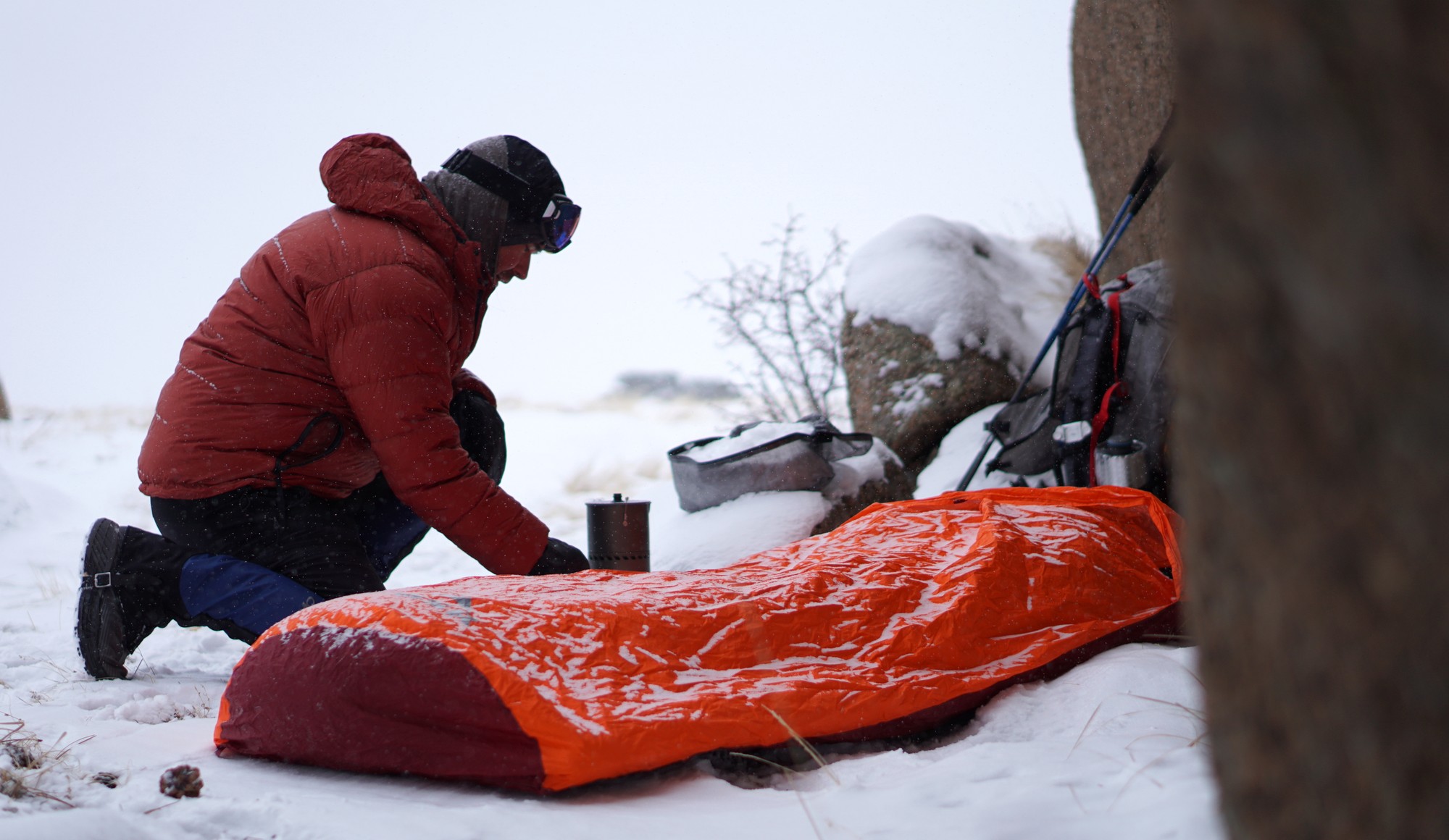
A winter bivy camp, tucked up against the lee side of a 10 x 30 ft (3 x 9 m) granite boulder during a winter storm that brought sub-zero F temperatures and a severe wind chill warning. When using a bivy sack, do everything you can to stay out of the wind. Photo credit: Ryan Jordan
man camping under a backpacking tarp, making coffee on a camp stove
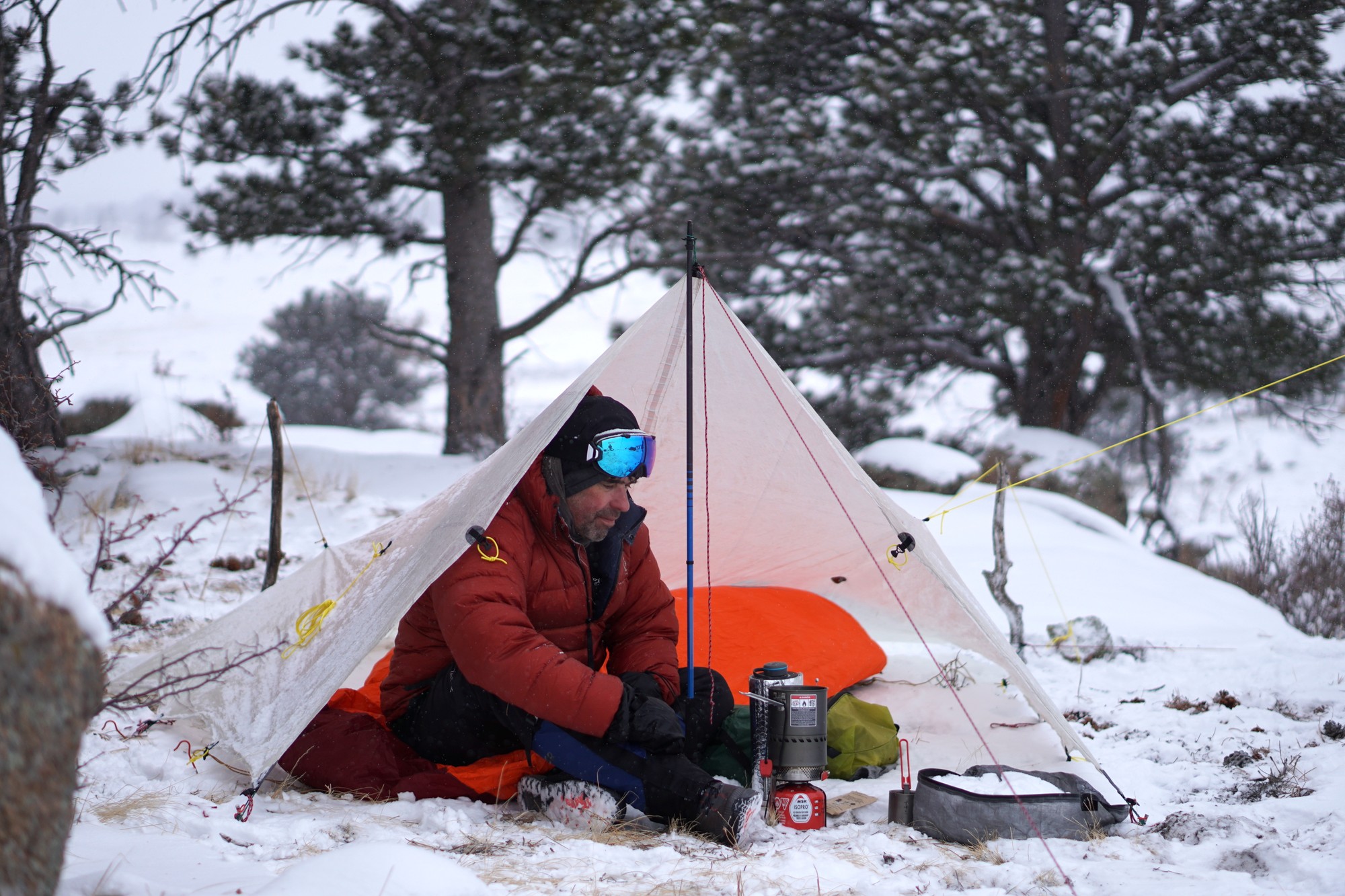
A flat tarp that is large enough to pitch in “storm mode” (i.e., with three edges staked to the ground) is a suitable winter shelter below the treeline, especially when combined with a bivy sack. Photo credit: Ryan Jordan

Cooking & Food

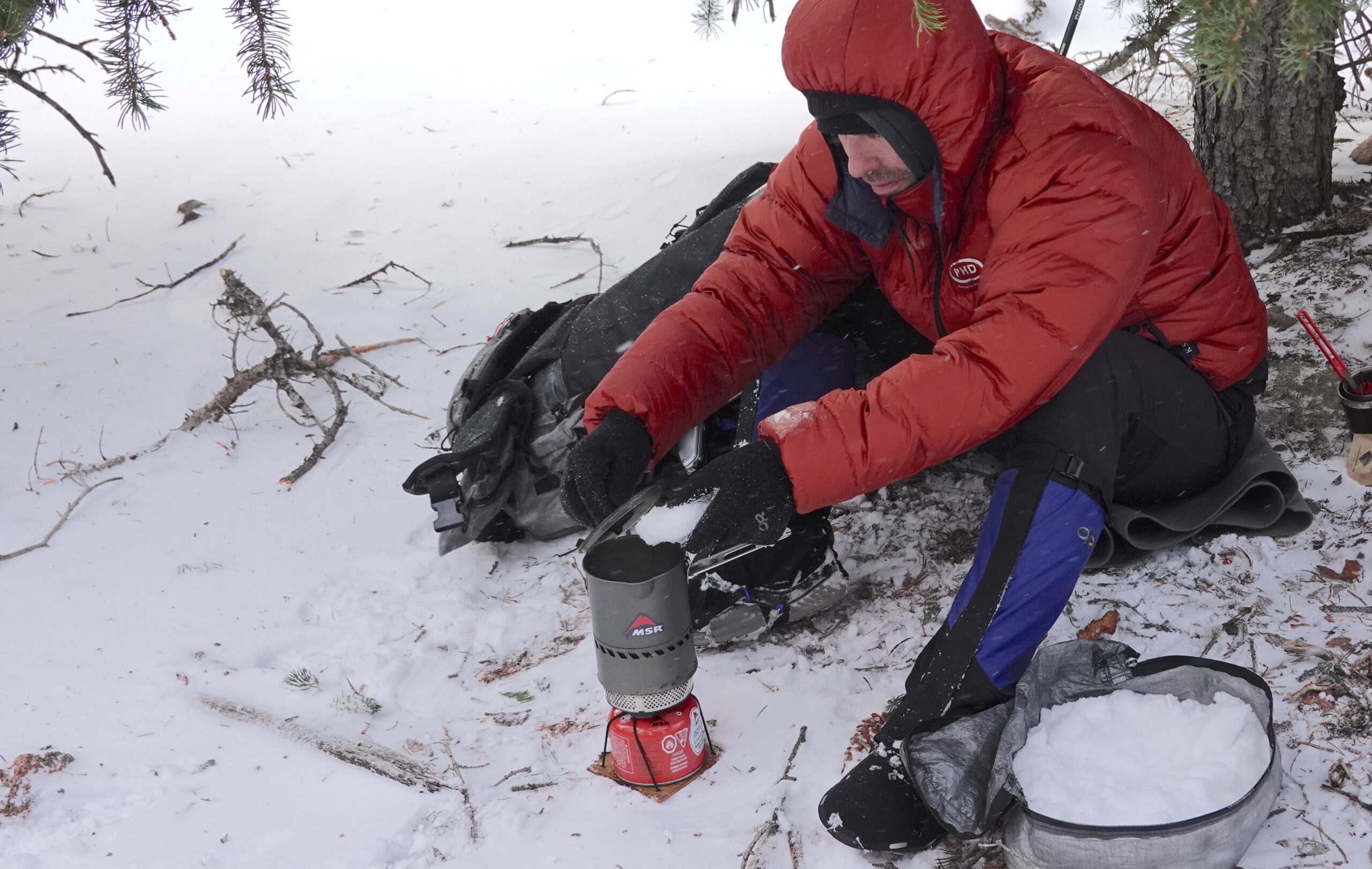
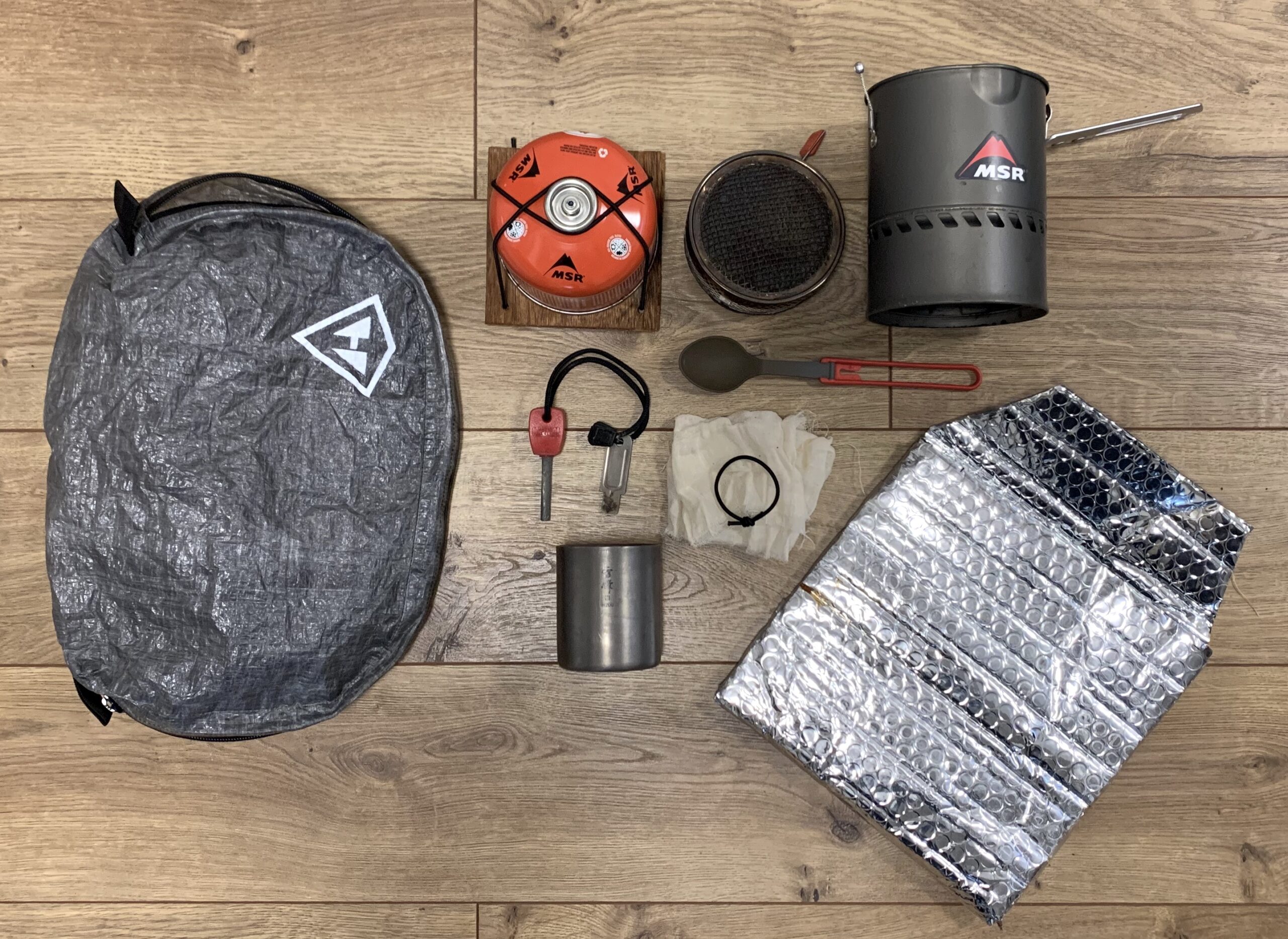
My decision to bring an MSR Reactor instead of a lighter stove like my Caffin V4 is based on my desire to make water from snow as fast and as simple as possible, especially when wearing mittens when the temperature is very cold.

Food is packaged for efficiency. No multi-course meals, nothing requiring extended cooking times. I make my own freeze-dried food in a Harvest Right Home Freeze Dryer.

layout of cooking gear, including a zippered stow bag, fuel canister on a plywood base, radiant burner stove, heat exchanger cook pot, folding spoon, fire starter, titanium mug, cheesecloth for filtering melted snow into a water bottle, and homemade reflective bubble wrap food cozy
My cooking gear for winter backpacking, with a focus on rapid snow melting. Photo credit: Ryan Jordan

Cooking Notes:

  • STOVE / MSR Reactor Stove / 6.2 oz (176 g) / rapid and reliable snow melting and water boiling
  • FUEL / MSR IsoPro (3.9 oz / 110 g net weight of fuel, 7.4 oz / 210 g gross weight of full canister) / / this size provides enough fuel to melt snow for water and cooking for trips up to 2 nights; will use the 220 g net size for longer trips
  • STOVE BASE / MYOG wood / 1.5 oz (43 g) / 3mm hobby plywood base with shock cord attachments to secure fuel canister, used to stabilize canister on snow
  • LIGHTER / Light My Fire Firesteel / 0.9 oz (26 g) / easy to use with mittens to light the stove
  • POT / 1.0 L MSR Reactor Pot / 8.3 oz (235 g) / fast stove and small water volumes afford me the ability to use the small pot, but it’s still large enough for a solo snow-melting pot
  • MUG / Snowpeak H200 Double-Wall Titanium / 2.1 oz (60 g) / double-wall titanium for coffee, tea, soup
  • UTENSIL / MSR Folding Spoon / 0.4 oz (11 g) / I prefer plastic vs. metal for winter, this one is light and durable, doesn’t get brittle in the cold
  • FOOD COZY / MYOG Reflectix & packing tape / 1.6 oz (45 g) / sized to fit my home-packaged freeze-dried meals in 10 x 10 in (25 x 25 cm) mylar bags
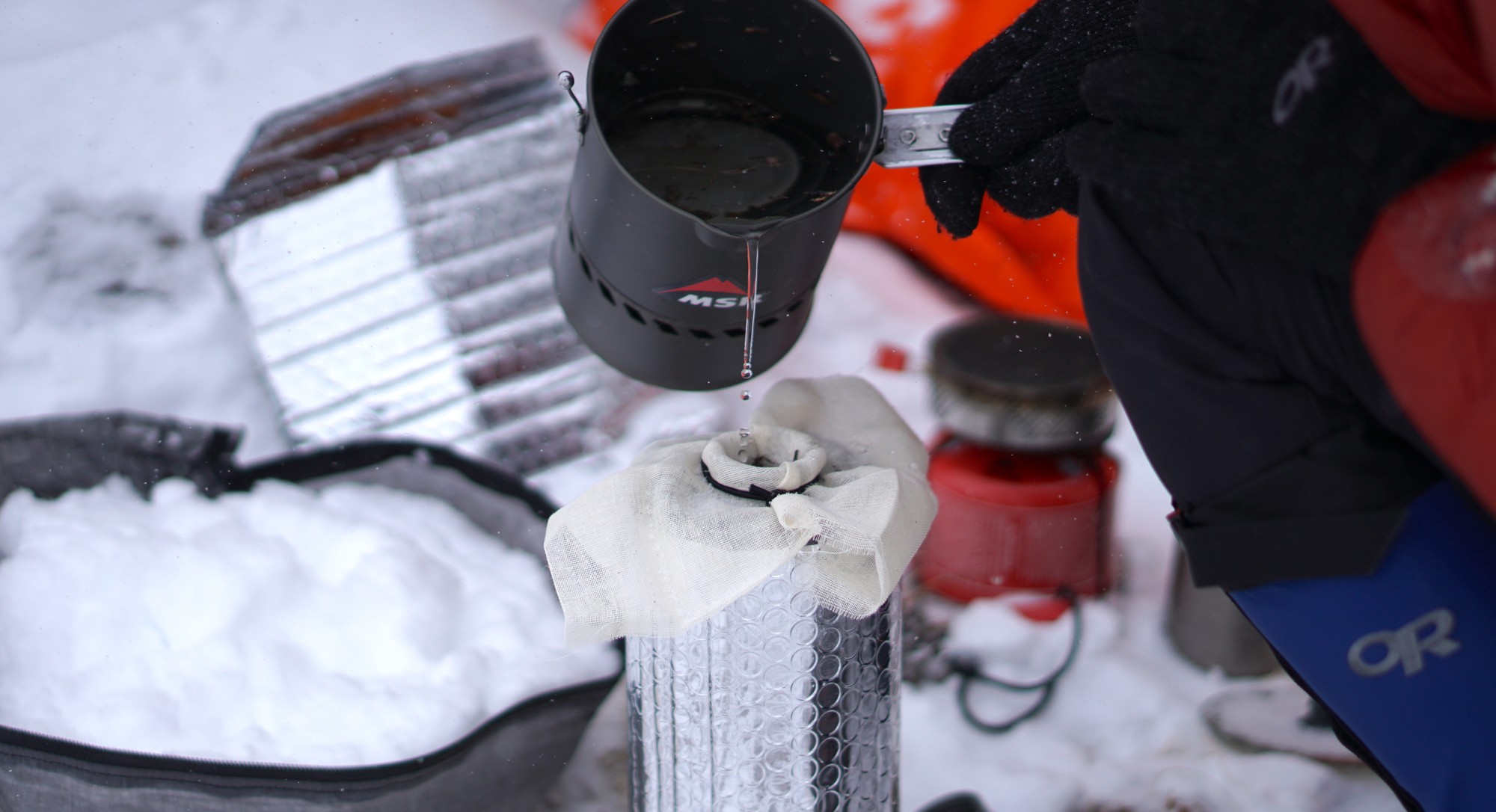
  • DEBRIS FILTER / MYOG cheesecloth w/shockcord / 0.2 oz (6 g) / secure over water bottle mouth, pour melted snow from stove pot into bottle through filter

Food Notes:

  • BREAKFASTS / 5 oz (142 g) per day / hot cereal with dried fruit, nuts, butter, coffee
  • DAYTIME SNACKS / 16 oz (454 g) per day / salty nuts, potato chips, butter balls, chocolate, candy, soup, coffee
  • DINNERS / 7 oz (198 g) per day / soup, MYOG freeze-dried meals (various recipes containing pasta, grain, or rice with sauce, legumes, veggies, and spices), tea
  • FLAVOR ENHANCER / 1 oz (28 g) per day / flavored hydration tablets / because the flavor of melted snow is gross
man sitting on ground and melting snow in a camp stove
My affinity for the MSR Reactor is based on its unique feature: it’s an extraordinary machine for melting snow fast, even in high winds and cold temperatures. Photo credit: Stephanie Jordan
a stuff sack full of snow (to be used for melting to create water while cooking), a fuel canister, a canister stove, a titanium mug, a folding spoon, and a fire starting device
I usually store my stove kit in some type of stow bag, like the zippered one shown here. It’s also used to gather clean snow for melting when I’m cooking, so it’s readily available when I sit down to use the stove. Photo credit: Ryan Jordan

Hydration & Water Treatment

Most of my drinkable water will come from melting snow. I usually won’t boil it (to save time and fuel), so will use the Aquamira as purification insurance from pathogenic bacteria and algae that can grow in old snow.

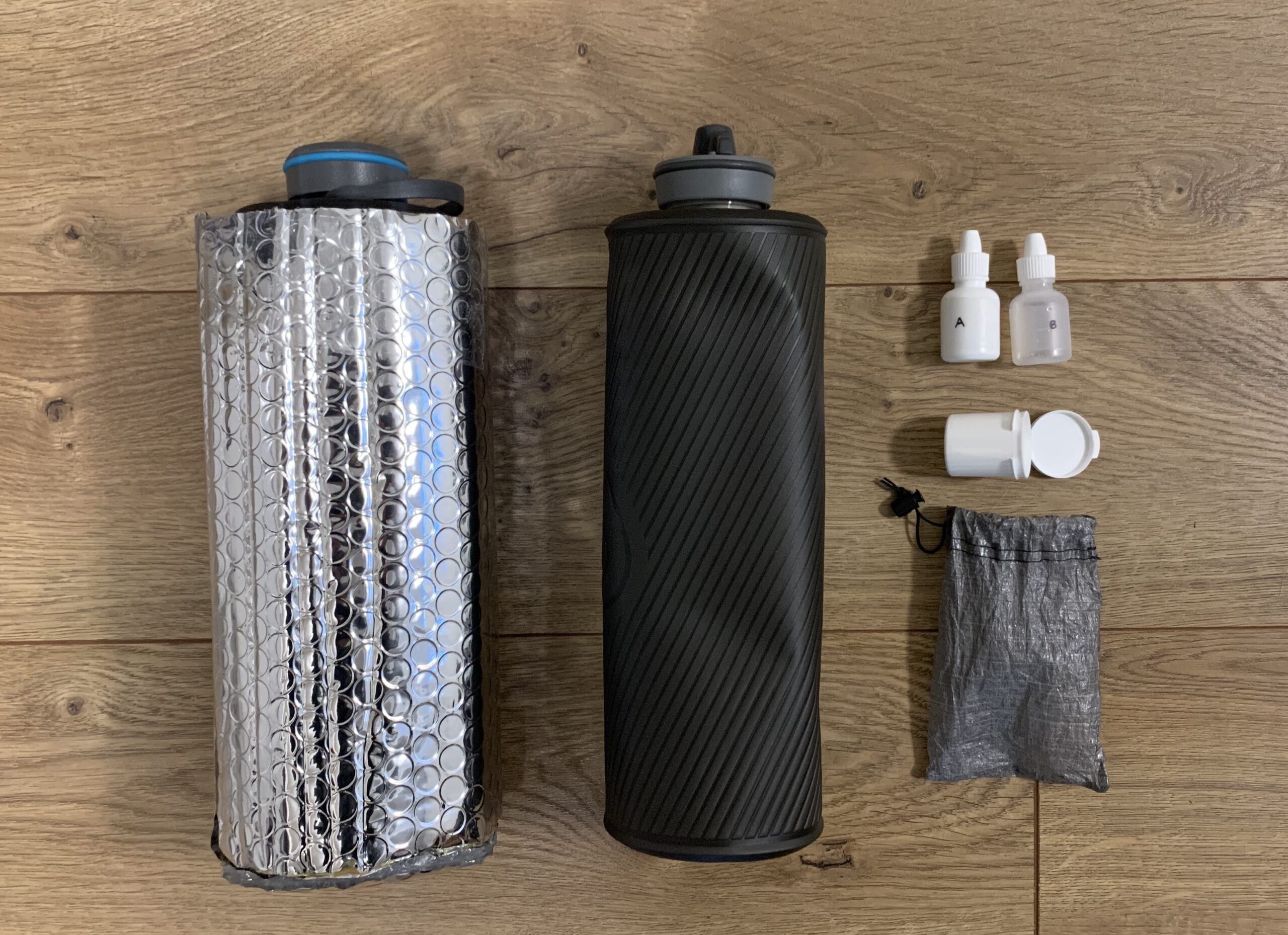
layout of hydration gear - a water bottle in a homemade reflective bubble wrap cozy, another water bottle, and a small aqua mira kit.
Minimalist hydration gear for winter backpacking. Photo credit: Ryan Jordan

Hydration and Water Treatment Notes:

  • BOTTLES / 2x Hydrapak Flux Bottle (1L) / 2x 3.1 oz (88 g) / form factor conveniently stows in my pack’s side pockets and bottle is easy to use while wearing mittens
  • BOTTLE COZIES / 1x MYOG Reflectix and packing tape / 1.4 oz (40 g) / to keep water from freezing while hiking; I only take one cozy, and keep the 2nd bottle stuffed in my pack to prevent freezing
  • WATER TREATMENT / Aquamira (mini kit) / 1.1 oz (31 g) / used to purify unboiled but melted snow for drinking water, weight includes 0.3 oz each of Part A and B, mixing camp, and DCF stow bag
person pouring water from a cooking pot through cheesecloth into a water bottle
Snow melted by the stove is poured through cheesecloth secured to the bottle opening with a shock cord ring. This removes most of the debris (dirt, pine needles, etc.) that can be found in old snow. Photo credit: Ryan Jordan

Packing

I usually select my pack last. I choose the smallest and lightest model I own to fit the gear I need, and that can comfortably carry the weight of that gear. In the winter, I prefer a pack that is a bit oversized for my kit. It’s easier to pack while wearing mittens.

layout showing a pack with its contents
Packing the kit – sleeping, food, shelter, water bottle #2, cooking, and other gear, along with the parka, go into the main compartment. Storm gear in the top pocket. One side pocket for the insulated water bottle in the cozy, the other side pocket for the foam pad, trekking poles if I’m stowing them, and stake hammer if I take that. Hip belt pockets get nav gear (left) or Aquamira, sunscreen, and snacks (right). TP Kit, extra food, and storage for stashing layers quickly go into the rear pocket. Photo credit: Ryan Jordan

Packing Notes:

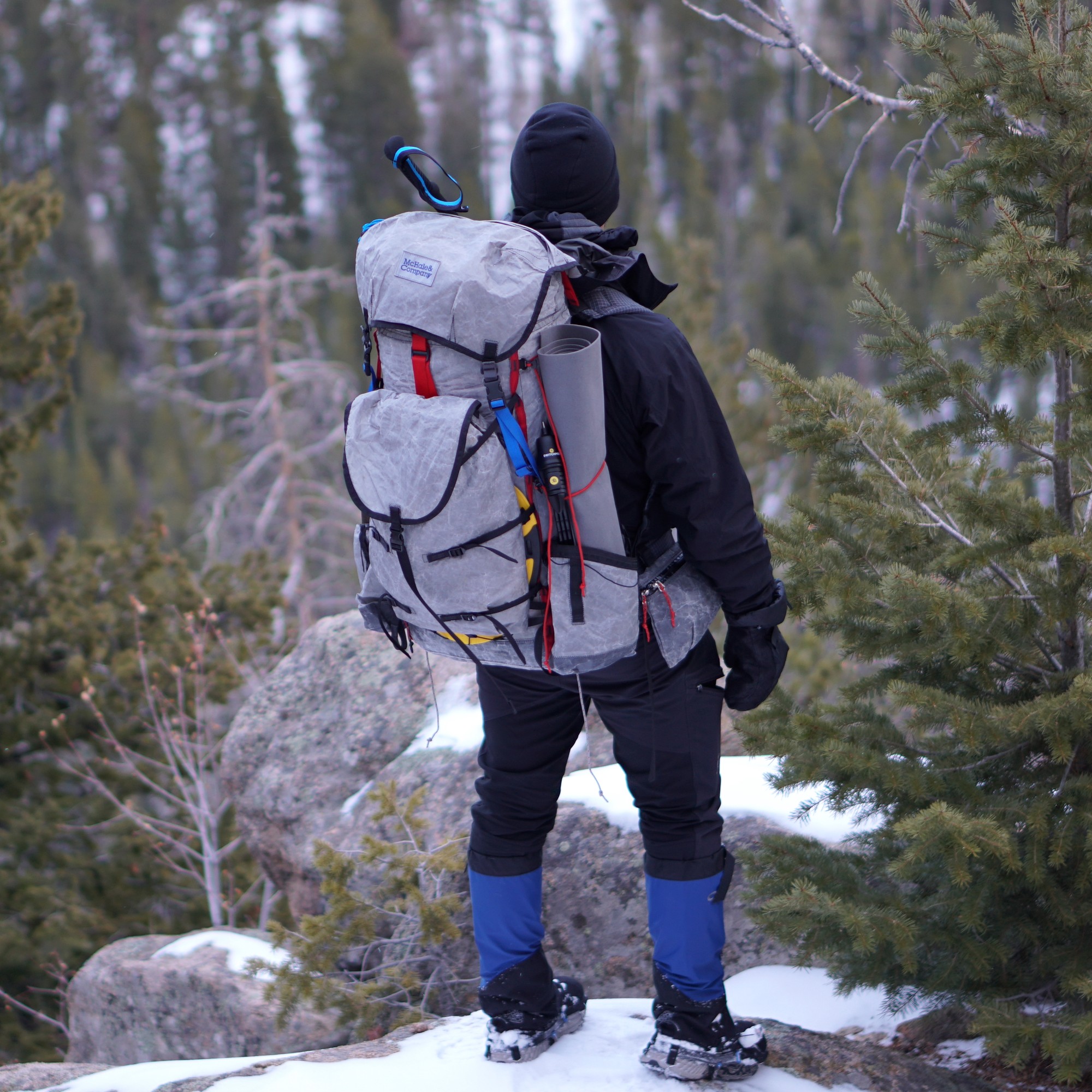
  • BACKPACK / McHale Windsauk / 3.8 lb (1.7 kg) / DCF internal frame pack rigged with rear accessory pocket, top lid, roll-top closure, top strap, water bottle pockets, and hip belt pocket
  • INSULATION STORAGE / Sea to Summit Ultrasil Compression Sack (size M) / 2.9 oz (82 g) / for stowing sleeping bag, extra socks, booties, and down pants
  • SHELTER & SLEEP STORAGE / Hyperlite Mountain Gear DCF Pod (Size 4400-L) / 1.4 oz (40 g) / for sleeping pad and inflation bag, tarp, stakes, extra guylines, and bivy sack
  • FOOD STORAGE / Hyperlite Mountain Gear DCF Pod (Size 4400-L) / 1.4 oz (40 g) / keeps food conveniently organized and fits perfectly in pack body
  • OTHER STOW BAGS / Hyperlite Mountain Gear DCF (assorted pods or stuff sacks) / 2.5 oz (71 g) / one for “other” gear (see below), and one for cooking gear (stove, fuel, mug, firestarter, spoon, and my hot lunch for that day)
man standing, wearing a backpack on a snowy hill in the forest during the winter
I add several accessory pockets to my modular pack to create what I call its “winter configuration” – top lid pocket (storm clothing), rear pocket (toilet kit, insulating jacket), side pockets (foam pad on one side, water bottle on the other), and hip belt pockets (food, headlamp, and navigation tools). My smartphone and camera batteries stay close to my body to keep the batteries warm – usually in my jacket pockets. Photo credit: Ryan Jordan

Navigation & Electronics

I generally find electronics, and especially phones, difficult to use in cold winter conditions (especially while wearing mittens), and try to minimize my dependence on them. That said, navigating with a smartphone phone GPS app can save a lot of time, especially in a winter blizzard.

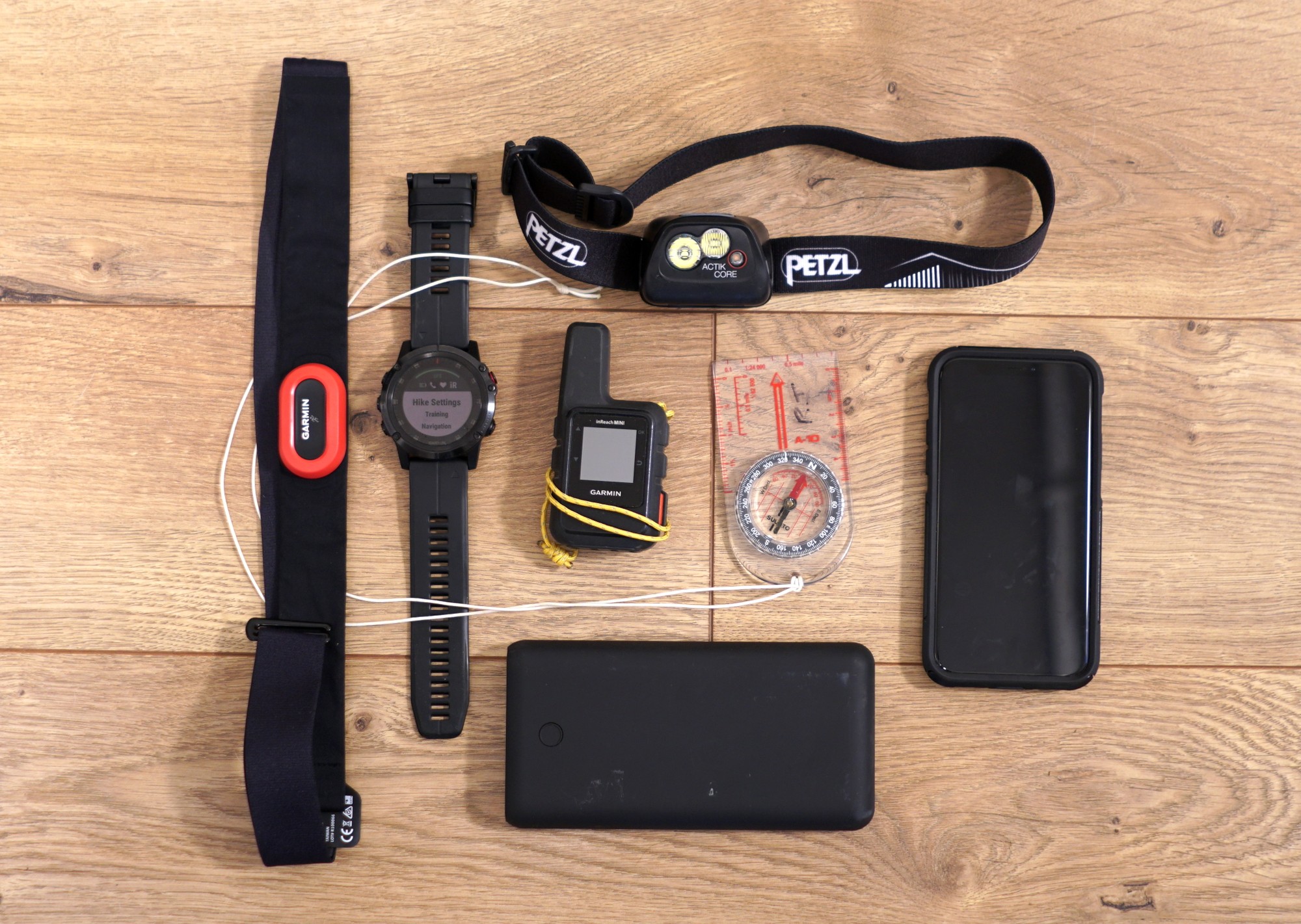
layout of navigation and electronics gear for winter backpacking - a heart rate monitor and fitness watch, satellite communicator, headlamp, compass, smartphone, and power bank
Navigation and electronics gear. The training tools (watch and HRM) are obviously not essential for winter backpacking. The headlamp, satellite communicator, map (not shown) and compass, phone, and some type of power bank to recharge the phone, headlamp, and communicator on long trips are. Photo credit: Ryan Jordan

Navigation and Electronics Notes:

  • SATELLITE COMMUNICATOR / Garmin inReach Mini / 3.5 oz (99 g) / used for messaging and tracking for my people back home
  • WATCH / Garmin Fenix / 3.4 oz (96 g) / used for training
  • HRM / Garmin Run HRM / 1.8 oz (51 g) / used for training
  • SMARTPHONE / iPhone / 8.0 oz (227 g) / for GPS navigation and communications with the satellite communicator, weight includes protective case
  • GPS APP / Gaia GPS / 0.0 oz (0 g) / GPS app for smartphone
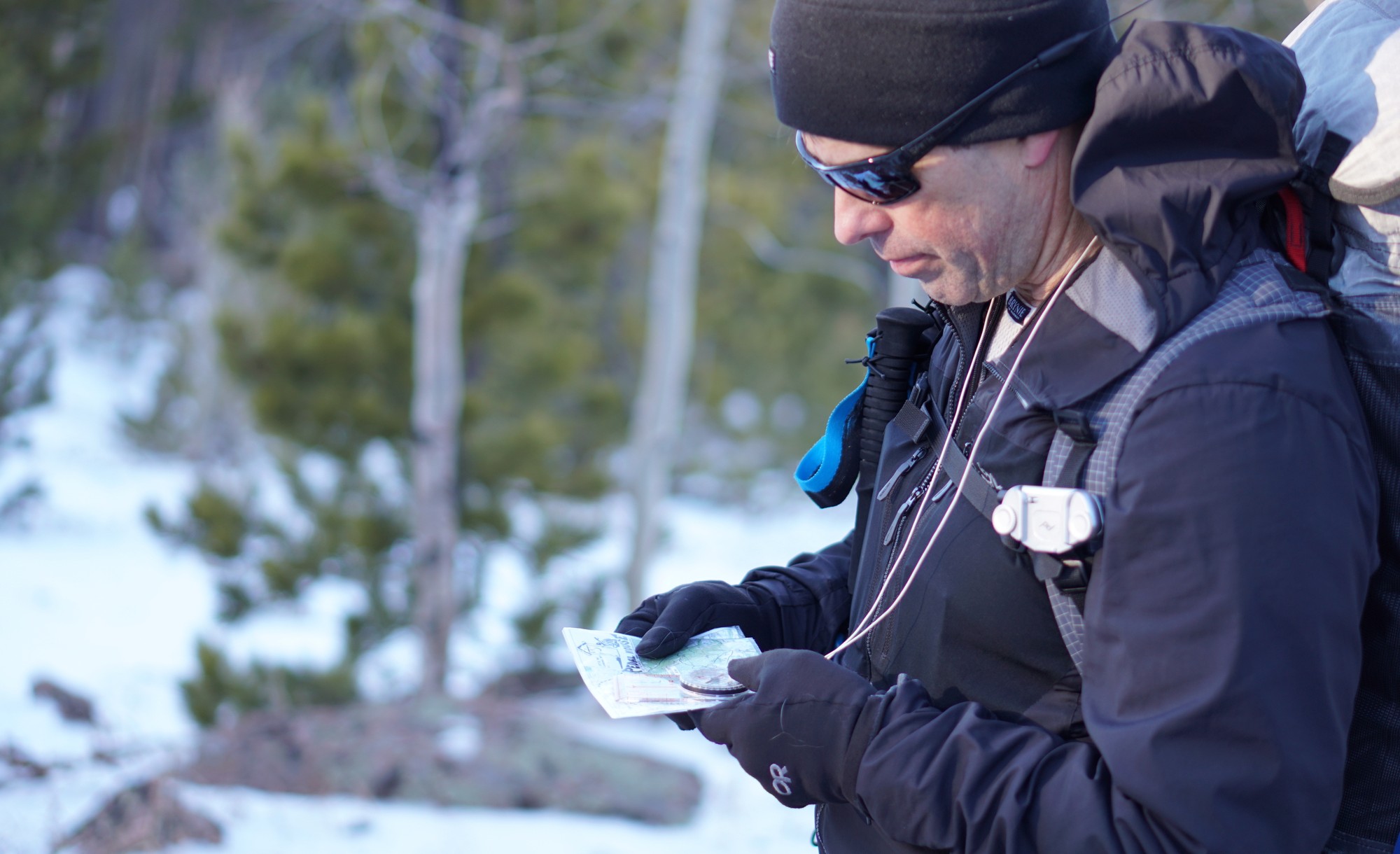
  • PAPER MAP / MYOG / usually about 1.5 oz (43 g) / used with compass for blizzard nav or extreme cold, printed with a color laser printer using Rite in the Rain Duracopy Paper, which can be written on, folded, and printed on both sides
  • COMPASS / Suunto A-10 / 1.0 oz (28 g) / used with paper map for blizzard nav or extreme cold, weight includes lanyard
  • HEADLAMP / Petzl Actik Core 450 / 3.6 oz (102 g) / I bring a real headlamp in the winter, for navigating into the evening on short winter days, weight includes an extra battery
  • POWER BANK / various models / 3-16 oz / 5,000-20,000 mAh depending on duration of trip – used to charge phone, watch, satellite communicator, and/or headlamp batteries
man using a map and compass while backpacking in snowy conditions
I keep a paper map and compass handy for big-picture navigating, and for real-time route-finding in cold temperatures when wearing gloves or mittens interferes with smartphone use. Photo credit: Stephanie Jordan

Other Gear

  • FIRST AID KIT / 4 oz (113 g) / minor wound and blister care, meds
  • REPAIR KIT / 2 oz (57 g) / tape, glue, sewing, fabric patches, pad repair
  • FIRESTARTING KIT / 1.5 oz (43 g) / cotton tabs and solid fuel cubes in waterproof zip bag
  • PERSONALS KIT / 6 oz (170 g) / toothbrush, toothpaste, floss, contact lens case and solution, anti-fog cloth, sunscreen, lip balm, bidet kit (hand sanitizer, dry cloth – use snow and evergreens for TP, mylar bag for packing out TP)

Caveats, Limitations, and Disclaimers

  1. The clothing, sleep, and shelter systems are tuned for dry (low humidity and dry snow) climates, like the North-Central US Rockies where I hike and camp the most. If you backpack in wetter (more rain) and or high-humidity environments during the winter, your list may look different – especially when it comes to your insulation (down vs. synthetic).
  2. I’ve selected hiking clothing, storm clothing, and shelter systems for below-the-treeline use where somewhat sheltered campsites can be found. Above the treeline in this region, winds can be fierce, and more clothing and more robust shelter will be needed.
  3. The footwear system is designed for trafficked trail corridors where the tread underfoot is predominantly packed snow. Less-trafficked or off-trail hiking in deep snow will require snowshoes or skis.
  4. In milder temperatures and/or less wind, less hiking clothing and thinner handwear may be needed than what is on my list here.
  5. Likewise, in sub-zero F temperatures, more insulation may be required in your base layers, active insulation layer, mittens, footwear, headwear, sleeping pads, and sleeping bag.

Related Content

DISCLOSURE (Updated April 9, 2024)

  • Backpacking Light does not accept compensation or donated/discounted products in exchange for product mentions or placements in editorial coverage. Some (but not all) of the links in this review may be affiliate links. If you click on one of these links and visit one of our affiliate partners (usually a retailer site), and subsequently place an order with that retailer, we receive a commission on your entire order, which varies between 3% and 15% of the purchase price. Affiliate commissions represent less than 15% of Backpacking Light's gross revenue. More than 70% of our revenue comes from Membership Fees. So if you'd really like to support our work, don't buy gear you don't need - support our consumer advocacy work and become a Member instead. Learn more about affiliate commissions, influencer marketing, and our consumer advocacy work by reading our article Stop wasting money on gear.
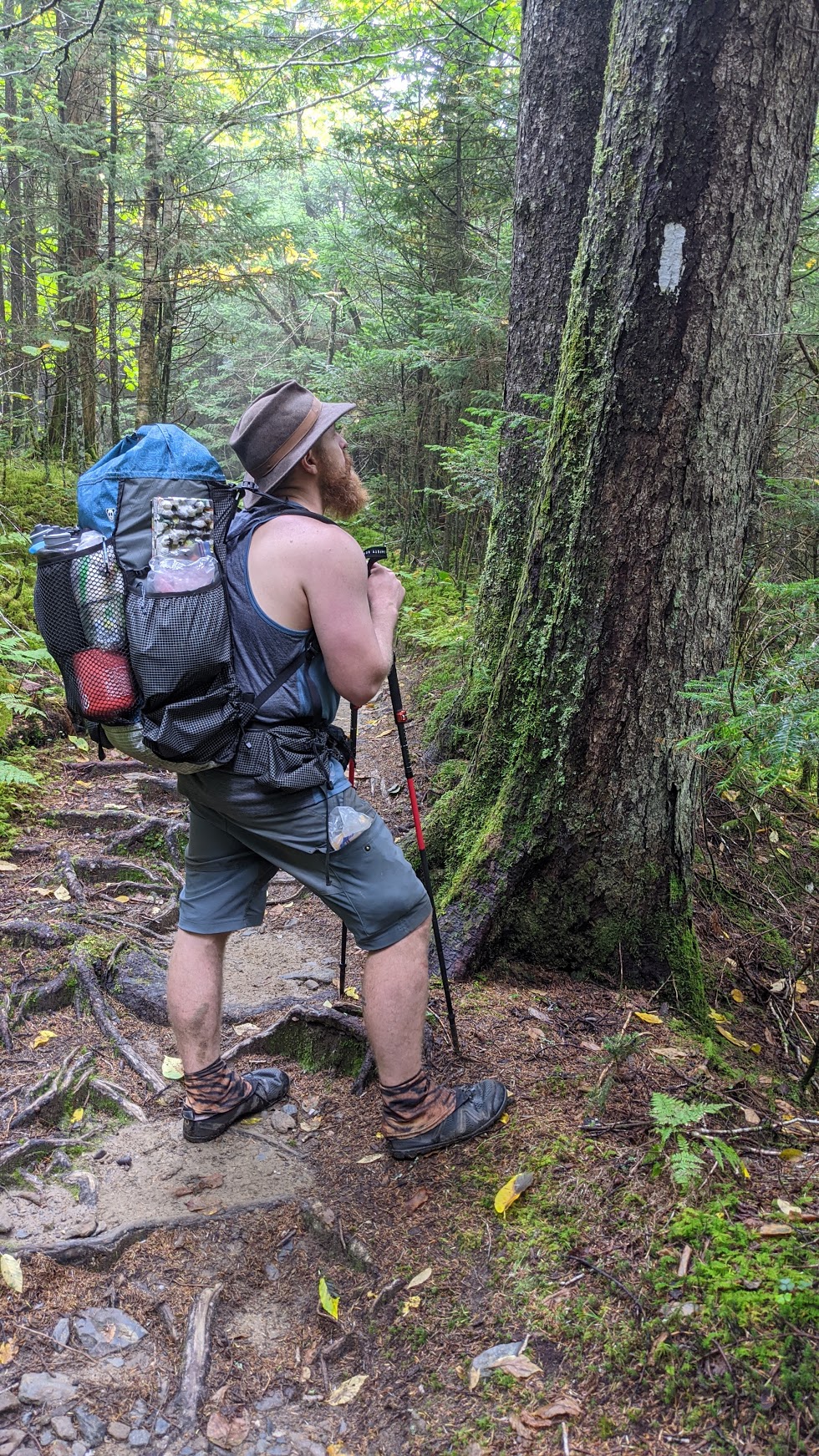
Interview with Gear Creator Michael Glavin

Rex Sanders interviews Michael Glavin, the founder and general manager of Zenbivy.

You don’t have access to view this content.

Followed in Plain Sight

Shilletha Curtis recounts a harrowing encouter and invites the reader to see the world through her eyes.

Jagged rocks and enormous boulders lay scattered throughout the forest, hidden under the shelter of autumn’s fallen leaves. Each step felt as if a needle was penetrating through the frail soles of my raggedy turquoise trail runners. Up in the vibrant blue sky, the sun smiled radiantly upon my friend and me as we trekked through a short section of the Pennsylvania Appalachian Trail. Our goal was to hike thirty miles in three days on the AT, from Delaware Water Gap to Wind Gap, a stretch that is beautiful but brutal as hell.

Pennsylvania was a state that scared me because of all the banter regarding how horrible the rocks are, but I needed to have the mental challenge to prepare myself for my winter AT thru-hike. Embracing the suck is exactly what I did, and I leaped for joy when a change to rockless terrain offered relief. There were numerous challenges while hiking the second day—the water source was turned off at Kirkridge shelter, rocks were in great abundance, and sweltering humidity drained us all.

A woman with trekking poles walking on a ridge.
Hiking solo.

Music played through one headphone in my left ear as I sang along merrily down the trail with not a care in the world. I felt ready to take on the last six miles of the day. Everything in the forest was blissful, from the sleepy rhododendron to the pincushion lichen flourishing down below—and then it all flew away in the wind. Out in the distance, I noticed a lanky white man who appeared to be in his early thirties, standing behind a tree. As we started to walk by him, my energy did a full 180. Dark energy invaded the atmosphere like a pack of vultures on a fresh kill; shivers ran down the ridges of my spine.

Followed

“A—r—e you guys 
.thru-hiking” he stammered, nearly unable to stand. His knobbly knees could barely support his muscular body. He swayed back and forth like an old tree waiting to crash to the Earth. Billows of smoke dissipated in the air, but there was no scent to be found. Marijuana was not his choice of substance, but he definitely appeared to be on something.

A long navy-blue duffle bag lay in his hands, similar to a punching bag. There was no gear that indicated that he was a hiker. Great. I turned to my friend and noticed the orange Garmin device on her backpack, and I sighed. At least we had that option. I was hoping not to communicate with this man, but I knew to engage in conversation and look him in the eye, let him know that I did indeed see him. My friend gave a firm, “yes” and we kept walking.

We looked at each other and knew it was time to hike at substantial speed with a sense of urgency. We knew that was our best chance. We had no wish to confront a man who might be under the influence of drugs.

I assumed my friend was no stranger to this event; neither was I. This is the narrative of many women who hike and camp alone or in a pair. Our biggest fears are not bears, venomous rattlesnakes, or disease-carrying ticks—it is men. This excerpt from a 2017 Outside Magazine poll will be eye-popping to male readers but unsurprising to female ones. “Fifty-three percent of respondents said they’d been sexually harassed while recreating. Of those, 93 percent have been catcalled, 56 percent have been followed by someone (by foot, in a car, or on a bike), 18 percent have been flashed, and 4 percent have been attacked.”

The poll goes on to say, “when asked if you’ve ever felt afraid for your safety while recreating, 66 percent said yes. What are you most concerned about when it comes to safety? Thirty-four percent said “men” or “getting assaulted/harassed.” “Bears” came in second with only 12 percent.”

Men. Men like this one, lurking behind a tree like a mountain lion.

There were no weaknesses here. For one, I had my dog, who would have gladly defended me, and secondly, we were two very well-prepared ladies. I learned a few self-defense moves and how to attack with gear items such as a trowel and trekking poles if need be. One of my good friends taught me to always walk through the forest with my head up, always be aware of my surroundings, and greet everyone you pass for identification and intimidation purposes. No creep wants to be identified and looked in the eye. They want you to be oblivious. These types of men are like black bears. They want an easy meal, not one that is going to put up a fight. They want to claim the power.

Adrenaline does something spectacular to the body in which you become almost superhuman. I had no idea how fast I could walk over a sea of rocks up and down the mountain until I had to.

Every time I turned around, he was still lurking in the distance, staring straight at us. I stared back at him because I knew that showing fear, no matter how scared I was – well, fear wasn’t an option. After half a mile we finally lost him. We took a breath of fresh air after what seemed like an eternity. Our minds seemed to have blurred the events of what just occurred, and we could barely recall any of the terrain we had just traversed over. For a moment in the forest, we did not care about the naked trees, autumn’s vibrant leaves, or the warm drops of sweat running down our faces. We only cared about our safety.

Over the summer, I had thoroughly read about the twelve murders that had occurred on the Appalachian Trail. Googling safety on the AT became a sort of an obsession as I wanted to be prepared rather than scared.

A Black woman and her dog resting in a field.
The author and her dog.

Two Worlds

As a Black woman in the forest, my safety is my utmost concern as racism does not end on the trail. Being a woman comes with baggage that I wish we did not have to carry. Being followed, strange men walking into camp, and inappropriate comments are beyond frightening, and my incident is not isolated. These traumatic events prevent or discourage women from hiking or camping alone due to concerns about men preying on them.

Over the summer I hiked with women from a northern New Jersey hiking group who have expressed great concern about their safety while hiking. They have called me brave for trekking alone. It burdens my heart that we live in a world where women’s biggest threats are men. We have to take precautions and be vigilant no matter where we go in fear that a predator could be lurking around a tree waiting to attack. When we tell others we are hiking alone, their responses are “Really? You’re going alone,” or “You should bring a strong man along to protect you.”

Yes. I am going alone. I do not walk in fear, though at times I am afraid. I carry weapons for my protection, and I am learning self-defense. Carrying a Garmin InReach, SPOT, or other GPS tracking device along with a knife-necklace, mace, bear spray, etc., can offer a great sense of protection not only for women on the trail but also loved ones back at home. It shouldn’t be this way, but it is.

Late fall. A trail through the woods with a single blaze on a tree.
The empty spaces in America can be dangerous for women. Women have to live under the constant burden of extra precautions.

Every step in the forest is a mindful one. Little changes and knowledge can make potentially life-threatening interactions much safer, and I encourage women hikers to learn as much about self-protection as they can. And I encourage white men to listen to my voice, share this article with other white men, and have hard conversations with peers. I want the predominately white, predominately male world of backpacking to understand that it is different for people who aren’t white or male.

It shouldn’t be this way.

But it is.

Related Content


Episode 34 | Mental Health

In this episode of the Backpacking Light Podcast, Andrew and Ryan talk about mental health. As their jumping-off point, they use a recent paper called Levels of Nature and Stress Response.

Stream

Summary

In this episode of the Backpacking Light Podcast, Andrew and Ryan talk about mental health. This is something they both struggle with, and they’ve got a lot of thoughts on how to manage it both in and out of the backcountry. As their jumping-off point, they use a recent paper called Levels of Nature and Stress Response.

Also in this episode: new favorite winter gear, updates on the new website, and some recent favorite content at BPL. Also—has Andrew finally found some trail runners that will last more than 500 miles?

a sad-looking man rests in a tent
Photo credit: Ryan Jordan

Outline

Intro Conversation

  • Ryan’s still freeze-drying food. Taco soup this time!
  • Andrew just completed his first ultra-marathon

New Favorite Things

Mental Health

Backcountry Mental Health Management

Frontcountry Mental Health Management

  • How you treat and think about outdoor exercise is also important – are you jamming it in between other things?
  • Sunsama

What’s New at BPL

In the Forums

Related Content

How to Subscribe

More Episodes

Credits

  • Executive Producer - Backpacking Light; Show Director and Host - Ryan Jordan; Producer - Chase Jordan; Theme music: Look for Me in the Mountains written by Chris Cunningham and Ryan Jordan, performed by Chris Cunningham (acoustic guitar, lead and harmony vocals, harmonica), Chad Langford (upright bass), and Tom Murphy (mandolin), produced by Basecamp Studios in Bozeman, Montana.

Feedback / Tips / Questions

  • podcast@backpackinglight.com

More Backpacking Light

Disclosure

  • Sponsorship Policy: Backpacking Light does not accept compensation or donated/discounted products in exchange for product mentions or placements in editorial coverage, including any podcast episode content not excplicitly identified as sponsored content.
  • Some (but not all) of the links in these show notes may be affiliate links. If you click on one of these links and visit one of our affiliate partners (usually a retailer site), and subsequently place an order with that retailer, we receive a commission on your entire order, which varies between 3% and 15% of the purchase price. Affiliate commissions represent less than 15% of Backpacking Light's gross revenue. More than 70% of our revenue comes from Membership Fees. So if you'd really like to support our work, don't buy gear you don't need - support our consumer advocacy work and become a Member instead.
  • Learn more about affiliate commissions, influencer marketing, and our consumer advocacy work by reading our article Stop wasting money on gear.


Xero Shoes Alpine Snow Boot Review (First Looks)

The Xero Shoes Alpine Snow Boot is a flexible, insulated, waterproof, zero-drop footwear option for minimalist shoe lovers who still want warm feet in cold and snowy conditions.

Introduction

The Xero Shoes Alpine Snow Boot ($149.99, 14.9 oz / 422 g each) is a flexible, lightweight (for a snowboot) insulated, waterproof, zero-drop footwear option for minimalist shoe lovers who still want warm feet in cold and snowy conditions.

Xero Shoes Alpine Snow Boot - stock image
The Xero Shoes Alpine Snow Boot. Photo: Xero Shoes

The Alpine Snow Boot will look familiar to anyone who’s encountered Xero Shoes in the past. The huarache-inspired straps, zero-drop construction, lightly-lugged outsole, and minimalist mid-sole are all standard Xero Shoes features. But unlike the Mesa Trail (a Xero Shoes trail runner I reviewed here), the Alpine Snow Boot is insulated, waterproof, and high-topped.

This feature-set caught my eye because I just can’t do the whole trail-runner-and-waterproof-sock thing in the wintertime. My feet get too cold. On the other hand, I hate clunky, stiff winter boots just as much as any self-respecting lightweight backpacker does. So I was excited to test The Xero Shoes Alpine Snow Boot this season because it seemed to offer a compromise—combining warmth and protection from the elements with the dialed-in-fit, flexibility, durability, and spacious toe-box I’ve come to expect from the Xero Shoes.

This is a first look at new gear that recently entered our review pipeline, and hasn't yet been subjected to rigorous field use. Learn more about the types of product reviews we publish.

Features and Specifications

  • weight: 14.9 oz / 422 g (each)
  • wide toe-box
  • 5.5 mm chevron-patterned outsole
  • synthetic upper
  • removable 2 mm heat-reflective insole
  • 200 g polyester insulation
  • water-resistant membrane
  • seam-sealed inner bootie
  • vegan-friendly materials
  • MSRP: $149.99

Commentary

Fit and Comfort

  • The wide toe-box of the Xero Shoes Alpine Snow Boot is especially important for me in the winter so I can wear thick socks and still have room to move my toes.
  • Even though it is technically a high-top boot, it has the flexibility and comfort of a trail runner.
  • I’m a fan of the huarache inspired strap system that Xero Shoes employs. It just seems to fit my feet well.

Warmth and Waterproofness

  • The waterproof membrane and inner lining of the Xero Shoes Alpine Snow Boot kept my feet dry during extended, multi-day hikes and backpacking trips in the snow.
  • It remained waterproof in more slushy, splashy conditions (e.g., when warming conditions on trail caused slush puddles)
  • The 200 g polyester insulation (which is “rated” to -25 F / -32 C) and heat-reflective insole kept my feet warm in ranges from 15 F (-9 C) to 45 F (7 C).

Traction and Lugs

  • I have concerns about the Xero Shoes Alpine Snow Boot’s traction. Xero Shoes uses a 5.5 mm chevron-patterned outsole here, and it just doesn’t handle slick, icy conditions as well as I’d like.
  • I slipped more than once in transitional areas between snow and ice, and the shoe is particularly bad at handling icy rock.

Durability

  • I have roughly 100 miles (161 km) on the Xero Shoes Alpine Snow Boot. So far the synthetic uppers are holding up against sharp, crusty snow well. I don’t see any noticeable wear on the fabric or separation of the bonded elements.

Ideal Use Cases

  • Snowshoeing with ultralight snowshoes
  • Winter hiking while wearing traction devices

The warmth, waterproofness, flexibility, fit, comfort, and (comparatively) low weight of the Xero Shoes Alpine Snow Boot have vaulted it to the top of my list when it comes to snowshoeing and winter hiking/backpacking when I know I’ll be wearing traction spikes. My feet are prone to blisters and cold while snowshoeing, and the Xero Shoes Alpine Snow Boot addresses both these issues.

Less than Ideal Use Cases

  • Hiking on slick, icy surfaces
  • Hiking on steep, hard-packed snow

If you think you’ll be scrambling over ice-slicked granite, look elsewhere. The short lugs and minimalist outer sole are great for comfort and a low center of gravity while wearing snowshoes and traction spikes but are a liability in other commonly encountered winter conditions.

Photos

Xero Shoes Alpine Snow Boot with snowshoes on snow
Photo credit: Andrew Marshall
Xero Shoes Alpine Snow Boot showing the ankle cuff
Photo credit: Andrew Marshall
Xero Shoes Alpine Snow Boot showing instep area
Photo credit: Andrew Marshall
Xero Shoes Alpine Snow Boot side view
Photo credit: Andrew Marshall
Xero Shoes Alpine Snow Boot closeup view of huarache straps integrated with lacing system
Photo credit: Andrew Marshall
Xero Shoes Alpine Snow Boot, side view of both boots
Photo credit: Andrew Marshall
Xero Shoes Alpine Snow Boot showing fuzzy insulated lining, looking down into ankle cuff
Photo credit: Andrew Marshall
Xero Shoes Alpine Snow Boot, closeup of toebox area
Photo credit: Andrew Marshall
Xero Shoes Alpine Snow Boot, bottom view showing chevron lug sole
Photo credit: Andrew Marshall

Where to Buy

DISCLOSURE (Updated April 9, 2024)

  • Product mentions in this article are made by the author with no compensation in return. In addition, Backpacking Light does not accept compensation or donated/discounted products in exchange for product mentions or placements in editorial coverage.
  • Some (but not all) of the links in this review may be affiliate links. If you click on one of these links and visit one of our affiliate partners (usually a retailer site), and subsequently place an order with that retailer, we receive a commission on your entire order, which varies between 3% and 15% of the purchase price. Affiliate commissions represent less than 15% of Backpacking Light's gross revenue. More than 70% of our revenue comes from Membership Fees. So if you'd really like to support our work, don't buy gear you don't need - support our consumer advocacy work and become a Member instead.
  • Learn more about affiliate commissions, influencer marketing, and our consumer advocacy work by reading our article Stop wasting money on gear.



Learning Curve: Backpacking is the Great Equalizer

Maggie Slepian considers what it means to be a perfectly average backpacker in a city (and industry) full of high-achievers.

I have always been an average athlete. In fact, I could probably be considered a below-average athlete. One of my clearest childhood memories is from sixth grade. I was standing alone at recess when I heard one of the Cool Sports Kids tell another Cool Sports Kid: “We would have won the soccer game in gym class, but the teacher made us have Maggie on our team.”

Some memories just stand out because they perfectly encapsulate the entire middle school experience, right?

Well, Cool Sports Kid, joke’s on you! 15 years later, that soccer loser would go on to complete a very average thru-hike of the Appalachian Trail.

Long-distance backpacking is one of the only tiers of the athletic realm where being average means nothing, because there is no competition. As the miles accumulate into the hundreds, and then thousands, most hikers (hopefully) stop comparing themselves to the people around them. They settle in with a group that is moving around their pace, and are too enraptured by the journey to care if they’re hiking 15 miles per day compared to someone else’s 25 miles per day. If you’re a thru-hiker still consumed by those numbers, congratulations, but you’re probably not the target audience of this column.

A woman hikes on a hill above the city of Bozeman, Montana
Averagely hiking around Bozeman, Montana a few weeks ago.

I’ve spent the last eight years living in a mountain town that attracts super-athletes in every category. The person in front of you at the grocery store, delivering your pizza, or parked next to you at the trailhead: any one of them could be a truly exceptional mountain athlete. If you’re hiking a peak, someone will run past you. If you’re pushing your bike up a seemingly impassable section of trail, another mountain biker is coming up behind you, clipped into their pedals on their third lap of the morning. It’s not competitive per se, but the comparison can be impossible to ignore. It’s like that sixth-grade gym class: if I am with a group of friends running, biking, or peak bagging, I am probably last. I might be an average athlete, but with my group of friends, my partner, and my chosen hometown, I fall far below average.

This is where backpacking provides freedom and relief. Backpacking isn’t competitive. You hike at your own pace, and the primary goal is to finish what you started. I constantly compared myself to other people when I first began backpacking. I’d look ahead in the guidebook and worry about being slower on climbs, having to stop before everyone else, needing more breaks. I worried they’d hear me breathing hard, or notice that I couldn’t hold a conversation because I was too busy rationing my oxygen. This created a needless cycle of stress and anxiety, worrying about the pace of the group and whether I was going to slow people down.

A woman rests on top of a boulder field with a view of a valley beneath her
Off-trail scrambling with no timeline and only minor levels of terrain-induced stress.

But of course, none of it mattered. I was slower than some people and faster than others—we all hiked at our own paces, and no one cared. If someone was having a good day, they were faster. If they were feeling worn out, they were slower and stopped earlier. Sometimes I hiked all day with people and sometimes I preferred to be on my own. Eventually it stopped bothering me when someone would pull ahead on long climbs. I’d either see them at camp, or I wouldn’t. Slowly, that fear of inadequacy I’d experienced in every other athletic endeavor faded.

That’s how long-distance backpacking goes. Hikers of all athletic abilities are doing the same thing, just at different paces. If the backpacking trip takes eight days instead of six, the biggest consideration is taking a few extra days’ worth of food, or planning for another resupply.

A woman in sunglasses sits on a ledge above the grand canyon
Backpacking in the Grand Canyon this fall. This group had varying athletic capabilities and it! Was! Still! Fun!

The only real definition of success with backpacking is reaching the end of your route or trail, and even that isn’t set in stone. Sick of your section hike? Finish early. Run out of time and money? Turn your thru-hike into a LASH. There are no winners; thus, there are no losers. The person who took seven months to hike the Appalachian Trail still thru-hiked the Appalachian Trail, just like the person who did it in 100 days.

As an average athlete, this loose definition of success is one of my favorite aspects of backpacking. An athletic activity that requires nothing more than forward motion over an extended period of time is a great equalizer in the world of sports.

Being an average athlete in a high-achieving mountain town is no longer shameful—I actually see it as a benefit. There’s less pressure as an average athlete—I’ve learned not to expect excellence, and to appreciate the activity at face value. When I set out from a trailhead, I’m not trying to set a record, impress anyone, or even look particularly good while I’m out there. I’m just there to hike, and it makes me enjoy it more. I’m accustomed to things feeling hard for me: I get winded easily, I need a lot of sleep each night, and my knees hurt on the steep downhills. If I think I’ll need more time, I plan for it without feeling bad about myself.

A woman sits on a boulder at the shores of an alpine lake, looking across the water.
Enjoying a hard-earned rest at an alpine lake. I don’t know how long it took to get here, and it doesn’t matter.

The “average is a blessing” lesson was not an easy pill to swallow. I’ve always wanted to be naturally good at things. This fruitless desire made me competitive, prone to ignoring risks in other sports like climbing, kayaking, and mountain biking. What I lacked in athleticism I tried to make up for in heady risks. But that pressure doesn’t exist with backpacking. I just get to walk. I don’t have to walk fast, and I don’t have to walk farther than I want to.

I just have to move forward.

My average-ness was solidified for me on the middle school playground: I can’t be good at all sports, and maybe I can’t be excellent at any of them. But being average made me seek out equal playing fields, which meant dedicating more time to scrambling around in the backcountry, exploring remote alpine lakes, planning long-distance hikes, and taking off from trailheads with just my backpack, a few days’ worth of food, and a vague timeline.

The release from performance pressure is something I’ve never experienced in another sport. The idea of being average fades away with the accumulating miles. Out there, I’m just a backpacker, and I always finish what I start.

Related Content

DISCLOSURE (Updated April 9, 2024)

  • Backpacking Light does not accept compensation or donated/discounted products in exchange for product mentions or placements in editorial coverage. Some (but not all) of the links in this review may be affiliate links. If you click on one of these links and visit one of our affiliate partners (usually a retailer site), and subsequently place an order with that retailer, we receive a commission on your entire order, which varies between 3% and 15% of the purchase price. Affiliate commissions represent less than 15% of Backpacking Light's gross revenue. More than 70% of our revenue comes from Membership Fees. So if you'd really like to support our work, don't buy gear you don't need - support our consumer advocacy work and become a Member instead. Learn more about affiliate commissions, influencer marketing, and our consumer advocacy work by reading our article Stop wasting money on gear.

The Overlook: Frozen Tracks – Monument Restoration and the Fate of the Upper Paria

Ben Kilbourne follows tracks in the Grand Staircase-Escalante National Monument as its fate once again hangs in the balance.

Will Biden Restore Grand Staircase-Escalante National Monument?

The Grand Staircase-Escalante National Monument was designated in 1996, with its original size encompassing 1,880,461 acres. President Bill Clinton famously signed the proclamation on the South Rim of the Grand Canyon, several miles and a state away from the southern border of the new monument, an act seen by many local Utahns as cowardly, a slap in the face, and more proof that only outsiders wanted this land to hold monument status. A little over 20 years later, Trump pleased these same folks by reducing the size of the monument by about half. Now many who lamented the shrinking—locals and nonlocals alike—are anticipating President Joe Biden’s restoration of the monument to its original size. On his first day, he signed an executive order for the review of the monument boundaries. With all of this in mind, I decided to walk through an area that could be affected by whatever Biden decides to do to see if there was a story inherent in the place itself, one separate from the political division that accounts for most monument discussions.

Bear, coyote, and human prints in the frozen mud.

The Upper Paria

We were headed for the Upper Paria River Canyon, an area with particularly confusing designations. Decades ago, Wilderness Study Areas (WSAs) were created on either side of the canyon and according to the Southern Utah Wilderness Alliance (SUWA), “The Paria River bed through the proposed wilderness was excluded from the draft recommendation to allow ORV [off-road vehicle] use.” This is because the state and county claim the riverbed is an RS2477 road. These RS2477 roads were created during the Civil War to plot out transportation in the west. Many are unneeded, go nowhere, and create land-use designation nightmares like we’re seeing here. As I was typing away on this paragraph a friend texted me an article saying the U.S. Supreme Court rejected an appeal by the state and county over whether organizations had the right to challenge RS2477s. This means SUWA and others are now officially allowed to fight them.

While it may be the case that ORV use is allowed in the WSA agreement, the 2000 GSENM travel management plan says that the road is closed. Thus, it is shown on most maps as a black line (closed) rather than a red line (open) or blue line (admin only). So, ORV use in the canyon likely doesn’t violate the WSA designation but does violate the 2000 GSENM travel management plan. That said, the 20-year-old travel management plan isn’t really in effect because of the shrinking; the public has been awaiting a new one which simply never happened. Without a new travel management plan, the situation in the Upper Paria has been in limbo. Once Biden restores the old boundaries (nearly a guarantee) it could be two years before we see a new plan. Until then, the canyon may have to fend for itself. I wanted to check it out for myself, and see if all this confusion violated my idea of an aesthetic backpacking destination or a coyote’s idea of a viable home.

The Upper Paria River Canyon
The Upper Paria River Canyon, a place with confusing designations and abundant wildlife.

Biodiversity in the Upper Paria

My friend Michelle and I rolled up to the trailhead after dark and stepped out of the car into a freezing wind. That night was in the low teens, with a good layer of frost on my bag in the morning. It took what felt like an eternity for the sun to reach us, and we didn’t start walking until late morning. My feet warmed slowly as we ambled down the dirt road. We saw a lone cholla cactus and stopped to admire it. They’re rare this far north, and rareness is always exciting

The Paria River was half frozen, half flowing, all pain-inducing. We paced back and forth along the edge of the shallow water, looking for a way to get through without getting our feet wet, but there was none, and we eventually gave up, plodding reluctantly onto the ice and punching through to ice-cold mud and water below. The brilliant red of the Vermillion Cliffs and the bright blue of the sky vibrated against each other. Either one could have been the closer block of color, either one the further. Michelle’s hair was the same color as the cliffs, a warm pink, a product of a quarter-life-crisis, she had said. I was in the midst of my own third-life-crisis but had nothing to show for it, besides maybe this reckless trip, wearing shorts in 15 F (-9 C) weather. Someone should have told me to stay home. But the warmth and brightness made the land ahead look warm and inviting, and I almost forgot the frigid night prior.

First light on the White Cliffs.

The next morning, I woke early to read in my sleeping bag. After a while, I stood up and shivered. Michelle’s tent was silent and still. She must be getting those morning hours of sleep, often some of the best. The white cliffs at the end of the canyon started to illuminate softly with the light before the dawn light, features pushing into reality. Then without warning the mountain became a castle, suddenly bright gold, like the domes of an exotic city, a place of providence at the end of a cold road. I waited in the cold for providence to reach me when I heard whirring and looked up to see a huge flock of piñon jays whooshing over me like 70 mechanical blue drones on a pre-programmed mission: go to the warmth. Soon another flock appeared over the eastern canyon wall and headed up-canyon toward the golden city where the last had gone. Then a third flock did the same thing. I looked at Michelle’s tent but there was still no movement. She missed it. So this is what happens all winter when I’m tucked warmly in bed or making coffee comfortably in my tropical kitchen.

That day we continued up-canyon observing various tracks in salty sand. There were many human tracks, Vibram sole impressions now encrusted in salt, an odd relic of capitalism in this quiet and wild place. We humans walked single-mindedly up-canyon or down-canyon while deer with unknowable destinations crisscrossed our linear paths. Cows plodded aimlessly here and there. Coyotes, too, meandered through the canyon. One giant print was probably dog’s, and another large print had the characteristic three lobes, tear-dropped shaped pads, and retracted claws of a mountain lion.

Ice in a bear print.

Then I saw a print that threw me off. It almost looked human for a second, with toes distinct from the pad—forward-facing, but still too splayed to be human. It slowly came into focus as a black bear print with another much smaller one right beside it. Clearly a mother and her cub walking side by side down the canyon. Eventually, they must have decided enough was enough, there was no food or not the right food, or there was something roaring loudly in the canyon that seemed prudent to avoid, and they turned and went back north towards Bryce Canyon and the Paunsaugunt Plateau.

As we walked, the bear path and the human path crossed and re-crossed. We watched two histories play out before us, intertwined in the residual present. Then they encountered another, the ORV path, or rather it encountered them; time is broken at this scale. Tire tracks ran across all aforementioned tracks and I couldn’t square all of these realities in my mind at once. This seems to be the real issue at hand. Who do we really want using this canyon? Can backpackers, elk, bear families, coyotes, deer, mountain lions, cows, and ORV’s coexist in this corridor? What kind of land use designation would allow this coexistence? Or do some of us need to be excluded so others can thrive?

Remembering the Purpose of GSENM

When Grand Staircase-Escalante was designated, the emphasis or purpose of the monument was to protect archeological, paleontological, geologic, and biological resources for posterity. I honestly can’t say if my presence, cows’ presence, or ORVs’ presence is conducive to this goal. Here I am writing an article from a backpacking perspective about a premier backpacking destination, and yet I feel uncertain about such a promotion. Of course, not all recreation has the same level of impact. The wide footprint and far-reaching decibel roar of ORVs vastly outweigh my meager presence. If we’re talking about science in GSENM—and I think we are—then we should keep things like this in mind.

All I ask is that when the monument is restored, and a new travel management plan is being made, this RS2477 road should remain closed. The Upper Paria is an excellent backpacking destination with wilderness character and abundant wildlife—even in the dead of winter—proving that this is a place with all of the qualities the monument was created to protect. Most importantly, it hosts the biodiversity necessary for climate change resilience. Let us see beyond our recreational desires and remember this.

Michelle and I stopped for lunch where Sheep Creek entered the Paria. It flowed swift and clear over sparkling orange sand, so I topped off a water bottle. Then we dropped our packs on the beach and let the sun warm our feet. They felt like a couple of blocks of frozen parmesan cheese stuck to my ankles, about to crumble under me and leave me face down in the icy water. But then I started to feel my toes. I wiggled them; I still had human feet. The Vermillion Cliffs had been replaced by sandstone that looked like mounds of strawberry and vanilla ice cream. I glanced up-canyon. I could see that soon we would be transitioning out of the ice cream layer into yet another layer of sandstone, the white cliffs that caught the first light that morning.

“This place is incredible,” I said, stating the obvious.

Michelle eyed me with a look that said, “Duh.”

Lunch at the confluence of Sheep Creek and the Paria River.

A western bluebird landed in a dead juniper behind us and yelled at us or maybe just the world; it was hard to say. Then another landed, and another. I didn’t know anything about these birds or how they are connected to the larger ecosystem. But I do know that maintaining those connections—whatever they are—is one of the main purposes of the Grand Staircase-Escalante National Monument.

I just hope the (forthcoming, but as yet unconfirmed) Secretary of the Interior, Deb Haaland, keeps this original purpose in mind as she and her team work towards making a decision on the monument.

Further Reading:

Related Content

DISCLOSURE (Updated April 9, 2024)

  • Backpacking Light does not accept compensation or donated/discounted products in exchange for product mentions or placements in editorial coverage. Some (but not all) of the links in this review may be affiliate links. If you click on one of these links and visit one of our affiliate partners (usually a retailer site), and subsequently place an order with that retailer, we receive a commission on your entire order, which varies between 3% and 15% of the purchase price. Affiliate commissions represent less than 15% of Backpacking Light's gross revenue. More than 70% of our revenue comes from Membership Fees. So if you'd really like to support our work, don't buy gear you don't need - support our consumer advocacy work and become a Member instead. Learn more about affiliate commissions, influencer marketing, and our consumer advocacy work by reading our article Stop wasting money on gear.
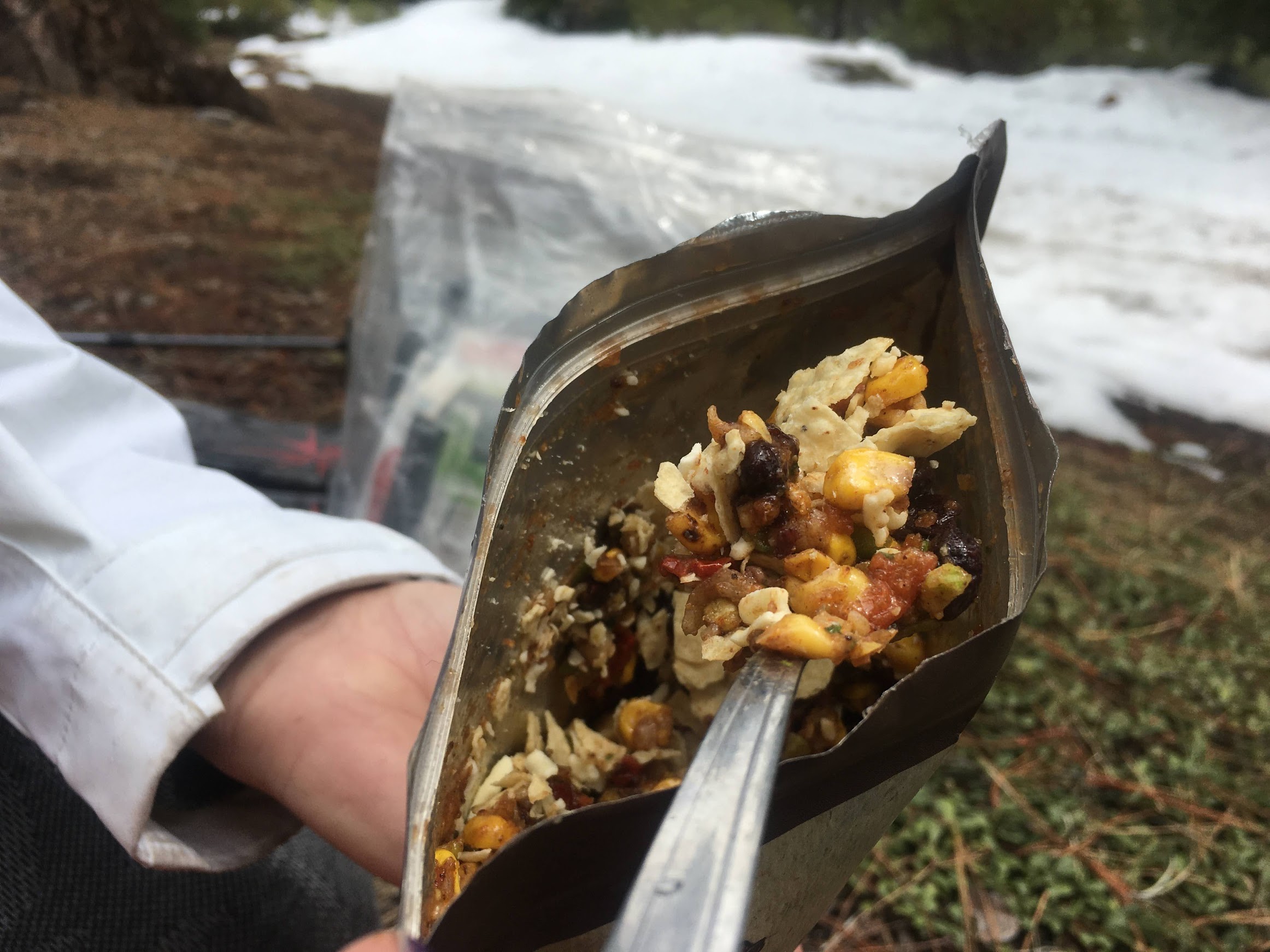
Nemo Equipment Kunai 3-4 Season Backpacking Tent Review

The Nemo Kunai 2P Tent ($499, 4 lb 5 oz / 1.96 kg) is a four-season shelter capable of withstanding moderate storms and offers ample headroom and good ventilation.

You don’t have access to view this content.

Standards Watch: Mike Cecot-Scherer on Tent Design

Rex Sanders interviews long-time gear designer Mike Cecot-Scherer about tent design. This is part two of a three-part series.

You don’t have access to view this content.

How Can Cheap Butane Canisters be Modified to Work With Canister Stoves?

Roger Caffin discusses how you can modify and use cheap butane canisters with canister stoves in this MYOG article.

You don’t have access to view this content.

The Overlook: Backpacking in a Time of Uncertainty

Is backpacking suddenly…hard? Ben Kilbourne understands, and discusses how to deal with it during uncertain times.

I’m Doing Fine!

Throughout the summer, despite the ongoing pandemic, an uncertain relationship, political division in the U.S., the impending election—and the possibility that it wouldn’t go smoothly—I somehow completed several multi-day backpacking trips and even the Uinta Highline Trail. I even said out loud on multiple occasions that I was actually enjoying quarantine, that I was enjoying my work routine at home, and that I liked cooking every meal every day. But by mid-September, something shifted in me.

Overlooking the San Juan Mountains.
September in the San Juans.

I started making plans to go backpacking in the Cascades with my sister. She lives in Portland, so I figured I would park in her driveway and use her WiFi to complete some writing and podcast work on either end of the trip. That week, however, the entire Northwest burst into flames. Air quality was atrocious in much of Oregon and Washington, the sky completely orange from dawn to dusk. My mind swirled with these considerations:

  1. How do I deal with Covid-19 while visiting my sister? Should we both get tested and quarantine beforehand?
  2. Should we risk backpacking in fire-prone forests in the Northwest?
  3. Should we backpack in smoky areas with poor air quality?
  4. Is there a trip in that area that is both safe and non-smoky? How should I go about planning it?
  5. What if clashes between protesters and militias in Portland get worse? Do I really want to be there?
  6. Portland may have to be evacuated. Could I get caught in the traffic pouring out in every direction?

I procrastinated because I simply couldn’t compute all of this. Finally, it was too late. Procrastination made the choice for me, and although it didn’t feel right, I decided to head south alone. There were fewer fires in the Four Corners area so I could at least stop worrying about that, but I’d be alone, which would prove to be less than desirable.

These days many of us are far more alone than we have ever been before. To compensate for this aloneness, we connect to our friends, and sometimes people we don’t even know via texts, emails, calls, and social media. There’s a togetherness that screens allow, but it’s only a partial togetherness. I’m virtually never alone while being simultaneously nearly always physically alone. This strange state has left me in fear of complete aloneness, real aloneness. As someone who has backpacked alone countless nights, this fear of aloneness was new for me, and strange, and worth investigating.

When I hit the road with a Weminuche Wilderness map on the seat beside me, I wasn’t quite ready to sever my connection to humans completely. Sitting in the truck after getting gas in Durango I sent some text messages out, hoping for an engagement—however mundane. Right before dusk I pulled into a campground and parked between ponderosas and gamble oak. A Steller’s jay greeted me from the picnic table. I stepped out of the truck and wobbled on my feet; I had forgotten to eat all day. After dinner, I walked out into the dark forest and stood and just looked into the darkness and the still-glowing sky beyond the trees. I thought about how all I wanted was certainty. Just certainty. Of any kind. In any aspect of life. I looked back towards the campground. And then I slowly made my way there.

the Animas River Valley
Descending toward the Animas River and the Weminuche Wilderness.

The next day, when I walked down steep switchbacks between yellow aspens, I couldn’t get out of my head. The smoky sunlight shined through a dramatic valley with nearly 3,000 feet of relief between the mountain tops and the Animas River. These mountains were new to me and intimidating. I looked at the twisted rock across the valley which trees managed to grow sparsely on despite its near verticality and was awed, but my awe stopped short of appreciation. I stood on a footbridge that ran over the Animas with banks still slightly yellow from the 2015 Gold King Mine Disaster. I listened to the water, but it sounded far away as if I was observing it through a screen just as I’d been observing most of the world over the past few months. As much as I tried to experience everything around me, I really couldn’t. I simply kept ruminating, my mind spinning with uncertainty.

Journal Entry
A journal entry from the first day of my Weminuche trip shows how scattered my mind was.

Later in the day, climbing a trail above the treeline I suddenly stopped. “What if it snows?” I thought. “I don’t want to be up here.” I hiked back down the trail and started looking for a camp in the forest. I scoped out a spot with too many dead trees and another that was too lumpy. Nothing was quite right.

Then I started second-guessing my choice not to go over that pass. I knew that it wasn’t supposed to snow, so why did fear of snow suddenly send me back down the trail? Moreover, I normally wouldn’t care one way or the other about snow, or I would even look forward to the beauty of snow-covered tundra at 11,000 feet. I felt like I just wanted someone to tell me what to do. Then I stood in the trees wondering why it was so hard to make any decision at all. I fell into extreme despair and just stood looking at the lumpy meadow in the afternoon light. Then I began judging myself for being unable to accomplish something previously so simple.

Depleted Surge Capacity

What’s going on here? I’ve been backpacking alone for years and yet I found myself incapable of something as simple as making a choice between walking over a pass or not. Even selecting a campsite was impossible. Apparently, I’m not alone.

Throughout the summer, I had been staying afloat by using what psychologist Ann Masten, Ph.D., calls surge capacity. “Surge capacity is a collection of adaptive systems—mental and physical—that humans draw on for short-term survival in acutely stressful situations, such as natural disasters,” Masten says.

I think of it as a form of adrenaline. We tap into it when we need it—to escape a mountain lion attack or a burning building—but it becomes depleted when we wake every morning only to find that mountain lion ready for the chase again. As the pandemic and other compounding uncertainties continue, and each day we grapple with the reality that things are still not how they used to be, our surge capacity eventually runs out.

I was unaware of the concept of surge capacity at the time, so I just stood in the trees judging myself harshly for not being able to accomplish simple tasks. I was still standing in the trees not knowing what to do when two men strolled by. The first exclaimed enthusiastically,

“Howdy! It just couldn’t be a better day, could it!?”

Caught off guard, I stammered “It’s, uhh, really nice.”

The sun setting in trees!
Where I stood in the trees unable to make previously simple decisions.

They walked on into the forest and I stood in the trail and watched them go. They’d been on the Colorado Trail for many days, so their appearance told me. I wondered what they knew that I didn’t. I wished I could absorb some of their happiness and ease through osmosis, and wondered if they were so much more settled than me because they’d been out on the trail for 10 or 15 days.

In the moment, the solution to my woes seemed clear: I needed more time out there. I needed to get used to being alone on the trail again. This could be true, but according to science journalist Tara Heale, in an article published in the online publishing platform Medium, pushing ourselves to function like normal might not be the best idea for some of us right now.

It’s Ok for Backpacking to be Hard Right Now

When I found myself fully and truly alone after the two Colorado Trail hikers disappeared, I became suddenly flooded with reminders of what I had lost in the past few months. Among other things, I’d lost the ability to hang out with friends or to go to the coffee shop, movie theater, gym, or restaurant and bask in the ambiance of others’ lives. I didn’t know the loss of these things would be such a big deal, as they’re less tangible than say, the loss of a loved one. This type of loss is referred to as “ambiguous loss”. Humans are wired to cope with acute loss or acute grief, but ongoing loss and grief are different. Heale writes that “ambiguous loss elicits the same experiences of grief as a more tangible loss—denial, anger, bargaining, depression, and acceptance—but managing it often requires a bit of creativity.”

One of the recommended ways of coping with ambiguous loss and the resulting depleted surge capacity is to expect less from ourselves. This means we should be OK with not being OK right now. I shouldn’t have beat myself up for my inability to hike over a pass, select a campsite, or enjoy the trip. It’s even alright not to go backpacking if it makes things worse. Backpacking often necessitates the use of problem-solving skills, physical strength, and mental and emotional robustness; all things that may be depleted for some of us during this strange time. And this is particularly troubling when backpacking—my primary form of stress-relief and self-care—suddenly turns on me.

It’s a pretty hard reality to accept, but accept it I must. Of course, many folks reading this will not be in the same boat as me, and for them, it’s fine to go backpacking more than usual if that’s what best relieves your stress. The bottom line is we need to do what we need to do to take care of ourselves regardless of how that might compare to the ways we cared for ourselves prior to 2020. Backpacking isn’t going anywhere, and things will not always be like this. Remember, we have the summer of 2021 to look forward to, and it’s going to be amazing.

Looking up the pass.
Eventually, I did manage to set up my tent and hike to the top of the pass. I got at least a little taste of the awe, wonder, and sense of accomplishment I hoped for.

Further Reading

https://elemental.medium.com/your-surge-capacity-is-depleted-it-s-why-you-feel-awful-de285d542f4c

Related Content

DISCLOSURE (Updated April 9, 2024)

  • Backpacking Light does not accept compensation or donated/discounted products in exchange for product mentions or placements in editorial coverage. Some (but not all) of the links in this review may be affiliate links. If you click on one of these links and visit one of our affiliate partners (usually a retailer site), and subsequently place an order with that retailer, we receive a commission on your entire order, which varies between 3% and 15% of the purchase price. Affiliate commissions represent less than 15% of Backpacking Light's gross revenue. More than 70% of our revenue comes from Membership Fees. So if you'd really like to support our work, don't buy gear you don't need - support our consumer advocacy work and become a Member instead. Learn more about affiliate commissions, influencer marketing, and our consumer advocacy work by reading our article Stop wasting money on gear.
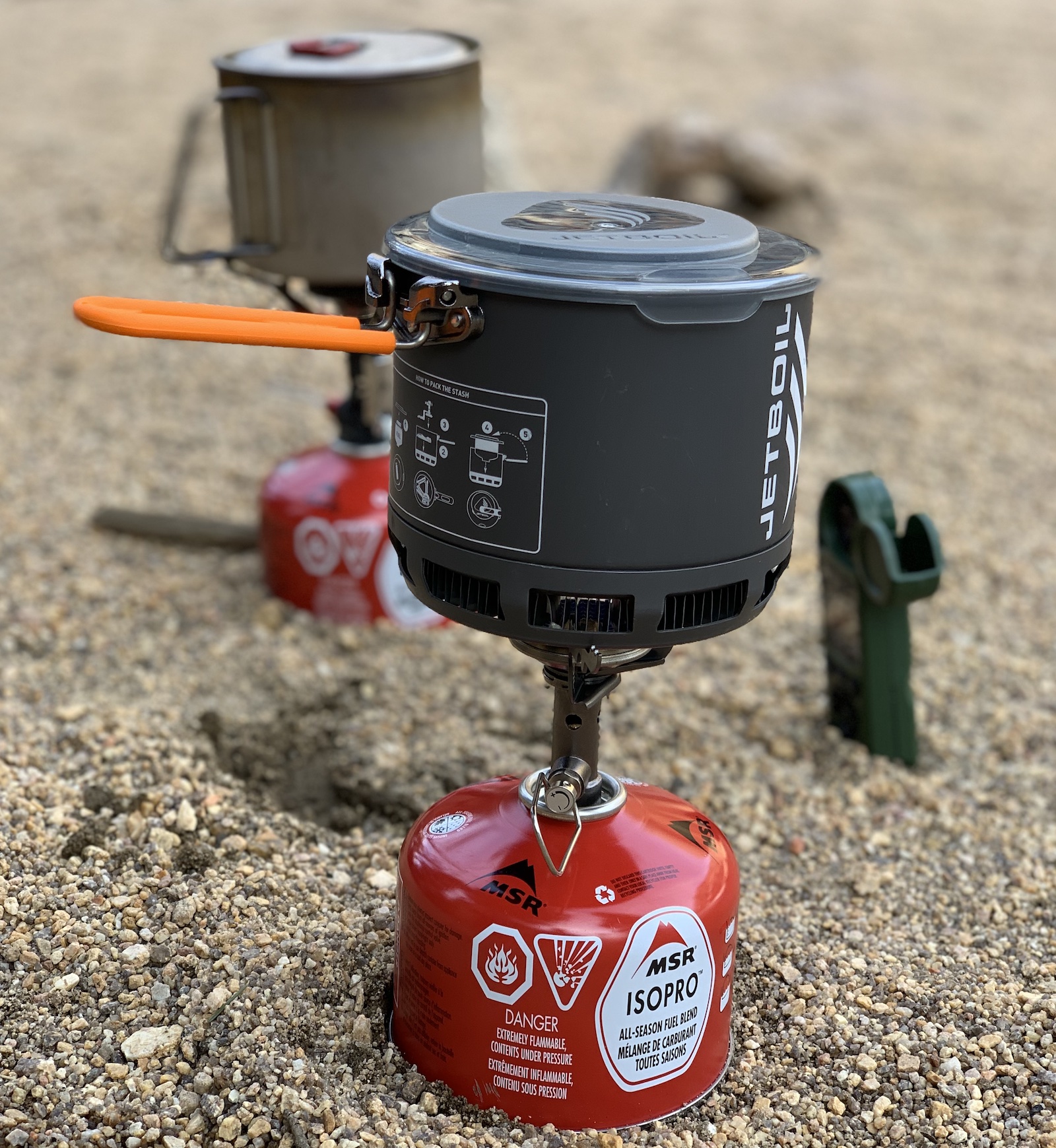
Life in the Dog House: A Survey of the One-Person Tent, With History

Some observations on cheap one-person shelters, including on their design, proliferation, and history, and comparison between some shelters.

Introduction

A one-person tent—of whatever brand—is sized at some barely tolerable minimum that varies slightly according to its design. Whether all of this cramped stringency and suffering actually pays off for backpacking is unclear. Substituting a “two-person” tent may add merely a pound (or in many cases, less). The idea has been around at least since the Victorian Era and probably the Stone Age—always with the same tradeoffs. Marginal advantages of the solo tent include reduced bulk and weight. When beset with brush or uneven ground and in stealth camps, its small size is versatile for siting. My fascination with this equipment is not, however, primarily practical. I’ve long imagined the minimal one-person shelter as a symbol and marker of backpacking’s austere freedom.

And so it was that I recently acquired an offset-pyramid tent from 3F UL Gear—the CangQiong 1 (1.5 lbs / 740 grams). The company offers a small line of tents that rely on a single trekking pole for set-up. Based in Xiamen, China, 3F seems to rely on Google Translator for its English-language marketing. This tent-maker helpfully describes the CangQiong 1 as “designed for dry conditions.” Yet I interpret this forbidding description with sunny optimism.

tarp style tent
The 3F Ultralight Gear CangQiong 1 is an offset pyramid designed for one person and advertised at 1.6 lbs (740 g). Its maker helpfully describes this tent as “designed for dry conditions.” Camped on the banks of a slow-moving and sizable river at freezing, condensation was problematic but unthreatening. (photo: John Seward)

Knock-offs, “Originals” and History

First, however, it’s best to acknowledge the obvious: these tents are inexpensive knock-offs derived from successful American brands. The “originals” are more durable and weatherproof—and cost more. Producing copies and imitations is a long-established practice among tent-makers, with examples continually appearing.  Outright piracy presents moral and legal issues, but I’ve no information nor opinion on whether this pertains to the 3F Ultralight Gear CangQiong 1.

Moreover, choosing between global market “philosophies” of any stripe is not my intent—least of all at the cash register. The concept of backpacking implies severely minimizing all its trappings. Sometimes this minimalism expands—at least in my imagination—to include matters of price. At some point, many of these questions become trivial and arbitrary.

Offering dire critiques of non-premium equipment is a long-standing pastime for certain hikers. But memoirs of the now elderly British mountaineer Chris Bonington recount sharing a ledge high on the Eiger with Don Whillans while both inside the same jumbo-sized plastic bag culled from a trash heap. The infamous Whillans chain-smoked cigarettes through the night. The bag’s quality wasn’t recounted as an issue. But in this instance the pair may have been happier in solo shelters—even if still failing to complete their route as a team.

The 3F tents are based on recent patterns, but also reminiscent of much older, classic designs —especially the Compac Tent (3.4 pounds, 1.5 kg ) and the Royce Tent (4 pounds, 1.8 kg). Horace Kephart referenced these old tents in his 1911 manual Camping and Woodcraft. The author noted that Thomas Hiram Holding of London supplied a wedge tent “of Japanese silk, that weighs under 12 ounces; and it is a practical little affair of its kind.” But for the hiker who “goes out alone for a week or two at the fall of the year, or at an altitude where the nights are always cold” Kephart advised, “take a half-pyramid tent, say of the Royce pattern, but somewhat smaller.”

illustration of old style tarp tent pitched with wooden poles
The Compac Tent set up with shears as shown in Horace Kephart’s volume called Camping and Woodcraft (1911). Kephart says of the Compac,  “I have called this clever contrivance a  ‘pocket-house.’  It deserves the name, being waterproof, wind-proof, bug-proof, ventilated, sheltering a space 8 x 6 x 4  feet, and yet it rolls up into a 16 x 4-inch parcel, and weighs, with its rope, only 3.4 pounds. [1.54 kg]”

As of 1969, Recreational Equipment Inc.’s catalog included a “One-[Person] Tent” of tapered wedge design, with a canopy of finely woven cotton and pictured in deep blue. It may have been part of their line of several Swedish imports. Much lighter solo wedges in coated nylon were already available through a contemporaneous Eddie Bauer catalog.

illustration of old tarp tent pitch options
The Royce Tent as illustrated in the 1911 outdoor manual Camping and Woodcraft. Author Horace Kephart recommended a smaller version of this four-pound (1.8 kg) half-pyramid for the lone traveler in cold weather.

Proliferating Designs

Today among leading one-person designs, the 28.6 oz (810 g) Durston X-Mid 1P  is $200 and made of polyester, said to reduce stretching in rain. Six Moon Designs, one of at least several comparable small firms in the U.S., has produced a matter-of-fact YouTube video, showing that its Lunar Solo tent ($230) employs more durable and waterproof textiles (polyester) than competitor knock-offs, and yet is marginally lighter. The Swedish firm Hillenberg offers a well-established line of heavier singles in the range of $600 that seem suitable for alpine blizzards. But even as ingenious solo tent designs have proliferated, the whole genre is called further into question when lined up against very small, single-wall two-person domes (Black Diamond Equipment First Light, $370) available for the past 20 years.

Feeling penurious and with a genuine aesthetic revulsion toward domes, in March 2020 I acquired the 3F Ultralight Gear CangQiong 1 offset design. A longstanding but selective attraction to “reverse snob appeal” slightly clouded my judgment. The actual name of this product is rarely used in English-language marketing. It’s called instead of the “Single Person Tent Outdoor Ultralight Camping Tent 3 Season Professional Nylon Silicon Coating Rodless Tent.” Delivery from Xiamen took eight weeks.

In Michigan’s Lower Peninsula recently, I spent four October nights in the CangQiong 1, confirming its high-quality stitching and carefully designed reinforcements. It shrugged off light showers. Although smaller and more than twice the weight of Holding’s silk wedge of 1911, this tent is indeed “a practical little affair of its kind”— and yet another sign of human progress.

In March, AliExpress listed the model at $70, but payment difficulties on that site sent me to Amazon, which charged about $100. Now, seven months later, its price is up substantially, although a tent branded Flames Creed (not 3F) at a glance appears identical and is more reasonable ($89) as of this writing.

Cheap Tents Compared

I can most directly compare the CangQiong 1 with recent experience of a different one-person tent: the Wenzel Starlight.  Its pleasingly classic, “mountain tent” form, and even an A-frame door bring to mind 1960s REI backpacking tents. Mine was a $28 Walmart purchase. From April to November last year, I spent a dozen nights in this relatively spacious, two-pound (896-gram) tent during walks along the western border of New England. But my Starlight has a sad secret: On a November evening in the Taconic Mountains, the  “beak” or hood shielding its door ripped as I carelessly inserted an A-frame pole too tightly. This tent, now discontinued by Wenzel, remains marginally usable and repairable, but I’m uncertain of taking the trouble and expense.

pup style trekking pole tent
The Wenzel Starlight, advertised as a one-person tent, was discontinued by its manufacturer several years ago. This wedge-style shelter weighs about two pounds (907 g). Its “beak” or hood ripped during a careless job of pitching after a dozen nights.  It cost $28 at Walmart.  (photo John Seward)

The 740’s construction inspires incremental confidence. It’s also preferable for its spacious, well-protected vestibule and door, and 10 inches (25 cm) of extra headroom. Although the 740 may at any time meet Starlight’s fate, it’s more likely to stand up adequately. For 10 years, I gradually wore through the floor of a tent similar to the Starlight, acquired for $19 from a local version of K-Mart. Clearly (to me), cheap and lightweight tents are potentially reliable. Moreover, recent experience may now inspire slightly greater tent-handling care.

Condensation Complaint Department

In mild weather, condensation inside coated tents, including the Starlight and 740, is largely insignificant. But a couple of nights spent hard by the banks of a midwest river near-freezing saw the 3F Ultralight Gear CangQiong 1 produce copious condensation by dawn. (In similar weather at a less dank location, this same tent stayed reasonably dry). Long ago I spent a night of inexpressible misery inside the K-Mart pup tent after a predicted rainstorm unexpectedly produced eight inches of wet snow at nightfall.

For several years following this pup tent incident, I avoided down sleeping bags in all but summer weather—regardless of available tentage. I acquired various floorless tarp shelters—solo and otherwise. Liquid simply drains away into the snow or dirt. Banked snow or even autumn leaf-drop can seal the perimeter from cold drafts. Moreover, floors may be the quickest tent component to wear out. But sewn-in floors and netting are an indispensable defense against insects in season and serve as a reassuring barrier against mud and crud.

Still fearful of drowning in an icy sea of condensation, I now rely on a sleeping bag cover or bivouac sack to protect from any rare discomfort inside sketchy shelters. A cover also shields the delicate sleeping bag from dirt and abrasion, while conveniently serving in lieu of a stuff-sack for transit and as a closet storage bag. In relevant circumstances, covers with fully waterproof “floors” can also make a groundsheet redundant.

Unlike many 3F products, its Tyvek Bivy bag (7 oz / 200 g) appears to lack narrowly comparable competition. Recently advertised at $20, it performed well inside the CangQiong 1 on four autumn nights near freezing. The unit is doubtless somewhat weatherproof when new and/or not excessively laundered. It’s too narrow, however, for winter sleeping bags and lacks a reliably waterproof floor. Various do-it-yourself Tyvek bags seem feasible for the talented.

Other, much more durable and desirable light covers are available—starting at about $100.

Further Reading:

  • Matthew De Abaitua’s memoir The Art of Camping (Penguin Books, 2011) includes a survey of camping history and literature from a British perspective with significant detours to America. DeAbaitua’s bibliography, including works by Kephart and Holding,  covers 17 pages.

Related Content:

Recent One-person shelter reviews

Forum

DISCLOSURE (Updated April 9, 2024)

  • Backpacking Light does not accept compensation or donated/discounted products in exchange for product mentions or placements in editorial coverage. Some (but not all) of the links in this review may be affiliate links. If you click on one of these links and visit one of our affiliate partners (usually a retailer site), and subsequently place an order with that retailer, we receive a commission on your entire order, which varies between 3% and 15% of the purchase price. Affiliate commissions represent less than 15% of Backpacking Light's gross revenue. More than 70% of our revenue comes from Membership Fees. So if you'd really like to support our work, don't buy gear you don't need - support our consumer advocacy work and become a Member instead. Learn more about affiliate commissions, influencer marketing, and our consumer advocacy work by reading our article Stop wasting money on gear.
Learning Curve: Learning to Suffer

BPL columnist Maggie Slepian unpacks suffering in endurance sports.

Every backpacker, thru-hiker, or endurance athlete knows how to suffer. It’s an intrinsic part of what we do, and it sets the people who reach their goals apart from the people who quit from the discomfort.
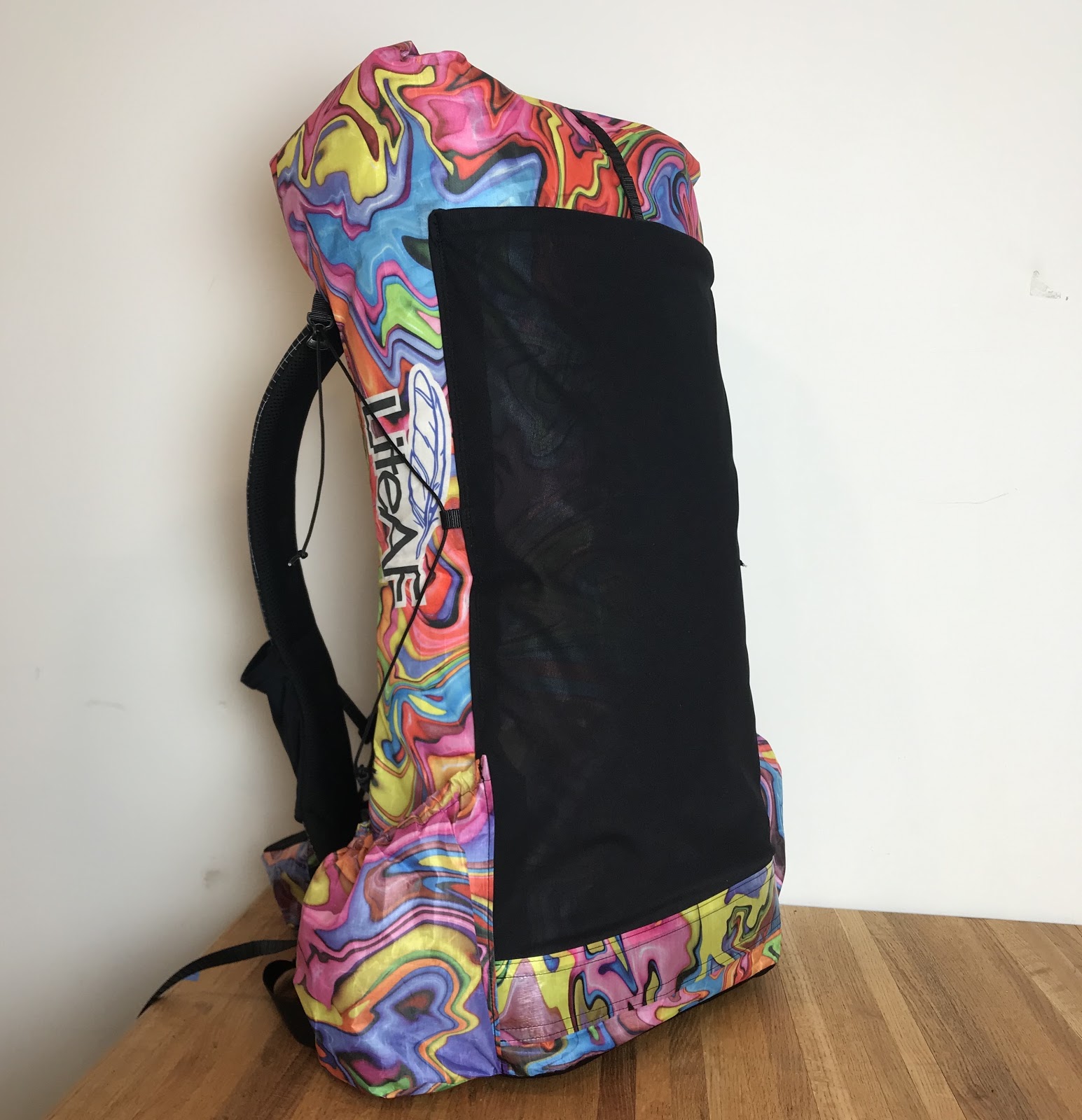
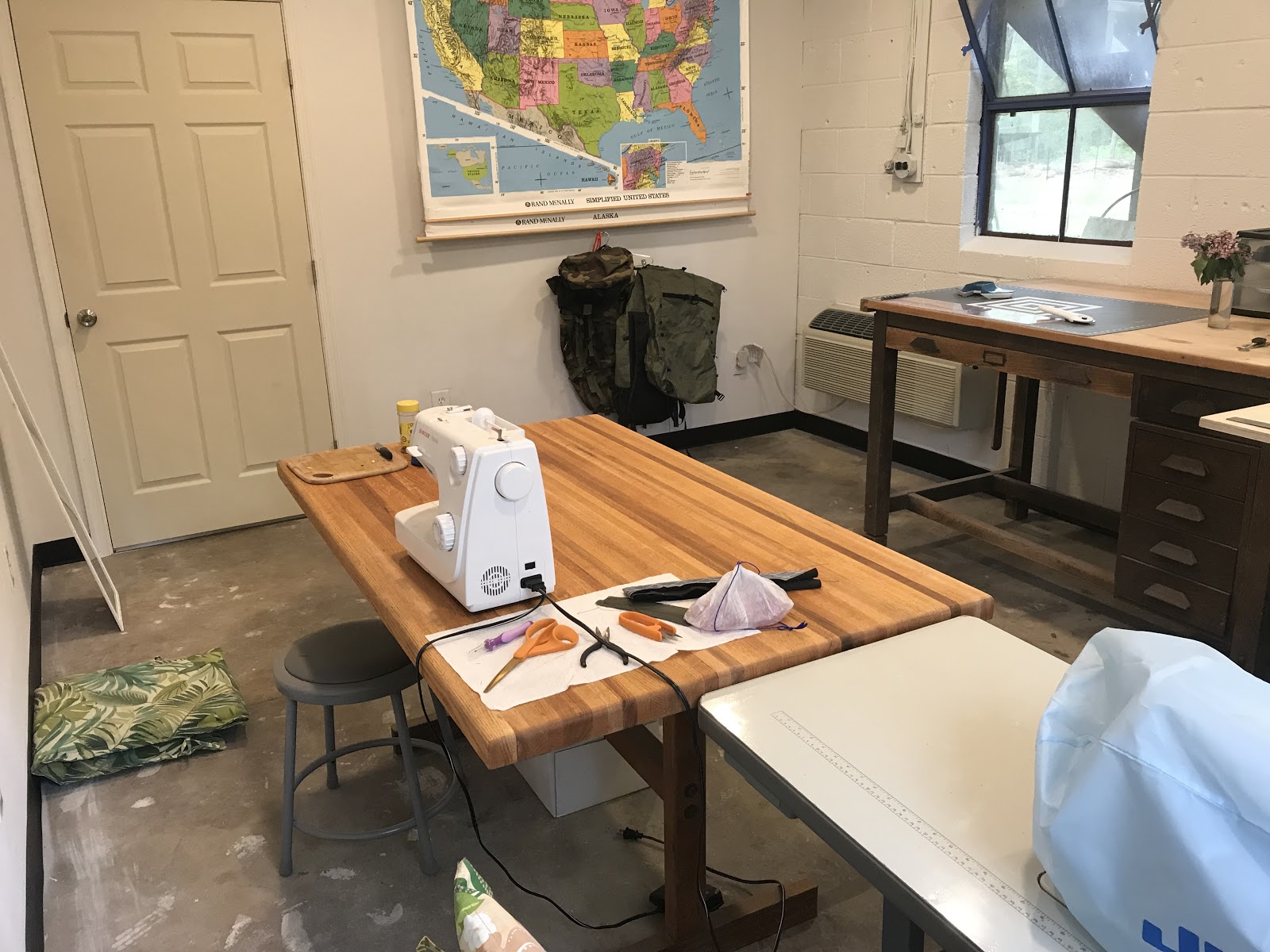
Maybe you remember when you first learned to suffer. It could have been on a thru-hike, elsewhere in the mountains, or in some other, disconnected part of your life. I learned to suffer during my first season as a wrangler in Yellowstone National Park. It was 2010, I had just graduated from college where I had lots of friends and soft hands. I went from my plush New England existence to working 14 hours a day at a rugged corral where my coworkers hated me. It was my first experience with both manual labor and being despised.

Leading up to this point, I’d never had to “gut it out.” Life had been easy. To everyone’s surprise (and possible dismay), I finished the season—a full four months where I wanted to quit every. Single. Day. It was the first time I’d suffered in something and saw it through to the end.

Though it seems disconnected, I carried that horrendous season with me as I moved forward in life. There wasn’t a smack-you-over-the-head bedtime story lesson, but it was more the fact that I had forged through misery and loneliness, physical and emotional pain. Something about that experience wedged into the back of my mind as I became more involved in backcountry sports.

author hiking in the mountains
I put my gym-class-rejection past behind me and learned to keep up because I was willing to be uncomfortable.

When it comes to many endurance endeavors, mental fortitude often plays a bigger role than physical capabilities, and this includes backpacking—athletic abilities are irrelevant for most long-distance hikers. Out of shape? Hike fewer miles. Out of breath? Stop and rest. It’s not a race and there is very little skill involved in walking. With this lack of hard skills is where the ability to suffer comes in. This is what sets the people who finish apart from the people who throw their packs down at a road crossing, stick out their thumb, and google nearest airport from the bed of the pickup truck that took pity on them.

I am a very average athlete. I lack coordination, endurance, speed, and anything else it took to succeed in gym class. As I got into climbing, mountain biking, and thru-hiking, I learned that while I was average in anything that makes people passable at sports, I could keep up and do well because I was willing to suffer. The mental aspect could override any physical shortcomings.

None of the literature on “mentally preparing for a thru-hike” is groundbreaking. We all know that there are mental and physical components to backpacking. But what sets the finishers apart from hikers who quit when it gets hard is the ability to compartmentalize the discomfort and endure some amount of suffering. That mentality lets average athletes do above-average things.

hiking on a ridge with trees
Long-distance backpacking is mostly mental. If you can gut out the bad days, you can finish.

I thought a lot about what sets people apart during my recent thru-hike of the Ouachita Trail. The people who are out there completing thru-hikes aren’t necessarily the ones who excelled in high school athletics. We saw a few other thru-hikers out there last month, and it seems like half of them quit before the halfway point, citing pain and discomfort. Totally fair! Long-distance backpacking can be a wildly uncomfortable experience and not something most people put themselves through. The people who do get out there are often surprised by the sheer misery some days on the trail throw at you.

I had awful foot issues on the Ouachita Trail, pretty much from the beginning. The trail was 223 miles long, and I’m not exaggerating when I say I hiked maybe 40 miles without enduring moderate to extreme foot pain. It ranged from pounding soreness to blisters that made me shriek when half of my heel skin peeled off with my socks. I spent one evening picking crusted blood and pus from my socks so I could wear them the next day.

lying down on the trail, at night, resting
Lying down on an asphalt bridge crossing during a night hiking section to alleviate some pain and get through the next four miles.

But the worst was the pain in my heels. It prevented me from sleeping and made me walk with a staggering limp. I had the nagging feeling it was the start of plantar fasciitis, but I never figured that out. Whatever it was, the pain would be absent for two or three miles each morning, then start building throughout the rest of the day until I would count my steps, backward from 500, to have something else to focus on.

I developed mental tricks for continuing to move forward. Instead of trying to ignore the pain, I would focus on it, untangle it. Left on its own, the daggers through my heels would become overwhelming, but if I could narrow it down or describe it to myself, it was less intimidating. I’d keep walking and not let myself stop until a predetermined, arbitrary spot every few hours. By the time I reached the spot, I would be gasping for air—the pain was so bad it made my chest constrict.

blistered and bandaged feet
This was the healing process for my blisters. The swelling and heel pain would continue to get worse over the next 100 miles.

For some (maybe asinine) reason, it never occurred to me to quit. Sure, I’d have stopped if I felt like I was truly injured, but the fact that my feet would (mostly) recover each night gave me confidence that I wasn’t doing irrevocable damage to my body. I figured my feet were just Going Through It, and as long as I could continue physically moving forward, I would. The suffering would eventually end, and in the grand scheme of things, I told myself it really wasn’t that bad. It wasn’t my knees or ankles, it wasn’t gastrointestinal distress, it wasn’t my back going out. I could walk through it. Plain and simple.

Since physical pain and discomfort is such an individual experience, it’s impossible to accurately scale it. Was my foot pain bad enough it would have caused someone else to quit? Maybe. But with the “gut it out” mentality of just hiking one more mile, one more afternoon, one more day, one more week, the suffering eventually ends. When it does, you’ve completed your goal. And I did complete the goal, which was to hike this trail end to end. It hurt and I’d say I was suffering, but not bad enough to make me stop.

author with jeff garmire at the ouachita trailheaad
Whatever was going on with my feet, all traces of the pain had faded within two days of finishing

When we each learned to suffer, we also learned that the suffering eventually ends. That’s what keeps us going. My wise, endurance-athlete father once told me: “It doesn’t always keep getting worse.” That’s how I keep going, and that’s how I finish what I start.

Despite my curated existence on the internet and the fact that I am a Writer in the Outdoor Industry, I am not a skilled athlete and I don’t possess supernatural endurance capabilities.

Some of you might be lucky enough to be skilled athletes or have those supernatural endurance capabilities. Most of us though? We’ve just learned to be really, really good at suffering.

Related Content

DISCLOSURE (Updated April 9, 2024)

  • Backpacking Light does not accept compensation or donated/discounted products in exchange for product mentions or placements in editorial coverage. Some (but not all) of the links in this review may be affiliate links. If you click on one of these links and visit one of our affiliate partners (usually a retailer site), and subsequently place an order with that retailer, we receive a commission on your entire order, which varies between 3% and 15% of the purchase price. Affiliate commissions represent less than 15% of Backpacking Light's gross revenue. More than 70% of our revenue comes from Membership Fees. So if you'd really like to support our work, don't buy gear you don't need - support our consumer advocacy work and become a Member instead. Learn more about affiliate commissions, influencer marketing, and our consumer advocacy work by reading our article Stop wasting money on gear.