

Introduction
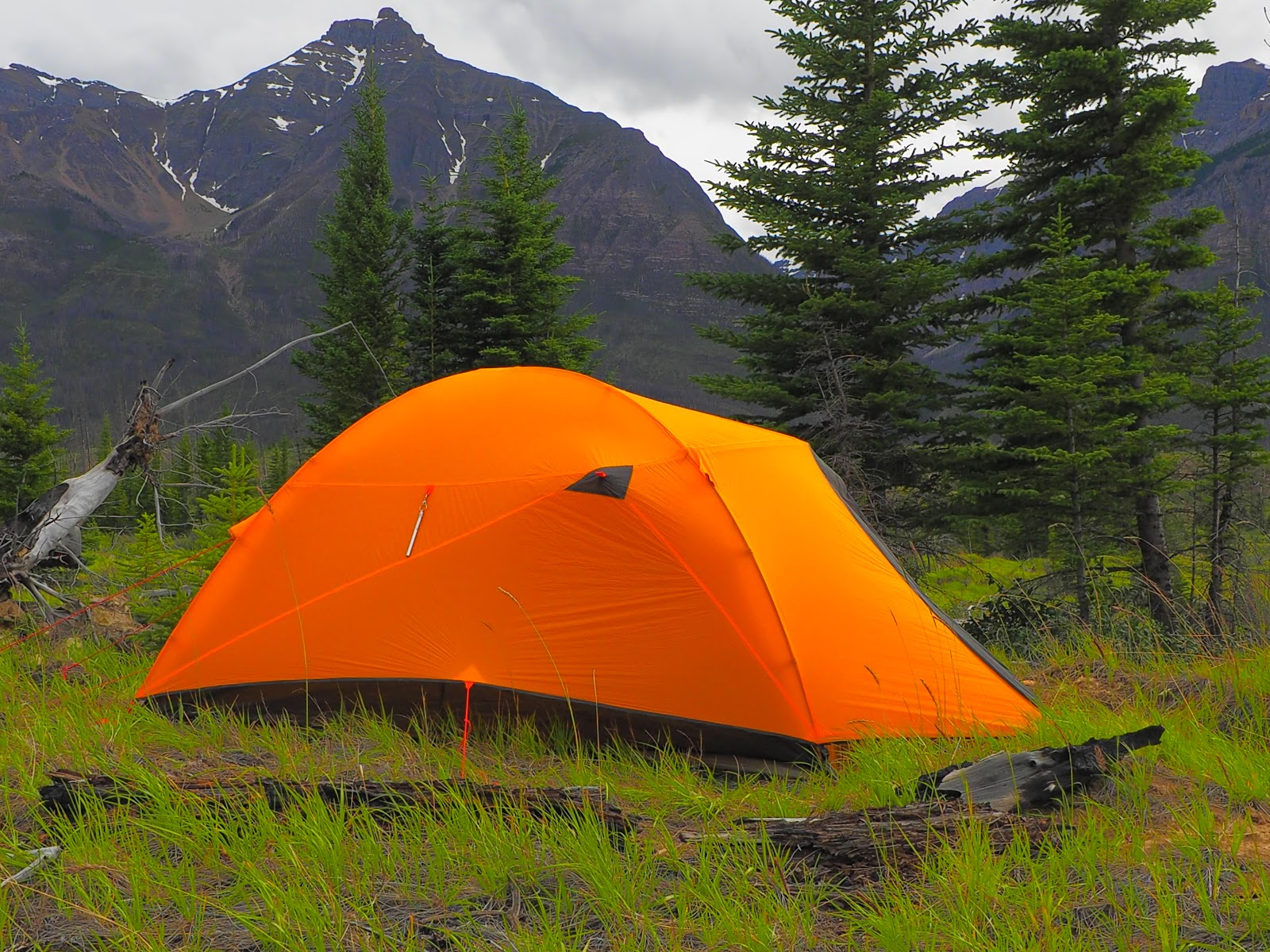
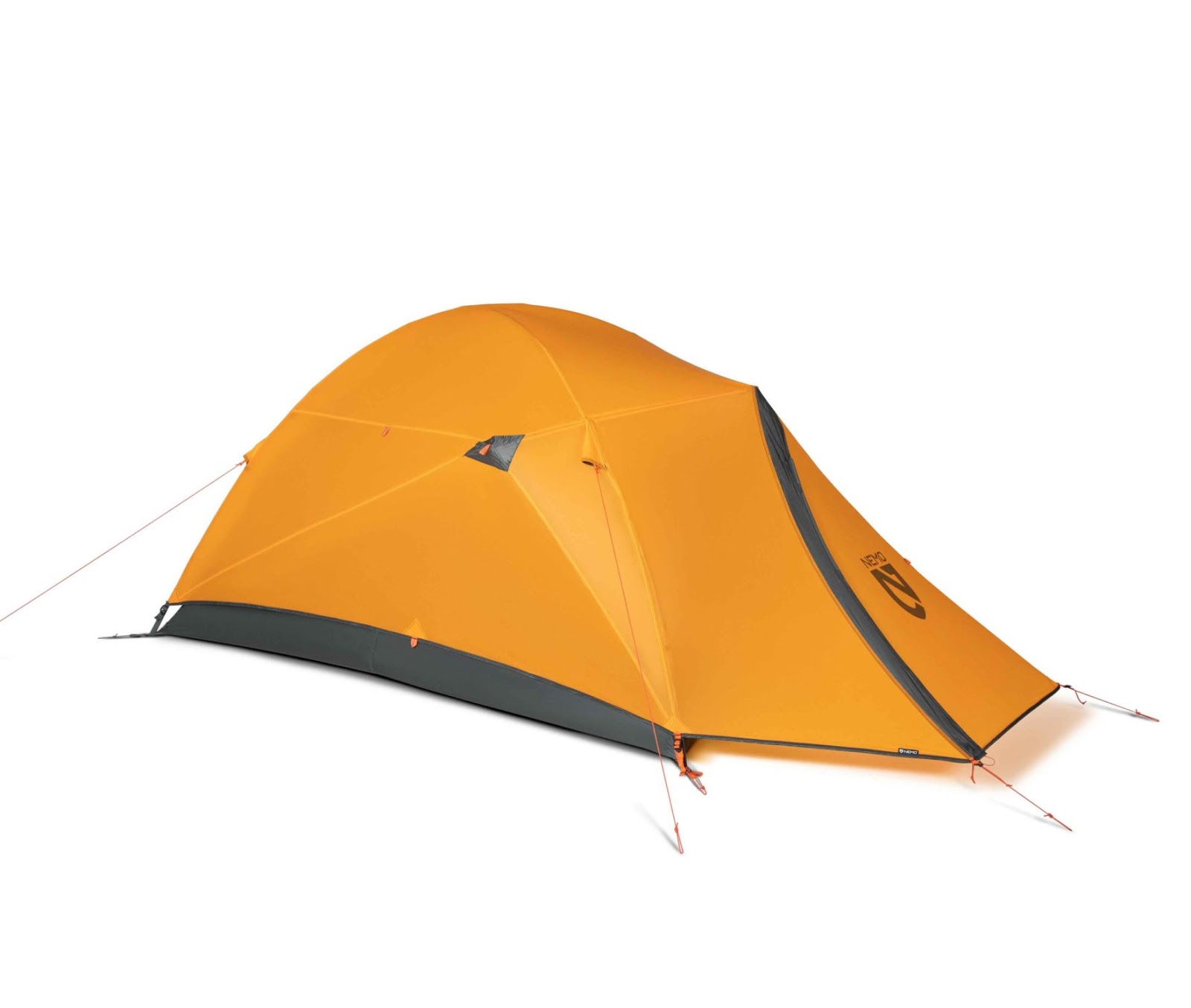
The Nemo Kunai 2P Tent ($499, 4 lb 5 oz / 1.96 kg) is a lightweight mountaineering-style, double-wall, two-person dome tent. It has more vents than a standard four-season tent to increase its versatility in the other three-seasons. It also features a unique peep window, single door and vestibule, small footprint, ample headroom, and plentiful interior storage. All this makes it a backpacking tent that will appeal to users in more hostile environments where winter and summer frequently collide.
Highlights
- Handles moderate snow and wind loading.
- Small footprint to accommodate small subalpine camp spaces.
- Moderate price point comparable with similar shelters.
- Reasonably light when compared to similar shelters.
- Lots of interior storage.
- Excellent ventilation.
Where to Buy
- $499.95 at Nemo Equipment or REI
- Or find it on sale in the BPL Gear Finder
Features and Specifications
The Nemo Kunai 2P Tent is an ultralight backpacking/mountaineering tent for two people. It is a double-wall tent intended for below treeline adventures, though it is more stormworthy than a three-season ultralight tent.
Watch the manufacturer’s product video:
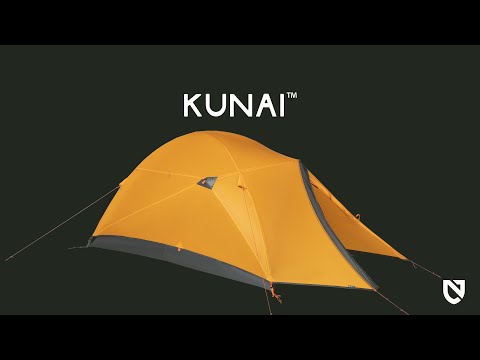
Features
- color-coded setup loops, poles, and clips
- six storage pockets
- vestibule
- peep window
- four zippered vents
- double-wall design
- 3-4 season rating
- tub floor
- weight reducing, size increasing brow pole
- tapered profile for wind performance
- lifetime warranty
Specifications
- capacity: 2P
- minimum weight: 3 lb 14 oz (1.76 kg)
- packaged weight: 4 lb 5 oz (1.96 kg)
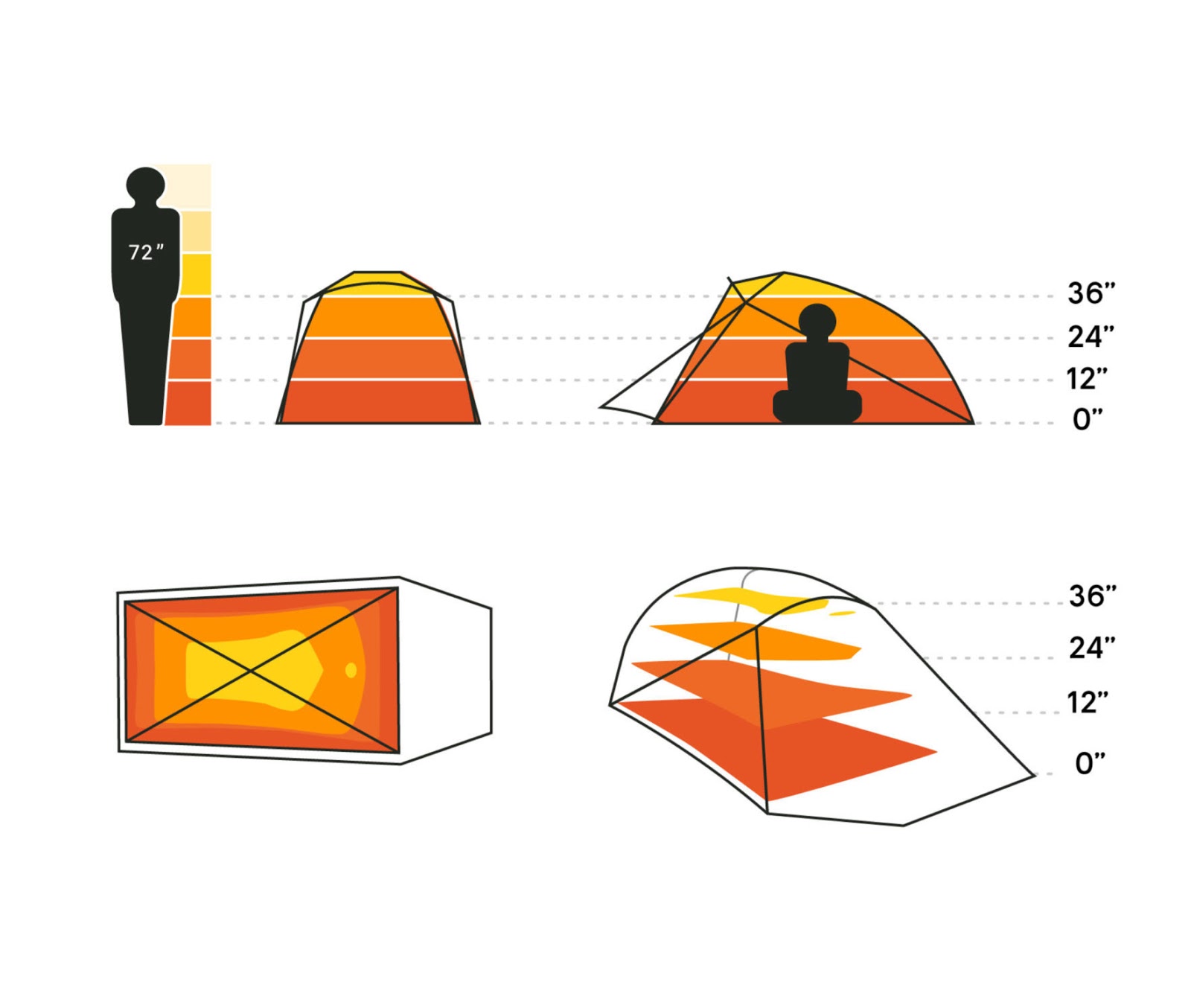
- floor dimensions: 82 x 50/41 in (208.28 x 127.635/104.14 cm)
- floor area: 26.0 sq ft (2.4 sq m)
- vestibule area: 8.0 sq ft (0.7 sq m)
- interior height: 44 in (111.76 cm)
- number of doors: 1
- frame description: 1 Hubbed Aluminum DAC Featherlite NSL 9.6+9 mm pole / 1 Aluminum DAC Featherlite NSL 9 mm pole
- packed size: 19.5 x 6.5 in dia (50 x 16 cm dia)
- vestibule fabric: 15D Sil/PeU nylon ripstop (1200 mm)
- fly fabric: 15D Sil/PeU nylon ripstop (1200 mm)
- canopy fabric: 20D nylon ripstop/ no-see-um mesh
- floor fabric: 30D PeU nylon ripstop (3000 mm)
- dolor: “Torch”
Review Context
For many of our readers, the Nemo Kunai 2P Tent will not appeal since a four-season tent is unnecessary in many regions of the southern US. However, our Canadian and Alaskan readers (and our readers headed north) will appreciate that high passes in northern climates can include July and August snowstorms, glacial winds, and frigid temperatures. In addition, this review might be applicable to fringe season (October-November and March-April) and winter backpackers in the North US Cascades, Central and Northern US Rockies, and North US Appalachians and Adirondacks.
As a Canadian, I am assessing the Nemo Kunai 2P Tent on its merit in northern conditions. It is not the lightest 2P double-wall tent on the market, but it is one of the lightest four-season, double-wall, dome-style tents available, making it unique.
Conversely, it is essential to note that an ultralight, four-season, double-wall dome-style shelter is something of a misnomer. I surveyed the market for double-wall, two-person, dome structure, rated for four seasons, at sub 2 lb (900 g). I came up empty, and rightfully so; winter camping in alpine and subalpine environments is a different game from three-season camping. Winter shelters have to be rated for high winds containing abrasive ice crystals, survive being set up on abrasive ice, snow, and rock, and withstand heavy snow loads.
In addition to wide temperature ranges and varying precipitation types, a tent for the north also has to stand up to insects (which, from my experience in peak season, are fierce beyond wildest expectations) and high humidity.
Also of importance is the comfort level for a variety of user sizes. At 5 ft 1 in (155 cm), I can pretty much be content in any old tent. However, anyone over about 6 ft (183 cm) knows not all shelters are created equal. Therefore, I also tested this tent with a 6 ft 2 in (188 cm) user, which will offer some insight to taller readers about how comfortable they might be in this tent.
Performance Assessment
Description of Field Testing
I started testing the Nemo Kunai 2P Tent in October of 2019, and it remained my backpacking companion for most trips from the fourth quarter of 2019 to the fourth quarter of 2020. As such, it has run a full gamut of testing, including winter, shoulder season, summer, high winds, high humidity, frigid temperatures, and heavy snowfall and precipitation.
In October 2019, I took the Nemo Kunai 2P Tent to the subalpine region of Sunset Pass. There had been almost a foot of snow at the higher elevations at the pass. The temperature dropped down to 15 F (-9 C). I also tested the shelter in high-humidity swampy areas and under high-wind conditions at Corona Creek. These were two of the more extreme environments where I tested the tent.
Performance Criteria
I evaluated the Nemo Kunai 2P Tent on the following criteria:
- setup
- poles, stakes, guyout points, and guy lines
- pockets and storage
- ventilation
- performance in cold temperatures
- snow loading
- high humidity
- high winds
- heavy rain
- heat and insects
Setup
Setup of the Nemo Kunai 2P Tent was reasonably easy the first time through. The color-coded poles and loops simplified the setup. I dragged the Kunai out to the mountains for its trial run without so much as opening the bag. I did have the common sense to bring a few extra stakes, snow-stakes, and some guylines, just in case. The first trip out was Sunset Pass, a subalpine valley with a short ascent, perfect for gear testing during my last-minute getaway.
Member Exclusive
A Premium or Unlimited Membership* is required to view the rest of this article.
* A Basic Membership is required to view Member Q&A events


Discussion
Become a member to post in the forums.
Companion forum thread to: Nemo Equipment Kunai 3-4 Season Backpacking Tent Review
The Nemo Kunai 2P Tent ($499, 4 lb 5 oz / 1.96 kg) is a four-season shelter capable of withstanding moderate storms and offers ample headroom and good ventilation.
I’m surprised that a 4 season tent has such a high hem on the flysheet. That could be a real problem in a Scottish storm, which is a shame as the rest of the tent looks very good.
Ive owned my Kunai for 3 or4 years now. Its an excellent tent. Ive had it in the Sierra and Mt Shasta in the winter. It has yet to fail me.
Hang inner tent from poles, then throw fly over the top.
In a storm.
Nope.
Sorry.
Would have been great to compare this tent with the Locus Gear Djedi.
*
Thank you so much for the detailed instructions and pictures from every corner, in and out!
thanks for the detailed review
I do have to point out your MSRP on the Access 2 is off by a lot AND they are usually available at lower than MSRP- not $749, but $599
I don’t own the Access 2, but do the Access 1- it’s rock solid as 3+-4 season tent
Looks like a two pole wedge pop up tent with a third pole to push out the vestibule. Perhaps that kind of construction is OK for a three seasons plus tent.
Ahem…the high hem. If this is a 4 season tent, then I have some swampland to sell you.
I always thought that a 1200mm hh fly was woefully inadequate in prolonged steady rain, and a 3000 floor pretty dicey on soggy ground. Have I got that wrong?
Let’s just say that those figures are a bit marginal today. One can get much better fabrics.
Cheers
Well I’d say a big part of the answer really depends on your skill on selecting and setting up a tent site. Technically, most of the time, you can (and should) choose sites that don’t put you in a soggier situation than necessary. If you are intentionally (or accidentally) choosing bad tent sites, you are gonna hate pretty much every tent you try at some point.
When using this tent as a true four-season option I’d say soggy is a bit of a non-issue. True four-season use to me means dry snow pack footing under the tent. If its not dry snow with temps at or below about -2F (-15C) I would call that a three-season experience not a four-season. I’ve had 5 inches of wet soggy snow in August at about -3C and that is a different game altogether than mid-January verging on -19C with the same humidity index as the Gobi Desert. Without about 4-6 inches of snow though, not much precip accumulated on this tent which is pretty ideal. It’s very steep sided (which is a downfall as far as the footprint width) but a solid win in keeping precipitation from pooling and wetting out the tent.
In a soggy situation, say somewhere coastal, staying dry in any tent is as much about where you pitch it and what footing you pitch it on, as it is about the tent itself. Even in tundra conditions, like in Canada’s far North, where you choose to pitch your tent means a world of difference for your comfort level in all conditions. I have seen some really bad site selection and then heard people complain about their equipment, when really it was their tent site selection skill that was lacking.
The other thing to remember with the floor is you should probably be using a ground sheet that prevents the need for a heavier fabric floor. The heavier the fabric the tent is made of the harder it is to pack up. I’d rather have three lighter pieces of tent (body, fly, footprint) than two heavier ones (fly, body). Three pieces (that weigh about the same as two), pack better than two bulkier ones. I like my equipment to last long term and always use a ground sheet. That said, I almost always have highly abrasive footing of one type or another.
After some really nasty storms this year, I’d say my reservations about many initial design preferences were more or less quieted. Some people don’t like the high hem, but it didn’t leak or cause issues with heavy use over 24 months so I can’t give it a ding there. I wasn’t crazy about how high the fly was off the ground at first, but ended up liking the ventilation if it was hot out when conditions were volatile switching from +30C to -2C. My job as a reviewer is to take gear and drop my preconceived notions and test the gear on its merits, how it performed vs my design preferences. What worked in practice and what didn’t.
Can’t argue about soggy sites! I avoid them like the plague. Mind you, there was one time when the groundsheet was sort of floating …
On the other hand, with a good HH for the floor it does not have to be all that heavy. I am using 49 gsm silnylon for my floors, and it lasts very well. More modern silnylon with a higher HH would be even better.
The high hem – imho that makes the tent suitable ONLY for sheltered places. If you (anyone) haven’t experienced spindrift, then you might not understand. Unless the fly is sealed to the ground at least at the windward end, your tent can fill up with snow.

In this case the gap at ground level was very small, but the wind eroded the protection away several times during the night.
My job as a reviewer is to take gear and drop my preconceived notions and test the gear on its merits, how it performed vs my design preferences. What worked in practice and what didn’t.
Absolutely.
But the reader should be careful about extrapolating beyond the conditions of the test.
Yeah, I know: I am biased!

(Snow was horizontal at this stage.)
Cheers
Thanks for the comments Roger and Emylene!
I hike in the forests and above the treeline in New Zealand. It can be very wet, especially the further south we go, and we can’t always avoid a wet site. That’s just a given for us. I certainly don’t hate my tent – it’s a Vaude with a 10,000hh floor and no moisture has ever come through it yet – and I don’t use a groundsheet.
I personally don’t hike in the winter snow conditions the article is geared to and was looking at it more from how the tent would handle heavy rain, as we can get storms like the one described on any trip, any time of the year.
It has always surprised me that UK and European manufacturers generally seem to use materials with much higher hydrostatic head than many US ones. And I’ve wondered why, and if those US tents with lesser hh would really handle prolonged rainstorms like we can get. Being stuck in our tent for 24 hours while a front passes through is something we have to be prepared for on every extended trip we do. I’d kind of figured 5000 for the fly would be a minimum in our conditions, but as you say Roger that assumption is probably (well) out of date by now. As evidenced by this tent with a 1200 hh fly handling a several hour deluge no problems.
Time to do some reading and update my assumptions I think.
Haha Yeah, been there Roger!!! I have seen and experienced that, it left me with a distinct skill of making some unique campsites that were a bit more like snow caves not tent sites. Which is a pretty ultralight and warm situation compared to a tent anyway. I do not recommend the snow cave route though unless you take appropriate training, its also a good way to have a snowy mountain collapse on you if you build it wrong. Many of the 3+season tents are designed for use with a modified snow trench, not just an open pitch. I have found, that sometimes I’ve looked at conditions and decided the extra digging of a snow trench wasn’t worth the trouble and regretted it a few hours in.
As to New Zealand travel, I have done a fair bit over the years and I would tend to say you get similar conditions as many of the east coast areas in North America. Heavy wet snow, cold nasty wind and you have the added entertainment of Western North American altitude (without Canadian Rocky usual temps). I would say hh levels are a bit of a, how far do you go? Because most of North America has some balance of hot daytime temps and frigid overnights, our standards are going to be more tailored to that. That said, North America has such a wide range of conditions unlike anywhere else in the world, I would say gear manufacturers here try to find the best balance for all North American conditions. A little desert, a little alpine, a little woodland, a little coastal. Which is very much what the Kunai is, a balanced tent. Not a bad balance either, but if you are testing limits on certain aspects, it may not perform as well as a purpose built tent for a specific condition.
For instance, if I knew I was headed to more coastal mountains mid-summer, I’d probably pick a different tent. The Kunai might not have enough ventilation for sustained coastal downpours during muggy warm conditions. Plus knowing the coast can leave you socked in for a few days of deluge, I might bring a bigger tent because I know I could be trapped in there for hours at a time mid-day.
A bit like rain coats, if its more hydrophobic, it vents poorly which leads to internal condensation and is usually a much heavier fabric and takes up a great deal of pack space. If it vents well and prevents internal condensation, it packs small but it may mean you sit out a major deluge under cover.
One of the big differences could be the winds. 100 kph is quite common in bad weather here, and we do get lot of bad weather. It’s the geography of our mountains: the main mountain area is at the mouth of a huge funnel (500 km long say) so the mild winds of the lowlands get a bit souped up when they hit the mountains. That is why we really do not like long poles or long unsupported stretches of fabric: they collapse under our winds.
We don’t do much in the way of snow trenches here. The wind scour can be a bit fierce at times, and very few people ever carry a spade.

I have seen snow block walls disappear in a few hours under the wind. Very sad: I had to rebuild the wall several times one night.
Cheers
Become a member to post in the forums.