


Introduction
What’s the best synthetic-insulated jacket?
The answer: it depends, of course.
I’ll help you discover the context that’s most valuable to you so you can make an informed decision about which jacket to buy, or which to take on a particular adventure.
I researched over 100 models and chose 15 to exhaustively test over two years of outdoor activities, including lightweight backpacking, rock and alpine climbing, backcountry skiing, and multi-sport expeditions.
Included in this review (links go to individual product reviews published as part of this review):
- Nunatak Skaha Apex
- Patagonia Micro Puff
- Arc’teryx Proton LT Hoody
- Patagonia Nano Air Light
- Arc’teryx Nuclei AR
- Rab Xenon X
- LLBean Primaloft Packaway
- Patagonia Nano Air Hoody
- Montbell Thermawrap Guide
- Rab Nimbus
- Outdoor Research Uberlayer
- Arc’teryx Kappa Hoody
- Montane Spitfire
- Black Diamond Heat Treat
- Patagonia DAS

What is the Purpose of a Synthetic Insulated Jacket?
For stationary and low-exertion use, down insulated jackets can offer the best performance (if measured in terms of warmth-to-weight ratio) and long-term value (e.g., durability) for many outdoor activities.
The insulating capacity of high fill-power (i.e., 700+ cubic inches per ounce) down provides more insulation than the same weight of synthetic fill fibers. In addition, down fill is more compressible than synthetic fill. Finally, down is more durable (i.e., it resists the long-term loss of loft) than synthetic insulation in response to repeated compression and wetting-drying cycles.
However, synthetic insulation manages moisture better than down. It loses less loft when exposed to equivalent levels of humidity, moisture vapor, condensation, and precipitation – and it dries out faster than down.
A synthetic-insulated jacket can be a good investment in two situations:
- When there’s a high probability of getting the jacket wet and there won’t be an opportunity to dry it out;
- For high exertion activities in cold weather. Here, highly air-permeable fabrics allow moisture vapor and excess heat to quickly transfer through the jacket, and also provide more weather resistance than fleece.
Though they cost considerably more than fleece, synthetic-insulated jackets have a higher warmth-to-weight ratio, are more weather resistant, and are more comfortable (less restrictive over a wider range of motion).
What About a Synthetic Insulated Parka?
For the purpose of this review, I define parka in somewhat arbitrary terms, based on the amount of insulation it provides. Therefore, consider a parka to be a garment that can be worn as the sole insulating layer in very cold (another arbitrary term) environments, where a jacket or hoody is a garment designed to be worn as the sole insulating layer in temperate environments.
Backpackers might consider a jacket for summertime use in the mountains, and a parka for wintertime use. Another way to look at the distinction is that a jacket might be enough to keep you comfortable in temperatures above freezing, while a parka would be required for temperatures below freezing.
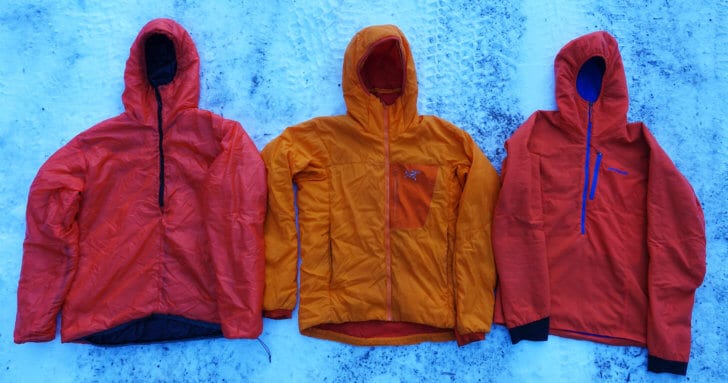
As I discuss in detail below, I rarely recommend synthetic-insulated parkas for multi-day human-powered trips. Instead, I’ve found that an active insulation jacket (e.g. Arc’teryx Proton LT Hoody or Patagonia Nano Air Light Hoody) paired with a windproof jacket (e.g. Nunatak Skaha Apex) performs better. That combination is more versatile and equally warm. If you are confident that you need a toasty warm synthetic-insulated parka, I recommend the Nunatak Skaha Apex customized with thicker insulation (e.g., 5.0 osy / 170 gsm).
Characteristics of Synthetic Insulated Jackets
Shell Fabrics: Windproof vs. Waterproof vs. Highly Air-Permeable
What is a Windproof Fabric?
We use the term windproof to categorize tightly woven, low air-permeable fabrics. Per unit weight, low air-permeable fabrics are warmer and have a higher tear strength than the highly air-permeable fabrics used in active insulation jackets.
The windproof jackets evaluated in this State of the Market Report have fabrics that weigh between 0.66 osy (20 gsm) and 1.3 osy (40 gsm).
If you want to estimate the potential weight savings that result from a different fabric, most jackets use roughly two square meters of fabric.
Windproof Shell: High Warmth-to-Weight Ratio
The most common type of synthetic-insulated jacket has a windproof shell, usually made of tightly-woven nylon that is calendered on at least one side. The shell (the piece of fabric between the insulation and the outside environment) is called the “face fabric”. The lining is (the fabric between the insulation and the rest of your body) is called the “lining fabric”. Shell fabrics are typically calendered and windproof; lining fabrics are typically more breathable.
Best application:
- As an outer layer when stationary or for moderate-exertion activities in below-freezing temperatures.
Examples:
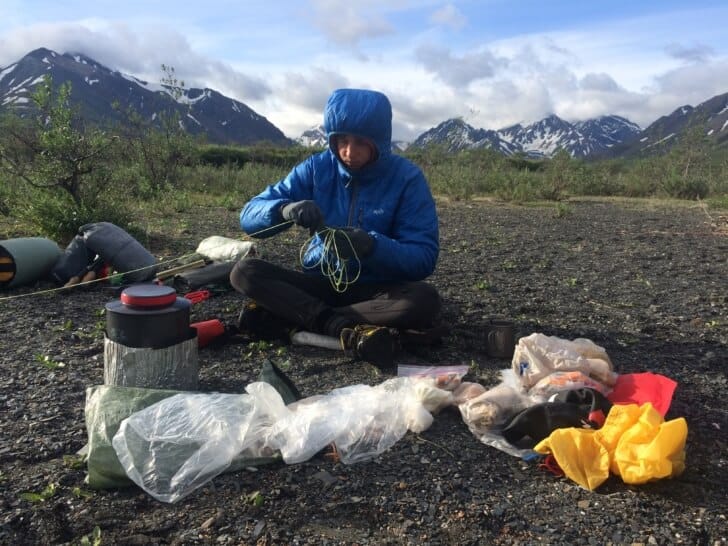
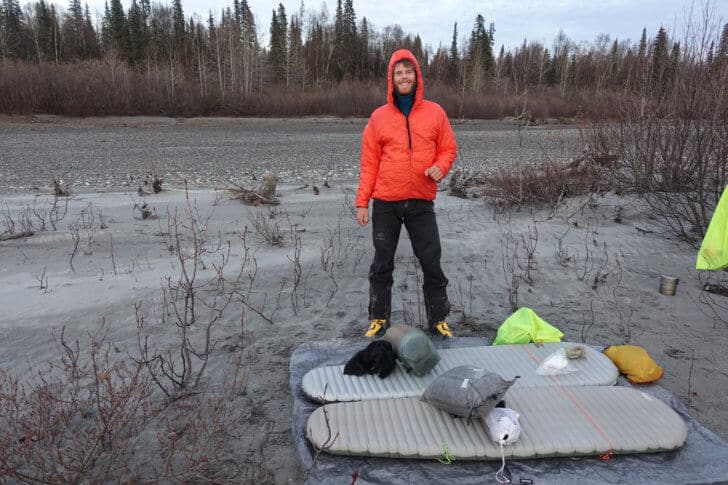
Waterproof Shell Fabrics: For Resort Skiing and City Streets
If windproof fabrics offer a high warmth-to-weight ratio, then waterproof fabrics must offer the highest warmth-to-weight ratio, right?
Well, yes.
But that doesn’t make them appropriate for backcountry activity. Locking in a bunch of moisture in the insulation with waterproof fabrics means that the dry times of these jackets will be exceptionally long because the waterproof fabrics retain so much moisture. Evaporation is a slow process through waterproof fabrics that have microporous coatings and laminates.
Best applications:
- Resort skiing and city streets.
- This type of jacket is a poor choice for backpacking and all weight conscious activities because the waterproof shell is married to the insulation. This reduces versatility.
- It might be worth using this type of jacket for multi-day alpine climbing in wet conditions. There, snow and dripping ice may get your jacket wet as you hang in the same place for 30-60 minute belays.
- Another example is for working in the backcountry in wet conditions. For example, guiding a 60-day wilderness therapy expedition in a temperate rainforest. There, we’ve been told that guides bushwhack one mile a day and spend a lot of time standing around in the rain and huddled under a tarp.
- Thus, I can’t recommend synthetic-insulated jackets with a waterproof fabric for multi-day backcountry applications.
Examples:
- Montbell Thermawrap Guide
- The Thermawrap Guide has a very light 15-denier PU-coated fabric without taped seams. It’s highly weather-resistant and reasonably lightweight.
- Arc’teryx Nuclei AR
- The Arc’teryx Nuclei AR has a 20-denier seam-taped Windstopper shell that is almost waterproof.
- Arc’teryx Alpha IS
- Patagonia Nano Storm.
I included the Montbell Thermawrap Guide in my testing because the price was only $209 when I started testing it in 2015, and at that price, it was a serious value consideration. Now it costs $249.
I also tested the $425 Arc’teryx Nuclei AR because it uses a lightweight seam-taped Gore Windstopper fabric, and nothing else provides this much weather resistance for only 16 oz (454 g).
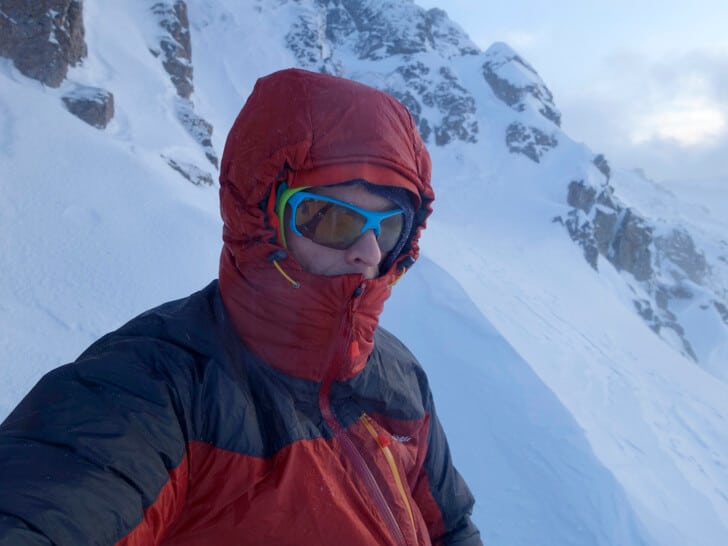
Highly Air-Permeable Fabrics: Best Breathability for Active Use
In order to increase air permeability, fabrics need to be loosely woven, uncoated, or uncalendered.
In order to also have reasonable tear strength, snag resistance, and seam slip, fabrics need to use thicker fibers (20-denier to 40-denier). Thus, they are not as light as ultrafine windproof fabrics (7-denier to 10-denier).
The exterior fabric used on the Patagonia Nano Air Light has an air permeability of 140 cubic feet per minute (CFM). The Proton LT liner fabric is 90 CFM. The original Nano Air is 67 CFM. In contrast, the fabrics used in windproof synthetic-insulated jackets range from 0.1 CFM to 5 CFM!
Highly air-permeable fabrics are used on so-called active insulated jackets. They strike a good balance between letting moisture escape while also providing some protection from chilling gusts of wind. We’ve found that our body heat can “blow” precipitation off the jacket, and dry it quickly. Active insulation jackets are very impressive in winter conditions. However, they perform poorly for stationary activities because their high air permeability significantly decreases warmth, especially in windy conditions.
This is the hallmark disadvantage of fleece, of course, but you should know that even active insulated jackets are much warmer than fleece in cold, windy conditions. And, as with fleece, much of the heat loss can be mitigated by layering a wind- or waterproof shell jacket over the insulating layer.
Parka Fabrics
Moderately water resistant “kiss coated” polyurethane fabrics are common for synthetic parkas.
These provide slightly more water resistance than the lightest fabrics. Waterproof fabrics are unnecessary on synthetic-insulated parkas because they are typically used in well-below-freezing conditions where wet snow/rain resistance is unnecessary.
Insulation Types
Short Staple Insulation
Many windproof synthetic-insulated jackets use highly-compressible short staple insulations, such as Primaloft Gold, Coreloft (Arc’teryx), and Exceloft (Montbell).
Due to their fine diameter fibers and relatively fragile structure, these are one of the least durable types of synthetic insulations. Extensive quilting is required to prevent the insulation from falling apart and creating uninsulated “cold holes” in the garment.
Short-staple insulations also require tightly woven fabrics to prevent them from migrating through the fabric (similar to down). This is why Primaloft Gold doesn’t work in active insulation jackets (due to the higher pore size of the more breathable shell materials).
A reasonable lifespan for short staple insulation subject to frequent compression and wetting-drying cycles is one to two years of hard use (several dozen days per year of multi-day backcountry trips).
Continuous Filament Insulation
Continuous filament insulations (e.g. Climashield Apex, PlumaFill, Coreloft Continuous) offer the greatest long-term durability and performance when wet.
Over the last two years, major manufacturers like Patagonia and Arc’teryx have developed their own continuous filament insulations.
Due to their higher performance and better durability, jackets using continuous filament insulation are often the best value.
Climashield Apex is generally considered to be the highest performing American-made synthetic insulation material (in terms of its durability and warmth-to-weight ratio).
Arc’teryx laminates Climashield Apex to create a windproof fabric. Next, they dunk the fabric in DWR chemicals and call this “Thermatek” insulation. This is what they use in their high-end parkas.
Blown-In Insulation
The latest trend is blown-in synthetic insulation, ideal for fashionable jackets for city folk.
“Consumers are demanding cold-weather outerwear that provides style as well as performance, as the definition of the outdoor experience evolves beyond traditional outdoor pursuits to become more inclusive,” said Mike Joyce, president, and CEO of PrimaLoft. But polyester fibers are fragile and chopping them into small pieces will cause them to break down sooner! We do not recommend jackets with blown-in synthetic insulation for any sort of serious backcountry activity.
Active Insulation: More Comfortable and Expensive than Fleece?
The point of active insulation jackets is not to be warm, rather, it is to maximize comfort in cold weather by having adequate warmth while in motion, and not overheat. Active insulation jackets are ideal for high exertion activities in cold weather.
Examples:
Key Characteristic of Active Insulation:
- Stretchiness that is responsive to a wide range of motion.
Stretch or Durability: Which Feature is More Important in an Active Insulation?
Depending on your values, continuous filament insulations may offer the best long-term performance for active insulation jackets.
I personally value durability more than stretch and therefore have been most impressed with Coreloft Continuous, by Arc’teryx.
Patagonia’s FullRange insulation is stretchy and is enclosed by stretchy fabrics – it is more comfortable than a non-stretch jacket (even one that’s well-tailored). However, FullRange loses a fair amount of loft over time.
I want a jacket that maintains its warmth for longer rather than one that’s a touch more comfortable but doesn’t last as long. Some active insulation jacket experts disagree with me on this point. They believe that, since warmth is not the objective, losing some warmth over time is not a big deal.
In order to be highly air-permeable, active insulation jackets require loosely-woven fabrics. Loosely-woven fabrics require migration-resistant insulation that does not poke through pores in the fabric, so active insulation fiber diameters may need to be thicker.
With the exception of Coreloft Continuous, all insulations used in active insulated jackets have a lower warmth to weight ratios than traditional continuous filament insulations.

Popular Active Insulations
- Polartec Alpha (fine fibers, knit) is the most widely used active insulation. Unfortunately, I have yet to be impressed by any jacket that uses it (low warmth-to-weight ratio, poorly durable).
- FullRange, used by Patagonia, has four-way stretch and a higher warmth-to-weight ratio than Polartec Alpha. Christian Register, a senior designer at Patagonia, says FullRange has the most durable structure of any synthetic insulations he’s worked with. But continuous filament insulations are more resilient and warmer for their weight. It has been almost four years since Patagonia released this insulation; I suspect Patagonia will transition to a new type soon.
- Primaloft Gold Active hit the market in Fall 2016. It is a short-staple insulation with a more durable and stretchy (four-way 15% stretch) exterior so it can be used with loose, stretchy fabrics. But it’s still short-staple and therefore probably not as durable over the long-term.
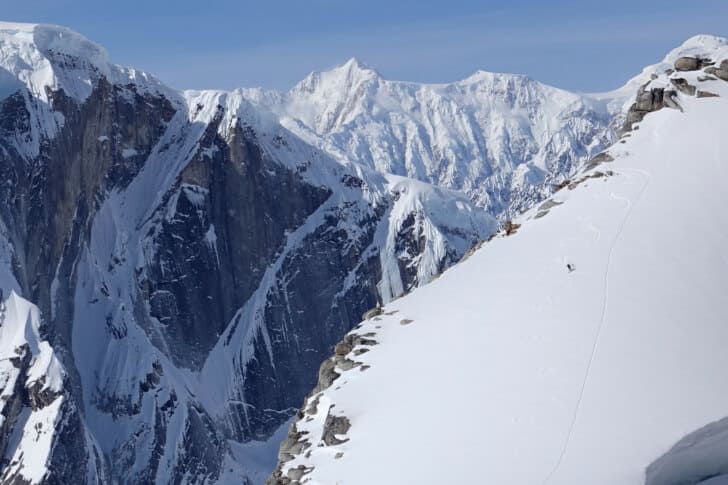
- Coreloft Continuous – Arc’teryx alpine category director Greg Grenzke told me that Arc’teryx did a lot of research and testing and chose to go a different route. They developed a continuous filament insulation that is not stretchy. Why? Increased durability and performance when wet. Our experience using Coreloft Continuous for 18 months in the Proton LT Hoody suggests that it retains the most loft over time compared to the other active insulation jackets in this review series. When wet, it’s hard to compare insulation performance of real-world conditions because dry times are heavily influenced by fabrics. (Other jackets have lighter, thinner fabrics – some weigh half as much – that dry faster than the durable material used in the Arc’teryx Proton series.)
- Climashield Apex has yet to be used in a commercially available active insulation jacket. However, Climashield Combat, which is available in a 40 gsm weight and is more durable, is used in active insulation jackets worn by some elite military personnel.
Insulation Used in Waterproof Jackets
Waterproof synthetic-insulated jackets typically use midweight insulation, around 3.5 oz (100 g). Adding more insulation, aka creating a parka, is foolish because precipitation rarely falls unfrozen when you need the high amount of insulation afforded by a proper parka.
Like in the above jacket categories, continuous filament insulation offers the greatest performance. We know of only two waterproof models that use this type of insulation: the $900 Arc’teryx Alpha IS (Climashield Apex insulation modified and branded as Thermatek) and the $700 Arc’teryx Fission SV (Coreloft Continuous).
Insulation Used in Parkas
Synthetic insulated parkas have between 100gsm and 200gsm insulation. Somewhere in the middle is the sweet spot. Those with 200gsm, such as the Arc’teryx Dually Belay parka are too warm for most trips when you actually need synthetic insulation. We only recommend synthetic parka like that for sea to high summit expeditions in wet places like Patagonia, coastal Alaska, British Columbia, etc.
Now that active insulation jackets perform so well, some manufacturers are making parkas lighter. For example, the Patagonia HyperPuff is less warm and four ounces lighter than its predecessor, the DAS.
Hybrid: Fleece + Synthetic Insulation = Not Worth Buying
Hybrid jackets use a combination of fleece and synthetic insulation that most often resemble a windproof synthetic-insulated jacket with fleece side panels.
This concept was pioneered with the Arc’teryx Atom LT. Hybrid jackets are not as versatile as normal active insulation jackets.
Some hybrid jackets combine active insulation with fleece, such as the Patagonia Nano Air Light Hybrid. That jacket weighs 0.3 ounces less than the Nano Air Light, doesn’t have a hood, and is not as warm.
The purpose is to keep you comfortable and not overheat, but $200 is a lot to spend on a jacket that only works well for a few activities in a handful of environmental conditions. For this reason, I have yet to encounter a hybrid jacket that is worth buying. (We value versatility more than superb performance for one very specialized application.)
Synthetic Parkas: for Sufferfest Expeditions and Alpinism
I have found that it’s rarely worth using a synthetic-insulated parka. Instead, if I need that much synthetic insulation, I prefer to combine an active insulation jacket with a windproof synthetic-insulated jacket. Nonetheless, let’s discuss synthetic-insulated parkas a little here.
Best applications:
- Expeditions that cross multiple climates
- Multi-day alpinism in wet and/or humid conditions.
Examples:
- Nunatak Skaha Apex with 5 osy (170 gsm) insulation
- Patagonia HyperPuff
- Arc’teryx Kappa Hoody
- Montane Spitfire One
The three most important factors to consider when choosing between a down and synthetic parka are:
- Trip duration. Down parkas are best for nearly all day trips because they have a higher warmth-to-weight ratio, are more durable than synthetic parkas, and can dry out at night in your house. We only use synthetic parkas for multi-day trips.
- Sleep setup. Sleeping in a parka for three or more consecutive nights can warrant synthetic insulation.
- Humidity. Lots of moisture in the air can cause loft loss in a down parka.
Synthetic Insulated Parkas for Sufferfest Expeditions
Expeditions that cross multiple climates (e.g., travel through rainy valleys and up to frigid, high peaks) are one of the rare times when a synthetic parka is definitely the best choice.
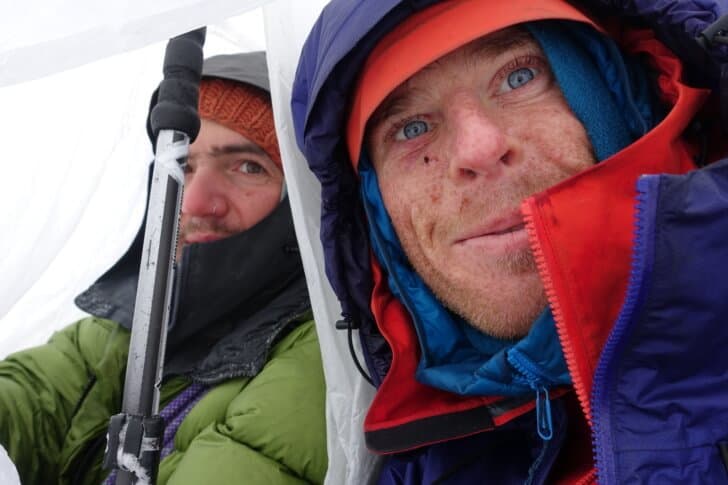
The author’s most successful synthetic parka experience was a 90-day sea kayaking and mountaineering trip in coastal Patagonia during the spring. There, the parka was damp almost as much as it was dry.
Synthetic Insulated Parkas for Alpinism
We see a lot of climbers and mountaineers wearing synthetic parkas when they’d be better served by the long-term value of down insulation.
For most climbers, I don’t think it’s worth buying a synthetic parka.
Why?
The nature of climbing has changed significantly over the past couple of decades. Now, the probability of a parka becoming harmfully wet among recreational climbers is pretty low.
This is due to much lighter gear that allows you to move faster, heaps of pre-trip information that allows your to reduce uncertainty, lightweight satellite communication devices for weather forecasting, and better access that puts you closer to the base of the route.
In most cases, people now wait for a weather window and launch with a down parka that weighs less and is warmer than a synthetic counterpart.
I asked Colin Haley, a Patagonia Ambassador and cutting-edge climber when he uses a synthetic parka.
Whether I bring a down parka or a synthetic parka is dependent mostly on climate. Some places are simply much more humid than others. For example, March in the Cascades is much more humid than October in Nepal, so I’m more likely to carry a synthetic parka there.
Sometimes there can be a noticeable climatic difference across a very small distance. For example, in Patagonia, I always use synthetic parkas when climbing on the Torres (which are right against the South Patagonian Icecap) and down parkas when climbing in the Chaltén (Fitz Roy) Group, which is only a few kilometers further east, but much drier.
The other major factor that goes into whether I carry a synthetic parka or a down parka is the duration of the climb/journey. If I’m going on a 5-day climb, with cramped bivouacs in a little tent, I’m more likely to bring a synthetic parka. For a single-push climb, you simply have less time available to get a down parka wet, so I’m more likely to carry down.
A good example of a route that deserves a synthetic parka is the 8-day first ascent of Mt. Huntington’s South Ridge, by Clint Helander and Jesse Roskelley in March 2017 – a hostile, damp, unpredictable environment.
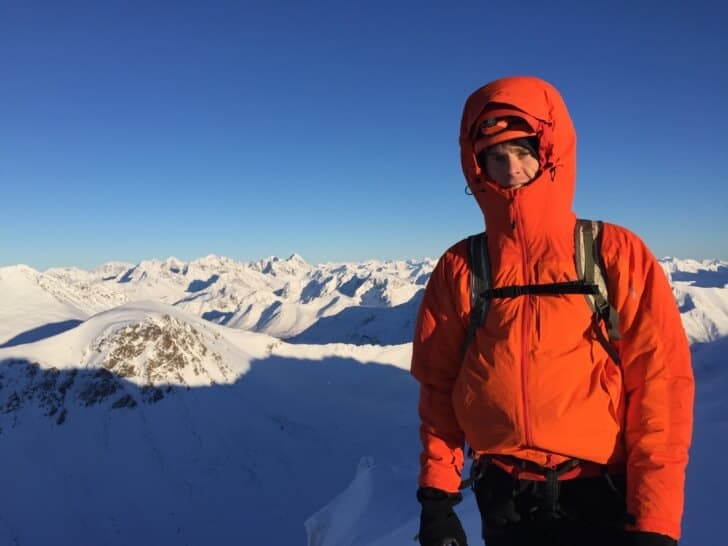
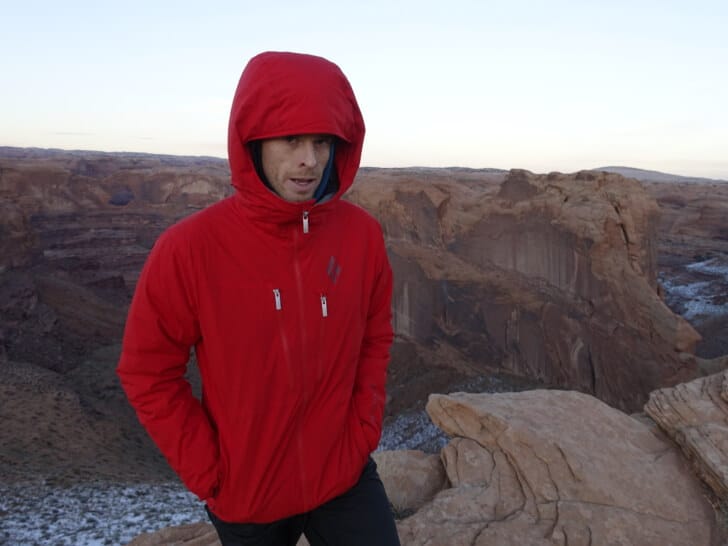
How to Choose an Insulated Layer: There’s No Universal Best Three-Season Layering System
We all do different activities, different ways, in different places, and have different bodies. Here are a few examples of how pros use (or don’t use) synthetic-insulated jackets.
Joe Valesko: baselayer > wind shirt > windproof synthetic-insulated jacket > rain shell. Joe is an ultralight three-season thru-hiker. This very light layering system is great for warmer weather. It is poorly suited to high exertion use below freezing because it’s not sufficiently breathable.
Erin McKittrick and Caroline Van Hemert: baselayer > fleece shirt > windproof synthetic-insulated jacket > rain shell. Caroline, who splits her time between Haines, Alaska and Anchorage, Alaska, says, “I use a [windproof] synthetic-insulated jacket everywhere. Almost all of the time. Even in the summer I rarely go on an overnight trip without one.”
Luc Mehl: baselayer > active insulation jacket > rain shell. Luc lives in Anchorage and Valdez, Alaska and skis eight months a year. He uses the same clothing for backpacking and packrafting. He detests lightweight windproof synthetic-insulated jackets because they are not breathable enough for active use in cold weather. Therefore, he uses an active insulation jacket year-round.
Kristin Gates & Andrew Skurka: baselayer > fleece shirt > rain shell > down jacket. (No synthetic-insulated jacket.) When stationary, this is the warmest layering system. It is also the best long-term value (most durable) system. It weighs about 8 oz (227 g) more than Joe’s setup. Andrew rarely brings a down jacket for fast and light backpacking trips. He also says, “I’m totally over synthetics. They do not stand the test of time, and therefore make a poor long-term investment.” Kristin says, “I only use a synthetic-insulated jacket when dog mushing [in winter].”
Dave Chenault: baselayer > active insulation jacket > rain shell > windproof synthetic-insulated jacket. Dave has detrimentally soaked down jackets several times. He says, “I’ve largely given up on down, including DWR down, for wet shoulder season stuff.”
Ryan Jordan: base layer > wind shirt > rain shell > down jacket for short trips in mild conditions; base layer > active insulation jacket > rain shell for most 3-season conditions (adding a lightweight fleece layer for colder weather or a windproof synthetic insulating jacket for winter conditions). Ryan no longer uses low-loft “ultralight down jackets” (i.e., those having similar loft to the synthetics in this review) for their inability to function well both in camp and on the trail in sustained, inclement weather on multi-day trips.
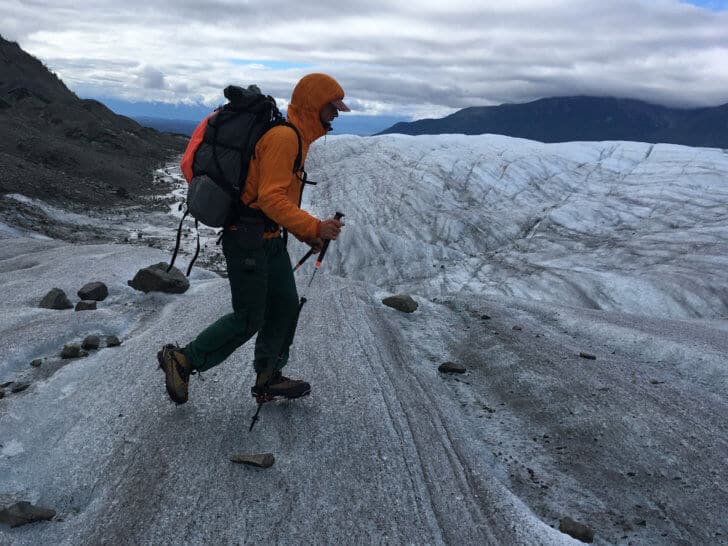
There Might be a Best Winter Layering System
Unlike highly variable three-season conditions, it’s much easier to layer when it’s below freezing.
Precipitation comes as (drier) snow, breathability is very important, and waterproof-breathable jackets actually breathe because the face fabric is rarely wetted out.
My own personal experience suggests that the highest performance winter layering system for me (and my style of wilderness travel) is a long-sleeve hooded baselayer > active insulation jacket > waterproof jacket > down or synthetic parka. Add another layer if it’s frigid. Add insulated pants for multi-day trips.
When I know it will be below freezing for the entire trip, I bring a windshell or a windproof synthetic-insulated jacket instead of a waterproof jacket.
Some Generalizations I Learned While Testing Synthetic Insulated Jackets
These are the primary conclusions from my experience testing synthetic-insulated jackets:
- When used for backcountry pursuits with frequent compression, i.e., stuffing into the nooks and crannies of backpacks, synthetic insulations wear out before their enclosing (face and lining) fabrics. There is no need for highly durable fabrics. Many manufacturers use tough fabrics that are only beneficial around town and for working outside.
- With their low air-permeable fabrics, windproof synthetic-insulated jackets have the highest warmth-to-weight ratio and are best for stationary activities. They also work OK for active use in very cold temperatures.
- Active insulation jackets are phenomenally comfortable – much better than fleece (due to their ability to buffer against temperature changes and wind gusts) – for high exertion activities in cold and/or wet weather.
- Synthetic insulated parkas are best for expeditions that travel through multiple climates, e.g., wet valleys to frigid, high elevation peaks, and for multi-day alpine climbing in humid or very wet environments.
- Synthetic insulated jackets with waterproof fabrics are rarely suitable for backpacking or any weight-conscious application. They are best for resort skiing and city streets.
- Continuous filament insulations generally offer the highest warmth-to-weight ratio, best moisture management, and greatest long-term durability when compared to short-staple insulations.
Synthetic Insulated Jackets Reviewed: Specifications
Eleven jackets are included in the performance assessment of this State of the Market Report, with key specifications (weight, fabrics, insulation, and cost) compared in the table below.
| Price | Weight | Fabrics | Insulation | |
|---|---|---|---|---|
| Nunatak Skaha Apex | 245 | 09.9 oz (281 g) | 15D 0.8 oz | 85 g Climashield Apex |
| Patagonia Micro Puff | 299 | 09.3 oz (264 g) | 10D 0.8 oz | 65 g PlumaFill |
| Arc'teryx Proton LT | 299 | 14.4 oz (408 g) | 40D 2.5 oz | 65 g Coreloft Continuous |
| Patagonia Nano Air Light | 249 | 10.2 oz (289 g) | 30D 1.3 oz | 40 g FullRange |
| Arc'teryx Nuclei AR | 425 | 16.2 oz (459 g) | 20D Windstopper, 10D liner | 100 g Coreloft with 40 g hood |
| Rab Xenon X | 235 | 12.3 oz (349 g) | 20D 1.3 oz | 60 g Primaloft Gold Active |
| LL Bean Primaloft Packaway | 179 | 12.3 oz (349 g) | 20D 1.1 oz | 60 g Primaloft Gold |
| Patagonia Nano Air | 299 | 13.5 oz (383 g) | 20D 1.3 oz | 60 g FullRange |
| Montbell Thermawrap Guide | 249 | 18.7 oz (530 g) | 15D outer, 20D liner | 120 g Exceloft, 80 g sleeves, 50 g hood |
| Rab Nimbus | 245 | 15.3 oz (434 g) | 20D 1.3 oz | 3M Cirrus |
| Outdoor Research Uberlayer | 315 | 18.2 oz (516 g) | 30D outer, mesh liner | 98 g Polartec Alpha |
| Arc'teryx Kappa | 425 | 25.4 oz (720 g) | 70D Windstopper | 140 g Coreloft |
| Montane Spitfire | 299 | 30.4 oz (860 g) | 30D 2.1 oz | 200 g Primaloft Gold, 170 g sleeves |
Performance Assessment
Warmth
Active insulation jackets offer the least amount of warmth. Their purpose is to provide adequate warmth for active use in cold weather and prevent you from overheating. I always carry some type of windproof or waterproof shell with us when using active insulated jackets on multi-day trips. For very cold winter trips, I wear an active insulation jacket, a windproof synthetic-insulated jacket, and a down parka.
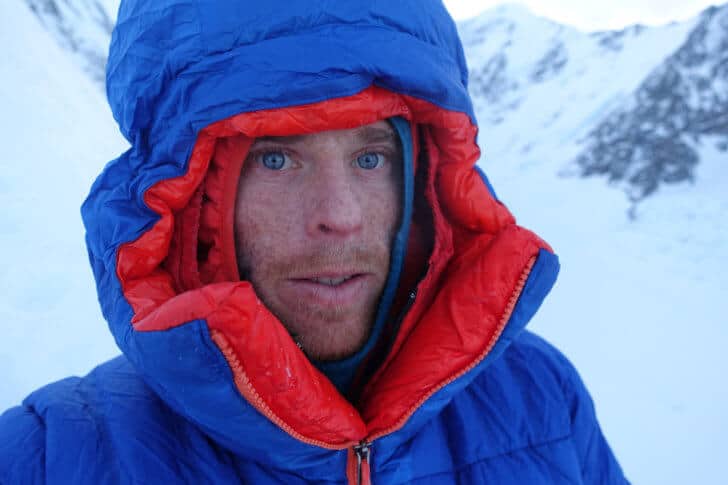
Designed to prevent you from overheating during high exertion activities in cold weather, the Patagonia Nano Air Light was the least warm jacket I tested.
With 200 gsm insulation and low air-permeable fabrics, the Montane Spitfire One was the warmest jacket I tested.
It’s tempting to get wrapped up in clo values (clo is a unit of measure for insulating warmth – one clo is the amount of insulation that allows a person at rest to maintain thermal equilibrium in an environment at 70°F in a normally ventilated room).
However, the myriad other variables that affect a jacket’s warmth led me to largely ignore clo data. An important point that can be illustrated with clo is the influence of durability on warmth. According to Primaloft, their Gold insulation has a dry clo of .92 osy and the more durable Silver Hi-Loft continuous filament insulation has a dry clo of .73 osy. With synthetic insulations, there’s generally an inverse relationship between warmth-to-weight ratio and durability.
Durability
Overview
Due to its burly exterior fabric (2.5 osy / 85 gsm) and relatively tough continuous filament insulation, the Arc’teryx Proton LT Hoody is the most durable jacket I tested.
Other jackets have more durable fabrics but are made with fragile short-staple insulation.
My durability scores account for fabric and insulation and represent 20% of the total performance score.
Insulation Durability
Durability is a big deal because all synthetic insulations are relatively fragile. As noted above, Andrew Skurka doesn’t use synthetic-insulated jackets anymore because they don’t stand the test of time and, therefore, are a poor long-term value. (Fleece works fine but isn’t as light or as weather resistant.) Clearly, however, the testimonies from the other professionals noted earlier indicate that for some, performance and safety in moist conditions are valued above durability.
Thicker polyester insulation fibers last longer than superfine fibers. For example, Arc’teryx Coreloft combines 1 and 3 denier fibers. Montbell Exceloft combines 0.7 and 8 denier fibers. Primaloft Gold might combine 0.5 denier and 4 denier fibers. (Primaloft won’t disclose the exact fiber size. They say their fibers are typically about 98% smaller than the diameter of a human hair).
Insulation structure has a large influence on durability. In general, continuous filament insulations are the most durable. Avoid short-staple insulations. Casey Shaw, manager of advanced research and development at Patagonia, told us, “Short staple is a bad idea. it just falls apart.” Also avoid, because they are likely even less durable, blown-in insulations like 3M Cirrus, Primaloft ThermoPlume, and Primaloft ThermoBall.
Fabric Durability
When used for outdoor pursuits with frequent compression, synthetic insulations wear out before their enclosing fabrics.
There is no need for a highly durable fabric. Many manufacturers use tough fabrics that are only beneficial around town and for working outside.
However, some fabrics used on the jackets I tested have some room for improvement. The Patagonia Nano Air Hoody fabric pills and is prone to tearing. All of the standard fabric options on the Nunatak Skaha Apex are relatively fragile. I carry Tyvek tape and expect to patch lightweight jacket fabrics. If you want a durable jacket for all-purpose use, the Arc’teryx Proton LT Hoody knocks the socks off all others I tested.
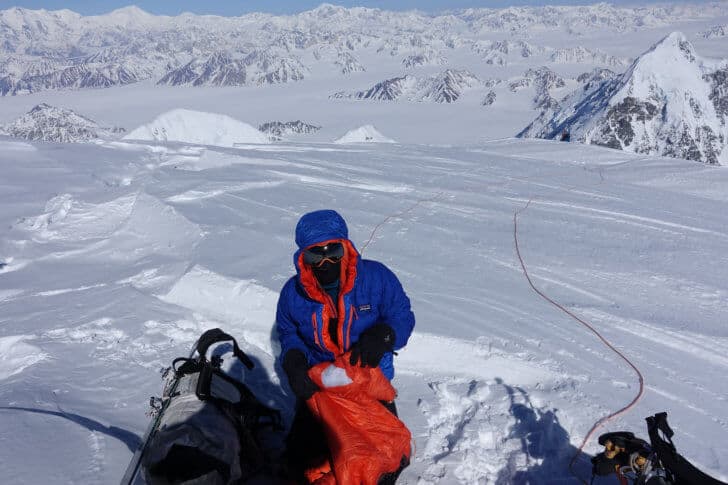
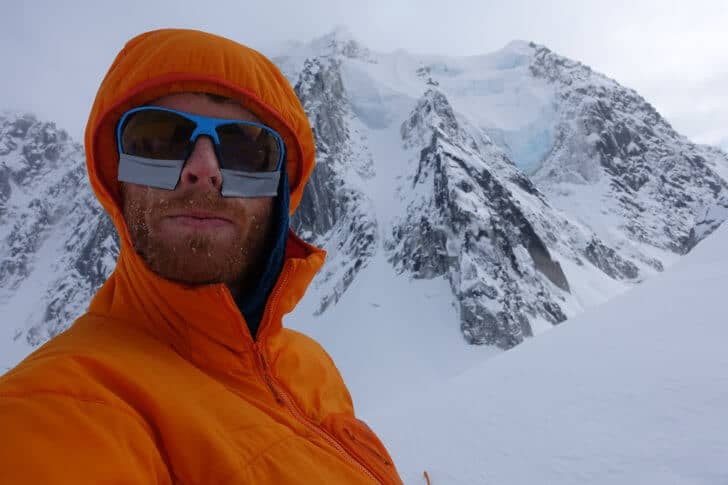
Comfort
Here, I compared each jacket to an ultra-comfortable cotton hoody and looked at specific features such as pockets, zippers, hoods, drawcords, wrist closures, etc.
The Patagonia Nano Air Light takes the cake as the most comfortable jacket I tested. Its fabrics are so soft, supple, and stretchy, and the jacket is lightweight and has no obstructive pockets or even a full-length zipper to reduce mobility.
With best-in-class features, the Nunatak Skaha Apex, Arc’teryx Nuclei AR, and Arc’teryx Proton LT Hoody all tie in second place.
If you want the best-fitting jacket, consider the Nunatak Skaha Apex. This custom-made jacket allows you to choose one of eight sizes and then customize the length of the torso and the sleeves. Compared to Patagonia’s boxy Regular Fit or Arc’teryx’s slimmer fit, this can greatly increase comfort and reduce weight by eliminating excess material.
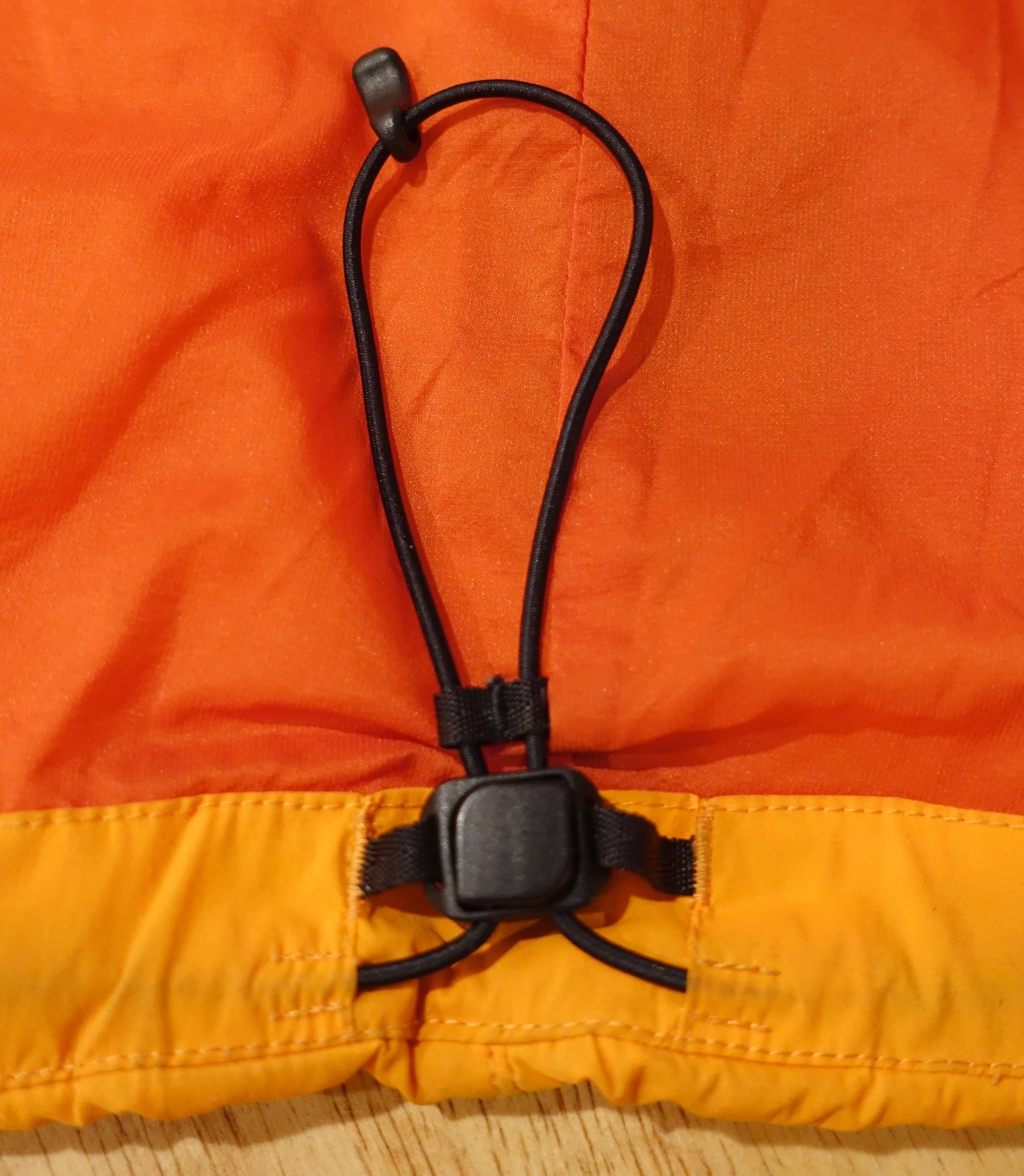
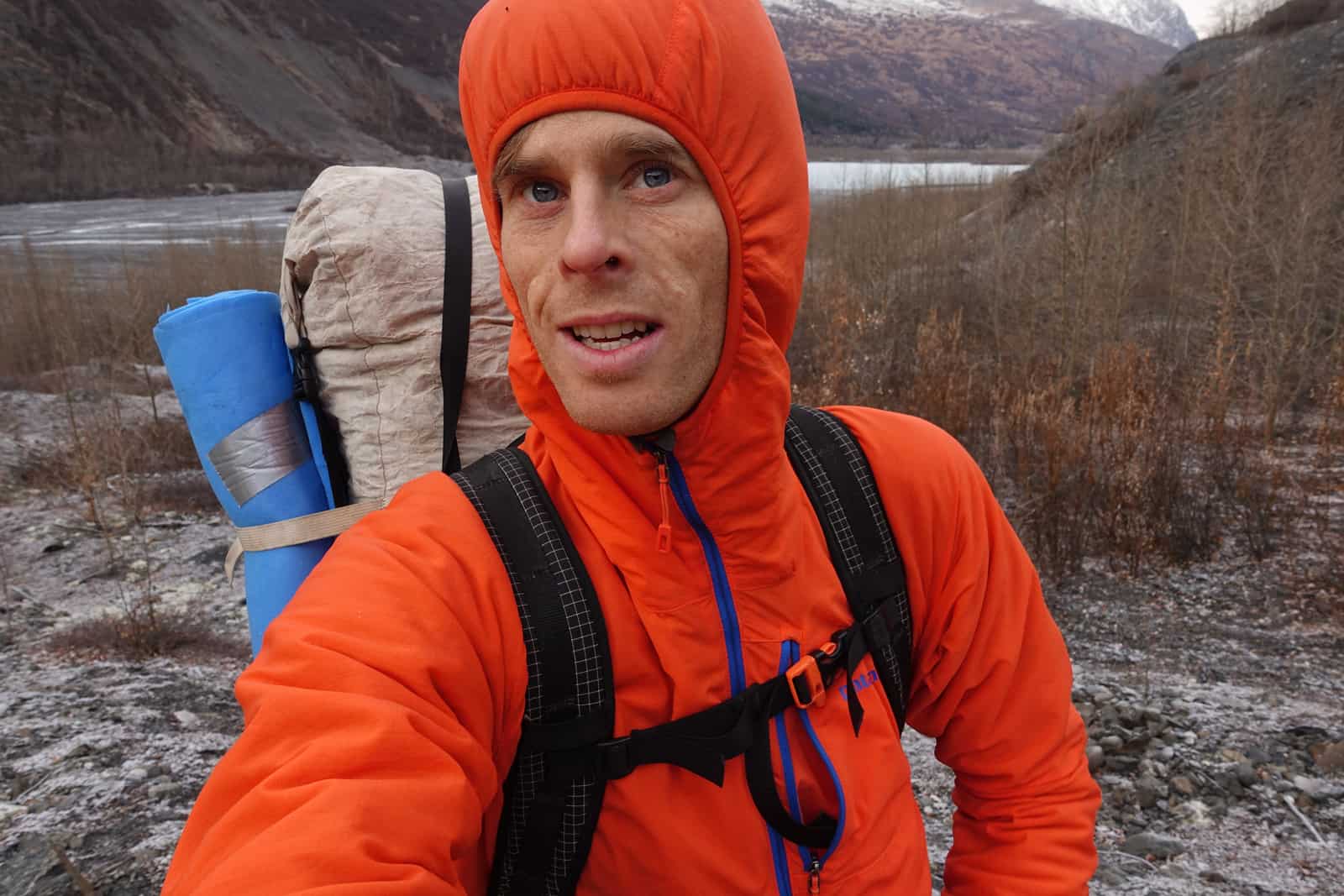
The Skaha Apex also allows you to choose your own pocket configuration. The only reason I didn’t give it a perfect score is many of the features are not as easy to use or as comfortable as those on other jackets. For example, I love the adjustable and helmet-compatible hood; the soft, tight-fitting sleeves; the recessed waist adjustment cord; and the hidden zippered handwarmer pockets on the Arc’teryx Proton LT Hoody. See the photos below for some examples of excellent features.


Weight
Since their purpose is not to be warm for their weight, but rather to provide adequate warmth for high exertion activities, when selecting an active insulation jacket I urge you to factor warmth and breathability more heavily than weight in your decision-making.
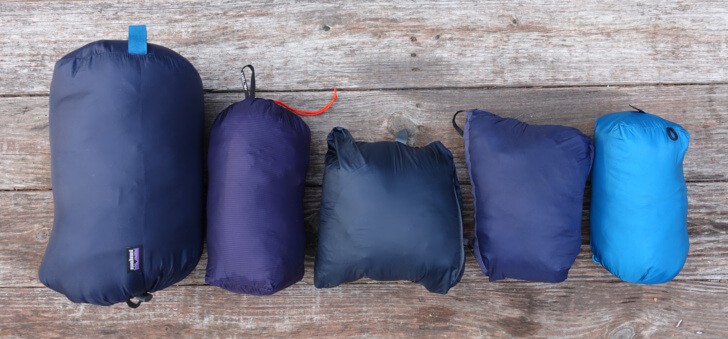
I weighed all of the jackets tested. The lightest was the 9.3 oz (264 g) Patagonia Micro Puff and the heaviest was the 31.4 oz (890 g) Montane Spitfire One. The median weight was 17.2 oz (488 g).
Weather Resistance
I ranked each jacket on its weather resistance, but only weighted this as one percent of the total score. The purpose of the scoring is to help you find what you’re looking for. Depending on the intended application, a highly weather resistant jacket can be beneficial or detrimental.
The most weather resistant jackets I tested have either seam-taped Windstopper fabrics (Arc’teryx Nuclei AR and Kappa Hoody) or a waterproof fabric without taped seams (Montbell Thermawrap Guide).
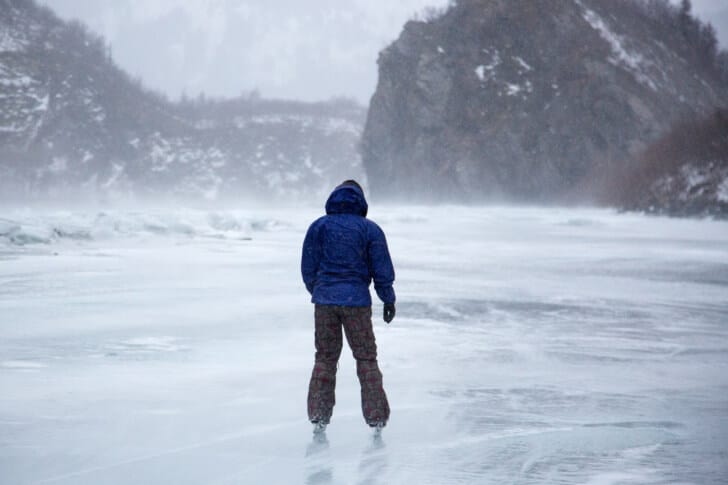
Active insulation jackets offer the least weather resistance when you’re not moving – the wind whips through them and the loosely-woven fabrics barely resist water. However, warm air from your body allows active insulation jackets to “blow off” a substantial amount of precipitation and dry the outer fabric remarkably fast during high exertion activities.
This is not included in our performance scores, but it’s important: With synthetic insulations, there is no such thing as warm when wet.
The more important factor is how quickly the jacket dries. Short-staple insulations hold more water than continuous filament insulations. By hold more water, I mean, water drains out of the insulation more slowly. The other factor that influences dry time is the air permeability of fabrics. Highly air-permeable active insulation jackets dry faster than windproof jackets because the moisture is able to escape more easily through the looser-knit fabrics.
Breathability
Again breathability only accounts for one percent of our total performance score. Depending on the intended application, a highly breathable jacket can be beneficial or detrimental.
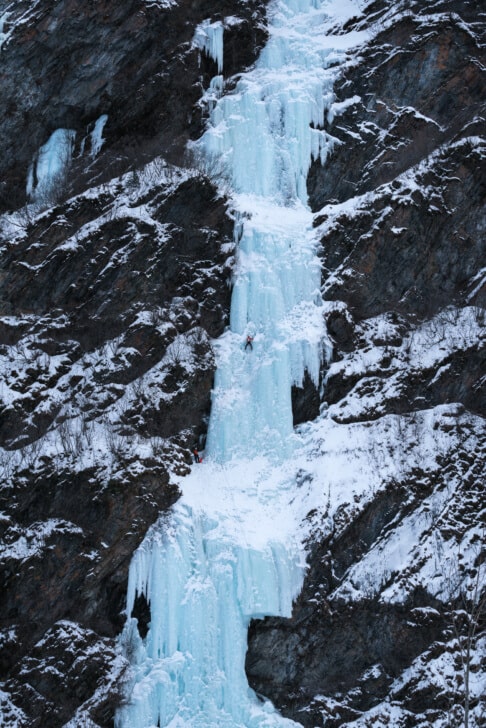
If breathability is important to you, active insulation jackets offer the best performance. Overall, the Patagonia Nano Air Light and Arc’teryx Proton LT Hoody were the two best performing active insulation jackets I tested.
Jackets that I categorize as windproof have low air-permeable fabrics. In standardized tests, air passes through the fabric between 0.1 cubic feet per minute (CFM) and 5.0 CFM.
In comparison, the fabrics on active insulation jackets are much more air-permeable:
- 67 CFM (Patagonia Nano Air Hoody)
- 90 CFM (Arc’teryx Proton LT Hoody liner fabric)
- 140 CFM (Patagonia Nano Air Light)
Performance Comparison Table
The six performance criteria outlined above (weight, warmth, durability, comfort, weather resistance, and breathability) are compared for each jacket in the table below.
I assigned a “score” on a scale of 1-10 (1 = worst, 10 = best) for each performance criteria, considering, in particular, the relative comparison among each jacket model.
Member Exclusive
A Premium or Unlimited Membership* is required to view the rest of this article.
* A Basic Membership is required to view Member Q&A events


Discussion
Become a member to post in the forums.
Companion forum thread to: Synthetic Insulated Jacket Review & State of the Market Report
This comprehensive State of the Market Report presents more than a dozen synthetic insulated jacket reviews and performance comparison to evaluate their durability, warmth, weather resistance, breathability, and features.
Great stuff! Thanks!
It’s nice to stay in the loop with what synthetic is up to. I expect I’ll keep using down for pretty much everything (due to it’s durability) except for truly sloppy conditions where I’ll pull out the fleece.
Awesome write up! This is a very valuable resource.
I was wondering if anyone could comment on the latest montbell u.l. thermawrap parka? It has a new 40gsm “stretch exceloft ” insulation and stretch fabric that looks like could be a cheaper/ full zip alternative to the Patagonia nano air light in the active insulation category.
Has anyone had any first hand experience or been able to compare it to the Patagonia nano air light? I would have loved to see this included in this report.
Thanks
Nice report, lots of detail, thanks
You sort of touched on synthetic as a survival item. You never know when you might get wet. Having a synthetic jacket could help you survive.
Vest is another option you mentioned. 2.5 oz/yd2 Apex, lightest fabric – 4.5 ounces
The lightest weight synthetic will give you all the performance of fleece at a lighter weight.
Are you sure Exeloft is short-staple because Richard Nisley claims it’s a continuous-fibre insulation ?
Arc’teryx Thermatek is not Climashield Apex, but Climashield Prism (see Climashield-website). There are however rumours Apex is used for Coreloft Continous.
All things Exceloft
https://www.montbell.us/special/products/exceloft/
I know. I thought it was short-staple untill RN told he had hold it in his hands and tried to tear it and it feld and behaved like continuous insulation.
Max, could you take a guess at where about the Arcteryx Solo hoody would fall? Since its one layer of Thermatek vs the dual-layer Dually maybe the maths would not be too difficult theorize?
I know they dont make it anymore… but I have one and am curious…
Jeffs Eleven,
Thermatek is rebranded Climashield Prism @ .76 clo/oz. You can calculate your jacket’s insulation value and camp chores thermo-neutral temperature, when new, using this value.
This is probably a tired topic, but where would Wiggy’s Lamalite fit into the equation? His lamination of Climashield seems to have addressed much of the durability concerns. Anecdotally, I’ve used several of his products for several years without insulation failure. Pairing Brynje fishnet baselayers with his Lamalite liner jackets under a paddling drysuit works much better than other options I’ve tried on winter kayaking trips. I had him make a Lamalite topquilt and underquilt for my hammock in cool humid conditions that work well too. Unlike my down, I’m willing to launder his gear more frequently. I have several pairs of his Lamalite socks that have been laundered around 50 times. The wear points are in the outer material and not the insulation.
Wiggy’s isn’t known for his choice of lightweight materials (or willingness to use them) to go with his Lamalite, but he does appear willing to sell his Lamalite to other manufacturers. Just a thought. It could be an answer to addressing the longevity of synthetic insulation.
I have plenty of down and really enjoy using it, but my recent migration to multi-day sea kayaking trips has really made me appreciate the relative capabilities of synthetic insulation compared to down.
Years ago when we were looking at insulation for the old Cocoon UL line, I tested some Lamilite vs. unlaminated insulation (same insulation). There seemed to be a bit of loft degradation (20-25%?) that was a direct result of the lamination process. That, combined with a little bit of additional weight resulting from the lamination process itself (not sure why it was heavier), made Lamilite a poor warmth:weight ratio insulation.
Again, at the time – 10 years ago or so. Not sure what it’s like now, perhaps (hopefully) improved?
I did like that the insulation was somewhat stabilized – much better than loose batting. But I don’t know how it affected durability.
However, I think lamination benefits might be negated at the lightest weight end of the spectrum, after taking apart a Micro Puff and looking at the PlumaFill batts. Seems like that thread patterning actually works pretty darn well for stabilizing the batts. For thicker insulated jackets, you wouldn’t want sewn-through stitching so lamination might be a good way to go?
Anecdote: I did receive a *new* Wiggy’s bag from a BPL member about the same time, he had me inspect it because he thought it was too flat for the insulation weight. I remember thinking that the loft on it was pretty low for the insulation used.
Thank you, Sir Nisley.
Thanks for the reply.
If Wiggy’s is laminating Climashield, it would make sense that it would have an initial loss in loft in the process as would the weight gain. He’s probably using some form of adhesive. The adhesive would add weight, and the adhesion would make the make the laminated side some what flatter in achieving a bond.
Out of the box, Lamilite should probably weigh more and have a bit less loft. However, after more extended use, it should compare more favorably to regular Climashield as the lamination makes it more stable. In other words, a new Climashield item would outperform Lamalite in weight and loft, but by the second year, the Lamalite would potentially win out in loft to weight ratio.
Both Climashield and Lamalite perform well and dry comparatively quickly, but the Lamalite appears to remain more stable when wet than a comparable Climashield article. I know my Climashield quilt with Climashield appears to collapse more and the insulation shifts more than my Wiggy’s quilt with Lamalite.
On another note, when out in much colder conditions (well below freezing) with heavy winds, I do appreciate that the Lamilite doesn’t get compressed as much by heavy wind as a high loft down garment. They also compress less under a shell.
Great topic. My use of synthetics is generally treated as heretical by my lightweight colleagues….until the third or fourth day on a wet trip.
Fantastic article. There’s a wealth of information here.
EXCELLENT article and sub articles on each jacket/parka.
Most of my winter experience has been in the northeastern US so I have a few older synthetic insulating layers. My “suit” as a mid layer is made of Thermolite Micro which Robert Nisley mentioned as not being close to Climashield’s level of warmth-to-weight.
Now that I live in Nevada and venture to Utah and California for winter trips I still rely on the Thermolite Micro jacket for huffing up big hills but prefer fleece lined nylon cargo pants from Duluth Trading (over heavy weight poly long johns).
** If I expect extremely cold weather I use unlined nylon cargo pants over the Thermolite Micro pants over “polar weight” Cabela’s long johns. I also have Thinsulate insulated GTX ski bibs but the breathability sucks as does warmth-to-weight.
After reading this article I’m lusting after the highly customizable Nunatak parka and I love it that it uses my favorite synthetic insulation, Climashield – currently the loft retention champion.
Regarding durability, would the active jackets be OK under a backpack strap over the course of the day, or would that eventually compromise the insulation in that area from compression? I’m from the school or baselayer + fleece shirt (e.g. R1) + WPB jacket, with a lightweight down layer for camp. If I could replace the Fleece and down with a synthetic insulated jacket, it would need to be used on some days while backpacking.
Thanks for the great article.
Why no mention of the Enlightened Equipment Torred Apex jacket?
Perhaps I am not understanding the layering system jargon, or maybe I can learn something about layering here.
These examples make sense to me:
Erin McKittrick and Caroline Van Hemert: baselayer > fleece shirt > windproof synthetic-insulated jacket > rain shell.
Luc Mehl: baselayer > active insulation jacket > rain shell..
Ryan Jordan: base layer > active insulation jacket > rain shell
These examples are confusing:
Kristin Gates & Andrew Skurka: baselayer > fleece shirt > rain shell > down jacket. Duh, don’t you want to keep the down under the rain shell so it stays dry? Also, when it’s not raining, the rain shell would add needed wind resistance to the system.
Joe Valesko: baselayer > wind shirt > windproof synthetic-insulated jacket > rain shell. Why not have the wind shirt outside the jacket? It seems the rain shell should always be last, and stay in the pack until needed for rain or wind resistance.
Dave Chenault: baselayer > active insulation jacket > rain shell > windproof synthetic-insulated jacket. Why have the rain shell under the jacket (assuming it is not raining)? Is this to trap moisture next to the body? Isn’t that a bad thing? However, I have heard of climbers trying to keep their down bags from getting moist by having a moisture barrier inside their bags.
Ryan Jordan: base layer > wind shirt > rain shell > down jacket for short trips in mild conditions; Again, why have the rain shell under the down jacket?
Thanks for your thoughts and considerations, Erica
Erica,
I think most of these clothing lists are not meant to be read as how they are worn but just lists of clothes carried.
My take on synthetic insulation is that an innovation in the actual chemistry of the fiber(s) used needs to happen so the fibers can be far more resilient through hundreds of cycles of use and stuffing. Perhaps some innovation in fiber shapes like the old hollow Polarguard Delta fiber.
So far Climashield has been the leader in resilience but it too has loft loss we would not tolerate in down.
Erica,
Regarding wearing a hardshell under a down jacket, I can’t speak for the folks listed in the article but for me, I do this sometimes when there is no precipitation. My reasoning is that the hardshell works reasonably well (albeit imperfectly) as a vapor barrier for warmth and to protect my down garment from absorbing any sweat and steam.
I can manage and dry a damp fleece better than a damp down jacket. If it’s cold enough, I can hang the fleece and then shake off any ice crystals.
I’ll have to reread the article and I don’t remember if it’s covered, but anecdotally synthetic insulation seems to perform differently than down and it doesn’t seem that you can measure them the same (ie a 1/2” of synthetic feels warmer to me than a 1/2” of down, as an example).
This is likely for a variety of reasons including unevenly distributed down, construction variances (sewn through vs non), but it’s never seemed to me that from a warmth perspective that loft is simply loft and it seems there’s another variable in play.
I think for the down layer over rain jacket group it’s most a sizing thing. The rain shell is for active use and they want a closer fit and the puffy would get too compressed under the rain shell. It could also be to protect the down from internal moisture. That was my approach for a while but I didn’t like not being able to wear my puffy in camp if it was raining.
In Joe’s case he’s using the wind shirt as his active/mid layer instead of a fleece. As you increase activity you shed layers. Also when you stop you don’t want to lose heat by first removing your wind jacket and then adding your puffy.
Just a guess here but Dave’s system looks like it’s designed after climbers with a synthetic belay jacket. There’s a lot more start/stop so you need a synthetic jacket to handle moisture on your stops and be able to add/remove quickly as your last layer.
Ian,
The “other variable” besides loft is usually “boundary air”, the few molecules of air on the insulating fibers or plumules. That boundary air tends to cling to the outside of fibers or down plumules and not get disturbed as easily as the rest of the air in the insulation.
This means the more boundary air (i.e. the more surface area of the insulation) the better the heat retention. Down has a lot of surface area on the fine plumules and thus better warmth per weight as well as loft. This is also why fine synthetic fibers trap more warmth than coarser fibers.
Asking again about active insulation under a backpack, as it dovetails with Erica’s questions. I wouldn’t wear down under my backpack unless I’m really freezing, and it’s reported that synthetics are more likely to be damaged by compression, such as the backpack straps during a cool weather hike.
My layering system for Philmont this summer was going to be baselayer > R1-like fleece > rain shell > Montbell Ex Lite Anorak down hoody. I was planning to have my son use a synthetic jacket to suppliment his R1 hoody and rain shell. After reading the report, listening to the podcast, and reading some of responses here, I’ll clarify our plan – and my question as follows:
While hiking: baselayer > R1-like fleece > rain shell.
While in camp: baselayer > R1-like fleece (if not wet) > Anorak or synthetic jacket > rain shell
We will be above 9K’ for 5 days, and above 10K’ for two of those days/nights as we camp just before and after summiting Mt. Phillips. No way to predict yet, but there will likely be rain this time of year (mid/late-July). The scenario that concerns me is that we are finishing a long days hike or service project in the rain, soaked with either precipitation or sweat, and have a few hours of standing around at over 10K’ as the scouts setup camp, cook, and socialize. The next morning we are up early for our backpack over Mt. Phillips. I’m not sure if these scenarios
I picked up a 50% off Nano-Air jacket last week that will fit either me or my son. I also have a Patagonia Level 3 Alpha jacket and a very old but in good shape REI synthetic jacket. Could these replace both the R1 fleeces and the down puffies my son and I were going to use? Could we wear those while hiking under my backpack straps and maybe rain shell and also expect them to keep us warm while in camp? The weight savings is enticing, but I hate being damp and cold.
Thanks in advance.
You’re touching on it some Eric but I’m looking at this in terms of loft not weight. Inch for inch I feel warmer with synthetic over down.
Become a member to post in the forums.