You don’t have access to view this content.
Backpacking Cameras and Photography Skills
An online live (and recorded) webinar introduction to backpacking photography skills, techniques, and gear.
You don’t have access to view this content.
Maybe not everything about ultralight backpacking has to be optimized.
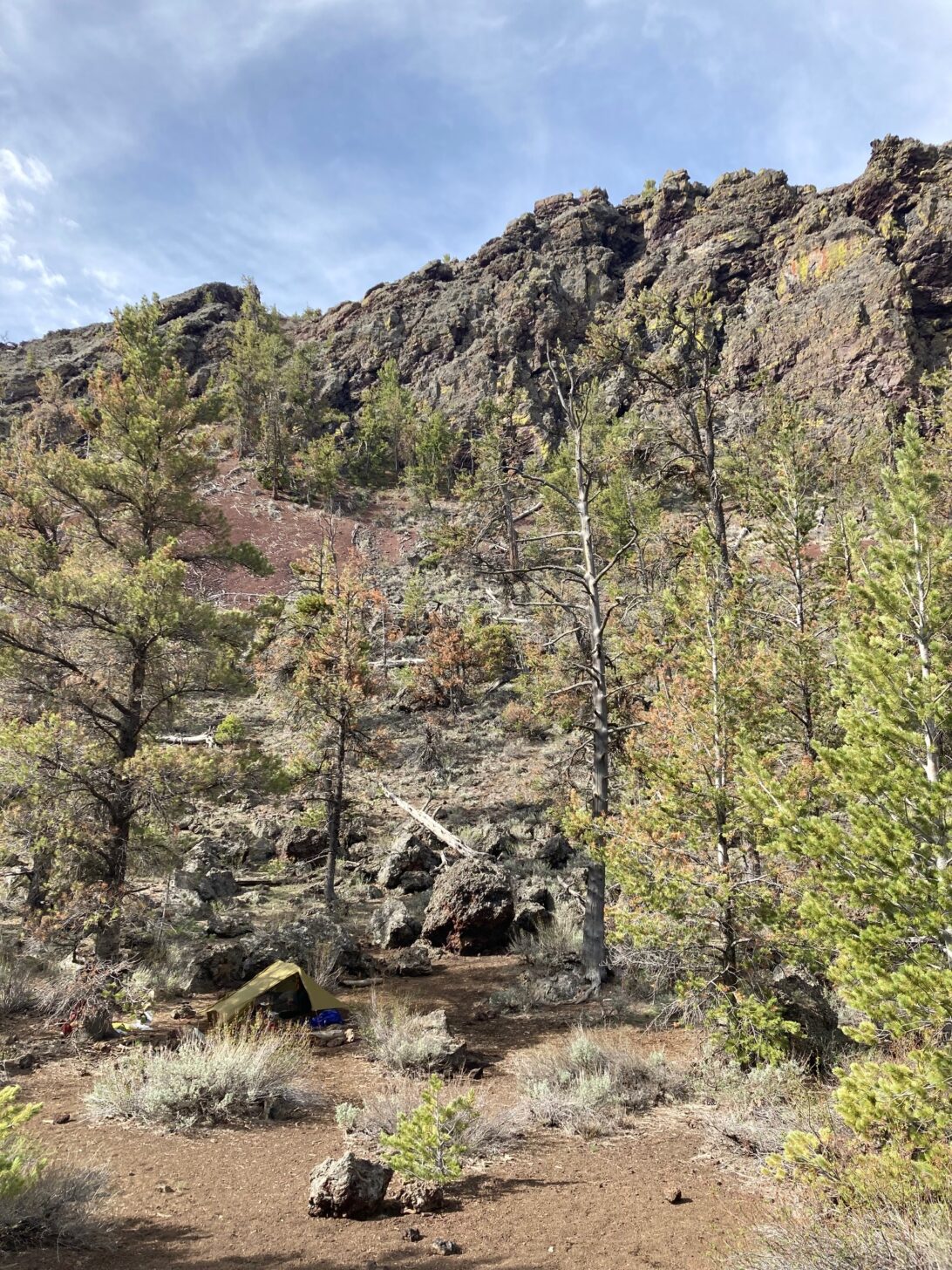
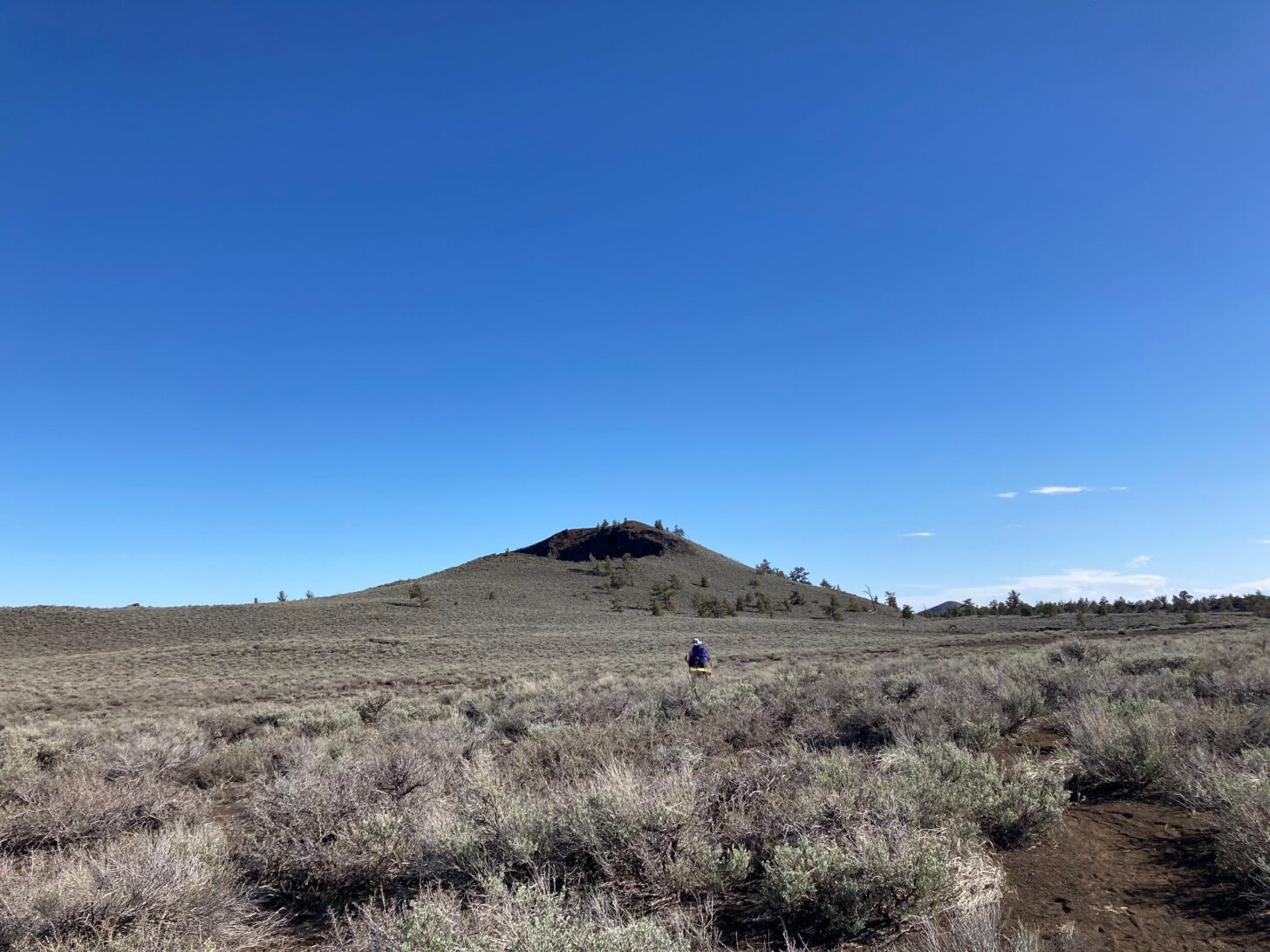
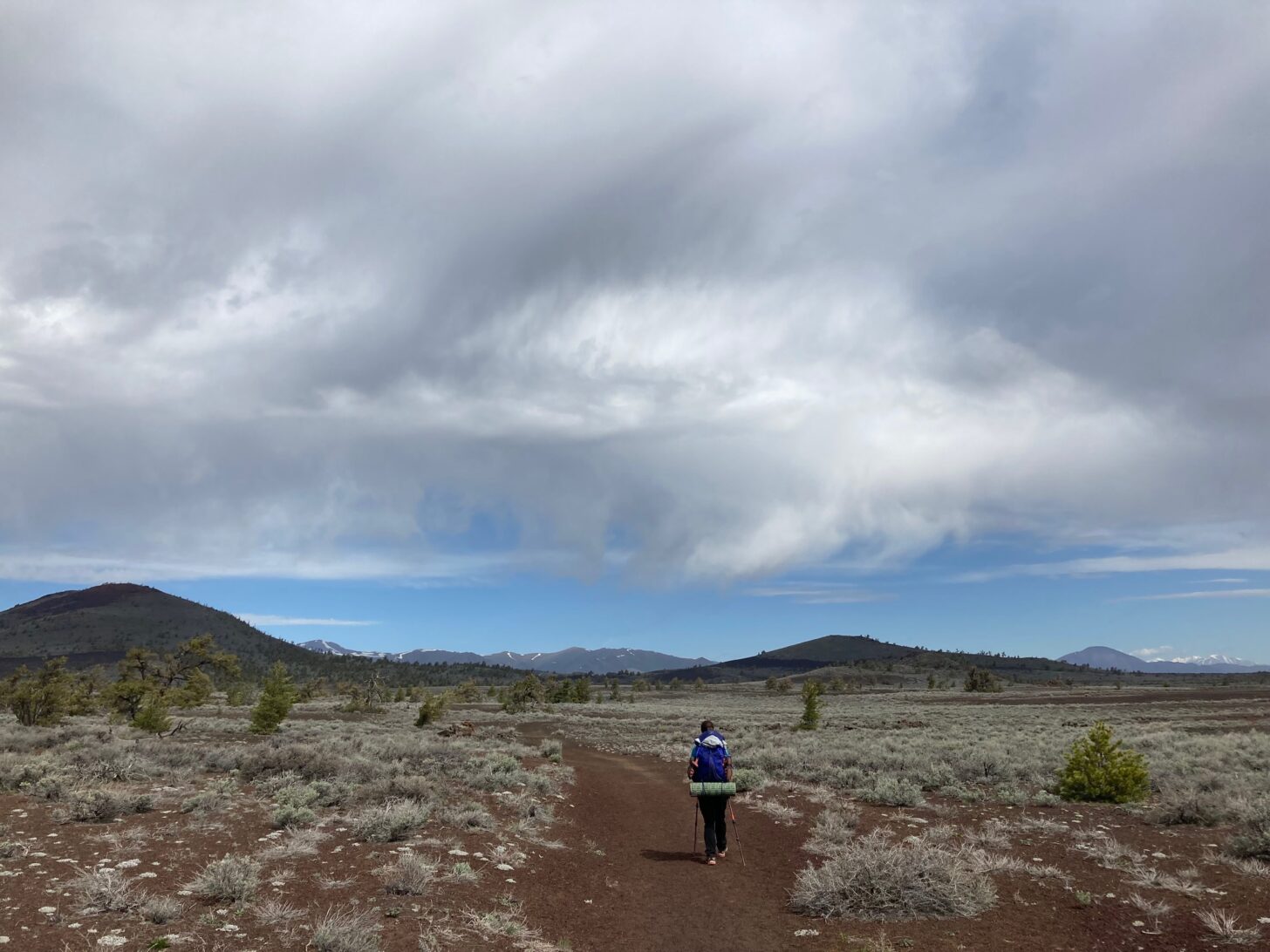
When my partner Hallie and I tried to embark on a trip to the far southwestern corner of Utah last month, I was no help at all. She would have been happy to explore almost anything, walking through any mountain range just to see what’s there, tromping off-trail between junipers, and climbing loose shaley hills to get a view of who-knows-what. But every place, to me, had an issue I couldn’t reconcile. Every place was imperfect. Or maybe not every place, but every imagined future experience in a place.

The Beaver Dam Mountains looked intriguing from St. George, Utah. They weren’t tall or jagged, but they were a place I hadn’t been. And sometimes that’s enough for me. This time, it was more than enough for Hallie, who was elated by the prospect of just being outside, cold and windy though it was. I looked down at the map and then out a window but understood neither landscape, projected or real, well enough to say, “Yes! Let’s do that!”
I felt paralyzed, and Hallie was at a loss as to how to revive me.

For one, I told her, the storms were building somewhere in the mysterious west, or at least the weather app on my phone said that was the case. That somewhere in the center of the Pacific some future desert wind, some future slickrock snow was growing, building. We had considered a packrafting loop through the reemerging Glen Canyon too, but when I imagined being on the freezing water in 20 mph winds, I got nervous and closed the CalTopo app.
I didn’t want to sit with the reality that I couldn’t control the outcome of a trip.
Of course, this is why I plan. Because the world is completely unpredictable. All futures are unknown. This is why I make spreadsheets with every piece of gear laid out before me with weights and uses clearly labeled. So I know that I can respond to rain, snow, heat, cold, darkness, and bears. Frankly, this is also why I so often overpack (I’m not the best ultralight backpacker sometimes).
All of these efforts stem from a fear of the unknown, which is an ambiguous way of saying that I’m scared of dying. They are manifestations of the desire to optimize fear out of the backpacking equation. Of course, this is an absurd attempt. It’s impossible to optimize fear out of the equation in either backpacking or human life. But the closer I get, Oliver Burkeman tells me in his book 4,000 Weeks: Time Management for Mortals, the more possible it sometimes seems. But this is a trap.
It’s a trap because it’s just never going to happen. There’s always going to be uncertainty. “Entering space and time… means letting your illusions die,” Burkeman writes. In other words, as long as you have been born – everyone reading this has – you will have to let visions of the perfect future die. So no trip is going to be perfect, ever. No reality will map onto the plan in my mind, ever. And no life will be as fulfilling as I’d hope, ever. I’ll never get to a place where I am prepared to have a child, and I’m never going to get to a place where I am prepared for everything the wilderness will throw at me.
But I can worry about it. And worry, Burkeman tells me, is an effort to assert control over the future. So, as I sat looking out the window, I worried because that felt somehow easier than sitting with the reality that I couldn’t know what any potential trip might hold.
So much of the online backpacking world today is fixated on optimization for the purpose of addressing every possible future scenario. We’re also fixated on optimizing for the lowest possible weight, the most calories per ounce, and the most warmth for weight. This is all pretty funny to me because backpacking, at its core, is kind of a pointless activity. And that pointlessness is the point. Or at least used to be. In fact, hiking is one of Oliver Burkeman’s favorite hobbies, and he writes about it in the chapter “Hiking as an End in Itself.” On a rainy walk through the high moors of the Yorkshire Dales he reflects that his leisurely country walk has two noteworthy features:
“For one thing, unlike almost everything else I do with my life, it’s not relevant to ask whether I’m any good at it: all I’m doing is walking, a skill at which I haven’t appreciably improved since around the age of four. Moreover, a country walk doesn’t have a purpose, in the sense of an outcome you’re trying to achieve or somewhere you’re trying to get…On a hike, you either follow a loop or reach a given point before turning back, so the most efficient way to reach the endpoint would be never to leave in the first place.” – Oliver Burkeman
Walking, then, is an “atelic activity,” or a pursuit with no ultimate goal or telos. Telos is the root of the term teleology, which is the idea everything has an intrinsic purpose. Aristotle – who effed things up royally in my opinion and in whose writing the idea of teleology originated – would probably question Burkeman’s view of walking.
And I can see the appeal of teleology; it orders and simplifies the world, but the world resists the idea if you really look. Just a few nights backpacking through the wilderness will remind you that the world is fundamentally random, chaotic, purposeless, uncaring, non-hierarchical, and fleeting. And then you die. It’s tempting to want to look for meaning in it, to control it. And I do – we do – all the time. But I can see that it doesn’t serve me.
So what the hell am I doing trying to reinsert purpose into a purposeless activity by worrying about the perfect experience? Why can’t I just sit with the reality that I can’t control the future or the desert or the mountains?
Well, Burkeman says, because we all do everything we can to avoid reality pretty much all the time.
To both distract from and attempt to assert control over reality, I optimize my kit, my plan, and my skills. And it works to some degree. Optimization can also be important for safety and to have a fun trip too. But it’s not lost on me that much of this effort is just a stand-in for the fact that it’s impossible to address the larger unknowns that I can’t optimize my way out of. Like death.
And that’s what this all really boils down to. We only have so much time (4,000 weeks for the average human life, actually) and we want to make sure we make good use of it. Unfortunately – and this is the really annoying kicker – we won’t. No one will ever do everything they hope to do. I’d like to visit Japan and New Zealand, but it might not happen before I kick the bucket. And that just sucks.
But the neurosis stemming from this fear is easiest to see in my hobby of backpacking because it is a problem-solving wellspring. There are endless ways for me to avoid the fact that I will never have a perfect kit by incrementally improving it. And I can avoid the fact that most trips will be imperfect and unpredictable by reducing the possibility of surprise by going out only during good weather windows while carrying a GPS app with the route clearly marked. And for each of my accomplishments, whether it’s the acquisition of the perfect 20-degree quilt or the bagging of a peak, “it’s always the case either that you haven’t achieved it yet (so you’re dissatisfied, because you don’t yet have what you desire) or that you’ve already attained it (so you’re dissatisfied, because you no longer have it as something to strive toward),” Burkeman writes. Sound familiar?
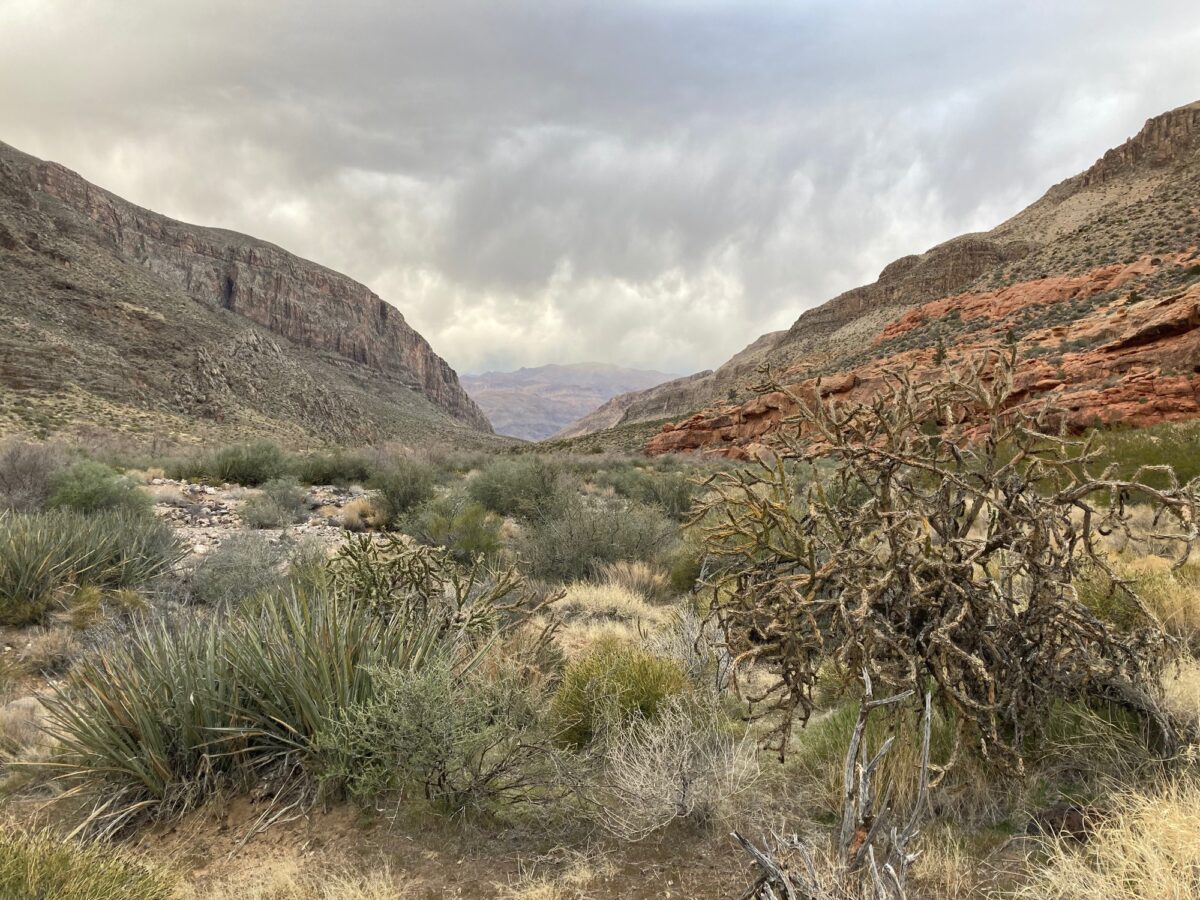
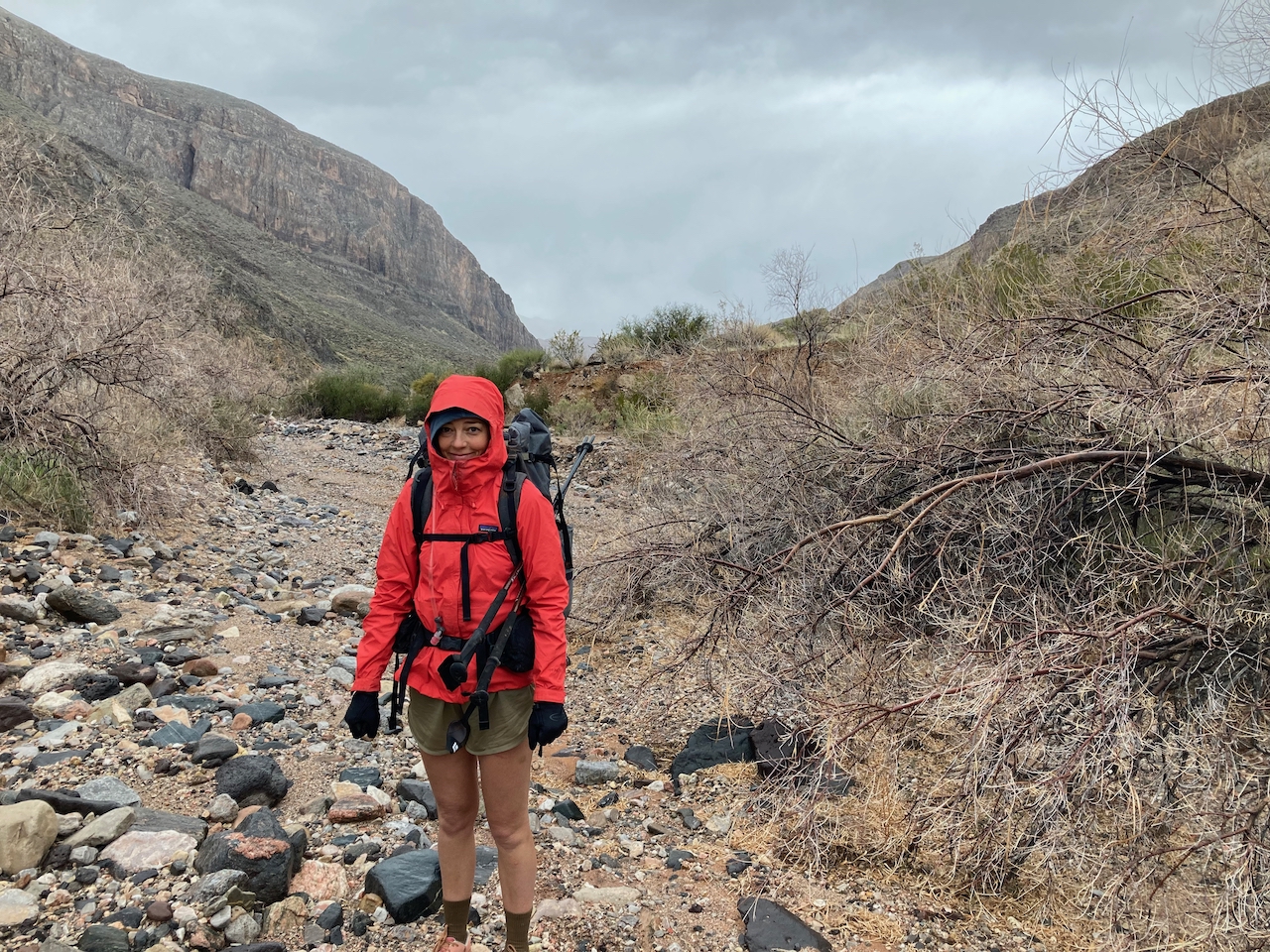
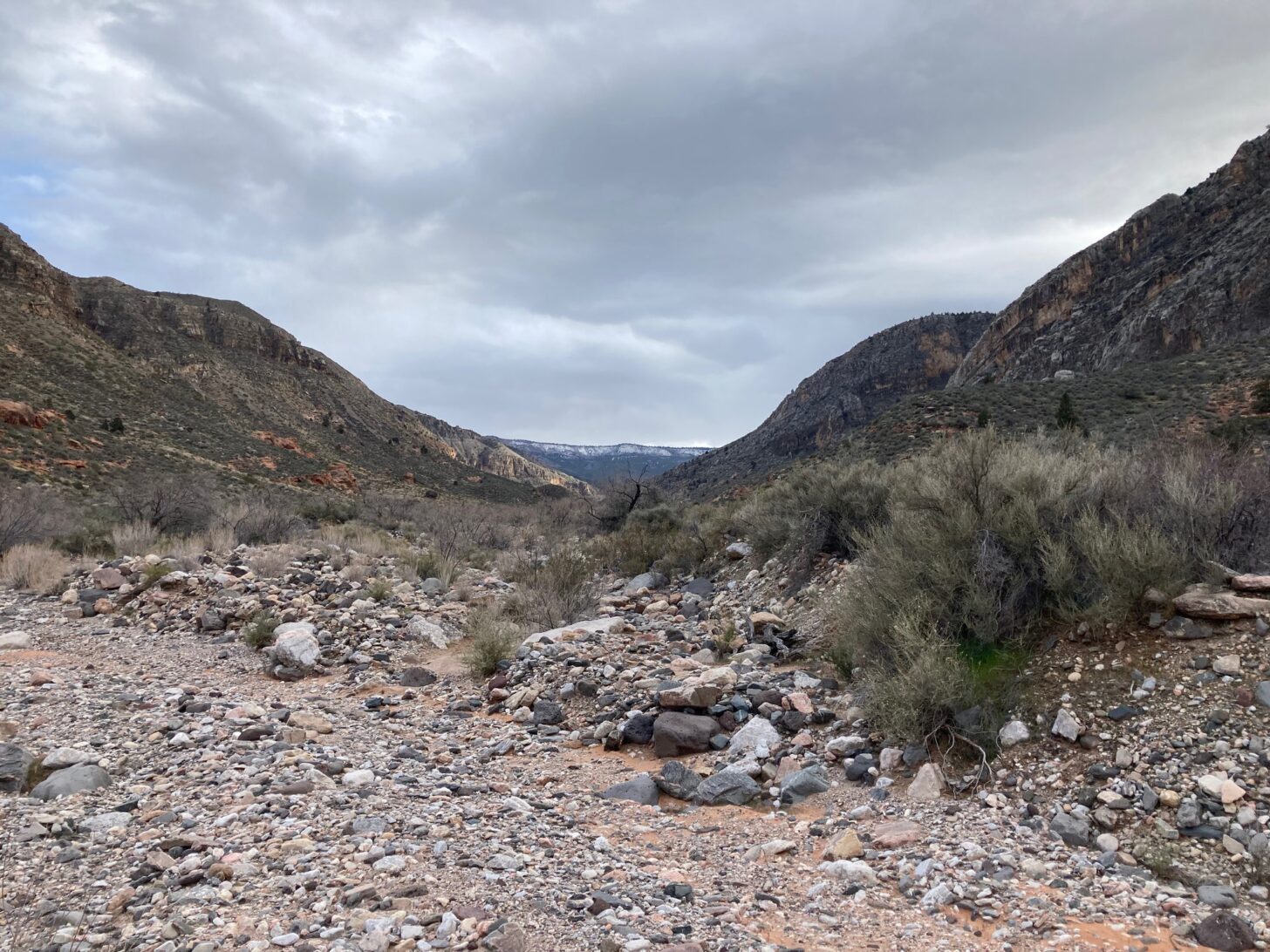
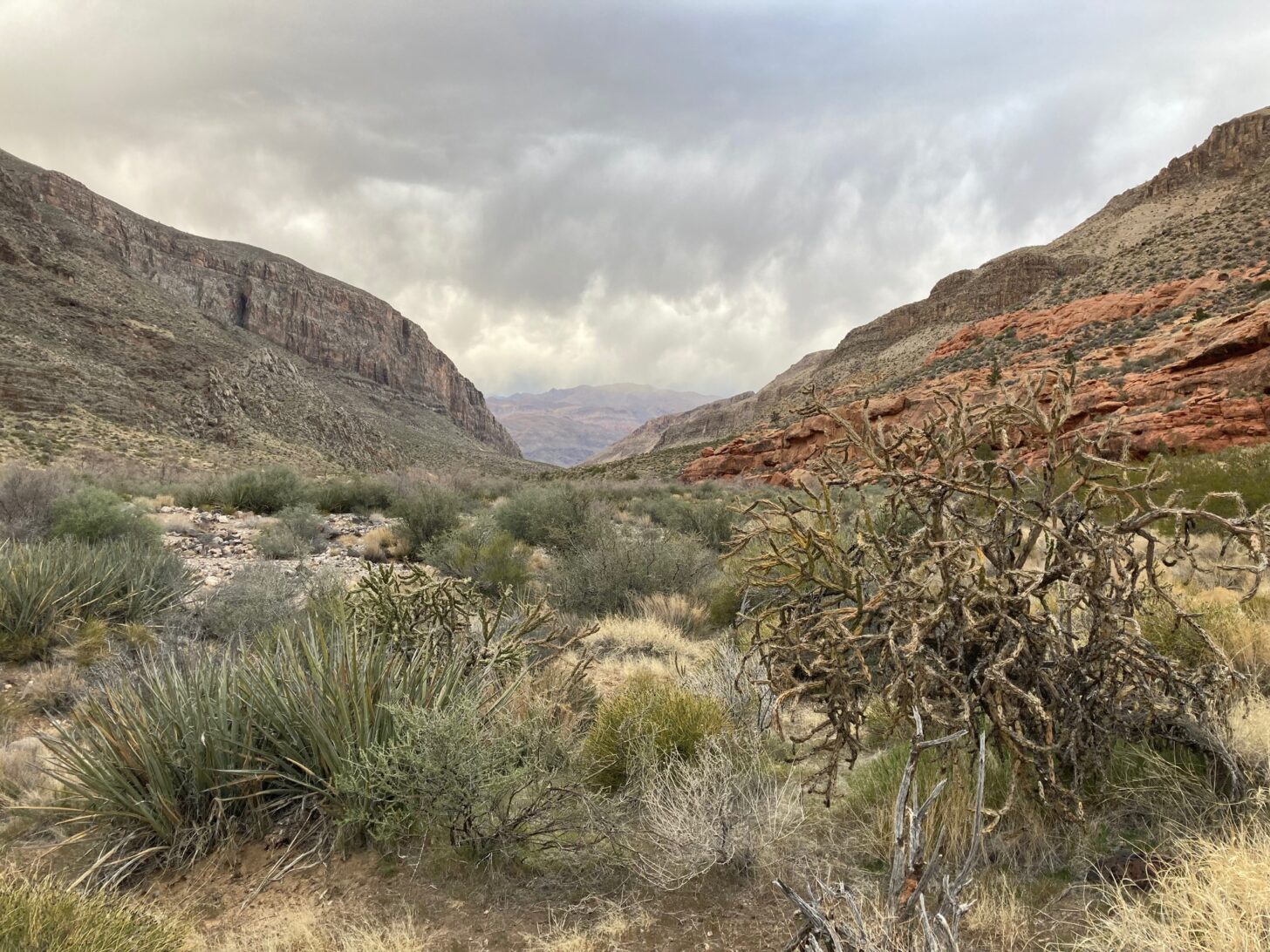
Finally, Hallie and I made a choice that was in no way perfect, but at least it was a choice. We chose a Wilderness Area in northern Arizona where neither of us had been. We crossed an Interstate on foot, removed our shoes and crossed a muddy river, and then worked our way up a widening, deepening, cobblestone canyon towards who-knows-where. It took a long time to get halfway to a water source, and there we stopped, right in the middle of the 12-mile-long gorge. As we stood there in the middle, I realized that it felt good simply to have made a choice and to have begun walking.

This canyon was the type of place where I wouldn’t be able to live if I didn’t have food, water, and shelter on my back. This means it was also precisely the sort of place I had feared when I was letting my neurotic, control-freak side get the better of me back at the house. A place that, I thought, wanted to kill me. But instead of futilely worrying about all that could go wrong in this unforgiving desert, I sat with the wild possibility that I could trust myself to adapt to whatever I may encounter. As that thought steeped in my stubborn mind, the landscape around me started to come into focus, to become more real.
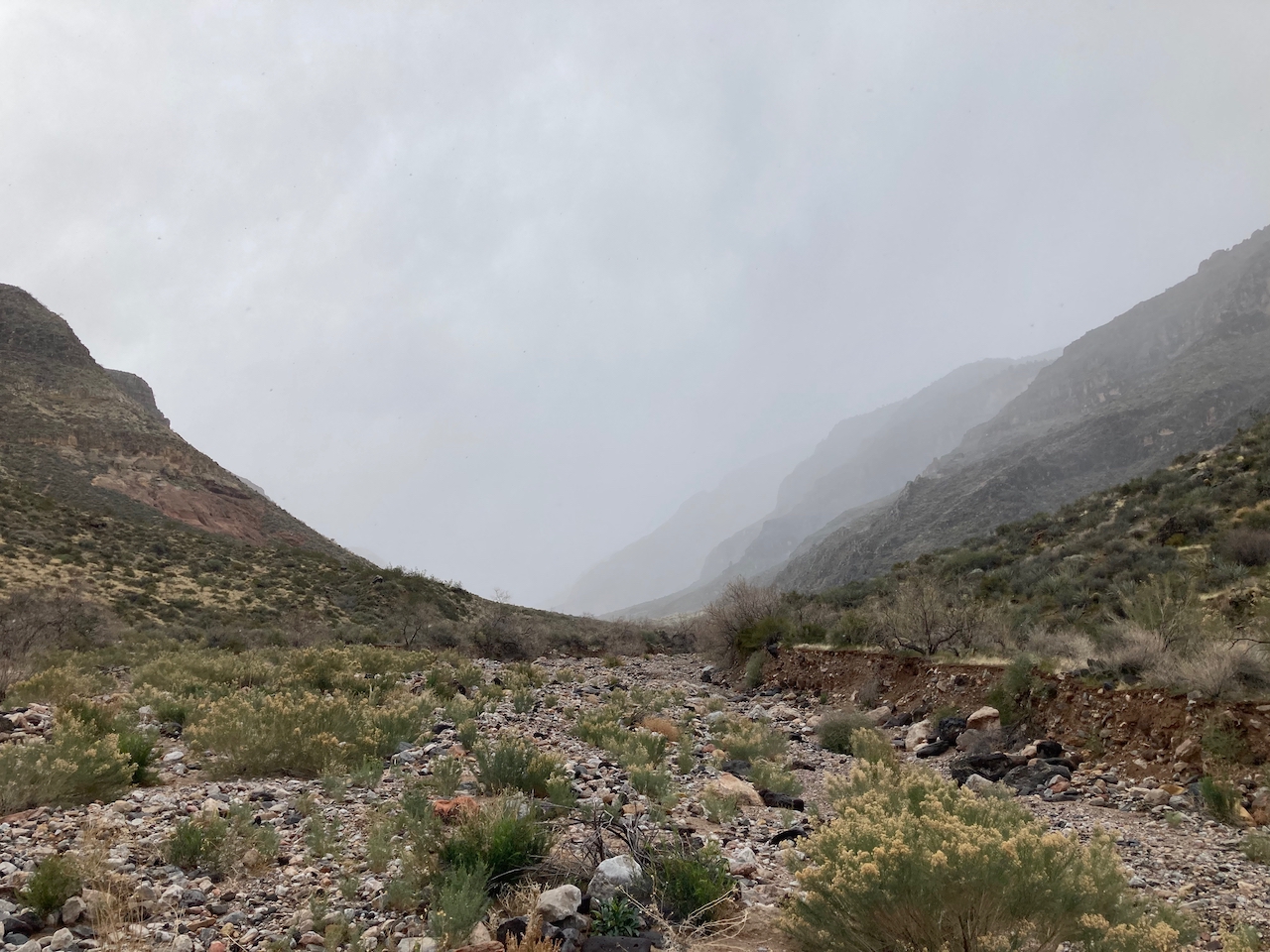
At each end of the canyon, rain swept toward the ground in slow ghostly curtains. The cobblestones under my feet ground against one another as I shifted my weight. My hands were cold. I was starting to see, hear, feel. Then my fantasy of complete control over the future started, haltingly and with resistance, to fall away. Like Dylan, “I opened my heart to the world and the world came in.”

When you let your illusions die, accepting no trip will be perfect and no kit will anticipate every problem while also weighing under six pounds – when you accept that your precious time allotted for trips may never be fully optimized, “you get to actually be here.” says Burkeman. “You get to have some real purchase on life. You get to spend your finite time focused on a few things that matter to you, in themselves, right now, in this moment.”
I started to focus on what mattered, and what mattered was the place and my body in it. I began to extricate myself from the false reasons for backpacking: kit improvement, trip time-window optimization, flawless preparation. I started to return to the real point of backpacking, its utter pointlessness, and just how enjoyable that can be.
DISCLOSURE (Updated April 9, 2024)
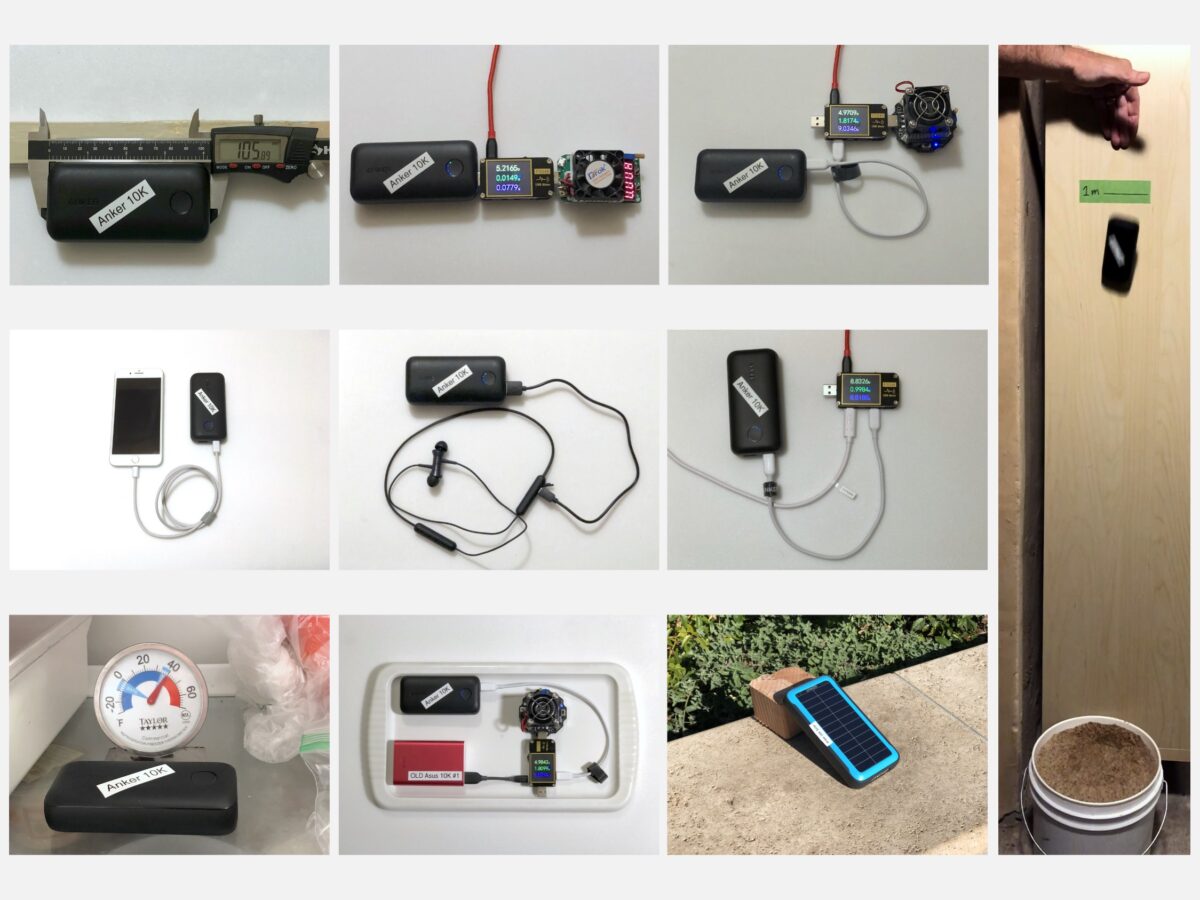
Anker Powercore PD 10000 and PD 20000 and Nitecore NB10000 and NB20000 carbon fiber portable battery chargers are put through the BatteryBench testing protocol.
You don’t have access to view this content.
How does Patagonia Thermal Weight Capilene stack up against Midweight Capilene?
You don’t have access to view this content.
In this episode, Andrew chats with Backpacking Light Staff contributor Drew Smith about the PCT, desert hiking, ponchos, and more.
Listen to the public version of this podcast episode on Itunes, Spotify, or wherever you get your podcasts.
In this episode, Andrew chats with Backpacking Light Staff contributor Drew Smith.
If you are a reader of the website, you may know Drew from his lovely stories about desert backpacking, or perhaps you’ve been reading his ongoing series about freeze-drying. If you haven’t read Drew’s work, make sure you check out the resources section (below) where we’ll have links to the articles we talk about in this interview.
Drew Smith grew up in Tuscon and Southern California and dabbled in long-distance hiking in his early twenties before picking it back up again later in life. He’s got a lot of interesting things to say about deserts, gear, food, and how to craft a hiking story, Enjoy!
Make sure you are logged in as a member to listen to or watch the full version of this podcast. Not a member? Click here!
—Members Only Begins Here
Articles by Drew Smith mentioned in the episode:
Other things we talked about:
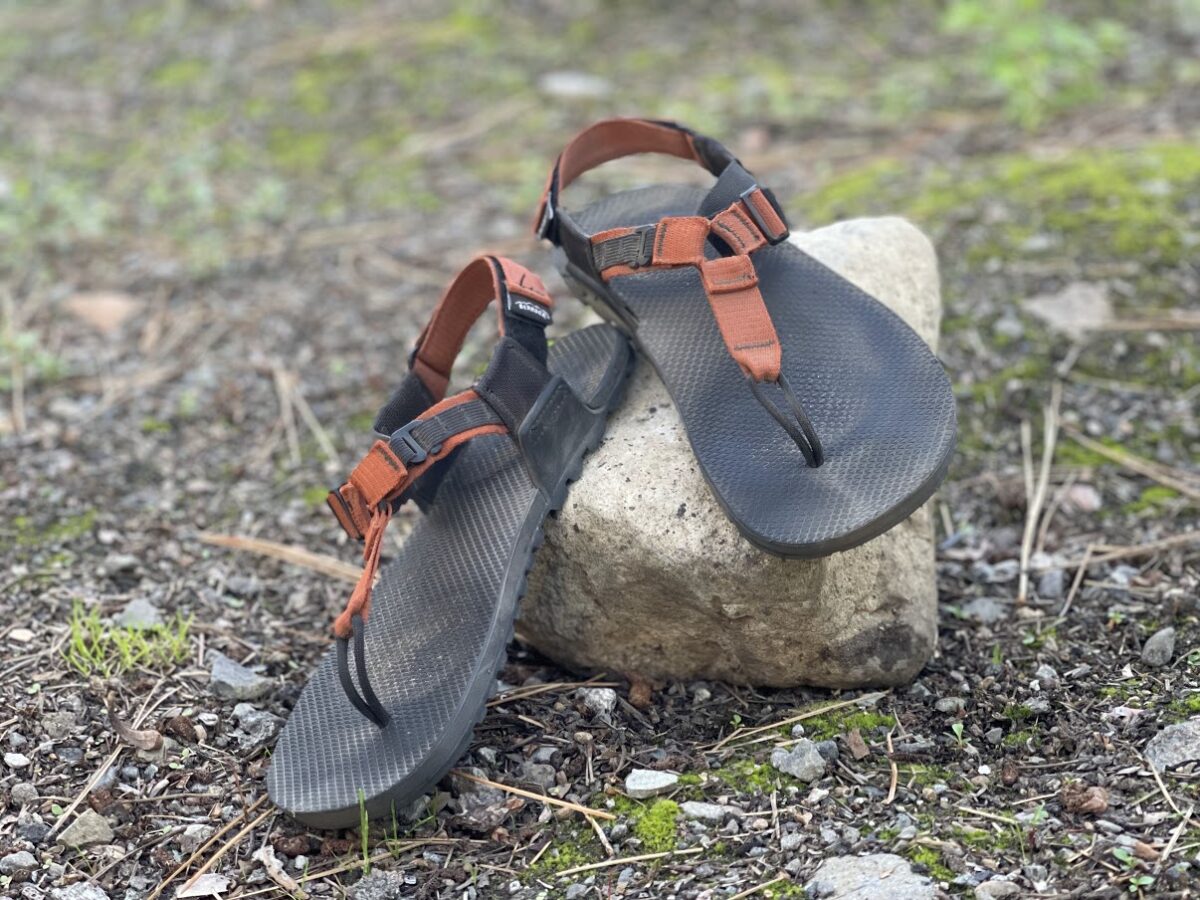
This review of the Bedrock Cairn Sandals examines footwear for hiking in sandals that is comfortable, secure, and grippy in dry, loose conditions.
You don’t have access to view this content.
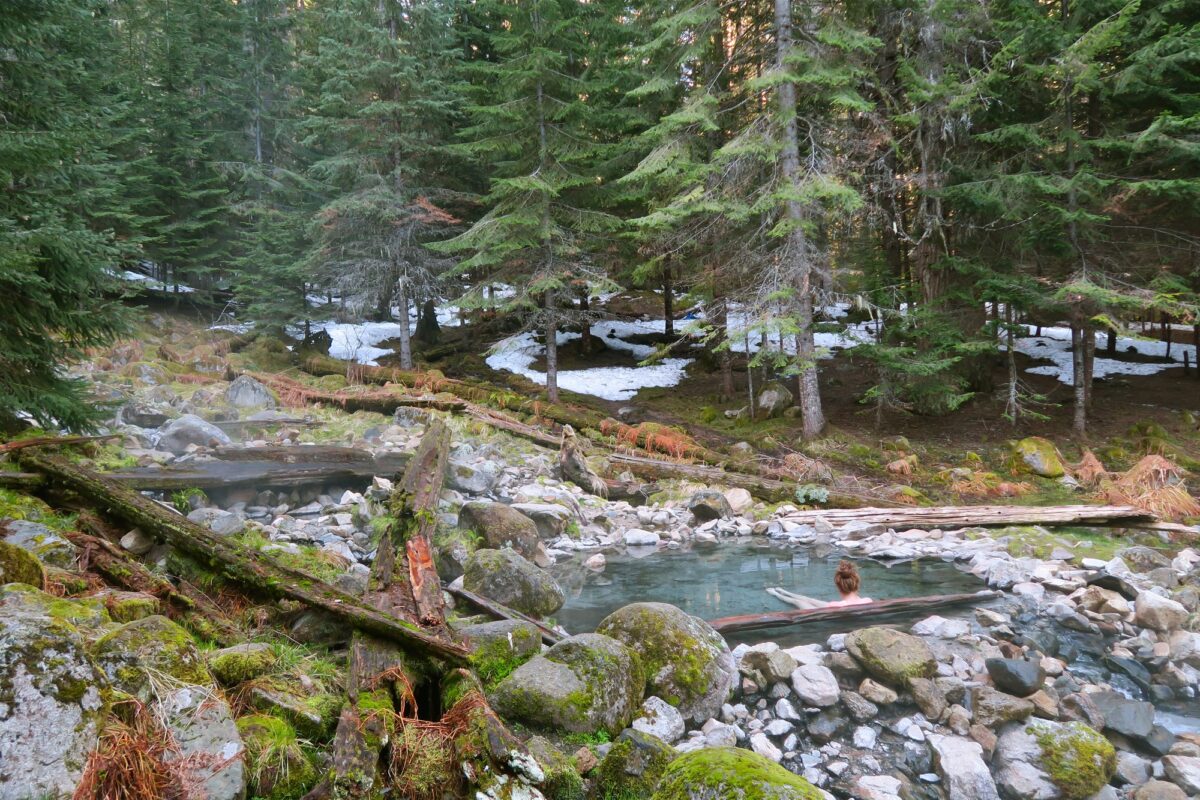
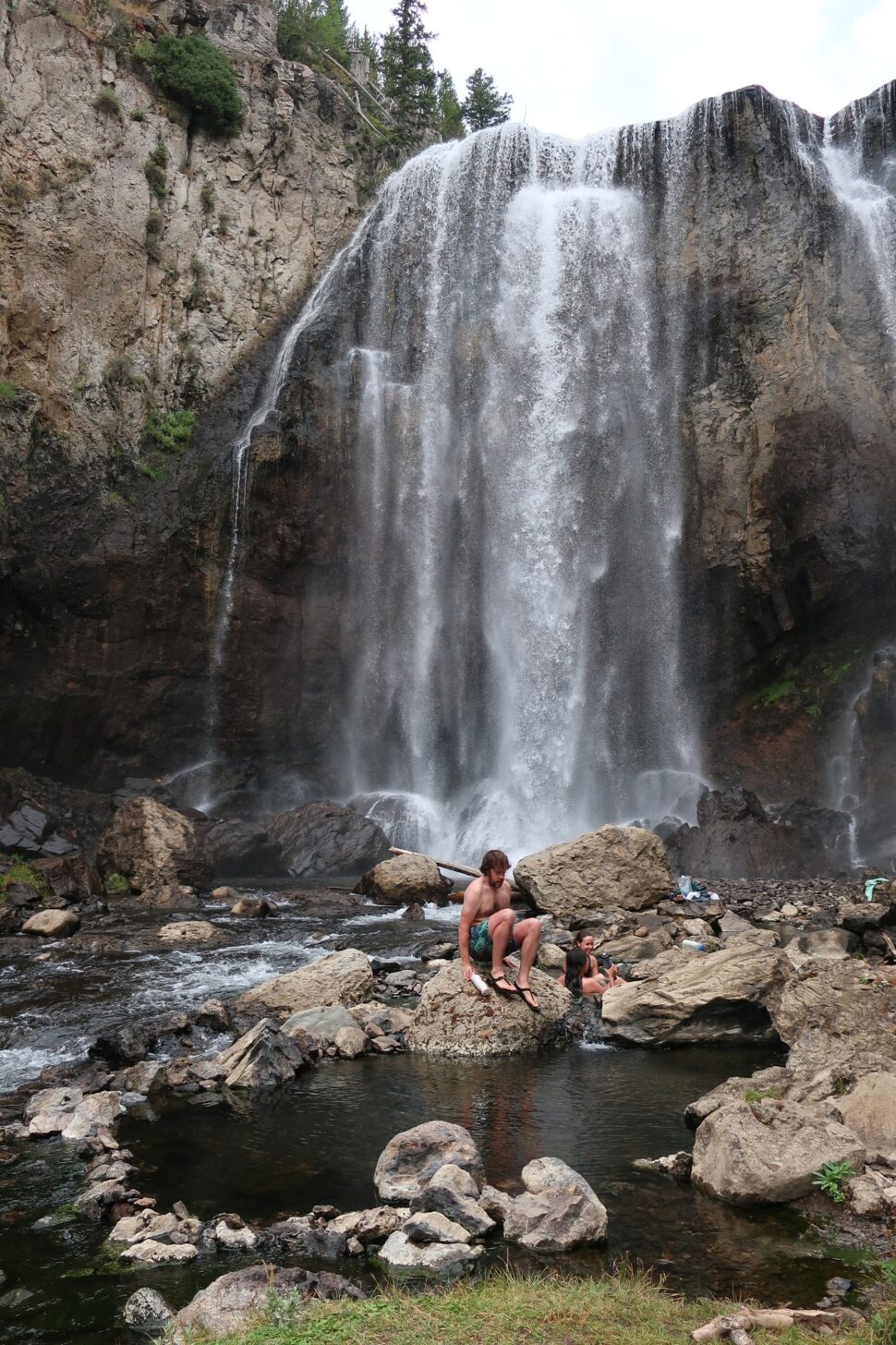
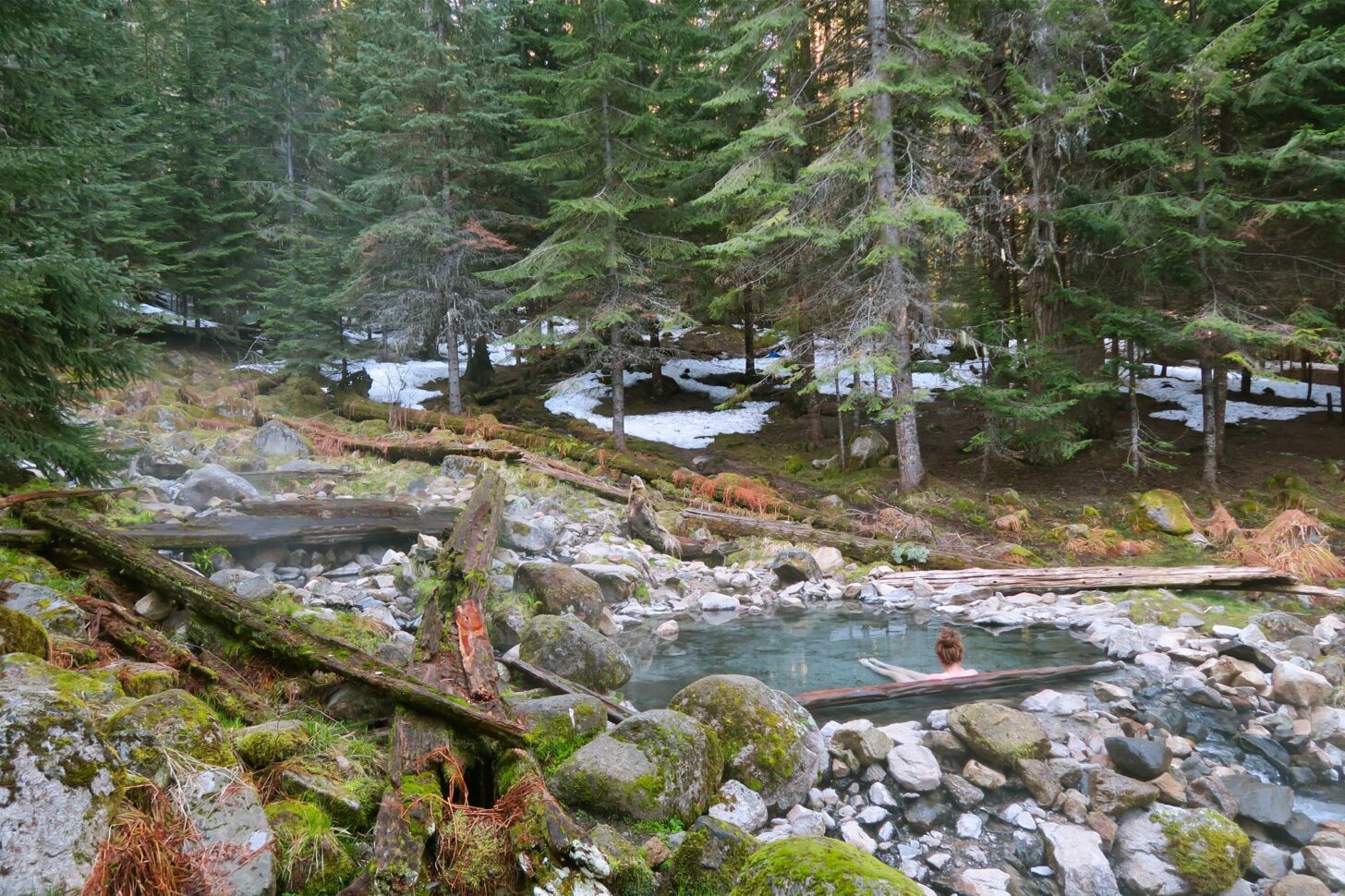
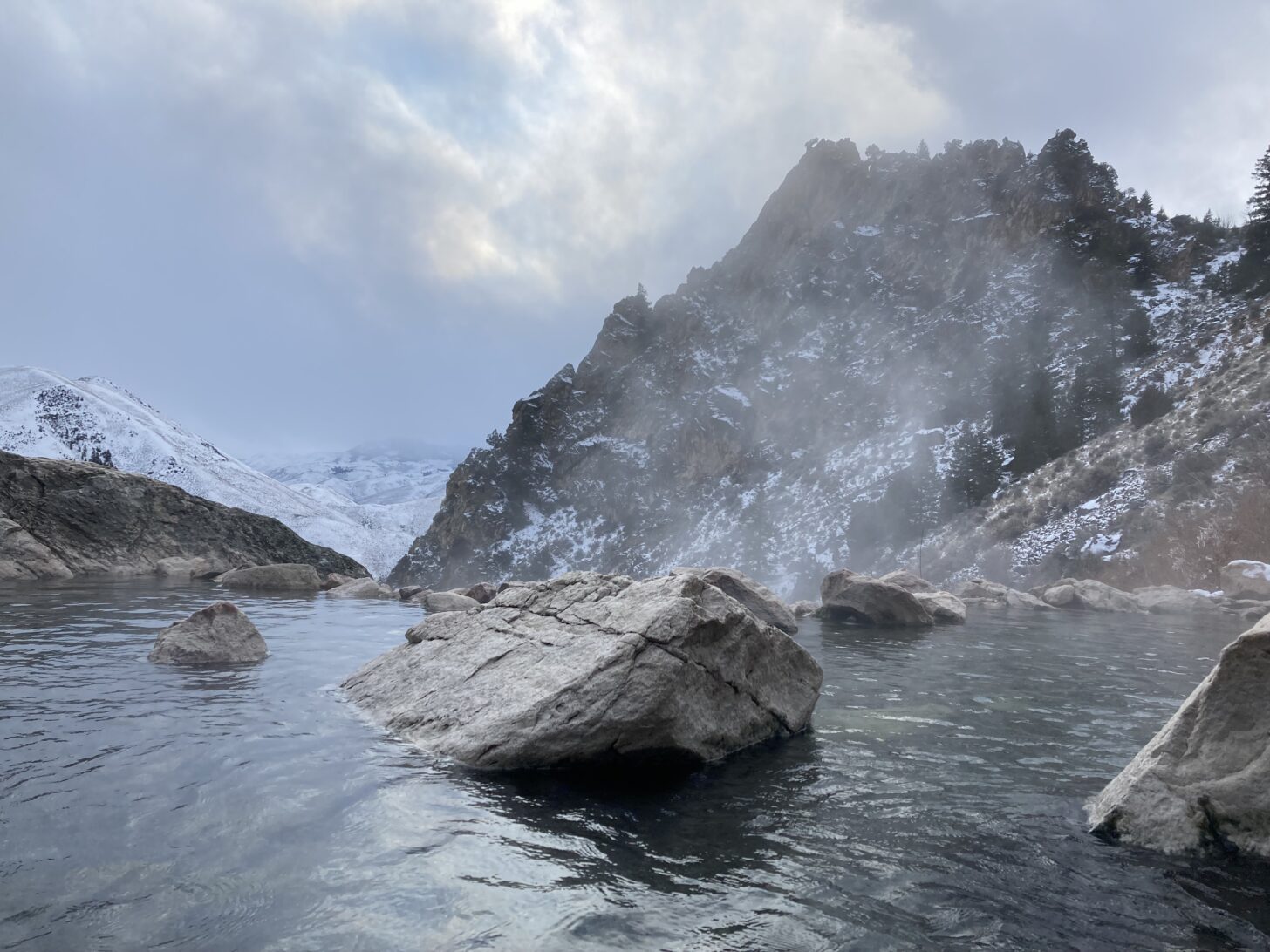
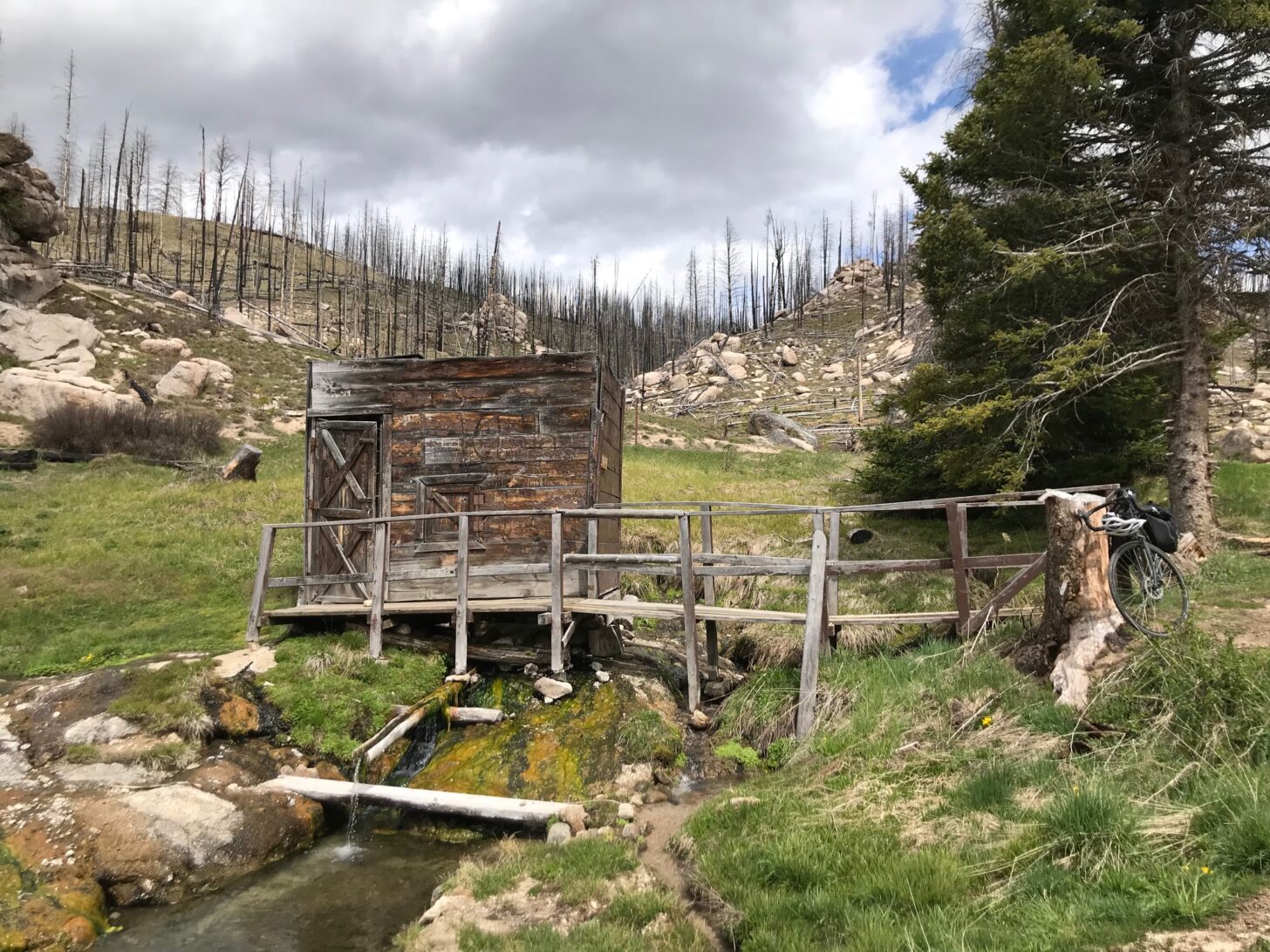
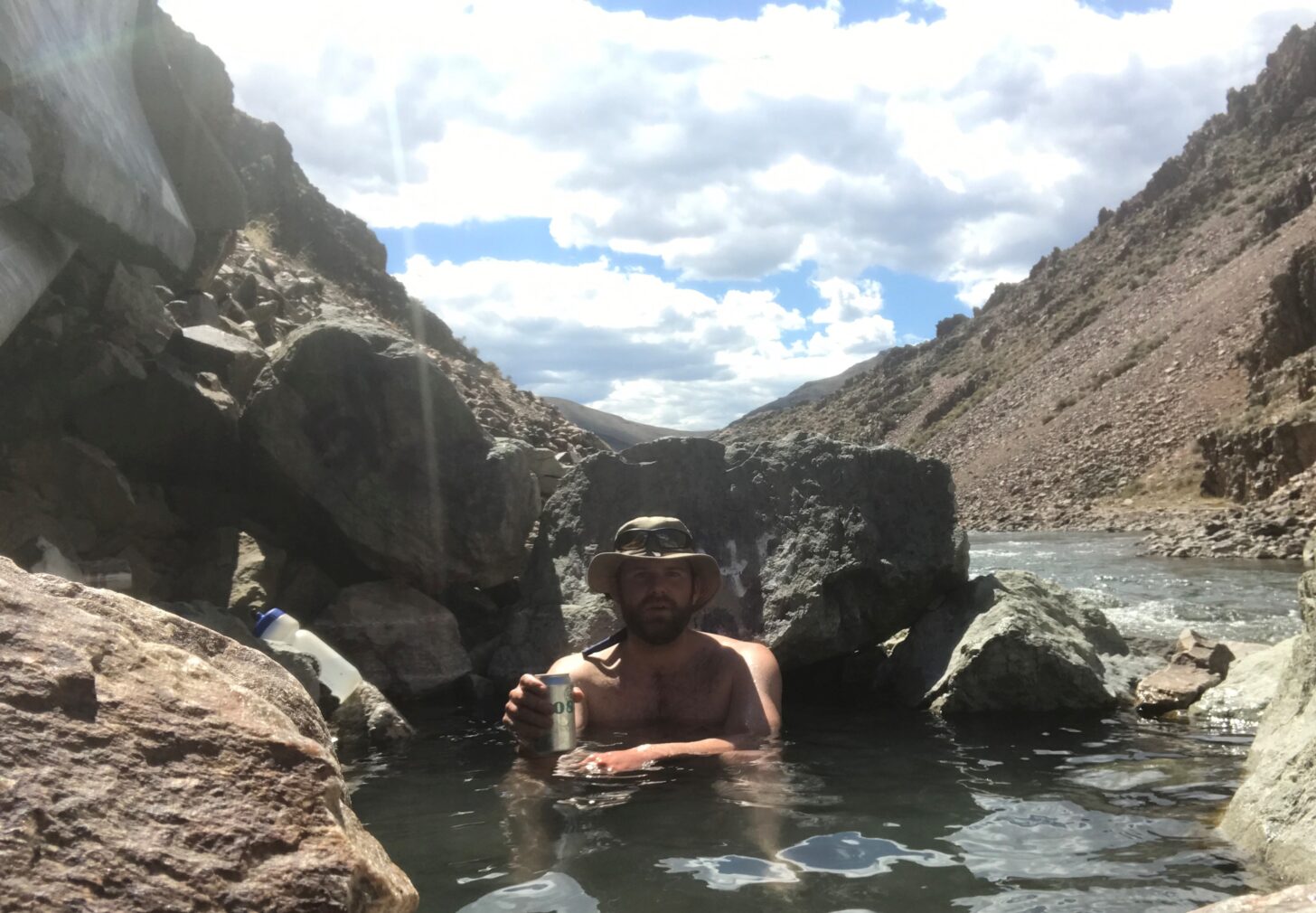
Camping near hot springs can be a magical experience for backpackers, but these unique natural features require special care to minimize human impact.
This article uses the current Seven Principles of Leave No Trace (LNT) to explore best practices for minimal impact camping near hot springs. These principles are not strict, inviolable rules – aside from one or two involving waste disposal. Instead, they inform sound decision-making. As with many aspects of ultralight backpacking, the exact applications of LNT principles involving hot springs sometimes require exercising judgment informed by the science behind the principles.

With the number of people recreating on public lands increasing significantly in the last few years, anecdotal evidence points to a proportionate increase in the use of hot springs on public lands. Some of the most popular hot springs, like Conundrum Hot Springs in Colorado’s Maroon Bells-Snowmass Wilderness, now require permits to minimize the impacts. Land management agencies are considering additional fees to help pay “for restoration, additional ranger field and visitor center presence, trail maintenance and improving user experience.”
Guidebooks have helped people discover backcountry hot springs for decades. Combined with social media and articles highlighting hikes to hot springs, there are more ways than ever for people to discover one of nature’s most sublime pleasures. While many of these resources provide information about access to hot springs, they sometimes lack guidance about rules and regulations, basic etiquette, and low-impact visitation techniques.
At developed hot springs accessible by vehicle, there is often infrastructure ranging from outhouse and trash cans to full-blown resorts. Backcountry hot springs often have few, if any, amenities designed to minimize the impacts of visitor use. Given the unique and often ecologically sensitive attributes of hot springs, backpackers must exercise the appropriate amount of responsibility and consideration to minimize impact. By doing so, they will ensure that these magical geothermal features remain ecologically viable – and that future soakers can enjoy as comfortable and natural an experience as possible.
Some precautions when visiting hot springs are common sense, like not bringing glass bottles, whereas others are more nuanced. By discussing each Leave No Trace principle and its relationship to recreating at backcountry hot springs, we hope to provide a useful outline to help hikers and backpackers enjoy themselves responsibly.
The seven principles of Leave No Trace are:

In preparation for this article, I reviewed the published information from the Leave No Trace Center for Outdoor Ethics and other articles that focused on minimizing the environmental impact at hot springs. I also corresponded with JD Tanner, Director of Education and Training at Leave No Trace, for additional insight. Finally, I tapped into my experience practicing Leave No Trace skills while visiting backcountry hot springs. This first-hand knowledge allows me to illustrate certain approaches and provide first-hand observations.
Knowing as much as possible about trail conditions and the infrastructure (i.e., designated campsites, outhouses, etc.) en route to and at your destination are key components to a successful trip. Researching regulations, such as group size limits, fire bans, permit needs, and restrictions on camping too close to the hot springs, for example, is also essential.
You can also consider what items might make you more comfortable during your visit. I’ve found that packing in a small microfiber towel for drying off is usually a good call. At particularly rocky hot springs, it can be nice to have a small section of closed-cell foam to sit on, especially if it’s a hotter hot spring and you’ll frequently be taking short breaks from soaking to cool off.
Making calls to the land management agency and perusing information online, such as trip reports, can tell you how crowded the hot spring might be. This basic research might lead you to time your trip differently or at least temper your expectations for a solitary soak. If you find out that the hot spring you’re so eager to visit appears to be mobbed every weekend in the summer, you have some options. “Planning to visit these sites during less popular times of the year is highly encouraged,” said JD Tanner at Leave No Trace. “Checking out less visited hot spring sites would be a great alternative as well.”

On the not-so-pleasant side, your research might make you aware of issues at the hot springs you plan to visit – like the possible presence of “brain-eating amoeba”. In this example, it’s easy to mitigate exposure by not putting your head underwater. But you have to know about the danger to avoid it! That’s why research is so important!
Learn more about trek planning in Backpacking Light’s comprehensive Trek Planning Masterclass – free for Unlimited Members.
Hot springs are popular destinations, so many of them have well-defined and sustainable trails that reach them. Some might have multiple side trails branching from the main trail. These side trails can require scouting to choose the one with the least impact. Trails that go straight down a stream bank to hot springs are often erosion-prone but are sometimes unavoidable. Most hot springs have heavily-impacted campsites nearby. As long as they meet the criteria set by the land management agency, these sites are a better choice than making a new campsite in a previously unimpacted area. I’ve found that – somewhat counter-intuitively – it is usually more ideal to choose the campsite furthest from the hot springs. Not only is this in accordance with LNT guidelines about camping 200 feet or more from water sources, but it also provides you with more seclusion. You don’t have folks wandering through your campsite to get to theirs; if there’s a louder group in the pool, you’re out of earshot, and you don’t have your campsite on display to soakers.

National parks with designated campsites near hot springs (a depressingly scarce commodity, and permits for these can be competitive) are perhaps the gold standard of low-impact backcountry camping at hot springs. Camping is concentrated in a specific location, and outhouses make waste management during extended stays easier.
JD Tanner with Leave No Trace notes that information gained during the planning stage can help with campsite selection. “Contact the land managers to find out if it is permitted to camp around or near the springs first. If it is permitted, the land manager will likely give specifics on where to camp,” he said. “If they don’t, and there are no designated sites, then camp at least 200 feet away from the water and trails. Always be prepared to pack out trash no matter where you camp.”
Encountering improperly disposed of human waste near a hot spring is one of the most disgusting backcountry experiences a person can have. I speak from experience. Short of stepping on broken glass, it is perhaps the quickest way to ruin the sense of serenity, rejuvenation, and bliss that accompanies a soak. With most backcountry hot springs lacking outhouses, soakers must travel an appropriate distance – at least 200 feet – from the spring to conduct bowel-related business. Once far enough away, soakers should properly bury the deposit (click here for general LNT cat hole advice). The other option – arguably a better one at hot springs – is to use a waste disposal bag. Plan accordingly and bring a trowel, WAG bag, or whatever else you might need to ensure that your human waste doesn’t contaminate the water – or someone’s foot.

The general LNT guideline is to not remove artifacts, rocks, fossils, or other items (other than trash from previous visitors – remove as much as possible!) But there are some hot springs-specific applications for this principle. While the source of the hot water at hot springs is natural, with very few exceptions, previous visitors have constructed the actual pools in which you soak. Generally, these are unobtrusive and blend in with the landscape. But at easier-to-access locations, sometimes people have gotten carried away and used concrete or other materials to build complex pools.
Although great to soak in, these can negatively impact wilderness character and create issues for land managers. Sykes Hot Springs in the Ventana Wilderness is an example of the unintended consequences of trying to create a sweet backcountry soaking spot. Sykes has become a victim of its own success, with land managers left to try and manage the issues created. I’ve also seen a backcountry hot spring pool in the Selway-Bitterroot Wilderness decrease in quality because people tried to enlarge it by moving the rock and earth embankments. Their attempts at “improvement” caused the size of the pool to grow, but the depth of the pool decreased. This change made it harder to get a nice full-body soak without lying down, which wasn’t ideal.
It can be tempting to try and play dam builder when you have a source of unlimited hot water. It can be even more exciting when there is a cold water source nearby to add to the mix to try and create a perfect temperature for soaking. But keep in mind that doing so has impacts. By and large, it’s best to accept whatever situation you find when you arrive to soak rather than try to build something yourself. Think of how we approach campsites. We’ve left the days of digging a trench around our tents in the past. We should look at our efforts to manipulate soaking spots with similar scrutiny, especially in wilderness areas.

Campfires in any season have become a contentious topic in the backpacking community over the past few years. The topic has been discussed here at Backpacking Light and in numerous other places. The campfire impacts at hot springs are identical to those at other popular areas. The easy-to-obtain firewood sources vanish quickly, resulting in those who want a campfire having to wander further afield. These wanderings often create side trails and disturb wildlife habitats created by downed wood. Some people even chop down nearby trees to use for fires.
It is best to get your warmth from the water, a hot brewed tea, or your insulation layers, not from burning wood.
Wildlife can be drawn to hot springs just as much as humans. I’ve seen deer drink at a hot springs in the Selway-Bitterroot Wilderness and nibble on the plants growing in the warm microclimate while I was soaking. I’ve heard from another soaker that it’s common for moose to visit and wallow around in the springs. Although the hot springs pool easily holds a half-dozen adults, it seems safe to say that a moose should be the sole occupant at any given time.
Generally speaking, the hot springs-specific implementation of this principle isn’t much different than at other campsites. Try not to unnecessarily disturb downed wood, move rocks in the stream, or trample fragile vegetation. Maintain a respectable distance from wildlife, and don’t let your desire to take a picture draw you in too close. If dogs are allowed, ensure they are supervised or restrained so that they aren’t harassing wildlife while you soak. “Keeping pets leashed so they are not being a nuisance to others visiting the hot springs is another great way to be considerate [of other visitors],” noted Tanner.
With more people visiting public lands, you must pack patience, respect, and kindness in addition to your other gear. Additionally, hot springs require consideration regarding privacy. Other users might be changing, soaking nude, or enjoying a quiet and contemplative soaking experience rather than looking for conversation with other soakers. Be respectful when taking photos at hot springs when other users are present. Speak quietly, and respect personal space.
It is tempting to soak for hours on end. But if doing so means you’re monopolizing a small pool, it is good etiquette to move on and make room for other users. Other users will appreciate this, and doing the good deed of sharing such a special place can feel almost as good as the soothing waters themselves.
As noted in Respect Wildlife, it is important to be considerate of other visitors if you bring your dog with you. In my experience, when dogs are present at hot springs, the overall ambiance typically deteriorates as the number of dogs increases. People are soaking and relaxing, then two dogs start barking or snipping at each other, and their owners shout from the pool to try and address the issue. Or the dog gets in the hot springs (which isn’t good for the dog, as they are more susceptible to hyperthermia than humans) and then exits and shakes all over other soakers’ towels and clothes. When bringing a dog, be sure you’re prepared to take the appropriate steps to be a responsible owner.
Being mindful of what chemicals might be on your body before entering a hot spring is also a way to be considerate of other visitors. It is obvious that you don’t want to use any soaps or shampoos in a hot spring. But depending on the spring’s flow rate, things like sunscreen or bug spray can transfer from our skin to the water. In addition to sometimes leaving an unsightly film on the water, this can negatively impact the animals that have relationships with the hot springs and the water that ends up downstream. “No matter what water source we may be recreating in, we should always be aware of the chemicals we are putting on our bodies that are then washing off into the water sources we recreate in,” said JD Tanner at Leave No Trace. “The fewer chemicals on our bodies, the better when going swimming or soaking.”
There are few things better in life than enjoying a relaxing soak at an uncrowded backcountry hot spring and then retiring to a nearby campsite. Going to sleep after stargazing while sitting in a hot spring, then waking up the next morning and starting the day with a soak is sublime. Be informed about the issues that might be creeping up at the hot springs you’re planning to visit and take steps to mitigate your impact. These practices ensure that you will have a great time, and those who come after you will also.
Andrew Marshall here. You may have noticed that the seven Leave No Trace principles don’t include anything about social media use. Interesting, right?
This spring we published another of Mark’s pieces – a story about the joys of finding unexpected solitude in a very well-known hot spring. Mark is acutely aware of the way social media interacts with – and impacts – our experiences of the outdoors and how those experiences change the landscapes we enjoy. That piece featured several nuanced paragraphs on LNT principles and how identifying less well-known hot springs in social posts can lead to overuse and damage. In that article, we chose to name one well-known hot spring but not another less well-known hot spring.
But we did name the well-known hot spring in the title of the article and referenced the name while promoting the piece on social media. Even though the article explains that choice, the feedback we received on social media was a reminder that far more people see titles than read articles. And as a membership-based website, not everyone has access to the nuance that the full article explored.
So it struck us that we needed to refine our strategy even further when it comes to how we tell stories – and promote those stories – about hot springs and other fragile areas with a tendency toward social-media-driven overuse. We want to be responsible stewards in both our content AND how we promote that content.
There is an ongoing – and well-meaning – debate in the outdoor world about this issue and the related issue of geotagging social media posts. On the one hand, naming place names and geotagging increases traffic to fragile and already over-trafficked locations. On the other hand, keeping places “secret” can smack of exclusion and an “I got there first,” mentality. As an editorial staff, we come down somewhere in the middle. For Mark’s take, check out his interview with the Cascade Hiker Podcast. He also touches on the issue in his Reservations Required piece for Backpacking Light. We discuss this issue in particular – and social media use in general – with Benny Braden in Episode 58 of the Backpacking Light Podcast. We think this guidance from one of Benny’s organizations – Responsible Stewardship – is a good starting place for handling social media.
So how do we balance stewardship with inclusion at Backpacking Light? Our current strategy is to remove place names – in article content, titles, and social media posts – from all but the most extremely well-known locations. On the equity side, we are working to address that with both the Backpacking Light Diversity Fund and editorially with the types of stories we tell and the voices we elevate.
We encourage readers to continue this discussion (politely!) in the comments section here and elsewhere on our forums – remembering that for the most part, we all want to help each other enjoy the outdoors in the best, most ecologically and socially responsible way we can.
DISCLOSURE (Updated April 9, 2024)
Learn Ryan Jordan’s process for discovering hidden backcountry routes by integrating current base maps, satellite imagery layers, and historical USGS maps.
There’s nothing more serendipitous than stumbling across an old road bed while bushwhacking. But you don’t just have to rely on blind luck. With a combination of modern satellite imagery and historical USGA topo maps, you can incorporate such features into your route planning.
In the following video, Ryan Jordan demonstrates:
Editor’s Note: This video was shot before we released our First Look review of the Tarptent Dipole Li 1 and 2, so that’s why you’ll notice it blurred out in the video. If you missed that review, check it out here!
And don’t miss our How to Use Gaia GPS Masterclass for more tips like this!

Browse our curated recommendations in the Backpacking Light Gear Shop – a product research & discovery tool where you can find Member gear reviews, Gear Swap (used gear) listings, and more info about specific products recommended by our staff and members.
Gear Shop » Software
DISCLOSURE (Updated April 9, 2024)
Searching for grace and gratitude through the smoke.
MYTH: a multi-year thru-hike
Hiking the PCT has turned into something of a life project for me.
My brother and I started north from Walker Pass in 1976, headed for Lake Tahoe, 500 miles to the north. A torn cartilage in my right knee forced a bailout after a hundred miles.
I didn’t resume the trail until 2013, having acquired an education, a family, and a career in the meantime. Also a dog. When I returned to the PCT, Bonny, a 125-lb Newfoundland-sled dog mix was my companion. She had joined our family a few months before, an adult rescue dog who had apparently led a pretty rough life.
Or maybe her incorrigible food stealing, fear of tall teenage boys, and separation anxiety were just who she was. But her need for affection was matched by her ability to give it. We became friends.
She accompanied me north from Lake Morena in 2013. She had no trouble keeping up and would dash around meadows and up and down hills when we camped, delighted to be free and wild.
That went well enough until the winds shifted from cool Pacific westerlies to hot desert easterlies. She was a snow dog, and it was clear that bringing her on a desert hike was a mistake, even in March.

That ended Bonny’s long-distance hiking career, but she went on plenty of shorter trips in cool mountains. She especially loved going on trips that I lead for the Sierra Club’s ICO program: short hikes, kids to fawn over her and give belly rubs, and plenty of leftovers to clean up after dinner time.

Big dogs have big hearts but short lives. Bonny was nine or 10 when she began to weaken. Backpack trips became shorter and then I had to start leaving her behind. Day hikes and ski tours dwindled from five miles to two, and then from one to zero.
Neighborhood walks got shorter and shorter as progressive paralysis set in, weakening not only her legs but closing her windpipe until a walk of half a block left her gasping and needing multiple rest stops.
I put off the inevitable as long as I could but it was time. Bonny departed this life as she lived it, with grace and affection.

I arrived at the Redding Airport and received a text from my ride wondering just where exactly at Castle Crags Campground I was. She had gotten the directions reversed. A phone call set the matter straight and we headed from the airport to the nearest sporting goods store to pick up a butane canister.
A turn around the store revealed no canisters. I asked a clerk and she unlocked a cabinet, pulled one out, and asked for my driver’s license to document the sale. Butane is useful in methamphetamine synthesis. Apparently, there are enough tweakers in Redding, CA to necessitate control of a simple 4-carbon alkane.
Steering clear of degenerates would be an issue for another day, though. My immediate concern was the heat. Even at 5 PM, the temperature at Castle Crags was near 100 F°. I compounded the issue by making an immediate wrong turn that took me over a superfluous ridge before joining the PCT.
It was near dark by the time I made it to a pleasant camp spot along Indian Creek, located in a deep leafy gorge that offered some relief from the heat. It was already occupied by two hikers. Fomo and Princess not only welcomed me but offered to paint my nails as well. I was back on the trail, back with the goofy, welcoming community that populates it.

The night was warm and I started the 4000-foot climb well below dawn, hoping to get high before it got hot. Although that hope was not realized, I did get my first PCT views of Mt. Shasta. In 2018 I hiked from Lake Tahoe to Castle Crags without a glimpse of the iconic peak, visibility limited to a few miles at best by smoke from the terrible fires that year. Although the mountain was snowless in this drought year, I hoped at least to be spared a smoky hike.
The trail leveled off at Gully Spring, where I lunched in the company of carnivorous pitcher plants and one-striped bumblebees attracted to the swirling patterns of my gaiters. Both are probably endemic to these mountains, well-known to be a hotspot for biological diversity: more than 3500 plant species are found here; some 280 are found nowhere else. I intended to enjoy and appreciate this region of the PCT, a region that is often overlooked by hikers hurrying toward Canada.

One of the advantages of MYTHing a long trail is that you get to start each section with the same anticipation and eagerness that most single-year PCT thru-hikers feel only in the desert ranges of Southern California. Read or watch any account of a single-year thru-hike and you’ll notice that half the story covers the desert sections, another quarter covers the Sierra, and the rest of the trail – NorCal, Oregon, and Washington, about 60% of the total mileage – gets only a quarter of the narrative.
By the time PCT hikers get to Lake Tahoe, they have walked 1100 of the trail’s 2650 miles. Hiking has become a job. You get up at dawn, put in your 25 miles, eat some crappy food, make your camp, and lay down to sleep. And then do it again. And again. And again.
Your choice is either to quit (as many do) or to become a hiking automaton obsessed with grinding out the miles before fall snowstorms close the passes. The trail – which started out as a road to freedom and adventure – begins to look more and more like the Land of Toys. I may bear a pack, but I will not become a donkey.

So I laze in the shade another hour; stop for a swim at Porcupine Lake the next day; stop at Deadfall Lake intending another swim. But clouds have rolled in and a light intermittent drizzle commences. A helicopter appears, dips its bucket in the lake, flies up to an adjoining ridge, and dumps the water. It repeats this sequence three times. I can see no sign of smoke on the ridge. Surely the copter was not practicing; there are plenty of real fires in California.
I hike on through increasingly heavy rain, which is now accompanied by loud thunder overhead. The rain should fireproof this parched area for a few days, but the thunder, soon distant, might well spark fires elsewhere.
After a soggy night, the heat returns, but the hiking is mostly easy. Though the mountains are rugged the trail contours around them, staying between 6,000 and 7,000 feet.

There are cold springs to drink from, fringed with flowers and attended by butterflies.

The Marble Mountains appear, gleaming white rock mimicking long-melted snow.

A cool morning breeze makes for delightful hiking weather. But rounding a ridge, a column of smoke appears, rising fat and thick above the ridge. Another hiker – trail name TimeWarp – comes up and we confer. Is this a small fire nearby or a large fire far away? The fractal nature of smoke clouds defeats any sense of scale. We decide to proceed, even though the column is directly on our course toward Etna Summit. The wind is blowing left to right, not into our faces, and we can retreat back to highway 3, some 15 miles back, if the fire blocks our path.

TimeWarp finds a spot with reception and calls the Forest Service. They tell him the fire is 10 miles west of the PCT, we are in no danger. But that column of smoke gets bigger and darker and redder on the underside. We catch up to yet another hiker – Tumbles – confer again, and agree that we will stop at the Callahan Road crossing a couple of miles ahead and consider bailing.

As soon as we get to the road four volunteer fire trucks whiz by, not a good sign. One pickup comes back and we flag it down. It is driven by Bill, a retired firefighter who says the fire has blown up in the last few hours and nobody knows what is going on, especially not the Forest Service. He offers us a ride into Etna and we accept. It would probably be ok to keep hiking but “probably ok” is not the standard we want to apply to this situation.
The town of Etna (population 750) is amazing. It sports two brewpubs and a couple of good coffee shops. For a minimal fee, it lets hikers sleep in a park that features not only restrooms and water but a shower (cleaned daily by volunteers), wifi, tables, a shelter, and outlets to recharge phones. The townspeople are friendly and welcoming. An easy place to hang out, as attested to by nearly a hundred hikers milling about the town. Not just easy, amazing.

All of us were hoping for some more information. But word is that hikers who attempt to resume the trail are being turned back by thick smoke or by rangers at the trailhead.
My plan (and that of many others) was to skip ahead to Seiad Valley to bypass the fires and smoke. It’s about 60 miles by trail but twice that by sparsely traveled roads and reputedly a very hard hitch.
A ride was arranged with a hiker named SoleSaver, who was to ferry me and six other refugees northward. All went well until the car overheated on the remote road connecting Ft Jones with Seiad Valley.
I hopped out and while everyone was milling around, saw some blackberry bushes lining the road and walked toward them, thinking to score some fresh berries.
An angry man with no shirt but a beard down to his belly ran out of his house and yelled up at me.
“What the FUCK do you think you are doing!”
“Just curious as to what’s here,” I replied. Wrong answer.
“Take your curious ass and get the hell away from my property and keep going.”
One of the women tried engaging him with reason: we can’t go anywhere, we are broken down, etc. Studio, a public defender in St. Louis and thus a man familiar with criminal psychology, walked her away, hoping to de-escalate the situation before any weapons were involved. There was no phone service, no law nearby, and no one was going to protect us if things got ugly. We were deep in the State of Jefferson, home to secessionists and outlaws, a refuge no doubt for illicit grow operations and cook labs. Hikers were most certainly not wanted here and we would not be missed.
SoleSaver was flummoxed by the breakdown. I went back to the car, took a look under the hood and saw the lower radiator hose had popped off. All I had to do was reconnect it, fill it with water and we would be off.
An elderly gentleman was walking up his driveway toward us and I prepared to be cussed out again. Instead, he offered help. His name was Carl, he was 90 years old, a retired gold miner, and he volunteered to go back down to his well and get some water and haul it up.
I got under the car and tried reconnecting the hose but the hose clamp was stripped and would not tighten down. I asked Carl if he had any duct tape and he slowly walked down to his shed and returned with a roll.
Fortunately, there was another hiker (Cocacola) willing to get his hands dirty and we took turns tearing off strips of tape and wrapping them around the hose. We poured water into the radiator. Despite high hopes for our handiwork, the water ran right out again. The hose had been repaired in another spot and was leaking where the plumber’s putty had failed.

By this time another Jeffersonian from across the road was shouting at us to move on and to not even think about coming on to his property. He returned to his porch and sat there with a rifle on his lap, glaring down at us.
The other hikers decided that maybe it was time to hitch onward to a place where there were no angry armed hillbillies yelling at us. It was getting late and this was not a good spot to be when the sun went down. They promised to call SoleSaver’s husband from Seiad so he could come get her. SoleSaver was in the car, sobbing into the steering wheel.
Cocacola and I got back under the car, scraped off the putty with our knives, wrapped the connector with tape, then wrapped the whole assembly over and over (its hose clamp was also stripped), and poured in the water.
This time it held. We made the remaining 15 miles to Seiad just a few minutes after the hitchhikers, who insisted on buying us beers at the store.
It was a hot and heinous climb out of Seiad the next morning. The smoke had thinned a bit, but some of the ridges were dead zones, places of orange metallic soil where little grew. The effect was ghastly and unnerving, but eventually, the forests returned and a few springs popped up. We were in the last bits of California. With a clearing west breeze, we could see Oregon from the high points.

It looked just like California of course, the 42nd parallel having no particular biological or geological significance. But it felt like progress. I had started this MYTH in 2013, walking from Lake Morena to the San Jacintos; continued in 2014 to Walker Pass; to Lake Tahoe in 2016, and then to Castle Crags in 2018.
Hike the trail over a stretch of years like this, and you notice changes. I started in the pre-Wild era when only a few hundred people attempted the PCT each year. Now there are thousands. Permits are required to regulate the traffic, and several iconic trail angel stops have had to close up, unable to cope with the crowds. Although the megadrought was already well underway in 2013, the new normal of wildfires and smoke had not yet taken hold. It was easy then to believe that it was just a dry year. Next year would be normal.
The sociology of the trail has also changed. There are far more women hiking now, and a far larger proportion are hiking without male companions. In 2013 and 2014 there were plenty of Iraq and Afghanistan vets walking off the traumas of war; in the plague year of 2021, they have been replaced by nurses.
Nurses with a wicked sense of humor. When TimeWarp asked Tumbles for some free medical advice regarding a bothersome ankle, she shot back that “I can’t help you unless your pants are off and you have a vagina,” (she is a labor and delivery nurse).
The trail has changed and it will continue to change. It is a living thing, and change is the essence of life. All we can do is keep moving and appreciate what good remains and work for more good to come. The west wind continued to blow the smoke away as I walked the ridges toward Ashland, the north slopes of Mt Shasta receding but revealing that a bit of snow remained there, holding on through the heat and the drought.

After a zero in Ashland, spent mostly at a brewery where I managed to hold the cornhole court until closing, I hitched back to Callahan’s. The free hiker campground there, I learned to my displeasure, is a grassy island in a parking lot that boasts many bright security lights. So I was up and out early, making the climb south and east from Siskiyou Pass back into the higher mountains. Smoke built through the day, as did the heat. Much of the hike was through arid oak and pine forests separated by meadows dried to a crisp by the drought.

I holed up for the night near one of the few sources of water, the outflow from Little Hyatt Reservoir. The water was low and distinctly skanky, but there was no other water on offer, so I treated it with chlorine dioxide drops and made the best of it.
The evening’s entertainment was provided by a frisky yearling blacktail deer. It dashed by through the creek meadows and so I was on the lookout for a lion stalking it. But then it dashed back the way it had come. And then diagonally across the creek. And then back again. In all, it made six or seven passes through the forests and meadows, all by itself, delighted to be wild and free, in love with its home.

Another heat dome set itself up in Oregon, making it way too hot and way too smoky. Fearing damage to my lungs, I wore an N95 mask despite the heat. The dust was fine and thick on the trail, combining with my copious sweat to create a kind of tar on my feet and legs. The springs and creeks were dried up and 15-mile water carries became the norm, not what I was expecting from Oregon. When I came to the trail junction above Fish Lake it was an easy call to cut down to the resort where showers and cold drinks awaited.

But hanging out in a resort was only a temporary respite. The heat and smoke continued to oppress. The PCT is mostly a ridgeline trail in southern Oregon. It overlooks any number of lakes (this was the Sky Lakes Wilderness), but they were only faintly visible. Mt McLoughlin loomed through the smoke but quickly disappeared again. The skies cleared a bit one night and a number of Perseid meteors appeared, a good omen. However, the relatively clear skies of morning did not last. Ten miles of hiking through a shadeless burn area on the south side of Crater Lake National Park depleted my water and forced me off-trail to dip from a warm tannic pond.

The mood at the Crater Lake hiker campground was subdued bordering on sullen. There was little sign of the usual hiker lightheartedness. No one here signed up for this kind of punishment. Hikers who walked 1800 miles to get here from Mexico – obviously not wimps or quitters – were ready to quit. Or take a week or two off. Or just hitch up to Washington where surely the skies would be clear, the air would be cool and the springs would be flowing. Where a hiker could hike, not just slog through smoke and heat. Washington would be better. It had to be.
Like everyone else not hitching out, I took the Rim Trail around Crater Lake, rather than the official PCT which runs in parallel a few miles to the west. Because why would you not want to walk around the rim of one of the most spectacularly beautiful lakes in the world?

The smoke was not bad in the morning and in fact imparted a bit of hazy mystery to the scene, not unlike a Japanese watercolor. But it got smokier through the day, and by the time I got to the north end of the lake, I had my N95 mask on again.

The next morning was cold and windy, with wet clouds whipping up the mountainside. I was thrilled to put on my down sweater and wind shirt, and even fantasized about having to hike in the rain.
Although it didn’t rain, fog dripped from the trees. The trail was transformed from a hot, dusty, smoky slog to something cool, dark, and somewhat mysterious. After days of misery, I was hiking in clean cool air. It made hiking fun again and I took advantage of the opportunity to stretch my legs and cruise through the forest.


The clear air brought views of the isolated conical peaks of the Oregon Cascades. These mountains are very different from the ranges I know best – the Rockies, the Sierra, the Transverse Ranges of California, and the Sky Islands of southern Arizona. Sharp volcanic peaks rise out of a skirt of rolling forested hills. They seem scattered about more or less at random within a north-south corridor that must be a tectonic plate boundary.

There are plenty of lakes here but little running water.

The miles beyond my last resupply at Shelter Cove rolled on, pleasant but unremarkable. The smoke was never wholly absent, but in the deep forest, it was easy to ignore, to avoid thinking about what was happening in distant forests. Lakes appeared, beautiful and sparkling in the summer sun. They were low, but not obviously low. Patches of blueberries crowded the trail at times, and maybe if you didn’t know better you wouldn’t realize that delicious as the berries are, they are also sparse and a bit desiccated.

I will be exiting the trail soon, but it feels like the trail is making its own exit. A walk through another burn area festooned with fireweed makes the point. Change is coming, change is already here.
I walk knowing I will never see this place again. Not just because I am old, but because this world is old. We’ve lived for the last 10,000 years in a world of mild and stable climate, an anomaly in climate history. That anomaly gave us the chance to invent agriculture, and thus invent cities and, eventually, the notions of progress and freedom and wilderness.
A stable climate regime also let plants and animals engage in exuberant rounds of diversification and specialization, each new species a bit better at exploiting a niche environment, each one a bet that the niche would persist and not leave it stranded. With our specialized dependence on agriculture, we have made the same bet: that we would know what crops to plant and when and where. Now we are losing that bet, victims of our own success.
I come to the place where I will turn right and leave the trail. I stop, unwilling to make my exit just yet. I drop my pack, lean back against a fir. Regard the scene. The forests, the meadows, the lakes, the birds, the bugs, the pitcher plants, the yearling deer skittering through the woods: all beautiful, all on their way out. They too have lived lives of grace and affection. I say a few words of gratitude for this and depart.
DISCLOSURE (Updated April 9, 2024)
Is Mountain Hardwear AirMesh a breakthrough product or a prisoner of wicking base-layer physics?
You don’t have access to view this content.
Learn how to identify and use lines of position to help fix your location on a map while traveling in the backcountry.
Knowing where you are in the backcountry and identifying that location on a map (“fixing your position”) is an essential skill. Doing so with analog tools (e.g., map and compass) seems to be a lost art, having been replaced by the digital position fix marker found in GPS smartphone apps.

In this skills article, you’ll learn a fundamental map use technique – what lines of position are and how to use them to fix your position on a map in the backcountry.
If you look at your map and say, “Hmmm…I’m somewhere on this map.” that’s not going to inspire a lot of navigational confidence.

However, if you knew with certainty that you were somewhere along a line on the map, that may make you feel quite a lot better about where you’ve come from and where you’re going.
A line of position, or LOP (sometimes called a “position line”) is a line on the map where you know with 100% certainty that you are somewhere along that line.
Lines of position may be straight (e.g., a boundary fence) or they may be nonlinear (e.g., a trail).

The most important thing about a line of position is that it must always be identifiable on a map. A stream you discover in real life that isn’t on the map cannot be a line of position.
Lines of position can be manmade features, topographical features, terrain features, or sighted bearing lines.
Manmade lines of position:
Topographical features that can serve as lines of position:
Terrain features that can serve as lines of position:
Sighted bearing lines can also serve as lines of position. These are the imaginary lines drawn between a known landmark and your current position. In most cases, they require the use of a compass.
The exception to this is when you, and two other (known) landmarks lie along a straight line. This type of LOP is called a transit line. A compass isn’t needed to draw a transit line.
The magic happens when you arrive at a point where two lines of position intersect. At that point, you can fix your precise location on the map.
One of the most obvious intersections of two lines of position for hikers is where a trail crosses a stream. As long as you’re paying attention as you hike, and make a mental note of major stream crossings that correspond to mapped streams, this is a reliable method for fixing your position. However, it can become confusing if you are hiking in particularly wet areas, or during the early summer, when you may cross several streams that are too small to appear on the map.
Any two lines of position mentioned in the previous section can be used to fix your location – the combinations seem limitless. The next section outlines some common examples.
In most National Parks and other popular hiking destinations, we can enjoy the informative benefit of signed trail junctions. In the absence of signs, we can still use the information reliably – assuming our maps are up to date!

This method is most reliable for significant streams that flow year-round, are mapped, and travel through topographically-obvious valleys that we can visually identify in real life.

This method requires updated maps. Be cautious of wildfire-burned areas that have appeared before the printing date of your map – vegetation cover can change significantly with wildfire.

Recognizing passes, ridges, and other topographic features requires practice. Make it a routine to take your map with you everywhere and correlate the terrain you see in real life with the shapes of the topographic lines on the map.

In the absence of trails, you’ll need to get more creative. Here’s an example of a mountaineering route I attempted up the north ridge of a prominent peak in Montana. Most of the climb was performed in low-visibility conditions (cloud cover). I was handrailing (a technique where you follow a natural terrain feature) along the western edge of the summit plateau, which fell off steeply to cliffed terrain. So when the clouds cleared enough, I was able to sight a bearing line to Peak 11792 (compass required), and then draw that bearing line onto my map. My approximate position fix was where the bearing line LOP intersected my route LOP at the western edge of the plateau.

We recently hiked the Ute Trail in Rocky Mountain National Park, and encountered a classic example of a transit line LOP. A transit line is a straight line that intersects your current position and two visible landmarks. Transit line LOPs can be used to orient a map, or sight a bearing without using a compass.
The two landmarks I observed were a small unnamed topographical bump (foreground) and the very prominent north face of Long’s Peak (background):

Now, simply drawing a line on the map from Long’s Peak, through the topo bump, and intersecting the Ute Trail, I can fix my position on the trail. In addition, by laying the map on the ground, and rotating it so the transit line drawn on my map is parallel to my line of sight to Long’s Peak, it’s now oriented. All this without using a compass – such is the power of a transit line.
Understanding how to identify and use multiple lines of position (LOPs) to fix your position on a map is one of the most valuable navigation skills you can learn. This technique does not require a compass most of the time, so it’s very fast and simple to learn. Practice it!
Join us Saturday, July 2 at 9 AM US Mountain Time for a Map-and-Compass Member Q&A live webinar. I’ll expand on the topic of lines of position to include compass work, and we’ll address more analog techniques for backcountry navigation.
An online live (and recorded) webinar introduction to map and compass use for hiking and backpacking.
You don’t have access to view this content.
In this episode, Andrew chats with BPL staff writer Mark Wetherington about his favorite articles, backpacking in the south, and more.
Listen to the public version of this podcast episode on Itunes, Spotify, or wherever you get your podcasts.
In this episode, Andrew chats with Backpacking Light Staff writer Mark Wetherington. Mark began backpacking in 2007 as a student at the University of Kentucky, and since then he’s been exploring the southeast and the west on foot, bicycle, and skis. Mark’s writing has appeared in Backpacker Magazine and Trail Groove Magazine in addition to Backpacking Light.
Andrew and Mark chat about backpacking in the southeast, Mark’s love of exploring the same place over and over again, Mark’s favorite pieces he’s written for Backpacking Light, and more.

Make sure you are logged in as a member to listen to or watch the full version of this podcast. Not a member? Click here!
Outline
— Members Only Begins here —
The Tarptent Dipole 1 Li and 2 Li are rectangular DCF trekking pole tents with carbon end struts to boost interior volume and stability, and a four-stake footprint that eliminates the need for apex guyline tie-outs in mild weather.
by Andrew Marshall and Ryan Jordan
The Tarptent Dipole 1 Li (22 to 23 ounces / 0.62 to 0.65 kg, MSRP: ~$699) and Tarptent Dipole 2 Li (26 to 27 ounces 0.74 to 0.77 kg, MSRP: ~$799) are both modified A-frame, double-trekking-pole, double-vestibule, double-door, side-entry, single-wall, Dyneema Composite Fabric (DCF) shelters.

The Dipole line represents a continuation of Tarptent’s use of supplemental poles (i.e., extra poles in addition to the trekking poles) to add volume and support to trekking-pole shelters. Dipole tents have several features that make them unique among two-pole, double-door shelters:
Watch Ryan Jordan’s video review and tour of the Tarptent Dipole 1 Li and Dipole 2 Li:


We tested the Tarptent Dipole 1 Li and Dipole 2 Li on three below-the-treeline overnight treks in June of 2022 in the Sierra Nevada and Colorado Rockies. Both shelters were subjected to light wind (with gusts up to 10 to 20 mph) and moderate-to-heavy rain. We were interested in getting initial impressions on ease of setup, livability, structural integrity, condensation resistance, and weather protection.

The samples that we tested are late-stage prototypes. Tarptent is still making adjustments to the Tarptent Dipole 1 Li and Dipole 2 Li, and some of the features visible in the photos in this article will be changed by the time the product gets into consumers’ hands. Currently, changes will include:

The Tarptent Dipole 1 Li and Dipole 2 Li have a rectangular footprint, which makes site selection easy – certainly easier than site selection is for the Stratospire Li or ProTrail Li (non-rectangular shelters).
Setup is simple (for a trekking-pole supported shelter) but the order of operations is important – watch the video above for a setup demonstration.
Setup instructions:
*Tarptent recommends a 45-degree angle for the corner stakes (i.e., the guylines should be parallel to the corner seams). We found that a slightly wider than 45-degree angle works best for creating tension along the edges at the ends of the shelter. The photo below illustrates a pitch on uneven ground that hews very closely to the 45-degree guyline recommendation.
Note just a slight amount of slack on one of the end edges – so slight that I (Andrew) didn’t notice it until I was reviewing my photos. Adjusting the angle of the corner stakes to be slightly wider solved this issue in Ryan’s pitches (as noted in the video above).

The tension created by the end struts and their triangular guyline system allows the Tarptent Dipole 1 Li and Dipole 2 Li to maintain a stable four-stake pitch that does not incorporate the doors as a load-bearing element. The upshot is that both vestibule doors can be open and rolled back without losing tension.
We experienced moderate rain and light wind below treeline in our testing, and are confident that the Tarptent Dipole 1 Li and Dipole 2 Li can handle those conditions without collapsing or letting in water. In heavy weather, four additional stakes and guylines can be deployed – two along the axis of the ridgeline and two running from the end struts. The symmetrical nature of the tension forces in the Dipole shelters is a real strength of the design (see our email interview with Henry Shires at the bottom of this article for more on this).
There are several other features that we’ll explore more fully as we continue to review the Tarptent Dipole 1 Li and Dipole 2 Li:
Ryan touches on these performance issues in the video above.
But in this First Looks review, we are concentrating on the two features that stood out the most in our initial handling of the Tarptent Dipole 1 Li and Dipole 2 Li. The first was the four-stake design that allows both vestibule doors to be open without losing tension.
The second standout feature is the livable interior volume present in both shelters. The ends of the shelter are 21 inches (53 cm) tall – tall enough that feet will not rub against the shelter ceiling when sleeping pads inevitably slide down towards the end of the tent. The width and length are both designed to accommodate larger hikers. We are not tall (Andrew is five feet six inches and Ryan is five feet seven inches) but we are confident that Tarptent’s claim of comfort for backpackers six feet eight inches and over is not an exaggeration.
We believe that the Tarptent Dipole 1 Li and Dipole 2 Li are the roomiest trekking-pole-supported shelters for their weight that we’ve ever tested.
This is not a comprehensive comparison – that will have to wait until we can put the Tarptent Dipole series through long-term field testing. The purpose of this comparison is to help place the Tarptent Dipole 1 Li and Dipole 2 Li (specifically the Dipole 2 Li) within the category of two-pole, two-door, single-wall, Dyneema Composite Fabric shelters. No shelter in this comparison has the end struts and correspondingly totally vertical end panels of the Tarptent Dipole 2 Li, so we won’t waste time repeating that in every comparison.
Another noteworthy thing about the Tarptent Dipole 1 and 2 is that both shelters feature a slightly hourglass-shaped bathtub floor. In the specs above, we list the bathtub floor dimensions as follows:
But in fact, the Dipole 2 Li narrows slightly in the center to 50 inches (127 cm) and the Dipole 1 Li narrows in the center to 28 inches (71 cm).
Readers are encouraged to elaborate further on the differences and similarities between all four shelters in this comparison – and the pros and cons of each – in the comments section.
The Durston Gear X-Mid Pro 2 is the only other two-person, two-pole, double-pole, double-door, single-wall shelter currently on the market that is claimed to be pitched with a minimum of four stakes. (Another one is the Sierra Designs High Route 1 but that’s a one-person shelter.)
The Durston Gear X-Mid Pro 2’s floor footprint is slightly longer than the Tarptent Dipole 2 Li – 90 inches (229 cm) for the X-Mid Pro 2 vs. 88 inches (224 cm) for the Dipole 2 Li. But the Tarptent Dipole 2 Li is significantly wider at 58 inches (147 cm) at the ends and 50 inches (127 cm) at the middle vs. the X-Mid Pro 2’s 48 inches (122 cm). The final weight of the Dipole 2 Li is still pending, but the Durston X-Mid Pro 2 is likely to be ~5 ounces (142 g) lighter than the Dipole 2 Li. The Dipole 2 Li easily fits two long/wide (25 inches / 64 cm) sleeping pads – this is not possible in the X-Mid Pro 2 without deforming the shape of the inner tent.
The Durston Gear X-Mid Pro 2 is ~$100 cheaper than the Tarptent Dipole 2 Li. There are differences in overall design between the two shelters. The biggest difference is that the X-Mid Pro 2 is based on an asymmetrical design (offset poles and an inner tent that is diagonally oriented relative to the canopy). The Tarptent Dipole 2 Li is symmetrical – poles are oriented opposite of each other and the inner tent is parallel to the canopy. These design characteristics have implications for pole placement, stability, and the wind and rain performance of both shelters in their four-stake configuration.
For more on this, see our interview with Henry Shires, below.
The Zpacks Duplex is still one of the most ubiquitous double-pole, double-door, single-wall DCF shelters. A noteworthy difference between the Duplex and the Tarptent Dipole 2 is that the Duplex needs eight stakes minimum to be considered ready for mild wind and rain. The resulting forest of guylines can be a little overwhelming at a small campsite.
It is assumed in our community that the Zpacks Duplex does not fare well in high winds. However, we think it’s mostly attributable to user error – the Duplex is a difficult shelter to pitch properly and securely in stormy weather, but with up to 14 stake-out points, it can be done. We think the Tarptent Dipole 1 Li and Dipole 2 Li will fare better than the Duplex in this regard – it takes much less effort to achieve an extremely taut pitch with the Dipole than with the Duplex.

The Duplex has large doors with the support poles taking up space right in the center of the doors. The Tarptent Dipole 2 Li also has centrally located poles, but smaller, offset doors so the pole is not in the way, particularly if the user angles the poles to one side. The Duplex is more than a foot (30 cm) narrower than the Dipole 2 and weighs ~8 ounces (227 g) less than the Dipole 2.
The Gossamer Gear The DCF Two weighs ~6 ounces (170 g) less than the Tarptent Dipole 2 Li. The DCF Two requires a minimum of six stakes for setup. Steeply sloping walls and a relatively small footprint make the DCF Two suitable only for hikers shorter than about 6 feet 1 inch (185 cm).
Like the Dipole 2 Li, the DCF Two has smaller doors to one side of the support pole (they are across from each other as opposed to offset from each other as with the Dipole 2 Li).
The DCF Two also stands out on this list for being tapered, with a head-end width of 48 inches (122 cm) and a foot-end width of 42 inches (107 cm) – so no room for two wide pads. It also has an apex height of 43 inches (109 cm) as compared to the Dipole 2 Li apex height of 45 inches (114 cm).
The Tarptent Dipole 1 Li and Dipole 2 Li are not the lightest double-door, double-pole, single-wall Dyneema Composite Fabric shelters available. From conversations with Henry Shires (owner/founder) and Rob Dunne (design engineer) at Tarptent, that was clearly not the design goal. Tarptent’s primary goals were to create usable interior volume and a stable minimum four-stake setup, and at this, it succeeded.
The Tarptent Dipole 1 Li and Dipole 2 Li are the roomiest shelters in their class – that class being single-wall, double-pole, double-door trekking pole-supported shelters in the 18 to 26 ounce (510 to 727 g) range. This liveable interior volume is a combination of apex height, floor width and length, and the unique end-strut design.
Four-stake setup is stable in rain and light winds and allows vestibule doors to be open without losing tension. Tarptent’s secondary goal was to maximize ventilation and minimize condensation buildup. We like the design features they’ve implemented with this in mind, but we will need further field days with these shelters to accurately judge condensation management.


Ryan Jordan: Using the four-stake setup without apex guylines, I’m able to achieve pretty good stability the tighter the guylines are tightened. In our forest soils here, the six-inch stakes are not holding this level of tension on the Dipole 2 Li, so I’ve been using eight-inch stakes.
That said, I’m pulling [up to] 15-20 pounds of tension on each stake – that’s a lot. I can pull significantly less by using apex guylines, which is to be expected. But I wanted to get a feel for your expectation of stability with and without apex guylines in terms of use cases for wind speeds.
Henry Shires: Yes, agreed that six-inch stakes are marginal in loose soil, especially for the Dipole 2 Li and that eight-inch [stakes] are the way to go. In my/our testing the 4-stake setup (assuming the stakes hold) is fine for low to moderate winds but, yes, the apex/vestibule lines are needed in higher winds if only to take some of the stress directed at the low corners by broadside winds.
As with most/all tents, more stakes are better than fewer stakes, and, yes, for real weather in exposed places the Dipole will want six of them. However, for many/most cases, at least in sheltered areas, four will be fine and I personally really like not having to work around guylines getting in and out.
RJ: Can you give us some info on what is exactly being patented?
HS: We are moving to patent the combination of the ability to stand with four stakes – provided by the dual inset pole structure and relatively large (17-inch) displacement between the ground level corners and apex points – and the mid-end foldable struts which provide the large increase in both interior volume and structural support.
As you know we’ve done plenty of trekking pole tents with end strut designs including the long discontinued Saddle 2 but all had vestibules that required staking (or, if rolled back, apex guylines in lieu of) for lateral support.
The Aeon Li was the first one [that] allowed for full front rollback with no apex line needed (and we have a patent for that one) but to the best of our knowledge, the Dipole has never been done before. I know you’ve played around with the [Durston Gear] X-Mid and [Sierra Designs] High Route designs which, at first glance, appear to be a four-stake setup but the asymmetry proves otherwise and my goal with this one is a true 4-stake setup and practical use (in most cases).
[Here are a] couple of graphics (below) showing the tension lines on the Dipole and X-Mid/High Route designs, both with full rolled back doors. Note that for stability what matters are the relative forces applied to apex points where the underlying vertical poles meet the canopy.
Unequal forces will cause some form of pole rotation and corresponding loss of fabric tension. I did not include a graphic of a simple four-sided square pyramid but that one would have four tension lines coming off the center apex pole and each would be at 90 degrees. For two pole tents, each pole has tension lines and at least one connecting tension line between them.


The inherent asymmetry of the offset poles in the X-Mid/High Route means there is no way to adjust the four corner tension points such that the sum of all the tension lines equals zero with the doors open in any sort of stable equilibrium. In the X-Mid graphic, note that all tension lines are at different angles and that the T3 tension line that runs between the two apex points is not independently addressable.
RJ: T3 is not independently controllable without apex guylines – and that makes the X-Mid a six-stake tent in all but a mild breeze.
HS: It is also the case that the long seam line carrying the T2 tension is a shallow angle and any deviations in the pole apex position aren’t resisted by corresponding changes in tension because that edge doesn’t need to stretch to accommodate the change.
RJ: There is notably different behavior in apex stability between the X-Mid and Dipole. On the X-Mid, T2y is indeed a very shallow angle. So it would seem intuitive to crank that T2 corner stake down hard, to bring more tension to T2y. However, the asymmetry causes an additional imbalance in all of the other tension lines because there are no directly opposite forces to T2y. It’s tricky and time-consuming in the field to sort this all out. Of course, the problem is sort of solved by just adding the apex guylines to the X-Mid.
HS: Adding an additional tension line (in the direction of the Y-axis as shown in the diagram) does inhibit an inward rotation and is the reason why the X-Mid is always shown that way.
In the Dipole, there is an additional inward tension line (T5). That line is resisted by the corner tension lines (T1 and T2) but is also addressable through the tensioning system at each mid-end strut which creates T3 and T4. The inherent symmetry of the Dipole – tension lines are equalized and at comparable angles – means that no additional apex tension lines are needed for low to moderate winds and doors can be fully rolled back.
RJ: I had the tent in a heavy thunderstorm yesterday and it otherwise stayed remarkably dry – the end vent construction is unique and effective. I like it. I was admittedly a bit nervous about not having an awning over these vents, but the inward-sloping struts kept rain from entering the tent.
HS: Yes, I too was nervous about that. Earlier versions of that system weren’t reliable but [Tarptent Design Engineer] Rob [Dunne] – thanks Rob – made that work well.
RJ: What’s at the heart of your design process for the Dipole series? What did you set out to accomplish?
HS: The pack and pad market [has] evolved over the years and we acknowledge the trend toward wider, thicker pads and narrower packs. The way we achieve [usable interior volume] on many of our tents is to deploy the PitchLoc structure. They are strong and effective but only foldable/packable down to 16 inches on the Notch and StratoSpire series and that length makes it hard to fit horizontally into many ultralight (i.e., skinny) packs.
To retain/enhance usable volume on the Dipole we moved to a foldable single strut structure that folds to 13 inches (and [is] easily detachable), a length much more viable for horizontal packing. The other goal for these was to enhance usable length and width such that both models would easily fit long wide, and thick pads – one in the Dipole 1 and two in the Dipole 2 – while still sleeping people at six feet eight inches or even taller. The completely vertical and relatively tall (21-inch) ends walls make that possible.
The other goals were a true four-stake setup and greatly enhanced venting – ends, sides, and apex venting.
Check this space for more notes and observations on the Tarptent Dipole 1 and 2 as we continue to field test these shelters over the coming months.
Browse our curated recommendations in the Backpacking Light Gear Shop – a product research & discovery tool where you can find Member gear reviews, Gear Swap (used gear) listings, and more info about specific products recommended by our staff and members.
Gear Shop » Trekking Pole Tents
DISCLOSURE (Updated April 9, 2024)
The Waymark Gear Lite 50L backpack features a unique shoulder-strap attachment system and several fit-related features that might appeal to larger users.
You don’t have access to view this content.
Andrew has a wide-ranging interview with gear designer Dan Durston about X-mids, shelter and pack design, and more.
Listen to the public version of this podcast episode on Itunes, Spotify, or wherever you get your podcasts.
In this episode, Andrew chats with gear designer and biologist Dan Durston. Dan is an accomplished backpacker and longtime Backpacking Light member. He went from gear enthusiast to gear tester to successful gear designer and small-business owner in a remarkably short time. His most recent shelter, the X-Mid Pro 2 (see our Durston X-Mid Pro 2 Review), is one of the buzziest ultralight shelters to hit the market in quite a while. All this despite the fact that Dan doesn’t have a background in engineering or design.
In this wide-ranging interview, Andrew and Dan talk about design philosophy, the difference between designing for shelters and packs, his journey from tester to designer, upcoming projects from Durston Gear, and more.
— Members Only Begins here —
In this video, I walk through how I use slope angle overlays and satellite imagery to plan off-trail mountaineering routes, focusing on Gaia GPS as the digital mapping software.
In this video, I walk through how I use slope angle overlays and satellite imagery to plan off-trail mountaineering routes. For the purpose of this demonstration, I’m using Gaia GPS, but the technique can be used with any mapping software that includes both slope angle overlays and aerial imagery map layers.
Backpacking Light Members: Enjoy a discount off your first year of a Premium Subscription to Gaia GPS!

This is a summary of my process for using slope angle overlays and satellite imagery to plan off-trail mountaineering routes:
I’m always curious about how other backcountry adventurers plan off-trail routes with digital mapping software. Please share your process with me in the forums below!
DISCLOSURE (Updated April 9, 2024)
The Nitecore NB10000 is a simple portable battery charger built around a carbon-fiber platform for maximum weight savings.
This Nitecore NB10000 review (5.3 oz / 150 g, MSRP $59.95) covers a lightweight entry into a crowded portable battery charger market. The Nitecore NB10000 features 10,000 mAh of nominal capacity at full charge, carbon fiber frame and panels, USB-A and USB-C outputs, a single multi-functional button, blue and white LED indicators, and pass-through charging capability.
The outstanding feature of this power bank is its high capacity-to-weight ratio. For a weight that is little more than that of a typical 5,000 mAh battery pack, you get twice the power. That’s an attractive proposition for any backpacker who carries electronics on multiday trips. I put the NB10000 through its paces at home and in the field to see if it delivers on its promise.

Watch Video: See our Member Q&A How to Manage Electronics and Batteries in the Backcountry.
• 10,000 mAh at 3.85 V (38.5 Wh) nominal capacity
• 5.3 oz / 150 g
• 4.8 x 2.3 x 0.4 inches (12 x 5.8 x 1.0 cm)
• input: USB-C – 5 V @ 2.4 A (12 W) / 9 V @ 2 A (18W)
• output 1: USB-C – 5V @ 3 A (15 W) / 9 V @ 2 A (18 W) / 12 V @ 1.5 A (18 W)
• output 2: USB-A – 5 V @ 3 A (15 W ) / 9 V @ 2 A (18 W) / 12 V @ 1.5 A (18 W)
• carbon fiber frame and panels
• 3-level LED indicator for remaining power and charging status
• one-touch low current mode
• USB-A to USB-C cable included
• IPX5 rated (water resistant against sustained, low pressure water spray, dust protection not rated)
• operating temperature: 14 to 104 °F (-10 to 40 °C)
• storage temperature: -4 to 140 °F (-20 to 60 °C)
I ordered the Nitecore NB10000 from Nitecore through Garage Grown Gear in February 2022. I performed quantitative testing at my home under typical indoor ambient conditions unless otherwise specified. I mostly followed the testing rubric described by Rex Sanders in BatteryBench: A Protocol for Testing Portable Battery Chargers and Electronic Devices for Backpacking. Rex’s fine article defines all the terms used here; if any are unfamiliar, please follow the link above.
I ran tests using the MakerHawk model QC2.0/3.0/4.0 MTK USB multimeter. For a load tester, I used the UCTRONICS Electronic USB Load Tester. The multimeter looks much the same as the one Rex used, but I found that I could not power the meter independently of the current being tested. My measurements, therefore, include some loss due to the power needed to operate the meter. The LED screen shuts off after 30 seconds, so I expect the power loss at the meter is only a few percent. The result is that my measurements of power delivered are low by a few percent.

For the energy loss measurements, I measured the power needed to fully recharge the phone, rather than the power remaining in the phone, as Rex did. My rationale is that when little power is lost, comparing small differences between large numbers is unreliable.
I also skipped the drop test, as I bought this item with my own money and didn’t want to risk breaking it, even in the name of science.
Editor’s Note: It’s worth mentioning that in yet-to-be-published research conducted by Rex Sanders, this product performed poorly in the drop test. Rex’s thoughts – “Good battery. Just don’t drop it.”
Field testing was performed on a week-long section hike of the Desert Trail between Halloran Summit on I-15 and Badwater in Death Valley, in March and April, 2022. Conditions were generally dry and windy, with temperatures of 35 to 100 °F (2 to 38 °C).
The Nitecore NB10000 is light. And small. Smaller than a typical phone. The measured size and weight agree with the manufacturer’s specs.

The design is minimalist. There are just the two ports and a level indicator panel that also serves as an on-off/change-mode switch. There is no flashlight or any other functionality. All corners are squared, not rounded or otherwise streamlined.

The carbon-fiber panels are pressed onto the carbon-fiber frame, aligned and held in place by four tabs on each edge. The fit of the panels is tight and even, but not invisible. The ports feel stable and solid when plugging and unplugging cables. The power button feels solid when pressing it. I own one other Nitecore product, a USB-rechargeable headlamp, and it has functioned flawlessly for several years now. This battery pack appears to be made to the same level of quality.
In the Forums: See what the Backpacking Light community has to say about batteries and electronics.
The parameters most important to hikers are:
Delivered Energy – This is the amount of power that a battery pack can actually deliver to your small devices. I measured the output of the Nitecore at 29.6 Wh (@ 5 V x 3 A) or 5920 mAh. You’ll note that this is about 60% of the capacity specification. Capacity is how much energy is in the battery. Delivered energy is how much energy actually is available to the device being charged.
The difference between capacity and delivered energy is the amount of energy lost as heat due to resistance in the battery pack, the charging cables, and the battery of the small device being charged.
As with all thermodynamic processes, speed is the enemy of efficiency. When I turned down the load to 2A, the delivered energy increased to 32.9 Wh, or 6600 mAh, an 11% increase.
So how many phone charges will the Nitecore deliver? Most modern phones have battery capacities of 10 – 15 Wh. You can therefore expect 2 – 3 phone charges from the Nitecore NB10000.
Between navigation, photos, journaling, and reading, I typically use 30-40% of a charge on my iPhone 12 (11 Wh capacity, so 3-4 Wh/day) per trail day. Starting with a fully-charged phone, I should be able to go 12 days with the Nitecore NB10000. Throw in charging of other electronics (headlamp, earphones, camera, Garmin inReach Mini, portable vaporizer), and 9 to 10 days between charges is a reasonable expectation. Your mileage will vary.
Recharge Time – The other key battery pack metric for hikers is how long it takes for a recharge. Nobody wants to hang around a campground bathroom for hours while charging a battery. Starting with the Nitecore completely depleted, I found it took 3 hours to fully recharge via USB-C (using a USB-C to USB-C cord) and 4 hours, 10 minutes to recharge via the supplied USB-A to USB-C cord (the Nitecore can only recharge via its USB-C port). Given that charging slows down as the battery nears capacity, you can expect an 80-90% charge in 2+ hours. That’s a reasonable time for a midday nap or for nursing a beer at a trail town bar.
Other factors beyond delivered energy and recharge time are worth considering.
Cold Delivered Energy – Electrons are harder to knock loose at cold temperatures, thus increasing resistance and reducing battery efficiency. I let the Nitecore cool down in my beer cooler (48 °F / 7 °C, don’t judge me) for an hour, then discharged it at 5 V x 3 A. The battery delivered 28.2 Wh in the cold, about 95% of the power delivered at room temperature.
Cold Storage Loss – I charged the battery and held it in the beer cooler for 4 days. I then measured the power needed to bring it back to a full charge. The power needed was 0.28 Wh, about 1% of total capacity.
Low-power Overnight – This test measures how much energy you waste leaving your low-capacity device (Bluetooth earbuds in this case) plugged in and charging overnight. I fully charged the battery and the earbuds, connected the earbuds to the charger via USB-A and left them connected for about 9 hours. In the morning, I measured how much power was needed to recharge the battery fully. The amount was nominal, 0.16 Wh, about 0.5% of the battery’s charge. Very little energy was lost by leaving the earbuds connected overnight.
Smartphone Overnight – Same thing as the low-power overnight, except with my iPhone 12 connected via the USB-C port, rather than USB-A as with the earbuds.
To my great surprise, I needed 6.6 Wh to recharge the battery, about 22% of the total deliverable energy. I was pretty sure I had done something wrong and repeated the test. This time I needed 7.0 Wh to recharge.
I repeated the test again, now connecting the NB10000 to the phone via the USB-A port. I got the same result: 7 Wh were needed to recharge. I conclude that the vampire energy loss is not a port issue.
It could be an iPhone issue. I don’t have any non-Apple phones around the house, so I repeated the overnight test with the Nitecore connected to a fully-charged Anker E1 5200 battery. The result was somewhat intermediate: 1.5Wh (about 5% of total deliverable energy) was lost.
The conclusion here is that you cannot count on the Nitecore to shut itself off when the device it is charging is fully charged. Plugging in your phone at bedtime and leaving it charging all night could end up wasting considerable battery power.
The vampire energy loss described here matches Rex Sanders’ results in his work studying portable battery chargers. Rex and the Backpacking Light team discuss this at length in this podcast episode.
USB-A Power – Maximum power was 18.1 W (5.10 V x 3.55A) when the load tester was connected directly to the battery. When connected through USB-A, it yielded 17.3 W (4.75 V x 3.64 A). The minimum power level was 0.13W @ 5V. This value was the same in both normal-power and low-power modes.
USB-C Power – Maximum power was 21 W (8.5 V x 2.5 A). The minimum power level was 0.13W @ 5V. This value was the same in both normal-power and low-power modes.
Low-power mode – The NB10000 has a low-power mode for charging small items like smartwatches and earbuds. This mode is activated by pressing and holding the power/indicator button for 5 seconds. When I connected it to my earbuds, it charged them at 5 V x 0.6 A (3 W). But when I returned the battery to normal power mode, it charged at exactly the same voltage and current. It is not clear to me what low-power mode actually does, if anything.
Capacity – This is the amount of energy needed to fully charge the battery: 44.5 Wh (@ 5 V x 2.65 A).
I took the Nitecore NB10000 on an 8-day, roughly 100-mile cross-country hike through the Mojave Desert. There were the usual extremes of cold and heat and of course, lots of wind. I had to slide my pack (Seek Outside Divide 4500, reviewed here) down several canyon dryfalls, and it took a few lumps doing so.
But I keep my electronics, including the Nitecore NB10000 (but excluding my phone, camera, and InReach Mini), in a Dyneema Composite Fabric zip bag. The bag is in my pack while I am walking and only comes out while I’m in camp. So while the environmental conditions of this hike were pretty harsh on me, they were fairly gentle on the NB10000.
I recharged my phone every night to 80-90% capacity, and the InReach Mini and my camera once. I zeroed in Shoshone on day 5, where I recharged everything at the RV park (which I highly recommend if you are hiking the Desert Trail), so I didn’t really put the battery’s capacity to the test.
In short, the NB10000 performed as expected in the field. I didn’t test it in environmental extremes involving extreme cold or moisture.
The Nitecore NB10000 is a step ahead of the competition when it comes to providing maximum power for minimum weight: 30 Wh/5.3 oz = 5.8 Wh/oz (0.2 Wh/g). It replaces an Anker E1 5200 in my kit. The Anker (now about 7 years old) provides 15.2 Wh of delivered energy and weighs 4.3 oz (122 g). That works out to 3.5 Wh/oz (0.12 Wh/g), about 60% of power per unit weight. A current comparison would be the Anker PowerCore 10000, which has the same nominal capacity specs and weighs 6.3 oz (180 g). It costs half of what the Nitecore does.
In addition to being lightweight, the Nitecore NB10000 seems solidly built with a simple design for operation. In my field tests, it stood up perfectly well to higher-than-average jostling within my pack, but did not perform well in a drop test Rex Sanders conducted on an identical unit.
When left plugged in after it has finished charging a device, it will continue to bleed power, and the amount of power loss can be substantial. This is an issue with all the portable battery chargers we’ve tested at Backpacking Light, particularly when charging phones.
In summary, the Nitecore NB10000 is a solid choice for powering your small devices in the backcountry at a minimum weight penalty – even if that minimum weight penalty comes at an increased cost.
Browse our curated recommendations in the Backpacking Light Gear Shop – a product research & discovery tool where you can find Member gear reviews, Gear Swap (used gear) listings, and more info about specific products recommended by our staff and members.
Gear Shop » Navigation and Electronics
DISCLOSURE (Updated April 9, 2024)
Further reflections on short trips vs. thru-hiking.
I spend a lot of time thinking about my relationship with the outdoors. And a significant chunk of that thinking is about backpacking as it relates to, well, time. Setting aside the time to backpack, recognizing that there is a finite lifetime in which to backpack and that obligations and unforeseen circumstances will inevitably limit that time even further.

As I described in my essay The Backpacking Tithe Project, I’ve spent well over a year of my life on backpacking trips. But the time has all come piecemeal. I’ve yet to undertake any trips longer than six days. I have never intentionally done any section hiking on long-distance trails. Yes, I’ve been on parts of the Pacific Crest Trail, the Pacific Northwest Trail, the Continental Divide Trail, and the Appalachian Trail. But only because they were overlaid on other routes I was exploring.
I stepped on these famous paths without any intentionality applied to the experience of being on a long-distance trail.
I took pride in knowing that I was traveling near and deep, rather than far and wide. I was piecing together an understanding of how best to travel in and experience the public lands whose peaks I could see from my yard. I felt a bit of insider satisfaction at knowing where the best campsites were, which lakes had the best fishing, and which couloirs weren’t as sketchy as they looked. Intimate knowledge of my immediate landscape allowed me to piece together safe trips that looked unreasonably difficult on paper. This focus on exploration over mile-making has served me well and enriched my experience immeasurably.
Article Library Resources – Read more Backpacking Light articles by Mark Wetherington:
For instance, I timed my trips for peak wildflowers, foliage, or other conditions. I became intimately acquainted with the landscape near my home. Once a year, I also tried to get to some bigger-name destinations – like Glacier or Yellowstone National Parks. And I had some absolutely exceptional trips with friends that we could only pull off because of the location scouting I’d done on prior solo trips.
There is so much to see just a half-mile or so off any trail. I know I’d have difficulty staying focused on a long-distance trail when I’ve seen how many amazing places are just a few steps from the dotted line.

But I did have a bit of anxiety about whether I was missing out by not prioritizing a multi-week thru-hike. There is a level of immersion that comes with long periods in the woods.
On the other hand, I noticed that some of my friends who’d completed long-distance trails were less-than-excited about overnights or short multi-night trips.

Some of my thru-hiking friends hadn’t undertaken an overnight trip in years. It seems like long-distance hiking had merely been a post-college phase. For others, it was an all-or-nothing attitude where if it wasn’t some big adventure, they had little interest in pursuing it.
These anecdotes seemed to indicate that some people have chosen an all-encompassing, identity-heavy, short-term approach to backpacking. In contrast, I seemed to have gone with the small-scale but consistent option.


In the Forums: browse these Backpacking Light forum posts about thru-hiking
I certainly don’t intend to advocate one option as better or worse. Still, there are differences and distinctions between the two approaches worth considering. The reasons for choosing one or the other – if it is even a choice, as financial and familial pressure can narrow options to nearly nothing – vary greatly from hiker to hiker. But reconsidering one’s patterns and habits, whether regarding gear, diet, route planning, or anything else, can be useful even if you come full circle.
While I don’t think I’ll be quitting my job and becoming full-on hiker trash any time soon, I had an interesting conversation last summer with a Backpacking Light member who’d read my backpacking tithe essay. He stopped by my house while on a road trip, and we enjoyed wide-ranging conversations about backpacking, Gary Snyder, fly fishing, Honda Elements, and life in general. He’d hiked the John Muir Trail through the Sierra decades ago. While he appreciated my perspective regarding the backpacking tithe, he urged me to try and prioritize experiencing a weeks-long trek for myself.
He described the experience in a way that really clicked for me as being a different experience than my usual backpacking. Not just a longer experience, but a fundamentally unique one that isn’t comparable to the pattern I’d adopted. I found the idea of getting all 37 nights of my backpacking tithe accomplished in one fell swoop to be more compelling than I’d anticipated.

I keep thinking about his advice – to embark on a weeks-long hike at least once in my life – and am seriously considering making it happen sooner rather than later. There’s a Colorado Trail guidebook within arm’s reach as I type this. In terms of length and logistics – not to mention scenery – it seems like a good fit for me. I’m thinking about committing to planning and perhaps even hiking it next summer.
In the meantime, I’ll keep making the most of the public lands in my backyard, secure in the knowledge that however one enjoys the outdoors, the rewards are always worth it.
Do you prefer fewer – but longer and more immerseive – wilderness expereinces? Or do you lean in the direction of frequency over distance? Share your experiences in the comments!
DISCLOSURE (Updated April 9, 2024)
Sometimes a wet base layer just can’t be avoided. Soaked-based layers happen. Here is why it will happen to you.
You don’t have access to view this content.