



When it comes to backcountry dining, taste and nutrition often appear to be secondary considerations. Backpackers are too ready to accept bland flavorless stodge as just another challenge to be endured, a nuisance on the level of bugs or dirt or blisters. Bad food becomes part of the trail experience, especially on long trails. It is another brutality to be embraced.
A stoic philosophy toward challenges is generally a good thing when it comes to hiking. It gives us a healthy perspective. It allows us to look beyond present difficulties toward future rewards. But with food, stoicism is a mistake.
Food that is good for us tastes good. It cannot be otherwise. Taste drives our food choices and our food-seeking behavior. If our ancestors enjoyed the taste of non-nutritious food, they would not be our ancestors. They would have wasted time and energy obtaining food that did not help them survive and reproduce. That is a recipe for extinction, not survival. We are all descendants of survivors.
My point here is that if you eat food that does not taste good, you are eating food that is not good for you. Culture, genetics, and personal history also play a role in shaping our tastes. Not everybody likes every nutritious food. But there are plenty of foods out there to choose from. The chance that you can concoct a menu of foods that taste good to you and that are nutritious is 100%.
Of course, the contrapositive proposition is not necessarily true: food can taste good yet not be nutritious. Modern food science has developed numerous chemical hacks that short-circuit the taste-nutrition connection in our brains. Food processing companies are very good at this. Although I know better, my usual first act on arriving at a town stop is to obtain a bag of Cheetos and a can of Coke.
But we are not soulless corporations. We are hikers who want food that tastes good, nourishes us, and doesn’t weigh us down. Freeze-drying is an excellent way to accomplish these worthy goals.
Don’t miss the first two installments in Drew Smith’s series on freeze-drying. Read part one here and part two here.
Why does food spoil?
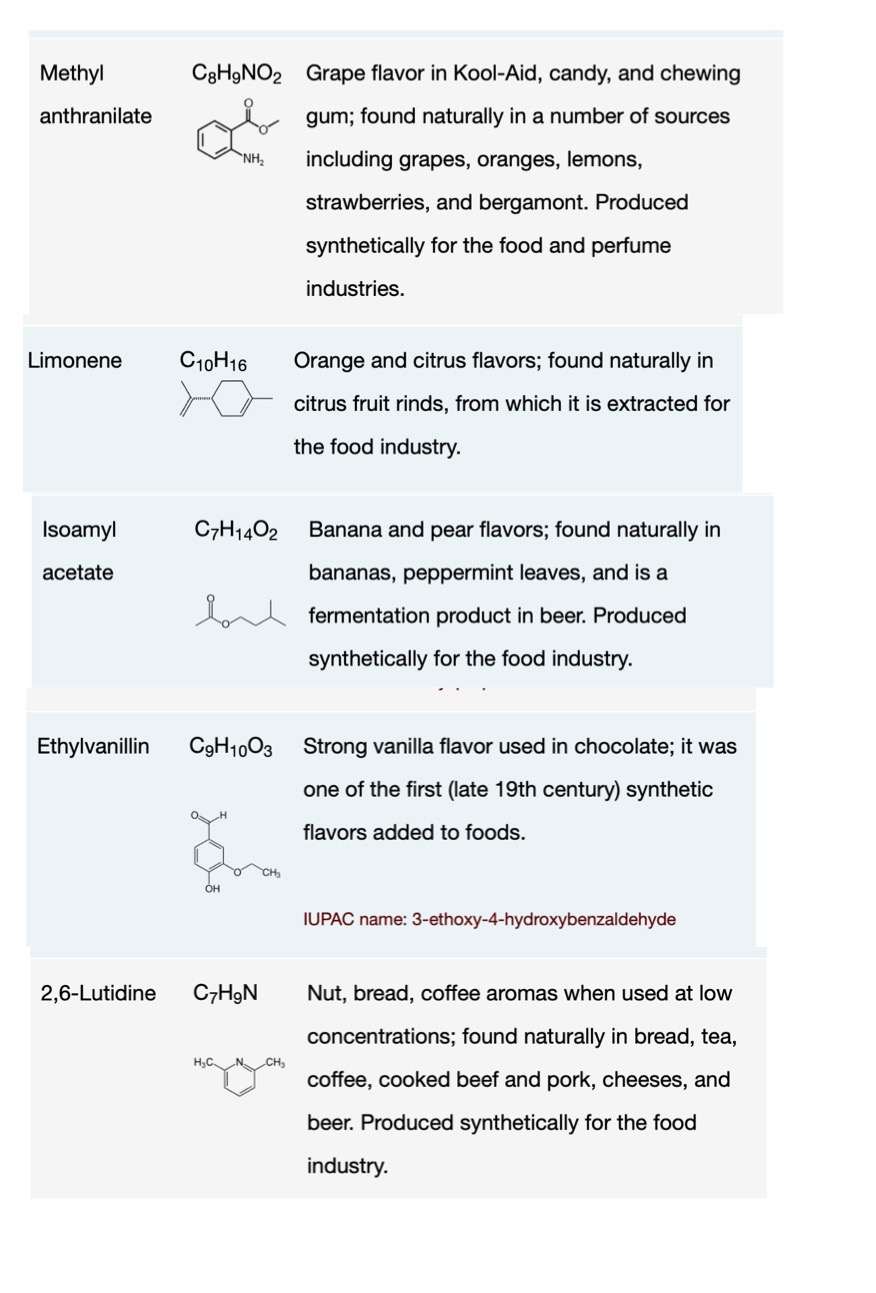
Oxygen and heat are the enemies of both flavor and nutrition. Oxygen is the principal culprit. It is the dream of every oxygen molecule to steal electrons from other molecules and so become water. To see why vitamins and flavor molecules are both susceptible to oxygen’s attacks, it helps to look at their structures. First, flavors:
Next, vitamins:
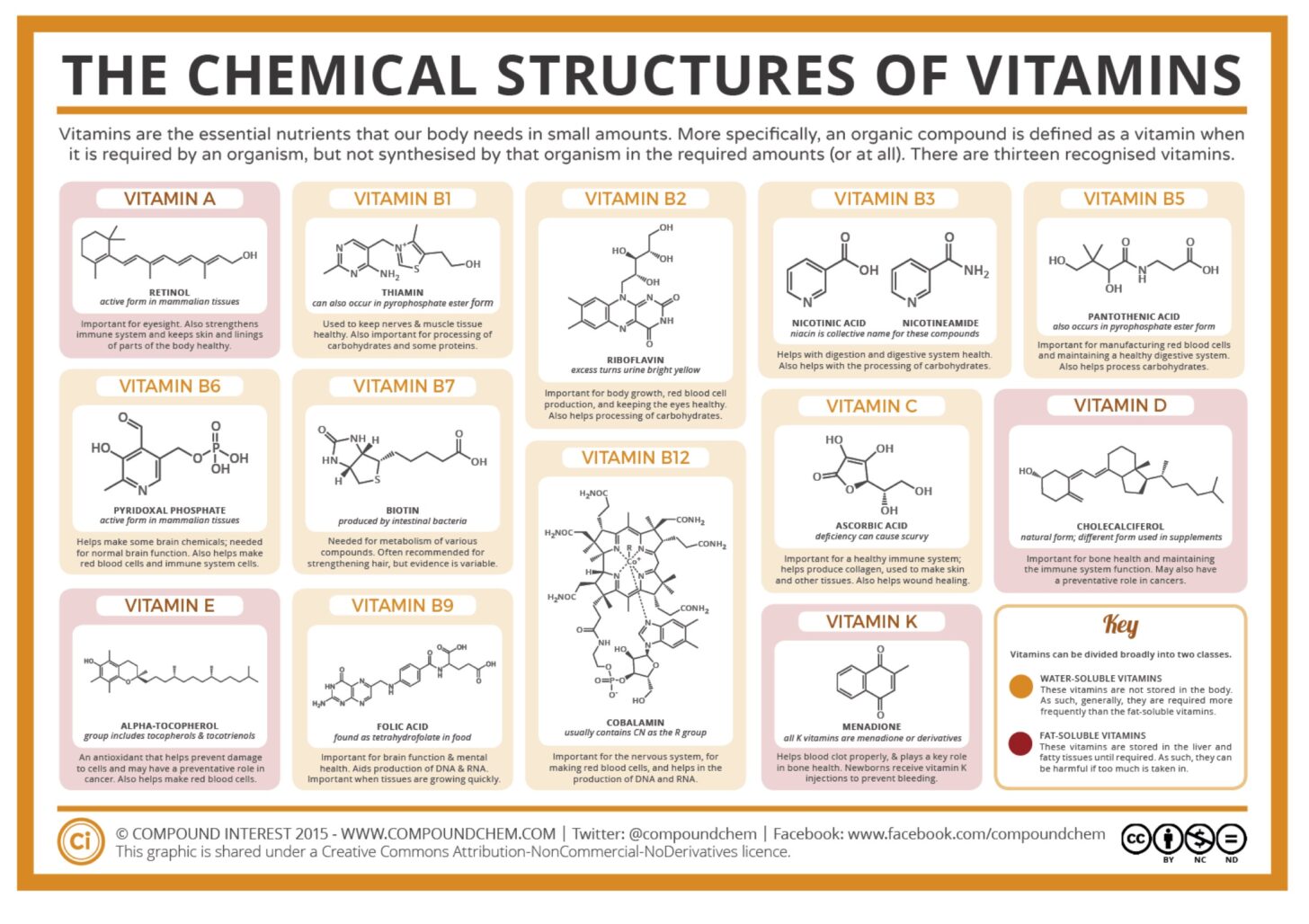
The convention in chemical drawings like this is to represent pairs of electrons with lines. Double lines mean double pairs. You can see that both flavors and vitamins have many electron-rich sites in their structures. The rings with two or three double lines are especially rich in electrons. That makes these sites prime targets for oxidation (including the sites already linked to oxygen, represented as “O”).
Heat speeds up oxidation (that is what fire is). Oxidation degrades flavor molecules, turning them from compounds we perceive as delicious to ones we experience as bitter and nasty. This same oxidation chemistry degrades vitamins but even more so. Most vitamins give up their electrons freely in essential biochemical reactions (i.e., vitamin C turns collagen protein molecules into connective tissue). Vitamins are even more sensitive to oxidation than are flavor molecules. If the flavor is gone, the vitamins are too. Flavor is your brain’s method of distinguishing nutritious from non-nutritious foods.
Heat and oxidation are not the only causes of flavor and nutrition loss. Degradative enzymes stored in subcellular compartments or released by microbes also play a significant role in food spoilage. Those routes to degradation are far too diverse and complex to discuss here. But their end effect is the same: bad taste and poor nutrition or even toxicity.
<–member-only-content–>
How does freeze-drying preserve flavor and nutrition?
Freeze-drying dehydrates food at cold temperatures in a vacuum, i.e., in the absence of oxygen. These conditions block both oxidative and enzymatic degradation. Knowing that oxygen and heat are the enemies of quality, we would expect freeze-drying to result in superior food quality when compared to other dehydration methods. And superior quality is what numerous studies have shown (Kamiloglu et al., 2016, Sablani, 2006 and Gumusay et al., 2015). In these studies, scientists quantify food quality as the percentage of electron-donating compounds remaining after a process. Since both flavor molecules and vitamins are electron donors, this approach broadly captures flavor and nutrition retention.
So freeze-drying is the best method of retaining flavor and nutrition. Does this mean you are doomed to poor nutrition when eating food preserved by heat-assisted dehydration?
Not at all.
How can I get vitamins while backpacking?
The whole concept of vitamins is kind of weird. Why would there be specific molecules that we absolutely require, yet we are incapable of synthesizing and thus are utterly reliant on obtaining from food? The answer has to do with natural selection.
Fortunately, vitamins are abundant in whole foods, and we need very little of them. Our distant (pre-human, pre-primate) ancestors were able to synthesize vitamins. They had to, or else they would have died. Dogs, for instance, eat foods lacking in vitamin C. But they can make their own vitamin C, and thus they do not get scurvy and die (because they can synthesize gluconolactone oxidase, and we can’t).
In contrast, our primate ancestors ate foods rich in the essential compounds that we now call vitamins. There was no penalty if they suffered a mutation in a gene needed for vitamin synthesis. Their diets provided what their genomes did not. So long as primates and then humans ate a varied diet of whole foods, there was no selective pressure to weed out the mutants who lost the ability to synthesize vitamins. We are the descendants of those mutants.
There are so many vitamins in whole foods, and we need so little of them that we can destroy over 90% by food preservation methods (or cooking) and still have all we need. That’s why heat-assisted dehydration is an excellent method of preservation. And also why supplements and vitamin pills may be a waste of money if you eat a varied and nutritious diet.
The key to eating well in the backcountry is to start at a high nutritional level, that is, a level found in fresh and varied whole foods. Start with highly-processed starchy glop, and you have to hope the processors put at least some of the missing nutrients back in as part of their process. Good luck with that. It’s better to make your own.
And if you are going to make your own, there is no better place to start than with tomato sauce.
Simple, delicious tomato sauce for backpacking
A good tomato sauce should be a vital component of every backpacker’s pantry. The combination of pasta and tomato sauce creates a high-calorie meal that is delicious and full of nutrients. With the addition of different meats and vegetables, the variations on this basic theme are endless. A good tomato sauce adds flavor and nutrition to other classic backcountry meals, such as chili – and more experimental meals such as Chiles Rellenos (which I will report on in a future installment).
As always, the key factor is good ingredients. Of course, you can buy good-quality pre-made tomato sauces, but why not make your own? It is not hard, and it will taste better and give you something constructive to do between expeditions.
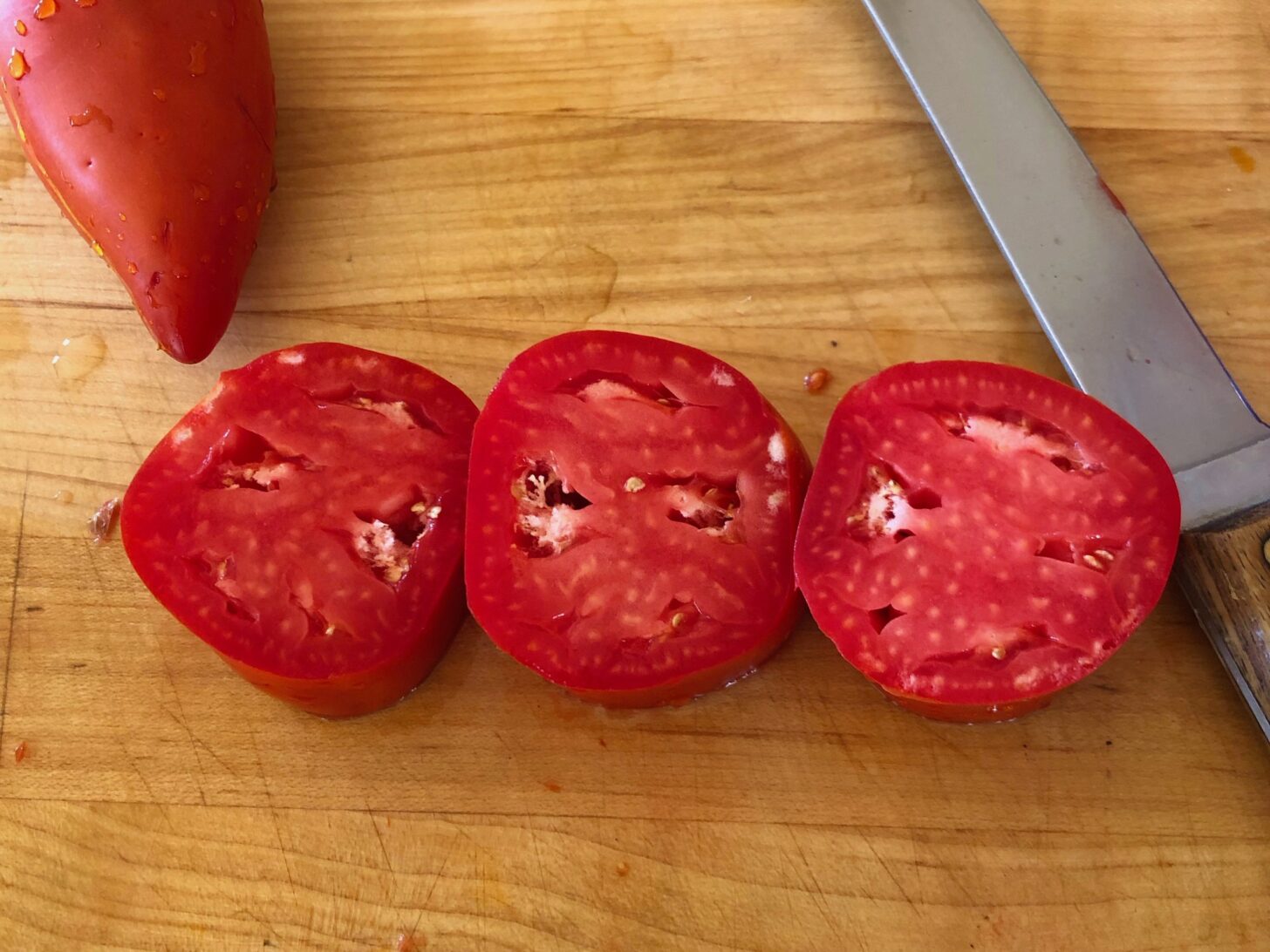
Garden tomatoes are best. Store-bought tomatoes are bred for looks and shippability, not taste. My wife and I have been growing Corne de Bouc tomatoes for nearly two decades. This heirloom variety does remarkably well in the tomato-unfriendly climate of Colorado. It has extremely thin skin (which is why you won’t see it on a store shelf), very few seeds, and almost no watery pulp. This means that processing is dead simple: cut into chunks and toss in the food processor.
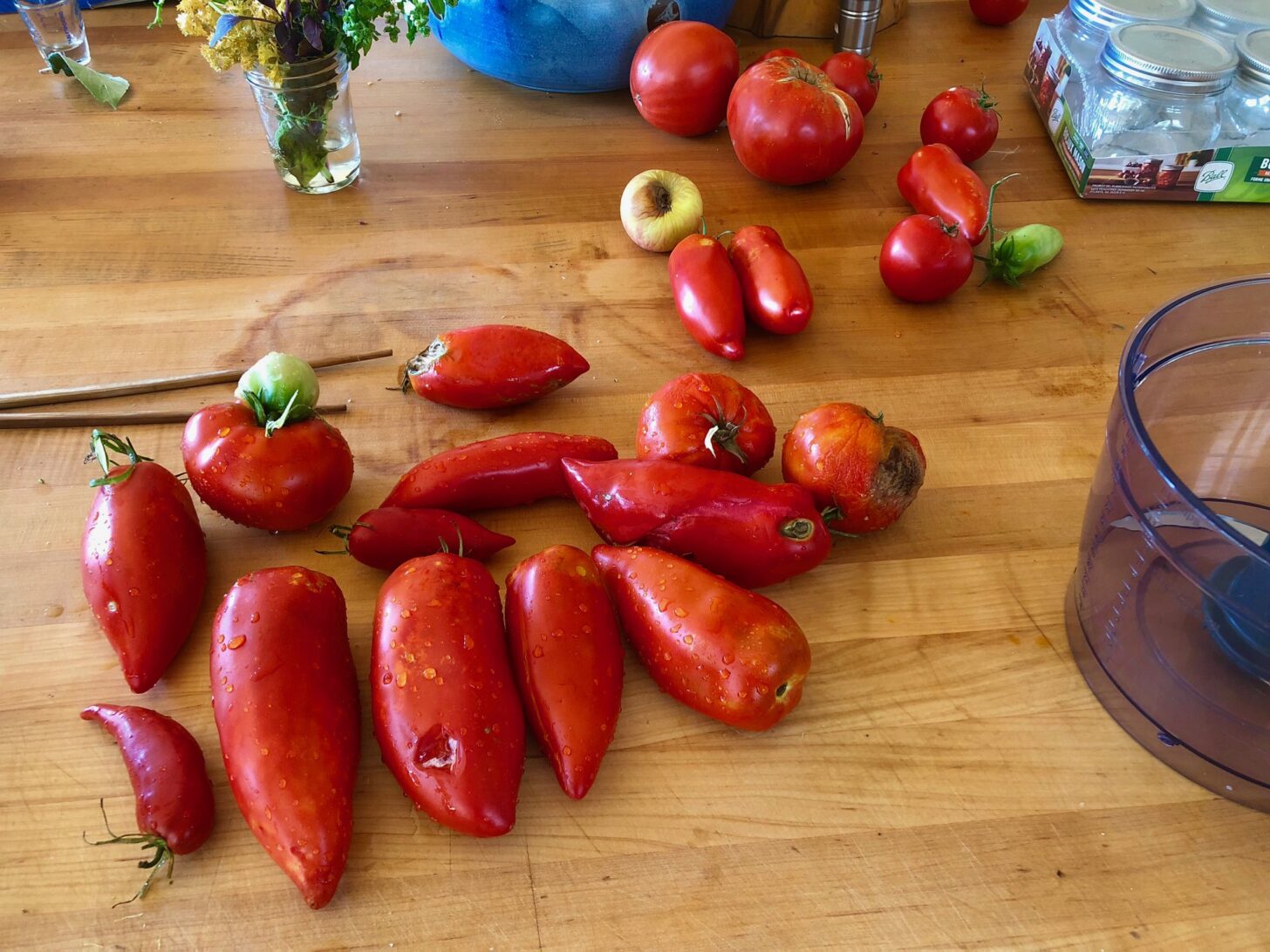
If you can’t grow your own, then buy your tomatoes at a farmer’s market or another store that features local produce. You want plum tomatoes: Romas or San Marzanos are common types.
To make the sauce, I follow the basic recipe of noted Italian cook Marcella Hazan:
- Put a couple of tablespoons of olive oil in the pan over medium heat.
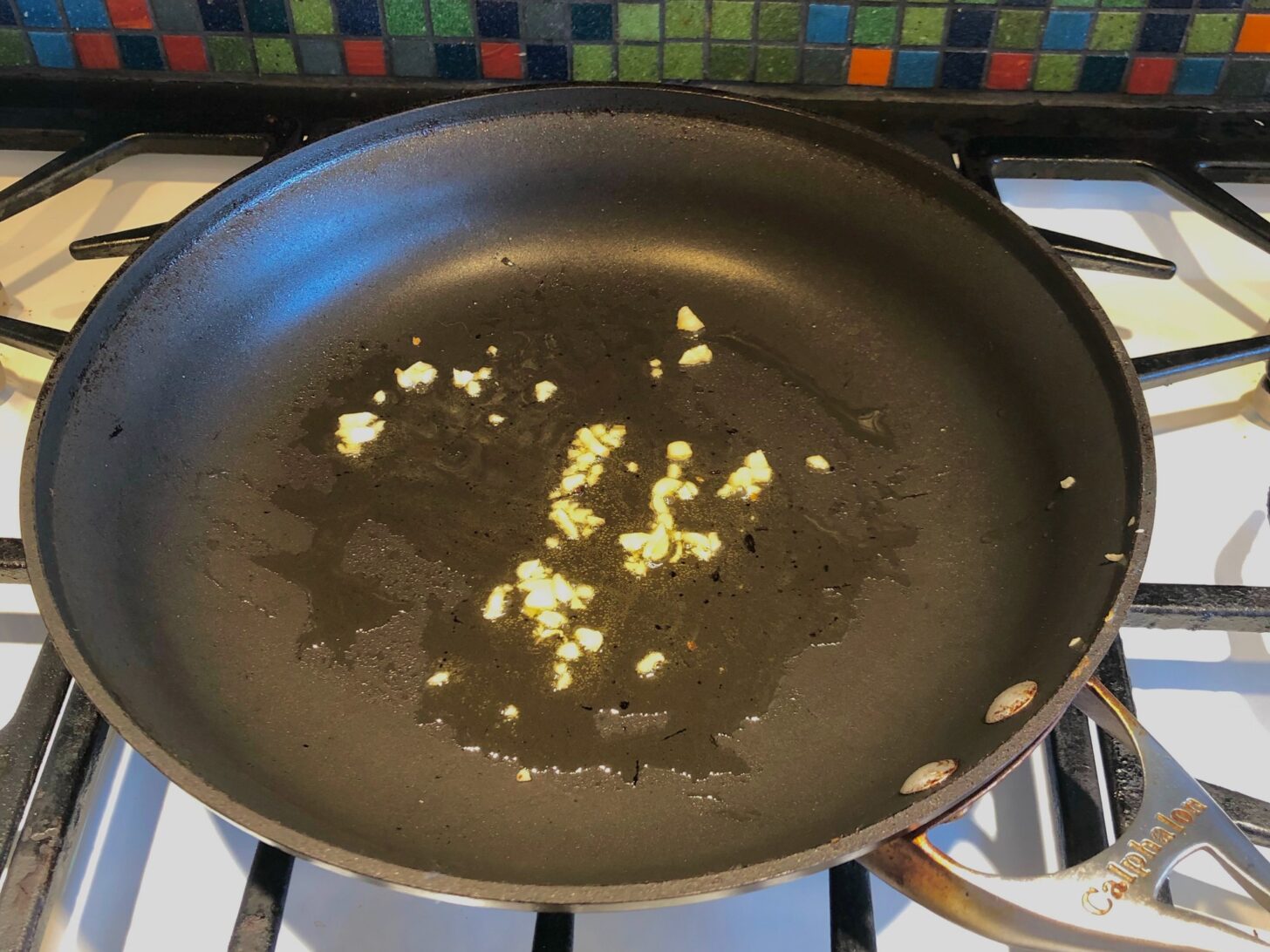
- Chop a clove or two or three of garlic and saute until they begin to brown.

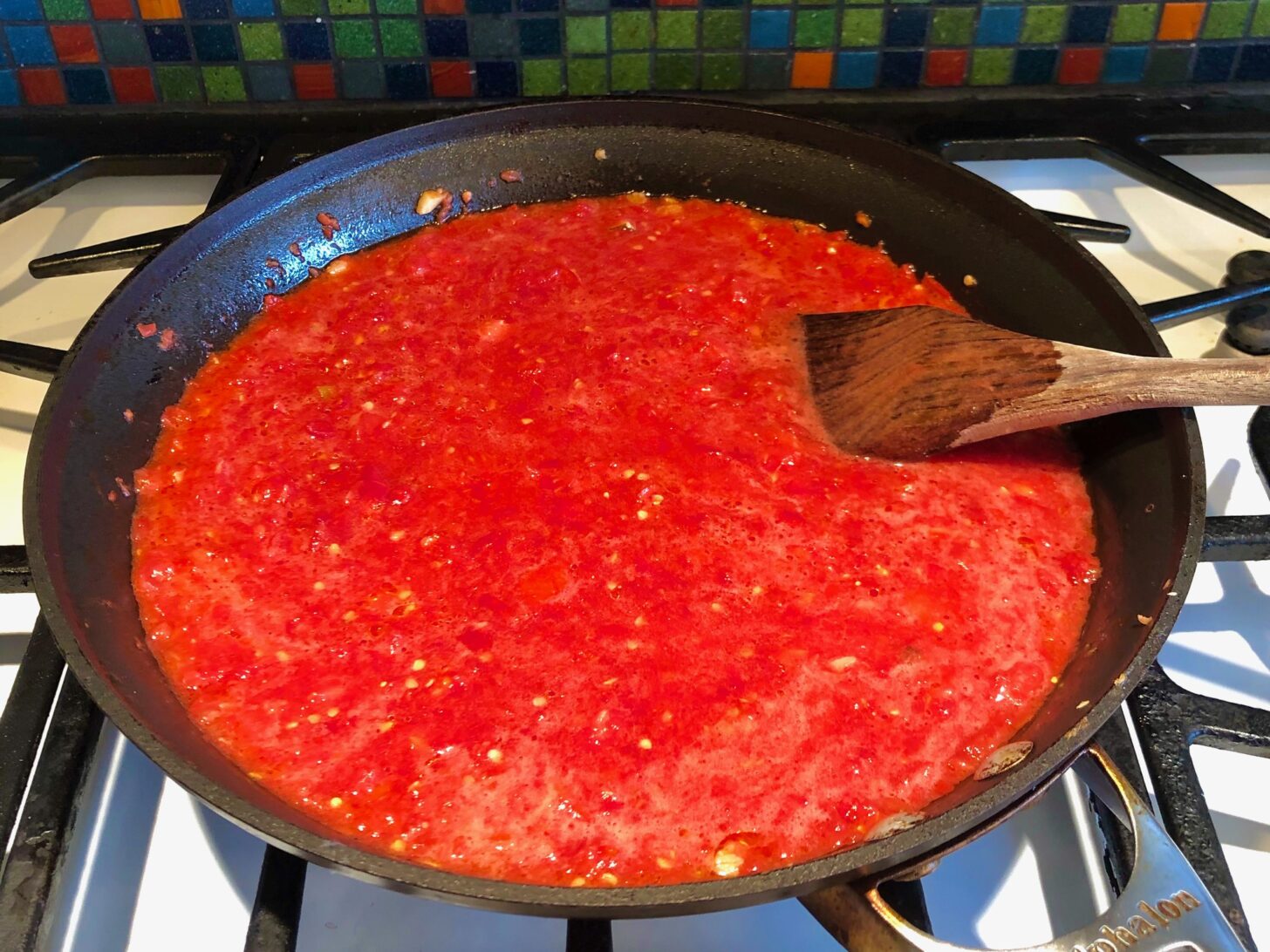
Saute the garlic. - Pour in the pureed tomatoes and simmer for 20 minutes (since I am dehydrating, I usually cook it down a little longer). Add salt and pepper to taste.
The sauce in progress. - Tear up a few leaves of basil (preferably fresh, preferably from your garden), stir them in and turn off the heat.
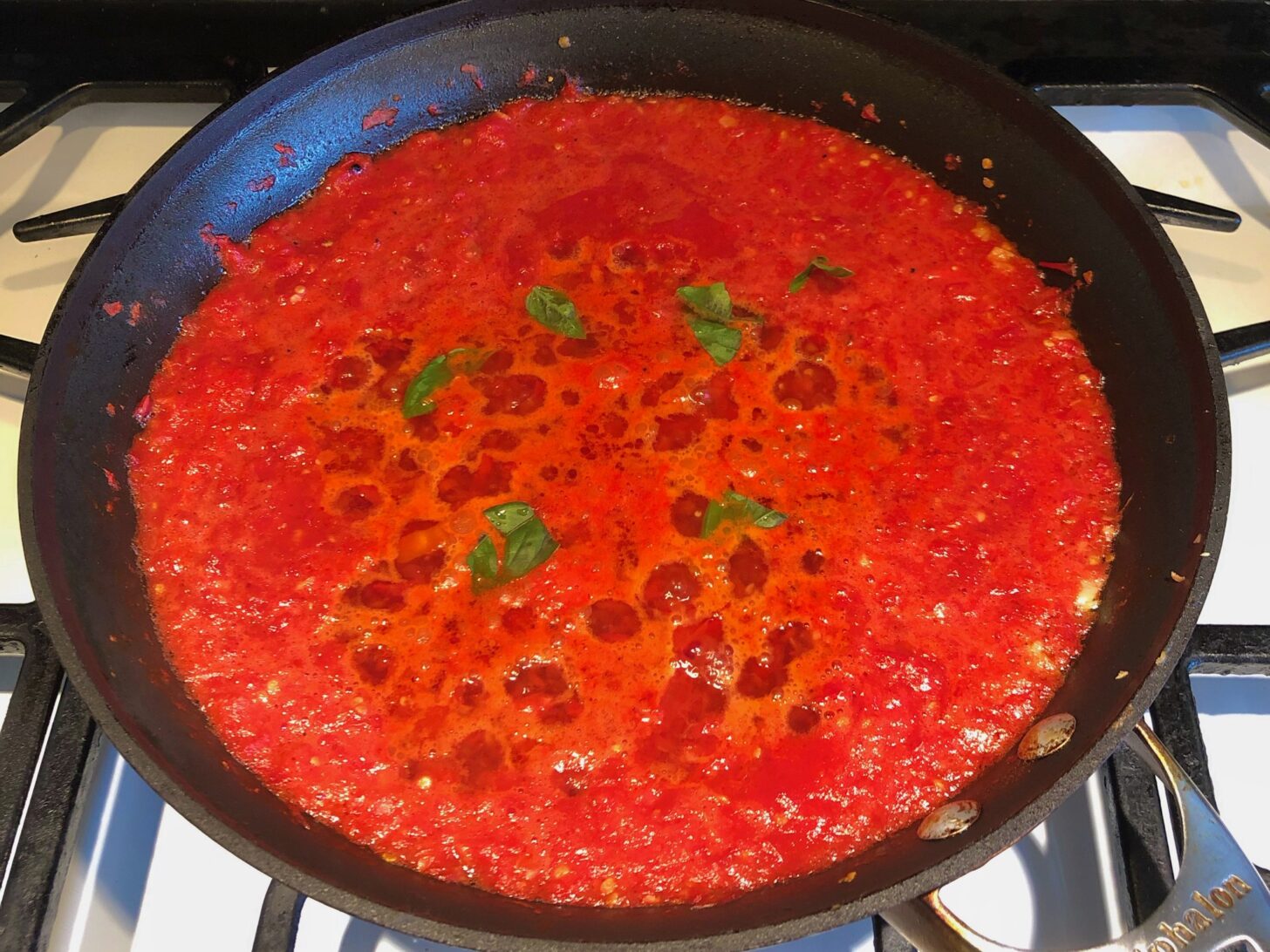
That’s it. The sauce can be dried into a leather in a dehydrator or freeze-dried into a sort of cake:
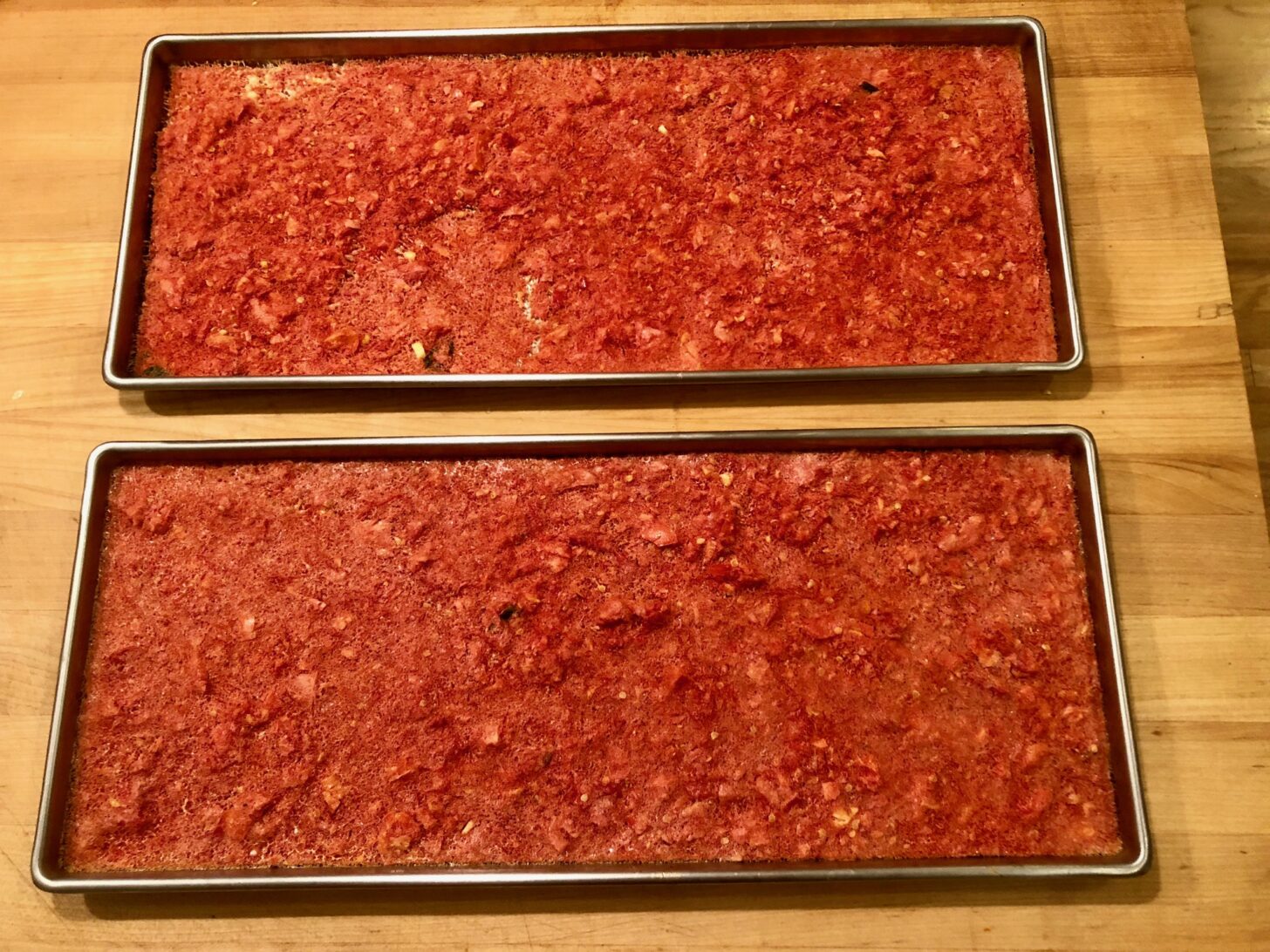
You can weigh it before and after as a guide to how much water to add when rehydrating, but it is pretty easy just to eyeball it. Add a minimal amount of water to start, and add more if it seems too pasty.
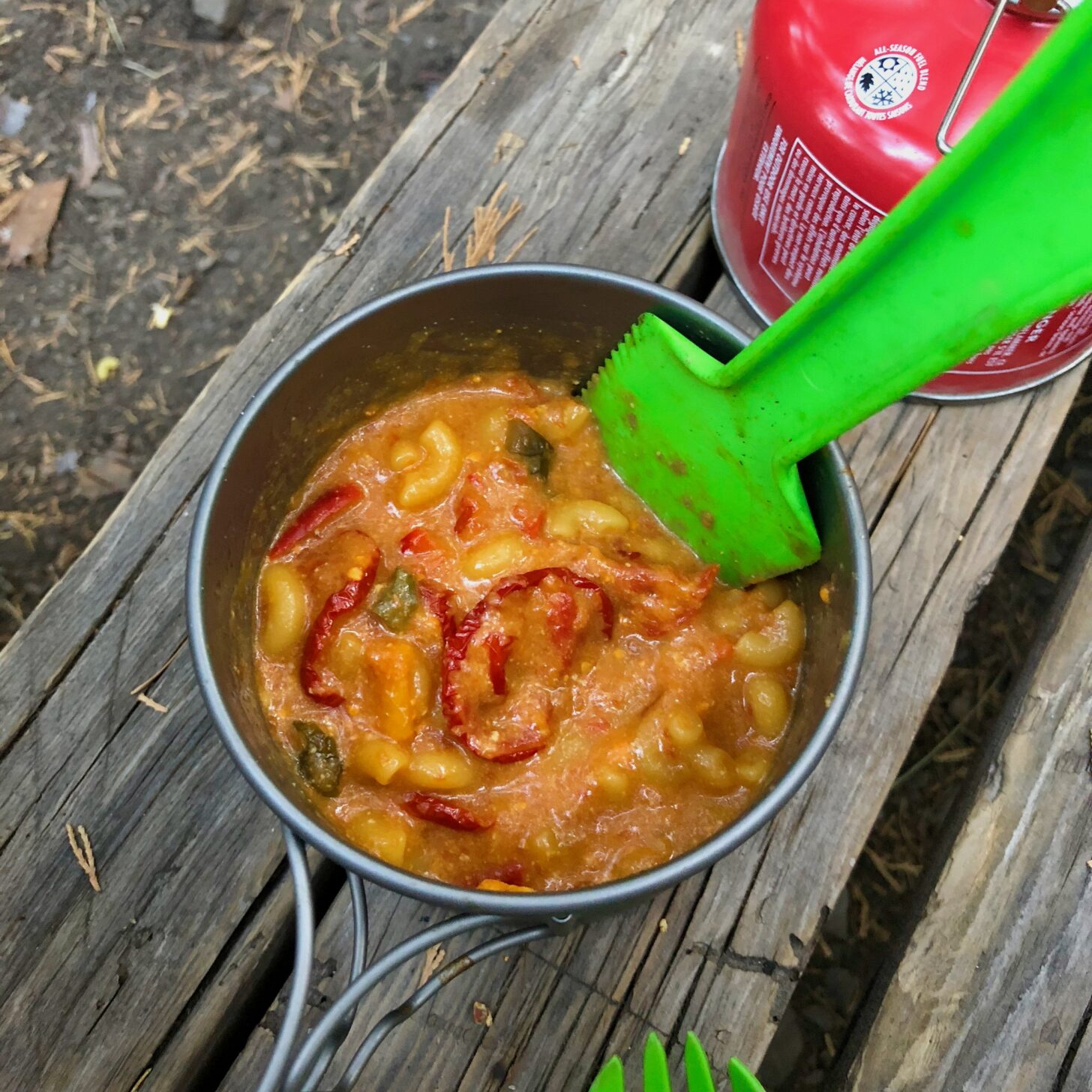
To make a meal, add whatever combination of pasta, vegetables, and meats suits your taste. Pre-cooking the pasta, then dehydrating or freeze-drying it saves time (especially if you are going stoveless) and fuel in the backcountry.
Learn More
Browse our curated recommendations in the Backpacking Light Gear Shop – a product research & discovery tool where you can find Member gear reviews, Gear Swap (used gear) listings, and more info about specific products recommended by our staff and members.
Gear Shop » Food Preparation and Packaging

Related Content
- Read more by Drew Smith
- See our review of the Harvest Right Home Freeze Dryer
- Podcast 28: Making Your Own Backpacking Meals
- Podcast 03: Backpacking Food and Nutrition
- Community: Food, Hydration, and Nutrition Forum
DISCLOSURE (Updated April 9, 2024)
- Backpacking Light does not accept compensation or donated/discounted products in exchange for product mentions or placements in editorial coverage. Some (but not all) of the links in this review may be affiliate links. If you click on one of these links and visit one of our affiliate partners (usually a retailer site), and subsequently place an order with that retailer, we receive a commission on your entire order, which varies between 3% and 15% of the purchase price. Affiliate commissions represent less than 15% of Backpacking Light's gross revenue. More than 70% of our revenue comes from Membership Fees. So if you'd really like to support our work, don't buy gear you don't need - support our consumer advocacy work and become a Member instead. Learn more about affiliate commissions, influencer marketing, and our consumer advocacy work by reading our article Stop wasting money on gear.


Discussion
Become a member to post in the forums.
Companion forum thread to: Why Freeze-Dried Food Retains Taste and Nutrition
In part three of his ongoing series on freeze-drying, Drew Smith explores the science behind how freeze-drying preserves important nutrients – and why it matters.
Interesting chemistry to start, but then the science dropped off. Call me a glutton for punishment but I’d have read more. You touched on O2 scavenging electrons from the molecular bonds, but did not show any of the resultant molecules or mention what they turn into? If you take electrons away from vitamin B12, the most complex diagram above, what are you left with?
Here are some questions for you. Its fine to say that freeze drying preserves the vitamins and nutrition, but how do you know? Is there a before / after analysis paper you could link to? What about dehydrating, which does involve a slightly elevated temperature? Is there a way to measure the levels of say, vitamin C before and after each process?
I did not see any mention of the effect of oxidation on protein, fat and carbohydrates? I know it can play hell on the taste of fat. Bear fat, left in the freezer in other than a vacuum sealed bag, will become “fishy” smelling and tasting in just a few months. Sealed cryogenically and its fine for years.
Keep up the research and writing. You might have the makings of an interesting book.
Hi Bendrix- the article has links to a few representative papers that measure oxidation levels after various preservation treatments. These articles have references and “cited by” links that you can follow to answer your questions in more detail.
Food chemistry is incredibly complex and well outside the scope of a backpacking article. The number of oxidative degradation products that are possible is essentially limitless. But all of these products are both less tasty and less nutritious. That’s the key take home.
Humans have known how to identify and prepare nutritious food since before we were human. It is only in the last decades that we have learned to decouple taste and nutrition in the service of profit, thus making a once-simple task difficult.
I recommend Michael Pollan’s “The omnivores dilemma “ for more on this.
Almost all of the commercially available freeze-dried “backpacking foods” of the type where you add boiled water and wait, typically give me painful gas and multiple trips to the bathroom. Anyone know why that is? I’d sure like to solve that problem!
Become a member to post in the forums.