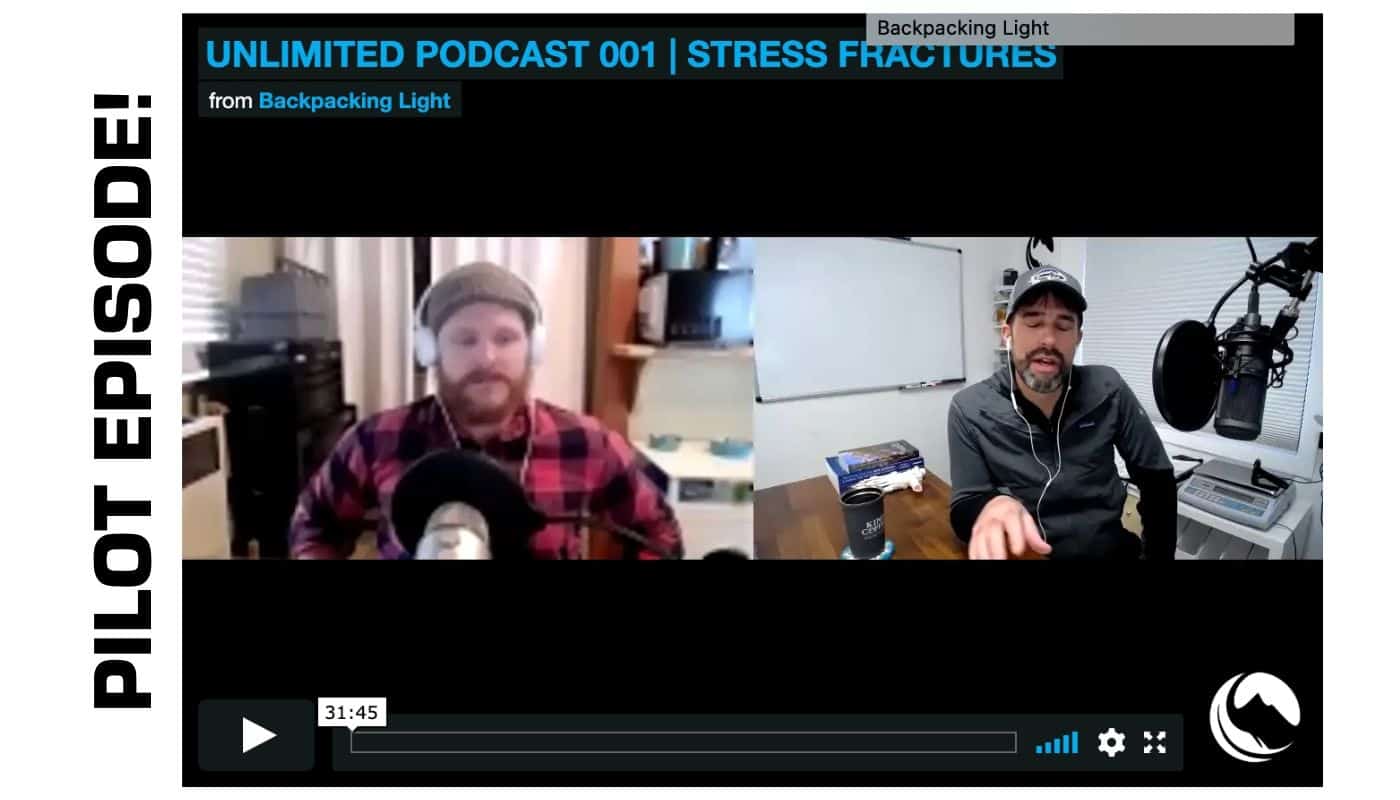
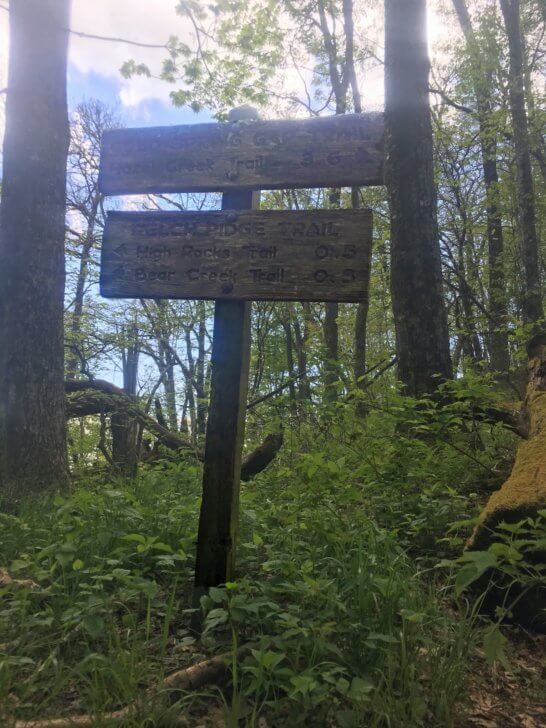
As the Covid-19 pandemic continues to sweep the world, Andrew and Ryan take a hard look at responsible backpacking in 2020. They are joined by Jeff Garmire: repeat guest, elite long-distance athlete, author, and FKT holder – and Maggie Slepian: thru-hiker, climber, freelance writer, and Managing Editor of the Trek.
Also in this episode:
Are group trips possible once the pandemic begins to recede?
Resources for managing your non-backpacking time
Thoughts on how to stay sane in a year of social distancing and too much indoor time
This episode of the Backpacking Light Podcast is supported and kept advertising-free by Backpacking Light membership fees. Please consider becoming a member which helps support projects like this podcast, in addition to a whole slew of other benefits!
We need to take a hard look at what it means to be a long-distance backpacker in 2020 – what types of trips should be off the table, what types of trips are still okay, and how to keep yourself sane if you can’t make a backpacking trip work this year.
This article was updated on March 28th, 2020.
I’d Rather Be Backpacking
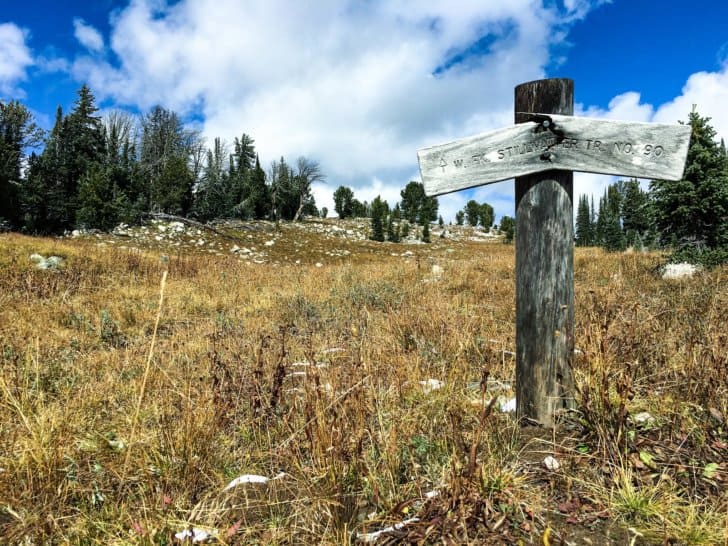
A trail sign in the Absaroka-Beartooth Wilderness. Photo: Andrew Marshall
Like you – I should be backpacking right now.
2019 was tough for me, one of the toughest years of my life, and I’ve been planning a 2020 thru-hike of something, anything, for a while now. As I’ve said elsewhere, long hikes are how I do the weeding of my internal landscape. After three years of trying, my wife and I finally reached the medical and emotional end of our attempts to get pregnant. The act of “giving up” was freeing in one sense, but it also sent me spiraling into a depression that was proving hard to escape. I needed some time in the woods – a long time in the woods – to get my head on straight again.
Initially, I was going to tackle the Pacific Crest Trail. As the vagaries of life mounted up and it became apparent I wouldn’t be able to take four-to-six months off from my career and relationships; I shortened my goal to the Arizona Trail. At some point, even that (relatively) shorter hike became impossible to squeeze into my schedule, and I downsized my goal once again to the Benton McKaye Trail – 300 miles up and down over the ridges and hollows of the western Smoky Mountains.
On March 11th, I was tossing my final bits of food onto the scale and updating my spreadsheet with odds and ends. My pack, a new offering from Rogue Panda I was going to test for BPL, was packed.
On March 12th, I was canceling my flights and the reservation at the hostel I’d made just ten hours earlier. Over the weekend of the 14th and 15th, the fabric of American social life changed suddenly and completely for large portions of the country. As well all know, the situation accelerated quickly – like an avocado going from rock hard to rotten in the course of a few hours. Now as I make the final updates to this article (March 28th, 2020) Covid-19 is the one and only thing in the news and in private conversations.
It might seem trite to be talking about backpacking, and examining the implications of the pandemic on this year’s crops of thru-hikers, in light of the severe financial and social impacts of Covid-19. But we backpack because it meets some deep-seated need in all of us, and in times of stress the urge to sling on a pack and escape from the world can become even more pressing. And it just so happens that Covid-19 ramped up just as this year’s batch of northbound thru-hikers are getting ready to hit the trail (some of them already have).
So we need to take a hard look at what it means to be a long-distance backpacker in 2020 – what types of trips should be off the table, what types of trips are still okay, and how to keep yourself sane if you can’t make a backpacking trip work this year.
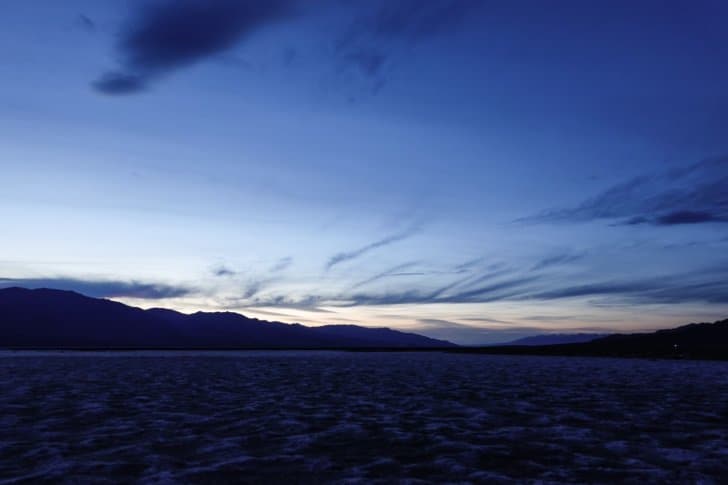
The last moments of twilight in the Lake Tahoe Basin. Photo: Andrew Marshall
Why Canceling Your Thru-hike is Hard.
“…we have all been asked to make changes, make sacrifices, and/or take precautions to minimize [Covid-19’s] spread.
We at the Appalachian Trail Conservancy (ATC) are now asking you to do the same: please postpone your section or thru-hike. Instead, consider alternate ways of connecting to the Trail and to the outdoors.”
– Sandra Marra, President & CEO, Appalachian Trail Conservancy
When I wrote the first draft of this article (March 18th, 2020) there was still some discussion of whether or not it was okay to continue or begin your thru-hike this year. In the weeks since, it has become more apparent than it already was that the answer is clearly “No, it’s not okay.” But just in case you are one of the holdouts, consider the following.
To put it simply, planning a thru-hike is hard. Really, really hard. It takes careful negotiation with your place of work – or you have to quit your job and hope you can find one again when you return. Many people suspend their car insurance and make other complex life changes in advance of a hike. It takes savings and forethought, and a certain amount of logistical and financial precision. It often takes sacrifices on the part of your loved ones.
So with all that work achieved and with your hike on the horizon, it can be easy to convince yourself that thru-hiking won’t have a negative social consequence at this point. But you’d be wrong.
A storm sweeps into a valley in Montana. Photo: Andrew Marshall
This way of thinking is called “loss aversion bias,” and it’s the reason new employees often have an easier time spotting systems or protocols that need to change in the workplace, and why people tend to stay in bad relationships. If you’ve worked hard for something, or sunk time into something, you don’t want to give it up – even if it is inefficient, ineffective, or ethically questionable. We’re just hardwired to avoid loss.
Jeff Garmire Gives Up on a Dream
Consider Jeff Garmire. Jeff is an elite long-distance athlete. He’s set fastest known times (FKTs) on the Arizona Trail and the Long Trail. For the 2020 hiking season, he was aiming for FKTs on the PCT and the AT. He’d also been invited to run the Barkley Marathons. Only forty people a year are accepted to the Barkley Marathons, so getting a chance to run them is potentially a once-in-a-lifetime opportunity.
A few weeks ago, Jeff made an excellent blog post on his struggle to cancel his 2020 plans. The whole thing is worth a read, but here’s an excerpt:
“I had my plane ticket and was prepared to travel through three airports, crossing the country to try to complete a race with a 1% finish rate. The more news, numbers, and widespread impact of Covid-19 [became apparent] the more I began to wonder about my social responsibility versus my personal goals.
…The concept of attending and running the race resulted in sleepless nights. But, I couldn’t possibly withdraw and risk never getting the chance to run in the only race I had wanted to attempt for years. Every night I sat awake wondering what the future would hold but paralyzed by indecision…
…Finally, a company I have been working with who had taken care of my travel arrangements asked me if I would attend if the race was still held. I thought about the question for hours and eventually replied that I would not. It took the external question to set me straight. I had irrationally held on to the belief that I could responsibly travel across the country. My travel plans were canceled.”
-Jeff Garmire, Social Responsibility and Personal Goals: Barkley Marathons, Coronavirus, and Valuing the Dreams of Others
What I find fascinating about this is that Jeff knew from the start what the most socially responsible course of action would be: cancel his plans. But still, he vacillated, trying to talk himself into something he knew would be wrong. I did the same thing in the days leading up to my change of plans – and I didn’t put nearly the time and effort into training for a 300-mile hike as Jeff did in prepping for the hardest ultra-marathon in the country.
The Depression Trap
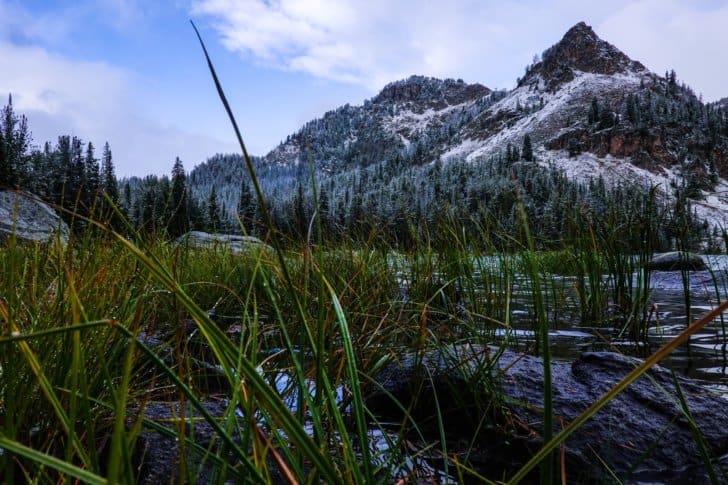
Morning on a remote alpine lake. Photo: Andrew Marshall
Of course, it isn’t just logistics and finances and loss-aversion bias that makes resetting your 2020 so difficult. When we interviewed Jeff for our podcast in 2019, Ryan Jordan (BPL owner, editor-in-chief), Jeff, and I realized we had something in common – we used backpacking as a way to treat the depression and anxiety that we all struggled with. I don’t know how many long-distance hikers carry around depression as well as a backpack – but I suspect it’s a lot. (I’d love to see some kind of study on it one day).
And so in times of stress and uncertainty, it’s doubly hard to give up on something that you know will be a salve on your raw psyche.
But here’s why you should.
Why You Should Cancel Your Thru-hike
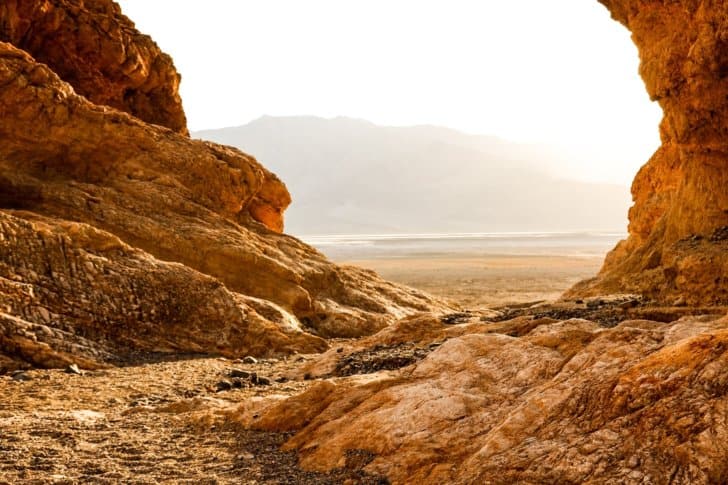
Death Valley National Park. Canceling your thru-hike is an opportunity to explore more remote, less-trafficked outdoor spaces – as long as they remain open, and as long as you do so responsibly. Photo: Andrew Marshall
The Ethical Considerations of Social Distancing
It’s incredible how quickly the phrases “social distancing” and “flattening the curve” entered our lexicon. And at first glance, both of these concepts are compatible with long-distance backpacking. But dig in a little more, and it becomes evident that thru-hiking (at least in the way it is commonly practiced on the more popular trails) is untenable in the age of Covid-19.
For one thing, thru-hikers often share physical space, food, latrine areas, and water sources – particularly in the more crowded-southern portions of popular trails. When you combine proximity with the poor hygiene that is all-but-inevitable in such situations – well, it seems obvious that Covid-19 will spread on the trails. Given the current lack of test availability and the lag-time associated with this virus, there’s almost certainly at least one person on the AT who has it – and, as we know, one is all it takes.
Covid-19 spreading among a relatively young, relatively fit group of thru-hikers is one problem – but those hikers spreading the virus to isolated, rural, trail-side communities is another problem altogether. These towns generally have an older demographic, and certainly lack the resources to deal effectively with a cluster should one appear.
When I talked to Jeff Garmire about all this a few days ago, he pointed out another factor I hadn’t even considered – trail angels.
“A lot of…trail angels are older. They are part of the age group that is more likely to experience complications from this pandemic…and potentially taking resources away from them and elevating their risk felt like an insult to the people who have selflessly aided hikers and trail users for years,” Jeff said when I interviewed him for this article.
The Logistical Complications
If the ethical conundrum isn’t enough to sway you, consider this – Covid-19 is throwing monkey wrenches into the already complicated logistics of a thru-hike. The closure of small-town grocery stores, gas stations, and other resupply points was one of the first warning signs many potential thru-hikers got that 2020 might be off the table.
“It happened really fast…within three days I went from considering a different resupply strategy to deciding not to go entirely,” said Maggie Slepian, the Managing Editor of The Trek, when I reached out to her for comment about her aborted PCT thru-hike:
“…once I started getting wind of closures along the trail in smaller towns and the potential for a seriously limited resupply, I added three locations for mail drops in the desert alone.” Not long after, Maggie pulled the plug because, as she says, “…it started to seem selfish and indulgent. Once that idea got into my head, I couldn’t shake it, and the next day I got onto a call with my boss…and by the end of the call, I had canceled the hike.”
On top of resupply issues, there’s the problem of transport and other infrastructure conundrums. Major airlines have already cut their available capacity by huge margins. Will buses, shuttles, taxis, and ride-share programs do the same? Hard to say, but one has to think it’s at least on the table. And let’s not forget that it will be harder to hitch a lift to and from trail heads. Trail angels will likely be less willing to share their personal spaces.
At this writing, states are imposing more and more draconian isolation measures as social distancing gives way to shelter-in-place and mandated quarantines. Can you imagine popping into town after a few days in the backcountry only to discover that you are violating a quarantine that went into effect only hours before?
Some Other Considerations
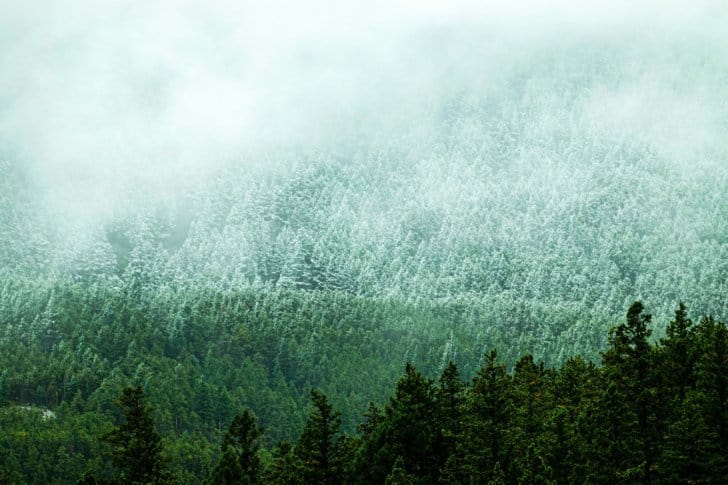
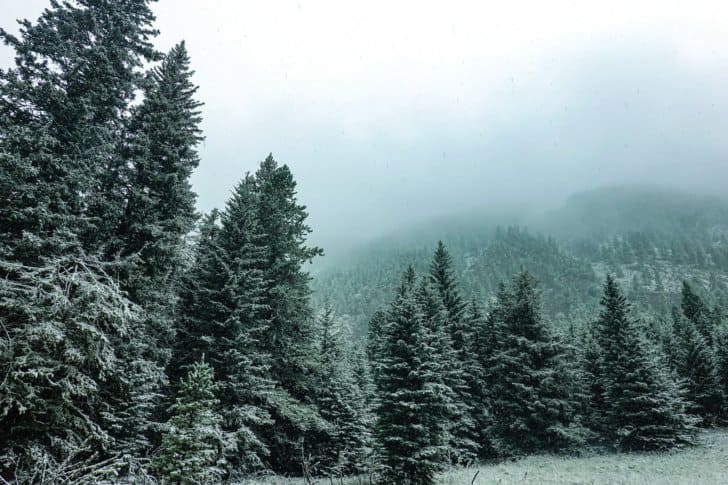
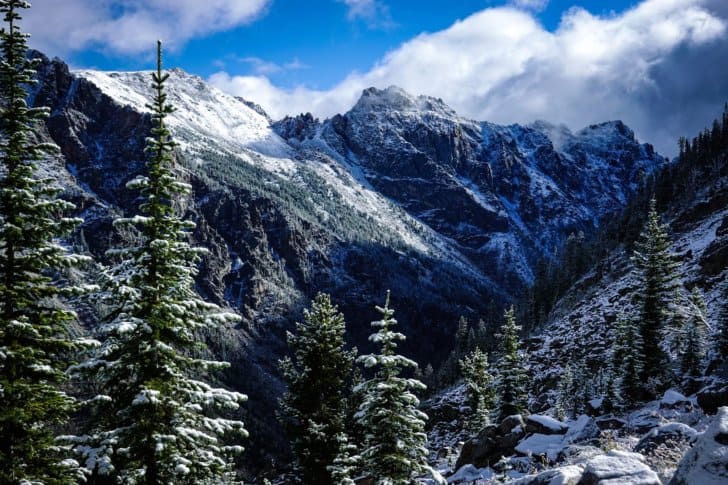
A pine forest receives a dusting of snow. Photo: Andrew Marshall
Some final thoughts.
Maybe now isn’t the best time to spend weeks and months away from your friends and family. The truth of the matter is that thru-hiking is an inherently self-centered endeavor – it’s often as difficult for our loved ones as it is for those of us carrying packs (albeit for different reasons). The trail will be there next year – I’d argue it’s probably more important to devote your time and energy to a sense of community at this moment.
There are also some safety issues to consider. Rescue teams and first responders may be busy with other things should you need some help for non-Covid-19-related reasons – or that you might be taking away resources from someone who needs them more than you.
Finally, there’s a conservation issue at play. In their statements to the public, major trail associations are already indicating that ridge runners, trail crews, and other maintenance and support systems will be limited-to-non-existent this year. The upshot is any given hiker’s impact on the trail and surrounding ecosystems will be much more significant than in years past.
All in all, there are many good reasons to cancel or abort your thru-hike – and not many great reasons to continue forward with it. The reasons to cancel are about other people. The reasons to continue forward regardless of Covid-19 are about you.
So Your Thru-Hike is Canceled – Now What?
I believe you can still backpack responsibly in 2020 – but you’ve got to do it right. Driving short distances to your destination is one way to do so. Photo: Andrew Marshall
Now that you’ve (hopefully) changed your plans, what can you do to get a taste of the long-distance backpacking that you love?
Your best bet is to discover, or re-discover your local outdoor opportunities, and to keep your trips very short – and thus limit the need to travel and resupply. One troubling idea that pops up a lot in outdoor circles is that western mountains and deserts are better than eastern mountains, or that the midwestern and south-eastern states have nothing to offer to backpackers or other recreational outdoor enthusiasts. This simply isn’t true. There’s a lot to explore out there, no matter what corner of the country you call home. We’ve got some ideas on how to backpack responsibly during this time (hint: it involves an extremely specific set of circumstances) – scroll down for more.
You can also change your trip-type entirely. Backyard camping is a fantastic way to learn or hone new skills in a low-stakes environment. Now’s the time to learn how to pitch a tarp, or paint with a small watercolor kit, or take up the harmonica, or learn a new knot. When your time to thru-hike circles back around, maybe you can use your new skills to drop some ounces out of your pack – or make music and art in the backcountry.
On the days you are stuck inside, consider doing some additional daydreaming and trip planning. I know – you’ve been daydreaming and trip planning about thru-hiking for years. But now you’ve got a little extra time. So maybe you can think of something even cooler to do – perhaps a trip that involves multiple modes of human-powered travel? Something in a different country?
Train! Be careful not to fall into the trap of eating or drinking more than usual while stressed out and stuck inside. If anything, you want to go the other way. I’m trying to look at my postponed hike as an opportunity to improve my fitness for the next adventure. That means more squats, more trail runs, more yoga/mobility exercises, and increased awareness of caloric intake and quality of nutrition.
Above all, you should take care of yourself. We seek adventure and trail-life partially to escape the stress and trials of our modern world. It’s important to realize that having to cancel your thru-hike is a loss. And as much as other people have their own pain and losses to deal with, it’s okay to mourn the loss of your adventure. One thing that can help is to reframe your circumstances a bit. Jeff Garmire, freed from the pressures of training for FKTs, is leaving his sports watch at home and running for the joy of it. Maggie Slepian is trying to get her life back on track after nearly suspending it for her hike, but suddenly has six-months of saved income she can put towards other things in her life. Me? Well, I get some more time with my family, and I’m around to help my wife as she tries to figure out how to be a teacher from behind a computer screen.
How to Responsibly Backpack in the Age of Covid-19
It’s essential to strike a balance between social isolation and putting yourself in danger. If you are going to backpack in 2020, do so in a way that absolutely minimizes the chances of a search-and-rescue. Photo: Andrew Marshall
I think it’s possible to backpack responsibly during this time – with strict adherence to a few guiding principles, and as long as you use these principles to err on the side of caution.
Comply with Your Local (Current) Guidelines
As I write this, the state and county governments where I’m located (Placer County, CA) have both instituted strict “stay-at-home” measures to help flatten the curve. Crucially, both of these mandates make exceptions for outdoor activity, so long as that activity takes place in a socially isolated manner. Many states seems to be following suite. Of course, this could change in an instant – the situation is moving quickly. If your local or state government institutes official quarantine measures that include not leaving the house for anything but emergencies and groceries, you have a social duty to abide by those measures.
But for now, the thought seems to be that getting outside and exercising while maintaining social distance is more beneficial to our society than forcing people to stay inside.
Stay Local
Your trip has to take place within a geographical area that you can reach easily, by car, with minimal-to-no social interaction. At this point we are really talking thirty minutes and under by car.
You should avoid point-to-point trips, as they require shuttling or some other type of social interaction; loop or out-and-back trips are best. Day hikes from a base-camp near your car are even better – that way, you can get out easily if you need to. Additionally, you should respect the wishes of small towns that serve as gateways to popular backpacking areas. Many of these towns (such as the close-to-me town of Truckee, CA) have issued appeals to visitors not to come into the area so as not to overwhelm their limited infrastructure. So if you aren’t already a local in one of these gateway communities – stay away.
Stay Short
The Covid-19 situation is changing too rapidly to justify a trip longer than two or three days. Unless you are an absolute hermit, chances are someone will need your love, time, and attention in the weeks and months to come. I understand and support the need to feed your soul by being in the woods – but that has to be balanced by the needs of others.
Keep Your Distance
If you can find a trip that meets the above three guidelines – great! If you get out there and the trailhead is swamped with cars or the backcountry campsites are full – pull the plug on your trip as quickly as possible. Being in the woods isn’t social distancing if there’s a bunch of society out there with you.
Know Your Limits
Don’t travel in unfamiliar areas; don’t push yourself beyond your comfort zone and skillset, and don’t take risks. In an attempt to get away from increasingly crowded trails and public land gateways, you might have the temptation to explore remote areas that increase your risk factors. You might also have the urge to use new or unfamiliar gear during this time of boredom and cabin-fever. Don’t do either of these things. As I said above, now is not the time to risk pulling resources away from those who didn’t intentionally put themselves in harm’s way. You should only get into serious remote areas if you absolutely have the skill-set travel these areas with maximum possible safety – and chances are you are overestimating yourself a little.
Make Contingency Plans
Stay in touch with your household using a satellite phone or GPS communicator (one that you know is effective). Have a plan for: what to do if a member of your household gets sick, what you’ll do if you become symptomatic while on your trip, and how you’ll get out of the backcountry without exposing anyone else to your illness. If you can’t come up with a satisfying answer to any of those questions – or you don’t possess a reliable way to stay in touch – don’t go.
Don’t Go Solo
A solo trip, even in an area you know well, could still be hazardous if you started showing symptoms (particularly the “difficulty breathing” symptom). While you don’t want to travel with a huge party, one solution is to backpack with a spouse or partner (someone with whom you are already sharing personal space). Another option is to travel with a tiny group – but we would recommend this only after the Covid-19 pandemic has reached it’s peak and infection rates are starting to decline.
Will We Return to Normal?
I asked Backpacking Light publisher and founder Ryan Jordan about backpacking with multi-household groups. As a professional guide and director of our Wilderness Adventures program, Ryan suggests that behaviors will change until a Covid-19 vaccine is widely available and/or a substantial fraction of our population has otherwise been exposed enough to develop antibody-based immunity.
Ryan offers these guidelines for backpacking as a group (many of which are also applicable to solo trips or trips with just your household group members) “after the peak”, and I thought I’d share them here.
The main goals of these guidelines are:
Treat each household like an independent entity and respect the space of other households in your group.
Minimize the chance that you’ll transmit an infection to the community you are visiting.
Minimize the chance that you’ll expose yourself to the infection en route between your home and the trail.
Here are the guidelines:
Travel in your own personal automobile to your destination instead of renting a car, flying, or taking public transit.
Persons from different households should not share equipment, food, supplies, etc. Don’t handle equipment from other household groups.
Don’t share pre-trip accommodations with persons from different households.
Before the trip, prepare, cook, and eat your meals as part of household groups only, in your chosen accommodations (e.g., hotel if it’s available), or outside, to minimize your exposure to community restaurants, grocery stores, etc. Consider bringing your pre-trip meals with you, since restaurant services in trail communities may be limited. Do your best to limit the risk of transmitting an infection to the community you are visiting.
All household groups should bring and use their own communications devices (e.g., satellite phones or messaging devices) to stay in touch with their family or other household members back home.
Members of household groups should maintain social distancing of at least 6 feet from members of other household groups at all times. When cooking, household groups should remain upwind of other household groups to minimize respiratory droplet drift.
Household groups should camp well away from each other, since activity is often concentrated around shelters.
No household group should participate in the group trip if any member of the household group has the following health symptoms: shortness of breath, fever, runny nose, cough, sneezing, or eye drainage. All of these factors increase the risk of transmission. Even if you’re an asymptomatic carrier of the infection, let’s say you have environmental allergies. All that sneezing is going is going to let out a whole lot of respiratory droplets contaminated with the virus that could infect others near you.
Don’t use backcountry facilities, including latrines and cabins.
Household groups should not share latrine spaces – create and use your own.
In Conclusion
Our need to go backpacking is understandable, but must be balanced by societal good.
Ultimately, what I’m advocating is caution, unselfish behavior, and prudence – balanced with the realization that “isolation” doesn’t necessarily mean “indoors.” A few days of backpacking will probably replenish and re-balance you in a way that’s particularly important during this time. If you can make that happen in a way that doesn’t endanger others, then go for it!
But if you can’t, then don’t. Please, err on the side of caution. As the collective internet keeps pointing out – we are all in this together. Ultimately we cannot put a leisure activity above the safety and health of our fellow human beings. So if your prospective backpacking trip doesn’t hit the above guidelines precisely, it’s probably best to just stay home and do squats until you can’t feel your face anymore.
You’ll thank me for it when you get back out there and your pack feels three pounds lighter.
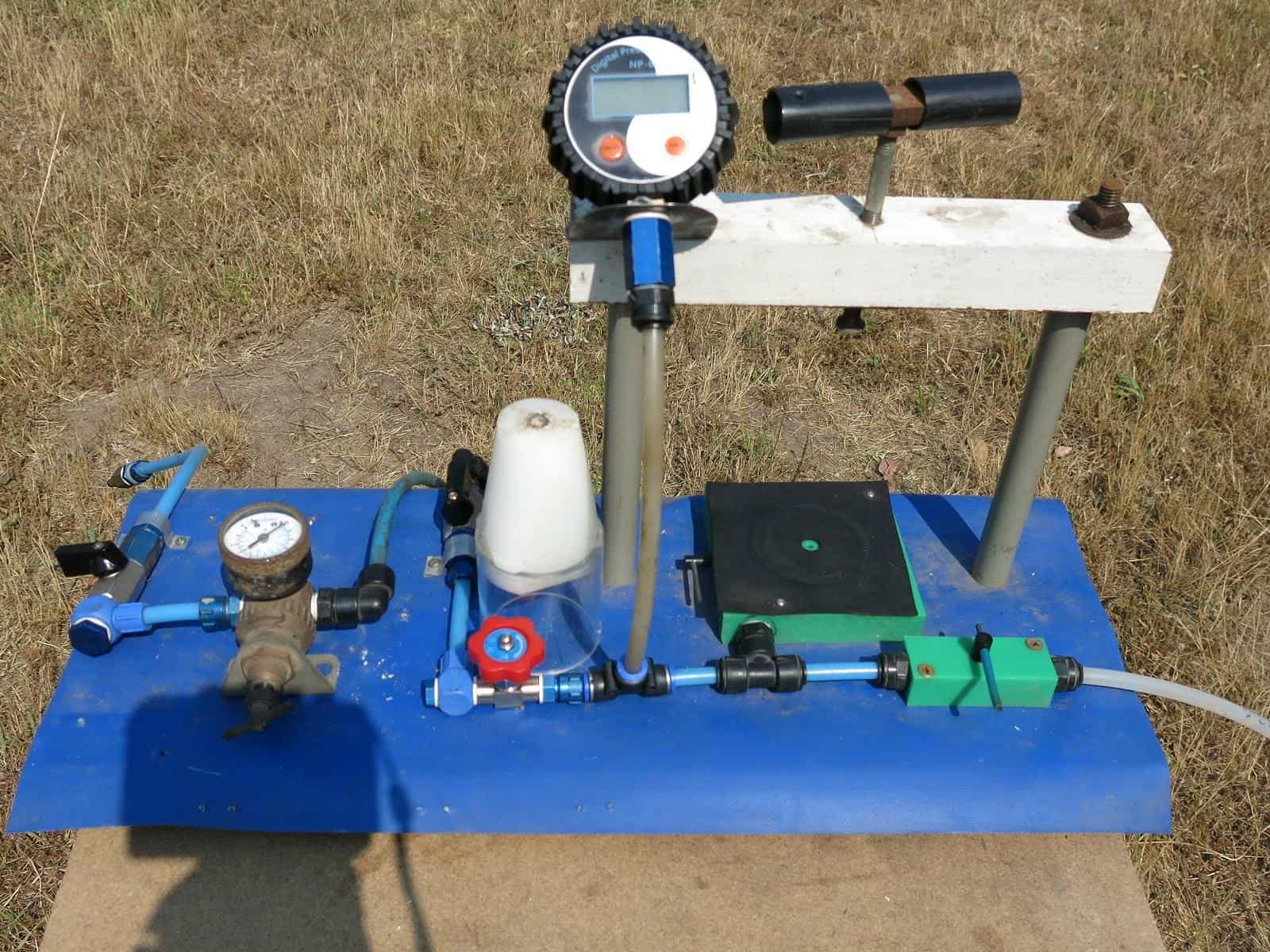
In this article, I present a DIY testing device (and test results for 30 fabrics) that allows me to measure the hydrostatic head of “waterproof’ fabrics at home.
The Enlightened Equipment Visp Rain Jacket (4.93 oz/140 g, $190) is minimally-featured, made with 75k MVTR fabric, and is reasonably-priced.
Introduction
The Enlightened Equipment Visp Rain Jacket (4.93 oz/140 g, $190) is targeted to users interested in a minimally-featured design, a fit-and-feature set for backpackers (instead of trail runners or climbers), made with high-performance fabrics at a low weight, and at a reasonable price.
This Limited Review is based on my initial testing of these products, over about 10 days of day hiking, trail running, and overnight backpacking in the Tahoe region of the California Sierra in January and February.
Features & Specifications
overview
weight: 4.93 oz (140 g) – men’s size Medium
MSRP: $190
customization options: pit zips (adds $10 and about 1 oz/28 g)
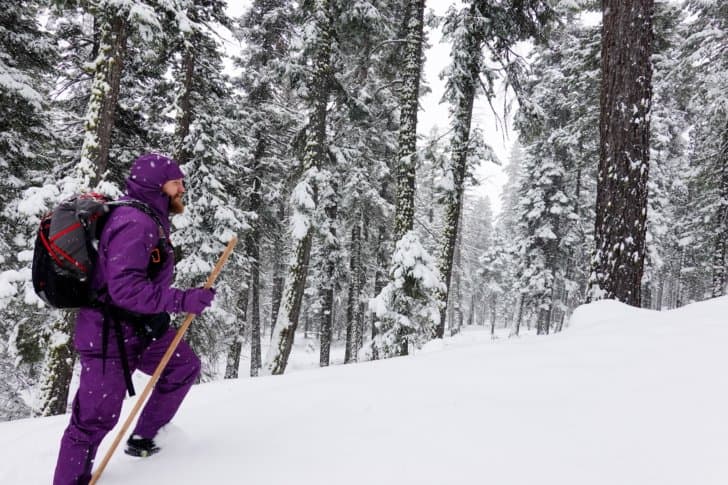
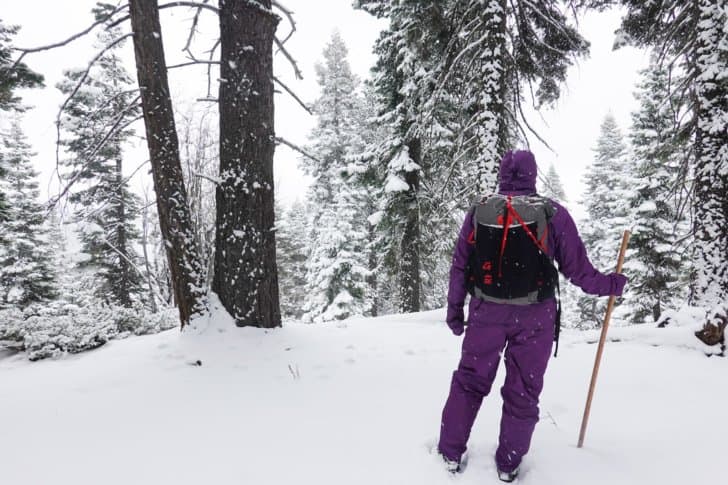
Testing the Enlightened Equipment Visp Rain Jacket (and pants and mitts) in a light snow-storm.
Since this is a Limited Review, a detailed performance analysis based on long-term use will not be presented. Instead, performance observations and issues are noted below.
criteria
observations and issues
water resistance
Other than a shower test, I haven’t been able to subject these garments to sustained rain in the field. Minimal hood brim limits its ability to provide protection in heavy rain. Zipper is effective at resisting water entry at high pressures.
fabric breathability
Breathability seems on par with other high breathability spec fabrics (e.g., MVTR > 30,000), based on moderate-exertion hiking while carrying a backpack uphill.
ventilation
Pit zips as an option is a very nice feature. Combined with a full-length zipper, these two items are critical for a rain jacket designed to be worn for several hours in an all-day rain. Waist hem and wrist cuffs can be fully relaxed. Hood volume is low, which limits ventilation around the head while wearing the hood.
usability
I used all adjustment mechanisms and zippers with one hand, bare hands, and while wearing both gloves and mittens.
Small zipper pulls, no pull tabs, shock-cord and adjustment mechanisms are small
That, combined with the roomy cut of the jacket, means that it’s difficult to tighten drawcords or engage zippers while using one hand – but it is possible to loosen or disengage zippers with one hand.
Usability with two bare hands is high, with usability dropping as expected while using gloves and mittens respectively.
This is especially true with the side hood drawcords and mechanism, which are the smallest, most fiddly bits of the jacket.
fit and patterning
Designed for layering, plenty of room in the shoulders and across the chest* for light high-loft insulating layers (e.g., less than 14 oz)
Raglan sleeve/shoulder junctions, articulated elbows, drop hem, and long sleeves offer good moisture protection and a full range of motion.
I can bend over, reach across my body, extend my hands over my head, without pinching, bunching, retracting wrist cuffs, or a riding waist hem.
With the hood up and tightened there is slight resistance when turning my head side-to-side, but nothing that prevents the motion from being completed.
*I tested a size medium jacket. I’m 5’6, 170 lbs with a somewhat broad and stocky athletic body-type.
quality of materials and construction
My close inspection didn’t turn up anything unusual with regards to quality.
Fabric has no blemishes or defects.
Stitching is straight and tight, and wouldn’t loosen even after I pulled hard on it while wearing the jacket.
Bound and sewn edges are even.
Seam taping is evenly applied with no edges peeling up or loosening.
Zippers move freely and without binding.
durability
To date, I’ve only used this jacket on well-cleared paths and didn’t subject it to any bushwhacking – and would be extremely cautious before doing so, the fabric is light!
Face fabric is (so far) not showing wear signs in pack strap contact areas.
Seam taping has remained intact.
Zippers have remained smooth.
No apparent short-term durability issues.
Commentary
What makes the Enlightened Equipment Visp Rain Jacket, Rain Pants, and Rain Mitts unique?
In a market crowded with dozens of competitors (i.e., “lightweight rain gear”), the Enlightened Equipment Visp Rain Jacket, Pants, and Mitts are somewhat unique for
a minimalist design,
a backpacker-oriented fit and patterning, and
their use of a high breathability spec fabric.
Minimalist Design
The Enlightened Equipment Visp Rain Jacket includes minimal features in its base model configuration (no pockets, and no pit zips). This design choice makes it squarely targeted to hikers who place simplicity and weight savings above all else, and makes the Visp Rain Jacket a more interesting choice for users who want a lightweight rain jacket “for incidental use” rather than a full-featured garment for sustained wear in heavy rain. Of note, the Visp Rain Jacket can be ordered with pit zips as an option (which is the model I’m reviewing here).
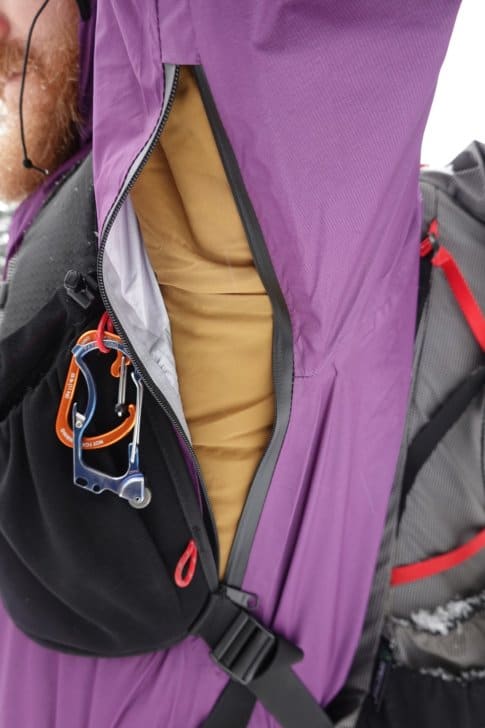
Pit zips are a new feature option in the 2020 Enlightened Equipment Visp Jacket.
In spite of the lack of pockets, which is the Visp’s most obvious nod to minimalism, the rest of the feature set isn’t exactly Spartan. The jacket includes:
dual drawcord (aperture and volume) adjustment for the hood;
waist hem drawcord
full-length zip
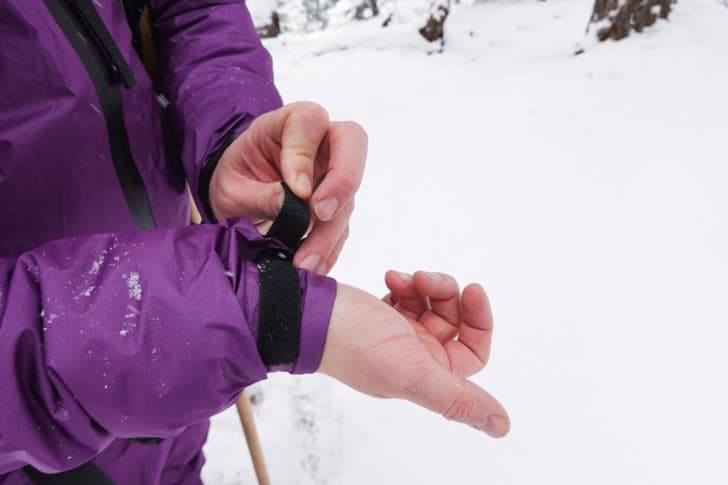
hook-and-loop wrist cuff closures
generous sizing
Its generous sizing and articulated fit are welcome in a market category where manufacturers love to save weight by reducing the amount of fabric used (and thus limiting its ability to layer over insulating clothing or provide decent articulation and mobility).
Rain Gear for Backpackers (Fit and Pattern)
Ultralight backpackers are often drawn to the lightest possible gear. Often, minimum weight comes with significant sacrifices in form and function. After looking at a photo of the Enlightened Equipment Visp Jacket, and noting its pocket-less design, you too may be balking at the apparent “over-simplification” of the jacket’s design.
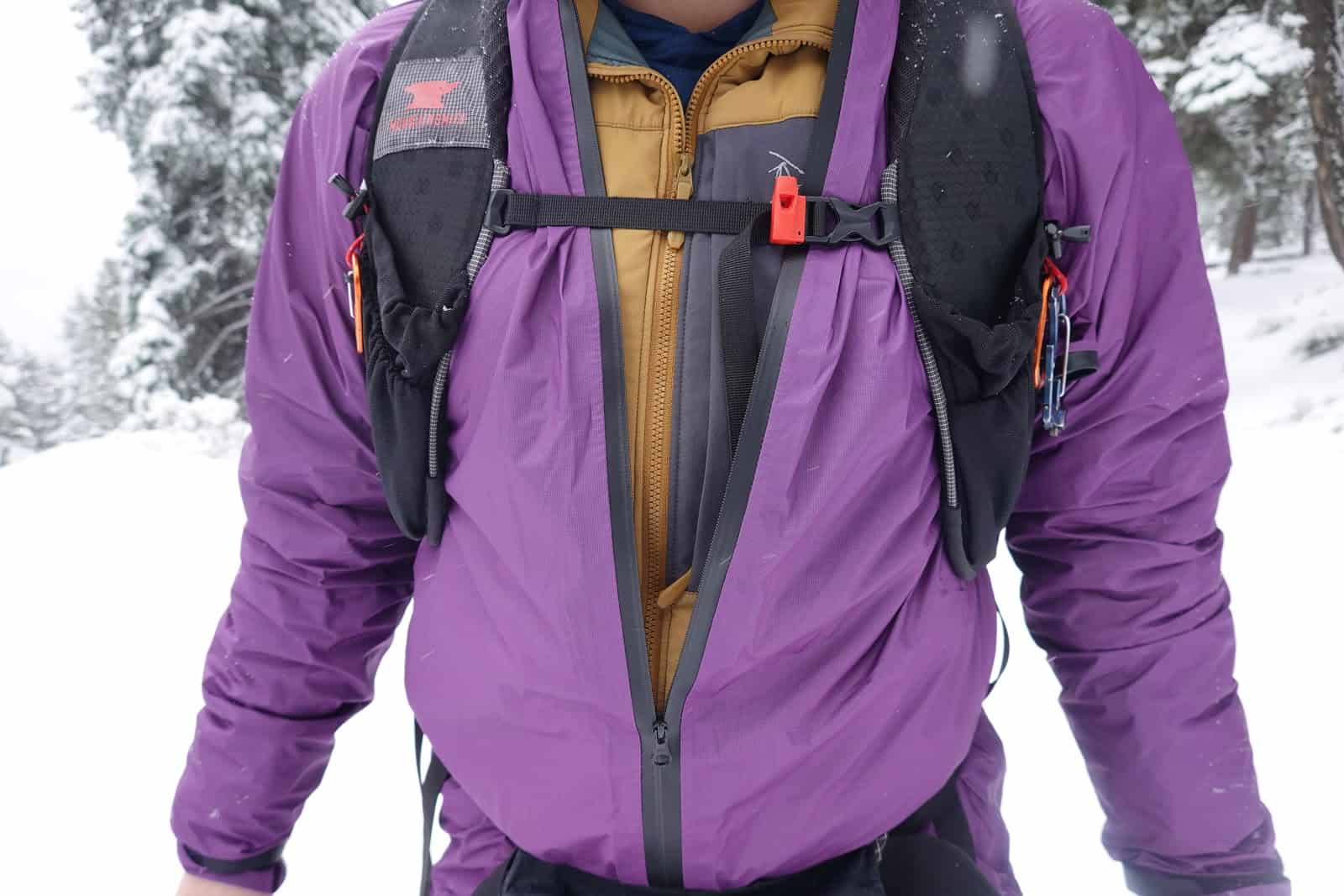
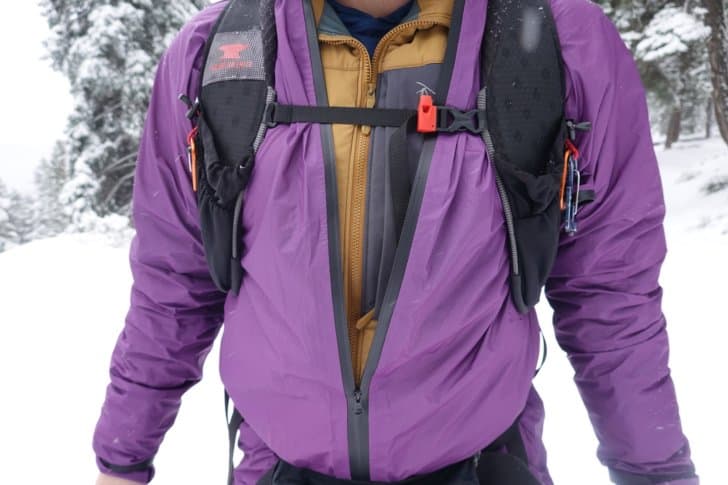
The Visp Rain Jacket worn under a pack and layered with an active insulation layer (Arc’teryx Proton LT Hoody).
However, consider many features that backpackers value that are often sacrificed in ultralight rain jackets:
lack of layering volume underneath
Over-simplified pattern that limits range-of-motion
Short arms and waist hem
No or minimal means of adjusting fit in the hood, or at the wrists and hem
No or minimal means of adjusting ventilation through zips and other closures
The design philosophy behind the Visp Rain Gear is to strike a balance between maximum functionality and minimalist aesthetic. It doesn’t fall prey to the “over-simplification” trap of much ultra-light gear. For example, the wrist cuffs offer full hook-and-loop adjustment closures instead of the non-adjustable bound elastic trim found on some ultralight jackets.
The Enlightened Equipment Visp Rain Jacket doesn’t skimp on any of these important features for backpacking. In particular, when you consider that the jacket is targeted to the long-distance hiking community, it does these things very well:
provides a design that performs very well while wearing it in the rain (highly breathable fabric, good ventilation, well-considered cut)
saves as much weight as possible (light fabric, light zippers, and other notions, no pockets) so it doesn’t impact your pack weight much while it’s stowed
Still retains functionality (adjustable where it needs to be, pit zips optional).
Breathability: MVTR 75,000 Fabrics
High MVTR levels are a nice marketing feature that helps manufacturers sell jackets to users who don’t understand the relationships between breathability and ventilation, or how to manage ventilation effectively when hiking in a sustained rain.
Even at this level of breathability (MVTR of 75,000+), the Enlightened Equipment Visp Rain Jacket still won’t breathe well enough to keep you dry and cool when slogging uphill at a moderate pace (MET 6-8+) while wearing a pack.
At lower metabolic rates (e.g., MET 4-6) in cooler temperatures, the breathability of this fabric is quite sufficient for most users, especially if you compare this to a jacket made of fabrics with MVTR of less than 15,000 (assuming the same test).
And when comparing its breathability performance to jackets made of non-breathable fabrics, like silnylon, the differences are like night and day, even when performing light-duty chores around camp at low MET rates (2-4).
However, don’t expect this to provide a level of breathability that will allow it to replace your wind shirt, and don’t expect it to perform heat-and-moisture-shedding miracles at high MET rates without utilizing its generous ventilation features.
Highly breathable fabric helps keep you dry while exerting yourself, but mechanical ventilation (pit zips) are still a necessity when exerting yourself.
In this episode of the Backpacking Light Podcast, Ryan and Andrew talk about some of the BPL staff’s favorite gear from 2019. From there they transition into a larger discussion of Backpacking Light’s gear philosophy.
Also in this episode:
What’s new at BPL
Andrew and Ryan’s favorite new gear
Public lands news and headlines
Interesting conversations in the forums
And tons more!
Outline
Introduction
Today’s theme – what gear we like right now, why we like it, and how we choose it.
Featured Image Illustration by Mike Clelland, commissioned by Backpacking Light.
Sponsors
This episode of the Backpacking Light Podcast is supported and kept advertising-free by Backpacking Light membership fees. Please consider becoming a member which helps support projects like this podcast, in addition to a whole slew of other benefits!
The Kammok Mantis and Mantis UL are all-in-one hammock shelters that include hanging systems, tarps, bug netting, and more.
Introduction
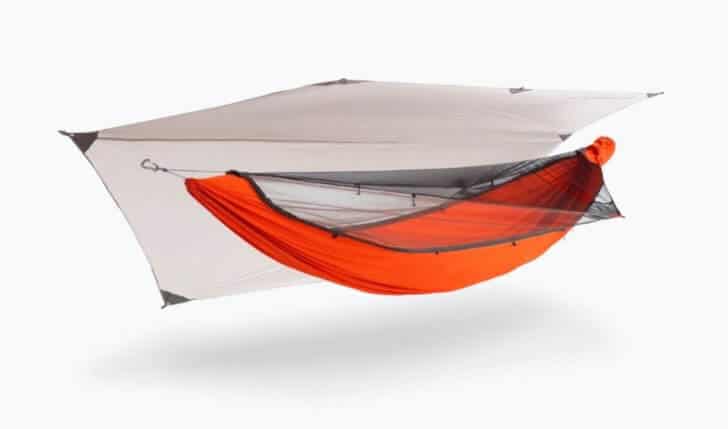
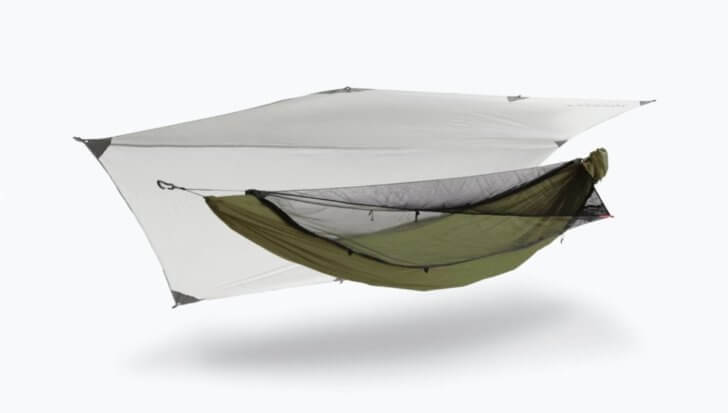
The Kammok Mantis (44 oz / 1247 g and $229) and Kammok Mantis UL (35 oz / 992 g and $259) are all-in-one hammock shelters. By this, I mean they come with (almost) everything you need for a successful hammock shelter system – hammock, stuff sack, removable bug-net, tarp, stakes, lines, knotless attachment clips, integrated line-locs, and suspension. The systems do not include insulation (top-quilt and under-quilt) or optional storage accessories.
The Kammok Mantis. Photo: KammokThe Kammok Mantis UL. Photo: Kammok
This review is written from the standpoint of an enlightened beginner. I’ve completed multiple thru-hikes (Appalachian Trail, Colorado Trail, Tahoe Rim Trail, among others) but never with a hammock system. I chose to review the Kammok Mantis and Mantis UL because the “all-in-one” nature of the system is likely to appeal to hammock beginners such as myself – people who want to experiment with hammocks but are intimidated by the cost and knowledge barriers of assembling a system from à la carte components.
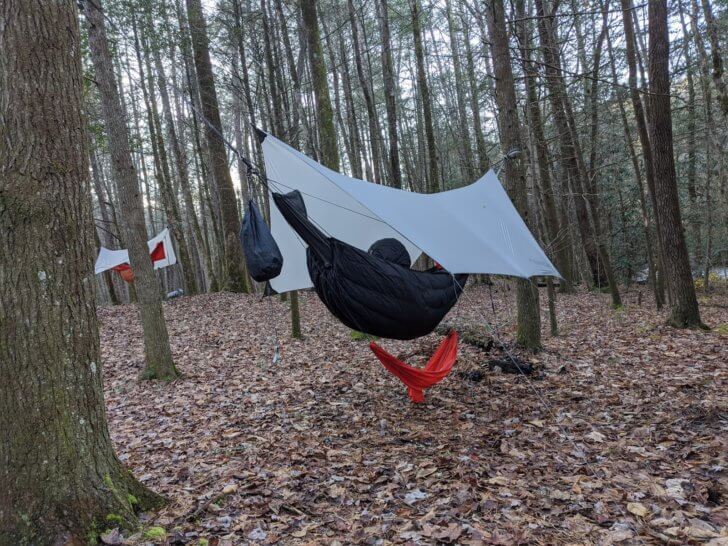
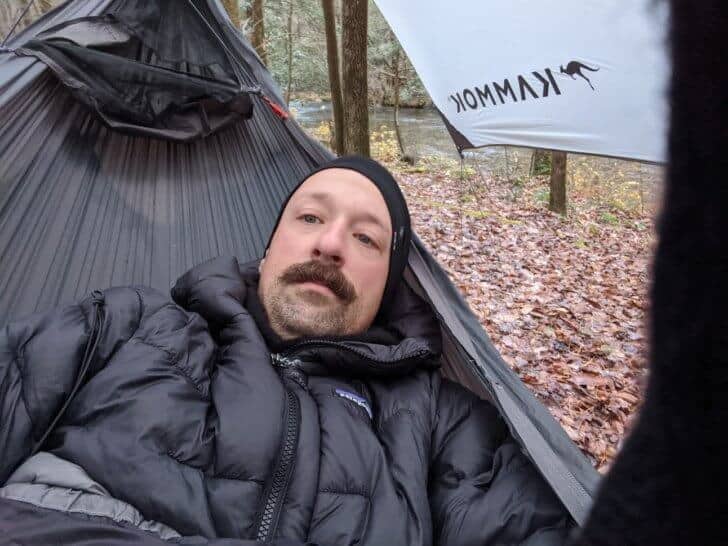
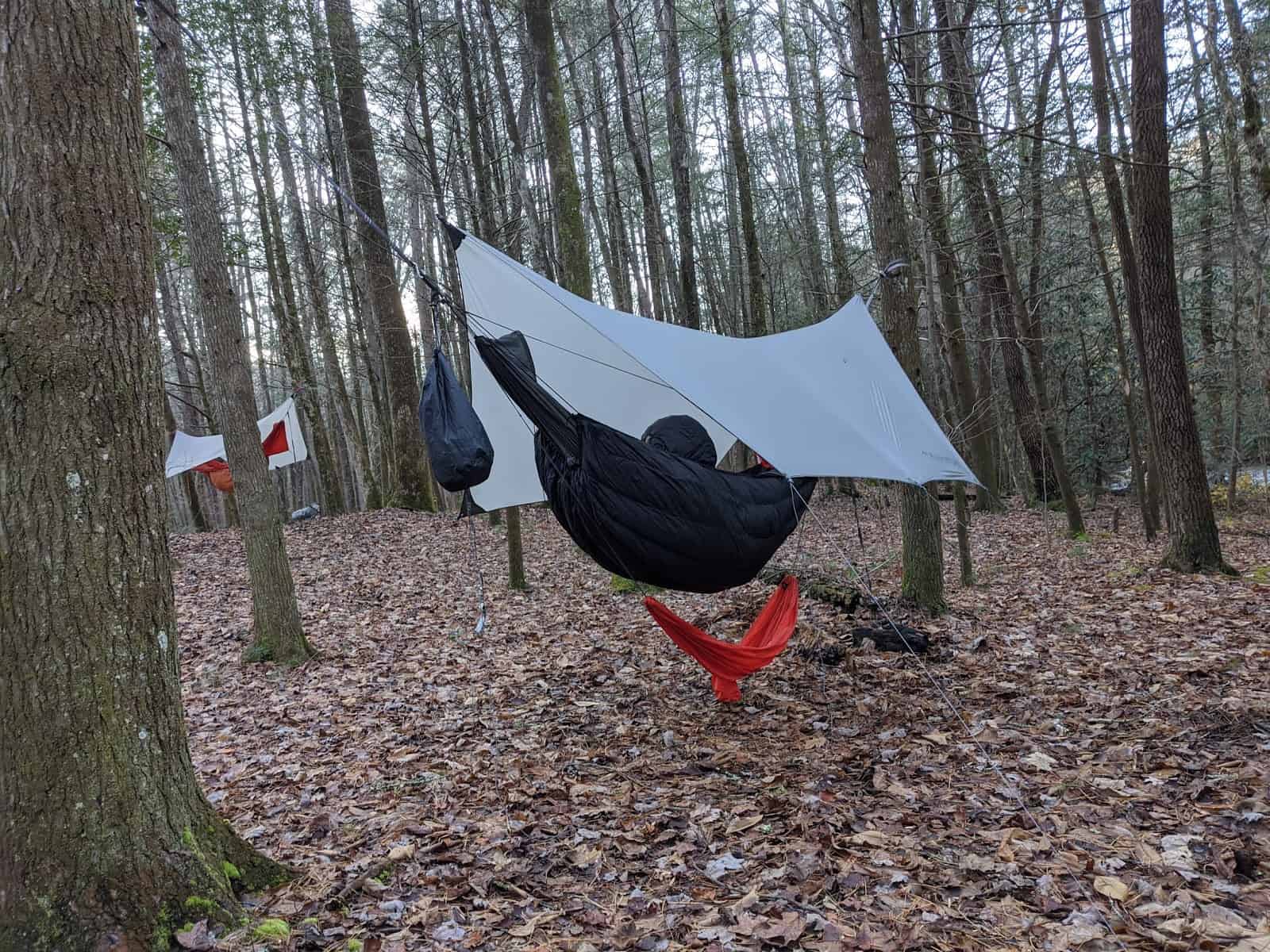
The Kammok Mantis UL (foreground) and Kammok Mantis (background) hanging in the Cohutta Wilderness on the Georgia/Tennessee Border.
The weight difference in the two Kammok Mantis models is primarily a function of material choice in the hammock body and suspension straps. Otherwise, the designs are (mostly) identical. In this review, I’ll point out differences when applicable; otherwise, you can assume the features I discuss apply to both models.
Features
shaped silnylon tarp with catenary ridgeline
removable zip-out bug net (zip-in winter barrier available separately)
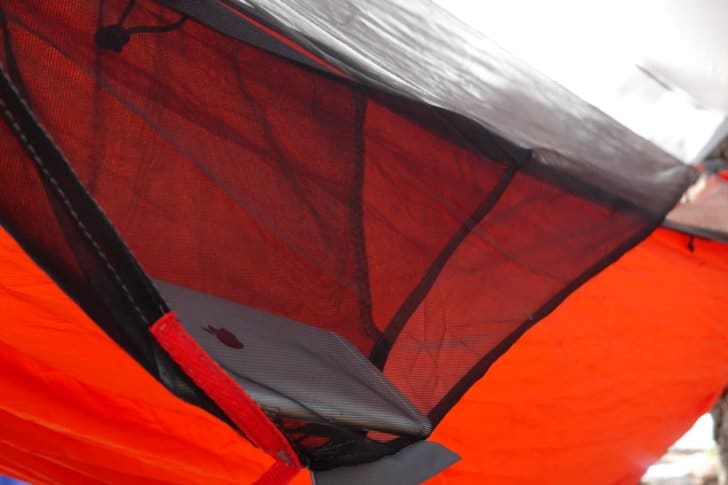
two pockets (in bug net)
knotless set-up
roll-top stuff sack with exterior stake-storage
integrated structural ridgeline
volumizing guy-out points (four on the Mantis, three on the Mantis UL)
15D nylon diamond ripstop nylon (1,500 mm PU/Silicone/DWR)
15D nylon diamond ripstop nylon (1,500 mm PU/Silicone/DWR)
ridgeline length
115 in (292 cm)
115 in (292 cm)
stakes required
6
6
max weight capacity
500 lb (227 kg)
300 lb (136 kg)
packed dimensions
8 x 6 x 6 in (20 x 15 x 15 cm)
6 x 6 x 6 in (15 x 15 x 15 cm)
MSRP
$229
$259
Performance
Description of Field Testing
I experimented with the Kammok Mantis UL and Kammok Mantis in two very different climates – the cold, dry, snowy eastern Sierra Nevada in the early winter, and the chilly, humid, rainy mountain southeast in the late fall.
All-told I spent 10+ nights in the shelters. On some trips I used the system as a “base-camp”, and on others, I assembled and disassembled the shelter in the evenings and mornings. I experienced precipitation in the form of heavy snow, heavy rain, and light rain. Overnight temperatures ranged from 55 F (13 C) to 20 F (-7 C). Wind in all scenarios was minimal.
Disclaimer: Since I’m not an experienced hammock camper, and this review is limited to only 10+ days of backcountry experience, the reader should consider these limitations when evaluating the authority of my review. In addition, for reference, I weigh 170 lb (77 kg) and am 5 ft 6 in (168 cm) tall.
In judging the initial performance of the Kammok Mantis and Mantis UL hammock systems, I looked at:
sleep quality
features and ease of use
pockets and gear storage
weight and packability
Sleep Quality
One of the author’s friends testing the Kammok Mantis UL hammock. The storage pouch clipped above his head is sold separately. Photo: Nick Ramey
I’ll admit – I’m tired of sleeping on the ground. Over the years, I’ve moved from cheap, light, and indestructible closed-cell-foam pads to expensive, not-so-light, and definitely destructible inflatable options. But I’m still struggling. So sleep quality was the big reason I wanted to give the Kammok Mantis and Mantis UL hammock systems a try.
The Kammok Mantis’ cut gave me a slightly curved shape once I was in it and properly (slightly diagonally) positioned. I pulled out my book, flipped my headlamp to its red-mode, and promptly fell asleep. The next thing I knew, it was 2:00 AM, and I’d been sleeping with a paperback on my face for five hours.
I can’t overstate this. I always toss-and-turn for at least forty-five minutes before falling asleep when ground sleeping, even after big-mile days. I always have lower back pain and heel pain when back-sleeping. I always have pain in my hips, shoulders, and ankles when side-sleeping. I always wake up stiff and sore. I’ve learned to judge my ground-sleeping quality in terms of small successes. Did I sleep for more than an hour without waking up to change positions? Success. Am I functional enough in the morning to make coffee? Success.
In the Kammok Mantis and Mantis UL, however, I only woke up once (that inevitable 2:00 AM call of nature). I had no stiffness or pain the next morning, no lower-back pain, and no pressure points. It’s not my practice to set alarms when backpacking because I usually sleep so poorly that my eyes pop open as soon as light hits my shelter. In the Kammok Mantis Hammock systems, I routinely slept for 11, 12, even 13 hours.
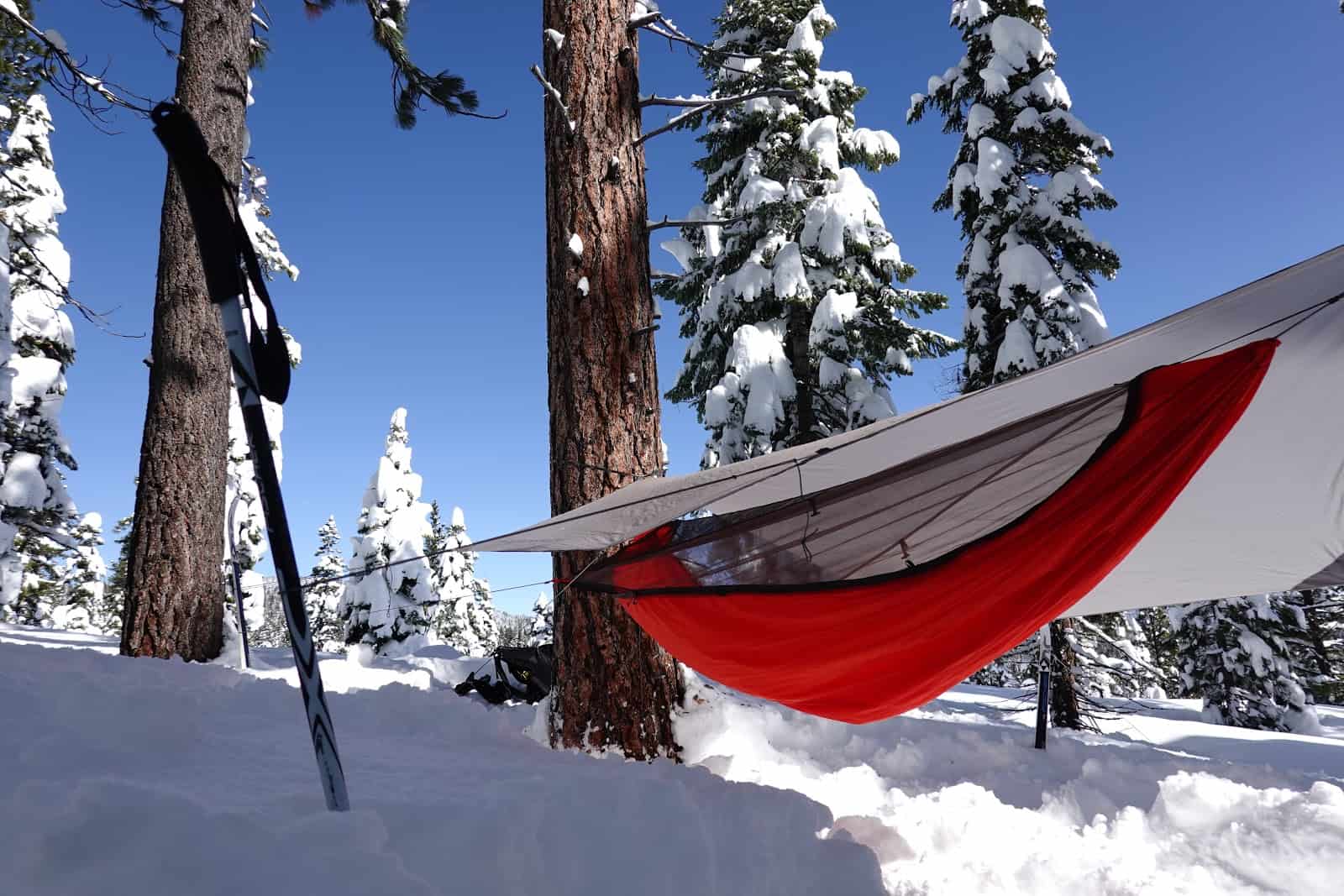
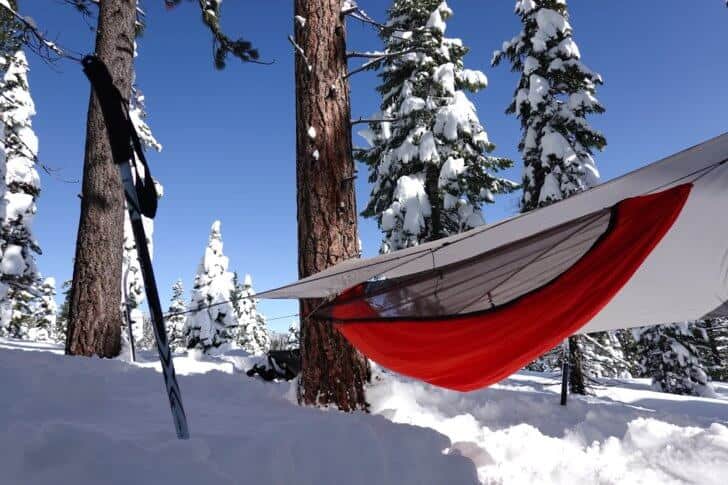
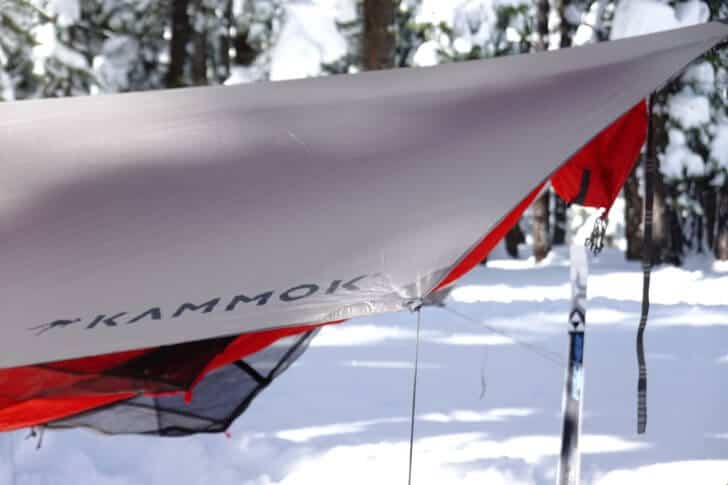
The Kammok Mantis UL in use on an overnight cross-country ski trip. From this angle, you might be able to see that the Mantis UL and Mantis do not have asymmetrical cuts, unlike many popular backpacking hammocks.
Of course, any time we talk about sleep quality, we have to remember that it is one of the more subjective standards in the backpacking world. It’s also worth noting that unlike many popular hammock designs, the Mantis and Mantis UL are not cut asymmetrically. The Mantis’ symmetrical design means you can’t lay entirely diagonally for flat sleeping. This style didn’t bother me at all, but it might irritate committed side sleepers or those with lower-back problems. Three nights was the longest I ever slept consecutively in the systems. It has to be considered that for long-term consecutive usage, the extent of cut asymmetry might come into play. At the moment I have loose plans to use the Mantis system on a thru-hike in the late spring – I’ll update this article accordingly if I gather any new data.
But for now, I can say that the Kammok Mantis gave me my best night’s sleep in the backcountry thus-far in my career as a backpacker.
Features and Ease of Use
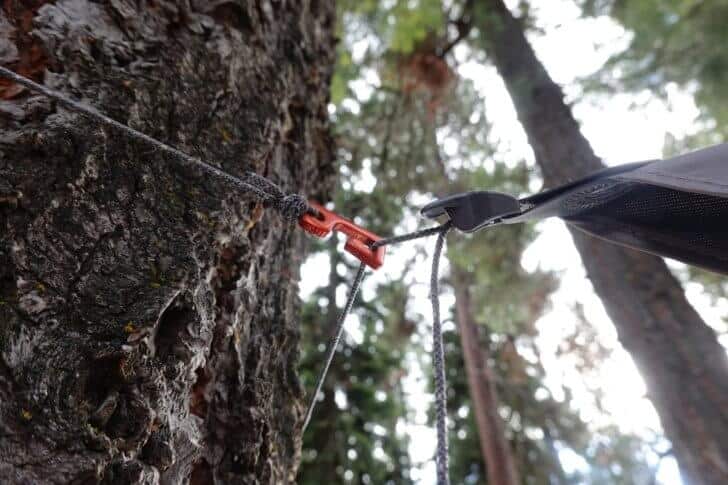
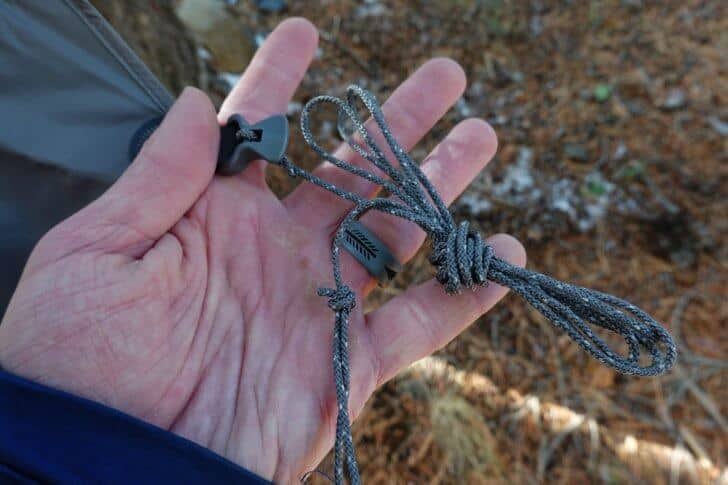
The fly attaches to the tree with a knotless aluminum hook. Integrated line locks take up the slack.
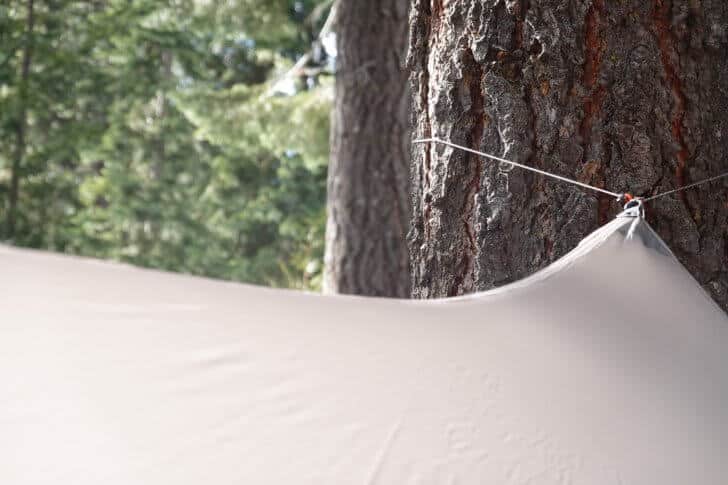
The fly attaches to trees with a knotless aluminum hook. Integrated line locks then take up the slack for a taut pitch. The tarp has six guy-out points (one at each corner and two in the middle), each with fixed-line and integrated line-locs. Because the included tarp is silnylon, it stretched a bit under snow-loading and during particularly humid evenings. In my testing where snow was likely, I made sure to pitch the tarp at a steep angle to compensate. A catenary ridgeline assisted in taut pitching.
A catenary ridgeline and integrated line-locs make it easy to get a taut pitch.
The copious amount of line needed to guy out a tarp high off the ground is one of the things that initially slowed me down when unpacking, setting up, and repacking the Mantis. Being-accustomed to tarp-based systems, I quickly made a mess of these lines when stowing and unstowing my shelter. Soon enough, I learned to gather the excess line on each guy-out into a neat bundle before storage, and that improved my set-up speed a bit – though it added to my take-down time. The stretchable nature of the silnylon tarp meant I had to do a couple of circumnavigations adjusting tension once I had everything staked out.
Line management was a new exercise for me. My previous shelters-of-choice didn’t need eight long lines, as the Kammok Mantis and Mantis UL do.
Overall, I’d say setting up the tarp is the most time-intensive element of the Mantis system. I wouldn’t mind seeing Kammok add some sort of clever, integrated system for line-management – especially since everything else on the shelter is approached from a thoughtful, time-saving standpoint. Hey, why not?
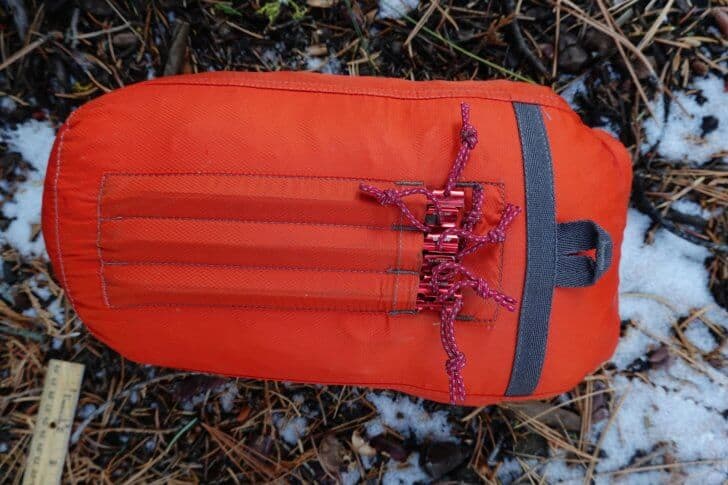
External stake storage. Such a simple idea, but it helps me keep track of stakes and gives me one less stuff sack to keep track of.
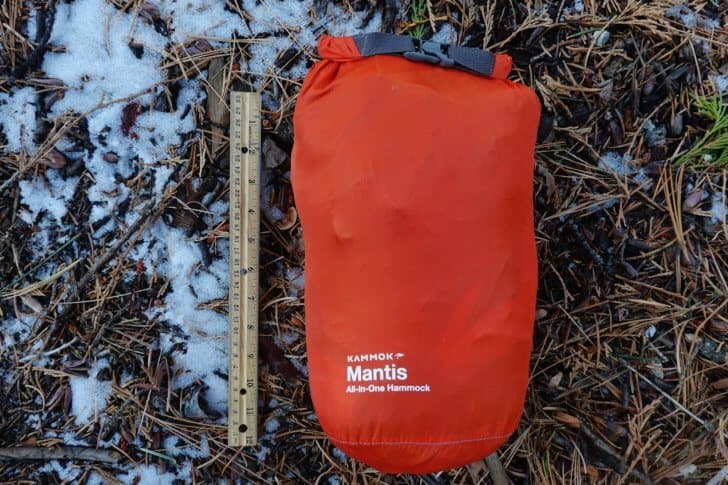
The stuff sack is a DWR treated silnylon roll-top bag with plenty of space to hold all the components (I hate a too-small stuff sack). The stuff sack has slots for external stake storage – a super-cool idea that I haven’t come across elsewhere. Not only does this help you keep track of your stakes (you can see at a glance that you have them all), but it gives you one less sack to lose. I replaced the Kammok stakes with MSR Groundhog Minis, and they fit the stake slots just fine.
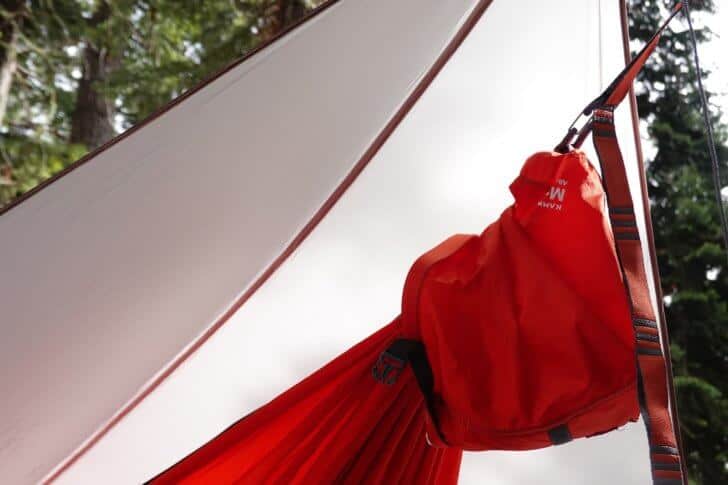
The stuff sack is integrated into the hammock so you can’t lose it. Thoughtful touches like this abound in the Mantis systems.
The hammock itself unfurls from the stuff sack, which remains attached to the integrated structural ridgeline. The stuff sack then hangs between the attachment carabiner and the hammock body. I love this touch. Again, one less thing to lose in the dark or the wind. Folks who like to switch out stuff sacks with their preferred brand and style are going to be irritated by this feature, though. The stuff sack is constructed with 15D nylon diamond ripstop nylon with a 1,500mm PU/Silicone/DWR treatment. The material seemed to absorb a lot of moisture during my testing. Based on its performance, I wouldn’t trust it to keep the contents totally dry. This failure of waterproofing was my one gripe with the stuff sack.
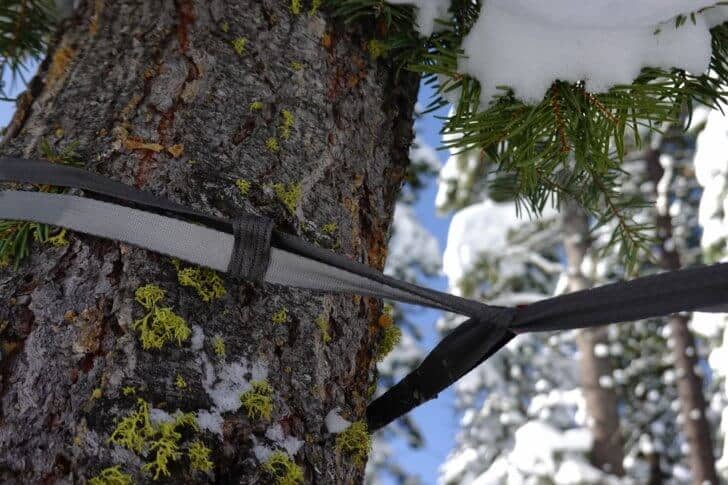
Kammok’s Python Straps attach to trees of varying sizes with a girth hitch. The Python 10 UL straps (shown here) are much lighter than the standard Python 10 straps.
The Mantis comes with Kammok’s Python 10 tree strap system (7.7 oz / 218 g), while the Mantis UL comes with the much lighter Python 10 UL straps ( 2.9 oz / 85 g). Each strap offers 20 connection loops, 10 ft (3 m) of length, and secures to trees with a girth hitch. I found this system not-at-all prone to slippage and extremely easy to use.
Each version of the Mantis comes with guy-out points on the hammock body to increase interior volume a bit. The lines clip into the attachment points with aluminum hooks and run to corner stakes (the same ones used by the tarp). These lines have a bit of elastic at the end closest to the hammock – a useful design that allows the hammock to sway as you get in and move around without putting tension on the stakes, but retain volume after you’ve become still. The Mantis has four of these points (two each at the head and foot) while the Mantis UL has three (two at the head, one at the foot). The bug nets on each version also have two attachment points for volumizing.
The lines used to volumize the hammocks are 3/4 (length) regular line and 1/4 (length) shock cord (upper right). This hybrid construction lets the hammock shift as you enter it without putting tension on the stakes.
The bug net zips out easily for reduced weight in the correct season. However, it takes a little more work to zip it back in. You can zip in the Kammok Mantis (solid nylon) Winter Barrier (sold separately) to add some warmth to the system, but it feels a bit like sleeping in a floating coffin and comes with some risk for condensation as you might imagine. One user I interviewed didn’t enjoy the winter barrier for all of the above reasons and will leave it behind on future trips. I didn’t find the winter barrier necessary when utilizing proper sleeping gear and insulation. Overnight lows on my various testing trips ranged from 55 F (13 C) to 20 F (-7 C). There was one night I wish I’d had the weird-looking but useful Timmermade Waterbear Hood to keep the cold off my face.
The zip-in bug net. You can leave this at home to save 5.3 oz (152 g), or zip in a solid winter barrier (sold separately) which weighs 8.5 oz (241 g) – a 3.2 oz (91 g) penalty vs. the bug net.
Pockets and Gear Storage
Each version of the Kammok Mantis comes with only two pockets – and those pockets are on the removable bug netting. I’ll probably end up investing in some optional storage. Here the pockets are hanging down slightly because I don’t have the bug net guyed out.
The Kammok Mantis and Mantis UL only have two included pockets – and those pockets are on the removable bug-netting. Though they are sizable – and I like that because it seems like shelter pockets have been shrinking lately – they are useless if you aren’t using the bug net. Kammok has a range of storage accessories like the Mantis Gear Loft that are both inexpensive and light – but I wish the shelter came with some more built-in storage options.
Weight and Packability
There’s a significant weight difference between the Kammok Mantis (44 oz / 1257 g) and the Mantis UL (35 oz / 992 g). As near as I can tell, this difference comes from the straps (see above) and the hammock material used in each model. The Mantis uses 40D nylon diamond ripstop, while the Mantis UL is made from 20D nylon diamond ripstop. In my testing and interviews, I found both materials to be sturdy enough for their purpose and breathable to boot – though each version of the hammock has a different max weight capacity (see Conclusion, below).
Although the integrated nature of the Kammok Mantis hammock system makes some components unchangeable, there is room for weight savings here and there. The included silnylon tarp is functional but not extraordinary (I do like that catenary ridgeline though, and that it has six guy-out points instead of four). It could easily be switched out for a DCF tarp of the user’s choice. Similarly, hammock aficionados might have aftermarket tree strap systems that they prefer over Kammok’s Python straps.
Both the Kammok Mantis packs down into a tiny package roughly 8 x 6 x 6 in (20 x 15 x 15 cm). The Mantis UL system is about 15% smaller. The package expands beyond those specs a bit when you haven’t carefully packed the tarp and straps (as seen below), but it’s still a small and packable shelter. Don’t forget some extra space in your pack for your underquilt.
I stuffed in a hurry and ended up with a package that was larger than the advertised 8 x 6 x 6 in (20 x 15 x 15 cm). Still, the Kammok Mantis and Mantis UL are pack-friendly shelters.
Commentary
The Kammok Mantis UL, guyed out to cross-country skis on a winter trip.
The lighter fabric and suspension of the Kammok Mantus UL hammock mean that its maximum recommended load is 300 lbs (136 kg) as opposed to the burlier weight rating of 500 lbs (227 kg) for the Mantis. That’s the only apparent difference in functionality, other than one less volumizing guy out on the Mantis UL. So if you and the gear you stow inside your hammock are on the lighter side, you can save 11 oz (312 g) by choosing the Mantis UL over the Mantis for an extra $30.
This choice was such a no brainer that I wasn’t even planning on testing the Mantis (I weigh 170 lbs / 77 kg) – I was going to go straight for the Mantis UL. The only reason I ended up testing both is that the manufacturer sent me the Mantis by mistake, and I didn’t notice until I was out in the field. (Luckily one of my friends was using the Mantis UL, so I was able to test both.)
Given how much some hammock campers enjoy building a system from the ground up, the Mantis systems are unlikely to appeal to everyone. Committed hammock campers may want to spec their own well-dialed system. But for beginners and those wanting to break into hammocking without the barrier of researching and assembling a system, it’s hard to go wrong with the Mantis UL. The knotless set-up, all-in-one-system, and thoughtful features are all winners. Most of the shelter is integrated with itself, but a few of the features are modular – including the tarp, which can easily be swapped out as desired for a lighter, less-stretchy DCF version.
Issues of Note
There are a few issues common to most hammock systems, including the Mantis and Mantis UL:
Beginners are likely to find the set-up and take-down more time-and-energy-intensive than some of the better designed pole-supported shelters.
Line management will be an issue if you aren’t intentional about it at every step.
These problems can be overcome with practice and familiarity.
In addition, I found a few issues unique to the Kammok Mantis system:
The design isn’t an asymmetrical cut, so you can’t lay totally flat. This didn’t bother me at all, but if you have back problems, it could be an issue.
The shelter’s only two pockets are on the removable bug net, and you have to pay extra for additional storage.
The stuff sack is cleverly designed in almost every way – but I’m not a fan of the fabric or the DWR treatment. It seemed to soak up moisture after just a few minutes on wet ground. I’d love to see the same stuff sack in Dyneema Composite Fabric. I know it will probably never happen, but I can dream.
In spite of these issues, the Mantis hammocks are reasonably priced, reasonably light, extremely thoughtfully designed shelters. From my enlightened beginner standpoint, I wouldn’t hesitate to recommend them – particularly the Mantis UL – as an entry-point to the backpacking hammock world. They’ve certainly fulfilled that function for me.
Compared To…
For this comparison, I wanted to include “all-in-one” hammock systems – packages you could buy and get right out into the woods with. This included:
In terms of design and features, the Kammok Mantis and Mantis UL are probably most similar to the ENO SubLink Hammock Shelter System – symmetrical cut, knotless set-up, integrated ridgeline, and an unfortunate shortage of storage. They differ in a few ways – the two Mantis systems suspend with webbing and a carabiner, while the ENO suspends with webbing and whoopie straps.
In the pocket department, the REI Flash Air Hammock seems to take the cake – it has four interior pockets and an included under-sling for shoes and other gear. All the other hammocks in my table have far less storage than this.
Another interesting feature of the REI Flash Air Hammock is the spreader bar at the hammock’s head. Our review for the Flash Air Hammock is forthcoming, but I can tell you that our primary reviewer, David Hosmer, appreciated the spreader bar feature. David also appreciated the Flash Air Hammock’s integrated pad straps, which kept his pad secure through a night of tossing and turning. Like the ENO, the Flash Air Hammock suspends with webbing and whoopie straps. The Flash Air Hammock has the longest tarp ridgeline of any hammock in my table.
The two lightest hammocks in my table are the Kammok Mantis UL (35 oz / 992 g) and the Hennessy Hammock Ultralite Backpacker Asym Zip Hammock (34 oz 964 g). The Hennessy’s relative weight is impressive, given that its fabrics are heavier than what the Mantis UL utilizes. The Hennessy also features an asymmetrical cut and ships with a ridgeline pocket but maxes out at a 200 lb (91 kg) capacity vs. the Mantis UL’s 300 lbs (136 kg).
The Hennessy Hammock Ultralite Backpacker Asym Zip Hammock also has the least amount of tarp coverage (due to size and shape) of any hammock in my table – though, like all my compared hammocks, the tarp could easily be switched out for weight savings or penalties depending on which direction you went (i.e., a smaller or larger tarp). The Hennessy is also $30 cheaper than the Kammok Mantis UL.
The final thing to note about the Hennessy Hammock Ultralite Backpacker Asym Zip is that it seems to require the most experience (or time, or both) to set up. This was my takeaway after watching set-up videos for all the hammocks in my table and researching reviews by others about these hammocks. At the very least, the Hennessy requires the most knots or lashing to set-up. While all the other hammocks in my table set-up with whoopie straps, hooks, or carabiners, the Hennessy requires some knowledge of rope-craft. Whether you consider this a good or bad thing likely depends on your larger outdoor philosophy. Are you the kind of person to sniff at integrated line locks? Then the Hennessy Hammock Ultralite Backpacker Asym Zip might catch your eye over the Kammok Mantis UL.
Product(s) discussed in this article may have been purchased by the author(s) from a retailer or direct from a manufacturer, or by Backpacking Light for the author. The purchase price may have been discounted as a result of our industry professional status with the seller. However, these discounts came with no obligation to provide media coverage or a product review. Backpacking Light does not accept compensation or donated/discounted products in exchange for guaranteed media placement or product review coverage.
Some (but not all) of the links in this article may be “affiliate” links. If you click on one of these links and visit one of our affiliate partners (usually a retailer site), and subsequently place an order with that retailer, we receive a small commission. These commissions help us provide authors with honoraria, fund our editorial projects, podcasts, instructional webinars, and more, and we appreciate it a lot! Thank you for supporting Backpacking Light!
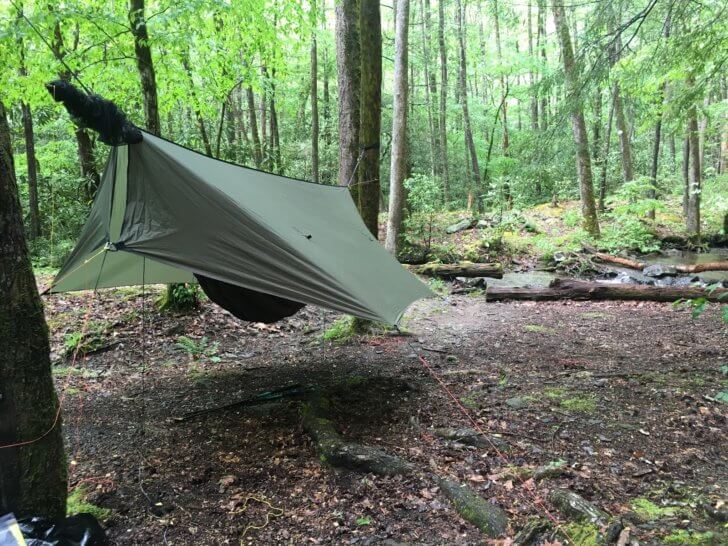
After a lifetime of pole-supported shelters and sleeping pads, I’d decided to give hammock camping a try.
By the time my friends and I reached our trailhead deep in Georgia’s Cohutta Wilderness, we were all bone tired. It was 7:00 PM, it was raining, it was dark, it was forty degrees. We’d already decided to camp at the trailhead and begin our trek in the light of day. As we pulled up next to the ubiquitous national forest information board (Warning: You Are Entering Bear Country!), the headlights of our rental car illuminated several well-graded, inviting campsites.
Inviting, that is, if we’d come equipped with ground shelters.
After a lifetime of pole-supported shelters and sleeping pads, I’d decided to give hammock camping a try. All-day long, I’d been looking forward to easily finding a spot to sling my weary bones. I suffer from what I like to call site-selection anxiety – that feeling that no matter what semi-flat, root-infested place I choose for my tent, a different semi-flat, root-infested place will be comfier.
I’d imagined that my new shelter, a Kammok Mantis, would solve that problem. I certainly wasn’t expecting to have trouble finding a spot to hang it on my very first night of testing. But the woods around the trailhead were woven with a dense mixture of saplings and thorn bushes. As the rain intensified and the temperature dropped, my buddies and I tramped around through the thicket, searching for any clear spot in which to hang.
We finally found a halfway-decent clearing, and I pulled my Mantis out of its stuff sack. In twenty seconds, I found myself in the middle of a cordage hurricane – all twelve tension lines on the hammock and tarp seemed simultaneously tangled with each other, me, and at least six thorn-bushes. I tripped over the mess and went tumbling into a sticker bush, ripping a hole in my ultralight rain jacket.
Things were not going well.
A Kammok Mantis UL (foreground) and Kammok Mantis (background) hanging up on night two of the trip. This was a much better spot for hammocking than our first campsite, described earlier in the story (Photo: Nick Ramey).
It’s been a long time since I was so out of my depth – struggling with an unfamiliar system in the dark, battling cold hands and feelings of inadequacy. I was supposed to be the backpacking expert in our group. My friends, though relatively new to backpacking, had more hammock experience than I.
It took me something like twenty minutes to get my shelter up, and my gear stowed away, by which time they were already warmly snuggled in their underquilts.
I woke up a few hours later with an icy sensation on my spine: not anxiety – water. I’d hung my underquilt in such a way that rain collected on the line and drained down into my hammock. It was official. I was a backpacking newb again.
Nick, Levi, and I started our day in an exurb south of Atlanta. We all grew up there, and I’d since moved to California by way of northeast Ohio and west Texas. My wife and I were home for Thanksgiving, and my friends and I had decided to carve out a little mountain time together. A four-day, three-night trip in the Cohutta Wilderness on the Georgia/Tennessee border sounded like an excellent way to blow off some holiday steam. It also seemed like a pleasant, low-stress way to test out some new gear for BPL, chiefly the Kammok Mantis, Kammok Mantis UL, and associated accessories.
It’s a pleasant drive to the North Georgia Mountains once you clear Atlanta, and a long-promised storm seemed to be holding off. I was excited to show my friends around the Cohutta – it’s the place I learned to backpack, and it holds fond memories.
Spirits were high right up until Levi’s ancient Toyota Corolla clunked to a stop on a gravel forest road halfway between the blacktop and our trailhead. It stubbornly refused to restart – despite us raising the hood and staring manfully at the engine while muttering “come on, come on,” under our breaths.
The rain started while we were waiting for the tow-truck to arrive.
Levi Gentry (left) removes some belongings from his dead car while the author (right) grabs a snack. Photo: Nick Ramey
I’ve had breakdowns all over the country, including one memorable U-Haul failure in an apocalyptically empty corner of Wyoming. So I was unsurprised when our tow-truck driver fit a type I’ve had the pleasure of encountering from one end of America to the other – a hefty, gregarious, scruff-bearded, chain-smoker. These fellows are, without fail, some of the best folks you’ll ever meet.
The tow driver parked behind us on the narrow forest road and ambled with Levi to the raised hood of the stricken Toyota. Nick and I took a few prudent steps backward as the driver lit a smoke and leaned over the engine. He couldn’t identify the problem, but he didn’t cause an explosion either, so we all considered it a victory. Shortly thereafter, all four of us crammed into the tow-truck’s cab. We won’t speak of the harrowing attempt to get a flat-bed tow-truck turned around on that forest road – nor of the smell of four soaking-wet men sharing a space that seemed to be designed for, at most, two-and-a-half sprightly twelve-year-olds. Some things are better left unsaid.
At a garage in the little town of Chatsworth, we dried out on red, peeling, faux-leather sofas and watched the Chattanooga news call for a weekend of rain and thunderstorms. The weather wouldn’t end our trip – I’m always explaining to western friends that backpacking in the southeast consists of 60% getting rained on, 25% getting dripped on, and 15% sweating through your clothes. So we were prepared, if not excited about the rain.
But the car situation might be a trip-ender. After four or five hours, the mechanic emerged from the shop with a grim expression – the kind of look mechanics and doctors use to broadcast bad news.
Levi’s Corolla was toast.
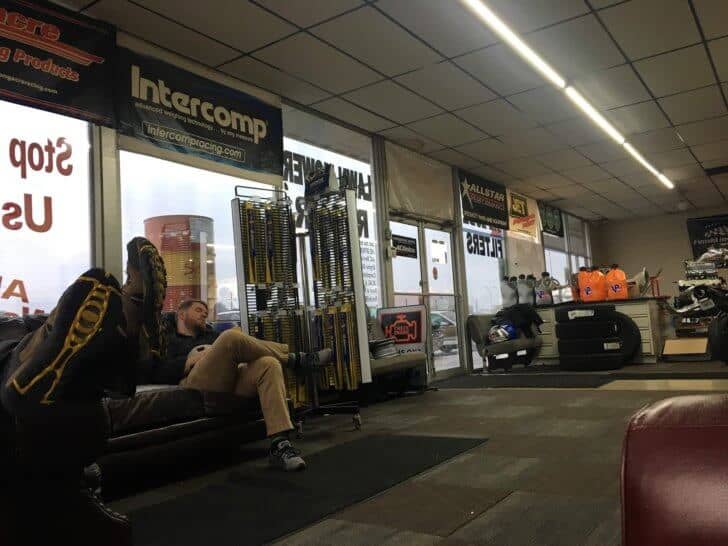
Nick (the feet on the left) and Levi (right) snooze while waiting on the diagnosis. Like all waiting rooms (mechanical and medical), the people were friendly, the coffee was terrible, and the TV remote was missing.
At such dark times, only beans and cheese will suffice. You might find this surprising, but out-of-the-way Georgia towns have some of the best Mexican food in the country. We hiked across a few adjoining shopping-center parking lots and found a little place with cheap beer and free tortilla chips. Feeling fortified, Levi gamely decided to put off any further decision-making about his car until after the trip. We were back in business.
We called for a rental, and by 6:00 PM we were once again heading towards our trailhead. Our original itinerary had us arriving at 11:00 AM. By the time we finally pulled in – eight hours late – the late-fall sun was long gone, and the rain had turned chill.
So that’s how I ended up nearly strangling myself with an unfamiliar system of straps, knots, hooks, and loops in the middle of a shoulder-season rainstorm, in the dark, in hypothermia conditions.
It was frustrating. It was infuriating.
It was the feeling of being a newb!
It’s been a minute since I was a newb at backpacking. I grew up with the sport – and if my father and grandfather weren’t necessarily ultralight, they did make sure I was able to start a fire in the rain since well before I started shaving. The essential skills were there before I traded in my leather boots for Altras and my Wal-Mart brand pop-up for a Tarptent.
But the switch from a ground shelter to a hammock threw me for a loop.
It seems to me that a trail runner and a boot are related to each other in the same way that orangutans and homo sapiens share 97% of the same genetic code. The basic idea is the same, but the execution is slightly different. So switching from one to the other is a big change, but not a gigantic change.
On the other hand, a hammock and a ground shelter seem to be further apart in the web of life – like the difference between sloths and cheetahs. Not understanding this, I’d thought that my thousands of hiked miles and hundreds of nights spent outdoors would allow me to pick up the nuance of hammock camping within a few minutes under less-than-ideal conditions.
I was extremely wrong about this. As the Stoic author, Ryan Holiday says, “Ego is the enemy.”
As I mentioned previously, my friends Nick and Levi are just beginning to take up the sport of ultralight backpacking. I’d entered into the trip expecting to teach a lot of Ultralight 101. And I did.
Challenging weather, bushwhacking, huge deadfalls, trails utterly erased by wildfire, and steep terrain challenged our every step. The rain and cold were relentless, and we’d started the trip mentally exhausted from the sheer effort of getting to the trail. It was probably more of an adventure than either of my friends wanted (especially Levi, who had to buy a new car at the end of the trip). Nick and Levi did a lot of things for the first time, including serious river fordings, off-trail navigation, and on-the-fly route changing.
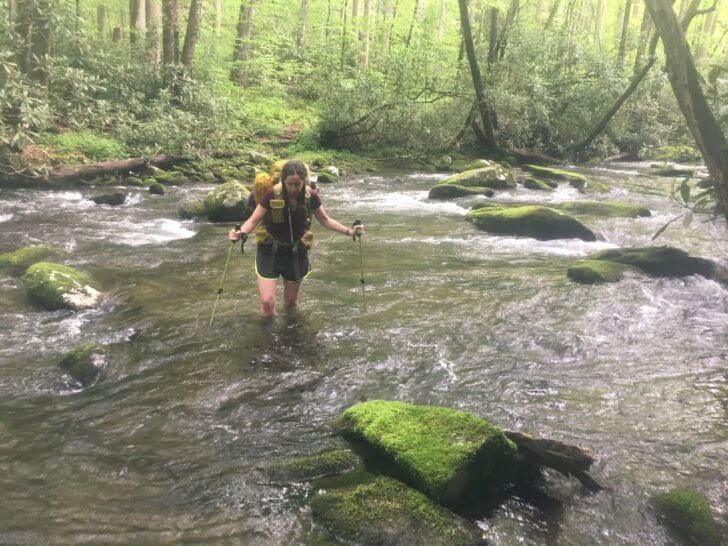
Nick and Levi are baptized in the crotch-deep, rain-swollen, icy waters of the Conasauga River. Neither had ever forded a river before, just as I had never slept in (or set up) a hammock before.
On the other hand, they’d already developed a knack for identifying ideal trees for hammocking. In contrast, I spent a lot of time wandering around our campsites trying and failing to eyeball tree spacing correctly. They had their shelters set up quickly and efficiently while I fumbled and cursed and tangled myself in silnylon and shock cord. They knew how, and where, and why to connect all the little geegaws and gizmos that can add to the pleasure of a hammock system. I routinely used these items in the wrong way or in the wrong place or hadn’t even considered the need for them (like, for instance, an under-hammock storage system, or the ability to suspend gear from the ridgeline. So handy!).
By the time we finished our trip, we were all feeling more confident in our new skills. As I taught my friends, they taught me.
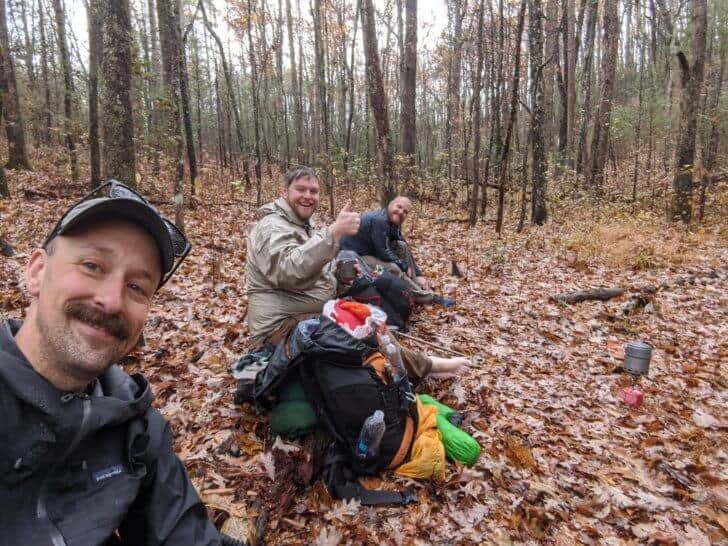
Stopping for a mid-day coffee-in-the-drizzle and foot-airing. The day had been a frustrating slog of chilly precipitation, bushwhacking, and route finding. Hot liquid, caffeine, and a meal improved morale considerably, as I knew it would. Group management is one of the lessons I (rear, right) taught my friends. In return, they taught me how to hang a hammock. Photo: Nick Ramey
My newbie experience with a hammock shelter got me thinking about beginners – how they feel, how we treat them, and how we shepherd them to expert status (or not).
These days I’m usually pushing hard on solo adventures or guiding in groups where I’m an expert. If I bump into other hikers in the woods, I feel pressure to appear confident, capable, and smart. My biggest takeaway from dipping a toe into hammock camping is that I need to spend more time being a newb. It’s good to learn a whole new skill-set as opposed to fine-tuning or making incremental changes to existing skills. Plus, there’s lots of fun gear to explore in the hammock world – à la carte kits, fancy designs, accessories, and tarps galore.
Zen Buddhists have a concept called shoshin or “beginner’s mind.” My layperson’s explanation of beginner’s mind is that it’s the practice of approaching a task or subject with a spirit of openness and humility – even if you are already an expert. Perhaps especially if you are already an expert.
Beginner’s mind opens up avenues for learning and growth that might otherwise be closed down by the ego. But it also shifts your viewpoint and gives you some empathy towards those who are true beginners. Empathy and compassion towards beginners are the best way to help beginners become experts. Experts are safer to hike with and can be better stewards of the places they hike – experience tends to breed awareness.
It was a joy to be in the woods with my friends as we shared knowledge and experience with each other. We all came out of the Cohutta Wilderness as more skillful backpackers. That wouldn’t have happened if any of us had been unwilling to learn or frustrated at having to share our knowledge.
Our trip was characterized by challenging circumstances, differing experience levels, and the learning of new skills. Cultivating what Zen Buddhists call beginner’s mind made it possible. Photo: Nick Ramey
I think a beginner’s mind can be applied to all aspects of our interactions as outdoorspeople – how we approach our existing skill set, how we speak to each other about skills and gear, and how we introduce the outdoor world to newcomers. As someone who writes for the internet as a part of my living, I think about the way we speak to each other quite a bit.
Beginners who have their budding passion nurtured with humility and grace instead of scorn or mockery will be far more likely to do the same for others – creating an interconnected web of humans with a vested interest in enjoying the outdoors with safety and stewardship.
You might be saying, “Sure Andrew, but what’s one less person in the woods? We go into the mountains to get away from crowds. The fewer people out there, the better. Crowds are noisy, crowds are aggravating, and crowds don’t know how to be stewards.”
I get it – but we can’t think like that anymore. We need all hands on deck to preserve what’s left of our natural resources. We can’t afford to alienate folks expressing an interest in the outdoors for the first time. And that’s where I’m really going with all this. Every person we turn away with snobbery or well-intentioned frustration is one less person paying attention when, say, the EPA rolls back more regulations or the Department of the Interior is gutted from within.
We don’t really have a choice anymore. The clock is ticking, not just on what we (wrongly) think of as “our playgrounds,” but on the world as a whole. We can’t save it as a small group of experts high on our own knowledge. We have to welcome as many beginners as possible into the fold. We have to teach them. We have to guide them. By adopting a beginner’s mind, we can do so with the most effectiveness and humility – and the most fun.
What you’re really hooked on is the dopamine rush from buying and trying new gear – which doesn’t last very long.
Introduction
For some of us, it’s easy to become a gear geek. You might try to hit arbitrary base weight goals like 10 pounds, or for people living outside the United States, Liberia, and Myanmar, 5 kilos. Gear makers come out with the latest incremental improvement and shout to the skies that it’s a revolutionary, game-changing breakthrough – while too many mainstream media reviewers, bloggers, and vloggers agree. Or an existing piece of gear fails to completely satisfy you during a trip, often under rarely encountered conditions, and you vow to replace that piece of junk as soon as you get home. Or maybe a famous blogger praises their latest equipment acquisition and you whisper “I’ve gotta get me one of those.”
Illustration and photo: Ryan Jordan
And yet – after the joy of box opening and the satisfaction of using a new toy on the first couple of trips, it quickly becomes the new normal and you’re not any happier than before. Once again, you’re planning another gear upgrade, believing that as soon as you get your kit “dialed in” all future trips will be more fun. What you’re really hooked on is the dopamine rush from buying and trying new gear – which doesn’t last very long. Sometimes purchasing new gear triggers desires for even more gear, like buying a thicker and wider sleeping pad might start cravings for a bigger tent. And then there’s that extra-large credit card bill a few weeks later.
I can’t get no …
Researchers in the 1970s named this cycle of joy and regret the “hedonic treadmill.” But the idea has been around for a long time under other names including “keeping up with the Joneses” and the 2,500-year-old Buddhist concept of “dukkha” – roughly translated as “we’ll never be satisfied.”
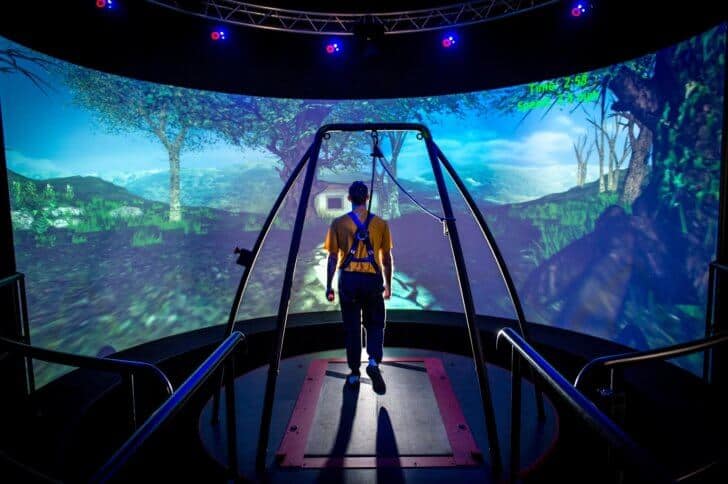
Caption: A person walks on a treadmill while facing a virtual reality screen showing an outdoor scene. Credit: J.M. Eddins Jr., US Air Force, public domain.
Maybe we should get off the treadmill of constantly searching the Internet to save the last gram or find the perfect tent or carry the latest backpack, and spend more time outside. How can we do that?
One way might be to focus on “good enough gear” instead of striving for perfection. You probably do some of that already, by choosing a $300 silnylon tent that weighs 8 ounces (227 grams) more than the $600 DCF version, since, frankly, you can’t afford it. But you lust after “the ultimate tent” anyway and the suffering continues.
What is “good enough gear?”
The equipment you already own is probably good enough if it enables you to get outdoors, enjoy the experience, and stay sufficiently safe under most conditions. Often you can upgrade gear to good enough by improving skills like campsite selection and physical conditioning. Yet sometimes you really do need new gear.
A few years ago, my tent developed leaks, bad enough that one rainy night I woke up with several cups of water sloshing around the floor, soaking clothes and sleeping bag. I tried to seal the leaks, but it never stuck. Also, after buying a thicker and warm enough sleeping pad, I could no longer sit up straight inside. Time for a new tent.
After several months of intermittent Internet searches, reading tent maker websites and online reviews, watching YouTube videos, and asking questions on BPL, I narrowed the choice. Tent #1 was 22 ounces (624 grams) of very expensive DCF, while tent #2 from another company weighed 34 ounces (964 grams) and cost about half as much in silpoly. I could afford either one, but the price difference was so large that I started asking other questions, like “how much is an ounce worth?”
Ultimately, I realized that tent #2 weighed almost the same as my current, leaky tent, and that was good enough. I bought the less expensive shelter and never looked back.
Questions to ask yourself
Try answering some questions before buying, or even lusting after, a new piece of gear. There are no wrong answers, but the more honest you are, the more likely you’ll be happy with the decision.
Can I afford this?
If I buy this, what else am I not buying, like another trip or three?
How often will I use this in the next year? In the next five years?
Will this help me do things I can’t do now?
Will using this gear significantly increase my time outdoors, or increase my enjoyment while I’m there?
Am I replacing something that’s broken or not meeting my needs?
How often does that problem happen?
Is the problem life-threatening, uncomfortable, or just annoying?
Can I work around the problem with a repair, modification, or change in use?
Do I really need “the best?” What would be a good second choice?
You might add other important concerns. I find that writing down questions and answers like these helps me think through the decision. I also set the whole project aside for a day or more and then revisit it. Usually, a few of my answers change, and sometimes the buy-or-not decision too. The delay also short-circuits impulse purchases.
Eventually, you’ll reach a decision that feels right. Rejoice, and don’t second guess yourself. If you choose not to buy, bury your research on your hard drive or in the cloud so you can’t revisit the decision easily. Don’t throw away the work because you might need a reminder of why you made that choice. But try to forget about this decision and move on. You’ll be happier that way.
If you decide to buy, make plans to use it right away. That’s the whole point of owning backpacking gear – to get out and use it.
One trick to getting off the hedonic treadmill of lightweight backpacking is simplicity – focus on acquiring a few pieces of good enough gear, then using that gear for more joyful experiences. The less time and money you spend on buying the latest and greatest and lightest, the more you can spend on planning trips and getting out into the real world. If Grandma Gatewood can hike the Appalachian Trail in tennis shoes while carrying “an army blanket, a raincoat, and a plastic shower curtain in a homemade denim bag slung over one shoulder,” maybe you can have a good time backpacking with much better, but not “perfect” gear. It’s all in your mindset.
Nature Therapy in the Backcountry is an exploration of mindfulness, wellness, and the mental/emotional aspects of ultralight backcountry travel.
Introduction
Backpacking light is a commitment to simplicity and versatility. Traveling light is more than a physical exercise though. For this article, I delve into the mental and emotional aspects of ultralight backcountry travel and how it can impact every aspect of life. To get an expert perspective, I interviewed a therapist who uses outdoor therapy in her practice.
“I believe there is a subtle magnetism in nature, which, if we unconsciously yield to it, will direct us aright” – Henry David Thoreau
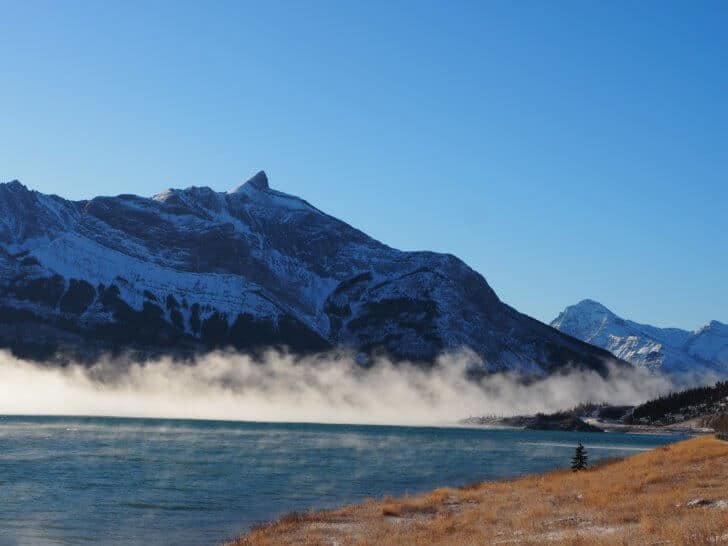
Mount Mitchner, AB
Though the process of backpacking light can become complex, it’s also a commitment to doing more with less. When testing the limits of pack weights, it’s important mentally and emotionally to be in a good place to make sound decisions. Psychologically, traveling light is as important to backpackers as grams and ounces.
Everyone carries metaphorical baggage. I suspect that ultralight and lightweight backpackers on the fringe of extreme carry our baggage by creating challenges. It’s like a form of self-medication using the outdoors.
I am committed to using the outdoors as part of a holistic approach to health, both physically and mentally. I also suspect many outdoors people hold the same commitment. To that end, I decided to explore the psychology of traveling light.
Interview with a Therapist
I interviewed therapist Sherri Wright. Sherri is probably one of the warmest and most enthusiastic people I know. I often bump into her at my Pilates classes, and I have never seen her without a smile and welcoming hello.
Sherri out in nature.
Her warm brown eyes and genuine care and concern for others are endearing and charming qualities. She is a beautiful and strong woman who has faced cancer and life head-on while being there for her clients and helping them move forward through the ‘hell and high water’ they face.
Sherri will tell you that everyone has had their share of ups and downs. She talks openly and passionately about self-care and encourages everyone to consider what the meaning of self-care is to them, herself included. Sherri often recommends her clients take time in nature. Nature is restorative, she explains, and she is not shy about taking her own advice and taking a dose of outdoors. As I sat in Sherri’s cozy office, I was struck by the smatterings of nature that infiltrate the decor.
Natural Prescription
When it comes to mental health, I think it’s fairly safe to say research supports choosing a healthy lifestyle, which includes cardiovascular exercise (I like hiking in the mountains) and Vitamin D (I like sunshine). I wondered though, could an active outdoor lifestyle replace medication for mental health disorders?
Sherri: That is very exciting and refreshing to hear. While I see a ‘rediscovering’ of the benefits of the outdoors slowly making its way into Canadian culture and lifestyle, professionals in the overall health care field still have a long way to go in recognizing its benefits when assessing and talking with clients and patients. If we paid attention to our ancestors, we would likely be doing more ‘outdoor therapy.’ However, in a world of being ‘plugged in’ much of the time (living in more than living out) coupled with navigating overall technological advancements, we seem to lose sight of simple steps that can be taken. When I talk about outdoors as therapy, it includes time outdoors and activity; the two are linked in my practice.
Em: Do you think there is merit to outdoor treatments?
Sherri: I certainly do; I sometimes think when we struggle or aren’t feeling well, we automatically want complex solutions or seek solutions solely from research and medicine. We are conditioned to this in large part. We forget to trust our own wisdom as well as forget to notice how the outdoors can help us feel de-stressed and unplugged. In a rapidly advancing culture, our brains seem forced to constantly keep this extreme pace and complexity, rather than trusting natural instincts and common sense. I concur with a holistic approach by drawing on all avenues of support, including nature.
Em: Do you think the idea of outdoors in medicine will spread further?
Sherri: I always hope for that. I think the word medicine can be misleading and can evoke confusion and even debate about its value. I am also not implying, in any way, that ‘nature cures all.’ My position is that nature is restorative, refreshing, calming, and helps ‘ground’ us in numerous ways. In essence, nature is an augment to our healing, as well as to other medical and psychological treatments. Nature provides space for all kinds of unexpected healing opportunities to happen.
Em: When is nature not enough of a prescription?
Sherri: This is a very important question, and not one easily answered. I hope that each of us would benefit from regular doses of nature, regardless of our health and wellness challenges. Nature is not a cure-all treatment or prescription for any medical or mental health issue. Nature is an accessible, low, or no-cost option that could have significant benefits.
In contrast, red flags or indicators which would tell someone time in nature alone is not enough would include:
Experiencing mental health symptoms
Not functioning at one’s optimal or normal regardless of steps taken to naturally feel better
Existing chronic and persistent mental health conditions which are intrusive in day to day functioning
It is essential that when people notice these red flags, they seek out a healthcare professional in the field of mental health and explore their concerns and experiences as soon as possible. If someone is currently in treatment with a professional, I encourage them to talk over the benefits and risks of being in nature when they are struggling with any mental health conditions and/or symptoms.
Em: A lot of psychologists call nature restorative, what does that mean?
Sherri: For example, in Japan, Shinrin yoku (forest bathing) is believed to be beneficial for physical and mental wellbeing. The research found forest bathing improved heart health. Something I find fascinating is that trees and plants emit substances called phytoncides. Phytoncides are thought to help fight disease (like cancer) and enhance our immune systems.
I have also read articles that talk about nature’s benefits:
All of those benefits serve to enhance our physical wellness overall. The concept of mind, body, spirit connectedness resonates deeply with me, embracing nature creates space for connectedness.
The point to stress here is that researchers from all walks of life, cultures, viewpoints, and professions are conducting research that supports the value of nature for mental health and wellness.
Em: What is the ‘three-day effect,’ and do you think it’s valid?
Sherri: Florence Williams did work on ‘The 3-Day Effect: How Nature Calms Your Brain.’ When it comes to mental health and the range of diagnoses and treatments, I operate from a place of best practices which upholds my professional standards and ethics. In translation, this means, I seek out what the latest research in my field recommends for specific struggles and conditions. I have yet to come across any research within my professional capacity, which has fully examined the 3-day effect. While I strive to stay current on relevant research, there may be some out there I haven’t seen yet. I am curious and look forward to new research on it as it becomes available.
Technology and Psychology
I have read articles and reports about technology playing a role in mental health disorders and potentially playing a role in burgeoning rates of depression and anxiety. Like many others in North American society, my life is inextricably tied to technology. Could our reliance on cell phones, tablets, laptops, the internet, and technology be mentally wearing us all down to the point of collapse? More importantly, if it is, what can we do to intervene?
Em: Do you think modern societies’ removal from the outdoors is increasing the incidence and severity of mental health challenges?
Sherri: Yes! I cannot help but make that connection. So much so that I incorporated a much more explicit exploration with clients in regards to their total frequency of daily screen time. I explore as much detail around this as possible in the first few sessions. Additionally, I seek the same kind of information regarding how much time they spend outdoors as well as in movement and activity.
The evolution of modern society seems to have created a serious imbalance in lifestyle choices and awareness for many. I believe this is one of the numerous factors that contribute to some mental health struggles. This imbalance might also perpetuate symptoms and aggravate existing conditions. It seems, for many, intrinsic basic needs and inner knowledge are ‘silenced’ as technology advancements and integration thrive. Compelling research continues to be done, which supports my professional impression on this above question.
Em: Do you think modern technology (cell phones, screens, constant digital interruptions) is damaging our brains and psychology as humans?
Sherri: I want to say absolutely. However, I would need to cite a plethora of research to professionally uphold that statement. I will say it is plausible. I have noticed more conferences, workshops, literature, etc. making reference to the negative impact of technology’s constant advancements on our overall well-being, mental health, and social connectedness.
Through my client’s stories, I am noticing repeat themes that would also support this. Issues which seem to be on the rise include:
sleep issues
low energy, low mood
increased anxiety
somatic complaints
an overall sense of decreased wellbeing
lower physical activity
a sense of isolation
lack of natural sunlight
overactivated thoughts
sore muscles
overall physical discomfort
relational conflict
parent-child/teen conflict
an overall sense of disconnection to others
Tech-immersion seems to have unintentionally snuck up on people. For example, cellphones on or near the bed seem to be the new normal. I wonder how and when an individual’s brain can rest and rejuvenate. It is plausible that there is a pervasive influence of everyday technology on the brain in our tech-immersed society.
Em: What do you think are the best ways to counteract technological mental health side effects?
Sherri: First steps to self-awareness about tech habits include:
Monitor professional and personal time using technology.
Set new more reasonable limits.
Decrease and regulate time spent (and teach children how to do the same).
Replace excessive tech time with times of connection, movement, outdoor time and connecting with your surroundings.
Balance tech time with non-tech-related self-care; put your phone down!
Non-tech self-care would benefit from including:
movement and physical activity
time in nature
Decompressing through non-tech-related activities after a workday or school day is essential. Other options could also include:
Join together as a group at your workplace for ‘tech-breaks’ to move, stretch, step outside, take a brief walk, etc.
Create a proactive weekly plan which intentionally includes time with nature. This ensures time has been set aside to unplug. Keep it simple and easy, but stick to the plan.
Put all devices and screens away at mealtimes, when working out, when you are with family, loved ones, or friends.
Remove technology from your room during your nighttime routine and when preparing for sleep. Cheer yourself on when you are successful with this.
Have the same rules for all family members in your home when it comes to setting limits on tech-immersion by putting time limits on phone/tech devices. Also, try to set them aside when socializing, walking the dog, eating, or playing outside with children. Make this intentional, be mindful of it, and notice how different you feel after you have done this.
Advocate for yourself where you need to and get informed.
Em: How much time in nature do you think it takes to counteract the strain of technology, light pollution, and overstimulation on the modern brain?
Sherri: I wish I knew the answer to this, it would be a groundbreaking game-changer. I believe findings like these would be pivotal to how we are living in modern society. Those kinds of stats would give deeper substance and evidence for the value of nature as a form of therapy and would support suggestions health care professionals could discuss with people. I think those kinds of questions and answers would help enlighten us as a society to the serious nature of this conundrum. What is clear is that we all need to be our own researchers to find our own conclusions on how this affects us!
Em: Is there such a thing as too much nature?
Sherri: That is a very intriguing and curious question. From my perspective and knowledge base, generally, I would say no. However, every person’s life is unique and has its own story. There may be a possibility of “too much” time in nature in certain circumstances:
It becomes an obsession.
It causes preoccupation regularly interfering with other aspects of life.
It becomes more about thrill-seeking and unsafe, risky behaviors or interests.
If health conditions are negatively affected by spending time outdoors.
Additionally, there are situations where being in nature might be too high risk, such as when someone is wrestling with intrusive and active mental health symptoms. I think it depends on the situation, the person, the ‘who, what, where, when, and how’ of nature immersion. Most importantly, the answer is safety first.
Em: What do you think is the most important thing anyone can do to maintain good mental health, and how can/does nature contribute?
Sherri: Be proactive, maintaining positive mental health starts with pillars such as:
an adequate amount and quality of sleep
nutrition
movement
hydration
surrounding yourself with positive influences
These are all factors that support a healthy, positive mindset. Additionally, nourish yourself through self-care activities that are easy to integrate into your day, and that resonates with you.
Get outside.
Notice your surroundings.
Breathe fresh air.
Get some sunshine.
Move your body.
Express yourself creatively.
“Unbusy” yourself (even if only for a few minutes).
Practice living in a mindful and intentional way.
Learn to set your limits and say “no” more often.
Pay attention to your day to day routine, take breaks and take time to literally breathe.
Remind yourself of the value of breath.
Try different techniques to help engage deeper breathing rather than shallow breathing (which can be perpetuated by stress and chaos).
Find a life balance that includes taking breaks and ‘unplugging.’
Quiet your mind.
Engage your senses in a calming way.
Find joy and laughter.
Reach out to others.
Take solitary moments.
Set healthy boundaries and limits.
Connect with others.
It is important to find the balance that works for you and feels right for you. Time in nature offers the opportunity for many of these ideas to occur with relative ease. Create a mindset that looks at including regular doses of nature into your lifestyle. Ultimately, make it a lifestyle, not a task, and be creative in how you embrace time in nature in your life.
Outdoors People and Decision Making
So we’ve talked about nature being restorative, let’s talk a bit about how important mental health is when being outdoors and making complex decisions.
Ultralight backpackers especially have a “go lighter for longer” mindset. Or “if I have less gear I can go further and longer”, which physiologically is true but psychologically may not be a good idea in some contexts.
Ultralight backpacking also means using less robust gear and having less of it to compensate for shortfalls. Many ultralight backpackers are also soloists, with no one to test ideas and decisions. Though this strategy avoids groupthink and finds more solitude (and isolation), it can lead to hubris.
Martin Creek, AB
Em: All outdoors people face complex decisions, how can that be compromised by an untreated and ignored mental health concern?
Sherri: Mental health symptoms and conditions left untreated, affect us on so many levels. Some could include (not limited to):
poor judgment
perceptual disturbances
emotional dysregulation
memory impairment
confusion
fugue states
disorientation
vision or hearing disturbances
erratic behavior or reactions
compromised spatial awareness
vertigo
narrowed focal range (tunnel vision)
social isolation
not oriented to person, place or time
When our brains are struggling with mental health concerns, we are not functioning at our optimum level or in a typical way (the way we are used to). It is also possible that an individual may or may not be aware of this occurrence. All of these factors and more would compromise any form of decision making and would put a person at a very high risk for something to go wrong. Cognitive processes can be severely impacted.
Em: What are some of the reactions an outdoors person with untreated mental health concerns might have when making decisions in isolation?
Sherri: Reactions might include:
disorientation
fugue states
anxiety attacks
derealization (detached from self and surroundings)
depersonalization (outside observer of one’s life)
hallucinations
other perceptional disturbances
impaired attention
distraction
confusion
indecisiveness
impulsiveness
poor or no planning or preparation
fear
difficulty acting on decisions
erratic behavior
rambling or impaired speech
difficulty reasoning
Em: I would say those would all be extremely detrimental (and/or dangerous) to a backpacker.
Mental Health First Aid
We also have to remember that outdoorsy people can face trauma on the trail, and it can cause shock or Critical Incident Stress (CIS), which could compromise safety and well-being. If unaddressed, CIS could lead to longer-term issues.
Severe fog and other environmental issues can create unsafe conditions.. Choosing to continue could be fatal. Mental acuity and clarity is crucial in the backcountry. Sentinel Pass, AB.
Em: What could cause an acute mental health trauma or incident (shock, CIS) on the trail?
Sherri: When I think about CIS, I automatically go to people who have had previous experiences with PTSD or trauma (war veterans, first responders, survivors of sexual assault, or other assaults, for example), especially if the trauma occurred outdoors. Individuals who have experienced trauma outdoors may find themselves “nature averse.” Nature aversion, meaning they might have a negative association with the wilderness, can create a negative association with their nervous system. If they are not consciously aware of being nature averse, being on the trail or in the wilderness might, in some way, replicate past experiences and could trigger an event.
Some trauma survivors may be self-aware, but an event could still occur. A self-assessment and/or assessment by others (such as a mental health professional, psychiatrist, or physician) is wise. A safe and prepared plan is critical; for some people, the risk may be too high.
Em: It’s a bit like when I was crushed in an accident. When I started backpacking again after physical injury, my first few trips out were ones I could easily bail on. I also had a buddy system in case my body gave up on me. Mental health should be treated with the same care and respect as a physical injury.
Sherri: That’s a solid example Em. The activity must match the individual’s needs as well as what is safe and reasonable. Conceptually, it is possible to get closer to nature without fully immersing oneself in it. Benefits can be reaped by simply getting outside, which is a very healthy, safe & useful first step. Getting outside can include sitting on your step or deck, a park bench, or a patch of grass; or walking in a park or walking the path in your neighborhood.
You just start wherever you are at. Time outdoors can begin and end there or can eventually be extended to other contexts. There can be an in-between. As an important reminder: some form of exposure is better than none.
Em: Stretching the comparison from physical health to mental health, I can totally relate to this. With my injuries, at first, I started just walking down the block. I was in a double-arm sling, and being cooped up inside was killing me. It took everything in me just to walk half a block, but I would have lost my mind otherwise. Getting outside was part of caring for my mental health while I recovered my physical health. Of course, like with any trauma, I certainly experienced some mental health symptoms like nightmares and sleep disturbances, among others. To go from extremely active to barely able to put on my own socks also came with emotional and mental trauma. I was not and am not the same person on any level. Meeting my needs safely meant I couldn’t go far, but at least I could go outside.
Em: What would be indicators that someone is struggling with mental health?
Sherri: Some of the most common would be:
freezing/locking up
shock/deadpan facial expression
erratic behavior
breathing too fast or too slow
sweating
loss of speech or incoherent speech
trembling
shivering
muscle weakness
collapsing
cold/clammy skin
pale or flushed
Em: Similar to symptoms of medical distress, but without an obvious physical injury. Some of those could easily be seen as exertion symptoms, as well. How could that impair safety and well being?
Sherri: As previously discussed, when struggling with mental health issues, our brains are not working to their optimum in the way we are used to or are typical. It is also possible that the individual is not aware that this is the case: other times, they are aware. Individuals may not be fully oriented to person, place, and time. Our spatial awareness can be compromised, things like vertigo, and visual disturbances such as blurring and narrowed focal points. Add in symptoms like loss of balance, coordination, or muscle weakness, and it could be a recipe for disaster on the trail.
Em: If you encounter someone on the trail experiencing these symptoms, what would be the best way to counter and address them?
Sherri:
Approach with caution.
Try to ascertain reality orientation to person, place and time.
Ask if the person is ok from a safe distance (for you and them).
Call for assistance if there is cell service.
Ask if there is someone the person would like to contact.
Ask others who come along for help which might include hiking down to get help or going to the nearest forest ranger location.
If it’s safe, do not leave them alone.
I would also recommend everyone try to get into a Mental Health First Aid course. It can be very beneficial at addressing people in crisis. Running into someone in crisis can happen to anyone at any time, and having some tools to help is worthwhile for everyone.
Em: What if you notice some of these symptoms in yourself, what should you do?
Sherri: First, it is important to be self-aware, many people ignore symptoms. It’s also really important to “check-in with yourself” taking note of your thought content and processes, feelings, and why the context and scenario might be triggering symptoms. The self-administered first-aid for mental and emotional reactions include:
Sit down in a safe place.
Connect with the ground below you and surroundings (feel it below you, holding you, keeping you safe).
Use grounding techniques (techniques to bring you to the present moment) by focusing on your five senses.
Hydrate (with some electrolytes if possible) once your breathing is controlled (dehydration can contribute to mental health symptoms).
Snack once you are hydrated.
Strive for reassuring self-talk.
Call 911 if able if symptoms do not abate.
Reach out to someone for help as soon as possible.
As an aside I always encourage people to hike with some form of tracking device (like the Garmin inReach Mini) that others are aware they have, the kind and how it is used. Secondly, it is imperative that when taking off on a hike that at least two people are aware of your plans and location with emphasis on location and return time and day.
Getting Help
If you or someone you know is struggling with mental health, there is restoration and healing. Don’t face mental health challenges alone, talk to someone. Talk to a friend, family members, and preferably a registered professional. This could not only save your life but also eliminate years of unnecessary suffering alone in silence.
Almost everyone faces trauma, which negatively impacts their mental health, at least temporarily; it’s human and normal. No one lives life unscathed from trauma. Some trauma is visible; some are hidden scars. No one is immune, and some are more susceptible than others. Life is hard, and it’s much harder alone.
Rely on natural supports as well as outlets to manage symptoms.
It is constructive and progressive to be inclusive in your mental health recovery journey. Resources may include:
physician
psychiatrist
therapist or counselor
support groups
therapy groups
life coach
mentors
educational workshops
retreats
alternative health providers
Find those quiet outdoor spaces for moments of solitude, it can bring solace and rejuvenation. I believe in being proactive with mental health and wellness. While time in nature can be very helpful to augment psychological treatments and intervention for mental health challenges, it is not a complete antidote. I posit time outdoors may be helpful in unexpected ways, current research suggests there is value. I maintain time in nature will provide something different, beneficial, and meaningful to the mind, body, and spirit.
Conclusion
Sherri: Carl Jung (an analytical psychologist) spoke of the “sacred space” in his work, likening this to the deep inner space within us where soulful experiences take place. Nature is a safe and inviting space for deeply meaningful and enriching experiences to occur. Nature in and of itself is a sacred space.
Em: Backpacking Light emphasizes packing less and being more. I think “packing less” in the context of mental health means addressing mental health and not carrying it as baggage. If you are carrying mental health concerns as baggage, you could be compromising your health and safety or the health and safety of others. Part of leaving that baggage behind might include backpacking and time in wilderness spaces. For myself and likely all of our readers and members, wilderness space is our sacred space. In taking care of our mental health in that sacred space, we are healing and progressing forward to be more.
“Everything in nature invites us constantly to be what we are.” – Gretel Ehrlich
Stress fractures in the lower leg and foot are common injuries among long-distance hikers, hikers who are training for big events, vacation hikers, runners, and older hikers. This video podcast episode discusses the definition, diagnosis, prevention, and treatment of stress fractures.
Unlimited Member Exclusive
This video podcast is available only to Unlimited Members (learn more).
This private podcast for Unlimited Members will explore deeper investigations into gear, skills, and technology. Our public podcast will continue to focus on a long-form variety show featuring stories about people and places through interviews, with short segments about gear, skills, and what’s happening at Backpacking Light.
Summary
Stress fractures in the lower leg and foot are common injuries among long-distance hikers, hikers who are training for big events, vacation hikers, runners, and older hikers. This video podcast episode discusses the definition, diagnosis, prevention, and treatment of stress fractures.
The Hammock Gear Economy Burrow Ultralight Top Bag is an affordable, semi-customizable down quilt that is offered in a variety of colors, fill weights (i.e., temperature ratings), foot box types, lengths, and widths. The quilt featured in this review is rated for 30 F (-1 C), has a “wide” width (55 in / 140 cm), standard length (5 ft 7 in to 6 ft 2 in / 170 cm to 187 cm), and a sewn footbox. This model retails for $179.95, has a claimed weight of 22 oz (624 g), and a claimed loft (single layer) of 2 in (5 cm).
Trip report: A 6-day, 76-mile backpacking loop in Great Smoky Mountains NP from the Sinks to the Little Tennessee River and back.
Introduction
In May 2019, one other hiker and I completed a 76.1 mi (122.5 km) Great Smoky Mountains backpacking loop trip on the Tennessee side of the GSMNP. The trip lasted six days with no resupply, and followed a loop from the Sinks to the Little Tennessee River and back to the starting point.
The 76.1-mile (122-km) loop began at the Sinks in the Great Smoky Mountains National Park. Credit: Google Maps.
We hit 16 trails, which included difficult terrain, water crossings, and steep climbs. The route gained and lost 14,927 feet (4,550 meters) of elevation.
The loop covered 76.1 mi (122 km) and hit 16 trails. Map generated using CalTopo.The route involved climbing and descending each day, with an overall elevation gain and loss of 14,927 feet (4,550 meters). Profile generated using CalTopo.
Trip Planning Notes
Water was one of the defining aspects of this trip. We dealt with excessive water crossings, including a day with more than 14 difficult creek crossings. We also had one day with 12 completely dry miles (19 km). A storm was coming in about the time of our scheduled start, so part of our planning involved estimating whether the increased water levels would make the crossings impassable. We also created an alternative route in case of high water.
The National Park Service requires backpackers in the Smokies to hang bear bags on cables provided at each campsite. We needed to make sure we had adequate bear bags, along with repair kits in case of damage by mice or storms. We also needed to plan our nightly routine to ensure we didn’t forget smellables in our packs or pockets after a long day of hiking.
I prepared for the terrain, elevation, and campsites by studying the “brown book”: Hiking Trails of the Smokies by the Great Smoky Mountains Natural History Association. It included narratives describing each trail in Great Smoky Mountains National Park, with history, special features, and dangers. The book also offered information about some of the campsites.
Meals
The bulk of my planning consisted of food preparation. I do not carry a stove, so I cold-soak all my meals. During the months leading up to the trip, I dehydrated all of my meals and most of my snacks. My only pre-packaged food consisted of a couple of Larabars and some chocolate.
I put each meal into separate quart-sized freezer bags labeled with the number of calories. Before the trip, I consolidated the quart bags into gallon-sized freezer bags for easy access on the trail.
All my meals were dehydrated and ready to cold-soak.I organized meals into gallon bags for easy access.I chose high-calorie snacks and desserts.
Since we were not going to resupply during the six-day trip, the food weight added up quickly. To minimize weight, my goal was to pack 100 calories per ounce (28 grams), which I just managed. Also, knowing that I function best on a high-protein diet, I added protein wherever possible. I bulked up my meals with dehydrated hummus and wound up with over 600 grams (21 ounces) of protein, nearly 40 percent of my total calories.
Since I planned to eat breakfast before leaving on Day One and dinner after returning on Day Six, I divided total calories by five and a half days and packed nearly 1,200 calories per day. Considering we would be hiking 10-15 miles (16-24 km) per day, I knew that would not be enough to maintain my weight during the trip, but I thought it should be enough to fuel my body during the six days.
I calculated my overall calories and macronutrients with a custom spreadsheet that I created in Microsoft Excel.
Logistics
Because we did not resupply, and the route was a loop, the logistical considerations were minimal. The park requires backpackers to obtain a permit through an online system. I secured permits for myself and the other hiker, Jennifer, and printed a copy in case a ranger stopped us. I also printed copies of each day’s map and profile, which I laminated and attached to a retractable keychain on the outside of my pack.
My laminated maps were completely waterproof and easy to access.
Gear Choices
Clothing was one of my most challenging gear decisions. As those who have hiked in the Smokies know, the weather can be unpredictable, and May temperatures can range from cold to sweltering. During the week prior to the trip, I studied weather forecasts from several sources, and I tried to choose clothing that was versatile and would keep me comfortable in a wide range of temperatures. I chose a well-tested fleece sleep set, wool sleep socks, running shorts, a quick-dry short sleeve shirt, wool hiking socks with toe liners, and my trusty puffy.
All my packed and carried gear, minus quilts.
I decided to use a new set of 30-degree (-1 C) hammock quilts during this trip. Unfortunately, I didn’t have many opportunities to test them. I sleep cold, so I worried that the chill might break through the underquilt and result in the dreaded “ice butt.” With no time left for test runs, I resigned myself to stick it out if I got chilly.
I chose not to bring gaiters or rain pants since my trail runners were not waterproof, packing only a rain jacket. Although I doubted we would be inclined to start a fire in May, especially with rain coming in, I never go into the woods without cotton balls, waterproof matches, and a pocket bellows.
My luxury items were:
My trusty sit pad: 1.9 oz (54 g)
Headphones to listen to audiobooks: 0.4 oz (11 g)
A pen and paper: 1 oz (28 g)
Trip Narrative
Day One: Sunshine and Storms
Jennifer and I parked at the Sinks in the Great Smoky Mountains National Park to begin our 6-day, 77-mile (122 km) trip. We took a photo in front of the water and felt excited and optimistic. We’d been planning this trip for months, and we were thrilled to get on the trail.
Jennifer and I posed for a picture in front of the Sinks.
On the climb up Meigs Creek, we stopped to admire a waterfall on the right and chatted with a couple of groups of day hikers who were out enjoying the warming weather.
Prior to the trip, we knew strong storms were blowing in and watched them closely. We even considered postponing our adventure, since the route included some difficult creek crossings that we weren’t sure would be passable after the rainfall. But we decided the water levels were low enough that even with the rain, we should be able to get across the creeks.
We hiked on, enjoying the surprisingly good weather, and spotted some flaming azaleas.
A flaming azalea, one of many spring flowers in the Smoky Mountains.
Then we turned onto Lumber Ridge, noting Meigs Mountain Trail in the other direction, which would bring us back to the car six days later. We stopped a few miles later to enjoy our only fresh meals of the trip. Mine consisted of a peanut-butter-and-banana tortilla with fresh apple slices, and I had brought along no-bake cookies for us to enjoy. We took off down the trail again, our packs a little lighter and the sun still holding out above.
Storms Roll In
As we continued down Lumber Ridge, toward the Tremont Institute, the clouds rolled in quickly. The forest went quiet and seemed to go from day to night in five minutes. The storm hit fast. We stopped and put on rain gear, though my rain jacket kept me dry for about 60 seconds. Thunder boomed all around us, and lightning lit up the forest. We hiked more quickly than we should have down the muddy slope to get to the Institute, where we ducked inside the visitor center and dried off. The rain slowed a bit, which allowed us time to wring out socks and filter water from the river before heading off down West Prong Trail.
The rain had moved out by the time we reached the West Prong campsite, a large group camp that is one of my favorites in the Smokies. The campsite was beautiful and spacious, with tent sites on either side of the river connected by a footbridge. I hung my hammock near a smaller offshoot of the river, where I could enjoy the babbling sounds.
I set up my hammock in a beautiful area next to the water.
We set up camp in the dry and ate in comfort, enjoying the unexpectedly pleasant weather. My appetite was normal. I enjoyed my rehydrated meal and treated myself to some chocolate.
I enjoyed a meal of rehydrated couscous and shredded chicken.
After supper, Jennifer and I hung our bear bags and stayed up talking, switching on our headlamps as we discussed the trip and our lives, with the clarity that only seems to come in the woods. Finally, well after hiker midnight, we turned in. The storms started again, but I’d staked my tarp low and wide and had placed some rocks on top of the stakes. I stayed warm and dry throughout the night and woke up ready to take on Day Two.
Day Two: Fighting the Weather
I woke to heavy rain on Day Two, but by the time I changed into my hiking clothes and packed my sleep set and quilts, the rain turned to a drizzle. We broke camp, ate breakfast, and continued climbing on West Prong Trail. Then we turned onto Bote Mountain Trail, which was steep, muddy, and filled with ditches from water runoff. Soon, the rain was coming down heavily. With 5.5 miles (8.9 km) of climbing in the mud and heavy rain, our spirits began to waver.
Jennifer and I kept our spirits up during a rainstorm.
On any long trip, there’s at least one moment when you would gladly pack it in and head home. That was the moment for Jennifer. The combination of rain, mud, and climbing was enough to make her want to call it. At one point she stopped in the middle of the trail and yelled into the rain, but we kept going.
At the top of Bote Mountain, the rain stopped. We briefly touched the Appalachian Trail and then began to descend Eagle Creek Trail. Our moods were improving. I was happy to see the sun, and I sang 1960’s rock songs as we meandered down the trail. Jennifer and I were both happy the rain had let off before we hit the crossings on Eagle Creek. We had three tough ones coming up and pouring rain would have made them worse.
Navigating Upper Eagle Creek
The trail was fairly easy for about a mile (1.6 km), and then it got dicey – steep, narrow, muddy, and rocky. After two days of storms, descending the trail felt like walking down a Slip ‘N Slide pitched over the mountain. We both used trekking poles and treated the trail like a dangerous water crossing, with three points of contact at all times. I stepped with both poles down, tested the ground, shifted my weight, and only then moved the poles. We made slow progress.
Then I took a step and tested the ground. It felt stable, so I lifted my poles – and my foot slid out. I fell hard onto a sharp, grapefruit-sized rock. Pain shot through me and took my breath. I waved to Jennifer that I was fine, unsure whether I really was. When the pain and dizziness subsided, I was able to stand and continue, albeit, with a purple, darkening bruise planted firmly on my butt cheek. I’ll omit any pictures here, for modesty and for your sake, but suffice to say the bruise was far more impressive than any I acquired during eighteen years of softball.
After my fall – which was painful but rather lucky in placement – we continued very slowly until the first crossing. We’d been holding our breath, still not fully sure the creek would be passable. Though the crossing was difficult, including a strong current and waist-high water, with caution and patience we got across.
I paused in the middle of the first crossing to snap a photo. My adoration for the water’s loveliness soon waned.
Two additional crossings brought us to our second campsite, Big Walnut, where we found some artifacts, including a washtub and a sawmill blade. I hung my hammock on the edge of the small campsite, and we sat down to supper.
I hung at the edge of camp on the second night.
We also made a new friend while we were there.
A snail joined us in camp.
Jennifer went into her tent after supper, promising she’d be right back, and I pulled out the pen and sheets of paper I’d brought to work on a fiction project. I wrote until dark and, unsurprisingly, did not see Jennifer again that night. Our time staying up and talking seemed to have ended quickly.
Day Three: Water Crossings Galore
After a good night’s sleep, we were ready to face the remainder of Eagle Creek Trail. The guidebook promised that the trail would be challenging, but our first full day of good weather gave us hope.
We managed to navigate all 14 of the remaining water crossings with little trouble, but they required patience and focus. Though we were both wearing non-waterproof shoes and did not remove our boots at each crossing, we still only managed about 1 mile per hour (1.6 km/h) on Eagle Creek Trail.
Jennifer navigated an easier crossing on Eagle Creek Trail
Along with creek crossings, Eagle Creek brought us beautiful pink lady slippers.
Lady slippers are unique flowers and are lovely to behold on the trail.
We celebrated after the final water crossing and began an unexpectedly steep climb up Lakeshore Trail. We then took Hazel Creek Trail, which was lovely and full of history. Although we were running later than we would have liked, we took some time to admire the Calhoun House.
The Calhoun house is a lovely example of the rich history in the park.The Calhoun House faces Hazel Creek.
Between the water crossings and the climb, 14 miles (23 km) took longer than anticipated. A bit after 8 PM we dragged ourselves into a huge camp – the largest either of us had seen in the Smokies. Bone Valley campsite stretched along the creek and included several fire rings and spacious tent spots. We quickly made our choices and set up camp. We did take a moment to admire a cluster of butterflies puddling around a fire ring.
Butterflies puddled around a firepit at the Bone Valley campsite.
We then dropped next to the nicest of the fire rings, which had stones perfectly placed for backrests. We cleaned up, ate dinner quietly, and enjoyed airing out our tired feet. This was the first evening I was unable to finish my meal. Though I knew I had burned far more calories than I’d eaten, I simply had no appetite. So I saved the leftovers to add to lunch the next day.
I slept well but woke up about 4 AM with a chill. That was the only night I woke cold.
Day Four: My Breaking Point
The weather on Day Four was gorgeous – sunny and warm. We took our time getting ready in the morning and were out by our typical 8:30 AM. Although we had a steep climb up Cold Spring Gap Trail, we were glad to have the Eagle Creek crossings behind us. We began the day with a mild stroll down the remainder of Hazel Creek Trail.
In my research prior to the trip, I’d found that the Cold Spring Gap Trail was rocky, eroded, and steep. However, my sources did not emphasize how true this was. The trail consisted mainly of an old creek bed with far more rocks than dirt. We spent about 5 miles (8 km) climbing the steep trail, trying to find traction on wet rocks ranging from small stones to boulders. It was slow going, to say the least, and the swarms of gnats did not help. This trail was my breaking point, my moment during the trip when I would have taken any escape route.
We finally made it to the top of Cold Spring Gap, where I promptly collapsed onto the dirt. The junction was a terrible place to have lunch, overgrown and full of bugs. But both of us were too tired to take another step without food. So we stopped, enjoyed lunch, and took a breather.
A welcome sight at the top of Cold Spring Gap Trail.
Downhill from Here
After we finished eating, we climbed approximately a half-mile (800 meters) on Welch Ridge Trail until we reached the junction with Bear Creek Trail. There, we spotted a pair of bald eagles flying above.
A beautiful view awaited us at the junction with Bear Creek Trail.
From Bear Creek Trail, we took Forney Creek Trail and descended about 9 miles (14 km) to the Jonas Creek campsite. Our descent was slow, as both of us were losing steam from hiking trails that were consistently more difficult than anticipated. We rolled into camp about 7:15 PM.
The campsite was located right next to the water and had plenty of space. Jennifer found an idyllic tent site, and I chose a nice pair of trees not too far away. After eating – again I did not finish my meal – we didn’t waste much time before settling in for the night.
Jennifer found a perfect tent site.I was too tired to walk closer to my hammock for a photo.
I slept well until about 4:30 AM when I awoke with excruciating pain in my stomach. Initially, I attributed the pain to hunger pangs, since I hadn’t had much of an appetite the last couple of days. But as I lay in my hammock, the pain became worse, until I couldn’t tolerate any position. I got out of bed and made my way toward the fire pit, with the headlamp on low, where I sat and tried to find some relief. I’d taken Tylenol, but the pain was becoming worse.
Finally, about 5 AM, I woke Jennifer, and we sat in her tent until sunrise, hoping the pain would subside and trying to decide on a backup plan if it didn’t. We were about a day’s hike from the nearest road, but the route we planned for Day Five would double our distance from help. When the pain finally subsided, we decided it was worth pressing on. And I decided to add stronger medications to my first aid kit.
Day Five: Hiking Dry
I tried and failed to down a protein shake for breakfast. But otherwise, the morning was not as difficult as the night would have led me to expect. We hiked about 2 miles (3 km) in relative comfort, and then we met the day’s primary challenge: the final water source until camp. With nearly 12 miles (19 km) of the completely dry trail remaining, we drank, hydrated our lunch, and filled our containers. For me, that meant two 1-liter (35-ounce) bottles. With less tree cover than previous days, 2 liters (2.1 quarts) did not seem like much.
We continued the climb up Jonas Creek Trail. After turning around a switchback, I heard a grunt. At first, I thought we’d stumbled upon a bear, but in fact, it was a large, black boar. The boar took off in the other direction and veered off the trail. We continued, but I paused to blow my whistle at each blind switchback. Surprising a boar was certainly not in the plans for the day.
The lack of water took its toll. As we sipped and rationed, we quickly realized that 2 liters (2.1 quarts) would not be enough to reach camp in relative comfort. But it was all we had and we knew there would be no more, so we kept climbing and pushing through.
To the Appalachian Trail
At the junction with Welch Ridge, we stopped for lunch. As we sat with our backs against the trees, trying to find some shade, a group of horses with riders ascended the trail from the direction we’d come. We spoke to the riders and laughed, feeling our spirits rise a bit with the food and communication. We’d seen only one or two other hikers per day to this point and had yet to camp with another person.
After lunch, which included some stretching and ibuprofen, we continued up the trail toward the AT. The heat pounded on our backs, and the warming water in our packs seemed more and more insufficient, especially since we’d each sacrificed a half liter (17 ounces) to hydrate dinner.
As we neared the top of the day’s climb, we passed the horses and riders on their way back down the rocky slope. Although the climb was trying, the view at the top was amazing. We hiked down the Appalachian Trail past Silers Bald Shelter and a group of thru-hikers. Then we spotted some turkeys in the open meadow and enjoyed the wide, well-traveled trail atop the rounded ridge.
The famous white blaze was painted on rocks and trees along the Appalachian Trail.The weather on the ridge was sunny, and we had a lovely view through the trees.
Descending to Camp
We took our time descending approximately 5 miles (8 km) into camp. Our legs were moving slowly, and even though we’d shed much of our pack weight in eaten food, the heaviness in our bodies more than made up for the lost weight. The last few miles dragged on like a difficult climb. When we finally reached the camp, our water bottles were completely dry and we were parched and dehydrated. We turned off Miry Ridge Trail, through tall grass and toward the campsite hidden about a half-mile (800 meters) away.
My research said that the Dripping Spring Mountain campsite had a spring that was sometimes dry.. If it was dry, we would need to hike another half-mile (800 meters) down Lynn Camp Prong Trail to collect water and return to camp. We were both holding our breath as we picked our way down the hillside.
Thankfully, the spring was not dry. I filtered two liters of water, promptly downed them both, and then filtered two more to take back to camp.
Dripping Spring Mountain, our final campsite, was also our first site that was not near water. Instead, the small camp was isolated, hidden in the trees, and out of sight of the trail. We had already set up camp and were having dinner when another hiker wandered in. He was the first hiker with whom we’d shared a site. He, like us, was tired and not inclined to chat. We all went about our business without too much discussion, as Jennifer and I enjoyed our last dinner on the trail.
My final supper included hydrated corn, black beans, and jalapenos.
While Jennifer had opted to bring several changes of clothes on the trip, I had chosen to hike in the same shirt, shorts, and socks all six days. As I climbed into my hammock that night, my hiking clothes, which I had hung on the ridgeline to dry, shifted toward the head end of the hammock. Although I hadn’t been smelling my own odor too strongly, I certainly smelled those socks. I never regretted my choice to forego a change of clothes, but I did move my wet hiking clothes firmly toward the foot of the hammock.
During the night, thunder rocked the mountains all around us. Although the storms skirted us and never dropped rain on the campsite, the treetops shook with heavy winds all night. The winds must have disturbed some turkeys roosting in the trees because they found their way into camp and raced around the site until sunrise. Between the sound of quick, roadrunner-like footsteps circling my hammock and the unsettling sound of high winds roaring through the canopy above, I was very glad to have earplugs.
Day Six: The Home Stretch
On the final day, we were dead tired but extremely excited. Although the day’s 14 mi (23 km) were mostly downhill, every small climb felt brutal. We’d planned from the beginning to celebrate the end of the trip with dinner at a Brazilian steakhouse in Knoxville, so as we hiked, we talked about the cuts of meat, salad, bread, and drinks we were going to enjoy. Against all odds, we made good time on the way out – much better time than we’d made the previous days.
As we descended Meigs Creek Trail, we heard the rushing water from the Sinks below. We also heard the unfamiliar sound of cars, and we began to pass other hikers. At the trail sign, we celebrated and began looking around for someone to take an “after” picture.
Unfortunately, we didn’t get that picture. As I was asking someone to take a photo, Jennifer spotted her car, with plastic covering the window. While we were hiking, someone had thrown a rock through the glass, broken the back seats, and stolen our purses out of the trunk.
The park rangers had left a number for us to call, but there was no cell service. A kind couple offered us a ride to the ranger station, where we dealt with the break-in. It was a terrible way to end a wonderful trip. But by the time we had discussed everything with the rangers, we decided not to let someone’s terrible actions ruin our celebration. With the time we’d saved from our quick hiking pace, we were able to get to the restaurant on time for our dinner reservation and celebrate the end of our trip.
Trip Review
Route Planning
The big surprises with this trip had to do with the difficulty of the trails. At 10-15 miles per day (16-24 km), the mileage was entirely doable. However, every single day we were surprised by the difficulty of the terrain. Although I researched each path before the trip, my sources did not reveal the true nature of the trails. For example, the brown book states that Cold Spring Gap Trail is “steep” and “rocky.” It does not say, however, that the trail is basically an old creek bed and that we would be scrambling over rocks the entire climb.
After we returned, one of our hiking friends said I’d routed a “who’s who of the toughest trails in the Smokies.” I could have avoided the surprise by talking to hikers who had completed these paths.
Packing Changes
I also could have saved myself some pain with some simple additions to my first aid kit. I had plenty of medication for muscle pain and inflammation, but I was not prepared for things like stomach aches, which can turn into more than a nuisance on the trail. After the trip, I beefed up my first aid kit with additional medications.
My calorie intake for the trip was not far off my estimate. I ate all my snacks and had a meal and a half leftover. However, after the second day, I could not finish my meals and wound up hydrating half meals and combining the leftovers. Smaller meals would have better served me, perhaps 100 calories less, with more snacks. Overall I was able to get enough protein and calories to make it through the trip without ever feeling malnourished. I lost 3 pounds (1.4 kg) during the six days.
Personal Takeaways
The final thing I would change about this trip is, of course, the car. On similar trips in the future, I will not leave a car at the trailhead. I’ll ask a friend or family member to drive us there and pick us up afterward, even if the route is a loop. Because the Sinks is a well-trafficked area, I believed that the car would be safe. Clearly, that was not the case.
This trip was a huge milestone for me. I’d had hip surgery nine months prior and had only recently been able to return to hiking. Backpacking this distance, over difficult terrain, was a massive milestone in my recovery.
The only piece of gear that truly disappointed me was my water filter. The MSR Trailshot slowed to the point that I was priming it with 90 pumps (yes, I counted) before the flow started. The main benefit of the Trailshot is its ability to pump water from the smallest of sources, but puddle-like water sources rarely exist in the Smokies. After the trip, I switched to the Katadyn BeFree water filter. The BeFree is much faster and lighter than the Trailshot. Also, the BeFree I chose includes a 1-liter (35-ounce) soft water bottle, which means that I could carry additional unfiltered water. That would have been invaluable on Day Five, during the 12 completely dry miles (19 km). I would have been able to carry three liters instead of two, which would have made those miles more comfortable.
I did not need the portable charger, primarily because I was extremely diligent about only using my phone’s GPS app only when necessary and after checking the printed maps. This, along with keeping the phone in airplane mode and power saver mode, kept me from needing the charger at all. Though I didn’t use the charger, I would certainly bring it again. The peace of mind of having definite access to my GPS app in case of an emergency is worth 4.8 ounces (136 grams) to me.
Conclusion
This was a tough trip. Going in, I was under no illusion that it would be easy: I wanted to push myself and prove that surgery hadn’t slowed me down. I accomplished that, and I was proud to step off the trail on Day Six, having learned some important lessons on this trip. Time to start planning the next one and get back on the trail!
Related Content
Jamie Shortt used MYOG for a 60-mile trip in the Smokies.
This Great Smoky Mountains National Park “Backcountry Camping” page is a good place to start planning a trip.
Product(s) discussed in this article may have been purchased by the author(s) from a retailer or direct from a manufacturer, or by Backpacking Light for the author. The purchase price may have been discounted as a result of our industry professional status with the seller. However, these discounts came with no obligation to provide media coverage or a product review. Backpacking Light does not accept compensation or donated/discounted products in exchange for guaranteed media placement or product review coverage.
Some (but not all) of the links in this article may be “affiliate” links. If you click on one of these links and visit one of our affiliate partners (usually a retailer site), and subsequently place an order with that retailer, we receive a small commission. These commissions help us provide authors with honoraria, fund our editorial projects, podcasts, instructional webinars, and more, and we appreciate it a lot! Thank you for supporting Backpacking Light!
Kuju pour over coffee singles are direct-trade, ethically-sourced coffee packaged in a single-serving disposable pour over pouch.
Introduction
While preparing for a 10-day trek in the Sierra Nevada near Mammoth Lakes, CA, I discovered Kuju Coffee Pour Overs in my search for the elixir from the gods – coffee. This find struck gold. Kuju Coffee has since become a staple in my backpacking kit.
Coffee is an intrinsic part of my day in the backcountry. Whether it is a morning cup of Joe while writing and composing and enjoying the sunrise, a celebratory cup on top of a mountain pass, or a cup of coffee as dessert after a long day, I find that it is vital for myself to take the time to make good coffee and start, continue, or end my day on the right note.
Preparing for an afternoon cup of Kuju Coffee in the Sherman Range of Wyoming (Photo: Stephanie Jordan).
I have tried several different kinds of instant coffee over my many years of backpacking. Some instant coffees, like Folgers, I drank once before packing the rest out and never purchasing again due to the acrid and charred taste. Starbucks Via seems tolerable, but often tastes slightly burnt and the bitterness covers the flavor profile. But is “good ‘nuff” sufficient on a 10-day expedition or an overnight backpack? Because of my constant search to find a delicious brew, I often pick something up at local shops before I head to the trailhead. It seems that my personal answer is that coffee should be the highlight of my food intake every day. My personal preference for coffee is that it is rich, complex, smooth, and the flavor profile is distinct instead of muddled.
Kuju Coffee Purchasing Options
Kuju Coffee offers six pour-over coffee roasts: three in their standard coffee line, and three in their premium single-origin line. This review will only cover the three standard pour-over coffee roasts, as I have yet to acquire the premium roasts.
The three basic roast Kuju Coffee Pourover Pouch Packages (Photo: Stephanie Jordan).
The primary differences between the standard roasts and the premium, single-origin roasts are the following:
The single-origin pour-overs are $30 per 10-pack, as opposed to $22 per 10-pack for the standard roasts.
The single-origin pour-overs are certified fair trade organic while the standard roasts are not.
All Kuju Coffee is:
Ethically Sourced
Made with Wind Power
Nitro-Flushed for Freshness
Supports 1% for the Planet
The net weight is 0.5 oz (14 g), and they make 8 oz (237 ml ) of brewed coffee.
Basic Roasts:
Bold Awakening (Dark Roast)
Basecamp Blend (Medium Roast)
Angel’s Landing (Light Roast)
Premium, Single Origin Roasts:
Ethiopia
Indonesia
Papua New Guinea
Product Assessment
In this remainder of this review, I will discuss the pros and cons of Kuju coffee concerning:
Taste
Ease of Use (Including a brief discussion of making pour-over coffee in the backcountry)
Ethical Sourcing of Beans
Environmental Impacts
Taste
Kuju coffee is by far the best-tasting camp coffee I have tried on the market, far surpassing instant coffees such as Starbucks Vias without creating brewing hassles such as long preparation, and time-consuming and messy cleanup.
My personal favorites are the light roast (Angel’s Landing) and the dark roast (Bold Awakening). The excellent taste of Angel’s Landing surprised me, as I am generally not a fan of fruity coffees. I found the flavor profile (look at this if you aren’t familiar with coffee tasting terminology) of the medium roast (Basecamp Blend) as indistinct and neutral. Overall, the coffee is smooth, and the flavor profiles are not covered up by bitterness. The body of the three coffees is relatively lighter compared to most medium roasts that I’ve tried (whether brewed at home or in a coffee shop).
In the table below, I will compare the coffees advertised flavor profile with my own tasting notes from trips in the Sierra Nevada (CA; August ‘19), and the Sherman Range (WY; December ‘19).
Full, Dark, Complex, Slightly Sweet (Sherman Range 12/19)
Ease of Use
It is effortless and straightforward to use the Kuju Coffee Pour-over Pouches in the backcountry. On my trip to the Sierra Nevada, I made them in my MYOG cozy around a Ziploc container and boiled water with a Jetboil Stove. In the Sherman Range, I used a titanium mug with an MSR Windburner.
Side view of the Kuju Coffee Pourover Pouch (Photo: Stephanie Jordan).
The single-use pour-over pouch was clean, convenient, and effective. No water escaped through the sides of the mesh fabric and filtered through the ground coffee beans quick enough to maintain a continuous pour without affecting the flavor. After letting the pour-over pouch dry in the sun or freeze in the cold in the winter, I had an easily packable square of trash to put in my backpack.
Step-By-Step Guide to Making A Kuju Coffee Pourover
Set up your stove, and fill your pot with about 8 oz (237 ml) of water. Hook the pour-over pouch along the rim of your mug to secure it. In wider mugs and bowls, you may need to use your hand to hold it in place.
My “Mise en Place” for preparing a glorious cup of backcountry pour-over coffee (Photo: Stephanie Jordan).
Boil Water. Let cool for approximately 1 minute.
Steam from the MSR Windburner tells me that the wait for my afternoon elixir is close to done (Photo: Stephanie Jordan).
Slowly pour your water through the pour-over pouch at a continuous rate. If you pour too quickly, water will spill out of the top of the pour-pouch, weakening your coffee; too slowly, and you won’t fully gain the flavor profile of the beans and you’ll be more likely to extract bitter oils as a result of the longer contact time.
Pouring water through the Kuju Pourover Pouch (Photo: Stephanie Jordan).
Serve and enjoy! Let your pour-over pouch dry in the sun (or freeze in the December cold) to make it easy and clean to pack out in your trash bag.
The pour-over pouch freezing in the crisp December air.
Ethical Sourcing of Beans
Kuju coffee comes from a coffee farm in Thailand that employs former victims of sex trafficking as part of their workforce. This is part of the Source-to-Soul initiative in which they advocate using moral tastebuds in choosing the coffee we drink. Beyond this, there are no certifications that ensure the ethical sourcing of beans.
Environmental Impacts
Image: One Percent for the Planet
One of the things that first caught my attention about Kuju Coffee is that it is produced in 100% wind-powered facilities. Additionally, Kuju Coffee donates 1% of its proceeds to the National Parks Foundation as part of the 1% for the Planet movement.
On the downside, the single-use nature of the product has the potential to create a lot of trash, including its mylar-coated packaging and the paper used in the pour-over pouch itself. Overall, the garbage is not significantly more than what is produced when using a pour-over cone. Still, the nature of single-use items is that they result in substantially more waste, when compared to bulk-packaged coffee.
Author’s Take
Overall, Kuju Pourover Coffees have carved out a role in my meal-kit for future trips and expeditions.
The author enjoys a Kuju Pourover sheltered from the winter wind in a Sherman Range canyon near Laramie, WY (Photo: Stephanie Jordan).
Despite creating slightly more waste to pack out in comparison to Starbucks Via, and other similar products, I feel the pros of this product outweigh this only con:
The taste is superior to any other instant coffee or pre-ground coffee I have ever tried. Coffee should bring joy, and this elixir does just that.
It is effortless and straightforward to make. It can be easily made during a quick pit stop in the afternoon, as dessert, or as part of an aromatic morning wake-up.
The idealist in me prefers to support companies that share my values. Kuju coffee is not only aware of the human and environmental impacts of the coffee industry, but it has also taken steps to make their business run in an ethical and environmentally friendly way.
Where to Buy
Kuju Coffee is available directly from the Kuju and is also sold at REI.
Product(s) discussed in this article may have been purchased by the author(s) from a retailer or direct from a manufacturer, or by Backpacking Light for the author. The purchase price may have been discounted as a result of our industry professional status with the seller. However, these discounts came with no obligation to provide media coverage or a product review. Backpacking Light does not accept compensation or donated/discounted products in exchange for guaranteed media placement or product review coverage.
Some (but not all) of the links in this article may be “affiliate” links. If you click on one of these links and visit one of our affiliate partners (usually a retailer site), and subsequently place an order with that retailer, we receive a small commission. These commissions help us provide authors with honoraria, fund our editorial projects, podcasts, instructional webinars, and more, and we appreciate it a lot! Thank you for supporting Backpacking Light!
Simple backpacking navigation: turn-by-turn hiking directions aren’t for everybody, but try them before you scoff and proclaim “Never!”
Introduction
After some Type 2 fun triggered by following an overgrown path, I decided that for solo hikes, I would stay on well-maintained trails using simple backpacking navigation. Hoping to keep out of similar situations, I dragged an impressively heavy collection of paper maps on every trip after that.
Then, several years ago, I started planning a 100-mile loop through Marin County, California, using the usual combination of downloadable maps and online resources. At some point, while struggling with the idiosyncrasies of Google Maps, I realized that printed turn-by-turn directions might be useful while hiking.
Illustration and photo: Ryan Jordan & Rex Sanders
Unfortunately, Google trail names often differ from local trail names, and even our omniscient online overlord misses some trails or trail connections entirely, so I couldn’t just print those directions and move on. However, I could get local trail names and directions from park maps. I also wanted larger fonts and pocket-sized sheets. Since this trip relied on fixed, legal campsites each night, I made each day’s hike fit onto one cut-down piece of paper. I also added key information, like water sources (which were surprisingly rare on this trip), campsite numbers, and important camp amenities. After some experimentation, I came up with the following format.
Example
Turn-by-turn directions and key information for day 5 of my Marin County 100-mile loop. I trimmed this to about 6 x 6 inches (15 x 15 cm). Credit: Rex Sanders.Two National Park Service maps needed to cover the same day’s hike. Each map normally prints at 11 x 17 inches (28 x 43 cm). Credit: NPS, public domain.
I was really pleased with how well these instructions worked for this eight-day trip, and rarely pulled out one of the six maps I carried. I still use this technique in areas with well-marked trails.
Advantages
Faster and much less hassle than pulling a map out of a pocket, unfolding, orienting, squinting at small type and tiny features hidden in a forest of contour lines, head-scratching, sometimes realizing I’m off this map and onto the next, refolding, and stuffing back into a not-quite-big-enough Patagonia Baggies pocket, often accompanied by swearing through the whole process.
Reduces my mental workload and lets me enjoy hiking more – though, after 50 years of backpacking and day hiking, I’m pretty good at trail navigation and staying found.
Keeps important information like water sources literally right at hand.
Tips
This works best in areas with well-marked trails and junctions, but might be tough for cross-country travel.
It’s very useful to have a watch and a known hiking pace for dead reckoning navigation, so you’ll know roughly when your next turn should show up.
Don’t be afraid to think “Oops, did I miss that junction?” It’s better to stop, pull out the map, reorient yourself, etc., versus plunging ahead while hoping it all works out.
Disadvantages
You lose an innate sense of where you are, like mindlessly following spoken smartphone directions in an unfamiliar area. On the other hand, this increases the mystery and sense of exploration, even in well-traveled locales like Marin County.
This method doesn’t work as well when you don’t know where you’ll camp each night.
It’s hard to identify landmarks of interest, like lakes, streams, and peaks, though you could add a few, like “Mount Jordan 5 miles NW @ 1.2 miles,” or “Lake Mary on the right @ 2.5 miles.”
You might change your route, lose today’s instructions, or need to exit early. You always need maps or a mapping app just in case.
You could still go down the wrong trail, especially if you are dyslexic, though using compass directions and a watchband compass might help. Years ago, some jokester reversed a trail sign deep in the backcountry. I spent 20 minutes reconfirming my location and directions and exploring the wrong path before discovering fresh dirt at the base of the loose signpost.
I often make a spreadsheet with segment-by-segment mileage and other notes anyway, so creating turn-by-turn daily hiking sheets is relatively easy. For those adamantly opposed to carrying paper in the backcountry, you could put turn-by-turn directions on your smartphone instead.
Conclusion
I still carry maps for each trip and plan to try smartphone navigation soon, maybe after Apple, Google, or the Gaia GPS App add reliable turn-by-turn spoken hiking directions. “In 100 yards, turn left on the Coast trail,” or “At the next trail junction, turn right at the bright green outhouse.” I could route the voice to a Bluetooth boombox strapped to the top of my pack, automatically pausing my Grateful Dead playlist to announce the next turn. Or not.
Turn-by-turn hiking directions aren’t for everybody, but try them before you scoff and proclaim “Never!” Maybe you’ll like it. I do, for some trips.
The Arc’teryx Venta Mitten and its cousins, the Venta Glove and Venta AR Glove, are windproof, weather-resistant active insulation layers aimed at users participating in high-output activities in moderately cold temperatures.
Introduction
The Arc’teryx Venta Mitten and its cousins, the Venta Glove and Venta AR Glove, are windproof, weather-resistant active insulation layers aimed at users participating in high-output activities in moderately cold temperatures.
The Venta Mitten utilizes Gore-Tex Infinium face fabric paired with a soft fleece-lined interior and Octa Loft insulation. A slim fit, touch-screen sensitive thumb-pads, TPU reinforcement above the palm and at the fingertips, and carabiner loops for on-the-go storage round out the package. These mittens, though pricey, have quickly become my primary backpacking, trail running, and cross-country skiing hand insulators.
The Arc’teryx Venta Mitten is a Gore-Tex Infinium-shelled, insulated mitten for high-output activity in cold temperatures that weighs 2.0 oz (57 g) per pair. – $59.00 at Arc’teryx.
Highlights
Durability-to-weight ratio is excellent.
Wide range of comfort (not too hot, not too cold) gives it versatility in rapidly-changing inclement conditions.
Offered in glove styles (Arc’teryx Venta Glove and Arc’teryx Venta AR Glove) as well.
Laminated, TPU reinforcements above the palm and at the fingertips
Slim, tight-fitting cuffs with stretch panels
Carabiner loops
Specifications
Unless otherwise noted, all specifications refer to size medium mittens (unisex).
Weight: 2.0 oz (57 g)
MSRP: $59
Face fabric: N72s 3L Gore-Tex Infinium
Interior Fabric: high-loft fleece
Insulation: Octa Loft
Commentary
The author (right) crossing an exposed plateau in the Beartooth-Absaroka Wilderness while wearing the Arc’teryx Venta Mitten. The mittens ended up being invaluable on this trip – which included high winds and chilly temperatures. Photo: Ryan Jordan.
Why I Bought the Arc’teryx Venta Mitten
In September of 2019, I participated in Backpacking Light’s Wilderness Adventures trekking program as a guide. As we prepared to leave Red Lodge, Montana, for the rugged Beartooth Wilderness, a storm suddenly appeared on our weather apps – a storm that would eventually dump four feet of snow all across Montana.
It was at this point that I received what is possibly the best text message ever sent to an outdoor enthusiast. The text was from my wife, and here is what it said:
“If you need any new gear with this storm coming in, go buy yourself something. I want you to be warm.”
The Arc’teryx Venta Mitten is ideal for windy, cold, exposed, shoulder-season hiking in Montana and Georgia.
And that’s how I ended up with the Arc’teryx Venta Mitten. At $59, they represent the most money I’ve ever spent on hand insulation, and had I not been given gear-related carte blanche from my wife, I likely would have passed them up. I’m glad I didn’t. The Venta Mitten ended up being my most cherished piece of gear on that trip – a six-day hike that included high-exertion movement on exposed, windy plateaus. Since then, I’ve used them on a three-day trip in North Georgia’s Cohutta Wilderness, and innumerable trail runs and late-season mountain bike rides in the eastern Sierra Nevada.
Windproof, Breathable, and (Slightly) Warm…
The Gore-Tex Infinium fabric used in the Arc’teryx Venta Mitten is windproof and breathable, but not waterproof. The Octa Loft insulation is just enough to keep your hands warm while your body is moving.
The Arc’teryx Venta Mitten is lightly insulated but exceedingly windproof and highly breathable. It is constructed of Gore-Tex Infinium face fabric and a small amount of Octa Loft insulation (a highly-breathable synthetic active insulation material). The upshot is a mitten that shields your hands from icy gusts but still breathes well in heavy exertion.
I’m forever taking gloves on and off during shoulder-season hikes – sometimes as much as three or four times an hour. The Venta Mitten is the only hand insulation I’ve ever been able to leave on in these conditions without stewing my hands in sweat. Since my initial six-day testing period, the Venta Mitten has become my go-to cold-weather trail running glove. They are also great for cross-country skiing, snow-shoeing, or any other high-output, cold-weather activity.
It is important to note that these mittens are only lightly insulated. I don’t believe they’d work for a backpacker whose style included lots of rest breaks, or for people whose hands get inordinately cold. The Venta Mitten is designed to keep you warm while in motion, and that is what they do. A fleece interior lining is soft against the skin, and the insulation provides a little warmth while you are just sitting around – but you’ll need another layer if you plan on long mornings in camp at 32 F (0 C) and below. You can pair them with a liner glove layer (see below), but you should take that into account when sizing.
…But Not Waterproof
The Arc’teryx Venta Mitten is not waterproof, nor is it designed to be. Anything other than a light mist will blow right through them. The fabric absorbs water rather than beading it, quickly wetting out in all but the mistiest rain. In wet weather, I pair the Venta Mitten with a waterproof shell (my current pair are Raidlight MP+ Waterproof Overmitts), and they still breathe just fine.
Fit and Comfort
The Octa Loft insulation (red) used in the Arc’teryx Venta Mitten provides a smidgen of extra warmth, while the high loft fleece (black) is soft against the skin.
These are low-profile, slim-cut mittens. The Gore-Tex Infinium fabric has just a slight stretch – but not much. The sizes are unisex, and the wrist is cut intentionally small to fit well under jackets. Stretchy panels at the wrist give you a little leeway while taking the mittens on and off, but again, not much.
All this is great for weight and dexterity purposes – the Arc’teryx Venta Mitten is fairly dextrous as far as mittens go, and only weigh a combined 2.0 oz (57 g) – but can be a little frustrating from a sizing standpoint. In my research, some users have found the Arc’teryx sizing guide accurate, and some have not.
I usually wear a size medium glove and ended up being happy with size medium Venta Mitten. When the temperature drops below 20 F (-7 C), I will pair them with a pair of thin merino wool gloves (current pair – REI Co-op Merino Wool Liner Gloves) and still have room to wiggle my fingers. But if you have doubts, or you know your hands straddle the line between sizes, I’d size up (or better yet, make your way to a store and try them on).
Design
This a well-designed product. The stretch panels are just enough to get the mittens on and off, and the use of fabric is minimalist, even sparse. Everything comes within a fraction of being too small or too tight – but stays just on the correct side of the line (with one exception – see Other Features, below). One caveat to this – if you wear a watch, you might want to push it down slightly on your wrist. The Arc’teryx Venta Mitten will not fit very well over it.
The Venta Mitten is slim-cut and tight-fitting, especially around the wrist. Stretch panels help out a little.
I also find the mitten’s cut, materials, and shape to be aesthetically pleasing – even the color (mine are a kind of douglas-fir green I haven’t often found in outdoor products).
The Arc’teryx Venta Mitten is slim-cut and tight-fitting, especially around the wrist. Stretch panels help out a little.
Construction and Cost
The Arc’teryx Venta Mitten is the first Arc’teryx product I’ve ever owned (other than a thin beanie I got on clearance). Many of their products, particularly their jackets, are simply out of my financial reach. Even these mittens, at $59, were a bit of a leap for me. So I’ve been pleased to find their construction is as rock-solid as Arc’teryx’s reputation led me to believe they’d be.
While researching for this article, I did come across stories of stitching popping loose on the Venta Glove version of this product. An interview conducted on BPL’s forums turned up the same info. I’m happy to report that I’ve experienced no such issues with the mittens.
The face fabric used in the Arc’teryx Venta Mitten has held up well to the abrasions of bushwhacking and talus scrambling.
After some hard use, I haven’t found any loose seams or stitching. TPU coated panels protect a seam just above the palm and the tips of the index and middle fingers. I haven’t noticed any abrasion, scratches, or tears on the face fabric itself – even after nine days of talus scrambling and bushwhacking in Montana and Georgia. I haven’t found any data on Gore-Tex Infinium’s purported durability, but so far, so good.
Other Features
Carabiner loops on the Arc’teryx Venta Mitten are useful but could be slightly larger for easier use while on-the-go.
Small carabiner loops adorn each mitten, running from the wrist hem to just below the thumb. These loops are the one area I wish Arc’teryx had used a fraction more material – even a centimeter more fabric in each loop would make for a better time clipping to a carabiner. For some folks, this will be a minor issue. For me, it’s a little irritating. My hiking style centers around organizable external storage, and I frequently clip and unclip items from my pack while on the move. The loop on the Arc’teryx Venta Mitten is just a little too small to make it easy.
There is a touch-screen sensitive pad on the thumb of each mitten. This pad is functional and doesn’t create any cold spots over the thumb. An interesting note: even though the TPU coated fingerpad isn’t listed as touch-screen compatible, it seems to work on my smartphone screen anyway. It’s nice to have more than just the thumb to use when trying to operate a phone for photography or navigation.
How About the Arc’teryx Venta Glove?
by Ryan Jordan
Photo: Arc’teryx.
While Andrew was basking in the glow of his new Arc’teryx Venta Mitten pair during one particularly nasty day on the Beartooth Plateau, I was stuffing my Venta glove-shrouded hands into my pockets to protect them from the arctic-class wind.
In spite of my mitten-envy up on the plateau, I generally found the Arc’teryx Venta Glove to be one of the better cold-weather (3-season) mountain gloves I’ve ever used. Here’s why:
They are more windproof and water-resistant than my old standby, gloves made with Powerstretch 400 (PS 400), so they can cope with much nastier weather conditions.
They are a lot more durable than PS 400, which means I have no qualms about using them for talus scrambling and bushwhacking – both scenarios that have shredded many pair of PS 400 gloves over the years.
The fingertip sensors work perfectly, and the gloves are trim-fitting, which means using my smartphone for navigation and photography is a piece of cake.
I’ve now used the Arc’teryx Venta Glove for nearly 40 days in the mountains during the Fall and Winter of 2019, and my favorite feature so far is that they are holding up extremely well to the abuse of collecting firewood, bushwhacking, rock scrambling, and mountain snow travel – with no holes or popped stitches.
Also check out the Arc’teryx Venta AR Glove, which offers a touch more insulation and more durability with a full-leather palm.
Compared To…
For this section, I wanted to compare the Arc’teryx Venta Mitten to other windproof-but-not-waterproof mittens with a similar level of insulation. This comparison proved to be somewhat difficult, as most of the windproof mitten market seems to consist of more highly-insulated mitten-to-glove convertible options. I’ve also added the Arc’teryx Venta Glove to this table. See Ryan Jordan’s section in the “Commentary” for more information on these gloves.
Scroll right on small screens to view the entire table:
Carabiner loop, goatskin leather palm, magnetic fold-back mitten and thumb (convertible from mitten to glove)
80%TPU, 20% Polyester palm, large pull-on loops could double as carabiner loops, magnetic fold-back mitten-and-thumb (convertible from mitten to glove)
All four items in my table are windproof but not waterproof. One of the pairs (the Outdoor Research (OR) Gripper Convertibles) is, like the Arc’teryx Venta Mitten, constructed with Gore-Tex Infinium. The OR Grippers do not use lofted insulation as the Venta Mitten and SealSkinz both do. Both the compared convertible mitten/glove items are likely warmer than the Venta Mittens (in particular, the SealSkinz). The Venta Glove is slightly lighter than the Venta Mitten but does not contain lofted insulation as the mittens do.
Of the compared mittens and mitten/glove convertible options, the Arc’teryx Venta Mittens are the most streamlined, second-to-least heavy*, and likely, the least warm. I do not have direct experience to compare the breathability of each option.
*SealSkinz customer service told me in an email that the Windproof Cold Weather Convertible Mitts weigh 0.7 oz (20 g) each. This seems hard to believe, but I don’t own the product to verify this weight. For now, we will have to believe them!
Strengths and Limitations
Strengths
A versatile addition to a layering system.
Highly windproof – stood up to frigid, sustained, shoulder-season wind on an exposed plateau.
Highly breathable – my hands didn’t get clammy in cold-weather, high output activities like rough-terrain backpacking, aerobic snow sports, or trail running.
Insulation is well-dialed – just right for the above activities in 20 F to 40 F (-7 C to 4 C) weather.
Slim-fitting wrist forms a good seal on the skin and fits nicely under a jacket.
Fleece interior feels great on bare skin.
The touch-screen thumb-pad is functional. And here’s a pleasant surprise – the TPU coated finger pad seems to have touch screen sensitivity as well.
Decent dexterity for a mitten.
Limitations
Carabiner loops could be slightly larger.
Some people could find this product cost-prohibitive.
Requires waterproof shells in more precipitation than a light mist.
Conclusion
The author wearing the Arc’teryx Venta Mitten at Panther Creek Falls in the Cohutta Wilderness. The hike up to the falls was steep and strenuous, and the temperature was in the 30 F to 40 F (-1 C to 4 C) range. Perfect conditions for the Venta Mitten. Photo: Nick Ramey.
I rarely, if ever, make gear purchases without planning, budgeting, and research. The Arc’teryx Venta Mitten is certainly the most expensive piece of gear I’ve ever bought on a spur-of-the-moment-oh-crap-there’s-a-storm-coming basis.
So I’m happy to say I haven’t regretted the purchase one bit. Certainly, these mittens have limitations – they are not a universal solution to every insulation or weather problem. But as a durable, windproof component of a well-considered layering system, they’ve proven invaluable to me, and have earned a more-or-less permanent spot in my fall-winter-spring kit.
Product(s) discussed in this article may have been purchased by the author(s) from a retailer or direct from a manufacturer, or by Backpacking Light for the author. The purchase price may have been discounted as a result of our industry professional status with the seller. However, these discounts came with no obligation to provide media coverage or a product review. Backpacking Light does not accept compensation or donated/discounted products in exchange for guaranteed media placement or product review coverage.
Some (but not all) of the links in this article may be “affiliate” links. If you click on one of these links and visit one of our affiliate partners (usually a retailer site), and subsequently place an order with that retailer, we receive a small commission. These commissions help us provide authors with honoraria, fund our editorial projects, podcasts, instructional webinars, and more, and we appreciate it a lot! Thank you for supporting Backpacking Light!
The Backpacking Light staff offer their ultralight and other gear recommendations for lightweight backpacking, hiking, and camping.
Introduction
Each year, our staff selects their favorite backcountry gear from the past 12 months, and we look forward to sharing your favorite gear of the year as well in the forum comments below!
These recommendations are based on our personal experiences with the products – they don’t constitute any sort of official recommendation by Backpacking Light or its Editorial Team.
Our Staff
This year’s Staff Picks contributors are:
Top row, L to R: Chase Jordan (production editor), Ryan Jordan (owner/founder), Stephanie Jordan (owner/founder), Andrew Marshall (gear editor/podcast producer), Rex Sanders (technical editor); 2nd row, L to R: Roger Caffin (forum moderator), Matthew King (forum moderator), Dave Swink (trekking guide); 3rd row, L to R: Kevin Fletcher (trekking guide), Max Neale (contributing author), Mark Wetherington (contributing author); 4th row, L to R: George Harris (contributing author), Dan Durston (contributing author).
During the high mountains of Wyoming in the winter, a tent that provides 100% protection from the wind is essential for me, and that’s my primary motivation for making the Locus Gear Djedi my primary winter tent. Ironically, I’ve come to appreciate its livability (headroom, full-screen door, and ultralight vestibule options) that I’m starting to sneak it into my pack even when the temperatures are warmer. – Ryan Jordan
A 2 lb (0.9 kg) single-wall breathable DCF dome tent with lots of headroom and interior space, with terrific snow-loading and wind-protection during the winter. – $1150.00 at Locus Gear.
One of my “projects” this year has been to rethink my (non-summer) fastpacking kit for high-mountain travel in more inclement conditions. In an effort to bring my fastpacking base pack weight down into the six-pound range for alpine snow travel and camping during the spring and fall, that means my bivy sack and tiny flat tarp has taken a back seat to a ZPacks Pocket Tarp. I like the model with doors, so I can have the protection of a pyramid if needed in blustery weather. – Ryan Jordan
The Feathered Friends Tanager 20 CFL Sleeping Bag is the core of my 3/4 season (non-summer) sleep system. I add a 50 F (10 C) synthetic quilt during the winter to move the condensation (dew) point out of the down and preserve the Tanager’s loft on multi-day trips. – Ryan Jordan
The Feathered Friends Tanager 20 CFL Sleeping Bag uses 950 fill power down, 7D fabrics, and has no hood or zipper = a very high warmth-to-weight ratio. – $369.00 at Feathered Friends.
This was a new piece of gear for me this year and I used it on trips from the Arizona desert to the high country of western Montana. It offered the perfect amount of warmth and was easily pushed below its rating by using thicker base layers. Its minimal weight, excellent zipper and comfortable fabrics made it stand out and it will be my main sleeping bag for three-season conditions from here on out. – Mark Wetherington
High-quality materials and a simple and comfortable mummy design – the REI Magma 30 Sleeping Bag is an affordable option for a high-performance ultralight bag. – $319.00 at REI.
At last I can sleep through the night because this pad is warm and quiet, wide enough that my arms don’t dangle off the sides (I use the long/wide size), and cushy enough that I won’t get sore spots or an achy back. All of that is worth carrying 23.5 ounces (666 grams) including inflation sack. I’ve happily retired the Museum of Lighter But Unsatisfactory Sleeping Pads in my garage. – Rex Sanders
The NeoAir Uberlight is substantially ahead of any other pad in terms of comfort for the weight and packed size. It rolls up very small and I find it warm enough for most 3-season trips. I know some people have been having durability issues with these but my wife and I have over 50 nights on ours with no issues, and the 15D fabric doesn’t seem that different from the 20D that Exped has been using for years. The combo of efficient NeoAir insulation (e.g. baffling) plus low denier fabrics allows for a substantial improvement in the weight of an inflatable pad. I’ve never got this good of a night sleep for 9oz. – Dan Durston
The NeoAir Uberlight sets a new standard for “comfort-to-weight” ratio, but it should be handled with care by experienced backpackers who know how to care for ultralight gear. – $154.95 at REI.
These mini Line-Loks are very neat and very reliable toggles for your guy ropes. Very light, and dead easy to fit (on the string) and to use too. They handle guy ropes in the range 1 – 2.5 mm thick. I use these on my winter tunnel tent. They have never failed me. (Biased opinion: you can get similar ones cheaply on eBay from China, but they do not grip as well and won’t go down to 1 mm. I have tested them.) – Roger Caffin
This pack boasts superior external storage, trail-running-inspired shoulder straps, and rugged construction. I’ve been looking for a pack like this for years, and I fell in love with the Zerk 40 the first time I took it out for a spin. As long as I keep it under 35 lbs it is the most comfortable pack I’ve ever worn. I put five hundred miles on it in 2019 and don’t regret a single one. – Andrew Marshall
A unique and functional system of external pockets keeps gear organized, and a comfortable harness works well for high mileage days. – $219.95 at Mountainsmith.
For the money the REI Flash 55 is a very good value that packs a lot of performance. My son used an older model and I used a newer model packrafting in a number of Escalante canyons. It would not be my first choice for whitewater, but its comfort and external storage configuration make it a good all-round choice. – Kevin Fletcher
It took me twenty years and a new career as an outdoor professional to buckle down and fork out the cash for DCF stuff sacks. It was worth it. Particularly HMG’s pods, which take the novel but oh-so-obvious approach of shaping a stuff sack to fit efficiently inside of a backpack. My trips in 2019 were notable for their variety – and this storage system became my favorite in every trip type. – Andrew Marshall
This expensive zippered packing cube holds all the little bits and pieces that previously vanished in my main pack compartment. At camp, I can toss it in the tent, zip open the top, and everything’s easy to find and put back again. Fits perfectly inside HMG packs and many others, plus it’s highly water-resistant. – Rex Sanders
A replacement to the traditional stuff sack, with top-opening zip that makes it easy to stash, retrieve, and organize gear within. – $50.00 at Hyperlite Mountain Gear.
Although not the lightest down jacket on the market, the Eos is certainly one of the best and is perhaps my favorite down jacket out of the several I own. Even though it’s often overkill for the warmer months in the Northern Rockies, I often end up bringing it along because its fit is so great and the weight isn’t too much of a penalty (10.6 oz / 300 g). For trips at higher elevations or during colder months, this jacket is my go-to unless it’s full-on deep winter conditions. – Mark Wetherington
Very warm for its weight, impeccable construction, premium materials (including 900+ fill down) and a simple feature set make this an aesthetically beautiful design. – $339.00 at Feathered Friends.
The Proton was my constant companion while guiding the Backpacking Light Whitetail Trek in the Montana Beartooths this fall, and it is my go-to layer for 20 degree (F) trail running this winter. I can forget the constant battle to vent sweat when running in winter temps with the Proton. Its comfort and performance allow me to just enjoy the quiet, cold trails without fussing with clothing adjustments all the time. – Dave Swink
Versatile and very highly breathable active insulation layer for cold-weather endurance activities. Bonus – very good durability and impeccable quality. – $299.00 at REI.
REI has provided a lightweight (11.4 oz / 323 g in size M) down jacket at an affordable price ($119). My favorite part about this jacket is the large pockets on the inside of the jacket – they are easily accessible and big enough to hold a hat or my heavy-duty mittens without risk of them falling out and being left on the trail. This is definitely a staple in my winter season travel kit for day skiing, snowshoeing, and other winter outdoor activities – and in my overnight kit during other times of year. – Chase Jordan
This year marks the 20th anniversary of the R1, and it has maintained its role in my pack ever since I first got one. Lightweight and warm, it gives my wind shirt a challenge for the most used piece of gear in my kit. I use it everywhere as a light warm layer at night, or a warm jacket on a mountain pass, or as part of my winter layering system. You may even see it on me as I walk to the University. – Chase Jordan
The Patagonia R1 Pullover is a durable and breathable grid fleece with a deep zip and high collar for versatility in a wide range of conditions. – $129.00 at Patagonia.
Over the last two years, this has been my single most used outdoor gear item. I wear or bring it every time I play outside. I could write a few thousand words about this shirt. – Max Neale
My favorite piece of gear this year is the Patagonia Tropic Comfort Hoody II. I have yet to find a cooler shirt to wear when hiking in moderate to hot temperatures in low deserts. I’ve tried several versions of this design over the last few years and find the current version to be the best yet. The fabric is thinner, lighter and smoother than previous years with better odor control. The top provides enough sun protection that I’ve never burnt through it in the Arizona sun. I like the deep hood, which makes enough shade that I can go without a hat for much of the day. The long sleeves are just the right cut to wear over my wrists without hanging down too far or I can slip my thumbs through the thumb holes and wear the sleeves extra long as sun gloves if I’m walking towards the sun. I also appreciate the minimal branding with just a small fish logo on the back of the neck and a small Patagonia logo on the chest. Be aware that several colors come with a large fish logo on the back so choose carefully! One note: the Capilene Cool Daily Hoody uses the same fabric in a slimmer fit with more conventional sleeves. – Matthew King
I’m a sucker for gear that does double duty. A merino wool Buff does that and more. I’ve used it as a neck warmer, ear warmer, dipped it in a river and used it as a neck cooler, used it to filter particulate out of drinking water, as a face mask on a dusty day, to hold ice during summer ultras, and as a pillowcase over a stuff sack. It’s with me on every trip. – George Harris
As a bald guy, I care deeply about my hats. The 70 Gram Beanie is my current favorite. This beanie takes a soft merino shell and combines it with a liner of Brynje’s synthetic fishnet weave. The result is a warm hat that allows moisture to vaporize off the head – making it perfect for high output activities in cold conditions. On top of all that, it’s just a comfortable hat! – Andrew Marshall
This comfy shirt protected me from skeeters and sun for three weeks of hiking Colorado trails this summer. It kept me cool, dissipated sweat, and looked amazing again after a quick rinse. The Bugsaway Poros shirt will definitely be going with me next summer. – Dave Swink
The Topo Ultraventure’s wide toe box allows my toes to splay naturally, and lots of midsole cushion is great for long miles and rocky terrain. Enough structure for carrying a heavy pack without being “minimalist” as well as good sole durability (Vibram) and traction. – Stephanie Jordan
After spending many intimate moments with almost every upright canister stove on the market, I fell head over heels for two of them: the simplicity of the Soto Amicus and the inclement weather performance of the MSR Pocket Rocket Deluxe. The latter has now become my primary stove in all seasons except for winter (when I use an MSR Reactor). And the ignitor on mine still works, even after several months of hard use! – Ryan Jordan
Still going strong after two years, this system is much easier and faster than the other filters, chemicals, and UV sterilizers I’ve tried. It’s lighter and cheaper than most of them, too. – Rex Sanders
I reluctantly bought an Ursack 2 years ago and now find it coming along on most of my trips since I hike in grizzly country, and the extra few ounces of the Ursack saves a lot of effort compared to using my bear bag kit. I’ve even had a bear work it over one night and found the crushed food still palatable, so I’m quite happy using it. It adds weight to the spreadsheet but saves an appreciable amount of hassle in camp every night, and thus I think is a step in the right direction towards efficient wilderness travel. – Dan Durston
Ursack – the simplest and lightest foolproof bear bag protection for backpackers who don’t like to fuss around or deal with bulky, heavy bear canisters. – $84.95 at REI.
I’ve been trying out different cooking methods in the field. The Firebox Nano is a neat piece of kit that lets me get my morning cup of brew going using downed wood. It can also use Esbit tabs or a Trangia style alcohol stove. – George Harris
Well, it can do coffee for two and it is titanium. What else do you need? I must have at least a dozen different ways of making coffee in the bush. Most of the others fail in some way or other; the only one which doesn’t is a stainless steel mesh basket I made myself some 20+ years ago. Some of the failures let coffee grounds through, some are a bit unstable, some are too small, and some are the devil to clean afterward. This Snow Peak unit passes all those tests, and can make coffee in the field for the two of us in one go. A quick rinse with very little water is all it needs. – Roger Caffin
I am not a utilitarian coffee drinker. While I enjoy a morning cup of Joe (or an evening dessert cup, or a mid-afternoon pick-me-up), there is something refreshing about rich, dark, smooth coffee with distinct flavors while I am in the backcountry. Kuju Pour Over Coffee is my new favorite addition to my meal kit and will have a spot in my Ursack for a long time to come. I highly recommend the Angel’s Landing or the Bold Awakening Blend. – Chase Jordan
I’m a caffeine addict. The Starbucks Via packets work really well for a hot cup of coffee in the morning and Via dissolves easily cold water for an afternoon pick me up when I don’t feel like breaking out a stove. The single packets are super light (0.14 oz / 4 g) and take up less space than ground coffee. – George Harris
Ultralight, easy-to-use, and decent flavor – Starbucks Via is the most popular instant coffee choice in the backpacking community. – $1.00 at Starbucks.
The inReach Mini gives me extra assurance for an emergency, excellent weather forecasts, and the comfort of texts to my wife from the trail each night – all for just 3.5 ounces. It really delivers a lot of safety tech in a teeny, unobtrusive package. – Dave Swink
The InReach Mini is a big step forward over the InReach SE as it preserves the core functionality while cutting the weight in half. At 3.5 oz (99 g), it’s hard to justify not bringing the Mini along, whereas before, my inReach SE often stayed at home. Of course, I’d like it even lighter, but from here I think any refinements to satellite communicators are going to be incremental (in weight and function), so I think the Mini has a long useful life ahead of it. – Dan Durston
I love the flip-up screen for taking hard to reach shots! Its 200mm zoom has allowed me to capture pictures of wildlife, including eagles, pelicans, marmots, pikas, moose, bighorn sheep, elk, and foxes – without having to get too close to animals (after being charged by a moose, it’s so nice to be able to take a picture of one from afar). I also like taking pictures of wildflowers and mountain scenes and have been very happy with my photos and videos from this camera. Bluetooth connectivity makes it easy to transfer photos to my phone. – Stephanie Jordan
The Thrunite Ti3 uses a single (lithium) AAA battery to drive a CREE white LED. It has a ‘firefly’ mode (nicely dim), a ‘low’ mode (very suitable), a ‘bright’ mode (quite bright), and a silly bright strobe mode. The whole thing is sealed with O-rings. The clever bit is how you switch between modes: twist torch head to turn on; untwist and twist again (soon) for next mode. I like mine, and I bought a second one for my wife. – Roger Caffin
While this piece of gear isn’t an essential, it’s given me immeasurable enjoyment by allowing me to easily and successfully fish subalpine lakes and mountain streams without having to haul in a heavier and bulkier fly rod and reel. For most of the lakes I visit in western Montana a Tenkara rod, line and flies give me everything I need to catch plenty of trout. The total weight of my fishing system, with the rod being the heaviest part, weighs in at under 6 oz (170 g). The simplicity of the system is incredible and I’ve had friends go from having never cast in their life to catching fish in under ten minutes with only the most basic instructions (and a lake full of hungry trout). – Mark Wetherington
The Tenkara Iwana is one of the best tenkara rod options on the market if you are looking for a do-it-all fly rod for simple backcountry fly fishing. – $170.00 at Tenkara USA.
New TruTrack bindings on these snowshoes hold my trail runners in place, without the need to readjust. The bindings are comfortable – not cutting off circulation in my toes, and the long straps are no longer flopping around because an O-ring keeps them out of the way. Aggressive crampons make steep and icier terrain easily maneuverable, especially nice with pack weight! – Stephanie Jordan
A crampon that’s aggressive enough for icy terrain in a very lightweight model that’s more than a pound per foot lighter than most snowshoes on the market. – $219.00 at Northern Lites.
The Madshus BC 55 ski is great for traversing landscapes. Use a tech-style toe piece, a hard boot with Intuition liners, and skate ski poles so you can do everything (e.g. stream crossings, climb vertical ice, skate ski, etc.). – Max Neale
The Kokopelli Nirvana packraft works well for me in the desert Southwest. I have an older model Nirvana that is pretty basic – no seat and no inflation bag, but the newer ones are more full-featured for comfort and whitewater. – Kevin Fletcher
Product(s) discussed in this article may have been purchased by the author(s) from a retailer or direct from a manufacturer, or by Backpacking Light for the author. The purchase price may have been discounted as a result of our industry professional status with the seller. However, these discounts came with no obligation to provide media coverage or a product review. Backpacking Light does not accept compensation or donated/discounted products in exchange for guaranteed media placement or product review coverage.
Some (but not all) of the links in this article may be “affiliate” links. If you click on one of these links and visit one of our affiliate partners (usually a retailer site), and subsequently place an order with that retailer, we receive a small commission. These commissions help us provide authors with honoraria, fund our editorial projects, podcasts, instructional webinars, and more, and we appreciate it a lot! Thank you for supporting Backpacking Light!
Andrew chats with Henry Shires of Tarptent about his design philosophy and process, fabrics, business journey, the importance of taking time away from your company to recharge, and much more.
Henry Shires is the President and Founder of Tarptent, a direct-to-consumer, cottage-industry tent manufacturer known for its light, stable, and roomy shelters. In this episode of the Backpacking Light Podcast, Andrew chats with Henry about his design philosophy and process, fabrics, Tarptent’s business journey, the importance of taking time away from your company to recharge, and much more.
Outline
Guest introduction – Henry Shires, Founder and President of TarpTent
Sponsors: Help us Keep the Podcast ADVERTISING-FREE!
This episode of the Backpacking Light Podcast is supported and kept advertising-free by Backpacking Light membership fees. Please considerbecoming a member which helps support projects like this podcast, in addition to a whole slew of other benefits!
This episode of the Backpacking Light podcast iis also brought to you by Douglas Fir trees. Douglas Firs: they make it smell like Christmas!
In addition, some of the links on this page may be affiliate links that refer to our partner merchant retailers. If you follow a link and then make a purchase, we receive a small commission which goes a long way towards helping us pay for podcast production, hosting, and bandwidth fees! Thanks for supporting us in this way!
This episode is
Contact
You can contact us at podcast@backpackinglight.com, or follow us on social media –
Product(s) discussed in this article may have been purchased by the author(s) from a retailer or direct from a manufacturer, or by Backpacking Light for the author. The purchase price may have been discounted as a result of our industry professional status with the seller. However, these discounts came with no obligation to provide media coverage or a product review. Backpacking Light does not accept compensation or donated/discounted products in exchange for guaranteed media placement or product review coverage.
Some (but not all) of the links in this article may be “affiliate” links. If you click on one of these links and visit one of our affiliate partners (usually a retailer site), and subsequently place an order with that retailer, we receive a small commission. These commissions help us provide authors with honoraria, fund our editorial projects, podcasts, instructional webinars, and more, and we appreciate it a lot! Thank you for supporting Backpacking Light!
This feature requires an active Backpacking Light Membership.
Premium Articles
You're currently viewing a free preview of a member exclusive premium article. Our premium articles include in depth journalism and insights from the Backpacking Light editorial team.
Get full article access by subscribing to a Premium or Unlimited Backpacking Light membership!