

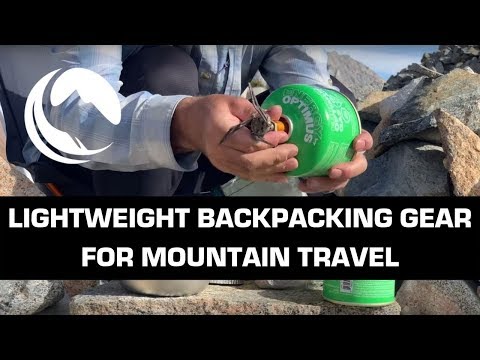
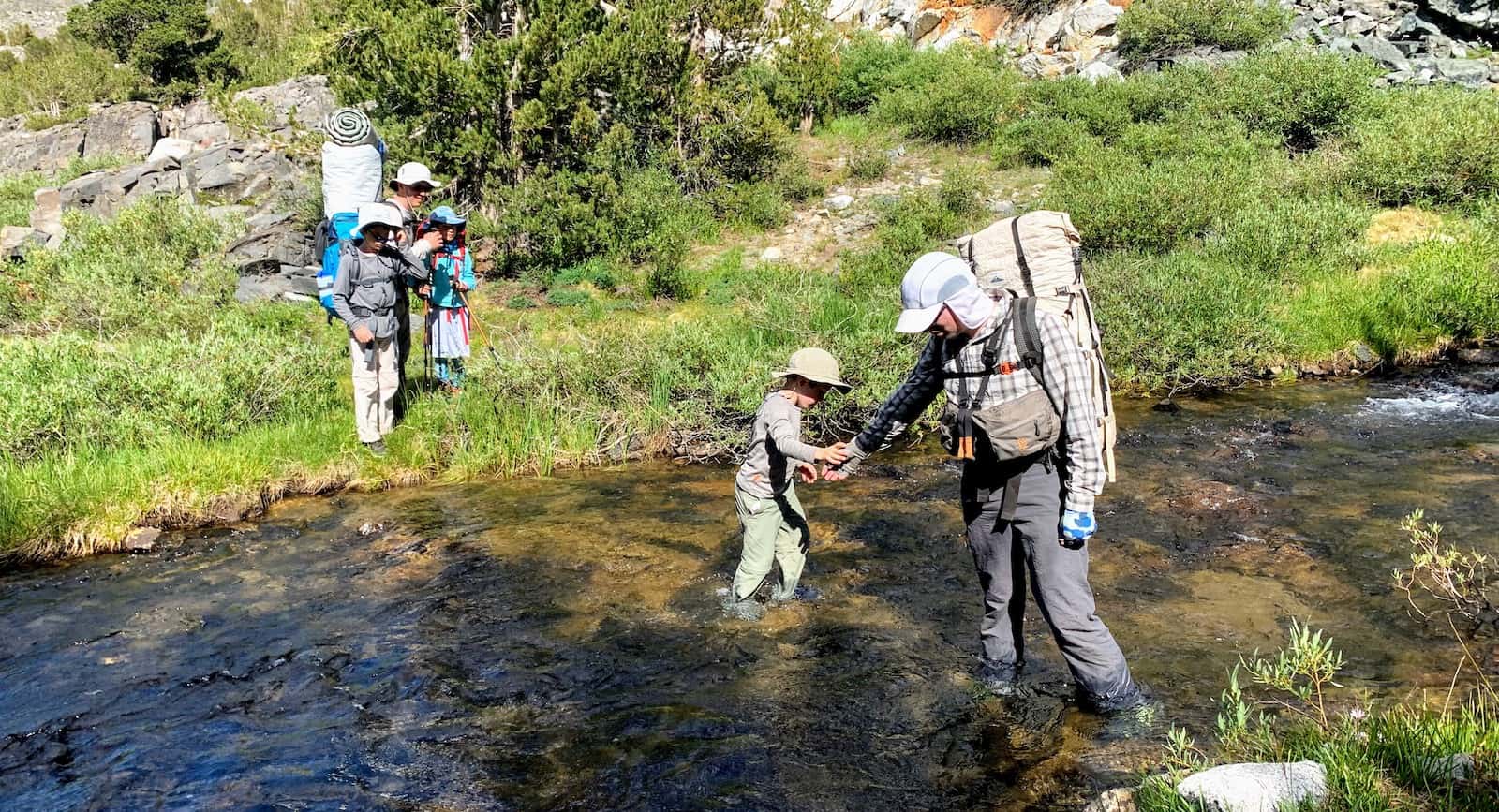
In this video, I walk through my gear during a 9-day summer trek in the high mountains of the western US. This was a trip with friends and family – 3 other adults and four children ages 7-11. We moved camps every day but one, and spent 70% of our miles off-trail, with camps up to about 11,600 feet. Scroll down for gear notes and trip photos!
Gear Notes
Shelter
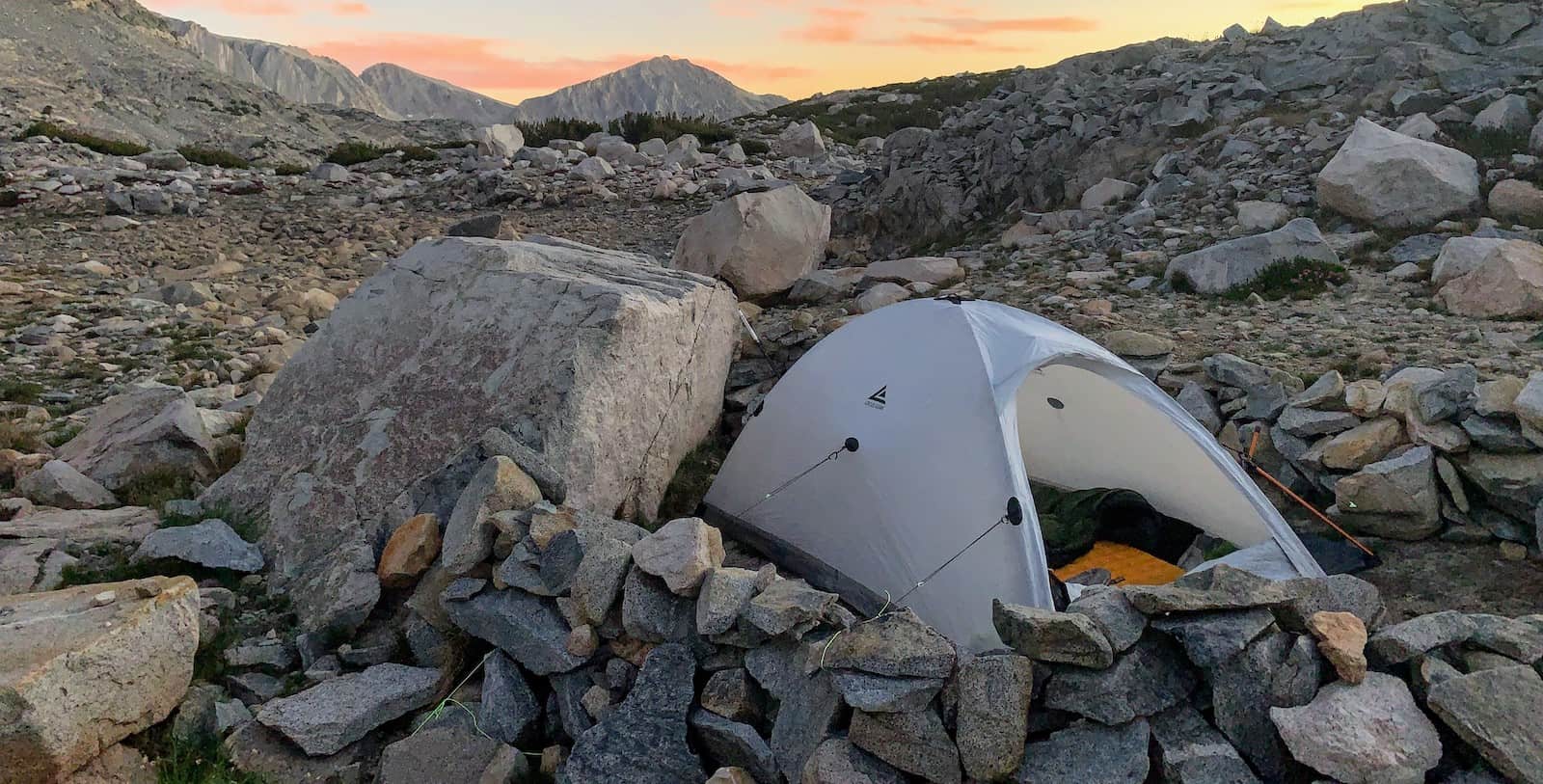
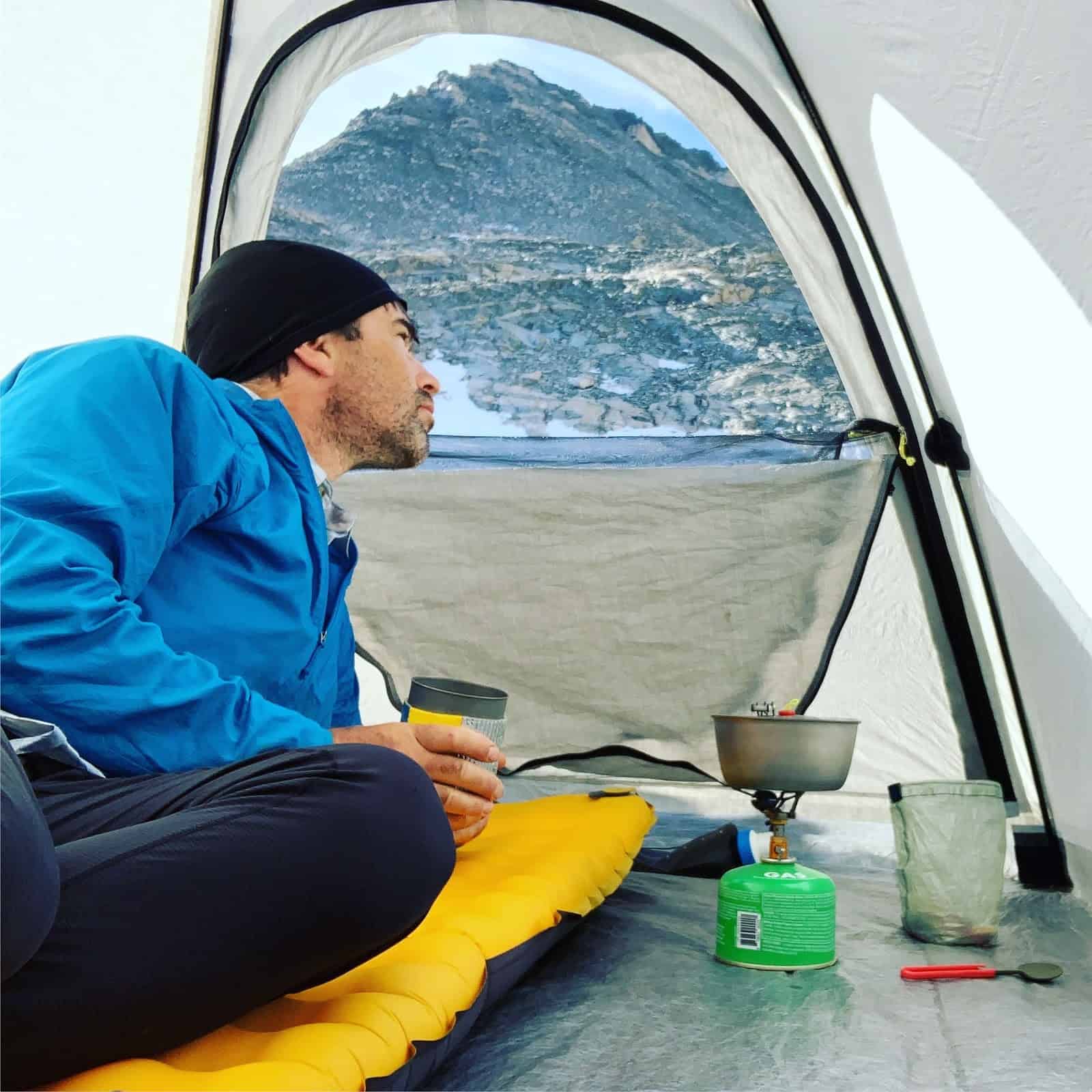
- Locus Gear Djedi Dome – terrific livability for one person with fully-contained gear storage and reprieve from insane mosquitoes, great design for in-tent cooking
- Katabatic Gear Chisos down quilt – a little chilly for sub-freezing temps but otherwise, this is my go-to mid-summer quilt
- Nemo Tensor reg/wide sleeping pad – my choice when comfort is king and I’m not concerned about pack weight too much
- HMG pillow – filled with some open-cell foam and other clothes for height adjustment
Commentary: I was surprised at how much I liked the simplicity of the Djedi tent. I’ve had the chance to use it for most of the summer now, and I appreciate its stability in wind, ease of setup, and confidence in knowing that I’m in a real tent while a storm is raging outside. On this trip, having a mosquito-free haven where I could actually make coffee inside the tent and not have to fiddle with a too-small vestibule was wonderful. The Chisos quilt was too cold. I think my metabolism is changing, and I’m not sure how much longer I can suffer through sub-freezing nights using a sub-1-lb quilt. The Tensor pad was a pretty nice luxury, but I still can’t justify the weight (probably) on long expeditions. We’ll see if it makes it into my kit for the September Whitetail Trek, or if I’ll go back to the XTherm for longer, harder trips…
Clothes
- 5 oz bug-proof, ultralight shirt
- 9 oz bug-proof, ultralight, stretch, durable pants
- 3 oz long underwear
- 7 oz synthetic insulated jacket
- 4.5 oz rain jacket
- 3.5 oz rain pant
Commentary: I only used the raingear for nights where my quilt was too cold (2 nights below freezing). I suppose for 8 oz, it’s not a bad deal to have real raingear in the pack. For trekking in actual rain off-trail, however, I prefer my Arc’teryx Zeta FL. My rain pants are also too bloomy for off-trail scrambling and am on the lookout for something more tailored. The Sun Stretch shirt has been a go-to for me for years, and I’m a huge fun. The Quandary pants are light, but not so durable or warm when the terrain gets hard or the weather turns south. Nights were chilly, and I would have rather had my down jacket than the synthetic puffy.
Day Hiking/Running Gear
I also brought some gear for day hiking and mountain running. This trip involved kids, and short miles, and I’m in the middle of a training cycle for another expedition, so I used the following for mountain runs and day hikes on this trek:
- UL mountain running shorts – I stored mosquito repellent, sunscreen, and snacks in the shorts pockets
- UL mountain running tank
- 4 oz windshirt, ultra-breathable
- 1 oz merino beanie
- 2 oz hip pack – I carried my hat, wind shirt, inReach Mini, BeFree bottle, whistle, phone (maps), and light in this on trips away from camp
Commentary: I wish I brought some light gloves for evening runs. After the sun went down, my hands got pretty cold up high where I was scrambling in the evenings.
Footwear
- Durable trekking socks
- Trekking/approach shoes for alpine rock Class 2-4 and scrambling
- Balm for blister and maceration prevention
Commentary: Very happy with my footwear choice on this trip. The balm helped ease the skin stress when the temps got warm during the day and my feet were closed up in leather shoes.
Packing
- Full Dyneema/DCF hybrid expedition pack
- DCF zippered pods for gear organization and void-free packing
Commentary: I’ve been experimenting more and more with the HMG pods over the last year and they have become an essential component of efficient, void-space-free packing and organization.
Cooking & Hydration
- Small but reliable stove (not BRS)
- 1.8 oz titanium cook pot
- Custom titanium lid for pot
- Carbon fiber pot grabber
- Ultralight, cheap, durable folding utensils
- 2L bottle for in-camp use
- 16 oz bottle for hydration salts
- My hydration salts – stay hydrated w/less water intake
- Fast, instant, reliable, light water filter
- Backup water treatment
- Lightweight food storage for bears
- 5 mil zip mylar food storage bags for odor-proofing
Commentary: The little Fire Maple 300t stove is tiny, reliable, and powerful. But it’s not a great stove for simmering food – its flame/heat distribution is just too tiny. I wish I had my Pocket Rocket Deluxe. The rest of my cook and water kit – no complaints at all.
Food
I brought about 18 oz of food per day (2,000+ Cal):
- 4 oz breakfast – grains, dried fruit, nuts
- 10 oz snacks – fish (salmon or tuna), nuts, rice cakes, potato chips, chocolate
- 4 oz dinner – grains, pasta, potatoes, veggies, spices
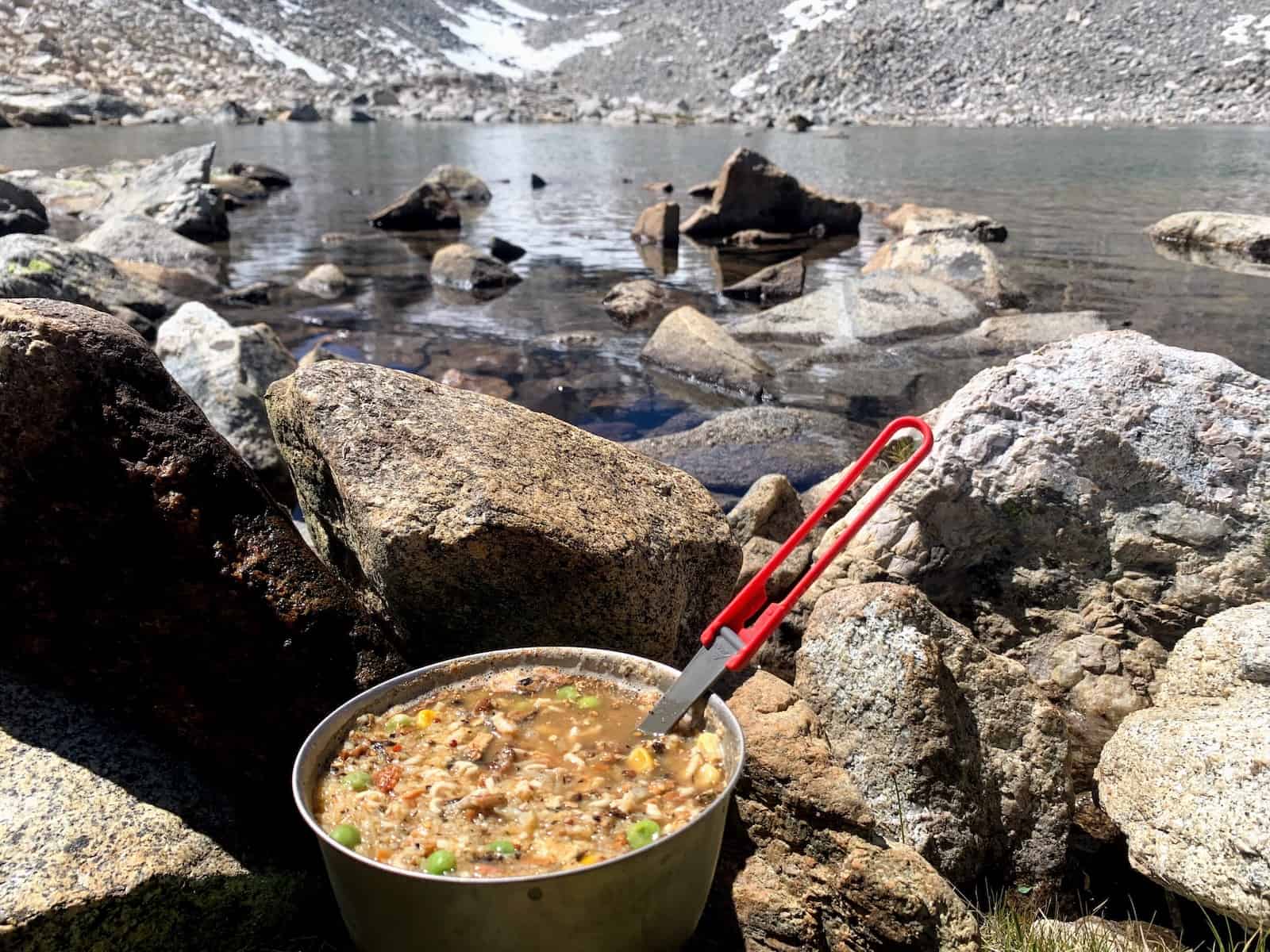
Meals were supplemented with fresh trout, which I prepared by poaching, de-boning, and then adding back to my one-pot meals.
I did experiment with fasting on this trip, and fasted up to 24 hours at a time, with no challenges, energy depletion, or ill effects. I left the trailhead with about 10 pounds of food and came out with about 2.5 pounds leftover. I lost about 3 pounds of body mass over the course of 9 days.
My favorite filling, calorie-packed, quality packaged foods from this trip:
My tenkara fishing rod: (2.5 oz)
Commentary: I’m very happy with Patagonia Provisions soups, chilis, savory grains, and fish. They are some of the best-tasting foods I’ve ever had on a backpacking trip. The packaged meals are surprisingly filling and compact (dense). Adding trout to my menu was a huge bonus, and I can’t imagine leaving my tenkara rod behind when I know I’m going to be traveling through alpine lake country. My experiments with fasting surprised me, but admittedly, I went into this trip riding the wave of two months of an every-other-day 16-20 hour fasting lifestyle, so there was some conditioning. On trips that don’t involve a lot of exertion, I could save quite a lot of food weight by eating fish, foraging, and fasting.
Electronics
- Training/gps/compass watch for recording HR, route, miles
- Watch data integrates with my training software
- RELIABLE and TINY satellite text communicator
- We also brought a sat phone on this trip but reception was terrible (Iridium 9575) and it was difficult to get calls out and maintain connections in this high-mountain environment
- Photo/video taken with an iPhone XS and Moment lenses
Commentary: inReach Mini for the win, as usual. Easy to stay in communications with this tiny device. Not so easy with the sat phone. Pleased with the iPhone XS photo and video capabilities, especially with Moment lenses.
Chair
- 15.6 oz – the most comfortable and lightest full chair
Commentary: Critical item for my back health on trips where I have to spend a bit of time in camp.
Related Content
- Comparing the two most popular chairs – REI Flexlite Air vs. Helinox Chair Zero
- Canister stove reviews, performance comparison, gear guide
- Podcast: tent-bound in a storm
- Gear guide to pillows & HMG pillow review
- Rationale for my backpacking footwear
Disclosure
Updated September 15, 2018
- How we acquired these products: Product(s) discussed in this review were either acquired by the author from a retailer or otherwise provided by the manufacturer at a discount/donation with no obligation to provide media coverage or a product review to the manufacturer(s).
- We do not accept money or in-kind compensation for guaranteed media coverage: Backpacking Light does not accept compensation or donated product in exchange for guaranteed media placement or product review coverage.
- Affiliate links: Some (but not all) of the links in this review may be “affiliate” links, which means if you click on a link to one of our affiliate partners (usually a retailer site), and subsequently make a purchase with that retailer, we receive a small commission. This helps us fund our editorial projects, podcasts, instructional webinars, and more, and we appreciate it a lot! Thank you for supporting Backpacking Light!


Discussion
Become a member to post in the forums.
Companion forum thread to: Lightweight Backpacking Gear for Mountain Travel (Case Study)
In this video, I walk through my gear during a 9-day summer trek in the high mountains of the western US. This was a trip with friends and family – 3 other adults and four children ages 7-11. We moved camps every day but one, and spent 70% of our miles off-trail, with camps up to about 11,600 feet. Scroll down for gear notes and trip photos!
Nice tent!! $1300 not really feasable for average guy like myself! Anyway, great video and thanks for sharing! Keep them coming please.
Fasting and being cold. No kidding.
My thoughts exactly.
Excellent video and review of your gear on the 9 day trip! I enjoy reading about your ongoing gear discoveries and comments.
With regards to electrolytes, have you heard of/tried Elete? This is a liquid electrolyte solution that you add to water. Minimal weight and simple to use. Elete is available in a small dropper bottle for treating 10 liters of water and also a large refill bottle.
https://www.amazon.com/Elete-Pocket-Bottle-Display-Box/dp/B00623JYA6
I wish it was that simple.
There are some compelling metabolic arguments, and my own anecdotal evidence, that make this an inconsistent theorem on why I’ve been cold at night.
The first appears to be general metabolic changes that I’m undergoing recently. I need more insulation to stay warmer. Perhaps it’s a result of lower amounts of body fat, and maybe higher levels of metabolism as a result of better fitness.
My coldest night was after a non-fasting day where I ate a ton of calories, including a late, high fat dinner. I think a 28 deg F night with a 14 oz 40 deg F quilt is more of a culprit than fasting in this particular case.
But – the 30,000 foot view demands that the relationship between intermittent fasting and being cold can’t be ignored or discounted, and I’ve been researching to try to study this more.
From what I’ve found, it seems (in men at least) that body fat reserves are a more powerful hedge against sleeping cold than metabolic intake (military research).
More data needed!
But my days with a 14 oz quilt in the mountains may be numbered, especially with such a thin insulating jacket like the Torrid Apex that I took on this trip!
Time and again I have found that one of the better solutions to being cold at night is to get a better air mat. One’s heat loss to the ground can be amazingly high.
Cheers
Thanks for the video and the great info. As I’ve gotten older, I find myself sleeping colder. There’s a reason why old folks homes are like walking into a sauna.
That McHale packs web site is one of the worst I’ve seen.
“…in the high mountains of the western US.”
Could you be a bit more specific? Thx
i agree “more data needed”. I really appreciate your commentary and suggestions all the time, but i take the diet and exercise info with a grain of salt. In my old research days, we used to call that “A huge series of ONE.” I would love to have the research discussed referenced so we could read it.
Art
Ryan you’re getting old and your metabolism certainly has changed. We’re about the same age and I too feel the cold more than I use to. Moving to a much warmer location also has had an effect.
The ingredients list on the Elete bottle: Sea water, low sodium sea mineral concentrate, purified water, potassium chloride. So it’s pre-dissolved table salt and salt substitute? Maybe a little magnesium in there too?
The ingredients list on the Elete bottle: Sea water, low sodium sea mineral concentrate, purified water, potassium chloride. So it’s pre-dissolved table salt and salt substitute?
You left out the marketing spin and the retail mark-up. Those are very important. (cough)
Cheers
Yes old age is probably the cause of feeling the cold. I am now in my mid sixties and I have noticed over the past twenty years having to wear warmer clothing and use warmer sleeping gear. My metabolic rate has probably fallen as it is easier to gain weight.
Lower metabolic rate means less heat production.
From what I recall from yogic exercises many decades ago, fasting increases vital energy, for a time at least, so intermittent fasting may well make sense. We generally eat too much by habit. That Locus Gear dome looks to be the culmination of development by Todd Bibler, Integral Designs, Wild Country, Arai, and no doubt a few other tent makers over the years. A classic. Great video, thanks Ryan.
Ryan,
What are those enormous belt pockets you’re sporting in the pics? And do they interfere with arm/hand/hip movement when hiking?
Ryan did well, though he got cold a couple nights. I typically use a EE Revalation 20F quilt for Early Spring/Summer/Late Fall, trips through the Adironacks. Early winter and early spring trips are typically done with a Marmott Super Stretch Hugger 0. Both keep me fairly warm.
While using all your clothing for sleeping is a fairly good method for sleeping in below rating bags/quilts, I suspect Ryan will find his penchant for doing that will reduce, as mine has, with age. I used an older 40F bag down to about 25F many times 20 years ago. One spring I used it and it got down to about 25-30F and even with my clothing on, it was a matter of fitfull sleep. I did some exercising in the bag (situps, isometrics) and went back to sleep for an hour. I believe Ryan will find the same has he ages. I was 48 at the time, putting on 5 pounds, and generally did not have the energy levels I had, even the year before. This is more like hitting the age wall. Even though I was running 7-10 miles per day and felt good, when I rested, my metabolism was slower.
Great video and insightful review. I always learn something new from your reports. Thx!
I was glad to see I’m not the only one who gets everything carefully packed away, only to realize I forgot to put something in that I want near the bottom of my pack! I got a kick out of seeing that even someone as experienced and meticulous as Ryan can make the same mistakes I do!
Chuckle. After some time you will begin to realise that most of your gear needs to be at the top. This applies especially (imho) to UL walkers.
Which is why my wife prefers a very large pack despite the extra weight: it lets her pack loosely and then to be able to rummage around in her pack.
Cheers
Normally i weigh about 180. I am usually colder than and wearing more than my hiking partners. A few years ago i lost 20 lbs and was running often. I was significantly warmer when i went hiking. It was amazing. Now im overweight again and colder again.
Just funny to see Ryan do the same thing. And keep it in the blog! Ha.
@dirtbaghiker,
I was thinking the same thing! I think the lightest thing on this trip would be my wallet. A $1330 tent, a $1970 backpack – wow. I’ve had vehicles not worth that much! Kudos to Ryan for starting a website about what he loves, so he can live the dream.
Ryan, I just want to say that this year I have been so impressed with the quality of the articles and videos BPL, and you in particular, are producing in 2019. The value of this site has gone up quite a bit, in my view. And while you take a lot of heat for your paleo/IF approach, it’s an approach I agree with and I read your conditioning and diet approach information with great interest. This video and related text was very interesting to me. Thank you.
Are the kids’ gear lists posted anywhere or available? Even just the basics – pack & bag? Thank you.
Become a member to post in the forums.