Lightweight backpacking gear for winter temperatures: two-layer insulation systems, vapor barrier systems, and really puffy stuff.
Introduction
Cold hands and feet, and a chilly night’s sleep are the most common complaints we hear from participants in our guided winter treks and skills courses.
Ultralight backpackers are well-known for adding back tenths of ounces to their kits in the interest of making incremental (and often, inconsequential) improvements to their safety and comfort.
When temperatures drop way below the freezing point, a different mindset is required:
What packs a lot of warmth for its weight?
What sort of innovative combinations can we use to improve comfort and performance?
If I’m thinking about extending my three-season kit into very cold winter temperatures, I start thinking about three important strategies:
Two-layer insulation systems
Vapor barrier systems
Really puffy stuff
Our snowshoe pack from a Thanksgiving week trip in Rocky Mountain National Park, Colorado after a few feet of new snow.
Two-Layer Insulation Systems
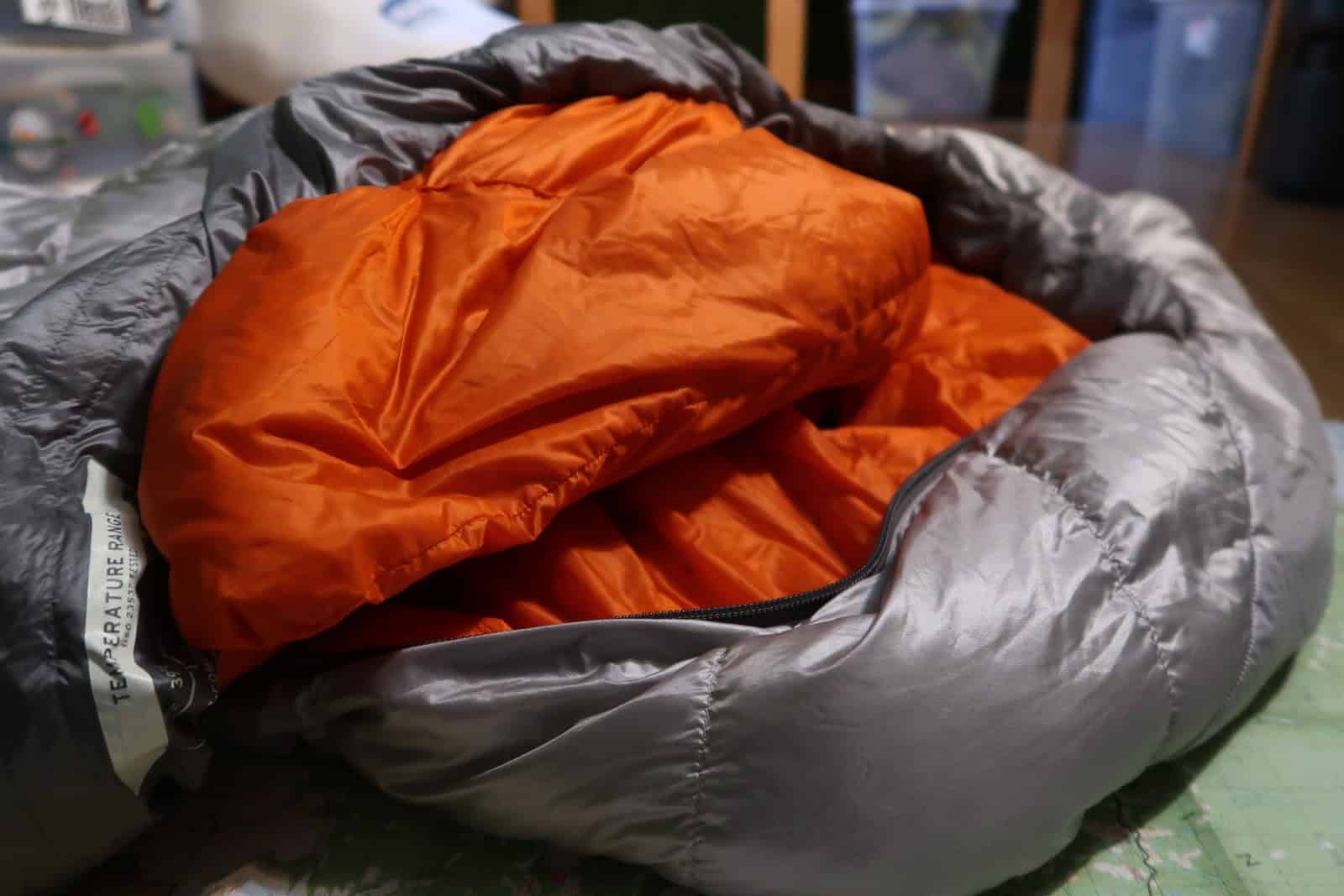
I like to use two-layer insulation systems where the outer layer is synthetic and the inner layer is down.
Down offers the best warmth:weight ratio for the inner layer. Synthetic insulation may be useful for the outer layer to concentrate the condensation (dew) point away from the down to maintain the integrity (loft) of down insulation on a multi-day trip. This works best with a sleep system. I discuss this two-layer system more in the Inclement Conditions Masterclass.
Another option to consider is separate high-loft synthetic insulating layers for active use (like the Patagonia Nano-Air Light or Arc’teryx Proton LT), which expel moisture better and are more breathable, and more traditional (down) insulation layers at rest and in camp. Layer both when temperatures plummet after sundown.
Vapor Barrier Systems
I use vapor-barrier (VB) clothing inside my insulating layers to prevent moisture emanating from my body entering the down in the first place.
I’ve had good success with the Stephenson shirt which can also be used for swanky outdoor winter parties because of its timeless 1970s style. More practical designs are available from RBH, and I’ve had excellent success with all of their clothing through the years. The jacket and pants are important components of the clothing and sleep system I use for multi-day mid-winter ski expeditions, including one where I used a bivy sack for my shelter in Montana’s Lee Metcalf Wilderness where temperatures plummeted to -30 deg F.
A chilly day on a mid-winter ski expedition in Montana’s Lee Metcalf Wilderness. New Year’s Eve, 2014. The temperatures never climbed above 0 F.
The Forty Below Vest doesn’t offer the complete warming benefits of a full VB shirt, but it does keep my back dry while wearing a pack in the winter. Back sweat is the primary reason for that wintry flash-off chill you get when you take your pack off for a break (flash-off is the extreme chilling that occurs when your body heat is sucked away as it’s allocated to evaporate that sweat). RBH also makes a VB vest.
Vapor barriers work well for sleeping bag liners in arctic conditions. The Gryphon Taurus VRB approach is the lightest and simplest way to achieve it (it uses aluminized Dyneema as the integrated vapor barrier liner).
I also like vapor barrier liners in mittens. Hardcore ultralight hikers like to use disposable latex, nitrile, or food prep gloves under their insulating gloves, but these aren’t items durable enough for winter expedition travel and are terribly uncomfortable. Check out the RBH Designs Ultralight Mitt, a staple I bring on all of my multi-day winter trips.
If you’re on a budget, suffer from cold hands, and need as much warmth as possible for as little weight as possible, then the Outdoor Research Transcendent Mitt is hard to beat.
However, you’ll need to follow a few tips to get the most performance out of them:
The Transcendent Mitts are for c-c-c-old temperatures – well below freezing. They aren’t made with waterproof materials, so rain will soak them and they will be very hard to dry out.
I use these only at rest stops and in camp hanging out doing nothing, or while hiking in an emergency. They are that toasty. Keeping my hands warm while moving is usually not an issue for me. When I tried these during high-aerobic activity (fast hiking, carrying a heavy pack, and snowshoeing/skiing) at temperatures near zero, my hands became very sweaty in them.
Sleep with them in your sleeping bag (as long as they aren’t too wet), so any accumulated condensation in the mitt will dry by morning (and the condensation will be transfered to the outer synthetic bag layer, if you are using a 2-layer sleep system as described earliier).
They work best with glove liners – something like a really thin wool or fleece fingered glove. That way, when you need to perform an activity requiring dexterity (like lighting a stove), just pull your liner-clad hands out of the mitt and you have enough insulation on your fingers even if it’s cold, wet, and windy to perform fine motor tasks for a short duration.
They are too fragile to be a “work glove” (e.g., a ski, firewood-collecting, or bushwhacking glove).
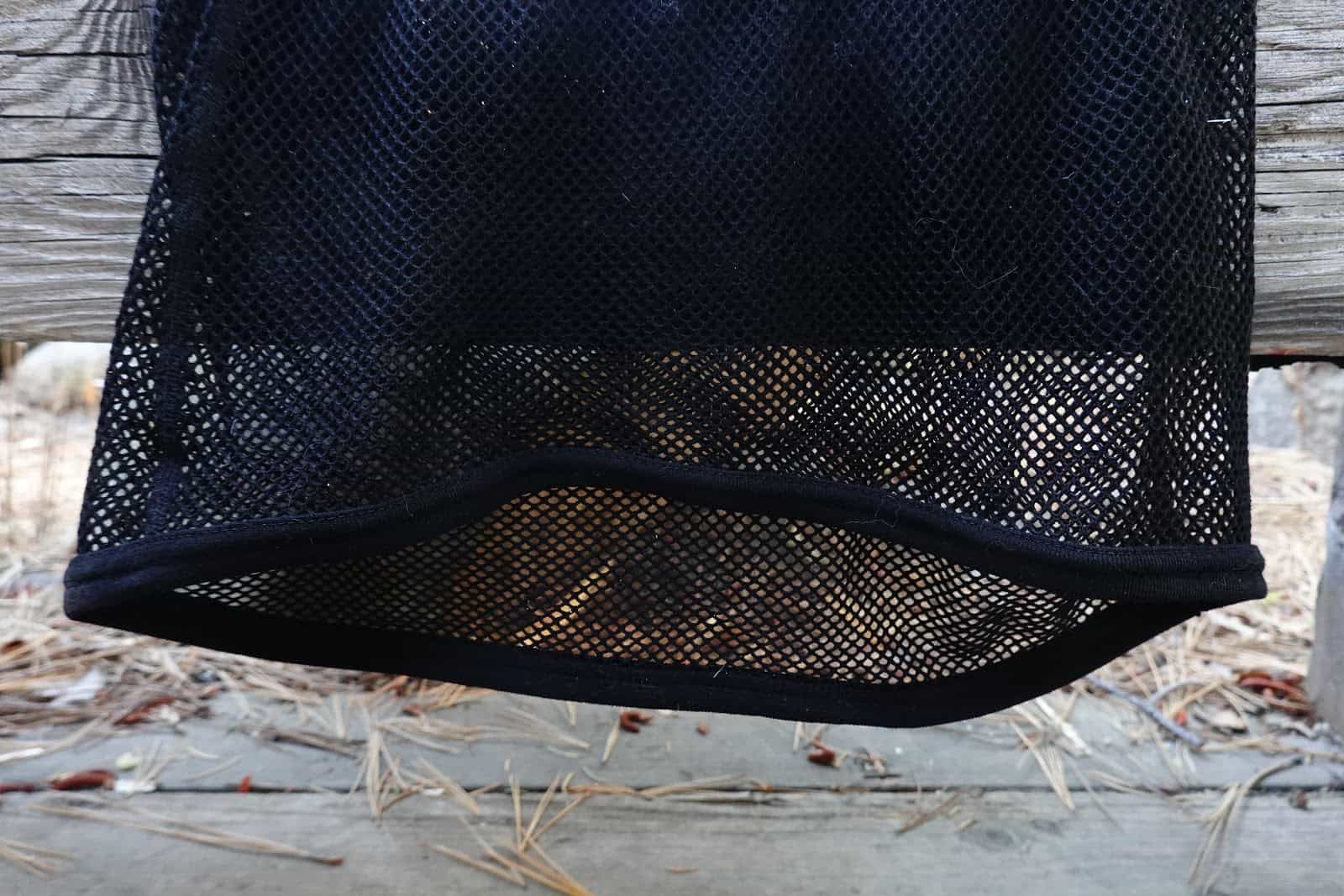
Puffies are available for the head, too. Nunatak and Enlightened Equipment offer very light options that pack a ton of warmth for their weight. My favorite feature of a clothing system that uses a balaclava (or a hooded puffy jacket, for that matter) is that I can still use hoodless bags in the winter, which (for me) are more comfortable than trying to roll around in a hooded mummy bag.
Conclusion
Staying warm in the winter isn’t easy but it’s not rocket science, either. It does require a multi-faceted skillset that considers everything from managing your exertion levels to food, nutrition, and hydration to your choices for cold-weather clothing, sleep, and shelter systems.
Three strategies for getting the most performance (and versatility) include:
Two-layer insulation systems that combine synthetic and down layers for insulating clothing and sleeping bags;
Vapor barriers in sleep, clothing, handwear, and footwear systems;
Maximize warmth-to-weight ratios by selecting really puffy products – high loft (fill-power) down combined with ultralight shell and lining fabrics.
Disclosure
Updated November 7, 2011
Product(s) discussed in this article may have been purchased by the author(s) from a retailer or direct from a manufacturer, or by Backpacking Light for the author. The purchase price may have been discounted as a result of our industry professional status with the seller. However, these discounts came with no obligation to provide media coverage or a product review. Backpacking Light does not accept compensation or donated/discounted products in exchange for guaranteed media placement or product review coverage.
Some (but not all) of the links in this article may be “affiliate” links. If you click on one of these links and visit one of our affiliate partners (usually a retailer site), and subsequently place an order with that retailer, we receive a small commission. These commissions help us provide authors with honoraria, fund our editorial projects, podcasts, instructional webinars, and more, and we appreciate it a lot! Thank you for supporting Backpacking Light!
It may not technically be winter – but snow and temperatures are falling all across the country. To help you stay safe this season, this Backpacking Light SKILLS SHORT centers on frostbite and hypothermia.
Ryan and Andrew kick things off with frostbite: how it occurs medically, how it presents symptomatically, the best ways to prevent it, and how to treat it when it happens.
Next, they run hypothermia through the same treatment.
The guys wrap things up with a brief gear chat and a list of resources to improve your backcountry emergency readiness.
Outline
Intro
Frostbite
What is frostbite (medically and scientifically?)
What are the symptoms?
frostnip
superficial frostbite
deep frostbite
When someone should be frostbite aware – and some scenarios that may not be obvious
How can someone prevent frostbite from occurring?
Frostbite treatment – superficial and deep
When to evac?
Hypothermia
What is hypothermia (medically and scientifically?)
drop in body’s core temp
What are the symptoms?
The Umbles
intense shivering -> stop shivering, drowsiness
When should someone be “hypothermia aware” – in other words, what is the combination of scenarios where hypothermia is most likely to occur?
What is a hypothermia situation that may not be obvious?
How can someone prevent hypothermia from occurring?
Treating minor and severe hypothermia
And when to evac
No rapid rewarming!
What’s Ryan’s favorite few pieces of cold-weather gear he likes right now?
This episode of the Backpacking Light podcast is also brought to you by Douglas Fir trees. Douglas Firs: they make it smell like Christmas!
Actually, this episode of the Backpacking Light Podcast is supported and kept advertising-free by Backpacking Light membership fees. Please consider becoming a member which helps support projects like this podcast, in addition to a whole slew of other benefits!
In addition, some of the links on this page may be affiliate links that refer to our partner merchant retailers. If you follow a link and then make a purchase, we receive a small commission which goes a long way towards helping us pay for podcast production, hosting, and bandwidth fees! Thanks for supporting us in this way!
Contact
You can contact us at podcast@backpackinglight.com, or follow us on social media –
Product(s) discussed in this article may have been purchased by the author(s) from a retailer or direct from a manufacturer, or by Backpacking Light for the author. The purchase price may have been discounted as a result of our industry professional status with the seller. However, these discounts came with no obligation to provide media coverage or a product review. Backpacking Light does not accept compensation or donated/discounted products in exchange for guaranteed media placement or product review coverage.
Some (but not all) of the links in this article may be “affiliate” links. If you click on one of these links and visit one of our affiliate partners (usually a retailer site), and subsequently place an order with that retailer, we receive a small commission. These commissions help us provide authors with honoraria, fund our editorial projects, podcasts, instructional webinars, and more, and we appreciate it a lot! Thank you for supporting Backpacking Light!
This Zpacks Classic Sleeping Bag review features a hoodless, full-length zipper down bag with multiple temperature ratings weighing 15 oz.
SUMMARY
ZPacks Sleeping Bag Review (Full-Zip Version)
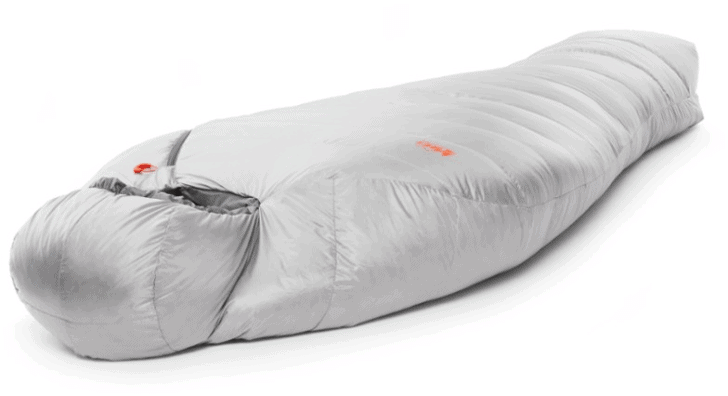
This ZPacks Full-Zip Sleeping Bag review features an RDS-down certified, full-zipper, ultralight (7 denier shell and lining) sleeping bag that weighs 15+ oz and retails for $349+.
Photo: ZPacks
Highlights
Good value (quality, performance, and weight) for the money
ZPacks offers three models of solo sleeping bags (note: in addition, they offer a couples’ quilt): the Zpacks Solo Quilt, the ZPacks Classic Sleeping Bag, and the ZPacks Full-Zip Sleeping Bag. All three are hoodless bags. Two have zippers (the ZPacks Classic offers a 3/4-length zip, and this review features the full-length zipper version). Zippered versions can be unzipped and used as a quilt. Because the zippers run down the center of the bottom (or top) side, they are more usable as a quilt than side-zip bags or bags with mummy hoods.
Weights of the ZPacks Full-Zip Sleeping Bag range from 14.7 oz (417 g) to 28.7 oz (814 g) depending on temperature rating and sizing (length and girth). Hoodless sleeping bags occupy a space between traditional mummy bags, which can be confining for some, and quilts, which, although less confining, can be drafty.
Zpacks Sleeping Bags are constructed with vertical baffles on the upper body and with horizontal baffles around the foot box. DownTek water-resistant 950 fill-power goose down fills the baffles. The inner and outer shells are 7 denier Ventum ripstop nylon with a “C6” durable water repellent (DWR) finish (finished weight .59 oz/yd²). The Full-Zip bag is feature-rich and among the warmest-for-weight full-zip bags available in the hoodless category.
Photo: Zpacks
Features and Specifications
Features
Overstuffed to offset future down loft degradation
Vertical baffles in the upper body area
Rectangular foot box
Black fabric on the inside for quick drying
DWR treated shell and liner
Full-length, two-way zipper extends to the last baffle
Draft tube
Zipper guard
Flat clip at the top of the zipper (for zipper security)
Elastic cord for draft management
Includes a roll-top DCF dry-bag
Two-year limited warranty against defects in materials or workmanship
Specifications (size medium/broad, 30 deg F)*
Claimed weight: 17.2 oz (488 g)
Measured weight: 17.63 oz (500 g)
Temperature rating: 30 deg F (-1 deg C)
Fill type: 950-fill-power DownTek hydrophobic RDS certified down
Fill weight: 9.5 oz (268 g)
Shell weight: 7.8 oz (220g)
Dimensions: Stated actual measurements (circumference of fabric):
Shoulders 65 in (165 cm)
Hips 65 in (165 cm)
Feet 40 in (101.5 cm)
Measured length and width: 72 in (183 cm) x 30 in (76.2 cm) at top opening; fits up to 60 in (152.4 cm) girth
Compressed dimensions: 6 in x 12 in (15 cm x 30 cm)
Shell and lining fabric: 7d (0.59 oz/yd) Ventum Ripstop Nylon
*Unless otherwise noted, all future measurements and specifications will refer to the size medium/broad 30 deg F (-1 deg C) bag used for testing
Review Context / Description of Field Testing
My sleeping system includes:
Pad: Therm-a-rest NeoAir Xlite in warmer and summer conditions, NeoAir Xtherm in colder conditions or when I am using a bag close to lower limits of its rating.
Clothing: I usually sleep in merino wool long underwear (top and bottom) and socks in addition to merino wool sports bra and underwear. I stash my down jacket, down pants, and down booties in my bag while I am sleeping. Although I am not a particularly cold sleeper, I do not tolerate cold well and am generally prepared to be comfortable in temperatures 10-20 degrees below forecast.
My sleep system: ready to go on a trip
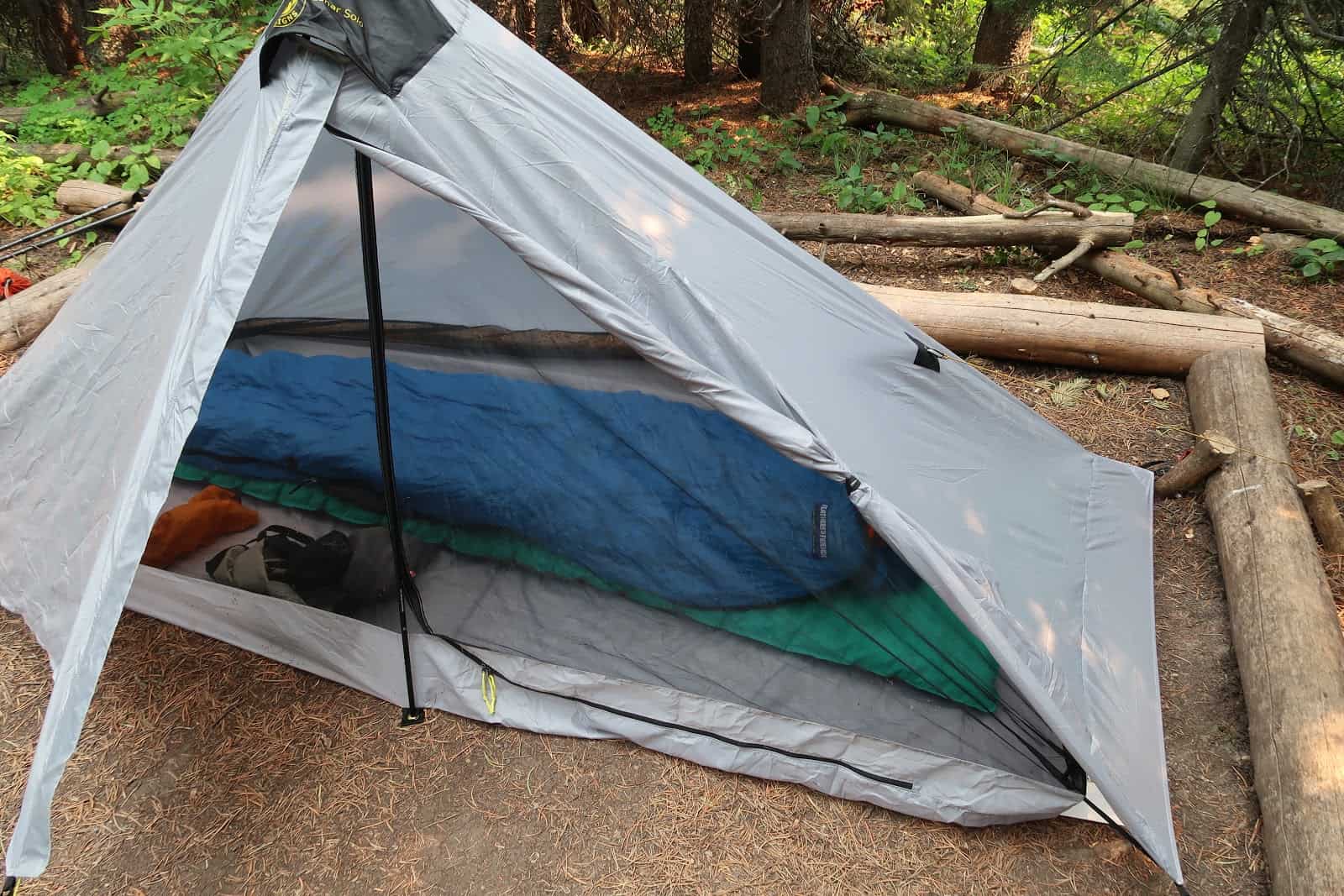
I tested the sleeping bag inside of a Locus Gear Djedi DCF-eVent Dome tent.
I used the Zpacks Full-Zip Bag in three locations across Northern California. This area is an ideal setting to test a 30F (-1C) bag. Days are mild with modest seasonal variation, but temperatures typically drop substantively with the sunset, although only rarely below freezing. Windy conditions are common and can factor into perceived warmth.
The first location was the “Lost Coast,” a rugged, northern-coastal, heavily wooded area which tends to be cool and damp. It did not rain during my stay. Daytime temperatures were around 50 F (10-15 C), and nighttime temperatures were around 40 F (5-10 C).
The second location was Candlestick Point, on the San Francisco Bay. Temperatures were warmer for this test – reaching 60 F (15-21 C) during the day and 50 F (10-15 C) overnight. I experienced wind during this test.
The third location was the east side of Angel Island in San Francisco Bay. This location was higher and drier, and more protected from the wind. Daytime temperatures reached 70 F (21-27 C) and dropped to 50 F (10-15 C) overnight.
Performance Assessment
I judged the ZPacks Full-Zip Bag’s performance on three factors:
Comfort
Ease of Use
Durability
My assessment of comfort includes fabric and cut, as well as warmth. Ease of use includes features that ease typical activities as well as provide flexibility in different situations. Durability includes consideration craftsmanship as well as the resilience of the materials in the context of expected use.
I also made subjective and objective assessments of sleep quality and overnight recovery while testing the bag. I believe such assessments are indicators of sleeping bag effectiveness. For these evaluations, I used my observations (subjective) and data gathered from my Whoop and Garmin devices (objective).
Comfort
Warmth
Ensconced in a Zpacks Full-Zip Sleeping Bag wearing long underwear and socks, I stayed warm and comfortable during coastal California nights where temperatures dropped to 40 F (4 C). In the morning, when my metabolism ebbed, and temperatures reached a nadir, I started to feel a bit cool. At these times, I put on my down jacket and pants before getting out of the bag. While I suspect I could survive nighttime temps in the 30s F (0s C), I would probably be comfortable only if I added a down jacket and pants to my sleep clothing.
The Zpacks Full-Zip Sleeping Bag’s Ventum 7 denier nylon fabric felt great against the skin on warmer nights.
Fabric
In the San Francisco Bay area, it was too warm to sleep in my long underwear. Sleeping only in “standard” underwear gave me the opportunity to test the Full Zip Bag’s “skin feel.” The Ventum nylon fabric is soft and feels light and comfortable against the skin. It is easy to vent the bag as one gets warm; it unzips from both the bottom and top.
The ZPacks Full-Zip Sleeping Bag can also be unzipped completely and used as a quilt, and I used it this way on one of the warmer nights (more on this below under Ease of Use). Because it unzips completely, the ZPacks Full0-Zip Sleeping Bag can also be used as a cape to keep warm in camp.
I also found the Ventum fabric to be breathable. I regularly placed damp items inside the bag to dry while I slept and never encountered an issue with moisture accumulating inside of the bag.
You can use the ZPacks Full-Zip Sleeping Bag in a zipped configuration, unzipped as a quilt, or wrapped around the body like a cape.
Cut
Although I am on the smaller side (5’4”/163 cm, 125 lbs/57 kg), I appreciated the roominess of the broad-cut bag. There was plenty of space to dry damp items, warm clothing, and stash electronics/battery chargers, as well as allow me to shift positions through the night.
Lots of room to stash electronics, clothes I wanted to dry or warm, and water filters inside the bag with me.
The foot box deserves special mention. It felt spacious and kept my feet toasty while wearing only thin socks. The foot box features a rectangular cut that accounts for its roomy feel.
Spacious foot box in the ZPacks Full-Zip Sleeping Bag.
Ease of Use
Compression and Stuff Sack
The included DCF Roll Top Dry Bag allows the ZPacks Full-Zip Sleeping Bag to compress into a small package while keeping it safe from moisture. The inclusion of a DCF compression sack is a nice perk – keeping your insulation dry is essential, and a stuff sack like this would cost you upwards of thirty dollars if purchased separately. Even better, it only weighs 0.71 oz (20 g).
Compressed in DCF dry bag, the 30F ZPacks Full-Zip Sleeping Bag is a compact package – and safe from moisture.The Zpacks Full-Zip Sleeping Bag fits nicely in an under-seat bag for bikepacking.
The Zpacks Full-Zip Sleeping Bag uncompresses and relofts quickly once pulled from the stuff sack. The width is generous, hanging a bit over the edges of standard width (20 in / 51cm) NeoAir XLite or Xtherm sleeping pads.
On top of a NeoAir XLite – ready for a good night’s sleep! Selecting a wide option for the ZPacks Full-Zip Sleeping Bag adds to its utility and comfort while incurring only a minimal weight penalty (about 1 oz / 28 g). The downside is that I occasionally found it difficult to stay centered on my pad – see below.
Space and Utility
There is lots of room to move around while sleeping and plenty of space to stick in clothes and other items you want to keep warm, dry, and readily accessible. The main issue I had was staying centered on the sleeping pad, which was smaller than the bag. This struggle was less an issue when I used the bag as a quilt – in that case, I could easily center my body on the pad and then drape the quilt over me. Even without straps attaching it to the pad, my body stayed covered.
The zipper is insulated with a down-filled baffle. There is a flat clip at the top to keep the bag secure even with the zipper open.
The zipper is covered with a down-filled baffle for draft control. The ZPacks Full-Zip Sleeping Bag is cut so that you can position the zipper wherever you find it most convenient. I tended to start with it on top to ease getting in and out and shift it to the side as I went to sleep (I am a side sleeper).
There is a tendency for the zipper to get caught in the baffle when zipping up or unzipping, because the zipper guard is not integrated into the adjacent fabric (like that used on more expensive down sleeping bags, e.g., Western Mountaineering). It is usually easy to “un-catch.” However, on one occasion, I got frustrated trying to get the zipper unzipped and finally just crawled out of the bag directly and sorted the zipper out in the morning. There is a flat clip at the top of the zipper that can be used to close the top of the bag when the zipper is open, or to provide extra security to keep the zipper closed. I did not find that I needed to use the clip.
The zipper tended to get caught on the baffle or exterior fabric despite the presence of a zipper protector.
The Full Zip Bag comes with a drawstring around the top that one can tighten to cinch the bag at the top. With a bag a bit longer than one is tall (as was the case for me), the pull cord can be used to make a bit of a hood and cradle for whatever you use as a pillow.
Drawstring around top can be cinched to create a cradle for a pillow.
Durability
The bag appears to be well constructed of high-quality materials. The inner and outer shells are made from 7D Ventum ripstop nylon (made in Japan) that has a finished weight of 0.59 oz/sq² (20 g/m²). The fabric is treated with a “C6” durable water repellent (DWR) and was effective in shedding light mist (it is not waterproof).
I encountered no issues with wear or durability during the period of evaluation. In the instances where the zipper caught the fabric of the baffle, it was possible to free it without tearing the baffle fabric. DownTek 950 Fill Power Water Repellent Goose Down fills the bag. This down is treated with a “C6” water repellent. The water-repellant is perfluorooctane sulfonate and perfluorooctanoic acid-free and reportedly stays dry over 90% longer than untreated down (I could not independently verify this claim). It is “Responsible Down Standard” certified, which assures that the animals are treated humanely (RDS claim). The down quickly and reliably regained loft after compression.
Recovery
Subjectively, I awoke feeling rested and refreshed each morning after a night sleeping in the bag. I track recovery (and stress) via a continuous heart rate variability (HRV) monitor. Despite considerable aerobic and travel stress during the days, recovery was excellent by this objective measure after every night I slept in the bag.
Granted, my HRV monitoring protocol shouldn’t be construed as a reliable indicator of sleeping bag performance (yet!). I’m still exploring this as a way to evaluate overnight performance of my sleep system, and the reader should not assume that my limited data equates to positive sleeping bag performance. It’s just an experiment for now!
The 11th and 12th and 19th and 20th were nights spent camping. The blue circles/left vertical axis represent the strain or stress my body experienced each day over the course of a two week period. Red, yellow, and green circles and right vertical axis indicates how well I recovered from the stress through sleep that night. These graphs are objective evidence that I slept well in the Zpacks Full-Zip Bag and achieved good recovery in the face of high strain.
Strengths and Limitations
Strengths
Excellent warmth-for-weight
Multi-purpose – can be used as a bag, a quilt, or a cape to keep warm in camp.
High-quality materials: Hydrophobic high-loft down and water-resistant fabric which feels very comfortable against the skin
Roomy without cold spots.
Provided stuff sack is a waterproof DCF Dry Bag.
Limitations
Zipper does not work as smoothly as I’d hoped (but works fine if you are careful) and tends to catch on baffle and exterior fabric.
Cold sleepers, and those less tolerant of the cold, may need to pair with insulated or heavier base layers below 40 degrees.
I included bags in the comparison table based on similar dimensions and temperature ratings. They are all hoodless, except the Western Mountaineering Summerlite, which is closer to a mummy-style and has a bit of a hood.
The Zpacks Full-Zip Sleeping Bag is the lightest full zipper bag, and its sister, the Zpacks Classic Sleeping Bag (with its ¾ length zipper), is the lightest overall. The Western Mountaineering Summerlite comes close in terms of weight, with approximately the same down fill weight, but is narrower and may feel more restrictive. The Enlightened Equipment Conundrum and Feathered Friends Flicker are heavier. However, they have more fill weight and will probably feel warmer to some users.
Commentary
The Zpacks Full-Zip Sleeping Bag is light, well-designed, and high quality. It deserves serious consideration as a component of a sleep system in moderate and mild climates. The ZPacks Full-Zip Sleeping Bag is reasonably true to its stated temperature rating – I get cold more readily than many and set my comfort at 10 to 20 degrees F (-12 to -7 C) above most sleeping bag temperature ratings. The compact size and flexibility make it well-suited for bikepacking. The tendency of the zipper to catch on the baffle can be annoying; however, it is manageable with care in zipping and unzipping.
The bag is truly cozy. I enjoyed the feel of the fabric, and I was surprised how much l liked the “broad” width. There was lots of room to move around and stash gear and lots of real-estate to wrap around my body when I opened the bag up. And it still compressed into a compact package that did not take up much room in my pack – it fits into the under-seat bag on my bike with room to spare for a down hoody and pants. I found the combination of the bag with insulated clothes to be more flexible than using a heavier (or warmer) sleeping bag with less clothing.
The bag performed well in a variety of environmental and wind conditions – however, I was not able to evaluate the bag in a hammock, in a tarp shelter, or while sleeping under the stars.
Review Rating
The 30F Zpacks Full-Zip Sleeping Bag is an excellent choice for backpackers and bikepackers looking for a feature-rich sleeping bag that is lightweight and compact. It is constructed of very high-quality materials and is exceptionally comfortable in cut and feel. The Full-Zip model also offers considerable flexibility in adapting to varying conditions.
The generous cut provides lots of room to move around as well as stash the clothing and electronics that I like to keep warm and with me through the night, and it was easy to vent and open up like a quilt when temperature conditions changed. Bottom line – the Zpacks Full-Zip Sleeping Bag is a super comfy place to spend a night.
The main negative was the zipper. It was annoying how often it caught on the baffle or exterior fabric. It was fairly easy to unsnag and was manageable enough, but it did not work smoothly, as I would expect a zipper on a bag at this price point and targeted quality level would. With improved zipper construction, I would give the Zpacks Full Zip Bag a “Highly Recommended” rating.
Where to Buy
You can buy the Zpacks Full-Zip Sleeping Bag here.
Don’t need the zipper? The Feathered Friend Tanager is one of the best right now in terms of warmth-to-weight performance of zipperless, hoodless sleeping bags.
Disclosure
Updated November 7, 2019
Product(s) discussed in this article may have been purchased by the author(s) from a retailer or direct from a manufacturer, or by Backpacking Light for the author. The purchase price may have been discounted as a result of our industry professional status with the seller. However, these discounts came with no obligation to provide media coverage or a product review. Backpacking Light does not accept compensation or donated/discounted products in exchange for guaranteed media placement or product review coverage.
Some (but not all) of the links in this article may be “affiliate” links. If you click on one of these links and visit one of our affiliate partners (usually a retailer site), and subsequently place an order with that retailer, we receive a small commission. These commissions help us provide authors with honoraria, fund our editorial projects, podcasts, instructional webinars, and more, and we appreciate it a lot! Thank you for supporting Backpacking Light!
NEMO Airpins are ultralight aluminum tent stakes designed with notches that function as a three-point locking system.
Introduction
NEMO Airpins are ultralight aluminum stakes designed with notches that function as a three-point locking system. This review is not comprehensive – but I did measure the holding power of the stake and share my experience with it in a limited number of backcountry environments.
NEMO markets the self-locking design of these stakes as a means of eliminating the need to use knots or other tensioners for guy-lines. A locking system built into a stake is somewhat innovative, and in theory, provides several practical benefits to ultralight hikers.
NEMO Airpins retail for $9.95 for a set of two or $18.95 for a set of four.
Photo: NEMO Equipment.
Category Overview
Tent stakes are a surprisingly complex category of backpacking gear. Will Rietveld’s tent stake overview provides an exhaustive analysis of several models, their holding power, and other technical details. I used Will’s method (detailed below) to determine the Airpin’s holding power.
I used the NEMO Airpins in a variety of campsites and conditions: designated backcountry campsites in Glacier National Park with compacted soils, grassy campsites in subalpine forests in the Beaverhead-Deerlodge National Forest, and rocky campsites at treeline in the Bitterroot National Forest. I used these takes to secure the guy-lines for my Six Moon Designs Lunar Solo shelter, MSR Hubba NX tent, and MSR E-Wing (now discontinued) tarp in a variety of weather conditions. The guy-lines on each shelter were Kelty Triptease, a 1.5 mm nylon cord with a Dyneema core. I secured the guylines to the webbing with a bowline knot.
Holding Power and Insertion
These stakes were easy to insert into all of the ground types I encountered, including rocky soil. There were instances where I needed a stone to pound the Airpins into the rockiest sections of ground, but I found that this threshold was reached later than with other stake designs I’ve used (specifically MSR Groundhogs). In most circumstances, a firm push was all I needed to drive the stake into the ground to its full effective length. Slightly more than 1.5 inches (3.81 cm) of the Airpins must be left above ground to facilitate wrapping the cord through the self-locking notches.
A NEMO Airpin in action.
I used Will Rietveld’s stake holding-power test (described here) to determine holding power for the NEMO Airpins. Here’s a summary of the test:
I uniformly inserted the stakes at a 45-degree angle and pulled them out at a 45-degree angle.
I used a 110 lb (50 kg) digital fish scale to measure stake holding-power.
I chose two contrasting ground conditions to test the stakes: a) moist sod, and b) a dry, compacted forest campsite. In each case, all the tests were performed within a 100 ft² (30 m²) area to keep ground conditions as uniform as possible.
I drove each stake until the attached 1.5 mm cord was pinned to the ground.
I attached the digital fish scale to a loop at the stake’s head.
I pulled the stake out of the ground at a 45-degree angle by applying a steadily increasing force.
In each test, I noted the highest reading on the scale before the stake came out of the ground.
I repeated each test six times.
The holding power of these stakes was 36 in moist sod and 28 at a compacted forest campsite. This result was the second-lowest of any stake in our data set (see Will’s original article for more comparisons and some context for this performance score).
I believe that the relatively short effective length of the Airpin contributed to its low holding power. It is likely that its nail-like design also contributed to this lack of holding power.
Photo: NEMO Equipment
Self-locking Notch
The self-locking notch was easy to use, and dots indicate in which order to wrap the cord (one dot for the first, two dots for the second, three dots for the third). The process is intuitive and the instructions clear. While this feature was novel, I did not find that it greatly aided in the tensioning process. It was ideal for securing guy-lines when tension wasn’t paramount, but the fact that the guy-line had to be removed each time a line needed re-tensioning was a bit frustrating. Whereas with a LineLoc device or a simple taut-line hitch, you can dial in the tension more easily and without having to start from scratch.
I used the NEMO Airpins in windy conditions, rainy conditions, and rainy and windy conditions, and they effectively held the tension on my various shelters. However, and as with any stake, once the fabric of the shelter begins to sag, this impacts the tension. Having to remove the guy-line from the Airpin to re-tension was not a big deal in the conditions I experienced, and with the shelters I was using. But I could see this being an issue in a major thunderstorm, as re-tensioning with the Airpin reduces the structural integrity of the rest of the shelter. This scenario was theoretical in my testing, but is worth noting. With LineLocs and taut-line hitches, the tension can be increased without having to remove the guy-line completely from the stake.
Compared To…
The self-locking notch is an innovation that, to the best of my knowledge, is only found on the NEMO Airpin. This unique feature makes a direct comparison to other tent stakes a bit difficult. So we decided to compare the Airpins a select group of stakes from Wills original article: the lightest (HMG Shepherd Hooks), the best holding power (MSR Groundhogs), and one with a similar nail-like design (Vargo Titanium Nail Pegs) Holding power data for the compared stakes is drawn from Will’s article.
Examination of this table reveals the NEMO Airpin is neither the best or worst in any category (except for price – they are the most expensive stakes in our table). While they are relatively light, Airpins also have relatively low holding power (as described earlier). Given this, your opinion of how the Airpins stack up against other stakes is likely to hinge on how convenient you find their unique locking system.
Commentary
NEMO Airpins kept my shelters secure in mild-to-moderate weather. The locking system was intuitive but frustrating when conditions necessitated re-tensioning.
Overall, I found these stakes to be useful and to serve their intended purpose adequately. I will continue to use them in three-season conditions with my shelters. Although I do have reservations about their performance and stability in severe weather conditions, I am impressed enough to give them the benefit of the doubt for now.
The Nemo Airpin’s chief strength is its lightweight design and easy insertion – more so, in my opinion, than the self-locking notch. The self-locking notches, while functional, seemed to be a bit of a “solution in search of a problem,” since LineLocs add almost negligible weight to guy-lines, and knots add nothing.
Airpins could be helpful with shelters and tarps that don’t come with LineLocs on their guy-lines. They are also useful for quickly securing guylines if a tautline knot is already tied on the guyline. Backpackers who like to quickly secure guy-lines might find Airpins useful in most conditions. For those already using LineLocs, taut-line hitches, or shelters where guy-lines are not crucial would likely not get much value by adding NEMO Airpins to their kit.
Product Strengths and Limitations
Strengths
Lightweight
Easy to insert and remove
Allows for quick securing of guy-lines with ability to hold initial tension
Limitations
Low holding power
Limited effective length
Self-locking notches not well-suited for fine-tuning when compared to other options
Product(s) discussed in this article may have been purchased by the author(s) from a retailer or direct from a manufacturer, or by Backpacking Light for the author. The purchase price may have been discounted as a result of our industry professional status with the seller. However, these discounts came with no obligation to provide media coverage or a product review. Backpacking Light does not accept compensation or donated/discounted products in exchange for guaranteed media placement or product review coverage.
Some (but not all) of the links in this article may be “affiliate” links. If you click on one of these links and visit one of our affiliate partners (usually a retailer site), and subsequently place an order with that retailer, we receive a small commission. These commissions help us provide authors with honoraria, fund our editorial projects, podcasts, instructional webinars, and more, and we appreciate it a lot! Thank you for supporting Backpacking Light!
Coffee. What makes a good cup, what makes a bad cup, and what are the best ways to java yourself in the backcountry? All these questions and more are the subject of this episode of the Backpacking Light Podcast.
Coffee. What makes a good cup, what makes a bad cup, and what are the best ways to java yourself in the backcountry? All these questions and more are the subject of this episode of the Backpacking Light Podcast.
To shed some light on this issue, Andrew turned to two experts. The first is Emylene VanderVelden. Emylene is a longtime-author at Backpacking Light – she partnered with BPL publisher Ryan Jordan to write an article on coffee that we published recently – and she is a self-described caffeine enthusiast and former barista. Emylene is from Alberta, Canada, where she enjoys backpacking, cross country skiing, snowshoeing, canoeing, kayaking, and horseback riding.
Today’s other guest is Jono Ramey. Jono is the owner and head roaster at Savage Boys Coffee Roasters in Newnan, GA. Savage Boys only purchases fair-trade and direct trade beans and are committed to roasting organic beans whenever possible.
So brew yourself a cup and settle in – your backcountry coffee skills are about to level up.
Sponsors: Help us Keep the Podcast ADVERTISING-FREE!
This episode of the Backpacking Light Podcast is supported and kept advertising-free by Backpacking Light membership fees. Please considerbecoming a member which helps support projects like this podcast, in addition to a whole slew of other benefits!
This episode of the Backpacking Light podcast iis also brought to you by Douglas Fir trees. Douglas Firs: they make it smell like Christmas!
In addition, some of the links on this page may be affiliate links that refer to our partner merchant retailers. If you follow a link and then make a purchase, we receive a small commission which goes a long way towards helping us pay for podcast production, hosting, and bandwidth fees! Thanks for supporting us in this way!
This episode is
Contact
You can contact us at podcast@backpackinglight.com, or follow us on social media –
Product(s) discussed in this article may have been purchased by the author(s) from a retailer or direct from a manufacturer, or by Backpacking Light for the author. The purchase price may have been discounted as a result of our industry professional status with the seller. However, these discounts came with no obligation to provide media coverage or a product review. Backpacking Light does not accept compensation or donated/discounted products in exchange for guaranteed media placement or product review coverage.
Some (but not all) of the links in this article may be “affiliate” links. If you click on one of these links and visit one of our affiliate partners (usually a retailer site), and subsequently place an order with that retailer, we receive a small commission. These commissions help us provide authors with honoraria, fund our editorial projects, podcasts, instructional webinars, and more, and we appreciate it a lot! Thank you for supporting Backpacking Light!
R-values alone are not enough for many consumers choosing new sleeping pads, and much of the current guidance is inconsistent.
Overview
Lightweight backpackers have long complained about how hard it is to compare the warmth of different sleeping pads. Recently, three pad makers and retailers announced that they would use a new standard for measuring sleeping pad insulation. And in 2020, REI and MEC will require all their suppliers to report those values. At first glance, this looks great. But the devil is in the details.
For many years, pad makers like Nemo and Big Agnes have advertised temperature ranges without describing how they came up with those numbers. Others promoted R-values using different protocols. This made it almost impossible to reliably compare sleeping pads between manufacturers.
Then late last year, MEC, REI, and Therm-a-Rest announced that they would use a new sleeping pad R-value standard to measure their own products. And starting in 2020, REI and MEC will only sell pads furnished with standard R-values. Many people were glad that they could soon compare sleeping pads across manufacturers, like the EN/ISO 13537 temperature ratings for sleeping bags. But knowing the R-values of sleeping pads raises new questions.
What’s an R-value and how is it measured?
An R-value measures resistance to heat transfer through an insulating layer. An R 3 sleeping pad provides three times more insulation than an R 1 pad. But as one part of a sleeping system, you won’t sleep three times warmer.
R-values started as a way to measure building insulation. In this post, I’m using United States R-values; the rest of the world uses metric units sometimes called RSI. To convert from the metric values found in many scientific papers to US R-values, multiply by 5.68.
US R-Value
Metric RSI (K·m2/W)
1
0.18
2
0.35
3
0.53
4
0.70
5
0.88
While the new R-value standard is behind a paywall, Outside described the basic testing setup: two plates at constant temperatures of 95 F (35 C) and 41 F (5 C) squeeze a pad to simulate human weight. Many other factors are under control, including pad inflation, ambient temperature, wind, and humidity. At the time of their announcement, only MEC, REI, and Therm-a-Rest owned the $50,000 machines required to measure sleeping pads using the new standard.
Many BPL readers understand R-values to some extent, but most consumers don’t. And they certainly won’t know what R-value of sleeping pad they need.
What R-value should I look for in a new sleeping pad?
If you know the R-value of your existing sleeping pad, soon you can decide if your next pad should be warmer, cooler, or about the same across many brands. But you’ll need more information if you don’t know the R-value of your current pad or you’re new to shopping for sleeping pads.
Unfortunately, the guidance from pad makers, retailers, and gear reviewers is inconsistent and prone to misinterpretation. For example, see:
“Thicker pads generally offer higher R-values and the average summer camping pad should be around 3 or higher. Campers who sleep cold, often women, may want to choose a pad with an R-value of at least 4.”
4. REI in-store sign next to sleeping pads:
This sign in the REI Marina, California store compares R-values to seasons, with more detailed explanations of seasonal conditions. Photo credit: Rex Sanders.
“We have found that pads with R-values between 2.0 and 3.0 generally work well for three-season use but should be supplemented with a foam pad for use in the winter where an R-value of around 5 or above is ideal. Pads with R-values lower than 2.0 are great for summer, but you may want to supplement them with a closed cell foam pad on colder nights in the spring and fall.”
All this advice shares two serious shortcomings:
Seasons in coastal Hawaii are very different from northern Minnesota, so “winter” low temperatures could be anywhere from +40 F (4 C) to -40 F (-40 C).
Poorly-defined seasons don’t match up with sleeping bag EN ratings by temperature, which is where most people start their shopping.
But in one important way, all this guidance is wrong.
How do sleeping bag temperature ratings relate to R-values?
Most people want their entire sleep system – clothing, sleeping bag, sleeping pad, and shelter – to keep them reasonably warm at night. And many consumers focus on sleeping bag temperature ratings. For example, a warm sleeper might decide that for a trip with forecast low temperatures in the 40-50 F (4-10 C) range, a sleeping bag with an EN/ISO lower limit rating of 40 F (4 C) should work well. The EN/ISO testing protocol requires a zipped up sleeping bag with the hood cinched along with several other requirements including using an R 4.8 sleeping pad.
If your sleeping pad is substantially less than R 4.8, you’ll lose more heat to the ground, and you might not be warm enough in an EN 40 F (4 C) sleeping bag on a 45 F (7 C) night. I wrote “might not” because how warm you sleep on any given night depends on many other variables. One paper claims (PDF) that using an R 1.3 or lower pad could cut 10 F (6 C) from the effective rating of a sleeping bag.
Relying on EN/ISO sleeping bag temperature ratings argues for always using an approximately R 5 pad. This is more-or-less the approach taken by Zenbivy, who states: “only mattresses with R value 5 or greater will deliver full temperature rating performance from EN rated sleeping bags.”
Conclusion
R-values alone are not enough for many consumers choosing new sleeping pads, and much of the current guidance is inconsistent. Manufacturers and retailers who suggest lower R value pads for a wide range of temperatures could be seriously misleading buyers.
You can’t look at a sleeping pad’s R-value in a bubble. Consider your pad part of an integrated system that includes the clothing you wear to bed, your sleeping bag or quilt, the type of shelter you’re in, the nature of the ground surface (snow, moisture, etc.), ambient temperatures, and of course, your own physiology. Photo: Ryan Jordan
This REI Flash 55 Backpack review features a user-configurable, lightweight, internal-frame, roll-top pack.
Introduction
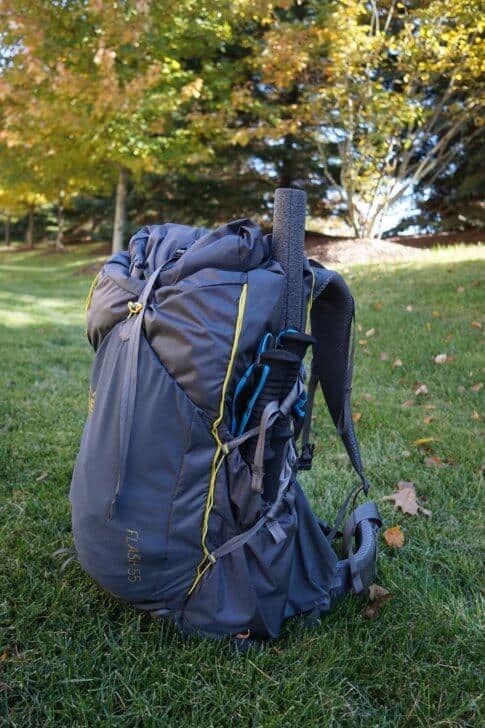
The REI Flash 55 backpack (women’s version here) is a user-configurable, lightweight, internal-frame, roll-top pack.
It is designed to be an all day pack that, according to REI, “…strikes the perfect balance between lightweight comfort and high performance…” with readily accessible water bottle pockets and a ventilated back panel. The Flash 55 sports REI’s Packmod Custom Carry System – a set of removable accessory pockets, compression straps, and tie-downs that allow for different pack setups, giving hikers the opportunity to modify their pack to suit their particular style and conditions.
Photo: REI. The Flash 55’s standard setup.Photo: REI. The minimalist setup.Photo: REI. Packmod accessories
Features
Internal-frame design
Packmod compression straps
Packmod pockets on the shoulder straps and hipbelt
Roll-top closure
Seam-taped lining in the top lid and shoulder-strap pocket
3D contoured hipbelt
Ventilated back panel
Forward-positioned water-bottle pockets with snap closures
Exterior side pockets
Breathable mesh front pocket
Attachment loops on the front
Removable top lid
Hydration-compatible design
Removing all Packmod accessories saves 7 oz (198 g).
Specifications
Dimensions
S: 14 x 29 x 12 in (36 x 74 x 30 cm)
M: 14 x 30 x 12 in (36 x 76 x 30 cm)
L: 14 x 31 x 12 in (36 x 79 x 30 cm)
Volume
S: 53 liters
M: 53 liters
L: 53 liters
Weight (Minimum)
S: 2 lbs. 2oz. (0.96 kg)
M: 2 lbs. 3 oz. (0.99 kg)
L: 2 lbs. 4 oz. (1.02 kg)
Weight (Maximum)
S: 2 lbs. 9 oz. (1.16 kg)
M: 2 lbs. 10 oz. (1.19 kg)
L: 2 lbs. 11 oz. (1.22 kg)
Fits Torso
S: 18 in (46 cm)
M: 19 in (48 cm)
L: 20 in (51 cm)
Fits Waist/Hips
S: 30-40 in (76-102 cm)
M: 32-42 in (81-107 cm)
L: 34-46 in (86-117 cm)
Recommended Load: 15 to 30 lbs (6.80 to 13.61 kg)
Materials: 100-denier ripstop nylon main body; 420-denier nylon bottom
Frame Material: Steel
Hydration Compatible: Yes
Gender: Men’s tested (Women’s specific fit and sizing also available)
*Editor’s Note: Unless otherwise specified, all future weights and measurements will be for Men’s size medium.
Review Context
Early fall shakedown hike.
REI designed the Flash 55 for adaptability and versatility. The most unique feature of the pack is the Packmod Custom Carry System, REI’s modular selection of pockets and straps that allows the hiker to customize the backpack to suit their needs. The pack also has a roll-top closure, allowing for internal pack volumes from approximately 35 liters to 60 liters (Men’s medium). Much of my time with the pack was spent trying out different configurations with the Packmod accessories. I was curious if this could be a pack with multiple uses – from long, loaded day-hikes to overnights to multi-day treks.
Description of Field Testing
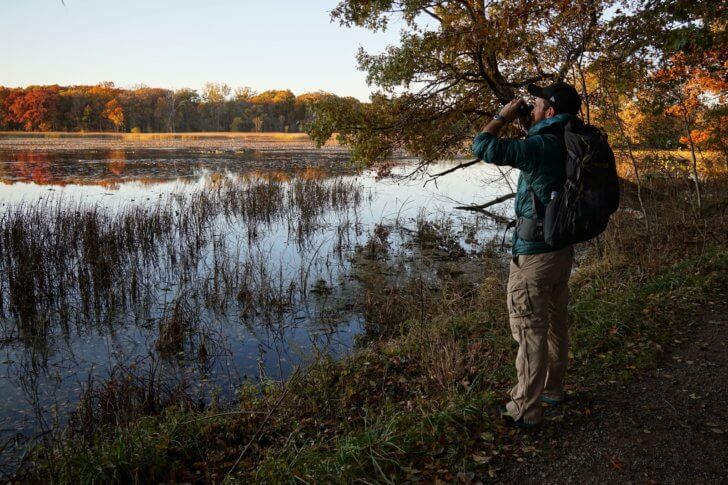
I used the Flash 55 exclusively from July through October of 2019. To test the versatility of the pack, I settled on three configurations. I used the Flash 55 in a “long-hauler” configuration on multi-day trips in Vermont and Michigan. Daily mileage on these trips peaked at 16 miles (26 km) and was generally in the seven-to-eight-mile range (11-to-13 km). When hiking, I tend to move fast and stop frequently. The longest time the Flash 55 was on my back in a given day was a total of 6 hours. Generally, the pack saw three-to-four hours of use on a given day of hiking. The pack saw use in a “weekender” configuration in Ontario, New York, and Michigan. Finally, I used the pack in a “bare-bones” setup for long-day and overnight birding and fishing trips in Michigan.
Testing weather ranged from the 90 F (32 C) heat of an August day to cool October evenings with generally fair conditions.
Performance Assessment
I based my performance assessment of the REI Flash 55 on the following criteria:
Accessibility and Organization
Adaptability
Fit
Comfort
Weight
Accessibility and Organization
The REI Flash 55 has five permanent external pockets and the capacity to add four more – the included Packmod accessory pockets – for a total of nine external pockets. There are two permanent pockets on each side of the pack, one permanent pocket on the front, two Packmod hipbelt pockets, one Packmod top lid, and one Packmod shoulder strap pocket.
The side bottle-pockets, as well as the Packmod hipbelt and shoulder pockets, are all readily accessible while wearing the pack. The Flash 55 comes with removable/reconfigurable compression and tie-down straps as well as a tool keeper that works in tandem with daisy chain loops on the front and sides of the pack.
Permanent External Pockets
Bottle Side-Pockets
Front Side-Pockets
Front Pocket
Bottle Side Pockets
The Flash 55’s bottle side-pockets are forward-positioned, making it easy to hydrate while on the move. They both come equipped with a snap closure that allows for securing water bottles of smaller diameters. The bottle-pockets are constructed of stretch mesh with an elastic top.
Snap closure holding a 750ml Smartwater bottle securely.
Snapped, I found the pockets able to hold a single 700mL Smartwater bottle easily. Unsnapped, my 1180mL Klean Canteen fit well. I did try using more than one Smartwater bottle per side, but the angle of the pocket had the forward bottle top digging into my side as I hiked. The pockets held the bottles well; at no point was I worried that the bottles would slip out while scrambling, bushwacking, or carelessly taking the pack off after a day of hiking.
Not very comfortable with two bottles on one side, even unsnapped.
In actual field use, I usually ended up using one of the bottle pockets for hydration and the other for a bag of snacks and my cooking fuel. Both pockets were readily accessible while hiking, both with the pack fully loaded and with it in a long day hike configuration. It’s worth noting that the compression straps did not hinder access to the bottle side pockets. Even with the straps cinched to the maximum, I was able to grab a drink on the go. It was nice not having to struggle to hydrate while hiking.
Front Side Pockets
If I had to use one word to describe the front side pockets, that word would be deep. At their shallowest, they are 9 in (23 cm) deep. At their deepest, the pockets are 11.5 in (29 cm). The pockets are constructed of ripstop nylon, topped with elastic. They are well-designed for holding those awkward bits that do not fit easily into the main compartment of a pack.
A cut-down Thermarest shoved into the side pocket, secured with compression straps.
Generally, I used one of these pockets to carry my rolled-up sleeping pad. The other I relegated to hold accessories I like having close at hand, such as my water filter and coffee setup. When in fishing mode, I slipped a tenkara rod into the pocket. When in birding mode, binoculars. On the infrequent occasions that I carry a tent, the poles fit securely in a front side-pocket. The Packmod compression straps helped secure the longer items.
Deep side pockets holding a tenkara rod and trekking poles.
Front Pocket
The front pocket of the REI Flash 55 is constructed of stretch mesh with an elastic top. The pocket runs from 10 to 12 in (25 to 30 cm) deep, and at its widest, is 10 in (25 cm). It closes with a simple hook and loop system. The pocket is cavernous.
Airing out a bivy and a damp jacket in the front pocket.
On multi-day treks, I found that the pocket is best used for air-drying items like a damp bivy or tarp. It also makes a handy stash pocket for a rain layer. With nothing loaded into the front pocket, the hook and loop closure had the annoying tendency to come undone. I usually had at least my rain shell in the pocket, so this wasn’t a huge issue.
Packmod Accessories
The Packmod elements.
Packmod Top Lid
Packmod Shoulder-Strap Pocket
Packmod Hipbelt Pockets
Packmod Compression Straps
Tool Keeper
Packmod Top Lid
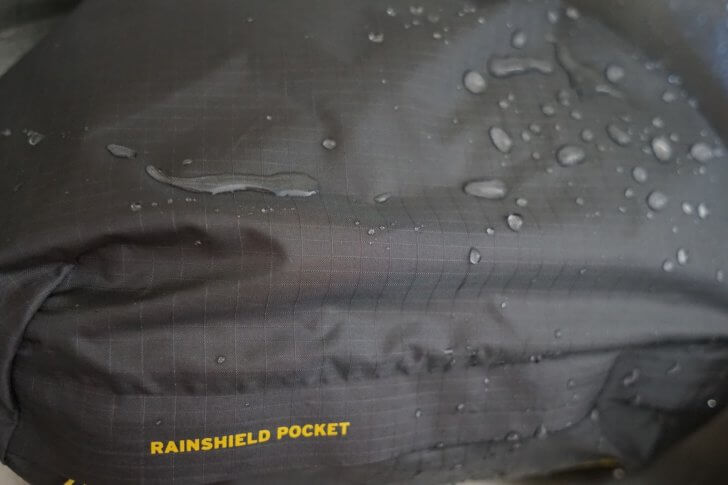
The Flash 55 top lid is a seam-taped ripstop nylon shell with a water repellent finish, lined with REI’s Rainshield coating. The top lid has a covered, zippered closure and measures approximately 10 x 9 x 3 in (25 x 23 x 8 cm) with a capacity of approximately 5 liters. It is the heaviest of the Packmod accessories, weighing in at 2.0 oz (57g) and necessitating the use of the 0.6 oz (17 g) tie-down straps.
Impressive waterproofing on the top lid.
I found the top lid to be most useful when used on trips of three or more nights. The waterproofing was impressive, keeping contents dry during short bouts of rain as well as morning dew. It attaches easily using the four included tie-down straps. I found it handy for carrying clothing I wanted to keep dry yet accessible, such as a light pair of gloves, beanie, and down jacket. It also doubled as a pillow.
Packmod Shoulder Strap Pocket
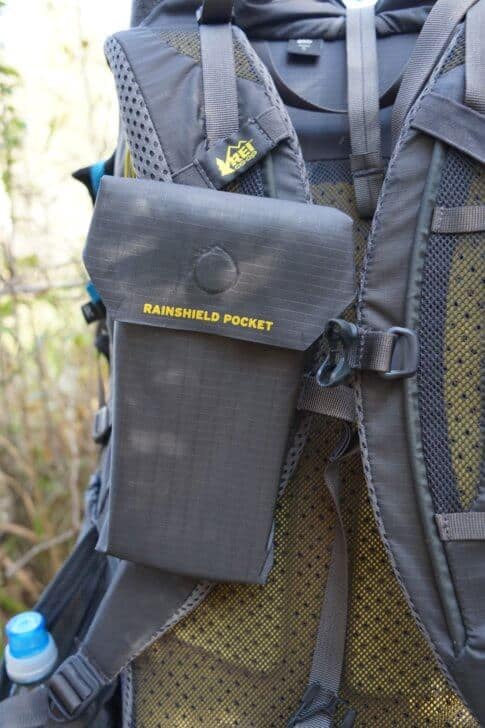
The shoulder strap pocket was cumbersome.
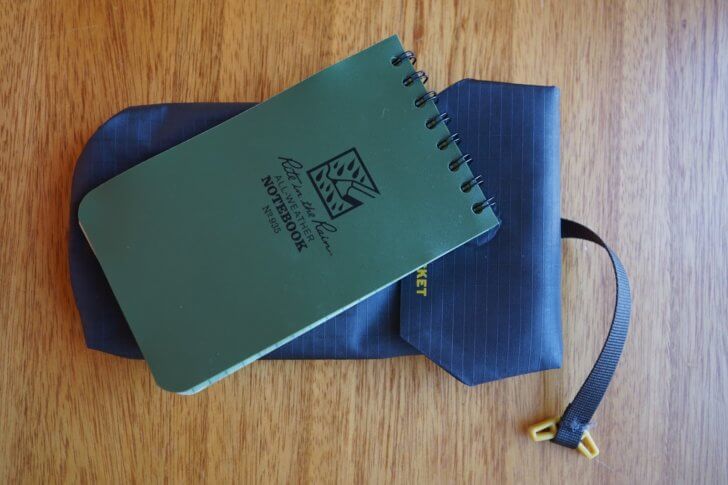
The shoulder strap pocket is a seam-taped ripstop nylon shell with a water repellent finish lined with REI’s Rainshield waterproof coated nylon. It’s equipped with a magnetic closure and is designed for electronics that a traveler might want readily available, such as a phone or small GPS device. The pocket has a claimed capacity of 0.5 liters and measures 6.25 x 3.5 in x 1.5 in (16 x 9 x 4 cm). The weight of the pocket is 0.8 (23 g) oz.
The shoulder strap pocket easily held a field notebook.
I found this pocket to be the least useful. It attaches with one thin strap, so the pocket was prone to snagging and flopping about. It also made getting the pack on and off after rests more difficult. When mounting the Flash 55 to my back, the pouch inevitably twisted the shoulder strap around, necessitating additional adjustment. The magnetic closure is very weak. On more than one occasion, my phone slipped out of the pocket while removing the pack. I quickly set this pocket aside.
Fortunately, attachment loops on the shoulder straps exist so your favorite aftermarket shoulder strap pouches can be easily added.
Packmod Hipbelt Pockets
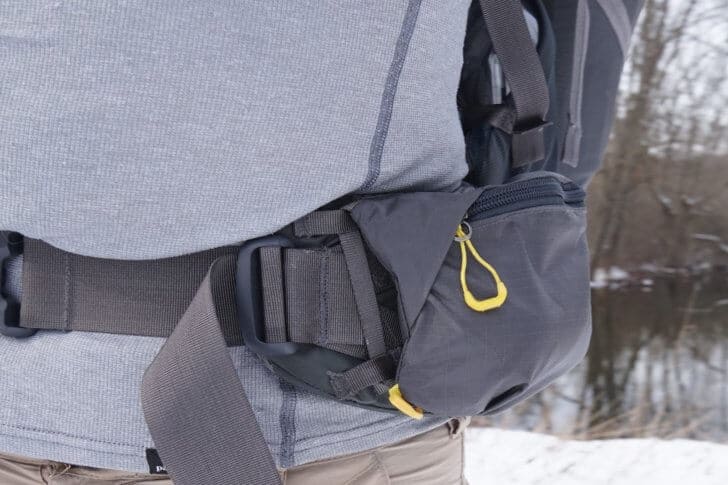
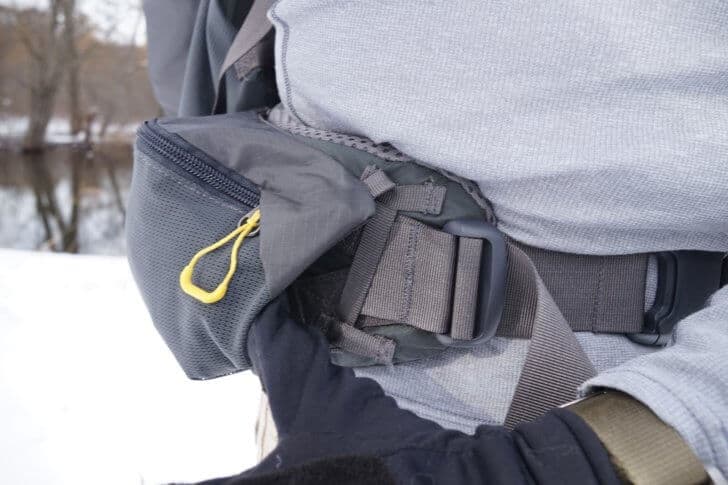
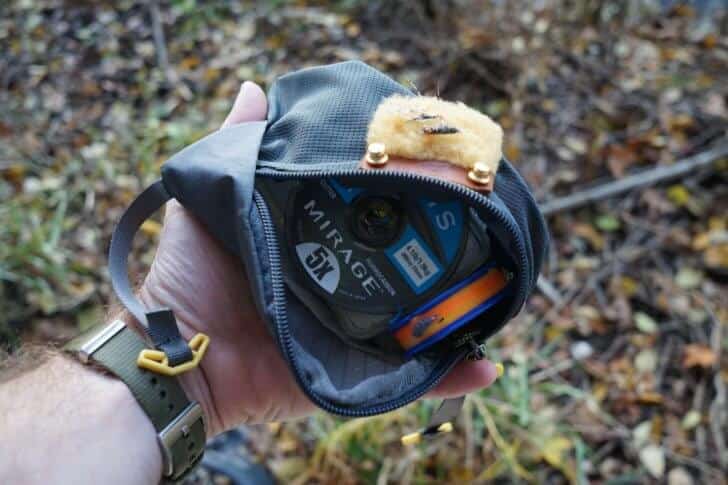
The REI Flash 55 comes with two detachable hipbelt pockets – one fine mesh and one ripstop nylon. The mesh pocket weighs 1.0 oz (28 g), and the ripstop nylon pocket weighs 0.8 oz (23 g). REI lists the capacity of both as 1 liter, and the dimensions are 6.6 x 4.3 in (17 x 11 cm). Both have zippered closures.
Attachment of the hipbelt pockets is straightforward.Useful pockets, but prone to snagging on brush.
I found these pockets very practical. My regular setup has no hip belt pockets, so on my first use, I found myself at a loss as to what to pack in them. Initially, they ended up carrying what usually would go in my pockets; small knife, map, a couple of bars, and my cellphone. Then they also started to carry things that would typically get lost in a side pocket; lip balm, hand sanitizer, bug deterrent, and purification tabs. If I was on a quick fishing trip, I tossed a small box of flies, some tippet, nippers, level lines, and hemostats into the mesh pocket. If I was out for a long bird day or weekend, my notebook and pen ended up making their way into one.
A day’s worth of fishing gear fit easily into a side pocket.
The Packmod hip belt pockets saw a lot of use and held up well. My only minor gripe is that they would occasionally catch when going through thick brush. This is the price to be paid for a modular system. Having the pockets not sewn directly to the belt means corners and flaps that snag.
Packmod Compression Straps
The REI Flash 55 comes with four removable and repositionable compression straps. Fully extended, they are 17 in long (43 cm), and all four together weigh in at 0.9 oz (26 g). They are designed to be placed where the hiker needs them along the daisy chain straps on the front and sides of the pack.
Side compression straps in action.
While, in theory, these straps can be removed, saving nearly an ounce (28 g) in weight, I feel that they are a required part of the pack. The Flash 55 is a large volume pack, designed with multi-day treks in mind. On my longer treks with the Flash 55, as the days went on, my consumables burden became less and less. Using the compression straps kept my loads from becoming unwieldy, cinching them down closer to my center of gravity. They are also helpful for keeping longer items secured in the side pockets.
For short overnights and long day-hikes, the compression straps make the pack feel more like a 35-liter pack. They keep everything snug. I did find them a bit too long. I have struggled to come up with a three-season scenario where I would need the full 17 inches (43 cm) of strap length. In winter, I could see using them to lash snowshoes or skis to the Flash 55.
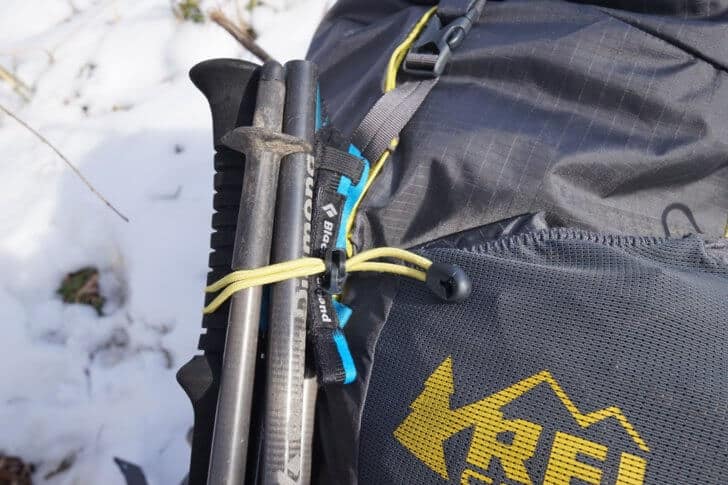
Tool Keeper
The tool keeper is a small, removable, elastic loop-and-hook closure for strapping trekking poles, an ice ax, or other tools to the pack. It weighs 0.1 oz (3 g). I used it occasionally when I got sick of carrying my poles. It held the poles well, even when moving through the brush. I could see this getting a lot more use on a winter trip.
Tool keeper securing trekking poles.
Main Pack Body
The REI Flash 55 has a stated capacity of 55 liters (3,356 cubic inches – Men’s medium) with the roll-top cinched down and the Packmod top lid in place. With the roll-top fully extended and no Packmod lid, I estimate the capacity to be approaching 60 liters. With the roll-top in the down position, I estimate the capacity to be around 50 liters. With all of the available Packmod storage and cavernous side and back pockets, I had no problems fitting all of the gear needed for a five-day trek.
The pack is easy to load due to the stout foam back-panel and lightweight steel frame. The foam back-panel is not stiff enough for careless packing, however. Any hard or angular items should be packed away from the back-panel to avoid an uncomfortable day.
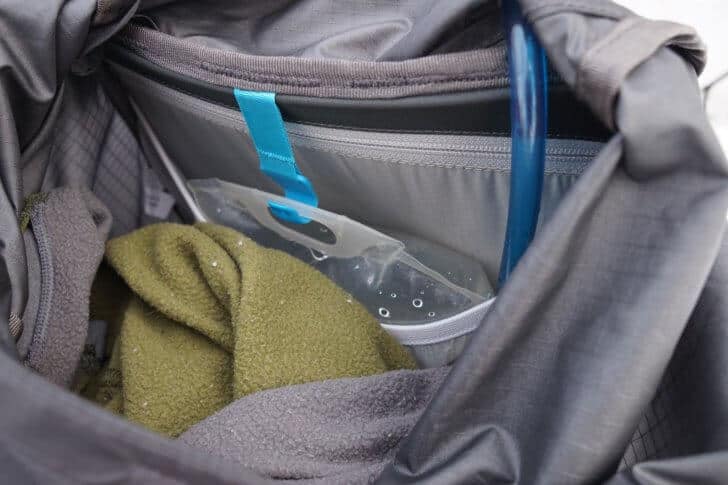
The pack has a hydration sleeve with an elastic top, a stout hook for hanging a hydration bladder, and ports for the hose on both the left and right shoulder. I found the hydration sleeve to be a snug fit with a 3-liter system. Loading the full bladder into the pack was more of a chore than I expected. I would have appreciated a slightly larger sleeve.
The hydration sleeve works, but I found it a bit snug.
Adaptability
During my time with the pack, I primarily used three different configurations: a “bare-bones” setup for long day hikes/single night trips, a “weekender” setup for a couple of nights out, and a “long hauler” that covered a full kit for five testing-days in the field.
The “bare bones” setup is the most minimal setup I would recommend with the Flash 55. Besides the base pack, I used one tie-down strap to cinch down the roll-top and four compression straps to keep the volume in check.
If fishing was part of the trip, I added the mesh Packmod hipbelt pocket (holding a small tenkara tackle kit) to the mix. The weight of this setup was 2 lbs 4 oz (1.02 kg). Fully compressed, the pack carried with stability similar to 35-liter packs that I’ve tried. The addition of the 1 oz (28 g) mesh hipbelt pocket brings the weight to 2 lbs 5 oz (1.05 kg). Generally, I carried 12 lbs (5.44 kg) at a volume of approximately 25 liters with this setup.
As a day pack, the Flash 55 is overkill, but it does the job. Photo: Amy Beaulac
My “weekender” setup extended the pack’s capacity to a couple of days. I used the barebones setup with the addition of the second Pakmod hipbelt pocket and the second set of tie-down straps. The additions were more for convenience and load management than for additional volume. The weight of this setup was 2 lbs 6 oz (1.08 kg). A typical load in this configuration was 18 lbs (8.16 kg), with a compressed volume of about 35 liters.
Finally, the ‘long hauler’ setup added the Packmod top lid into the mix. All told, this setup used four compression straps, four tie-down straps, the top lid, and the tool loop. The only Packmod accessory that didn’t get used regularly with this setup was the shoulder-strap pocket. The weight of this setup was 2 lbs 8 oz (1.13 kg). The maximum load I hauled in this configuration was 32 lbs (14.5 kg). I feel that by utilizing the top lid and fully extending the roll-top, the Flash 55’s volume can exceed 60 L.
The REI Flash 55 is a highly adaptable backpack. The Packmod Custom Carry System extends the utility of the pack. It served very well both as a weekender pack and as a multi-day trekking pack. The Flash 55 is overkill for a long day-or-single-night setup, but that isn’t the intention of the pack.
Fit
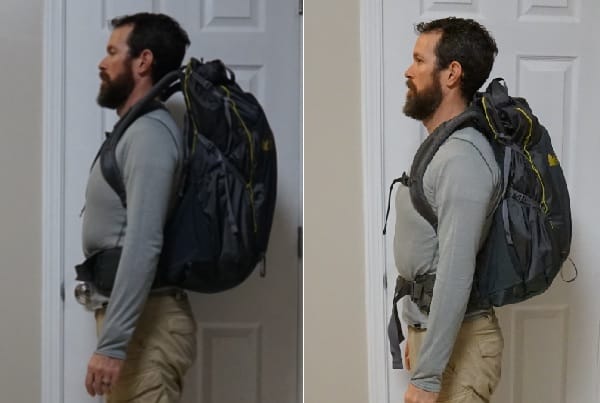
The Flash 55 comes in three sizes for both the men’s and women’s models. Unfortunately, I found the men’s sizing to be “three sizes fit most.” The reviewer pack I received was a size large, which fits a torso length of 20 in (51 cm) and a waist of 34-46 in (86 – 117 cm). In my experience with frameless packs, I’ve been able to make do with less than ideal fits. This kind of forgiveness was not the case with the Flash 55. One weekend out with the large was enough to send me to the store to grab a better fit.
Size matters, large on left, small on right.
At 5’8” (172 cm) tall with a 30-inch (76 cm) waist, I was sized to a small. That put me right at the bottom end of the size-range for the hipbelt, published at 30 in (76 cm) to 40 in (102 cm). The fit was a nagging issue throughout the review. Summer hikes with the pack had me struggling with the hipbelt, particularly under load. I frequently had to hike the Flash 55 back up onto my hips to take the load off of my shoulders. Thankfully my longer treks with the pack occurred in the fall when layers of clothing made the pack fit better at the hips.
Comfort
Comfort was evaluated specifically for the back panel, shoulder straps, and hip belt.
Back Panel
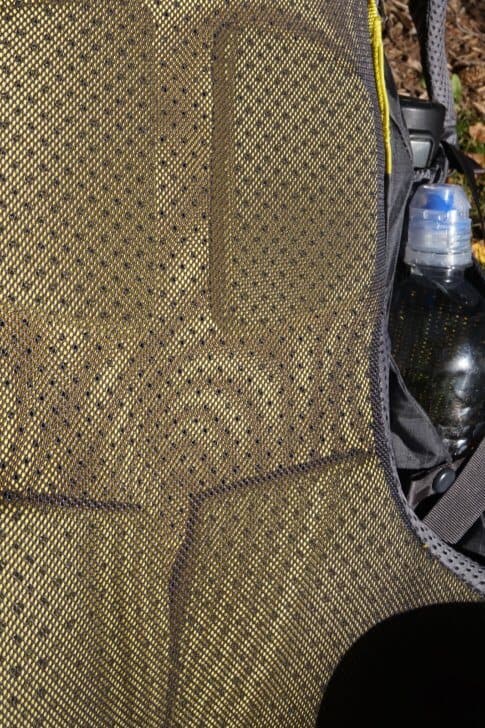
The back panel is constructed of a molded, perforated foam that allows for some ventilation. It is comfortable and not overly thick. August hikes tend to be hot in Michigan, and I appreciated the slight ventilation afforded by the back panel..
Ventilated back panel with mesh covering.
Shoulder Straps
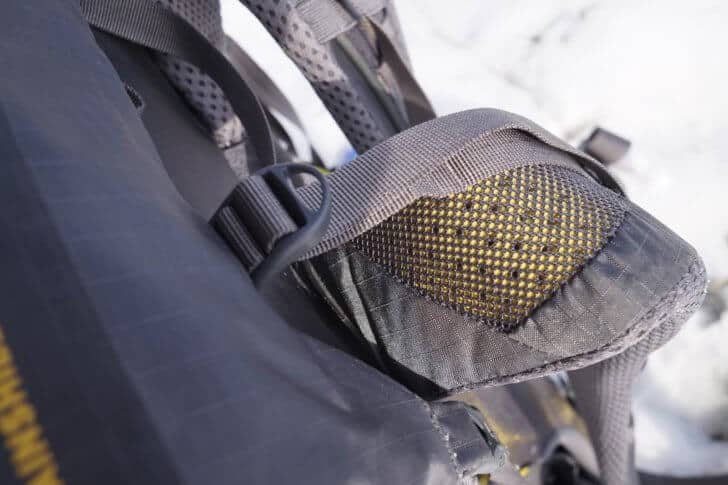
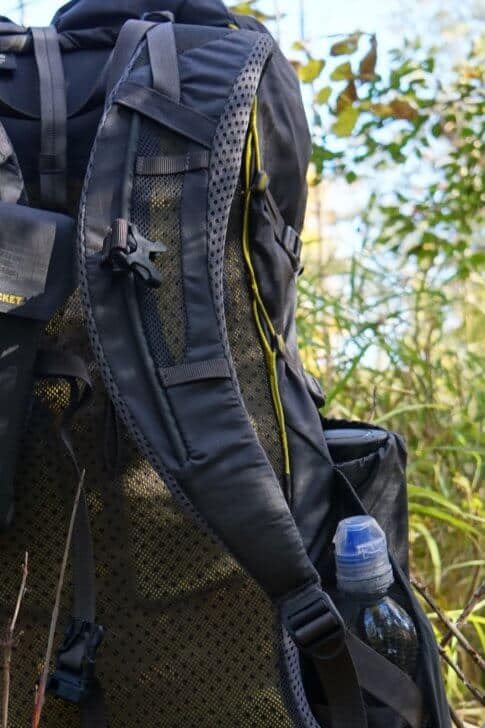
The shoulder straps on the Flash 55 are 3/4 in (1.9 cm) thick foam with a ventilated mesh cover. They are equipped with two attachment loops on both straps, as well as a hydration tube loops. The attachment loops are spaced to fit the Packmod shoulder strap pocket. The Flash 55 also comes with a chest strap that is adjustable both in length and vertically (for optimal sternum positioning).
Load lifters worked well without slippage.
Adjustment of all the straps was easy. The webbing held its position through the buckles without any issue, including when wet or when I was moving vigorously. The same is true with the load lifters. They were set and forget.
Webbing and attachment loops on the shoulder strap.Ample padding for a 30 lb (13.6 kg) load.
Hip Belt
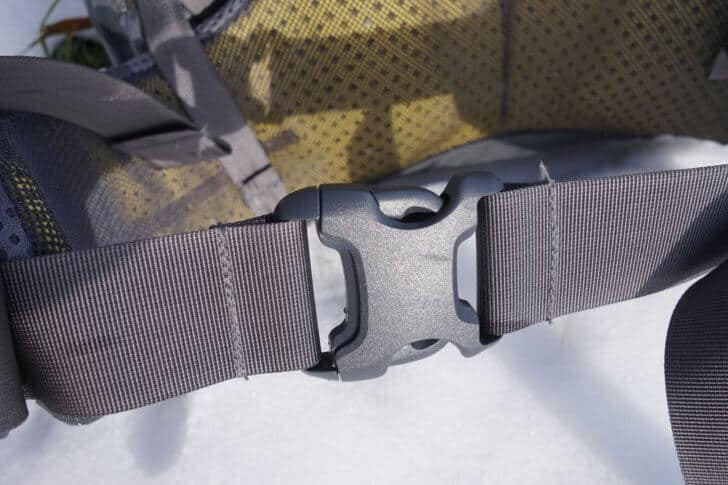
The hip belt is an integrated part of the pack. The foam of the back panel and the hip belt are one solid piece. Like the back panel, the hip belt is lined with a lightweight, breathable mesh. My fit issues aside, I found the hip belt to be comfortable. The webbing held well through the buckle with no noticeable slipping.
Hip belt webbing and buckle.The back panel and hip belt are molded from one piece of foam.
Load Bearing Ability
The Flash 55 handles loads well. 30 lbs (13.61 kg) is the maximum weight that REI recommends for the Flash 55. I was comfortable hiking all day with 25 lbs (11.34 kg) in the pack. Loaded with 30 lbs (13.61 kg), I found myself a bit sore on the contact points after a day out, but I have never liked carrying that much weight. It is not a pack issue so much as a general fitness and preference issue. The compression straps keep the unused volume well contained.
Weight
The Flash 55 weighs between 35 and 42 oz (1.00 to 1.19 kg), depending on which, if any, Packmod accessories you use. I would not recommend using the pack without the compression straps in any configuration, so in reality, I found the minimum weight of the pack to be 37 oz (1.05 kg). That’s a competitive weight, particularly given the modular nature of the pack. See the comparison chart below for some examples.
Product Strengths and Limitations
Strengths
Adaptability – The Flash 55 is highly compressible and the Packmod accessories make it possible to set up the pack for different trip types.
Comfort – Below the recommended maximum load of 30 lbs (13.61 kg), I found the pack to be comfortable thanks to the ample padding and well-designed suspension.
Cost – At $199.00, the Flash 55 is highly price-competitive.
Bottle-pockets – The forward-mounted bottle-pockets worked very well. The combination of the stretch mesh and the snap-fit allows for different sized bottles to be easily accessed and securely carried.
Limitations
Sizing/Fit – With only three available combinations of torso and hip measurements, the Flash 55 won’t fit everyone – but it may fit most folks.
Shoulder-Strap Pocket (Packmod) – A poor design that could easily be improved upon with better attachments and a stronger magnetic closure.
Overly-tight hydration sleeve – A minor complaint, but if a hiker uses a hydration bladder, it’s worth keeping in mind.
Snagging of Packmod accessories – The price to pay for a modular system.
Compared To…
My last framed backpack was a Gregory Shasta, a circa 1996 behemoth of approximately 6 lbs (2.72 kg). I did a complete 360-degree turn and went frameless, now using a well-loved, lightly modded Granite Gear Virga 2. The Virga 2 is also a roll-top pack with a volume of approximately 55 liters, though it is frameless. That switch saved me 5 lbs (2.27 kg) in base weight, easily the most significant drop in weight I’ve made during my time backpacking. Since then, materials and designs have progressed, and while I am quite happy with my current setup, I was curious about what the current generation of framed packs had to offer.
The Flash 55 beats the Virga 2 on almost every count. The Flash 55 has greater accessibility and is much more adaptable. It is also much more comfortable; the Virga 2 really caps out at a load of about 20 lbs (9.07 kg) – where I was able to easily carry 25+ lbs (11.40 + kg) all day with the Flash 55. The Virga is over a pound lighter, however. It also happens to fit me better, though that is more of an individual trait.
Among currently available packs, the REI Flash 55 has a lot of competition in this weight, price, and volume market segment. Some of these options are shown in the table below, for comparison.
The specifications for all the packs are similar; framed, top-loading packs with a carrying capacity of about 55 liters weighing in around two-and-a-half pounds and costing about $200 to $220. REI is clearly trying to make the Flash 55 stand out from the herd with the Packmod system. The Flash 55 is easily the most adaptable and configurable pack on the list.
The Granite Gear Crown2 60 is likely the most competitive pack in the table above. Both packs are framed, roll-top bags that are marketed towards backpackers looking to save weight on their gear. The Crown2 and the Flash 55 both offer a removable top lid. Both are priced at just under $200.00. The REI Flash 55 has more configurable storage, as the Crown2’s hip pockets are permanently attached. The Crown2 offers much greater versatility in fit, though. The hip belt sizes down to 26 in (66 cm) and, if wanted, is totally removable. It comes down to whether a hiker values configurable fit or configurable storage.
Commentary
Fully loaded for a snowy weekend.
The REI Flash 55 isn’t a one-trick pony. It can do the job of multiple packs. The adjustable compression system is excellent. I didn’t feel as if I was using too much pack for the job when taking the Flash 55 out for a weekend. The capacity of this pack for multi-day treks is impressive. I found it a breeze to pack five days worth of kit with room to spare. While I tend not to pack bulky gear or food, I do almost always pack a tarp, sleeping bag, and small cook setup. Even on the rare occasions when I brought a tent along, I never felt like I was pushing the volume limits of the pack. The side and front pockets are immense, and with just a bit of consideration when selecting consumables, the Flash 55 could handle a three-season week-long journey with no concern.
As a long day-or-single-night pack, even in its most stripped-down configuration, I always felt a little “underloaded”. The Flash 55 did the job, but it was overkill. This isn’t meant to be a criticism of the Flash 55; day-pack use is a borderline proposition for a pack this size. But one of the questions I set out to answer was if this could be a pack for multiple trip-types. The Flash 55 isn’t a “quiver killer,” but it does fill multiple roles in your gear closet.
The Packmod system is a lot more useful than I thought it was going to be when I started the review. I’ve always been a “less is more” sort of guy, and at first glance, all the Packmod straps and pockets seemed gimmicky. I had done quite well without top lids, hip pockets, and cell phone shoulder holsters for years, thank you very much. But as I cycled through different configurations of the Flash 55, I found practical uses for most of the accessories.
I also found the pack to be supremely comfortable. Switching over for the summer from my frameless Granite Gear Virga 2 was game-changing. Had the REI Flash 55 actually fit me, I would continue to use it. Next season I’ll be rethinking my current setup.
Review Rating
My own personal fit issues and the disappointing shoulder strap pocket aside, I do recommend the REI Flash 55.
At $199.00, the Flash 55 is a good deal, so much so that I plan on purchasing the women’s version of this pack for my wife during the next REI member’s sale. She is a great example of someone who will get a ton of use out of this pack – a backpacker interested in transitioning from traditional backpacking to an ultralight setup, but who is not certain what she’ll like regarding pockets and pack organization. The combination of the pack and the Packmod accessories make for a versatile setup that allows for trying out a bunch of configurations without breaking the bank.
The Flash 55 carries a load of up to 30 lbs (13.6 kg) comfortably. As a transitioning hiker gets her kit further dialed in, the large volume and ample exterior storage will increase her range with the pack. The Flash 55 easily does the job of a weekend and a long-haul pack. If the Flash 55 fits your particular body type, it’s well worth a look.
Where to Buy
Buy the Flash 55 at REI in both Men’s and Women’s versions.
Related Content
Are you digging external pack organization? Read Andrew’s review of the Mountainsmith Zerk 40, or Dan’s review of the Atom.
If you are interested in exploring modular exterior storage, check out Ryan’s recent blog post.
Disclosure
Updated November 7, 2019
Product(s) discussed in this article may have been purchased by the author(s) from a retailer or direct from a manufacturer, or by Backpacking Light for the author. The purchase price may have been discounted as a result of our industry professional status with the seller. However, these discounts came with no obligation to provide media coverage or a product review. Backpacking Light does not accept compensation or donated/discounted products in exchange for guaranteed media placement or product review coverage.
Some (but not all) of the links in this review may be “affiliate” links. If you click on one of these links and visit one of our affiliate partners (usually a retailer site), and subsequently place an order with that retailer, we receive a small commission. These commissions help us provide authors with honoraria, fund our editorial projects, podcasts, instructional webinars, and more, and we appreciate it a lot! Thank you for supporting Backpacking Light!
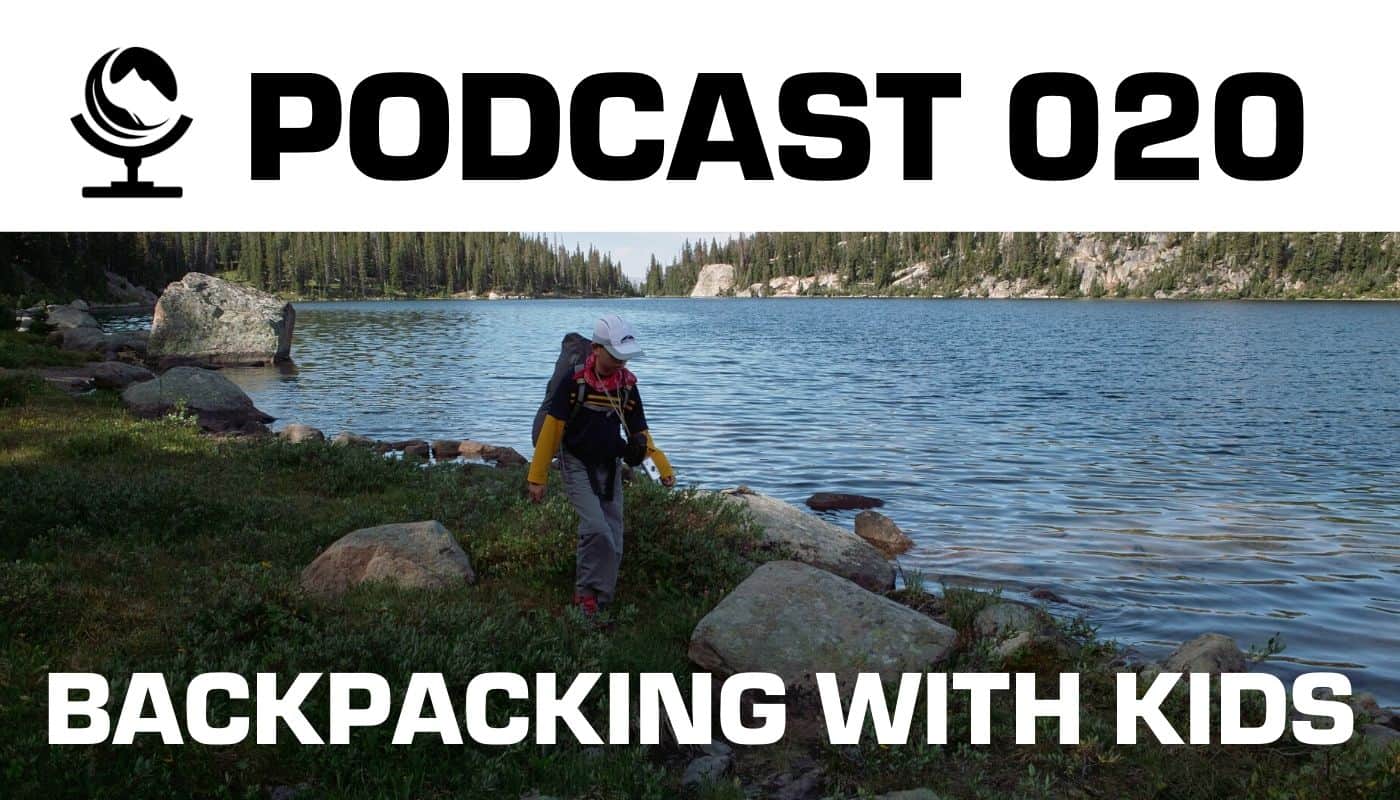
Introducing children to the world of backpacking can be an amazing, uplifting experience. It can also go totally sideways. In this SKILLS SHORT Ryan and Andrew talk about best practices for family backpacking: route planning, trip types, gear, type one vs type two fun (kid edition!), safety, communication, and more.
Outline
Topic introduction and Ryan and Andrew’s first trips
Introducing kids to backpacking – all about transitions
Learning to let go
Starting in the backyard – an open invitation
Introducing adults to backpacking – all about remote environments
Activities for kids
How much weight can kids handle comfortably on trail, moderate elevation gain
Start here: age x 1.5 pounds
reduce weight 15-25% for ages 2-10 if child is overweight or obese
reduce weight 25% to 35% for ages 11-17 if child is overweight or obese
reduce weight 10% to 20% for girls, esp. if underweight for their height
Managing differing skill sets and desires in group situations
Sponsors: Help us Keep the Podcast ADVERTISING-FREE!
This episode of the Backpacking Light Podcast is supported and kept advertising-free by Backpacking Light membership fees. Please consider becoming a member which helps support projects like this podcast, in addition to a whole slew of other benefits!
This episode of the Backpacking Light podcast is also brought to you by Douglas Fir trees. Douglas Firs: they make it smell like Christmas!
In addition, some of the links on this page may be affiliate links that refer to our partner merchant retailers. If you follow a link and then make a purchase, we receive a small commission which goes a long way towards helping us pay for podcast production, hosting, and bandwidth fees! Thanks for supporting us in this way!
This episode is
Contact
You can contact us at podcast@backpackinglight.com, or follow us on social media –
We do not accept money or in-kind compensation for guaranteed media coverage: Backpacking Light does not accept compensation or donated products in exchange for guaranteed media placement or product review coverage.
Affiliate links: Some (but not all) of the links in this review may be “affiliate” links, which means if you click on a link to one of our affiliate partners (usually a retailer site), and subsequently make a purchase with that retailer, we receive a small commission. This helps us fund our editorial projects, podcasts, instructional webinars, and more, and we appreciate it a lot! Thank you for supporting Backpacking Light!
The biggest REI sale of the year is going on right now – November 15 through 25, 2019. It’s called the GUGO sale – “Gear Up, Get Out”. Here are some resources to help you save money on decent gear.
I have to be honest with you – I’m not super interested in helping you spend money and rack up credit card debt on gear you don’t need or doesn’t fit with your style of outdoor adventure. My own personal values are focused on minimalism and intentional consumerism.
That’s why we all need to be cautious as we go into the holiday/black (really black) friday season, which happens to feature:
These don’t go on sale very often – Garmin exercises strict price control over these devices. Don’t expect the inventory to last at REI. Hey, maybe vote for Bernie or Elizabeth – inReach for all!
Why?
The inReach Mini is the smallest, lightest, and most reliable satellite communicator on the market.
It’s an essential tool for wilderness travel and gives your friends and family back home tremendous peace of mind.
Now, seriously – do you really absolutely need it?
No.
But at least ask your loved ones if they’d like you to carry one – it’s actually for them, after all. If they say “Nah, we’re good. Go do your thing and leave us alone…” and you’re OK with the risk, then skip it. I can support that.
But if they’re stressed about you hiking in the wilds, get an inReach Mini – for them, and don’t be a selfish jerk just because you need your “me” time. This isn’t a silly social media exercise. Relationships matter, don’t screw them up.
Specifics
REI Members – save 20% on one full-priced item and an extra 20% on one REI Outlet item. Use CODE: GEARUP2019
20% Off All Thailand Adventure Travel Trips. Save 20% on any remaining 2020 departures when you book November 15–25. Hey, here’s a cool idea: buy a slot on one of these trips for Stephanie and me, and we’ll join you! No, I’m serious. we’ve always wanted to hike in Thailand. Stephanie’s allergic to peanuts tho, so we’ll just bring clif shots for her 😂 that will save us $!
Recommendations
I don’t want you to waste money on gear you don’t need, or on gear that you’re tempted to buy just because it’s on sale. Read more about my desire to be an ethical steward of consumerism in my recent disclosure letter.
And for goodness sakes, if you have credit card debt, close this window now and go make some money to pay it off. Do not buy gear.
That said, there’s a fine line between being a consumer and saving money by taking advantage of good deals, so here are a few of my specific recommendations for the 2019 REI Gear Up, Go Out sale:
The Garmin inReach Mini is one of the very few pieces of gear that I recommend for all hikers, for two reasons: safety/rescue, and peace of mind for loved ones back home. I’ve had mine since its launch, and have had zero issues with it. Read my review here or buy it now at REI for $75 off.
SL Series Tents: The REI Quarter Dome SL 1 and REI Quarter Dome SL 2 are pretty special tents. They are wind-stable, roomy, and light – and offer what I believe to be the best value (best quality, performance, and weight for the price) on the market right now for double-wall tents. Reviews here (SL 1) and here (SL 2).
Kahtoola Microspikes – we use these every day in the winter. I can’t imagine living here (Laramie), and not being able to hike every day. Absolutely essential for our sanity when the trails are covered in snow and ice.
GoPro Hero 8 Black – this is my favorite camera for filming in the outdoors. I film my YouTube “Field Notes” videos with a Hero 7 Black, and am excited to upgrade to the new Hero 8.
George Harris just reviewed the REI Flash 55 Backpack, which I wore for a few trips before I sent it on to George for review. I liked the pack, and found it to be very comfortable. Its modular design really started to grow on me, and packs that don’t offer some modularity (so I can configure them for different types of trips) seem pretty confining. I like gear that is versatile, because that means I can own less gear for the trips I do. Best of all, the REI Flash 55 is already priced well at $200 MSRP, but during the sale, it is only $140 – that seems to be a great deal on a lightweight, good-quality, versatile pack. Available in a Women’s version too.
I may add more to this list during the next two weeks, but these are the ones that are on my mind today.
Brands on sale that *might* interest the lightweight hiker
I’m not much of a brand loyalist (I am a fanboy of a few brands…), but through the years, there have been a couple of companies who make products that I purchase on a recurring basis. Here are some of my favorites, and they will have a ton of products on sale at REI during this sale:
Patagonia – there will be 1,886 Patagonia sku’s on sale at REI during this sale – it’s a gold mine…look for Nano Puffs for starters – they’re only $139.
Several different models of Salomon shoes and “trail running boots” are going to be on sale, including lots of XA, X-Mission, and Speedcross models. These two are very popular among lightweight backpackers. I’m a big fan of these for winter hiking, they have enough stiffness to power a snowshoe and are warm enough for cold days.
Arc’teryx – love the dinosaur or hate its pretentiousness, nobody will be able to argue that Arc’teryx has become one of the most iconic premium brands in the industry. During this sale, look for one of the best active insulation pieces around – the Proton LT Hoodie. I’ve been experimenting with this trail running shoe lately and they are very impressive – because they are both lightanddurable. All deadbird goods are 20% off at REI until the 25th…
Garmin just announced their fancy new 6-series Fenix watches (the 6x Pro is neat because it’s solar-powered), which granted, are awesome but horrendously expensive. I have the Fenix 5x+ which has become an indispensable tool for training and tracking. During this sale, the 5x+ is going to be a great deal ($150 off), so nab one while you can and avoid early-adopter-retire-late syndrome.
Lots of good deals on Nemo gear – especially tents and sleeping pads. As I talk about in the Masterclass, the wide Nemo Tensor has pretty much changed my life when it comes to sleeping on the ground :)
I’ll update this list as the sale goes on, so check back – and subscribe to the newsletter for even more info and recommendations.
More Backpacking Light resources to help you shop the REI sale:
Backpacking Light does not accept compensation or donated/discounted products in exchange for guaranteed media placement or product review coverage.
Some (but not all) of the links in this review may be “affiliate” links. If you click on one of these links and visit one of our affiliate partners (usually a retailer site), and subsequently place an order with that retailer, we receive a small commission. These commissions help us provide authors with honoraria, fund our editorial projects, podcasts, instructional webinars, and more, and we appreciate it a lot! Thank you for supporting Backpacking Light!
This REI Quarter Dome SL 2 Review features a 2-person, double-wall, double-entrance, double-vestibule tent that weighs about 3 lbs.
SUMMARY
REI Quarter Dome SL 2 Review
This REI Quarter Dome SL 2 review features a three-season, two-person, two-door, dual-vestibule, mesh inner, semi-freestanding tent. It weighs 47 oz (1522 g) and retails for $319.
Photo: REI
Highlights
Very good value (quality, performance, and weight) for the money
Light enough for solo use, resulting in a very roomy dual-entrance/dual-vestibule solo shelter.
In this article, I’ll walk you through what the REI Quarter Dome SL 2 has to offer by way of features and specs as well as the quality of materials and build. Plus, I’ll throw in my two cents about what I like about the tent and what its strengths (and limitations) are for someone like me.
Now…who is someone like me? I’ve gotten into camping over the last six or so years and have gone from car camping to walk-in tent sites, and then progressed to a couple of solo trips and multi-day hikes. I’m looking for a tent that is light, durable, affordable, and fits both myself and my daughter (age 6), who is excited to join me on my adventures.
Features and Specifications
Features
Vertical sidewalls and trapezoidal floor plan
Color-coded hub-and-pole assembly
V-shaped horizontal space-expander poles
Dual-entry fly and canopy
Dual stake-out vestibules
Fly roof-vent for airflow and condensation control
Four guyout loops on the fly and one rainfly rollback loop on each of the two doors
Four interior pockets: two at the corners and two on ceiling
Two hang loops in the ceiling for organization
Reflective stake loops and guylines
Fly/footprint minimalist pitch option lets you leave the tent at home and use the fly, poles, and footprint (sold separately) as a lightweight shelter
Includes a stuff sack, stakes, guylines, and tighteners, as well as a pole-repair tube, a pole bag, and a stake bag
Specifications
Weights (Measured)
Rainfly: 15.3 oz (435 g)
Tent Body: 15.5 oz (441 g)
Pole-set Sack: 11.1 oz (314 g)
Pole Set: 10.5 oz (298 g)
Stuff Sack: 0.6 oz (16 g)
Stake Sack (10 stakes, 3 guylines, 1 pole repair): 5.2 oz (150 g)
(1) Stake: 0.4 oz (11 g)
(10) Stakes: 3.9 oz (112 g)
(3) Guylines: 0.6 oz (18 g)
(1) Pole Repair: .4 oz (11 g)
(1) Stuff Sack: 1.2 oz (35 g)
Footprint: 6.4 oz (182 g)
Packaged Weights
Minimalist (rainfly, poles, footprint, 5 stakes, no sacks): 2 lbs 2.2 oz (970 g)
Packed Size (L x Diameter): 20 in x 5.5 (51 cm x 13.97 cm)
Floor Dimensions (L x W head/foot): 88 in x 52/42 in (224 cm x 132/107 cm)
Floor Area: 28.7 ft² (9 m²)
Vestibule Area: 21.5 ft2
Peak Height: 38 in (97 cm)
Pole Material: Aluminum
Fabrics
Canopy: Nylon
Floor: Ripstop nylon
Rainfly: Ripstop nylon
Review Context
I’ve mainly used one-person tents during my backpacking travels here in the southeast US and over the last couple of trips have decided I want to upgrade to a two-person tent. My reasoning was that I wanted more interior space for both gear and people.
Gear space: I occasionally suffer from back pain when sleeping on the ground, so I wanted the option to use an overall larger (thicker, wider) sleeping pad while still having a spacious feel inside my shelter.
More people: My daughter, age six, is wanting to come with me on some of my backpacking adventures. I wanted a shelter that could accommodate us both without adding too much weight since I will be hauling both our gear.
I was also looking for a reasonably-priced tent that was equally at home in the backcountry and frontcountry. I don’t need a top-of-the line Dyneema shelter – I just wanted something functional, reasonable, simple, and spacious.
Description of Field Testing
Mesh body provides good ventilation on stuffy nights.
I tested the REI Quarter Dome SL 2 on several multi-day trips in Georgia as well as walk-in tent sites at a local state park. All of the trips occurred in the summer months in both dry and wet conditions. I used a standard-sized rectangular inflatable sleeping pad and a mummy sleeping bag. I also used a standard inflatable twin air mattress for one trip with my daughter to a walk-in campsite at Chattahoochee Bend State Park.
Performance Analysis
My performance analysis of the REI Quarter Dome SL 2 will consist of:
Quality
Transportability
Adaptability
Ventilation and Condensation Management
Space & Storage
Quality
The mesh is tight with no scrapes, runs, or tears, and the seams have no loose or unraveling threads.Tight stitching on all the mesh.Top-stitching with interior loop hang. All tight, no runs.
All the seams are tight with double-stitching and there are no loose threads or unraveling parts. The mesh has no scrapes, runs, or tears. I will say, upon my initial contact with the ripstop nylon that makes up the rain fly and floor portions of this tent, I was skeptical; however, after using the tent and playing with the materials, it’s definitely tougher than I surmised it would be*.
*Editor’s Note: REI does not provide the denier of the fabrics used in this shelter.
The tent stakes are light as well – they weigh in at 11 grams each. They are made with high quality and lightweight DAC aluminum. Upon handling them, it seems as if squeezing them too hard will result in the deflection of the material, but they are just as tough as any of the heavier stakes you’d find at a sporting goods store. Even driving them into the rocky ground here in southwest Atlanta didn’t damage them at all.
Tent stake.
The guylines and cordage are all fluorescent orange with reflective strips woven throughout. They are easy to see in the underbrush and reflect well during the night.
Guyline with reflective thread.
Transportability
All materials rolled into a stuff sack measure about 20 in (51 cm) long and 5 ½ in (14 cm) in diameter.Tent rolled into stuff sack is somewhat bulky under the lid of my Gossamer Gear Mariposa 60L.The tent also fits snugly in the front mesh compartment of my pack – a little less bulky.
When rolled up in its stuff sack (with all components), The Quarter Dome SL 2 measures about 20 in long (51 cm) and 5½ in (14 cm) in diameter – weighing in just shy of three pounds. I have the Gossamer Gear Mariposa 60L pack, and the Quarter Dome SL 2 fits under the top lid or in the front mesh pocket. The components separate easily for group carry.
If you wanted to try and go as light as possible, the fair-weather option is to leave the tent at home and only bring the mesh canopy, pole set, and stakes. That will weigh in at only 29.8 oz (845 g). Granted, that is still heavier than most of the high-end ultralight two-person options on the market today – particularly single-wall DCF models. But it is on the lighter end of similarly designed double-wall, two-person, hub-and-pole supported structures (see our two tables in the Compared To…” section)
Adaptability
One of the neat features of the REI Quarter Dome SL 2 is the Fast Fly option. Unfortunately, you’ll need to purchase the additional footprint for this. I did not test this feature, since (at this point) I don’t have the additional footprint. But I like this shelter enough to consider purchasing it for the added set-up flexibility it offers.
For instance; if you’re in inclement weather, you can layout the footprint, connect the pole set to the footprint, and connect the rainfly. That will allow you to set up the tent inside the fly, allowing you to keep the tent itself dry (see Ryan’s video of the SL 1 starting at 12:04 to see how this is done). Aside from inclement weather, this is a nice setup if it’s a nice night and you just want some basic (non-bug) protection.
Ventilation
One fly vent at the foot-end of the fly for airflow and condensation control.
I’m a fan of the mostly mesh construction. In southwest Atlanta, I tested the Quarter Dome SL 2 in mid-September with afternoon temperatures reaching 95 F (35 C) and overnight lows hitting 75 F (24 C) in high humidity. Mesh is a must for airflow. Of course, whenever the rainfly is up around the tent, the mesh airflow is defeated. There is a 5 in (13 cm) vent at the top of the rainfly that will allow some airflow to continue, but it’s not much.
I have not experienced any major condensation inside the tent, but also, I did not test this tent outside the summer season. In conditions likely to form condensation the Quarter Dome SL 2 will most certainly suffer from it. But the double-wall mesh design should keep you dry for the most part.
It was muggy in the tent with the rainfly on, but that is expected with the combination of the rainfly and hot weather. Still, ventilation is not this shelter’s strong suit.
Space & Storage
Full tent setup without rainfly.Full tent setup with rainfly attached.Gratuitous leg shot. Plenty of room for my sleeping pad and stowing my gear inside the tent.
The Quarter Dome SL 2 can fit two people, but it’s a bit snug (in my opinion) for two large adults. I believe that two smaller people or one larger and one smaller would be fine. I’m 5’11” (180 cm) and weigh about 160 lbs (73 kg). I have plenty of room to move or stash extra gear I want inside, especially at the head and foot of the shelter. Widthwise, you have 52 in (132 cm) at the head and only 42 in (106 cm) at the foot of the tent. Which is plenty of space for a single adult my size, but I think it would be a bit too snug for two adults my size.
The ceiling of the tent is 38 in (97 cm) at its peak height. While sitting up in the tent, my head did not brush the top of the tent. I had room to move and rearrange my gear and change without touching any of the sidewall mesh or ceiling.
Corner pocket storage.Overhead pocket storage.
There were also four pockets inside the tent to stow additional gear. There are two at the head of the tent in the corners by the door and two overhead. Both pockets at the head of the tent held all the gear I would need at arms reach throughout the night. The ceiling pockets were convenient to place a headlamp, as is shown in the picture above. I wouldn’t want to put too much weight in the overhead pockets to prevent any additional stress on seams.
Mariposa 60L Pack fits nicely under the vestibule with room to spare.
In addition to the pockets, there are two stake-out vestibules at each door when the fly is in place. You get plenty of space to place your pack, shoes, or any additional gear you may have for each person. As you can see from the photo (above), my 60L pack fits easily with room to spare.
As I stated above, I was looking for something I could use with myself and my small daughter – or something that would be equally at home car camping with an air mattress as it would be in the backcountry with a sleeping pad. This tent met those space requirements. I was even able to fit a standard twin air mattress inside the Quarter Dome SL 2 and still had a few inches of space at the base of the tent.
Storm Resistance
While the SL 2 kept me snug and dry during gentle summer showers, I did not have the opportunity to test it in a serious storm. Thus I can’t speak to its ability to weather serious gales. I would imagine that the fly would be difficult to attach to the hub-and-pole frame during high winds (a common problem with this class of shelter). For more on the storm resistance of this design, see Ryan Jordan’s review of the REI Quarter Dome SL1. Because we don’t have enough experience in stormy weather with the REI Quarter Dome SL 2, we won’t be assigning a product review rating to it.
Product Strengths and Limitations
Strengths
One of the lighter shelters in its class (and the lightest in our first comparison table)
Quality construction
Flexible set-up options
Spacious (but not huge) interior – perfect for camping with children or a big dog
Large enough for extra-large sleeping pad (makes for a luxurious, if heavy, solo shelter)
Good value when compared to the competition
Limitations
Heavy compared to more expensive high-end cottage-industry designs (the heaviest shelter in our second comparison table)
Won’t fit two large people comfortably
Somewhat bulky when packed
Compared To…
In the first table, I compared the REI Co-op Quarter Dome SL 2 to three other two-person, hub-and-pole supported, double-wall, two-door, side-entry, dual-vestibule three-season shelters.
While the Quarter Dome SL 2 is a little less spacious inside than some of its competition, it holds its own in the weight department – it’s the lightest shelter in this table. The materials might be perceived as slightly less premium (i.e., they lack the marketing cred of trademarked fabric brand names) but the build quality is comparable. The vestibule area of the Quarter Dome SL 2 is the largest in our range of compared products.
The MSR Hubba Hubba NX 2 may be the best choice in this table for inclement weather – there’s more solid fabric on the lower part of the inner tent for wind resistance and blowing snow. The Nemo Dragonfly 2 offers the least amount of interior volume. The REI Quarter Dome SL 2 offers the most mesh, and thus, the best ventilation for summer conditions.
In the second table, I compare the SL 2 to two popular two-person, dual-entrance, dual-vestibule, side-entry trekking pole supported shelters – the Zpacks Duplex and the Tarptent Stratospire 2.
Area not provided - depth of 20.75 in (55 cm) on each side
Area not provided depth of 33 in (84 cm) on each side
Apex
38 in (97 cm)
48 in (122 cm)
50 in (127 cm)
Packed Size
20 in x 7 in (51 cm x 18 cm)
13 in x 7 in (33 cm x 18 cm)
16 in x 5 in x 5 in (41 cm x 18 cm x 18 cm)
Special Features
V-shaped horizontal space expander pole
DCF construction - no seam sealing or groundsheet required
PitchLoc corners for expanded living space, double wall, interior can set up independently of fly
Here we see how the REI Quarter Dome SL 2 fares when compared to cottage industry design and materials. The Duplex is constructed of DCF fabric and is supported by trekking poles – thus it is 28 oz (794 g) lighter than the Quarter Dome SL 2. These factors combine to make the Duplex one of the more popular two-person shelters in the ultralight world. But DCF comes at a cost – a $600 shelter is likely out of the question for a backpacker seriously considering the Quarter Dome SL 2.
The Tarptent Stratospire 2, by contrast, is much closer in price to the Quarter Dome SL 2 at $359. It sports a double-wall, trekking pole-supported design, and is only 3 oz (85 g) lighter than the Quarter Dome SL 2. It is considerably more spacious – its headroom, livable area, and vestibules are all larger than what the Quarter Dome SL 2 can offer. One advantage of the SL 2 over the Stratospire 2 is that the geodesic pole structure of the SL 2 will stabilize fabrics better and make it a more wind-worthy alternative than the Stratospire 2. This is discussed in more detail in Ryan’s review of the smaller REI Quarter Dome SL 1.
It’s worth noting that a 26 oz (737 g) DCF version of the Stratospire 2 is available (the Tarptent Stratospire Li), which is a closer direct competitor to the ZPacks Duplex.
Commentary
So overall, I like the REI Quarter Dome SL 2. It met all my criteria for what I was looking for in a tent. It’s not the lightest option in the two-person market, but it is one of the lightest options in its price class.
I was looking for something comfortable, stable, relatively inexpensive, and easy to set-up – while remaining spacious enough to fit me, my daughter, and an extra-large sleeping pad. The Quarter Dome SL 2 met those criteria.
The mostly-mesh interior is great to ensure good breathability (with the fly off) during the hot summer months of Georgia, where I primarily do my backpacking. With the fly on, it’s going to get muggy in the summer and have some condensation in the shoulder-seasons. Finally, the shelter was light enough for me to carry comfortably – it’s one of the lightest shelters available in the silnylon, hub-and-pole, two-person class.
I also like the fast fly feature, for use in setting up the tent either in inclement weather (fly first) or on nice nights where just some basic shelter is needed. That does require the purchase of the footprint ($49.99 on REI.com), but I believe the cost is worth the value of those additional options.
I’d recommend the REI Quarter Dome SL 2 for backpackers looking for an all-around comfortable backcountry shelter that blends reasonable price and reasonable performance.
Product(s) discussed in this article may have been purchased by the author(s) from a retailer or direct from a manufacturer, or by Backpacking Light for the author. The purchase price may have been discounted as a result of our industry professional status with the seller. However, these discounts came with no obligation to provide media coverage or a product review. Backpacking Light does not accept compensation or donated/discounted products in exchange for guaranteed media placement or product review coverage.
Some (but not all) of the links in this review may be “affiliate” links. If you click on one of these links and visit one of our affiliate partners (usually a retailer site), and subsequently place an order with that retailer, we receive a small commission. These commissions help us provide authors with honoraria, fund our editorial projects, podcasts, instructional webinars, and more, and we appreciate it a lot! Thank you for supporting Backpacking Light!
In the summer of 2019, Jeff Garmire achieved the fastest known time on Vermont’s iconic Long Trail, clocking all 272 miles in five days, twenty- three hours, and forty-eight minutes. Here’s the interview.
Today’s guest is Jeff Garmire (trail name Legend). In the summer of 2019 Jeff achieved the fastest known time on Vermont’s iconic Long Trail, clocking all 272 miles in five days, twenty- three hours, and forty-eight minutes. Prior to that he set unsupported and over-all FKT on the Arizona Trail, completed the Great Western Loop, and completed a Calendar Year Triple crown, among other accomplishments.
When he isn’t hiking, Jeff is a public speaker and hiking coach / mentor. He also just released a book called “Free Outside: A Trek Against Time and Distance,” which chronicles his Calendar Year Triple Crown.
Ryan and Andrew talk to Jeff about the nuts and bolts of his Long Trail FKT before transitioning into a conversation about mental health, relationships, and the philosophy of speed records.
Sponsors: Help us Keep the Podcast ADVERTISING-FREE!
This episode of the Backpacking Light Podcast is supported and kept advertising-free by Backpacking Light membership fees. Please considerbecoming a member which helps support projects like this podcast, in addition to a whole slew of other benefits!
This episode of the Backpacking Light podcast iis also brought to you by Douglas Fir trees. Douglas Firs: they make it smell like Christmas!
In addition, some of the links on this page may be affiliate links that refer to our partner merchant retailers. If you follow a link and then make a purchase, we receive a small commission which goes a long way towards helping us pay for podcast production, hosting, and bandwidth fees! Thanks for supporting us in this way!
This episode is
Contact
You can contact us at podcast@backpackinglight.com, or follow us on social media –
We do not accept money or in-kind compensation for guaranteed media coverage: Backpacking Light does not accept compensation or donated product in exchange for guaranteed media placement or product review coverage.
Affiliate links: Some (but not all) of the links in this review may be “affiliate” links, which means if you click on a link to one of our affiliate partners (usually a retailer site), and subsequently make a purchase with that retailer, we receive a small commission. This helps us fund our editorial projects, podcasts, instructional webinars, and more, and we appreciate it a lot! Thank you for supporting Backpacking Light!
This post is available for Unlimited Members only. As of today (October 30, 2019), we’ve turned off all network banner advertising for Unlimited Members, providing a faster, less cluttered, and less intrusive browsing experience – this post provides the details.
In this REI Magma 30 Sleeping Bag review, Mark Wetherington analyzes its cut, yoke, insulation and quality of construction.
Introduction
Photo: REI
The REI Co-op Magma 30 Sleeping Bag is a comfortable and warm mummy-style bag ideal for three-season use in much of the Lower 48. The Magma 30 utilizes 15D Pertex Quantum fabrics, 850 fill power water-resistant down, an anti-snag zipper, an insulated yoke, and a trapezoidal footbox.
Weighing in at 20 oz (567 g) and priced at $319.00, this bag provides value for backpackers looking to acquire a lightweight sleeping bag without breaking the bank.
Fill type: 850-fill-power goose down, with hydrophobic treatment
Fill weight: 8.5 oz (241 g)
Dimensions: 80 in x 27 in (fits 72 in long sleeper) (203 cm x 69 cm)
Compressed dimensions: 6 in x 13 in (15 cm x 33 cm)
Shell fabric: 15d ripstop nylon (Pertex Quantum)
Lining fabric: 15d ripstop nylon
Shoulders: 63 in (160 cm)
Hips: 57 in (145 cm)
*Available in long length
The REI Magma 30 in the Bitterroot National Forest, Montana.
I’ve spent hundreds of nights in lightweight sleeping bags in the 15 F to 30 F (-9 C to -1 C) range, from the Appalachians to the Cascades. The Marmot Plasma 30, Feathered Friends Hummingbird UL20, and Marmot Pinnacle 15 are the bags I’ve used the most. Depending on conditions, I use a short Therm-A-Rest NeoAir XLite or a regular Therm-A-Rest NeoAir AllSeason for my sleeping pad. I often pair these with a short Therm-A-Rest ZLite or RidgeRest for puncture protection and additional insulation. During the shoulder seasons, I wear thicker base layers (200 weight) and a down jacket when temperatures are forecast to drop below the rating of the sleeping bag I’m using.
I prefer down bags because of their weight-to-warmth ratio and their longevity. As a backpacker with an athletic build, I don’t need much extra room in my bags. But I do toss and turn some and appreciate not feeling like I’m in a straitjacket. I also appreciate the extra space when drying out damp clothes, warming up clothing items before putting them on in the morning, or keeping a water filter from freezing.
Airing the REI Magma 30 out and allowing some damp spots from tent condensation to dry before packing up camp.
I tested the REI Co-op Magma 30 Sleeping Bag on several backpacking trips in August and September in Wyoming and Montana. The coldest temperature was 26 F (-3 C) and the warmest 44 F. I encountered no significant amounts of precipitation or high relative humidity when testing this sleeping bag. I tested this sleeping bag inside of a Six Moon Designs Lunar Solo shelter, an MSR Hubba tent, and in the back of my vehicle at trailheads.
Performance Assessment
I assessed this bag by noting how its design and features performed when used during overnight trips. I visually inspected the Magma 30 with an eye towards performance and construction quality before use and after the testing period concluded. My performance assessment addresses:
Cut
Insulated yoke
Fabric
Manufacturing quality
Baffles
Storage
Warmth
Cut
It is almost an understatement to call the Magma 30 “roomy,” despite it being a mummy-style bag. It features one of the amplest cuts of any mummy bag I’ve experienced. It was easy to change socks without stressing the fabric, something that has not been the case with other sleeping bags I’ve used. The cut also allowed plenty of room for me to dry slightly damp clothes during the night and warm clothes before putting them on in the morning.
There was also plenty of room in the trapezoidal footbox. The trapezoidal shape allows for the natural splay and positioning of feet when back sleeping. There was adequate room in the footbox to store my water filter at night to keep it from freezing. Despite having such a roomy cut, this bag did not seem to suffer from any notable cold spots.
Insulated yoke
The REI Magma 30’s hood and insulated yoke.
Most of the sleeping bags I’ve used either employ a dedicated draft collar with a cinch cord or an overstuffed baffle (i.e., a passive collar) in the shoulder area. Both have positives and negatives. Draft collars can feel somewhat strangling at times and add another set of cords to have to adjust when entering and exiting the bag. Passive collars can often be less effective than desired when pushing the limits of a bag. The insulated yoke on the REI Co-op Magma 30 blends the best of both. There are no additional cords to fiddle with. Instead, there is a tube of down-filled fabric that drapes across your collarbone and prevents heat from escaping the bag and cold drafts from entering.
Fabrics
Although I never used this bag without a shelter, I employed it on several nights in windy conditions (10 to 15 mph steady wind, gusts 25 to 30 mph). At the time, I was also testing the Six Moon Designs Lunar Solo, a shelter with mesh ventilation panels through which the wind easily entered. I found the Pertex Quantum fabric blocked wind adequately to prevent any heat loss and that no cold chills penetrated the seams.
The Lunar Solo’s single-wall design gathered condensation overnight. The Magma’s fabric resisted this moisture (for the most part) when brushing up against the shelter’s wall. It became slightly damp on relatively humid and still mornings from this contact, but never seemed to wet out. I noticed no impact on the bag’s loft in these conditions.
Less than a half-hour in the sun seemed to dry the fabric completely. The 15 denier nylon was comfortable against the skin when it was warm enough to forego baselayers. It did not feel clammy, even early in the night, when temperatures were only in the low 50s.
Manufacturing quality
I encountered no noticeable issues with the quality of this bag’s components or assembly. I noticed no down leakage during my testing. The zipper, zipper pulls, fabric, and cords are durable and well-balanced between lightweight and sturdy. The main zipper pull has an easy to grab plastic pull attached with a thin cord via a girth hitch on the outside. The inside has a 2.5 in (6 cm) piece of webbing to use when zipping or unzipping from inside the bag.
Zipper close-up; another zipper at the bottom allows for venting at the footbox.
The primary zipper is covered with a plastic piece that separates the teeth from the fabric, and the result is smooth zipping. During my testing, I did not experience any snagging at all.
An additional zipper pull at the footbox allows for ventilation.
Baffles
This bag utilizes traditional horizontal baffles of variable sizes to maximize warmth and keep the down located where it is needed. Near the chest and torso, the baffles are approximately 5 in (13 cm) wide and progressively widen to around 7 in (18 cm) at the footbox. Baffle loft was consistent throughout at approximately 3.25 in (8 cm).
In my experience, this resulted in no cold spots during the night despite the roomy cut.
Storage
REI Magma 30 in the included stuff sack; one-liter Nalgene bottle for scale.
The REI Magma 30 comes with a small stuff sack for backpacking as well as a mesh storage sack for long-term storage. The included stuff sack is slightly too small to make for easy stuffing. The sack is water-resistant, but not waterproof. When compressed in the included stuff sack, the Magma 30’s dimensions are approximately 6 in x 13 in (15 x 33 cm).
For these reasons, I opted to use a Sea to Summit eVent Compression Dry Sack during my testing. Several of the trails I hiked included river fords, and I wanted to ensure my sleeping bag stayed dry in case I took an unexpected swim.
Warmth
I found the Magma 30 was true to its temperature rating – when used with lightweight base layers, head covering, socks, and a full-length sleeping pad with an R-value greater than 2.5.
I wore midweight base layers when pushing this bag below its limit and found it to be comfortable. When using a three-quarter length sleeping pad with my backpack under my feet, I was – as expected – not quite as warm at similar temperatures as when using a full-length pad. If you typically use a three-quarter length pad, you will likely find yourself limited to within a few degrees of the Magma 30’s comfort rating of 39 F (4 C).
Overall, I found this bag to be adequate to the lower limit of 30 deg F (-1 deg C) for backpackers who sleep on the warmer side and use a full-length sleeping pad.
Product Strengths and Limitations
Strengths
This zipper is one of the best I’ve used on a sleeping bag – the design was snag free during my testing.
Hydrophobic down provides peace-of-mind in extended damp conditions.
Fabric is comfortable against the skin and sheds moisture effectively .
Cut is roomy without cold spots.
Insulated yoke is effective at preventing heat loss, but not as cumbersome as a full-wrap draft collar.
Good value.
Limitations
Provided stuff sack is too small and offers minimal water resistance.
Rating is optimistic for cold sleepers unless paired with a full-length pad with R-value of 3 or higher.
Compared To…
The REI Co-op Magma 30 Sleeping Bag compares favorably to other sleeping bags in the 30 F (-1 C) category and is the most competitively priced. Despite having a lower fill weight than other bags in this category, the Magma 30 still performed well at the lower limits of its temperature rating. This performance is the result of features (such as the insulated yoke and variable baffles) that focus on thermal efficiency without added weight.
Shaped to maximize thermal efficiency, waterproof and breathable fabric to protect against tent condensation
Ergonomic
Liner and Shell Fabric
15d ripstop nylon and Pertex Quantum 15d ripstop nylon
Flite 15d ripstop nylon and Pertex Endurance UL
30d nylon taffeta and 20d ripstop nylon
30d nylon taffeta and 20d ripstop nylon
Special Features
Insulated yoke, footbox zipper
None
Thermo Gills allow venting to regulate temperature without drafts
Insotect Flow in baffles to distribute heat
Commentary
This sleeping bag performed as expected based on the temperature ratings provided by the manufacturer. Despite having considerably less down fill than some other bags in this category, it was still true to its rating when used in lightweight base layers and with midweight socks.
When midweight base layers were used, and the bag was on a pad with 4.0 R-Value, this bag was comfortable several degrees below its rating. The features and fabrics used in this bag are well-designed (the zipper and insulated draft yoke in particular), high-quality, and result in a sleeping bag that meets expectations and provides excellent value. The Magma 30 will suit the needs of many backpackers in summer or three-season conditions (depending on the region).
Review Rating: Recommended
For backpackers looking for an affordable lightweight sleeping bag that doesn’t skimp on features and delivers on its temperature rating, the REI Co-op Magma 30 Sleeping Bag is an appealing choice. With quality components and user-friendly features, this sleeping bag – boasting the best warmth-to-weight ratio of the bags made by REI – is less expensive than other comparable bags without cutting corners.
While not attempting to offer a radically innovative product or compete down to the last gram in the ultralight market, REI has begun offering high-performing pieces of gear. Many of these products are ideal for those looking to save weight on major items such as tents and sleeping bags while staying within a modest budget. This sleeping bag is an example of their success in this endeavor. I recommend it without hesitation.
REI also offers the Magma Trail Quilt 30 for those who prefer a quilt rather than a traditional sleeping bag. See our review here.
Product Review Disclosure
Updated October 18, 2019
Product(s) discussed in this review were either acquired by the author from a retailer or otherwise provided by the manufacturer at a discount/donation with no obligation to provide media coverage or a product review.
Backpacking Light does not accept compensation or donated products in exchange for guaranteed media placement or product review coverage.
Some (but not all) of the links in this review may be “affiliate” links. If you click on one of these links and visit one of our affiliate partners (usually a retailer site), and subsequently place an order with that retailer, we receive a small commission. These commissions help us provide authors with honoraria, fund our editorial projects, podcasts, instructional webinars, and more, and we appreciate it a lot! Thank you for supporting Backpacking Light!
Submit them to podcast@backpackinglight.com orTwitter and get featured on our next podcast!
Credits
Backpacking Light – Executive Producer
Ryan Jordan – Director and Host
Andrew Marshall – Producer, Host, and Editor
Sponsors: Help us Keep the Podcast ADVERTISING-FREE!
This episode of the Backpacking Light Podcast is supported and kept advertising-free by Backpacking Light membership fees. Please considerbecoming a member which helps support projects like this podcast, in addition to a whole slew of other benefits!
In addition, some of the links on this page may be affiliate links that refer to our partner merchant retailers. If you follow a link and then make a purchase, we receive a small commission which goes a long way towards helping us pay for podcast production, hosting, and bandwidth fees! Thanks for supporting us in this way!
Contact
You can contact us at podcast@backpackinglight.com, or follow us on social media –
We do not accept money or in-kind compensation for guaranteed media coverage: Backpacking Light does not accept compensation or donated product in exchange for guaranteed media placement or product review coverage.
Affiliate links: Some (but not all) of the links in this review may be “affiliate” links, which means if you click on a link to one of our affiliate partners (usually a retailer site), and subsequently make a purchase with that retailer, we receive a small commission. This helps us fund our editorial projects, podcasts, instructional webinars, and more, and we appreciate it a lot! Thank you for supporting Backpacking Light!
Membership Required
This feature requires an active Backpacking Light Membership.
Premium Articles
You're currently viewing a free preview of a member exclusive premium article. Our premium articles include in depth journalism and insights from the Backpacking Light editorial team.
Get full article access by subscribing to a Premium or Unlimited Backpacking Light membership!


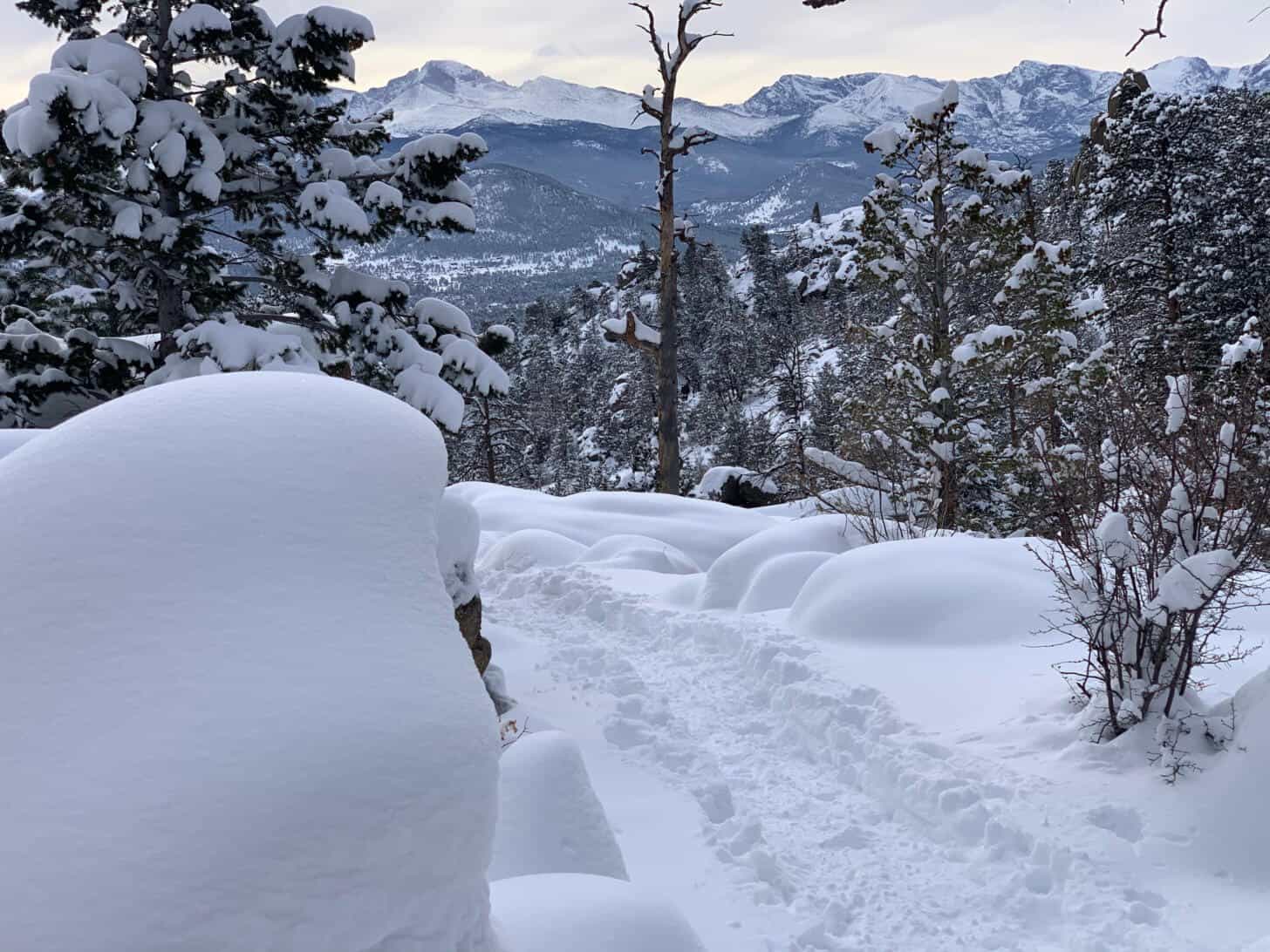
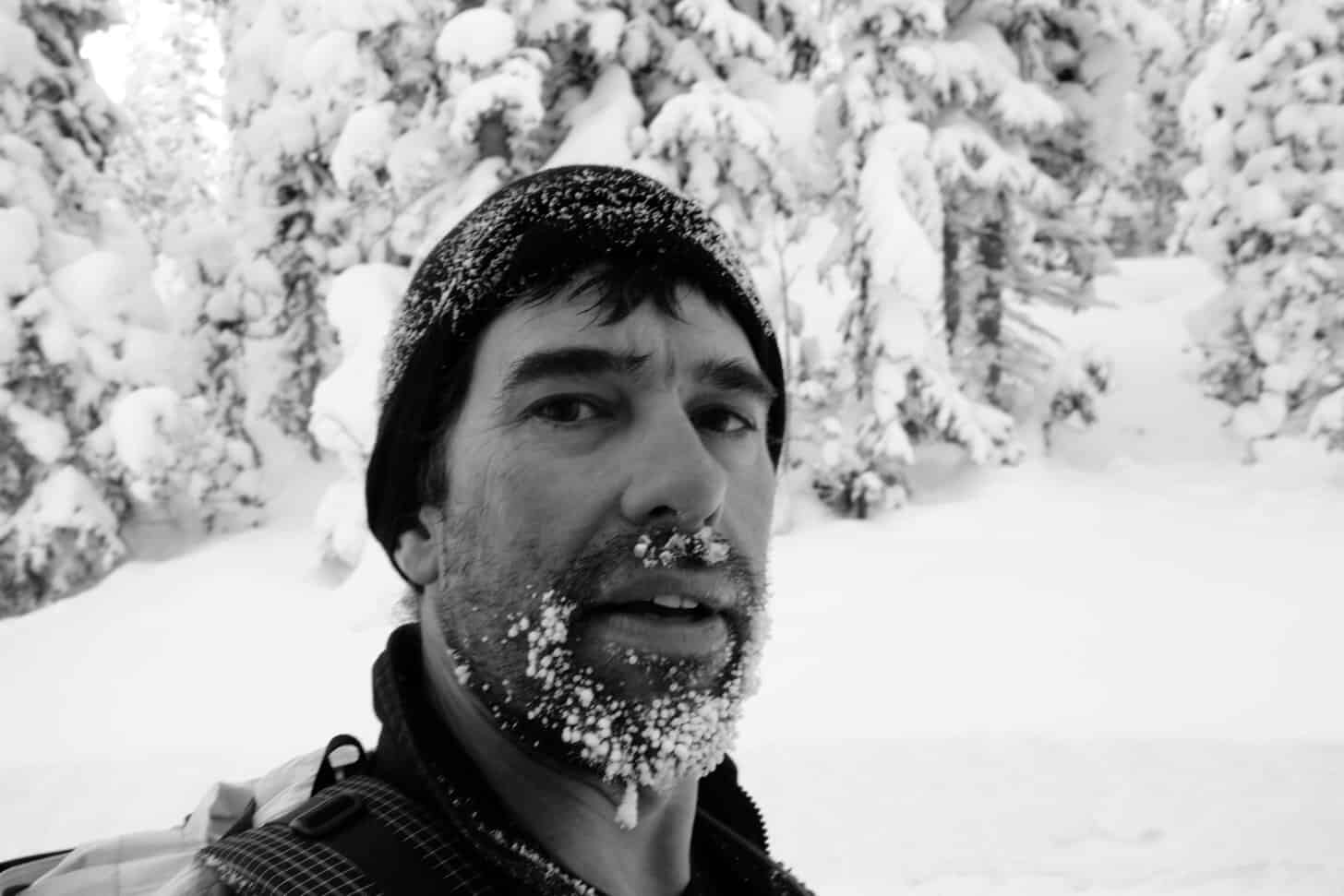
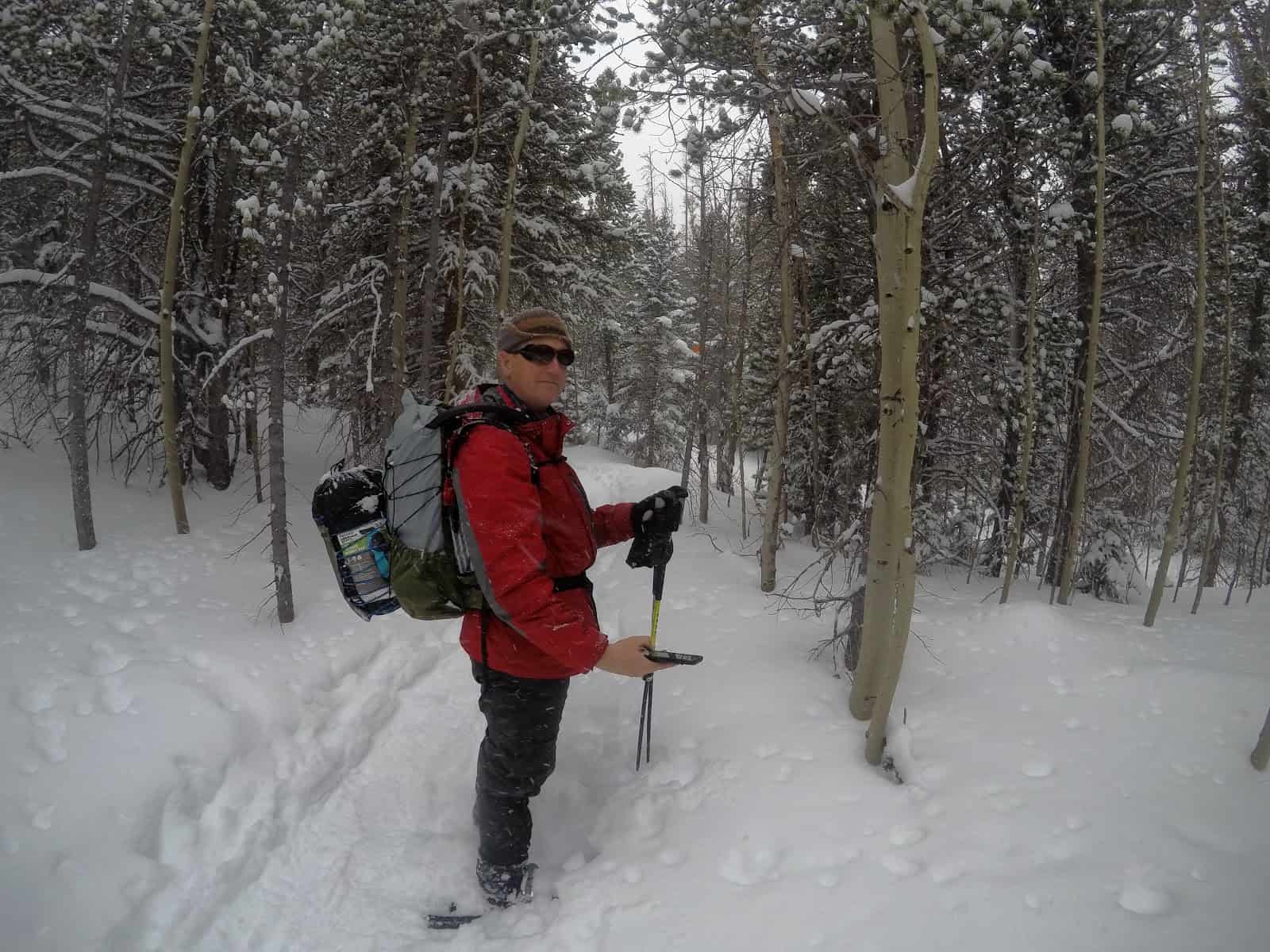
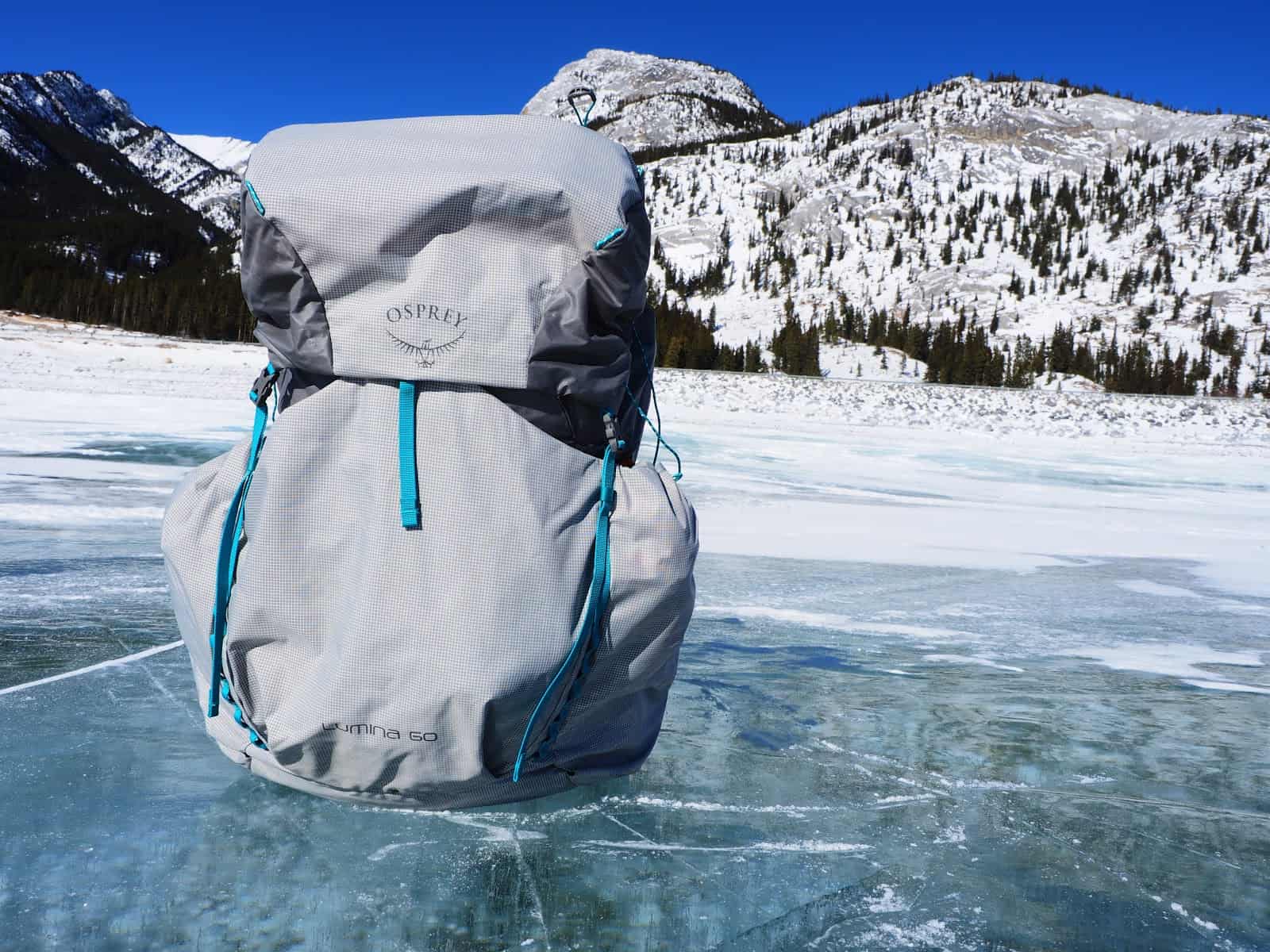
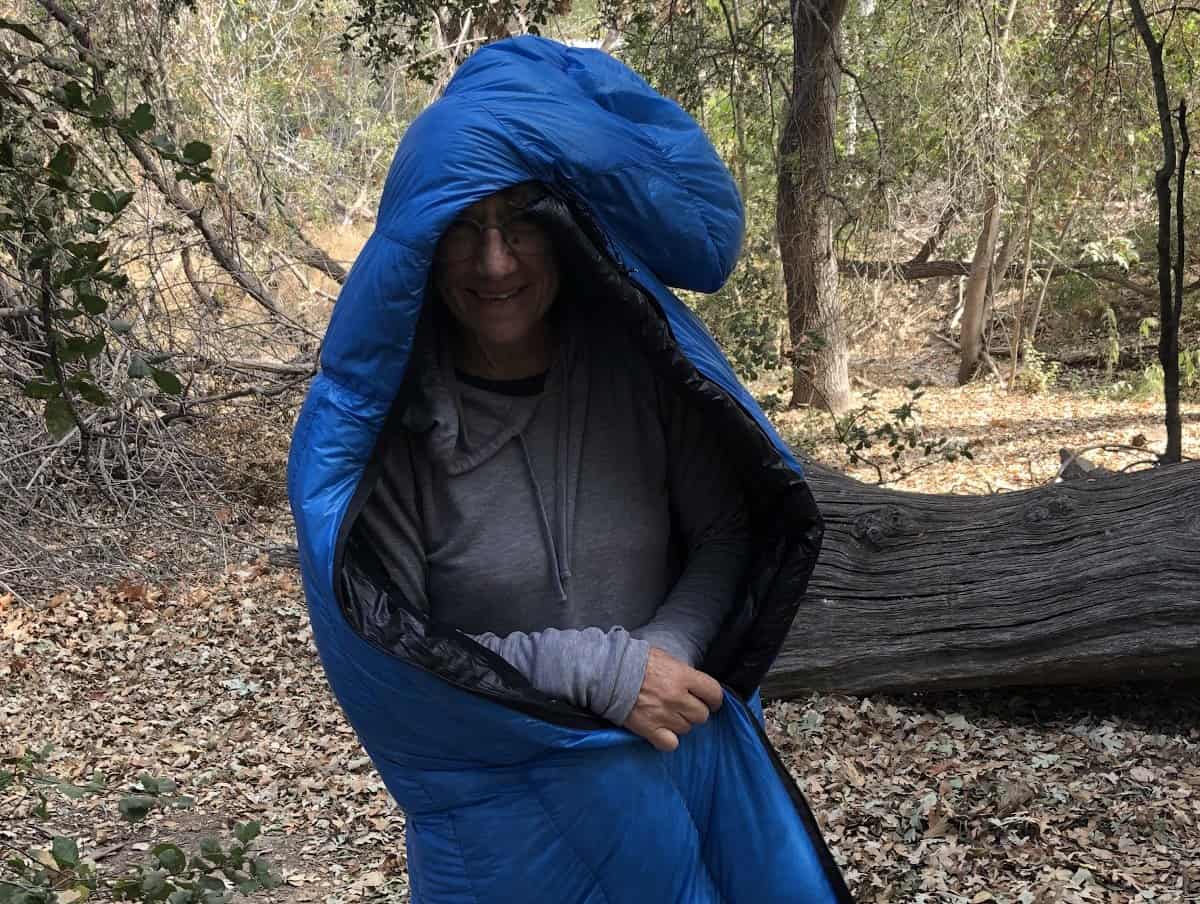

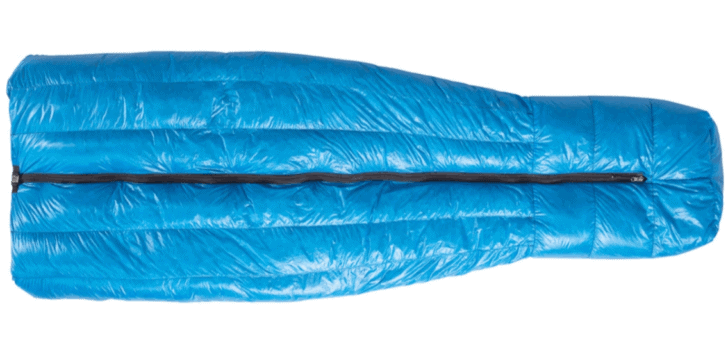
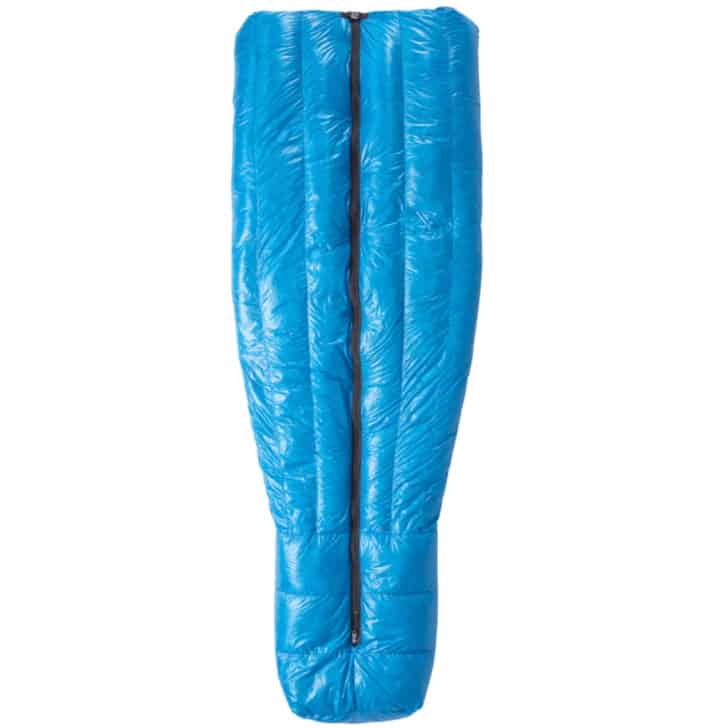
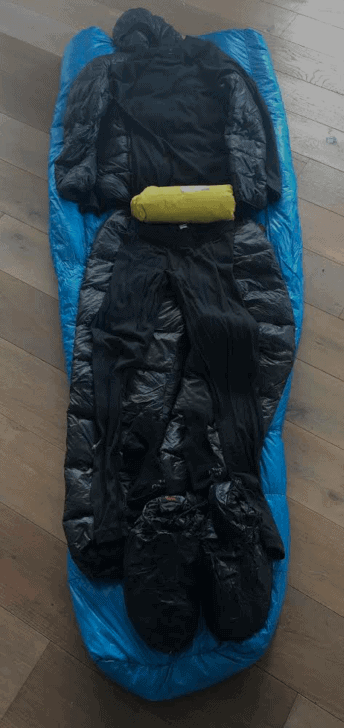
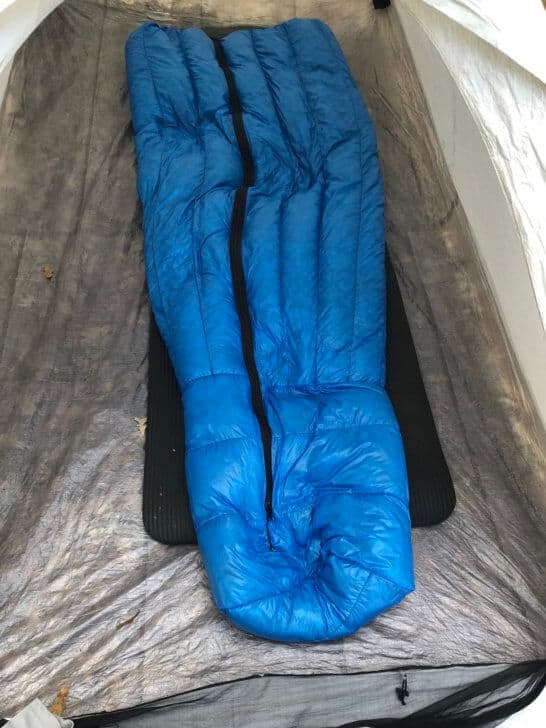
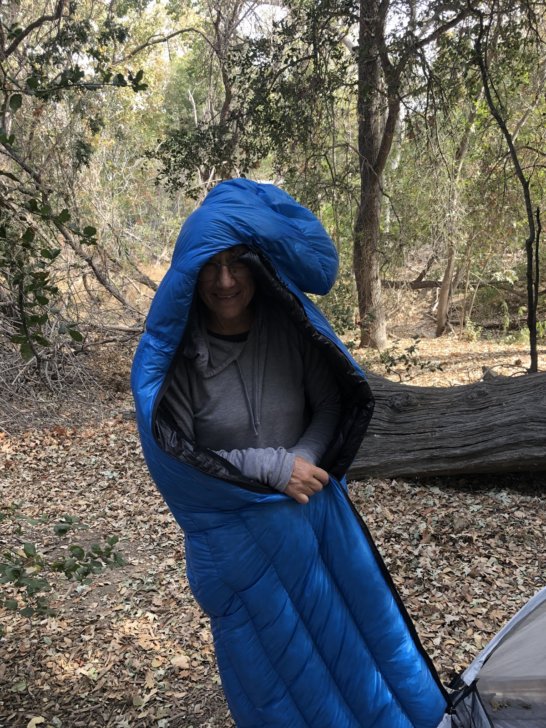
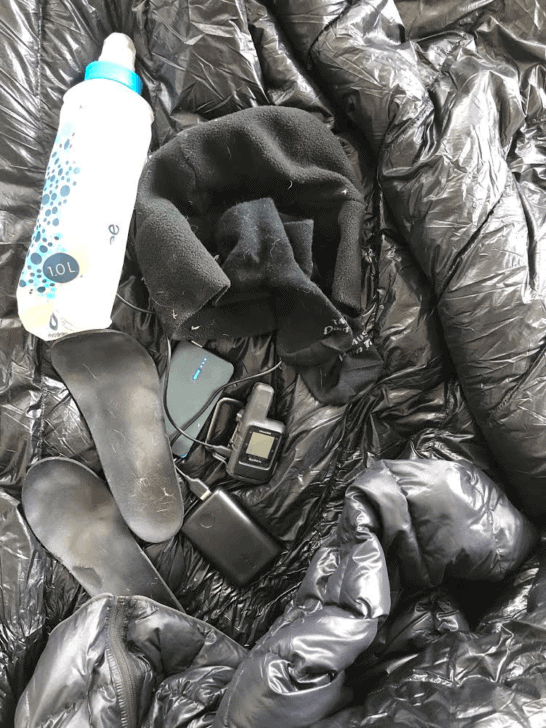
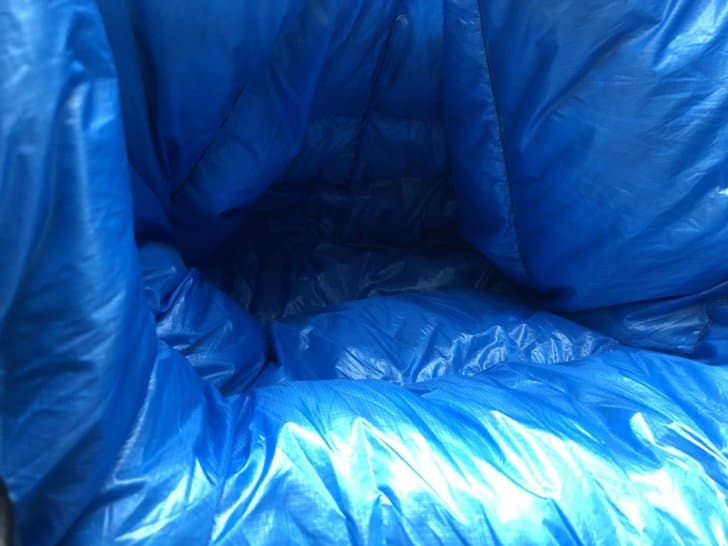
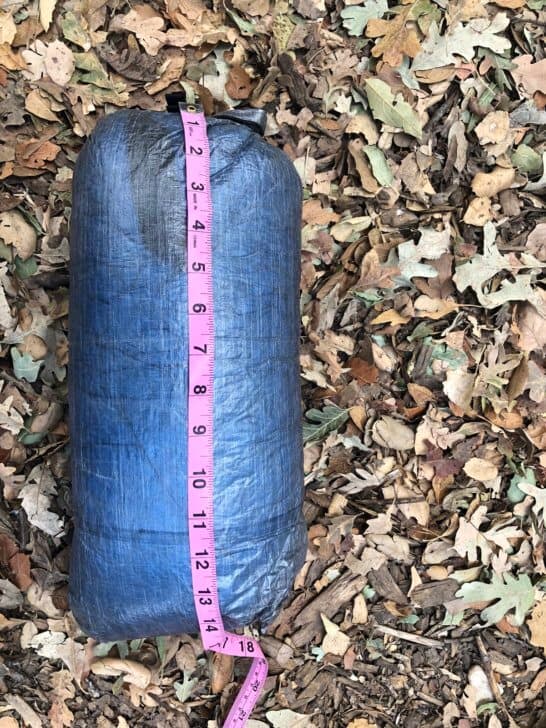
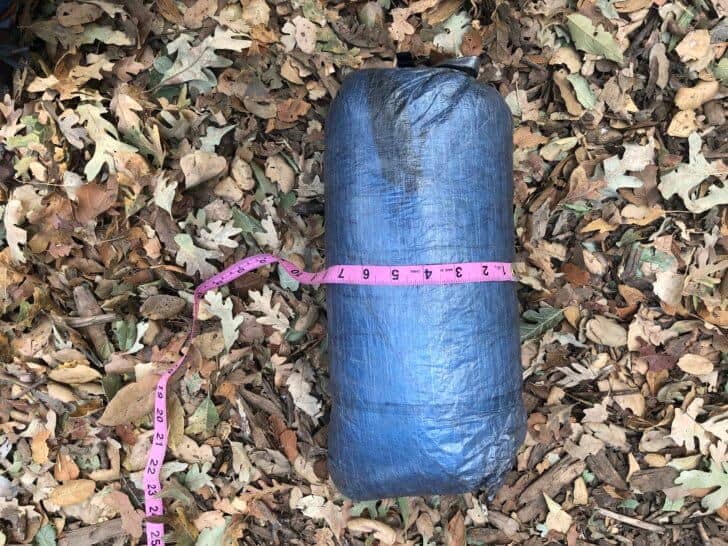
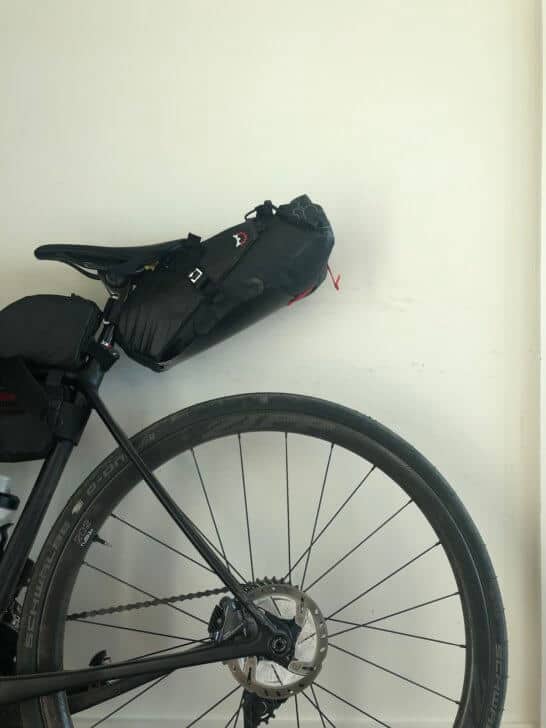
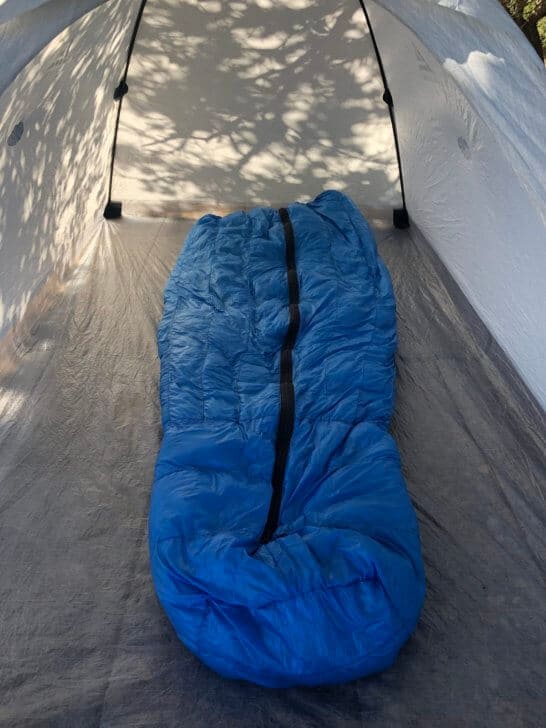
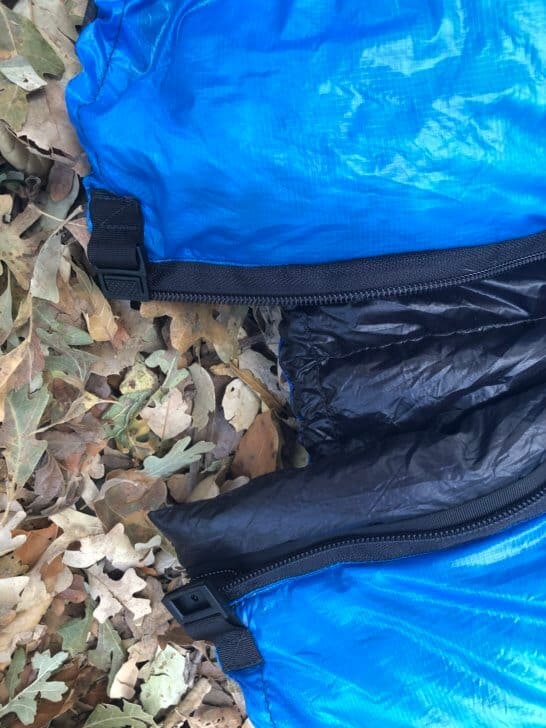
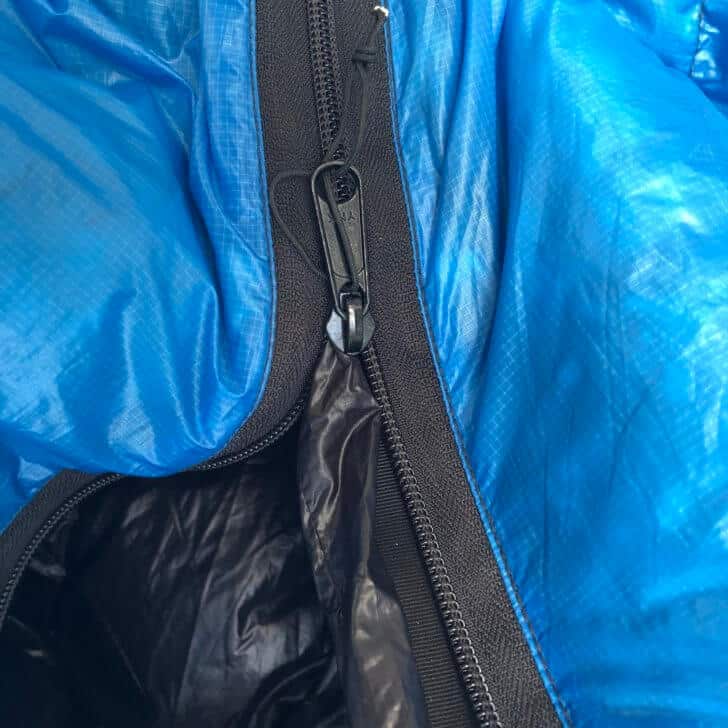

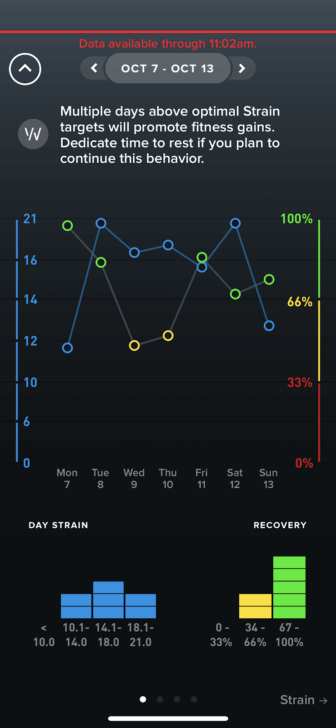
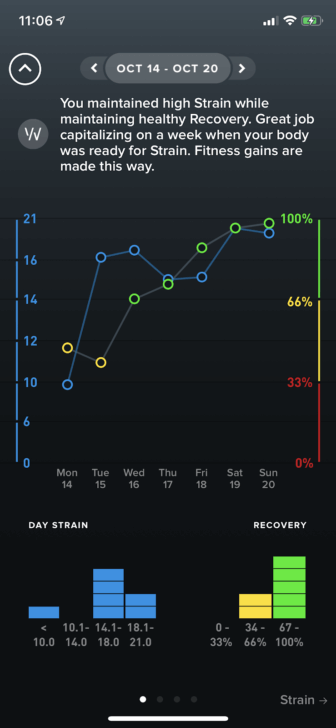
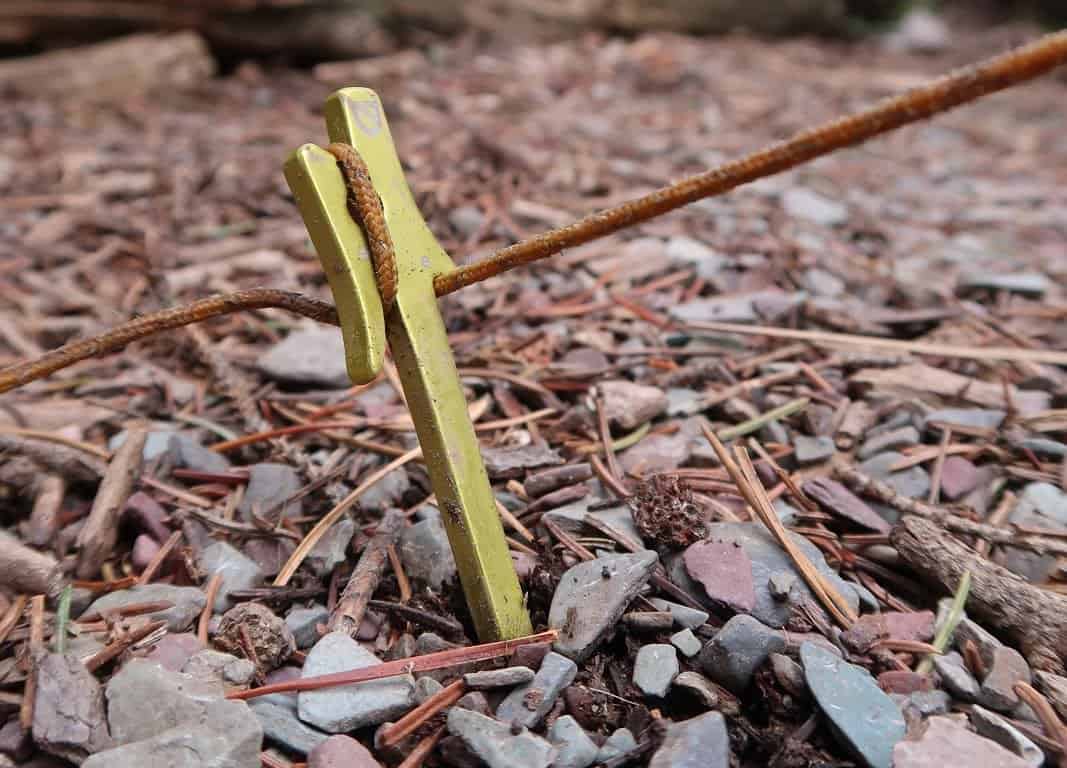
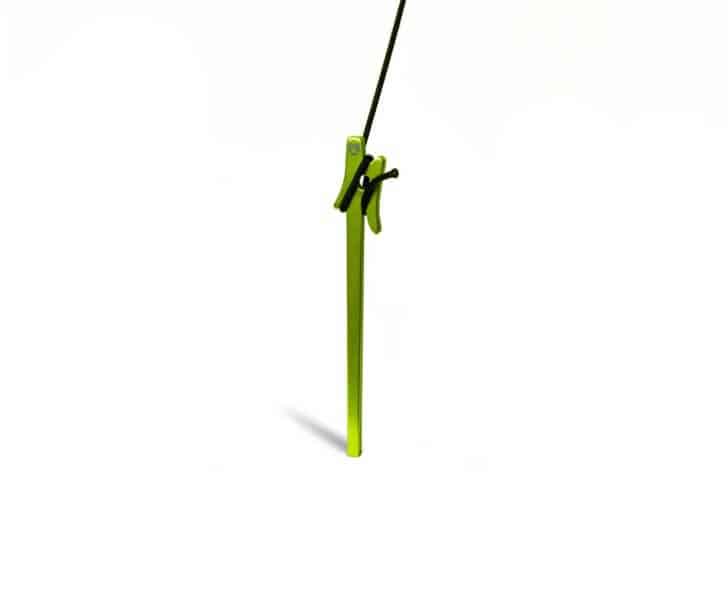
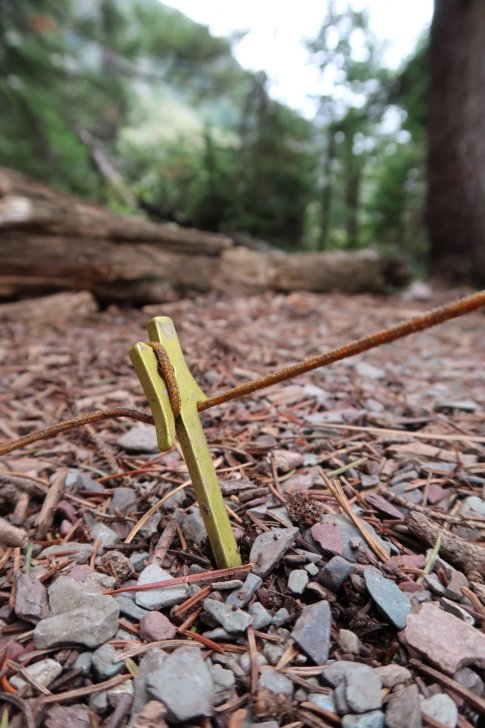
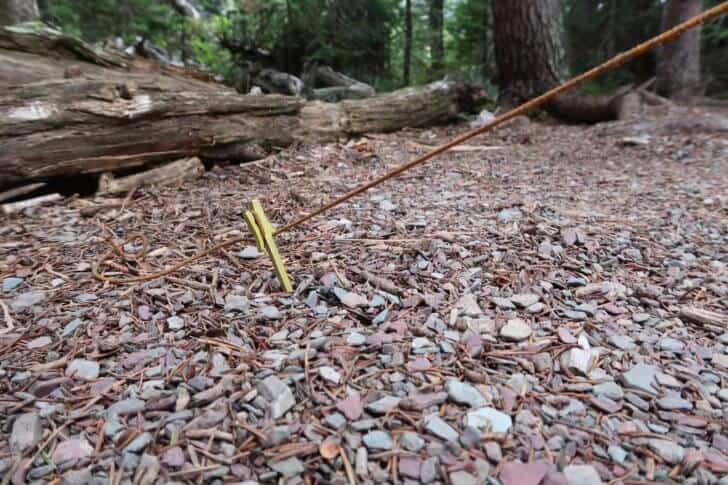
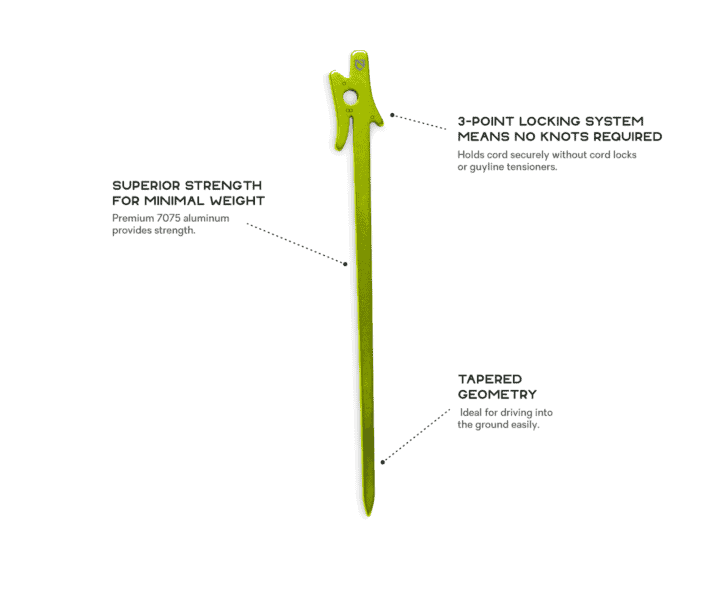
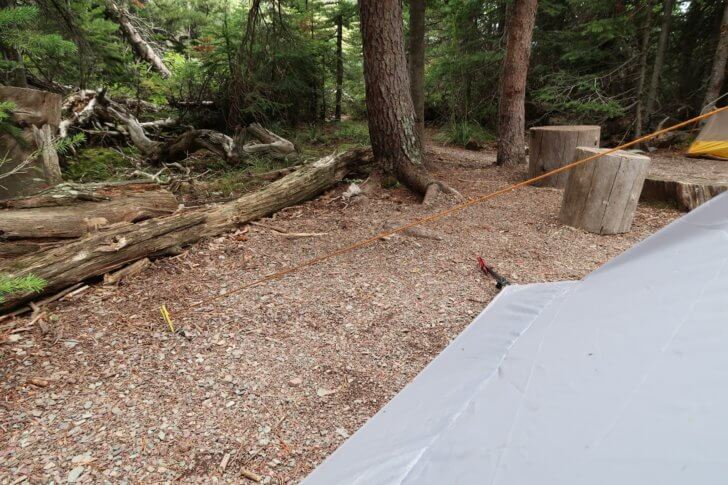
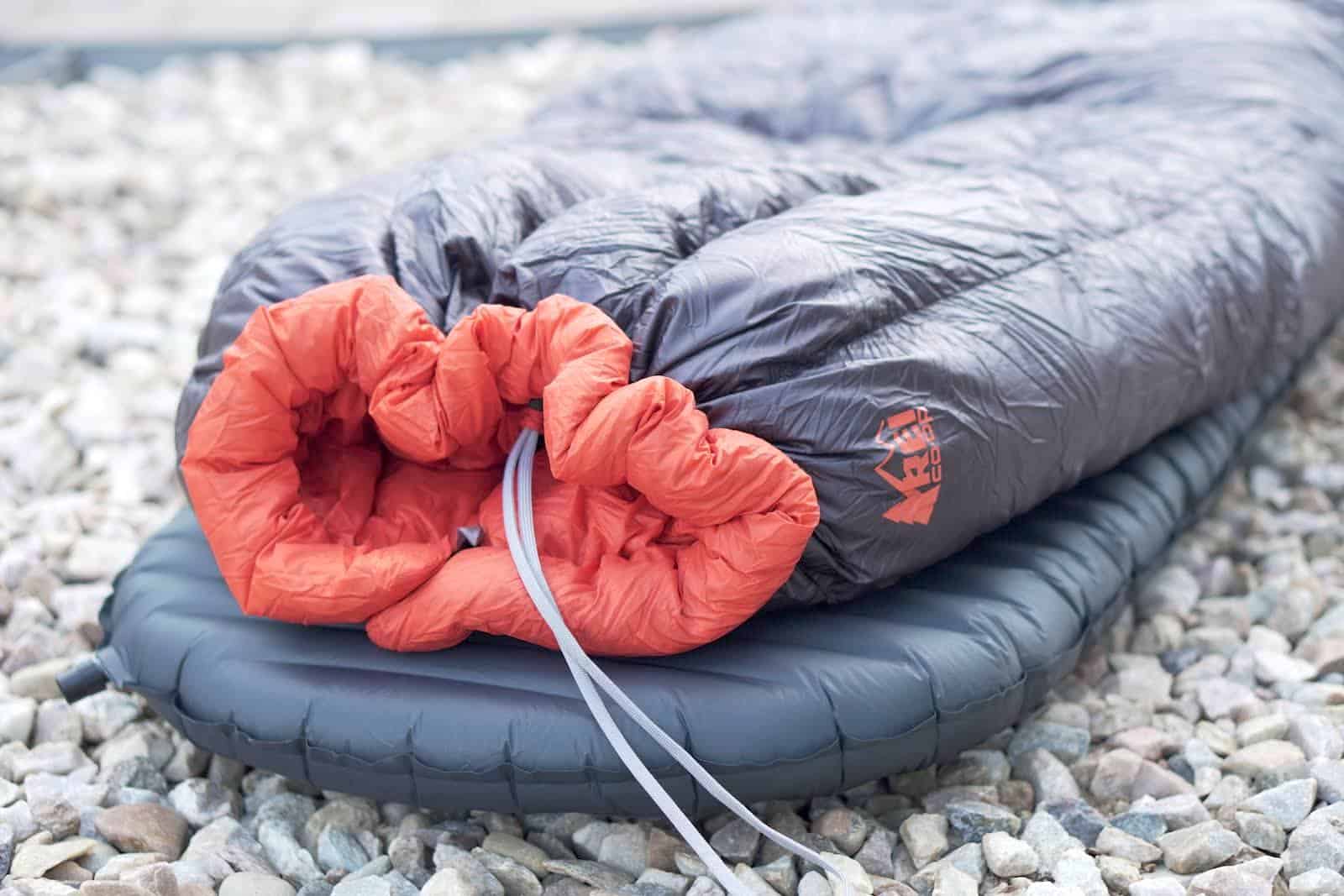
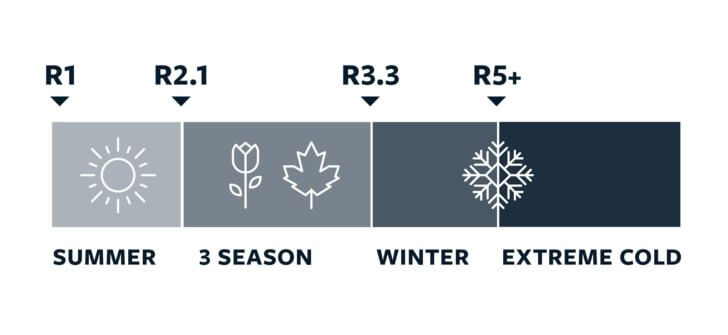
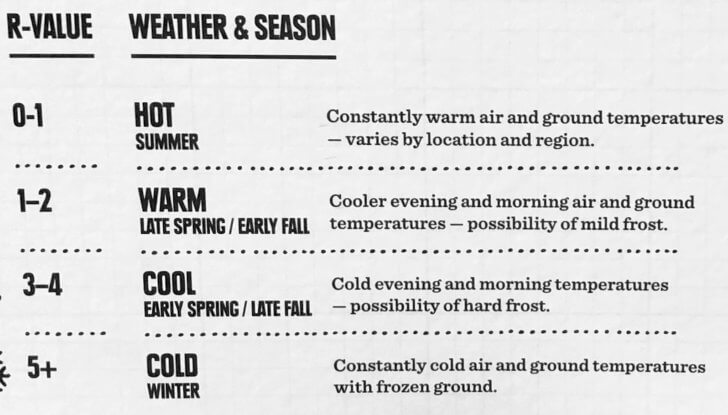
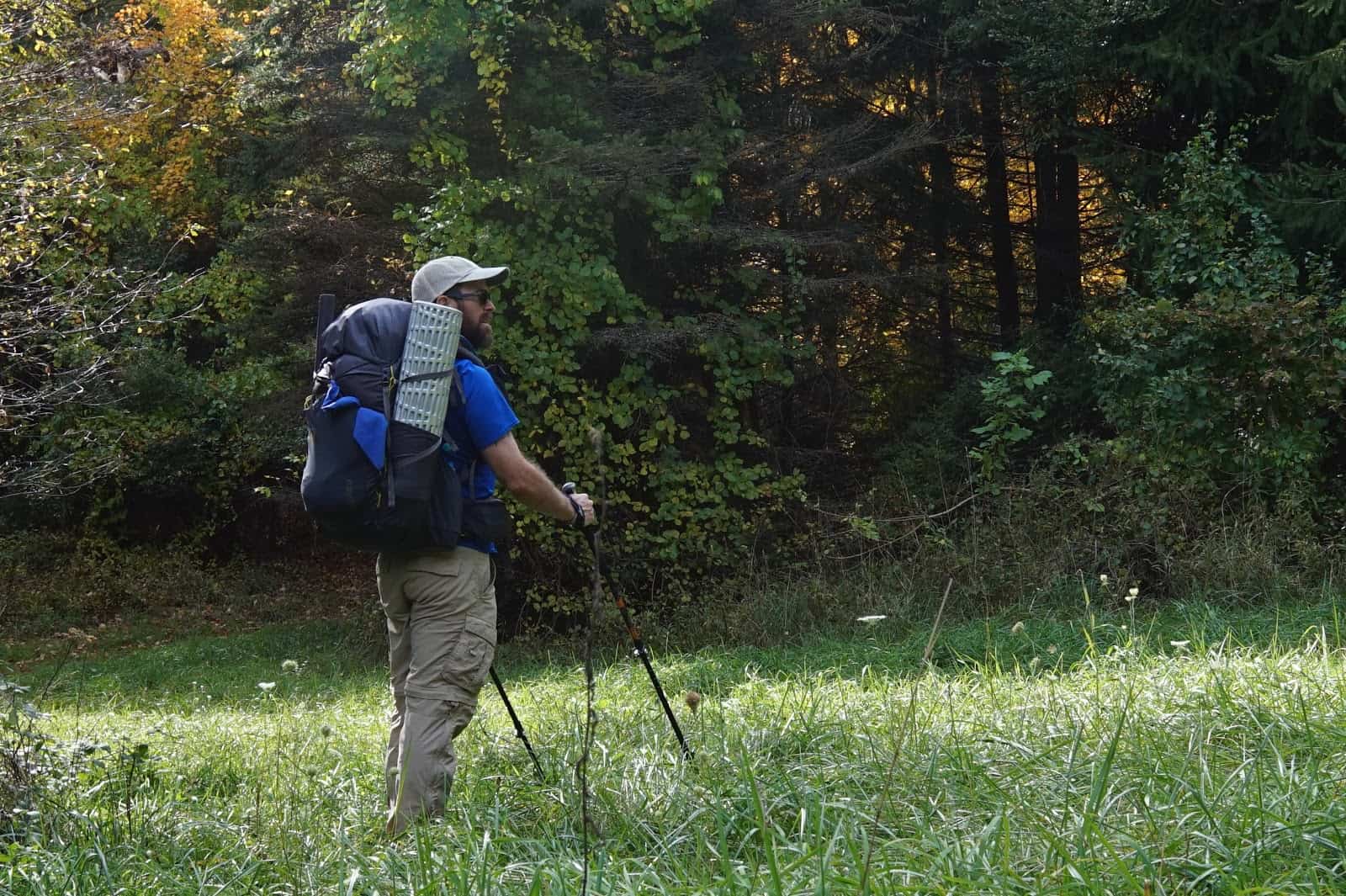
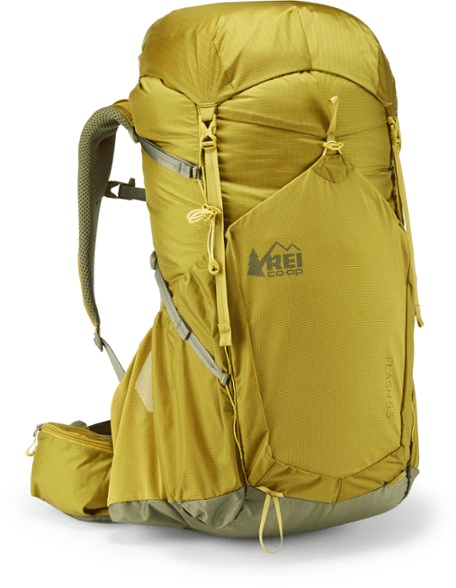
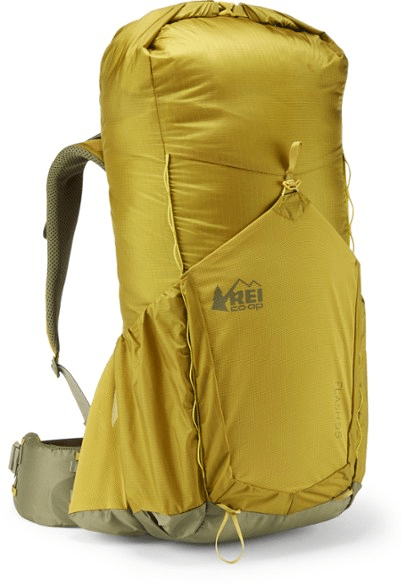
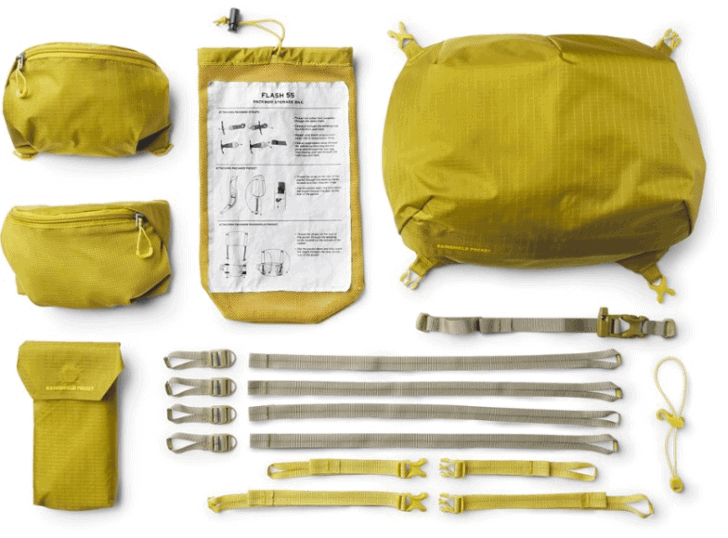
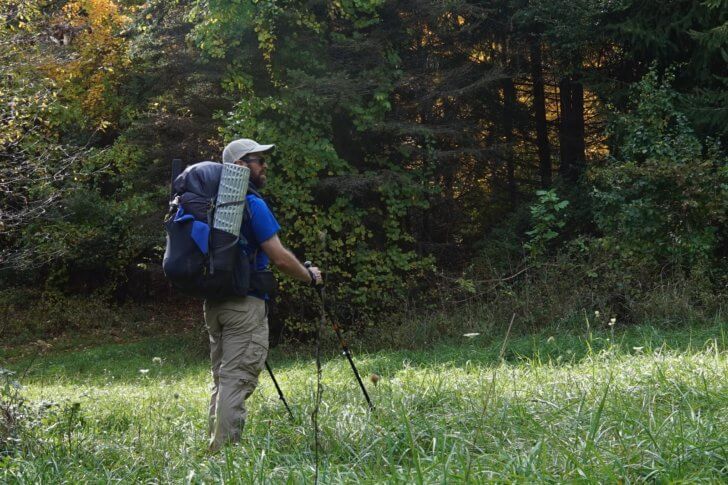

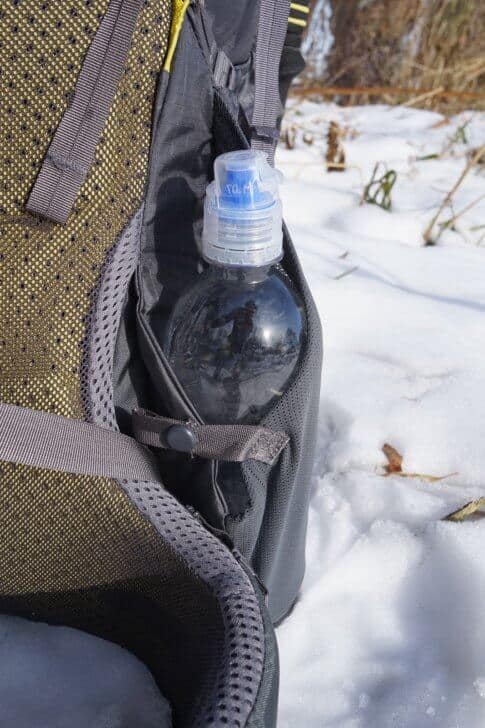
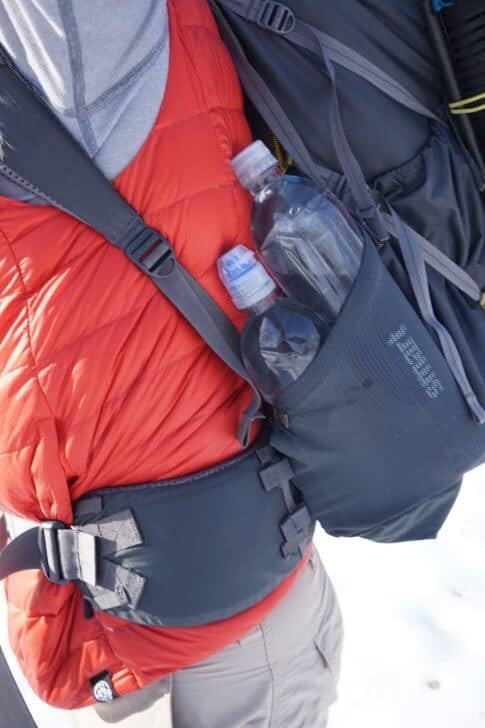
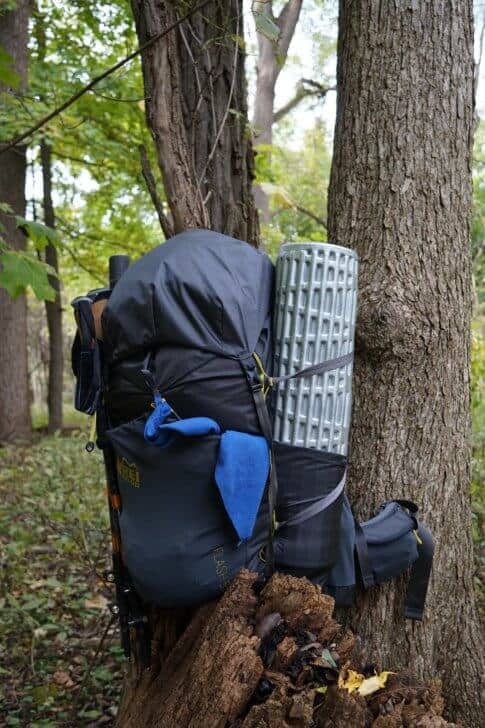

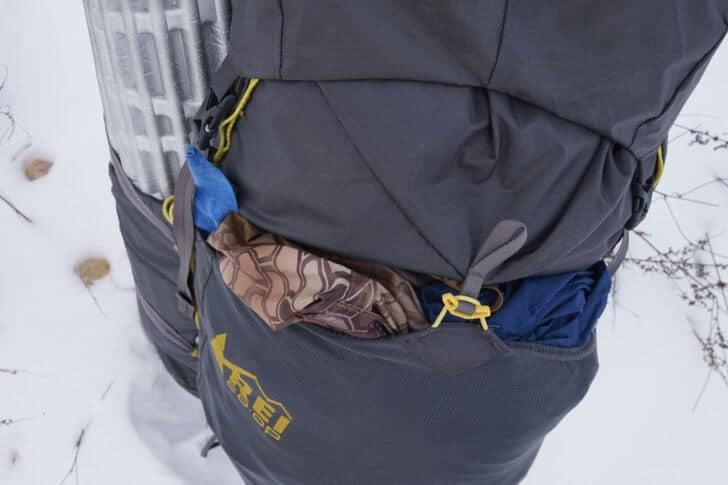
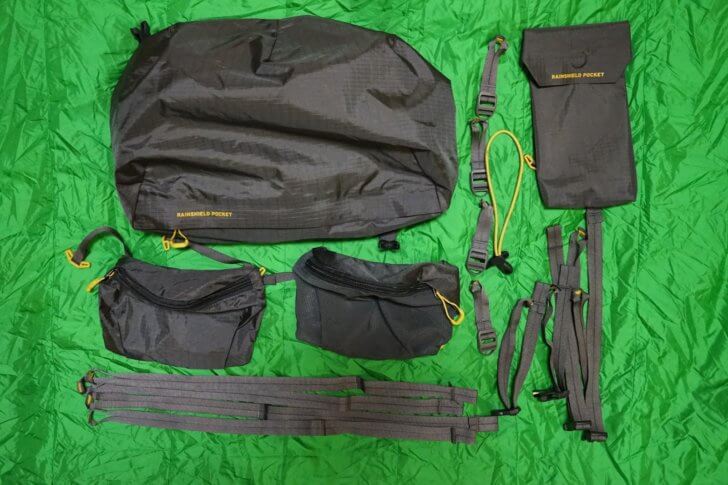 The Packmod elements.