


Introduction
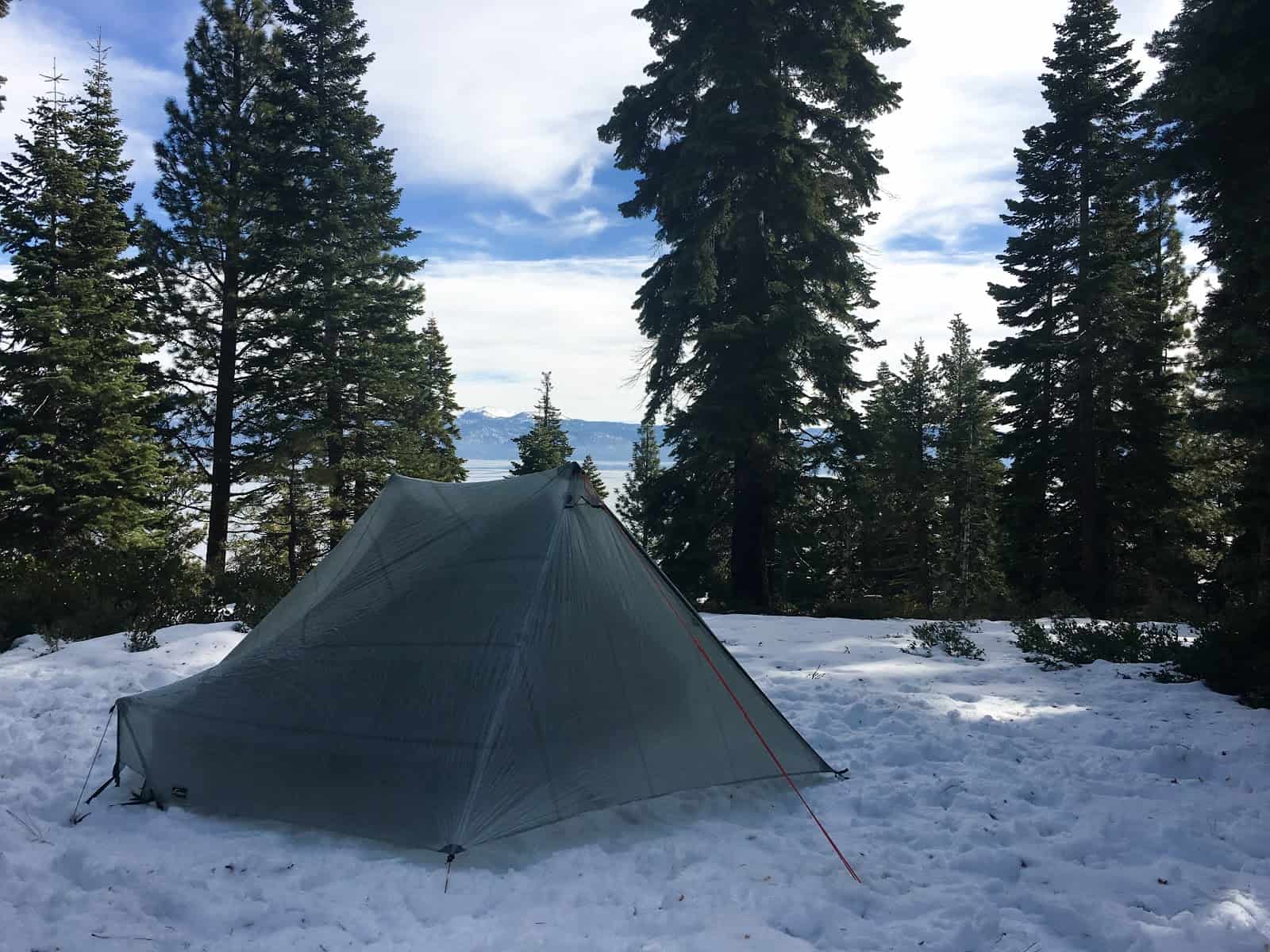
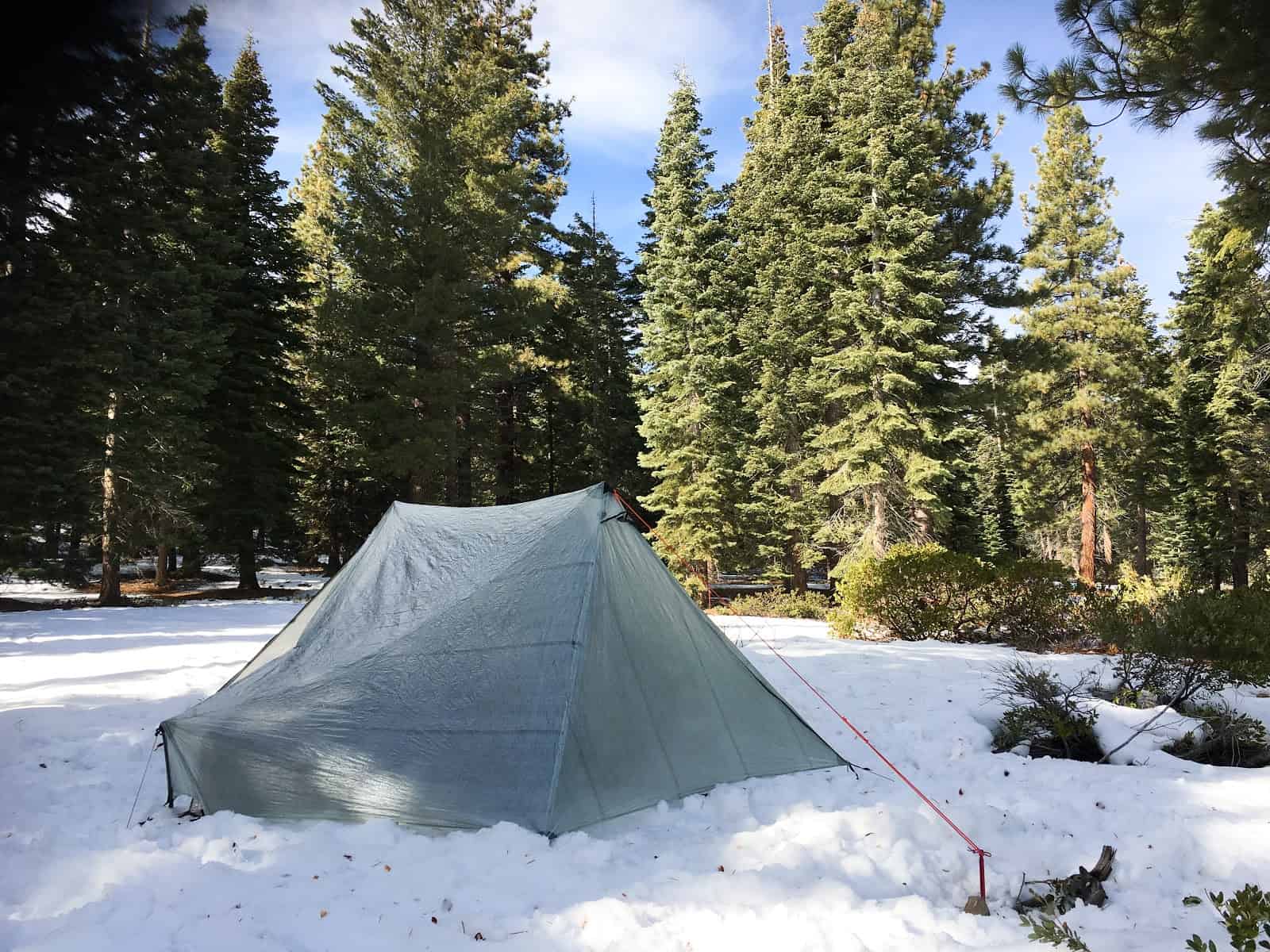
The Tarptent Stratospire Li is a roomy and stable two-person DCF shelter with well-considered features. It sets up quickly, stays taut in rough conditions due to DCF construction and Tarptent’s proprietary built-in tensioners, and has enough chops for year round use. I tested the Stratospire Li during an eight-day trek through Montana’s Absaroka-Beartooth Wilderness in the summer/fall shoulder season. Weather conditions were all over the map, meaning I had the opportunity to observe this shelter’s performance during clear (but cold) nights, light rain, mist, light snow, and driving wind.
Features and Specifications
Features
- Dyneema® fabrics: strong and light
- Seams are bonded and sewn
- Dual trekking pole set-up
- Double wall
- Dual vestibules are spacious and provide for dual entry
- Interior can be set up independently from the rest of the shelter
- Tarptent’s optional SideCar attachment turns either vestibule into a separate sleeping compartment for a pet or a kid (or both!)
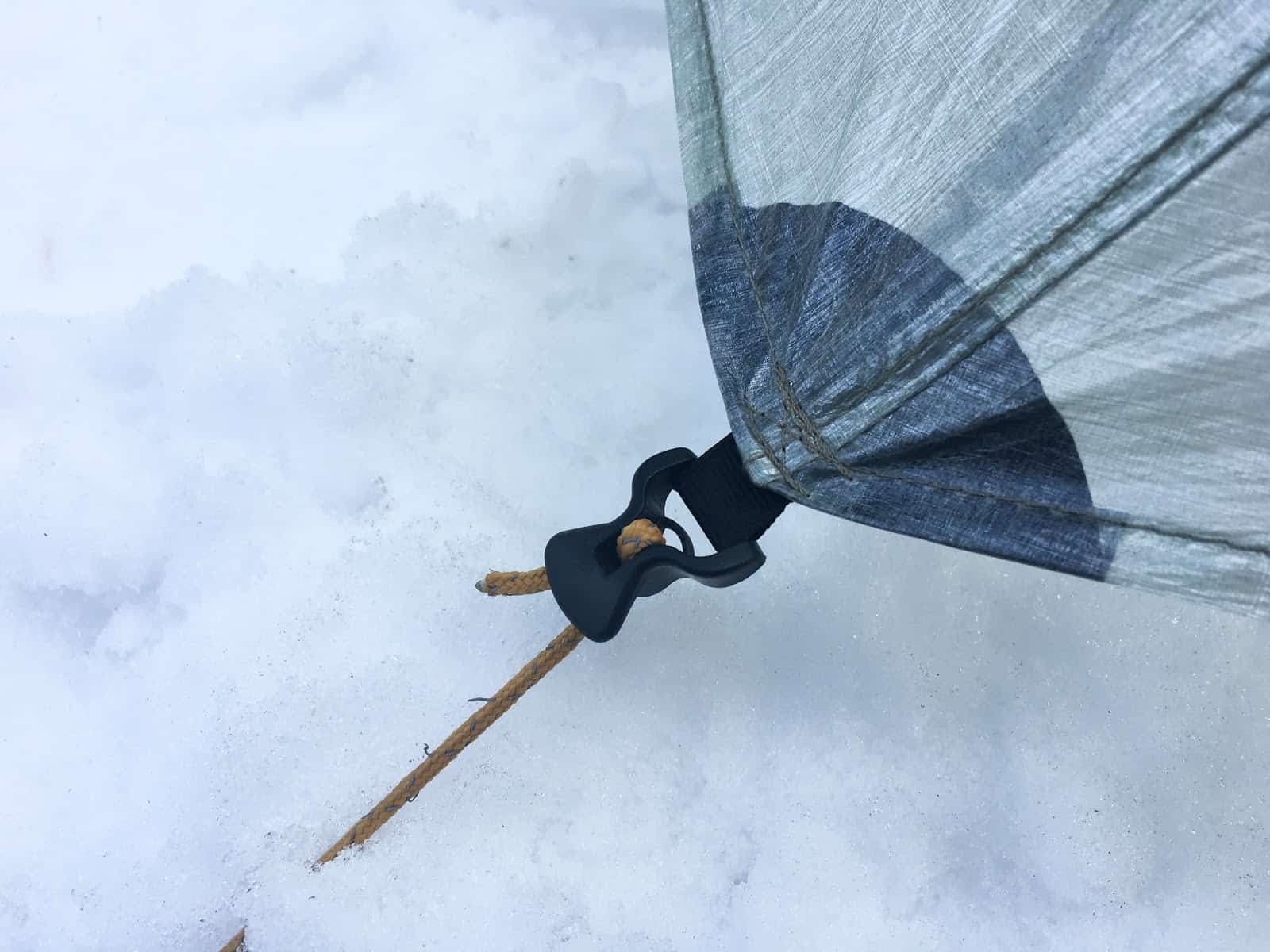
- PitchLoc™ foldable corners and integrated line tighteners
- Reflective spectra cord guylines
- Catenary ridgelines
Specifications
- Sleeps: 2
- Seasons: 3+
- 8,000mm+ hydrostatic head pressure rating
- Manufacturer provided weight:
- 26 oz (738 g) tent body (fly, interior, guylines, carbon fiber struts, and stuff sacks)
- 1.7 oz (48 g) stakes
- Measured weight:
- 29.5 oz (836 g) tent body (fly, interior, guylines, carbon fiber struts, and stuff sacks)
- 1.7 oz (48g) stakes
- Fly: 0.51 oz (14.5 g) / yd² Dyneema
- Floor: 1 oz (28.3) / yd²
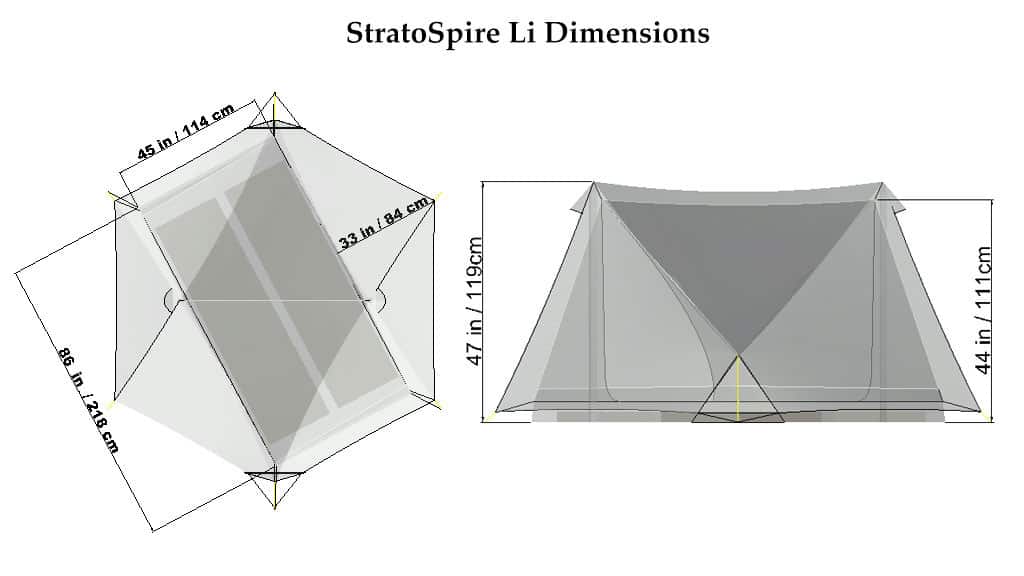
- Interior Height: 45 in (115 cm)
- Floor Width: 45 in (114 cm)
- Floor Length: 86 in (218 cm)
- Stakes: 6 x 6 in (15 cm) Easton Nanos (included)
- Packed size: 16 in x 5 in (41 cm x 12 cm)
Compared To
The Stratospire Li is most similar to the Zpacks Duplex: both are two-person DCF shelters designed to set up with trekking poles. An in-depth head-to-head performance review of the two is in order, but in the meantime, we can compare some of the basic features and specifications.

| Shelter | Zpacks Duplex | Tarptent Stratospire Li |
|---|---|---|
| Total weight | 19 oz (538.7 g) | 26 oz (737.1 g) |
| Tent body material | 0.51 oz (14.5 g) / yd² Dyneema | 0.51 oz (14.5 g) / yd² Dyneema |
| Floor material | Floor: 1 oz (28.3) / yd² | Floor: 1 oz (28.3) / yd² |
| Trekking pole position | Centered | Offset |
| Design | A-frame (six panels) | Octogonal (8 panels) |
| Vestibule | 2 | 2 |
| Doors | 2 | 2 |
| Independent interior | No | Yes |
| Interior Height | 48 in (121.9 g) | 45 in (114.3 cm) |
| Interior Width | 45 in (114.3 cm) | 45 in (114.3 cm) |
| Floor Length | 90 in (228.6 g) | 86 in (218.4 cm) |
| Stakes | 8 required (0 included) | 6 required, 2 optional, ( 6 included) |
| Cost | $599.00 | $679.00 |
The Duplex is a few inches longer and taller (interior) than the Stratospire Li. It features an A-frame six-panel design and weighs 19 oz (538.7 g). The Stratospire Li features an octogonal eight-panel design and is about $80.00 more expensive than the Duplex. It weighs 26 oz (737.1 g). The fly can set up independently from the interior. Both shelters are constructed of identical weight Dyneema Composite Fabrics and measure 45 in (114.3 cm) across the bottom of the floor.
Strengths and Limitations
Strengths
- Dyneema fabric resists condensation and will not absorb moisture, sag, or stretch
- Double wall design means any condensation that does occur won’t touch your stuff
- Octogonal design holds up extremely well in high winds
- Spacious vestibules
- Double door design is easy to get in and out of
- Thoughtful features: magnetic snaps, zipper covers to reduce condensation drip, PitchLoc corners, and integrated line tighteners
- Lots of optional features: solid wall design for four-season use, side-car attachment, trekking pole “handle up” set-up
Limitations
- Extremely high price tag ($679.00)
- Low stretch of DCF means you must exercise some precision in the pitch
- Shallow pitch angle could be a problem with serious snow loads
- Small interior gear pockets
- Feels bulky in a pack
Commentary
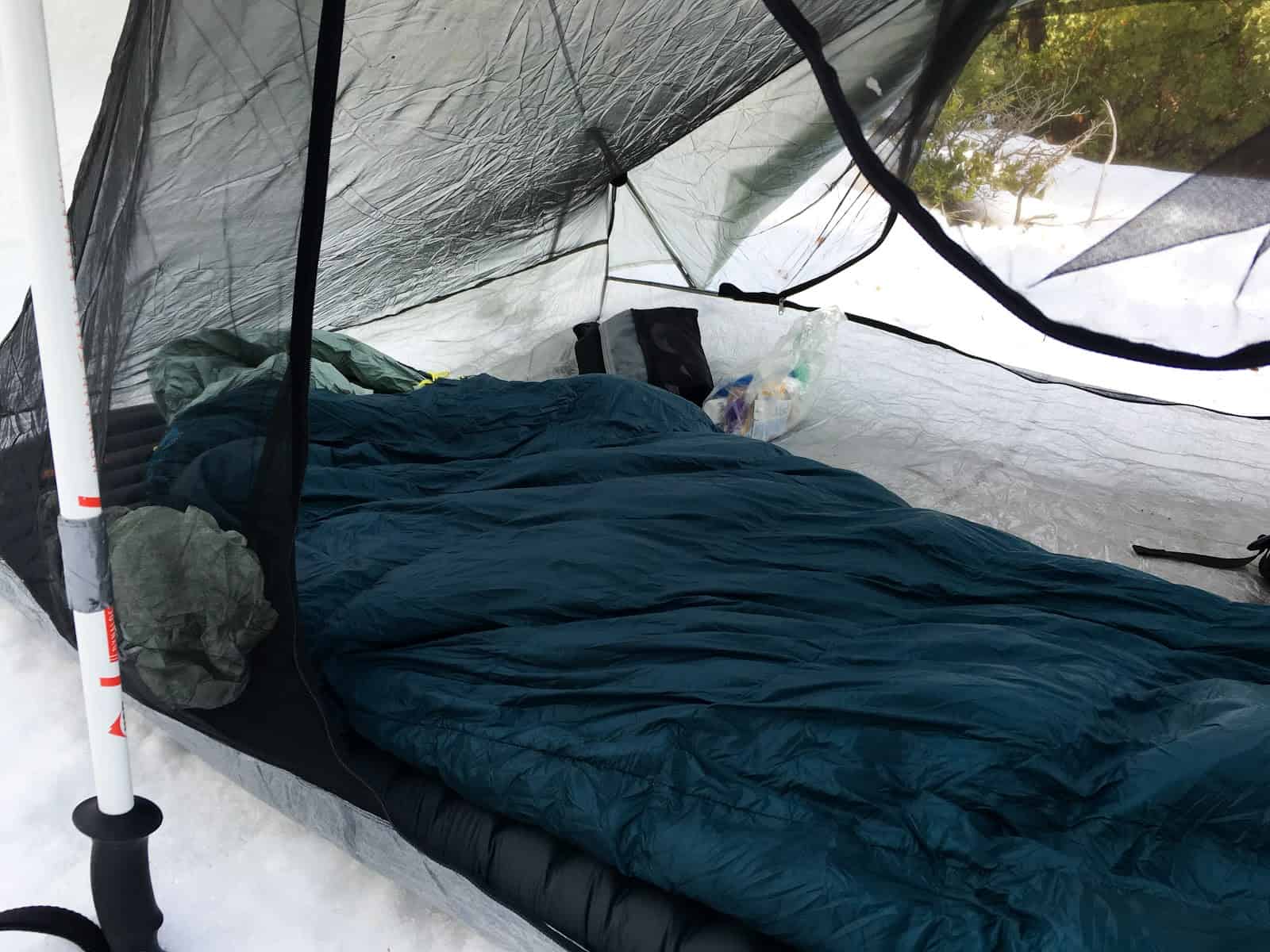
This is a roomy, tough, well-designed shelter. Tarptent rightly lauds the Stratospire Li’s performance in windy conditions.. The eight-panel design minimized noise and flap on a long, cold, windy night high in the Beartooths. The ridgeline remained tight (with the aid of the two optional stakes and tie-outs), and the integrated line tighteners were taut after ten hours of high-speed gusts. In short, Montana threw quite a lot of wind at this shelter, and it didn’t budge. I was camping with a group of ten hikers, and I was one of the few who passed an uneventful and cozy night.
The floor of the Stratospire Li is rectangular, but the fly is octagonal, and the trekking poles are offset. This can require a bit of thinking during setup, particularly if you are in a tight situation or your spot isn’t optimal. DCF fabric has very little stretch, meaning your stake angles and placement need to be a bit more precise than with a silnylon shelter. Make sure to watch Tarptent’s setup video. After viewing that and pitching the shelter a few times in a yard, I had no problem getting the shelter pitched in under two minutes.
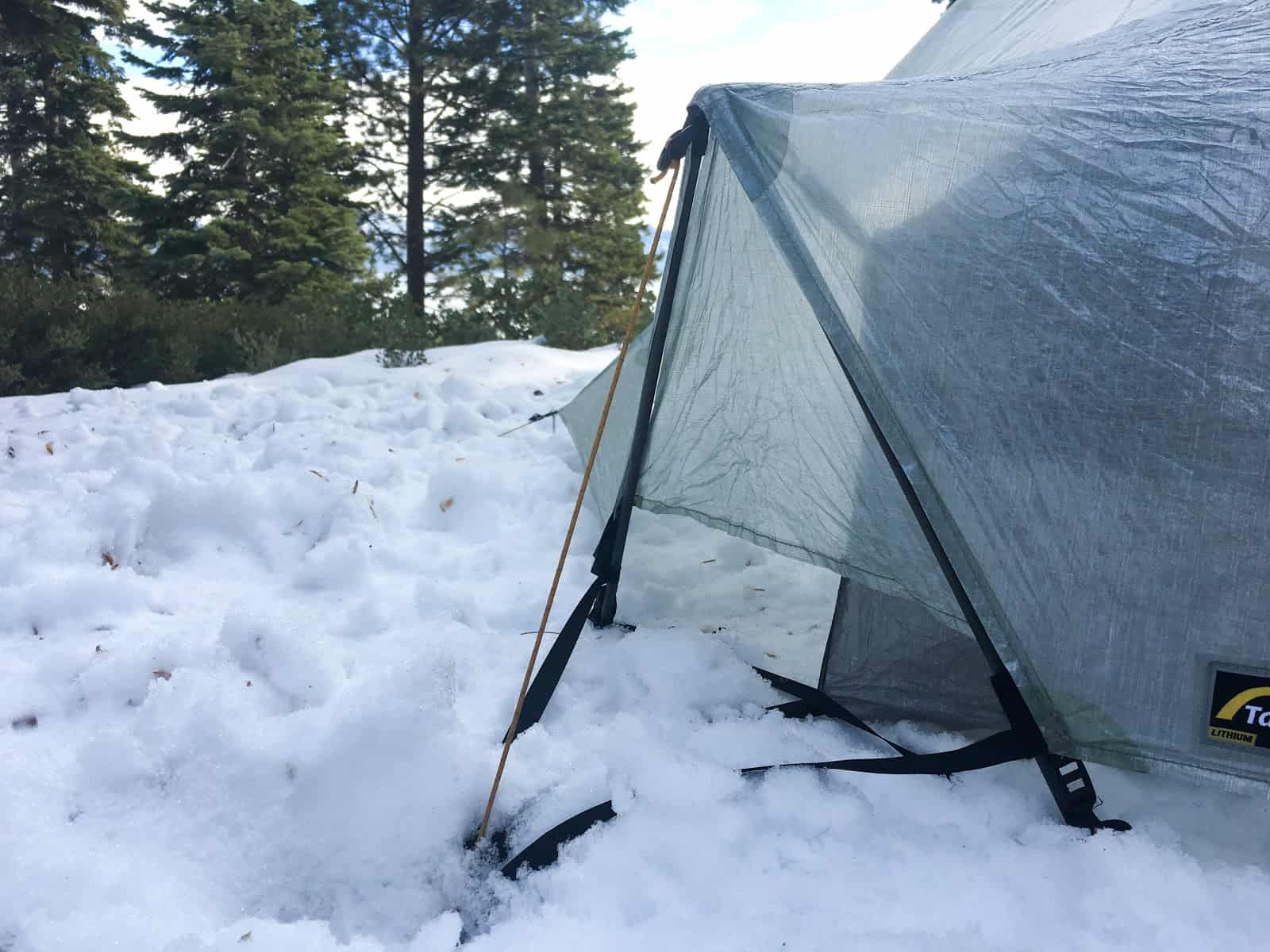
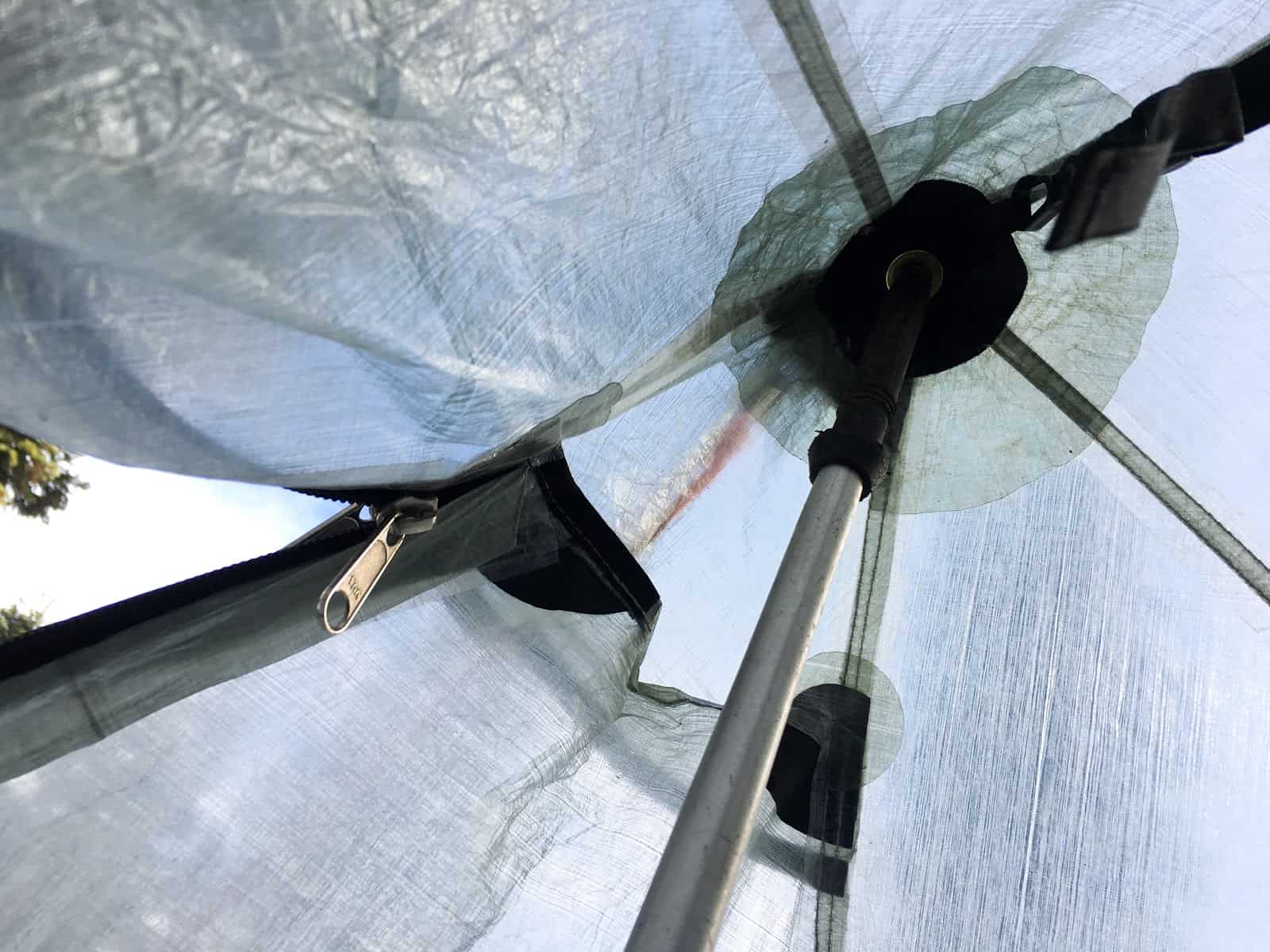
The shelter sets up with trekking poles in a handle-down configuration (although Tarptent sells an adaptor to allow the handles to face up). I’ve used a silnylon Tarptent for years and never worried about poking a hole in my shelter with the carbide tip of the trekking pole, but something about the nearly seven-hundred dollar price tag of the Stratospire Li gave me pause every time I set it up. The good news is, should you happen to (carelessly) puncture the Stratospire Li, the DCF construction makes it much easier to patch than silnylon.
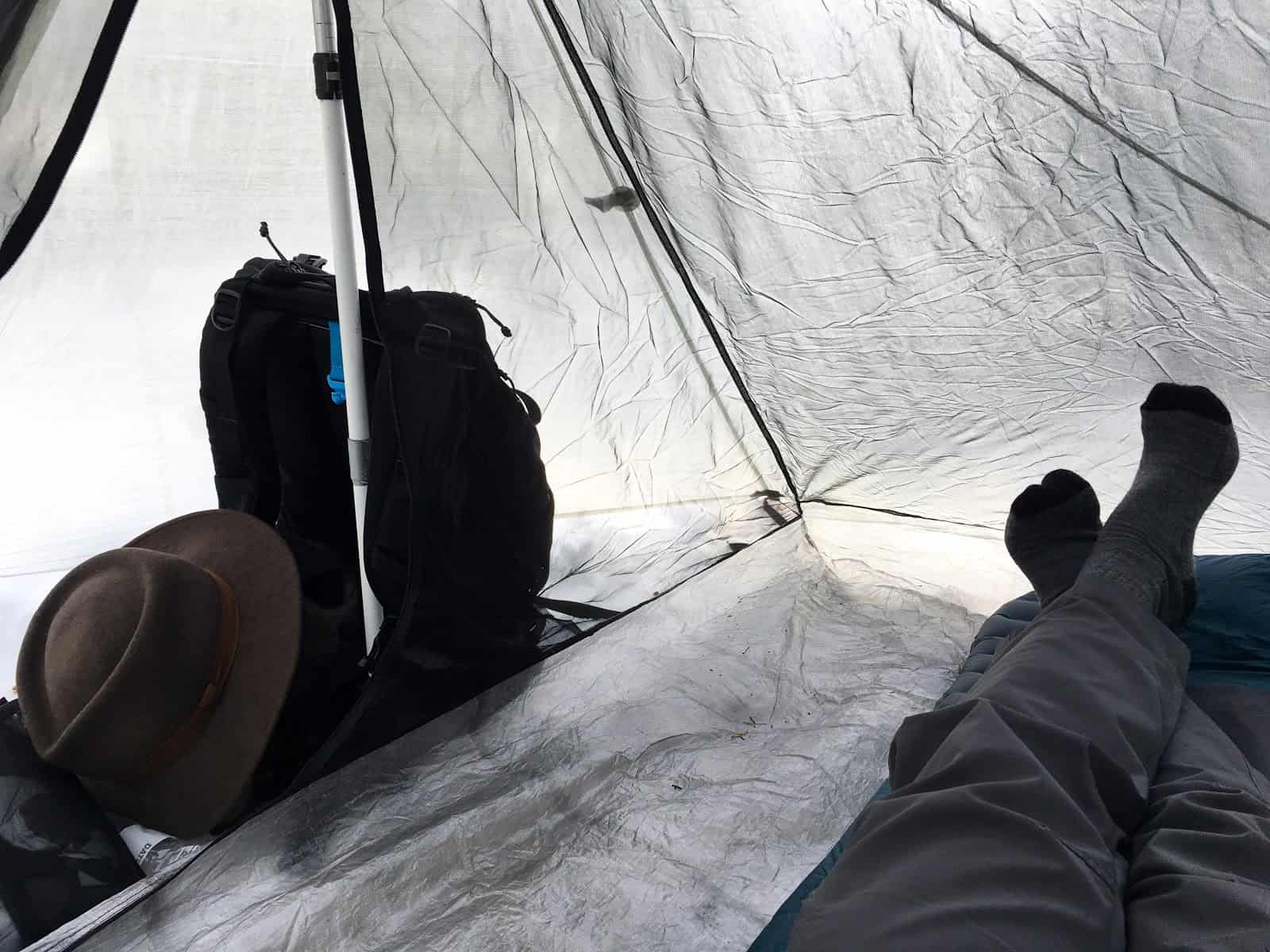
The shelter is roomy, with a 45 in (114.3 cm) wide and 86 in (218.4 cm) long bathtub floor. The apex height is 45 in (114.3 cm) tall. This space accommodates two standard sized sleeping mats with ease (or one standard mat and one wide mat with slightly less ease). There’s plenty of room to sit up and change clothes, even for tall hikers. Two doors and two vestibules make sharing the shelter as comfy as it gets, as well as optimizing airflow and views for those dramatic campsite days.
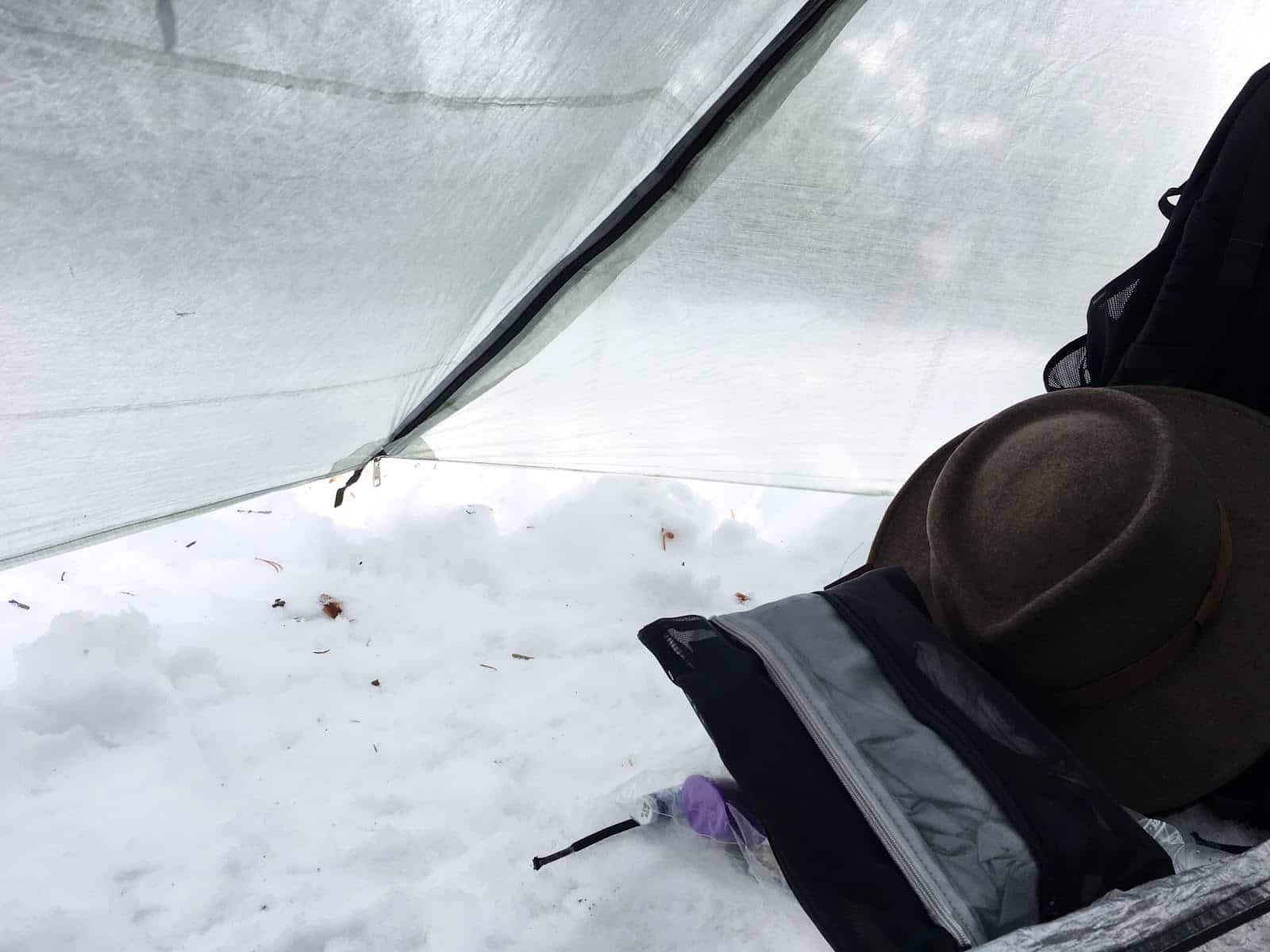
The vestibules are gigantic, more than large enough to accommodate cooking, wet gear, packs, dogs, or children. Tarptent sells an attachment to turn this vast space into a separate compartment should you be traveling with a child.
One side effect of these large vestibules is that the edge of the fly is quite far from the bathtub flooring after zipping the doors. The distance eliminates the “up-splash” problem (in heavy rain, water can splash up from the puddle created by the fly) occasionally experienced by smaller Tarptents.
Tarptent loaded the Stratospire Li with thoughtful features: floor and apex adjustment straps, storm sealed zippers, zipper flaps for drip protection, and magnetic closure loops to roll the outer fly up and out of the way.
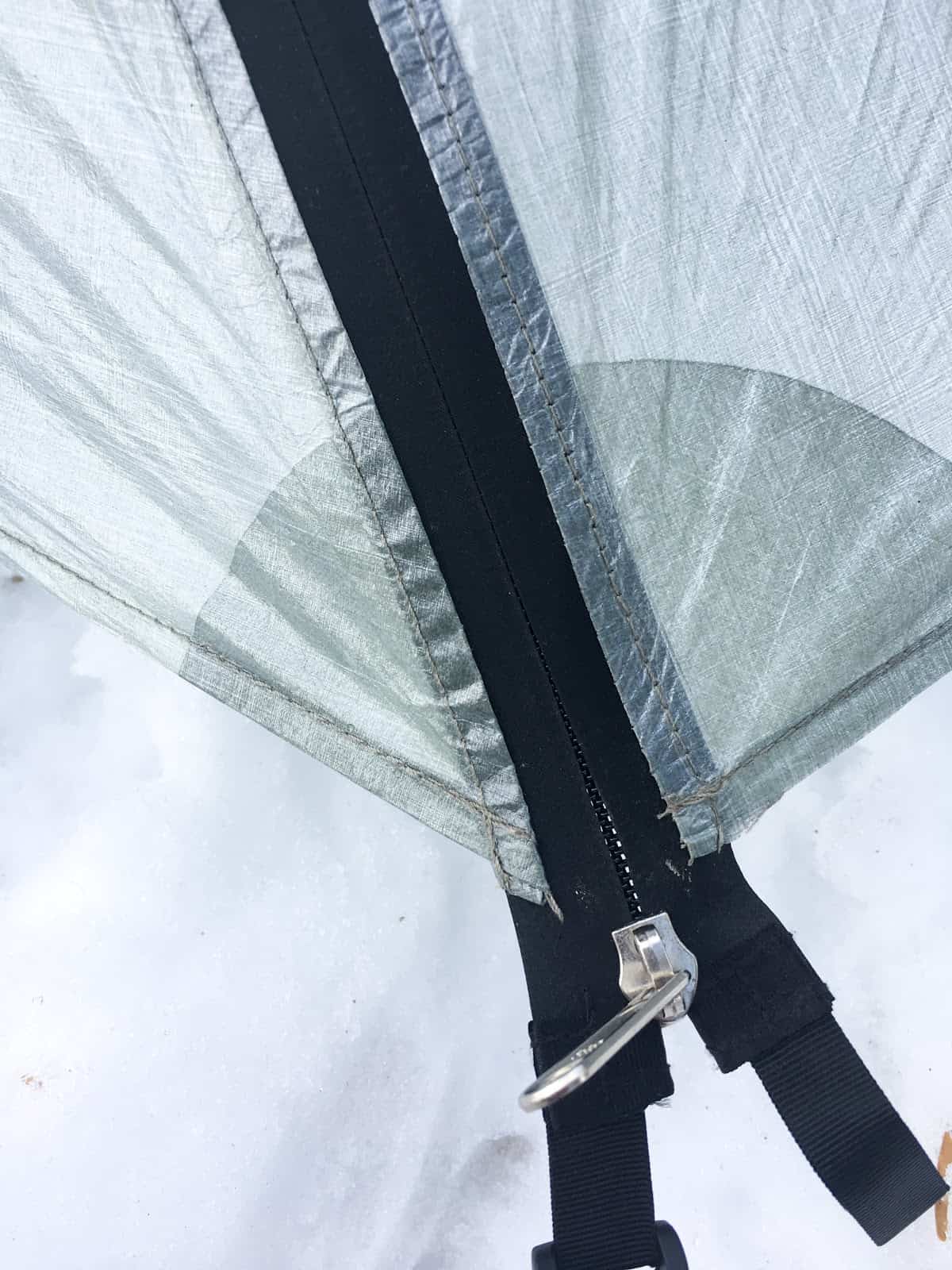
The zipper flap also snaps up out of the way with a magnet. Remember to do this before unzipping, or you will have a stuck zipper.
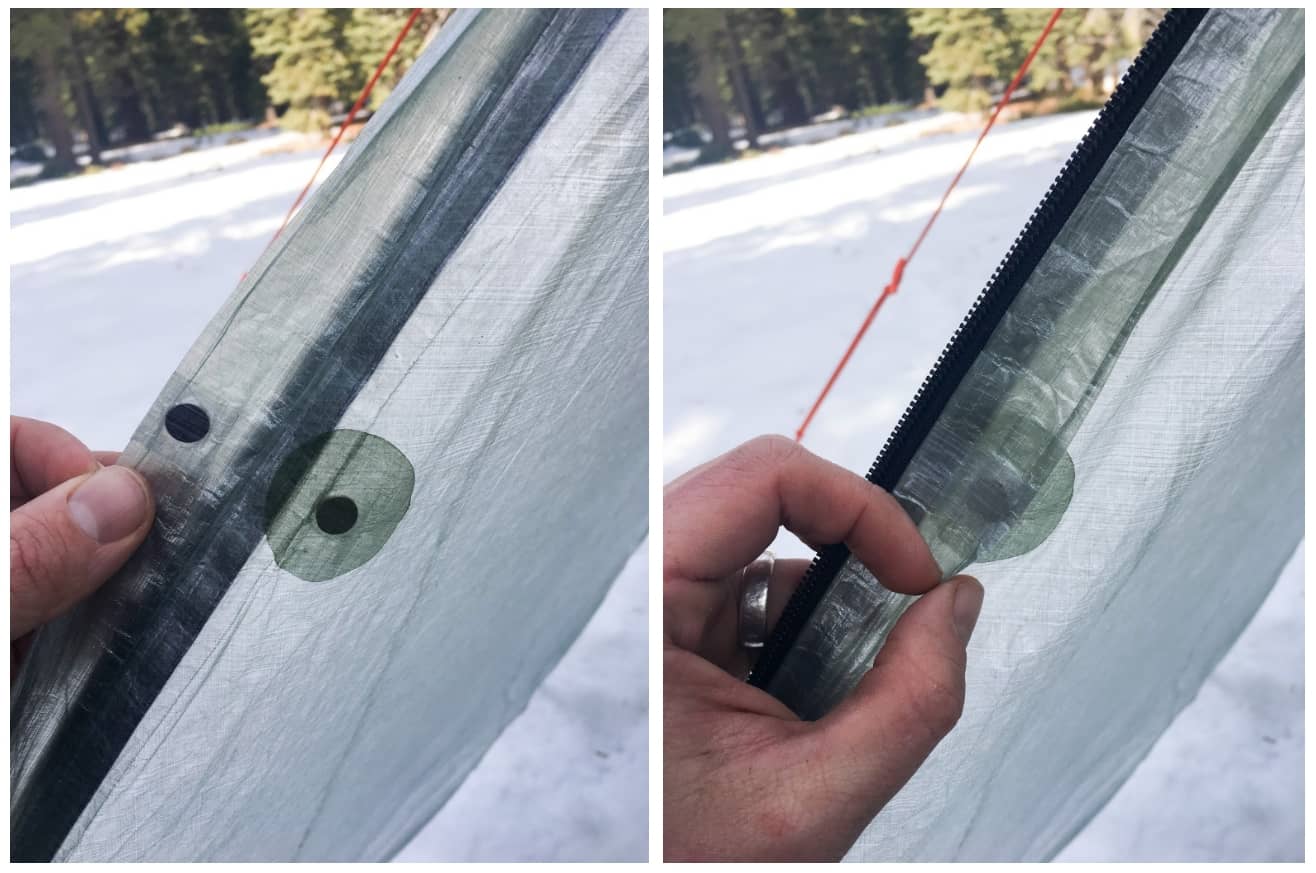
I love this magnet system, and I wish it was also on the interior mesh door. Instead, that door rolls up with a clip and loop system, something I occasionally found challenging to manipulate with cold or gloved hands.
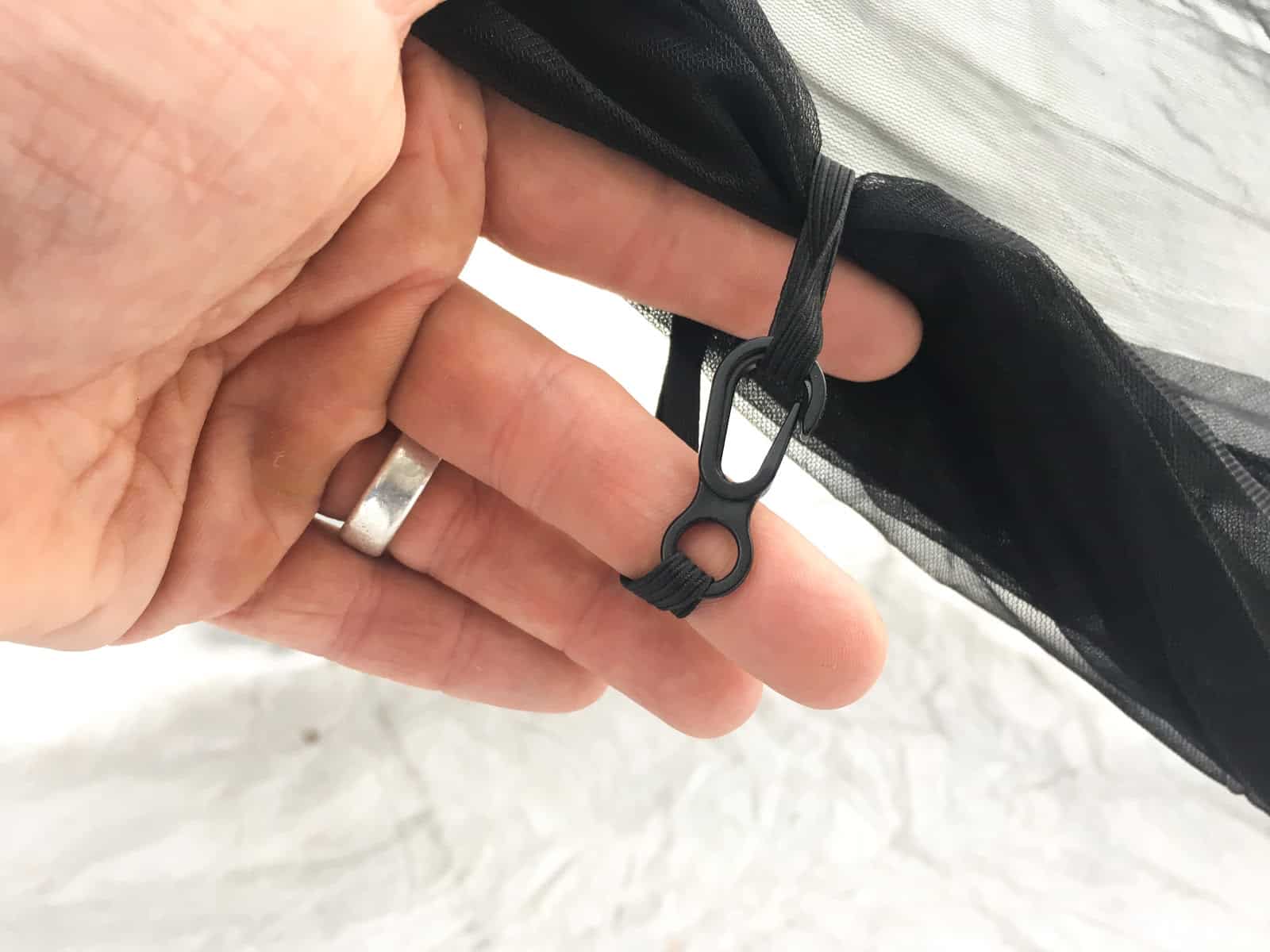
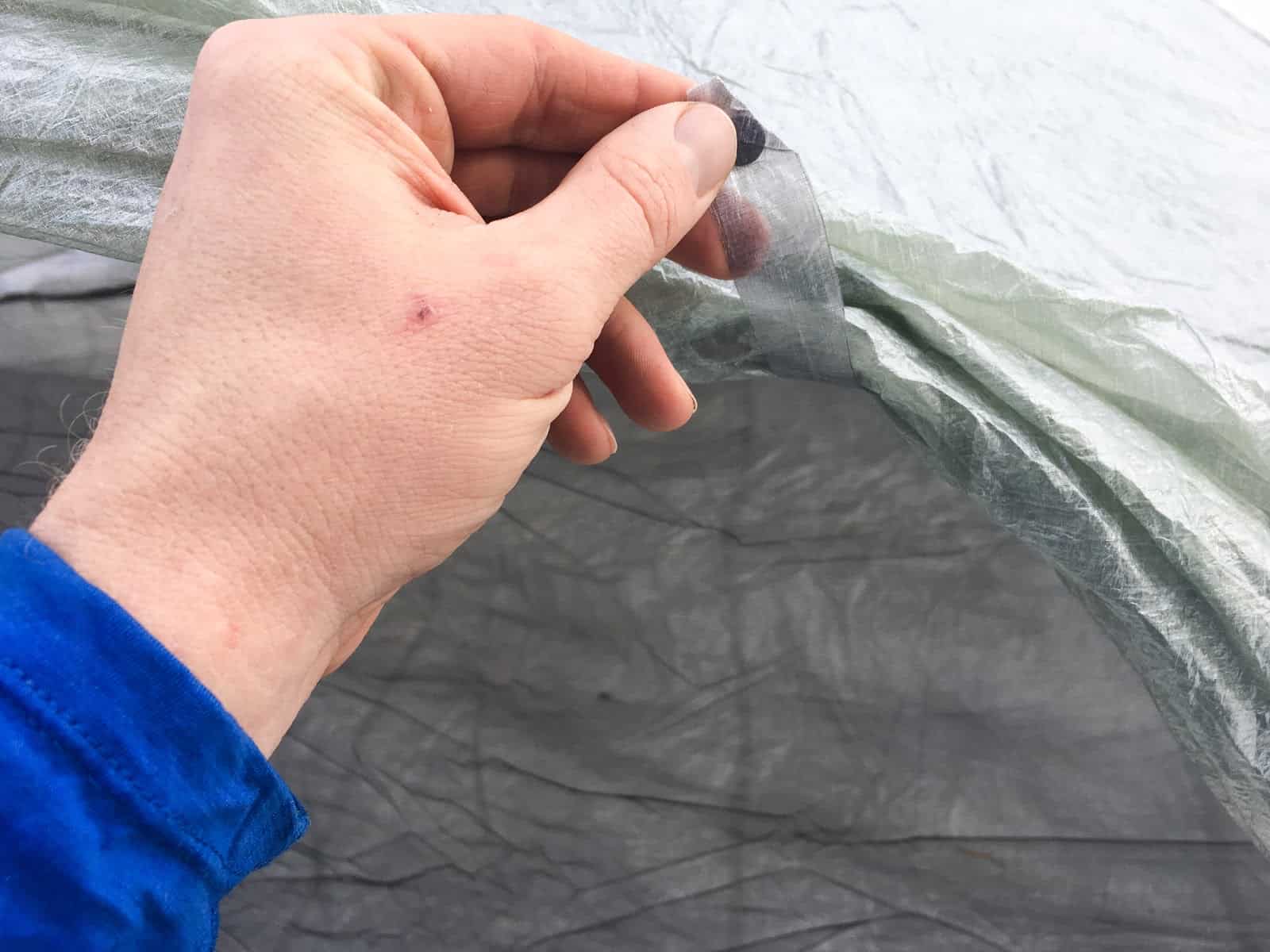

The Stratospire Li is a bulky tent when rolled and stored. The carbon fiber struts in the PitchLoc corners are removable if you feel like stuffing, but Tarptent recommends rolling to improve the lifespan of the DCF. I found the stuff sack to be large enough that rolling was not much of a pain, particularly if you follow the manufacturer instructions. That being said, the tent did feel chunky in my pack and required that I re-think my regular pack organizational system.
The interior pockets at the corners of the mesh doors felt small. Bulky, light items such as a Buff or stuff sacks tended to fall out throughout the night. Storing smaller, heavier items like a headlamp or a pocket knife are the ideal use for these pockets.
Tarptent sells an optional solid wall interior for extremely cold or windy conditions. Adding a solid wall interior would beef up an already storm-resistant tent, and give it some four-season potential. However, I’d be concerned that the Stratospire Li’s shallow pitch angle could give it some problems with heavy snow loads, though the DCF will not stretch under load and will shed snow better than silnylon.
Further testing is required, particularly to see how the tent fares in winter conditions, and in comparison to the Zpacks Duplex. Until then, this is a well-designed, well-constructed, thoughtfully realized shelter with enough toughness to withstand a wide range of seasons and conditions. Large, cozy, and stable while remaining ultralight, it won’t let you down—assuming you can stomach the price tag.
Where to Buy
Related Content
- The BPL community is discussing the Stratospire Li as compared to the Zpacks Duplex. Check out the convo here.
- Going solo or want something a little smaller? Ryan Jordan’s in-depth write up of the Tarptent Notch Li is worth a read.
Product Review Disclosure
Updated September 15, 2018
- How we acquired these products: Product(s) discussed in this review were either acquired by the author from a retailer or otherwise provided by the manufacturer at a discount/donation with no obligation to provide media coverage or a product review to the manufacturer(s).
- We do not accept money or in-kind compensation for guaranteed media coverage: Backpacking Light does not accept compensation or donated product in exchange for guaranteed media placement or product review coverage.
- Affiliate links: Some (but not all) of the links in this review may be “affiliate” links, which means if you click on a link to one of our affiliate partners (usually a retailer site), and subsequently make a purchase with that retailer, we receive a small commission. This helps us fund our editorial projects, podcasts, instructional webinars, and more, and we appreciate it a lot! Thank you for supporting Backpacking Light!


Discussion
Become a member to post in the forums.
Companion forum thread to: Tarptent Stratospire Li Review
Tarptent’s Stratospire Li is a two-person DCF shelter with well-considered features and has enough chops for year round use.
The chart has the weight of the 2 tents switched.
I think the Statospire I/II/LI are good designs, and I can appreciate the fact that Tarptent is using other fabrics than silnylon however I have recently decided the costs of these shelters are getting out of hand.
I am fortunate and I have a good job. I can afford a $700 backpacking shelter if I want one, but I have started to wonder if it is responsible for me to buy a $700 backpacking shelter when a $200 shelter can do the same things. I think that Silpoly might be the future of tents, because it has low stretch, but it is substantially cheaper.
Full Disclosure: I used to own a HMG Ultamid 4, which I bought new for $550 and it sells new now for a staggering $865. It was a nice shelter, but not that nice. I bought it to replace a Golite Shangri-la 5 that I used occasionally with my wife or wife and kids. After using it a few times I decided that even though I could afford it, it was a waste for me to have such an investment, especially on a shelter that wasn’t my main or most used backpacking shelter. I also didn’t like the bulk of DCF, which I think is another dark secret of DCF. When I thought about it, it only saved me 4.5oz off the weight of my Golite.
I also have a DCF Duomid, which has been my main backpacking shelter for quite a few years. I think I paid $400 for it and a silnylon Solo inner net. It’s been a great shelter, but I decided to join the X-Mid drop.
Not to take anything away from the Stratospire Li, but the price of these DCF tents just stuck out to me.
It isn’t true that Silpoly has low stretch anywhere near Dyneema. It definitely stretches but doesn’t get noticeably stretchier when wet. That’s a key difference. Yes, nice for staking well and not having to adjust for stretch when it gets wet but the fabric stretches/moves in the wind. For wind loading, silpoly just doesn’t compare to the performance of Dyneema. For windy conditions, a SS made of Silpoly would be a distant 2nd to the one made of Dyneema.
Also, not quite sure why the review comparison to a single wall alternative. That’s a very different animal and the pricepoint difference reflects the manufacturing cost difference. Price point comparisons to other double wall alternatives would seem appropriate.
“The Stratospire Li is most similar to the Zpacks Duplex: both are two-person DCF shelters designed to set up with trekking poles.”
I would say it’s much more comparable to the DCF Six Moon Designs Haven + NetTent, given that both are double-wall 2P shelters with a DCF fly and a sil inner.
Exactly what Henry said above my post here:
“Also, not quite sure why the review comparison to a single wall alternative. That’s a very different animal and the pricepoint difference reflects the manufacturing cost difference. Price point comparisons to other double wall alternatives would seem appropriate.”
Not only is the Duplex an inappropriate comparison, the values in the two charts comparing them are still wildly mixed up…
We have now fixed the chart and a few other typos. Thanks ya’ll.
“I would say it’s much more comparable to the DCF Six Moon Designs Haven + NetTent, given that both are double-wall 2P shelters with a DCF fly and a sil inner.
Exactly what Henry said above my post here:
“Also, not quite sure why the review comparison to a single wall alternative. That’s a very different animal and the pricepoint difference reflects the manufacturing cost difference. Price point comparisons to other double wall alternatives would seem appropriate.”
I take your point. Perhaps I could have used better wording than “most similar”. Still, we think it’s a valuable comparison, and one that is being discussed by the ultralight community.
How are the clearances for the face and feet? My complaint with the Duplex are low side/ end wall clearances. I’m not tall, but on a 2.5″ mat and a pillow I’m touching both ends. I wish mfrs would all show diagrams like the one in the article and the distance from about a foot off the ground or sidewall angle etc to represent clearances better. Thanks for the look.
I wish mfrs would all show diagrams like the one in the article and the distance from about a foot off the ground or sidewall angle etc to represent clearances better.
Some do. That diagram is from the TT product page.
You will also find there a 3d animation showing you 2 6′ persons on top of a 1″ 6′ mat.
(they are under specs/usable volume)
I too noticed the lopsided comparison of weights and prices between the TT Stratospire Li double wall tent and the Z-Packs Duplex single wall. It’s an apples-to-oranges comparison. It’s not only a reviewer mistake it’s an editorial mistake and BPL needs to be careful about these things.
One notable thing with Dyneema fabric is that the fabricator absolutely must get the panels cut and stitched very accurately as there is no stretch in the material thus any little mistake in either design or construction is readily apparent. A design mistake could, for example, be no catenary cut where needed.
To flesh out SS Li vs DCF Haven comparison. The SMD Haven in DCF is $500 / 12oz. They don’t offer the inner net tent with a DCF floor but the regular version is $160 / 16oz. So you’re looking at $660 which is barely less than the Strat Li ($680) despite the Strat Li having the DCF floor. Comparatively the SS Li looks like the better value.
On weight they are pretty close 28oz Haven vs 29.5oz Strat Li (as measured). That’s 1.5oz heavier for the Strat Li having a DCF floor, but it looks like weight well spent. The Strat Li appears to be quite a bit more spacious because it has the PitchLoc corners that add volume and a longer ridgeline, plus the fly extends right to the ground so you’ve got full coverage for wind and rain splatter. The SS Li looks like the better of the two.
“It isn’t true that Silpoly has low stretch anywhere near Dyneema. It definitely stretches but doesn’t get noticeably stretchier when wet. That’s a key difference. Yes, nice for staking well and not having to adjust for stretch when it gets wet but the fabric stretches/moves in the wind.”
Polyester itself has virtually no stretch. I’m not sure whether it’s more or less than DCF/UHMWPE but both are effectively zero compared with nylon/polyamide that is actually has stretch in the material. The stretch in silpoly (or any poly fabric) comes entirely from the weave of the fabric. There is very little stretch (<1%) if you are pulling parallel to the threads, whereas there can be a lot (~5%) if you’re pulling on a diagonal to threads. So the fabric basically allows you to have as much or as little stretch in a tent as you want, depending on how you orient it relative to the stresses that tent experiences. So the amount of stretch present in a poly tent in a complex topic.
What are the interior dimensions in square footage? I don’t see any number in the specs. It looks about 25–28 sq ft???
Another question I have is this:: How could any tent get a full review after only 8 days with the thing? I would expect several months to see how it performs in all conditions—and most especially in the Southeast mountains where winter condensation is a beast.
And the Quote—“Montana threw quite a lot of wind at this shelter and it didn’t budge.”
Well, I just got back from a North Carolina blizzard where I was set up at 5,000 feet in a 60mph windstorm (weather radio called for “80mph winds in the mountains”) and dangit I don’t know of any tent in the world that won’t budge in such a wind—and I’m talking about 60mph. From the pics I have seen of this tent—it’s gonna budge in a strong wind.
From your “plenty of room to stretch” pic I see one significant problem—a fully lofted down bag atop a decent sleeping pad will touch the inner mesh and/or the fly wall of the tent, wetting the footbox of the bag if condensation is bad. And mesh doesn’t help much when there’s bad condensation—common here in the Southeast mountains.
Here’s a pic of my buddy’s tent after a night on a December trip—with condensation saturating his mesh—
This could happen in any single wall tent with a mesh interior—and made worse if the sleeping bag shell touches any part of the mesh.
I think I heard one expert call single wall tents with mesh inners to still be single wall tents. I think it was Roger Caffin on his website. Being that a solid inner will allow condensation drip water to run off the inner but drip thru mesh.
The comparison to the duplex isn’t apples-to-apples, but worth making given the popularity of the Duplex.
Hi Tipi,
nice to see your continuing interest with the Tarptent products given that you recommended solo/double shelter is the 8 lbs 10 oz Keron 3 and that we don’t make anything like that.
Anyway since you asked, the given dimensions of the rectangular floor (listed under specs) are 45″ x 86″ so I would guess that the square footage is somewhere around 26.8 feet.
Still, you should know by now that that will not really tell you the available space but as I posted above we do have some rudimentary drawings to give a bit of an idea of what you can fit inside.
BTW, there is a solid inner available for it , here it is :
not all that clear in that photo, it does have a mesh window on the top third of both sides so maybe that does not pass muster.
I guess you can’t please all .
Anyway, what do you think about the Duplex ?
I haven’t seen your opinion on that one .
Cost is a factor. But for me condensation and misting make me HATE all siliconized shelters. Never buying one of those again.
…I apologize for the topic creep. Carry on…
The issue is definitely the bias stretch through the weave, not the stretch/ lack thereof in the polyester fiber. Here’s a diagram showing the problem with bias stretch. Note that small (1.2%) bias stretch can result a relatively large offset in the panel under wind load. This is definitely a problem with nylon fabrics as well but I will say the Dyneema is just way better in this regard. There is so little bias stretch that patterns can be cut and oriented/ tensioned with much more latitude and movement under wind/snow load is substantially less –>
Very interesting to see those visualizations. Thanks for sharing that.
@tipiwalter wrote:
That’s why it’s just a Flash Review, and not a Performance Review.
Andrew, I don’t see a video of you standing next to the Stratospire Li with a wind gauge in your hand. You speak of “driving winds” and “high speed gusts.” Well just how fast were they? Can’t wait to see the head to head in-depth comparison with the Duplex. Hopefully it will be done using empirical evidence.
I like the looks of the Aeon Li over the Plexamid, but the Stratospire Li looks a bit busy and over engineered. Seems like whenever you get away from basic geometric shapes such as a pyramid, dome, tunnel, or prism (A-frame), stability suffers. I may be wrong, perhaps the Stratospire Li with its struts and octagonal fly is actually more aerodynamic than the Duplex. However, physics and engineering data don’t replace real world testing. As of now the simpler and lighter Duplex looks better to me.
I can speak anecdotally regarding the conditions this tent was in, we were both on the same trek and had a variety of different shelters in the same conditions, including a Duplex, a few Hexamid/Plexamids, and a few traditional mids.
Our shelters probably faced winds gusting up to about 45-50 mph – or whatever was strong enough to knock me off balance when walking. I didn’t bring a wind meter on this trip, but I often do so I feel like I can estimate winds pretty good.
In observing the Stratospire vs. the Duplex, I feel that the Stratospire was more stable, and quieter, by quite a bit. To me, the Duplex seems more like a below the treeline shelter, and the Stratospire is more suitable for mountain weather.
Both tents have a lot of fabric to catch wind, but the Stratospire has more structure to stabilize it.
Again, this is just a quick Flash review based on preliminary use for a few days, keep that in mind. But we have lots (years) of experience with the Duplex and it’s not hard to see how the storm resistance of these two tents compare when they are pitched side by side in bad weather.
There’s a 25-post BPL thread comparing the Stratospire Li to the Duplex:
https://backpackinglight.com/forums/topic/tarptent-stratospire-li-vs-zpacks-duplex/
Mentioned there is an Outdoor Gear Lab review comparing them and others; in part they said:
Which pretty much echoes Ryan’s comments.
— Rex
Thanks for the replies. You guys have presented a lot of evidence to back up your claims about the Stratospire Li. I just think it’s always good to scrutinize any new (high priced) gear that makes it onto the market. Hope I didn’t sound too terse.
Answer me this: Would you really feel safe in rough Winter conditions with .51 DCF? I assume that’s the only DCF material TT is offering now. Correct me if I’m wrong. As everyone knows, MLD and ZPacks has the .74 option. Seems like that would provide a little more piece of mind.
Ryan / Mathew-
in comparison to Strat Li and wind resiliance, was the duplex tests as a 33 oz structure with flex poles assembled or as a 21 oz structure without flex assembly?
Thanks for clarifying,
Hanz
When I get a Notch LI I will buy a ripstop/mesh wall & silnylon floor. I’ve had it with the Utah dust blowing thorough the mesh of my original mesh door single wall TT Contrail and Moment. My new Moment DW stops that.
OK, so another 1.5 oz. for the silnylon floor but much better puncture resistance. And maybe another 2 oz. for the ripstop lower walls. But also it would be better if caught out in an unexpected snow storm. Some precautions are worth 3+ ounces.
I bought a Stratospire Li with the mesh body last year (2019) and, having just returned from another traverse, I thought I’d provide a few comments wrt my take on the Stratospire Li in case it maybe useful for others who may be contemplating buying one. (I looked at this forum/thread last year before purchasing.) I feel I’ve used our Stratospire Li enough days now in 2019 and 2020 to provide an informed opinion as to how it performs (in the mtns. of BC at least).
I was reluctant to provide comment until now as I hadn’t seen it perform in extremely high winds. Well, after this last trip, I can say that it it stood up to an absolutely pounding wind storm at 7300 ft with not a tree or bush in sight to block the wind. I don’t carry around a anemometer but gusts were strong enough to easily knock a standing man off balance. Even the 4 longer pegs I carry (MSR Cyclones) needed to have large boulders on them to keep them from pulling out of the ground but the tent hung in there. Sure, the fly moved around somewhat and the more extreme gusts would cause a whip-like “crack” noise (which the dog did not like one bit) but the tent held and stood. (One major gust early in the storm ripped out 3 pegs (pre-rocks being applied) and that caused the fly to move up and down fairly violently and one hiking pole came out of its pocket/grommet and punched a small (pencil width) hole in the fly but that was an easy, non-structural patch fix in the morning). When I examined the tent in the morning after the storm (with, to be honest, some trepidation as to what damage I might find) I was happy to be able to report that there was no damage (other than the aforementioned small puncture – which was due to my peg placement, not the tent’s design), separations or stitches torn – even at the guy-line/corner points which were taking the brunt.
I also own a Triplex and a Supermid. I know the Supermid would also have held (based on similar wind experience). I have not had the Triplex in a wind close to that strong so cannot do an exact comparison but, intuitively at least, I was very glad not to have been there in the Triplex. (Not to dump on the Triplex as it is a very good product, but given that most of our use is alpine/subalpine/Arctic, and although smaller, the Stratospire Li is a shelter that gives me a higher level of confidence in more exposed conditions. No question the Triplex gives us more room for “below alpine” environments.)
Other comments re the Stratospire Li:
Yes, it takes a few times before set-up is automatic but it’s such a clever design that works really well and makes the initial thought worth it.
Keeps you very dry in the rain. Great fly with zippered door and magnetic storm flap for zip. (Not trying to make this post a comparison to the Triplex post but the Stratospire Li fly is much better wrt rain and splash – ie it has the zip as opposed to just hooks. And this may be subjective or based on dissimilar circumstances, but both my and my girlfriend’s impression was that the Stratospire Li vented better/had less condensation on the inside of the fly/Dyneema than the Triplex. Also less worry (none really) wrt the condensation dripping inside the shelter given the Stratospire Li’s separate fly and body design.)
I replaced (substantially extended) all the factory stock lines as in the often rocky mountain environment that is where this tent gets used, the stock lines are too limiting wrt placement options and I like longer lines so pull on pegs in wind is less toward vertical.
Like probably many other shelters, the Stratospire Li really likes being pitched on as flat and level ground as you can find. That will achieve the best alignment of fly and body and help ensure that one’s head/face is away from the netting – something that you need to conscious of if on a thicker (eg NeoAir) pad and the site hasn’t allowed a perfect pitch.
My girlfriend and I use Stratospire Li together and, with me being a bigger guy on a 25″ NeoAir, we do fill it from side to side at the shoulders. Most of the time we have our Blue Heeler crammed in one corner as well so there is zero extra room inside but the vestibule space is awesome. Now if Tarptent (Tarptent are you listening???) made a 3 person Stratospire Li… *sigh* … that would be the bomb for us: a bit roomier side to side inside, perhaps just a few inches longer. We’d gladly carry those few extra ounces to get the space. And while I’m wishing: it would be great to see the mesh pouch on the door configured better – having it work so one’s bear spray can reliably be in the same place all night would be great for those of us who frequent grizzly country.
(PS – I liked the Stratospire Li with mesh body so much after somewhat limited use in 2019 that I also purchased the solid body in spring 2020 for blowing snow or blowing grit situations but have not had a chance to test drive that body yet .)
Become a member to post in the forums.