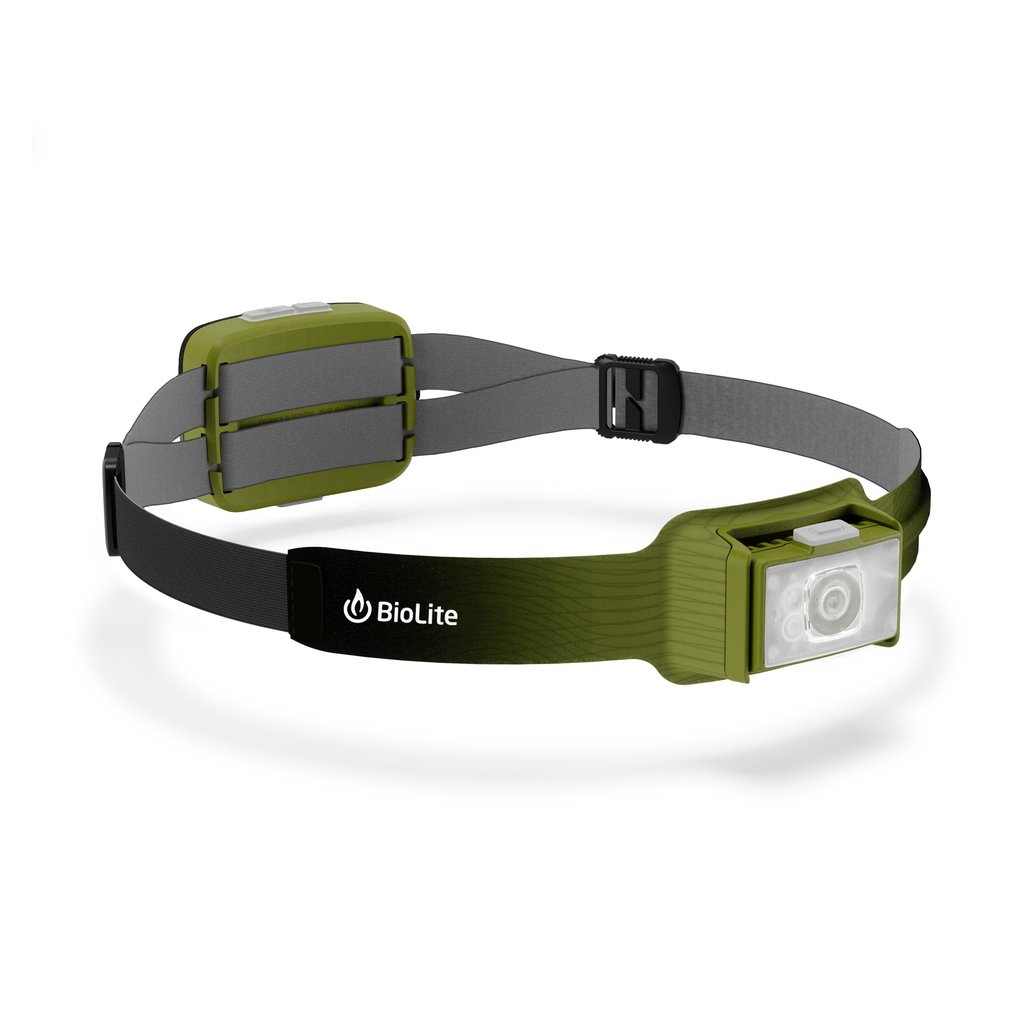
The BioLite Headlamp 750 (MSRP $99.95, 5.3 ounces / 150 g) is a performance-oriented USB-rechargeable headlamp with several unique features but crippling reliability issues.
Introduction
The BioLite Headlamp 750 (MSRP $99.95, 5.3 ounces / 150 g) is a performance-oriented USB-rechargeable headlamp with a few features that attempt to set it apart from the crowded rechargeable headlamp field. Its long battery life, 750-lumen max output, constant brightness mode, and pass-through charging feature might make it interesting to some. It’s a bright headlamp, but is more expensive than most headlamps targeted to ultralight backpackers, and certainly heavier. However, its brightness and battery life may be attractive to guides, winter backpackers, or bikepackers. Notably, it has a known flaw in the primary button which many users, including myself, have run into.
Photo: BioLite.
Highlights
MSRP: $99.95
weight: 5.3 ounces (150 g)
beam distance: 142 yards (130 m)
burn time: 7 hours high / 150 hours low
battery size / type: 3000 mAh li-ion micro-USB rechargeable
water resistance rating: IPX4
tiltable front panel
dimmable red, white, strobe, and burst modes
dimmable rear red light with solid and strobe modes
4 LED battery indicator lights
pass-through charging capability with included micro-USB cord
constant mode – no auto-brightness regulation
digital lock
Testing Context
I occasionally guide during the shoulder seasons on off-trail, expedition-style trips. The circumstances that crop up on those trips – short days combined with the delays associated with moving a varied group of people over difficult terrain – had me searching for a more richly-featured, brighter, longer-lasting rechargeable headlamp than my current go-to for personal trips. I wanted a headlamp I could trust to handle all the unexpected situations that sometimes crop up when guiding. Because my guiding kit is, by necessity, slightly more heavy and bulky than my personal trip kit, weight and bulk were secondary considerations behind utility, comfort, and reliability.
I knew the BioLite HeadLamp series was comfortable – the hallmarks of the series are sculpted, intentional blends of soft and hard components, molded fits, and battery/bulb separation for front/back balance – so I gave the BioLite HeadLamp 750 a try on a recent 12-day backpacking trip in central Colorado. Although it was a late-summer trip with plenty of light, I still pushed past sunset, venturing up and down some steep terrain on uneven footing after dark, and so was able to give the BioLite Headlamp 750 enough of a test to warrant this First Looks review. Unfortunately, my testing was somewhat limited by a serious flaw in the headlamp’s design – one I’ll get into in the Durability section of this review below.
This is a first look at new gear that recently entered our review pipeline, and hasn't yet been subjected to rigorous field use. Learn more about the types of product reviews we publish.
First Impressions
Utility
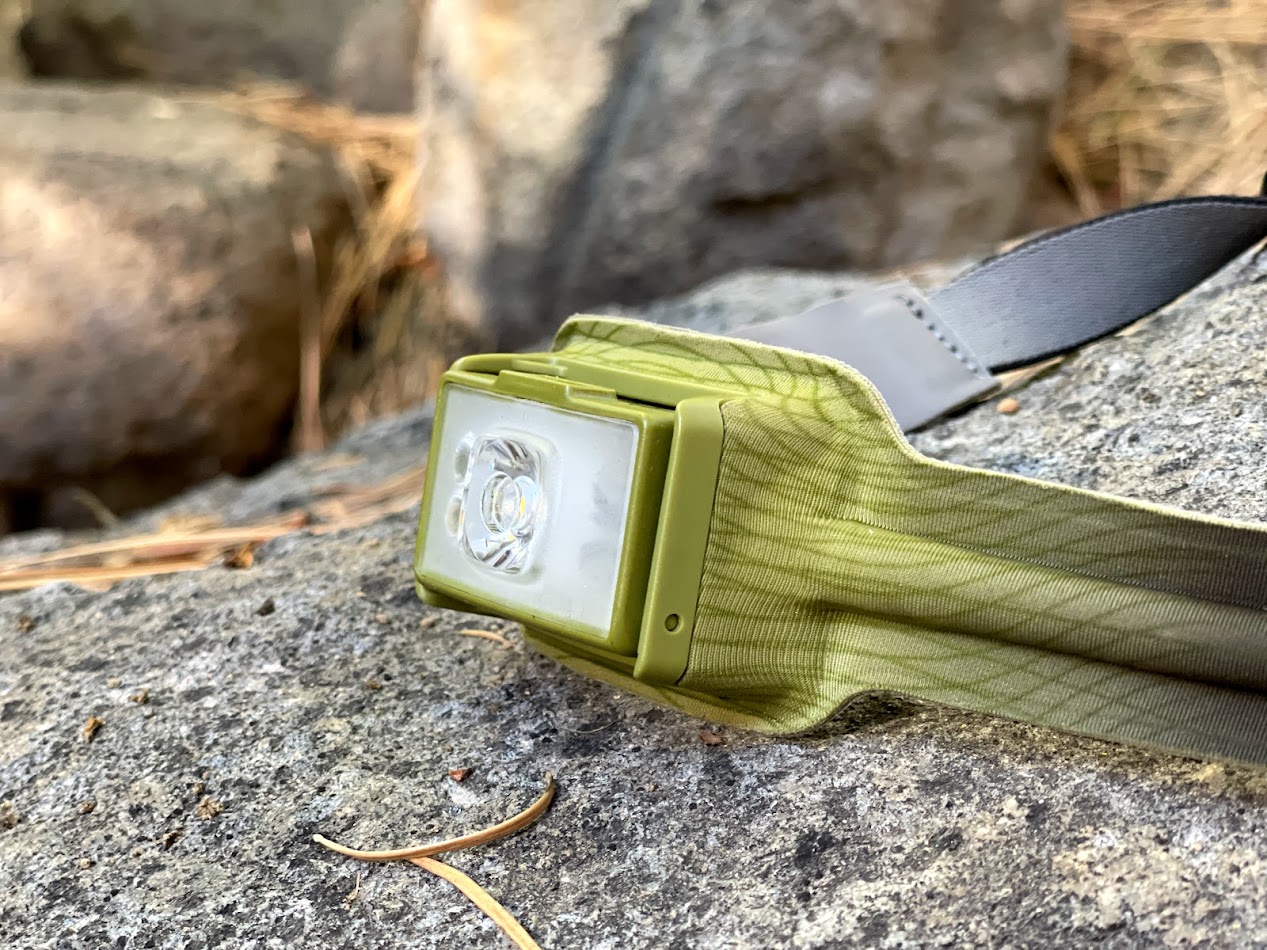
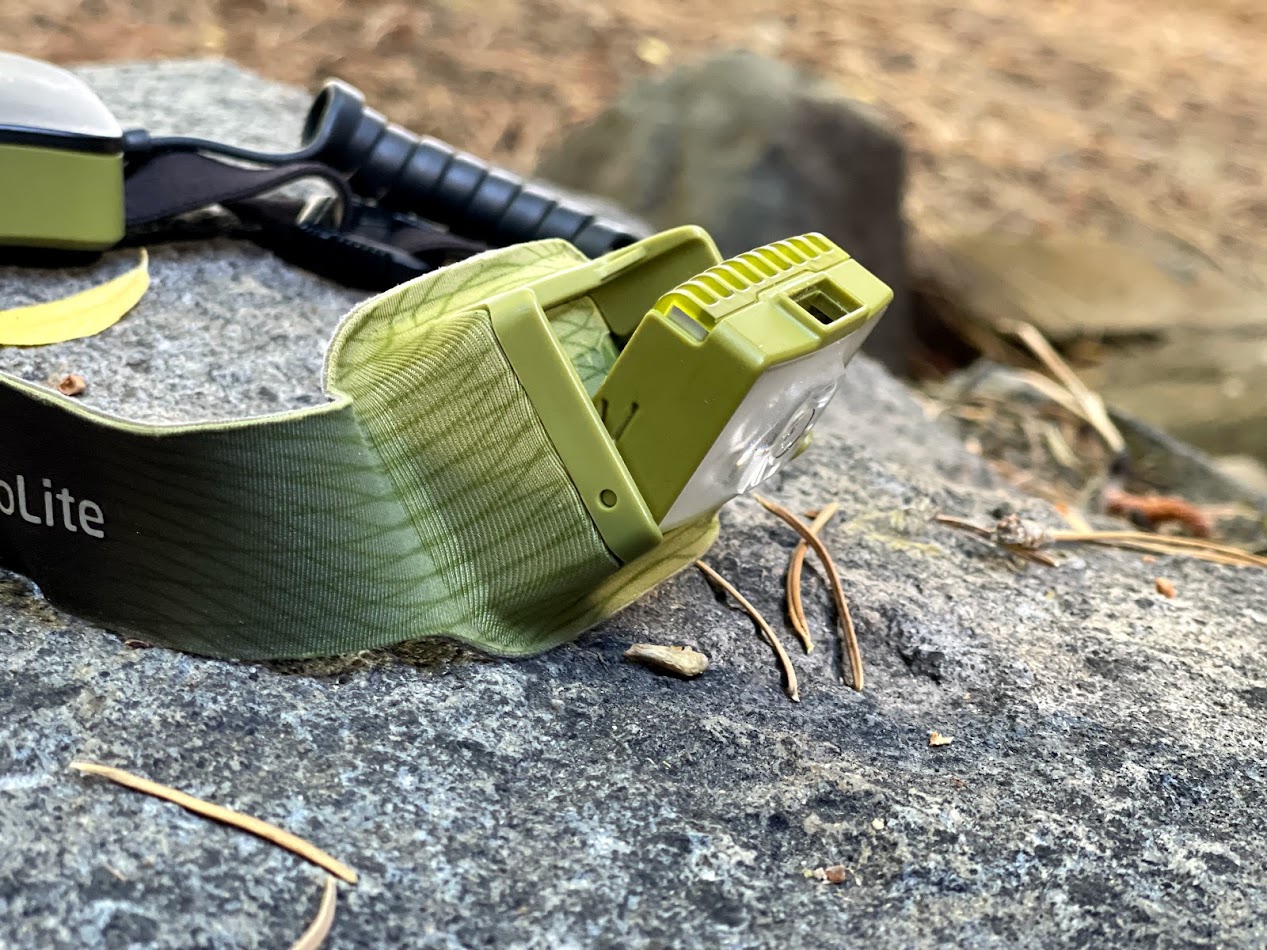
The BioLite HeadLamp 750 has all the features you’d expect from a headlamp in this size/brightness category – multiple light modes, standard (for headlamps) waterproof rating, and a digital lock so the battery doesn’t drain in your backpack. The backing stays flush against the forehead while tilting the bulb up and down within the housing, though this feature doesn’t operate as smoothly or with as much range as I’d like (the BioLite HeadLamp 200, by contrast, excels here).
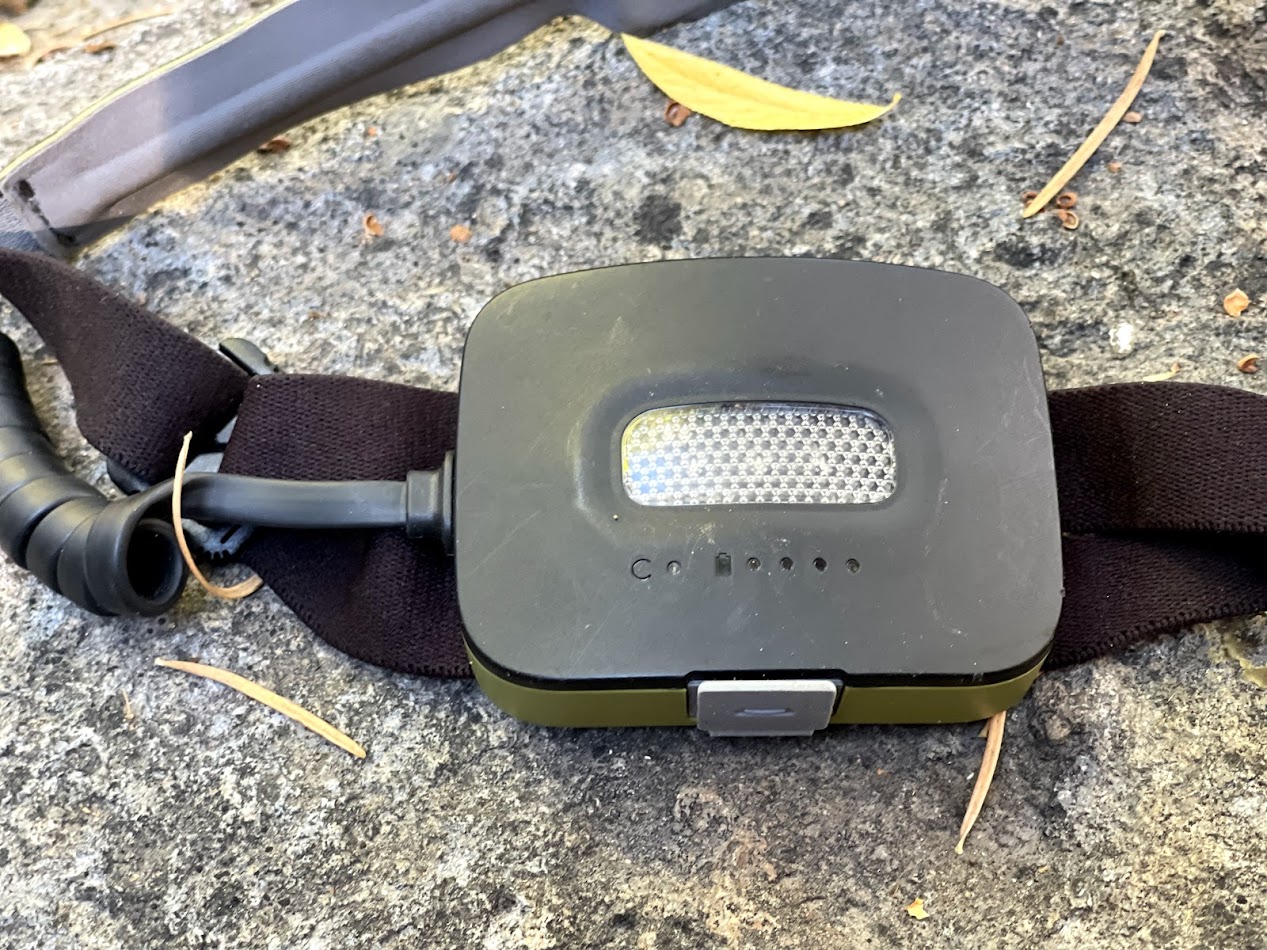
The battery is huge and long-lasting, and the spot/flood hybrid mode is a joy to walk in the dark with. Four LED lights indicate battery levels, which is a major improvement over the flashing-bulb system found in some other headlamps, including the other two headlamps in this series. Rear visibility features are somewhat unique and might be especially attractive to bikepackers, mountain bikers, or the kinds of trail runners/adventure racers who routinely find themselves operating at night.
But the primary draws to the BioLite HeadLamp 750 are its so-called pro features: a thirty-second brightness burst feature, a constant-brightness feature, and a pass-through charging feature.
Brightness Burst Feature
The brightness burst feature is probably the least useful of the three (for me). Pushing a rear button gives the user a blast of maximum lumens for thirty seconds even if the brightness is set at a dim setting. After the thirty seconds is over, the brightness returns to the previous setting. I suppose the point here is to give a user just enough light to navigate something tricky (a scrambling move, perhaps) or perform a minor camp chore, but I don’t really see the need for routine backpacking. Adjusting an adjustable headlamp isn’t much of a hassle, and how many complicated tasks that require maximum lumens only take thirty seconds?
Constant Brightness Feature
The constant brightness feature exists in a middle ground between useful and possible gimmick. Many (most?) headlamps slowly dim their output over time for efficiency and maximum battery life. That’s why as a headlamp battery drains from use it gets fainter and fainter until it winks out.
The BioLite HeadLamp 750 is no different on its regular setting, but it does give users the option to engage Constant Mode, which delivers maximum brightness until the battery is totally dead. This takes battery life from a claimed 8.5 hours to a claimed 4 hours on medium brightness and from a claimed 7 hours to a claimed 2 hours on maximum brightness. I could see this being useful on final, technically complicated pushes to camp, or perhaps in wilderness first-aid situations. Testing the accuracy of battery life claims and lumen claims is beyond the scope of this review, but I can vouch for the fact that the Constant Mode works as advertised and got me into camp over an after-dark talus scramble with a feeling of bright security that I appreciated.
Pass-Through Charging Feature
Pass-through charging is the feature on the BioLite HeadLamp 750 I think is most likely to be useful to outdoor professionals, winter backpackers, or other users who need the security of long-battery life. The BioLite Headlamp 750 has 100% functionality while charging from a battery pack. It comes with a 4-foot micro-USB cable designed to run from the headlamp to a pack or pocket – wherever a user might keep their external battery pack.
This feature has all kinds of utility. It’s easy enough to become tired or distracted and forget to charge a headlamp, only to find it dying at the moment of greatest annoyance. Pass-through charging eliminates that problem entirely. Likewise, situations that crop up unexpectedly – like straggling clients or wilderness first-aid scenarios – will have less stress with the assurance that a steady stream of light is available even if the scenario drags on into the small hours of the morning.
I tested the feature briefly and it works as advertised. I had larger plans in mind that were cut short by a hardware malfunction, which I’ll discuss in the Durability section.
Interestingly enough, I’ve confirmed that many headlamp brands, including Fenix and Petzl, have similar pass-through charging features that aren’t marketed as heavily as the feature on the BioLite HeadLamp 750 is.
Comfort
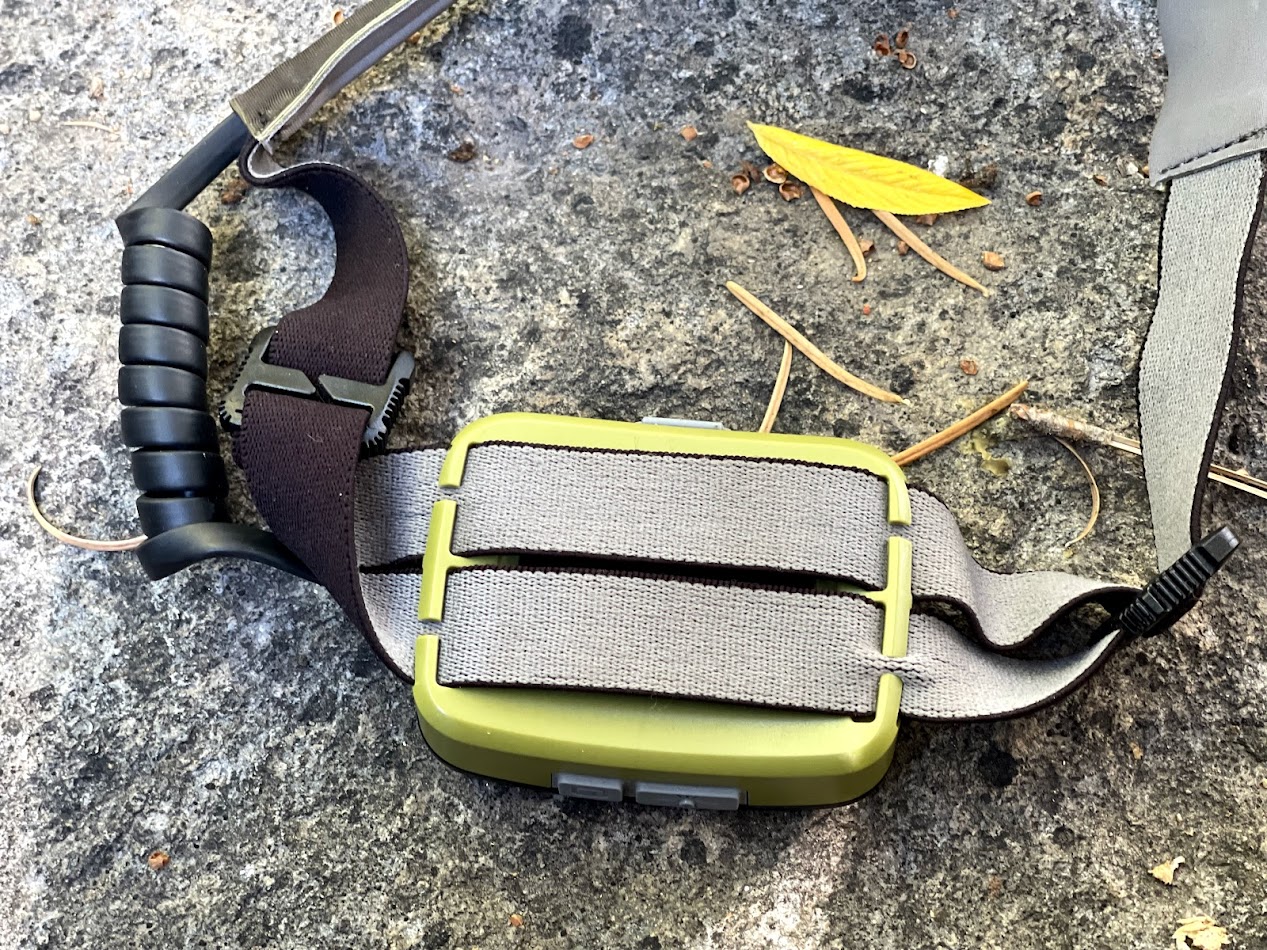
A headlamp of this size and weight is only going to be so comfortable. BioLite carries over design features from its other headlamps – lycra backing, ergonomic elements, balanced weight, and an intuitive tension adjustment system – to max out the comfort rating for a headlamp of this mass. But that being said, the BioLite HeadLamp 750 isn’t the headlamp you want for long reading sessions in a sleeping bag – especially because of the battery placement. And as handy as pass-through charging and long battery life is for lengthy excursions, I wouldn’t necessarily want it banging around on my head if I was running, either.
Durability
Three-quarters of the way into my testing trip, I fished my headlamp out of my fanny pack where I keep it for quick access and discovered that it wouldn’t turn on (I’d just charged it fully). After fiddling with it for a bit, I realized that the front button wasn’t clicking on and off – it seemed to be stuck in place. With nothing to lose, I poked at the button mechanism through the rubber cap for a few minutes with the edge of my Swiss Army Knife bottle opener and managed to get it to turn on and off once. After that, the headlamp got stuck on strobe mode.
3,000 mAh worth of strobing headlamp wasn’t something I wanted to deal with for the back half of my backpacking trip, so I pried the rubber button off the top to see what I could see. The button mechanism was indeed stuck, and nothing I could do short of prying it loose from the electronics would turn my light off. I did so, and my test came to an end.
Luckily I was with a partner who had a functioning headlamp, and I was hiking a well-marked trail in a season with plenty of light to get my miles in. What could have been a bad situation was merely annoying. But this was an extremely disappointing situation given that I was searching for a headlamp that would be reliable in possibly stressful scenarios.
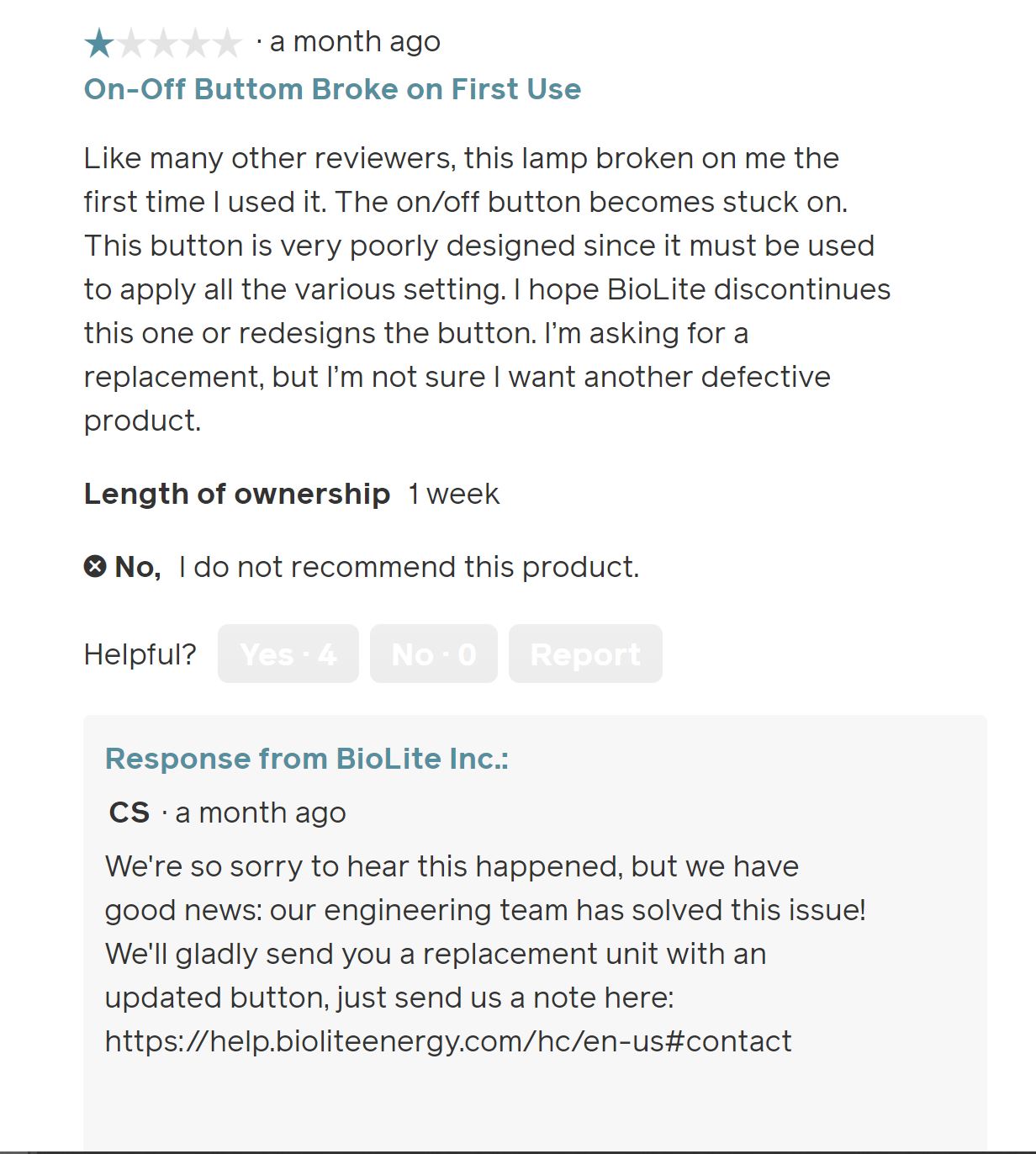
Upon returning home and doing some research, I discovered I wasn’t the only person to have this issue. Here’s one of several comments and responses I found on the BioLite website.
I was ready to write my experience off as a freak accident – maybe I crammed the headlamp a little too tightly into my pack – but a pattern like this is not a good sign: especially for a product designed with so-called pro features and technical terrain navigation in mind.
To BioLite’s credit (as shown in their response above), this known issue appears to have been resolved. What is not known (buyer beware) is how many models on retail shelves right now have the old button design, or what the incidence (%) of failure might be.
Photos
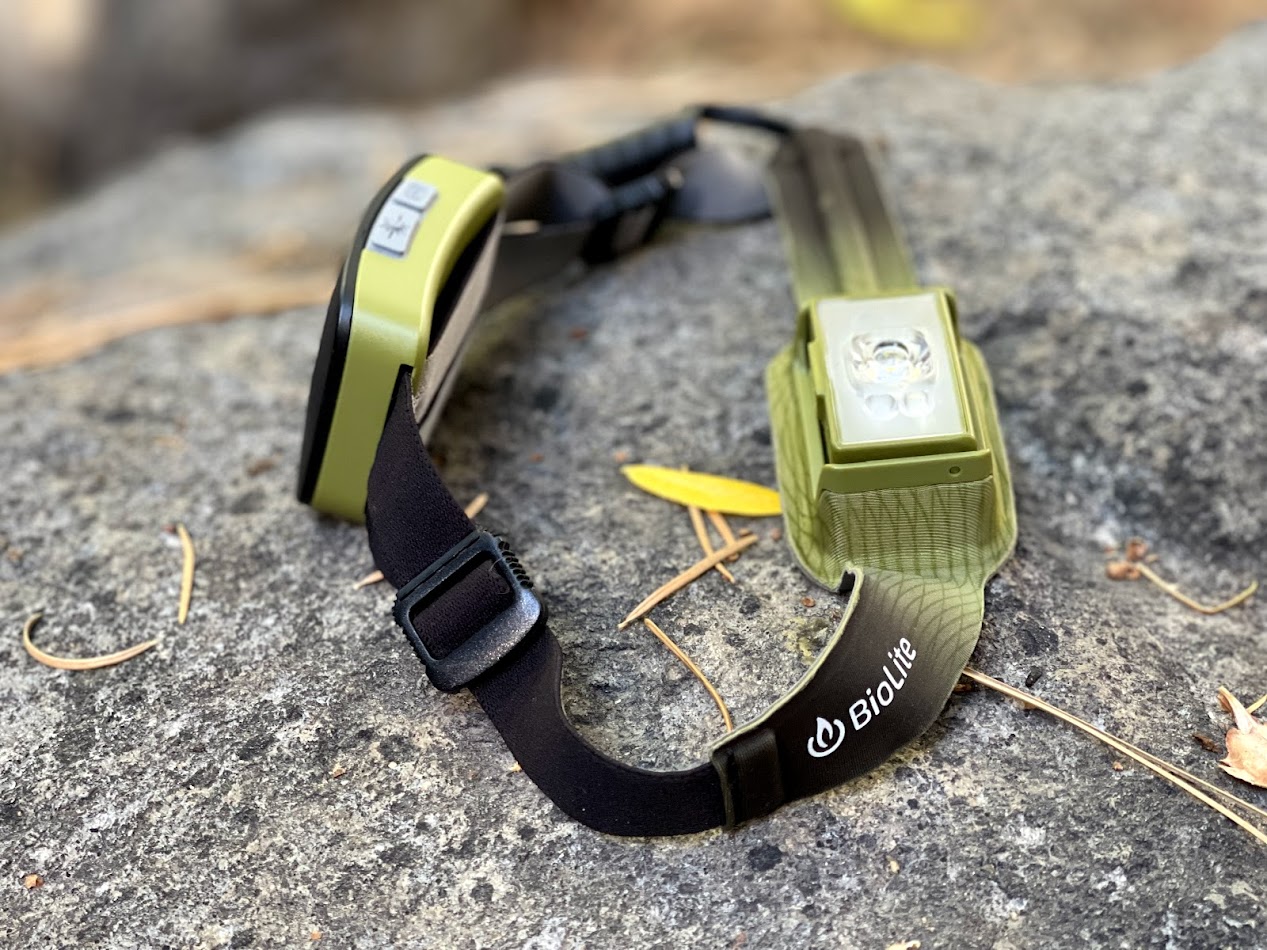
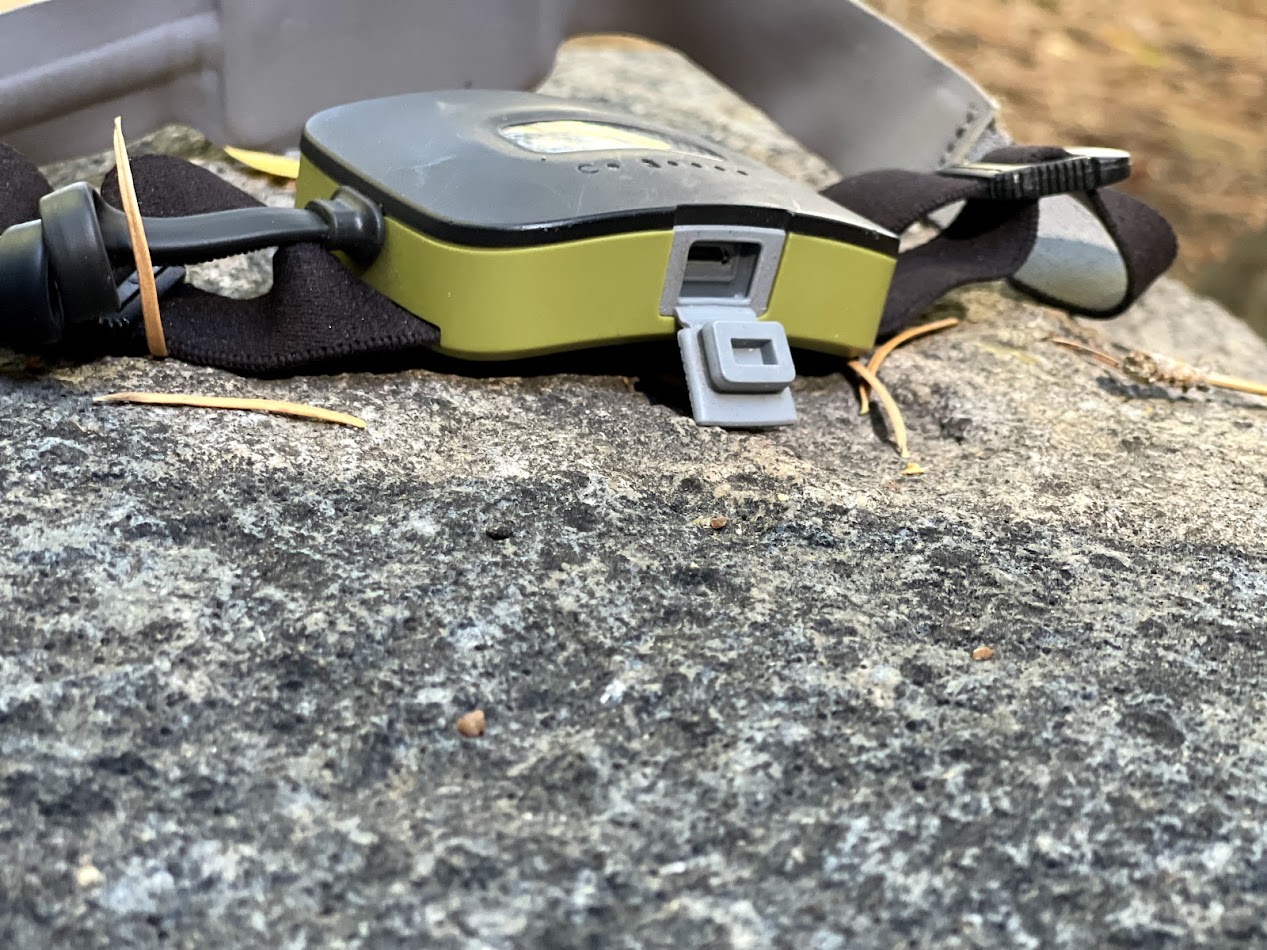
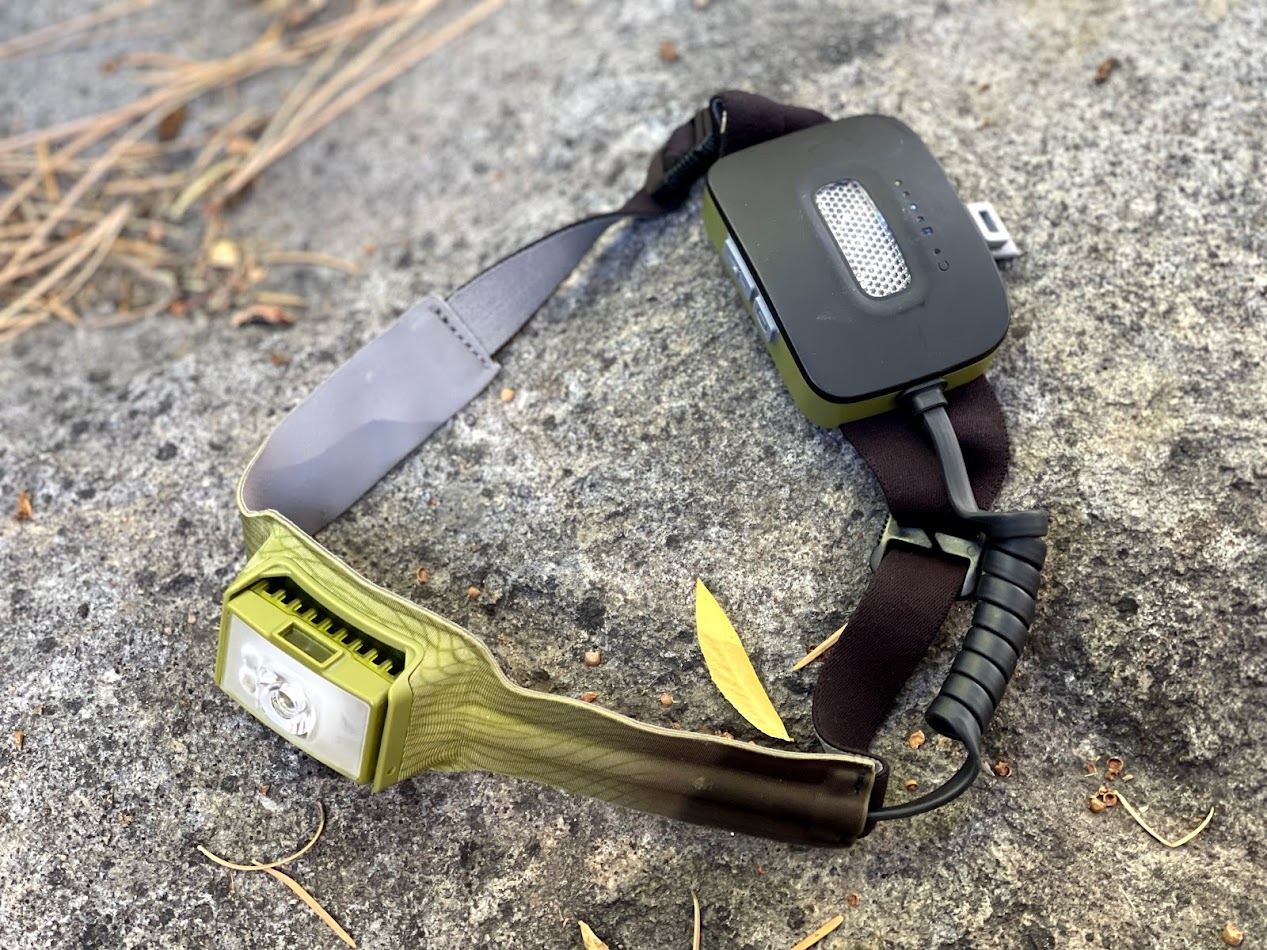
Note: readers will notice that in these photos, the front button is missing. The photos were taken after I’d attempted and failed a field repair on the BioLite HeadLamp 750.
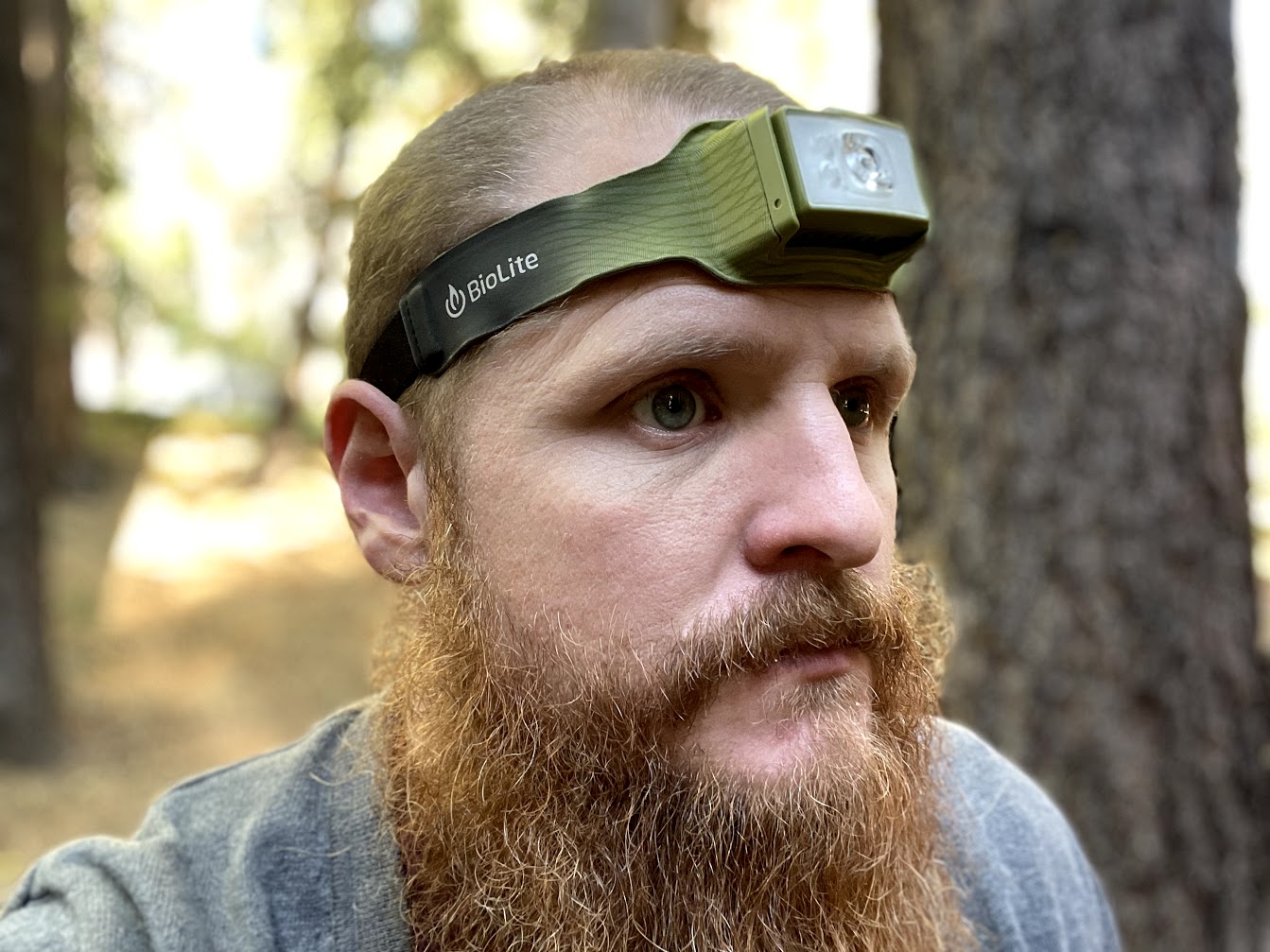
Wearing the BioLite Headlamp 750.The BioLite Headlamp 750.The BioLite HeadLamp 750 has a max brightness of 750 lumens and the standard slate of light types and colors – including a spot/flood mix that’s great for hiking.The BioLite HeadLamp 750 has a strap tensioning system that is intuitive and comfortable.The lighting element of the BioLight HeadLamp 750 tilts down independently from the molded, ergonomic housing.The seamless Lycra backing on the BioLite HeadLamp 750 makes the headlamp as comfortable as a headlamp this big and bulky can be.The huge battery is located on the rear strap and features a rear visibility lighting element and 4 LED battery indicator lights.The BioLite Headlamp 750 has a pass-through charging function and includes a 4-foot micro-USB cord.The BioLite HeadLamp 750 has a lot of unique features but is flawed by a common failure in the front on/off/dim button.
The Takeaway
It’s hard to talk about any of the BioLite HeadLamp 750’s positive features – and there are many – when it has a fatal flaw that could endanger safety.
I’m not sure what the BioLite team has done to fix the button issue, and I’m not sure if the products currently sitting on shelves or in distribution warehouses have been replaced. As of this writing, most of the responses from BioLite on their website are about a month old. While the BioLite HeadLamp 750 has several interesting features that would be useful to users in extreme conditions – and the other two products in this line are excellent – the 750’s proven unreliability would make me hesitant to bring it into the field in situations where I’d be counting on it. At least until I knew that all the defective models currently floating around had been replaced – and that the new models didn’t suffer from the same issue.
The Competition
The BioLite Headlamp 750 doesn’t differentiate itself very much from its competition. If we look at rechargeable headlamps offering 750+ lumens of brightness, consider the following:
The Petzl Swift RL is brighter (900 lumens) and lighter (3.5 oz / 99 g), but a little more expensive ($119.95), and has a smaller battery (2350 mAh).
The Petzl Nao is incredibly comfortable while climbing and running, but its harness weight comes at a cost, because the Nao is heavier (6.5 oz / 184 g), has a smaller battery (2650 mAh), and is much more expensive ($199.95).
The Fenix HM61R is cheaper ($84.95), brighter (1200 lumens), has a larger battery (3400 mAh), more water-resistant (IPX8), and slightly lighter (5.0 oz / 142 g). Editor’s note: this is a very compelling headlamp spec – if you need a bright, powerful, long-lasting, stable light – consider this one.
The LEDLenser MH11 is brighter (1000 lumens), has a much longer max beam distance (320 m), but is more expensive ($159.95) and a little heavier (6.3 oz / 179 g).
Product mentions in this article are made by the author with no compensation in return. In addition, Backpacking Light does not accept compensation or donated/discounted products in exchange for product mentions or placements in editorial coverage.
Some (but not all) of the links in this review may be affiliate links. If you click on one of these links and visit one of our affiliate partners (usually a retailer site), and subsequently place an order with that retailer, we receive a commission on your entire order, which varies between 3% and 15% of the purchase price. Affiliate commissions represent less than 15% of Backpacking Light's gross revenue. More than 70% of our revenue comes from Membership Fees. So if you'd really like to support our work, don't buy gear you don't need - support our consumer advocacy work and become a Member instead.
Learn more about affiliate commissions, influencer marketing, and our consumer advocacy work by reading our article Stop wasting money on gear.
Andrew chats with the down experts at the IDFL Laboratory and Institute about water-resistant down.
Stream
Summary
In today’s podcast, Andrew chats with some of the folks from IDFL Laboratory and Institute (originally known as the International Down and Feather Testing Laboratory) about water-resistant down. Also in this episode, Andrew shares some of the creative things listeners are doing in the backcountry and gives his final thoughts on the Nunatak Gear Bears Ears 50 pack.
water-resistant down’s performance at full saturation
the regulation (or lack of regulation) around water-resistant down
does the DWR (durable water repellent) treatment add any noticeable weight to the down?
does treated down loft as well as untreated down
care of treated down (washing best-practices)
would Stewart buy a garment based entirely on a DWR treatment?
RDS (Responsible Down Standard)
the ubiquitous nature of RDS
how consumers drive RDS and other certifications
the nuts and bolts of the actual certification process
chain of custody and supply chain
be on the lookout for our next long episode (coming in a month, not two weeks like Andrew said in the pod! ) where Ryan and Andrew will follow up on this conversation
Photo: Joanna StanberryPhoto: Alice HengstPhoto: Jen T
50th episode is coming up – email us “ask us anything” type questions about gear, techniques, skills, philosophy, past guests, why cats are clearly superior to dogs, or anything else at podcast@backpackinglight.com
Executive Producer - Backpacking Light; Show Director and Host - Ryan Jordan; Producer - Chase Jordan; Theme music: Look for Me in the Mountains written by Chris Cunningham and Ryan Jordan, performed by Chris Cunningham (acoustic guitar, lead and harmony vocals, harmonica), Chad Langford (upright bass), and Tom Murphy (mandolin), produced by Basecamp Studios in Bozeman, Montana.
Sponsorship Policy: Backpacking Light does not accept compensation or donated/discounted products in exchange for product mentions or placements in editorial coverage, including any podcast episode content not excplicitly identified as sponsored content. Some (but not all) of the links in these show notes may be affiliate links. Learn more about affiliate commissions, influencer marketing, and our consumer advocacy work by reading our article Stop wasting money on gear.
The Vargo ExoTi BOG backpack (2 pounds 9 ounces / 1.16 kg, MSRP $299.95) is a roll-top, external, titanium framed backpack with a removable 40-liter 70 denier primary compartment.
Introduction
The Vargo ExoTi BOG backpack (2 pounds 9 ounces / 1.16 kg, MSRP $299.95) is a roll-top, external, titanium-framed backpack with a removable 40-liter 70 denier primary compartment. This article provides a review of the pack as well as an in-depth interview with the designer (Brian Vargo) about the design philosophy behind the pack.
The Vargo ExoTi series is an interesting take on the ultralight external-frame concept. The Vargo ExoTi BOG backpack was born of minimalist concepts and design and includes no unnecessary bells or whistles. It accomplishes the most basic function of all packs: carrying your gear on your back as you adventure towards your destination.
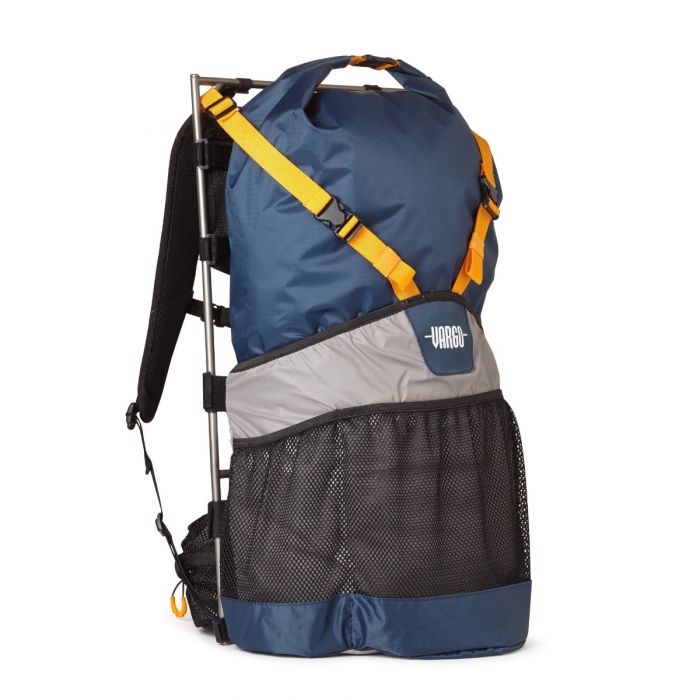
Photo: Vargo Outdoors.
About this Review
This is a Limited Review of the Vargo ExoTi BOG backpack. The testing was done in a subalpine location in the Olympic Mountains and the Alpine Lakes Wilderness area of Washington State’s Cascade Mountain Range over a combined total of five days during the summer season. Approximately 30 miles were covered during this timeframe with several thousands of feet of elevation changes.
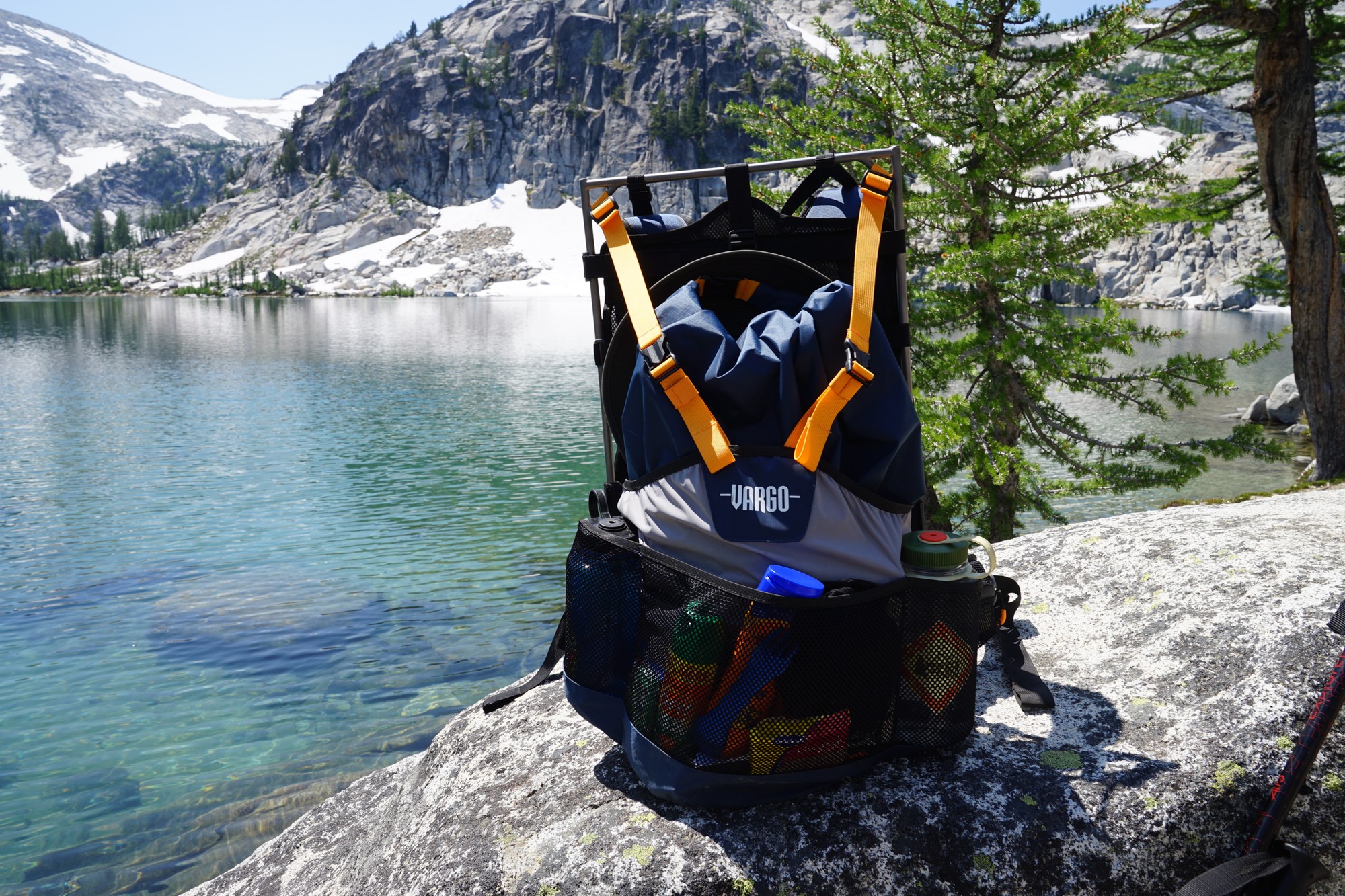
Taken in the Enchantments in Washington State. Little Annapurna in the background.
Features and Specifications
titanium alloy external frame design
removable, compressible 40 L water-resistant roll-top bag with fully taped seams
ventilated, adjustable shoulder harness
two zippered hip belt pockets
large front mesh pocket for quick access to larger items
dual water bottle pockets
fabric weight: 70 denier
torso lengths: 16-22 inches (40-55 cm)
hip belt sizes: 24-60 inches (61-152 cm)
volume (main bag only): 2,440 cubic inches (40 L)
pack length: 24.375 inches (61.9 cm)
pack width: 13.875 inches (35.2 cm)
weight: 2 pounds 9 ounces (1.16 kg)
recommended maximum pack load: 30 pounds
Description of Field Experience
My first overnighter with the Vargo ExoTi BOG backpack was in the Washington Olympics on a 7.2-mile trail with 1,300 feet (396 meters) of elevation gain. Temperatures ranged from 49 °F to 59 °F (9.4 °C to 15 °C) in June with no precipitation.
The second trip was over two nights in the Alpine Lakes Wilderness (Enchantments) in the Washington Cascades in September, over approximately 25 miles with 4,500 feet (1,372 meters) of elevation gain. Temperatures ranged from 56 °F to 94 °F (13.3 °C to 34.4 °C) in July with no precipitation.
Performance Analysis
Since this is a Limited Review, a detailed performance analysis based on long-term use will not be presented. Instead, performance observations and issues are noted below.
Criteria/Observations:
Design and Function: The design of the Vargo ExoTi BOG backpack is unique (titanium external frame) and bare-bones (roll-top bag, minimal pockets). With roll-top packs, one sacrifices accessibility to gear at the bottom for clean aesthetics and durable zipper-free design. The Vargo ExoTi BOG has a few pockets which unfortunately are not easily accessible (this will be discussed further in the Commentary).
Construction and Durability: The titanium frame will be around long after I am long gone – it is clearly designed to withstand whatever can be thrown at it. The main bag is made of 70 denier nylon. The mesh used for the pockets may be vulnerable to snags and tears, and would be more difficult to repair than a tightly woven fabric. Depending on where you’re hiking, this could be problematic. I frequently hike in the Washington Olympics and Cascades, where brush can occasionally become thick at times on and off the trail (e.g., devil’s club, slide alder, dense spruce/fir forests). A user in an area with less dense forests would have no concerns at all. The plastic fasteners, while lightweight, also seemed a bit vulnerable to stress and breakage, as they appeared relatively thin. The straps and suspension system are strong and appear sturdy enough to keep up with any other pack.
Fit and Comfort: This is one area where my review will likely differ from other user experiences with Vargo packs (based on my research of others’ experiences). Initially, the Vargo ExoTi BOG seemed quite comfortable. But over a period of several hours (and multiple days) it became uncomfortable. I suspect the individual user’s mileage may vary in this regard, and I may be an outlier. I’ll go into this more below.
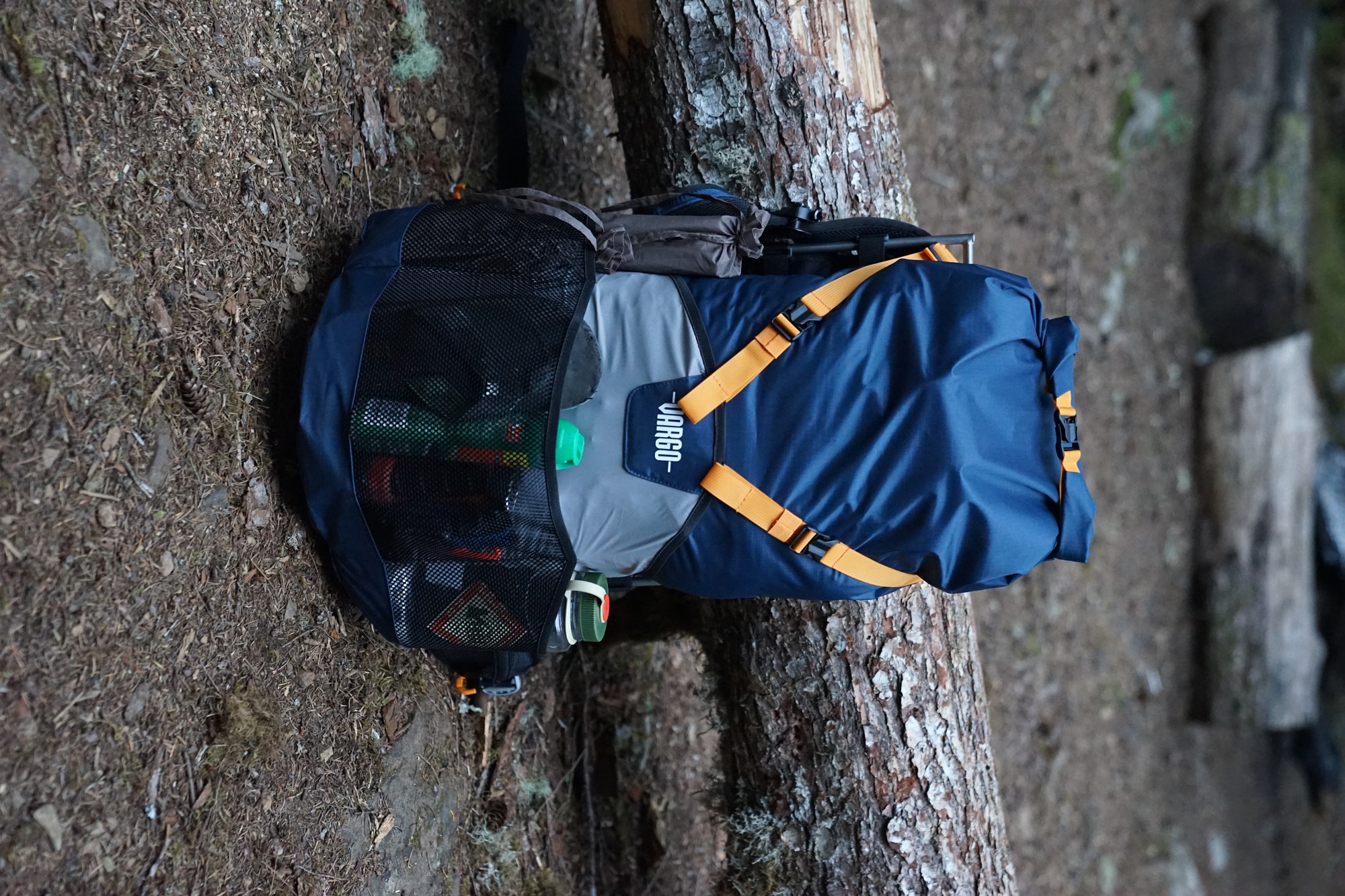
The Vargo ExoTi BOG has a large mesh pocket in the back, flanked by two pockets for water bottles.
Commentary
What makes the Vargo ExoTi BOG backpack stand out? It’s a combination of minimalist design, a unique external titanium frame, and the modular nature of the harness. I interviewed Brian Vargo regarding the Vargo ExoTi BOG, which provided valuable insights into his design process and helped me wrap my head around how to judge the pack’s performance. The full interview is available at the end of this review.
Minimalist Design
Brian Vargo set out to realize a minimalist pack design and in the case of the Vargo ExoTi BOG (note: pronounced EX-oh-TIE) he has achieved that mission. The BOG is essentially just three pieces: frame, suspension, and removable roll-top, three-pocket main bag. There’s beauty (and durability) in the simplicity of the design.
Frame
The frame is a rectangular outline made of titanium rods with a convex lumbar support plate. This frame is a successor to the previous Vargo Ti-Arc lineup. In our interview, Brian noted that the ExoTi frame eliminates some angles in the Ti-Arc frame’s vertical rods, which were necessary to keep the pack from touching the hiker’s head.
“In external frames, there’s traditionally that top bar. I found that [removing that top bar] didn’t make a big difference in the way [the pack] felt when you carry it. [Removing the traditional top bar] has a different feel but not significant enough [to warrant keeping it]. I wanted to improve the strength of the system overall and that was what part of led to the ExoTi series.” – Brian Vargo
He also noted that there are angle brackets in the corners of the ExoTi frame to add additional strength.
While Vargo officially recommends a maximum of 30 pounds (14 kg), the frame seems rugged and in my opinion, could carry far more weight. Indeed, during my second testing period, I pushed it beyond that limit and was carrying 35-40 pounds (16-18 kg) with no perceivable compromise to the frame’s ability to carry the load. As far as comfort goes, well, I’ll get to that.
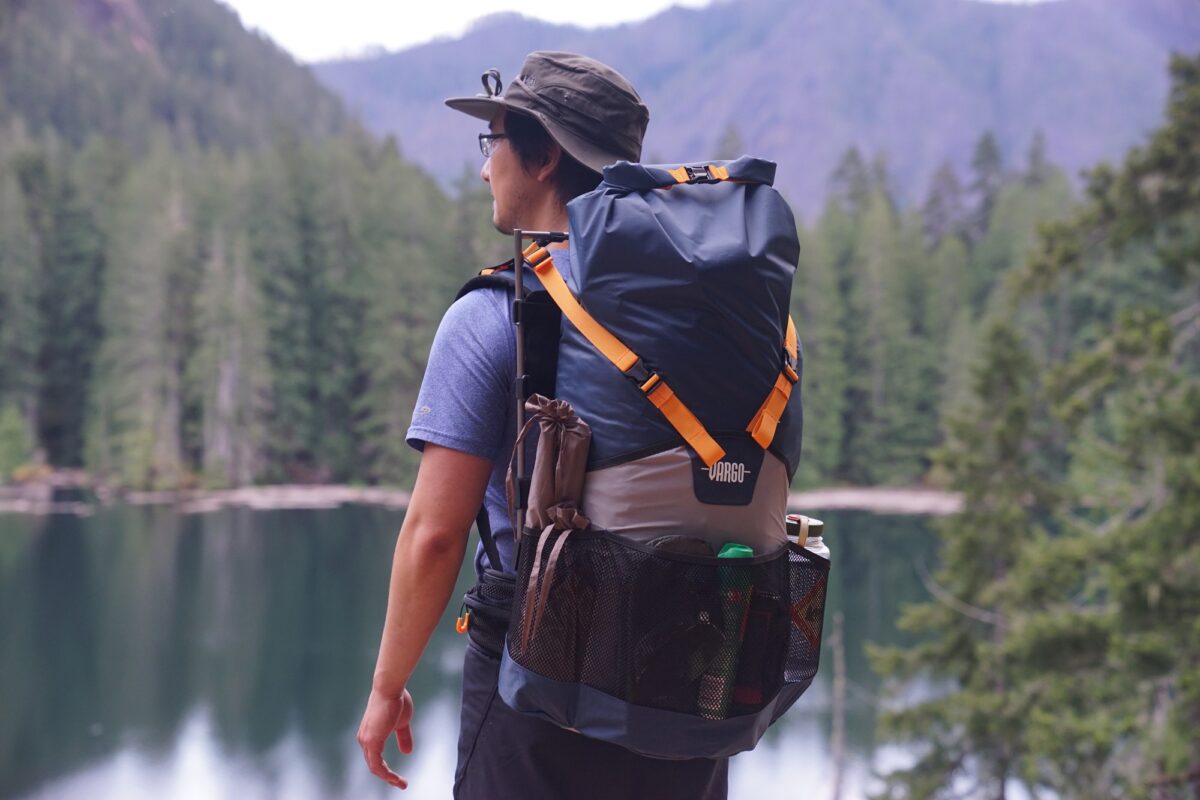
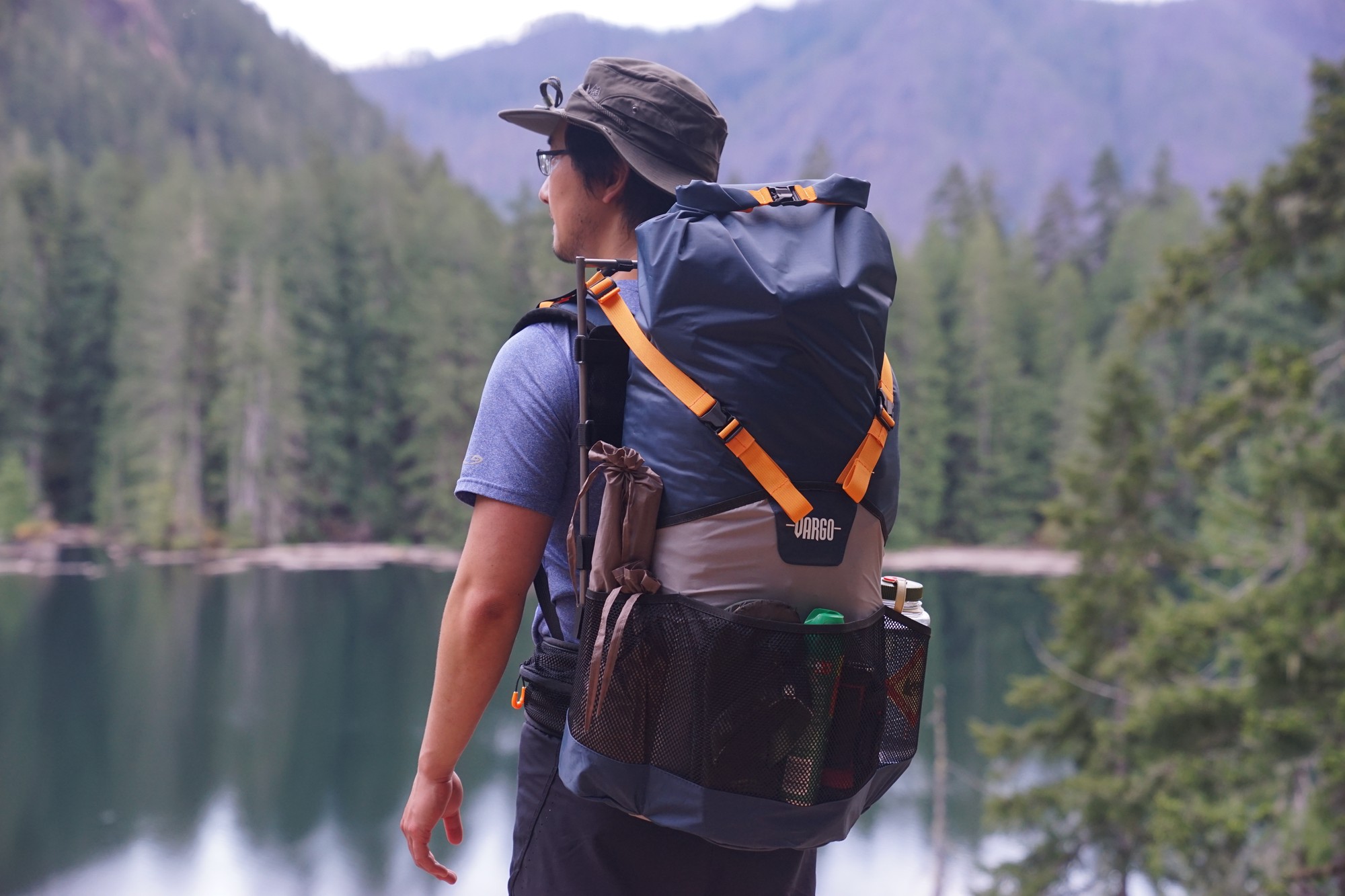
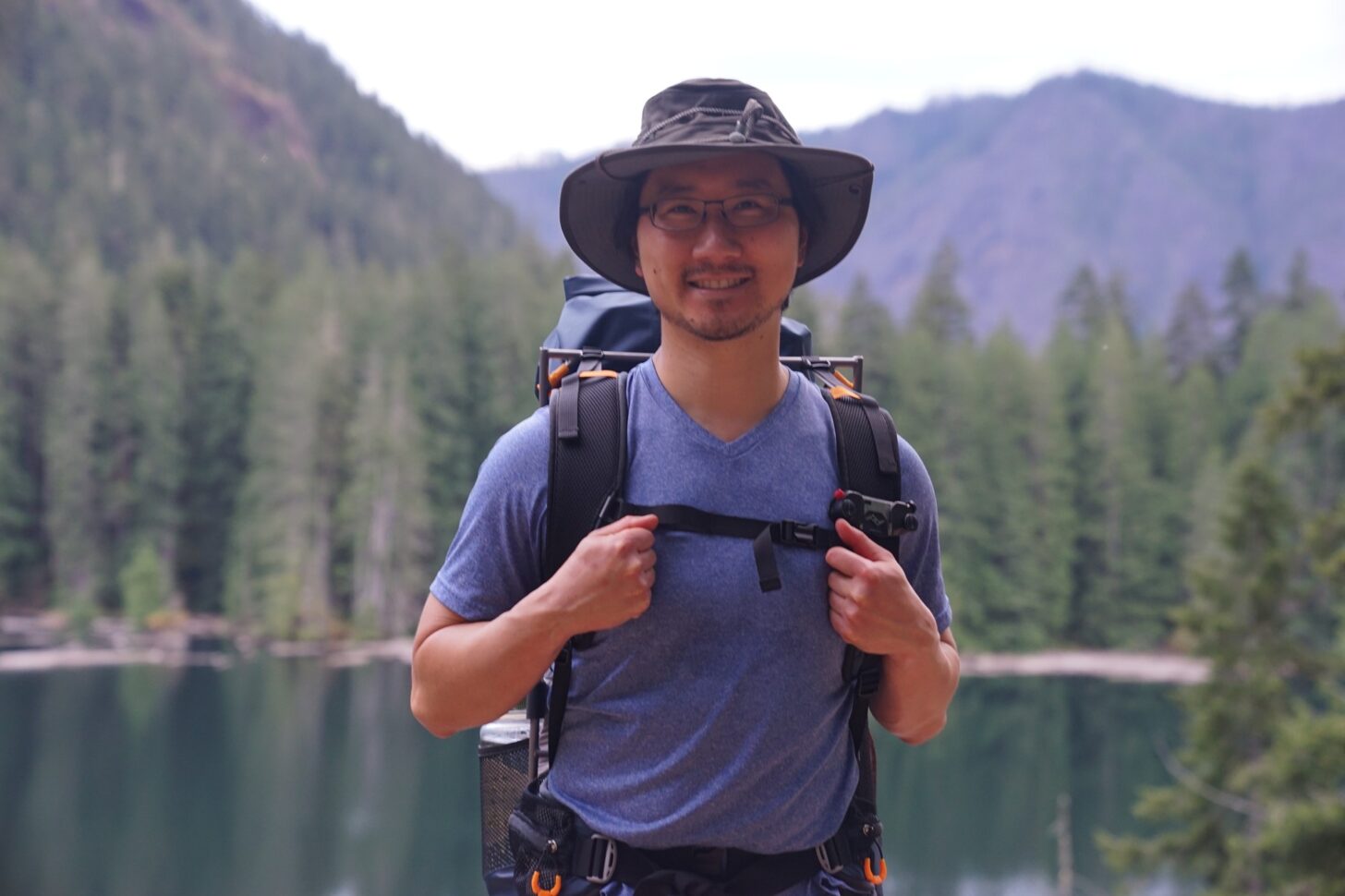
At Lena Lake in the Olympics. Note that Vargo designs their bags to better facilitate an upright posture while hiking.
Suspension
The suspension is comprised of a pad covering the frame’s lumbar support, sturdy straps, and a load-lifting compression strap system. The suspension attaches to the frame using several small but strong hook-and-loop straps.
The hip belt straps and shoulder straps are strong but lack the amount of padding seen in many other packs. I also found that the hip pads were substantially shorter than other packs I’ve used in the past, meaning that the end of the pad ended right at my hip bones. More to come on comfort.
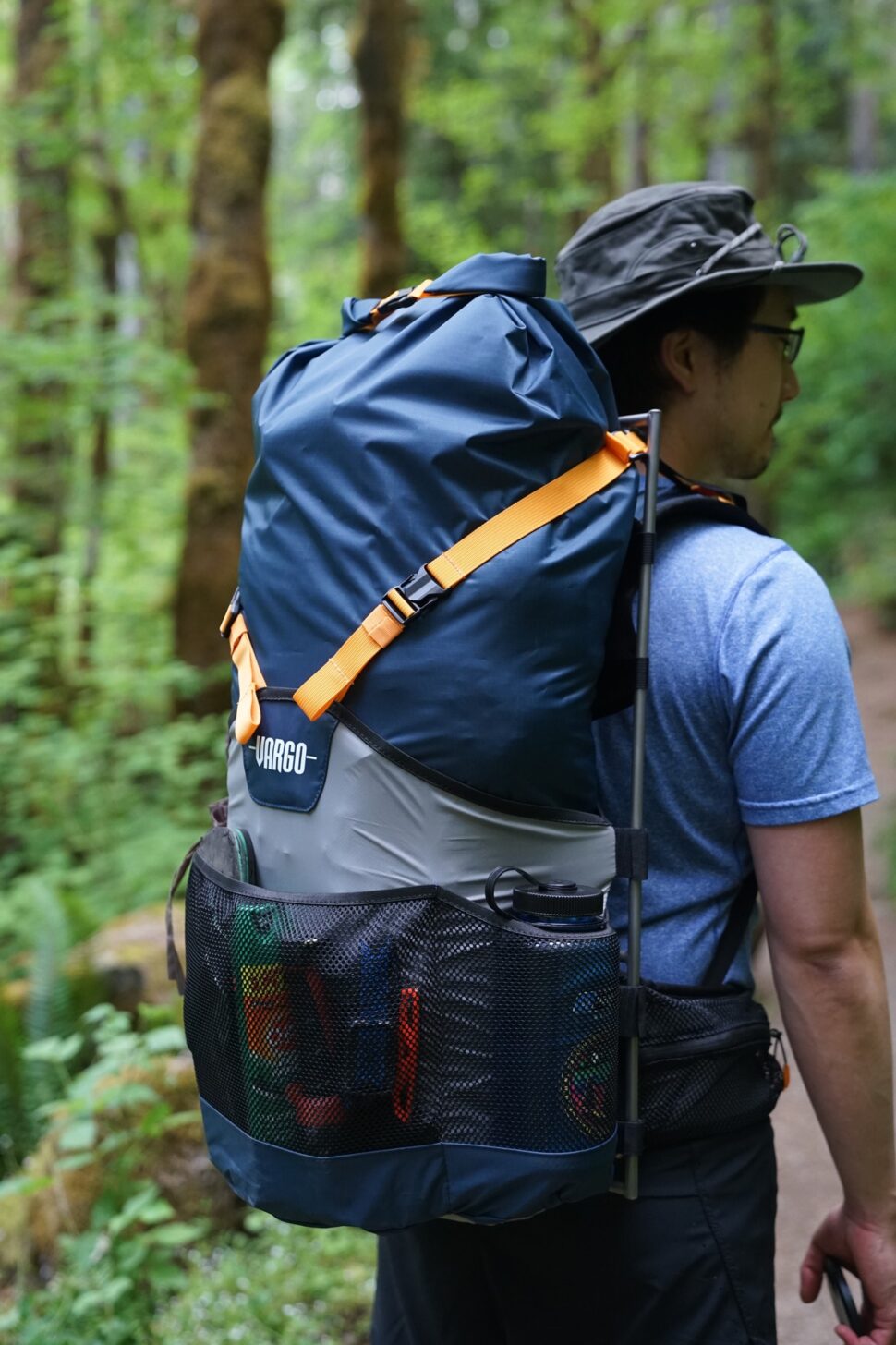
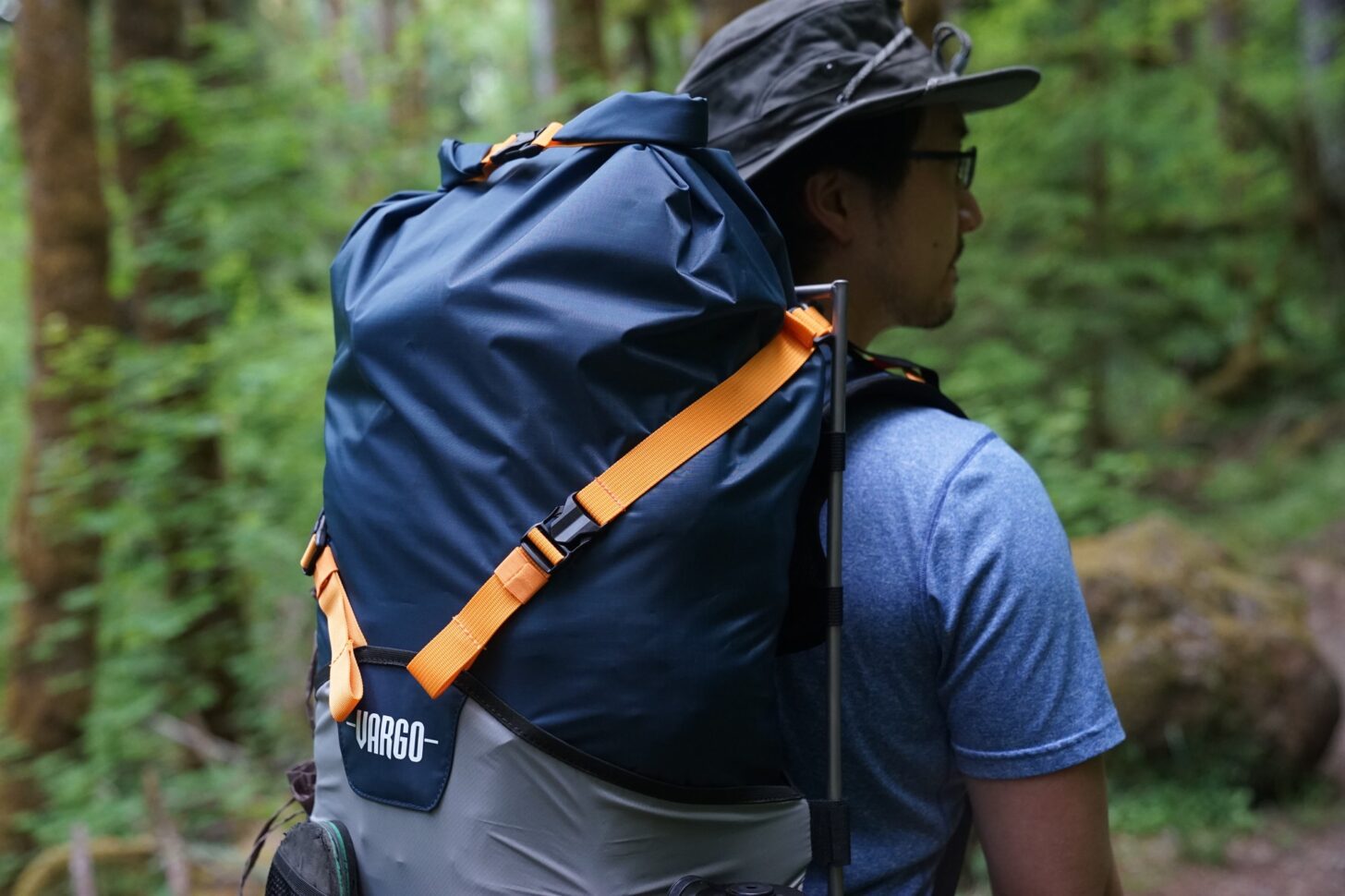
One thing I think would have been handy here is an extra strap at the top to better secure the top of the main bag to the top of the frame. Vargo’s blog indicates that they prefer to keep the center of gravity higher, then transfer the weight to the lumbar area in order to maintain an upright position while hiking. The two load-lifting compression straps went around the bag but seemed to leave a V-shaped notch in the middle, thus when stuffed full, the bag seemed to sag back and down through the notch at times. This was most noticeable when needing to shift my weight as we clambered upwards over steep alpine trails. In general, it wasn’t a huge problem, but at times the bag seemed to want for extra stability that I think one more strap could have provided. I will note here that I consider it entirely possible that I simply overloaded the pack beyond its recommended weight/load – you can see from the photographs that I had enough gear that I could barely close the roll-top buckle! Perhaps someone with a more compact kit would not struggle here.
Hiking up to Lena Lake in the Olympics. Note that I had this pack weighing in around the 35 pound (16 kg) mark and have stuffed it full of gear! Compare to the stock image to see just how much I had put in the bag – I could barely clasp it shut. You can see here the V-shaped notch created by the load-lifting straps.
Roll-top Bag
The roll-top bag is much like any other single-compartment, three-pocket bag of its kind. A couple of noteworthy comments come to mind, though.
While Vargo stops short of calling the Vargo ExoTi BOG waterproof on its website (the pack is noted as water-resistant), Brian Vargo frequently referred to it as waterproof in our interview. I suspect based on my own use that waterproof is probably an appropriate term. The bag clearly is not meant for prolonged submersion, but given its taped seams and 70 denier construction, I think that it could be considered functionally waterproof. Vargo does offer a rain cover on its website, but in the case of the BOG I think that it would be superfluous given material and design.
The material choice is probably one of the areas where Vargo could have shaved some weight. When I asked Brian Vargo about his choice of 70 denier nylon over lighter materials (like Dyneema Composite Fabric), he stated that the choice was mainly guided by cost, as using something lighter would have increased the price-point for users.
“Dyneema [Composite Fabric] is waterproof, but you need to be careful with the seams; they have to be sealed. Mostly it was a cost consideration more so than anything else. If we had used Dyneema [Composite Fabric] it would’ve increased the cost significantly and I didn’t know if those few ounces were justifiable to the consumer.” – Brian Vargo
My own perspective after using the BOG backpack is that Brian’s explanation is perfectly reasonable. The nylon bag is sturdy and functions exactly as it should while keeping the price quite competitive. If the few extra ounces are a make-it-or-break-it issue for a hardcore consumer, then the great thing about the BOG is that it gives that person the option of using a different bag – provided the user can figure out how to attach it to the frame.
The roll-top bag is made of a durable 70 denier nylon fabric and has fully taped seams for maximum protection against water penetration.
Functionality and Modularity
As mentioned repeatedly in thisreview, the Vargo ExoTi BOG’s functionality is centered around minimalism. Vargo offers two other systems in the ExoTi lineup, and if you want additional features and functions, those systems have them. The BOG accomplishes its mission of being a minimalist bag focused on carrying gear (as opposed to convenient access to various parts of your kit). However, this does obviously limit some functionality in other departments. I will not call it a weakness (see Brian’s comments in our interview) but I will identify certain functions that are limited as a result of this design.
One easily identifiable feature of roll-top bags is simply that you have to be strategic about your packing: place an item at the bottom, and you’ll have to take everything else out in order to access it. You also cannot use a water reservoir with a tube and bite valve (e.g., Platypus or Camelbak) as there is no interior sleeve or hydration port.
With regards to water storage, the BOG does have two mesh pockets for water bottles. These are well out of arm’s reach while wearing the pack.
I often hike in areas with bears, necessitating the use of a bear canister for food storage. The BOG’s roll-top bag easily fits my BearVault BV450 inside the main compartment. The BOG’s 40L interior capacity meant I had to be strategic with the rest of my gear when packing my bear canister. Due to space limitations, I found myself attaching my sleeping pad to the bottom of the pack using an extra strap I had lying around. You could maybe do this with a bear canister (or similar heavy item), but that isn’t how the BOG is designed and could impact the center of gravity to some degree (note that the Vargo ExoTi AR2, being a 3/4 length pack, isdesigned for this).
The way that the bag is easily removed from the frame and suspension means that it can be taken into the tent while leaving the bulky frame outside. I often hike with an internal frame pack, and when I need to keep it inside the tent it takes up quite a bit of space. But with the BOG, I could keep the packbag in the tent and leave the rest of the backpack outside.
“You can use any bag [with the titanium frame], and I recommend a dry bag. You could use just about anything else as well. [The suspension system is] just a pouch, and how you use it is completely up to you.” – Brian Vargo
The ExoTi lineup is essentially comprised of three main components: frame, suspension, and bag. This modularity is beneficial if the suspension or roll-top bag is subjected to any catastrophic damage, since they can be easily replaced individually without having to replace the entire system all at once (again, I consider it a near-impossibility for the titanium frame to suffer such damage). The “BYOB” (bring your own bag”) option can be found on Vargo’s website here, with links to the individual bags at the bottom of the page, thereby allowing the user to choose whichever bag would best suit a particular adventure.
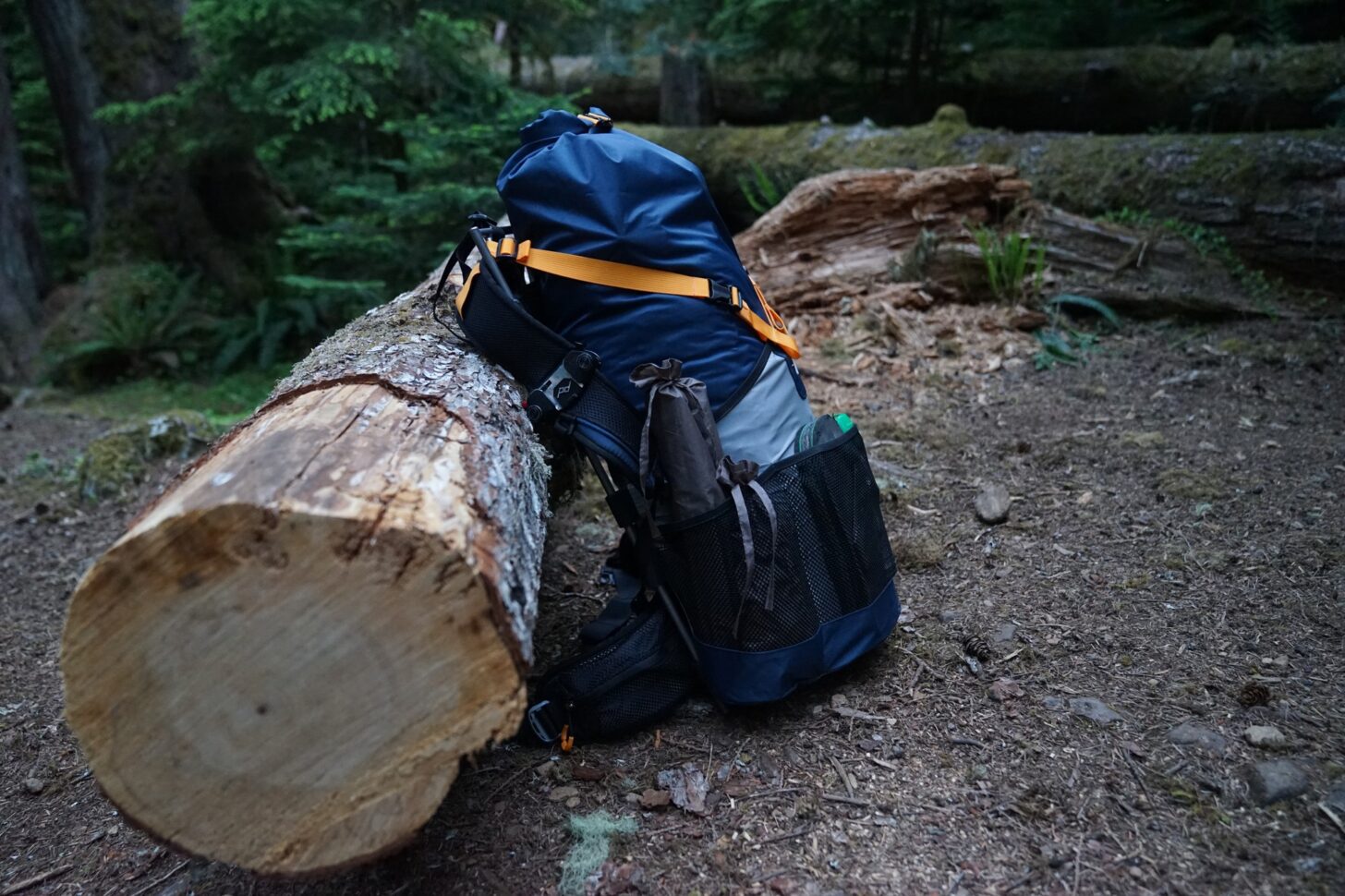
Side view of the Vargo ExoTi BOG. I used one of the water bottle pockets for my tent poles.
Comfort
The hip pads are short. When the hip straps were tightened, it felt like the tips of the hip pads were digging into my iliac crest. Initially, this was unnoticeable, but over the course of several hours became uncomfortable. I could see how adding a little more padding (at the shoulders, hips, and lumbar support) could have improved the comfort of the Vargo ExoTi BOG backpack.
The lumbar support issue was interesting as initially, I felt that it did a great job of transferring the weight off my shoulders – and the placement of the lumbar support plate was perfect. There’s an informative post by Vargo on its website about its approach to the ExoTi frame weight distribution (e.g., maximizing weight transfer to the lumbar region). Perhaps Vargo did too good of a job in this department, because after several hours I began to experience pain in the spot where the lumbar support met my back. The material used to cover the support plate is mesh and fairly rough, and at times if my shirt rode up my back, would rasp my skin raw.
Unfortunately at the end of each day, I felt pain in my hips where the pads dug into my iliac crest, and pain in my back where the lumbar support plate transferred the pressure of the load.
I will note that the user feedback I have seen online and in social media has met the ExoTi frame system with near-universal acclaim for its comfort and load distribution qualities. I am an outlier in my experience with the discomfort I felt. I’ll also note that when I took the pack up into the Enchantments, I was certainly pushing it beyond its recommended maximum load of 30 pounds (14 kg), as I had approximately 35 to 40 pounds (16 to 18 kg) on my back. Whether due to my anatomy or the way in which I used the pack, it seems that my experience was not the norm, as almost every comment I have seen on the comfort of the ExoTi system has been one of praise.
Backpacking at Lena Lake in the Olympics. If you look closely at the hip pads, you can see that they are relatively short and do not wrap far around the body.
Compared To…
The Vargo ExoTi BOG backpack has few direct competitors. It’s an external frame backpack with a modular bag system. Its closest competitors in terms of modular function would be the ULA Epic and the Seek Outside Unaweep, but both of these are internal frame designs. If one prefers the load-carrying style of an external frame pack, the experience will be matched more closely to backpacks with external frames or external-frame-like exoskeletons like the ZPacks Arc Air. Thus, the latter was used for this comparison.
The Vargo ExoTi BOG backpack weighs 41 ounces (1160 g) while the ZPacks Arc Air 50 L weighs 19 ounces (544 g).
Edge: ZPacks Arc Air 50 L is the clear winner here at just under half the weight of the Vargo ExoTi BOG. Much of the weight savings comes via the use of Dyneema Composite Fabrics and a carbon fiber frame.
Price
The Vargo ExoTi BOG costs $299.95, the ZPacks Arc Air 50 L costs $325.00. Note this is where Brian Vargo’s material choice comes into play. However, the price premium for Dyneema Composite Fabrics is not substantial in this case.
Edge: Vargo ExoTi BOG
Function
The Vargo ExoTi BOG’s roll-top bag is removable, while the ZPacks Arc Air 50 L is fixed to its exoskeleton suspension similar to an internal frame pack. The ZPacks Arc Air 50 L has options for accessories, interchangeable belts, and overall seems to be more customizable.
Edge: In terms of function, they’ll both carry your gear! It comes down to whether you prefer the modularity of the Vargo ExoTi series or the customization available with the ZPacks Arc Air 50 L. There’s no clear edge here – I feel this will come down to the individual hiker’s preferences. I am not aware of any direct competition to the ExoTi BOG’s removable roll-top bag feature in an external frame design.
Material
The Vargo ExoTi BOG’s main bag is made of a relatively thick, durable 70 denier nylon (likely in the range of 2.7 to 3.2 oz/yd2). Its frame is titanium. The ZPacks Arc Air 50 L is made of 3.1 oz/yd2 Dyneema Composite Fabric Hybrid with a frame using carbon fiber stays.
Edge: I feel the Vargo ExoTi BOG wins the frame contest with its rugged titanium construction, but the Zpacks Arc Air 50 L’s lighter DCF/carbon fiber wins in the weight department. However, given the fact that the BOG’s nylon bag can be swapped out for a DCF bag, the edge (in my mind at least) goes to the BOG.
Strengths and Limitations
Strengths
minimalist, with a clean and durable roll-top design
modular design with removable/replaceable main compartment is unique among external frame packs
durable materials (titanium, 70 denier nylon)
functionally waterproof
Limitations
difficult to reach water if hiking alone
comfort issues due to (in my opinion) insufficient padding
short hip pads may not work for some individuals’ anatomy
You can purchase the Vargo ExoTi BOG backpack from Vargo here.
Full Interview with Brian Vargo and Daniel Hu – September 10th, 2021
Dan: I like the simplicity of the BOG and the ability to remove the main bag. Can you describe your process in designing and then manufacturing the BOG? Were there any other designs that inspired you?
Brian: With our whole backpack series, the ExoTi, there’s Part A and Part B.
Part A is made up of the frame, shoulder straps, and belt. And so that’s the commonality between all three ExoTi packs. Part B is “What do we attach to the frame?” One of our packs (the ExoTi 50) is more of a standard pack, and it sort of resembles an internal frame pack. The next is a 3/4 pack – typically with a traditional external frame pack, there’s a space underneath to attach stuff like your bedroll.
The BOG was the last option as the series goes progressively. It was created with what you said in mind: people who want the ability to come into camp and instead of pulling this and that out of the bag, you can literally grab everything out of the backpack with the dry waterproof bag and take it into the tent, while leaving the frame and suspension out in the vestibule or even outside if you wanted. That was the main idea, for people who want to keep all of their essential gear in the tent at night.
Dan: I think any user would intuitively figure out how to take the bag out, to minimize the bulk inside the tent. This was my own experience! I got to my campsite, set up the tent, and when it came time, it was easy to look at the BOG and go, “Okay, I can just lift the whole bag out and keep it in my tent.” I often hike with an internal frame pack, and when I need to keep it inside the tent it takes up quite a bit of space. But with the BOG, I did exactly what you described and left the frame outside of the tent overnight with no problems.
Brian: Obviously we only offer one size of bag, but you can use any bag (and I recommend a dry bag). You could use just about anything else as well. [The suspension system is] just a pouch, and how you use it is completely up to you.
Dan: Were there any features that didn’t make the cut when you were designing the BOG?
Brian: We have three options with the ExoTi series, so with each one there are different design elements. With the BOG I wouldn’t say I took anything away, it’s a really minimalist design. There was never anything I ever thought, “Oh I should add to it”. It was the third bag in the series and so I was trying to make it even more minimalistic than the first two.
Dan: I know that there was an update a few years ago when the ExoTi series was released as a successor to the Ti-Arc line. Were there any significant changes made for the ExoTi frame used with the BOG?
Brian: So the Ti-Arc was even more like a traditional external frame backpack. Different, but more similar [than the ExoTi series]. The biggest difference is that in the Ti-Arc, similar to traditional [external frame] backpacks, there’s a frame that goes around the top that the bag hangs from. And it’s a nice feature in the way that it’s suspended from a higher point so it has a different center of gravity. I liked it, but there were things I didn’t like about it, but we needed them in order to have that arc that went around the top. With the ExoTi it goes straight up like a big rectangle, but with the Ti-Arc we had to bend the rod, the vertical rods on the sides, to avoid you hitting your head on the pack. It was inherently the way the bag would lay there. I wasn’t happy with that and I wanted to change it, and I felt the ExoTi was a stronger design. We added angle brackets in the corners to increase the strength. In external frames, there’s traditionally that top bar, I found that experimentally and playing with new ideas it didn’t make a big difference in the way it felt when you carry it; it has a different feel but not significant enough, I wanted to improve the strength of the system overall and that was what part of led to the ExoTi series.
Dan: Aside from the obvious titanium external frame, could you talk a little bit about the other materials used in the construction of the BOG? For example, the main bag. Were there other materials you considered?
Brian: The bag that some people are using, a former employee did the same and is using a Dyneema bag. Dyneema would probably be the most common swap out that I’ve seen. They’re very expensive and to get a bag that big it would increase the cost. So it was a cost issue, and I wanted the bag to be as waterproof as possible. Dyneema is waterproof, but you need to be careful with the seams; they have to be sealed. Mostly it was a cost consideration more so than anything else. If we had used Dyneema it would’ve increased the cost significantly and I didn’t know if those few ounces were justifiable to the consumer. If people who want to do it, great, but at the end of the day the bag we offer, it’s a good bag, it’s waterproof, and it’s at a pretty good price and it’s fairly durable. Everyone has their wants and likes. It’s a nylon bag. Very highly water-resistant nylon bag.
Dan: I’ll share that while I personally love ultralight products, I’m not necessarily obsessed with shaving off every possible gram. I know some folks say to themselves, “Okay, where can we truly minimize weight and cut off a strap here or there,” but I figure that back a generation ago, say in the 90s, ultralight didn’t exist (to the extent it does now) – and people still went hiking! I’ve never been on a hike that was so strenuous that I went back and said, “Okay, that extra 100 grams was what stopped me from completing the hike.” So in some ways, I just tell myself to be strong enough to handle the extra ounce or two.
Brian: [Laughing] That’s my generation! I did most of my hiking in the 90s. There was no “ultralight.” I remember a guy who did the Appalachian Trail who had a pack that was 35 lb and I thought, “How in the world do you have that?” It seemed unattainable to me. But everyone wanted to have a lighter backpack, but the gear in those days, it just wasn’t designed that way. I’d say arguably some of the materials may have existed, but the designs weren’t around. Like the minimalist design, you had to have things that were durable and were going to last, and that’s important. In my mind, you have to have a balancing act. You can take it too far. You don’t need gear like I had in the early/mid 90s. This is what obviously sparked my imagination as well – “It’s too heavy; what can I do to get the weight down?” That was the inspiration behind a lot of our products.
Dan: Do you have any updates coming down the pipeline for the BOG? How do you envision the BOG backpack evolving in the future?
Brian: Everything always evolves, and as I do this longer, I get more feedback, I have my personal experience. I do have some things I’m working on, I’m not ready to share it yet, but I’ll say in general, I’m always trying to think of how can I do it better, that’s half the fun and what keeps me doing this.
DISCLOSURE (Updated April 9, 2024)
Product mentions in this article are made by the author with no compensation in return. In addition, Backpacking Light does not accept compensation or donated/discounted products in exchange for product mentions or placements in editorial coverage.
Some (but not all) of the links in this review may be affiliate links. If you click on one of these links and visit one of our affiliate partners (usually a retailer site), and subsequently place an order with that retailer, we receive a commission on your entire order, which varies between 3% and 15% of the purchase price. Affiliate commissions represent less than 15% of Backpacking Light's gross revenue. More than 70% of our revenue comes from Membership Fees. So if you'd really like to support our work, don't buy gear you don't need - support our consumer advocacy work and become a Member instead.
Learn more about affiliate commissions, influencer marketing, and our consumer advocacy work by reading our article Stop wasting money on gear.
Maggie Slepian uses past experiences on trail to push through rough days on Colorado’s challenging Collegiate West.
My dad has an old ultrarunning adage that he’d impart when I was having a tough time in school, social life, athletics, or some combination of general life: it doesn’t always keep getting worse. At first, this might seem like a downer statement – the word worse doesn’t exactly sing of empowerment – but to me, it’s the opposite. This is a statement I return to time and time again when things have been challenging. I can hope that at some point, circumstances will turn around and it gives me something to look forward to.
My dad would repeat this saying to himself around mile 60 of his 100-mile races when he was deep in the pain cave but still had well over a full marathon distance until the finish line.
I’ve returned to this sentiment over and over, and somewhere along the way, it became more than just words. It’s something I truly believe thanks to plenty of experiences coming out of low points.
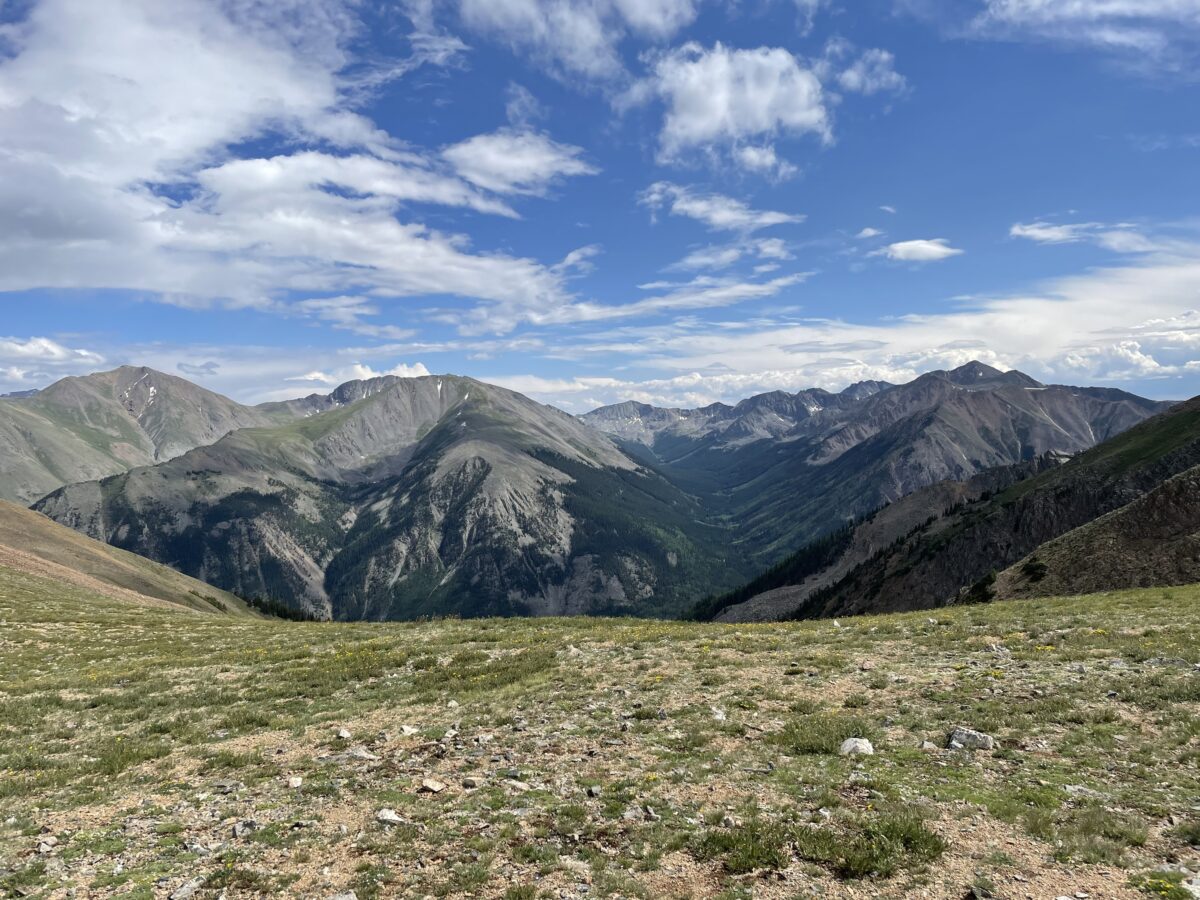
Welcome to Collegiate West range.
I just returned from a 486-mile solo thru-hike of the Colorado Trail. While the trail was challenging, with manageable miles, the terrain was within my physical abilities.
Mentally? That was another story.
My mental lows on this trail were like nothing I’d ever experienced in the backcountry. I fought through waves of anxiety so bad I couldn’t eat, drink, or get a full breath of air. I would pack up my gear while crying in my tent and have to pause to cry multiple times during the day, doubled over on my trekking poles in the middle of the trail.
I felt helplessly trapped in my own head, and it impacted my physical strength as well. I wasn’t intimidated by the hike, I wasn’t afraid of being alone in the mountains, and I wasn’t overly tired. Day after day, I just couldn’t get a handle on my emotions. I felt like I was battling my brain while trying to cover more than 20 miles per day with thousands of feet of vertical gain.
I had been dealing with some very challenging personal issues, and nature had always been an escape. When the problems became too big for my normal dose of nature, I thought an epic thru-hike would provide healing and take my mind off of it. Believe me when I say I was stunned when that was not the case. Bouts of crying and inertia were for breaking down in your room at home, not in the middle of a 486-mile solo hike. Yet here I was, fighting through regrets and doubts and choices I had made in the middle of some of the most incredible terrain I’d ever hiked through.
Four passes in a day, bad anxiety. A fun cocktail of trail joy. Photo credit: Maggie Slepian
The Collegiate West section was the worst. This alternate is 80 miles of rugged, remote trail, and is some of the most dramatic, astounding backpacking I’ve ever done. But as I reached this point, my anxiety spun out of control. My headspace was so bad I felt I was in the bottom of a well, staring up at a pinprick of light. It was all I could do to drag myself one step at a time up the trail, my mind a swirling vortex of worst-case scenarios, imagined pitfalls, and run-of-the-mill black holes.
But here’s the thing: I’d been there before. Maybe not quite as bad as those days in Collegiate West, but I’ve had my fair share of bad headspaces on the trail and in life.
It was around 11 AM on one of these Bad Days. I was sitting on a log at the base of a 3,000-foot climb to the Continental Divide, and I was a wreck. Once I crossed the footbridge over a creek, I had five miles of steep ascent to 12,500 feet. By the time I’d reach treeline, the thunderstorms would likely be rolling in. I was exhausted, demoralized, and spiraling in anxiety.
This was a hard section. It was also some of the most amazing backpacking I’ve ever done. Photo credit: Maggie Slepian
I dropped my pack and cried on the log for as long as I wanted to. When I was ready, I started the climb. The beginning of the climb dragged, and then the middle flattened out. Then it climbed steeply, then more steeply. Then the trail circled a lake and dropped 200 feet of hard-earned elevation.
I gradually stopped obsessing over where I was in the ascent, my breathing regulated, and the top of the ridge eventually appeared. Before I knew it, I was on the final shale-covered switchbacks. Suddenly I was on top of the Divide before hiking a glorious section of ridge, seeing the Collegiates unspooling in front of me and behind. My meltdown at the base was miles behind me, and I had another small victory to add to my arsenal.
That climb to the Divide marked the conclusion (thank God) of four days of anxiety and mental lows. I still don’t know exactly where my mindset came from, but I do know that I got through it. It didn’t always keep getting worse. That climb ended, as they all do. Now I’m sitting on my couch writing about it, and the Colorado Trail is in my rearview mirror – the good days and the hard ones.
Another day, another pass. This time smiling!
Gaining experience in the backcountry doesn’t just mean honing your technical skills or learning advanced techniques. Sometimes experience can mean gaining a deeper understanding of yourself through the miles, especially the ones that have challenged you to your core.
For me, that’s as good a reason as any to keep putting one foot in front of the other.
Editor’s Note: mental health is a complex and nuanced issue – and many people need more than leveraging past experiences to get through hard days. If you are struggling, call the National Suicide Prevention Lifeline, available 24 hours, at 800-273-8255.
Backpacking Light does not accept compensation or donated/discounted products in exchange for product mentions or placements in editorial coverage.
Some (but not all) of the links in this review may be affiliate links. If you click on one of these links and visit one of our affiliate partners (usually a retailer site), and subsequently place an order with that retailer, we receive a commission on your entire order, which varies between 3% and 15% of the purchase price. Affiliate commissions represent less than 15% of Backpacking Light's gross revenue. More than 70% of our revenue comes from Membership Fees. So if you'd really like to support our work, don't buy gear you don't need - support our consumer advocacy work and become a Member instead.
Learn more about affiliate commissions, influencer marketing, and our consumer advocacy work by reading our article Stop wasting money on gear.
I bought the $85 Vargo titanium water bottle to see if it was worth it. The answer? It’s complicated. Here’s my review.
In Defense of my Insanely Expensive Purchase
This article will technically be a First Looks review – heavy on photos with a few observations about the Vargo Titanium Water Bottle. But before I get to the formal review I feel the need to explain why I decided to purchase (two!) $85 titanium water bottles in the first place.
I will absolutely be the first to admit that $85 is a ridiculous amount to spend on a water bottle – even if you are relatively well off and financially secure (I’m a writer and my wife is a teacher, so, spoiler alert, I’m not). If I were reading this review on another website I’d likely just ignore it completely because:
a combined $170 is halfway towards a medium-range DCF shelter
I rarely – if ever – have $85 to put towards new gear, and when I do it tends to be replacing clothing that I’ve worn out or destroyed while backpacking
Smartwater bottles are under $5 and last a relatively long time – if it ain’t broke, don’t fix it
many (if not most) professional gear writers receive their testing products for free
This last point is especially salient to me. Even with the best intentions and rigorous journalistic ethics, it can be difficult for a gear reviewer to make accurate cost-benefit analyses, especially if you’ve been at it for a while. You start to take high-end gear for granted. I remember my days of backpacking with a hand-me-down pack, the same cheap-and-heavy synthetic sleeping bag I’d been using since high school, and a fleece I bought for ten bucks from TJ Maxx. But only vaguely.
That’s why I decided to purchase two Vargo Titanium Water Bottles instead of requesting media samples – I wanted to know if such a simple product at such an astronomical price point was actually worthwhile. Is it a useful piece of gear, or one of those stripped-down, overpriced, trendy-minimalist products aimed at people who listen to Silicon Valley software engineer podcasts?
And I’ll tell you – it hurt me to buy these bottles. I have a tattered envelope in my desk drawer where I keep the spare cash I earn from my side gig as a fine artist. I normally use it to treat my wife and me to pizza and beer after a particularly hard week. Emptying out that envelope was physically painful, not to mention that it put me in danger of ticking off my wife.
So trust me when I say this: my cost-benefit analysis of this product is as accurate as it can possibly be and as free as I can make it from the media bias introduced by getting free or discounted gear.
The Confusing Environmental Elephant
I’ve been playing around with alternatives to disposable water bottles for a while. The last time I wrote about my experiments it kicked off a rousing discussion on the environmental impacts of utilizing single-use plastic bottles for backpacking. It’s an astonishingly nuanced debate, particularly if you are a millennial like me who was trained, essentially from birth, to recycle plastic when you can and not buy it at all if possible. When do Smartwater bottles begin to fall apart? When do they start to grow bacteria? When do they begin leaching chemicals? How effective is recycling in America anyway? Didn’t most of our recycling used to get shipped to China? What happens to it now? What’s the carbon cost of using, say, 12 SmartWater bottles over the course of a 3-month thru-hike vs. something made from a sturdier plastic or metal? And shouldn’t we be directing most of our environmental attention away from individual consumers and towards large industries – particularly the fossil fuel industry?
Some of these questions depend upon use-cases and some are only answerable by more intelligent people than me – specialists in their field or folks whose background includes more math and less art history. Some of these questions seem to not be answerable at all, at least for the moment.
Sometimes you just have to make a personal choice and hope it’s the right one. So it is with me and single-use plastics. I use bamboo toothbrushes. I don’t use plastic razors with throw-away blades. And I no longer use Smartwater bottles. Is this mathematically or environmentally the correct decision? Does it actually accomplish anything? Is it, somehow, worse? I certainly know that somebody somewhere had to mine the ore for a titanium water bottle. Where did that happen? What were the conditions like in the factory where the raw metal was turned into a bottle? Does Vargo’s HR department treat its workers well? I don’t know the answer to any of these questions. All I can do is make the next right choice at every opportunity.
So I invested in an extremely expensive water bottle that is heavier than a single-use plastic bottle but lighter than any other option that I know of. It is virtually indestructible and – unlike pretty much any other piece of backpacking gear I own – will last me for the rest of my life. It may never end up in a landfill.
That feels good to me. Your mileage may vary, but it feels like the next right choice from a philosophical standpoint and, yes, an environmental one.
But I’m willing to admit that the latter might be because I have the ghost of Captain Planet yelling at the part of my brain that’s still five. C’est la vie. I’m doing the best I can.
Vargo Titanium Water Bottle Review
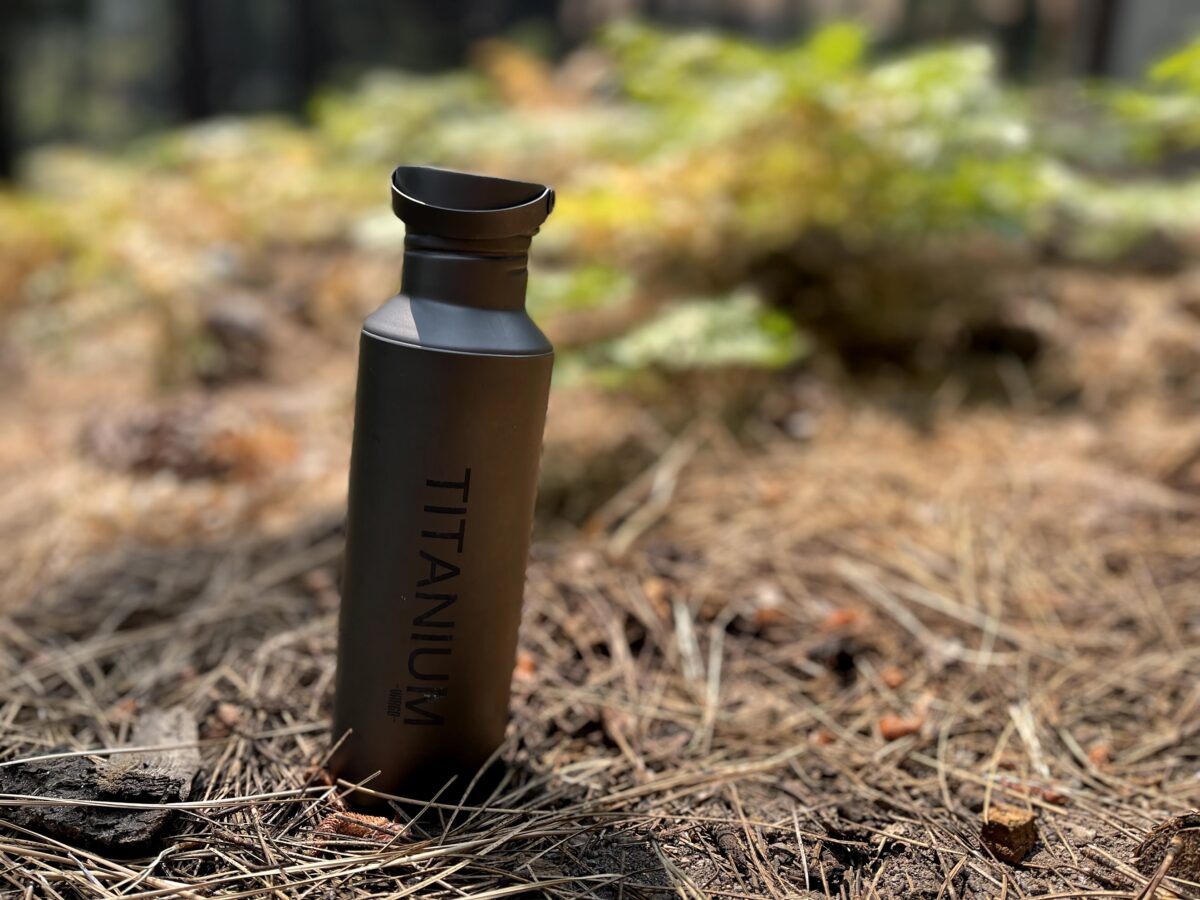
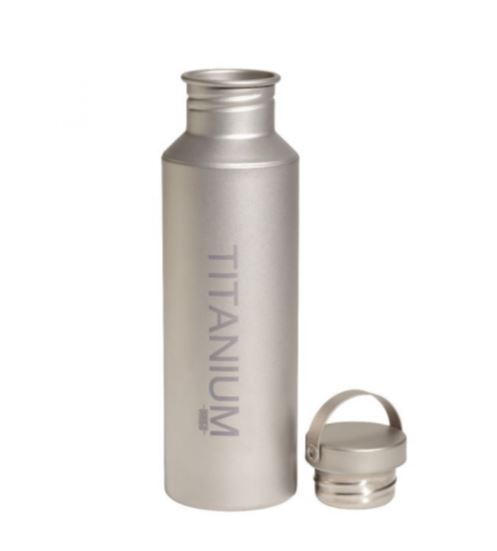
The Vargo Titanium Water Bottle (MSRP: $85, 3.9 oz / 111 g) is a 650 ml (22 oz) water bottle constructed of grade 2 titanium. It features a screw-on titanium lid, a silicone O-ring, a matte finish, a 44 mm (1.7 in) mouth, and a tall, narrow construction designed to slide easily into pack pockets.
The Vargo Titanium Water Bottle. Photo: Vargo Outdoors.
Highlights
3.9 oz (111 g)
MSRP: $85
grade 2 titanium construction
tall, skinny construction fits into pack pockets well
650 ml (22 oz) capacity
minimally threaded metal cap design
44 mm (1.7 in) mouth
cap features a foldaway carry loop
Vargo ships quickly (within 24 hours) and my customer service experience with them was excellent (my initial order was incorrect and they fixed it immediately)
Testing Context
I’ve already gone into my reasons for being interested in the Vargo Titanium Water Bottle in great detail. (If you skipped it, you might want to pop back up to the top and give it a read). The Vargo Titanium was my bottle of choice for my summer backpacking and bikepacking season – though that season was cut short by smoke and land closures related to the Dixie and Caldor fires in the Sierra Nevada.
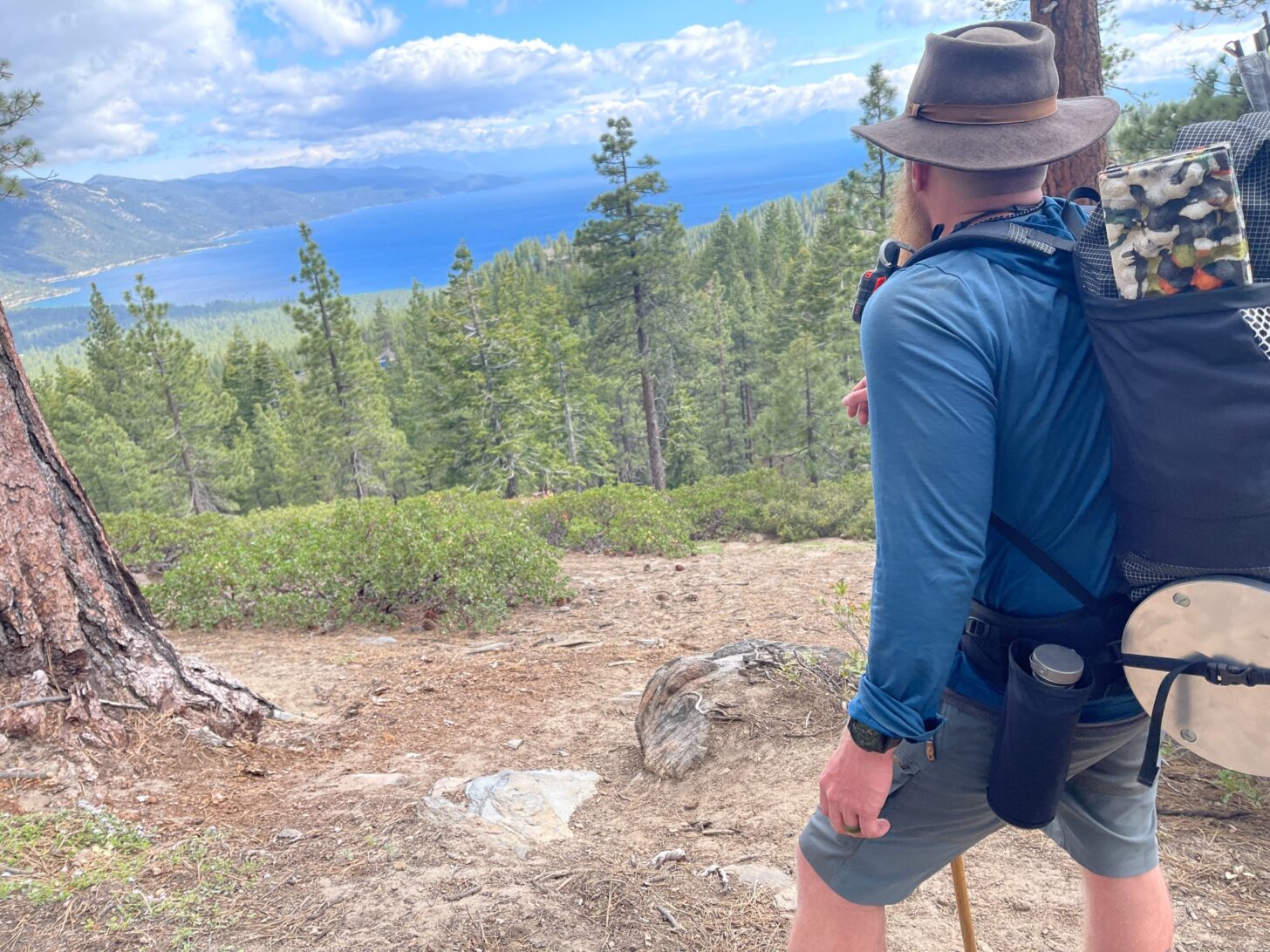
Testing the Vargo Titanium Water Bottle on an overnight backpacking trip in the Tahoe basin. The water bottle holders on this pack were designed to accommodate a 1L Smartwater bottle.
In the end, I got about 15 use-days while backpacking, 7-use days while bikepacking, and over 50 use-days on day hikes. The Vargo Titanium Water Bottle is also my daily water bottle.
This is a first look at new gear that recently entered our review pipeline, and hasn't yet been subjected to rigorous field use. Learn more about the types of product reviews we publish.
First Impressions
Strengths
The Vargo Titanium Water Bottle is emblematic of everything I’m looking for in ultralight backpacking gear: simple, streamlined, lightweight, effortlessly functional, and very, very tough.
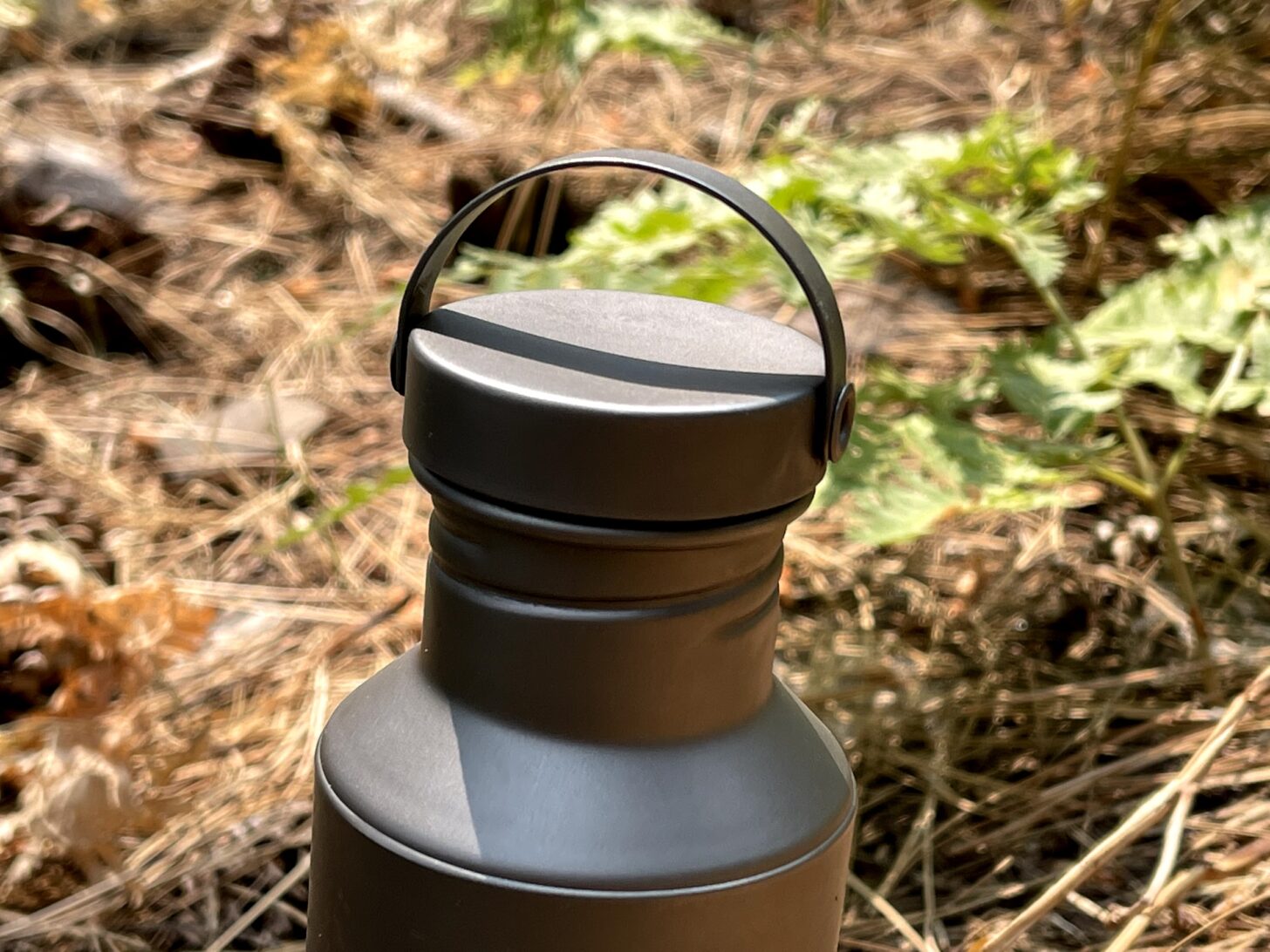
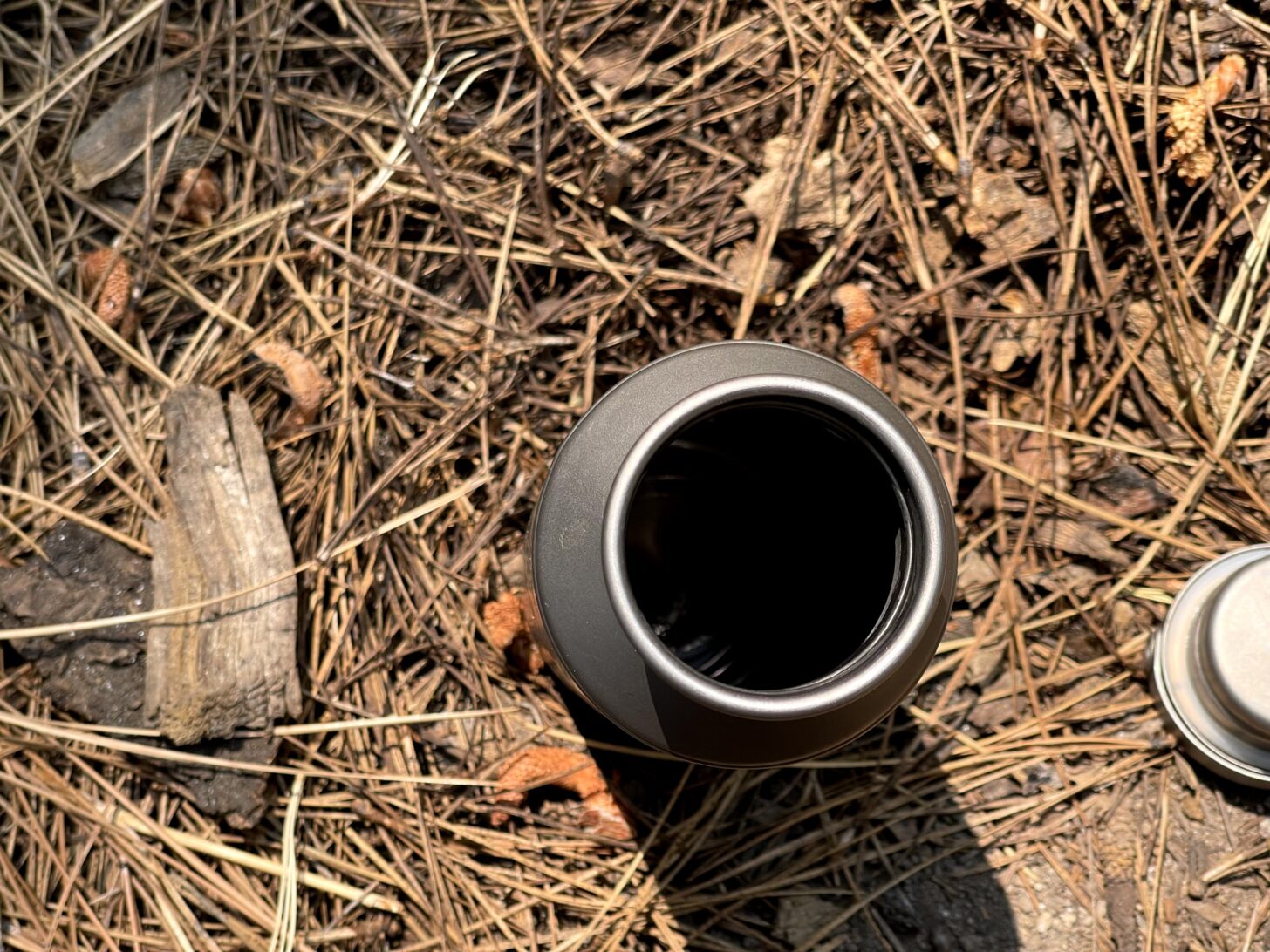
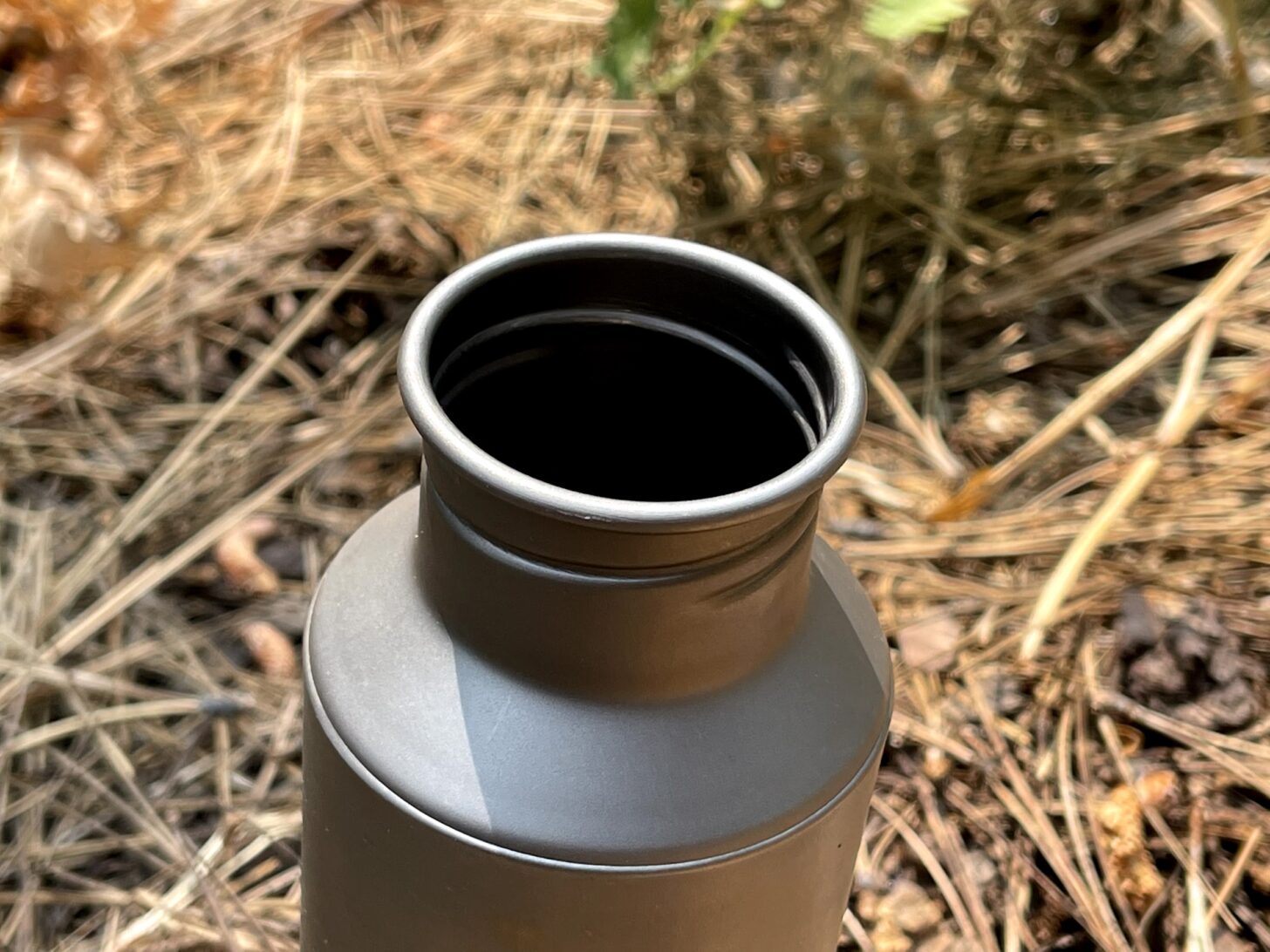
The 650 ml (22 oz) bottle is tall and skinny, designed to fit easily into pack pockets and bottle cages. The minimally threaded lid unscrews with two turns. The foldaway handle sits flush with the lid until needed. It’s dishwasher safe and has a moderately wide 44 mm (1.7 in) mouth – both of which make cleaning for storage and long-term use simple. An added bonus of the wide mouth is that it’s easy to spoon chia seeds or powders into the bottle without causing a mess.
The extra ~3 oz (24 g) of weight over a plastic bottle buys a lot of utility. The titanium can, obviously, hold hot or boiling water with much more certainty and safety than a thin plastic bottle – a feature that has all kinds of applications in wilderness first-aid situations. You could even boil water in it (though you’d really have to be in a pinch to make the attempt). All of the above goes for any single-layer (i.e., non-vacuum sealed) metal water bottle. The Vargo Titanium Water Bottle stands out because it is, well, made of titanium. Titanium has long-term food-safe properties, a clean aesthetic, and a superior strength-to-weight ratio over steel or aluminum.
This last item is the most obvious strength of the Vargo Titanium Water Bottle.
Limitations
An opaque bottle has its drawbacks, mostly when it comes to cooking or water-use management. Backpackers with lots of backcountry cooking experience are likely able to eyeball needed water measurements, but beginners or backcountry chefs with a precise frame of mind might find the lack of measuring ability frustrating.
Using two 650 ml (22 oz) bottles gets you to 1.3 L (44 oz) of storage capacity. Unless you are backpacking in regions unaffected by drought, or you are backpacking routes where water sources are prolific, you may need more storage capacity than that. I solve two problems at once by pairing my Vargo Titanium Bottles with a HydraPak RECON 1L bottle, which gives me both a way to measure my cooking water and an extra liter of storage. You could also just use a soft bladder-type storage solution.
I also find opaque bottles to be a bit of a psychological advantage. There are definitely times when I’d prefer not to see what’s swirling around in my water bottle.
Hard-sided bottles don’t play well with hollow-fiber squeeze-based filter systems. I’m not a fan of those systems (I use Aquamira or a Steripen), so that isn’t really an issue for me.
If you take winter trips in cold climates, metal bottles can be problematic. The Nalgene 24 oz Sleeve is a neoprene sleeve that, according to Vargo, fits the Titanium Water Bottle like a glove. It will cost you 4.8 oz (136g). Backpacking Light publisher Ryan Jordan has a DIY solution that’s lighter – his Reflectix cozies for 1-liter water bottles (referenced in this article about winter gear) weigh only 1.4 oz (40 g) each.
The silicone O-ring, the only part of the bottle that isn’t made of titanium, may need replacing after a few years. An after-market replacement should be fairly simple to find – a few seconds of Googling got me to this website.
Photos
The foldaway cap handle is cleanly designed and functional, and vanishes against the cap when folded down.The 44 mm (1.7 inch) mouth makes spooning in chia seeds and powders easy.The silicon O-ring is the only part of the Vargo Titanium Water Bottle that will likely need replacing in a few years. Luckily aftermarket options are easy to find.A minimally threaded mouth means the metal cap unscrews with two turns.
The Takeaway
I’m not advocating that every ultralight backpacker needs to buy the Vargo Titanium Water Bottle. As with every gear purchase, consider your use cases, budget, and how the gear in question interfaces with the rest of your kit. The Vargo Titanium Water Bottle’s cost may be prohibitive to any backpacker who doesn’t already have their kit precisely dialed. This water bottle, is, in essence, a financial luxury – one I’m privileged to be able to afford. And it is not without drawbacks – it’s a few ounces heavier than the ultralight standard of single-use plastic bottles, it’s opaque, it’s hard-sided, and it only holds 650 ml (22 oz) of water. I consider some of these drawbacks to be advantages, but you may not.
I happened to be in a moment of life when I could afford the purchase, though as I said earlier in this piece, that decision was not without a little hesitation. Having now tested the bottle for a summer, I don’t regret my decision. That cost-benefit analysis I mentioned at the top of this piece comes out on the plus side – for me. The Vargo Titanium Water Bottle matches my needs and my kit – and at the end of the day, the cost is worth it, because I’ll never have to buy another single-use plastic bottle ever again.
Product mentions in this article are made by the author with no compensation in return. In addition, Backpacking Light does not accept compensation or donated/discounted products in exchange for product mentions or placements in editorial coverage.
Some (but not all) of the links in this review may be affiliate links. If you click on one of these links and visit one of our affiliate partners (usually a retailer site), and subsequently place an order with that retailer, we receive a commission on your entire order, which varies between 3% and 15% of the purchase price. Affiliate commissions represent less than 15% of Backpacking Light's gross revenue. More than 70% of our revenue comes from Membership Fees. So if you'd really like to support our work, don't buy gear you don't need - support our consumer advocacy work and become a Member instead.
Learn more about affiliate commissions, influencer marketing, and our consumer advocacy work by reading our article Stop wasting money on gear.
Andrew and Ryan talk about skills and strategies for painting, writing, composing, and photography while backpacking.
Stream
Summary
In this SKILLS SHORT EPISODE, Ryan and Andrew talk about strategies and techniques for creative pursuits in the backcountry: painting, writing, composing, photography, journaling, and more!
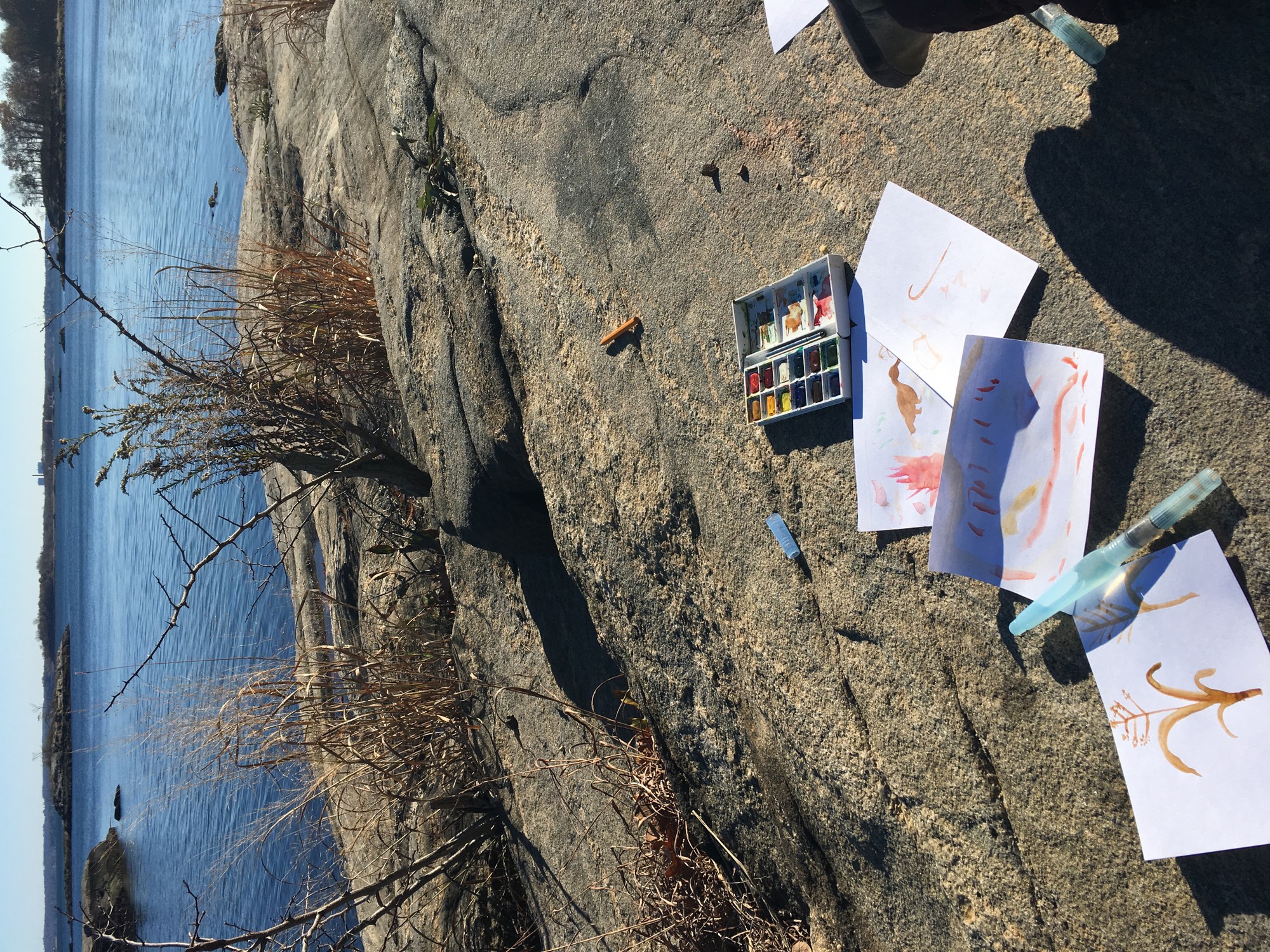
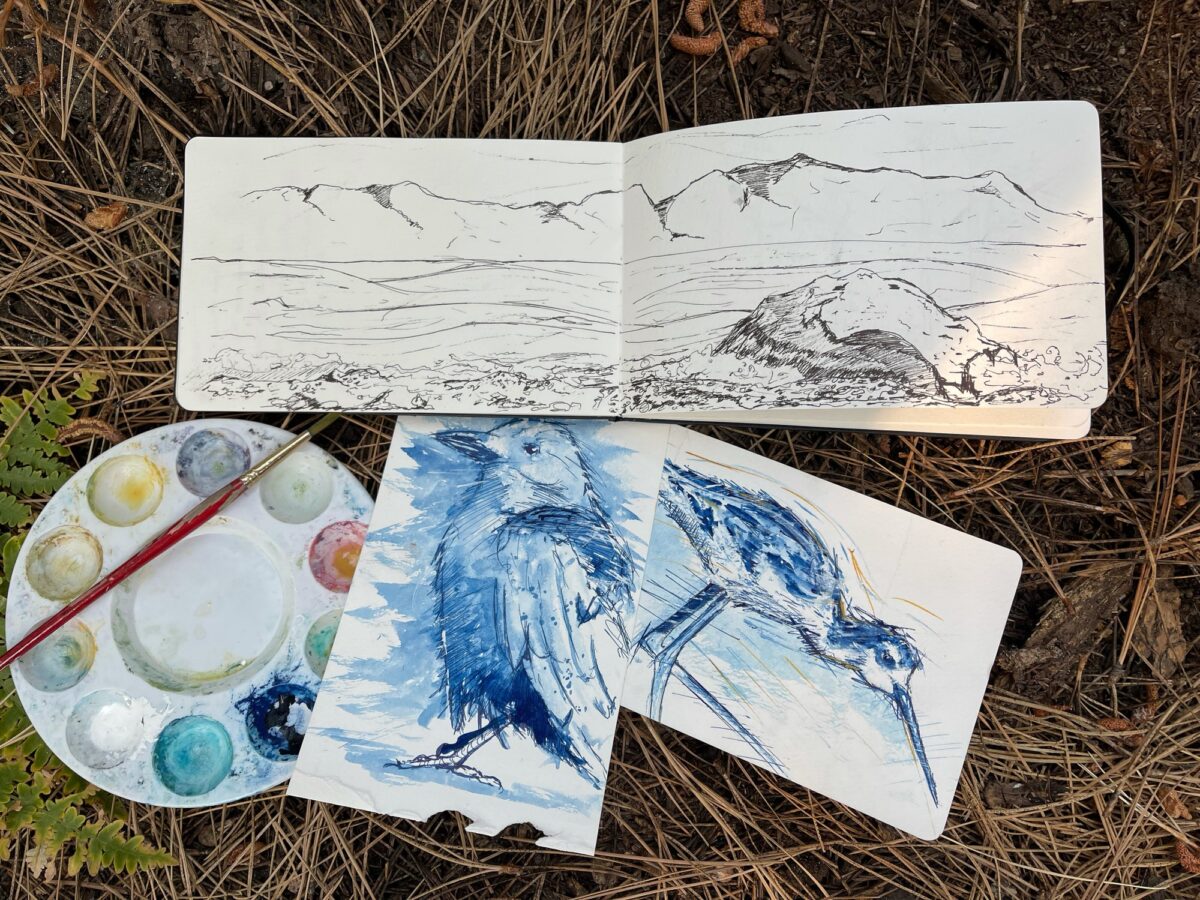
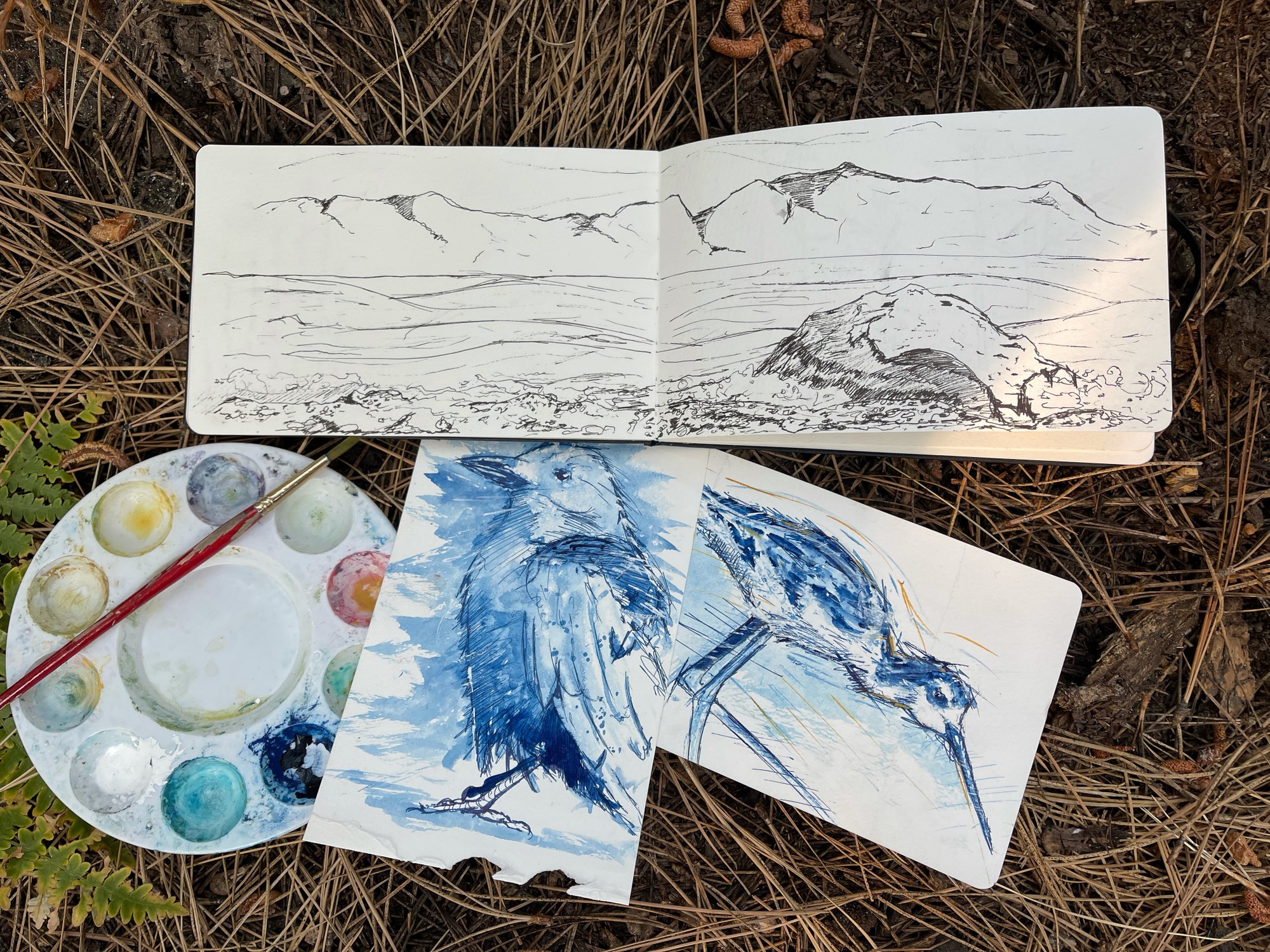
It’s fun to apply ultralight philosophy to creative pursuits. These are a few of the sketches Andrew Marshall has created while in the outdoors.
Executive Producer - Backpacking Light; Show Director and Host - Ryan Jordan; Producer - Chase Jordan; Theme music: Look for Me in the Mountains written by Chris Cunningham and Ryan Jordan, performed by Chris Cunningham (acoustic guitar, lead and harmony vocals, harmonica), Chad Langford (upright bass), and Tom Murphy (mandolin), produced by Basecamp Studios in Bozeman, Montana.
Sponsorship Policy: Backpacking Light does not accept compensation or donated/discounted products in exchange for product mentions or placements in editorial coverage, including any podcast episode content not excplicitly identified as sponsored content. Some (but not all) of the links in these show notes may be affiliate links. Learn more about affiliate commissions, influencer marketing, and our consumer advocacy work by reading our article Stop wasting money on gear.
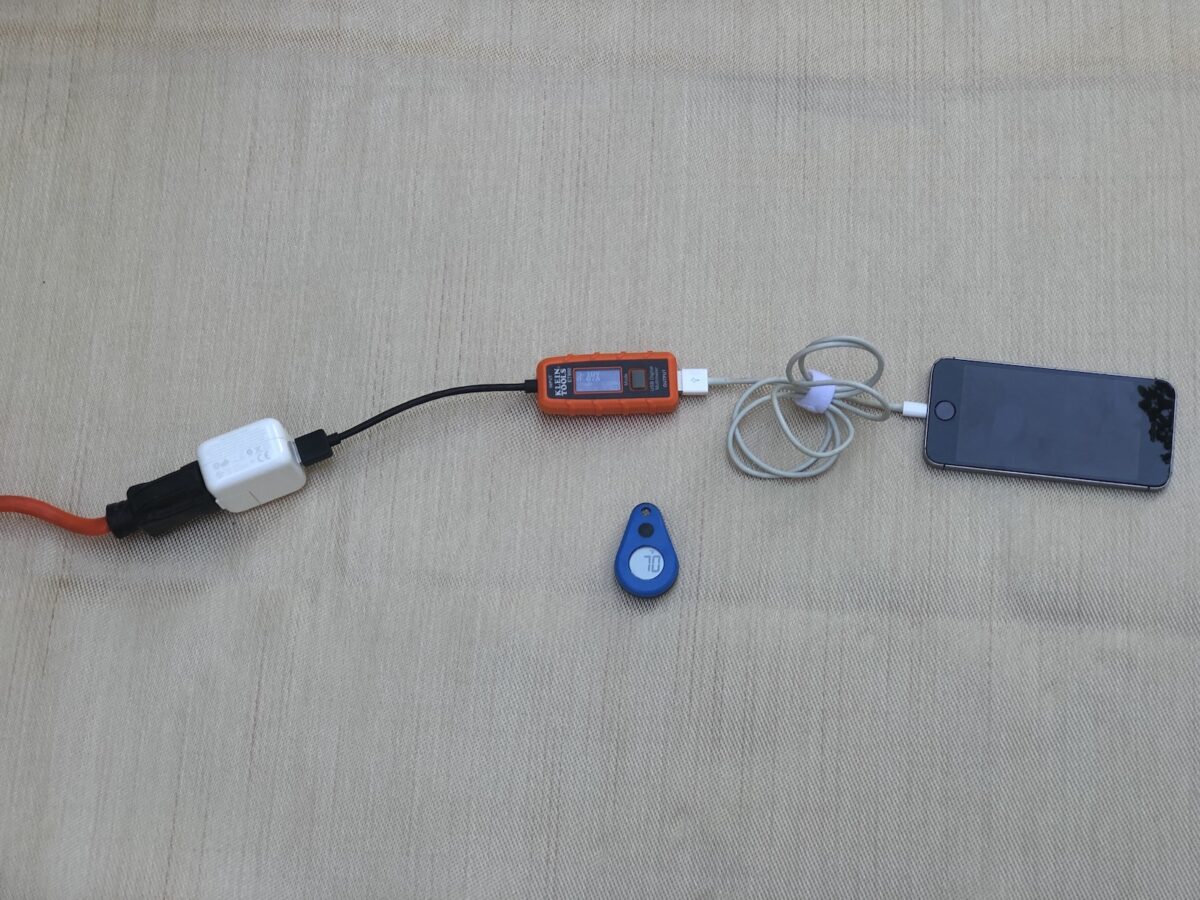
In his new column, Simple Gear Tests, Backpacking Light author Rex Sanders provides suggestions for at-home gear tests you can do with minimal time and expense. First up – a plan for verifying the capacity of your USB-rechargeable devices.
Now when I’m reading on an NPS or USFS website and see “gate closed until…” I don’t see a barrier – I see an opportunity for solitude.
As someone who prioritizes solitude when choosing backcountry destinations, I often find myself skipping over public lands where the spectacular and the popular overlap.
Despite my aversion to crowds, I do recognize that the most-visited front- and backcountry destinations are popular for a reason. That reason is almost always their sheer beauty, or their rareness, or a combination of both of those characteristics. I’ve backpacked in Yellowstone and Glacier and been absolutely awe-struck, with memories of beautiful scenery and sublime campsites much more vivid than the memories of permit office personnel and other hikers. So I don’t totally forego the A-list adventure destinations, I just rarely seek them out.
And it’s not just national parks or life-list wilderness areas that can be too crowded for my tastes. Short hikes to superlative regional natural features or roadside hot springs can be just as packed as Going-to-the-Sun Road, relatively speaking.
The tried-and-true recommendations of going during shoulder season, or during a weekday, or a shoulder-season weekday with some precipitation in the forecast have worked for me in the past, but they aren’t always a guarantee. So, in the spring of 2020 – when travel restrictions prevented me from traveling outside of Montana, I spent some time thinking outside the box to plan uncrowded trips in normally crowded places.
Photos don’t do the majesty of the old-growth cedars justice. Having the trail all to ourselves made the experience even more special.
An old-growth cedar grove in northwestern Montana had been on my list to visit for a few years. In the summer season, the short nature trail through the grove attracts ample visitation and in winter it would require a four-hour drive, then cross-country skiing in on the closed road for several miles.
All this made an early-season visit seem like the best option. The paved road to the trailhead is gated until May 1, which meant there was an ideal springtime window where cars wouldn’t have access but those willing to bike could arrive there with minimal effort and have a crowd-free experience. While some places – like Yellowstone and Glacier, most notably – have an active and well-known early-season biking window, this spot seemed to have flown well under the radar despite its paved road and beautiful scenery.
A touring bike would’ve been preferable, but using the gear you have can still get the job done.
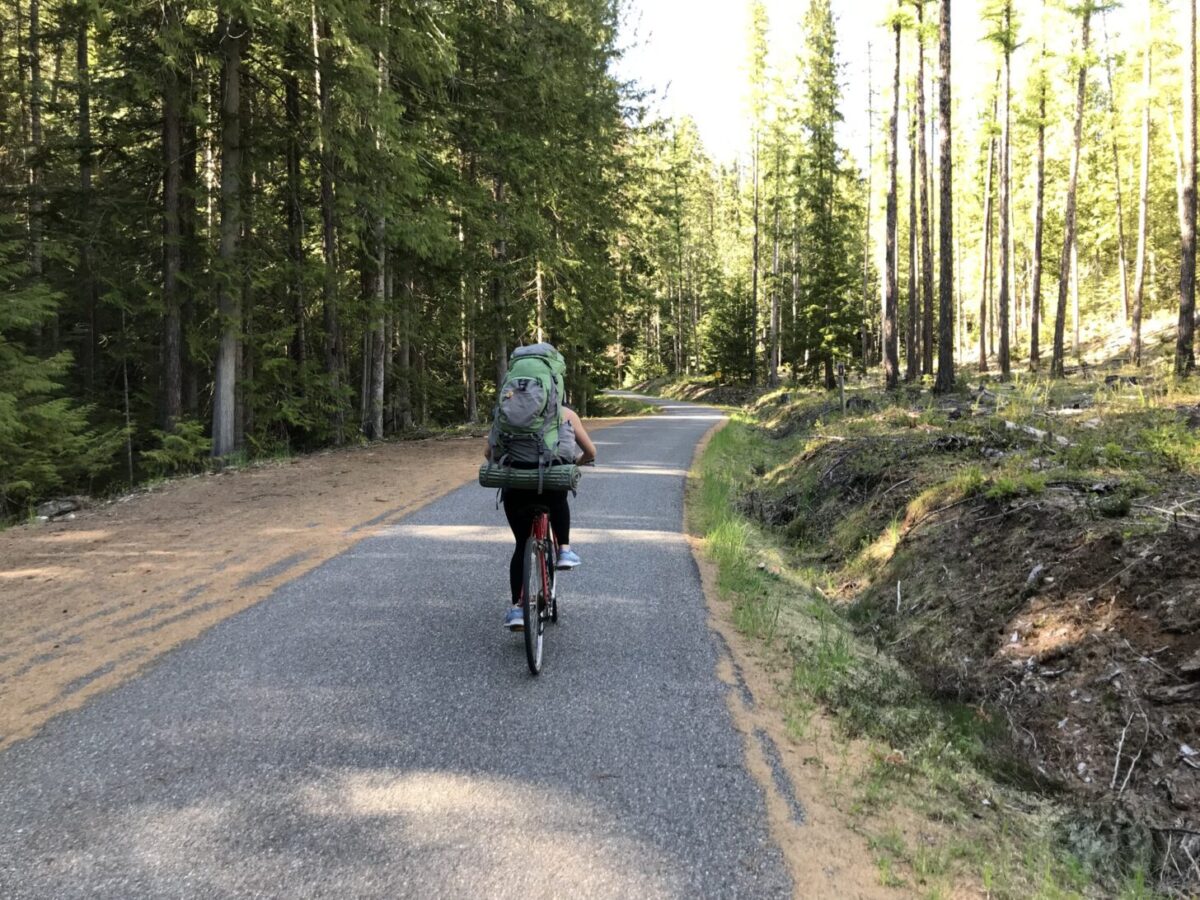
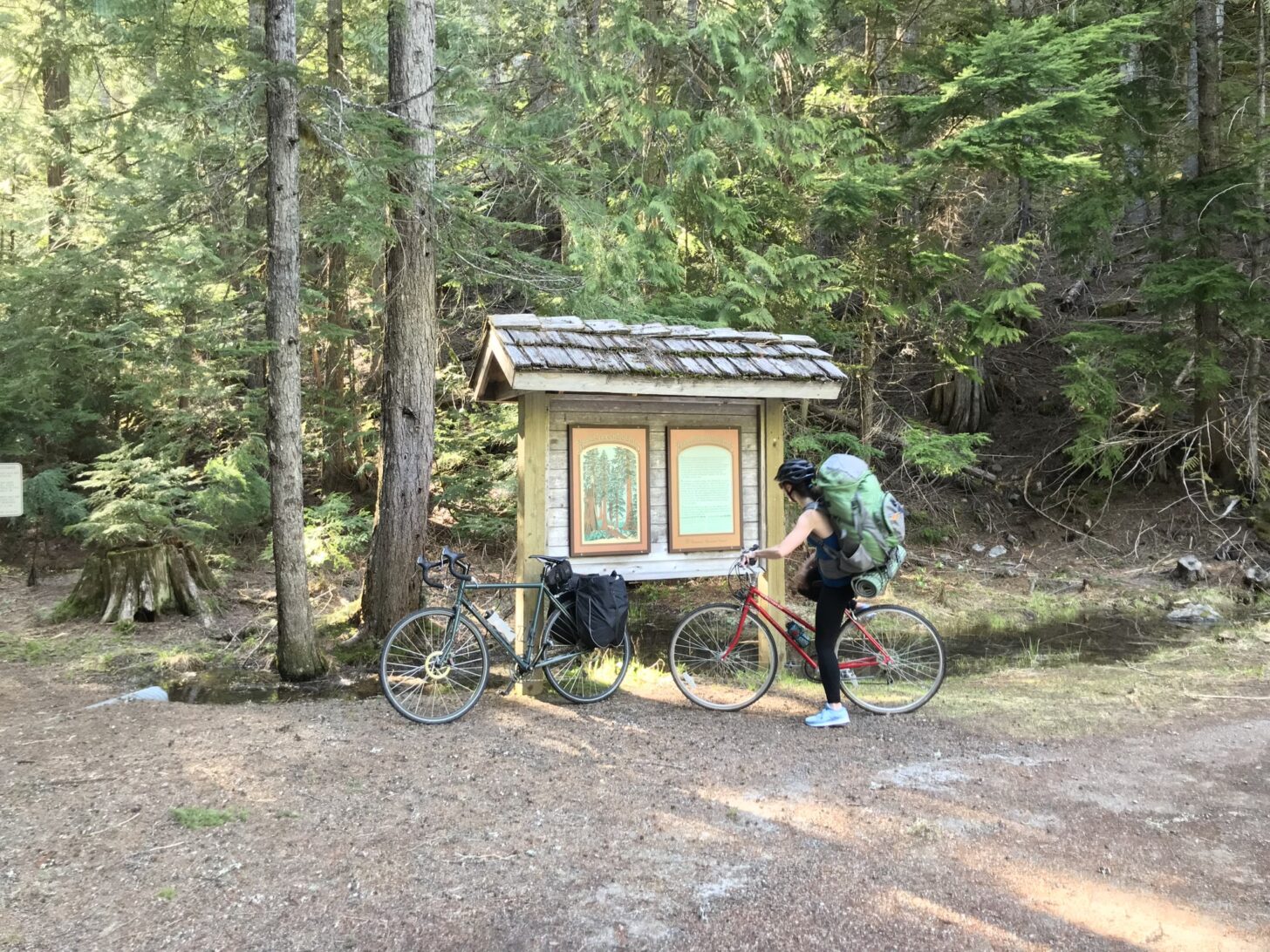
My girlfriend and I loaded up our bikes and backpacking gear, along with more than a few luxury items to make the most of the easy access, and headed north by northwest on a warm Saturday morning in April. After shouldering our packs and pedaling our bikes around the gate, we enjoyed a solitary stretch of pavement to the empty trailhead. After stashing our gear at a dispersed site, we took a leisurely stroll through the cedars. Snowbanks still dotted the shadiest areas, but trilliums and other spring wildflowers were putting on a show. The huge trees were, of course, the biggest highlights (literally), and walking among them in silent contemplation was the perfect way to wind down the evening before returning to make the feast we had packed in.
We arrived right as the early evening light made the old-growth forest even more enchanting.
Enthused by that experience, I eagerly awaited the opportunity for the next test of my planning prowess. Rather than a gate serving as a barrier to keep out the crowds, I was relying on lingering snowdrifts to provide me with solitude. I planned to drive my car as far up a winding dirt road as possible until I hit snow and then ride the rest of the way over a pass on my bike, and from there on to (hopefully) crowd-free hot springs. I’d ride where I could, and push it through the snow where I couldn’t.
Trucks were able to make it through this first drift, but a steeper and deeper one around the next bend forced them to turn back. Pushing my bike through was easy enough.
Hoping I’d timed it right, I pulled into a parking spot at a switchback just as a few lifted trucks and all-terrain-vehicles (ATVs) were coming down from the pass. The drivers let me know that it was too early to get through in a truck or ATV (the snowbanks are steeply pitched in spots, and rolling off the road would be catastrophic in most places) but that if I was determined enough to get in on my bike, I shouldn’t have any problem. Hot springs are a powerful motivator for me, so I knew determination wouldn’t be a problem.
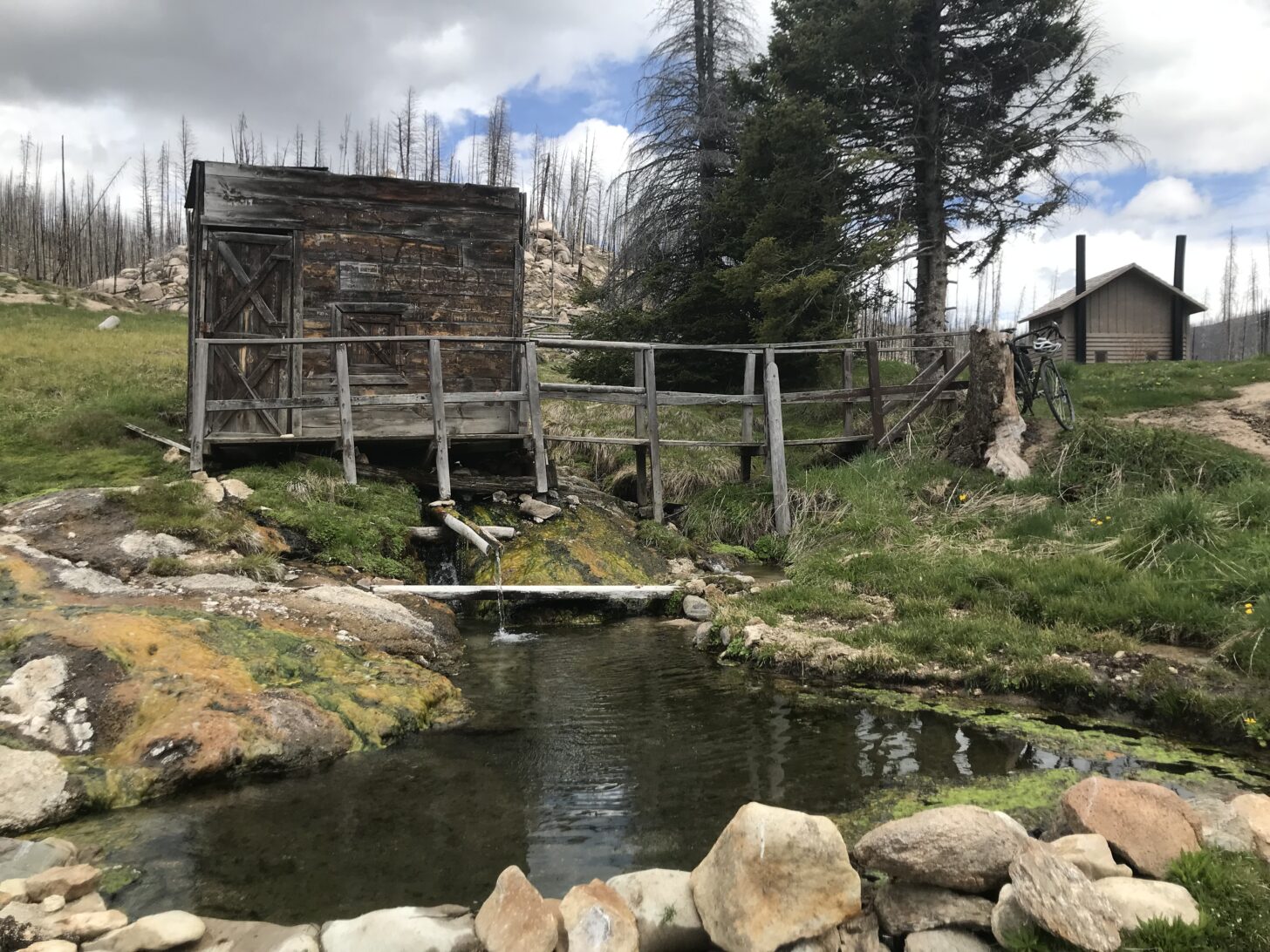
I’ve visited this hot springs a half-dozen time, but this was the first time I’d had it to myself for more than a half-hour or so. An unexpected bonus for May 2020 was that the outhouse in the parking area had toilet paper.Solitary bliss in perfectly hot water.
Things went just as smoothly as I’d planned – although pushing a bike uphill in the snow isn’t something that I exactly savored – and within an hour I was soaking in hot water and drinking a cold beer. Even better was knowing that I had total privacy and that unless someone else had the same plan (extremely unlikely) I’d enjoy the solitary soak for as long as I’d like. My only regret was not packing the gear to stay the night. The thought of biking uphill after soaking for an hour or two was not a relaxing one. The actuality of the experience wasn’t as bad as I’d anticipated, but it would’ve been much nicer to have more time to spend in the area after paying the price of admission.
After such auspicious experiences with these trips, I’ve decided to try to make one or both of them annual events when I’m not able to go further afield for early season travels. And I’ve found a useful lens to look through when planning future trips. Now when I’m reading on a National Park Service or the United States Forest Service website and see “gate closed until…” I don’t see a barrier – I see an opportunity for solitude.
Backpacking Light does not accept compensation or donated/discounted products in exchange for product mentions or placements in editorial coverage.
Some (but not all) of the links in this review may be affiliate links. If you click on one of these links and visit one of our affiliate partners (usually a retailer site), and subsequently place an order with that retailer, we receive a commission on your entire order, which varies between 3% and 15% of the purchase price. Affiliate commissions represent less than 15% of Backpacking Light's gross revenue. More than 70% of our revenue comes from Membership Fees. So if you'd really like to support our work, don't buy gear you don't need - support our consumer advocacy work and become a Member instead.
Learn more about affiliate commissions, influencer marketing, and our consumer advocacy work by reading our article Stop wasting money on gear.
Andrew and Ryan chat with Jaden Bales from the Wyoming Wildlife Federation about western wildfires.
Stream
Summary
In this episode, Andrew chats with Jadon Bales (Communications Director, Wyoming Wildlife Federation) about the new reality of wildfire behavior in the west. Ryan gives some actionable advice on planning for worst-case wildfire scenarios and highlights some new discussions going on at Backpacking Light. Also in this episode – Platypus’ new water filter could be a game changer.
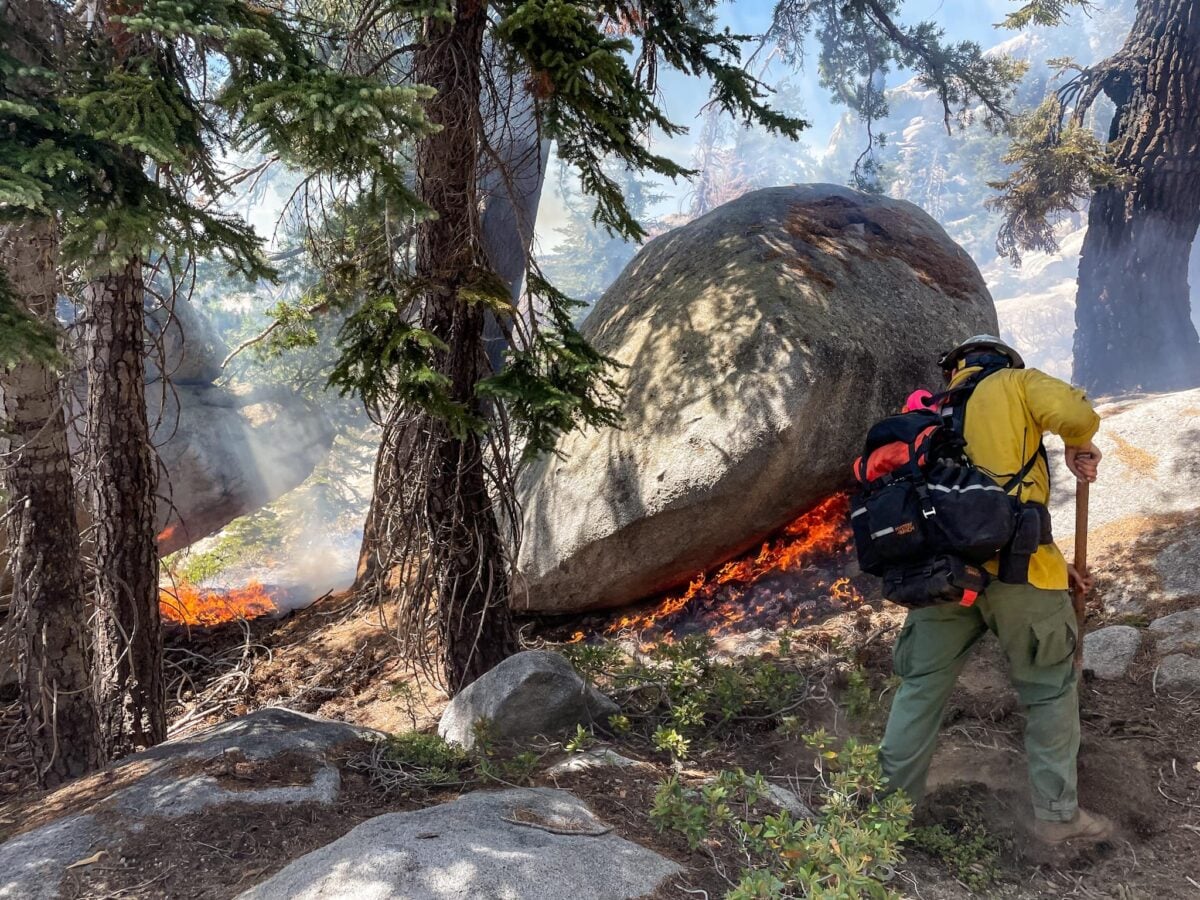
A wildland firefighter works to contain a blaze in the Sierra Nevada. Photo: Robbie Culp
Outline
Ryan is prepping for a fly-fishing trip in Wyoming’s Bighorn range.
Ryan introduces the guest, Jaden Bales, and gives a little background info on western wildfires
Jaden thanks all the firefighters currently working to contain the fires burning right now and shares his background and some info on the Wyoming Wildlife Federation
the failures of traditional American fire management in the west
is there evidence that tree thinning works?
living in fire-prone areas
raising awareness about fire restrictions
the different levels of fire restrictions
last year’s fire season vs. this year’s fire season
Note: In this section of the podcast, Jaden and Andrew discuss several fires that were ongoing on the date they recorded the episode: late July, 2021. Other notable fires cropped up as the 2021 fire season continued.
inciweb is an excellent resource for tracking fires
some common-sense tips for safety while backpacking in fire season
to report a fire call 911 or the National Fire Information Center, or region-specific fire-reporting lines (pay attention as you enter the backcountry)
good planning and communication (satellite messenger) is better than trying to run from a surprise fire in the backcountry
use rangers and other forest service staff as a resource for on-the-ground information
toss an N-95 mask into the bottom of your pack in case you run into poor air quality
Jaden’s takeaways: being aware of the increasing danger of wildfires and adding your input as a taxpayer
go to meetings and use websites to add public comments
interview wrap up
Ryan’s four tools for backpacking in wildfire season: trip planning flexibility, finding more remote locations to hike, decision making in the presence of wildfire smoke, and wildfire escape contingency
Executive Producer - Backpacking Light; Show Director and Host - Ryan Jordan; Producer - Chase Jordan; Theme music: Look for Me in the Mountains written by Chris Cunningham and Ryan Jordan, performed by Chris Cunningham (acoustic guitar, lead and harmony vocals, harmonica), Chad Langford (upright bass), and Tom Murphy (mandolin), produced by Basecamp Studios in Bozeman, Montana.
Sponsorship Policy: Backpacking Light does not accept compensation or donated/discounted products in exchange for product mentions or placements in editorial coverage, including any podcast episode content not excplicitly identified as sponsored content. Some (but not all) of the links in these show notes may be affiliate links. Learn more about affiliate commissions, influencer marketing, and our consumer advocacy work by reading our article Stop wasting money on gear.
Why do so many of us still feel compelled to have fires?
When I was a kid I loved playing with fire.
I enjoyed starting the fire when my family would go camping, and I was constantly tending it. I wanted to know what would burn, so I would experiment. Green spruce bows popped and spat but eventually burst into flames and then flamed out quickly. Pretty exciting. Pine and fir bows: same deal. Dry juniper bows spat and sparked loudly, flaming up and dying back just as quickly. Cowpie? Eventually burns, good to know. Because I was raised by parents who generally care about the world around us, I didn’t experiment much with tin foil, cans, Mountain House bags, or glass bottles when camping.
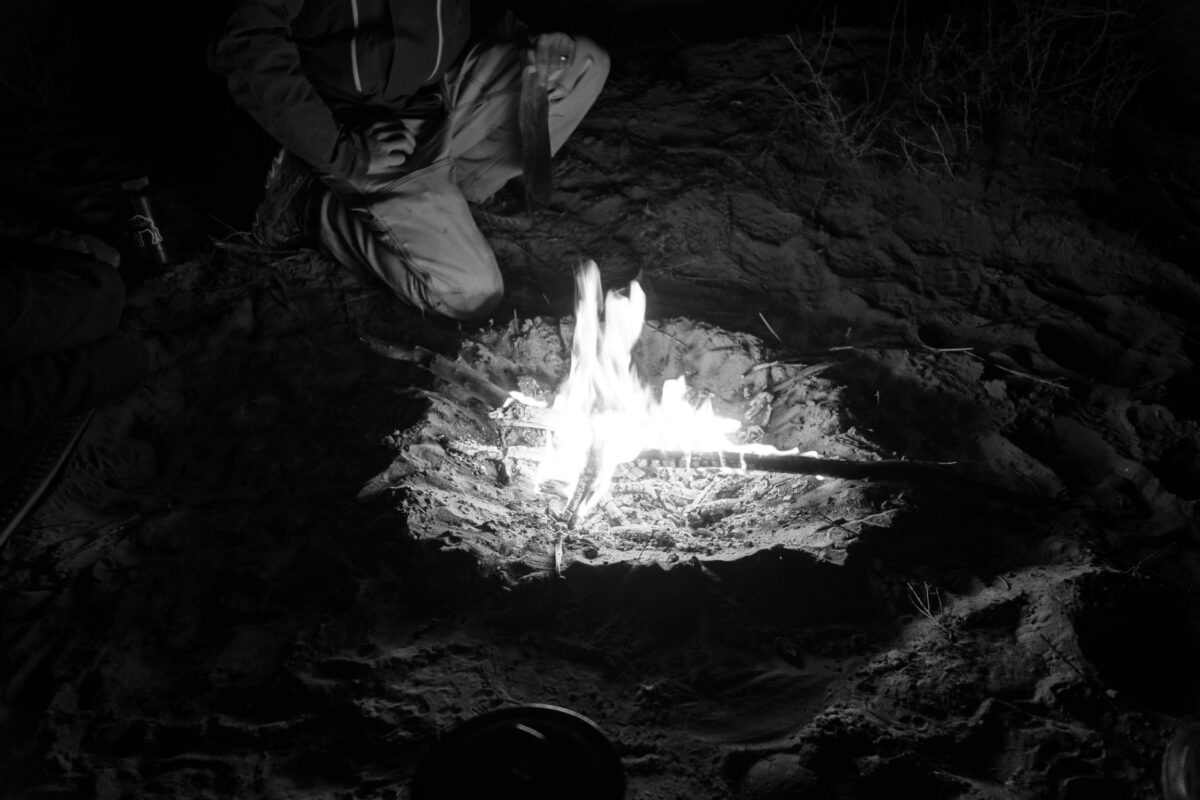
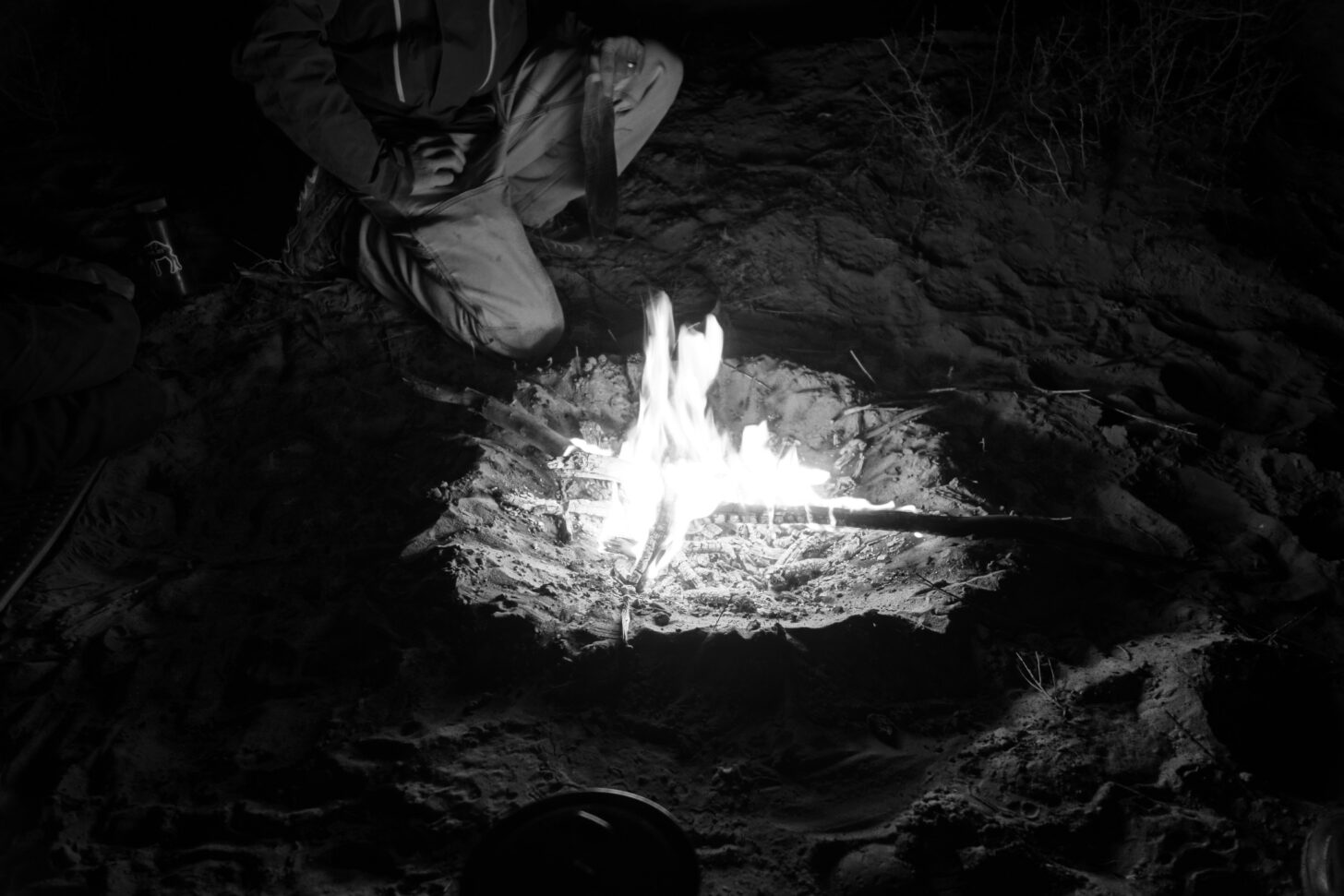
A small tamarisk fire built for warmth on a February packrafting trip.
But at home – when my parents weren’t looking – I experimented. What happens when ants burn? What about a ripe apricot? These were questions I felt utterly compelled to find answers to. And so I did my best. Ants shrivel up and extinguish with a subtle pop which you can hear if you listen closely. Apricots require explosives.
The tension between experimentation for experimentation’s sake and an outright desire for destruction is difficult to untangle. And then why did this infatuation just evaporate at some point? But also why, when I do find myself staring into a fire as an adult, am I totally captivated, awed?
Professor of Anthropology Daniel Fessler has researched this topic and offers some clarity here. In his paper, A Burning Desire: Steps Toward an Evolutionary Psychology of Fire Learning, he says that just as humans and primates are born with an inherent fear of snakes, we are also born with an inherent fascination with fire. Kids in traditional cultures are expected to be interested in fire with their curiosity peaking around age six and a half. Fessler says that besides fire’s use for survival (warmth and light) it was also evolutionarily advantageous to have an interest in fire because it expanded our diet, what we were able to hunt.
Controlling fire also aided in developing tools, combating predators, and managing wild plant resources. And because humans inhabited all sorts of different environments, there was no universal mastery of fire. Fire making had to be learned in each new environment. Everywhere we went we had to find out what burns, what makes fire, and how to keep it going.
He goes on to say that children in traditional cultures don’t really play with fire, rather their interest is more practical, utilitarian. They bake pretend food, or even cook little bits of real food, for example. He thinks this is probably due to the mundanity of fire in these cultures. Fire in western cultures, on the other hand, is anything but mundane. We use it for celebrations. We set off fireworks on the Fourth of July, we burn giant effigies at gatherings like Burning Man, and we barbecue fancy meats to celebrate someone’s graduation or birthday.
And, of course, we light campfires when we go backpacking. Sometimes I wonder if this too is a ceremony of some sort, a celebration that we have escaped the office, that we have found the forest and the big sky full of stars. We did it!
It stands out to me that my interest in fire peaked not in middle childhood but in my early teenage years. Fessler says it is common in western societies today for interest in fire to peak around age 12. But then I’m left wondering if that’s really even true. I know plenty of adults who can’t go backpacking without having a fire each night. They poke at it incessantly, completely transfixed. I wonder if our interest in fire never goes away. I wonder if, when we don’t live in a traditional culture, fire experimentation becomes fire play and simply extends into adulthood, where we are still just trying to find out what burns, what doesn’t. I wonder if there is ultimately no purpose to this fire play and if we should have stopped when we were kids.
The flammability of cans and other garbage was tested in this fire ring in the High Uintas.
So I want to ask the backpacking community why many of us still feel compelled to have fires. Considering the severe drought conditions across much of the western United States and all the wildfires raging west of the hundredth meridian, maybe we should take a deeper look at this desire.
I know there are fire bans in many places now, but even before that, we should have known better. The Pack Creek Fire near Moab, Utah was started by an unattended campfire. Maybe if whoever left that fire burning had paid a little more attention when playing with fire as a teenager they’d know that the ground was dry, the crispy ponderosas just waiting for a spark. But maybe that’s wishful thinking on my part. Maybe our fireplay is now displaced. Instead of learning about the interactions between fire and the world around us, we have gotten sucked into the fire itself, what it consumes, how fun it can be. Maybe the ceremony of lighting it and the distraction of its mystery have superseded the practical implications of our mastery of the tool.
A group of friends and I recently walked the South and North Coast trails on the Olympic Peninsula and found ourselves camping in the rainforest on our last night. I looked up at the giant firs and cedars and listened to the eerie-sounding birdcalls echo through the forest. I examined sword ferns and felt occasionally the salty spray of the sea reach us where we stood amongst the trees. But when my friend started a campfire, all that faded away.
He piled so much driftwood on it that I had to back up. Then I somehow found myself with the job of spark stomper. Then when it got dark I got sucked in and just stared at it. The common phrase for this act – Cowboy TV – is telling, for what is TV but a distraction from the world around us? I thought about how addicted many of us are to our screens these days and pondered if Cowboy iPhone could be a more appropriate name for the distraction that fires provide. It’s striking that the act of fire staring is unique to western societies and that it is virtually nonexistent in traditional societies.
Of course, I will make a fire in winter if it is very cold and when nights are long. In other seasons I will start a fire if someone has fallen in a creek, or if everyone’s clothes are soaked from a storm and we need to try and reset things a bit. And I will stare at both fires and iPhones plenty more in my life, but when I do, I will try to think a little more deeply about what I’m doing. I will try to be thinking about how adult interest in fire might not be all that different from other evolutionary holdovers such as the fight or flight instinct transmuting into anxiety when we’re stuck in rush hour traffic. And if I feel a desire to start a fire and know it is not actually needed for survival, I should try and remember that I may actually be engaging in an adult form of fire play that should have faded away a long time ago.
And the arid land will probably thank me for my fireless camp.
Backpacking Light does not accept compensation or donated/discounted products in exchange for product mentions or placements in editorial coverage.
Some (but not all) of the links in this review may be affiliate links. If you click on one of these links and visit one of our affiliate partners (usually a retailer site), and subsequently place an order with that retailer, we receive a commission on your entire order, which varies between 3% and 15% of the purchase price. Affiliate commissions represent less than 15% of Backpacking Light's gross revenue. More than 70% of our revenue comes from Membership Fees. So if you'd really like to support our work, don't buy gear you don't need - support our consumer advocacy work and become a Member instead.
Learn more about affiliate commissions, influencer marketing, and our consumer advocacy work by reading our article Stop wasting money on gear.
The Inov-8 Terraultra G 270 (9.5 oz / 270 g, MSRP $160) is a moderately-cushioned, zero drop, wide toebox trail running shoe with better-than-average durability and fantastic fit.
An off-trail trek through a Zambian wildlife preserve.
In the twilight before sunrise we came upon two African wild dogs harassing a hyena. In their playful way, they were trying to take back an impala kill that the hyena had scavenged for its own breakfast. Named Tripod, this thief had three good legs, the lower part of a front fourth was lost to a poacher’s snare. For Tripod, this handicap proved no hindrance as he wrestled the prize from the dogs.
We encountered African wild dogs on the first day of our journey.
My hiking partner and I took this sighting as a positive omen for the days to come.
It was August, the tail end of the Zambian winter, and about 46 °F as the sun appeared. Throwing our packs (fully packed, my Hyperlight Mountain Gear Southwest 2400 weighed less than nine pounds) in the back of a Toyota Land Cruiser, we bounced our way down a dirt track toward the Nalusanga Gate of one of Africa’s largest wildernesses, Kafue National Park. Waiting there to join us were Lipoko and Yuram, Wildlife Police Officers (WPOs or scouts) from the Zambian Department of National Parks and Wildlife. Lipoko, a hulk of a man we called Chipembeli (or Rhinoceros in the local language) was a 12-year veteran and expert tracker from a nearby village. Yuram was a new WPO recruit. He came from the capital city Lusaka and was learning from Lipoko. With these guides at the ready, we unloaded our gear, filled our water bottles, and took our first steps into the trackless Kafue.
My gear spread.
I’m not a thrill seeker. I don’t free-climb thousands of feet on an open rock face or wingsuit off a perfectly good mountain! While I enjoy a good time as much as anyone, I’m no adrenalin junkie. Yet, there I was setting off to bushwhack 100 miles across one of Africa’s classic parks, full of predators – animal and human. We were about to disappear into a landscape as large as some countries.
Along with my Zambian companion Phil Jeffery, co-owner of a safari camp and Musekese Conservation (MC), we began pushing our way through the harsh terrain, working northwest across Kafue’s northern tier. It was us, the bush – and of course the animals. Elephants, lions and snakes lay ahead – along with armed criminals aiming to slay whatever choice animals they could find. How many activities need not one, but two armed guards?
Some of the members of our trip.
Yes, we did this for the adventure, but our real motivation was to promote MC’s wildlife conservation efforts, as it didn’t take long before adventure caught up with us.
At about 4,457, Mutumbwe is the highest point in the park. Steep-sided, narrow, and rock-faced, the ridge sits almost 1000 feet higher than the surrounding plain. After six hours of hiking through the rising heat, we arrived at Mutumbwe’s base. Not knowing how to tackle this giant, we ascended what seemed to be a gentle slope. Before long, we were clambering over boulders, sharp rocks and soot-covered bush. Dropping our packs, we resorted to a hand-over-hand struggle up the jagged rocks, determined to reach the crest before darkness descended.
The Mutumbwe ridge was the high point of our journey.
Squeezing through tight gaps and clinging to roots and boulders, we managed to reach a prominent cliff. This would be our highest point for the day as the steep slope ahead made reaching the pinnacle before dark too risky. We enjoyed a 360-degree view over what seemed like a never-ending landscape of trees.
After spending our first night under the endless stars, we got up early the next morning, finished our coffee, loaded our packs, and headed out before the heat crept in. It wasn’t long before we saw signs of bush pig, warthog, aardvark, elephant, and various antelope. Following a lone bull elephant’s trail, we pushed our way through head-high grass that transitioned to Miombo woodlands, a thornless, deciduous forest landscape that covers much of Zambia. The light Miombo canopy tends to be open and sparsely shaded with tall grasses and low shrubs.
Poachers snares and traps are deadly, silent, and indiscriminate. We saw a maimed zebra and the skeletal remains of a sable antelope, with a snare around its horns. In one area, not only did we find the carcass of a recently executed elephant, we encountered skeletons of two other pachyderms that the scouts estimated were killed in the last couple of years. Three elephants slain in one area drove home the sobering reality for wildlife in this park.
Evidence of poachers.
We saw signs of illegal activity throughout the trip. There were trees downed for honey harvesting, unoccupied poachers’ camps, bicycle tracks, and a broad, well-used foot-trail that originated beyond the park’s eastern boundary. According to Lipoko, people from more than 50 miles away walk or cycle along this poachers highway to unlawfully enter the park, hunt, and remove game. The Zambian government estimates that as many as 6,000 poachers operate around Kafue.
While passing through the anti-poaching base, an excited ranger led us to a massive python that had recently devoured a small animal, possibly a bushbuck. The snake, situated in thick bush close to the river, was resting safely by a downed tree digesting its food. Approaching quietly, we crept up on the python. It appeared to be at least 13 feet long and 10 inches wide. The engorged section was two to three times its normal size.
This python was busy digesting a large meal.
Leaving the full python, we headed north, entering the Special Conservation Zone, a scenic area of Kafue with extensive grasslands filled with puku and impala. Along oxbow lakes there were signs of elephant, buffalo, lion, and leopard. The animals could sense of our presence as far away as 500 yards and retreated swiftly, darting and leaping through the tall grasses and small shrubs, disappearing into the bush.
Continuing north along the Kafue and Lafupa rivers we came to the traditional community fishing weirs. These structures are a part of the original park agreement that allows communities to continue traditional fishing using a defined number of weirs. They are not much more than hand-made dams that span the river, constructed from small trees and grass thatch. Fish are caught by routing the water through a narrow hole in the dam’s center and then into hand-made baskets woven from riverine reeds.
The Kafue river from above.
To reach our destination, we needed to cross the Lafupa without a bridge or boat to help. That left one option. Carefully, one person at a time, the team climbed onto a rickety weir, keeping a wary eye on a nearby raft of hippos, and on the black water below in case a crocodile waited for its next meal.
Testing the strength of hand and footholds, each of us inched across the frail structure until safely reaching the opposite shore. Awaiting us was Kafue’s jewel, the Busanga Plain.
Crossing the river on a weir.
After a march along riverine forests filled with resting hippos, the Busanga Plain spilled out in front of us. Before dark, we found a camping spot near an old river channel next to a large termite mound. This comfortable location was near water and out of the surrounding tall grass. As we did each night, exhausted from the day’s hike, we laid out our sleeping bags and relaxed by the campfire, our defense against encroaching animals, and took in the southern hemisphere stars and constellations. Nearby a leopard coughed, elephants grumbled, and hippos splashed and called in their low staccato laugh.
Early the next morning, we woke to hyena whooping not 30 yards from our camp.
Late in the afternoon on the eighth day, we arrived at our destination in the Busanga Plains. Sore and weighing a few pounds less, we dropped our packs and enjoyed a cold drink to celebrate our accomplishment. We eyed each other in a mutual understanding of our shared achievement in crossing this African wilderness.
Lion tracks.
In today’s hyper-connected world it’s easy to imagine that we intimately know a place or feel that we’ve already been there just by following a friend’s photos on social media. However, after walking through the heart of nature, I was reminded that to truly experience life, you have live it. Disconnect, put your boots on and get acquainted with a place in person.
These awakening moments happen when you are soaked with sweat, feel the bite of the tsetse fly, and enjoy the refreshing coolness of the river on your feet after a long, hot day of hiking. The feeling comes too in your sleeping bag when the reassuring silence is broken by the distant roar of a lion.
Backpacking Light does not accept compensation or donated/discounted products in exchange for product mentions or placements in editorial coverage.
Some (but not all) of the links in this review may be affiliate links. If you click on one of these links and visit one of our affiliate partners (usually a retailer site), and subsequently place an order with that retailer, we receive a commission on your entire order, which varies between 3% and 15% of the purchase price. Affiliate commissions represent less than 15% of Backpacking Light's gross revenue. More than 70% of our revenue comes from Membership Fees. So if you'd really like to support our work, don't buy gear you don't need - support our consumer advocacy work and become a Member instead.
Learn more about affiliate commissions, influencer marketing, and our consumer advocacy work by reading our article Stop wasting money on gear.
What are you trying to accomplish when you backpack?
Stream
Summary
In this episode of the Backpacking Light Podcast, author Ben Kilbourne uses the writing of Aldo Leopold to examine his motivations when exploring the backcountry. It’s a thought-provoking essay that may just have you reconsidering why you are out there.
Ben Kilbourne uses the writing of Aldo Leopold to examine his motivations when exploring the backcountry.
Would you like to read the written version of this podcast? Check it out here.
Executive Producer - Backpacking Light; Show Director and Host - Ryan Jordan; Producer - Chase Jordan; Theme music: Look for Me in the Mountains written by Chris Cunningham and Ryan Jordan, performed by Chris Cunningham (acoustic guitar, lead and harmony vocals, harmonica), Chad Langford (upright bass), and Tom Murphy (mandolin), produced by Basecamp Studios in Bozeman, Montana.
Sponsorship Policy: Backpacking Light does not accept compensation or donated/discounted products in exchange for product mentions or placements in editorial coverage, including any podcast episode content not excplicitly identified as sponsored content. Some (but not all) of the links in these show notes may be affiliate links. Learn more about affiliate commissions, influencer marketing, and our consumer advocacy work by reading our article Stop wasting money on gear.
This study compares the performance of four jackets made with fabrics that span a wide range of air permeability rates and moisture vapor transmission rates (MVTR). The study shows that significantly greater moisture removal can be achieved as a function of jacket MVTR than jacket air permeability.
Is backpacking your hobby or your habit? Examining the subtle difference can provide profound insights into how to spend your time.
With the abundance of attention on Fastest Known Times, Calendar Year Triple Crowns, and hiking on trails with catchy acronyms, it seems like there’s a mold that many new backpackers feel compelled to try and fit into. There’s an undeniable undercurrent that drags most backpackers into pursuing thru-hikes, the lightest and most expensive gear, and life list destinations rather than prioritizing doing the actual activity (backpacking) as much as possible. And if they’re not doing those things, there’s often a disconcerting feeling of not being a real backpacker.
A decade of trips are accounted for in these small notebooks. I look forward to looking back on the most recent entry in a few years.
When I first started backpacking in earnest in 2007 as a college sophomore in central Kentucky – with gear cobbled together from my brief time in Boy Scouts and an oh-so-svelte Kelty external frame pack that weighed around 40 lbs – the Appalachian Trail came up frequently in conversations. People asked if I had plans to hike it or if I was training for it and my initial responses were somewhere along the lines of “I just started backpacking and am just trying to figure things out, but sure – seems like a cool thing to do!” I read up on the AT and was simultaneously intrigued and intimidated. If nothing else, I knew I was absolutely hooked on backpacking.
At the end of 2007, I made the only New Year’s resolutions I’ve ever kept – I made it a goal to spend 10% of the next year on backpacking trips. That would add up to 37 nights. For some reason, I didn’t think about counting the day I hiked out as part of the total, so I ended up with nights as the metric to use. It wasn’t an overly ambitious goal for a full-time college student with a part-time job, but it was a high enough bar to have to plan and prioritize around various academic, work, and social obligations.
Although I only got to 28 nights that first year (2008), the next two years I hit 37 exactly. I diligently logged my nights in Rite-in-the-Rain notebooks which I still take one out on every trip – ultralight purity be damned. I hiked in southern sun and humidity, cold winter rains and snow, and spectacularly beautiful spring and fall days. Flipping back through journal entries from over a decade ago and reading the few lines I scribbled in my tent at each campsite, I can still see the scenery vividly and remember the joy of spending a night in the woods.
I find it more rewarding to crash through rhododendron and walk through creeks to find hidden gems like this than to drive a few hours to the Appalachian Trail to crank out miles like a “normal” backpacker should, at least according to most outdoor media.
As my skills grew, so did my affinity for the Cumberland Plateau region where I spent most of my time backpacking. Filled with tucked-away arches, waterfalls, overlooks, and thousands of miles of sandstone cliffs, this landscape was a veritable playground for a curious backpacker like myself. I quickly learned that cranking out the miles was less interesting than exploring off-trail nooks and crannies for hidden waterfalls, historical relics, or the rare petroglyph. Part of this probably had to do with my heavy gear being a burden, part of it probably had to do with a relative lack of longer trail infrastructure (which has fortunately changed for the better, with the Sheltowee Trace offering a great longer thru-hike for those so inclined), and part of it certainly had to do with my own inclination towards the obscure and esoteric.
Wading through creeks in the southeast rather than limiting myself to a trail allowed me to stumble upon unnamed waterfalls, idyllic swimming holes, and even the remnants of Prohibition-era moonshine stills.
Within a year or two of frequent backpacking, when people asked about my interest or ambition for the Appalachian Trail my answers became more nuanced. I’d mention that I was having so much fun exploring the Cumberland Plateau as thoroughly as possible that I hadn’t really given much thought to heading somewhere else to hike. If the conversations drifted more philosophical, I might pontificate about how I was finding traveling near and deep as rewarding as I imagined traveling far and wide might be. The linear aspect of a long trail had limited appeal to me for some reason – I found it more interesting to spend my limited time off exploring an area of a dozen square miles; hiking up as many streams as possible and exploring along the cliffs as opposed to hopping on a defined path and just walking for 100 miles straight.
Abandoned miner’s cabins and unnamed lakes interest me just as much as hiking bucket list trips in Glacier or Yellowstone.
When I moved to Montana in 2014, I brought a similar attitude of exploration with me. Although there are more trails than I could hike in a lifetime and putting together a 30-50 mile weekend hike is ridiculously easy, and I now have the gear and fitness to make that an enjoyable experience rather than a tribulation, I still find myself drawn frequently off the trails to visit unnamed lakes, alpine basins, or explore old miner’s cabins rather than hike 20-mile days.
In 2019, a decade after the first year of trying to spend 10% of each year on backpacking trips, I hit the milestone I’d been hoping for. After ten years of ten of the project, I’d spent slightly over one cumulative year on backpacking trips. I’d backpacked in 11 states during that time and seen sunrises, sunsets, landscapes, wildlife, and weather events that have created profound memories. Looking back, it wasn’t even where I spent the time that mattered so much to me – it was just the fact that I was spending the time outdoors at all.
Cross-country travel to unnamed lakes is one of my favorite ways to spend the time I tithe to backpacking.
Many people, myself included, feel a spiritual and soulful connection with something when spending time outdoors. I’ll leave to better writers and theologians to describe exactly what that something might be, but I recognized early on that nature provided me with a gift and peace that warranted prioritizing. Instead of tithing with money, I tithed with my time. And I’m undoubtedly much richer for having done so.
Backpacking Light does not accept compensation or donated/discounted products in exchange for product mentions or placements in editorial coverage.
Some (but not all) of the links in this review may be affiliate links. If you click on one of these links and visit one of our affiliate partners (usually a retailer site), and subsequently place an order with that retailer, we receive a commission on your entire order, which varies between 3% and 15% of the purchase price. Affiliate commissions represent less than 15% of Backpacking Light's gross revenue. More than 70% of our revenue comes from Membership Fees. So if you'd really like to support our work, don't buy gear you don't need - support our consumer advocacy work and become a Member instead.
Learn more about affiliate commissions, influencer marketing, and our consumer advocacy work by reading our article Stop wasting money on gear.
Membership Required
This feature requires an active Backpacking Light Membership.
Premium Articles
You're currently viewing a free preview of a member exclusive premium article. Our premium articles include in depth journalism and insights from the Backpacking Light editorial team.
Get full article access by subscribing to a Premium or Unlimited Backpacking Light membership!