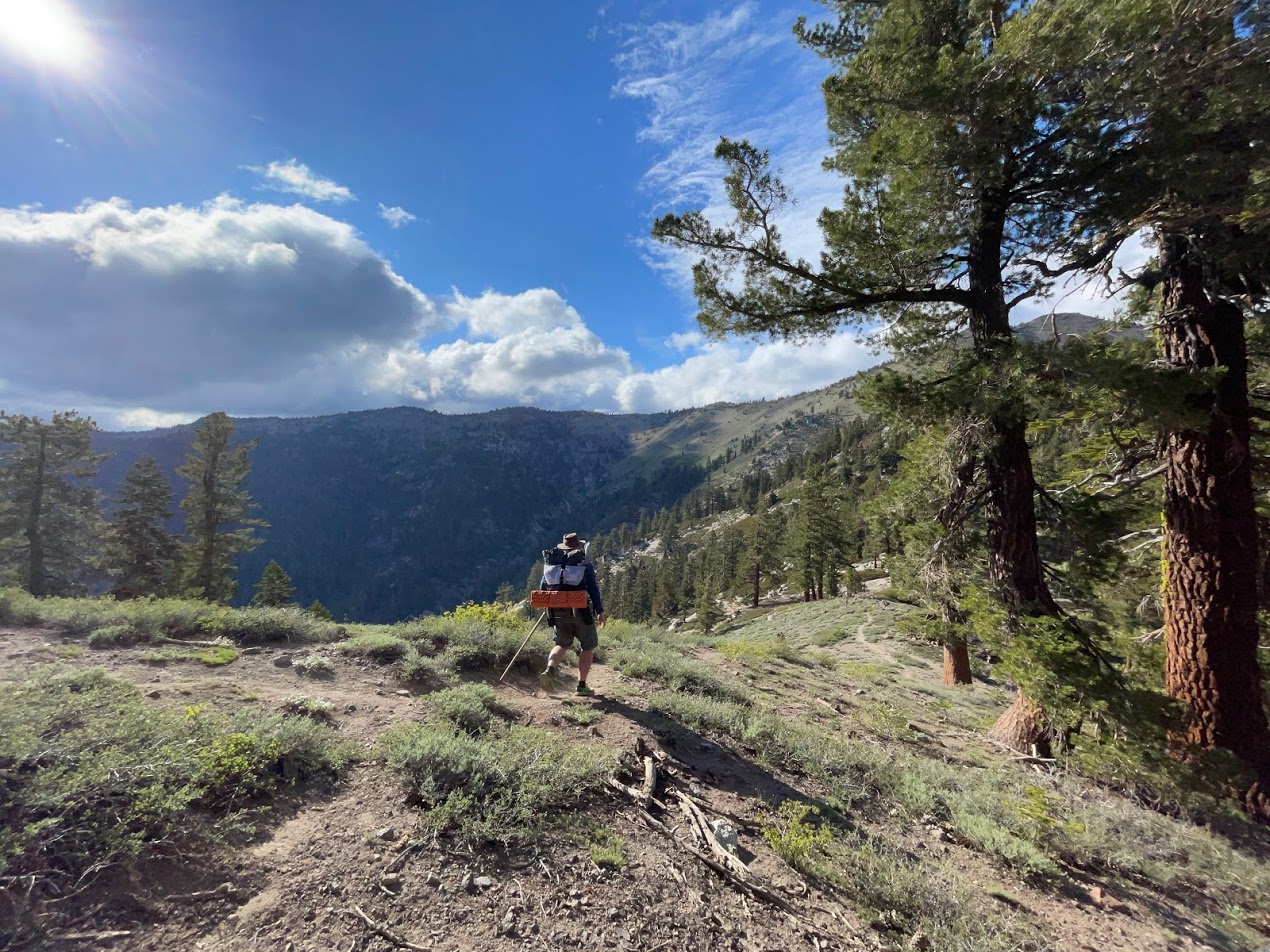
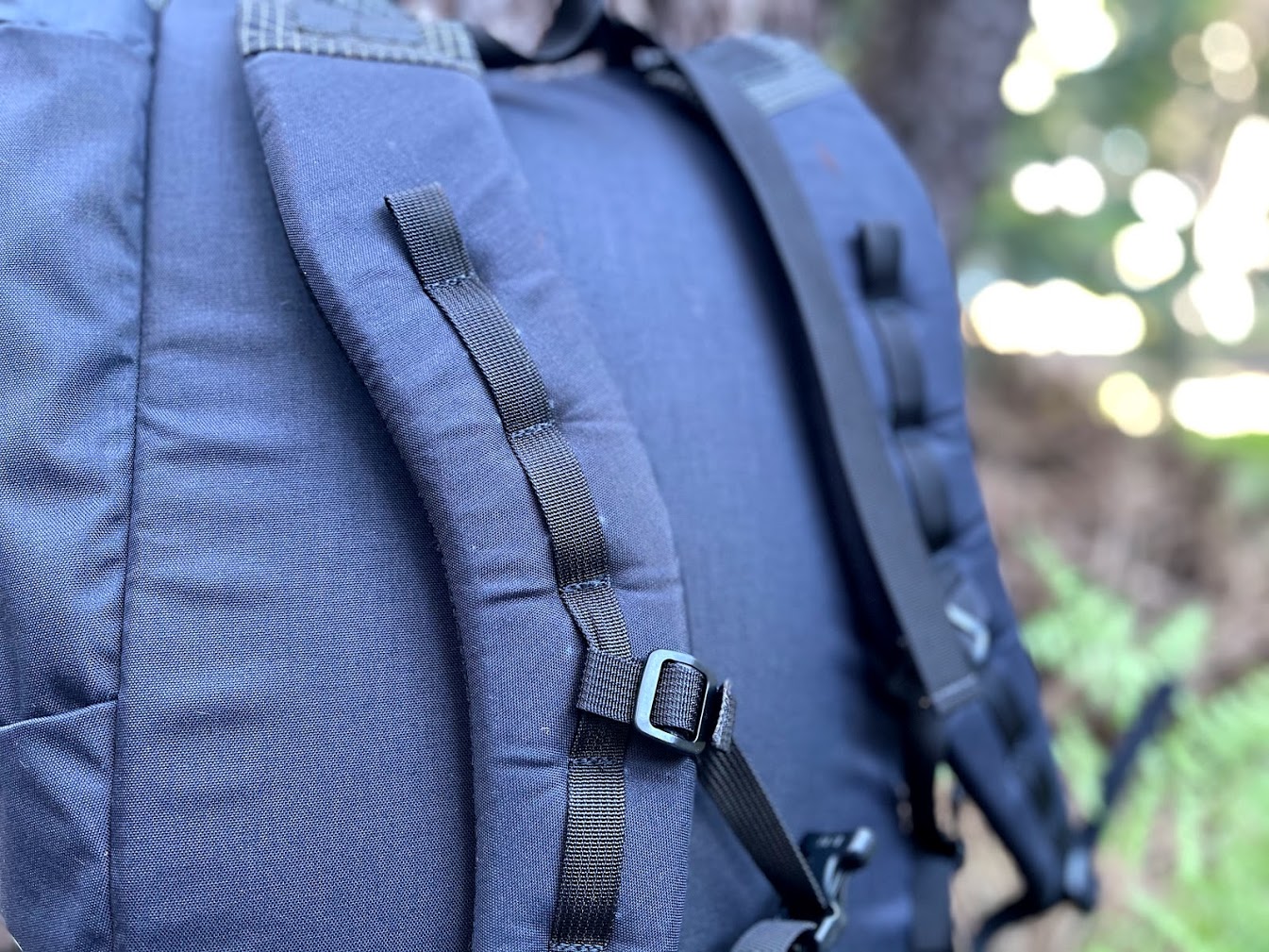
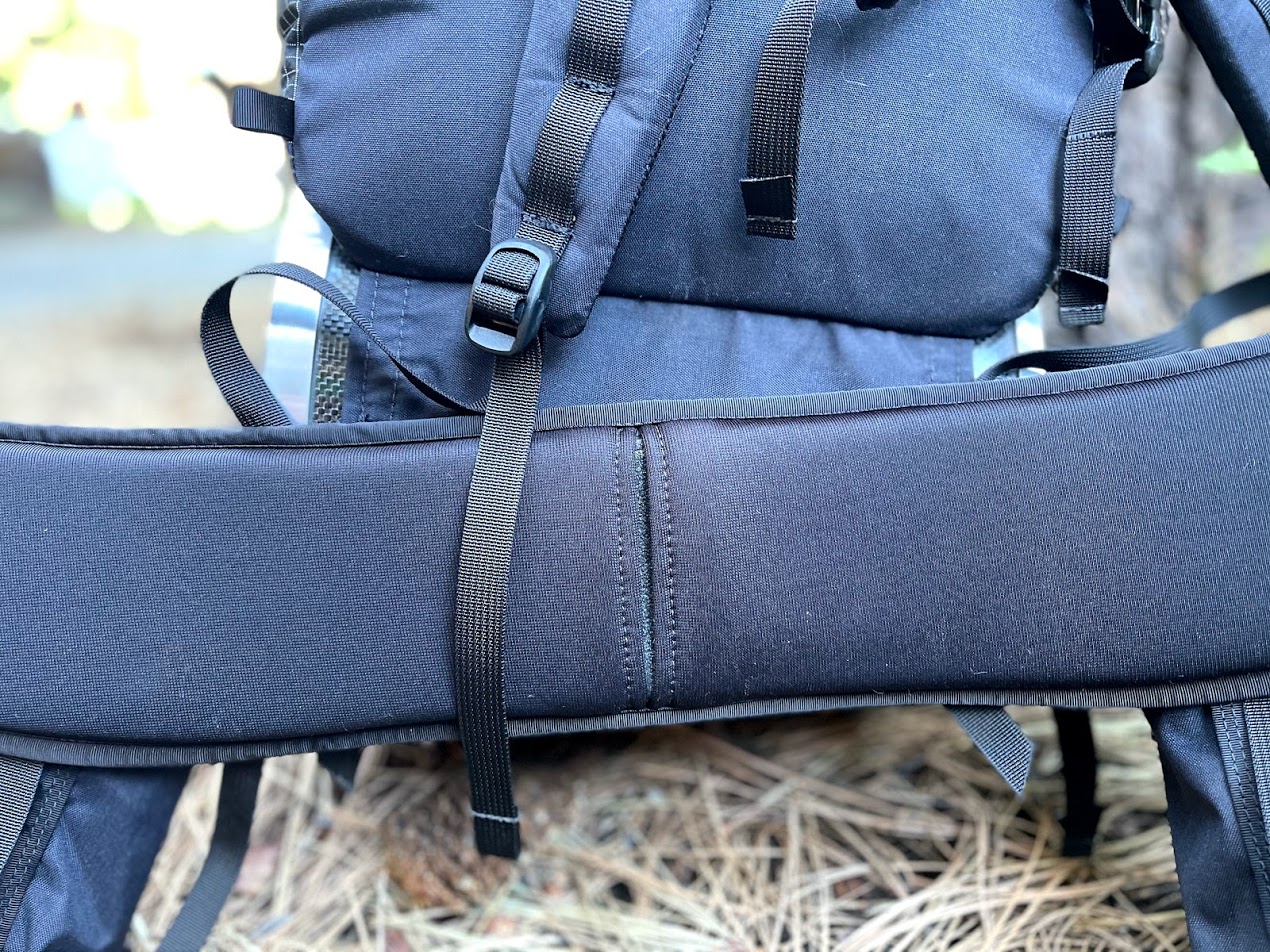
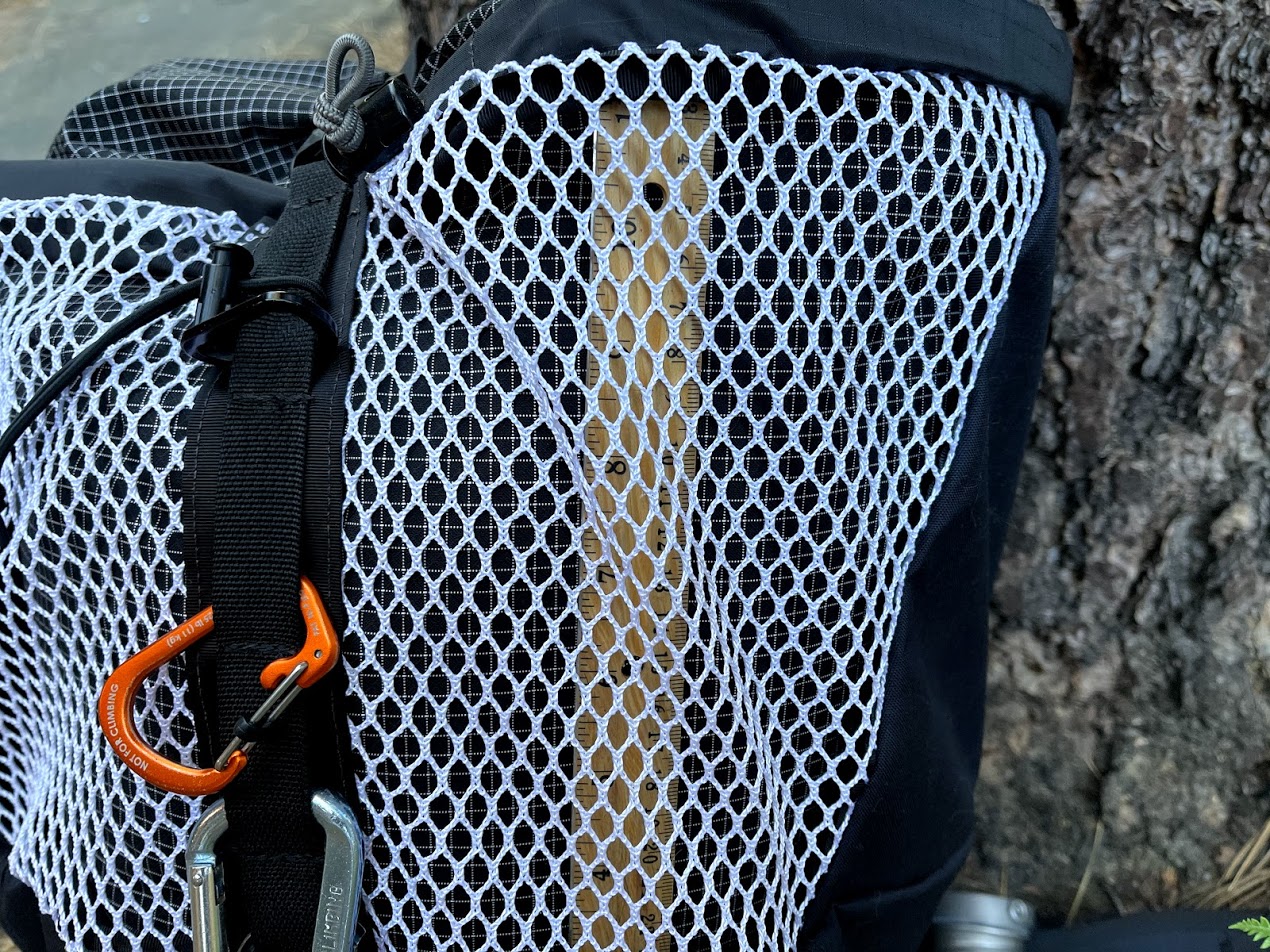
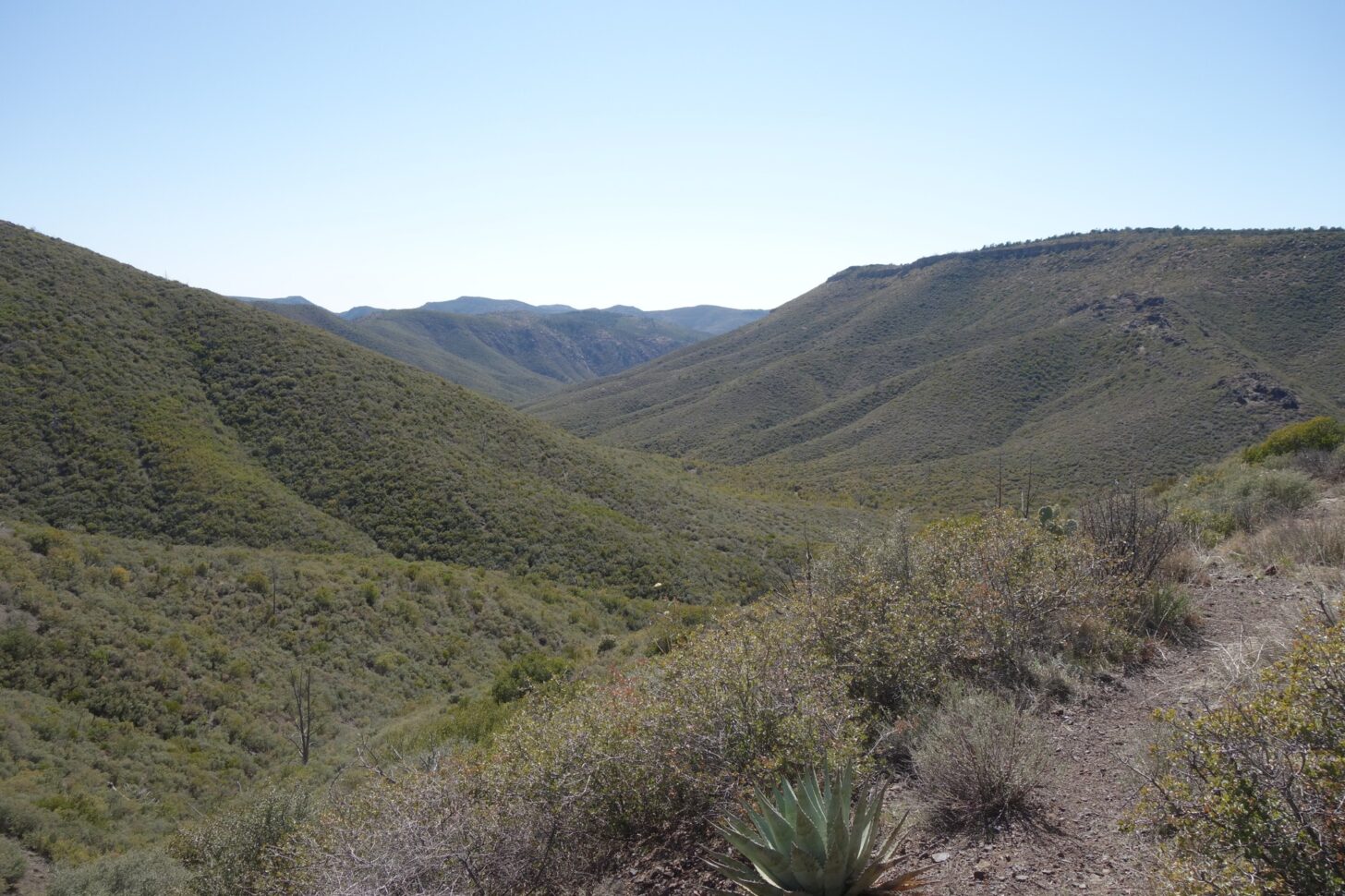
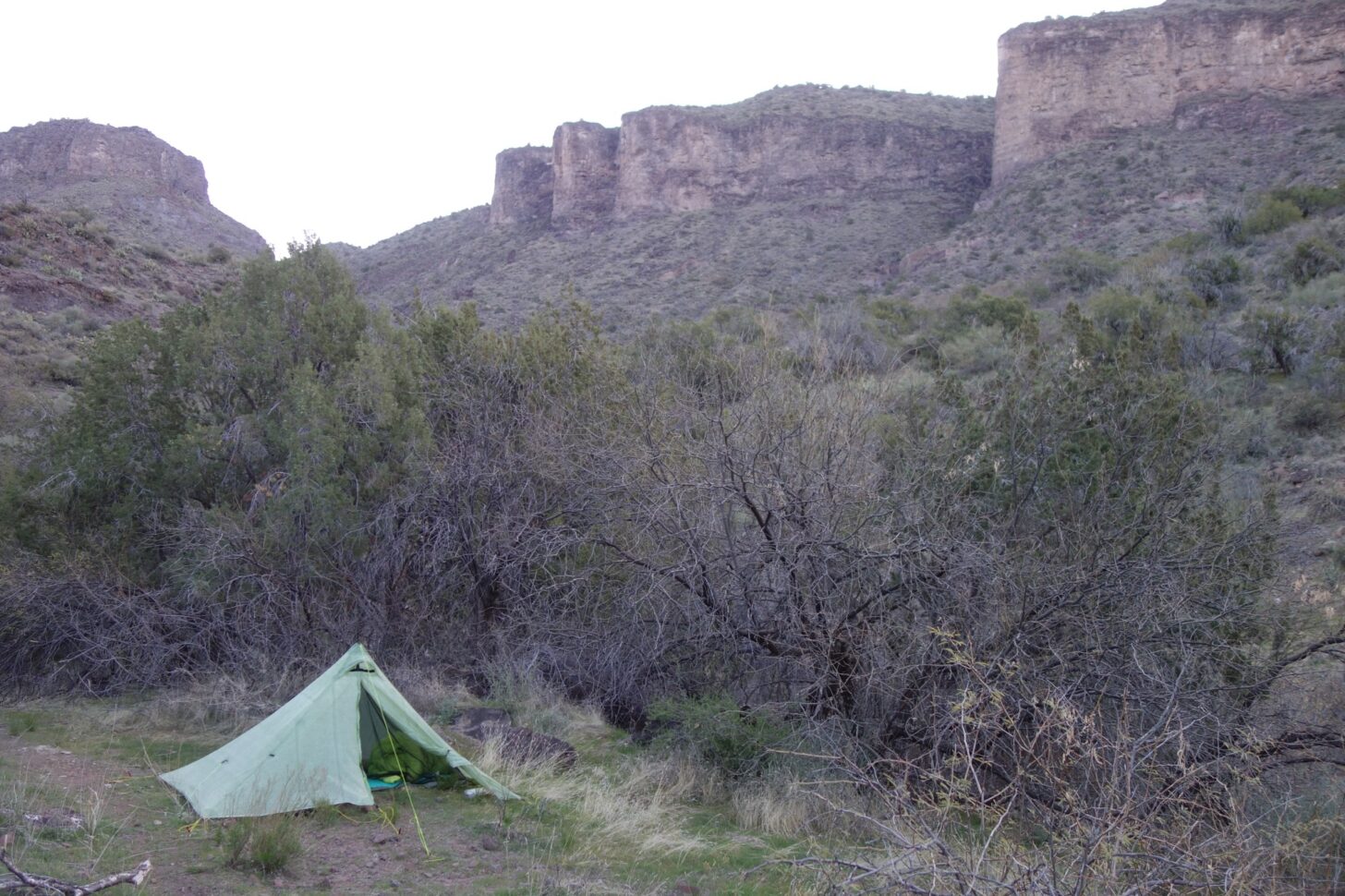
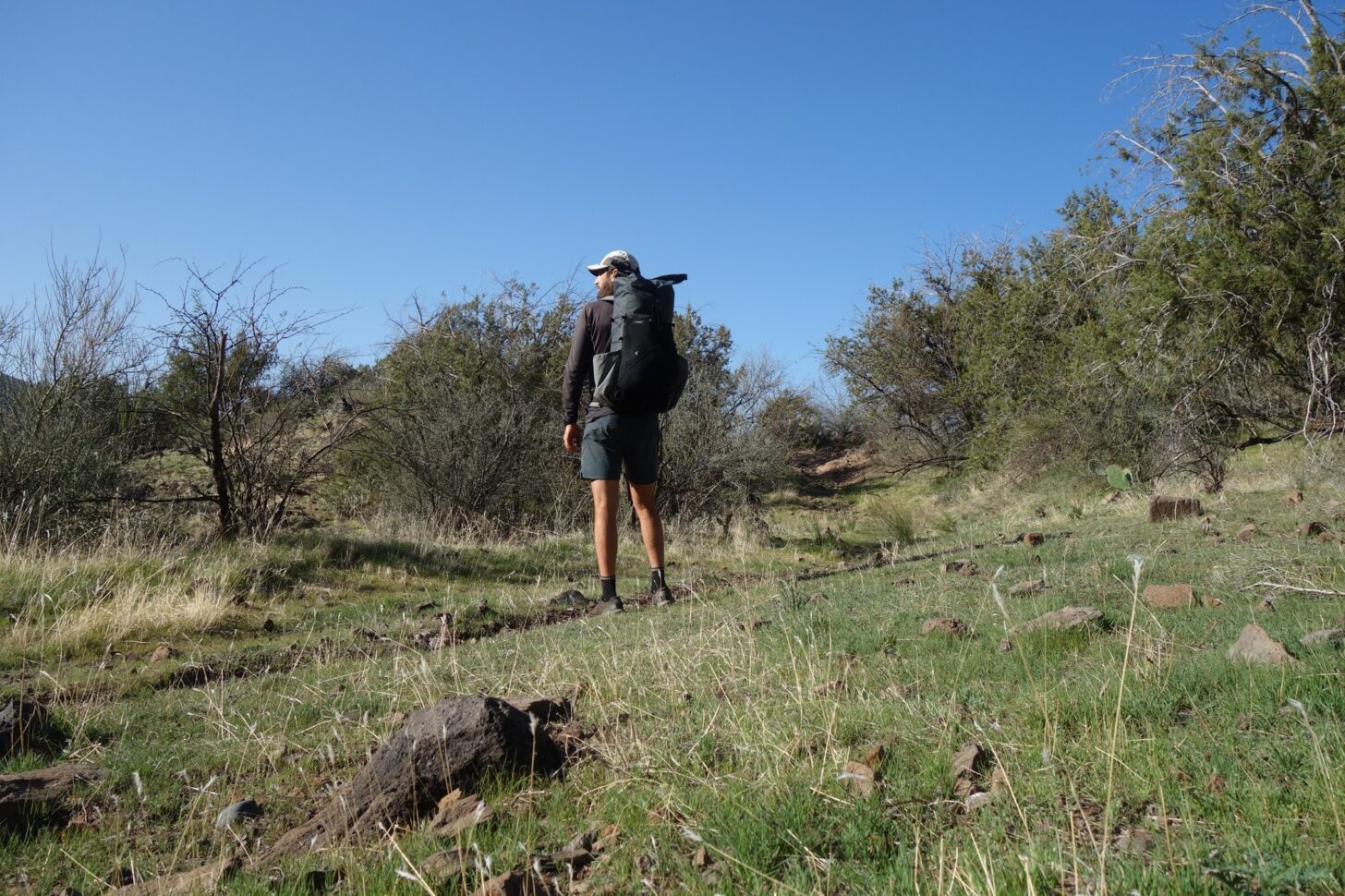
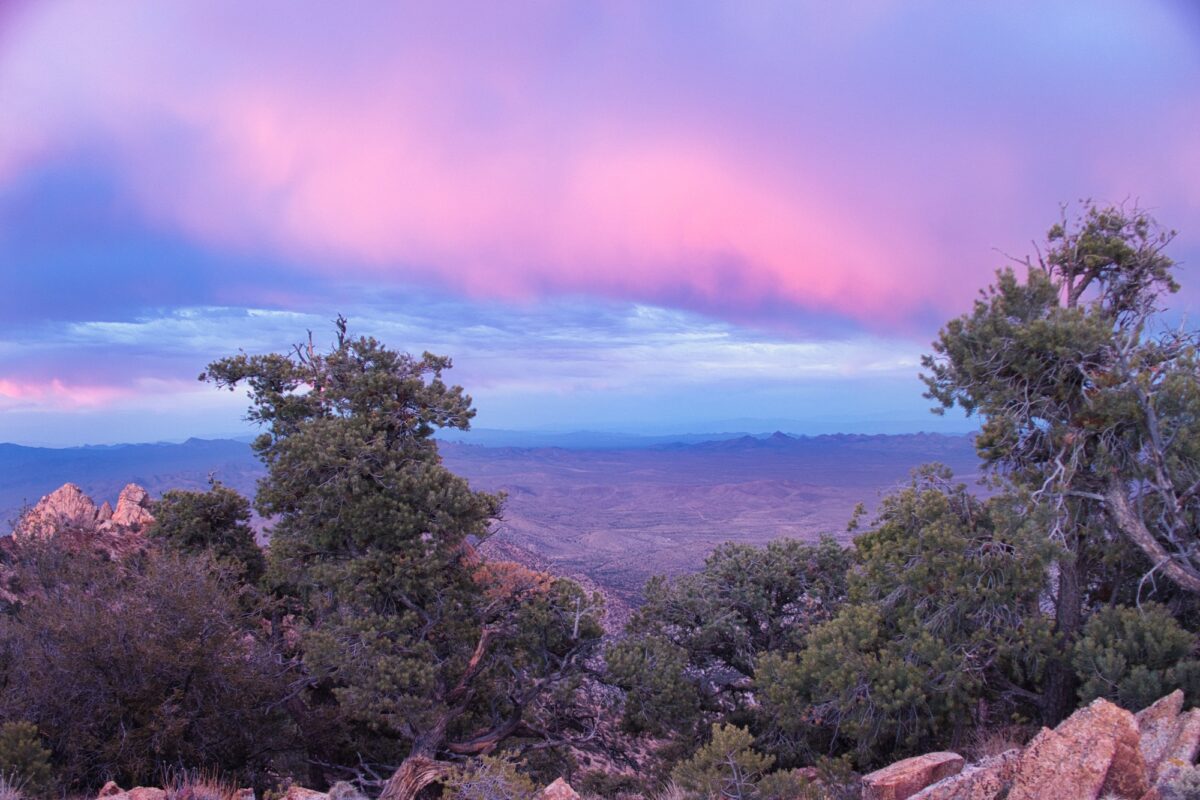
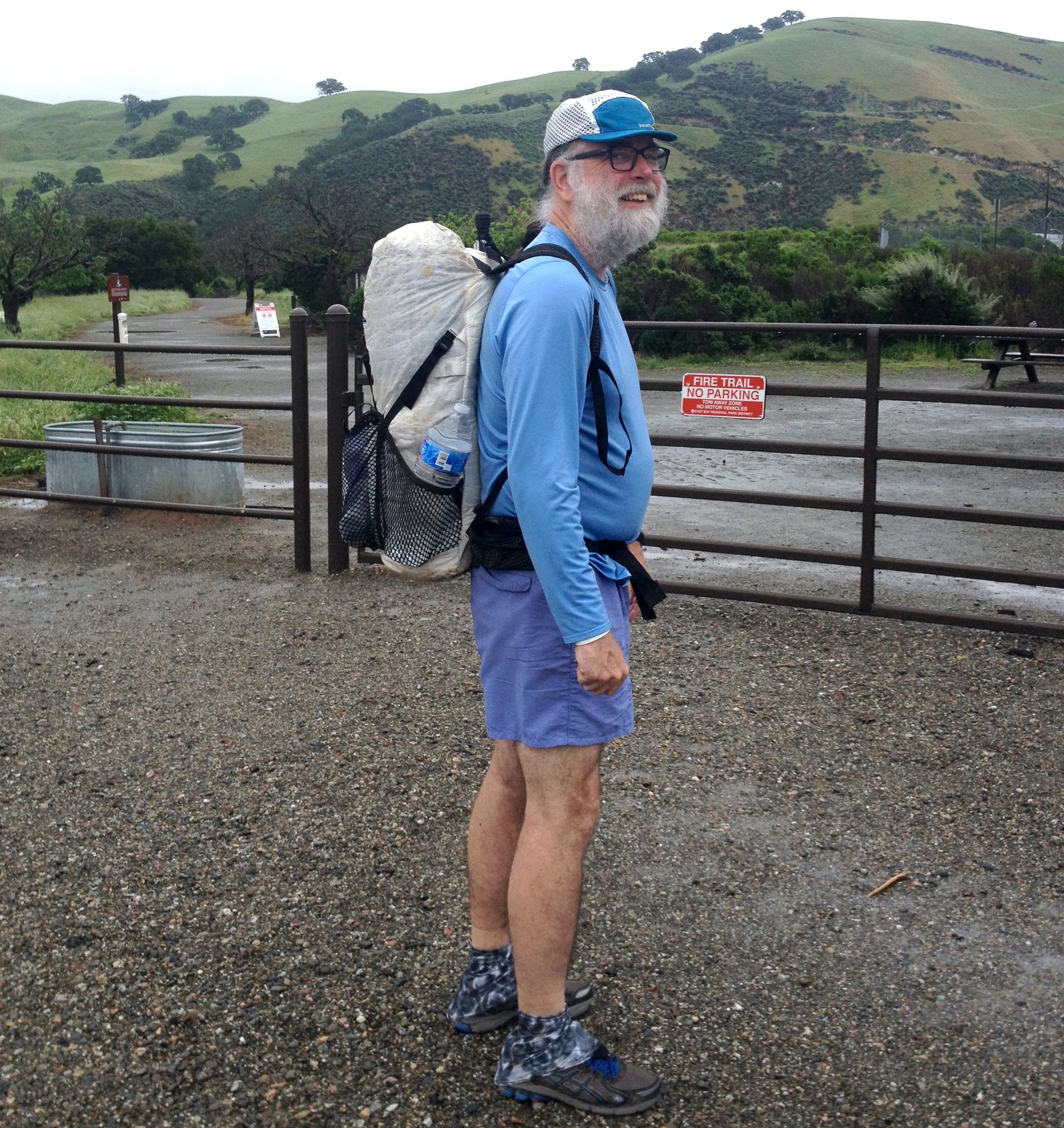
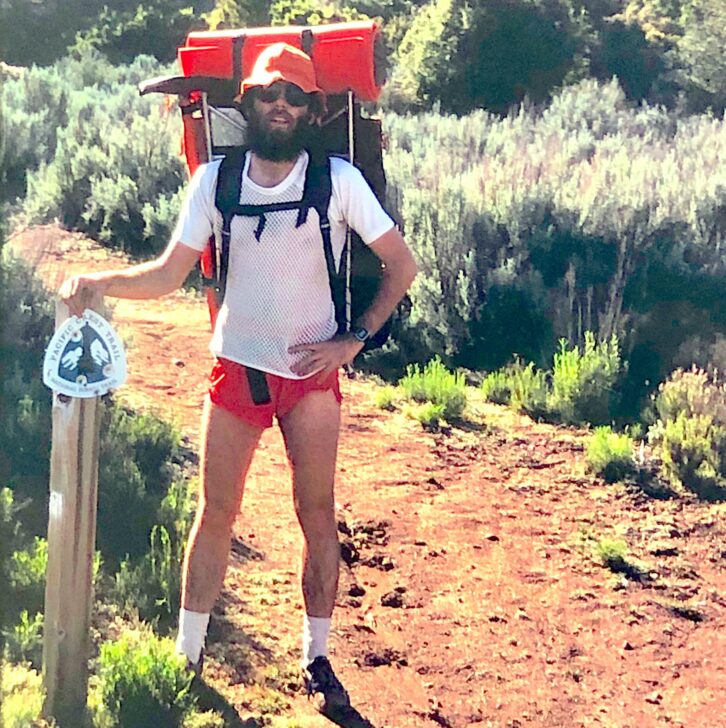
In a year of back-and-forth hiking plans and a busy career in backpacking media, Maggie works on understanding what backpacking means to her.
We all know what 2020 did to us as a long-distance backpacking community. To write anything else about it would just be reiterating that I had a Big Sad and felt like I was losing part of my identity when I canceled my Pacific Crest Trail (PCT) hike. As I decided not to wade into the dumpster fire of 2021 PCT permits, I ended up feeling disconnected from my world of backpacking.
Backpacking has long played a multi-faceted role in my life. I initially fell in love with it before I learned how to do anything else outdoors. Backpacking came before climbing, mountain biking, kayaking, and hunting. It was my first experience in the backcountry, made even more special as a connection point for my father and myself.
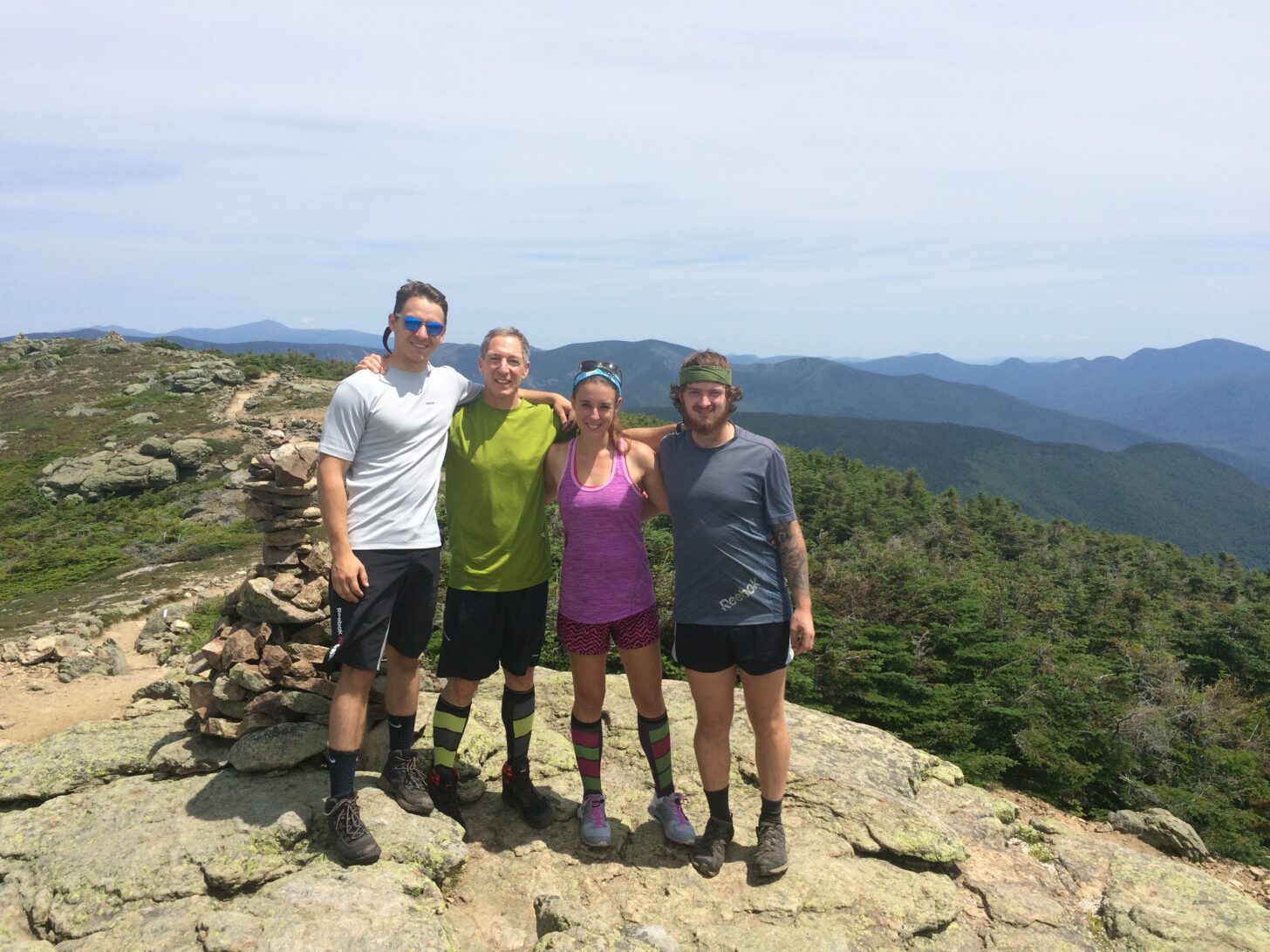
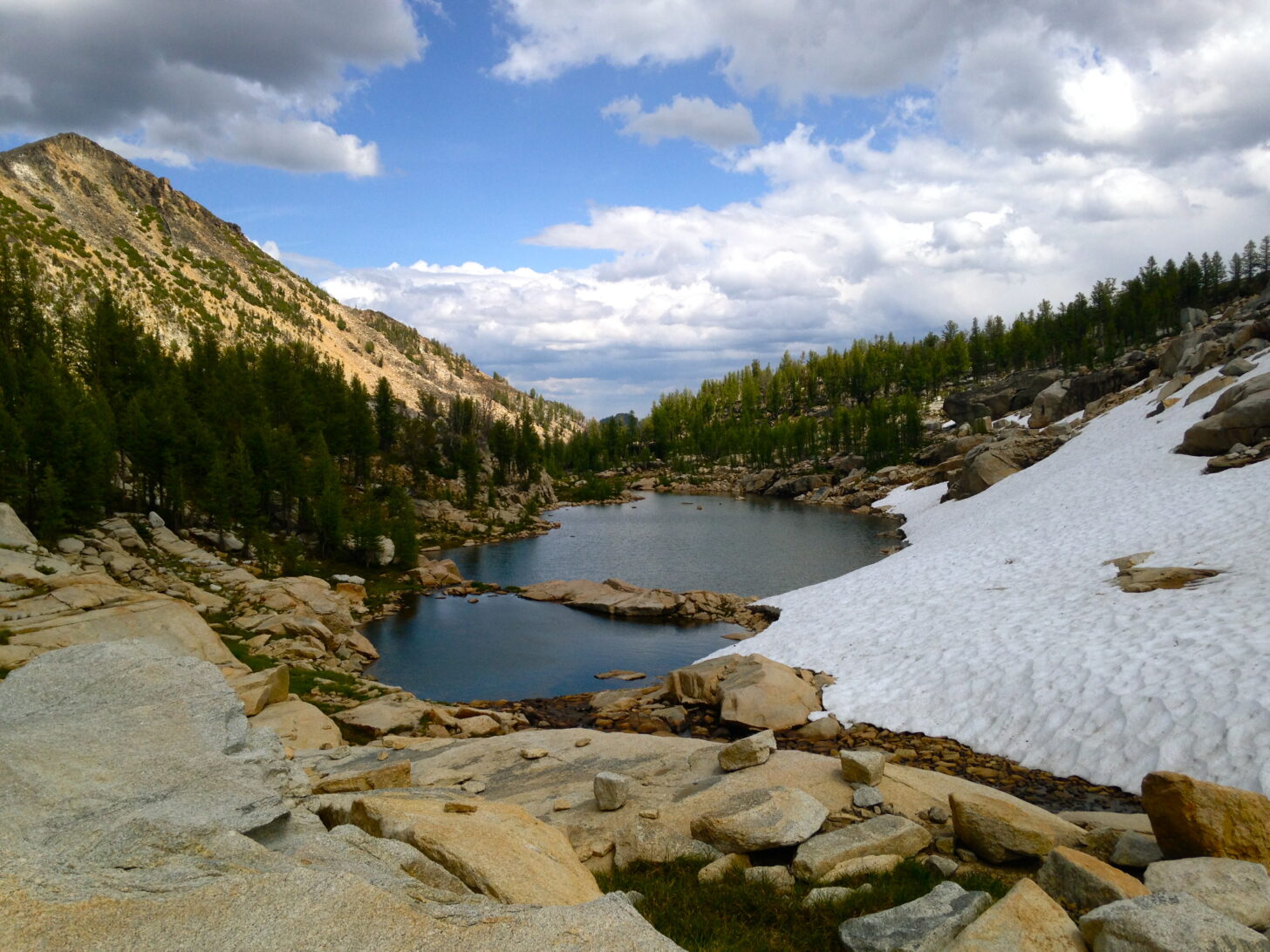
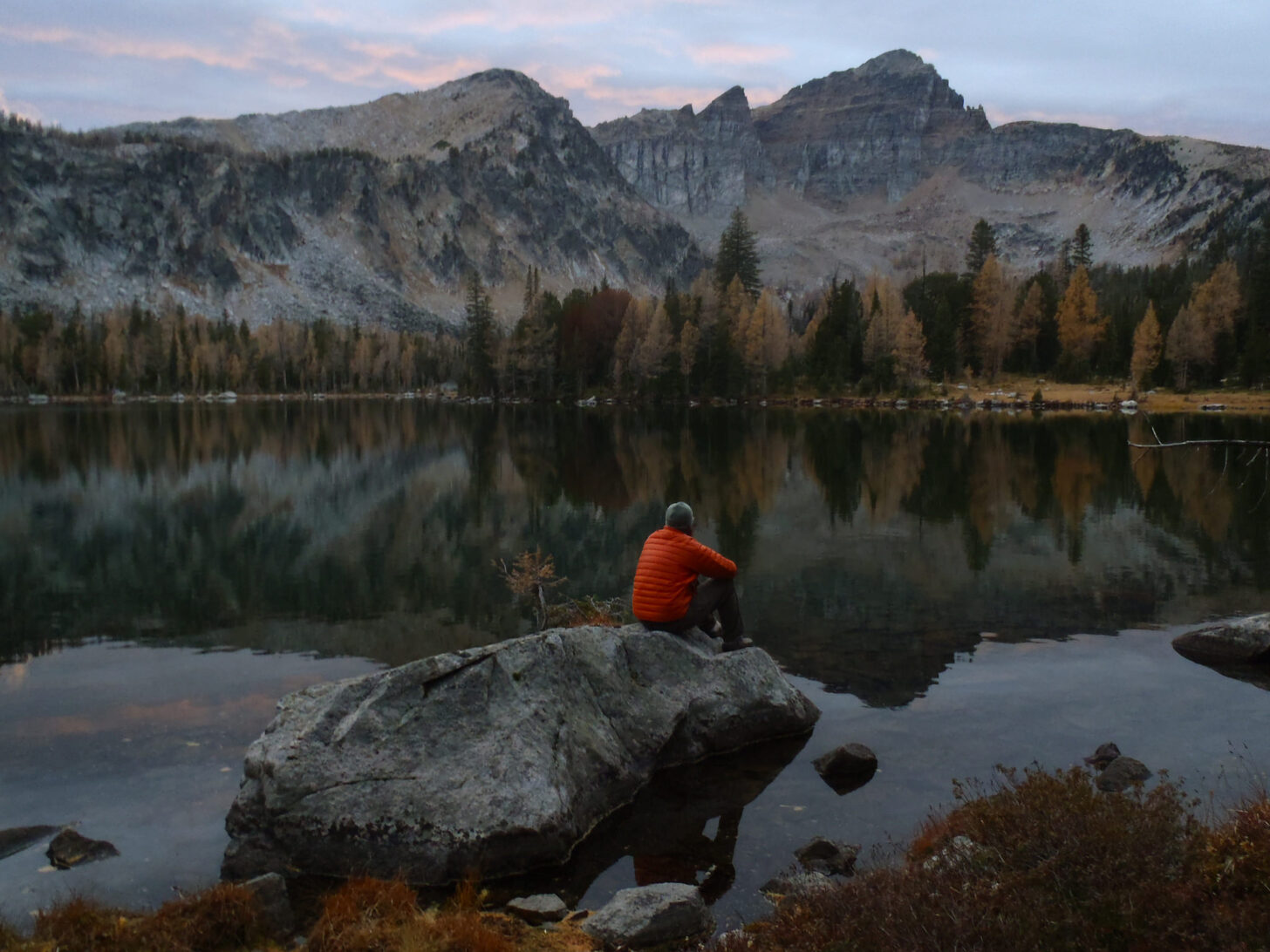
My dad was my original backpacking partner, and backpacking is a place we really connect
I turned backpacking into a career in outdoor media, writing about my experience on the Appalachian Trail and using that momentum to springboard into an editorial job in the outdoor industry.
Backpacking has also been a way for me to get back in shape after long periods of low physical activity. Commit to a 200-mile thru-hike, and in 10 to14 days, you’re back in shape. It’s the best get-fit-quick scheme out there.
With all this, backpacking’s role in my life has taken on what amounts to identity-building pressure. I had vague plans to do one thru-hike in each season in 2021, which I figured would get me back in the game. Then job opportunities, travel, and pet care snowballed into plan after plan falling by the wayside, until we were halfway into the year, and the subject matter of my writing was something I hadn’t really done for the past seven months.
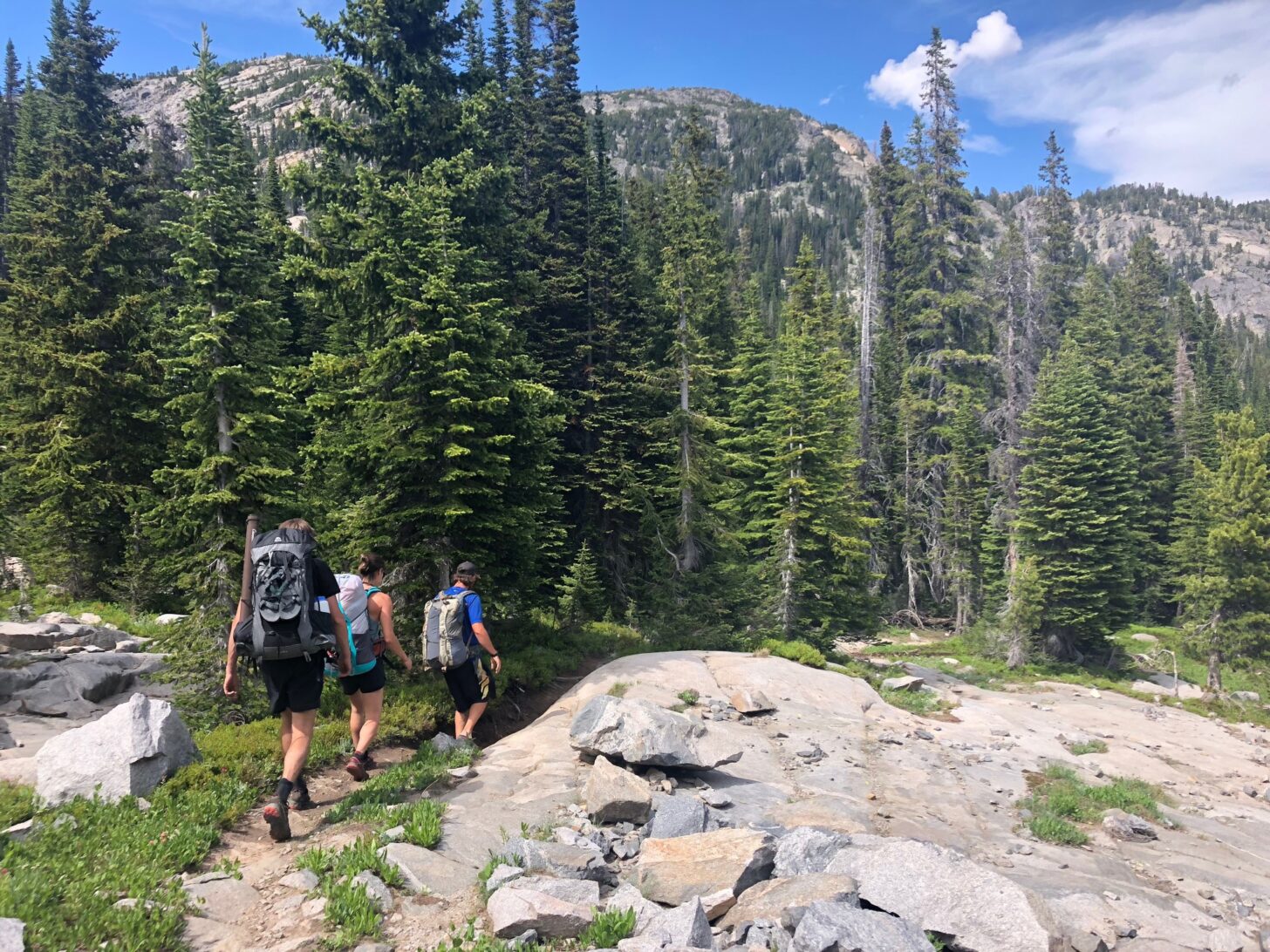
I used this trip to test gear, write a trail profile, and take lots of photos for articles
I lost my full-time editorial job this past year, which meant fully relying on writing. It’s one thing to be editing other people’s backpacking writing, and another to be responsible for all the content creation. With a dozen clients and at least five articles, essays, and posts per week, I was churning out writing at an unsustainable level. I’d gotten wedged into a narrow niche of backpacking content, and though I tried to broaden the subject, my experience and portfolio were centered around backpacking.
I never resented the idea of backpacking, but my workload meant I didn’t have much time to go out and actually do it. And let’s be real: if you’re focusing entirely on something for work, it does, in some ways, become less appealing.
Sometimes a backpacking trip is a way to connect with your partner
I stopped thinking about my backpacking trips as escapes, and more about what gear I’d be testing on each trip, if I had assignments I could fit into the slot, what essays I could write from the experience.
Then, in late spring, things in life got hard. Life is full of cycles, and sometimes those cycles are less like an even-keeled rotation and more like the spin cycle on a particularly aggressive washing machine.
My one thru-hike in each season wasn’t happening, but one of my summer trail ideas had been the Colorado Trail. With my life upheavals, even that notion had been flung so far onto the back burner it wasn’t even on the stove. I had a one-way ticket purchased to the east coast, no idea what I was doing after, and a general feeling of aimlessness. I figured I’d return to Montana, arrange a major house repair, and finally try to perform life-saving surgery on my weed-infested lawn. You know, whatever fun things await tired adults.
Counting mile markers on the last long-distance trail I hiked, in November 2020.
On one particularly rough afternoon, I was sitting alone in my house with my cat. I clicked out of a dismal Twitter-hole and impulsively looked up flights from Boston to Denver. They were really expensive. I closed the window, ate an entire bag of mini marshmallows, and stared at a blank document that was supposed to be an article until my computer went into sleep mode.
What I was feeling was professional burnout combined with challenging life changes. But nothing was going to change by sitting on my couch feeling sad, so I opened the flight window again, cringed at the prices, and booked a ticket to Denver.
Impulsively committing to the Colorado Trail was partially from an understood need for change, partially from instinct. When I’ve felt this aimless in the past, backpacking has helped me through it. It provides a chance to clear my head in beautiful places and a singular goal.
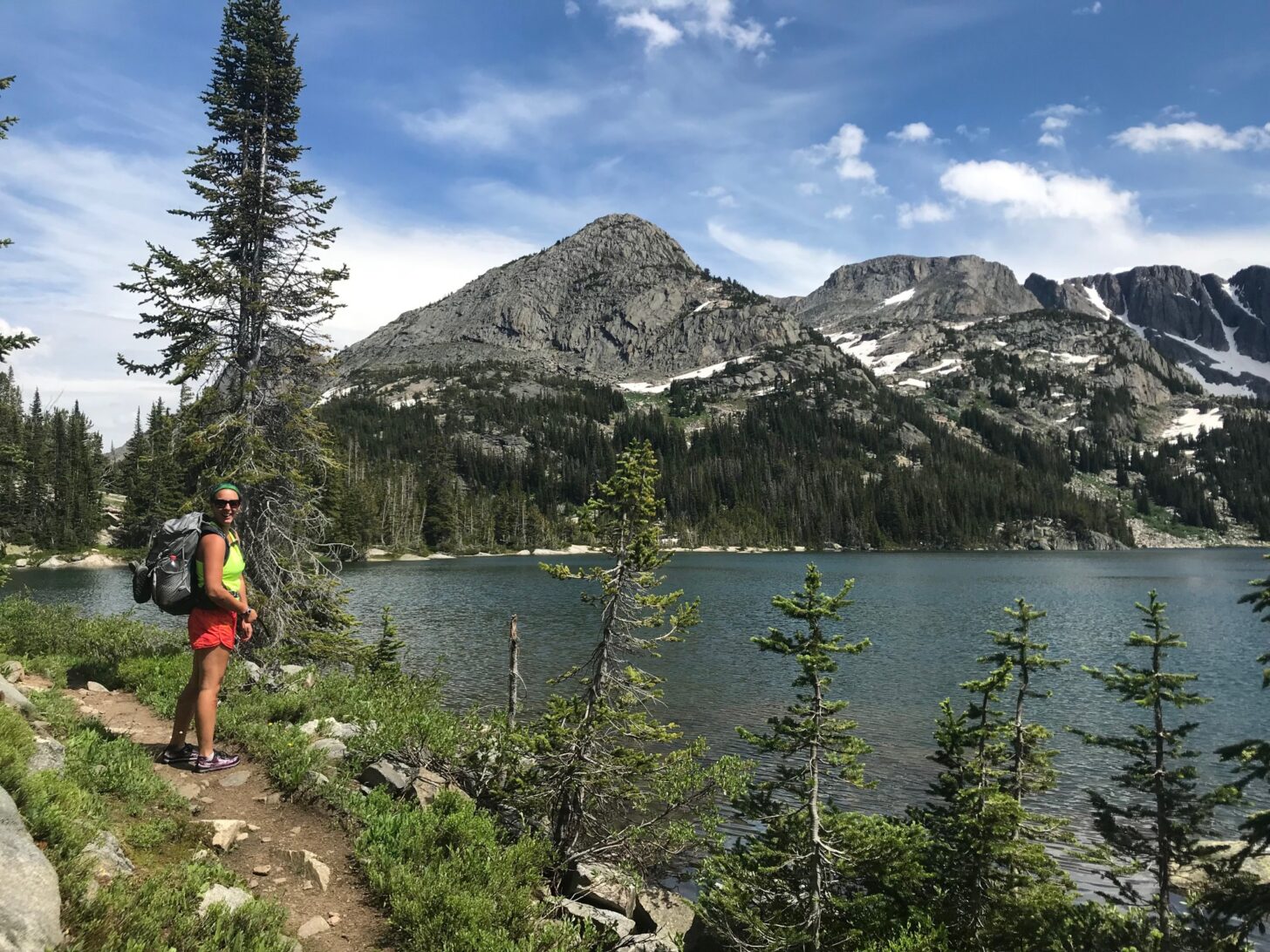
This was a solo trip along the CDT in Colorado
When I booked the flight, I wasn’t thinking about what I’d write about the trail, how it would fit into my career, or the fact that I’d be forced to get back in shape. All of those things are valid, but at that moment, I just knew I wanted to be on a trail.
While I love backpacking for its purity, it has also been a job, a fitness boost, and a way to stay relevant within a community. Sometimes all at once.
That’s why this final snap decision to hike the Colorado Trail was so meaningful. All of those other elements faded into the background. I’d been feeling like I’d forgotten the reason I started backpacking, and the core of why I continue to get drawn in. That’s the truth of what backpacking means to me.
I have a friend who’s finally back on trail after nearly two years off. She grappled with her relationship with long-distance backpacking, and has decided after she finishes this PCT section to complete her 2019 thru-hike, she’s done with “life-altering long hikes.”
Despite uncertainties about her relationship with thru-hiking, she texted me the other day from the trail. “All of those thoughts faded once I got back on the trail. It feels comfortable…maybe too comfortable.”
Hiking the Colorado Trail feels like the right decision. I trust the gut feeling that led me to buy the flight to Denver regardless of my other responsibilities and the logistical hassle of figuring out this hike with barely two weeks to plan. Sometimes you just have to go with it.
I haven’t set foot on a long-distance trail since last fall, and I am woefully out of shape, despite having no excuse besides general malaise. The Colorado Trail will be a kick in the pants, but the fact that in one of my more challenging moments I instinctively committed to it speaks volumes.
I might have a more career-dependent relationship with backpacking than other people out there, but understanding that I return to the trail time and time again for a reset, clarity, and the connection tells me all I need to know.
Backpacking can be a lot of things. When you’ve done something for so long and it has such an intrinsic place in your life, it’s impossible for it to fit neatly into one category. The Colorado Trail will be a much-needed break from my routine – 486 miles of head-clearing thru-hiking. It will also contribute to plenty of future articles, and I’m definitely using it to get in shape quickly. None of these elements diminish the experience, and while I still am understanding my relationship to backpacking, I have a solid month of the activity to figure it out.
Backpacking Light does not accept compensation or donated/discounted products in exchange for product mentions or placements in editorial coverage.
Some (but not all) of the links in this review may be affiliate links. If you click on one of these links and visit one of our affiliate partners (usually a retailer site), and subsequently place an order with that retailer, we receive a commission on your entire order, which varies between 3% and 15% of the purchase price. Affiliate commissions represent less than 15% of Backpacking Light's gross revenue. More than 70% of our revenue comes from Membership Fees. So if you'd really like to support our work, don't buy gear you don't need - support our consumer advocacy work and become a Member instead.
Learn more about affiliate commissions, influencer marketing, and our consumer advocacy work by reading our article Stop wasting money on gear.
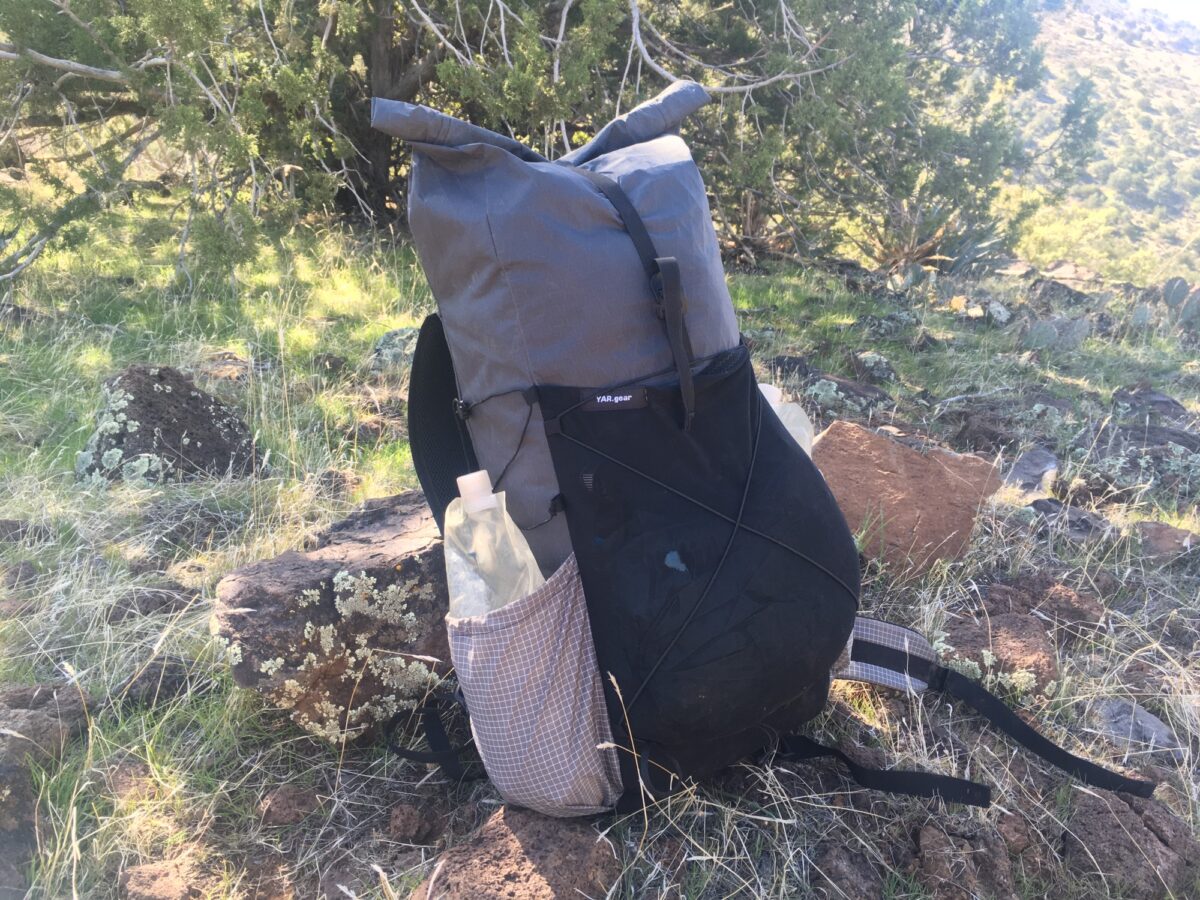
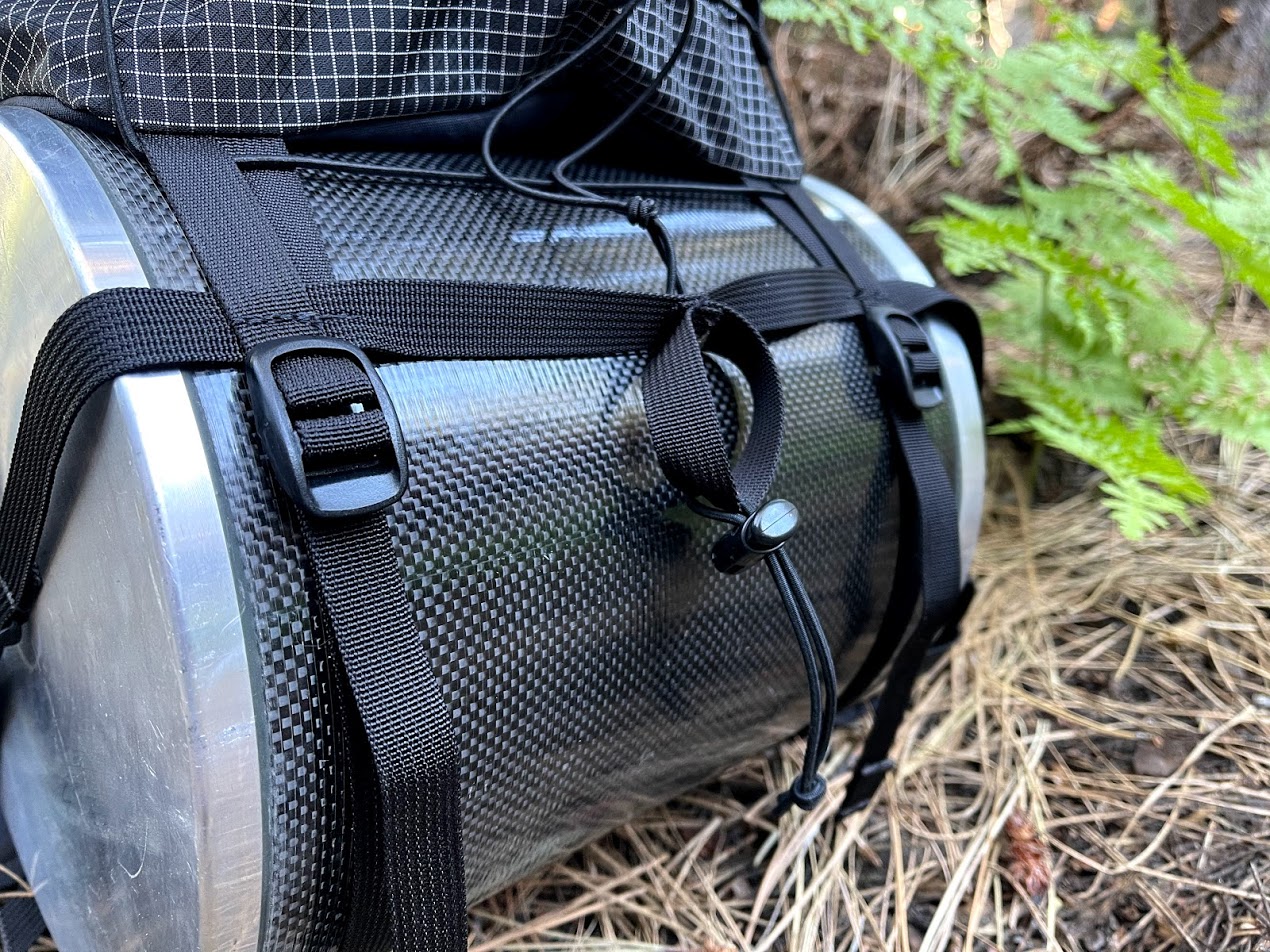
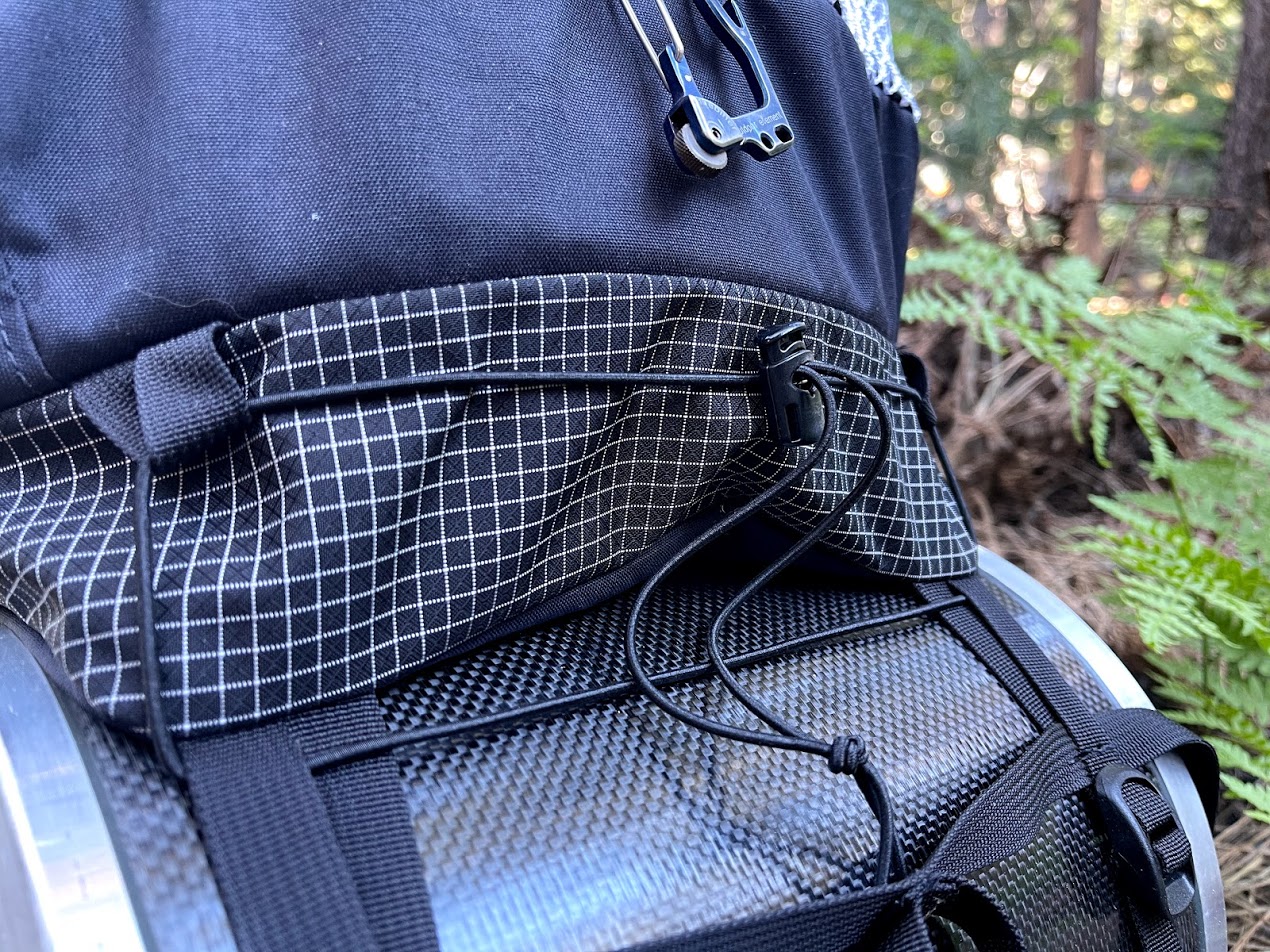
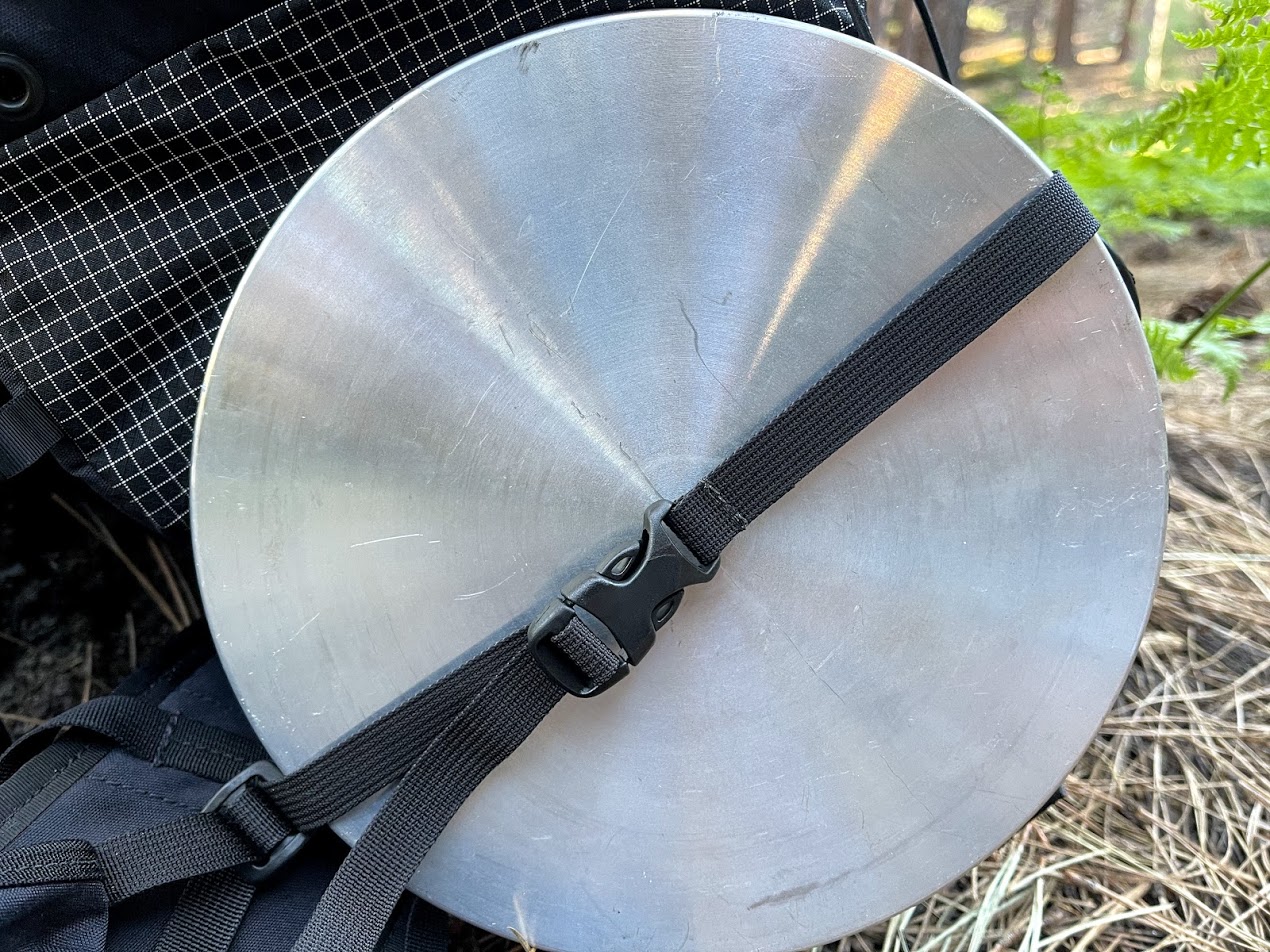
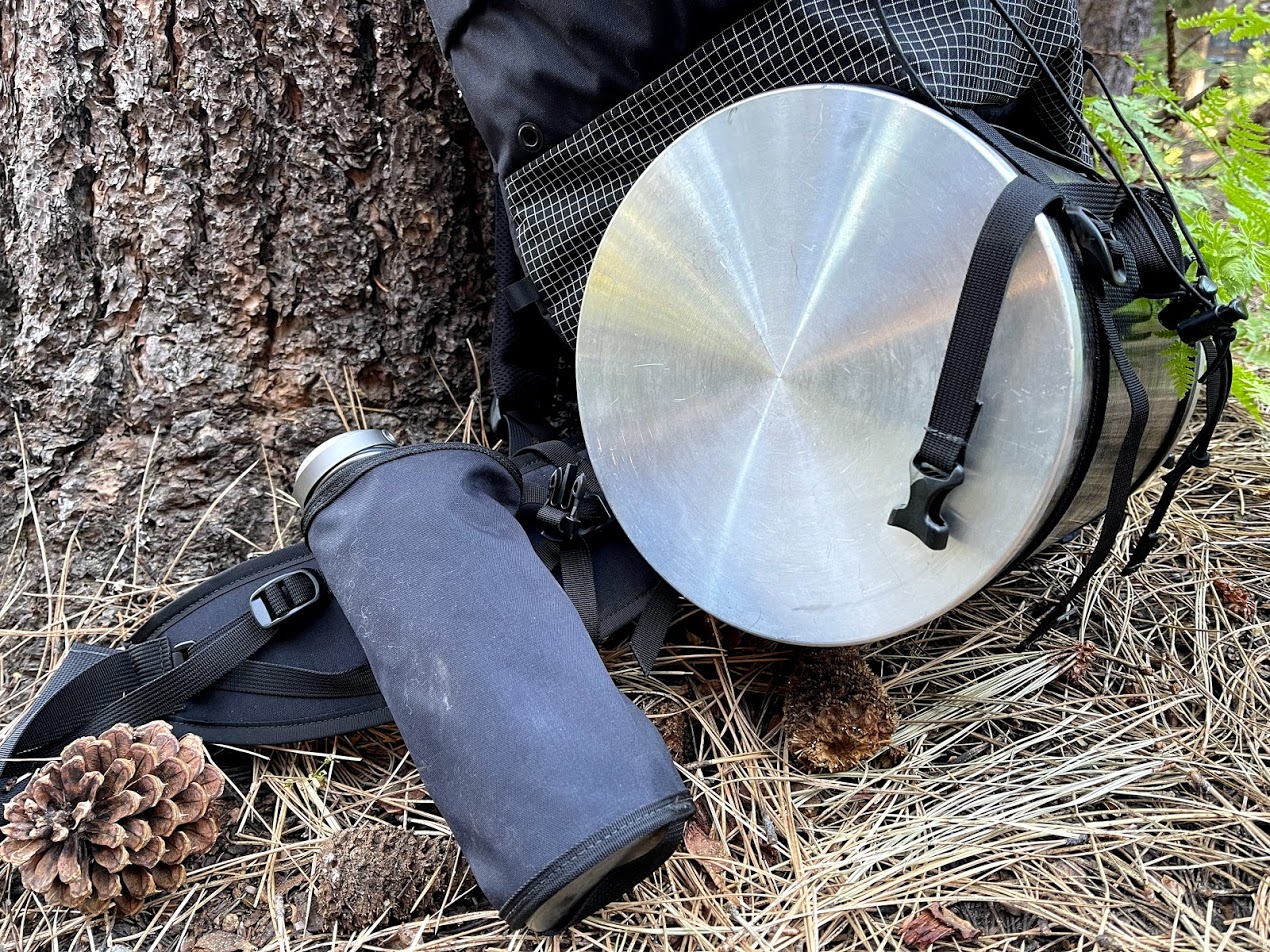
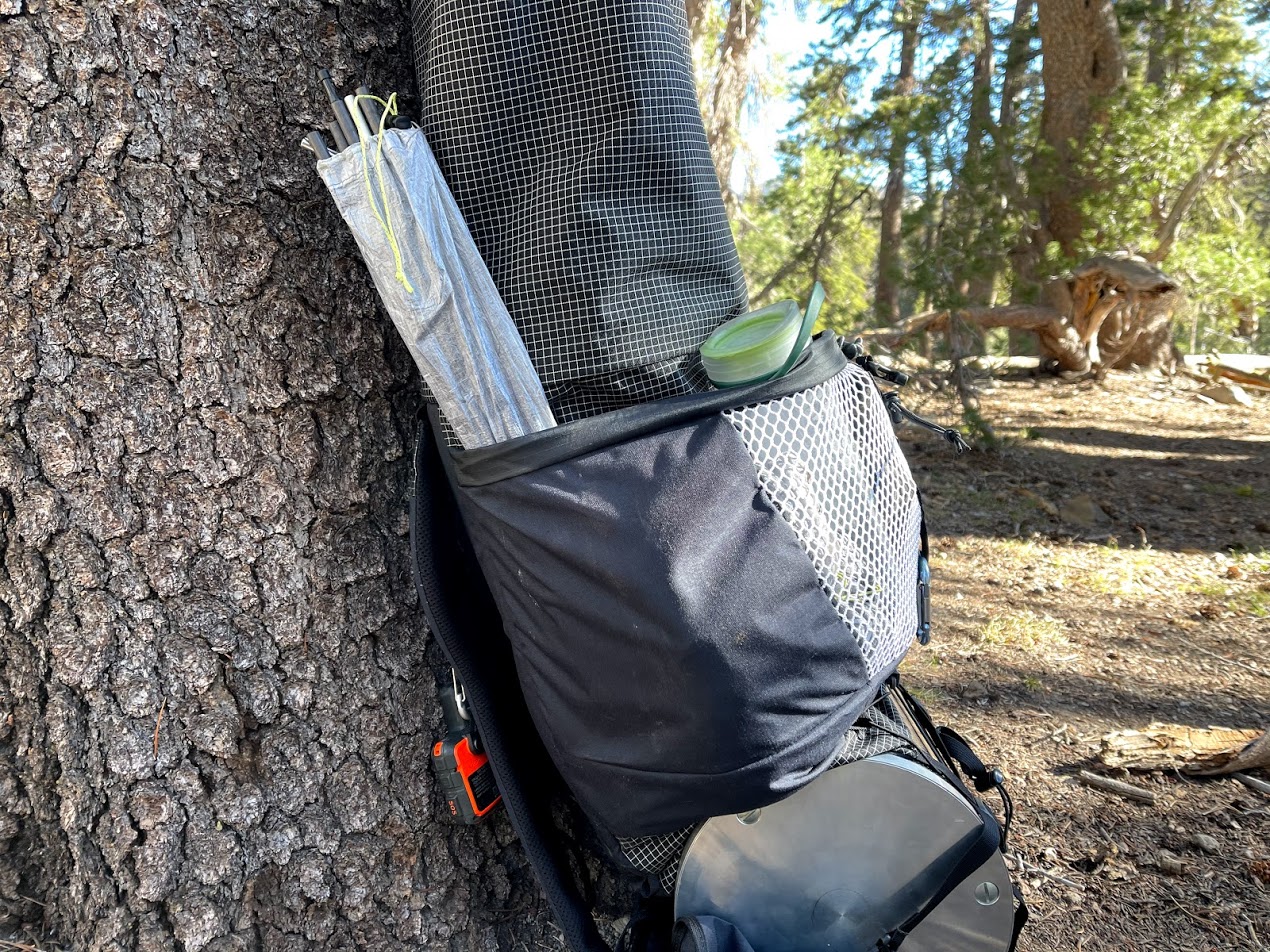
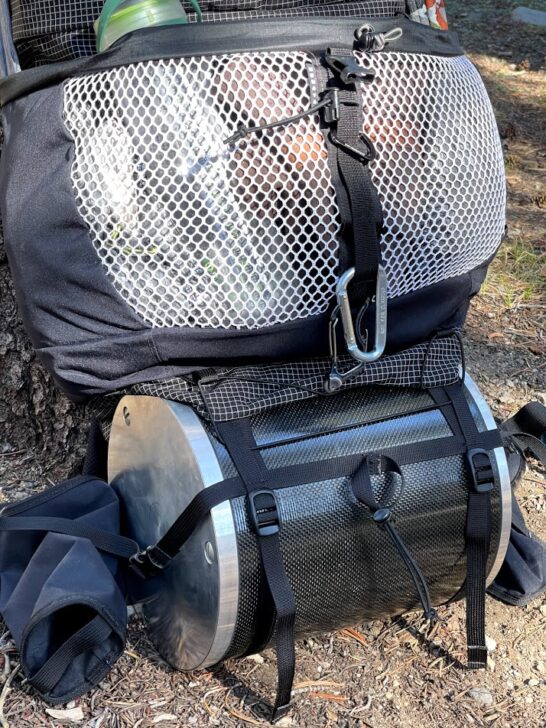
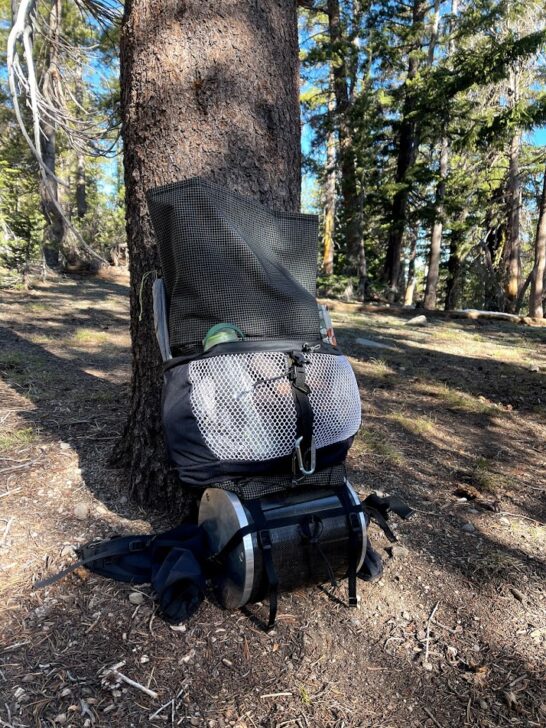
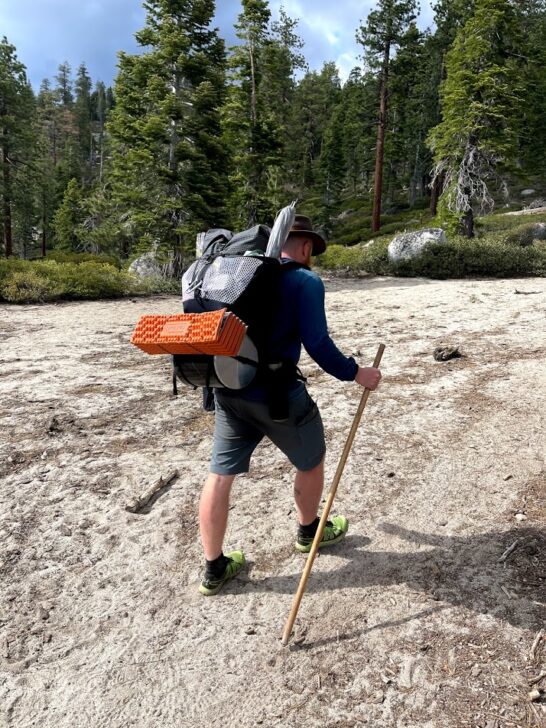
The YAR.gear Mountain Drifter 38L (~18 oz / 510 g, MSRP $200) is a light and modular fastpacking pack that can accommodate heavier loads for short distances if need be.
Rex Sanders reflects on what he learned after eight months of digging into backpacking standards.
Introduction
This is my last Standards Watch column. I have looked at sleeping pad insulation, sleeping bag temperature ratings, and active insulation breathability and insulation. I also interviewed independent gear tester Steve Seeber, plus equipment designers Mike Cecot-Scherer, Michael Glavin, and Dan Durston. You’ll find a complete list of columns at the end of this story.
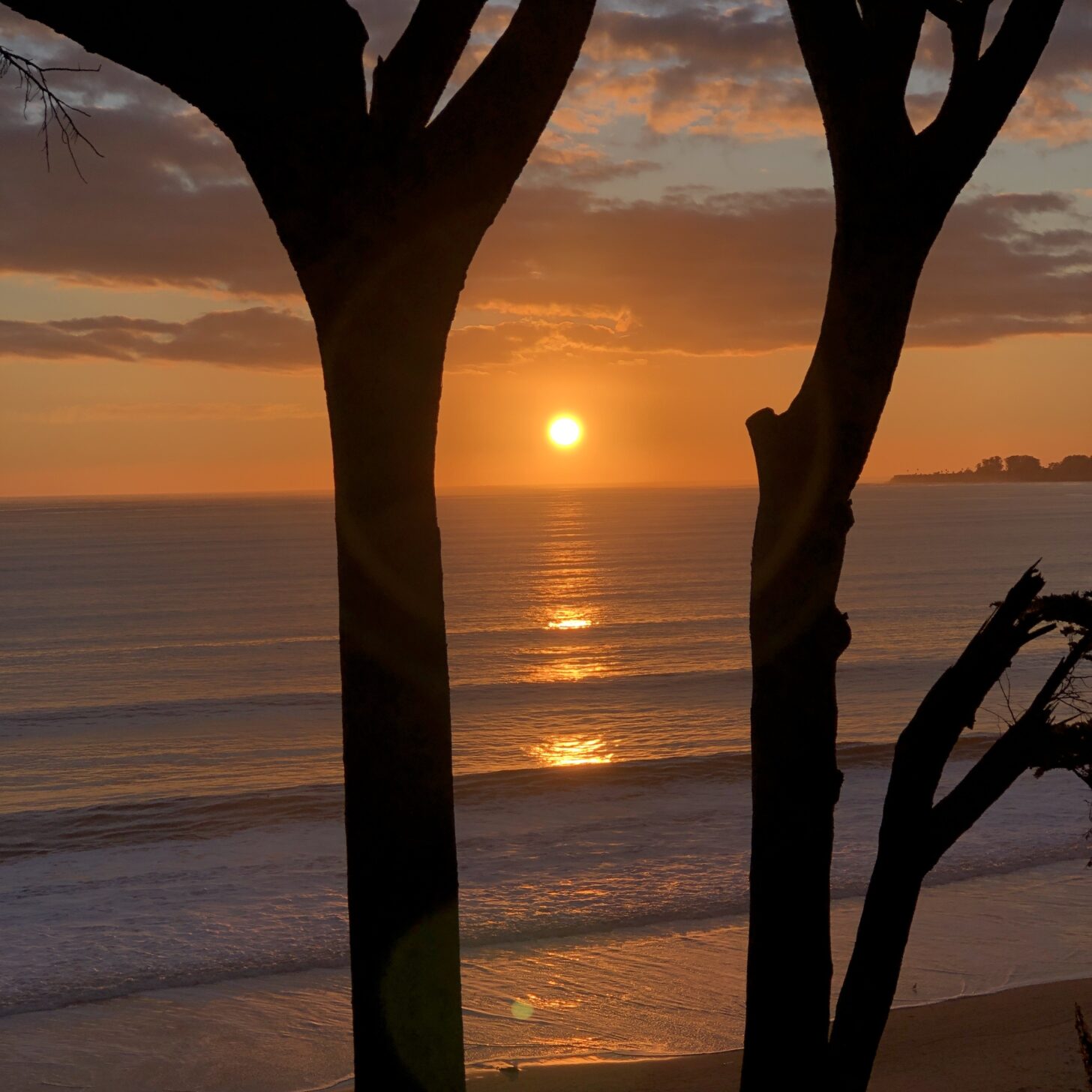
Sunset over the Pacific Ocean. Pro tip: stop hiking before you reach the surf.
Along the way, I found critical faults with many industry standards, problems with testing backpacking gear using those standards, and issues with product marketing around standards and testing. I had planned to cover much more, but I grew frustrated and disillusioned. A few standards may be great – but I haven’t found them yet.
Even the best-planned backpacking trips can go haywire. Rather than plowing ahead, it’s a good idea to review what happened, learn from the experience, and change plans.
Broken Expectations
I spent most of my career purchasing and using products that adhered to important standards. Buyers could more-or-less easily check for standards compliance, and stop doing business with companies that didn’t conform.
When I started writing these columns, I assumed the backpacking industry worked roughly the same way. Over and over, I was surprised that the standards, testing, and marketing were flawed in important ways, and it was almost impossible for consumers to compensate. I tried to reflect those messes in the columns, and I discovered other issues that never made it into stories.
Here are the problems that surprised me the most.
Sleeping Bag Temperature Ratings
The advertised temperature for most sleeping bags and quilts is the Lower Limit based on ISO 23537, often called the EN rating. But that standard is based on a healthy male in his mid-20s, laying on his back, not moving, wearing warm clothes from head to toe, cocooned in a fully-closed mummy bag, with his face buried in the hood, on an R-4.8 sleeping pad, inside a windless shelter, at 59 °F (15 C) and 50 percent relative humidity. If you, your gear, and your campsite don’t fit that description, you might not sleep warm enough at the advertised temperature.
And multiple tests on the same bag can turn out significantly different at a widely-used U.S. test center. As a result, several bag or quilt makers downplay or ignore the standard.
For example, one well-known sleeping bag maker uses decades of experience to rate their bags. Their published temperatures are about 5 F (2.8 C) higher than their well-hidden Lower Limit ratings. A quilt maker gave up after spending thousands of dollars on testing. They measure loft and convert to degrees instead.
Sleeping Pad R-values
The standard sleeping bag temperature test uses an R-4.8 sleeping pad. Yet many gear makers, retailers, and reviewers tell us that R-4.8 is a winter pad, and R-3 or R-4 is fine for three-season (spring-summer-fall) use. Even though the climate in coastal Hawaii is very different from central Alaska!
And good luck figuring out how much colder you might sleep on an R-3 sleeping pad. Some standards units are very hard to use in real life.
Tent Flammability
Laws in several U.S. states require all tents to meet the CPAI-84 flammability standard. Yet the cotton canvas tent industry developed those tests, reportedly designed in part to put nylon and polyester at a disadvantage. As a result, most American shelter makers used fabrics coated with toxic flame retardants. Tents made in Australia, Britain, the EU, and Japan don’t use those chemicals.
The good news is this year’s CPAI-84 updates allow U.S. retailers to sell backpacking tents made without flame retardants. We should see more American-made shelters with less toxic fabrics, and maybe our stores will carry interesting tents from the rest of the world.
Tent Weights
The ASTM F 1934 Minimum Tent Weight standard did not include stakes for good reasons. But if you don’t know why, it seems like a rip-off. Plus a large retailer rebranded it Trail Weight – yet most backpackers carry more, including stakes and a stuff sack.
Pack Volumes
Yes, there is a standard for measuring backpack volumes, ASTM F2153, last revised back in 2007. Yet one company’s 50-liter (3,000 cubic inch) pack might hold much more than another’s. In part because the standard doesn’t include open-topped pockets, like the rear mesh pocket or so-called cup holders on each side of many lightweight backpacks.
But the standard also requires very expensive 20 mm (0.79 inch) spheres for testing. 60 liters (3,600 cubic inches) of those small balls cost more than $1,000! So some small backpack makers measure volume using non-standard methods including rulers, ping pong balls, and soft foam.
Breathability
Moisture Vapor Transfer Rate should tell you how fast water vapor moves through fabric, typically in grams per square meter per 24 hours, often shortened to gsm or g/m2. Testers can measure fabric MVTR using six different standards, to help you figure out how much sweat you might evaporate through clothing while hiking.
All the standards have problems, and you can’t compare the results across different standards and testers. Many fabric makers choose the standard that gives them the highest number, but won’t say which one they used. And no clothing maker publishes the total MVTR of a garment constructed with multiple layers of fabric and insulation, even though each layer and the dead air between lower the number.
Waterproofness
Hydraulic head measures waterproofness, usually expressed as the millimeter height of a vertical tube of water pressing on the fabric. There are at least five standards for testing and computing HH. Gear makers rarely state which test they used.
But the standards are flawed anyway. Plus none of them tell you how the fabric will perform after a few years of use – or even a few weeks.
Wind Resistance
Air permeability tests, often expressed in CFM (cubic feet per minute) or LPM (liters per minute), are a big mess too, with four different well-recognized standards. Technically what gets measured is CFM per square foot, or LPM per square meter, of air moving through one layer of fabric. Lower values block the wind better, and higher values help you cool off without opening or removing the garment.
But the standards aren’t rigorous enough to reliably compare test results between standards, or even different testers using the same standard.
Headlamp and Flashlight Performance
The ANSI FL 1 standard for measuring headlamp and flashlight performance is more than a dozen years old. And in 2019, a portable lighting industry trade group took over maintenance of that document from another association. Yet too many manufacturers exaggerate those numbers, retailers pass the values along knowing they are wrong, and none of them seem to care.
Potty Trowels
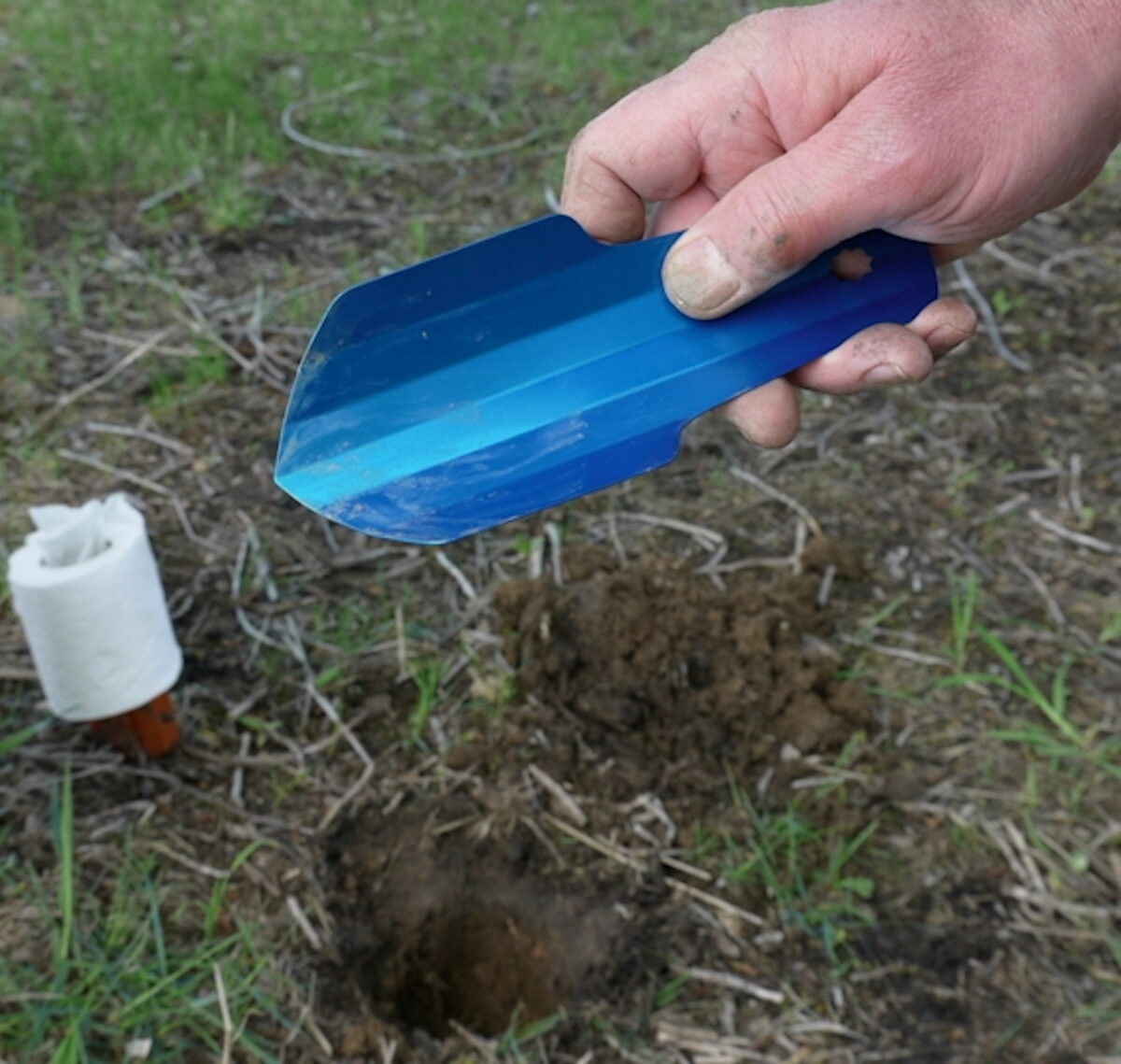
Even a straightforward standard like 7075-T6 for the aluminum used in a few potty trowels is incomplete. Which might not seem that important. But using a trowel made with low-quality metal, while you are urgently digging a deep enough hole in rocky ground, could lead to an unpleasant mess.
Industry-written standards
Committees of people who work in the industry write most of the formal standards applied to backpacking gear. Seems like a good idea – they should have the expertise. But in addition to all the jokes about products designed by committee, the members often focus on making their company’s products look better and their competitor’s look worse. In other words, they produce standards written to help companies sell, not to help consumers buy. This results in compromises that often misinform and mislead the consumer.
Standards Usefulness and Enforcement
Standards and tests can be quite useful – if they produce results that are sufficiently accurate and reliable. As we’ve seen, that is rarely the case. Many backpacking industry standards are a half-step above useless.
For better or worse, U.S. laws do not require testing backpacking gear to most industry standards, or clearly communicating test results to consumers. But REI suppliers must furnish standards-based sleeping bag temperature ratings and sleeping pad R-values. Yet the company continues selling some gear without those numbers. And many makers don’t sell through REI, so the requirement doesn’t affect them.
Expensive Testing
Smaller gear makers, and independent gear testers who aren’t rich, cannot afford to test in-house using most standards. Not only are the documents expensive, the testing setups can cost over $100,000. Some get creative, like Steve Seeber. But they still need lots of expertise, plenty of time for construction and testing, and too much money.
Designers and Designs
Many backpacking gear designers either don’t know about or don’t pay that much attention to most formal standards and testing. In their experience, the materials they use and their designs are good enough, or they can use simple, practical tests to choose better. And some of them have learned the same hard lessons I have – important standards are almost useless.
Good design always makes a series of tradeoffs that might not work for you in a particular setting. Take an extreme example: the perfect Pacific Crest Trail peak-season thru-hiker shelter wouldn’t last long on a Denali winter expedition. But hauling a 10-pound gale-proof snow tent on the PCT in summer doesn’t make sense either.
And a few patches of high-quality repair tape can quickly fix many problems for much less weight or cost than making gear from heavier or more expensive fabrics.
Specification Wars and Diets
A few equipment makers and gear geeks focus on achieving the best number for a few measurements. But once you get beyond good enough for many values, you don’t gain much from pursuing more, more, more.
Yet the market gets into spec wars at the cost of other useful features. We’ve seen a few makers of backpacks, tents, and sleeping bags pursue lower weights while compromising longevity, usability, performance, cost – and even the truth.
And too many mass retailers show you little more than weight, price, and a few glamor shots before you click the buy button. Sometimes you can’t even get weight without asking. Even gear makers seem to be following spec diets for their product pages. Why publish all that confusing information when consumers are buying anyway?
Product Ratings and Reviews
Unfortunately, the star ratings and short reviews below the buy button are no substitute for standards and tests. Major online retailers are waging losing battles with companies that pay others to post positive and negative comments.
Even unbiased reviews are often from inexperienced buyers who barely used a product under ideal conditions and give it five stars. A few independent websites claim to help you judge the quality of retailer ratings and reviews, since sorting the wheat from the chaff is almost impossible. Hard to know who to trust.
Conclusion
Sunrise from the summit of Mount Whitney, California, with John Muir Trail hikers in silhouette. Credit: Andrew Cox, U.S. Forest Service.
Today’s substandard standards, temperamental testing, and misleading marketing are not the answer. Too bad a publication like Consumer Reportsdoesn’t cover backpacking gear, combining rigorous independent testing with well-designed surveys completed by thousands of members. Until then, maybe we can test products ourselves. Watch this space!
Don’t get me wrong – I learned a lot by studying standards and interviewing gear designers and testers. I hope you did, too, and that knowledge helped you become a better consumer of backpacking gear.
But when it comes to standards, testing, and marketing, we are largely on our own. Thank goodness for online communities like Backpacking Light plus a handful of careful and reliable reviewers.
Mike Cecot-Scherer Talks Potty Trowels and More, June 2021
DISCLOSURE (Updated April 9, 2024)
Backpacking Light does not accept compensation or donated/discounted products in exchange for product mentions or placements in editorial coverage.
Some (but not all) of the links in this review may be affiliate links. If you click on one of these links and visit one of our affiliate partners (usually a retailer site), and subsequently place an order with that retailer, we receive a commission on your entire order, which varies between 3% and 15% of the purchase price. Affiliate commissions represent less than 15% of Backpacking Light's gross revenue. More than 70% of our revenue comes from Membership Fees. So if you'd really like to support our work, don't buy gear you don't need - support our consumer advocacy work and become a Member instead.
Learn more about affiliate commissions, influencer marketing, and our consumer advocacy work by reading our article Stop wasting money on gear.
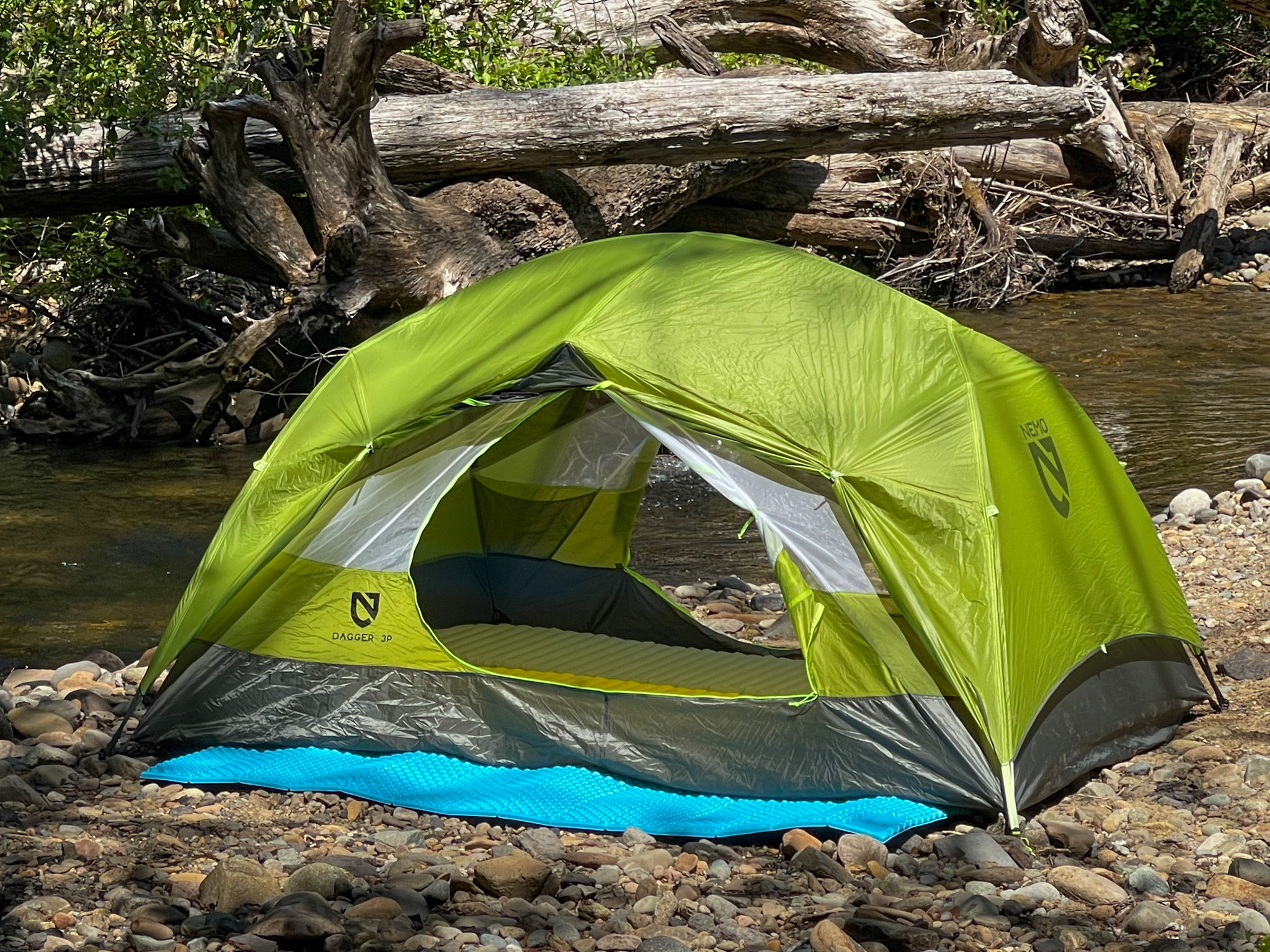
The Nemo Dagger 3P (4 pounds 5 ounces / 2 kg, MSRP $529.95) is a three-person, free-standing tent with roomy vestibules, light-diffusing overhead pockets, a stuff-sack system designed to help split the load amongst hiking partners, and pre-bent, color-coded poles (2019 update) for easy setup.
Introduction
The Nemo Dagger 3P (4 pounds 5 ounces / 2 kg, MSRP $529.95) is a three-person, free-standing tent with roomy vestibules, light-diffusing overhead pockets, a stuff-sack system designed to help split the load amongst hiking partners, and pre-bent, color-coded poles (2019 update) for easy setup.
About This Review
This Limited Review draws on my experience with the Nemo Dagger 3P between December of 2020 and February of 2021 in the Central Cascades of Washington State. For this reason, I cannot directly speak to the breathability of this shelter when humidity increases and temperatures rise. Read about the differences between Performance and Limited reviews here.
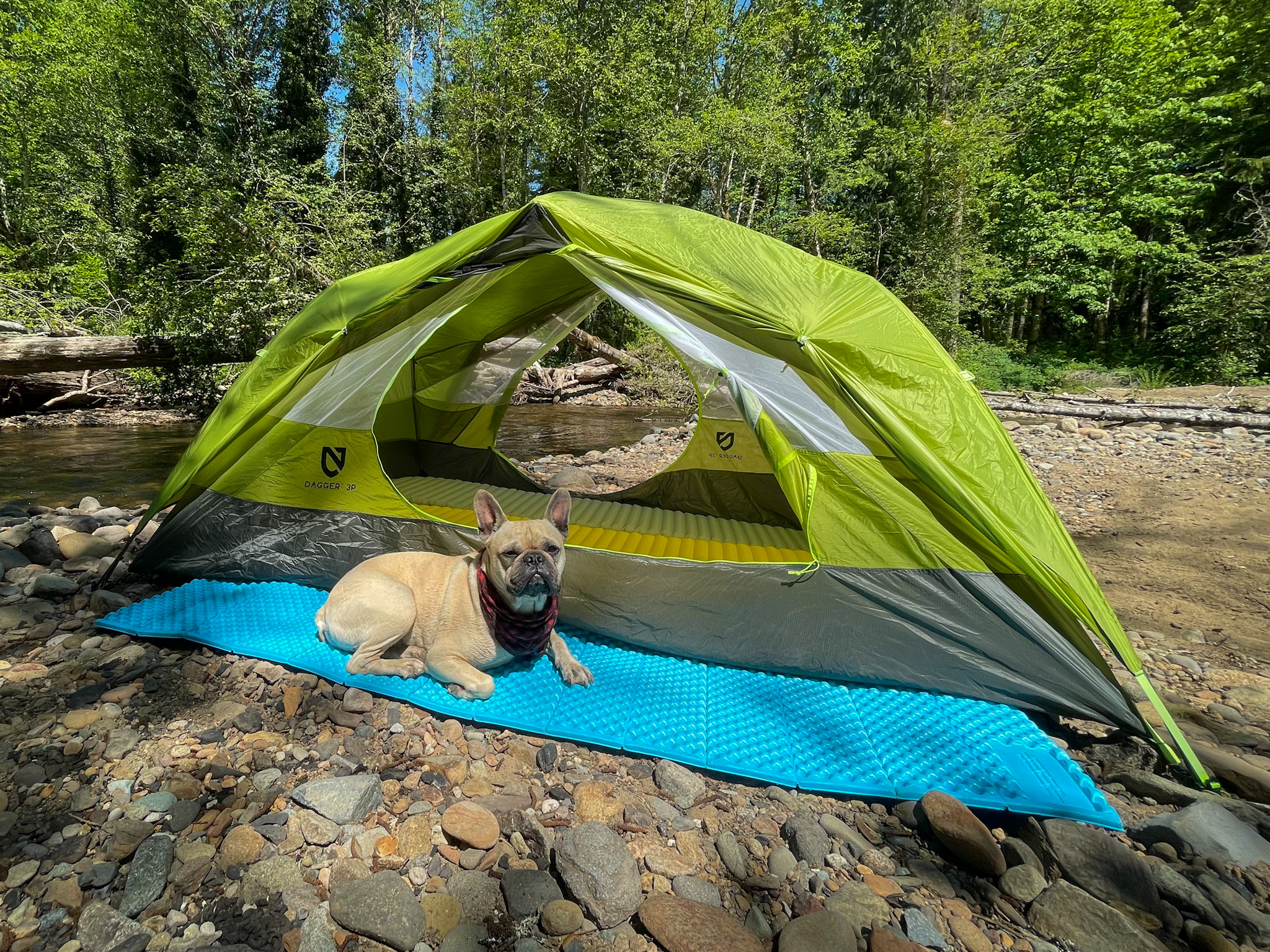
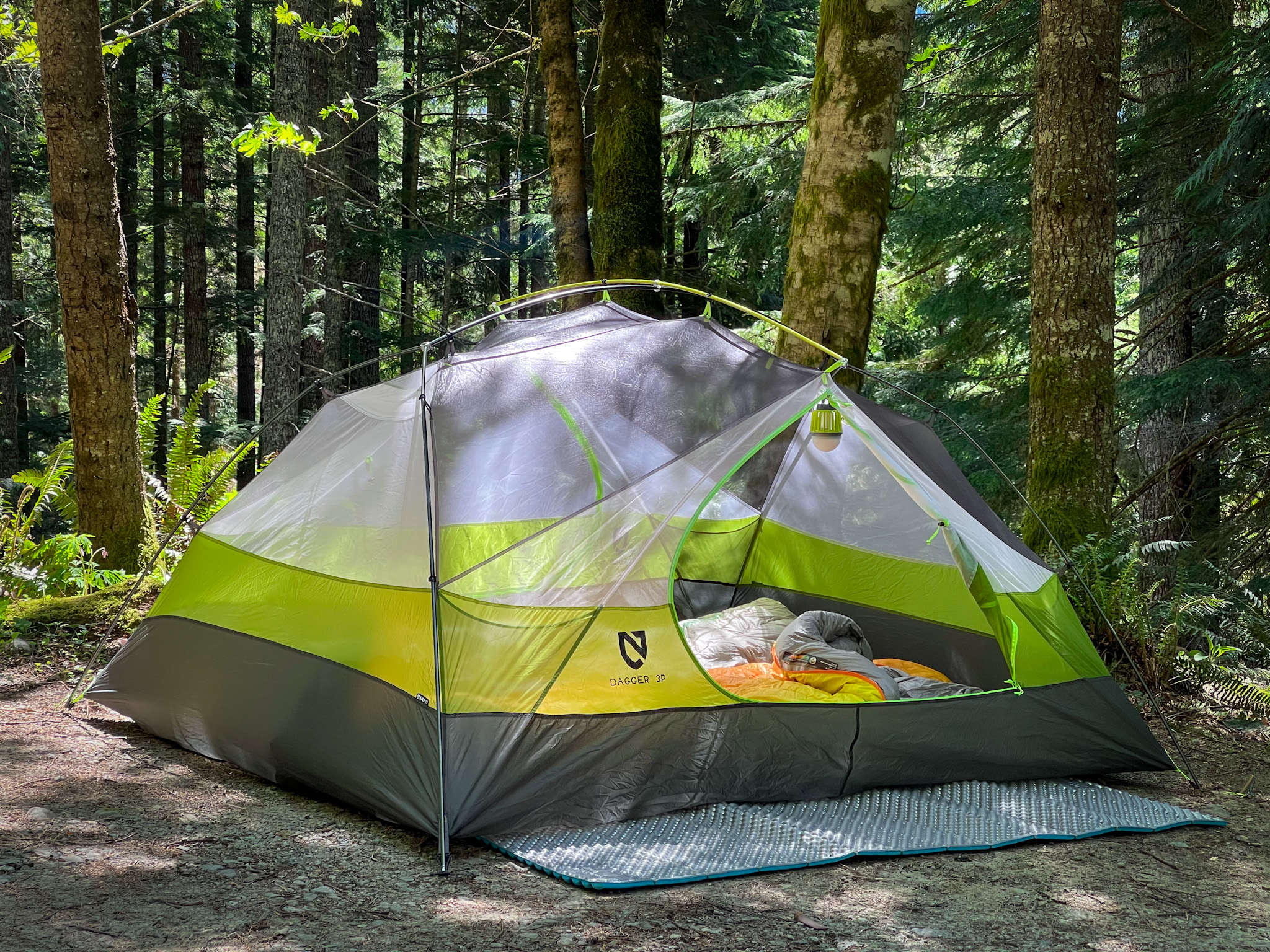
The NEMO Dagger 3P in Washington State.
Due to the restrictive circumstances surrounding COVID-19 during my testing period and the recommended social distancing guidelines, I decided to only include my partner and our dog as users, thus this review is unable to speak to the practicality of actually fitting three adults into the tent.
Features and Specifications
freestanding, double-wall design
two large doors with ample storage volume within each vestibule
color-coded, pre-bent aluminum DAC Featherlite poles
mesh side panels and canopy
raised waterproof bathtub floor
light-diffusing fabric panels designed to accommodate a headlamp
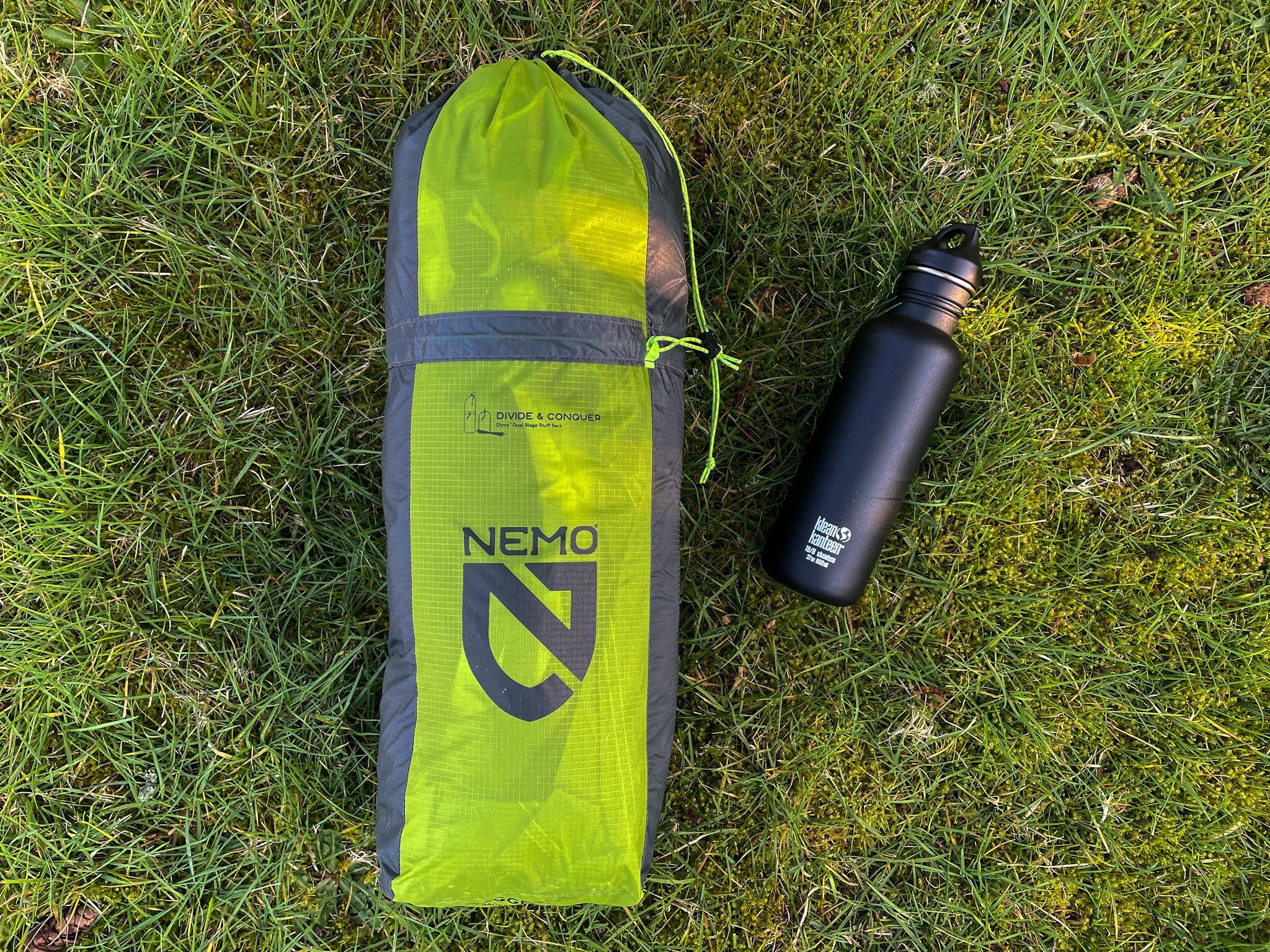
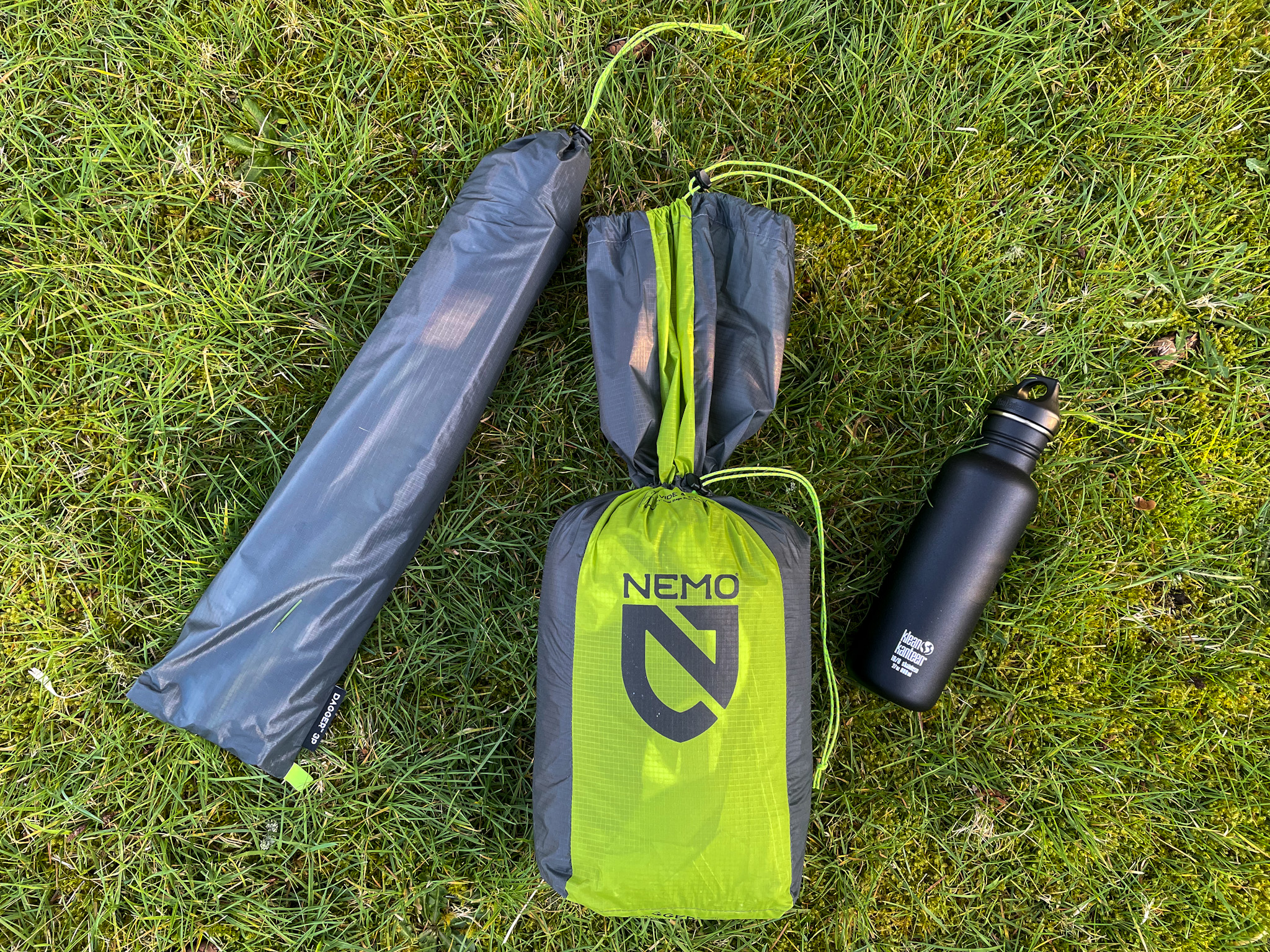
dual-stage stuff sack
pockets at each corner offer ample storage for personal items.
strut vents at the top of each zipper flap
NEMO Lifetime Warranty
includes stakes, guy-out cord, repair kit, footprint sold separately
capacity: 3
seasons: 3
frame: 1 Hubbed Aluminum DAC Featherlite NSL 9.6 + 9 mm pole
minimum weight: 3 pounds 12 ounces (17 kg)
packed weight: 4 pounds five ounces (1.95 kg)
packed size: 19.5 x 6.5 inches diameter (50 x 17 cm diameter)
peak height: 42 inches (106 cm)
floor Area: 43.9 square feet (4.1 sq m)
floor dimensions: 90 x 70 inches (229 x 178 cm)
vestibule Area: 11.4 square feet (1.1 sq m) per vestibule, two vestibules total
fly material: 15d Sil/PeU Nylon Ripstop (1200 mm)
canopy material: 15d Nylon Ripstop and no-see-um mesh
I tested the Nemo Dagger 3P in Mount Ranier National Park in the late winter of 2020. Winds during my testing period peaked at 10 mph. I experienced precipitation of 1 to 2 inches (3 to 5 cm) on each of my testing nights, with the final night receiving 3 to 4 inches (8 to 10 cm ) of rain/snow mix. Overnight lows ranged from 20 °F to 39 °F (−7 °C to 4 °C)
Performance Analysis
I judged the performance of the Nemo Dagger 3P based on the following factors:
Setup: how easy and intuitive is setup, both solo and with a partner?
Doors: are doors sized correctly and does the lightweight fabric of the doors/tent body seem to compromise the integrity of construction?
Livability: what’s the comfort factor for two average-sized adults and one medium-sized dog? This metric includes storage both inside the shelter (pockets) and outside the shelter (vestibules).
Ventilation: given the cold temperatures and three sets of lungs nestled inside, is ventilation an issue?
Weatherization: how does the tent fare in wet and/or frosty conditions?
Packability: whether carried as one unit or split between hiking partners, how does the packed size and weight stand up to scrutiny?
Floor Durability: does the bathtub floor stand up to the expected rocks, roots, etc. at camp?
Setup
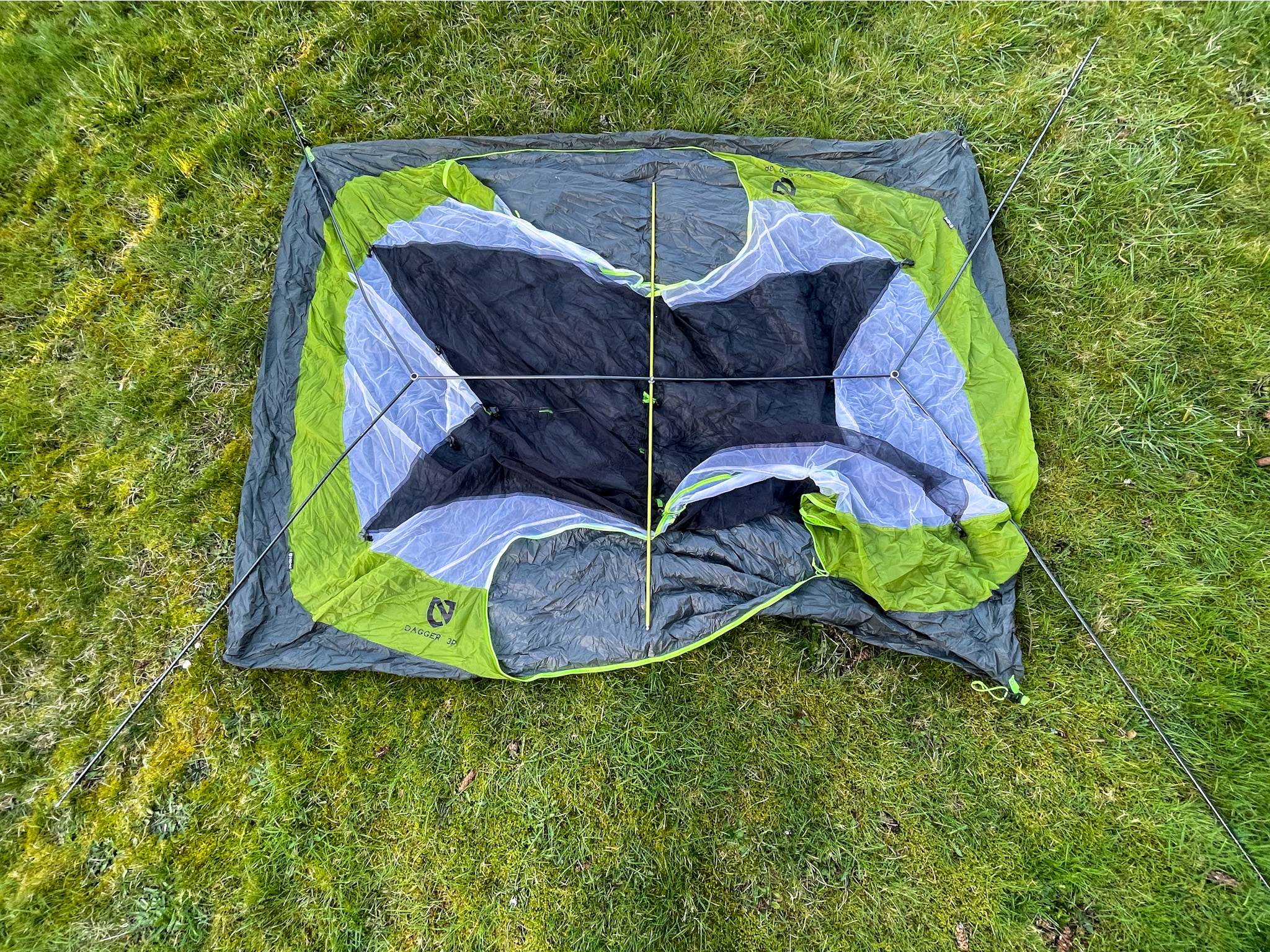
The freestanding, symmetrical design truly makes setup easy because it eliminates the guesswork in identifying and orienting the head or foot of the tent body, poles, and rainfly.
The pre-bent poles are easy to assemble; my one gripe is if you find yourself performing a solo setup while your hiking partner is wrangling the dog, fixing dinner, or busy with other camp chores, the single-pole design can make it a little awkward to control as it takes up quite a bit of space after assembled and laid out.
Setup with the familiar pole-and-hub design is easy, though lots of material makes it cumbersome in windy conditions.
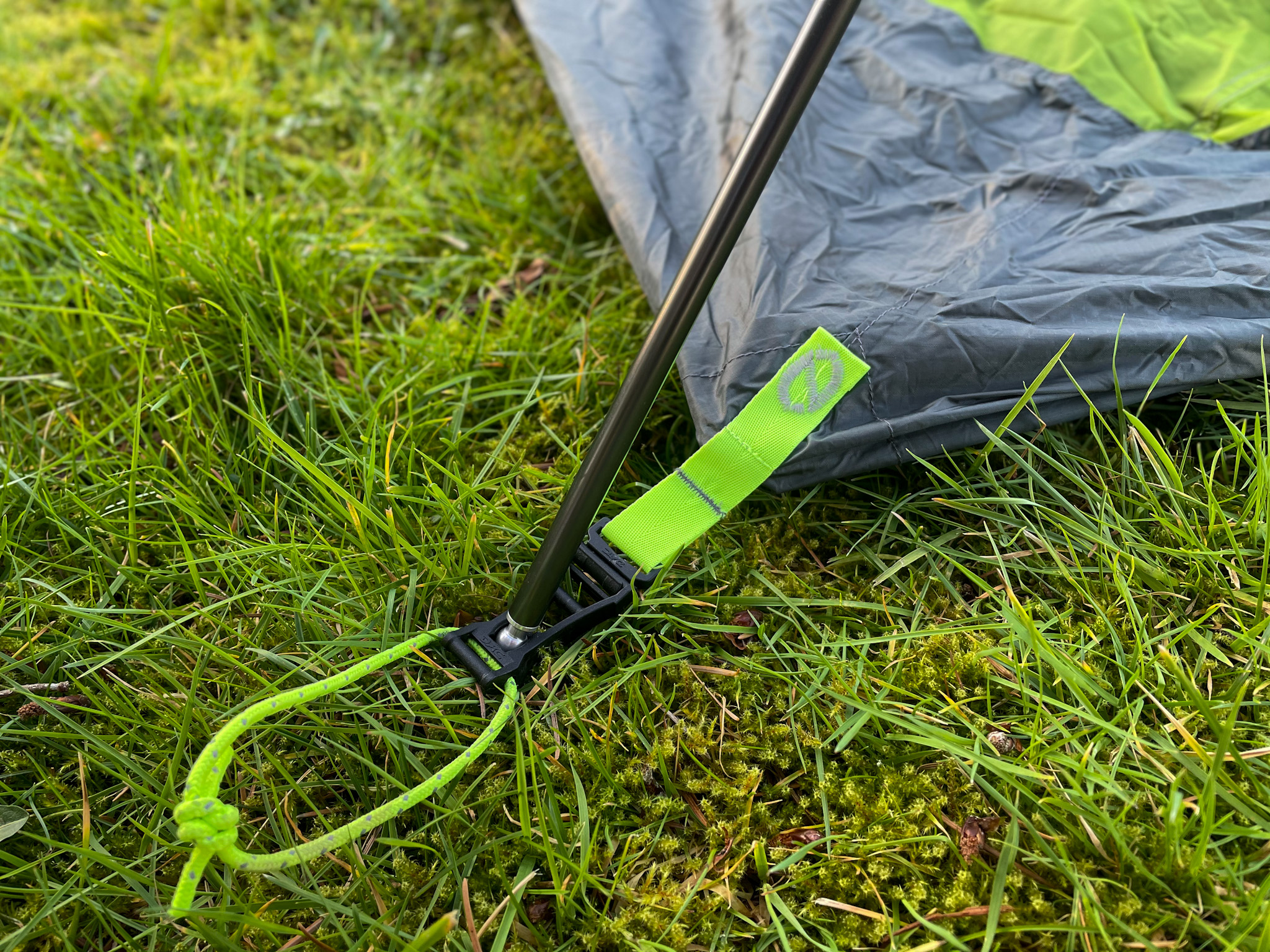
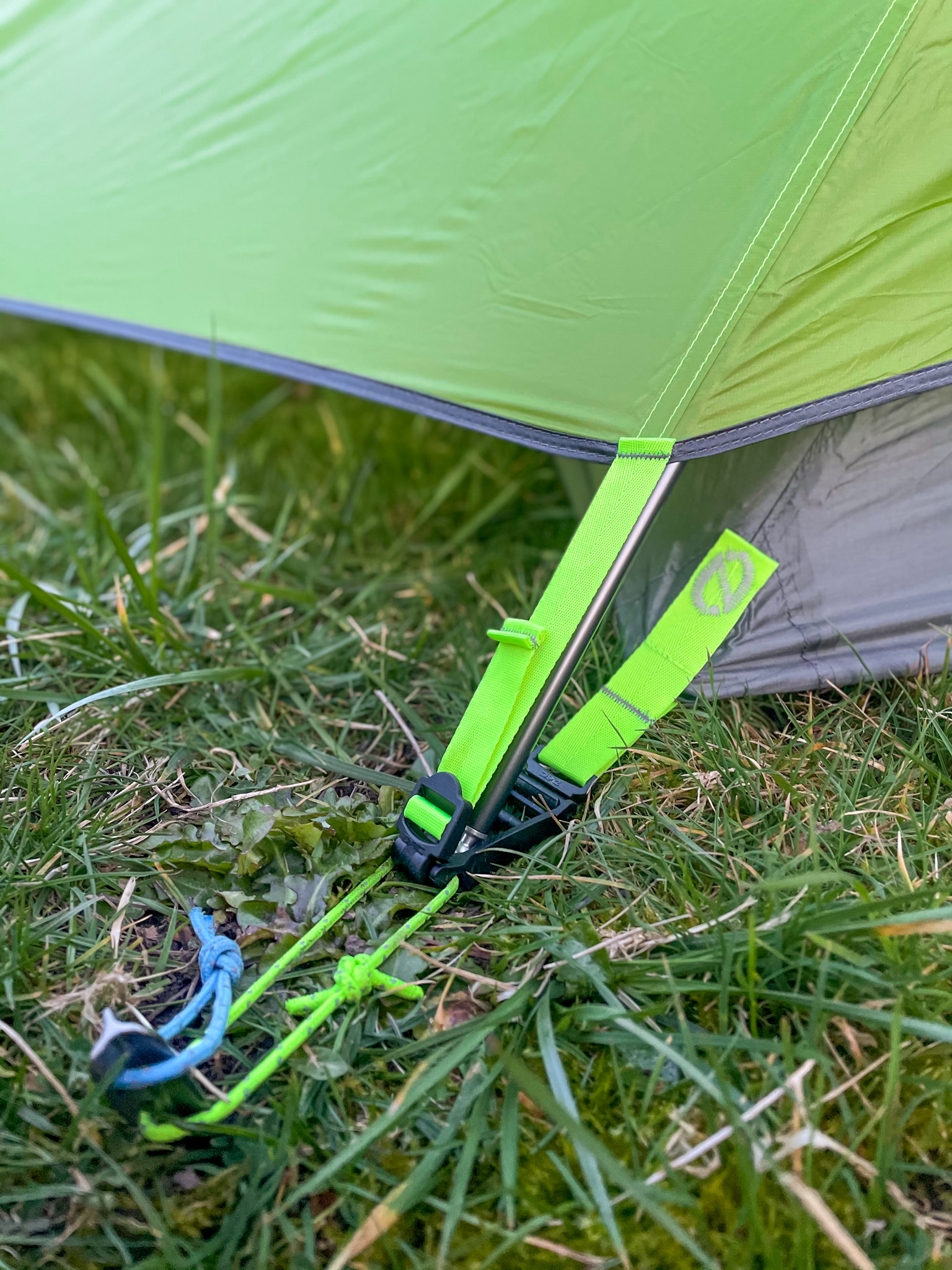
Creating the tent structure begins with snapping the hubbed ends of the poles into the socket pockets of what are known as Jake’s Feet, a Nemo-exclusive design for anchoring the poles and also attaching the rainfly. It should be noted that it takes some force to snap the poles into the sockets of Jake’s Feet, which I hadn’t read in any reviews during my research phase. Jake’s Feet are replaceable and also shelf staples at NEMO retailers like REI. This leads me to believe they will likely fail with overuse, too much force, or extended exposure to the elements.
However, the price point of $5 per Jake Foot is easy to swallow over mailing in your Nemo for repair. I might just recommend adding an extra Jake Foot or two to your packing list before heading into the backcountry, especially for extended trips.
NEMO’s proprietary Jake’s Feet system gives me pause, especially because they sell replacements off the shelf at REI.
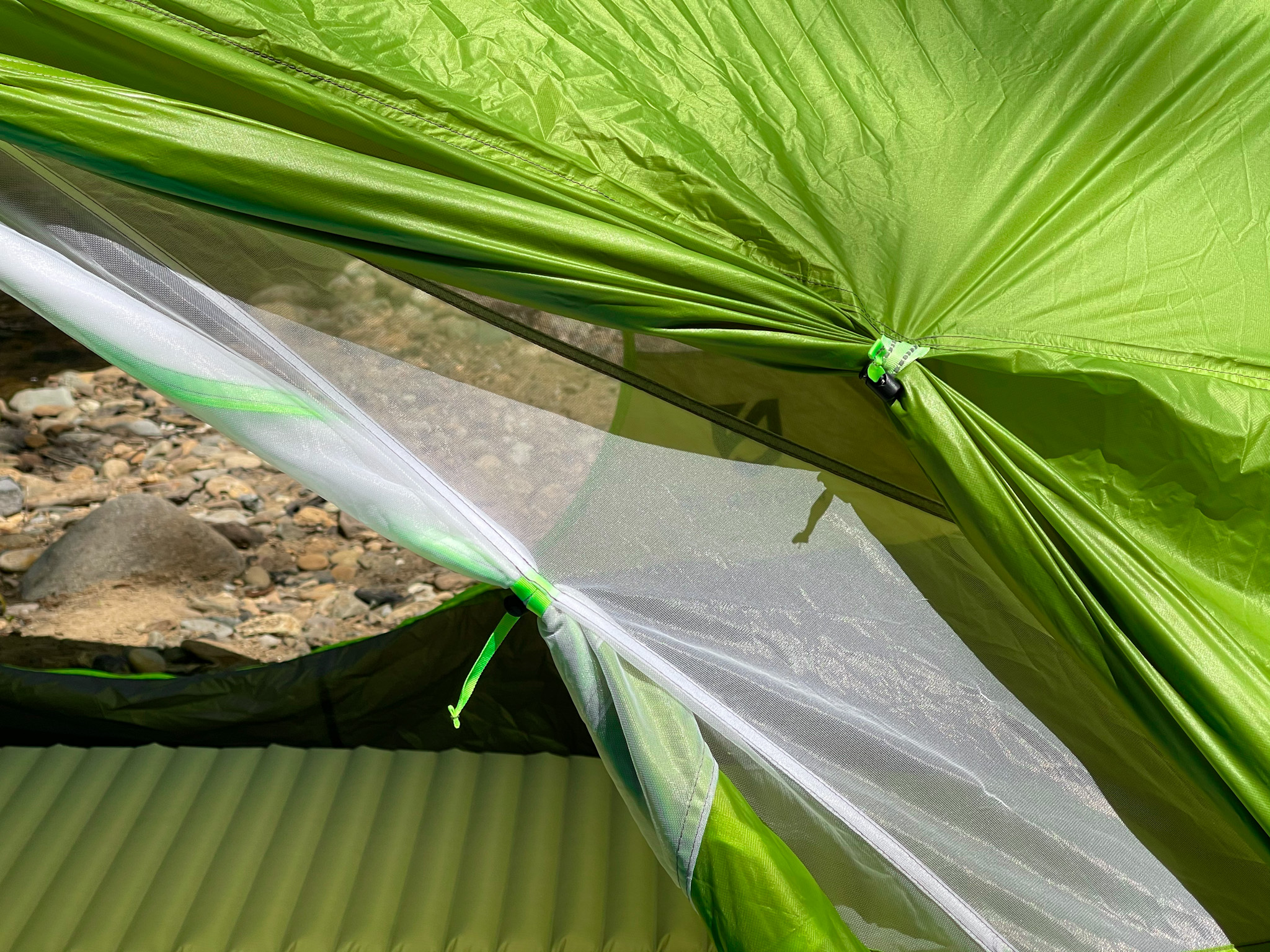
The corners of the tent body are color-coded to match the corners of the rainfly so you can be confident in your setup of the Dagger. Just be mindful that the rainfly is right-side-out by ensuring the NEMO or Dagger logo reads left to right before attaching the hooks of the rainfly to Jake’s Feet. The hooking of the rainfly into the Jake’s Feet may also prove to be a point of failure over time, leading me to strengthen my recommendation to carry a few extra Jake’s Feet, just in case. Four points of staking for the rainfly vestibule means you can control which doors you wish to have open and rolled up at any time.
The reflective cords and bright fabric are a nice design feature that will also help you navigate your way around the tent if you find yourself doing a setup or making adjustments after sundown.
Doors
One thing I worry about with backpacking tents is the durability of the lightweight fabric used in construction, specifically with the doors. I’ve caught one too many doors in zippers, but the Nemo Dagger 3P gave me no issue whatsoever. In my opinion, both the freestanding design and the fabric used in the construction of the Dagger (15 denier Nylon Ripstop) helps a lot as it keeps the tent body stretched just enough to prevent any sag or flex, which could increase the likelihood of getting a door caught in the zipper.
I tested the NEMO Dagger 3P with my partner and our medium-sized dog.
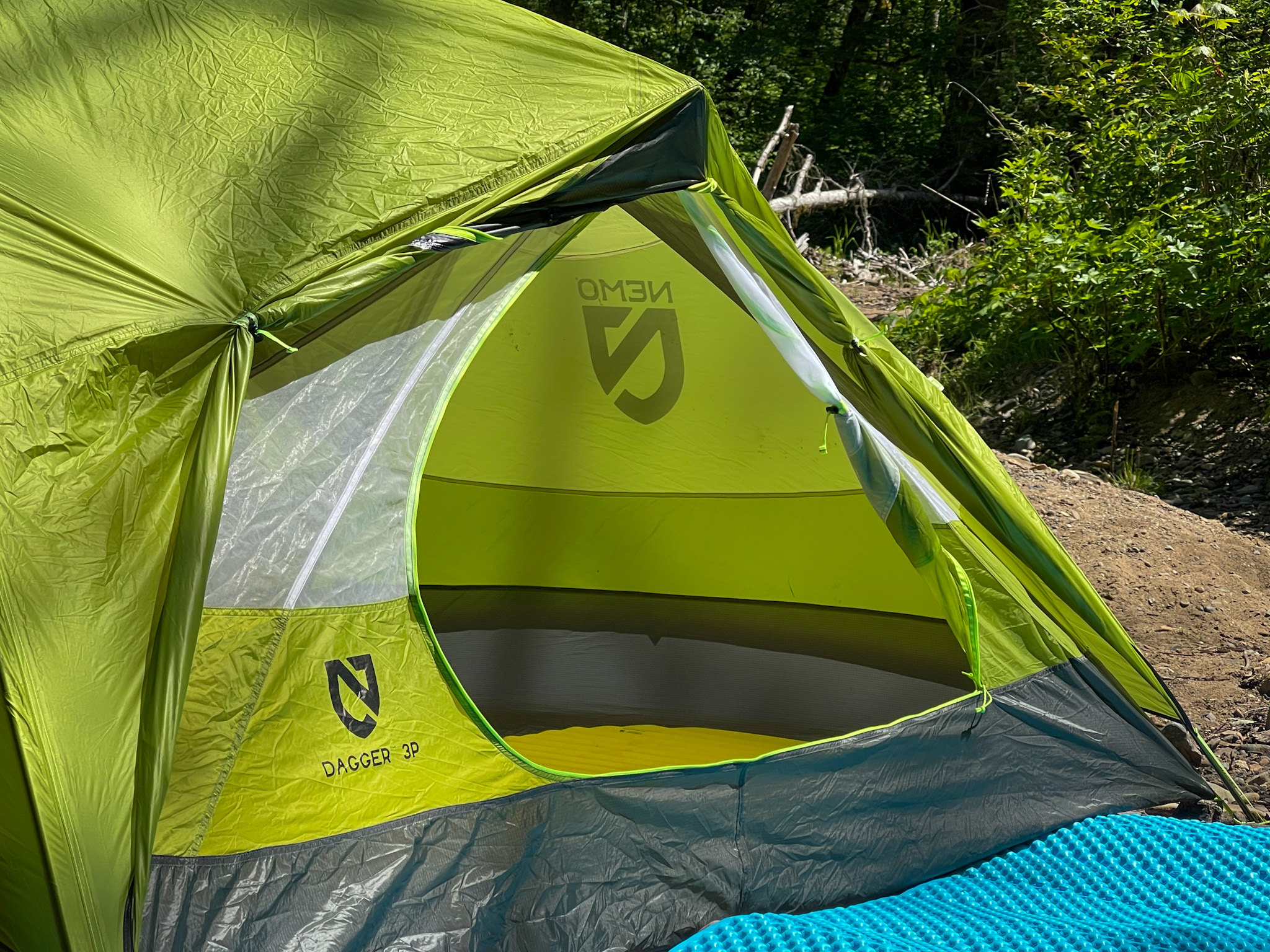
The doors don’t mirror one another (ie. they open in opposite directions) so users are inclined to sleep head to toe. They also aren’t symmetrical or D-shaped like most other brands, which I found made it harder to open using only one hand.
The design of the Nemo DAGGER 3P is more than large enough to accommodate two people and a dog, but three people might find it tight quarters.
Several reviews complained of the door size, but with me at 5 feet 6 inches (168 cm) and my partner at 5 feet 10 inches (178 cm), we didn’t find it to be much of a con. However, we could definitely see how someone 6 feet (183 cm) or taller might complain. That said, I feel like NEMO really maximized the size of the door based on the design and area given.
Livability
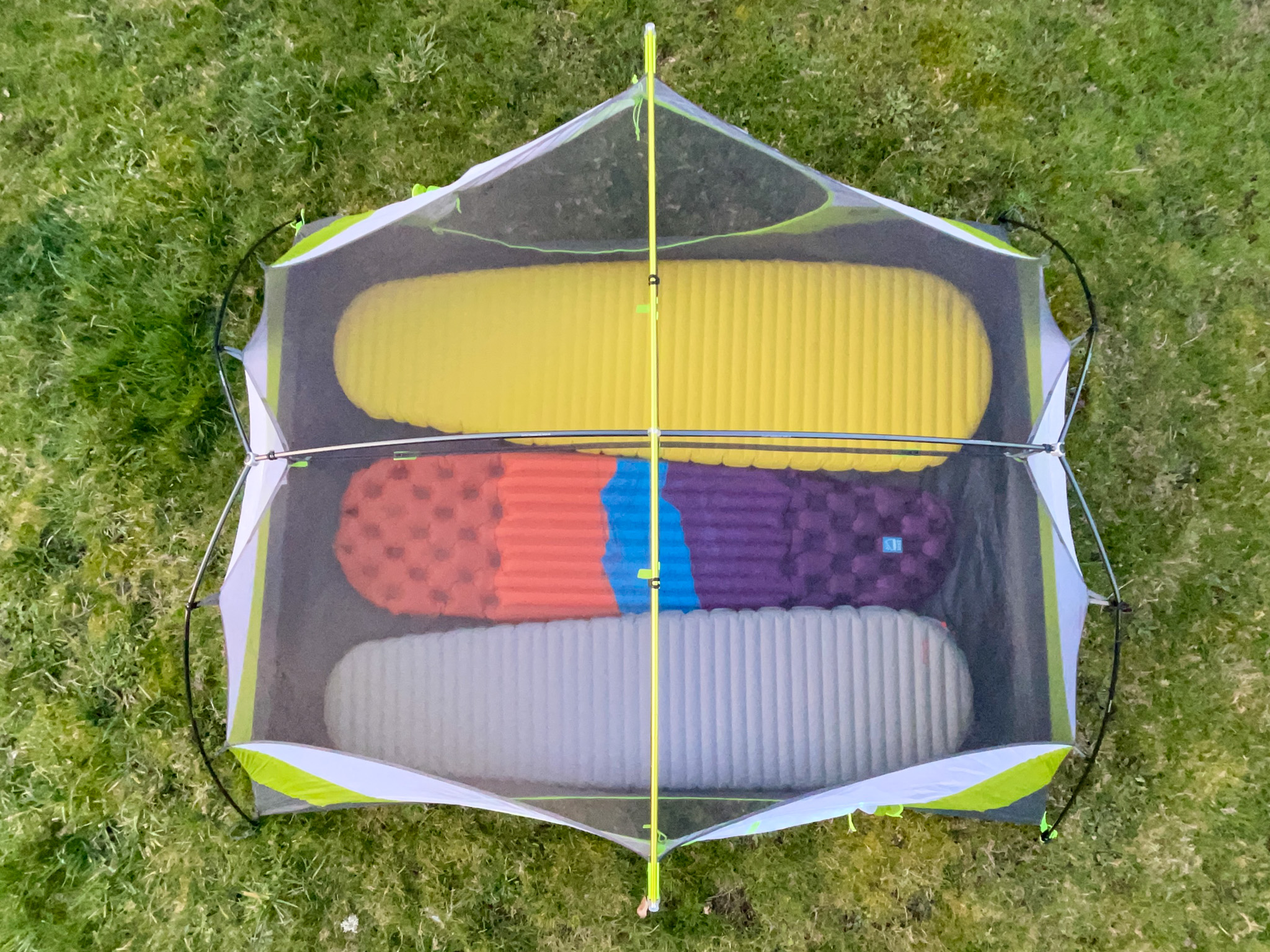
My partner and I found the Nemo Dagger 3P to be just spacious enough for us (again, me at 5 feet 6 inches / 168 cm and my partner at 5 feet 10 inches / 178 cm) and our medium-sized (40 pounds / 18 kg) dog plus our respective winter gear.
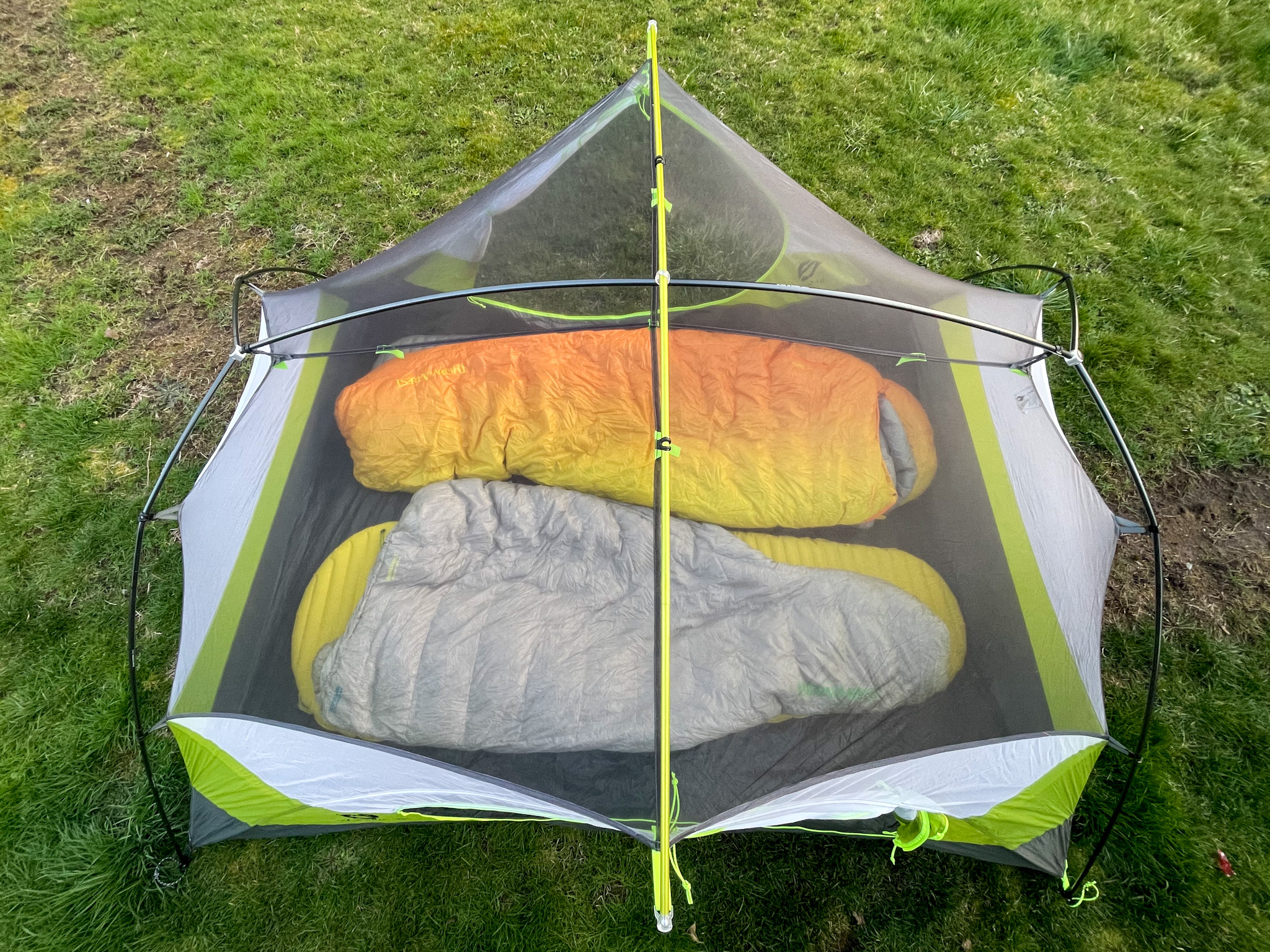
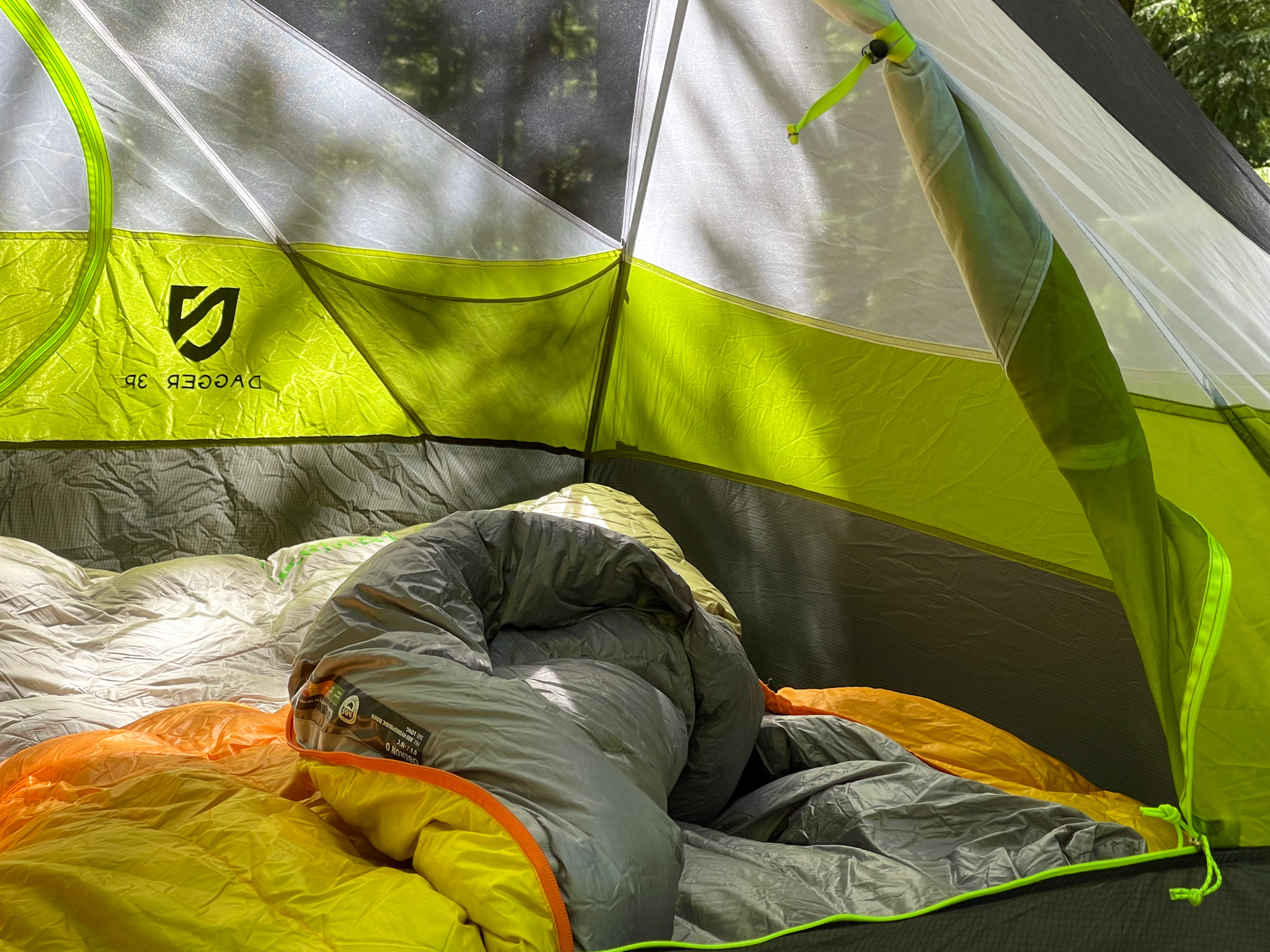
With only two pads the NEMO Dagger 3P is palatial.
He and I slept on Therm-a-rest air pads (NeoAir Xlite and XTherm, both 20 inches / 51 cm wide) while a Therm-a-rest Zlite Sol foam pad was positioned between us for our dog to sleep on. The tent walls weren’t tight or stressed at all with our sleep system setup, however, the foam pad can easily slip under the air pads, thus lessening any potential stress on the tent walls and making it appear more spacious.
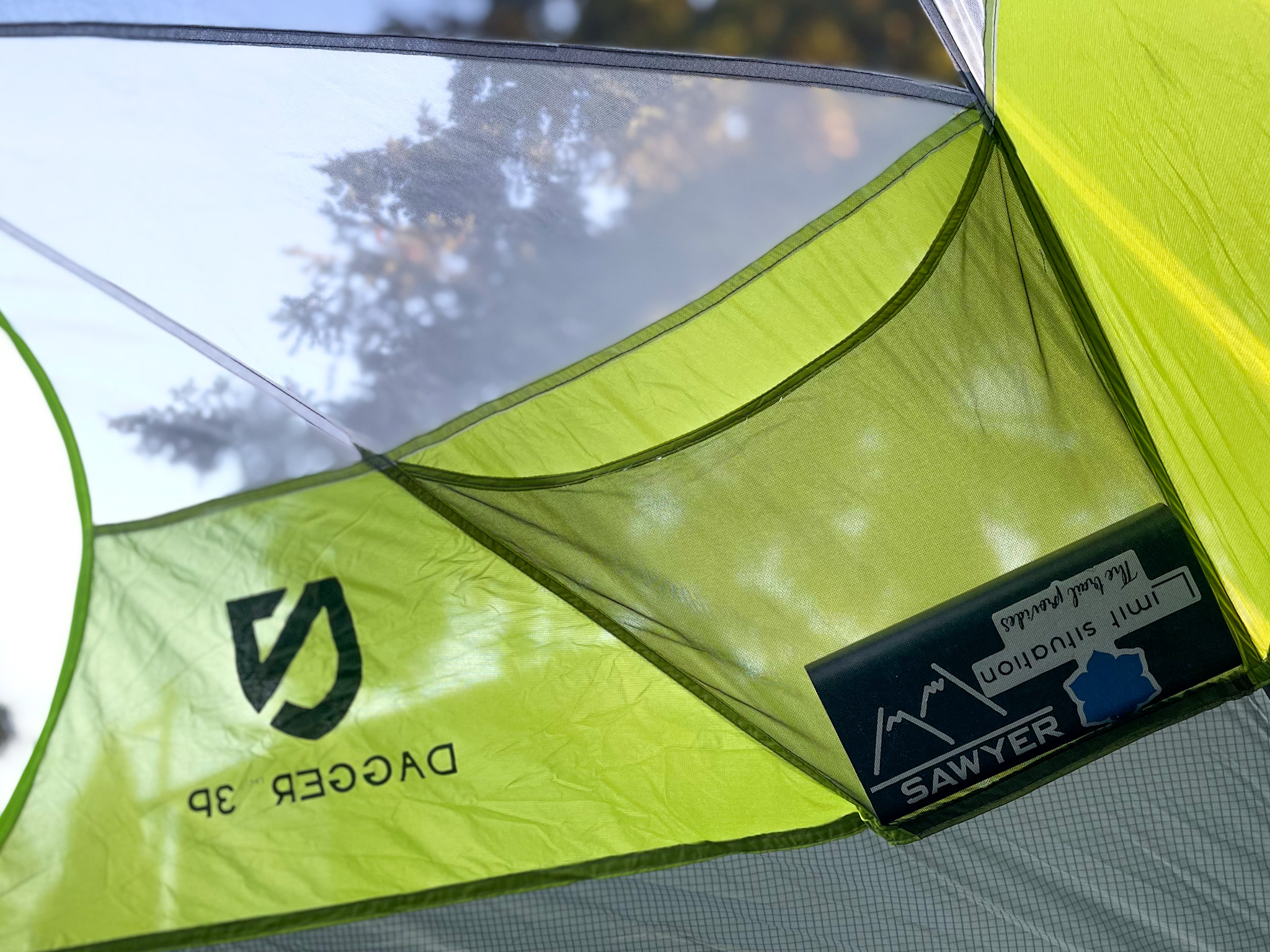
Spacious interior pockets!
For this reason, I decided to try to mimic what a three-person sleep system setup might look/feel like by replacing the Zlite Sol with a Freestyle Lightweight Backpacking air mat from UST Gear (25 inches / 64 cm wide). Doing this experiment led me to believe the complaints I dug up in my research regarding the NEMO Dagger 3P being a tight fit with a three-person sleep system.
Door size and shape was a little awkward for me, but not a deal breaker.
Storage is very generous with the NEMO Dagger 3P. Our packs laid flat in the vestibule without touching either the tent body or the rainfly. The interior also has two good-sized pockets on each side, plus some stash space in the overhead pockets made out of light-diffusing fabrics.
Ventilation
Instead of deployable vents in the side or roof, the NEMO Dagger 3P has a vent at the top of each vestibule door, which I personally like because I can adjust it as needed from inside. But as John with SwitchbackTravel.com points out, “by deploying the vent, you trim away the upper few inches of the door, making it a little more difficult to get in and out.” So that previous complaint about the doors being on the smaller side is now compounded.
The NEMO Dagger 3P performed well in moderately humid conditions.
As for the performance of the vents themselves, I had zero complaints. While weather conditions forced me to have the rainfly on during each of my field overnights, I didn’t find the expected morning condensation to be excessive.
My time with the Dagger was limited to winter, but I look forward to testing out the ventilation more when summer months arrive with the increase in humidity and temperatures. I’m already theorizing that the double-wall design and amount of mesh used in the construction of the Dagger aids tremendously in the breathability of the tent body.
Weatherization
Washington did not fail me in presenting optimal wet and frosty conditions to field test the NEMO Dagger 3P. As mentioned before, each of my overnights required the rainfly and I’m happy to report the quality of the waterproofing held up and we didn’t experience any leaks. However, the walls not covered by the rainfly were wet to the touch when the skies opened up for extended periods of time. This didn’t present much of an issue for two people and a dog, but it will likely be a complaint when capacity reaches three people and you can’t avoid touching the wet walls.
The small doors are even more visible from this angle.I experienced heavy precipitation during my testing of the NEMO Dagger 3P. It performed admirably.
Size/Weight
With a packed size of 6.5 x 19 inches ( 17 x 48 cm), the NEMO Dagger 3P isn’t too bulky to fit whole in a backpacking pack, but Nemo came up with the Divvy Sack to allow users to split the poles and stakes from the tent body and rainfly to help distribute the load on extended trips into the backcountry. Once the hardware is removed, the Divvy Sack compresses to about two-thirds its original size and is cinched by a secondary drawstring. The convenience of splitting the load is so appreciated when pack weight becomes an issue on longer trips, but as I said, even if you decide to carry it whole, the packed size isn’t awkwardly large and overwhelming.
The entire shelter in one stuff sack.The shelter divided out for easier two-person carrying.
Floor Durability
NEMO sells footprints separately but takes pride in the tough 30 denier fabric used on the floor of the NEMO Dagger 3P. I decided to put it to the test by choosing not to use any footprint or groundsheet and what I found is it really does hold together quite well. After four overnights and an extended pitch in my backyard, the floor has zero snags or rips.
Commentary
For me, the NEMO Dagger 3P is a great tent for myself, my partner, and our dog. It will likely still be a great tent when our family grows by four more legs and a tail, but I think it’ll end there because of the complaints of a snug fit with a three-person sleep system setup.
NEMO’s Jake’s Feet were a durability concern for me.
I wonder how well the Jake’s Feet will hold up over time with continued use and also exposure to the elements. I’m going to add a few extra Jake’s Feet in my repair kit for extended trips.
An increase in floor space and headspace might sway me into feeling less claustrophobic and more comfortable using the Dagger 3P for three people instead of just two people and a dog or two.
Three people will fit…barely.
If this were a Performance Review, I predict the NEMO Dagger 3P would get a Recommended rating. Three-person backpacking tents are snug because they’re backpacking tents, not extra-spacious car camping tents, and the Dagger gets it right by allocating generous amounts of vestibule storage to accommodate three people’s worth of backpacking gear. The Divvy Sack is a great design by NEMO for multiple users needing better weight management on extended trips. I look forward to field testing the Dagger during warmer summer months to experience nights of stargazing through the black no-see-um mesh on the roof of the tent body. Perhaps by then I can swap my dog out for another person to truly test out the three-person capacity.
Product mentions in this article are made by the author with no compensation in return. In addition, Backpacking Light does not accept compensation or donated/discounted products in exchange for product mentions or placements in editorial coverage.
Some (but not all) of the links in this review may be affiliate links. If you click on one of these links and visit one of our affiliate partners (usually a retailer site), and subsequently place an order with that retailer, we receive a commission on your entire order, which varies between 3% and 15% of the purchase price. Affiliate commissions represent less than 15% of Backpacking Light's gross revenue. More than 70% of our revenue comes from Membership Fees. So if you'd really like to support our work, don't buy gear you don't need - support our consumer advocacy work and become a Member instead.
Learn more about affiliate commissions, influencer marketing, and our consumer advocacy work by reading our article Stop wasting money on gear.
Ben Kilbourne uses the writing of Aldo Leopold to examine his interaction with nature.
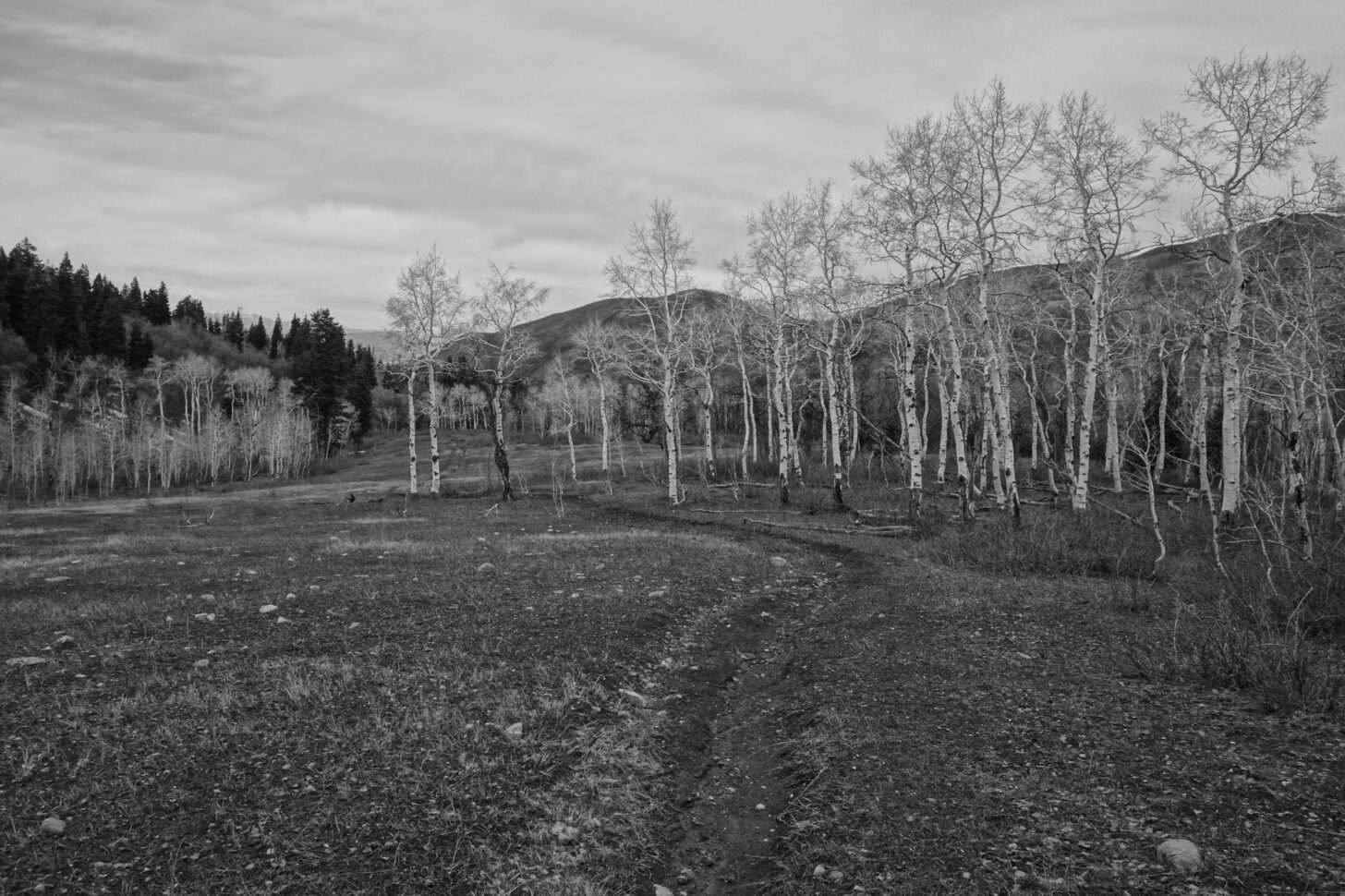
We knew the gate would be closed and that we would have to walk the road for at least a mile to reach the trailhead, but that was part of the appeal. Rachel and I chose this area, the Payson Lakes area, an hour-and-a-half south of Salt Lake City because within weeks it would be swarming with people. We also chose it because, as Rachel reminded me, it is her backyard, and she feels a commitment to learning as much as she can about the plants and animals with which she shares it. And what better time to observe a place than transition season?
If you have naturalist inclinations, you too will be slip-sliding though snow and mud in transition season.
The gate kept all but walkers and cyclists out. Once open, cars, RVs, and off-road vehicles would stream through, spreading across the mountain like ants over a Swedish fish dropped on a trail.
Though only April, the day was hot. I walked in my typical uniform, shorts and a long-sleeve shirt, while Rachel wore a long linen dress, because, why not? Payson Creek was particularly talkative, rambling on about the sun that freed it once again and the stones underneath. I took a mental note, “April, 30th 2021, too hot for the end of April.”
Around a mile in, we found the Grotto Trailhead on the left and took it through burned aspens and firs to its end. Here the creek plunged into a red, conglomerate, broken cistern and roared inside it, filling the air with tiny specks of water. Removing our packs and squatting in the river stones at the edge of the pool within the grotto, we watched a streak of sunlight break into prisms on the edge of the waterfall.
We walked beneath many charred fir trees.
Leaving the creek, we climbed a steep hill through the burn and this year’s new growth. We paused to catch our breath and to touch mallow and elderberry, larger and more exuberant than we would have anticipated after only two years of growth since the fire. Hope in every leaf, every stalk we pressed between our fingers. When we reached the road it was still fairly steep, so when two mountain bikes rocketed past us, we were, for a split second, alarmed by their superhuman strength. Then we noticed the oversized bottom brackets common to E-bikes and their uphill speed made sense. We watched them turn into a dirt parking area, speed toward our next trail, and then fly effortlessly into the woods.
We stepped off the road and into the trees, tromping through soggy meadows and then up a small hill overlooking more soggy meadows. The wind must have been in our favor because the sleeping wapiti (elk) below us showed no sign of catching our scent or hearing our voices. We observed them for several minutes before walking toward them again, within fifty feet finally rousing them from their siesta. Looking back occasionally, they trotted swiftly across the meadow and into the still-bare aspens at the edge of the hill and descended out of sight. I logged this landscape abstractly somewhere in my mind as wapiti country.
The pillows of snow on the edges of the flooded meadow were retreating quickly. Something about the speed of the water moving down the trail seemed too fast, and I noted this, too. The early-season heat had everything in a rush, an unnecessary hurry. “Slow down,” I thought.
This was transition season, and we came here just to see it. We took note of the quickly melting snow, the day’s warmth, the presence of wapiti. We logged in our minds the bright green, alien corals of emergent false hellebore that dotted the meadow. We took mental snapshots of avalanche lilies and other yellow flowers we couldn’t yet name. When we reached more snow, so much that we were post-holing and there was hardly any bare ground on which to walk, I took a look at the map and noted the elevation, about 8,000 feet. At an ephemeral (probably seasonal) pond, frog sounds echoed through the firs and aspens, mixing with the sound of rushing water, and I again looked at my map and noted the elevation, about 8,200 feet, cross-referencing it with the date again, April 30th, 2021.
Aldo Leopold provides a framework to examine how I interact with nature while backpacking.
I was taking these notes because this is how I prefer to backpack. I feel that through building this knowledge I can become a better citizen of the places where I recreate, and this process of becoming a better citizen of place can become the recreation itself. I have talked about this before, particularly in the essay I wrote last year, “Backpackers Should be Amateur Naturalists,” and again in my recent piece on Bear’s Ears, but I wanted to address it again, this time through a Leopold lens because he insists that I could be doing more.
The final essay in Aldo Leopold’s A Sand County Almanac is called “Conservation Esthetic.” In it, he lays out five distinct grades of recreation with a hierarchy that isn’t as simple as saying that canoeing is better than four-wheeling. The levels of recreation are as follows (1 being the lowest form of recreation, and 5 being the highest):
trophy hunting
seeking solitude
seeking fresh air and change of scene
nature study
sense of husbandry
Trophy hunting is described as, “the physical objects that the outdoorsman may seek, find, capture, and carry away. In this category are wild crops such as game and fish, and the symbols or tokens of achievement such as heads, hides, photographs, and specimens.” Leopold, writing this in the early part of the 20th century, is mostly worried about the mass use of resources. The next two grades are pretty self-explanatory. These describe the recreationist who walks into the woods to escape from it all. And the fourth, nature study, is exactly what I was talking about when I said that backpackers should be amateur naturalists.
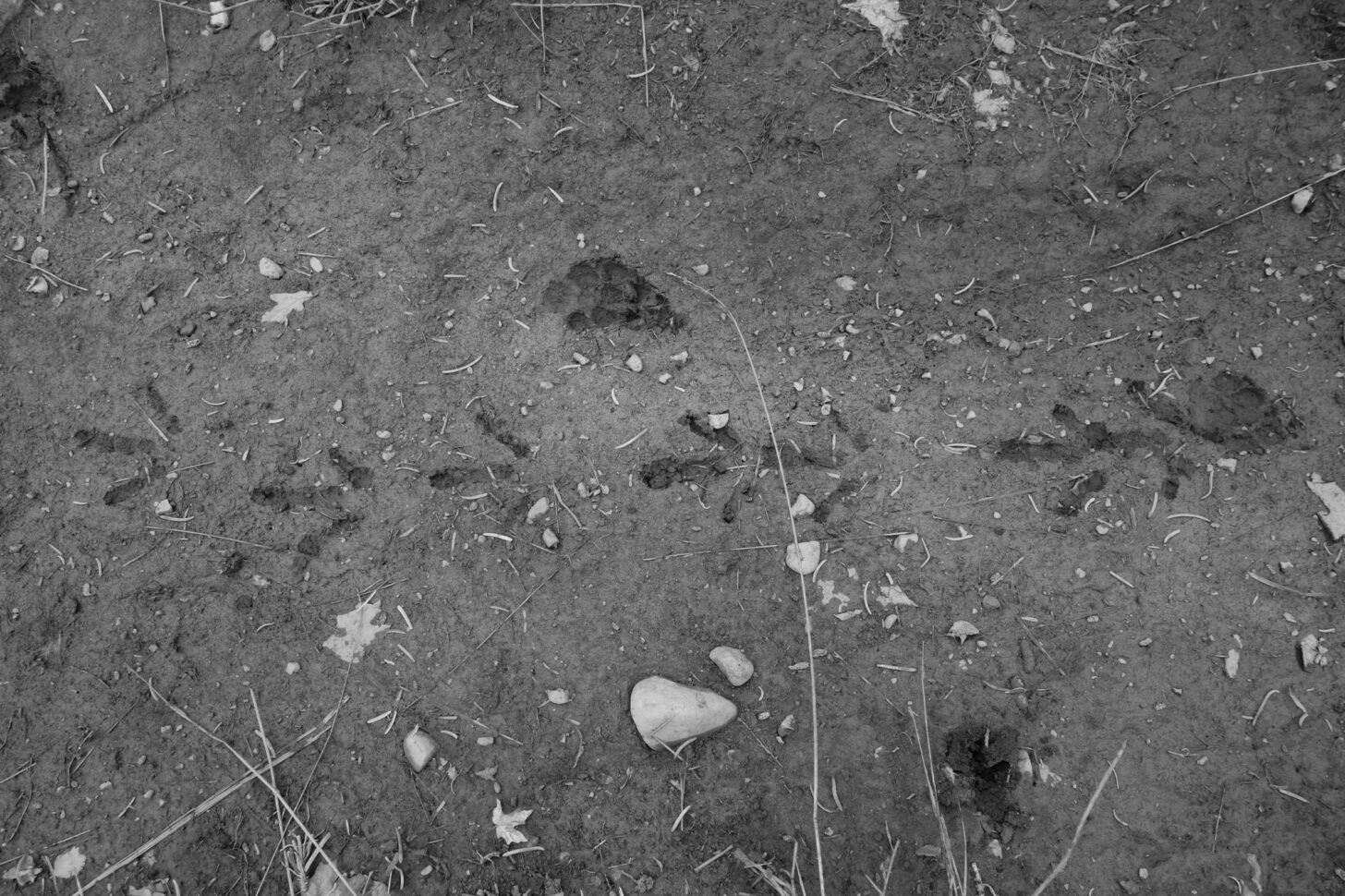
Bird prints and mammal prints I won’t attempt to identify.
Every single one of my backpacking experiences falls within the first four grades. I take tons of photos, which is a form of trophy hunting. Sometimes I try to move as fast as possible to close a loop within a short amount of time, to prove that my body and mind are up to the task. This too, I’d place in the trophy hunting category, as I document my accomplishment. I seek solitude, fresh air, and to get as far away from my computer as possible for as long as I realistically can. And finally, all of my jotting of observations in notebooks falls into Leopold’s fourth category of recreation, that of nature study.
He reminds us that all of these forms of recreation are simply attempts to reenact long-gone ways of life. “The duck-hunter in his blind and the operatic singer on the stage, despite the disparity of their accouterments, are doing the same thing. Each is reviving, in play, a drama formerly inherent in daily life. Both are, in the last analysis, esthetic exercises,” Leopold writes.
Sheepishly, I have to admit that my favorite pastime, backpacking, is an esthetic exercise, too. I walk out into the land and sleep amongst the stones, wind, snowmelt, and animals to get some inkling of the feeling of nomadism maybe. I probably take notes because, if I was really subsisting off of the place, my observations would be crucial to a reciprocal relationship with the land, a mutual survival. I’m putting on a play, one that opens a channel to thousands of years of human experience, and there is value to this, no doubt, but it is still a play.
“April 30th, 2021, and the bears are awake,” I noted.
The fifth grade of recreation, a sense of husbandry, seems to land outside of this reenactment, as it asks of us a material engagement in the environment. Leopold says that a sense of husbandry, “is unknown to the outdoorsman who works for conservation with his vote rather than with his hands. It is realized only when some art of management is applied to land by some person of perception.” He’s saying that rarely does an outdoorsperson get to experience and find enjoyment in a sense of husbandry, for its enjoyment is reserved for those who own and work their land, and for folks such as land managers and forestry technicians.
Leopold is arguing that the first four grades with their inherent dissociation from the land, and the relative nonexistence of the fifth among recreationists, pose a huge threat to the lands on which we recreate. The lower recreation grades,
“consume their resource base; the higher grades, at least to a degree, create their own satisfactions with little or no attrition of land or life. It is the expansion of transport without a corresponding growth of perception that threatens us with qualitative bankruptcy of the recreational process. Recreational development is a job not of building roads into lovely country, but of building receptivity into the still unlovely human mind.”
I close the small paperback and place it carelessly on the edge of the table where it falls to the floor, flopping open precisely where I had been holding the pages creased for hours, that final page of the book. Overwhelmed, I decide to leave it on the floor. I wonder if it is even possible to engage in this grade of recreation within the brackets of my recreation of choice, backpacking. Leopold doesn’t seem to know the answer either, as he doesn’t offer a clear way forward in that final paragraph.
Rachel took a break in the middle of all the mud to just look at everything.
The lake we slept beside was a noisy oasis of snowmelt. Frogs croaked and a single bird chirped all night long. “April 30th, 2021, 8,200 ft, frogs all night, and a very annoying bird,” I noted ambiently in my half-sleep throughout the night.
After a quiet morning glissading down snowbanks and mud, we crossed a road, descended to a creek, and then went west on a packed, dry trail. Right away we heard dirtbikes and stepped off the trail anticipating their speedy arrival. The teenage riders roared past, and we wondered how they squeezed their bikes through the gate at the bottom of the road. Soon we could hear more engines, and when we had a good view of the road below, it was lined with cars, trucks, RVs, and off-road vehicles. We suddenly didn’t know where we were, thinking we had gotten off-track somewhere and were descending a different trail well below the gate. I stopped and checked the map. We were on the right trail, which meant only one thing: they must have opened the gate that morning.
We walked out of the burned aspens and emergent gamble oak and chokecherries at the Grotto Trailhead. Empty and quiet just a day before, it was now swarming with humans and trucks. I again took a mental note, “May 1st, gate opens.” Yesterday’s silence and solitude had been replaced by the sounds of voices and engines. “To him who seeks something more, recreation has become a self-destructive process of seeking but never quite finding, a major frustration of mechanized society,” Leopold writes. If these folks were after anything beyond the taking of photos, then the very thing they came to experience was probably being displaced by their arrival.
Don’t get me wrong, I have a truck, and I rattle loudly down dirt roads too and enjoy doing so. But having spent time driving, walking, sitting, and listening, I know that these are very different activities. Leopold’s fifth grade of recreation, a sense of husbandry, probably isn’t possible for the people on E-bikes, moving swiftly through the forest. It probably isn’t possible for the occupants of the side-by-side that just roared by us. It probably isn’t possible for me when I’m in fastpacking mode, nearly running through the desert just to see if I can. And it might not even be possible for a pair of naturalists walking around Payson Lakes during transition season if their engagement with the land stops when the pen is capped and the notebook is closed.
Backpacking Light does not accept compensation or donated/discounted products in exchange for product mentions or placements in editorial coverage.
Some (but not all) of the links in this review may be affiliate links. If you click on one of these links and visit one of our affiliate partners (usually a retailer site), and subsequently place an order with that retailer, we receive a commission on your entire order, which varies between 3% and 15% of the purchase price. Affiliate commissions represent less than 15% of Backpacking Light's gross revenue. More than 70% of our revenue comes from Membership Fees. So if you'd really like to support our work, don't buy gear you don't need - support our consumer advocacy work and become a Member instead.
Learn more about affiliate commissions, influencer marketing, and our consumer advocacy work by reading our article Stop wasting money on gear.
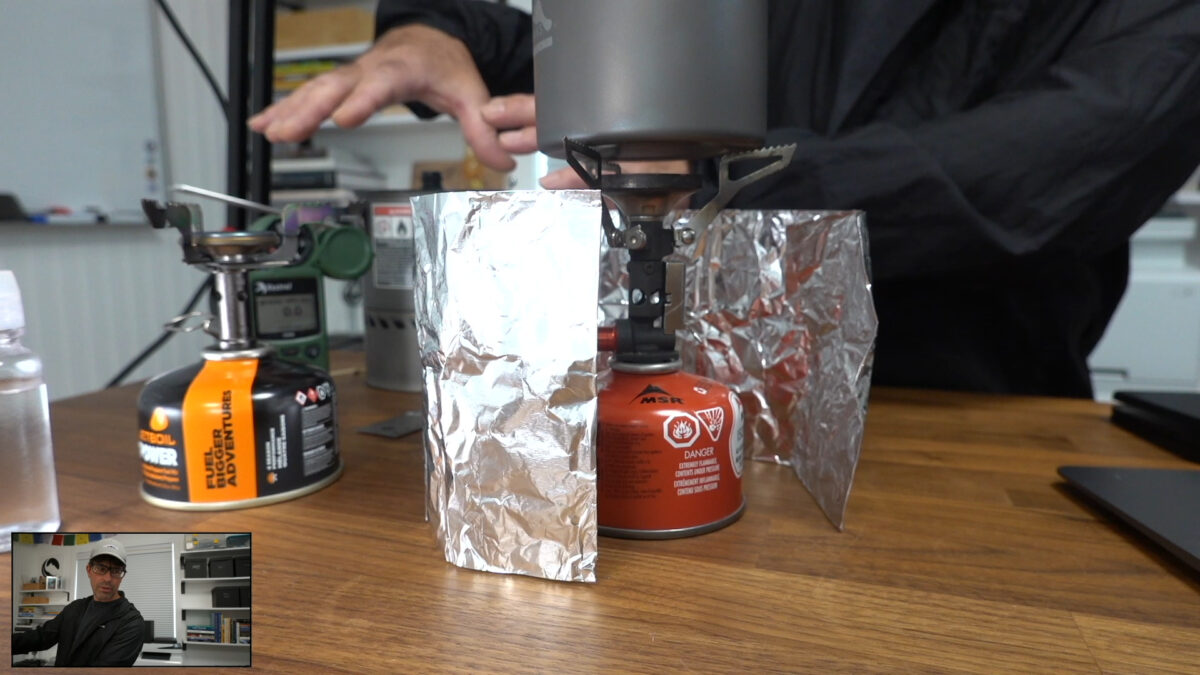
In this Skills Short, Ryan Jordan gives a rundown of some common stove windscreens, talks about their pros and cons, and gives some advice on choosing and using the right one for your needs.
Stream
Summary
In this Skills Short, Ryan Jordan gives a rundown of some common stove windscreens, talks about their pros and cons, and gives some advice on choosing and using the right one for your needs.
Ryan Jordan demonstrates a common windscreen hack – and then shows how you can improve considerably on this system.
Outline
the effect of wind on canister stove effectiveness
Executive Producer - Backpacking Light; Show Director and Host - Ryan Jordan; Producer - Chase Jordan; Theme music: Look for Me in the Mountains written by Chris Cunningham and Ryan Jordan, performed by Chris Cunningham (acoustic guitar, lead and harmony vocals, harmonica), Chad Langford (upright bass), and Tom Murphy (mandolin), produced by Basecamp Studios in Bozeman, Montana.
Sponsorship Policy: Backpacking Light does not accept compensation or donated/discounted products in exchange for product mentions or placements in editorial coverage, including any podcast episode content not excplicitly identified as sponsored content. Some (but not all) of the links in these show notes may be affiliate links. Learn more about affiliate commissions, influencer marketing, and our consumer advocacy work by reading our article Stop wasting money on gear.
“Is this the year I finally get into bikepacking?” That’s the question I asked myself as the flaming you-know-what storm of 2020 lurched to a close and the equally as terrible first quarter of 2021 began. As it turns out, this was the year I got into bikepacking, and it’s improved my year considerably. My long-suffering feet and knees are enjoying the change of pace, as is my brain, though my rear end is not at all amused.
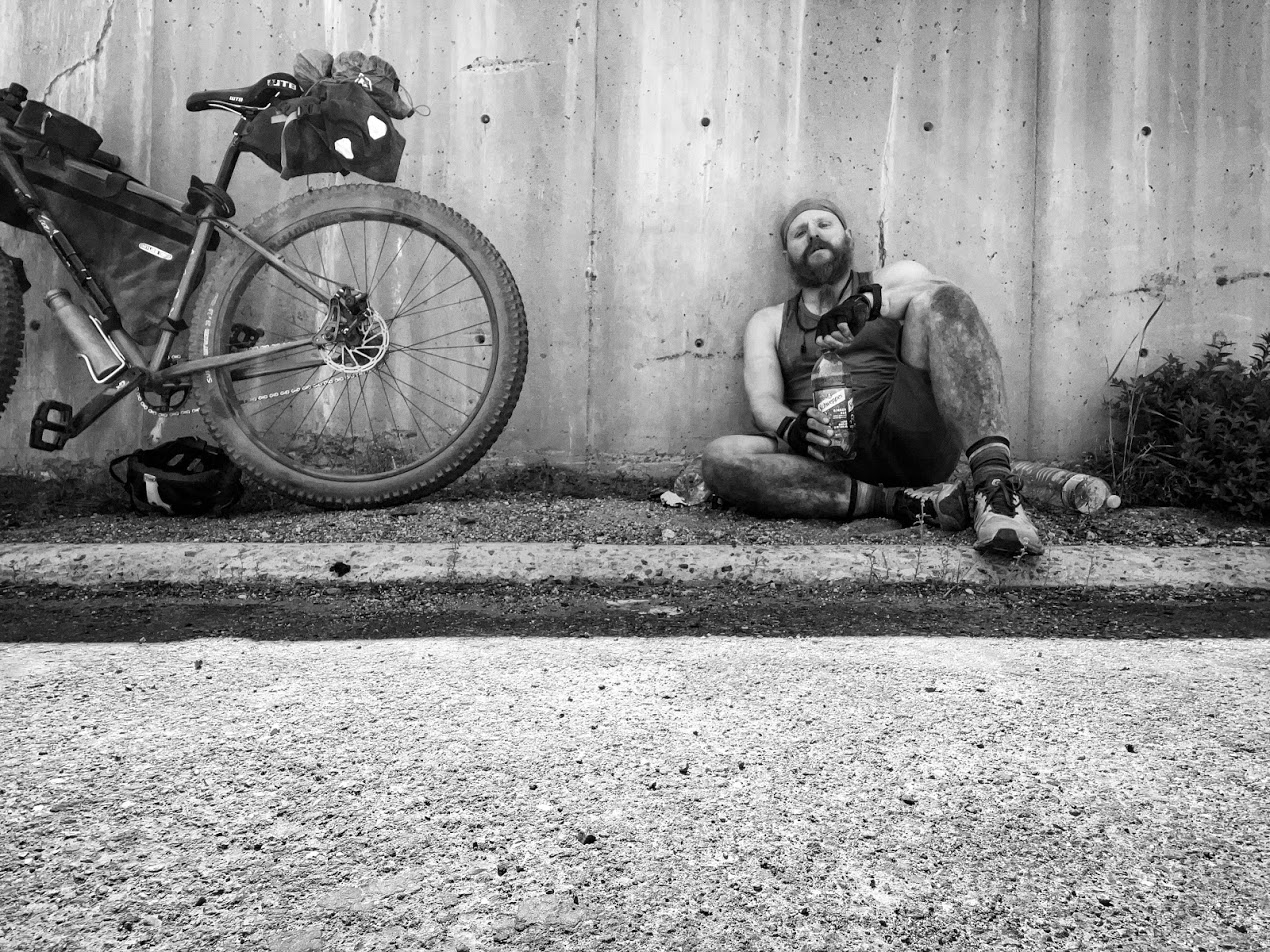
Bikepacking is, somehow, even more filthy than backpacking.
As a bonus, bikepacking has given me a new lens through which to examine my ultralight backpacking philosophy. I’m not sure I learned anything new, per se, but my reflections have led me to correct some drift and recommit to the ideas that keep the contents of my pack light and functional and enjoyable.
Bringing Less Stuff is Easier than Bringing Lighter Stuff (Generally)
I ended up with about 30 liters of space on my bikepacking rig. My smallest regular-use, multi-day backpacking pack is 40 liters. When I first began backpacking with a 40-liter pack I was pretty good about keeping things small and simple but my gear has grown to fit my space like a goldfish. So bikepacking provided me a chance to reexamine my regular gear choices and do a much-needed volumetric downsize.
I also ran into two more volume-related issues.
The first is this: I learned pretty quickly that I don’t like strapping items to the outside of my bikepacking rig like I might while backpacking if I overshoot my pack’s internal or external pocket volume. It’s a quick-fix with backpacking that doesn’t necessarily apply to bikepacking (especially if you are doing the kind of bikepacking that involves singletrack), and it’s made me recommit to working within the confines of the pack I choose for any given trip.
Setting out on a five-day bikepacking trip. I hadn’t yet learned that strapping my cook kit to the top of my seat bag was a bad idea for bouncy single-track.
The second issue is that with bikepacking you aren’t working with a single large cylindrical pack with three or four pockets. Instead, you have, at minimum, three entirely separate packs (probably more) all with different shapes and weight capacities. This necessitates a major packing re-think, and it also means things are harder to find when you need them fast (at least for me.) Having fewer things to find in the first place is a major win here.
I’ll Take Functionality and Reasonable Cost Over Expensive Incremental Weight Savings (Almost Always)
Something that weighs 10 ounces (283 g), works the way it is supposed to, and doesn’t break under stress is better than something that weighs 5 ounces (142 g), is hard to use, fragile, and prone to failure. If the 10-ounce thing is cheaper – and it almost always is – even better.
The Big Agnes shelter pictured here is light, expensive, has poor livability, and is somewhat fragile. The Salsa Deadwood pictured here was inexpensive, somewhat heavy (compared to more expensive options), and is virtually indestructible.
I consider the above paragraph a core component of my ultralight backpacking philosophy, but it’s easy to lose sight of in the midst of some of the more negative sides of ultralight culture and the continuing trend of gear manufacturers to win a weight race at the expense of usability.
I realized pretty quickly that I’d be more than happy to buy a bike that was four or five years old, weighed 30 pounds (14 kg), and was constructed of durable steel over a brand new, 20 pound (9 kg) relatively fragile carbon ride, mostly because there was simply no way I could afford the latter while the former was within my price range. I couldn’t be happier with the bike I got – it does exactly what I need it to do and it didn’t cost me the equivalent of a well-cared-for but aging Subaru Outback.
My rig. A steel-framed Salsa Deadwood modified for single-speed. I’d later change my packing system so my cook kit (bungied to the top of my seat bag) would be inside my frame bag.
Sometimes I have to suffer through occasional well-meaning but annoying conversations along the lines of “you wouldn’t be pushing your bike up this hill right now if it had a carbon frame/the latest geometry/the newest cog-set/etc.” But I find this a small price to pay for the, well, small price I had to pay for a durable and functional piece of gear.
I’ll Take Functionality Over Maximum Comfort (Sometimes)
My recent bikepacking trip in the Sierra Nevada was about 40% singletrack and involved multiple several-thousand-foot climbs. I’d be lying if I told you I didn’t spend the bulk of my trip seconding guessing my decision to use a rigid front suspension and swap out the rear derailer/11-speed cog set for a single-speed setup. I suffered on this trip in ways that I wouldn’t have suffered if I’d had front shocks and a derailleur. But – and this is crucial – I didn’t suffer past the point of enjoyment. And by the time the trip ended I was utterly sold on the single-speed life.
The peace of mind I got from knowing I wouldn’t end my trip early by accidentally bending my derailleur (say, by leaning it up against a tree, or brushing against it with a feather, or exposing it to a gentle gust of wind) added considerably to my fun and made the occasional suffer-fests worthwhile.
Big tires and rigid suspension means I don’t have to spend hundreds of dollars getting my bike serviced regularly. And field repairs on tires are much easier than field repairs on suspension systems.
Apply this lesson to backpacking and the first thing that sticks out to me is my sleep system.
On my two most recent 5+ day backpacking trips, I’ve experienced un-field-reparable pressure loss with my oh-so-comfortable and expensive inflatable air mattress. Did I offend the air mattress gods in some way? One of those trips was a thousand miles away from the nearest cactus.
Sleeping on the right air mattress > sleeping on closed-cell foam (CCF), but sleeping on closed-cell foam > sleeping on the ground. I can’t believe these words are going to leave my mouth, but I’m considering switching back to a CCF system simply because it gives me one less thing to worry about. My ongoing struggles with mental health mean I worry a lot anyway, so removing even one major anxiety point is a significant win. It does mean that I need to be pretty exhausted to get a good night’s sleep, so I guess that’s where that single-speed cog comes in.
Your author at the end of a recent bikepacking trip, feeling happy he’s headed for a night of sleep on a real mattress.
In Closing
You can, of course, just enjoy a new pastime without relating it back to backpacking in some way. In fact, I’d recommend it. But if you’ve found yourself in a backpacking rut and need a way to course-correct that’s a little more philosophical and a little less spreadsheety, consider bikepacking or some other tangental long-distance pastime. Fastpacking? Maybe it’s for you. Packrafting? Seems awfully wet but go for it. Alpacapacking? Adorable and fun to say. Extreme off-road unicycling? Your mileage may vary, but I bet you’d learn a thing or two.
Backpacking Light does not accept compensation or donated/discounted products in exchange for product mentions or placements in editorial coverage.
Some (but not all) of the links in this review may be affiliate links. If you click on one of these links and visit one of our affiliate partners (usually a retailer site), and subsequently place an order with that retailer, we receive a commission on your entire order, which varies between 3% and 15% of the purchase price. Affiliate commissions represent less than 15% of Backpacking Light's gross revenue. More than 70% of our revenue comes from Membership Fees. So if you'd really like to support our work, don't buy gear you don't need - support our consumer advocacy work and become a Member instead.
Learn more about affiliate commissions, influencer marketing, and our consumer advocacy work by reading our article Stop wasting money on gear.
From first-come, first-served to limited lotteries and everywhere in between, permits are increasingly becoming a fact of life for backcountry adventures
Backpack, sleeping bag and pad, shelter – check. Assorted other essentials and accessories – check. Food for the duration of the trip – check. Transportation to and from the trailhead – check. In addition to these simple but not inexpensive items, a permit is becoming another essential – and sometimes frustratingly difficult to obtain – necessity depending on where you’re headed.
Permits are almost always required in national park units. Some can be easy to get on a first-come, first-serve basis and others must be booked months in advance.
And in wilderness areas managed by the US Forest Services that have had permits for decades, like the Enchantments area of the Alpine Lakes Wilderness, the increased demand for permits has left backpackers with a less than 2% chance of being able to camp in the most desirable locations. However, in some wilderness areas permits are more or less nominal and have been in place for years, like the Pasayten Wilderness in Washington and the Anaconda-Pintler Wilderness in Montana, where an unlimited amount are supplied at the trailhead for users to fill out on their own, and no quotas on visitor numbers are placed or reservations required. These permits are in place more as a means of tracking use and gathering statistical data than of limiting where people can camp.
As permits and crowded backcountry campsites become as common as Bluetooth speakers on once-quiet trails, backpackers rightfully wonder what might be done to slow the spread of this often necessary – but almost always inconvenient – way to manage use. One of the most popular ideas has been to be more mindful about the impact that geotagging and site-specific social media posts can have. The Washington Trails Association suggested this in 2015 and The Leave No Trace Center for Outdoor Ethics endorsed this practice in 2018. Since then, this idea has caught on among many in the outdoors community who would prefer to not risk contributing to the overuse of areas with limited recreational carrying capacity.
Located far away from population centers and lacking much social media fame, there are currently no permits required for backpacking anywhere in the 1.3 million acre Selway-Bitterroot Wilderness in Idaho and Montana.
Amusingly enough, many of the places people want to protect through obscurity really aren’t that obscure at all – they’ve been featured in guidebooks or magazine articles over the years, not to mention being clearly marked on USGS topographical maps for over a century (and, it must not be overlooked, were visited and stewarded by indigenous inhabitants for millennia before they were forcibly removed from their ancestral homelands). The information is out there for those who want to make a modicum of effort to research all the wonderful places to go on their public lands.
In addition, there are plenty of excellent free resources and articles on how to successfully use that information and how to plan a backpacking trip in general. The benefit to doing that research, at least historically, was being exposed to information about minimal-impact camping, environmental issues facing those public lands, and contact information for the advocacy groups and land management agencies that work to protect them.
An absolutely stunning subalpine basin in one of Montana’s wilderness areas – no permit required, yet.
This notion of community self-regulation as an attempt to reduce the need for official regulation via permits has resulted in significant handwringing in the Extremely Online Outdoors Ecosystem about whether such a practice is gatekeeping. Most notably, Leave No Trace reversed their stance on geotagging, without any explanation or evidence to support this change, in 2020. While it is certainly important to be concerned about inadvertently creating additional barriers to outdoor recreation, particularly if such barriers demonstrably and disproportionately impact groups of people who are already underrepresented and don’t feel welcome on their public lands, nearly the entirety of the discourse about alleged gatekeeping lacks much intellectual or ethical rigor and fails to use an evidence-based approach to understanding and mitigating the complex issues created by increased use of public lands.
The ideas put forth – keep geotagging and hyping up areas on social media despite the inability of their infrastructure to handle increased visitation – almost inevitability result in land managers implementing permits when areas become overcrowded and negatively impacted, creating a classic case of unintended and adverse consequences brought about by good intentions.
Requiring permits as a way to manage increased visitation creates an additional and actual barrier to accessing the outdoors, not just a digital one. And this actual barrier typically costs money to overcome (i.e. permit fees) and is ultimately enforced by People With Guns (i.e. park rangers or other agency law enforcement personnel.) This makes someone being a bit vague about the location in their Instagram photo or in the trip report they posted on Reddit, or Backpacking Light for that matter, seem quaint or even downright silly by comparison. Especially when there is an abundance of information available, for free, to allow even the newest backpacker to successfully plan a trip once they have the inspiration to get outdoors.
And such inspiration is inescapable in even the most banal mainstream media these days, where even a credit card commercial might evoke alpine imagery, much less in the social media subgroups specifically focused on outdoor recreation. There is more information, and free ease of access to such information, than ever before to allow hikers and backpackers to disperse themselves, but social media has indisputably had a concentrating effect.
Without permits to limit entry, Aravaipa Canyon – one of the few perennial streams in the Sonoran Desert – – would almost certainly be crowded to the point of absurdity.
When viewed through the lens of another outdoor activity – rock climbing – a hyper-specific approach to information sharing is not just unhelpful, it’s poor form and denies people the opportunity to figure things out for themselves and the sense of achievement that comes from doing so. Part of the beauty of rock climbing is figuring out each route on your own – of solving the physical and mental puzzle nature created. When climbing a route and pausing to figure out the next move, it can be maddening to have some overly helpful bystander who previously climbed the route shout up “Just match your left foot with your left hand, and then throw with your right hand to the flake that’s left of the pocket up there, it’s a huge undercling and you can stand up and clip from there, then match both hands until you get your feet up and then put your left hand onto the jug above the bolt, then you’re done with the crux and it’s easy climbing to the top . . .”
By the time they’re done spraying you down with unrequested information, much of the mystery of the route is gone and, for most people, the magic and joy of the experience is greatly diminished. That’s why the ethic in climbing is to wait until someone asks for help before offering advice, rather than just assuming that others are incapable of accomplishing what they set out to do without receiving your unsolicited instructions.
Encouraging a similar ethic for backpacking in wilderness areas, which are explicitly managed for solitude as well as other values listed in the Wilderness Act, seems to be appropriate. As amazing as a good backpacking trip can be when done step-by-step from a guidebook description or with information from social media, it pales in comparison to pulling off a trip that you planned largely on your own. Stumbling across an unexpected waterfall on a cross-country jaunt taken on a whim from a basecamp, spotting a pictograph in a remote canyon during a spur-of-the-moment side trip, or finding a route from one lake basin to another that looked impassable on a map are joys that can rarely be planned – they manifest themselves through curiosity, sweat, and determination.
The Anaconda-Pintler Wilderness requires permits, but these can be self-issued at the trailhead and are intended to help track usage.
Given the current trend towards permits, and the sobering fact that once they’re instituted by a land management agency they have almost never been removed, I think one of the best skills new hikers can develop in regard to backpacking is learning how to spread out and discover the beautiful and uncrowded places you can go without needing a permit. Check out guidebooks from the library (free!), browse CalTopo online (also free!), flip through magazines like Backpacker, TrailGroove, or Backpacking Light or browse their websites, strike up a conversation at the trailhead with another backpacker and see what ideas for trips you can glean, and call ranger stations for ideas. Look at trip reports online or on social media for inspiration, but not with an entitled mentality that just because someone posts a picture of a delightful campsite that is on public land that they are obligated to send you a GPX track or provide any additional information. Learn to be OK with participating in a community where people might be happy to help get you in the ballpark – naming the national park or national forest – but not willing to assign you a seat by telling you the exact lake or meadow they camped at.
And then, once you have honed that skill and have found places off-the-beaten-path to form indelible memories of sunsets and forests and peaks and streams, consider exercising some discretion in how far and wide you broadcast detailed information about such places. Being more general in regard to a location, or even not posting at all, since Outdoors Social Media can be a bit toxic once you take a step back and reflect on it, certainly isn’t a panacea to the problems impacting our lands.
Volunteering your time doing trail work, advocating for increased funding for public lands, or donating to organizations that advocate for more wilderness or other important causes (like reducing equipment and financial barriers to outdoor recreation for groups historically disenfranchised from enjoying their public lands) are much better ways to make a difference than merely adjusting your habits on social media.
But if thinking critically before you post on social media can prevent or delay even just a few places from being impacted by overuse and having permits implemented, it seems worth it to allow those who visit them – now and in the future – to have a high-quality experience that they don’t have to book months in advance on recreation.gov and help enrich government contractors. There’s enough public land for all of us to have the indescribable and soul-lifting feeling that comes from experiencing true solitude in stunning natural landscapes. We can’t all have solitude in the same place at the same time, but protecting the solitude of the places we cherish – so that others can find and experience it as well – is a responsibility we can each choose to practice.
I’m a big planner at home, but not so much with backpacking. On my last OCT solo section, I actually had to do all of the planning myself.
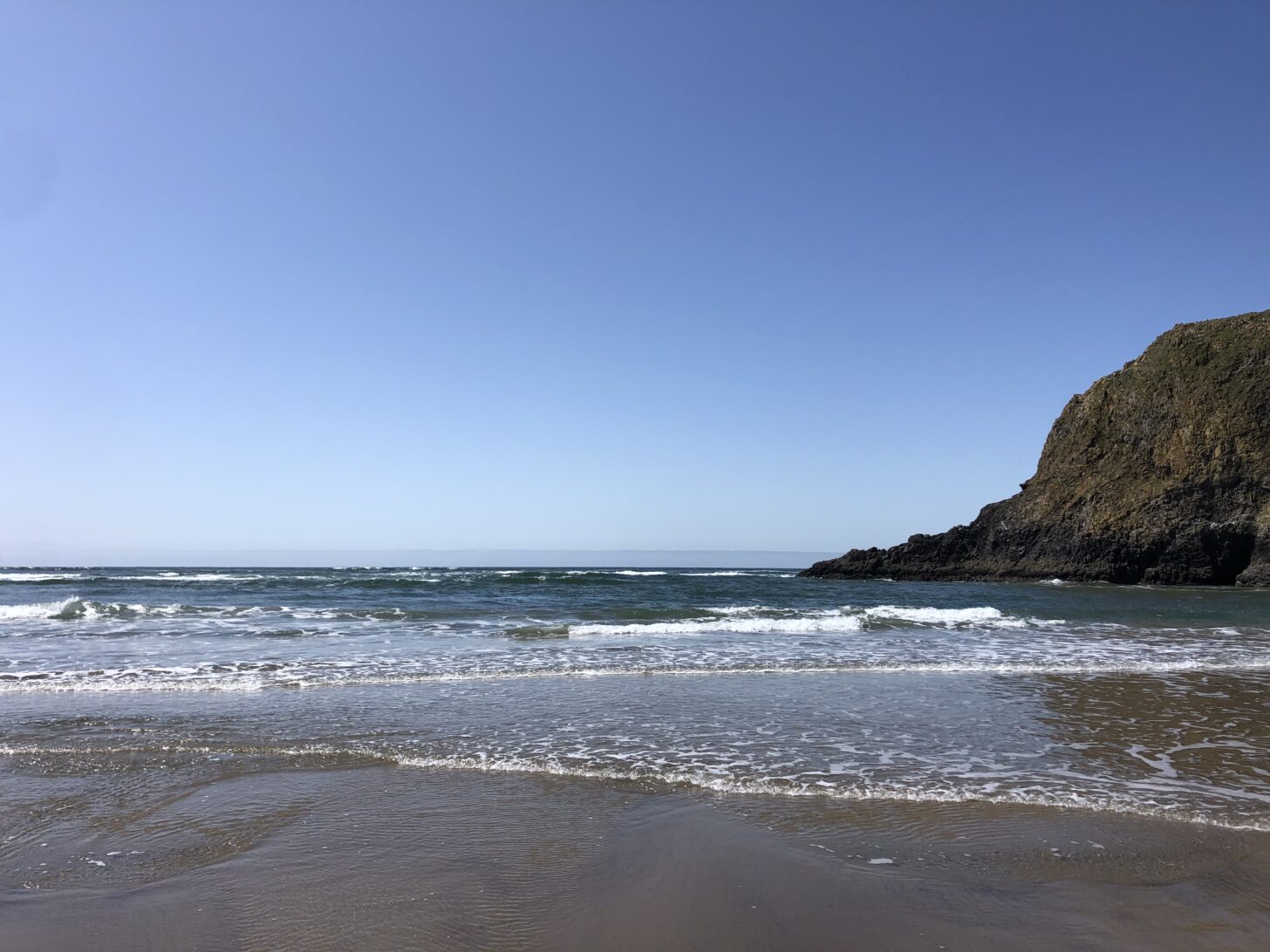
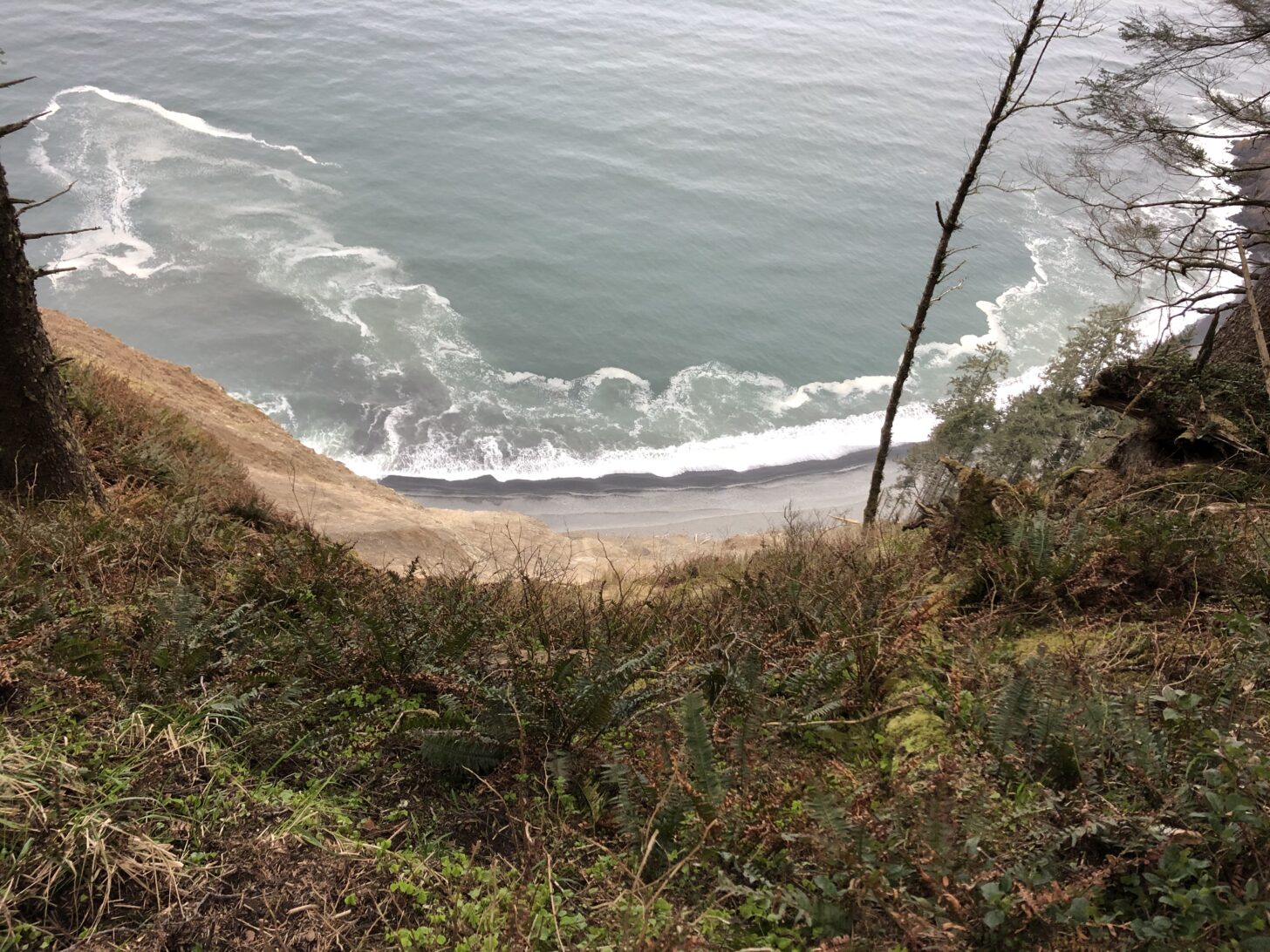
Over the past six months, I’ve been slowly picking away at the 330-mile Oregon Coast Trail. This is my first section hiking experience, and one of the most non-linear trails I’ve ever hiked. My first section was with two hiking friends, and for the most recent section I was on my own.
While I love the companionship of hiking with partners, solo trips are one of my favorite ways to backpack, and I’ve done plenty of peak-bagging trips, camping excursions, and overnights by myself. But those past solo outings were either in familiar areas or on straightforward trails. All I needed was a reliable GPS track and to remember all of my gear.
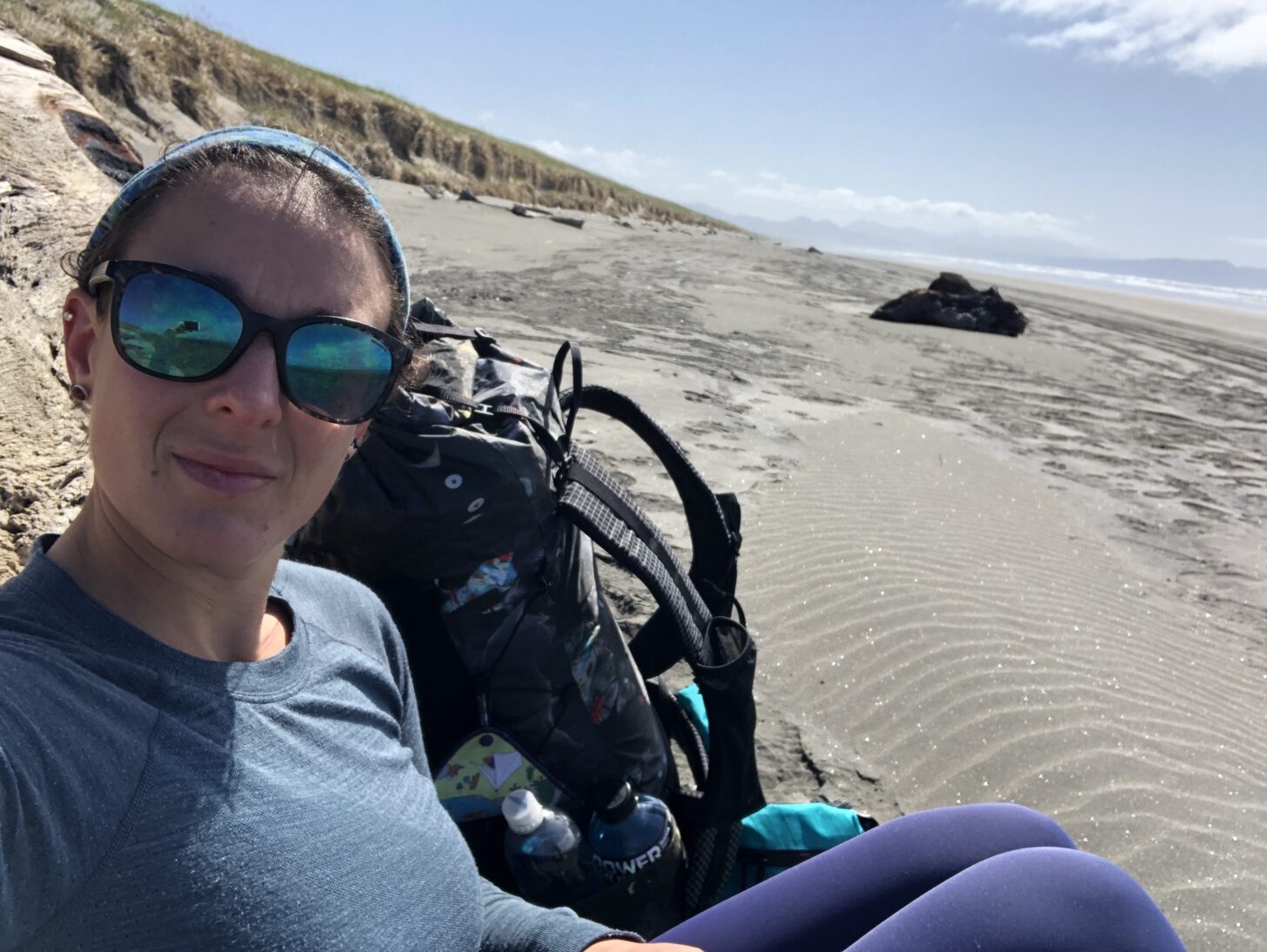
When you’re solo, you can stop whenever you feel like it.
Doing this section of the Oregon Coast Trail by myself didn’t seem like too big a deal. It was a little over 50 miles and I figured on two-and-a-half days end to end. But this section required one aspect that is simply not my strong suit: planning.
I’m a highly detailed planner at home. Everything is on a list, and sometimes I make lists of my lists to keep track of what lists I’ve written. As a full-time writer and solo homeowner, planning keeps me sane and ensures I don’t drop the ball on anything from overdue invoices to draft deadlines to calling the sprinkler guy. Backpacking is my escape from this – literally and figuratively. I get out of my house and away from my routine, which also means I strive to ditch the shackles of my structured, planned existence when I hit the trail.
So yes, sometimes this means the planning falls to other people. Other times it means no one planned the trip and we’re just going to wing it. In my defense, I’ve found backpackers sometimes have the tendency to over plan before realizing they’re at the mercy of the trail, and itineraries are often set free within the first few days. As long as I know how I’m getting to the trail and the location of my first resupply, I’m all set. I don’t look at the elevation profile, I don’t obsess over the forecast, and I’m not super concerned with how I’m getting off the trail.
Past Cannon Beach… i.e. the Goonies Beach to everyone except me, the only person in the world who has never seen the Goonies. Photo credit: Maggie Slepian
I had to put some thought into this section of the Oregon Coast Trail. The OCT is odd from start to finish. You definitely need a GPS track, as the trail wanders on and off the beach, darting through towns and into neighborhoods before picking up a few miles of trail, then back onto the beach and exiting at another seemingly random point. There are also points along the beach sections that can only be crossed at low tide, which means having a tide chart or app. Additionally, some parts of the trail are closed from a massive storm last fall that resulted in large swaths of impassable blowdowns. All in all, for a short section, there was kind of a lot to consider, at least for me.
In typical fashion, I had a work commitment right before I was supposed to get dropped off at the Northern Terminus, and didn’t pack or plan anything beforehand. I threw my standard gear into my screaming cat pack and took screenshots of the trail description page from the Oregon Coast Trail website so I wouldn’t have to try to access it with spotty service. I’d had the foresight to get a membership to the Hiiker app the day before, which is one of the only apps with a track of the OCT. As we drove in and out of service along the Oregon Coast towards Astoria, I downloaded a tides app and made sure I understood the interface. It might have been last minute, but it was more planning than I’d done for any other trip.
This section had beach walking and cliffs. Simply amazing. Photo credit: Maggie Slepian
There isn’t a ton of cohesive information about the OCT – you have to piece it together from different sources. For this reason, the northern 50 miles of the OCT was good practice for me to be in charge of my own planning without risking major consequences like I would with a more remote trail. There was some navigation, some timing, and some understanding of closures and regulations, but nothing critical – and always some room for error.
I thought about the last time I was on the OCT. My friend Julia had discovered and downloaded Hiiker. I’d never downloaded the app, rather let her be in charge of telling us where to get on and off the beach. The other member of our party, Becca, had the tides app, and she kept track of when we were safe to cross certain sections of beach.
The Oregon Coast Trail is not remote – at least the northern half isn’t. But because of the afore-mentioned tides and unmarked trail sections, the OCT takes a different type of planning than a more traditional trail. You might not need to plan the timing of resupplies, as the trail hits a town at least every other day, but you do need to time certain sections based on the tides, and know where camping is or isn’t allowed.
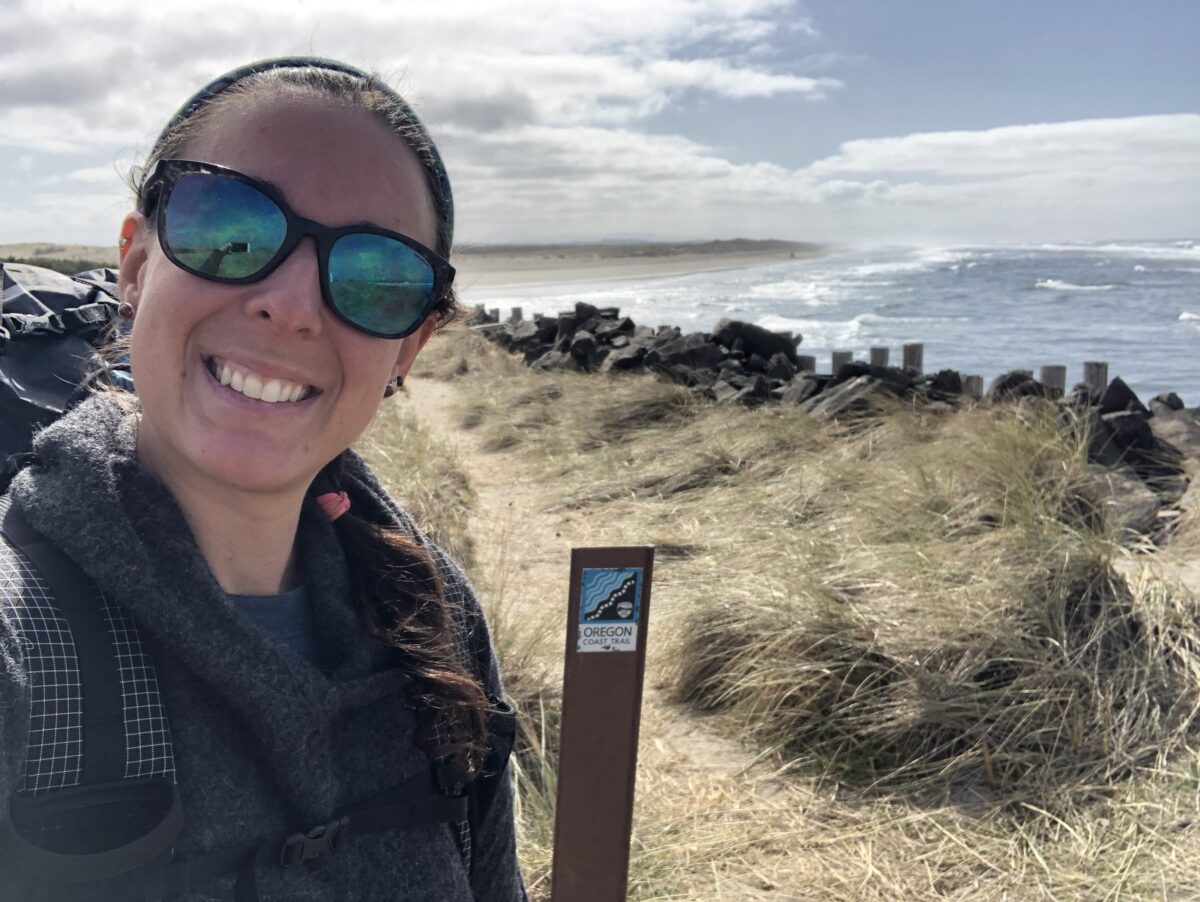
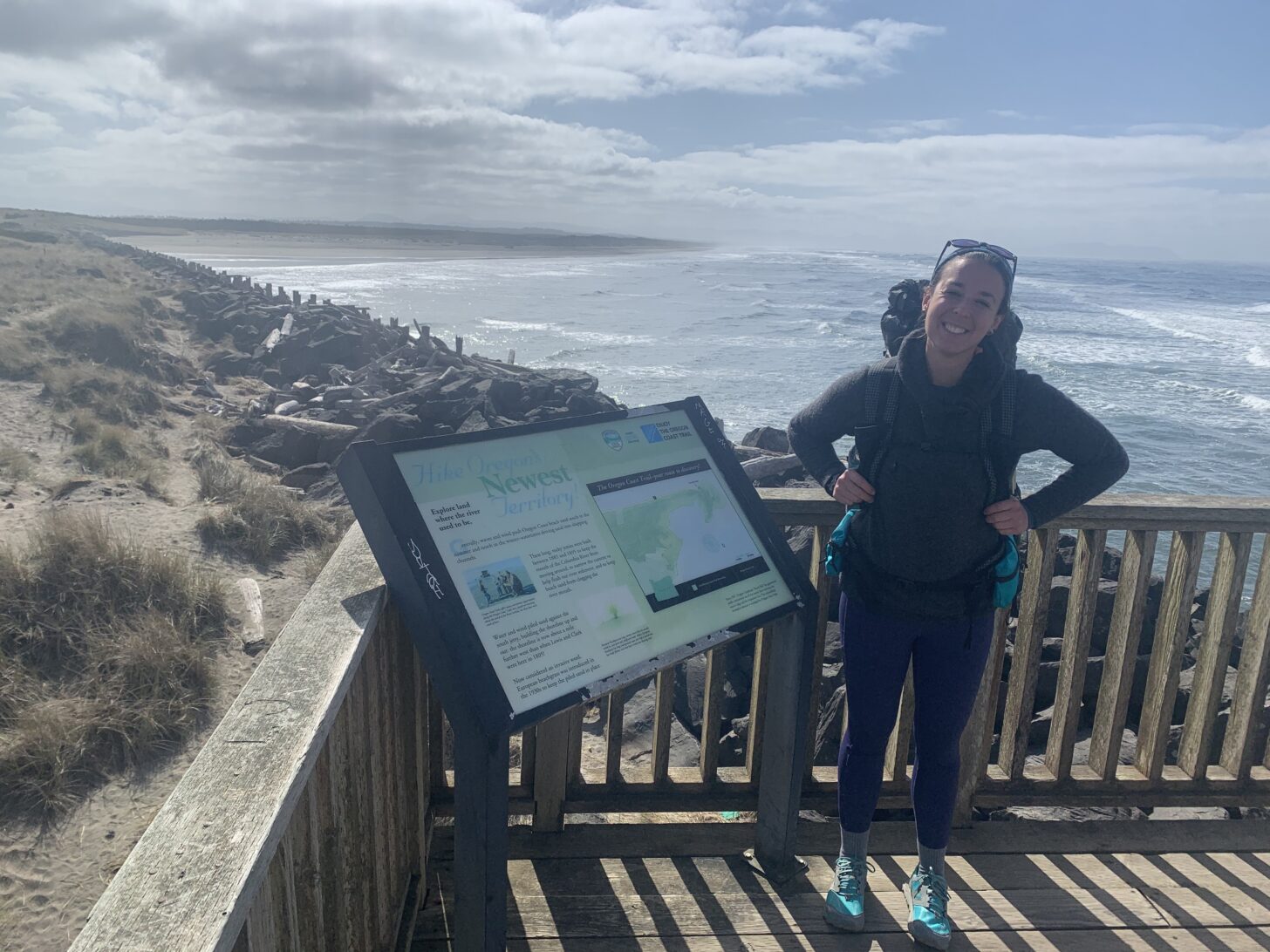
My partner Jeff shuttled me, and he waited for me to direct him to the Northern Terminus instead of mapping it himself. He is well aware of how much I drag my feet with backpacking planning, and wanted me to do the whole thing. To be quite honest, I did feel a twinge of pride at actually having located the sign on the jetty at Fort Stevens State Park. I waved goodbye as he drove away, then punched through some bushes to find an official trail marker heading towards the beach. Even these first steps are usually done by my hiking companions, so even the first half-mile of my solo trek was a good confidence boost that showed I can at least find my way onto a trail.
Successfully located the Northern Terminus of the Oregon Coast Trail. Photo credit: Maggie Slepian
Most of the next several days were easy. I was glad I’d downloaded the tides app, and the Hiiker GPS track was incredibly useful. Being by myself is always a joy, and I reveled in being able to throw my pack down whenever I wanted, or keep going when I felt good. I got turned around a few times, and had some trouble figuring out where the trail picked up after unmarked intersections. With no one to confer with, I was even more proud when I figured it out each time. I did get mildly frustrated trying to figure out how to tell Jeff where I was going to end (mapping skills are not my strong suit) and then frustrated again when a trail closure stymied my last night of camping. I was able to wing it, though, and also wound up feeling confident with my abilities to adapt on the fly.
The northern section of the Oregon Coast Trail was a success, and boosted my confidence for my Colorado Trail solo later this summer. I picked the CO Trail partly for the majestic scenery and ideal distance, but also because it’s a good next step in my solo planning skills. Now that I’ve gotten the bug and am not quite so resistant to planning, there will definitely be more solo trips between now and then.
Learn More: LiteAF Curve Backpack
Maggie mentioned her screaming cat pack. Read her write-up of Lite AF’s unique Dyneema Composite Fabric dying process here.
Backpacking Light does not accept compensation or donated/discounted products in exchange for product mentions or placements in editorial coverage.
Some (but not all) of the links in this review may be affiliate links. If you click on one of these links and visit one of our affiliate partners (usually a retailer site), and subsequently place an order with that retailer, we receive a commission on your entire order, which varies between 3% and 15% of the purchase price. Affiliate commissions represent less than 15% of Backpacking Light's gross revenue. More than 70% of our revenue comes from Membership Fees. So if you'd really like to support our work, don't buy gear you don't need - support our consumer advocacy work and become a Member instead.
Learn more about affiliate commissions, influencer marketing, and our consumer advocacy work by reading our article Stop wasting money on gear.
In today’s podcast, we are joined once again by Matt Mason for part two of our ongoing bikepacking conversation. This conversation digs a little more deeply into the nuances and logistical questions of bikepacking.
Stream
Summary
In today’s podcast, we are joined once again by Matt Mason for part two of our ongoing bikepacking conversation. This conversation digs a little more deeply into the nuances and logistical questions of bikepacking.
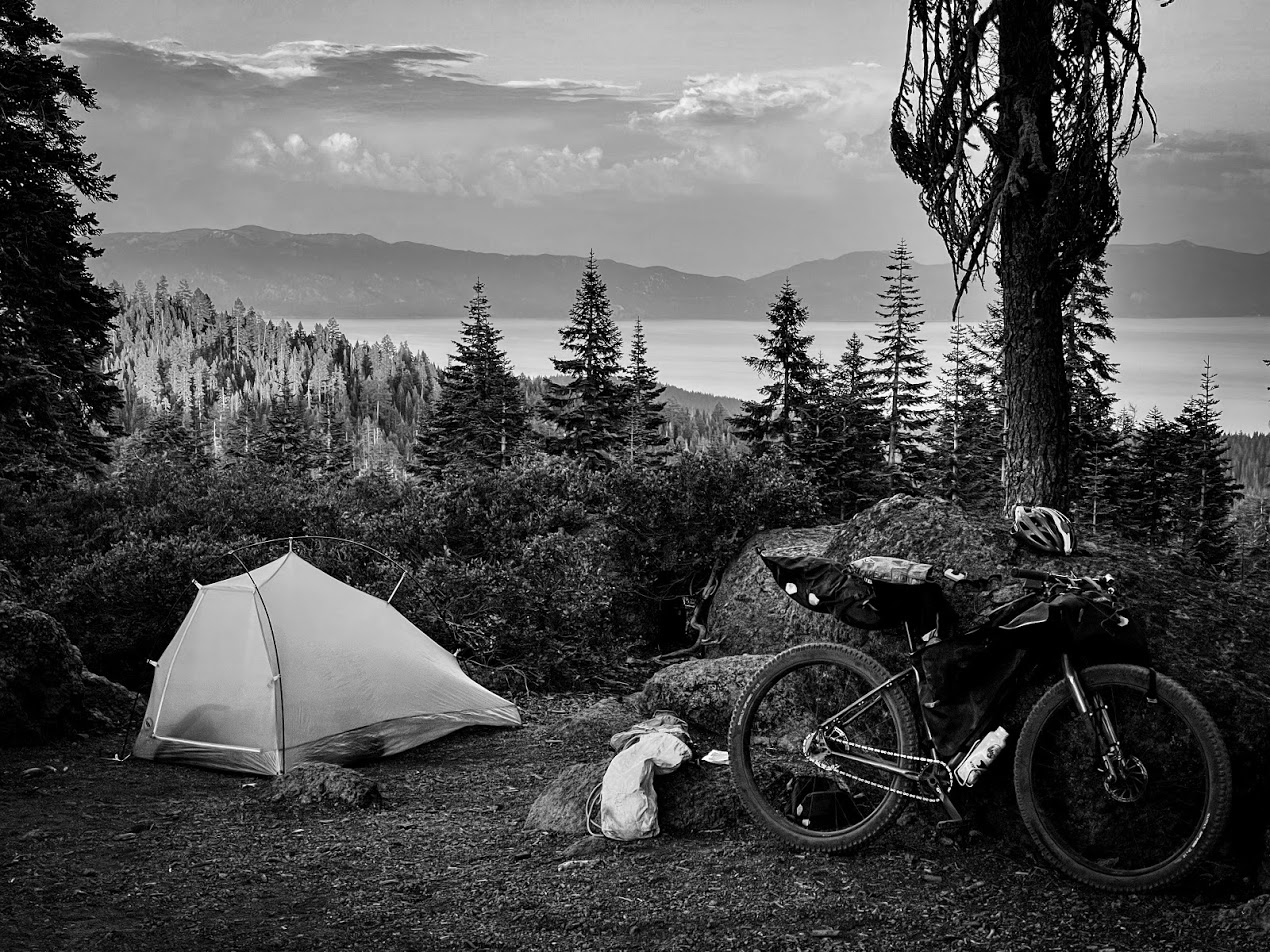
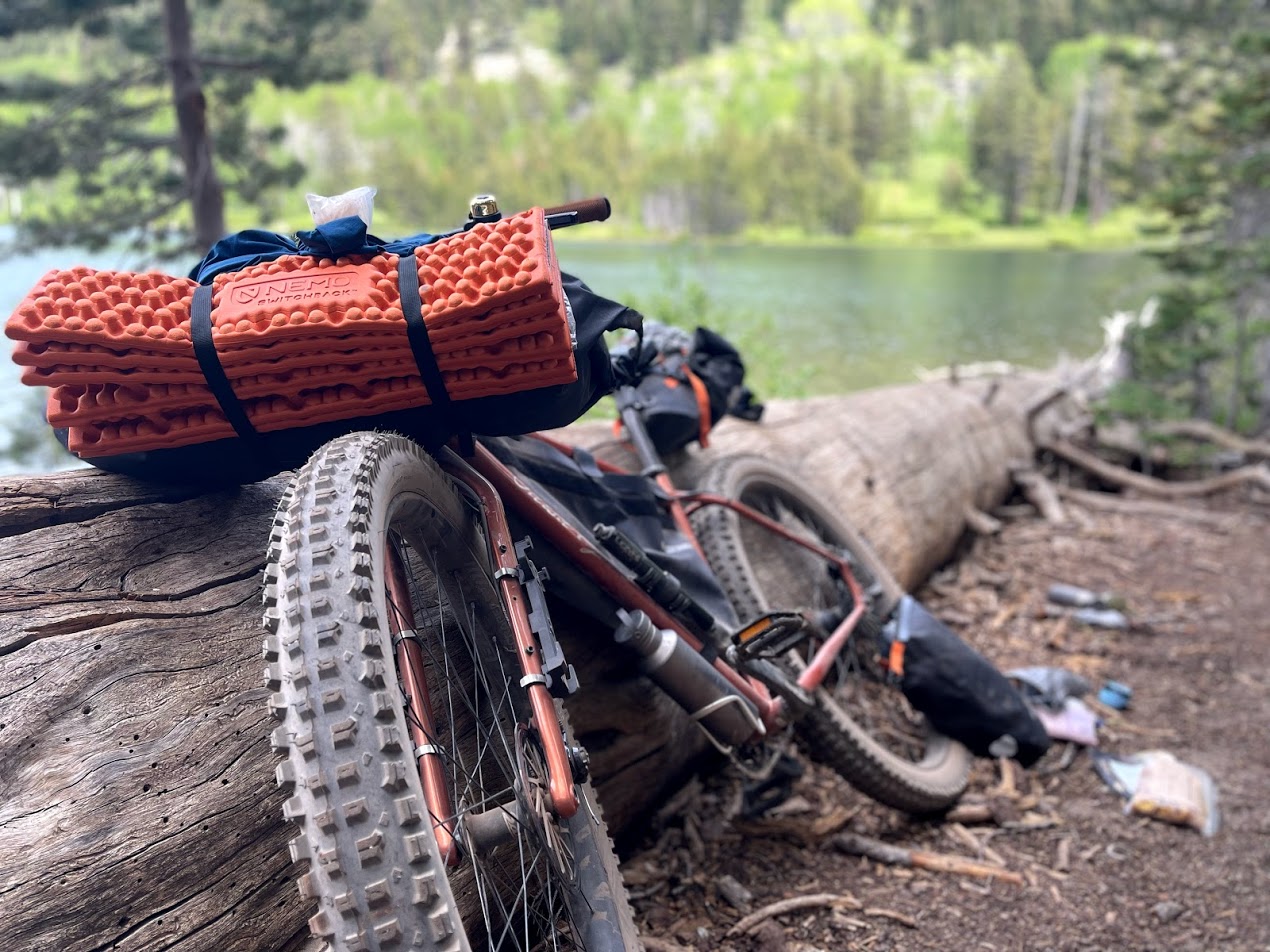
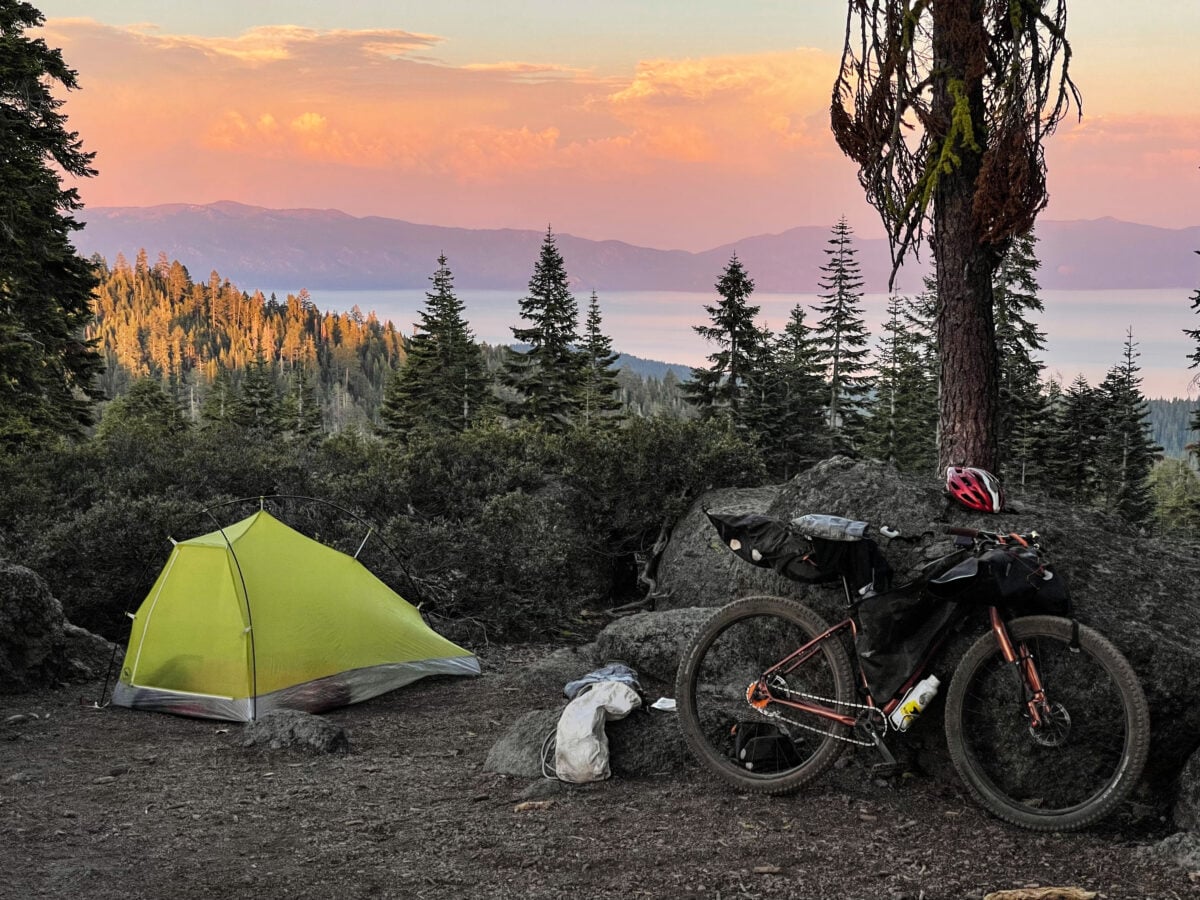
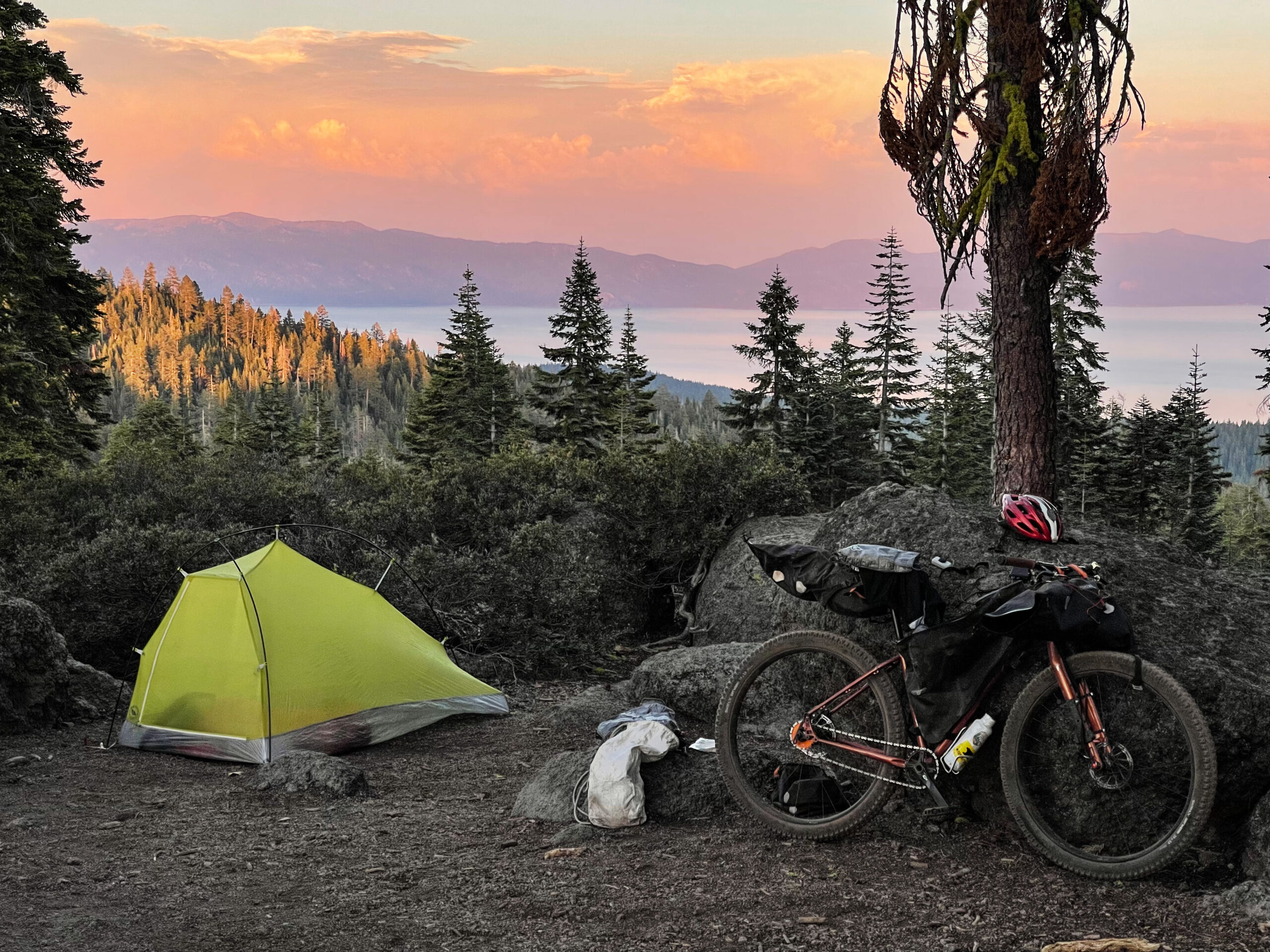
Bikepacking above Lake Tahoe
Also in this episode: an app that helps you determine how much fuel is left in fuel canisters, a windscreen to improve the efficiency of your stove, the new Backpacking Light website, and more.
Executive Producer - Backpacking Light; Show Director and Host - Ryan Jordan; Producer - Chase Jordan; Theme music: Look for Me in the Mountains written by Chris Cunningham and Ryan Jordan, performed by Chris Cunningham (acoustic guitar, lead and harmony vocals, harmonica), Chad Langford (upright bass), and Tom Murphy (mandolin), produced by Basecamp Studios in Bozeman, Montana.
Sponsorship Policy: Backpacking Light does not accept compensation or donated/discounted products in exchange for product mentions or placements in editorial coverage, including any podcast episode content not excplicitly identified as sponsored content. Some (but not all) of the links in these show notes may be affiliate links. Learn more about affiliate commissions, influencer marketing, and our consumer advocacy work by reading our article Stop wasting money on gear.
The Nunatak Gear Bears Ears 50 Backpack (MSRP: $330, ~28 ounces / 794 g) is an innovative frameless pack designed specifically to accommodate bear canisters. It features a unique water bottle storage system, optional shoulder-strap pockets, a removable foam back panel, a floating hipbelt, a large wrap-around exterior pocket, and a closed-cell foam pad attachment system.
The Nunatak Gear Bears Ears 50 Backpack (MSRP: $330, ~28 ounces / 794 g) is an innovative frameless pack designed specifically to accommodate bear canisters. It features a unique water bottle storage system, optional shoulder-strap pockets, a removable foam back panel, a floating hipbelt, a large wrap-around exterior pocket, and a closed-cell foam (CCF) pad attachment system.
This is a good angle to see that the heavy and bulky items (especially water and bear canister) are stored down low near the center of gravity.
Highlights
curved space under the main compartment externally accommodates a bear canister at the hiker’s center of gravity
waterbottle holders attach to hipbelt for easy access
roll-top closure cinches down with single strap
35 L claimed capacity (main compartment)
35 pound (16 kg) maximum weight capacity
padded hipbelt
large wrap-around rear pocket is fabric on the sides and non-stretch mesh on back
daisy chains along the central line of rear pocket
daisy chains on shoulder straps
dedicated ice-axe storage system
dedicated CCF pad storage system
210 d Gridstop / 330 d Cordura fabric
Testing Context
Moving to the Sierra Nevada from the southeast three years ago was an exercise in bear canister discovery – namely how terrible and cumbersome they are. My backpacking system simply wasn’t designed to accommodate a bear canister. As it turns out, none of the packs I’ve tested since then – several of them quite excellent – really shone when it came to bear canisters either.
The Nunatak Gear Bears Ears 50 immediately caught my eye for this reason. It’s designed specifically to:
Accommodate a bear canister at the bottom of the pack to maximize comfort and stability and,
do it on the outside of the pack, allowing for ease of access during the day without having to unstrap the canister.
Taking a break after scrambling up some talus. The Nunatak Bears Ears 50 is very stable in such situations.
I took the Bears Ears 50 out for a quick two-day, one-night excursion in my home turf around Lake Tahoe to gather my initial thoughts. The Bears Ears 50 will be my pack on a two-week Sierra High Route trip later in the summer of 2021 – a trip that will provide me with the testing experience to file a Performance Review at a later date.
This is a first look at new gear that recently entered our review pipeline, and hasn't yet been subjected to rigorous field use. Learn more about the types of product reviews we publish.
First Impressions
Stability
I loaded up the Nunatak Gear Bears Ears 50 with about 30 pounds (14 kg) for my short testing trip. That’s way more than I would typically take on an overnight, but I wanted to see how the pack faired as it crept up on its maximum weight capacity – particularly as my trip involved steep climbs and descents, talus, scrambling, and sandy, unstable footing. A few cans of beer provided the extra weight I needed.
It’s worth noting that the water bottle holders on this pack hang off the hipbelt. This design has practical application for usability (i.e. no contorting around to fish bottles out of side pockets) but it also means the next heaviest thing in the user’s pack after food – water – is also at the user’s center of gravity along with the bear canister.
The combination of floating hipbelt and water/bear canister positioning created a lot of confidence as I scrambled up and over a talus field to reach my destination, and even felt steady as I navigated the downhill the next day.
Comfort
The Nunatak Gear Bears Ears 50 carried my 30 pound (14 kg) load easily. The J-shape shoulder straps are .75 inches (2 cm) thick and just shy of 3 inches (8 cm) wide where they meet the shoulder. The removable foam back panel is .25 inch (1 cm) thick. The Bears Ears 50 necessitates careful packing (you don’t want anything hard pressing up against your bear canister or your back) but once a user has her packing strategy dialed in, it’s easy to achieve a comfortable carry with this pack. The floating hipbelt (with .5 inches / 1 cm of foam padding) and attention towards weight distribution in the pack design also help out in this regard.
My upcoming Sierra High Route trip will almost certainly see me pushing this pack right up to the 35 pound (16 kg) mark, but I don’t estimate that additional five pounds (2 kg) will be enough to take this pack from comfortable to not.
Usability
The externally stored bear canister and hipbelt water bottle holders both give the Nunatak Gear Bears Ears 50 high marks in usability, allowing for water access on the go and food access without rummaging around in the pack, respectively.
But there are a few other features worth noting. A length of shockcord running in a loop directly above the bear canister storage area provides storage for a CCF pad, while a shock-cord and webbing system along the central spine of the pack provides better-than-average trekking pole/ice-axe storage.
The rear external pocket is voluminous and wraps entirely around the pack from one side of the back panel to the other. The sides of the pocket are 310 denier Cordura, while the outside panel is non-stretchy, open mesh.
Between the exterior pocket and the expandable main compartment (the roll-top closure extends a solid 12 inches / 30 cm above the shoulders), it would be easy to overload this pack, so users who depend on a lack of volume to manage their pack weight should beware.
A glut of daisy chains run up and down both shoulder straps as well as along a central strip of fabric attached to the exterior rear pocket. I’m a fan of clipping on-the-go items to daisy chains, so I appreciate this touch.
As a final nod towards usability, Nuntak Gear notes that the bear canister storage area can be used to hold any number of large, bulky items like packrafts, winter gear, Ursacks, or Nunatak’s Cargo Sack (essentially just a cylindrical stuff sack). I’ve yet to try this function, but will likely test it out on Colorado’s Collegiate Loop with an Ursack later this summer.
Photos
Testing the Nunatak Gear Bears Ears 50 in the Sierra Nevada.There are tons of daisy chains on the J-shaped shoulder straps.The floating hipbelt is padded and attached directly to the bear canister storage area on the rear exterior of the pack. In other words, the structure of the bear canister provides a little rigidity to the pack.The exterior rear pocket is plenty deep, and wraps all the way around the pack from one side of the back panel to the other. That’s a 1 foot (30 cm) ruller resting inside the pocket. There’s also a string of daisy chains running down the central line of the pocket.From this angle, you can see the bear canister attachment system as well as the lower half of the ice axe/trekking pole attachment system (shockcord and webbing).The CCF attachment shock cord.The lateral stabilizing straps for the bear canister attachment system. One of the great things about this pack is how easy it is to access the canister without removing it.The water bottle storage system hangs off the hipbelts. You can order something to fit a 1 L Smartwater (or in this case a 650 L bottle), or a Nalgene-sized bottle.The wrap-around pocket is voluminous, and the accordion-style closure extends well above the shoulder straps if needed.From this angle you can really see that the pack is designed to rely on the bear canister to provide support for the upper internal storage compartment.It would be easy to over-stuff this pack. Users should use caution, it has more volume than it’s recommended maximum carrying capacity could support.Another angle that illustrates how things are stored externally on the pack.
The Takeaway
The Nunatak Bears Ears 50 seems like a unique and versatile pack. It combines a rich feature set, thoughtful design, and bulky-item carrying capacity (complete with floating hipbelt) with a 35-pound (16 kg) load capacity and minimalist removable foam back panel. The water and bear canister storage areas are well-situated for a stable carry, even over talus or while scrambling.
I’d prefer to see this pack rendered in X-Pac or Dyneema Composite Fiber for some waterproof capability, but also understand that this pack is aimed primarily at western hikers operating in ranges without a lot of all-day rainstorms.
How the Nunatek Bears Ears 50 fairs under the maximum recommended loads for extended carries remains to be seen, but my initial impression of the pack is overwhelmingly favorable.
Product mentions in this article are made by the author with no compensation in return. In addition, Backpacking Light does not accept compensation or donated/discounted products in exchange for product mentions or placements in editorial coverage.
Some (but not all) of the links in this review may be affiliate links. If you click on one of these links and visit one of our affiliate partners (usually a retailer site), and subsequently place an order with that retailer, we receive a commission on your entire order, which varies between 3% and 15% of the purchase price. Affiliate commissions represent less than 15% of Backpacking Light's gross revenue. More than 70% of our revenue comes from Membership Fees. So if you'd really like to support our work, don't buy gear you don't need - support our consumer advocacy work and become a Member instead.
Learn more about affiliate commissions, influencer marketing, and our consumer advocacy work by reading our article Stop wasting money on gear.
What’s the perfect pack? One that stays off your mind.
There were big, round, gray stones in the East Verde River and I stepped carefully from one to the next, planting my trekking poles in the shallow water for stability. On the other side, I unclipped my hipbelt and sternum strap and swung my pack to the ground, leaning it against a round, gray rock. I looked up-canyon wondering where the water originated, for I couldn’t remember what Google Earth had told me earlier that week. Then I looked down-canyon where the water hit a brown, rocky wall, detoured around it, and then disappeared into sycamores and a long, mysterious canyon I wished I had time to explore.
The East Verde River.
Then my attention turned to the pack I was wearing. I was 11 miles into the first day of testing the YAR Gear Mountain Drifter 38 Liter pack and needed to pay attention to whether or not it was working. Suddenly aware I hadn’t spent all that much time thinking about it during those first 11 miles, I promised myself I would try and pay better attention from then on out. I hadn’t noticed undue pressure on my shoulders, hips, or back. All I really did remember from the last 11 miles were the large volcanic stones in the trail, prickly pear, agave, alligator juniper, piñon, yuccas, and countless birds. I remember the looming blue triangle of the Mazatzal Mountains dusted lightly in snow creeping slowly closer to me like one of the pyramids of Giza chained to a winch and cranked heavily across the ground. Is that how they were built? With that thought came a flood of associations. “When the great – pyramids – dragged themselves out to this spot – sickness sank into the little one’s heart,” I sang loudly, remembering the beautiful and dark Jason Molina song.
The blue pyramid of the Mazatzal Mountains.
But then I realized that if the pack wasn’t stealing my attention, maybe it was doing exactly what it was supposed to be doing, just simply working, so that my attention could be freed up to experience other things, the world around me, and the associations it prompts. That’s what I think good gear should do. It should remain in the background so that we can have the experience of just being out there.
With my next source of water eight miles away and uncertain at best, I filled up my bottles from the slimy creek. I threw the pack on and with that extra weight it became noticeable, feeling like a toddler had crawled into it when I wasn’t looking. I passed several other hikers, each of them either section-hiking or thru-hiking the Arizona Trail. “Am I almost to Pine?” a young man with tan-colored everything, buzzed hair, and a roll of quadrangles in his hand jokingly moaned. “Not far!” I said enthusiastically. “I’m dying,” he responded and plodded on. He seemed to be very aware of his pack, unnoteworthy though it looked to me.
The climb was hot, and at the top I sat down in the shade of a juniper, listening to my heart pulse in my ears and feeling my temples throb. After a few minutes, I stood again and left the Arizona Trail, going west on a different, clearly unmaintained trail. After drinking some water the pack soon faded again into the background of my experience, while birdsong, sunlight, agave, manzanita, and my body moving through it all came to the fore. “There is no future – no promise of more,” I starting singing. It must have been a subconscious wish to be purely present, an incantation to banish the past, future, and the desire for something more than whatis.
The real reason I go backpacking.
At some point, if I walk long enough, some ill-fitting, poorly designed, heavy backpacks become less noticeable. Conversely, most ill-fitting packs fill me with rage by mile 35 or so. A rage that instigates an obsessive problem-solving state of mind. One that tends to block out all other experiences. Over the last few years, I’ve spent more hours in this state of mind while on the trail than I’d like to admit to myself, much less to an audience.
And it’s a catch-22 as well because I need to experience different packs to find out what works, but I simply want the problem to be solved so that I can just be there. I could name all the backpacks I’ve tried and why they didn’t work, or almost worked, or mostly worked but were missing that special something that made me excited to wear them, but it’s all beside the point.
In a sense, and to sort of quote Voltaire, the perfect backpack has become the enemy of the good backpack. By which I mean, the theoretical existence of the perfect backpack has made me so aware of the good backpack that the good backpack has sometimes distracted me from the experience of backpacking.
I don’t mind this distraction to some degree, after all, it’s a part of my job, but this tension has reminded me that it is not the main reason I go backpacking. There are many reasons, too many to fully articulate here, but most can be boiled down to a reconnection with the land. So if it is the land and myself in communion that is one of the primary goals, then all I want my backpack to do is hold everything I need to facilitate that connection and to do so unobtrusively.
I descended gradually into a red granite arroyo late in the afternoon and could feel my quads. They were telling me the day should have been over by then. I stopped, leaned my trekking poles against a limber juniper bow, and pulled the map out of my shoulder strap pocket. I could see the possibility of flatness just 200 feet above me. I looked up from the map at the hill in front of me. I folded the map and stowed it away and took up my poles and began plodding slowly up the hill. This hill, though still pretty high in elevation, had the first ocotillos I had seen on this trip. I passed them panting and soon emerged on top in a beautiful grove of piñons and junipers. There was a view, a flat spot, and trees. It was perfect.
I dumped out the contents of my pack carelessly and pulled my tent from the stuff sack. When I had it set up I stepped back to take a picture. I suddenly realized that this tent is probably the only piece of gear I own that almost never steals my attention aside from the times that its clean aesthetic prompts me to take photos of it. If you must know, it’s a Mountain Laurel Designs DCF DuoMid.
The only piece of gear I have that I hardly ever think about.
I have never put much thought into my DuoMid. In my pack, it’s small enough, unobtrusive. The weight with an inner and stakes and really long guylines is just over two pounds, which is fine with me. When I’m in it I feel at home. No amount of rain or wind has really bothered me. I feel safe. Because it’s half vestibule I can spread everything out and organize it. It’s comfortable. It works. I don’t find myself pining for something else. Of course, this experience is subjective, but the point is that I found something that works for me.
My last morning in the Mazatzal Wilderness I opened both sides of the door and rolled them back and then sat with tea watching the light creep across the land from the western mountains towards me. I didn’t think about the tent, it was doing exactly what it was supposed to be doing on a morning like that: staying out of the way.
Mountain Laurel Designs DuoMid on the last day of my trip.
After loading everything back in my Yar Gear Mountain Drifter 38 in preparation for a 12-mile, 3500-foot climb to the trailhead, I set it against some rocks to take a few photos. The pack was still ridiculously full for the last day of the trip, I had packed at least two more days of food than I needed, and I have no idea why. “Oh well,” I thought. “It was a good test.” I set the timer on my camera, placed it on a rock, stepped back a few paces with the pack on my back, and struck a comically fake pose. My mind was not on the crisp spring morning on the edge of the Sonoran, it was on the world of the internet, where an audience would be viewing me, reading my words. I found it funny, though, suddenly laughing at myself for bringing these thoughts to this place. These worlds are so separate, and yet weirdly connected. I turned off the camera and stowed it in my shoulder strap pocket and walked away from my now vacant campsite towards the trail.
The Yar Gear Mountain Drifter 38 stealing my attention for this photoshoot but then fading into the back of my mind due to exceptional comfort.
On the one hand, I want everything I own to function as well as my DuoMid so I don’t have to dissociate repeatedly from the land every time I notice an imperfection in my kit. After all, this modern dissociation from the land is the reason I return to it over and over to reconnect. But on the other hand, I want to be alright with the fact that much of my gear will never be perfect. I will have rainjackets that will fail, and sporks that are too short. I will have sleeping pads that will deflate, and, I’m sure, plenty more backpacks that will leave me wanting.
But somewhere in there, I think I can find a balance where most of my gear works so well that it doesn’t interfere with experience, and when imperfect items steal my attention I am not bothered by them. I’ll keep searching for this balance. How do you find it?
Backpacking Light does not accept compensation or donated/discounted products in exchange for product mentions or placements in editorial coverage.
Some (but not all) of the links in this review may be affiliate links. If you click on one of these links and visit one of our affiliate partners (usually a retailer site), and subsequently place an order with that retailer, we receive a commission on your entire order, which varies between 3% and 15% of the purchase price. Affiliate commissions represent less than 15% of Backpacking Light's gross revenue. More than 70% of our revenue comes from Membership Fees. So if you'd really like to support our work, don't buy gear you don't need - support our consumer advocacy work and become a Member instead.
Learn more about affiliate commissions, influencer marketing, and our consumer advocacy work by reading our article Stop wasting money on gear.
Who or what makes a trail? This is the question Backpacking Light author Ben Kilbourne asks himself (and us) as he reads his essay The Anthropology of a Trail.
Stream
Summary
Who or what makes a trail? This is the question Backpacking Light author Ben Kilbourne asks himself (and us) as he reads his essay The Anthropology of a Trail.
A well-worn trail and a shadow of one of its many walkers in the foothills above Salt Lake City. Photo credit: Ben Kilbourne
If you enjoyed this podcast and would like to read or share the written version, check it out here.
Executive Producer - Backpacking Light; Show Director and Host - Ryan Jordan; Producer - Chase Jordan; Theme music: Look for Me in the Mountains written by Chris Cunningham and Ryan Jordan, performed by Chris Cunningham (acoustic guitar, lead and harmony vocals, harmonica), Chad Langford (upright bass), and Tom Murphy (mandolin), produced by Basecamp Studios in Bozeman, Montana.
Sponsorship Policy: Backpacking Light does not accept compensation or donated/discounted products in exchange for product mentions or placements in editorial coverage, including any podcast episode content not excplicitly identified as sponsored content. Some (but not all) of the links in these show notes may be affiliate links. Learn more about affiliate commissions, influencer marketing, and our consumer advocacy work by reading our article Stop wasting money on gear.
Rex Sanders examines the arcs and stages that backpackers take as years and mileage start to add up.
Introduction
Most backpackers improve their skills, pack weight, distance hiked per day, and other factors as they move through progressive stages of their passion. This story describes, in broad terms, seven arcs and five stages that we might have in common.
Some of the arcs across several stages of our backpacking journey. Photo credit: Rex Sanders
The seven arcs are:
skills
total pack weight
gear complexity
distance per day
planned weather
luxuries
suffering
I could describe many other arcs; these seem to be common and illuminating.
Our five shared stages might be called:
New Weekend Warriors
Aspiring Thru-Hikers
Lightweight Backpackers
Gram Weenies
Ultralighters
Some backpackers stop at a given stage, having reached their goals. Or they might “exit,” and choose to emphasize other factors besides pack weight or distance.
For many people, backpacking supports more significant activities like hunting, fishing, mountaineering, photography, and more. Striving for the lowest carried weight or the longest day’s hike is not that important to these people.
Stage 1: New Weekend Warriors
These backpackers carry a heavy pack on shorter trips while tolerating some suffering as they hike and camp. Their ranks are mostly younger people just starting out, often with borrowed gear. They typically go on weekend backpacking trips of one or two nights.
Backpacking skills and experience are usually slim to non-existent. They plan most trips for fair weather and often cut trips short when conditions turn bad.
Backpackers in this stage might slowly add weight, as they learn from sometimes painful experiences or good marketing, that they need a better first aid kit or party lights for their tent.
Often these trekkers struggle with taking too much or too little food, fuel, and water. If they run out on one trip, they almost always take too much on future trips. What some call luxuries, these trekkers consider necessities.
Total pack weight ranges from 25 to 35 lb (11 to 16 kg), with a base pack weight from 20 to 30 lb (9 to 14 kg). Most trips are 5 to 15 mi (8 to 24 km) per day.
Many backpackers stop at this stage, because their suffering is tolerable, and they are happy to be outdoors a few times every year. Gear is simply a means to an end.
Stage 2: Aspiring Thru-hikers
Rex carrying about 50 pounds (23 kg) on the Pacific Crest Trail in Southern California several decades ago. Credit: Gordon Masor.
Some backpackers get more ambitious and want to tackle longer trips, getting deeper into wild areas, or spending several days at a favorite camping spot. A common pattern is to add more food and fuel to the gear they used for Stage 1. But they might also add more gear for birdwatching or taking kids along. Many become aspiring thru-hikers.
These backpackers often have some skills and experience – but not much. They plan trips for fair weather, though many push into the so-called shoulder seasons (spring and fall) by adding more or heavier gear. Sometimes, bad weather shortens their trip.
Because they are carrying more weight, these trekkers suffer more while hiking, though they might have a better time in camp or at that favorite trout stream.
At this stage, most backpackers have food, fuel, and water sorted out for shorter trips. But the learning curve restarts for longer trips, often with some hard-won lessons. They might add new luxuries like pillows and coffee makers.
Total pack weight often ranges from 30 to 50 lb (14 to 23 kg), with a base pack weight from 20 to 40 lb (9 to 18 kg). They might hike 15 to 20 mi (24 to 32 km) per day on some days during some trips.
A few people stop here, willing to suffer more for other benefits, but unwilling to dive into gear geekery. Many suffer so much that they go back to the shorter trips of Stage 1, while some give up backpacking entirely.
Stage 3: Lightweight Backpackers
Some Stage 1 and Stage 2 backpackers figure out that excess total pack weight is at the core of their suffering, or limits their adventures. These backpackers usually start by reducing the weight of their big three items – backpack, sleep system, and shelter. Yet after spending several hundred dollars replacing those items, they realize that carrying a 2 lb (1 kg) cook system or wearing heavy boots no longer makes sense.
This can lead to a sustained research-and-buying frenzy, pursuing lighter versions of everything they currently carry. They quickly reach diminishing returns on the amount of weight they can save per additional dollar spent. Yet backpackers in this stage frequently develop a kind of tunnel vision, focused on base pack weight while almost ignoring consumables like food, water, and fuel.
Their skills are roughly intermediate. Backpackers in this stage want to expand their trip repertoire to other regions and seasons, including early spring and late fall. Some add cross-country skiing, packrafting, or vlogging to their trips – with additional weight and new skill sets. The added mass of their passions encourages them to further reduce base pack weight.
Rather than buying all their gear from big box stores, they often start purchasing items directly over the Internet from smaller gear makers.
Total pack weight ranges from 15 to 35 lb (7 to 16 kg), depending on trip length. Base pack weight, usually tracked using complex spreadsheets, might range from 10 to 15 lb (4.5 to 7 kg). Daily distances over 20 mi (32 km) become much more realistic.
A lot of people stop here, content to suffer less while enjoying the outdoors.
Stage 4: Gram Weenies
Some Stage 3 backpackers choose to go further and overhaul their kit. Occasionally aspiring Stage 2 trekkers cruise through Stage 3 and into Stage 4 without pausing.
Rather than relying exclusively on marketing, reviews, and advice from others, backpackers in this stage often start experimenting. They swap tents for tarps and bivy sacks. Quilts might replace sleeping bags. They spend many hours contemplating frameless packs. But they can’t quite make the leap to stoveless trips after trying a few no-cook dinners.
New jargon like “EN ratings,” “hydraulic head,” and “CFM” peppers many conversations. Online they debate the pros and cons of DCF, silnylon, and silpoly. Gear storage and display take over entire rooms at home. Trip planning frequently involves agonizing decisions over which of several backpacks, tents, or sleeping bags to take. Non-backpacking friends and loved ones start rolling their eyes and avoiding certain topics.
Their skills are pretty good by now, and tackling winter trips, remote environments, and higher altitudes becomes possible.
A few become modders. They start by trimming excess bits and pieces from their gear to save weight and graduate to adding missing features after many hours of research and sketching. For a few, shedding weight becomes almost an obsession, removing clothing tags and extra inches (centimeters) of straps without mercy.
Some backpackers at this stage start making their own gear, out of frustration from not finding their idea of the perfect item, or out of fiscal necessity.
They analyze food for calories-per-ounce or kilojoules-per-gram, frequently at the expense of edibility or good nutrition. Stove fuel gets a similar treatment, followed by a flurry of stove buying, making, and testing. They still view water as a critical necessity, but usually, skip a detailed needs analysis.
Eliminating luxuries becomes a passion, often at the expense of a good night’s sleep or other necessities. They believe this added suffering is required to hit certain base pack weight goals.
Total pack weight might range from 10 to 25 lb (5 to 11 kg), depending on trip length. Base pack weight can start below 10 lb (5 kg). These trekkers may plan trips assuming 20 to 25 mi (32 to 40 km) per day, and occasionally might even hit 30 mi (48 km) per day.
Many backpackers stay in this level, with a constantly evolving gear selection, and frequent trips to the Backpacking Light gear swap forum.
Stage 5: Ultralighters
In this very small club, concepts like SUL (super-ultra-light) and XUL (extreme-ultra-light) become part of their online discussions. Arguments might break out over what counts as worn weight or carried weight. They discuss the latest fastest known times (always abbreviated FKT) on famous trails, including subtle distinctions between supported and unsupported trips.
The equipment they use often becomes a mix of MYOG (make your own gear), plus near-custom items purchased from very small cottage makers with delivery times measured in months.
Backpackers at this stage require a deep set of skills to use their gear safely, often honed over many years and long thru-hikes. They are usually comfortable hiking in all seasons, off-trail, and sometimes pioneering new routes. When carrying minimal loads, these trekkers might avoid the most severe weather.
Food and fuel weights are pretty dialed-in by now. At water breaks, cameling up (drinking a lot) and making large meals becomes the norm to reduce carried water weight. Backpackers in this level might allow themselves one luxury item, and highlight that in gear lists or social media posts.
Total pack weight rarely exceeds 15 lb (7 kg). Base pack weight varies, but for most trips rarely exceeds 10 lb (5 kg). Daily hiking distance is usually over 20 mi (32 km), often reaching 30 or 40 mi (40 or 64 km).
Other Observations
Most first-time thru-hikers on the Appalachian Trail or Pacific Crest Trail seem to be in Stages 1 or 2. With luck, early in their journeys, they get gear shakedowns from more skilled and experienced backpackers, so they can suffer less and be much more likely to finish. Much gear gets mailed home and new gear purchased or scrounged from hiker boxes. Successful thru-hikers usually end their trip in Stage 3 or higher.
Somewhere around Stage 3, many backpackers start realizing that what works well for others doesn’t always work well for them. But there’s often a phase marked by relentlessly searching for the perfect backpack, tent, sleeping bag, stove, etc. Most of these trekkers ultimately understand that there’s no such thing.
According to studies done by gear creator Michael Glavin, once people reach a sweet spot for total pack weight, further weight reduction brings many fewer benefits. A few backpackers figure that out for themselves and stop pursuing ever-lower pack weights.
Rex near his sweet spot, carrying about 30 pounds (14 kg) at the start of a 6-day trip. Credit: Judith Witt-Sanders.
At almost any stage, many backpackers stop obsessing over ounces or grams and realize that for just a little extra weight they can dramatically improve comfort, performance, safety, and other factors. Or they become content with good enough gear and focus on getting outside more often.
It’s important to understand that skills and experience are not directly linked. You can brush your teeth wrong for 25 years if you don’t know any better. Operating a complex stove might be easy in favorable conditions, but could be a major struggle the first time you try it while cold, wet, tired, and hungry.
The Arcs
Now that we’ve set the stage, these backpacking arcs should make sense. I’ve omitted units on the vertical axis; the shape of each arc is more important than the precise values. Besides, everyone’s actual arcs will be different.
These arcs are graded on a curve: the range from bottom to top is not absolute, but relative to this discussion.
Skills rise as backpackers progress through the stages. Photo credit: Rex Sanders
Most backpackers gradually acquire skills from a variety of sources, including the school of hard knocks.
Total pack weight peaks in Stage 2 and then continues to decline. Photo credit: Rex Sanders
While many books and online resources emphasize reducing base pack weight, it’s total pack weight that directly impacts your suffering and other goals. Near the end of a long trail day, your body doesn’t care if the load you were hauling was mostly gear or mostly consumables.
Gear complexity drops dramatically as the stages progress. Photo credit: Rex Sanders
Gear complexity is the opposite of simplicity and refers to the number ofbits and pieces carried, as well as how hard they are to use. Complex gear increases your mental burden and usually is less reliable. Yet some people enjoy using complicated gear and nuanced skills for their elaborate setups.
As you might expect, possible distances increase as backpackers move through the stages. Photo credit: Rex Sanders
The distance hiked per day is usually tied to other goals. Most backpackers reaching for bigger objectives such as thru-hikes also need to travel farther each day on average.
The severity of weather that backpackers can handle increases as the stages progress, but drops slightly as gear becomes more ultralight. Photo credit: Rex Sanders
Beginning backpackers often aim for the best weather; as they build skills and refine their gear, they can take on more challenging weather. By the time someone reaches Stage 5, they often avoid trips in the most severe weather so they can keep their pack weight as low as possible.
Luxuries peak as beginning backpackers add items to their pack, and then decrease dramatically. Photo credit: Rex Sanders
Luxuries are in the eye of the beholder. But our gaze often changes as we move to higher stages. Many who exit at Stage 3 or higher add back selected luxuries in pursuit of other goals. Some add luxuries hoping to reduce suffering, but that often backfires.
Suffering rises dramatically as Stage 2 backpackers add more weight but then decreases for the rest of the stages. Photo credit: Rex Sanders
How much you suffer while backpacking is very subjective. Tolerance for suffering varies tremendously between people and over time. Plus, some people choose to suffer more in pursuit of bigger goals. But this arc seems to reflect many people’s journeys.
Conclusion
Not everyone will go through exactly these stages and arcs exactly this way. But what I’ve described seems to be a common experience, based on decades of reading stories, forums, and trail journals.
Again, you don’t need to aspire to a higher stage. Many backpackers are happy enough at Stage 1 or 2. Almost no one can jump straight to Stage 5 without years of focused skill-building and experience. Most people need to go through the earlier stages to gain a real appreciation for the later stages.
You might choose to blend pieces of several stages or arcs to HYOH (Hike Your Own Hike). Some of us step off this treadmill after realizing that fewer grams are not everything and that good enough gear is just that.
Backpacking Light does not accept compensation or donated/discounted products in exchange for product mentions or placements in editorial coverage.
Some (but not all) of the links in this review may be affiliate links. If you click on one of these links and visit one of our affiliate partners (usually a retailer site), and subsequently place an order with that retailer, we receive a commission on your entire order, which varies between 3% and 15% of the purchase price. Affiliate commissions represent less than 15% of Backpacking Light's gross revenue. More than 70% of our revenue comes from Membership Fees. So if you'd really like to support our work, don't buy gear you don't need - support our consumer advocacy work and become a Member instead.
Learn more about affiliate commissions, influencer marketing, and our consumer advocacy work by reading our article Stop wasting money on gear.
Membership Required
This feature requires an active Backpacking Light Membership.
Premium Articles
You're currently viewing a free preview of a member exclusive premium article. Our premium articles include in depth journalism and insights from the Backpacking Light editorial team.
Get full article access by subscribing to a Premium or Unlimited Backpacking Light membership!