

MVTR
- GEAR • Gear Reviews
- GEAR • Market Reports
- GEAR • Gear Guides
- GEAR • Gear Checklists
- GEAR • Make Your Own Gear
- GEAR • Gear Testing & Research
- SKILLS • Tips, Tricks, and Hacks
- SKILLS • Wilderness Skills
- SKILLS • Training
- SKILLS • Trip Planning
- SKILLS • Food Preparation
- PLACES • Trips
- PLACES • Routes
- CULTURE • Essays
- CULTURE • Stories
- CULTURE • Issues
- CULTURE • People
- CULTURE • News
- CULTURE • Media Reviews
- ARCHIVES (Before 30.Nov.2015)
- SEARCH LIBRARY
- TRAILHEADS
By the Numbers: The Tug of Water – Why Some Layers Hold Sweat and Others Let it Go
Our new test data reveals which hydrophobic and hydrophilic base layers are most effective at liquid water transfer, moving sweat away from your skin during high exertion.
Wind Shirts for Backpacking
Wind shirt performance - design, technology, features, standardized breathability and air permeability data (MVTR and APR testing).
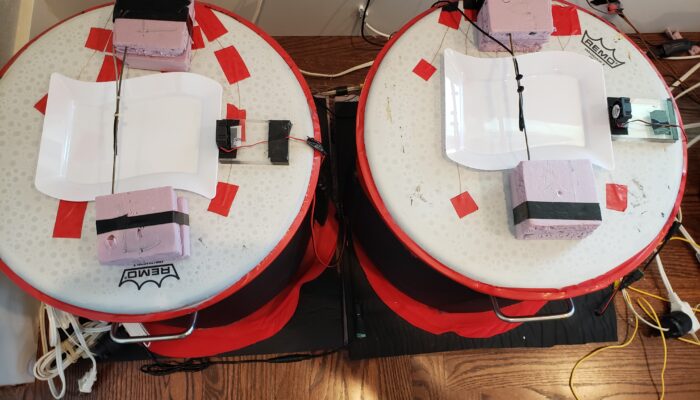
By the Numbers: the Search for a High-MVTR Waterproof Breathable Shell Jacket
A high MVTR waterproof-breathable shell jacket may be the holy grail that can replace both a wind shirt and a rain jacket. Do they exist, and where do we find them?
Episode 48 | Waterproof Breathable Fabrics
Andrew and Ryan chat with Backpacking Light contributor Stephen Seeber about layering and waterproof-breathable fabrics.
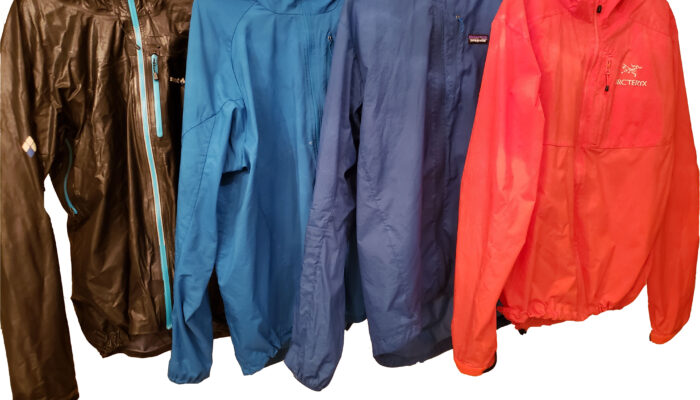
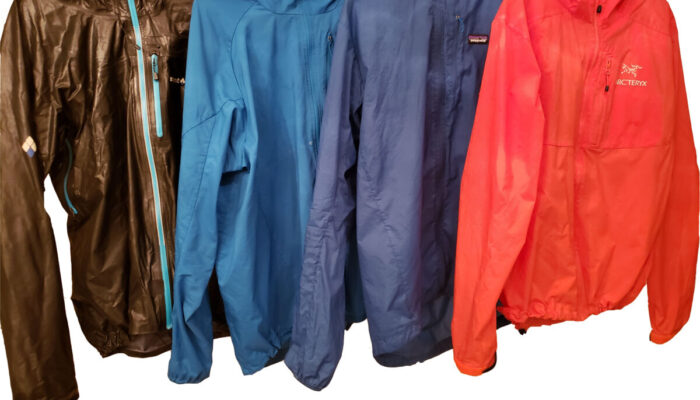
Air permeability vs. moisture vapor transmission rate (MVTR): which one impacts moisture transport more in wind and rain jackets?
This study compares the performance of four jackets made with fabrics that span a wide range of air permeability rates and moisture vapor transmission rates (MVTR). The study shows that significantly greater moisture removal can be achieved as a function of jacket MVTR than jacket air permeability.
 New Gear with ALUULA Graflyte FabricsLighter, stronger, more abrasion-resistant, and highly water-resistant - explore ultralight backpacking gear made with ALUULA Graflyte fabrics. Engineered for exceptional strength, durability, and lightweight performance, ALUULA Graflyte helps reduce pack weight without sacrificing reliability, making it ideal for demanding backcountry adventures.
