

Episode 45 | Backcountry Creativity
The extended video version of this podcast episode is available to Unlimited Members.
- The extended video version of this podcast episode is available to Unlimited Members for free as part of their membership. Become an Unlimited Member »
- You must be logged in with your Unlimited Membership account to see the extended video version of this podcast episode here. Login Now »
Stream
Summary
In this SKILLS SHORT EPISODE, Ryan and Andrew talk about strategies and techniques for creative pursuits in the backcountry: painting, writing, composing, photography, journaling, and more!
Outline
- intro
- the difference between journaling and writing
- Ryan’s tools for taking notes in the backcountry
- journaling with a pencil vs. a pen
- bullet journaling
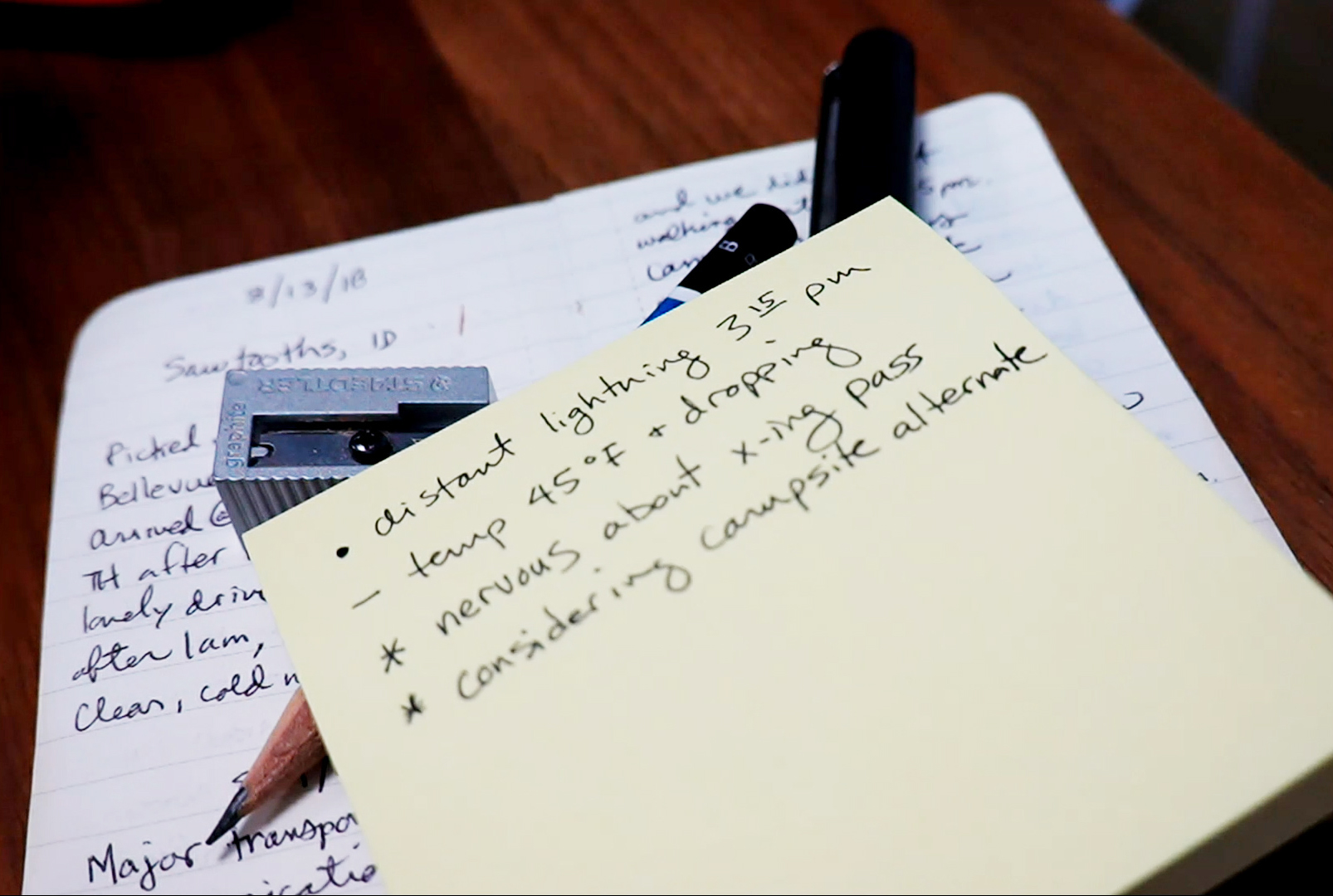
- Reconciling your journals with your thoughts afterward can be a fun mental exercise
- Ryan’s drafting practices
- using photos to structure a narrative
- Rite in the Rain journals
- long narratives in prose vs. short notes
- Ryan’s handheld air quality meter
- the richness of allowing a perspective to age
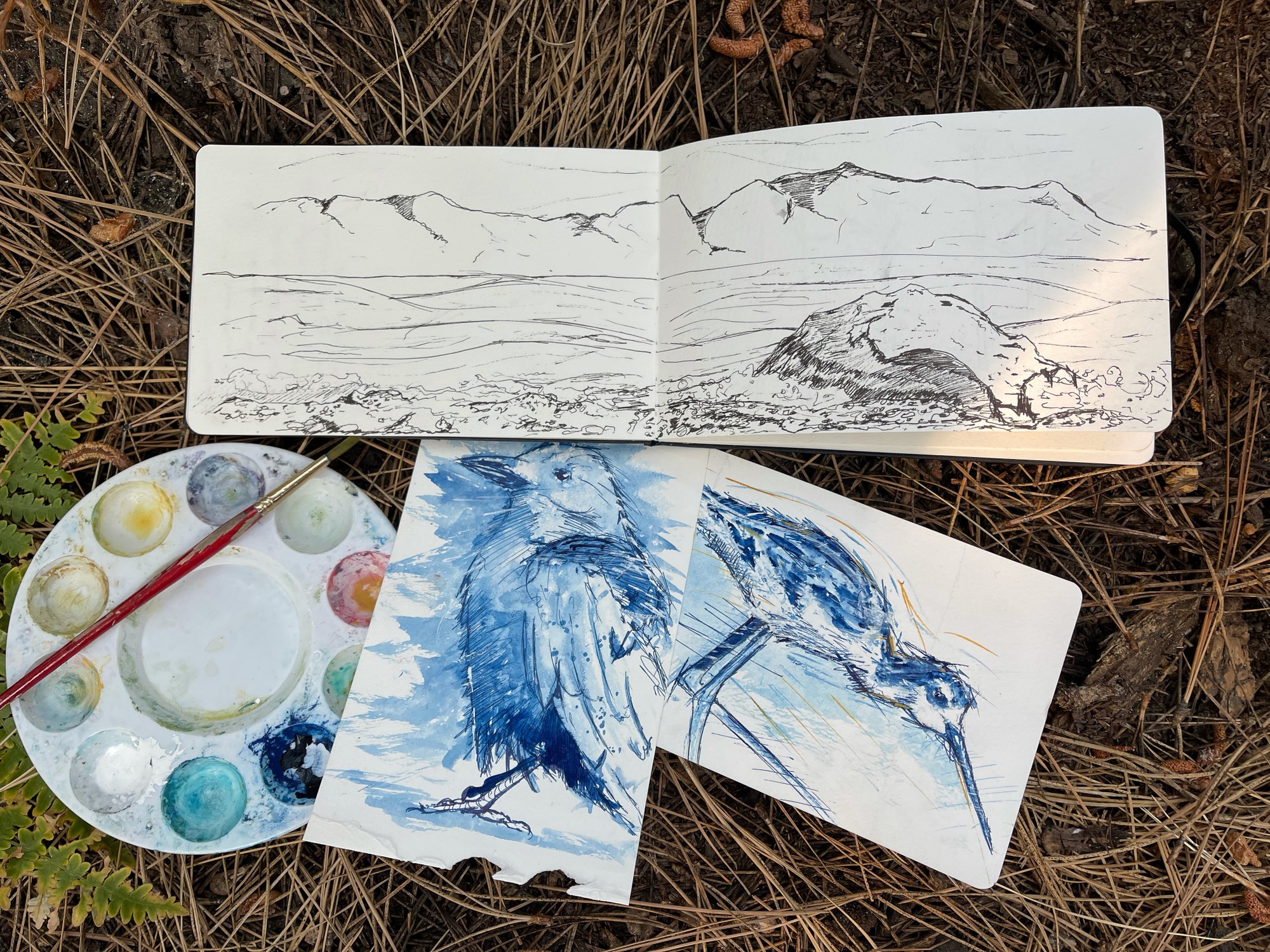
- Andrew’s been painting in the backcountry
- the benefits of using watercolors
- use full-sized brushes or pencils
- Moleskine watercolor notebooks
- composing and developing themes
- Andrew’s essay Salamander Song is a good example of work born out of practicing intentional creativity in the background
- Andrew uses Lightroom to edit photos in the background
- Andrew is no longer using his Sony RX100 in the backcountry
- drop us a note describing your creative endeavors in the backcountry at podcast@backpackinglight.com
How to Subscribe
Apple Podcasts | Spotify | RSS
More Episodes
Backpacking Light Podcast Index
Credits
Executive Producer - Backpacking Light; Show Director and Host - Ryan Jordan; Producer - Chase Jordan; Theme music: Look for Me in the Mountains written by Chris Cunningham and Ryan Jordan, performed by Chris Cunningham (acoustic guitar, lead and harmony vocals, harmonica), Chad Langford (upright bass), and Tom Murphy (mandolin), produced by Basecamp Studios in Bozeman, Montana.
Feedback / Tips / Questions
podcast@backpackinglight.com
More Backpacking Light
Sign up for the Newsletter. Become a Backpacking Light Member.
Disclosure
Sponsorship Policy: Backpacking Light does not accept compensation or donated/discounted products in exchange for product mentions or placements in editorial coverage, including any podcast episode content not excplicitly identified as sponsored content. Some (but not all) of the links in these show notes may be affiliate links. Learn more about affiliate commissions, influencer marketing, and our consumer advocacy work by reading our article Stop wasting money on gear.


Discussion
Become a member to post in the forums.
Companion forum thread to: Episode 45 | Backcountry Creativity
Andrew and Ryan talk about skills and strategies for painting, writing, composing, and photography while backpacking.
Interesting podcast!
Andrew, I like the idea of using just one color of paint. Another thought is to take two small pans of paint and choose complimentary colors across the color wheel from each other. Mixing compliments gives you a neutral third hue. Maybe a light teal blue and a desaturated deep red. You might some really nice browns to experiment with.
May I suggest making solar prints as another way to be creative in the backcountry? The materials to bring are lightweight, and you’ll want to figure out what sort of basin you will use for fixing.
Here are some examples from a trip from last year.
One must take care, of course, when choosing materials—stripping plants of leaves and cones is unnecessary and leaves traces. There are plenty of natural materials to be found.
That’s a great idea.
Can a solar print be used in a pinhole camera?
I loved this episode, thanks for sharing your creative processes and talking about the importance of creativity in the outdoors.
This year, Ive been ‘dialing in’ my watercolor field painting kit, switched to a travel squirrel mop brush with a cover/handle and carry a small moleskine watercolor journal to capture memories of my day. Highlights of this summer were: Painting my Isle Royale National Park backpacking trip, the shore of Jenny Lake in the Tetons, stopping on day hikes & bike rides, and the fun challenge of painting in the car, looking out the passenger window on our roadtrip out west. These little paintings capture what I was doing and feeling at the time I painted them. And painting small and sketchy, is a low time commitment and removes any pressure to produce a final piece of art. I also love the idea of just bringing one pigment, I might try that!
Thanks again for this show. Happy trails!!
Jen
@wandering.pine
@wandering.pine
I love that! I haven’t tried watercolor since I was in my early 20s. I don’t think I was in the right frame of mind to be present enough for that to be a good experience. Maybe I should try again.
I am a mixed media artist and took a 10+ year break from making art. Small watercolors has been such a wonderful way to get back into it. Its like a fresh new joy and I get to combine it with my love for the outdoors!
On the use of solar printing with a pinhole camera: only if you have a lot of time—on the scale of weeks or months.
I love this discussion. I’m super glad this episode struck folks, and I love all the tips! I think we may have to do follow-up.
For many years I’ve carried a small handheld voice recorder for notes, observations, reminders, and interesting sounds. Many of my BPL stories started as short audio snippets. After a trip, I’ll spend hours transcribing and expanding, both reliving the journey and starting story first drafts.
Like Ryan’s back pocket notebook, accessibility is critical for me. The recorder lives in a front shorts pocket, shoulder pocket, or even on a lanyard around my neck. I can take it out, press a button, record, stop, and put it back, without breaking stride or looking away from the trail. And I mostly stay in the moment, which is important, too.
My goals are to capture ideas and notes, not to document a trip. Some of my ideas span a dozen short recordings over hours or days.
I’ve tried taking lots of pictures while backpacking. But the process of photography – thinking about composition, lighting, angles, would it look better up ahead, etc. – disrupts my hiking flow too much. I should practice Ryan’s suggestion of quick, imperfect pictures not intended for publication.
And yet … I’ll probably shoot smartphone videos on future trips. For me, videography and production can be both very fulfilling and very frustrating. We’ll see.
Thanks for the inspiring podcast.
— Rex
Great topic, got me wanting to go take that drawing class I’ve been putting off.
Another nice thing about using the smartphone (and yes, most modern cameras) is the time/date-stamping. I put the date & time in the journal to sync up with the photos.
Perhaps a topic for the future: ultralight environmental instrumentation (e.g. weather stations and more on the air-quality gauge that Ryan mentioned.)
Eric
Become a member to post in the forums.