


Introduction
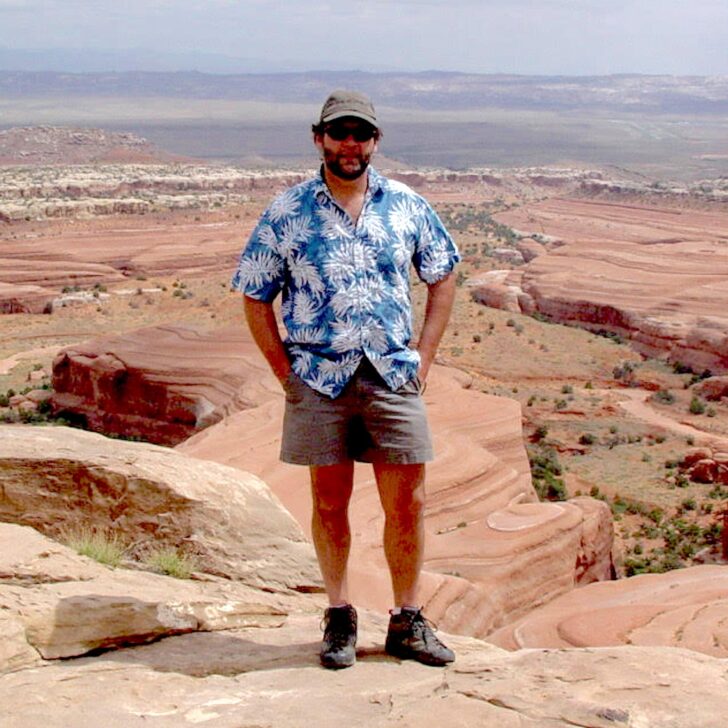
Imagine designing hundreds of tents, dozens of backpacks, and several sleeping bags for some of the best-known outdoor gear makers. Along the way, you invent many features still found on tents, packs, and sleeping bags today while earning over a dozen patents. That’s Mike Cecot-Scherer, who has designed camping equipment for more than three decades and continues consulting with the big manufacturers.
But a few years ago, Mike wanted to make products that nobody else would. He started thetentlab.com to make and sell his unusual MoonLight tents, plus the well-known Deuce ultralight potty trowels.
We spoke by telephone on September 29, 2020, for nearly three hours, covering a variety of topics. This story is on standards; we will cover tent design, potty trowel design, and a nearly-forgotten but innovative backpack in future installments. Our conversation was edited for clarity and length.
Flammability
 Rex: It seemed like there was a big shift in the backpacking tent industry when the CPAI 84 tent flammability standards came out.
Mike: I put it on the web, but it still bears mentioning. The Canvas Products Association International, the people who make big canvas tents, wrote a fire retardancy standard. People were literally dying in their waxed cotton tents. They were big, 40 pounds worth of flammable material around you. But instead of keeping [the standard] to canvas tents, they wrote it so that it would apply to every single tent.
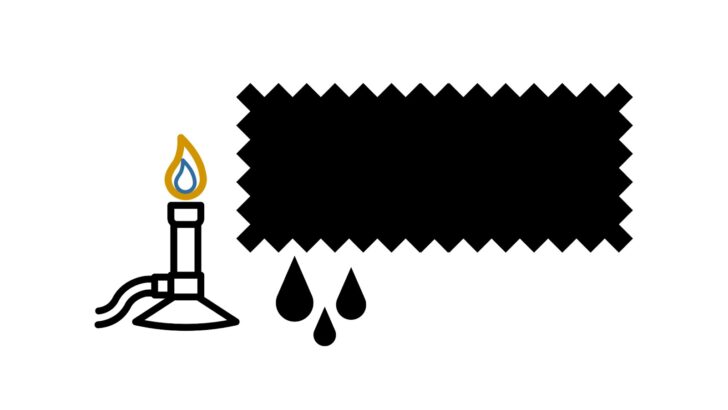
It was a very strict fabric standard. [CPAI 84] uses a Bunsen burner and a length of fabric, horizontally burning one end, 45 degrees burning one end, and then vertically burning one end. It’s the vertical one that’s the real bugger because it’s not supposed to drip, or [at least] not much. Of course, cotton doesn’t drip at all. That [drip requirement] was directed at synthetics very specifically.
You found people trying to do the right thing, adopting that standard for all tents sold in their state. So [CPAI 84] immediately applied to all backpacking tents. I have never even once heard of anybody dying or being seriously injured by a backpacking or mountaineering type tent [burning]. It warped the whole industry.
Seven states picked this standard up [including California]. If you are a manufacturer selling to retailers across the nation, you probably are going to decide pretty quick that all your tents need to be fire retardant based on those states requiring it. That and the threat of lawsuits.
Just because your state didn’t require it, “Didn’t you do as much as possible?” It’s now clear that there are no lawsuits from people dying in [backpacking and mountaineering] tents. But you still have these regulations in place. And it’s the person who is selling them [who is] actually on the hook for the law – the retailer – so that puts a little wrinkle in it.
Gore-Tex Doesn’t Burn Correctly
 Mike: We had a problem with Gore-Tex. Everyone knew Gore-Tex tends not to burn; you basically have to take a torch to get anything at all. But [under] the standard, [Gore-Tex] managed to make a fabric that is almost unburnable, not pass. The problem was that you had this laminate, and the Teflon material is completely nonflammable. Part of the test was to have it draw back away from the flame. Well, it didn’t do that!
The Teflon layer holds the rest of it, just sitting there. And [since] there is no time limit on the test, after some time flame can creep up one of the face materials. A complete unintended consequence. This really fireproof product couldn’t pass the fire-retardant test. And because of the fear of lawsuits or just being hauled into court by the fire marshal for non-compliance, it [means] no Gore-Tex tents available, except in Washington or maybe in Colorado. It doesn’t apply to where you manufacture, it applies to where you sell. And it doesn’t apply to interstate commerce.
Member Exclusive
A Premium or Unlimited Membership* is required to view the rest of this article.
* A Basic Membership is required to view Member Q&A events


Discussion
Become a member to post in the forums.
Rex Sanders interviews long-time gear designer Mike Cecot-Scherer about a range of common gear standards.
Great stuff! Looking forward to the rest of the series.
Interesting discussion. Sounds like the cotton tent makers wrote a standard to eliminate their synthetic competitors. On the subject of standards, ISO 5912:2011 is a test standard that covers many aspects of test performance, including measuring, hydrostatic head requirements and more. Their HH standard varies according to tent classification. There are two categories of tents and three levels in each. However, they call for 2500 mm for tent outer fabric and 5100 mm for a ground sheet. I wonder if the Kelty rain room simulated heavy winds. If so, under the right circumstances I wonder if they would find 1500mm or 1800mm to be a problem?
Stephen, interesting questions. And I think the community here has established pretty well that designing to a 1500 or 1800mm standard is a problem, if for no other reason that the fly fabric will degrade and fall below that standard relatively quickly if the tent is used a lot. Thus, all the cottage manufacturers, who are responsive to the serious users who are their customer base, have chosen fabrics that well exceed that standard.
I recently did aging tests on 7 fabrics using my newly reconfigured HH tester which is now sized to conform with ISO 811 and AATCC 127. Average HH head loss through aging in 7 tent fabrics: 53%. So, yes, it is important.
How realistic do you find the aging protocols, insofar as they simulate what tent fly fabrics face in the wild?
I don’t know. I am following the Protocol B described I believe by R. Nisley and Roger Caffin. Perhaps they can address the origins of the test and its applicability. I do think it is a useful piece of information when trying to choose from competing fabric choices. There are other wear standards the use wash cycles but require more cycles than the single one called for by Protocol B.
“Sounds like the cotton tent makers wrote a standard to eliminate their synthetic competitors.”
I wonder if that was actually intentional, or were they simply trying to be as “cya” as possible. Obviously once California chose to “broadly apply” it to recreational tents, that pretty much did it for the manufactures (I’m guessing). I suspect they could have created exceptions for small tents back when they wrote the law, but I’d think there was too much money to be made for companies who made the fire retardant chemicals.
I think what’s more interesting to me nowadays is the growing backlash over these same chemicals and the increased risk of cancer:
https://www.ncbi.nlm.nih.gov/pmc/articles/PMC3958138/
https://www.rei.com/blog/news/rei-pursuing-new-testing-method-to-eliminate-flame-retardants
https://www.outsideonline.com/2406767/flame-resistant-tents-carcinogens-cancer
“I have never even once heard of anybody dying or being seriously injured by a backpacking or mountaineering type tent [burning]. It warped the whole industry.”
Not to sidetrack the main point. But this comment made me remember a chapter in one of Jon Krakauer’s books about a climbing disaster on Denali. The disaster happens at the end of a chain of events which began with a fire in one of the tents that leads to the loss of the tent and some gear, plus a number of bad decisions subsequently.
My searches turned up this part of a Denali disaster story in the Daily Mail:
“Within 3000 feet of the summit, a tent fire engulfed one tent with six men inside who escaped with singed eyebrows and beards as well as minor burns. A smoldering floor and metal zippers was all that remained of the vaporized tent. Down parkas and a sleeping bag had melted into a stinking pile of nylon.”
Seven climbers died during the 7-day storm that followed, with peak winds over 300 mph. Most of them died while returning from the final summit climb.
At least five books have been written on that disastrous 1967 Wilcox expedition up Denali, with many stories online. The Daily Mail account is the only online story that mentions the tent fire.
So you are still very, very unlikely to die in an untreated tent fire while backpacking or mountaineering. What happens after that can hinge on incredibly bad luck.
— Rex
Very interesting info from a professional.
WATERPROOFNESS: I’ve owned two PU coated tents in the ’80s. Since then all have been silnylon Tarptents. The 1st two I re-coated with a 5:1 mix of odorless mineral spirits and GE clear silicone caulk only because there were complaints of “mist-thru” in driving rain. I had never experienced that in my Contrail in a few hard rains but better safe than sorry. Henry Shires then upped the coating and complaints ended.
HEADROOM: The one thing I realized was that headroom is going to be VERY restricted in a solo tent. Deal with it! Tarptent was the 1st to give realistic 3-D diagrams of tent interior space showing the outline of an average size man (say 5′ 11″) inside. Very helpful.
TEAR STRENGTH: Good designers are always fiddling with proper strain point reinforcements. An example I know of is my Gen. 2 Notch Li that has had more reinforcements added relative to the Gen. 1 Notch Li.
FIRE RETARDANT: If the “retard” owning the tent can’t be careful then likely nothing will save them. Never use a liquid fuel stove inside a tent, period.
With this article we now have a better understanding of all the factors tent designers must contend with when designing their next cool tent that will actually (probably) sell – or not.
“With this article we now have a better understanding of all the factors tent designers must contend with when designing their next cool tent that will actually (probably) sell – or not.”
Then you’ll want to read the next installment of that interview, dedicated to tent design. Should be published soonish.
— Rex
@ Rex
Like I said, my remembrance had little to do with the theme of the standards article.
The theme of the Krakauer essay about the Denalis disaster is that disasters are not simply bad luck but a chain of events, the result of many events some of which are accidents others bad planning or bad decision-making or poor preparation. He correctly argues in my reading that the tent fire was the first event in the chain that led to the disaster.
Cheers
BTW the essay on Denali is in this collection Eiger Dreams: Ventures Among Men and Mountain. I no longer own the book but if I recall correctly Krakauer’s telling of the story, the loss of the tent, sleeping bags and other insulation led to fatigue and hypothermia which in turned caused other problems.
Part 2 of my interview with Mike Cecot-Scherer dropped yesterday, focused on tent design:
https://backpackinglight.com/standards-watch-mike-cecot-scherer-on-tent-design/
— Rex
Become a member to post in the forums.