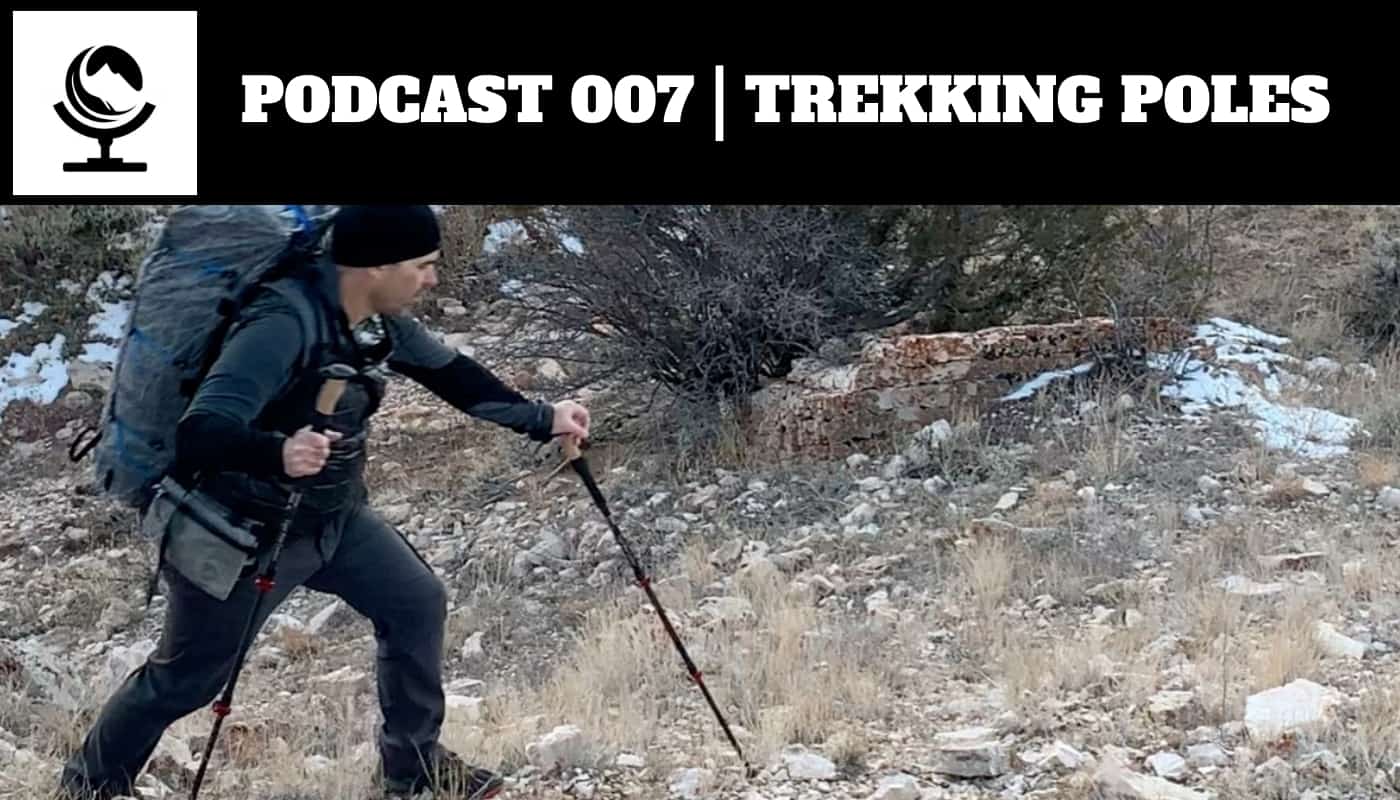
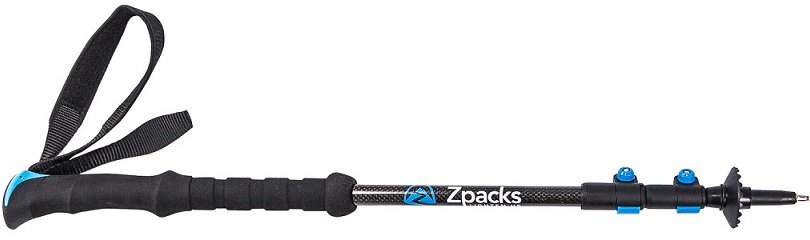
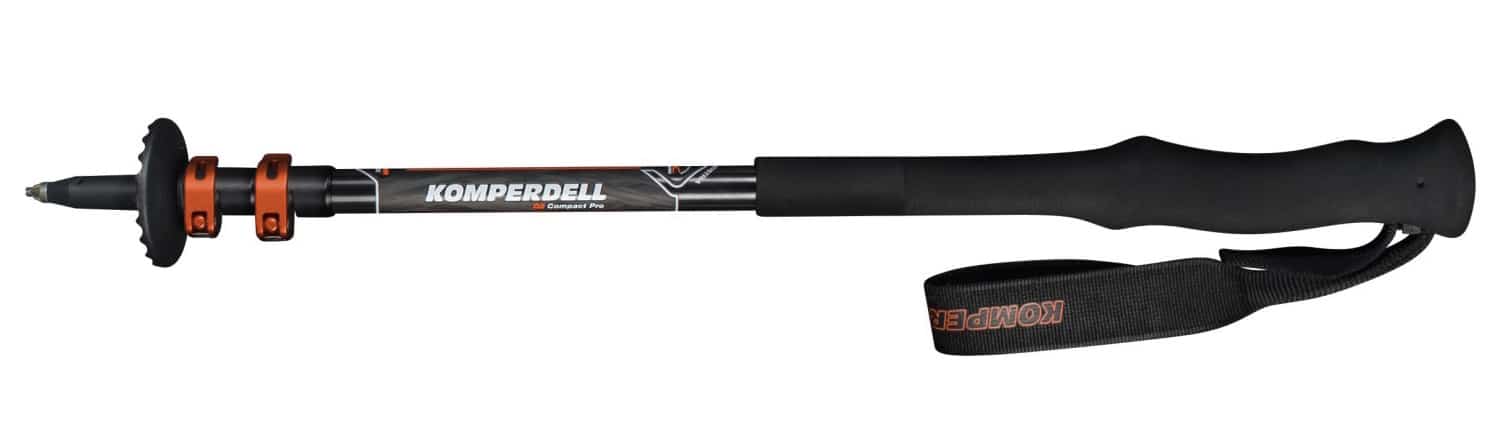
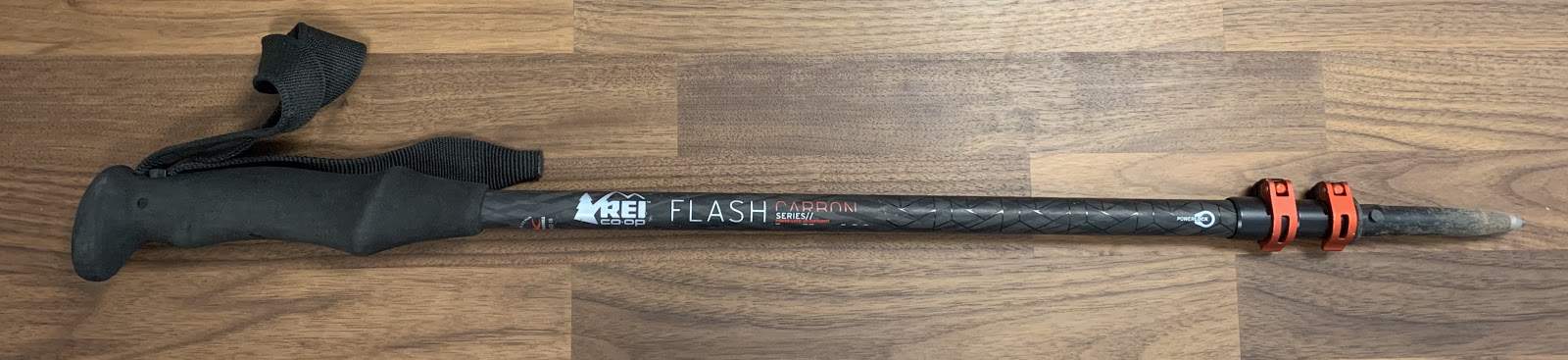
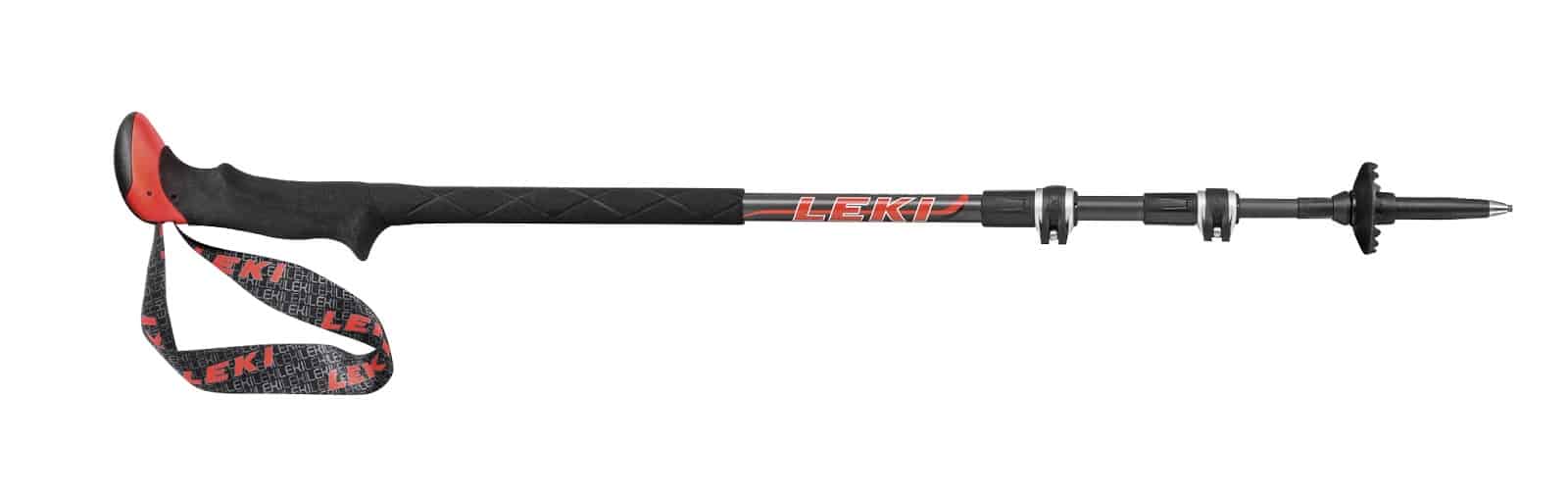
Trekking poles are a surprisingly contentious piece of gear in the UL world. Their utility and usefulness is endlessly debated, and the science that backs up manufacturer claims is all over the map. It’s a murky world, but Andrew and Ryan jump in with both feet (and two poles each) to help you make some sense of it.
The guys kick things off by interviewing Rob Shaul, founder and owner of the Mountain Tactical Institute. Rob makes a living training mountain athletes and military service members deployed in mountains regions, so he knows his stuff. MTI has conducted a few studies that measure the effectiveness of trekking poles on athletes under load. The interview covers those studies: how they were constructed and what they ultimately prove (or don’t prove).
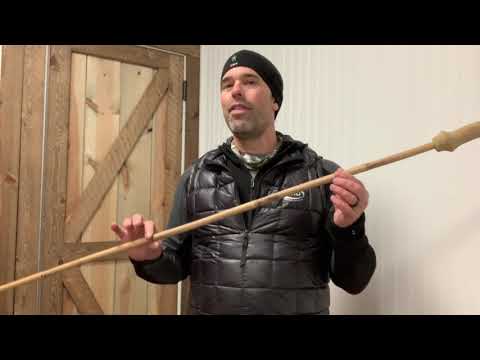
In the second interview, Ryan and Andrew chat with James Marco, a longtime Backpacking Light member and experienced UL backpacker. James provides some context to some of the most well trod trekking pole questions and shares his tips for MYOG poles.
After the interviews, Ryan shares six or seven scientific studies in an attempt to shed light on the big trekking pole questions: do poles make you faster? Improve your balance? Save energy? Reduce strain and impact?
Next the guys chat about the most contentious trekking pole statements the internet has to offer. If you’ve ever been in a forum fight about trekking poles, chances are you’ve heard a few of the things they cover in this section.
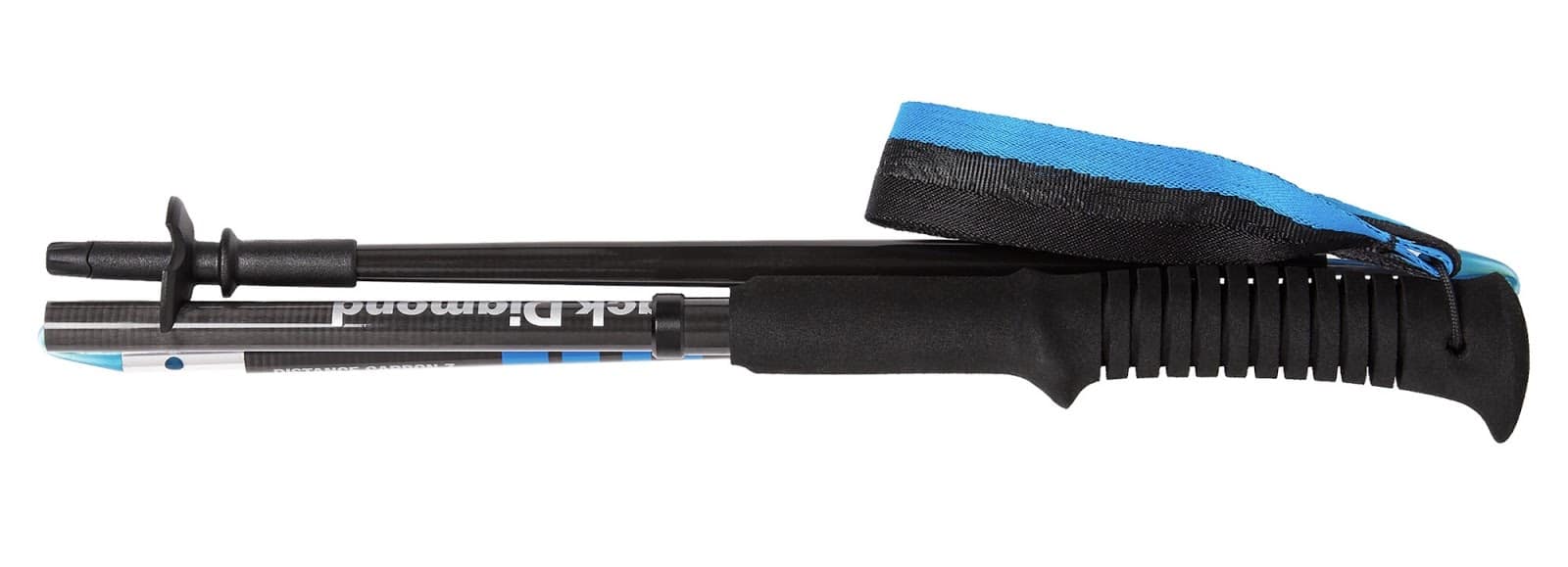
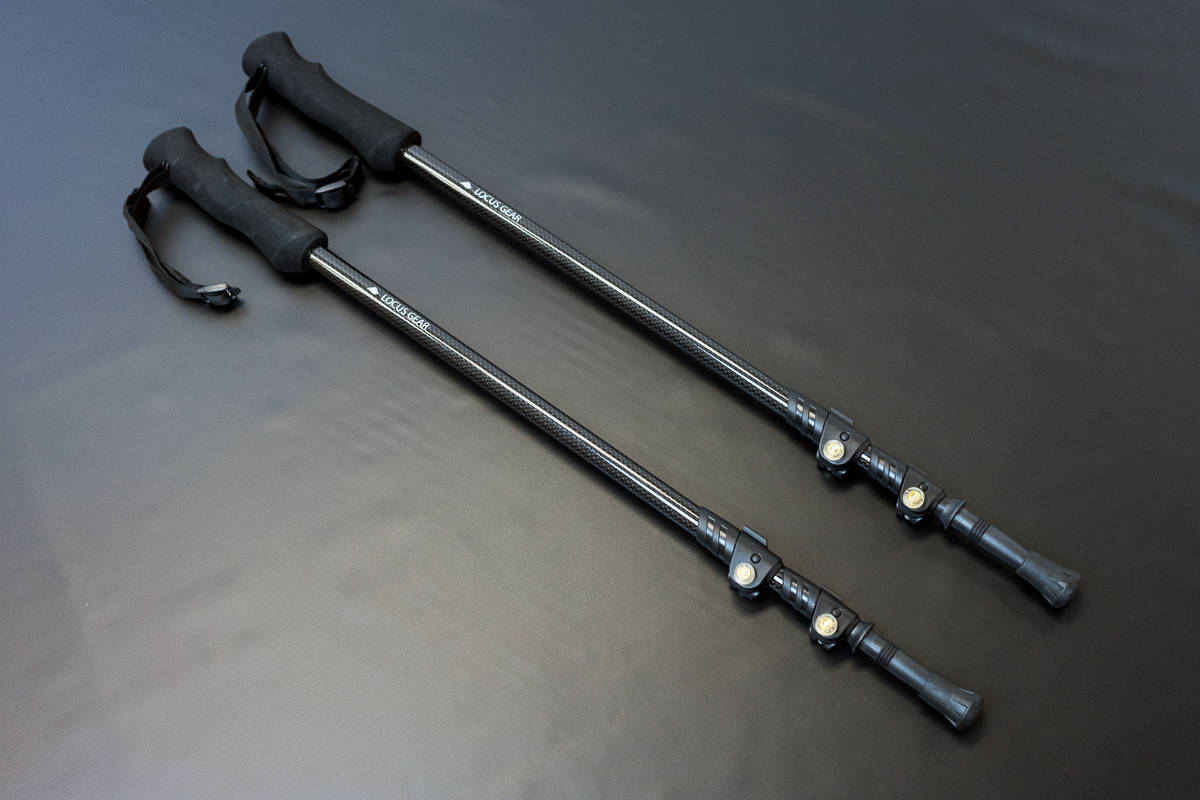
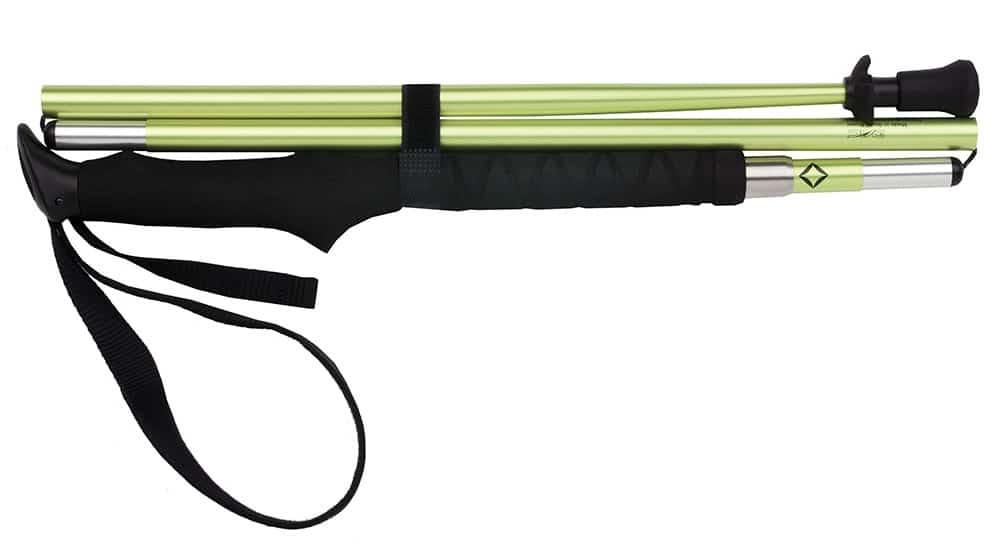
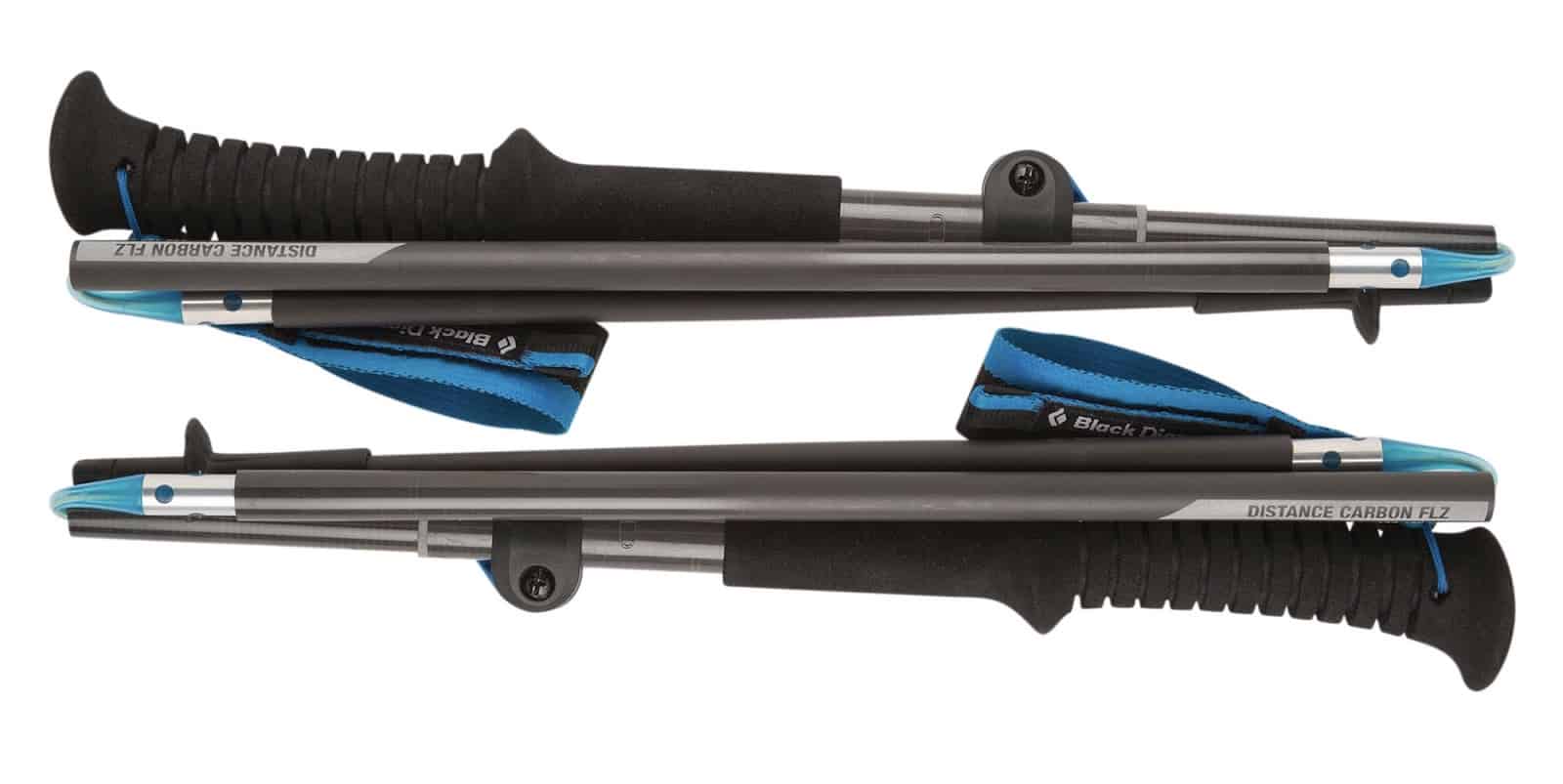
This episode’s Gear section is a brief overview of BPL’s recent Trekking Pole Gear Guide. Ryan shares a few of his favorite poles, including a few that surprised him!
In the Hiker Hack’s segment Ryan talks trekking pole field repair, and Andrew has a question for listeners concerning a common thru-hiker trekking pole breakdown.
Outline
INTRODUCTION
Ryan and Andrew introduce the topic: Trekking Poles!
INTERVIEWS
Andrew introduces the first guest: Rob Shaul from Mountain Tactical Institute. Rob is the founder and head coach at the Mountain Tactical Institute in Jackson, Wyoming, where he trains and coaches mountain athletes of all kinds, as well as military service members deployed in mountainous areas.
Rob’s interview: discussion of two studies conducted by Mountain Tactical Institute
Why trekking pole studies can be difficult to conduct.
The relationship of hiker fitness to trekking pole use
The relationship of hiker age to trekking pole use
Ryan introduces the second guest: James Marco. Jim has been a Backpacking Light member since November of 2010 and has been a frequent and valuable contributor to our forums through the years. He has several decades of hiking experience in the Adirondacks of New York among other places and has probably seen more trends come and go in the outdoor industry than most of us.
Jim’s backpacking experience
The terrain of upstate New York
Where does Jim fall on trekking pole use and why?
Jim uses a fixed length MYOG trekking pole with no grip and very minimal straps: why he does this, how he made it, lessons learned.
Anti-shock poles: useless?
Shelter use with trekking poles and what to do if your pole breaks (if you are in the woods…)
Who can benefit the most from using trekking poles?
Minimalist trekking pole technique.
Scientific studies: Ryan and Andrew discuss some of the available trekking pole research to determine what, if anything, can be said (definitively) about the physiological benefits of trekking pole use.
RESEARCH
Do trekking poles improve balance? Consensus: Maybe (probably)!
Not if you are in rough terrain, crossing streams, etc…our take: they are probably worth the weight.
Trekking poles were invented by gear companies to make money
Nope. Trekking poles are an adoption of useful techniques from the skiing and mountaineering-staff-toting worlds and are in fact an optimization of the single walking stick.
There are some situations where trekking poles are more useful than other situations
Useful trekking pole situations
Fording fast rivers
Heavy loads
Downhill or uphill (depending on what you like)
Non-useful trekking pole situations
Talus (or maybe not…)
Cheap trekking poles are just as good as expensive trekking poles and or / if you don’t spend a hundred bucks on trekking poles you are going to regret it.
Find the middle ground
For extreme or long-term use, spend the money on quality materials and construction.
Trekking poles are most useful for aging hikers who need the extra support / balance.
Trekking poles are indeed very useful for hikers in this group
But…it isn’t a zero-sum game. Trekking poles can help even fit young hikers go faster.
Trekking poles are most helpful when using a heavy pack (30 lbs+)
Maybe. But they might also help you more with a lighter pack…
Trekking poles are a must when fording rivers or rock hopping across creeks
Depends on your style / preference. But don’t put yourself at risk of injury because you don’t want to get your feet wet…
Some stream crossings are actually hampered by trekking pole use!
Some trekking pole “technology” (locking mechanisms, folding vs telescoping) is better than others
We need to get away from plastic locking mechanisms and other components
The strength of a carbon pole depends greatly on the thickness and design of the shaft. Not all carbon is created equal…
How do you fix a broken trekking pole locking mechanism in the field?
It takes carving, cordage, and glue!
How about a snapped pole or sheared-off tip?
See above. It’s all about protecting the tip so the carbon doesn’t continue to shear and break…
Thru-Hikers in the crowd – have any of you ever worn down the plastic around your pole tip to the point that the carbide tip falls back into the pole itself and rattles around? If so, do you have a fix or suggestion that can be implemented in the field? Let us know! Shoot us an email to podcast@backpackinglight.com
Feedback, Questions, Tips?
Submit them to podcast@backpackinglight.com orTwitter and get featured on our next podcast!
Sponsors: Help us Keep the Podcast ADVERTISING-FREE!
This episode of the Backpacking Light Podcast is supported and kept advertising-free by Backpacking Light membership fees. Please considerbecoming a member which helps support projects like this podcast, in addition to a whole slew of other benefits!
In addition, some of the links on this page may be affiliate links that refer to our partner merchant retailers. If you follow a link and then make a purchase, we receive a small commission which goes a long way towards helping us pay for podcast production, hosting, and bandwidth fees! Thanks for supporting us in this way!
Contact
You can contact us at podcast@backpackinglight.com, or follow us on social media –
We do not accept money or in-kind compensation for guaranteed media coverage: Backpacking Light does not accept compensation or donated product in exchange for guaranteed media placement or product review coverage.
Affiliate links: Some (but not all) of the links in this review may be “affiliate” links, which means if you click on a link to one of our affiliate partners (usually a retailer site), and subsequently make a purchase with that retailer, we receive a small commission. This helps us fund our editorial projects, podcasts, instructional webinars, and more, and we appreciate it a lot! Thank you for supporting Backpacking Light!
This article features lightweight down parkas (usually, full-zip jackets with hoods, a longer hem, and box-baffled construction) appropriate for winter backpacking, snowshoeing, backcountry skiing, mountaineering, and other cold-temperature activities.
Today’s Questions: Will you be holding a live film festival event this year? What do you think about adding a chat room at the backpackinglight.com website to allow members to interact with each other? Do you work from home, or do you go to an office every day? When are you going to offer another Lifetime Unlimited Membership sale? If I want to take my summer backpacking clothing and sleep system into winter conditions, what do you think are the most essential pieces of gear to add? Are you ever going to sell your Melanzana High Loft Hoodie?
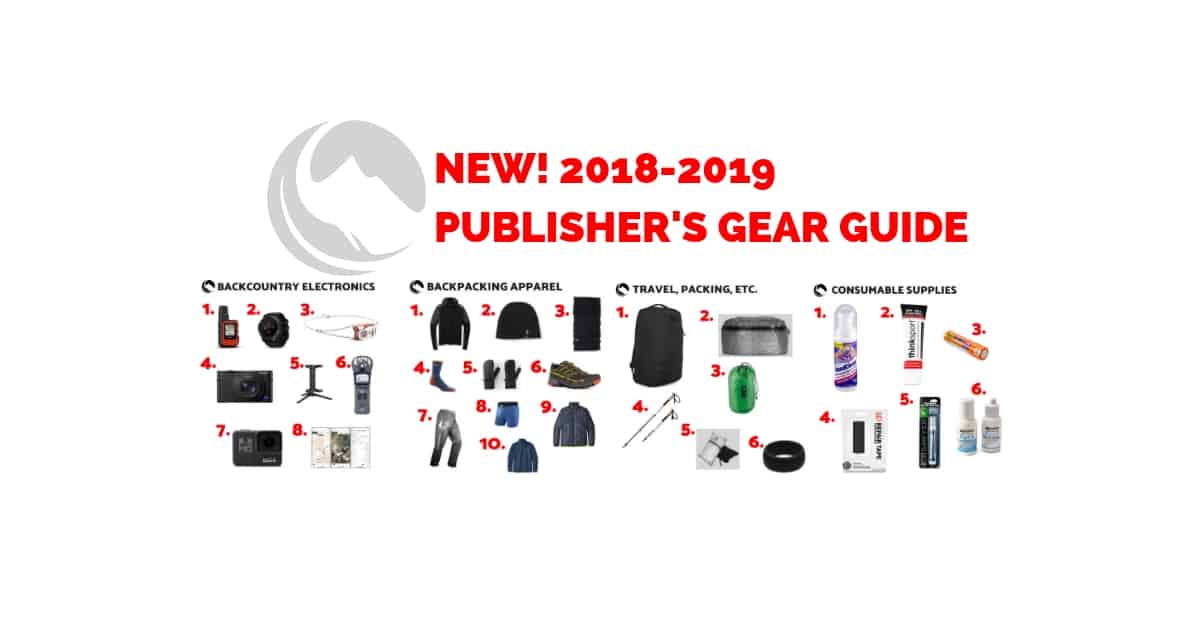
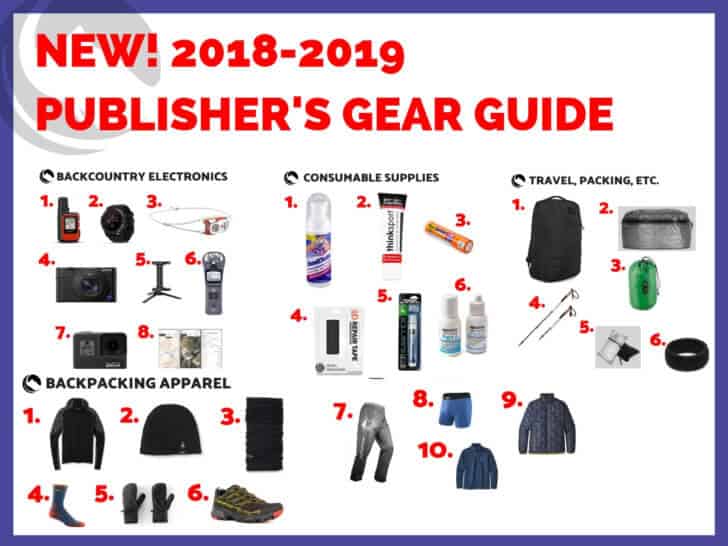
My personal recommendations for ultralight and lightweight backpacking gear for 2018-2019 – gear that I’ve used all year in 2018 that includes the good stuff that’s staying in my kit for 2019!
Introduction
This gear guide represents my personal recommendations for backpacking gear that is durable, lightweight, versatile and offers a very high level of performance for the cost.
This Gear Guide is for:
Backpackers who want reliable gear that’s been tested and proven.
Backpackers who want to share this gear guide with people who buy them gifts for the holidays, birthdays, etc. Or heck, this could be your wedding registry!
Friends and family members of backpackers looking for some gift ideas that aren’t hacked together by an unknowing journalist, or by a publisher receiving paid placements from manufacturers looking for advertising spots.
Gear with an asterisk*
My biggest gripe with most gear guides you see on blogs and magazine websites are that they include gear the writer/publisher has never even touched. The gear is selected based on its sales potential and ability to deliver affiliate revenue back to the site owner. Yes, there are affiliate links in this gear guide as well (see the affiliate disclosure at the end of this article) but only when they make sense – this gear guide contains the gear I actually use on a regular basis.
In addition, I’ve marked gear that I take on almost every trip with an asterisk (*), so you have an idea of the things that I consider nearly indispensable for backpacking.
About this 2018-2019 update
This is an updated version of the Publisher’s Gear Guide (No. 1) I wrote last year, which represented my favorite gear that I used in 2017. Many of the items I covered last year remain in active use in my kit, and that Gear Guide remains relevant. This gear guide includes a couple of those items, but most of the items are new gear that was released in 2018 that I’m using or are items that are continuing to solidify their value in my regular backpacking kit.
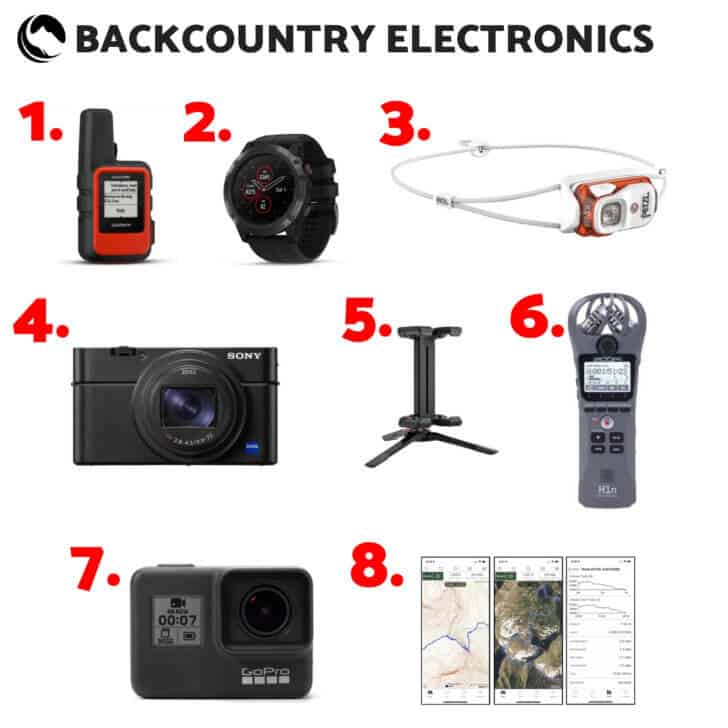
Curmudgeon resistance aside, electronics are part of our backcountry experience and are here to stay. In the old days, backcountry electronics provided marginal benefit and weren’t so reliable in the hostile environment of the outdoors. That’s all changed, and we now have some extremely powerful devices that improve our safety, efficiency, and enjoyment of the backcountry.
The Garmin inReach Mini is the smallest, lightest, and most powerful satellite messaging device on the market. I’ve used the Garmin inReach Mini on every trip since its release this summer, and it’s been the most reliable device I’ve ever used to keep me in touch with my wife via text messaging when I’m on a trip. Learn more by reading my comprehensive review of the Garmin inReach Mini, which earned Backpacking Light’s Highly Recommended Rating.
Why I like it: It gives my wife a level of comfort knowing that I’m OK, and it gives me the option to change my itinerary if needed, and text someone to pick me up at an alternate location!
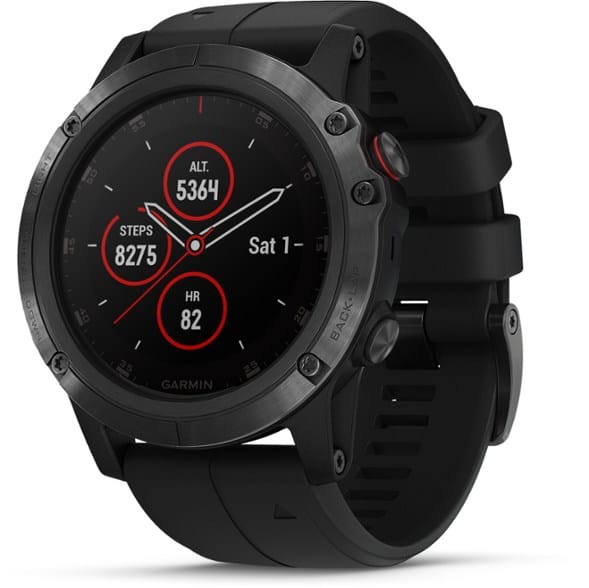
I wrote about this watch earlier in this year’s backcountry electronics gear guide and praised this watch as a hiker’s dream: GPS navigation, activity metrics, integration with my athletic training software, and Bluetooth integration to my smartphone and inReach Mini. The Garmin Fenix 5X Plus is a durable and beautifully manufactured GPS watch and is so critical to my ongoing training and fitness that I can’t imagine life without it.
Why I like it: It collects the data I need to monitor my training cycles, and gives me wrist-top access to all the data I need while hiking, including GPS positioning, inReach Mini notifications, and heart rate (exertion) feedback.
I’m rapidly getting over replaceable batteries, and am becoming increasingly attached to rechargeable devices for backcountry use. I carry an external battery (power bank) anyways for recharging my smartphone (which I use for mapping, journaling, and reading), so why not a rechargeable headlamp? The Petzl Bindi is my pick – it’s ultralight, very bright, and has a minimalist, comfortable headband.
Why I like it: Light, bright, little, durable, waterproof, comfortable, rechargeable.
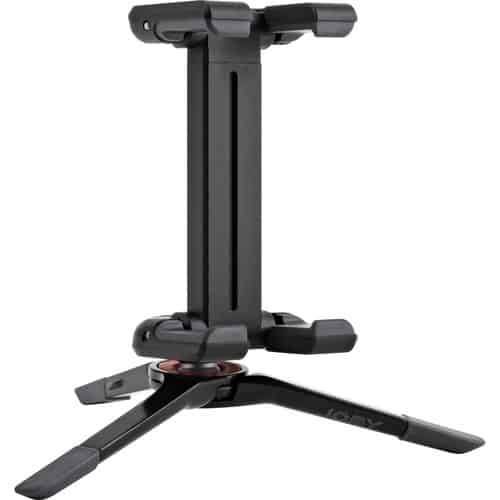
As smartphone capabilities increase, I find myself using my phone more and more, especially for video. I don’t often take a tripod into the backcountry on longer trips, but the tiny Joby GripTight One Micro gives me the flexibility to grab a stable shot when I need it. I can decouple the smartphone holder from the actual trip and use the little folding legs on my other cameras as well.
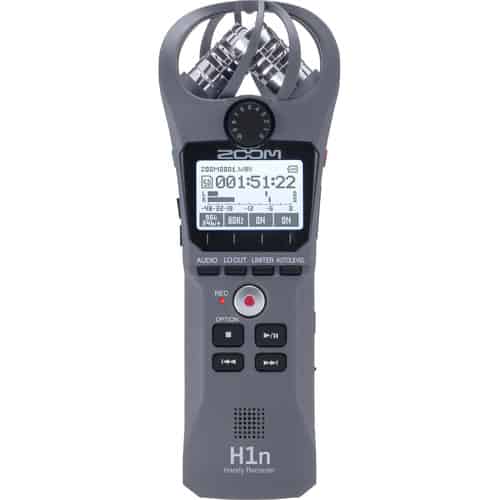
Between my smartphone, the Sony RX100, and my GoPro HERO7 (see below), I feel like I have a pretty compact and powerful arsenal of ultralight image-making equipment for backcountry travel. However, they all record low-quality audio. The little Zoom H1N allows me to grab high-quality ambient sounds (footsteps, water in a stream, rain pattering against a tent) and terrific narrative / vocal conversations that I can then plug into my movies later, or use on a podcast.
Why I like it: Broadcast-quality audio recording for ambient sounds and voice, in a very compact and lightweight package.
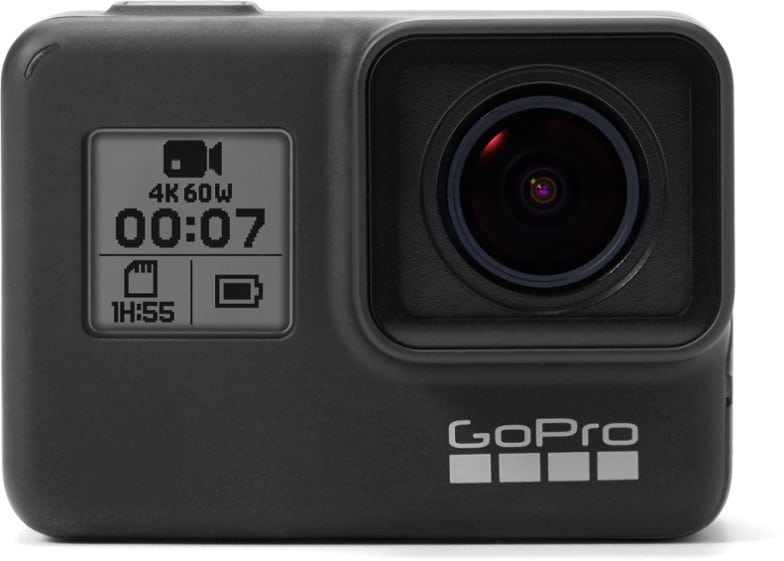
I’ve owned GoPro cameras since their first generation. However, the GoPro HERO7 Black is the first model that has me this enthused about using the little action camera. Professional quality footage with high bandwidth, high frame rates, log profiles that can be color-graded in post is a bonus. Out of the box with default settings, the GoPro HERO7 Black is an incredibly capable timelapse and movie-making machine. The best part about the HERO7 Black: it’s terrific image stabilization.
Why I like it: Fast, easy, pro-quality, tiny form factor offers perspectives you can’t get with other cameras, waterproof, stable handheld images!
Buy Now at REI
I’m not a professional filmmaker but I love the craft to make memories of our adventures. Here’s a quick video I shot using the GoPro HERO7 Black and edited on my smartphone using LumaFusion a few weeks ago.
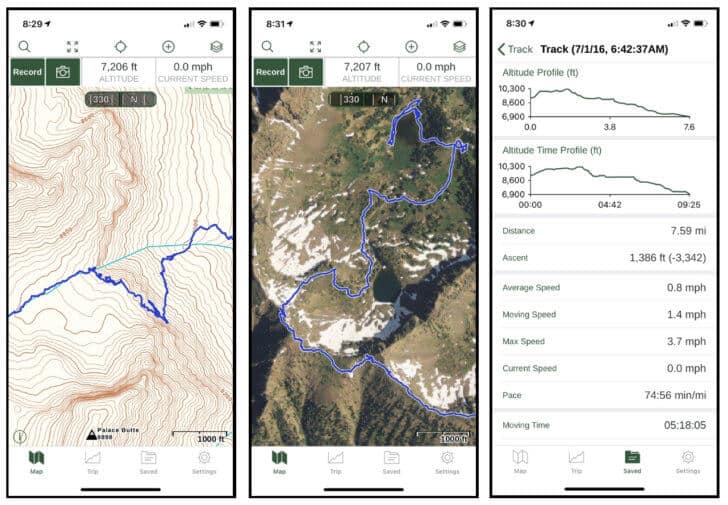
I long ago ditched dedicated GPS units in favor of GPS Apps on my smartphones. After cycling through the usual array of popular apps, I finally settled on Gaia GPS for its power, ease of use, speed, and awesome hi-res maps.
Why I like it: Easy to use, terrific user interface, very powerful features, massive map set available.
Choosing clothes for people is a tricky thing – clothing is personal. And in an age of fast fashion, trendy style, and Instagram, making apparel recommendations is sometimes met with resistance. Therefore, I’ve limited my apparel recommendations here to what I believe are clothing items that have the potential for a wide degree of acceptance by a large number of hikers, with an emphasis on versatility and value.
With a very comfortable athletic fit that works great for my own body type, the Smartwool PhD apparel line is probably the most comfortable next-to-skin wool apparel I’ve ever worn. It’s soft, holds its shape, doesn’t pill, and – my favorite feature of wool – is comfortable across a very wide range of temperatures. The Smartwool PhD Light Base Layer Hoodie under a breathable wind shirt like the Patagonia Houdini Jacket is my favorite trekking uniform in the cold, high, windy, mountain environment above the treeline.
Why I like it: Versatile across a wide variety of temperatures, most comfortable next to skin wool I’ve ever worn.
The Smartwool PhD Light Base Layer Hoodie is one of the most popular choices among our Wilderness Adventures participants. Les Wentworth, 2018 Whitetail Trek, Absaroka-Beartooth Wilderness. Photo: Les Wentworth Collection.
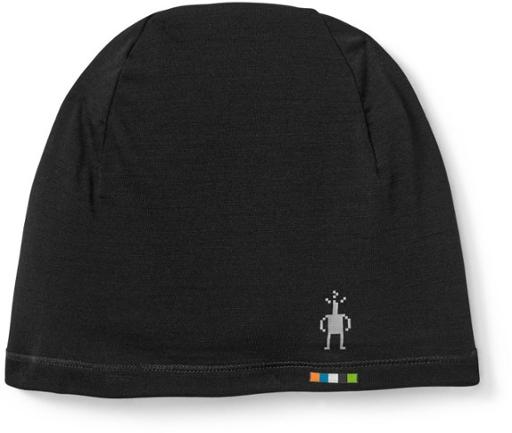
It’s hard to wax eloquent about a tiny little beanie cap, but the Smartwool NTS Merino 150 Beanie is too hard to pass up. A high-performance beanie for active use needs to be as light and thin as possible. Fleece is usually too hot for me, and most other merino caps I’ve tried are too thick. This one fits the bill perfectly and may be the most worn piece of headwear in my kit.
Why I like it: Light, pocketable, very comfortable against sensitive skin at the hairline.
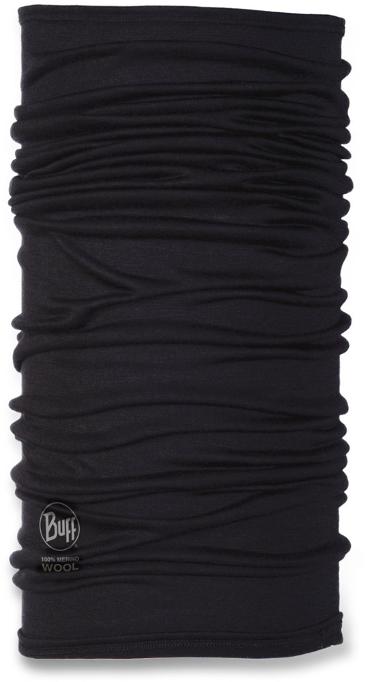
I use synthetic Buffs for summer hiking (they’re lighter) but prefer the Merino Wool Buff for winter, when snowy blizzards demand more face coverage and neck sealing. Merino wool is much more comfortable to breathe through on very cold days when moisture starts icing up the outside of the Buff.
Why I like it: Classic tubular neck gaiter design in a much more comfortable fabric.
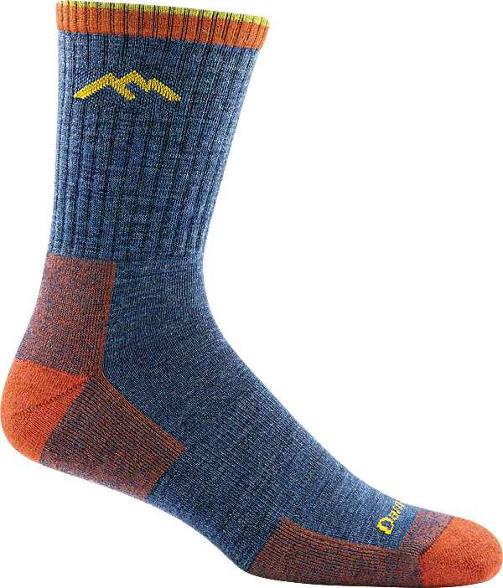
I’m not a sock loyalist. I wear merino wool blend socks from Smartwool, Patagonia, Injinji, and Darn Tough. But the Darn Tough Micro Crew Cushion sock is special. Everything about them is just about perfect for three-season hiking in mild weather when paired with ultralight trail running shoes.
Why I like it: The most versatile hiking sock I’ve used – not too light, not too heavy, not to high, not too low, great fit, durability.
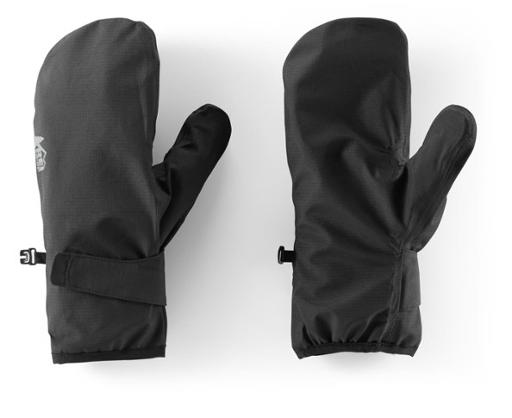
Waterproof mitten shells are only unnecessary until you need them, and then they add a level of warmth and comfort that can’t be taken for granted on cold, wet, windy days. My REI Minimalist GTX Mitten Shells don’t get used often, but when they do get worn, I get really happy. These are light and about as compact as you can get.
Why I like it: Pocketable! Super light! Good security at the wrist cuff.
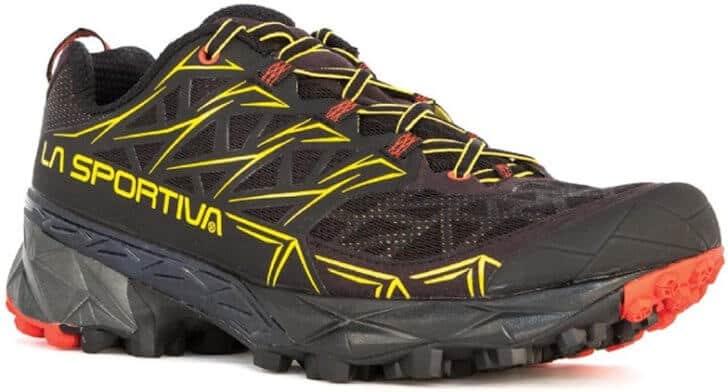
I’ve worn La Sportiva Ultra Raptors for technical hiking for years, but have worn out several pair when the uppers rip out on routes where I’m doing a lot of limestone scrambling or scree skiing. This year, I upgraded to the more durable La Sportiva Akyra, and I’m not lookin’ back. They are the best off-trail backpacking shoe I’ve ever worn.
Why I like it: More durable than Ultra Raptors, very stable and technical last for difficult off-trail conditions (especially scrambling, talus, and sidehilling).
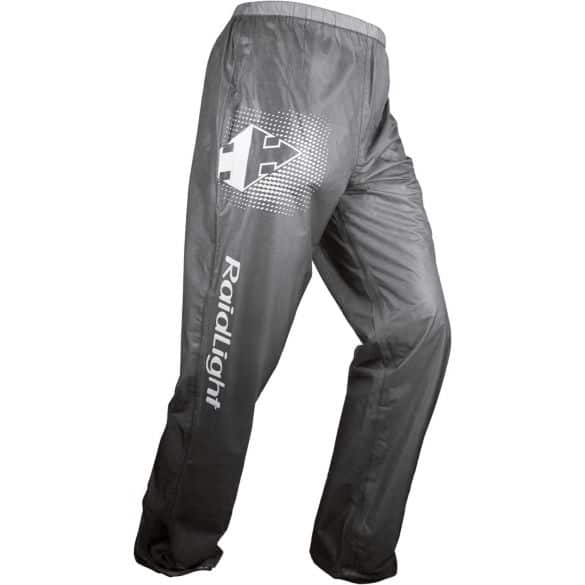
Rain pants spend most of their time in my pack, so they need to be as light as possible. The ultra-compact Raidlight Ultra MP+ fits the bill well. I find them to be a little less roomy than my other go-to pant, the ZPacks Vertice, but the 4-way stretch more than makes up for it and I appreciate the trimmer fit of the Raidlight while bushwhacking.
Why I like it: Truly ultralight, stows into a tiny space, stretch fabric.
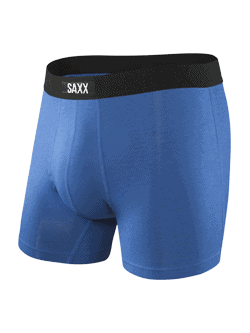
I wrote about backpacking underwear here but I’ve been waiting for the day when I can use the same underwear for both backpacking and daily wear. That day is much closer now than it was a few years ago, and a lot of it has to do with Saxx. Saxx Boxer Briefs are my favorite daily boxer brief and are entirely suitable for just about all of the outdoor activities I enjoy throughout the year.
Why I like it: They do it all – great for running, hiking, backpacking, and daily wear.
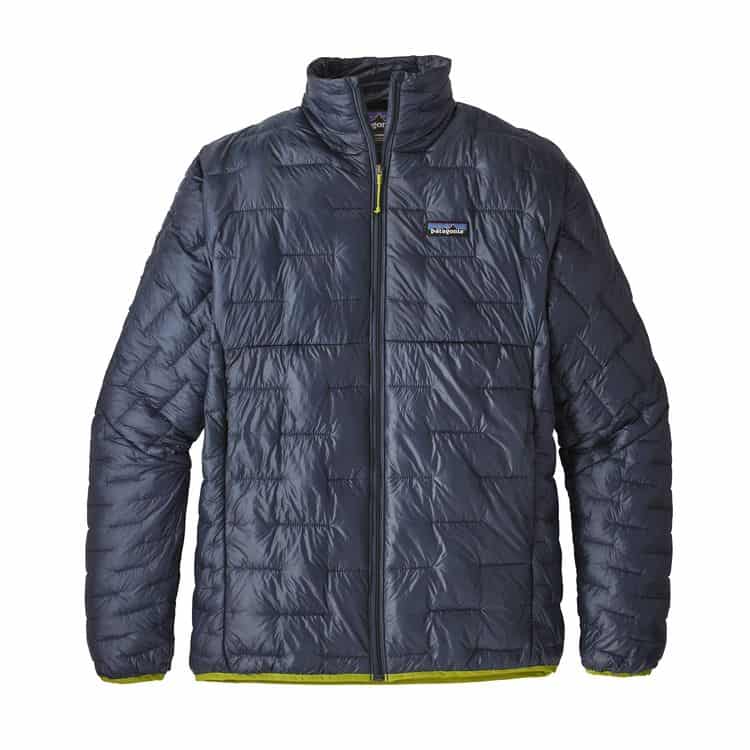
I have lots of good things to say about the Micro Puff Hoody, but always hoped a non-hooded version would be released which would make a better layering piece under a rain jacket. It’s here! And also in a vest version.
Why I like it: non-hooded, full-zip version is lighter, more packable, and a better layering piece under raingear while retaining all the benefits of the Micro Puff line.
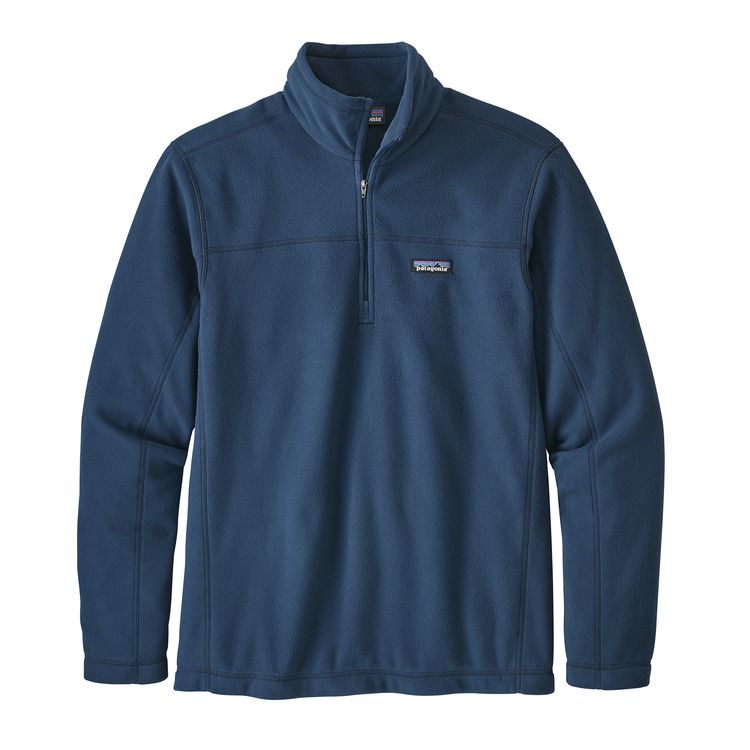
An ultralight fleece under a rain jacket is one of my best defenses for staying warm and comfortable while trekking in the nastiest, wettest, windiest, coldest conditions I encounter. My choice is the double-faced Patagonia Micro-D, which is extremely breathable while capturing enough warmth to fend off hypothermia at short rest breaks.
Why I like it: One of the lightest possible fleece layers available for layering under raingear in extremely hostile (wet, cold, wind) conditions.
I’m going to focus on stoves here, but I’ll list my recommendations for other cooking and hydration items as well. The reason I want to focus on stoves is that there’s a lot of confusion and bad teaching out there about how to choose a stove. Here’s my very, very short mini guide:
Solid fuel and alcohol stoves are fine for short trips, small water volumes, and incidental cooking, but are finicky to use in windy conditions and fuel efficiency is low.
Sit-on-top canister stoves are the most popular type of stoves for lightweight backpackers, with enough power to be versatile across a wide range of temperatures and weather conditions.
Integrated canister stoves are generally the most fuel efficient and fastest method of boiling water.
Liquid fuel stoves are best for large water volumes (3L+) and group use.
Also, keep in mind that I have a personal bias towards MSR gear. I’ve used it for more than 30 years and have found its carefully engineered products to be more consistently reliable and durable than any other cooking brand, especially with stoves.
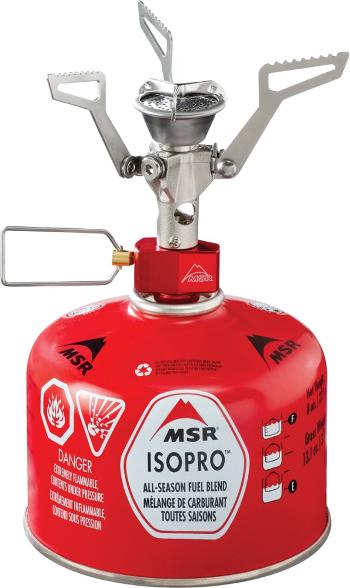
After experiencing the frustration of numerous stove failures through the years, I’ve become extremely picky about durability and manufacturing quality, and will happily accept an extra ounce or two for a stove that reliably allows me to start my day with coffee. After investigating dozens of stoves as part of our upcoming canister stove gear guide, I’ve settled on the MSR PocketRocket 2 as my go-to sit-on-top canister stove. I used it during the Wilderness Adventures Whitetail Trek in September and was so impressed with its power in the wind, pot stability, and quality that it’s starting to take the place of the integrated canister stoves that I usually take on alpine treks.
Why I like it: Powerful, durable, and lightweight stove works great in all but the windiest conditions.
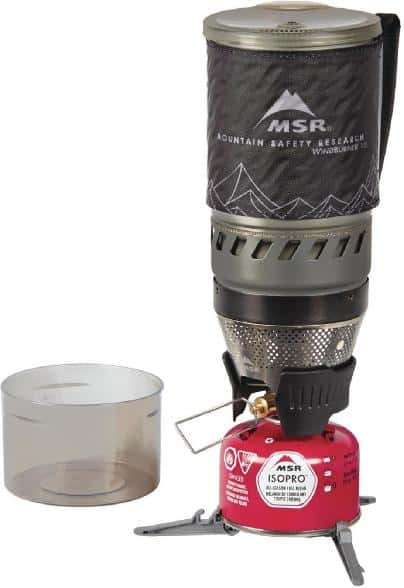
Having been a Jetboil Sol Ti fan for many years, I was absolutely blown away when MSR released the Windburner. MSR solved the problem that’s been Jetboil’s Achilles’ heel since it was launched on the market – poor wind performance. Don’t believe me? Check out our data here. The MSR WindBurner is my favorite stove when I know I have to do some food simmering in windy conditions above the treeline while trekking in the alpine.
Why I like it: Best stove I’ve used for simmering food on low flame in windy conditions.
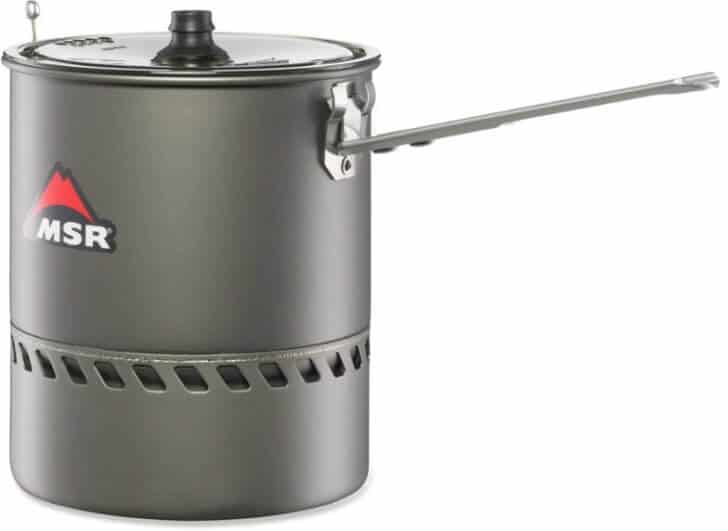
Raw power. That’s what the MSR Reactor is all about. And that’s why it’s my winter stove of choice for cooking in a windy blizzard or melting snow. When I want boiling water in very cold, very windy, snowy environments, and I don’t want to fiddle around with liquid gas, the Reactor gives me exactly what I need. In the winter, this stove very nearly qualifies as essential safety gear.
Why I like it: A virtually “storm-proof” stove that has the power to melt snow and boil water very fast in cold, windy blizzards.
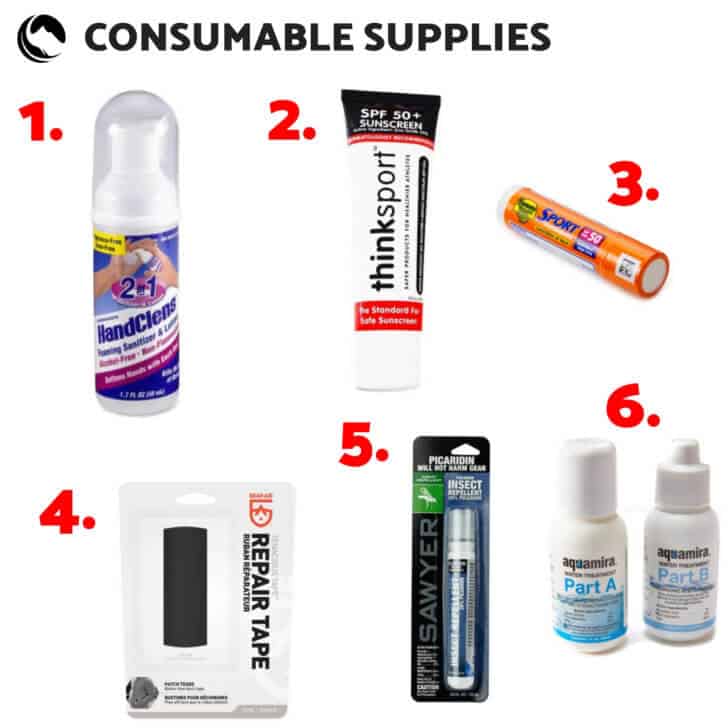
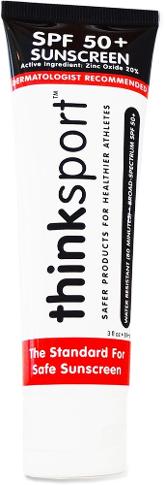
At the beginning of the season, I like to purchase my consumable supplies in bulk, so I never run out. I’ve been using most of the items in this section for several years, but a new item made the list this year (the Thinksport sunscreen) – an easy-to-spread, non-greasy zinc oxide formulation.
Why I like it: My go-to water treatment chemical for the past 15+ years, imparts no foul flavor, and chlorine dioxide does a better job at penetrating particle-attached biofilm than iodine or chlorine, making it a more efficacious option for water that is anything less than crystal clear.
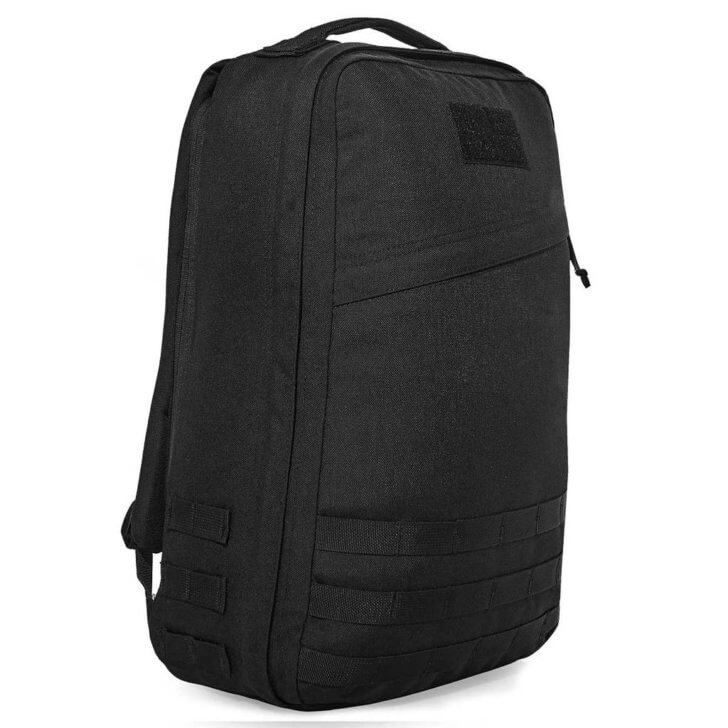
In industries (travel luggage, outdoor packs) that have become infected with fashion, trendy designs, and product line turnover, GORUCK has remained blissfully immune to it all. Utilitarian designs, understated but luggage-worthy fabrics, and manufacturing that focuses on durability over the speed of construction are the hallmarks of my favorite travel pack, the GORUCK GR1 Rucksack.
Why I like it: It’s going to last my whole life, holds enough to travel with my computer, clothes, dopp kit, and more.
Why I like it: Waterproof, packs gear with less dead space than cylindrical stuff sacks. I use one for sleeping gear and camp clothes (quilt, pad, pillow, puffy jacket, long underwear bottoms, extra socks), one for shelter (shelter, stakes, ground cloth, pole jack), and another for food.
Why I like it: Highest quality trekking pole I’ve ever used, most durable carbon pole I’ve ever used, FlickLock Pro lever clamp locks are absolutely secure in all conditions. If you are looking for ultralight trekking poles, check our recent trekking pole gear guide.
Why I like it: Dual use item is more comfortable when stuffed than stuff sacks, fleece feels great against the skin. We reviewed the pillow in more detail here.
Quilts: During warmer seasons, I use quilts rather than sleeping bags. My favorite quilt is the Katabatic Gear Chisos, a 40 degree F rated quilt that weighs only 14 oz. I’ve had the Chisos since 2012 and have used it heavily every summer since.
Packs: Comfort and load-carrying ability are attributes that seem lost in the ultralight backpacking market for loads in excess of 20 pounds. A custom-built McHale Windsauk is my go-to pack for expeditions where I know my pack is going to be “heavier” rather than “lighter”. I’ve used McHale packs for almost 15 years now, and have yet to find a pack that carries any load over 20 pounds more comfortably. I still use and prefer a Hyperlite Mountain Gear Porter 5400 (which I reviewed this year here) for light-and-large loads for packrafting trips where I need pack volume and a low-water absorption pack.
Down Apparel: I’m a big fan of down-filled apparel for dry climates during the winter, including the US Rockies, where I live and do most of my hiking. I use a Feathered Friends Helios during the deep freeze of winter here, which has one of the highest warmth-to-weight ratios of any jacket on the market. For ultralight down pants, check out Goosefeet. I have a Goosefeet jacket and pants and they are my favorite insulation for summertime conditions where it’s dry.
Ground Cloth: Need an ultralight ground cloth? Pass on nylon or Tyvek (it’s heavy), DCF (it’s expensive), mylar space blankets (not durable), and check out cheaper and lighter and tougher Polycro. I’ve used Polycro for the past ten years and haven’t found anything better. Repairs easily with Tyvek tape.
Raingear: For a set of raingear that is light, functional, extraordinarily breathable, the ZPacks Vertice collection is well worth a look. I’ve been using the jacket off and on this summer and fall and it provides a very good performance-to-value ratio.
Shelters: I got my hands on an early model TarpTent Notch Lithium this year that we reviewed this spring, and can confidently say that this is the lightest – and most aesthetically designed – double-wall tent on the market. DCF fabric, a stable design, and trekking pole structure make this a very compelling option for ultralighters and thru-hikers. Otherwise, my pick for a solo all-season ultralight shelter is the Locus Gear Khufu DCF-B, which I’ve used for several years, and the Hyperlite Mountain Gear Ultamid 4 for sharing with pals.
Experiences and Services
If you want to give or receive experiences instead of gear, consider one of these!
How to GIFT a Backpacking Light Membership, Webinar, Online Course, or Wilderness Adventures Trek
When you click the “Buy Now” button for any of these products, you’ll be taken to a checkout page. Be sure to check the “Is this a gift?” Checkbox!
A Backpackinglight.com Membership is the primary source of revenue for us. It allows us to maintain the website and forums, pay honoraria to authors in our community, and fund public projects like the Podcast and Film Festival.
A Basic Membership gives you posting privileges in our forums and access to a limited selection of Members-only content.
A Premium Membership adds access to our entire 2,100+ article content library (4+ million words) of gear info, wilderness skills training, expedition reports, and more.
An Unlimited Membership adds access to the Publisher’s Blog, free enrollment in all Webinars, and early enrollment privileges and tuition discounts for our Wilderness Adventures Program. Proceeds from Unlimited Membership sales are the primary mechanism that helps us fund publicly available content (e.g., the podcast) and events (e.g., the film festival)
Backpacking Light webinars were launched in 2018 as a means of exploring topics in more technical depth. They are a great way to experience outdoor science, engineering, and design in a way that’s just not available anywhere else.
Our signature online course Ultralight Backpacking Boot Camp is the most comprehensive collection of video lessons about ultralight backpacking available and is targeted to people who want to learn a solid foundation of ultralight backpacking philosophy, gear knowledge, and wilderness skills. Buy or Gift the Boot Camp Now
For a pinnacle experience in a wild and remote wilderness, spent with other ultralight backpackers who are passionate about exploring more with less, consider taking a guided Wilderness Adventures trip with us!
Our nation’s largest outdoor retailer is a member-owned co-op that gives back a 10% dividend on all purchases to its members. Add to that benefit it’s powerful lobbying voice for preserving human-powered recreation on public lands, local education clinics at its stores, supporting cultural diversity in outdoor recreation, and its contribution to trail building from local trails to national long-distance trails, and an REI Membership ends up being a pretty good deal for all of us as a community. Buy an REI Membership
Author’s Disclaimer
The gear in this gear guide represents my personal recommendations for ultralight and lightweight backpacking gear.
The choices are my own and reflect gear that I actually use. They are not based on any sort of consensus among the Backpacking Light staff. No manufacturer has negotiated or paid for a product placement here, as is the convention in so many online gear guides. As such, the gear I recommend here reflects my own personal style of hiking and camping.
Disclosure
How we acquired these products: Product(s) discussed in this review were either acquired by the author from a retailer or otherwise provided by the manufacturer at a discount/donation with no obligation to provide media coverage or a product review to the manufacturer(s), or the products were purchased at full retail price from a retailer.
We do not accept money or in-kind compensation for guaranteed media coverage: Backpacking Light does not accept compensation or donated product in exchange for guaranteed media placement or product review coverage.
Affiliate links: Some (but not all) of the links in this review may be “affiliate” links, which means if you click on a link to one of our affiliate partners (usually a retailer site), and subsequently make a purchase with that retailer, we receive a small commission. This helps us fund our editorial projects, podcasts, instructional webinars, and more, and we appreciate it a lot! Thank you for supporting Backpacking Light!
Stock photos are from manufacturing and/or retail suppliers. Other photos are the authors unless otherwise noted.
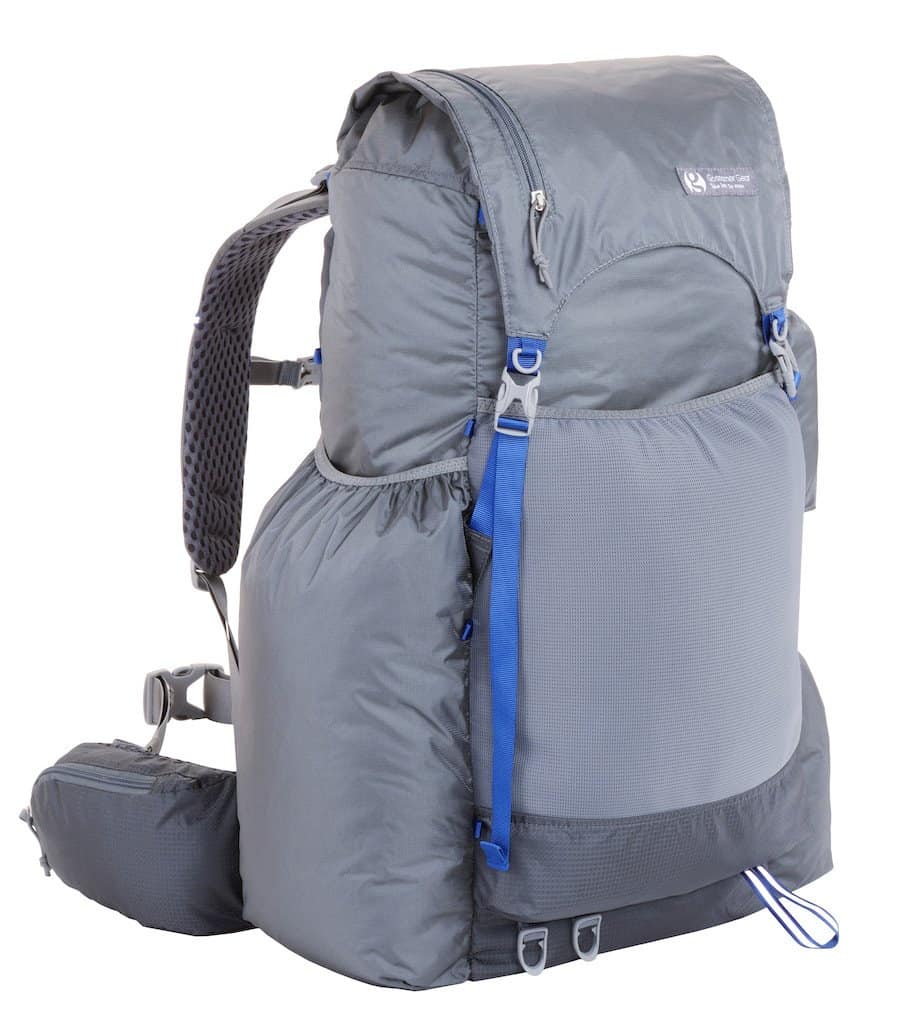
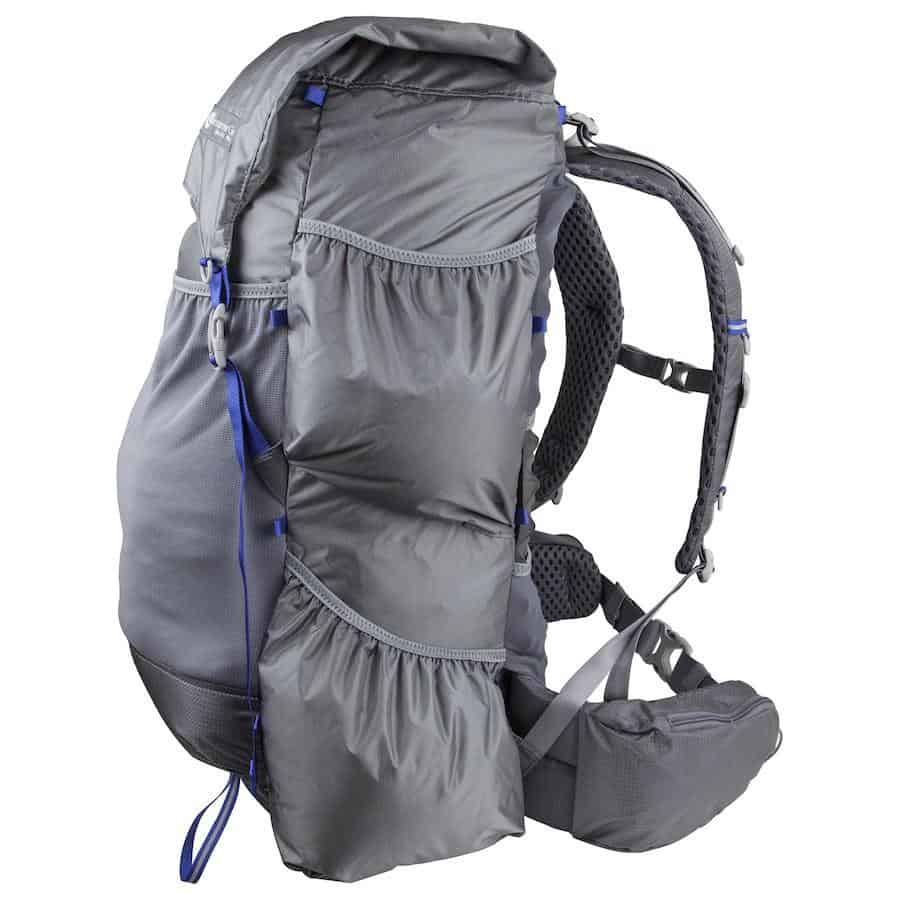
The Gossamer Gear Mariposa 60 is a high volume ultralight backpack that is capable of carrying heavier loads.
Introduction
The Gossamer Gear Mariposa is a 60-liter internal frame pack that falls somewhere between an ultralight pack and a medium-weight pack capable of carrying heavier loads. It is considered a high volume ultralight backpack. Gossamer Gear recently re-designed the hipbelt with the purpose of improving load distribution and increasing pocket size.
I’ve recently begun enjoying treks with my children. For this reason, I’m carrying a little more weight than I once did. I tested the Mariposa 60 with this use in mind.
I was impressed by the features, functionality, and comfort of this pack—especially as the design itself is simple. The pack is spacious and has seven pockets. It met my needs while trekking and kept my gear accessible and organized.
Photo: Gossamer Gear
Features and Specifications
Features
Updated hipbelt design
Internal stay system
Increased pocket size
Rated for 35 lbs (15.87 kg)
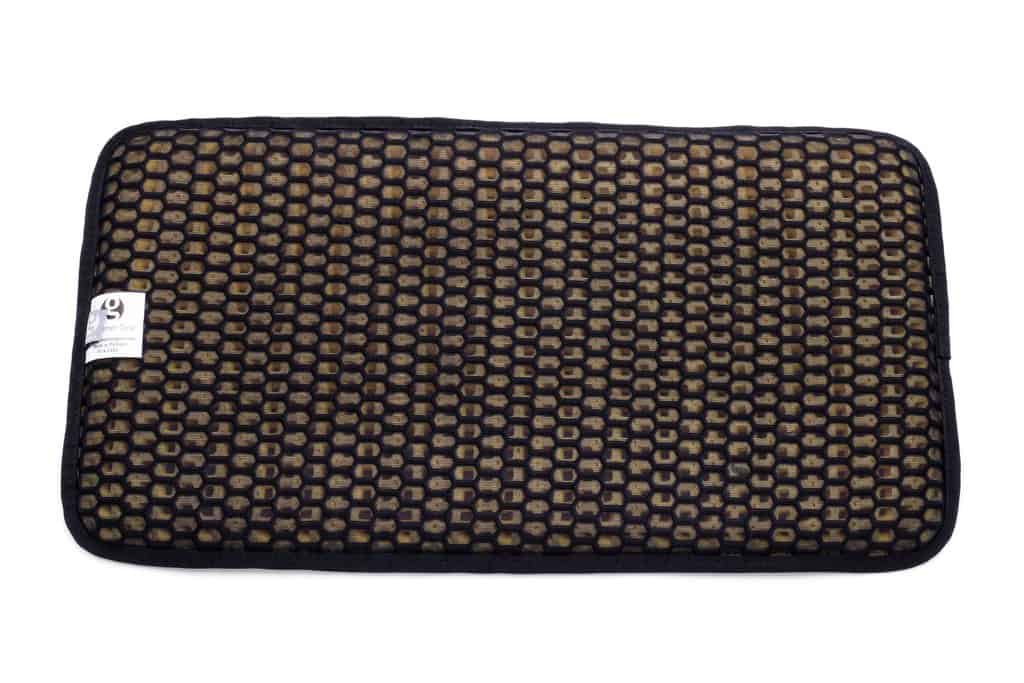
Built-in SitLight pad doubles as a removable stay
Optional Air Flow SitLight Camp Seat instead of the SitLight pad
Rear mesh pocket
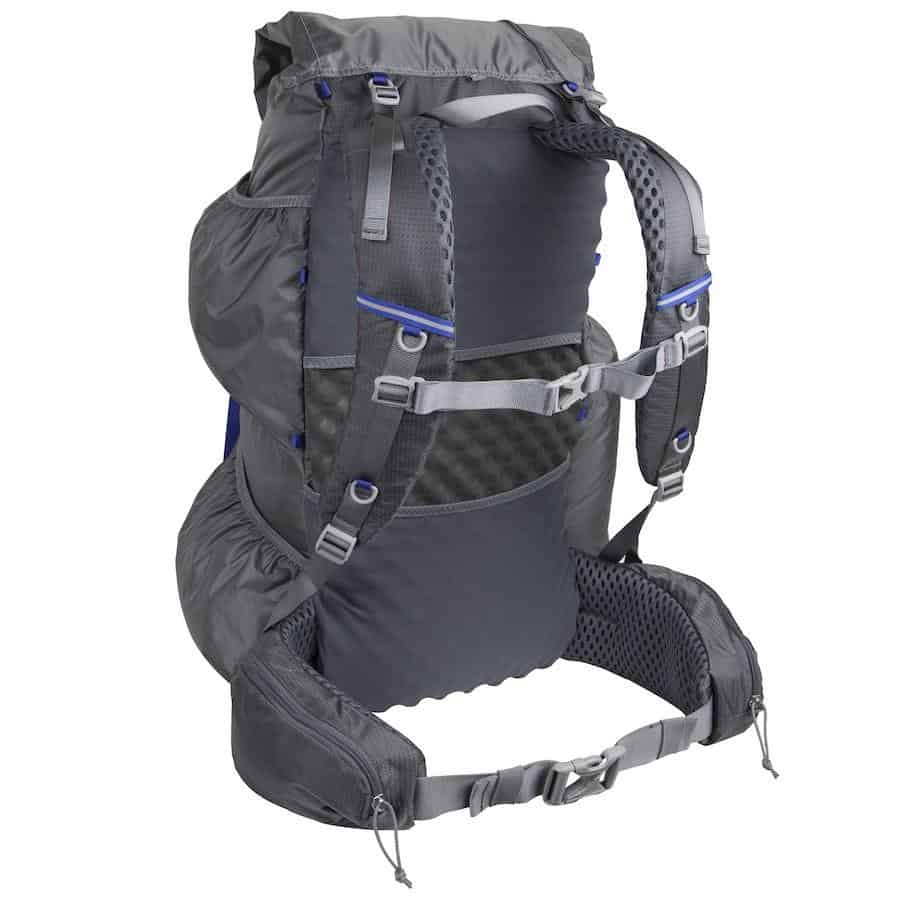
Air mesh fabric on shoulder straps and hipbelt
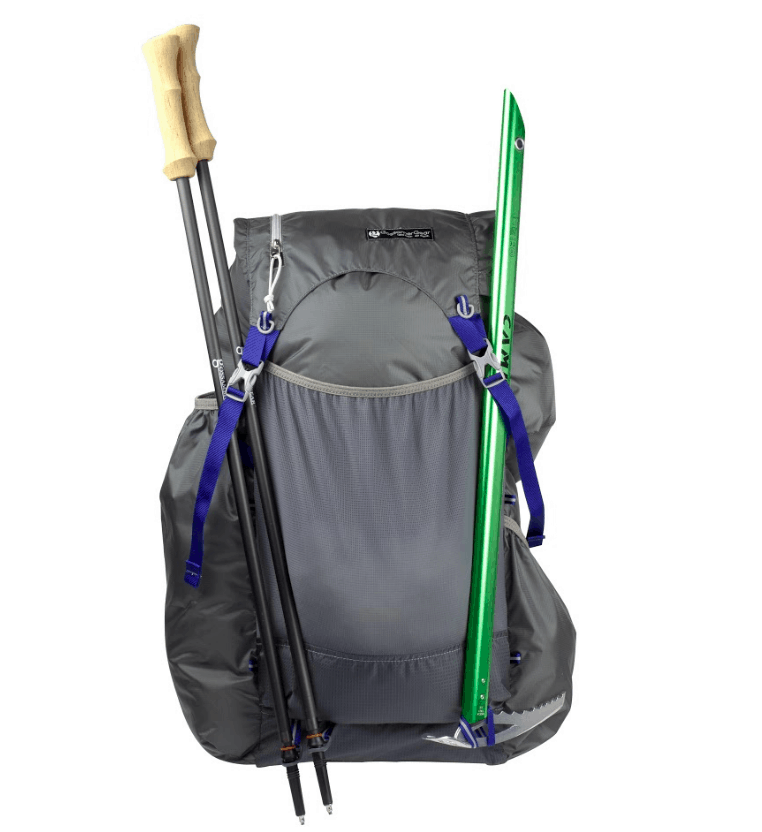
External trekking pole storage
Accessible water bottle pocket
Internal hydration system
Over-the-top closure
Specifications
(from Gossamer Gear’s Website)
Average Weight With all Components
Small: 30.7 oz (870 g)
Medium: 32.7 oz (927 g)
Large: 34.8 oz (986 g)
Average Weight Medium Components
Pack body: 19.7 oz (560 g)
Pack frame: 3.0 oz (84 g)
SitLight pad: 2.1 oz (60 g)
Hipbelt: 7.7 oz (218 g)
Average Weight Hipbelt
Small: 7.1 oz (200 g)
Medium: 7.7 oz (218 g)
Large: 8.4 oz (236 g)
Capacity
Total Capacity: 60 L (3487 CI)
36 L (2,200 CI) in main pack compartment to extension collar seam
35 lb (15.87 kg) maximum carry capacity
Dimensions
Height: 23 in (58.42 cm) to the extension collar only
Extension collar adds another 9 in (22.86 cm) of height
Width: 11 in (27.94 cm)
Depth: 7.5 in (19.05 cm)
Materials
100 denier Robic high-tensile strength nylon
Select use of 200 denier Robic high tensile strength nylon
Select use of 70 denier double-rip ripstop nylon
Select use of Darlington Mesh
Select use of Supreme Air Mesh
Description of Field Testing
I tested the Mariposa 60 on a multiple-day hike in Montana’s Beartooth Range in mid-July. My base weight for the trip was twenty-two pounds. I hiked and camped at around nine thousand feet elevation. The weather was typical of the area and season: sunshine with a few overnight showers and one large storm with rain and hail.
The Mariposa 60 Backpack, shown being worn by the author.
Performance Assessment
My performance assessment of the Gossamer Gear Mariposa 60 will address the following items:
Finish Quality and Design
Fit and Comfort
Functionality
Finish Quality and Design
The Mariposa 60 is a simply designed lightweight backpack with well-thought-out features. The fabric used in the Mariposa 60 is heavy in high-abrasion areas and lighter where possible to save weight. The quality of stitching and seams are on par with any other high-end backpacking manufacturer. The pack is aesthetically pleasing and seems designed to last.
Photo: Gossamer Gear
Fit and Comfort
Gossamer Gear offers both the pack and hipbelt in multiple sizes so you can get the fit dialed in with precision. The result was a pack that felt just right on my six foot one, one hundred and seventy-pound frame. It hugged my body and felt secure.
When I first tried on the pack I felt like the shoulder straps were too close together. I felt some pressure on the outside of my neck. But once I loaded the pack the feeling vanished and never returned.
Photo: Gossamer Gear
A lack of breathability is a common complaint about this pack. Gossamer Gear has created a combo internal pack frame/sitting pad designed to increase airflow. The pad, called the Air Flow SitLight Camp Seat, is designed to slide into the pad pocket of the Mariposa 60. Ostensibly this adds structure to the pack and increases breathability. I didn’t notice my back being less sweaty while testing the pack with the SitLight seat inserted. However, it did seem to increase air flow slightly.
Photo: Gossamer Gear
Functionality
Gear accessibility is the main strength of this pack. I’m used to a very simple pack design: one main compartment and two pockets. So it was a novel experience to use a sub-two pound pack with seven outside pockets. The quantity and location of the pockets is a plus for a backpacker who enjoys organized gear systems.
Photo: Gossamer Gear
The water bottle pocket (right-hand side of pack) is technically accessible without removing the pack. However, I’m flexible and use soft-sided water bottles, and I still struggled to reach it at times.
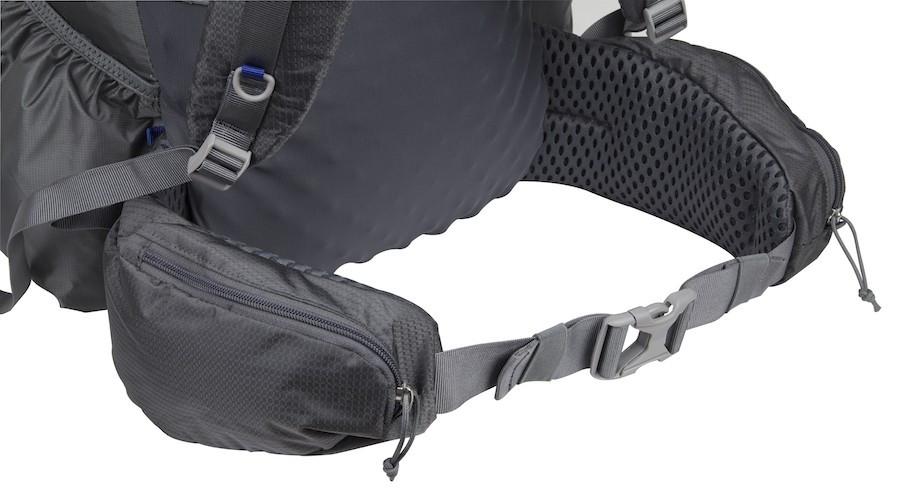
The large hip belts are ideal for gear storage and organization. I kept my map, Garmin Foretrex 301, headnet, and snacks all in one hip belt pouch. In the other, I stored my lunch, allowing me to eat as I hiked.
The mesh pouch on the back of the pack is spacious and lets you expose wet gear to the air for quicker drying.
Photo: Gossamer Gear
Commentary
The Mariposa 60 is more pack than many ultralight backpackers want or need. On trips that necessitate more gear or volume than usual (like when hiking with children), this pack excels. The large and numerous external pockets make for gear that is easily stored and quickly accessible. The recently re-designed and enlarged hipbelt pockets were a winning feature in my book.
Community discussion about the pros/cons of the Mariposa and where it fits in the pantheon of ultralight packs.
Product Review Disclosure
Updated September 15, 2018
How we acquired these products: Product(s) discussed in this review were either acquired by the author from a retailer or otherwise provided by the manufacturer at a discount/donation with no obligation to provide media coverage or a product review to the manufacturer(s).
We do not accept money or in-kind compensation for guaranteed media coverage: Backpacking Light does not accept compensation or donated product in exchange for guaranteed media placement or product review coverage.
Affiliate links: Some (but not all) of the links in this review may be “affiliate” links, which means if you click on a link to one of our affiliate partners (usually a retailer site), and subsequently make a purchase with that retailer, we receive a small commission. This helps us fund our editorial projects, podcasts, instructional webinars, and more, and we appreciate it a lot! Thank you for supporting Backpacking Light!
The Arc’teryx Zeta FL Jacket is a Gore-tex Paclite Plus rain jacket that features a trim fit and hip length. It has articulated tailoring in the hood and arms, a full-length water-resistant zipper, two handwarmer pockets with water-resistant zippers, elastic hem and wrist cuffs, and an adjustable hood aperture.
Introduction
The Arc’teryx Zeta FL Jacket (women’s model here) is a Gore-tex Paclite Plus rain jacket that features a trim fit and hip length. It has articulated tailoring in the hood and arms, a full-length water-resistant zipper, two handwarmer pockets with water-resistant zippers, elastic hem and wrist cuffs, and an adjustable hood aperture.
(Note: The new Arc’teryx FL and SL product lines – which includes the Arc’teryx Zeta SL Pant also featured in this review, and the slightly heavier and more durable Arc’teryx Zeta SL Jacket – is targeted specifically towards the lightweight backpacking community.)
Arc’teryx Zeta FL Jacket. Photo: Arc’teryx.
The most notable features I have observed during my preliminary review of the Arc’teryx Zeta FL Jacket and Arc’teryx Zeta SL Pants included the comfort of its fabric during high-perspiration activities, its exceptional manufacturing quality, the elegant simplicity of its feature set, dual handwarmer pockets and a very nice hood.
At 7.2 oz (size M), the Arc’teryx Zeta FL Jacket is certainly in the class of jackets that are considered “ultralight” today (i.e., less than 8 oz).
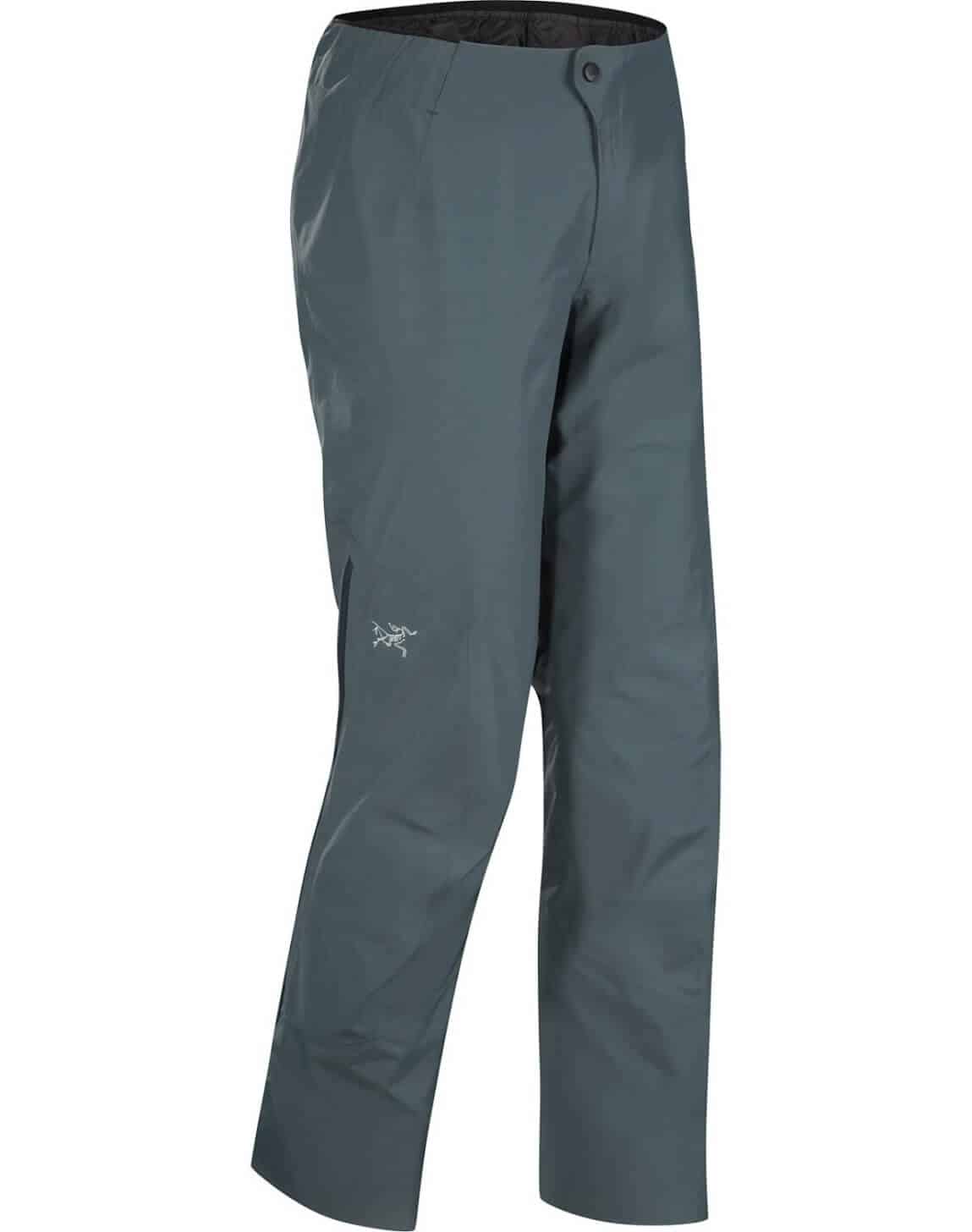
The Arc’teryx Zeta SL Pants offer long ankle-to-thigh water-resistant side zippers, a zip-and-snap fly, and adjustable elastic waistband. The Arc’teryx Zeta SL Pants weigh 8.6 oz (size M).
Arc’teryx Zeta SL Pant. Photo: Arc’teryx.
Features
Arc’teryx Zeta FL Jacket:
Waterproof-breathable fabric with taped seams and water-resistant zippers
Articulated hood and gusseted underarms provide unrestricted mobility
Hybrid elastic-straight hem and wrist cuffs for weight savings with a secure fit
Single point hood adjustment for simplicity
Stiffened hood brim, low-volume hood, not helmet-compatible, rolls and snaps if needed to keep from flapping in wind
Two hand-warmer pockets with waterproof zippers
Trim fit layers well over base layers and fleece, not suitable for layering over high-loft insulation layers
MSRP: $325
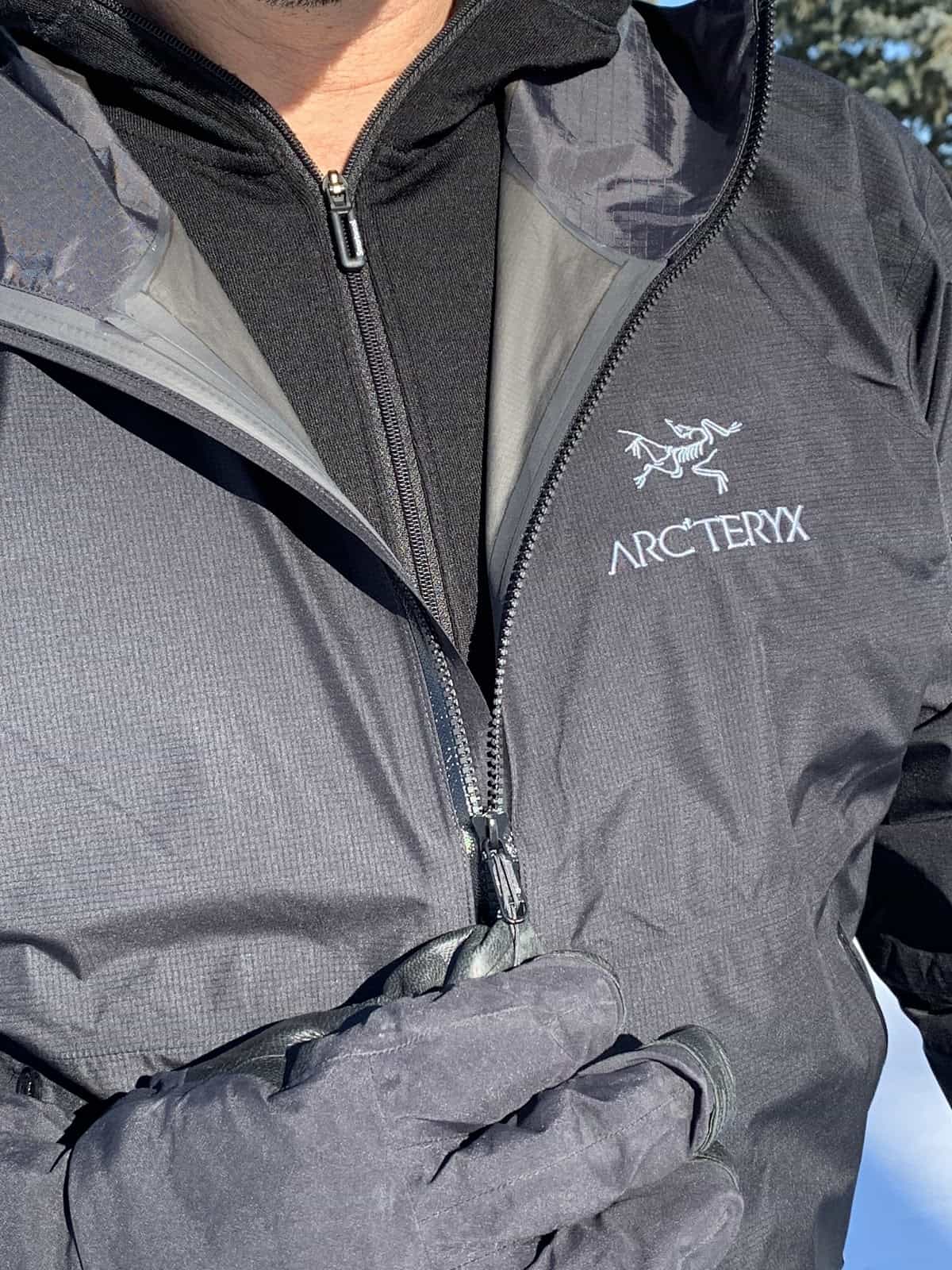
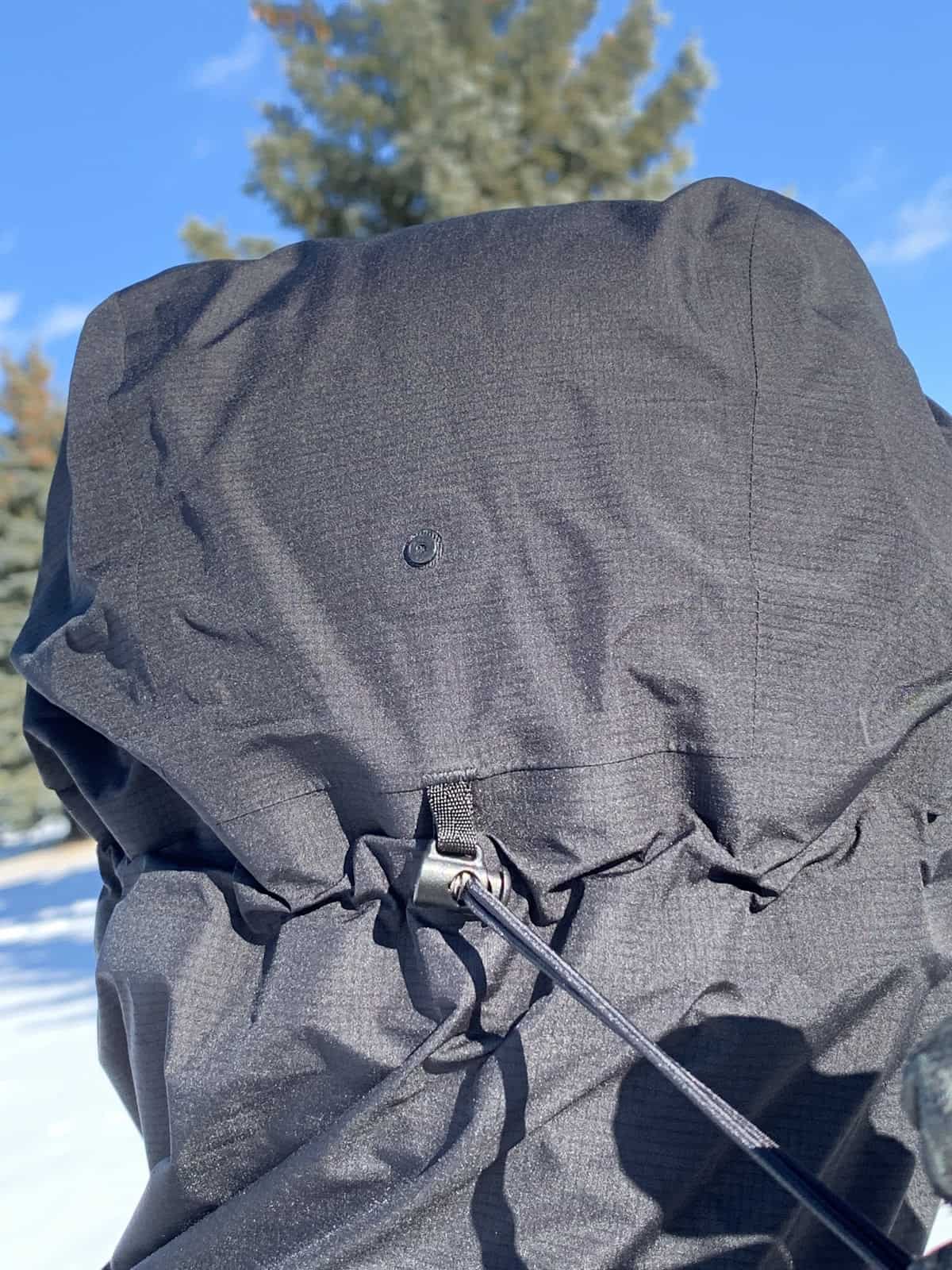
The full front water-resistant zipper on the Arc’teryx Zeta FL Jacket is light, glides smoothly, and I found it to be remarkably impervious to moisture penetration, even under high water pressures. As usual with Arc’teryx apparel, the stitching, seam taping, fit, finish, manufacturing quality, and tailoring are among the best in any apparel industry.Dual handwarmer pockets on the Arc’teryx Zeta FL Jacket are a refreshing feature in a market that seems enamored with saving weight by including only a teeny chest pocket on their ultralight rain jackets.The hood on the Arc’teryx Zeta FL Jacket provides good coverage, has a large stiffened brim, and is large enough to layer comfortably over thick fleece headwear (including balaclavas, neck gaiters, etc.).The Arc’teryx Zeta FL Jacket features a minimalist hood adjustment system – one rear adjuster provides both aperture and volume adjustment. Note the tiny male snap a few inches above the adjuster – when the hood is rolled forward (towards the front zipper), that snap mates to its female counterpart on the inside neck of the jacket to keep the hood secure in the wind.
Arc’teryx Zeta SL Pants:
Waterproof-breathable fabric with taped seams and water-resistant zippers
3/4-length water-resistant leg zippers (thigh to ankle, separates at ankle)
Zippered fly with snap
Gusseted crotch for good high-stepping mobility
Internal webbing adjuster in waistband to fine-tune fit
Reinforced fabric on instep for added durability
MSRP: $245
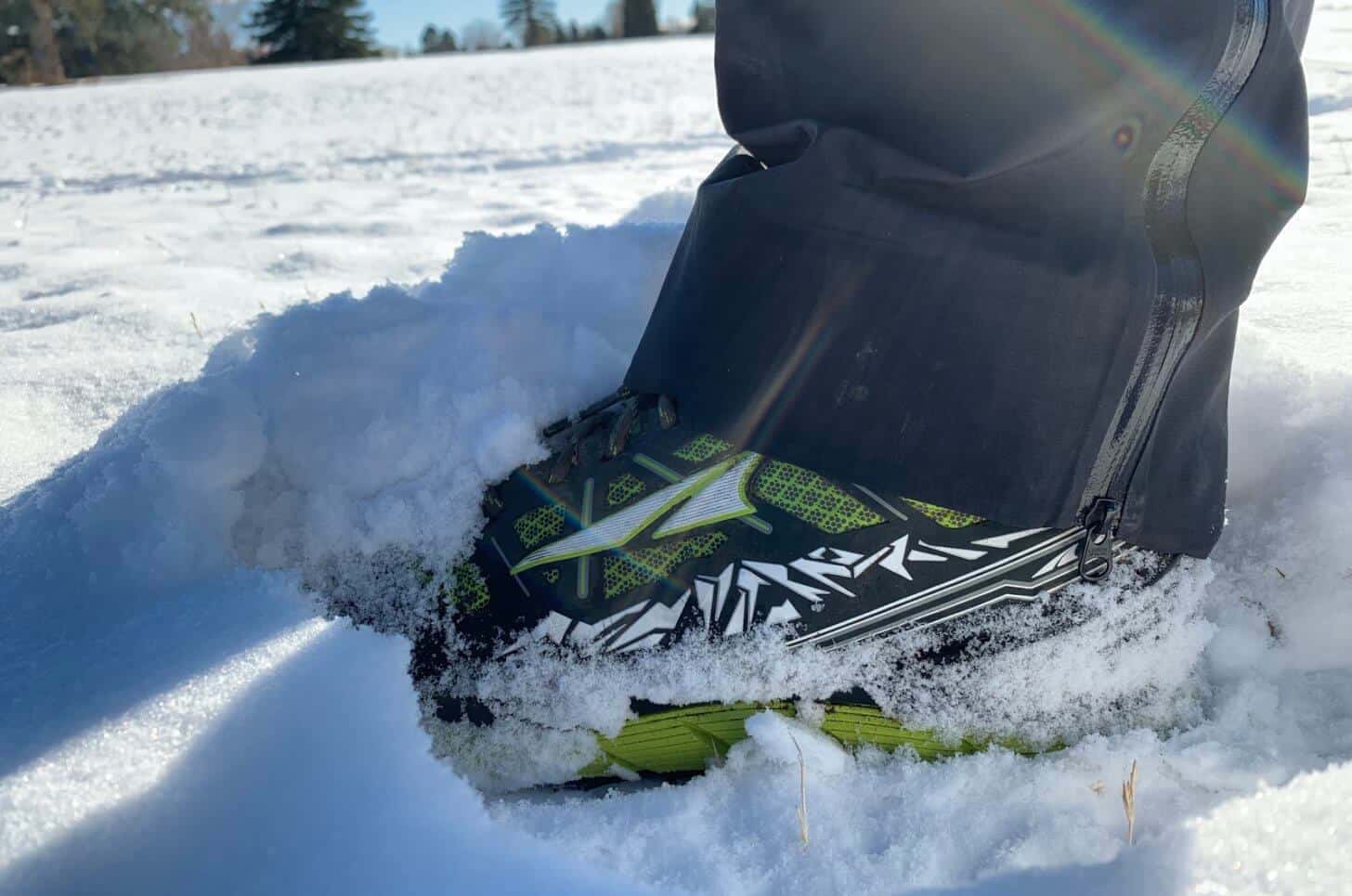
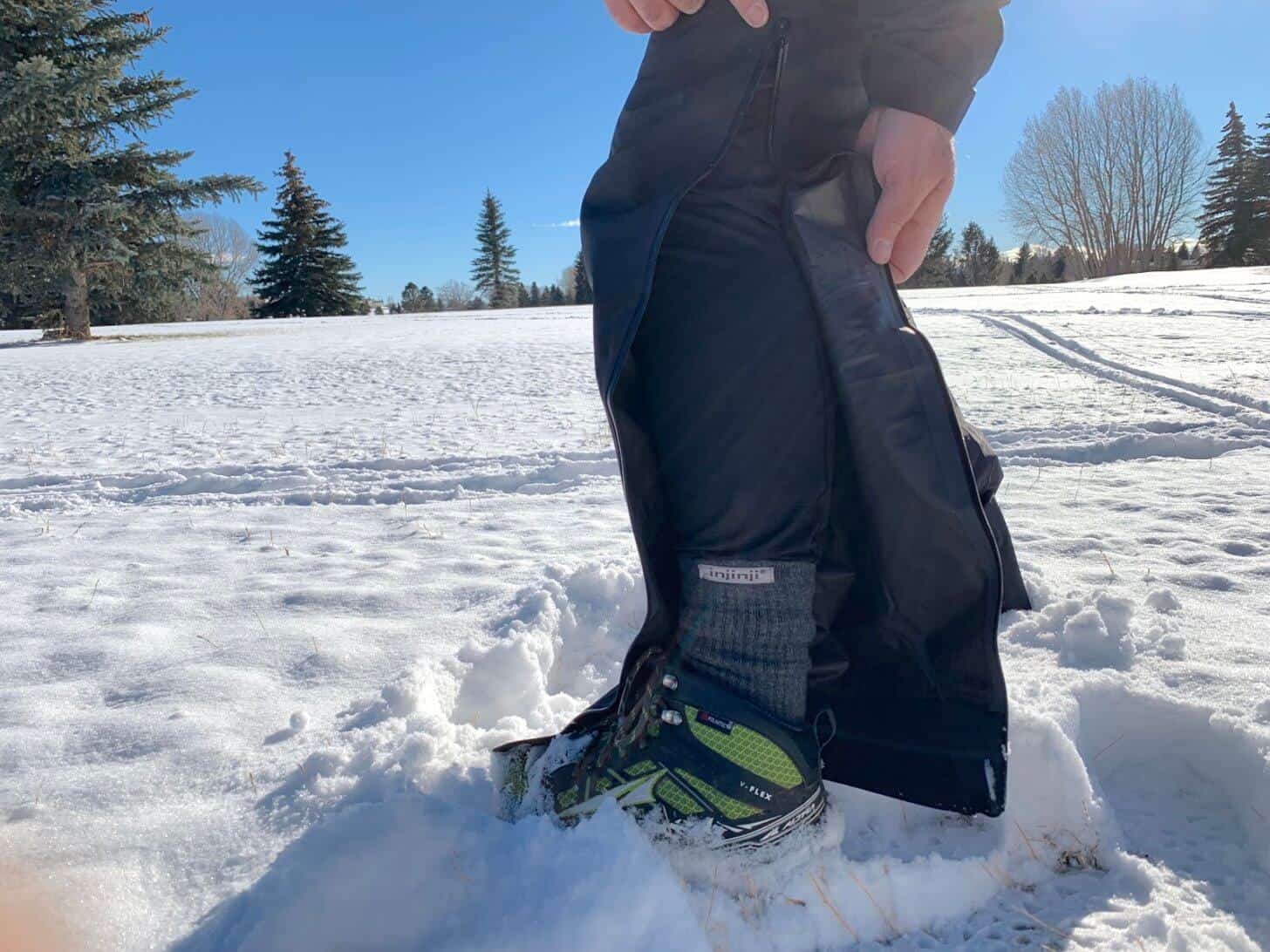
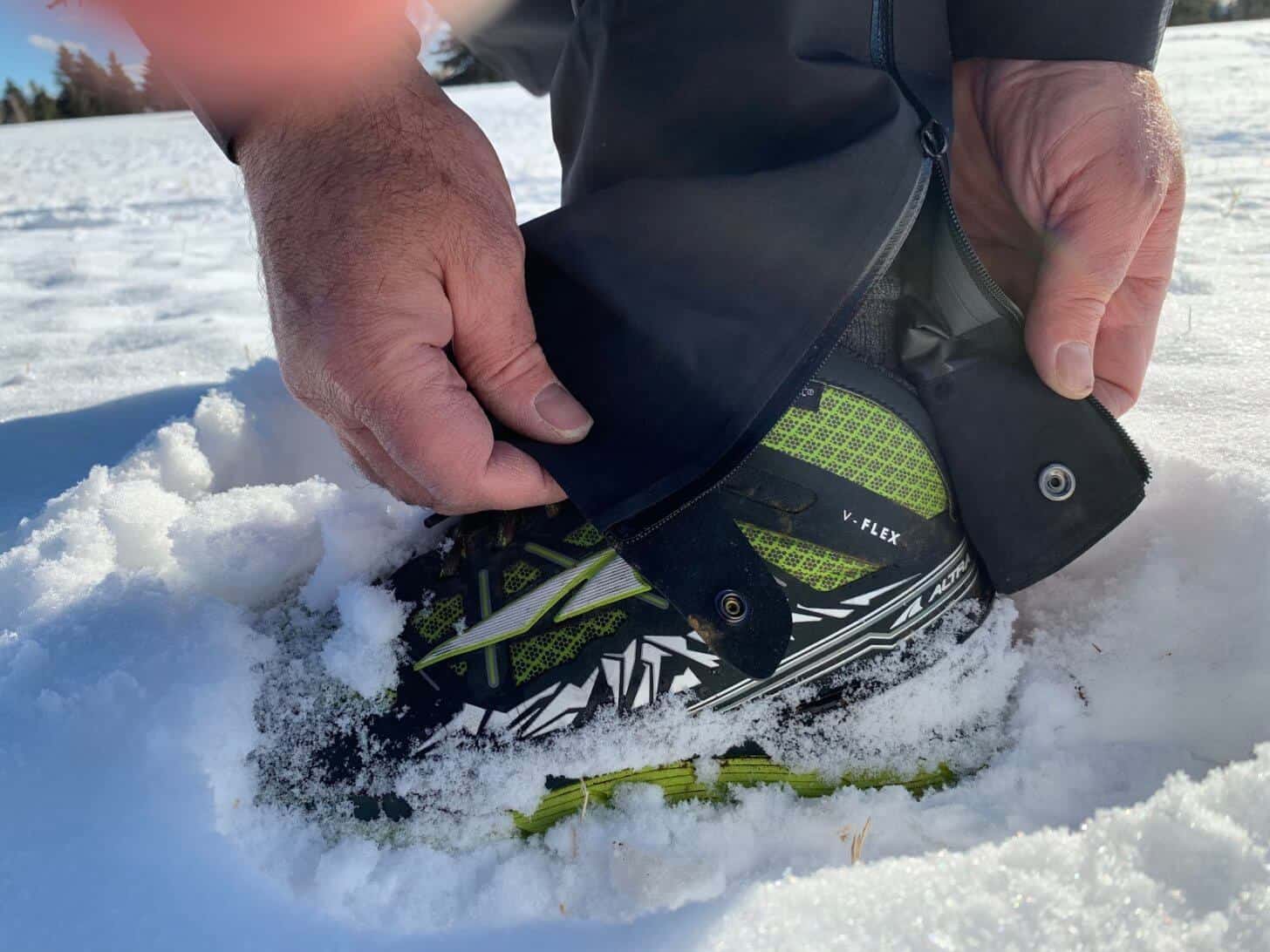
Ankle cuffs on the Arc’teryx Zeta SL Pant are straight – not elastic – which makes the pant rise and fall in response to high-stepping much more comfortable. The bottom few inches are reinforced for durability, as is lower eight inches of the inside leg (instep).The cuffs of the Arc’teryx Zeta SL Pant are wide enough to cover the cuffs of most hiking shoes and boots, but not wide enough for a backcountry ski boot – even a low-profile racing model. The Arc’teryx FL and SL series of apparel is targeted squarely towards the trekking community.The leg zips on the Arc’teryx Zeta SL Pant separate at the ankle and rise to the thighs, allowing easy on-off over boots and the ability to spill a lot of heat if needed.The ankle cuffs of the Arc’teryx Zeta SL Pant secure with a snap closure, which can be left closed while the zips are unzipped for terrific ventilation.
Specifications
Arc’teryx Zeta FL Jacket & SL Pants:
Micro seam allowance (1.6 mm) and Tiny Gore seam tape keeps seam bulk to a minimum
Arc’teryx Zeta FL Jacket:
Fabric: 20d nylon laminated in a 2-layer Gore-tex (N20p Paclite Plus) construction, with two-way stretch in key areas for improved comfort/articulation
Center back length of Jacket: 29.75 in (76 cm)
Weight (size M): 7.2 oz (205 g)
Arc’teryx Zeta FL Pants:
Fabric: 40d nylon laminated in a 2-layer Gore-tex (N40p Paclite Plus) construction, with very subtle two-way stretch in key areas for improved comfort/articulation
Weight (size M): 8.6 oz (245 g)
Commentary
I’ve tested the Arc’teryx Zeta LT Jacket and SL Pants primarily in the sub-freezing winter conditions that we are currently experiencing here in Southeast Wyoming while running, hiking, and cross-country skiing.
The following video features more in-depth commentary while performing a sweat-out-and-recover field experience during a winter blizzard on the Laramie Plains.
Consider the Arc’teryx Zeta FL Jacket if…
You’re a fan of Arc’teryx fit and quality.
You have a trim body type.
You won’t be layering over a thick high-loft insulating layer.
You want basic features (adjustable hood, handwarmer pockets, full zip) in an aesthetically beautiful and simple design.
Don’t consider the Arc’teryx Zeta FL Jacket if…
You don’t have the disposable income to purchase it – there are cheaper alternatives if you need a waterproof-breathable rain jacket, like this one.
You need to layer over a thick puffy insulating layer.
You want features not normally found in so-called ultralight jackets, such as pit zips, internal pockets, or adjustable hem and cuffs.
How we acquired these products: Product(s) discussed in this review were either acquired by the author from a retailer or otherwise provided by the manufacturer at a discount/donation with no obligation to provide media coverage or a product review to the manufacturer(s).
We do not accept money or in-kind compensation for guaranteed media coverage: Backpacking Light does not accept compensation or donated product in exchange for guaranteed media placement or product review coverage.
Affiliate links: Some (but not all) of the links in this review may be “affiliate” links, which means if you click on a link to one of our affiliate partners (usually a retailer site), and subsequently make a purchase with that retailer, we receive a small commission. This helps us fund our editorial projects, podcasts, instructional webinars, and more, and we appreciate it a lot! Thank you for supporting Backpacking Light!
This gear guide features trekking poles of various designs that weigh less than about a pound per pair. We screened 109 models from more than a dozen manufacturers and culled the final list down to 14 models for a more detailed analysis and review.
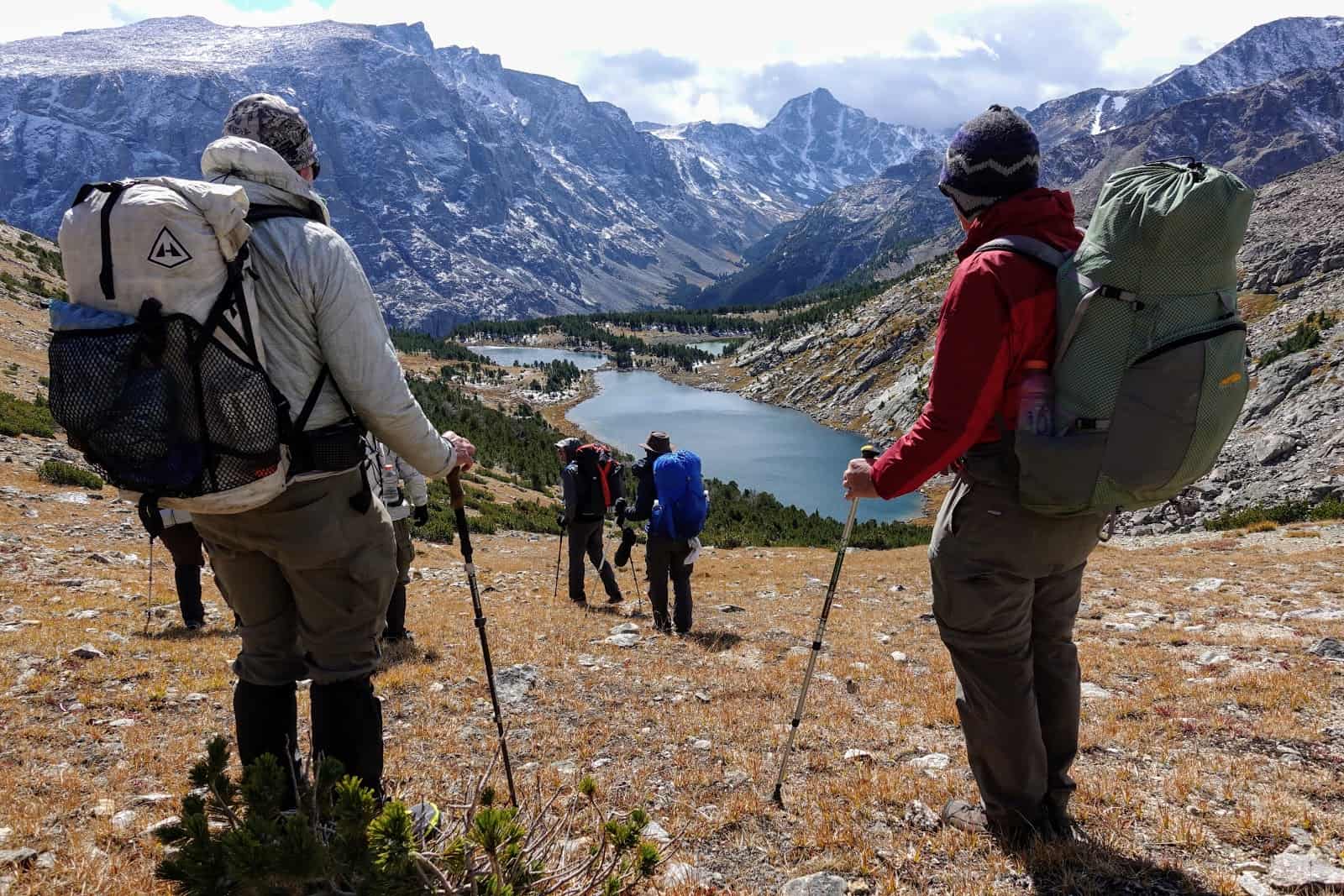
Trekking poles might be considered essential by trekkers who spend a lot of time off trail in steep, mountainous terrain. Nearly all of the participants in the Wilderness Adventures Whitetail Trek (this photo from 2018) bring trekking poles.
In addition, you’ll find numerous trekking pole skills videos in this gear guide that will aid you in making informed buying decisions and help you use trekking poles properly to get a reasonable amount of performance out of them.
This gear guide will include:
A discussion of design considerations for trekking poles.
A list and explanation of performance criteria.
An overview of the trekking pole market.
Reviews of each of the 14 trekking poles included in the article.
Recommendations from the authors.
What about trail running, ski, nordic walking, staffs, and walking poles?
Trail running poles are typically minimalist in nature; they are compact (usually via a folding mechanism), and have minimalist grips, straps, and tip housings. Some are suitable for hiking. Likewise, some hiking poles (as included here) are also suitable for trail running. This gear guide does not include poles marketed exclusively to trail runners.
Ski poles usually have plastic or rubber grips for better friction with ski gloves, a fixed length, and include snow baskets (sometimes not removable) as a matter of routine. A variety of ski poles known as slalom poles have bent shafts. Ski poles are not included in this gear guide.
Nordic walking poles are longer than trekking poles, have different tip styles (most often, rubber), and narrow-diameter grips without much ergonomic shape to them because Nordic walking technique doesn’t favor a tight grip. Nordic walking poles are built for speed and exaggerated arm motion and are not generally considered to be appropriate for trekking. This gear guide does not include Nordic walking poles.
Staffs are usually taller and thicker poles, often made of wood, decorated with little metal trophy badges, and are most often carried by Scoutmasters and other people who enjoy going slow, carrying a lot of gear weight, and feeling nostalgic. We don’t review them here.
Walking poles are poles marketed specifically to a consumer market of fitness-minded people who don’t care so much about gear performance but want to feel good about using gear that looks cool – like the trekking poles carried by ultralight backpackers. Walking poles aren’t reviewed here.
What are the benefits of trekking poles?
Well, that depends. Do you wear a lab coat, are you a YouTuber/blogger, or someone who wants to get the most practical performance out of their hiking gear?
People who wear lab coats (the science guys) have performed a wide range of studies that tout the benefits of trekking poles. Some of these benefits include:
Using trekking poles reduces the force of impact of your feet on the ground.
Using trekking poles increases caloric expenditure, giving you a better cardio workout.
Using trekking poles decreases effort, thus saving energy.
Manufacturers of trekking poles love these studies although a seemingly equal number of people who wear lab coats have performed studies that refute these same claims. Science enthusiasts who like to criticize scientists claim that the results are inconclusive because of poor experimental design, too few subjects, unrepeatable experiments, and more.
That leaves us with YouTubers and bloggers who make money by convincing their viewers/readers that they must purchase trekking poles because they offer enormous benefits for every person on the planet. It’s hard to blame them. They have to pay their camper van payment, after all. We’re not immune to this bias, but we do our best to resist it. Be sure to review our affiliate disclosure at the end of this report.
So let’s stick to the concrete benefits of trekking poles without trying to convince you that truth can be pulled out of nowhere:
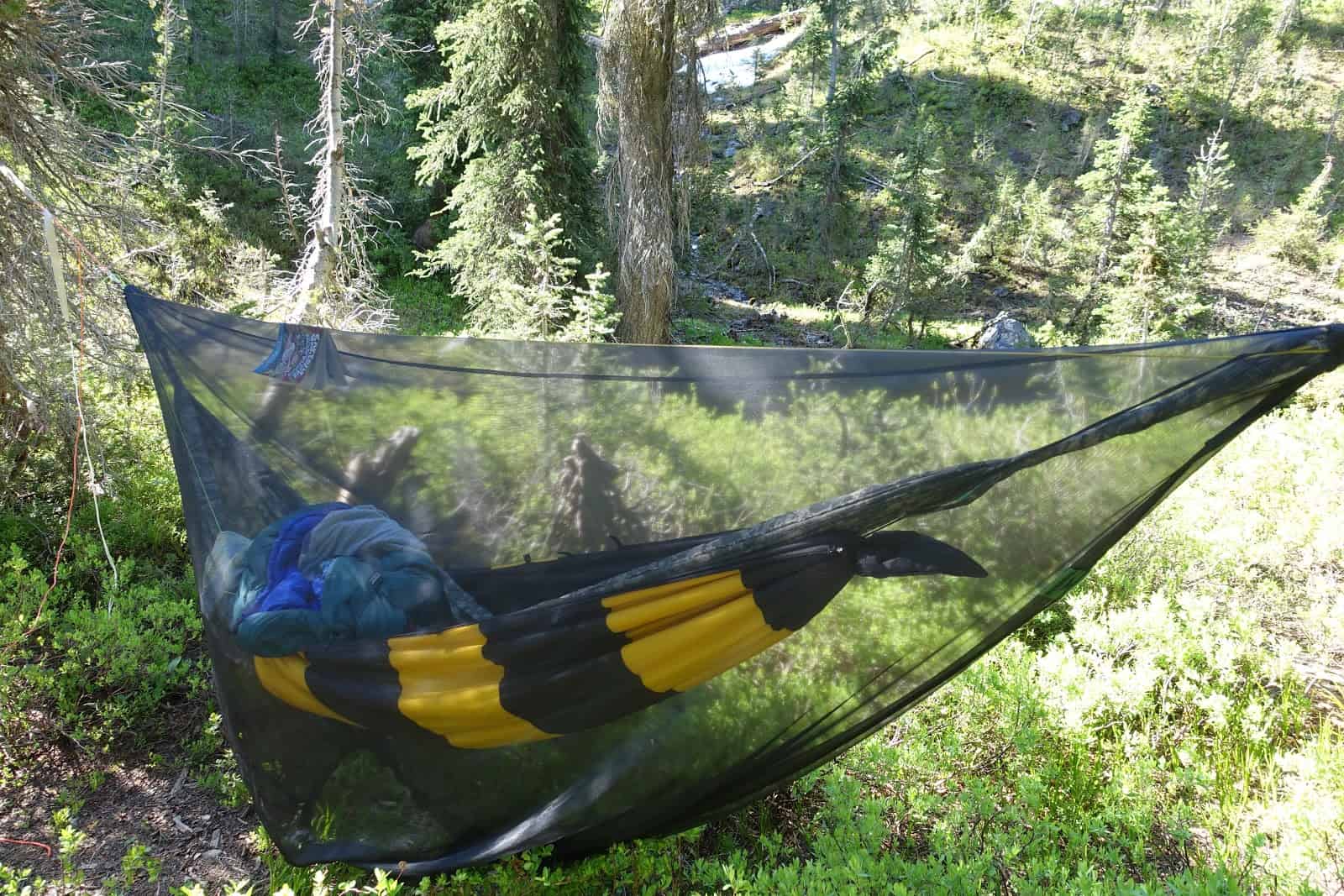
Trekking poles are a multi-use item that can be used to pitch shelters like tarps, tarp-tents, and pyramids.
Trekking poles aid balance and stability if you’re moving fast downhill with a big pack. The bigger the pack, and the faster you’re moving, the greater the benefit.
Trekking poles can aid balance and stability on very rough terrain where your feet are constantly off-kilter. Examples include the Pennsylvania AT, High Uinta shale, Alaskan tussocks, and the JMT during a high snow year.
Trekking poles give you something to do with your hands on a thru-hike, which can be really boring at times.
Trekking poles are useful for hiking with an injury such as a sprained ankle or knee.
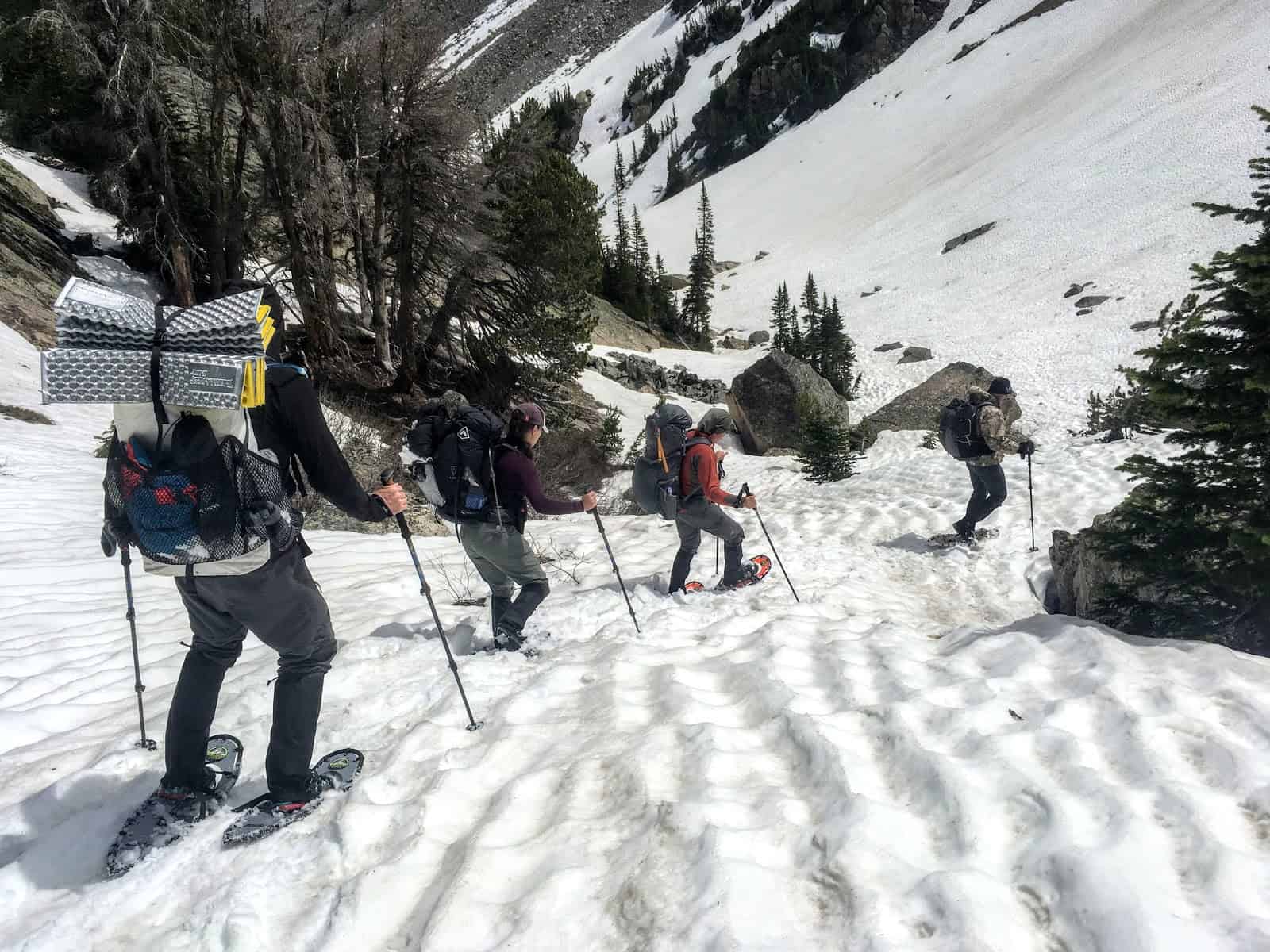
Trekking poles are essential when hiking on snow – whether snowshoeing, skiing, or otherwise. Unstable and slippery snow creates situations where trekking poles can help you maintain your balance and keep you from falling over. They are mandatory gear for the Backpacking Light Wilderness Adventures Guide Training Trek (pictured here, June 2018).
Are trekking poles useful for maximizing your physiological performance on a trail with little elevation change? Probably not. The data doesn’t support it. For example, here’s a study that suggests that hiking pole use increases energy expenditure while hiking uphill. Ouch! How do we expect to promote trekking pole sales with science like this?!
Are trekking poles going to “save” your knees, wrists, elbows, hips, back, neck, or feet? Probably not. The data doesn’t support it.
Can trekking poles be used as a weapon against wild animals? Possibly, but we don’t review that performance criterion in this gear guide.
Trekking pole shafts are made of either aluminum or carbon fiber tubing. Although carbon fiber is known for its high strength-to-weight ratio relative to other materials, one can’t really make the conclusion that carbon trekking poles are lighter than aluminum ones. Instead, the best we can do is compare two hypothetical pole shafts that have the same diameter and wall thickness.
For these two hypothetical pole shafts:
The carbon fiber pole would be much lighter (30-40%) than the aluminum pole.
The aluminum pole would be less brittle than the carbon pole, which means that it would be able to absorb more deflection from bending and thus, be more resistant to breakage.
The carbon fiber pole would be much stiffer than the aluminum pole. In theory, this should make the carbon fiber pole more energy efficient when used for ascents (i.e., less energy loss due to deflection).
The lightest available trekking poles are made of carbon, but they’re also poorly durable and are prone to breakage near the pole tip when the tips get stuck in mud, vegetation, snow, or talus.
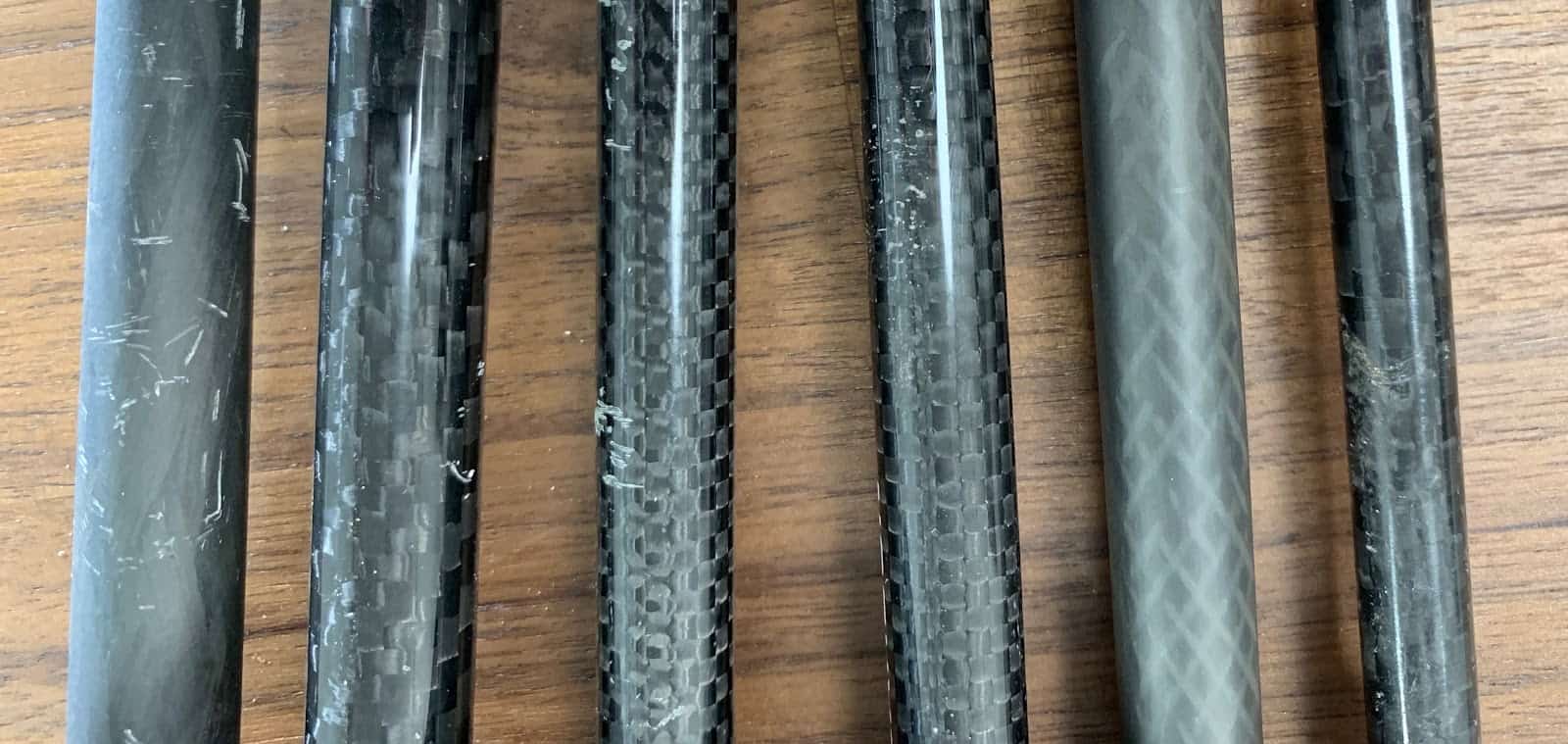
Most ultralight and lightweight trekking poles are manufactured with carbon shafts. All of the poles shown here are carbon. Note the differences in carbon layup. Manufacturers will be quick to point out that their layup formula is the “best”, but their claims will be limited. Diameter (larger is better) and wall thickness (thicker is better) are the controlling factors here. The shiny poles have an epoxy finish and are more resistant to scratching, but they don’t contribute to resistance to catastrophic failure, so don’t be fooled.
Straight vs. Bent Shaft
Bent pole shafts are used primarily in slalom ski racing poles, where they offer some efficiency when tucking them behind you as you clip gates. They offer no utility for slow-motion sports like hiking, backpacking, snowshoeing, and Nordic skiing.
Locking Mechanisms
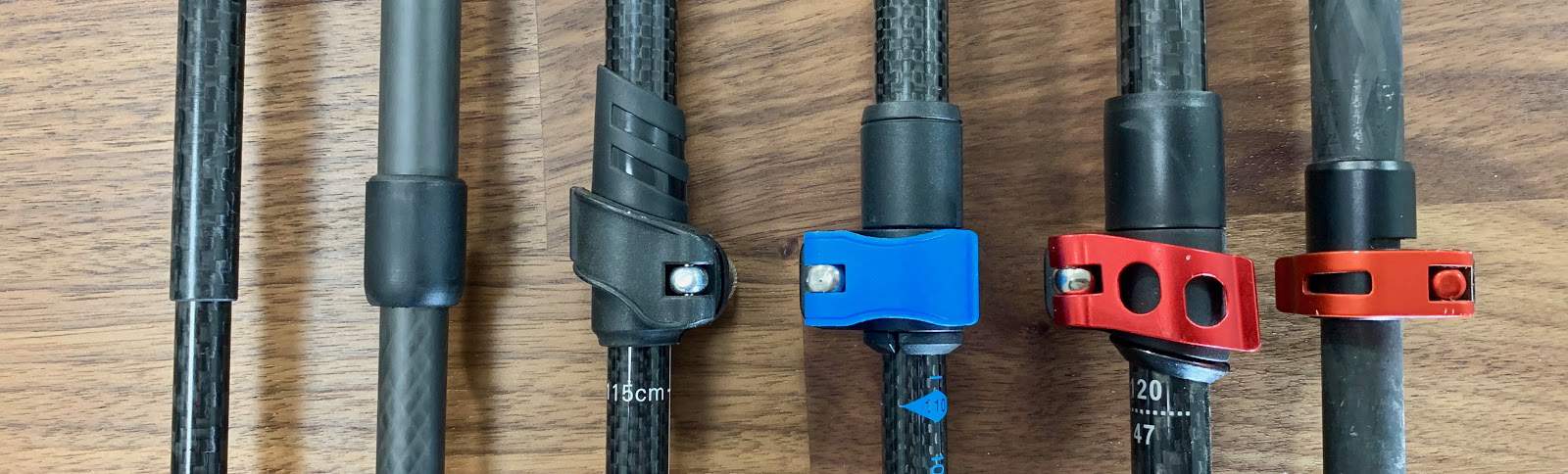
There are three major types of pole locking mechanisms: Twist-lock, lever clamp, and push button. Less common mechanisms also exist: foldable and hybrid.
This video illustrates the different types:
Twist-lock: In a twist lock mechanism the user rotates pole sections in opposite directions, causing a screw-activated expander (“expansion nut”) inside one of the shafts to tighten against the inner wall, creating an action similar to a compression fitting. This closure type is prone to mechanical failure due to dirt or grime fouling the expander mechanism. It can also be difficult to adjust in wet or cold situations, or while wearing gloves because of the need to maintain a tight grip while rotating the pole shafts.
Lever Clamp: The lever clamp works by tightening a band around the trekking pole sections to lock them into place. Most lever clamp mechanisms have a tightening system to adjust the tension on the lever. This system is easier to operate while wearing gloves.
Push Button: This system works like a pop-up picnic tent pole: it uses a spring-loaded button and a series of pre-drilled holes to lock into place. The downside is that the lengths are pre-determined and the button can jam. Blood blisters are common when depressing these buttons in cold weather, when finger skin gets caught between the button shaft and hole!
Foldable: A relatively new type of collapsing trekking pole is the foldable pole. Foldable pole sections collapse similar to a shock-corded tent pole, and when assembled, are secured in tension with a push button mechanism. Foldable poles are not typically adjustable.
Hybrid: More than one pole locking mechanism can be used on a single trekking pole. For example, foldable poles may also have a lever clamp fitting on their topmost section to allow for a minor amount of adjustability.
Locking mechanisms (L to R): Ruta Locura Yana (expansion nut), Gossamer Gear LT5 (compression fitting/expansion nut), Locus Gear CP3 (plastic lever clamp), ZPacks Carbon (plastic lever clamp), Mons Peak IX Tiger Paw Carbon (metal lever clamp with plastic thumbscrew), REI Flash Carbon (metal lever clamp with metal Phillips screw). Simplest: Ruta Locura. Easiest to use and strongest in all cold/wet conditions: REI Flash.
Shock Absorption
Trekking poles with so-called shock absorption mechanisms in them (springs) are supposed to “reduce impact.” That sounds like a neat benefit, doesn’t it? Impact reduction must translate into preventing a catastrophic ligament tear while hiking, right?
However, the science that arrives at this conclusion is sparse and dubious. Research from the Department of Biomechanics and Kinesiology at Germany’s Tübingen University suggests that anti-shock mechanisms can reduce peak impact forces by as much as 40%. However, the link between “reduction of peak impact forces” and “protection of muscles, ligaments, and joints” (as Leki claims) is a very weak one. Worth noting is that while Leki supports this claim by referring to the aforementioned “study”, no source in a peer-reviewed journal is provided, so it wasn’t possible to verify whether the study was independent, or funded by a pro-trekking pole actor (e.g., trekking pole manufacturer).
“…they work well for my knees, wrists, and elbows.”
“I vote for shock… I like them on the down hill.”
“I have [poles] with antishock, and I actually like it. The spring is very rigid, so it doesn’t flop around or make noise. I have to put considerable pressure on the pole for it to depress the spring all the way. For me, it does reduce the shock without any stupidness (over-hyped gizmo factor).”
However, the anecdotal evidence against anti-shock poles was not only more prevalent, but based more on direct observation of instability, noise, mechanical failure, increased weight, and higher cost:
“. . . I never liked the antishock ones. It felt like I was putting the stick in some mud every time i planted. Even on hard ground.”
“I tried poles with shocks … and the repetitive little sproinky noises the poles made just really bugged me [. . . and] the shocks added nothing to the experience for me…”
“I found them noisy, had a ‘rattle’ feel to them and pretty much pointless. I can’t see the advantage of a shock. . . Save yourself the weight, distraction and complications…”
“The shocks [. . .] wear out eventually, and get loose and sloppy.”
“Scared the hell out of me when I took a stumble and thought the poles were going to give way. I mostly use my poles for balance when crossing creeks so something solid is preferable for me.”
“I use my poles for balance, I don’t want any give in the suspension to disguise the feel.”
“On an AT section hike I left a pair of anti-shock Lekis at a shelter one morning and didn’t realize it until 2 miles later. It must have been the peace and quiet that distracted me. I actually considered if the poles were worth the 4 mile round trip to get them back. To be truthful they weren’t. Gimmick!”
“I’ve owned both shock and no-shock and I greatly prefer regular lightweight poles without springs. It’s like a tight little sportscar, you can feel the road better with a tighter suspension.”
“I personally hate them. Too loud, no feel and I’ve never seen a pair that didn’t break.”
“I have two pair of trekking poles, one [. . .] with the antishock gizmo, and one [. . .] without. I would never get poles with the antishock device again! [. . .] The anti-shock device is noisy (click, click, click at every step) and adds to the weight. I haven’t found that it did anything for my wrists (I was worried about my carpal tunnel syndrome), either! I haven’t had any hint of a wrist problem with either pole.”
“I fell several times when I slipped and planted the pole hard on rock, and the ^$% anti-shock *bounced* off the rock instead of digging in, and down I went.”
“Antishock poles are noisier and more expensive, while adding no real value.”
“I used anti-shock poles once…and promptly gave them away. I couldn’t help but feel like I was never planting them firmly or they were flexing.”
“Less cushion + no toy sound = wonderful.”
It’s worth noting here that Leki has introduced a new type of shock absorption mechanism that is based on the elasticity of stiff rubber introduced as a bulbous gasket above the tip of the pole. Having used poles with these new shock absorption mechanisms, I (Ryan) do find that they are quieter and stiffer than traditional spring-loaded shock absorption assemblies. However, I’m not convinced that they are worth the added weight or swing effort.
That said, it is the opinion of the authors of this review, based on a lack of authoritative scientific evidence, anecdotal user reports, and common sense, that anti-shock poles probably offer no utility for backpackers who are interested in maximize the performance-to-weight ratio of their trekking poles. In addition, we are in favor of simplification over unnecessary complication in order to minimize mechanical failure points.
Therefore, anti-shock poles will not be included in this gear guide.
One user who posted on the same forum perhaps summed it up best: “Maybe I’m not getting it, but I never understood the point of the shock. I just figured it was a marketing thing.”
Yep, us too. Buyer beware.
Grip Ergonomics and Materials
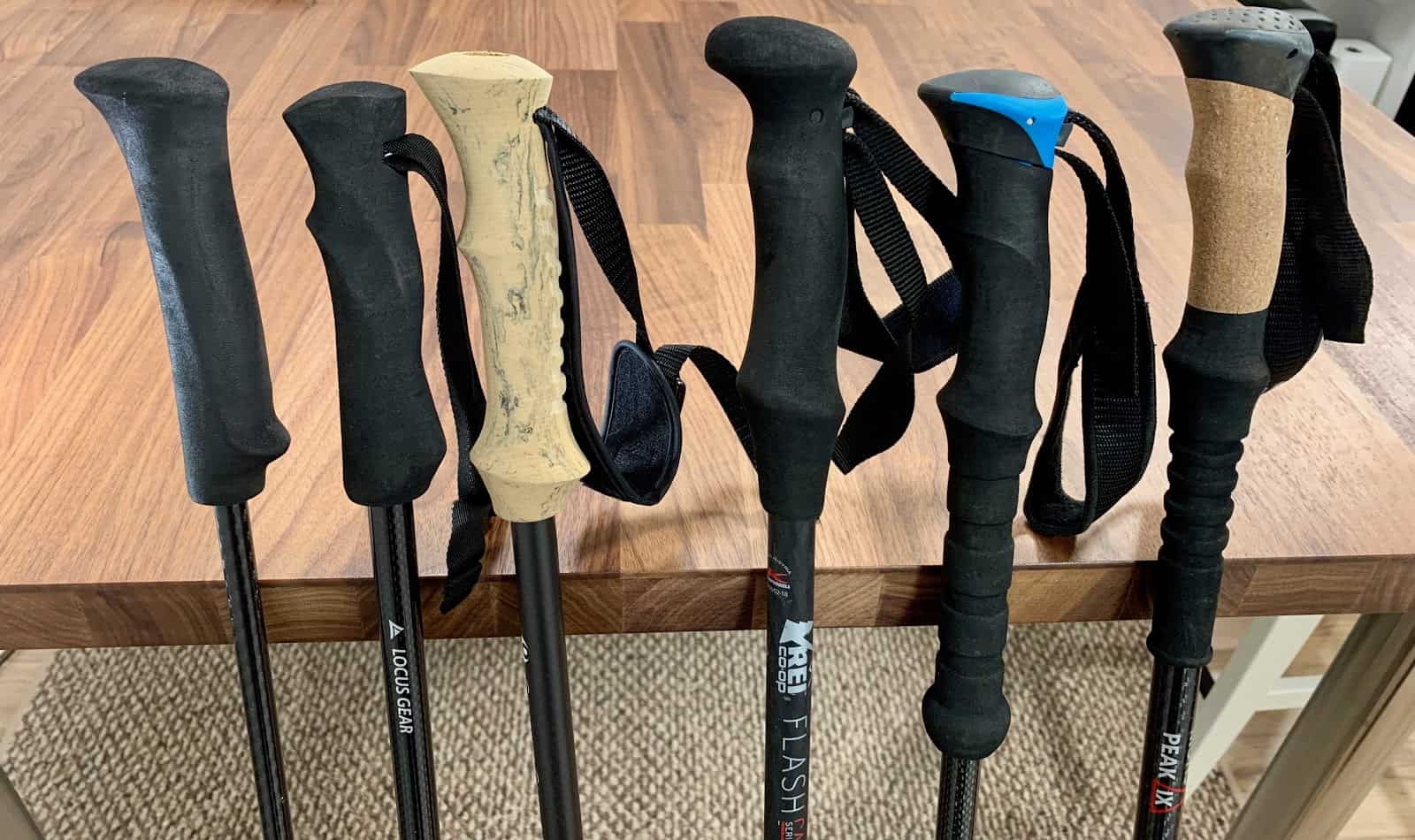
The ergonomics of trekking pole grips are defined by the grip material, knob/cap size and material (grippier is better, larger is better), trigger finger rest, palm rest, extended grip, extended grip friction (channels or ribs), and extended grip palm rest.
The grip material is the part of the pole most often in contact with your body, so choose wisely.
Rubber: A rubber grip absorbs a great deal of shock and vibration. It has the potential to chafe or blister sweaty hands due to friction, while also be insulative on cold days.
Foam: A foam grip is soft and cushy, but absorbs sweat, body oils, and dirt (making it difficult to clean) and breaks down quickly, causing it to lose some of its original ergonomic shape.
Cork: A cork grip is a good blend of cushion and moisture resistance. While easier on sweaty hands than rubber, it can feel a little colder in frigid temperatures.
Foam grips are the lightest and most comfortable (when new, at least). Rubber and cork grips are heavier and more expensive but easier to clean.
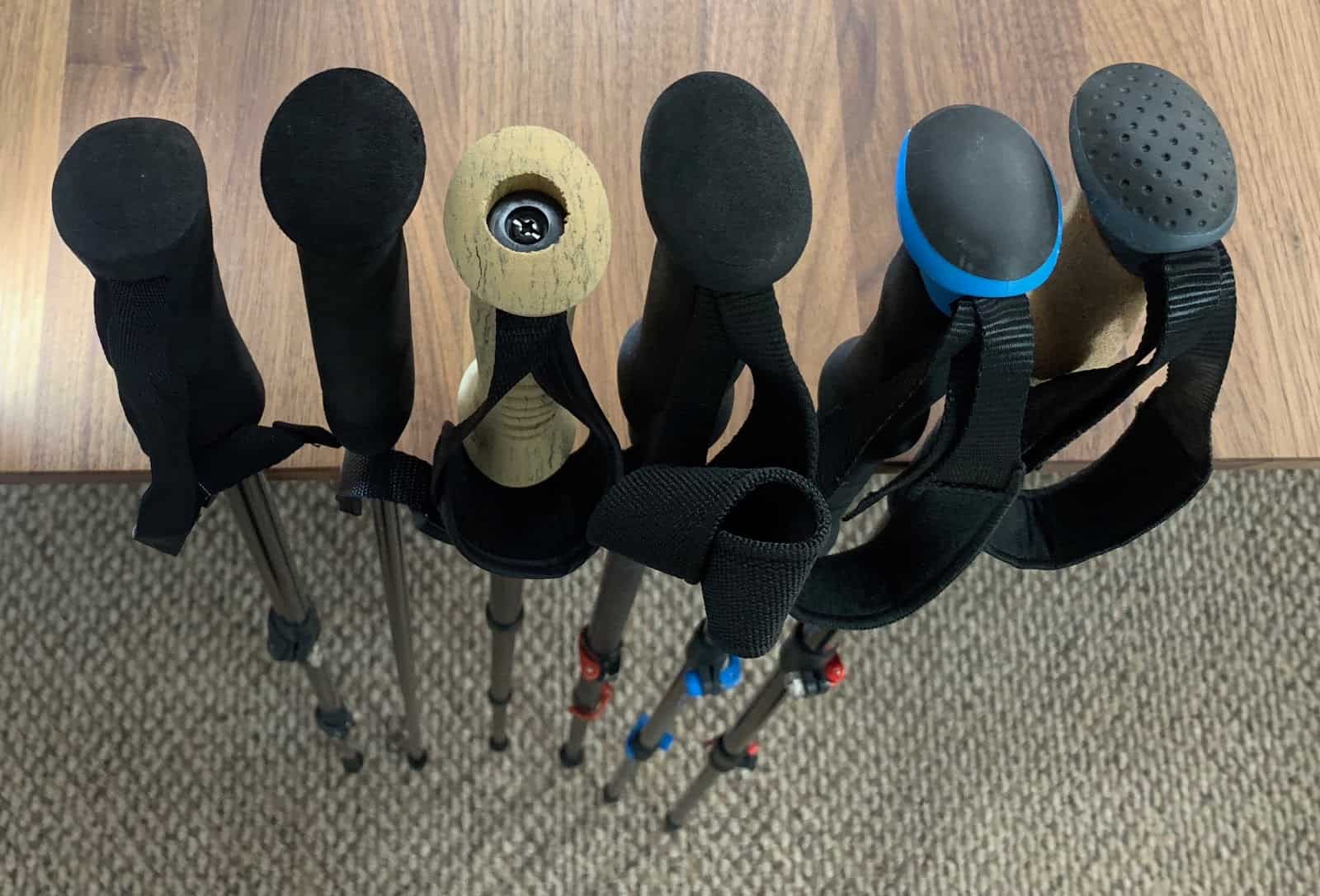
A selection of grip styles (L to R): Ruta Locura Yana, Locus Gear CP3, Gossamer Gear LT5, REI Flash, ZPacks Carbon, Mons Peak IX Tiger Paw Carbon. The simplest: Ruta Locura. Lightest strap: Locus Gear CP3. Most comfortable strap: REI Flash. Most comfortable grip: Mons Peak IX. Best balance of weight and comfort: Gossamer Gear. Best extended grip: ZPacks.The grip cap/knob/top – whatever you want to call it – is important enough to consider, because you’ll palm the grip top when descending steep downhills. So, softer is better, and larger is better. The worse of the lot is the Locus gear CP3 (far left, very small), and the best of the lot is the Mons Peak IX Tiger Paw Carbon (far right, large and grippy!).
Grip Angle
Some companies market “ergonomic grip angle” as a trekking pole feature. Such grips are angled about 15 degrees “forward” and are proposed to keep the arm and wrist in a more naturally-aligned position.
Once again, no scientific evidence exists that supports this claim, and at least amongst the hiking community, anecdotal evidence is conflicting. Most people who identify as lightweight backpackers tend to prefer non-angled grips because of cost savings, experience that suggests that they don’t offer any benefit, and perhaps their intrinsic bias against marketing BS.
Ergonomically (theoretically) a forward grip angle would only benefit faster hikers who plant their poles ahead of their stride, and use poles that are typically shorter in length than what manufacturers advise. The extreme (and probably the only appropriate) manifestation of this are the 45-degree angled and very short Pacer Poles, which customers seem to rave about.
Extended Grips
On some models, you’ll find a foam tube surrounding the shaft below the main handle. This allows you to “choke up” on steep climbs rather than taking the time to adjust the poles to a shorter length.
Foam is essential for an extended grip because you’re wrapping your hand around the shaft instead of contouring it around an ergonomically-shaped hand grip. Foam is sticky and helps you maintain that grip. Some extended grips are ribbed for additional friction.
Strap Design
Straps or no straps?
Manufacturers use three strategies for straps: no straps, wide straps lined with wicking fabric, or something in between.
Straps offer three key benefits:
Poles sometimes get stuck in mud or snow or rocks, and upon forward propulsion, your hand leaves the pole grip. Straps keep the pole in your possession so you don’t have to go back to retrieve it.
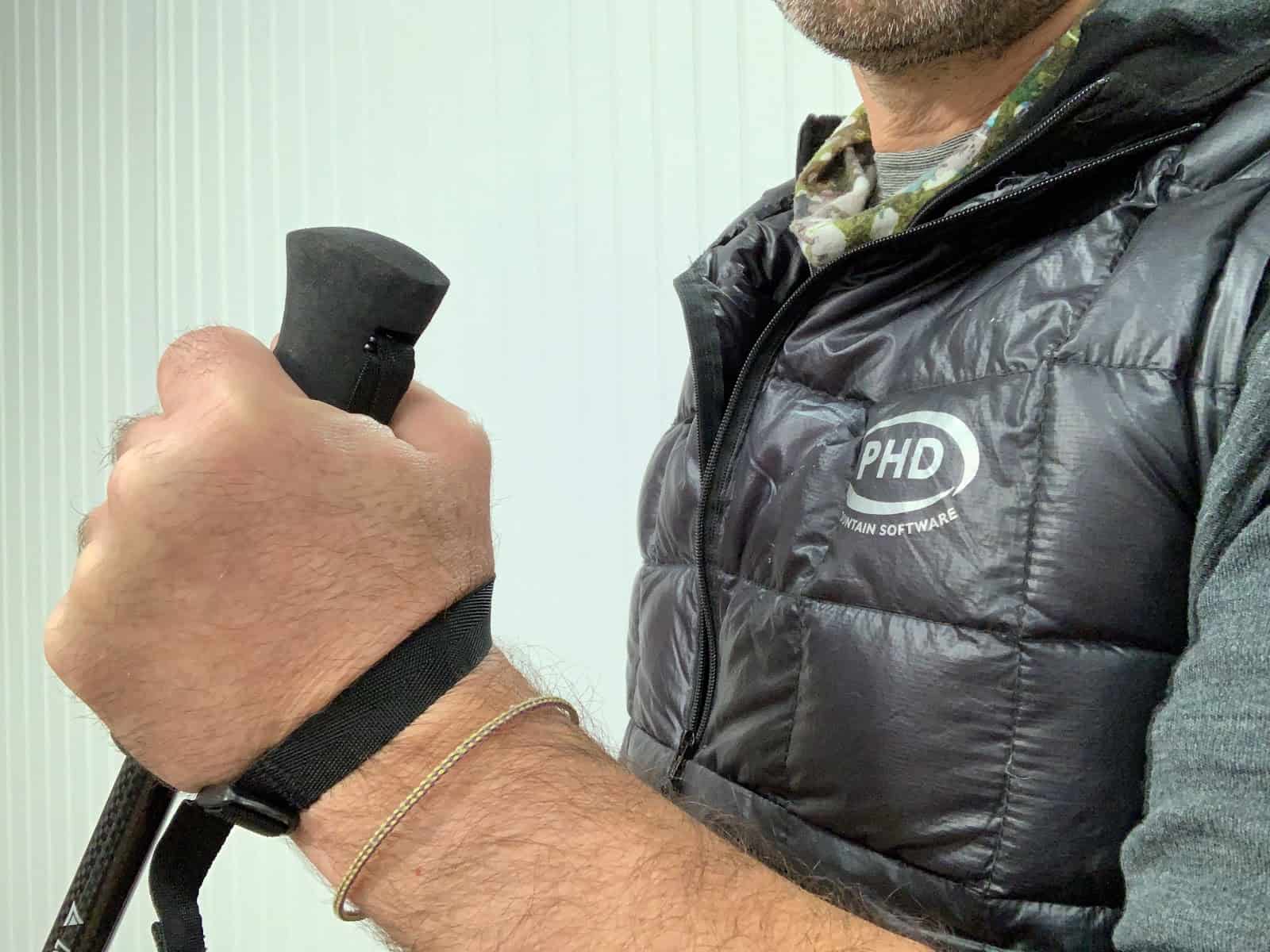
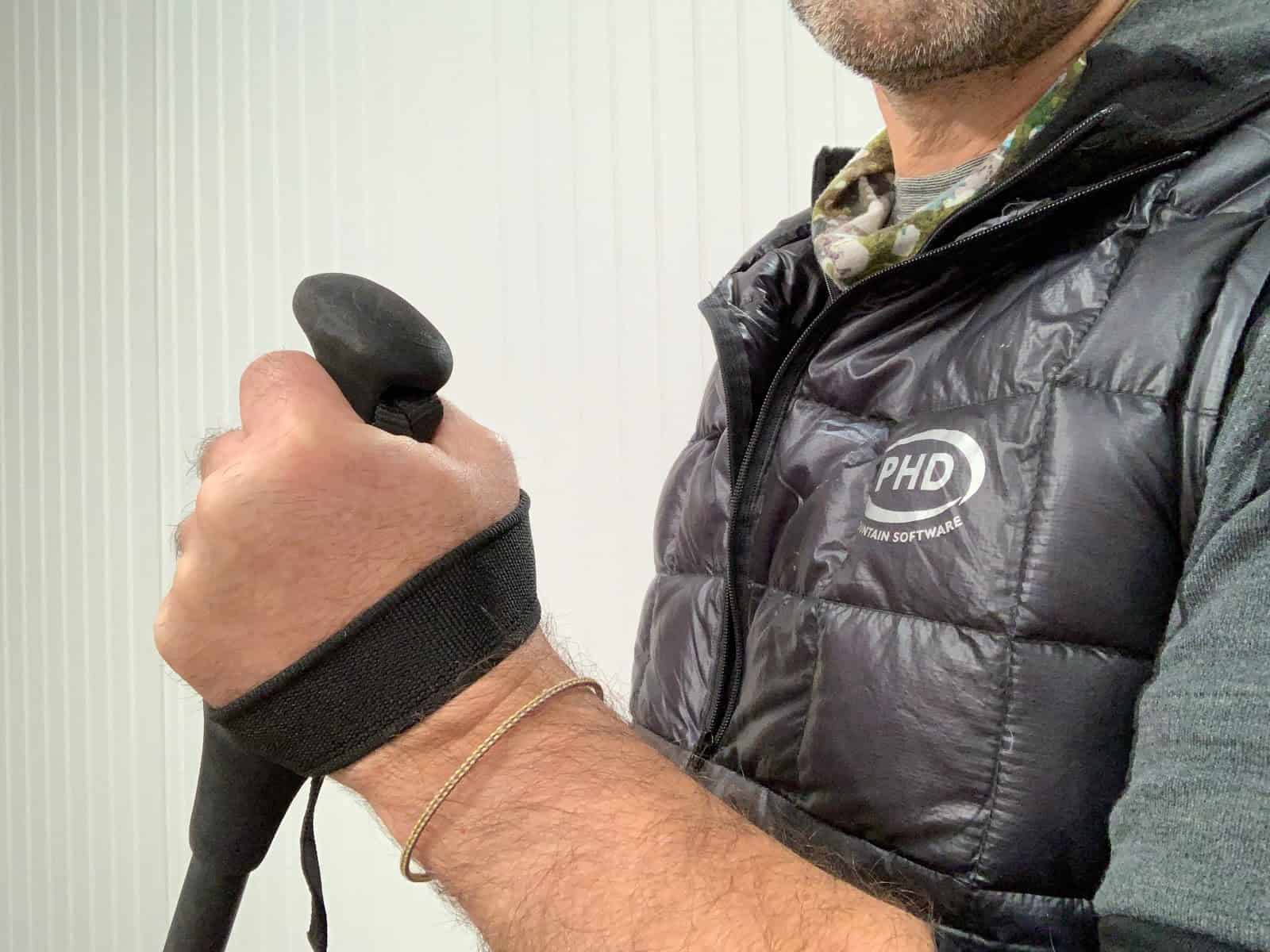
A properly adjusted strap allows you to exert downward pressure on your wrist that can provide more stability. To this end, an adjustable strap properly fitted is essential.
When bushwhacking or rock scrambling, straps allow you to release your poles so you can use your hands to grab handholds on rock or deal with dense brush.
Wide straps with wicking fabrics are comfortable for long ascents but add weight.
Think twice before purchasing strapless poles, or removing straps from your poles. I (Ryan) used to be a passionate advocate for strapless poles due to their aesthetic simplicity, but I’ve since reversed my position about straps. For off-trail travel in steep and mountainous terrain, poles with at least rudimentary straps on them are essential for me.
I (Andrew) agree wholeheartedly. I’ve lost strapless trekking poles on complicated river fords. Additionally, straps allow you to loosen your grip on the pole over easy terrain, giving your hands a break on long (thru-hike) expeditions.
Trekking poles are particularly valuable for maintaining balance on river crossings.
Tips
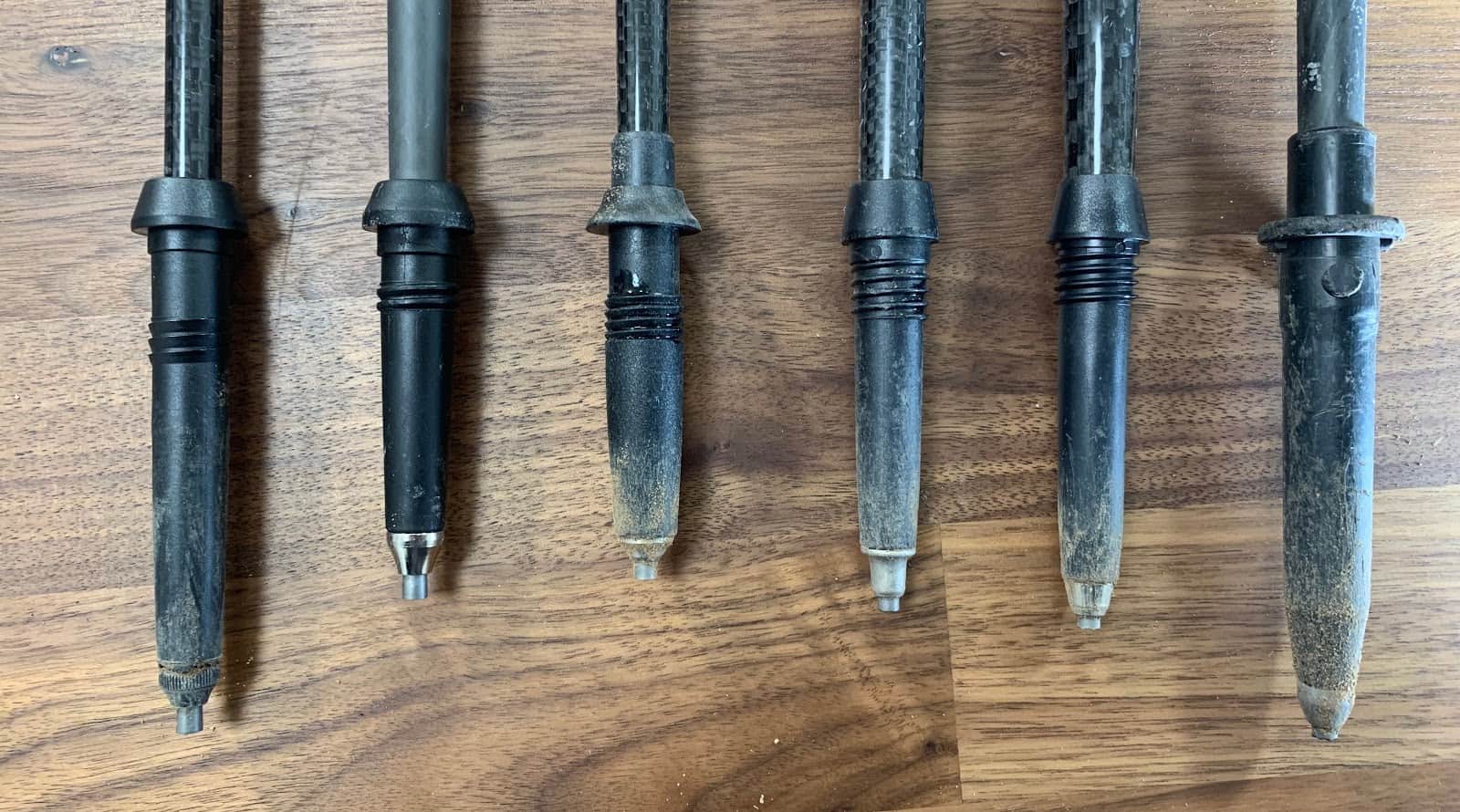
Most trekking poles ship with carbide-tipped plastic end caps. Carbide is durable and provides a precise grip on rocky terrain.
You can purchase aftermarket rubber tip caps that slip over the carbide tips. The advantages to rubber tip caps is that they don’t leave holes on the side of the trail (some feel that this is an important leave-no-trace consideration on heavily-used trails), dampen the “click-click-click” noise of the tips coming into contact with the ground on every pole plant, and provide better traction on some types of rock (but only when dry, and only if the poles are planted nearly perpendicular to the ground surface). Some thru-hikers carry them for long road walk sections.
Rubber tips add weight, and we’ve found so many on the trail that have fallen off that they are a meaningful source of trail litter in high-use areas.
Tips vary in length, thickness, and flex. The lightest tips are found on the Locus Gear CP3 (2nd from left), but the most durable tips that protect the lower pole shafts the best are found on the REI Flash Carbon (far right).
Baskets
Poles without tip baskets are lighter, swing easier, and can be placed more precisely when navigating steep and rocky terrain because the tip isn’t hidden by the basket.
Baskets come in two primary sizes: small baskets are about 1-2 inches in diameter and larger baskets are about 3-4 inches in diameter. Smaller baskets are designed to keep the pole from penetrating in deep mud, spongy tundra, talus, and hard snow, while larger baskets are for winter travel in powdery snow.
Small baskets are useful for mud, tundra, talus and snow because if your pole penetrates too deeply, your forward momentum may break the pole shaft.
Performance Criteria
The following criteria are used to evaluate trekking pole performance in this gear guide:
Straps and extended grips – straps and extended grips add versatility but also weight and cost.
Adjustability – adjustable poles are more versatile – they are beneficial for terrain of varying steepness and use with straight-pole-supported shelters. However, adjustability adds weight.
Collapsibility – a short collapsed length is beneficial for storage on the pack and for travel. However, collapsibility adds weight.
Weight – lighter is better, whether the pole is being carried on your pack, or in your hand.
Durability – more durable is better, but comes with a weight penalty.
Cost – cheaper is better, but you often get what you pay for, and the cost of a “breakable cheap pole subscription” isn’t actually beneficial.
Straps and Extended Grips
Straps add versatility and function for travel off-trail on terrain that is soft (e.g., snow, mud, tundra) or terrain with holes (e.g., talus, tussocks).
The Locus Gear CP3 poles offered rudimentary webbing straps that were the least comfortable straps offered on any pole in this review…The REI Flash Carbon poles offered a very wide, padded, soft – and clearly, very thoughtfully-designed strap, and the most comfortable strap in this review.
And, extended grips allow for a pole to be used more optimally on short steep ascents without taking the time to adjust them.
Adjustability
Although preferences vary, it’s generally recommended to use a pole length that allows your elbow to maintain a 90-degree angle (or perhaps slightly less). This gives you the most stability and comfort over long periods of time.
That also means that on steep climbs or descents, the pole length will need to change in order to maintain this optimum angle.
When hiking downhill, you can adjust the pole to be slightly longer to add stability and keep your body more level.
When hiking uphill, shorten the poles to add upward power to your movement.
On slanted ground or traverses, you can adjust individual pole length accordingly.
Of course, this all assumes you are using an adjustable pole. Some ultralight hikers do not consider the advantages of adjustability to be greater than the weight saving advantages of a fixed length pole, and instead, adjust the angle at which they use the pole accordingly (reference the video for how this is done).
Also, the locking mechanisms of adjustable poles are occasionally prone to failure or compromise (e.g., they get stuck or don’t engage as a result of dirt intrusion). Some poles can be difficult to adjust when wet or cold, especially when wearing mittens.
Adjustability also comes into account when considering use with a shelter, but we’ll treat that separately. See below.
Collapsibility
Collapsibility of poles is a factor to consider under two circumstances: when traveling and when storing in or on a pack.
Travel: Trekking poles are not allowed as a carry-on item on airplanes. This means they have to be stored in checked baggage or left at home. For this reason poles that collapse to a very short length are more useful for trips that involve air travel.
Pack Storage: As useful as trekking poles can be, they are not ideal for all situations.
Many hikers prefer to stow trekking poles on or in their packs when scrambling, bushwacking, or boulder hopping. In these cases, the size to which a pole collapses should be taken into account.
Additionally, the ease and speed with which a pole collapses and extends should be considered, especially if you are planning on stowing and re-deploying your poles on a regular basis.
Fixed length poles complicate all of the above factors. Another consideration, especially for thru-hikers or others who need to re-supply on long trips, is that many restaurants and places of business prefer that your poles be well stowed and tucked away so as not to accidentally knock over merchandise or your fellow shoppers.
Use With a Shelter
Utilizing a shelter that sets up with trekking poles is a great way to turn a single use item into a multi-use item – thereby saving weight. Most shelters that set up with trekking poles require, at least technically, an adjustable trekking pole. This allows for flexibility in pitch and location (depending on shelter design).
If you choose to use a fixed length pole you might find yourself with fewer options. You can always do some research and buy a pole length that best suits your shelter or vice versa. A solution for fixed lengths poles that are too long is to angle the pole off center from the shelter. If your pole is too short, several cottage industry brands sell pole jacks to raise the height.
Finally, there is the MYOG solution. Many enterprising hikers simply build a fixed length pole that matches the needs of their shelter and hiking style.
Pole material is not usually considered to be a factor under most conditions when the pole is used for shelter support. However, I (Ryan) have snapped carbon fiber poles in high winds when two poles were lashed together for a large (four-person) pyramid shelter, and I’ve snapped carbon fiber trekking poles and bent aluminum trekking poles under extreme snow loads during winter conditions.
Weight and Swing Effort
The poles in our Gear Guide range from 2.7 oz to 11 oz (individual pole weight). It’s hard to notice the difference between poles that weigh 8 vs. 9 oz. However, we found the difference is more noticeable and dramatic once the difference becomes about 30% or more. And the difference in weight while hiking between a 3 oz pole and an 11 oz pole is almost mind-boggling.
A trekking pole is carried in the hand, meaning its weight must be considered differently than weight carried in a pack.
The “swing effort” (force, e.g., in ft-lb) required to use a trekking pole is proportional to the product of its weight (e.g., in lb) and the position of its center of mass measured by its distance from the grip end of the pole (e.g., in ft).
For example, let’s compare two poles each having a length of 120 cm (3.9 ft). Pole A accurately represents the lighter poles in this gear guide, while Pole B accurately represents the heavier poles in this gear guide.
Pole A has a total weight of 100 g (0.22 lb). It has a foam grip, a lighter tip housing, and a single-piece carbon fiber shaft. Its center of mass is measured at 36 cm (1.2 ft) from its grip end. Its swing effort is thus calculated as 1.2 ft x 0.22 lb = 0.26 ft-lb.
Pole B has a total weight of 350 g (0.77 lb). It has a rubber grip, heavier tip housing, a tip basket, and a three-piece adjustable aluminum shaft. Its center of mass is measured at 42 cm (1.4 ft) from its grip end. Its swing effort is thus calculated as 1.4 ft x 0.77 lb = 1.1 ft-lb.
Thus, it wouldn’t be a far stretch to assume that Pole B requires more than 4 times the amount of effort to swing while hiking. Other assumptions go into this model, of course (which includes the angular and cartesian displacements of the hiker’s swing and the effects of gravity during the swing), but you get the idea. In other words, swinging a heavy pole gets real old, real quick.
This video illustrates another example – where a heavier pole actually has a swing effort that is lower than a lighter pole!
In this example, consider the following stats:
Pole ID
Pole Weight (oz)
Distance from Center of Mass to Grip End (in)
Swing Effort (ft-lb)
C
14.5
17.0
1.28
D
18.0
12.0
1.13
Remember, the weight of a piece of gear doesn’t always tell the whole story about its performance!
However, backpackers will certainly appreciate lighter swing weights over the course of a long, all-day hike or a long distance hike (e.g., thru-hike), because it will make pole placement easier and relieve some arm strain caused by swinging poles thousands of times per day.
Durability
Alternatively, there is the question of durability vs. weight to consider. A heavy weight does not necessarily always indicate a stronger pole: there are factors of design and construction quality to consider. That being said, many poles at the light end of the spectrum are built from carbon fiber, which is more prone to breaking under lateral strain than the aluminum poles.
Cost
A hiker moving at a moderate pace might initiate contact between his trekking pole and the ground anywhere between 20 to 40 times a minute. That adds up over miles, days, and years of use. For this reason, the difference in lifespan between a well constructed trekking pole and a shoddy one might be more readily apparent than in other pieces of gear.
The poles in this gear guide range from $30.00 to over $150.00. Cost varies with construction, design, material, and point of origin. Some hikers buy cheap poles knowing that the poles might not last long. In some cases, it’s just as easy to break an expensive carbon fiber pole as it is to snap an inexpensive one!
Category Overview
We surveyed 109 models of trekking poles from Gossamer Gear, Ruta Locura, Komperdell, Black Diamond, Helinox, Locus Gear, ZPacks, Mons Peak IX, REI, Leki, Montem, Hiker Hunger, Kelty, and Mountainsmith having weights ranging from 2.7 oz per pole to 11.0 oz per pole.
Here’s a chart showing their weight distribution:
The average weight of the trekking poles surveyed was 16.1 oz/pair. The standard deviation of these weights was 4.1 oz/pair. Using those delimiters, we thus define three categories of poles we arbitrarily call “heavy” (all poles heavier than average), “light” (all poles lighter than average), and “ultralight” (all poles lighter than the average minus one standard deviation).
In this gear guide, we are only considering poles that fall into either the ultralight or light category during our preliminary survey.
Of the 45 models that met the “light” or “ultralight” criteria, we hand-picked a selection that we felt provided a representative overview of various designs from both mass-market and cottage-branded manufacturers.
Excluded from the gear guide, notably, are poles manufactured by OEM Chinese factories that sell branded products to end-point suppliers. These are the typical poles you find at large online shopping sites like Amazon under a variety of brand names. Most of these poles are inexpensive, manufactured by one of only a handful of large Chinese manufacturers, and are of dubious quality.
Product Reviews
The following table highlights the products featured in this Gear Guide. When multiple sizes of a given model were offered, we selected and tested models that spanned a 115-125 cm range as much as possible. When there was an option for a model with or without straps, we selected the model with straps.
In addition, we included two models in the table – the Gossamer Gear LT3C and LT4/4S – that have been discontinued. However, these poles are so iconic amongst those of us in the ultralight backpacking community that we couldn’t help but include them for comparison purposes.
Model
Length
Weight Per Pair
MSRP
Gossamer Gear LT3C*
120 cm
5.6 oz
discontinued
Ruta Locura Yana
78 cm - 135 cm
7.5 oz
$155
Gossamer Gear LT4S*
90 cm - 140 cm
9.2 oz
discontinued
Komperdell Carbon Trail Ultralight
120 cm
9.4 oz
$150
Gossamer Gear LT5
60 cm - 130 cm
10.0 oz
$195
Helinox Passport Featherlite Twist Lock
53 cm - 120 cm
10.4 oz
$140
Black Diamond Distance Carbon Z
120 cm
10.5 oz
$170
Locus Gear CP3
65 cm - 135 cm
10.6 oz
¥13,800 (approx. $130)
Helinox Passport Tension Lock
115 cm
11.0 oz
$150
Black Diamond Distance Carbon FLZ
105 cm - 125 cm
12.7 oz
$190
ZPacks Ultralight Carbon Fiber
62 cm - 142 cm
13.4 oz
$100
Mons Peak IX Tiger Paw Carbon
62 cm - 135 cm
13.9 oz
$150
Komperdell C3 Carbon Pro Compact
90 cm - 120 cm
14.5 oz
$160
REI Flash Carbon
105 cm - 140 cm
14.8 oz
$140
Leki Carbon Ti
100 cm - 135 cm
15.2 oz
$180
Let’s review the key design features and performance benefits for each of these models.
With the discontinuation of Gossamer Gear’s lightest pole model (the LT3C) The Ruta Locura Yana is now one of the lightest (if not the lightest) trekking pole on the market that includes a strap (at less than 4 oz/pole).
Advantages:
Lightweight
Foam grips
High quality and strong (stiff) carbon shafts
Wide range of adjustability
Minimalist straps
Low rattle/vibration
Disadvantages:
Collapsible only to 31 inches (28 inches if two-section shaft is separated)
Grip shape isn’t aggressively ergonomic
Pole adjustment is based on compression / twist-lock mechanism that requires a lot of tightening to resist collapse under high forces and/or in cold conditions
More durable carbon used in the lower shaft makes the swing effort higher than slightly heavier poles
Lightweight foam handles with extended grips and comfortable straps are great, but lack of a palm rest or extended grip ribbing/channeling compromised the function of the Komperdell Carbon Trail Ultralights. Photo: Komperdell.
The Komperdell Carbon Trail Ultralight is an extremely stiff, fixed length pole with extended foam grips and a wide, comfortable strap. In terms of pure trekking performance – using the pole while hiking – its performance-to-weight ratio is unmatched. This pole uses the same shaft as the old Stix poles we built and marketed under the Backpacking Light brand several years ago.
Advantages:
Lightweight
Extended foam grips, comfortable grip shape
Very stiff carbon shafts
Lightweight straps, but still with padding and wicking surface
Zero rattle/vibration
Disadvantages:
One piece, non-adjustable pole limits versatility, adjustability, and collapsibility
Poor execution of extended grip – it needs a palm rest and some ribbing/channeling for better grip.
One of our favorite grips! Very comfortable, ergo foam grip – but alas, no grip extension. A grip extension and lever clamp adjustability mechanisms would elevate the LT5 into “best-of-the-best” in lightweight trekking poles (caveat: for trail use)! Photo: Gossamer Gear.
The Gossamer Gear LT5 is a three-section carbon, adjustable pole with minimalist straps. With a collapsed length of only 60 cm (24 in) it’s the most collapsible telescoping pole featured in this gear guide – a notable achievement for a pole that weighs only 5.0 oz.
Advantages:
Most collapsible telescoping pole in this weight range
Very comfortable ergonomic foam grips
Wide, padded, soft straps offer a lot of comfort
Low rattle/vibration
Disadvantages:
Twist-lock adjustability mechanism is one of the least secure and reliable among the poles we tested
Carbon shafts are thin-walled and quite fragile, especially lower section – prone to breakage
The lightest aluminum pole in this review, the Helinox Passport Featherlite Twist Lock are compact (collapsing to 21 in) and light (5.2 oz/pole). The high-quality DAC aluminum shaft is strong for its weight, but the pole suffers from quite a bit of flex and the twist-lock mechanisms are the most difficult to use of any pole in this gear guide in cold and wet conditions. It’s available (if you can find them!) in max lengths of either 120 cm or 135 cm.
Advantages:
Lightest aluminum pole
Collapses to a short length
Extended foam grips
Disadvantages:
Foam grip is not aggressively ergonomic
Extended grip is smooth, requires more grip strength to use
Twist lock mechanism gets stuck in cold and wet conditions
A channel-cut foam grip makes the Black Diamond Distance Carbon Z a very comfortable pole to hold, but lack of a palm rest at the bottom of the grip extension limits its potential. Photo: Black Diamond.
The lightest folding pole in this review, and thus, the lightest “tiny-when-collapsed” pole in this review (5.3 oz each and 16 in long when collapsed), the Black Diamond Distance Carbon Z is a solid choice when light weight and collapsibility are your most important criteria.
Advantages:
Very short collapsed length (16 in)
Light weight (5.3 oz each)
Comfortable channel-cut foam grip
Extended grip
Disadvantages:
Length is not adjustable
Extended grip lacks a palm rest
Stiffness is not as much as Ruta Locura Yana or Komperdell Carbon Trail Ultralight
Unpadded nylon strap lacks some of the comfort niceties found in other poles, but is wide enough to prevent it from digging into your skin
Minimalist grips and straps are the defining features of the Locus Gear CP3 trekking poles. Photo: Locus Gear.
The Locus Gear CP3 is a carbon, three-piece, telescoping pole that collapses to a length of 26 in and weighs only 5.3 oz per pole. Its key design characteristics are its lever lock mechanisms for adjustability and its minimalist grip and strap.
Advantages:
Light and compact for a 3-piece collapsible pole
Minimalist strap and foam grip for weight savings
Disadvantages:
Foam grip is not aggressively ergonomic
Lever hardware is plastic – durability concern over the long term
Minimalist strap may be too much so – thin strap digs into wrist when used aggressively for weight-bearing
High rattle/vibration in the joints when using on hard-packed terrain
The Helinox Passport Tension Lock folds to a tiny size, making it a terrific option for travelers, day-hikers, and trail runners. Photo: Helinox.
Similar to the Twist-Lock model of the same name, the Helinox Passport Tension Lock is a non-adjustable folding pole that collapses to a length of only 14 inches – the shortest of any pole in this review. Otherwise the Tension Lock model enjoys the same advantages and suffers from the same disadvantages as its lighter Twist-Lock cousin.
Advantages:
Most collapsible pole reviewed in this gear guide
Extended foam grips
Disadvantages:
No adjustability
Foam grip is not aggressively ergonomic
Extended grip is smooth, requires more grip strength to use
Only slightly heavier and less compact than the Helinox Passport Tension Lock, the Black Diamond Distance Carbon FLZ offers a more comfortable grip and strap, with some adjustability provided by a single upper lever clamp mechanism. That makes it a more versatile choice for ultralight backpackers. Photo: Black Diamond.
A very short collapsed length (14.6 in), light weight (6.4 oz/pole), and a terrific extended grip/strap combo, the Black Diamond Distance Carbon FLZ is one of the best all-round lightweight poles on the market, whether folding or otherwise. The FLZ model adds some adjustability!
Advantages:
Short collapsed length due to its folding design
Enough adjustability for some shelter pitching and changing terrain
One of the better foam grip, extended grip, and strap combos available in terms of comfort
ZPacks Ultralight Carbon Fiber poles offer the best extended grip palm rest of any pole in this review, making it a complete grip package. No small feat for a $100 set of adjustable poles that still weigh less than 14 oz/pair. Photo: ZPacks.
Surprisingly inexpensive telescoping carbon fiber poles, the $100 ZPacks Ultralight Carbon Fiber poles are not as light as what we’d expect from a cutting-edge cottage manufacturer (6.8 oz per pole). Plastic hardware but higher quality manufacturing quality make them rattle less than the slightly lighter Locus Gear CP3 poles, but the grip/extended grip/strap combo make these more versatile and comfortable than the Locus Gear model.
Advantages:
Very good (comfortable) strap, foam extended grip, and foam grip (ergonomic) combo
Lever lock mechanism prone to some slippage in cold temperatures unless tightened very tightly (more so than the Locus Gear poles)
Inexpensive
Disadvantages:
Plastic hardware in adjustability mechanisms brings long term durability into question
A thoughtful grip-strap-extended grip package, metal hardware, and stiff shafts make the Mons Peak IX Tiger Paw carbon a compelling option if you’re looking for a full-featured pole. Photo: Mons Peak IX.
Mons Peak is new to the backpacking gear game, but don’t discount their first entry into the trekking pole market. The Mons Peak IX Tiger Paw Carbon is one of the highest-quality poles in this review. The carbon shafts are stiff, thick, and strong, and the metal lever adjustability mechanisms are high quality and perform very well in cold and wet conditions – the best of any trekking pole in this gear guide. As the lightest pole in this review with a cork grip, it also includes a very useful extended grip and comfortable pole strap.
Advantages:
Stiff, strong pole shafts
Wise blend of cork and foam in a comfortable grip and extended grip
Comfortably wide, padded and wicking wrist strap built with an eye on weight savings without sacrificing comfort
High quality metal lever-style adjustability mechanisms perform well in cold and wet conditions
Disadvantages:
Comfort and quality comes with increasing weight: these poles are 6.9 oz apiece.
An aesthetically beautiful design, the Komperdell C3 Carbon Pro Compact sure looks good. Add some channeling and a palm rest to the extended grip and it could be close to perfect. Photo: Komperdell.
Once beloved by ultralight backpackers, Komperdell C2 and C3 Carbon Pro poles (including the Komperdell C3 Carbon Pro Compact) have undergone solid design improvements through the years. However, for the weight, there are other as-good-or-better options for telescoping carbon trekking poles, including the Mons Peak IX Tiger Paw Carbon and the REI Flash. Nevertheless, the C3’s remain a viable contender even though they are among the more expensive poles in this gear guide.
Advantages:
Metal lever-style adjustability mechanisms that are secure in cold and wet conditions
Extended foam grip with good strap comfort
Strong, stiff carbon shafts
Disadvantages:
Foam grip lacks the ergonomics and comfort of the Tiger Paw or Black Diamond Distance Carbon Z
Extended foam grip isn’t ribbed or channeled, which limits its comfort when choking down
The REI Flash Carbon is a well-built pole with virtually no vibration or rattle, and has the stoutest tip of any pole in this review, which protects the lower carbon shaft.
Finally, a pole that extends to 140 cm – the REI Flash Carbon. This will be a benefit for taller hikers or those that appreciate the flexibility (as we do) of being able to pitch one end of our shelter (such as a tarp or TrailStar), or the center of our pyramids, higher in good weather for added ventilation.
Advantages:
Metal lever-style adjustability mechanisms that are secure in cold and wet conditions
The Leki Carbon Ti is Leki’s lightest pole. An outstandingly comfortable foam grip is hampered by an uncomfortable strap and a smooth extension grip without a palm rest. However, the pole is solid, vibration-free, durable, and well-built. Photo: Leki.
As the second most expensive set of poles in this review ($190), and the heaviest (7.6 oz/pole), the Leki Carbon Ti has a bit of convincing to do before it can win the hearts of backpackers with an eye towards weight savings. Nevertheless, as Leki’s lightest pole, it’s worth including here for those of you who have been drinking the Leki kool-aid for the past few decades. It’s the highest-quality, most vibration-free pole in this review, and it offers the most comfortable hand grip.
Advantages:
Foam grips are very comfortable to hold, extended grip offers some channeling for additional friction
Lever action adjustability mechanisms secure well in wet and cold conditions, but less so in very cold temperatures and transmit no vibration or rattle
Leki name may come with cachet for some – you know, like driving a BMW
Disadvantages:
Expensive – price-to-performance ratio is no longer competitive when compared to the other poles in this review
Extended foam grip doesn’t include a palm rest
Strap isn’t padded – just a piece of webbing
Recommendations
Lightest Weight
If your poles spend a lot of time on your pack, or you use them primarily for shelter-pitching and the occasional downhill, we recommend the Ruta Locura Yana.
Easiest Swing Effort
If you’re in the mood for thousands of miles of trail hiking, and don’t feel a compelling need to have a collapsible pole for travel or bushwhacking, check out the Komperdell Carbon Trail Ultralight. These poles are for the AT thru-hiker. Pair it with a carbon pole jack from ZPacks or Ruta Locura if needed for shelter pitching.
Most Compact
Foldable poles will always be the most compact – they are ideal for runners carrying tiny day packs, or travelers (just tuck them away in a small suitcase). Our pick blends collapsibility with a very comfortable extended grip and strap combo: the Black Diamond Distance Carbon Z.
Long-distance runners, mountain marathoners, and others who value rapid deployment and collapse, and very small collapsed length, tend to favor folding poles like the Black Diamond Distance Carbon Z, which I used on my (Ryan’s) one-day traverse of the Bridger Ridge (Montana) in April of 2015.
Most Durable
Durability and weight do go hand in hand here. Don’t ignore the Ruta Locura Yana. They offer a limited feature set but they are the most durable poles we’ve ever seen in this weight class (i.e., poles than weigh less than 5 oz apiece). For absolute durability (if you spend a fair bit of time off-trail or in rough terrain), consider the Mons Peak IX Tiger Paw Carbon,the REI Flash Carbon, and the Leki Carbon Ti.
Best Value
The cheapest poles in this review – the ZPacks Ultralight Carbon Fiber – aren’t just inexpensive, but they are also among the most versatile. Good grip, good strap, extended grip, wide range of adjustability, and good stiffness for stability on descents.
The most versatile among the “light” poles are the Black Diamond Distance Carbon FLZ (same benefits at the Carbon Z model, but with some adjustability) and the Mons Peak IX Tiger Paw Carbon (best grip/extended grip/strap combo of any pole in this review, plus a wide range of adjustability).
DIY for Cheapskates
Not sure about trekking poles for you? Consider a cheap and easy DIY option to test the waters:
The best glue for grip-to-shaft and tip-to-shaft adhesion
Product Review Disclosure
Updated September 15, 2018
How we acquired these products: Product(s) discussed in this review were either acquired by the author from a retailer or otherwise provided by the manufacturer at a discount/donation with no obligation to provide media coverage or a product review to the manufacturer(s).
We do not accept money or in-kind compensation for guaranteed media coverage: Backpacking Light does not accept compensation or donated product in exchange for guaranteed media placement or product review coverage.
Affiliate links: Some (but not all) of the links in this review may be “affiliate” links, which means if you click on a link to one of our affiliate partners (usually a retailer site), and subsequently make a purchase with that retailer, we receive a small commission. This helps us fund our editorial projects, podcasts, instructional webinars, and more, and we appreciate it a lot! Thank you for supporting Backpacking Light!
An increasing amount of hikers are turning to skirts and kilts for greater mobility and versatility in the backcountry. I felt it high time to give it a try
Introduction
An increasing amount of hikers are turning to skirts and kilts for greater mobility and versatility in the backcountry. I felt it high time to give it a try. I reviewed the Purple Rain Adventure Skirt in size small.
Purple Rain was founded by Appalachian Trail Thru-Hiker Mandy “Purple Rain” brand after she was unable to find a hiking skirt that matched her needs. She hand sews each product in Oregon.
Photo: Purple Rain
Features and Specifications
Features
Yoga style moisture wicking waistband
Dual double-access pockets
Water-repellent
Light
Quick drying
Minimalist design
Wrinkle resistant
Anti-microbial finish
Available in sizes S to XXL
Currently available in purple, black, and sandstone (note: different colors come in different fabric blends)
Specifications
Skirt body material: 74% polyester, 22% nylon, 4% spandex
Waistband material: 90% polyester, 10% spandex
Waistband dimensions: 4 in (10 cm)
Skirt bodydimensions: 16 in (41 cm)
Skirt length: 20 in (51 cm)
Measured weight: 4.3 oz (121 g)
Review Context
Wearing a skirt can feel like less protection when compared to shorts or pants. While testing this piece of gear I was considering the following: bugs, brambles, abrasions, brisk temperatures, and modesty.
For rain gear, I used MEC Women’s Hydrofoil Jacket and Pants. If I had to choose again, I’d select a rain kilt or poncho to retain the freedom of movement provided by the skirt.
Description of Field Testing
I tested this skirt while hiking up the Marvel Pass Trail to Mt. Assiniboine, an exposed Canadian Rocky environment, and along the West Coast Trail in British Columbia, a coastal rainforest. All told, I wore the skirt for fifteen days in two different sets of conditions.
Performance Assessments
Construction and Fit
The skirt is a simple A-line tube design with five main pieces: a waist, two side pieces, a front panel, and a back panel. Two double pockets grace either side. The blended synthetic fabric feels sturdy with just the right amount of stretch. The waistband is soft and smooth against the skin and wicks moisture effectively. The skirt is flat and low-profile under my pack.
The double-sided pockets are generously sized and especially nice for storing photography equipment. The inside pocket lacks an enclosure while the outside pocket velcros shut. I could slide my lens caps, filters, and small camera accessories into the flapless pocket when not shooting. The velcro flap pocket was handy to keep small fast-access items like a GPS, gloves, compass, or phone comfortable and secure.
The stitches are tight and even, the hems and seams are straight. This is a well-constructed garment.
The Adventure Skirt’s rugged construction can stand up to a lot of scrambling and scraping, such as when shooting photographs (Photo: VenderVelden).
Staining, Soaking, and Drying
I began testing the Purple Rain Adventure Skirt by accidentally spilling bacon grease on it. I didn’t give the stain (or the scent) time to set in, I immediately began soaking the skirt in a creek. The upshot was I was able to get a solid idea of what it takes to fully soak and dry the skirt.
It took three full submersions to soak the skirt. During the first submersion, the durable, waterproof repellent fabric shook off ninety percent of the water. After wetting the skirt down, I took it back to the campsite and began scrubbing it with biodegradable soap flakes from my mess kit. I rinsed the soap out over a cat hole about an hour later. I hung the skirt up to dry in my vestibule and hunkered down in my tent for the night.
After two hours, the skirt body was damp but almost dry, while the waistband was slightly moist. Ambient temperature was about fifty degrees Fahrenheit. I was not able to gather any humidity data.
The fabric held a mark from the bacon grease even after machine washing at home, but that is to be expected.
Weather Resistance and Protection
I spent a full day in the rain wearing the Purple Rain Adventure Skirt, during which the precipitation ranged from heavy showers to light sprinkles. The fabric resisted soaking well, even during heavy showers. It took several hours to gain significant moisture but never actually soaked through. The seams and areas where gear stretched the fabric of the pockets seemed to be slightly less water resistant.
What little moisture the skirt did absorb was quickly shed (within forty-five minutes) once the sun came out.
It would have been easy to pull on rain pants underneath the skirt, but I never felt the need. The skirt provided enough protection from the elements.
The Adventure Skirt’s seams are slightly less water resistant than the rest of the garment.
Bugs, Brambles, and Bushwhacking
The Adventure Skirt held up well when bushwhacking through dense underbrush. It provided adequate protection from brambles and bugs, especially when paired with full-length gaiters and bug pants. After multiple days of scrambling, I was far less scratched than I thought I would be when I first picked up the skirt.
Versatility is a primary strength of the Adventure Skirt. Rain pants are easily pulled on underneath the skirt (Photo: VanderVelden, Owl Lake, Alberta, Canada).
Modesty
I found the skirt to be an ideal length for my thirty-two-inch inseam. The skirt fell to just above my knees. Everything above my knees was covered adequately, even when ascending hills. I would be careful when doing yoga or intense scrambles, though, as the skirt tends to “creep” in these situations.
That being said, I had no problem staying covered while crawling and climbing around in search of good photographs.
The Adventure Skirt far outstrips pants or shorts when it comes to backcountry bathroom-breaks. You don’t have to remove it, and it is easily adjusted back into place in a hurry when necessary.
Warmth and Temperature Control
I would wear the Purple Rain Adventure Skirt at any temperature that would normally require shorts. Unlike shorts, regulating temperature by adding and removing layers underneath the skirt was simple.
That being said, I did find myself carrying a heavier insulating layer than I normally would, while wearing long pants. Other users may find they do not need a heavier layer, but my winter layers routinely make their way onto summer backpacking trips in the Canadian Rockies.
My field testing encompassed a variety of rainy, chilly, and windy conditions. I stayed comfortable in the Adventure Skirt throughout, primarily due to the ease of layering underneath the garment (Photo: VanderVelden).
Performance Summary
Durable construction
Comfortable fabrics and design
Highly water-resistant
Easy layer transition compared to shorts and long pants
Large, versatile pockets
Conclusion
Strengths
Smooth, soft waistband
Easy access to open top pockets
Secure access to Velcro flap pockets
Weather resistant
Fast-drying
Versatile layering options
Limitations
Requires bug deterrent (spray, Permethrin or mesh pants)
Mid-weight base layer recommended
Gaiters recommended
Commentary
I would wear a Purple Rain Adventure Skirt instead of shorts on any trip. I found the skirt comfortable, durable, functional, and versatile. Increased privacy while changing layers and using the bathroom were unexpected but considerable benefits. I will likely never wear shorts again.
Rating: Recommended
The only reason I cannot give the Purple Rain Adventure Skirt a Highly Recommend score is because of its limited functionality when scrambling over rocks.
I have tried a few other types of skirts in addition to the Purple Rain Adventure Skirt and found their wider A-line cut or pleated cut an asset for scrambling. A slightly roomier profile or pleating across the hip might give more flexibility and freedom of movement when scrambling. For frequent scramblers, I would recommend the slightly longer and wider profiledPurple Rain Adventure Kilt.
In every other area, I found the Purple Rain Adventure Skirt exceeded my expectations. I am a dedicated skirt convert, and the Adventure Skirt tops my list in this category.
Our community talks about skirts quite a bit. Check out conversations on wearing kilts on the PCT, the JMT, and a DIY Hiking Skirt.
Emylene suggested a poncho or rain kilt for use with a skirt. Here’s a conversation on cottage brand rain kilts.
Product Review Disclosure
Updated September 15, 2018
How we acquired these products: Product(s) discussed in this review were either acquired by the author from a retailer or otherwise provided by the manufacturer at a discount/donation with no obligation to provide media coverage or a product review to the manufacturer(s).
We do not accept money or in-kind compensation for guaranteed media coverage: Backpacking Light does not accept compensation or donated product in exchange for guaranteed media placement or product review coverage.
Affiliate links: Some (but not all) of the links in this review may be “affiliate” links, which means if you click on a link to one of our affiliate partners (usually a retailer site), and subsequently make a purchase with that retailer, we receive a small commission. This helps us fund our editorial projects, podcasts, instructional webinars, and more, and we appreciate it a lot! Thank you for supporting Backpacking Light!
I’ll be starting a new Q&A series where I’ll answer questions about lightweight backpacking, the outdoor industry in general, outdoor gear technology, Backpacking Light behind-the-scenes and future strategy, outdoor lifestyle, minimalism, and more!
As part of the Backpacking Light Wilderness Adventures program, Trek Director Kevin Fletcher and I led a guided trip across the Absaroka-Beartooth Wilderness in Montana in September 2018. This photo essay tells the story of that trek.
Introduction
As part of the Backpacking Light Wilderness Adventures program, Trek Director Kevin Fletcher and I led a guided trip across the Absaroka-Beartooth Wilderness in Montana in September 2018.
This program, dubbed the “Whitetail Trek”, was a new program for us where we gave the group a start and end point and let them plan their own trek across the range.
The process framework for planning the trip generally followed what is described in my recent article about off-trail route planning.
This photo essay originally appeared on Instagram – please follow Backpacking Light on Instagram for more visual inspiration, stories, and BPL news.
Photo Essay
Day 0: Route Planning – For the final Wilderness Adventures Trek of 2018, 11 of us are convened in #redlodge#montana and staring at satellite imagery to see if we can find a route across the northern Absaroka-Beartooth #Wilderness.
Day 1: “Consider Your Future” – We leave the trailhead mid-morning and start working our way towards the end of a giant alpine lake. At the end of the lake, we’ll take a left at a creek, leave the trail, and begin our ascent into the heart of the Absaroka-Beartooth Wilderness.
Day 1: The First Bushwhack – After 6 miles of trail, crossing the creek, and leaving the lake, we start our forest bushwhack. Up, up we go.
Day 1: Racing the Sun – With the steepest part of our first-day route still ahead of us, we are racing against the setting sun. A good off trail route is measured by the extent to which we use our hands for upward propulsion, and this is indeed a good one.
Day 1: Dinner at the Talus Cafe – After 3,000 feet of elevation gain, with most of that off trail through forest and boulder fields, we arrive at an alpine lake near the treeline at dusk and enjoy a hard-earned dinner on the talus-y lakeshore. Kevin (foreground) fiddles with ramen, Andrew (right) chews fuel, and Jim (left) wisely ponders what the next day might bring as he looks upward.
Day 2: Logjam – We start trekking at dawn and begin the tedious process of finding a route from our camp in the trees to the talus and tundra a few thousand feet above us.
Day 2: Tundra Must Be Earned – We want to reach the tundra – the high grassy plateaus that are the hallmark feature of the Beartooth Mountains. But getting there requires some hardship. This morning, father-son duo Chris and Nick crawl their way upward on steep talus and scree.
Day 2: The Plateau – Another few thousand feet of elevation gain through talus, scree, and cliff bands finally spits us out on the incredible tundra of one of the Beartooth’s many high plateaus. Now, a traverse across the plateau leading to an exit back down to the tree line before the storm hits.
Day 2: Descent – With three options to choose from and a storm system coming, we make the decision to traverse the entire plateau and exit at the far end. Tonight we will descend and camp below the treeline after 12 hours of trekking today.
Day 3: Storm Day – As we expected from the forecast, today a storm rolled in and would be howling snow and other such drama up on the high plateaus, so we’d spend our time down in the trees, walking trails down a valley and then up and over a high pass to our hopeful destination. This would be another “all-day walk”, required if we are to complete the traverse and reach our ultimate destination, where our exit vehicles are parked.
Day 3: In the Clouds – As the day wears on, the temperatures drop and we are hiking in a cold, wet, misty cloud all day. Now it’s time for the climb up into it as we head for a pass that is 3,200 feet higher.
Day 3: Where? – As evening approaches, and light fades, we are still climbing towards a pass in the soup.
Day 3: Nightfall – Our final stream crossing brings us to the lakeshore of our hoped-for destination as the last bits of daylight escort us to a camp.
Day 4: Wet – This morning we are up before dawn and trekking at first light. In the midst of our bushwhack to get up and away from our forest camp and into the mountains again, we find ourselves in the meat of foul weather. Cold temperatures, snow, and wind accompany us through game trails, bush, talus, and blowdowns. But alas, up we go.
Day 4: There? – Through the unfocused aperture of minor breaks in the storm, we try to visualize a route through the talus and find our way to the mountain col that will deliver us to the next valley.
Day 4: Breakup – As the storm starts to lose some energy, a brief respite reveals the ominous and beautiful spires across the valley.
Day 4: The Pass – After intermittent whiteout, wind, snow, and graupel, we make the final push to the pass.
Day 4: The Pass – We finally reached the high pass in the face of a driving blizzard where snow and graupel stung our faces as we climbed and winds strong enough to knock us off balance greeted us at the little col.
Day 4: Down -Thankfully, we decoded the off-route signature that brought us over the final pass that would lead down to our exit valley. The storm broke, but high winds and cold temperatures kept us bundled up. Now, a few thousand feet of descent and one more exploratory journey up the valley before we exit.
Day 4: Valley Meandering – After dropping a few thousand feet of elevation and zipping up the valley on a trail, we leave the trail again and work our way back to the high peaks for the next few days.
Day 4: Camp – We trek well into the evening hours to reach a tundra camp at treeline, at the base of the steep slopes that will take us back up to the alpine country tomorrow.
Day 5: Small and Big – This morning starts off once again with another big, steep climb, leaving the shadows of the valley below and working up to a more hostile environment dominated by rock and ice. As we ascend, we turn back and look at the massive wall of mountain flanking the other side of the valley and can’t help but think how we are so small, in this land that’s so big.
Day 5: Rubble – Taking a moment at mid-day to stop and wonder at the sheer scale of rubble found at the highest elevations in the Beartooths.
Day 5: High Pitch – Amidst a sea of rock, we discover small alcoves where our little tents can be pitched. Here, high above the treeline, the fall winds are a constant reminder that ultralight shelters can be a limiting factor when it comes to nighttime comfort and safe protection from the elements. Two years ago, our group of September trekkers spent the night huddled behind a large boulder because their shelters wouldn’t remain standing in response to the extreme winds that the Beartooth Plateau delivered to them. So today, we hedge our bets by building rock walls, tucking into little depressions in the topography, and using all of our guylines and stakes.
Day 5: Celebrate? – As the evening light faded on our last night on the trail, we celebrate the challenge of weaving a non-obvious route through challenging terrain in one of the rockiest landscapes in the West.
Day 5: The Final Night – As the night sky fades and we seek reprieve from the wind up here, we begin to settle into the tension that comes with tomorrow being the last day of our trek. The finish brings with it the dichotomy of tomorrow’s unknown route off this plateau vs. the anticipation of pizza and beer at a Red Lodge tavern.
Day 6: Finding a Way Down – On our final day, we still have a ways to go, and need to solve one final off-trail puzzle to get us back down to the valley trail. From our camp, we discover granite benches and grassy tundra ledges like this one that @wentworthphoto is walking on – towards the cliff edge. What will we find there?
Day 6: Solving the Puzzle – Seemingly, we are cliffed out, but Tim scouts the cliff edge and believes he “may” have found a way down. We won’t know for sure until we give it a shot, because the slope is too steep to see all the way down.
Day 6: Into the Abyss – We cautiously make our way over the cliff edge and find a line downward that only reveals itself a few dozen feet at a time. But we have faith. And if that doesn’t work, I guess we go back up!
Day 6: The Chute (Oh, snap!) – After snaking our way a few hundred vertical feet through granite slabs and cliff bands, we find a steep chute that we believe to be our last obstacle before the bushwhack down to the valley trail. The chute is choked with vegetation, talus, scree, and slabs. We make our way downward, crab-walking. Near the bottom, B yells, falls, and hearing the snap of her ankle, goes into shock. // Clinging to the side of a steep mountain isn’t a great spot for an evac, so after a half hour break, we give B some ibuprofen, trekking poles she can use for crutches, and slowly soldier on, hoping the swelling in her ankle holds it together until we reach the trailhead. // (Post-Trip update: the ankle injury was a torn ligament and broken bone, requiring a few months spent in a walking boot.)
Day 6: C’est fini – After a bushwhack through the forest, we arrive at the exact switchback in the trail where Ryan left his titanium spork sitting on a log some time ago. After picking up the utensil, we meandered down the valley trail to our cars, feeling the immense satisfaction that comes with completing a trek full of adversity, uncertainty, incredible scenery, sketchy weather, and great people. // L to R: Ryan, Chris, Andrew, Kevin, Tim, Les, Barbara, Jim, Rhondel, Paul, and Nick. // Average pack weight for this 6-day Trek was about 25 lbs, range was 23-27 lbs. // There’s beer and pizza waiting for us in Red Lodge, so we gotta go now. Thanks for following our trek this year!
Early enrollment for 2019 Wilderness Adventures treks will be available to Unlimited Members starting November 16, 2018. Join or upgrade to Unlimited to enroll early!
Public enrollment for 2019 programs will open November 26, 2018.
This podcast is about backcountry filmmaking and photography.
It used to be that creating professional photography and video content in the mountains required thirty or more pounds of gear. Not anymore. An explosion of innovation over the last few years means that you can now tell stories and capture adventures with a high degree of quality while maintaining a low pack weight and a minimalist mindset.
In this episode, Andrew and Ryan dig deep into the tools, skills, and philosophy you’ll need to enhance your backcountry photography and filmmaking skills. They get started by immediately jumping into the interview: an engaging and energetic discussion with filmmaker and ultralight backpacker Chris Smead. Chris’ film “Rae Lakes” won the Members’ Choice award at the inaugural Backpacking Light Film Festival in 2017, and he’s been creating non-stop ever since.
Chris shares his journey as an artist, the tools and techniques he uses to tell his stories, actionable tips to help any budding filmmakers in the crowd, and some bonus marriage advice. The interview wraps up with a speed-round and a pitch for a California hiker event called the Switchback Showcase.
After the interview, Ryan and Andrew take a deep dive into camera gear. What makes a camera well suited for adventure filmmaking and photography? What are the different options? How do your choices affect the outcome of your final product? All these questions and more are answered.
The guys continue the conversation by jumping in to some listener questions: What is the most efficient way to improve photography and filmmaking skills? What are the best ways to spend a limited budget? Are there times when you shouldn’t be taking pictures?
The Gear and Hiker Hack sections are concerned with batteries and power sources—how to charge them, how to keep them charged, and which ones to use.
Finally, Andrew and Ryan share what they’ve been up to lately. Ryan is making movies and Andrew is dressing for success Norwegian style.
Outline
Ryan and Andrew introduce the episode topic: photography and filmmaking in the backcountry.
Andrew used to be a filmmaker, is now a professional photographer and artist.
Ryan is an avid photographer and is beginning to experiment with backcountry filmmaking techniques.
Ryan introduces this episode’s guest: Chris Smead.
iMovie (for video editing, comes preloaded on Apple devices)
Adobe Rush (video editing on mobile, desktop, and tablet)
Adobe Lightroom (still photography editing on mobile, desktop, and tablet)
Phone photography and filmmaking technology has allowed these creative processes to be much more accessible to people from all walks of life and income levels.
Listener Questions
What is the best way to improve my photography and filmmaking?
Don’t get caught up in the gear – focus on improving your skills!
Sponsors: Help us Keep the Podcast ADVERTISING-FREE!
This episode of the Backpacking Light Podcast is supported and kept advertising-free by Backpacking Light membership fees. Please considerbecoming a member which helps support projects like this podcast, in addition to a whole slew of other benefits!
In addition, some of the links on this page may be affiliate links that refer to our partner merchant retailers. If you follow a link and then make a purchase, we receive a small commission which goes a long way towards helping us pay for podcast production, hosting, and bandwidth fees! Thanks for supporting us in this way!
Contact
You can contact us at podcast@backpackinglight.com, or follow us on social media –
We do not accept money or in-kind compensation for guaranteed media coverage: Backpacking Light does not accept compensation or donated product in exchange for guaranteed media placement or product review coverage.
Affiliate links: Some (but not all) of the links in this review may be “affiliate” links, which means if you click on a link to one of our affiliate partners (usually a retailer site), and subsequently make a purchase with that retailer, we receive a small commission. This helps us fund our editorial projects, podcasts, instructional webinars, and more, and we appreciate it a lot! Thank you for supporting Backpacking Light!
The purpose of this article is to document the process I often use to plan and execute off-trail trips in the mountains using digital mapping and navigation tools.
The Sierra Designs High Route 1P Tent is a three-season tent designed for withstanding variable conditions while remaining (sort of) light.
The Sierra Designs High Route 1P Tent is a spacious three-season tent designed for withstanding variable conditions while remaining (sort of) light. The High Route is versatile in relation to weather, usability, and functionality. It was designed to the specifications of Andrew Skurka, long-distance backpacker and a National Geographic “Adventurer of the Year” recipient.
Photo: Sierra Designs
Features and Specifications
Features
Three season tent with some usability in mild winter conditions
Pyramid-inspired design
Pole-reinforced vertical doors
Steep walls (added space)
Both side doors are able to be guyed out for ventilation
5-inch awning vents
The bug nest and tarp can set up separately
Pole placement is offset
The stuff sack is oversized to make re-packing easier
Large enough to accommodate two people in a pinch
Specifications
Minimum weight: 2 lbs 5 oz (1.05 kg)
Packaged weight: 2 lbs 12 oz (1.25 kg)
Number of doors: 2
Gear storage area (tarp area + nest area): 17.3 ft2 (1.61 m2)
Interior area (tarp): 36 ft2 (3.34 m2)
Interior area (bug nest and floor): 18.8 ft2 (1.75 m2)
Internal peak height (tarp): 48 in (122 cm)
Internal peak height (nest): 43 in (109 cm)
Awning height: 38.5 in (98 cm)
Length (tarp): 108 in (274 cm)
Length (nest): 90 in (229 cm)
Width (tarp): 48 in (122 cm)
Width (nest): 30 in (76 cm)
The Sierra Designs High Route One Person Tent set up on a backpacking trip in Montana’s Belt Range.
Description of Field Testing
The field testing consisted of a multiple-day trip in the Belt range of Montana during the last week of September. We set up our camp at six thousand feet and day hiked from there. The weather was typical for the area and season: nights in the twenties and a few snow flurries. We were camped down in a sheltered ravine and so did not encounter a large amount of wind.
My performance assessment of the Sierra Designs High Route One Person Tent will consist of the following items:
Features
Design
Usability
Features
The Sierra Designs High Route sets up with trekking poles. The side doors can stake out into spacious porches, making entering and exiting the tent easy and also allowing for a good amount of ventilation on a humid night. The steep walls add considerably more space compared to many other one-person shelters. The five-inch awning vents help keep condensation to a minimum—I woke up dry every morning.
The tarp and the bug nest can be set up separately. Although this is technically a one-person shelter, using the tarp by itself could accommodate two sleepers and would lighten the weight of the shelter system. Even with the interior bug nest set up inside the tarp, the tent is large enough to accommodate two people in a pinch.
The pole placement is offset so as to not block entrances or encroach on the sleeping area.
The Night Glow feature is a small translucent compartment that dangles from the top of the tent interior. Placing your headlamp inside this compartment turns the harsh LED beam into a diffused glow. It only weighs .7 oz (20 g) but is easy to remove should you choose not to carry it.
Design
The High Route’s design is simple. It is roughly pyramidal in shape, adding stability in wind and inclement weather. The design requires that the corners of the tent be staked out at ninety-degree angles (perfectly square) with forty-five-degree pull angles on the stakes in order to achieve a good pitch.
The tent is set up by staking out the corners and inserting the trekking poles tip down into a grommet at the bottom of the lower zipper. You can then raise the tent by popping the trekking poles up from the inside, keeping the interior of the tent dry during bad weather. Velcro cuffs on the inside of the side door material keep the trekking poles in a supportive position even in high winds.
The porch-able side doors create extra living space and ventilation when needed. A side release buckle halfway down the side doors lets you porch the doors mid-way without creating tension on the zipper. Similar side release buckles at the bottom of the doors make zipping hassle free.
Buckles at the bottom of the side doors take tension of the zipper during use.
The Fly Fabric consists of Silicone coated 20D Ripstop Nylon and the floor consists of 30D Ripstop Nylon, so both elements should hold up to use and abrasion.
Usability
This is a heavy one-person tent. That being said, it is sturdy, spacious, and easy to use. Set up is simple after a little practice. The expansive headroom in conjunction with the steep walls simplifies changing clothes and other inside-the-tent chores. The extra space is especially nice when hanging out in the tent after dark but before bed. This roomy design requires a larger amount of fabric, hence the added weight.
The interior bug net and floor set up with a five-point clip system that allows for a large degree of flexibility. One upshot is it gives you the option to create one large vestibule or two smaller vestibules on each side. This was a benefit to us during testing as our camping spot was extremely unlevel.
Porch-able side doors and an interior that clips in at five separate points create an extra large vestibule space.
Commentary
I love the stability and versatility of this tent. It is roomy and has well-designed extra features like the zipper buckles and the “Night Glow”. However, the Sierra Designs High Route is a little heavy compared to other ultralight one-person shelters.
Editor’s Note: According to his blog, Andrew Skurka chose not to renew his contract with Sierra Designs in January of 2018. Before parting ways with the company, he developed a plan to overhaul this tent. The new version will arrive in the spring of 2019, its name will not change, and this current design will be phased out. According to Skurka it will be ten ounces lighter than the current version and considerably less roomy. The price will remain the same.
The Tarptent Notch Li is another roomy tent that sets up with two trekking poles.
Here is an interesting BPL community discussion on tent design for 4-seasons / bad weather.
Product Review Disclosure
Updated September 15, 2018
How we acquired these products: Product(s) discussed in this review were either acquired by the author from a retailer or otherwise provided by the manufacturer at a discount/donation with no obligation to provide media coverage or a product review to the manufacturer(s).
We do not accept money or in-kind compensation for guaranteed media coverage: Backpacking Light does not accept compensation or donated product in exchange for guaranteed media placement or product review coverage.
Affiliate links: Some (but not all) of the links in this review may be “affiliate” links, which means if you click on a link to one of our affiliate partners (usually a retailer site), and subsequently make a purchase with that retailer, we receive a small commission. This helps us fund our editorial projects, podcasts, instructional webinars, and more, and we appreciate it a lot! Thank you for supporting Backpacking Light!
The KS Ultralight R-50 is a backpack designed for a variety of applications including climbing, hiking, and snow sports.
The KS Ultralight R-50 is a backpack designed for a variety of applications including climbing, hiking, snow sports, and many others. It boasts a minimalist but rugged design that could appeal to ultralight backpackers looking for gear able to withstand a beating.
Photo: KS Ultralight Gear
Features and Specifications
Features
“Joker-Hat” top closure
Padded waist belt with .3 in (8mm) foam
500D Cordura on the outside
3D Mesh on the inside
.4 in (10mm) foam shoulder straps
Removable .78 in (20 mm) sternum strap with whistle included
Optional side pockets
Daisy chain on pack and hip belt
Removable waste pocket (optional)
Removable Front pocket with key holder hook (optional)
Specifications
Pack weight: 16.9 oz (480 g)
Pack volume: 50L (open), 45L (rolled down)
Pack body fabric: Cordura 1000D
Waist pocket fabric: X-Pack VX21
Front pocket fabric: X-Pack VX21
The author wearing his KS Ultralight Gear 50L Backpack in the Beartooth Mountains of Montana.
Description of Field Testing
I tested this backpack while guiding for Backpacking Light in the early and mid-summer over two separate trips. The varying conditions of each trek gave me an opportunity to fully explore this pack.
The first trek was during the first week of June in Montana in the Beartooth Range. We spent some time between nine thousand and eleven thousand feet. We came across a plethora of conditions including sunshine, rain, and snow. The snow was deep enough that we were very thankful we brought snowshoes.
The author wearing his KS Ultralight 50L Backpack, showing off the guitar strapped to the side of the pack.
The second trip was during the early part of July, and we had nothing but sunshine and glorious weather. We spent several days between nine thousand and eleven thousand feet.
Performance Assessment
My performance assessment of the KS Ultralight R-50 will address the following items:
Finish Quality
Fit
Functionality
Durability
Finish Quality
The R-50 is a minimalist backpack, but it is evident that KS Ultralight was careful and intentional in its construction. The seams are reinforced with ribbon (like most backpacks) but are also reinforced in areas of extra stress: the hip belt, shoulder harness, and where any webbing is sewn.
Fit
The R-50 fit well. I am six-foot-one and around one hundred and seventy-five pounds. The shoulder straps rode comfortably, and I didn’t have to keep transferring weight back and forth between hips and shoulders like I sometimes do. The hip belt also fit well.
The pack length was perfect for my torso. The KS Ultralight was comfortable even after dozens of miles and several days.
Functionality
The R-50 is just large enough to accommodate short ultralight multi-day trips. I was able to pack all my gear into the 45L space for my short guide trips. This would be a struggle on longer trips.
The pack comes with optional aluminum stays along the backside. I don’t carry a bedroll or anything else that could be used to provide stability to a frameless pack, so the stays helped the pack feel more solid while hiking.
There is no padding on the body of this pack. I placed my insulating (soft) pieces of gear strategically inside the pack in order to provide a little padding. I found it to be comfortable as long as I packed carefully.
I utilized the removable waist pockets as well as the removable front pocket and enjoyed having select pieces of gear so accessible. I also appreciated that both the removable waist pockets and the front pack have waterproof zippers. I was able to open and close the waist pocket zippers with one hand, which comes in handy while snacking on the go.
Durability
The Cordura fabric is very tough. Finding a pack that is both light and durable can be difficult, but the R-50 checks both boxes. This pack is solid and can take a pretty good beating when compared to other pieces of lightweight backpacking gear.
I am usually very careful with my gear. With this pack, I was intentionally not as careful because I wanted to evaluate the Cordura’s resistance to abrasion. After using and abusing the R-50, the only wear spot I was able to notice is on the corner of one of the removable waist pockets. The rest of the pack shows little-to-zero wear. The areas where the shoulder straps meet the pack all look like new. The same goes for the waist belt, the daisy chain on the pack, and the hip belt.
Commentary
I found the KS Ultralight R-50 to meet my needs in many areas of ultralight backpacking. The pack is minimal yet fits well, rides comfortably, packs easily, and keeps some of my most needed gear accessible. The aluminum stays give the R-50 a little more support than the standard minimalist pack, but you still have to pack carefully and make wise gear choices. This is a rugged pack that can take a beating and will last a long time, even in less-than-optimal circumstances.
How we acquired these products: Product(s) discussed in this review were either acquired by the author from a retailer or otherwise provided by the manufacturer at a discount/donation with no obligation to provide media coverage or a product review to the manufacturer(s).
We do not accept money or in-kind compensation for guaranteed media coverage: Backpacking Light does not accept compensation or donated product in exchange for guaranteed media placement or product review coverage.
Affiliate links: Some (but not all) of the links in this review may be “affiliate” links, which means if you click on a link to one of our affiliate partners (usually a retailer site), and subsequently make a purchase with that retailer, we receive a small commission. This helps us fund our editorial projects, podcasts, instructional webinars, and more, and we appreciate it a lot! Thank you for supporting Backpacking Light!
This podcast is about route planning and navigation skills and discusses a case study in complex navigation.
In September 2018 eleven people ventured into Montana’s Absaroka-Beartooth Wilderness on Backpacking Light’s Whitetail Trek, our premier Wilderness Adventures program for intermediate-to-advanced ultralight hikers.
Our group faced snow, hail, cold temperatures, and windy exposed conditions above treeline. The vast majority of our route was off-trail on tundra, through bush, and on steep off-trail terrain with unstable talus and scree.
One of the program goals was to learn the skills and confidence necessary to plan a route and navigate off-trail in the mountains. Today’s episode examines navigational strategies and tools through the lens of the Whitetail Trek.
Ryan and Andrew get things started by giving you a brief rundown of the trip before introducing this episode’s guest. Chris Schultz is an M.D., a hockey player, and most importantly (to us!) an ultralight backpacker who participated in the trek.
After the interview, we guys cover a range of navigation topics: tools and resources for finding your way, books, apps, maps, and getting lost.
Ryan touches on how the planning is going for next year’s Wilderness Adventures trips, and Andrew introduces the new podcast segment Hiker Hacks. We wrap up the show with a brief discussion about risk management, and Andrew plugs a great book he’s been reading lately (spoiler alert: it’s a scary one!)
Podcast 005 guest Chris Schultz (R) discussing route options with his son Nick (L) just below the summit of Froze-to-Death Plateau in the Absaroka-Beartooth Wilderness. Ryan Jordan photo.
Outline
Ryan and Andrew introduce the episode topic: navigation and the BPL Whitetail Trek.
This is one of Ryan’s favorite BPL experiences!
Andrew digs the mental side of the situation.
Ryan introduces this episode’s guest: Chris Schultz.
Guest interview:
Chris gives his reasons for joining the trek and shares his extensive backcountry experience.
The guys talk gear prep and strategies.
Chris’ gear was already fairly dialed in.
He found his REI Magma 10 a little constricting, but he has big shoulders.
Slope angle analysis is an excellent tool for off-trail navigation, since it eliminates routes that we know are too steep and dangerous.
Summit Post is a great crowd-sourced information tool – it turns out that climbers like to post detailed information about the approaches to mountains, and those approach routes provide valuable beta for trekkers!
All of these tools are more powerful when combined with each other!
Route planning is not a linear process!
It’s iterative and chaotic.
(Especially when a large group is involved!)
Chances of route success depend on:
Weather conditions.
Ambition of the group.
Little-to-no data, and our ability to read terrain in real-time.
Our final route did not look like the planned route!
Changes to route on the hike:
Day one went pretty well – as planned!
Day two was challenging and ambitious:
There were three route changes in one day!
Some of the worst boulder hopping in the northern Rockies? Ugh.
Froze-to-Death Plateau: as intimidating as it sounds.
By day three, all bets on the original route were off – and required a radical change in expectations.
What new navigational skills did Chris learn on the trip?
He’s a map and compass guy, so…
He learned a lot about electronic navigation!
Sometimes different tools in a large group can conflict with one another. A difference in philosophy?
You have to re-learn navigational skills with each trip (especially if you don’t do it that much).
Sometimes it all boils down to your next twenty steps – don’t spend all your time looking at a map when you could be viewing nature in Real HD!
Grizzly Bear Territory:
Chris and Ryan are pretty experienced in grizzly country.
Andrew? Not so much.
Strength in numbers.
One encounter is all it takes to build some pretty serious safety habits.
Bonus Questions
If Chris could do one thing differently? Listen to the podcast to find out!
If he had one takeaway? Ultralight is the way to go, man!
Ryan can’t wait to get back to the Beartooths for the Wilderness Adventures guide’s training next summer, and is in the process of planning this event already!
Andrew has been thinking about risk management on “easy” adventures.
Andrew and Ryan’s thoughts on risk management and backcountry safety.
Feedback, Questions, Tips?
Submit them to podcast@backpackinglight.com orTwitter and get featured on our next podcast!
Sponsors: Help us Keep the Podcast ADVERTISING-FREE!
This episode of the Backpacking Light Podcast is supported and kept advertising-free by Backpacking Light membership fees. Please considerbecoming a member which helps support projects like this podcast, in addition to a whole slew of other benefits!
In addition, some of the links on this page may be affiliate links that refer to our partner merchant retailers. If you follow a link and then make a purchase, we receive a small commission which goes a long way towards helping us pay for podcast production, hosting, and bandwidth fees! Thanks for supporting us in this way!
Contact
You can contact us at podcast@backpackinglight.com, or follow us on social media –
Butt in a Sling (BIAS) is a cottage manufacturer based in Tennessee, USA that makes some of the lightest and most comfortable hammocks on the market. Their hammocks are all eleven feet (335 cm) long and use ridgelines for a consistent hang. The Weight Weenie Micro is the original model and is available in a variety of widths while the Weight Weenie Micro HD 1.0 is available in one width and uses a slightly heavier and softer fabric. Both hammocks are available with a variety of options. Add the BIAS Suspension Kit and Nano Buginator bug net, and you have a versatile, comfortable, and ultralight hammock setup!
You don’t have access to view this content.
Membership Required
This feature requires an active Backpacking Light Membership.
Premium Articles
You're currently viewing a free preview of a member exclusive premium article. Our premium articles include in depth journalism and insights from the Backpacking Light editorial team.
Get full article access by subscribing to a Premium or Unlimited Backpacking Light membership!