Articles (2020)

Bear Attack in the Rockies

Bear attacks are frightening and unexpected. This author shares her bear encounter with the hiking community.

The downside about getting bit by a bear is that it leaves the wrong impression. Must’ve been a crazy bear. She must’ve had food in her tent. Neither statement is true. Plus, if you’re in your tent when the attack occurs, as I was, you lose gear. My tent and my favorite sleeping bag ever (irreplaceable-Marmot no longer makes it) were destroyed, along with the powder-blue Patagonia jacket I was wearing. There’s no upside to a close encounter with a bear, unless of course, you count survival. Which I do.

 - 1
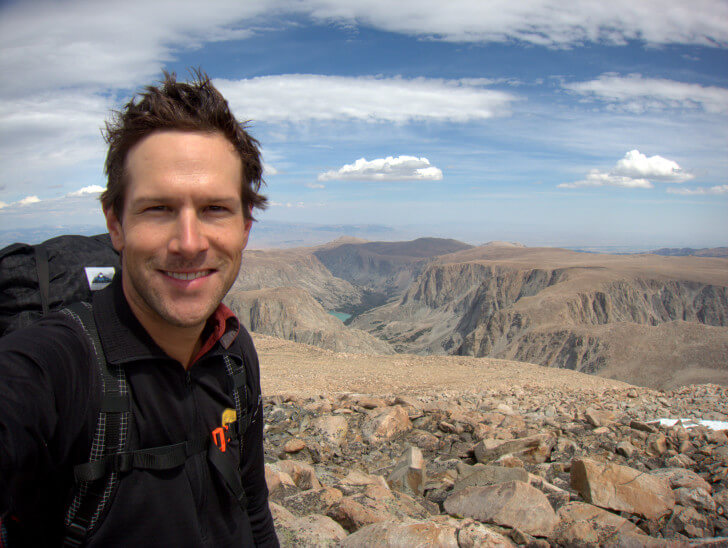
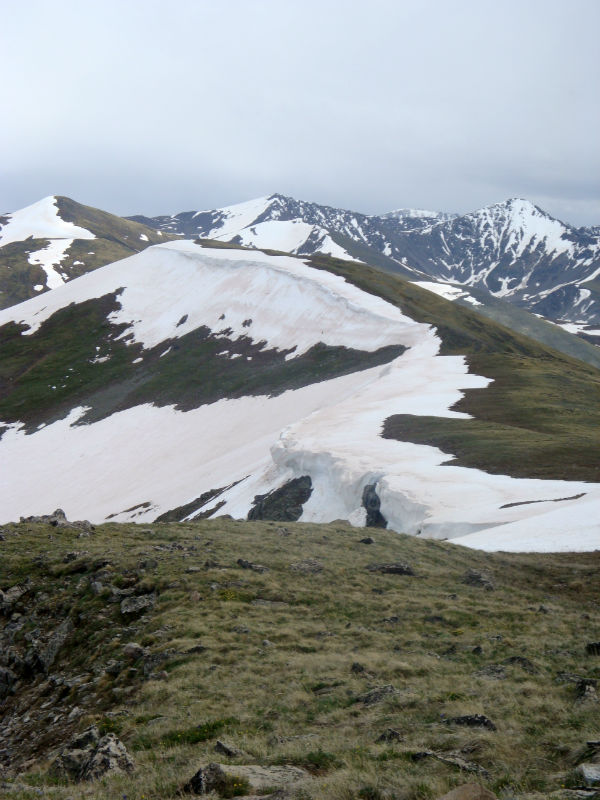
Highest Point on the Colorado Trail, 13,271 feet, below Coney Summit.

As thru-hikers and backpackers, we think about bears. At one time or another we study them, or at least learn their habits. Years ago when I lived in Yosemite, I got an up-front education on how to live peacefully and respectfully among them. I remember being terrified the first night I camped in Little Yosemite Valley, an area of the park known for heavy bear traffic. I was fresh from the city, it was my first night in the backcountry, and we were camping under the stars. I remember wondering if a bear would step on us, and prayed that we’d hung our food properly. I didn’t see a bear that night, but over the course of the next six years I saw many, and I grew to love their large beauty and spirit.

During the five summers prior to my bear attack, I solo thru-hiked long trails. Quick list: The John Muir Trail (x2), The Colorado Trail, The Pacific Crest Trail, Vermont’s Long Trail twice – once hiking north, and once hiking south. In over 4,000 miles I saw only seven bears; six on the PCT and one on the Long Trail. And yet, they were often on my mind. I sang at the top of my lungs in the evening and early morning hours to alert them of my presence. I ate dinner miles before making camp. I made sure to look for mama bear when I twice saw cubs. You know the drill.

In the spring of 2014, I left my New England home to volunteer for a month at a meditation retreat center nestled in the mountains of southwest Colorado. Among other things, I wanted to know what it would be like to camp night after night in one locale, without the thru-hiker need to pack up and walk 20 miles the next day. I wanted to know what it would like to be a stationary camper. What might it be like to deeply observe the mountains, the dry brittle earth, the deep blue sky, the wildlife, without the pressure of thru-hiking? I arrived at the retreat center and was shown where to camp.

 - 2
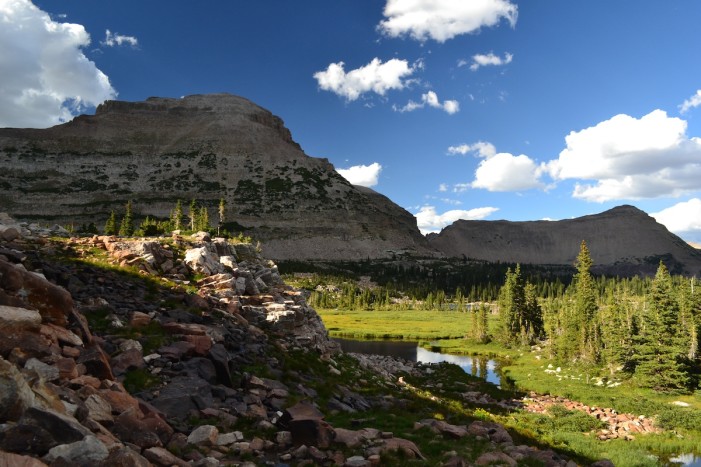
The Tenmile Range near Breckenridge.

Eleven days later, at 5:45 a.m., I hear something moving outside my tent and think it’s probably a raccoon, so I yell, “Shoo!” I’m lying on my stomach. A few moments later, my tent poles snap and part of my tent collapses. Then a heavy, lumpy thing sits on me. It presses my pelvis into the earth. A bear is sitting on me! Several moments pass, then the bear gets up and starts walking away. Wow, am I lucky! I assume he’s leaving, but he’s not. He walks to the front of my tent, where my head is, and starts tearing the vestibule. It’s a silent morning – no wind, no rain – and each tear sounds phenomenally loud, and so very close. The sound reverberates throughout every cell in my body. I can’t wrap my mind around what’s happening. A black bear is doing this? There’s no food in my tent, no reason for such behavior. I don’t understand. I can’t understand. Then I black out.

I wake to an intense pain in my left arm and turn to see the bear’s big head very close to mine. I’m lying on my back now, and he’s lifted my left arm up high, dangling it above my head (still attached to my body). My shoulder is off the ground. His teeth are jammed into the thin cotton jacket that I sleep in, and jammed into my arm. Thank goodness for the thin protection of that jacket. Blood is everywhere. Red blood against pale blue jacket. Red blood dripping onto pale blue sleeping bag. His head with my arm hanging from it is astonishingly close to my face. What to do? My mind remains calm and very clear. Fight! Scream! Fight for your life! Give it all you’ve got! His wet, black nose looks soft and vulnerable and the moment I decide to make it my target, my body takes over completely. I watch as my right arm swings and I punch him in the nose. Over and over I punch him on his black, moist nose. Every morsel of energy, every ounce of desire to live-my entire life force-accumulates in my right fist as I punch and punch the black bear that won’t let go of my arm.

 - 3
My arm the day after the attack.

While I’m doing this, I scream at the top of my lungs: “Hey bear! Hey bear!” I scream and punch, and can’t understand why he won’t let go of me. I try looking into his eye, his right eye, the only eye I can see-I want to look into his eye-I want to get a sense of this beast. I want to understand him. But he’s shaking me back and forth and his eye is high and looks off at an angle. I can’t get a sense of him. When he refuses to let go, I calmly think, “Ok, next he’s going to claw me down the center of my body. One big swipe. I bet that’s all it will take.” I fight like hell with a calm knowing that next he will rip me apart. His teeth are white and clean and I think, “That’s a good thing. Fewer germs.”

For some reason the bear drops my arm. I survive the attack. He bit me twice, leaving twenty-one punctures. He was a three-year old adolescent male, who when captured had a belly full of wild turkeys. I can’t help but wonder, did he eat the turkeys before, or after our visit? He could’ve killed me, but he didn’t.

At the hospital the nurse tells me that she was on duty nine months ago, when they brought in the honey-faced girl who was bit by a bear. She was camping at the same retreat center and had gone to her tent for the night with honey smeared onto her face as a beauty treatment. A bear tore into her tent and bit her arm. She screamed and he immediately left. Her former campsite was not far from mine. The nurse tells me that my arm is “much, much worse.” The other woman received two, maybe three punctures. Her bear was not tracked and caught.

In 2010, when I completed my thru-hike on the Pacific Crest Trail, I reached Monument 78 at the Canadian border, and the phrase “everything and nothing has changed” coursed through my brain. Meaning, I think, that I’d just completed a dream. I’d walked for months in the wilderness, on a trail I adored, and with each step that I took I felt completely at home. My sense of the world, my sense of this planet we live on, my sense of myself (in some ways) changed, merely by going for a walk. When I returned to the world off-trail, not much was different. Everything and nothing had changed.

Since the bear attack the phrase that stays in my mind is: everything and everything has changed. I’m still sorting that one out.

Author Bio

Anne O’Regan is the author of Tamed. A City Girl Walks From Mexico To Canada On The Pacific Crest Trail (available on her website:anneoregan.com). She is currently working on her next book, entitled The Bear That Followed Me Home.

Lightweight Backpacking News: Digest No. 25

FBI Fugitive Found on Appalachian Trail, A Survival Video Game, The Zion Flash Flood, A “Walk In the Woods” Inspires People to Get Out, MSR FlyLite Tent, and much more!

If you’d like to submit a link to a timely (fresh) story for us to consider including in our next installment, please send it along to submissions@backpackinglight.com with the subject line “BPL NEWS DIGEST”.

TOP STORIES

Anish Sets Self-Supported Record for the Appalachian Trail

Heather Anderson, trailname Anish, on September 24th set the self-supported record for the Appalachian trail finishing in 54 days, 7 hours, and 48 minutes. In 2013, she also set the record for the Pacific Crest Trail making her the only person to hold both records simultaneously. After her record-attempt on the John Muir Trail came up short last year, Anish put her fears behind her and tried to set the record on the AT. However the “demons” and legions of doubt only intensified, but as “the miles dwindled into the double digits I became aware that I was crushing more than miles. I was crushing a lifetime of self defeating beliefs,” Anish wrote on a Facebook post following her AT record. On her AT hike, Anish averaged 42 miles per day for nearly 2 months, and broke the previous record by nearly four days.

  • Read the full report from Spokesman.
  • Checkout her Facebook Page.
  • Watch her Tedx Talk “Redefining Happiness” below.

IMPORTANT: If you don’t see the video immediately below, or see a “Sorry…” message in the video player, just click this link to refresh the page, and you’ll be good.

Youtube video

James Hammes: FBI Fugitive Found Hiking Appalachian Trail Six Years After Going Into Hiding

In May, white collar criminal, James Hammes was arrested by the FBI at bed and breakfast along the Appalachian Trail. Hammes is charged with embezzling $9 million from Pepsi. He has been in hiding since his disappearance in 2009 when he left his wife and daughter behind. Fellow thru-hikers on the AT described Hammes who was known by trail name “Bismark” as “sociable” and “friendly”, and said he would sometimes say he owned a software company. The FBI were tipped-off by a hiker who recognized Hammes from an episode of American Greed.

  • Learn more about James Hammes and his fugitive story at Inquisitir.

Backpacking in Europe has its Benefits

IMPORTANT: If you don’t see the photo immediately below, just click this link to refresh the page, and you’ll be good.

“A Walk in the Woods” Piques Interest and Concern in Hiking the Appalachian Trail

A new movie based on the 1999 book is proving to be a source of inspiration and concern along the AT. When the book was released in 1999 AT officials say thru-hikers increased by 40%-60%. With the expected audience to increase due to the video format, AT officials are preparing for another busy season. The concerns range from the level of preparedness of the hikers to space issues at overnight dwellings to worries about trash accumulating along the route. On the flip side, the movie is expected to be a source of inspiration for new and experienced hikers alike. The film shows the rugged beauty of the AT and stresses our responsibility to preserve it by emphasizing Leave No Trace principles.

IMPORTANT: If you don’t see the video immediately below, or see a “Sorry…” message in the video player, just click this link to refresh the page, and you’ll be good.

Youtube video

71-year-old Alabama man backpacks hundreds of miles each year, no plans to stop

Dwight McClure, known by many as Owo (“Oh Wise One” given to him by his wife), has a goal of hiking at least 1,000 miles each year and generally he exceeds it. He’s hiked over 30 sections of the AT, has backpacked through 35 states, and completed the John Muir Trail in California. He’s completed these hikes since he began hiking a few decades ago, and he plans to continue until he’s 90. Over the years, he followed the natural progression of a traditional backpacker to a lightweight backpacker guided by the desire to carry less of the gear he didn’t need. These days he gets his pack down to 22-23 lbs which includes a SPOT his wife insists he carries.

  • Read the full report from Al.

Parker to be designated a Trail Town along the National North Country Scenic Trail

Parker, Pennsylvania is being designated a Trail Town by the North Country Trail Association due to the community’s emphasis on providing services to trail users. Residents hope the distinction promotes local business and increases the services they offer to hikers.The North Country Trail begins in North Dakota and runs through 7 states until its terminus at the New York State border.

FARGO-DESIGNED VIDEO GAME HIKING TOWARD XBOX DEBUT – According to the Grand Forks Herald game makers chose to deemphasize violence and instead focus on foraging and trapping to survive.

GOATS PROMPT CLOSURE OF IDAHO TRAIL TO PROTECT HIKERS – The Seattle Times reports that hikers have been feeding goats near the Scotchman Peak Trail which leads to an aggressive behavior as a way to get more food from hikers.

SELFIE-TAKING HIKERS PROMPT CLOSURE OF COLORADO HIKING TRAIL TO PROTECT BEARSAbcaction News reports that Waterton Canyon near Littleton, Colorado will be closed indefinitely after people have been trying to take selfies with the bears in the area.

MOUNTAIN BIKES ON THE COLORADO TRAIL LEAVE SOMETHING TO BE DESIRED – Although generally polite, the author, writing for HCN, found the experience of making way for mountain bikers to be one that jarred her from the rhythm of walking.

SNOWY SEPTEMBER WEEKEND DOESN’T DAMPEN BACKPACKERS’ SPIRITS – Despite the weather hikers found a way to enjoy the Labor Day weekend and posted photos from their adventures to Spokesman.

UNUSUAL CLIMATE CONDITIONS LEAD TO SWARMING BEES ON HAWAII HIKING TRAIL – According to local Hawaii news, KHON2, warm weather in Hawaii is leading to an increase in food for the bees and as a result their numbers are multiplying.

Backpacking in Kruger National Park, South Africa

IMPORTANT: If you don’t see the photo immediately below, just click this link to refresh the page, and you’ll be good.

TRAIL TRAGEDIES

Zion Flash Flood Claims Seven

Canyoneering is a sport that has grown in popularity over the years and with that surge in people comes greater probability that the increased number of people will be at risk. A hiking crew from California fell victim to the unpredictable nature of the canyon lands where precipitation can quickly lead to devastating flash floods. These canyons have been shaped for years by the erosive capability of these floods. Despite years of hiking experience and taking a canyoneering safety course, the hikers descent into Keyhole Canyon was no match for the onslaught that awaited them. The canyon explorers were not the only victims on this day as a flash flood overwhelmed a Mormon community leaving three adults and nine children dead with another child still missing. This flood was part of the most deadly day of weather in Utah’s history.

  • Read the full report from La Times.
  • Learn more about canyoneering with this article from the BPL archives written by Dave Chenault.

LIGHTNING STRIKE KILLS YOUNG AUSTRALIAN HIKER IN GRAND CANYONThe Independent reports on the death of a lone hiker – the eighth in the park since the start of summer.

MISSING BACKPACKER FOUND DEAD IN YOSEMITE – According to the Fresno Bee an extensive search finally located his body along the popular High Sierra Camp Loop.

MAN DIES HIKING IN ESTES PARK – Denver’s CBS Local reports that the 61-year-old man collapsed 4 miles up a trail and was unable to be revived by bystanders.

EXPEDITIONS

Unattached: All-female Team Summits Unclimbed Peak in Zanskar Region of India

Maps for the undeveloped world are often inexistent and if they do exist are often inaccurate. A team of women learned this the hard way as they traveled around the world to climb a peak in Zanskar Region of India. After several bus rides and hours on horseback, Rachel Spitzer, Lisa Van Sciver, and Anna Pfaff arrived at their destination only to learn that they were in the wrong valley. Rather than repack their gear and seek out their primary objective, they found a worthy alternative, a peak known as Tare Parvat (5577 m) – Hindi for Star – which divides the Dalung and Chilung Nala valleys. Their climb took them up talus slopes, ice fields, ridges, and runout slabs, and the trio fittingly named their route “Unattached” following their sudden change in plans.

Panel Appointed to Finalize Details for The Pacific Northwest National Scenic Trail

Looking for a new place for your next expedition? A panel has been appointed by Agriculture Secretary Tom Vilsack to develop the Pacific Northwest National Scenic Trail which stretches 1,200 miles from the Pacific shores of the Olympic National Park to the peaks of Glacier National Park. The trail was first proposed as a concept in 1970, and then officially designated as a National Scenic Trail in 2009. The panel made up of a diverse group of citizens is charged with improving signage, and ensuring the trail offers adequate recreational access while promoting conservation. The panel is considering trail users at this time and will spend three years prioritizing the trails uses and users.

Rim of Africa: 15 Awe-Inspiring Facts about South Africa’s Longest Mountain Hiking Trail Initiative

Stretching for 400 miles along the mountain rim in South Africa makes the Rim of Africa trail initiative the longest mountain traverse in the continent. The whole rim trail generally takes eight weeks to complete, and the trail initiative itself has several route variations for beginners, intermediates, and experts alike. The best times to hike are in the Spring or Fall when neither the winter chill or summer heat are present. Visionaries of the trail, Galeo Saintz and Ivan Groenhof, and hope this trail will be regarded in the same circles as other world-class routes like the Appalachian Trail, the Pacific Crest Trail, or the Te Araoa in New Zealand.

Backpacking Expeditions Get You Outside to Beautiful Places

IMPORTANT: If you don’t see the photo immediately below, just click this link to refresh the page, and you’ll be good.

HIKING AND BIKING COLORADO’S 14ERS – Check out the video below to see the adventure.

IMPORTANT: If you don’t see the video immediately below, or see a “Sorry…” message in the video player, just click this link to refresh the page, and you’ll be good.

HIKING HALF DOMEEco Watch reccommends putting this popular peak on the bucket list.

A Bushwhacking Expedition

IMPORTANT: If you don’t see the photo immediately below, just click this link to refresh the page, and you’ll be good.

CLASSIC FALL HIKES: NEW ENGLAND NATIONAL SCENIC TRAILNational Parks Traveler says the trail runs for 215 miles and offers access to the woods in both Massachusetts and Connecticut.

IMPORTANT: If you don’t see the photo immediately below, just click this link to refresh the page, and you’ll be good.

SKILLS

Leave No Trace for Packrafters

Packrafters often travel through fragile ecosystems in their pursuit for adventure. Maintaining the beauty and scenery of these wilderness areas is our responsibility as stewards and users of these lands. Leave No Trace principles were developed to allow for responsible and enjoyable use of the land. Three friends set off to explore the wild lands of Alaska’s Brooks Range as part of their 4-river, 12-day expedition, and in addition to some exploration their objective was to practice the seven Leave No Trace principles. From managing wildlife to forest fires, the trio practiced techniques that will leave this area pristine for future generations.

  • Read the full report from The HyperLite Mountain Gear Blog, Part 1 and Part 2.

Getting Your Parents to Join You for Adventures

IMPORTANT: If you don’t see the photo immediately below, just click this link to refresh the page, and you’ll be good.

How to Survive

Over the years, Indefinitely Wild has been publishing stories themed as “adventure travel in the outdoors” however many of these adventure stories double as survival stories as well. In appreciation of survival week, they compiled their “survival” stories under the header “How to Survive Pretty Much Anything.” From finding clean drinking water to building snow shelters, the compilation covers many common scenarios and teaches practical ways to manage them.

CASE FOR FEWER MEAL RECIPES – Lightweight backpacker Andrew Skurka stresses that backpacking is about simplicity, and keeping your meal planning simple will ease some anxiety.

And in the same vein, packing should be easy too:

IMPORTANT: If you don’t see the photo immediately below, just click this link to refresh the page, and you’ll be good.

10 Ways to Sleep Warmer During the Shoulder Seasons

IMPORTANT: If you don’t see the photo immediately below, just click this link to refresh the page, and you’ll be good.

GET YOUR DOG READY FOR HIKINGIdaho Statesman says that these tips will get you and your dog ready for the trail.
3 BACKPACKING RECIPES FOR THOSE WHO LIKE TO GO LIGHTCapture Outdoors says that these tasty recipes will take you from the kitchen to the outdoors.

GEAR

25-oz, 2-Person FlyLite Tent Now Shipping from MSR

 - 1
The MSR FlyLite Trekking pole Tent.

The MSR FlyLite claims to be the lightest 2-person, full-protection tent ever made by MSR. The skinny: a weight of 1 lb 9 oz, 29 square feet of floor space, a 10 denier PU+silnylon canopy fabric, MSRP $350.

RJ: Beautiful lines, a cheery but not unstealthy color, taut pitch, trekking-pole supported – I love the concept. Lots of mesh, but am wondering about its condensation resistance. And I’m not convinced (yet) that this fabric has enough field experience to prove that its water resistance is sufficient for hard rain or its fabric strength is strong enough to hold guyline tie-outs that are being cranked down hard for a high wind pitch.

How to Repair Trekking Pants with Tenacious Tape

You’re bushwacking your way back to the trail and suddenly you hear a tearing noise. You look down and your brand-new trekking pants are torn by a stick that seems to be innocently staring at you. You mutter to yourself something about your poor route-finding but then a grin appears on your face as you remember that not only do you have Tenacious Tape with you but you remembered to read Section Hiker’s article on pant repair before you left on your trip. That’s a win. Tenacious Tape is a very sticky gear tape commonly used for rain gear, jacket, sleeping bag, and tent repair. It’s very versatile and it turns out that it is a willing substitute for sewing well-used trekking pants. The tenacious tape even holds up to repeated washings and abuse on the trail.

3D PRINTED BACKPACKING GADGETS – These gadgets, such as, rope and strap clips made by Cubify are much lighter than their traditional counterparts.

 - 2
Small Foot Pocket Snowshoes.

INFLATABLE SNOWSHOES – Light and durable these “Pocket Snowshoes” made by Small Foot are trying to push the norm for snow travel.

PEOPLE

Hiking Helps Child with Aspergers Cope

Aspergers is a form of autism that decreases motor skills and causes social situations to be challenging. What began as a way for Gavin Breen to get away from electronics is now one of his favorite activities that rewards him with experiencing nature while teaching him lessons in perseverance. There were some initial challenges to overcome like the fact that Gavin doesn’t like the sound of flying bugs. After trying a whole host of backpacking tricks from hats to bug spray his family settled on headphones. Now Gavin skips down the trails listening to his favorite tunes while taking in the scenery. His mother, Allison says she has noticed an improvement in his behavior as he is better in social situations, has more of an appetite and drinks more water, and he spends more time playing creatively with his toys than with electronics.

Meet Ultralight Backpackers

IMPORTANT: If you don’t see the photo immediately below, just click this link to refresh the page, and you’ll be good.

Pride and Fall – Sidetracked Magazine Kenton Cool

 - 3
Kenton Cool following his fall. Photo courtesy of Sidetracked.com

Before he was a world famous climber, Kenton Cool was a lad in the United Kingdom who loved to climb. While preparing to climb the Ogre in Pakistan, Cool and his friends were practicing on some rocks in Wales. Cool’s pride got the best of him, and the ensuing fall produced fractures in both his ankles. Cool tells this story that tested his positivity and resolve in his book, “One Man’s Everest: The Autobiography of Kenton Cool”. Today, Cool is known for his 11 Everest summits, new routes and first ascents in Alaska, and is one of the world’s most-sought after mountaineering and climbing guides.

SLACK-POCALYPSEGear Junkie tells about this competition where contestants walk all day on a slackline.

IMPORTANT: If you don’t see the photo immediately below, just click this link to refresh the page, and you’ll be good.

MOTHERS BACKPACKING WITH TODDLERSIdiva encourages you to not let your toddler stop you from getting outside, and they’ll probably enjoy it too.

JIM GAFFIGAN HATES HIKING – On Conan, comedian Jim Gaffigan opens up on why hiking is no fun.

MEDIA

WILDLIKE FILMS TELLS TALE ABOUT AN UNCLE AND TROUBLED NIECE BACKPACKING IN DENALI – Filmed in Denali National Park, The Movie Network tells how the film shows the beauty of Alaska while telling a powerful story.

SWITZERLAND TIMELAPSE

IMPORTANT: If you don’t see the video immediately below, or see a “Sorry…” message in the video player, just click this link to refresh the page, and you’ll be good.

Switzerland 4K | Timelapse from One Lidless Eye on Vimeo.

IMPORTANT: If you don’t see the photo immediately below, just click this link to refresh the page, and you’ll be good.

Notes from the Field: Rambling the High Sierra (Revisited)

An alpine ramble along part of the Roper High route of the High Sierras, leaves plenty of time for fishing and relaxation.

You don’t have access to view this content.

Backpacking Wood Stove for Alpine/Snow Camping, Part 2: Micro Snow Stove

The pursuit for warmth, snow-melting power, and comfort during winter expeditions is never-ending. This homemade, lightweight stove offers warmth and comfort for those long winter days.

You don’t have access to view this content.

Backpacking Wood Stove for Alpine/Snow Camping, Part 1: Alpine Tent Use

A wood stove that can be used in a tent? Dream or virtual reality?

Part 1: A Micro Wood Burning Stove For Alpine Tents – Dream or Virtual Reality?

This article is in four parts:


Cold weather, snow, small tent – and a hot wood stove

Imagine skiing all day, having had six second-last runs with your mates as the sun goes down. You are happy, but a little cool, damp, tired, dehydrated and hungry, and the snow is gently covering up your tracks so that tomorrow will be all about more fresh tracks. Just think of the joy of walking into your tent, heaving off your ski boots, sitting down and within 3 minutes having a glowing, gently growling slow combustion stove, fueled by fire damaged snow gum sticks (a truly renewable fuel with no environmental cost for its creation, transport or containment). Instantly it is warming you and your little tent with the power of a 890 watt radiator, there’s a gentle fire-light glow flickering around the tent, and your gloves and jackets are hanging up to dry. What’s more, a big hot soup or coffee for two will be ready to drink in 15 minutes time, and more water is coming from snow to save that dreaded trip to the creek. “…ahhh he exaggerates a little ….” That was my dream of heaven on earth.

Now it is a reality and it comes with only a 500 – 600 g weight penalty that can be discounted by the weight of an alternative conventional stove and fuel load. It also delights me that this comfort and fun comes in unlimited quantity with little cost to the planet (or to me) and what I consider to be a manageable risk.  Follow my story if you think you might like to camp like this.

A Brief History of Micro Stoves for Tents


Oh what would I give for a nice warm tent stove tonight

Portable wood-burning tent stoves are not new. They have been and still are used by many nomadic people around the world where life might be death without a stove. A skiing friend once handed me a page ripped out of a Reader’s Digest article. It showed an orange, conical Reindeer Herders tent at sunset with a flue pipe protruding through the conical top. He said with a big grin “Tim, look at the similarity of this setup to yours.” We agreed that there is seldom anything that is strictly new and all that we really do is improve things with the wonderful technologies and materials that our age has blessed us with.

North America seems to be at the centre of light-weight tent stove development and this is not surprising when you consider the temperatures that winter walkers an skiers must live and play in. Many portable stoves are available from companies such as Four Dog Stoves. However, at 8 lb these are not what one might call ‘ultralight’. On the other hand, one of the latest stoves by Titanium Goat is light (737 g) and seems, by my standards, to have reached the status of ultralight.


Titanium Goat WiFi stove

This elegantly designed stove is made of titanium. It appears to have a good flat and stable cook top but it is considerably larger than what I had in mind for my use in a small tent. It can easily be loaded up with a considerable amount of wood for an extended burn time, but the issue of balancing this feature with a clean burn appears to remain a problem. I also have concerns about uncontrolled air leakage from the extensive butt joins between the fine (0.12 mm) titanium foil side wall and the base and top plate (my estimate of the total join length is 1,600 mm). I can imagine how the rigors of high temperature heat distortion and packing and unpacking would diminish the quality of the seal. The need for ‘flue pipe dampers’ and ‘spark arrestor’ screens appears to me to be addressing a stove design deficiency rather than an improvement to stove design.

The Kifaru Oval stove is another exemplar ultralight stove and has been compared by an owner (Muelman) who has both WiFi and Oval stoves. He indicates that the Oval is even lighter but in his carefully considered opinion the WiFi is the leader in many design aspects including the leg support for the stove and the cook top and the stove assembly. For both stoves I would also raise the issue of how to support a hot stove on a deep snow surface. Snow melts.

My Stove Development Journey – Lessons from Failures

My goal was to design and build an utralight tent stove that gets a good balance over the following: light weight, packability, mechanical strength, chemical durability, cost, convenience, fuel efficiency, plus use of damp bush sticks for fuel. It also needed to provide heat to warm bodies, dry clothes, melt snow, and prepare hot drinks and food. Light from the stove to illuminate the tent would be a bonus and of course it had to be safe – in a tent. I also wanted the stove to be able to be conveniently used on the ground or in deep snow in cold and windy conditions and to be able to have the comfort of a tent snow pit while still using the stove.

During the development process I also set a somewhat difficult goal of having all the stove components stored inside the stove body and to have absolutely minimal assembly of the stove when deploying it (with cold hands). Along the way I discovered that I also wanted my stove to be very small and compact so that it would produce intense radiant heat rather than just being an air heater.


A wheelbarrow full of not-quite-right stoves: success has many wannabe fathers and failure is a bit of an illegitimate offspring, but fortunately we learn most when we fail.

In the photo above we have the following

  1. Stanley thermos flask stove
  2. double dog food bowl stove
  3. Thermos stove with cook top
  4. inverted SS can stove with boiler cup insert
  5. toffee tin stoves (3) with pole mounts
  6. modular stacked tuna tin stove
  7. assorted (3) biscuit tin stoves
  8. micro bean can stove
  9. bean can boiler pot with flue pipe passing through the pot
  10. flat cake tin stove with cook top
  11. slender vertical pipe burner stove
  12. modular secondary air injector
  13. box stove with cook top and side burner attachment
  14. various (3) alternative side burner attachments
  15. box stove with boiler pot hole with cover
  16. box stove with side burner port and flue pipe port on end to increase usable area of cook top
  17. well used (2) box stoves
  18. stronger Bento Box stove with rounded pack friendly shape
  19. box stove showing partly opened sliding access door
  20. assorted stainless steel and titanium foil fittings for micro stoves (everything to the right of r and s)

Well if you look at my barrow load of not-quite-right-stoves I should be an expert, but it is not so. I still have a lot to learn and I keep them as a reminder of what does and does not work and they are a great resource to have on hand when I wish to quickly plug something together to try out a new idea.

The Start of Things

My first stove was made from a big Stanley thermos flask. It sat in a small metal dish in the middle of the circular tent on an insulation pad on the top of my ground sheet. It was a very elegant design (so I thought at the time!) as you can see from the photo where the flue pipe doubled as the centre pole of my tent.


Stanley Flask stove, “a thing of beauty … but don’t try this in the bush”

The Stanley stove itself was pack-friendly when slipped into an old bushwalking sock. In contrast the flue pipe/tent pole (aluminium vacuum cleaner tubes) was dirty, smelly and the joints would get locked together with tar. It was consequently carried in a separate fabric tube on the outside of my pack.

Encouragingly, the stove made lots of radiant heat but it required fiddly small, sawn and split wood fuel blocks to sustain a good burn. Too much heat would come out of the base which would melt through objects placed below it. I have a ground sheet with a perfectly round dish shaped hole in it to remind me of this. This heat leakage would make the stove unusable on a deep snow surface, as the tent slowly sank.

It had another fault in that the burn was very unstable. It would burn too strongly and make much smoke, and then it would go weak before it would go strongly again. I added a secondary adjustable air port high up on the flask to both ‘burn excess smoke’ and to reduce the primary air flow that caused the excess smoke. Having both air ports with flow restrictors on them made a big improvement. However it was a constant fiddle keeping the burn rate under control, the flue would be smelly with tar and be horrible to backpack.

One cold night up on the Victorian High Plains by Ropers Hut the quality of the wood must have been too good and the smoke burner must have worked too well! Yes, you got it, the flue pipe/tent pole melted! At least there was no tar to worry about and the silnylon tent lives on.

The Next Stage

After this lesson I only used roll-up stainless steel or titanium flue pipes, and I pitched my tent with a separate tent pole (or no pole at all, which is my favorite setup, but that is another story). This meant that the flue pipe could be very light, long and compact as it did not need to be strong.


Toffee Tin Stove mounted on a wood pole stuck in the ground

This change was very significant: it allowed me to mount the stove on a single wood pole to keep it up off the ground or snow. That is, the pole was only required to support the stove, the cooking pot and the wood drying rack (to be described later), and not the tent. With this new design a lovely area became available for a suspended wood drying and storing rack below the hot stove. Part of the rack, or all of it, can be covered with aluminium cooking foil. It reflects heat from the stove back into the wood and also provides a convenient surface for storing and drying little pieces of wood that are very valuable for fire management, but would other wise fall into the snow.

I also learned that if this drying rack was made big enough and the sticks on it were long enough it formed a large natural barrier to prevent accidental contact of clothing and sleeping bags with the stove. The stove’s fine metal foil components even ‘sound a warning’ if the rack is touched.

I persisted for a while with many conventional stove designs (with generally upward burning flames), but the poor control of burn rate and associated messy tar deposits and very limited cooking capacity did not match up well to my dream stove. So it was back to the drawing board for a radically better design where easy fueling under wet cold conditions, burn stability and a good camp cook top for thirsty and hungry skiers would be paramount.

Wood Burning Theory and Clean Efficient Combustion

Efficient clean wood combustion takes three sequential steps. The first involves the pyrolysis of smoke (gases, tar and soot) from the wood. The second step is the combustion of the gas by a moving flame (~1000 C). The third step is the direct flame-less combustion of the charcoal at around ~1300 C, (TC Forensic and Scientific Services which produces intense heat at the site of combustion, much like the coals in a blacksmith’s forge.

In a good stove design enough of the heat from the flame and the charcoal burning is fed back into the incoming fuel to sustain the pyrolysis (gasification) and the flame. This can be done variously with direct radiant heating, conduction of heat through metal stove parts and pre-heating of the air supply. Furthermore, the pyrolitic smoke should pass through/over the hot charcoal bed as it burns to raise the temperature of combustion and help with the less combustible smoke components such as tar and soot. As the flame and hot reaction gases flow toward the flue pipe, they should be turbulently mixed with air and slowed down in a large heat exchanger void to complete combustion and the transfer of the heat to the stove body.

In an ideal design these processes would be in balance with a steady heating of wood for pyrolitic production of wood gas, combustion of gas and maintenance of a hot coal bed to aid complete combustion. These issues are described in detail by Aprovecho Research Centre.

Many of these burning conditions can be achieved in inverted gas burner stoves such as the Stickman Stove. These are portable devices which have no flue pipe, are limited to batch loading, and no longer work properly when ‘topped-up’ with fuel while burning. Nice, but not what I wanted.

Some people will claim that such clean burning occurs in rocket stoves as describe in Wikipedia. In these stoves the fuel is usually hand fed and they do not have fully inverted burners. I disagree with this claim as such stoves can shoot a flame into the air: this demonstrates that the combustion is not completed in the stove. The same criticism applies to boastful tent-stovers who claim that they made a cone of fire 2 feet high at the top of their flue pipe.

Rocket mass heaters are clean and efficient burners and are very popular for DIY home heating/cooking projects. See for instance the article at Instructables

.


Typical rocket mass heater, illustration by www.richsoil.com

They generally use a small inverted self regulating pyrolysis/burning chamber without the self-feeding of fuel as described in exemplar stove designs from the Aprovecho Research Centre cited above. They require a large (oil drum size) and heavy insulated chamber for completion of the combustion at high temperatures and large surface area and volume for heat exchange. Regardless of the theory, these stoves can burn wood completely and cleanly at very high temperatures and in a steady manner. A miniature one of these stoves might be welcome in a walker’s small tent, but probably not in their backpack.

However, I have used these designs as an inspiration for my developments. I just made my stoves very small and disproportionately reduced the mass. ‘I just made a rocket mass heater without significant mass’.

Heat Sources for Comfort in a Small Tent

You are in a small tent in the snow. Do you want a slow source of heat for the air in the tent or an instant source of radiant heat for your body and wet equipment? Probably you will want both. You see, while warm air is nice, it will rapidly rise to the top of the tent and be constantly cooled by the tent canopy and by the very necessary tent ventilation.

I find that the direct radiant heat from the surface of the stove gives the most comfort. That is why we back our bums up to a fire place in an otherwise warm room, and friends who share my tent on mountain trips agree with this choice and gleefully pop more sticks down the fuel tube. For this reason, my stoves have been designed to have a small surface area, prioritized for cooking and giving off intense radiant heat, rather than having a big surface area acting as an air heater.

It is timely to mention that, with such intense heat, any metal containing such a fierce burn (such as titanium or stainless steel with or without vitreous enamel coating) will be oxidized, so some form of refractory protection (a possible subject for another article) will be required if the stove is to have a long service life. The evidence for this statement is in some of the eroded components within the ‘barrow load of not quite right stoves’ shown above. Yes, fire combined with oxygen can absolutely eat titanium or stainless steel, much like aluminium, once the protective oxide film is broken.

The next Part will describe my best stove so far that builds upon these ideas and the achievement of others. While probably understating the true number of not-quite-right predecessors I will be calling this stove ‘Micro Snow Stove Mk15’.

Bio for Tim Clark


Tim chasing freshies in Japan

Tim is a retired research scientist who just can’t stop tinkering with technology, and is a serial inventor. He is not a pyromaniac (he claims), but he loves fire. His house has 4.2 kw of grid-connected solar panels, a 30 evacuated-tube off-grid hot water service and a 2.8 L solar kettle on his house and another on his yacht.

He has a passion for wild places, back country/telemark skiing, bushwalking, camping, sailing and diving. He considers that as a concession to his ‘mature’ age he has earned the privilege of warmth and unlimited hot cocoa in the wilderness.

Wind River Backpacking: Talus, Tundra, and Ice on a Wyoming High Route

Notes from an eleven-day Wind River backpacking trip via a high route adjacent to the crest of between Spider Lake and Flagstone Lake.

Introduction

In July, I joined BSA Venturing Crew One on an eleven-day trek via a high route adjacent to the crest of Wyoming’s Wind River Range between Spider Lake (near Angel Peak) and Flagstone Lake (near Klondike Peak).

Our expedition goal was simple: to complete a high route through the Northern Wind Rivers involving cross-country and glacier travel, with opportunities to bag a few big peaks along the way.

This report includes a photo journal (Part 1) (refer to my trip journal for the full story, originally published live via satellite at my personal website) and a trip review (Part 2) that includes summary notes about training, travel style, trip logistics, and some of the group and individual equipment I used.

Part 1: Photo Journal

Route Description

  • Section 1 – 12 miles (trail): Elkhart Park to the lakes SW of Bald Mountain Basin via Pole Creek Trail, Highline Trail, and Fremont Trail;
  • Section 2 – 8 miles (off trail): Lakes SW of Bald Mountain Basin to Lake 10813 in Indian Lakes Basin via Spider Lake, Wall Lake, and the Elephant-Harrower Col;
  • Section 3 – 4 miles (trail): Lake 10813 to Upper Titcomb Basin via Indian Basin and Titcomb Basin Trails;
  • Section 4 – 15 miles (off trail): Upper Titcomb Basin to Green River Trail at Pixley Creek (Beaver Park) via Bonney Pass, Dinwoody Glacier, West Sentinel Pass, Gannett Glacier, Klondike Glacier, Flagstone Lake, Tourist Creek, and Green River;
  • Section 5 – 9 miles (trail): Green River Trail at Pixley Creek to Green River Lakes Trailhead via Green River Trail.

In summary, the total route length was approximately 48 miles, with about 10,300 feet of elevation gain. We spent 11 days on the route, which included two layover days for peak bagging, fishing, and rest. A link to our route can be found at Hillmap.com.

Photo Journal

Stream Crossing Pole Creek Crew One Wind Rivers Summer 2015 Expedition
Day 2: Our first wet stream crossing – Pole Creek in the vicinity of Pole Creek Lakes, at about 9,800′. This turned out to be our only substantial stream crossing, which is rare for most longer treks through the Wind Rivers. Early in the season during a normal snow year, this particular crossing can be a deep wade through swift and dangerous water, as can many high altitude streams in this range.
Camp Spider Lake Bald Mountain Basin HMG UltaMid 4's Crew One Wind Rivers Summer 2015 Expedition
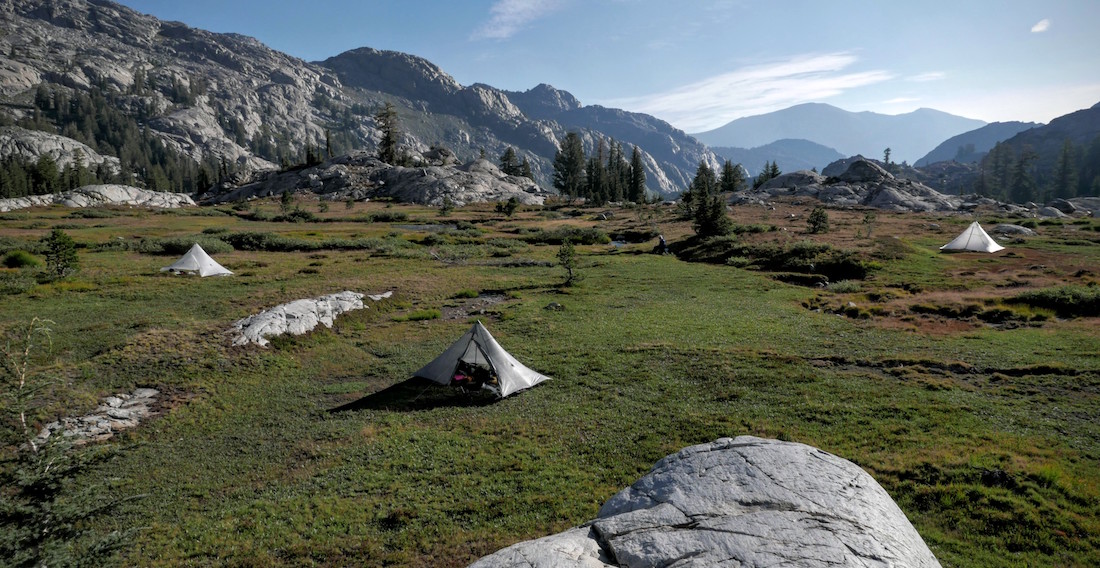
Day 2: Camp at Spider Lake in Bald Mountain Basin, elevation about 10,500′. Angel Peak (12,402′) and Angel Pass, a popular and easy crossing of the Wind River Crest (also the Continental Divide) in this area, are in the center background of the photo. Crew One uses Hyperlite Mountain Gear UltaMid 4’s (shown) as their primary expedition shelters.
Off-trail Tundra Traverse Between Bald Mountain Basin Wall Lake Crew One Wind Rivers Summer 2015 Expedition
Day 3: Off trail on the spectacular tundra bench traverse between Bald Mountain Basin and Wall Lake, which stays between 10,600′ and 11,100′ the entire way. This photo was taken towards the end of the traverse, as we begin our descent into Wall Lake (shown).
Navigation Meeting Wall Lake Crew One Wind Rivers Summer 2015 Expedition
Day 4: Navigation meeting at Wall Lake. Each trekking day began with a morning meeting going over the maps. Much of this particular route was planned on the fly, without predetermined camps or specific routes in mind, so this daily routine kept us thinking about our progress towards our goals, and exit strategy.
View Fremont Peak Indian Basin Crew One Wind Rivers Summer 2015 Expedition
Day 4: Taking in the view of the Wind Rivers’ second highest summit, Fremont Peak (13,743′, left) and Jackson Peak (13,517′, right) from a vantage point just north of Col 11800+ separating Elephant Head and Harrower Peaks. This rarely-traveled route involves a little more elevation gain than the more popular route between Wall Lake and Indian Basin via Col 11220+ to the south, but with dramatic views of Fremont Peak’s south face, the route over Col 11800+ offers far more inspiration!
Harrower Ellingwood Peak Classic Climbing Location Crew One Wind Rivers Summer 2015 Expedition
Day 4: Harrower (a.k.a. Ellingwood) Peak (13,052′) is one of the most sought after climbing objectives in the Wind Rivers because of the classic 1,400′ rock route up its northwest buttress (the left skyline in the photo). So to be able to pitch my little tent with its doors facing such an iconic objective was quite a treat! My camp was located on a tundra bench above Lake 10813 with this view of Harrower’s east face. Our route to get here from Col 11800+ descended the easy (Class 1/2) talus slope angling out to the right-hand side of this photo.
Climbing Class 3 Fremont Peak Crew One Wind Rivers Summer 2015 Expedition
Day 5: Today the crew took a layover day at Lake 10813 for some day hiking, fishing, and climbing. A few of us climbed the Class 3 southwest ridge of Fremont Peak. From this view on the mountain’s upper slopes, we enjoyed the climber’s perspective of Mistake Lake (foreground), Upper Titcomb Lake (the big one), Lower Titcomb Basin, and Island Lake (in the far distance).
Fremont Peak Summit View of Gannett Peak Crew One Wind Rivers Summer 2015 Expedition
Day 5: From Fremont’s summit, we spied our first view of the Winds’ highest summit, Gannett Peak (13,804′, and also the Wyoming High Point). We would also attempt this one later in the trip. Admittedly, on this blustery, snowy, windy, and dark day, Gannett’s black summit block capped with a gigantic snowfield looked imposing.
Titcomb Basin Trail Indian Basin Crew One Wind Rivers Summer 2015 Expedition
Day 6: We had a few miles of trail on which to travel after reaching Indian Basin, so it was nice to be able to travel quickly on easy terrain through such a beautiful alpine environment. Throughout the day, however, the weather deteriorated dramatically. At dawn, we awoke to temperatures in the mid-50s F, and by noon, it was sleeting and 35 F. We had been hiking all morning in a cold rain and robust winds, and our attempt to cross a high pass that day would be thwarted. We were forced to stop and camp on tundra benches below Mount Helen, seeking refuge under our pyramid tarps. Our original plan was to cross high passes (including Knapsack Col) and attempt to climb Gannett from the west via Glacier Pass, but this delay required us to revise our route and plan for an approach to Gannett from the east (via Bonney Pass), so we could continue heading north and complete a traverse of the Dinwoody Glacier complex as well while still meeting our exit day goal.
Bonney Pass Early Morning Helen Peak Crew One Wind Rivers Summer 2015 Expedition
Day 7: I peeked out my tent the next morning to find that the cloud cover had lifted and patches of blue sky revealing the potential for a successful crossing of Bonney Pass today. Bonney Pass is the steep-looking white stripe splitting the Continental Divide (low point of the ridge in the photo). Helen Peak is at the top of the massive buttress rising up from the tundra bench where my tent is pitched.
Climbing Bonney Pass Crew One Wind Rivers Summer 2015 Expedition
Day 7: The climb over Bonney Pass is relatively steep (35 degrees or so) and a fall here with a heavy pack would be problematic, especially when traveling in a group. We used ice axes and crampons a number of times on this route, including here, and relied upon extensive training this spring back in Montana that gave everyone experience in self-arrest and solo travel on steep snow and alpine ice.
Bonney Pass View of South Aspect Gannet Peak Crew One Wind Rivers Summer 2015 Expedition
Day 7: Bonney Pass provides one of the finest views of Gannett Peak’s south aspect. At 12,800+ feet in elevation, the pass is only a thousand feet or so lower than Gannett’s summit, but we’d lose a few thousand feet in elevation on our descent to a basecamp for Gannett before attempting the climb. Here, Backpacking Light editor and Crew One Adviser Eric Vann does his best to contain enthusiasm for being at nearly 13k on such a beautiful day.
DinwoodY Glacier Moraine Miserable Mile Crew One Wind Rivers Summer 2015 Expedition
Day 7: After descending the Dinwoody Glacier, we enjoyed its infamous terminal moraine, affectionately known as the “Miserable Mile”. We’d traverse it three more times before heading north.
Gooseneck Couloir Gannett Peak Crew One Wind Rivers Summer 2015 Expedition
Day 8: A “leisurely” alpine start (4:40 AM) combined with drive, ambition, and fitness, had us up to the top of the Gooseneck Couloir, the crux of the Gannett climb, not long after sunrise, softening the ice a bit, but not too much, thus making the 45-degree climbing secure enough to climb solo. The perfectly timed strategy had us on the summit, 3,000 vertical feet above our basecamp, after a four-and-a-half hour climb.
Descending Gooseneck Couloir 5.5 mm Dyneema Glacier Ropes Crew One Wind Rivers Summer 2015 Expedition
Day 8: By the time we descended the couloir, the sun had turned the snow to a rotting, slippery mess, so we rigged a belay rope from a slung horn and belayed some of our party members and a few in another party down the steepest pitch with one of our 5.5 mm Dyneema glacier ropes.
Gannett Klondike Glacier Complexes Crew One Wind Rivers Summer 2015 Expedition
Day 9: An early start the next morning took across the dazzling and heavy glaciated terrain of the Gannett and Klondike glacier complexes. This day turned out to be the gem of the trek – steep terrain, large crevasses, exposure, and a route that stayed as high as possible while still remaining in the realm of “semi-technical backpacking” rather than “technical mountaineering”.
Klondike Glacier Below Pedastal Peak Crew One Wind Rivers Summer 2015 Expedition
Day 9: The highlight of the day was a traverse of the Klondike Glacier below the east face of Pedastal Peak. With rockfall tumbling down from the rotting cornices above, and the hundred-foot ice cliffs of the glacier falling away below us, we navigated through a maze of deep, hidden crevasses. Shortly after this photo was taken, we would rope up and continue in full-on glacier travel mode, gingerly testing the integrity of rapidly-melting snow bridges using our ice axe shafts.
Wind River Crest Crew One Wind Rivers Summer 2015 Expedition
Day 9: We finished our traverse along the Wind River Crest, thinking that the hard part was over, so we flew the flag and relaxed a bit. Little did we know what the next two days had in store for us before reaching the Green River: the loose, steep scree, giant talus, and bushwhacking of the Tourist Creek drainage.
Rubble Upper Tourist Creek Camp Flagstone Lake Crew One Wind Rivers Summer 2015 Expedition
Day 9: Chase exiting the rubble of upper Tourist Creek en route to our final “high” camp at Flagstone Lake.
Big Talus Above Green River Crew One Wind Rivers Summer 2015 Expedition
Day 10: Where there’s a rock, there’s a way. Navigating big talus near 10,000 feet as we weave our way down to the Green River through this maze of complex terrain.
Nighttime Meal Along Green River Crew One Wind Rivers Summer 2015 Expedition
Day 10: After sleeping in, taking for granted the route down lower Tourist Creek, and tucking into talus caves to hide from a rowdy lightning storm for awhile, we didn’t exit Tourist Creek until just before dusk. After putting in some nighttime trail miles along the Green River, we finally reached a campsite north of Squaretop Mountain and enjoyed a midnight meal.
Squaretop Mountain Green River Crew One Wind Rivers Summer 2015 Expedition
Day 11: Parting shot, Green River Lakes and Squaretop Mountain.

Part 2: Trip Review

Training

Our Crew participated in a rigorous training program prior to this trek. We’d be carrying heavy packs (45 to 60 lbs) with glacier climbing gear and 11 days of food, and traveling over challenging terrain that would include talus, scree, snow, and glacier ice. Our training model was based on Scott Johnston’s and Steve House’s Training for the New Alpinism, started in November of 2014 (8+ months prior to the beginning of the trek), and involved a very high volume of aerobic base training combined with core and lower body strength training, and a muscular endurance program during the latter third of our training period.

I will be writing a far more comprehensive review of this program for Backpacking Light in the future, as I’ve been training directly under Scott’s coaching. However, for the purpose of this trek, following the general guidelines as prescribed by this program proved to be one of the most beneficial investments of time for our Crew. This year, we were in the best shape we’ve ever been in for a trek, and for the most part, the physical challenges posed by carrying heavy packs on a glaciated high route through this range proved to be the easy part.

In addition to physical training, we did a fair amount of technical training prior to the trip: rope management, self-belay, ice axe arrest, crevasse rescue, and perhaps most valuable: steep, solo snow climbing on slopes of 35 to 50 degrees up the couloirs and faces of our local mountains. This experience gave our Crew the security required to move quickly through this type of terrain without the hassle and risk that comes with traveling unbelayed on rope teams, or the impractical time requirements that come with traveling belayed on rope teams with large groups.

That a group of teenagers can be asked to invest a serious amount of time at great cost to the freedom in personal time afforded to most of today’s youth was one of the more inspiring outcomes of attempting this route.

Trip Planning & Preparation

We began planning this trip in October of 2014. We originally planned to attempt a glacier traverse in Washington’s Olympic Range, with an Olympus summit attempt part of the route. However, upon learning about Washington’s abysmal snowpack this year, and the risk that came with the probability of road and trail closures, chossy rock, and fire risk, we changed our route to the Wind Rivers a few months prior to the trek. This required some logistical adaptation (transportation, etc.), but little functional change in terms of trip planning, training, or preparation.

Generally, we operate as a group of subcommittees, and this model worked well for distributing the workload required to take on a group expedition of this caliber. A few members would take on food planning (meal planning, purchasing, and packaging), a few members would take on consumable supplies and group equipment, two of us took responsibility for assessing climbing gear needs including acquisition, someone took charge of arranging transportation and vehicle shuttles, and I took on the role of planning and executing the glacier travel and alpine climbing training curriculum.

Since one of the core functions of our youth team is to learn the art of expedition leadership, having every member involved in trip planning and preparation is critical for carrying out this aspect of our mission.

Travel Style

We functioned autonomously in two organized groups: one group of six youth (split into two groups of three, each of which shared a cooking kit and shelter), and one group of five adults (who shared three shelters). In addition, two adults were assigned to each of the two youth cooking groups, while the remaining three adults formed their own cooking group. Generally, the adults function as “casual observers”, because we allow the youth to lead and make decisions while we enjoy the fruits of simply having to follow and/or advise them when asked, or needed for safety reasons.

We always travel together, as a single group. The only time we deviated from this plan was on our layover days when smaller teams formed to go day hiking, fishing, or try for a peak summit.

h3 Logistics (Transportation and Permits)

Because the Wind Rivers are within reasonable driving range of our hometown (the distance can be covered in about eight hours), we were able to hike at least five miles on each of our first and last days of the trip, without requiring overnight staging stays at motels or frontcountry campgrounds. This, of course, lessened the burden on supervising adults who would already be taking significant amounts of vacation time, and reduced the cost of the trip for the participants. We carpooled to and from the trailhead in two vehicles (one SUV and one truck).

Vehicles were shuttled from Elkhart Park to Green River Lakes by a licensed and bonded shuttle service out of Pinedale, Wyoming.

Permits are not normally required for hiking in the Wind River Range, but Scout groups are required to file them with the Pinedale Ranger District, which we did. Responding safely to unexpected weather hazards resulted in deviating from our permitted route, and in some cases, our permitted camps, but in the end, we finished at our intended final exit point on time. Our actual and planned routes were similar for the first five days and last two days, but significant deviations occurred during Days 6-9 because of the cold front that hit us on Day 6. We also learned later that we had been permitted for two nights in an area where “organized groups” were not to be permitted, indicating some communications disconnect within the land management agency governing the area in question. In addition, one of the camps on original permit application had been denied, forcing us to apply for an alternate route that in the weather conditions we faced, would have been quite dangerous. I outline some of these observations simply to state that in this case, the beuracracy of the permitting process became a burden for our group, rather than a particular benefit to the land management agency. While I understand the need to distribute use in crowded areas, we saw very few people on this trip, only two organized parties (both NOLS groups), and in the historically most crowded area on the west side of this part of the range (Titcomb Basin), we only encountered one other individual (a solo trekker from Germany attempting a high route traverse of the entire range). On the east side, staging for a Gannett summit below the Dinwoody Moraine, we encountered a few parties, but on our summit day, we were only one of three parties on the mountain.

Equipment Notes

Group Gear

Cooking Gear: As a group, we shared some meals (breakfasts and dinners, with the exception of the two layover days, for which we all packed our own no-cook breakfasts snacks), along with cook kits (one kit shared by 3-5 persons) which included the following items:

  • 4-Qt Open Country Aluminum Kettle: This is one of the lightest gallon-sized pots on the market. It’s uncoated and cheap ($15) which means we can use it for open fire cooking without feeling too badly about trashing it with soot or washing it out with abrasive glacial sands.
  • MSR WindPro II Stove: With large water volumes and cool mornings and nights, our cook groups operated these stoves in their liquid-feed, inverted canister mode, which decreases boil times. With the included stock windscreen and heat reflector (and operators that pay attention!) we usually count on using about 0.5 oz of fuel per person per day, which is enough for boiling three full pots of cold water (one for breakfast, two for dinner). Each 3-person cook group brought a net weight of fuel of 16 oz (e.g., one large sized MSR IsoPro fuel canister), which turned out to be just enough fuel for this trip (we did pack a few smaller canisters as insurance for the entire group but didn’t need them). Each stove kit included a Light My Fire Firesteel for lighting the stove, a minimal repair kit, a bottle of hand sanitizer for the cooks, and a tiny pot scrubbing pad.
  • Fry Bake: We shared two fry bake kits for our group, which included a 9-inch nonstick MSR Fry Pan (includes a handle), an aluminum plate converted to a pan lid with a wingnut and screw, a plastic spatula, and a tiny bottle of oil. We use the fry bakes for cooking fresh trout, as well as frying tortillas and pasta. We used them very little on this trip (we didn’t fish much for food, and planned mostly light-as-possible packaged meals requiring only boiling water) and could have left them home without missing them. On trips where we have more time to cook and are less concerned about saving weight, they prove to be a wonderful addition for group morale.

For individual eating, each person brought one 3+-cup capacity eating container (most commonly, the Antigravity Gear 4-Cup Screw Lid Container with Cozy). Dry food is rationed into each person’s eating bowl, and boiled water from the group cook pot is distributed accordingly. Each person then becomes resposible for their own cleanup.

Some meals require cooking pasta (in particular, we favor a whole-grain penne for our homemade meals that is not available in freeze-dried form), which we do in the group cooking pot. Once the pasta is cooked, some of the pasta water is temporarily discarded into someone’s (clean) eating bowl, with the remainder being used for the sauce base. Once the sauce ingredients are added, we simmer the meal further for a few minutes, then add back some of the extra pasta water discarded previously to bring the sauce to a delectable consistency. Cleanup is typically easy: teenagers have an uncanny ability to remove all traces of food from a pot, and glacial silt takes care of the rest.

Food Packaging and Storage: Group meals were packaged in 2 mil poly bags, purchased from the bulk section of our local bulk foods grocer. Individual meals (lunch snacks) and other individual rations (e.g., hot drinks) were packaged in quart-sized zip closure bags. All of these bags were then packaged into odor-proof Loksak 12.5″ x 20″ O.P. Saks, protected by Ursack S29 bear-resistant food storage bags (two per person were required for a trip of this duration). We secured our Ursacks by bear-bagging them with our glacier ropes below timberline, tying them to trunks of scrub trees at timberline, or tying them to chockstones lodged in cracks or under glacier remnants sitting atop granite slabs when above the timberline.

Water Treatment: In the past, we’ve shared water treatment supplies (usually Aqua Mira kits) as a group, assigning one or two members of our expedition team to be responsible for meeting each person’s need for clean water. For this trip, we issued individual Aqua Mira kits to each person and placed responsibility on the individual to maintain their own hydration needs. This was a positive change, and worked well, as long as each person took the responsibility to fill their water bottles and start their Aqua Mira premix batches early enough at rest stops or prior to leaving camp so as not to hold up the rest of the group.

Shelters: Our group shelter of choice is the Hyperlite Mountain Gear UltaMid 4, which we use to house 3 or 4 youth members. Each shelter is rigged with a full set of 2mm Dyneema-core guylines and includes a stake kit of 16 MSR Groundhog stakes. We use an adjustable pole leftover from the GoLite era (the adjustable aluminum GoLite Shelter Pole) to keep setup fast and simple, and allow us to use trekking poles if needed for day hiking

Each camper brings their own ground cloth (the Gossamer Gear Polycro is a popular choice) or simple bivy sack (e.g., Adventure Medical Kits Escape Bivy). Headnets provide us with mosquito protection. We all use down quilts or summer-weight sleeping bags, mostly in the 25-to-40-degree temperature rating range, supplemented of course with down jackets and hoods or hats on chilly nights.

Glacier Travel and Crevasse Rescue Gear: Roped glacier travel is not often practiced in the Wind Rivers. Most of its glaciers are small with minimal crevasse risk. The Dinwoody Glacier complex, however, is a notable exception. The Dinwoody, Gannett, Gooseneck, Klondike, and Grasshopper glaciers are heavily crevassed and early in the season, snow cover hides some gaping holes (crevasses) in these icefields. I’ve often traveled solo through this area, and on nearly every early season (May through July) trip here, I’ve managed to plunge at least to my thighs through a rotten snowbridge at least once. The odds of a crevasse fall increase with group size, inexperience, pack weight, and afternoon travel, so we elected to hedge our bets by being prepared for roped glacier travel.
That said, the risk wasn’t terribly high, owing to a thin seasonal snowpack and relatively cold temperatures on our trek. However, the day we traversed the bulk of the Dinwoody complex (Day 9) proved to be our warmest and sunniest day, and we hit the worst of the crevasse risk (the Klondike Glacier below Pedastal Peak) in the late afternoon after several hours of warming. As we traversed above the ice cliffs, we began to punch through several rotting snow bridges, and found hidden holes large enough to swallow a bus, so we roped up – the only time we roped up on the trip except during our descent of Gannett Peak’s Gooseneck Couloir.
Since we knew our rope systems would be used “just in case” rather than as a matter of course, and we didn’t know going into the trip exactly how much glacier travel we’d actually be doing, we kept our kits extremely minimal with an eye on weight:

  • Glacier Travel Rope: Blue Water Titan 5.5mm x 50m (one rope per 4 to 5 persons). I love this rope. It weighs 2.2 lbs and represents the state of the art and safety in ultralight glacier travel. The rope is classified as a static rope, but falling into a crevasse on it, or taking a follower fall while belayed, you’d never know it. I wouldn’t want to take a leader fall on it, but there’s enough stretch so as not to separate you from your intestines in a low-angle or short fall. There is an uprising in the mountain guide community that static ropes may actually be safer for low angle glacier travel (it is easier to arrest falls in low-stretch systems). For many of my alpine treks, I’ll carry a 25m length that is used to belay followers up or down short sections of Class 4+ rock or snow terrain, or use it as a pack haul line for mountaineering and canyoneering. I’ve rappelled on one frequently, and while it takes a little cajones to first rap down lines that seem more like dental floss, I’ve done it enough that my confidence on Titan for short raps and belayed follower climbing is high. WARNING: This isn’t a recommendation. Use of this rope for glacier travel, crevasse rescue, belayed climbing, or rappelling is well outside the conventional recommendations of the mountaineering community.
  • Crevasse Rescue Gear: Through the years, I’ve spent a lot of time, money, and equipment failure testing crevasse rescue equipment that is “reasonably” compatible with ropes like the Titan rope described above. Most traction devices and pulleys are designed for ropes with a minimum diameter of 8mm, and kernmantle sheath density and materials consistent with those ropes. I have to admit that I have yet to find a “perfect” system that preserves 100% of the strength of the rope, but I’ve found enough devices to work well enough in a basic heavy crevasse haul using a Z-pulley system to keep the weight down, setup and operation simple, and load to failure high. Consider this an experimental setup for informational purposes, and use at your own risk. Our Crew spent several hours training with this kit and testing it in scenarios with full body and pack weight hauls out of vertical drops, but not enough is yet understood about ultralight systems like this to ensure that they are adequate in all crevasse rescue scenarios. Of course, no system is 100% foolproof, so the system you decide to bring, more than anything, should be compatible with your own risk tolerance.
    • Harnesses: Camp XLH 95 or Camp Alp Racing (carried by each climber);
    • Carabiners: Four wiregate + two locking (carried by each climber);
    • Traction Pulley Systems: Petzl Micro Traxion Pulley + Petzl Tibloc (each mated to a locking carabiner; carried by the uphill lead/caboose on each rope; downhill lead/caboose would carry a lighter two-Tibloc system);
    • Anchor Slings: 7mm width sewn Dyneema slings (2x60cm + 1x120cm carried by each climber);
    • Prussik Loops: 7mm width sewn Dyneema slings mated to wiregate carabiners for Kleimheist knot rigging, carried by each climber, also used in concert with Z-pulley systems and self-belay during crevasse rescue);
    • 5mm Perlon Accessory Cord: 30 ft carried by each climber to use as climber-to-Prussik loop material and miscellaneous alpine anchor building);
    • Snow Pickets: Yates Expedition Pickets, one per rope team, carried by the uphill climber.

In addition to the above, each climber carried an ice axe (most commonly, the Camp Corsa) and wore crampons (most commonly, the Camp XLC 490 Universal, Camp Tour Nanotech Universal, or Kahtoola KTS). All climbers wore a lightweight mountaineering boot for glacier travel (Scarpa Marmolada, La Sportiva Trango S, or Salewa Rapace).

My Individual Gear

I won’t discuss in detail all of the gear that I used, but I do feel the need to highlight my packing, shelter/sleep system, and footwear.

Packing: My pack for the past three years has been a prototype of the Hyperlite Mountain Gear Full Dyneema Porter 4400. Mine is a slightly customized model with a longer extension collar, and the weight is a little less than four pounds with an external rear pocket attached. Gear is stowed in Hyperlite Mountain Gear CF8 or CF11 stow bags for waterprotection and organization. The bag is large enough to creatively pack (inside and outside…) enough personal gear and food for a two-week multi-sport expedition. This might include enough gear for belayed Class 4+ alpine scrambling and steep snow and glacier travel, a whitewater packrafting kit, and if necessary, an expedition bear canister (e.g., Bearikade Expedition) plus a full Ursack S29 for overflow.

Since most of my week-or-longer expeditions involve copious amounts of alpine climbing, scrambling, or bushwhacking, along with the seam stress incurred carrying 40 to 60 pounds of packrafting and/or alpine climbing gear, I became weary a few years ago of having to buy a new pack every year or otherwise having to constantly repair light fabrics that had been trashed by alpine scrambling. My Dyneema Porter has one tiny hole in it (suffered in a fall down a steep scree slope on this trip), but otherwise, has held up well and promises to do so for many more expeditions.

Shelter and Sleeping: For this trip, I brought my own solo shelter system – a Locus Gear Khufu CT3 with a mesh insert for insect protection. Mosquitoes were rather thick on warmer nights below 11,000 feet, and the added protection of the inner was welcome. However, my preference on this trip would have been to pair this shelter with a half-inner to provide more vestibule space for stowing gear and managing wet items more efficiently with the shelter doors buttoned up.

I used a Katabatic Gear Chisos down quilt (14 oz), NeoAir X-Lite size regular pad (12 oz), Exped Schnozzel inflation bag (2 oz, also used to stow gear inside the pack), Exped UL Down Pillow (2 oz), Goosefeet down pillow cover (1 oz), and a Goosefeet down parka (9 oz) for in-camp warmth and sleep comfort – a system I’ve been using regularly for the past several years for all of my long trips between July 4th and Labor Day in the Northern Rockies of MT, ID, WY, and UT, and the High Sierra in CA. I cannot recall one night where I ever wanted a different system – until the night of the cold, wet storm that hit us on Day 6 on this trip. The only change I would have wanted would have been a quilt and a parka with a more water-resistant outside fabric, and perhaps a little bit of down overfill, to cope with the cold, wet conditions that would have degraded loft had the weather not improved and the storm lasted longer.

Footwear: In April 2015 I suffered a Grade 2 sprain of the metatarsophalangeal (MTP) joint of my left big toe while on a long training trek in Montana’s Bridger Range. Since the toe had not completely healed prior to this trip, I was unable to carry a heavy pack with soft-soled (e.g., trail running) shoes. We all had to bring mountaineering boots, anyways, so rather than bring an extra pair of shoes, I opted to bring only my boots and do all of my trekking and climbing in them. My boots of choice were the Scarpa Marmolada, a model available outside the U.S. that I have been climbing in for the past year. They provide enough rocker to be comfortable trekking long days in them (I find them more comfortable even than my Scarpa Zen approach shoes, which are recognized as some of the most comfortable approach shoes on the market), they have soles that are stiff enough for steep cramponing (I’ve frontpointed up to 70 degree alpine ice in them without problems), have a flexible upper for effective French crampon techniques (e.g., pied-a-plat), and what is perhaps the best alpine climbing outsole available – the very well-designed Vibram Mulaz S. The combination of stiff midsole, edgy outsole, and flexible upper means that I’m able to easily climb mid-5th class rock in these boots. Having an ultralight moutaineering boot like this (21 ounces per boot, in Size 42!) certainly blurs the lines between trekking and mountaineering, and opens up a vast opportunity for mountain travel for the backpacker who is unwilling to give up all-day comfort in their footwear. On this trip, I suffered little discomfort – certainly no blisters – even while carrying a heavy pack for long days. My feet were most fatigued on our long glacier travel day (Day 9) from Dinwoody Creek to Flagstone Lake, but this day offered its share of footwear challenge from steep sidehilling and frontpointing in crampons on icy glaciers, talus, and loose scree. Admittedly, I was eager to take my boots off when arriving at camp that evening, and my forefeet were sore from the lack of midsole cushionining. That said, I was very surprised how comfortable these boots were, and I appreciated their stiffness for glacier travel, rock scrambling, and loose scree gullies. Look for a more comprehensive, long-term review of this boot from me after a few more mountaineering trips.

Summary

My hope with this report is that it has given you enough information (photographic inspiration, trip objective and summary, route information, and equipment information and rationale) about this adventure to provide an overview of our experience in the Wind Rivers on a glaciated high route. In addition, perhaps you’ll find some practical or inspirational value in this report that you can use to help you in planning your own expeditions to the Wind Rivers or elsewhere at some point in the future!

Above all, I hope that it will stimulate some discussion in the comments below. I’m always eager to learn about what other folks are doing to save weight and maintain safety on treks that bridge the gap between technical hiking and mountaineering.

Resources

Lightweight Backpacking News: Digest No. 23

Top stories, hiking, backpacking, people, and all things outdoors.

Introduction

If you’d like to submit a link to a timely (fresh) story for us to consider including in our next installment, please send it along to submissions@backpackinglight.com with the subject line “BPL NEWS DIGEST”.

Top Stories

Grizzly that Killed Yellowstone Hiker Euthanized

Authorities have found the Grizzly bear that attacked and killed 63-year-old Billings Montana resident Lance Crosby. The bear was matched by its hair. The Grizzly sow has been Euthanized. Two cubs were captured with her, and authorities are working on relocating them to a facility accredited by the Association of Zoos and Aquariums. The attack took place near the Elephant Back Loop Trail. The park officials stated that an important reason for the decision to euthanize the bear was that Crosby had been partially eaten and cached so that the bear could come back to eat later. They also stated that attacks like this are not the kind that mean a sow is simply protecting her cubs.

AT Northern Terminus Relocation Being Proposed.

Katahdin lay in the midst of Baxter State Park where issues with thru-hikers not keeping with park rules has caused park officials to talk of moving the end of the AT to another location. Citing use of alcohol, group size, camping, and other restrictions as factors. When Scott Jurek completed the AT in record time last month, he was photographed celebrating by spraying chapagne. This was apparently one of the rules that was broken by Jurek that day. He was fined for littering (spilling alcohol), traveling in a group larger than twelve, and public drinking.

Top Stories Shorts

Plague contracted in Yosemite – Los Angeles county officials are trying to figure out where in Yosemite a girl contracted the plague. Los Angeles Times.

Expeditions

Five Destinations to Hike in Idaho

If you are in the Idaho area and looking for places to hike, you may want to try these trails. The Gearhart Mountain Wilderness, which has a 13-mile trail that runs through the area. Big Indian Gorge (Steens Mountain), which offers a total of 17 miles if you travel all trail distances, and 2,000 feet of elevation gain. Elkhorn Crest Trail has an even elevation most of the hike (8,000) feet. Strawberry Mountain Wilderness, the summit of Strawberry Mountain is 9,038 feet and there is enough trail to hike 14.5 miles. Eagle Cap Wilderness, home to alpine lakes and waterfalls, there are 17 mountains and no shortage of scenic views.

Vlogging the Appalachian Trail

While looking for media and expeditions news, I stumbled upon a Youtube channel that I had not yet seen. Marwi On the Trail is a channel that follows Marcella Wigg, a 22-year-old woman that is using video’s uploaded to Youtube to document her thru-hike of the Appalachian Trail (North). She has been posting content regularly since the beginning of her adventure. She is providing gear reviews from the trail on the different gear she has been using. She also covers some ladies specific topics. In her latest video, she had reached the Trailside Zoo in New York.

IMPORTANT: If you don’t see the video immediately below, or see a “Sorry…” message in the video player, just click this link to refresh the page, and you’ll be good.

Youtube video


Expedition Shorts

Seeking Solitude in Northern California? -Trails that offer more seclusion- Outdoor Project.

Photo of the Week

See updates to this trip on RyanJordan.com.

Skills

Be Certain that You are Ready Before You Hike

The list of ways to prepare for an upcoming trip is important. Be ready ahead of time by exercising regularly and eating a healthy diet. Make a gear list, or check a friend’s to see what you need to bring. Know how to read a map and compass. Let people know where you plan to go and stay with that plan. Find out what conditions to expect for weather and what type of wildlife you will encounter. Plan to enjoy yourself and the world that you are traveling through. Packing less may mean that you can take a camera to document the journey, or carry more of your favorite snacks.

Skills Shorts

BATONING WOOD WITH A KNIFE – Survival Lilly shares her tips for batoning wood with a knife.

IMPORTANT: If you don’t see the video immediately below, or see a “Sorry…” message in the video player, just click this link to refresh the page, and you’ll be good.

Youtube video


SAFETY TIPS FOR HIKING – Simply Hike shares some ideas on how to stay safe while hiking.

IMPORTANT: If you don’t see the video immediately below, or see a “Sorry…” message in the video player, just click this link to refresh the page, and you’ll be good.

Youtube video


Gear

Outdoor Retailer Summer Market 2015

Outdoor Retailer Summer Market 2015 is the biggest trade show for all things outdoor sports products related. It just wrapped up last week. With all the different manufacturers in the market there presenting what will be their latest and lightest products for 2016. Will Rietveld and Janet Reichl were there and provided coverage on all the gear pertinent to our hobby. Be sure to check out the article here on BPL as well as their article on Gossamer Gear so that you won’t miss a thing.

Gear Shorts

METALLIC TENT TO BEAT THE HEAT– Look at this tent that is made to reflect the sun’s heat on GearJunkie.

TOP GEAR PICKS– Read about Dave Collins’ top rated gear picks on Clever Hiker.

Media

Wind Drinkers Part 1

The Bridger Ridge Run celebrates 30 Years.

IMPORTANT: If you don’t see the video immediately below, or see a “Sorry…” message in the video player, just click this link to refresh the page, and you’ll be good.

Youtube video


Wind Drinkers Part 2

IMPORTANT: If you don’t see the video immediately below, or see a “Sorry…” message in the video player, just click this link to refresh the page, and you’ll be good.

Youtube video


MERU FILM REVIEWED ON GEAR JUNKIE

“Meru will appeal to both to hard-core climbers and flat-landers alike”-Gear Junkie.

Flash Reviews No. 13

Introductory Reviews of the Trail Designs Toaks 850ml Ti Pot + Fissure Ti-Tri Bundle, Fenix EO5 Keychain Flashlight, and the Discovery Trekking Outfitters Ultralight Towel.

In This Issue


- 1Trail Designs Fissure Ti-Tri Bundle (with different pot.)


Trail Designs Toaks 850ml Ti Pot + Fissure Ti-Tri Bundle

The Skinny

A lightweight multi-fuel stove made of premium materials that provide a cooking solution for most scenarios.
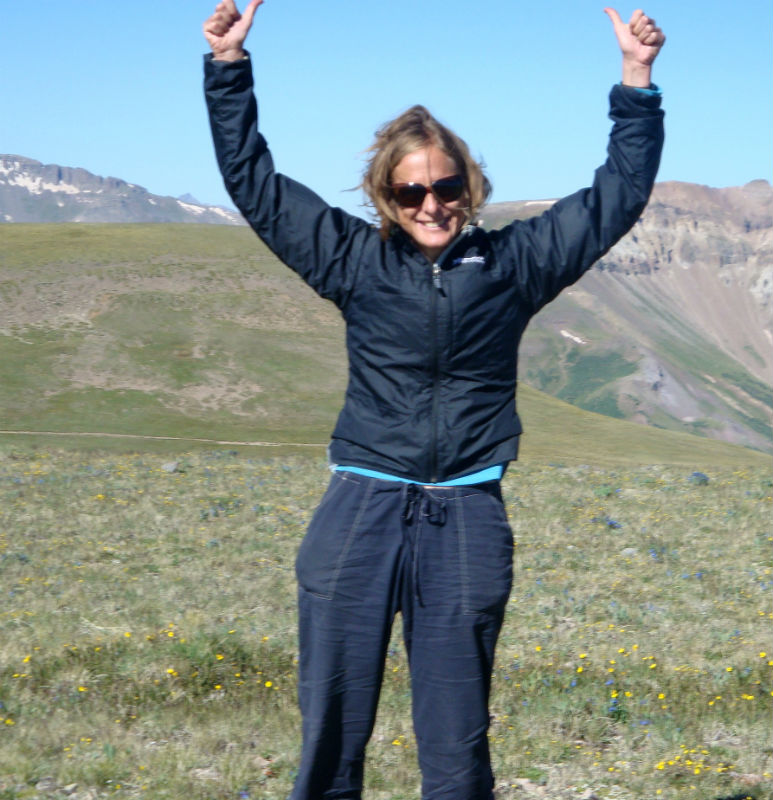
The Specs

  • Light weight.
  • Flexibility in kit.
  • Variable weight depending on chosen accessories.

My Take-

This stove is awesome! Multiple fuel options and all of them work well. If carrying fuel doesn’t suit you, just burn wood. While testing this stove system I was pleasantly surprised to see the ease of setup, and flexibility of options. It was a breezy day (11 mph wind) when I tested the stove, that did not seem to affect it at all. The Fissure Ti-Tri is an excellent wind barrier. The optional Inferno Ring works great when you are burning wood and doesn’t add much weight to the package, especially if you are planning to leave the fuel bottle home. I tried all three fuel types (Esbit, denatured alcohol, and wood) and they all worked well. I boiled (rolling boil) 62-degree Fahrenheit water (2 cups) in 8.03 minutes at an elevation of 4426 feet, and 72 degrees Fahrenheit outside using one Esbit fuel block. Using 20 ml of denatured alcohol I was able to get a rolling boil in 7.15 minutes at the same elevation and 75 degrees Fahrenheit.

- 4Toaks 850ml pot that is included with Trail Designs kit.

I did not time the wood burning boil since using wood to make a fire evokes a completely different experience and takes much longer to do. Using the optional Inferno Ring and fire grate, I was able to get a really nice fire going under the same windy conditions. Most all of the pieces nest into the Toaks 850ml pot that comes with the kit (as long as you are only taking one burn method). It’s recommended to use a zip-lock bag to keep the fuel bottle in while you are packing it, that way it won’t leak under altitude and barometric pressure changes. The cap of the fuel bottle does have an o-ring or washer inside to reduce leaks, and there is a provided measuring cup that is marked with ml, cc, tbs, fl oz. and drams measurements. When using the 12/10 stove it’s recommended to only use denatured alcohol (per instructions) and fill it with no more than 40 ml. I tried boiling water with 15 ml first and found that it burned all the fuel before bringing it to a boil, it gave me a simmer. Moving my amount up to 20 ml worked just fine to get a rolling boil that last roughly four minutes. Who is this stove system for? I think it would be great for the experienced lightweight backpacker looking to upgrade to a different system than what they currently have. I think this is a good entry level stove for someone that doesn’t have a lightweight system and wants to migrate from a canister stove. If you need versatility in your system, then this stove system is for you, especially since they offer many different configurations when ordering.

More Info

- 2Fenix EO5 Keychain Flashlight


Fenix EO5 Keychain Flashlight

The Skinny

A keychain flashlight that offers three lighting modes and runs using one AAA battery.

The Specs

  • Weighs 11.4 grams.
  • Digitally regulated output maintains constant brightness level.
  • Can stand up on tail cap to work like a candle.
  • Twist switch.
  • Type 3 hard anodized aircraft aluminium.

My Take

This little flashlight is smaller than my pinky finger. The three lighting modes on this are great. I like it more than the previously reviewed Thrunite TI-3, mainly because I think the lighting modes are a little more useful at 8, 25, and 85 lumens. This is an update to the older model that had a mostly diffused lens. This newer version of the E05 has more of a clear lens with a very slim ring around the outside of the lens to diffuse some of the light. It comes with a key ring and a spare o-ring. I used the key ring to pair it with a Victorinox Mini Champ Midnight, because I misplaced it twice while testing it out. The pocket knife made it a little easier to keep track of. One accessory I wish this light had come with would be an optional pocket clip so that I could reverse the clip and attach it to the brim of my hat. I’m not sure that I would need to carry it while backpacking. I usually only carry a handheld backup light if it can also serve in place of a headlamp. However, this is an excellent keychain light!

More Info

- 3Discovery Trekking Outfitters Ultralight Towel


Discovery Trekking Outfitters Ultralight Towel

The Skinny

A backpacking towel that dries quickly and contains silver to deter bacterial growth.

The Specs

  • Quick drying.
  • Lightweight.
  • Very Absorbent.
  • Contains silver chloride to stop bacterial growth.
  • Bluesign approved, environmentally safe, antibacterial technology.

My Take

This towel contains silver chloride. It did have a bit of a chemical smell until I used and washed it a few times. I also noticed that there was a reddish color coming out (possibly the silver chloride, or maybe some excess dye) in the water when washing it. That stopped after about three wash cycles. As for the performance of the towel, it dries you off very well. I found that it has great absorbency. Laying the wet towel outside it dried very quickly. The Extreme Ultralight 34”x28” works well as a bandana, the back hangs down enough to cover my neck (which I really like). DTO lists the weight below 3 ounces. On my scale it was reading 3.4 ounces. I will let you decide if you want to add that weight to your pack. I have never taken a towel on a backpacking trip, but I like this one since I can use it as a bandana or kerchief. It absorbs better than a microfiber towel, and there is a good color selection available. The DTO website shows that there are two other sizes, 19”x19” and 34”x58”.

More Info


Support Backpacking Light. Shop with

The 60-Second Backpacker: Episode 2, Leave the Kitchen Sink at Home

The 60-Second Backpacker is a video series that provides bite-sized shorts about equipment, techniques, and philosophy of ultralight backpacking.

Episode No. 2: Trim the Fat

Carrying extraneous equipment and supplies that don’t serve your primary objectives of hiking and camping on a wilderness trip can rapidly balloon your pack weights. In this episode of The 60-Second Backpacker, you’ll learn why packing only the essentials, replacing equipment with skills, and limiting nonessential items to only those things that compliment your trip goals are critical for maintaining a low pack weight.

IMPORTANT: If you don’t see the video immediately below, just click this link to refresh the page, and you’ll be good.