Introduction
Pre-packaged, dehydrated and freeze-dried backpacking dinners might be a good option for you to consider if you don’t have the time, skill, or supplies to make your own.
I own and use some meal preparation equipment (e.g., a dehydrator and a vacuum sealer) and enjoy making my own backpacking meals with ingredients that I source myself. However, I also appreciate having the option to grab a few pre-packaged backpacking meals when I’m short on time.
My favorite pre-packaged meal is the GOOD TO-GO Herbed Mushroom Risotto, which I reviewed here recently.

This gear guide features several dozen options for dehydrated and freeze-dried backpacking dinners from many different brands. Numerous sortable data tables are included in this gear guide to provide a plethora of nutrition data and metrics for comparison purposes.
Freeze-Dried and Dehydrated Backpacking Dinners: Category Description
Freeze-dried and dehydrated backpacking dinners included in this gear guide met the following criteria:
- They can be “cooked” by pouring boiled water into the food pouch and waiting a set amount of time (defined by the manufacturer) for the food to rehydrate. Meals that require cooking on a stove (e.g., simmering), or transfer to another container for eating, are not included. In addition, this gear guide does not include so-called self-heating meals (e.g., OMeals), which are neither dehydrated nor freeze-dried.
- All meals in this gear guide are generally considered to be evening entrees. Snacks, desserts, appetizers, and breakfast foods are not included.
- They are available in either 1- or 2-serving sizes (in a few cases, manufacturers have specified 1.5 or 2.5 servings). When multiple serving size options are available, the larger serving size is included, since that more closely represents the amount of food for a hearty meal for one person. Smaller people, older people, or youth may find some of the meals to provide too much food for a single serving meal.
- The food brands are actively distributed through specialty outdoor retailers, so there is a high likelihood that you’ll actually find them if you need to make a last-minute run to pick up food for a trip!
I settled on a selection of five brands that cover a diverse array of both dehydrated and freeze-dried ingredients. Some meals are organic, some are vegetarian, some are vegan, and some are gluten-free. The meat dishes include beef, chicken, turkey, and seafood as ingredients.
It’s worth noting that cooking times vary wildly but tend to be similar within each brand and food type:
- Mountain House: 8-9 minutes
- AlpineAire: 10-12 minutes
- Mary Jane’s Farm: 10-12 minutes
- GOOD TO-GO: 10-12 minutes (15-20 minutes for some)
- Backpacker’s Pantry: 15-20 minutes
Many brands offer meals with a potato flake base. These meals are ready to eat in about 4-5 minutes.
Cooking times depend on the volumetric quantity of ingredients that are freeze-dried vs. dehydrated and the size of the ingredient pieces and granules (e.g., potato flakes require less time to rehydrate than noodles).
Most meals contain a mixture of both types of dried food. Freeze dried ingredients usually require less cooking time than dehydrated ingredients.
The longer a meal takes to cook, the higher the probability that you won’t have piping hot food by the time the meal is rehydrated and ready to eat. Cooking times are estimates only. Cooking times will be even longer at higher altitude (because water boils at a lower temperature), or in cold temperatures where heat loss out of the bag is faster. You can mitigate some of these effects by inserting the package into a bag cozy of some sort while it’s cooking.

The following table provides a summary of the packaged meals included in this gear guide.
(Using the Table: This table is sortable, searchable, and consists of multiple pages of data. Scroll right to see all data columns on small screens. Try a search for “Mountain House” if you want to filter for a particular brand!)
| Brand | Meal Name | MSRP | # Servings | Weight (oz) |
|---|---|---|---|---|
| Mountain House | Beef Stroganoff with Noodles | $9.00 | 2.5 | 4.8 |
| Mountain House | Italian Pepper Steak | $10.00 | 2.5 | 4.6 |
| Mountain House | Chicken and Dumplings | $8.00 | 2 | 4.7 |
| Mountain House | Lasagna with Meat Sauce | $9.00 | 2.5 | 4.8 |
| Mountain House | Beef Stroganoff with Noodles Pro-Pak | $8.00 | 2 | 4.1 |
| Mountain House | Chili Mac with Beef Pro-Pak | $8.00 | 2 | 4.1 |
| Backpacker's Pantry | Pad Thai Veggie | $5.99 | 2 | 8.0 |
| GOOD TO-GO | Pad Thai | $9.99 | 2 | 6.6 |
| MaryJanesFarm | Organic Bare Burrito | $9.75 | 1.5 | 5.4 |
| Backpacker's Pantry | Chana Masala | $5.99 | 2 | 8.8 |
| MaryJanesFarm | Organic Black Beans and Rice | $9.25 | 1.5 | 5.6 |
| Backpacker's Pantry | Chicken Picatta with Tagliatelle Pasta | $10.79 | 2 | 6.1 |
| AlpineAire Foods | Himalayan Lentils and Rice | $5.19 | 2 | 6.0 |
| GOOD TO-GO | Mexican Quinoa Bowl | $9.99 | 2 | 6.8 |
| AlpineAire Foods | Three Cheese Chicken Pasta | $5.99 | 2 | 5.0 |
| AlpineAire Foods | Black Bart Chili with Beef and Beans | $6.79 | 2 | 6.0 |
| MaryJanesFarm | Organic Lentils, Rice, and Indian Spice | $8.00 | 1.5 | 4.0 |
| GOOD TO-GO | Bibimbap | $5.59 | 1 | 3.4 |
| GOOD TO-GO | Herbed Mushroom Risotto | $5.59 | 1 | 3.4 |
| GOOD TO-GO | Indian Vegetable Korma | $9.99 | 2 | 6.7 |
| Backpacker's Pantry | Pesto Pasta with Salmon | $11.99 | 2 | 8.7 |
| AlpineAire Foods | Mountain Chili | $5.19 | 2 | 6.0 |
| GOOD TO-GO | Thai Curry | $5.59 | 1 | 3.4 |
| AlpineAire Foods | Santa Fe Black Beans and Rice | $5.19 | 2 | 6.5 |
| AlpineAire Foods | Thai Style Chicken with Noodles | $5.99 | 2 | 5.1 |
| Backpacker's Pantry | Fettuccini Alfredo with Chicken | $8.79 | 2 | 7.5 |
| Backpacker's Pantry | Cincinnati Style Chili with Beef | $7.59 | 2 | 8.0 |
| AlpineAire Foods | Spicy Sausage Pasta | $5.99 | 2 | 5.0 |
| GOOD TO-GO | Smoked Three Bean Chili | $9.99 | 2 | 7.0 |
| GOOD TO-GO | Marinara with Penne | $9.99 | 2 | 7.0 |
| Backpacker's Pantry | Vegetable Lasagna | $7.19 | 2 | 7.0 |
| AlpineAire Foods | Cheese Enchilada Ranchero | $5.19 | 2 | 6.3 |
| GOOD TO-GO | Double Chicken Gumbo | $9.99 | 2 | 6.8 |
| Backpacker's Pantry | Cuban Coconut Beans and Rice | $5.99 | 2 | 8.7 |
| Backpacker's Pantry | Shepherd's Potato Stew with Beef | $8.79 | 2 | 5.8 |
| Backpacker's Pantry | Three Cheese Mac and Cheese | $7.59 | 2 | 7.1 |
| Backpacker's Pantry | Baco Cheddar Mashed Potatoes | $3.59 | 2 | 3.5 |
| Backpacker's Pantry | Beef Pho | $7.19 | 2 | 4.6 |
| AlpineAire Foods | Indian Style Chicken Curry | $5.99 | 2 | 6.0 |
| Backpacker's Pantry | Mexican Cowboy Beans and Brown Rice | $5.19 | 2 | 8.3 |
| Backpacker's Pantry | Chiang Mai Coconut Curry with Beef | $8.79 | 2 | 6.6 |
| AlpineAire Foods | Southwestern Style Masa with Beef | $6.79 | 2 | 6.0 |
| Backpacker's Pantry | Kung Pao Rice with Chicken | $8.79 | 2 | 7.8 |
| Backpacker's Pantry | Jamaican Style Jerk Rice and Beans with Chicken | $7.19 | 2 | 6.2 |
| AlpineAire Foods | Chicken Gumbo | $5.99 | 2 | 5.5 |
| AlpineAire Foods | Chicken and Rice Burrito Bowl | $6.79 | 2 | 6.0 |
| AlpineAire Foods | Creamy Potato Cheddar Soup | $3.59 | 2 | 3.5 |
| AlpineAire Foods | Mesquite BBQ Seasoned Chicken with Beans and Rice | $6.79 | 2 | 7.0 |
| AlpineAire Foods | Beef and Rice Burrito Bowl | $6.79 | 2 | 6.0 |
| AlpineAire Foods | Vegetarian Burrito Bowl | $5.19 | 2 | 6.0 |
| AlpineAire Foods | Honey Lime Chicken | $5.99 | 2 | 5.8 |
| AlpineAire Foods | Pepper Beef with Rice | $6.79 | 2 | 6.0 |
| AlpineAire Foods | Pineapple Orange Chicken | $6.79 | 2 | 7.0 |
| Mountain House | Chicken Fajita Bowl | $9.00 | 2 | 4.2 |
| Mountain House | Chili Mac with Beef | $9.00 | 2.5 | 4.8 |
| Mountain House | Grilled Chicken Breasts and Mashed Potatoes | $11.00 | 2 | 3.7 |
| Mountain House | Spaghetti with Meat Sauce | $8.00 | 2.5 | 4.5 |
| MaryJanesFarm | Organic Shepheard's Meat Pie | $12.00 | 1.5 | 4.0 |
| Mountain House | Chicken Teryaki with Rice | $9.00 | 2.5 | 5.0 |
Prices represent current sale prices at REI as of the time of publication.
Food Types
All meals in this gear guide were categorized based on the major food types of interest to those who aspire to follow a particular diet strategy, including:
- Meals with meat (these include beef, chicken, and turkey)
- Vegetarian meals (may contain dairy products)
- Vegan meals (no meat or dairy)
- Gluten-free meals
These types are noted in the table below.
(Using the Table: This table is sortable, searchable, and consists of multiple pages of data. Scroll right to see all data columns on small screens. Try searching for “chicken” or “vegan” as examples of how to filter the entries for various search terms.)
| Brand | Name | Type | Gluten-Free? |
|---|---|---|---|
| Mountain House | Beef Stroganoff with Noodles | beef | no |
| Mountain House | Italian Pepper Steak | beef | yes |
| Mountain House | Chicken and Dumplings | chicken | no |
| Mountain House | Lasagna with Meat Sauce | beef | no |
| Mountain House | Beef Stroganoff with Noodles Pro-Pak | beef | no |
| Mountain House | Chili Mac with Beef Pro-Pak | beef | no |
| Backpacker's Pantry | Pad Thai Veggie | vegan | yes |
| GOOD TO-GO | Pad Thai | seafood | yes |
| MaryJanesFarm | Organic Bare Burrito | vegetarian | yes |
| Backpacker's Pantry | Chana Masala | vegan | yes |
| MaryJanesFarm | Organic Black Beans and Rice | vegetarian | yes |
| Backpacker's Pantry | Chicken Picatta with Tagliatelle Pasta | chicken | no |
| AlpineAire Foods | Himalayan Lentils and Rice | vegetarian | yes |
| GOOD TO-GO | Mexican Quinoa Bowl | vegan | yes |
| AlpineAire Foods | Three Cheese Chicken Pasta | chicken | no |
| AlpineAire Foods | Black Bart Chili with Beef and Beans | beef | yes |
| MaryJanesFarm | Organic Lentils, Rice, and Indian Spice | vegan | yes |
| GOOD TO-GO | Bibimbap | vegan | yes |
| GOOD TO-GO | Herbed Mushroom Risotto | vegan | yes |
| GOOD TO-GO | Indian Vegetable Korma | vegetarian | yes |
| Backpacker's Pantry | Pesto Pasta with Salmon | seafood | no |
| AlpineAire Foods | Mountain Chili | vegetarian | yes |
| GOOD TO-GO | Thai Curry | seafood | yes |
| AlpineAire Foods | Santa Fe Black Beans and Rice | vegan | yes |
| AlpineAire Foods | Thai Style Chicken with Noodles | chicken | no |
| Backpacker's Pantry | Fettuccini Alfredo with Chicken | chicken | no |
| Backpacker's Pantry | Cincinnati Style Chili with Beef | beef | no |
| AlpineAire Foods | Spicy Sausage Pasta | beef | no |
| GOOD TO-GO | Smoked Three Bean Chili | vegan | yes |
| GOOD TO-GO | Marinara with Penne | vegan | yes |
| Backpacker's Pantry | Vegetable Lasagna | vegetarian | no |
| AlpineAire Foods | Cheese Enchilada Ranchero | vegetarian | no |
| GOOD TO-GO | Double Chicken Gumbo | chicken | yes |
| Backpacker's Pantry | Cuban Coconut Beans and Rice | vegetarian | no |
| Backpacker's Pantry | Shepherd's Potato Stew with Beef | beef | no |
| Backpacker's Pantry | Three Cheese Mac and Cheese | vegetarian | no |
| Backpacker's Pantry | Baco Cheddar Mashed Potatoes | vegetarian | no |
| Backpacker's Pantry | Beef Pho | beef | yes |
| AlpineAire Foods | Indian Style Chicken Curry | chicken | no |
| Backpacker's Pantry | Mexican Cowboy Beans and Brown Rice | vegan | no |
| Backpacker's Pantry | Chiang Mai Coconut Curry with Beef | beef | yes |
| AlpineAire Foods | Southwestern Style Masa with Beef | beef | yes |
| Backpacker's Pantry | Kung Pao Rice with Chicken | chicken | no |
| Backpacker's Pantry | Jamaican Style Jerk Rice and Beans with Chicken | chicken | no |
| AlpineAire Foods | Chicken Gumbo | chicken | yes |
| AlpineAire Foods | Chicken and Rice Burrito Bowl | chicken | yes |
| AlpineAire Foods | Creamy Potato Cheddar Soup | vegetarian | yes |
| AlpineAire Foods | Mesquite BBQ Seasoned Chicken with Beans and Rice | chicken | yes |
| AlpineAire Foods | Beef and Rice Burrito Bowl | beef | yes |
| AlpineAire Foods | Vegetarian Burrito Bowl | vegetarian | yes |
| AlpineAire Foods | Honey Lime Chicken | chicken | yes |
| AlpineAire Foods | Pepper Beef with Rice | beef | yes |
| AlpineAire Foods | Pineapple Orange Chicken | chicken | yes |
| Mountain House | Chicken Fajita Bowl | chicken | yes |
| Mountain House | Chili Mac with Beef | beef | no |
| Mountain House | Grilled Chicken Breasts and Mashed Potatoes | chicken | no |
| Mountain House | Spaghetti with Meat Sauce | beef | no |
| MaryJanesFarm | Organic Shepheard's Meat Pie | beef | no |
| Mountain House | Chicken Teryaki with Rice | chicken | no |
Product Nutrition Considerations
Calories
Calories = fuel. Generally, most hikers will consume 400-800 Calories during their evening meal, which helps replenish glycogen stores, repair muscles, and provide metabolic fuel until morning.
Macronutrients
Most backpackers who are students of their own nutrition will attempt to dial in a particular macronutrient ratio, defined as carbohydrates:fats:protein. One common ratio is 50:35:15, which simply means that 50% of your calories are coming from carbohydrates, 35% of your calories are coming from fats, and 15% of your calories are coming from protein.
Some backpackers try to increase the caloric density (e.g., expressed as Calories per ounce) of their food by increasing the percentage of fat in their diet (which has a caloric density of 9 Calories/gram vs. proteins and carbohydrates, which have a caloric density of 4 Calories/gram). A typical high-fat backpacking diet may have a macronutrient ratio that looks something like 35:50:15.
Proponents of ketogenic and other low-carb diets for athletic activity rely upon diets where less than 10% of their total caloric intake is from carbohydrates, where energy is derived primarily from fat metabolism instead of glycogen stores in the liver and muscles.
For most (non-fat adapted eaters), a high load (100-150 g) of carbohydrates during the evening meal helps replenish glycogen stores consumed over the course of several hours of hiking.
Protein (at least 20 g per meal) helps with muscle repair.
Saturated Fats and Cholesterol
In the raw data table at the end of this gear guide, saturated fats and cholesterol numbers are reported as an FYI for those with chronic diseases that require monitoring the dietary intake of these nutrients. Neither one likely has any meaningful impact on short-term backpacking performance.
Sodium
A diet void of sodium is risky for backpacking. High levels of physical exertion, especially during warm temperatures, results in perspiration and sodium loss that can lead to conditions such as hyponatremia. One diet that can be particularly problematic is one that rigidly adheres to plant-based whole foods with no processed foods or ingredients. The extremely low sodium in this type of diet is risky for backpackers, who may expel up to several grams per day of salt through perspiration.
Conversely, some people monitor sodium intake as part of chronic disease management.
Fortunately, for backpacking, we can afford to take in a little extra salt here and there since we are engaging in an activity that expels quite a bit more of it than if we were sitting at our desk back at the office.
Dietary Fiber
Dietary fiber increases stool softness, volume, and regularity (reduces constipation). High fiber diets (especially common among those who eat plant-based diets) are great for backpacking, but when combined with vigorous exercise, may increase your required toilet paper supply dramatically.
Sugars
The sugar content of these foods is provided in the raw data table at the end of this gear guide primarily for those interested in evaluating the potential glycemic and insulinemic impacts of foods.
Macronutrient Specifications (Per Package)
This table is sortable, searchable, and consists of multiple pages of data. Scroll right to see all data columns on small screens.
| Brand | Name | Package Weight (oz) | Calories | Fat (g) | Carbs (g) | % Carbs as Fiber | Protein (g) |
|---|---|---|---|---|---|---|---|
| Mountain House | Beef Stroganoff with Noodles | 4.8 | 650 | 28 | 73 | 3% | 28 |
| Mountain House | Italian Pepper Steak | 4.6 | 450 | 6 | 73 | 14% | 33 |
| Mountain House | Chicken and Dumplings | 4.7 | 620 | 28 | 62 | 6% | 30 |
| Mountain House | Lasagna with Meat Sauce | 4.8 | 600 | 20 | 73 | 10% | 35 |
| Mountain House | Beef Stroganoff with Noodles Pro-Pak | 4.1 | 520 | 22 | 58 | 3% | 22 |
| Mountain House | Chili Mac with Beef Pro-Pak | 4.1 | 460 | 12 | 62 | 16% | 24 |
| Backpacker's Pantry | Pad Thai Veggie | 8.0 | 920 | 36 | 128 | 13% | 36 |
| GOOD TO-GO | Pad Thai | 6.6 | 860 | 20 | 146 | 7% | 32 |
| MaryJanesFarm | Organic Bare Burrito | 5.4 | 555 | 9 | 93 | 24% | 29 |
| Backpacker's Pantry | Chana Masala | 8.8 | 860 | 5 | 184 | 10% | 26 |
| MaryJanesFarm | Organic Black Beans and Rice | 5.6 | 570 | 9 | 98 | 37% | 30 |
| Backpacker's Pantry | Chicken Picatta with Tagliatelle Pasta | 6.1 | 700 | 18 | 86 | 7% | 48 |
| AlpineAire Foods | Himalayan Lentils and Rice | 6.0 | 620 | 7 | 124 | 15% | 22 |
| GOOD TO-GO | Mexican Quinoa Bowl | 6.8 | 700 | 16 | 134 | 13% | 26 |
| AlpineAire Foods | Three Cheese Chicken Pasta | 5.0 | 580 | 16 | 68 | 6% | 38 |
| AlpineAire Foods | Black Bart Chili with Beef and Beans | 6.0 | 580 | 10 | 84 | 31% | 50 |
| MaryJanesFarm | Organic Lentils, Rice, and Indian Spice | 4.0 | 435 | 2 | 90 | 15% | 17 |
| GOOD TO-GO | Bibimbap | 3.4 | 370 | 8 | 66 | 6% | 9 |
| GOOD TO-GO | Herbed Mushroom Risotto | 3.4 | 410 | 10 | 64 | 6% | 13 |
| GOOD TO-GO | Indian Vegetable Korma | 6.7 | 780 | 32 | 104 | 23% | 30 |
| Backpacker's Pantry | Pesto Pasta with Salmon | 8.7 | 640 | 28 | 84 | 5% | 40 |
| AlpineAire Foods | Mountain Chili | 6.0 | 540 | 4 | 94 | 28% | 42 |
| GOOD TO-GO | Thai Curry | 3.4 | 380 | 14 | 56 | 13% | 10 |
| AlpineAire Foods | Santa Fe Black Beans and Rice | 6.5 | 640 | 3 | 136 | 12% | 20 |
| AlpineAire Foods | Thai Style Chicken with Noodles | 5.1 | 500 | 6 | 90 | 7% | 28 |
| Backpacker's Pantry | Fettuccini Alfredo with Chicken | 7.5 | 540 | 12 | 102 | 2% | 44 |
| Backpacker's Pantry | Cincinnati Style Chili with Beef | 8.0 | 740 | 5 | 140 | 13% | 40 |
| AlpineAire Foods | Spicy Sausage Pasta | 5.0 | 600 | 22 | 76 | 8% | 24 |
| GOOD TO-GO | Smoked Three Bean Chili | 7.0 | 680 | 10 | 126 | 24% | 32 |
| GOOD TO-GO | Marinara with Penne | 7.0 | 920 | 26 | 126 | 13% | 24 |
| Backpacker's Pantry | Vegetable Lasagna | 7.0 | 760 | 18 | 110 | 11% | 44 |
| AlpineAire Foods | Cheese Enchilada Ranchero | 6.3 | 760 | 32 | 96 | 10% | 30 |
| GOOD TO-GO | Double Chicken Gumbo | 6.8 | 660 | 16 | 108 | 11% | 32 |
| Backpacker's Pantry | Cuban Coconut Beans and Rice | 8.7 | 960 | 14 | 176 | 34% | 34 |
| Backpacker's Pantry | Shepherd's Potato Stew with Beef | 5.8 | 600 | 16 | 82 | 12% | 36 |
| Backpacker's Pantry | Three Cheese Mac and Cheese | 7.1 | 860 | 28 | 112 | 4% | 38 |
| Backpacker's Pantry | Baco Cheddar Mashed Potatoes | 3.5 | 420 | 14 | 60 | 10% | 16 |
| Backpacker's Pantry | Beef Pho | 4.6 | 460 | 2 | 98 | 6% | 16 |
| AlpineAire Foods | Indian Style Chicken Curry | 6.0 | 600 | 9 | 118 | 12% | 28 |
| Backpacker's Pantry | Mexican Cowboy Beans and Brown Rice | 8.3 | 800 | 6 | 164 | 16% | 32 |
| Backpacker's Pantry | Chiang Mai Coconut Curry with Beef | 6.6 | 540 | 5 | 102 | 8% | 22 |
| AlpineAire Foods | Southwestern Style Masa with Beef | 6.0 | 660 | 16 | 92 | 13% | 40 |
| Backpacker's Pantry | Kung Pao Rice with Chicken | 7.8 | 740 | 14 | 114 | 11% | 48 |
| Backpacker's Pantry | Jamaican Style Jerk Rice and Beans with Chicken | 6.2 | 620 | 4 | 116 | 22% | 38 |
| AlpineAire Foods | Chicken Gumbo | 5.5 | 540 | 4 | 100 | 6% | 32 |
| AlpineAire Foods | Chicken and Rice Burrito Bowl | 6.0 | 620 | 4 | 116 | 16% | 32 |
| AlpineAire Foods | Creamy Potato Cheddar Soup | 3.5 | 360 | 12 | 54 | 7% | 16 |
| AlpineAire Foods | Mesquite BBQ Seasoned Chicken with Beans and Rice | 7.0 | 700 | 5 | 126 | 11% | 40 |
| AlpineAire Foods | Beef and Rice Burrito Bowl | 6.0 | 620 | 5 | 116 | 16% | 30 |
| AlpineAire Foods | Vegetarian Burrito Bowl | 6.0 | 600 | 2 | 128 | 14% | 20 |
| AlpineAire Foods | Honey Lime Chicken | 5.8 | 600 | 3 | 160 | 1% | 22 |
| AlpineAire Foods | Pepper Beef with Rice | 6.0 | 620 | 7 | 144 | 3% | 28 |
| AlpineAire Foods | Pineapple Orange Chicken | 7.0 | 720 | 4 | 140 | 4% | 32 |
| Mountain House | Chicken Fajita Bowl | 4.2 | 560 | 22 | 50 | 12% | 40 |
| Mountain House | Chili Mac with Beef | 4.8 | 575 | 15 | 78 | 16% | 30 |
| Mountain House | Grilled Chicken Breasts and Mashed Potatoes | 3.7 | 420 | 7 | 44 | 9% | 44 |
| Mountain House | Spaghetti with Meat Sauce | 4.5 | 575 | 13 | 83 | 9% | 30 |
| MaryJanesFarm | Organic Shepheard's Meat Pie | 4.0 | 375 | 9 | 54 | 8% | 23 |
| Mountain House | Chicken Teryaki with Rice | 5.0 | 550 | 5 | 100 | 3% | 25 |
Macronutrient Density
(Using the Table: This table is sortable, searchable, and consists of multiple pages of data. Scroll right to see all data columns on small screens.)
| Brand | Name | Cal/oz | Fat (g)/oz | Carb (g)/oz | Protein (g)/oz |
|---|---|---|---|---|---|
| Mountain House | Beef Stroganoff with Noodles | 135.4 | 5.7 | 15.1 | 5.7 |
| Mountain House | Italian Pepper Steak | 97.8 | 1.4 | 15.8 | 7.1 |
| Mountain House | Chicken and Dumplings | 131.9 | 6.0 | 13.2 | 6.4 |
| Mountain House | Lasagna with Meat Sauce | 125.0 | 4.2 | 15.1 | 7.3 |
| Mountain House | Beef Stroganoff with Noodles Pro-Pak | 126.8 | 5.4 | 14.1 | 5.4 |
| Mountain House | Chili Mac with Beef Pro-Pak | 112.2 | 2.9 | 15.1 | 5.9 |
| Backpacker's Pantry | Pad Thai Veggie | 115.0 | 4.5 | 16.0 | 4.5 |
| GOOD TO-GO | Pad Thai | 130.3 | 3.0 | 22.1 | 4.8 |
| MaryJanesFarm | Organic Bare Burrito | 102.8 | 1.7 | 17.2 | 5.3 |
| Backpacker's Pantry | Chana Masala | 97.7 | 0.6 | 20.9 | 3.0 |
| MaryJanesFarm | Organic Black Beans and Rice | 101.8 | 1.6 | 17.4 | 5.4 |
| Backpacker's Pantry | Chicken Picatta with Tagliatelle Pasta | 114.8 | 3.0 | 14.1 | 7.9 |
| AlpineAire Foods | Himalayan Lentils and Rice | 103.3 | 1.2 | 20.7 | 3.7 |
| GOOD TO-GO | Mexican Quinoa Bowl | 102.9 | 2.4 | 19.7 | 3.8 |
| AlpineAire Foods | Three Cheese Chicken Pasta | 116.0 | 3.2 | 13.6 | 7.6 |
| AlpineAire Foods | Black Bart Chili with Beef and Beans | 96.7 | 1.7 | 14.0 | 8.3 |
| MaryJanesFarm | Organic Lentils, Rice, and Indian Spice | 108.8 | 0.6 | 22.5 | 4.1 |
| GOOD TO-GO | Bibimbap | 108.8 | 2.4 | 19.4 | 2.6 |
| GOOD TO-GO | Herbed Mushroom Risotto | 120.6 | 2.9 | 18.8 | 3.8 |
| GOOD TO-GO | Indian Vegetable Korma | 116.4 | 4.8 | 15.5 | 4.5 |
| Backpacker's Pantry | Pesto Pasta with Salmon | 73.6 | 3.2 | 9.7 | 4.6 |
| AlpineAire Foods | Mountain Chili | 90.0 | 0.7 | 15.7 | 7.0 |
| GOOD TO-GO | Thai Curry | 111.8 | 4.1 | 16.5 | 2.9 |
| AlpineAire Foods | Santa Fe Black Beans and Rice | 98.5 | 0.5 | 20.9 | 3.1 |
| AlpineAire Foods | Thai Style Chicken with Noodles | 97.7 | 1.2 | 17.6 | 5.5 |
| Backpacker's Pantry | Fettuccini Alfredo with Chicken | 72.0 | 1.6 | 13.6 | 5.9 |
| Backpacker's Pantry | Cincinnati Style Chili with Beef | 92.5 | 0.6 | 17.5 | 5.0 |
| AlpineAire Foods | Spicy Sausage Pasta | 120.0 | 4.4 | 15.2 | 4.8 |
| GOOD TO-GO | Smoked Three Bean Chili | 97.1 | 1.4 | 18.0 | 4.6 |
| GOOD TO-GO | Marinara with Penne | 131.4 | 3.7 | 18.0 | 3.4 |
| Backpacker's Pantry | Vegetable Lasagna | 108.6 | 2.6 | 15.7 | 6.3 |
| AlpineAire Foods | Cheese Enchilada Ranchero | 121.6 | 5.1 | 15.4 | 4.8 |
| GOOD TO-GO | Double Chicken Gumbo | 97.1 | 2.4 | 15.9 | 4.7 |
| Backpacker's Pantry | Cuban Coconut Beans and Rice | 110.3 | 1.6 | 20.2 | 3.9 |
| Backpacker's Pantry | Shepherd's Potato Stew with Beef | 103.4 | 2.8 | 14.1 | 6.2 |
| Backpacker's Pantry | Three Cheese Mac and Cheese | 121.1 | 3.9 | 15.8 | 5.4 |
| Backpacker's Pantry | Baco Cheddar Mashed Potatoes | 120.0 | 4.0 | 17.1 | 4.6 |
| Backpacker's Pantry | Beef Pho | 100.0 | 0.4 | 21.3 | 3.5 |
| AlpineAire Foods | Indian Style Chicken Curry | 100.0 | 1.5 | 19.7 | 4.7 |
| Backpacker's Pantry | Mexican Cowboy Beans and Brown Rice | 96.4 | 0.7 | 19.8 | 3.9 |
| Backpacker's Pantry | Chiang Mai Coconut Curry with Beef | 81.8 | 0.8 | 15.5 | 3.3 |
| AlpineAire Foods | Southwestern Style Masa with Beef | 110.0 | 2.7 | 15.3 | 6.7 |
| Backpacker's Pantry | Kung Pao Rice with Chicken | 94.9 | 1.8 | 14.6 | 6.2 |
| Backpacker's Pantry | Jamaican Style Jerk Rice and Beans with Chicken | 100.0 | 0.6 | 18.7 | 6.1 |
| AlpineAire Foods | Chicken Gumbo | 98.2 | 0.7 | 18.2 | 5.8 |
| AlpineAire Foods | Chicken and Rice Burrito Bowl | 103.3 | 0.7 | 19.3 | 5.3 |
| AlpineAire Foods | Creamy Potato Cheddar Soup | 102.9 | 3.4 | 15.4 | 4.6 |
| AlpineAire Foods | Mesquite BBQ Seasoned Chicken with Beans and Rice | 100.0 | 0.7 | 18.0 | 5.7 |
| AlpineAire Foods | Beef and Rice Burrito Bowl | 103.3 | 0.8 | 19.3 | 5.0 |
| AlpineAire Foods | Vegetarian Burrito Bowl | 100.0 | 0.3 | 21.3 | 3.3 |
| AlpineAire Foods | Honey Lime Chicken | 104.3 | 0.5 | 27.8 | 3.8 |
| AlpineAire Foods | Pepper Beef with Rice | 103.3 | 1.2 | 24.0 | 4.7 |
| AlpineAire Foods | Pineapple Orange Chicken | 102.9 | 0.6 | 20.0 | 4.6 |
| Mountain House | Chicken Fajita Bowl | 132.4 | 5.2 | 11.8 | 9.5 |
| Mountain House | Chili Mac with Beef | 119.8 | 3.1 | 16.1 | 6.3 |
| Mountain House | Grilled Chicken Breasts and Mashed Potatoes | 113.5 | 1.9 | 11.9 | 11.9 |
| Mountain House | Spaghetti with Meat Sauce | 127.5 | 2.8 | 18.3 | 6.7 |
| MaryJanesFarm | Organic Shepheard's Meat Pie | 93.8 | 2.3 | 13.5 | 5.6 |
| Mountain House | Chicken Teryaki with Rice | 109.8 | 1.0 | 20.0 | 5.0 |
Raw Data Table
(Using the Table: This table is sortable, searchable, and consists of multiple pages of data. Scroll right to see all data columns. Try a search for “vegan” or “pad thai” to see how the search-and-filter function works!)
| Brand | Meal Name | Type | Gluten Free? | MSRP | Cooking Time (minutes) | Weight (oz) | Servings | Calories | Fat (g) | Sat Fat (g) | Cholesterol (mg) | Sodium (mg) | Carb (g) | Dietary Fiber (g) | Sugars (g) | Protein (g) |
|---|---|---|---|---|---|---|---|---|---|---|---|---|---|---|---|---|
| Mountain House | Beef Stroganoff with Noodles | beef | no | $9.00 | 8 | 4.8 | 2.5 | 260 | 11 | 4 | 45 | 800 | 29 | 1 | 3 | 11 |
| Mountain House | Italian Pepper Steak | beef | yes | $10.00 | 8 | 4.6 | 2.5 | 180 | 2.5 | 0.5 | 25 | 590 | 29 | 4 | 2 | 13 |
| Mountain House | Chicken and Dumplings | chicken | no | $8.00 | 8 | 4.7 | 2 | 310 | 14 | 4 | 35 | 970 | 31 | 2 | 7 | 15 |
| Mountain House | Lasagna with Meat Sauce | beef | no | $9.00 | 8 | 4.8 | 2.5 | 240 | 8 | 3.5 | 30 | 390 | 29 | 3 | 6 | 14 |
| Mountain House | Beef Stroganoff with Noodles Pro-Pak | beef | no | $8.00 | 8 | 4.1 | 2 | 260 | 11 | 4 | 45 | 800 | 29 | 1 | 3 | 11 |
| Mountain House | Chili Mac with Beef Pro-Pak | beef | no | $8.00 | 8 | 4.1 | 2 | 230 | 6 | 2 | 20 | 780 | 31 | 5 | 3 | 12 |
| Backpacker's Pantry | Pad Thai Veggie | vegan | yes | $5.99 | 15 | 8.0 | 2 | 460 | 18 | 3 | 0 | 480 | 64 | 8 | 15 | 18 |
| GOOD TO-GO | Pad Thai | seafood | yes | $9.99 | 15 | 6.6 | 2 | 430 | 10 | 1.5 | 105 | 340 | 73 | 5 | 15 | 16 |
| MaryJanesFarm | Organic Bare Burrito | vegetarian | yes | $9.75 | 10 | 5.4 | 1.5 | 370 | 6 | 2.5 | 10 | 720 | 62 | 15 | 4 | 19 |
| Backpacker's Pantry | Chana Masala | vegan | yes | $5.99 | 15 | 8.8 | 2 | 430 | 2.5 | 0 | 0 | 1,340 | 92 | 9 | 15 | 13 |
| MaryJanesFarm | Organic Black Beans and Rice | vegetarian | yes | $9.25 | 10 | 5.6 | 1.5 | 380 | 6 | 2.5 | 10 | 680 | 65 | 24 | 2 | 20 |
| Backpacker's Pantry | Chicken Picatta with Tagliatelle Pasta | chicken | no | $10.79 | 20 | 6.1 | 2 | 350 | 9 | 2 | 40 | 1,450 | 43 | 3 | 2 | 24 |
| AlpineAire Foods | Himalayan Lentils and Rice | vegetarian | yes | $5.19 | 10 | 6.0 | 2 | 310 | 3.5 | 1.5 | 10 | 180 | 62 | 9 | 3 | 11 |
| GOOD TO-GO | Mexican Quinoa Bowl | vegan | yes | $9.99 | 15 | 6.8 | 2 | 350 | 8 | 1 | 0 | 390 | 67 | 9 | 9 | 13 |
| AlpineAire Foods | Three Cheese Chicken Pasta | chicken | no | $5.99 | 10 | 5.0 | 2 | 290 | 8 | 4.5 | 35 | 570 | 34 | 2 | 4 | 19 |
| AlpineAire Foods | Black Bart Chili with Beef and Beans | beef | yes | $6.79 | 10 | 6.0 | 2 | 290 | 5 | 1.5 | 35 | 750 | 42 | 13 | 7 | 25 |
| MaryJanesFarm | Organic Lentils, Rice, and Indian Spice | vegan | yes | $8.00 | 10 | 4.0 | 1.5 | 290 | 1.5 | 0 | 0 | 520 | 60 | 9 | 9 | 11 |
| GOOD TO-GO | Bibimbap | vegan | yes | $5.59 | 20 | 3.4 | 1 | 370 | 8 | 1.5 | 0 | 670 | 66 | 4 | 11 | 9 |
| GOOD TO-GO | Herbed Mushroom Risotto | vegan | yes | $5.59 | 20 | 3.4 | 1 | 410 | 10 | 1.5 | 0 | 420 | 64 | 4 | 3 | 13 |
| GOOD TO-GO | Indian Vegetable Korma | vegetarian | yes | $9.99 | 20 | 6.7 | 2 | 390 | 16 | 6 | 0 | 690 | 52 | 12 | 17 | 15 |
| Backpacker's Pantry | Pesto Pasta with Salmon | seafood | no | $11.99 | 15 | 8.7 | 2 | 320 | 14 | 4.5 | 30 | 140 | 30 | 3 | 9 | 18 |
| AlpineAire Foods | Mountain Chili | vegetarian | yes | $5.19 | 10 | 6.0 | 2 | 270 | 2 | 0 | 0 | 590 | 47 | 13 | 9 | 21 |
| GOOD TO-GO | Thai Curry | seafood | yes | $5.59 | 20 | 3.4 | 1 | 380 | 14 | 8 | 0 | 500 | 56 | 7 | 8 | 10 |
| AlpineAire Foods | Santa Fe Black Beans and Rice | vegan | yes | $5.19 | 10 | 6.5 | 2 | 320 | 1.5 | 0 | 0 | 370 | 68 | 8 | 8 | 10 |
| AlpineAire Foods | Thai Style Chicken with Noodles | chicken | no | $5.99 | 10 | 5.1 | 2 | 250 | 3 | 0.5 | 15 | 420 | 45 | 3 | 5 | 14 |
| Backpacker's Pantry | Fettuccini Alfredo with Chicken | chicken | no | $8.79 | 15 | 7.5 | 2 | 270 | 6 | 3.5 | 45 | 850 | 36 | 12 | 18 | |
| Backpacker's Pantry | Cincinnati Style Chili with Beef | beef | no | $7.59 | 15 | 8.0 | 2 | 370 | 2.5 | 0 | 20 | 540 | 70 | 9 | 9 | 20 |
| AlpineAire Foods | Spicy Sausage Pasta | beef | no | $5.99 | 10 | 5.0 | 2 | 300 | 11 | 5 | 25 | 440 | 38 | 3 | 3 | 12 |
| GOOD TO-GO | Smoked Three Bean Chili | vegan | yes | $9.99 | 20 | 7.0 | 2 | 340 | 5 | 0.5 | 0 | 360 | 63 | 15 | 13 | 16 |
| GOOD TO-GO | Marinara with Penne | vegan | yes | $9.99 | 20 | 7.0 | 2 | 460 | 13 | 1.5 | 0 | 360 | 63 | 8 | 15 | 12 |
| Backpacker's Pantry | Vegetable Lasagna | vegetarian | no | $7.19 | 15 | 7.0 | 2 | 380 | 9 | 5 | 25 | 690 | 55 | 6 | 11 | 22 |
| AlpineAire Foods | Cheese Enchilada Ranchero | vegetarian | no | $5.19 | 10 | 6.3 | 2 | 380 | 16 | 6 | 25 | 700 | 48 | 5 | 6 | 15 |
| GOOD TO-GO | Double Chicken Gumbo | chicken | yes | $9.99 | 15 | 6.8 | 2 | 330 | 8 | 1.5 | 45 | 420 | 54 | 6 | 3 | 16 |
| Backpacker's Pantry | Cuban Coconut Beans and Rice | vegetarian | no | $5.99 | 15 | 8.7 | 2 | 480 | 7 | 2 | 0 | 810 | 88 | 30 | 12 | 17 |
| Backpacker's Pantry | Shepherd's Potato Stew with Beef | beef | no | $8.79 | 15 | 5.8 | 2 | 300 | 8 | 3.5 | 45 | 1,340 | 41 | 5 | 8 | 18 |
| Backpacker's Pantry | Three Cheese Mac and Cheese | vegetarian | no | $7.59 | 15 | 7.1 | 2 | 430 | 14 | 7 | 45 | 610 | 56 | 2 | 5 | 19 |
| Backpacker's Pantry | Baco Cheddar Mashed Potatoes | vegetarian | no | $3.59 | 5 | 3.5 | 2 | 210 | 7 | 3.5 | 15 | 690 | 30 | 3 | 3 | 8 |
| Backpacker's Pantry | Beef Pho | beef | yes | $7.19 | 15 | 4.6 | 2 | 230 | 1 | 0 | 20 | 1,080 | 49 | 3 | 3 | 8 |
| AlpineAire Foods | Indian Style Chicken Curry | chicken | no | $5.99 | 10 | 6.0 | 2 | 300 | 4.5 | 2.5 | 20 | 380 | 59 | 7 | 14 | 14 |
| Backpacker's Pantry | Mexican Cowboy Beans and Brown Rice | vegan | no | $5.19 | 15 | 8.3 | 2 | 400 | 3 | 0 | 0 | 1,090 | 82 | 13 | 8 | 16 |
| Backpacker's Pantry | Chiang Mai Coconut Curry with Beef | beef | yes | $8.79 | 15 | 6.6 | 2 | 270 | 2.5 | 0 | 20 | 650 | 51 | 4 | 4 | 11 |
| AlpineAire Foods | Southwestern Style Masa with Beef | beef | yes | $6.79 | 10 | 6.0 | 2 | 330 | 8 | 4 | 35 | 770 | 46 | 6 | 10 | 20 |
| Backpacker's Pantry | Kung Pao Rice with Chicken | chicken | no | $8.79 | 15 | 7.8 | 2 | 370 | 7 | 1 | 30 | 1,070 | 57 | 6 | 10 | 24 |
| Backpacker's Pantry | Jamaican Style Jerk Rice and Beans with Chicken | chicken | no | $7.19 | 15 | 6.2 | 2 | 310 | 2 | 0 | 25 | 1,440 | 58 | 13 | 9 | 19 |
| AlpineAire Foods | Chicken Gumbo | chicken | yes | $5.99 | 10 | 5.5 | 2 | 270 | 2 | 0 | 30 | 630 | 50 | 3 | 8 | 16 |
| AlpineAire Foods | Chicken and Rice Burrito Bowl | chicken | yes | $6.79 | 10 | 6.0 | 2 | 310 | 2 | 0 | 20 | 300 | 58 | 9 | 5 | 16 |
| AlpineAire Foods | Creamy Potato Cheddar Soup | vegetarian | yes | $3.59 | 10 | 3.5 | 2 | 180 | 6 | 4 | 20 | 640 | 27 | 2 | 3 | 8 |
| AlpineAire Foods | Mesquite BBQ Seasoned Chicken with Beans and Rice | chicken | yes | $6.79 | 10 | 7.0 | 2 | 350 | 2.5 | 0 | 30 | 460 | 63 | 7 | 15 | 20 |
| AlpineAire Foods | Beef and Rice Burrito Bowl | beef | yes | $6.79 | 10 | 6.0 | 2 | 310 | 2.5 | 0.5 | 15 | 400 | 58 | 9 | 5 | 15 |
| AlpineAire Foods | Vegetarian Burrito Bowl | vegetarian | yes | $5.19 | 10 | 6.0 | 2 | 300 | 1 | 0 | 0 | 280 | 64 | 9 | 5 | 10 |
| AlpineAire Foods | Honey Lime Chicken | chicken | yes | $5.99 | 10 | 5.8 | 2 | 300 | 1.5 | 0 | 20 | 480 | 80 | 1 | 6 | 22 |
| AlpineAire Foods | Pepper Beef with Rice | beef | yes | $6.79 | 10 | 6.0 | 2 | 310 | 3.5 | 0 | 25 | 580 | 72 | 2 | 2 | 14 |
| AlpineAire Foods | Pineapple Orange Chicken | chicken | yes | $6.79 | 10 | 7.0 | 2 | 360 | 2 | 0.5 | 25 | 410 | 70 | 3 | 13 | 16 |
| Mountain House | Chicken Fajita Bowl | chicken | yes | $9.00 | 9 | 4.2 | 2 | 280 | 11 | 1 | 60 | 690 | 25 | 3 | 4 | 20 |
| Mountain House | Chili Mac with Beef | beef | no | $9.00 | 8 | 4.8 | 2.5 | 230 | 6 | 2 | 20 | 780 | 31 | 5 | 3 | 12 |
| Mountain House | Grilled Chicken Breasts and Mashed Potatoes | chicken | no | $11.00 | 4 | 3.7 | 2 | 210 | 3.5 | 1.5 | 55 | 810 | 22 | 2 | 2 | 22 |
| Mountain House | Spaghetti with Meat Sauce | beef | no | $8.00 | 8 | 4.5 | 2.5 | 230 | 5 | 2 | 20 | 600 | 33 | 3 | 5 | 12 |
| MaryJanesFarm | Organic Shepheard's Meat Pie | beef | no | $12.00 | 5 | 4.0 | 1.5 | 250 | 6 | 3.5 | 20 | 780 | 36 | 3 | 5 | 15 |
| Mountain House | Chicken Teryaki with Rice | chicken | no | $9.00 | 8 | 5.0 | 2.5 | 220 | 2 | 0.5 | 25 | 660 | 40 | 1 | 12 | 10 |
Recommendations
Ultralight Performance: Best Calorie-to-Weight Ratio Meals
The meals in this gear guide have an average caloric density of 107 Cal/oz, with a range of 72-135 Cal/oz.
The following meals have caloric densities exceeding 130 Calories per ounce:
- Mountain House Beef Stroganoff with Noodles (135.4 Cal/oz)
- Mountain House Chicken Fajita Bowl (132.4 Cal/oz)
- Mountain House Chicken and Dumplings (131.9 Cal/oz)
- GOOD TO-GO Marinara with Penne (131.4 Cal/oz)
- GOOD TO-GO Pad Thai (130.3 Cal/oz)
Trying to Lose Weight? Lowest Calorie-to-Weight Ratio Meals
Low-cal meals may be of interest to those who are trying to lose weight.
The meals that had the lowest caloric density were:
- Backpacker’s Pantry Fettuccini Alfredo with Chicken (72.0 Cal/oz)
- Backpacker’s Pantry Pesto Pasta with Salmon (73.6 Cal/oz)
- Backpacker’s Pantry Chiang Mai Coconut Curry with Beef (81.8 Cal/oz)
Low Net-Carb Options
If you are looking to minimize your carbohydrate intake, look for meals that have a low net carbohydrate density (total carbs minus dietary fiber, per weight unit).
- Backpacker’s Pantry Pesto Pasta with Salmon (9.7 net carb (g)/oz, i.e., net carb density of 34%).
- Mountain House Chicken Fajita Bowl (11.8 net carb (g)/oz, i.e., net carb density of 42%).
The average net carb density for all meals in this gear guide is 15.2 net carb (g)/oz (net carb density of 54%).
High Net-Carb Options
For those who do not eat a ketogenic or other fat-adapted diet and need a very high carb meal after a particularly long day of hiking, consider these high net-carb density options:
- AlpineAire Foods Honey Lime Chicken (27.5 net carb (g)/oz, i.e., net carb content by weight = 97%).
- AlpineAire Foods Pepper Beef with Rice (23.3 net carb (g)/oz, i.e., net carb content by weight = 82%).
- GOOD TO-GO Pad Thai (20.6 net carb (g)/oz, i.e., net carb content by weight = 73%).
- Backpacker’s Pantry Beef Pho (20.0 net carb (g)/oz, i.e., net carb content by weight = 71%).
Best Value: Calories per Dollar
The meals in this gear guide have an average cost of $1.30 per 100 Calories, and range from $0.62/100 Cal to $3.20/100 Cal. Prices represent current backpacking dinner sale prices at REI as of the time of publication. Some items are on sale during REI’s Anniversary Sale, others remain listed at their MSRP.
Average cost by brand:
- AlpineAire – $0.99/100 Cal
- Backpacker’s Pantry – $1.15/100 Cal
- GOOD TO-GO – $1.36/100 Cal
- Mountain House – $1.68/100 Cal
- Mary Jane’s Farm – $2.10/100 Cal
The following meals give you the most calories per dollar spent:
- Backpacker’s Pantry Cuban Coconut Beans and Rice ($0.62 per 100 Calories)
- Backpacker’s Pantry Mexican Cowboy Beans and Brown Rice ($0.65 per 100 Calories)
- Backpacker’s Pantry Pad Thai Veggie ($0.65 per 100 Calories)
- AlpineAire Foods Cheese Enchilada Ranchero ($0.68 per 100 Calories)
Acknowledgments
I’d like to say thank you to Stephanie Jordan for performing the data research for this review!
Disclosure
Some links in this review may link to our affiliate merchant partners. If you click on a link and subsequently make an online purchase with that retailer, Backpacking Light receives a small commission on the sale at no extra charge to you. This helps us maintain the website and create valuable content – thank you for supporting us in this way!






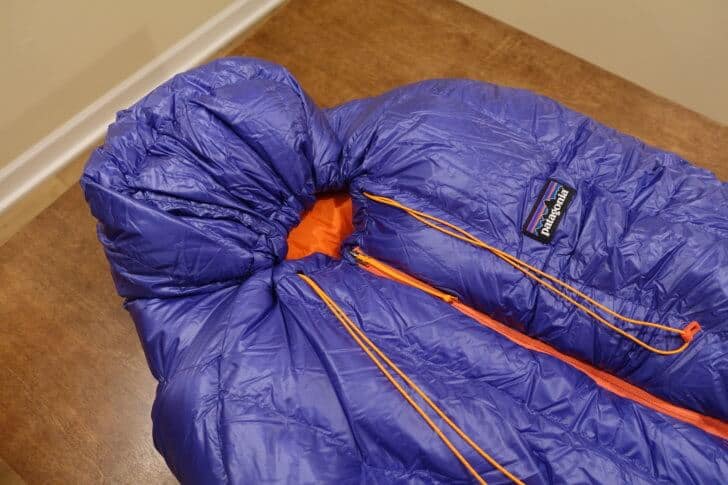
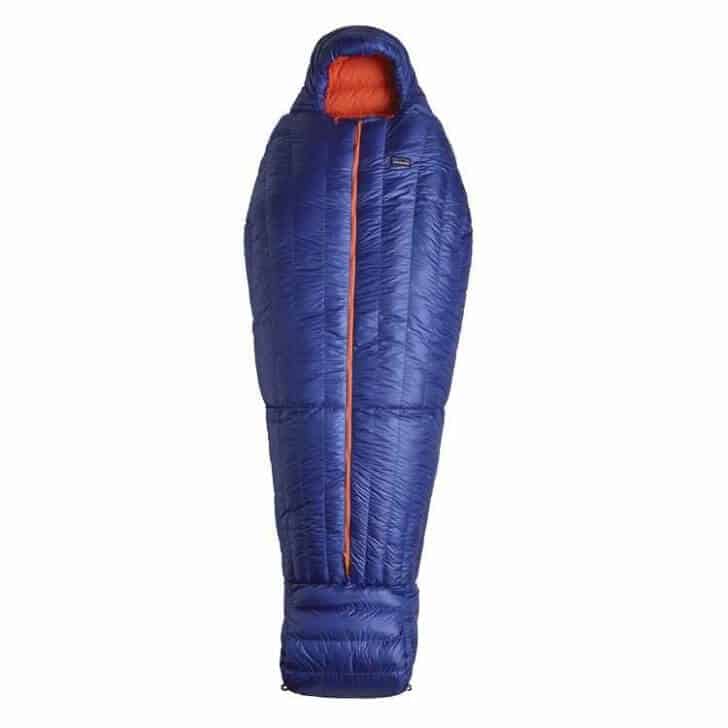
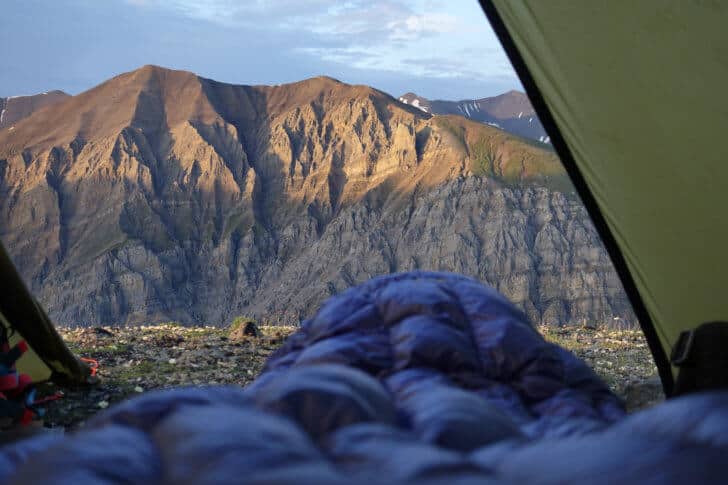
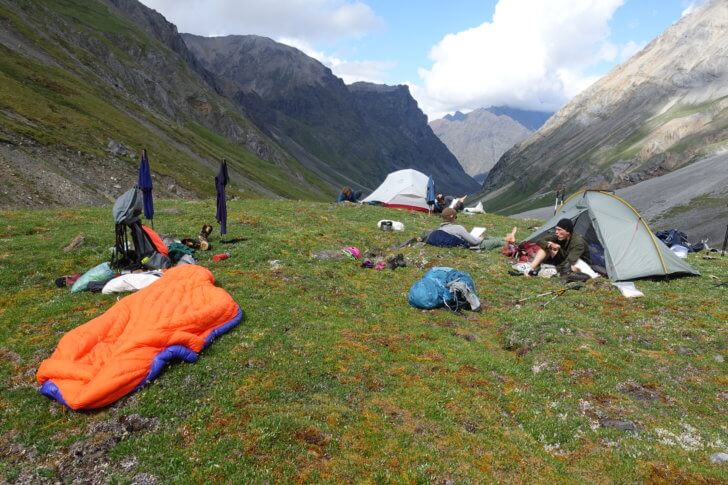

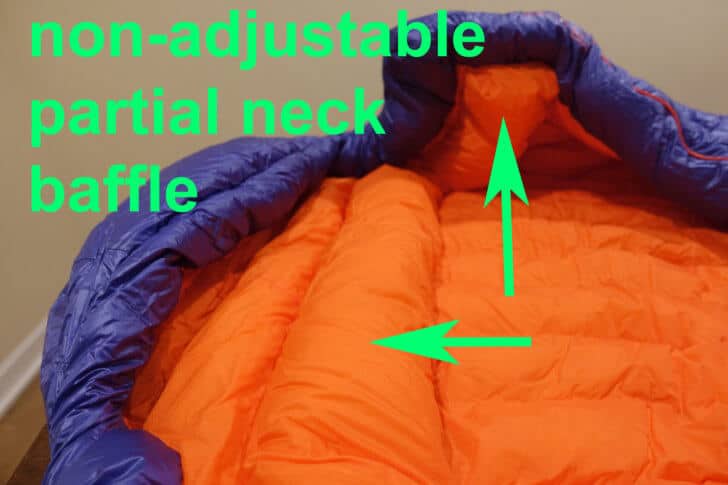
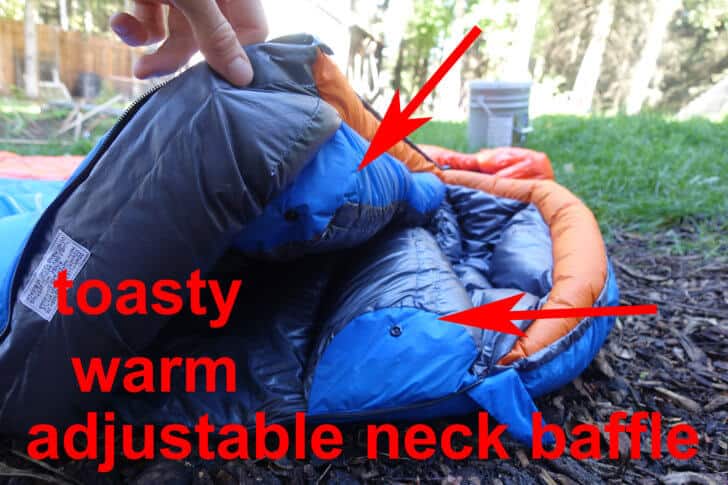
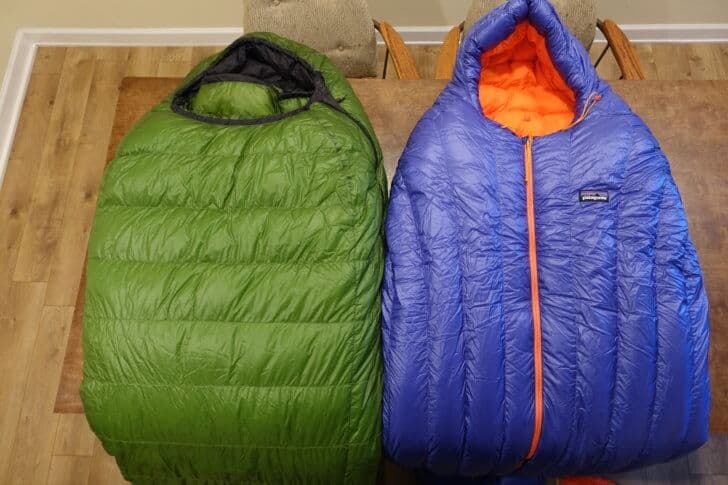
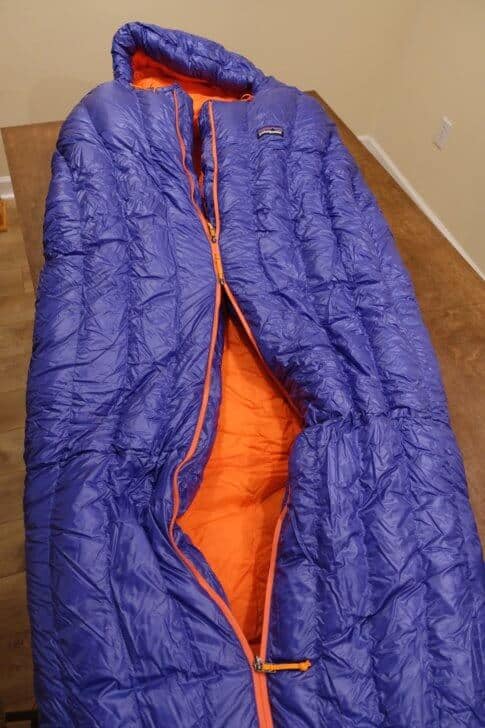
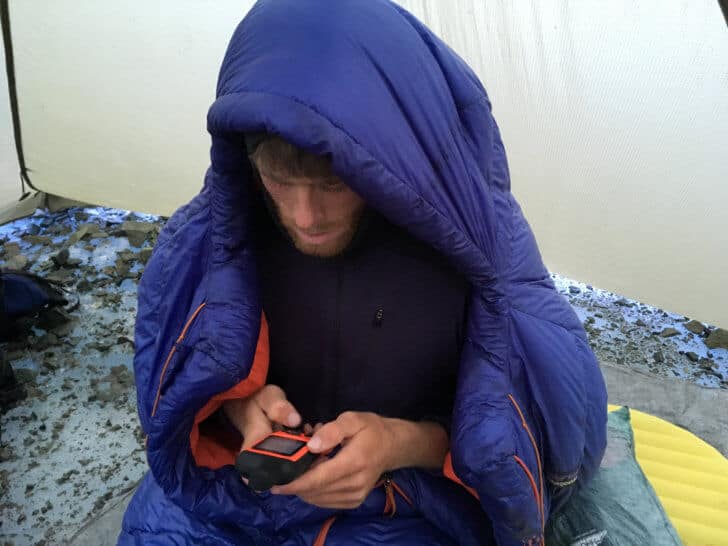
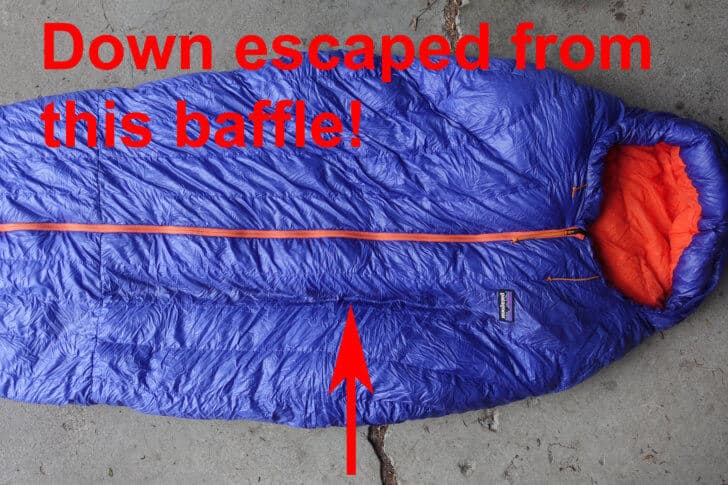
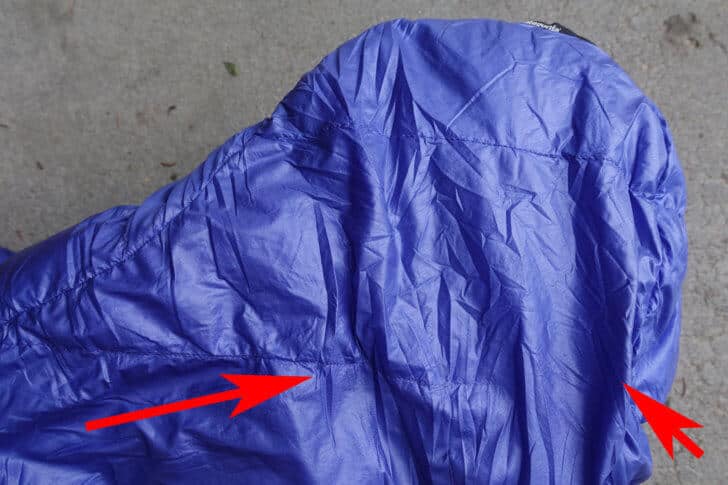

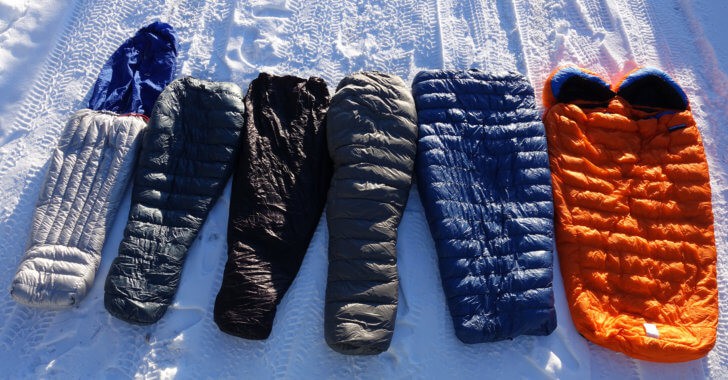
 Recommended: I do recommend the Patagonia 19 Degree bag if one or more of the following is true: (1) you have a large torso; (2) you want a bag with extra space for more comfort: (3) you are an alpinist and intend to sleep with your climbing boots on inside the sleeping bag; (4) you are looking to purchase one mummy bag that’s large enough to wear insulated pants and a down parka, and store other winter essentials (e.g. water bottle, fuel canister, gloves, etc.); (5) you want the most comfortable bag for sleeping naked; (6) you want a highly versatile and comfortable bag suitable for a wide range of activities that include car camping and base camping.


 Summary: In this episode, we dive into the design, manufacturing, and applications of Dyneema Composite Fabrics. We interview Wes Hatcher, Applications Manager for DSM Dyneema, along with cottage ultralight backpacking company founders Graham Williams (CiloGear), Mike St. Pierre (Hyperlite Mountain Gear), Joe Valesko (ZPacks), Henry Shires (Tarptent), and Glen Van Peski (Gossamer Gear) and discuss the relevance of Dyneema Composite Fabrics for apparel, shelters, backpacks, and more.




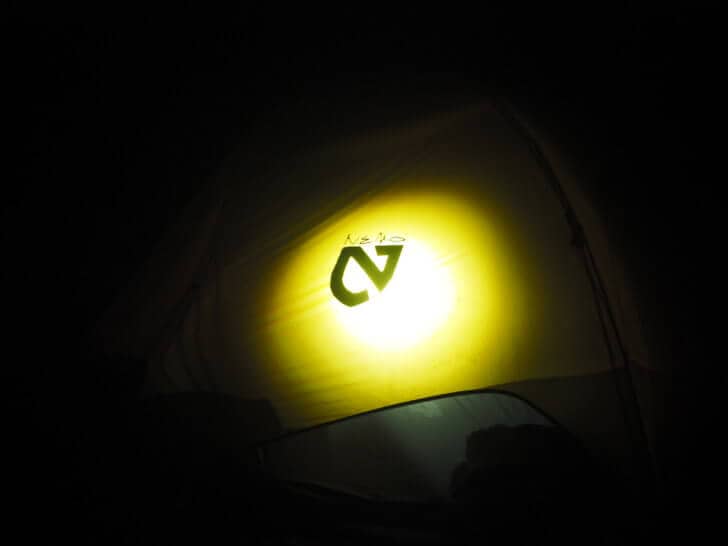 As wet and cold as the Pacheedaht campground was, my Above: Nemo Equipment Blaze 2P tent was warm and dry after sitting out in the sustained rain for several hours.
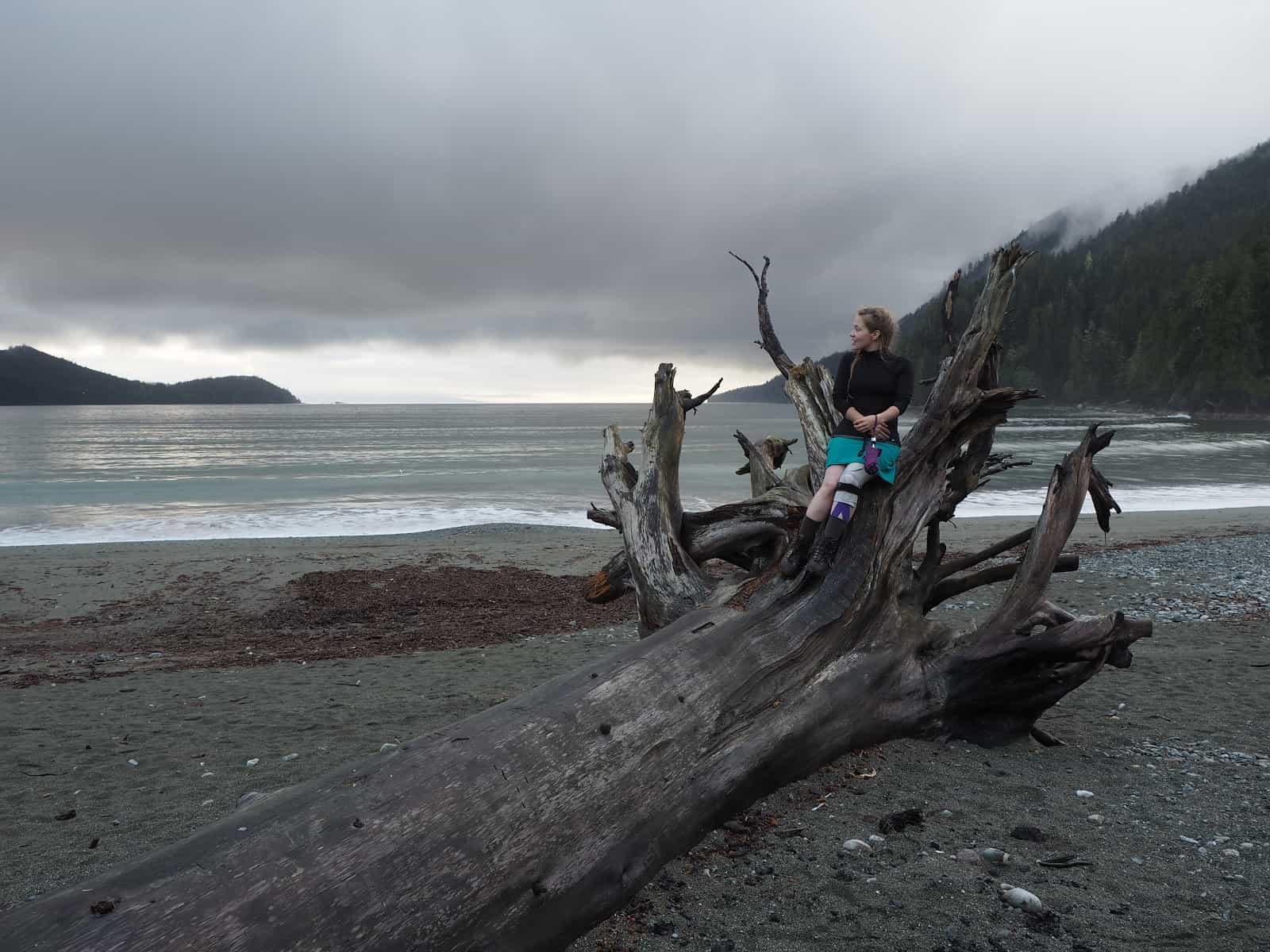
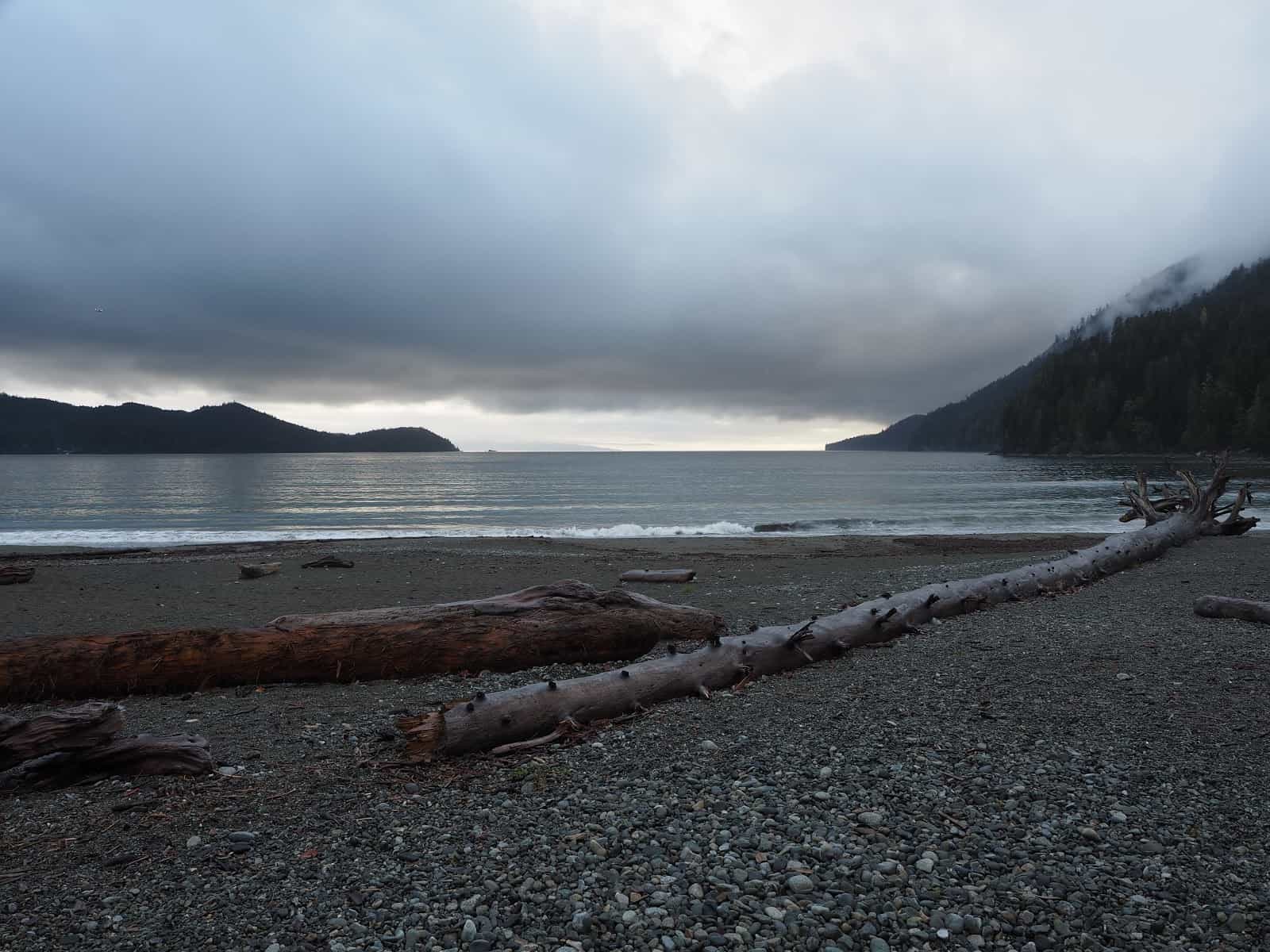 Above: I collapse my tent, pack up my gear and take a short walk up the beach. This place is as beautiful as I left it ten years ago; perhaps even more beautiful. Years of experience make me crave the simplicity of this place often. For a decade, this place, these beaches, have been the quiet place my mind’s eye goes to for an anchor.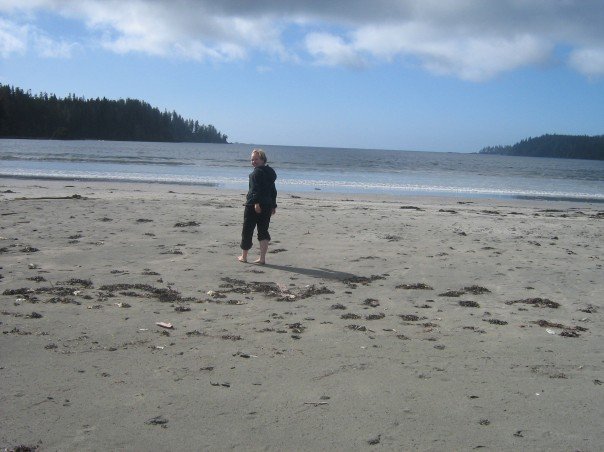








 Summary: