This Patagonia Nano Air Light Hoody Review takes an first look at a lighter iteration in the popular apparel category of “active insulation”.
Introduction
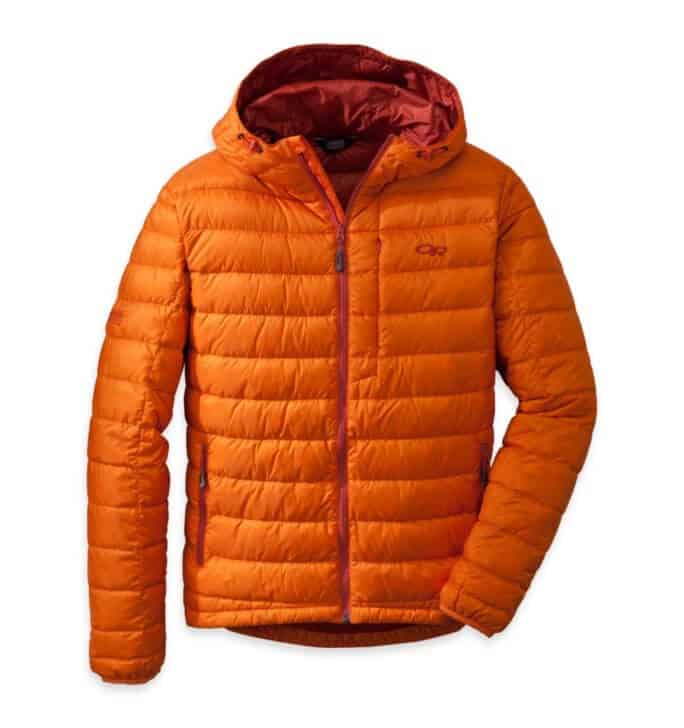
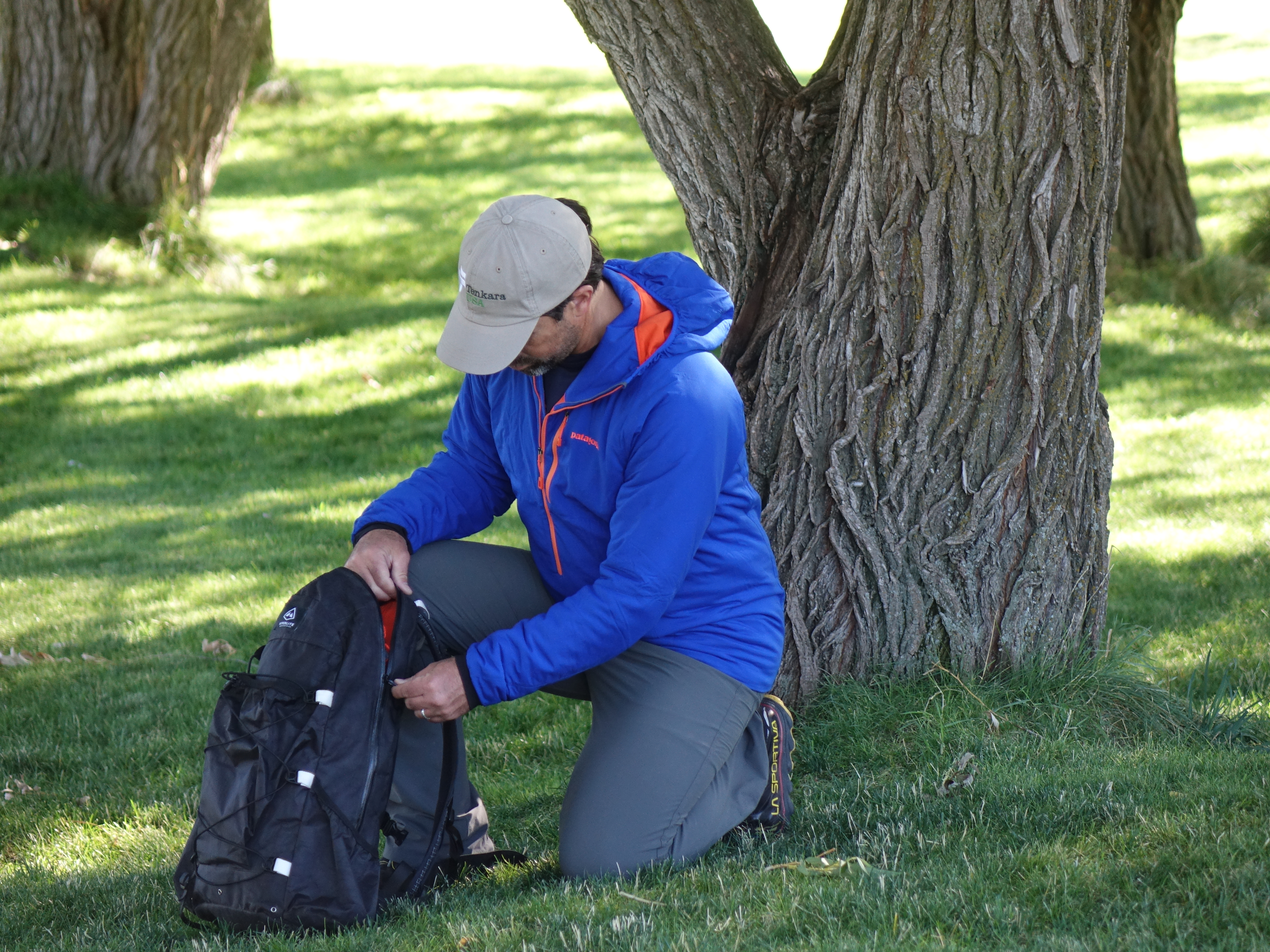
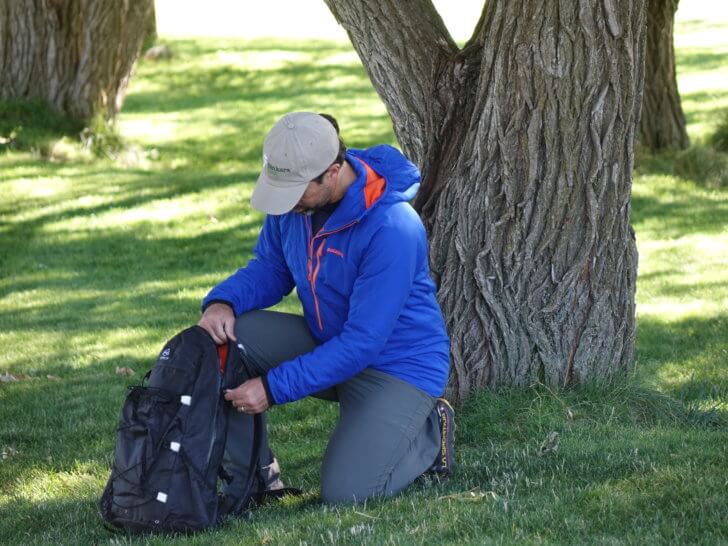
With a slim fit and mechanical stretch, highly breathable construction, a weight of only 10.2 oz (measured), and just enough insulation for stop-and-go backpacking in cold conditions, the Patagonia Nano Air Light Hoody could very well occupy a permanent space in my apparel closet. Photo: Stephanie Jordan
This Patagonia Nano Air Light Hoody Review takes a first look at a new product: a lighter iteration in the increasingly popular apparel category of “active insulation”.
These garments are insulated (usually with a synthetic fill). Instead of the insulation being sandwiched between layers of tightly woven (and often calendared) fabrics that enhance water resistance (but limit breathability), active insulation garments are shelled and lined with soft, stretchy woven fabrics that have very high levels of air permeability.
The Patagonia Nano Air Light Hoody is currently among the lightest of these garments, owing to its light insulation, light fabrics, and simple design – a pullover style with partial front zip, hood, one pocket, and no cuff or hem adjustments.
Applications
Stop-and-go hiking at low-to-moderate levels of exertion in cold temperatures (e.g., fall/winter);
Warm-up layer for hiking in the early mornings or when the temperatures dip for evening trekking;
Light insulation layer under a shell for inactivity in typical two-to-three season conditions.
Features
Slim, athletic fit;
Minimal seams;
Stretch fabric at wrist cuffs for snug but comfortable fit;
Stretchy hood design can be pulled on or off without unzipping;
Deep front zipper for ventilation;
Single zippered chest pocket (exterior, left side);
Hood fit for a normal head, not a helmet-clad head.
Insulation: 40 g/m2 synthetic fill with mechanical stretch;
Air permeability: 70 ft3/min;
Front zipper length: 18 in. (size M);
Claimed Weight: 10.9 oz (manufacturer’s spec for size M);
Measured Weight: 10.2 oz (size M)
Patagonia Nano Air Light Hoody Review: Commentary
I’ve experimented with several other “active insulation” pieces in the 13 to 17 oz weight range from Patagonia, Arc’Teryx, and Stio. I find them too warm to hike in for most backpacking conditions, even in the winter. But with the introduction of the Patagonia Nano Air Light Hoody, so-called “active insulation” tops are now in a similar weight class as hooded 50-100 weight fleece and ultralight, sewn-through-baffled down tops.
This may complicate gear selection for some, but those who spend a fair bit of time wearing a lightly insulated garment while trekking in cool and cold conditions should start paying attention to this category.
With a warmth-to-weight ratio higher than fleece, water-resistance that is markedly better than down, and a next-to-skin feel that is better than both, the Patagonia Nano Air Light Hoody could very well become a useful component in a lightweight backpacking clothing layering system.
This video captures my thoughts on the role of a lightweight active insulation piece in a backpacker’s clothing system:
While I think the Patagonia Nano Air Light Hoody would be a suitable primary insulation layer in summer conditions, I think its real strength is revealed as one of two insulating components for colder and/or inclement conditions trekking. One insulating layer would be optimized as an active layer while moving (i.e., the Patagonia Nano Air Light Hoody), and the other layer would be optimized for a maximum warmth-to-weight ratio (i.e., a high-fill down jacket). I plan to incorporate the Patagonia Nano Air Light Hoody into a four-piece torso layering system (where the Patagonia Nano-Air Hoody would effectively replace a 4 oz wind shirt) this fall as follows:
Base Layer: Patagonia Merino 2 wool long sleeve crew (6.0 oz)
Camp Insulation: Western Mountaineering Flight Down Vest (5 oz).
Of course, I think there is potential to incorporate an active insulation piece like the Patagonia Nano Air Light Hoody into a variety of different layering systems, and I’m looking forward to experimenting with it throughout the winter.
Strengths
Lack of seams (creates a simple aesthetic, fewer failure points, and less binding, since seams don’t stretch);
Mechanical stretch (allows for a slimmer design, less weight, and more comfort during active movement);
Very lightweight considering its insulative value and wet weather resistance;
Very high air permeability means that it can be used under a wider range of exertion levels, including cool-weather hiking, than synthetic or down insulating garments shelled and lined with tightly-woven nylon fabrics.
Provides “insulated wind shirt” performance, similar to a wind shirt + fleece (e.g., “Pertex-and-Pile”) system, but with higher air permeability (system breathability).
Limitations
High air permeability means that it must be coupled with a tightly woven shell garment (e.g., wind shirt or rain jacket) for extreme cold and wind.
Slim fit may require upsizing for those with “bolder” (!) body types.
Synthetic insulation not as durable over the long term as an similar wind shirt + fleece system.
Learn More
More Info: More information about the Patagonia Nano Air Light Hoody is currently available at the Patagonia website. Also, stay tuned for a more in-depth review here at Backpacking Light.
Similar To: If you are looking for the slightly heavier full-zip version of this jacket, try the highly-rated Patagonia Nano Air Hoody, available from REI.com or Patagonia.com. This version would be more suitable for colder winter conditions, as a primary insulation piece for three-season conditions in the mountains, or for hikers who run colder and have a more difficult time staying warm.
Disclosure: The manufacturer provided a sample of this product to the author with no agreement, requirement, or obligation for media coverage of any kind. Thinking about buying this gear? You can support Backpacking Light in the process: if you click on the link to this product and make a purchase at the retailer website, the retailer will contribute a portion of the sale to help support Backpacking Light. It doesn’t increase your cost, and it helps us maintain our site, fund content development, and grow member services! Thanks!
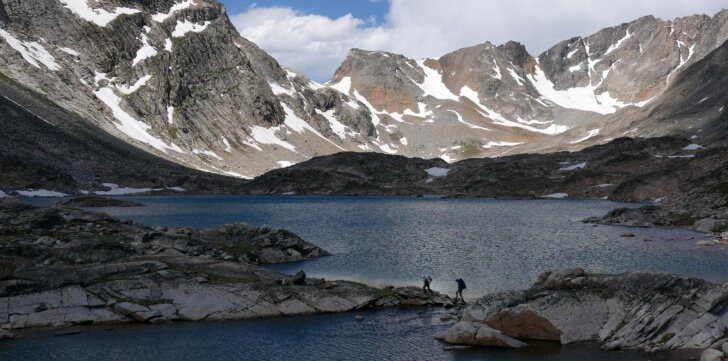
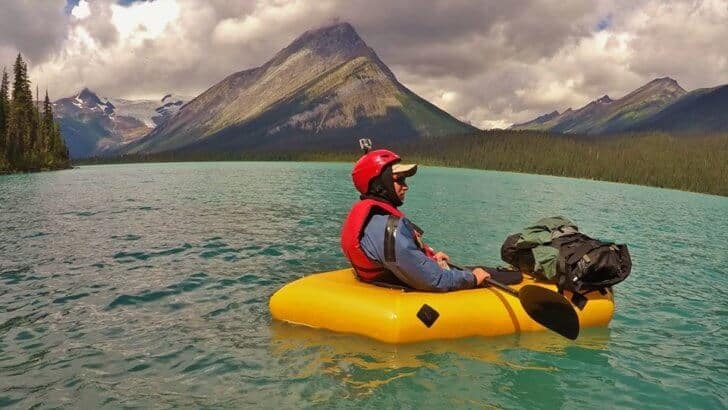
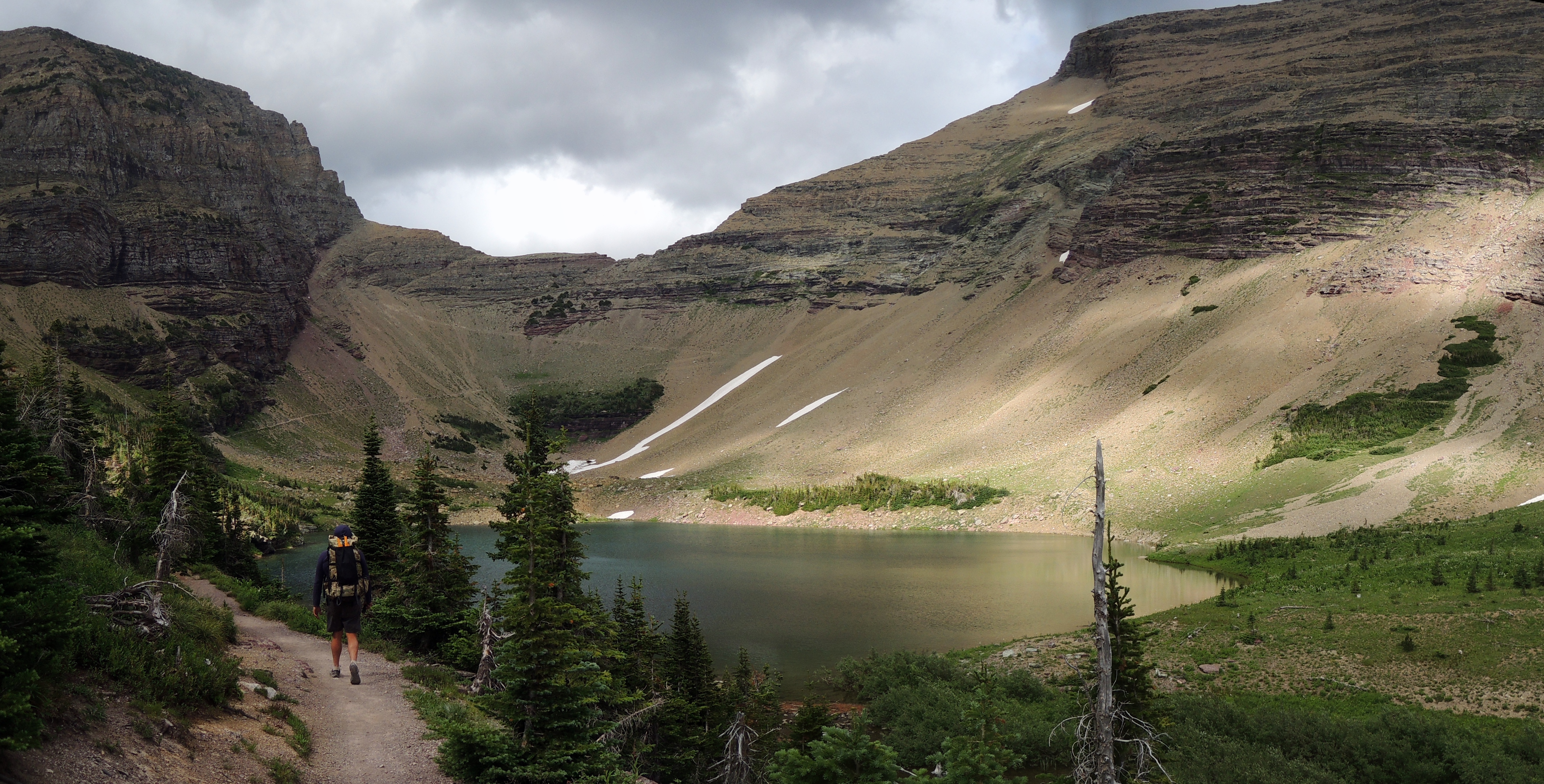
Luke Schmidt tests his wilderness skills with a Glacier National Park packrafting trip over Ptarmigan Pass and down the Belly River. He shares photos from the trip and the gear he used.
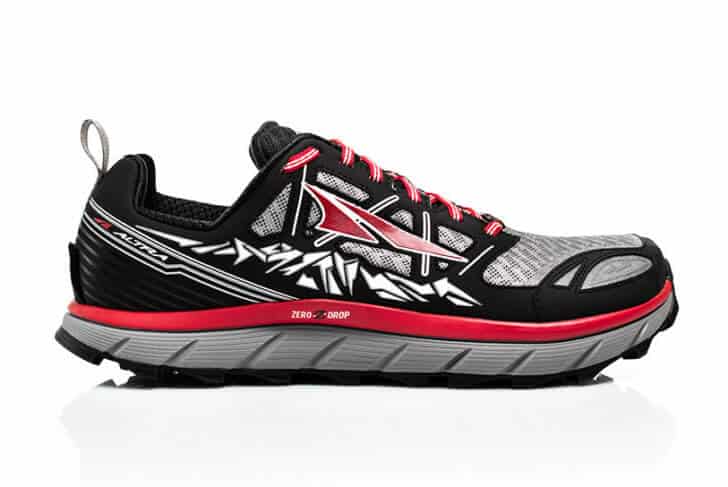
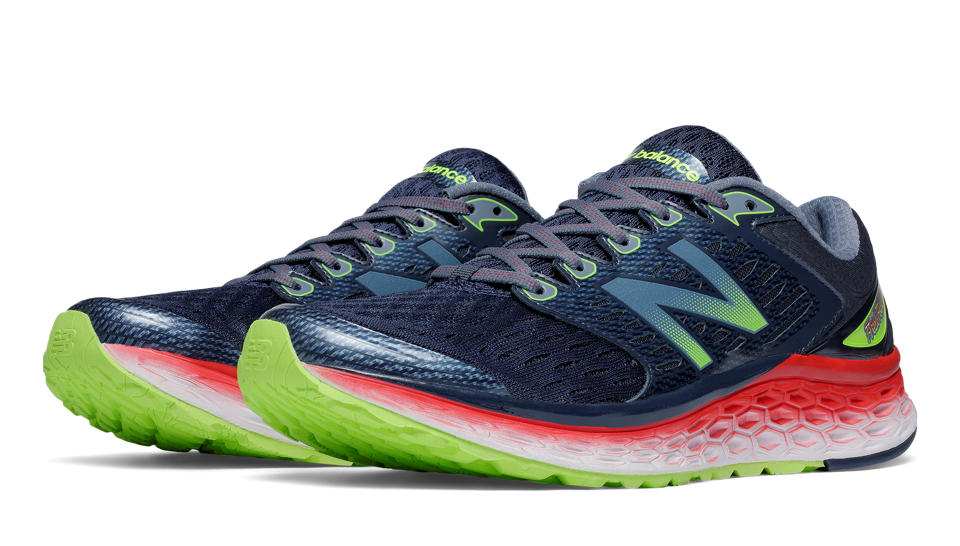
The newly released New Balance 1080v5 shoes have “fresh foam” technology to minimize running wear on the body without compromising stability.
Introduction
The New Balance Fresh Foam 1080v5 running shoes are a cautious New Balance venture in running shoes with a slightly softer sole. They have not gone as far as another well-known shoe company went some time ago with gel soles and air cushioning, which is just as well. That crazy marketing idea resulted in too many sprained and torn ankles (and probably worse), due to a complete lack of proprioceptive feedback (i.e., you could not feel the ground). The New Balance 1080v5 shoes with their, “Fresh Foam” technology have just enough cushioning at the heel to remove that pounding heel strike shock you get when running on hard surfaces while leaving your feet fully aware of the surface you are running on.
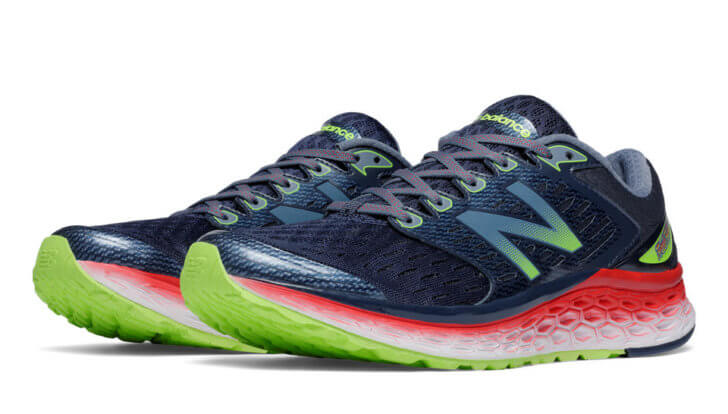
A brand new pair of NB 1080s, photo courtesy New Balance.You can see what looks like slightly thicker foam at the heel in this (stock) photo.
What is this “Fresh Foam” anyhow? New Balance claims it’s “designed for serious lasting power, it’s our most substantial Fresh Foam cushioning execution yet.” Perhaps, they heard that customers were complaining that the typical foam sole tends to break down far too quickly leaving an intact upper and a compressed and uncomfortable footbed.
Features
Obviously, the thicker foam at the heel
Wide sole at the front, to give good stability
Mesh upper for good breathing (and the usual “engineering” claims)
Sizes apparently go from a small 7 to a huge 16
Wide fittings: they seem to come in B, D, 2E and 4E, although what are actually in stock may be different (4E was greyed out, but they sent us 4E)
Weight 295 g or 10.4 oz
Long shoe laces
Version 5, so a fairly popular and evolved design
Price from New Balance: US $150
Specifications
(Direct quote from New Balance website, using their terminology. Some of this may not mean much to you or me).
8 mm [.31 in.] drop: due to variances created during the development and manufacturing processes, all references to 8 mm drop are approximate
Blown rubber outsole
Bootie construction
Engineered mesh
Ortholite® foam insert delivers long term comfort, breathability, and anti-microbial function to fight odor.
Synthetic/mesh upper
New Balance 1080v5 Review Performance
Field Testing
We received two pairs of the New Balance 1080v5 running shoe in Men’s size 10 width 4E, for Sue and myself. (Sue gave up on those weird “Womens sizes” decades ago to avoid suffering). We have been wearing the NB Leadville V2 shoes for our morning runs, so we switched to these for comparison. Our run is about 8 km (5 mi.) long; it starts on asphalt but soon turns into a mixture of ironstone rock, pebbles, and sand. The edge of the (country) road is a bit rough; the surface of the dirt track has plenty of sticks and stones to keep our attention. We also traversed some pebble-covered hills which require care in both directions.
Performance Summary
The first thing we checked was the width: we will not bother testing shoes which are not wide enough. Yep, the 4E label was fine.
The next thing we checked was the insole: it was fairly flat. Fortunately, New Balance never really went in for the mad “arch support” craze promoted by another well-known shoe company, and we are all very grateful for that. And the shoe does not do “pronation control” either: same comments.
Then we looked at the sole. It has lots of small lugs, more shallow and more closely spaced than the Vibram soles on the Leadvilles, and this sole lacks the significant edge of hard lugs the Leadvilles have. New Balance designed the Leadvilles for high mountain racing, while New Balance designed these more for road running.
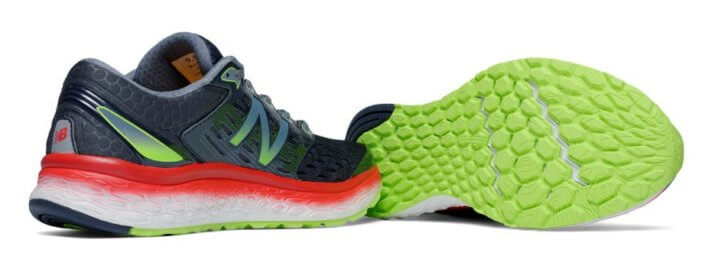
We noted that this sole accommodates considerable flex under the ball of the foot, which suits running. You can see the gap between the lugs in the second photo.
Then we tried walking around in them. Oh yes, indeed: we could feel the softer heel strike immediately. Frankly, both of us thought that was rather nice. But it was also quickly obvious that the flared sole at the front of the foot was giving very good stability, despite the softish heel. In this area, we were both happy with the trade-off.
It’s a small point, but I noticed that (at long last!) the laces are long enough even when you use all the holes in the lacing.
So then we took them running. It did seem at first that the size 10 was running a shade large, as I had some heel lift at the start. Sue was aware of this as well but was not concerned. I used the final lacing hole and tightened up the top end of the lacing ever so slightly over the next few days, and any heel lift is now “not noticed.”
Both of us pushed the shoes around a bit while running for the first few days, especially on the rougher parts of the track. They handled the lumps, bumps, and rocks very well.
The mesh top breathes, flexes, and lets in water from wet grass. But that is much better than any so-called waterproof/breathable membrane lining and “prune feet.”
New Balance 1080v5 Review Summary
The softer heel strike is nice, while the front of the sole is thinner for good proprioception and plenty wide enough for stability. Feedback from ground to brain is good. The road traction is fine in both wet and dry conditions, and the fit (for us) was good. The shoes are quite light too. We don’t really have any criticisms at this stage.
Recommendations
The New Balance 1080v5 running shoes are good for running on moderately uniform surfaces, and reasonable trails. I would not use them for mountain running on really harsh terrain, but they are not meant for that. Just make sure the shoes you buy are wide enough for your feet (and wear some nice thick wool socks).
Buy Online
Disclosure: some of the links below may be affiliate links, which means if you place an order at one of these retailers, we receive a small commission on this sale. This helps support Backpacking Light, thank you!
[insert_php]
$affiliate_id = 152258;
$strUrl = ‘http://classic.avantlink.com/api.php’;
$strUrl .= “?affiliate_id=$affiliate_id”;
$strUrl .= “&module=ProductSearch”;
$strUrl .= “&output=” . urlencode(‘html’);
$strUrl .= “&website_id=189374”;
$strUrl .= “&search_term=” . urlencode(‘New Balance 1080’);
$strUrl .= “&search_results_layout=” . urlencode(‘list’);
$strUrl .= “&search_results_fields=” . urlencode(‘Merchant Name|Thumbnail Image|Product Name’);
$strUrl .= “&search_results_count=3”;
$strApiResponse = file_get_contents($strUrl);
$strHtml = <<<END
Time to celebrate the beauty found at the integration of wilderness, photography, and lightweight human-powered travel! Submit your favorite wilderness photo and win a free trek with Backpacking Light in Montana!
Wilderness Adventures Photo Contest
Time to celebrate the beauty found at the integration of wilderness, photography, and lightweight human-powered travel – the theme for this wilderness photo contest is simple:
Photo Contest Theme: Wilderness Adventure!
Submit your favorite wilderness adventure photo and win a free trek with Backpacking Light in Montana!
How to Enter:
Post your favorite wilderness adventure photo to this forum thread, Instagram, Twitter, or Facebook (or all of them!). Important:make sure your social media posts are set to “Public” viewing. Posts to private accounts / private viewing won’t be considered.
Your post should include a short caption/story about the photo, with the following hashtags: #backpackinglight #bplphotocontest #wilderness.
Deadline is August 20.
By Entering, You Agree That:
You retain copyright to your photography.
You grant Backpacking Light the non-exclusive right to use your photo (with attribution) in social media posts/re-posts, at backpackinglight.com, or other online or print media for the purpose of promoting wilderness travel, lightweight backpacking, this photo contest, or other related activities.
Prizes:
Winners will be selected by our staff, and will consider the quality of the photo, the presence the hashtags, and the story told by the caption.
Grand Prize: FREE ENROLLMENT in a 2016 Wilderness Adventures Trek of your choice + Unlimited Lifetime Membership to Backpackinglight.com
Runners-Up: 50% Enrollment Discount in a 2016 Wilderness Adventures Trek of Your Choice + Unlimited Lifetime Membership to Backpackinglight.com
Hey, and here’s a cool thing: prizes are transferable, so if you can’t make a trip, send a pal, or your mom!
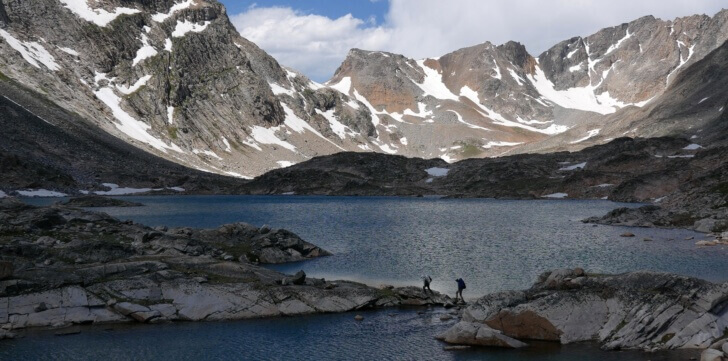
Two youth members of BSA Venturing Crew One, rock-hopping across a granite peninsula between two of the Sky Top Lakes, Absaroka-Beartooth Wilderness, Montana, with the South Face of the Montana High Point, Granite Peak (12,808”) in the background – #backpackinglight #wilderness #bplphotocontestThe North Face of Whitetail Peak, one of the most dramatic alpine faces in Montana’s Beartooth Range. Split by the 3,000-foot couloir, the North Face is considered one of Montana’s premiere mountaineering – and extreme skiing – objectives. Backpacking Light’s Ryan Jordan and Alan Dixon climbed this couloir as a test of lightweight wilderness travel and mountaineering techniques more than 10 years ago – #backpackinglight #wilderness #bplphotocontest
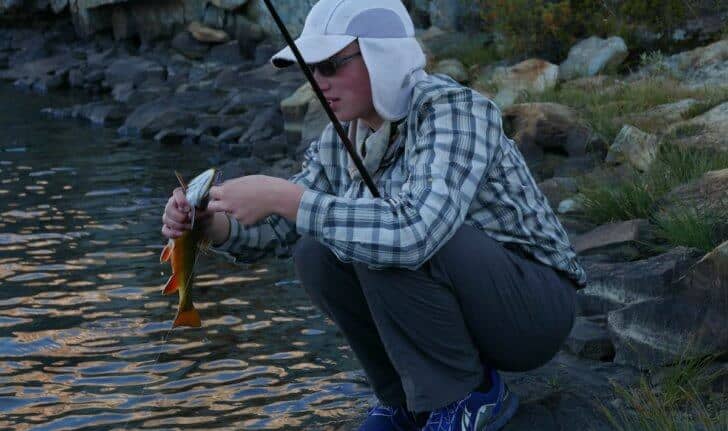
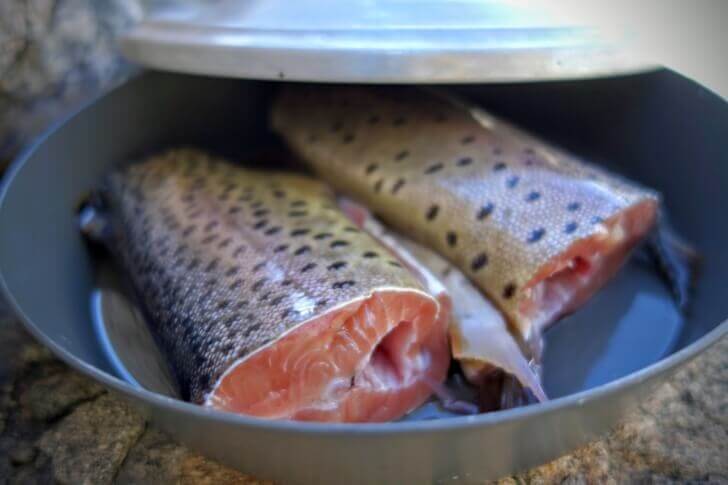
Getting ready to pan-fry some beautiful Yellowstone Cutthroat trout harvested from an alpine lake in Montana’s Absaroka-Beartooth Wilderness in a Banks Alpine Fry Bake – #backpackinglight #wilderness #bplphotocontest
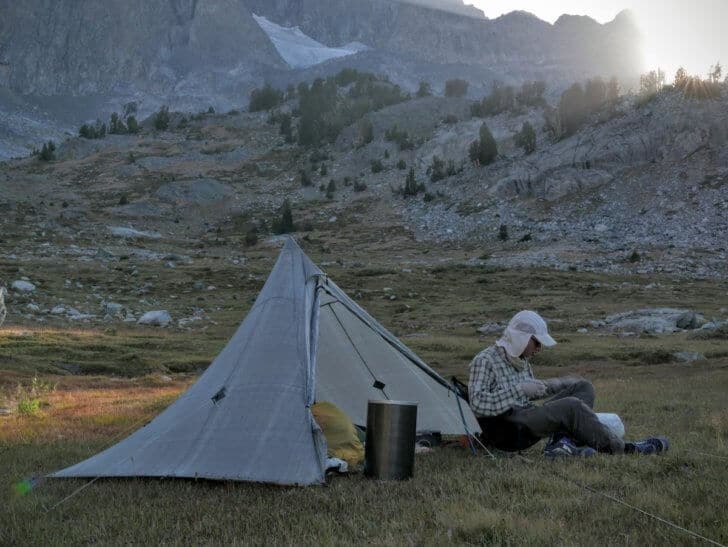
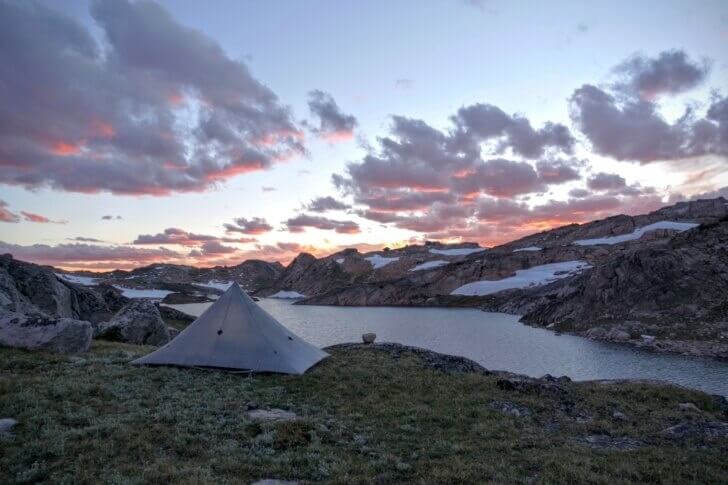
A Locus Gear Khufu CTF3 pitched on a tundra bench overlooking Maryott Lake in Montana’s Absaroka-Beartooth Wilderness – #backpackinglight #wilderness #bplphotocontest
SPOT Gen3 provides location-based messaging and emergency notification technology that allows you to communicate from remote locations around the globe. It offers custom tracking interval options, motion-activated tracking, long-life battery and more. Learn how one hiker used his SPOT Gen3 in a life-saving rescue involving another hiker with a heart condition.
SPOT Gen3 provides location-based messaging and emergency notification technology that allows you to communicate from remote locations around the globe. It offers custom tracking interval options, motion-activated tracking, long-life battery and more.
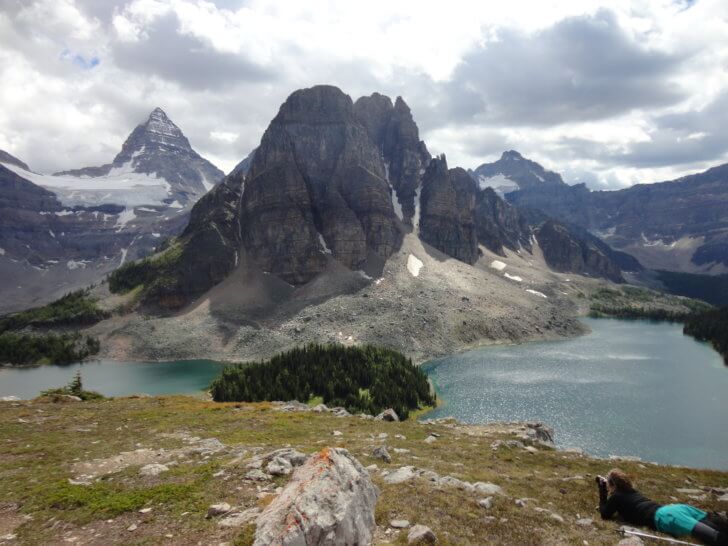
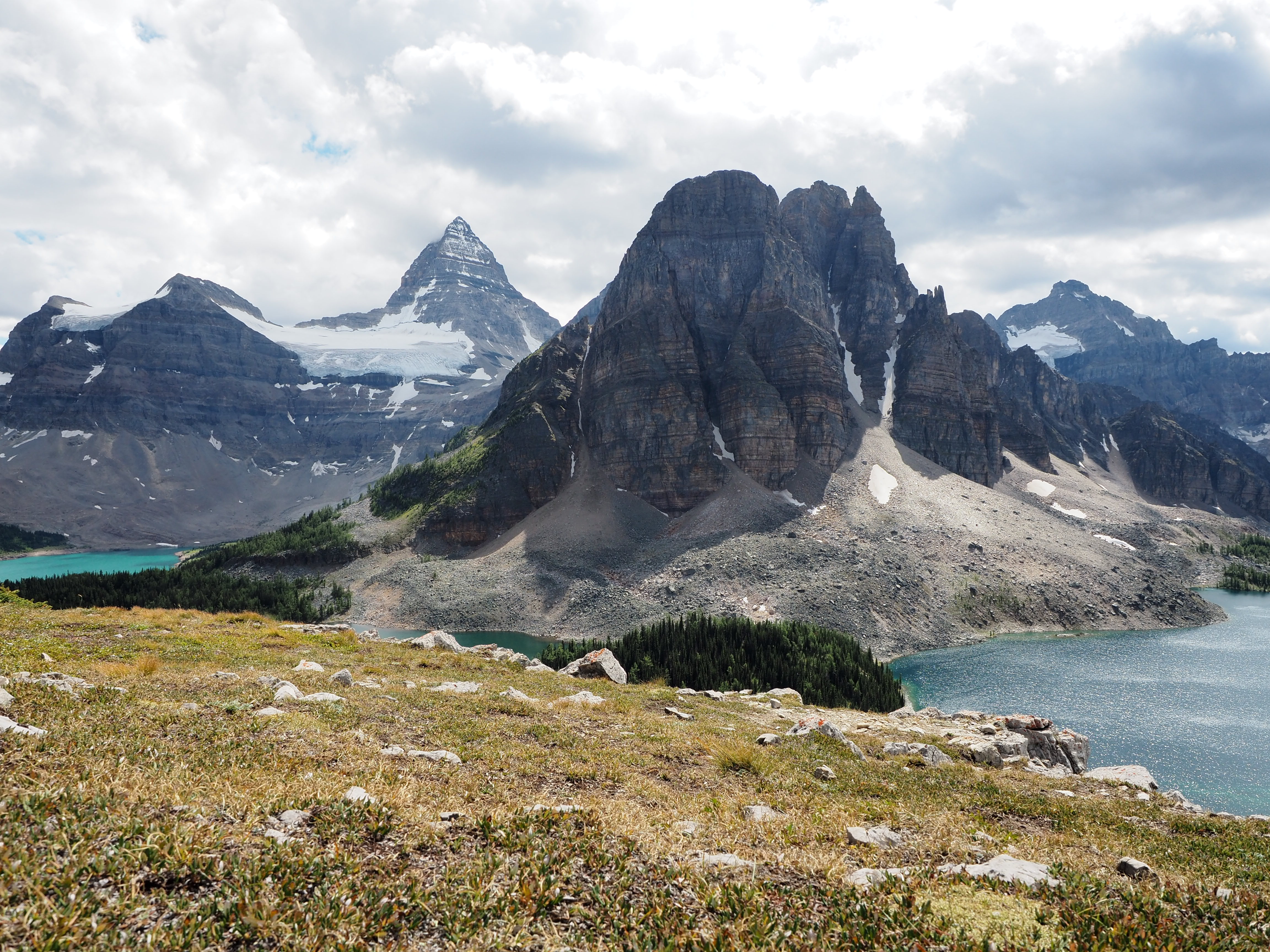
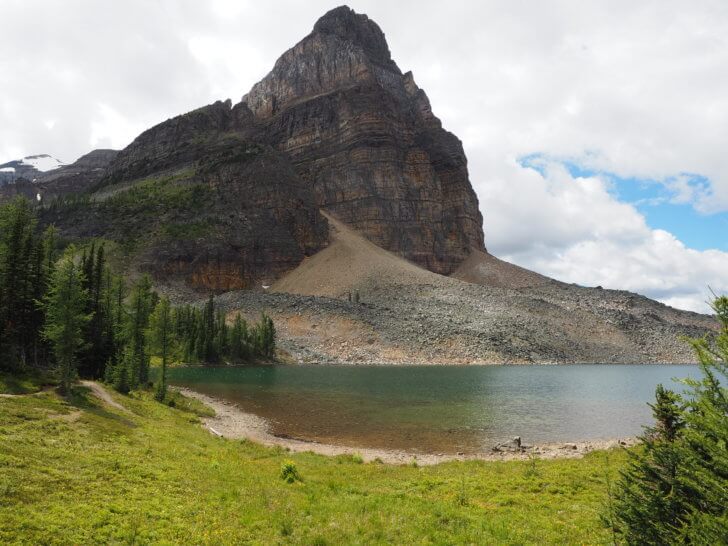
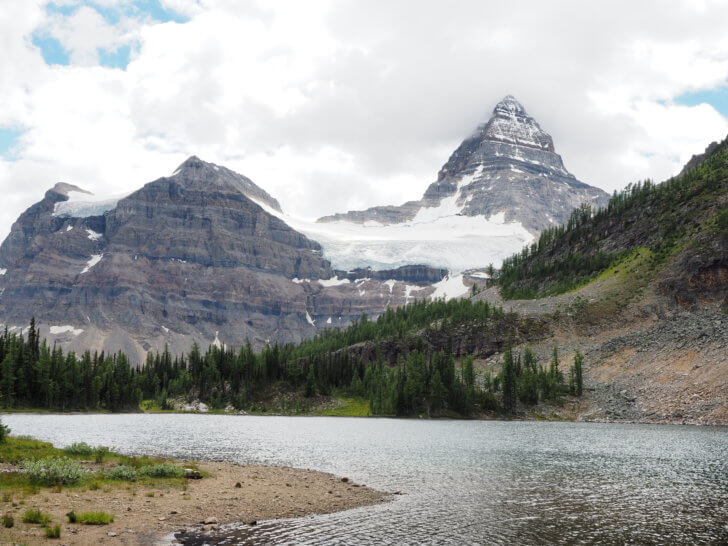
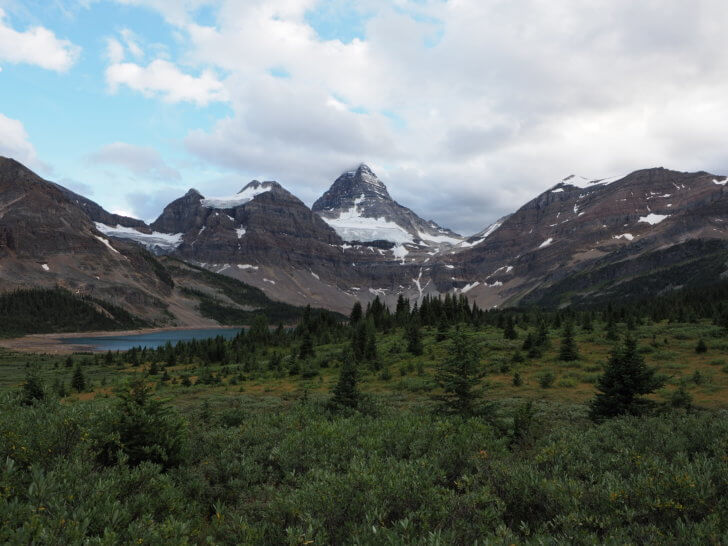
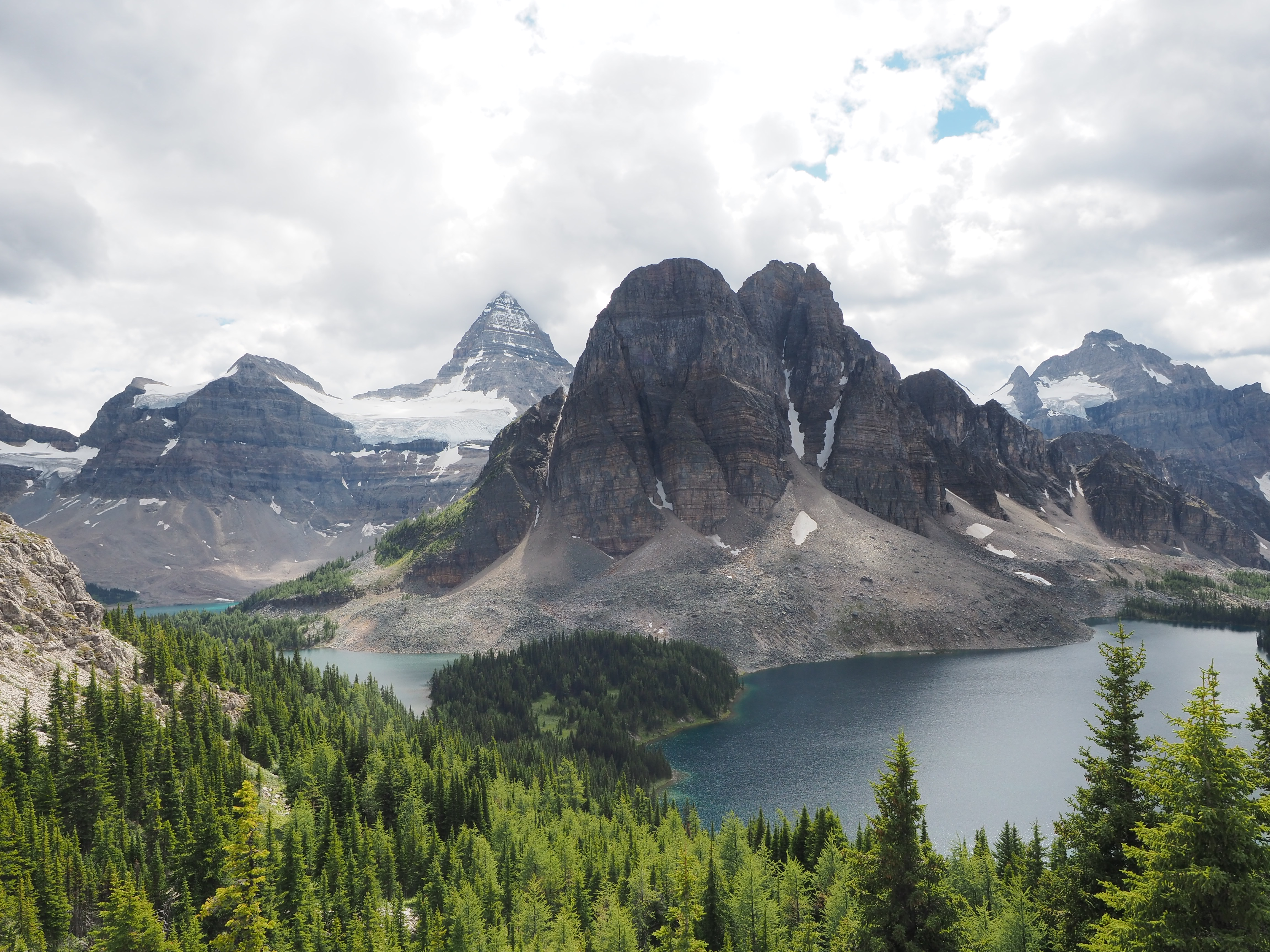
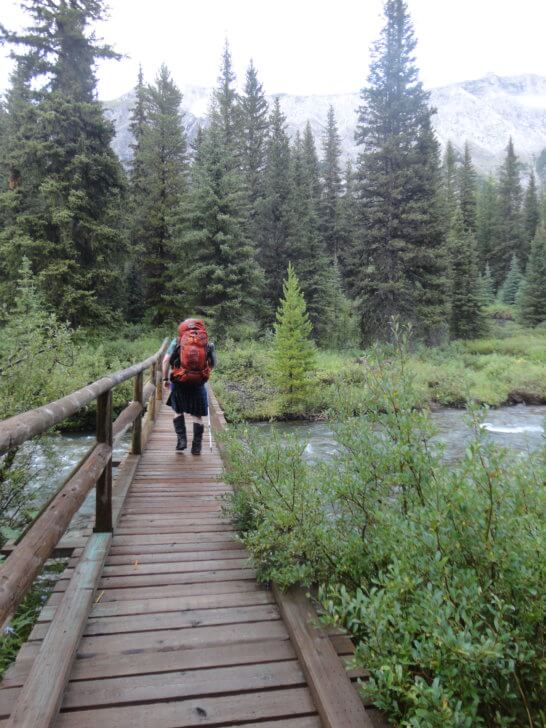
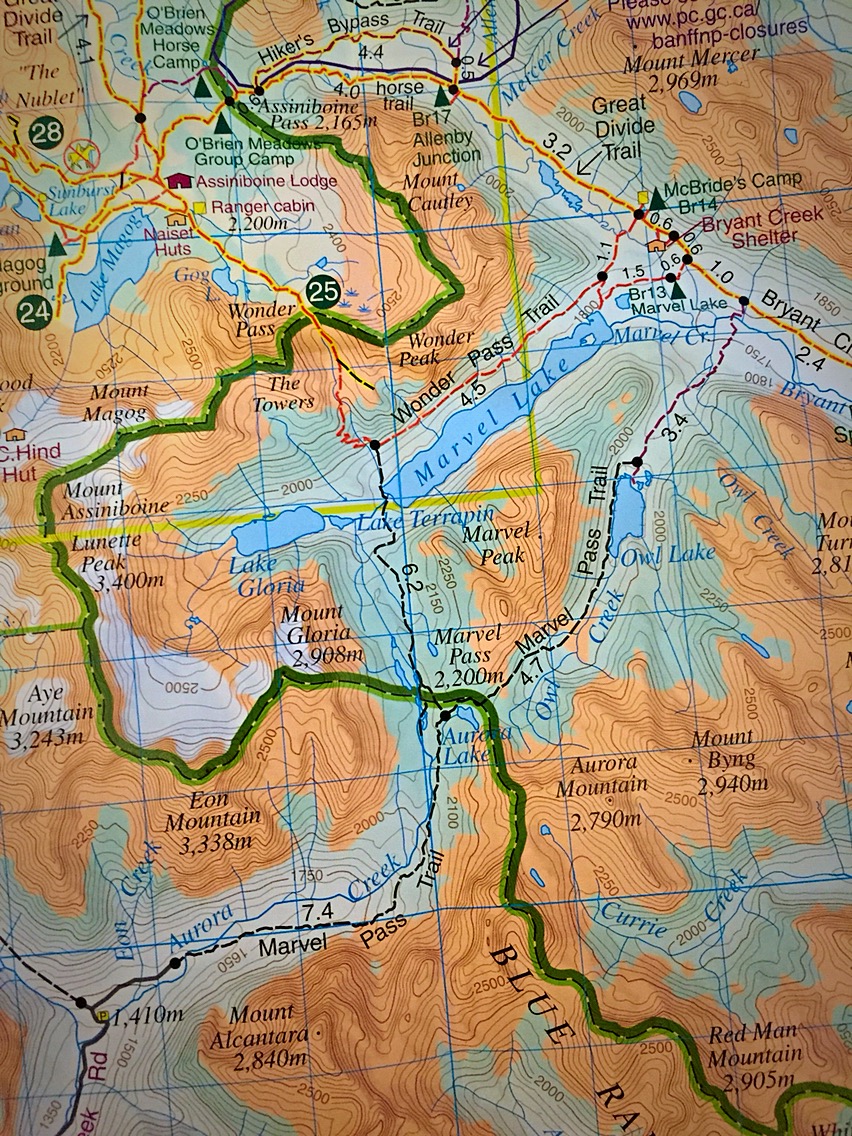
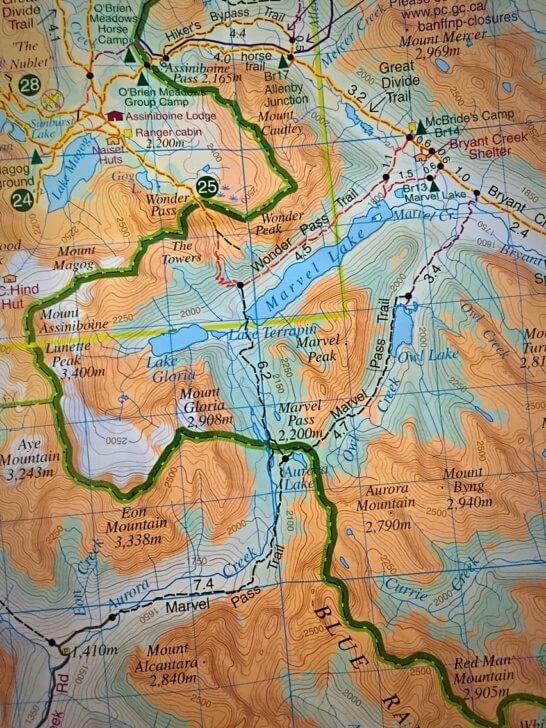
Backpacking Light staff editor Emylene VanderVelden just embarked today on a journey in the Mount Assiniboine area of the Canadian Rockies, and you can track her progress on a map here.
The SPOT is a popular device carried by solo and ultralight backpackers, and many of our readers believe it to be worth the weight (4 oz with batteries). Backpacking Light has reviewed the SPOT since it’s launch at an Outdoor Retailer Show more than a decade ago. Each generation improves and becomes more compact, more accurate, and more functional than the last.
For the purpose of this article, we are highlighting a backcountry rescue story that was initiated by a SPOT device.
An Interview with Han Strating
Can you give us a brief bio about yourself? Where is home?
I’m 37 years old and I live In Sydney, Australia. I enjoy outdoor activities including bushwalking, backpacking, bike packing and mountain bike endurance racing. I also enjoy traveling which works out quite well.
Can you tell us a little bit about your past experience in the outdoors (in general) and backpacking (specifically)?
I have been mountain biking for nearly 20 years and I’ve started bushwalking and backpacking when I moved to Sydney about 6 years ago. About 4 years ago, I also added bike packing to the list – I need more free time! In terms of backpacking I usually do 2-day trips during the weekend and I have done one longer trip in Tasmania; the Overland track.
Where are your favorite areas to go backpacking? What do you like about them the most?
In my free time you can usually find me in one of many National Parks near Sydney; the Blue Mountains, Royal National Park and Ku-ring-gai Chase National Park, etc. But my favorite so far is definitely the Overland track in Tasmania. Next trips on the to-do list are Laugavugar (Iceland August 2016) and a Manaslu trek (October 2017).
What are the main hazards and risks of backpacking in these areas?
To me the most important thing with backpacking is to make sure I don’t hurt myself. I have fairly weak ankles and knees which is always on my mind whatever trip I am on. I don’t care if you think I look stupid when I’m using trekking poles. In terms of local hazards, there are numerous venomous snakes and spiders in Australia but again with a bit of caution you’ll be just fine.
Tell us about the events leading up to the rescue incident and subsequent rescue?
I was walking the overland track in Tasmania, Australia with my girlfriend. This is advertised as a 6-day hike with a few potential side tours; we added an extra leg and ended up making it a 7-day trip covering over 90 kilometers. We were about halfway on the track, near the New Pelion hut, when the emergency unfolded.
The rescue actually involved somebody else. There was a 36-year-old man from Queensland who was experiencing heart problems near the New Pelion hut. Luckily there was a nurse in the hut who was also walking the track. The nurse took care of all the first aid; all I did was push the S.O.S. button as I was the only one with a SEND (Satellite Emergency Notification Device). The Westpac rescue helicopter had to fly the patient and his wife to Hobart (the capital of Tasmania) hospital. It took about 2.5 hours after the signal got through before the chopper arrived. It was close to midnight on Christmas Eve. The patient has been thoroughly tested since and it turned out that one of the valves in his heart was leaking a little bit.
What went into the decision-making process that led to pressing the S.O.S. button on the SPOT device?
Again, I was quite lucky there was a nurse in the area and he was quite clear about this being an emergency. I fully trusted him in his professional judgment and went ahead and pressed the SOS button.
What were you feeling right before you made the final decision to press the S.O.S. button? Any despair, hopelessness, fear?
As previously mentioned, I fully trusted the nurse’s judgment. I didn’t really think too much about it before or after.
What were you feeling right after you pressed the button?
As I had never used the S.O.S. button before, I had no idea what to expect and how long it would take for anything to happen. One thing I do remember is that there was one genius who pitched his tent on the Heli platform. We told him to move his tent ASAP after I pressed the button.
What do you think you would you have done had you not been carrying a SPOT device?
Probably climb up Mount Ossa (highest mountain in Tasmania) and try and get some mobile phone reception. This would not have been fun as it was dark and it would have cost me at least 4 hours from where we were. Like I said without my SPOT, I don’t know if the man would have survived.
Disclaimer: This content is considered Sponsored Content and exists as a result of a paid placement or other type of exchange involving goods, services, or cash. As such, it has not been subject to the rigors of editorial review, and does not represent an endorsement of the advertised / sponsored product or service by Backpacking Light or its staff.
Best practices when trip planning includes: booking transportation, gear selection and packing tips for complex backpacking trips.
Introduction – Complex Backpacking Trips
Nine years ago, a friend of mine planned a backpacking trip for twelve hikers and asked if I wanted to go. Though I had been hiking, horseback riding, and camping most of my life, I knew little about logistics of planning a backpacking trip. In September 2007, I took an inexperienced and impulsive leap onto one of Canada’s most challenging and scenic trails.
My first West Coast Trail (WCT) trip, though memorable, did not reflect a fine example of backpacking skills. Due to inexperience and lack of planning, WCT 2007 was one of the best/worst experiences of my life. Failure is a better teacher than success. From an overstocked pack to poorly suited footwear, the trip was a learning experience like no other. I broke a foot bone, sprained several tendons, had to borrow trekking poles to use like crutches, and met a sports injury doctor who mercifully taped me back together long enough to survive the trail. All in all, I completed the trail because I had some great friends, a couple of trail miracles, a tenacious attitude (which defied common sense), and realized that two feet and a heartbeat is the only exit off the WCT.
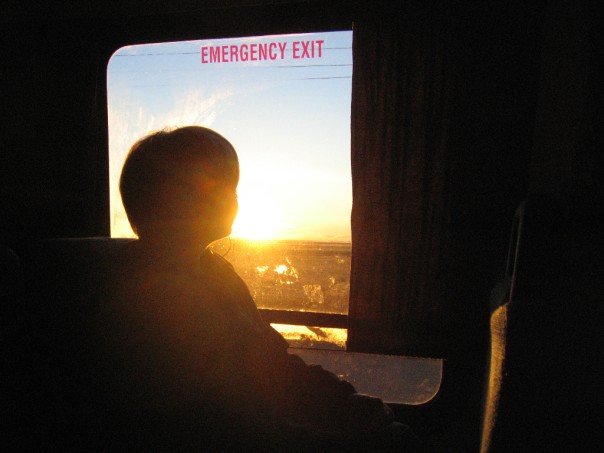
A photo of me in 2007 on the bus to the West Coast Trail before I found out how bad my planning could be. Ironically, I was sitting by the emergency exit…. I probably should have hopped off there. – Photo by James Lee
Years later my planning skills are considered strong by my backpacking companions. Most prefer to let me handle planning details. To my chagrin, I learned “the hard way” so my friends wouldn’t have to. This year, I’m planning to backpack the West Coast Trail in British Columbia, Canada…again.
After a decade of trial and error, I will share the twelve crucial points of complex backpacking trips planning to avoid making common mistakes.
Lesson 1: Choose your destination intentionally.
Some people have trust-funded travel accounts. Most of us have to budget and plan to head out. My first WCT was a whim; I vaguely knew where I was going. My friends were going, and I wanted to go too. I’d never seen the ocean or been to a rainforest. I loved and hated it. Time has numbed my memory of the bog (less aptly called a rainforest), but white sandy beaches remain engraved in my memory.
I am intentionally choosing to endure the muddy trudging to get to the most beautiful places I have ever seen. I know how bad the conditions can be, I’m mentally and physically prepared for what lies ahead: I could not say the same ten years ago.
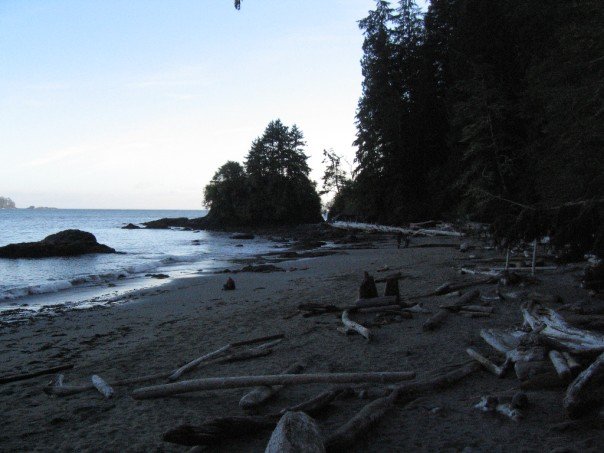
A young eighteen-year old me sits on one of my favorite beaches. The solitude I found here was indescribable, as were the blisters, bruises, fractures and the wake up call that my planning skills needed a revamp….. Thrashers Cove, West Coast Trail, Vancouver Island, Canada. – Photo by James Lee
Lesson 2: Choose your companions wisely.
A backpacking trip is not the place to determine that the trip mates on board may not be enjoyable company. If in doubt, take some shorter trips with proposed companions. Make sure that being in high-pressure situations for several days is workable for everyone on the trip.
Of the twelve companions on my 2007 WCT, I didn’t like seven of them by the time it was over. Of the five people I still liked, I only travel with one of them now. For this trip, I picked a friend I’ve done intense trips with before. We mesh well, have equivalent experience, and have similar styles of trekking.
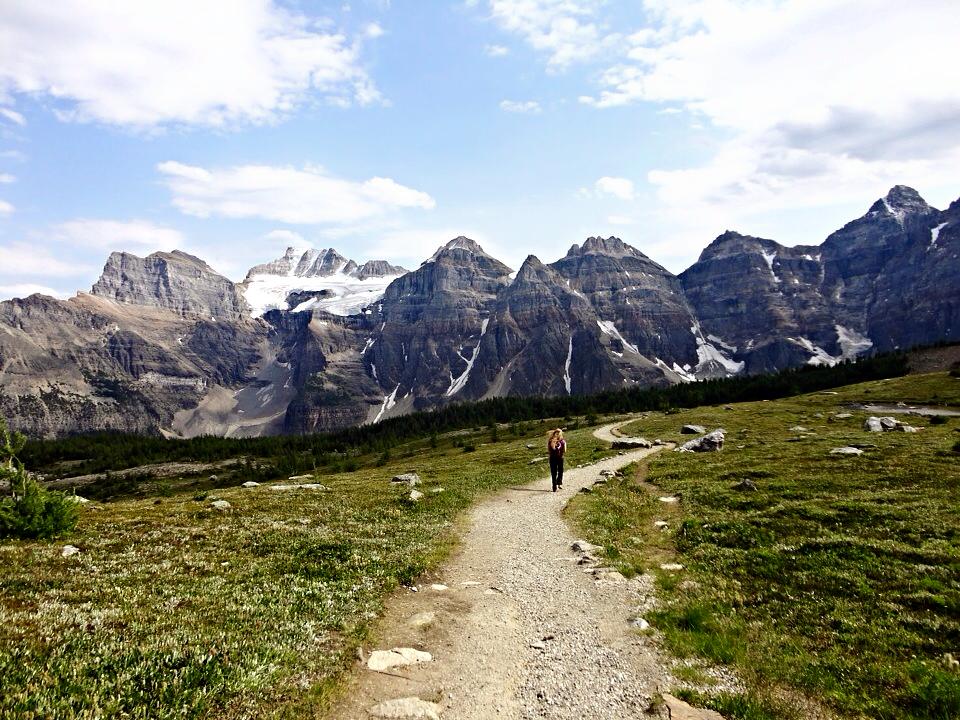
Robyn Lloyd accompanied me on WCT 2007. She has joined me on several other trips over the years. Robyn is pictured here at Stanley Glacier, Kootenay National Park, British Columbia, Canada last year. Robyn patiently walked injury recovery trips with me. Usually, I am self-sufficient and refuse help, but after last year’s injuries, I needed help. I was comfortable enough with Robyn to ask her to tolerate my slow pace and offload gear into her pack. Though she isn’t doing WCT 2016 with me, we are planning a WCT anniversary trip for 2017. Ten years of backpacking together seems worth remembering.
Lesson 3: Know before you go.
This should not come as a surprise: understanding tidal charts on a coastal hike is important. Knowing that buses to the trailhead only run every other day is crucial. And realizing that there are impassable channels and rivers that require that you book ferries to cross is vital. Knowing pays, plan accordingly. Purchase trail guide books, read online articles and trip reviews, look at pictures and gain the critical information.
In spite of having made the trip before, I purchased the updated guidebook for the area and downloaded the topographical map. I’ve already looked up the proposed tidal schedule for my trip and how low tides have to be for me to cross at certain key points.
Lesson 4: Don’t lose the schedule but remember it’s not infallible.
When dealing with complex travel arrangements, being on time is crucial. Any extensive backpacking trip is fraught with timelines. Handle transportation and mother nature’s schedules with finesse. Miss a bus, ferry, or tide and a trip can be waylaid or canceled.
Just remember, though, trips like the WCT can take six to eight months to plan; there can be good reasons to delay or reschedule. When the forecast on Vancouver Island calls for six days of rain its best to reschedule as the coast can take an exceptional turn for the worse with rogue waves and lightning strikes. Always have an alternate plan. Worse comes to worst, and I’m bussing to Tofino, staying in a hostel, taking surf lessons, and soaking in the hot springs.
Emylene’s Sample Planning Itinerary for WCT 2016
December 2015:
Pick backpacking destination
Confirm hiking companion
Research logistical necessities
January 2016 – April 2016
Create rough itinerary
Estimate costs
Evaluate and replace required equipment
Book Primary travel arrangements (trail permits and flights)
Plan Secondary travel necessities (buses, taxis, ferries, gear storage, etc.)
Identify skill building if required
Create travel and gear budget
Plan meals
May 2016 – August 2016
Training and practice trips
Plan gear list
Gear testing
Meal testing
Detail itinerary
Book secondary transportation
September 1-16
Prepare meals
Detail gear list
Additional physical training
Confirm bookings
Order supply box from local outfitter (items which cannot go on a plane like fuel canisters)
Pack gear
Confirm and gather required travel documents
September 17
Whatever is forgotten…it’s too late now.
Lesson 5: Cash is king even in the backpacking world.
For a solid trip you need three types of cash:
Emergency Cash: WCT 2007, I slipped, fell, stress fractured a foot bone, sprained an ankle, and that was only the first 3.11 miles (5 km). On the remaining 44.12 miles (71 km) I chipped a shin, lost six toenails, had credit-card sized blisters on both feet, and my legs experienced bruising beyond recognition. At the end of the trail, I found myself injured, short on cash, and not able to return to work. Today, I have a saved enough cash to cover bills for a couple of months, and I carry travel insurance in case something happens.
Pocket Cash: I still remember the chocolate bar I had to forgo because I only had enough cash to pay for a ferry. Heaven forbid, I would have to forgo the ferry, though; it’s a long swim. Ensure that you have enough cash and budget it well.
Gear Cash: Go through gear, and if it is lacking, budget to afford what is needed to make the trip go right. Don’t forget those pesky expenses like fuel, water purification tablets and other consumables which may need to purchase when the flight lands because they can’t go on board a plane.
Lesson 6: Test your gear.
If it doesn’t have a proven, daily purpose it does not go in the pack. If I don’t know if an item has a proven, daily task, I did not prepare properly by testing my gear. Ten years ago, I packed things I never used because someone told me I should. I packed ill-suited gear because it seemed like a good idea. I had extra clothes which were extra wet clothes by day two. I didn’t factor in how much anything weighed. I didn’t properly test my boots. I had worn them lots and they were worn and not in good condition for a backpacking trip. The boots leaked, slipped, rubbed, and were generally worn out. I know better and do better now: happy feet, happy backpacker.
Recently, my most disappointing but crucial tests were with trail runners. After the nerve damage to my foot during the West Coast Trail expedition in 2007, I have relied on full grain trekking boots to support my foot. Trail runners have always appealed to me and I gave them a try. I can manage a short day hike in trail runners, I cannot manage a full backpacking trip. I like how trail runners feel for a day, but limping for days on end is not appealing.
I tested trail runners in 2015 at Stanley Glacier, Kootenay National Park in British Columbia Canada. Sadly, I found I can manage a short day hike without pain, but no longer. Fortunately, due to good planning, I didn’t find out on a backpacking trip. Photo by Robyn Lloyd.
Lesson 7: Book early.
Some trips can be navigated on impulse, but thru-hikes and longer backpacking trips are not the places to learn instincts or to find out about travel quirks. The WCT trail permits, on average, sell out in forty-five minutes on the first booking day. Trail booking starts eight months before I plan on hitting the trail and four months before the trail opens for the season. My flights to the coast can be booked for under four hundred dollars in January; by August flights will have more than doubled. In addition, there is one flight to the coast which will arrive on time for me to make the only bus connection to the trailhead for two days. I will know where I am going and research travel logistics. This could be the difference between going backpacking – or camping at a transit terminal for two days.
Lesson 8: You don’t know what you don’t know, but you can find out in advance and learn.
Long, complex hikes are not the place to try and learn basic skills like fire starting. They are also not the place to bring out gear which has never been out of the box. Well-being in the backcountry is a personal responsibility. Each individual is responsible for individual and group safety. On my first WCT trip, I had no idea how half the equipment worked.
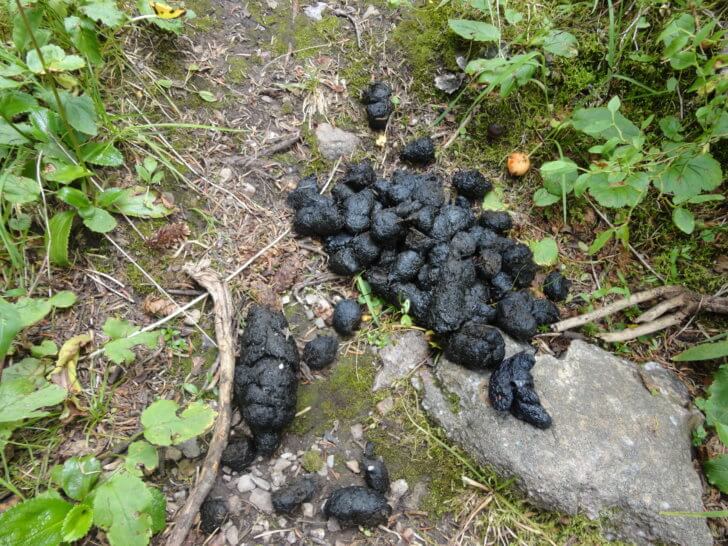
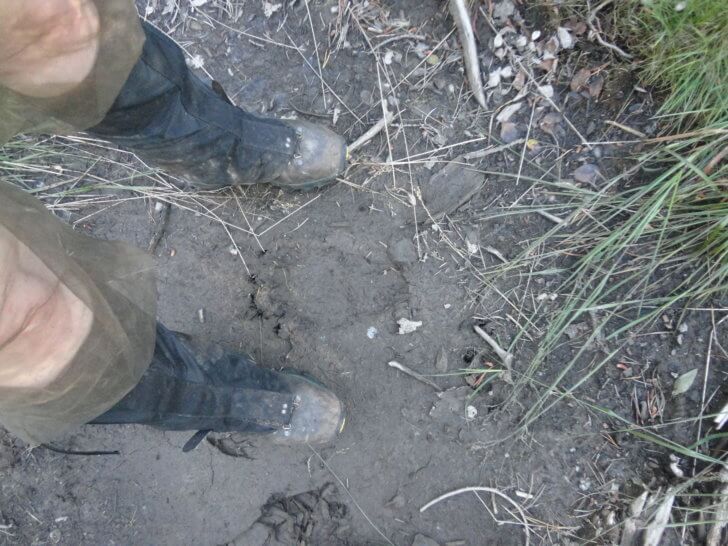
Today, I can field strip and reassemble every piece of equipment in my pack and my partner’s pack and treat simple injuries without batting an eyelash. Learn vital information before the trailhead. On the WCT, “need-to-knows” include: what bear and cougar tracks and scat look like, how to read tide tables, basics of firestarting, first aid and topographical navigation. Don’t plan on learning on the way. When cold, wet, sore, tired, and hungry, learning new skills does not come easily.
Lesson 9: If you don’t like it at home don’t take it backpacking.
For the WCT 2007 trip, a local summer camp gave us some of their leftover meal supplies for our trip. As grateful as I was for free food, some of it was stuff I would have had a hard time choking down at home. Being hungry did not improve the flavor or make the pudding cups lighter to pack. I played with my food for all but two meals (Mac and Cheese and Beef Tacos) and ate a lot of dried fruit. My other key mistake was I had no idea how much I would actually need to fuel my body. I had at least ⅓ more food than I needed. The weight was unnecessary and if I had done a calorie calculation I would have known better.
Today, my friends often turn to me as the backpacking foodie. I have everything from lightweight trail pizza to trail pies and everything is portioned, weighed, taste-tested and packed with care. I like my food, and I want to eat it at the end of the day, because I have already tried it.
Lesson 10: Don’t neglect your most key piece of equipment – your body.
Planning a big hike without training is a bad idea. Most backpackers have a “moment of clarity” when they realize they are not eighteen years old anymore and have to treat their body accordingly. For the WCT 2007, I was athletic and active, but I did little to prepare my body for several days of backpacking. I paid dearly; I lived on anti-inflammatories and was so exhausted at the end of the day I could barely talk.
My ten-year older and wiser self has to do better just based on my physiology (see my article My Journey from Injury to the Canadian Rockies for details.) The worst place to have an epiphany, about not being as fit or young as before, is on a backpacking trip. I walk into every trip being aware of each of my body’s shortcomings and have physically and mentally prepared to compensate for them. I can do a hike without training, but I will regret it. Be kind to the body: train for difficult hikes.
Training hikes are a crucial part of every backpackers’ repertoire. In 2015 I spent almost every other weekend planning for or on some type of outdoor excursion, mostly day trips due to injury. Here, I did a training hike in Banff National Park, Alberta, Canada. Photo by Robyn Lloyd
Lesson 11: Confirm everything.
Being at the airport with no ticket or passport is a problem. Standing at a bus stop with missing gear is a bigger problem. Being on the trail with a stove and no fuel is beyond aggravating. Double check bookings, reservations, and gear; hopefully, anything you miss is a small thing. I was fortunate on my 2007 WCT, I didn’t have to plan logistical details. I would have been completely out of my depth if I had been in charge of logistics.
The WCT 2016 requires me to register a vehicle for parking at an airport; hop on a flight; rent a car; pick up a box of consumable gear; drop off a rental car; catch a bus; put off-trail equipment into storage; book a campsite overnight; attend a mandatory info session; ride a ferry and hike the worst terrain of the trail with a late day start; all in less than 24 hours. Just as in nailing down bookings, missing the mark on any of those steps can end a trip abruptly.
Lesson 12: Plan your hike – you alone are responsible for your backcountry choices.
As a new backpacker, I made more than my fair share of mistakes. I’m impulsive and confident by nature, but I lacked the experience to put those traits to good use.
I’ve made and will continue to make mistakes, backcountry and otherwise. My mistakes have made me who I am and are a part of my story. The challenge of a backcountry adventure should not prevent the adventure from happening. Face challenges, take risks and make mistakes in a calculated way. Everything is better when you make it home from the backcountry unscathed. On a final note, though these are the “best practices” sometimes breaking the “rules” makes for an adventure which couldn’t happen otherwise.
Conclusion
Planning a complex trip the first few times is nerve-wracking. With a little bit of preparation, it can be more easily managed and pitfalls avoided. As experience is gained in trip planning, the process becomes easier, predictable and more enjoyable. It took me a couple of years to build up the confidence to backpack again after the WCT. I would rather see backpacking newcomers enjoy their first trip and not dread the next one.
This fall, I’ll put my money where my mouth is and offer a first-hand look at my planning skills and inevitable improvisations when I publish my Notes from the Field on the West Coast Trail at backpackinglight.com.
If my eighteen-year-old self and I could have had a conversation before I got to Canada’s West Coast Trail on Vancouver Island, British Columbia, I would have followed my own advice and done more planning. Without experience, though, I wouldn’t have had the advice to give. WCT 2007. Photo by Robyn Lloyd
Underwear acts as a moisture (sweat) transfer layer to keep you reasonably dry “down there”. This guide highlights some important considerations about materials, design, fit, weight, and performance criteria when selecting a pair of hiking underwear (or shorts).
Overview: Men’s Hiking Underwear & Shorts
Underwear acts as a moisture (sweat) transfer layer to keep you reasonably dry “down there”. This guide highlights some important considerations about materials, design, fit, weight, and performance criteria when selecting a pair of hiking underwear (or shorts).
The most popular underwear material is polyester, sometimes with a little Spandex (Lycra) mixed in for a stretchy fit. Merino wool is a great choice that minimizes odor when worn for several days in a row, but isn’t as durable as synthetics. Some people go commando (no underwear), which can be a bit uncomfortable if you wear abrasive nylon trekking pants, and on hot days, can result in sweat accumulation that can cause inner thigh chafing. Others replace underwear with a typical running short that has a liner brief in it. If you suffer from inner thigh chafing (or have never hiked long distances in warm weather), consider selecting a tight-fitting “running short” – they fit like tights but are short, with inseams ranging from 6 to 11 inches.
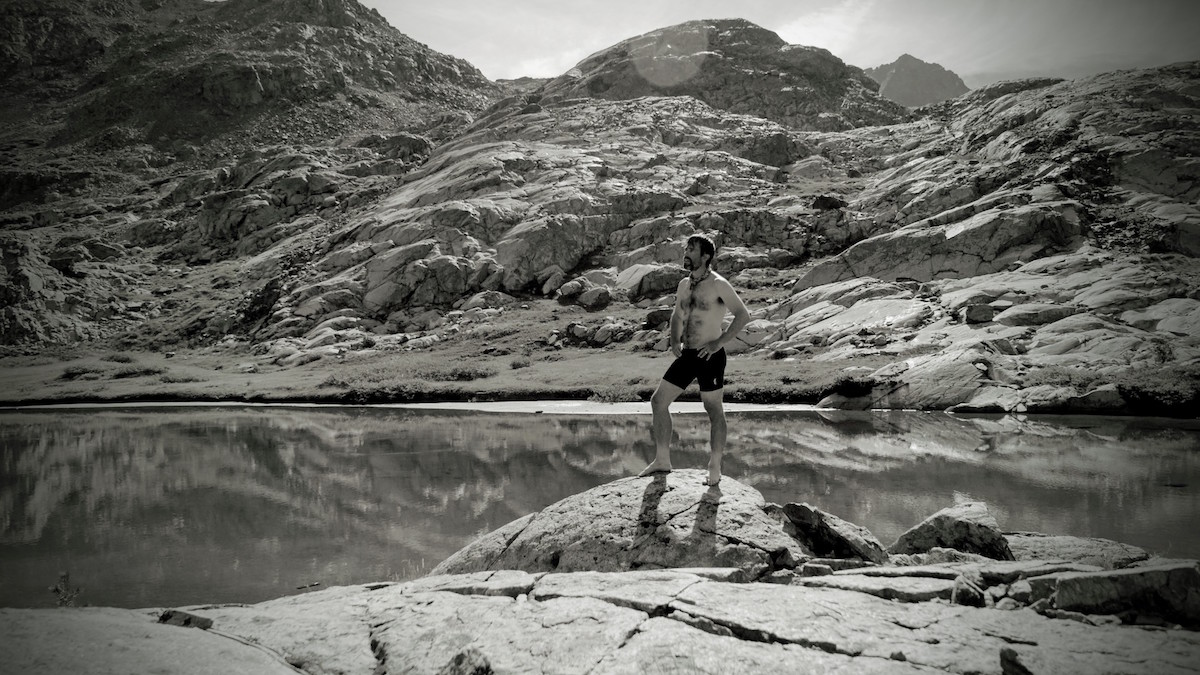
Drying out after a morning swim at Twin Lakes, High Sierra, August 2015. Hanging out in my underwear was one of the joys of my teenage years. Being able to do it in the backcountry amps up the joy a bit. My all time favorite underwear was the GoLite Stride Shorts. Durable as heck (mine have now seen several thousand miles of hiking travel), a cotton patch right where it’s supposed to be, just the right amount of stretch, and a long enough inseam to prevent chafing. Probably my favorite GoLite product ever. Photo was darkened in post to mitigate blinding effects of Montana skintones on bright screens.
Weight Targets
The lightest polyester briefs will weigh in the range of 1-2 oz. Merino wool and Spandex blend boxer-briefs with longer (6″+) inseams can be less than 4 oz if the fabrics are thin.
How to Save Weight
Quantity: Bring just one pair of underwear/shorts (men), or one set of bra / shorts for women (menstruating women should bring a 2nd set of underwear / shorts). Every few days, do laundry (rinse and/or wash) and hang to dry in the sun.
Material Type: Polypropylene and polyester are the lightest fibers, especially when constructed in very thin fabrics. Nylon, Spandex and merino wool are slightly heavier.
Amount of Material: Briefs are made with less material than boxers, so are lighter. Shorts with shorter inseams are lighter than shorts with longer inseams, but longer inseams protect better from chafing. Commando is the lightest way to go – 0.0 oz!
Performance Considerations
Odor Resistance –Merino is the best for long term wear. Polypropylene has a reputation for rankiness. Some so-called “odor-resistant” fibers are treated with various antimicrobial materials that might work when the undies are new, but tend to “wear out” over time, unlike merino.
Dry Time –Polyester dries the fastest, merino wool and spandex dry the slowest. Something to consider when you are wading deep and have to continue hiking, or are doing some afternoon laundry.
Fit –Looser fits ventilate better (airflow is good!), but more form-fitting underwear is more resistant to chafing. More form-fitting underwear with elastic leg cuffs may stay in place without riding up and bunching/binding, which is pretty nice for steep climbing when you’re high-stepping.
Waist Band –Waistbands can be a blessing or an annoyance. You’ll have to experiment. The key is not to buy a size too small, or it will create discomfort by rolling and binding on long days.
What Our Guides Use
Ryan JordanEric VannAndy HeathPat StarichRyan Connelly
Ryan J – I chafe. Briefs and commando are out. Merino is my favorite material for underwear, but because of chafing, I’ve worn out too many pairs of merino boxers to count. These days, I go with short tights used by runners. I like the color black, and shorts without “underwear waistbands” so I can wear them alone around people without feeling like I’m waltzing around in my skivvies. I like an inseam in the 6-10 inch range, and I look for the lightest weight polyester / nylon / spandex blend I can find – something less than 4 oz in a size “M”. My all-time favorite pair of trekking undies – the original GoLite Stride shorts, which I still love and use.
Eric – Tight, form-fitting spandex is not for me, but Ex Officio Boxer-Briefs seem to have the right amount of stretch for a good fit without being restrictive. I find them comfortable even into the second week of a long trip.
Andy – I prefer Patagonia Silkweight (a.k.a. “Daily”) Capilene Boxers. They remain cool in hot temps, reduce chafe well enough for me, and with odor-resistant fibers, seem to feel clean even after 7-10 days in the field.
Ryan C – I wear Ex Officio Give-N-Go Boxer Briefs. Long and snug for chafing resistance, fast dry time, with no unusual accumulation of stinkiness beyond what I perceive to be my own normal ;) One under-the-table (sic) feature is the nicely-shaped pocket that keeps the cajonnes off your legs (note: this feature is found on the Sport model). Guys know this to be a feature…
Recommendations
The following products represent our guide-curated recommendations for participants in the Wilderness Adventures program.
Guides’ Comments: Great stink resistance, and extraordinarily comfortable next to skin. They are somewhat form-fitting, but don’t have the confining feel of a compression short. More durable than we expected for merino wool.[/caption]
Guides’ Comments: If you prefer loose-fitting polyester underwear, and don’t want to break the bank, this is a solid option. For a little softer feel (and a little higher price), take a look at the Patagonia Daily Boxer-Brief.
Guides’ Notes are gear briefs outlining a specific category of gear as a resource that has been developed for participants in Backpacking Light’s Wilderness Adventure Treks program. It includes an overview of the category, tips for saving weight on gear in this category, as well as very specific product recommendations from our Guides, with links to purchase those products online.
Disclosure: the product links above may include affiliate links. Backpacking Light receives a small commission on sales when you place an order via one of our affiliate partners if you visit their website by clicking on an affiliate link. This helps support our efforts, thank you!
Live dispatches via satellite from an expedition in Montana’s Absaroka-Beartooth Wilderness: Day 12 – Exit to the Beartooth Cafe
Day 12: July 20
The younger ones woke up early this morning which means one of two things: we did not hike enough hard miles yesterday, or today is the final day of the trip and the exit trailhead awaits.
Regrettably, it’s the latter.
Often at the end of these trips, I’m ready for a hot shower, a real meal, and some time back home to do civilized things. This time, I’m ready to pick up a resupply in Cooke City and continue heading south, weaving in and out of the Absaroka Crest en route to Togwotee Pass.
But alas, that will have to be deferred to another day.
Sitting in my shelter this morning, drinking a coffee with a view of Mount Villard out my door, I couldn’t help but reflect on the value of spending time in Wild Places and attempting objectives worth suffering for.
We have been out for 12 days, through talus and trial, and remain happy friends still. Such is the outcome of being part of our little community of Venturing Scouts and their families that appreciate the benefits of spending time in wilderness, and with each other.
I’ve called Montana home for more than two decades now and have spent more time in the Absaroka-Beartooth Wilderness than any range of mountains other than the Olympics of Washington State. I call the A-B my home range. Having hiked nearly all of its trails, caught fish out of more than 75% of its 300+ fishable waters, and climbed its highest peaks and passes, this trip was a reminder that I feel like I’ve barely scratched its surface. Over the past 12 days, I’ve seen new vistas, traveled new off trail routes, fished new lakes, and collected new experiences with a very competent team of outstanding young men, with whom I would travel through the wilderness anytime.
See you for elk burgers at the Beartooth Cafe in Cooke City.
Until next time —
Godspeed,
RJ
Erick (15), Nikolas (17), Kristofer (14), and Chase (18) getting ready to leave the talus and tundra of the high country this morning.End of the Line: Cooke City, Montana.
About Crew One
Crew One is a Venturing Crew of the Boy Scouts of America, chartered by Backpacking Light to promote expedition leadership and wilderness high adventure skills development in youth 14-20 years of age. Learn more at Crew1.org.
Take a Hike in the Beartooths and Learn Wilderness Travel Skills with Backpacking Light
Get away for a few days with like-minded wilderness enthusiasts and learn the skills of ultralight wilderness travel with Backpacking Light: join us on a Wilderness Adventures Trek.
Follow this live expedition blog as Backpacking Light’s Ryan Jordan, Eric Vann, and five others weave their way through glacial cirques, tundra meadows, and talus fields in Montana’s Absaroka-Beartooth Wilderness July 9-20. Dispatches will be posted to the Backpacking Light Facebook page, Instagram feed, and the backpackinglight.com home page.
Live dispatches via satellite from an expedition in Montana’s Absaroka-Beartooth Wilderness: Day 10 – Sky Top Lakes
Day 11: July 19
I got to bed late last night due to negotiations with the mountain goats that were not entirely successful. Only one guyline got nicked and fortunately didn’t result in any more damage than a dislodged tent stake which I found this morning.
Last night was our warmest night, with the temperature not dropping below 40 degrees F. This morning’s clear skies came with a blazing sun and only a slight breeze, promising a hot day of trekking, for the mountains at least.
We left camp mid-morning and started walking up a steep talus slope towards a col that divided the Sky Top Lakes and Aero Lakes Basins. Upon reaching the col, which sits right below The Spires, we enjoyed expansive views of the south faces of Glacier Peak and Mount Villard.
We scouted a few different routes down and decided to head south through a gentle draw filled with snow and easy talus. From the bottom of the draw at the Rough Lake-Upper Aero Lake col, we dropped down to Upper Aero Lake and skirted its southeast shore on granite ledges and tundra benches.
The Aero Lakes (Upper and Lower) have to be seen to be believed. They are alpine oceans compared to what most people know to be “alpine lakes”. Each of them a mile long and nearly as wide, it takes several hours to circumnavigate their rugged shorelines.
Upper Aero Lake sits at an elevation of 10,140 feet above sea level and has a surface area of 292 acres. It receives a plant of nearly 30,000 Yellowstone Cutthroat every six years and they grow to fat, healthy proportions. Lower Aero Lake sits just below 10,000 feet, is a little smaller at 190 acres, and is populated by trout that drift down the creek from Upper Aero. Since Upper Aero was last planted in 2012, I was banking on the probability that by now the fish would be big, and still plentiful.
We moseyed down to the rocky tundra between the two lakes and set up camp on the softest bench we’ve seen since we left the meadows below Whitetail Peak a week ago.
We got the shelters set up just in time before a thunderstorm moved in and dumped rain and hail on us. Once the storm subsided, I treated and drank a liter and a half of water to get caught up from a hot, dehydrating hike, and tried to soothe the severe sunburn on my right hand – I forgot my Glacier Gloves – a mistake I regret. For the past several days, we have been trekking at high altitudes in intense sun, over lots of snow. It’s been tough to manage the UV exposure.
This evening, I strung up the tenkara rod and managed to bring three fat trout back to camp. By the time I had poached and deboned the fish, we had a fry bake filled to the brim with three pounds of meat for dinner.
After dinner and the moonrise I presented a case study that stimulated a lively discussion about legality, ethics, and morals – a mental exercise that allows for the exchange of different ideas and perspectives in a way that challenged us all.
I also wrote a celebratory Haiku about our trip, and shared it with the group tonight, with feeling:
Ye Rock of my soul
Let your love overwhelm me
My sweet sweet talus.
Upon retreating back to my tent, and writing this journal entry from my chair with my down quilt draped over me, I notice the grunting of what has now become a regular visitor: a mountain goat is rustling around somebody’s pee spot about 20 feet from my tent.
Tomorrow we exit.
Godspeed,
RJ
A sampling of the delicate and beautiful wildflowers found in the cracks of talus slopes above 10,000 feet.Chase peering over the edge of a steep couloir while scouting a route down to the alpine ocean that is Upper Aero Lake.Trekking over a snow-covered pass along the divide between the Sky Top Lakes and Aero Lakes Basins.Our last night’s camp – a cozy collection of ultralight shelters. Can you name them?Tonight’s dinner: 18-19 inch Yellowstone Cutthroats from Lower Aero Lake.A waterfall near camp, Mount Villard and The Spires on the horizon.
Follow this live expedition blog as Backpacking Light’s Ryan Jordan, Eric Vann, and five others weave their way through glacial cirques, tundra meadows, and talus fields in Montana’s Absaroka-Beartooth Wilderness July 9-20. Dispatches will be posted to the Backpacking Light Facebook page, Instagram feed, and the backpackinglight.com home page.
Live dispatches via satellite from an expedition in Montana’s Absaroka-Beartooth Wilderness: Day 10 – Sky Top Lakes
Day 10: July 18
Last night’s rowdy thunderstorms created an electric air. Before the lightning came, we heard the humming in our carbon fly rods and felt the static in our hair.
After the worst of the storms plowed through camp late last night, I heard grunting coming from the direction of my Ursack, and my pee spot. Shining my light over, I saw a mountain goat pawing at my food bag, which was tied to a chockstone secured in a boulder crack. I shooed it away with a granite fastball which sent it trotting over towards Eric’s tent. Fine by me. I put in earplugs, and went back to sleep.
In the morning, I listened intently to Eric’s own goat story…
We left Fossil Lake and wandered up the meadowy draw of its inlet until we found talus and snow that took us up a snakey route to a high col dividing the hydrology of Fossil and Cairn Lakes. From there, we climbed up to the Absaroka Crest once again and entered the beautiful Sky Top Lakes basin.
Not satisfied with the 4.5-star views in the lower basin, we proceeded higher over talus, snow, and granite ledges to the Fourth Lake, and are now camped in rocky tundra there at 10,436′.
Our view into the upper cirque is unparalleled, framed by Tge Spires, Mount Villard, the dramatic South Face of the Montana High Point, Granite Peak, and Cairn Mountain. I can see Granite’s summit out the doors of my pyramid tarp, just two miles away.
Two high point parties wandered through en route to establishing their base camps for an attempt at Granite’s summit tomorrow. One fellow was wearing a Backpacking Light cap and turned out to be a customer from California. It always warms my heart to run into BPLers “in the wild”!
In addition to their beauty, Sky Top Lakes are famous for weather, fish stories, and the highest concentration of mountain goats in the range.
This is a hostile spot. The wind blows incessantly here, and through the years I have experienced some of the worst storms the Beartooths have to offer in this drainage. There is no cover – no trees or shrubbery of any sort – only rock and snow. The high peaks concentrated in this area create their own drama when prevailing weather slams into them. The lakes are some of the last to melt in the Beartooths. Once, almost 15 years ago, I visited here in August and Lakes 5, 6, and 7 were still frozen.
And, if I’ve ever seen a fish in these lakes, I won’t be writing anything about it.
A mountain goat ewe and tiny, curious kid have been visiting us all afternoon, licking our pee spots and wandering to and fro through camp. I don’t have the heart to hurl another rock at the ewe or the adorable little kid (those innocent dark eyes…ugh!), so I’ll just keep the Ursack a little closer tonight and maybe head over by Eric’s tent to pee.
Skies are clear as I write this at 10 pm, and the wind is howling and whistling through the ridge tops. But it’s warm enough to sit in my chair with my sleeping bag draped over me, huddled in my down parka, and watch the light of the full moon cast its eerie glow on the Sky Top Glacier as the last light turns the sky from blue to indigo.
Goats are mewing in our camp and I can hear the footprints of the ewe, and what sounds like a few dozen of her closest friends, trotting to and fro. I hope they don’t trip over the myriad guylines that are spun like a spiderweb to secure my tent in the Sky Top Winds.
Tomorrow is our last full day in the Wilderness and we plan to make the most of it by pursuing large trout over the divide to the west.
Godspeed,
RJ
Hanging out at the hydrologic divide between the Fossil and Cairn Lake drainages.Sky Top Lakes with The Spires on the left, Cairn Mountain on the right, and Granite Peak in the distance.Trekking through the Sky Top Lakes basin over snow and stone.Mountain goat ewe and kid on a knoll in camp, waiting for one of us to pee.
Follow this live expedition blog as Backpacking Light’s Ryan Jordan, Eric Vann, and five others weave their way through glacial cirques, tundra meadows, and talus fields in Montana’s Absaroka-Beartooth Wilderness July 9-20. Dispatches will be posted to the Backpacking Light Facebook page, Instagram feed, and the backpackinglight.com home page.
Live dispatches via satellite from an expedition in Montana’s Absaroka-Beartooth Wilderness: Day 9 – Fossil Lake
Day 9: July 17
The day broke calm and clear, but frosty.
I had pitched my tarp at the base of a west-facing forty-foot cliff so I didn’t get to enjoy the warmth of the morning sun. Instead, I shivered as long as I could and then packed up my chair and coffee kit and moved to a sun-warmed granite slab overlooking Lake of the Winds’ eastern shore.
After some fishing, we packed up and had a map session, using the big map spread out in an oriented position on the slab and secured at its four corners with granite stones. Now that we were entering the final 1/4 leg of our trek, we reviewed our exit options in case there was too much snow for us to safely cross Sky Top Pass. A doe and buck mule deer wandered into the back of our campsite and curiously looked on while we searched for more lakes with big trout prospects on the map.
We left camp and circumnavigated slabs and ledges around the lake’s south shore and then started a nearly direct line due NW towards Fossil Lake. Our first pass, a Kindergarten climb of only 80 vertical feet, dropped us into the beautiful Gallery Lake basin with a pretty waterfall cascading into the lake’s northeast shore.
From Gallery, we got distracted talking about silly things and got suckered into an inviting climb to the north of our target pass, which was going to drop us into our intermediate destination at Lake of the Clouds.
Instead, we found ourselves more than half a mile northeast of the lake in a little tussocky meadow containing the headwaters of the lake’s inlet stream.
Realizing our error, we decided to stay on this bearing and enter the Fossil Lake basin via a pass that was a a bit west of the route that most backpackers take from Lake of the Clouds, and upon our arrival at this seldom-visited 10,280-foot col, we enjoyed one of the finest scenic vistas I have ever seen in this range.
We stopped here for a long time, solving world problems and such (which seem easier when your packs are off and you’re restfully reclined in a patch of wildflower-laced tundra), as well as identifying all of the peaks on the horizon.
These peaks included a spectacular panorama comprised of some of the Big Ones of the Beartooths: Iceberg Peak (11,552′), Mount Wilse (11,831′), Glacier Peak (12,200′), Mount Villard (12,344′), the Montana High Point, Granite Peak (12,799′), and Cairn Mountain (12,200′).
While at the pass, we were able to recon our exit route over the Villard-Granite col and were surprised to see its east face choked with much more snow than we thought would be there. Giant cornices that we could see with the naked eye from five and a half miles away still protected the top of the col. And so, since we don’t have our snow climbing gear with us, we will have to formulate an alternative exit plan…
The route down was steep and a little precarious, as we walked “over an invisible fall line” to a deep, unnamed lake tucked away on a high bench overlooking Fossil Lake.
On the way down, we discovered talus litter: a deflated helium party balloon, undoubtedly released by accident by some crying kid at a four-year old birthday party down in Billings. This is the second balloon that we’ve found in high elevation talus on our Crew expeditions, so now we are wondering about the wilderness impact of helium balloons at parties down in town…
We reached Fossil Lake in the mid-afternoon and are camped on its exposed North Peninsula. We managed to catch several nice cutthroat trout, a half dozen of which made their way into our dinner stews.
I took a swim today in the lake and I think my heart stopped beating when I dove in. It was the coldest mountain swim I’ve had in a decade. I may be getting too old for this sort of nonsense. Once I recovered with a hot coffee and some time engulfed in my down jacket and sleeping bag, I came back to life and fished for a bit more. We were caught a bit by surprise as a thunderstorm moved in, so we scurried back to our tarps and broke down our carbon fishing rods just as lightning bolts flashed overhead.
As we are a late dinner under the nearly-full rising moon, a giant meteor streaked across the southwestern sky, in a flaming glory of orange, green, and blue. We saw bits break off of it and vaporize quickly, but the meteor disappeared across the horizon with no apparent intent of burning out soon. None of us had ever seen anything quite like it.
This brings us to the end of our ninth day. Ominous dark clouds are building up to the west, and thunder is booming, so it’s time now to batten up the hatches and brace for the next round of storms.
Tomorrow: Sky Top Lakes? After that, maybe we wander out to the southwest and walk into Cooke City, where we can get burgers.
Godspeed,
RJ
Eric Vann looks at the horizon of Big Beartooth Peaks, with Fossil Lake in the distance.Chase, Nikolas, Kristofer, and Erick descend into the Fossil Lake basin.Erick descending steep slopes towards a deep, blue, unnamed lake.
Follow this live expedition blog as Backpacking Light’s Ryan Jordan, Eric Vann, and five others weave their way through glacial cirques, tundra meadows, and talus fields in Montana’s Absaroka-Beartooth Wilderness July 9-20. Dispatches will be posted to the Backpacking Light Facebook page, Instagram feed, and the backpackinglight.com home page.
Live dispatches via satellite from an expedition in Montana’s Absaroka-Beartooth Wilderness: Day 8 – Lake of the Winds
Day 8: July 16
I slept well last night, and felt good enough this morning to walk.
We broke camp in the late morning and made the short trek over rocky tundra to Lake of the Winds via Z Lake. We took our time and arrived at camp in the early afternoon.
Lake of the Winds is notorious for two things: large finicky cutthroat and, as the name indicates, wind.
Lake of the Winds is perched on a high bench with lots of weather exposure and little protection. Camping in the wind is problematic up here for backpackers who expect to have a relaxing sit by a nice fire in the evening.
After setting up camp, the winds picked up, the crew scurried to the big tent (an HMG Ultamid 4) and played cards.
I dressed in my storm gear and went fishing.
In spite of whitecaps on the lake, the wind blowing my line every which way, and graupel pelting my face, I managed to sneak enough temptation along the deep shelf at the edge of the talus to get into several tangles with large trout.
The trout were winning, spitting out my fly or breaking me off. So I switched to heavier tippet and finally managed to land a 19-inch Yellowstone Cutthroat. After a little more fishing and one smaller trout, my numb hands were done and I walked back to camp, a forked willow stick carrying my dinner fare.
With the others getting rather excited about me bringing a leviathan back to camp, they grabbed their fishing rods and headed down to the lake themselves. I cleaned one fish (saving the other for the other cook group), poached and deboned it, and put the meat in the fry bake to ready it for dinner later.
A makeshift fireplace and chimney has been constructed at our camp with flat stones stacked and arranged against a large boulder on a granite slab. A few of our Crew improved it by filling in the cracks with mud, so the fireplace now works as designed. This is the problem with having a bunch of engineers and engineer’s sons together in the wilderness.
Needless to say, the fire that has been built within it is creating a monumental amount of heat that is welcome in this cold, windy environment.
After a dinner of Alfredo noodles with more than a pound of ghee-fried trout meat added (for me and my cooking partner), we cleaned up and noticed a very strange phenomenon.
No wind.
So we went fishing again, caught more trout, cooked more trout, and ate more trout.
By the time Round 2 was done, it was dark, warm, and calm. For the first time on our trek, we are enjoying a warm, windless night at a famously cold and windy spot.
I’ve been here half a dozen times over the past two decades and this is the first time I’ve enjoyed an evening here without weather trauma – we are indeed enjoying a relaxing sit by a nice fire…
Tomorrow: crossing the crest via an easy col to fish-filled Fossil Lake.
Godspeed,
RJ
Trekking along tundra benches to avoid talus – there are lots of sneaky routes that maximize efficiency of you look hard enough.Eric and Erick taking a break at an unnamed lake.A Lake of the Winds cutthroat ready to go in a Banks Alpine Fry Bake.Sunset at our camp above Lake of the Winds.
Follow this live expedition blog as Backpacking Light’s Ryan Jordan, Eric Vann, and five others weave their way through glacial cirques, tundra meadows, and talus fields in Montana’s Absaroka-Beartooth Wilderness July 9-20. Dispatches will be posted to the Backpacking Light Facebook page, Instagram feed, and the backpackinglight.com home page.
Live dispatches via satellite from an expedition in Montana’s Absaroka-Beartooth Wilderness: Day 7 – Talus and Snow
Day 7: July 15
In spite of yesterday’s “short mileage rest day” I am more fatigued today than I’ve been so far on the trip, and more fatigued than I’ve been on any backpacking trek since the day after we finished the crest of the Chinese Wall in the Bob Marshall Wilderness two years ago.
My strength seems to decay a little every day, and I wonder if I’m in need of a true, do-nothing rest day at this point. I didn’t start the trek strong or rested and the first several days were accompanied by some unusual intestinal distress, and maybe it’s catching up to me. I’ll see how I’m feeling in the morning and play it by ear. There were points in the day today where I simply wanted to snap my fingers and be home.
We started the morning with a Crew meeting at our camp at Flat Rock Lake.
I like to do these meetings at the halfway point of our expeditions. It gives us a chance to regroup in an intimate setting as a team, take inventory of physical, emotional, and mental stock, and provide some food for thought on topics related to expeditioning and leadership.
This morning’s conversation focused on the concepts of “team vs. community”.
In our discussion, we came to the realization that “team” is a group of people working towards a common goal, and that “community” is a group of people having shared values and respect for each other. In expeditioning, both team and community must exist. One of the most powerful things I’ve watched on these last three annual Crew expeditions is that we operate with a peer leadership model. There is no captain or patrol leader, no duty roster, and no assigned roles, as occurs in more traditional Scouting settings.
The diversity of expertise that each of our 14-18 year old members bring, combined with the community that already (and previously) exists, makes for a cohesive team framework that has allowed this group to accomplish some incredibly challenging wilderness travel objectives over the past few years. This year we are further learning that competition and scorekeeping kills expedition community and fragments the team, compromising our goals. This morning we renewed our commitment to preserve these values on our expeditions.
Today we traveled a high route between Flat Rock Lake and Desolation Lake via Copepod, Till, and Big Butte Lakes.
The terrain throughout most of the day was talus (much of it loose and sharp) or snow (much of it rotten and lying atop cavernous talus). We traveled five or six miles, and they were hard-earned.
We actually took a wrong turn at one point and ended up down a drainage we weren’t expecting. None of us bothered to look at the maps, because the “route” that was naturally revealed to us was so inviting
Up here on this part of the plateau, the terrain is a jumbled mass of seemingly random granite domes and talus piles. They hide drainages and seams, creating convoluted passageways from one basin to another. Our GPS has been useful (when we look at it; sometimes we get distracted by the fun of endless talus-hopping).
In the mid afternoon, one of our Crew Members slipped on loose scree and his trekking pole fell down to the bottom of a small ledge. I went down to retrieve it and stumbled in some loose, sharp talus and fell into the rocks. The whole thing happened quite fast and I wasn’t too sure what was happening until I felt various bits of piercing pain in my knee, shoulder, ankle, and hand.
I regrouped a few minutes later on a soft patch of tundra and discovered the injuries to be not so dramatic but rather annoying. The worst of them was a broken pinkie finger accompanied by lots of blood from the flesh stolen from it by the offending talus rock. I dressed and taped it to its neighboring finger, and it seems only to interfere moderately with scrambling for now. Its constant throbbing reminds me that we are off trail and remote in a relatively hostile mountain environment.
The ankle bone and shoulder are only bruised but the knee is rather troublesome when trying to balance on one leg while carrying a 40 pound pack. Another argument for a rest day, perhaps. I found myself talus-hopping quite gingerly for our last mile and a half to camp.
Tonight we are camped on tundra at the expansive mini-ocean of Desolation Lake. My last visit here was on an epic winter traverse of the Plateau eight or so years ago with Jörgen J., Mike M., Mike C., Ryan C., and others. Desolation Lake was a fitting name then, and remains so today. We are alone here tonight and there is no apparent sign of frequent human visitation to this beautiful, high-altitude golden trout fishery.
There is more snow up here than we thought, and we’re eager to see what the conditions on the east-facing couloirs and slopes look like as we travel further west towards our exit. We need our exit over Sky Top Pass to be mostly snow free as we are not prepared to travel steep and exposed snowfields since we have no axes or traction.
Godspeed,
RJ
Camp at Desolation Lake.Climbing out of Flat Rock Lake this morning with the massive west face of Sky Pilot Peak in the background.
Follow this live expedition blog as Backpacking Light’s Ryan Jordan, Eric Vann, and five others weave their way through glacial cirques, tundra meadows, and talus fields in Montana’s Absaroka-Beartooth Wilderness July 9-20. Dispatches will be posted to the Backpacking Light Facebook page, Instagram feed, and the backpackinglight.com home page.
Live dispatches via satellite from an expedition in Montana’s Absaroka-Beartooth Wilderness: Day 6 – In Search of Trout
Day 6: July 14
Today will be a well-needed recovery day, with a few less trekking miles and more fishing time.
After fishing the early morning midge hatch at Maryott Lake, we enjoyed a lazy morning there in the warm sunshine and left camp in the late morning.
En route, we enjoyed pleasant off trail walking over talus, tundra, granite ledges, and snow, stopping to fish at Crystal and Alp Lakes before heading up higher for the night.
We arrived at our destination, Flat Rock Lake, in the early evening. After setting up our shelters, we brewed coffee and washed our socks. And then, tenkara rods in hand (and one spinning rod), set out to add a few trout to the ones we packed up from Alp Lake in a snow-filled zip bag.
The Beartooth Plateau’s highest lakes (those near and above 10,000 feet), which are found along the route we are trekking now, are still very cold this time of year and the fishing can be challenging. Thankfully, the spinner brought a few healthy (fat!) foot long cutthroats to the shore. Those of us fishing tenkara all got skunked here this evening.
For dinner: trout Alfredo by moonlight. My cooking partner and I decided to add some pizazz to ours, so we fried it in a fry bake with a handful of crushed jalapeño kettle chips – ending another glorious day in the Beartooths.
I am camped on a little patch of tundra at 10,129 overlooking the lake below, with the Copepod outlet waterfall providing the soundscape. The night is chilly, clear, starry, and the waxing moon is bright.
Godspeed,
RJ
Fishing (tenkara) for dinner at Flat Rock Lake.This is Kristofer. At age 14, he’s the youngest and newest member of our team. Learn more about us at the Crew One Website.Trekking up the upper Sierra Creek drainage, a fantasy land of waterfalls and tundra.
Follow this live expedition blog as Backpacking Light’s Ryan Jordan, Eric Vann, and five others weave their way through glacial cirques, tundra meadows, and talus fields in Montana’s Absaroka-Beartooth Wilderness July 9-20. Dispatches will be posted to the Backpacking Light Facebook page, Instagram feed, and the backpackinglight.com home page.
Membership Required
This feature requires an active Backpacking Light Membership.
Premium Articles
You're currently viewing a free preview of a member exclusive premium article. Our premium articles include in depth journalism and insights from the Backpacking Light editorial team.
Get full article access by subscribing to a Premium or Unlimited Backpacking Light membership!