You don’t have access to view this content.
Sierra Designs Cloud 15 Review
A 29 oz sleeping bag featuring vertical baffles and Insotect technology… is it worth the weight?
A 29 oz sleeping bag featuring vertical baffles and Insotect technology… is it worth the weight?
You don’t have access to view this content.
Superb fit and finish, high breathability, and nice mix of features, but durability insurance doesn’t come with the $280 price tag – and at 9 oz, is it light enough?
You don’t have access to view this content.
Trail Angels to the rescue on the PCT and AT. Chapter 11 from Lawton Grinter’s new book I Hike: Mostly True Stories from 10,000 Miles of Hiking.


There are people who go out of their way to help hikers. Sometimes it’s a random car ride offered to a grubby hiker by the kindness of a complete stranger. And sometimes it’s a person who lives in a town near the trail that lets hikers camp in their backyard or do laundry at their house or grab a shower to wash off days of accumulated dirt and dust. These folks are known in the long-distance hiking world as “trail angels.”
The Appalachian Trail and Pacific Crest Trail have a whole host of perennial trail angels – folks that help out hikers year after year. The Continental Divide Trail has just a few but as the CDT gains in popularity, there is sure to be more. Some trail angels are not holed up in one town; they rove and follow the wave of hikers north as they make their way from Georgia to Maine or Mexico to Canada.

The Backyard at Hiker Heaven – Agua Dulce, CA
One of the better-known trail angel couples on the Pacific Crest Trail is the Saufleys. Jeff and Donna Saufley have been taking in hikers since the mid-90’s. Located 454 trail miles north of the Mexican Border, “Hiker Heaven,” as they call their backyard, offers a brief respite from the dusty PCT of southern California. The little hamlet of Agua Dulce in which they live does not have much in the way of amenities – no post office and no laundromat. Seeing that there was a void to fill, in addition to a happenstance encounter with a couple of grimy PCT hikers in 1996, the Saufleys found themselves in the role of trail angels before they barely had time to realize what that meant (once word gets out that a couple or family is taking in hikers in a trail town, it’s like moths to a flame).

Efficiency is Key at Hiker Heaven – Agua Dulce, CA
What started as letting a handful of hikers stay in their spare camper one night back in 1996 ballooned to hosting 60+ hikers a night during the high season in 2008. They’ve since put a 50-person cap on how many hikers they are willing to take in at one time. Even 50 people is too much for their large backyard, in my humble opinion, but not too many for Donna and Jeff. To accommodate this many people, they have gotten really good at crowd control. They’ve orchestrated an incredibly efficient operation in the form of sign up sheets and help yourself bins full of clean towels, spare clothes to wear while doing laundry and an instruction board that requires little more than knowing how to read. There are sign up sheets for the shower, the computer, and a spare car. That’s right. They have a spare car that they allow hikers (read complete strangers) to drive to some of the larger outfitters and gear stops on the far eastern edge of Los Angeles County. And it’s all based on trust. And it works. The Saufleys have never had a single thing disappear from their house or their yard during all these years of hosting hikers. How’s that for karma?

Hikers crowd in for Birthday Cake at The Saufleys – Agua Dulce, CA
And the cost . . . well, the cost is whatever each hiker is able to contribute to the mason jar that serves as a donation cup of sorts. Some hikers will kick in $20, $30 and even $50. Others are flat broke and pay nothing. It seems to work out, though. If it didn’t, the Saufleys would be just another family in the Agua Dulce phone book and not the best-known trail angels on the PCT.
Not all trail angels offer a laundry list of amenities and services to hikers. Some are in it just for the fun and games. Twenty-four miles north of Jeff and Donna’s place lies Casa de Luna in Green Valley. Casa de Luna is run by the Andersons and the Andersons don’t have a spare car for signing out, they don’t offer package pick-up or showers or internet. What they do offer is a guaranteed kick-ass time of beer drinking, general hell-raising and taco salad for dinner every night. I’ve been there twice now and was grateful to get all-you-can-eat taco salad both times, but I just don’t know how they eat that dish every night for the entire summer. Don’t get me wrong – I love tacos as much as the next guy but after having had them for 47 nights in a row, I’d throw them off a cliff or throw up off a cliff.
Their entry into trail angelhood was also happenstance. Joe Anderson calls it “a serendipitous moment.” The way he told it, they ran into a bedraggled-looking couple with backpacks walking around in their town of Green Valley. This couple had gotten off the PCT and come to town to find a restaurant. The male half of this hiking duo desperately wanted some vegetable soup. The only restaurant in town was closed and he was feeling a bit blue as a result. There’s nothing more mentally devastating to a long-distance hiker than thinking about food all day and heading into town only to find the only restaurant that serves food closed.

Early Morning at Casa de Luna – Green Valley, CA
Earlier that day, Joe decided on a whim to make a big pot of vegetable soup. No particular reason really. As a matter of fact, soup is one of the last things Joe typically prepares, a once in a blue moon kind of thing. In one of those completely coincidental instances, Joe and Terri struck up a conversation with this couple that they randomly ran into in town. “Forager” explained how he’d had a hankering for vegetable soup all day and was so disappointed that the restaurant was closed. Joe’s eyes lit up like Christmas lights and he invited them to come to their house for dinner.
Ten years later it’s not uncommon for them to host as many as 20-30 hikers per night during the high season. Some pass by the Andersons without stopping, after feeling guilty about having spent far too many nights at the Saufleys. It’s a shame because staying with the Andersons is one of the highlights of a PCT thru-hike.
Keep in mind that trail angels are few and far between on long trails. It’s purely coincidental that the Saufleys and the Andersons are in such close proximity to one another. After heading out of the Andersons, there’s not much in the way of trail angels for the next 650+ miles unless you count Hiker Town.

PCT Hiker out for a ride at Hiker Town – Lancaster, CA
Hiker Town is like stepping into an alternate reality. It exists as a little wayside series of buildings on the edge of Highway 138 somewhere on the western edge of the Mojave Desert. The trail passes within a few feet of the buildings that comprise Hiker Town. I had never even heard of the place when I stumbled upon it back in 2004. The next 24 hours were an odd mix of getting a lift in a Rolls Royce to a convenience store, watching fellow hikers parade around the property on miscellaneous horses, being offered a shower only to find that the water was a degree above freezing, surfing the web in a dilapidated trailer that looked as though it would blow away with the tumbleweeds during the next gust of wind, listening to the howling drunkenness of one of the “caretakers” who was five times as filthy as any hiker staying there and discovering that Jack Fair, the previous owner of the place, had shot and killed himself right there in the main house.
I left Hiker Town wondering what type of crazy time warp I had just walked into. And that was after being awakened by a curious horse at 4:00 A.M. that put his muzzle about 12 inches from my face and snorted.

The Bunk House at Hiker Town – Lancaster, CA
The current owner is a bit eccentric but not foul-mouthed and prone to fits of rage as the previous owner, Jack Fair, apparently was. Jack allowed PCT hikers to come onto the property and even stay the night but more than one PCT hiker left upset or angry at Jack for something he had said or done. One hiker, “Troubador,” recounted his brief stay at Hiker Town back in 1999 when it was simply known as “Jack Fair’s Place”:
The trail met highway 138. We crossed and walked up Jack Fair’s driveway towards his house. The guidebook described Jack Fair as “A concerned citizen who has generously offered water and camping to all through travelers on the PCT.”
As we approached the house a shirtless, gray bearded Jack Fair, probably in his late 60’s or early 70’s emerged along with “Yosemite John.” Pointing at Yosemite John (YJ, as he was called for short) Jack asked, “Are all PCT hikers retarded or is it just him?” In unison “Rerun” and I
responded, “It’s just him.”
Jack greeted us. He shook my hand and instantly I smelled like the cigarettes he chain-smoked. He led us to the garage to stow our gear and then invited us into the house. Jack said we could sit anywhere we liked except on the Lazyboy recliner that was dingy, dank and surrounded by cigarette ashes. He lead us into the kitchen and offered me a coke while Rerun stuck with his water.
This is the point in time when Rerun and I stepped off of the PCT and into a wind tunnel of profanity.
Jack Fair was a former motorcycle rider. He drove his motorcycle almost everywhere in North America and now describes himself as a philosopher. As I looked through his trail register, he dropped some articles and papers in front of us which he asked us to read. Rerun skimmed them slightly while I stuck to the register. Jack said, “Okay, @^#$*$& read them, or don’t %#&$*%^# read them. What the %#^@&$^ do I care. You have to live your own @^#%$ life . . . I’m talking to my #&$%#% self now. So if you #&$^#%@ interrupt me, you’ll be *^^#%#*%%#* interrupting a private *&%#$@#* conversation.”
After a pause he explained his rates for the use of his house and facilities. “For $1 I’ll drive you down the road to the store. For $5 you can camp in the garage and take a shower and I provide the towel. If you just want to hang around for a little bit then it will be $5.” Rerun and I looked at one another as if we had been scammed.
We asked Jack for the $1 ride to the store and got into the back of his car. His dog rode up front with him. As I moved to get into the car I glanced at the seat and found it covered in all manner of dirt and grime. Rerun and I looked at each other. Rerun said, “Don’t ask.”
As we drove down to the store I inquired about the fare. I wanted to be certain of the rate since we had just been duped. “Jack, is it $1 round trip to the store, or $1 each way?” I asked, feeling it was a legitimate question. There was a pause as Jack looked at me in the rearview mirror and said, “Are you some sort of &#^$%@^ @&#^%@^%?” I took that to mean $1 round trip as Rerun laughed hysterically.
Still shaken from the verbal dressing down, I entered the store and made my selections. Rerun did the same and Jack waited outside. I felt pressure to get and pay for my stuff quickly. I hurried to the car and we were on our way back.
Jack was yelling and cussing up front. The noise of the car with all the windows down kept us from really hearing what he was saying. We both nodded and agreed nonetheless.
Since Rerun and I had been duped out of $5 for just hanging out, we decided to stay for a while and retreated to the garage with our store purchases.
Jack came from the house to the garage in a huff. He yelled, “Okay who was the last #%@&@% @@^#%@^ to use the sink in the house to take a shave?” It was obvious it was neither Rerun or myself as we both had beards. “Perhaps it was YJ?”, Rerun offered. “Well, whoever the #&$%$%#& it was pushed the @&@^#@& stopper down on the #^@@#%#% drain and now I can’t get it #&%$@&#*$^ open,” Jack screamed. His eyes looked away for a moment and his level of rage jumped up five notches.
“WHO THE #%$* OPENED THAT @#$&&#^$% DOOR!?!?!?!?” he yelled at the top of his lungs throwing his hands in the direction of a door behind Rerun. “THAT DOOR HASN’T BEEN OPENED IN 10 #^$%@%#$@& YEARS! ANY IDIOT KNOWS THAT IF YOU WANT A #$@^#%#$& CROSS BREEZE YOU GOTTA OPEN THIS #^$%%@%# DOOR!”
Jack slammed one door shut, and then opened the other. Rerun deflated the situation somewhat by offering to look at the sink. Tradja, Neil, Wahoo and YJ walked in as Jack and Rerun were about to depart to the house. I could see the rage forming in Jack as he was preparing to unleash it on YJ. “Did you take a shave in the house?” Jack jabbed at YJ. “Uh, no Jack, I’ve got three days beard on my face. I was planning on taking a shave, but I haven’t gotten to it yet,” replied YJ in a half laughing tone. “Well, it’s too #%##&& late, I’ve already blamed you for breaking the #^$%&3% sink,” Jack said as he swung into full profanity to explain the situation with the sink again.
At this point I was ready get out of there. Rerun returned from fixing the sink and Jack paid him with two power bars for his services. We then handed Jack the $10 for sitting in his garage for two hours and got some water from the sprinkler.
I would have been really angry about the money Jack charged and the way he went about it, but Smokey had come into Jack’s with only a Discover credit card. And when the store – despite having a large Discover sign in their window – declined to accept it, Jack, to his credit, covered the charge.
The Appalachian Trail has its trail angels too. Bob Peoples was so enamored with the long-distance hikers that would pass by his place in Tennessee that he built a huge log cabin bunkhouse to accommodate them. Donation based pricing once again. Hikers are offered a daily shuttle down to Newport, Tennessee . . . the closest town to his Kincora Hiker Hostel. Additionally there are showers, laundry and kitchen facilities. Not bad for a $4 suggested donation per night.
“Dizzy B” was a gruff but nice lady who lived near the AT trail town of Glencliff, New Hampshire. She would drive out Atwell Hill Road every evening during the summer to an abandoned Park Service building known as the “Atwell Hilton.” If any hikers were tenting on the lawn, she’d back the truck in and unload firewood. She’d also pull out two coolers: one full of beer and one full of soda. If you want to win over the hearts of long-distance hikers . . . offer them beer and soda. She’d build a fire and chat for a couple of hours with everyone and then take off only to repeat the sequence later the next day and the day after that. The Atwell Hilton has long since been torn down and Dizzy B has moved on, but it was sure nice to get a couple of ice-cold sodas from her in 1999 when I was hiking through.
I once popped out on Pennsylvania Highway 33 at a place called Wind Gap during my AT thru-hike to check my map for directions. At that same exact moment two bicyclists pulled over to check their map for directions. They asked me where I was hiking. I told them to Maine. They gave me that look of disbelief that I’d received many times before when telling folks I was walking from Georgia to Maine. One of the guys pulled out a $20 bill and handed it to me. He told me to go to the bakery in the nearby town of Delaware Water Gap and have some pastries on him. They rode away and I was left there standing with a $20 bill in my hand, dumbfounded that a complete stranger would hand me money for walking. The pastries were fantastic.
In 1999 on the AT, I kept running into this guy who called himself “Desperado.” He was a New Jersey State Park Ranger, I believe, and knew all about the thru-hiking community. He even knew who I was without ever having met me. Apparently he would ask hikers he met who was behind them and write down their trail names so he wouldn’t forget. He told us that during a typical hiking season, he ended up meeting about half the thru-hikers that came through New Jersey.
The first time I ran into him, he gave me his business card. It simply read “Desperado” in bold font. For occupation it said “Trail Angel.” There was a phone number in the bottom corner. The funny thing is that Desperado wasn’t operating a business – or at least it didn’t appear so. He was handing out slices of pizza on the trail and offering rides to town and info on New Jersey’s stretch of the AT. I never needed a ride but some other hikers that got a lift from him told me he had a tape of The Eagles singing Desperado that he played continuously while he drove them around. I guess if you were still uncertain that his name was really Desperado after seeing it in bold font on his business card, The Eagles would make sure you knew it was so.
“Meadow Mary” is another well-known roving trail angel on the PCT. I’ve run into her many times and even got an hour-long ride to a bus station from her back in 2004. She made me change my clothes. Apparently she is quite sensitive to scented detergents. I had just done my laundry and the detergent I used did not agree with her olfactory preferences. She had a spare set of her husband’s clothes in her RV luckily for me. I desperately needed a ride to the bus station in Red Bluff, California, in order to get to the Sacramento airport to fly back east for a buddy’s wedding. I would have ridden in her camper van naked if it meant getting to that bus station.

Trail Magic along the PCT – Southern California
The other form of trail angelling that is somewhat common is “the lone cooler.” The lone cooler is true trail magic in its purest form; trail magic being what trail angels offer to hikers. A random cooler on the side of the trail full of goodies free for the taking. No fees, no donations, no flat rates and no need to change clothes. Whatever is in the cooler has no strings attached.
Some coolers are chock full of beer, soda, candy bars, chips and cookies and some are empty after getting cleaned out by hikers that had already passed through. You never know what you are going to find until you open the lid. In the case of the cooler we came across in 2008 on the PCT at Santiam Pass in Oregon . . . I’m still not sure what the reddish brown liquid and chunks actually were; however, judging from the shredded wrappers, claw marks and distinct paw prints in the mud beside the lid, my guess is that a bear ate everything in the cooler and then proceeded to barf it all back into the cooler.
I was having a particularly tough day on the AT back in 99’ coming out of the Nantahala River in North Carolina. This section of trail had a LOT of ups and downs. “Puds” as some would call them, which is short for “pointless ups and downs.” It started with a 3,400’ climb and then a bunch of steep descents and more steep ascents. When I reached Stecoah Gap, I was beat and demoralized, not sure if I could move another inch. Just across the road I spied something red in the bushes. Upon further investigation, I realized it was a cooler. I bounded across the highway and whipped open the lid to find freshly made peanut butter and jelly sandwiches and chips and soda. I went from feeling like road kill to a million dollars in the matter of five seconds. I’ve never been that excited to eat peanut butter and jelly in my entire life.
Feeling reenergized, I was able to make my way to Brown Fork Gap Shelter by dark. Other hikers at the shelter all told me similar stories; they had been beat and tired and the cooler saved their lives! The great thing is that the cooler was left there on the side of the road by a former AT thru-hiker named “Fanny-Pack.” Fanny-Pack left a note in the cooler stating that he received a lot of really great trail magic during his 1996 AT thru-hike and wanted to pass the favor forward. It’s not uncommon for thru-hiker alum to come out and deliver trail magic during subsequent years. This wouldn’t be the last Fanny-Pack cooler I came across while on the AT that year. And each time it would be at a crucial spot just after a long climb where I was feeling exhausted. It’s as if he knew . . . and he did.
Although the lone coolers were fantastic, the best trail magic that I have ever experienced on a long hike occurred in 2004 in central Washington. It had been raining for weeks and there was no let up in sight. A cold, windy, hypothermic rain. Every day. Rain, rain, rain. I had been hiking in a loose group of half a dozen people and we were all on the same pace to finish at the Canadian Border in late September.

Alpine Lakes Wilderness along the PCT – Central Washington
The night before “the greatest trail magic ever,” we had all camped near Deep Lake in central Washington’s Alpine Lakes Wilderness. We went to bed with rain and woke up to rain and by the looks of the overcast and clouds, we’d be hiking in rain all day. I was a late riser and hiked out of camp last; the bad weather had drained every last ounce of my motivation. A quick perusal of my PCT Data Book told me that our campsite was 30.5 miles from Stevens Pass and Highway 2. Highway 2 leads west down to the town of Skykomish and more importantly to the Dinsmores’ “Hiker Haven,” which was our next town stop.
Following the lead of the Saufleys, Jerry and Andrea Dinsmore started hosting hikers at their abode in 2002. They have a great home on the banks of the Tye River just outside of Skykomish and would pick up hikers at the Pass to bring them down for a stay. We had heard there was a pay phone at the Pass from which you could call them . . . you simply had to get yourself to the Pass.
I didn’t want to hike 30.5 miles though. I mean I REALLY didn’t want to hike 30.5 miles that day. Actually, I didn’t want to get out of my sleeping bag, but I did because that’s what hikers do; we get up and hike even if it is cold and wet and miserable. My hope was that the rest of the group didn’t want to hike 30.5 miles either. I was mostly going with the flow at this point in the hike and if the entire group hiked all the way to Stevens Pass, I probably would also. But I REALLY didn’t want to.

Snack Break under the Umbrella – Central Washington
I never caught up to anyone in the group that day. The past few weeks I had been hiking with an umbrella, about which I received heaps of ridicule and mockery. The umbrella was worth its weight in gold, though, and I wouldn’t have traded it for anything. It gave me the opportunity to lollygag a bit in the rain. See, most hikers walk very quickly in the pouring cold rain to generate heat and stay warm. Granted, most waterproof jackets keep the rain from seeping in but the cold rain zaps the heat from your upper body through convection. It’s just a simple fact of allowing cold water to land on your chest and shoulders for hours on end. With the umbrella, the rain never hits your chest and shoulders and subsequently allows you to stay warmer; it is like walking with a small tent over your head all day. The other thing that hikers wearing only rain jackets typically don’t do is they don’t take breaks. Who wants to take a break in the pouring rain on the side of the trail only to get more soaked and more cold? I took breaks every hour or so with the umbrella. I could squeeze in and get my entire body under the umbrella’s perimeter. It was great, but the more breaks I took and the more I lollygagged, the further behind the crew I got.
At the Surprise Lake Trail junction there was a note in a plastic bag on the middle of the trail. My heart sank. I knew this note was going to be from someone in the group saying they had decided to push all the way into Stevens Pass because of the weather. We had gotten in the habit of leaving notes for one another when the group got split up so I knew it was from one of my people.
I hesitantly walked up to the note, bent over in the heavy rain and picked up the plastic bag. The note read:
Hikers, Tremor and I are taking the Surprise Lake Trail down to Highway 2. It’s a shortcut. We are going into Skykomish to get a room tonight come hell or high water. Hope to see you all there. -Trainwreck
Ugh. No! I simply couldn’t allow myself to take the Surprise Lake Trail and leave the PCT either. I had set a goal when I started my PCT thru-hike at the Mexican Border that I would hike every inch of the PCT if possible. Taking the Surprise Lake Trail down to the highway would mean leaving the PCT and skipping a 13-mile stretch of the trail. I looked at my watch and it was four-thirty. It would be dark by eight and if I was going into Skykomish today, I’d be hiking in the dark on the PCT to Stevens Pass. I had 13 miles to go. After a quick snack, I embraced my fate and hiked into the pouring rain.
I had originally planned to camp with everybody that night at Josephine Lake, which lay five miles south of the Pass. We would get up early the next morning, hike to Highway 2 and be in Skykomish for breakfast. Or at least that had been the plan this morning. Now the prospects of my camping at Josephine Lake solo in the rain were quite real. I thought that perhaps two of the other hikers in our group, “Jupiter” and “Shep,” would still go to Josephine Lake and camp. If they were camped there, I’d definitely stop and camp there.

Tye River – Skykomish, WA
I arrived at Josephine Lake around dusk. It was bleak, didn’t have much in the way of trees for protection from the weather, and Jupiter and Shep were nowhere to be found. I looked at my watch, which told me it was just after seven o’clock. I scarfed down two candy bars while scrounging around for my flashlight. My fate was most definitely sealed. I was hiking into Stevens Pass tonight. As I left the lake behind me, it began pouring again. This was going to be swell.
So here I was hiking at night in the pouring rain with a little keychain flashlight to illuminate my way. Pretty dumb really. If I tripped and fell or slipped and broke an ankle, I’d be in a hypothermic and dangerous situation within minutes. Everyone would assume that I had camped for the night and no one was with me to know otherwise. I had already walked 26 miles (a marathon) and was a bit worn out. Realizing there was no room for error, I focused on every single step and I slowed down a bit. Rushing down the trail in the pouring rain in pitch dark would get me nowhere but hurt.
I remember smiling and laughing a bit as I made my way down to Stevens Pass with umbrella in hand in the middle of a tempest that night. I think I was likely in an exhaustion-induced delirium and would have had my sanity questioned if anyone had happened upon me out there. But there was no one out there . . . why would there be?
The trail spit me out into a dirt parking lot. It was the trailhead parking lot at Stevens Pass and there were no cars there. Anyone who had any kind of sense was at home under a dry roof and not out here in this monsoon. I could see the dimly lit highway just ahead and an 18-wheeler pulled over on the road shoulder. I vaguely remembered someone saying that there was a pay phone at the Pass from which you could call the Dinsmores and they would come pick you up. That payphone wasn’t in the trailhead parking lot so I guessed it might be down at Stevens Pass Ski Area, which was about °-mile down the road to the west.
I walked down to the ski area to find a series of buildings that were well lit but no one was milling about which made sense given that the ski area didn’t open until November and it was September. I thought that maybe, just maybe, there would be an unlocked door and I could steal the night away in a dry janitor’s closet or bathroom floor. I spent the next hour walking around the base area and must have pulled on a hundred door handles. The entire place was locked up tight. It was almost ten o’clock and I had to figure out something. The thought of setting up my tent was just too depressing to consider at this point. Maybe the driver of the 18-wheeler had a cell phone?
I walked back up to the Pass as the downpour strengthened. My only chance was to go knock on the door of the idling big rig and hope that I didn’t scare the **** out of the driver. I simply had no other options. I started for the truck and noticed a dimly lit streetlamp on the other side of the highway. I followed the lamp down its supporting post with my eyes. It illuminated a metal box. A telephone booth! I was elated but felt like a big idiot having just walked around the ski area for an hour when all along the phone had been on the other side of the highway.
I ran across the empty highway and dodged into the phone booth. The roof was solid and at least I could make this call and figure out what to do out of the rain. The Dinsmores had posted a business card inside the phone booth – what luck! Occupation: Trail Angels. Phone number on the right hand corner. Maybe all these trail angels were using the same business card service? I looked at my watch. It was 10:15 on a Monday night. I paused. Should I really be calling these folks this late on a Monday night? What if they were asleep? What if I pissed them off by calling so late? How could I possibly ask them to come pick me up given the weather and the time of night? I stared out the dirty glass of the phone booth into the rain and contemplated my predicament for a moment. There was nowhere decent to camp and I’d be setting up a wet tent – wet from the previous couple days of rain. Grim at best. It was time to roll the dice.
“Hello.”
“Um hello. Is this Jerry?” I asked politely.
“Yep, this is Jerry.”
“Hi, this is Disco. I think some of my hiking partners may have come down to Skykomish earlier today,” I offered, dancing around the fact that I desperately needed Jerry to come get me. I guess I didn’t want to seem that desperate just yet.
“Oh yeah. They were expecting a Disco to call. I picked them up a few hours ago. Let’s see, I’ve got Jupiter, Shep, and GT.”
“Oh that’s great. I figured they were there,” I said trying to figure out how I would go about asking Jerry for a ride.
“Where are you at?” Jerry asked me.
“I’m up here at the Pass. I hate to ask you this late at night but it’s pouring up here and I could really use a ride down to town,” I offered in a pathetic tone.
“No problem, I’ll be right there,” Jerry declared without hesitation and that was it.
Twenty minutes later, Jerry pulled up in his big truck and I suggested I get in the back since I was so wet and dirty. He told me not to think of it and to get into the front seat. He had the heat cranked up and I spent the better part of the ride down thanking him profusely for saving me from a miserable night in the cold rain.

The Dinsmore’s Hiker Haven – Skykomish, WA
I arrived at Jerry’s house to find all my friends in dry clothes, freshly showered watching the weather channel. Forecast was for more rain and snow levels coming down to 5,000’ – essentially that would mean most of the PCT heading north into Glacier Peak Wilderness, which was our next stretch of trail.
I walked into the kitchen after having left my sopping wet pack and rain jacket at the door. There was a plate of food on the kitchen table and Andrea Dinsmore was smiling at me.
“Eat up,” she said with a big grin.

My post-phone booth lodging at The Dinsmore’s – Skykomish, WA
I was floored. I sat down and started in without hesitation. After 30 miles of tramping around all day in the pouring rain, I could have eaten a horse the size of an elephant. I may have eaten seconds and thirds . . . I can’t really remember . . . the next ten minutes was a flurry of talking to Andrea, Jupiter, Shep and GT in between mouthfuls of food. They told me the other half of our crew was at a motel in town.
“There’s a hot tub upstairs if you want to soak,” Jerry said, as if almost forgetting he had one.
My eyes practically popped out of my head. I finished my plate and thanked Andrea a few million more times. I grabbed an extra towel off the bathroom shelf and headed up the stairway to the second story deck. A light drizzle greeted me as I tiptoed onto slick wet wood. I turned off the hot tub lights and hopped into the 104-degree water. I slid in and let out a big long sigh of relief. I stared up at the night sky and could see a break in the clouds off in the distance. Only one short hour ago I was standing inside a phone booth in the middle of nowhere, soaking wet from having walked thirty miles through the rain. Now I sat in the warm waters of the Dinsmores’ hot tub with a full belly admiring the irony of it all. It is truly amazing how our fates can change at a moment’s notice.

Hiking the PCT with an Umbrella in a light rain – Central Washington

Near Stevens Pass Ski Area – Hiker Beware !

Heading into Glacier Peak Wilderness – Northern Washington
Lawton Grinter is an author, documentary filmmaker, forester and veteran long-distance hiker having completed end-to-end hikes of the Appalachian Trail, Continental Divide Trail and two hikes of the Pacific Crest Trail. In addition to the “Big 3″ he has also hiked the John Muir Trail and Colorado Trail in his 10,000+ miles of long-distance hiking since 1999. He filmed, edited and produced the trail documentary entitled “The Walkumentary” which covered his 2006 southbound Continental Divide Trail hike. He currently lives in Denver, Colorado with his wife and fellow long-distance hiker Felicia Hermosillo and their dog Gimpy. I Hike is his first book and can be found at www.ihikethebook.com
Durable lightweight packs that can carry a larger volume (and higher weight) expedition kit.
You don’t have access to view this content.
An unexpected rainstorm and inadequate gear threaten to end one hiker’s PCT dreams, and potentially his life. Chapter 3 from Lawton Grinter’s new book I Hike: Mostly True Stories from 10,000 Miles of Hiking.

Rockpile Lake along Pacific Crest Trail – Deschutes National Forest, OR
The “Great Flood of 2004” started inconspicuously. We paid little attention to the clouds that had been building all day as we made our way towards Rockpile Lake in a remote corner of Oregon’s Deschutes National Forest along the Pacific Crest Trail. A grand total of two hours of rain had fallen in the last four months and to say that everyone had become complacent about bad weather and bad weather backpacking gear was a gross understatement.
I had been hiking with “Honolulu” since the Mexican Border and “Trim” off and on since northern California. The three of us set up camp on the far shore of Rockpile Lake in some lofty pines after cooking our trail dinners and enjoying a dessert of Reese’s Cups. The clouds over the lake, which had slowly been darkening all day, were now ominous and foreboding. All appearances said that it was now only a matter of an hour, or possibly minutes, until a full-bore tempest released its fury on us.
I walked around my tent and restaked all my guy lines to make sure I had the tautest pitch possible. By the time I was done re-tensioning all the lines, you could have bounced a baby off the side of it. I added rocks over the tops of all the stakes trying to imagine the worst that could happen . . . my tent blowing away with me in it like the balloon boy. I tried to envision how running water would flow under my tent. The last thing I wanted was a soaked down sleeping bag.
Most of the ground on the far side of the lake was relatively bare due to the excessive amount of campers this shoreline campsite had obviously hosted. In a last minute decision that I would be thankful for later, I pulled my groundsheet from under the tent’s floor and placed it inside the tent on top of the floor. I realize this defeats the purpose of what a groundsheet is supposed to do, which is rest on the ground between the dirt and the tent’s nylon floor to keep twigs and thorns and other debris from poking holes through the nylon. It seemed to me though that water would likely funnel right to the front of my tent and wedge itself between the ground sheet and the tent floor as it made its way down to Honolulu and Trim’s shelters. Maybe this was not a big deal for me considering I was camped on a gentle slope and the water would definitely continue downhill, but it was a risk I wasn’t willing to take given the ink black color of the clouds that were looming overhead.
Both Trim and Honolulu had camped further down the slope in a low-lying area. Honolulu was under a tarp and Trim had a self-enclosed tent similar to mine. We were basically just waiting and at midnight it began.

Tentbound Warm & Dry beside Rockpile Lake – Deschutes National Forest, OR
Imagine the sound of an afternoon thunderstorm or the repetitious clamor of pouring rain on a metal-roofed house. Typically heavy rains don’t last long – maybe thirty minutes or an hour, two hours at the most. Downpours are short-lived events: saturated clouds release a build-up of moisture and then it’s over. At least that’s how it is supposed to happen. For eight solid hours, we were stuck in our tents imprisoned by a torrential downpour. It poured unendingly from midnight to 8:00 A.M. It did not let up . . . not even once. We were all a bit dismayed to say the least.
This eight-hour deluge was the first of several unseasonably cold storms funneling in off the Pacific that would plague us for four solid weeks until we reached northern Washington on the PCT. Most of Oregon obtained a month’s worth of rain in a few days from this storm. Some weather stations reported three times the average monthly rainfall occurred just within the last week of August. We were right at the start of that last week.

Vintage PCT Sign along the Trail – Northern Oregon
Our complacency with having walked four months without camping in the rain a single night meant most of us were not prepared for a month’s worth of rain in one week. I myself had been carrying an old rain jacket with holes in it and a pack cover buried so far into the depths of my pack that I had forgotten I even owned one. I was desperately lacking in sufficient warm clothes. Outside of what I was wearing, I had a thinly insulated jacket and a beanie. I also had a lightweight pair of polyester liner gloves. They were about as thick as a pair of silk stockings. No long johns, no fleece pants or jackets, no warm socks and I had gotten rid of my umbrella months before due to ridicule from my fellow hikers. I would have given up my college diploma for that umbrella right now.

I Would Have Given Up my College Diploma for that Umbrella – Northern Oregon
“My tent flooded a bit,” Trim shouted over the roaring noise of the pouring onslaught early the next morning.
I peaked out from under the bottom of my tent and could see Honolulu packing up.
“What’s the plan guys?” I asked from inside the friendly confines of my spacious and dry two-man tent.
“I don’t know but I’m packing up and heading out of here stat,” Honolulu said with a slight sense of urgency that made me think I should be doing the same.
Frankly though, I had absolutely no desire to do anything but stay in my sleeping bag. Perhaps I’d boil some water and have a steaming cup of tea or go back to sleep or both. Packing up a wet tent and trudging down a muddy trail in a cold downpour was at the bottom of my to do list.
After both Honolulu and Trim hiked out, I quickly decided that hanging out in my tent all day around a lonely lake with bad weather didn’t seem that appealing. The rain had momentarily softened from full gale to downpour, which gave me the best opportunity I’d seen all morning to break camp. I grudgingly unzipped my sleeping bag and packed up everything inside my tent. I put on a pair of non-waterproof wind pants over my hiking shorts because that’s all I had and it looked way too nasty to be walking around in running shorts. All I had on the top half of my body was a long sleeved shirt and a thrashed rain jacket. I put on my flimsy liner gloves, hustled out of my tent and packed the soaking wet jumble of nylon into the big mesh pocket on the outside of my pack.
I hiked out in the downpour. My wind pants were soaked within ten minutes. They clung to my damp skin like a sandwich wrapper to a soggy BLT. I had to wipe my sunglasses every three minutes just to see where I was going. It was ludicrous I even had them on in the first place, but I had surmised they would deflect some of the blowing rain. My liner gloves absorbed water like a dish sponge. I stuck my soaking wet hands into the soaking wet pockets of my soaking wet pants and started to shiver a bit as I hiked on. I had only been on the trail for thirty minutes. This was not good.
Our next “town stop” along the PCT wouldn’t be a town at all. It would be the remote outpost that is Ollalie Lake Resort. Ollalie Lake Resort was the fourth or fifth resort we had come across during our jaunt through Oregon on the PCT. The term “resort” conjures up images of the clear warm waters and sunny beaches of the Caribbean. Perhaps snorkeling along the Keys while dining on fresh caught flounder or mahi mahi at night. A Swedish massage, maybe, or expensive dark chocolates lying on the pillow of a king size bed in the master suite. The Oregon resorts were a bit different. They were located in rural areas typically abutting National Forest land and most contained dated wooden cabins, pay showers and restaurants with an assortment of fried foods and an abundant supply of second-hand smoke. There were definitely not any dark chocolates on the pillows . . . there weren’t even pillows. I had neither high hopes nor any hope that Ollalie would provide much in the way of salvation for my cohorts and I.

Foreboding Skies along the Pacific Crest Trail – Northern Oregon
I sheltered briefly under a large pine, which reduced the downpour to only a steady rain. I pulled out my guidebook with a bit of effort to see how far Ollalie Lake Resort was from Rockpile Lake – 33 miles. This was a colossal distance by most standards. We had been hiking around 25 miles per day, which normally took us all day. I didn’t even know if 33 miles was possible. That’s equivalent to running a marathon and then tacking on a 10k afterwards. And we weren’t running; we were hiking with heavy backpacks in the pouring rain on a trail that had become so muddy that what we were doing would be better described as careening.
I started to shiver and decided that I needed more clothes on my upper body ASAP. I could have gone for an Eskimo’s parka with hood and waterproof shell but my thinly insulated jacket would have to work. I dug down in my pack as water poured off the bill of my hat. I grabbed the insulated jacket and put it on as swiftly as possible and slapped my rain jacket back on over it without delay. I reached down to zip up my insulated jacket and simply couldn’t. My fingers wouldn’t work. My brain was telling my hands to zip my jacket, but they simply could not grasp the zipper. I had lost all dexterity in my fingers. I couldn’t zip my jacket and I was in a pouring cold rain. My hiking partners were up ahead so they had no clue as to what was happening to me. I was utterly alone in a torrential downpour and I couldn’t zip my stupid jacket. A bolt of panic ran up from my stomach to my throat and for about 10 long seconds I thought about dying.
***
Hypothermia is defined as any body temperature below 95 °F (35 °C). There are three stages that take place as a person progresses from feeling chilly to greeting Saint Peter. Stage 1 is characterized by mild to strong shivering. The person is unable to perform complex tasks with the hands; the hands become numb (that was me). Blood vessels in the outer extremities constrict, lessening heat loss to the outside air. Breathing becomes quick and shallow. Goose bumps form, raising body hair on end in an attempt to create an insulating layer of air around the body (which is of limited use in humans due to lack of sufficient hair, but apparently useful in other species). Victims may feel sick to their stomachs, and very tired. People will often experience a warm sensation, as if they have recovered, but they are in fact heading into Stage 2.
Another test to see if one is entering stage 2 is if the person is unable to touch his thumb with his little finger; this is the first stage of muscles not working. I’m not sure if I could have touched my thumb to my pinky. I’m guessing not since I couldn’t even clasp the zipper on my jacket.
In Stage 2 of hypothermia, body temperature drops as low as 91 °F (32 °C). Shivering becomes more violent. Muscle mis-coordination becomes apparent. Movements are slow and labored, accompanied by a stumbling pace and mild confusion, although the person may appear alert. Surface blood vessels contract further as the body focuses its remaining resources on keeping the vital organs warm. The victim becomes pale. Lips, ears, fingers and toes may become blue. I never hit Stage 2 and I’ll get to why in a moment.
Finally in Stage 3, the body temperature drops below approximately 89.6 °F (32 °C). Shivering usually stops. Difficulty speaking, sluggish thinking, and amnesia start to appear; inability to use hands and stumbling is also usually present. Cellular metabolic processes shut down. Below 86.0 °F (30 °C), the exposed skin becomes blue and puffy, muscle coordination becomes very poor, walking becomes almost impossible, and is typically accompanied by irrational behavior including terminal burrowing (an odd phenomenon where the hypothermia victim burrows into leaves or rock crevices as a protection mechanism). Pulse and respiration rates decrease significantly, but fast heart rates (ventricular tachycardia, atrial fibrillation) can occur. Major organs fail. Clinical death occurs. Because of decreased cellular activity in Stage 3 hypothermia, the body will actually take longer to undergo brain death.
Realizing that my situation was serious, I decided to pull my rain jacket as close to my chest as possible, jam my wet hands in my wet pockets and hike as fast as I possibly could to generate heat. I kept a bit of a forward lean to shield the unzipped area of my rain jacket from falling raindrops. I was practically running down the trail. For the next 45 minutes I hustled as fast as I could and stayed focused on both generating body heat and rewarming my hands. By the time I stopped to zip my jacket I could see Honolulu and Trim up ahead. I pulled my hands out of my wind pants and zipped the zipper with no problem. Dexterity had come back to my fingers.
I caught up to Honolulu and Trim and told them about losing dexterity in my fingers, which they didn’t seem to think was that big of a deal. Little did they know that I was on the verge of having a panic attack.
“I don’t know what you guys are planning to do today, but I’m hiking all the way into Ollalie Lake before six o’clock when their store closes. I’m not camping out in the rain tonight,” I declared.
Looking fairly drenched and low on proper gear and clothes themselves, they both said they were in. It was decided; we were going to attempt to lay down 33 miles in 10 hours in the pouring rain. We were on a mission, and in my mind, the consequence of not succeeding was hypothermia.
I don’t remember a whole lot of the details of the next nine hours or so on the trail. It rained, it poured, it was windy, and foggy and the temperature never got much out of the low 40’s. We were hiking through the spectacularly scenic Mt. Jefferson Wilderness and saw none of it. Honolulu later told me that he could barely keep up with me as I was practically running instead of hiking.
I took two breaks of five minutes each during the day, just long enough to wolf down an energy bar or two, but that was it. Frankly, I was too scared to stop. I assumed that if I stopped for more than five or ten minutes, I’d lose dexterity in my fingers again and shit creek would be my new home. I was absolutely bound and determined to get myself to Ollalie Lake where I knew I’d find salvation in the form of a cabin or yurt for rent. We had heard they had wood-burning stoves. The thought of sitting in front of a warm wood-burning stove wearing dry clothes drinking a piping hot cup of chai was almost too much to handle.

Olallie Lake Resort Store – Northern Oregon
At fifteen minutes before six o’clock, we reached a dirt road with a large wooden sign that pointed the way to Ollalie Lake Resort. Within minutes we slogged inside the camp store to pay for accommodations for the evening. I was in awe that we had covered 33 miles in less than ten hours but that was going to have to wait. We needed to pay for our cabin ASAP and get into dryer clothes.
“How much for a cabin tonight?” I asked the store clerk.
“I’m sorry but we are full. There was a big party here last night and all the cabins and yurts have been booked for the entire weekend,” the clerk told me.
I was completely crushed – completely and utterly crushed. It was still dumping rain and it would be dark in an hour or so. I wanted to tell the guy that I had been borderline hypothermic earlier that day and that I deserved a cabin way more than the party boys from the previous night.
“Do you have any other lodging options that involve a covered roof,” I stammered.
“Not today. Something might open up tomorrow. You are more then welcome to camp in the resort campground across the road,” he replied. “We’ve got free hot chocolate,” he said, trying to lift our spirits as he pointed to a small thermos by the counter.
I poked my head out the door of the store to look over at the campground. It was a dismal affair in a low spot full of puddles and mud. It didn’t have any trees and was completely exposed to the rain. It was bleak. It was grim. And it wasn’t going to work.
I walked back in the store and talked to Honolulu and Trim. They had the same look of rejection and despair on their faces as I was sure that I had on mine. What in the name of all that is holy and good were we going to do? I felt low – really, really low – similar to the day that I found out an old fling I was head over heels for had dumped me like a bag of bricks for a guy that was 10 years younger than me.
Honolulu suggested that we should buy as much hot food as possible before the store closed. He found some microwave burritos and the three of us commenced warming them while sipping on some of the complimentary hot chocolate. I tried to convince myself that tonight would be fine but that thought was fleeting and I went back to anguish rather quickly. We were screwed and it was going to be a cold, wet night in a cold, wet campsite.
At that very moment, “Trainwreck,” “Strut” and “Jupiter” burst through the door of the store. They had arrived the day before and decided to take the day off because the weather was so dour. We had hiked on and off with these three girls since the southern California desert and it was great to see them.
“What are you guys doing?” Trainwreck asked.
“We’re trying to get some food as quickly as possible before the store closes. And then we’re going out in that shitty campsite across the road to set up for the night,” I said with defeat.
“No you’re not. We’ve got a warm, dry cabin with a wood-burning stove and you all are staying with us,” she said matter of factly. I had never gone from such a low point to such a high point in such a short span of time in my entire life. My eyes welled up with tears and I asked her if she was serious. She said yes and to grab our stuff so we could go.

The Wood-Stove Heated Olallie Meadows Cabin – Olallie Lake Resort, OR
I couldn’t believe how our luck had changed in a matter of seconds. I was mentally preparing for one of the worst nights of my life while trying to heat a cheap microwave burrito in hopes that it would provide some scant glimpse of salvation. And it was only moments before the store closed at which time we would be forced back out into the rainy, dreary, hypothermic weather. With the blink of an eye, all that changed. We had been rescued by Trainwreck, Strut and Jupiter. I’ve never been so grateful for someone taking pity on me in my entire life.
I looked back at the store clerk with a brief glance. He had held our fragile state of being in his hands and had told us there was no place to stay with the neutrality of a Swiss banker. He had no idea what we had gone through that day. None. I felt if only he had known, he would have found us a warm, dry place to stay. Likely I was partially delirious to feel that this guy who was pulling down minimum wage at best had the key to the world, but that’s how it seemed during our ten minutes in the store. And now it didn’t matter. We didn’t need this guy any longer. Our fellow hikers had come to save us from the elements. So long, sucker.
Before heading back to their cabin for the night, we found out that they had all been invited over to the staff cabin for a concert of sorts. Apparently one of the staffers had graduated from the Berklee College of Music with a degree in Composition and was an amazing classical guitarist. The staff house was warm and cozy with the smell of a wood-burning stove. Over the next hour, Grant serenaded our crew with a piece that left us all in a trance. It was amazing. I sat there on the floor with ten other thru-hikers in a warm house listening to a free concert while it poured rain outside. Only ten short hours prior, I had been standing in the middle of the trail with the early stages of hypothermia trying to zip a jacket with fingers that would not work. I was in awe of how the day had panned out and so happy that we had been rescued and brought to the staff cabin for a classical guitar performance.

Olallie Lake Resort – Closed for Repair in 2008 – Northern Oregon
After our guitar concerto, we all piled in one of the staffers trucks and he gave us a ride back to our cabin. Somehow yesterday, Trainwreck and Co. were able to score a cabin for rent that was three miles from the main resort. This happened after they had been told everything else was booked for the entire weekend.
The cabin was a rustic, large A-frame roughly 20’ by 15’ with a huge wood-burning stove and loft that contained a couple of bunks. With 12 people in there it got warm fast. From one end to the other there were clotheslines draped with gear and wet rain jackets and pants hung out to dry. “Captain Mike,” another hiker in our crew of 12, took it upon himself to keep the fire going all night. He’d get up every couple of hours or so to add a couple of logs.
The next morning came early as they always do when you’re sleeping in close quarters with a dozen people. The early risers were up and fidgeting around before the day had even dawned. Honolulu, Trim and I hiked out late morning, a bit after everyone else. We were moving slowly. My legs felt like linguine. I guess walking 33 miles in 10 hours with two five-minute breaks was more than the two ibuprofen pills I had taken the night before could handle.

Mt. Jefferson Wilderness Area on a Sunny Day – Northern Oregon
I picked up an extra campers poncho at the resort store with the hopes that it would help my lack of legitimate rainproof gear and clothing. We spent the next four days making our way up and around Mt. Hood and down to the town of Cascade Locks along the Columbia River. There a short ride to Portland from my friend Kate gave us quick access to every outfitter and gear store under the sun. I probably overdid it with my purchases, not ever wanting to head down that sad, soggy road to hypothermia again. My pack was a bit heavier with an assortment of raingear for that final month on the trail, but I didn’t care. It rained three out of every four days for the rest of the hike and I never again found myself too cold to zip a jacket.

Our Three Shelters Under Dryer Circumstances – Near Pacific Crest Trail
Lawton Grinter is an author, documentary filmmaker, forester and veteran long-distance hiker having completed end-to-end hikes of the Appalachian Trail, Continental Divide Trail and two hikes of the Pacific Crest Trail. In addition to the “Big 3″ he has also hiked the John Muir Trail and Colorado Trail in his 10,000+ miles of long-distance hiking since 1999. He filmed, edited and produced the trail documentary entitled “The Walkumentary” which covered his 2006 southbound Continental Divide Trail hike. He currently lives in Denver, Colorado with his wife and fellow long-distance hiker Felicia Hermosillo and their dog Gimpy. I Hike is his first book and can be found at www.ihikethebook.com.
This winter, increase the versatility of your other layers by adding a midlayer. An overview of two notable options, and discussion of current fabric tech.
You don’t have access to view this content.
An eclectic assortment of the staff’s favorite gear for 2012.
It’s that time of year, once again. BPL Staffers are among the most picky and critical backpackers you’ll encounter. Which items lived up to and exceeded their lofty expectations? This isn’t an “Editor’s Choice” or a formal endorsement, just a list of gear we like – and use on a regular basis.
This time around, we asked the staff to include one item related to UL backpacking, one item that relates to another outdoor activity, and one lifestyle item not necessarily related to backpacking, but that they enjoy everyday. The results shed some light on our individual personalities beyond the usual gear junkie facade.
Don’t forget to add your own favorites in the forum below!
| BPL Staff Member | Favorites | ||
| Ryan Jordan | Altra Lone Peak Shoes | Hornbeck Blackjack Canoe | Detachment |
| Will Rietveld | Trail Designs Caldera Keg Cooking System | Vegetable Gardening | Diet and Exercise |
| Roger Caffin | Exped Synmat UL-7S plus Pillow Pump | MYOG Winter Stove | Adept CNC Machining Center |
| Damien Tougas | Rab Xenon | Sole Runner FX Trainer | Apple iPad |
| Dave Chenault | Dimension Polyant DX40 fabric | Daiwa Soyokaze 27SR Tenkara Rod | Unibroue La Fin du Monde beer |
| Ray Estrella | NEMO Equipment Siren 30 Quilt | Therm-a-Rest NeoAir XLite Sleeping Pad | The TrekSta NestFIT Last |
| Doug Johnson | Snow Peak SnowMiner Headlamp | CoMotion Periscope Tandem | The Beach Swing at Cape Alava |
| Daniel Paladino | Jetboil Sol Stove | Dynafit Vertical ST AT Binding | Subaru Rust Bucket |
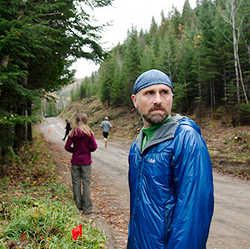
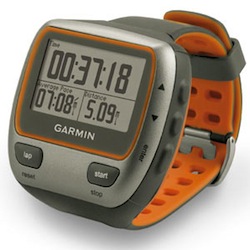
| Kevin Sawchuk | ULA Circuit Pack | Garmin 310XT | A Hot Shower |
|
|
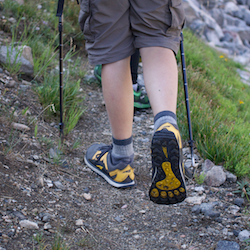
Altra Lone Peak Shoes | I wrote about the Altra Lone Peaks in Considering Minimalist Footwear for Backpacking and touted their benefits relative to so-called minimalist shoes advocated by the running-without-a-pack community. Specifically, I like what they bring to the table for backpackers: a reasonably aggressive sole, a little bit of longitudinal stiffness, and some cushioning, while preserving what I think are two valuable attributes of minimalist footwear: zero differential and maximum toe splay. My son and I live in our Lone Peaks, whether waltzing around town or trekking across a 10,000 foot pass in the Spanish Peaks.
Weight: 11 oz/shoe (Men’s Size 9.5) |
|
|
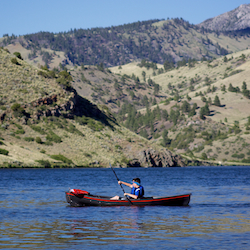
Hornbeck Blackjack Canoe | At twelve pounds, our Hornbeck Blackjack is an absolute joy to paddle. What a far cry from the old days, where the constant clanging of paddle on the gunwale, sore back, and agonizing portages relegated canoeing to one of the lowest forms of outdoor recreation for me. The Hornbeck Blackjack requires so much less effort than a more traditional sit-on-top aluminum canoe that it has completely restored my love for canoeing. Sitting inside the canoe, paddling with a kayak paddle, being able to carry it with my fingertips – and even sailing it with a Wind Paddle sail – what an example of a piece of gear getting out of the way so you can enjoy the natural world around you, like the sound and spray of waves lapping just inches from your elbows while the canoe glides silently through the water.
Weight:12 pounds |
|
|
Detachment | As much as I enjoy owning and using cool gear (see above!) I enjoy – just as much – detaching myself from those things that I do not love. Whether it’s unused gear that’s been in storage too long, clutter in our crawl space, time frittered on activities I no longer enjoy, or even junk mail – detaching myself from the obligation required to own or manage those things has given me immense satisfaction through the years. In 2012, new circumstances and intentional choices further increased my detachment from material possessions, awkward relationships, and old time commitments, and I’m looking forward to the opportunities this detachment brings as we move into 2013.
Weight: Depends on your burden… |
|
|
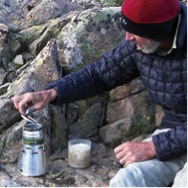
Trail Designs Caldera Keg Cooking System | The Caldera Cone has made cooking with alcohol or Esbit as reliable as canister fuel, even more so when you consider it’s wind protection and heat transfer efficiency. The entire kit weighs just 6.3 ounces, so if you want to go ultralight, this is a must have. The latest version includes some significant upgrades, including a durable Titanium cone connection and cook pot reinforcement. I prefer to use alcohol because its clean burning, but Esbit will boil water in this system in half the time.
Weight: 6.3 oz / 179 g |
|
|
Vegetable Gardening | When I’m not out backpacking and hiking I love to be outside working in the yard and garden. I have been a gardener since I was 10 years old, and perhaps that’s what influenced my career choice. I love vegetables, both growing them and eating them. I grow all the usual stuff, and our freezers and cellar allow us to enjoy organic produce the year around. We also keep our friends and neighbors pretty well supplied too. (Minimal cost, a labor of love, value—priceless!) |
|
|
Diet and Exercise | Paying attention to both has been my mantra since my 20’s. The reward is being trim, fit, and able to pursue my wanderlust. I’m sure most backpackers can relate to that. I don’t subscribe to any particular diet, just whole foods and low fat. (Doesn’t cost any extra; I love being able to keep up with the younger guys; I plan to make it to 90, at least.) |
|
|
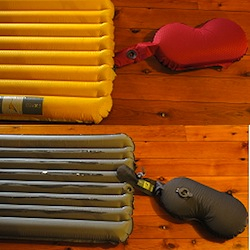
Exped Synmat UL-7S plus Pillow Pump | While labeled ‘short’, this mat is not. It is 163 cm x 52 cm and 7 cm thick (64″x24.5″x2.8″), which is quite long enough for us. It has an R-value of 3.7 – 2.5, depending on inflation. This is much higher than an empty airmat of the same thickness due to the synthetic insulation inside it. I found it very comfortable down to sub-zero conditions (on snow grass), but I have since lost it to my wife. Very sad! It was included in our SOTMSurvey of Air Mats.It should be noted that the combination listed includes an Exped ‘pillow pump’. You see, if you blow up an airmat with your lungs you quickly get a whole lot of water condensed inside the mat. This is seriously ‘not-good’. Instead I use the Exped pillow pump shown in the picture – or rather Sue uses. It inflates the mat quite fast, and then makes a very nice pillow for me later on.
Weight: 15.4 oz / 436 g (Synmat), 134 g / 4.7 oz (Pump), 570 g / 20.1 oz (total) |
|
|
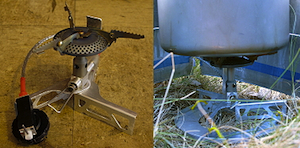
MYOG Winter Stove | Works with standard screw-thread canisters, French Campingaz canisters, and Coleman Powermax canisters, all in full winter mode. This means I can use it virtually anywhere around the world. It does not accept French Bleuet puncture-style canisters (which I regard as dangerous), nor does it accept the fly-spray cans of butane used in table-top wok stoves.The canister connector is the black bit. Safety on/off valve at canister (the white bit is the on/off valve.) Flow control valve at the stove – the wire handle. This valve controls the flow of gas, not of liquid, so I get really good fast fine control. The hose connections all rotate for ease of use. In the unit shown I have cheated and used the burner top from an FMS-116T stove, although I do also have a titanium burner head I made myself. Boil time for either burner head is similar to that of a standard upright canister stove – which depends of course on how wasteful you are of gas. Cooking for the two of us on a recent 6-day trip in the mountains required about 26 g of gas per day. In the right hand photo you can just see some yellow ‘things’ below the stove: they are Ti wire micro stakes with yellow heat shrink at the top hook. (The yellow colour helps me find the stakes when they fall in the grass.) These are optional, and serve to hold the legs of the stove down. Obviously on a table surface they are not used. I use them on the ground because the stove is now so light that it can skitter around rather easily. Fortunately the tendency to do so is reduced by the much lighter fuel hose used: it’s quite flexible. Manufacturing was by CNC machining (see the next item). This must be model/design 100 I think!
Weight: 88 g / 3.1 oz |
|
|
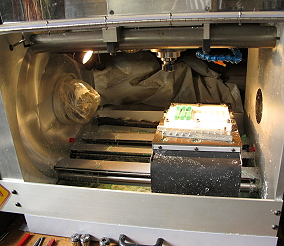
Adept CNC Machining Centre | As requested, this ‘favourite’ is not exactly a walker’s item. However, it is how I make the bits for the stove, along with lots of other ‘toys’. It is a combination 3-axis mill and lathe unit, built extremely solidly for teaching use. It is far more than a simple 2.5D router. I program it myself in g-code rather than use a CAD/CAM package, in order to take most advantage of the machine. Price is vague. The original units were made in Australia some years ago for the tech-school market, but the idea was a flop as the teachers did not have the skills to handle it. The company listed below buys them from schools, upgrades the electronics and the software, and resells them. I find the machine to be very robust: I guess it needed to be to withstand students! |
|
|
Rab Xenon | No other item in our gear closet elicits more praise than puffy insulation – my wife practically writes poetry about it. This past spring I picked up a synthetic puffy jacket from Rab called the Xenon. Warm, durable, light, and it fits well too. They even managed to squeeze in a full zip and hand warmer pockets and still keep the weight at 10.5 oz (300 g) for a men’s size medium. Coupled with a quilt and my BPL cocoon pants, it is the foundation of my three-season insulation system. When not on the trail, the Xenon never gets put back in the gear closet, as I always find myself reaching for it any time the temperature starts to drop. At $260 retail price, it isn’t exactly a low budget piece, but for something so light, practical, and versatile, it has been invaluable to me this past year.
Weight: 10.55 oz / 298 g |
|
|
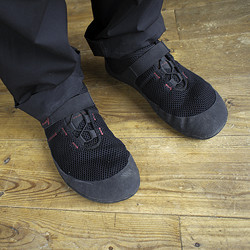
Sole Runner FX Trainer | I am a firm believer in building foot and ankle strength and flexibility in order to minimize injury. That is why on the trail I am a proponent of wearing minimalist footwear – as minimalist as I can get away with while maintaining the grip and protection I need. I also believe that conditioning the feet happens as much (if not more) off the trail than on the trail. My favorite off-trail shoe for everyday use – whether it be running, or running errands this year has been the Sole Runner FX Trainer. Slightly more protection than barefoot, a nice high-volume last, and a paltry 5.2 oz (147 g) per foot (in a size 43). They are durable too. Designed in Germany, made in Europe, they retail for $80.
Weight: 5.2 oz / 147 g |
|
|
Apple iPad | I feel so cliche by saying that the iPad had changed my life. But it really has. I am a geek at heart and by trade. In the past I have always lugged around some form of laptop/notebook/netbook but it always felt unnatural and awkward in situations where people would pull out a book/magazine to kill some time. I also liked to keep notes and todo lists on my computer, but could never make that work easily when out-and-about. While smartphones were better, they weren’t great for doing a whole lot of reading or writing using the small screen (maybe that is why Twitter was invented – so people with smartphones could be “bloggers” too?). Now with my iPad I have my books (for pleasure and for reference), my email, my notes and todo list, my RSS, the web, maps, … pretty much anything I need in a handy book-sized device. Where have you been all my life!? |
|
|
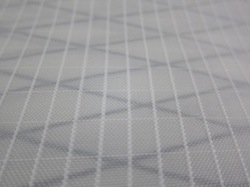
Dimension Polyant DX40 Fabric | DX40 is not my perfect pack fabric, but it is the closest I’ve yet found. Cut resistance, relevant when carrying skis and bushwacking, is outstanding. Waterproofing is, as would expected of a D-P laminate, exceptional. Straight abrasion resistant is very good, even compared to heavier fabrics, but could be better if the face weave were tighter. This face fabric also absorbs water, though the amount is quite modest, and it dries quickly. For a pack which will be used hard in wet environments, nothing better currently exists, save (perhaps) some purer dyneema weaves whose prices make 30 bucks a yard seem cheap. Beyond the pure performance of the fabric, the real pleasure I’ve gotten from DX40 this year has been working with it. The hand is markedly softer than VX21 or WX40 yet still holds a crease, and given it’s dyneema content it is easy to cut (use a sharp rotary cutter). Most importantly, I’ve had the satisfaction of using DX40 and years of fiddling to make a pair of packs that work well and have gone on many grand adventures. The only obstacle for the home user is finding some. Currently none of the usual suspects carry it. Your best bet is emailing a friendly cottage manufacturer who builds with it and asking nicely.
Weight: 7 oz / 198 g per yard |
|
|
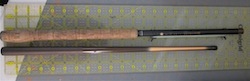
Daiwa Soyokaze 27SR Tenkara Rod | There was a lot of noise this summer over what was and was not a tenkara rod, mostly as members of the billowing tenkara industry scrambled to take market share from TenkaraUSA. I’ve been happily using my TenkaraUSA Amago since they were introduced, and was only seduced into buying a second rod buy the relative cheapness of the 9 foot long Soyokaze and the fact that it is so different from the stiff, 13.5 foot Amago. It turned out to be some of the most enjoyable money I spent all year. I don’t care about the definition of tenkara. As a fair-weather fisherman, I do care about the 3-4 months a year I can use dry flies to stalk freestone streams and rivers for native trout. In my mind this is right up with skiing powder through widely spaced aspens, pedaling endless domes of Navajo sandstone, and soloing exposed 5.3 alpine granite as one of the most fun and fulfilling outdoor experiences possible under human power. The Amago has shown me that tenkara is the best way to do this, and the little Soyokaze took the intimacy and exactitude of tenkara and applied it to the tiniest of headwater streams. The same river-tugging thrill a 22 inch bull trout gives the Amago can be had with a 6 inch cutt hooked with a Soyokaze, and the nine foot reach is enough but not too much in truly small streams. On many days this summer I found myself catching 20+ fish an hour, hidden in the bushes within a mile of crowded, hallowed fishing grounds. Hunting wild trout, seeing no one while doing it, all while being 10 minutes from the truck? That is just cheating. The Soyokaze isn’t perfect. I find the grip a bit too thin for all-day casting, and the general build quality is a step below the Amago, but the price is competitive and the length, action, and stiffness combine into a great package for truly small stream fishing. Tenkara is one of those rare things were you really can believe the hype.
Weight: 1.6 oz / 45g |
|
|
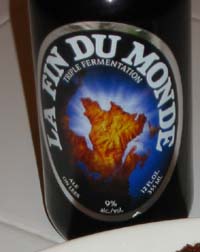
Unibroue La Fin du Monde Beer | The microbrew craze in the USA mercifully shows no sign of slowing down, and the cultural backwater of Montana is even turning out some impressive products, but none of them hold a candle to this exceptional libation. The ability of beer to enhance most things in the world has been axiomatic since the days of Socrates, and for me this is the best beer on earth. To quote Wittgenstein, “Whereof one cannot speak, thereof one must be silent.”
MSRP: Between $9 and $10 per 750mL bottle |
|
|
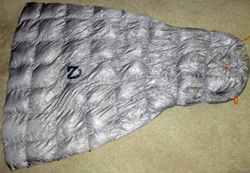
NEMO Equipment Siren 30 Quilt | NEMO has entered the sleeping gear market in a big way and being a backpacking-quilt fan my favorite item is their Siren 30 quilt. Using top-notch materials like 0.77 oz/yd2 (26 g/m2) 10-denier nylon and 850-fill power down it is the nicest retail quilt I have seen to date. With loft to as much as 2.5 in (6.3 cm) I think it is accurately rated at 30 F (-1 C), but I took it lower by adding a down sweater into the mix. I think what I like the most about it is just the fact that a large manufacturer is noticing, and catering to, us quilt users.
Weight: 18 oz / 510 g |
|
|
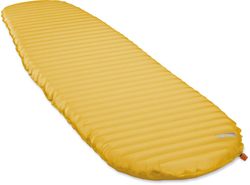
Therm-a-Rest NeoAir XLite Sleeping Pad | The original NeoAir sleeping pad was the biggest step forward in sleeping pad design in many years, and has been wildly popular, grabbing a ton of market share in the category. So how do you follow the largest sleeping pad success is recent history? By making it about 15% lighter while increasing the r-value (warmth) by 28%. It certainly works for me. Coming in at an r-value of 3.2 now my Large model saw use in 5 states with many nights at or below freezing, all with a quilt, meaning I was right on top of the pad. With at least 26 nights on it since last spring (that I can remember) I have had no problems with it at all.
Weight: 16 oz / 460 g |
|
|
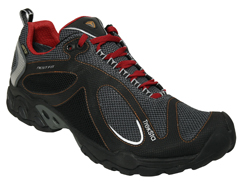
The TrekSta NestFIT Last | I just discovered TrekSta shoes at the end of summer and said, “Why hasn’t this been thought of before?” They made the last that their shoes are built on in the shape of a real foot, not a club with an ankle. I got a pair of their Evolution GTX Mountain Trail runners in time for a tough 10 days, 137 miles (221 km) of hiking in California and came away quite impressed. I have a weird foot as my toes are wide, yet my heel is narrow, so I can’t buy a wide size. Too-narrow toe boxes are always the problem for me and the NestFIT seems to be the ticket. I plan to get a lot more use next year and may look into boots too.
Weight: US 11: 15.4 oz / 47 g each |
|
|
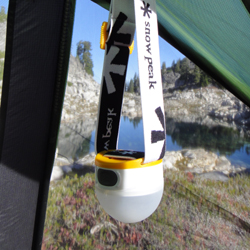
Snow Peak SnowMiner Headlamp | The Snowminer is both a headlamp and a lantern. With two small magnets, the silicone globe collapses, putting the lens close to the LED emitter, This makes a headlamp that works really well for backpacking, even when scrambling off-trail at night. When the globe is lightly pinched, the magnets release, creating a wonderful diffused light. A hidden hook in the strap makes it easy to hang and the regulated electronics bring the lantern from very bright to less than a single candle. Despite the fact that the headlamp is fairly large and spills a bit of light to the sides and the silicone can pick up some dirt, this is a beautiful piece of gear. It serves both purposes well and adds a lot of cheeriness to my camps.
Weight: 3.5 oz / 99 g |
|
|
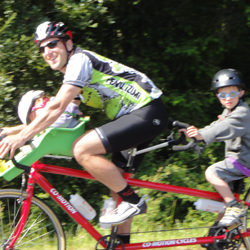
CoMotion Periscope Tandem | I own five bikes, and I use all of them. But I use our CoMotion Periscope tandem WAY more than the others. With crank shorteners, pedal blocks, and a slammed seat, it fits Henry (age 6) perfectly and an iBert safe-T-seat fits Lily up front (sleeping in this picture, age 3). Together we explore our neighborhood, the San Juans, and everywhere else we can. With a 10 minute adjustment, my wife Amy can ride on the back and we can talk for miles and miles. I love our tandem! |
|
|
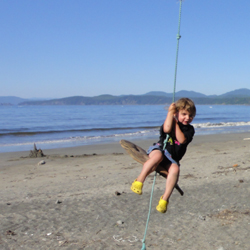
The Beach Swing at Cape Alava | Backpacking with kids = playing. I love playing outside with my kids. This summer while backpacking on the Olympic Coast, we discovered this great rope swing just north of Cape Alava. Between building sand castles, checking out seastars, and studying whale bones at the Makah ranger station, this swing was the best part of the trip. |
|
|
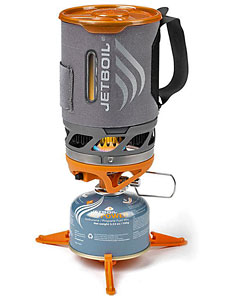
Jetboil Sol Stove | Following Will’s excellent review, I decided to try out Jet Boil’s lightweight integrated canister stove, the Sol. Saying farewell to my trusty (and often frightening) jet engine liquid fuel stove, the MSR Whisperlite International, was easy after taking the Sol out for a test run. Boiling times are incredibly fast, and this thing absolutely sips fuel, stretching canister life to a remarkable degree. From quick overnighters to weeklong car camping trips in the desert, the Sol is my first choice. For group cooking, the larger Sumo cup is the way to go.
Weight: 11 oz / 312 g |
|
|
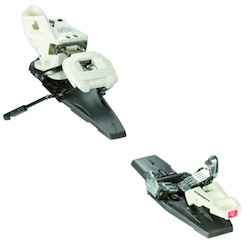
Dynafit Vertical ST AT Binding | No longer will I drag cement blocks (Marker Dukes) up the hill. Simple, lightweight, and reliable, the Vertical ST binding allowed me to reduce the weight of my backcountry touring set up by nearly 4lbs. The toe-pin system reduces underfoot mass on the ascent, and the releasable heel and low height inspire confidence on the way down – no matter how demanding the terrain.
Weight: 18.3 oz / 520 g |
|
|
‘93 Subaru Rust Bucket | After a long, emotionally draining, and expensive addiction to performance Subarus, I decided to sell my beloved Impreza WRX. The accumulating debts of college and a new-found lightweight mindset shifted my priorities (Do I really need 280 horsepower?), and led me to simplify my life, shrug off a precious material burden, and instead purchase a beat-up 1993 Subaru Legacy, courtesy of BPL’s own Sam H. Each body panel has its fair share of rust, dents, and scrapes, and I absolutely love it. The mileage could be 70,000 or 370,000 – I’ll never know. It gets me to and from the trailhead and the mountain in rust-bucket dirt bag Subie style, is unquestionably reliable, simple to maintain, and easy on gas. All wheel drive plows through deep puddles in the summer and dominates unplowed roads in the winter. The time I would have spent tinkering under my WRX and stressing over reliability issues is now spent worry-free on the trail or the slopes. The experience has taught me how rewarding it can be to reduce material possessions, no matter how seemingly precious, and do more with less.
Weight: 3,200 lbs and dropping as rusty bits fall off |
|
|
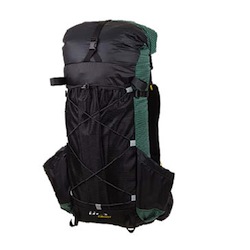
ULA Circuit Pack | This is my go to pack for trips from 3-7 days. It has a great balance between lightweight and durable–it’s not the lightest pack on the market but I’m not afraid of taking it through heavy brush or scraping it on the wall of a tight granite gully. It has a great set of usable features–its waistbelt pockets keep the calories I need to keep moving close.
Weight: 28oz (currently 35oz) / 794 g |
|
|
Garmin 310XT | My favorite training tool. I can gauge my pace, heart rate and distance while I’m out running. With the Garmin I can turn any road or trail into a controlled workout space. Keeps my training in the beautiful outdoor spaces I enjoy. When I download my Garmin data to Strava I get additional information about my performance and can virtually “race” others on popular segments.
Weight: 2 oz / 57 g |
|
|
A Hot Shower | Many of the best “things” in life are not things. To me these include the happy energy of the kids I coach, being indoors and warm when it’s raining and the health I currently enjoy. In that vein a hot shower is high on my list of daily simple pleasures. Think about how amazing it is to have perfectly heated water conveniently delivered to wash away the dirt and sweat from my workout and get me relaxed and ready for bed. Feel the enjoyment! |
Previous Years’ Staff Picks:
Join us in the forum below and let us know what your favorites are from 2012!
It is natural for skiers, as their skills improve, to seek more challenging terrain. And, with access to mountainous landscapes, it is inevitable for a skier to enter the realm of ski mountaineering. An overview of UL backcountry ski mountaineering gear and discussion of proper gear choice.
You don’t have access to view this content.
A 22-ounce waterproof dry suit designed for packrafters with an eye towards saving weight and bulk on longer expeditions.
This review presents a summary of features, specifications, usage context, field immersion testing and use, limitations, and strengths of the Alpacka Stowaway Dry Suit based on my experience with it in the context of both wilderness and roadside packrafting for the past three months.
The Alpacka Stowaway Dry Suit is uniquely characterized by the following features:
For roadside packrafting, day-tripping, or other types of trips where I don’t have to haul a lot of gear on foot over long distances, a conventional (and heavier) dry suit is usually a better option for me than an ultralight drysuit like the Alpacka Stowaway. These things are expensive pieces of equipment that we want to last a long time, and sometimes, durability trumps weight.
But there are times when an “ultralight” dry suit fills a particular need, especially on long treks where weight matters most, and in conditions where I spend a lot of time packrafting in cold, wet, and windy conditions.
A dry suit layered over warm clothes is not just a luxury on a cold and rainy day, but an essential item when running any sort of whitewater in winter conditions (i.e., water temperatures near freezing and air temperatures below freezing, with the predominant form of precipitation being snow).
But a dry suit for packraft trekking has to serve multiple uses as part of my overall layering strategy. First and foremost, it must serve as storm clothing when I’m trekking in especially inclement conditions. Second, it must serve as a layer than can integrate with winter insulation, including my insulating jacket and pants, and my insulating quilt. The “uni” nature of a dry suit makes it an exceptional piece of apparel for retaining heat, and I want to capitalize on this as much as possible when integrating it with my clothing and sleep system.
I tested the Alpacka Stowaway dry suit in a number of immersion scenarios in water temperatures between 35 deg F and 55 deg F, and air temperatures ranging from about 15 deg F and 50 deg F:
Test locations included the Schumaker Canyon stretch of the Grande Ronde River (Washington State), the Bear Trap Canyon stretch of the Madison River (Montana), and the “Mad Mile” stretch of the Gallatin River (Montana).
My observations include:
See below for the in-depth video review of the Alpacka Stowaway Dry Suit.
If the video does not display below, refresh this page by clicking this link.
The Alpacka Stowaway Dry Suit will occupy an important part of my non-summer-season wilderness packrafting kit, and for most of my wilderness trips in inclement conditions, will replace one of the following other systems that I’ve been previously using:
My only recommendations (my personal preferences, really) are:
Disclaimer: This product was provided to me by the manufacturer with no obligation or agreement whatsoever to review the item and is owned by the author.
A Primer to Backcountry Ski Travel – Why you can and should overnight ski in the backcountry
You don’t have access to view this content.
The evolution of the frameless backpack and an analysis of current technology and features of four lightweight packs: the Golite Jam, Mountain Hardwear Thruway, Black Diamond Demon, and the authors MYOG Black and White pack.
You don’t have access to view this content.
Sure they look nice, but how do these clean, uncomplicated packs from new manufacturer Boreas handle the trails?
C’mon now, really. How often does a credible new pack company come along? It seems that relatively few makers delve seriously into backpacks, and fewer still into packs that would interest those of us in the ultralight and, increasingly, the broader backpacking community. When I first heard of the Boreas Buttermilks 55 I had little to go on: I knew it was a 3 pound 1 ounce, framed, 55 liter pack (much to their credit, my sample only weighed 2 pounds 12.5 ounces. The pack cover itself weighs an additional 3.6 ounces). At the very least it sounded worth a try!

A clean and stream-lined pack that still has user-friendly features and a full-on frame.
After receiving the pack, my initial impressions were all favorable. First, let me quell the fears of those who tremble at the mention of an unfamiliar company: this ain’t no rinky-dink pack. They did quite a nice job. The pack design is simple and stream-lined, yet comprehensive. There is a large but “fitted” spandex-y center back pocket that proved excellent for swallowing rain gear and such. Two compression straps are thoughtfully placed on each side, the lower strap either overlaying or routed under a stretchy side pocket. The top of the pack is a simple roll-up with a strap buckling over the top. There is a single medium-sized zippered pocket that the factory rain cover was stashed in; I found the horizontal pocket, located just above the back stretch pocket, perfect for my little “daily” sundries.

The little stash pocket is in a perfect position for quick and easy access, with no fumbling about or spilling of contents.
The lines of the pack are clean, devoid of unnecessary or showy color-contrasting curved panels. Turquoise webbing, neatly placketed on each side of the back, and a single centered piece securing the top, are really the only accents. There is a hydration port on each upper corner of the pack, though I just strap my bladder on top and find the ports superfluous.
The back-side of the pack, or rather, the working side, or if you want to get confusing, the front-side, the part interfacing with your sweaty body, inspired both confidence and quizzical considerations. The upper-most portion of the back, the “shoulders” of the pack if you will, are as clearly defined and toned as an athlete’s. There is a slight curvature away from your body behind the head, and a relatively tightly-radiused curve of the upper frame rod down into its effective stay on each side of the pack. Those stays radius body-ward from the upper-most stretch, until about 5 inches down, where they curve back away, following the curvature of the back. The space or panel in this entire upper region of the pack is smooth and semi-rigid, and gives the appearance of a pack frame that will provide more than adequate support for its loads. I liked that there is a solid 5” gap between the attachment of the load lifters at the top of the frame, and the attachment of the shoulder harness at the top of the back pad. That kind of differential in rise affords ample range for the lifters to, you know, lift. (Nice detail: hypalon-ish thumb loops on the load lifter straps.)

Taut frame, ready for duty
The back pad itself was not quite as confidence-inspiring as the upper reaches. It isn’t the pale blue of the foam, nor the holes punched in the foam, nor the corrugations of the foam, nor the curvature or even shape of the pad. But something about the combination of all those things is slightly off-putting. I have been trying to “reason out” this subjective impression, and I believe that part of it is because the pad and panel seem quite counter to the under-stated design of the rest of the pack. But logic does abide in this impression, as well. The curvature of the pack’s lumbar region is over-exaggerated, in my opinion. There is a bit too much protrusion of the lumbar pad, not consistent with the slightly less pronounced though perhaps slightly over-bent upper back contour. (More on this later.) I found that I also was questioning the utility of combined hole-punches and corrugations, which seemed born out later in testing. All that said, it is a fine and professionally executed back panel.

A curvy and waffly back panel, plus an unencumbered view of the hipbelt wings.
The shoulder harness is perhaps a little straighter in appearance than I would expect, with slightly less curvature around the neck than seems standard, but was reasonably comfortable. The foam is die-cut. Not sure if this helped with airflow or not, to tell you the truth, but could also be to address foam compressibility and weight. The uncut foam seems a little thicker and stiffer in-hand than others… just an observation during overviews, not something noticed on the trail.
That brings us down to the hipbelt. From what I’ve seen on the retail floor, many consumers expect a far beefier hipbelt than necessary. There seems to be a desire for hulking Hummer-esque hipbelts. But as many of us in the ultralight world have found, a much lighter-duty hipbelt can do the trick perfectly. When I first saw the Buttermilks’ hipbelt, I’ll admit that at absolute first-blush it struck me as flimsy and a wee lame. Then I felt ashamed of myself, and allowed that it would probably work just fine. The zippered pocked on each side is large enough for a compact digital camera or a few energy bars.

On the trail with a full load. My 14-year old pup gets spoiled with her own Therm A Rest, plenty of show, a long tether for camp, and a bit of insulation for night. Great for testing packs, not so great for base weight!
On-trail I found the Boreas Buttermilks 55 a relatively comfortable and delightfully appointed pack. The features were exactly what I want and need in a pack, nothing more or less. The pockets were all well-sized and practical, compression straps all worked well in both actual compression and physical operation. I found myself using the hipbelt pockets more than I ever have before on a pack. It was a relief not having a floppy ol’ lid on top, getting in the way. The small zippered pocket was perfect.
I did find a few concerns in terms of carry comfort. The most obvious warning flag was that I found myself fiddling with adjustments quite regularly. Constant fiddling is a good sign that something about the pack doesn’t fit well. Properly fitted and adjusted, you should be able to pretty much put on a pack, fine-tune your adjustments, and hike away. You should, essentially, be able to forget about the pack, its burden, and its contact with your body… as much as possible or realistic.
Evaluating the cause of my fiddling found a few contributing factors. First, I felt that the upper region of the shoulder strap does need more clearance around the neck. Second, I found a pervasive pressure on my lumbar region, countered by the most mild of pulling-away sensation toward the upper back (yes, even with the load lifters fully engaged). I believe that the lumbar pad is curved and formed as to be too bulky, and that this character might be influenced by the overall curvature of the frame. I would recommend a little less “stylistic” curvature of the frame, slightly less differential in the convex lumbar region versus the concave upper back. That said, I think that the primary reason I noticed these points was because of the hipbelt.

Can you imagine… 55 liters of buttermilk?!
Although I have used packs with flimsier hipbelts and found those belts perfectly adequate for ultralight loads, this hipbelt is not particularly well designed. The first problem is that it is too stubby. It would probably fit great on a pubescent teen or the uber ectomorph. The problem caused by the stubby belt is that it does not wrap around the iliac crest enough to lock the belt in place on your skeletal structure. End result, the pack keeps slipping down. I could not keep the pack in place. It would relentlessly creep down below my iliac crest, and I would again hoist the pack and cinch the belt and feel the creep back down. If the hipbelt were slightly stiffer, or had some structure above and below the center of the belt, it might grip the small section of iliac crest available to it sufficiently enough to hold the pack in place. But if I were doing a re-design, I would both lengthen the belt slightly and create slightly more structure above and below the center of the belt.
The last concern I had was the sternum strap. Either the specs of a sternum strap component are off, or the curvature of the lower part of the harness exerts too great a force on the sternum strap, because the strap does not stay in position. I found that the sternum strap consistently crept upward from whatever lower position I used. There is both a surprising amount of (relative) curvature at the low end of the shoulder strap, and the slider adjustment (while smooth) needs a little more friction; in short, I think both contribute to the creeping sternum strap. The creeping isn’t a deal breaker, but was one of the more irritating aspects of the pack on-trail. If I position the strap to pull tension in an area, I don’t want it to go back to position “A” all the time!

The sternum strap slider is remarkably, wonderfully easy to reposition. Unfortunately, it also just as easily UNpositions itself.
Boreas’ Buttermilks 55 strikes me, in many regards, as an ideal “jack of all trades” pack for the light to ultralight crowd. The design is uncluttered, but still manages to provide key features and more conventional suspension. I think that the perception or experience of some people with ultralight packs is that of packs that have no frame and use socks as shoulder-strap padding. This is not that kind of pack. The shoulder straps and padding are “real.” The hipbelt, well, is verging on “real.” I would not recommend this pack to someone who might consider themselves stocky. Actually, I would primarily recommend this pack to those who consider themselves thin… at least until Boreas adds a little length and structure to the belt (not the webbing, there’s plenty of webbing to go around… just more of the actual support part of the belt is needed).
What stood out the most during field testing was the mismatch of the pack frame to the pack hipbelt. The frame on the Buttermilks is pretty darn substantial for an ultralight pack. I am confident that the frame could handle just about any typical load I squeezed in there. The hipbelt, on the other hand, is not capable of supporting nearly the same amount of weight that the frame can carry. The end result is the somewhat peculiar feel of a frame that can, and is trying, to transfer weight to your hips, but a belt that won’t…. quite… get the weight… locked in place. The pack could be substantially improved by making the hipbelt a little longer and stiffer, having a little less differential between lumbar and upper-back curve, and by tuning the sternum strap so that it doesn’t slide unless moved by the user.

Ignoring my 12-pack, you can see the brevity of the hipbelt wings here. Also note the wrap of the shoulder straps and load lifter angle. Lastly, note gap at upper/mid back… partly frame curve, partly from downward slippage.
In case my above remarks make this sound like a not-quite desirable pack, let me be clear: The Buttermilks is a great pack. It is far better than many others I have carried. It is built to last, with materials and stitching that inspire confidence. The design element included and excluded are spot-on. And the pack carries pretty well. I hate to say it, but I’d be thrilled if I could slap a Granite Gear hipbelt on here and safety-pin the sternum strap in place. As it currently stands, I would highly recommend this pack for those who are slight-of-build. For those of medium build, I would recommend it as a pack to consider and try. If you’re on the stockier-than-average side, this is probably not your dream pack (but then, how many ultralight packs really are). I look forward to future iterations of this pack, and of the products Boreas continues to bring to market. I think they’re a company to watch.

Ready for the trail!
Disclosure: The manufacturer provided this product to the author and/or Backpacking Light at no charge and is owned by the author/BPL. The author/Backpacking Light has no obligation to the manufacturer to review this product under the terms of this agreement.
Proper gear choices, site selection, and preparation techniques can make or break a winter excursion.
You don’t have access to view this content.
Finally, a remote-canister stove without the extra weight.
Brad: Humor me, if you would. Pretend this isn’t a product review. Pretend that we’re hoisting a pint while talking gear, and get caught up in a discussion on backpacking stoves… It strikes me as a glaring discrepancy that we have canister-mounted stoves weighing less than two ounces, but the lightest (readily available) remote-canister stoves weigh at least three times as much. Take, for example, the Snowpeak Litemax, at 1.9 ounces, and the MSR Windpro, at 6.6 ounces. HUH? I mean, let’s see… you separate the canister-mount stove from its valve, add a fuel line, and a few legs. Where the heck does all the weight come in?!
Ryan: I would love a remote canister stove that weighs 3.5 oz. I would love it more if I could use it in the winter and run it in inverted canister mode for a liquid feed. I would love it even more if it could replace my MSR WindPro for both group cooking (2.5 to 4.5L pots) and winter cooking and snowmelting chores. I know, I know. What do you expect for 3.5 oz? So, we’ll let Brad approach this review as a wise and cautious reviewer might, so that he can counsel you into a wise recommendation about this stove’s performance-to-weight ratio. As for me, I’ll try to give my perspective on Reckless Use Scenarios (RUS’s) that might be well outside the scope of both manufacturer recommendations and the types of activities practiced by the traditional (is there such a thing?) ultralight backpacker.
Enter the Olicamp Xcelerator Ti (and equivalent Fire-Maple FMS-117T), a new stove to the US market – a remote canister stove that weighs only 3.5 ounces. (Note: While Brad was using the Olicamp model, Ryan used the equivalent Fire-Maple FMS-117T. Both stoves are exactly the same in terms of design, function, materials, and performance; they are just branded differently by two different companies).

Medium-sized head, minimalist but rugged pot supports, stream-lined valve and mucho titanium all help the Olicamp Xcelerator / Fire-Maple FMS-117T hit its low weight.
Canister stoves can be a great, hassle-free option for three-season backpackers. The stoves are easy to use, just requiring you to open the valve and ignite the stove. Canister stoves generally give you excellent flame control. They’re almost impossible to break, burn clean, and tend to be small and light. But a top-mount canister stove does have some drawbacks. Top-mounted stoves are not noted for their stability, with the pot sitting relatively high above the ground… and on relatively narrow pots supports. Further, top-mounted stoves essentially preclude the use of a windscreen (to avoid over-heating the canister).
In contrast, a remote-canister stove sits closer to the ground, typically has a broader base, and using a windscreen is no problem. Remote-canister stoves would tend to work better for larger pots and/or more people per cook group. The ease of use associated with remote-canister stoves can also make them ideal for Scouting groups.

All packed up and ready to go. Fits great in an MSR Titan mug.
Remote-canister stoves can be excellent options for “actual cooking.” The fine control of flame adjustability, combined with a more stable stove, make these stoves good for more than just boiling water. Brad used the Olicamp Xcelerator / Fire-Maple FMS-117T to cook bacon and eggs, make pancakes, and grill bread on car-camping trips – Ryan used it to bake cinnamon rolls and fresh trout in a makeshift fry-bake pan. If you want a stove that can simmer a sauce and not tip the first time you stir the pot, this could be a good stove for you.

Baked cutthroat trout from an alpine lake in the Lee Metcalf Wilderness, Montana. This succulent dish involves steam baking the trout at the lowest possible simmer and was an easy challenge for the Olicamp/Fire-Maple Stove.
Both of our samples of the Olicamp Xcelerator / Fire-Maple FMS-117T weighed 3.4 ounces. The burner head is approximately 1.75 inches in diameter, and the base of the stove is approximately 5 inches in diameter. The titanium pot supports are reassuringly solid, and easily fold in to sit on top of the burner head. The legs pivot inwards toward the bottom of the stove. The valve is a clean, stream-lined assembly with a knurled aluminum knob that provides easy control. The fuel tube is flexible and thin, and thus, highly compactible.

The valve.
Brad: I’m not usually a canister stove kinda guy, but I like the Xcelerator Ti. A lot! I find myself toting it along on trips just because it’s so… mindless. In a good way! It’s the kind of stove that you can do nearly anything with, without really having to think about the stove. You can concentrate on the food, the meal, instead. Or the conversation. Or whatever. The burner head is a good size for heat distribution, the weight is negligible.
Ryan: My choice for a solo canister stove is a Jetboil SOL Ti. What Brad calls mindless I call too much work. Call me lazy, but I like a stove that I can fire up from my bivy sack using one hand and no vision (I haven’t had my coffee yet, after all). So I approach the Olicamp Xcelerator / Fire-Maple FMS-117T from an entirely different perspective: I’m looking for winter or group cooking power, and fine control for simmering exquisitely gourmet dishes. Power to boil a 4.5L pot of water, or melt a pot of snow. Simmering control so that I don’t burn the cinnamon rolls that I’m surprising my guided clients with.

Ryan’s makeshift "fry-bake" pan (a 9" MSR fry pan topped by an aluminum plate with a wing nut knob). Although hard-anodized, uncoated aluminum makes the ideal fry-bake pan, this Teflon-coated version works in a pinch and is lighter, but demands very low simmering. The Olicamp / Fire-Maple stove delivers this ability, but not at the expense of the usual degree of latency (the time between valve adjustment and flame power change) common to all remote canister stoves.
We have a few quibbles with the design: We’d like for the bottom of the stove to sit slightly higher off the ground. If there were any way to leave everything else the same, but machine some of the bottom off, that would be great. We suspect that the legs would have to be lengthened slightly, however. The only possible flaw we saw with this stove is that it requires a slightly flatter platform. Because the center of the stove is so close to the ground-roughly 1/8 of an inch-undulating ground can make the stove high-center a bit. It was never a problem for me. I’d just move the stove a few inches. But this is the stove’s only potential negative.
One issue with this stove, and it’s hardly a negative (unless your pipe dreams have been shattered for winter use, as in Ryan’s case) – is that the stove offers no pre-heat tube or other mechanism for vaporizing liquid fuel as it leaves the burner. That means running the stove in an inverted canister mode is … risky, due to the intermittent little blobs of liquid fuel (which turn into fireballs) that leave the burner head. Note that we said risky and not impossible. This is where Ryan’s RUS strategy for product testing was executed. Our conclusion, though: don’t expect a miracle, and be prepared for utterly low performance (wasted fuel) and extremely hazardous operation.

Not much in the way of ground clearance, here, but then that adds to stability. This proved to be more of a slight psychological irritation, more so than a problem in the field. If I found myself needing more level ground, I just moved the stove a bit.
The Olicamp Xcelerator / Fire-Maple FMS-117T might be a stove most backpackers should consider in their gear closet. If winter is for sipping cocoa by the fireplace, then you couldn’t really want anything more, or less, from a backpacking stove. If winter means “Finally! Time to go campin!” then perhaps this isn’t your stove… unless you have a dedicated winter stove already. Reality, though, is that this is a very versatile, very light stove that is nearly as easy to use as your home stovetop. There is only a 1.4 ounce weight difference between the Olicamp Xcelerator / Fire-Maple FMS-117T and a Snowpeak Litemax… and frankly, the Xcelerator has relegated both of our canister-on-top stove to storage. The weight difference is negligible, and the benefits of the remote canister design are too many to ignore just to save an ounce or two.

The Xcelerator and a Snowpeak Litemax folded up for travel. Considering how diminutive the Litemax is compared to other stoves, the Xcelerator is remarkably small.

Ryan’s group cook kit designed around the needs of a 4-person Scout Patrol includes the Fire-Maple FMS-117T, a 2.5L pot for water boiling and pasta cooking, and a 9" fry-bake. We use the latter in combination with the stove’s simmering ability to make cinnamon rolls, pizzadillas, fried bagels, baked trout, baked mac-n-cheese, and more. The morale provided by fry-baked foods cannot be underestimated. My conclusion for group cooking: The FMS-117T replaces my WindPro II for pot sizes less than about 2.5 liters, where fuel consumption and efficiency between the two are similar. However, for larger volume pots (we use 4.5L pots for large patrols and groups), The WindPro II’s larger burner head, and preheat tube (which allows for the canister to be inverted) means that boil times and fuel use are significantly less (15%+ depending on conditions) with the WindPro II vs. the FMS-117T.
Disclosure: The manufacturer provided the Olicamp product to Brad and/or Backpacking Light at no charge and is owned by the author/BPL. The author/Backpacking Light has no obligation to the manufacturer to review this product under the terms of this agreement. Ryan purchased his Fire-Maple stove directly from the Fire-Maple company in China.
Ten years ago, packrafters had few options. Today, the choices are many, and the future looks very promising.
You don’t have access to view this content.
Is wilderness really a cure for depression, or just a temporary escape?
You don’t have access to view this content.
Fat bike, skis, or snowshoes? A discussion of the most efficient tools for oversnow travel.
You don’t have access to view this content.
You don’t have access to view this content.
“Wilderness settles peace on the soul because it needs no help. It is beyond human contrivance.” — E.O. Wilson

Illustration by Mike Clelland
The American writer and ecologist Henry David Thoreau once wrote: “In wildness is the preservation of the world.” It was a credo deemed so important that another great writer and ecologist, John Muir, thought it worthy of plagiarism.
Muir, the wilderness prophet later wrote: “In God’s wildness lies the hope of the world – the great, fresh, unblighted, unredeemed wilderness.”
A number of years ago a trail running accident, (I tripped and fell down a crag) left me with a broken wrist, a broken ankle and forty stitches in my head. During my period of convalescence I was aware that I was becoming more and more depressed. I wasn’t sleeping well, I had become short tempered and comparatively slight setbacks cast me into further depression. I wasn’t very pleasant to live with. While I was thankful to be alive it wasn’t until I was well enough to limp out into the forest that I began to feel better again. Fortunately I recognised, almost immediately, the healing nature of such wild places and those, albeit short, excursions quickly became a crucial element in my recuperation.
Today increasing numbers of people are recognising the value of such a return to nature and many are embracing a more fundamental credo and another plagiarism of Thoreau’s words – in wildness is the preservation of the mind.
Depression is a serious illness. Health professionals use the terms depression, depressive illness or clinical depression to refer to something very different from the common experience of feeling miserable or fed-up for a short period of time, the form of depression that most of us suffer from time to time.
When you’re depressed, you may have feelings of extreme sadness that can last for a long time. These feelings are severe enough to interfere with your daily life, and can last for weeks or months, rather than days.
Depression is quite a common condition, and about 15% of people will have a bout of severe depression at some point in their lives. Depression affects people in many different ways and can cause a wide variety of physical, psychological (mental) and social symptoms.
A few people still think that depression is not a real illness and that it is a form of weakness or admission of failure. This is simply not true. Depression is a real illness with real effects, and it is certainly not a sign of failure. In fact, famous leaders, such as Winston Churchill, Abraham Lincoln and Mahatma Gandhi, all experienced bouts of depression.
I would strongly recommend anyone suffering from clinical depression to seek medical advice, but many of us suffer from the lesser forms of depression at some stage in our life and I’ve become convinced that exposure to wilderness, even for short periods of time, can help us overcome it.
Over the last century, our steady urbanisation has ensured a steady divorce of our physical lives from the natural world, so that we no longer consider ourselves a part of it. Indeed, it was Carl Gustav Jung’s belief that the crisis of our world today has two root causes: one is this divorce of our physical lives from the natural world, so that we no longer feel ourselves a part of it. The other is the over development of our rational, analytical consciousness at the expense of the instinctive, intuitive side of ourselves that is expressed in dreams, myth, fantasy and art. According to Jung, we have become cut-off from both inner and outer Nature. We’ve lost trust in the traditional faiths, the spiritual side of our nature has been subdued and the resultant loss of meaning in the lives of many people is reflected in statistics for depression, suicide and mental illness.
My experience is that walking through wilderness can genuinely alleviate the symptoms of depression. There is a great freedom in being able to walk where we want to – through the woods, up a mountain, along the coast. We can go fast, we can amble, we can walk with others or we can walk alone. We can walk for an hour, a day, a week or a month. We can think great thoughts, or simply empty our minds. We can meditate, we can pray, we can dream up verses of poetry or we can simply look around us and wonder at the magic in every view. All these choices are ours – no one makes them for us. Furthermore, we can change our choices according to the minute-by-minute requirements and fancies of our minds and bodies, our own personal rhythms
“Personal rhythms are as much a part of our structure as our flesh and bones,” says Bertram Brown, one-time director of the US National Institute of Mental Health. Walking lets us adjust our lives to these rhythms. When our rhythms are at a low ebb we can cosset ourselves by walking slowly or simply lying down in the middle of a flower-filled meadow. When we feel strong and purposeful we can test ourselves by climbing a mountain, by finding trails that require us to wade streams or scramble up crags, by walking hard until we gasp for air. Whatever our rhythmic needs, walking and wilderness offer the answer.
Dr. Horst Mueller is a clinical psychologist in Alberta, Canada and he’s an advocate of the simple campfire: “Its flickering light brings you into an alpha-wave state,” Dr. Mueller says. “Alpha wavelengths are those created by meditation and deep relaxation; they lower stress and give you an overall sense of enhanced well-being and creativity.”
Many doctors today recommend increased exercise for those suffering from depression, but just how exercise reduces symptoms of depression and anxiety isn’t fully understood. Some evidence suggests that exercise raises the levels of certain mood-enhancing neurotransmitters in the brain. Exercise may also boost feel-good endorphins, release muscle tension, help you sleep better, and reduce levels of the stress hormone cortisol. It also increases body temperature, which may have calming effects. All of these changes in your mind and body can improve such symptoms as sadness, anxiety, irritability, stress, fatigue, anger, self-doubt and hopelessness.
If you exercise regularly but depression or anxiety symptoms still interfere with your daily living, seek professional help. Exercise isn’t meant to replace medical treatment when the condition has become serious.
I leave the last word to the Harvard sociobiologist E. O. Wilson who wrote: “Wilderness settles peace on the soul because it needs no help. It is beyond human contrivance.” The next time you find yourself getting a bit depressed – head for the wilds. It could be just what the doctor ordered.
A glimpse into the future and a mini-review of the Mammut All-Year long sleeve crew.
You don’t have access to view this content.
 © Beartooth Media Group Inc.
 Loading...