


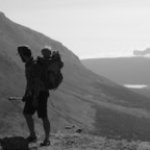
For the modern first-world human, winter is frightening. Our everyday lives are built around spaces and devices that serve to insulate, from swings in mindset and temperature, with remarkable efficiency. As the rest of this article will seek to demonstrate, this unfamiliarity with how to mentally acclimate to such a varied world is the most important thing which must be overcome in order for backpacking in winter to stop being intimidating, and start being fun. Changes in gear, technique, and mindset, which will be discussed below, should be made from a position of knowledge, rather than fear of the unknown.
Therefore, the first thing which a prospective hiker seeking to make the transition from being a 1+ to all season hiker must do is to define what winter will mean for them. Not all winters are created equal. The gear, techniques and mindset required for dry snow and negative 40 (F) are quite distinct from those demanded by lows around 20 (F) with mixed snow and rain. Fortunately, the Internet makes the beginning of this enlightenment rather easy. Trip reports, photos, gear lists, and the knowledge of others traveling in the areas and seasons you might visit will prove invaluable. Of course, it's not at all uncommon for such knowledge to be hard to come by, if not outright absent. One of the joys of winter is experiencing solitude where summer conditions would find madding crowds. Thus, information on conditions may be scant.
ARTICLE OUTLINE
- 1. Define your winter
- 2. Make the necessary changes
- 3. Practice with due care
- 4. Go beyond your comfort zone
- 5. Cheat when necessary
# WORDS: 1970
# PHOTOS: 7
Member Exclusive
A Premium or Unlimited Membership* is required to view the rest of this article.
* A Basic Membership is required to view Member Q&A events


Discussion
Become a member to post in the forums.
Companion forum thread to:
5 Beginning Concepts for Winter Backpacking
FATAL ERROR 1: no real snow shovel. I have a snowclaw, which is basically useless in a massive snowfall. It is not unheard of for Pacific snowfalls to accumulate at 1 foot per hour (ever hear of the Donner party?). The forecasts for this trip were for heavy snow and heavy winds. No one could keep up with a 1-foot-per-hour snowfall with a snowclaw. Only a real shovel, with a long handle and a big blade, could make a dent.
FATAL ERROR 2: no tent. If someone woke up buried under 5 feet of heavy, wet snow (the most common on the West Coast), inside a bivy, he or she would have died. They couldn’t have moved a muscle, any more than being buried under wet concrete. A tent would have given a better chance to get out and start shoveling with a real shovel.
Hi Robert,
You lost me on that one, who is Darin? Is someone in the article.
Cheers,
In some situations, a tent might prove to be a drawback–if snow is falling at the rate of 1 foot per hour, then wouldn't the tent be buried, and eventually collapse, after 10 hours or so (at least most of the tents discussed on this site)? That rate of snowfall doesn't, I think, usually last for more than a day, and, at least on the West Coast, is usually accompanied by temperatures above 10 deg., or warmer, unless one is at altitude–in which case the rate of deposition would be substantially less.
So if one dressed warmly, and kept moving in a circumscribed area–around and in the lee of a tree, say–one could wait until the rate of deposition diminished, then set up ones tent. (This assumes one moves slowly, not perspiring, and has warm layers to wear).
More dangerous generally, I think, is a lower rate of snowfall accompanied by very high winds and low temps, where a shovel, or snow claw, would be useful for digging a trench.
The main thing, I think, is to stay calm, and the best way to stay calm is to be confident of ones knowledge/experience, which is one of the points of the article.
In high winds/great cold/heavy snowfall, a good snow cave, which can be built with a bear claw if one has time and/or skill, has many advantages over a tent.
The Donner party was immobilized by snow fall and their lack of knowledge, but died slowly, of starvation, not primarily by freezing. (48 of the original party of 87 survived, according to Wikipedia).
Stephen, find this link in this article: "Darin Banner’s video essay on a snowshoe circumnavigation of Crater Lake shows how what is a zoo in the summer becomes wilderness in winter" and click it.
James: "So if one dressed warmly, and kept moving in a circumscribed area–around and in the lee of a tree, say–one could wait" Yes, I like that idea. Survivors in Canadian cold snaps have walked around frozen lakes to keep warm.
"Wouldn't the tent be buried?" Yes, unless one spent hours digging the snow away with a real shovel, which would also keep one warm. Less buried than a bivy sack.
"where a shovel, or snow claw, would be useful for digging a trench." Yes, but a snowclaw is almost useless for that, I think; have you tried it?
"In high winds/great cold/heavy snowfall, a good snow cave, which can be built with a bear claw if one has time and/or skill, has many advantages over a tent." A snow cave is a wonderful life saver, which is the main reason to always bring a real big shovel if snowfall is possisble.
"The Donner party was immobilized by snow fall and their lack of knowledge" Yes, they could have packed a trail up and out of the Donner Lake area with all the time they had available between storms, to go to Reno and gamble, for instance.
Thanks Robert
WHAT!??? You guy’s not interested in replicating Erin’s and Hig’s experience?
IIRC, that was a late spring storm on the Alaskan Peninsula.
Imagine a bivy sack under that pile of snow.
Unless there are thick ice layers in the snowpack, a Snowclaw is great for digging a trench. It's a bit more awkward when digging a full on cave. In any case, I do not accept the argument that for digging a tent out from heavy snow a metal shovel is magically better.
In my limited experience, when I've tried moving snow with my snowclaw, or even a tiny plastic shovel, you have to get down on your knees, use just your arms, and get just a spoonful of snow per cycle. You'd have to be faster and stronger than John Henry, the steel-drivin man to keep up with a snowfall rate of 1 foot per hour, the premise of my original post. With a shovel with a long (extendable) shaft and a big blade, you can use your leg muscles, your butt muscles, your lower back muscles, and a lot more muscles not available when you are on your knees. I'll race you: you take your little sandbox toy and I'll take a real shovel.
> FATAL ERROR 1: no real snow shovel. I have a snowclaw, which is basically useless in
> a massive snowfall. It is not unheard of for Pacific snowfalls to accumulate at 1
> foot per hour (ever hear of the Donner party?). The forecasts for this trip were for
> heavy snow and heavy winds.
FATAL ERROR 0: ignoring the forecast of heavy wind and heavy snowfall AND not being adequately equipped for the conditions.
Cheers
"FATAL ERROR 0: ignoring the forecast of heavy wind and heavy snowfall AND not being adequately equipped for the conditions."
+1
Great article! Nice writing and good content. Yes, it is good to keep in mind the idea is to have fun. The suffer fests probably make for better stories though.
A metal shovel loses some utility when solo. Unless it is one of the those magical ones that will dig you out. My Snowclaw is 6.5 oz and a shovel weighs quite a bit more. A 5 quart tin plated steel Leaktite pail weighs 11 oz and makes a decent digging tool. Nice for making water over a wood fire too. At 8 inches in diameter by 6.5 inches tall it’s a trick to pack though.
leaktite pail
Maybe a smaller pot would work. Anybody?
A snow claw makes a nice serving plate/ seat/stove board.
If in a team of 2 or 3 carry one snow claw and one normal shovel, and maybe a snow probe.
I've messed around w/ a Snowclaw and wasn't overly impressed as far as building shelters (works fine for clearing small amounts of snow). I have a small BCA shovel that weighs right at 16 oz that really works well for shelter building; pretty beefy, all aluminum construction to boot
A shovel is a great engineering tool to have. Notice that I don't care quite as much about weight in winter–travel many fewer miles, am more interested in camp set-up, rarely gain as much altitude.
Become a member to post in the forums.