You don’t have access to view this content.
Make Your Own Gear: Shell Top
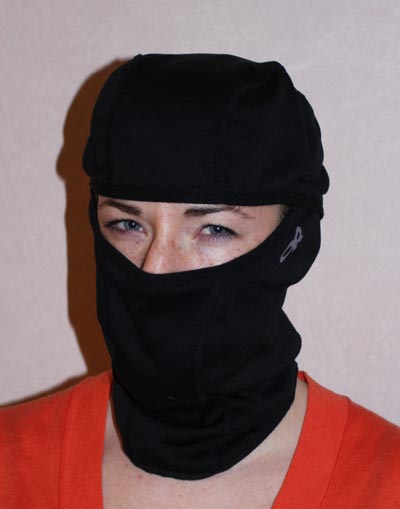
In “Notes from the Field – Bushwhacking Shell” I discussed commercial shirts and a shell top I make for myself and my wife. Instructions for making my design are given here.
You don’t have access to view this content.
A range of liquid fuel stoves are surveyed at different power levels to assess their carbon monoxide emissions.
You don’t have access to view this content.
Finally, the magic of wool is available in a bra.
|
|
|
|
| The merino wool Ibex Balance Seamless Sport Bra. Front view in burnt orange and back view in warm green (also available in black). |
The magic of a thin wool layer – its ability to help prevent over heating in the heat and reduce flash off when stopping high output activities in the cold – only works if it’s next to your skin. I converted to a wool base layer for cool to cold weather backpacking a few years ago. My dilemma has been that some of the effectiveness of my wool top is blocked by my synthetic bra. The solution for bra wearers is a wool bra. Ibex is now offering a line of wool under garments for men and women in their Balance line. I tested the Ibex Balance Seamless Sport Bra.
The Seamless Sport Bra is made of 18.5 micron merino wool, so will be itchless to all but a few princesses. The only seams are on the shoulder straps and these are not at the peak of the shoulders where a pack might rub. "Body mapping" with different stitches gives shape to the cups and a secure, snug fit to the sides. The bottom band is just over an inch wide and keeps the bra in place even when swimming.
I wore the Seamless Sport Bra on four backpacking and/or packrafting trips in Idaho, North Carolina and Arizona. In August floating down the St. Joe River in Idaho, I couldn’t resist trying out a rope swing over a deep pool. I wore the Sport Bra during my swim then put my sun shirt back over it as I continued rafting down the river. The bra dried comfortably without feeling clammy. Unlike my other favorite, the CW-X Sport Support Bra, the Ibex Balance Seamless Sport Bra won’t double as outerwear for the modest, especially when it’s wet.
The Ibex Sport Bra is very comfortable. Even after wearing it for six days and nights straight I didn’t feel chafe spots and barely noticed it on my body.
My trip in the Pisgah National Forest in North Carolina was a wet one, with light rain on two days and hard rain the last night. A light, steady rain fell as I climbed up the eastern flanks of Mt Mitchell on the third day of my trip. With the temperature in the high 40s F, even a light wind jacket was too warm hiking up hill. I stayed very comfortable in the rain with just the bra and a thin wool top. When I stopped for a long lunch break I threw on a puffy jacket and kept from chilling. Both bra and top dried under a wind jacket as I hiked the next level section.
The Seamless Sport Bra helped keep the chill off pulled on over damp skin as I quickly dressed after swimming across the narrow Blue Ridge Reservoir in Arizona’s Coconino National Forest in late November.
Other options to let nothing come between you and your wool:
An alternative for summer hikes might be the I/O Biocompatible Women’s Contact Top which is a wool sport bra lined with cotton. In hot weather, the heat sucking properties of wet cotton could have cooling consequences.
The gear list we took to France for 3 months is evaluated after our return
You don’t have access to view this content.
Wax has a reasonably high energy density and unlike other fuels it does not spill (when cold): can you make an adequate DIY stove with it?
Wax is a hydrocarbon fuel with an energy density (by weight) comparable to other fuels like canister gas and white gas. It is therefore very similar in some ways to other fuels used in our little stoves, but it has the advantage that it is a normally solid: it won’t spill. Small tea-tray candles have been used for some time to keep food warm, but they are a bit too small to bring water to the boil in a reasonable time. A problem with just scaling a tea candle up is the soot generated. We explore here what can be done to improve the heating capacity and reduce the soot from a ‘candle stove’.
All the experimental work detailed here was done by Forum Reader Mark Hurd. Backpacking Light Senior Editor Roger Caffin offered some advice and wrote the article text, and accepts responsibility for any errors.
First of all, it is obvious that candle wax burns and makes heat. Small flat candles have long been sold and used to heat ‘chafing dishes’, and are often known as ‘tea candles’. But candle wax has one advantage over most other fuels except for those in the Hexamine class: cold wax is a solid and does not spill or leak in your pack. Compared to Hexamine-class fuels it appears to have extremely low toxicity as well. So for many situations it looks as though it might have some potential.
Just to reinforce this, we list here some properties of some the more common fuels we use, including two forms of wax – beeswax and paraffin. Be assured – there are many others.
|
|
Surprise: beeswax and paraffin wax are up there with the best! But in fact that is quite reasonable because they are just higher hydrocarbons, in the same general series as propane, butane, gasoline and kerosene. Incidentally, you should treat many of the values given here with some caution as the composition of many of the fuels can vary. (Just what is in gasoline anyhow?)
But it is also known that candles do have some problems: typical candles have very small flames and make soot. Can these problems be overcome and a more powerful candle stove created?

A coiled-up wick made of corrugated cardboard – it would be very sooty IF you could get it burning
You might think that this section should be headed ‘wick design’, but that would be to miss the point. What we are concerned about is the flame, not the wick. We want a flame large enough to heat water at an acceptable rate, while not emitting too much soot. Sadly, at this stage it would seem that some soot is going to be inevitable, so we will try to minimise it.
One way of increasing the flame size is to make a bigger wick. In the photo to the right we show a ‘coil wick’ (picture courtesy zenstoves.net). This is a big coil of corrugated carboard embedded in the wax. In fact the coil almost fills the tin, even though it can be hard to see it all under the wax. This design is not going to work very well at all. For a start, getting it lit may prove almost impossible unless you use a small blow-torch to melt enough of the wax that the wick can light. Even if we assume a slight modification so the wick can be lit, it may make a large flame but it will also generate a huge amount of soot and lots of fumes too. This is because the centre region of the wick will be releasing lots of wax vapour but this vapour won’t get to burn very well: the outer wall of flame will effectively prevent any oxygen from reaching it. No oxygen means no combustion, but lots of soot (and maybe a bit of carbon monoxide as well).

A newly cast stove with a cardboard Cross-Wick
The flame needs to have lots of sidewall where oxygen can mix in to support combustion. And both sides of the flame need to be open to the air: a simple ring will still leave the core without oxygen. This makes for poorer combustion and probably more fumes and carbon monoxide. So instead of a ring we look at a cross arrangement. The centre region of a cross is likely to be oxygen poor so we eliminate it. The result looks like the stove shown to the left.
Here we have a new candle stove cooling down from the casting process: the central pool of wax is still hot and clear. There are effectively four wide flat wicks here. The flat design of the wick means that the flame will be flat and will get as much air as possible. Having the four wicks out at the edge means there is minimal oxygen starvation in the centre. The four-wicks design is simple and possibly adequate in a can of this size: a larger can could have more wicks – perhaps.
How big a gap should be left in the centre of the wick? That is hard to say, and has to be judged from the flame pattern. The flames from this example may be seen in the first photo. They are perhaps a little high and smokey, but that seems inevitable with candle stoves.
Other designs are also possible: a tubular wick as shown below to the left has been tried and is called a Circle Wick. It is a simple circle of wick, as opposed to the coil wick shown before. The wick was made quite high to get good power, but there are costs to this as explained below. A Spiral Wick consisting of round ‘wick’ cord wound around the side of a light tube has also been tried, as shown to the right. This was meant to be similar to some alcohol stoves, but the results were not so good.
|
|
|
The testing discussed here and in also the Carbon Monoxide series of articles, plus the basic chemistry of combustion, indicate that having enough air supply to the flames is vital to getting the maximum heat from the fuel. So the obvious question is how can the air supply be maximised? In addition, note that maximising the air supply to the flame should minimise the amount of soot and fumes produced. Reducing the amount of soot is clearly desirable just from the convenience point of view: consider the deposit on the bottom of this pot after boiling half a litre (one pint) of water on the stove arrangement shown above.

Soot on the underside of a pot
But remember that the soot deposited on the pot is actually unburnt carbon from the fuel: it is wasted fuel and wasted energy. In fact it is the carbon in the fuel which supplies most of the energy (as opposed to the hydrogen), so the loss of power is quite significant. If all that carbon had been fully burnt in the flame instead landing on the pot as shown the stove would have given out more heat per gram of fuel. So soot is very bad for a number of reasons.
It is likely that fuel consumption will be a good guide to the efficiency of the air supply, so the three wick designs illustrated above were tested a number of times in various configurations. For all the tests results shown here the fuel used was beeswax. The reason for using beeswax is given later. The test conditions were the same for all three designs, thus:
| Air Temperature | 75 F / 24 C |
| Starting water temperature | 60 F / 15.5 C |
| Finish temperature (boiling) | 212 F / 100 C |
| Volume of water | 16 fl oz / 455 ml |
| Pot | 1.3 liter Evernew Ti |
The averaged results from several trials of each design using beeswax are as follows.
| Design | Wax used | Boil Times | Best Clearance |
| Cross-Wick | 6 g | 16:00 min | Not measured |
| Circle-Wick | 10.5 g | 6:10 | 1.5 cm |
| Spiral-Wick | 11 g | 8:30 | 1.0 cm |
Clearly the increased air supply to the Cross-Wick design means that a lot more energy was extracted from the fuel, compared to the two very inefficient round wicks where the air supply to the inside of the flame varied from very poor to non-existent. However, the Cross-Wick design was a lot slower to bring the water to the boil compared with the other two. This happened despite the probable loss of some flame energy up the sides of the pot with the Circle-Wick and the Spiral-Wick designs. We believe that this is an inevitable result of wanting to get the best possible air supply, given a finite stove area. That is, the amount of flame surface area was smaller for the cross-wick design compared to the other two.
The Circle-Wick design allowed the height of the wick to be varied easily – with a pair of scissors. It was found that wicks of 1.5 cm and 2 cm length above the rim of the container gave about the same performance, with average boil times 6:18 min and 6:10 min respectively. A wick height of 2 cm did give a boil time of 5:58 min on one occasion. Reducing the height of the wick to 1 cm above the rim gave an 8+ min boil time. The wick to pot distance was kept constant at 1.5 cm for the rest of these tests.
The performance of each stove is fairly sensitive to the height of the pot above the top of the wick. Reducing the height from 1.5 cm to 1 cm seriously extended the time to boil – in some cases to beyond the patience of the Tester. This is explained by the reduced availability of air for combustion and the much poorer flame which resulted.
All of these stoves produce a lot of wax fumes. The fumes are very unpleasant and permeate everything around. They are of course a by-product of the boiling wax. An attempt was made to create a design which would allow the fumes to be burnt, but no suitable design was found during these tests. This may leave opportunities for further experiments by someone else.
The paraffin wax put out acrid eye and throat burning fumes. This does not happen with an ordinary candle, but then, an ordinary candle does not have a flame of the size seen here. The beeswax fumes are somewhat acrid, but mostly cloying. Beeswax candles have always been favoured by the more affluent in times past, and this is also why beeswax rather than paraffin wax was used for the tests reported above. However, beeswax apparently has a reputation of attracting bears: residual organics from the honey vaporising from the wax is one reason. Just the smell of the beeswax stove in your pack might also be enough to attract bears too: they have a very sensitive sense of smell.

A snuffed stove emitting lots of fumes
As mentioned above, in general the stoves made a sooty mess of the pots, and if the soot included some wax condensate it was very hard to clean the pots afterwards. And of course the stuff makes black marks on anything it touches: hands, clothing, gear …
When making these stoves it is important to make sure the wick is saturated with wax. A dry wick is obviously not going to catch alight at all. But a fully impregnated wick has a fair thermal mass, which means that the stoves are all hard to light, especially the Spiral-Wick design. That one can takes several minutes of flame from a lighter to catch. This is because the flame from the lighter has to melt and then vaporise some of the wax before it can catch alight. The problem can be reduced if a thread or two from the wick is left sticking out from the main wick – provided it too has been impregnated with wax as well. If you do this you have something very similar to an ordinary candle wick.
Extinguishing one of these candle stoves is hard. The Cross-Wick design can be blown out – just, but the other two cannot be blown out. This means they have to be snuffed out. But while this extinguishes the flame (by removing the air supply), it does not stop the emission of vapour/fumes from the hot wax: that still goes on for several minutes. Now there is no flame the amount of fumes is of course even worse than before. The result can be a rather thick fog as shown here, and the fumes get into everything around the stove. In addition, the stove stays very hot for up to 10+ minutes, during which time the liquid wax can be spilt.
Waxes can be bought from most any craft shop and from the web, often by the pound. Sources are not given here.
The first wicks in the experiments were simply corrugated cardboard: as cheap and as simple as you can get. In fact they worked quite well, but they do have the problem that as the wax gets low the wick starts to burn. This makes a bit of extra smoke, which is not so nice. More sophisticated wicks use non-burning synthetics, although one could use cheap cotton tape as well (but it chars like the paper). Sources for synthetic wicks include:
wickstore.com — Lots of different kind of wicks including fiberglass. They sell it by the 100+ yard spool, but more importantly they also sell 10 yard hanks for US$7 each.
Spiral-Wick stoves were made with 1/8 inch and 1/4 inch round braided fiberglass wick, by wrapping the round wick material around a small cat food can, placing the wrapped can in the center of a large cat food can and pouring molten wax in the space between.
www.flammaaeterna.com (suggested by Forum Reader Jason Klass) — This site caters to “fire-oriented performance art”, such as dancing while juggling flaming objects (er – wow!). They sell flat Kevlar/Fiberglass tape wicks in various thicknesses and widths up to 4 inches. (As an aside: these wicks also make good insulators for pots and pot handles, which is what Jason was using it for.)
Two sizes of the K1 Tape Wick, 1/8 inch by 2.5 inches and 1/16 inch by 3 inches, were used for the Circle-Wick stoves. They are stiff enough to stand up by themselves. A length of the tape wick long enough to go around the inside circumference of a small cat food can was placed in position and molten wax was then poured into the can. The wick may be cut to the desired height above the rim, but should be soaked in wax to the top. Cutting the top edge of the wick leaves a raw edge on top of the wick which should be easier to light.
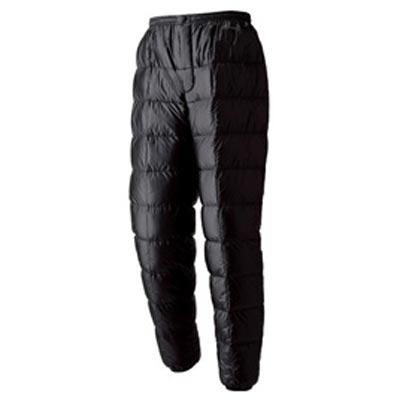
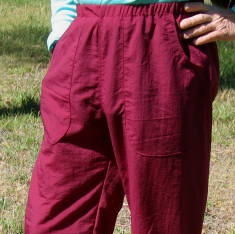
In ‘Notes from the Field – Bushwhacking Gear – Trousers’ I discussed commercial trousers and some I make for myself and my wife. Instructions for making my design are given here.
You don’t have access to view this content.
I worked with R2 Packs to design and build my dream pack, and report on my experience.

My pride and joy, a custom ultralight frameless Backpack by R2 Packs.
Who makes the perfect backpack? It’s all in the eye of the beholder. The perfect backpack is a utopian concept. Each of us has different needs and preferences, so a standard backpack rarely fits and satisfies every hiker and every need. Manufacturers try to balance it out, so their pack’s fit and features satisfy as many people as possible, and that’s appropriate. The challenge for the hiker is to find the backpack(s) that fits best and meets his/her needs. Most of us end up with an assortment of packs for different types of trips and conditions, and each pack is selected because it comes closest to meeting our needs and preferences. We find ourselves searching for the perfect pack, and never seem to find it. And some hikers have an unusual body shape, or a special need, that an off the shelf backpack won’t satisfy. There’s another alternative – have a custom backpack made that exactly fits your body and needs.
Fit is probably the most important factor – getting a pack that fits your body like a glove, so it feels like you are wearing it rather than carrying it. Perhaps the next most important factor is the feature set – having everything exactly the way you want it. We all have individual needs and preferences, which might include a particular size and shape, a particular fabric choice (very light or very durable), or a special feature set. Perhaps you want a pack designed to carry specialized gear for packrafting, climbing, skiing, fishing, photography, or adventure racing. Or perhaps you want a special pack for long-trail hike, a Himalayan trek, or an alpine expedition. Or perhaps you are a veteran hiker who wants a personalized backpack designed by you – something special, your pride and joy.
A custom pack at R2 costs more than a stock pack ($250-$350), but you get what you want. Once you make the investment, you may use it for a lifetime. Look at it this way – instead of your spouse getting you a GPS (or other electro-wizardry) for your birthday or Christmas, why not drop a hint for a custom backpack, something you can really use? Conversely, you can treat your significant other with a custom backpack, something he/she will prize forever. After all, other people spend thousands on their motorized toys, so what’s wrong with spending a few hundred for a killer backpack?
I had the opportunity to design and test a custom backpack made by R2 Packs, a new company entering the custom packs business, which gave me the idea for this article. Rather than review the backpack, which is one of a kind, I would review the process and report on my experience. The key points I want to address are:
To my knowledge, R2 Packs is the only true custom backpack manufacturer in the United States who will construct (almost) any type of backpack from scratch. Their slogan is “Custom packs, designed by you”. R2 uses a systematic interactive process to design your custom backpack, much like the blueprints and specifications for a custom home. They will build any type of pack you want up to about 3500 cubic inches – frameless or internal frame, bristling with features or clean cut, or activity specific. This includes conventional backpacks, ski packs, and adventure racing gear. A wide range of fabrics is available, from Cuben to 1000 denier Cordura, to satisfy any need. This article will focus on R2 Packs and the custom backpack they made for me to illustrate the process of having a custom pack made, and to assess the key points listed above.
My original plan for this article was to contrast the process of having a custom backpack made by R2 Packs versus McHale Packs (www.mchalepacks.com); however that didn’t quite work out. In my contacts with Dan McHale, I learned that his company doesn’t make custom backpacks per se, rather they make customized backpacks. Basically a customer selects the pack model he/she wants from McHale’s proprietary designs, and the pack is built to the customer’s specified fit and options. McHale also makes stock packs with pre-selected options and fabrics for a lower cost. McHale has built an excellent reputation as a backpack innovator and customizer; however, all of their packs have an internal frame and emphasize durability. Only one model is lightweight by our standards (the Sub-Pop), so lightweight and ultralight backpackers will have limited choices in a McHale pack.
A better comparison is Rodney Liwanag’s Packs (www.freewebs.com/litepacks) located in Manila, Philippines. Rodney has a sizeable local business making custom sewn products including packs, groundsheets, tarps, rain jackets, wind shirts, pack covers, and repairs. For the past 10 years he has also made standard and custom packs for the ultralight backpacking community in the United States and Canada (his custom pack business is limited to the US and Canada because he has relatives who travel back and forth who can carry the packs with them to reduce shipping costs). Rodney’s custom packs are limited to ultralight frameless backpacks. A customer can request a customized version of one of Rodney’s standard packs, or create a unique design. Rodney is willing to build most anything (within reason) using a wide range of modern nylon fabrics. A custom pack will cost about $85-$95 including shipping, which is an outstanding value and comparable to standard packs offered by other manufactures. He usually has a number of already made packs for sale on his website at very reasonable prices (currently $40-$47). Rodney has found that e-mail communication is very effective to communicate to him what a customer wants. He asks for complete body measurements (torso length, height, chest size, waist size, weight, and photos), plus a detailed description of the pack they want. His method to be sure he has the correct information is reiteration – he checks and double-checks (especially on factors pertaining to fit) to make sure there are no misunderstandings. Rodney currently makes about 40-50 packs a year for US/Canadian customers. (Disclaimer: Surely, there are other custom pack makers around that I missed, and I encourage them to speak up in the attached forum to let us know about their offerings.)
If you don’t want to go through the custom pack process, there are many excellent backpacks available from established small companies – like Gossamer Gear, Mountain Laurel Designs, Six Moon Designs, Fanatic Fringe, and Ultralight Adventure Equipment (to name a few) – that are specifically designed for lightweight and ultralight backpacking. If you can get a good fit with these packs, you can buy two of them for the cost of a single custom backpack by R2 Packs or McHale Packs. The choice is yours.
Develop a Concept – The first step in approaching your custom backpack is to “decide what you want to build, before you start building it”. Most experienced backpackers already have a vision of their perfect pack, so having a concept isn’t a problem. Others may need to think on it for awhile, and R2 has some alternative approaches to assist with the process.
A fundamental first step is to decide what the pack will be used for – any special needs, and the types of trips and conditions. In my case, I go on frequent two or three day trips, with a total pack weight less than 20 pounds, so a frameless pack with about 3200 cubic inches of total volume is about right. I typically hike off-trail routes which involve scrambling and bushwhacking, so the pack needs to be fairly durable. And I frequently encounter afternoon showers in the Southern Rockies, so a waterproof pack would be really nice so I don’t have to bother with a rain cover. So, I settled on the concept of an ultralight, frameless, durable, waterproof pack for summertime backpacking in rough and sometimes wet conditions.
The next step is to identify the attributes of a pack that are most important to you. Again, most experienced backpackers can do that in a heartbeat. But if you’re not sure, it helps to do some research – survey a variety of available packs to find ideas, and peruse the options available and design process on the R2 Packs website (www.r2packs.com). You should end up with a design concept and a list of the attributes you want to incorporate in your custom pack.
R2 likes to do a phone interview with each customer to discuss their project. The purpose of the interview is to discuss the project in detail and make a number of tentative decisions about the type of pack and its construction, materials, and features. The result is a shared concept of the custom backpack to be built. In my communications with Ron, I found him to be exceptionally easy to work with. I never received a “that won’t work, because…” response; he was always supportive and accommodating.
In my case, I had two initial interviews with Ron. The first time around, my concept translated to a frameless backpack very similar to those manufactured by Mountain Laurel Designs or Gossamer Gear. That made me realize that it doesn’t make sense to design a custom pack that is very similar to one I could buy off the shelf for a lot less money (which is certainly a logical decision in many cases). So, I dug deeper. I realized that my custom backpack needed to have more of the “wow factor” – I needed to be really stoked about it. Then the idea hit me – develop an ultralight frameless waterproof pack with lots of convenient outside storage. Now I was getting excited!
The goals for my custom pack were now as follows:
Even though R2 Packs has a diversity of fabrics to choose from, I chose to look for something really cutting edge. I settled on Dimension Polyant X-Pac TX2 fabric (also known as VX-2), which is a durable waterproof tri-laminate weighing 1.8 ounces/square yard. The sandwich construction consists of (from outside to inside): 0.25 mil PET (polyethylene teraphthalate) film, grey adhesive with UV-resistant additive, X-ply of 840 denier black polyester yarn inserted at 22 degrees and 0.75-inch spacing, and a 20 denier white nylon taffeta backing fabric.

Close-up of the Dimension Polyant TX2 fabric used to construct my custom backpack. It has an exterior PET layer, which is waterproof.
Dimension Polyant developed this strong, lightweight fabric specifically for tents and packs. When I contacted the company, I found them to be very supportive of our project and anxious to see their fabrics used in new applications. They generously provided the fabric for our project and shipped samples of several of their laminated fabrics to R2 Packs to use in the construction of my pack and to experiment with in future projects.
The outcome of the interview process, plus perusing the options on the R2 website, is a list of specifications for the custom pack. With the concept, goals, and fabric for my custom pack solidly in place, I was ready to move on to the next phase. Following is an abbreviated specifications list for my dream pack; the actual list is more detailed than this:
After we thoroughly discussed and developed a list of specifications for my new pack, Ron went on to develop what he calls the “Design Packet 1”, which is essentially a blueprint for my pack. It comes as an e-mail attachment, using Adobe Acrobat’s Review Session Technology, so I can make comments directly on the Design Packet and send it back. The eight page document provides front, side, and backpanel drawings of the pack accompanied by detailed specifications and a cost breakdown. At this stage it was very important for me to examine it carefully and make any needed corrections and changes.

Illustrations showing different views of my custom pack contained in Design Packet 1.
The next stage is Design Packet 2, which incorporates all of my corrections and changes. This is a critical stage, where I need to be certain that everything is the way I want it. I opted to make a few changes, including adding a sternum strap pocket, and seam taping to ensure the pack is waterproof (more on that later). Note that additional volleys can be added to the design process, as needed, to finalize the design. Up until now, no cost has been incurred to the customer, other than a phone call or two.

A page from Design Packet 2, showing frontpanel details and specifications. The eight page Design Packet is like a blueprint, it includes complete drawings and specifications for the pack.
Once the customer has settled on the design, R2 will send a final approval contract and cost of the pack. The pricing schedule consists of a base price (depending on the size of the pack), plus an itemization of additional costs for the options selected. An average pack will be in the $250-350 range.
After R2 receives the go-ahead, he will build the pack. When the pack is finished, R2 will contact the customer to request payment before the pack is shipped. It normally takes him about four days to sew a pack and he typically delivers it within a week, which I consider amazing.
When I opened the box, I was definitely impressed by the new pack! The Dimension Polyant X-Pac TX-2 fabric, the unique feature set I designed, and the prominent R2 logo clearly say “this is something special”. The design was exactly as expected; I got what I wanted; it is truly a one-of-a-kind backpack.
But all was not perfect. When I stuffed a sleeping bag in the pack to fill it out, and tried it on, I found that the fit was not quite right. The webbing on the shoulder straps was barely long enough when fully extended; same for the hipbelt. The main issue was that the torso length was too short. I measured the pack torso length at 18 to 18.5 inches (distance from the underside of the shoulder straps to the center of the hipbelt), which was about 2 inches short of my specified 20.5 inches. When I contacted R2 about these problems we discovered that we had miss-communicated on torso length measurement; R2 measures pack torso length to the bottom of the hipbelt, which accounted for the 2-inch discrepancy.
I decided to use the pack on a couple of overnight backpacking trips to try it out, and found that the problems were real. The shoulder strap and hipbelt webbing were definitely too short, especially when I wore insulated clothing. The shoulder straps were too tight around my shoulders and cut off circulation. And the torso length was definitely too short; when I positioned the hipbelt in the right place and tightened it, the shoulder straps wrapped around my shoulders and down my back. It didn’t fit right, and Ron and I both regretted the miss-communication that had occurred.
No problem. R2’s immediate answer was “Our solution to this situation is a new pack. We will correct these issues. A custom pack that does not fit is hardly custom. We guarantee 100% satisfaction, and we stick to it.” This makes “customer support” an understatement!
Another issue that emerged is the iron-on seam tape did not stick well to the Dimension Polyant fabric. It took 6 hours to install the seam tape in the first place, and added 3.3 ounces to the weight of the pack. It obviously turned out to be a bad idea, and I took the opportunity to omit the seam tape in the construction of the new pack. Because seam taping is so time-consuming, it is cost prohibitive, and R2 no longer offers it as an option.
The replacement pack fits perfectly. The workmanship is impeccable. The final weight is 15.4 ounces, which is not bad considering the durable fabric and numerous features. The cost with my selected options, including the special Dimension Polyant fabric, added up to $338.

Views of my custom R2 backpack. The pack is made entirely of Dimension Polyant TX2 fabric (1.8 ounces/square yard) and all zippers are water-resistant. The front (top left) has a large kangaroo pocket with a space behind it to stuff gear. The backpanel view (top right) shows the pack’s 3-inch wide padded shoulder straps, large hipbelt pockets, and sternum strap pocket. Each side (bottom left) has an 18-inch high pocket. The top (bottom left and right) has a fixed lid with a 6-inch high pocket.

Some of the extras I selected for my custom pack are a front kangaroo pocket (left) that has dry storage within it and space to stuff gear behind it, large hipbelt pockets (center) with watertight zips, and a sternum strap pocket (right) also with a watertight zip.
I have used my custom backpack on several more backpacking trips this summer and truly love it. Having a backpack that fits my long torso is a pure delight. As with most frameless backpacks, it comfortably carries up to a 20 pound load. The 3-inch wide padded shoulder straps help a lot to distribute the weight. It’s also nice to be able to access most everything I need on the go, without having to remove the pack. I also managed to test the pack’s durability when squeezing through tight places while bushwhacking, and put it through one unexpected fall, and the pack fabric held up well, no punctures or cuts.
Overall, the final pack is impeccably constructed, fits me perfectly, and has all the features I want. It’s my dream pack, and I’m very satisfied. The design process went smoothly, in spite of a communication glitch, and resulted in my getting the pack I wanted. I couldn’t ask for anything more.

Is it waterproof? Nope, not under these conditions. Without seam sealing, and with 30 pounds of water pressure, cotton towels inside the pack got pretty damp after 10 minutes in the shower. After seam sealing with silicone, the pack was highly water resistant under field conditions, meaning it leaked very little while hiking in an afternoon shower.
Is a Custom Backpack Worth the Cost and Effort?
To conclude this article, I would like to re-visit the questions I raised at the beginning. Every endeavor is a learning experience (and this one is no exception), so what have I learned from my experience?
If you are an experienced backpacker, the process is fairly easy, because you are already familiar with backpack anatomy and already have a fairly good idea of what you want. Also, if you are a detail-oriented person, the pack design process can be an enjoyable experience, especially if you take your time and think things through. However, if you’re not a detail person, or agonize over decisions, the process can be tougher and less enjoyable. In that case, R2 provides “Design by Feature” and “Pack Template” approaches to walk you through the decisions, followed by an interactive phone call or two to make sure you end up with your dream pack.
The best advice I can give is to think a lot before you act. This applies at two stages: 1) in the concept stage, so you design a pack that really meets your needs; and 2) in the Design Packet 2 stage, so you review every detail before you give the go-ahead. No matter how thorough you are, you are bound to overlook something (I did). Good communication is critical, so it’s always good to double check to be sure.
Yes, in the end. On the second pack, every feature was exactly as I specified, and the torso length and volume were right on. It was unfortunate that R2 had to construct a second pack in order to provide the torso length I wanted, and to lengthen the shoulder straps and hipbelt. The misunderstanding was based on how pack torso length is measured, and R2 assured me that they will strengthen their communication on all factors related to fit so it will not be a problem in the future. Overall I am totally satisfied with R2’s customer service and the quality of the product.
The answer really depends on the person. Many people will readily pay a fair price to get exactly what they want, or to give a special gift. For me, it did require quite a bit of effort to consider every facet of the pack and decide what I want, but it’s something I enjoy doing. The cost ($338 including the cost of the fabric) is admittedly substantial for a frameless backpack, but I received a truly unique, one of a kind backpack that will be my pride and joy for life. Backpacking is my passion, so I’m willing to invest my gold in a custom backpack. Other hikers may flinch at the high cost, and may want to take a hard look at the stock backpacks offered by several ultralight gear manufacturers, or consider getting a custom backpack from Rodney Liwanag.
I found designing my own backpack a fairly intensive experience (although R2’s design tools help a lot to successfully navigate the process). Some decisions I found especially difficult to make are the pack dimensions, amount of volume in the main compartment and in the pockets, and how many features to add. My concern was running up the pack’s weight. Most of the weight in a pack is not in the fabric, but in the features. Adding features adds more weight in the form of extra zippers, straps, and buckles. Even with a custom backpack, the design is a balancing act.
In my opinion, it is much easier to modify the design of an existing pack, rather than create my own unique design from scratch. It is not that hard to select different fabrics to increase durability or reduce weight, and modify the feature set. McHale Packs are based on that approach, and it seems to work quite well. Many customers also use that approach for designing a customized pack from Rodney’s Packs.
As you may have surmised from the description of my custom pack, I overdid it a bit on outside pockets. Although my calculation of the total pack volume is approximately 3000 cubic inches, nearly half of my summer backpacking gear will fit in the outside pockets! Admittedly, items needed on the trail are handy, as desired, but the pack I designed has too much volume for an overnight trip, and is just right to hold everything for a five day trip. To fill up some of the extra space in the main compartment on overnight trips, I partially inflate my torso length sleeping pad and stuff my sleeping bag in the bottom. You can tease me about being a pocket fanatic, but the space is there when I need it and I don’t have to use all the pocket space; it’s there when I need it. Even with a custom backpack, the design is a balancing act.
The Hennessy Hyperlight Backpacker A-Sym hammock is a refined backpacking hammock that incorporates full rain and bug protection, and has a convenient entry/exit system.
Hennessy Hammock has been producing fully-featured backpacking hammocks since 1999, making them one of the most experienced companies in the business. The Hennessey Hyperlight Backpacker A-Sym is a refined and feature-rich hammock that weighs in at 1 pound 10 ounces. It offers full rain and bug protection, sets up quickly in places that a tent cannot be used, and provides what may be the most comfortable night possible in the backcountry.
|
ย ย Shelter |
2007 Hennessy Hyperlight Backpacker A-Sym hammock |
|
ย ย Style |
Solo backpacking hammock with rain fly |
|
ย ย Fabrics |
Rain fly: 1.1 oz/yd2 (50 g/m2) 30D silicone nylon; Hammock fabric: 30D high tenacity, high thread count nylon taffeta with heavy duty ripstop; Mesh: 1.0 oz/yd2 (90 g/m2) 20D polyester No-See-Um netting |
|
ย ย Hammock Dimensions |
100 in x 48 in |
|
ย ย Canopy dimensions |
a parallelogram: long side 92″, short side 65″, long diagonal 122″, short diagonal 105″ |
|
ย ย Packed Size |
4 in x 8 in x 7 (43 cm x 18 cm) |
|
ย ย Total Weight |
Measured weight 1 lb 10.3 oz (745kg), manufacturer specification 1 lb 10.0 oz ( kg) |
|
ย ย Trail Weight |
Measured weight 1 lb 10.1 oz (1.79 kg); includes hammock, rain fly, included guy lines, Tree Huggers, and two titanium stakes |
|
ย ย Protected Area |
Varies by angle of rain fly |
|
ย ย Floor Area/Trail Weight Ratio |
n/a |
|
ย ย MSRP |
$219.95 |
|
ย ย Included items |
Tree huggers – 42 in long 1 inch wide webbing straps 1.8 oz (50g), stuff sack 0.6 oz (17 g) |
|
ย ย Options |
Snake Skins (for quick setup, take-down and storage) 1.9 oz (54 g), longer Tree Huggers, larger Hex Fly |
The Hennessy Hyperlight Backpacker A-sym is a lighter version of the popular Ultralight Backpacker A-Sym. The only difference between the two is that the Hyperlight uses 30D โhigh-tenacity, high thread count nylon taffeta with heavy duty ripstopโ instead of the 70D nylon used in the Ultralight. By using this nylon, the Hyperlight shaves 5 ounces over the Ultralight without durability or failure concerns.
While not the lightest hammock in the Hennessy lineup (the 15 ounce Adventure Racer holds that honor and is featured here), the Hyperlight Backpacker A-Sym is the lightest fully-featured hammock. When compared with the Adventure Racer, the Hyperlight accommodates taller hikers (6โ 0โ vs. 5โ 10โ), has a larger rainfly, has an internal storage pocket, has Velcro closure in the entryway, and features the A-Sym cut for a flatter sleeping position.

The Asymmetrical cut of the hammock means that you sleep at a diagonal, flattening the body in a comfortable โsweet spotโ.
A defining feature of the Hyperlight Backpacker A-Sym is the asymmetrical cut of the hammock. With this cut and by staking it at the sides, the hammock has a shape that is more trapezoidal than the traditional banana shape. Instead of sleeping in the typical hammock curve, you sleep at a diagonal, resulting in a much flatter position. When lying in the hammock, you quickly find a comfortable โsweet spotโ that is much more horizontal than a typical hammock. The result is the most comfortable position in a hammock that I have ever experienced. In fact, this position led to the most comfortable nights that I have ever spent in the outdoors; sleeping in an A-sym Hennessy is an absolute dream compared to the experience of most ultralight ground sleepers.
Although the Hyperlight is cut for hikers up to 6โ 0โ, I am 6โ 2โ and fit in the hammock quite well. For those that are taller or surpass the hammockโs 200 pound rating, the Explorer line is both longer and more robust.

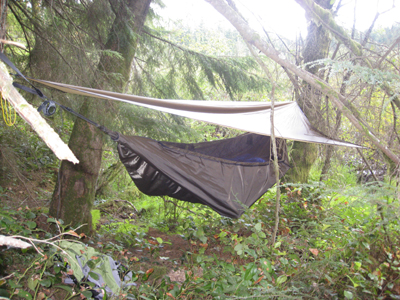
Looking down, you can see the asymmetrical cut of the hammock and rain fly.
The Hennessy Hyperlight offers full bug protection with an integral (and non-removable) canopy of No-See-Um netting. A rain fly made of 1.1 oz silicone nylon provides full rain protection. The rain fly extends well past the head and feet of the hammock and has an asymmetrical cut to cover the hammock without excess weight. In downpours, the fly did a great job of keeping the hammock dry and provided a dry space below for cooking and packing.

A Hennessy Hammock can be pitched in places where no tent could be pitched such as a wetland swamps (left) or on a 35 deg. slope (right). (Note the curve (right) that comes from a too-short pitch.)
Using a hammock means having the ability to camp in places you never thought possible. During testing, I pushed my conception of reasonable camping, pitching the hammock in wetland swamps, on steep hillsides, and in small groves of subalpine trees above boulders. As long as you have two trees, you can pitch the hammock in nearly any location. This means that a hammock user can camp far from other people for true stealthy solitude or to continue hiking past established campsite to get in a few extra miles. This is a real advantage of using hammocks.
For those times when trees are unavailable, it is still possible to use the hammock as a shelter on the ground but I didnโt attempt this setup.

The rain fly is attached to the main hammock line with an adjustable tensioner and a plastic clip (left). The hammock is attached to the nylon โTree Huggersโ with simple figure-8 lashing (right).
To set up the hammock, you find two trees that are spaced 12 to 25 feet apart and lay out the hammock for spacing. The โTree Huggersโ nylon webbing wraps around the trees and attach the Spectra reinforced rope using simple (and easy to untie) figure-8 lashing. Once this is done, the rainfly is tightened. You have to start out with the rainfly a little tight because laying in the hammock causes some loss of tension. Last, the hammock body and rainfly are staked out at the sides. It is possible to stake the hammock and the fly to the same stake but I found that two stakes per side was better.
In wet conditions, the attached rainfly makes it possible to pitch the hammock while keeping it dry.
With practice, I was able to quickly find an appropriate pair of trees and I can easily set up the hammock in less than 5 minutes. I never came across a place where I couldnโt set up the hammock.

Getting in and out of the hammock is easy, even with additional outer quilts attached.
Getting in and out of a hammock can be interesting. However, Hennessy has a brilliant solution to the problem – bottom entry. A Velcro slit at the bottom of the hammock allows easy entry and exit: you simply open the slit, climb in bottom first, pull your feet in and relax. Tension from the hammock closes the slit automatically. Although the Velcro is not actually needed, it does provide a more secure closure and keeps bugs out. Even with multiple underquilts in deep-winter usage, getting in and out of the hammock is simple.

A sliding storage pocket and two clips allow for convenient storage of small items.
One downside of hammocks in general is that you canโt have your pack or extra gear in the shelter with you. Instead, I put my pack in a waterproof bag and laid it by a tree or under the hammock. Small items in a hammock quickly find their way underneath you and must be stored above for easy access. For items that youโll need through the night such as a flashlight, watch, or book, a sliding storage pocket provides storage that is easily slid above your head or near the foot area. Two additional clips are helpful for attaching other items.
The inside tension line offers additional storage possibilities. I used this line to hang flashlights, tuck in gloves or water bottles, or even store a hammock pad in case of extra cold winter nights. While storing items in the Hyperlight requires some additional planning and isnโt as easy as when ground camping, it is certainly workable and having items above you makes them easy to access.

In addition to the storage pocket, the inside tension line allows for additional storage options.
Living with a hammock is different than living with a tent. Once you find that comfortable position, itโs not as easy to move around and get additional items out of your pack. Instead, you quickly learn to plan ahead before crawling into bed. Also, moving into a traditional sleeping bag or positioning a foam pad underneath your body is a real pain; thatโs why most hammock users prefer quilts for inside the hammock and insulation that hangs under the hammock such as the Hennessy Supershelter or the Jacks โRโ Better Nest Under Quilt . That said, I often used a Gossamer Gear hammock pad inside the hammock and was able to position it without too much hassle.
It is more difficult to stay warm in a hammock than it is in a tent. Even with the fly staked down, breezes swirl inside the hammock, robbing warmth. While this is marvelous in hot conditions, it is definitely chillier when the temperatures drop. Further, the hammock compresses any insulation that is tucked to the side of the hiker. By using under-hammock insulation combined with wind covers and by selecting protected sites, I was able to use the Hyperlight Backpacker A-Sym right through the winter (even with 8 feet of snow on the ground). However, it is much simpler to use a hammock in 3 season conditions, where the joys of sleeping above the ground are really highlighted.

The optional Snake Skins ($19.95, 1.9 oz) make the hammock into one long tube, speeding up take-down and set-up and making hammock storage a breeze.
With this hammock, I also tested the optional Snake Skins. These sub-2 ounce tubes make take-down and set up of the hammock really fast and eliminate the need for a stuff sack. To use the Snake Skins you pull the side stakes and slide the nylon tubes down, concealing the hammock and rainfly in a long slender tube. One Snake Skin is found on each side and they meet in the middle. Once the hammock is rolled up, it is detached from the trees and the Tree Hugger straps can be slipped into the middle of the tube. After this you simply roll up the hammock tube and slip it into your pack. I would highly recommend buying this option when purchasing a Hennessy Hammock.
There are other hammocks on the market, but none that balance light weight with superior usability and options like the Hennessy Hyperlight Backpacker A-sym. For 1 pound 10.1 ounces, you get full bug and rain protection, a simple entry system, and a super-comfortable diagonal sleeping position. There are a host of accessories and quilts available for the Hennessy as well, making it possible to use the shelter in virtually any conditions.
Compared to ground sleeping, the Hennessy offers comfort that the thickest sleeping pad can’t match. The best nights of sleeping that Iโve ever had were in a Hennessy Hammock.
This is a highly refined product and I can see only a few nitpicky areas of improvement:
Last, I tested a prototype Cuben fiber rainfly with the Hyperlight hammock that cut an additional 5.7 ounces from the weight of the hammock, bringing it to 1 pound 4.4 ounces. Iโm sure it would be expensive, but Iโd love to see this come to market as an optional fly.
A lightweight system for using a Hennessy Hammock in the shoulder and winter seasons.

The UnderCover wraps around the sides and ends of the hammock, enclosing the UnderPad
The Hennessy Supershelter system is made to fit a Hennessy Hammock. It includes three components: the UnderPad, UnderCover, and OverCover.
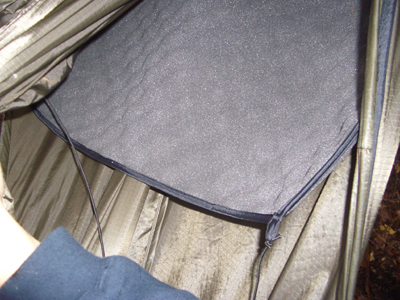
The UnderPad and UnderCover are sold together for $129.95. They are designed to work in tandem to provide both bottom insulation and wind and waterproof protection. The open cell foam pad attaches to the hammock’s rain fly clips with elastic cords. It is cut and sewn to follow the natural contours of the body when lying in the hammock. The silnylon cover attaches to the hammock by sliding the main hammock support ropes through holes in the cover and also running the hammock’s side guyouts through holes in the cover.

The UnderPad attaches at the ends of the hammock with elastic cords.
To attach the UnderPad and UnderCover, it is necessary to take down the hammock. This makes it inconvenient to add these components when the weather turns bad. Instead, plan ahead and attach the UnderPad and UnderCover when first pitching the hammock.
The UnderCover completely envelops the bottom of the hammock and covers about 4 inches of the mesh on the sides and end of the hammock. It is both wind and waterproof and adds a good deal of extra protection against heat loss due to wind, windblown rain, and spindrift. The cover has a hole for easy bottom entry into the hammock; just slide the pad to the side and climb right in. Combined with the UnderPad, these items add significant warmth to the Hennessy Hammock.
The OverCover is sold separately for $34.95 and completes the Hennessy Supershelter system. Like the UnderCover, the OverCover is attached to the hammock by sliding it through the main support ropes and side guyouts of the hammock. It layers underneath the OverCover at the edges, completely enclosing the hammock. The OverCover is made of breathable but windproof uncoated nylon and includes a 7 inch round breathing hold that is positioned above the head for extra ventilation and condensation protection.
The OverCover is intended for use in “dry, subfreezing conditions” and not during normal 3 season usage. While I experienced some condensation when using the OverCover, the breathable fabric and breathing hole kept this to a minimum. It certainly did hold in more warmth, especially in windy conditions. It also blocks out all of the views and creates a bivy tent-like experience.
According to the Hennessy website, the Supershelter system is “capable of supporting a lone traveler in extreme cold weather environments down to -12 deg. C (10 deg. F).” However, I found this to be an unrealistic claim, at least from a comfort perspective. I had comfortable nights when using the UnderPad and UnderCover with a warm quilt in the upper 30’s. When adding the OverCover on a night in the low 20’s, I experienced cold spots on the bottom of the hammock- the ยพ inch open cell foam was just not enough insulation. After adding a 1/4 inch closed cell foam pad inside the hammock I had a warm night’s sleep. With no additional insulation, though, I’d estimate that I would be comfortable in the lower to mid 30’s. However, warmth when sleeping depends a lot on other factors such as personal metabolism, site location, clothing choices, etc.

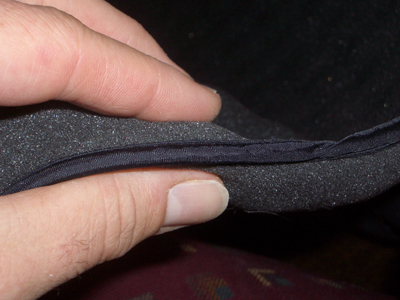
The UnderPad is ยพ inch open cell foam.
If additional insulation is needed with the Supershelter, it’s possible to put extra clothing, dry leaves, or an extra pad between the UnderPad and the hammock. However, the tight fit of the UnderCover may compress a down underquilt.
Overall, the Supershelter is a great system for taking a Hennessy Hammock into the shoulder seasons and even into the winter. It is a well thought-out solution to the problems of bottom insulation, wind protection, and staying dry in windblown rain and snow.
With the addition of a new โHโ high sensitivity receiver, the Garmin eTrex Vista HCx GPS sets a new benchmark for GPS performance in difficult reception areas
In the past few years the best GPS receivers have dramatically improved their performance in difficult reception areas. Their souped-up digital signal processors can have many thousands of times or more processing power than their analog 12-channel predecessors. This allows them to acquire and maintain an accurate GPS fix in deep canyons and under heavy tree cover where there is only a faint and highly degraded GPS signal-places where their older counterparts, with less sophisticated electronics, were useless.
This new technology works. In one test in a difficult reception area, the Garmin eTrex Vista HCx, with a new high sensitivity receiver acquired 8 satellites and a 10-meter position fix in less than 30 seconds. In the same test, a direct competitor’s best unit failed to locate a single satellite in over 8 minutes. Detailed test results are discussed later in the review.
|
Physical & Performance |
|
|
Unit dimensions, WxHxD: |
4.2″ x 2.2″ x 1.2″ (10.7 x 5.6 x 3.0 cm) |
|
Display size, WxH: |
1.3″ x 1.7″ (3.3 x 4.3 cm) |
|
Display resolution, WxH: |
176 x 220 pixels |
|
Display type: |
256 level color TFT |
|
Weight: |
5.5 oz, 156 g with batteries, mfr spec (5.95 oz, 169 g measured with alkaline batteries) |
|
Battery: |
2 AA batteries (not included) |
|
Battery life: |
25 hours |
|
Waterproof: |
yes (IPX7) |
|
Floats: |
No |
|
High-sensitivity receiver: |
Yes |
|
Maps & Memory |
|
|
Basemap: |
Yes |
|
Ability to add maps: |
Yes |
|
Built-in memory: |
No |
|
Accepts data cards: |
microSD card (not included) |
|
Waypoints: |
1,000 |
|
Routes: |
50 |
|
Track log: |
10,000 points, 20 saved tracks |
|
Features |
|
|
Electronic compass: |
Yes |
|
Barometric altimeter: |
Yes |
|
Geocaching mode: |
Yes |
|
Sun and moon information: |
Yes |
|
Tide tables: |
No |
For over 10 years Garmin has arguably made the best small handheld GPS units capable of supporting serious backcountry navigation. But given sales volume, they’ve been slow to introduce high sensitivity GPS technology to their smaller and lighter handheld units. That changed this year. Garmin just upgraded some of their most popular e-Trex GPS models with high sensitivity receivers. These models are designated with an “H.” Thus, the e-Trex Vista Cx becomes the e-Trex Vista HCx with the addition of a high sensitivity receiver. As far as I know these are the lightest high sensitivity GPS receivers suitable for backpacking navigation*.
While the Garmin Geko units are lighter, they give up a lot with their limited resolution black and white displays, a more basic set of navigation functions, no mapping capability, and less sensitive GPS receivers. Most other manufacturer’s mid-sized units are in the 6+ ounce range and don’t come close to the performance and functionality of the eTrex series. And don’t get your hopes up that high sensitivity GPS technology will come to navigational units in the 3-ounce range. The Garmin Gekko 101 is gone. It’s possible that Garmin will phase out the Geko series in the next few years if its sales volume drops below critical levels. In the GPS industry, if it doesn’t map in color it’s not going to sell.
Finally, while Garmin’s color mapping eTrex GPS units have been without peer for backcountry navigation, this year there are two challengers: the just released DeLorme Earthmate and the soon to be released Magellan Triton series. Backpacking Light will review both of these GPS receivers to see how they stack up.
* The smaller 3 ounce Garmin Edge is a high sensitivity GPS based bike ride computer. It is mainly intended for athletic performance measurement, resembles a Garmin Geko in size, weight and screen display. The Edge has some rudimentary navigational capability that might make it useful for navigation in skilled hands. The unit does not map, has limited route and waypoint management functions, has a 10-hour run time and critically, lacks field-replaceable batteries.
To see how the new Vista HCx performed, I tested the following three GPS units side by side. I attempted to get a fix with the units in 13 situations, ranging from easy to very hard reception. I focused on the ability to get an initial fix in difficult reception areas. The rational for this is discussed in the next section.
GPS Units Tested
In the testing, the Garmin Vista HCx was the clear winner. It was followed by the Garmin Venture Cx. Unit C was a distant third and failed to get a fix in over half of the tests.
| Rank | Total | Easy (4) | Mod (2) | Hard (3) | Very Hard (4) | |
| Vista HCx | 1 | 13 | 4 | 2 | 3 | 4 |
| Venture Cx | 2 | 9 | 4 | 2 | 3 | 2 |
| Unit C | 3 | 6 | 4 | 2 | zero | zero |
| Rank | Average | Easy | Mod | Hard | Very Hard | |
| Vista HCx | 1 | 0:35 | 0:20 | 1:11 | 0:29 | 0:22 |
| Venture Cx | 2 | 2:47 | 1:01 | 3:05 | 3:47 | 3:18* |
| Unit C | 3 | n/a | 2:28 | 6:37 | No Fix | No Fix |
| * Calculated from two successful fix times out of four “Very Hard” tests | ||||||
The Garmin Vista HCx averaged over five times faster to get a fix than the next unit. It was the only unit to get a fix in all 13 reception situations. Furthermore, it acquired more satellites with better positional accuracy. The Garmin Venture Cx did credibly. While slower to get a fix and acquiring fewer satellites with less positional accuracy than the Vista HCx, it got a fix in all easy to hard situations. It even managed to get a fix in two out of four times for the very hard reception situation. Unit C was a disappointment. It had long fix times even in easy to moderate reception situations and was unable to get a single fix in the hard or very hard reception situations.
The new Garmin high sensitivity receiver fixes a problem I had with earlier SiRF-based high sensitivity receiver units: these SiRF units were good at maintaining a fix, once acquired, but had difficulty acquiring an initial fix. The initial fix could take two minutes or longer even with an open sky view (easy reception). That seemed like an eternity when I was itching to get on the move. To make matters worse, it would only acquire an initial fix if I stayed in the same place. If I did something like start running before getting an initial fix, it might not get a fix in 45 minutes. In comparison, my conventional, non-SiRF units (e.g. Garmin Venture Cx) would usually acquire an initial fix in much less time. Garmin seems to have solved this initial fix problem with the “H” series. When I first fired up the Vista HCx (cold fix) it acquired a GPS fix in an astonishing 28 seconds. This is the fastest cold fix I’ve measured for a handheld GPS that’s been off for weeks and moved thousands of miles.
The Garmin Vista HCx shows equal performance improvements in difficult reception areas. As mentioned earlier, it easily out-performed a competitor’s best GPS in a reception torture test. On the trail, the Vista HCx did considerably better at acquiring and keeping a fix in comparison to the other two units. Many times, the Vista HCx acquired and held a fix when other units could not. In a particularly difficult test (non-field), the Vista HCx acquired a GPS fix on the bottom floor of a two-story brick townhouse and accurately tracked my progress walking to the front of the house. The other units were unable to get a fix, let alone track me walking along the bottom floor.
Finally, I will not delve into the navigational features and display, etc. of the color mapping eTrex series. These navigational capabilities have not changed with the addition of the ‘H’ designation. All of the color mapping eTrex functionality is well documented and has been reviewed numerous times. It is a mature technology by the clear leader in this sector. It works!
In testing GPS units I focused on the GPS unit’s ability to get an initial fix in a variety of situations. Typically it is easier for a GPS to maintain a fix in a difficult situation if it originally acquired a good fix in an easier situation. That is, if you get a good fix with an open sky view (easy reception situation), leave the unit on, and then hike into a heavily forested canyon (difficult reception situation), there’s a good chance that even a so-so GPS will maintain a positional fix much of the time in the canyon. But if you fail to get an initial fix in an easy reception area, and instead turn the unit on once you are in the heavily forested canyon, many GPS units will never get a fix, and even some good units may take quite a while to get a fix.
To truly separate out the GPS unit’s performance differences I focused more testing on difficult reception areas. I wanted not just long fix times as a sign of performance degradation but failures to get a fix as well. Thus in the moderate reception situation all units were able to get a fix, but there was a 5 to 1 difference in the time to get a fix between the worst and best GPS. In the hard and very hard situations the lesser GPS receivers start failing to get a fix, further differentiating performance.
The decision to focus on initial fix performance has another reason. I rarely leave my GPS unit on while I backpack or climb (leaving a bread crumb for glacier travel or navigating in whiteout conditions would be exceptions). Some days I don’t turn the GPS on at all. If I do turn it on, I get a fix and turn it off. Partly this is to conserve batteries but mostly this is a philosophy of making navigational decisions from reading the terrain. Leaving the GPS on or using it too often distracts from this. But… every once in a while I really want to use a GPS and then I do need a reliable fix. I hate waiting.
Note: Be careful before reading too much into the “real trail” significance of a high sensitivity GPS for the average backpacker. With a clear sky view, the norm for most desert hiking and much of mountain and other hiking, there is little practical field performance difference between the new high sensitivity “H” Garmin units and their older receiver technology predecessors. While you may wait a bit longer for a fix, a unit like the Garmin eTrex Venture Cx would adequately serve most backpackers in most situations. Note also, that the new non-mapping Garmin eTrex H (not tested) should have similar high sensitivity GPS receiver performance and has a street price around $100.
The primary place I expect the newer technology to shine is in very difficult reception areas like the narrow canyons of the southwest. This would be a godsend as navigation is not as simple as it seems in these canyons. I also expect somewhat better performance in the tree covered canyons of the Appalachian Mountains and similar deep, treed mountain canyons in the west. And of course, you do get a fix about five times faster with the new technology. Those few who need to upgrade probably know who they are.
I’m torn. I still love my Garmin Geko 301 for its small size and utilitarian navigation functions. It’s served me faithfully for years. Part of me wants this unit upgraded with the newer GPS technology (and a USB interface!). But I have to admit that I haven’t used my Geko in over a year:
Like many other people, I may be contributing to the declining sales of 3 ounce, navigationally targeted, GPS units for backpackers and hikers. If I take a GPS, it will likely be a larger mapping Garmin eTrex HCx unit.
Now, if Garmin introduced a 3-ounce color mapping GPS with a high sensitivity receiver… But don’t hold your breath. I’ve been petitioning Garmin for a while on this point without success.
The Garmin eTrex Vista HCx represents the lightest handheld color mapping GPS unit with high sensitivity GPS receiver technology. Unlike other units that claim “high sensitivity” handheld receivers, the Vista HCx outperforms the competition in its ability to get reception in exceptionally difficult areas. It performs well in areas where traditional knowledge was “don’t bother taking a GPS, it won’t work.”
BPL members and staff trek – off trails and off maps – through the snowy Beartooth Mountains
Photos by Ryan Jordan, Don Wilson and Ryan Connelly
Click here to view a photo gallery from the November 2007 Wilderness Trekking III course.

Mike Clelland and Don Wilson discuss route options on day 1. The Beartooth Range was hit by a series of early season storms prior to the trek, resulting in the accumulation of up to three feet of snow.
When I first heard about Backpacking Lightโs Wilderness Trekking III course I knew right away it would be a fabulous way to spend a week; big wilderness, avid hikers, and a curriculum designed for shared uncertainty and maximum learning. When I learned more about how the course would push our limits, I got even more interested. There would be no trails, no GPS, no watches, no canister stoves, no matches, no lighters, no toilet paper, no down-filled insulation and only a mysterious, less than complete map. Winter conditions were likely. Pack weights would be 12 to 14 pounds, even if we had to carry snowshoes and avalanche beacons. Perfect. Count me in.
It all started back in August when ten course participants were chosen for the program from a pool of several dozen applicants. All were experienced hikers, but they represented a diverse set of skills, ages, and geographic origin. Soon after selection an email dialogue began, focused on the gear and technique challenges we would face. Each person completed an online gear list, and all were challenged to minimize pack weight and the number of items we would carry. The two course facilitators, Ryan Jordan and Ryan Connelly, led a series of online discussions focused on navigation, sleep systems, packing systems, footwear and group behavior. Each participant posted a short online biography. By the time we all met in Bozeman, it was almost like a reunion of old friends.
Upon arrival in Bozeman there were still plenty of unknowns. We knew our trek would be somewhere in the Greater Yellowstone Ecosystem, but we had no idea of the specific mountain range or terrain. We knew there would be navigation challenges, but we did not know the scope of the challenge. We knew our maps would be โdifferentโ, but nothing else was shared with us about map content. The unknowns were all part of the course, and I think we all arrived with a sense of anticipation to learn more about the challenges ahead. I certainly did.
A week before our scheduled start date a series of early season storms swept through the northern Rockies. Notes from Ryan kept the group informed and a slew of last minute gear changes were put in place. Early on, it was uncertain whether we would carry snowshoes, but now there was no doubt. Avalanche danger also became a concern. We would have to carry avalanche beacons, probes and snow shovels, adding about 12 ounces to our pack weights. But for me, the storms were welcome. I have spent most of the past 20 years in the desert southwest, cursed with constant sunshine and warm winters. I relished the idea of snow and nasty weather – and the chance to learn from others in those conditions. Besides, it was easy to welcome the storms from the comfort of my cactus-filled patio in the Sonoran desert.
I flew into Bozeman a day early, arriving on October 8th. The storms had passed but the local mountains were decorated with significant snow. Good weather looked like it would prevail during the trek, with some possibility of storms on the third or fourth day. I enjoyed a delightful day strolling through Bozeman, checking out a significant portion of the local eateries. Most of the others flew in the next day. Late in the afternoon we were transported to a cozy retreat outside of Bozeman where we spent a full day in seminars and packing. It was nice to finally meet my coursemates. We were all excited by the prospects for the week ahead. After introductions and dinner, our first seminars focused on hiking in grizzly bear country and avalanche safety. Because the course had so many experienced hikers, it was more like a series of group sharing exercises than a one-way lecture dominated by a teacher. As someone who hikes solo or with my immediate family most of the time, I thoroughly enjoyed the sense of anticipation, passion and learning within the group of experienced, like-minded trekkers.

Ryan Jordan leads a group seminar. We enjoyed a thoughtful series of discussions covering avalanche safety and grizzly bears on our first evening at the lodge.
After a good nightโs sleep and a hearty breakfast we spent the morning in more seminars, discussing footwear, clothing systems, sleep systems and expedition nutrition. Finally we packed up and drove out of Bozeman, through the northern portion of Yellowstone National Park. Northern Yellowstone is a magical place: ground zero for wolf reintroduction in the Northern Rockies. The late afternoon drive was filled with golden light, roaming bison, magnificent elk and snow-covered wilderness as awe inspiring as anything else in the lower 48. We left the Park near dusk and soon arrived at our destination for the evening, an old hunting lodge near the starting point of the trek. Here we had a navigation seminar and were finally handed our maps. We were eager to see the mysterious maps. They had been the subject of much speculation for the past 6 weeks, and we dove right into them. They were topographic maps, but had no scale, no trails, no roads and no geographic names. In the lower right was a small red S – our starting point. In the upper left was a small red F – the finish point. Our task was simple, walk from start to finish in four days. By this time we had been divided into two trekking groups. Each group carefully probed the maps for weaknesses. But alas, the map was not complete. Much of the southwestern quadrant was blanked out. An obvious high plateau could be walked northwest of the start point, but soon the plateau dropped, and a jagged divide guarded the entire northern section of the map, with peaks up to 12500 feet and very complex terrain. In the corner of the map was printed a hint – go off the map. It looked as though we might have to enter the blank zone and cross the divide somewhere on the west side of the map. With that in mind we hit the sack, planning to rise at 5:30 am in order to be at the start of the trek by sunrise.
|
|
|
My group consisted of Mike Clelland, from Idaho, Brain Doble, from Maine, Jorgen Johansson, from Sweden, myself, from Arizona, and Ryan Jordan, who would be our facilitator. Right away it was clear to me that it would be a fun group; experienced, relaxed, diverse, and eager to go. A day or two later we would dub ourselves The Beach Boys, a result of Brian and Jorgen both living at sea level. Brian, especially, would suffer from acute mountain sickness on the first day.
The other group was made up of Jim Bailey, from Massachussets, Darin Banner, from Oregon, Mike Martin, from Idaho, Kevin Sawchuck, from California and Ryan Connelly, their facilitator. Somewhere along the way they began to call themselves The Light Wipes. I donโt know where that name came from, and Iโm not sure I want to know.
Expedition group dynamics was an important part of the course curriculum and was something we discussed in much detail in preparation for the course. On a group trek in difficult conditions, the dynamics of the group are critical to the success, enjoyment and safety of the expedition. Skills and fitness are important traits for team members, but so are other fundamentals such as empathy, work ethic, humor, persistence and humility. As we nodded off to sleep, I think both groups were curious how well they would function together in the days ahead.

For most of day 1 we could easily map our progress, but late in the day we would have to enter unmapped terrain in order to drop in altitude and camp near firewood. Here Jorgen, Don and Mike plot their route across the high plateau.
We were in the bus at 6:30 am, winding our way uphill, with snow depths increasing and the temperature dropping. I was excited by the beauty of the terrain; high peaks, clear lakes, and alpine vegetation. Though it is far from my home, I feel like Iโm visiting an old friend when I arrive in high country. But I was still ignorant of even what mountain range we were in. Upward wound the road, cresting at nearly 11000 feet. Finally we reached a gate where the road was closed for the winter. Small snow drifts were already beginning to claim the road for themselves. It was just before dawn and it was cold. As we sorted our packs and got ready to walk, I began to shiver. The temperature was somewhere in the mid-twenties, thirty or forty degrees colder than a typical October morning in my hometown of Tucson, Arizona. I wasnโt used to the cold and I was anxious to get going. Our team huddled for a quick conference just as the sky began to light up. We scanned the terrain and chose to head northwest, across a small basin, aiming for the high plateau that was our planned route to start the day. The plateau would push us up to 11500 feet, but looked like easy walking once we were on top. It would give us a good look at the topography to the north and west, which we considered important since we would be walking along the edge of our map and had no idea what to expect to the west.
The route across the plateau was all we hoped for; easy walking and great views. The high divide that was evident on the map was visible to the north; complex, steep, daunting and not to be crossed until we had traveled further west. By mid-day it was clear that our suspicions were correct; we would drop off the plateau and head into the blank zone on the map in order to move west and camp near firewood. Our cook kits had only a small amount of alcohol and some esbit tabs – enough for an emergency ration or two of hot drinks or food. Cooking over wood using our custom titanium 2-liter Caldera Cones was necessary for the majority of our meals. High on the plateau we could see that the unmapped terrain to the west was a complex jumble of ravines and drainages. One very prominent drainage moved nearly straight west, but our preferred bearing was more northwest. We dropped off the plateau without a clear plan to cross the blank section of the map, and without gaining compass bearings to some prominent landmarks. We assumed we would be able to use high points on the divide to navigate, but this proved a crucial mistake; one that would leave us without a fix on our position for the next two days.
As we dropped down a steep and deeply drifted slope, another surprise reared its head. The snow got deeper – much deeper. At one point I sunk down below my hips. Though beautiful, deep snow would be a drag on our pace in complex terrain. In the back of my mind I began to wonder how much the snow would slow us down. Iโm sure my teammates did the same, but we were silent on the topic. Everyone was having a good time, except Brian, who developed a roaring headache and nausea in reaction to the altitude. The quick rise to 11500 feet had given him a classic case of acute mountain sickness. He sat quietly during our breaks, but persevered and by the following morning he was much improved.
Our objective for the evening was a small clump of trees, the first trees we had seen since early in the morning. We moved quietly across the deep snow in the afternoon, surprised to see many lakes already frozen over for the winter. Late in the day we had considered pushing harder to cover more terrain. The snow would certainly slow us down. I was anxious to cover as much ground as possible and to hike until dark or even beyond. But Jorgen quietly reminded us of Brianโs headache. We wisely chose to call it a day when we reached a point with running water and a small supply of wood from a tiny collection of dead, waist-high subalpine fir. In retrospect, Jorgenโs subtle reminder was important; reminding me to focus on the needs of each team member. Health, safety, speed – in that order. It would serve us well in the days ahead.

By afternoon of day 1 it was clear that the snow cover was more complete and deeper than we had expected. We wore snowshoes for the majority of the trekking.
Once at camp, we split into two groups. Two people began the process of gathering wood and boiling water. The others prepared our shelter. My group was using a single GoLite Shangri-La 8 as our shelter. This is a floorless eight-person shelter that weighs about eight pounds with its two poles, and will be on the market in Spring 2008. The Shangri-La was easy to pitch in snow and offered cavernous space. No, that doesnโt do it justice. It was a palace. We delighted in having plenty of room for five people and all our gear. After a warm meal we headed for the shelter, knowing that we needed to take a close look at tomorrowโs route. Ryan said we had made excellent progress for the day. But after an hour poring over the map, we could see no better option than to continue moving west by northwest through unmapped terrain. We hoped to find some landmarks along the divide that would help us pinpoint our location. With that feeble plan, we dozed off. Uncertainty reigned.
We arose before dawn to take full advantage of the rapidly shortening daylight hours. We could have hiked immediately, but we chose to cook a hot breakfast in camp – a choice we would repeat every day. It would be less efficient to stop and cook later in the morning, and starting the sub-freezing day with a cold meal was simply unappealing. As we warmed water over the wood fire the sky lit up in a flowing swirl of red, orange, gold and white. It felt good to be packing up, going light, eating warm food and watching the morning alpenglow welcome the day.
There is a special feel to hiking in snow on a completely calm morning. Snow muffles the sounds of walking and adds a velvet smoothness to the wilderness. In this quiet world we started out the day, hoping to feel our way across this unmapped section of the Beartooths – maybe locating our position along the way and pushing the uncertainty into the far corners of our minds.
We were now well off the charted portion of the map, traveling across the blank zone. We joked that this was somewhat like early explorers, whose blank sections of map might be labeled, โThere Be Dragons Here.โ Dragons were not a concern, but complex terrain was most definitely a problem. We had a single good landmark to navigate from. The large plateau we had traversed the previous day culminated in a flat peak, which we dubbed Headache Peak, after Brianโs altitude induced headache. Using Headache Peak, we knew we could reach a large lake if we maintained a rough 280 degree bearing from the peak. Upon reaching the lake, which we named Finger Lake, we would be back on the charted portion of the map and we could take a northerly turn through several passes, then emerge into lower elevation valleys that would take us to the finish point. But first we had to find a way to stay on our heading, crossing a continuous series of small drainages.

As we entered the second day, both groups were navigating in unmapped terrain and moving slowly through the deep snow. Here, Mike Clelland takes a compass bearing to Headache Peak.
Early in the morning we came across a large fin of granite. At the base of the rock, walking in deep snow and almost invisible in its white coat, was a solitary mountain goat. We had been following the tracks of the goat for a few minutes before we came upon him. He paid little attention to us, looking up, but slowly continuing on his way. The goat traversed around the fin of rock to the right. But I saw a more direct line to the left and I suggested we explore the direct route. Exploring this line, I soon came upon a very deep ravine, which the goat had avoided, but we could explore if we wanted the most direct route. After a short discussion we reversed course, still following the tracks of the goat. Again, safety ruled over speed.
All morning and into the early afternoon we struggled with terrain and navigation. Following our desired bearing was difficult due to a maze of cliff bands and ravines. We considered dropping lower and following a major drainage, but that would reduce our visibility and take us well away from our desired objective. Mike felt pretty strongly that staying high was our best option, and we all agreed. Twice during the day we took long navigation breaks, scanning the terrain beyond for natural weaknesses and trying to locate peaks that we could use to triangulate our position. We could see Headache Peak quite often, but we lacked a second known landmark. To our north lay the 11000 to 12000 foot peaks of the divide, but many of these peaks were non-descript or were within the blank section of the map. Despite a lot of effort, we were unable to use the peaks to help us nail down our position. This was something we had not expected and which frustrated us all day.
As we struggled to locate our position, Ryan, our facilitator, posed a few questions. But he was admirably quiet as we discussed options, not giving the slightest hint, even when we made bad decisions. At times I felt like a lab rat in a cage as Ryan watched the group discuss our decisions. We all knew that he had full knowledge of our position and that he had a complete map. Though he was silent about navigation, in all other aspects he served as a normal member of the team. The facilitators both carried a GPS to plot our courses and a satellite phone in case of emergency. But they did not share any of that information with us.
In early afternoon we reached a high ridge and Mike pointed out a possible break in the terrain. It looked as though this natural cleft also closely followed our desired bearing. We would have to drop across a valley to reach the weakness, then climb back up the opposite side. The valley below harbored a series of lakes, and was blocked on the north side by a wall of streaked rock. As we scanned our route, a Bald Eagle glided silently across the void, looping effortlessly above the range with no apparent destination. Dropping into the valley through deep snow was loads of fun. Silently, each of us was wondering about the uncertainty that lay ahead. We were moving very slowly. With only one landmark we did not know our exact position and we had no idea if we were getting close to Finger Lake. Could we make it to the finish point? I doubted that we could. But for now, I kept my doubts to myself. I was thoroughly enjoying myself, regardless of the uncertainty.

The Light Wipes, Kevin, Jim and Darin, gather around their maps to assess their route and locate their position. Both groups suffered navigation problems from failing to locate known landmarks on day 1.
Nearing the valley floor, five figures came into view, hiking downstream. It was the Light Wipes, whom we had not seen since early the previous day. Our reunion proved to be a pivotal moment in the trip. The Light Wipes were clearly concerned about their pace, and struggled with the same navigation challenge as we did. Neither of us knew our specific position but both groups had a strategy to get back onto the charted portion of the map and head north to the finish point. Our question now was simple. Was the slow pace of snow travel going to keep us from the planned finish point? Ryan J. and Ryan C. held a private mini-conference and soon we all met to discuss a change of plans. The deep snow was indeed slowing us down. A new finish point was drawn on our maps. The new point was further south, but still in line with our plan to reach Finger Lake. We chose to continue on our planned exploration of the terrain weakness above the lake. The Light Wipes chose to follow the drainage of the valley, a more circuitous route, but possibly also more efficient. We wished each other good luck and headed our separate ways.
Our choice would keep us on high ground with good visibility, which we found aesthetically pleasing. But it was a risk. We crossed the river and climbed a steep, grassy slope. Happily for us, this geologic cleft turned out to be many miles long. It was an obvious stripe in the rock that happened to follow almost exactly along our desired bearing – a stroke of good luck. All afternoon we moved quickly, up and down small valleys and around lakes and rivers. Uncertainty was pushed a little more into the background. Just stay on this bearing until we reach Finger Lake. Simple.

Jorgen extracts his leg after plunging into a gap in a snow covered boulder field. Crossing these boulder fields was slow and a source of concern for both groups.
But a new challenge for both groups now arose from the terrain. Each valley harbored a lake, and each lake was bordered by fields of talus and small boulders. Sometimes a steep cliff completely closed access to one side. These boulder fields were covered with shallow snow, treacherous to walk on. South facing slopes could sometimes be crossed more efficiently without snowshoes. Navigating these difficulties was slow and littered with many group decisions. Which way around the lake? Snowshoes on or off? At one point we reached a large lake with a dubious band of rock slabs protecting the short way around. We suspected we could traverse it, but we were not certain. The longer route involved another series of nasty, snow-covered talus. After a long discussion we again chose safety over speed. Again it proved to be a wise choice.
Late in the day we chanced upon a perfect campsite. Perched on a small ridge between two lakes, it had flat ground, fresh water, dead wood, and a stunning view. It took no time at all to reach a decision to camp at that spot. As we prepared dinner and set up camp, clouds began to fill the sky. We felt better about our progress during the afternoon, and we knew our plan for the next day was to continue our march toward Finger Lake – as long as the terrain would allow us.

Early in the morning on day 3 we continue along our bearing. The natural weakness we followed for much of days 2 and 3 is obvious to the left of Jorgen.
A dusting of snow coated our shelter in the morning. It was warmer than the previous two mornings. We were all sleeping reasonably warm during the nights, with the possible exception of Mike. Mike carried only a single quilt and a half bag, and also lacked synthetic insulated pants. In the early mornings we could hear Mike doing a few abdominal crunches to keep himself warm in the last hours before dawn.
Early in the day, we were delighted to see that our natural path kept on going. We would climb to a small pass, then peer over to see the stripe of snow continuing on; down to a valley and up another rise. Our team was getting along well. We were constantly sharing ideas and comments about techniques, gear and navigation. While we were still struggling with navigation woes, the course objectives of maximum learning while pushing us out of our comfort zones was clearly working – and we were all pleased to be in such a beautiful environment and doing the thing we loved. Throughout the morning Mike entertained us with a mind-boggling array of palindromes that he spouted from memory. Here are a couple of samples:
Go hang a salami, Iโm a lasagna hog.
Are we not drawn onward, we few, drawn onward to a new era.
He went on and on with these. Good fun.
We expected that by the afternoon we would reach Finger Lake or cross to the south of it and reach other charted portions of the map. We moved reasonably well all day, slowed only by navigation around lakes. But we were able to stay close to our desired bearing. Late in the afternoon there was still no sign of Finger Lake and we assumed we had passed to the south of it. Uncertainty began to creep back into our conversations. In late afternoon we reached a cold and windy lake and stopped for water and some food. The fissure we had been following seemed to end here. What next? Only 24 hours remained to reach our finish point. We held another group discussion and Ryan gave us another update on our exit point. He revealed that our pickup would be in Cooke City, and Cooke City lay 8 miles southwest of Finger Lake. We asked for one more piece of information – our bearing to Finger Lake. We were surprised to learn that we were almost due south of the lake, revealing that we had not traveled as far as we thought. Unanimously, we decided we needed to turn south, dropping in elevation, looking for a drainage that would lead us to the south and west. This was a turning point, as now we were headed out of the wilderness, downhill. We dropped down a treacherous drainage full of slick rock and deadfall, targeting a lake below. Reaching the lake before dusk, we felt confident that we would soon find a trail. We came upon a nice campsite that was obviously heavily used during the summer.
I took a turn that night at firestarting and cooking with the Caldera Cone. Cooking over a wood fire is fundamentally satisfying; it feels more like a primitive art than a technologically enabled meal system. I learned a few tricks about starting a fire in wet conditions and efficiently keeping heat on your pot as you work to boil the water. I enjoyed the wood fire cooking and committed to build more experience with it on future trips.

Hiking though varied terrain in snowshoes quickly became a habit, but we stressed our lightweight snowshoes to the limit, and beyond.
The next morning we picked up a trail at the outlet of the lake, as we had expected we might. We dropped rapidly, heading south, then west. Ahead of us on the same trail were the footprints of the Light Wipes. We passed their campsite and followed them out of the wilderness. The challenge was mostly over now, though we were still on terrain for which we had no map. Uncertainty melted away and we began to discuss our thoughts on the course and future trips. I had enjoyed each and every one of my teammates and hoped to cross paths or share trips with them again. We walked the final two miles into Cooke City along a road, completing our transition out of the wilderness. Not everything had gone smoothly, but there were smiles all around.
Walking into Cooke City, we were greeted by the Light Wipes. They had chosen a lower route along natural drainages that would have taken them slightly south, then west. They had planned to walk around the highest portions of the divide, then follow an easy route north to the finish point. In good conditions their route might have been more efficient than ours, but they suffered from difficult navigation around several lakes and the same fundamental navigation issues that my team faced. But they too were smiling.
|
|
|
On the warm ride back to Bozeman I reflected on the week and how it might impact my thinking. Most significantly, the course reinforced my growing belief in the value of wilderness and the types of experiences that it can provide. Exploring the Beartooth range on the edge of winter, with a few kindred spirits, carrying only the simplest of essentials, is rewarding in ways that canโt be duplicated outside of wild places. Good learning experiences also open up new possibilities and expand the horizons of your future. This experience had done exactly that for me. Already Iโm planning new trips that will push me in fresh directions, perhaps being joined on those trips by some of my coursemates. And I have a newfound respect for outrageous palindromes.
In part 2 of this series weโll explore the details of the gear we carried, techniques we used and our approaches to navigation during the Wilderness Trekking III course.
Backpacking Light staff pick their favorite gear of 2007
Another year has gone by and it is time once again for the BackpackingLight staff to come up with their lists of favorite pieces of gear. Some have commented that it is getting noticeably tougher to come up with three piece of gear that have become most favored and most depended upon over the past year. But in due time the staff came up with their lists and this is the result.
This isnโt an โEditorโs Choiceโ or formal endorsement, just a list of gear we like.
Enjoy – and donโt forget to add your own 2007 favorites in the forum below. –Your BPL Eds
| Backpacking Light Staff Member | Favorite Pieces of Gear | ||
| Ryan Jordan | Inov-8 Roclite GTX 390 Shoes | Google Docs | FireLite 1100 Titanium Cookpot |
| Ben Smith | GoLite Ion backpack | FireLite Mini Firesteel | Bozeman Mountain Works Cocoon UL 60 Hoody |
| Roger Caffin | Silnylon 2-man single skin tent | H-frame pack | Sleeping bag |
| Carol Crooker | Six Moon Designs Gatewood Cape | Komperdell Carbon Featherlite Poles | Alpacka Yukon Yak Raft |
| Alan Dixon | Gossamer Gear SpinnTwinn Tarp | jacks ‘R’ Better Stealth Universal Quilt | Gossamer Gear Lightrek 3 Trekking Poles |
| Rick Dreher | Suunto Observer altimeter-barometer-compass watch. | FireLite SUL Long-Handled Titanium Spoon | Trangia Alcohol Burner |
| Doug Johnson | Bozeman Mountain Works Stealth 0 Nano Tarp | Gossamer Gear Lightrek 3 Trekking Poles | Hennessey Hammock Backpacker A-Sym backpacking hammock |
| Mike Martin | Fenix L0D Flashlight | Mountain Hardwear Power Stretch Zip T | Flexair Ultralight Pillow |
| Steve Nelson | Cassin Ghost Ice Axe | Ursack S29 | Gossamer Gear Lightrek Plus Trekking Poles |
| Will Rietveld | Six Moon Designs Gatewood Cape | Trail Designs Caldera Cone | Vasque Velocity Trail Shoes |
| Alison Simon | SmartWool Women’s Microweight NTS Zip-T | Oware Dixon Double, Two Person Bivy Sack | Trader Joe’s Dried Dragon Fruit |
| Don Wilson | ArcโTeryx Gamma LT Pants | FireLite Mini Firestarting Kit | Patagonia R1 Hoody |
|
|
Inov-8 Roclite 390ย gTX Shoes www.inov-8.com |
Early snows and cold mountain temperatures means that my winter kit came out early this year. I’ve ditched the waterproof sock concept in lieu of something simpler, drier, and more durable: my feet have found happiness in Inov-8 Roclite 390’s. It’s a mid-height shoe (at 26 oz/pair, I have a hard time calling it a boot!) that provides plenty of flexibility for forward motion with just enough stability to make trekking on ultralight snowshoes a dream, even while traversing steep slopes. With thick socks and a high gaiter, I’m still carrying only about a pound on each foot. Compare that to the Sorel craze 20 years ago where I was lugging three pounds a foot. That’s progress I can get pretty excited about. |
|
|
Google Docs docs.google.com |
I know, it’s hardly to be considered in the genre of outdoor gear, but the ability to collaborate LIVE with my expedition teammates for gear list planning has added a lot to my enjoyment of trip planning. Here’s how we do it: create a gear list template in a Google Spreadsheet, then copy that template to new pages in the sheet. Assign an expedition member’s name to each page, and simply use this single Web document to create your gear list. The concept works so well for collaboration that Backpacking Light has now adopted the technology for its Wilderness Trekking courses. It’s a great way to keep your gear list up to date with everyone as your departure date nears, and it’s a lot of fun as well: just watch for the offloading of gear as someone nudges their list a little lighter than everyone else. It’s like an avalanche, and can get pretty competitive. |
|
|
FireLite 1100 Titanium Cookpot Backpacking LIght |
I admit my bias towards ultralight cookware, and although this reflects shameless promotion to the hilt, I can’t help but love a pot that fits my favorite stove perfectly. With this pot, my Bushbuddy Ultra, and a FireLite Mini Firestarting Kit, I feel like I’ve finally arrived at something near the perfect solution for long-distance wilderness travel. The pot is big enough to fill up most of a one-liter Nalgene bottle for a little extra wintertime sleep comfort, and holds a hearty meal when calorie demands increase after a week or two of hard trekking. Fire is bliss and this pot holds it well. |
|
|
GoLite Ion backpack www.golite.com |
This little pack ditches virtually every feature Iโve come to take for granted. No pockets, no compression, little padding, and no drawstring closure. Iโve thought about adding a compression system, or sewing some simple, light side pockets onโฆ but then I realize that Iโd wind up filling those pockets up. It requires a lot of restraint for me to use this pack on anything but an overnighter, and strangely enough, the discipline required to pack my water bottle away out of reach (I am not a fan of hydration systems) really keeps me attentive to both water sources and my hydration routine. This pack takes a pedestrian hike (or pre-trip planning session) and turns it into a challenge.
Weight: 9 oz |
|
|
FireLite Mini Firesteel www.backpackinglight.com |
For years Iโve relied on a little canister stove to boil my water and cook my food. Iโve recently converted to wood fire cooking, and the FireLite is the coolest firestarter Iโve used. Compared to larger firesteels, the Mini throws an impressive and dense cluster of sparks, and the compact size is fine for my medium-sized hands (a guy with bigger mitts might have trouble hanging on to it). The Tinder-Quik tabs arenโt the longest-burning tinder bundles, but they might be the easiest to light. I carry a couple of larger โwaxierโ tinder tablets to supplement the Tinder-Quiks in wetter conditions.
Weight: 0.81 oz |
|
|
Bozeman Mountain Works Cocoon UL 60 Hoody www.backpackinglight.com |
This hooded pullover really hits the mark for me. The original Cocoon pullover model was tempting, but the lack of a hood allowed me to demonstrate self-control. When Ryan announced the availability of the UL 60 Hoody, my wife rolled her eyes in resignation – the BMW box was on my doorstep a few days later. I had high expectations – the original Cocoon was highly regarded, and I assumed the Hoody would be the ultimate UL synthetic jacket. I can say with certainty that it has met those expectations. Itโs light, warm and is the perfect companion for a hoodless sleeping bag or quilt.
Weight: 10 oz |
My favorites for this year are all items I made myself. Iโll justify my selection in two ways. First: I wanted these particular bits of gear so much I went to the effort of making them. Second: the change from my previous conventional heavy-weight gear meant the weight of the big three went from 8.00 kg (17.64 lb) down to 2.55 kg (5.62 lb), a reduction of 5.45 kg (12.0 lb). Is it any wonder I like these items?
|
|
Silnylon 2-man single skin tent | This tent has very generous space for my wife and me, with a groundsheet space of 2.2 x 1.2 m (7.2 x 3.9 ft) and an internal height of about 1.0 m (39 in). The groundsheet space is fully screened with insect netting all around, adequate to keep out the notorious Australian bush flies. It has good ventilation, with roof-height vents at both ends as well as ground-level clearance all around. In addition there are vestibules at each end: I use the rear one to store our packs and the front one for all our cooking. It may be only single-skin, but with the right guy ropes in place this tent has taken severe storms and snow.
Weight: 1.2ย kg (42.4 oz) |
|
|
H-frame pack | I have used several packs with a hip belts, but I donโt find the hip belt ever to be much use. It seems I have narrow hip bones which just donโt support the conventional hip belt. I have always had good success with H-frame packs – I started making them when I was a Boy Scout. This one uses Easton arrow shafts for the frame and light but abrasion-resistant waterproof X-Pac fabric for the bag. I sealed all the seams on the inside with tape, so the bag is highly waterproof by itself. I donโt bother with a pack cover. While the pack only weighs 800ย g, it has carried winter base-camp loads up to 26ย kg without much trouble (I had problems: it didnโt). The X-Pac fabric is tough enough to withstand the worst of the Australian scrub too – that aspect has been well tested.
Weight: 800ย g (28.2 oz) |
|
|
Sleeping bag | My wife and I have some conventional commercial winter sleeping bags for snow use and some โlightโ commercial bags for summer use, but both are far too heavy. They use cheap Asian fabrics for the shell, and those fabrics are heavy. So I made two summer shells from Pertex Microlight fabric, with baffles, and each one came to just 250ย g (8.8 oz). I put 300ย g (10.6 oz) of 800 loft down in each one. Despite the initial intention that these would only be for summer, my wife and I have used these down to the freezing point (and in the snow). By wearing thermals and snuggling together we have been quite warm enough. Since making these we have switched to using them as quilts, with three advantages. There is far more room under a quilt than inside a sleeping bag for the same weight. The bag does not get stretched over our knees so the down does not get squashed there. And since we have two quilts, we can layer one on top of the other when it is really cold.
Weight: 550ย g (19.4 oz) |
|
|
Six Moon Designs Gatewood Cape www.sixmoondesigns.com |
The Gatewood Cape is a marvel. Ron Moak of Six Moon Designs has created a shelter enclosed on all sides with a zip vestibule for 10.9 oz (measured) with enough covered area and sitting height to make all 5โ10โ of me happy – and I havenโt even used it as a cape yet!
Weight: 10.9 oz |
|
|
Komperdell Carbon Featherlight Poles www.komperdell.com |
I love these poles! They feel light in my hands (8.9 oz/pair with baskets) and are stiff enough to give me complete confidence when putting my full weight on them. The straps are wide, comfortable and rugged enough to bear my weight.
Weight: 8.9 oz/pair (with baskets) |
|
|
Alpacka Yukon Yak Raft www.alpackaraft.com |
My decked Yukon Yak is 5 lbs 12 oz of fun. It folds small enough to fit in the bottom of a 2000 ci pack with room left over to carry everything needed for an overnight raft trip. Even though itโs tiny, Iโve run class 3 drops in it and ferried another adult and a child across a reservoir.
Weight: 5 lb 12 oz |
|
|
Gossamer Gear SpinnTwinn Tarp www.gossamergear.com |
I haven’t used a tent at all year. Why? The Gossamer Gear SpinnTwinn has finally convinced my frequent hiking partners, my wife and my son, to tarp camp with me (I usually tarp camp when solo hiking). Under the large coverage of the SpinnTwinn we’ve weathered many days of heavy rain, thunderstorms and high winds in the Sierras, High Uintas, and a freak rainstorm in Southern Utah. Even with all the wet weather, both my wife and son are happy to take the SpinnTwinn out again.
The low weight of the SpinnTwinn allows me to go sub-5 pound with folks that wouldn’t normally make this base pack weight. The SpinnTwinn provides generous shelter and gear storage for two people for about 4 ounces per person. Current tarptent style shelters are four times that weight with less protected area. The SpinnTwinn has great ventilation and great views. I rarely need to pitch the tarp low. There’s enough room in the front of the tarp for two to sit side by side, cook dinner, and enjoy watching the storm. The SpinnTwinn dries much faster than a soaked tent. It doesn’t stretch nearly as much when wet as silnylon shelters and thus requires less tweaking when it rains. If it does need adjustment the included Lineloc buckles make it easy without having to move stakes. Weight: 8.4 oz |
|
|
Jacks ‘R’ Better Stealth Universal Quilt www.jacksrbetter.com |
The Jacks ‘R’ Better Stealth Universal Quilt (JRB Stealth) is a key piece of gear when I get my skin-out weight below 5 pounds. The JRB Stealth has a slit in the middle, so it can also be worn as an insulating poncho. JRB labels the Stealth as a summer quilt and rates it to +40ยฐ to 45ยฐ F. I’ve successfully slept into the 30’s under this quilt with no insulating clothing (your mileage may vary).
Like Francis Tapon in his CDT Yoyo, the JRB Stealth is both my “sleeping bag” and my sole insulating garment (Francis used a much warmer version just now available as “The Rocky Mountain Sniveller Quilt”). The poncho/quilt system works well when I hike without stopping during the day. It eliminates about a half pound to a pound for an insulating garment like a down or synthetic high loft jacket (in cold weather, I hike fast enough to stay warm with a light wool shirt and a wind/rain jacket). In camp, I use the quilt briefly as a garment to stay warm while I cook and do chores morning and evening. Otherwise, I’m sleeping under it. (The JRB system works. I have a feeling I need to get a Rocky Mountain Sniveller Quilt to complete my set of all three weights of the JRB Poncho/Quilts) At $200 for a sub-one-pound sleep system with 800 fill power down, the JRB Stealth is an UL bargain. Weight: 15.5 oz |
|
|
Gossamer Gear Lightrek 3 Trekking Poles www.gossamergear.com |
Finally, strong trekking poles that are the lightest in their class. The new 2007ย gossamer Gear Lightrek 3 trekking poles use a stronger and stiffer tapered shaft that adds no weight to the previous version of the poles. These are strong enough for anything trail hiking can dish out. At 2.4 ounces each, they are about ยผ the weight and cost less than most high quality UL aluminum and carbon trekking poles. The Lightrek 3 poles pair beautifully as shelter supports for my SpinnTwinn (shared tarp) or my Bozeman Mountain Works Stealth 1 NANO (solo tarp).
Weight: 4.8 oz/pair |
|
|
Suunto Observer altimeter-barometer-compass watch. www.suunto.com |
The Observer is a comprehensive, accurate and fairly easy-to-learn navigation watch. The altimeter, which reads in 1-meter/3-foot increments, is temperature-compensated and quite accurate, exhibiting less drift than many competing altimeters. It stores up to 99 trip logs, dividable by โlaps,โ that preserve date, elapsed time, and total elevation gained and lost. Very nice for reviewing the dayโs hike. The compass can be calibrated for declination and for use anywhere on the globe. It displays bearing, cardinal bearing, bearing tracking, and north-south arrow.
No less critical, the Observer has a very readable display with effective backlight. And, unlike many other Suunto models and competing watches, it isnโt large enough to host a dinner salad. The watch and controls are nicely contoured (no digging into my flesh) and the rubber wristband on my stainless steel model is strong and comfortable (all stainless and all titanium models also available). The user-replaceable battery lasts about two years. Nits: some features are not so intuitive to learn and use, thereโs no profile graph, no hourly chime and no countdown timer. The alarm has never proven loud enough to wake me. Weight: 80ย grams |
|
|
FireLite SUL Long Handled Titanium Spoon. www.backpackinglight.com |
How can something so light and seemingly simple be so very useful? The FireLite (the second version from BPL) is great for both cooking and eating. The spoonโs bowl is cunningly contoured for maximum utility in digging out food from pot and bag corners without abusing my mouth when eating. It stirs food and scrapes pots better than more traditional, pointy spoon designs. The incredibly thin metal is reinforced by a dimple that runs the handleโs length, making it stiff enough for the task. The perforation at the tip means it can be hung or strung. The extra length means itโs not fitting in any typical pot or pan, but thatโs a very minor annoyance compared to the utility it provides. So light is this thing Iโm pretty sure if I packed ten, my pack would lose weight.
Weight: 11ย grams |
|
|
Trangia Alcohol Burner. www.trangia.se/english/ |
I rediscovered this venerable and classic all-brass stove this season. Paired with a tripod stand, foil windscreen and titanium pot, itโs hot enough, adjustable enough, and holds enough fuel to cook a real meal in complete silence. Leftover fuel is preserved for next meal using the screw-on cap.
Controlling and snuffing the flame with the adjustable cap (โsimmer ringโ) can be a challenge (newer models have a helpful tab mine lacks). While ghoulishly โheavyโ compared to popular soda can burners, the Trangia keeps me in the world of cooking, as opposed to boil-and-sit. That, and its beautiful brass construction make that extra two or three ounces seem not so bad. Weight: 111ย grams |
|
|
Bozeman Mountain Works Stealth 0 Nano Tarp www.backpackinglight.com |
At 3.1 ounces with seam sealer, this is the lightest full-size tarp on the market. Combined with a lightweight bivy, it is an easy way to get ultra-low base weights while still being able to carry a full rain jacket, instead of using a poncho tarp. Besides that, itโs Cuben fabric is very strong and with its catenary cut, it holds up remarkably well to strong winds. I love this tarp!
Weight: $159.99 |
|
|
Gossamer Gear Lightrek 3 trekking poles www.gossamergear.coml |
This is a highly refined product. The last generation of Lightrek poles were already a favorite with many staff for their reliability, ultra light weight, and comfortable degree of flex. The new Lightrek 3 are even better, with made in the USA tapered carbon shafts, increased stiffness while retaining a degree of vibration-absorbing flex, and a 0 increase in weight. The new Lightrek 3 poles keep Gossamer Gear at the forefront of the ultralight trekking pole market.
Weight: $130 |
|
|
Hennessy Hyperlight Backpacker A-Sym backpacking hammock www.hennessyhammock.com |
What happens when you take the ever-popular Hennessy Ultralight Backpacker A-Sym hammock and you trim over 5 ounces without affecting durability? You go HYPERLIGHT! This hammock has everything you need: full bug and rain protection, the super-sano bottom entry system, quick set-up and take down, reasonable gear storage, and loads of available aftermarket options so you can hammock virtually anywhere and in any conditions. The best part of the Hennessy Hyperlight Backpacker A-Sym is the most comfortable nightsโ sleep that youโll ever have in the backcountry; the Asymmetrical cut gives a flatter sleeping position and the length is comfortable for my 6โ1โ height. This hammock is a dream. (Now, if we can only get Tom Hennessy to bring his prototype Cuben rainfly to market- it shaves an additional 7.4 ounces!!!)
Weight: $219.95 |
|
|
Fenix L0D Flashlight www.fenixlight.com |
The progress in LED lighting technology continues to amaze me. The latest generation of the Fenix L0D flashlight uses the newest โRebelโ LED from Luxeon and produces a claimed 60 Lumens of light output at the highest setting. This is double that of the prior generation model with a Luxeon III LED. The kicker? It does this with no reduction in battery life (8.5 hours low, 3.5 hours medium, and 1 hour high). To put this in perspective, the high setting of the L0D is brighter than my Princeton Tec EOS thatโs over four times heavier. Itโs plenty bright for off-trail nighttime navigation. The competition between Philips (makers of Luxeon) and CREE to produce the most efficient LEDs has been great news for consumers, and I expect next year weโll see even better technology. The L0D uses an AAA battery like all of my other winter electronics, so I donโt have to carry more than one kind of spare. It works equally well as a hand-held light, or headlamp when clipped to the brim of a hat. I wish the clip were a bit sturdier, but Iโm happy to live with it to gain all the other advantages of the light.
Weight: 0.8ย ozย (measured) with clip and lithium AAA battery |
|
|
|
Mountain Hardwear Power Stretch Zip T www.mountainhardwear.com |
The Mountain Hardwear Power Stretch Zip T has a unique combination of features that sets it apart from the plethora of other expedition weight base layers. First is its impressive warmth to weight ratio. The stretchy collar seals in warmth around the neck, while the body provides 4 mm of insulation for the same weight as many mid-weight base layers. Second is the Powerstretch fabric. Itโs 12% Lycra content makes it more absorbent than pure polyester base layers. This is obviously a drawback if it becomes saturated during an unplanned swim, as it will take a very long time to dry. But much like wool base layers, with smaller amounts of moisture like those typically generated from perspiration, the absorbency buffers the collection and evaporation of moisture, reducing โflash-offโ chilling and extending its comfort range. Finally, the Zip T is designed to be reversible with a double-sided front zipper. This further extends the comfort range by allowing the user to wear it โsmooth side outโ for maximum wicking and warmth, or โfuzzy side outโ to make it cooler by holding more moisture near the skin and trapping less air.
Weight: 8.8ย ozย (measured, size large) |
|
|
|
Flexair Ultralight Pillow www.backpackinglight.com |
The addition of this single item on my gear lists may forever exclude me from joining the elite sub-five-pound SUL club, but itโs my favorite luxury in my pack. Sure, Iโve spent nights with my head on a wadded up jacket, rolled up packโฆ even my shoes. But for less than an ounce, I can have a real pillow and a good nightโs sleep. Durability is fair – Iโve gone through several and expect them to last about 10 nights on average. Larger versions are available with single and even ridiculously luxurious dual chambers. But Iโve found the simple, small, single-chambered version to be plenty comfortable when inflated properly. Plus, itโs a bit less likely to evoke sneers from my sleep-deprived pillowless hiking companions with 0.6 ounce lighter packs than mine.
Weight: 0.6ย ozย (measured) |
|
|
Cassin Ghost Ice Axe www.cassin.it/uk/home.htm |
The Ghost is a lightweight aluminum ice axe meant for non-technical use. The open shaft drives me nuts (it collects snow), and I wouldn’t even think of using it for true technical mountaineering, but I sure do find it handy, and it goes on all of my winter trips. I’ve used it to self arrest, chop steps, anchor my tent or other gear, chip and pry out snow stakes and other items from ice and hard packed snow, and sundry other uses around camp. It’s been surprisingly durable over four seasons of use, and I expect it to last for many more. For similar use, consider ice axes from Camp or the ULA “potty trowel.”
Weight: 9 oz |
|
|
Ursack S29 www.ursack.com |
There’s no perfect, do-it-all food containment solution, but the Ursack S29 Spectra bag and its liner are, in my opinion, the most flexible. I appreciate having a modular system that lets me add or remove the weight and bulk of the liner when it’s not required, and a bag that can compress down as food is consumed, or be counterbalanced like a traditional bag if desired. In researching my article in the “Bear” issue of our print magazine, I discovered that every single portable system has been breached even when used properly, including the latest BearVault and old Garcia canisters, and when those are broken into, the bear gets the food. The Ursack is not approved for all areas, and if a bear gets a hold of it, your food may end up crushed or slobbered on – but it’s unlikely to be exposed and consumed. Used with care and caution, the Ursack is a fine choice that saves many ounces and is an easier carry than hard-sided canisters.
Weight: 15 oz for bag, 12 oz for liner |
|
|
Gossamer Gear Lightrek Plus Poles www.gossamergear.com |
I love these poles. Super-light, with carbon fiber shafts, Kork-o-lon grips, and a Leki-compatible tip, they go on every one of my backpacking and snowshoeing trips. I screw snow baskets onto the tips for winter, trekking baskets the rest of the year, and have used them in very challenging conditions with great success. I particularly like the feel of the grips – they don’t get sweaty, and the shape allows both gripping the shaft and gripping the top with comfort. As a single section pole they lack some flexibility in usage, but gain simplicity and save weight. They’re not infallible – the older version of the tips fractured in cold weather, and I’ve had the shaft on the newer, thicker version break once, but use them with moderate care and they’re surprisingly durable. Gossamer Gear has a solid warranty, sending replacements for true failures, and a reasonable purchase price for a single new pole when you break one yourself.
Weight: 5.4 oz/pair for 115 cm poles with trekking baskets and keeper loops |
|
|
Six Moon Designs Gatewood Cape www.sixmoondesigns.com |
Weighing a scant 12.5 ounces with tieout cords and titanium stakes, the Gatewood Cape serves as rainwear, pack cover, and shelter. I really like it because it not only saves a lot of weight, but also provides a better solo shelter than a poncho-tarp. In shelter mode, thereโs more headroom and thereโs no need to take along a lightweight bivy for spindrift protection, so thatโs another 6 ounces saved. In rainwear mode, it has all the advantages and disadvantages of a poncho โ it covers me and my backpack, but it flaps in the wind and it blocks the view of my feet. Itโs not the best rainwear option for off-trail hiking and prolonged rain. Overall, itโs very well designed and a great piece of gear to use when only showers are expected.
Weight: 11 oz |
|
|
Trail Designs Caldera Cone www.traildesigns.com |
The Caldera Cone serves as both windscreen and potstand. It holds a cook pot by its upper lip, so the pot is completely enclosed in the cone for maximum wind protection and heat transfer. Caldera Cones are available sized to fit most popular lightweight cook pots, from solo to group size. I tested several early prototypes of the Caldera Cone at high elevations (up to 13,000 feet), leading to the production version, which provides excellent wind protection and performance at high altitude. I camp in the alpine zone a lot, so good wind protection is a necessity. The photo shows trout poaching in the Caldera Cone at 12,100 feet elevation. Weighing just 2 ounces for the Cone plus alcohol burner, the Caldera Cone is now my preferred cooking system. Its only disadvantage is that the Cone needs to be carried in a protective drink cup, which is a bit bulky for packing.
Weight: 1-2 oz (depending on pot size) |
|
|
Vasque Velocity Trail Shoe www.vasque.com |
I have tested quite a few trail shoes, and this one stands out. Granted, the performance of a trail shoe depends a lot on the fit, and I was able to obtain a perfect fit in this shoe, which is available in a wide width. The Velocity has a stiffer molded TPU plate, giving it good stability and pronation control, which is especially noticeable when hiking on rough trails or off-trail. A dual density EVA midsole provides good shock absorption. The upper is plenty durable for hiking through sliderock, and its grippy lugged outsole gets great traction. Itโs also quite light at 14 ounces/shoe (menโs 9). For my feet, the Velocity is my preferred hiking shoe.
Weight: 28 oz |
|
|
Smartwool Women’s Microweight NTS Zip-T www.smartwool.com |
As someone who is has never been able to wear wool, the Microweight T has rocked my world. Perhaps it’s the jersey knit that Smartwool uses; perhaps it’s the fine fibers of the ultra lightweight merino wool. Whatever it is, the Microweight T works well in a wide range of conditions. I can comfortably wear this top on a backpacking trip into the desert, the snow, or just a nice fall day hike. The Microweight T has a half zip down the front for venting but a collar high enough to protect your neck from the sun.
However, the best part of this garment is that it keeps me stink-free. In a moment I will never forget, after backpacking and climbing in desert canyons for six days and seeing no one, we ran across a group of hikers who had also been out for six days. As we walked away, one of the women in the other group commented, “Wow, she really didn’t LOOK like she’s been out for six days”. I can comfortably say that she, on the other hand, did. Weight: 5.6 oz |
|
|
Oware Dixon Double, Two Person Bivy Sack www.owareusa.com |
I’m the nester in the family. When we arrive at a campsite, my primary focus is on putting together our trail home for the night. With our new double-wide bivy sack, I’ve taken nesting to a whole new level. Tents are nice and sleeping bags are comfy, but the double bivy is nest heaven. With it, you get all the benefits of a shelter without being confined in any manner by, well, the shelter. It allows me to finally sleep under the stars at night.
The Oware Dixon Double has a Pertex Quantum top and Silnylon bathtub bottom. It has “nanoseeum” bug netting panel in the hood with a tie-out to keep it off your face. The Bivy protects us from wind and ground moisture, keeps dew and light rain off our down quilt, keeps dirt out and keeps cold drafts from creeping under the edges of our shared quilt. The defined area inside the bivy puts an end to quilt hogging. Weight: 10.5 oz |
|
|
Trader Joe’s Dried Dragon Fruit www.traderjoes.com |
We used to be addicted to Trader Joe’s (TJ’s) unsweetened dried mango-the perfect trail food. My husband loved to tell stories about how the mango was “tradable in desperate situations for just about anything” (I never quite understood what that actually meant). But after a long reign as king of trail food dried mango has a successor, TJ’s dried dragon fruit.
Dragon fruit, also known as pitaya or pitahaya fruit comes from the vinelike pitaya cactus. It can weigh from 150-600ย grams and the flesh, which is eaten raw, is mildly sweet. Eating the fruit is sometimes likened to that of the kiwifruit due to a prevalence of sesame seed-sized black crunchy seeds found in the flesh of both fruits which make for a similar texture upon consumption. Itโs slightly sweet with exotic and unfamiliar flavors followed with light crunch from the seeds. While one would like to associate many health benefits to something so strange and delicious, there actually is at least one tangible benefit; it seems to lower glucose levels in type 2 diabetics. Move over mango. Weight: 4.0 oz |
|
|
ArcโTeryx Gamma LT Pants www.arcteryx.com |
These pants have been on the market for some time, but I acquired my first pair this year. They are only slightly heavier than supplex nylon pants, but are far more weather resistant and warmer. Iโve used my pair constantly for two months – in heat, cold, snow and rain. They are adaptable to a very broad set of conditions. The slight stretch in the material helps to make them mobile and very comfortable. And they come in tall sizes, another plus for me.
Weight: approx 12ย ozย (varies by size) |
|
|
FireLite Mini Firestarting Kit www.backpackinglight.com |
This kit is available from the BPL gear store. Since I started using this kit to make cook fires and campfires, I have a whole new relationship with fire. Iโm liberated from matches and lighters, which is a good thing. These kits are reliable in all sorts of weather, and have helped me fine-tune my fire making skills. Truly one of the best things to change in my kit this year.
Weight: 0.81ย ozย (23ย g) |
|
|
Patagonia R1 Hoody www.patagonia.com |
This versatile product has been much discussed on the BPL forums. The R1 Hoody is the perfect companion for aerobic activity in cool and cold weather. The very breathable R1 fabric is warm, but stays remarkably dry. The sleeves and torso are cut with extra length to keep you covered while you are active. And the sleeves also have thumb loops to keep your wrists and hands partially covered. The hood fits snugly and wraps your neck, chin and noggin in warmth. The very deep chest zipper allows significant venting when you need it. An excellent product.
Weight: about 11 oz, depending on size |
A small electronic device for purifying water with a mixed oxidizer based on electrolyzing salt.
There is a continuing debate in the outdoors world as to whether you need to purify all the water you drink. Some people use expensive filters, some use chemicals, some use rather simplistic gravity filters of unproven merit, while some people just don’t bother. One thing is clear from this: if you are going to use something, it should do what it claims (and this is not always true), be reasonably light, easy to use, work fairly fast and produce water with an acceptable taste.
The name MIOX stands for MIxed OXidants, which is what the MIOX unit produces when it electrolyses a concentrated salt solution. The chemicals generated include ‘a potent cocktail of chloroxygen compounds such as hypochlorous acid and chlorine’, to quote MSR. To do this it runs on batteries. However, you should note that the hypochlorous acid is diluted by hypochlorite, which is a weaker chemical.
The author’s initial assessment was that the water produced smelt and tasted strongly of chlorine. In view of this it was decided that a round trial should be conducted with four members of the Backpacking Light staff (the author, Doug Johnson, Will Rietveld and Mike Martin) to assess ease of use and the taste of the resulting water. Two wives were also included as guinea pigs.
|
ย ย Manufacturer |
MSR Corporation |
|
ย ย Year of Manufacture |
2006 (presumed) |
|
ย ย Treatment times |
Viruses, bacteria: 15 min Giardia: 30 min Cryptosporidium: 4 hr |
|
ย ย Weight |
Pen: 99 g (3.5 oz) Kit: 227 g (8 oz) |
|
ย ย Kit contents |
MIOX Purifier, salt, batteries, safety-indicator strips, instruction booklet, quick-reference card, and storage sack |
|
ย ย MSRP |
US$139.95 |
The world of water treatment and purification is characterized by vast amounts of mis-information and hype. Almost every vendor will certainly warn you about the immense, almost unbelievable, hazards you face when you leave behind the chemically treated and filtered municipal water supplies. In the light of these warnings, it is curious that so many walkers don’t bother treating their water, and don’t get sick. The principal author does not always treat his drinking water either.

The field-use kit
There are many devices on the market which do little more than remove the large bits of floating matter you can find in water. Typically they are gravity-fed from some sort of bladder. Equally typical is the fact that they don’t have any sort of EPA certification. To the best of my knowledge, many of them don’t stop either viruses or bacteria, although some exceptions exist. Caveat Emptor.
There are good filters on the market (often called microfilters), but few of them filter to finer than 0.3 microns, and viruses are all much smaller than this. You should note that the term ‘microfilter’ has no legal meaning. So using a filter leaves you exposed to all of the viruses – and this can be especially hazardous when traveling in Third World countries, or when near a town sewerage treatment plant. Of course filters can block up as well, leaving you wondering what to do next. I have used the Katadyn Hiker filter for many years.
There are several different classes of chemicals available (e.g. hypochlorite solutions, pentavalent iodine tablets, chlorine dioxide solutions), but each of them has its own disadvantages. Some chemicals just don’t work the way we need, some have little taste but don’t last very long before they decay; others are longer lasting but have an awful taste. Some simply don’t work very well or take forever to have an effect. Anyhow, while most chemicals can inactivate viruses fairly quickly, in general they take hours to work on protozoa like Giardia lamblia and Cryptosporidium species.
The MIOX can be compared with other treatments like Aquamira and Polar Pure, as was done in ‘Efficacy of Chemical Water Treatment Technologies in the Backcountry’ by Erica McKenzie and Dr. Ryan Jordan, Backpacking Light print magazine, Spring 2005, pp24+. In that article the authors state that the output of the MIOX is ‘a chlorine species, and exists as a combination of hypochlorous acid and hypochlorite. As previously stated, hypochlorite is considered a weaker disinfectant than hypochlorous acid. Therefore, given the same concentration of oxidant as free chlorine, one would expect Aquamira to be more efficacious than MIOX.’

Controls and LEDs on the MIOX unit
Finally there are now Ultra Violet light treatment systems coming on the market. These work fine on viruses, bacteria and protozoa and leave no taste at all, but at present they are a little hungry on batteries. That may change in a year or two when UV-emitting LEDs become cheaper. I currently use a Steripen Adventurer when I need to treat any water.
The MIOX is really very simple. It is a red tube, with an electrolysis cell at one end and a battery case at the other end. The small cell has two electrodes and in use contains a concentrated salt solution. Current is driven through the salt solution to convert the water and chloride ions from the salt into hypochlorous acid and several other chlorine compounds – most of which have some oxidizing power. It is this oxidising power which kills the bugs. I will spare you the rest of the chemistry, which is explained on the MSR web site anyhow. The rest of the MIOX unit is the battery case and the electronics which controls the current through the cell.
The whole thing is controlled by a microprocessor – and you thought life in the wilderness was meant to be simple? There is a GO button – the grey dot in the photo to the right. If the Battery Low light comes on, you know the batteries are exhausted. If the Salt Low light comes on, you need to add more salt – I assume that this is monitored by conductivity through the salt solution. Finally there is a Run light to say it is working.
This is one case where ‘first read the manual’ really applies. I am going to quote from the MSR web site for most of the instructions as they have phrased it better than I can.
“Battery installation: Unscrew the black battery cap from the bottom of the purifier. Lift the round end of the flexible battery contact strip and insert the batteries into the battery chamber. You may have to use a blunt object such as a pen to gently extend the flex strip. See the picture on the purifier body depicting the orientation of the batteries. Fold the strip over so that the end of the last battery and round end of the strip make contact. Then screw the battery cap firmly to engage the O-ring seal. [Some testers had trouble with this step.]

The two caps on the operational end of the MIOX
Salt installation: Unscrew the salt chamber cap, which is the little black cap at the very top. If you unscrew the entire salt chamber instead you will see the end of a metal post surrounded by a small void and then a metal tube. If this is the case, look for the small cap at the top of the salt chamber and unscrew it. Next, fill the salt chamber about 2/3 full with salt. [MSR provides some rock salt with the kit.] Some room at the top will allow good water flow. The salt needs to be moistened before use if it is dry. Add a few drops of water to the salt chamber to wet the salt.
Use: Fill a container with the water to be treated and note the volume. Unscrew the black salt chamber from the colored MIOX Purifier’s body. You will see the end of a metal post surrounded by a small void and then a metal tube – the electrolytic cell. Submerse the purifier or pour a few drops of the untreated fresh water from the water source to fill the electrolytic cell, the void between the metal post and tube. Cap and shake the purifier 10 times to mix the water and the salt in the salt chamber. (You may need to shake more than 10 times depending on the water source and type of salt used.) This creates a brine solution. Look at the chart on the purifier to determine the number of button clicks required for the amount of water you wish to purify. For example, two clicks will make enough disinfectant to treat one liter. Hold the purifier upright and remove the cap to expose the electrolytic cell filled with the brine solution. Next, activate the purifier by pressing the gray button. [At this stage, all being well, there is a lot of fizzing from the cell for a while.] Mix the contents of the cell with the water to be treated and follow the instructions for using the safety-indicator strips to determine if the concentration is high enough for effective disinfection. After verifying the concentration, wait the appropriate dwell time before drinking.”
The last line in the instructions above is the one which gives many of us a problem: ‘wait the appropriate time’. Waiting 15 minutes for viruses and bacteria to be killed is a bit slow compared to other methods of treatment, but having to wait for 4 hours for Crypto to be killed is just a bit too long. Part of the problem here is that you probably won’t know what species of bugs you must cater for each time, so you end up having to allow 4 hours every time. In hot weather in dry country, this can be a very long time.
Sure, you can treat your water in the evening and let it ‘cook’ overnight – but then you will have to carry that water on the next day. You can’t just treat another litre suddenly for a quick drink. In real-life practical terms, what the 30 minutes for Giardia and 4 hours for Crypto means is that you are going to have to carry a litre (a quart) of water around with you most of the time so you can have something to drink while waiting for the next batch to be safe. For many people this will not be very satisfactory.
After I tested the unit I sent it to three other Backpacking Light Senior Editors, to get their opinions about taste and ease of use. We will start with my test results, then go on to the comments from the others.
First I carefully read the instructions. Following these, I added the batteries and the salt to the unit. Then I added a little water to wet down the salt, and then I filled up the cell with water. Finally I activated the unit by pressing the grey button for 1 litre of water. It ran for a moment, then both the salt and the battery LEDs flashed red. This puzzled me as the batteries were new.
So after reading the instructions again, I decided that maybe I had not wet the salt crystals down enough. I gave the unit another 50 shakes – the instructions do mention that this may be necessary. Then I tried reactivating it. Obviously my shaking had worked this time: the unit immediately started to fizz – quite vigorously. After a short time (it felt like just a few seconds) the Run light went out and the fizzing stopped. Hum – that was fast, but did it work? I poured the contents of the cell into my 1 litre bottle and shook it up to mix it. The water I was using was rain-water, not chlorinated town water.

Matching the Test Strip colours
Now I could see why MSR include the test strips: how do you know whether anything useful has been done? I inserted a test strip and was rewarded with an instant colour change, to purple. I compared the colour of the strip with the colours on the side of the small canister which holds the rest of the strips. I have to say that the printing of those colours is not very good: it was hard to tell where the colour I had would fit into the range shown. I think the wet surface of the test strip may have contributed to the difficulty. Anyhow, the colour seemed to lie between ‘OK’ and ‘OK+’, which matched the fact that I had given the unit about 1 and a half treatment cycles.
Then I waited 10 minutes and retested the water with another strip. The colour change was slower, but it still turned purple – meaning ‘OK’. Doing this testing regularly could consume a lot of test strips of course, unless you became sufficiently confident to skip their use after a while. MSR does sell extra test strips of course.
I then closed the bottle and waited another 10 minutes before sampling the water. I was not impressed by the results: the water both smelt and tasted fairly strongly of ‘swimming pool chlorine’. The smell was a little bit stronger than that which I am used to from Coghlans iodine tablets, which while present is usually quite tolerable. On the other hand, the Coghlans iodine tablets rarely leave any taste in my experience. I have to say I would not really want to have to rely on the MIOX for nice fresh drinking water in the field.
Since I always go walking with my wife, I thought it prudent to ask her what she thought of the water. After a sniff and a taste she told me quite definitely (you may interpret that as you wish) that she would not be drinking that water in the field. She is usually happy to drink the iodine-treated water.
In the Backpacking Light article cited above the authors state that ‘MIOX has more than six-fold the oxidant concentration of either of the other systems, and requires the greatest treatment time.’ Apparently the process converts some of the chlorine ions from the salt to the less effective hypochlorite ions rather than to hypochlorous acid, and this is why the much higher overall concentration is needed: it’s to get the same bug-killing power. The increased concentration of chlorine species may well account for the very noticeable taste and smell.
After I had run the unit through several cycles, I passed it on to Doug, Will and Mike to get their impressions. Doug thought the batteries were dead when he received the unit in the mail from me, and had to replace them. They could perhaps have drained in the fairly short time it took the Post Office to get the parcel from Australia to America by air mail, or he may have had battery contact problems at first. I doubt the former as I thought I had removed the batteries from the unit before posting. We are not sure what the problem was, but see Will’s report about this as well. Mike had less trouble with the unit.
Q: Can you smell anything at first?
A: YES – especially when I made a more concentrated mix but still with the 1L mix.
Q: Can you taste anything at first?
A: Absolutely yes, but it isn’t horrible. It’s hard to describe – a little salty maybe – like drinking very hard water that’s high in minerals. It’s not horrible but definitely distinctive. Better than Iodine water but stronger than chlorine dioxide.
Note: Doug’s wife felt that it would be drinkable in the field but not at home.
Q: Can you smell anything after a few hours?
A: It was certainly diminished but still there.
Q: Can you taste anything after a few hours?
A: The taste was also diminished to some degree but still present. My wife and I could both instantly tell the MIOX water from regular water.
Q: Would you want to use this as your primary water treatment method in the field?
A: No way. Too reliant on batteries, too heavy, too complicated in use, too weird in the taste department. I’ll stick to a [different brand] chlorine dioxide treatment – simple, effective, lightweight, and less taste/smell issues.
I assembled it, and charged it according to the directions and it didn’t work at first. I spent a lot of time testing the batteries and re-inserting them and could not get it to work. So I contacted MSR and told them of the problem. I tried it again the next day before sending it in, and it worked. I don’t know exactly what the problem was.
[The suspicion is that Will had problems with the small flap which folds over the battery. This may be what Doug had problems with too. RNC]
I used it to treat 1 liter of distilled water (2 button presses), mixed it, and tested it with the test strip, which turned purple right away. The treated water has a distinct chlorine taste to it. I’m not offended by the taste, but it probably would interfere with the taste of tea or coffee.
The system is a bit klutsy in my opinion. There are a number of steps to the process, so it is no easier than Aqua Mira or Klearwater. The new UV water purifiers seem to be simpler and about the same weight, assuming they work. [See the author’s review of the Steripen Adventurer for more information about a UV device.]
I found the MIOX purifier to be a relatively heavy, complex, battery-dependant electronic device. I really could see no advantage over simpler, lighter and les expensive chemical treatments, so I would not personally choose to use it in the field. The dosing method seems inherently imprecise, though perhaps the microprocessor compensates somehow for variables like salinity and battery life. The included test strips, while consumable and adding further weight and complexity, at least provide visual confirmation of appropriate dosage.
I tested the device using Coeur d’Alene Lake water. Immediately after treatment I noticed a slight chlorine smell to the water. The smell appeared to grow stronger over a 4 hour period, presumably due to outgassing from the solution into the airspace in the sealed bottle. Despite the smell, the water tasted fine to me – comparable to other chemical treatments.
The only electronic unit on the market
Low weight compared to a pump filter
None really, given the limitations of the basic chemistry
Removable carbon fiber stays make it the lightest and most versatile internal frame backpack in its size class, but curved stays would markedly improve its fit and comfort.

The Gossamer Gear Miniposa is a smaller version of the popular Mariposa.
The Gossamer Gear Mariposa pack, introduced in 2004, has become very popular with ultralight backpackers because of the versatility offered by its removable carbon fiber stays. However, many hikers gave feedback that the Mariposa had too much volume (4200 cubic inches) for the average ultralight backpacking trip. In response, Gossamer Gear introduced the Miniposa in spring 2007, a smaller version at 3300 cubic inches. Is it right on target for ultralight backpacking?
|
ย ย Year/Model |
2007 Gossamer Gear Miniposa |
|
ย ย Style |
Internal frame or frameless, top loading, drawcord closure with top compression strap |
|
ย ย Volume |
3300 ci (54 L) total; main body 2320 ci, pockets 500 ci, extension collar 480 ci (38 + 8 + 8 L) |
|
ย ย Weight |
1 lb 2.6 oz (527 g) measured weight with stays and supplied padding; pack 16.6 oz (471 g), stays 0.9 oz (26 g), shoulder strap padding 0.5 oz (14 g), hipbelt padding 0.3 oz (9 g); manufacturer specification 1 lb 1.4 oz (493 g) with stays and padding |
|
ย ย Sizes Available |
S, M, L (size L tested) |
|
ย ย Torso Fit Range |
S fits 12-16 in (30-40 cm), M fits 16-20 in (40-51 cm), L fits (20-24 in (51-61 cm) |
|
ย ย Fabrics |
Body is 30d 1.3 oz/yd2 (44 g/m2) silnylon, stress and abrasion areas are reinforced with 210d 4 oz/yd2 (118 g/m2) polyurethane coated ripstop nylon |
|
ย ย Features |
Wide shoulder straps, removable padding in shoulder straps and hipbelt, removable carbon fiber stays, 8.5 inch extension collar, drawcord closure, Y-strap top compression, backpanel sleeping pad sleeve, one large front and three large side mesh pockets, map pocket inside, front or side bungee attachment/compression system, interior hydration sleeve with two hose ports, one ice axe loop, removable sternum strap with whistle, haul loop |
|
ย ย Volume To Weight Ratio |
177.4 ci/oz with stays (based on 3300 ci and measured weight of 18.6 oz), 186.4 without stays (based on 3300 ci and measured weight of 17.7 oz) |
|
ย ย Comfortable Load Carrying Capacity |
25 lb estimated comfortable load for an average person carrying the pack (with stays) all day |
|
ย ย Carry Load to Pack Weight Ratio |
21.6 with stays (based on 25 lb and a measured weight of 1.16 lb) |
|
ย ย MSRP |
$135 US |
|
ย ย Options |
Removable hipbelt pockets, three sizes, $11/each. |
The Miniposa is made of silnylon and is basically identical to the Mariposa except it is 900 cubic inches smaller in volume. The volume was taken out of the main body (6 inches thick versus 7.5 inches) and the extension collar (8.5 inches long versus 11 inches). The other dimensions and components are the same. The Mariposa and Miniposa have a fixed hipbelt, which is shorter on their new size Small pack. Only the Mariposa Plus has a removable hipbelt available in different sizes.

Views of the Gossamer Gear Miniposa. The frontpanel (top left) has a large bellowed mesh pocket plus loops to add a bungee attachment/compression system. The backpanel (top right) has a sleeve to allow the use of a sleeping pad for padding and weight transfer (the pack comes with a sternum strap, to which I added a removable pocket as shown; the camera case on the hipbelt is also my addition). The right side (bottom left) has two mesh pockets, and the left side (bottom right) has one tall mesh pocket.
The frame is the lightest to be found anywhere, two carbon fiber rods weighing 0.9 ounce total. They are very easy to remove and replace, and have rounded aluminum caps to prevent them from puncturing the fabric. Although they are very light, they are also very straight and are not bendable to fit the curvature of the userโs back. More on this in the Field Testing section.

The Miniposaโs frame (left) consists of two straight carbon fiber rods that slip into durable sleeves inside the pack. The two stays weigh just 0.9 ounce. Shoulder straps (right) are 3.5 inches wide with 3D wicking mesh on the underside.
The suspension system consists of 3.5-inch wide shoulder straps and hipbelt with 3D spacer mesh on the underside, and a backpanel pad sleeve into which a sleeping pad is inserted to serve as a padded backpanel and pack stiffener. The shoulder straps and hipbelt have openings (with Velcro closures) to insert either articles of clothing (e.g. socks) or provided 3-inch wide, ยฝ-inch thick closed-cell pads. The pack does not have load lifter straps or hipbelt stabilizer straps.
The Miniposa has an essential set of features tailored to meet the needs of the ultralight backpacker. The outside of the pack is covered with four large mesh pockets (500 cubic inches total) capable of holding a lot of gear and keeping it readily accessible on the trail, virtually eliminating the need to enter the main body of the pack during the day. Each pocket has an elastic binding at the top to keep things from falling out, and heavier ripstop nylon at the bottom for durability. The lower right mesh pocket is designed to make a water bottle reachable without taking the pack off.
One pack feature listed on the Gossamer Gear website is a โSmall map/permit/sundries pocket (right side)โ, which sounds like an internal security pocket to me, but is actually the lower mesh pocket. Gossamer Gear provides a length of elastic cord and cordlocks with the pack (0.4 ounce) to create a bungee attachment/compression system for the front of the pack or the two sides, using loops provided.
Several components (stays, shoulder strap and hipbelt padding, and sternum strap) are removable, so the pack can be stripped down to a frameless backpack weighing about 16 ounces. However, I personally would not want to part with the shoulder strap and hipbelt padding and the sternum strap, so the frameless pack minimum weight sans stays would be 17.7 ounces.

Notable features on the Miniposa. A Y-strap on top (left) is designed to hold a bear canister (or other gear) on top of the pack. The backpanel has a sleeve to hold a sleeping pad (middle), which creates a padded backpanel and pack stiffener if a closed cell pad is used. It also makes the pad handy to use as a sitting pad. A water bottle in the lower right mesh pocket (right) is reachable without taking the pack off.
Gossamer Gearโs removable hipbelt pockets were not yet available when I field tested the Miniposa, but they were announced as this review was waiting to be published, so I was able to obtain a set and include them in the review. They are made of durable 210 denier nylon ripstop, come in three sizes, and weigh 0.6 to 0.8 ounce per pocket. They fit all Gossamer Gear packs, as well as many packs by other manufacturers. I tried one on a 2006 Osprey Aether 60 and the attachment loops stretched to fit the 4.5 inch wide hipbelt. Gossamer Gear also has a shoulder strap pocket in development. The pockets are not waterproof. I personally like a pocket on the sternum strap to keep my topo map handy, and hope that Gossamer Gear will make one available. To accommodate it, the sternum strap would need to connect at one side rather than in the middle.

Gossamer Gearโs new removable hipbelt pockets are available in three sizes (left). The backside (right) has two elastic straps that wrap around the hipbelt, plus a small Velcro loop tab that secures it in the Velcro closure for the hipbelt padding on any Gossamer Gear hipbelt.

Gossamer Gear hipbelt pockets on the Miniposa pack (center photo). The left pocket is size Small and the right one is size Large. The Small pocket (left photo) has plenty of room for a compact digital camera and some foam padding. The size Large pocket will hold a lot of frequently needed items; the contents of the filled pocket in the center photo are laid out in the right photo (wool cap, lightweight gloves, bandana, lip balm, sunscreen, chemical water treatment kit, and energy bars).
The pack body is large enough to hold a bear canister lengthwise, but it takes up a lot of the available volume. The packโs Y-strap is designed to hold a canister on top of the pack, and the strap is extra long for that purpose. In use without a bear canister, the Y-strap is a bit cumbersome compared to a single top strap, especially with smaller loads, because of its extra length and tendency to get twists in it.
Although an internal hydration sleeve (with two hose ports) is provided, I find it more convenient to carry a Platypus water bladder in the upper right side pocket (as shown in the photo gallery above). The side pocket location makes it much more accessible for refilling, and I offset the weight by packing a little more weight on the left side inside the pack.
I carried the Miniposa on a number of ultralight summer backpacking trips carrying loads ranging from 14 to 22 pounds. On each trip I assessed the Miniposaโs comfort with and without the stays. The stays help to transfer weight to my hips, so I prefer to use them when pack weight was over about 17 pounds (your preference will depend on your body size and strength). Because the stays are straight and unbendable, the top of the pack tends to lean back somewhat. Tightening the shoulder straps pulls the pack in toward the shoulders some, but places more weight on the shoulders and compresses the shoulders, which becomes uncomfortable after awhile.

A trick I used on a standard Mariposa pack to overcome the straight stay issue is to fold my TorsoLite pad so its square and stuff it into the bottom part of the pad sleeve. My wife sewed a strip of Velcro on the top edge to secure it. This modification pushes the bottom of the pack out and levers the top of the pack in closer to my shoulders, making the pack fit better.
Without the stays, and using an inflatable pad in the pad sleeve, the pack conformed to my back better, and was quite comfortable to carry with a lighter load. Its wide padded shoulder straps and hipbelt allow this pack, with or without the stays, to carry a load very comfortably. Itโs definitely more comfortable than most frameless backpacks with similar loads.

For lighter loads, I prefer to use the Miniposa without stays. It fits better and is more comfortable to carry. The photos show it being used as a day pack (left) with about 8 pounds, and as a backpack (right) with 17 pounds.
I tested the Miniposa with several different sleeping pads, and found it to be amenable with the Bozeman Mountain Works TorsoLite, Gossamer Gear NightLight, Therm-a-Rest RidgeRest ยพ, and Therm-a-Rest Prolite 3 Short. The NightLight is ideal because it provides a stiffer backpanel (for better weight transfer to the hips) with minimum thickness and weight. A folded ยพ-length RidgeRest provides a lot of stiffness, but its 2.5 inch thickness pushed the packโs center of gravity away from my back, which is undesirable for heavier loads. Inflatable pads provide a comfortably padded backpanel, but do nothing to stiffen the pack for weight transfer.

The type and thickness of sleeping pad in the pad sleeve makes a difference. An inflatable pad such as the Therm-a-Rest Prolite 3 Short (left) provides good padding but does not stiffen the pack for weight transfer. The Gossamer Gear NightLight (right) is ideal for both padding and stiffness. However, a Ridge-Rest ยพ (center) is too thick, and pushes the packโs center of gravity outward.
The Miniposa is designed with openings in the shoulder straps and hipbelt to insert extra clothing (socks, etc.) for padding. I found the technique cumbersome and time-consuming, and socks and fleece catch on the Velcro closure. Gossamer Gear provides a set of four foam pads to insert in the pockets instead of clothing. The shoulder strap pads weigh just 0.5-ounce and the hipbelt pads weigh 0.3 ounce (thatโs a total of 0.8 ounce for all four pads). My opinion is that Gossamer Gear should sew in the pads and be done with it, eliminating the weight of the Velcro closures.
On their website, Gossamer Gear notes that the mesh used for the sleeping pad sleeve on some packs has been reported to stain clothing, and they recommend giving it a good soaking before using the pack. I encountered the problem, and it was a major annoyance. Sweat from hiking caused the dye to migrate from the pad sleeve to the back of my shirt and pants (see photo below), leaving a stain that did not come out by laundering. I found the dye difficult to remove; I scrubbed the mesh on three separate occasions in hot water with laundry detergent to finally get it out. Gossamer Gear also notes that stitching on the mesh pockets may unravel, and offer to repair existing packs at no charge. They plan to remedy both problems in the next production run.

On their website, Gossamer Gear has an advisory about residual dye in the sleeping pad sleeve staining clothing. I found it to be a serious problem; the dye permanently stained the back of several hiking pants, shorts, and shirts.
Although the Miniposa is made of 1.3 ounces/square yard silnylon and mesh, I found it to be adequately durable with reasonable care. In my off-trail wanderings, I frequently bushwhacked through willow thickets and heavy forest cover, with no damage to the pack. The mesh used for the outside pockets is remarkably durable for its weight. Also, I had no problems with the stays slipping out of or wearing through their pockets. For hikers who are tough on their gear, or hike where there are sticker bushes, Gossamer Gear may offer the Miniposa in a heavier fabric (similar to the Mariposa Plus) in 2008.
Although the Miniposa is a new pack model, its straight carbon fiber stays (arrow shafts) are a carryover from the Mariposa. Back in 2004 we were impressed with their miniscule weight and ability to support a heavier load. However, they are not bendable to fit the curvature of the userโs back, and in fact cause the top of the pack to lean backward. Bendable stays that can shaped to achieve an anatomical fit would be a marked improvement for the Miniposa (and Mariposa). The improved fit and comfort would be well worth the extra weight. Switching to flat aluminum stays would be an easy fix, but it would add about 3.5 ounces to the weight of the pack. Wouldnโt it be nice if Gossamer Gear, a leader in ultralight backpacking gear, developed some bendable (or at least curved) stays with little or no increase in weight?
The continued use of shoulder strap and hipbelt pockets to insert clothing for padding is also beyond its heyday. The technique does save a little weight, but itโs a pain in the butt. Since the alternative foam pads supplied with the pack weigh a total of 0.8 ounce, why not sew in the pads and save the weight and manufacturing cost of the Velcro openings?
The Miniposa is in a class by itself as a superlight, small volume (3300 cubic inches), removable internal frame backpack. The only comparable backpacks with removable stays on the market are the Six Moon Designs Comet and Starlite packs, and the Gossamer Gear Mariposa packs, but they are all larger volume (3700-4200 cubic inches). The Six Moon Designsโ flat aluminum stays are easily bent to the curvature of the userโs back, resulting in noticeably better fit and comfort. SMD packs also have a removable hipbelt with available pockets, and are made of durable Dyneema fabric. However, they weigh 8-11 ounces more.

The Gossamer Gear Miniposa is in a class by itself – an ultralight, low volume backpack with removable stays. The Miniposa (center) is distinctly smaller than the Gossamer Gear Mariposa Plus (left) and the Six Moon Designs Comet (right).
Overall, the Gossamer Gear Miniposa and Mariposa are the lightest and most versatile convertible packs around. Their removable stays allow one pack to serve as either an ultralight frameless or internal frame backpack. In frameless mode, the Miniposa is very comfortable owing to its wide padded shoulder straps and hipbelt. With the stays in, its comfortable weight carrying capacity is extended to about 25 pounds. If your total pack weight is normally in the 15 to 25 pound range, consider getting the Gossamer Gear Miniposa (or Mariposa) instead of a frameless backpack or an internal frame pack meant for carrying heavier loads.
Because of its removable carbon fiber stays, the Miniposa is easily the lightest internal frame backpack on the market in its size class. Itโs also extremely versatile. With the stays and other components removed, its weight is comparable with many ultralight frameless backpacks on the market and itโs very comfortable to carry because of its wide padded shoulder straps. With the stays in, this 18.6 ounce backpack is capable of carrying 25 pounds.
A clean, simple way to attach guylines to your tarp or shelter
You don’t have access to view this content.
An adapter to allow you to use your Coleman Xtreme stove in winter with screw-thread canisters rather than the hard-to-find Powermax canisters.
I am not sure exactly how this Coleman Powermax Adapter came into being at Coleman. On the one hand we have the classic and much-loved Coleman Xtreme stove which takes the Powermax canisters for reliable winter use, and more recently Coleman have released their Fyrestorm Ti stove which takes the ordinary screw-thread canisters and is almost as good in the cold of winter time. The reason for the creation of the Fyrestorm stove is probably because the availability in retail shops of the Powermax canisters has (sadly) never been all that good, although Coleman are committed to keeping them in production, at least for some years to come.
Anyhow, this Adapter fits somewhere in between the two stoves. It allows you to attach a readily-available screw-thread canister to your Xtreme stove, while maintaining the invaluable liquid feed system for winter. In fact it looks vaguely like the canister tripod which comes with the Fyrestorm stove, but its hex ‘output’ port resembles the hex connector on the Powermax canister. This is illustrated in the second photo, below.
However, I have to report that the Xtreme stove is now out of production – very sadly. It has been replaced in one way by the Coleman Fyrestorm and in another way by the Coleman Xpert stove, which is a slightly heavier four-legged version of the Xtreme. (I predict the eBay price of Xtreme stoves is going to start climbing.) So I am not sure what the market for this Adapter will be. I guess it will be mainly people who love their Xtreme stove and don’t want to give it up. However, there is a weight penalty, as illustrated in the table below. The Powermax canister cited is the large one with a 300 g net capacity, and the screw-thread can is the normal 230 g one, so the comparisons are not exact.
|
|
As you can see, the Xtreme stove plus Powermax canister is the lightest combination, with the Fyrestorm Ti and a conventional screw-thread canister coming second. Using this adapter to go between an Xtreme and a screw-thread canister is the heaviest combination. However, buying the Powermax Adapter may be a cheaper option than buying a whole new stove.
Does it work as claimed? Certainly. I found that it was easier to attach the Xtreme stove to this Adapter than to a Powermax canister – less of a hard push was required to get them to mate. This is a known problem with some Powermax canisters, especially in the cold, although once you get the knack it is not a problem. Attaching a screw-thread canister to the Adapter is just like attaching an upright stove to a canister.
I have found that with some brands of canisters the smooth flow of fuel from an inverted canister can be a problem in warm weather. I believe the problem is with the very smelly additive (sometimes a mercaptan is used) included in small quantities with the butane/propane mix. The idea is that the additive will be quickly smelt when unlit gas escapes. This is a safety feature required by law. However, if the fuel evaporates at the valve rather than at the stove, which it will do if the stove is not cold enough, the additive could remain around the needle valve and could gum up the very fine clearance between the needle valve and its seat, depending on what the additive is. I have had this problem with other stoves (eg an MSR Whisperlite) while experimenting with inverted canisters (of a non-Coleman brand), but I have never had it with a Coleman Powermax canister. For that matter, I have never had this problem with the Coleman Xtreme stove running on a Powermax canister, so the matter is somewhat of a mystery so far. I have checked with Coleman about this, and they have assured me that the additive they use in their brand of fuel canisters will not do this. Obviouisly, they could not comment on other brands.
I have mentioned this here because I did have some flow problems at first with this Adapter. My Xtreme stove would fire up and then die – several times. I gave the Adapter tripod plus attached canister a shake and wiggled the stove control valve open and shut a couple of times, and even allowed a little liquid fuel to flush through the hex connector on the Adapter (outside!). This connector has a shut-off valve inside it, just the same as the Lindal valve on the canister. After doing this the combination of Adapter and stove seemed to work correctly. Coleman tell me they have had a few (not many) reports of this sort of problem and they suspect that something may have gummed up the shut-off valve on the Adapter connector somehow. This tallies with the fact that once I had really flushed the system out, it seemed to work just fine thereafter.
After clearing the problem I fired up the system, checked the fuel line between the Xtreme valve (with the big black knob) and the stove, and found it was now cold. This suggested that the place of evaporation had moved down the line from the shut-off valve on the Adapter, through the Xtreme valve, and towards the stove. This is how it shgould be in cold weather, and thereafter the stove ran smoothly.
This Coleman Powermax Adapter does work to allow you to use an Xtreme stove with a common screw-thread canister in winter time for fairly little cost. That said, if you are looking for a serious winter canister stove and can only get the screw-thread canisters, I think I would recommend you consider biting the bullet and buying a new Fyrestorm instead: it will be lighter.
Backpacking Light Print Magazine Issue 8 portal to reprints and supplements.
In Defense of the Great Bear, by Ryan Jordan
One Night at a Time, by Mike Clelland
Wilderness and the Family Next Door, by Kevin Sawchuk
Bear Encounters, by Miles Barger
Photo Essay: Breakaway Bivouacs, by Matt Hage
Backpacking & the Bruin Mind, by R. Clinton Ohlers
Forum Heat: Bushbuddy Cooking
Light, Lighter, Lightest, by Ryan Jordan
Food Containment Systems, by Steve Nelson
Grizzly Bear Deterrents, by Ryan Jordan
The Lighter Side of Bear Deterrents, by Ryan Jordan
Can Arch Support Boost Trail Performance? by Howard E. Friedman, DPM
My Backpack, My Shrink, by Dave Swinehart
Page 25:
Page 32:
Page 71:
Page 73:
Page 78:
A waterproof paper you can use in your ink-jet printer to copy maps for field use.
Some people are happy to take their topographical maps out into the field, but experience shows that maps get damaged out there, especially when the weather is bad. Either they get wet or they get torn, especially at the creases. Other people prefer to keep their ‘real’ topo maps safe at home and to take copies into the field – expendable copies.
The problem is that copies made on ordinary paper using an ink-jet printer don’t survive wet weather: the paper gets soggy and the ink runs. This is not good enough. You can get plastic paper from several sources, but to print on this requires a laser printer, and most low-cost laser printers only do black ink: you lose all the colour information. Also, some plastic papers don’t feed very well through some laser printers: there is a fine line between the temperature required to fuse the toner onto the surface of the paper and the temperature at which the plastic paper starts to deform. (I know!)
Another problem with laser copies is that the fused toner lines on some sorts of plastic paper tend to transfer (by rubbing) onto other sheets of the same paper when they are stacked together. The result is that you can get ‘ghost lines’ on one map from other map sheets, and this can be both annoying and confusing. It happens because the fused toner is sitting on top of the smooth surface of the plastic paper.
An enlarged view of the sample map
The Rite in the Rain Weatherjet paper made by the J L Darling company of Tacoma, WA, claims to be suited to ink-jet printers, and yet waterproof. Yes, this means that the company is claiming that your ink-jet-printed map won’t run when it gets wet. A slightly unbelievable claim, surely?
The company sent me a sample pack of the Weatherjet paper, including a copy of a topographic map printed in colour as shown above. Fine detail from the middle of that sheet is shown to the left. I have to say that the paper felt like ordinary paper of a bit more than 80 gsm, not like some of the glossy synthetics which I have used in the past with a laser printer. It had good tear strength too.
Now, what must be understood when looking at the first picture above is that the source file the company had used was not very good. It includes a scan of a topo map, but there are lots of stray coloured pixels in the source file which create a sort of blur around any details. This is marginally visible in the picture here to the left; it is more visible under high magnification, when I can see the individual dots of ink on the paper. Anyone who has scanned a map will recognize this problem. Also, the scale of the map was not very high, nowhere near the 1:25k many of us are used to. Anyhow, the fact that I can actually see the individual dots from the ink-jet printer (under magnification) means that the paper can support high resolution printing.
An enlarged view of some printing on the sample
If we look instead at some graphics printed on this paper, as shown to the right, we can see much cleaner edges to the printing. The ‘W’ at the left is only about 3.5 mm (0.14 inch) high. It comes from the word ‘waterproof’ under ‘Weatherjet’ at the top of the page. The blue grid lines were generated on the sample by software, not by scanning. So here we have some nice clean edges to look at for assessing the performance of the paper. It looks good: the ink has not smeared out when it hit the paper.
What is not obvious so far is that this sheet of paper has already been immersed in water for over ten minutes. Yes: the ink should have run all over the place, but it hasn’t. For that matter, the paper did not go soggy either: it stayed intact and dried quickly. The tear strength remained. I tried rubbing the wet surface to see if I could make the ink smear: it didn’t. In short, this paper works as claimed. It prints with an ink-jet printer, and yet gives a waterproof result.
An enlarged view of contours on a copy of a topo map
Just to verify that the sample map was not done specially by the company, the picture to the left shows a 15 mm (0.6 inch) wide scan of a map I created myself. I scanned a topo map at 600 dpi, dropped out the green forest background, increased the contrast a bit, and printed the result on a Canon 9950 colour printer at a 1:1 scale. The lines are crisp and sharp, and very easy to read in the field. After use in the field I did not see any sign of the coloured inks transferring to other sheets of plastic paper, although I did see some ghosts on this paper from the laser printing on the other sheets. So in a competitive situation this paper shows far better print-retention than conventional laser printing on really ‘plastic’ papers.
How is it done? The company tells me that the paper is actually synthetic, with a micro-porous surface, and that the dyes in the drops of ink-jet ink go into and bond to the special surface coating. Apparently once bonded, the dye molecules stay right there in the surface coating and don’t come out. Being a synthetic paper, retaining a wet strength is no problem.
The company also makes several sorts of waterproof paper for laser printers. I have not tested those.
My ink-jet printer does not allow easy control over how much ink is put on the paper. The simple choices are between ordinary ‘bond’ paper and coated photo paper. There are no instructions given with the Weatherjet paper but it has a slightly porous surface like bond paper, so I treated it like bond paper. This seemed to be fine.
How much ink will it take to print a map on a page? This is almost impossible to answer as there are so many variables. Is there lots of green area (forest cover)? Are there lots of towns (black dots or maybe shaded areas)? Are there lots of contours? Is there a great big area of river or lake (blue)? About all I can say is that printing on this paper seems just like printing on bond paper.
An enlarged view of an attempt to tear the paper and to write on it
I tried writing on the paper with several implements. The results of some of these tests are shown in the picture to the right.
The paper ‘feels’ much more like ordinary bond paper than some of the other synthetic papers I have used. It folds just a shade more like a plastic paper, but the difference from ordinary paper is small. I find some plastic paper tends to ‘fight’ me when I fold it, unless I really crease it. Then the crease is rather permanent. The creases in the Weatherjet paper behave seem a bit more like ordinary paper, although they do last a bit more. The creases don’t seem susceptible to having the ink rubbed off, wet or dry.
A major difference is apparent when you try to tear the paper: ordinary bond paper will tear, but the Weatherjet stretches instead. Even if I fold the paper sharply and then try to tear along the fold, it still stretches. Only when it has stretched a long way does it start to tear. You can see where I tried to tear the Weatherjet paper in the picture to the right.
The paper does take folding and rough handling in the field fairly well, although I have not had a lot of experience with stuffing maps in my pocket. I normally put the A4 and A3 copies inside an A4 plastic sleeve for protection, and that gets carried in a map case on the back of my wife’s pack where it is protected from the scrub. On the other hand, the plastic sleeve often gets shoved back into the map case with little care. The docile creasing behaviour and lack of tearing is of value if you use the larger paper sizes (11 x 17 inch or A3) and fold them in half, as I often do. They are not likely to fray and tear along the crease.
With ordinary bond paper you can always start a fire in an emergency (dual purpose, right?). This Weatherjet paper does burn, but in a rather strange way. There is just a small flame which progresses slowly across the paper, leaving a glowing ash layer behind. It does not flare up like ordinary paper, and it does not melt and drip like some plastics. Curiously, when I snuffed the flame out, a clean edge was left: the ash fell away completely. I think you had better light a fire with something else.
The paper works as claimed. With this paper you can copy your valuable topographic maps with a scanner and an ordinary ink-jet printer and yet end up with a waterproof field map. You will need to use a felt-tip marker or a ballpoint to make notes on the paper.
You say your SUL pack doesnโt have enough pockets? Using inexpensive materials, add some storage with ultralight appeal.
You don’t have access to view this content.
Features and design for a shell jacket that can handle tough bushwhacking
You don’t have access to view this content.