


You don’t have access to view this content.
Evaluating outdoor gear with open source hardware
As customers of the outdoor industry we want to know which gear works the best. Using open source hardware is a great way to evaluate our gear choices.
As customers of the outdoor industry we want to know which gear works the best. Using open source hardware is a great way to evaluate our gear choices.
You don’t have access to view this content.
While moleskin still is an effective means to treating hot spots and blisters, new technology is emerging that is far more effective at treating sore feet.
You don’t have access to view this content.
Review the current offerings in the packraft market and find out which boats are most appropriate for a variety of purposes including alpine lake fishing, incidental river crossings, flatwater boating, expedition packrafting, and whitewater paddling.
You don’t have access to view this content.
Follow the story of a family of five as they backpack over 2000 miles from Georgia to Maine.
You don’t have access to view this content.
The Jetboil Joule is a high-volume cooking system that performs very well in ambient conditions; however more testing in cold conditions is needed to asses its overall performance.
The Jetboil Joule cooking system is a liquid-feed canister, high-volume cooking system.
Liquid feed canister systems take advantage of the canister in an inverted configuration to deliver liquid fuel to the burner, in contrast to upright canister systems, which deliver fuel as vaporized gas to the burner.

The Jetboil Joule is an inverted canister, liquid-feed, integrated stove system that includes a 2.5L pot with an integrated heat exchanger.
The primary advantage of a liquid feed canister system is that it offers better cold weather performance, since the vapor pressure in the canister isn’t changing while the stove is operating.

In the Jetboil Joule system, the canister is inverted, with the liquid feed tube exiting from the bottom of the stove and controlled by the wire valve. The entire canister-fuel delivery/control unit is contained in a cage that provides stability, as well as simplicity of form and function. Most inverted canister stove systems require the canister to be remotely detached from the stove unit.
In upright canister systems, as the vapor pressure in the canister decreases, the canister temperature decreases, and the rate of fuel delivery to the burner decreases.
Thus, upright canister systems don’t work so well in the cold, or for boiling large volumes of water at cooler ambient temperatures.
The Jetboil Joule attempts to solve this problem not only by inverting the canister, but also by preheating the liquid fuel before it hits the burner, which allows it to maintain power in cold temperatures.

The tube that feeds liquid fuel to the burner is preheated by the burner, thus vaporizing the fuel as it leaves the burner head for efficient combustion. This design is commonly used in other liquid fuel (e.g., white gas) stoves.
In addition to the inverted canister configuration and the preheated liquid fuel delivery tube, the Jetboil Joule pot has an integrated heat exchanger, which allows for more efficient heating of the pot, and greater fuel efficiency.

The Joule offers a 2.5L pot with an integrated heat exchanger. Our testing has shown time and again that integrated heat exchangers that have large surface areas with the heat exchanger fins in direct contact with the cooking pot bottom offer significant fuel efficiency gains.
The other unique feature of the Jetboil Joule is that it’s an integrated system that consists only of two parts – the stove base and the pot – which connect to each other to make one solid unit during operation.
There are no separate parts such as windscreens, fuel pumps, or external heat exchangers, and the entire stove unit – with an attached fuel canister, nests neatly into the pot for space efficient storage.
The approximate pot volume of the Jetboil Joule is 2.5 L – just about the right size for melting snow for a 2 or 3 person cook group, or for three season cooking with groups of 3 to 5 people.
Not including the weight of fuel canisters, we verified the weight of the entire system (stove base + pot) as 27.6 oz.
| Stove Weight | Pot Weight | Total System Weight | Nominal Water Capacity [1] | Inside Pot Dimensions | |
| MSR Reactor 2.5L | 6.3 oz | 14.9 oz | 21.2 oz | 72 oz (2.1 L) | 6.875 in (dia) x 4.375 in (height) |
| Jetboil Joule | 11.7 oz | 15.9 oz | 27.6 oz | 88 oz (2.6 L) | 6.125 in (dia) x 6.0 in (height) |
[1] Nominal water capacity was calculated as the amount of water that the pot can hold up to a point 0.75 in below the top rim of the pot.
Other features of note include a lid that serves as a pasta strainer, a silicone-coated folding handle that contains the system when packed away, a piezo-electric igniter, a neoprene pot cozy that helps the system retain heat during cooking, and enough fine fuel line control to be able to simmer foods at low heat.
Using the Jetboil Joule simply involves removing the stove base, attaching a fuel canister, filling the pot with water, attaching the pot to the stove base, opening the fuel line valve, and clicking the piezo-electric igniter to light the stove.
Setup is even easier the second time around, because the fuel canister can remain attached to the stove base until it empties and needs to be changed out with a new canister.
Let’s compare the Jetboil Joule with another integrated canister stove system, the MSR Reactor with its 2.5 L pot (note that the Reactor system is an upright, or gas-feed system, as opposed to the Joule, which is an inverted, or liquid-feed system).
For the purpose of this baseline test, both system pots were filled with 72 oz (2.1 L) of 55 deg F tap water. The test was performed indoors at an ambient temperature of 65 deg F. Boil times represent the time to a rolling boil. The tests were performed at an altitude of 4,750 feet above sea level. All other test procedures were based on the test description in the Lightweight Stove Systems for Group Cooking series. See Table 2 for the results.
| Water Volume Boiled (L) | Boil Time (mm:ss) | Fuel Consumed (g) | Canister Capacity (# Pots Boiled Per 8 oz net Canister) | Fuel Efficiency (g of fuel consumed per L boiled) | |
| MSR Reactor | 72 oz (2.1 L) | 12:30 | 20 g | 11.4 pots (23.9 L) | 9.5 g / L |
| Jetboil Joule | 72 oz (2.1 L) | 5:45 | 20 g | 11.4 pots (23.9 L) | 9.5 g / L |
I have to admit that I was pleasantly shocked by the Joule’s operating efficiency. A blisteringly fast boil time for a large volume of water, a system that was easy to setup and operate, and nesting storage that allowed the fuel canister to remain attached are its strong points.

The canister can remain attached to the stove unit and stowed inside the pot for simple storage and easy setup the next time it’s used.
We’ll reserve our review rating pending long term testing of cold weather performance, a more detailed evaluation of the stove’s design, engineering, and construction, and consideration of its carbon monoxide production.
But for now, there’s a lot to like about the simplicity and fast boil times from the Jetboil Joule, especially for group cooking that requires larger water volumes.
Getting outdoors often makes all the difference, and a long expedition can go a long way to transforming your life.
You don’t have access to view this content.
Follow the story of a family of five as they backpack over 2000 miles from Georgia to Maine.
You don’t have access to view this content.
Delmar O’Donnell conducted a poll of BPL readers and teamed with Roger Caffin to relay the results which tell a lot about the BPL demographic and their backpacking preferences.
On the 23 of June 2014 Delmar decided to run a simple poll of BPL readers on what they actually carried. Over 170 responses were received: more than expected. This article summarises the responses.
On the 23 of June 2014 Delmar decided to run a casual poll of BPL readers to answer ten gear questions he had. Figuring people might be willing to answer twenty questions (the polling site could handle more than ten), he asked BPL Forumites to suggest ten more questions, and he included the first group that were submitted. Delmar thought he might get 20 or 30 people responding to the poll, total, but was surprised when scores of participants took it, yielding interesting data. By the end over 170 responses had been received. This article summarizes the responses. Since so many people have contributed to this survey, we have made it an ‘open to all’ article, and published it as quickly as we can.
Why has it been done this way? Delmar posted the following in the Forum thread about this survey:
Friends, this survey has generated more interest than I was expecting. I contacted Roger and asked him if BPL would like the data and graphics when finished. Roger asked me if I’d be willing to write the results into a BPL article. I think I’m far too inexperienced a backpacker to write a good article for a sophisticated audience as we have here, so I declined, and asked Roger if he’d like to write an article instead, based on the data being gathered. He said OK. So I’m shipping the data and graphics to Roger and crew, and you can expect a BPL article with the results sometime after the poll closes. The BPL staff will be able to add deeper and more significant commentary and interpretation than I could hope to.
I am leaving the BPL staff with a couple of difficult to interpret variables by the way I asked some of the questions. For example, it’s difficult to tell which maps people are using based on the way I set up the options, and by allowing multiple choices. (Allowing multiple choices always make the interpretation more complicated.) So the staff will be doing the best they can with the imperfect survey I whipped together. I mention this by way of saying: don’t blame BPL staff for some of the inevitable ambiguity in the results. They’re just working with the survey I wrote. A few interpretation issues aside, there is (to me at least, and Roger seems to think so too) some really interesting data here. So I hope you will enjoy the data when it’s published.
So, without further ado, here are the results. There are three sections: the first covers Gear, the second covers Locale etc, and the third gives a couple of cross-correlations. I did look at doing more cross-correlations, but they turned out to be not really meaningful: the questions were not sufficiently tightly specified in this simple poll. So I have chosen to avoid ‘over-analyzing’ the data.
As to the individual bars in the graphs – you need to interpret them correctly. Look at ‘Pack Size’ for instance: the first bar is labeled ’30’ – that means 0 – 30 L. The next bar is labeled 40: that means 30 – 40 L, and so on. The final bar is labeled > – that means more than the previous bar. The vertical axis shows how many responses there were in that category. On the other hand, graphs like ‘Shelter’ are interpreted differently. The first bar, labeled ‘bivy’ shows that just 5 people ticked this box. About 61 people ticked ‘tent single wall’. And that is about it.
What this article does not cover are the comments some added to their answers. There were some good suggestions for questions there for next time. Noted. A few people pointed out that too many categories were ‘single-choice’ and did not allow for people using different gear for different trips. True – but it started as a very casual survey.
From here on, ‘editorial’ comments are the sole responsibility of Roger, so you know where to pour your wrath. I will add here though that we do not know just how representative the 170+ respondents are of the whole BPL community. If you disagree with the conclusions – did you fill in the survey?

A few responses were clearly in cubic inches so they were converted. No-one carries a 1500 L pack!
Clearly, most readers prefer to use a pack with a decent capacity. Does this mean that many of us carry packs with an internal frame, despite the great PR which tiny frameless Cuben packs have received? It would seem very possible. Maybe that is because an internal frame pack is so much more comfortable to wear when it has more than a few kg in it? Mind you, pack Base Weights (next) are not that high.
I will add that my wife likes a large pack even though she keeps the weight down. She has several reasons for this. The first is that her large pack fits her torso really well, so that despite its higher weight it seems to carry more easily. Yes, I do keep offering her lighter packs, but none of them have fitted as well. And ‘fit’ matters! The second is that she finds it harder to reach things in a smaller pack where everything is packed in tightly. Trying to find a packet of biscuits somewhere down there for a much-needed snack in pouring rain can become ‘too hard’. Finally, on some trips (especially long ones in Europe) she needs the volume so she can pack food safely – like loaves of fresh bread and half a kg of cheese bought in a small shop for lunches for the next few days. Squashing that sort of stuff down is just not smart. I know I keep saying it is only weight which matters – but sometimes that is not so.

We measure pack volume in Liters, but Base Weight is still expressed in pounds – at least here. Sigh.
Well, the UL ideal is somewhere between 5 lb and 10 lb, so clearly a lot of us don’t quite reach that Nirvana – although a few did! But let’s be very realistic here: if you are going up in the mountains during shoulder seasons, SUL gear is just not going to hack it. OK, Ryan Jordan did manage it once in the snow, but he had zero room for the unexpected – which happened. That said, a 12 lb Base Weight for shoulder seasons is not bad, especially up in the mountains. It seems to me that 35 lb Base Weights are fairly common among the uneducated, even for weekend walks in the lowlands. But, keep trying!

This covers pretty much the full range of shelters. Bias and opinion rage on. A category which was not included was that of a bivy bag under a tarp. We had a few who wrote that one in. Some others were not sure what category a ‘tarptent’ fell under: for the most part I have called them single-walled tents.
The UL hype is often focused on bivies and hammocks and tarps – but it seems that tents remain very popular. This may, or may not, reflect on where readers camp. I note that cowboy camping (groundsheet and no shelter) and hammocks are low in volume, suggesting that many are going higher in the mountains where these may not be realistic. Of course, as you all know, I am biased in favor of single and double-wall tunnel tents for two people.
Two factors were not covered in this question, making interpretation difficult. The first is whether the shelter in mind is for one person or two. Obviously a bivy will be for just one person, but what about a tent? Yes, a tent may be heavier – unless the weight is shared (in principle) between two. My summer tunnel tent weighs 1.26 kg, which sounds heavy, but that is for two people and works fine in very wet weather. 630 grams per person is very reasonable, and think of the comfort and convenience! But Sue says I snore.
What I cannot tell from this data is just how many of the ‘double wall tents’ are really just a single wall tent with a bug-net inside. There are a lot of such designs on the American market, but few (if any) genuine double-skin tents. So we have some uncertainty here.

This one covers pretty much the full range of warmth layers. It does not cover mats of any sort, which is a pity. Next time maybe. We started with three categories here: down quilt, down sleeping bag and synthetic sleeping bag. The option of a synthetic quilt was not included at the start, but 7 people ‘wrote them in’, so we have included that number as well. Each option allowed for ‘summer’ gear (above freezing) and ‘colder’ gear.
This was most interesting. I am sure many readers will have come from a traditional background and could be expected to still have down sleeping bags, but it seems that good down quilts have really gone mainstream. In a way, that is very gratifying for BPL. Owners of sleeping bags should always remember that they can use a ‘bag’ as a quilt if they want, by just not doing the zip up. In fact, once converted to quilt-use, you might want to consider removing that heavy zip. I did.

A subject beloved of a very large part of our technical readership: stoves! And their alternatives.
Let’s deal with the obvious loser first: liquid fuel stoves running on white gas. Given their huge weight penalty and very high cost, their low score is no surprise – and is thoroughly merited. Definitely dinosaur territory. Interestingly, wood fires fare not much better. Exactly why this is so I am not sure, although I note several problems with them: mess, smoke, lack of wood in high mountains and increasingly, fire hazard regions.
The we have alcohol stoves and ESBIT stoves. I admit to some surprise at how many use ESBIT, given the mess you get on the underside of your pot, but perhaps the ease of use (and very low initial cost) explains its popularity. OK, it works. Alky stoves fare better than ESBIT, as might be expected at BPL.
But the real surprise is the way canister use towers way above the others.
Perhaps the speed/power and ease of use of small upright canister stoves explains this. Yeah, I am biased, but you can see why.

This is an interesting one, and some of the captions need some interpretation.
I will admit to considerable surprise over the popularity of ‘Jacket 1’. Given the weight and cost of Gore-Tex I was expecting to see this much lower in popularity. I was also a bit surprised at the number of entries for ‘Jacket 4’. On the other hand, I had expected to see far more entries for ‘Poncho’ (which I assume includes ‘capes’), given they way they are discussed so often. Strange.
I will comment here that the phrase ‘not breathable but zip ventilated’ is a bit naive in my humble opinion. I know arm-pit zips feature in many advertisements, but few find they work under serious conditions. On the other hand, a wide-open zip down the front certainly helps. But ‘breathable’ is a bit of a joke anyhow: check where your packs rides against your back. Ha! My solution here is a poncho over my pack.
The entries for rain kilt and rain pants do not surprise me if they relate to up in the mountains. There are times when bad weather is just bad! We carry rain pants as appropriate.

This item contains a few surprises, although the zero entries for ‘nuclear’ does not surprise me. I wonder what Delmar was thinking here?
I had expected to see much higher scores for chemical treatments, but clearly many people are not happy with the whole idea. I will admit that my wife and I have gone off it as well, despite how light it can be. I had expected to see more entries for UV treatment (i.e. Steripen), but it is fairly new and maybe many are still ‘not sure’ about that one.
What did also surprise me at first was the huge popularity for ‘filters’, but I think this needs interpretation. The older pumped filters are definitely dying: MSR seems to have had a really bad run of failures here. I don’t know why. On the other hand, it seems likely that the Sawyer gravity filters are really popular, and one can see why: low cost, long life, light weight, and easy to use. More on filters another day soon. A few people pointed out that they combined a filter (which does not handle viruses) with a simple chemical (which does).
Finally, there is a small contingent which does not treat their water at all. While we do carry a Steripen, most of the time we don’t treat our water at all these days. We are just a bit careful about sources.

This item really contains several alternatives. There’s the perennial argument about compass vs. GPS of course, but also there are different sources for maps (in America). I cannot comment on map sources.
I am seriously gratified to see that map and compass remains so very popular. Compasses do not run out of batteries, and with a map you can see a long way around you. I am sure GPSs have some uses, but they do not replace decent navigation skills among our readers. And I am pleased to see that quite a few also use an altimeter.

An amusing and fun subject, this one. It was suggested by Doug I, so Delmar included it. I do not know what to make of the “don’t poop” category, so I will ignore it (and the suffering).
I know there are some like Andrew Skurka who advocate going without TP, but I can’t help feeling that the hazards are just too great. For a start, finding anything soft or smooth in the Australian bush is highly unlikely, and I suspect the same applies in most other places too. But more importantly in my opinion is the potential health hazard created by possible contamination on your hands when you don’t use TP. The risk has got to be many, many times higher, and I do not think the risks are worth it. Finally, I still can’t see what the fuss about the weight of a little bit of TP is all about. A mouthful of water would weigh more.
Then we have the highly charged issue of what to do with the TP. I know there are some places, like at the bottom of the Grand Canyon, where special conditions (pack everything solid out) have to apply, but those places are rare. If you use your eyes in the bush you will soon realize that there are animals around, and those animals poo everywhere. I do not believe that burying your poo does any damage to the bush at all – in remote areas. There is of course the problem of very popular areas where hundreds of people camp. Fortunately, these days the various ‘authorities’ have put in pit toilets or fly-out environmental ones.
But what about the TP? Well, anyone who lives on a farm or uses a septic tank system knows full well that TP decomposes quite quickly, so in my opinion burying it makes a whole lot of sense. That is: burying it: leaving your TP on the surface is simply uncouth and vulgar, and should be condemned. Burning your TP is not recommended in fire-prone areas anyhow!

This whole category was suggested by some BPL readers. There are some important items in this list (collection), along with some ‘not so important’.
For me, the most important item here is Pillow. You are going to spend somewhere between 8 and 12 hours lying down, hopefully asleep. You use a pillow at home to help you get a good night’s sleep: surely the same applies when you are camping? So Sue and I always carry some sort of pillow. However, there are nearly 100 entries here for a pillow, but there are over 170 respondents to this survey. What do the other 70 or so do? I suspect that many of them make up a pillow out of a stuff sack and spare clothing or gear, but didn’t count that as ‘carrying a pillow’ per se. Maybe some always sleep on their backs and don’t need a pillow. We cannot tell, but we can say that more than half of our respondents deem a pillow sufficiently important that the weight is justified.
The next most popular item is a Smart Phone. I don’t even own one, so I may not be qualified to comment. If the trip takes the walker out of range of the towers, one wonders why bother. Some I know carry maps on their smart phone; some use the pseudo (or real) GPS function for navigation, some use the phone as a camera, and some may need to carry the phone to get ‘permission’ to spend some days away from home. Keeps the SO happy you know. I can’t argue with the last one.

This one is a bit contentious: oh well. What the ‘wheels’ category was about I do not know: wheeled Zimmer frames maybe? Anyhow, I asked Delmar why he included ‘wheels’ and he answered “Comic relief. This is probably the most light-hearted survey I’ve ever run. What’s amusing is that every once in a while, someone chooses the silly option in most surveys. But not here … I guess poles and staffs are dead serious subject matter.” To be sure!
Delmar added to the above: “This question was the main reason I ran the survey. I just purchased my first set of trekking poles and was trying to decide whether to carry one or two. So I figured I’d ask the BPL collective. Got my answer!”
Here I have to admit to being in a minority: we don’t carry trekking poles in Australia. There are two main reasons why we (most Australian walkers) don’t: we have never needed them in the past, and they can be an absolute nuisance in the Australian bush anyhow. They just get in the way in the scrub. My biased opinion is that they are a great triumph of marketing spin over common sense – at least in most cases. It is interesting that medical research has shown that you expend more energy when using poles than when going without. However, if you have damaged knees they can be nice to have on long steep downhill sections.
All that said, they can be of use when travelling over snow and ice, and my wife sometimes takes an ultra-light carbon fibre one in the Alps in Europe for that reason. Under those conditions I usually take one of Steve’s CF/Ti ice axes.

This is mainly an American thing, for dealing with bears (and may be raccoons etc?). Overseas readers may safely pass by. The ‘sleep with’ category had the phrase ‘Platonic relationship’ tacked on, while the other one had ‘alternative relationship’. Some humor. What more can I say?

So where do all the BPL respondents live and walk? Well, no surprise: mainly in North America, and mainly on the West Coast. The fine dry summers of the South West must have something to do with its popularity – both for walking and for living. No-one in Antarctica though.

Ken Thompson is responsible for this question: how keen are our readers to go walking? One measure might be how far you are willing to travel, and the range is wide. There are those who can just about walk out the door (we have done that a few times ourselves), those for whom a drive of a few hours is normal (done that often enough), all the way to those willing to travel many, many hours for their ‘fix’. Australia to Europe is a minimum of 24 hours, and it seems we are not alone. But 1 to 4 hours seems most common.
The first few respondents to this question had to answer in hours, but this was soon changed to minutes. I have converted as appropriate.

Another two measures of keenness are numbers of nights out per year and maximum length of trips. I have put these two together here.
Maximum nights out spreads right across the board, from just 4 nights to, well, more than half the year. Obviously a lot of you are very keen. I suspect that many of you may be constrained by jobs and family from being out more: been there ourselves.
In a way, nights out correlates with trip lengths. Many of you have done quite long trips – hundreds of miles. A few are clocking far longer trips: that has got to mean many nights out of course. Gear is getting a good workout!

Finally, we have Elevation and Climate, a suggestion from Ito Jakuchu. You will have noticed that single and ‘double’-skin tents and down gear rated to >32 F scored quite highly, as did the use of canister stoves. Here we see a lot of you going over 6,000′ or 2,000 m. I am sure those are correlated, but the statistics are not meaningful with the way the questions were asked. I guess the idea of relying on a summer quilt or bag, a small tarp and an ESBIT stove at 9,000′ in the shoulder season somehow lacks appeal. I wonder why? Sure – you can get away with it sometimes, but mountain weather … is variable.
Finally, one can note that dry weather is favored by the majority, but moderate wet weather did not score low. Here I suspect the BPL readership may differ slightly from the mainstream, which will be focused very much on ‘mod/dry’ conditions. I can understand the hot/dry contingent as well: desert walking can take you to some fascinating places. On the other hand, while I don’t mind cold/dry, I have to express some admiration for those who handle cold/wet. To be sure, it can be managed – with the right gear and some skill.
This is a very short section as the questions were not sufficiently tightly worded. However, we can offer two.
It seems that tents may be associated with colder conditions: 62 people used a tent of some sort with down sleeping gear rated for below freezing, while only 35 used a tent of some sort with down gear rated for above freezing. That would seem logical, although there were twice as many 32 F ones, so the correlation may not be that strong.

This most interesting graph shows how many people use a GPS as a function of the length of their longest trip. There were 22 people in the first bar (up to 10 miles), 18 in the second bar (10 – 20 miles), 2 people in the 40 – 80 miles category, and so on. It would seem that people who do long trips simply don’t bother with a GPS at all. This fits with my experience – and the batteries don’t last that long anyhow.
Canyoneering is challenging as it offers an opportunity to tackle a variety of terrain using new gear. Combining canyoneering with backpacking is a recipe for a legendary trip.
You don’t have access to view this content.
Hand Propelled Vessels are banned in Yellowstone National Park. This is in direct violation of the Park’s founding principles. Not only should HPVs be allowed on Yellowstone’s waterways but their presence will improve the health of the ecosystem.

Ryan Jordan, the author’s dad, packrafting on Lake McDonald in Glacier National Park.
In 2012, several kayakers illegally attempted a run of the Yellowstone River. This endeavor lead to a helicopter, horseback, and foot pursuit through the Yellowstone River’s Black Canyon. The kayakers were fined $5,000 each and were banned from Yellowstone National Park (YNP). After the appeal to the District Court of Montana, their sentence was twenty-five dollars apiece, a lifetime ban from YNP and the closing statement, “Do not bring this frivolity into my courtroom again” (Ammons). Doug Ammons and the rest of the kayaking community are not the only groups unjustly affected by the ban. The canoeing and packrafting communities also suffer. This “frivolous” ban on boating on the rivers of YNP is contrary to the legislature governing the administration of the Park and is a violation of the principles on which YNP was founded.
The prohibition of paddling is inconsistent with legislative documents promoting the principle of the enjoyment of the populous. The earliest document demonstrating this principle was the Dedication Act of 1872. This act created and described YNP as a “pleasuring-ground”, and states that one of the purposes of the Park is to provide “for the enjoyment of the people” (Dilsaver; MacDonald). Additionally, this same goal is stated in YNP’s Strategic Plan, which says that the Yellowstone is set aside for the satisfaction of the current and future generations (Menard, et al 4). The prohibition on Hand Propelled Vessels (HPVs) is in direct violation of this principle which is expressed in each document because of the rarity of conflicts resulting from multiple user types and rarity of discrimination.
Social scientists have determined that user conflicts occur rarely and when they do occur, they seldom have a detrimental effect on the enjoyment levels of recreators. In a study conducted in Rattlesnake National Recreation Area, near Missoula, MT, where high instances of conflict between hikers and mountain bikers were thought to occur, less than 20% of the perceived conflicts resulted from actual behavior. In fact, both the backcountry cyclists and the hikers agreed that the perceived conflicts rarely affected the group or person’s experience and their enjoyment (Watson, Williams, and Daigle 68-69). Therefore, it is sensible to reach the conclusion that conflicts between paddlers and fishermen while floating or trail users during portages would only be perceived and would not negatively affect the enjoyment of the populous of Park users. In fact, this data suggests that paddling is not inconsistent with the Park’s goals, and allows paddling to be considered for recreational purposes.
However, because this ban is in place, a significant segment of recreationalists feels discriminated against. In fact, 10.2 million Americans kayak and 20.6 million Americans canoe (Vonk 26). This segment of the American populous totals over 30 million people, not including packrafters and Adirondack paddlers, among many other types of paddling; and the discrimination against this large group of users should be minimized. The allowance of HPVs on Park rivers would minimize this discrimination and would enhance how YNP administers the Park based on the values and legislation governing the Park.
Allowing HPVs on the rivers of YNP would not cause severe biological impacts, as claimed by conservationists and park rangers, but instead it would be consistent with the legislation in place to protect the Park’s biotic resources. Yellowstone’s mission statement states that its purpose is to protect the Park’s natural resources including, but not limited to, the grizzly bear, wolf, elk, bison, and its prolific aquatic species: the Yellowstone cutthroat trout (Menard, et al 4).
Permitting HPVs would not reduce the stability of populations in comparison to other allowed recreational activities, such as, snowmobiling. In fact, over two thirds of passes by snowmobiles results in either injury or death (Davenport, and Switalski 347)! This is a severe loss of energy producers in the ecosystem and is a major negative effect of snowmobiling. Another negative effect caused by snowmobiling is a decrease in native wetland plants and an increase in noxious weeds of the sedge family (Davenport, and Switalski 347; Watson, and Dalwitz). Native wetland plants are shown to suffer a 23% decrease in density and a 12% decrease in size. These decreases are coupled by a 44% increase in noxious sedge weeds, resulting in severe ecosystem disruption. Additionally, botanical disruption is caused by compacted snow which reduces the insulating air pockets in the snow and conduct cold air towards the ground. This causes a decrease in plant density and biodiversity while furthering the reduction of winter growth of perennials and evergreens, further delays seed germination, as well as negatively affecting decomposition rates of organic material, humus formation and microbial activity (Davenport, and Switalski 348). Each of these biological processes is important because there is a direct quantitative correlation between those processes and many aspects of forest growth (Chavat, Ponge, and Wolters 625). A final way that snowmobiling damages botanical life is via carbon monoxide and hydrocarbon (HC) emissions. Snowmobiles emit 54 tonnes of carbon monoxide and 20 tonnes of HCs on the peak day in YNP. This carbon monoxide reacts with the hydroxyl radical in earth’s troposphere to form CO2, which has a severe detrimental effect on the environment (Feilberg, et al 4867). This increase in CO2 causes a decrease in botanical health and efficiency through heat stress, an increase in anaerobic microbes producing toxic metabolites, and a decrease in the groundwater table (Perry, et al 826-9). The HCs produced by snowmobiles, after diffusion into the soil, inhibit plant growth and seed germination. These HCs, such as benzene, toluene, styrene, and naphthalene, increase the toxicity of the soil to inhibit the growth and germination (Pascale, et al 968-9). These effects, in conjunction with each other provide for a major impact to the biological producers of the Greater Yellowstone Ecosystem inside YNP. There are no consequences as severe or drastic that occur because of paddling.
In comparison to snowmobiling, hand-powered paddling does not have as drastic consequences for the biotic populations of YNP. Other than the trampled riparian vegetation at backcountry launches and take-out sites, which would be nowhere near as drastic as vegetation destruction caused by snowmobilers, hand-power paddling may actually improve habitat of one of the Park’s most prolific species: the Yellowstone cutthroat trout. The cutthroat trout requires habitat with both riparian and lotic vegetation in order to filter ultra-fine sediments from the water in order to keep gravel beds in good condition for survival, with gravel ranging from seventeen to sixty-two millimeters in diameter (Machtinger 4.) Unfortunately for the cutthroat trout certain rivers are becoming overgrown with lotic vegetation (United . . . Boating 55-104). Studies show that boating could potentially improve habitat for cutthroat trout and other similar species because boating can be correlated to the reduction in lotic vegetation (Sandström, et al; Hilton, and Phillips). Therefore, the allowance of paddling would enhance the park’s ability to provide for its prolific species and as a secondary consequence provide for the species consumers, fulfilling its goal to stabilize and improve the biotic community of YNP.
Unfortunately, the detrimental effects of snowmobiling in comparison to paddling are not the only discrepancies seen in YNP, there is also a discrepancy with the effects of motorhomes and RVs in comparison to paddling. These effects include CO2 emissions more than twice that of camping with an automobile and tent or automobile and tent trailer (PFK 3-5). Similar to CO2 emissions from snowmobiling, the increase in CO2 from motorhomes causes a decrease in botanical health and efficiency through heat stress, an increase in anaerobic microbes producing toxic metabolites, and a decrease in the groundwater table because of warming induced drought (Perry, et al 826-9).
But increased CO2 in the air is not the only detrimental effect to the environment. Formaldehyde, which is found in many motorhomes and RVs, has serious health consequences to the Kingdom Animalia (Odendahl). At temperatures greater than 70F, where formaldehyde is released into the atmosphere from commodities where it is used as a preservative, its inhalation is a cause of nasal lesions, damage to the epithelium of the nasal cavity, damage to pharynx and larynx, while also having carcinogenic properties. When formaldehyde is ingested, commonly through plants in areas where formaldehyde is present in the troposphere, it may potentially cause gastrointestinal lesions, papillomatous hyperplasia, hyperkeratosis, atrophic gastritis, and focal ulceration in the forestomach and hyperplasia (United Kingdom). Though governments make the claim that formaldehyde is not harmful at normal emission levels, the large number of motorhomes and RVs driving through YNP every year makes formaldehyde a concern for the animal kingdom (Scotland). All in all, the inhalation of formaldehyde and ingestion of formaldehyde containing plants, negatively affects the biotic realm in a degree much larger than the negative effects of paddling while not having any probable consequential improvements to the environment.
Additionally, park rangers and conservationists argue that the allowance of paddling would have severe consequences for the abiotic factors of the environment inside YNP, especially the geothermal features, which are affected in a greater degree by erosion. This concern comes especially from Yellowstone’s Dedication Act of 1872 which provides “for the preservation, from injury or spoliation, [. . .] natural curiosities, and wonders [. . .] and their retention in their natural condition” (Dilsaver; MacDonald).
Though the concerns are legitimate, they are avoidable with simple training. The American Packrafting Association’s PACKRAFT Code of Ethics may diminish this problem with only training on the fourth and eighth points of their code. The fourth point, “keep an eye on our traces” means to simply observe the impact you are making on the environment. With the institution the eighth point of the PACKRAFT Code of Ethics is apply those observations to “tread lightly”, in a way that minimizes the impacts you produce on the environment (“Code.”). Additionally, environmental impact reduction by minimal teaching on two of the principles (second and fourth) of Leave No Trace. The second point is to “travel and camp on durable surfaces”; would mean for paddlers that travelling would be limited to the waterways and any foot travel should be limited to established trails, rock, dry grasses and snow. When the paddlers camp, this point means that paddlers should spread campsites in pristine areas throughout the area in order to prevent significant and possibly irreparable impacts. If possible paddlers should try to camp in areas devoid of vegetation and should always camp at least 200 feet from riparian zones. The fourth point of Leave No Trace states “leave what you find.” This not only means to leave natural curiosities where they existed but to also leave the rivers in as pristine of a state as possible and to not transport invasive and aquatic nuisance species into the areas (“Leave.”). The spread of aquatic nuisance species is caused by the release of live bait, the release of aquatic species from one body of water to another, and the failure to clean one’s boat before launch and after takeout (“Aquatic.”). The institution of codes of ethics similar to the PACKRAFT Code and Leave No Trace would eradicate concerns about negative effects on abiotic factors of the environment, especially those concerns regarding terrain.
The ban on river paddling in YNP is additionally not necessary for the retention of validity of the 1972 Wilderness Designation. A total of 2,032,221 acres of land has been set aside as recommended wilderness and is currently being managed as a wilderness area under the Wilderness Act of 1964 (United States . . . Wilderness.; “Yellowstone.”). The Wilderness Act, which instituted the National Wilderness Preservation System states that in order for land to be eligible for continued recommendation and to be a wilderness area, that there must be “no use of motor vehicles, motorized equipment or motorboats, [. . . and] no other form of mechanical transport” (“Act.”). The permission of paddling in YNP would not disrupt Yellowstone’s 1972 recommendation by not introducing motorized usage into those areas.
If YNP fairly considered the allowance of paddling on park rivers the “frivolity” that was spoken of by the judge would not infiltrate and waste the time of our court system. If a permit system was instituted in order to prevent destruction from overuse of the paddling community, the National Park Service would still be able to enhance their ability to provide for the enjoyment of the people, and may enhance the biotic and abiotic factors of the riparian and lotic ecosystems while not causing the cessation of the possibility of induction into the National Wilderness Preservation System. Therefore, in order to solve the dispute between the paddlers and YNP and prevent time spent frivolously in the court system, the park should allow for limited access to the streams and rivers in YNP via the institution of paddling into the backcountry permit system.

Chase Jordan (left) with BSA Venturing Crew 1 of Bozeman, MT.
Chase Jordan just completed his sophomore year at Bozeman High School. His passions include playing the viola, tenkara fly fishing, backpacking, and packrafting. This essay was written as part of Mr. Maxwell’s AP English course in the spring of 2014. At the time of publication, Chase and four other friends will be attempting a 13-day packrafting circumnavigation of the Bob Marshall Wilderness. Follow their trip online via satellite at ryanjordan.com.
“An Act to Establish a National Wilderness Preservation System for the Permanent Good of the Whole People, and for Other Purposes (Brief Title: Wilderness Act of 1964).” PL 88-577 (3 Sept. 1964). National Wilderness Preservation System. Web. 21 Mar. 2014.X
Ammons, Doug. “Counting Coup along the Yellowstone River.” The Laugh of the Water Nymph. Missoula: Water Nymph, 2005. Web. 12 Mar. 2014.X
“Aquatic Nuisance Species.” Conservation. WA Dept. of Fish and Wildlife, 2014. Web. 23 Mar. 2014.X
Chauvet M., J. F. Ponge, and V. Wolters. “Humus Structure During Spruce Forest Rotation: Quantitative Changes and Relation to Soil Biota.” European Journal of Soil Science 58.3 (June 2007): 625-31. Wiley Online Library. Web. 19 Mar. 2014.X
“Code of Ethics.” American Packrafting Association. APA, n.d. Web. 21 Mar. 2014.X
Davenport, John, and T. Adam Switalski. “Environmental Impacts of Transport Related to Tourism and Leisure Activities.” Environmental Pollution 10 (2006): 333-60. SpringerLink. Web. 2 Feb. 2014.X
Dilsaver, Larry M., ed. America’s National Park System: The Critical Documents. Blue Ridge Summit, PA: Rowman, 1994. Web. 17 Mar. 2014.X
Feilberg, Karen L., et al. “CO + OH ? CO2 + H: The Relative Reaction Rate of Five CO Isotopologues.” Journal of Physical Chemistry and Chemical Physics 4.19 (2002): 4687-693. London: Royal Society of Chemistry. Royal Society of Chemistry Publications. Web. 19 Mar. 2014.X
Hilton, J. and G.L. Phillips. “The Effect of Boat Activity on Turbidity in a Shallow Broadland River.” Journal of Applied Ecology 19.1 (Apr. 1982): 143-50. JSTOR. Web. 3 Feb. 2014.X
“The Leave No Trace Seven Principles.” Leave No Trace Center. LNT Center for Outdoor Ethics, 2012. Web. 23 Mar. 2014.X
MacDonald, James S., Jr. “Congressional Acts Pertaining to Yellowstone.” The Magic of Yellowstone, n.p., 2010. Web. 17 Mar. 2014.X
Machtinger, Erika T. Cutthroat Trout (Oncorhynchus clarki). Ed. Kathyrn Boyer. National Resource Conservation Service, Jan. 2007. Web. 2 Feb. 2014.X
Menard, Gail, et al. Mission Statement. Ed. Carol Staton. Gardiner: Yellowstone Association; Bozeman: Yellowstone Park Foundation; Billings: Greater Yellowstone Coordinating Center, 2000. Web. 18 Mar. 2014.X
Odendahl, Marilyn. “Formaldehyde in RVs Under Fire.” Indiana Economic Digest 17 May 2008: n.pag. Web. 2 Feb. 2014.X
Pascale, Henner, et al. “Phytotoxicity of Ancient Gaswork Soils. Effect of Polycyclic Aromatic Hydrocarbons on Plant Germination.” Organic Geochemistry 30.8 (1999): 963-69. Hyper Article Archives. Web. 19 Mar. 2014.X
Perry, Laura G., et al. “Vulnerability of Riparian Ecosystems to elevated CO2 and Climate Change in Arid and Semiarid Western North America.” Global Change Biology 18.3 (Mar. 2012): 821-42. Wiley Online Library. Web. 7 Mar. 2014.X
PFK Consulting. Environmental Analysis: Estimated Carbon Footprint of Recreational Vehicle Vacations Compared to Fly / Drive / Hotel Vacations. Alexandria VI: PFK Consulting, 2008. 3-5. Web. 2 Feb. 2014.X
Raby, John. “Paddlers Ask Parks to Review Float Bans.” AP Regional State Report – Wyoming (6 June 2013): n. pag. Points of View Reference Center. Web. 14. Jan. 2014.
Sandström, Alfred et al. “Boating and Navigation Influence the Recruitment of Fish in a Baltic Sea Archipelago Area.” Ambio 34.2: 125-30. JStor. Web. 2 Feb. 2014.X
Scotland. Environmental Protection Agency. Pollutant Release Inventory. Formaldehyde. 2013. Web. 20 Mar. 2014.X
United Kingdom. Health Protection Agency. Centre for Radiation, Chemical, and Environmental Hazards. Formaldehyde Toxicological Overview. 2008. Web. 2 Feb. 2014.X
United States. Dept. of the Interior. Natl. Rec. and Parks Service. Yellowstone National Park. Boating on Yellowstone’s Rivers; An Analysis and Assessment. Washington: GPO, Apr. 1988. Web. 11 Jan. 2014.X
United States. Dept. of the Interior. Natl. Rec. and Parks Service. Yellowstone National Park. Div. of Interpretation. Long Range Interpretive Plan. May 2000. Ashburn,VA: Natl. Rec. and Parks. Admin. 8. Web. 6. Feb. 2014.
United States. Dept. of the Interior. Natl. Rec. and Parks Service. Yellowstone National Park. Wilderness Recommendation. Washington: GPO, 14 Sept. 1972. Web. 21 Mar. 2014.X
Vonk, Jeffrey R. An Introduction to Canoeing and Kayaking. Ed. Barb Gigar and Shannon Hafner. Des Moines: Iowa Dept. Nat. Res., 2008. Web. 18 Mar. 2014.X
Watson, A.E., Daniel R. Williams, and John J. Daigle. “Sources of Conflicts Between Hikers and Mountain Bikers in Rattlesnake NRA.” Journal of Park and Recreation Administration 9:3 (Fall 1991). Washington: GPO. 59-71 Crowding, Conflict, and Social Norms. Web. 6 Feb. 2014.X
Watson, L., and M.J. Dalwitz. “Cyperaceae Juss.” The Families of Flowering Plants. Beijing: Institute of Botany, CAS, 2013. DELTA. Web. 2 Feb. 2014.
“Yellowstone Wilderness.” Yellowstone National Park. NPS, 21 Mar. 2014. Web. 21 Mar. 2014.
Similar to its cousin, the Wonderland Trail which circumnavigates Mt. Rainier, the Timberline Trail traces the shadow of Mt. Hood and makes for a spectacular journey.
You don’t have access to view this content.
An Esbit cook system is very lightweight, fuel efficient, and ideal for warm-weather, solo cooking.
You don’t have access to view this content.
As it circumnavigates Mt. Rainier, the Wonderland Trail offers some stunning views and excellent camping spots.
You don’t have access to view this content.
Follow the story of a family of five as they backpack over 2000 miles from Georgia to Maine.
You don’t have access to view this content.
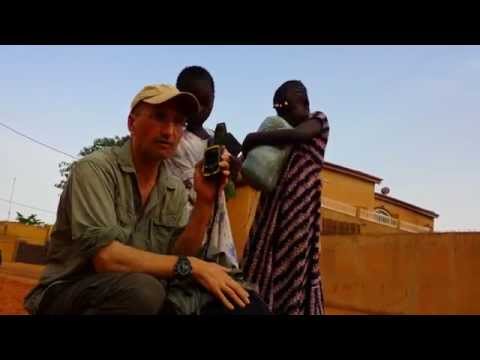
Taking an ultralight mindset to Africa requires an adjustment, but the lessons learned and the experiences had in Africa are rarely matched.
I’ve always admired long-time BPL Member Francis Tapon’s thirst for adventure that leaves most of us well out of our comfort zone. In the face of adversity, including the burden of carrying an ivy league education and the unexpected death of his father, Francis has a unique ability to meander his way through trials by facing adversity gracefully, patiently, and without surprise.

The young guy in blue led me across dunes in the pre-dawn darkness so we could climb to the tallest dune and get a view. He would hike up the sand as if it were pavement – effortlessly! I huffed and puffed behind him. – at Erg Chebbi (Sahara Desert).
Francis is currently on a four-year mission to visit every African country (54 of them!), document their unseen culture, and develop the media into a TV series. Francis is currently raising money for the pilot episode via Kickstarter, check it out:
Please consider pre-ordering the pilot episode of The Unseen Africa.
I had the chance to catch up with Francis recently to discuss his African adventure, and dive into a little bit of the philosophy, style, and equipment that drives his quest to search for the Unseen!
RJ: Africa is pretty big. You planned out a serpentine route circumnavigating the continent. What was the biggest challenge you faced in route planning before you embarked on your journey?
FT: Nothing really because I didn’t put too much thought into the serpentine route that I drew. I simply spent a few minutes drawing my ideal route. It’s a route that avoids backtracking yet allows me to visit all 54 African countries.
It’s the equivalent of you drawing a line on a map of Alaska for your Arctic 1000 route. First comes the basic, idealized line, which takes a few seconds to draw. Next comes the miles-by-mile map based on meticulously studying topographic maps, which can take weeks to draw.
I have never done Part 2: I don’t know if my route is really feasible. Instead, I just plan a couple weeks or months in advance as I go.

In a village in Guinea Bissau.
Although I’ve pretty much followed the route perfectly in the first year, I suspect that at some point I’ll run into some border that is closed, for example, and I’ll be forced to re-route. That’s similar to when you run into a forest fire on a thru-hike.
The one thing I did know before I drew that line is that the Morocco-Algeria border has been closed for decades. That’s one reason why I wanted to start in Morocco and end in Algeria.
RJ: I’m sure you’ve deviated from the route you originally planned. When I deviate from my route in a Montana wilderness, it’s like … there’s a snake in the trail, so I better step around it. When I dream of the types of things that you are facing, I’m thinking about packs of lions, armed militia, or flooding rivers. What sorts of unplanned trials caused your biggest route deviations in Africa?
FT: The biggest headache is one that backpackers never have to worry about: visas. Most African countries require a visa. Getting them are often complicated, time consuming affairs. They’re usually expensive ($50-100 each) and they expire after a few weeks.
For example, my visa to Nigeria was expiring on March 5, 2014, yet my car was getting repaired in Benin in February. This forced me to go into Nigeria by hiring a motorcycle driver to take me there. From there, I explored via buses and then I returned to Benin 10 days later.
It was annoying because I really wanted to spend more time in Nigeria, despite Boko Haram.
Still, you’re right that I need to constantly make adjustments as I go depending on what I hear on the ground.
For instance, the Moroccan military forced me to make detours twice because they didn’t want me to go into restricted military zones.

The Sindou Peaks look like dozens of stone fingers clawing at the sky. – in Sindou, Burkina Faso.
Similarly, in Mali, the police refused to let me to enter the town that has the tallest mountain in Mali. So I had to sneak in at 2:00 a.m. That caused two of my Malian friends to be tossed in jail when the police couldn’t locate me (they thought my friends had conspired to kidnap me).
I eventually got them out of jail, a few hours later.
RJ: When I think of Africa, I think of heat. I get anxious when the temperature gets above 80 deg F on my backcountry expeditions – that’s siesta time for me! Other than the usual travel magazine advice (“drink lots of water and wear a wide brimmed hat!”) what sorts of practices and equipment do you have to employ to adventure and explore in sustained heat like this?
FT: Hiking the PCT’s and CDT’s deserts prepared me for the Sahara, although the temps can be even more brutal in the Sahara. Only in Death Valley will you find temps that are comparable.

Overlooking Burkina Faso.
Outside the Sahara, in West Africa (where I’ve spent over a year), the temps are lower than the Sahara, but the humidity is much higher. From December to June the temps have been in the 30s C (90s F) nonstop. During the day in Niger (where I am now) temps hit 45 C (108 F) in the shade. It’s just unsafe to backpack in those temps.
As I wrote for BPL, I’m a big umbrella fan, especially for the hot desert. I’m against a wide brimmed hat, which just traps heat in your head and doesn’t prevent the sun from cooking your body.
An umbrella more than makes up for its weight penalty in the desert as it allows you travel much farther with the same amount of water.
Keeping the sun off your clothes is critical in the Sahara. Think about when you put your hand above hot coals. If it’s far enough away, you hardly feel anything for a few seconds or even a few minutes.

M’Goun is Morocco’s 3rd tallest mt (at over 4,000 meters). It’s rarely seen even in the summer, but I enjoyed a lonely climb to the summit in March 2014.
However, if you keep it there long enough, it will start cooking/burning your hand, just like you’d cook a piece of meat.
Same goes for the sun. Step out of the shade, and the sun feels marginally warmer than the shade. However, stay in the sun for several minutes and hours, and then you’re going to get baked, literally. It’s going to sap your energy. Your hiking efficiency (and enjoyment) will decrease.
So it’s imperative, in the hot desert, to prevent the sun from touching you or your clothes. A wide hat is ineffective at doing that.
Hats, as we know from winter backpacking, trap heat and help keep you warm. That’s wonderful when it’s snowing, but dangerous when it’s boiling.
Ideally, you want to be naked yet in the shade, so that as you sweat, the breeze cools your body. The only way to make such shade is an umbrella.
RJ: Have you experienced “cold” in Africa?
FT: On the crest of the High Atlas Mountains in Morocco in March. I traversed the length of the High Atlas (800km/500 miles). The summits of the 4,000-meter (13,000+ ft) peaks were covered in snow and had fierce wind. It reminded me of being in the San Juan Mountains in May.
RJ: You’ve been around Backpacking Light for a long time; it’s been really exciting to watch you grow as an adventurer! Your books, presentations, and travel styles all reveal this smoldering “ultralight ethic” under your hood. You are living this ethic on so many levels that I can’t help but admire your ability to transfer that philosophy into living practice. What role has Backpacking Light played in development of your travel and living styles and philosophies? FT: What I adore most about BPL is its scientific approach to backpacking. It’s a quantitative, fact-based, analytical way of looking at an activity that is largely about feeling and spirituality.
Some think the two shouldn’t mix. But I disagree and I’m glad BPL does too.
I have a bachelor’s degree in Religion (the feeling/spiritual side of me) and an MBA from Harvard Business School (the analytical side). So both styles and philosophies co-exist in my brain and heart, and I’m thrilled that the same is true with BPL.
RJ: What remains in your life right now that you feel is still too complicated? Is it something you feel you need to simplify or have you accepted that it’s complicated and “that’s that”? FT: The only thing in my life that is complicated is managing my many dreams. Boredom is something I have never felt in my life. I see idle and bored Africans and I want to borrow their time.
I think about my mortality every day. It motivates me so much.
On the other hand, it also saddens me because there’s so much I want to experience that I’ll never be able to do even if lived to be 1,000 years old.
My life is comically simple for a man in his 40s. However, it’s still somewhat complicated to prioritize a bucket list that stretches to infinity when you have such a finite existence.
“I may die tomorrow or next year,” I remind myself every day. It keeps me focused, it makes me a better person, and it encourages me to live a fulfilling and simple life.
RJ: You could be “back here” with the rest of us dealing with stupid and insignificant first world problems and obligations. I’m glad you’re not. They’re terrible things to waste your life on! But you know that, certainly. But I also know that you miss something back here, yes? Other than the usual (“I miss my family, friends, reliable hot showers, safe(r) food, and insect-free accommodations…”), what insignificant things about first world living do you miss?

In 2013, I explored the west side of the Sahara (including Morocco, Mauritania, and Mali). I’m excited to return to the Sahara in early 2014 to see more precious unseen landscapes like this. I’ll be traveling to Nigeria, Niger, Chad, and the Central African Republic. They’re not exactly touristic hot spots. They’re more like terrorist hot spots. They’re home to fun folks like (Boko Haram and AQIM. So I don’t plan to linger long, but I do plan to treasure my time there. – in Western Sahara
FT: Ben & Jerry’s ice cream. High-speed Internet. Reliable people and services. Reliable electricity and water.
I don’t miss my friends and family as much as travelers of yesteryear did. Skype, Facebook, and email keep us connected, even in Africa. When Livingstone traversed Africa, he was truly unplugged. Nowadays, it’s hard to do that without having your loved ones revolt.
RJ: What are your most valuable pieces of equipment?
FT: The most expensive thing isn’t listed on my gear list (below): it’s my car, worth about $15,000.
The camera is worth about $5000. One shotgun mic is $700. A wireless mic is over $500.
RJ: What are the most challenging aspects of resupply in Africa?

I was climbing North Africa’s tallest peak by the rarely used southern approach. I used my umbrella as an ice ax on the steep, slippery snow fields. To learn more surprising uses of an umbrella, visit: Tapon.org/umbrella – at Mount Toubkal summit 4,167m.
FT: Electronics are hard to replace. So if you break your camera or your ultralight LED light, then you can’t order it on Amazon and have it shipped to a post office. At least not easily.
Same goes for ultralight gear. Even Europeans complain about how hard it is to find ultralight gear in Europe, so you can imagine how impossible it is to find any backpacking gear in Africa.
RJ: Can you describe your day to day travel “routine”?
FT: Only in the broadest sense: I wake up, eat, move, and sleep.
Beyond that, there’s little routine, unless I’ve decided to park it for a few weeks to reconnect digitally and write my book. Then I can be pretty sedentary, although I must run every day just to stay fit. It’s just hard when it feels like a nonstop sauna.
Normally, though, every day is an adventure. I often have no idea what will happen or how the day will end. Surprises abound.
And that’s the way I like it.
For example, just like I traversed Spain twice without maps, I traversed the High Atlas Mountains in Morocco without maps. Only advanced backpackers should do this, of course.

I’m disappointed that I will no longer be able to donate blood in the USA since I got malaria in Ghana. I’m banned for life. Naturally, since most Africans have gotten malaria at least once in their life, they don’t have such a restriction (otherwise nobody could donate!). So I was happy to give to Niger. – in Niamey, Niger.
What I love is that you get to feel like Livingstone or Lewis and Clark: you have no idea what’s over the next summit or the next bend in the river. Suddenly, there’s a waterfall or a swamp and you have to adjust. It’s thrilling and spontaneous. And those are two ingredients for a fun life.
Given the miserable internet facility of Niger (where I tagged him recently) and the inability to transfer high-bandwidth video, I begged Francis to give us just a little teeny bit of visual insight into some of the things he carries in Africa. These are not necessarily the same things you and I would carry in the Wild American Backcountry!
| Model | Description | Store | Weight(oz) | Purchase price | Estimated current value | Notes |
| Canon XF300 | Weight includes UV filter | eBay | 86.8 | $4,557.00 | $5,000.00 | Cost includes 2 batteries, 1 charger |
| Lexar, Sandisk | (5)Lexar($99 ea), Sandisk Extreme($150), Sandisk Extreme Pro ($202) | Amazon, eBay | 3.3 | $847.00 | $1,480.00 | |
| GoPro Hero 3 Black Edition | Underwater/timelapse/slow motion | MP Gear | 2.6 | $400.00 | $400.00 | |
| SanDisk Ultra | MicroSDHC, 32gb, Sandisk, 30MB/s | MP Gear | 0.1 | $0.00 | $0.00 | Included with Go Pro |
| MP Gear | 1.5 | $0.00 | $0.00 | Included with Go Pro | ||
| GoPro LCD Touch BacPac | Touch LCD monitor (weight includes case) | MP Gear | 1.3 | $80.00 | $80.00 | |
| GoPro Battery BacPac | (weight includes case) | MP Gear | 1.7 | $50.00 | $50.00 | |
| MP Gear | $0.00 | $0.00 | ||||
| BP-975 | 7350mAh, 7.4v, 55wh | B&H | 11.3 | $215.00 | $215.00 | |
| Tiffen Digital HT | eBay | 4.4 | $200.00 | $300.00 | ||
| iKan 144 LED | Includes (1)battery, charger | B&H used | 26 | $0.00 | $251.00 | Sponsor for The Unseen Africa |
| iKan | $0.00 | Sponsor for The Unseen Africa | ||||
| Flyweight camcorder handheld rig | B&H | 55.7 | $0.00 | $500.00 | Sponsor for The Unseen Africa | |
| WS XF300/305 | Protection for the main camera | B&H | 10.7 | $170.00 | $170.00 | |
| B+W UV Haze MRC 010M | 82mm, weight included in camera weight | eBay | 0 | $47.00 | $106.00 | |
| NP-F570 | 2100mAh, 7.2v, 15.8wh | B&H | 3.6 | $39.00 | $39.00 | |
| BP-955 | 4900mAh, 7.4v, 37wh | eBay | 7.5 | $0.00 | $160.00 | Included with Canon XF300 |
| CA-930 | 8.4v | eBay | 11.9 | $0.00 | $130.00 | Included with Canon XF300 |
| BP-945 | 4500mAh, 7.2v, 31wh | eBay | 9.9 | $0.00 | $50.00 | Included with Canon XF300 |
| Plugs into the charger and powers camera | eBay | 2.3 | $0.00 | $0.00 | Included with Canon XF300 | |
| Air blower and lens cloth | N/A | 4.5 | $0.00 | $0.00 | Bought by Josh | |
| Ballhead X Focus | With Quick Release Plate | $100.00 | ||||
| $50.00 | ||||||
| Brunton Solarroll | 4.5 watt, waterproof, UV resistant | Brunton | 16.2 | $0.00 | $300.00 | Previous Francis Tapon Sponsor |
| Ice Tech i12k | 12,000 mAh, 5V-24V, | 15.5 | $0.00 | $500.00 | Sponsor for The Unseen Africa | |
| 0 | $0.00 | $0.00 | ||||
| Bestek 300w | 300w DC 12v to AC 110v-220v | Amazon | 15.2 | $25.00 | $25.00 | |
| N/A | US/world > US/world, Surge protector | N/A | 3 | $0.00 | $10.00 | |
| N/A | World > US(2 prong) | N/A | 0.7 | $0.00 | $10.00 | |
| Master Electrician PS37UOGH | Amazon | 3.7 | $5.00 | $5.00 | ||
| Monster MP OTG BK | 300v | Amazon | 5.7 | $10.00 | $10.00 | |
| Lenmar ACUSB4 | Includes all world adapters | Amazon | 5.9 | $18.00 | $18.00 | |
| Sanyo Eneloop XX | 2500mAh, 1.2v, NiMH | B&H | 8.4 | $35.00 | $35.00 | |
| Sanyo Eneloop | 2000mAh, 1.2v, NiMH | N/A | 3.7 | $0.00 | $0.00 | |
| Sanyo Eneloop charger | Input: 4w, Output: 1.2v | N/A | 3.3 | $0.00 | $0.00 | |
| ew 112-p G3 | Mic and on-camera receiver B freq | eBay | 11.8 | $500.00 | $629.00 | |
| Rode NTG-3 | eBay | 5.8 | $525.00 | $700.00 | ||
| Seismic Audio | 1′ right angle to right angle XLR | eBay | 3 | $9.00 | $11.00 | |
| Audio-Technica | 10′ XLR | Amazon | 7.8 | $7.00 | $7.00 | |
| Rhode WS7 | B&H | 1.7 | $60.00 | $60.00 | ||
| Zoom H4n | 4 channel recorder, AC adapter, windscreen | eBay | 14.8 | $212.00 | $270.00 | |
| HP | 4gb SDHC | N/A | 0.1 | $0.00 | $0.00 | |
| Meelectronics Sport Fi S6 | Amazon | 0.7 | $26.00 | $26.00 | ||
| Asus Zenbook UX31A | 13.3″ 1080p IPS, i5, 4gb ram, 128gb SSD | eBay | 49.2 | $900.00 | $1,100.00 | |
| Targus APA037US | 65w | Best Buy | 8.2 | $70.00 | $70.00 | Bought by Josh |
| Targus A7 Slipcase TSS108US | 15.6″ | Best Buy | 9.9 | $21.00 | $21.00 | Bought by Josh |
| Logitech Marathon M705 | AA batts, laser | Best Buy | 4.7 | $40.00 | $40.00 | Bought by Josh |
| Asus | eBay | 0.8 | $0.00 | $0.00 | Included with ultrabook | |
| Transcend | 1TB, USB 3.0, meets military drop standards | Amazon | 8.9 | $93.00 | $93.00 | |
| Western Digital Elements Mini | (1) USB 2.0 @ $45.00, (4)USB 3.0 @ $200 | eBay | 36.9 | $245.00 | $280.00 | |
| Transcend | Multi-card reader, USB 3.0 | Amazon | 2.2 | $16.00 | $16.00 | |
| Sandisk Cruzer | 4gb, secondary backup | N/A | 0.3 | $0.00 | $5.00 | Bought by Josh |
| Asus Google Nexus 7 | 32gb, AT&T cellular version | 11.9 | $300.00 | $300.00 | ||
| HTC | Micro USB | 2.2 | $0.00 | $0.00 | ||
| Belkin | Blue/black | Amazon | 6.3 | $0.00 | $20.00 | |
| Zagg Bluetooth Keyboard | Amazon | 11.4 | $40.00 | $40.00 | ||
| Kindle Paperwhite | 7.3 | $120.00 | $120.00 | |||
| Lightwedge Verso | Red | N/A | 4.2 | $0.00 | $20.00 | |
| TP-Link TL-MR3040 | 3G, wireless N (weight includes charger/CAT5) | Amazon | 7 | $0.00 | $45.00 | |
| Amazon | High speed with ethernet | Amazon | 1.3 | $0.00 | $8.00 | |
| N/A | 0.8 | $0.00 | $0.00 | Bought by Josh | ||
| iPhone 4 | Verizon, 16gb | Apple | 6.4 | $150.00 | $500.00 | Bought by Josh |
| 30 pin USB charger | Apple | 0.7 | $0.00 | $0.00 | Bought by Josh | |
| Midland GXT1000 | 36 mile, 50 channel | B&H | 15.5 | $57.00 | $90.00 | |
| Midland GXT1000 | AC/car charger, charging base | B&H | 9.8 | $0.00 | $0.00 | Included with walkies |
| DeLorme inReach for Smartphones | 2-way satellite communicator with GPS | DeLorme | 8.5 | $0.00 | $250.00 | Sponsor for The Unseen Africa |
| Parallax Elev-8 | Pain in the ass | 16 | $0.00 | $1,000.00 | Sponsor for The Unseen Africa | |
| Spektrum DX6i | 6 channel transmitter | 22.3 | $138.00 | $160.00 | ||
| Storm Logic Sweater Jacket | Ensign, M | ExOfficio | 14.3 | $0.00 | $125.00 | Sponsor for The Unseen Africa |
| Roughian Hooded Long Sleeve Sweater | Loden, M | ExOfficio | 15.8 | $0.00 | $105.00 | Sponsor for The Unseen Africa |
| BugsAway Halo L/S | Lt. Pebble, M | ExOfficio | 7.7 | $0.00 | $85.00 | Sponsor for The Unseen Africa |
| GeoTrek’r Field Collection | Sage, M | ExOfficio | 8.4 | $0.00 | $60.00 | Sponsor for The Unseen Africa |
| Teanaway 1/4 Zip | Black, M | ExOfficio | 9.3 | $0.00 | $70.00 | Sponsor for The Unseen Africa |
| Takeover Trek’r L/S | Graphite, M | ExOfficio | 15.3 | $0.00 | $75.00 | Sponsor for The Unseen Africa |
| GeoTrek’r Field Collection S/S | Rainier, M | ExOfficio | 6.8 | $0.00 | $37.00 | Sponsor for The Unseen Africa |
| Give-in-Go Boxer Brief | (2) Black, (2) Blue – 2.9oz each, $26.00 each | ExOfficio | 11.6 | $0.00 | $104.00 | Sponsor for The Unseen Africa |
| Give-in-Go Boxer Brief | (1) Black, (1) Blue – 2.9oz each, $26.00 each | ExOfficio | 5.8 | $52.00 | $52.00 | Bought by Josh and Francis |
| REI | Blue, M | REI | 5.2 | $20.00 | $20.00 | |
| GoLite | Gray, M | GoLite | 5.5 | $0.00 | $50.00 | Previous Francis Tapon Sponsor |
| BugsAway Classic Cap | Lt. Khaki, One size, Unisex | ExOfficio | 3 | $0.00 | $24.00 | Sponsor for The Unseen Africa |
| X-O-FISH-E-OH Twill Hat | Lt. Pebble, One size | ExOfficio | 3.2 | $0.00 | $20.00 | Sponsor for The Unseen Africa |
| BugsAway Cape Hat | Slate, S/M | ExOfficio | 3 | $0.00 | $25.00 | Sponsor for The Unseen Africa |
| Gossamer Gear | Cool | GG | 1.7 | $0.00 | $10.00 | |
| Sol Cool Neck Gaiter | Oyster, One size | ExOfficio | 1.3 | $0.00 | $20.00 | Sponsor for The Unseen Africa |
| N/A | N/A | N/A | 4.5 | $0.00 | $0.00 | |
| Possumdown | 42% merino wool, 33% possum fur, 17% lycra, 8% Nylon | Lite Trail | 2.1 | $0.00 | $41.00 | Sponsor for The Unseen Africa |
| Possumdown | 40% possum fur, 50% merino wool, 10% nylon, (3) pairs | Lite Trail | 3.9 | $0.00 | $64.00 | Sponsor for The Unseen Africa |
| Smartwool | 3 pairs, ankle height | Massey’s | 4.2 | $0.00 | $45.00 | Bought by Josh |
| Smartwool | 1 pair, crew height, thick | Massey’s | 3.3 | $0.00 | $15.00 | Bought by Josh |
| N/A | N/A | N/A | 11.3 | $0.00 | $0.00 | |
| 550 paracord | N/A | 0.4 | $0.00 | $0.00 | Made by Nicholas Whelton | |
| Lite Trail | 0.6 | $0.00 | Sponsor for The Unseen Africa | |||
| Gossamer Gear Mariposa 2012 | Ultralite | GG | 27 | $0.00 | $235.00 | Sponsor for The Unseen Africa |
| Gossamer Gear Mariposa 2013 | 27 | $0.00 | Sponsor for The Unseen Africa | |||
| Platypus Big Zip II | 3.0 liters | 4.5 | $0.00 | $30.00 | Previous Francis Tapon Sponsor | |
| Lite Trail | 0.8 | |||||
| Ruko Muela 5161 | 6-1/4” Nylon/Zamak Handle Survival Knife | N/A | 5.8 | $0.00 | $59.00 | |
| Leatherman Juice CS 4 | Mulit-tool | N/A | 5.4 | $0.00 | $60.00 | |
| Victornox | N/A | 0.7 | $10.00 | $20.00 | ||
| REI Field | 8×21, 7.2 degrees | REI | 3.8 | $0.00 | $50.00 | |
| Husky HD-74501 AB | Home Depot | 1 | $14.00 | $14.00 | Bought by Josh | |
| Generic | For handheld camera rig | N/A | 0.5 | $0.00 | $0.00 | Bought by Josh |
| General Brand Pro Gaff | 1″, black | |||||
| Black Diamond Spot Headlamp | 90 lumen, AAA batteries, red | Jacks R Better | 3.3 | $0.00 | $40.00 | Sponsor for The Unseen Africa |
| Black Diamond Spot Headlamp | 90 lumen, AAA batteries, green | Jacks R Better | 3.3 | $0.00 | $40.00 | Sponsor for The Unseen Africa |
| Brookstone No Batteries | Hand-crank light | Brookstone | 4.9 | $0.00 | $15.00 | |
| Jacks R Better Self-Tensioning Line | 9′, thera-band, 0.4oz ea | Jacks R Better | 1.6 | $0.00 | $40.00 | Sponsor for The Unseen Africa |
| Go Lite Chrome Dome | 2 @ 8oz. Ea | Go Lite | 16 | $0.00 | $40.00 | Previous Francis Tapon Sponsor |
| Gear Aid Tenacious Tape | 60 sq. inches | Jacks R Better | 0.7 | $0.00 | $5.00 | Sponsor for The Unseen Africa |
| Dukal Survival Wrap | 52×84″, 1.8oz each | Amazon | 7.2 | $28.00 | $28.00 | |
| MSR Packtowl Ultralite | 9×20″, .8oz each | 1.6 | $0.00 | $12.00 | Previous Francis Tapon Sponsor | |
| N/A | 0.4 | $0.00 | $0.00 | Previous Francis Tapon Sponsor | ||
| Scrubba Wash Bag | Scrubba | 5.4 | $0.00 | $60.00 | Sponsor for The Unseen Africa | |
| GG | 5.8 | $0.00 | $150.00 | Previous Francis Tapon Sponsor | ||
| Gossamer Gear Polycryo Ground Sheet | 72×96″, 4.9oz each | GG | 9.8 | $0.00 | $7.00 | Previous Francis Tapon Sponsor |
| Evernew Titanium | 2 liter | REI | 11.2 | $60.00 | $60.00 | |
| Platypus | 1 liter | Cascade Designs | 0.9 | $0.00 | $15.00 | Previous Francis Tapon Sponsor |
| Evernew | (2) 2 liter pouches, 1.5oz each | GG | 3 | $0.00 | $10.00 | Sponsor for The Unseen Africa |
| N/A | Custom by Francis | N/A | 16 | $0.00 | $0.00 | |
| Lite Trail NyloBarrier Odor Proof Bag | Lite Trail | 0.9 | $0.00 | $5.00 | Sponsor for The Unseen Africa | |
| SteriPEN Traveler 3-in-1 | 4 AA required | SteriPEN | 3.4 | $0.00 | $120.00 | Sponsor for The Unseen Africa |
| SteriPEN Freedom | Rechargable, microUSB (weight includes case) | SteriPEN | 4.4 | $0.00 | $120.00 | Sponsor for The Unseen Africa |
| Sawyer Squeeze | Filters over 1 million gallons | GG | 3 | $0.00 | $45.00 | Sponsor for The Unseen Africa |
| ZPacks Hexamid Twin Tent | Cuben fiber | Zpacks | 18.5 | $0.00 | $415.00 | Sponsor for The Unseen Africa |
| Tite-Lite Tent Stakes | Titanium, 6.5″, short, Hi Viz, $3.50 ea, .2oz ea | GG | 1.6 | $0.00 | $28.00 | Sponsor for The Unseen Africa |
| Tite-Lite Tent Stakes | Titanium, 6.5″, V, Hi Viz, $4.00 ea, .4oz ea | GG | 3.2 | $0.00 | $32.00 | Sponsor for The Unseen Africa |
| Vargo Outdoors | Titanium, 6.5″, 8pack = $21.20, .2oz ea | Zpacks | 1.6 | $0.00 | $26.65 | Sponsor for The Unseen Africa |
| Zpacks | Cuben fiber seam tape/replacement zippers | Zpacks | 1.2 | $0.00 | $5.00 | Sponsor for The Unseen Africa |
| Zpacks | Included with Hexamid tent | Zpacks | 0.1 | $0.00 | $0.00 | Sponsor for The Unseen Africa |
| Mombosa Tracker | N/A | 5.9 | $0.00 | $20.00 | ||
| High Sierra Sniveller | 800 fill down, 78×52″, 3.5″ loft | Jacks R Better | 30.3 | $0.00 | $280.00 | Sponsor for The Unseen Africa |
| The Katahdin Quilt | 900 fill down, 85×61″, 3.5″ loft | Jacks R Better | 38.1 | $0.00 | $300.00 | Sponsor for The Unseen Africa |
| Gear Aid Revivex Down Cleaner | Jacks R Better | 14.4 | $0.00 | $8.00 | Sponsor for The Unseen Africa | |
| Gossamer Gear Thinlight Insulation Pad | GG | 2 | $0.00 | $11.00 | Sponsor for The Unseen Africa | |
| Gossamer Gear Nightlight Sleeping Pad | GG | 4.6 | $0.00 | $22.00 | Previous Francis Tapon Sponsor | |
| ZPacks | Ultra light toothbrush | Zpacks | 0.6 | $0.00 | $3.00 | Sponsor for The Unseen Africa |
| Oral-B | N/A | 0.8 | $0.00 | $0.00 | ||
| Gillette Fusion Proglide | N/A | 2.8 | $40.00 | $40.00 | ||
| Sawyer Stay Put Sunblock | 1 fl. oz., titanium dioxide | GG | 1.2 | $0.00 | $0.00 | Previous Francis Tapon Sponsor |
| Sawyer Picaridin | .5 fl. oz., 20% picaridin (doesn’t harm gear) | GG | 0.8 | $0.00 | $3.00 | Sponsor for The Unseen Africa |
| Sawyer Maxi Deet | .5 fl. oz., 98% deet | GG | 0.8 | $0.00 | $3.00 | Sponsor for The Unseen Africa |
| Totals | 1080.80 | $10,601.00 | $19,248.65 |
Great water resistance, loft, and warmth makes the Montbell Hugger an ideal sleeping bag.
You don’t have access to view this content.
Yosemite is a wild place and has incredible wilderness opportunities for hikers, climbers, and skiers.
Tuolumne Meadows to Sonora Pass provides a rugged yet rewarding stretch of the Pacific Crest Trail, definitely worth experiencing for backpackers who enjoy great scenery and don’t mind a fairly committing route.
To shed a few pounds, many travel without tents. Be wary of mosquitoes and thundershowers, though. Bear cans are a necessity, hiking poles are strongly advised and fishing gear will improve meals and morale.
Food, camping and lodging are available in Tuolumne Meadows and Lee Vining near the southern trailhead. Nothing but the road and a parking lot awaits at the northern trailhead. Many finishing trips there meet a driver or hitchhike either west towards Sonora or east towards Bridgeport.
by Eric Vann
Matt Johanson is a high school journalism teacher and a freelance outdoor and travel writer. He is a lifelong outdoors enthusiast with more than 20 years’ experience in the Yosemite area and the author of Yosemite Epics: Tales of Adventure from America’s Greatest Playground. He lives in Castro Valley, California.
EV: How much weight do you carry when you backpack?
MJ: As little as possible. I don’t weigh it.
EV: What are your favorite pieces of gear?
MJ: My bivvy sack, trekking poles and camera. I don’t usually need a tent but I like to have a lightweight shelter for inclement weather, especially in winter. Poles reduce the wear on my knees from steep terrain and the camera produces pictures for my books and articles.
EV: What is your style of Backpacking?
MJ: I enjoy packing light to help me cover a lot of ground on short outings of two to three days. But I also enjoy reaching more remote areas and making a deeper connection with nature on longer trips.
EV: What make Yosemite so unique?
MJ: Yosemite offers the best and most easily accessed wilderness opportunities for hikers, climbers and skiers of anywhere that I’ve been. Incomparable granite walls, abundant day trips and endless possibilities for backcountry travel in summer and winter make it hard to beat.
Yosemite Adventures: 50 Spectacular Hikes, Climbs, and Winter Treks by Matt Johanson (reprinted with permission of Triumph Books).
Distance: 75 miles
Time: 6 to 8 days
Difficulty: very strenuous
Parking: beside Tioga Pass Road near Lembert Dome (no overnight parking in Lembert Dome lot)
Trailhead: Lembert Dome, elevation 8,600 feet
Highest point: elevation 10,759 feet
Best season: June to September
Permits: required for overnight travel; visit Tuolumne Meadows Wilderness Center
This rugged section of the Pacific Crest Trail climbs, drops, climbs more, drops more, climbs even more, and drops even more from Yosemite to the Emigrant Wilderness. It’s a physically demanding, high-elevation hike and not for beginners. But for those ready for it, the trek delivers solitude and access to rarely-seen peaks and seldom-visited lakes.


Backpackers can travel this point-to-point trek hiking either north or south. This guide recommends hiking north from Tuolumne Meadows to start at lower elevation and on less-demanding terrain. Those who begin at Sonora Pass not only start their hike at 9,623 feet but must immediately climb to the hike’s highest point at 10,759 feet with full packs, many of the hikers coming from sea level with no altitude acclimation! Instead, start in
Yosemite, where the trailhead is a thousand feet lower, and break into the hike with a few fairly mild days.
Before leaving, though, give a thought to transportation. If you drive to Yosemite, how do you get back to your vehicle from Sonora Pass? Or if you leave a car at Sonora Pass, how do you get to Yosemite? Public transportation offers no solution to this problem. Most hikers shuttle vehicles with the help of friends or family.
Park beside the highway near Lembert Dome, or beside the dirt road leading toward the stables (in the Lembert Dome lot, no overnight parking is permitted). Your hike follows the dirt road to a gate and continues past it toward Soda Springs. Pause here to try the naturally carbonated water bubbling from the ground. Soon your route approaches and then parallels the Tuolumne River. After a climb, the trail descends into a wooded area. Shortly after crossing a footbridge, you’ll see Tuolumne Falls and later White Cascade. Descend toward a bridge over the Tuolumne. Across is the popular Glen Aulin High Sierra Camp, where most passersby stay a night.
Continue north into Cold Canyon. The trail will climb steadily until dropping into Virginia Canyon. There are worthy campsites along McCabe Creek and Return Creek. But if you can, climb the switchbacks out of the canyon and push on another 3 miles to Miller Lake. This will position you to reach coveted Benson Lake on the next day.
From Miller Lake, descend into Matterhorn Canyon and cross its creek as the trail turns southwest. Then climb out of the canyon and over Benson Pass on your way to Smedberg Lake. This is a great place to stop for lunch, swim, and fish.
The next segment passes a spur trail to Benson Lake. Though it’s a detour from the Pacific Crest Trail, you really shouldn’t miss it (see page 156).

From the Benson Lake detour to Seavey Pass, hikers gain 1,600 feet in less than 3 miles. Take your time and enjoy the ponds and small lakes along the way. Then your path descends and turns west into Kerrick Canyon. About 3 miles down canyon, turn north and cross the creek, which can be challenging in the early season. Now begins the next climb and descent into Stubblefield Canyon. After that, take a break and decide if you’re up for another few miles and few thousand feet of up and down. If not, camp here near the creek. If you can make another push, though, climb over Macomb Ridge and push on toward Wilma Lake. A shady and pleasant walk leads to this lake where a ranger cabin stands.
Turning north, the Pacific Crest Trail leads past Chittenden, Kendrick, Keyes, and Bigelow peaks while passing through Grace Meadow, climbing gradually toward Dorothy Lake. After the steeper climbs you accomplished earlier, this one will feel pleasantly mild. Dorothy Lake offers tree-sheltered campsites and you don’t have to be an expert to catch a fish here.
After climbing to Dorothy Lake Pass, hikers depart Yosemite and enter the Toiyabe National Forest. Passing Stella and Bonnie lakes, descend to Lake Harriet and continue north. Just past two ponds is a junction; turn northwest to stay on the Pacific Crest Trail and head toward the West Fork West Walker River. You will pass Lower Long Lake on your way to Walker Meadows. Now you’re close to civilization again and may start to see some day hikers.


Soon your path turns west through rocky Kennedy Canyon. Even early in the day, consider camping here because few appealing options and precious little water are found between here and Sonora Pass. But hikers making an early start after spending a night here can reach their trek’s end in a day. Make sure to fill water bottles before leaving.


Start by climbing westward to the saddle above Kennedy Canyon. Then your path turns north and becomes a jeep road that zig-zags up long switchbacks to a high ridge well above the tree line. After gaining the ridge, the jeep road drops down to Leavitt Lake but the Pacific Crest Trail turns northwest and traverses a volcanic ridge. You’re now in the Emigrant Wilderness of the Stanislaus National Forest. Eventually snow and snowmelt may give you a chance to refill your water bottles. When the trail passes beneath Leavitt Peak, you have the option to scramble up its rocky slopes to a 11,569-foot summit. The 800-foot climb is a worthy detour on the right day.
Continuing north past Latopie Lake, be wary of steep and possibly icy snowfields, especially early in the day and season, between here and the road. Your final miles twist and turn as you descend more than a thousand feet past whitebark pines and seasonal wildflowers before reaching Sonora Pass.


Take a fishing license and pole. There are many good fishing opportunities and fresh trout will taste better than freeze-dried backpacking fare after a few days.
Consider carrying crampons and ice axes in the early season to safely cross snowfields in the Emigrant Wilderness.
Start: Lembert Dome
0.5 miles: Soda Springs
4.8 miles: Tuolumne Falls
5.5 miles: Glen Aulin High Sierra Camp
17 miles: Miller Lake
23.8 miles: Benson Pass
25.7 miles: Smedberg Lake
29.9 miles: Junction with trail to Benson Lake
32.6 miles: Seavey Pass
44.4 miles: Wilma Lake
53.9 miles: Dorothy Lake
54.9 miles: Dorothy Lake Pass
60.4 miles: West Fork West Walker River bridge
63.9 miles: Kennedy Canyon
67 miles: Junction with trail to Leavitt Lake (turn left)
75 miles: Sonora Pass

Grandma Gatewood was the first woman to solo-thru-hike the Appalachian Trail. Her journey saved the trail and her legacy continues to shape the ultralight backpacking movement.
by Eric Vann
What could inspire a 67-year old woman to leave her family behind and solo hike the Appalachian Trail? The answer to this question has for long remained a mystery. In his book “Grandma Gatewood’s Walk: The Inspiring Story of the Woman Who Saved the Appalachian Trail”, author Ben Montgomery seeks to answer this question as he explores the life of the first woman to solo-thru-hike the entire Appalachian Trail. She carried no tent, sleeping bag, or map and didn’t have the comforts of contemporary ultralight backpacks and sleeping pads and nevertheless she is etched into ultralight lore as one of the founders of the ultralight backpacking movement. She would go back to hike the trail for a total of three times becoming the first to do so and her efforts later inducted her into the Appalachian Trail Hall of Fame.

Emma “Grandma” Gatewood” out on the trail.
On the trail she averaged 22 miles per day beginning early each morning and hiking into the evenings often stopping to sleep in a locals barn or if she was lucky a bed. She had the true lightweight mindset often responding to gear questions about new ultralight gear by encouraging people to only bring necessities – which she often deemed only rain gear, a backpack, and a good pair of shoes. For food she loved to eat Vienna sausages, and said that “most everything else to eat you can find beside the trail.” She hiked with a homemade bag, an army blanket, and rain poncho. She slept numerous nights in the damp cold but she was finally going for that walk she always wanted. For Grandma Gatewood, ultralight backpacking wasn’t about the newest and greatest gear – it was about taking what she needed and enjoying the experience of being outdoors. Her mindset and passion for the outdoors continues to inspire hikers to this day.
While hiking she was interviewed by numerous publications including Sports Illustrated. In all she spent 146 days on the trail and her trip was punctuated by reaching the peak of Mt. Katahdin, one of the tallest points along the trail. Her story is one of triumph and tenacity and as Montgomery put it, “It didn’t take fancy equipment, guidebooks, training, or youthfulness. It took putting one foot in front of the other-five million times.”
The book is written after months of interviews and scouring Gatewood’s personal diaries and trail journals. Her journey redefined perceived limits and continues to demonstrate that anyone is capable of accomplishing whatever their dreams as long as those goals are pursued with true diligence. Her determination to hike the whole trail shows us that we can always hiker farther and go lighter than what we previously thought. Her 2050-mile hike became a crusade calling attention to the deteriorating conditions of the Appalachian Trail encouraging is revival and saving arguably one of the most famous trails in the world from extinction.
Ben Montgomery is a staff writer at the Tampa Bay Times and cofounder of the Auburn Chautauqua, a Southern writers’ collective. He was a finalist for the Pulitzer Prize in 2010 and has won many other national writing awards. He has worked at newspapers in Arkansas, Texas, New York and Florida. He currently lives in Tampa, Florida.
EV: What was the most memorable part of writing Grandma Gatewood’s Walk?
BM: The writing itself was pretty blah; me holed up in my office, head down, trying to plow toward deadline. But the most memorable part of the book process, if that’s what you’re asking, was easily a reporting trip up Maine’s Mount Katahdin. My wife and I hired the superintendent of trails at Baxter State Park to try to recreate the exact path Emma Gatewood would’ve taken in 1955. I spent a long time studying her diaries, and the interviews she gave before that hike and after, and I wanted to come as close as possible to being inside her head. There was a stretch along Hunt Spur where we all hiked silently for about an hour, maybe longer, and I was able to lose myself a little in that wilderness. That’s something I’ll never forget.
EV: How has Grandma Gatewood’s legacy defied typical hiking stereotypes?
BM: I think she showed Americans that it doesn’t necessarily take planning, hi-tech gear, athleticism or youth to find the rewards of testing yourself against the earth. It takes desire, and putting one foot in front of the other.
EV: Why was the AT deteriorating?
BM: It wasn’t so much deteriorating as it was not yet fully intact, protected and maintained. In 1955, Emma Gatewood found large sections that had been poorly maintained as well as chunks of trail that were inadequately marked. This wasn’t the popular footpath we know today that millions of visitors use yearly. It was incomplete, a disjointed trail maintained in spots and neglected in others.
EV: How did she save the AT?
BM: In two ways: She was critical of the stretches that she found to be poorly maintained. Sports Illustrated and other media outlets printed those criticisms and the attention led to betterment and bolstered upkeep.
I also posit that the attention she brought to the trail — and we’re talking hundreds of newspaper articles and television reports about her journeys — planted what was then a little-known footpath firmly into the American conscience. The spike in thru-hikers after her third AT trip is a reflection of that attention and a strong suggestion that she broke down psychological barriers among those who may have doubted their ability to walk 2000 miles through wilderness. Even today on the AT you hear a common refrain: If Grandma Gatewood could do it, so can I.
EV: Since she did not have a map where would she have got the info about the trail?
BM: She read a 1949 National Geographic story that suggested anyone in moderate physical shape could “hay-foot, straw-foot” on the well-marked trail from Georgia to Maine. The article suggested one could simply follow the white blazes the whole way, so there is no indication she even thought she would need a map. And while she occasionally got lost she always found her way back to the trail, either by intuition or by asking others for help.
EV: Why did Grandma Gatewood do it, why did she walk the whole Appalachian Trail?
BM: Everybody asked that question. Why? And she gave them a dozen different answers. What she never talked about was the 30 years she spent married to a hard-fisted and oppressive man who beat her beyond recognition 10 times the last year they were together. When she divorced him, she found a remarkable independence. She could finally do what she wanted. And she wanted to take a very long walk.
The following was published with the permission of Chicago Review Press, April 2014. Buy the book and read the whole story!
May 2–9, 1955
She packed her things in late spring, when her flowers were in full bloom, and left Gallia County, Ohio, the only place she’d ever really called home.
She caught a ride to Charleston, West Virginia, then boarded a bus to the airport, then a plane to Atlanta, then a bus from there to a little picture-postcard spot called Jasper, Georgia, “the First Mountain Town.” Now here she was in Dixieland, five hundred miles from her Ohio home, listening to the rattle and ping in the back of a taxicab, finally making her ascent up the mountain called Oglethorpe, her ears popping, the cabbie grumbling about how he wasn’t going to make a penny driving her all this way. She sat quiet, still, watching through the window as miles of Georgia blurred past.
They hit a steep incline, a narrow gravel road, and made it within a quarter mile of the top of the mountain before the driver killed the engine.
She collected her supplies and handed him five dollars, then one extra for his trouble. That cheered him up. And then he was gone, taillights and dust, and Emma Gatewood stood alone, an old woman on a mountain.
Her clothes were stuffed inside a pasteboard box and she lugged it up the road to the summit, a few minutes away by foot. She changed in the woods, slipping on her dungarees and tennis shoes and discarding the simple dress and slippers she’d worn during her travels. She pulled from the box a drawstring sack she’d made back home from a yard of denim, her wrinkled fingers doing the stitching, and opened it wide. She filled the sack with other items from the box: Vienna Sausage, raisins, peanuts, bouillon cubes, powdered milk. She tucked inside a tin of Band-Aids, a bottle of iodine, some bobby pins, and a jar of Vicks salve. She packed the slippers and a gingham dress that she could shake out if she ever needed to look nice. She stuffed in a warm coat, a shower curtain to keep the rain off, some drinking water, a Swiss Army knife, a flashlight, candy mints, and her pen and a little Royal Vernon Line memo book that she had bought for twenty-five cents at Murphy’s back home.
She threw the pasteboard box into a chicken house nearby, cinched the sack closed, and slung it over one shoulder.
She stood, finally, her canvas Keds tied tight, on May 3, 1955, atop the southern terminus of the Appalachian Trail, the longest continuous footpath in the world, facing the peaks on the blue-black horizon that stretched toward heaven and unfurled before her for days. Facing a mean landscape of angry rivers and hateful rock she stood, a woman, mother of eleven and grandmother of twenty-three. She had not been able to get the trail out of her mind. She had thought of it constantly back home in Ohio, where she tended her small garden and looked after her grandchildren, biding her time until she could get away.
When she finally could, it was 1955, and she was sixty-seven years old.
She stood five foot two and weighed 150 pounds and the only survival training she had were lessons learned earning calluses on her farm. She had a mouth full of false teeth and bunions the size of prize marbles. She had no map, no sleeping bag, no tent. She was blind without her glasses, and she was utterly unprepared if she faced the wrath of a snowstorm, not all that rare on the trail. Five years before, a freezing Thanksgiving downpour killed more than three hundred in Appalachia, and most of them had houses. Their bones were buried on these hillsides.
She had prepared for her trek the only way she knew how. The year before, she worked at a nursing home and tucked away what she could of her twenty-five-dollar-a-week paycheck until she finally earned enough quarters to draw the minimum in social security: fifty-two dollars a month. She had started walking in January while living with her son Nelson in Dayton, Ohio. She began walking around the block, and extended it a little more each time until she was satisfied by the burn she felt in her legs. By April she was hiking ten miles a day.
Before her, now, grew an amazing sweep of elms, chestnuts, hemlocks, dogwoods, spruces, firs, mountain ashes, and sugar maples. She’d see crystal-clear streams and raging rivers and vistas that would steal her breath.
Before her stood mountains, more than three hundred of them topping five thousand feet, the ancient remnants of a range that hundreds of millions of years before pierced the clouds and rivaled the Himalayas in their majesty. The Unakas, the Smokies, Cheoahs, Nantahalas. The long, sloping Blue Ridge; the Kittatinny Mountains; the Hudson Highlands. The Taconic Ridge and the Berkshires, the Green Mountains, the White Mountains, the Mahoosuc Range. Saddleback, Bigelow, and finally-five million steps away-Katahdin.
And between here and there: a bouquet of ways to die. Between here and there lurked wild boars, black bears, wolves, bobcats, coyotes, backwater outlaws, and lawless hillbillies. Poison oak, poison ivy, and poison sumac. Anthills and black flies and deer ticks and rabid skunks, squirrels, and raccoons. And snakes. Black snakes, water moccasins, and copperheads. And rattlers; the young man who hiked the trail four years before told the newspapers he’d killed at least fifteen.
There were a million heavenly things to see and a million spectacular ways to die.
Two people knew Emma Gatewood was here: the cabdriver and her cousin, Myrtle Trowbridge, with whom she had stayed the night before in Atlanta. She had told her children she was going on a walk. That was no lie. She just never finished her sentence, never offered her own offspring the astonishing, impossible particulars.
All eleven of them were grown, anyhow, and independent. They had their own children to raise and bills to pay and lawns to mow, the price of participation in the great, immobile American dream.
She was past all that. She’d send a postcard.
If she told them what she was attempting to do, she knew they’d ask Why? That’s a question she’d face day and night in the coming months, as word of her hike spread like fire through the valleys, as newspaper reporters learned of her mission and intercepted her along the trail. It was a question she’d playfully brush off every time they asked. And how they’d ask. Groucho Marx would ask. Dave Garroway would ask. Sports Illustrated would ask. The Associated Press would ask. The United States Congress would ask.
Why? Because it was there, she’d say. Seemed like a good lark, she’d say.
She’d never betray the real reason. She’d never show those newspapermen and television cameras her broken teeth or busted ribs, or talk about the town that kept dark secrets, or the night she spent in a jail cell. She’d tell them she was a widow. Yes. She’d tell them she found solace in nature, away from the grit and ash of civilization. She’d tell them that her father always told her, “Pick up your feet,” and that, through rain and snow, through the valley of the shadow of death, she was following his instruction.
She walked around the summit of Mount Oglethorpe, studying the horizon, the browns and blues and grays in the distance. She walked to the base of a giant, sky-reaching monument, an obelisk made from Cherokee marble. She read the words etched on one side:
She turned her back on the phallic monument and lit off down the trail, a path that split through ferns and last year’s leaves and walls of hardwoods sunk deep in the earth. She walked quite a while before she came upon the biggest chicken farm she had ever seen, row upon row of long, rectangular barns, alive with babble and bordered by houses where the laborers slept, immigrants and sons of the miners and blue-collar men and women who made their lives in these mountains.
She had walked herself to thirst, so she knocked on one of the doors. The man who answered thought she was a little loony, but he gave her a cool drink. He told her there was a store nearby, said it was just up the road. She set off, but didn’t see one. Night fell, and for the first time, she was alone in the dark.
The trail cut back, but she missed the identifying blaze and kept walking down a gravel road; after two miles, she came upon a farmhouse. Two elderly folks, a Mr. and Mrs. Mealer, were kind enough to let her stay for the night. She would have been forced to sleep in the forest, prone to the unexpected, had she not lost track.
She set off early the next morning, as the sun threw a blue haze on the hills, after thanking the Mealers. She knew she had missed the switchback, so she hiked back the way she had come for about two miles and all along the roadside she saw beautiful sweetshrub blooming, smelling of allspice. She caught the trail again and lugged herself back up to the ridge, where she reached a level stretch and pressed down hard on her old bones, foot over foot, going fifteen miles before dark. The pain was no problem, not yet, for a woman reared on farm work.
She stumbled upon a little cardboard shack, disassembled it, and set up several of the pieces on one end to block the angry wind. The others she splayed on the ground for a bed. As soon as she lay down, her first night in the woods, the welcoming party came calling. A tiny field mouse, the size of a golf ball, began scratching around her. She tried to scare the creature away, but it was fearless. When she finally found sleep, the mouse climbed upon her chest. She opened her eyes and there he was, standing erect on her breast, just two strange beings, eye to eye, in the woods.
A hundred years before Emma Gatewood stomped through, before there was even a trail, pioneers pushed west over the new country’s oldest mountains, through Cherokee land, the determined Irish and Scottish and English families driving toward the sinking sun, and some of them falling behind. Some of them settling.
They made these mountains, formed more than a billion years before of metamorphic and igneous rock, their home. Appalachia, it was called, a term derived from a tribe of Muskhogean Indians called the Appalachee, the “people on the other side.”
The swath was beautiful and rugged, and those who stayed lived by ax and plow and gun. On the rich land they grew beets and tomatoes, pumpkins and squash, field peas and carrots. But mostly they grew corn. By the 1940s, due to the lack of education and rotation, the land was drained of its nutrients and crops began to fail.
But the people remained, buckled in by the mountains.
Those early settlers were buried on barren hillsides. The threadbare lives of their sons and daughters were set in grooves, a day’s drive from 60 percent of the US population but cut off by topography from outside ideas. They wore handmade clothing and ate corn pone, hickory chickens, and fried pies. The pigs they slaughtered in the fall showed up on plates all winter as sausage and bacon and salted ham. They went to work in the mines and mills, risking death each day to light the homes and clothe the children of those better off while their own sons and daughters did schoolwork by candlelight and wore patches upon patches.
Mining towns, mill towns, and small industrial centers bloomed between the mountains, and the dirt roads and railroads soon stitched the little communities together. They were proud people, most of them, the durable offspring of survivors. They lived suspended between heaven and earth, and they knew the call of every bird, the name of every tree, and where the wild herbs grew in the forest. They also knew the songs in the church hymnals without looking, and the difference between predestination and free will, and the recipe for corn likker.
They resisted government intervention, and when taxes grew unjust, they struck out with rakes, rebellion, and secrecy. When President Rutherford B. Hayes tried to implement a whiskey tax in the late 1870s, a great fit of violence exploded in Appalachia between the moonshiners and the federal revenuers that lasted well through Prohibition in the 1920s. The lax post-Civil War law and order gave the local clans plenty of leeway to shed blood over a misunderstanding or a misfired bullet. Grudges held tight, like cold tree sap.
When the asphalt was laid through the bottomland, winding rivers of road, it opened the automobile-owning world to new pictures of poverty and hard luck. The rest of America came to bear witness to coal miners and moonshiners, and a region in flux. Poor farming techniques and a loss of mining jobs to machines prompted an exodus from Appalachia in the 1950s. Those who stayed behind were simply rugged enough, or conniving enough, to survive.
This was Emma Gatewood’s course, a footpath through a misunderstood region stitched together on love and danger, hospitality and venom. The route was someone else’s interpretation of the best way to cross a lovely and rugged landscape, and she had accepted the invitation to stalk her predecessors-this civilian army of planners and environmentalists and blazers-and, in a way, to become one of them, a pilgrim herself. She came from the foothills, and while she didn’t know exactly what to expect, she wasn’t a complete stranger here.
Her legs were sore when she set off a few minutes after 9:00 AM on May 5, trying to exit Georgia. She hiked the highlands until she could go no farther. Her feet had swollen. She found a lean-to near a freshwater spring where she washed out her soiled clothes. She filled her sack full of leaves and plopped it on a picnic table for a makeshift bed.
The next morning, she started before the sun peeked over the hills. The trail, through the heart of Cherokee country, was lined by azaleas, and when the sunbeams touched down they became flashes of supernatural pinks and purples in the gray-brown forest. Once in a while, she’d stop mid-step to watch a white-tailed buck bound gracefully across her path and disappear into the woods. Once in a while, she’d spot a copperhead coiled in the leaves and she’d catch her breath and provide the creature a wide berth.
That night she drank buttermilk and ate cornbread, the charity of a man in town, and spent the night at the Doublehead Gap Church, in the house of the Lord. That’s how it was some places. They’d open their iceboxes and church doors and make you feel at home. Some places, but not all.
She was off again the next day, past a military base where soldiers had built dugouts and stretched barbed wire all over the mountains, a surreal juxtaposition of nature and the brutality of man. She pressed on through Woody Gap, approaching the state line. She was joined there by an old, tired-looking mutt, and she didn’t mind the company.
She climbed a mountain, cresting after 7:00 PM, the sun falling. She’d have to find a place to stay soon. She followed the bank of a creek down into the valley, where several small houses stood. They were ugly little things, but there was a chance one would yield a bed, or at least a few bales of hay. Anything was better than shaking field mice out of her hair in the morning.
In the yard of one of the puny homes, she noticed a woman chopping wood. It looked as if the woman’s hair had not been combed in weeks, and her apron was so dirty it could have stood on its own.
Her face was covered with grime and she was chewing tobacco, spitting occasionally in the dirt.
The woman stopped as Emma approached.
Have you room for a guest tonight? Emma asked.
We’ve never turned anyone away, the woman said.
Emma followed her onto the porch, where an old man sat in the shade. He wasn’t nearly as dirty as the woman, and he looked intelligent-and suspicious. This was the tricky, treacherous part of the trail, scouting for a bed among strangers. She had not prepared for this part of the experience, for she never knew these negotiations would be necessary. There, on the strangers’ porch, she wasn’t afraid so much as embarrassed. She told the man her name.
You have credentials? the man asked.
She fetched her social security card from her sack and handed it over. He studied the card as the mutt that followed her down the hollow sniffed out a comfortable spot on the porch. Emma fished out some pictures of her family, her children and grandchildren, and presented those, too, for further proof that she was who she said she was. But the man was suspicious.
Is Washington paying you to make this trip? the man asked.
No, Emma said.
She told him she was doing it for herself, and she had every intention of hiking all 2,050 miles of it, to the end. She just needed a place to spend the night.
Does your family approve of what you’re doing? asked he.
They don’t know, said she.
He regarded her, an old woman in tapered dungarees and a button-up shirt, her long, gray hair a mess. Her thin lips and fat, fleshy earlobes. Her brow protruding enough to shade her eyes at their corners. She hadn’t seen a mirror in days, but she reckoned she looked hideous.
You’d better go home, then, he said. You can’t stay here.
There wasn’t any use in fighting. She knew where she was. She hefted her sack onto her shoulder again, turned her back on the man and his worn-out wife, and started walking.
Follow the story of a family of five as they backpack over 2000 miles from Georgia to Maine.
You don’t have access to view this content.
A very lightweight and practical backcountry knife. Useful for food prep with good hardness for its price.
For reasons best known to themselves (i.e. they haven’t told me), gear-maker Baladeo recently spun off a small company called Deejo in France. Deejo’s products (at the time of writing) are a range of ultra-light knives in three different sizes. These were mentioned in Matthew Pullan’s report on ISPO 2014 in Germany, and given their very light weight and minimalistic construction it seemed we should take a closer look at them.
Deejo knives come in 3 sizes: 15 g, 27 g and 37 g, and in 3 styles which they call Naked, Colors, and Wood. Not all combinations exist. All three weights exist in the Naked series, while the colored ones are all 27 g and the wooden ones are all 37 g. We received a 15 g Naked knife and a 37 g Wood knife for review.
In addition there are sets of knives in black flocked lined boxes: suitable for gifts maybe. We didn’t go that far.
There are three sizes of knives in this range. The 15 g knife claims a 55 mm blade, the 27 g knife claims an 80 mm blade, and the 37 g knife claims a 100 mm blade. These lengths also apply to the other series. The measured lengths of the cutting edges for the two we received are 54 mm for the 15 g unit and 94 mm for the 37 g unit. The 37 g knife is 100 mm blade from the tip to the centre of the pivot (making the knife just ‘street-legal’ in Australia). (The 3 plain photos are from the Deejo web site.)

The Naked Series, 15 g, US$26.43.
These little ones consist of little more than two flat bits of metal, plus a pivot. The blade locks open against the small round peg visible below the pivot; it is kept open by the blade of metal labeled ‘Press’. This rather cunning and almost invisible mechanism applies to all models, and will be explained later. The handle in this little one has a hole at end for a string loop; fairly thick string is provided.

15 g knife in hand.
As you can see, the 15 g knife is quite small. Well, at 15 g, what did you expect? The loop of string can be seen at the end of the handle.

The Colors series, 27 g, Red.
This series features a thin strip of colored polycarbonate along the handle, where it provides some protection for the cutting edge against the world – or vice versa depending on your point of view. There are lots of bright colors available: I won’t list them all.
It may be worth noting that polycarbonate is an extremely tough plastic. I don’t think there would be any chance at all of the plastic breaking. It is held to the handle by three little Torx screws, which are sized to not stick out at the back.

“The Wood series, 37 g, Rosewood, US$42.71”.
Here the plastic protection strip has been replaced by some good (genuine) wood: you have a choice between Rosewood, Juniper Wood and Granadilla. These are the sorts of woods you might find in good wooden-handled knives: tough, fine-grained and not particularly susceptible to water. Again, three Torx screws hold the thin strip of wood to the metal handle. In this case there is also a ‘belt clip’ on the back of the knife. A light soft black fabric bag comes with the knife.

37 g knife in hand – light, but a decent blade.
The blade length for the 37 g knife is quite respectable and useful, although with such a light handle there would be a limit to how much force you could put into the cutting edge. An expert would say to substitute skill for force of course. I will add that all three sizes have extremely wicked points.

The presentation boxes, magnetically stuck together.
All single knives come in presentation boxes as shown here. (The sets come in more glamorous black boxes.) What is not obvious is that there are small magnets in the sides of these boxes, so they can be stacked up on the shop counter in high towers with the curved plastic covers facing the customer. They are somewhat Lego, but very fancy.
The 37 g units have a symmetrical grind (i.e. both sides) to a 1.9 mm thick back. The major grind is ‘hollow’; while the edge grind is flat (this is normal). The little 15 g units are different: they have one dead flat surface and one ground surface, and the back is 1.7 mm thick.

Lock pin (red) and friction dimple (blue).
All the knives have a lock pin to limit their opening. This is shown here on the 15 g unit by the red dot. It is solid. There is also a dimple on the end of the spring, pointed to by the blue line. We will come back to that shortly.
The small dimple shown before seems to be there to control the alignment of the spring with the blade. It spans the thickness of the brass washer at the back (see below).

The liner lock trick.
When the blade opens fully, the end of the blade at the blue line just clears the part of the handle labeled ‘Press’, and that strip of metal pops up against the large pivot to lock the blade open. To close the blade you press down on the ‘Press’ label so the strip clears the blade, and then the blade can pivot towards the shut position. This is shown in the lower part of this illustration, where I have just started to close the blade. The blade just overlaps the liner lock spring by a millimeter or two in the photo.
The small dimple shown before on the 15 g unit seems to be there on the smallest of the range to control the alignment of the spring with the blade. It spans the thickness of the brass washer at the back (see below).
What is not shown in any of the photos is that there is a small thinning half way along the strip of metal marked Press: that is where a lot of the spring bending takes place. It is not a ‘defect’ in the stamping.
The large cap on the pivot in the above photo hides a brass shim – there’s one on the other side as well. The brass makes the blades rotate smoothly: otherwise the metal surfaces could gall and drag. It’s a small detail, but an important one for long life. Since the blade rotates about the pivot, the (stationary) cap at the back is smaller. Ah yes: keep the pivot clean and lubricate occasionally very lightly for best performance.
The 37 g knife has a belt clip. It is visible in the top photo in the last illustration. I don’t want or like a belt clip, so I inquired about removing it. Possible, was the reply, but not advised. It helps to stabilize the pivot, and the screws have their length set to include the clip. Well, hum, maybe one day I will ‘modify’ the clip to keep the bit at the pivot and remove the rest.
One caution was mentioned: Deejo has carefully adjusted the tension in the pivot screw to hold the blade securely but let it open smoothly. If you undo the pivot screw it may be tricky getting the right torque when you reassemble the knife. I image 5 minutes with a Dremel or some sort of grinder might be an alternative.
Obviously what sort of steel has been used is important. Some Deejo literature says they use 420 Stainless Steel; other literature says the blades are 2CR13 stainless steel hardened to 52-54 Rockwell while the handle and clip are 2CR13 hardened to 45-48 Rockwell. I enquired about this but got no answer. Checking on the web showed that ‘2CR13’ is simply the USA designation for 420 SS: it’s the same stuff. The steel in the screws and pivot is not specified. What is 420 SS steel? I quote:
420 SS is a general purpose medium carbon straight chromium high hardenability martensitic stainless steel with good strength and fairly good corrosion resistance. It is generally supplied hardened and tempered. Due to its excellent hardenability it is capable of being through hardened up to Rc52 or higher depending upon carbon content and section size.
I tested both knives at shaving the hairs on my arm. That is a ‘standard’ test for a knife blade (or axe blade, or machete blade – whatever). I found maybe 1/3 of the hairs were cut off at the skin surface, with some drag. That is not bad, although I can get a better shave from my 400 mm long 6 mm thick (16″x1/4“) Brades machete manufactured in the UK about 1900, but that one is some very serious carbon steel. It is also rather heavy! Whatever it hits stays down.
The Deejo blades are not the hardest steel used in knives. For instance, the blade in the Benchmade 530 is made from 154Cm steel, with a hardness of 58-60 HRC. The Benchmade knife is on the other hand a lot more expensive – up around $100 or so.
If you explore the MyDeejo part of the Deejo website, you can find some interesting variations. You can have the surface of the steel either shiny or with a ‘titanium’ finish. Exactly what the ‘titanium’ amounts to I am not sure, but it comes out rather matt grey. The sharpened edges do shine normally. Then you can have a ‘tattoo’ embossed on the blade if you want: they were offering a somewhat elfish-looking tree and an owl when I wrote this. Finally, there seems to be an option of having some writing on the handle, but this option was not functioning when I looked, so I don’t know what that is about.
The little 15 g knife is actually rather convenient in my pocket. It is small and unobtrusive, and sharp enough for most any tasks I have given it. Basically, it serves as a useful pocket knife, and blow Crocodile Dundee. The edge of the blade is close enough to the handle that it does not catch on other things in my pocket, so the design seems to work.
The larger one is about the right length for carving up loaves of bread, blocks of cheese and French sausage when walking in Europe. I did not try splitting firewood with either Deejo knife – if the wood is dry I just break it. Anyhow, I seldom light a fire. The wood trim on the unit tested is quite effective at guarding the edge of the blade, and the wood seems determined to last. I could carry this larger one in my pocket – with some minor difficulty, or clipped to my belt – if I wore a belt. But I don’t trust things clipped to my belt, so that is unlikely. But being inconspicuous has its own advantages.
The blades seem to hold their edge reasonably well. The steel is not as hard as is used in some more expensive knives, but it is quite hard enough for ordinary use. Resharpening is not difficult: best done before the blade gets too blunt and do it with a fine stone.
 © Beartooth Media Group Inc.
 Loading...


