Articles (2020)

Origo Rendezvous Peak Multi-Function Watch REVIEW

User friendly and useful as an outdoor navigational aid – if you master its functions and keep it calibrated.

Introduction

Origo multi-function watches are manufactured in China and distributed in the US by NA Gear. They are available in four different series – each basically providing time, barometer, altimeter, and digital compass functions – but differing in size, feature set, finish, and display type. The Rendezvous Peak series is a low-profile watch with a myriad of features, and is available in six combinations of finish and display type. The basic questions that come up when considering the purchase of a multi-function watch are: how easy is it to operate, how accurate is it, and how useful is it? This review explores each of those areas for the Rendezvous Peak.

Origo Rendezvous Peak Multi-Function Watch REVIEW - 1
The Origo Rendezvous Peak multi-function watch with black finish and standard display. Models with a stainless steel finish and reverse display are available.

What’s Good

  • Fairly compact and lightweight, for a multi-function watch
  • Flexible, comfortable, durable band
  • Easy to read
  • User interface is consistent and fairly easy to learn
  • Myriad of functions
  • Time, chronograph, and temperature functions are easy to use and quite accurate
  • Chronograph and countdown timer are full-featured

What’s Not So Good

  • Barometric altimeter is cumbersome to set, but reasonably accurate
  • Alarm is high pitched and not loud enough
  • Digital compass is accurate but cumbersome to lock on a bearing
  • Barometer and Weather Forecast functions provide only general weather change information

Specifications

  Manufacturer

Origo (NA Gear is US Distributor)

  Year/Model

2006 Rendezvous Peak (black finish, standard display tested)

  Weight

Measured weight 2.5 oz (71 g) with battery

  Dimensions

1.6 in diameter x 0.5 in thick (4 cm x 1.3 cm)

  Features

Graphic weather forecasting indicator and temperature function, barometer trend graph display (past 30 hours), altimeter with 1 foot resolution, one-touch direct access altimeter, altitude graph with past 8 hour trend, one-touch direct access digital compass with bearing lock, adjustable declination, 75 altimeter data memories with date, time and altitude, 1/100 second chronograph with lap and split time, 99 lap memories stored in a maximum of 99 runs, 2 daily alarms, 3 second soft blue backlight, battery life up to 1 year, water resistant to 165 feet

  MSRP

$170

Performance

With the miniaturization of electronics, outdoor multi-function watches are getting smaller and lighter. The Origo Rendezvous Peak at 2.5 ounces is smaller and lighter than many multi-function watches, but not the lightest around. For comparison, the popular Suunto Vector weighs 0.6 ounce less and costs $30 more.

Overall, the watch is full-featured and has most every feature one would want (except specialized things like heart-rate monitoring or nautical information), comes with clear directions on how to use each function, and its user interface is consistent and generally easy to learn, use, and remember. It’s also quite durable and comfortable to wear, and is not overly bulky.

The watch has 10 basic modes: time, temperature, compass, barometer, altimeter, altimeter data, chronograph, chronograph data, alarm, and countdown timer. Each mode is feature rich, and there is one-step access to several features. For example, you can jump directly from the time mode to the compass mode, or jump from any mode to the time mode.

Each user will likely have different needs – depending on whether you are a backpacker, distance runner, triathaloner, orienteer, or whatever – so the importance of different functions will vary tremendously. I will touch on each mode with an emphasis on evaluating usable features, ease of use, and accuracy.

Time

The time mode is exactly as expected. It allows you to monitor the time in two zones. The display in this mode gives the time to the hour, minute, and second in large numerals, day and date, current weather icon, temperature, and alarm setting. I found the time function easy to set and very accurate. The time is also given (in a smaller font) at the bottom of the display when the watch is in several of the other modes.

Temperature

As with any other multi-function watch, my body heat caused the temperature function to read too high, so the only way to get an accurate measurement of air temperature is to remove the watch. Even so, it required about 15 minutes to equilibrate to the ambient temperature, which was painfully slow (but not unusual for a multi-function watch). I compared its temperature readings with a mercury thermometer, and found them to agree within 2 °F, which is close enough for me. On my backpacking trips, I typically took the watch off at night to monitor the temperature. The watch does not have any database to store temperature readings or create a temperature graph.

Digital Compass

A digital compass is generally not quite as accurate as a magnetic compass, but is accurate enough for ground navigation. I found that the Origo’s digital compass agreed closely to a magnetic compass (both compensated for declination). For orienteering, the general procedure is to align a topographic map to North, determine a bearing (in degrees clockwise from North) to a target location, set the compass for that bearing, then follow that bearing using the compass. The Origo allows you to lock in a compass bearing and adjust it on the fly, but the procedure is cumbersome and difficult to remember. The main disadvantages of a digital compass are that it needs to be kept level and routinely recalibrated in order for it to be accurate.

Barometer

To calibrate the Origo’s barometer, I needed to set the current weather (by choosing an icon) and set the Sea Level Pressure (the equivalent pressure at sea level for any given location). The instructions were deficient on how to determine the Sea Level Pressure for my location, but I Googled it and figured it out. Once set, the Origo watch generally displayed changes in atmospheric pressure and weather, which were useful enough to determine whether a weather change was imminent. The weather forecast is no more than an icon indicating the expected weather. The watch displays a graph of barometric pressure changes for the past 30 hours. The graph was useful because it provided a ready indicator of changing weather and how much the calibration of the barometric altimeter had drifted (see next section).

Barometric Altimeter

The Origo watch (or any multi-function watch) by itself does not automatically know the altitude. The altimeter function must be calibrated to the barometric pressure, which changes with altitude. Any change in atmospheric pressure causes a change in the altitude reading. The watch works by sensing the current barometric pressure and applying an algorithm to distinguish altitude change from weather change. As you would expect, this is a very complex process and most multi-function watches only come close to getting it right. Thus, the watch must be recalibrated to a known elevation almost daily, sometimes several times a day, to maintain accuracy.

When I followed the instructions for setting the watch to a known elevation, it simply did not work. I consulted with Origo technical support and was told that I needed to calibrate the altimeter by setting the Sea Level Pressure in the Barometer function. That was a trial and error process, requiring 10 button presses each time, and three to five iterations (switching back and forth between Barometer and Altimeter) to get the altitude correctly set. I got used to the process, but I consider it to be unusually cumbersome.

Origo Rendezvous Peak Multi-Function Watch REVIEW - 2
To set the altimeter to a known elevation, you need to enter the barometer function and adjust the Sea Level Pressure until the altimeter reads the correct elevation. This is a trial and error process (10 button presses) that needs to be repeated three to five times to get the correct elevation. The process is very cumbersome.

After calibrating the watch’s elevation, I checked the watch’s elevation reading on many outings, using either a known location on a topographic map, a GPS, or a Kestrel 4000 Pocket Weather Meter. I found the altimeter to be reasonably accurate (within 50 feet), provided it is calibrated frequently. Depending on weather stability and frequency of calibration, the watch’s elevation reading was off from 25 feet to 100 feet. This is sufficiently accurate for most navigation and information purposes, but it is a high maintenance feature that requires frequent calibration to achieve acceptable accuracy.

Chronograph, Countdown Timer, and Chronograph Data

The Chronograph function worked exactly as expected, and was easy to learn and operate. I used it for all types of timing applications, including running, fitness hikes, measuring stove performance in the field, and timing meal cooking. It worked great. The countdown timer function simply times an event in reverse; you set a desired time, and it counts down to zero. The Chronograph Data function allows you to log data for up to 99 timing events.

Alarm

The watch allows you to set two different alarm times, and is easy to set. The alarm worked fine in principle and sounds for 30 seconds. My wife could hear the alarm across the room, but my ears could hear the high pitched sound only 1 foot away! Obviously age has something to do with this, but the alarm function would be better if it sounded at a lower pitch, and sounded louder and longer. Note however, that a lower pitch and higher volume means more battery drain.

Assessment

I found the Origo Rendezvous Peak multi-function watch to be solidly constructed and comfortable to wear with an easy to understand user interface. Some functions are very straight forward and simple to use (time, temperature, chronograph, and alarm for people with good hearing). Other functions (compass, barometer, altimeter) are more complex to use and require more maintenance to get good performance. I can easily get the former functions (except temperature) in an inexpensive chronometer watch from a discount department store. The latter functions are sufficiently accurate for outdoor navigation provided you carefully maintain their calibration. The Origo multi-function watch (like many of its peers) is not a “set and forget” gadget, rather it requires that you master its controls and frequently check its calibration in order to obtain good performance.

What’s Unique

Nothing really.

Recommendations for Improvement

  • Improve the calibration procedure for the altimeter function so it is easier to set, and improve the algorithm to convert barometric pressure change to altitude change.
  • Simplify the procedure to lock on a bearing in the compass mode

Bushwhacking Gear: Heavyweight Fabrics and Compatible Construction Techniques to Improve Clothing Longevity for Off-trail Bushwhacking

Thorns, scrub and sandstone can rip ultralight clothing to shreds. What materials and construction techniques hold up to serious bushwhacking?

You don’t have access to view this content.

La Sportiva Trango S EVO GTX Mountaineering Boot REVIEW

Ultralight mountaineering boots that are great on rock and ice as well as long approaches on the trail. But are they durable and warm enough?

Introduction

The La Sportiva Trango S EVO GTX are ultralight mountaineering boots that do well in snow and ice. They accept hybrid or strap-on crampons, have sticky rubber for sure-footed grip on rock, and are completely waterproof. They weigh much less that leather or plastic mountaineering boots but also lack insulation, making these better in some conditions than in others. Are they warm enough to tackle glaciers in above-freezing conditions?

What’s Good

  • At less than 3 ¾ pounds for a size 12, they are extremely light for capable mountaineering boots
  • Sole is very stiff front to rear, making these boots comfortable for front pointing sessions
  • Boot is more flexible side to side, giving flexibility for using French technique
  • Vibram sole provides good grip on rock, dirt, and snow
  • Accepts most strap-on and hybrid crampons
  • Gore-Tex liner is waterproof and never leaked during field testing
  • Comfortable for long approaches so only one pair of boots is needed
  • $285 price is expensive but reasonable when compared to other mountaineering boots

What’s Not So Good

  • Doesn’t accept step-in crampons (other Trango models do but they’re heavier)
  • Minimal insulation means that the range of conditions is limited
  • Cordura and Lorica uppers are tough and light but not as tough as plastic or full grain leather

Specifications

  Year/Model

2006 La Sportiva Trango S EVO GTX

  Style

Full height waterproof mountaineering boot

  Weight

Measured weight (men’s size 45.5 / 12 US) 3 lb 11.9 oz/pair (1.70 kg), manufacturer specification 3 lb 2 oz/pair (1.42 kg) for men’s size 41 / 8 US

  Materials

Upper: Waterproof Cordura, FlexTec2, Water-repellant Lorica synthetic leather, Vibram XSV Rand, Gore-Tex lining

  Outsole

Midsole: polyurethane (PU) (forefoot), thermoplastic polyurethane elastomers (TPU) (heel), crampon reinforcement in back, Sole: Vibram Mulaz (sticky Supertrek rubber)

  Features

3D Flex ankle, waterproof Gore-Tex lining, 7 mm Trangoflex Trailflex insole with integrated nylon shank, dual-density Micropore midsole

  MSRP

$285

Performance

La Sportiva Trango S EVO GTX Mountaineering Boot REVIEW - 1
The Trango S EVO is a boot that is comfortable in long approaches, on rock, and on technical ice.

The La Sportiva Trango S EVO GTX boots are the lightest mountaineering boots offered by La Sportiva and among the lightest full-shank boots on the market. There are a total of five boots in the Trango line including women’s, ice-climbing, and insulated models. This is the lightest of those and is the least insulated.

At just over 1 ½ pounds each for my size 12 boots, the Trango S EVO GTX are some of the lightest mountaineering boots on the market. This weight savings is very noticeable when hiking long distances or kicking steps on long glacier routes. I felt much more nimble on my feet with these boots than with heavier leather or plastic mountaineering boots and was less fatigued at the end of the day.

La Sportiva Trango S EVO GTX Mountaineering Boot REVIEW - 2
When wearing gaiters, the tough Lorica (red) and rubber are the main exposed parts of the boot – and both are very tough.

The Trango S EVO GTX is constructed with three main materials in the upper. Lorica synthetic leather is used in high-stress areas such as the laces and for the main pieces that wrap around the foot. Waterproof Cordura is used in the upper boot for flexibility. A rubberized fabric called FlexTec2 is found in the lower tongue and along the sides for combined abrasion resistance and breathability. The upper is lined with Gore-Tex which ensures that the boots are waterproof. Gore-Tex linings in footwear allow some breathability and help a great deal in retaining warmth – important in an uninsulated boot that will be used on snow and ice.

The upper remained waterproof through water crossings and slushy snow and the waterproof Gore-Tex lining kept feet warm and relatively dry from sweat with its limited breathability. The upper provides enough flex to be comfortable when kicking steps in steep snow or bend them over when using French technique on steep ice. The Lorica synthetic leather is very tough and resists stretching. I have a pair of mountain bike shoes that are constructed of Lorica; after years of hard use, the fabric has never stretched and shows little wear – it’s tough. Despite many miles on the trail, rock, and glacier, the variety of robust fabrics used the upper show very little wear.

La Sportiva Trango S EVO GTX Mountaineering Boot REVIEW - 3
The upper heel is flexible enough to be comfortable kicking steps in steep snow.

The Trango boot has a Trangoflex insole with an integrated nylon shank. This gives them very little flex in the front and I found them to be very comfortable in extended kick-stepping and front-pointing situations on moderate ice. The upper is flexible enough to make them very comfortable when using French technique as well.

The removable footbeds of the Trango are fairly standard, offering limited arch support and padding. As with most boots, I quickly replaced these with Superfeet (and then traded to Sole footbeds) which greatly improved the comfort of the boot. Cheap footbeds are standard in boots but I would sure like to see more advanced models in boots of this quality.

La Sportiva Trango S EVO GTX Mountaineering Boot REVIEW - 4
The sole flexes very little, even when applying full body weight. The slight rocker allows for comfortable trail walking.

There is just enough rocker and flex in the boot to make them comfortable on extended approaches as well. I used these boots exclusively in training for a Rainier climb and put over 100 trail miles on them in addition to glacier work. While not as comfortable as flexible running shoes when day hiking, I found the La Sportiva boots to be surprisingly comfortable when hiking and I never experienced a single blister or hot spot. I wish I could say that about my leather mountaineering boots!

The Gore-Tex lining holds in some warmth and not an excessive amount of moisture. For alpine environments, the compromise of warmth from a limited moisture barrier and the limited breathability is a great application for a Gore-Tex liner.

La Sportiva Trango S EVO GTX Mountaineering Boot REVIEW - 5
The Vibram Mulaz sole is tough, sticky, and provides excellent traction in a variety of settings.

The outsole of the Trango boots is comprised of polyurethane (PU) in the forefoot, thermoplastic polyurethane elastomers (TPU) in the rear, and a Vibram Mulaz sole. The boot does a good job of absorbing impacts when hiking and hasn’t shown any wear in the outsole. The Vibram sole is a good compromise: it is tacky enough to provide good grip on rock without getting chewed up by crampons, the elevated arch provides control when plunge stepping in crusty snow, the moderate lugs provide excellent traction in mud and rocky soils, and a smooth “Climbing Zone” at the front gives solid purchase when edging rock. I found the sole and shock absorption to be nearly perfect in a climbing boot.

The La Sportiva Trango S EVO GTX offers limited insulation, limiting their application in very cold mountaineering settings. However, by using thicker insoles and an insulated vapor barrier sock by RBH Designs, I was able to push these boots well into below-freezing temperatures without getting cold. While these aren’t extreme high altitude or extreme cold boots, by using a warm sock combination, I’ve found them to be warm enough for three-season mountaineering as well as winter backpacking at lower elevations in the Pacific Northwest. Other boots in the La Sportive Trango line offer increased insulation for colder environments.

La Sportiva Trango S EVO GTX Mountaineering Boot REVIEW - 6
A rear crampon reinforcement allows the Trango boots to be outfitted with strap-on or hybrid crampons.

The Trango S EVO GTX boots are compatible with most strap-on or hybrid crampons. Because they don’t have a front crampon reinforcement, they are not compatible with full step-in crampons. For step-in crampon use, other models in the Trango line are suitable (although with a weight penalty).

At $285, the Trango boots aren’t cheap but are comparable in price to other boots in their class. They are very lightweight, offer excellent durability, and will last many seasons, making them an excellent value.

What’s Unique

The La Sportiva Trango S EVO GTX is a very lightweight mountaineering boot that doesn’t compromise on stiffness or durability. It is well thought-out and adaptable to a wide variety of settings from trail and off trail hiking to glacier and rock climbing.

Recommendations for Improvement

These La Sportiva boots are excellent and performed beyond my expectations. My only gripe is that they come with footbeds that are only slightly thicker than the standard and don’t offer much support. I always trade “throwaway” insoles for better models from Superfeet or Sole, but in boots this expensive, I wish better footbeds were included.

Wise Women Go Light, Conclusion

Wise Women Jean (from 20 to 13 pound base weight) and Sue (14 to 9 pound base weight) put their new lightweight gear to the test in the field.

Wise Women Go Light, Conclusion - 1
Wise Women, Sue (left with dog, Odie) and Jean (right), at the start of their 8-day grand adventure with newly lightened loads.

Introduction

The “Wise” in the title of this series signifies a couple of things. The first is that we, Sue and Jean, are “mature” ladies. With age comes wisdom, and we’ve had six (or nearly so) decades to earn our wisdom. The second is that when you truly understand lightweight backpacking, it becomes clear that it really is the wiser choice over carrying everything, including the kitchen sink, on your back. We started backpacking later in life and it didn’t take us long to figure out that lighter is better so we contacted Backpacking Light for help. This three-part series documents our transition from a 20 pound to 13 pound base weight (Jean) and from a 14 pound to 9 pound base weight (Sue), so that other hikers new to lightweight backpacking equipment and techniques can learn from our experiences. Part 1 is a basic introduction to us and our “heavy” gear. Part 2 discusses our process of choosing lighter gear. This conclusion details gear choices and performance in the field and our lessons learned.

After dropping significant pack weight and agonizing over gear choices, we were looking forward to getting out on the trail. We needed plenty of practice to become accustomed to our new equipment and, frankly, needed confirmation that some of it would work for us. With our big September trip approaching, we took as many hikes as we could, whether they lasted one day or several.

It was especially important that we tested our gear in a wide range of weather conditions. September near Crater Lake in Oregon could bring 90-degree temperatures, rain, or even an early snowstorm. 2006 was a heavy snow year, and even before our trip snow could be found as low as 2500 feet. It was any weatherman’s guess whether the early snow this year would bring a sunny September for our big trip. Our decades of experience living in Oregon made one thing certain – we were well prepared for rain.

With lighter loads and minds laden with new ideas, we hiked our way toward September and our big hike. Our “practice” hikes prepared us for tougher challenges, and in the end, our big trip reminded us that gear is only part of the equation, and that the wilderness seldom gives you what you expect.

The Shakedown Hike

Wise Women Go Light, Conclusion - 2

Wise Women Go Light, Conclusion - 3

Jean gazes along the PCT and provides a view of her ULA Circuit pack and Gossamer Gear NightLight pad (left). Sue also chose a Circuit pack for her 31-pound “big” trip load since it carries a heavier load better for her than the Six Moon Designs Essence pack which she reserves for 10 to 12 pound one or two night trips (right).

Our preliminary hikes gave us valuable opportunities to test ourselves and our new equipment over longer mileage. The 3.5 day trip from Olallie Lake to Mount Hood in Oregon that we discuss below helped us solidify and get comfortable (or not) with our gear choices in preparation for our planned 8-day grand finale trip in September.

Jean: I wore my Circuit pack from ULA for the first time. I spent two days trying different ways to pack it. I found that I could put my Gossamer NightLight pad (three-quarter length) in either the large front mesh pocket or on top of the pack as the cinch strap is long enough to wrap around the pad and secure it to the buckle. I was afraid that the shoulder straps would rub my arms since they appeared to flare out a bit. Total weight for my pack with food and water was about 23 pounds.

We kept a good pace for the first hour or so and went about 3 miles. The terrain was fairly flat with small ups and downs. I could breathe most of the time with my mouth closed. Because of my asthma, I tend to be a mouth breather with any kind of exertion, so it was nice to not have a dry throat. The pack felt as if it wasn’t even there and I had no trouble with the straps rubbing.

Sue and I were wearing some Merrell Overdrive low-cut shoes. They felt great on my feet and had some features I liked. There was a hook for gaiters and a slit in the sole to allow the gaiter strap to go through and not be in contact with the ground. They were made to get wet, drain, and dry quickly. The information on the web says they were designed by Merrell’s Adventure Team leader.

The shoes worked well for the first half of the day. However, by mid day, the dust from the trail had worked its way into the shoes and through my SmartWool socks.

When we stopped by a creek, I took off the shoes and banged them together to get the dust out. I took off my socks, hit them on rocks, then turned them inside out and repeated this. I washed off my feet, being sure to get all the grit out from between my toes, and let my feet soak in the cold water. I repeated this process again later in the day.

Unfortunately, by day’s end (16 miles), I had blisters on the ball of my right foot and on the bottom of my little toe. I didn’t have any blisters on my left foot.

Our first night on the trail brought a thunderstorm. I was able to get my Six Moon Designs Lunar Solo e tent up just before the first raindrops fell. It was a challenge to spread out the thin Gossamer Gear ground sheet with the wind blowing. I retreated to my tent, but had to emerge later in the rain to re-tighten the straps.

Sue: We began the 54 miles from Olallie Lake to Mt. Hood on a lovely, sunny, warm day. The weatherman, of course predicted a thunder and lightning storm for our first evening out.

I wondered if we had everything we needed. During the two hour drive to the trail head, Jean mentioned her tent stakes several times – were they in her pack or on the counter at home? I took my dog, Odie, and worried that I had not packed enough food for him, not to mention for myself, as I tried to get my calorie content to a whopping 1500 to 2000 calories per day.

By the first mile I was wondering why my ultralight 20-pound load seemed so heavy. I was not doing well for a hike that was rated moderate, and I was ready for the hike to be a snap; the fact that it wasn’t coming together that way upset me mentally and emotionally.

The snowmelt created unexpected streams throughout the hike. These streams and the shaded forest were our saving grace in the heat. The day’s 16 miles crept by and the billowing storm clouds late in the day proved the weatherman right. Darkness settled quickly in the tall trees and even more quickly, it seemed, with a storm encroaching and nowhere to pitch a tent. When we finally found a good site, a couple was already preparing to set up their tent. We forced our weary bodies onward.

Jean was ready to camp in the middle of the road, but our camp site rule is that she has to give me at least 5 minutes to explore and find a good location. Soon we were settled in on a landing, and as we drove in the last tent stake, the mountains resonated with the fury of the storm. The lightning was close and the thunder was booming and the full strength of the storm soon surrounded us. I wondered, “Why am I here and not at home in my comfy bed?” Yes – fear lingered as I prepared to make the best of what turned out to be a long, stormy night.

That night I examined my blistered feet and realized that my ventilated shoes, Merrell Overdrive low-cut hikers, were the wrong decision for the dusty trail. Jean had chosen the same shoe, and I was strangely soothed to hear her remark about how blistered her feet were. Misery does indeed love company. I had blisters where I had never had them before, and grit had rubbed huge raw spots between my toes. We did the math – “Let’s see: 16 from 54 leaves 38 miles” – and I groaned. At the same time, however, my determination grew, and I told myself, “I will accomplish this hike.”

Jean: The second day we hiked 17 miles. I wasn’t able to wash my feet during the day. When we made camp, I had a new blister on my right foot, and more developing on my left foot. I think that part of the problem was that I walked with loose shoes. If I tied my shoes tightly, my feet rebelled and really hurt. A loosely tied shoe allows my feet to expand, but because of the dust, blisters developed. I did not get any blisters between my toes.

The second night I treated all the blisters and added duct tape for good measure. None of my Band-Aids came off over the next two days.

Wise Women Go Light, Conclusion - 4
The ULA H2O Amigo made filtering large quantities of water easy.

Sue: The next morning, it took a while to get our blistered feet to accept the pain of walking. After a few miles, the pain subsided until we stopped for a rest break and then we’d have to start all over, breaking our feet in again. The trail was dusty, our shoulders ached, our feet hurt, and the view was restricted by the crowded trees. We focused on just putting one foot in front of the other. Hikers passed us by, some completing months-long thru-hikes of the PCT. My hopes of ever completing a thru-hike of the PCT were fading fast as I listened to their stories. As the day progressed towards late afternoon, I imagined calling for a helicopter to drop a line and rescue me from this miserable hike.

This was the emotional low point of my hiking experience, and I found myself wondering, “in the grand scheme of life, is this really a necessity for my journey through this earth experience?” As I approach age 65, I am slowing down and have to ask myself over and over, “What am I supposed to do with my life?” I saw a glimmer of salvation only when I stopped to wait for Jean, because I knew that she was slowing down as well.

We pushed hard to reach a campsite at ‘Little Crater Lake’ in the hopes that it would have running water. If anyone had told me that morning that I would have to hike 17 miles that day, I would have given up. With 5 miles to go, we crossed a highway. We had both hiked those 5 miles the year before, and we knew how tough it would be, but we resisted the temptation to thumb a ride. We were eventually both glad that we stuck it out, but it would be two days before we felt that way. The actual walking was pure… you know what. At one point I walked back a half mile to find Jean ready to give up and make camp on the trail. We made it to the campground a bit before dusk to find no running water and Jean’s patience with me at an end. My customary five minute look around was out of the question. Jean authoritatively picked a campsite close to the restroom and I heeded her decision.

The night was long and filled with soul searching as I wondered why I was putting myself through this. My feelings from day one were only intensified during day two. I dreaded taking off my shoes that night. The blisters were increasing, my feet were black with trail dust, and I did not have enough wipes to clean them at our dry campsite. The one bright spot in my sleepless night was the company of my dog Odie. Ah, to sleep peacefully like Odie on his Gossamer Gear pad! With the coolness of the night air, his warm little body was a blessing.

Something, anything needed to change to boost our spirits. We decided to go a mile off trail to take a break in a campground with water. We enjoyed a refreshing stop with a cooked meal and some clean up. We soon found out why we had hardly seen any other hikers. The lightning from the storms on our first night out had started some fires east of Mt. Hood, and many trails were closed. We hiked 16 miles that day and squeaked into a campsite right before dark that night.

Sleep came early for me that evening, but in the predawn hours a horrendous screeching startled Odie and me awake. My heart raced and my mind reeled as I thought about what could have caused such a noise. I heard no footsteps, though, and Odie quickly settled back into bed, reassuring me that danger was not imminent. Wide awake and edgy, I was relieved to know that Jean was only ten feet away in her tent – maybe solo hiking wouldn’t be as easy as I thought.

Jean: The third day, I replaced the insoles that came with my shoes with Spenco’s Hikers and added a liner sock to the SmartWool socks. I did not develop any new blisters and the blisters I had did not get any worse. Whether it was the blister treatment, new insoles or sock liner – all or none – I don’t know, but I was thankful.

It was painful, but hilarious when Sue and I would stop and then start walking again. Taking pressure off your blisters is wonderful, but putting pressure back on them is horrible. We looked like two people walking barefoot across gravel when we would start walking again. After about 30 feet, we would be re-accustomed to the pain and walking normally again.

Sue: Jean was the first one up and ready to go on our last morning. She had listened to my lecture the night before about getting an early start! I wanted to get to Mt. Hood by noon so we could call my daughter for our ride home. We had 5 miles and some elevation gain on this last day, but both of us could hardly walk. I had hoped for a view during this day’s hike, but the majestic beauty of Mt. Hood did not come until the final mile.

After four hours of walking we wondered if we would ever get there. I had read in a hiking book that this section of trail was rated easy. Well, it turned out that the author had hiked it southbound – going downhill. A sense of satisfaction and excitement at the thought of completing the 54 miles was taking hold in us, though. Looking back over the country that we had traversed spurred us on. We trudged to the trailhead and left the PCT for the restroom and clean up time in a sink.

Wise Women Go Light, Conclusion - 5
The Ultralight Outfitters Beer Can Cook Stove with yogurt container lid works well for a solo hiker.

Jean’s gear notes:

This trip was the first time I used my Western Mountaineering Ultralight sleeping bag. It was not roomy, but I knew this already. I would start each night with it completely unzipped as the temperatures were in the high 40’s. By morning I had zipped it up and was warm – toasty, actually. The Gossamer Gear pad was good and bad. It insulated very well. However, the bumps in it were a bit too hard. I didn’t really notice them on my back or hips, but my feet would actually hurt when I would move them over the bumps. I sleep on my side most of the time, and my hips were sore on both sides by the end of the trip. I slept two nights with the bumps up and one night with the bumps down. The only difference I could tell was that my feet liked the smooth side up.

I used a ULA H2O Amigo gravity filter for the first time on this trip. I received it on a Saturday and we left on our trip on a Monday, so I didn’t have any time to play around with it. It proved very easy to filter water drawn from a creek. It was nice to just hang it and fill all of our water bottles without having to pump anything or wait for chemicals to work. The H2O Amigo will be our primary water filter for our longer trip in September. We will each have a filter straw or chemical treatment as backup.

I also tried out the Ultralight Outfitters Beer Can Cook Stove. Carol, Backpacking Light online editor-in-chief, had suggested this because I like to drink hot tea in the morning and by using the stove I could eliminate my travel mug. The stove uses Esbit tablets. It took about twice as long to heat water as Sue’s Pepsi can stove, but it did heat the water. I used one tablet to heat three cups of water, which was enough for my meal and a nice cup of tea. A lid from a yogurt container works well as a lid to keep the heat from escaping the top. The windscreen forms a double wall drinking mug after the water is heated. Very nice.

I have reduced my survival kit to a size that fits in my back pocket. An article Carol suggested I read pointed out that a survival kit is no good if it stays in your pack. If you have your pack off and fall, and can’t reach your pack, you are in trouble. So it fit nicely, along with my thin Simblissity Litefold XP Ultralite Bi-fold/tri-fold wallet from Backpacking Light, in my zippered back pocket. As a matter of fact, I have used that little folding billfold all summer. I found out that I don’t need all that stuff that is in my purse wallet. This one is so lightweight. I even had a screener at the airport admire it. I told him where he could get one, so maybe I rounded up a new customer for Backpacking Light.

I took Enertia brand food. It is made with thru-hikers in mind. It was light weight, tasted good, and had enough calories. I also gave up my M&Ms, nuts, and dried fruit trail mix and mixed up some nuts, seeds and dark chocolate chips from a trail mix recipe I found in Backpacker Magazine. I modified it a bit and added walnuts, smoked almonds, and butter toffee sunflower seeds – lightweight and yummy.

I brought all the clothes I expected to use on our trip in September, where we will experience colder temperatures, especially at night. Therefore, on this trip some clothing stayed in my pack. My Vert pants from Outdoor Research were fabulous. Even though they are black, they kept me cool when the temperatures were in the 80’s. I wore a Helios sun hat from Outdoor Research on this trip. I always wear a hat and like one with a large brim. I have used several different hats in the past. I decided to try the Helios because it has a 50+ UPF rating. I figured that with that rating it might deflect more of the sun’s heat away from my head, which it did.

I hiked and slept in a SmartWool lightweight long sleeved shirt. I used the PossumDown vest on cool mornings as I heated up water for my tea. The vest is light weight and packs small. I also used a GoLite Wisp wind shirt in the early mornings when we would start to hike. I bought some vapor barrier glove liners from Stephenson’s Warmlite when I was in New Hampshire. I haven’t used them yet, but will probably try them out in September. My hands get really cold, but sometimes gloves make them too warm. I am hoping I can wear the liners alone on chilly mornings and keep the gloves for really cold weather. I did not use any of my rain gear on this trip. I used the Celestial rain jacket from Outdoor Research on our Eagle Creek trip earlier this year, and it worked very well. I liked having the side zips.

I wore the Integral Designs eVENT gaiters all the time while hiking. I took them off when I took my shoes off to give the old feet a rest. My hiking companions occasionally got rocks in their shoes, but the gaiters ensured that I never did. I did have to get used to putting them on before putting on my shoes, since they just slip on and do not have a closure system. When spread out on the ground, they also provided a nice clean spot to air out my bare feet at our rest breaks.

Overall, the trip was a great success. We did 16, 17, 16, and 5 miles. The mileage was too long for me. Since I am not on my feet at all most days due to my job, my feet and body were completely out of shape for this trip. I could not have done the mileage if it were not for the light weight I carried. My ULA Circuit pack never bothered me. It felt as if I had no pack at all, until the shock of carrying a full load of water. Even then, the feeling of weight goes away. If I hadn’t had the blisters on my feet, the trip would have been perfect for me.

It is amazing how far you can go with a light pack weight, even when you are not in really good shape. Another benefit of the lighter pack weight was how fast I could recover at the end of each day. I was completely exhausted by each day’s end. My feet hurt and my legs were tired. It would be all I could do to set up my tent. But after crawling inside, taking off my dusty clothes and using wonderful Wet Ones wipes to clean my feet, face, neck and arms, I was a new person: refreshed, relaxed, and ready to let the night sounds lull me to sleep.

Wise Women Go Light, Conclusion - 6
Jean enjoys a bee-free view of a pretty lake. Note her bright yellow Integral Designs eVENT gaiters which kept rocks out of her shoes.

Sue’s trip reflections:

I have been re-evaluating my hiking goals and acknowledging the strong ambitions that have motivated all my activities throughout my life, even my three Vision Quest experiences where I struggled and endured hardships on my spiritual journey. Then it dawned on me that I do not need to work so hard on gaining spiritual enlightenment. With an everyday awareness that I am more than this physical body, I seek guidance through my readings, teachings, guides and dreamtime that this is an okay way.

So here I am with my lightweight hiking experience. Yes, I will attain an ultralight (sub-10 pound) base weight and work out a few dilemmas that I have now with equipment and hiking style. But this endurance aspect of my personality does indeed need to be reconstructed. The physical body’s capabilities – and limitations – are what really wake us up and it is up to us to make the appropriate changes.

My hiking buddy Jean is a “take it at an easier pace” type of person and this is good for me. She wants to take our September hike at a slower pace and allow time to enjoy the experience. I am listening to her and willing to change my gung ho attitude. I will, within my own self, treat it as a vision quest and enjoy each moment as it comes.

Trails and adventures await and I shall be prepared physically, emotionally, mentally and spiritually.

The Big Hike

Jean: Our planned 8-day, 84 mile trip began on September 7, 2006. Sue and I drove down to the Lemolo Resort near Highway 138 in Oregon. We had originally planned to start our backpacking trip at Highway 62 at Crater Lake. However, the PCT was closed through part of Crater Lake National Park due to fire. The smoke and lack of water in the part still opened caused us to change our original plans.

Just outside of Oakridge on Highway 58, we stopped and picked up Glenn and Linda, two PCT section hikers from Washington. They informed us that there was no water on the PCT from Windigo Pass to Highway 58. They said most hikers were taking the old Oregon Skyline Trail through that section because it went by numerous lakes.

We met up with Nancy and Dave Allen at the Lemolo Resort. Nancy was joining Sue and me for the big hike. I couldn’t fully enjoy the meeting of friends because I didn’t feel 100 percent well when we arrived, but I managed to eat most of my dinner.

Nancy was using a Kelty external frame backpack. I had worked with Nancy prior to this trip to lighten up her pack. She used a Gossamer Gear sleeping pad and polycro ground cloth, Six Moon Designs Lunar Solo e tent and my REI Sub Kilo sleeping bag. She had cut down on extra clothes. I would be carrying the stove and water filter that we would share.

On Friday morning, we met in the small café for breakfast. As I drank my tea, waiting for my French toast, I felt dizzy and a bit nauseous. I blamed it on the strong tea and an empty stomach. I ate most of my breakfast.

We hit the trailhead at about 9:15 a.m. An hour into our hike, I dropped my pack, grabbed the trowel and toilet paper and dashed off into the woods. To make a long story short, I had to turn back and leave Nancy and Sue to continue on. There was no way I would have been able to finish that first day. I didn’t feel bad about leaving, since all I could think about was the fact that there was a toilet at the trailhead.

Dave met me about a mile from the trailhead and took me to his and Nancy’s trailer at the East Lemolo Campground. By nightfall, I ate some chicken noodle soup and a cracker, then slept for 12 hours straight. I don’t know what caused my problem, but after the hike, we heard about the E. coli outbreak caused by contaminated spinach. I had eaten spinach during the week before the trip and had had a spinach salad on the way to Lemolo. My symptoms seemed too mild for E. coli, but who knows. By Saturday, I felt fully recovered.

At around 5:00 p.m., Dave got a call from the host at the Miller Lake Campground. Sue experienced tightening in her chest and felt weak. Dave and I drove to Lemolo Resort and reserved a cabin for Sue. We drove to Miller Lake and picked up Sue, Nancy and Odie (Sue’s dog).

On Sunday, Sue headed home and Nancy and I relaxed at the trailer. We had delicious rainbow trout for dinner.

Wise Women Go Light, Conclusion - 7
Jean (right) and Nancy (left, on her first backpacking trip) restart their hike at Windigo Pass. The blaze orange vests draped over the packs are to keep hunters at bay.

On Monday morning, Dave dropped Nancy and me off at the Oldenburg Lake Trailhead near Windigo Pass. This trail is part of the old Oregon Skyline Trail. We were heeding Glenn and Linda’s advice to go this route. I was a bit apprehensive about this hike because Sue had always been the navigator on our PCT hikes. However, the trail was well used and Nancy had ridden horses on parts of the trail. Also, Glenn and Linda had given me their pages from Schaffer’s guide book that covered this part of the trail.

Nancy knew that the trail from Oldenberg Lake to Diamond View Lake would be very dusty because it was a popular horse trail. We decided to wear our Gore-Tex boots to keep out the dust. The dust was composed mostly of pumice, which is very abrasive and works its way through mesh and wool socks easily.

Since I came off the trail, my pack was lighter by the weight of three days of food. This small decrease in weight – about 3 pounds – felt significant when hoisting the pack. However, even on the first day the 30 pound pack felt like no more than a day pack.

The ULA Circuit pack took all the gear and food and still had room for more. I didn’t use the large mesh front pocket for anything at the beginning. My sleeping pad did fit into the pocket, but I preferred to carry the pad on top of the pack. The lashing strap was long enough to wrap completely around the pad and secure it to the pack. I assume that the length of the strap was made to be able to lash a bear canister to the pack.

It’s easy for me to take my pack for granted, but our ULA Circuit packs were truly fantastic. Sue had used a Six Moon Designs Essence pack on our shorter hikes, but it couldn’t carry the weight required for our longer trip and put too much pressure on her shoulders. Brian from ULA generously donated a pack to Sue after he heard that the Essence wasn’t working out for her. His ULA Circuit pack is now my “ideal” pack. It carried the weight of the gear well, didn’t put weight on my shoulders and kept my back cool. I am not the careful type when it comes to slinging the pack off onto the ground, but the pack material looked no worse for wear at the end of the hike.

I had a 2L Platypus Hoser in an internal sleeve and I attached the hose to a shoulder strap. In the mesh side pockets I carried my trowel and toilet paper, and water filter and Gatorade bottle. The hip belt has two pockets. I carried my inhaler, knife, compass, lip gloss, sunscreen, etc., in one and my maps and snacks in the other. The trail took us through a large deer hunting area, so we each had an orange vest draped over our packs for visibility.

The trail went through a very sparse forest of lodge pole pine trees with no underbrush, just pumice sand and lots of downed and dead trees. We reached Oldenberg Lake at noon and decided to stop and have lunch. It was 73 degrees in the shade. We were harassed by yellow jackets and large yellow and black hornets. We wanted a nice leisurely lunch, so I put up my tent. Nancy and I found that two ladies could sit up in the Lunar Solo e and eat lunch. Then we discovered that we could both lie down in the tent, so we took a half hour nap.

The trail from Oldenberg Lake to the Whitefish Horse camp was extremely dusty due to heavy horse traffic. It was as if we were at the beach walking on sand most of the way. By 2:30 p.m., it was 83 degrees in the shade. Nancy and I stopped every hour and took off our boots and socks to air them out and cool them off. I put my wet socks in the large mesh pocket of my pack and put on a dry pair. At the next stop, the wet pair would be dry and I would put them on and the now-wet pair in the pocket. Nancy had brought along some cling-free dryer sheets. She tied some to her vest and I tied two to my pack. This helped keep the yellow jackets away, but they loved Nancy’s boots. The sheets did nothing to discourage the hornets, which continued to dive-bomb us as we sat and ate some snacks.

Wise Women Go Light, Conclusion - 8
Lunch near Oldenburg Lake was served inside the Six Moon Designs Lunar Solo e to escape the yellow jackets and hornets. Jean and Nancy found the tent big enough for both to sit up inside.

We arrived at the Whitefish Horse Camp in the late afternoon. The camp hosts were gone and there were some horse campers at the far end of the camp. The camp had a potty house and drinking water. Each campsite had a picnic table, fire pit, and horse corrals. It felt wonderful to wash off the day’s dust in the cold, refreshing water.

The next day, the trail to Diamond View Lake was dusty and the forest was sparse. A man at the horse camp said it was 4.5 miles up and 6.5 miles down to Odell Lake. This was pretty accurate. We reached a shallow lake that we thought was Diamond View Lake, so we sat on some logs by the lake and enjoyed a hornet-free lunch. After lunch, we hiked about a quarter mile and discovered the real Diamond View Lake. From Diamond View Lake to Odell Lake, the trail was less dusty. We entered a thicker forest of mountain hemlock that provided some shade. Nancy and I knew that there were showers at Shelter Cove Resort at Odell Lake, so we picked up our pace as we neared the lake.

Dave met us on the trail about 2 miles from the trailhead and walked out with us. We got in his pickup and drove to the resort. The showers were lovely. We washed our dusty clothes in the showers, put on fresh clean clothes that Dave had brought in the truck, and headed into town for a dinner of broasted chicken, slaw, and a cold beer.

The next morning, Nancy and I headed out towards Bobby Lake. The trail would be going through a thicker forest with a less dusty trail, so Nancy and I had changed from our Gore-Tex boots into low cut shoes with a lot of mesh. Even though it was still hot, the added shade and the lighter shoes kept our feet feeling nice and cool.

We passed the three Rosary Lakes. They were a beautiful blue and very clear. There were numerous camp sites, but also a bazillion yellow jackets. Rather than linger, we climbed up to a ridge and continued north. We ate lunch in a shady area without too many yellow jackets. Those that did stick around seemed to fly around us and then away from us because of the dryer sheets… yes, they did seem to work as bug repellent.

After lunch, we took a long break at the off-trail Maiden Lake Sky shelter. It was built by a group from Eugene, and was equipped with a wood stove, sleeping pads, and lots of windows. We wished we had waited to eat lunch here, but we did take a nice long break inside.

We continued on and reached Bobby Lake by late afternoon, traveling through a forest of Douglas fir. We had seen warning posters about bears, and since Dave had met a couple who had seen a mama bear and cubs the day before, we cooked at one campsite and slept at another one. We put all food, snacks, toothpaste, etc. in my Watchful Eye Designs O.P. (odor proof) Sak. That bag went in another odor proof bag, and then in a plastic bag. Better safe than sorry.

There was a beautiful sunset of pinks over the lake as darkness approached. The sky had been cloudless until today. There was a slight breeze and I knew that we were probably in for a weather change soon.

No bears or other nocturnal creatures disturbed our sleep. We woke to a pink sunrise. It was quite a bit colder than on other mornings, but I don’t think it was anywhere near freezing. I put on a PossumDown vest and Wisp wind shirt and was nice and toasty as I heated up water for breakfast.

The Ultralight Outfitters Beer Can Cook Stove proved very easy to use. I would recommend it for solo use. I could heat enough water for both of us to use for our freeze dried food, but had to heat another can of water for our tea. The can holds enough water for one person to reconstitute their food and have enough water left over for a nice large cup of tea.

By the time we had packed up, there was a very cold wind blowing and the sky was getting grayer by the minute. We took off some of our layers before starting off because we knew we would warm up quickly. I left the PossumDown vest on with my SmartWool long sleeved shirt.

The trail was mostly downhill or flat with only short climbs, so we made good time. I have what Sue describes as a “Capricorn Plod.” I just move along at a steady pace. Nancy, who is four years older than I am, has a more energetic pace and slightly longer legs. I found myself jogging numerous times during this trip to try to catch up. Usually this didn’t make any difference and Nancy would wait for me along the trail. As soon as I caught up to her, she would start off again.

I credit my light pack for my ability to be able to jog at all. I have also noticed that I can go longer without having to rest with the lighter pack and that it is much easier to cross streams where you must hop from rock to rock. Prior to lightening my pack, I had to stop more often and had to really watch how I maneuvered across creeks. This time, it felt like I was wearing a day pack instead of a multi-day pack, which was very nice.

The weather continued to get windier and colder as the day went by. We met two backpackers going the opposite direction. They said they had just been through a snow squall. Every time Nancy and I stopped, we put on our wind shirts, then took them off when we started hiking again. By 1 p.m., we were leaving our wind shirts on because of the cold wind. The three layers – SmartWool shirt, PossumDown vest, and Wisp windshirt – kept me warm and toasty. Every once in a while, we saw a snow flake.

We met Dave on the trail about a quarter mile from the Charlton Lake Trailhead. When we reached the pickup, he provided donuts and sodas for us.

Although this trip did not turn out like I had planned, I enjoyed myself and saw some beautiful country. I missed Sue’s words of encouragement as Nancy and I hiked along, but I was proud of myself for completing the trip and felt that my self-confidence had grown a lot. The lighter pack weight made each day’s travels more enjoyable. Lighter weight meant less fatigue so I could enjoy the forest, steams, lakes, and mountains more. I was not dead tired at the day’s end and had energy to set up my tent, cook dinner, and enjoy the sunset.

I am already looking forward to planning next year’s trip. I wonder what I can leave behind or change to decrease my pack weight even more?

Sue: Lemolo Lake marked the start of our big adventure. Our reservations were made in advance for one of the quaint cabins tucked into this family-operated resort. As Jean and I crossed over Willamette pass we anxiously looked for the PCT crossing. It turned out to be easy to spot, as there were two hikers, a husband and wife, standing by their packs next to the road. We picked them up, and as we took them back to their car, they showed us a short cut to Lemolo Lake.

On the big morning we enjoyed a leisurely breakfast at the resort café, our last luxury for 8 days. Nancy, Jean’s long-time friend, was coming with us while her husband David was our “drop-off” and “pick-up” guy. A fisherman and hunter, he had no trouble keeping himself occupied while we hiked.

Wise Women Go Light, Conclusion - 9
A base weight of 13 pounds gives Jean something to smile about.

I opted not to use the Six Moon Designs Essence pack on this hike as I found that with my slender frame, the Essence puts too much weight on my shoulders. I really like the Essence pack and will still use it for day hikes and for overnight hikes of 1 or 2 days where I can stay close to 10 to 12 pounds. With my pack weight (including food and gear for Odie) at 31 pounds, I hoped that the ULA Circuit pack would perform well on its maiden voyage.

The first mile took an hour. Jean was not feeling well and was forced to abandon the hike. My cell phone connected us with David, and Jean headed back to the trailhead. I wasn’t sure how to proceed, but Nancy assured me that she wanted to go on. This was her first overnight backpacking trip, but she was an experienced horse camper.

Mt. Thielsen’s grandeur lived up to all my expectations. Nancy and I thoroughly enjoyed this most scenic section of the hike. My ULA pack was doing well and I attributed my fatigue to the excitement of the past several days of preparation for the hike.

We stopped by Thielsen Creek that afternoon for our water supply and evening meal. This was the first time Nancy and I used Jean’s ULA H2O Amigo gravity filter by ourselves, but all went well. As the shadows deepened, we hiked several more miles to a campsite that would catch the sun’s first rays in the morning.

I had pushed myself physically for the last several miles, and the thought of helping Nancy set up her tent was a bit overwhelming. Jean is the real expert at tent pitching, but Nancy and I managed a respectable setup with our Lunar Solo e tents. I was tired!

Cuddled into my Jacks ‘R’ Better quilt inside an Equinox bivy sack I stayed warm as the evening chill settled in. The Gossamer Gear Nightlight Torso pad was comfy and kept the cold ground at bay, but sleep eluded me on that full moon night. Then the wriggles started, which of course caused a draft. As soon as I got tucked in warm again, another wriggle would come. I was physically not feeling well so laying still was difficult and the night seemed very long.

Sunrise was a blessed sight as the temperature hovered at the freezing point. Nancy, it turned out, did not sleep either but seemed pretty perky this morning. I, on the other hand, was dragging. It wasn’t my first sleepless night, but this one felt different. Facing the rising sun, I asked Great Spirit for the strength to get me through the day.

Mid-morning brought us to an elevation of 7560 feet, the highest point on the PCT in Oregon and Washington. Soon we left the views behind as the trail wound down through the forest. Nancy was in the lead and I could not keep up with her. Periodically I had to sprint to catch up. Pride kept me from letting her know of my poor health so I did not ask her to slow down.

That afternoon we had to go off-trail 1 mile to a lake to replenish our water supply. I groaned inwardly and trudged on. It was downhill to the lake, so I knew we would have to climb back up to get back to the trail. The campsites around the lake were disgusting and I had to put Odie on a leash. It reminded me that it only takes a few ignorant hikers to spoil a pristine wilderness. It was particularly hard to deal with the signs of careless toilet habits when I already felt ill.

It was all I could do to help Nancy with the H2O Amigo without passing out. My queasy stomach and chest tightness had gotten worse. Nancy fixed her cooked meal, but I had no appetite and could only sit leaning against a tree contemplating when death might come. Sucking it up was not an option as I had no fortitude left. I remembered our Vision Quest leader telling us to do a reality check on ourselves when things weren’t going well.

With tears rolling I informed Nancy that I had no more “go” in me. She took it well, and we discussed our options. We decided not to camp because of the filthy human waste, and because I dreaded the thought of having to spend another night on the trail. We had a bail-out spot 6 miles away at Miller Lake.

My cell phone worked, but we could not reach the resort. I called my grandson back home and gave him the name of the resort to call, so that they could notify David and Jean about our situation. My cell phone lost connection and I did not know if my grandson got all of what I was saying.

We met a young man walking his dog and it turned out he was camped at Miller Lake, which was only 3 miles away. The guardian angels must have been hovering and Nancy and I made it to the lake about dusk. The camp host had an old cell phone and soon Nancy had David on the line. Sitting in my chair at the fire pit, I could only repeat “get a cabin, get a cabin.” I desperately needed the comfort of four walls surrounding me that evening.

My chest discomfort was still with me. The camp host, who was trained in CPR, mentioned oxygen deprivation. I wondered how this could be, since I had been on many hikes at higher elevation without trouble.

The next morning I prepared for my departure home. Jean was over her illness and able to continue the hike with Nancy the following morning. I assured Jean that I would be able to come pick her up in four days, then endured a very emotional drive home with occasional tears and my imagination running wild as to what this health problem could be.

As I lost elevation during the drive my chest pressure lessened some. Later that evening at home I walked Odie around the pasture to visit the cows, only to find them enjoying the neighbor’s field. It took me two hours to round up eight cows and mend the broken fence. I was amazed at how well I did – I did not keel over with a heart attack.

Within a few days, I had heart tests. There were no blockages outside the heart, which was great news, but one heart chamber was not pumping to full capacity. I was relieved to know what I was dealing with, and in my determination to strengthen that chamber, I increased my walking regime at low elevation close to home.

After several months I felt ready to try out the ticker at higher elevations. Jean made me promise to tell her if I was in distress, but she agreed to a day hike of 13 miles at 6400 feet elevation. With my Essence pack carrying 8 pounds, the excitement of being on the trail again was fantastic. I felt some mild tightness several times but after rest breaks the discomfort went away and we had a very successful hike near the spectacular beauty of Mt. Jefferson.

I think that we humans have a tendency to think of life as walking a broad expanse. Instead, it is a precipice. A topple in this walk of life can occur quickly. The only thing certain is that things will change, and mankind, being a creature of habit, fears change.

Over the years I have learned to have faith in the saying that “everything happens for a reason.” This has helped my stress level tremendously. Now, midway through my sixth decade of this earthly experience, a calmness resides within me. Some may attribute this to old age, but I would like to think it is wisdom well earned from my journey through life.

They say that “when the student is ready, the teacher will appear.” I was ready, and the teachers did appear. A doorway opened for me this past year, and I met people who could assist me in making the changes necessary to continue hiking. I am thankful for the knowledgeable people available for my ultralight experience.

Wise Women Go Light, Conclusion - 10
Nancy and Jean enjoy a doughnut and soda at the end of their trip.

The Coda:

This trip wasn’t perfect for either of us. Our health issues were unexpected, and no amount of gear could have prevented those setbacks. We did, however, learn some important things about gear and its significance to a trek like ours. The lighter packs definitely helped. We especially noticed the difference when crossing creeks or negotiating difficult terrain. Of course, we knew that the lighter loads would be nice. The tradeoffs were what concerned us! We were pleased to find that we stayed warm and dry with our lighter gear.

Jean: The clothing and shelters worked well, although I may look into a LuxuryLite cot instead of a sleeping pad next time. I may also try to find a lighter replacement for my second-hand trekking poles. The ULA H2O Amigo was wonderful, though it may have encouraged us to carry more water than we needed since filtering was so fast and simple. Finally, though there are lighter alternatives, the ULA Circuit pack was an unconditional winner. I can’t imagine a lighter weight pack that could take the abuse I dished out. It provided excellent weight transfer from my shoulders to my hips, and surprised me with how well it allowed my back to ventilate. The Circuit really made for a great trip.

Sue: Since I had to leave the trail early on our 8 day trip, I didn’t get a chance to try a few things. I hadn’t yet decided if I prefer the Gossamer Gear NightLight pad with the bumps up or down. Either way, it provided excellent insulation, and with such low weight, I don’t mind carrying one for myself and one for Odie. I was frustrated by how the pad slipped around on the slick floor of my tent. Before my next trip, I need to figure out a way to either secure it to the floor, or keep it from slipping so much. I was again reminded of how handy a zipper lock bag can be when one’s bladder becomes insistent in the middle of a rainy night – or any night!

I enjoyed my SmartWool short sleeved shirt and socks. I still prefer my synthetic two-layer Coolmesh Wrightsock socks, but the SmartWool socks are growing on me. My GoLite clothing worked well too. The Valmont pants were fantastic – they were a bit slow to dry when they got wet, but I learned that I simply need to work harder at keeping them dry. They will replace my Columbia convertible pants since I almost never bother zipping off the bottoms anyways. I can’t say enough good about the GoLite C-Thru long sleeved top – it was cool and breathable, but provided good sun protection.

The thing that had worried me most was my food supply. Since I was carrying rations for myself and for Odie, I was concerned that I wasn’t providing either of us with enough calories. Otherwise, I was very happy with the performance of all my equipment. After the trip, I had a chance to go through my inventory and assess each item – I can honestly say that at this point I wouldn’t change a thing.

We started this project with 20 (Jean) and 14 (Sue) pound base weights, and we both accomplished our goals of sub-14 pounds and sub-10 pounds respectively. The time on the trail we document here was wonderful – both refreshing and inspiring (at least most of the time). Each pound that drops off our packs represents more miles that we can hike, and the two of us plan to hike many more miles in the years to come!

Gear Lists for Sue and Jean

Sue’s Gear List: 8 Day Trip
Clothing Worn While Hiking WEIGHT
FUNCTION STYLE/Rationale EXAMPLE Ounces Grams
long sleeve top polyester GoLite 4.0 113
pants nylon Columbia 9.0 255
underwear nylon Hanes 1.0 28
bra nylon Playtex 1.4 39
socks cool mesh, anti-blister Wrightsock 1.0 28
shoes waterproof, mid-height hiker Merrell Pulse II 29.0 822
hat cap with neck flap Gore-Tex 3.0 85
orthotics 2.0 56
Other Items Worn or Carried WEIGHT
FUNCTION STYLE/Rationale EXAMPLE Ounces Grams
knife 2 blade, tweezers Swiss Army Classic 0.7 19
watch/altimeter worn on lanyard Highgear 1.7 48
compass clear base Silva 6.2 175
comb hygiene unknown brand 0.2 5
whistle safety/signaling unknown brand 0.2 5
handkerchief clean up blue shop towel 0.3 8
camera disposable Kodak 3.0 85
Other Clothing WEIGHT
FUNCTION STYLE/Rationale EXAMPLE Ounces Grams
jacket fleece Coldwater Creek 7.5 212
pants nylon GoLite Valmont 6.6 187
socks wool SmartWool 2.7 76
socks cool mesh, anti-blister Wrightsock 1.0 28
underwear nylon Hanes 1.0 28
long underwear sleeping warmth REI silk 6.3 178
raincoat hood, pit-zips Outdoor Research Zealot 7.1 201
rain pants nylon GoLite Reed 6.6 187
short sleeve shirt wool SmartWool 4.3 121
windshirt wind protection GoLite Wisp 2.5 70
warm hat neck and head cover Buff 0.5 14
Shelter and Sleep System WEIGHT
FUNCTION STYLE/Rationale EXAMPLE Ounces Grams
shelter tent, poles, cords, stuff sack Six Moon Designs Lunar Solo e 32.5 921
ground sheet under tent + wrap Platypus in while hiking Gossamer Gear polycro 1.1 31
sleeping quilt sleeping warmth Jacks ‘R’ Better Old Rag Mtn down quilt 25.0 708
bivy sack warmth, wind protection Equinox mummy 5.9 167
sleeping pad comfort/warmth Gossamer Gear NightLight torso length 3.5 99
Packing WEIGHT
FUNCTION STYLE/Rationale EXAMPLE Ounces Grams
backpack internal frame ULA Circuit 32.0 907
pack liner garbage bag unknown brand 0.7 19
Cooking/Water WEIGHT
FUNCTION STYLE/Rationale EXAMPLE Ounces Grams
fuel container hold 8 days of alcohol fuel Coghlans, plastic flask 1.5 42
stove alcohol burner bottom pop can 0.4 11
windscreen/pot support lightweight metal, self-made 1.1 31
pot and lid sized for solo cooking Evernew Titanium 5.7 161
utensil spoon Permaware 0.4 11
bag for pot mesh bag, protect pot unknown brand 0.2 5
food storage lightweight Watchful Eye Designs O.P. Sak 1.0 28
fire matches REI Stormproof Matches 0.8 22
hydration hard-sided container soda bottles (x2) 3.4 96
extra bladder water storage Platypus 1L 1.4 39
backup water treatment straw filter Aqua Mira Straw Filter 0.6 17
Other Essentials WEIGHT
FUNCTION STYLE/Rationale EXAMPLE Ounces Grams
light headlamp Black Diamond Ion 1.2 34
map trail map small section of map 0.8 22
first aid various needs medication, blister treatment 1.3 36
hygiene various needs lotion, toothpaste, soap 5.2 147
towels clean up, reusable blue shop towel 3.8 107
Consumables (8-Day Trip) WEIGHT
FUNCTION STYLE/Rationale EXAMPLE Ounces Grams
food 8 days 17 oz/day 136.0 3855
water maximum carried 2 quarts 64.0 1814
fuel denatured alcohol 1 oz/day 8.0 226
Odie’s Gear and Food (8-Day Trip) WEIGHT
FUNCTION STYLE/Rationale EXAMPLE Ounces Grams
Leash 0.2 5
Dog Food 64.0 1814
Treats 16.0 453
Gossamer Gear Pad 3.5 99
Sue’s Gear List Weight Summary
Weight Summary Pounds Kilograms
(1) Total Worn or Carried While Hiking 3.5 1.59
(2) Total Base Weight in Pack 9.7 4.41
(3) Total Weight of Consumables 13.0 5.91
(4) Full Skin-Out Base Weight (1) + (2) 13.2 6.0
(5) Total Initial Pack Weight (2) + (3) 22.7 10.32
(6) Full Skin-Out Weight (1) + (2) + (3) 26.2 11.91
(7) Total Weight of Odie’s Gear and Food 5.2 2.37
(8) Total Weight With Odie’s Gear (6) + (7) 31.2 14.19
Jean’s Gear List: 8 Day Trip
Clothing Worn While Hiking WEIGHT
FUNCTION STYLE/Rationale EXAMPLE Ounces Grams
hat full brim/protection from sun Outdoor Research Helios Sun Hat 2.3 65
hiking shirt short sleeved REI 4.5 127
hiking shirt long sleeved/lightweight Columbia 7.2 204
sports bra breathable Bestform 1.9 53
underwear synthetic briefs Duofold 1.5 42
pants protection Outdoor Research Vert Pant 9.9 280
socks foot comfort SmartWool 2.5 70
hiking shoes foot comfort/protection Merrell Overdrive 20.6 584
Other Items Worn or Carried WEIGHT
FUNCTION STYLE/Rationale EXAMPLE Ounces Grams
trekking poles assist knees Leki Makalu Poles 15.7 445
whistle (worn on shoelace around neck) signaling/extra shoelace unknown brand 0.3 8
compass navigation Brunton 0.8 22
knife cutting rope, etc. Mini paper cutter 0.6 17
bandana cool off/protect face Cotton bandana 1.2 34
pocket survival kit Just In Case 5.5 155
Other Clothing WEIGHT
FUNCTION STYLE/Rationale EXAMPLE Ounces Grams
camp shoes rest feet/wading streams Crocs 8.8 249
short sleeved shirt dry Duofold 4.0 113
long sleeved shirt dry/protect arms/sleeping SmartWool 6.9 195
shorts dry/swim Columbia water shorts 4.9 138
warm hat use when cold Buff 1.0 28
rain jacket warmth/rain protection Outdoor Research Celestial Jacket 8.9 252
rain pants warmth/rain protection GoLite Reed Pants 5.0 141
long underwear warmth/sleeping Silkskins 3.2 90
socks dry/sleeping SmartWool 2.5 70
sock liners emergency socks/warmth Coolmax 1.3 36
gloves warmth Leather/Gore-Tex 3.8 107
glove liners use when gloves are too warm Warmlite Vapor Barrier 1.0 28
gaiters protect legs/pants Integral Designs eVENT 2.4 68
vest warmth PossumDown Vest 5.6 158
balaclava warmth unknown brand 1.4 39
underwear clean/dry Duofold 1.5 42
windshirt wind protection GoLite Wisp 2.5 70
Shelter and Sleep System WEIGHT
FUNCTION STYLE/Rationale EXAMPLE Ounces Grams
shelter single wall tent Six Moon Designs Lunar Solo e with stakes and cords 35.2 997
ground sheet protect tent floor Gossamer Gear polycro 1.5 42
sleeping bag ultralight mummy bag, down fill Western Mountaineering Ultralite 25.0 708
sleeping pad closed-cell foam Gossamer Gear NightLight 3/4 length 7.5 212
Packing WEIGHT
FUNCTION STYLE/Rationale EXAMPLE Ounces Grams
backpack internal frame ULA Circuit 32.0 907
waterproof pack liner keep pack contents dry in rain plastic garbage bag 0.7 19
stuff sack keep sleeping bag dry plastic garbage bag 0.7 19
Cooking/Water WEIGHT
FUNCTION STYLE/Rationale EXAMPLE Ounces Grams
stove/cooking pot/windscreen light weight/cooking/drinking Ultralight Outfitters Beer Can Cook Stove 3.8 107
utensil eating/light weight LightMyFire utensil 0.3 8
firestarter lighting stove Mini Bic Lighter 0.3 8
hydration carry water Platypus 2L with hose 4.0 113
hydration extra water storage Platypus 3L (no hose) 1.3 36
hydration for flavored drink Plastic Gatorade 20 ounce bottle 1.6 45
water treatment hanging water filter ULA H2O Amigo 10.1 286
food bag odor-proof bag for hanging Watchful Eye Designs O.P. Sak/micro caribiner/plastic bag 2.0 56
Other Essentials WEIGHT
FUNCTION STYLE/Rationale EXAMPLE Ounces Grams
mosquito headnet bug protection unknown brand 0.4 11
toilet kit personal hygiene tooth paste, tooth brush, sanitizer 2.5 70
light headlamp Gerber Scout w/extra battery 2.0 56
watch tracking time/date Timex Marathon 0.7 19
soap hygiene/laundry Camp Soap in micro bottle 0.2 5
medication asthma medication Albuterol Inhaler 1.0 28
lip gloss protect lips from the sun Ice Drops 0.2 5
sunscreen protect skin from the sun Cactus Juice in small container 1.5 42
bug repellent but protection Deet in micro bottle 0.2 5
first aid kit minor cuts, sprains Band-Aids, moleskin, scissors, blister pads, alcohol wipes in small bag 3.5 99
major first aid supplies bad sprains, breaks Sam Splint & vet wrap 6.1 172
water filter backup water treatment Frontier straw 0.3 8
bear spray bear protection/self-defense Bear Assault 12.0 340
Consumables (8-Day Trip) WEIGHT
FUNCTION STYLE/Rationale EXAMPLE Ounces Grams
fuel Esbit Solid Fuel tablets 0.5 oz am/pm 6.0 170
food 8 days 17 oz/day 136.0 3855
water average carried 70 oz 70.0 1984
flavored drink mix enough to mix 20 oz/day Gatorade 20.0 567
Jean’s Gear List Weight Summary
Weight Summary Pounds Kilograms
(1) Total Worn or Carried While Hiking 4.6 2.09
(2) Total Base Weight in Pack 13.3 6.05
(3) Total Weight of Consumables 14.5 6.59
(4) Full Skin-Out Base Weight (1) + (2) 17.9 8.14
(5) Total Initial Pack Weight (2) + (3) 27.8 12.64
(6) Full Skin-Out Weight (1) + (2) + (3) 32.4 14.73

2006 Jacks ‘R’ Better “Down to Earth” Pad Converter SPOTLITE REVIEW

Converts any Jacks ‘R’ Better quilt into a top bag sleep system with an attached sleeping pad.

Overview

2006 Jacks ‘R’ Better “Down to Earth” Pad Converter SPOTLITE REVIEW - 1
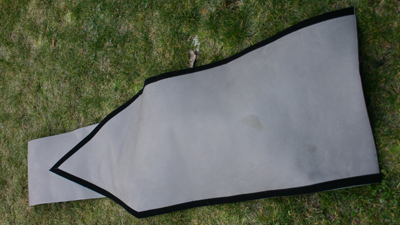
The Jacks ‘R’ Better “Down to Earth” Pad Converter consists of a choice of three different pads (1/4 inch full length reviewed) and an Omni-Tape modification to a JRB quilt.

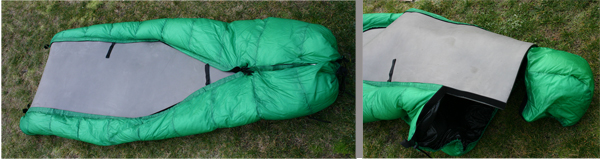
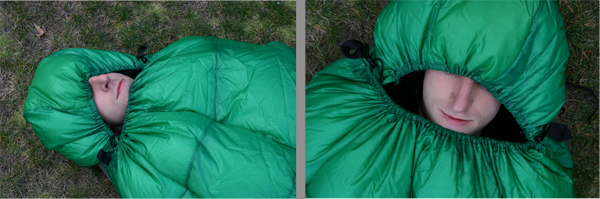
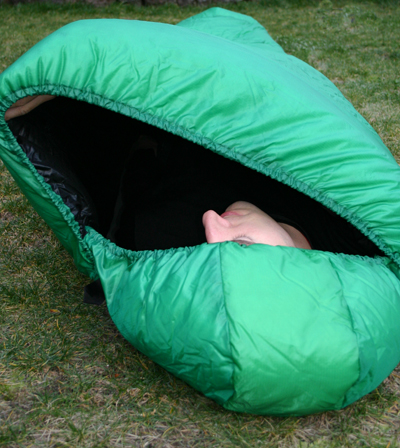
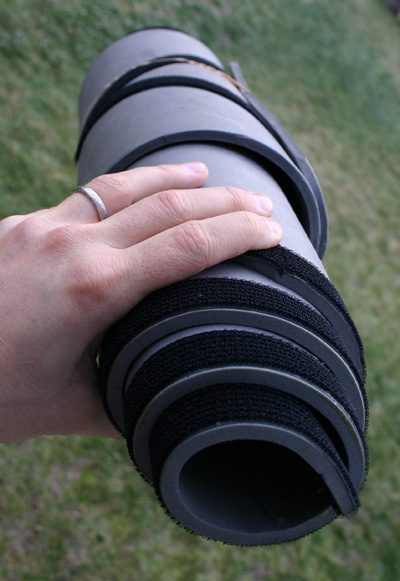
The Jacks ‘R’ Better “Down to Earth” Pad Converter is a system for attaching a custom foam pad to a JRB quilt. To use the system, the quilt must be modified by attaching full-length Omni-tape along the sides. The quilt then attaches underneath the pad with matching Omni-tape. The Jacks ‘R’ Better hood also attaches to the pad, making the converted quilt into an integrated top bag system for ground sleepers.

2006 Jacks ‘R’ Better “Down to Earth” Pad Converter SPOTLITE REVIEW - 2
A modified Jacks ‘R’ Better quilt attaches underneath the pad and the hood attaches to the top.

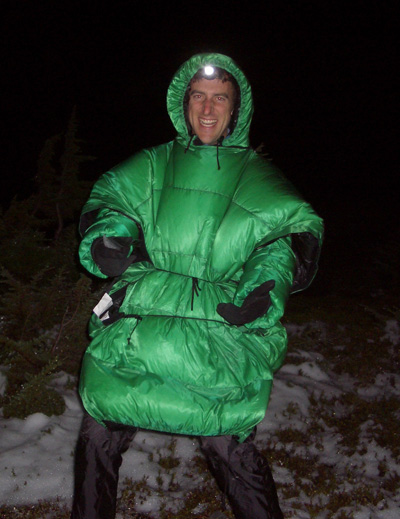
The JRB No Sniveler quilt ranked first in the BackpackingLight Unconventional Sleep Systems Review Summary because of its versatility- it can be used as a top quilt, an under quilt in a hammock system, and as a warm poncho. With the Down to Earth conversion, it also makes an effective top bag system for ground sleeping. However, the system can be used on any converted 48 inch wide JRB quilt including the Nest and the Old Rag Mtn.

2006 Jacks ‘R’ Better “Down to Earth” Pad Converter SPOTLITE REVIEW - 3
The No Sniveler quilt is the most versatile bag that exists: it’s a top quilt, an under quilt for a hammock system, a poncho/serape, and now with the Down to Earth converter, an integrated top bag / sleeping pad system. The conversion, though, can be made to any 48 inch JRB quilt.

When setting up the system, it takes a couple of minutes to properly line up and attach the Omni-tape fasteners. Once set up, though, it provides a very secure attachment that didn’t unfasten despite numerous roll-overs and inside the bag movement. The quilt attaches under the pad, creating an effective seal against outside air.

The pad is made from Gossamer Gear ThinLight material and is available in 1/8 inch Torso and 1/4 inch Torso and Full models. The Torso length models measure 58 x 20 inches with the first 36 inches being full width and the final 22 inches tapering to a point where the footbox begins. In the 1/4 inch full length version that I tested, the pad measures 69 inches long (72 inches claimed) and it narrows to 12 inches rather than coming to a point. The extra length of the long pad tucks inside the top bag.

2006 Jacks ‘R’ Better “Down to Earth” Pad Converter SPOTLITE REVIEW - 4
The hood attachment on my prototype pad was rather wide, creating gaps on the sides that let warm air escape. Production models will be narrower to minimize this issue.

The fit of the top bag system is trim and efficient in the foot box and widens to roomy in the upper body. There is plenty of room in this bag to wear a warm insulation jacket and still have room to move around. This is good because without a zipper, you have to enter the bag with by sliding into it. Once inside, the pad stays put and you roll inside the bag rather than the bag rolling with you. This effectively eliminates the draft issues that are typical of quilts. The hood attachment adds extra warmth to the system but it was a bit wide on my prototype pad. Production models will have a narrower attachment at the neck and hood which should minimize these draft issues.

2006 Jacks ‘R’ Better “Down to Earth” Pad Converter SPOTLITE REVIEW - 5
The Down to Earth system is efficient in the footbox and roomy in the upper body, making it easier to slide into the bag and to wear additional insulation.

The pads for the conversion system are moderately expensive- $54.95 for the 1/4 inch Full and slightly cheaper for the Torso models. The Modification kit costs an additional $24.95 but is free for existing JRB quilt owners with the purchase of a pad. It is also a free option when purchasing a new JRB quilt. This makes the conversion a great value when having Jacks ‘R’ Better do the conversion.

For those that don’t want to send in their quilt, the conversion kit is a reasonable $11.95 and can be added to the quilt yourself or by a local tailor.

2006 Jacks ‘R’ Better “Down to Earth” Pad Converter SPOTLITE REVIEW - 6
The 1/4 inch Full pad weighs only 5.3 ounces.

Features and Specifications

  • Weight (1/4 inch Full pad): 5.3 oz (150 g); mfr claimed 5.6 oz (159 g), additional weight of conversion to quilt: approx 1.0 oz (28 g)
  • Size (measured): 20 in wide x 69 in long (51 cm x 175 cm), tapering at 36 inches to 12 inches wide (30 cm); mfr claimed 20 in wide x 72 in long (51 cm x 183 cm)
  • Materials: 1/4 inch Gossamer Gear Thinlight foam, Omni-tape fasteners
  • Features: quilt and hood attachments
  • MSRP: 1/8 inch Torso- $48.95, 1/4 inch Torso- $51.95, 1/4 inch Full $54.95. Omni-Tape kit- $11.95, bag modification- free to existing quilt owners with purchase of pad, free option on new quilts

2006 Jacks ‘R’ Better Old Rag Mtn Quilt SPOTLITE REVIEW

A versatile cold weather quilt that can be used in a cold weather hammock system as well as for “ground sleeping”.

Overview

The Jacks ‘R’ Better Old Rag Mtn is the bigger brother to the No Sniveler quilt that ranked first in the BackpackingLight Unconventional Sleep Systems Review Summary. Unlike the No Sniveler, the Old Rag Mtn focuses on efficient warmth when sleeping and doesn’t have the neck opening for wearing it as a poncho. It has a full 3.5 inches of loft from 800+ fill power down which is ½ more loft than the mfr claim (very nice!)

Available on its own or as a part of the Jacks ‘R’ Better Ultimate 4 Season Hammock Quilt Set, the Old Rag Mtn is a very versatile quilt. With a hammock system, it can be used as a warm under quilt with the optional JRB Suspension System and has attachment points that are perfectly aligned for use with Hennessy A-Sym hammocks. It also has a foot box that is formed with Omnitape (imagine soft asexual Velcro) and ties to keep the Omnitape from opening. Drawcords at the foot and neck and generous width keep the Old Rag Mtn secure when using it as a top quilt in a hammock.

2006 Jacks ‘R’ Better Old Rag Mtn Quilt SPOTLITE REVIEW - 1
The Old Rag Mtn is a large quilt with a full 3.5 inches of loft.

For use on the ground, an adjustable cord run through the hammock attachments creates an adjustable variable-girth quilt. Set up this way, the Old Rag Mtn can be used on its own as a cold weather quilt or as an overbag to push a three season bag into the deep winter.

For my 6 foot 1 inch height, the long size is long enough to stretch to the end of my Hennessy Hyperlight Backpacker Asym hammock or to cover my head when used as a quilt or overbag.

2006 Jacks ‘R’ Better Old Rag Mtn Quilt SPOTLITE REVIEW - 2
Besides being usable in a hammock system, the Old Rag Mtn also makes an excellent quilt or overbag for ground sleeping.

Look for a full review of the Old Rag Mtn and the Jacks ‘R’ Better Ultimate 4 Season Hammock Quilt Set in late winter.

Features and Specifications

  • Weight (long): 27.0 oz (765 g); mfr claimed 27 oz (765 g)
  • Size (measured): 46 in x 81 in (117 cm x 206 cm); mfr claimed 48 in x 86 in (122 cm x 218 cm)
  • Materials: 1.1 ounce rip-stop nylon with DWR treatment, no-see-um netting used in box baffles
  • Insulation: 800+ fill power down
  • Loft: 3.5 in of single layer loft (mfr claimed 3 in)
  • Features: 3 under quilt attachment points, neck drawstring with dual sliders, foot drawstring with dual sliders, Omnitape foot box closure with ties for security
  • Accessories: silnylon compression stuff sack: 1.3 oz (31 g) included, JRB Suspension System available for hammock under-quilt use: 1.1 oz (37 g) $9.95
  • MSRP: $269.95 (Reg), $299.95 (Long)

2006 Jacks ‘R’ Better Nest Quilt SPOTLITE REVIEW

A well-designed under quilt that integrates beautifully with Hennessy hammocks.

Overview

2006 Jacks ‘R’ Better Nest Quilt SPOTLITE REVIEW - 1
The Jacks ‘R’ Better Nest is a rectangular quilt with a slit and Omnitape strips that attach directly to Hennessy hammocks.

The Jacks ‘R’ Better Nest is an under quilt for use with Hennessy hammocks. It is similar to the No Sniveler quilt that ranked first in the BackpackingLight Unconventional Sleep Systems Review Summary. Unlike the No Sniveler, though, the Nest has a ½ length vertical opening with Omnitape fasteners. These hook and loop fasteners align with the Velcro entrances of the Hennessy Ultralight Backpacker and Hyperlight Backpacker, making it easy to enter and exit the hammock when using the Nest as an under quilt. While the hammock entrance no longer seals with Velcro when using the Nest in this way, the weight of the user secures the entrance firmly. A JRB Suspension System which includes elastic cords and mini-carabiners for attachment to the ends of the hammock and loops are aligned for use with Hennessy side guyouts.

2006 Jacks ‘R’ Better Nest Quilt SPOTLITE REVIEW - 2
The Omnitape fasteners attach directly to the Hennessy Hyperlight Backpacker Asym, making it an integrated part of the hammock system.

The Nest is constructed with a 1.1 ounce rip-stop nylon shell with DWR treatment and 800+ fill power down. While the manufacturer claims 2 inches of loft, I measured a full 2.5 inches.

2006 Jacks ‘R’ Better Nest Quilt SPOTLITE REVIEW - 3
A JRB Suspension System is included with the Nest for attachment to the ends of a hammock. Also shown here is the Jacks ‘R’ Better Weather Shield for extra wet weather protection (not included).

Besides its use a dedicated under quilt, the Nest can also be worn as a vest by wrapping it around your body. It also has Omnitape strips to form a footbox for use as an top quilt. Drawcords at the foot and neck allow for adjustability when used as an under quilt as well as to create a footbox and neck collar when using it as a top quilt.

The Nest is available on its own or as a part of the Jacks ‘R’ Better Basic 3 Season and Ultimate 4 Season Hammock Quilt Sets. Like other Jacks ‘R’ Better products, the Nest is available only with a kelly green outer and black interior.

Look for a full review of the Jacks ‘R’ Better Ultimate 4 Season Hammock Quilt Set in late winter.

Features and Specifications

  • Weight (long): 21.9 oz (621 g); mfr claimed 20 oz (567 g)
  • Size (measured): 46 in x 73 in (117 cm x 185 cm); mfr claimed 48 in x 78 in (122 cm x 198 cm)
  • Materials: 1.1 ounce rip-stop nylon with DWR treatment, no-see-um netting used in box baffles
  • Insulation: 800+ fill power down
  • Loft: 2.5 in of single layer loft (mfr claimed 2 in)
  • Features: 3 under quilt attachment points, neck drawstring with dual sliders, foot drawstring with dual sliders, Omnitape hammock entrance attachment
  • Accessories: silnylon compression stuff sack: 1.3 oz (31 g) included, JRB Suspension System available for hammock under-quilt use: 1.1 oz (37 g) included
  • MSRP: $239.95

MSR Titan Kettle SPOTLITE REVIEW

A reasonably light two-man titanium kettle – very light, works well, but not very low cost.

Overview

Something which never ceases to intrigue me are the different uses of the word ‘kettle’. For most of the world it means something with a traditional tea-pot shape with a handle over the top, but in America it so often means something like a large cup with a lid and a handle on the side – and a faint spout. Never mind: as long as it boils water and pours nicely into my coffee cup.

MSR Titan Kettle REVIEW - 1 MSR Titan kettle and morning coffee (brewed!) in the snow

The MSR Titan Kettle easily holds enough water for two people for tea and coffee – which is good because that’s what we have every morning about 10 am when my wife and I are walking. Actually, we only need about 0.6 litre for this, so the 0.85 litre capacity of this kettle means we don’t have ‘boiling over’ problems. This is good.

The fold-out wire handles are fairly good for pouring: once you hold the two wires together the arrangement is very stable. The lid is a suitably tight fit – I am not sure how they manage that. The little red handle on the lid can be stood upright to keep the plastic coating away from the lid, which is cute although as you can see from the pictures I usually forget to do this. There is a hole in the lid for the steam to come out. It is not really needed for the steam as the steam can always come out the spout, but it is needed for pouring.

There is always a bit of a competition over light-weight pots and kettles. The MSR Titan Kettle does very well in this race at 88 grams (3.10 oz), but the weight of the lid at 35 g (1.23 oz) drags it down. On the other hand, something like the very light AntiGravityGear 3-cup pot offers greater diameter for better heat transfer, far lower cost, and comes in at about 107 grams (3.8 oz) including the lid. The new Backpacking Light FireLite pots promise to be even lighter (only the 0.5 litre (1 pt) version was available at the time of writing).

Field Testing

I used to use a more conventional Trangia aluminium kettle but it weighs 190 grams (6.70 oz). In the drive for light weight this MSR Titan Kettle has managed to displace it. Actually, while I like the conventional shape of my old aluminium kettle, it lacks some of the versatility this MSR Titan Kettle offers. I can cook and prepare food in this kettle: something I couldn’t do with the more conventional shape. For instance, if I want to make mashed potato to go with a stew, I can boil the right amount of water in this kettle and mix the mashed potato into the water in the kettle. This makes this MSR Titan Kettle more versatile, which is good.

I found that the fold-out wire handles have to be treated with some caution: they can get a bit hot after the kettle has been on the stove for a while. This isn’t as bad as you might think. I can always use a handkerchief to hold the wires, but very often I find the wires are not that hot right at the top of the handle anyhow. Also, once I have grabbed the wire handles and absorbed a bit of the heat from them, they remain cool. There is not the high thermal conductivity along the titanium wires as with aluminium for instance. Of course, in the snow country I just poke the wire handles with a lump of snow for a moment and then they are easily cool enough to be held.

A big difference between the conventional tea-pot design and the MSR Titan Kettle design is the spout. With the ‘conventional’ tea-pot design you get a real spout which (usually) pours very well. The spout on this kettle pours moderately well, but you do get some dribbles. This means you have to be a little careful about where you pour: not over your sleeping bag for a start! The dribbling seems to be worst when the kettle is most full.

MSR Titan Kettle REVIEW - 1 MSR Titan Kettle boiling up water for soup for dinner for two

Water coming to the boil in this kettle is both audible and visible. The hard titanium metal seems to make the bubbling noises very audible – some time before the actual boiling happens. I had to learn to ignore this. Once the water reaches boiling there is some steam out the spout, and a very obvious and cute plume of steam out the small hole in the lid. I am not sure this latter plume has any real value, but it does let you know when the Kettle boils. While on the subject of this little hole, I should add that the lid should be placed so the hole is furthest from the spout: this allows air to enter while you are pouring. If you don’t do this the pouring can be a bit ‘random’.

I did try replacing the MSR titanium lid (35 g, 1.23 oz) with cooking foil, but since the Kettle is used for bringing water to the boil this didn’t work all that well. It got a little messy at times so I decided to stick with the ‘official’ lid.

MSR claims the titanium used has a low surface porosity which minimises food sticking. While I have done only a small amount of cooking in this Kettle, I have not found any problems with food sticking. Granted, I cook over a moderately low flame – more of a simmer than a blow-torch. But then, I didn’t have any problems cooking in the MSR Titan pots either. When cooking this way you need to hold the handles at the top, to avoid heat from the stove. This works OK.

The MSR Titan Kettle is a little tall compared to the pots in the MSR Titan Mini Cookset but not as tall as some others like the Snow Peak kettle for instance. You may need a spoon with a decent handle for comfortable cooking and eating out of this pot rather than one of the very short Sporks. I find a conventional-sized Lexan spoon works fine with this kettle.

Solo Use

So far I have talked about this kettle in a two person context, because I normally go walking with my wife. But it is quite large enough to serve as a complete one-man cooking pot for dinner, kettle and cup for drinks, and it is large enough for melting snow for one person even. One caution about using it as a cup is in order: with hot drinks you need to watch out for the conductivity of the metal. Yes, the conductivity of titanium is low, but tilting the cup to drink means that the hot water reheats the metal at the edge each time. I found that I could avoid burning my lip by very gently placing the curled edge against my lip: the curled edge but not the main wall. I guess using it instead of my 23 gram (0.81 oz) plastic cup would save some weight, but the hassles of drinking out of it are such that I haven’t gone that far.

Specifications

Manufacturer MSR
Year/Model 2006 – Titan Kettle
Material Titanium
Handles Titanium wire, folding
Capacity 0.85 L
Weight * Kettle body: 88 g (3.10 oz)
* Lid 35 g (1.23 oz)
* Total: 123 g (4.34 oz)
MSRP US$39.95

What’s Good

  • The low weight and simple design of the MSR Titan Kettle for its volume
  • The snug-fitting lid which doesn’t fall off
  • The handles are strong but fold away flat to the surface of the kettle
  • The handles don’t seem to get too hot
  • The lid fits snugly

What’s Not So Good

  • It isn’t cheap!
  • The lid could certainly be a bit lighter
  • The spout dribbles a little when the kettle is full

Recommendations for Improvement

  • A much lighter lid
  • Reduce the cost if possible
  • MSR Titan Mini Cookset SPOTLITE REVIEW

    A reasonably minimal titanium cookset – very light, works well, but not very low cost. Take just one pot?

    Overview

    One might wonder how much can be said about a set of cooking pots, even ones made of titanium. Indeed, the MSR Titan Mini Cookset has very few features to talk about, at least on the surface. But that is part of their virtue: they have no frills at all and their design seems to be focused entirely on function – and minimum weight.

    There are two pots in the set: a 1 litre pot at 81 grams (2.86 oz) and a 1.5 litre pot at 115 grams (4.06 oz). There is a tight-fitting lid (58 grams, 2.05 oz) for the 1.5 litre pot as well. The lid is deep enough that you could use it as a flat plate or shallow bowl. The pots have no brackets, lugs or handles but MSR provides a small lightweight pot lifter with the set which grips the rolled rim of these pots very securely.

    The large pot comes with a lid with a red plastic coated pop-up handle, but there is no lid for the small pot. I have been using a light foil lid for the small pot quite successfully. This weighs about 9 grams (0.3 oz). I imagine I could even use a bit of aluminium cooking foil at negligible weight, but I have not tried that yet.

    MSR Titan Mini Cookset REVIEW - 1 MSR Titan 1.5 L pot cooking dinner on a river bank, inside a Backpacking Light Ti foil windshield.

    Field Testing

    The only really good test of a pot is how well it cooks dinner. Sure, the light weight is an important factor in deciding whether to include such a pot in your gear list, but if the pot is hard to use in the field the weight won’t save it. I was concerned about the ease of use because there I had read stories about how the very thin-walled titanium pots burn the dinner. So during my testing I have cooked many dinners in these pots, under both temperate lowland conditions and up in the Australian Alps in the snow.

    I found that I could burn food in one of these very thin-walled MSR Titan Cookset pots a little more easily than in a thicker-walled Teflon-lined aluminium pot such as the GSI Bugaboo pot or the GSI HAE pot. Well, that seems eminently reasonable after all. But to actually burn the dinner I had to break a couple of my standard rules of cooking. I was able to do it by boiling a mix of instant soup and rice without stirring, and this is just asking for trouble! Just bringing a stew (rice, meat and vegetables) to the boil, without any cornflour thickening, proved to be quite safe. In my experience, it’s the gelatinous goo created by the cornflour found in instant soups and ‘stew flavourings’ that causes the burning problem – at least for my style of cooking. Instead I bring the main ingredients of the stew to the boil, then turn the stove off, mix in the instant soup or other flavourings, stir briefly, put the lid back on to keep the steam in and let the whole lot cook without further heat. Doing it this way I have never burnt the dinner.

    On the one occasion when I managed to get the dinner to start to stick and burn, I did not let the mess go too far. I certainly did not take it to the ‘layer of char’ stage! Yes, this was actually deliberate, for the purpose of this Review. I was able to scrape the brown goo off the bottom of the titanium pot with just a Lexan spoon, and no marks were left behind. Clearly, the surface of the MSR Titan Mini Cookset pots is fairly non-porous. Not as non-stick as a Teflon-style coating maybe, but still pretty good.

    I do not try to fry foods at high temperature when walking. That way lies all sorts of cleaning problems. I limit my cooking to the temperature of boiling water and avoid using significant quantities of fats, and this has meant that I am able to rinse these MSR Titan Cookset pots clean with a little hot water. This means I use less water for washing up (an advantage at dry camps), I need less fuel to heat the washing up water, and it takes less time as well.

    The pot lifter (or MSR LiteLifter) supplied is small and neat, although it would be nice if MSR could remove the sharp points on the gripping section. However, they have not caused any real problems for me, and the aluminium is softer than the titanium so they can’t damage the pots. The red insulated handles work very well, and the lifter holds both sizes of pot quite firmly for stirring the dinner or ladling it out. Interestingly, while you can’t buy the pots individually, you can buy the LiteLifter by itself. However, I don’t always need the lifter as the titanium walls have a low thermal mass and are poor conductors of heat. I can often pick the pot up by the rim in my bare hands, without getting burnt. Yeah, it can be hot for just a moment. Maybe there are some advantages to the low conductivity?

    MSR Titan Mini Cookset REVIEW - 1 MSR Titan 1.5 L pot cooking dinner in the snow, with foil lid, inside a Trail Designs Vari-Vent windshield.

    I normally don’t take both pots with me. The 1 litre pot is adequate for dinner for two (my wife and myself), but I have to be just a little bit careful stirring the dinner in it. The 1.5 litre pot is always big enough, and I often favour it despite the extra 34 grams (1.2 oz). The lid for the big pot does have a neat handle arrangement: you can make the handle stay upright by sliding it into a notch in the tab anchoring it. That way the red plastic cover on the wire handle does not get hot when the lid is over boiling water. This is cute – but the lid is still too heavy. I don’t take the lid: somehow it just seems to me that 58 grams (2.08 oz) can be better used elsewhere. Instead I take a light circular bit of 0.013 millimetre (0.5 thou) aluminium foil weighing just 10 grams (0.35 oz), and this works very well. I keep the foil lid in place by leaving the MSR LiteLifter on top of it – that way I know where the LiteLifter is as well!

    MSR says the titanium lid can also be used as a plate. I tried this once – only. Titanium may be a poor conductor of heat, but when it is that thin the heat travels through well enough. I nearly burnt my fingers trying to hold it with my dinner in it. Combine that problem with the very shallow 20 mm (3/4 in) depth and it was just not realistic.

    One consideration which may affect some potential customers is the cost – and the fact that you have to buy the whole Cookset in one go. Well, the price is much higher than for one of the GSI aluminium cooksets mentioned (and even higher than for an AntiGravityGear aluminium pot), and I question whether most walkers really want two pots. A single pot might prove to be more attractive for many. Whether the cost is justified for you however is something only you can decide.

    Specifications

    Manufacturer MSR
    Year/Model 2006 – Titan Mini Cookset
    Material Titanium (pot lifter is aluminium)
    Handles Plastic insulated for safety
    Contents of set * 1.5 litre pot, 115 g (4.06 oz)
    * 1 litre pot, 81 g (2.86 oz)
    * Lid for 1.5 L pot (can be used as a plate), 58 g (2.05 oz)
    * Small pot lifter, 29 g (1.02 oz) (also available separately at US$14.95)
    * Carry bag
    MSRP US$89.95

    What’s Good

    • The MSR Titan Cookset pots are very light for their volumes, and have a simple design
    • The rather neat little MSR LiteLifter pot lifter, which is pretty light too
    • They don’t burn very easily, despite some claims
    • The low porosity of the titanium surface, so they clean fairly easily

    What’s Not So Good

    • They are not cheap!
    • The lid is rather heavy for what it offers

    Recommendations for Improvement

    • A much lighter lid
    • Remove the spikes from the pot lifter
    • Reduce the cost if possible – maybe allow single-pot sales

    Wingnut Adventure 2006 Backpack REVIEW

    Small volume (1600 ci, 26 L) adventure racing pack that is ideal for biking and adequate for hiking.

    Introduction

    The Wingnut Adventure 2006 is a pack designed for adventure racing. Low slung and centering weight on the hips, it is ideal as a cycling pack and pretty good for hiking and backpacking. With a high-capacity integrated hydration system, multiple pockets, and tough, waterproof materials, this pack is ready for multi-sport abuse.

    What’s Good

    • The low-slung Lowrider harness sits on the hips, making it stellar for cycling
    • Truly a multi-sport pack – especially for adventure racing
    • Constructed of super-tough Dimension-Polyant fabrics
    • Padded mesh backpanels allow for airflow
    • Separate bladder pocket makes refilling bladders quick and easy
    • Sidewing pockets are spacious and put more weight on the sides of the hips
    • Very water resistant with waterproof fabric and zippers

    What’s Not So Good

    • The low-slung Lowrider harness is less comfortable for hiking than cycling
    • When Sidewing pockets are full, they affect arm swing somewhat when using trekking poles
    • Optional outside pocket gets in the way of the main mesh pocket
    • Not the lightest at 25 ounces for a 1600 cubic inch pack

    Specifications

      Year/Model

    Wingnut Adventure 2006

      Style

    Frameless, panel-loading with integrated Sidewings

      Volume

    1600 ci (26.2 L)

      Weight

    Measured weight: 25.0 oz (0.71 kg); manufacturer’s specification 22.0 oz (0.62 kg)

      Fabrics

    Dimension-Polyant X-Pac: a three-layer laminated, waterproof, tear and abrasion resistant polyester and nylon fabric

      Features

    Top loading with separate zipped bladder pocket, waterproof zippers, compression lacing system, 1 front and 2 side mesh pockets, Sidewings zippered side pockets, Lowrider harness system, 4 hydration ports, integrated pocket and radio attachment point on the shoulder straps

      Volume To Weight Ratio

    64.0 ci/oz (based on 1600 ci and a measured weight of 25.0 oz, without options)

      Comfortable Load Carrying Capacity

    Hiking: 20 pounds (9.1 kg), cycling: 25 pounds (11.3 kg) estimated maximum comfortable load an average person can carry all day in this pack

      Carry Load to Pack Weight Ratio

    12.8 (based on a 20 lb load and measured weight of 1.56 lb)

      MSRP

    $130

      Options

    Mobile Pack (included in cost of pack): clips onto rear of pack, Micro XY add-on pocket $14, optional delrin rod for additional support available

    Performance

    The Wingnut Adventure 2006 is a pack designed for adventure racing where you are as likely to be on a bike as hiking or running. While typical hiking packs ride too high for cycling, the Adventure 2006 features the Lowrider harness system which allows it to be adjusted to mid-back for hiking or lowered to the hips for cycling.

    To fully test this pack in both sports, I used it for ultralight backpacking trips as well as extended mountain biking and short runs. The real test of the pack came when mountain bike touring the 81 mile North Umpqua Trail in Oregon, which included highly technical mountain biking and many extended hike-a-bike sections.

    Wingnut Adventure 2006 Backpack REVIEW - 1
    The Lowrider harness system sits lower than most packs for hiking (left) and drops below the hips for cycling (right).

    The Adventure 2006 is ideal when cycling. By centering the weight on the hips and away from the head and helmet, it stays completely out of the way, even when riding very technical steep rocky sections. When used for hiking, the Lowrider harness can be adjusted to make the pack ride higher on the back – much better for upright backpacking. When adjusted to its highest setting though, the shoulder straps are pulled somewhat together, causing some minor pinching at the shoulders. To remedy this, I adjusted the pack about one inch below its maximum setting but this did put the pack a little lower than is ideal for hiking. The compromise made it the ultimate mountain bike pack, a great choice for adventure racing or hike-a-bikes, but not ideal for backpacking-only.

    When running, the pack stays centered and doesn’t move around much and the compression system keeps the load tight against your back.

    Wingnut Adventure 2006 Backpack REVIEW - 2
    At its maximum height adjustment, the shoulder straps pinch slightly at the shoulders. By lowering it about an inch, the problem disappears.

    The Wingnut Adventure 2006 is a panel-loading pack. The main compartment is large enough for a low-volume sleeping bag, food, and clothes for a multi-day trip or race. A separate zippered hydration pouch that is accessible from the outside of the pack makes for quick water refills. The entire pack is constructed out of Dimension-Polyant X-Pac fabric which is waterproof, lightweight, and extremely durable. Despite crashes onto rocks, the pack shows no wear at all. The waterproof fabric and zippers make the pack extremely water resistant; when riding in a downpour, I put waterproof items at the top and they were only slightly damp – everything else was dry.

    Wingnut Adventure 2006 Backpack REVIEW - 3
    The Adventure 2006 has multiple pockets including (gray arrows, left to right) a separate zippered hydration pocket, a panel-loading main compartment, and an outside mesh pocket with bungee system. The Sidewings (yellow arrows, left to right) have a main zippered pocket and a mesh pocket that’s accessible on the go.

    The backpanel has four large padded sections that allow for some airflow to the back. The extra ventilation kept my back cooler than normal during long hikes and rides in hot weather but still provided enough cushion for 20-25 pound loads.

    Wingnut Adventure 2006 Backpack REVIEW - 4
    The backpanel is comfortable and provides extra ventilation.

    The Adventure 2006 is a frameless pack and I found that I could comfortably carry 20 pounds all day when hiking or 25 pounds when cycling. An optional delrin rod is available to add more load-carrying capacity but I did not test this option. The waist belt is 1.5-inch nylon with a heavy duty quick release buckle. The ¾-inch sternum strap features an ITW Nexus integrated whistle/buckle that is the same as those used in Gossamer Gear and Osprey packs – an excellent choice that takes care of a standard safety item (and an adventure racing requirement).

    Wingnut Adventure 2006 Backpack REVIEW - 5
    The Sidewings are large zippered hip pockets that also include mesh pockets that are accessible on the go. (Notice the tent poles tucked behind the pockets.)

    The Wingnut pack features a wide variety of storage options. A front mesh pocket is large enough for a self-inflating sleeping pad and clothes, the external bungee system can easily accommodate jackets, a helmet and other items, and a bottom flap guarantees that larger items won’t fall out. An additional pocket on the left shoulder strap fits an energy bar or two energy gel packets while the right shoulder strap has a slot and grommet designed for a two-way radio. While on a three-day mountain bike tour, I used a Motorola radio constantly and it never fell out of the slot, even during a nasty crash.

    A unique element of the Adventure 2006 is the Sidewings, which are large lumbar pockets. The Sidewings can easily accommodate a first aid kit, a handful of energy bars, or a 0.5 liter mini-kettle. Side entry mesh pockets with one-handed adjusters are also found on the Sidewings and can be easily accessed without removing the pack. The Sidewings are only sewn to the main pack in one vertical seam, allowing the wings to better contour to the hips and additional items to be tucked behind them. The Sidewings focus this extra weight on the middle of the hips while allowing a full range of movement.

    A downside of the Sidewings is that my arms occasionally brushed them when using trekking poles. However, this was merely annoying and only slightly affected arm swing.

    Wingnut Adventure 2006 Backpack REVIEW - 6
    Evel Johnson contemplating his next daring record-setting move (left). Despite having four hydration ports, I typically ran the hose up through the zipper for easier refills on the trail.

    Being an adventure racing pack, extra attention was paid to the hydration system. The Wingnut pack has a large outside pocket that easily holds a full 3-liter hydration bladder (not included). It has a clip at the top to keep the bladder upright and has a total of four ports for the drinking tube. Two of the ports are along the side of the pack, allowing the tube to be fed up the shoulder strap and avoid the need for a 90 degree bite valve. Two upper ports allow for traditional over the top tube routing on either side. Despite all of these options, I found that it was easier to refill my Platypus bladder with a non-removable hose by feeding the hose out of the zipper of the hydration pocket so I didn’t have to reroute the hose each time. Used this way, the system was excellent for quick refills along the trail.

    Wingnut Adventure 2006 Backpack REVIEW - 7
    The included Mobile Pack gives an additional external pocket but blocks the front mesh pocket.

    The Wingnut pack comes with a removable Mobile Pack that attaches above the outside mesh pocket. This pack offers additional storage and helps to compress the top of the pack. However, it also limits access to the large mesh pocket and has to be unclipped to fully unzip the main pocket; I didn’t use the Mobile Pack much during testing.

    Wingnut Adventure 2006 Backpack REVIEW - 8
    The Adventure 2006 is a stellar cycling pack that doubles as a usable hiking pack. The combination makes it an excellent choice for adventure racing.

    At $130 for a pack of this quality, the Adventure 2006 is an excellent value that will last through many races or adventures.

    What’s Unique

    The Wingnut Adventure 2006 is a very unique pack. While most adventure racing packs sit high like backpacking packs, the Adventure 2006 can be adjusted to sit very low. This makes it ideal for cycling, especially in technical terrain, while still being comfortable for use when hiking or running. It is extremely durable, has a multitude of usable pockets, and has a well thought-out hydration system.

    Recommendations for Improvement

    I can offer the following recommendations for improving the Wingnut Adventure 2006:

    • Change the attachment points for the suspension system to the shoulder straps to increase comfort when using the pack at its maximum height.
    • Look carefully at the pack to eliminate unnecessary weight. Lightening items such as the attachment points for the Mobile pack, a few rarely-needed attachment points, and heavy nylon webbing behind the Sidewings could drop a few ounces off of the weight.
    • Enlarge the hydration ports so it’s easier to remove and replace the hydration tubing.

    Western Mountaineering Summerlite Sleeping Bag REVIEW

    Hooded, down mummy bag rated to freezing that weighs a mere 19 ounces.

    Western Mountaineering Summerlite Sleeping Bag REVIEW - 1

    Introduction

    Western Mountaineering introduced the Summerlite sleeping bag to the US market in January 2006. With features focused on three-season performance and light weight, it instantly drew attention from ultralighters. The Summerlite is the lightest fully baffled bag in Western Mountaineering’s lineup. It has a full-length zipper, insulated draft tube, 4 inches of double-layer loft and weighs 1 pound 3 ounces for the regular length. The long length bag has a specified weight of 1 pound 5 ounces (1 pound 5.4 ounces as measured). The Summerlite is part of the Extremelite series and uses a 0.9 oz/yd2 Extremelite shell fabric. In 2007, Western Mountaineering will offer a new short length version designed for people 5 feet 6 inches or less. This version will likely come in near a scant 1 pound 1 ounce. I used the Summerlite for 6 weeks on the Pacific Crest Trail this summer and have some strong opinions about its combination of features and performance. The picture at right was taken on a winter trip in Aravaipa Canyon, Arizona.

    The Summerlite has an interesting history as described by Gary Petersen, Production Manager for Western Mountaineering. This bag was originally developed at the request of a European dealer who is a long time customer of Western Mountaineering. The dealer approached Gary in 2002 with a request for a very specific bag – a 32 degree F bag (0 C), in a narrow mummy configuration with a full-length zipper and a target weight of 1 pound 3 ounces (550 grams). They initiated production of the bag in 2003, but did not make it available worldwide until January 2006. It was immediately popular and is already one of the top ten selling products for Western Mountaineering.

    What’s Good

    • 1 pound 3 ounce sleeping bag with three-season warmth
    • Full zipper is convenient and improves versatility
    • Baffled construction, an unusual feature at this weight, reduces cold spots
    • Narrow mummy configuration with hood
    • Stuffs into 12 by 6 inch stuff sack

    What’s Not So Good

    • Might be a little narrow for some

    Specifications

      Year/Model

    2006 Western Mountaineering Summerlite

      Style

    Mummy (with full length zipper)

      Fill

    9 oz (255 g) 850 plus down (regular length), 10 oz (283 g) for long length

      Measured Loft

    2.1 in (5.2 cm) single layer with down distributed evenly across the bag (continuous baffles allow loft to be adjusted); 4.1 in (10.4 cm) double layer averaged from measurements taken at the shoulder, hip and 16 inches above the footbox

      Manufacturer Claimed Temperature Rating

    32 °F (0 C)

      Weight

    1 lb 3 oz (538 g, regular length), 1 lb 5.4 oz as measured, (606 g, long length)

      Sizes

    Regular (to 6 ft, 1.82 m), Long (to 6 ft 6 in, 1.98 m), Short length (to 5 ft 6 in, 1.68 m) available in 2007

      Fabrics

    0.9 oz/yd2 (31 g/m2) Extremelite 20D nylon shell

      Features

    Insulated draft tube, full length zipper, drawcord and hood, 5.25 in spacing continuous baffles

      MSRP

    $280 (Regular), $295 (Long)

    Performance

    The Summerlite is intended to provide the most efficient warmth possible in a full featured three-season sleeping bag. It offers a full zipper to help regulate temperature on those warm summer nights, but with a full hood and insulated draft tube, is still efficient when pushing the bag’s performance into colder temperatures. I used my bag in a broad range of three-season conditions; winter nights in the desert, warm summer nights in the desert and foothills, and cold, wet alpine camps. I found the Summerlite to have a well chosen combination of features and efficiency. I have not developed a liking for top bags or quilts, and the Summerlite is the lightest and most versatile mummy bag I have used – and it can be used in the vast majority of conditions that I encounter.

    Western Mountaineering Summerlite Sleeping Bag REVIEW - 2
    The size long Western Mountaineering Summerlite has plenty of room to cinch up the hood for the author, who is 6 feet 4 inches tall. The hood is comfortable and easy to operate from within the bag.

    Western Mountaineering Summerlite Sleeping Bag REVIEW - 3
    For cold nights, the hood cinches up easily, but still leaves access right where you need it. There is no neck collar on the Summerlite.

    The Summerlite is the lightest baffled bag made by Western Mountaineering. The baffles are continuous and wrap around the bag. With a little practice it is possible to move more down onto the top side of the bag, improving effective use of the down. This is easily done by unzipping the bag and pushing the down along the tubes from one side to the other. The baffled construction is a real advantage over sewn through construction, reducing cold spots and improving overall warmth. The baffles on the Summerlite are spaced 5.25 inches apart.

    Western Mountaineering Summerlite Sleeping Bag REVIEW - 4
    The Summerlite stuffs in a conveniently small volume. My sample bag is a size long; other sizes will of course stuff into even smaller volumes.

    Western Mountaineering Summerlite Sleeping Bag REVIEW - 5
    Baffled construction keeps the loft of the Summerlite nearly uniform across its length. Average double-layer loft on my test bag was just above the specified loft of 4 inches.

    The Summerlite is cut in what Western Mountaineering refers to as a narrow mummy configuration. The internal girth dimensions are listed as 59 inches at the shoulder, 51 inches at the hip and 38 inches at the foot, for the regular size bag. These dimensions are identical to those on the Highlite and Ultralite models; two of the other lightweight bags offered by Western Mountaineering. I am used to mummy style bags and found the Summerlite to offer plenty of internal room. But I am also more lean than most. The Summerlite fits the description as a narrow mummy – if you aren’t a fan of mummy bags, the Summerlite may not be the best choice for you.

    Western Mountaineering Summerlite Sleeping Bag REVIEW - 6
    The draft tube on the Summerlite is stuffed with plenty of down to eliminate cool spots along the zipper. The #5 YKK zipper is light, reliable and is less abrasive than heavier zippers when material gets caught in the zipper.

    The exterior shell on the Summerlite is Western Mountaineering’s Extremelite fabric. When developing the Extremelite fabric, Western Mountaineering looked for a combination of light weight, strength and uniform yarns that would make the fabric as downproof as possible. This fabric is a 0.9 oz/yd2 Pertex Quantum which has been calendared (heated and pressed between rollers or plates to smooth and glaze the fabric) on both sides. This sacrifices some breathability, but also reduces down leakage. According to Gary Petersen, uniform yarn sizes reduce down leakage since any junction where yarns of differing diameter meet is a likely spot for leakage. Ripstop fabrics have regular intervals with yarns of larger diameter, which improves strength, but can lead to leakage. That is why Western Mountaineeing has both sides of the exterior fabric calendared. The interior fabric on the Summerlite is a plain weave with uniform yarns (taffeta). By design it is more downproof, and is therefore calendared on only one side. It is likely that Western Mountaineering will use up their current supply of shell fabric and switch to new shell fabrics sometime in 2007. Any new fabrics will have similar construction and characteristics as the current fabrics.

    Over the course of the summer I have spent more than 50 nights in the Summerlite and I have experienced almost no down leakage. The shell fabric is very light and I treat it carefully, especially if I drape the bag over bushes or grass to dry it out. I make sure to pay attention when I remove the bag from these situations, not dragging it across branches where it could get snagged or torn.

    Missing from this review (and for all sleeping bag reviews published here, for that matter) will be an assessment of whether or not the sleeping bag performs adequately at temperatures near its manufacturer-reported temperature rating. Click here for the complete Backpacking Light Position Statement on Sleeping Bag Temperature Ratings.

    What’s Unique

    The Western Mountaineering Summerlite is a top quality, 19-ounce (regular size), 32 degree traditional mummy sleeping bag with a full zipper, draft tube and continuous baffles. No other bag on the market offers this combination of features and light weight. The Mountain Hardwear Phantom 32 and The North Face Beeline are similar (and a little less expensive) but the Phantom has box baffles and a three-quarter zip, while the Beeline has no zipper except for a foot vent. Nunatak presents a third option in the Alpinist which has a half-length center zip and 2.5 extra ounces of down for an extra $100.

    Recommendations for Improvement

    The Summerlite hits the mark for a very lightweight yet versatile three-season bag. Western Mountaineering has sacrificed some breathability to reduce down leakage by using Extremelite fabric. If they can find a fabric that combines improved breathability with similar downproof performance, the Summerlite could take another step forward.

    CiloGear 60 Liter WorkSack Backpack REVIEW

    Durable and adjustable, but initially confusing to set up.

    Introduction

    The durable 60 Liter WorkSack is currently the largest pack CiloGear makes; with the extension collar loaded it can hold up to 90 liters. Removable straps allow the pack to be compressed down to a 28 liter volume for overnighters or day hikes without all the excess slack and weight in straps. And with further stripping of removable components, it can be reduced down to a 30-ounce frameless pack. The pack has some good characteristics but there is a steep learning curve to mastering strap use and some useful features are missing.

    What’s Good

    • Durable for all types of use
    • Many adjustment options
    • Removable straps, framesheet, hipbelt, and top pocket let you reduce weight
    • Hipbelt + top pocket convert to a fanny pack
    • Foam backpanel doubles as a short sleeping pad
    • Hydration compatible

    What’s Not So Good

    • Removable adjustment straps are confusing and hard to adjust
    • No side pockets
    • No hipbelt pockets

    Specifications

      Manufacturer/Year/Model

    2006 CiloGear 60 Liter WorkSack

      Style

    Internal frame, top loading, drawstring closure, top pocket

      Volume

    3660 ci (60 L), 5490 ci (90 L) with extension collar filled, 1709 ci (28 L) with side buckles connected

      Weight

    3 lb 9 oz (1.62 kg) measured weight, manufacturer’s specification 3 lb 8 oz (1.59 kg)

      Fabrics

    Main body is VX51, center panel is VX42, center sides are VX21, side panels are 210d Spectra, crampon pouch is 500d Spectra

      Features

    Removable hipbelt and top lid combine to create a fanny pack, many strap options, one outside front pocket, two zippered pockets on top lid, two ice axe loops, 3-liter hydration sleeve with one port, haul loop, load lifters, hipbelt stabilizers, sternum strap

      Volume To Weight Ratio

    64.2 ci/oz size L (based on 3660 ci and a measured weight of 57 oz)

      Comfortable Load Carrying Capacity

    35 lb (15.9 kg) estimated maximum comfortable load an average person can carry all day in this pack

      Carry Load to Pack Weight Ratio

    9.8 (based on 35 lb and a measured weight of 3.56 lb)

      MSRP

    $185 US

    Performance

    The CiloGear 60 Liter WorkSack has a strap system I’ve never seen before. I spent some time trying to figure out the different options available. There are three different types of straps that come with the backpack, for a total of ten straps. There are many places on the backpack where you can place the straps, with no directions on the manufacture’s website or included with the pack on how to use them. Quite a bit of time is required initially to strategically place the straps to best suit your needs.

    Once the straps are installed, the pack has a 60 liter volume with compression options. The extension collar lets the pack expand up to 90 liters. To make a 28 liter volume pack, remove the adjustment straps and clip the side buckles together. The option of having a smaller pack without the weight or extra length of the straps is nice, but it also means you can’t compress the load since the straps are removed. CiloGear mentions you can have one side of the backpack with straps and the other side with no straps for a 43 liter pack, but this causes the pack to be asymmetrical and I don’t see any advantages to this option.

    CiloGear 60 Liter WorkSack Backpack REVIEW - 1
    Basic strap options for the CiloGear 60 Liter WorkSack: straps removed (left) for full pack volume but no compression, buckles connected (center) for 28 liter volume, and straps added (right) for 60 liter volume with compression.

    The pack comes in three different torso sizes, small, medium, and large. The hipbelt is removable and attached by Velcro allowing further adjustment for different size torsos. The hipbelt is made of foam that is a little over ½ inch thick. The top lid has a smaller zippered pocket in the inside and a larger zippered pocket on the outside. The lid can also be removed and attached to the hipbelt to make a fanny pack for short hikes around camp.

    CiloGear 60 Liter WorkSack Backpack REVIEW - 2
    The top lid and hipbelt can be removed to create a large fanny pack.

    The harness system includes load lifter straps to pull the top of the pack in closer to your back. The shoulder straps are curved and include an adjustable sternum strap. The shoulder straps have foam padding that is a little under ½-inch thick.

    CiloGear 60 Liter WorkSack Backpack REVIEW - 3
    The harness is easy to adjust but the shoulder straps are closer to the neck than most packs.

    The backpanel is made up of a single aluminum stay, plastic framesheet and a closed cell foam pad folded in half that can double as a small (18 inches by 24 inches) sleeping pad.

    CiloGear 60 Liter WorkSack Backpack REVIEW - 4
    The closed cell foam backpanel pad of the CiloGear 60 Liter WorkSack can be unfolded and used as a sleeping pad, and the plastic framesheet with single aluminum stay can be removed to convert the WorkSack into a frameless pack.

    The inside of the bag has some reflective material sewn into one side that brightens up the interior of the pack, making it easier to spot items you’re searching for. There are two ice axe loops and one outside pocket on the pack.

    CiloGear 60 Liter WorkSack Backpack REVIEW - 5
    The interior of the pack has reflective material on one side to brighten up the inside.

    The CiloGear 60 Liter WorkSack performed well in the field with loads up to 30 pounds. The shoulder straps are sewn into the pack at a right angle so they are close to my neck and rub against it with loads over 30 pounds. On most packs the shoulder straps angle away from each other slightly giving your neck a little more room. 

    The diameter of the pack is smaller at the bottom and gets larger towards the top, with the collar having the largest diameter. This is good for throwing in some extra food near the top or stuffing in a jacket, but if your sleeping bag is large it might not fit in the bottom of the pack – although my three-season down bag fit just fine. The backpanel pad, framesheet and stay, top lid, and hipbelt can be removed to save some weight and turn the pack into a frameless backpack. The stripped pack weighs only 1 pound 14 ounces.

    CiloGear 60 Liter WorkSack Backpack REVIEW - 6
    CiloGear WorkSack 90 degree shoulder straps (left) compared to the angled shoulder straps on a Gregory G-pack (right).

    Assessment

    The CiloGear 60 Liter WorkSack is durable and can stand up to abuse in the field. I’m not afraid to bushwhack or scrape against rocks with this pack like I am with some other lightweight packs. It is capable of carrying a variety of loads with comfort and is well made. The pack is not user friendly at first and it takes some time to get used to the strap system. There are no side pockets and one front pocket so you’re limited to using the front pocket for a water bottle holder if you don’t use the hydration bladder option.

    At 3 pounds 9 ounces, the 60 liter WorkSack is about 8 ounces lighter than the popular Osprey Aether 60, but lacks side pockets. It weighs about the same as the new Granite Gear Nimbus Meridian and GoLite Quest, but does not have nearly as nice a feature set as those packs. The main reasons for considering the CiloGear 60 Liter WorkSack are its superb durability and volume adjustment, which make it a good choice for mountaineering applications.

    What’s Unique

    The removable backpanel pad that can be unfolded and used as a sleeping pad along with the interchangeable and removable compression straps are a unique combination.

    Recommendations for Improvement

    • Make it easier to adjust the straps or scratch the idea of removable straps
    • Add side pockets to hold water bottles
    • Add hipbelt pockets
    • Slightly angle the shoulder straps away from each other

    Addendum to CiloGear 60 Liter WorkSack Backpack REVIEW

    December 21, 2006

    Our statement in this review that there are “no directions on the manufacture’s website or included with the pack on how to use them” is incorrect. A detailed manual is available on the CiloGear website. We apologize to Graham Williams of CiloGear for this oversight. – CC

    Petzl e+LITE Headlamp REVIEW

    One ounce of fresh innovation: rotary switch, white-and-red LED array, modular form, storage capsule, waterproof. But not perfect – our tests reveal some weaknesses.

    Petzl e-Lite Headlamp REVIEW - 1
    PETZL e+LITE – Rethinking the Headlamp.

    Introduction

    Part LED headlamp and part button-cell minilight, the PETZL e+LITE offers more features and flexibility than is typical with either form. With both white and red LEDs, a detachable lamphead that can clip to a hat, a rotary switch and a handy storage case, never in the history of flashlightdom has 1 ounce provided the user with so many choices.

    What’s Good

    • Miniscule size and weight
    • Flexible, adaptable design
    • Useful, adjustable output
    • Night-vision friendly red mode
    • Brilliant switch
    • Screw-free battery change
    • IPX6 waterproof rating

    What’s Not So Good

    • Fleetingly brief initial bright output
    • Minimal difference between high and low modes
    • Competitive price?

    Petzl e-Lite Headlamp REVIEW - 2
    Two CR2032 button cells power the e+LITE.

    Specifications

      Manufacturer

    PETZL

      Year/Model

    2006 e+LITE

      Type

    5 mm LED button-cell headlamp

      Weight

    Measured (lamp and strap without case): 1.0 oz (28 g)
    Manufacturer’s specification: 27 g

      Component Weights

    Lamphead: 0.6 oz (17 g)
    Strap: 0.4 oz (11 g)
    Case: 0.6 oz (17 g)

      Batteries/Operating Voltage

    Two CR2032 lithium button cells/6 V

      Tool Required to Change Batteries?

    No

      Regulated?

    No

      Waterproof Rating

    IPX6 (1.0 m – 30 min)

      Number of LEDs

    3 white, 1 red

      Number of Modes

    5: white – hi, lo, flash; red – steady, flash

      Removable Headstrap?

    Yes

      Manufacturer’s Battery Life Claims

    35 / 45 hours usage in white, hi/low modes

      Manufacturer’s Beam Distance Claims

    19 / 11 m (62 / 36 ft) beam range with fresh batteries in hi/low modes

      Guarantee

    Ten years

      MSRP

    $29.95

    PETZL threw out the book of headlamp design creating the e+LITE; it’s as though they held a design competition fueled liberally with Burgundy and espresso. Whatever its genesis, the resulting e+LITE blazes a lot of new ground.

    What It Is

    The e+LITE is a button-cell flashlight. But unlike other such lights, it sports multiple LEDs (four, total) in two colors and a lever-operated rotary switch instead of a pushbutton. The e+LITE is also a true headlamp, with a detachable elastic strap that threads through the lamphead base. The lamphead attaches to the base via a ball-and-socket joint, which gives it unlimited tilt and swivel. The base also features a metal wire clip that can anchor the lamphead to a cap bill or hat brim, sans strap. Versatile.

    The e+LITE has a triangle of three white 5 mm LEDs that operate on high, low and flash. A single red LED centered inside the white trio operates in steady or flash. All modes are accessed using a lever switch that rotates through a 180-degree arc, with click-stops at each of the five modes, plus “off” settings at either end and a lock setting that folds it flush, protected against accidental operation. The sequence is lock, off, low white, high white, flash white, flash red, steady red, off. Clever; different.

    Petzl e-Lite Headlamp REVIEW - 3
    The two-piece e+LITE storage case can attach to a packstrap or belt.

    The e+LITE comes packed in a plastic two-piece lozenge case that’s held closed by an o-ring. A belt loop on the case allows the e+LITE to be stowed on a packstrap. Handy.

    What It Isn’t

    The e+LITE isn’t a substitute for a multi-AA or AAA-powered headlamp. The miniscule button cells simply can’t match the staying power of their much larger cylindrical cousins. But, thanks to the latest generation of high-efficiency 5 mm LEDs, the e+LITE does provide very useful campsite light for a multi-night backpacking trip. While fresh batteries light up a trail enough to walk with confidence, extended nighttime navigation isn’t the e+LITE’s forte because the initial output’s duration is brief.

    Why consider an e+LITE instead of an advanced microlight such as the Photon Freedom? In addition to the obviously greater feature set and the brighter, broader beam, there are the batteries. Instead of the typical two CR2016s, the e+LITE uses two CR2032s. These are twice the thickness and more than twice the capacity of the 2016s: 225 versus 90 mAh, each, which translates into a significantly extended useful life. The weight difference? About a gram, each. (All button cell lights should switch to CR2032s. Despite the minor increases in thickness and weight, they’d gain greater capacity.)

    Petzl e-Lite Headlamp REVIEW - 4
    Straps to any pack, handy and protected.

    Performance

    Output testing reveals the e+LITE’s strengths and weaknesses. Initial high-level output is a fleeting 300 lux, with an exact reading impossible because it drops so rapidly during the first fifteen minutes. After this initial plunge, high and low mode outputs show no appreciable difference, as the convergent curves show.

    The white beam is reminiscent of other multi 5 mm white LED lights: an indistinct pool of light with a brighter purplish center. The beam diameter is about nine inches at two feet. The red beam is narrower and dimmer than the white, but bright enough to be useful.

    Petzl e-Lite Headlamp REVIEW - 5
    Tests conducted at 68 F; output measured in lux at two feet.
    Click graph to enlarge.

    Output
    Beam Center 1 Ft Off-Axis
    White, high 300 4
    White, low 75 NR
    Red 13 NR
    In lux, with fresh batteries, from two feet.
    NR = Not recorded

    Wearing and Operating

    The 1-ounce e+LITE is certainly easy to wear, and is basically not noticeable once the strap is adjusted for comfort. Clipped to a ballcap the 17-gram lamphead is likewise unnoticeable, and the stout wire clip is reassuringly tenacious. Backscatter is eliminated using the cap option, and wasn’t bad using the strap. The ball-joint allows limitless aiming, and at least for our test remained stiff enough to hold its setting.

    Petzl e-Lite Headlamp REVIEW - 6
    The e+LITE sans strap clips to a hat bill or brim.

    The switch can be operated wearing gloves, as long as it’s first taken out of the locked position. I sometimes overshoot my preferred position and have to back up because it’s difficult to feel the click stops through gloves.

    Assessment: Toy, or Tool?

    Implicit in the e+LITE’s packaging and indeed its name is to serve as an emergency headlamp. The case can be threaded onto a packstrap, well protected and ready for quick access. I believe it can fill that role quite adequately. The bright initial output can resolve typical nighttime puzzles; it’s just not a light that’s going to support an unplanned all-night march.

    Whether it can become your sole backpacking headlamp depends on the use. As a campsite light the e+LITE works well. I quickly learned to primarily use it on low, reserving high as a boost mode like that provided on Petzl’s XP-series headlamps. The red mode is a great option for those interested in preserving night vision, and the switch allows switching it on directly to red to prevent dazzling the eyes. Because button cells have a solid rebound after resting a few hours, even worn cells provide 200-300 lux for at least a minute or two, which is adequate for brief technical navigation or stringing a bear bag line. With prudent use it can certainly support a weeklong backpacking trip, and toting a few extra grams in spare batteries would assure weeks of use. They’re also gratifyingly easy to swap, with the headstrap toggle substituting for the coin you might otherwise use to open the battery cap. It’s a thirty-second task.

    Buying button cell batteries can be an experience. Despite being widely available, CR2032 prices vary hugely. I paid as much as four dollars each during this test, but have found them on-line for as little as thirty cents, in bulk. Because they have a long shelf life, shopping the sales and keeping a supply handy seems like the way to go.

    Idle Speculation

    Could the e+LITE represent a test platform for design elements that might migrate to other headlamps? If so, we say “heap them on,” especially the switch, the red light option and the robust IPX6 waterproof rating.

    Petzl e-Lite Headlamp REVIEW - 7
    A bezel protects the bare LEDs from damage, reduces glare.

    Value

    For a somewhat princely thirty bucks, the e+LITE isn’t everyone’s impulse, gotta-have-it purchase. The same amount can buy a “serious” headlamp such as one of Petzl’s Tikka models or a small fistful of generic button-cell lights. Serious nighttime navigation requires more light than the e+LITE can muster, but little 1-ounce wonder will give enough hands-free light to operate easily around camp, with the added benefit of night-vision-friendly red.

    Compared To

    Compared to the Photon Freedom, the brightest single-LED button cell light we’ve tested, the e+LITE’s beam is broader and more useful in all applications. Both are similarly affected by rapid drop-off with time, although the Photon’s continuously variable output allows more flexibility in matching output to task. Interestingly, the two miniscule lights offer what no popular “regular” sized headlamp does: the ability to switch on directly to low.

    What’s Unique

    Nearly everything about the e+LITE is new and fresh, from the modular form to its white-and-red LED array to its rotary switch to the storage capsule. The e+LITE is also the only immersible Petzl light we’ve tested.

    Recommendations for Improvement

    Low mode could be lower for more distinction from high. Add regulation circuitry.

    Question for Down the Trail

    Will the ball-and-socket retain adequate tension with extended wear?

    Princeton Tec Quad LED Headlamp REVIEW

    Waterproof, four-LED headlamp with a wide, regulated beam.

    Princeton Tec Quad LED Headlamp REVIEW - 1

    Introduction

    Following its justly popular EOS, Princeton Tec offers the four-LED Quad in a very similar package. The Quad’s wide beam is very useful in camp and still supports nighttime travel. The Quad is light, affordable, waterproof and has an easy-to-use power switch. The Quad’s current regulation offers extended periods of steady output in the low and medium modes, but not in high mode.

    What’s Good

    • Bright, wide beam that’s the best of any 5 mm headlamp we’ve tested
    • Waterproof to 1 meter
    • Easy-to-use power switch
    • Low battery indicator
    • Tilting lamphead
    • Light and compact
    • Solid build and materials
    • Affordable
    • Lifetime warranty

    What’s Not So Good

    • Current regulation not effective on high
    • Beam exhibits the familiar purple artifacts typical of white 5 mm LEDs
    • Loose tilt ratchet on our sample

    Specifications

      Manufacturer

    Princeton Tec

      Year/Model

    2006 Quad

      Type

    Four, 5 mm LED headlamp with integrated battery pack

      Weight

    Measured: 3.4 oz (96 g) with alkaline batteries
    Manufacturer’s specification: 96 g with alkaline batteries

      Batteries/Operating Voltage

    Three AAA alkaline, lithium or NiMH/4.5 V

      Regulated?

    Yes

      Immersible?

    Yes (1 m)

      Headstrap

    Wrap-style

      Modes

    High, medium, low, flash

      Features

    Tilting lamp housing, low battery indicator

      Manufacturer’s Battery Life Claims

    50 / 70 / 100 hours usage in hi/med/low modes

      Manufacturer’s Beam Distance Claims

    29 / 18 / 12 m (95 / 59 /39 ft) beam range with fresh batteries in hi/med/low modes

      Warranty

    Lifetime US, 10-year international

      MSRP

    $30

    Overview

    The Princeton Tec Quad demonstrates the continued viability of multi-5 mm headlamps in a marketplace being quickly dominated by high-output 1-, 3- and even 5-watt Luxeon LED headlamps. The Quad is surprisingly bright for a small, four-LED headlamp and casts a relatively wide and even beam. This is good news for those who don’t care for blazingly bright pencil beams that illuminate a trail 100 feet ahead but aren’t so nice on the eyes in camp. The Quad is small, light, waterproof, frugal and features regulation for extended stretches of steady output.

    Compared To

    The Quad is a close cousin to the 1-watt Luxeon EOS, a light we’ve extolled at Backpacking Light for its stellar performance, light weight and affordability. We’ve also been fans of the Princeton Tec Aurora in the past, but it’s astonishing how superior the Quad is to the Aurora for small increases in weight and cost. Several recently upgraded Petzl 5 mm LED headlamps compete with the Quad, including the Tactikka that features a night-vision preserving flip-down red lens. None of the Petzl lights match the Quad’s regulation and waterproofness rating. Black Diamond’s Cosmo is their closest equivalent, and it also lacks regulation and immersibility.

    Princeton Tec Quad LED Headlamp REVIEW - 2
    The Princeton Tec Quad houses its four-LED array behind a protective lens.

    Design and Construction

    Controls and Operation

    The lone combination power-mode button is located atop the Quad’s lamphead. This large button is operable wearing heavy gloves and mittens, and is the best we’ve yet used. Controls follow the typical high, medium, low, flash, off operating sequence. No mode memory on power-up means the Quad always starts on high, a trend we’d like to see eliminated on all flashlights (either start on low or the last mode used). A 1.5-second pause in any mode means the next push turns the light off, eliminating the need to roll through all the modes.

    Princeton Tec Quad LED Headlamp REVIEW - 3
    One easy-to-use button atop the Quad controls power and mode, and can be operated even wearing mittens.

    Lamphead

    The Quad’s LEDs are arrayed four-across behind a protective lens. The lamphead’s eyebrow shape reduces glare and backscatter. Its angle adjusts from straight ahead to a downward tilt of ninety degrees. Upward tilt from horizontal isn’t possible, but as with any single-band headlamp, invert the Quad if an upward tilt is needed. Our sample has a rather loose ratchet, meaning the angle can be knocked from the set position. (This could be sample variation, as store copies I’ve checked have stiffer and more reliable ratcheting, but potential buyers have no way to check out a packaged sample in the store beforehand.)

    Battery Power Meter

    When the batteries are nearly dead, a red LED battery indicator a little below the LED array blinks when the light’s off. Also, the main LEDs will blink upon switching on a Quad with very worn batteries.

    Battery Compartment

    The hinged battery compartment is integrated to the Quad’s lamphead. It’s o-ring-sealed and held closed by a captive, slotted and knurled thumbscrew. The headband buckle serves as a screwdriver for opening and tightening. Batteries access is easy and correct battery alignment is obvious – a safety feature for the headlamp itself. Batteries are secured tightly enough that they’re unlikely to fall out inadvertently. Princeton Tec claims IPX7 water resistance for the Quad – immersible to 1 meter for 30 minutes. Our dunk test confirms this spec.

    Princeton Tec Quad LED Headlamp REVIEW - 4
    The Quad’s easy-access battery compartment.

    Princeton Tec Quad LED Headlamp REVIEW - 5
    Slotted strap guides allow easy removal and replacement.

    Headstrap

    The simple 1-inch wide headband is soft and comfortable. It’s long enough to fit a climbing helmet and the strap guides are notched for easy removal and replacement, making it easy to wash the strap if so desired.

    Performance

    I measured beam intensity and width at all output levels from our standard 2-foot distance. Effective beam control tames the four white LEDs into a wide and even beam with a good amount of beam “spill” for peripheral lighting. The beam center has the familiar purple tint generated by seemingly all white 5 mm LEDs, but not so pronounced and annoying as with many earlier lights. The LEDs are a big improvement over their predecessors, both in brightness and color quality, and likely represent the latest evolutionary wave from the electronics wizards. It’s not possible to ascertain whether the Quad’s reflector-like bezel has a positive effect on the beam pattern, although I suspect it’s likely.

    Output
    Beam Center 1 ft off-axis
    High 630 20
    Medium 250 10
    Low 115 6
    In Lux, with fresh batteries, measured from 2 Feet

    With fresh batteries the Quad is very bright for a four x 5 mm LED headlamp. As a point of comparison, our test Princeton Tec Corona isn’t as bright with eight LEDs. The Quad’s initial high mode output was 630 lux. There’s an ovoid center spot – purplish in hue – that averages about 8 inches in diameter at 2 feet distance. Rather than a sharp cutoff at the bright spot’s edge there’s a gradual transition to a much larger and somewhat whiter area, perhaps 18 inches in diameter. In sum, the Quad provides a very wide and useful beam pattern.

    Our experience is that low and medium are satisfactory for all camping and a certain portion of trail activities, and high supports nighttime navigation of fairly sketchy trails. The relatively wide and even beam illuminates a wider swath of the trail than a typical Luxeon light. This is sometimes preferable, for example, if you’re following a path and looking for blazes.

    I performed run-time tests on the Quad in high and medium modes. Review of the graph reveals my biggest Quad qualm: there’s not much evidence of effective regulation in high mode. Intensity dropped by about a third in the first fifteen minutes, then by half from that point over the next four hours. It reached the initial medium equivalent at about four hours and initial low equivalent at nine.

    Medium, by contrast, shows effective regulation – providing very steady output for almost eight hours, then a gradual decline for several hours more. Medium crossed the initial low equivalent at about twelve hours, and eventually matched the high output curve at about twenty-four hours.

    Princeton Tec Quad LED Headlamp REVIEW - 6
    Tests run at room temperature (68 deg F) with alkaline batteries from a single batch.
    Click graph to enlarge.

    Princeton Tec advises that the battery power meter activates when batteries are near the end of their functional life. Our tests seemed to verify this, as the signal first appeared near the end of each battery run at roughly 30 lux (about 5% of maximum brightness). The miniscule red LED blinks only when the light’s switched off, and seems primarily aimed at the grab-and-run crowd who wouldn’t bother to check their flashlight before taking off with it. Additionally, the Quad switched on with nearly dead batteries blinks the main lights several times to alert the user of their status (in case the very dim output isn’t evidence enough). This occurred well after the red signal first activated in our tests.

    In the Field

    The Quad proved effective and comfortable in varied nighttime situations. In camp it’s an ideal headlamp – the bright, wide, smooth beam is great for setting up, cooking, organizing, or hanging a bear line. Most of the time, the low setting serves up enough light. As a trail light the Quad might even be better than a brighter pencil beam on easy trails by lighting up more of the border and reducing the need for head swiveling. Even with the wider beam spread it’s still effective for sketchier paths. Of course, sometimes there’s no substitute for “horsepower” and focused 1 and 3-watt Luxeon lights are simply better, but perhaps my biggest surprise with the Quad was that those times are less common than I’d expected. I suspect this is mostly due to the Quad’s being far brighter than other 5 mm lights I’ve used, combined with its well controlled beam pattern and more neutral color.

    The lamphead extends far enough to reduce glare off of glasses. The strap is comfortable and holds without cinching it tight, so it can be worn for hours if necessary. The angle ratchet doesn’t hold as well as I’d like and as noted earlier, might be defective on ours. While not a balanced designed with batteries in back, the Quad is sufficiently light that it doesn’t seem front-heavy. Of course, no batteries in back make it great for reading while lying on one’s back.

    Batteries, and Realistic Run Times

    Three AAA alkaline batteries provide good life at 35 grams per set, while a 23-gram set of lithiums will last longer and significantly boost cold-weather performance. It’s certainly the case that with prudent use, the Quad can provide many, many nights of service on a single set. Use our runtime chart as a rough guide for projecting your likely use. Even when the batteries are all but dead they’ll continue for hours, perhaps days longer at a very low level. At a measly 10 lux there’s enough light to dig items out of a pack or even cook, but not enough light for nighttime travel, at least for those of us not blessed with owl eyes.

    Assessment

    The Quad almost single-handedly reinvigorates the multi-5 mm LED headlamp marketplace, giving those who don’t like 1-watt Luxeon headlamps a legitimate 5 mm alternative for technical nighttime travel. Most similar headlamps are, generally speaking, suited only for walking on clearly delineated trails; however they, like the Quad, are superior to most Luxeon-only headlamps for camp chores and reading.

    Clearly based on the EOS, the Quad’s general design and construction are also simple, robust and now proven. In fact, the Quad power switch is better than that on the EOS. Like the EOS, the Quad is compact and lightweight, making it a pleasure to carry and wear. Since a single battery set can last a good many trail days, most users will be freed from carrying spares.

    Value

    At $30 the Quad is a very good value. It’s aggressively priced in a very competitive market segment, while providing a unique feature set and packing Princeton Tec’s reputation and lifetime warranty.

    What’s Unique

    Very bright for a 5 mm headlamp. Effective regulation on medium and low. Great switch. Immersible.

    Recommendations for Improvement

    Effective regulation in high mode would improve the Quad, even if it came at the cost of lowering initial output some (there’s little benefit to gaudy output that lasts five minutes). Reverse the mode sequence to begin on low or provide mode memory. Incorporating an always on “find me” feature to the power meter, similar to Black Diamond’s Zenix IQ, would extend its value, as would a two-stage power warning (e.g., stage 1 at 50%, stage 2 at 10%). We’re presuming our sample’s loose ratchet is an anomaly, and not representative of most Quads.

    Will Rietveld

    Will Rietveld has a B.S. and M.S. in Forest Science from Oregon State University and a Ph.D. in Ecological Physiology and Biochemistry from the University of Arizona. He spent his entire career with the Research Division of the USDA Forest Service, where he worked as a research scientist, project manager, and national R&D program administrator.

    Now retired, he lives in southern Colorado where he takes up a new career of backpacking year-round in the mountains and canyon country of the Southwest. During the summer months Will and his wife Janet are volunteer wilderness rangers in the Weminuche Wilderness.

    His friends claim he is a cross between a mountain goat and a jackrabbit, thus his trail name “Willi Wabbit”. He loves to explore off-trail in the mountains of Southern Colorado and the canyon country of Southeast Utah, and can still do a 20-mile day. He has been a lightweight backpacker for 40 years and an ultralight backpacker for the past 7 years.

    Will joined the BPL staff in April 2004, initially as Cooking Systems Section Editor, then Packing Systems Section Editor, then Shelter Systems Section Editor, and currently Senior Editor for Gear and Apparel. For Will, gear testing and writing reviews and technical articles on outdoor gear really fits in well with his passion for ultralight backpacking, and utilizes his research and writing skills from his former career.

    Montane Jetstream Windshirt SPOTLITE REVIEW

    2.8 ounces, full zip – is there a downside?

    Overview

    Montane’s Jetstream windshirt certainly sounds good – a sub-3-ounce, stripped-down item made from tried-and-true Pertex Quantum fabric. I’ve used the Jetstream backpacking, mountain biking, and running, and the performance is excellent. It proved very breathable, and the ventilation offered by the full zipper makes temperature management a cinch. The bright colors (Montane says mine is “Flouro Yellow,” but I’d call it “Ninja Turtle Slime Green”) and reflective patches make this an excellent choice for runners or cyclists looking for extra visibility. For the demure, never fear – more subdued colors are available. Finish and sewing are excellent, and the drop-tail design provides extra protection. During a recent backpacking trip in New Mexico’s Black Range, I left the jacket on for two full days. Lows flirted with the teens, and though the highs ranged from the 50s to 60s, the wind was fierce all day and night. The venting options made it comfortable at the higher temperatures, and it made a great second layer for sleeping and hanging around camp in the evenings.

    So what gets skipped to make a garment this light and clean? Pockets – there are none, not even the cute little chest pocket found on many popular windshirts. Montane makes up for this (and in so doing, exposes the jacket’s running/biking/adventure racing pedigree) by including a nifty 0.7 ounce armband stuff sack. If you’re having trouble picturing what that looks like, think “tiny fanny pack.” Since the jacket stuffs so easily into a pants pocket, I can’t picture myself using this. However, someone who can’t afford to stop to don or doff a windshirt might love the at-hand storage.

    One complaint about this jacket is that while the torso sizing is perfect for wiry guys like me, the arms are just too short for a performance-geared jacket. It’s not terribly noticeable when just walking, but when running, using poles, biking, or sitting on the ground, the cuffs ride up several inches farther than I’d like. I have fairly long arms, but this was still not a fatal flaw. More annoying is the fact that Montane claims a weight of 2.5 ounces – about 8 percent less than my measurement.

    For now, this jacket has a home in my pack or pocket. However, I’ll jump on the first jacket that comes around with this combination of features and weight, but with a more realistic athletic cut that doesn’t "cheat" to save a few tenths of an ounce.

    The Montane Jetstream windshirt has no built-in pockets, but includes an armband stuff sack.

    Features and Specifications

    • Measured weight: Medium jacket 2.8 oz (79 g), pocket 0.7 oz (20 grams); Manufacturer claimed weight: Medium jacket 2.5 oz (70 g)
    • Full front zipper
    • Pertex Quantum ripstop nylon fabric
    • Elastic cuffs and hem
    • Armband stuff sack
    • MSRP $89

    2006 Backpacking Light Staff Picks

    An eclectic assortment of favorite gear for 2006.

    Another year has gone by and it is time once again for the Backpacking Light staff to list their favorite gear. This year our picks are all over the board with only one item repeated – the Light My Fire Firesteel. Shelters is a favorite category with eight different shelters listed. Stoves, packs and poles were common choices with three selections each. The most unusual item is from Don Wilson – the venerable and well-loved potato chip in a can – Pringles.

    This isn’t an “Editor’s Choice” or formal endorsement, just a list of gear we like.

    Here are our previous picks for your enjoyment: 2005 Backpacking Light Staff Picks and 2004 Backpacking Light Staff Picks.

    Enjoy – and don’t forget to add your own 2006 favorites in the forum below.    —Your BPL Eds

    2006 Staff Picks of Favorite Gear
    Backpacking Light Staff Member Favorite Pieces of Gear
    Ryan Jordan Backpacking Light SUL Long Handled Titanium Spoon Bushbuddy Ultra Wood Stove Light My Fire Firestarting Tool and Spark-Lite Tinder-Quik Firestarting Tabs
    Carol Crooker Oware Alphamid Outdoor Research PL Base Gloves RailRiders Adventure Top
    Alan Dixon Inov-8 Roc-Lite 285 Shoes Outdoor Research Zealot Rain Jacket Trail Designs Caldera Cone Alcohol Stove System
    Ken Knight Komperdell C3 Duolock Carbon Fiber Trekking Poles Light My Fire Firesteel Pacific Outdoor Equipment Max Compact 3/4 Sleeping Pad
    Roger Caffin Darn Tough Vermont Socks Snow Peak GST100 stove Therm-a-Rest Deluxe LE
    Rick Dreher Garmin Legend Cx GPS Patagonia Strider T-Shirt REI Sahara Convertible Pants
    Jay Ham Black Diamond Mega Light Pyramid Tent Homemade Spinnaker Tarp MontBell Versalite 20 Pack
    Doug Johnson Bozeman Mountain Works STIX PRO Gossamer Gear / Tarptent Squall Classic Jacks ‘R’ Better No Sniveler Quilt
    Mike Martin Bozeman Mountain Works Stealth 1 NANO (7×9) Catenary Ridgeline Tarp Gossamer Gear Lightrek Poles Marmot Ion Windshirt
    Will Rietveld Mountain Laurel Designs Prophet Pack Six Moon Designs Gatewood Cape Tarptent Contrail
    Alison Simon Haglöfs LIM Ultimate Jacket MontBell UL Down Inner Half-Sleeve Jacket
    Andrew Skurka Bozeman Mountain Works NANO X-LITE Lightweight Backpacking Tarp GoLite Jam2 Pack Photon Micro Freedom 1-LED Light
    Don Wilson Coolibar Fingerless Gloves Pringles Western Mountaineering Summerlite Sleeping Bag

    Ryan Jordan, Publisher – Bozeman, Montana


    2006 Backpacking Light Staff Picks - 1

    Backpacking Light SUL Long Handled Titanium Spoon
    Backpacking Light Store
    I know, I’m a total geek when it comes to flatware. But not only was I excited about designing a new version of the long handled titanium spoon, but also about using it in the field, knowing that its 0.39 ounce weight was lighter than my old mini-spoon or Lexan spork! The SUL Long Handled Titanium Spoon fits my style perfectly: it’s not so ultra-durable that I can ignore how I treat it, but it preserves all the functionality of its heavier brother, which weighs a whopping 0.2 ounces more.

    2006 Backpacking Light Staff Picks - 2

    Bushbuddy Ultra Wood Stove
    www.bushbuddy.ca
    This year, I fell in love (again) with woodfire cooking. After having the opportunity to review a whole suite of wood stoves, I found the Bushbuddy to fit my needs the best. I worked with Fritz of Bushbuddy to create an ultralight version of his stove for a trek to Alaska in June, and the result was a terrific blend of beautiful aesthetics, light weight and solid performance.

    2006 Backpacking Light Staff Picks - 3

    Light My Fire Firestarting Tool and Spark-Lite Tinder-Quik Firestarting Tabs
    Backpacking Light Store
    I’m a huge fan of the Spark-Lite firestarter. But, combined with my preferred style of cooking (with wood, see above), I prefer a more robust firestarter that delivers a shower of sparks in the worst conditions. The Light My Fire Firestarting Tool fits the bill, and the Tinder-Quik Firestarting Tabs (a petroleum-impregnated cotton firestarter) readily ignite even when wet. This combination has never, ever failed me in the field, after hundreds of fires in wet conditions.

    Carol Crooker, Editor-in-Chief – Phoenix, Arizona


    2006 Backpacking Light Staff Picks - 4

    Oware Alphamid
    www.owareusa.com
    Pyramid tarps are great for use on snow. The tall opening is easy to get through even bundled in warm clothing and there is enough headroom to change clothes without brushing the top. Floorless silnylon pyramid tarps are very light and offer all kinds of snow sculpting options for creating a palace under the roof. The Alphamid goes one better – it’s a pyramid tarp cut in half. This 20 ounce shelter has plenty of room inside for one person and gear on a winter trip.

    2006 Backpacking Light Staff Picks - 5

    Outdoor Research PL Base Gloves
    www.orgear.com
    These gloves weigh so little, I don’t mind stuffing them in my pack even on SuperUltraLight trips. They are thin enough that I can perform almost any camp chore with them on and, unlike thin wool liner gloves I’ve worn, the finger tips haven’t worn through. My gloves are a few years old and made of polyester. Most likely the current polypropylene models will perform as well my older style gloves.

    2006 Backpacking Light Staff Picks - 6

    RailRiders Adventure Top
    www.railriders.com
    I wear the Adventure Top on all of my warm weather backpacking trips (unless I’m testing another shirt). It is the simplest and lightest (6.1 ounces) sun shirt I’ve found. The CoolMax side vents let in the slightest breeze, while the tough Supplex nylon protects me from thorns and even mosquitoes to some extent (assisted by the loose fit). Although the RailRiders Eco-Mesh shirt (made famous by adventure racers) is simpler still, I prefer the Adventure Top because the cuffs add enough length to the men’s medium to cover my wrists when I’m using trekking poles (my sleeve length is 32 inches). The buttons haven’t failed after three years of wear and the button up front placket is a tad warmer for evening wear than the Velcro closure on the Eco-Mesh.

    Alan Dixon, Senior Technical Editor – Washington, D.C.


    2006 Backpacking Light Staff Picks - 7

    Inov-8 Roc-Lite 285 Shoes
    www.inov-8.com/
    In the past I’ve used F-Lite 300s and Terrocs, but the new Roc-Lite 285s are lighter, more flexible, and have better grip. I particularly like the precise (snugger) fit of their “performance” last, the anatomic form used to construct shoes. The Roc-Lite 285s have the best grip and trail feel of any shoe I’ve used. This is especially true for soft, muddy, rocky or otherwise treacherous terrain. They are my favorite shoes for going out with a light pack where I might jog sections of a trail. The only downside of the 285’s is that the tread is a bit squirmy and doesn’t wear as well for long stretches of very hard surfaces (like rock or tarmac) as the F-Lite 300’s. I now alternate between the Roc-Lite 285s and F-Lite 300s depending on the trip and trail conditions, but take the 285s more often than not.

    2006 Backpacking Light Staff Picks - 8

    Outdoor Research Zealot Rain Jacket
    www.orgear.com/
    The Zealot has been my primary rain shell for the last couple of years. It was my choice for three weeks of backpacking on the West Coast of New Zealand’s South Island, an area that receives over 250 days and 300 inches of rain per year. The weather lived up to its reputation and I never regretted my choice. Outdoor Research makes intelligent decisions about which features to include but still keeps weight around 7 ounces – competitive with the lightest rain jackets on the market. The Zealot has breathable and durable Gore-Tex PacLite fabric, a full length zipper for ventilation and easy doffing and donning, a generous size that layers over garments, and a single chest pocket that can be accessed with the pack on. I don’t miss hand pockets or vents and leaving them out saves weight and removes two potential sources for leaks. The hood is adequate but with limited adjustments and a shorter than average brim. I find that my normal habit of wearing a billed cap under the hood easily fixes this.

    2006 Backpacking Light Staff Picks - 9

    Trail Designs Caldera Cone Alcohol Stove System
    traildesigns.com/
    I was torn between including the Bushbuddy wood burning stove or Caldera alcohol stove but I mostly camp where fires are prohibited so… Think of the Caldera Cone Stove System as an alcohol version of the JetBoil without the weight penalty! The Caldera windscreen/pot support and stove weigh only 2 ounces. I have done precision testing of the Caldera and it is the most fuel efficient and wind resistant alcohol stove I’ve used. It’s more efficient in wind than many alcohol stoves in still air. The stove needs no priming, lights easily and works well in below freezing conditions. The Caldera maintains its fuel efficiency even with small solo cooking pots like the Anti Gravity Gear 3 Cup Pot or even a SnowPeak 600 ml mug. The key to this performance is the Caldera cone windscreen/pot support that is precisely fitted to your pot. The cone retains heat and distributes it to the entire pot surface (except lid) for optimal energy transfer. The Cone also provides good wind protection and makes the stove easy to light even in blustery weather. Finally, the Cone system is so stable that it is almost impossible to knock over – just light the stove, put the pot on, and forget about it. The only potential downside of the Trail Designs Cone system is longer boil times (6 to 8 min for 1 pint of water at 70 F depending on altitude, and a bit longer with wind). This is a byproduct of its fuel efficient stove burner. I use two versions of the Trail Designs Caldera Cone Stove System. For solo trips I use the Anti Gravity Gear 3 Cup Pot version. For couple’s trips, my wife and I use the larger 1.3 liter Evernew system. I look forward to using the Caldera cone with Backpacking Light’s new line of light and minimal titanium pots. The combination of a stove, windscreen, 1.3 liter pot and lid combination may come in under 6 ounces.

    Ken Knight, Production Editor – Ann Arbor, Michigan


    2006 Backpacking Light Staff Picks - 10

    Komperdell C3 Duolock Carbon Fiber Trekking Poles
    www.komperdell.com
    At 5.6 ounces per pole (women’s model; men’s is 6.1 ounces per pole) I have come to really appreciate these three-segment collapsible poles. Their versatility more than offsets the somewhat increased weight of these poles over single-segment poles for me. They have proven to be sturdy and capable of taking the all-around abuse I tend to dish out on poles especially when descending even modest hills. My hands have yet to feel tired when using these poles.

    2006 Backpacking Light Staff Picks - 11

    Light My Fire Firesteel
    Backpacking Light Store
    In 2005 I listed the Spark-Lite as one of my favorites. The Light My Fire Firesteel has replaced the Spark-Lite for my fire-starting needs even though it is a bit heavier at 1.1 ounces (32 grams). It throws out many more sparks and is easy to work with even when the temperature starts to drop – which is not the case with the Spark-Lite which is hard to flick when your fingers are cold.

    2006 Backpacking Light Staff Picks - 12

    Pacific Outdoor Equipment Max Compact 3/4 Sleeping Pad
    www.pacoutdoor.com
    The Max Compact is not the lightest sleeping pad on the market, but for me it is important to have a good night’s sleep and this pad helps to deliver that. It weighs 14 ounces but its glorious 2.5 inch thick stature makes sleeping on any ground a dream. While I would strongly hesitate to take this pad on a winter camping trip I have slept on it when the temperature has dropped into the mid-20s and been quite happy with the results. For a sound night’s slumber I am more than willing to pay the near half pound penalty I incur by not using a basic closed-cell foam pad.

    Roger Caffin, Cooking & Hydration Systems Section Editor – Sydney, Australia


    2006 Backpacking Light Staff Picks - 13

    Darn Tough Vermont Socks
    www.darntough.com
    I have some research background in textile physics and I know a little about knitting. There are several good brands of walking socks on the market, including some very well-known ones, but these Darn Tough Vermont socks are in a class of their own. The knitting is twice as fine as used by the competition, and this makes the inner pile on the socks unbelievably rugged. After our initial experiences with testing these socks my wife and I bought several more pairs each. Truth to tell, most of mine are still sitting in the drawer in their original packaging: my first pair has yet to wear out. And they get really hammered.

    2006 Backpacking Light Staff Picks - 14

    Snow Peak GST100 stove
    www.snowpeak.com
    This is one of those iconic stoves: people who have one swear by them for their light weight of just 79 grams (2.79 ounces) and their utter reliability. OK, it’s an upright stove, so you don’t use it in the snow, but elsewhere it is a dream. You can get a piezo-ignitor attachment for it, but I have never bothered. I just use a Bic. It comes with a rugged plastic case but I don’t use that as it is just extra weight. Instead I wrap the stove up in a sock and store it in my pot. At first it had a bit of hysterisis in the valve action, but after many years I stripped the valve down, cleaned and lubricated the O-rings with silicone grease, and it has been ultra-smooth ever since. It’s powerful, but it also simmers superbly.

    2006 Backpacking Light Staff Picks - 15

    Therm-a-Rest Deluxe LE
    www.thermarest.com
    It’s OK for teenagers to sleep on a 1/2-inch foam mat, but it’s a long time since I was that young, and a good night’s sleep is very important for both my wife and I. This means an airmat, and a bit more thickness too. Once we get into the snow country the extra insulation value of a thick airmat also counts. I can sleep on mine with a quilt over me on snow and be warm underneath. They are 3/4 length, a whole 50 mm (2 in) thick, and weigh only 780 grams (27.5 ounces). OK, they are not SuperUltraLight, but the trade-off between weight and comfort is one we make without hesitation. We bought these self-inflating air mats many years ago, and sadly they are no longer available. I wish Therm-a-Rest would bring them back into production.

    Rick Dreher, Lighting and Navigation Systems Section Editor – Sacramento, California


    2006 Backpacking Light Staff Picks - 18

    Garmin Legend Cx GPS
    www.garmin.com
    Even More About Where I Am: I knew this GPS was different when upon first powering it up, it located me inside my house upon waking from the long slumber that began in Taiwan. This implied sensitivity becomes reality in the woods, where the Legend CX kept the track where my other receivers would not (think heavy forest cover and tight mountain canyons). The bright color screen helps me discern relevant detail from map clutter and completing the performance trifecta, is excellent battery life that can eke out a week from a single set of lithiums or half a week from rechargeables (specification is 35 hours). At home, the USB connection means fast data transfer and also allows the PC to power the unit. Base topographical maps can be uploaded from a computer or added instantly by plugging in a microSD card, preloaded with a region map (surely the most expensive hiking accessory per pound, ever). While I’ve yet to figure how to use most of its countless features, the Garmin’s sensitivity, color screen, base maps and navigation aids make it a powerful trail tool without even reading the book.

    Weight: 6 ounces; MSRP: $300.

    2006 Backpacking Light Staff Picks - 19

    Patagonia Strider T-Shirt
    www.patagonia.com
    Polyester Bliss: Consider the humble trail shirt mundane, but to find one that works well is a worthy quest. This Patagonia Strider is an all-polyester knit that doesn’t pill or fuzz underneath repeated packstrap wear, ventilates well, dries quickly and to my nose at least, doesn’t reek after a week on the trail (given the occasional rinse-and-wring). Raglan sleeves and flat stitching minimize bruising from seams and it’s long enough to stay tucked in. Not many pieces of clothing go with me whether it’s freezing or sweltering or raining, but this shirt does.

    Weight: 5.8 ounces, size large; MSRP: $40.

    2006 Backpacking Light Staff Picks - 20

    REI Sahara Convertible Pants
    www.rei.com
    Count the Pockets: I generally find it a good idea to wear pants with my favorite trail shirt. For several years this has meant REI Sahara Convertible pants, of which I’ve used at least three generations. My latest are the first I’ve considered “best in show.” They’re comfortable, light and tough enough for all but the most ghoulish bushwhacking. They FIT, because REI now makes them in different inseam lengths, meaning no more high-water trail pants. They’ve got pockets aplenty – six – two of which zip closed and one that includes a small stash pocket. Okay, seven pockets. The zip-off legs also have vertical zips so they can come off or on while wearing shoes. The elastic waistband is paired with a webbing belt, but isn’t so bulky that it bunches up beneath a backpack waist belt. The fabric breathes well and sheds minor moisture, and when they do get wet they dry quickly. If I rinse them out and hang them up overnight, they’re usually dry the next morning, ready to go. They’re my first choice most of the year.

    Weight: 13.2 ounces, men’s medium 34-inch inseam; MSRP: $55.

    Jay Ham, Make Your Own Gear Section Editor – Flagstaff, Arizona


    2006 Backpacking Light Staff Picks - 21

    Black Diamond Mega Light Pyramid Tent
    www.bdel.com
    The Black Diamond Mega Light is my favorite family backpacking tarp/tent. It’s roomy enough for the four of us and only 6.1 ounces per person (1 pounds 8.4 ounces total weight without stakes or pole). I use my trekking poles, tied together, for the center pole and carry homemade titanium stakes (4.0 ounces) to keep the weight as low as possible. My kids like the alternating two colored silnylon construction because it looks like a circus tent. When backpacking with small children, this is the only way to go!

    2006 Backpacking Light Staff Picks - 22

    Homemade Spinnaker Tarp
    Backpacking Light
    I recently made this tarp for a Make Your Own Gear (MYOG) series on creating your own SUL kit (pack, tarp, and stuff sack) out of 5 yards of spinnaker sailcloth. The tarp has become one of my favorites. I designed it with large overhangs on the front and rear to protect from driving rain. It’s also fairly wide for a solo tarp and has a catenary ridgeline for a taut setup. The best part is the weight; 6.3 ounces! Look for the do-it-yourself article next week.

    2006 Backpacking Light Staff Picks - 23

    MontBell Versalite 20 Pack
    www.montbell.com
    MontBell’s Versalite 20 is designed as an adult pack, but the small volume and light weight (11.5 ounces) make it an excellent multi-day pack for my two girls. They both carry a Bozeman Mountain Works TorsoLite, Marmot Hydrogen, MontBell Thermawrap Action jacket (size XS), change of clothes, emergency rain poncho, and small toilet kit in their Versalite’s 1220 cubic inch volume. The Versalite has a wrap around back pocket the girls use to stow unneeded clothing, and a top pocket where they keep loose stuff. The torso length is admittedly a little long, but we keep the total weight under 6 pounds so the hipbelt is unnecessary.

    Doug Johnson, Trekking Systems Section Editor – Redmond, Washington


    2006 Backpacking Light Staff Picks - 24

    Bozeman Mountain Works STIX PRO
    Backpacking Light Store
    At $280 ($238 for subscribers), these things are wicked expensive. But nothing translates to trail distance like a set of high-zoot trekking poles. And these are it – super light, the stiffest out there, and plenty durable. The STIX PRO are the Maserati of trekking poles.

    2006 Backpacking Light Staff Picks - 25

    Gossamer Gear / Tarptent Squall Classic
    www.gossamergear.com
    At just 1.5 pounds for a two-person shelter with a bathtub floor, the Squall Classic is an excellent blend of the best attributes of old and new Tarptent designs and constructed with ultralight fabrics. Add in Fibraplex poles and you’ve got the lightest two-person tent in the world!

    2006 Backpacking Light Staff Picks - 26

    Jacks ‘R’ Better No Sniveler Quilt
    www.jacksrbetter.com
    This bag is a super-versatile GEM! You can use it in a tent or a hammock, hang it under a hammock, or add a hood and arms for a super-warm down serape! Sure, I get some giggles, but I am warm and toasty – both around camp and while snoozing!

    Mike Martin, Sleep Systems Section Editor, Coeur d’Alene, Idaho


    2006 Backpacking Light Staff Picks - 27

    Bozeman Mountain Works Stealth 1 NANO (7×9) Catenary Ridgeline Tarp
    Backpacking Light Store
    For years, I hiked with a 7 ounce, 5 foot by 8 foot silnylon tarp and put up with its idiosyncrasies as what I thought was the cost of going lightweight. I accepted the fact that I would routinely have to re-tension the pitch as the fabric sagged from moisture at night. In windblown rain, I would put a rain shell over the end of my bag to keep the spray from coming in the ends of the tarp while grumbling that it must have been originally designed to fit Hobbits. Then I discovered the Stealth 1 NANO Tarp. At 5 ounces, it’s 30% lighter than my old tarp. The fabric doesn’t stretch when wet, so I don’t have to adjust the pitch in the middle of the night. And finally, with its 9 foot length, it’s actually large enough for me to spread out (with my gear) and keep everything dry.

    2006 Backpacking Light Staff Picks - 28

    Gossamer Gear Lightrek Poles
    www.gossamergear.com
    Except when I’m on skis, I don’t need a 20 ounce pair of poles. Depending on length, the Gossamer Gear Lightrek poles weigh only 5 ounces per pair! At this weight, the exotic grip, shock absorber, and strap designs prevalent in beefier poles become moot. The Lightreks are virtually weightless in your hands and swing effortlessly with a slight flick of your wrist, while the natural flex of the carbon fiber shaft absorbs shock. Sure, they are not as rugged as heavier poles – I certainly wouldn’t take them skiing or mountaineering. But for balance on the trail, and shelter supports in camp, you can’t beat them.

    2006 Backpacking Light Staff Picks - 29

    Marmot Ion Windshirt
    www.marmot.com
    This is my favorite windshirt by far. The Pertex Quantum shell offers a superb balance of breathability, light weight, compressibility, and durability. The full-zip offers ventilation options that make the shell usable over a broader range of conditions than pullover styles. The hood provides instantly available added warmth when needed. All this comes in a 3.2 ounce package (size large). Act fast if you want one with a Quantum shell; rumor has it that Marmot will switch to another fabric in 2007.

    Will Rietveld, Packing & Shelter Systems Section Editor – Durango, Colorado


    2006 Backpacking Light Staff Picks - 30

    Mountain Laurel Designs Prophet Pack
    www.mountainlaureldesigns.com
    For ultralight backpacking, I find the frameless Mountain Laurel Designs Prophet backpack (6.1 ounces, 2600 cubic inches, $125) to be just right. In size Large, the Prophet is small and light enough to use for SuperUltraLight trips but has enough volume to easily handle multi-day ultralight backpacking trips with a 5-8 pound base weight. And it works equally well for overnight or week-long trips. Standard features on the Prophet are a waist strap, sternum strap, bottle holders, and a bungee attachment system, and all are detachable. I especially like its fit and comfort, large front mesh pocket, bottle holders, and optional sternum pouch to keep a bunch of smaller items handy. Mountain Laurel Designs is presently redesigning their gear line and production methods, so expect a few changes when the Prophet packs reappear in 2007.

    2006 Backpacking Light Staff Picks - 31

    Six Moon Designs Gatewood Cape
    www.sixmoondesigns.com
    The Gatewood Cape (11.6 ounces, $110) is a poncho/shelter that triples as rainwear, pack cover, and shelter. It functions a bit better than an ordinary poncho because it has a full front zipper, and it provides a much better shelter than a poncho/tarp. Actually, the shelter is much like the Six Moon Designs Lunar Solo, but without the mesh entry and floor. I like to camp in the alpine zone above timberline, and find a poncho/tarp is a little too skimpy for shelter in wind-driven rain. The Gatewood Cape meets my needs. It weighs a little more than a minimalist poncho tarp, but the extra shelter is worth it, and I don’t have to carry a sleeping bag cover. I weathered a lot of storms under the Gatewood, including a 6-day trip where it rained almost continually and I used the Cape day and night. In using the Gatewood, my preference is to use a second trekking pole (or stick) to extend the front of the Cape to create a large beak for extra coverage, and also to provide more headroom.

    2006 Backpacking Light Staff Picks - 32

    Tarptent Contrail
    www.tarptent.com
    The Contrail is the newest addition to Tarptent’s growing lineup, and this one really shows the benefits of years of Tarptent innovation and refinement. At 24.6 ounces with floor ($199) and 20.5 ounces without floor ($169), the Contrail is Tarptent’s lightest tent, and almost matches the Six Moon Designs Lunar Solo for the honor of lightest single wall one-person floored shelter. The Contrail is the most versatile one-person tent I know of. It uses a trekking pole in front and has a convenience setup mode for fair weather and a bomber setup mode for more severe conditions. In bomber mode, the rear of the tent will flatten to the ground and the front beak can be extended to provide more vestibule space and allow the mesh entry door to remain open. It is the most condensation resistant single wall tent I have tested to date. I have weathered some wild rain and snow storms in the Contrail, and it has become a close friend.

    Alison Simon, Editorial Assistant – Washington, D.C.


    2006 Backpacking Light Staff Picks - 16

    Haglöfs LIM Ultimate Jacket
    www.haglofs.se
    Over the past few years, it seems like I can count on one hand the number of days I’ve gone backpacking and not run into foul weather. Fortunately it’s almost always been rain. This gave me numerous opportunities to test rain jackets. And after testing rain jacket after rain jacket, I always say the same thing, “I miss my Haglös.” The Haglöfs LIM, at 8.8 ounces uses a breathable and light Gore-Tex PacLite Matrix shell. It has an excellent fully featured hood (three drawcord adjustments) and a stiffened brim that most times does not require a hat underneath (although it works fine with a hat as well). One chest pocket is just enough to keep small things readily available. But my favorite parts of the jacket are the thumb loops. With the thumb-looped-end of the sleeves over my hands I usually don’t need my gloves and I don’t have the warmest hands. Finally, the jacket has a long hem that goes below my butt and over the top of my legs. Unfortunately Haglöfs is still not distributing their products in the US. The closest place to get one is from a UK stockist.

    2006 Backpacking Light Staff Picks - 17

    MontBell UL Down Inner Half-Sleeve Jacket
    www.montbell.com
    My metabolism runs cold so I love everything down. MontBell’s new UL Down Inner Half Sleeve Jacket is a light solution to keep me warm in camp or at a trail stop. With 800 fill power down and a very light windproof 15 denier ballistic nylon shell it weighs only 6 ounces. I was skeptical of a short sleeved jacket but it has been warm and cozy on every fall trip this year – as warm as some jackets I own but lighter. The short sleeves trap warm air from escaping, unlike a vest where heat escapes out the sleeveless arm holes. Two hand warmer pockets keep my hands warmer than most gloves I own. The UL Down Inner Half-Sleeve Jacket eliminates the most damage prone part of any ultralight down jacket, the fore-sleeve – the place where cooking burns, food spills and tears and abrasions are most likely to occur. The jacket is not out in the US yet (in Japan only at this time), but MontBell expects it to be out in 2007.

    Andrew Skurka, Ultralight Ambassador – Boulder, Colorado


    2006 Backpacking Light Staff Picks - 33

    Bozeman Mountain Works NANO X-LITE Ultralight Backpacking Tarp
    Backpacking Light Store
    The 3.2 ounce NANO X-LITE is probably the lightest functional shelter in the world. It’s not exactly the Taj Mahal of tarps – it measures 4.25′ x 7.75′ – but it has protected me well from rainy and windy conditions in both California and Colorado. (If possible I try to camp in naturally protected areas so that I can pitch the tarp off the ground, thereby increasing headroom and improving airflow.) Because it weighs so little, it makes an excellent shelter when one is only scarcely needed, like on the Pacific Crest Trail in June and on the shelter-heavy Appalachian Trail.

    2006 Backpacking Light Staff Picks - 34

    GoLite Jam2 Pack
    www.golite.com
    The Jam2 will be available this spring, along with eight other brand new packs from GoLite. I used a prototype this summer while hiking on the Pacific Crest and Colorado Trails, and was very impressed with the improvements that have been made from the first-generation Jam, which I used extensively during my hike of the Sea-to-Sea Route in 2004-05. The major improvements include: shoulder straps that are padded and contoured; a rear pocket that is larger and more space-efficient; larger delta fins that better distribute pressure; and a compression system that reduces pack volume by one-third.

    2006 Backpacking Light Staff Picks - 35

    Photon Micro Freedom 1-LED Light
    www.photonlight.com
    When the days are long – as they are in the summer, particularly in the northern states – it is fairly uncommon and mostly unnecessary that I hike in the dark. Quite often, however, I find myself pitching camp, cooking dinner, or journaling as the stars begin to populate the sky. For these months the Freedom Micro is all that I need: it provides adequate light if I need to hike a mile or two in the dark, and more-than-enough light for my nightly tasks. The best part: it weighs just 0.4 ounces, with a convenient clamp for the brim of my Headsweats visor.

    Don Wilson, Clothing Systems Section Editor – Tucson, Arizona


    2006 Backpacking Light Staff Picks - 36

    Coolibar Fingerless Gloves
    www.coolibar.com
    Hiking in sunny conditions with trekking poles exposes your hands to enormous amounts of sunlight. I set out this year to find a product that would protect my hands, but would be comfortable in the desert heat. The Coolibar Fingerless Gloves are just what I was looking for. They weigh just 1.7 ounces per pair and are very comfortable in warm conditions. The fingerless style makes it easier to operate your camera, adjust zippers or perform other manual tasks. Coolibar offers a full-fingered version and other styles for those with different preferences.

    2006 Backpacking Light Staff Picks - 37

    Pringles
    www.pringles.com
    This is not a joke. The right food is important to hiking enjoyment and in 2006 I rediscovered Pringles. I hiked a lot of long days in 6 weeks on the PCT this summer, and I am always experimenting with foods that satisfy my hunger in the afternoon, when I may have hiked 20 miles, but still have more miles to go. Pringles taste great, pack well, add salt to your diet and are available in numerous flavors. Looking for a satisfying snack after a hot and long day – rediscover Pringles.

    2006 Backpacking Light Staff Picks - 38

    Western Mountaineering Summerlite Sleeping Bag
    www.westernmountaineering.com
    The Summerlite is nearly the perfect bag for summer conditions. It has kept me comfortable at temperatures just below freezing, has a full zipper, is plenty roomy, and is long enough for my 6’4″ frame. And best of all it weighs just 21 ounces (the regular length version is 2 ounces lighter). The Summerlite is the lightest fully baffled bag from Western Mountaineering and is now my favorite summer bag.