


Introduction
In response to an article I posted recently about crossing streams in your hiking shoes, @impalatrash replied via Twitter to share their experience with trench foot.
Nice article but with wet feet comes the risk of trench foot. Which I didn’t know was possible but after one day of wet feet I was off trail for 9days. If I had hiked on it could have caused permanent damage. I still just cross but now rub vaso in 3 times a day.
— Impala_trash (@impalaontrail) July 18, 2019
The purpose of this article is to clear up some confusion about trench foot, other immersion foot diseases, and maceration, and provide some context for backpackers who are worried about it.
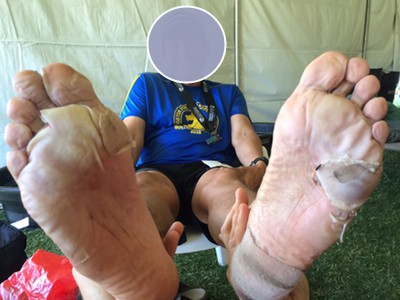
What is immersion foot?
Immersion foot refers to a type of diseased condition that results when your feet are continuously wet for extended periods of time.
The most well-known of these conditions is trench foot (TF). Related conditions include tropical immersion foot (TIF) and warm water immersion foot (WWIF).
For a backpacker, understanding the differences between these three distinct diseases aids in diagnosing the right condition. Knowing what disease you are manifesting will allow you to optimize subsequent treatment so you can return to the trail as soon as possible without suffering permanent damage.
It’s often assumed that the three diseases are distinguished by the temperature of the water that causes the immersion foot disease, but that’s not the entire story. It is true that TF usually occurs in cold conditions (temperatures above 32 deg F but less than about 60 deg F) and that TIF and WWIF usually occur in warm conditions (temperatures greater than about 60 deg F).
Other than the temperature of the water that causes the disease, the nature of the disease and the symptoms between cold water immersion disease (TF) and warm water immersion diseases (TIF and WWIF) are notably different.
Trenchfoot occurs primarily when the feet are exposed to cold temperature water for extended periods of time. It occurs far more rapidly when the feet are continuously immersed or otherwise soaking wet (as what might occur if you are walking through an Alaska tundra swamp during snowmelt), instead of intermittently immersed (as what might occur if you are wading cold rivers in the High Sierra several times a day).
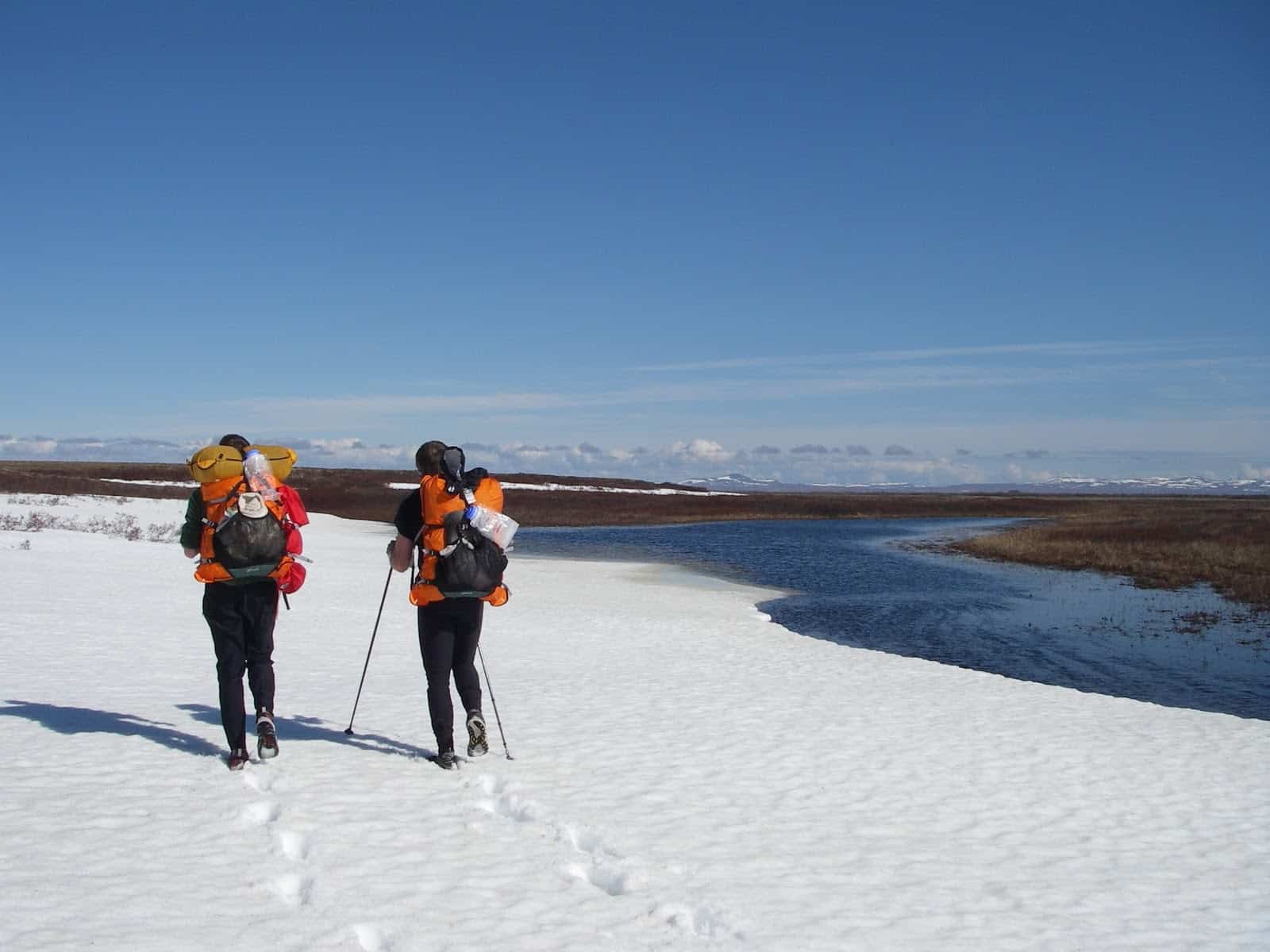
Water immersion, whether in cold or warm water, causes maceration (“pruning”) of the foot’s dermal tissues. However, maceration (which is simply the byproduct of supra-hydration of dermal tissues) tends to be more pronounced in TIF and WWIF.
With TF, it’s the combination of water immersion with cold temperatures that creates a different set of problems – vasoconstriction to the foot’s surface tissues (dermal layers). Once the blood supply has been restricted for a significant period of time, tissues start to die, which makes them more prone to bacterial infection. As a result of tissue death and bacterial growth, blisters and open sores occur more easily – which creates even more avenues for infection. Trench foot can be halted in its early stages, but if allowed to progress, can lead to gangrene and permanent nerve damage.
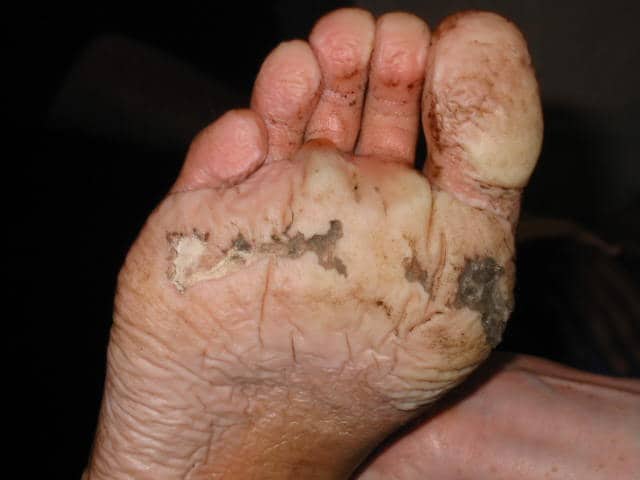
Another primary difference between TF and TIF/WWIF is that trench foot can occur more rapidly, and progress to a fairly advanced state within the course of a single day’s march (e.g., 12-14 hours). TIF and WWIF, on the other hand, progress more slowly, and usually requires 48-72 hours or more to manifest themselves.
Although the pathology behind all immersion foot diseases is complex and not well-understood, it is generally accepted that trench foot is caused primarily by cold-induced vasoconstriction, and TIF/WWIF are caused by the maceration-induced separation of dermal layers.
Other than these causative differences, all immersion foot syndromes share similar symptoms:
- extreme maceration
- dermal layer separation
- redness
- tenderness
- swelling
- blisters
- sloughing skin
- open sores
How to prevent immersion foot disease
Now, how does an understanding of these diseases affect the backpacker?
First and foremost, consider that if your feet are exposed to wet conditions for several hours, the very first thing that you are going to notice is maceration:
Maceration is the softening of the dermal tissues of the foot as a result to these tissues become overhydrated due to sustained water exposure.
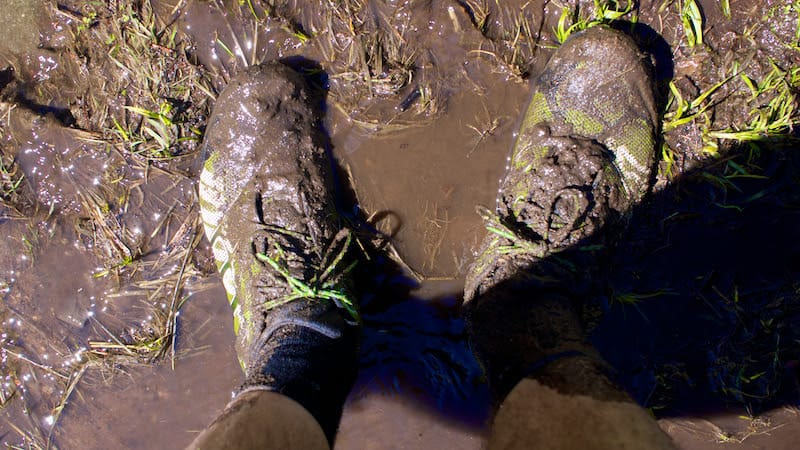
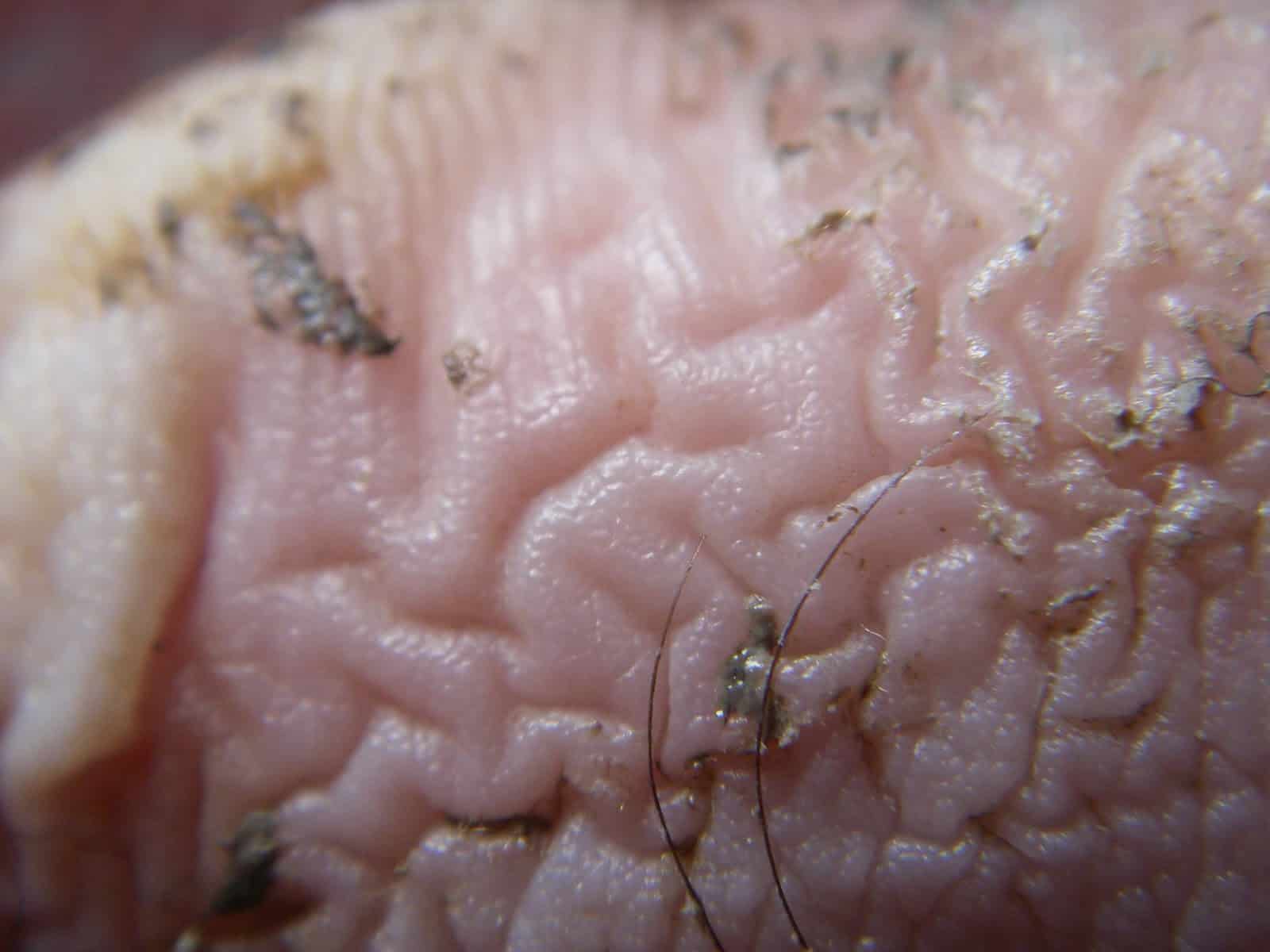
The primary symptoms of maceration are white, wrinkly feet. In the early stages of maceration, there should be little or no tenderness, redness, or swelling. As a result of the softening and wrinkling of the tissues, you may begin to notice some cracking or blistering of the skin.
At this point, you don’t have an immersion foot disease but do consider the maceration as a warning sign that needs to be addressed.
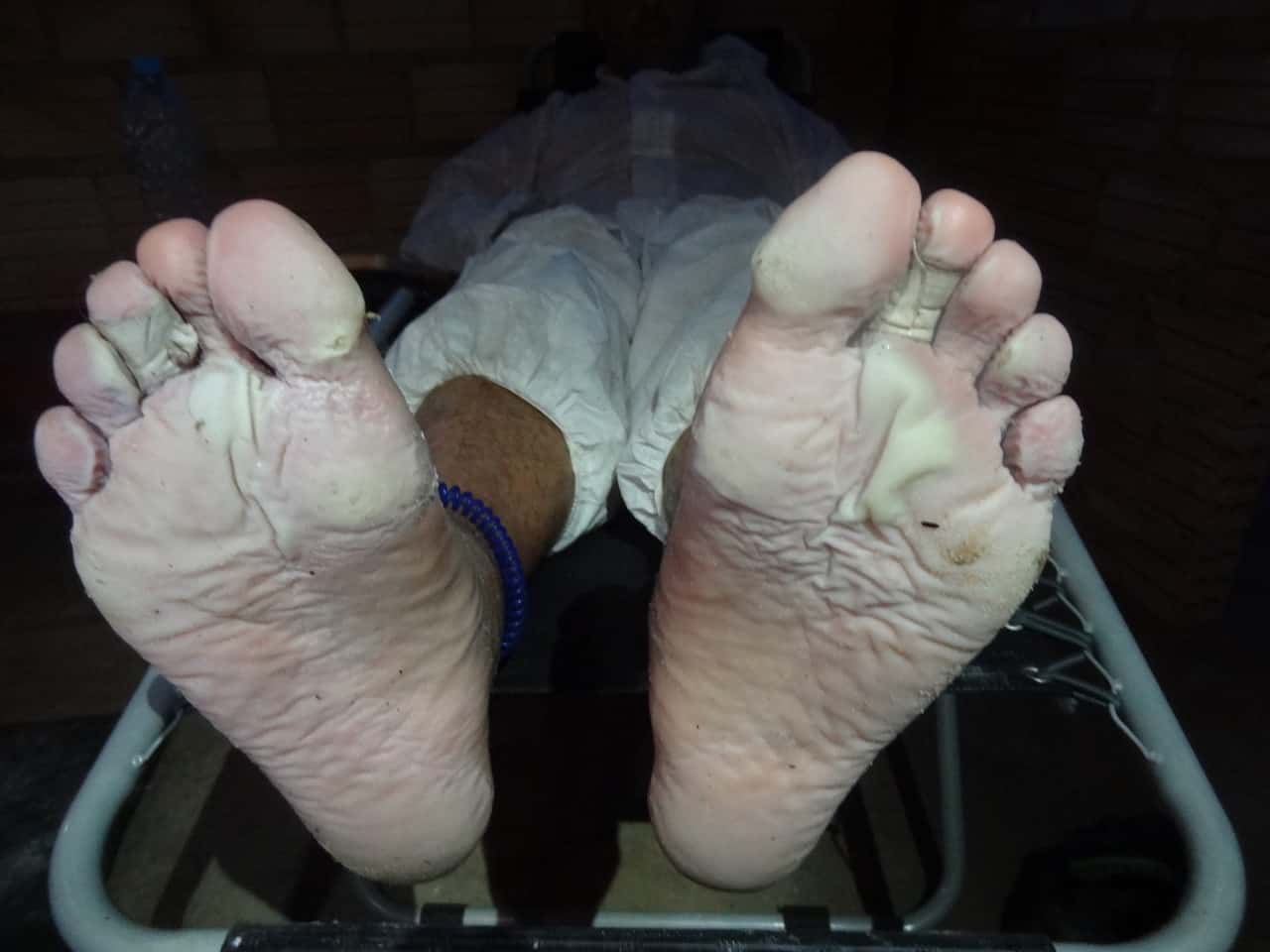
In my research on this topic, one of the most mind-blowing themes I discovered was that there seems to be no limit to the amount of water your dermis and epidermis can absorb (ref. 3). The implications of this are profound because we can no longer assume that the skin becomes “saturated” at some point, and then all’s good. The bottom line is that the more you expose your feet to saturated conditions without drying them out fully, the more that maceration will develop, and the risk of dermal layers separating from each other increases. Consider early wrinkling, whitening, and softening of your foot skin to be a canary in the coal mine for something down the road that could cause permanent damage and require weeks or even months of healing.
And this brings me to the most important consideration for backpackers: preventing and managing maceration should be your focus, not worrying about full-blown immersion foot diseases. Control maceration and your feet won’t degrade further, regardless of water temperature.
There are a number of things you can do to help prevent maceration, and manage it once it starts:
- Use a hydrophobic balm as a barrier. Maceration is the softening and wrinkling of dermal tissues as a result of supra-hydration of those tissues. So let’s prevent water absorption into the tissues in the first place – use a hydrophobic balm. @impalatrash noted in the tweet in the introduction to this article using Vaseline, which is very hydrophobic but tends to wash off the skin in just a few hours. Balms containing ozokerite waxes are among the most effective due to the high melting point of the waxes, which helps maintain a water absorption barrier through the dirty and damp activity of long-distance hiking. Apply to the entire surface of the foot, use liberally, and reapply frequently.
- Wear merino wool socks rather than synthetic socks. Socks that have a higher content of merino wool fibers are better than socks made with predominantly synthetic fibers. Wool fibers absorb water into the fiber, which keeps it away from the skin surface. Synthetic fibers are non-porous and result in clammier, wetter feet.
- Change blister dressings and tapes frequently. Encasing a portion of your foot in tape and blister dressings can create localized areas of macerated skin that can cause problems in the long run. Remove dressings at night, allow your feet to dry out, and reapply them in the morning.
- Wear shoes that drain. Hiking shoes with mesh uppers and/or engineered drainage ports allow you to pump water out of your shoes. Maceration progresses rapidly if your feet are submerged in water inside your shoes!
- Drain your footwear after a river crossing. When you reach the dry side of a river crossing or otherwise wet area, remove your shoes and socks, drain your shoes, and wring your socks out. This removes most of the water and can put you on a path to drier feet more rapidly. See the Crossing rivers and water shoes article.
- Take off your shoes and socks at rest breaks. If it’s the middle of the day and you can afford to stop for a break, take off your shoes and socks and allow your feet to air dry for a bit. It’s going to take more than an hour to reverse the maceration process, but this will help prevent it from getting worse by keeping your feet in wet shoes and socks during your rest breaks.
- Change into dry socks during the day. If your water exposure is intermittent and you know that you’re heading into a significant dry stretch, change into dry socks. If you’re able to plan your water immersion/dry stretches at all, consider wearing wet socks in wet stretches of your route and change into dry socks for dry stretches of your route.
- Slow down your pace. Your feet are now compromised and the tissue softness and wrinkling are going to make you more susceptible to cracking and blistering. Fast-paced hiking + heavy pack weights may be two of the biggest (controllable) culprits when it comes to exerting the shear stresses on foot skin surfaces that lead to cracking and blistering.
- Stop and camp. If you’re on a multi-day trek – the best possible thing you can do is allow your feet to dry at night. If it’s warm, sleep without socks. If it’s cool, sleep only in dry socks that are as thin as possible to maintain foot warmth and comfort. Cold feet at night doesn’t help recovery, due to poor vascular circulation in your feet. You need that warm blood flowing in order to heal at night!
Do I need to get off the trail?
Finally, if you note that your feet have been macerated for several hours or days, and any of the following symptoms manifest, you may be progressing into an immersion foot disease:
- redness
- tenderness
- swelling
- open sores/sloughing skin
At this point, the chance that you can reverse conditions while on the trail is extremely slim. It’s time to get off the trail and rest your feet for a week or more. It may take up to several weeks for your foot to grow new dermal layers of skin, depending on the extent of the damage. If your feet are discolored (blue, black) or open wounds appear to be infected, it’s time to see a doctor as well.
References and Author Notes
- Listen to our podcast about Maceration and Immersion Foot.
- Immersion Foot Syndromes (Wikipedia) – not a terrific summary, but I suppose it’s worth starting somewhere if you don’t have the patience to dig into medical writing.
- Nonfreezing cold water (trench foot) and warm water immersion injuries (UpToDate) – a much better summary of immersion foot disease than the Wikipedia article linked above, probably because this one’s actually put together by medical experts in the field.
- Identifying, managing and preventing skin maceration: a rapid review of the clinical evidence (Journal of Wound Care) – an outstanding and up-to-date medical review of the state of causes, prevention, and treatment of maceration.
- The Role of Temperature in Tropical Immersion Foot Syndrome (Journal of the American Medical Association) – a profound study that emphasizes how cold vs. warm temperatures cause very different diseases.
- Andrews’ Diseases of the Skin, 12th Ed. (Elsevier) – one of the gold standard textbooks in medical derma care.
- A Microbiological Cause for Trench Foot (Microbiology Society) – discusses the relationship between immersion foot and microbiological activity; it’s interesting to me that we still don’t understand exactly what’s going on here – are immersion foot diseases caused by microbial activity, or does the onset of immersion foot disease simply predispose the foot to an increase in microbial activity?
- Maceration (Blister Prevention) – a good discussion about what is happening at the cellular level.
- Fixing Your Feet (John Vonhof) – the bible of foot care for runners and hikers. The new 6th edition is expanded, and an essential upgrade.


Discussion
Become a member to post in the forums.
Companion forum thread to: Maceration, Immersion Foot and Backpacking
A short, detailed discussion on immersion foot and maceration, how to deal with it in the backcountry and when not to.
As for stream crossings, I’ve always wrung out my socks and squeezed out as much water as I could from the foam parts of he shoe. I’ve never for a minute believed the reviews that claimed “my feet were dry after 20 minutes of walking”…I call BS on that!
When I remember to pack them I use the Vincere Grip Socks (3.2 oz) for water crossings. Removing and putting back on dry trail runners and socks is well worth it and easy to do.
But a brilliant compromise is one that I most often use and that you point out above: the Astral shoe, which is the shoe of choice of Jennifer Pharr Davis (sp?), who set one of the fkt on the AT. It is similar in shape to the Altra shoes that are so popular (why?) but with a much sturdier build and they are not eternally constrained to maintained trails. Here in the Missions the FS hasn’t maintained many of the trails for over 50 years…they’re pretty rough, if you can find them, and the Altras would be a big fail.
I also use plastic bread bags in the rain…shoe gets wet, but the socks stay dry.
During WWI, the British Army used whale oil to prevent trench foot and required soldiers to carry three pairs of socks and change them twice a day.
Hydropel used to be very high regarded as a skin/water barrier with good results when used prophylactically . Since it ceased production, people have been on the hunt for a suitable replacement, and many believe that dimethicone was one of the ingredients that made it work so well.
This thread on Reddit talks about replicating Hydropel by adding dimethicone to some other product such as Trail Toes.
I haven’t tried the recipe described there yet. I’ve had reasonably good results with Gurney Goo, but I really haven’t put it to the test in any sort of really challenging environments. Gurney Goo’s primary ingredients are listed as: Petrolatum, Cyclomethicone, Bee’s Wax, Tea Tree Oil
By the way, ozokerite wax has a melting point anywhere from 79C to 95C. Beeswax has a melting point of 62-65C
Am I wrong in the thinking here? But if you’re going to be taking off socks to wring them out of water, why not just take them off before hand. Either which way you’re taking them off. This way they are at least drier. Not directed at anyone in particular. Just from the article.
I’d agree with @simulacra. Just take off the socks and pull out the insoles before the creek crossing.
Thank you Ryan for sharing this topic. I have heard so many times from the lightweight community the idea of just walking through streams. I’ve liked that approach but wasn’t at all thinking about this risk. So this awareness is awesome. So I’ll keep this in mind when considering my approach for a given trip, and keep the idea of removing my shoes as an option. And in sustained wet environments, will add a balm to my gear. Thanks again. Great article. Very beneficial.
Can’t say wet feet have ever given us any problems at all.

But NO GTX shoes! They make for ‘prune’ feet, and problems.
Cheers
https://andrewskurka.com/minimizing-the-effects-and-aftermath-of-wet-feet/
I’ve done a lot of backpacks in the Southwestern U.S. where you are constantly hiking through water. Canyon hikes where the trail is basically the river. The Middle Fork of the Gila River where there are 50 or more river crossings in every 10 miles. I haven’t had any problems with wet feet, even when things are cold. I use trail runners and synthetic socks, no balms. I usually sleep with wool socks at night to help dry my feet.
Even on the JMT, my friend and I hiked through every river crossing with our socks and shoes on. Never stopped before or after. Most people looked at us like we were idiots, but again, no issues. Maybe I’ve gotten lucky or maybe I’m not doing enough miles.
Love Me Baby Me Butt Balm (good stuff, has zinc oxide, same stuff used by US military to prevent trench foot and crotch rot) Same stuff used by many off trail climbers.
https://blog.theclymb.com/tips/6-tips-for-keeping-your-feet-healthy-when-youre-getting-soaked/
Well researched article – info here that I haven’t seen before.
But I’m not convinced by the argument for merino socks. Yes they hold water, but they hold it directly against the skin where it can be absorbed. I use Coolmax liner socks. They are very thin and quite hydrophobic, so hold very little water against the skin which is surely a good thing. They dry fast on the feet. They can be hand-wrung to near dry, especially if rolled in a trail towel. And they dry fast on the back of my pack. For the weight of a couple of pairs of loop-pile merino socks I can carry many pairs, and change regularly. If it’s cold I’ll layer them, with the driest pair next to the skin. Two or three pairs of liners dry far more quickly than a single pair of looped wool.
I use nappy/diaper cream as a barrier, which seems to work OK. I towel my feet dry at stops, air them and change socks.
If it’s warm I usually just walk straight through any streams, as my socks will be pretty dry within minutes. If it’s cold, I might take them off before a crossing to keep them dry.
This routine seems to work. As a Brit I’ve spent a lot of time with wet feet and have never had any kind of problem, touch wood…
After you have dried your feet apply Desenex or it’s equivelant. The stuff Ryan suggests using doesn’t do squat to keep moisture away from skin.
Desenex 2 % Topical Powder
GENERIC NAME(S): Undecylenic Ac-Zinc Undecylena, Miconazole Nitrate, Undecylenic Acid
Uses
Miconazole is used to treat skin infections such as athlete’s foot, jock itch, ringworm, and other fungal skin infections (candidiasis). This medication is also used to treat a skin condition known as pityriasis (tinea versicolor), a fungal infection that causes a lightening or darkening of the skin of the neck, chest, arms, or legs. Miconazole is an azole antifungal that works by preventing the growth of fungus.
https://www.webmd.com/drugs/2/drug-15324-787/desenex-topical/miconazole-topical/details
I agree with John on this one.
I just got back from a 21 day backpacking trip in the Southeast mountains and stayed in wet boots for the entire trip—which included 68 creek crossings. It’s much easier in the warm months to just stay in my hiking boots and not get into crocs/water shoes/barefoot for every crossing.
My feet stayed soaked for days at a time but in camp I always wore my crocs as camp shoes and always had a pair of dry smartwool socks for camp and sleep. The longer time you spend in camp the better off your feet will be.
The problem with continually treating your skin with medication like anti-fungals is the same as continually taking antibiotics: after a while all that is left is the ‘bugs’ which are resistant to whatever medication you are using. Then where are you?
It’s a problem. Me, I just wash my feet with soap every night and then dry them carefully.
Cheers
Not true, we’re talking about suface treatment of skin, not internal medicine/antibiotics.
Why should your skin be any different from your guts?
Antifungal resistance in dermatology
The rampant use of antifungal therapy in immunocompromised individuals marked the onset of antifungal drug resistance. Fungal resistance can be microbiological or clinical. Microbiological resistance depends on various fungal factors which have established due to genetic alteration in the fungi. Clinical resistance is due to host- or drug-related factors. All these factors may cause fungal resistance individually or in tandem.
http://www.e-ijd.org/article.asp?issn=0019-5154;year=2018;volume=63;issue=5;spage=361;epage=368;aulast=Pai
The global problem of antifungal resistance
Cellular stress induced by drug treatment promotes adaptation, which contributes to breakthrough resistance. Drug exposure also drives the emergence of resistance.
https://www.thelancet.com/journals/laninf/article/PIIS1473-3099(17)30316-X/fulltext
Antifungal Resistance
Fungal infections that are resistant to treatment are a public health challenge. We all have a role in preventing these infections and reducing antifungal resistance.
https://www.cdc.gov/fungal/antifungal-resistance.html
— Rex
On the skin or inside your guts: it makes zero difference. What we are concerned about here is the forced evolution of drug resistance.
The problem with anti-fungals is just the same as with antibiotics, just less well known.
As Rex said.
Cheers
Not so in relation to trench foot and crotch rot. It’s all anecdotal!
Papers published in The Lancet, the CDC and IJD are ‘anecdotal’?
That’s not how I read those references.
Cheers
If the 2 of you are affraid to use the antifungal……don’t!
The US Government issues it to all Military branches. I’ll continue to use it, I’m not in fear.
Cheers
Dan
I think you’re misunderstanding the issue.
Rex is pointing out that indiscriminate use of antifungals is causing the evolution of resistant strains that will be a major threat to all our health. It’s not a question of being afraid to use them – it’s a question of being a responsible citizen.
I’ve walked for half a century on wet terrain without a single infection by simply using common sense precautions. And none of my walking friends have had infections either.
The use of an antifungal prophylactically is simply overkill and unjustifiable when it could be contributing to the development of resistant strains.
This is an interesting and confusing topic with all of the previous names used.
Maceration, to me, must have evidence of skin breakdown and not just wrinkled skin. Wrinkled skin is over hydrated or hyper hydrated skin. Maceration, in my opinion, must also have skin breakdown such as fissures or sloughing, either of which will open the door to secondary infection.
Supra, to me, is an anatomical prefix meaning “above”. A better word would have been super-hydrated but then why bother with that. Wrinkled skin is over hydrated, not supra-hydrated.
RANT Just like there is cold injury, there should also be wet injury and not all of this “immersion” stuff. I guess use of the term immersion sounds more scientific. END RANT
In cold conditions (?skin temp 59 degrees F or down to 32 F) the current general term is nonfreezing cold injury (NFCI). The types of NFCI include trench foot (land based), immersion foot (water based), chilblains (pernio) and cold urticaria. In warmer weather the two conditions are warm water immersion foot and tropical immersion foot (more severe). Is it all a continuum of wet injury and how temperature is a secondary factor (in addition to the added skin changes of chilblains or tropical immersion foot)? Feel free to disagree.
Become a member to post in the forums.