


If they are the oxide marks of highly heated titanium, then it would seem the pot must have been on the flames without any water. Yes?
Cheers
Topic
Become a member to post in the forums.
 .
.
If they are the oxide marks of highly heated titanium, then it would seem the pot must have been on the flames without any water. Yes?
Cheers

yes, and it’s only where the flames came out of the V shaped opening in the pot support. The bottom of the pot should be same pretty color.
Long flames from those ESBIT tabs. Not enough oxygen.
But of course the tips of the flames and the hot air will go up the sides of the pots no matter what fuel. So there will be some heat transfer around the bottom of the pot. That’s normal.
Cheers
Heat transfer takes place up the entire side of the pot as long as the water inside the pot is not boiling.
I think heat would still transfer in while the water is boiling: the flames are much hotter than 100 C. Keep the pot boiling.
Cheers

I keep getting excited then disappointed when the spoon thread gets bumped.

That’s it! Bumped spoon handles! By forming the spoon from a tube, and implementing staged bumps with holes on the top or bottom surface, the long-handled spoon can double as a Ti whistle, or even a flute! Further, by incorporating a suitable opening in, or near the bowl, the spoon can double as a thermometer, by the progressive issuance of steam from the holes!
Indeed, by connecting the bumped holy spoon handle to a inflation bag for an inflatable mat, a serviceable ultra-light bagpipe should be feasible. At the very least, to be made available with each DCF kilt. Now Dan, about that CF-reinforced sporran…
My 12 inch DIY spoon can be used as a back scratcher. Cut the spoon in half and you have a 2 gram spoon. Waiting for others to share their DIY spoon and while waiting, sharing some other interesting conversations.
Spoonflute is a solid idea!
That’s it Matthew!
Sharpen a small edge of a Ti spoon and use it to throw some sparks off a ferrocerium fire starting flint 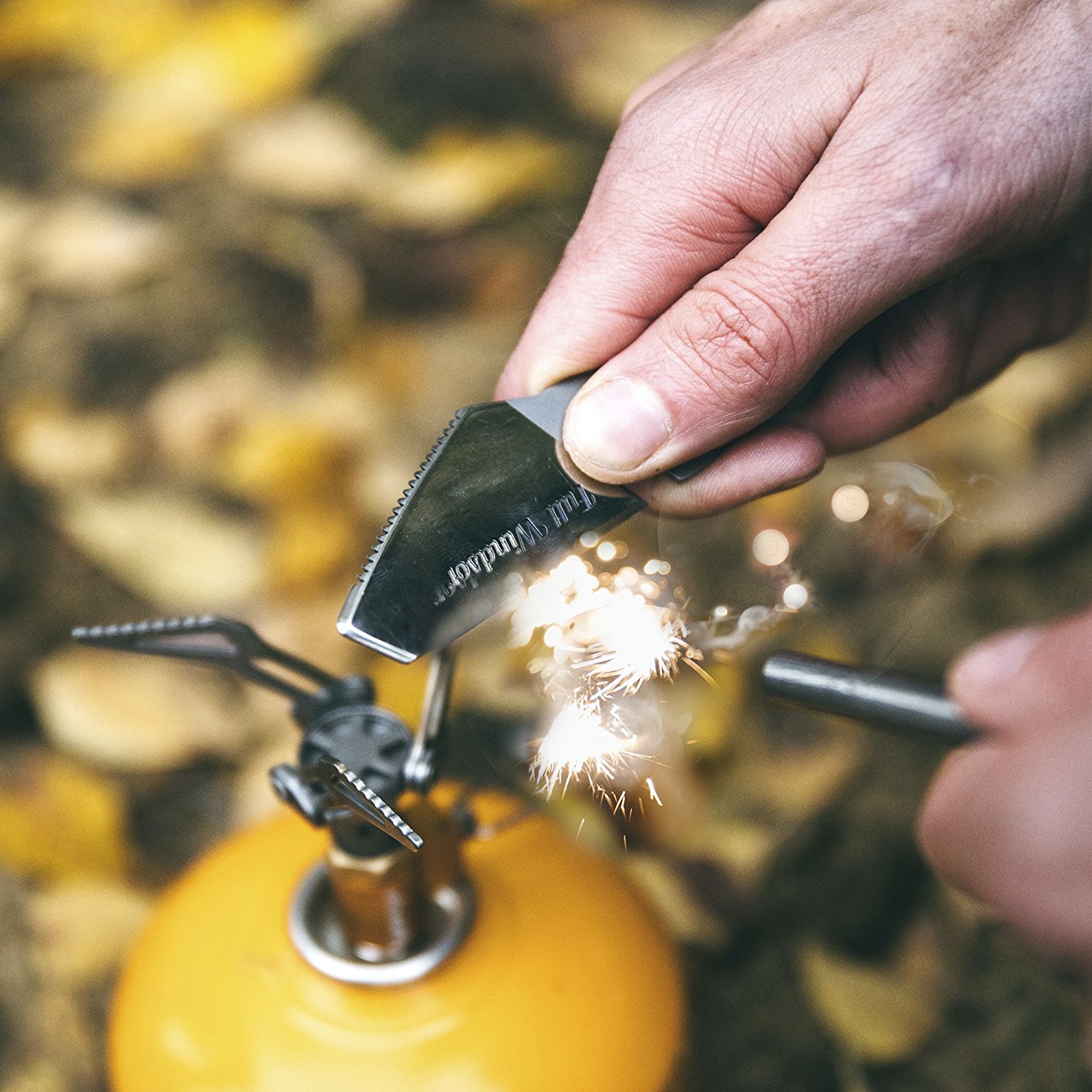
Dan – does that idea actually work?
I was under the impression that you needed to use steel to get the sparks. That may of course be obsolete.
Cheers
I’m back to disappointed.
Not so fast Matthew – I might be wrong. Very rare occurrence of course, but … :)
Cheers
Ha! My response was to Dan :)
My impression was that Dan was responding to the Holy Grail component of the thread, with the associations of fellowship and camaraderie in the quest for more profound understanding of the source of light.
Titanium strikers work well:

My memory is that flint needs steel, but I did not know about the ferrocerium. Interesting that it works with Ti. Thanks.
Cheers
More for Roger, quote from internet:
“”If you don’t have a knife, saw blade, or the striker that came with your ferro rod, you can use any number of items as an alternative striker.
Trash like broken glass works well (which you can unfortunately almost always find in the wilderness). Hard rocks also make good scrapers.””
@Dan
Thanks. Consider me better educated now.
Hum … so what is in a Bic lighter? It comes as a little round replaceable rod, and I don’t think flint is sold like that. Ferrocerium composite I guess?
Cheers
Yes, ferrocerium composit in bic lighters.
Ferrocerium sparks used for ignition of space rockets:


This looks like something very similar to the old REI lexan spoons:

This looks like something very similar to the old REI lexan spoons:
Same length, remains to be seen if the spoon is the same size or smaller.
This is the Holy Grail of spoons. Why? Long enough, light enough, and folds securely without being clunky. And, it’s inexpensive.

Become a member to post in the forums.
 New Ultralight GearSee the latest releases in ultralight cottage-brand gear from small makers.
 © Beartooth Media Group Inc.
 Loading...