

Episode 147 | Thermoregulatory Debt
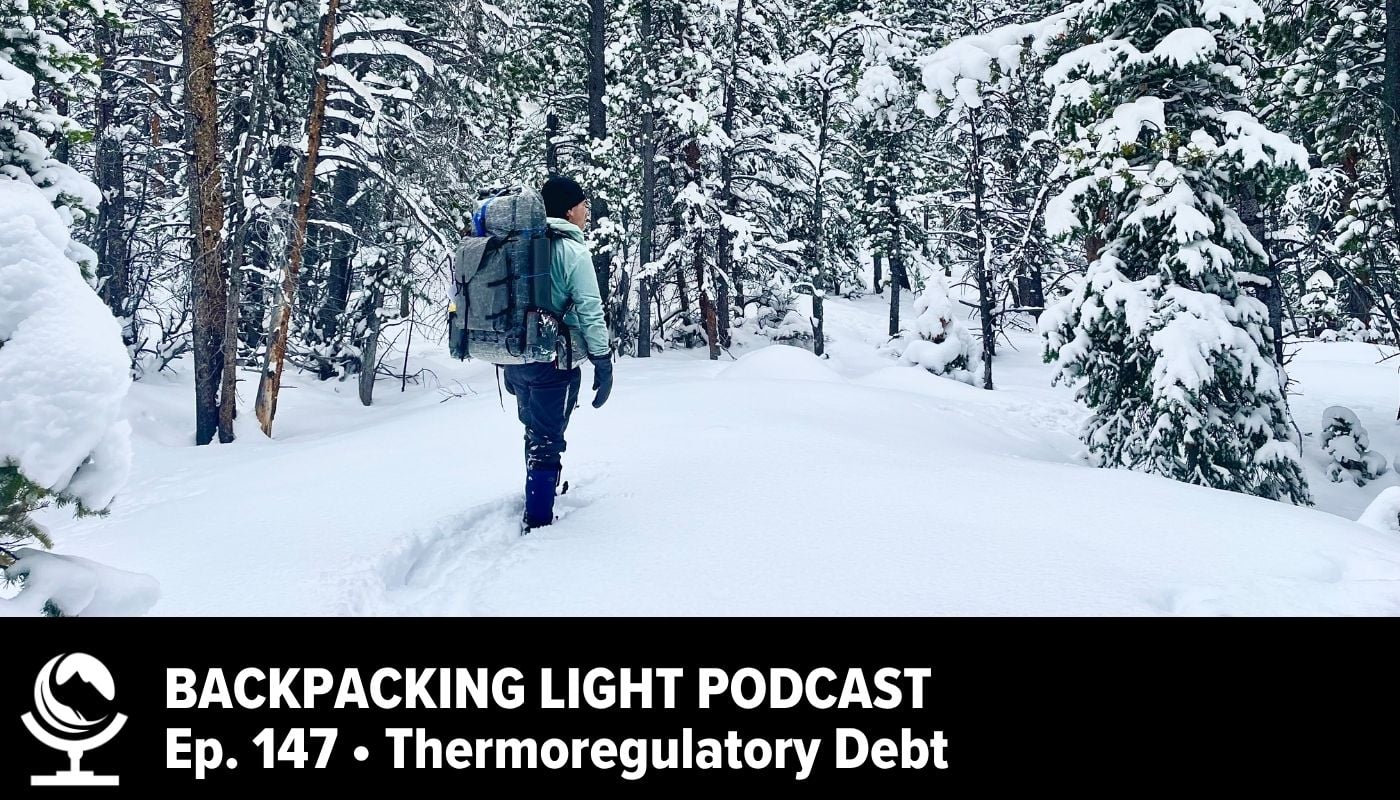
Episode Summary
Thermoregulatory debt describes the delayed cost of layering decisions made during movement in cold, wet, and windy conditions. A small delay in venting, changing layers, eating, or managing moisture can later become wet clothing, increased heat loss, cold hands, slower movement, and poorer judgment. This episode explains moisture debt, heat debt, and performance debt, and why cold-weather layering is about timing, not just clothing selection.
Listen Now
together with Brynje

Today’s episode of the Backpacking Light Podcast is sponsored by Brynje, home to the most sophisticated and effective baselayers available - modern fishnet fabrics made with polypropylene or merino wool.
Show Notes:
What’s New at Backpacking Light?
- Software: TRIPS – The Backpacking Light Terrain and Route Intelligence Planning System
- Webinar: Introduction to TRIPS – June 24, 2026
- Coming Soon: Backcountry Permit Explorer
- Wilderness Skills: Camping Under Trees: Hazard-Tree Awareness and Campsite Selection for Backpackers
- Issues: REI’s Labor Fight Is a Test of Co-op Trust
- Find out more about our Gear Swap, Stewardship Contributions, Newsletters, Newsletter Archives, Memberships, Privacy Updates, and see what has changed on the website at our changelog.
- Find information about all of our upcoming Member Q&A’s, Webinars, Live Courses, other live events, and more on our Events Calendar Page.
Featured Brands and Products
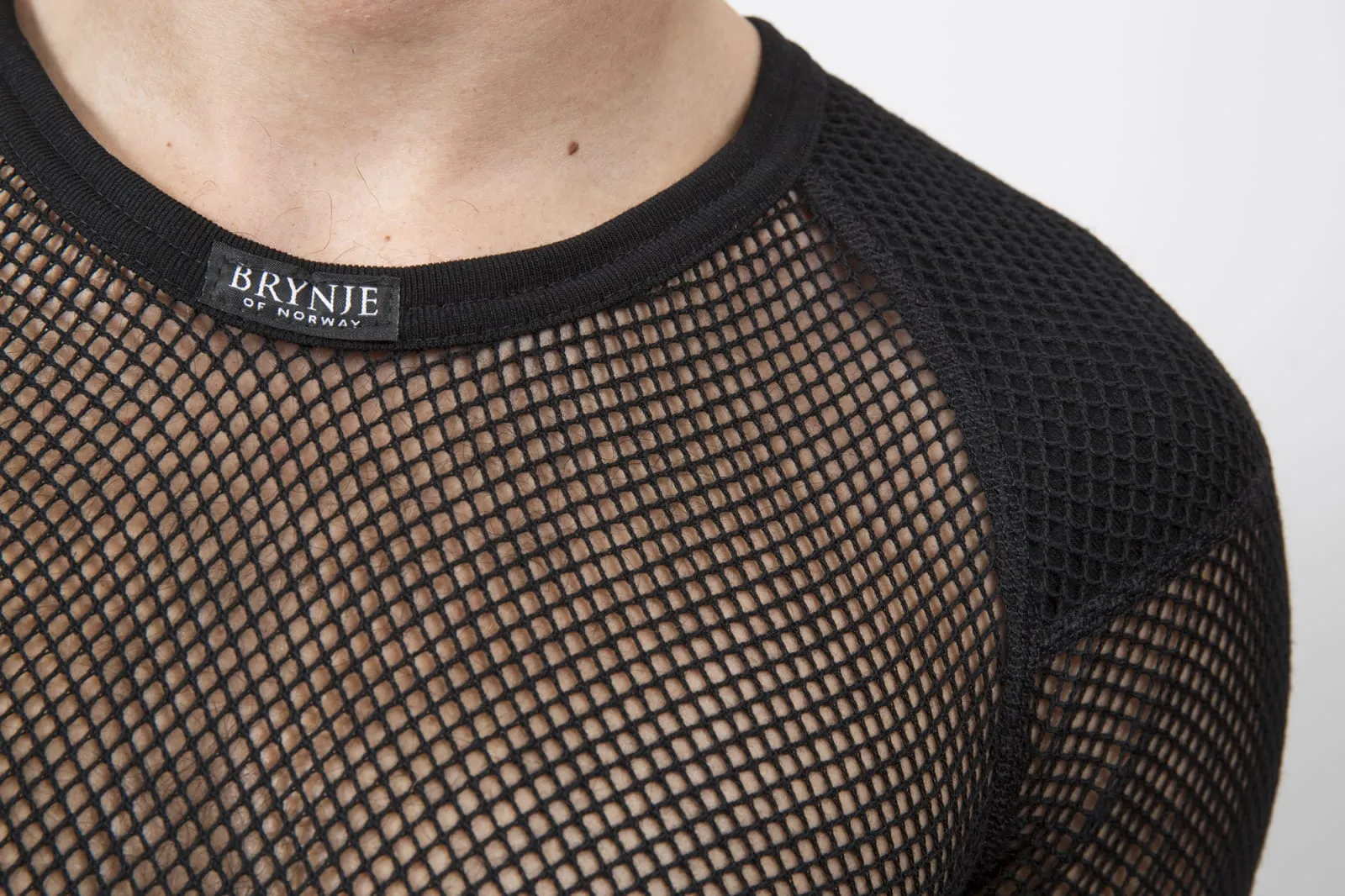
Brynje of Norway makes both synthetic and merino wool fiber fishnet base layer apparel for outdoor adventures. Fishnet construction is more breathable, lighter, and faster-drying than conventional knits.
Thermoregulatory Debt
- Thermoregulatory debt as a field model for delayed physiological cost in cold, wet, and windy conditions.
- Why clothing decisions made during movement can create problems that appear later during rest, descent, exposure, or camp chores.
- The credit-card debt analogy: small, convenient decisions can compound into larger future costs.
- Why thermoregulatory problems often begin before they feel like problems.
- The three phases of thermoregulatory debt: decision, physiological imbalance, and delayed discomfort or impairment.
- The three types of thermoregulatory debt: moisture debt, heat debt, and performance debt.
- Moisture debt as the accumulation of sweat, precipitation, or condensation in a clothing system.
- How moisture migrates through layers and reduces the effectiveness of a layering system.
- Why wet clothing increases conductive and evaporative heat loss.
- Heat debt as a loss of thermoregulatory balance when the body loses heat faster than it can replace it.
- How conduction, convection, radiation, and evaporation contribute to heat loss in the backcountry.
- Why heat debt becomes harder to reverse once clothing is wet, hands are cold, energy is low, or shivering begins.
- Performance debt as the loss of dexterity, motor function, mobility, and cognitive performance.
- How cold hands, cold feet, and reduced mental acuity interfere with basic backcountry tasks.
- Why layering strategy must include timing, not just garment selection.
- Practical interventions: vent early, change layers before urgency, protect insulation, eat before energy deficits deepen, and reassess during changes in movement, terrain, exposure, and weather.
Links, Mentions, and Related Content
- Gear Research and Testing: How Fishnet Works (Base Layer Fabric Structures)
- Wilderness Skills: How Fishnet Works (Part 2): Layering for Moisture, Thermal Management in Cold-Weather Backpacking
- Wilderness Skills: The Dirt Catwalk: Modern Layering Ensembles for Backpackers


Discussion
Become a member to post in the forums.
Companion forum thread to: Episode 147 | Thermoregulatory Debt
Avoid thermoregulatory debt by learning how delayed layering decisions in cold, wet, or windy conditions lead to moisture, heat, and performance debt. Timing is key.
Nice podcast, very professional. Your main point is really good, adjust insulation before you get all sweaty.
I normally hate analogies because they are only loosely associated with the point being made, then it takes more time to figure out how that analogy is related. In this case, the analogy of debt and finance is actually useful and actually makes it easier to understand.
One piece of additional information. I used to just continue using my fingers when they became numb and turned white (I think that’s called frost nip) but I think that causes permanent sensitivity. Now I stop using them and rewarm. And put on more insulation – if my body is cold blood is rerouted from my fingers to keep my torso and head warm which makes them more likely to get frost nip.
I asked gemini to summarize this:
“Episode 147 of the Backpacking Light Podcast is titled “Thermoregulatory Debt.” Hosted by Ryan Jordan, this episode introduces a field model for understanding the delayed physiological costs of poor or delayed layering decisions in cold, wet, and windy conditions.
The core thesis is that cold-weather safety and comfort depend as much on timing as they do on the specific apparel you pack.
The Core Concept: Thermoregulatory Debt
The hosts use a credit card debt analogy: small, seemingly harmless delays in adjusting your clothing during movement compound quietly over time. By the time you actually feel freezing or miserable, you have already accumulated a massive “debt” that is incredibly difficult to pay back in the backcountry.
The process moves through three distinct phases:
The Decision Phase: Failing to vent, add/remove a layer, eat, or manage moisture right when conditions change.
The Physiological Imbalance: The body starts losing heat or trapping moisture faster than it can compensate.
Delayed Impairment: Sudden, acute discomfort, shivering, or loss of physical capability when you finally slow down, stop to rest, or reach camp.
The Three Types of Debt
The episode breaks down the framework into three interlocking categories:
1. Moisture Debt: The accumulation of sweat, condensation, or external precipitation inside your clothing system. As you hike hard, failing to vent early causes moisture to migrate through your layers. Once insulation gets wet, its thermal efficiency plummets, drastically increasing heat loss via conduction and evaporation.
2. Heat Debt: This occurs when your total environmental heat loss (via conduction, convection, radiation, and evaporation) outpaces your metabolic heat production. It becomes exponentially harder to reverse once your clothing is already wet, your energy reserves are depleted, or your hands become too cold to manipulate zippers.
3. Performance Debt: The direct consequence of the first two. It manifests as a loss of fine motor skills, reduced finger dexterity, sluggish physical mobility, and ultimately, impaired cognitive performance and poor judgment. Basic tasks like pitching a tent, lighting a stove, or opening a food wrapper suddenly become monumental challenges.
Practical Interventions & Takeaways
To avoid falling into thermoregulatory debt, the hosts emphasize proactive behavior over reactive gear changes:
Vent Early and Often: Do not wait until you are fully sweating to open pit zips or strip off a wind shell.
Anticipate the Urgent Change: Add or remove layers before you change your output level (e.g., stripping a layer right before a sustained uphill climb, or putting on an insulation layer before you stop for a lunch break).
Protect Dry Insulation: Keep your dedicated camp insulation completely isolated from active moisture and sweat.
Fuel the Furnace: Eat and hydrate before deep energy deficits occur, as your body requires caloric fuel to generate the metabolic heat needed to combat exposure.
Continual Reassessment: Make it a habit to analyze your temperature and the environment every time there is a major shift in terrain, weather, or physical exposure.
(Note: This episode is sponsored by Brynje, highlighting how alternative fabric structures like polypropylene and merino wool fishnets aid in preventing moisture debt by maximizing breathability and drying speed compared to traditional solid knits.)”
I thought that was a pretty good summary.
One thing it missed was the first third of the podcast talking about other articles.
So, in cold climates if you adjust your layers to always be a but cool (or never really cozy and comfortable and never warm) you would be in good shape?
Become a member to post in the forums.