


Trust Disclosures
 Funding Disclosure: Brynje of Norway provided financial support and product samples to underwrite the development of this report.
- Editorial Independence: Backpacking Light and the author retained full editorial control over this content, including all ideation, research, analysis and conclusions with no influence from Brynje.
- Affiliate Links: This article does not contain affiliate links.
 Funding Disclosure: Brynje of Norway provided financial support and product samples to underwrite the development of this report.
Backpacking Light does not accept financial compensation for product placements in editorial reviews. When we accept funding to underwrite non-review technical reporting or education, we fully disclose funding sources, retain full editorial control, and develop the content without brand influence, review, or approval. We do not accept financial compensation for brand-directed (sponsored) “advertorial” content. Learn more about Backpacking Light Trust Standards.
Introduction
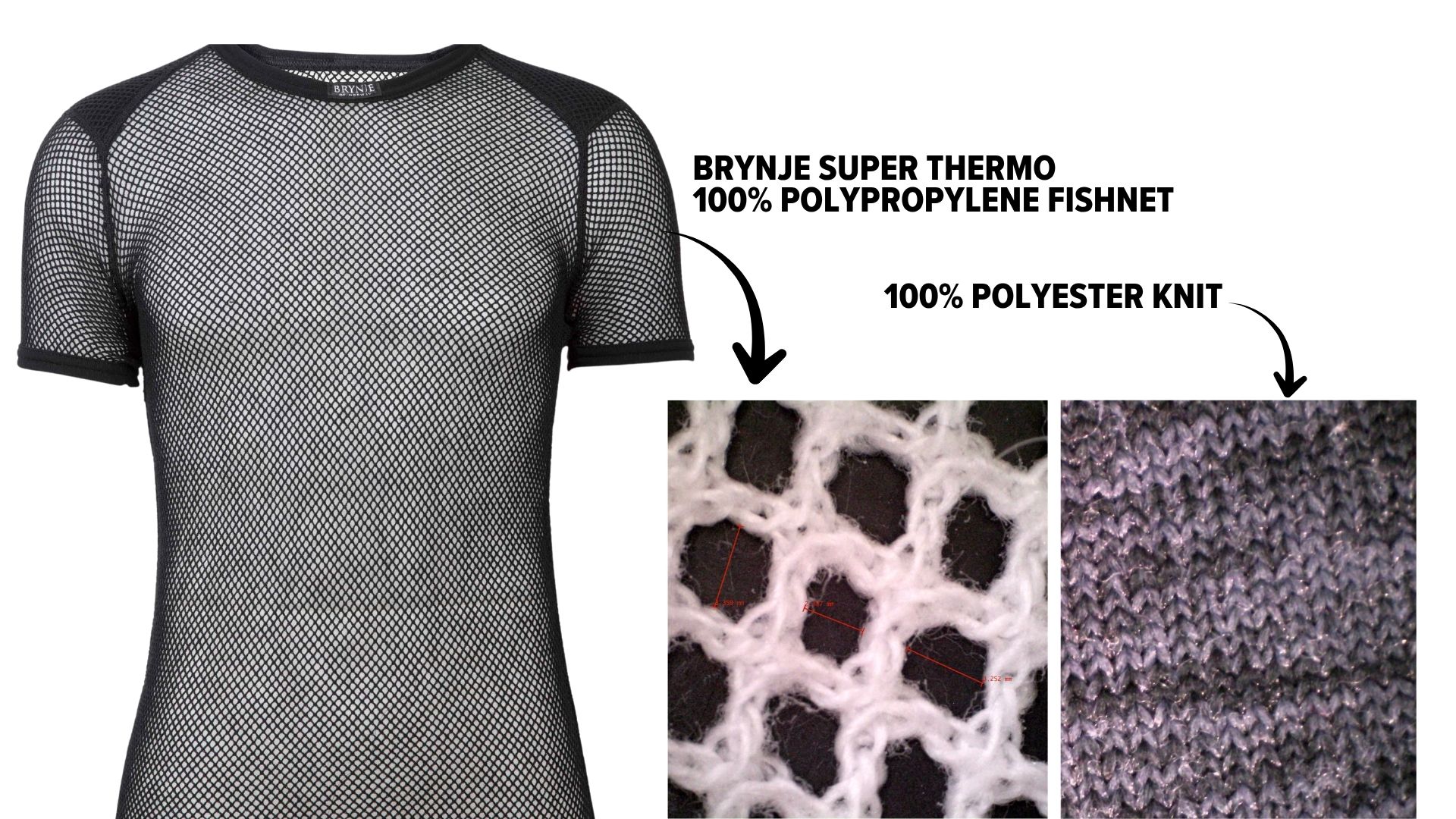
Base layer performance has long been defined by two competing priorities: moisture transport and thermal stability. In cold or variable environments, hikers and mountaineers have traditionally had to choose between thin, ultralight synthetics that wick moisture efficiently but cool rapidly when wet, and denser, heavier merino or polyester knits that insulate but saturate quickly under exertion. Fishnet base layers represent a structural alternative – an architecture designed not around fiber chemistry alone (as with most polyester knit fabrics), but around the void space and airflow mechanics of the fabric structure itself.
Watch this video to see an overview of mesh baselayers that addresses the “why” and “how” of fishnet:

In Part 1 of this series (Jordan, 2024, How Fishnet Works, Backpacking Light), the performance of fishnet fabrics was examined through the lens of vapor transport physics, demonstrating how air gaps between yarn intersections enable sweat vapor to escape more freely, thereby reducing the risk of condensation at the skin-fabric interface. This article builds on that foundation by translating these principles into an applied field strategy, i.e., how to construct layering systems that exploit fishnet’s thermophysiological advantages across a spectrum of cold and humidity conditions.
Thermal Regulation in Layering Systems
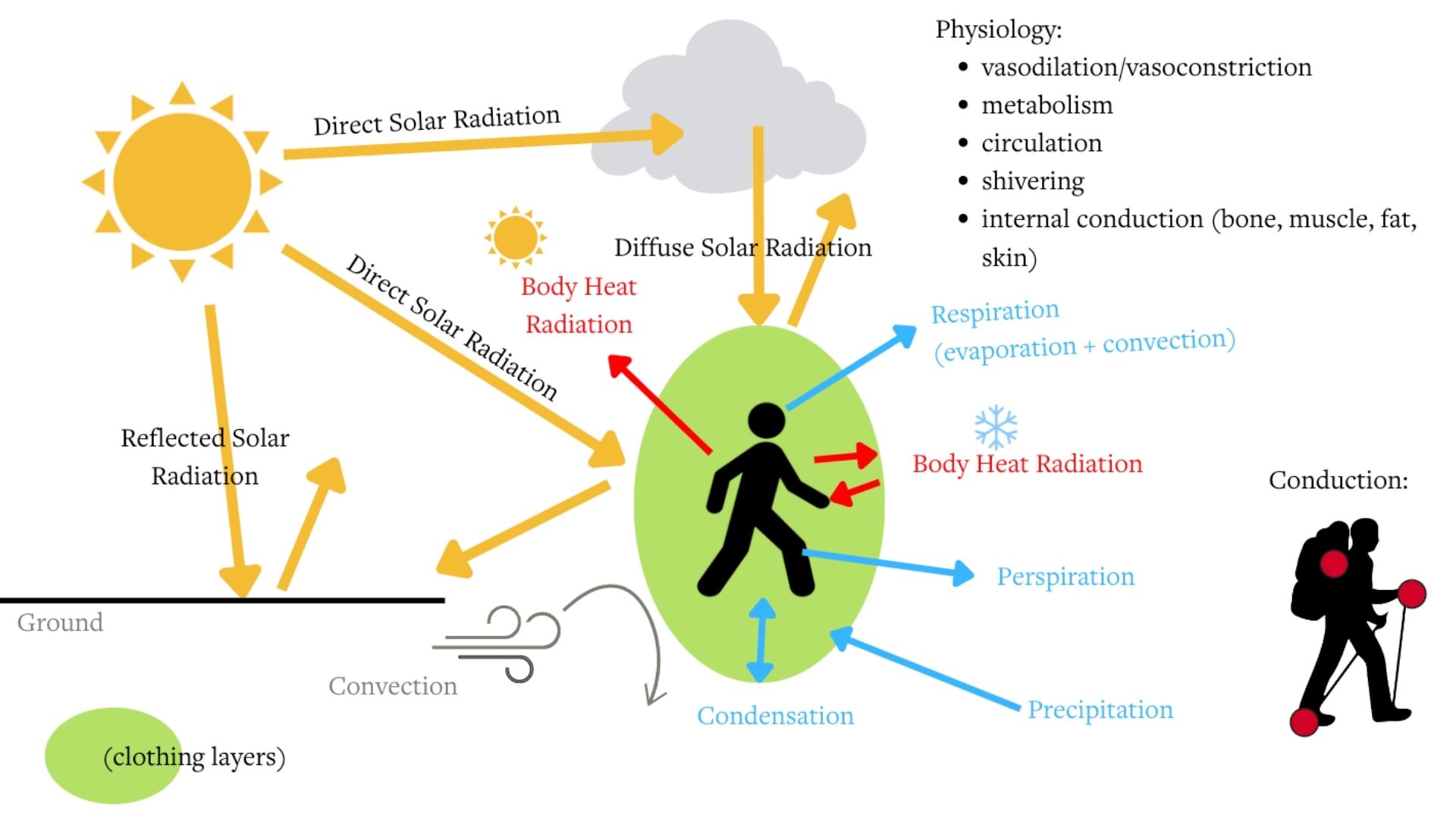
A functional layering system must balance four mechanisms of heat transfer: conduction, convection, evaporation, and radiation. Each operates simultaneously in outdoor environments and interacts dynamically with both the wearer’s exertion level and environmental conditions (Havenith 2002, Interaction of Clothing and Thermoregulation, Karger; Parsons 2014, Human Thermal Environments, CRC Press; Lotens 1993, Heat Transfer from Humans Wearing Clothing, TNO; ISO 9920:2007, Thermal insulation & water vapour resistance of clothing ensembles, ISO/preview).
- Conduction – Direct heat transfer through contact surfaces. This is most pronounced when the fabric is wet, as conductive heat loss is faster through water (in wet fabric) than through air or fibers (in dry fabric).
- Convection – Heat transfer through the movement of air. Air movement is caused by the bellows effect, where cool, dry air from the outside replaces warm, humid air in your clothing layers as a result of body movement or wind pumping air into and out of your clothing through ventilation openings.
- Evaporation – Heat transfer resulting from the moisture phase change from liquid to vapor. Moisture vapor leaving the skin cools the body through latent heat exchange. The source of the heat can either be your body, warm air entrapped in your clothing, or the very thin layer of air that exists on the outside face of your layering system.
- Radiation – Emission of infrared energy from the body (most prominent on clear nights), or absorption of infrared energy from the sun (most prominent on sunny days).
Perspiration, Evaporation-Condensation, Wicking, and Conduction: What Happens When You Sweat, Then Stop
In a Traditional Knit Base Layer
At rest in cool air, your base layer and skin are dry, and the air in the clothing microclimate (entrapped in the layer of air next to your skin, and in the air pockets of your base layer’s fabric structure) is dry and warm. In other words, you are comfortable.
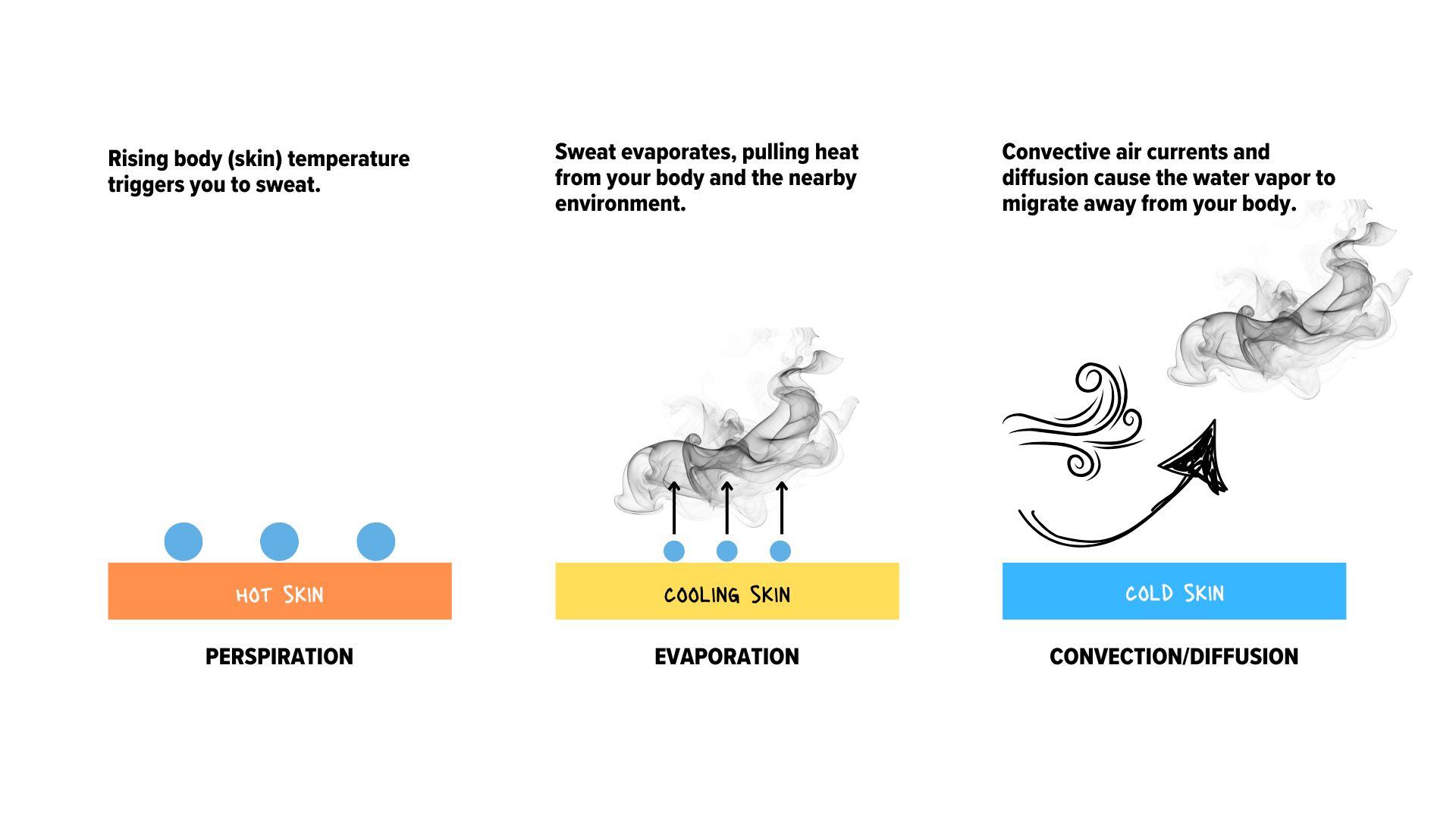
Once you start moving, metabolism increases and you begin to generate body heat. This activates your sweat glands. The first tiny drops of perspiration start to appear as small amounts of liquid on the skin that evaporate almost instantly, slightly humidifying the air at the skin-base layer garment interface.
If your activity level is low, the humidity of the air entrapped in your garment’s fabric structure remains low (undersaturated). That semi-humid air passes through the garment (via diffusion) and exits to the outside environment. At low levels of activity, you stay dry because the rate of perspiration is less than the rate of evaporation at the skin surface, which is in turn less than the rate of moisture vapor diffusion out of your garment into the environment:
As exertion increases, your perspiration rate increases.
Now, the perspiration rate exceeds the rate of evaporation of that perspiration at the skin surface. So instead of all of the sweat evaporating from the skin surface and then diffusing through the garment, the garment starts to “wet out” as liquid sweat wicks into the garment fibers. In addition, due to the presence of liquid moisture that is now in the garment, the air pockets within the garment now become saturated (100% relative humidity) with moisture vapor. And that overwhelms the garment’s ability to diffuse moist air outward.
Thus, at moderate-to-high levels of activity, your garment starts to get wet because the rate of perspiration now exceeds the rate of evaporation at the skin surface, which in turn exceeds the rate of moisture vapor diffusion out of your garment into the environment.
Here is where the marketing claim of wicking comes into play.
A wicking fiber is hydrophilic, resulting in the dispersion of a drop of moisture (in this case, sweat) across the fiber surface as a result of capillary action. This increases the surface area of the liquid moisture, increasing its evaporation rate. The engineering idea behind wicking fabrics is to increase the rate of evaporation to keep up with increased perspiration rates. This does happen; however, the effect is relatively small, and moderate levels of activity over short periods of time easily overwhelm a garment’s wicking rate. In addition, increased wicking likely saturates the humidity in the air pockets of a garment more quickly than in non-wicking garments, overwhelming vapor diffusion rates out of the garment. We have repeatedly observed the failure of wicking to maintain dry garments in our studies on base layer wetting (e.g., Seeber 2022, Why is my base layer soaked? Backpacking Light).
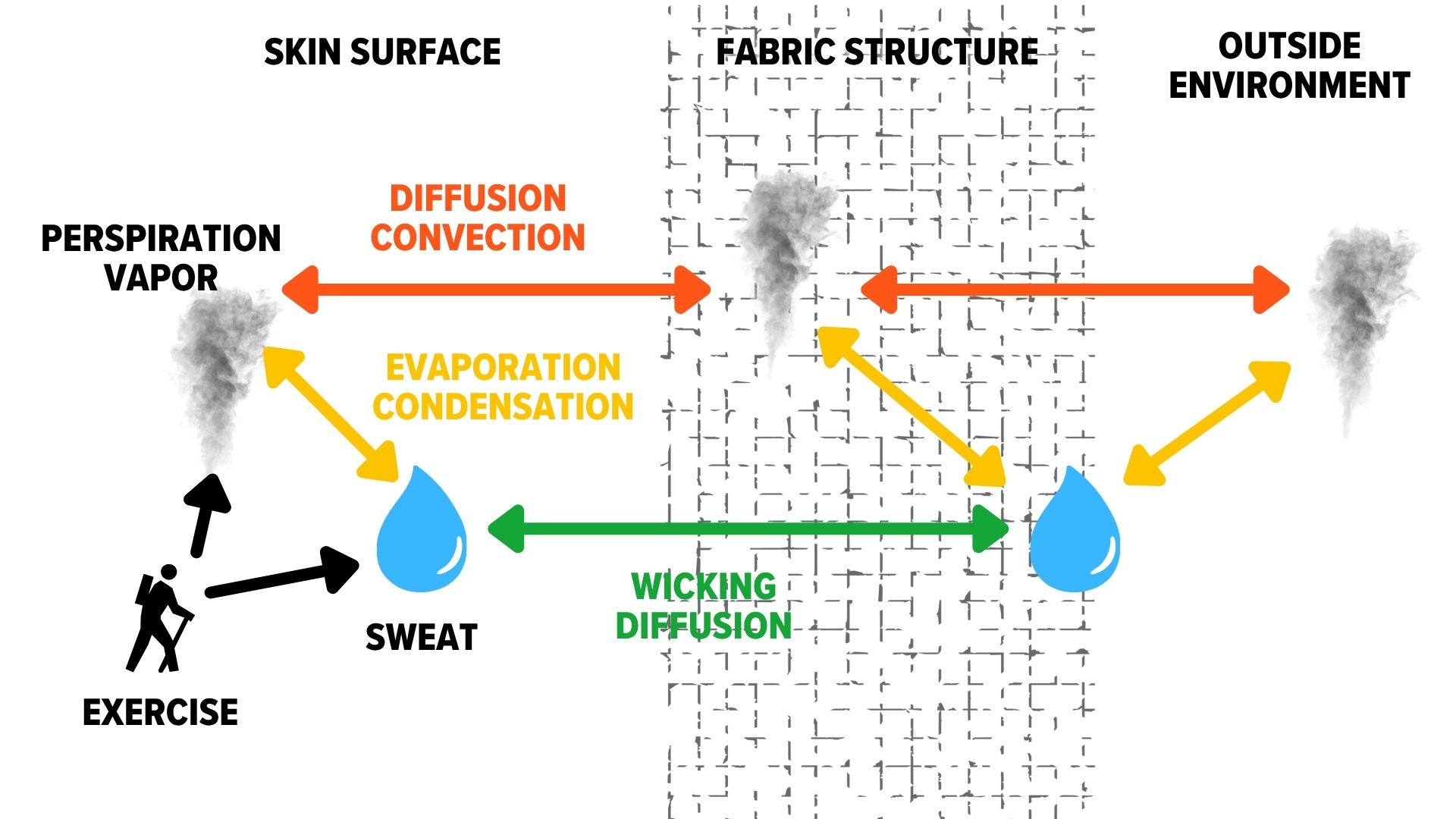
OK, so now your base layer is wet from the accumulation of perspiration as liquid. And then you stop (for a break, or a longer rest, or to camp). What happens next?
Your activity level drops, so your mechanical heat production (heat produced by muscle activity) drops. There is a lag of a few minutes, but within 5 to 10 minutes (the time it takes for blood to make a round trip through your body), your skin temperature has dropped back to normal and you are no longer overheating. This process may take less time in very cold temperatures, and more time in moderately cool temperatures.
With the body no longer generating mechanical heat from activity, the heat that had accumulated in the air-filled pores of your clothing now dissipates. The drop in air temperature in your garment fabric pores now results in the condensation of water vapor present in the garment air space into liquid moisture. This, on top of all the other liquid moisture that’s already in there because of perspiration.
So now, you have a cooler body temperature, cooler air temperature inside the pores of your garment, and a cool outside temperature – and a whole bunch of liquid moisture in your garment that wants to evaporate. In order for that moisture to evaporate, it needs latent heat from somewhere, and the only source that can offer it is your body. And since your body is no longer producing heat from mechanical work (activity), it must derive that heat from metabolism. We previously showed that about 1 Watt-hour of metabolic energy is required to evaporate one gram of water from a base layer garment (Seeber 2025, The Energy Cost of Drying Your Base Layer, Backpacking Light). Since 1 watt-hour = 3,600 joules and 1 kcal = 4,184 joules, a garment containing 50 g of water requires about 50 Wh (≈180,000 J ≈43 kcal) of metabolic energy to dry. That’s not insignificant. However, 50 g is unrealistically low for a whole garment; using ~7× more (~350 g, near mesh saturation) implies ~350 Wh (≈1.26 MJ ≈300 kcal) to dry. This rapid loss of heat, driven primarily by evaporation, produces the familiar “clammy chill,” or flash-off, when you stop moving in a wet base layer in the cold.
The primary way to combat this is to pile on lots of insulation at rest stops. This keeps the temperature of the water in the base layer warm enough to slow conductive heat loss, and it keeps the temperature of the air in the base layer warm enough to drive evaporation. Interestingly, this strategy does not cure the problem – it just moves the water away from the base layer (by evaporation, thus reducing current risk) and into the insulation (via re-condensation, thus increasing future risk).
The solution to this problem is not a simple one – thermoregulation involves interconnected processes that are both complex (nonlinear) and dynamic (non-steady-state). So coming up with a simple, single solution like “increase wicking” or “increase insulation” or “increase breathability” is impossible because those processes (wicking, insulating, and vapor transmission) impact every other phase change, heat exchange, and moisture and heat transport process in the system.
Therefore, we approach this problem by addressing its root cause: minimizing the amount of moisture that accumulates in the garment layering system.
In a Fishnet Base Layer
The same sequence unfolds differently when you’re wearing a fishnet structure next to your skin. As exertion begins, small amounts of sweat form and evaporate directly from the skin surface – this is the same process as above. However, the moisture vapor is easily (and quickly) transported across the face of a fishnet fabric through its much larger pores, and into the next layer (or out of the system entirely if well-ventilated).
Because of higher vapor transport rates through the fabric, liquid accumulation (from perspiration) doesn’t occur until you reach much higher levels of exertion than when wearing a knit base layer.
So therein lies the first advantage of a fishnet base layer: no liquid moisture accumulation in the garment across a wider range of low-to-moderate activity levels.

What happens as exertion level increases to the point where you are now generating enough perspiration to start accumulating significant amounts of moisture at the skin-fishnet interface?
Perhaps the most noticeable difference between fishnet and knit structures at this point is that liquid moisture has little opportunity to spread or saturate the textile. So when sweat output increases, droplets fall into the mesh voids or drain along the yarn intersections, leaving air pathways more open for vapor to move freely.
Because those voids allow continuous air exchange, the air next to the skin maintains lower levels of humidity, and evaporation continues to occur at the skin surface, and not just within the fabric. Since there’s a much smaller capillary network for moisture to travel through in a fishnet structure, wicking is low, evaporation of moisture in the fabric is low, and re-condensation inside the garment remains low.
Then, when you stop moving, little water remains in the mesh, and what does remain dries quickly thanks to convective air flow across the water surfaces because of the large void space (pore size). In addition, the open geometry traps small pockets of air that act as insulation, interrupting the conductive bridge that a wet knit creates. Cooling proceeds more gradually and predictably as evaporation tapers off – the flash-off effect is not as severe.
The difference in sensation is clear: with a knit, you cool abruptly as the wet fabric pulls heat through conduction and rapid evaporative heat loss; with a fishnet, you cool more slowly as moisture evaporates into drier (and warmer) ventilated air. The result is skin that stays drier, cooling that feels stable rather than harsh, and less post-exertion chill. These are not theoretical differences – they are noticeable sensations, especially as the mercury drops.
Layering Strategies Across Environments
A. Cold and Dry Alpine Conditions
In arid, subfreezing climates, such as those found in high-altitude winter trekking or on continental snowfields, vapor pressure differentials are large, favoring the diffusion of moisture vapor from the skin to the air. Fishnet excels in this gradient-driven environment, but a dry next-to-skin boundary layer requires highly breathable (air-permeable) outer layers to be effective.
Stop-and-go activity patterns, such as ski touring or winter backpacking, expose the limits of moisture management. The body can produce over 1 L of sweat per hour during heavy exertion, yet most knit base layers retain up to 15–20% of that liquid in the fabric itself. Polypropylene fishnet is often reported to retain only a small amount of moisture because of its low fiber density and open structure. However, more recent observations indicate that Brynje-style mesh can hold significantly more moisture depending on conditions, activity intensity, and layering strategy, so we avoid fixed percentages. A layering system that minimizes water absorption in the base layer remains critical. It lets the user sense when perspiration begins to overwhelm the system and adjust ventilation before mid-insulation layers become wet.
Author’s Recommended System:
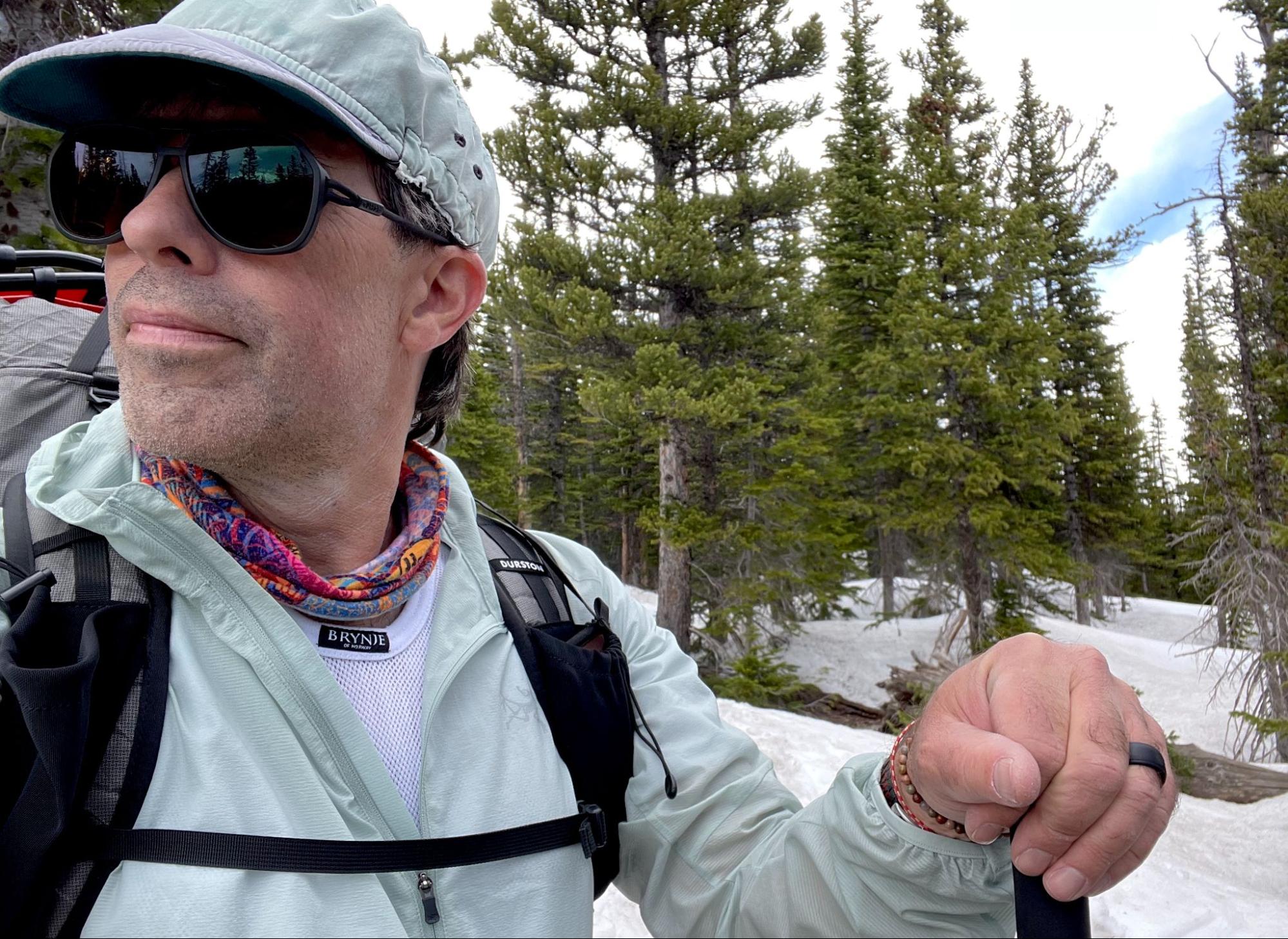
- Base: polypropylene fishnet
- Mid: ultralight open mesh high-loft fleece or grid fleece
- Shell: air-permeable wind shell
B. Cold and Humid (Freezing Rain or Wet Snow)
When ambient humidity approaches saturation, the vapor pressure gradient narrows, and conventional wicking systems struggle – sweat vapor condenses within dense knits before it can escape. Fishnet’s advantage lies in preserving an air gap that continues to transport vapor even as the outer layers dampen. However, the effectiveness of this system now depends on convective ventilation rather than vapor diffusion; your outer shell should offer extensive ventilation options.
In transitional seasons, when air temperatures and exertion rates can fluctuate dramatically, a base layer’s ability to maintain thermal balance through both moisture and heat buffering becomes especially valuable. Merino and alpaca wool excel in these conditions because their fibers can adsorb water vapor into their interior structure, a process that releases small amounts of heat and helps stabilize the microclimate next to the skin. This hygroscopic behavior moderates temperature swings and delays evaporative cooling when activity levels or weather conditions change, providing a more consistent sense of warmth and comfort than purely synthetic fabrics.
Author’s Recommended System:
- Base: merino wool or polypropylene fishnet
- Mid: ultralight merino wool
- Shell: waterproof-breathable shell with open vent zips

Common Mistakes and Optimization Tips
- Overcompression: Tight mid-layers collapse the air gap, negating convective benefits.
- Neglecting Wind Control: Mesh accelerates air movement; a shell or mid layer worn over fishnet as an outer layer is essential in windy environments to prevent convective overcooling.
- Misunderstanding Purpose: Fishnet is primarily a moisture manager, not a warmth layer; insulation belongs above it except at high exertion levels in moderate temperatures.
- Improper Fit: Too loose, and convective air exchange becomes too high, cooling you too quickly. Too tight, and perspiration gets trapped against the skin. Aim for very light, non-restrictive tension against the skin.
- Stopping Without Layering: When you halt activity, immediately don a shell or insulating layer to retain residual warmth to avoid rapid convective cooling.
Key Takeaways
Fishnet base layers redefine how outdoor athletes and backpackers should think about thermal management. Rather than viewing the base layer as a wick or insulator, it should be understood as a microclimate moderator – a mechanism that preserves comfort by controlling both moisture and convective flow.
Across my experience in various alpine and cold climates, fishnet systems consistently demonstrate:
- 30–50% less water retained against the skin compared to traditional knits,
- 20–40% faster drying times, and
- wider comfort envelopes in both cool, humid and cold, dry environments.
Their performance derives not from exotic fiber chemistry but from structural engineering: a deliberate manipulation of void geometry and airflow. When integrated into a well-vented layering system, this design enables a single base layer to serve effectively across all four seasons.
Brynje’s long-standing fishnet architecture exemplifies how microstructural design, rather than mere fabric type, determines physiological comfort. As field and laboratory data converge, it becomes evident that the future of base layer performance lies not in fiber marketing, but in understanding – and leveraging – the physics of air and moisture movement.
Related Content:
- Gear Review: Brynje Thermo Mesh Review (Wool & Synthetic Base Layers)
- Podcast: Episode 91 | Fishnet Mesh Base Layers
- Research and Testing: How Fishnet Works (Base Layer Fabric Structures)
Sponsorship Disclosure
This article is sponsored by Brynje of Norway:
Review Trust Disclosures
- Funding Disclosure: Brynje of Norway provided financial support and product samples to underwrite the development of this report.
- Editorial Independence: Backpacking Light and the author retained full editorial control over this content, including all ideation, research, analysis and conclusions with no influence from Brynje.
- Affiliate Links: This article does not contain affiliate links.
Backpacking Light does not accept financial compensation for product placements in editorial reviews. When we accept funding to underwrite non-review technical reporting or education, we fully disclose funding sources, retain full editorial control, and develop the content without brand influence, review, or approval. We do not accept financial compensation for brand-directed (sponsored) “advertorial” content. Learn more about Backpacking Light Trust Standards.
Sponsor’s Message:
Take advantage of innovative fabric structure (big holes) for more effective thermoregulation.
👉🏽 Fishnet (mesh) has big holes. That means the warm, moist air generated during moderate- and high-exertion exercise (like backpacking) can be transferred away from your skin rapidly, before it has a chance to condense into sweat. That sweat then causes both conductive and evaporative cooling.
👉🏽 Fishnet made of merino wool is comfortable and soft next to skin, but when it’s made of polypropylene, the fabric is more hydrophobic and doesn’t absorb as much moisture. This means it dries faster, and doesn’t wet out like more hydrophilic base layers (e.g., so-called “wicking” polyester knits).
👉🏽 Those big holes do double-duty as you layer over your fishnet base layer by trapping warm air. That makes fishnet very warm for its weight – when paired with another layer over it – and much more breathable than conventional knits when well-ventilated. These two properties are rare in base layer fabrics. Fishnet mesh with these properties makes for a very effective type of fabric construction for cool- and cold-weather hiking.
Brynje of Norway has set the gold standard for manufacturing technical fishnet base layers for more than a century. It’s no surprise that you’ll find Brynje base layers on the backs (literally) of the world’s most prominent alpinists, explorers, and Nordic skiers.


Discussion
Become a member to post in the forums.
Companion forum thread to: How Fishnet Works (Part 2): Layering for Moisture, Thermal Management in Cold-Weather Backpacking
Fishnet base layers offer a structural solution to the long-standing tradeoff between warmth and moisture control. By emphasizing airflow and vapor transport, they maintain comfort across cold, dry, and humid environments where conventional wicking fabrics fail. This article explains the thermophysiology of fishnet design and provides evidence-based strategies for layering in alpine and variable weather conditions.
Has anyone used (this kind of) fishnet in socks?
Judging from how my shoulders look after a day with shoulder straps on fishnet, it’s possibly a bad idea for the bottom. But for the top of socks it seems like a good fit.
Managing moisture on my body is easy compared to my feet.
@dueurt, I have tennis socks with an open mesh pattern up top and my feet feel drier in them when I play, probably because they just hold less sweat.
Fishnet needs an upper layer that transports moisture effectively, like large turbulent air pockets or a Lifa polypropylene (hygrophobic).
As long as the footwear can transport the moisture, I think it could work. So a light breathable trail runner would be the best chance at success. A WPB boot gets overloaded quickly with sweat and I don’t think a fishnet sock would help.
Bjorne makes socks with a fishnet liner. Top and bottom. I find them effective, though I do get waffle feet. I don’t feel friction. I feel the mesh, but I still find them comfortable. I wore them a lot last winter.
@David D
I was imagining them as liners under a more absorbent sock. But mostly I’m just curious to try it.
@Terran Terran
Thanks, I’ll take a look.
EDIT: No luck finding them. Can you share a link?
I would have thought so too, but they have a tight knot poly on the outside. More of a barrier. I wear wool over them.
Brynje not Bjorn duh…sorry about that that.
Socks
Hi Ryan,
Would you mind adding some insight into the differences between the Brynje and HH Lifa next to skin option? I’ve used the Brynje successfully in some of the above cases with great success. Though, I remain curious about the HH as well. HH pictures are not ideal to interpret. Is there a use-case difference?
I will throw in a recommendation for Svala. Their fishnet is called Airbase. https://svala.com/en/collection/airbase/
I haven’t used a Brynje shirt in decades, and never tried HH fishnet, so I can’t say how it compares. But it is very good IMO. On my scale, the Airbase Original Shirt M is 119g and the Long Johns M 105g.
As fishnet, it is miles ahead of Aclima Woolnet. Of course that’s comparing polypro to merino, but the Svala mesh is also coarser and stretchier, giving a tighter fit and I think a better hole size.
@dueurt, FYI, one more option: https://www.finetrackglobal.com/en_CA/shop_by_product/accessories/socks/elemental-layer-liner-socks-crew/FSU0224.html
I didn’t think HH made fishnet? I know some us (me included) wear their Lifa over fishnet
Those finetrack socks look very interesting, thanks.
I must’ve misunderstood about HH, my bad.
Become a member to post in the forums.