


A recent overnighter during a high-wind event got me thinking about overall backpacking and backcountry camping strategies when wind is the main environmental stressor. Temperatures were mild, and there was no precipitation. That meant that Wind was the star of the show and the focus of most of my challenges on this trip. Herein are some lessons for hiking and camping in the wind.
1. Fallen trees slow you down and increase the required effort.
I recently wrote about falling trees. High winds topple trees, creating a different sort of exposure risk for the forest hiker. Bark beetles have driven extensive tree mortality across the Colorado Rockies in recent decades, with one peer-reviewed analysis finding that more than 10,000 km² of Southern Rocky Mountain subalpine forest was affected between 1997 and 2019. The result? Wind event-driven toppling of beetle-killed spruce and pine trees. In addition to posing a risk to hikers and campers, fallen trees across trails can slow your progress on a route. For bushwhackers, navigating through deadfall can be painfully slow and metabolically costly.
The trip I referenced above was an out-and-back route with about 8 miles of travel, 3,000 feet of elevation gain, and 50% off-trail (much of it bushwhacking through pine and spruce forests). In the 16 or so hours between my hike in and my hike out, more than 100 new trees had fallen along my route. Scrambling over and around them added non-trivial time and effort that I had not planned for.
Lesson #1: If you are traveling along routes where fallen trees are prevalent, build in some margin to account for increased hiking times and metabolic demand.
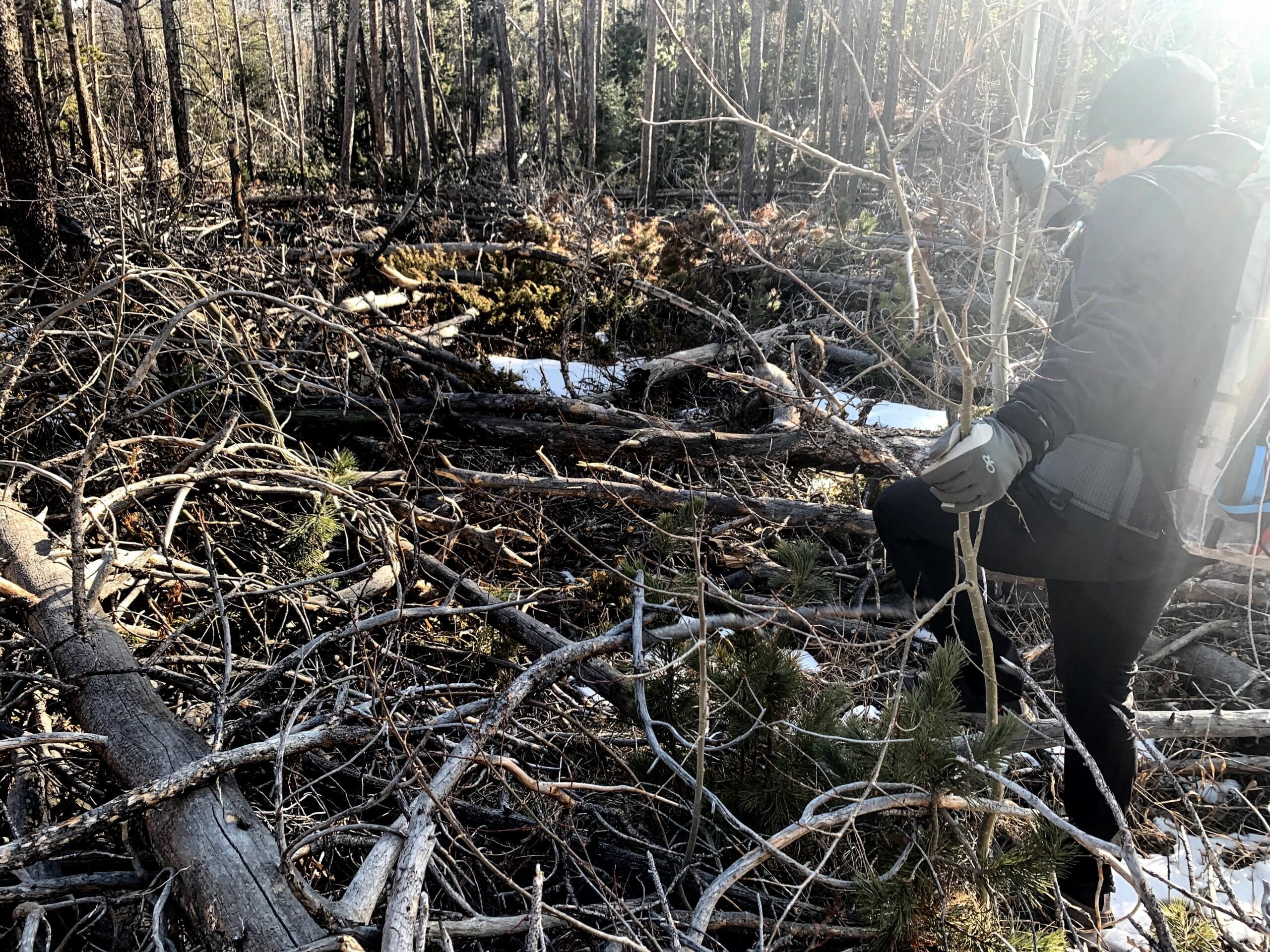 Bushwhacking through a forest decimated by pine beetles in southeast Wyoming.
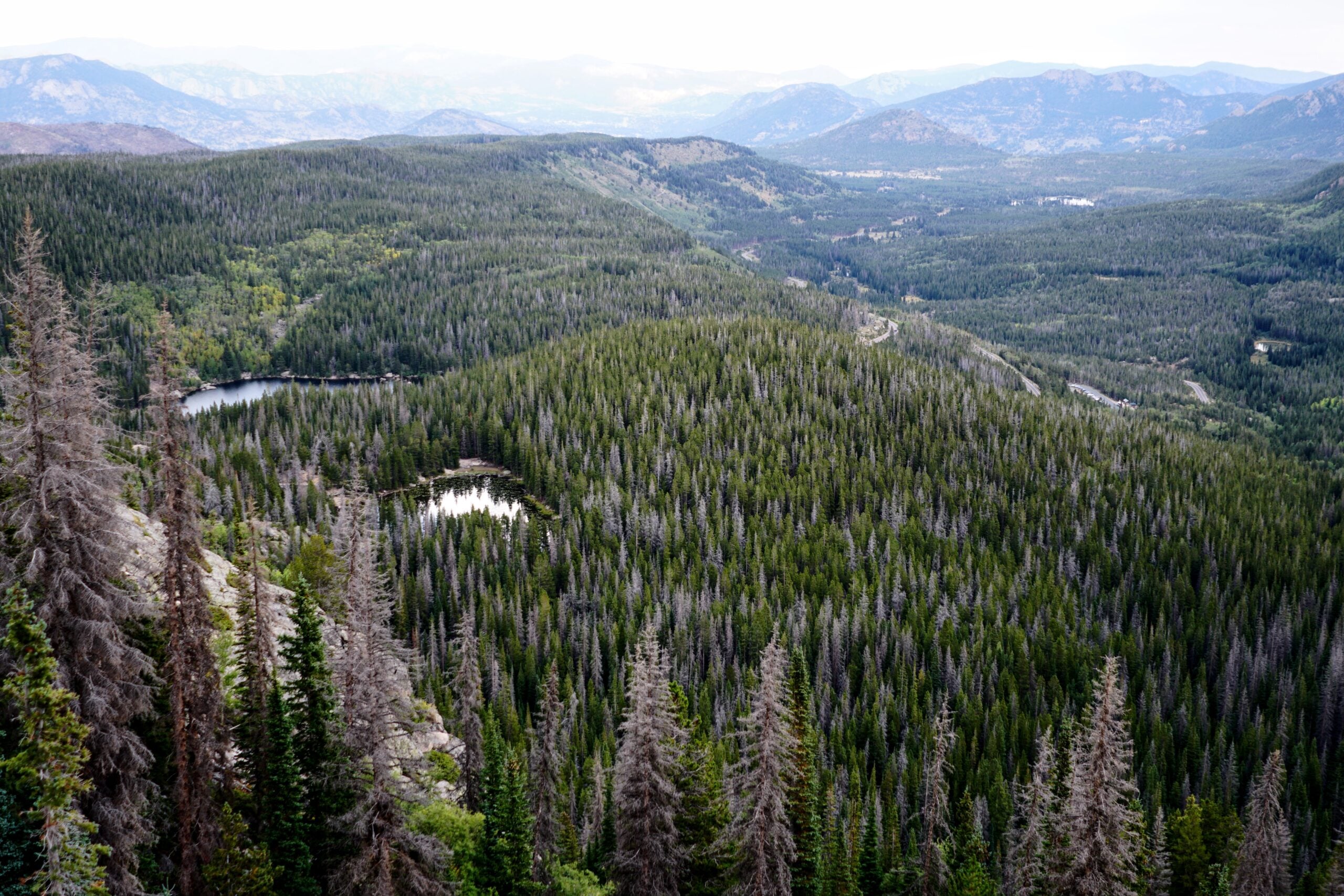 Beetle-killed spruce, Rocky Mountain National Park.
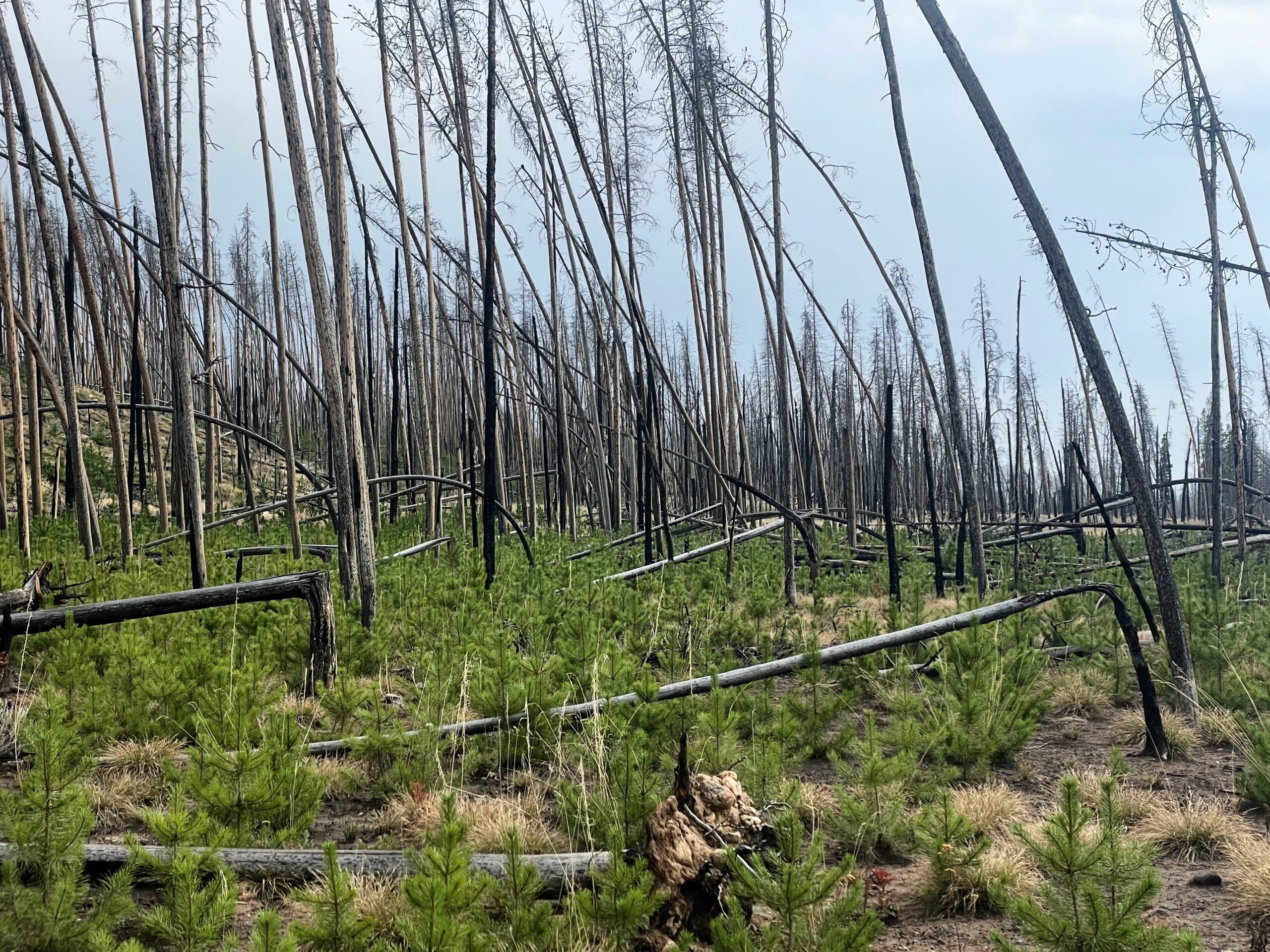 Recently burned forests are prone to tree falling en masse during wind events, something to consider if planning routes through wildfire burn areas.
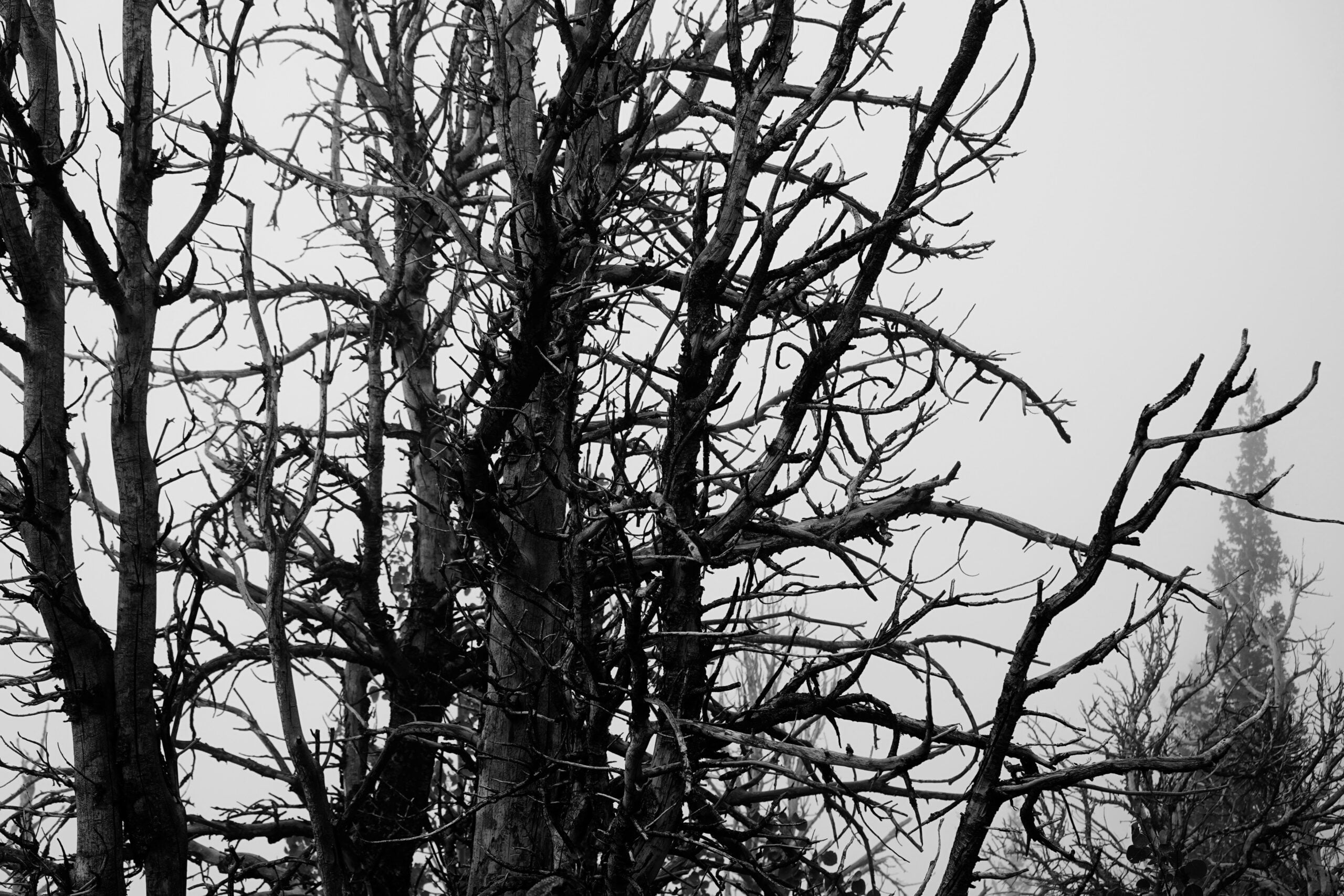 In lightning-prone areas, especially on ridges, dead trees are prevalent.
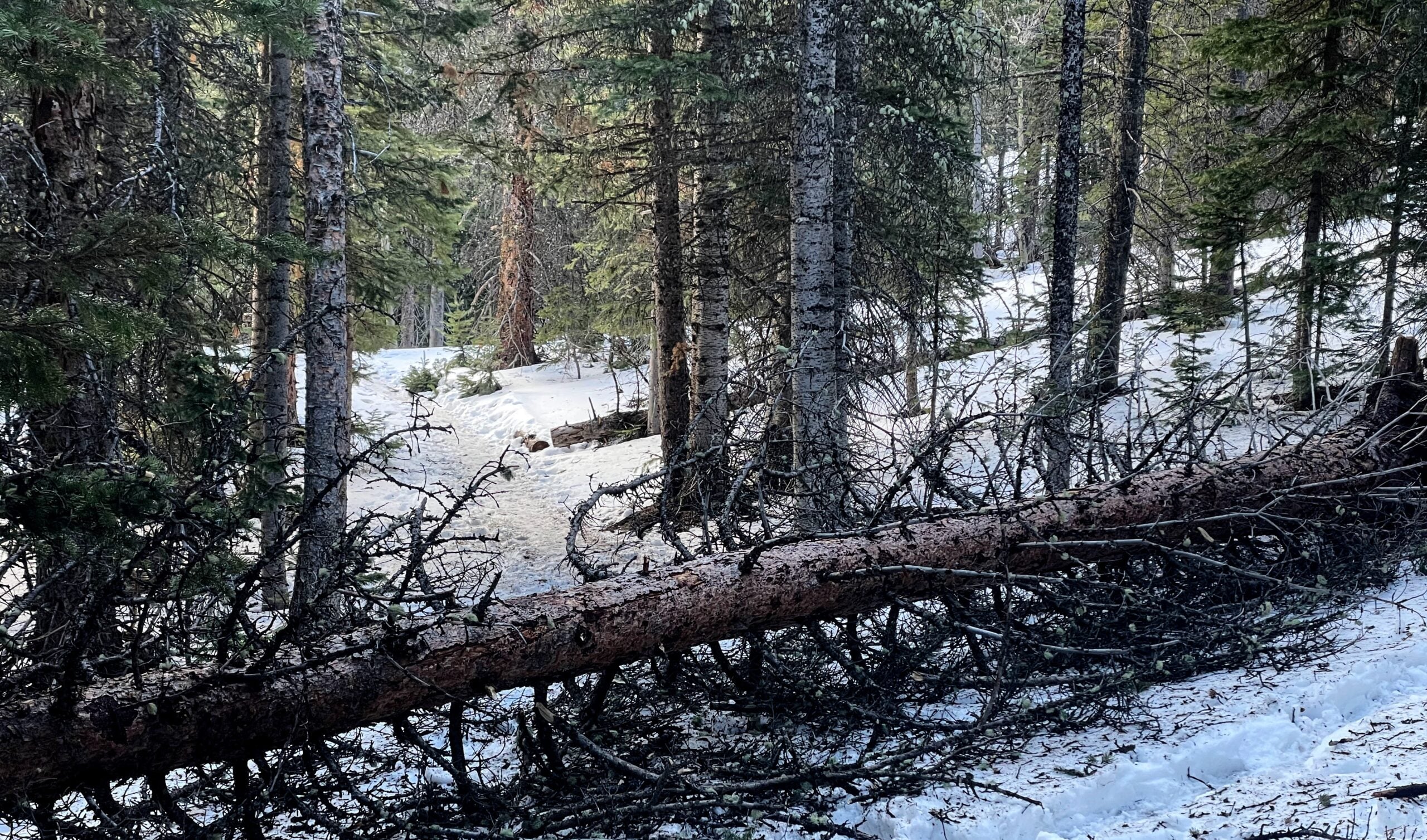 Large trees that have fallen across the trail add a little time and effort to your route. A lot of trees that have fallen in isolated wind events can add a lot of time and effort to your route.
2. Not being able to maintain balance is a warning sign that winds are pretty severe.
My trip plan was to camp in the alpine – above the treeline. My destination was a tundra bench overlooking the valley at an elevation of about 11,500 feet. I had heard the winds throughout my hike – howling through the trees and spilling down the ridges above. I didn’t think too much about it – the wind blows here all the time, and it sort of just blends into the background when I’m in the mountains. After several hours of hiking and bushwhacking, I finally reached the treeline at 11,100 – and was met with a force that was indeed unusual.
The wind gusts were so strong, that I couldn’t maintain my normal forward momentum. Twice, I was knocked off balance, dancing to avoid rocks as the wind hit me broadside. Another time, I had to use trekking poles and a speed skater’s forward lean just to move a few steps at a time into the headwind.
These are not good signs. The hiking was enormously laborious. And on my route, through talus and krummholz, it was rather risky. Never mind the challenge of securing an ultralight shelter in these conditions. I pulled out my portable anemometer and clocked one gust at 71 mph.
I turned around, deciding to camp in the more protected environment below the treeline.
Lesson #2: If the wind is so strong you can’t stand up or get knocked off balance, you are in a very exposed condition that elevates your hiking and camping risk.
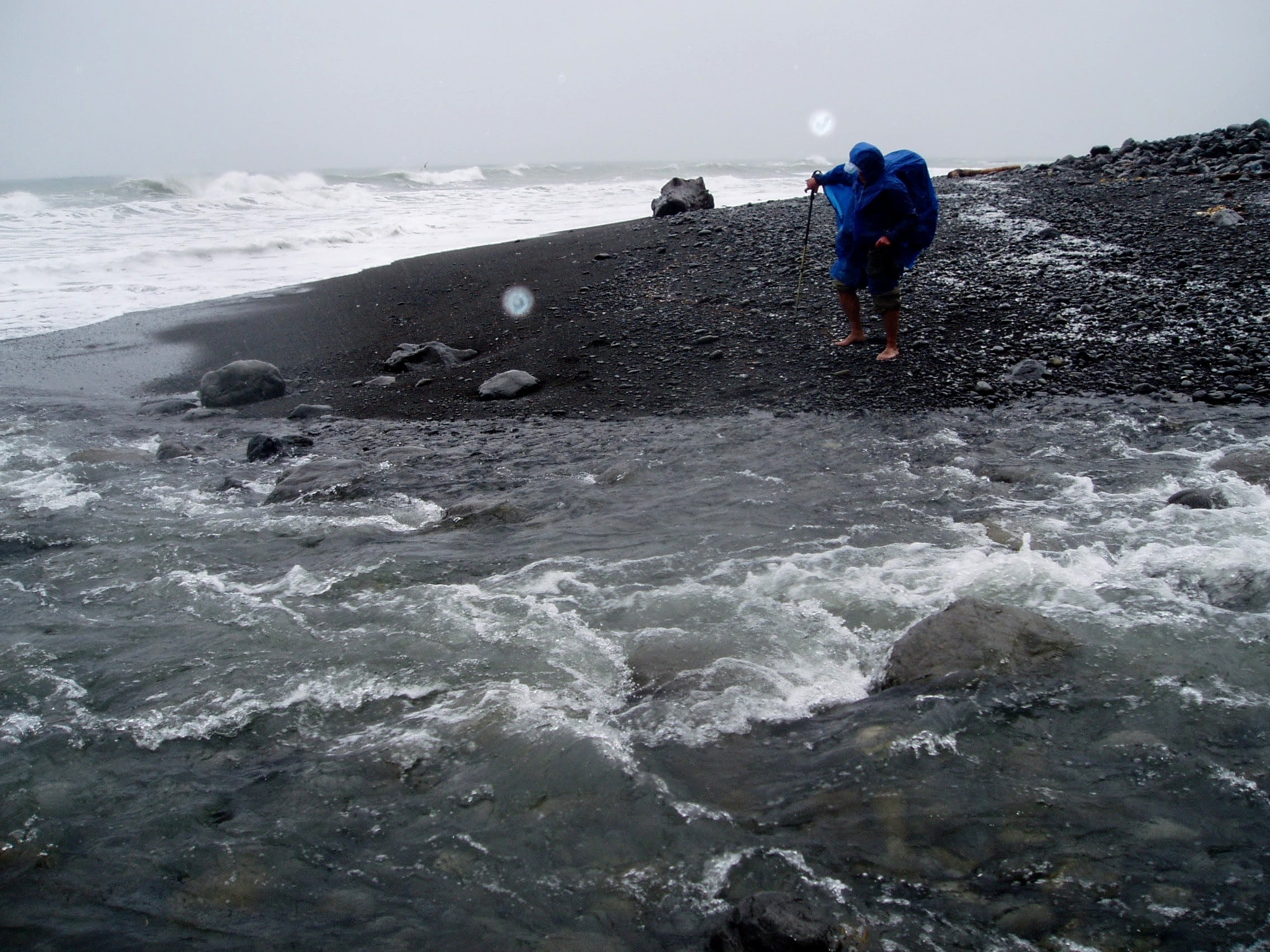 During this spring trip to California's Lost Coast, violent coastal storms made for cold hiking, but high wind gusts made river crossings and low-tide scrambling around the rocky headlands rather precarious.
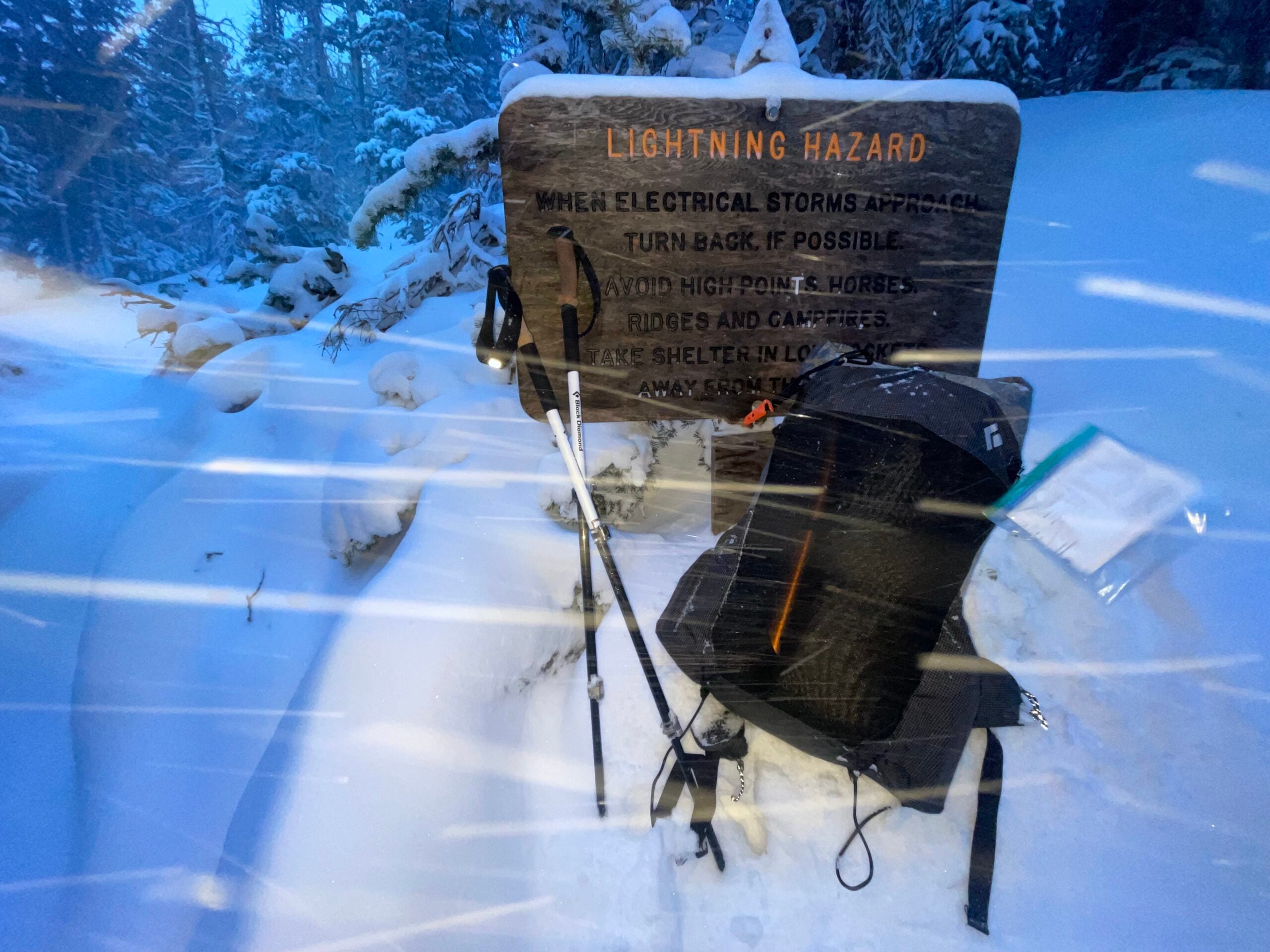 This is the warning sign just below the treeline en route to the tundra plateau leading to Long's Peak (CO). In addition to lightning hazards, the location beyond this sign is famous for violent winds and extreme exposure.
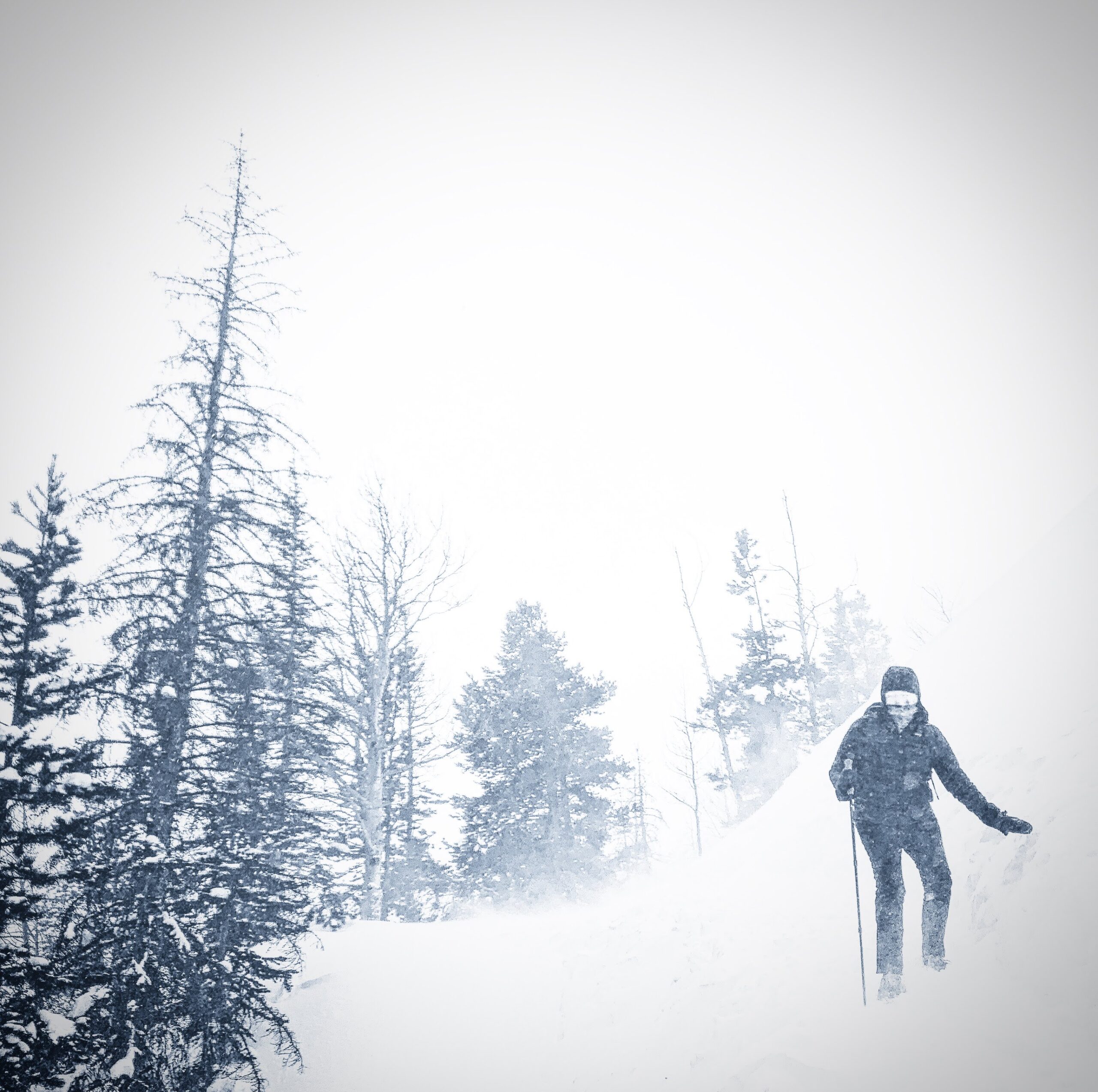 High winds can knock hikers off balance, a problematic outcome when traversing steep slopes, especially in winter.
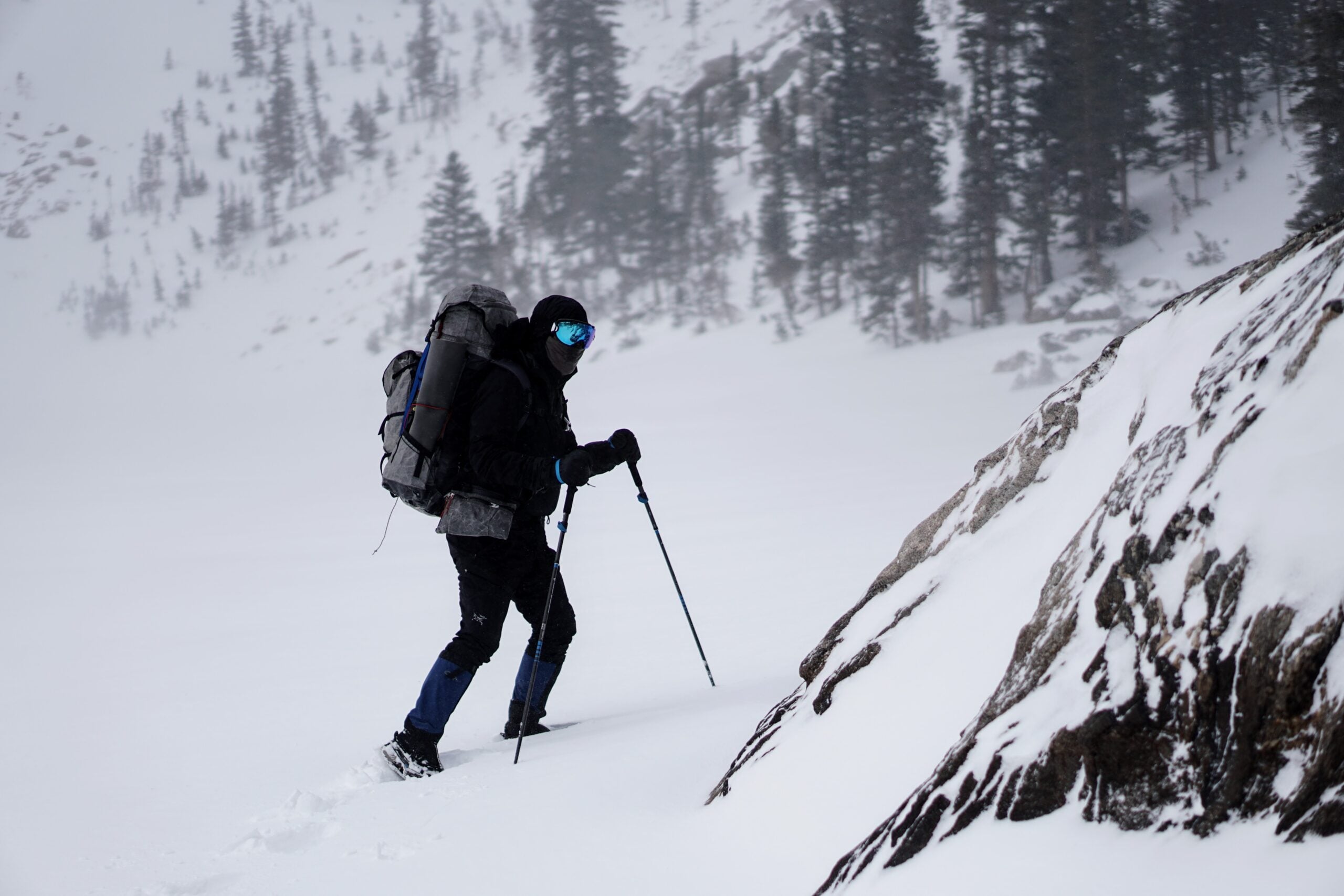 In addition to maintaining balance, high winds in exposed alpine areas, when combined with cold temperatures and precipitation, amplify risk significantly.
3. Extra stakes and guylines are a safety item, not pack weight to cut.
I’m all for cutting weight and lightening my backpack, but when I know I’m heading into a windy environment, especially in the mountains, there are a few cases where I appreciate extra ounces: a mountain-worthy shell jacket (article, podcast) and ski goggles in wintry weather are two examples.
And like most hikers, I invest inordinate amounts of time trying to decide which ultralight shelter is more wind-worthy than another.
In spite of advances in materials and intriguing trekking-pole tent designs that claim to be stormworthy, I’ve learned that ultralight still means ultralight, and an ultralight shelter is a risky proposition in high winds. Aside from flapping and buffeting, storms have a way of humbling you if weight savings is your main goal.
I’ve come to trust single-pole pyramids for storms more than any other type of ultralight shelter. They enable symmetrical tensioning around a single structural component, allowing for high panel tension in a low-profile design.
And one area I do not skimp on – stakes and guylines.
Long stakes with a large diameter provide the most holding power, of course. However, long stakes can be difficult to place in rocky alpine soils. I like to carry enough stakes to double up if needed. Two six-inch stakes can be driven into the ground in series or stacked to improve holding power. I use this strategy for stakeout points that require very high tension forces. On my pyramids, that’s usually the four corners and the vestibule for hexagonal mid layouts.
Use additional guylines to create lines of tension that effectively split large fabric panels into a bunch of smaller ones. The net effect is that wind forces acting on a fabric panel distribute tension more evenly across the panel, which places less stress on each stake-out point. Ultralight tents rarely fail in high winds because of fabric or seam failure – they fail because too much wind force is being transferred from unsupported fabric panels to the stake-out points, pulling the stakes out.
Lesson #3: How many stakes should you bring? Determine the minimum number required to secure your shelter’s main stakeout points in a light breeze, then double that and add one additional lightweight stake for 4 to 6 perimeter guylines for storm security.
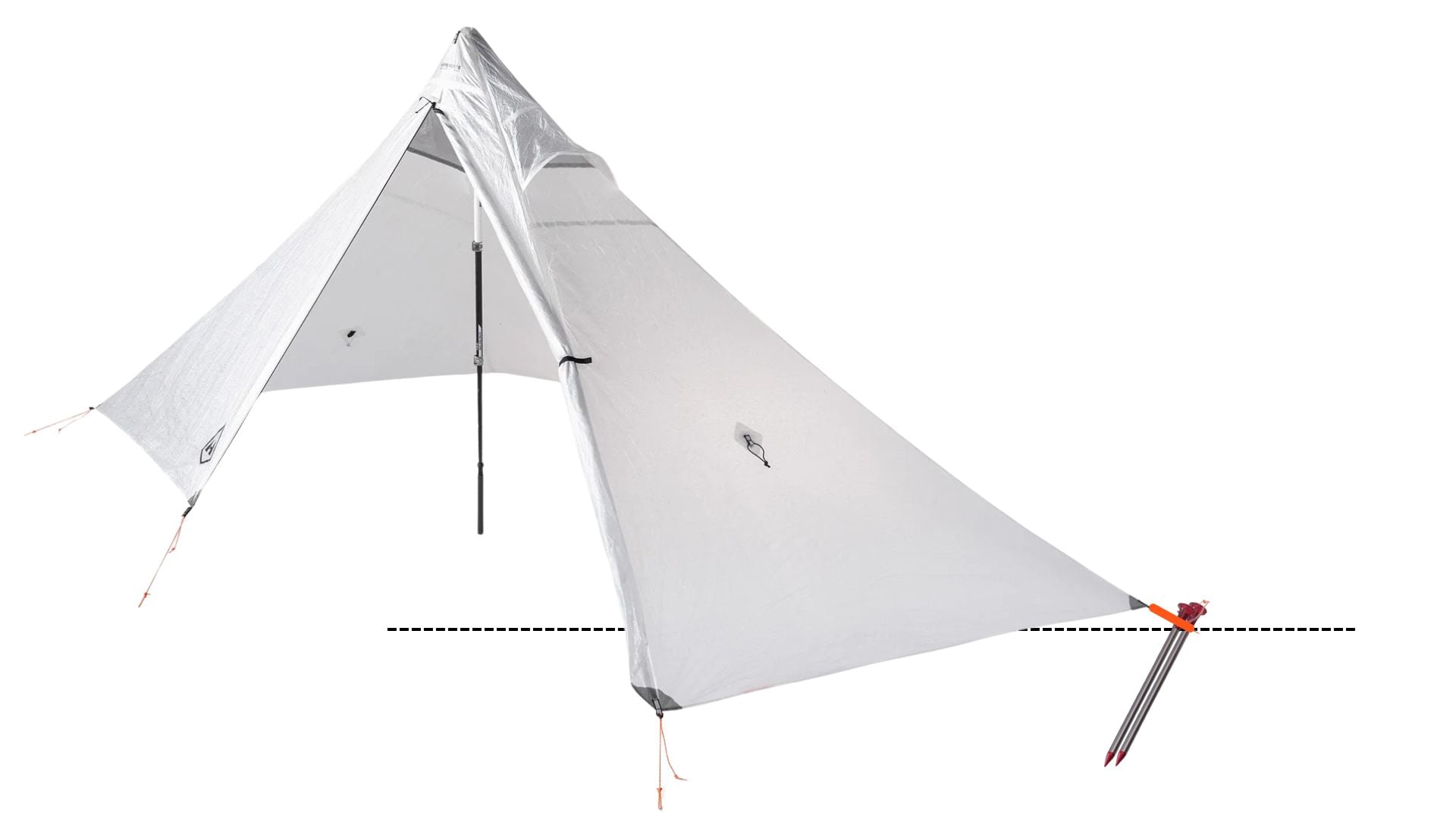 Two stakes can be placed next to each other for additional holding power when placement of long stakes is impractical (e.g., rocky ground).
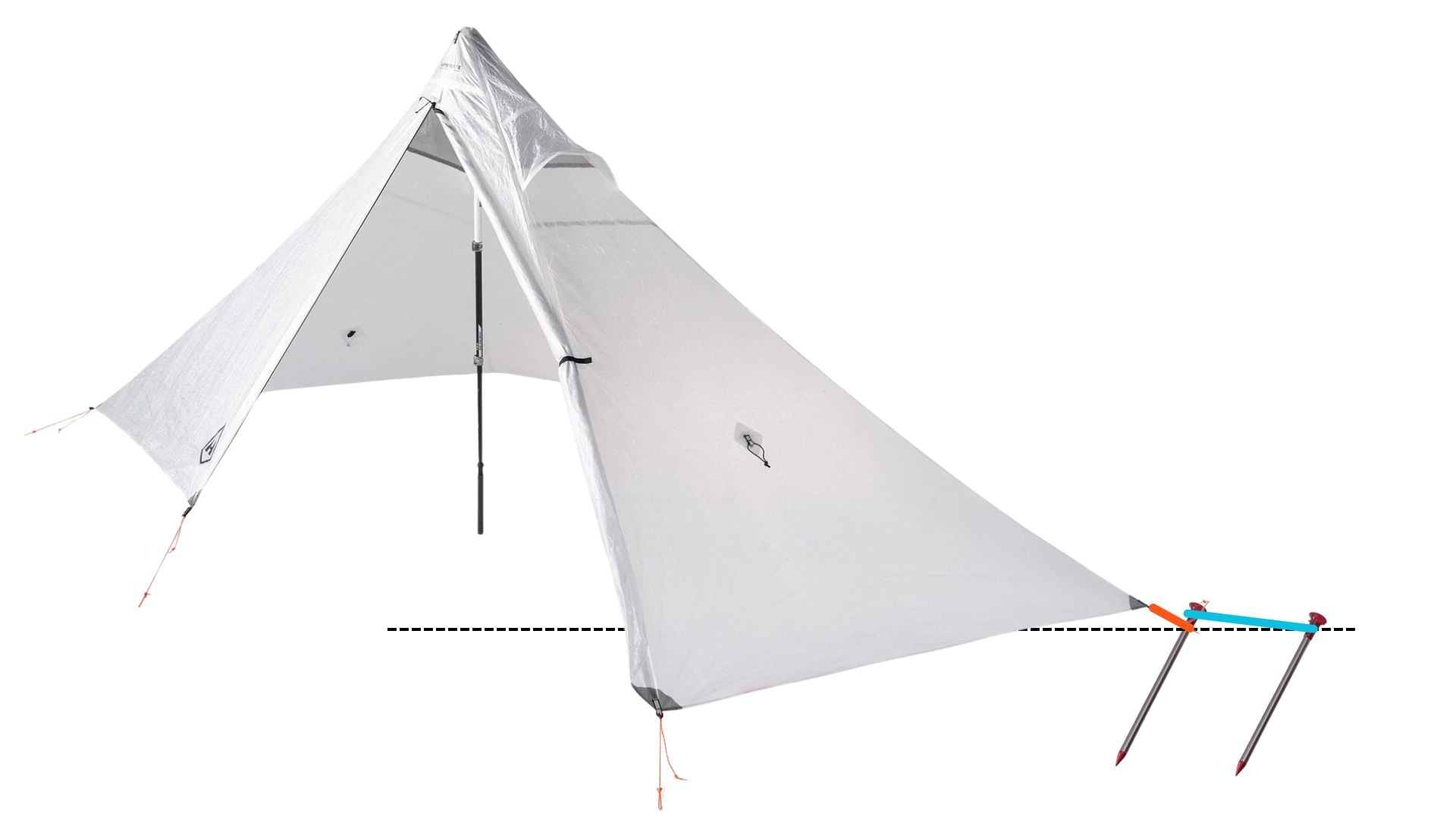 Two stakes can be placed in series using a short loop of cordage. The rear stake helps relieve high tension (pull-out) forces on the front stake caused by high wind loading on shelter fabric panels.
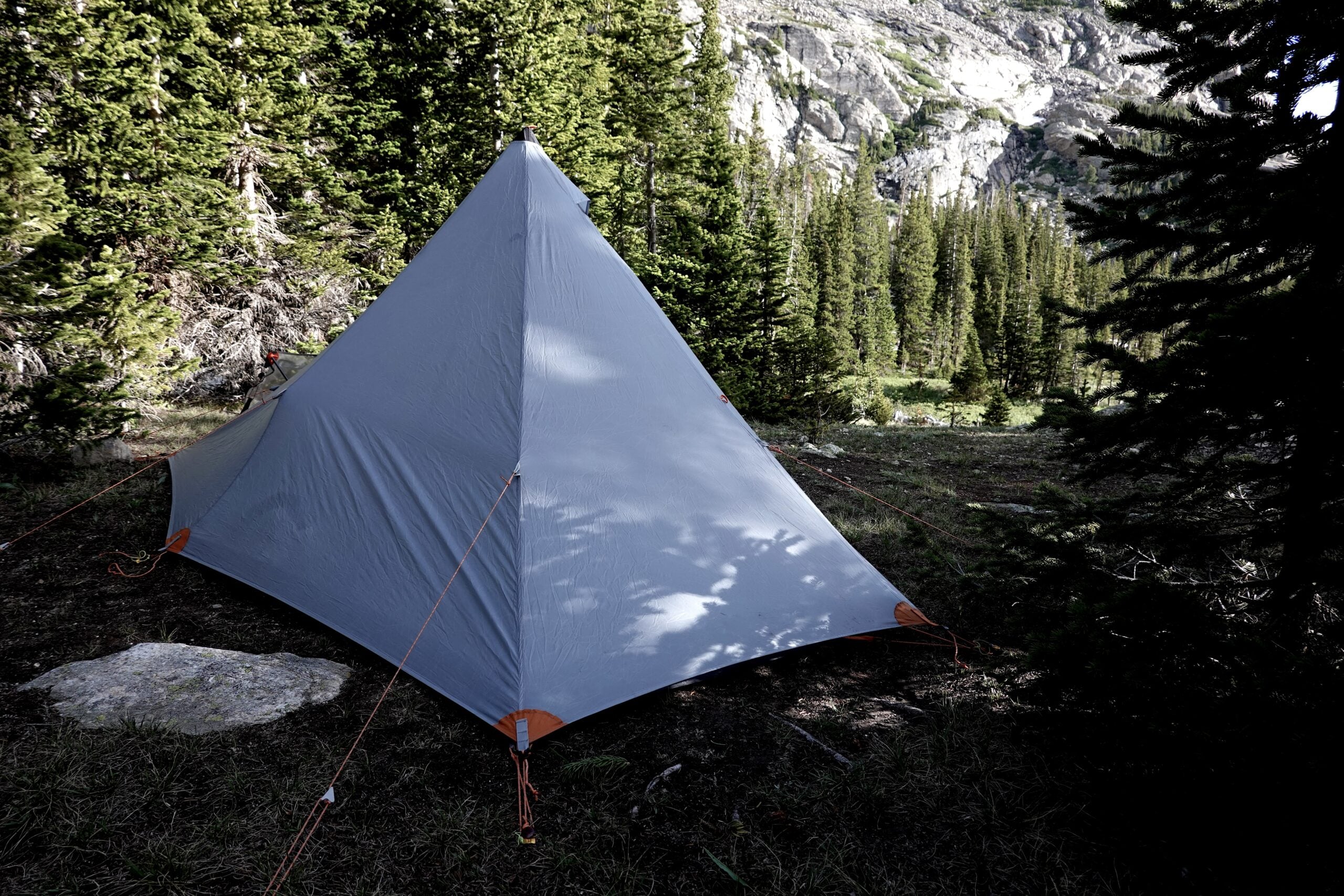 During the windy trip referenced at the beginning of this article, I experienced gusts exceeding 50 mph in the Argali Owyhee 1P, using one long (9") tubular stake for the vestibule, doubled stakes for the corners (four 6" V-channel behind four 6" tubular), one 6" tubular for the rear long mid-edge, and five ultralight titanium stakes for perimeter guylines.
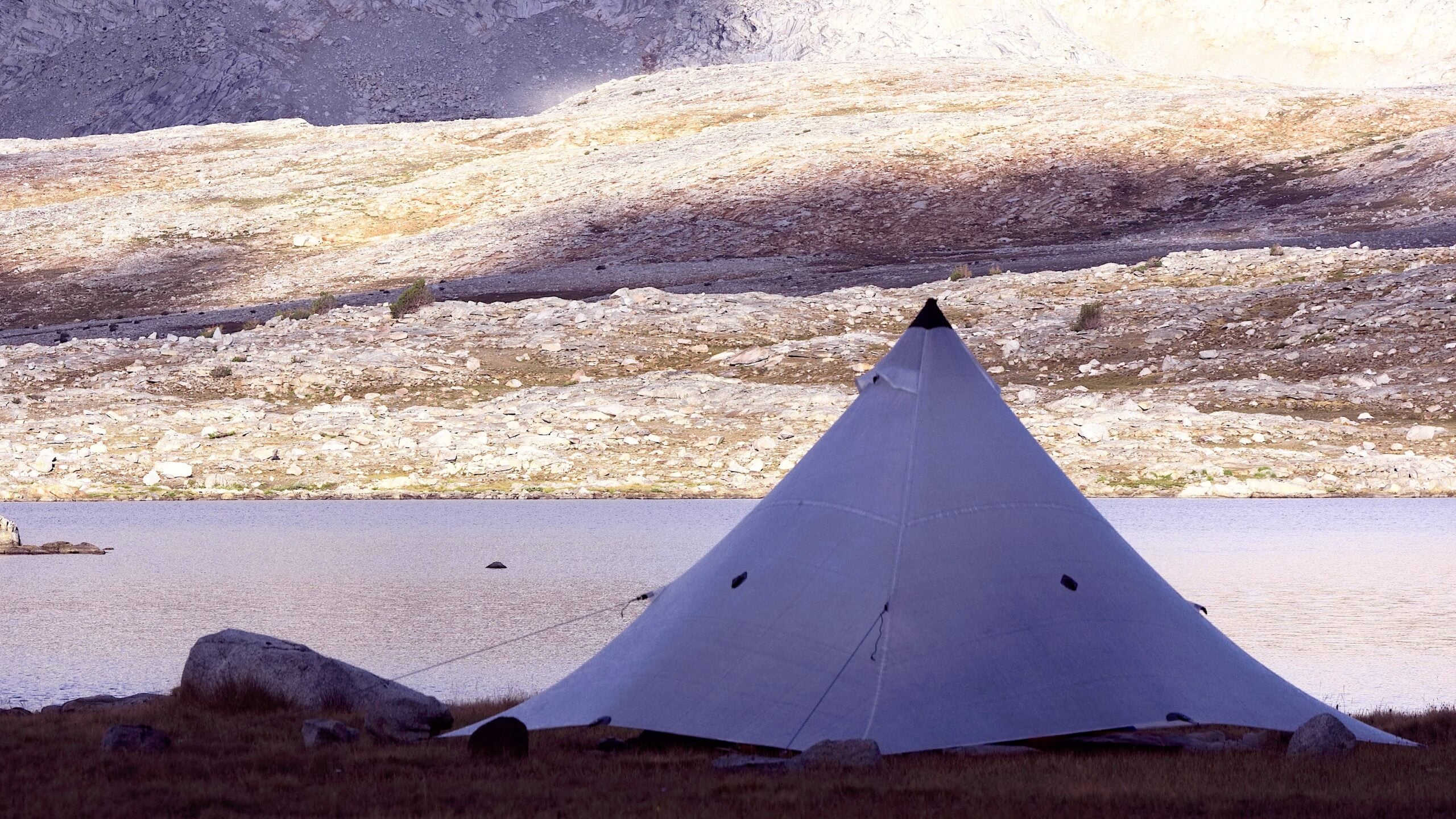 Even in the summer, we don't skimp on guylines, especially for larger shelters more prone to wind instability, like this Hyperlite Mountain Gear Ultamid 4.
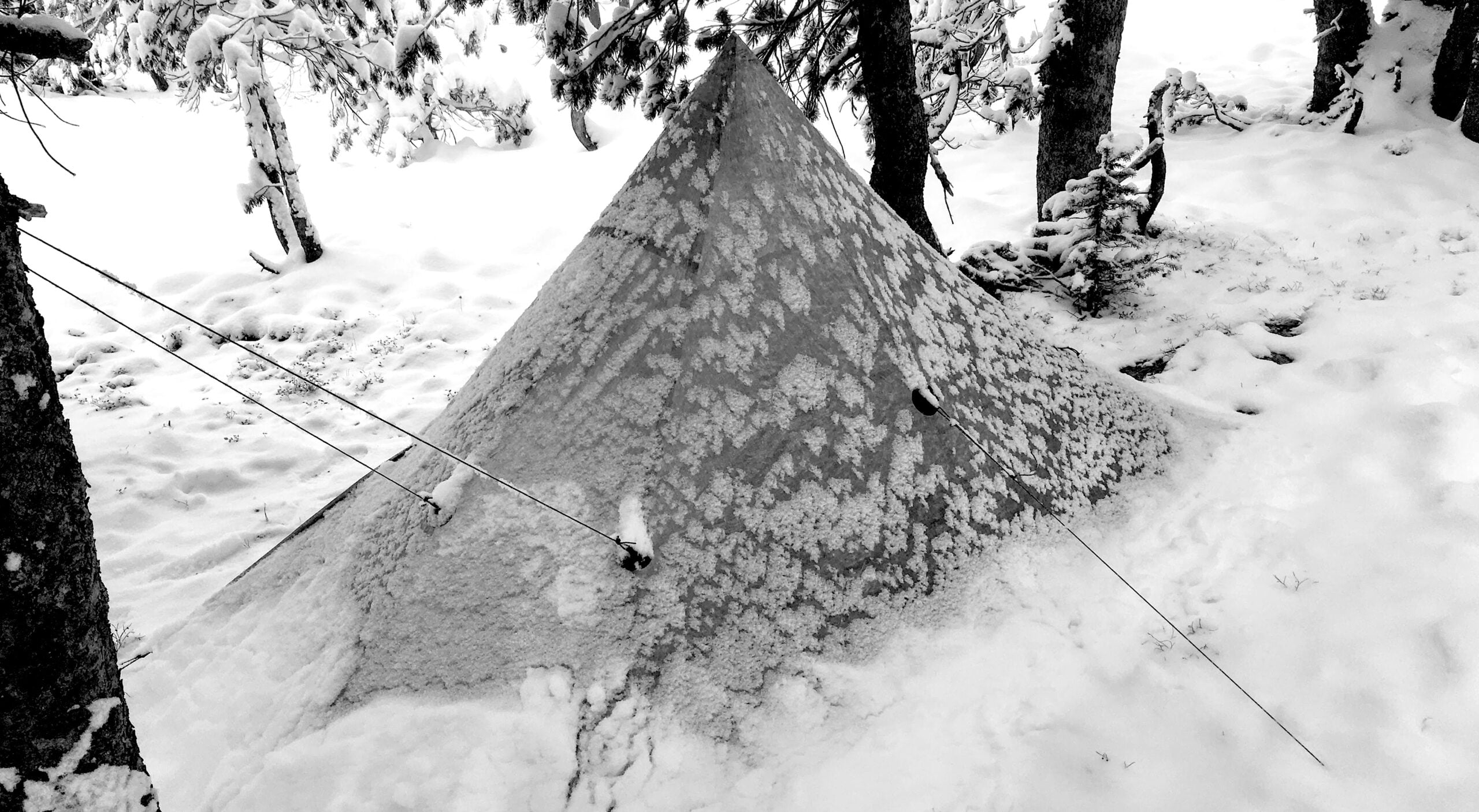 In addition to wind stability, extra guylines and more panel tension improves snow loading.
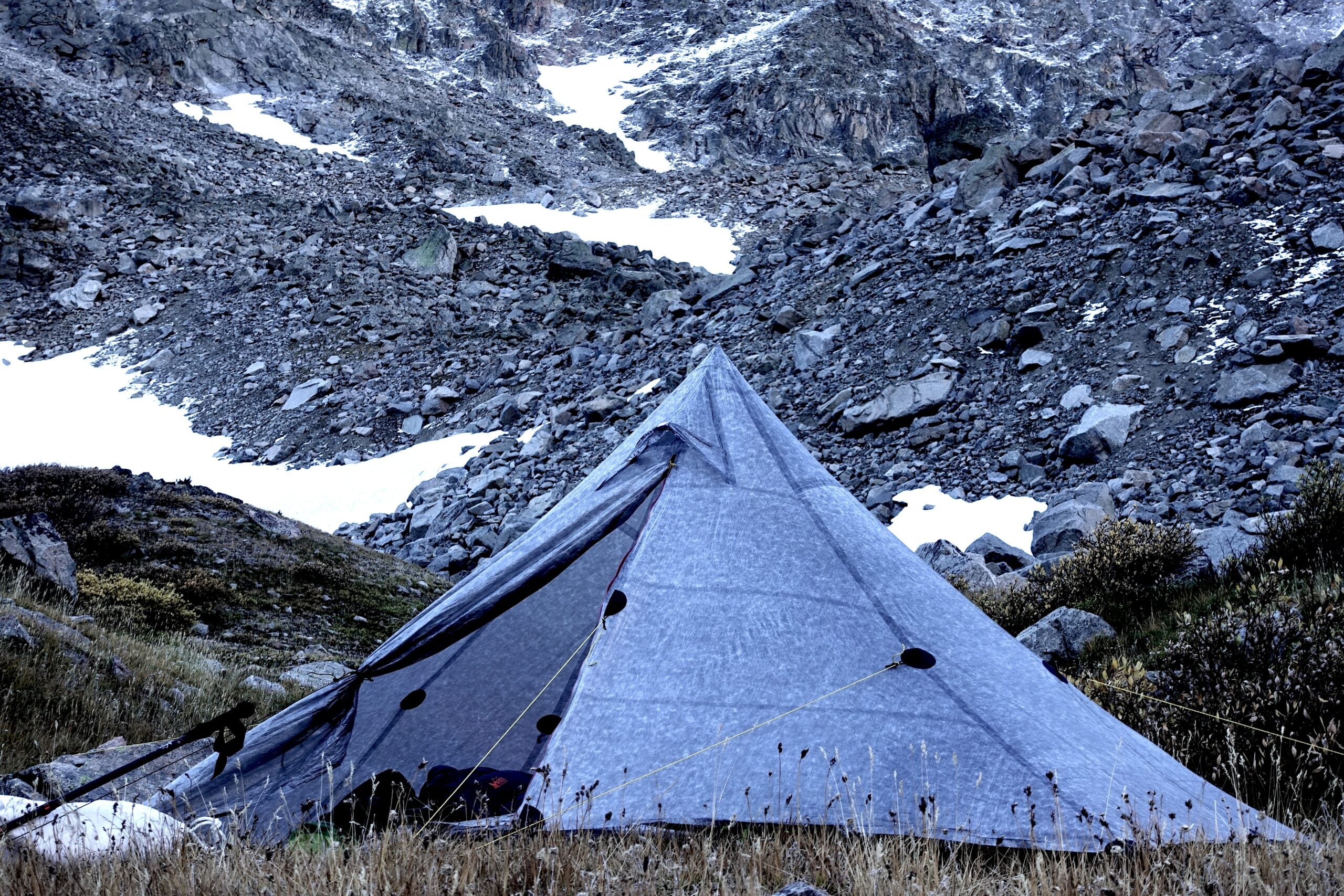 Locus Gear Khufu DCF-B above the treeline, Absaroka-Beartooth Wilderness, Montana.
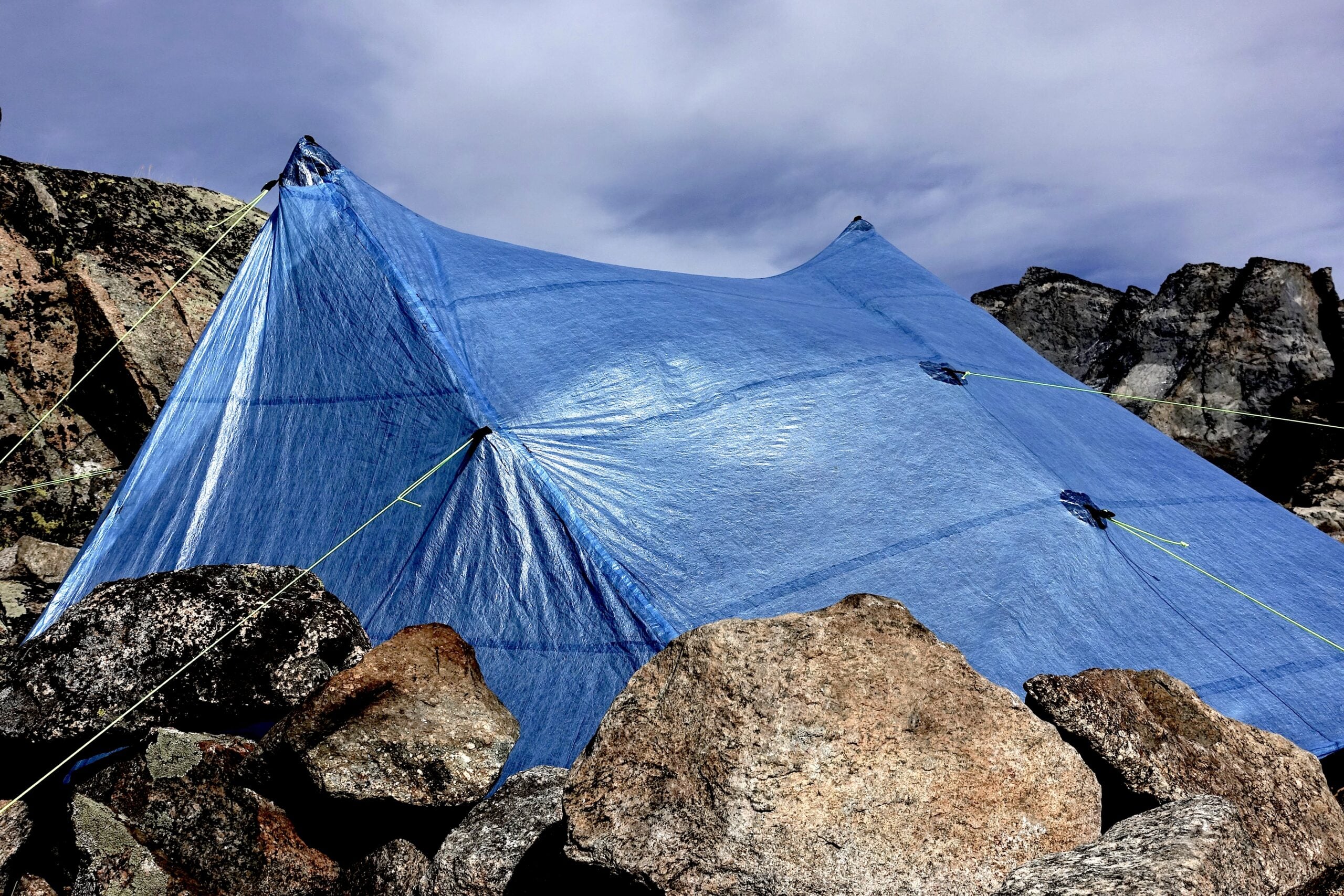 Dual-trekking pole tents like this ZPacks Duplex are not great options for above-the-treeline use in stormy weather, but do what you can and don't ignore the utility of extra guylines to help stabilize in high winds.
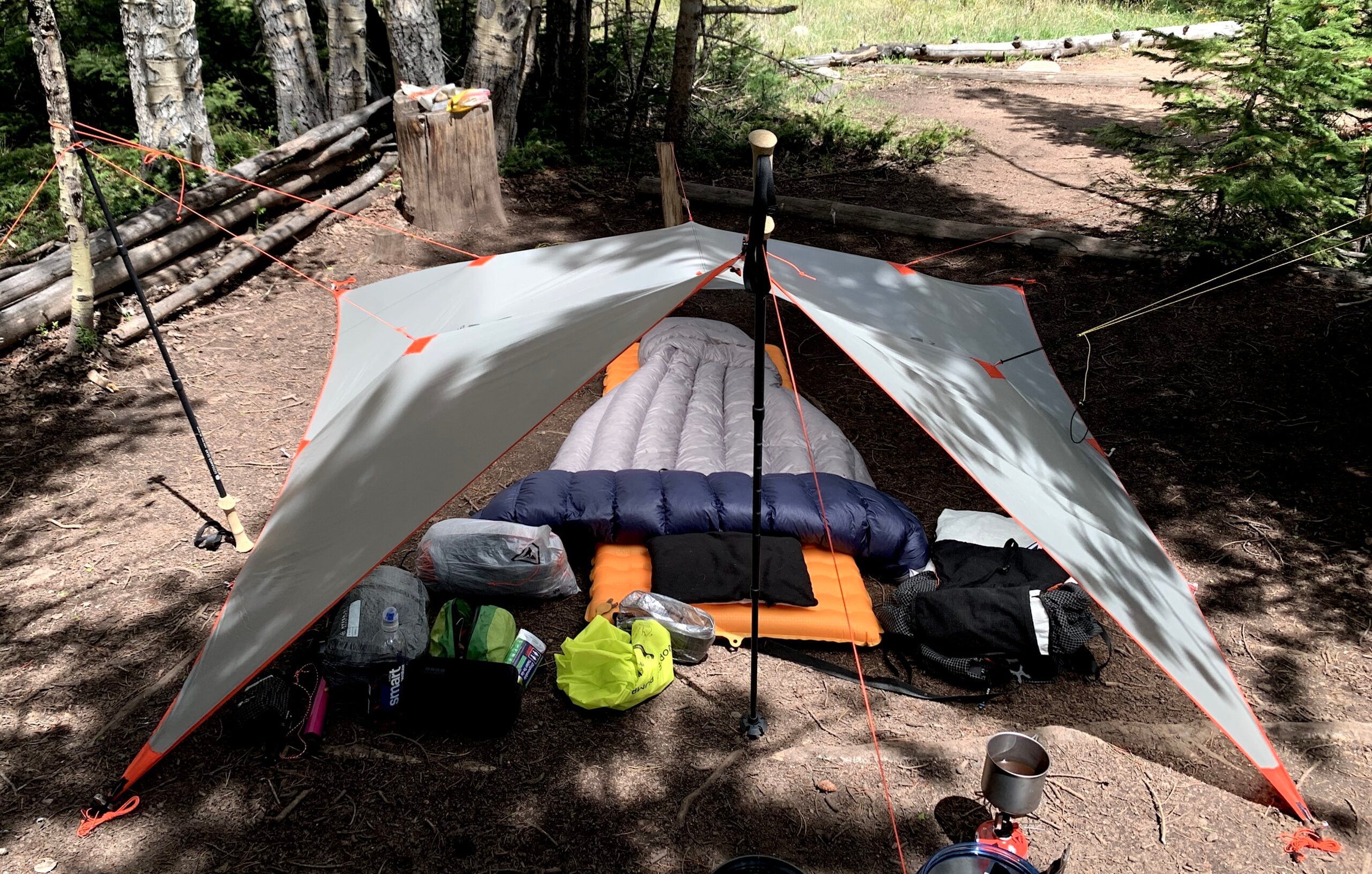 Guylines around tarp perimeter and along side panels improve panel tension, wind stability, rain shedding, snow loading, and interior livability.
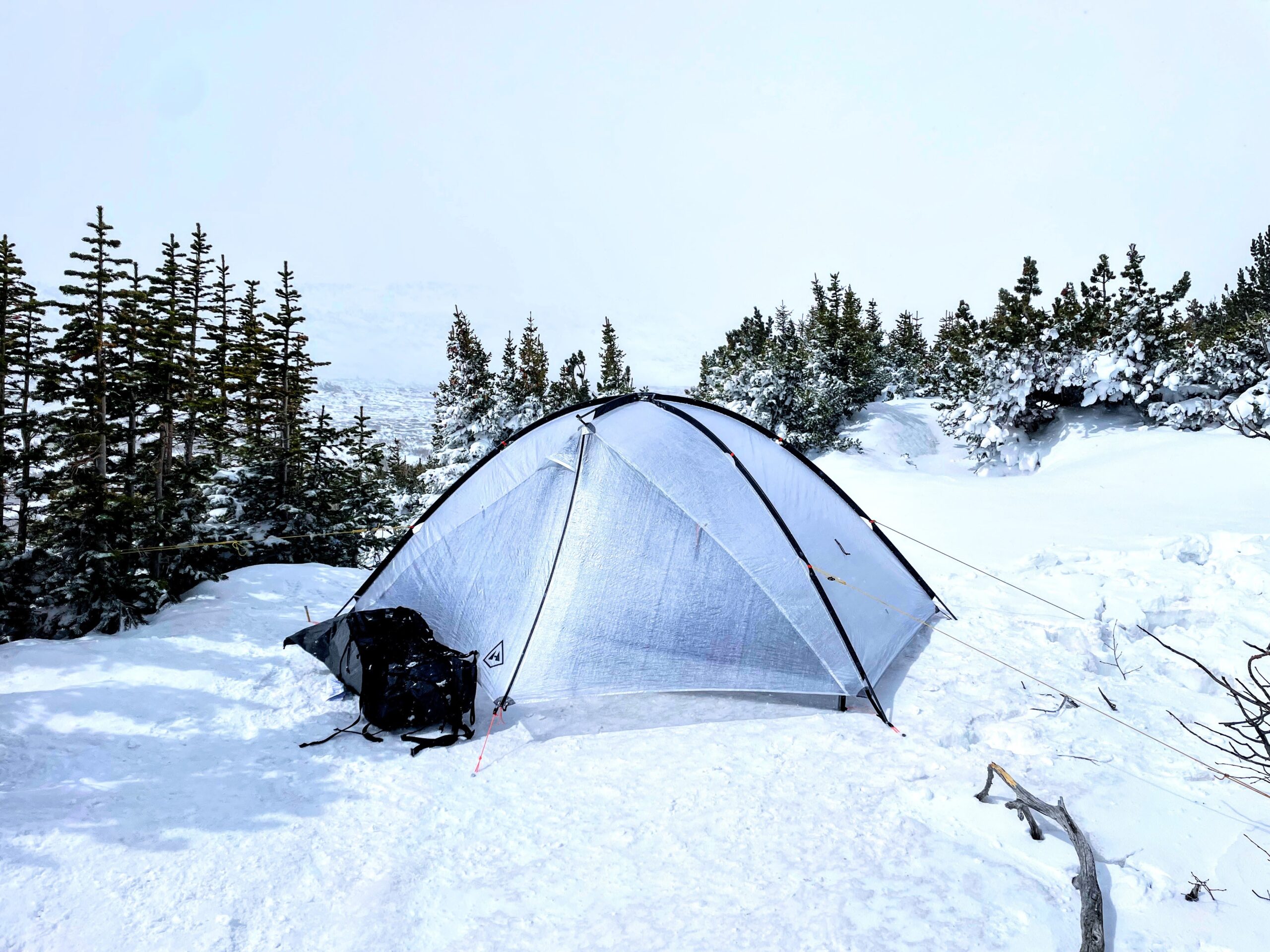 Guylines attached directly to arch poles (at about 1/3 height from the ground surface) are very effective for improving the stability of curved-pole shelters. It takes some practice to get the angles right so forces are properly opposing in the case of swirling winds, so you can improve rotational resistance of the pole planes.
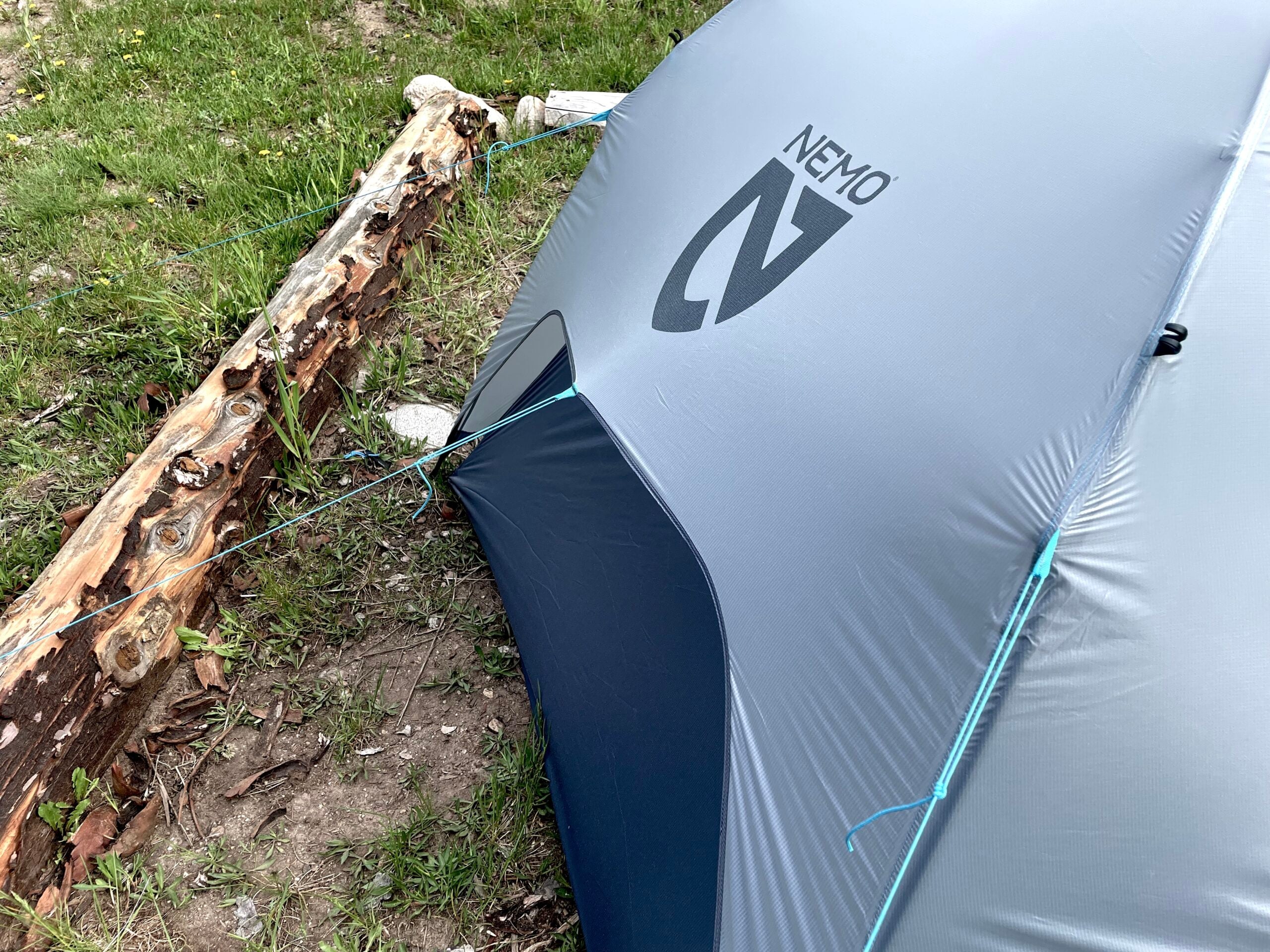 A tent with curved poles, instead of trekking poles, cannot be assumed to be "more stable". Modern hub and pole shelters like this Nemo Hornet Elite are notoriously unstable without the use of guylines.
Closing Thoughts
A few other things I find valuable when camping in the wind:
- Earplugs help me sleep when wind or shelter noise is loud. I’m also a fan of L-theanine for storm anxiety and melatonin, which helps me bank deep sleep early in the night. See naturopathic sleep aids for backcountry use to learn more.
- In high winds in the desert, in river corridors, or in alpine areas, blowing dust and dirt can levy a pretty healthy histamine response in most people. Consider a mild dose of diphenhydramine hydrochloride (e.g., Benadryl), an antihistamine that also improves deep sleep.
- In very stormy environments, where there’s a real chance of needing to wake up in the middle of the night to restake your shelter, consider going to bed wearing storm clothes. Trying to wrangle yourself into them with a collapsed shelter flapping in your face adds a layer of psychological complexity. Also, know where your headlamp is – you’ll need it to search for the stakes that pulled out.
- Using trees as a windbreak is a good protection strategy, but consider the consequences if the wind changes direction, and be sure to survey the area for tree-falling risk.


Discussion
Become a member to post in the forums.
Companion forum thread to: Field notes: backcountry camping in wind
High winds increase risk and planning complexity for backpackers. Deadfall obstacles create delays and add effort. High winds can impact balance and stability while hiking off-trail in exposed terrain. Ultralight shelters are notorious for their tent-stake failures in storms, which require a different strategy for stakes and guylines. This dispatch frames these challenges in the context of the author’s recent Colorado high-country overnight to identify three key lessons from the field about how to thrive in windy weather.
Hiking in high winds is something I’ve seen several times on the PCT and CDT. Gusts push you sideways, or even tries to rotate you as it pushes on your backpack. If the winds are bad enough, when you feel the gust hit, you have to stop and brace yourself until it subsides or you might end up pushed off the trail. I think my worst experience hiking was on the CDT near Lincoln, MT (MT 200) where I had to stop every minute or so when a gust hit to brace. I have hiked and heard a tree or two fall down nearby, but never several, but I’ve never been in a recent burn zone in high winds which would not a good place to be. Trying to wear a hat is a fool’s game. Even if the straps will keep it on, the brim will be flapping and pushed up where it offers no sun protection.
Camping in wind is one of the reasons I’ve always favored tarps. Rectangular ones can be pitched wide and low to ground, though you’ll have to crawl in. Pyramid shaped ones do shed wind but not as well as going almost flat. I’ve used both and in recent years have favored the pyramid ones more due to the ease to setup (currently a MLD Cricket). I’ve never used the long stakes as usually piling on a large rock or several small ones (or a log) will keep the stakes from pulling out, even in sand. Finding a sheltered site in a small group of live trees, in tall brush, or the leeward side of a boulder can shelter you from the worst of the wind. I’ve never chosen to camp in an exposed spot above treeline where I couldn’t find something to hold the stakes in. And due to thunderstorms, I rarely chose to camp in such an exposed environment to begin with. Better to take a side trail or easy scramble down to a lower spot that is more sheltered. On the CDT in Colorado, I went down almost a mile on a steep ATV side trail to get out of the strong wind and it was a good thing given I had an overnight thunderstorm that started with a heavy downpour, went to hail, and then several inches of snow during the night.
I was on what I expected to be a pretty routine 3 day trip when I hit a 10km stretch of extensive blowdown. Turns out a storm that went through 2 days before had caused extensive damage.
The mistake I made was doubling down to reach my target for the day. It was the only time I thought the next day was a complete write off, it was by far the hardest I had ever pushed myself. Lesson learned was I should have instead wild camped at even a marginal location instead of fighting the blowdown so hard. Change plans when needed and live to fight another day
Become a member to post in the forums.