


Emergency rain gear is an obscure product category. Are we talking about $2 plastic stadium ponchos, ultralight jackets, or something that can actually keep you alive while exposed for hours in an extended storm?
A 5- to 7-oz rain shell (the so-called ultralight rain jacket that we talk about so much in this community) can be a reasonable choice for trail hiking, mild temperatures, and short storms. In those settings, a very light 2- or 2.5-layer waterproof-breathable jacket may provide enough protection to keep moving and preserve warmth.
But is that philosophy extensible to more hostile environments – off-trail, cold temperatures, extended storms?
This is why I think mountain emergency rainwear is a different category than ultralight rainwear. Exposure to cold wind with rain or wet snow taxes the body’s ability to stay warm. Above treeline, you are more exposed. Compound this with multiple hours of exposure and we’re in a different environmental regime than we normally face while trail hiking. In addition, mountain travel often involves complex terrain – bushwhacking or scrambling – combined with more time spent standing still to scout routes and consult maps for navigating.
In this environment, my rain jacket no longer serves as a token ultralight layer that spends most of its time in the pack, waiting for a summer thunderstorm. In the mountains, my shell becomes a functional part of my survival system. That means it must serve different purposes and offer different performance benefits: durable waterproofness, total wind blocking, abrasion and puncture resistance, and head and face protection. And of course, breathable enough to deal with interior moisture when I have to really button (and zip) it up.
I’ve spent many days like this in the mountains suffering with ultralight rain jackets that were not up to this task. Sometimes, thin fabrics and tiny zippers and minimalist hoods just aren’t worth it.
For me, “mountain minimalism” is not about carrying the lightest products. It is about carrying products that are as light as possible while giving you the confidence that they can perform if your safety depends on it. And I’ve been caught in enough mountain storms to know that often, safety requires movement through hostile environmental and terrain conditions.

Ultralight Rainwear vs. Mountain Rainwear
Ultralight rainwear is optimized for low probability, short-duration rain events. When packing for a summer hike on maintained trails, I ask: “What is the lightest shell that provides enough protection if a summer thunderstorm rolls through?”
I ask a different question when I’m leaving the trail and heading higher into mountainous terrain: “What is the lightest shell that will still work in extreme winds, freezing rain or snow, and movement must continue for hours?”
I’m making a case that a rain jacket for the mountains requires a different design spec.
A 3-layer waterproof-breathable laminate is better suited to this role than most 2-layer or 2.5-layer constructions. A 3-layer laminate combines a face fabric, a waterproof-breathable membrane, and an inner textile backer. The face fabric provides abrasion resistance. The membrane provides the waterproof barrier. The backer helps disperse internal condensation, which improves moisture management.
This does not mean every 3-layer jacket is durable enough, or that every 2.5-layer jacket is inadequate. Fiber, yarn, weave, coating, laminate quality, patterning – these are all important. But for a mountain minimalist shell, a 20D nylon face fabric is a practical lower threshold – it provides a stiff enough hand to resist high winds (which evacuates warm air from your clothing due to wind compression) and is durable enough to resist frequent abrasion against rock and gnarly brush.
The Mountain Minimalist Shell
The ideal mountain minimalist rain jacket occupies the space between ultralight trail shells and full alpine hardshells. The sweet spot seems to be in the 8- to 11-ounce range – a 20D face fabric in a 3-layer construction, with minimal but important features:
- Helmet-compatible hood with a structured brim. Head and face protection are essential in wind-driven rain. Even without a helmet, the added volume and adjustment allow the hood to seal over a cap or insulation layer without collapsing into the face.
- One chest pocket only. It remains accessible under the pack straps and needs to hold only essential gear: my phone (maps), two packets of energy gel, and a spot to stash one or both gloves if I need my bare hands to work another piece of gear.
- An adjustable waist hem. Provides both sealing and ventilation.
- Waterproof zippers. I don’t want to fiddle around with storm flaps.
- RECCO reflector. Five years ago, this was a secondary feature. Today, it provides an essential safety margin, since most search-and-rescue teams in mountain environments are now equipped with RECCO rescue systems.
I’m a fan of pit zips for backpacking rainwear, but in this case, I see them as optional. They can be useful in general-purpose shells, but they add weight, stiffness, and complexity. In a mountain minimalist shell, I manage ventilation primarily through the front zipper, waist hem, hood, layering adjustments, and pace.
Representative Products
The Patagonia M10 Anorak, Arc’teryx Alpha SL Jacket, and Helly Hansen Odin Infinity Minimalist Rain Jacket illustrate this emerging category: lightweight, alpine-capable rain shells that are lighter than most mainstream rain jackets, with the durability and features required for mountain storm protection.
Important: these jackets are not “best rain jacket” candidates in a generic sense. They are examples of a narrower niche: lightweight rain shells with high levels of abrasion resistance, durable waterproofness, and design simplicity.
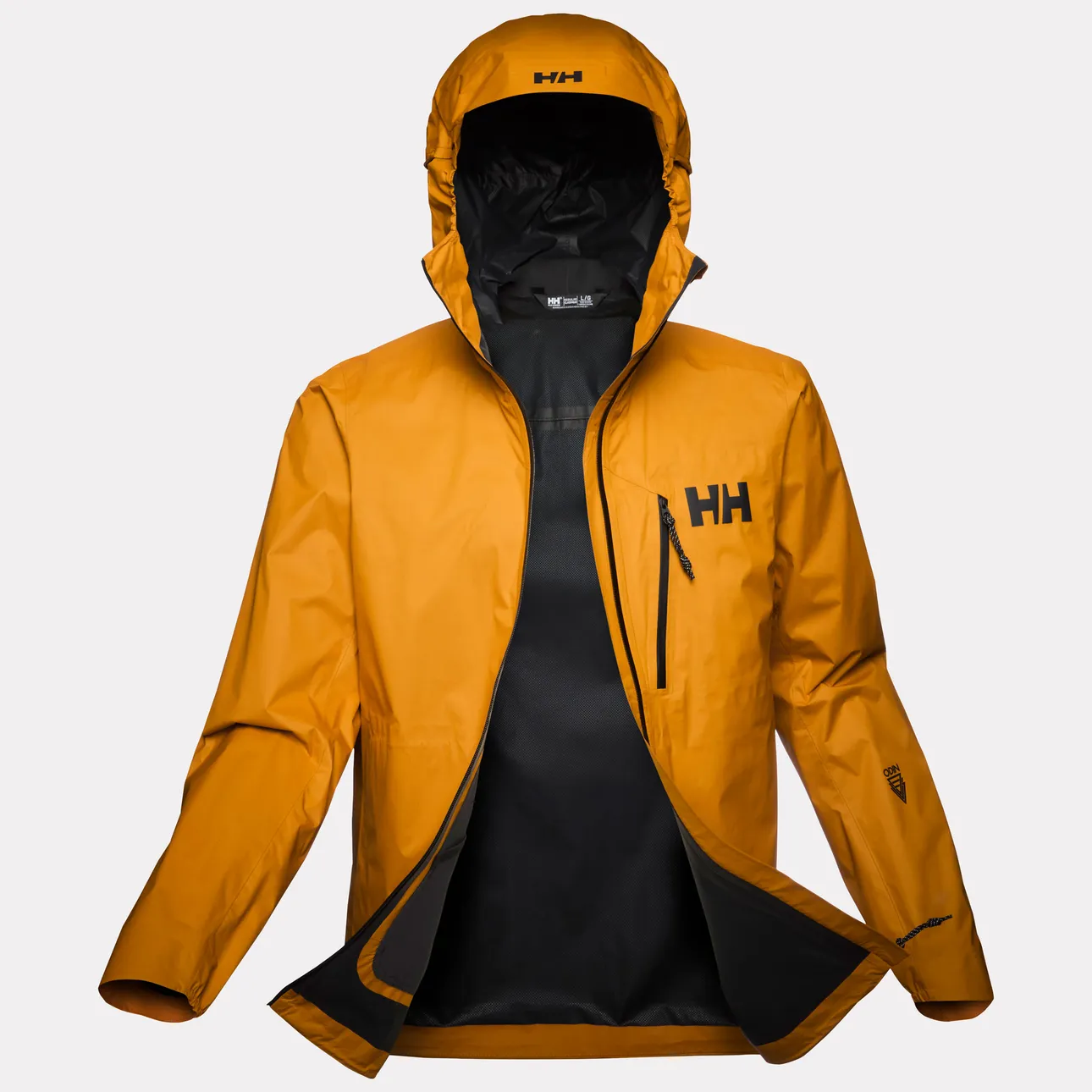
The Men's Odin Infinity Minimalist Jacket is a 250 g 3.5-layer shell jacket using HELLY TECH PROFESSIONAL and LIFA INFINITY waterproof-breathable construction, with fully seam-sealed 2-way stretch fabric, helmet-compatible adjustable hood, RECCO reflector, zippered chest pocket, adjustable hem, and packable pocket.

The Arc'teryx Alpha SL Jacket is an alpine shell built with GORE-TEX PRO ePE and 20D Hadron face fabric, with a fully adjustable helmet-compatible StormHood, packable minimalist construction, PFAS-free membrane, and low-profile RECCO reflector. 232 g (8.2 ounces).
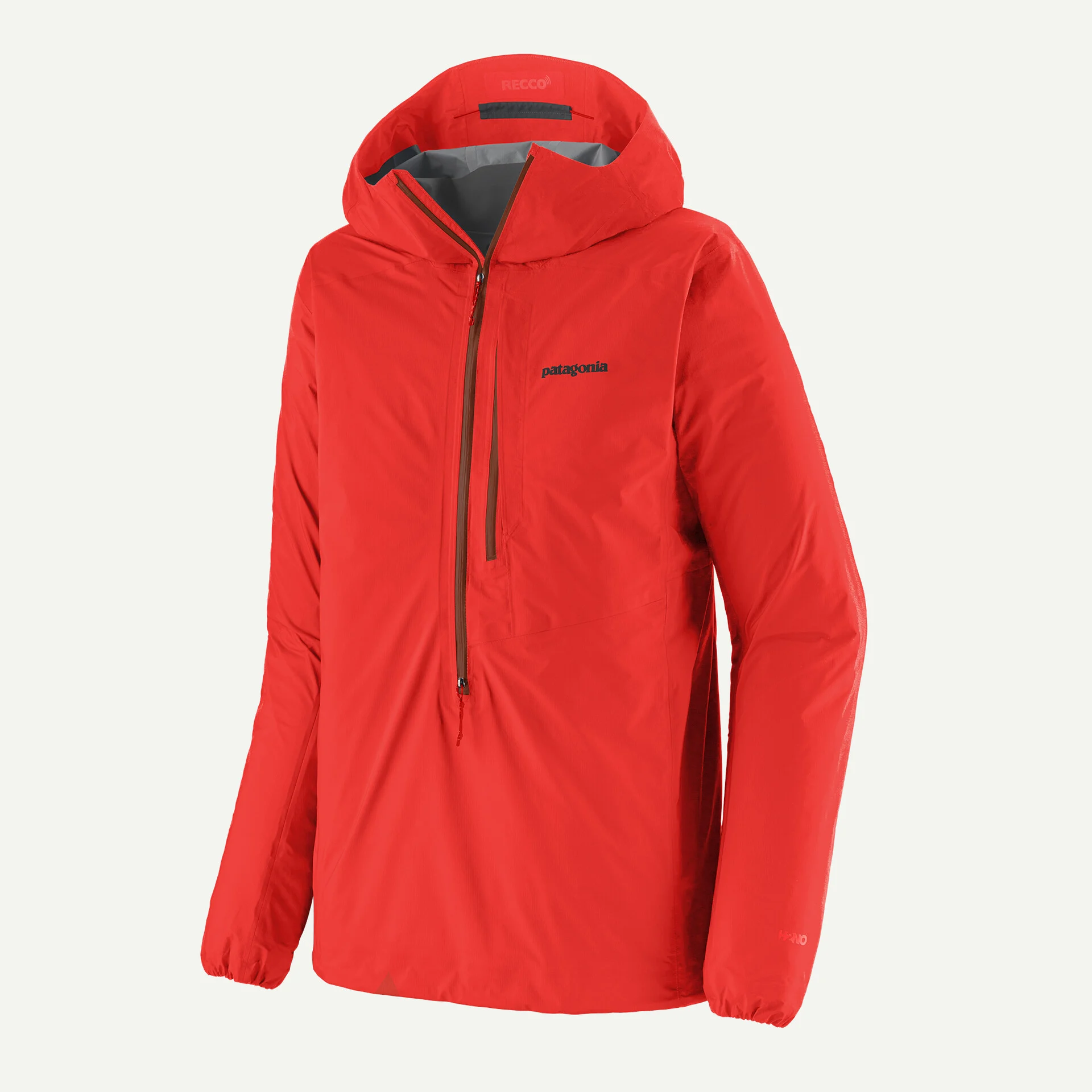
The Patagonia Men’s M10 Anorak is a slim-fit 3-layer waterproof alpine shell using a 20-denier recycled nylon ripstop face, RECCO reflector, Xpore nanoporous membrane, jersey backer, waterproof two-way front zipper, helmet-compatible hood, self-stuffing chest pocket, and 300 g (10.58 oz) weight.
Parting Thoughts
Minimalism is not only about weight reduction. In mountain environments, it is the disciplined selection of features and materials that maintain protection and durability, or otherwise keep you moving in spite of weather and terrain.
An ultralight rain jacket may be the correct tool for most of your hiking trips, especially when traveling below the treeline on maintained trails, in the midst of stable weather windows, and when bailout or retreat or settling in to camp are straightforward and reliable options.
A mountain minimalist shell should be weather-protective (but not overbuilt), simple (but not bloated with features), and light (but not fragile).


Discussion
Become a member to post in the forums.
Companion forum thread to: Rain jackets for mountain minimalism
Ultralight rain jackets are useful, but not universally applicable in all contexts. Here, the author compares ultralight rainwear with mountain rainwear and defines the “mountain minimalist” shell: a simple, 8- to 11-oz, 3-layer jacket built for prolonged exposure, abrasion, and really bad weather without unnecessary features.
I’ll add the option I went with, a black diamond storyline stretch. 10oz in large. Generous cut, pit zips, helmet ready hood, adjustable cuffs
I’m intrigued that Helly Hansen claims their Lifa Infinity Pro tech, available in their Odin 9 Worlds Infinity Shell jacket, does not require any rejuvenating of DWR on the face fabric. They claim the face fabric is hydrophobic without needing a DWR chemical.
it sounds like that shell is seriously heavy duty (not light). And perhaps breathability suffers as well.
I live in New Zealand,
Ultralight hiking gear isnt big here, the weather is one of the reasons. when it rains it can rain in massive amounts, up to tens of inches in a rain sttorm is not uncommon and its always cold when it rains, hypothermia is common, and still happens in summer. thin raincoats all wet out and dont retain much heat, if light rain or showers is forecast and the weather isnt too cold , I will take an ultralight jacket, but if you dont need it on for along time , venting doesnt matter as much… if its going to be raining for longer periods, i’ll switch to a vented heavier rainshell. i’ve never had an ultrallght shell with venting. they are hard to find in NZ and never felt the need to buy online from overseas yet..
In the PNW I have found Patagonia Torrentshell 3L jacket and pants are fantastic in winter, late fall, early spring. I have been just dumped on with cold windy rain-they really shined. Summer I use Lightheartgear silnylon jacket and pants. I have been toying with a poncho but just don’t think they will do well with high winds or if conditions really get bad in the higher elevations in summer.
Thank you Ryan. I was recently bicycling for several days in cold blowing rain and ended up putting a $10 super lite Frogg Toggs rain suit over my older Marmot gear and it made all the difference. Of course neither of those options can hold up to bushwacking. I have HH Impertech for that-but it is heavier as you know. Movement helps, but when cold rain or wet snow penetrates to the inside layers hypothermia is a real issue not to be ignored.
I was strongly agreeing until the 5 point list. No, no, no to helmet compatible hoods! They blow off as soon as you turn into the wind. Also, the hard adjusters found at the back of hoods these days mean I can’t sleep with the hood up anymore. I also hate Napoleon pockets. Symmetry appeals visually to me but, if I have 2 chest pockets, I use both. As far as waist adjustment is concerned, it’s a feature and features mean taping. On the jackets I’ve used, taping does not breathe. Back in the 1980s, when I was bagging Munros, rain fell for 21 days in a row. I ended up with nappy rash around my waist because of pooling sweat and condensation.
Also, waterproofs fit for Munro bagging in poor weather are very expensive. I use a cheaper windproof to take the rucksack’s abrasion. I used to swap jackets when rain started until Chris Townsend wrote that he puts his waterproof over his windproof. That’s what I do now. I agree with the sentiment of the article but it is possible to get away with using a delaminated waterproof if you have a showerproof windproof underneath.
I would hate all of these jackets, for one reason: they don’t cover the bum. For women in particular, this is a place that can lose a lot of heat. I’ve never understood why any rain jacket doesn’t cover the pelvic area, and if it doesn’t, it forces the use of rain pants, even in a short thunderstorm. No one wants wet undies! It does save time comparing rain gear; so few go below the waist that there are only a few to choose from. I won’t wear one that doesn’t, no matter what weather. I just think it’s a major design flaw.
yeah, jackets in general are too short. They should go down to your thighs at least
That was an issue for my wife. To keep things polite, what fit my rather straight build, didn’t work at all for my wife’s curvier figure.
I got lucky in that an eBay-purchased Patagonia Granite Crest worked really well for her. It does cover the hips/bum well. It’s roomy enough for layering or full movement. It’s slightly thinner face-fabric makes the jacket wear very well.
After some other trials, I settled on a Granite Crest myself, for a few other resasons. While it busts the 110z. target set-fourth in the original article, my men’s medium weighs in at 14.3 oz, including a recent DWR spray-down. :) I guess it’s not “lightweight” but it is a full-featured jacket, with bi-directional pit zips, 3-layer construction, etc… I wouldn’t call it a heavyweight, and it seems to check enough boxes that it could work 365 days a year. Though, I’ll have to check if I can squeeze a helmet under the hood…
I agree. But it is an American problem: Australian-made jackets have always been long, even back in the 1960s.

(SW Tasmania. Yes, my wife on the left. Oiled Japara no less.)
Cheers
Yeah, an American problem
The jacket on the right is pretty good (you?)
The jacket on the left could be a bit longer (your wife?)
Like in WWII – Germans had better (longer) coats, Americans had shorter coats.
But cowboys in fictional TV shows always had longer coats.
I told Luke ” make it long” and we decided on a number. Too short is too short, Too long is too long. Too long gets annoying and restricts air. I’m thinking a midriff with a high waisted mini skirt. It might work for rain gear too. Actually, more like a waist gator using a hook and loop system so it hangs underneath the coat, allowing better ventilation.
yeah, too long blows around in the wind too much.
It’s easier to shorten a jacket than lengthen it
I like it to at least cover the pants pockets. And some warmth around the bum, going back to AK.
My coat has an elastic around the waist to minimize blowing around in the wind.
The podcast on winter storm travel suggested the Beta SL was your go to. It didn’t even make this list, or any of the categories mentioned. Am I missing something?
I totally agree with the premise that much ultralight gear, rain gear in this case is not appropriate for serious mountain challenges. But in my experience, I would approach this a little differently. For me the single most important issue to address is wind. It makes the biggest difference. Sure, being soaking wet it bad, but if you have no wind and halfway decent insulation you will survive and function okay. But add wind to the situation, wind that penetrates, and it is a different story. And I have not found a breathable jacket, including one of the ones suggested above, truly wind proof. To date, for a truly light jacket that does the job, Antigravity’s rain jacket works well for me. Siliconized inside and out, double zipper sliders, huge pit zips, waist draw string and hood allow maximum ventilation. With large pits and because of its volume I can wear it as a poncho. Yes, sometimes I get damp and even wet in places from perspiration, but I can always adjust it along with insulation so I’m never truly cold. True, I may have to slow down a little too, but that isn’t as bad as some think. And I can generate enough heat to dry underlayers pretty well if need be. I’m not stuck with cold wet insulation. Of course you need to choose your insulation layers carefully. This type of approach, truly waterproof, windproof jacket, good venting and the correct insulation for the context will see you through nicely. And it doesn’t have to be heavy. Venting a waterproof jacket can compete well with a breathable jacket for controlling internal humidity. You are still going to get damp or wet areas with the best breathable jackets. Of course, these thoughts run counter to industry profit direction, but they actually work for me.
I’m hoping the 3FUL sleeved front zip poncho cracks this nut. It vents via the front zipper, cinches up so doesn’t billow as much as traditional poncho and fits over the pack like a poncho so allows air movement underneath which should remove the need for pit zips.
Sort of a poor man’s Packa. I picked one up, its a bit short but much longer than any jacket. Price is nice. I still can’t fathom the kidney donation costs of the Arcterix stuff.
If cold weather is forecast for my upcoming 10 day Rockies trip (a lot of it above treeline), I’m debating taking this or my heavier combo of stormline stretch and 3FUL kilt.
Hi David
Have you read the BPL MYOG article on ponchos? Very much like what you describe.
https://backpackinglight.com/myog_mntn_poncho/
Cheers
Moose Track Packs
Cowl
Half Poncho
Sometimes I’ll leave my arms out of the arms of my jacket and use it sort of like a poncho. Good if it’s not windy and rainy.
Sometimes I take off my shirt to keep it dry.
I keep meaning to make a ‘cowl’ – seems like a good idea. At the moment I use a hat with a large brim, made from unbleached calico.
Cheers
I have cut ponchos into the cowl shape. They weigh an ounce or two and cost less than $10 when based on a Harbor Freight or Frogg Toggs emergency poncho.
They are basically an alternative to an umbrella for warm weather. Lots of ventilation. I might get wet, but that aids cooling when the air is above room temperature.
It’s a special purpose item, but useful at times.
I tried the Lightheart Gear Hoodie Pack Cover, which is a similar concept. It was cut wrong (too tight in the chest for a pack with a water bottle on the shoulder strap), which is what inspired me to make my own. A cut-down poncho was more functional, lighter , and less expensive.
” It was cut wrong (too tight in the chest for a pack with a water bottle on the shoulder strap), which is what inspired me to make my own.”
Good idea. Let screwups inspire a new idea.
So, this is where I use Paramo. It’s burly, warm, windproof and very breathable.
Become a member to post in the forums.