



The first core question I want to ask in this essay is: what constitutes a backpacking trip failure? I can think of several examples but I have reservations about identifying most of them as outright failures, prompting the second core question of this essay: are backpacking trip failures really failures?
I also feel reservations about painting everything with too zen a brush; some things actually do suck. We can learn from these things, but to deny their terribleness would probably be a mistake. I will look at these potential backpacking trip failures and then discuss whether or not they are failures and what has at times allowed me to view them not only as not failures, but actually as successes.
- Injury Cuts Trip Short
- Poorly Planned Trip Results in Long Term Injury
- Unmet Expectations
- Gear-Related Failure
- Failure from Not Planning Well Enough
- Adapting Correctly to Any Circumstances
Injury Cuts Trip Short
Most of my backpacking injuries have been minor: scrapes and bruises or a strained IT band that I just tried to ignore. My poor planning has caused trip-ending injuries to others, though. And for this, Michelle, I am eternally sorry.
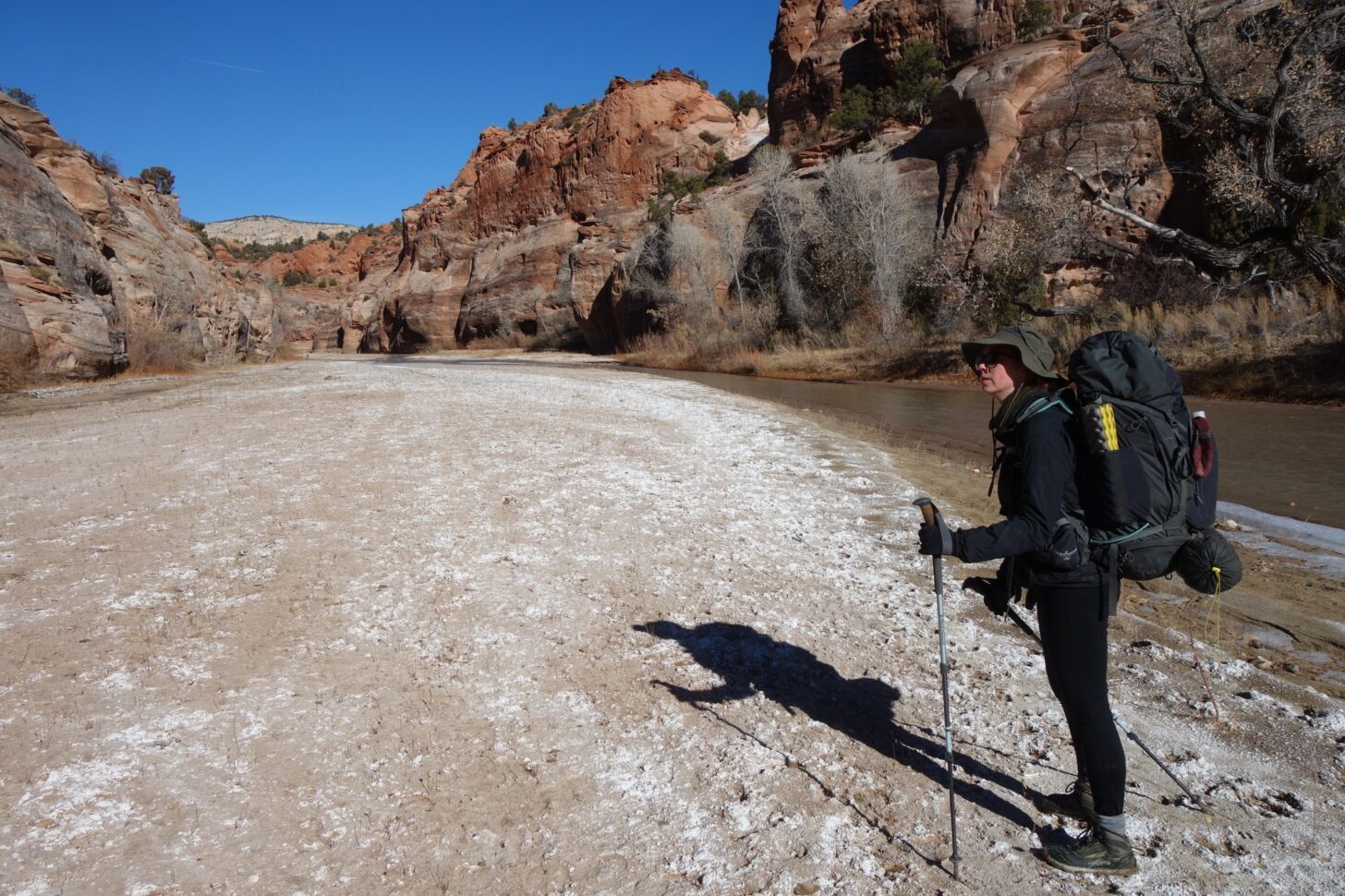
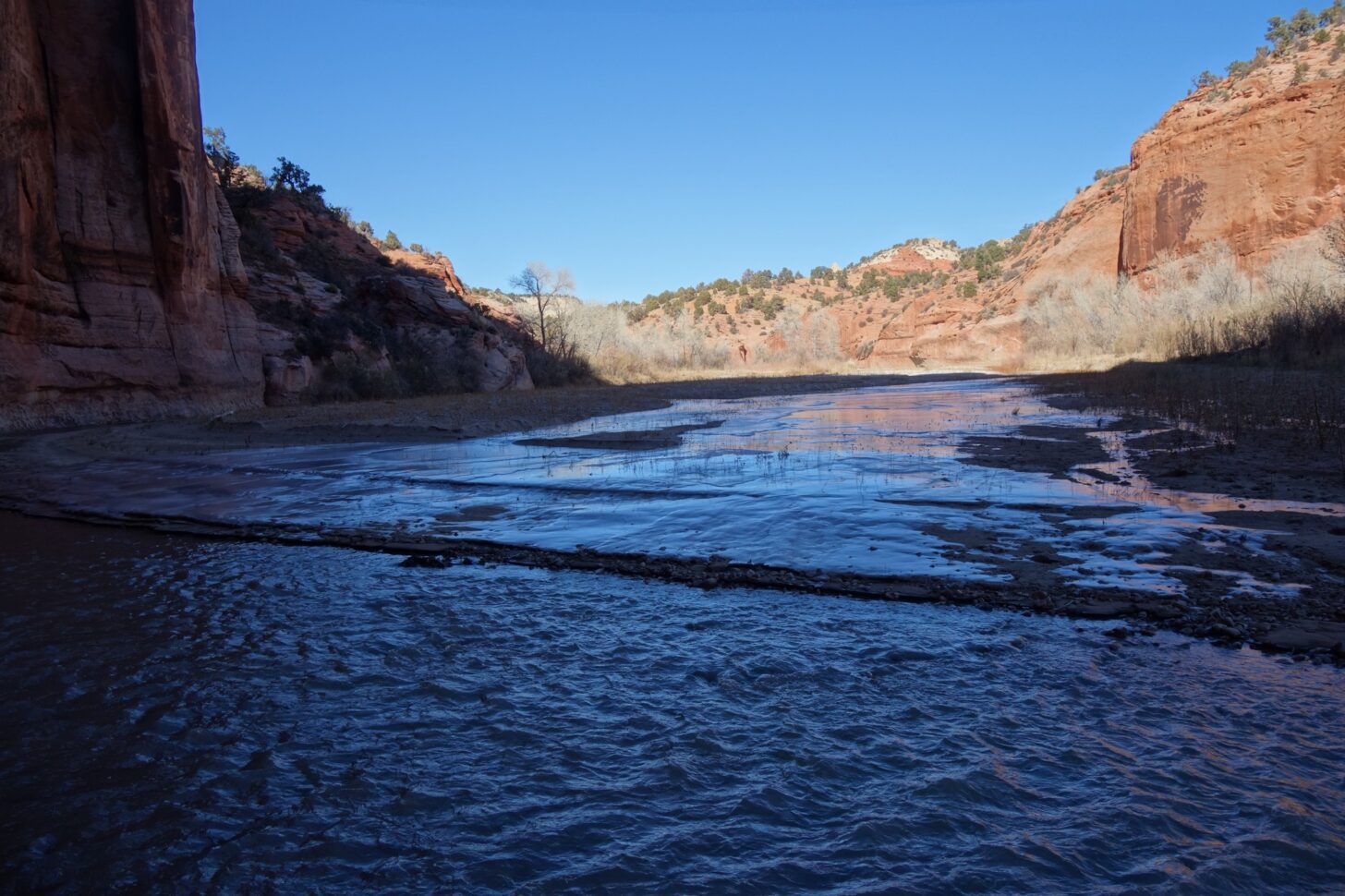
I thought it might be a good idea to hike along the upper Paria River in December because the weather looked decent (60 F° days and 10° degree nights). I didn’t, however, foresee the challenges posed by the freezing and thawing river. I assumed the river would be so low that we could step over it, or frozen enough that we could walk across it, but neither of these things turned out to be true. The river was very frozen indeed, but every morning as the sun hit a section of it, that section began to thaw and release a minor flash flood of 7-11 Slurpee consistency. This meant that while some shadowed sections were completely frozen and other sections were low enough to step over, other sections were raging ice-flows, and we had to walk through them.
I didn’t know that this particular desert river worked this way, and backpacking through it was both not the best way to find out, and also probably the only way to find out.
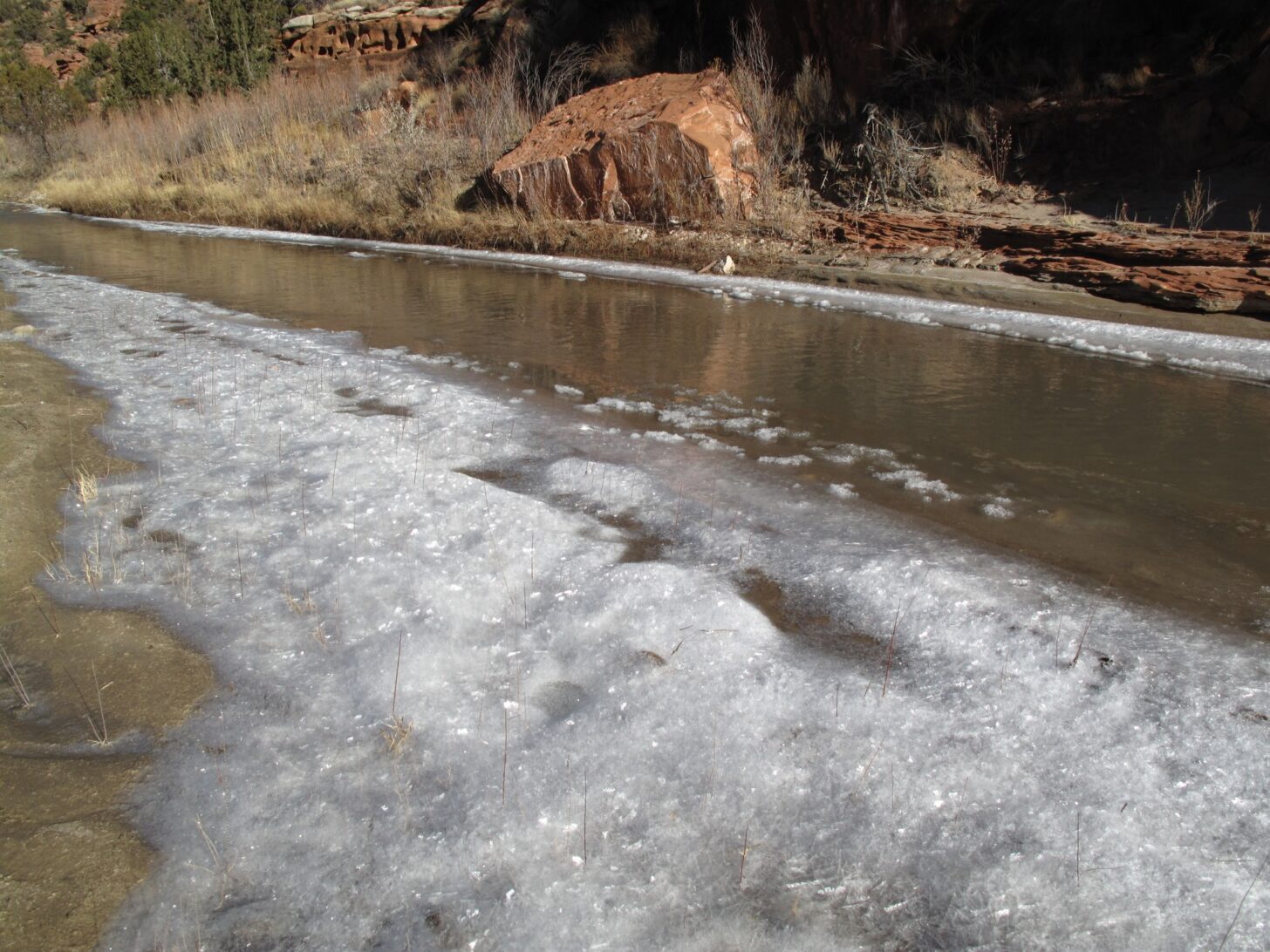
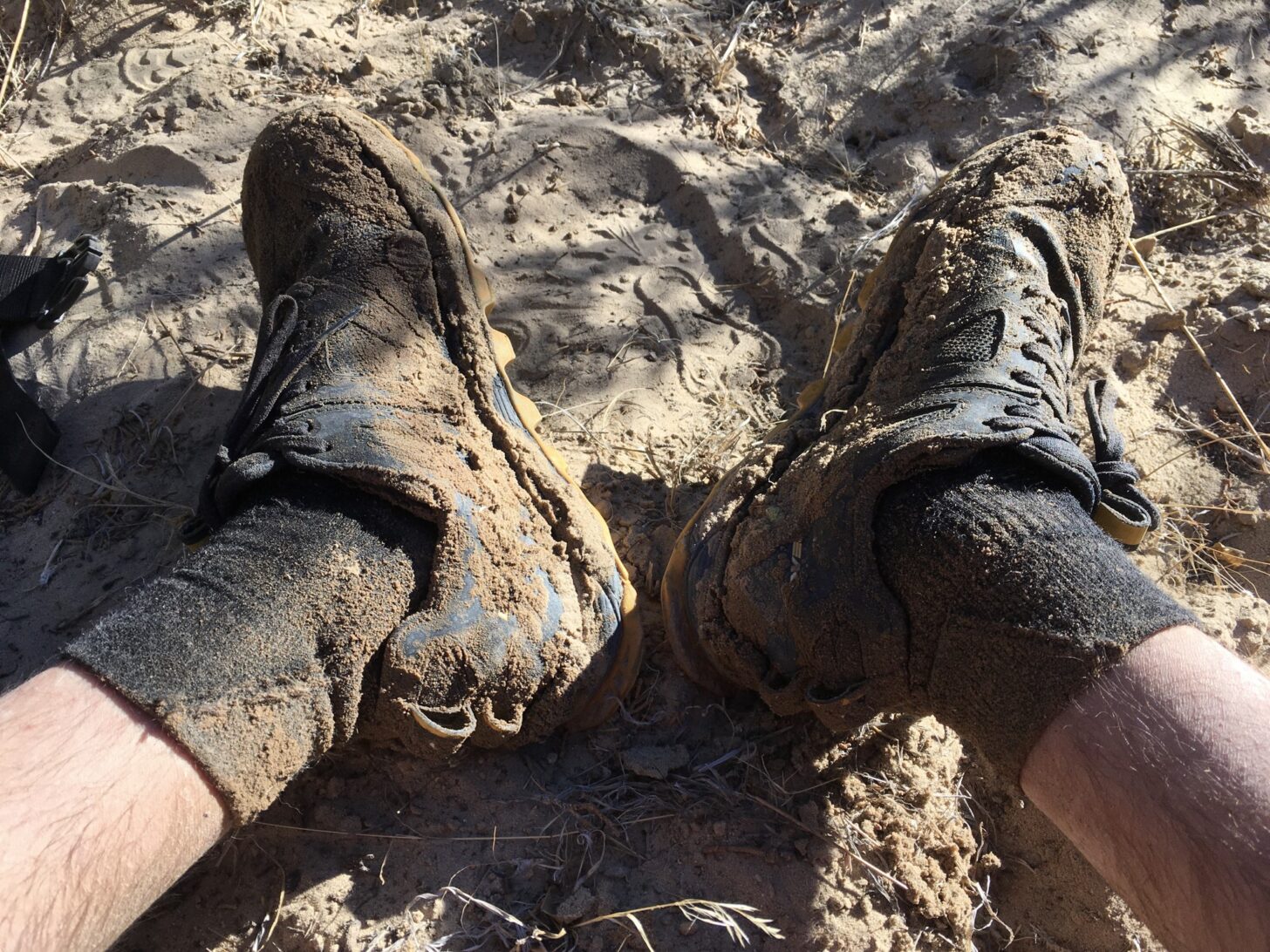
We crossed the river countless times. The feeling that our feet were hunks of cold rubber glued to our ankles never abated all day long. The second day was even worse. We crossed sections of the river that had frozen in thin sheets that reminded me of croissant crust. Our feet punched through these layered crusts descending several feet with each step into the cold, wet mud below. After about 10 miles of this torture, Michelle said her feet were beginning to hurt. We exited the river corridor, road-walked through piñon and juniper woodlands, and then failed to find the route into the next canyon. Admitting defeat, we bailed to the main road and hitchhiked to a state park so we could arrange a ride back to our car at the trailhead.
On the one hand, not finding this route into the next canyon was a failure because we needed to find it to close the loop, but on the other hand, it ensured that we would not be walking anymore, something Michelle’s feet were very happy about. This brings us to the next type of trip failure: Poorly planned trip results in long-term injury.
Poorly Planned Trip Results in Long-term Injury
Michelle developed peroneal tendonitis from carrying a heavy load over many miles on frozen feet. It took nearly two months for her feet to heal. I injured my feet too. When we returned home, I took a few days off of running, opting instead for yoga. When I folded towards the ground, placed my palms on the floor, stepped to the back of the mat, and then pressed into downward-facing dog I felt electricity zing from my heel to my calf. I had pulled my Achilles. The prolonged cold strained and weakened it, leaving it vulnerable to a dramatic movement such as down-dog. This injury put me out of commission for a month. I know this series of events sounds like a run of failures, but the truth is more nuanced.
So… Was This Trip a Success?
I could view the Paria river trip as a failure because we both got injured. I could also view it as a failure because we did not complete the loop that we set out to do. But if I classify the trip as a total failure I would be missing several important things. First, we observed the winter desert in a unique and intimate way which I recounted in my essay Frozen Tracks. Of course, it is true that we could have investigated this canyon in a safer way in April or October.
More relevant to this essay, I believe this harrowing ice-slog along the Paria River was actually a complete success because we adapted correctly to the circumstances at hand. As Michelle later reminded me, “Sticking with the original plan despite many issues for the sake of completing the mission would have been absolutely stupid.” I have to agree. Things could have been much worse for both our feet had we attempted to find a roundabout way to walk all the way back to the car (something we fleetingly considered). In this light, I consider this trip to be a total success. Odd how that works.
Unmet Expectations
A Trip Was Much Harder than Expected (Type II or III Fun)
Some people might consider harder-than-expected trips to be failures, and I understand that. But these trips sometimes fall into the success category for me. They almost have to because such a large percentage of my trips end up being harder than expected.
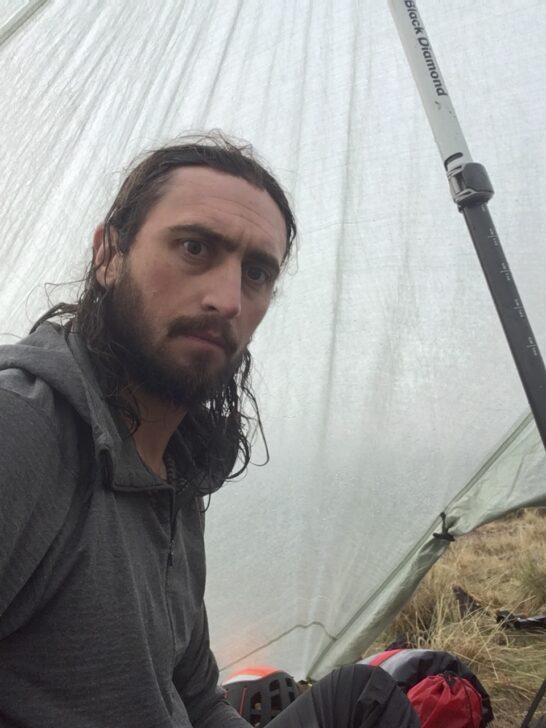
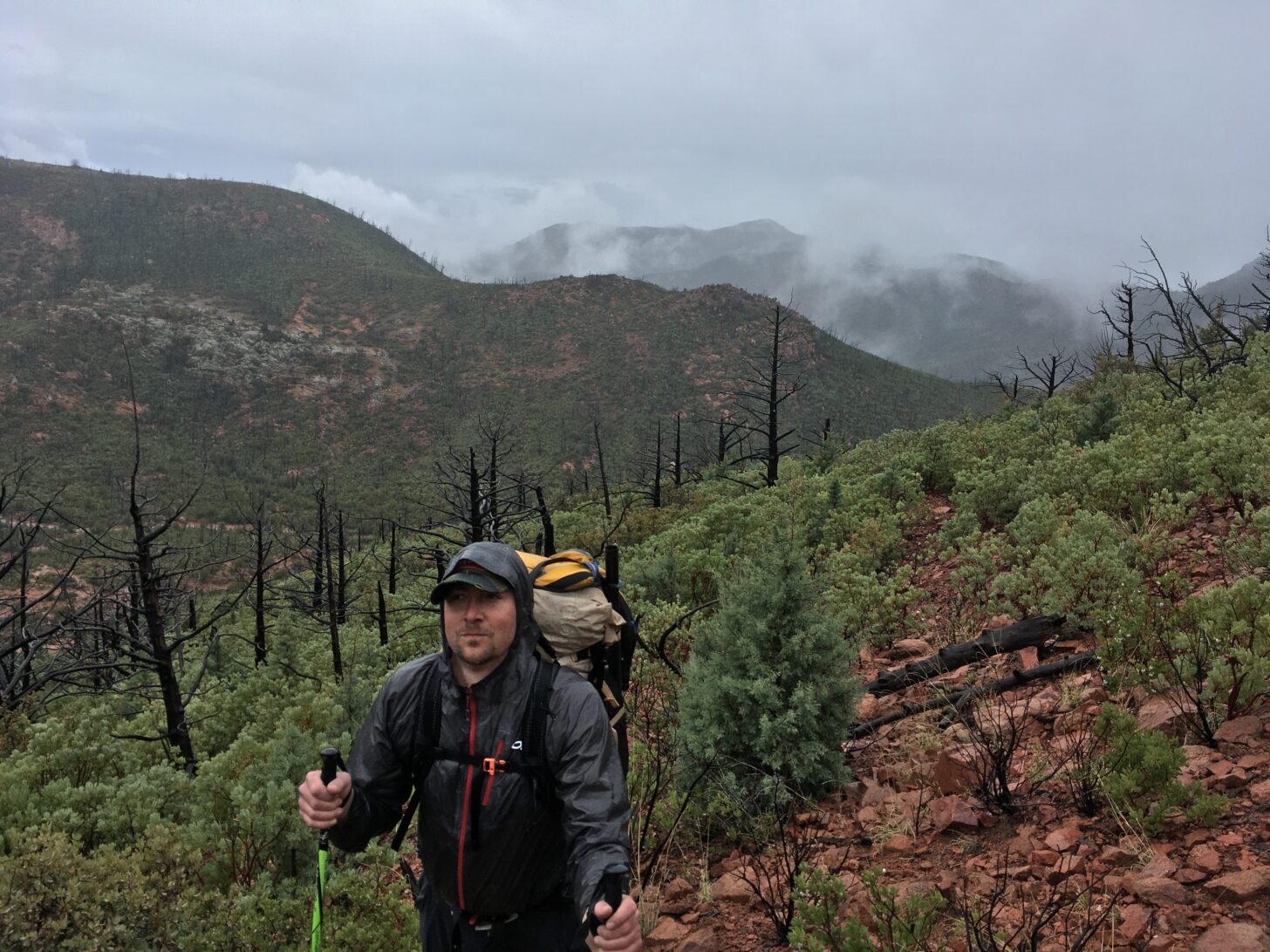
In March of 2020, my friend Jesse and I trudged through the Mazatzal Mountains of Central Arizona for several days in flash flood conditions. Our rain gear failed almost instantly; I often had to keep moving just to keep from becoming hypothermic. When we finally reached the trailhead our ride was not waiting for us because the road had flooded. Additionally, my truck was stranded out in the desert because unpassable rivers had risen all around it. This trip was characteristic of Type II fun, with moments of Type III sprinkled in. I wouldn’t choose any of these things again if I could, but at the same time, I’m glad I had the experience and enjoy telling the story. If, on the other hand, experiencing the uncomfortable and unexpected and then carrying the resulting story wasn’t my cup of tea, I might have viewed this trip as a failure.
Other Unmet Expectations
For most people, the windows of time in which a backpacking trip can take place are small and precious, resulting in the sometimes desperate hope that everything will go according to plan. Often we are disappointed.
We pick the wrong crew, for example; they are too ambitious or not skilled enough. Maybe our worldviews don’t align. Several times I have invited too many people on a trip which slows the overall pace of the trip because no one’s morning schedules match up.
There are also landscape expectations. In this era of unprecedented climatic change, landscapes are changing swiftly and dramatically, squashing backpacking expectations at every turn. Familiar springs dry up, green forests burn, and birds we listen for are eerily absent.
There are countless other examples of unmet backpacking expectations, some of which I hope to read in the comments below. On the one hand, I want to plan for every possible scenario in order to keep a trip out of the failure category, and on the other, I should know that I can’t plan for everything, and that knowledge could allow me to view unmet backpacking expectations as just the way things are.
Gear-related Failures
Gear can affect trips in a few ways, some of which result in outright trip failures, while other outcomes are more nuanced. A gear failure such as a popped pad or torn tent fly could end a trip. An uncomfortable backpack could make every step uncomfortable. The brain of the gearhead could remain fixated on the minutia of gear-tweaking instead of on the sandstone minarets, buttes, and domes silhouetted against the lilac dawn sky.
Gear Failure or User Error
Let’s start with complete gear failure. One of my most dangerous gear failures was my raingear failure in the Mazatzal Mountains. My 2.5-layer rainpants failed almost instantly and my 3-layer, highly breathable jacket failed within a couple of hours of heavy rain. Jesse’s 2.5-layer pants and jacket failed just as quickly. This put us in an extremely dangerous situation; we had nearly 25 miles to hike in nonstop rain and temperatures ranging between about 40 and 55 °F. The situation did not deteriorate, however, because we stayed moving in the rain and had dry sleeping clothes and sleeping bags to crawl into when we stopped. We hiked to the trailhead shivering and blue-lipped and (possibly misguidedly) swore off waterproof-breathable fabrics from then on out. Maybe this Type II fun trip wasn’t a failure, but it came close because of sub-par gear, user error, or outstanding conditions, it’s hard to say which.
Poorly Performing Gear
For about three years I used a very uncomfortable backpack. It didn’t totally ruin any trips, but it stole my attention. When I should have been focused on the land around me I was thinking about how my neck hurt, how I couldn’t turn my head to the side. The pain left me one step removed from the experience of being in the wilderness, and then the problem-solving that ensued thereafter left me yet another step removed. Choosing gear that performs well for me is one way to simply enjoy a trip, remaining attentive to the landscape through which I walk.
Fixation on Gear
Fixating on the minutia of gear-tweaking is a potentially neverending process. I, for one, have created and solved gear-related problems simply to feel a sense of control when the rest of my life is crumbling around me. After doing this enough, it starts to enter addiction territory, and becomes a sort of crutch. And at that point, the habit is hard to kick, so when I’m backpacking and all is well in my home life, I’m still wondering if there’s something better out there or if I could shave 4 ounces from my shelter by cutting things off of it. Fixating on gear in this way may not turn a trip into a failure for some folks, but for me it does. If I cannot remain present while walking through the mountains, I’m doing something wrong.
Failure From Not Planning Well Enough
A few weeks back, I half-heartedly tried to go on a trip. I did not pack. Instead, I took the pile of backpacking gear that I had deposited on my living room floor after my previous trip and shoved it all into the back of my truck again without even sorting through it to see if everything was there. I bought food but I did not pack it. Instead, I just loaded a bunch of paper bags into the truck in hopes of piecing meals together at the trailhead. I finally started planning the route at about 1 AM the night before leaving. These things were signs that I did not really feel like going on a trip, and I probably shouldn’t have tried.
I drove the six hours to the trailhead anyway, and then just sat there staring at the pink sandstone. My life at home had been fundamentally defined by doing things, and I suddenly realized I didn’t want to do anything. I didn’t want to problem-solve or route-find. I didn’t want to have any goals. So I read for a while, went for a pretty goal-less eight-mile run, and drove home. It was a waste of gas, for sure, and arguably a waste of time too. I attempted to embark on a trip I didn’t want to do, and this has the appearance of being a failure to me. But is it?
Adapting Correctly to Any Circumstances
Backpacking is partly defined by expecting the unexpected and being prepared enough to adapt to changing scenarios. In most cases, adapting with humility will result in successes even if trips are cut short, routes are altered, or discomfort is tolerated for days on end. To revisit Michelle’s commentary on our painful Paria trip: “Sticking with the original plan despite many issues for the sake of completing the mission would have been absolutely stupid,” she said. In my opinion (and Michelle’s too), adapting correctly to the circumstances at hand will keep most backpacking trips out of the failure category, and firmly planted in the success category.
Got a backpacking failure (success)? Share it with us in the comments!
Related Content
- More by Ben Kilbourne
- Knowing when to turn around and go home is a difficult skill for a backpacker to learn
- Explore all of Backpacking Light’s Culture articles
- One of Ben’s trip failures revolved around cold and uncomfortable feet. Check out our Minimalist Footwear Trailhead for a curated list of Backpacking Light content that can help you mitigate those kinds of issues
DISCLOSURE (Updated April 9, 2024)
- Backpacking Light does not accept compensation or donated/discounted products in exchange for product mentions or placements in editorial coverage. Some (but not all) of the links in this review may be affiliate links. If you click on one of these links and visit one of our affiliate partners (usually a retailer site), and subsequently place an order with that retailer, we receive a commission on your entire order, which varies between 3% and 15% of the purchase price. Affiliate commissions represent less than 15% of Backpacking Light's gross revenue. More than 70% of our revenue comes from Membership Fees. So if you'd really like to support our work, don't buy gear you don't need - support our consumer advocacy work and become a Member instead. Learn more about affiliate commissions, influencer marketing, and our consumer advocacy work by reading our article Stop wasting money on gear.


Discussion
Become a member to post in the forums.
Companion forum thread to: What is a Backpacking Trip Failure?
Some things actually suck. We can still learn from them.
1. Injury/Illness Cuts Trip Short
Illness should be added. I got sick (initially near passing out; turned out GI virus) 5 miles into (when became symptomatic) a desert trip with a group. If I had been alone things could go different.
Ah so true. Being sick while backpacking can be absolutely terrible.
A few years ago I highlighted my experience of getting lost in the Mazatzal Wilderness. I suppose it could be considered a “failure”, but I did learn a lot from it. https://backpackinglight.com/forums/topic/have-you-ever-been-lost-in-the-wilderness/
I will read this. Thanks for sharing. That place is pretty wild in my opinion!
I never think of things as a failure – more from the standpoint that some trips are better than others and there are three types of “fun”.
Another trip I went on, which I’m not sure you could call a failure, but sure ended up being miserable.
One time I was in Tucson staying with a buddy and decided to stop by and visit a massage therapist to take care of my rhomboid muscles that were locking up and causing me pain. I was on the table when an attractive woman came in and began to get right to the spot that was hurting me. I told her I was in town preparing to hike the Sant Rita Mountains the next day. She said “oh my, I just love the outdoors and hiking, I’d love to go with you sometime”. I told her I’d be back the next week and she could come along.
So early one morning we headed out to do a challenging 12 mile day hike. At first everything seemed fine, but then it soon became apparent that she wanted to turn the hike into a big competition with me by constantly trying to stay ahead and taunt me to keep up. Well, I was packing about 12 lbs with emergency overnight gear, water and food and she was carrying very little. Also I weighed 195 lb and she about 120 lb. And I had no desire to make it a competition anyway, I just wanted to enjoy the scenery. Then it started to become evident that she was a control freak as well. Anyway, at around midday we stopped for some lunch and tea, but as we were sitting there she went into a kind of dreamlike fantasy state and said ” I can just picture us on an overnight trip making love on a blanket in the moonlight”. I was a bit taken aback and thought it odd considering her earlier behavior, so I didn’t reply. Yet the real clincher came later as we were hiking along and she said “about what I said earlier regarding making love in the moonlight, I don’t want you to get your hopes up”. That’s when I realized I was dealing with a real nutjob. I kept quiet and we finished the hike and as we were leaving the trailhead (she drove) we came upon some wildlife biologists monitoring endangered squirrels with radio receivers. She said “I can’t believe they waste money on that s*@&!” I thought to myself please dear God get me back to my truck. When we arrived in the driveway of her house and I saw my truck it was the most beautiful sight in the world. I tried to put a good face on things, so as to extricate myself from the situation without bringing any drama and said “yes, nice hike, I’ll be in touch”. Yea right, needless to say I ghosted her. She later texted me and in her message she wrote that if I didn’t contact her soon she was going to delete my number from her phone. I thought please please do you promise?
Don’t get me wrong, there are as many nutso men out there as there are women, but for a first hiking date I suggest something short until you get to know the person better. That way if you begin to see your date is mental you can bail out and make a quick escape and not be stuck out there all day. Or God forbid if you embark on an OVERNIGHT trip with someone who’s not playing with a full deck..
All my “failures” have been on account of massive lightning at or before the trailhead (= planning type failure I guess).
When it started going “boom” around me, I noped it outta there. Now I build “slack” into my backpacking schedules and actually pay attention to the weather channels.
Was on another friends trip into the San Pedro wilderness where it rained consistently.. it was a soaker and later found out that’s the rain shadow part of New Mexico. Didn’t meet expectations either .
That’s been some group trips I’ve been on. Heard the best idea is keep first timers on warmer hikes so they don’t want to snuggle in your sleeping bag when theirs turns out to be not enough.
Hiked up to a ridge only to see big plumes of smoke coming from the area I was heading into.
I hereby recommend Monte’s story as story of the year! (joking around, but that is hilarious)
The only “failed” trip is one that gets cancelled. Of course there are those that are miserable, but they’re called “experience”.
“Of course there are those that are miserable, but they’re called “experience”.”
By that logic pneumonia isn’t miserable, it’s experience. I disagree. Miserable is miserable. If I could cancel having pneumonia, I would. (I don’t have pneumonia.) When things get miserable on a hike and it looks to continue like that, I bail.
that’s almost never happened. I’ve had the luxury of planning trips around good weather.
an old friend once said: no pain…no pain. True, dat.
Once I did break and sprain my ankle, and then try to hike out. After several hours, a ranger came along on horseback, leading another horse (!!! never seen that before). She asked if I was requesting evacuation. I showed her my ankle and said “yes”. She mounted me on the second horse and brought me to Vogelsang, where another ranger had brought a horse to meet me. And so I was evacuated. A group of rangers and others at Tuolumne wanted to see my ankle too. They thought I was a snowflake. They looked and changed their mind. I don’t blame them. it was a lot of work to get me out. Anyway, what I remember now is the remarkable accommodation of the rangers. They didn’t want to be doing this. I’m still grateful.
so, maybe there’s something to what JCH says after all!
Yep. Story checks out :)
I don’t know what it is about this town but it seems to bring out the crazy in some people.
I backpacked for more than 20 years before completing a trip as planned. Yet I don’t regret any of those trips, including three attempted PCT thru-hikes.
Here are a few of my more memorable learning opportunities.
Thanks for the story.
— Rex
I wish I didn’t think of changes in plans as failures, but I do. I have had to bail twice now earlier than planned, on the JMT, due to altitude sickness. It is my demon. The first time I made about 30 miles. This last trip I made 130 miles, 11 days, and lost 10 pounds from not being able to eat. I left at Kearsearge so as to avoid Forester and Whitney. I regret it, but it was the right decision. Every day I got weaker. Diamox kept the vomiting at bay, but I still couldn’t eat. The body doesn’t do well on less than 1000 calories. I want to try again but…I need a solution I haven’t yet found.
But I hiked 130 miles! And it was gorgeous, and I loved it. Just felt like I had to puke the whole time.
I don’t think we’ve had any trips that I would describe as failures. We’ve cut trips short because of unpleasant conditions, but somehow that didn’t feel like a failure, it felt like common sense.
A lot of the issues above could be addressed pretty easily by knowing when to say when…
Same as me getting married! “And it was gorgeous, and I loved it. Just felt like I had to puke the whole time.”
“…When things get miserable on a hike and it looks to continue like that, I bail.”
And THAT my friend, is experience :)
A humans most valuable knowledge is often gained via pain and suffering, i.e. “I ain’t NEVER gonna do THAT again!”.
Very helpful article. The following rang especially true: “I attempted to embark on a trip I didn’t want to do … I didn’t want to problem-solve or route-find. I didn’t want to have any goals.”
Sometimes a trip is just not going to work. Somes bailing is the better part of valor.
I don’t know anyone who gets out who has not had failures. We all learn from them. Goals can and do change as the trip progresses. It is important that we realize that there is another day to try again. My biggest concern was on a winter trip at minus 30 degrees F when my fuel bottle developed a leak and left me with no fuel. I terminated that trip. Last week went into a new to me area of the adirondacks. Tough trail, we walked miles in stream beds on granite slopes. After getting to destination realized my soles had delaminated. Tied them on and went out the next day. While both trips ended early they were still successes. The goals were changed to getting out safely and doing it another day. Excellent article.
Led a March outing of Buckskin Gulch/Paria canyon (cold but not extreme cold, water in morning probably near freezing). Told all participants no cotton, sleeping bags to be dry bagged, down was discouraged and if used high priority to keep dry and ideally down was treated.
night before we were to start a storm hit, but weather reports were clear for next few days. We would encounter more water than I had anticipated, but with the right gear all should be fine.
very quickly we determined one participant’s jacket had significant cotton. We swapped it with extra gear my son had carried. We had spots where we were crossing chest deep water. At about 2/3 day in, another participant was shaking from cold. I checked him out and his base layer was cotton. Just before the 5th chest high crossing we decided that participant that was shaking could not continue to freeze. We backtracked a short ways (and 2 chest high water crossings) to a safe high point.
a couple participants had failed to keep their sleeping bags dry including one down bag. We had a large enough group that we did ok handling 2 near useless sleeping bags but it was not an easy, enjoyable night.
next day, with gear in its current condition, we decided to backtrack out. We did not know how many more chest high crossings we would encounter if we had continued going forward and we had initially planned 2 nights (a second night of misery, no thanks).
the gear issues combined with the recent rain doomed the plans. There were other issues that I did not discuss that played a role (car stuck in creak crossing in the middle of the road that we were nice enough to pull out made for late start, calf buried to neck that I wanted to put out of misery but everyone else wanted to free put us further behind when we dug it out). The chest high water not only guaranteed that we would all be wet, but it slowed our progress meaning we would not clear buckskin until very late if we had proceeded through buckskin on the initial day. That would have resulted in hiking longer in cold, wet conditions.
I enjoyed the trip and have fond memories. Of course it helps that I did not have equipment issues. I suspect everyone looks back on the trip fondly even though a few were suffering badly on the trip.
Was it a trip failure? A lot went wrong. Any trip you look back on fondly is tough to think was a failure.
Different category of potential trip failure is personality issues. I have experienced minor issues (including on my last outing Thanksgiving week) but nothing that would cross the line of a failure.
however a few years ago I was doing a one week backpack trip that for some of the trip was on the JMT/PCT and we encountered a good looking young woman who asked if we had seen a guy. Her description, except for being slightly taller than average and a hat description, described nearly every male PCT hiker. Scruffy beard. Shorts, Altras (light weight footwear), etc.
we hiked with her a short ways. She indicated they had broken up the night before near VVR on a PCT through hike. We asked if she was trying to find him or avoid him. She was trying to avoid him. Good luck with that with just under 2,000 miles to go.
we asked how her food situation was (we could have spared a little) and fortunately they were planning resupply at VVR and she was only a few hours from VVR.
she started hike with a boyfriend partner and was now hiking it solo. She was attractive enough that I figured most single guys would be happy to team up with her on the chance they are compatible.
I hope things got better for her, but at the time we encountered her I am pretty sure she was categorizing the trip as a failure.
“I’m pretty sure she categorized the trip as a failure”
Daniel, if she looks good there are an endless supply of thirsty guys she could replace her ex boyfriend with at the drop of a hat. Now if her ex had been an Alpha Chad who’s tall, broad shouldered, handsome chiseled features and had status it might take her a few days. But women like her don’t weep for long, their options are limitless.
A couple of my closest calls have been wet and cold, just like the conditions that you described here. Even though this may seem like a belt and suspenders approach, my wife and I now carry a cuban fiber poncho and breathable raincoat/windshirt underneath. hiking all day with a pack in the rain: our experience is that with virtually all the “breathable/waterproof” jackets, you end up very wet (and cold).
Thanks Ben for your fabulous articles!
Pierre
I bailed on one backpack due to being completely physically unfit to hike the higher sections of the Colorado Trail. Instead of training I built a pergola on my back patio pad. It was a 2 month project and at 67 I should have known better than to attempt that trip without a LOT of training. After the day one climb to 10,00 ft. I was beat. A night’s sleep did not help much and after an hour I told my much younger hiking friend I was (aaarrgh!) quitting. At that point a 60-something guy walked up and asked if I was “OK”. I had just enough energy to laugh and say I was done with the CT.
Become a member to post in the forums.