Articles (2020)

Shell Shocked: Raingear and Soft Shells are Getting Lighter and Breathing Better (Outdoor Retailer Summer Market 2004)

After reporting on sub-10 oz waterproof breathable jackets yesterday, we had a chance for a long talk with Patagonia’s garment R&D team. Now that we understand the physics of it, we understand why they expect the Specter Pullover to have better breathability than Gore-Tex XCR and PacLite and approach eVENT’s performance. Due to the proprietary nature of the work we can’t divulge the complete details. But…

Patagonia is doing some groundbreaking work on moisture transport in both waterproof breathable garments and soft shells. They even designed and built their own testing equipment when they felt that current testing apparati, even though very expensive, were not producing repeatable (or field confirmable) results. This year, for the first time, Patagonia lab-tested moisture transport performance consistently matched perceived field performance from guides and testers. One waterproof breathable garment that had puzzled the R&D team in the past was a favorite with backcountry guides since they could wear it all day without discomfort—yet it tested poorly in lab breathability tests. With the new test equipment and measurement parameters the garment finally tested with high breathability. Patagonia studied the garment and found out some surprising things about moisture transport that were not only applicable to waterproof breathable fabrics but also to soft shell fabrics. Conversely their study of soft shells showed some performance factors for soft shells that are applicable to waterproof breathables.

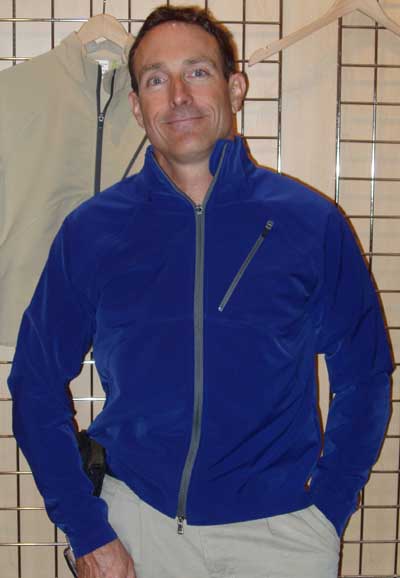
Patagonia Ready Mix Soft Shell Jacket

Armed with this information, they designed two new shells to be released in 2005 – one waterproof breathable, the Specter Pullover, and one softshell, the Ready Mix. See our dispatch from Day 1 for our report on the Specter.


Patagonia’s 14 oz Ready Mix Soft Shell Jacket

The Ready Mix soft shell fabric was designed using Patagonia’s new moisture transport findings to have better breathability without the moisture retention that’s plagued sofshells (they avoided fuzzy and absorbent linings and moisture hungry woven fabrics). Patagonia claims that the Ready Mix has a water repellent outer fabric that does a good job of evaporating moisture from the inside of the garment without getting wet itself. The Ready Mix is available for women in a pleasing light blue color.

MontBell Peak Jacket


A full featured WP/B for under 10 ounces!

MontBell introduces a new 3-layer polyurethane rain shell, the Peak Jacket. It appears to be somewhat air permeable like eVENT and may turn out to be a very breathable garment. For a light shell, it should be durable with its 3-layer construction and 22 denier shell fabric. Best of all MontBell achieves this weight without sacrificing essential features like pit-zips, two large pockets and Velcro adjustable wrist closures.

MontBell Torrent Flier Pants


MontBell Torrent Flier Pants

Same story with the new MontBell Torrent flier pants – functionality at 6.4 oz. Front snap, zipper fly, knee high side zips, and drawcord waist. It has the same tough 15 denier ballistics nylon 3-layer Gore-Tex XCR fabric as the Torrent Flier Jacket.


The Marmot entry into sub-10 oz rainwear, the 9 oz Essence Jacket. PreCip Plus fabric, and a minimal design with a single front pocket, drawcord hood and drawcord hem.


2005 Trekking Pole Trends: Poles for Women? (Outdoor Retailer Summer Market 2004)

Women’s Poles (Not) Have Been on U.S. Market For Longer Than We Think

We were interested in women’s specific trekking poles and did a bit of inquiring at the Leki booth since, as the most recognized trekking pole company in the U.S., we found it odd that they weren’t making women’s specific models like some other manufacturers.

Funny story: it turns out that Leki has been making women’s specific poles in Europe for years. That makes sense – poles are far more popular in Europe among walkers and trampers than they are in the U.S. among hikers and backpackers.

These women’s poles were typically 10 cm shorter and had grips 15% smaller in every dimension. These size reductions also reduced weight, of course, so they were a little lighter.

When the ultralight craze gained steam in the US market, Leki decided simply to offer their Euro-market women’s poles, and rebrand them as their Ultralight line. What they didn’t do was label them as women’s-specific poles.

Of course, it turned out that not only were the Ultralights a big hit among women, they were a bigger hit on uninformed ultralight guys – hey, most of our male staff has a pair! Now Leki is in a pickle: what will they do to capitalize on women’s specific marketing since they already have a number of “women’s” poles in the US market? Make them pink?

Life-Link, a company that has earned a loyal following of rugged manly avalanche-dodging types for years, now offers a woman’s pole: the Avalanche Lily.


Life-Link Avalanche Lily

The LifeLink Avalanche Lily is a women’s version of the Guide Ultra Light. The Avalanche Lily is not pink – but rather, a nice pale blue with smaller grips than what you find on the similar Guide Ultra Lights. Since the Guide Ultra Lights are already a short pole (49 in) no reduction in length was made.

Aside: Do you like your LifeLink Guide Ultra Light poles but are you frustrated that they are too short to use with your shelter, or maybe you’re tall and want some added length? LifeLink introduces a longer version of this pole that extends to 57 inches, the Carbon Race (2 oz heavier at 16 oz). Now you can use them with your Missing Link tent! In addition, the longer length is good for assembling a 6 ft 2 in avalanche probe.

Education as a Means to Foster an Appreciation of Lightweight Strategies for Backcountry Travel (Outdoor Retailer Summer Market 2004)

It’s no secret that pushing ultralight technique and gear to its limits requires a significant amount of consumer education. Few people simply drop their fifty-pound packs mid-way through a PCT thru-hike and exchange their kit at wholesale for a pocho-tarp and beanie hat when the monsoon season looms in the Oregon Cascades.

It’s also no secret that there is a perception among core enthusiasts in the lightweight community that manufacturers are unwilling to promote the more technical education that is often required to push ultralight to its fringe limits, or at least to understand how and why it works.

Cascade Designs sees technical consumer education as a higher priority in the future. Jon Almquist, MSR Brand Manager, believes that a public relations pendulum needs to swing towards pro-sumer technical education of customers that can ultimately become the industry’s biggest champions not only of their products, but of pushing those products to their limits with a fast-and-light ethic. “Part of reaching the consumer in this way is empowering sales reps – who have historically lacked the technical expertise to train core users,” says Almquist. Cascade Designs, the brand parent of MSR, intends to empower their sales force with innovative, incentive-based training programs that make their reps the most knowledgeable in the industry.

GoLite has a different approach, claims CEO and co-founder Kim Coupounas. “We have every intention of participating in rational dialogue directly with our end users.” Kevin Volz, GoLite’s Customer Service Manager, interacts directly with GoLite customers via email and phone daily. “The fun inquiries fall into two categories: those who are curious and want to know what this lightweight stuff is all about,” says Volz, “and passionate enthusiasts who want to know the minutia of product design attributes such as fabric weights.” Both scenarios provide terrific opportunities to offer technical consumer education at a level that is not commonly found in the outdoor industry.

“Cottage manufacturers rely primarily on one-on-one connection with their customers for education,” says Brian Frankle of ULA-Equipment. “And, the unusual nature of more innovative and cutting edge cottage products demands (that type of) customer service.”

Unlike bigger manufacturers, cottage companies are unique in their ability to rapidly respond to customer feedback, making changes to products on the fly. Because of rapidly evolving products and sometimes quirky and unusual features, cottage industry products often demand a higher consumer education burden than mass-market products. The extra education is required because their gear initially flies in the face of established protocol and consumers aren’t always sure how to respond to the concepts.

Larger companies, however, tend to build what they can sell – creating products that have a minimal customer service overhead that can scale to the mass market. Large companies take fewer product concept gambles, have longer product development cycles, and can’t respond quickly to product goof-ups when they are sitting on hundreds, and often thousands, of unsold units. Thus, their products tend to be further from the ultralight fringe: that market space occupied by companies like Six Moon Designs, ULA-Equipment, and Gossamer Gear.

Large and small manufacturers alike agree that educating consumers – and creating a passionate and technically competent pro-sumer customer base that can offer more than simply recite marketing materials is necessary for the growth of the industry. Ron Moak of Six Moon Designs aptly told us this afternoon, “lightweight backpacking is an oxymoron because backpacking is recreation, but going lightweight is work” – mind work, that is.

If you are going to gain competence as a lightweight backpacker (more so if you want to tap at the fringe of the ultralight dance floor), you can’t do it successfully, safely, or comfortable without putting some thought muscle into it.

OR News – Day 2 Roundup: New Products for Lightweight Backpacking, Hiking, and Camping (Outdoor Retailer Summer Market 2004)

M Commentary on the State of Declining Backcountry Wilderness Activity Participation by End Users

Outdoor Industry Association (OIA) released its state of the market report suggesting that wilderness activity participation is on the decline. Find out what industry leaders from GoLite, Cascade Designs, and MontBell have to say about it, and what they are doing to respond to the trend. More…

M Pacific Outdoor Equipment Announces 8 Ounce Self-Inflating Sleeping Pad and Blends Hybrid Self-Inflating and Closed Cell Foam Technology for 2005

One of the biggest innovations in lightweight backpacking gear at Outdoor Retailer Summer Market 2004 comes from Pacific Outdoor Equipment, manufacturer of the Bozeman Mountain Works 10-ounce TorsoLite self-inflating pad and the Insul-Mat line of sleep comfort products. POE continues to innovate with the introduction of the market’s first hybrid self-inflating foam technologies and radical new pad shapes to decrease the weight of both self-inflating and closed cell foam pads for hardcore ultralight enthusiasts. More…

M New GoLite Shelters Fill Gaps in Existing Product Line

GoLite is expanding their line of lightweight shelters across the board, introducing models that fill in much needed gaps in their existing product line. We had the opportunity to test and perform a first looks review of the new shelters out prior to Outdoor Retailer Summer Market 2004. New models include the GoLite Hut 1 and 2 floorless shelters that address limitations of the Integral Designs Silshelter; the GoLite Trig 1, a smaller brother to the existing GoLite Trig 2, and the GoLite Eisenhower Tunnel Tent, or more simply, the GoLite “Ike”, a Den 2 on steroids built for more severe weather conditions. More…

M Wookey Dragonfly Ultralight Pack Skin

Imagine a pack skin made of durable, but lightweight materials, suitable for rigging your own packbag or dry bag, carrying an elk quarter, or even a kayak? All this for 19 ounces? Check out an inaugural lightweight product from Wookey of Bozeman, Montana. More…

New Lightweight “Done-in-a-Day” Backpacks Announced

There is a huge crop of light packs in the 30 to 45 liter range (1800 to 2750 cu in). It seems like every pack manufacturer is in the business of making “one-day/one-night” packs in the two to three pound range with durable materials and good load handling characteristics. See product specs and photos of new packs from Osprey, Marmot, Lowe Alpine, Black Diamond, and Arc’Teryx. More…

Education as a Means to Foster an Appreciation of Lightweight Strategies for Backcountry Travel

It’s no secret that pushing ultralight technique and gear to its limits requires a significant amount of consumer education. Few people simply drop their fifty-pound packs mid-way through a PCT thru-hike and exchange their kit at wholesale for a pocho-tarp and beanie hat when the monsoon season looms in the Oregon Cascades. It’s also no secret that there is a perception among core enthusiasts in the lightweight community that manufacturers are unwilling to promote the more technical education that is often required to push ultralight to its fringe limits, or at least to understand how and why it works. How do education needs and strategies differ between large manufacturers such as MSR and GoLite, and small manufacturers such as ULA Equipment or Six Moon Designs? Find out what these companies are doing to promote technical education among its customers. More…

New Lightweight “Done-in-a-Day” Backpacks Announced (Outdoor Retailer Summer Market 2004)

Trend suggests increase in emphasis on done-in-a-day activities and high action adventure sports such as fastpacking and peak bagging

There is a huge crop of light packs in the 30 to 45 liter range (1800 to 2750 cu in). It seems like every pack manufacturer is in the business of making “one-day/one-night” packs in the two to three pound range with durable materials and good load handling characteristics.

We asked representatives from Lowe Alpine, Gregory, and other pack manufacturers that have traditionally made their bread and butter on heavier and larger volume packs about this trend. They are seeing an increased interest in adventure day hiking (long distance day hiking/ peak bagging), quick overnight backpacking with small loads, and fastpacking (high mileages in a few days). This trend reflects the outdoor’s increasing focus on frontcountry done-in-a-day activities and decreased time spent in the backcountry among a busy American public.

We think it’s all well and good that there are so many products from which the general outdoor consumer can choose. But even the astute lightweight or ultralight backpacker can capitalize on these packs. Using an ultralight mentality (one pound down sleeping bag, small tarp shelter, highly compressible clothing, etc.) we think you can cram a week’s worth of food and gear in these packs and enjoy the benefits of carrying a small, compact load comfortably while enjoying the benefits of durability and reasonable suspension systems. And, you can’t ignore the “cool factor” of meeting a NOLS group 20 miles from the trailhead picking their jaws up off the ground because they found out you were backpacking their same route with a day-sized backpack.

Conversion Notes:

  • 1 liter = 61 cu in
  • Example conversion 35 liters x 61 l/cu in = 2135 cu in


Osprey launches the new Atmos series pack line with AirSpeed suspension, a mesh panel supported by a spring loaded aluminum hoop frame (3 oz). The suspended mesh back is comfortable and breathable. You can even tuck a hydration bladder between the suspended mesh and the back of the pack body. There are three pack in this series 25, 35 and 50 liters


Osprey Atmos 35 and 25 (pictured): 35 liters, 2 lb 5 oz, 25 liters 1 lb 15 oz. Both packs are almost identical in features and construction. They are panel loaders with solid stretch zippered rear pocket, stretch side pockets, mesh pockets on the hipbelt, and hydration bladders. The 35 is billed for weekend adventure racing and ultralight backpacking. The 25 is billed for one day adventure racing and trail running. We would add peak bagging and a possible overnight to this pack’s possibilities. There is also a 50 liter version of this pack with a top lid that weighs 2 lb 13 oz.


Marmot Vapor 30 (pictured), 35 and 45: 30 liters, 2 lb 8 oz – 35 liters, 3 lb oz – 45 liters, 3 lb 6 oz. The Vapor 30 is a durable panel loading entry from Marmot. It has a well ventilated backpanel, hollow aluminum stays, two rear zip pockets, water bottle pockets. Day hiking, peak bagging, ski touring, overnight trips. A bit heaver than some but a solid frame and full sized, well padded suspension will probably handle anything you can fit in it. The 35 and 45 are top loaders with a removable lid.


Lowe Alpine Walkabout 35 Hyperlite: 35 liters, 2 lb 9.5 oz. A clean pack with integrated side pockets and at top lid. A top seller in Europe.


Lowe Alpine Attack 30 Hyperlite: 30 liters, 1 lb 7 oz. A very light pack perfect for peak bagging and adventurous day hiking and equally suited for fastpacking and overnight backpacking.


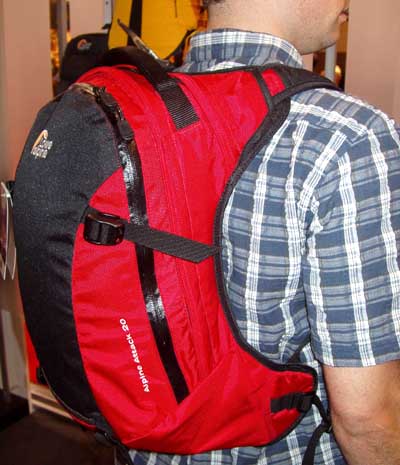
Lowe Alpine Attack 20: 20 liters, 1 lb 14 oz. Designed for freedom of arm movement, this a fabulous pack for a day climb or long trail run. Pack expands for approach and easily compresses for the climb. This is not just for technical climbing but would be great for non-technical peak bagging as well.


Black Diamond Speed: 30 liters, 1lb 15 oz. A light pack with a top lid. ¾ length bivy pad and a single stay. Very durable fabric


Black Diamond Hollowpoint: 20 liters, 14 oz. An exceptionally light and durable daypack. We could see getting an overnight in this pack or a long day hike with ease.


Arc’Teryx Needle 35 and 45 (pictured). 35 liters, 3 lb 2 oz – 45 liters, 3 lb 5 oz. Arc’Teryx replaces the Khamsin series with their new Needle series of lightweight packs. The 35 and 45 packs are almost identical in design and features—large accordion rear pockets, top loading with a lid, solid suspension and very durable Dimension Polyant X-Pac fabric.


Pacific Outdoor Equipment Announces 8 Ounce Self-Inflating Sleeping Pad and Blends Hybrid Self-Inflating and Closed Cell Foam Technology for 2005 (Outdoor Retailer Summer Market 2004)

One of the biggest innovations in lightweight backpacking gear at Outdoor Retailer Summer Market 2004 comes from Pacific Outdoor Equipment, manufacturer of the Bozeman Mountain Works 10-ounce TorsoLite self-inflating pad and the Insul-Mat line of sleep comfort products. POE continues to innovate with the introduction of the market’s first hybrid self-inflating foam technologies and radical new pad shapes to decrease the weight of both self-inflating and closed cell foam pads for hardcore ultralight enthusiasts.

Insul-Mat Uber-Lite

The lightest self inflating pad on the market, the Insul-Mat Uber-Lite pad weighs 8 oz. It puts the cushion where you need it most: shoulders and hips, and carves insulation out of the waist area. The found was surprisingly comfortable and supportive when we lay down on it, but managing movement will be a trick for some: you have to pay attention to where you’re rolling and leg-tucking. In addition, the pad may not be the best choice for those also in need of more secure virtual packframe support in a frameless pack. But for the ultralight backpacker that’s not into the marriage of hip and collarbones with Mother Earth, this may be your ticket.

And for the hardcore, the Uber-Micro: The same shaped pad is available in EVA and PE dual density foam version for only 3 oz.


The Insul-Mat Uber-lite self inflating pad (8 oz).

Insul-Mat Hyper-Lite

Hybridizing the Uber-Lite self-inflating hourglass pad with closed cell foam results in the Insul-mat Hyper-Lite 1.0, a 15 oz three-quarter length sleeping pad with an inch of thick, self inflating comfort and support just where you need it – under the shoulders and hips. Also available in a dual-density closed cell foam combination, the Insul-Mat SL-Lite offers softer closed foam in the hourglass shaped area in lieu of a self-inflating section. The SL-Lite three-quarter length pad weighs 8 oz. Both of these mat designs also come in women’s specific models with slight variations in specifications.


Insul-Mat SL-Lite Hybrid Pad


New Lightweight Backpacking Foods (Outdoor Retailer Summer Market 2004)

Backpacking food manufacturers take advantage of the Outdoor Retailer Summer Market to introduce new flavors and recipes for the coming season.

Outdoor Retailer Summer Market provides the most important forum for the introduction of new products, and backpacking foods are no exception – every year, we can expect new flavors and recipes, and 2004 did not disappoint.

Cache Lake

Cache Lake Camping Food offers Wild Rice Vegetable Salad as an attractive option to nuts and dried fruit. The salad and fixings (wild rice, veggies, and Italian or ranch dressing) are packaged in a zip closure bag. Open the bag in the evening, remove everything but the wild rice, add water and hydrate it overnight. Ten minutes prior to eating, add the veggies. Mix in the dressing, and this no cook meal tastes great and the texture offers a wonderful break from typical backpacking foods, but at a weight penalty (4-5 ounces). 224 calories.

Overnight soaking can be avoided by cooking the rice for 15 minutes (cut cooking time and save fuel with a pot cozy).

Also notable from Cache Lake: tasty vanilla and chocolate pudding mixes.

Richmoor

Richmoor, Inc. is now distributing Crunchies from Blackbird Food Company. Crunchies are freeze-dried vegetables, fruit, and even Edamame (green soybeans) with no additives. Packets weigh 1.4 to 4.5 oz and cost from $2.99 to $5.79. We sampled pineapple, mango, and edamame. Everything had a nice crunchy texture and the flavors were full and pleasing.

Clif Bar

New this year for Clif Bar is the Builder’s Bar: 20 g of protein and 30 g of carbs packed into a very compact and durable package. We found them to be very tasty with a nice combination of crunchy and soft texture, and the right amount of sweetness. Flavors include Peanut Butter, Cookies ‘n Cream, and Chocolate.

Backpacker’s Pantry

Backpacker’s Pantry served up what was unanimously voted as our favorite entrée of the show: Cajun Salmon Inferno. First, the spice is hot – and tasted good! Unique to this meal is a 2 oz fillet of smoked salmon packaged in a foil pouch.

Two other new offerings introduced at the show were also very good: Pasta Parmesan had the feel of comfort food but offers more sophistication than the Kraft macaroni and cheese we cook for our kids.

Tim Ziegler, creator of these dishes lived in Asia for three years and the sweet, subtle blend of spices in the new Saigon Chicken Noodles showed it.


Chef Tim Ziegler with a 2 oz salmon fillet and Cajun Salmon Inferno

Honey Stinger

Two years ago a bored food scientist, a honey packer and his son, and a honey producer, 50% of whom also happened to be marathon runners, started EN-R-G Foods, Inc. The resulting line of bars and gels of course have lots of honey which tastes great and, according to John, the bee keeper, also offer lots of enzymes that give a more natural energy boost than what is found in other carbohydrate energy gels.

We can certainly testify to the taste – Honey Stinger products are exceptionally smooth-flavored. Bars are offered in a variety of flavors including Berry Banana Buzz, Rocket Chocolate, Peanut Butter ‘N Honey, and Apple Cinnamon with Cranberries.

Gel flavors include Ginsting (my favorite), Gold, Mint, Banana, and Chocolate.


Beekeeper John Miller and his Honey Stinger energy bar


OR News – Day 1 Roundup: New Products for Lightweight Backpacking, Hiking, and Camping (Outdoor Retailer Summer Market 2004)

Day 1 summary of new products from Outdoor Retailer Summer Market 2004.

Buzz was enthusiastic and marketing slop was thick today on opening day of Outdoor Retailer’s 2004 Summer Market.

A slew of new products have been released that will spark the interest of lightweight backpackers – everything from apparel, sleeping bags, and shelters to stoves and headlamps – there’s something for everyone. Over the course of the next few days, we’ll be highlighting some of the coolest new gear, as well as smoking out some of the over-hyped duds from their weasel holes (we may save that for Saturday – there’s too much good stuff to cover today!).

M Top Story: New Series of Compact, Lightweight Stoves from MSR

It seems that Jetboil started a trend in ultra-compact, integrated cooking systems. As we expected, MSR is doing it, too, and we expect them to do it better, lighter, and smaller. Introducing a radically retooled XGK (not lighter, but far more stable and packable), a 16-pound version of the Coleman “Big Green Dual-Burner” Redneck Stove, and, for backpackers, new white gas and canister stoves integrated with cooking pots, has retailers wanting fresh saleable hardgoods drooling. Read about the technology behind these new stoves, view detailed photos and specifications, and find out why Alan Dixon thinks these hybrid systems may set new standards for stove efficiency and design. More…

M New Ultralight Waterproof-Breathable Rain Jackets from Marmot, Outdoor Research, Integral Designs, Patagonia, and More

2.5-layer woven nylon rain jackets are getting lighter – waterproof breathable technologies using 15 and 20 denier face fabrics means that twelve ounce jackets are now, well, darn heavy? Consider this: Marmot has broken the nine-ounce barrier, Outdoor Research has broken the eight-ounce barrier, Patagonia has broken the seven-ounce barrier, and Integral Designs introduces an eVENT jacket that comes in at less than ten ounces. Finally, how about this: Tyvek goes commercial – find out who’s making a sub-three-ounce Tyvek jacket that may very well be the lightest rain jacket this side of Hurricane twins Bonnie and Charley. More…

Manufacturers Introduce New Flavors and Recipes

The Outdoor Retailer Summer Market is a dependable venue for the introduction of new flavors and recipes. The trends we’re seeing: better tastes and textures, more sophisticated recipes, and an emphasis on healthier foods akin to what you might find in a fine dining establishment in a city – without the fuss, mess, and complexity of preparation. More…

Big Agnes 1.5-Wall Tents Blend Hybrid Fabrics and Versatile Designs

Big Agnes makes the Seedhouse SL1 a little bigger and hybridizes the body and fly into a solo shelter that has a single wall rear half and double wall front with a retractable fly. More…

Big Agnes Sarvis Tents Announced (Outdoor Retailer Summer Market 2004)

Big Agnes introduces a new line of hybrid single/double walled tents: the Sarvis 1+ and Sarvis 2+


The Big Agnes Sarvis SL 1+ tent: The front rainfly is rolled back to expose the mosquito netting of the front (double walled) portion of the tent. The rear is single walled silnylon with a rear vent to improve ventilation.

Big Agnes offers the Sarvis as slightly larger and more livable, but still light, incarnations of their popular Seedhouse Super Light tents in both 1+ and 2+ person versions.

The tents use the same pole design and body fabrics as the Seedhouse Super Light tents. But to save weight, BA makes the rear half the tent single walled, saving the weight of the inner body wall. The tents maintain most of the breathability of a double walled tent, with the addition of a rear vent in the single walled section and maintenance of the double wall structure in the front half of the tent.

We really liked the ability to roll back the front rain fly portion of the tent for excellent stargazing and ventilation in fair weather. We’re also excited about the option Big Agnes offers of selecting eVENT panels in the rear single-walled portion of the tent to improve breathability (the Sarvis tents come in standard and eVENT-paneled versions).

Given their living space, excellent ventilation, and integrated vestibules, the Big Agnes Sarvis shelters offer very respectable weights for free standing tents.

  • Sarvis Super Light 1+: Trail wt 2 lb 10 oz, 25.5 sq ft tent, 5 sq ft vestibule, 38 in head height
  • Sarvis Super Light 2+: Trail wt 3 lb 14 oz, 32.5 sq ft tent, 6 sq ft vestibule. The SL 2+ also has a higher head height, 46 in vs. the 38 in of the Seedhouse 2.


The Sarvis 2+: This shows the front rain fly in place and the built-in vestibule. Yellow fabric showing through the door is an eVENT panel for improved ventilation in the rear of the tent.


The Sarvis 2+ rear view: This shows the lower rear vent and the eVENT panel in yellow. There are two eyebrow vents above the rear panels. If you look closely you can see one just above the upper right corner of the eVENT panel.


Integrated White Gas and Canister Stove/Cookware Systems from MSR Unveiled (Outdoor Retailer Summer Market 2004)

MSR debuted two lightweight backpacking stoves at Outdoor Retailer Summer Market 2004 – one white gas and one canister stove. Both use an integrated windscreen and cooking pot with attached heat exchanger (patent pending). Shades of JetBoil?

MSR’s Capillary Stove Technology System


The complete pot, burner windscreen and fuel reservoir system on the left. Stowed burner windscreen and fuel reservoir system on the right.

The white gas version (MSR has not named the product, yet so we’ll call it the “Capillary Stove Technology System,” or CSTS for short). It combines almost all the positive aspects of white gas and canister stoves. It is easy to start and use (no pumping/priming). Just light and go. Since it isn’t pressurized there are no safety worries about pressurized fuel spurting out. Unlike a canister stove, you can load the gas chamber with exactly the amount of fuel you need for your trip.

The stove offers consistent performance (heat output) at lower temperatures and fuel levels (canister stove performance goes down with temperature and/or fuel level). Although they are still testing prototypes and fine tuning its performance, MSR claims that the CSTS will be the most efficient white gas stove on the market.


MSR’s Capillary Stove Technology System: The complete pot with integrated heat exchanger on the left, burner and fuel reservoir system on the right. Small white plug in center is the stove’s Vapore-Jet disk.

The innovative technology in the CSTS is a small ceramic disk, made by Vapore-Jet. The Vapore-Jet replaces the pump, pre-heat wire and orifice of a conventional white gas stove.

The disk is comprised of three sections:

1) The lowest section has small pores that wicks fuel from the reservoir via capillary action. This replaces the pump pressure of a standard white gas stove.

2) The middle level has lager pores where the liquid fuel heated from the burner and flame changes to a heated gas. This replaces the pre-heat tube of a standard white gas stove.

3) The thin top layer is solid and has two small orifices that are analogous to the small metal orifice on a standard white gas stove. The stove has a small flame adjustment that has three settings, high (both orifices open), half power (one orifice open), and off (both orifices closed). For more information on this technology see Vapore-Jet’s website: http://www.vapore.com/tech_howto.htm.


The Vapore-Jet disk. The innovative center of pumpless/pressureless white gas stove technology.

The stove is heavy compared to a complete canister stove cook system (although possibly not heavier than a complete ultralight white gas system). MSR feels that production models of the system will break the 18 oz barrier. At that weight, it will be similar to, but slightly lighter than the JetBoil if you include the weight of the JetBoil’s empty fuel canister.


Detail of pot bottom, integrated heat exchanger, wind screen, stove burner, and fuel reservoir of the MSR CSTS.

The MSR holds 5.2 oz of fuel vs. 4.0 oz for the JetBoil and if MSR’s efficiency claims holds true it will boil more water with a full fuel reservoir than a JetBoil with a 4 oz fuel canister. It will also have better cold weather performance.

We see the potential to significantly lighten the CSTS by replacing the cooking vessel’s stainless steel with titanium. As we pointed out in our JetBoil review, there are much lighter canister stove cooking systems out there (again, possibly no lighter white gas systems). The stove does not offer ultra fast boil times or heat output—5.5 min for 1-liter and 5,650 BTU vs. sub-4-minute times and 10,000 to 16,000 BTU of other stoves. We could easily overlook this if its efficiency claims hold true.

MSR had a working version of this stove on the Outdoor Retailer show floor and we saw the CSTS in operation. Stay tuned for a review at BackpackingLight.com in early 2005. Expected availability to retailers is July 2005.

Integrated Canister Stove Cooking System

The canister stove system also remains unnamed and is in a state of vapor-ware at this time: MSR offered no fliers, technical specifications, or working models. A single mockup of the system remained enshrouded in a glass case.

So for now, we’ll call it the “MSR Integrated Canister Stove Cooking System” (ICSCS). It is built similar to the new white gas stove with a familiar looking integrated burner and cooking pot with attached heat exchanger (patent pending). Again MSR claims that this model will offer unparalleled efficiency with forced convection of its combustion gasses passing through a high performance heat exchanger. In this case the integrated heat exchanger and burner also form a windscreen. Availability of this model is sketchy with earliest estimates of “Holiday of 2005” (November 2005?) for production.


The MSR ICSCS: Integrated stove burner and cooking pot with attached heat exchanger. The integrated heat exchanger and burner also form a windscreen.

New Ultralight Waterproof-Breathable Jackets from Patagonia, Outdoor Research, Marmot, Integral Designs, and More (Outdoor Retailer Summer Market 2004)

New rain jackets introduced at Outdoor Retailer Summer Market 2004.

A number of ultralight waterproof breathable jackets were introduced at Outdoor Retailer Summer Market 2004, ranging in weights from 6.6 oz to 10.2 oz.

Patagonia Specter Pullover


Reigning king atop the large mound of so-called lightweight raingear is the rehauled Patagonia Specter. At 6.6 oz, the Specter beats out the Montane Hydra-Lite Smock by an ounce to be the lightest ultralight woven fabric jacket on the market.

The lightest waterproof breathable shell using woven fabric: Patagonia has reduced the weight of their Specter Pullover to 6.6 oz. The new pullover has the same simple design as last year’s model (which is actually this year’s model, since the model reviewed here is next year’s model: make sense?) except that the mesh chest pocket has been replaced by a more useful zippered pouch pocket.

Patagonia cut weight by using a lighter 1.9 oz/yd2 15d ripstop nylon fabric and reducing seam weight. The seams are sonically welded with very narrow, 7 mm seam tape. Added advantages of these seams are that there is no thread to absorb water and they are less prone to abrasion.

Patagonia claims that the fabric used in the Specter is very breathable for a Polyurethane (PU) membrane fabric, especially for high activity.

Backpacking Light reviewed the Spring ’04 Specter Pullover. In our conclusion to that review, we wrote, “And, have a look at the new generation of sub-2-ounce/yd2 (57 g/m2) polyurethane-coated nylons – a waterproof-breathable pullover that weighed less than 6 oz (170 g) would be something to get really excited about.” Looks like Patagonia hit the mark. We’re excited to get the new Specter out into the field for a test run to validate their bold breathability claims.

Integral Designs Ultralight eVENT Rain Jacket

We are especially excited about the Integral Designs eVENT Rain Jacket. At 9.5 oz, it shatters the eVENT jacket weight barrier formerly held by the Montane eVENT Superfly by 5.5 oz (almost 40%). For the first time, the most breathable fabric in the industry is on weight parity (at 3.0 oz/yd2) with less breathable fabric technologies and more durable than Gore-Tex PacLite. For more on eVENT’s performance see: “Waterproof Breathable Fabric Technologies: A Comprehensive Primer and State of the Market Technology Review.”


A high performance sub-10 oz rain shell: the Integral Designs 9.5 oz eVent Rain Jacket. A minimal shell with the superb breathability of eVENT. It has a single chest pocket and elastic hem and hood aperture, with wide and comfortable Velcro/elastic adjustable wrist closures. The fit is just about right for active layering – trim with good sleeve length and arm mobility.


We found the non-adjustable elastic hood aperture surprisingly usable. It would work especially well in conjunction with almost any billed hat.

Outdoor Research Zealot Jacket

The lightest Gore-Tex based jacket introduced at Outdoor Retailer is the Outdoor Research Zealot Jacket, which uses a 15 denier version of PacLite, and knocking the Haglöfs LIM Ultimate Jacket off the coveted Gore-Tex ultralight throne by more than an ounce.


The lightest Gore-Tex Jacket? The Outdoor Research Zealot weighs a paltry 7.7 oz (men’s size medium). It is a minimal affair with one chest pocket, no ventilation zips, elastic cuffs and single drawcord adjustments for the hem and hood. Remarkably, it has a full front zipper. It is available in unisex sizes.


Need a few more features? The Outdoor Research Celestial Jacket, at 10.2 oz (men’s med) adds “TorsoFlo” side zips for ventilation, two chest pockets, and Velcro/elastic adjustable cuff closures. The Celestial is available in both men’s and women’s models

Sub-Three Ounce Tyvek Jacket

Just what we’ve been waiting for: a Tyvek jacket! For shower protection, nearly waterproof and somewhat breathable Tyvek makes an ideal material for a cheap, light, and simple rain shell.


Ryan models a top-secret Tyvek rain jacket at the BackpackingLight.com global mobile communications center (GMCC) at an undisclosed location north of Salt Lake City.

A new company called Sporting Innovations Group has come out with a simple full zip, hip length jacket without a hood. It is made of recycled Tyvek, a non-woven plastic fiber fabric, with a size medium weighing less than three ounces. Lack of features and sealed seams are offset by a surprisingly good fit and exceptionally white styling with white on white color blocking accentuated with a navy blue tooth zipper. Jackets can be ordered by e-mailing the company directly at pierce@yankz.com. Tell ‘em you saw it at BackpackingLight.com!

Other Notables

  • Marmot introduces PreCip Plus technology in an 8.6 oz full zip jacket with elastic cuffs, drawcord hem, drawcord hood aperture and small chest pocket.
  • Travel Channel to Feature Lightweight Backpacking Expert Dr. Ryan Jordan

    Dr. Ryan Jordan, a guru of ultralight backpacking in the outdoor industry, will be featured on an upcoming series for the Travel Channel. Jordan, a renowned outdoor enthusiast, engineer, and publisher of BackpackingLight.com, will provide techniques for lightening your load when backpacking. Jordan will appear on the “ultra-lite backpacking” segment of the Travel Gear weekly magazine show, a series of the Travel Channel, at 5 p.m. EDT on August 7. The show will also re-air at 5:30 p.m. EDT on September 18 in the United States and on October 18 in some Asia-Pacific countries.

    Bozeman, Mont. – August 3, 2004 – Dr. Ryan Jordan, a guru of ultralight backpacking in the outdoor industry, will be featured on an upcoming series for the Travel Channel. Jordan, a renowned outdoor enthusiast, engineer, and publisher of BackpackingLight.com, will provide techniques for lightening your load when backpacking. Jordan will appear on the “ultra-lite backpacking” segment of the Travel Gear weekly magazine show, a series of the Travel Channel, at 5 p.m. EDT on August 7. The show will also re-air at 5:30 p.m. EDT on September 18 in the United States and on October 18 in some Asia-Pacific countries.

    “Ultralight backpacking is one of the fastest growing segments in the outdoor specialty sports market, and is quickly becoming an activity for all ages and in all geographies of the world,” said Ryan Jordan, publisher of Backpacking Light magazine (ISSN 1550-4417). “In 2003 alone, the number of backpackers in the United States who called themselves lightweight or ultralight nearly doubled. Since that time, the market has literally exploded—with a corresponding increase in the number of people who identify themselves as lightweight backpackers as well as the amount of gear and apparel marketed specifically to this niche.”

    Jordan is a professional designer in the field of lightweight backpacking gear and is an accomplished climber and hiker, having conquered virtually all of the highest mountains in the western region of the United States in “ultralight” style. He is an expert in single-push, alpine-style climbs where he tackles summits by hiking 30, 40, or even 50 miles without the use of overnight camps or bivies. Jordan is a lightweight extremist, often reducing his pack weight to less than five pounds, and pursues long-distance hiking—continuous walks of 200 to 400 miles—without re-supplying his food or gear.

    As the co-founder and publisher of Backpacking Light magazine, Jordan continuously evaluates new lightweight backpacking products, vigorously tests them in extreme conditions, and writes detailed and humorous reviews of the products and his travels. Backpacking Light has been recognized as a leading authority in the area of ultralight backpacking and has been featured in several national publications.

    Unlike many other backpacking and gear professionals, Jordan has vast engineering expertise, with degrees in civil engineering, environmental engineering and biofilm engineering. This educational background is instrumental in his ability to evaluate, test and develop lightweight packing gear.

    The August 7 Travel Gear show will feature three segments, one fully dedicated to ultra-lite backpacking products. The ultra-lite segment will highlight Jordan along with other dedicated backpackers who put Jordan’s lightweight product recommendations to use.

    More on Ryan Jordan, Lightweight Backpacking Expert

    Dr. Ryan Jordan currently lives in Bozeman, Mont. where he is the publisher of Beartooth Mountain Press and co-founder of Backpacking Light magazine (www.BackpackingLight.com).

    Ryan’s wilderness travel background is rooted in his experience as an Eagle Scout and adult leader in the Boy Scouts of America. In addition to his work with the Boy Scouts, Jordan also teaches both field- and classroom-based ultralight mountain hiking seminars on a regular basis, with a focus on training Scout leaders, search and rescue personnel, land management agency staff, the media, outdoor program leaders, and adventure travelers.

    Jordan is a co-author and editor of both Lightweight Backpacking 101 and Clothing and Sleep Systems for Mountain Hiking, as well as several articles on the subject of lightweight backpacking that have appeared in various outdoor industry trade publications.

    Jordan is the co-founder of the Biofilm Institute (www.biofilm.org), is on Montana State University’s adjunct faculty, and is a senior partner for Cytergy (www.cytergy.com), the largest U.S.-based provider of scientific e-learning programs in biofilm science and engineering to Fortune 500 corporations, pharmaceutical and biotechnology companies, federal agencies, and higher education sectors. Jordan also remains active in corporate consulting and training in the area of biofilm science, and is a co-editor of Advances in Biofilm Science and Engineering.

    Jordan holds a bachelor of science in civil engineering, and a master of science in environmental engineering, both from Washington State University. He also holds a Ph.D. in biofilm engineering from Montana State University.

    About the Travel Channel and Travel Gear

    The Travel Channel is the only television network devoted exclusively to travel entertainment. Capturing the fascination, freedom and fun of travel, the Travel Channel delivers insightful stories from the world’s most popular destinations and inspiring diversions. The network is available in more than 75 million homes in the United States.

    Travel Gear, a show on the Travel Channel network, is a half-hour TV program designed to provide viewers with information on all the new gadgets and gizmos available for their travels. Travel Gear introduces its readers to the new technologies and top-of-the-line amenities that are constantly being developed to make trips more safe, luxurious and fun. Additional information about Travel Gear can be found at www.travel.discovery.com.

    Media Contact:
    Diana Pailthorpe
    406-522-8075 ofc
    dmp@oberrycavanaugh.com

    Suunto X9 Review

    Comprehensive review of the Suunto X9 GPS watch.

    Overview

    At 2.7 ounces (75.6 g) and wrist wearable the Suunto X9 may be the lightest, most compact and most easily carried GPS receiver on the market. In the hands of an experienced navigator who is comfortable operating complex electronics, the Suunto X9 will handle backcountry navigation at half the weight of handheld units like the Garmin eTrex series. Compared to a handheld, the wrist mounted X9 provides continuously readable navigation functions such as a magnetic compass, barometric altimeter, and GPS functions.

    Despite its 2.0 x 2.5 inch (5.1 x 6.4 cm) size, the Suunto X9 is a full featured, 12 parallel channel GPS with an integrated loop antenna, waypoint storage and management features for backcountry applications including: following routes, marking waypoints, calculating speed and distance traveled as well as recording elevation profiles. However, the Suunto X9’s functions are generally more basic and difficult to use than those on a handheld GPS. In addition to the GPS functions, the Suunto X9 has the magnetic compass, barometric altimeter (which can be auto corrected by the GPS), temperature, barometer, and time/stopwatch functions of the Suunto X6, which has already achieved status as the standard of excellence in backcountry navigation watches.

    With good sky view and good satellite configuration, the X9’s GPS receiver locates position as accurately as larger and heavier handheld units. The X9 will accurately navigate a route or to an individual waypoint, normally acquiring GPS positions within a reasonable amount of time. The X9 has more difficulty acquiring GPS positions and is not as reliable as the Geko 301 in less than optimal GPS reception conditions.

    The X9 has good battery life for its size and weight. A proficient navigator using the GPS function sparingly in Manual Fix mode will probably have enough battery life for a week-long trip. However, the X9 has a much shorter battery life than the Geko 301 and batteries are not field replaceable.

    A highlight of the X9 is its ‘Position’ screen. It succinctly presents essential satellite status and GPS position information on a single screen – an accomplishment in 74 x 84 pixels. It takes two screens and working through the menus to get the same information on the Geko 301. The X9 also has a tri-axial compass that will operate at up to a 30° angle, eliminating the difficult task of holding a wrist mounted unit level. The X9 even has sophisticated functions like a cross track error alarm.

    X9 position screen

    Suunto X9’s excellent Position screen: starting from top left it shows the number of satellites used for positioning* (left number – 4) and the total number of visible* satellites (right number – 5), GPS operation status (two solid bars over the ‘4/5’ = the X9 has a good GPS fix), positional accuracy (epe = estimate position error of 1 meter), and of course UTM coordinates and altitude. When operated in conjunction with Manual GPS Fix mode, this is a good combination for battery conservation and efficient backcountry navigation.

    *‘Satellite used for positioning’ = The GPS unit has received enough information from a satellite to use the satellite (in conjunction with other satellites) to calculate a GPS position. ‘Visible satellite’ = The GPS has received some information from a satellite but may or may not have received enough information to use the satellite for calculating a GPS position. The GPS unit continues to listen to visible satellites not used for positioning and may eventually receive enough information to use some or all visible satellites for GPS positioning.

    The main performance differences between the X9 and a handheld GPS are:

    1. Compared to a handheld GPS, the X9 takes longer to acquire GPS positions and sometimes has difficulty acquiring GPS positions with limited sky view and/or poor satellite configurations.
    2. The X9 has limited GPS battery life and the batteries can’t be replaced or recharged in the field. When its batteries run down, you are without a GPS.
    3. The X9’s operation is not intuitive and due to its small screen, is deeply menued. Even with practice, it is more difficult and time consuming to operate than handheld units with larger screens.

    When compared to the Geko 301, a lightweight handheld GPS with comparable functions:

    • The X9 took consistently longer to get a GPS fix. This was more pronounced in difficult situations such as limited sky view, poor satellite configurations, long time between fixes, significant position changes between fixes, etc. In favorable GPS reception conditions, and used exactly per Suunto’s instructions (more below), the X9 acquired most GPS fixes in reasonable time.
    • The X9 had less reliable GPS fix acquisition in difficult situations than the Geko 301. In extreme circumstances, the X9 failed to acquire a GPS fix (we stopped trying after 7 minutes) while the Geko 301 acquired in a minute with an accuracy of 15 meters. In even moderately limited sky view the X9 would often timeout before acquiring a manual GPS fix. Many times the X9 found fewer satellites it could use for positioning than the Geko 301.
    • The X9 did not acquire well when in motion. Many times we had to stop moving to get a GPS fix. On some trips it seemed as if getting a good GPS fix with the X9 was dictating our stops and schedule. Sometime we’d have to leave the X9 on a rock or log and wait two to five minutes to get a GPS fix. In comparison, the Geko 301 seemed to work well whether we were moving or not, and did not impede the schedule or progress of our trips. We would pull it out of a pocket while walking and get a good fix in 15 seconds or so.
    • The X9 had limited battery life (between 4.4 and 10.0 hours of GPS operation depending on mode) and the batteries are not field replaceable. This is significantly less than the Geko 301’s 10.8 to 25.8 hours of operation. In addition, the X9’s more difficult and time consuming operation with slower fix times increased the time to retrieve the same information over a handheld GPS. If you need to leave a bread crumb trail to track back on, or if there is a possibility of whiteout, night navigation, or difficult situation where you may need to navigate with your GPS receiver continually on, the X9 may not have enough battery power.
    • The X9 had a long initial setup period when first entering the backcountry. It could take 15 minutes or longer until the X9’s GPS receiver was ready to reliably operate. During that initial setup period, the X9 needed to be stationary. The Geko 301 was good to operate in just a few minutes and could usually set itself up while we walked.
    • The X9 erroneously reports your position 0.14 miles (220 m) too far north for almost all USGS topographic maps when you use UTM coordinates. If you are willing to use a degree based coordinate system the X9 will honor your NAD 27 datum selection and accurately report your position. The Geko 301 accurately reported both UTM and degree based positions for USGS topographic maps.
    • The X9 has a complex, hard to use interface. Its sometimes deeply nested menus are time consuming and confusing to navigate. For example, with the Geko 301, marking a waypoint is a two button press operation from any screen. On the X9 marking the same waypoint is five menus down, takes 19 button presses and can only be accessed from the Navigation screen. The buttons on the X9 are very hard to push – an inconvenience as you work your way through the menus. The X9’s operation is not intuitive and you can’t hack you way into functions. You’ll spend a lot of time with your nose in the X9’s 97-page manual.
    • The X9’s complicated interface increases GPS use and increases the likelihood that you’ll accidentally leave the GPS receiver on and unintentionally drain the batteries. Be careful to operate the X9 in Manual Fix GPS mode and activate the GPS receiver sparingly.
    • The X9 has limited software and map support. The only software that exchanges data with the X9 is Suunto’s Trek Manager, a Windows PC only product. As of our testing, there are no maps to easily use with the Trek Manager. The only way to get a map into the Trek Manager is to import bitmapped (or scanned) maps and manually calibrate them (a huge pain). Currently, there is no data exchange interface between the X9 unit and mapping software with good North American maps like National Geographic’s Topo!
    • There are still some bugs in the X9’s firmware. One of the most annoying of these is highly erratic readings on its battery life indicator bar. These can jump up or down by 50% in the space of a few minutes. The X9 lists the wrong distances to waypoints in some screens.
    • The X9 lists for $769 which is $523 more than the Geko 301 which has more functionality and weighs only 0.7 ounce (20 g) more.
    • While our reviewer didn’t find it a problem, some users complain that the X9 is a bit too bulky and heavy to wear comfortably on the wrist.

    Geko 301 and X9
    Size comparison of the Suunto X9 and the Garmin Gekko 301: Although the X9 is only 0.7 ounces lighter than the Geko 301 there is a significant size and volume difference between the two GPS units.

    All this is not to say that the X9 doesn’t work. It does. In skilled hands, with careful operation, reasonable sky view and some patience to wait for it to acquire a GPS fix, the X9 will handle the navigation for a week-long trip into the backcountry. In keeping with the philosophy of using the lightest equipment that will do the job, the Suunto X9 may be a good choice for some backcountry trips. We consider it a significant feat of engineering that Suunto managed to get a functional GPS with this level of performance and battery life into a wrist mounted unit. We know of more than a few minimalist trekkers who rushed out to buy an X9 as soon as it went on the market.

    Specifications

    MSRP $769
    Weight 2.7 oz (75.6 g) – weighed on a Backpacking Light scale
    Size (H x W x D) approximately 2.0 x 2.5 x 0.6 in (5.1 x 6.4 x 1.6 cm), excluding band
    Battery Life 4.5 hour 1-sec updates (4.4 hour tested), 12 hour 1-min updates (10.0 hour tested), up to 400 hours (2 weeks) with manual GPS fixes, up to 2 months using time and altimeter/barometer only
    Battery Type Lithium Ion, non-replaceable, rechargeable
    Barometric Altimeter Yes
    Electronic Compass Yes, tri-axial, can operate at up to 30° angle
    WAAS Enabled No
    Screen Resolution (H x W) 74 x 84 pixels
    Screen Size 0.81 x 1.07 in (2.1 x 2.7 cm)
    Display Type Black & white LCD
    Auto Locate GPS Fix* Not available
    Cold GPS Fix* 3 min 6 sec – average from Backpacking Light field tests
    Warm GPS Fix* 31 sec – average from Backpacking Light field tests
    Waypoint/Route Memory 500 waypoints/50 routes up to 50 waypoints each
    Trackpoints 8,000 (25 tracks)
    Additional Memory No
    Additional Memory Type N/A
    Computer Interface Yes, Windows PC (limited mapping software available)
    Basemaps No
    Additional Maps No
    Water Resistance 330 ft (100 m)
    Celestial Info Yes, sunrise and sunset only
    Included equipment GPS cradle with charger, computer interface cable (serial), Trek Manager Software, extension wrist strap which enables you to wear the X9 with a heavy jacket.
    Optional equipment USB computer adapter, 12 V cigarette lighter charger

    * Auto Locate Fix = GPS movement over 500 miles since last fix and/or more than 30 days since last fix. Cold Fix = More than four hours since last GPS fix and/or significant movement since last fix (you’d need to use a car or something faster to get far enough). Warm Fix = Less than four hours since last fix without significant movement (you can’t walk or run far enough in four hours to screw up a warm fix).

    GPS Field Performance

    navigate to waypoint screen
    Navigating to a waypoint with the X9: Top number ‘2.14.6/11:31’ is the waypoint being navigated to, the single solid bar below the ‘2.1’ means the GPS has an adequate but not great fix (more bars = a better fix). The waypoint is 1.08 miles away at a compass bearing of 183° from the present position. The solid dot above the ‘mi’ indicates that you need to walk right of your present direction to be on course to the waypoint. When the black dot is between the two vertical lines at the top of the screen (just above the ‘6/’) you are walking directly on course to the waypoint. The hollow diamond below the ‘1.08’ means that you are navigating to a single waypoint and not a route. The solid right pointing triangle means that you have an Activity Log running. The small bar on the left shows that you are running in a high battery drain mode (in the red zone), in this case Navigation mode. The small bar on the right is the battery indicator. It shows that the batteries are very low. When the battery is critically low the bar in the red zone will start to flash.

    With good sky view and good satellite configuration, the X9’s GPS receiver was as accurate in locating GPS position as larger and heavier handheld units. The X9 will accurately navigate a route or to a waypoint.

    In all situations, the X9 was slower to get a GPS fix than the Geko 301. From our field testing, the X9’s loop antenna does not appear to be as sensitive as the patch antennas used in handheld units like the Geko 301.

    GPS Fix Time Performance
    Geko 301 Geko 301 Suunto X9 Suunto X9
    Cold start Warm start** Cold start* Warm start*
    average 0 min 40 sec 0 min 14 sec 3 min 39 sec 0 min 31 sec
    maximum 1 min 39 sec 0 min 40 sec 7 min 42 sec 2 min 0 sec
    minimum 0 min 12 sec 0 min 08 sec 0 min 42 sec 0 min 13 sec

    *The longest cold start fix for the X9 was a ‘failed to acquire’ after 7minutes in limited sky view. The Geko 301 acquired in 1 minute 7 seconds with an accuracy of 15 meters in the same location. The ‘failed to acquire’ value was not included in the Cold Start average for the X9.

    **As distance and time increased from the previous fix, the X9 fix times increased proportionally more than the Geko 301’s fix times.

    The X9’s slower GPS fix acquisition was the least pronounced with 1) good sky view, 2) good satellite configuration, 3) a position change of less than 3.1 miles (5 km), and 4) a GPS fix within the last hour. It was most pronounced with 1) limited sky view, 2) poor satellite configuration, 3) a position change as little as 3.7 miles (6 km), or 4) over an hour since the last GPS fix.

    In extreme cases with limited sky view, the Geko 301 acquired a fix with 15 meter accuracy in 67 seconds while the X9 failed to acquire a GPS fix after 7 minutes. (The X9 started losing visible satellites so we ended the test.)

    In another field condition, this time with poor satellite configuration (but with reasonably clear sky view), the Geko 301 acquired a 5 satellite 3D fix in 32 seconds while the X9 acquired only a 3 satellite fix in 7 minutes 42 seconds. The X9 was also the first unit to lose a GPS fix when entering a limited sky view area and the last to regain a GPS fix when coming back into an open area. In heavily forested areas, tight canyons and other limited sky view areas, the Geko 301 had a clear performance advantage.

    The X9 tended to find fewer satellites for positioning than the Geko 301. For example, when the Geko 301 had 6 satellites visible and could use 5 of those for position calculations, the X9 had 5 satellites visible and could only use 3 of those for position calculations.

    The X9 erroneously reports your position 0.14 miles (220 m) too far north for almost all USGS topographic maps when you use UTM coordinates. If you are willing to use a degree based coordinate system, the X9 will honor your NAD 27 datum selection and accurately report your position. The Geko 301 accurately reported both UTM and degree based positions for USGS topographic maps.

    Why is this? Almost all USGS topographic maps use a North American Datum 27 (NAD 27). For some inexplicable reason the X9 is designed to ignore your datum selection when you select UTM coordinates. In this case the X9 ignores your ‘Datum 99’ selection (the X9 datum that most closely corresponds to NAD 27) and reverts to another datum, WGS 84. The difference between the NAD 27 and WGS 84 is the 220 meters northing error.

    Suunto claims that the X9’s loop antenna is less directionally sensitive than patch antennas (which are designed to be pointing up) and therefore it is suited to wrist mounting. From our testing, the added sensitivity of the Geko 301’s patch antenna seems to outperform the X9’s loop antenna even when the Geko 301 was operated upside down. The Geko 301 acquired more satellites and got a position fix sooner, 48 seconds, than the X9, 1 minute 30 seconds, when both were operated upside down. (Measurements were made just a few minutes after acquiring a good position fix with both units upright.) The Geko 301’s patch antenna had no performance degradation pointing to the side and at a large wall (90 degrees from vertical) and acquired a fix in 8 seconds while the X9 required 38 seconds when held in the same position.

    The X9 has a long initial setup period when first entering the backcountry. It can take 15 minutes or longer until the X9’s GPS receiver is ready to reliably operate. The Geko 301 was generally ready to operate in 3 to 5 minutes and had little trouble quickly acquiring subsequent GPS fixes.

    We missed having a ‘satellite view’ screen on the X9. Knowing the position of the satellites in the sky, which satellites are visible to the GPS, and which it can use for positioning (available on the Geko 301) allows one to maximize satellite reception in difficult locations such as Utah canyons or a forest clearing. We’ve used this information to intelligently reposition the GPS unit for best reception with good success – e.g. upgrading a couple of visible satellites to positioning status. With the X9, you are left to guess where to relocate to improve satellite reception.

    The X9 does not use WAAS (Wide Area Augmentation System). We do not consider WAAS accuracy necessary or even desirable for backcountry use. WAAS drains more power from GPS units, and its increased accuracy does virtually nothing to improve backcountry navigation. We always turn WAAS off for backcountry trips.

    GPS Operation

    For multi-day trips, the trick to operating the X9 is to use it in Manual Fix mode as much as possible. This conserves battery power while still acquiring good GPS information when needed. At times, this is complicated by the X9 timing out in Manual Fix mode before acquiring a GPS position.

    We would add one more step: Immediately set GPS Fix to Manual mode to preserve battery power.

    Suunto recommends you set up the X9’s GPS in a specific way when entering the backcountry. This is so important that Suunto stuffs in each X9 box a separate 8 x 11 inch sheet of paper titled, “Attention Critical Reading Before You Start,” which explains this procedure. This setup will always take over 12 minutes and can easily take longer than 15 minutes. The X9’s initial setup does not work while the unit is in motion. If you want to move around during this period, you’ll need to put the X9 on a rock, log or fencepost during the setup.

    A nice shortcut for Manual GPS Fix: In most screens, you can update your position manually by holding down the Stop-Back button for 2 seconds. The X9 will acquire and mark your position in the ‘hidden’ track log and then turn GPS reception off to conserve battery life. Unfortunately, these manually updated positions become part of a track log which can only be viewed via a computer (although the individual positions can be viewed in the position screen until you get another GPS fix). If you want to edit or navigate to this position in the field, or view it after taking another manual fix in the field, you’ll need to menu down further and use the Mark Waypoint function.

    To quickly get a screen viewable GPS location: We found the X9’s Position screen one of the most useful screens when used in conjunction with the Manual Fix mode. In the Position screen, we used the Stop-Back button to activate the GPS so that at anytime we could acquire (into the ‘hidden’ track log) and view a GPS position. This strategy of using the Stop-Back button to acquire a position worked equally well in the Route or Waypoint Navigation screens. Again, you can only view your GPS position in the Position screen until the next time you get a GPS fix. You’ll need to menu down further and use the Mark Waypoint function to name and save this position in a field retrievable format.

    An alternative to manual fix mode (if you think you have enough battery life) is to put the GPS fix in 1 minute mode. The X9 will automatically update your position and store it every minute.

    While the X9 has all the standard functions of a small GPS receiver, the functions often have fewer options and are more difficult to use than similar functions in handheld units. The X9’s small display forces information to be displayed in small chunks on many screens. Because of this, essential functions are sometimes deeply nested down in the X9’s menus. If you thought it was difficult to master your Suunto Vector or X6, this is a whole other league of complexity. The X9’s hard to push buttons make this information all the more difficult to retrieve. The interface is far from intuitive. You won’t hack your way into the X9. Instead, you’ll spend a long time with your nose in the X9’s 97-page manual.

    We found it time consuming to perform many basic GPS functions. Marking a waypoint on the X9 is difficult and deeply nested in menus compared to the ease of marking a waypoint with the Geko 301. With the Geko 301, it takes two button presses to mark a waypoint from any screen. On the X9 marking the same waypoint takes you five menu levels down and takes a minimum of 19 button presses. The mark waypoint function can only be accessed from the Navigation screen.

    Another example is selecting waypoints. On the Geko 301, you can quickly find waypoints by listing those nearest to your current location (five per screen with direction and distance) or listing them grouped in alphanumeric order (eight entries per screen with locator tabs). On the X9, you are limited to scrolling through waypoints one at a time with only three visible on the screen at any time. There is no information other than the waypoint name which is limited to a format of number, date and time or using one of 19 preset names like “hill,” “coast,” “forest,” and “rock.” It’s difficult to associate these ‘names’ with a specific place in the field. The Geko 301 allows you to choose names for waypoints (via the computer or in the field) that have personal relevance to their position, like “jc-mcr,” which you’ll at least have some chance of recognizing as the junction to Miller Creek. The X9’s field created waypoints, “3.24.6/16:40” or “hill,” don’t provide enough information to remind you of the specific place. You can add your own 19 preset waypoint names to the X9 via the computer. But there is no way to change them or add custom alphanumeric names to waypoints once you’re in the field. Many times we’ve added waypoints from scaled map positions at night for the next day’s hiking. The X9’s limited waypoint creation and naming are considerably less useful than the Geko 301’s.

    waypoints
    Managing waypoints: The Suunto X9 (left) is limited to three waypoint names on the screen and the waypoint names are not all that illuminating. There are no tools to help retrieve waypoints. The Geko 301 allows you to view more waypoints and more information per screen along with two very useful search modes. The “List All” screen (middle) shows waypoints grouped in alphanumeric order, eight entries per screen, with locator tabs. The “Locate Nearest” screen lists the nearest waypoints, five per screen with direction and distance like HARD-T, Southeast 1.4 miles. We sorely missed a ‘locate nearest waypoint’ function on the X9

    Some important functions in the X9 are interconnected to other functions and won’t operate unless those functions are set properly. For instance, you can’t run/start an Activity Log until you activate the GPS unit and get an accurate position fix (even if you aren’t planning on using the GPS functions). This can be irritating if you’re late to the trail head and have to wait 15 or more minutes there for the X9 to get a GPS fix. In addition there are X9 functions like Mark Memory Point that won’t operate without an Activity Log running.

    In summary, be prepared for a steep learning curve before you can reliably and efficiently operate the X9. Even then, the X9 will have more limited functions and take longer to operate than a handheld unit such as the Geko 301. However, with some patience and ingenuity one can manage most backcountry navigational chores.

    Battery Life and Power Management

    The X9 has remarkable battery life given its size and weight. We estimate that the Suunto X9 can handle about a week in the backcountry navigating primarily with the GPS in Manual Fix mode. With sparing use of Manual only GPS fixes, a skilled navigator who needs minimal GPS updates might extend this up to two weeks. We do not think that the X9 will achieve its 500 waypoint acquisition in a two week period.

    Battery Life
    Suunto X9 Geko 301
    Normal Mode 04 hr 23 min 10 hr 48 min
    Battery save mode* 10 hr 01 min 25 hr 48 min

    *Geko 301 = GPS in Battery Save mode (5-sec fix) and compass turned off.
    X9 = GPS in 1-min fix mode

    For multi-day trips in the backcountry, the X9’s short battery life and non-field replaceable batteries are a serious challenge to the navigator. The X9’s slower fix times and complicated time consuming operation increase GPS use over a handheld GPS. In addition, the complexity of operations increases the likelihood that you’ll unintentionally leave the GPS on without realizing it. We did this on more than one occasion.

    We are confused as to why the X9, with its limited battery life, has no capacity for installing new batteries in the field. If you make a power management mistake with a handheld unit and it goes dead, you have the option of putting fresh batteries in it and completing your trip with a GPS. With the X9, if you unintentionally leave the GPS on or just use it more than you planned, you risk having no GPS in the backcountry. To complicate this, the X9’s battery level indicator does not accurately report battery life. It can jump 50% up or down in just a few minutes. Fortunately, when the X9’s batteries get critically low it automatically shuts off the GPS receiver to reserve enough power to operate time, altimeter/barometer, and compass functions. The X9 won’t let you reactivate the GPS again until the battery is charged so you will be without a GPS for the duration of the trip.

    You can use a cigarette lighter adapter or put a 9-volt battery in the charging cradle to charge the X9 just prior to going into the field. This at least gives you the maximum charge before venturing forth. You might even want to top off the battery after completing its initial setup at the trail head.

    Finally, if you absolutely need to leave a bread crumb trail to track back on, or if there is a possibility of whiteout, night navigation, or similar difficult situation where you may need to navigate with your unit continually on, the X9 may not be a good choice for your trip.

    Compass and Altimeter/Barometer Performance

    No surprises here. Suunto has been producing top quality wrist mounted compass and altimeter units for years. They are standard issue equipment for adventure racers. The X9 improves on this level of performance with a new tri-axial compass. You calibrate the compass in two planes, horizontal and vertical. When done, the tri-axial compass will operate at up to a 30° angle, eliminating the task of holding older wrist mounted units exactly level to get an accurate compass reading.

    Computer Interface and Software

    Stand-alone data manipulation on the X9 is time consuming and difficult. Most data manipulation of the unit is best done via computer. For the time being, data transfer to and from the X9 is limited to Suunto’s proprietary Trek Manager Software. The Trek Manager Software will allow you to download and view field data (altitude, time, distance, etc.) stored in the X9 and therefore would be a good training aid to adventure racers or others who want detailed outdoor performance data for a day’s outing.

    In our estimation, Suunto’s Trek Manager is not a serious piece of backcountry mapping software. The Trek Manager Software does not have good North American maps, or any sort of easily loaded maps for that matter. The only way you can import maps is as a scanned file (e.g. Bit Map, JPEG, or GIF files) that you manually calibrate. This is a time consuming pain. To date, major mapping software like National Geographic’s Topo! does not support data exchange with the X9. According to Suunto, the only solution is to create routes and waypoints in third party mapping software (e.g. Topo!), export this as an intermediate text file, and import the text file into Sunnto’s Trek Manager software before finally downloading route and waypoint data to the X9. We called National Geographic and they estimate a beta Topo! to X9 data interface sometime late summer to early fall 2004.

    Display

    The X9 has a black and white, 74 x 84 pixel, LCD display. The pixel based display is much more flexible for presenting varied types of information, large characters, small characters and even graphics, than the fixed bar displays used on most watches and wrist navigation units like the Suunto Vector. The X9 displays much of its information in large, easily read characters. We found the contrast and viewing angles were reasonable to read the display from full daylight to dusk. The backlight is very bright and can be viewed even in the shade.

    The X9’s LCD has more contrast and is sharper than Suunto Vector’s bar character display. This and the large characters make the X9’s display more pleasant to view and easier to read than the Vector’s. Compared to the Vector, the X9’s pixel based display presents more information in a more easily read format. As mentioned before, the X9’s display is smaller than handheld GPS units and shows less information per screen.

    Value


    The whole X9 setup: Includes clockwise, the X9, a cradle that doubles as a charger and computer interface, computer cable (serial), Trek Manager Software, charger, and an extension wrist strap for wearing the X9 over a jacket.

    The X9 can hardly be considered a bargain. It is an elite piece of gear for the committed minimalist who is an expert navigator and can spare $700 dollars for a GPS. The X9 is lighter than handhelds, and being wrist mounted it provides continuously readable navigation information. The X9 lists for $523 more than Garmin’s Geko 301 which is easier to use, has more functionality, and weights only 0.7 oz (20 g) more. One could even argue that if you want many of your features wrist mounted, the combination of a Geko 201 along with a wrist mounted navigation unit like a Suunto Vector provides more functionality for a lot less money. This combination while a bit heavier provides more function, battery life, and usability.

    Recommendations for Improvement:

    We think the X9 is a remarkable step forward in outdoor navigation. It took some superb engineering to get a functional GPS down to this size. Nonetheless, we’d like to see some improvements.

    • The most important step is to improve battery life for extended backcountry trips where you can’t recharge the batteries. The most obvious solution is to allow for in-field battery replacement. In our estimation, the X9 does not have enough battery power for situations like whiteout or emergency night navigation, one of the primary reasons you’d bring a GPS.
    • We’d also like to see acquisition times improved on the X9. We don’t know how Suunto would go about improving this – antenna performance, receiver performance and/or firmware improvements? But for the time being, the X9 is slower than handheld units especially in poor reception areas or when it has been off for a while.
    • Any improvements to GPS acquisition in difficult reception areas would be useful too. Hikers in dense woods or those of us addicted to the canyons of the Southwest would be grateful.
    • Suunto should upgrade their firmware to recognize the user selected datum when in UTM mode and not revert to WGS 84 datum as the unit currently does. Not supporting both UTM coordinates and the NAS 27 datum is a significant problem with almost all USGS topographic maps. For the time being you’re stuck using a less useful degree based coordinate system or making the mental 0.14 miles (220 m) adjustment in you head. Or you could just scale your UTM grid marks 0.14 miles (220 m) to the north.
    • Unlink the Activity Log from needing to get a GPS fix. Right now it is irritating to wait 15+ minutes to get an initial GPS fix so you can start an Activity Log, especially when you aren’t planning on using the GPS functions of the X9.
    • Anything Suunto can do to make the X9’s menus more intuitive and easier to navigate would be a huge boon to users. It would be nice to mark a waypoint without having to menu down five levels and press 19 buttons. Managing and editing waypoints could be a lot easier.
    • The X9’s buttons are hard to push. While you’re certainly not going to activate a button by accident, buttons which depress with 1/3 to 1/2 half the effort would be appreciated.

    Hot Weather Hiking – A Family Hike in the Grand Canyon

    Our plan took shape in the cool of the Sonoran desert winter. My wife, Karen, and I had been enchanted by the Grand Canyon the previous year when we completed an all night hike into and back out of the canyon. As Arizonans, and avid hikers, we were embarrassed to admit that we had never taken a multi-day trip into the canyon. So over the course of the winter we set about the somewhat laborious task of getting permits to hike in the canyon.

    trailhead
    At the trailhead

    Although the canyon is an incredible wilderness, nearly all its hiking traffic is concentrated on two primary corridor trails, the Kaibab Trail, which spans the canyon from rim to river to rim, and the Bright Angel Trail. The Bright Angel Trail is the most popular trail in the park and heads down from the south rim, through Indian Gardens, eventually reaching the Colorado River. Our plan was to spend our time mostly in the fringe zone, away from the majority of the crowds. We would hike down the less traveled Hermit Trail, down to the Colorado River, and across the Tonto Plateau to join the popular Bright Angel Trail for the final climb back to the South Rim. The total distance was 28 miles. Our schedule dictated a June departure, one of the hottest months of the year in the Arizona desert. The canyon is notorious for withering hikers, causing innumerable cases of heat stroke and rescues every year.

    What follows are strategies and techniques that have worked well for my family when hiking in challenging conditions such as the southwestern deserts.

    The summer heat in the Grand Canyon can be intense and water sources are limited. Couple this with the almost 5,000 foot elevation drop from the rim to the river and it is clear you must be careful in summer conditions. Temperatures in summer are typically 80°F at the South Rim, and 110°F at the river. Sparse desert plant life means limited shade during the heat of the day. These conditions, and the huge number of tourists in Grand Canyon National Park have prompted the park service to be aggressive in warning hikers about the canyon. When we received our permit from the Park Service, it was accompanied by a video and series of pamphlets warning of the dangers of the desert sun and an enumeration of all sorts of bodily disasters that can befall the unprepared hiker.

    Hiking with a family adds a few more challenges. Over the past five or six years of hiking with our kids, we have informally developed a few guidelines for successful family trips.

    Guidelines for Successful Family Trips

    1. Keep it fun. No big miles, no death marches. For us, the best way to have fun on these trips is to keep our mileage nice and low, and to camp in enjoyable locations. We spend a lot of time in and around camp, so good camp locations are important.
    2. Be flexible and ready for change. Be a little more conservative and pay attention to the moods of your children. That doesn’t mean give up and go home when things go awry. That means be ready to adjust quickly. Carry someone’s pack. Take a break. Tell some jokes. Get creative. After a few trips, the need for flexibility will diminish.
    3. Make light of adversity, such as bad weather and bugs. When required, certainly take them seriously; but when things go wrong and your wonderful campsite turns out to be a muddy bog filled with clouds of mosquitoes, either pack up and move, or pile into your tent and play cards. See who can count all the mosquitoes on the mosquito netting. Enjoy yourself regardless of the little miseries. It will rub off on your kids.
    4. Go light. You might think that you should carry more weight with kids, but we have found the opposite to be true. On our first 5-day trip in Yellowstone, my 6-year old daughter carried nothing. Light loads made it possible for me to carry all her gear. The lighter the pack, the less often you will hear this infamous phrase – how much farther do we have to hike? Carry a few select luxuries, but keep it to a minimum.
    5. Know your kids and help them grow. As they gain experience, help them to carry more and do more. Challenge them to learn the skills they need. Have them cook and clean up. Let them read and carry the map. Stay together and be safe.

    Each family is different, but any family with young children can use these principles when exploring the outdoors together. Below, I’ll discuss our equipment and strategy for this trip, review the highlights of each day, and then discuss what we learned and what we will change in the future.

    Trip Gear

    Our two children, Megan, 13 and Amy, 9 would each carry their own clothing, their own sleeping bag and some miscellaneous items. Megan also carried quite a bit of food. Karen and I carried all the tents, cook kit and fuel. We carried only one pot and an MSR Pocket Rocket stove for the four of us. We had bathing suits and sandals for spending time in the water. We each had only very lightweight insulation and no rain jackets, just water-resistant wind shirts. In the event of heavy rain, we would stay dry in our tents.

    Don Karen Megan Amy
    Pack Osprey Aether 60 Gregory G Pack Gregory G Pack REI Half Dome Children’s pack
    Tent Tarptent Squall Mountain Hardwear Waypoint 2
    Sleeping Bag Western Mountaineering UltraLite Western Mountaineering Apache Marmot Sawtooth North Face Blue Igloo
    Headlamp Black Diamond Gemini Petzl Tikka Black Diamond Ion Black Diamond Ion
    Other notable gear Cook kit, Fuel Camera Whistle, trail guide Whistle, maps
    Extra clothing Everyone carried the following extra clothing: one lightweight long sleeved shirt, one fleece or mircrofleece top, one water repellent wind shirt, and one pair of long pants. The long pants and long sleeved shirts never left our packs. Karen and the girls only wore their fleece tops at the trail head and for the start of the hike.
    Water capacity 12 L 6 L 4 L 1 L
    Base weight 13.5 lb 10.5 lb 8 lb 6 lb

    With these loads, which we refine and make lighter each trip, we felt prepared to take on some of the special needs of a summer hike in the canyon. We carried 23 liters of water capacity, and lots of sunscreen. Our strategy was to hike at night and in the cool of the morning and to always camp at a water supply. We were not quite sure how severe the heat would be, but felt our 23 liters would be more than enough for our longest waterless stretch, which was 11 miles. Since we planned to hike at night, bright headlamps were important, and I used a Black Diamond Gemini instead of my normal Black Diamond Ion.

    Journal

    Day 1: We rise at 4 am at a hotel just south of the Grand Canyon.

    At 49°F, it is colder than we had anticipated. The girls put on fleece. We stop at McDonald’s for a “last meal” and get to the trailhead by 5:45 am. Our plan for the day is to hike down to Hermit Creek – about 8 miles and 3,500 feet of elevation loss. We head down the trail at 6:15 am. The trail is steep; in places it lives up to its “no maintenance” designation. There are several rockslides, which have wiped out sections of trail, apparently years ago. We wind down through the Ponderosa pines, eventually beginning to see juniper and more cacti. Although we are in the shade, the temperature rises quickly as we lose elevation and the day advances.

    All morning, we can see the deep and colorful Hermit Creek drainage below us. It is beautiful – but exposed to the sun. By 8:30 am it has reached 80°F even in the shade. We still have a long way to drop, and we make a long traverse across deep red rock, crossing large rockslides along the way. At about 10 am we begin a final very steep drop, down through Redwall limestone on a section of trail known as the Cathedral Stairs. Emerging from this chute, we see the trail following the south side of the huge red butte, and winding into the sun. We are all feeling good, and take a last long rest, watching the sun move ever so steadily in our direction. Finally, we pack up, hydrated and ready for the two or three more downhill miles, and head out into the sun, where the temperatures are easily already over 100°F. The trail curves around a nameless butte, finally leveling off on the Tonto plateau. This relatively flat plateau lies 1,000 feet above the Colorado River and traverses much of the Grand Canyon. We have plenty of water, and we cruise to Hermit Creek arriving by about 11:30 am. The creek is awesome. There are spectacular little water slides, small waterfalls and shade to hide in. It looks like just the ticket for a scorching afternoon. We spend the remainder of the day playing in the creek. There are a couple of other parties at this camp. We compare plans with them – no one is planning to spend more than 48 hours in the canyon – too darn hot. Hmm, we consider this and decide they are wimps.

    After a delightful afternoon exploring in the creek and napping in the shade, we finally head up to our exposed campsite at about 9 pm. It is still over 100°F. Getting inside a sleeping bag is out of the question. In fact, I only crawl into my sleeping bag once on the entire trip. So we just lay on our little foam mats. About this time a strong wind comes up also. Here’s the kicker – the ground we are laying on is blazingly hot. I’m talking hot. And the wind is howling. This is the desert, so when the wind blows hard, sand flies all around. Imagine you are trying to sleep on a hot griddle, and every 5 minutes or so someone throws a handful of sand into your face. That’s our evening in a nutshell. Around midnight I begin to question the wisdom of this little venture. Karen and I discuss “alternative plans” since God knows nobody could possibly sleep on a hot griddle inside a sandblaster. We try to remember “Rule Number 3” – make light of adversity. I find it difficult to instill any humor into the situation. It is late, so we put these thoughts off till morning, and at some point we get a couple hours of sleep. This is the low point of the trip.

    sunrise1
    Sunrise – Hermit Trail – Day 2

    Day 2: We are up at 4 am again. The temperatures from the previous day have reinforced the need to be on “desert time.” It’s fun to get into this rhythm with the desert. We decide to stick to our plan, and try to forget about our bad night.

    Today’s plan is to cross a divide to reach a different drainage, and then cut off the main trail down another drainage to get to the Colorado River, a total of 5 miles. We are hiking by 5 am. It’s a beautiful hike with a spectacular sunrise. Nowhere I’ve been has sunrises or sunsets to match the Grand Canyon. We hike into a side canyon with some large rock spires and lots of early morning shade. Everyone is in good spirits. Amy and Meg are troopers despite the bad night. We cut off the main trail and make it to the river by 7:45.

    We chose to go to the river at this location mainly because we knew it was popular with rafters. We didn’t really care if we shared the beach with anyone. But use by rafters was an indication that the beach might be a good campsite. Upon our arrival we realized right away that the beach was a paradise. It is about 300 feet long, with lots of trees, beautiful soft sand, and a short walk downstream to the rapids. No one was there, and we were very happy. We found a tremendous campsite on cool sand under the trees about 20 feet from the river. The river, which drains from the depths of Lake Powell, is surprisingly cold. This keeps a cool breeze going all day and night: very pleasant.

    We settled into camp and saw one party of rafters float by. Now one thing you have to realize is that most river rafters follow a river code of ethics. If someone is occupying a beach then that beach belongs to them, and them only. First come, first served. If a beach is already occupied most parties will simply float on by. And if they decide to land on your beach, they will always ask permission, even if you are a tiny party of bedraggled hikers.

    beach
    At the beach on the Colorado

    Around 11 am two large rafts pull up to our beach and ask permission to eat lunch. We have no problem with this, of course. Here’s today’s kicker – since we have allowed them to use OUR beach they feel obligated to pay us back. Immediately, the head guide in this group walks over with four ice-cold beers. Other folks also come over, bringing us sodas, fruit drinks, chocolate milk (no kidding) and more beer. They depart about 12 and we decide to bathe in the river, which is delightful. About 1 pm, another big group of rafters comes into sight and we are beginning to catch on. One raft floats over to us and asks if they can eat lunch since it is late, and their clients are near mutiny. We oblige of course. More beers arrive, along with tuna fish sandwiches, cookies, and fresh fruit. Amy even gets Cheetos. They depart about 2 pm. The afternoon is spent playing on the sandbars.

    We wonder what will happen tonight if someone actually wants to camp on our beach. About 5 pm we spot a very large raft heading down the river. Sure enough, they head straight for us. The guide strolls over to us and begins some small talk. It’s immediately apparent that they desperately want to camp here, but he is hesitant to ask us. We are happy to share and soon he is offering to cook us dinner, breakfast, and dessert. We share a nice evening with the rafters. We sleep like kings on the cool sand with a cool breeze.

    Day 3: We awake to sounds of “coffee’s ready.” Our wilderness experience now includes eggs cooked to order, ham, fruit, and even orange juice. We figure that we could probably stay on that beach all summer and get fed and pampered every day. The rafters are a good lot.

    Today’s plan is to hike back up the side canyon and camp by Monument Creek. That seems a bold name for a trickle 18 inches wide, although it does spill into some great little pools. After the creek our next water source is another 11 miles away, so we make camp at the creek despite it being a short hike from the Colorado River. We explore and relax all afternoon and get ready for the next day, which will entail climbing back up onto the Tonto Plateau and hiking the 11 miles across the plateau with little shade and no water. Although we are definitely in “desert time” by this point, we are still concerned that the heat will be a real problem. Our plan is to get started about 2 or 3 am, hiking the first few miles in the dark by headlamp.

    We find a great little alcove with a rock ceiling in the shade and relax all afternoon – dipping into small pools in the creek to cool off on occasion. This part of the canyon is deserted, and we will not see another hiker until arriving at Indian Gardens.

    By evening we pack up as much as possible and try to get some sleep. Here, Karen uses the ultimate in lightweight sleep systems. Sleeping directly on her RidgeRest with no bag, no jacket, no shoes, and no tent. Total weight, 7 ounces. A combination of bats, mice and anticipation lead to a fitful and short sleep.

    Day 4: We are up at 1:40 am. After replenishing all our water and packing up, we are hiking by 2:45 am. One technique we use at most water sources is to drink our fill, and then some, before leaving water. This leads to frequent “pit stops” soon after we leave a water source, but is an effective part of managing our hydration in the desert.

    We are all excited for our night hike across the Tonto plateau. We hope to arrive at Indian Gardens by 9 am, where we will camp and join the popular Bright Angel trail. The hike goes smoothly and is really a blast. We see two rattlesnakes on the trail, one Lyre snake and two huge scorpions. After we shake our initial sleepiness we move quickly and are treated to incredible views as dawn arrives. The night hiking is a little difficult because there is no moon and it is very dark. Our biggest worry is losing the trail since it is not well worn and losing it could potentially be a serious problem. But, we stay on course.

    temp
    Indian Gardens – note the temperature

    The sunrise is once again amazing as it reflects off the river below and the multi-hued rock all around us. Hiking on this plateau gives us a good sense of how complex and varied the canyon is. We traverse in and out of several drainages, cross under huge cliffs and above others. We stop for “lunch” at 7:30 am. It is clear by this point that we will have plenty of water and we are really savoring the morning. The girls are hiking really well and enjoyed the night hiking experience. We cruise into Indian Gardens by 9 am. The tough part is over now – but we are exhausted. We doze and lounge all day. It is definitely cooler at Indian Gardens, but the thermometer there says 112°F! I sleep like a log anyway.

    Day 5: Up at 5 am. The plan is to hike up to the South Rim. It is a steep climb, but with plenty of water along the way, it will be no problem. We’re looking forward to some cooler weather on top, and very pleased that the trip has been so enjoyable in these conditions (well, except for the griddle thing on the first night). The girls knock off the climb with no difficulty. We are on top before 9 am. Immediately, we head to the ice cream shop.

    Reflections on the trip

    temp
    Done!

    As long time desert dwellers, our experience in the desert was important to the trip’s success. Less experienced groups might consider a shorter or more well traveled route as their first desert experience.

    We were happy with our equipment choices. Our lightweight tents were perfect and withstood the winds easily. You could certainly get by with a tarp in the Grand Canyon, so that is something to consider. We chose tents mainly to give us a little protection from the many creatures crawling about the desert floor at night. Our headlamps were critical to the night hiking, so we might use a more powerful lamp for Karen, such as the Black Diamond Gemini, which I carried.

    The most significant change we would consider would be to carry only fleece blankets or very lightweight sleeping bags. We simply didn’t need anywhere near the sleeping insulation we carried. One possible combination would be to eliminate the bag, then also carry a bit more insulating clothing, such as long underwear, and a slightly heavier jacket.

    Lightweight, well ventilated shoes kept our feet dry. Our hiking days were short, and no one had any foot or blister problems. Probably the most critical choice for success was our commitment to hike very early, and spend all day at a water source. This made for very relaxing days and eliminated most of the risk posed by the desert heat. Our 23-liter water capacity was more than enough, although I would not reduce it.

    We are looking forward to many more trips together in the beautiful desert southwest.

    Cascade Designs ThermaRest Prolite 3 Sleeping Pad Review

    Cascade Designs ThermaRest Prolite 3 Sleeping Pad Review

    Overview

    Cascade Designs has whacked more than a quarter pound off their lightest sleeping pad.

    Say hello to the new 2004 ultralight Therm-a-Rest: the 13-ounce “ProLite 3 Short.” This inflatable sleeping pad is designed for people who are watching their pack weight but refuse to sacrifice comfort when sleeping on hard ground.

    In their ProLite series (which includes two thicknesses and two lengths of pads), Cascade Designs reduces weight in almost every area of the mattress. The plastic valve mount is curved and trimmed to reduce weight, the top and bottom fabrics are lighter, and the foam interior is lighter and aggressively cored. Finally, although overall pad dimensions remain about the same as last year’s UltraLite 3/4, the pad is very subtly tapered to remove excess material in the corners without sacrificing useable sleeping area. The new bottom fabric has a textured surface that is designed to minimize slippage on tent floors. The only part unchanged from last year is the valve stem.

    Specifications

    • Weight: 13.0 oz, 369 g (13.1 oz, 372 g as measured)
    • Dimensions: 20 x 47 in (20 x 46 in as measured)
      Note: the pad tapers at the ends to approximately 19 x 45 in
    • Thickness: 1.0 in (1.1 in as measured)
    • Rolled Size: 11 x 3.5 in (validated)
    • R-Value: 2.3
    • MSRP: $69.99

    Field Performance

    Our field testing indicates that these weight reductions come with some loss in performance.

    We found the new ProLite 3 pad to be less comfortable and less warm than the UltraLite 3/4 Therm-a-Rest it replaces. The ProLite 3 will provide some added luxury for those used to sleeping on thin foam pads, but the backpacker accustomed to older Therm-a-Rest models may be disappointed.

    2004 vs. 2003 Therm-a-Rest Comparison (Data Provided By Manufacturer)

    Parameter 2004 ProLite 3 – Short 2003 UltraLite 3/4
    Weight 13 oz (370g) 18oz (510g)
    Shape Slight taper Rectangular
    Top Fabric Diamond rip-stop textured polyester, (15% lighter than ’03 model) Plain weave textured polyester
    Bottom Fabric Textured “grip-dots” on nylon taffeta, (20% lighter than ’03 model) Plain oxford nylon
    Core Material Star punched PU Foam, (25% lighter than ’03 model) Expanded PU foam
    R-Value 2.3 2.6
    Thickness 1in (2.5cm) 1in (2.5cm)

    Strengths

    We tested the new ProLite 3 pad on several early spring trips this year.

    First and foremost – we appreciated the weight reduction! Who wouldn“t want to save 5 ounces – or 30% off their pad weight – for a similar mattress?

    Even though there is a subtle one-inch taper in shape (footprint) at both ends of the mattress, we didn“t discern any difference in useable area between the new ProLite 3 and older Therm-a-Rest UltraLite pads. Our measurements indicate that the ProLite 3 may be slightly smaller in overall dimensions as well, but again, this was not noticeable when sleeping on the new mattress.

    The new gripper dots that provide texture to the bottom fabric attempt to solve a long-outstanding problem with self-inflating sleep pads sliding around on slippery surfaces. On silicone-impregnated nylon floors, the differences are not dramatic when compared to other brands like those from Western Mountaineering, Big Agnes, and Insulmat. Still, the differences are noticeable, and even on an incline, the ProLite 3 stayed in place better than any self-inflating mattress we“ve used.

    As for comfort, the ProLite 3 is certainly luxurious relative to most closed cell foam pads we“ve tried, but…

    Weaknesses

    After a few dozen nights on the mattress in the field, we couldn“t help feeling that the new ProLite 3 doesn“t provide quite as much comfort as the Therm-a-Rest UltraLite 3/4 it replaces.

    Our 5“8” 150 pound reviewer’s hips and shoulders were bumping into the ground a bit more often on the ProLite 3. And so, driven by a curious passion to understand if the discomfort was due to the reviewer’s aging bone structure or if it could really be attributed to changes in the pad design, we rummaged around in the closet and pulled out an UltraLite 3/4 and performed some direct comparisons.

    The old mattress certainly felt cushier on hard ground. A quick measurement showed that the UltraLite 3/4 mattress was 1/4 inch (~25%) thicker than the new ProLite 3 (1.35 inch average thickness vs. 1.10 inch, when fully inflated).

    The older model also used a more dense foam interior with a less aggressive coring pattern. When a bowling ball was placed on the mattress (simulating the concentrated pressure of the hip or shoulder), the resulting deflection (compression of thickness) of the ProLite 3 was about 25% greater than for the UltraLite 3/4.

    The ProLite 3 does not self-inflate as readily as previous models due to less dense foam (which requires more air to enter the foam interstices) and more aggressive coring. We found that after self-inflation, we had to puff pretty hard on the valve to get the pad to its fully inflated thickness.

    The less dense foam and more aggressive coring of the ProLite 3 pad reduce the insulating value of the mattress over previous models (2.3 vs. 2.6 R-value as per manufacturer claims). It’s hard to detect subtle R-value differences in the field, and we don“t expect this R-value difference to be significant. However, because the ProLite 3 is less supportive than the UltraLite 3/4, the user’s body weight compresses the mattress more and this loss of thickness will reduce insulating ability.

    Notable Usage Guidelines

    Since the ProLite 3’s foam is less dense and more aggressively cored, it does not self-inflate as readily as older models. Make sure that you blow hard into the mattress and fully inflate the pad before closing off the valve. We had best success in keeping our mouth over the valve and blowing hard while rotating the valve stem until it was fully closed. Maximum comfort – and warmth – for this mattress will occur when it is fully inflated.

    Summary

    The 2004 ProLite 3 alleviates one of the major complaints the ultralight backpacking community has about self-inflating mattresses: “They are too heavy.”

    For flatter ground surfaces with few bumps, roots and rocks, and moderate temperatures, you“ll save 5 ounces over last year’s Therm-a-Rest UltraLite 3/4 and continue to enjoy Therm-a-Rest comfort. However, the weight savings is not without its drawbacks. The mattress is not as comfortable – or as warm – as previous models, and former Therm-a-Rest UltraLite users may be somewhat disappointed.

    However, the light weight of the ProLite 3 will certainly seduce some closed cell foam diehards into “moving up” on the cushioning scale, and reaping the benefits of a cushier night’s sleep.

    Sweet dreams!

    Equinox Katahdin Review

    Review of the Equinox Katahdin frameless backpack.

    Introduction

    The Katahdin and its smaller but otherwise identical counterpart, the Pamola (not tested), have a shoulder strap, hipbelt combination that are more highly padded, with a greater range of adjustability, than found in most ultralight frameless packs.This suspension system combined with top, middle, and bottom compression straps create a pack capable of comfortably carrying 20 pounds (9.1 kg) for the average user. The three compression straps are the keys to the pack’s versatility and to creating a virtual frame. Unlike the side panel only compression straps on most packs, the Katahdin’s compression straps wrap all the way around the back of the pack giving them a much greater range of compression. The Katahdin is one of a few ultralight packs to use a bottom compression strap, giving it an advantage in creating a virtual frame with very low volume loads. As load weight and volume shrink during a trip, or when the pack is used for a day hike from camp, the compression straps collapse pack volume into a small solid unit retaining both fit and carry comfort. The pack has a number of harness adjustments including an adjustable hipbelt height to fine-tune it for torso length.

    The Katahdin could use more outside pocket storage space. Its two wing pockets are small and usable for only small items, and the lower mesh pockets are normally occupied by water bottles. Users may find themselves delving into the main pack bag during the day for commonly used items.

    While the Katahdin is durable enough for typical trail hiking, it is not suitable for abusive off-trail travel or climbing. It lacks axe loops, durable fabric, and a top compression strap to stow a rope.

    Specifications

    • Backpack Style – frameless, top loading, drawstring closure, no top compression strap
    • Fabric Description – body is 1.3 oz/yd2 (44 g/m2) silicone impregnated ripstop nylon; bottom and wings are 200 denier PU coated ripstop nylon; back panel is stiff nylon mesh; water bottle pockets are nylon mesh.
    • Sizes – size large (tested) is the Katahdin, and fits torsos 19-22 inches (48-56 cm); size medium is the Pamola, and fits torsos 15-19 inches (38-48 cm).
    • Volume – Katahdin 3350 ci (55 L); Pamola 2475 ci (40.6 L).
    • Weight – 26.1 oz (740 g) as measured for the Katahdin (manufacturer claims weight is 26 oz (737 g) for the Katahdin and 24 oz (680 g) for the Pamola)
    • Volume to Weight Ratio – 128 ci/oz (based on 3350 ci Katahdin and a measured weight of 26.1 oz)
    • Load Carrying Capacity – 20 lb (9.1 kg) maximum comfortable load carrying capacity with 25 lb (11.4 kg) maximum tolerable. Equinox claims maximum load for the Katahdin is 35 lb (15.9 kg), and comfortable load is 25-30 lb (11.4-13.6 kg).
    • Carry Load to Pack Weight Performance Ratio – 12.3 (based on 20 lbs and a measured weight of 26.1 oz)
    • MSRP – $110 US

    Features

    Frame and Suspension – 3.0

    Note: the Katahdin and Pamola packs are identical except for volume and torso length. Instead of having multiple sizes for the Katahdin, i.e. medium and large, Equinox changed the name for the smaller pack. We review the Katahdin but expect similar performance for the Pamola.

    The Katahdin’s three full-wrap compression straps and padded, adjustable harness extend its load carrying capabilities without the use of stays. The top, bottom, and middle compression straps are the keys to the pack’s versatility and to creating a virtual frame. Unlike the side panel only compression straps on most packs, the Katahdin’s compression straps wrap all the way around the back of the pack giving them a much greater range of compression. The Katahdin is one of a few ultralight packs to use a bottom compression strap, giving it an advantage in creating a virtual frame with very low volume loads. The “framesheet” is no more than a piece of stiff nylon mesh that is also the back of the pack’s main compartment and adds little if anything to the pack’s rigidity and virtual frame. The wearer creates a “virtual frame” with a ground pad rolled into a cylinder inside the pack, and by tightening the three prominent compression straps to compress and stiffen the pack’s contents. Alternatively, you can place a folded ground pad inside the pack against the back panel to increase the stiffness of the pack.

    The Katahdin’s shoulder straps and hipbelt have more padding than is typically found on frameless ultralight packs. The shoulder harness consists of 0.5 inch (13 mm) EVA foam contoured shoulder straps with load lifter straps at the top, an adjustable sternum strap, and length adjuster straps at the bottom. Without a top compression strap on the pack, we found it difficult to get enough compression in the top of the pack to effectively use the load lifter straps.

    The hipbelt is wide and well padded (4 in/10 cm wide by 0.75 in/19 mm thick EVA foam with a softer padding on the outer surface). The hipbelt has a hook and loop attachment to the pack, making it adjustable for torso length (a nice feature not seem in many ultralight packs). It’s also removable. Removing the hipbelt reduces pack weight by 7 ounces (198 g) bringing the total weight of the pack to 19.1 oz (541 g). Since we received our pack for review, Equinox has upgraded the hipbelt and lower back panel on the Katahdin and Pamola to CoolMax fabric. Equinox claims that this reduces hipbelt slip and improves moisture management.

    Usable Features and Ease of Use – 2.5

    This pack has a limited amount of outside pocket space for frequently used items. There are a total of four pockets: two upper zippered pockets on the compression strap wings, and two mesh pockets on the lower side panels. The wing pockets are small, oddly-shaped, and useful only for small items. They are not easily accessed when under tension by the compression straps and not accessible while wearing the pack. The water bottle pockets are large enough to accommodate a 2-liter round bottle. It’s difficult to insert a flexible bottle like a Platypus because the corners catch on the mesh (trimming the sharp edges of the bladder at a light angle fixes this). With the pack on, our long-armed tester could barely remove and replace a 1-liter bottle from the side pockets. The Katahdin lacks a large rear mesh pocket for drying gear and/or miscellaneous items. It’s possible to store wet gear under the compression straps, but there is still no place to put miscellaneous items to which you need ready access.

    Tip: to help free up some pocket space, our tester found that using a 2-liter round water bottle in one side pocket (or a 2 L Platypus) freed up the other side pocket for storage of frequently used items. Even so, the available pocket space is still limited.

    The compression straps have fast-snap connectors in the middle for easy release. The dangling strap ends look untidy, but are very functional for securely tightening the compression straps from two directions. The Katahdin’s flat bottom creates a more stable base than is normally found with frameless packs helping it to remain upright when placed on the ground. There is no top pocket. Access to the pack’s contents is through a top drawstring opening. There is no compression strap going over the top of the pack. This both makes compressing the upper pack impossible, and eliminates the ability to store additional items on top of the pack. There is no hydration sleeve or tube port. The pack has a haul loop, but no ice axe loop or daisy chain. Our tester found that back perspiration was quickly transmitted through the stiff nylon mesh to the interior of the pack. For this reason, the gear selected to go against this mesh back panel should be either packed in a water resistant stuff sack or capable of tolerating moisture from sweat.

    The Katahdin is suited for on-trail hiking, but is less suitable for peak bagging and climbing. It does not have ice axe/tool loops; there are minimal attachment points on the outside to attach climbing hardware or ropes; and the 1.3 oz/yd2 (44g/m2) silicone impregnated ripstop nylon used in much of the pack is not up to abusive off-trail travel and climbing.

    Load Volume Flexibility – 4.5

    The Katahdin’s three compression straps wrap all the way around the pack, giving it a much greater range of compression than most ultralight backpacks. Furthermore, the Katahdin is one of only a few ultralight packs to use a bottom compression strap, giving it an advantage over most packs to control very low volume loads. The compression system effectively keeps the pack collapsed and solid as load volume decreases during a trip. It also maintains the pack’s virtual frame, allowing it to transfer weight to the hips even with very low volume loads. The Katahdin also works well as a “day hike from camp” pack because of the compression system’s ability to keep the pack solid (we placed a sleeping pad inside to provide some stiffness). Our only complaint is the pack’s lack of a top compression strap.

    Field Performance

    Pack Load Carrying – 3.0

    full pack
    The Equinox with a smaller volume load.

    We tested the Katahdin with loads ranging from 40 pounds (18.1 kg) down to 10 pounds (4.5 kg) in 5-pound (2.3 kg) increments. We used both a Therm-a-Rest Prolite ¾ inflatable (folded into four layers) and a ¾ Ridge Rest (folded into five layers). In both cases the sleeping pad was placed inside the main pack bag, against the back panel. The folded Ridge Rest pad gave the pack more rigidity and better weight transfer than the folded Therm-a-Rest.

    Equinox claims that this pack will carry a maximum load of 35 pounds (15.9 kg). In our estimation, 20 pounds (9.1 kg) is the maximum comfortable load and 25 pounds (11.4 kg) is the maximum tolerable load for the Katahdin.

    With the Therm-a-Rest pad, torso collapse occurred around 20 to 25 pounds (9.1 to 11.3 kg). With a folded ¾ Ridge Rest pad against the back panel our reviewer found 25 pounds (11.3 kg) was a reasonable load if he carefully packed the Katahdin. In this mode the pack transferred about 75% of the weight to his hips and about 25% of the weight to his shoulders and chest. The Katahdin showed similar performance in our “Frameless Backpacks: Engineering Analysis of the Load Carrying Performance of Selected Lightweight Packs” article.

    Overall, we found that for the average user, a 20 pound (9.1 kg) load is an honest comfortable load rating for the Katahdin when properly packed with a rolled or folded foam ground pad inside the pack. Going beyond the 20 pound (9 kg) maximum load capacity depends on: 1) packing the pack properly by using a very rigid ground pad like a Ridge Rest, and sufficiently compressing the pack; and 2) how much weight you can comfortably tolerate on your shoulders. Those who tolerate some weight on their shoulders may find our 20-pound rating conservative, as the well-padded shoulder straps on the Katahdin ameliorate some discomfort of increased shoulder weight.

    Durability – 3.0

    In our testing the Katahdin withstood the normal scrapes and dings of trail backpacking although we did get some minor abrasions on the silnylon. While the main compartment is 1.3 ounce silnylon and is vulnerable to abrasion and punctures, it is protected on the bottom and sides by 200 denier ripstop nylon. Still, the bottom sides, and the entire rear and top of the pack are unprotected silnylon. As such, the Katahdin is probably not up to aggressive off-trail use, peak bagging or climbing. All seams are double stitched with a webbing seam binding, and all stress points are bar-tacked. The side pockets are made of a heavy nylon mesh that should survive moderate bushwhacking.

    Value – 3.0

    At $110, the Katahdin is a slightly better than average value for a lightweight frameless backpack. Its greatest strength is its versatility of handling different volume loads from daypack size to maximum capacity for long distance trips and cold weather trips. It has a large number of adjustments to properly fit the user and above average padded shoulder straps and hipbelt. If the pack had adequate outside pocket space for convenient access to frequently used gear, and if it were a bit more durable, it would earn a higher rating.

    equinox pack

    Recommendations for Improvement

    A feature we really missed when testing this pack is a large outside mesh pocket to dry gear or to keep maps, rainwear, and other routinely accessed items handy. Overall the pack needs more outside pocket space. A full height mesh pocket on one side would help. Also, the compression strap wings could double as stay pockets, where tent poles or trekking poles could be inserted to create a rigid suspension. This would involve removing the somewhat unusable top zippered pockets, and adding an entry point at the top of the compression strap wings to accept the longer items. We’d also like to see a compression strap over the top of the pack for a more secure top closure, to improve the load lifter strap performance, to allow storage of bulky items, and of course to facilitate better compression at the top of the pack.

    Frameless Pack Review Summary

    Summary review of frameless backpacks for the 2004 season.

    Overview

    There was a time when frameless packs were little more than a harness attached to a large stuff sack. While there are still several of these to choose from, most manufacturers have expanded their offerings to include packs with extended load carrying capacity, improved volume flexibility, increased durability, adjustable torso lengths, and convenience features (such as hydration compatibility and climbing gear attachments) while maintaining respectable weights and volumes.

    By definition, frameless packs lack the self-sufficient support of an internal frame. This used to equate to poor load carrying capabilities, as the majority of frameless packs available lacked the elements necessary to create a “virtual frame.” Now, most frameless packs employ designs to reduce sagging of the pack’s backpanel, thus transferring more weight to the hipbelt.

    Virtual frame: a frameless pack’s ability to create frame-like rigidity in the backpanel, by stiffening the packed contents through compression (many times incorporating a ground pad and/or a foam backpad). This effectively transfers weight to the hipbelt/hips and increases the load carrying capacity of the pack by reducing the weight carried on the shoulders.

    The dominant technique manufacturers use to create a virtual frame is the addition of compression straps. Our research shows that packs with more sophisticated compression do a better job of tightening the load, stiffening the overall pack, and transferring pack weight to the hipbelt than those without compression. The GoLite Jam (21.1 oz) and Granite Gear Virga (20.5 oz) both showed improved load carrying capability (comfortably carrying 30 pounds and 25 pounds, respectively) over similar frameless packs as a result of their effective compression systems. In addition, these packs have excellent volume flexibility; denser loads (e.g., climbing gear) carried just as well as standard backpacking loads.

    Completely breaking the mold, and exceeding our expectations in load carrying capacity for a frameless pack (35+ pounds!), is the Six Moon Designs Starlite (25.4 oz). The Starlite integrates a zippered pad pocket into the backpanel and harness system. By virtue of its design, the folded sleeping pad is kept stiff by the pocket and firmly connected to the shoulder straps and hipbelt creating great rigidity in the backpanel and excellent weight transfer to the hipbelt.

    The Product Review Staff at Backpacking Light evaluates each pack’s load carrying capability under varying weights and volumes, both in the lab and in the field. Even so, pack comfort is as tricky and subjective as sleeping bag temperature ratings. We found great variance between reviewers on how much weight a particular pack could comfortably carry. Some didn’t mind carrying a sizeable amount of weight on their shoulders. This reduces the need for a sophisticated virtual frame (or hipbelt for that matter), but increases the need for well-designed and padded shoulder straps. On the other hand, a virtual frame, to efficiently transfer load to the hips, is a necessity for those who cannot tolerate a significant load on their shoulders.

    Based on hundreds of miles and countless discussions, Backpacking Light’s suggested load carrying capacities reflect the maximum load a pack can carry with minimal torso collapse. Our load ratings should approximate a typical experience for average users. However, like sleeping bag temperature ratings, you may find our load carrying capacities too high or too low depending on how much weight you can tolerate and where you prefer to carry that weight.
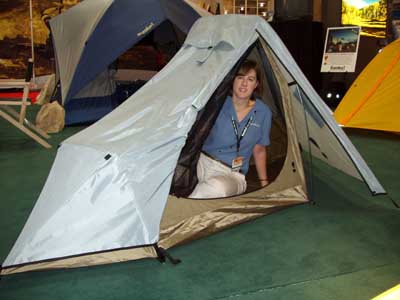
    Likewise, we have found considerable variance in packing styles. Our reviews assume properly packed loads that optimize both the virtual frame and carrying stability of a pack. We keep high density items (e.g., food, water, etc.) packed in the upper third, close to the backpanel. We also ensure the harness and stabilizers are adjusted correctly and that compression straps are properly employed. Attention to these packing and adjustment details make a world of difference in load control, stability, and balance.
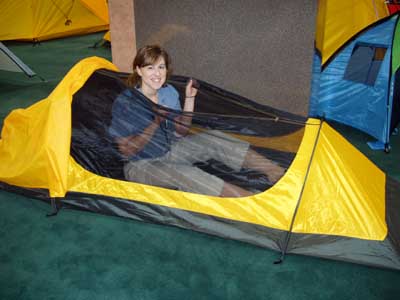
    Ryan Jordan’s article, M Frameless Backpacks: Engineering Analysis of the Load Carrying Performance of Selected Lightweight Packs, studies and quantifies the result of added weight on pack torso collapse (amount which the backpanel shortens) for seven frameless packs and one with removable stays. Ryan’s article demonstrates the fallacy of believing a rolled sleeping pad is “just as good as a frame.” His results also show that higher friction coefficients between the sleeping pad and inside pack fabric improve the virtual frame at lower pack weights. Based on these findings, it is not surprising that the negligible slip between the sleeping pad and the Starlite’s pad pocket results in exceptional load carrying capabilities.

    We have seen lightweight fabrics, such as silnylons and lightweight ripstops, used in ultralight packs for many years, and why not? With conscientious use they can endure considerable mileage. Take the 3-ounce hybrid silnylon GoLite Dawn (15.3 oz), which survived a 235-mile circumnavigation of Montana’s Beartooth Range. We have also put thousands of miles on GVP Gear’s (now Gossamer Gear) 1.3-ounce silnylon G4 pack (12.8 oz) without rendering it unusable (it accumulated some abrasions and a couple of small holes, but remains to this day a serviceable pack). For those looking for improved durability, perhaps for climbing or off trail hiking, several manufactures are meeting these needs by using heavier fabrics in high wear areas or throughout. One of the most durable frameless packs on the market, Osprey’s Aether 45, uses a 210 denier double ripstop in the main pack body and a highly durable 420 denier chain link fabric in high wear areas. This durability comes at a price; our review sample weighed 36.1 ounces. Other packs we have reviewed, like the Granite Gear Virga (20.5 oz) and the Six Moon Designs Starlite (25.4 oz), employ a more even balance between weight and durability.

    Frameless Backpack Ratings Chart for Packs Reviewed by BackpackingLight.com
    Mfr / Model Frame Features Volume Range Load Carrying Durability Value Average Score
    Equinox Katahdin 3.0 2.5 4.5 3.0 3.0 3.0 2.8
    GoLite Jam 4.0 4.5 4.5 4.0 3.5 5.0 4.2
    GoLite Dawn 2.0 3.5 2.0 3.0 3.0 4.5 2.9
    Gossamer Gear G4 2.5 4.0 2.0 3.0 2.0 4.0 2.9
    Granite Gear Virga 4.0 3.0 5.0 3.5 4.0 4.0 3.6
    Osprey Aether 45 3.5 3.0 4.0 3.5 5.0 3.5 3.2
    Six Moon Designs Starlite 4.5 4.5 3.0 4.5 4.0 4.5 4.1

    Mfr / Model Weight (oz) Carrying Capacity (lbs) Cost ($)
    Equinox Katahdin 26.3 20.0 $110.00
    GoLite Jam 21.1 30.0 $89.00
    GoLite Dawn 15.3 20.0 $79.00
    Gossamer Gear G4 12.8 20.0 $85.00
    Granite Gear Virga 20.5 25.0 $100.00
    Osprey Aether 45 36.1 25.0 $99.00
    Six Moon Designs Starlite 25.4 35.0 $135.00

    This Frameless Pack Ratings Chart summarizes the ratings from the various frameless packs we have reviewed to date. Though we have included an average score for each pack, don’t overlook specific ratings for each category. A pack like the GoLite Dawn scores fairly low overall. However, its weight and simplistic design make it ideal for certain applications. Also, if you’re a hiker that carries low volume loads and/or under 20 pounds in weight, don’t be seduced by a large volume and/or high carry capacity packs. The Starlite, which had highest carrying capacity and second highest average rating, performs exceptionally for heavy, high volume loads, but does not compress well to lower volumes and is one of the heavier packs tested. Bottom line: pick the lightest pack that meets your needs!

    The average score summarizes all ratings except for cost. The values for Weight were normalized to a 1 to 5 scale before averaging (from a value of 1 for 36.1 ounces to a value of 5 for 12.8 ounces). The values for Carrying Capacity were also normalized to a 1 to 5 scale before averaging (from a value of 1 for 20.0 pounds to a value of 5 for 35.0 pounds). Unless otherwise indicated in the header row, ratings are on a scale of 1 to 5, with 5 being the best.

    BackpackingLight.com Gear Guide to Backpacks

    Click here for the index

    Gear Guide Selection Criteria:

    • Frameless packs: packs that have nothing stiffer than closed cell foam in the backpanel
    • Pack volume exceeds 2000 cubic inches
    • Pack volume to weight ratio is 90 cubic inch per ounce or more, based on manufacturer provided volume and Backpacking Light measured weight

    Note: Inclusion criteria assumes volumes and weights in a size medium.

    2004 BackpackingLight.com Frameless Backpack Reviews – Explanation of Review Criteria

    Specifications

    Though most of the specifications are self-explanatory, the following need quantifying:

    • Volume to Weight Ratio – This value was used in the selection process for the frameless packs. It is derived by dividing the pack volume by the Backpacking Light-measured weight and expressed in units of cubic inch per ounce. This number provides a basis for comparison of different packs with different volumes by lessening the effect change of volume has on pack weight. This value can suggest how efficiently a manufacturer used materials to reduce weight in comparison to other packs. Do not equate this value with performance, as there are ways to reduce pack weight that will negatively affect one’s desire to carry the pack. In other words, better (higher) values do not necessarily suggest a better pack, as many factors go into pack performance and carry comfort. However, a highly rated pack with a high volume to weight ratio suggests the manufacturer was able to maintain high levels of comfort while minimizing weight.
    • Load Carrying Capacity – Backpacking Light tests each pack to determine the maximum comfortable load carrying capacity for most users and provides this value here along with the manufacturer’s suggested capacity.
    • Carry Load to Pack Weight Performance Ratio – A unitless value derived by dividing the Backpacking Light-determined maximum load carrying capacity of the pack (pounds) by the Backpacking Light-measured pack weight (also pounds). Packs with better suspension systems and better weight transfer to the hips that carry heavier loads relative to empty pack weight will have higher ratios. Light packs, with a good virtual frame that efficiently transfers weight to the hips, and a light but comfortable harness, will also do well in this measure. The ratio does not take into account additional – and sometimes highly desirable – features such as more durable fabric and construction, and additional pockets or a top flap. As such, it should not be considered an exact measure of performance to weight unless comparing packs with fairly similar designs.

    Features

    The ratings that follow subtitles are on a scale of 1 to 5, with 5 being the best, and are relative to other frameless packs.

    Frame and Suspension

    Here we describe the components of the frame and suspension, including shoulder straps, hipbelt, sternum strap, shoulder strap stabilizers, and hip belt stabilizers. Although frameless packs do of course lack a frame, many integrate sleeping pads or sophisticated compression systems to create a “virtual frame.” We describe the “virtual frame” here, but its performance is measured in the Field Performance section. We also describe the adjustability of the suspension and harness components. If a pack has the ability to adjust to different torso sizes, that feature is discussed.

    Usable Features and Ease of Use

    Here we describe the usable features of the pack (the “extras”); including but not limited to pockets, top flaps, bottle holders, hydration systems, axe loops, bungee cord systems, etc. We also consider the design and use of these features, such as the type, size, location and shape of the pockets. We consider it a plus if you can reach back and get a water bottle or camera out of a side pocket without having to take the pack off. Mesh pockets are a plus since they enhance gear drying and content visibility. Hydration pockets get higher ratings if the bladder can be replaced without unpacking the main pocket of the pack. “Ease of use” considers how complicated it is to properly use a pack.

    Load Volume Flexibility

    This measures the pack’s ability to control larger or smaller volume loads. The need to control volume happens on long trips where you start out with a lot of food. As you consume the food your pack might end up at half its original volume. This also happens during cold weather trips: when temperatures drop, you may end up wearing a lot of high volume synthetic insulation garments that started out in your pack. Finally, you may decide to unload most of the gear in your “trail pack” and use it as a day or summit pack. Packs that compress well and stabilize smaller loads, thus maintaining the “virtual frame,” get the highest ratings.

    Options

    A few manufacturers offer options for their packs, such as alternate fabrics, add on pockets, hydration sleeves, padded hip belts, frame stays, etc. This section is only included for those packs that have options that need to be described.

    Field Experience

    Pack Load Carrying

    This is an evaluation of how well the pack can carry a load. The pack is tested beyond the manufacturer’s suggested load carrying capacity and carried with progressively less weight in order to validate the manufacturer’s suggestions. This is done with the pack packed as optimally as possible so we can push the pack to its limit. We also evaluate how different volumes affect the “virtual frame” by testing lower volume loads. If a sleeping pad is part of the frame, we try to test the pack with several pads to evaluate what works best and what you can expect with your pad. Finally, we test the load stability of the pack and how this affects center of gravity.

    Durability

    How well did the pack hold up to abuse (e.g., scrapes against granite and brush)? Are there reinforcements or heavier fabrics in high wear areas? We describe the seams and webbing attachments. We also evaluate the durability when using the pack for off trail or climbing use. Higher rated packs are those that have more durable fabrics in high wear areas, reinforcements, double or triple stitching, bar tacking on pack straps, etc.

    Value

    This is our most subjective rating. It takes into account all of the above criteria, along with the pack’s price. Some adjustment is made for the type of pack. For example, a lower capacity, 14 ounce, webbing-belted pack with light fabric is not directly comparable to a larger capacity, 20+ ounce pack with a fully padded hipbelt and heavier and more durable fabric.

    2004 BackpackingLight.com Frameless Pack Reviews – Index of Reviews

    Manufacturer / Model

    M Equinox Katahdin Backpack Review

    M GoLite Jam Backpack Review

    GoLite Dawn Backpack Review

    M Granite Gear Virga Backpack Review

    Osprey Aether 45 Backpack Review

    M Six Moon Designs Starlite Backpack Review

    M GVP Gear (now Gossamer Gear) G4 Backpack Review (2003 Review)