


Introduction
Quilt performance is often discussed in terms of fill power, loft, and temperature ratings, but in the field, a significant fraction of heat loss can occur through gaps between the quilt and the sleeping pad. Those gaps become especially important in wind, when even a modest breeze can drive convective leaks along the pad-quilt interface and erode the effective insulation of an otherwise well-built quilt. Pad attachment systems are intended to manage those gaps by controlling quilt position and edge tension around the torso, but their actual impact on heat loss resistance is rarely quantified.
To move this discussion from theory and product marketing into measured behavior, a controlled proof-of-concept experiment was conducted using a heated-water reservoir on an insulated sleeping pad, with two different quilt-pad coupling strategies and standardized lateral wind exposure at pad height. Reservoir and ambient temperatures were logged over time and analyzed using a simple lumped-capacitance model to estimate a thermal time constant tau (τ) for each configuration. For a fixed thermal mass, tau (τ) is proportional to overall thermal resistance, so differences in tau (τ) between test conditions can be interpreted as differences in how effectively each quilt-pad system resists heat loss, both in still air and under a 4-5 mph side breeze.
Trust Disclosures

- Funding Disclosure: Zenbivy provided financial support and product samples to underwrite the development of this report.
- Editorial Independence: Backpacking Light and the author retained full editorial control over this content, including all ideation, research, experimental design, analysis and conclusions with no influence from Zenbivy.
- Affiliate Links: This article contains affiliate links to Zenbivy.
View the GearTrust Audit Report (PDF) for this article.
Backpacking Light does not accept financial compensation for product placements in editorial reviews. When we accept funding to underwrite non-review technical reporting or education, we fully disclose funding sources, retain full editorial control, and develop the content without brand influence, review, or approval. We do not accept financial compensation for brand-directed (sponsored) “advertorial” content. Learn more about Backpacking Light Trust Standards.
Background
In a quilt sleep system, heat leaves the body through several interacting mechanisms:
- Conduction moves heat from the skin through clothing and trapped air to the quilt interior, and from compressed contact points into the pad, then into the ground.
- Radiation carries energy as infrared emission from the skin to the inner quilt surfaces and from the quilt shell or exposed skin to the sky, shelter walls, and surrounding terrain.
- Phase change and mass transfer remove heat when sweat and insensible perspiration evaporate at or near the skin, when that moisture migrates outward and condenses or freezes in colder layers, and when damp fabrics are dried by body heat.
- Respiratory losses occur as the body warms and humidifies cold, dry inhaled air, which is then exhaled at near-body temperature and high humidity.
In addition, convection removes heat as air circulates under the quilt and around the body, and leaks through gaps at the neck, sides, or footbox. Users perceive this convection as “draftiness”.
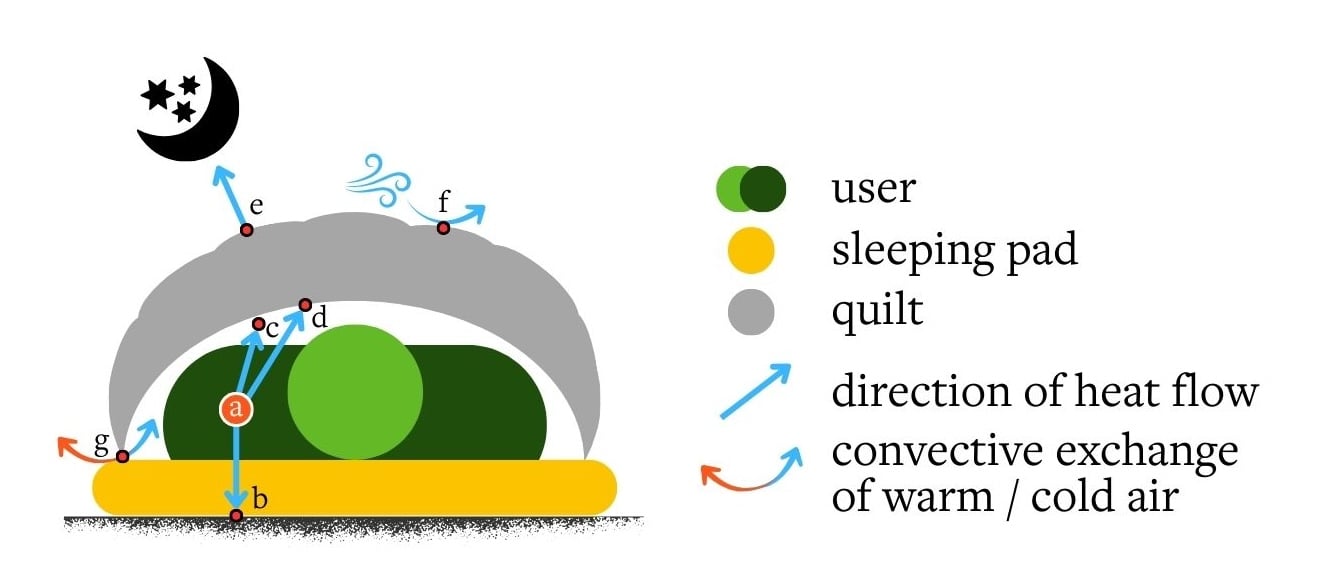
This perception (or fear) of “draftiness” may be the single most important barrier to the broader adoption of backpacking quilts as the de facto standard for ultralight backcountry sleep systems.
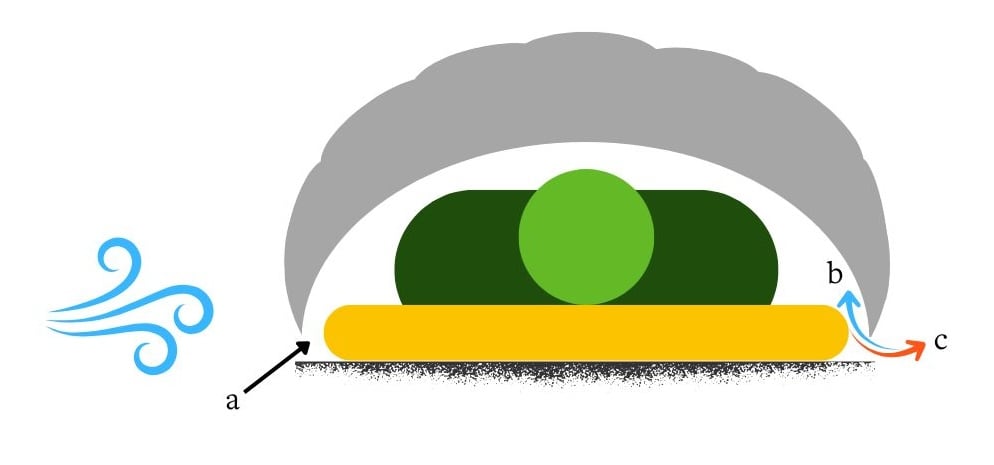
Drafts enter and exit through gaps between the sleeping pad and quilt, and can result from passive convection, bellows effects during movement, and wind:
- Passive convection occurs when high-pressure warm air inside the quilt is displaced by low-pressure cool air outside the quilt.
- Because the quilt, sleeping pad, and user can all move independently of each other, the system is subjected to air currents caused by bellows effects.
- Wind blowing across the system can induce movement of the quilt, expanding the gaps and magnifying the bellows effect.
Therefore, controlling heat loss in a quilt depends on the effectiveness of the coupling of the quilt edges to the sleeping pad.
Design strategies
Design variability in quilt-to-pad attachment systems is best described as a sequence of increasingly restrictive mechanical couplings among these three elements. Each successive category removes degrees of freedom, thereby reducing the probability and magnitude of edge drafts. What follows is an ordered description of that evolution, from least to most effective at controlling drafts, with terminology and reasoning grounded in first principles of basic heat transfer and mechanics.
Free floating quilts: no intentional mechanical coupling
The starting point in this evolution is the free-floating quilt. In this configuration, the quilt is simply placed over the sleeper and pad, with no straps, cords, sleeves, or sheets connecting it to either the pad or the body. Draft control is achieved only through quilt width, surface friction, and user behavior, such as tucking the edges under the body.
In mechanical terms, the quilt, pad, and sleeper each have nearly full translational and rotational freedom with respect to one another. When the sleeper turns, flexes their knees, or extends an arm, the quilt may lift or slide laterally. When the pad shifts on the shelter floor, its edge may no longer align with the quilt edge. Each of these motions can create an open flow path at the perimeter.
This configuration is simple and light, and it can be adequate in mild conditions where the thermal gradient between inside and outside air is small, and drafts have a limited impact on comfort. However, in colder or windier environments, or for sleepers who move frequently, it is the least effective configuration for controlling drafts because it does not deliberately constrain the relative motion that produces them.
Body anchored systems: coupling the quilt to the sleeper
The next class of systems introduces a mechanical coupling between the quilt and the sleeper, while still leaving the pad largely independent. Under body straps, edge tension cords, and snap or drawcord closures that connect one side of the quilt to the other fall into this category. The quilt is effectively formed into a loose tube around the body.
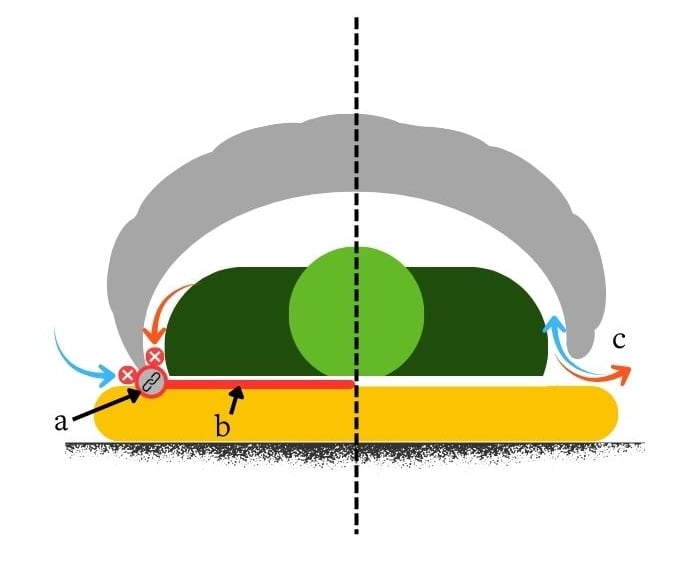
With this arrangement, the quilt and sleeper move more or less together. When the sleeper rolls from back to side, the quilt tends to rotate with them rather than remaining fixed over the pad. Large, catastrophic displacements of the quilt, such as it sliding almost entirely off the torso, become less common. The number of degrees of freedom is reduced: the quilt is now somewhat constrained relative to the body, although not to the pad.
From a draft control perspective, this is a meaningful improvement over the free-floating case. The major drafts caused by the gross separation between the quilt and body are reduced. In addition, the length of the straps or cords that attach to the quilt edges can be adjusted, effectively controlling the girth of the quilt at those locations. This can also reduce drafts.
However, the pad remains free to move relative to the combined quilt and body assembly. If the pad shifts laterally on the shelter floor or if the body and quilt rotate relative to the pad, the alignment between quilt edge and pad edge can still be lost. The result is continued exposure to edge gaps – particularly at the hips and shoulders, where motion is largest – and along the quilt edges between the underbody strap attachment points.
Therefore, body-anchored systems are moderately effective. They reduce the frequency of severe drafts but do not systematically stabilize the quilt pad boundary, where convective control must occur to be fully reliable.
Pad-anchored straps: coupling the quilt to the pad
The next stage introduces direct mechanical coupling between the quilt and the pad. In pad-anchored systems, straps wrap entirely under the pad, and the quilt attaches to these via clips, buckles, toggles, or similar hardware. Variants that rely on adhesive anchors or sewn loops on the pad itself are functionally similar: they create fixed reference points on the pad that the quilt connects to.
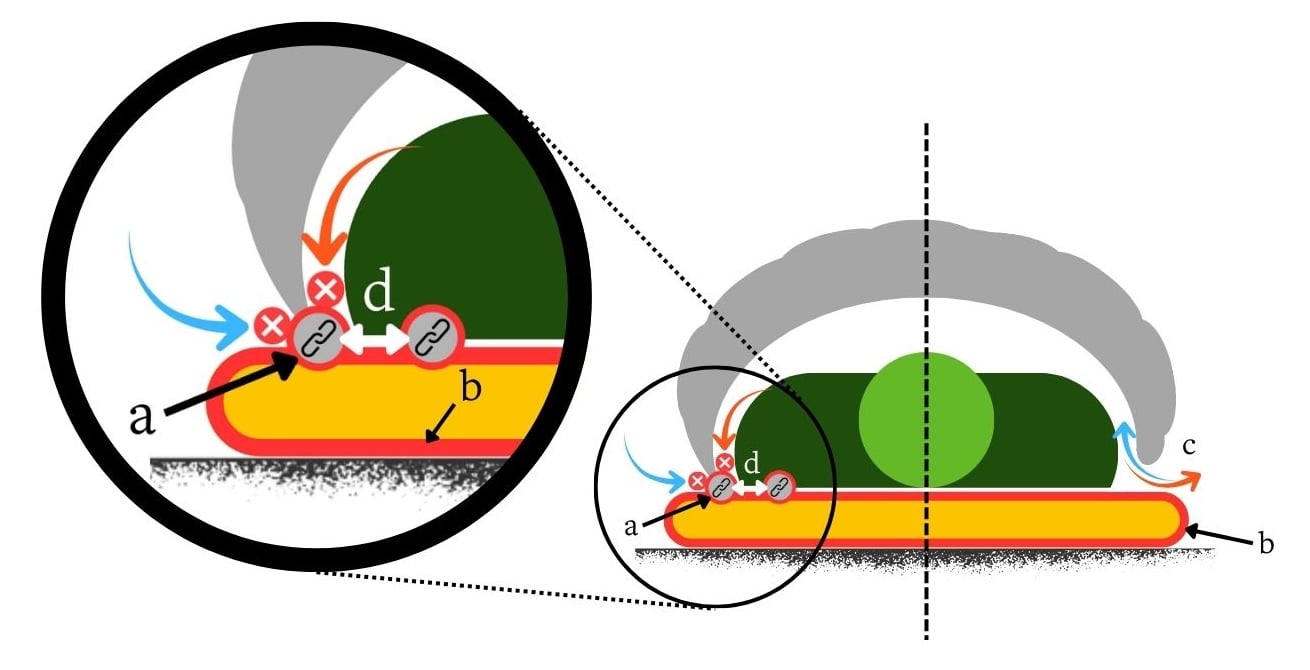
Here, the pad becomes the primary reference frame. The relative motion between quilt and pad is intentionally constrained. The sleeper may still move relative to both, but the alignment of the quilt edge with the pad edge is more stable.
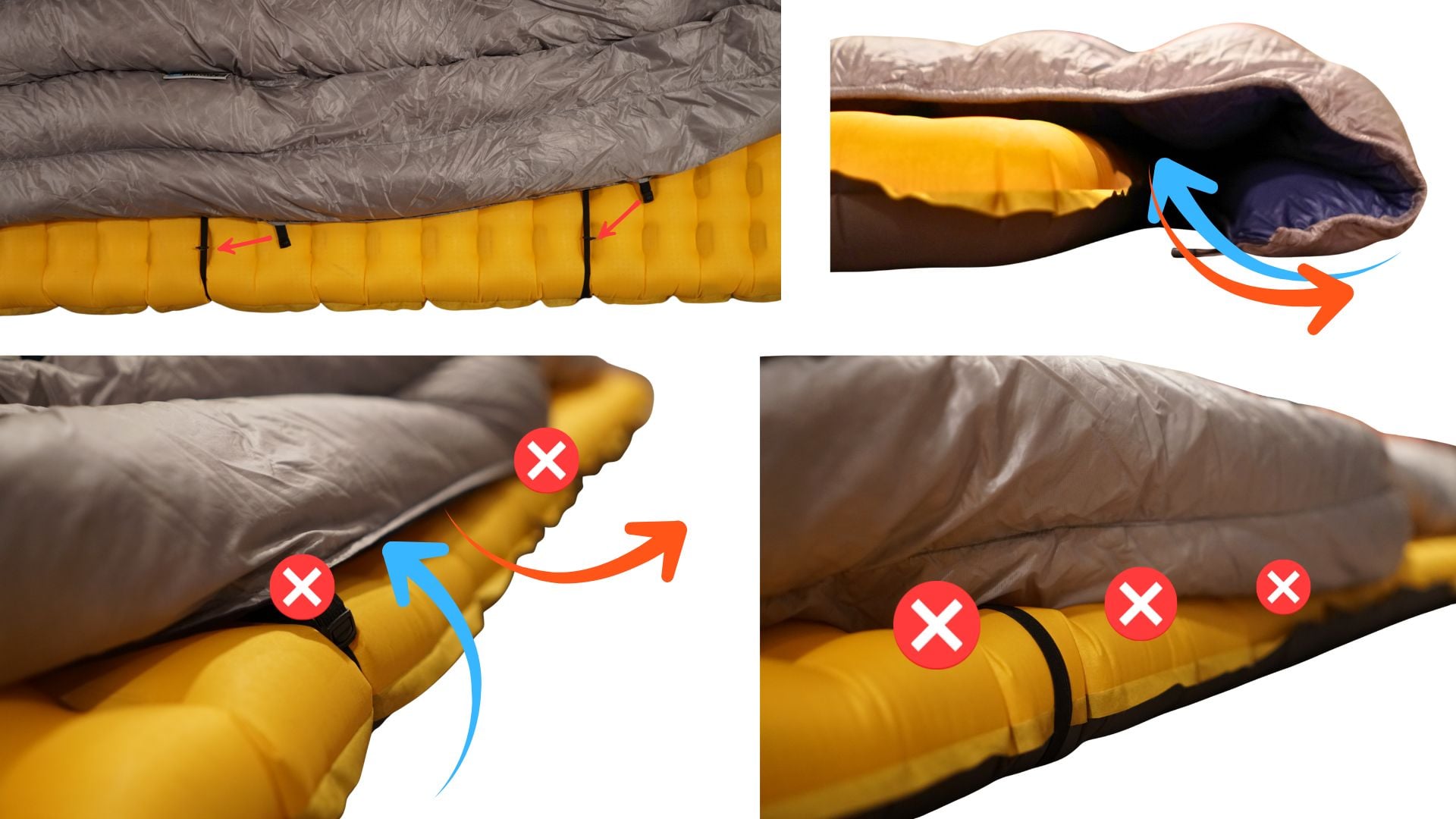
Some pad-anchored systems allow for movable anchor points along the pad perimeter straps, which can reduce the quilt girth and more effectively tuck the edges underneath the user’s body. Thus, depending on strap placement and tension, the quilt can be configured to “cup” around the pad’s outer edge or be tucked in towards the user, maintaining better overlap and contact pressure along a significant portion of the perimeter.
This design has direct implications for convective control. Because the quilt pad interface is stabilized, the number of events in which a continuous flow path opens from ambient air to the interior decreases. Where gaps do occur, they are often smaller and shorter-lived. In cold or windy conditions, this leads to observable increases in perceived warmth and comfort by most users.
The effectiveness of both body-anchored and pad-anchored systems (and their hybridized designs) is not binary. It depends on optimizing configuration: strap spacing, strap tension, and the relationship between quilt cut and pad width all influence outcomes. If straps are too loose or spaced too far apart, channels for convective air movement will be larger. If the pad width or user clothing thickness changes and the system is not adjusted, convective heat loss rates also change. Nevertheless, assuming an optimized setup (where air channels are minimized and girth is preserved so as not to constrain quilt loft), pad-anchored systems with variable anchor positioning provide a high level of draft resistance with relatively minor penalties in weight (1 to 2 ounces / 28 to 57 g) and complexity.
Sleeved sheet-and-shingle systems: structural integration of pad and quilt
Zippered sleeping bags solve some of the problems of quilts by eliminating edge drafts and maintaining continuous insulation (with no gaps) along the entire length of the sleeping bag. This is accomplished by using zippers along one or both sides. However, it’s essential to realize that this is a body-anchored system, and not a pad-anchored system. As a result, girth is not adjustable (so users find them to be more restrictive in terms of body positioning), the user can roll and expose less-insulated parts of the sleeping bag to the outside environment, and the bag is not integrated with the pad, which limits the insulation benefits of having both of them coupled.
Understanding these drawbacks provides important context for the optimizing quilt-pad system design, which includes systems that:
- Maintain continuous draft control along the entire edges of the quilt; and
- Retain the benefits of a pad-anchored system.
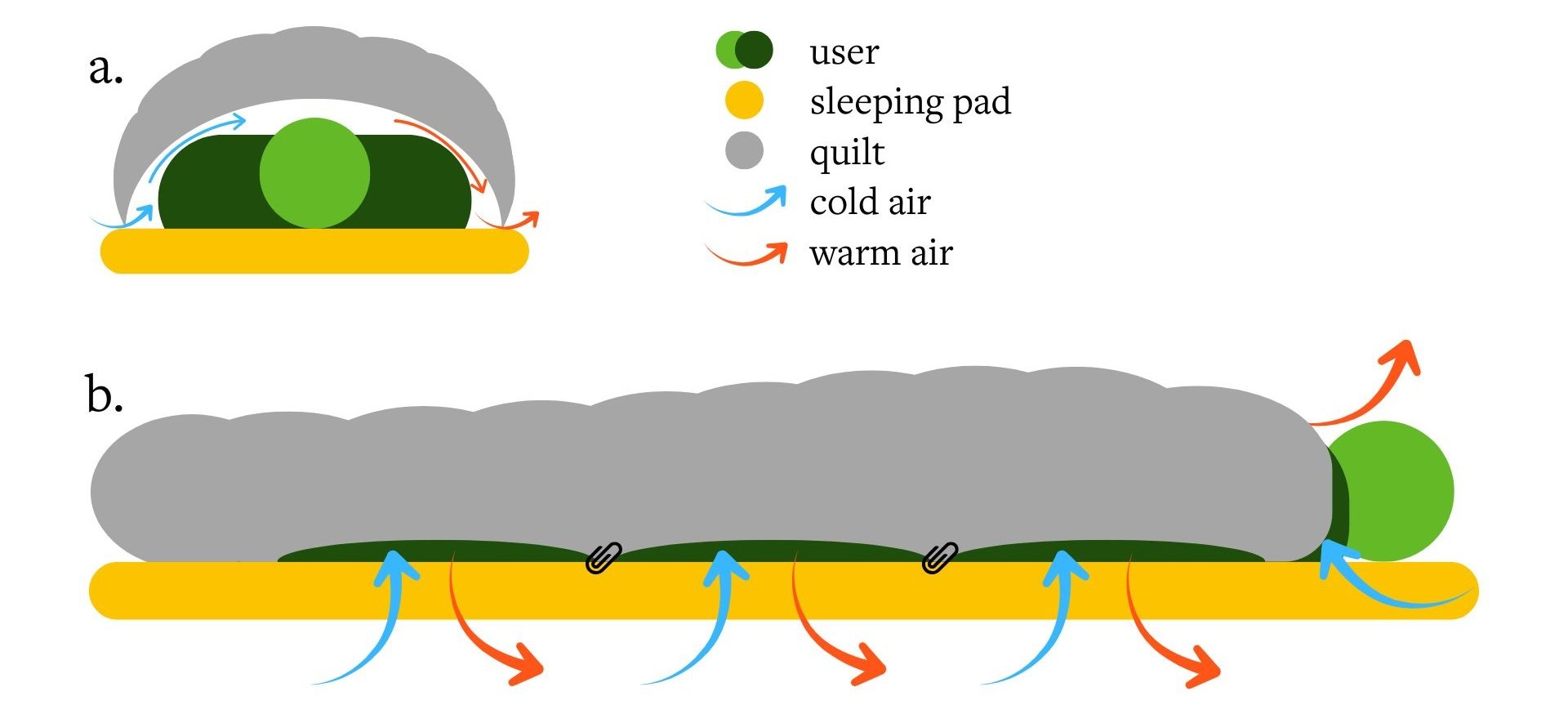
This can be accomplished by inserting the pad into a fabric structure (some type of sleeved “sheet”) and then attaching the quilt to the sheet with clip-and-loop attachment points. Where this system can offer distinct advantages over traditional cord- or strap-based anchor systems, a sheet can provide continuous draft control along the entire side edges of the quilt using a shingled construction. In addition, a fabric hood (whether insulated or not) can be integrated into the sheet structure to provide draft control at the top edge of the quilt, similar to a hooded sleeping bag.
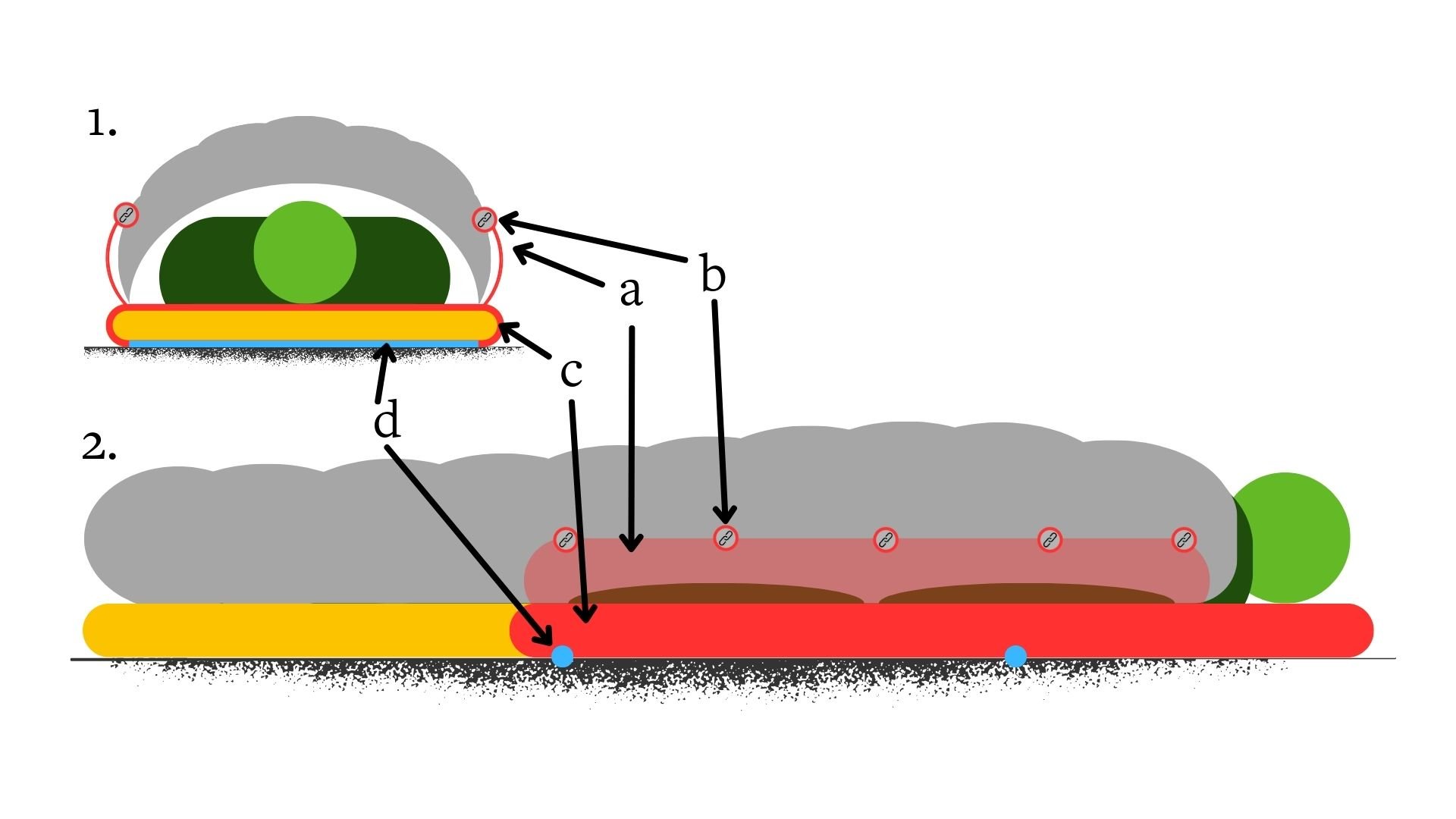
In these designs, the pad may slide into a full-length or partial sleeve on the underside of the sleep system, sit in a pad pocket, or be enclosed by a fitted sheet or “bed” that wraps around it. The quilt then connects to this fabric structure by means of zippers, snaps, or clips.
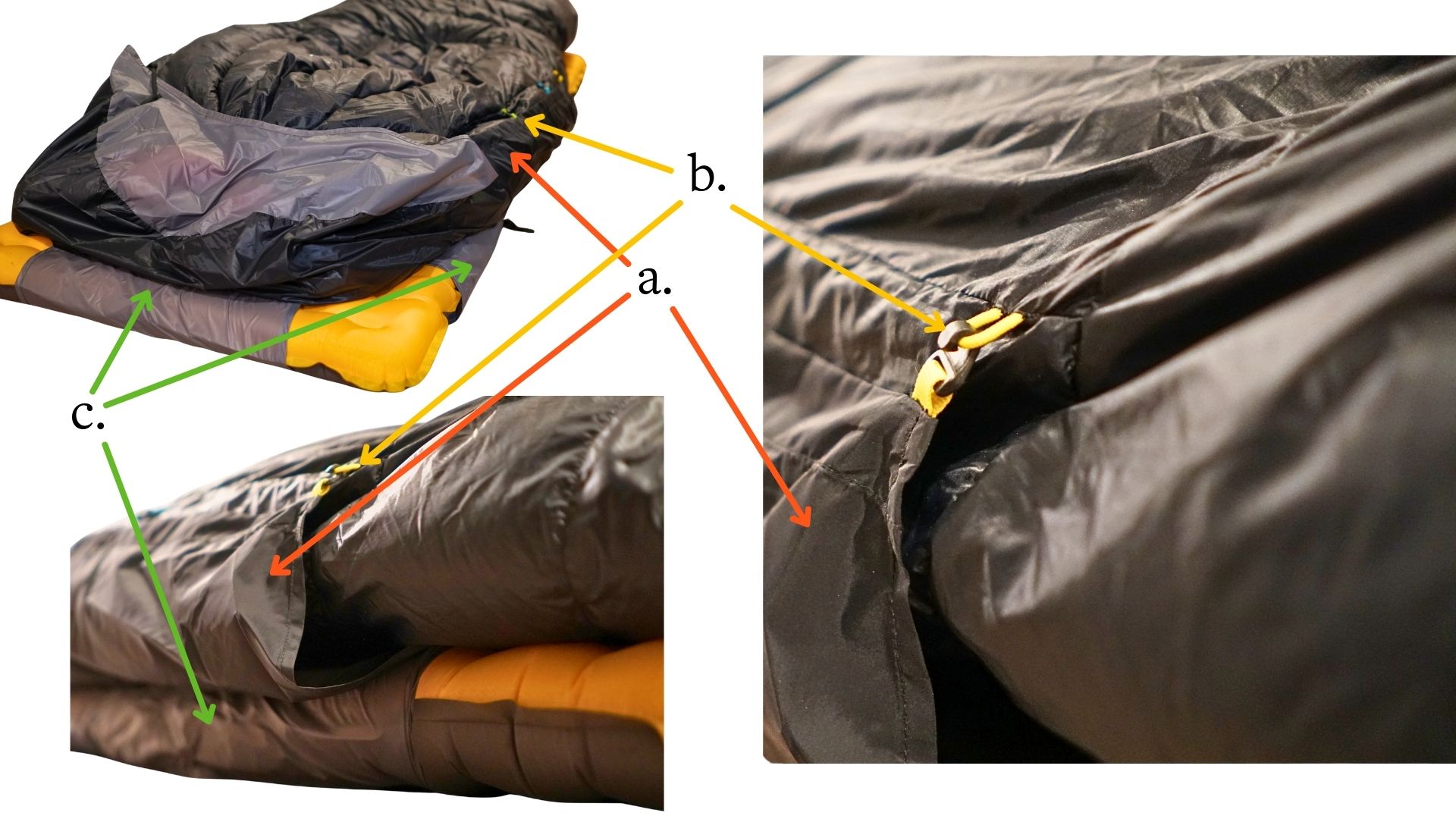
In this arrangement, the pad and sheet behave as a single (coupled) unit. The pad cannot easily shift laterally or longitudinally relative to the attachment grid, and the quilt attachment points themselves can be distributed around the perimeter in a controlled fashion. With the inclusion of a longitudinal shingle, quilt attachment points can be placed above the two-dimensional plane of the pad. Now, the system is coupled to the sheet in a third dimension instead of constrained to the surface of the pad. This is what allows the shingle to overlap the quilt edges, control drafts, and retain heat.
The detailed 3D geometry of the system can be specified in detail: the height of attachment points above the pad surface, the amount of overlap between quilt edge and pad edge, and the way tension is shared among them.
The consequence for draft control is straightforward. Because pad, lower fabric, and quilt are all tightly coupled, the opportunities for creating an open convective pathway at the quilt pad interface are minimized. Small movements of the sleeper are absorbed within the structure. Larger positional changes, such as rolling from back to side, occur within a system that maintains its perimeter geometry. In effect, these designs approximate the convective control of a sleeping bag while maintaining some of the adjustability and venting options of a quilt.
Because the sheet-and-shingle system eliminates heavy zippers and doesn’t rely on underbody insulation (like in a sleeping bag), they provide nearly as much warmth as a sleeping bag without much additional weight (integrated pad sheets weigh about 2.5 to 4.5 ounces / 70 to 130 g).
The tradeoffs between sheet-and-shingle systems vs. quilts with pad straps are notable. Additional fabric and hardware increase system weight and packed volume. The system’s performance is often tuned to specific pad widths, shapes, and thicknesses, and attachment point geometry. These systems are often sold as packages and do not include interchangeable components. Attempting to use system components from different brands can introduce slack or misalignment that compromises both comfort and draft resistance. Nonetheless, when properly matched and configured, sheet-and-shingle configurations represent the most effective current strategy for controlling drafts in quilt-based sleep systems.
Testing and performance
Up until this point, pad-quilt-user coupling has been treated as a theoretical problem within the broader context of complex heat transfer thermodynamics. To move beyond theory, a simple but tightly-controllable experimental method was developed to measure the effectiveness of coupling systems and their role in resisting overall heat loss from a pad-quilt-user system.
Experimental method
Overview
This experiment is designed to quantify how different quilt-pad coupling designs affect heat loss from a sleeping system, with particular emphasis on products designed to control wind-driven convective leaks at the pad-quilt interface. The core idea is to replace a human sleeper with a well-characterized thermal mass, expose that system to controlled wind at the height of likely draft gaps, and track how quickly it cools. From each cooling curve, a single thermal time constant tau, τ, which serves as a proxy for the overall thermal resistance of the quilt-pad system under the tested conditions, can be derived.
Thermal surrogate and instrumentation
The heat source is a 20 L flexible water bladder (400D PU-coated nylon, 11 x 9 x 4 inches) filled with hot tap water. Water is used as a surrogate for the human torso and core for two reasons:
- It has a high, well-known specific heat capacity, so a 20 L volume provides a substantial and well-defined thermal mass.
- Its thermal properties are effectively constant over the temperature range of interest, and it does not change its own heat production or circulation as it cools.
At the start of each test, the bladder is filled with water heated to a target initial temperature (typically 105 to 115 °F), sealed, and gently mixed to reduce temperature stratification.
The bladder is “clothed” in a thin ultralight polyester T-shirt. This provides:
- A minimal base layer between the “body” and the quilt.
- A consistent interface and mechanical protection for the temperature sensor.
Reservoir temperature is measured with a compact, battery-powered wireless data logger incorporating a factory-calibrated digital temperature sensor in a sealed housing with an accuracy of ±0.1 °C with a maximum error of ±0.3 °C. The sensor was placed on top of the bladder, under the T-shirt, in direct contact with the bladder surface. In this configuration the sensor is strongly coupled to the water by conduction and only weakly coupled to the ambient air, so the recorded temperature closely tracks the bulk water temperature.
Ambient air temperature is recorded separately using a second sensor placed near the sleeping system, shielded from direct radiative exchange with the bladder and quilt. Both reservoir and ambient temperatures are logged at fixed intervals (typically 1 minute) for the duration of each test.
Additional sensors were placed at various locations for experimental control purposes to ensure that each test was performed in the absence of anomalies that could unknowingly influence results. These included sensors for environmental monitoring (ambient wind, station pressure, relative humidity, and dew point) and test configuration monitoring (between the reservoir and sleeping pad, below the sleeping pad on the ground, and on the ground in the absence of the sleeping pad). Notably, no test data are included when the ground sensor temperatures (below and away from the pad) were materially different, to avoid complicating results due to excess heat loss from the test system to the ground surface.
For the series of tests reported here, ambient air temperatures ranged from 17 °F to 37 °F. Tests were performed at night and in a location protected from environmental (non-engineered) wind and radiative heat loss to night skies. Each test had a minimum runtime of six hours and all test data was collected between 10 PM and 6 AM.
Sleeping system configuration
All tests use the same sleeping pad: a 25 x 72 x 3.5 inch mylar-insulated air pad with a reported R-value of 5.4.
The clothed water bladder is placed on top of the pad, centered laterally and aligned lengthwise to approximate the position of a human torso on the pad. The quilt under test is then arranged over the bladder and pad as follows:
- The quilt is centered over the bladder.
- The foot end and head end are oriented as they would be in normal use.
- Edges are allowed to drape naturally along the sides of the pad, unless a specific attachment or tensioning system is being evaluated.
This setup provides a realistic geometry for how a quilt interacts with a pad and a warm torso region, while keeping the underlying pad and thermal mass constant across all tests.
Experimental design
This experimental method and apparatus is used as part of our ongoing research to investigate and compare the overall performance of products from different manufacturers.
However, the primary experimental question investigated in this study is:
To what extent does a specific product design resist heat loss in the presence of controlled wind-induced convection?
To answer this question, selected tests are presented here:
- Naked control. This test is performed with no quilt – just the t-shirt wrapped water bladder. Zero wind. This test is normalized against zero-wind tests of specific products to investigate a product’s overall insulative performance.
- Product control. This test is performed with a quilt and its pad attachment systems engaged and coupled to the edge where the side of the pad meets the top of the pad. Zero wind. This test is normalized against product tests using the same product to investigate various product test scenarios (in this case, the presence of wind).
- Product test. Same as #2, but with a controlled wind.
For each configuration:
- The same pad, bladder, clothing layer, and sensor placement are used.
- Attachment hardware is used according to the manufacturer’s intended design.
- Strap tension or attachment positions are set in a repeatable way and documented.
- No additional ad hoc clips, extra tucks, or improvised seals are added beyond the configuration being tested.
This approach is designed to isolate the effect of pad-quilt coupling on convective leakage while holding the rest of the system constant.
Wind generation and measurement
To investigate how these coupling designs perform in the presence of wind-driven convection, an industrial fan was used to generate a controlled lateral breeze across the pad-quilt interface:
- The fan is positioned so that airflow approaches the system from the side, roughly perpendicular to the long axis of the pad.
- The flow is aimed at the torso region, where quilt edges and pad width tend to create the most consequential draft paths.
Wind speed is measured with an anemometer at a height of 3 inches above the ground, which corresponds to:
- The top surface of the sleeping pad.
- The height of typical pad-quilt edge gaps and potential draft channels.
Fan speed is adjusted to maintain a steady 4 to 5 mph breeze at this 3-inch height. This height-specific measurement ensures that the reported wind speed reflects the flow conditions at the actual leak points of interest rather than at some arbitrary reference height.
For wind-on tests, the fan is operated continuously for the entire duration of the run, and both fan and system positions are kept fixed so that wind direction, speed, and impingement location remain as constant as possible. Still-air tests (fan off) were run using the same setup to provide a baseline for comparison.
Data processing
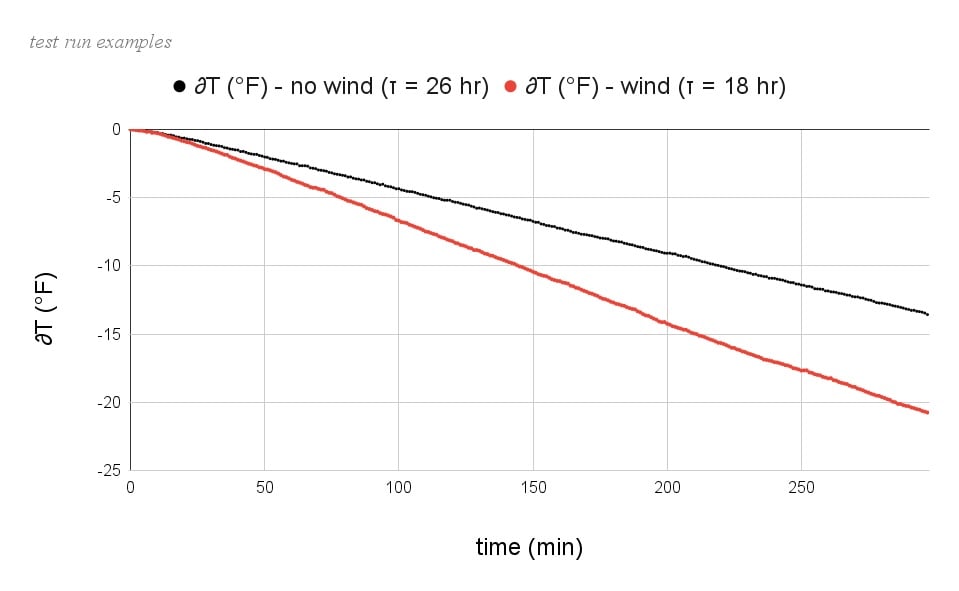
The thermal performance of each configuration is summarized by a thermal time constant tau (τ) derived from the cooling curve.
Because both reservoir and ambient temperatures are measured, the analysis is based on the temperature excess:
ΔT(t) = T_res(t) − T_amb(t)
where T_res(t) is the temperature of the reservoir reported by the reservoir sensor at time t and T_amb(t) is the ambient temperature reported by the ambient sensor at time t.
For a lumped thermal mass losing heat to its surroundings through a fixed thermal resistance, the cooling can be modeled as a first-order process:
d(ΔT)/dt = −(1/τ) · ΔT(t)
which integrates to:
ΔT(t) = ΔT₀ · e^(−t/τ)
where ΔT₀ is the initial temperature difference at t = 0, and tau (τ) is the thermal time constant.
Tau (τ) was derived from test data by fitting the test data to the equation above using natural logarithmic regression modeling.
For this experimental setup, the thermal capacity of the water reservoir, bladder, pad, and base layer is held constant. As a result, differences in tau (τ) between tests directly reflect differences in the overall heat loss coefficient of the system, and thus differences in effective thermal resistance. Larger values of tau (τ) correspond to slower cooling and better resistance to both still-air and wind-driven heat loss, depending on the condition under which the measurement was made.
Repeatability and statistical analysis
All tests were performed in duplicate. If tau (τ) differed by more than 5% between duplicate tests, additional replicate tests were completed until this repeatability standard was achieved.
Tau (τ) was estimated for each test run by linear regression of ln(ΔT) versus time (R² > 0.99 for all tests), and uncertainty was quantified using 95% confidence intervals derived from the regression, confirmed with a nonparametric bootstrap of residuals and analysis of replicate runs.
Differences in tau (τ) between configurations were considered not statistically significant when their 95% confidence intervals, incorporating both regression and replicate-test variability, substantially overlapped.
Test results
The following table summarizes five test conditions reported in this study. They include two products:
- Product #1 – Hyperlite Mountain Gear Quilt 20 (20 °F 1000 FP down, with two circumferential pad attachment straps with buckles attaching the pad to the strap). This quilt was chosen because it consistently scores in the top 10% of heat loss tests performed with this protocol across a variety of different experimental scenarios.
- Product #2 – Zenbivy Ultralight (10 °F 900 FP down, partial pad sleeve, shingle system). This quilt was chosen to investigate the effectiveness of Zenbivy’s integrated pad-and-shingle bed system and its ability to resist convective heat loss.
| Test Condition Description | Wind | Tau (τ) |
|---|---|---|
| Naked Control - No Wind | 0 | 9.6 hr |
| Product #1 Control - No Wind | 0 | 26.2 hr |
| Product #1 Test - Wind | 4.5 mph | 18.2 hr |
| Product #1 Test - Wind (Narrow) | 4.5 mph | 22.3 hr |
| Product #2 Control - No Wind | 0 | 31.5 hr |
| Product #2 Test - Wind | 4.5 mph | 28.8 hr |
The test results above can be interpreted and qualified as follows:
Raw performance between the two systems should be compared with caution. Products #1 and #2 contain different amounts of down, different types of down, and have different girth geometries. The data shown here is insufficient to claim that one quilt is universally more insulating than the other.
Comparing two different quilt systems: In the context of #1 above, performance factors can be derived that are useful for comparing the performance of the two quilts (especially under different test conditions). Those performance factors can be assumed as the ratio of tau (τ) for the product control (no wind) to tau (τ) for the naked control (no wind). In this case, Product #1 has a score of 26.2 / 9.6 = 2.7 and Product #2 has a score of 31.5 / 9.6 = 3.3. Higher scores generally correspond to more insulative quilts.
Quantifying the influence of an individual product’s pad attachment system. The ratio of tau (τ) derived from a product test run to tau (τ) derived from a product control run is a proxy for the effectiveness of a quilt’s ability to resist convective heat losses in the presence of a controlled, engineered wind. For Product #1, this ratio is 18.2 / 26.2 = 0.70. For Product #2, this ratio is 28.8 / 31.5 = 0.91. Higher scores generally correspond to more effective pad attachment systems. These factors can be visualized in a graph summarizing the test data:
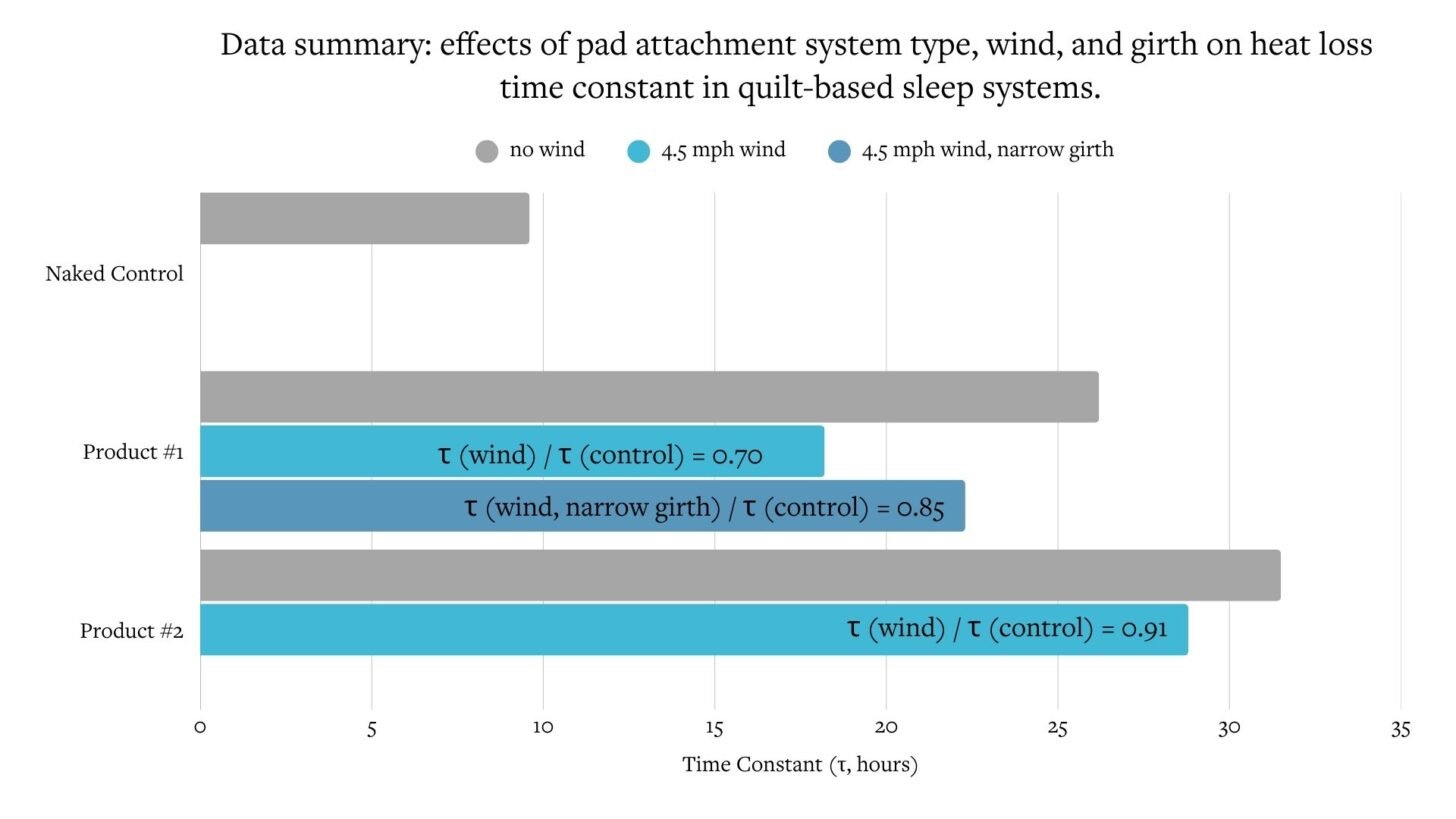
Quantifying the influence of girth. Product #1 Test – Wind (Narrow) represents a test where the girth of the quilt was reduced by sliding the quilt-to-pad-strap attachment clips inward towards the torso. This improved performance, resulting in a ratio of tau (τ) for this test divided by tau (τ) for the Product #1 Control of 22.3 / 26.2 = 0.85. This is nearly as high as the ratio for the sheet-and-shingle system tested in Product #2. This illustrates the potential performance gains that could be made by combining both girth adjustments and a sheet-and-shingle system to maximize performance when convective air movement is present.
Limitations
This experimental method is intentionally simplified. A 20 L water reservoir with no metabolic heat production, thermoregulation, movement, or moisture is used as the heat source, so only passive heat loss through the quilt-pad system is characterized. As a result, the reported time constants tau (τ) describe relative insulation efficiency and wind robustness for this standardized setup and should not be interpreted as direct predictions of perceived warmth for individual sleepers in the field.
The thermal behavior of the system is modeled as a single lumped first-order process, with the entire stack (water, bladder, clothing layer, pad, quilt, air films, and radiative environment) represented by one effective time constant, tau (τ). In reality, multiple thermal pathways and nodes exist, and external heat transfer conditions can vary slightly over time. High goodness of fit (R² > 0.99 for ln(ΔT) vs. time) supports the use of this model over the time scales examined, but tau (τ) should be regarded as an aggregate parameter specific to this configuration, not a fundamental property of any individual component.
Environmental and geometric constraints also limit generality. Tests are conducted with a single pad model, one pad width and R value, a centered “torso” reservoir position, and a controlled 4–5 mph lateral breeze at pad height generated by an industrial fan. Natural wind is typically more variable in speed, direction, and turbulence, and quilt behavior can differ with other pads, body shapes, sleeping positions, and shelter types. Individual runs span several hours, while some tau (τ) values are longer, so tau (τ) is estimated from partial cooling curves rather than full returns to equilibrium.
Finally, measurements and statistics carry finite uncertainty. Temperature sensors have limited resolution and specific response characteristics, and ambient temperature is sampled at a limited number of points. Repeat tests, a 5% repeatability criterion for tau (τ), and confidence intervals (including bootstrap checks) are used to control and quantify this uncertainty, but some differences between configurations remain statistically indistinguishable. Even when differences in τ are statistically significant, their practical importance for comfort depends on user-specific factors and field conditions that are outside the scope of this method.
Summary
This experiment showed that pad attachment strategies can change the effective thermal time constant of a quilt-pad system. Their influence becomes more obvious when a controlled side wind is introduced at pad height. Configurations that allow the quilt to drape freely over the pad tend to lose a significant fraction of their still air tau (τ) contribution when exposed to wind, reflecting the formation of convective leak paths along the pad edges. In contrast, attachment systems that maintain a consistent seal at the torso and control edge position preserve a much higher fraction of their still air τ under the same wind load, indicating better resistance to wind-driven convective loss.
Because the heat source, pad, and environment were held constant, these differences in tau (τ) can be attributed primarily to the pad-quilt coupling geometry and effectiveness, rather than to changes in fill power or nominal temperature rating. Within the limits of the method, the results support a few practical conclusions. First, for a given loft and fill, the way a quilt couples to the pad can be the difference between a system that collapses in the wind and one that maintains most of its insulation value. Second, design details that manage side gaps and stabilize the quilt at the torso are not just “comfort features” but key determinants of real heat loss behavior. Finally, these data provide a framework for comparing and improving pad attachment designs using a measurable, reproducible thermal metric, rather than relying solely on subjective impressions or static lab ratings.
Sponsorship disclosure
This content is sponsored by Zenbivy and includes test results from experiments with the Zenbivy Ultralight Bed.
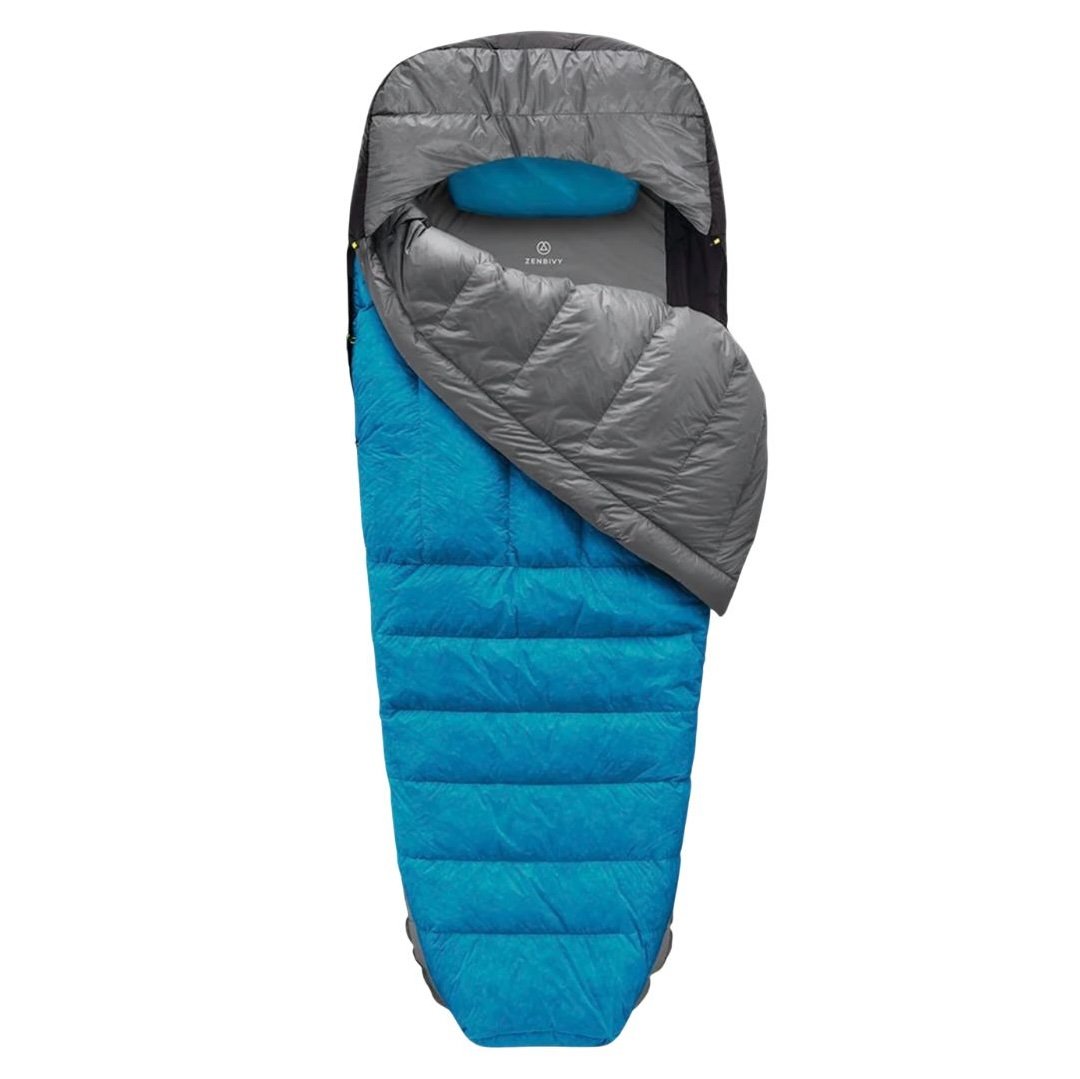
As an example of a quilt-based sleep system that incorporates sheet-and-shingle constructions, the Zenbivy Ultralight bed features premium down (900-fill Expedry Muscovy down), ultralight fabrics (10D Pertex Quantum), and sheet/pad coupler options as light as 3 ounces (85 g).
Review Trust Disclosures
- Funding Disclosure: Zenbivy provided financial support and product samples to underwrite the development of this report.
- Editorial Independence: Backpacking Light and the author retained full editorial control over this content, including all ideation, research, experimental design, analysis and conclusions with no influence from Zenbivy.
- Affiliate Links: This article contains affiliate links to Zenbivy.
View the GearTrust Audit Report (PDF) for this article.
Backpacking Light does not accept financial compensation for product placements in editorial reviews. When we accept funding to underwrite non-review technical reporting or education, we fully disclose funding sources, retain full editorial control, and develop the content without brand influence, review, or approval. We do not accept financial compensation for brand-directed (sponsored) “advertorial” content. Learn more about Backpacking Light Trust Standards.
Sponsor’s Message:
Zenbivy creates gear that empowers you to get outdoors more often and fosters a deeper connection by making the camping experience minimal, comfortable, and hassle-free.
A Zenbivy bed isn’t a mummy bag or a quilt—it’s a bed. With a sheet below and a quilt above, our patented design delivers the most comfortable, draft-free sleep in the backcountry. It’s the only complete sleep system on the market that’s lightweight, comfortable, versatile, and warm.
Visit us online at Zenbivy.com

Related
- Market Report: Down-Filled Backpacking Quilts
- Youtube: Q&A – Backpacking Quilts
Updates & Corrections Log
- 2025/11/27 – Original article published.
Have feedback, a correction, or a fairness concern? Please see our editorial corrections policy.


Discussion
Become a member to post in the forums.
Companion forum thread to: How does a Quilt’s Pad Attachment System Influence its Heat Loss Resistance?
This study quantifies how quilt pad-attachment geometry affects convective heat loss. Using a controlled thermal surrogate, standardized wind exposure, and time-constant (τ) modeling, we compare free-floating, strap-based, and sheet-and-shingle systems. Results show that tighter pad coupling preserves a substantially higher fraction of still-air thermal resistance, especially under modest side winds.
That is a great idea. Much easier than, for example, using a guarded test plate
In the section labeled “data processing” you use the upper case greek letter delta (delta T = T res – T amb). In the plot you use the lower case greek letter delta.
I assume those are the same?
Then you say that delta T = delta T0 * exp(-t/tau). That function would have a value = T0 at t=0 and then transient down to a value of 0 for large t.
But the plot has a value of 0 at t=0 and linearly decreases with time.
So the plot is not delta T0 * exp(-t/tau). What is that plot?
So upper case delta and lower case delta must not be the same.
lower case delta must be the log of upper case delta?
then your tau is the amount of time it takes for the temperature difference to drop to T0 * 1/e
where e is euler’s number, the base of natural logarithms, equals 2.71…
1/e = 0.37…
so tau = the amount of time for the temperature difference to drop to 0.37 * T0
T0 = the initial temperature difference
The R value of the insulation must be proportional to tau?
Mis-use of the term R value which is just conduction heat loss, your tau includes convective, radiation, evaporation
I just rough measured my torso as 8 x 12 x 26 inches = 1.4 foot^3 = 40 liter. Your bladder is 20 liter.
If you had a bladder the same size as a torso, then it would better measure the effect of air coming in the sides under the quilt. But you’re probably close enough. And then a real torso tosses and turns, but that would be tough to mimick.
I think this is a good job of trying to measure the effect of leakage of air under the edge of a quilt, which seems like a major problem.
Jerry –
There is inconsistent labeling between the plot and the equations in the text. I’ll have an editor provide some clarification in the plot caption to clarify what you’re looking at in the plot. The plot ∂T = (initial reservoir temp at time zero) minus the difference between the reservoir and ambient temp at time t.
In theory, yes, R-value should be proportional to tau, but you are right – that would be a “system” R-value which doesn’t really have any physical meaning outside the process of conduction.
We have a 40L bladder as well but it’s too hard to carry from a hot water faucet to the test location – that sucker is heavy and awkward to move!
That said, we did try a few tests with the 40L bladder, and the relative difference in tau values between two tests (like a control vs. an actual test) was minimal, so we went with easier and faster (20L). At the end of the day, this is a comparative gear systems screening tool, not a physiological modeling tool.
In conclusion, close the window. Simply relying on millions of years of empirical evidence.
that makes sense Ryan
TT – yeah, this article is a bit obscure but it’s helpful to measure how much of an affect leakage under a quilt is. So that you can have the most warmth for the weight in your kit.
Any idiot can build a bridge that stands, but it takes an engineer to build a bridge that barely stands
backpacking quilts have only been a thing for 20 years?
Conclusion. Click the link for a zenbivy. $750 for a 10 degree sleep system. I am clicking elsewhere for a 10 degree sleep system if I am spending $750. It doesn’t appear to save weight over a comparably priced 10 degree sleeping bag. In some cases the bag would be less costly. See Nunatak.
One doesn’t always know what’s useful until it’s necessary. Finding a quantitative difference. Put up for peer review with transparency. Kudos to ZB for sponsoring the research. The acknowledgement did seem to almost appear as a conclusion. I doubt that was the point. It does set ZB apart as arguably a preferable quilt in subfreezing conditions. Above subfreezing, I imagine the difference gets smaller and smaller. Compared primarily to mummy bags at the low temperatures. The weight is accounted for by its features and the sheet, which is actually rather nice. In transparency, I was given a large 10* light bed which I replaced on my own with an xl 10* ultralight bed. On sale. I prefer the light bed, but it’s heavier and doesn’t pack well.
<p style=”text-align: left;”></p>
Jerry: My understanding is that Jardine had MYOG plans up in the nineties.
One of the first commercially available down quilts was Nunatak in 2002:
https://backpackinglight.com/the-arc-bag-concept-saving-weight-with-variable-girth-sleeping-bags-having-an-arc-shaped-cross-section/
Go to bottom of article and see ‘Updates’
Yeah, “Beyond Backpacking” is 1992. My edition is 2002. An inspiration to me, affected a lot of stuff I’ve done.
Like the idea of quilts. But drafts from the side have always been an issue in my mind.
I’ve used Ray’s box bottom a lot. Hopefully he won’t be bothered I’m copying him : )
OK, so there is a significant difference in the wind: physic works. No much of a surprise there. Since I normally sleep inside of a tent, I would be interested in the no wind conditions. Since you know the Delta T over T you can calculate wattage loss which would be interesting. Knowing that loss relative to your normal metabolic rate would be valuable. One thing that was not really discussed though was thermal management in that quilts can get too warm, and ventilation is a good thing. What works in colder temperatures may be terrible is warmer conditions. My 2 cents.
Reality Check. Using Ryan’s numbers and assuming a linear response from the Chart below, I estimated wattage loss
This assumes that the Delts T no wind was 11 F and in the wind 17.5 F.
I used the formula M*Cp*Delta T to get the energy loss and used the 250 minutes to calculate the wattage. The numbers come out as the following
Heat loss no wind – 34 Watts
Heat loss in the wind – 54 watts
Help that sheds some insights (maybe), My 2 cents.
since it requires more watts for the same temperature when it’s windy
and since your body always produces the same number of watts when you’re sleeping
something has to give – when it’s windy the minimum comfort temperature raises
that would be the useful metric – for a particular configuration (wind speed, quilt pad attachment,..) what is the minimum temperature you’d be comfortable down to.
I suspect that this statement is not quite true. The body can thermal regulate to some degree. That is one of the reasons to eat more food when it is cold outside. I think that a clearer statement would be that the body can accommodate a range of heat loss (watts) at some point that becomes uncomfortable. This will depend on upon the individual, but it would be interest to data on the what the limits on heat loss at the border of the comfort zone is for most people. I certainly have a much higher threshold than my wife.
Google…
Study Human Power
OK, I think I have a bit of a lead. The term that I think that I was looking for is the Thermal Neutral Zone (TNZ). The temperature range in which the human body feels comfortable.
Other documents seem to be in agreement that with males, the body outputs about 100 W. What the TNZ indicates is that the body starts to react to the cold below 64.4 to 71.6 F (I assume that below that, you start to “feel cold.” What would be great to see is wattage loss below 60 F, how much is the human body compensating for “cold” temperature. My 2 cents.
How much is the mind compensating for loss of heat?
I suppose that’s where the “bridge that barely stands” comes into play as the temperature rises and lighter quilts are used. Diminishing returns where the axis point is dependent on temperature rating and actual loft. The manufacturers realize this and plan their baffling accordingly. While I believe a 10* ZB is worth the weight, what about a 20* quilt and so forth? As I’ll perhaps retire my lighter quilt next year, it becomes a real life decision.
Yeah watts varies from person to person, but for an individual, I’ve read that it’s fairly constant.
This helps build a bridge efficiently, but maybe it’s mainly just geeking out for entertainment.
I would think changes in body mass and/or available fuel would make some difference.
With a 10* quilt, around 43* is where a cold spot starts affecting my sleep. My stage of sleep may have some influence. Shorter deep sleep and longer REM stages.
you must be wearing a sleep tracking device
Just a guess based on time and dreams. It’s been a lifelong study to which I’ve dedicated my life and have devoted many nights, not to mention the many, many naps.
It would be interesting to see this test conducted with a quilt that has two clips per side per strap (like Katabatic Gear quilts) or has the strap clips above the bottom hem of the quilt, leaving a panel below the attachment points to help block drafts (like Rock Front, Neve Gear, and others). I would like to see if this is as effective as the Zenbivy system in reducing the effect of drafts/wind. The Katabatic Gear 2-clip system allows some girth adjustment (from the bottom/inner clips) as well as a draft-blocking panel, like Ryan suggested would be the best system. I just don’t know if it would be as effective at preventing drafts as the fabric panel that Zenbivy uses.
I think as the quilt gets wider, the fabric panels lose importance. Dependent on how much of the quilt comes in contact with the pad. The fabric saves that little bit of extra quilt needed to tuck under yourself to stay in place and stop drafts, otherwise, straps attached higher up above the edge like the RF, I think would work just about as well.
I’ve been using quilts pretty much since the beginning. After learning how to apply them efficiently I happily dropped the straps, being of the opinion that quilts should be no frills covers, easy to get under – and out from under, with enough warmth to do the job. UL distillation!
I admit the first ten years were rough at times, but I stuck with it (back then quilts were too narrow and notoriously underfilled and under delivering)
Designs have advanced a bit and some makers seems to prioritize shape that wraps naturally and includes low profile edge tensioning. In my mind these features now leaves no excuse for the added hassle and complexity of straps, never mind pad-attach straps.
There’s a time and place for quilts, however. The increased popularity of hoodless, zipper-less bags have shown me that. I can get good sleep down into the teens with today’s advanced quilts, but arguably I get just a little less interrupted rest when using a hoodless bag under 30°F.
So that’s what I have: strapless quilts, and hoodless bags. Very happy with those
I have not tried a ZenBivy but looking at it I’m sure I can rule it out. It doesn’t fill any voids (no pun) I have currently in my setups, and is heavier and more complex
Become a member to post in the forums.