


by Emylene VanderVelden and Ryan Jordan
Update February 4, 2025: Product selections have been updated to reflect the current state of the market for coffee brewing equipment and supplies. In addition, we added an immersion brewing section and updated our “What the Authors Use” section to reflect our current practices.
Introduction
Ultralight backpacking embodies the values of simplicity and weight savings. Some of that gets thrown out the window when the subject of backcountry coffee comes up (depending on your level of java snobbery). This article provides an overview of coffee-making methods (how to make coffee in the backcountry) while backpacking, with a study of their complexity and weight.
Under no circumstances should you let a non-coffee drinker brew your coffee. Non-coffee drinkers CANNOT be trusted to make acceptable coffee. If some well-meaning tent-mate gets up early and offers to bring you coffee in bed, do NOT let them. You will be sadly disappointed, and the entire day may founder in a miasma of negative drama. – Mike Clelland, The Beautiful Cup: Backcountry Coffee for the Ultralight Backpacker.
What is Still True About How to Make Coffee in the Backcountry
In 2010, Mike made some valid observations, and we wholeheartedly agree with them.
He said:
As you may have gathered, I’ve got some opinions about this whole coffee thing. So, before we go any further, and in the interest of full disclosure, here are a few of my prejudices:
- Strong coffee is good coffee.
- Except for a very few companions, I don’t trust anyone to make coffee for me.
- Adding sugar to coffee is criminal.
- Sometimes I add a little milk in my coffee, but black is just fine.
- Adding flavors (like hazelnut and almandine) to an already perfect drink is sinful.
- Picking grounds out of my teeth is a serious buzz kill.
- Coffee equals joy.
How Coffee Brewing is Controlled
The bean source, roasting method, and freshness have an impact on the quality of your coffee.
But you have some brewing control as well. Depending on the method, you can adjust:
- Brewing water temperature;
- Rate of flow (or time of exposure between coffee and water);
- Water pressure (e.g., espresso is drawn at higher-than-ambient pressures).
Changing the temperature, flow rate, and pressure allows you to fine-tune your flavor profile. The ability to control these three variables will be evaluated when we look at coffee-making gear.
A note on temperature that may be relevant for backpackers in mountain environments: boiling temperature changes with altitude. At sea level, the boiling temperature is 212 F (100 C). At 9,000 ft (2743 m), the boiling temperature is about 195 F (90.5 C).
Nine thousand feet (2743 m) is kind of an important inflection point with respect to coffee extraction and altitude.
It’s generally accepted by most coffee aficionados that the ideal extraction temperature is 195 F (90.5 C) to 205 F (96.1 C), so once you climb above 9,000 ft (2743 m), you may want to increase your brew time a bit if you’re after a stronger cup of coffee.
Coffee-Making Methods and Gear for Backpacking
The popularity of coffee-drinking1 is being driven by a rise in boutique coffeehouses, micro-roasting, and consumers’ unquenchable thirst for cool new gear. Thankfully, this market enthusiasm is spilling over into a wide range of portable coffee-making supplies and tactics:
- The French press
- Immersion Brewers
- Mini espresso makers
- Pour-over coffee makers
- Coffee & tea infusers
- Instant coffee
- Coffee paste
- DIY cold brew
The following table summarizes each method in terms of its weight, brew time, nature of flow, pressure, cleanup, and coffee quality.
Scroll right to view all columns.
| weight | prep + brew + cleanup time | passive/active flow | pressure | cleanup | coffee quality potential | |
|---|---|---|---|---|---|---|
| French press (standalone) | heavy | slow | passive | atmospheric | messy | high |
| French press (integrated) | light | slow | passive | atmospheric | messy | high |
| Mini espresso maker | heavy | slow | active | pressurized | moderate | high |
| Pour-over coffee makers (with disposable filters) | light | moderate | active | atmospheric | easy | high |
| Pour-over coffee makers (integrated filter screens) | light | slow | active | atmospheric | messy | medium |
| Instant coffee | lightest | fastest | n/a | n/a | easy | medium |
| Infusers | light | moderate | passive | atmospheric | moderate | medium |
| Cowboy/Turkish | light | moderate | passive | atmospheric | messy | medium |
In addition, we’ll touch on coffee grinders, coffee alternatives, and whiteners towards the end.
The French Press
The French press method of coffee brewing gives the brewer a great deal of control over the resulting coffee flavor, owing mainly to the fact that brew time can be varied. (As with other techniques, you can also control the flavor by altering the brewing water temperature and the coarseness of the grind). French press technique should generally use a coarse ground coffee because all of the extracted oils are retained (and not filtered out) – a finer grind (and/or a longer brew time) will result in more bitterness.
Outdoor product manufacturers offer a wide range of light, sturdy, portable standalone French presses and integrated presses for cooking mugs and pots. They aren’t the lightest option (in fact, self-contained presses are among the heaviest), but French-pressed coffee has the potential to be very strong and flavorful.
We like the integrated cooking mug/pot press idea, except for one minor detail: if you are making coffee, you cannot use the pot for anything else until you wash it out. That means you have to make your meal in sequential cooking batches, and can’t drink your coffee with your food without transferring the coffee to a separate mug, cleaning the pot, etc.

The GSI Outdoors Commuter JavaPress is a 15 fl. oz. insulated copolyester coffee press weighing 10.3 oz (292 g), with an integrated sliding inner carafe that separates coffee grounds after brewing, eliminating the need for a plunger rod; features a spill-resistant, flip-top lid, a foam sleeve for insulation, a press-and-drink-through design, and prevents over-extraction by keeping grounds separated after pressing.
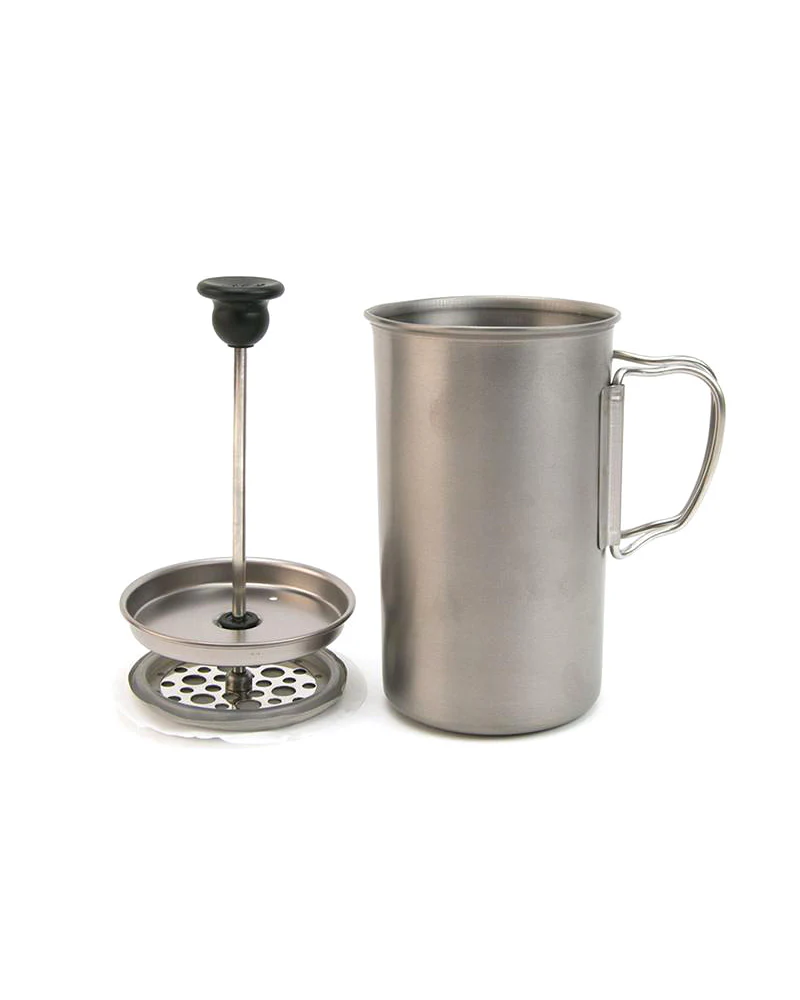
The Snow Peak Titanium French Press is crafted from single-wall Japanese titanium, allowing direct heating over a heat source. It has a capacity of 24 fl. oz. (0.7 liters) and weighs 6.3 oz. (179 g).
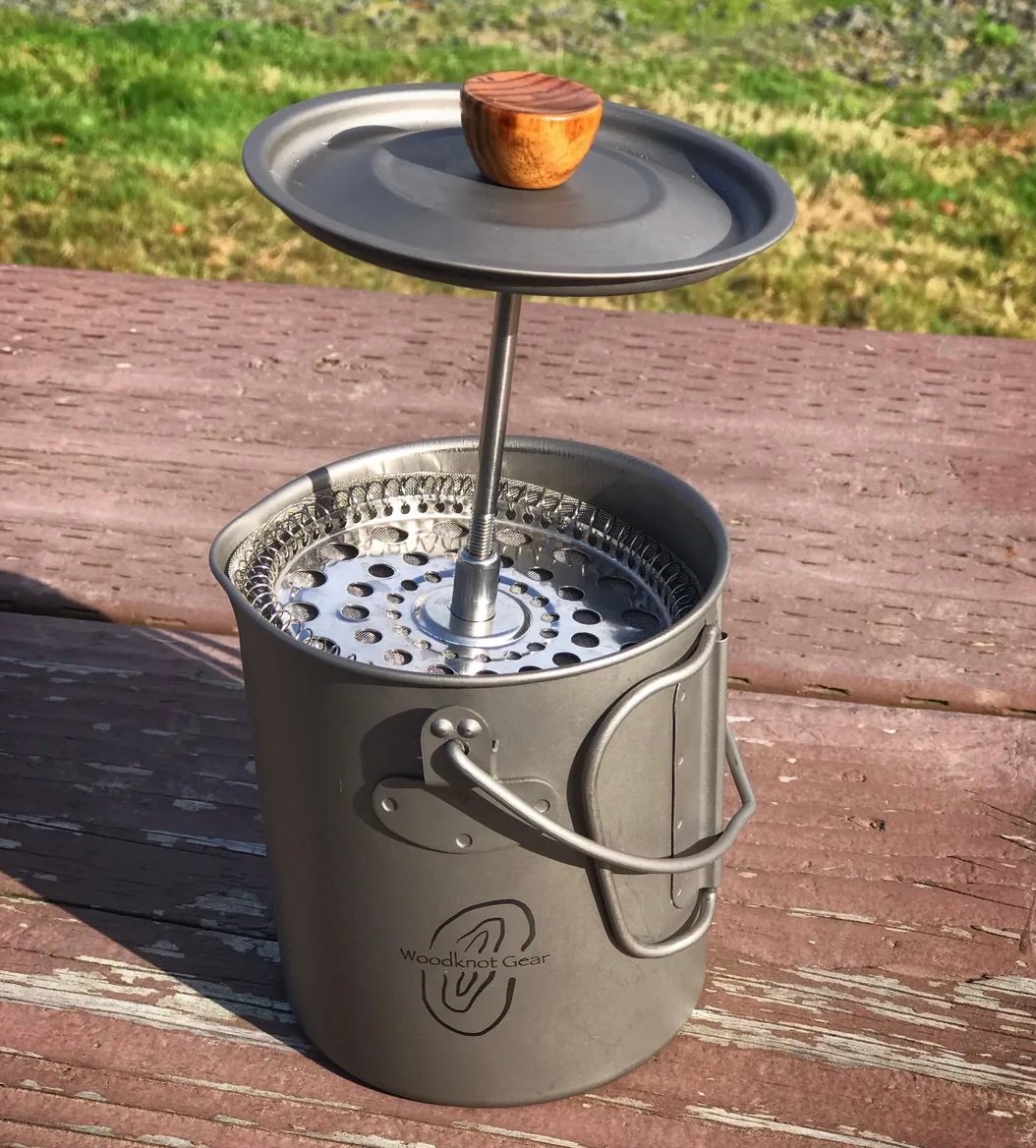
The WoodKnot Gear Titanium 750ml Camp Coffee Kit is made from high-grade titanium, offering lightweight durability and corrosion resistance. It features a stylish wooden knob, vented lid, double folding handles, and a bail handle, allowing it to function as a French press, water boiler, or cooking pot. Weighs 6.4 oz (181 g); 7 oz (198 g) including the stuff sack.
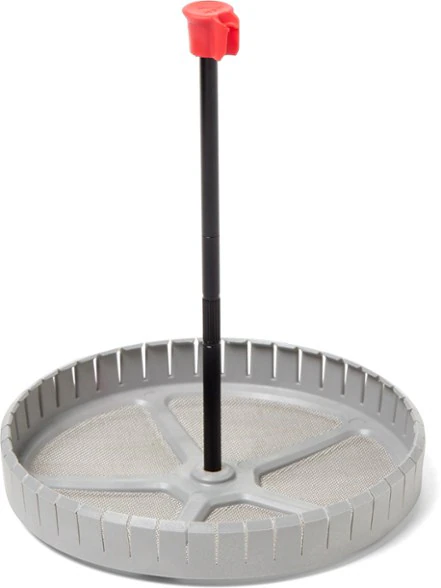
The MSR WindBurner Coffee Press is designed for WindBurner Stove Systems, featuring a durable stainless steel strainer disc and a flexible perimeter gasket to seal out coffee grounds. It disassembles and packs flat for easy storage. Available in 1.0L and 1.8L sizes, weighing 1.3 oz (37 g) and 1.6 oz (45 g) respectively.
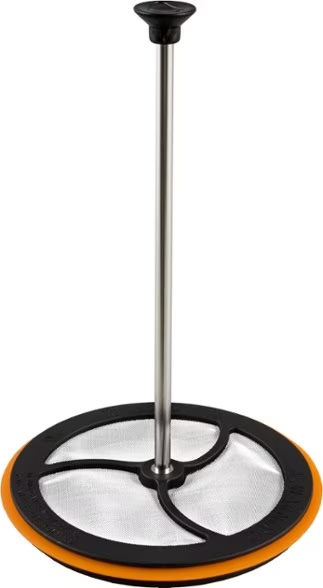
The Jetboil Silicone Coffee Press is a lightweight accessory weighing 1.3 oz (37 g), made from stainless steel and food-grade silicone. Designed to fit Jetboil Zip, Flash, Flash Lite, MicroMo, PCS Sol, and Sol TI cooking systems, as well as 1-liter tall and 0.8-liter spare cups. It features a heat-resistant silicone ring for a secure fit, preventing coffee grounds from escaping during plunging. The stem and basket detach for compact storage within the cooking system.
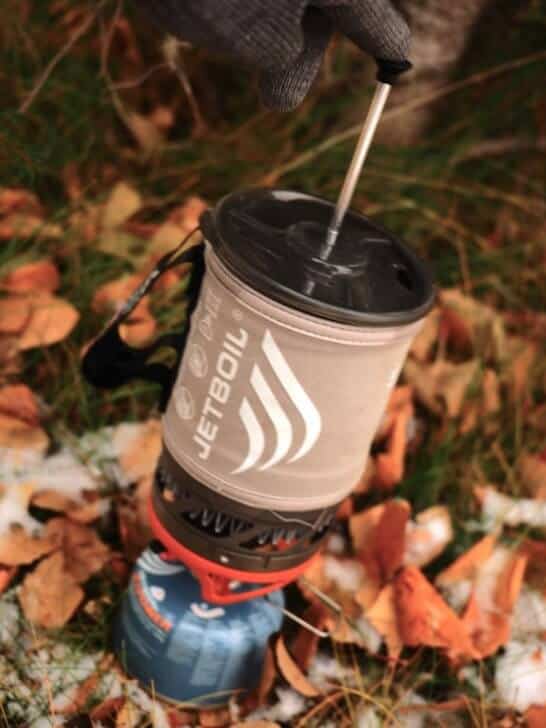
Immersion Brewers
Similar to a French press, an immersion brewer steeps coffee grounds fully in water for a set period of time, essentially “soaking” them prior to filtering them out. Immersion brewers are distinguished from French presses by forcing the brew through finer mesh or paper filters to create the clarified filtrate. The result is a smoother (less bold) cup of coffee because the fine grind is filtered out prior to drinking with an immersion brewer.

The AeroPress Go Travel Coffee Press is a compact and portable coffee maker weighing 11.4 oz (323 g) that brews 1 to 3 cups of American, espresso, or cold brew style coffee in about a minute; made from food-safe polypropylene (PP) and includes a mug with a lid that doubles as a carrying case.
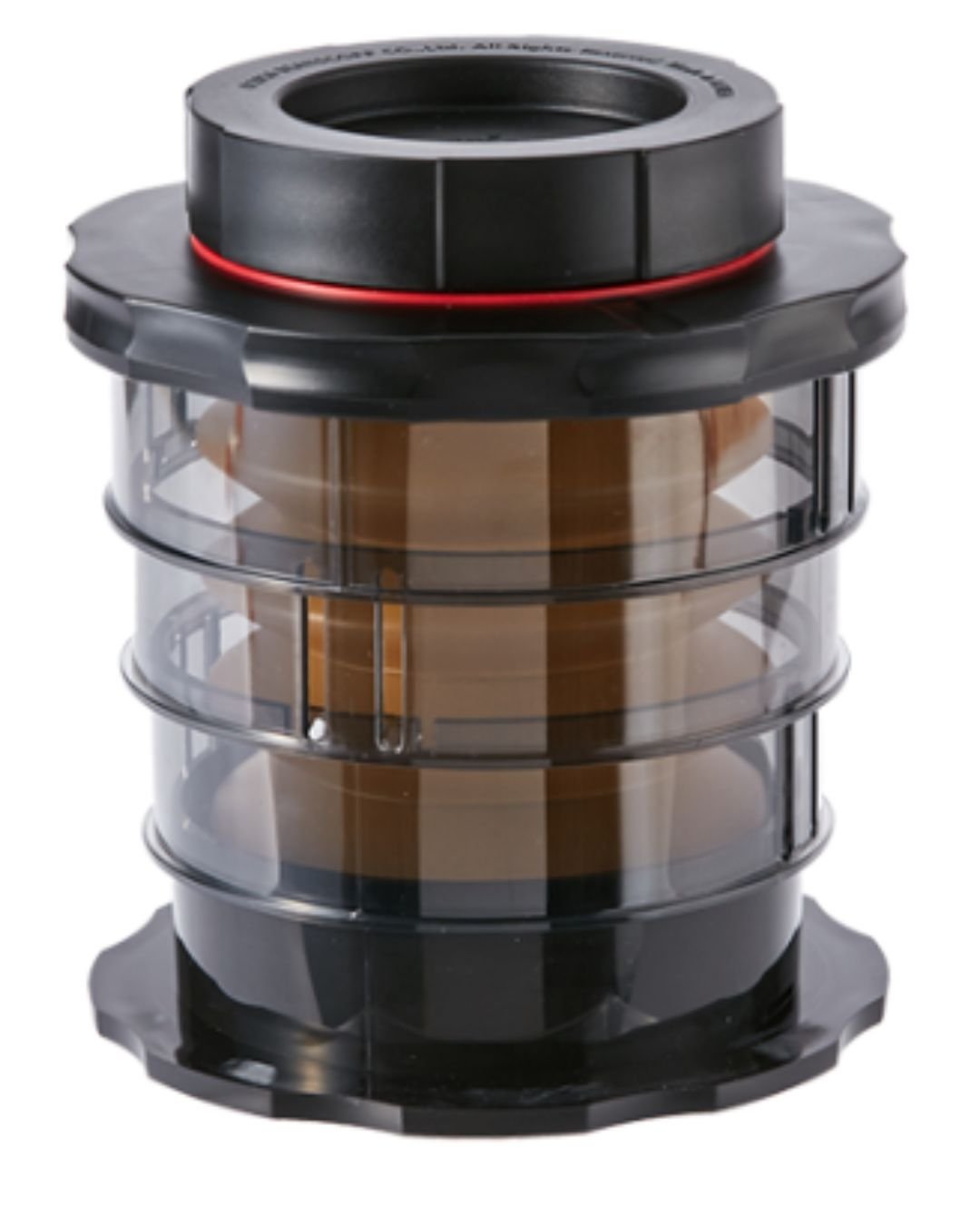
The Cafflano Kompact Coffee Maker is a portable, compact coffee brewer designed for convenience. It features a simple press-down mechanism for brewing coffee on the go.
Mini Espresso Makers
An espresso maker uses high pressure to quickly force hot water through finely-ground coffee, resulting in a much more concentrated shot with a stronger flavor profile.
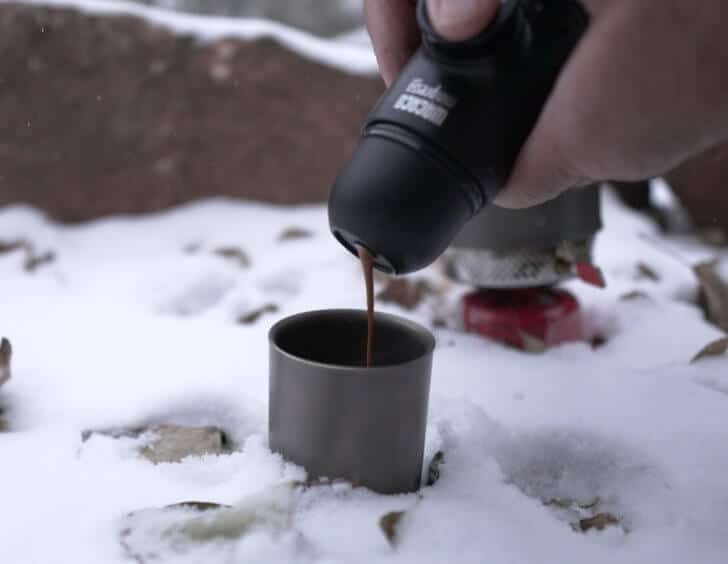
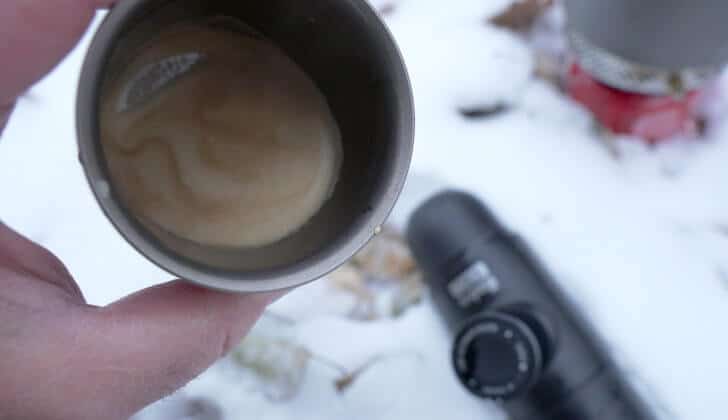
Mini espresso makers are unique because they can extract coffee at nine bars (or more) of pressure (i.e., 130 PSI). That’s nine times the ambient atmospheric pressure where other coffee brewing methods operate. This is important because higher pressures can extract coffee oils more aggressively (and require less contact time). A finer grind is required when making espresso, because of the short contact time (about 30 seconds, generally, vs. 2-5 minutes for traditional brew methods). The result is a much richer-tasting coffee without the bitterness of a long water contact time.
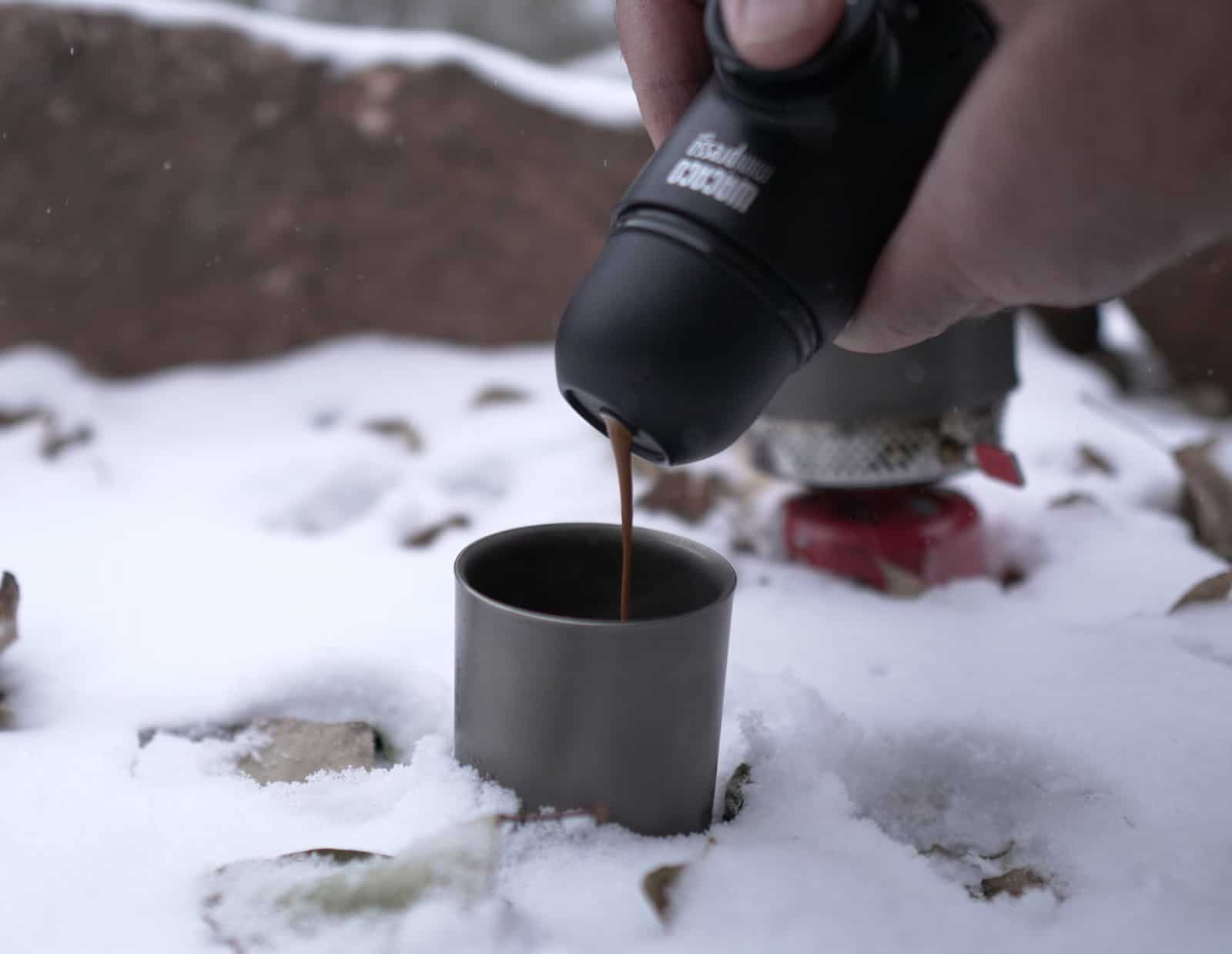
The idea of adding a mini espresso maker to our kit seemed revolutionary to us – a real shot of pressure-drawn espresso? That sounded too good to be true.
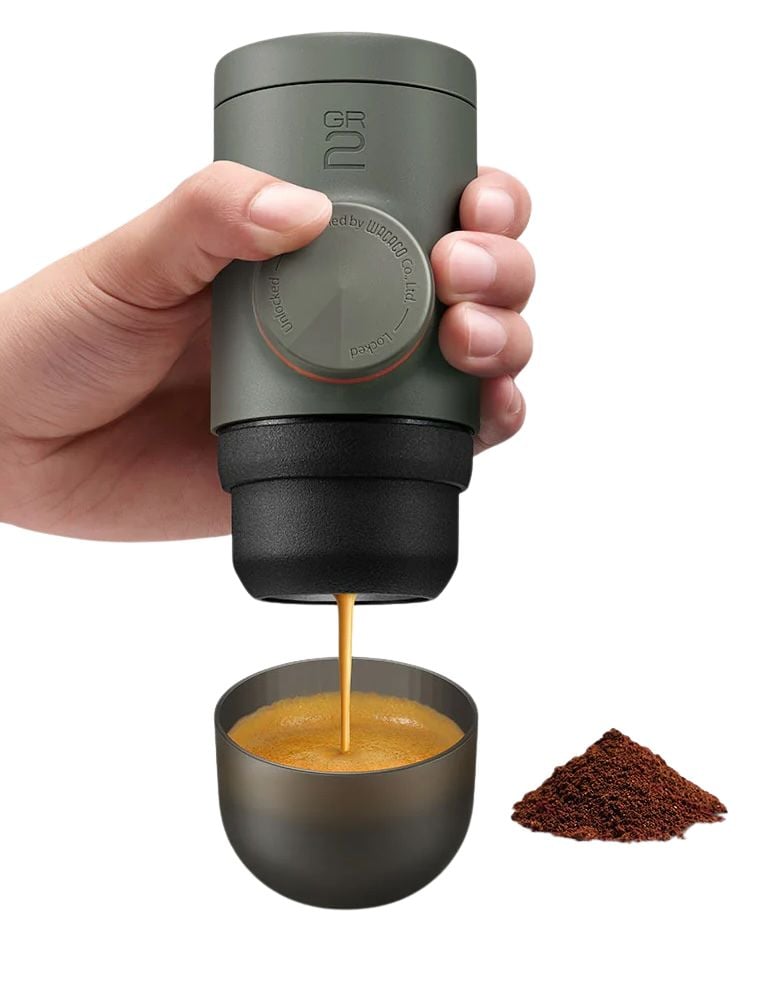
The Wacaco Minipresso GR2 is a compact, hand-operated espresso maker with an adjustable basket for 8 to 12 grams of ground coffee. It features a built-in water tank with an 80 ml capacity and operates at a maximum pressure of 18 bar. Weighs 10 oz (285 g).
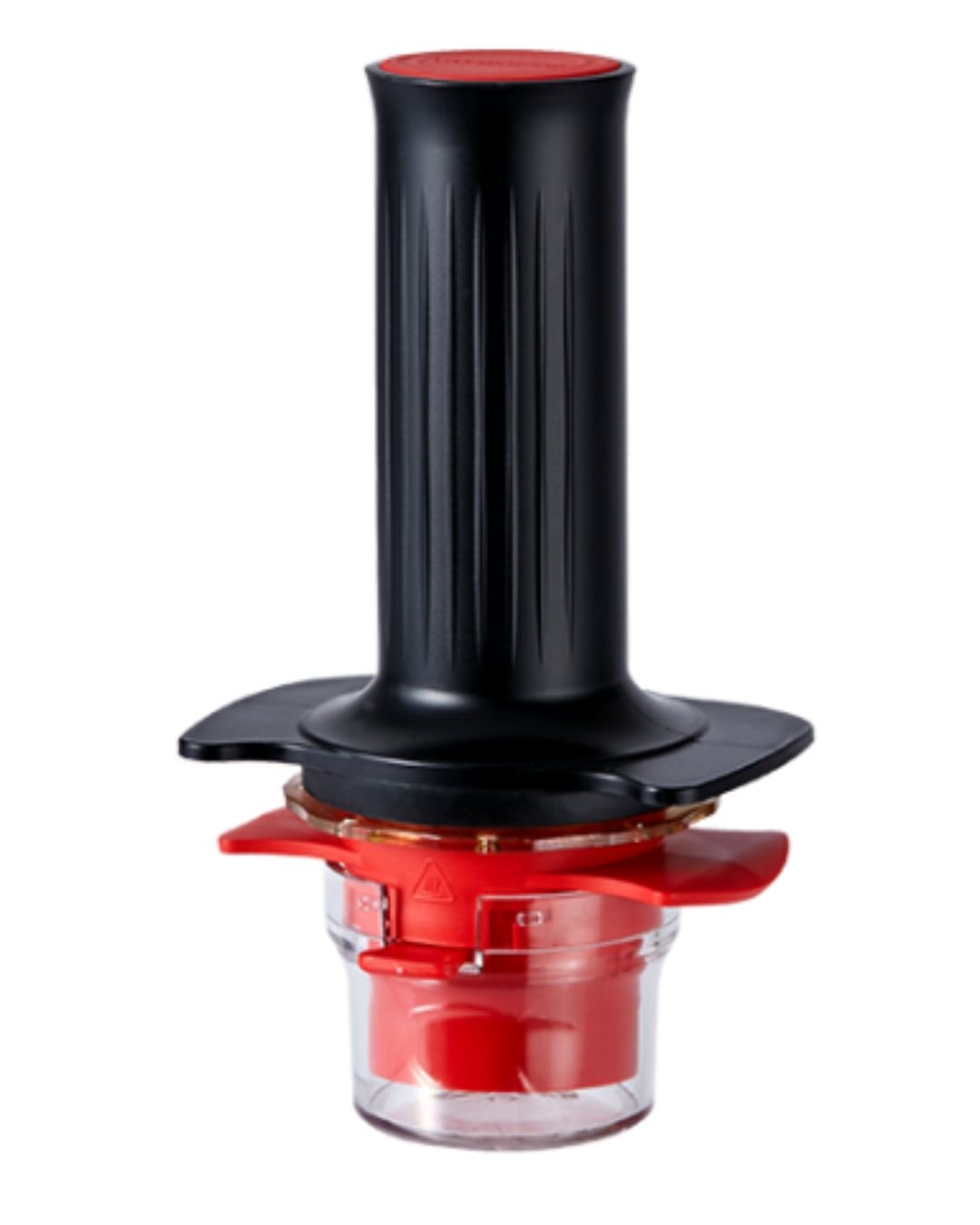
Cafflano KompressoThe Cafflano Kompresso is a portable espresso maker designed to deliver a consistent 9-bar pressure for authentic espresso extraction. It utilizes hydraulic compression and features a compact, lightweight design.
Pour-Over Coffee Makers
Pour-over coffee allows you to exert some control over the flow rate of the water. The primary difference between a French-pressed coffee and a pour-over coffee is that French press is a batch brewing technique (no water flow, just soaking), and pour-over is a flow-through brewing technique. Because the grounds are not coming into contact with the brewed coffee filtrate (and aren’t exposed for as long of a time), it takes a finer grind and slower, more patient pour to achieve the strength of a French-pressed coffee. One distinct advantage of the pour-over method: no coffee ground grit (some drinkers will enjoy this, however).
Some pour-over cones require the use of an additional filter; others include integrated plastic or metal mesh screens. The latter avoid disposable supplies, but are messier to operate.
Pour-Over Coffee Makers:

The GSI Outdoors Ultralight Java Drip Coffee Maker is an ultra-compact, reusable drip coffee filter that clips onto any mug for backcountry brewing. It weighs less than half an ounce (11 g) and features sturdy legs that clip to your mug for stability during brewing.
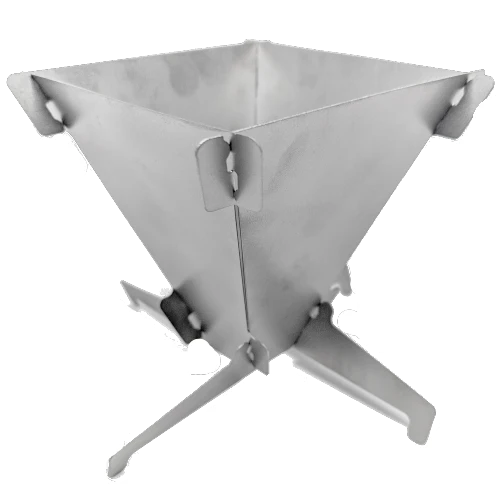
The Suluk 46 Kapik Titanium Coffee Drip is a portable coffee brewing device made from titanium. It consists of four interlocking pieces that form a pyramid-style funnel, with out-rigging legs that rest securely on vessels up to 4.5 inches in diameter. Weighs 1.6 oz (46 g).
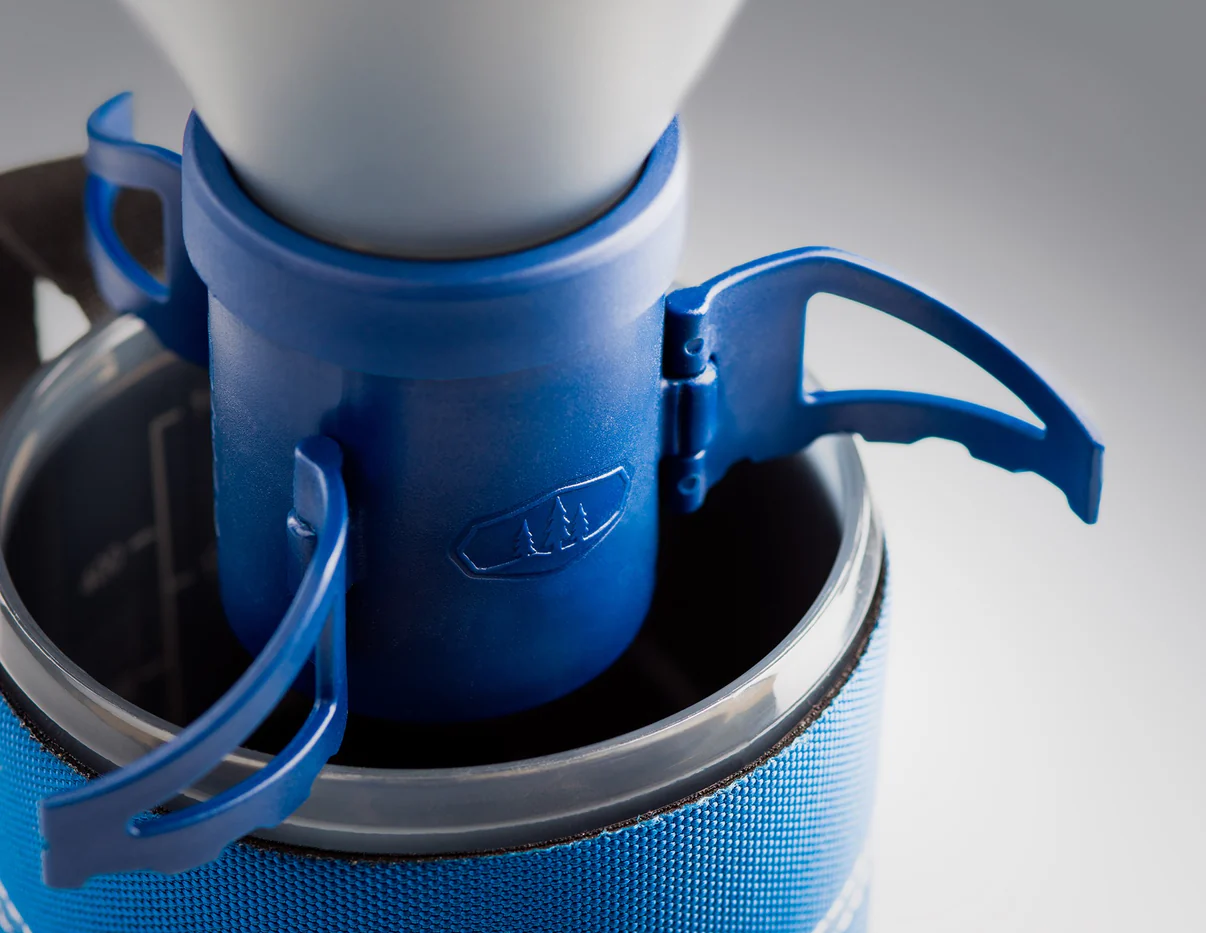
The GSI Outdoors Coffee Rocket is a one-person pour-over coffee maker designed for camping. It features a 230 ml drip cone and a reusable stainless steel filter. The hopper holds up to 10 grams of medium grind coffee. The filter body nests into the water hopper for compact storage. Weighs 2.7 oz (76.5 g).

The Vargo Titanium Travel Coffee Filter is a solo pour-over coffee maker made from 100% biocompatible titanium, ensuring no chemical leaching or flavor imparting. It features double mesh construction for strength and fine filtering, and talon-style folding legs that fit a wide variety of mugs. Weighs 1.27 oz (36 g).
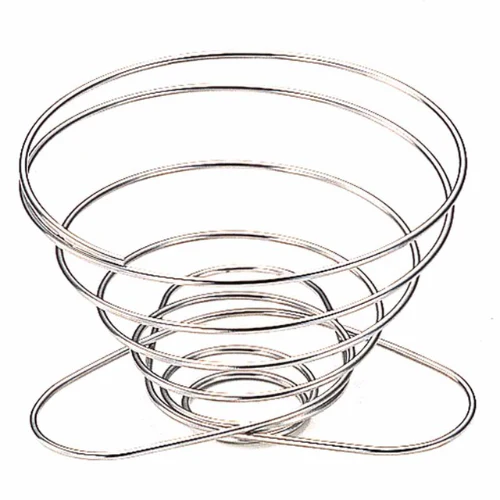
The SOTO Helix Coffee Maker is a collapsible stainless steel filter holder weighing 1.6 oz (46 g), compatible with #2 cone filters, and includes a mesh carrying bag.
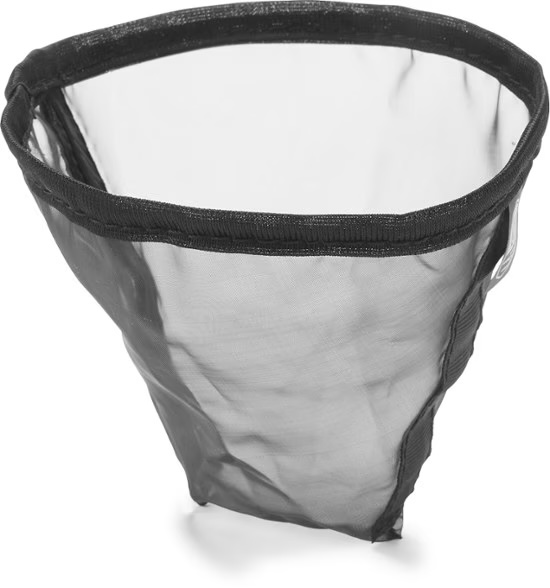
The GSI Outdoors Reusable Pour-Over Java Filter is designed to brew coffee or tea repeatedly. Made from durable nylon, it fits into traditional #4 cone pour-over coffee makers and is easy to use and clean. Weighs 0.16 oz (4.5 g).
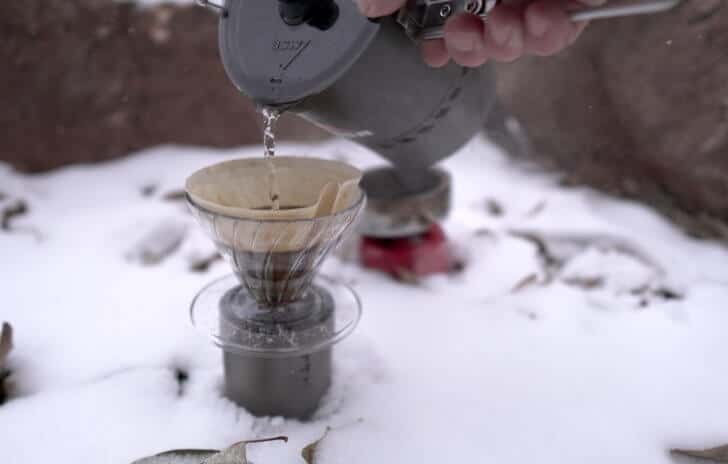
In addition to pour-over hardware, disposable options also exist. The Kuju Coffee Pocket is one such option (we reviewed Kuju Coffee here). Ryan Jordan reviewed another one here, where you can see in action how disposable pour-overs work (with video).
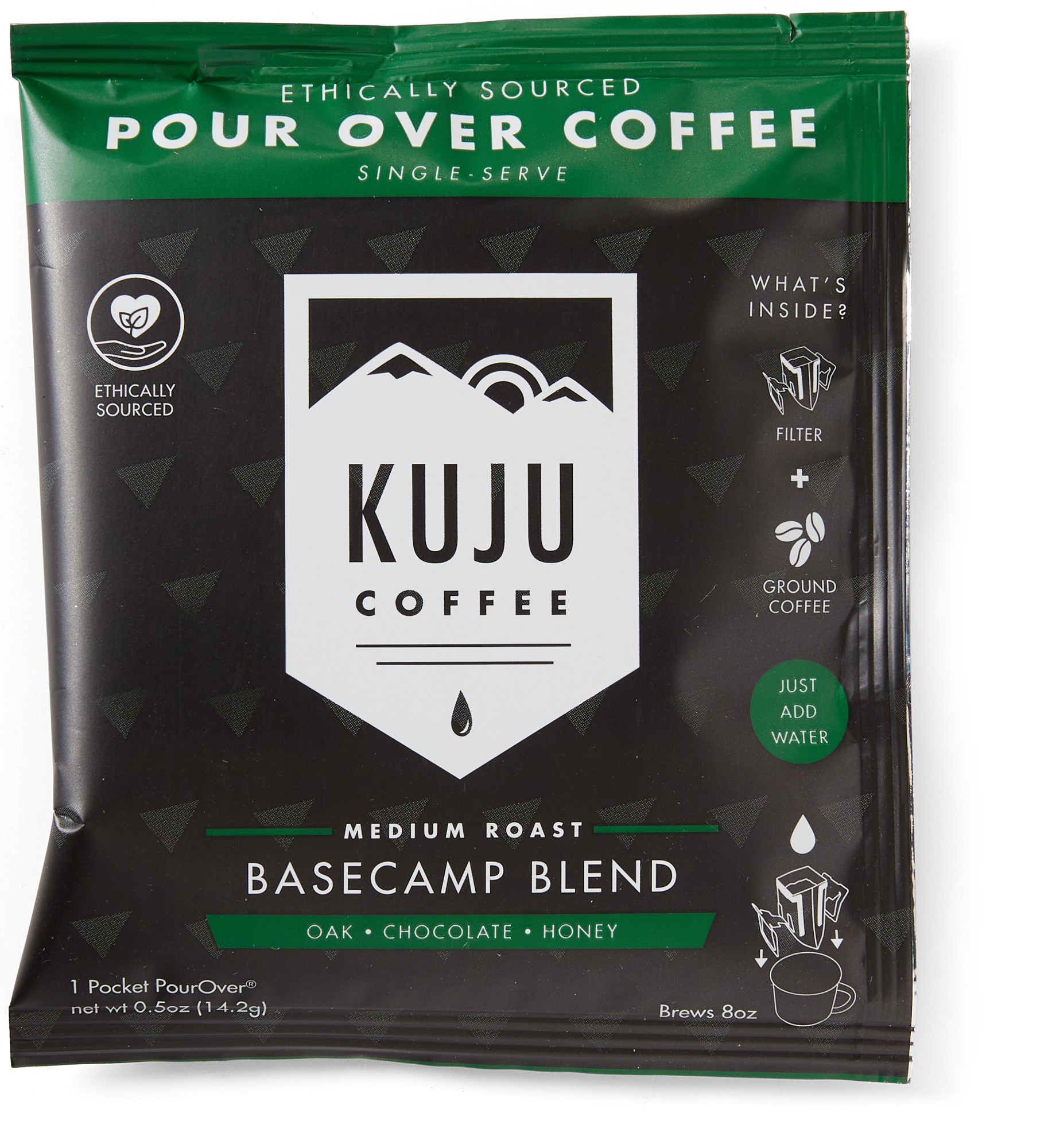
Kuju Coffee's Single-Serve Pour Over Coffee features a filter that anchors to your mug and is filled with specialty-grade, ethically sourced coffee grounds. Simply tear open the packet, anchor it to your mug, and pour hot water to brew a fresh cup in minutes.
Coffee and Tea Infusers
An infuser is little more than a mesh “basket” containing ground coffee (or loose-leaf tea) that is inserted into a cup of hot water. The water then passively extracts the coffee – there’s no pouring, pumping, or other types of active (flow) extraction method involved other than human-powered swirling.

The MSR MugMate Coffee/Tea Filter is a reusable filter designed for brewing coffee or tea without disposable paper filters. It weighs 0.98 oz (28 g) and is made of nylon.
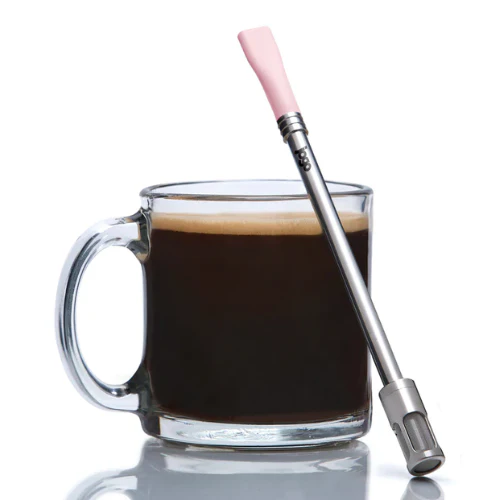
The JoGo Brew Straw is a portable brewing device made from food-grade stainless steel and BPA-free silicone. It allows users to brew and drink coffee or tea directly from a cup without the need for a separate filter, featuring a built-in mesh filter to prevent grounds or leaves from being consumed. Weighs 1 oz (28 g).
Instant Coffee
We have a fundamental disagreement with Mike about instant coffee. He writes “Instant coffee isn’t actually coffee, and is therefore outside the scope of this discussion. It is quite simply not an option.”
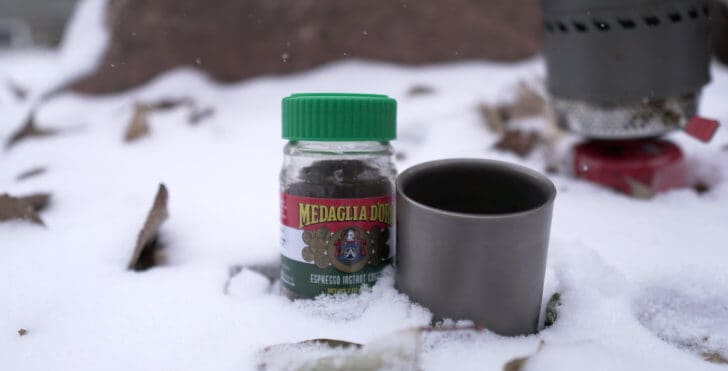
Some instant coffee manufacturers have realized consumers will not drink flavored mud water and have improved instant coffee standards accordingly. If we are desperate for coffee and saving weight, Starbucks Instant and Medaglia D’Oro are bold, tasty options. They may not be as good as French press or espresso, but they aren’t terrible either – especially when you consider the weight of instant freeze-dried coffee powder (very light!) and ease of use.
Other companies have entered the instant coffee market and are pitching their grind specifically to the outdoorsy type:

Alpine Start's Original Blend is a medium roast instant coffee made from 100% Colombian Arabica beans. Each packet contains 0.1 oz (2.8 g) of coffee, providing approximately 120 mg of caffeine per serving. The product is non-GMO, dairy-free, and gluten-free.
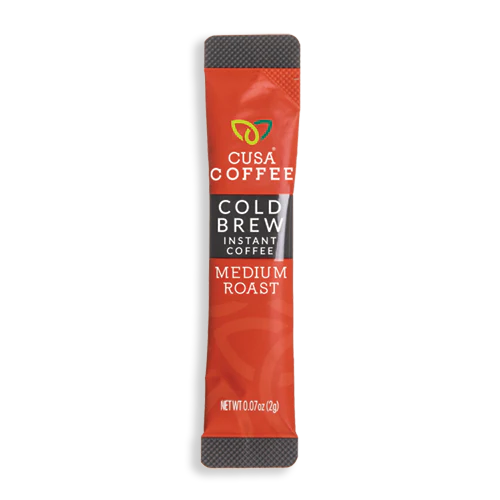
This instant coffee is made from high-elevation 100% Arabica beans sourced from a Rainforest Alliance Certified plantation practicing regenerative agriculture and organic farming. Each packet contains 0.07 oz (2 g) of coffee, providing 110 mg of caffeine per serving. Here's what's interesting about this one: it's made by evaporative dehydration following cold brewing. This makes for a smoother mouth-feel and less chemical aftertaste than hot-brewed/freeze-dried instant coffee processing.
Coffee Paste
Coffee paste is a new product that is dispensed from an aluminum tube, can be used to make cold or hot coffee, can be ingested directly like a gel, or used as a food additive or spread. This makes coffee paste more versatile and more easily dosable than conventional coffee.
See our review of No Normal Coffee Paste here.
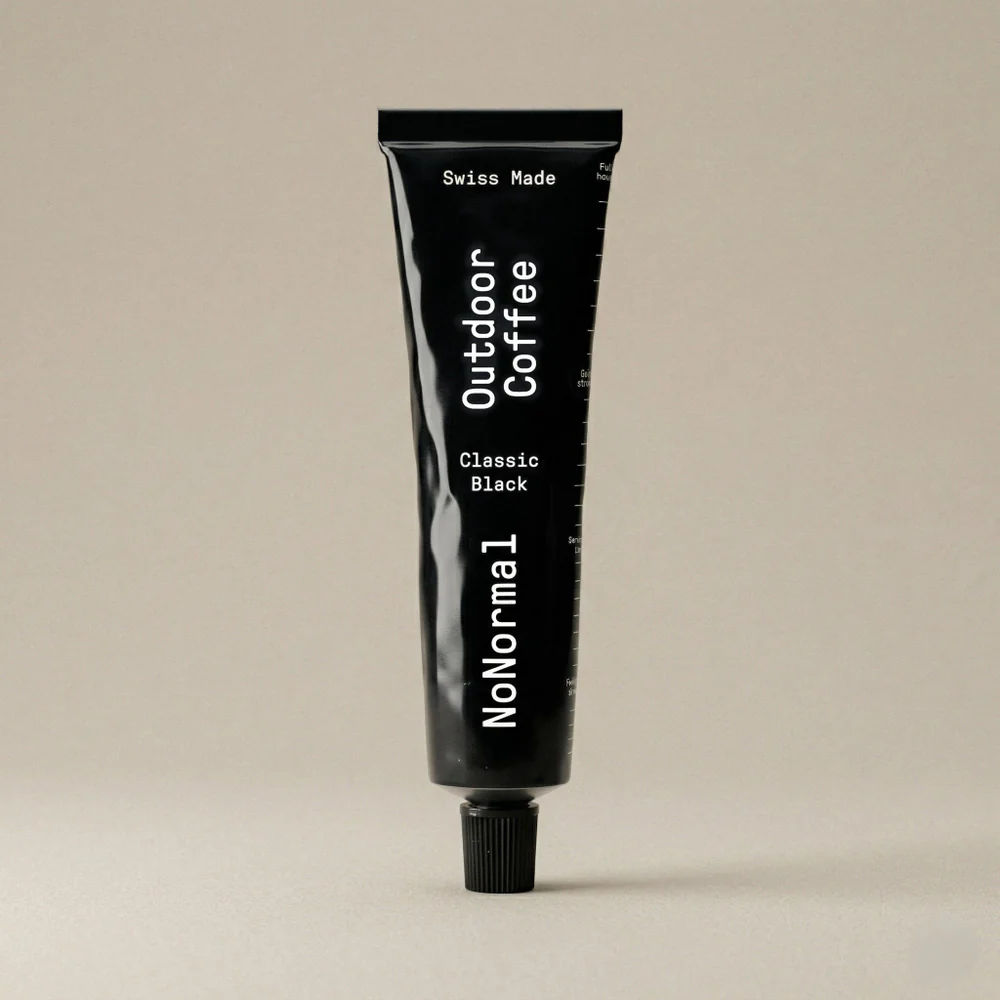
No Normal Coffee paste is crafted from 100% Fairtrade Arabica beans and sweetened with organic Swiss beet sugar. Flavor profile: rich, indulgent flavor with hints of chocolate, nuts and caramel. Swiss-made. Each 100 g tube makes 20 cups of coffee. Drink hot or cold or use as a spread.
DIY Cold Brew
Cold brew is an extraction method using cold (or room temperature) water. The cooler extraction temperature means that oils are extracted more slowly, so making a batch of cold brew takes a long time – usually several hours. In addition, the oils that are extracted have a flavor profile that is generally considered to be more “smooth” than “bitter”. Bitter oils are extracted by hotter water, especially near the boiling point (near sea level at least).
Cold brew coffee is a recent invention and can be made in your water bottle. The big drawback is that it takes about 12 hours to make it. If you plan ahead the night before, you can have cold brew ready the next morning.
Cold brew can be enjoyed cold or warmed up, and it has a smoother, sweeter flavor than hot-brewed coffee. We recommend a wide-mouthed bottle, which will be easier to clean and add coffee without a mess.
Soft-sided bottles, of course, are the lightest, but they tend to hold odors more than hard-sided bottles (e.g., Nalgene).
To make cold brew:
- Add 1 cup of coarsely ground coffee beans to 4 cups of water;
- Mix well to ensure wetting of the grind;
- Let it steep for 12 hours;
- Strain the grounds with a coffee filter or a piece of cheesecloth as you pour into your cup for enjoyment.
Cowboy and Turkish Coffee
Cowboy and Turkish methods rely on soaking coffee grounds in hot water. They both include a bit of stirring and settling art. No extra gear is required because the grounds aren’t separated from the final brew. Thus, some grit is inevitable. Both methods are a bit messy when it comes to cleanup. Mike addresses these methods in A Beautiful Cup.
Lightweight Coffee Grinders
The coffee brewing methods discussed above may give you some control over the brewing temperature, flow rate (brewing time), and water pressure. If you also want control over the freshness and grind, consider a portable coffee mill.
Check out one of the 24 g capacity miniature models from Hario, which are light and capable of grinding as fine as espresso.
How to Deal With Your Coffee Grounds
If you use ground coffee in the backcountry, you’ll have to manage the proper disposal of your coffee grounds.
If leave-no-trace is one of your core ethics, then you have only one option: pack them out. They aren’t natural to the environment you are visiting, and you’ll be hard-pressed to justify that dispersing them or burying them will benefit sensitive, native plants.
After making our morning coffee, we’ll dry the leftover grounds out in the sun (spread them out on filter paper) – this saves pack weight.
Chocolate-Covered Coffee Beans
We’ve covered most of the obvious caffeination techniques so far. Still, if your only goal is rapid and straightforward caffeine delivery, there are pills for that. Or you can add chocolate-covered coffee beans to your trail mix.
Chocolate-covered coffee beans are multipurpose – they are both a calorie supplement and a caffeinator. They don’t offer a ‘ritualistic’ coffee experience, but they are fast, easy, and lightweight.
Most chocolate-covered coffee beans will melt if they get too warm. I (Emylene) use these workarounds:
- Wrapping packaged beans in aluminum foil and keeping them in my water bladder compartment to keep them cool;
- Tossing the beans into a bag of trail mix and then eat the chocolate, coffee bean, fruit, and nut clusters after they melt and solidify again. (Important: let them harden before opening the bag, or they are disastrously messy).
A Word on Whiteners, Milk, and Instant Coffee-“Milk” Blends
In addition to powdered milk, there are now plenty of powdered options for non-dairy and lactose-free creamers.
Want to froth your own? The battery-operated AeroLatte is portable and light enough (5.1 oz / 146 g) for some of you who may want foam for a latte.
What the Authors Use
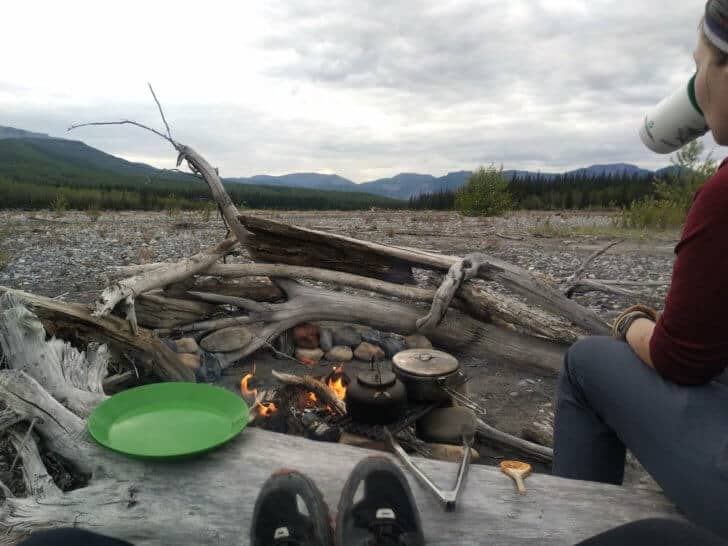
As coffee enthusiasts, we’ve each refined our brewing setups over the years, settling into systems that balance convenience, weight, and the ritual of a good backcountry brew.
Emylene’s Setup
Emylene’s go-to method remains the GSI Ultralight Java Drip paired with Melitta #2 Bamboo Cone Filters for cleaner flavor and easy cleanup. When she wants a true espresso shot in the wild, the Wacaco Nanopresso delivers results that rival her home machine. For quick and lightweight options, Flash Fuel Instant Coffee has earned an honorable mention for its craft quality.
She still enjoys a cowboy coffee now and then for nostalgia (and skill maintenance) but sticks to her three primary methods: pour-over, instant, and hand-pumped espresso. The biggest change in her coffee routine? Upgraded sipping vessels. She’s transitioned from a plastic truck-stop cup to a Yeti Rambler Mug for frontcountry use and a Snow Peak Ti-Double 450 Anodized Mug with a silicone lid when weight matters.
For grinding, she’s moved from a small pepper mill to a GSI JavaGrind when weight allows, or pre-grinds beans before the trip. Her favorite roast? 454 Horse Power from Kicking Horse Coffee, a bold, organic, fair-trade dark roast with notes of cocoa nibs, peat, and nutmeg.
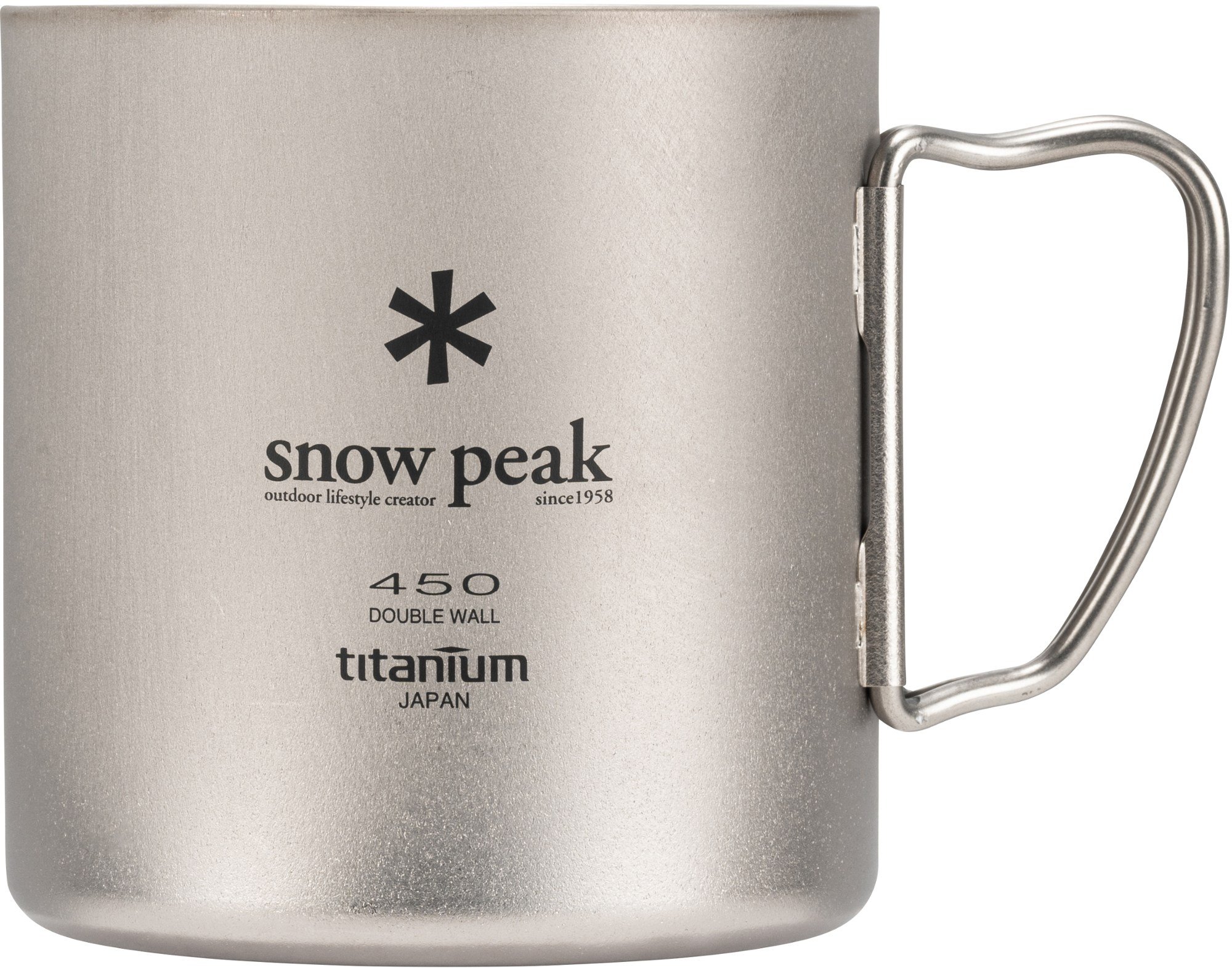
The Snow Peak Ti-Double 450 Anodized Mug is a lightweight, double-walled titanium mug with excellent heat retention and durability. Its 450ml capacity and compact design make it a practical, high-performance choice for hikers and backpackers seeking reliable, lightweight gear for hot beverages in the backcountry.
Ryan’s Setup
For long trips where weight and simplicity matter most, Ryan prefers Starbucks Premium Instant Coffee — not in Via packets, but from the can. The can adds a ritualistic element to the process – like an old-timey western cowboy scooping grinds from their metal tin). It also offers better dose control than single-use packets.
Lately, he’s also been experimenting with No Normal Coffee Paste, an unconventional option that delivers an on-the-go caffeine boost straight from the tube or spread onto an energy bar.
When time and ritual are central to his morning, he opts for a pour-over setup with a Hario V60 #01 system, using a plastic dripper, ground beans from Kind Coffee in Estes Park, and unbleached paper filters. Though bulkier than some ultralight solutions, the Hario setup provides a slow, methodical coffee experience that enhances his mornings in the backcountry.
His mug of choice? Whether working from the office or lounging in front of his tent, it’s the Snow Peak H-series of double-wall titanium mugs (with the H200 for backcountry use).
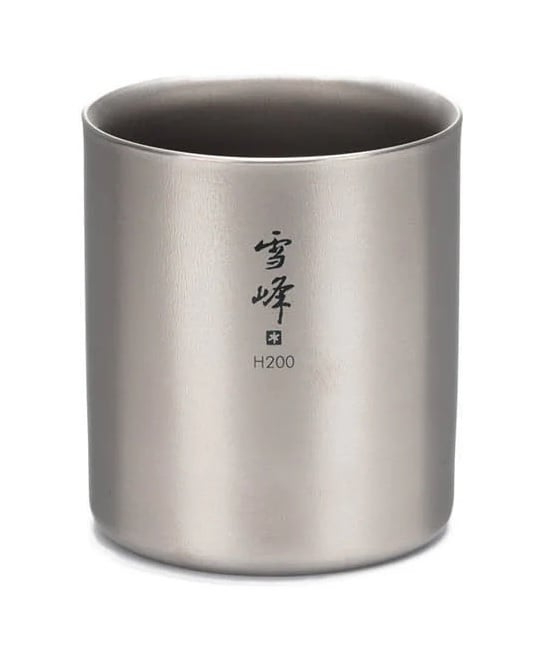
Simple, beautiful, and effective - this double wall titanium mug reflects design simplicity and elegance while keeping hot drinks warm in the backcountry. 200 ml capacity, 2.2 ounce (62 g) weight.
Summary
The self-identified “ultralight backpacker” may view some of the options for brewing coffee presented in this article as too complicated, too time-consuming, too messy, or too heavy. Those of you who value Via over vive le coffee will find little satisfaction in packing another 4 oz (or more) of “coffee-making gear”.
But for some hikers, coffee isn’t just a drink; it’s an act of joy. A ritualistic practice as part of a lifestyle. An experience that enhances a sunrise, a mid-day trail break, or a game of cards during a tent-bound rainstorm with a hiking companion.
And for some, there’s the art and science of creating a masterpiece of brewing where you want to exert some control over the freshness of your grind, the coarseness of your grind, the temperature of the water, the grind:water ratio, the flow rate, and the pressure.
The bottom line is this.
Some people like to paint in the backcountry and bring a watercolor kit and a sketch pad. Others like to write, and do so with a nice pen and a fancy, leather-bound journal. Photographers have their own gear needs – tripods, cameras, filters, sliders. People who like to fish for trout bring rods, reels, flies, and tackle. Some of us bring chairs, or Kindles, or cribbage boards.
Others are into brewing coffee.
And thus, the beauty of lightweight backpacking is revealed – not in the weight you save by leaving everything at home, but in the weight you save with lightweight gear and skills that allow you to enjoy some experiences that you otherwise wouldn’t have considered before.
Like sipping an outrageous cup of coffee in a wild place.
Endnotes
1 The definitive industry market research on the topic of coffee is published by the National Coffee Association: National Coffee Data Trends Report (https://www.ncausa.org/Research-Trends/Market-Research/NCDT).
DISCLOSURE (Updated April 9, 2024)
- Backpacking Light does not accept compensation or donated/discounted products in exchange for product mentions or placements in editorial coverage. Some (but not all) of the links in this review may be affiliate links. If you click on one of these links and visit one of our affiliate partners (usually a retailer site), and subsequently place an order with that retailer, we receive a commission on your entire order, which varies between 3% and 15% of the purchase price. Affiliate commissions represent less than 15% of Backpacking Light's gross revenue. More than 70% of our revenue comes from Membership Fees. So if you'd really like to support our work, don't buy gear you don't need - support our consumer advocacy work and become a Member instead. Learn more about affiliate commissions, influencer marketing, and our consumer advocacy work by reading our article Stop wasting money on gear.


Discussion
Become a member to post in the forums.
Yeah, I pretty much agree with Roger. There are a few cases that grounds are not good for natural conditions: On a rock face, at altitude, or, in the stream. (Even in the stream doesn’t do any real damage, but it can influence local bacteria. Here in the ADK’s, with all the natural tannin in the water, even that can be ignored, but it creates an unsightly mess.)
In the woods, it is easy to simply walk 20-30yd from a camp site and give the grounds a good toss, effectively scattering them around on the forest duff. Basically, once brewed, they are simply a woody product subject to natural decay. Just do NOT leave grounds in piles. They are effectively sterilized and it can take a while for any decay process to utilize them.
I gave up on that stuff a while ago. Both GSI types were fairly messy to dear with. After the third spill, I just tossed the stand up drip filter when I got home. The other “collapsible” one didn’t work as well. Anyway, instant requires like a spoon and a half for a decently strong cup of coffee. The drip brewer always required three spoonfulls of finely ground coffee. So, the weight was a factor. Usually in the morning, I am busy packing. I get the stove going to boil the first cup, and pack my sleeping bag. I then roll up my pad and go back to mix up my mud, and start the full pot. As the cup cools, I change my cloths and finish packing all my dry gear, often delaying the final compression step while I have my jacket on. As I finish my first cup, I usually have my shoes changed and watch the critters for a few minutes. Then I turn off the stove and fix my second cup, and put the remainder under my hat. As my second cup cools, I usually UV one water bottle for hiking, and, dump in coffee and cocoa in the second. Then I pour in about a cup into that bottle and mix it. Then I take the tarp down and roll it up (if it isn’t raining.) Then I drink my second cup and fix my third cup, adding any remainder to the coffee bottle, reserving just enough to rinse stuff out/brush my teeth. I just sit and enjoy the surroundings as I finish my coffee. I do my morning clean-up chores then. I pack up all the odds and ends (stakes, tooth brush, paste, food bag, top off my coffee bottle, etc) and strip off my jacket, and compress my jacket, sleeping bag, long johns & socks and start packing my pack. Everything is pretty much ready to drop in. Compression sack, food bag, ditty bag (stove in the ditty bag,) spoon, stakes, tarp gets rolled into my pot, Pad slips onto my cup, sweater goes on top and I close it up. Drop my water bottles in one side, and fuel, windscreen, saw in the other. I sling it up and fasten it down, grabbing my staff, ready to hike. I take two or three steps away and stop to survey the campsite, insuring I didn’t forget anything. Instant coffee just makes it all go much easier than fiddling around trying to make 5 cups of coffee in the morning any other way. At 1000 on the trail, it is nice to have a still warm drink, unless it is cold out. Iced mocha is good anyway.
Roger, thanks! Yeah, you’re probably right, I’m likely overthinking the impact of leaving some spent grounds behind.
I’m going to try a few brews without the extra paper filter and see how it goes… less waste is better too as long as the drip rate doesn’t get reduced to “painfully slow” I’m willing to give it a try :-)
On this topic, vacuum packaging doesn’t prevent off-gassing/volatilization. IF anything, pressurized, nitrogenated packages should be used. But that may be enough to make the pre-ground coffee passable for backpacking. For it’s rarely worth the extra equipment required to brew.
Either I’m willing to take a grinder and all the supplies to brew fresh-ground coffee, or I’m concerned about weight and volume and will go with instant.
Btw, not the lightest, but best portable grinder I’ve used (really for travel or car camping): 1Zpresso grinder is amazing. Better than Lido 1 or Lido 2, the porlex grinders, and some other fancy portables.
I’m a decaf drinker, so my options are more limited. I tried the Starbucks Via for a while, but I found that Mount Hagen is better. You can find it in jars at Whole Foods, but the decaf packets are available on Amazon (what isn’t?).
Another Mount Hagen fan here, caffeinated in my case. Tastier than Via, and a better deal. I found it at Natural Grocers both in the jar and in single-serve packets.
IF anything, pressurized, nitrogenated packages should be used. But that may be enough to make the pre-ground coffee passable for backpacking.
Actually, now I check, my preferred brand is not packed under vacuum. Maybe nitrogen? The other one is, or at least at low pressure.
Cheers
@jamesdmarco, how many cups do you drink per hour?
I drink around three in the morning. I leave camp about an hour after dawn or so. Then I hike a couple hours and drink my coffee from the water bottle. I don’t drink anymore coffee till the next day. I am good till about 1700 or around 15mi at around 1.5-2.0mi/hr. Used to do more, but I am getting older. No, I am not quite mainlining, but I have thought about it.
Yet another Mount Hagen fan. Tried the single serve “regular octane” packets on a whim after seeing them at Whole Foods. Cheaper than Via and found I liked the taste MUCH better. Best instant I’ve come across. Will be my new goto
Very impressed, that’s an awfully early start 😂
“Very impressed, that’s an awfully early start”
Sounds like a climber to me.
Ryan, Daybreak is my normal awake time. Summers is close to 0430, fall and spring closer to 0630. I’ll leave the winter stuff to you.
As for the cowboy coffee, we included the method for that in one of our previous coffee editions and it seemed redundant to include it again. It’s included in the first link. Good cowboy coffee doesn’t come at zero weight in my experience, it needs a good pot, (which is exclusively tied up for coffee for a while) good technique, and even then it will have some grounds in it. I’m fine with grounds (I eat the beans after all) but many of my hiking partners are not. The other serious buzz kill with cowboy coffee is the cleanup, which is the main reason I stopped doing it.
As to the freshness of pre-ground coffee there is some validity to it not being as fresh. Unroasted coffee beans retain freshness for up to five years. As soon as the oils in the beans are heated during the roasting process the beans start to go stale at an increased rate. Grinding the beans, of course, increases oxygen exposure and further escalating the process. Of course, freeze drying coffee after it has been roasted, ground and brewed also degrades freshness.
Coffee beans are at the peak of freshness for a week to two weeks after roasting. The only way to ensure peak freshness is to roast and grind your own fresh beans or find a small batch producer who can give you fresh roasted beans. Grinding and brewing pre-roasted beans can help but not significantly.
If you want to pull full on coffee snob, get fresh beans, a chestnut roaster, an espresso grinder, and handle production on your own. If you are roasting your own beans the day before you head out, you can probably get away with grinding a weeks worth of coffee and still have fresher coffee than anything you can buy. (Yes, I’ve done this.) A fresh batch of ground coffee straight from a roastery would likely be a pretty close second.
Here is the catch, people who have never experienced fresh roasted coffee from a country which produces coffee don’t know the difference fresh beans make.
Almost every coffee drinker can tell when someone brews a good cup of coffee or not. Brewing technique is just as important as bean freshness in making a great cup of coffee.
Another wildly important point here is some water makes better coffee than others. Soft water (usually high in things like soda or sulphur) makes terrible coffee and tea. Hard water (high in minerals like iron and calcium) makes better coffee. Water type and flavor easily impacts coffee quality as much or more than the beans.
“Water type and flavor easily impacts coffee quality as much or more than the beans.”
Would distilled water make for a better cup? Thinking home use here, as it would not be practical in the backcountry.
As a recovering coffee snob I concur with everything Emylene said. For years I roasted, ground, pulled my own shots. I quit after wearing out my third cheap roaster and decided not to buy a fourth till I could afford the one I wanted (which would require some mods to the kitchen). Then I decided I didn’t want to afford that, so I’m too embarrassed to say what I drink now.
For backpacks longer than a couple days or with a high-ish degree of difficulty, I wean myself off coffee and don’t drink any while I’m out. For shorter trips, it’s Starbucks Via.
Tom (K) – I don’t have any data to prove it, but anecdotally, using distilled water has resulted in more bitterness, all other things being equal, when I’m making a pour-over at home. Not sure if that’s valid for machine coffee as well.
When comparing distilled to carbon-filtered (and softened), carbon-filtered (not softened), and (hard) tap water at home – I prefer carbon filtered and not softened. Tap water chlorine bothers me, and softened water doesn’t pull as much flavor out.
Again, this is all with manual methods through plastic manual espresso pumps and ceramic pour-over cones.
In my experience, distilled water makes better coffee than soft water. I still prefer a good cup of hard water coffee though. I think the calcium is the main source of neutralizing the bitterness. (Which is also why some cowboys put eggshells in their coffee and why milk is a popular additive.)
I’ve tried little carbon filters for my back country water bottles and they do help neutralize some mineral flavors which detract from coffee and tea.
Distilled water also makes a superior cup of tea. Try any herbal tea in hard, soft and distilled water and you’ll find soft water has an odd flavor and discolors herbal teas to a grayish color, hard water reacts with the tannins and leaves ‘tea scum’ in your cup. Make a blueberry tea in the distilled water and the color will be reddish purple and there will be no ‘tea scum.’
—?—Question for coffee experts—?—
I always buy whole beans for home use and grind each batch just before brewing. For backpacking trips I grind beans the morning of, or evening before, a trip. Because of work and family I rarely get into the backcountry for more than 3-4 nights at a spell.
My question is how long do you suppose it takes for the freshly ground (organic, fair trade, pre roasted) beans to lose their vitality? Is it overkill for me to bring a grinder into the field for just 3-4 days? I’ve personally never noticed a huge difference in taste on day 4 but would consider bringing a grinder if A) it’s relatively light and B) can actually give a very fine grind. The Coarseness of the grind greatly affects the potency for my preferred home and backcountry brewing method, Pour-over. If the grind is too coarse the brew comes out weak and insipid and wouldn’t be worth the extra weight of a typical hand-crank grinder.
thanks in advance from an unrefined coffee drinking Mainer! <[8^)
on an aside, for tea, blueberry sounds delightful! I bring turmeric and a chunk of fresh ginger and mince it up in the field. I add it to whatever tea bag I bring. It really lifts my spirits after a long hike and it helps aid muscle recovery. It also aids in digestion of all those energy bars :)
I’d say the answer on that depends on your taste buds, the beans you are grinding, and the grinder you use.
Organic, or not, likely has little impact on the degradation rate, though there may be some ‘freshness enhancing’ additives in non-organic coffee though I can’t say as its on the label of most coffees. Roasting has the primary effect on coffee beans going stale. ‘Peak freshness’ is about up to a week from roasting. (As a result, most coffee drinkers have never experienced ‘peak’ freshness and don’t know the difference.)
If you are buying pre-roasted (or pre ground) beans from a grocery store, they are probably already past ‘peak’ freshness. In fact, unless a coffee shop has a roaster on site, those beans are probably also past ‘peak’ freshness too.
As a Canadian, I get most produce, including coffee, past its peak. It’s a long way to Canada from places that grow fresh produce in January. Unless you live in Washington State, Nevada, Pennsylvania or South Carolina, Starbucks coffee beans have been roasted for quite a while before you get them. For a while, my tiny little Alberta hometown had a roastery. I didn’t care for their roasting technique though. Since they didn’t stay open, I suspect I was not the only one. (Which, of course, makes another point, roasting technique also plays a role in coffee flavor.)
In my experimentation, my tastebuds said coffee ground within a week of consumption is almost as good as coffee ground just before consumption. The flavor degrades a bit from there but not enough I will turn my nose up at it, it still tastes better than instant.
I’ve never justified a hand grinder on the trail because I have yet to find one that does a good (espresso or otherwise) grind. I’m toying with trying a pepper mill. It take forever to grind enough coffee though so I’ve been dragging my heels. I found a tiny mill though, the size of a salt shaker, I just have to take the pepper out.
So in answer, for 3-4 days, if you can’t taste much difference, don’t worry about packing a grinder. I spent 2 weeks in the NWT this summer with pre-ground espresso and it was just fine. I can taste the difference but that doesn’t mean there is enough of a difference to justify packing more stuff. Especially, if you are craving simplicity. Just because the coffee isn’t and ‘peak’ freshness doesn’t mean it tastes bad, it could just taste better. I’m of the opinion that coffee is nature’s perfect supplement, even stale coffee beats no coffee.
“..even stale coffee beats no coffee”
Truth. Coffee is Now!
Once again I’m in agreement with Emylene. Unground coffee does last a little longer than pre-ground, but only a tiny bit. I personally would never bother taking a grinder into the backcountry. It’s roasting that triggers the slide to staleness. Coffee needs to “rest” for one or two days after roasting, then it’s good for one to almost two weeks, depending on the bean and the roast. Not the question here, but I’ve tried all kinds of vacuum storage, refrigeration, freezing, and other voodoo, but nothing will extend the life of roasted coffee.
The local roastery whose coffee I buy makes several blends. I find which one I use and how much ground coffee I use per cup to be equally important factors. I carry the ground coffee in an airtight container, which seems to do a decent job too.
After that, I find the locale for morning tea to be just as important to our enjoyment. After all, good coffee is good coffee.

Cheers
“When comparing distilled to carbon-filtered (and softened), carbon-filtered (not softened), and (hard) tap water at home – I prefer carbon filtered and not softened. Tap water chlorine bothers me, and softened water doesn’t pull as much flavor out.”
I was just wondering, as I have never tried distilled water. We use a Brita filter to remove the obnoxious chlorine taste from our water, and it seems to work fine for coffee. In the backcountry, I brewed cowboy style for years with Sierra creek water and found the results to be delicious. But much of that may well have been very careful selection of variety and roaster, to my taste, not to mention the surroundings. Everyone has their own feelings on that score, so my comments are just my contribution to the growing body of anecdotal evidence. Coffee is sooooo personal. ;0)
Yeah, great pic roger !
and thx, Emylene, for your thorough response! I will forgo a field grinder for now… Living in Northern Maine in a border town where freshness is lacking also and unfortunately the only roaster here isn’t that great…
-aside- My father is notorious for leaving a full pot of brewed coffee in the carafe for up to a week. Yuk! It tastes like excrement… He says mold is good for you!!! But he also will eat moldy bread… he grew up poor with 11 siblings so if he didn’t want to starve he just ate whatever before someone else did. His immune system is probably quite robust! And his taste buds are likely non functioning xD
Become a member to post in the forums.