


Introduction
I suffer with Starbucks Via single-use packets for most of my backpacking trips. I don’t not like Via – its compact, single-use form factor and flavor that’s sort of good enough make it an appealing option for somebody who enjoys the ritual of brewing a cup of coffee. And it’s generally absent of the organic chemical-like defects that plague other (cheaper) freeze-dried brands. However, I’m always on the lookout for something with richer flavor, smoother body, and a fresher mouth-feel.

Searching for a convenient and satisfying backcountry coffee solution remains an ongoing life ambition for me. Most instant freeze-dried coffees lack a broad-spectrum flavor profile. In addition, many brands of freeze-dried coffees suffer from a variety of taste defects. The elevated amino acids and unvolatalized solvents leave traces of weirdness in most of them that are easily detectable by most human noses and flavor receptors.
Carrying brewing equipment adds weight, complexity, and cleanup mess. Single-use pour-overs are a viable option, but most of them seem too weak to make it worth it (not enough grind), and they’re expensive. For additional context, see the article Emylene and I wrote about various gear and methods for brewing coffee in the backcountry.
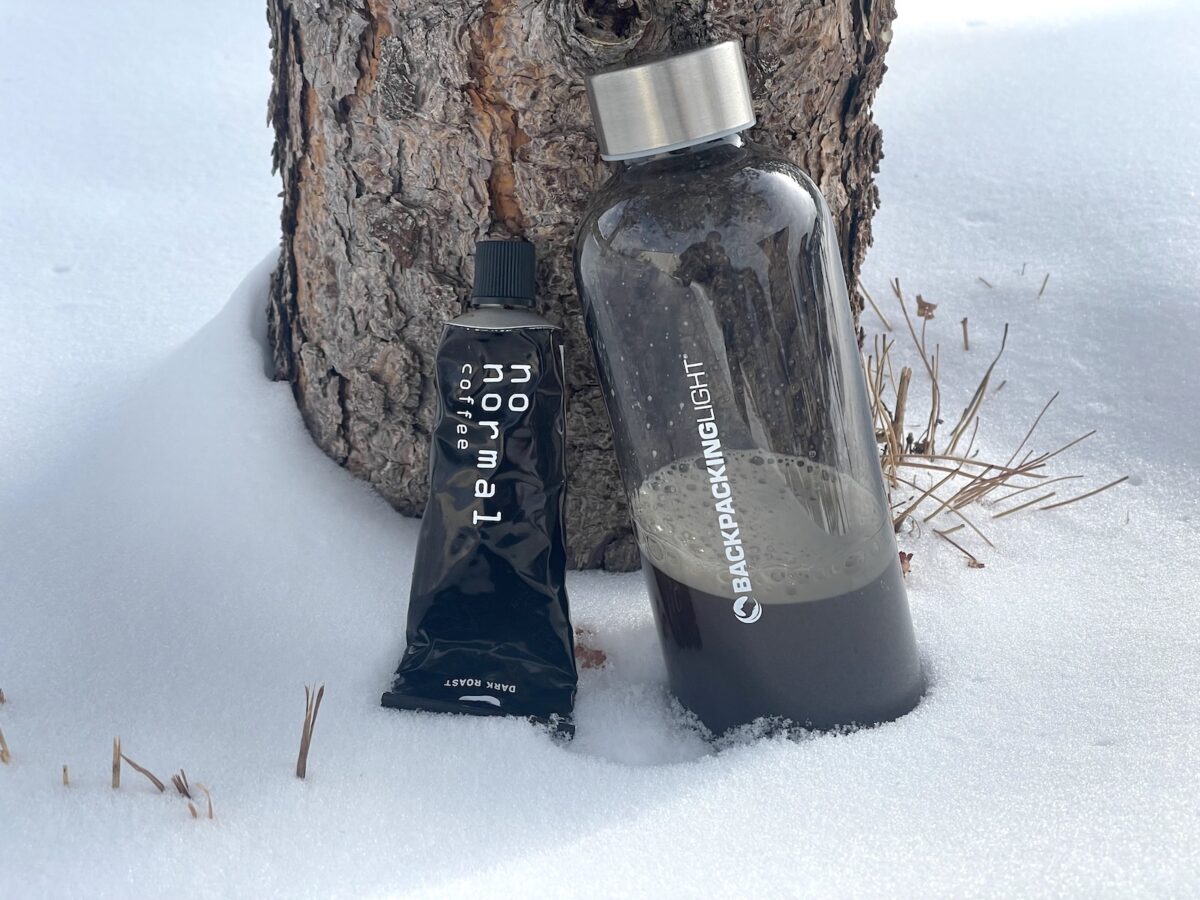
In this review, I experiment with No Normal Coffee. No Normal takes a different approach – it’s coffee designed for on-the-go convenience without compromising (too much) flavor, in a very interesting form factor – paste dispensed from a resealable aluminum tube.
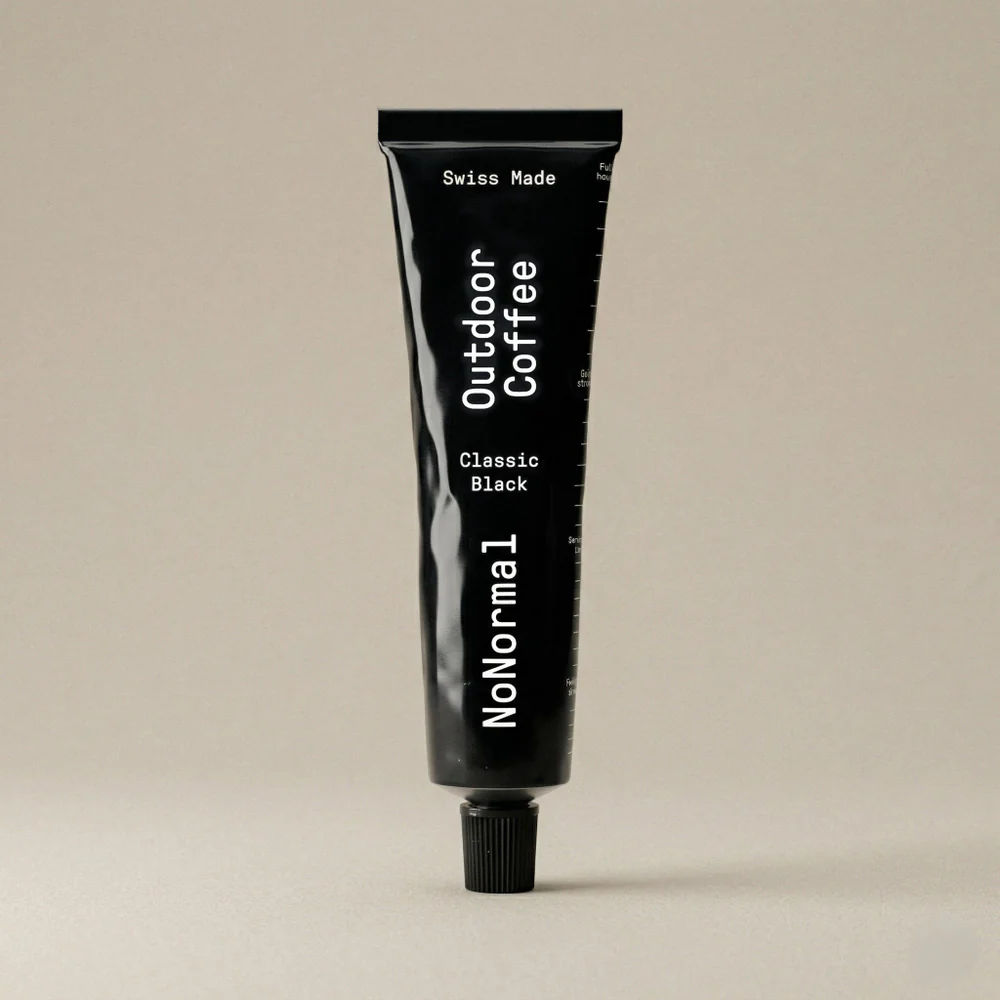
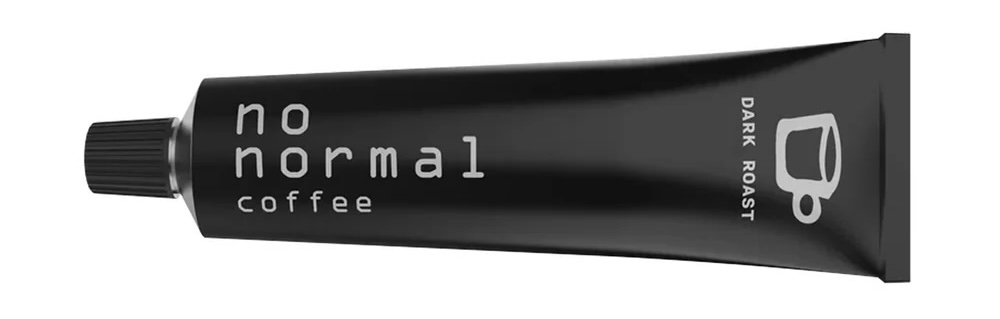
No Normal Coffee paste is crafted from 100% Fairtrade Arabica beans and sweetened with organic Swiss beet sugar. Flavor profile: rich, indulgent flavor with hints of chocolate, nuts and caramel. Swiss-made. Each 100 g tube makes 20 cups of coffee. Drink hot or cold or use as a spread.
Product Overview
Specifications
| Form Factor | 100 g of coffee paste in a resealable aluminum tube (total tube weight 115 g). |
| Serving Size | One tube provides up to 20 cups of coffee (about 1 tsp per cup) |
| Flavor Profile | Rich, smooth flavor with hints of chocolate, nuts, and caramel |
| Shelf Life | Initial studies show up to 6 months unopened; once opened, use within 4 weeks. Future batches aim for 12 months unopened. |
| Price | $17.00 per tube |
| Country of Manufacture | Switzerland |
Nutrition Information
- Ingredients: coffee extract (46%), sugar, coffee powder (15%), water, thickener (xanthan gum, gum arabic).
- Serving size: 5 g paste / 100 g water
- Serving nutrition: 12 Calories / 0 g fat / 2.3 g carbohydrates / 1.5 g added sugar / 0.3 g protein / 0 g salt / 43 mg caffeine.
- Serving suggestion: mix 5 g paste (~ 1 tsp) with 100 g water (~ 3.5 ounces) at 85 °C and stir for 20 seconds.
How It’s Made
No Normal Coffee paste is water-extracted from roasted, ground beans. The extract is concentrated via evaporation, then mixed with additional ingredients (coffee powder*, sugar, and thickening gums) and pasteurized prior to packaging.
* The coffee powder is not freeze-dried coffee. It’s made by micro-grinding the same whole roasted beans used to brew the coffee that becomes the concentrate in the paste. It’s added to the paste to improve texture (increase viscosity) and aroma.
Manufacturer’s Claims
No Normal Coffee highlights several important aspects of their coffee paste, which is currently available as a lightly-sweetened dark roast:
- Convenience: Easily mix with water for instant coffee. Can also be consumed directly or added to food.
- Quality Ingredients: Made from 100% Fairtrade Arabica beans with organic Swiss beet sugar.
- Versatility: Works as a hot or cold drink, food additive, or energy gel.
Field Notes
First Impressions
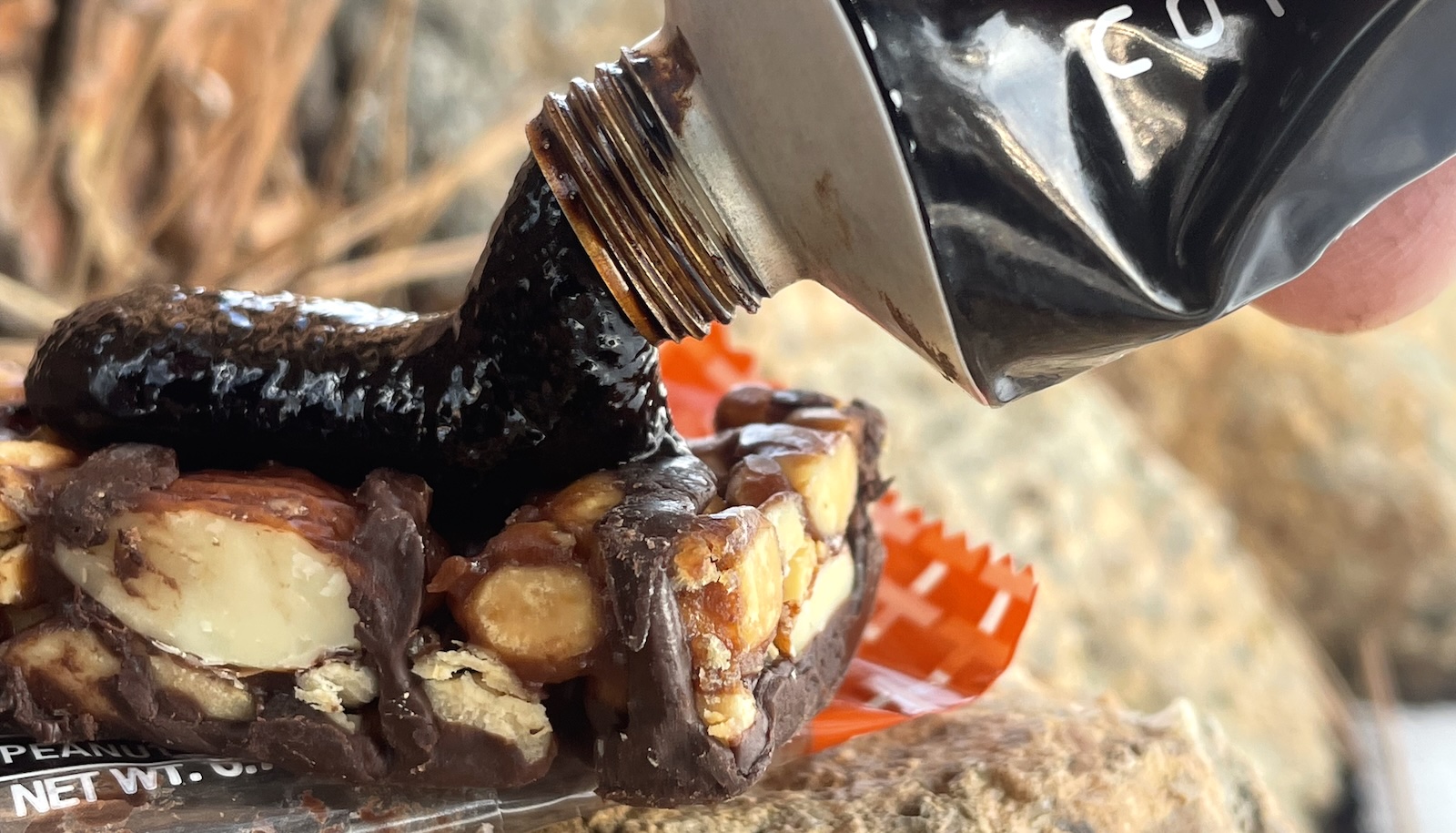
When I first opened a tube of No Normal Coffee paste, the aroma of the paste was distinctly rich and aromatic – it actually smelled like brewed coffee instead of some type of chemical derivative. My initial taste, a lick of paste off my finger, revealed a smooth, lightly sweet flavor that was surprisingly enjoyable on its own. I immediately had a vision of spreading the paste on a chocolate bar.
Use Cases
I tested No Normal Coffee in several different scenarios:
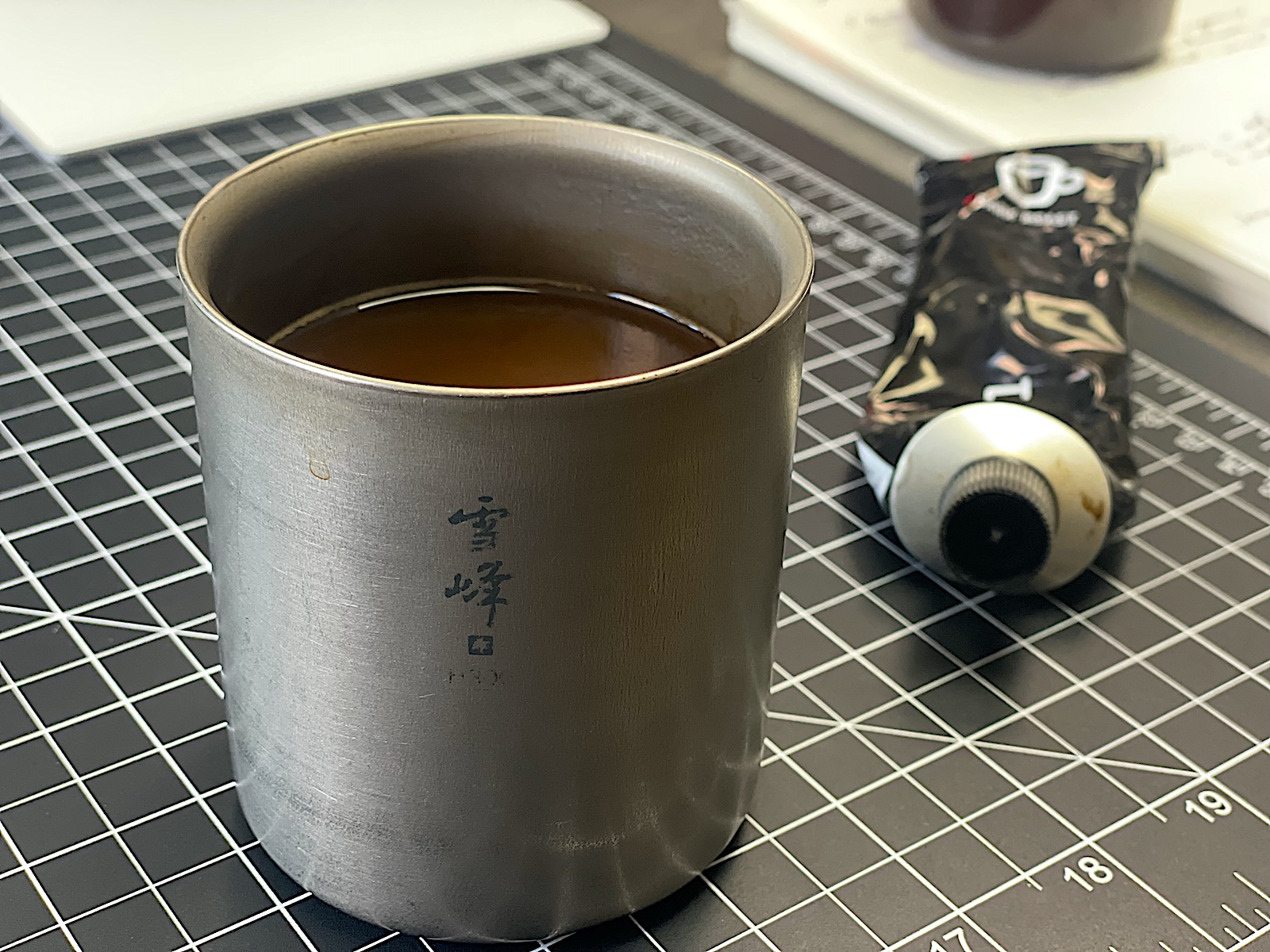
- Hot Coffee in Camp: Mixing the paste with hot water produced a smooth, rich cup that lacked the bitterness I often associate with instant coffee. It was a pleasant way to start my day. This particular blend was a “dark roast”, but had a more complex flavor profile than a traditional dark-roasted Colombian – but was still dominated by a chocolate nutty flavor and a toasted caramel aroma. The hint of sweetness was just enough to add a bit of “wow, that feels good” vibe that remained while I drank the entire cup. I don’t drink my coffee with sugar, so this was surprising to me.
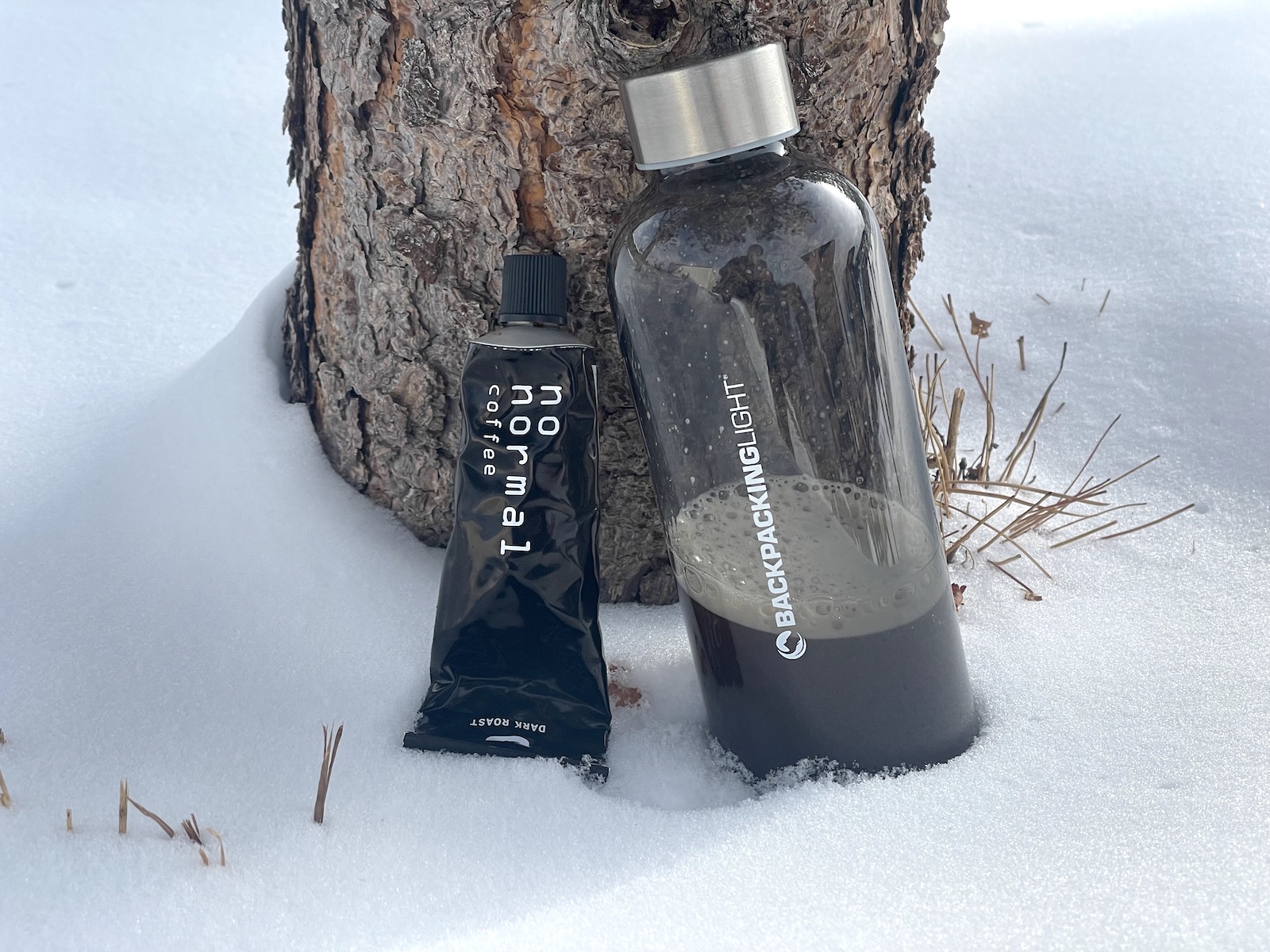
- Cold Coffee on the Trail: Adding the paste to a water bottle, capping it, and shaking resulted in a refreshing cold coffee that I liked better than freeze-dried coffee. It had a cold-brew sort of mouth-feel, without the watery, stale-coffee stench that comes with mixing some instant freeze-dried coffees in cold water.
- Direct Consumption: Squeezing a small amount of paste directly from the tube and into my mouth while hiking provided a quick energy boost (likely due to the caffeine). It tasted noticeably better than most energy gels I’ve tried, and its lightly sweet flavor kept it from feeling cloying. The caffeine without the fast-carb gel carrier made it easy to dose.
- Food Additive: I added the paste to both hot cracked wheat cereal and cold granola with powdered milk. In both cases, it enhanced the meal with a pleasant coffee flavor. Spreading it on a hunk of chocolate or a peanut-butter-chocolate Kind bar at lunchtime was a surreal experience! The chocolate use case may create No Normal Coffee paste addicts out of non-coffee drinkers. I also mixed it with almond butter from a Justin’s packet and spread it on crackers.
Hot vs. Cold Usage
With cold water (and cold paste), dissolving the paste requires vigorous shaking for 15 to 30 seconds – not an issue if you are making cold coffee in a water bottle. The benefit of vigorous shaking – a nice crema that liberates both aroma and flavor. With hot water, the paste dissolves easily in response to 15 to 30 seconds of stirring with a spoon.
Dosage
Note the serving size specified by the manufacturer: 5 g (about 1 tsp) of paste per 100 g (3.5 ounces) of water. That’s not a large cup of coffee, so if you’re used to an 8 or 12 ounce (230 to 340 g) cup, don’t skimp on the paste. Unlike Via, which starts to taste pretty hairy if you overdose it, overdosing No Normal paste just makes for a stronger (and still smooth) mouth-feel. I did find that I enjoyed slightly weaker doses when drinking cold from my water bottle while hiking during the day. A hint of coffee flavor was particularly nice when my water sources were a little questionable (e.g., pond water).
Packaging and Durability
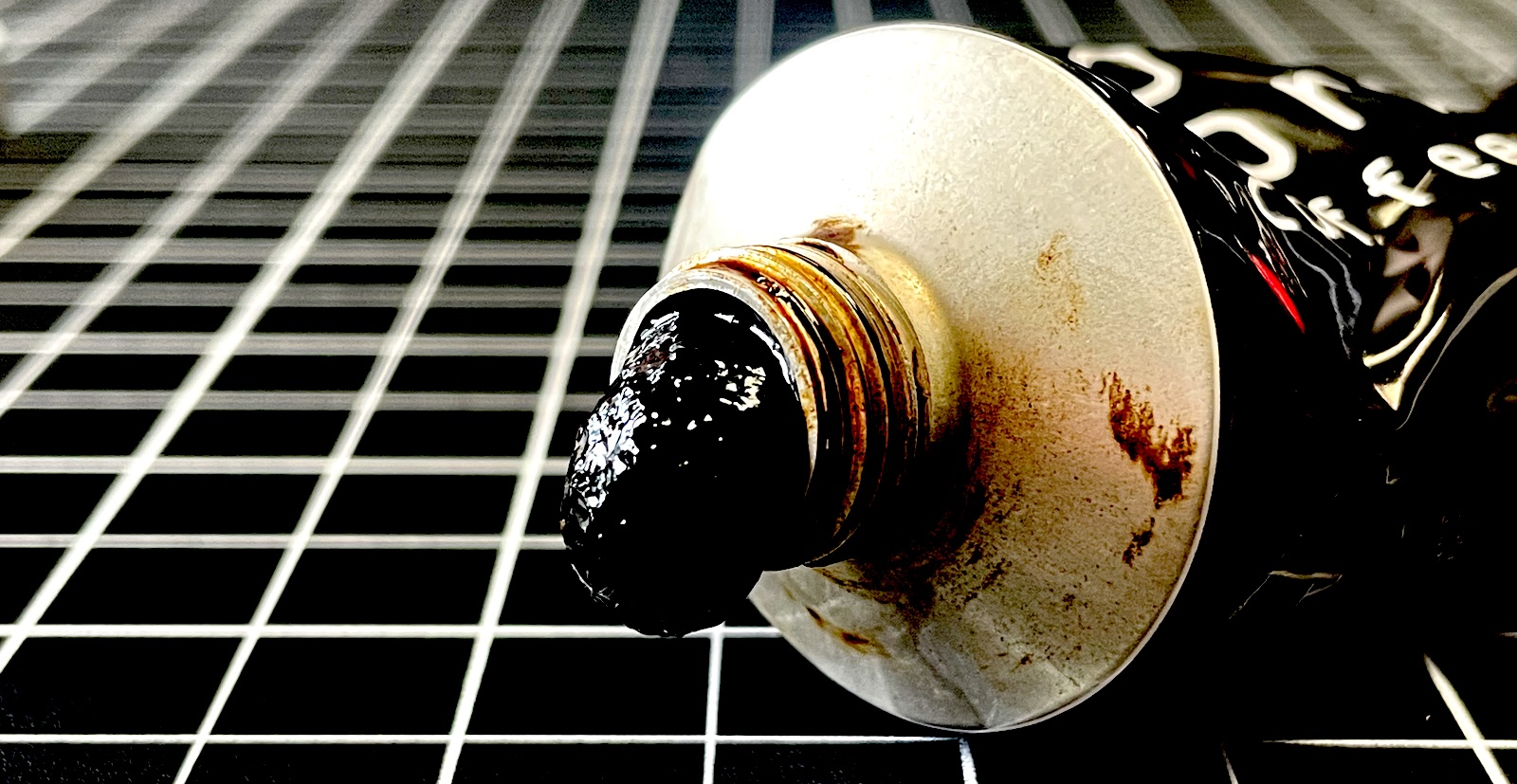
The aluminum tube packaging keeps the paste fresh, though dispensing it could sometimes be messy (especially when excess paste accumulated around the spout). This requires extra care in bear country. Traveling from lower to higher elevations exacerbated this issue, causing paste to exit rapidly upon opening the cap in a full tube. The result? Higher-than-planned caffeine dosing (you don’t want to waste it, right?)
Repeated bending and squeezing during extended use caused the tube to wear, creating leaks where the aluminum tubing fabric tore (much like the aluminum toothpaste tubes of the olden days).
Single-serving packets, similar to energy gels, would be a more convenient alternative for longer trips. Expectedly, sustainability enthusiasts may twitch a little, but after trying No Normal Coffee paste, the coffee aficionados among them may consider the tradeoffs more seriously.
Repackaging it into a plastic squeeze bottle could work, but since the coffee paste is semi-hydrated, freshness will likely decay more rapidly than when protected in its aluminum tube.
When the tube was frozen in extremely cold temperatures (around 0 °F / −18 °C), the paste froze in the cap threads and the cap was extremely difficult to remove without warming it up first. However, while the viscosity of the paste did increase in temperatures this cold, it did not freeze solid and could still be squeezed out of the tube.
Taste Defects
I didn’t taste any classic roasting defects (underdeveloped, baked, scorched, tipped, or burnt). Nor are there any of the most pungent defects that plague instant coffees – including sourness, bitterness, and oil deficiency. However, there is a very subtle chemical defect which is impossible to trace, but may originate from the production (evaporation) process, or amino acid degradation during storage after packaging. It’s most noticeable during the long-tail aftertaste period, several minutes after drinking. It’s not particularly unusual, and seems consistent with other instant coffees I’ve tasted.
Commentary
No Normal Coffee offers a more comprehensive flavor profile and a less bitter taste compared to traditional instant coffees like Starbucks Via. While Via is lighter and more compact, No Normal Coffee paste’s versatility as a drink, food additive, or direct energy source makes it unique.
At about $1.50 per 8 ounce (230 g) cup, it’s not a low-cost alternative to freeze-dried coffee. However, the fact that it can be eaten out of the tube or used as a food additive makes it more appealing for me from a cost-benefit perspective.
Packaging limitations are the most obvious difference between No Normal and other instant counterparts. While the aluminum tube has its drawbacks, the product’s overall quality and innovative form factor (a paste) have me scrambling to figure out some new recipes with it. I hope it’s released in single-use packets soon.
Coffee paste like No Normal may be a good fit for backpacking coffee enthusiasts who value better coffee than what you can get out of freeze-dried powders, with some additional versatility. It’s a coffee product that can be used in a broader variety of scenarios, from hot drinks to quick energy boosts to flavor additives for the rest of your food.
About No Normal Coffee
No Normal Coffee is based in Switzerland, founded by Alexander Häberlin and Philippe Greinacher, whose combined passions for coffee and outdoor exploration led to the creation of this product. Their mission is to offer a barista-quality coffee experience that’s portable, sustainable, and tailored for outdoor enthusiasts.
For more information and to purchase No Normal Coffee, visit their website.
No Normal Coffee paste is crafted from 100% Fairtrade Arabica beans and sweetened with organic Swiss beet sugar. Flavor profile: rich, indulgent flavor with hints of chocolate, nuts and caramel. Swiss-made. Each 100 g tube makes 20 cups of coffee. Drink hot or cold or use as a spread.


Discussion
Become a member to post in the forums.
Companion forum thread to: No Normal Coffee Paste Review
Ryan Jordan evaluates his first impressions from No Normal’s Coffee Paste for backpacking,
Interesting product. I can see the appeal. The aftertaste would give me pause. I quite enjoy testing instant coffee while backpacking. I have low expectations so unless it’s just horrid-Folders instant-I am pretty happy with most hot cups of caffeine beverage. The Via Colombian is most appealing for me-good caffiene content and decently smooth. I usually add powdered butter which helps even out the caffeine rush and gives it longer lasting effect.
Just the form-factor might be a game-changer since it’s so easy to adjust your dosage and delivery method. Good flavor is a huge bonus. I often bring coffee-flavored gel packets to substitute for the afternoon cup so just using the same tube would simplify things. Did it seem to rinse out of the bottle fairly cleanly?
I would try it except that I don’t like my coffee sweetened at all.
But their idea is interesting and I hope their company grows and that they offer a variety of coffees (where at least some of them are completely unsweetened). :-)
It comes in an Aluminium tube??? Aluminium is a neurotoxin and when consumed in the diet it is one of the main causes of Alzheimer’s Disease so I would avoid it like the plague!
Coffee Bags are where it’s at as far as great tasting coffee on the trail goes. As the name suggests, they are exactly the same as tea bags, but filled with ground coffee instead. Put one in your cup, pour in boiling water, stir well and then leave a short while to brew to taste. They come in individually sealed sachets, so they have a long shelf life, and they are compostable so you can happily throw them into the bush to decompose, nourishing the local plant life and allowing them to enjoy the taste of coffee too, or you can squeeze all the water out them after use and them put them back into the sachet they came in, to carry them back with you. They come in different strength ratings, 5 being the strongest.
Forgot to post back here after trying out a tube. The coffee tasted okay. It was smooth and not too bitter. I didn’t find it sweet. It works as basic coffee. I drank it in hot water and ate a few blobs straight. Very versatile.
The only gripe I have with it is that it can be messy. At altitude, the gel comes out before you have the cap off which can get into the threads, which can then get on fingers, sleeves, etc. My tube also sprung a tiny leak where there was a fold. Easy enough to mitigate, just FYI.
If they put it in plastic squeezy tubes I’d be glad to try one.
@Alf B
Aluminum is indeed toxic. But it is one of the most abundant minerals in the Earth’s crust. Clays are aluminum silicates. We unavoidably ingest it every day in the food we eat and the water we drink. Fortunately, aluminum is poorly absorbed in the gut, so the doses our tissues are exposed to are very low. See here for a summary.
Aluminum has indeed been reported found in Alzheimer’s lesions. However, these reports have been difficult to replicate. And finding a substance in a lesion does not mean that it caused the lesion, ie correlation is not causation. Aluminum cannot be ruled out as a contributing factor in Alzheimer’s but the evidence to rule it in is very very weak. A good summary of the relationship between aluminum and Alzheimers can be found here.
You are more likely to ingest toxins from a plastic tube than an aluminum one. But the doses from a coffee paste are likely to be utterly miniscule either case.
Become a member to post in the forums.