


That would definitely be one of those first world type peasant rebellions.
Topic
Become a member to post in the forums.
That would definitely be one of those first world type peasant rebellions.
…

Yes indeed. They will feel my wrath between my sips of Starbucks coffee and Facebook status updates.
That's right. Yelp those mothers a new one.

Do you have to drink the Gatorade or can you just pour it out?
Gatorade is the stuff you drink the night before a colonoscopy : )

30 hits on a thread about Gatoraide bottles, and I read 'em all. Dang I love this sight :)
jimmyb
if I could just derail this thread to a thread about colonoscopies my work would be done…
"Do you have to drink the Gatorade or can you just pour it out?"
Just pour the Gatoraid out, Jerry. That's what I had to do with the Miller Light beer, just so I could get the 1-pint aluminum wide mouth bottles with the screw caps.
The lemon lime powder makes the best backcountry margaritas. Once you add in the tequila of course.
Gatorade in the 32 oz bottles on sale here at both Safeway and Rays
Are you guys suggesting that you reuse these bottles long-term? Are you aware of the research and information available showing the risks of reusing plastic bottles, especially those exposed to UV rays/sunlight? I guess we can't be sure about nalgenes either, although they are BPA free, but we do know that these kinds of bottles are dangerous to reuse, right? The worst thing about these bottles is the degradation in the sun aspect. IF you use them, I hope you keep them in your packs and out of UV contact? AND PLEASE do not wash them in your dishwasher. This is the WORST thing you can do for your health today. David I'm looking at you :) I value your posts here, wouldn't want you to get plastic poisoning cancer!
"Are you guys suggesting that you reuse these bottles long-term? Are you aware of the research and information available showing the risks of reusing plastic bottles, especially those exposed to UV rays/sunlight? I guess we can't be sure about nalgenes either, although they are BPA free, but we do know that these kinds of bottles are dangerous to reuse, right? The worst thing about these bottles is the degradation in the sun aspect. IF you use them, I hope you keep them in your packs and out of UV contact?"
Mmmm hmmm… this kind of thing has been said for decades, during which plastic has been reused, recycled, recirculated and reused, used in microwaves, and yet, I don't have four arms and two heads. I'm pretty sure mama gave me formula out of plastic bottles.
Freezer bag cooking anyone?
I really, seriously, and always doubt that anything you do with plastic bottles is half as damaging as eating at McDonalds or driving your car.
Hey, these guys have been using plastic bottles for years, and there is nothing wrong with them … um … maybe you have a point.
I wonder if all the folks who worry so much about drinking water that has been stored in a plastic bottle have looked at their plumbing lately. If you live in a relatively modern home or apartment your water supply plumbing is most likely all PEX (plastic)
In a report on PET for food packaging applications issued in July of 2000, ILSI summarizes the large body of test data that demonstrates the safety of PET resins and compounds for food and beverage containers:
“PET itself is biologically inert if ingested, is dermally safe during handling and is not a hazard if inhaled. No evidence of toxicity has been detected in feeding studies using animals. Negative results from Ames tests and studies into unscheduled DNA synthesis indicate that PET is not genotoxic. Similar studies conducted with monomers and typical PET intermediates also indicate that these materials are essentially nontoxic and pose no threats to human health. . . . It is important to stress that the chemistry of compounds that are used to manufacture PET shows no evidence of oestrogenic activity. There is a significant body of evidence that demonstrates that the use of PET is not a concern and is perfectly safe in this respect.”4
In 1994, ILSI published a “White Paper on Refillable Plastic Packaging Made from PET.” According to ILSI, “PET polymer has a long history of safe consumer use, which is supported by human experience and numerous toxicity studies.” In its review of migration studies, ILSI concludes:
“[T]he levels of migrants potentially present in beverages packaged in PET bottles are below applicable international extraction limits that are based on safety considerations and orders of magnitude lower than levels causing adverse effects in toxicity studies. The use by consumers of PET polymer in food packaging, therefore, is demonstrated and considered safe.”5
http://www.ilsi.org/Europe/Publications/R2000Pac_Mat1.pdf
"PET itself is biologically inert if ingested, is dermally safe during handling and
is not a hazard if inhaled. No evidence of toxicity has been detected in feeding
studies using animals. Negative results from Ames tests and studies into
unscheduled DNA synthesis indicate that PET is not genotoxic. Similar studies conducted with
monomers and typical PET intermediates also indicate that these materials are essentially non
toxic and pose no threats to human health [9].
One particular widely used additive, antimony trioxide, has given cause for concern. However, a
new and very comprehensive and detailed animal feeding study concludes that there is no risk
arising from the use of antimony trioxide in PET products [10]. A diet containing up to 20g/kg of
antimony trioxide had no detectable toxic effects. Genotoxicity tests were also negative.
The endocrine glands of the human body generate hormones that control vital processes
associated with life such as reproduction, regulation of metabolism, mental processes and many
aspects of development before birth. The body also has hundreds of hormone receptors, each one
designed to receive a particular chemical signal from a hormone to initiate the biological activity
associated with the hormone.
There has been increasing public concern that certain man-made chemicals, if absorbed into the
body, can act like the female hormone oestrogen disrupting the normal endocrine cycles and
causing genetic disorders or adverse reproduction effects like reduced male sperm counts. It is
important to stress that the chemistry of compounds that are used to manufacture PET shows no
evidence of oestrogenic activity. There is a significant body of evidence that demonstrates that the
use of PET is not a concern and is perfectly safe in this respect. PET and its components have no
links with any reported endocrine disrupters [9,15,16]."
http://www.ncbi.nlm.nih.gov/pubmed/7835471
"As part of a multi-client project, the potential public health risks of the reuse of polyethylene terephthalate (PET) refillable bottles (PRBs) following possible misuse has been investigated. Participants in the project provided data and information from previous studies conducted independently at contract laboratories. These studies were sponsored by the clients in order to provide further research data on PET containers and their safety. In this report, the results of five of these studies along with the results of a recent study carried out at TNO are compiled and reported. PET refillable bottles were exposed to 62 contaminants, including pesticides, that a consumer could potentially store in bottles. After storage with a contaminant under well defined conditions, the bottles were washed, filled with a simulated beverage, and stored for various lengths of time. The beverage and in some cases the bottle wall were then analysed for the presence of the contaminants. Toxicological evaluation of the analytical results from these tests on contaminant residue remigration showed that even under exaggerated exposure conditions, there was no public health concern. Only one compound, parathion, remigrated to a level that required a more in-depth risk evaluation, and under the most conservative assumptions, it too presented no real health hazard. Additionally, current detection systems employed to ensure product quality detect a wide variety of contaminants, including commercial formulations of parathion. Data developed in this paper are consistent with the finding that PRBs can be safely reused. For preventing negative effects on product quality (e.g. taste), however, good manufacturing procedures including visual and electronic inspection systems are required to eliminate abused bottles."
…but can you dispute the findings in the last three responses/quotes I posted?
I'm not saying you're wrong as this certainly isn't my area of expertise but I can't find a link to a reputable source which would give me any concern about re-using a PET bottle.
I can. I will have to look for the articles I read within the last few years. Its not an issue to use these bottles once. The issue is what happens when the plastic breaks down from UV exposure and the high heat of the dishwasher. Rules I was taught in science class as a kid – NEVER put a plastic water bottle in a dishwasher and reuse it. NEVER leave a plastic bottle or drink cup in the sun and then drink from it. Will look for those articles to post here. I trust my science teacher though, he was one of those teachers you never forget…
Ok here's quote number 1. Pay attention to the fact that they keep saying that it has been tested to determine that it is safe under certain "extreme conditions of use." Please note that this DOES NOT include the REALITY that these paletes of plastic bottles can sit in the open sun for WEEKS before being sold. I happen to live in the warehouse district in NYC, and if you think these things are being stored out of the sun or inside, you better think again. They are stored in STACKS of uncovered palettes. That means that even drinking bottled water for sale before you wash it yourself, you are exposed. Just wanted to share the reality. Here's the quote:
"FDA has reviewed migration-testing data and has concluded that PET containers do not leach harmful amounts of substances into their contents even under extreme conditions of use. With respect to leaving bottled water in a hot car, FDA has stated: “It is true that exposing the bottle to higher temperatures may imply a greater degree of migration of substances from the plastic to the water [or other beverages in similar containers]. However, in its safety review, the FDA takes into account exposures to higher temperatures, such as during storage and transportation of bottled water prior to sale, in its estimates of potential levels of migration of substances from the plastic to the water.
“The levels of migration expected, including during periods of exposure to elevated temperatures in storage and transport (such as might be experienced in a closed vehicle in the sun) have, as discussed above, been determined by the agency to be well within the margin of safety. Therefore, the agency does not consider this situation to be a safety concern.”
From this link: http://www.foodsafetymagazine.com/magazine-archive1/aprilmay-2009/the-safety-of-beverages-in-plastic-bottles/
Good thing my science classes were before they invented plastic bottles. We were taught other stuff. We called it "science."
What is this "dishwasher" of which you speak? I don't think "leaving the plastic bottle in the sun until it starts to break down from UV" really fits the use here. Ian's frantic search to buy more of the bottles shows he is not in danger of this. He is just a wasteful, polluting bastard. ;-)
The palette thing would be a concern, but I trust the FDA to make sure I am safe, and to prevent such abuses. Hahaha.
Still you (Adam) are jumping whole hog from controlled testing that says it is safe, to an unscientific extrapolation to an untested "extreme" condition.

"Good thing my science classes were before they invented plastic bottles. We were taught other stuff. We called it "science.""
Yeah, but that's before they started putting Chemicals in things. Jeez, nowadays some things are made entirely of Chemicals! You can't be too careful.
Adam,
Gatorade bottles are made from PET plastic. The concern about BPA was from polycarbonate bottle like older clear Nalgene bottles, some baby bottles, sippy cups, and the linings in steel cans.
I'm really big on reducing human exposure to cancinogens (that's my day job) including lead. Lead is bad for you. Lead is a metal. But that doesn't mean that people should stop using stainless steel, copper or titanium pots to cooks in because those are also metals.
Sorry if that sounds pedantic and snarky, but we all grasp that gold differs from aluminum so a reasonably well-read human with some life experience can assimilate data about 20 common metals. Why can't more people distinguish between 8-10 common plastics?
I wouldn't use LPDE to stop a bullet.
I wouldn't use PET to hold boiling water.
Polycarbonate would make lousy sled runners.
I NEVER burn PVC or CPVC so stop glaring at me when I burn LDPE and HDPE (any more than you would about burning paper or wood).
Ian, thanks for posting all those research summaries.
Mario (darn autocorrect) MARKO,
The "dishwasher" concern may have arisen because I suggested washing the bottles between, say, using it as a pee bottle and reusing it as a drinking-water bottle (although urine is sterile, I, myself, am not keen on the the taste but, hey, HYOH).
PET shouldn't be put on the sanitize or speed-dry cycle – those approach its melting point.
Especially for HPDE bottles, I find the caustic detergent and hot water in a dishwasher very effective at removing residual taste from the plastic.
I'm tempted to explain the difference between soaps and detergents now in order to follow the Third Commandment of BPL – "Thou shall always promote thread drift."
I'm trying to NOT take a coffee mug (single use you know…takes up space) and was thinking of using my gatorade bottle for medium warmish coffee in the morning. Would there be any problem with putting not hot (but definitely warm) water in the gatorade bottle in terms of bottle survival and chemical leeching?
I will be drinking water from a bladder, but plan on taking the wider-mouth gatorade bottle for electrolyte mix, a packit gourmet smoothie at lunch, etc. It would be perfect if I could also use it for my coffee swig in the am…
Become a member to post in the forums.
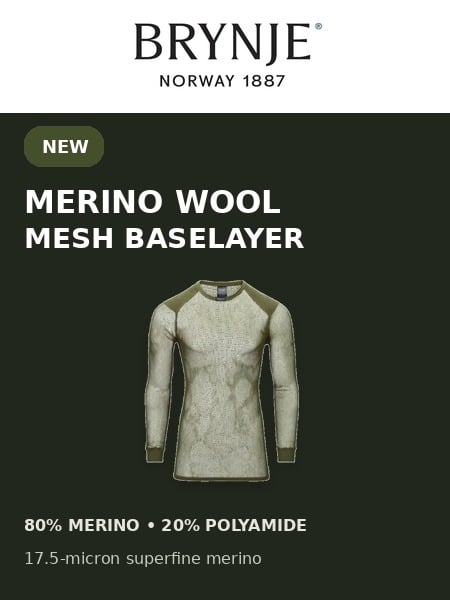 Tactical Wool Thermo ShirtSuperfine merino wool-blend mesh baselayer with a slim unisex fit and densely knitted shoulder panels for pack-carrying comfort. Weighs 4.9oz | 140g
 © Beartooth Media Group Inc.
 Loading...