Topic

Current UL windshirts and breathability: are there other options and layering techniques?

  • This topic is empty.
Viewing 25 posts - 151 through 175 (of 246 total)
PostedFeb 25, 2014 at 11:52 am

"I'm trying to get beyond this reductionistic argument that "any disagreement with BPL dogma is driven by corporate greed alone." That whole narrative is wearing thin for me. I'm open to the possibility that a manufacturer might actually be acting in good faith, and trying to put out an improved product."

+1 – but I would add – for their intended audience. Some folks have a hard time believing that they aren't the target audience.

Dale Wambaugh BPL Member
PostedFeb 25, 2014 at 11:57 am

"What if mfgers have done their own testing, have come to different conclusions than the BPL consensus, and actually don't believe that high CFM windshirts are a worthy product? That they don't deliver the benefits of a less permeable shirt?"

No doubt that some customers wanted more watr resistance and the weight race took some precidence as well. There are all kinds of light less breathable fabrics to choose from, making it easy to crank out a wind shell and live with the results. Compromises are made in cost, performance, availability (numbers produced), etc. And like I said, it's a small part of these huge athletic clothing lines.

I've been a part of enough sales oganizations to know that the staff has to struggle sometimes to come up with good attributes and benefits after someone up the food chain made a turkey. Want to buy a Pinto or a Vega? :) I'll listen to someone who has imperical data like Richard, or someone who plays in the same conditions that I do. All others are highly suspect!

Paul Hatfield BPL Member
PostedFeb 25, 2014 at 12:09 pm

> certainly including Patagonia and Marmot and Nike and addidas and Brooks and
> Reebok and UnderArmour and Sacouny and ACIS and New Balance et al make very
>high CFM long sleeve shirts, jackets, hoodys, and half zips for high
> aerobic activities such as running, climbing, trail running, hiking, biking, etc.

hwc, I don't agree with your statement.
If you are talking about stretchy baselayer shirts with no water resistance, then yes, there are plenty of options (though most are probably over 8 ounces).
But jacket-style garments that are breathable, water-resistant, and light weight? It is the exception, not the rule. I will believe that the Brooks LSD jacket satisfies the criteria, but can you provide specific models from other brands that satisfy the criteria? I went to a sporting goods store and tested what I could, and found that non-breathable was the norm.

Those companies are marketing driven. Also they probably don't like seeing an online review of their jacket saying that it's cold.

Last night I visited my closet and conducted the breath test on a number of 100% nylon button-down hiking shirts that I have. I was shocked by how low their air permeability is. I also tried some shirts made out of cotton, and was shocked at how low the air permeability was for some of the shirts. Naturally none of these garment have a PU layer, and most have been worn and washed a lot over the years. High air permeability in a fabric is not a given at all.

Roman Vazhnov BPL Member
PostedFeb 25, 2014 at 12:09 pm

We have to check air permeability of SD windshirt on Richard Nisley's equipment before making any conclusions. Because as i can see manufactrurers data for CFM are correlated with Richard's data but not equal to them. Apples to apples.

PostedFeb 25, 2014 at 12:59 pm

>> But jacket-style garments that are breathable, water-resistant, and light weight? It is the exception, not the rule.

I didn't say water-resistant. I said that all of these companies make products that are extremely air permeable and designed specifically to vent maximum heat/sweat under high aerobic conditions.

Here's an example — a New Balance half-zip. But, virtually every running brand makes something similar:

http://www.runningwarehouse.com/New_Balance_Mens_Boylston_Half_Zip/descpage-NBHZM14.html

Heck, for that matter, a 100 wt fleece is going to offer extremely high air permeability and "breathability".

There are countless options for high air permeability garments. The trade-off is that they are less weather resistant. Windshirts are different product. They trade-off air permeability for increased weather resistance. They have to. The definition of "blocking wind" is reduced air permeability.

rick . BPL Member
PostedFeb 25, 2014 at 2:05 pm

>There are countless options for high air permeability garments. The trade-off is that >they are less weather resistant. Windshirts are different product. They trade-off air >permeability for increased weather resistance. They have to. The definition of >"blocking wind" is reduced air permeability.

Right. But there's a sweet spot where you get the better of both worlds (windblock & breathability), which is what this thread is about. Not "windproof" but not a plastic bag (or a burlap sack) either. Where is that point? (measured in CFM) and which jackets offer it?

You can see this best when you're coming in and out of treeline/peaks/ridges, where the wind is howling at 40mph. You get cold quick without some moderate windblock layer, and it would take an awful lot of fleece (strenuous activity or no) to keep you warm. As you pass back out of the wind, you warm up and (can) sweat. A fleece works in case B but does very little for case A. The wind pulls warm air from your body immediately, and you chill, period.

There is a niche for products which handle both of those extremes well enough to stay on thru all changing conditions in between throughout the day.

If it rains, put your rain jacket on, that's a different garment (until they can make a several cfm jacket that is still waterproof, this is necessarily a different garment). If a fleece works for you, fine! but there's a lot of people who are looking for something else (and had found it in previous iterations!)

Dale Wambaugh BPL Member
PostedFeb 25, 2014 at 2:22 pm

"I'm trying to get beyond this reductionistic argument that "any disagreement with BPL dogma is driven by corporate greed alone." That whole narrative is wearing thin for me. I'm open to the possibility that a manufacturer might actually be acting in good faith, and trying to put out an improved product."

I don't think it is greed, just attention to marketing factors that don't fit my needs. It's more incompetence than malfeasance.

What's the design process? A small task force is asked to update the last model, surveys, reviews and other feedback are studied, features like cuff adjustments or zipper details or current fashion colors may be introduced, the fabric samples come out (this is the important part), it all gets kicked around, it is written up, samples are made and reviewed and somewhere in the process someone in authority says "go," and the patterns are sent off for production samples, they are reviewed and away we go. At each stage the marketing folk have their input and there are other folk who do cost analysis to get the product to fit into the right cost for the perceived market slot. Personalities and authority have their influences. There amy be opinions worked into the process that have nothing to do with good science and engineering and divorced from the laws of physics.

Taking The North Face as an example, some of us are old enough to have watched the brand go through several changes in market direction with more of an emphasis on urban fashion than mountaineering. It has been interesting to watch Eddie Bauer swing back and forth with the First Ascent line and it's prominence and position in the stores and catalogs.

It's a pulling contest from several directions and there are market sections that we don't get into directly, like running, biking, skiing, team sports, rock climbing, gym/conditioning, and even some military uses. That last may have more good influence for backpacking than the rest and it is more than the US armed forces too.

But after the cookies have been baked, someone has to get the stuff sold and the design teams have to justify their decisions and all the other corporate machinations. Good scientific method requires research, then theory. Marketing tends to take a feature and then attach attributes and benefits to it, basically doing the "research" to support the theory instead and finding reasons to "pitch" the product.

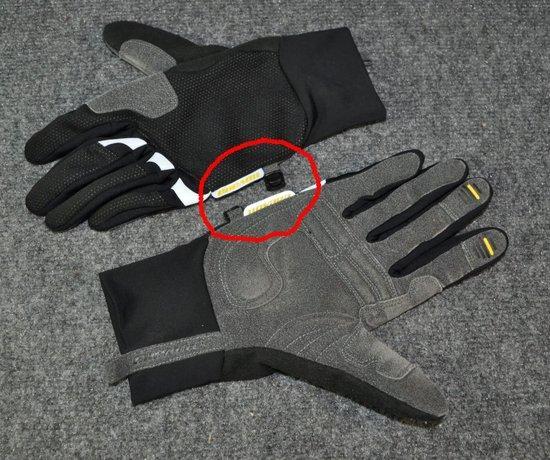
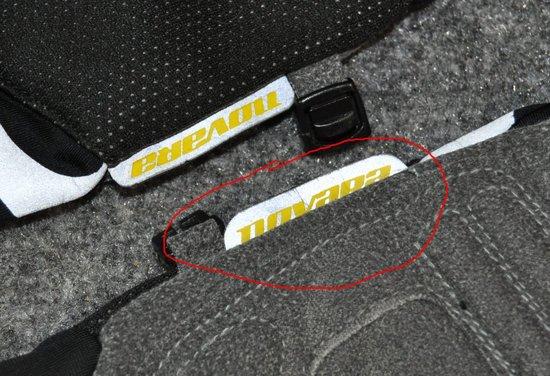
Let me give an example of an item I just ran into. I found this pair of Novara/REI bike gloves. They have a tag hanging off the side that has the Novara logo on it. It is reflective, but I'll bet dinner that no one on the design team said, "we need a reflector on that outer seam" and then the logo was added. I'm sure it was much more like someone on the marketing side wanted more brand identification and a compromise was made to add the tag rather than some big logo splashed across the back of the glove. The tag is in a poor spot for reflecting in traffic and there are more integrated reflective panels on the knuckles anyway. As a user, I can see no real purpose for this tag and in fact I find it annoying. It is also difficult to remove. it just marketing hype that the user has to pay for and live with.

Novara gloves
Novara gloves

Here is the REI blurb on this product. The italics are mine and something I see as a justification for the junk that marketing added to an otherwise good design. This stuff is pervasive and we are saturated in it. And I hold it is the product of design by committee. Imagine a Frank Lloyd Wright design with an equivalent "tag" hanging off the side. I don't think so. This is where Apple succeeded: just the look and feel of the product identified it as an Apple product, to the extent that everyone else had robbed the designs.

From http://www.rei.com/product/803637/novara-headwind-bike-gloves-mens:

The sleek, windproof Novara Headwind biking gloves protect and insulate hands from brisk winter weather.

Polyester laminate fabric blocks wind and repels water; microfleece lining and stretch cuffs retain valuable heat
Padding in the synthetic leather palms cushions and protects hands from the vibrations of rough roads; reinforced thumb and forefinger panels enhance durability
Fleece thumbs mop up brow moisture
Reflective detailing increases your visibility in low light

PostedFeb 25, 2014 at 2:47 pm

>> There is a niche for products which handle both of those extremes well enough to stay on thru all changing conditions in between throughout the day.

There's a niche for unicorns, too. Alas, I probably sweat too much for a single mythical jacket to serve every purpose of every moment of every hike. I don't think there is anything that will block a 40 mph wind on a summit AND not trap too much heat for me when I'm trudging uphill. Fortunately, I move so slowly that I'm not "popping above and below treeline" very quickly, so I can usually just stop and put on a windbreaker when I get above treeline. If it's too hot for that, I've got other options that block a little wind. Specifically, I've got two options in hybrids that have wind resistant fabric on the torso and breathable panels on the back, sides, and under the arms.

PostedFeb 25, 2014 at 2:54 pm

I think most people would view the added reflective bits on those gloves as a benefit. I know that when I ride a bike or jog in traffic, I want as much reflectivity as I can get. Without those tags, the gloves would have zero reflectivity from the palm side.

rick . BPL Member
PostedFeb 25, 2014 at 3:27 pm

Wcollins-

It's not a unicorn! Lots of people are lamenting the loss of the older houdini (apt name!)

It's fine if you don't see the need to get deep into the exact cfm that works for these conditions, and have methods that work. For me and a lot of others, there's a use for this type of garment. Its also not for every hike. Or even the whole day.

I've been in conditions where the only option was to fumble with a jacket several times an hour, sweat with it on, or be unnecessarily cold with it off. If something can bridge that gap I want it.

PostedFeb 25, 2014 at 3:40 pm

>> I've been in conditions where the only option was to fumble with a jacket several times an hour

The same could be said of fumbling with rain jacket, off an on as the drizzle picks up and eases. By making a wind jacket a bit more weather resistant, there's a way to cut down the fumbling with jackets in a different set of conditions.

Personally, I will use a Houdini or a Trail Wind Hoody when I want to completely block the wind, and maybe a bit of mist or snow, with a 4 to 5 ounce jacket that is small enough to always be tucked in my pack. Most of the time I wear something that prioritizes air flow over weather resistance because I sweat like a pig when I hike.

Dale Wambaugh BPL Member
PostedFeb 25, 2014 at 3:55 pm

"I think most people would view the added reflective bits on those gloves as a benefit. I know that when I ride a bike or jog in traffic, I want as much reflectivity as I can get. Without those tags, the gloves would have zero reflectivity from the palm side."

It is a clumsy ugly add-on from a design point. The gray areas on the knuckles are reflective as well. That and my palms are wrapped around the handlebars! There are better ways to handle it. Like I said, I'll bet the tag was made reflective after someone wanted a tag in the first place. Not the best design process, IMHO. I do know some bike commuters who would love a fully reflective middle finger on their gloves :)

Or are you trying to play the part of a marketing type?

Dale Wambaugh BPL Member
PostedFeb 25, 2014 at 4:06 pm

"I sweat like a pig when I hike."

Pigs don't sweat :) I am often a walking fountain myself, but you should be peeling if you are that warm. I'm reaching for the windshirt for exposed level traverses and downhill sections where my exertion level drops, or maybe light precip. No problem on rest stops and camp too, but the emphasis is on modrate activity with wind, lower temps and/or precip.

x x BPL Member
PostedFeb 25, 2014 at 4:36 pm

"Two things to note: contrary to popular belief, the most effective place in your layering system to wear your 2-5CFM second skin is very close to the skin, right over the base layer. Common "soft-shell" thinking would dictate taking the jacket off in cooler conditions and adding a layer underneath, but this is actually not what you want to do. You actually want to layer OVER your wind layer, which is counter intuitive, but the works with the evaporative process rather than against it." (Michael Glavin)

I actually tried this approach (assuming I undestood it correctly) by layering my "newer" Houdini on top of my Icebreaker T-shirt and under a Patagonia R1 hoodie, for a short high intensity run. Had to figure out something to do as I can't sleep… :)

It's -1C (30F) here in Helsinki and windy by the sea shore. The Houdini blocked the wind really well under the fleece layer, and I didn't get hot nor sweated. So for cold weather activities these 2-5 CFM windshirts seem work well for blocking the wind chill (when the windshirt is next to a baselayer). But doesn't layering something on top of the windshirt make the "water resistant" qualities redundant, if it were to drizzle a little? As the layer on top would get soaked. Effectively rendering a windshirt just a windshirt, to block wind and nothing else.

Sometimes you need just protection from the wind (especially when it's cold and windy), but then other times you need the extra weather-proofness from a windshirt (then you'd ahve to layer it on top), and the newer lower CFM models don't seem to fit the bill quite so well. And when the temperature rises that's a whole new story…

I'd like to hear more about your thoughts on using the windshirt under others layers, because I can't see the full rationale behind that idea. Unless a windshirt should be considered just as a wind blocking layer.

As a new forum poster and a quite beginner hiker (although passionate and a quick learner) I hope this makes sense. :)

PS. The Houdini's hood under the R1's hood was really awful. Couldn't hear almost anything but crinkling sounds.

PostedFeb 25, 2014 at 4:48 pm

And if it is windy, and you have the R1 on top of the wind shirt, what insulation value is the R1 providing any more? A highly breathable layer exposed to the wind would not seem to have much purpose, especially over a wind resistant layer. I am sure it adds a little warmth, but far less than it was designed to add.

Dale Wambaugh BPL Member
PostedFeb 25, 2014 at 4:49 pm

I wear base/R1/windshirt. I want moisture transfer in that order and the windshirt to trap the warm air in the fleece and prevent the wind from drawing the heat off. To my thinking if the fleece is on the outside, the wind is penetrating that layer and reducing its effectiveness. I want dead air trapped in all the pockets possible while allowing the moisture to be transferred to the outside.

I don't get it!

x x BPL Member
PostedFeb 25, 2014 at 5:00 pm

I was just curious about Mr. Glavin's idea of using the windshirt next to a baselayer and layering other pieces on top. As this is something new to me.

Just to elaborate my previous post a little.
Wearing the layers in the order baselayer/windshirt/fleece I felt very comfortable and didn't sweat. Just by using a baselayer and a windshirt I would have been uncomfortably cold (the wind was blowing quite a bit) and I would estimate that by hacing the R1 under the windshirt I would have been quite hot and sweaty. I was running fast.

This was just to try out Mr. Glavin's idea. It would be great if he could elaborate some more.

Justin Baker BPL Member
PostedFeb 25, 2014 at 5:05 pm

In that case you would have been better off with a lighter fleece, or perhaps 2 base layers layered on top of each other, than to layer the fleece over the windshirt.

Justin Baker BPL Member
PostedFeb 25, 2014 at 5:07 pm

"in cool-cold weather to mitigate the "flash off" chill affect by having sweat damp/wet layers."

This is why I wear a wool base layer. That flash chill was a bit extreme for me. I'm not a super sweaty dude so I don't find the wool wetting out too much with my sweat, seems to work great for me.

PostedFeb 25, 2014 at 5:09 pm

I suppose the theory is that the windshell close to the skin keeps the wind from feeling cold, but the wind moving through the exposed fleece layer evaporates moisture like crazy. Probably figuring that a wet, sweaty fleece layer is the least comfortable option.

x x BPL Member
PostedFeb 25, 2014 at 5:13 pm

I can't seem to get my point across. Maybe I should go to sleep. My post wasn't about what's the best thing to wear. It was about Mr. Glavin's idea of layering the windshell next to a baselayer and then layering over it. I was curious about it, and wanted to discuss it more. Especially as I think that putting stuff on top of the windbreaker would make the DWR redundant. I just wanted to discuss that further. That's it.

PostedFeb 25, 2014 at 5:19 pm

If my recent order arrives from the UK in time, I'll test this in Michigan next week. I plan on my Cap4 being my base layer. I'll wear a fleece over that and a wind shirt over that for part of the first day (unless it's so cold I need more), and if all is well, I'll switch the wind shirt and fleece for the second half of the day.

If it's cold enough to wear that combo that is, and at the moment it seems like it just might be!

Viewing 25 posts - 151 through 175 (of 246 total)
Loading...