


Introduction
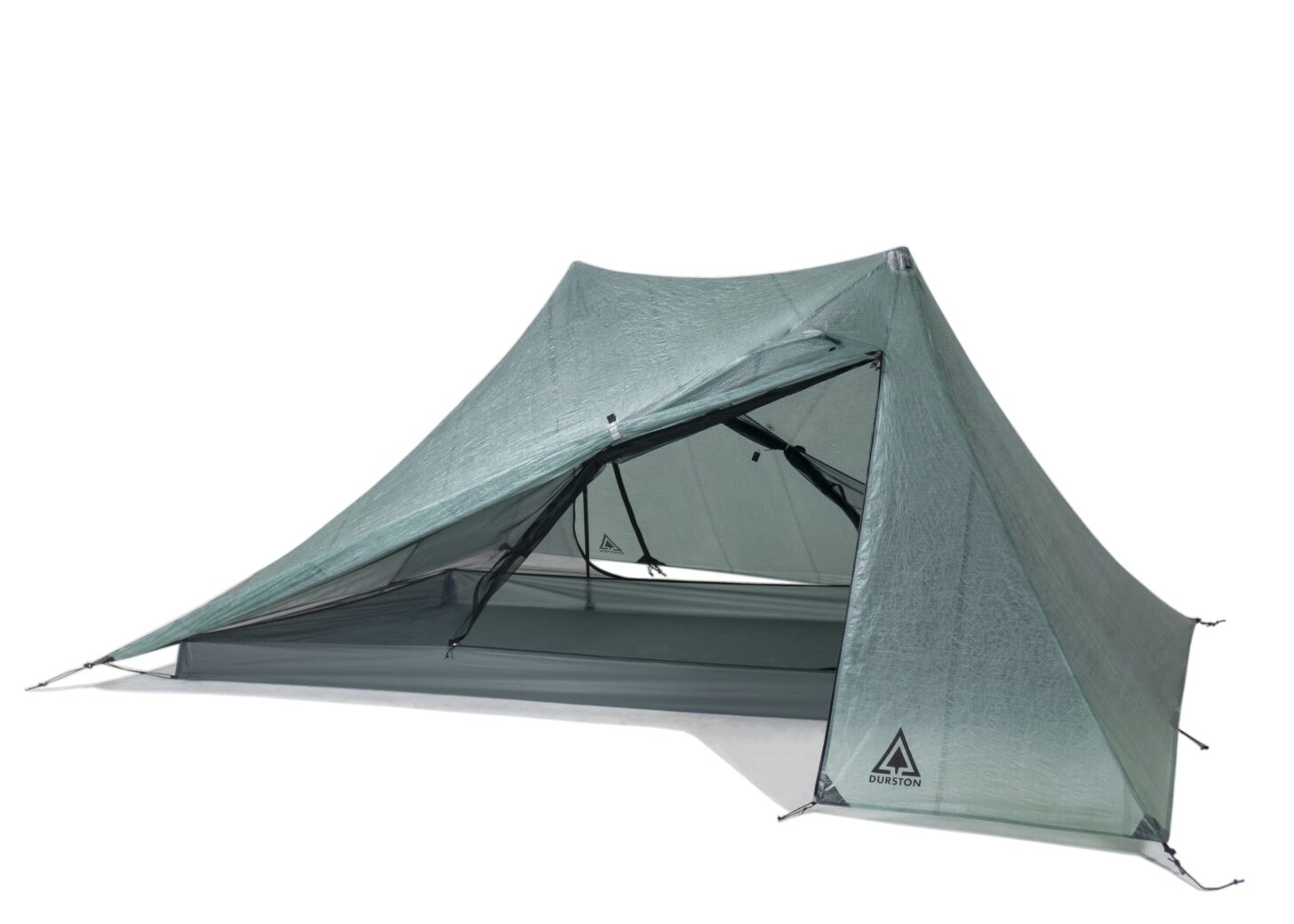
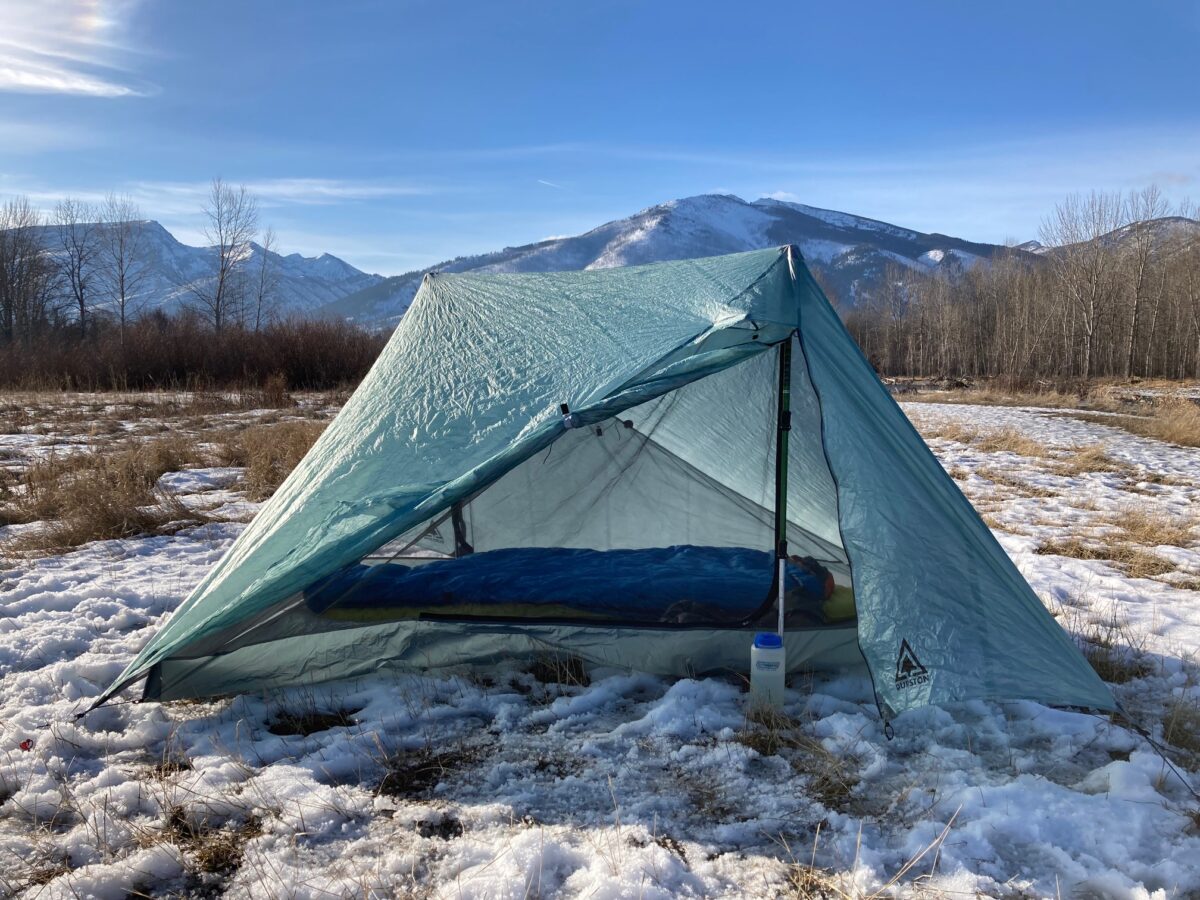
The Durston X-Mid Pro 2 tent (20.4 oz / 578 g, MSRP: $639) is an ultralight, single-wall, two-person, double-door, double-vestibule, side-entry, trekking pole-supported shelter made of Dyneema Composite Fabrics (DCF). It requires two trekking poles and a minimum of four stakes to pitch. The design combines the headroom and spaciousness of a classic double-pole single-wall shelter with the stormworthiness and simple set-up of a pyramid-style shelter.
The Durston X-Mid Pro 2 is a compelling product in the somewhat narrow category of ultralight, two-person DCF shelters. The silpoly Durston X-Mid 2 is already a popular tent and is Highly Recommended by Backpacking Light. That makes the lighter, updated DCF version particularly intriguing.
The Durston X-Mid series of tents has become a favorite among ultralight backpackers, and demand for these shelters is very high. A recent sale of the Durston X-Mid 1 sold out in three minutes. Company founder Dan Durston notes there that there will be a better supply of the X-Mid Pro 2, but it seems unlikely that they will remain in stock very long following their initial launch.
This First Looks review is based on our initial hands-on evaluation of a pre-production sample of the Durston X-Mid Pro 2 Tent.
Review Update Log:
- June 13, 2023: This review was updated with long-term performance results.
- March 25th, 2022: Backpacking Light founder Ryan Jordan and Backpacking Light canine-in-chief Sierra recently had a chance to spend some time with the Durston X-Mid Pro 2 in the field. The new photos are at the end of the review, in the Photo Essay section. Click to jump straight there.
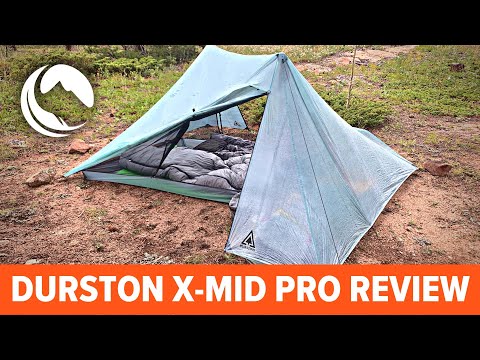
- August 22nd, 2022: We shot a video exploring the features of the Durston X-Mid Pro 2. You can find it below.
X-Mid Pro 2 Review Video
Highlights
- shelter: 20.4 oz (578 g), plus 4 stakes and two trekking poles
- height: 46 inches (117 cm)
- floor width: 48 inches (122 cm)
- floor length: 90 inches (229 cm)
- floor area: 30 sq ft (2.78 sq m)
- vestibule area: 21.5 sq ft (2 sq m)
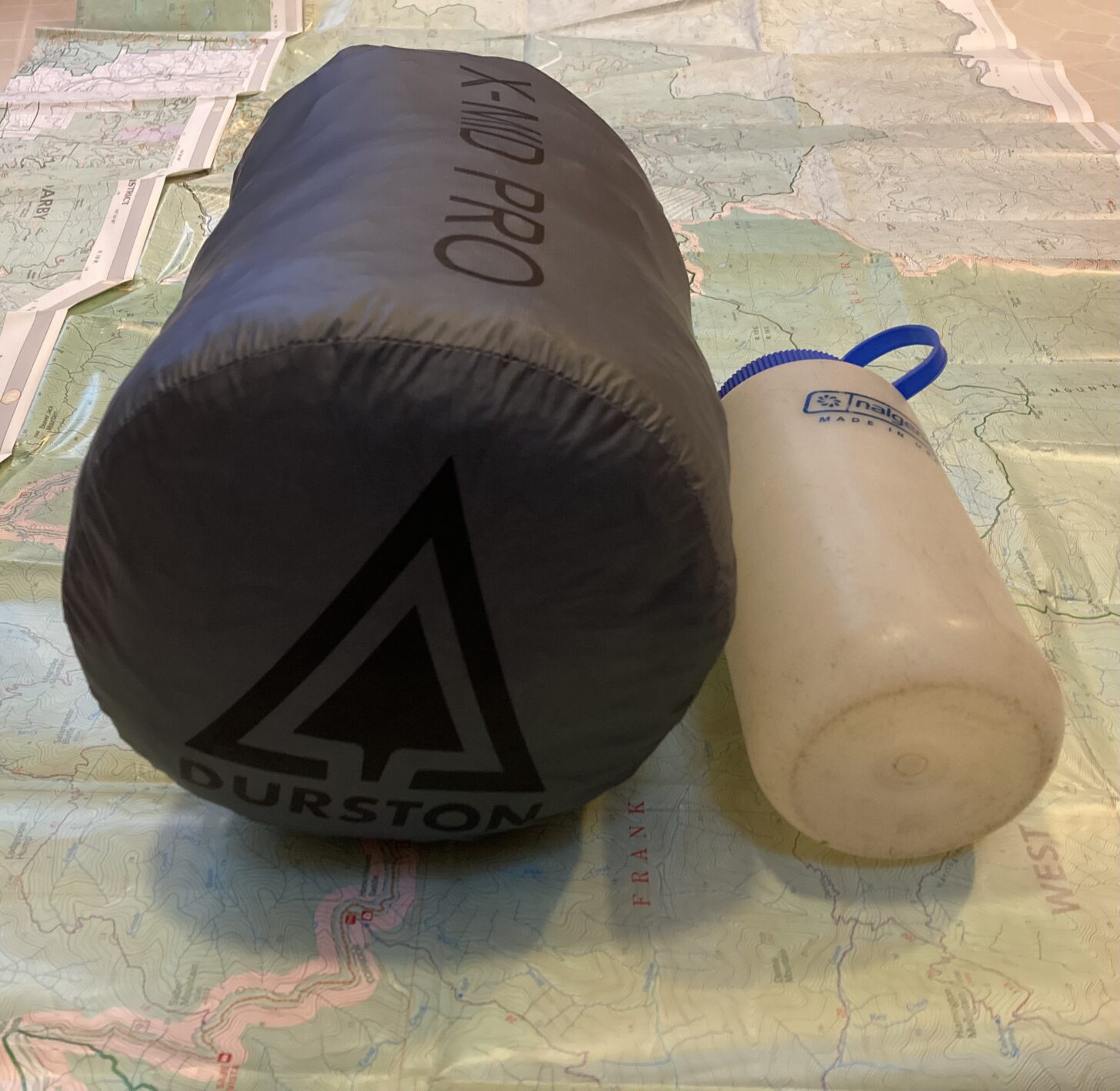
- packed size: 12 x 6 inches (30 x 15 cm)
- rectangular design allows the tent to be pitched with four stakes
- dual peak vents help manage condensation
- bonded construction instead of sewn construction
- offset pole design allows for easier entry and increased interior volume
- two doors with dual vestibules, waterproof zippers on vestibule doors
- 15 denier nylon floor doesn’t require a footprint in most conditions
- floor lays taut when pitched and tensioned properly, instead of simply hanging
- vestibules provide ample room for storing packs and other items not brought into the shelter
- door zippers are easy to operate one-handed
- magnets allow for the vestibule and/or the mesh tent door to be easily rolled up
Testing Context
This review was conducted using both pre-production prototypes and production models of the X-Mid Pro 2.
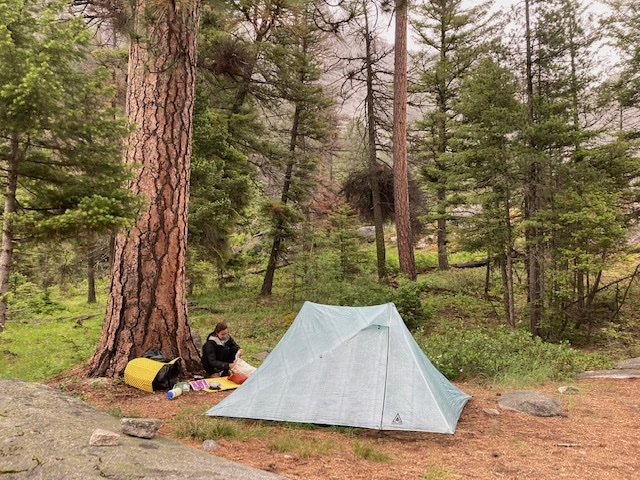
I used the Durston X-Mid Pro solely on summer and fall backpacking trips in the Northern Rockies. It was used for 27 nights. For 22 of these nights, I was the only occupant (the remaining nights were shared with a partner). This tent was tested in national forests and designated wilderness areas that did not require camping in designated sites; therefore I was able to choose locations at my discretion. Whenever possible, I chose sites that had ample room for the tent to ensure a proper pitch, soil that was easy to place stakes into, and natural features (boulders, trees, slopes) which provided additional shelter from the elements. I did not use a footprint while testing this tent and instead tried to practice good site selection and remove small rocks, pine cones, sticks, and other debris before pitching the tent.

I experienced several mild rain events while using this tent, two consecutive days of near-constant rain or drizzle while at a basecamp, three mild-to-moderate thunderstorms, and one severe thunderstorm with approximately 10-minutes of marble-sized hail and gusty winds of around 15-20 mph. I did not use this tent in snowy conditions or excessively windy conditions. Mosquitoes were present, and often in abundance, on roughly half of the nights while using this tent.
First Impressions
As with the popular X-Mid 1 and X-Mid 2, one of the most impressive attributes of the Durston X-Mid Pro 2 is its unique geometric design that incorporates offset trekking pole placements. (Compare this to most shelters that incorporate two trekking poles, which use a direct-opposite placement of the poles.) In addition, the details that caught my attention include its ease of use, livability, and potential performance in inclement weather.
We recommend you read our Durston X-Mid 2 Review to familiarize yourself with some of the design features of X-Mid tents. That review will aid in your understanding of the X-Mid Pro 2 design.
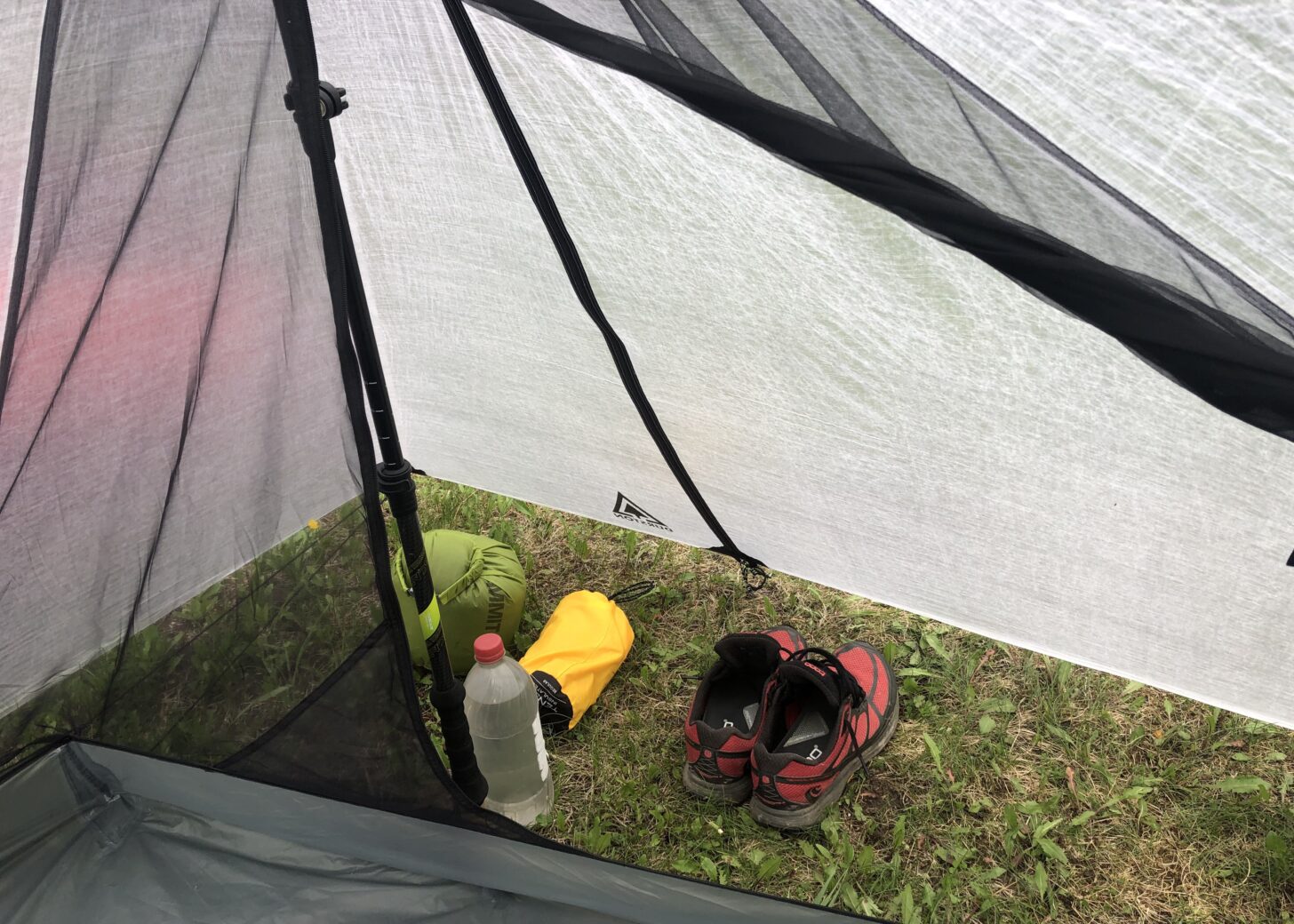
The most obvious unique design features of the X-Mid Pro 2 include:
- an intuitive (rectangular) pitch that requires a minimum of only four stakes;
- a spacious interior (a function of the offset poles and overall geometry);
- integrated fly that extends further to ostensibly provide better coverage in storms than similar tents. The area covered by the fly of the X-Mid Pro 2 is 55.5 sq ft (5.1 sq m), compared to the Zpacks Duplex whose area covered by the fly is 48.6 sq ft (4.5 sq m).
The Durston X-Mid Pro 2 Tent is designed to be pitched using two trekking poles. For hikers who don’t use trekking poles, or for bikepackers and packrafters, Durston Gear has a lightweight, folding pole kit that is compatible with the X-Mid Pro 2 (and other shelters).
“The X-mid Pro 2 can offer more space and function for the weight because it uses genuinely more efficient geometry (e.g. fewer seams, less fabric for the volume, etc.) so we can put more weight into things that matter,” said Dan Durston.
What’s the difference between the Durston X-Mid 2 and the Durston X-Mid Pro 2?
Compared to the X-Mid 2, the X-Mid Pro 2’s footprint is smaller:
- X-Mid Pro 2: 80 x 100 inches (203 x 254 cm)
- X-Mid: 90 x 102 inches (229 x 259 cm)
This allows the X-Mid Pro 2 to more easily fit into tighter campsites. The headroom is almost identical between the two shelters. The floor width of the X-Mid Pro 2 is only 2 inches (5 cm) smaller than in the X-Mid 2. The most obvious difference between the two shelters is that the X-Mid 2 is a double-wall shelter and the X-Mid Pro 2 is a single-wall shelter.
Is the Durston X-Mid 2 Pro easy to pitch?
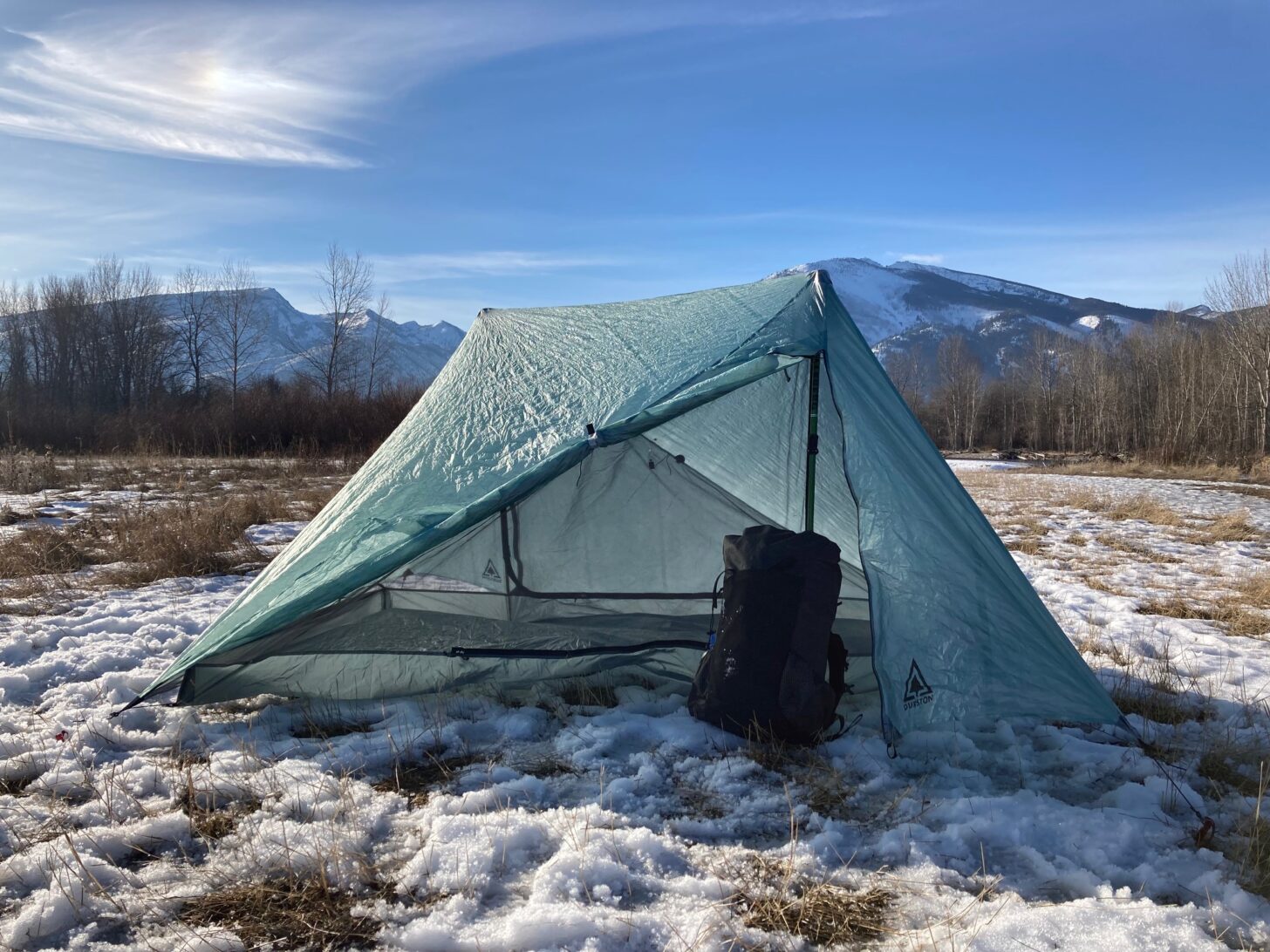
Using only four stakes and two trekking poles, I was able to have this tent pitched in just a few minutes without having to readjust anything. It almost seemed too good to be true. There was no fiddling with pole height, moving stakes around, or tensioning (and re-tensioning) guylines. These iterative steps are often required when pitching trekking pole tents. The zippers – both the waterproof fly zippers and the zippers for the body of the tent – operated smoothly.
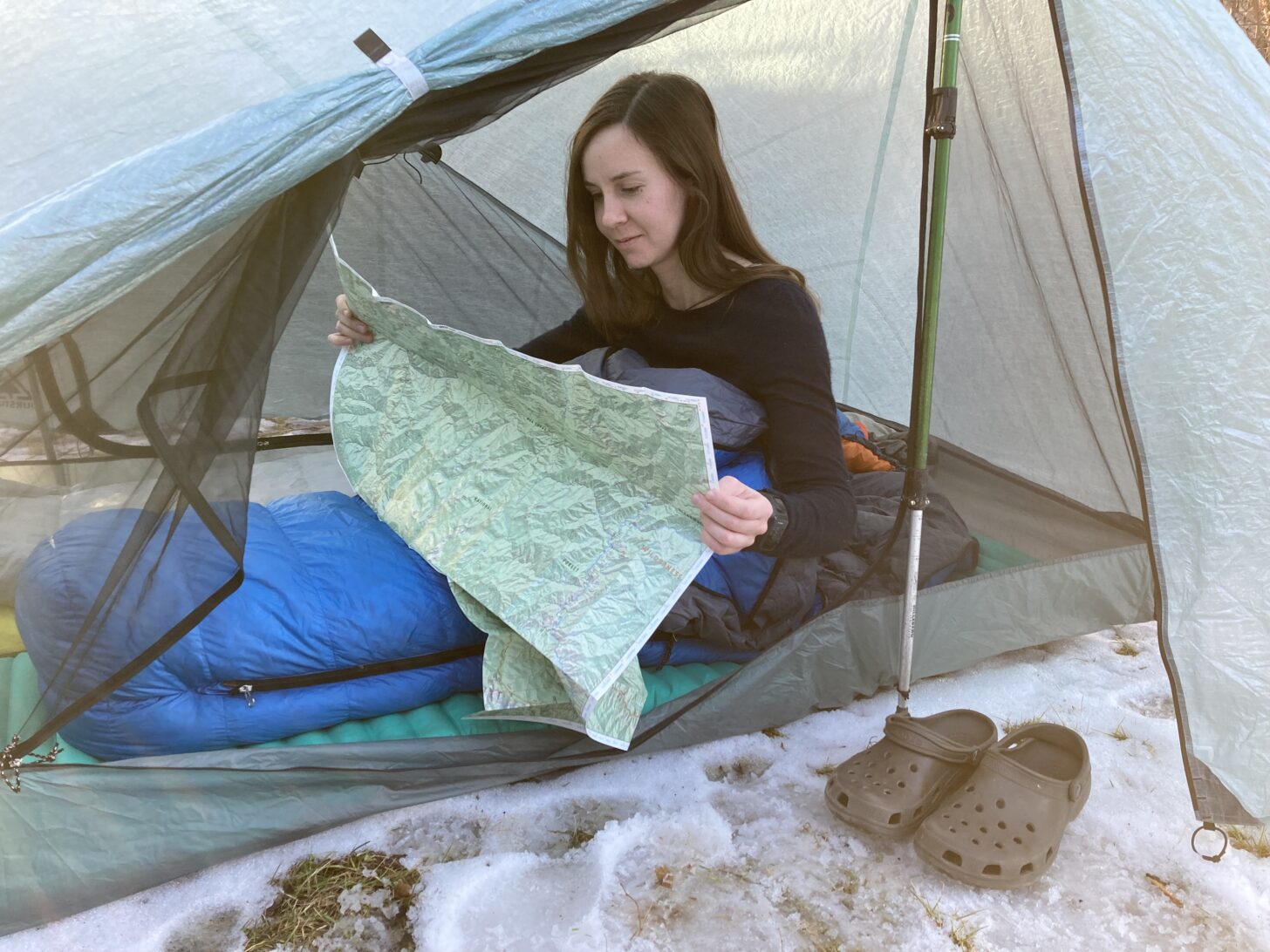
In soils where staking is more difficult than in my yard and in campsites with varying topography, pitching will obviously be a bit more challenging and perhaps require longer guylines or other adjustments to the pitch. However, given how straightforward the mechanics of erecting this tent are, it’s an easier pitch than most trekking pole shelters.
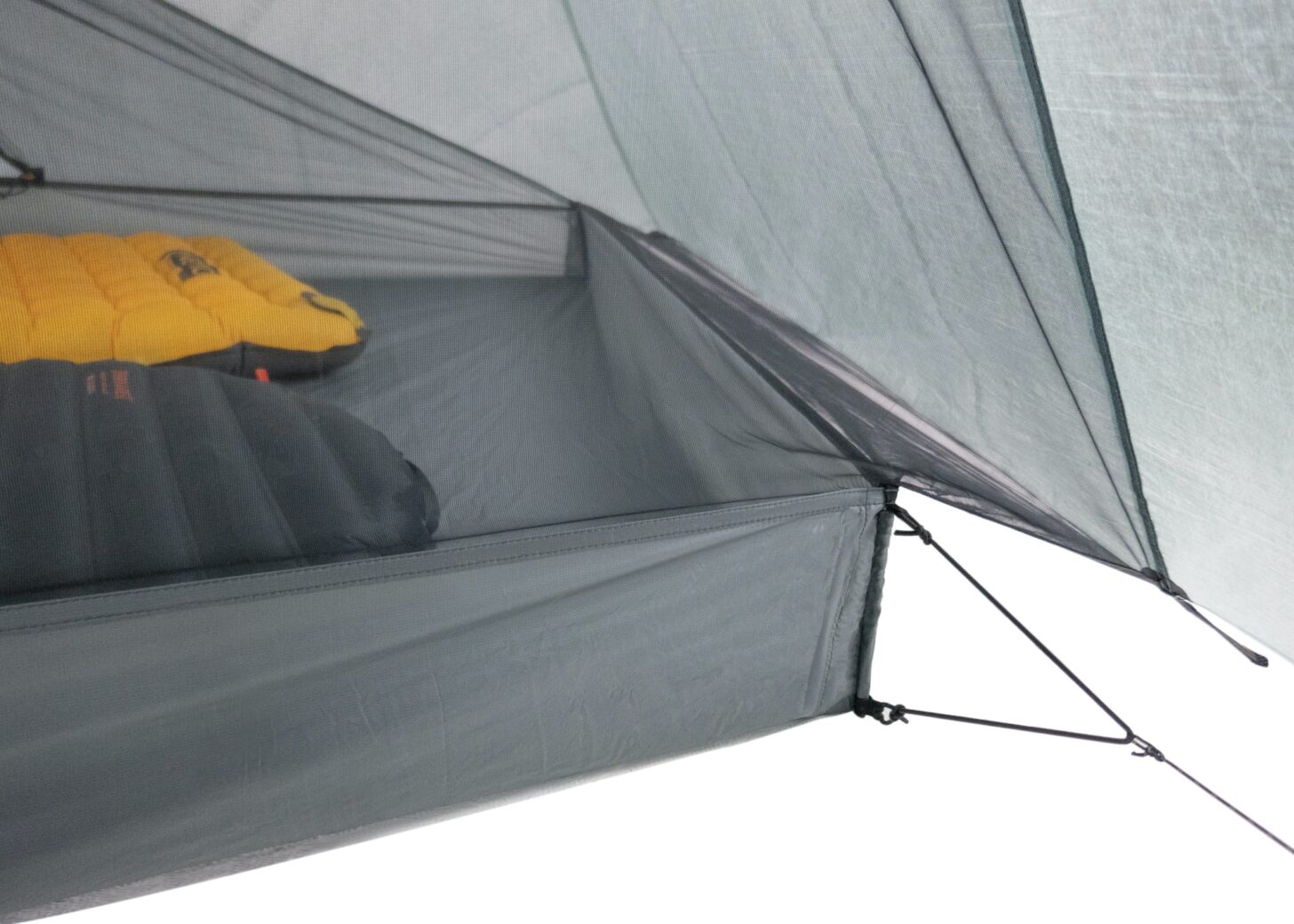
The DCF used for the body of the tent has been used extensively in many other tents by other manufacturers and will last a while for users who care for their gear with intention. One of the most common failure points of DCF shelters is sewn seams; the seams on Durston X-mid Pro 2 are entirely bonded with no sewing. (You can learn more about the advantages and disadvantages of bonded vs. sewn seams in the Dyneema Composite Fabrics episode of the Backpacking Light Podcast and the Dyneema Composite Fabrics Webinar.
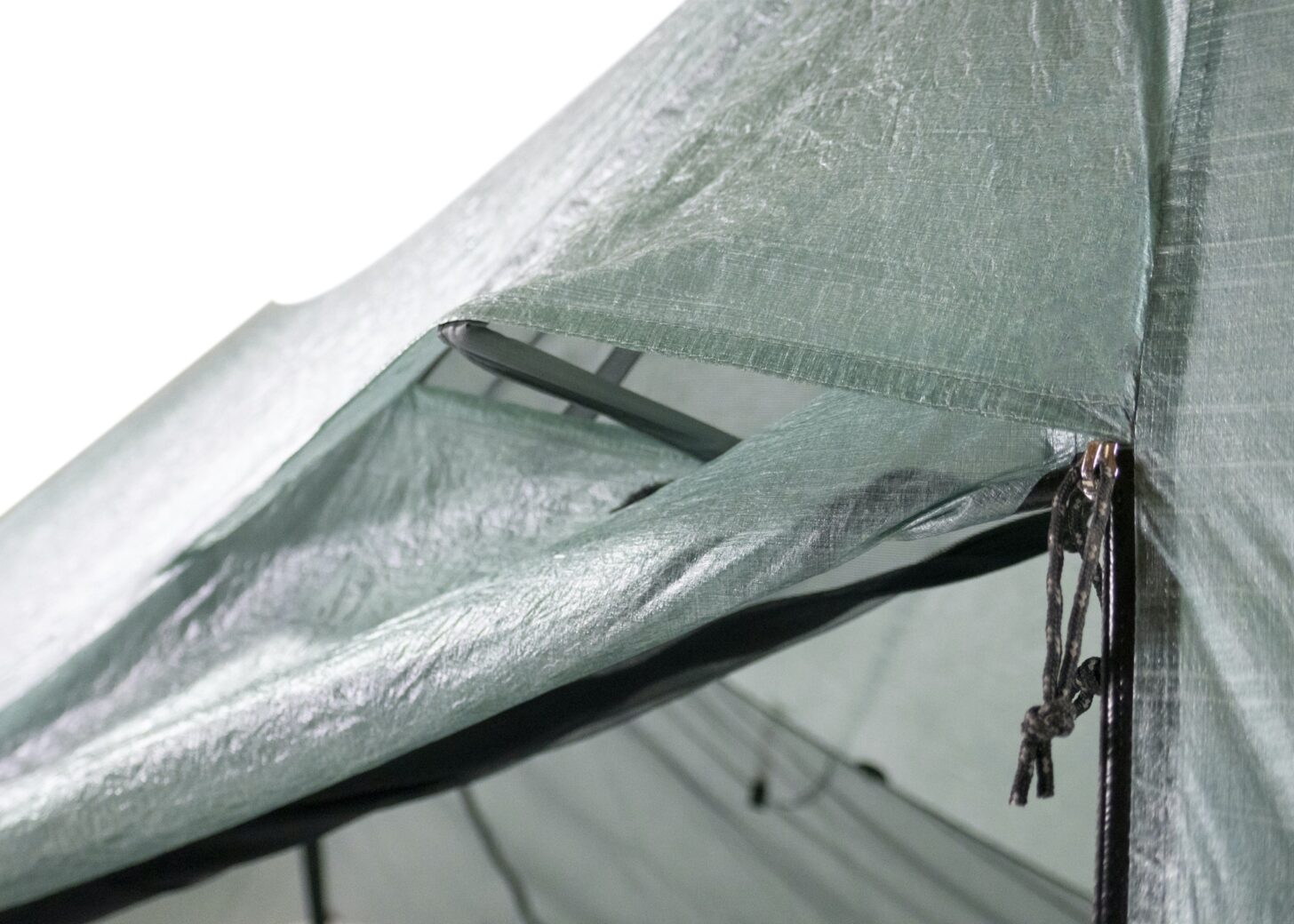
Why does the Durston X-Mid Pro 2 have a nylon floor?
A 15-denier nylon fabric was chosen for the floor with the idea that a footprint wouldn’t be necessary for most situations if reasonable precautions are taken with campsite selection. However, hikers using it in conditions where punctures would be more likely (such as rocky terrain or desert environments, with their plethora of spiky things) might want to bring a ground cloth in those specific conditions. The 15-denier floor is similar to the fabrics used in other lightweight tents, including many of those made by MSR and Big Agnes. Many hikers forego using footprints with those tents without experiencing any issues in normal use cases. When asked why the X-Mid Pro 2 uses a 15-denier floor instead of DCF, Dan cited the advantage in packability as one reason.
“We think a 15 denier woven floor is a better choice because it is a similar weight but far less bulk and debatably more abrasion resistant and waterproof in the long term,” said Dan. Using the 15 denier nylon fabric is also less costly than DCF. “Cost is another advantage, although the cost savings are largely offset by our more expensive hot bonding construction process,” said Dan. “We would have used 1.0 osy DCF if we genuinely thought it was better.” Using 15 denier nylon over 1.0 osy DCF results in a less expensive shelter that packs smaller.
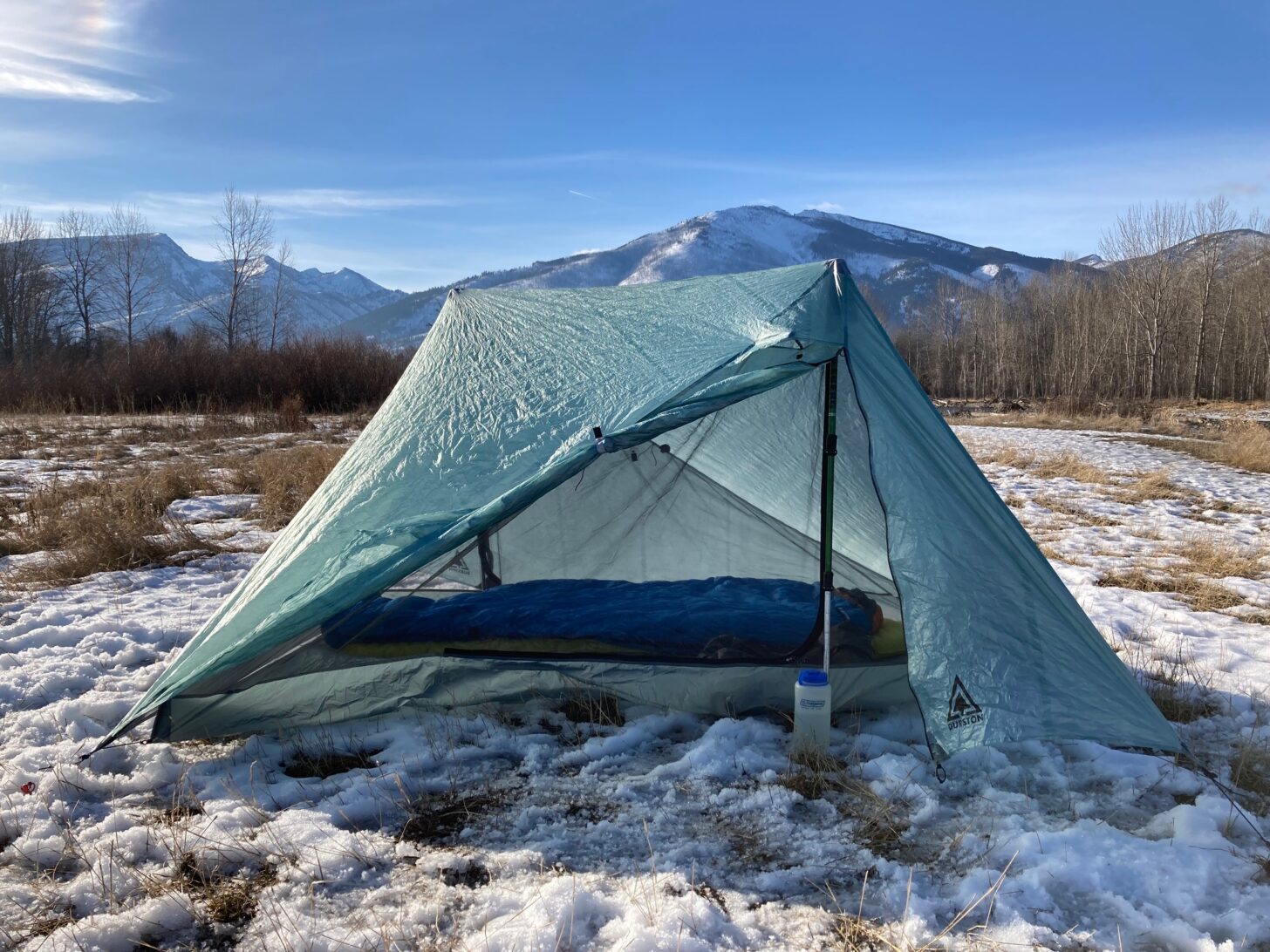
Other similar shelters, such as the Tarptent Stratospire Li, use an offset pole design. One of the advantages of the X-Mid Pro 2 is that it has such a simple pitch in addition to the benefits of having an offset pole design.
When asked how this was achieved without resulting in other trade-offs in performance, Dan said “The X-Mid uses a rectangular base to simplify the pitch (compared to a hexagonal tent) and combines that with two trekking poles (to improve headroom compared to a single pole pyramid). The classic challenge faced by other tents attempting this is locating the poles. Prior tents have positioned them around the perimeter which results in flat walls that catch the wind and mandatory guylines, or they have positioned them along the centerline where they interfere in the sleeping area and/or doorways. The X-Mid uses a new floorplan, where the poles are placed on a diagonal and then the sleeping area passes between them on the opposite diagonal. From the overhead view, these crossing diagonals form the “X” in the X-Mid name. From a functional perspective, they provide a good [larger] living space while avoiding all the common pitfalls (e.g., poles in the doorways, poles in the living area, mandatory guylines, flat walls).”
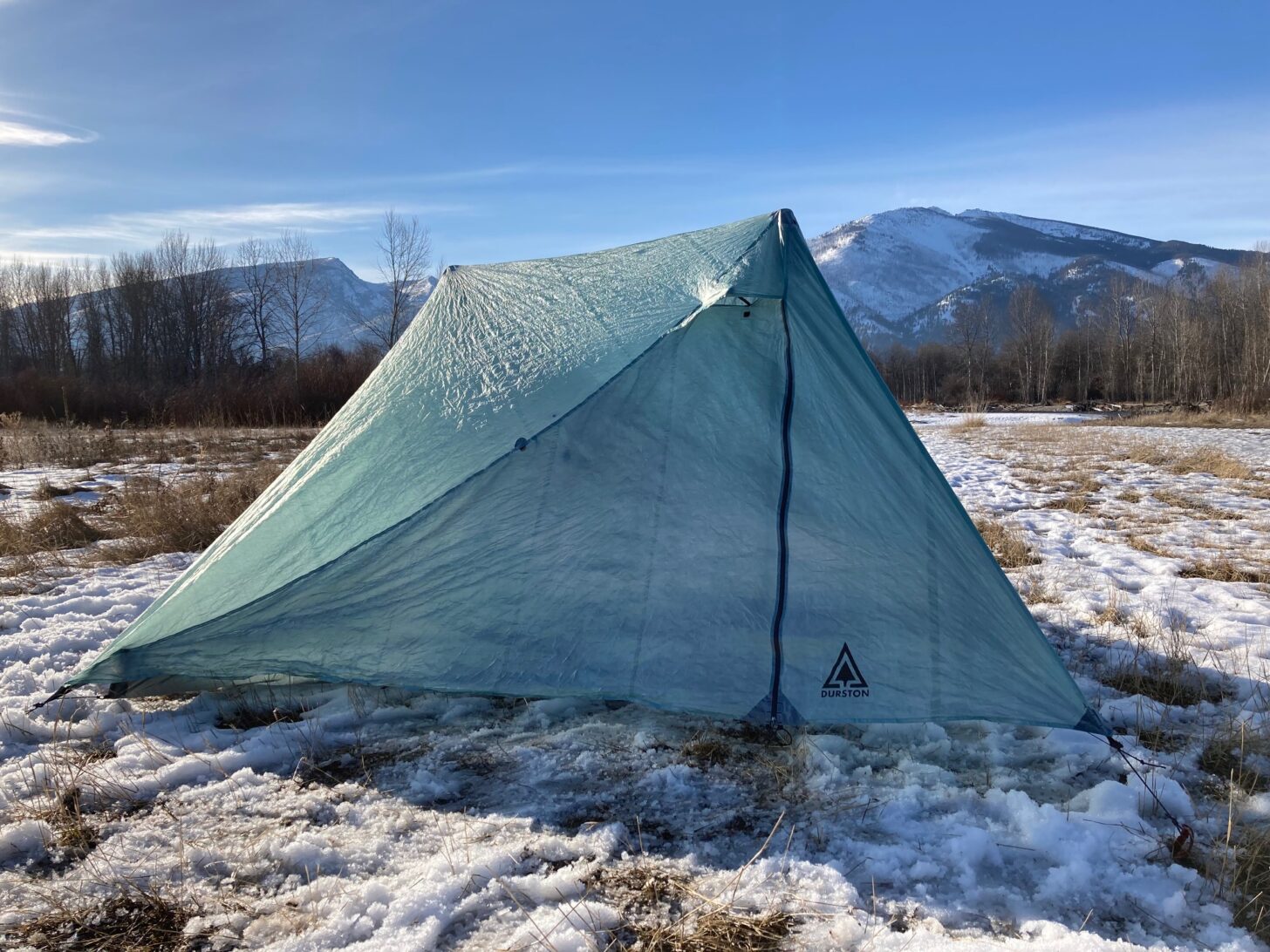
The Durston X-Mid Pro 2 Compared To…
| weight | MSRP | wall design (single-wall vs. double-wall) | floor dimensions | maximum peak height | floor material | canopy material | |
|---|---|---|---|---|---|---|---|
| Durston X-Mid Pro 2 | 20.4 ounces / 578 g | $639 | single | 48 x 90 inches (122 x 229 cm) | 46 inches (117 cm) | 15 denier nylon | 0.5 osy Dyneema Composite Fabric |
| Zpacks Duplex | 19.0 ounces / 539 g | $699 | single | 45 x 90 inches (122 x 229 cm) | 48 inches (122 cm) | 1 osy Dyneema Composite Fabric | 0.55 osy Dyneema Composite Fabric |
| Tarptent Stratospire Li | 27.5 ounces / 780 g | $699 | double | 45 x 86 inches (114 x 218 cm) | 45 inches (115 cm) | 1 osy Dyneema Composite Fabric | 0.51 osy Dyneema Composite Fabric |
| Gossamer Gear The Two | 23.5 ounces / 666 g | $375 | single | 42/48 x 84 inches (107/122 x 213) | 43 inches (109 cm) | 10 denier nylon ripstop | 10 denier nylon ripstop |
On paper, the Durston X-Mid Pro 2 bests many tents in its category (two-person, two-door, side-entry, dual-vestibule trekking-pole shelters) on a number of metrics. It is either lighter, roomier, less expensive, and in certain cases, all of those things. But how a shelter looks in a table is only part of the equation – one which we are increasingly less inclined to emphasize as shelter builders shave ounces at the expense of other important factors. Craftsmanship, quality control, user-friendliness (ease of pitching), livability, stormworthiness, and aesthetics all come into play. These are the performance metrics consider in this review.
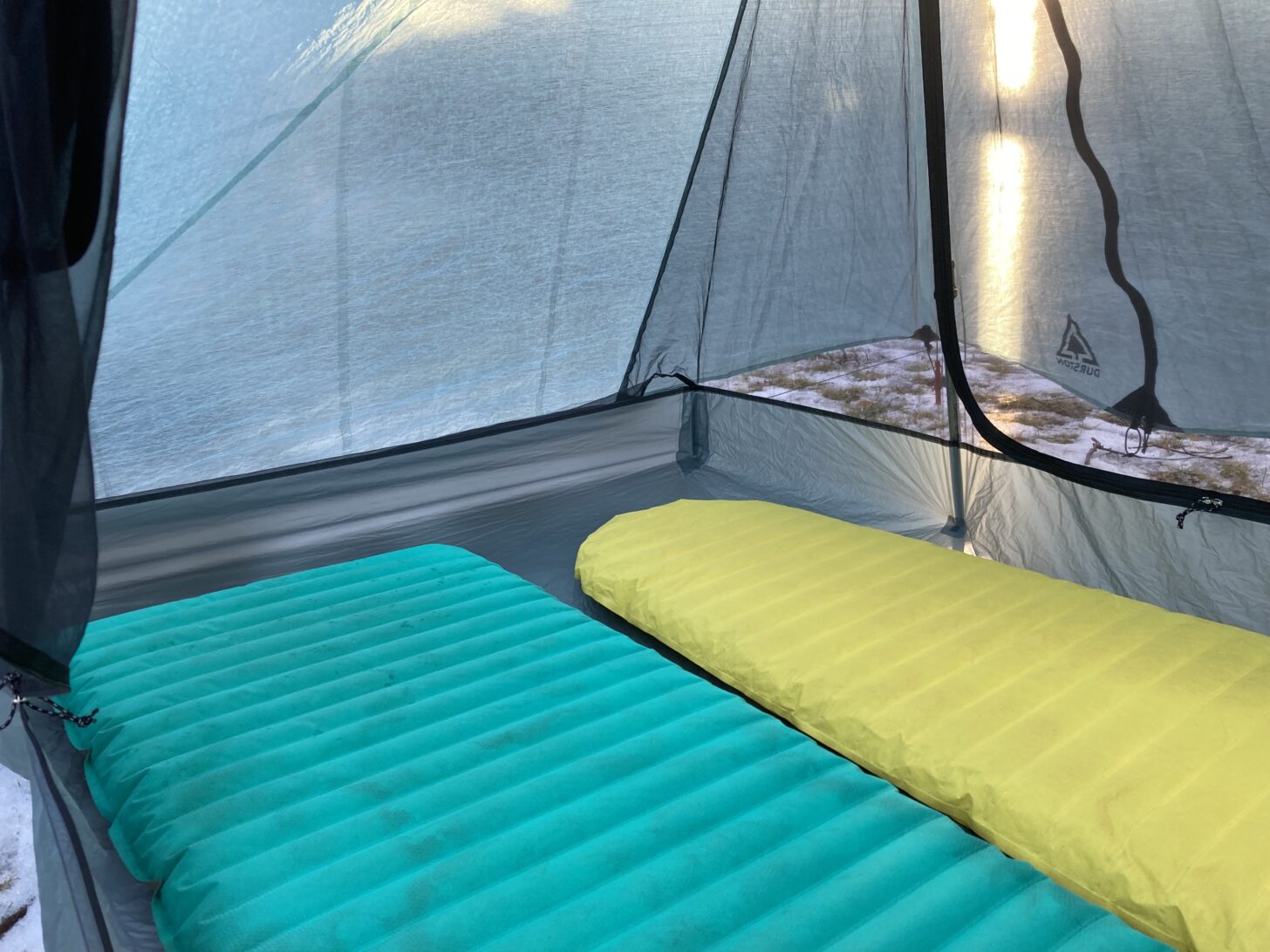
Long-Term Performance
In this section, we evaluate:
- Pitching
- Livability
- Stormworthiness
- Fabric
- Durability
- Weight
- Finish quality/aesthetics
- Price
Member Exclusive
A Premium or Unlimited Membership* is required to view the rest of this article.
* A Basic Membership is required to view Member Q&A events


Discussion
Become a member to post in the forums.
The “First Look” reviews that BPL has done in the past were labeled as such in the title, Dan. You’ve been hanging around BPL long enough to know that. “Perhaps that could have been stated more clearly” sounds like the kind of deflection that one has come to expect from marketing execs and elected politicians, not the premier science-driven UL web publication nor an ethically-driven gear designer who puts a lot of effort into sharing information and educating the community.
There is a blurring of roles here, between the marketer and the reviewer, that does a disservice to the ethics of each while also making it harder to talk about actual issues of interest and concern.
Jon, as the writer of this piece, I appreciate you sharing your concerns with certain aspects of this review. When a full performance review is done, I believe many of your concerns will be addressed. As far as titling the review goes, that is something that BPL has been revising the last year or two (i.e. limited reviews, first looks reviews, performance reviews, etc. and trying to determine what to best call a review) and trying to simplify. But regardless of what the review is called, the context is made clear in the first few paragraphs.
From my perspective, BPL (and myself) did the best we could with limited time to test this product. By providing a review — even a cursory one — it was hoped that we would be able to give people details that would help them determine if this tent was right for them if they needed a new shelter or were planning to upgrade. And I think if you were to have had the same experiences I did with this shelter, you would’ve ended up coming to similar if not identical conclusions.
Some of the “actual issues of interest and concern” have been addressed in this thread and having this review here allowed for at least some baseline facts to be discussed. And I appreciate the question’s you’ve asked Dan and his responses — I think they’ve contributed a lot to the information available about this tent and provided some valuable insight. So thank you for doing that. However, I do not believe any roles were blurred here — the limitations of this review and its context were made crystal clear.
BPL used to put the type of review (First Look, Limited, Performance) in the title but you’ll notice at some point they switched formats and starting explaining the review type in the text instead. I’m not sure when/why that happened but that’s nothing specific to this review or even First Look reviews in general – and it’s certainly not something I have any involvement with. They simply changed formats at some point.
Here are recent examples of first look, limited, and performance reviews – none of which have the type in the title as they used to. A quick look through the review archives indicates it’s been about 2 years since any review had that.
Does anyone know if the X-Mid Pro 2 has interior mesh pockets? One photo in the review seems to show one, and another photo in the review of the same part of the tent seems to show none.
There are not pockets in the production version. We tried an option similar to what other companies do but I just didn’t think that style worked well enough so we omitted it. There are mesh ‘shelves’ at the ends that you can set stuff on, empty corners in the parallelogram shaped floor you can store stuff, and then if you still want pockets you can buy aftermarket ones. For example, Zpacks sells mesh pockets that stick on to the DCF like this:
https://zpacks.com/products/mesh-tent-pocket?variant=9486851145764
Interesting…I have never used the mesh pockets in shelters that have them, preferring to stash things in the corners. I guess pockets might be valuable in a 1P shelter, but being a large person I abandoned those for 2P shelters long ago.
👍
Dan,
Although I understand your thought process for not including them I for one do prefer pockets for my phone etc. and the lack of them did give me pause when ordering the tent. Unfortunately I don’t think the Zpacks pocket will work on the pro because the floor is not DYNEMA. Zpacks includes the cautionary stament on their website.
“The tape sticks really well to Dyneema®Composite Fabric, and will also stick to urethane coated floors. It will not stick to silicone fabrics.”
Perhaps it’s an opportunity for you to offer something similar that will stick.
Pls tell me if I’m wrong.
mike
Thanks, good to know. Obviously not a deal-breaker (indeed, I already ordered the tent!), but mesh pockets are one of the few features I find worth the weight for two reasons: (1) Occasionally, I want to find my flashlight very quickly in the middle of the night, and it is easier and faster to find a mesh pocket hanging above the floor in the dark than to locate a headlamp somewhere on the floor; (2) Ditto for my eyeglasses, plus an appropriately placed pocket would eliminate the possibility I could roll onto my glasses in the middle of the night and break them. But maybe those mesh “shelves” will work just as well!
I think you will find the mesh shelves work pretty well for headlamps, flashlights, and glasses. It puts those items out of harms way in a spot that’s easy to find.
Mike: I was picturing the Zpacks pockets being stuck to the DCF here as well. They could be stuck to the fly just above the mesh shelves so you’d have a pocket there on the end wall. I doubt they would stick to other materials well.
Thx Dan.
Could one just sew in their own DIY mesh pockets at the very top of the bathtub floor, if desired? Seems like it might not negatively affect either the mesh or the floor that way.
Yes it would be very easy to sew a mesh pocket to the top edge of the bathtub floor. You could probably just grab the Zpacks pocket, remove the tape portion, and have someone sew it to the nylon.
Just a zipper note. I have a 2015 MLD DCF Duomid with #5 zippers and I have to replace the sliders about once a year. I’m happy they went to #8. I would expect to replace #3 sliders on a DCF tent even more frequently. A #3 coil zip on a high-tension DCF panel could jam or separate on only one trip to Canyonlands or the beach. The Pro 2 wouldn’t be a good choice for me, but if you stay in green places it should be ok.
@Mark. Thanks for appearing in this discussion and especially for acknowledging the constructive contributions of some of the issues I’ve raised.
I have a criticism and a bit of constructive advice.
Was the tentative “first look” quality of the review as “crystal clear” as you say? I think yes and no. Yes in the sense that it was mentioned numerous times throughout the review. No in the sense that the review: a) didn’t specify what future questions would be posed and what aspects of the design would be tested for the subsequent performance review; and b) concluded with purchase advice advocating the superiority of an essentially untested product against products that have been in use for up to a decade. The ambivalence of the review is captured by the superlative followed by a caveat emptor: “there is no other DCF tent on the market that I would consider right now … based on my limited hands-on experience”).
Concerning the nature of the review: As a reader, I found it perfectly clear — up to a point. The wording that I used in my post #3738142 was a tacit acknowledgement of the tentative, early nature of the review. Tacit because it seemed unnecessary to dwell on it. That’s why I used awkward phrases such as “It might also be cool to know — or at least raise the question of knowing” and then repeated at the end of that post the idea of “raising the question” (as opposed to say answering the question, which might be the task of a subsequent performance review). The series of “please take note” comments by Dan in response to my post were either patronizing (why overlook my tacit acknowledgement of the tentative nature of the review?) or an indirect admission that it wasn’t so clear in the first place, take your pick. When something is really crystal clear, there’s no need to say, “please take note.” Nobody would ever think to say, “please take note, the sun rises in the east and sets in the west,” amirite?!
My constructive advice would be for BPL to use the preliminary review or whatever it is called as a place to define issues and pose questions that will form the basis of the subsequent performance review. In a sense, this is a process akin to defining the test protocol. In simpler terms, it just does what the old site Trail Space used to do with gear reviews. Reviewers would usually post three reviews, an initial first look, a second field use report, followed by a third long term use report. Invariably, the first look report identifies issues and questions that the reviewer feels will need to be subject to field validation. The task of the initial review thus isn’t to endorse, much less make purchase advice, but to balance the enthusiasm that we all feel with new gear against the questions that need to be posed and can only be answered via field use — including long term use.
I think with a DCF tent, identifying the test protocol is even more important than with tents made from nylons and polyesters. To this day, there still doesn’t seem to be a general acknowledgement of the limitations and problems of the composite material itself. Thanks to comments and discussions here and there, as well as to the growing body of people with a decade or so of field use experience, we know that DCF is prone to two very different kinds of permanent deformation, one kind in the mylar layer (that happens along the bias) and one kind in the dyneema fibers themselves (stress relaxation that happens along the grain). Some of the major cottage manufacturers (I’m thinking of Bell, Shires, and now Durston) have acknowledged these issues in various ways, but generally always playing down their importance for shelter serviceability and life. On a separate thread, we saw what seemed to be another manufacturer of DCF shelters basically deny the existence of the problem entirely. I think that’s why we need third parties like BPL to take some distance and provide some skepticism to temper enthusiasm. Of course, it’s not just DCF, but really any new product.
Because of its unique geometry and stake/guyout point design, the X-Mid 2 Pro presents a chance to evaluate DCF field performance in a new way. How will the perimeter stake points that are not on the ridgeline fare over the long term? How will using those secondary perimeter stake points affect the integrity of the material and accelerate permanent stretching? How will they affect the door zipper? If peak guylines are not to be used, will that create a pitching scenario in which users tighten the tent at the base perimeter corners too much to compensate — thereby possibly accelerating DCF stress relaxation?
I can just think of so many questions about this new and virtually untested product. I’m sure you guys can, too. Wouldn’t it do a service to the community to include that kind of stuff in the initial review, leaving out the purchase advice?
I mean, a service to the community-at-large, not just the subset of people looking for a new shelter or planning to upgrade.
Jon – a couple thoughts on the points you raised:
1. The X-mid design has been on the market for a few years now. Yes, this is a new material, but the geometry (and associated stresses) are largely the same. Numerous reviews of DCF tents have generally concluded that material fatigue is a much subdued reflection of other popular materials. Perhaps read the existing X-mid reviews to get some insight?
2. Regarding testing protocols, a quick read of some of the many existing “detailed reviews” of other tents would tell you what to expect in terms of review methodology. It would be cumbersome to include a preamble in all “first look” reviews outlining what is covered in each subsequent level of review.
My instinct is that most BPL members have an appreciation of how much reliance to place on a first look review.
Hi Lange,
DCF has problems that silpoly and silnylon don’t have.
The discussion about problems with DCF has been minimized or dismissed, most often by the people who are most knowledgeable about its limitations, i.e., those with a commercial interest in its success.
As far as the XM2P is concerned, let me share some photos to explain.
First of all, concerning the BPL review by Mark, I’d defy anyone to point to a photo that shows a taut pitch. The caption accompanying this photo, for example, claims a taut pitch, a claim that is not borne out out by the photo itself:
In fact, when looking at all of the photos in the BPL review, none of them appear taut. This was also a problem with the first iteration of the silpoly X-Mids. The second generation tried to address this issue by adding cat cuts to the perimeter to make the pitch more taut. The new X-Mid 2 Pro seems to have left these cat cuts on the hem off, resulting in the uneveness seen in the photo above.
But this is not my main concern.
My main concern has to do with how the stake out points work in conjunction with the structure as a whole
Two issues are salient.
The first has to do with overtightening. Since most users will probably forego using the apex guylines (per Dan Durston’s own comment) and other possible stake points (these are all new stake points compared to the original first generation X-Mid design), they will inevitably have to rely on the stake out points at the four corners to achieve tension on the whole structure. This type of pitching strategy will create, I suspect, a scenario in which the structure is basically tightened too much (partially to compensate for the lack of guylines to distribute tension evenly over the whole structure). The problem that arises here is that when DCF is tightened too much, it results in the phenomenon of stress relaxation on the dyneema fibers.
The other issue concerns not stress relaxation of the dyneema fibers within the substrate but permanent extension, i.e., deformation, of the mylar laminate.
Unlike the first generation X-Mid design, the new X-Mid Pro in its DCF iteration has added a plethora of new stake out points. The majority of these new stake out points are located along the base perimeter of the structure at the midpoint of each panel. Looking at the photos that have been released so far, it looks like these midpanel perimeter stakepoints are not positioned along a ridgeline — which means that these stake points will exercise stress not distributed along the ridgeline (because there is no ridgeline) but along the hem and the whole panel.
The photo below shows how one of the panels looks when it is not staked out and the door is open:
Of course, since the door is open, it is entirely normal that the perimeter is not taut.
But it turns out that this may well be a structural issue. The only solution seems to be the use of additional stake points at the midpoint of the base perimeter on each panel.
The performance of these perimeter stake out points is an issue of concern for long term durability.
Judging by the photos, it is impossible to tell how the panels have been constructed. In any case, it is clear that the midpanel stake point creates stress on the panel, dividing that panel into two triangles (or more in the case of the long side panels). Depending upon how the panel is constructed and how the stake point is reinforced, this stress could potentially (almost certainly) result in permanent and increasingly serious deformation to the DCF.
To conclude, there are at least two very different types of deformation that could result from or be accelerated by the design. One concerns overtightening. The other concerns base perimeter stake out points.
These are just issues of concern based on available photos. Those with access to the tent might find other areas of concern. I hope that the performance review of the this tent will address these issues.
Best, Jon
Below is text from the review:
“Unfortunately, I didn’t have the opportunity to test this tent in inclement conditions (our loaner period was very short). There were no swarms of biting insects to avoid, although the mesh would’ve handily kept them at bay. There were no earth-shaking thunderstorms to endure, but the DCF and waterproof zippers seemed well-prepared for such an event based on our experiences using this combination in other shelters from Tarptent, Hyperlite Mountain Gear, and ZPacks. Perhaps the only aspect of its performance that I can comment on fairly in this particular review is its ease of setup.”
That seems entirely up front and straightforward. this is not a performance review. No one would be misled into believing it was, even without the statement above, because of how the parameters of the test were laid out openly (backyard only; short time frame etc.) This is not hard to understand.
Jon’s point about the discrepancy between the claim of “taut pitch” and the pictures is interesting. I imagine more will be said about this. It is important because to me at least, the simple set up is a big selling point. (I would expect to make adjustments after set up with any tent, but this seems to set up very fast to begin with.)
As for the review not covering the gamut of opinions about DCF in general…come on. Readers here are going to be familiar with how this material functions. I don’t need a tutorial on DCF, after all these years, with every tent review. For that matter, I don’t expect a tutorial on traditional materials either.
I can’t help but think Jon is picking long and elaborate nits (is that possible?) with his critique; and suggesting irresponsible ethics or worse on behalf of BPl as well. This review made an honest effort to detail the limits of its purview. I simply took it for what it was, knowing more would be coming down the road from other users and BPL itself.
p.s. here’s text from Jon’s critique:
“Judging by the photos, it is impossible to tell how the panels have been constructed… Depending on how the panel is constructed and how the stake point is reinforced, this stress could potentially (almost certainly) result in permanent and increasingly serious deformation to the DCF.”
First he says it’s impossible to tell how the panels are constructed, but then goes on to conclude that stress will “almost certainly” deform said panels, based…on nothing. The accompanying photo looks to me like any tent staked out at three points. I don’t get it. Drastic conclusions drawn from no available evidence. Hmmm…
Jon I think you’re coming from a good place and you raise some worthwhile questions, but your post has some inaccurate info and makes a lot of scary sounding speculation/extrapolation. I know you think myself and other gear companies are minimizing what you think could be issues, but please consider not going to the other extreme and speculating about big issues without evidence. Maybe we’re actually telling the truth when we say that’s it’s really not a big deal.
As you say, I do have a commercial interest is this, which is why I have and will continue to explain things in depth, rather than expecting people to take my word for it. I’m happy to discuss this stuff in a collaborative environment if we’re focused on the data and not speculating on motives or spreading fear.
As a high level response, your post raises two main concerns: deformation at the perimeter hem stake points and over stress at the 4 corners again leading to deformation. However, neither of these is anything new. Numerous other companies employ similar stake points along the hem. HMG, MLD and Locus Gear immediately come to mind. These have been widely used for over a decade where any issues with deformation that they might present are limited to minor cosmetic issues. I also note that these optional perimeter stake points which are just that – 100% optional. If you’re worried about a stake point distorting the DCF you are free to simply not use it. As for tension at the 4 corners, shelters relying on tension to 4 corners is nothing new. Single pole pyramids do just that, while being perhaps the most popular style of DCF shelter. If relying on 4 main stake points really leads to problematic over tensioning, we’d have seen it a long time ago.
Here is a more in depth response to your specific points:
Issue 1 – The plethora of the new stake points
“Unlike the first generation X-Mid design, the new X-Mid Pro in its DCF iteration has added a plethora of new stake out points. The majority of these new stake out points are located along the base perimeter of the structure at the midpoint of each panel.”
This is simply false. There are no new stake points along the perimeter. Every single stake point that exists along the perimeter of the X-Mid Pro was there on the very first X-Mid.
These perimeter stake points are almost never used for the very mundane reason that they simply are almost never needed. Their primary purpose is to prevent the wall from being pushed inward under snow loads. Outside of winter, they are very rarely used. Many other DCF shelters have used similar stake points for years. For example, the perimeter stake points on the end walls of the X-Mid exist between two stakes and below the peak. This is very similar to what you see on a HMG UltaMid or MLD pyramid. In all cases, the stake point is intentionally designed to pull parallel to the dyneema fibers (not on the bias). The fibers are near 0 and 90 degrees, so you have dyneema running from the stake point up to the peak and out along the hem to the stakes, where any deformation would be minimized.
Issue 2 – Wrinkle on the end wall
You point to a wrinkle on the end wall (shown below) and acknowledge this might be because the door is open but suggest “this may well be a structural issue” where “the only solution seems to be using stakes on point the base perimeter” which will “almost certainly result in permanent and increasingly seriously deformation to the DCF“.
That’s a lot of scary speculation. This wrinkle is simply the result of (1) less tension along this edge because the door is open, combined with (2) the floor connects to the canopy right here, which does pull inward and will create a cosmetic wrinkle if tension along the edge is low. There’s no structural issue.
Closing the door improves this wrinkle, but if someone is worried about what is a minor cosmetic wrinkle, they can add a stake here. There’s no need for extreme force on it (hence why we supply the stake point with a shockcord loop). Even if you modified the stake point to remove that safeguard, it still would be fine because the stake point is intentionally designed to pull parallel to the dyneema fibers (not on the bias) as mentioned in #1. This type of guyout is routine on a DCF tent and not something new to the X-Mid Pro.
Issue 3 – Lack of cat cuts on the hem
“The new X-Mid 2 Pro seems to have left these cat cuts on the hem off”
I’ve obsessed over this year for the last year and obviously am familiar with cat cuts since some of my other tents have them, so I didn’t just ‘leave them off‘. What you suggest is an issue is actually best practices for DCF. Ron Bell was explaining this recently for DCF where he articulated that with DCF you want a flat hem because you want a straight line of DCF in a direct line between the two corners so the force is running along the fibers. If you have a curve, the force won’t be aligned along dyneema fibers so you’ll get more deformation. What you see here is best practices to minimize deformation and widely used on almost all DCF shelters.
This does not result is problematic pitch with the X-Mid partly because a very low stretch material like DCF has much less need for cat cuts, but also because we can do other things like put cat cuts on the corner seams to tighten the panels (because they are reinforced with DCF backed tape such that the force is still aligned with the fibers).
Issue 4 – Too many yet too few stake points
“Most users will probably forego using [optional] stake points….This will create I suspect a scenario in which is the structure is basically tightened too much….resulting in the stress relaxation (deformation)”.
But also:
“The X-Mid Pro has added a plethora of new stake points….the performance of these perimeter stake points is an issue of concern….stress could potentially result in permanent and serious deformation”
Setting aside the false statement about new stake points, this feels like a situation where the shelter simply can not win, as there are simultaneously too many and too few stake points. You’re worried people won’t use the extra stake points and distort the shelter, but also worried they will use them and thus distort the shelter.
I’ve already explained how perimeter stake points similar to those on the X-Mid Pro have been around for over a decade and are widely used by most brands so here I’ll just focus on the concerns of overtightening, which you raise as your first issue.
For this ‘issue’ you suggest that relying on tension to the 4 corners results in over-tensioning at those corners and thus deformation. However, there is really no stress unique to the X-Mid here. The X-Mid Pro has a rectangle base which certainly relies on tension to the 4 corners, but only as much as a simple 4 stake pyramid does – which is probably the most popular design for a DCF shelter. DCF shelters relying on 4 stakes are extremely common, so the idea that there some serious issue with relying on 4 stake points does not have merit. We can see from the tens of thousands of these sold over the last decade that it’s simply not a meaningful issue. Plus the corner seams on the X-Mid are especially strong since they are both hot bonded and backed with DCF tape. So essentially, there is no stress here that hasn’t already been widely tested by other shelters over the last decade which typically used inferior seam designs and still have done well.
Issue 5 – The author claims a taut pitch is easy yet the photo shows a suboptimal pitch
“I’d defy anyone to point to a photo that shows a taut pitch. The caption accompanying this photo, for example, claims a taut pitch, a claim that is not borne out out by the photo itself”
It’s quite easy find a picture of a suboptimal pitch for any trekking pole shelter, so the mere existence of a suboptimal pitch does little to tell us whether that shelter can pitch satisfactorily. In the photo you point to, the base is indeed somewhat loose. I was not there to analyze the pitch but it looks like the stake in the right foreground has started to pull out so the shelter has lost tension around the base. Perhaps the author did pitch it well, but stake movement relaxed tension.
I suggest it’s unnecessarily dramatic to “defy anyone to point a photo that shows a taut pitch” when the shelter in question does not exist in anyone else’s hands yet. How could someone possibly answer this challenge prior to the shelter being made available?
Right now the only photos in existence are the authors and my own. I think the photos on my website look quite good. If you fear I spent hours perfecting those, then I point you to our product video where I pitch the shelter in one continuous take at 0:52:
Yeah you could sleuth out a wrinkle or two, but this is a quick 4 stake pitch with zero adjustment or fine tuning and it looks pretty good.
@jscott:
Good point. But it makes the conclusion “If I were in the market for a new two-person tent, or simply wanted a roomier tent for solo use, there is no other DCF tent on the market that I would consider right now” seem a little strong, in spite of the caveats in the following sentences.
Review reads more like a puff piece than a review, especially how limited it is while making speculative claims about how it should perform. Not to mention extensive quoting from the maker. Can’t blame others being skeptical. Then throw in the over active posting from the maker.
Good on the maker being able to pre sell so many tents in 3 minutes. People are crazy these days.
Jesus, people. There were two choices: no review, or a preliminary review. It’s a brand new tent from an experienced designer, based on a proven design. Deep breath, the performance reviews will follow, and will no doubt be the usual in-depth BPL format. If you’re not interested in the first look, feel free to scroll by.
The insistence with which I raise this issue is proportional to the way it has been consistently downplayed if not ignored. The fact that many tens of thousands of tents have been sold over the last decade does not mean that it ain’t meaningful but rather the opposite.
At the very least, the collective value of “tens of thousands of tents” is meaningful enough in dollar terms that the community should not have to rely on what manufacturers say. It doesn’t help that the fabric is covered by some kind of patent or intellectual property deal that makes it exclusive and exceptionally expensive. Despite limited availability to the MYOG community, the cost of the fabric makes it prohibitive to play around with at scale. The only people who have statistically meaningful experience with the fabric are the people who sell products made with it. Surely anyone can spot the conflict of interest here. It has nothing to do with the personal integrity of Shires/Bell/Durston/Valesko or whomever, and phrasing the issue in those terms is downright unhelpful. In that context, the role that a data-driven publication like BPL could play in bringing to light some of the more obscure properties and limitations of the fabric (like the two kinds of deformation I’ve noted) cannot be emphasized enough.
Precisely because BPL enjoys a well-deserved aura of authority derived from its unique science-based approach, the moments when it diverges from this high standard really stand out. I’d call everybody’s attention to the inconsistencies about wind resistance found in the X-Mid 2P review published on BPL on September 14, 2021. While the review praises the X-Mid numerous times for its wind resistance, it’s up to readers to take note of this phrase:
Tucked away in the section titled “Durability,” this admission provides information that could be considered crucial to helping readers evaluate for themselves the limits of the testing situations that produced the review. That it wasn’t mentioned in the section on “Storm-worthiness” is just incomprehensible. The real problem here is that wind speed is notoriously difficult to guesstimate and for this reason, the use of an anemometer should be considered obligatory for a review, especially one on BPL. The absence of such equipment during the review process means that the reader has no way to evaluate these two statements from the reviewer, the one saying the X-Mid 2P “withstood steady wind in an exposed campsite” and the other saying “I didn’t encounter any huge wind gusts.” Given the inconsistencies on this point in that review, readers are forced to conclude, against Lange’s optimism, that “the usual in-depth BPL format” has unfortunately not proven itself to be a 100% reliable vehicle for proving the X-Mid design in the past.
My hope is that BPL or another objective third party will address the issue of DCF deformation in a special article or series of articles devoted to the subject. Unfortunately, I don’t see how it would be possible to talk about this issue without reference to currently existing or potentially future designs but it would be totally inappropriate and unfair if only one design from one maker were singled out.
As a follow up, it would be worth it to point to what looks to me like a very significant difference in the way the midpanel stakepoints along the perimeter are integrated into the X-Mid 2 Pro design compared to that of other manufacturers. For this comparison, I’ll take the LG Khufu as an example.
As this photo of the Khufu shows, LG has placed the midpanel perimeter stakepoint at the base of a ridgeline seam running vertically towards the apex of the tent.
As these two photos of the X-Mid 2 Pro show, the midpanel stakepoints on the base of the perimeter are not aligned with a ridgeline seam. At least that’s how it looks to me from the available photos. Dan of course will correct me if I’m wrong, for which I thank him in advance. The way it looks from the photos, there is no extra reinforcement from bonding + taping such as seen on the Khufu.
Ryan Jordan once commented that he thought that one of the strengths of the Khufu’s design lies in the way the guyline and stake points are all placed along ridgeline seams.
Dan Durston is confident that his design, which doesn’t use this approach, won’t encounter problems.
Finally, looking at this photo makes me wonder if there isn’t a ridgeline seam running vertically in the middle of the panel? Again, Dan will no doubt provide an answer, for which I thank him in advance.

Hopefully, a third party reviewer will discuss this issue some more.
“Jesus, people…”
Honestly, I have no idea what would cause someone to write literally 1000s of words criticizing a shelter that nobody has seen, used or tested shy of one quick back-yard examination of a preproduction unit…other than simply to troll Messrs Durston and Whetherington.
If Mr. Solomon wishes to provide something of substance on this issue, may I suggest he personally acquire the shelter, test and publish his own results. Until then opinions based on photographs are terminally tedious.
IOW, that is one mighty high horse you have chosen to ride.
Become a member to post in the forums.