


Introduction
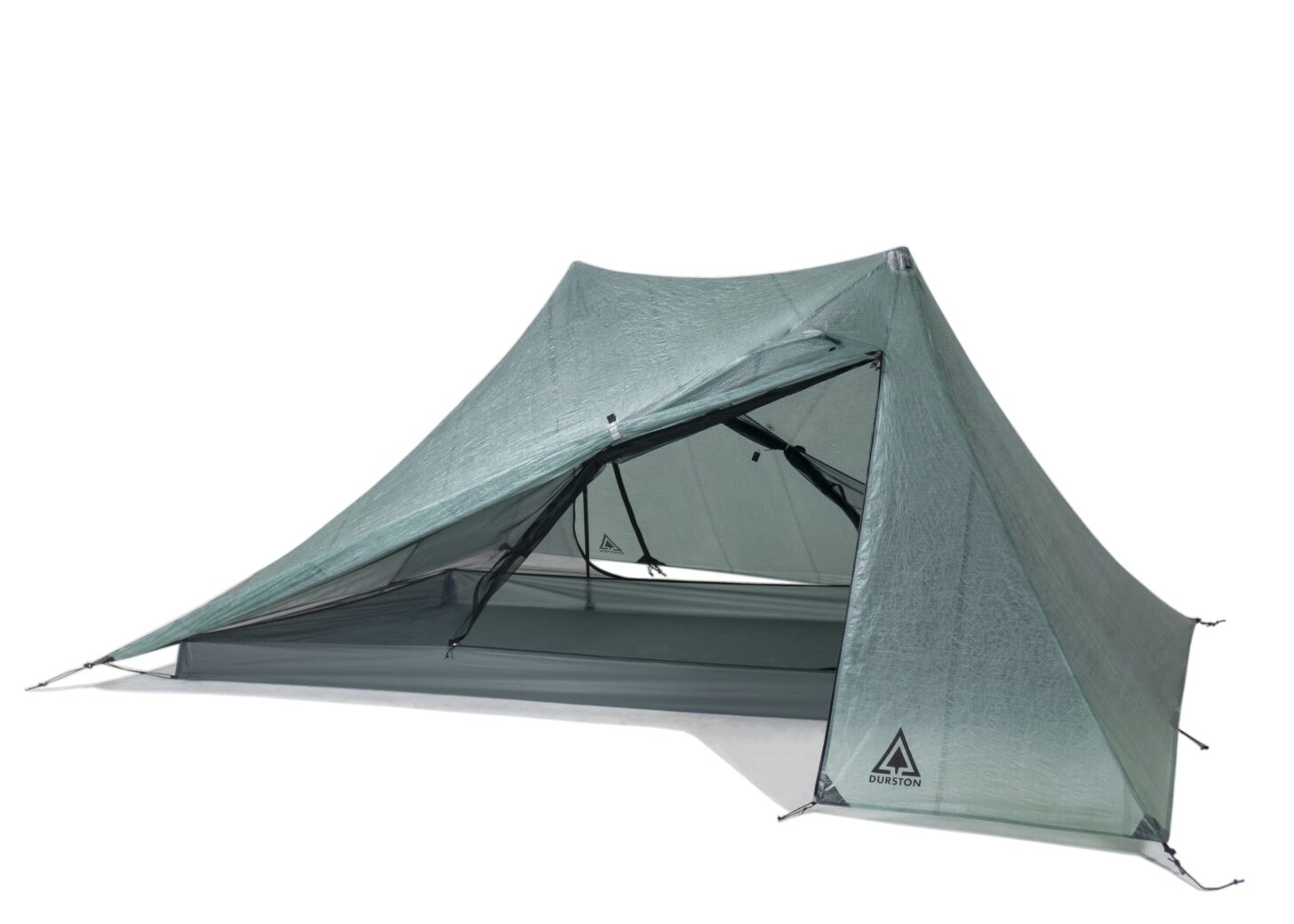
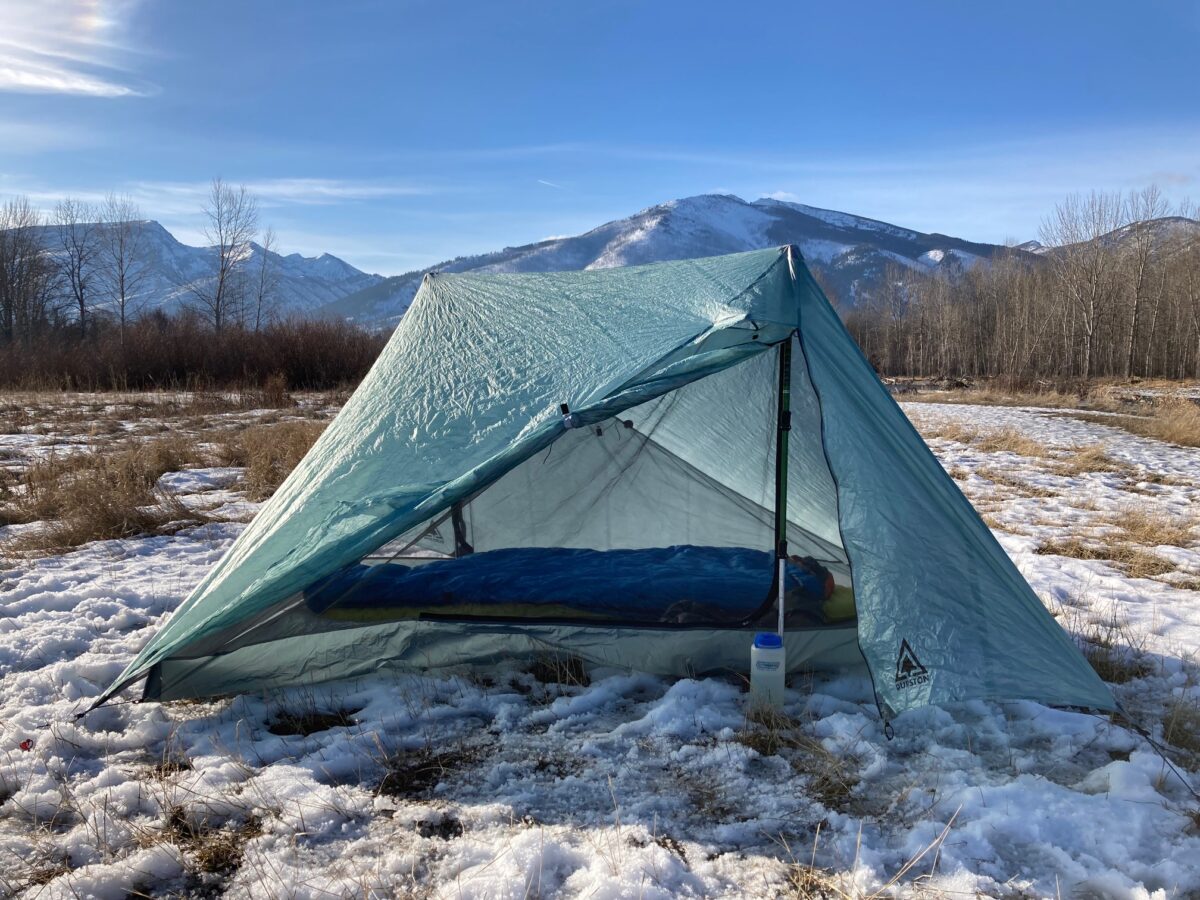
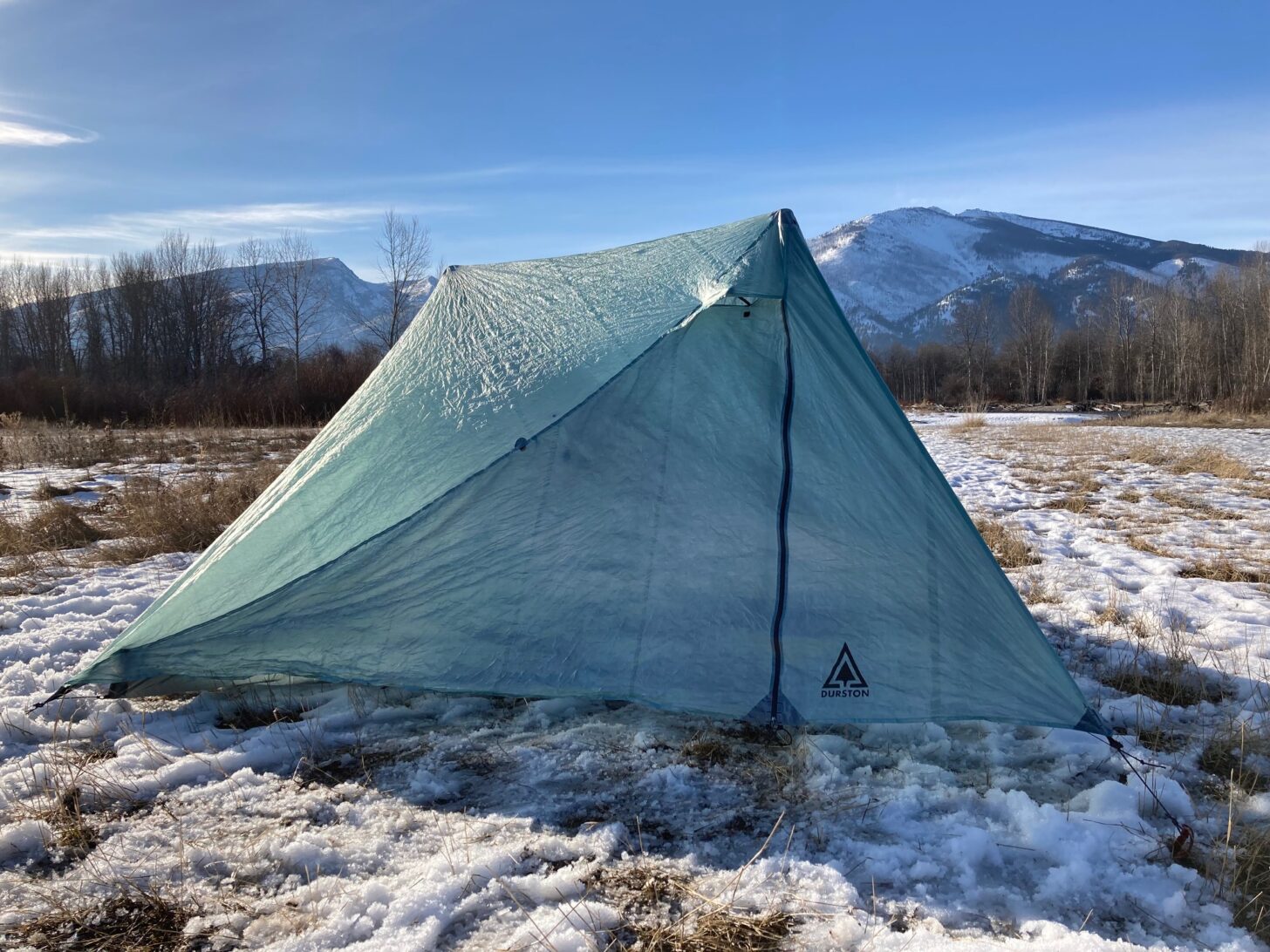
The Durston X-Mid Pro 2 tent (20.4 oz / 578 g, MSRP: $639) is an ultralight, single-wall, two-person, double-door, double-vestibule, side-entry, trekking pole-supported shelter made of Dyneema Composite Fabrics (DCF). It requires two trekking poles and a minimum of four stakes to pitch. The design combines the headroom and spaciousness of a classic double-pole single-wall shelter with the stormworthiness and simple set-up of a pyramid-style shelter.
The Durston X-Mid Pro 2 is a compelling product in the somewhat narrow category of ultralight, two-person DCF shelters. The silpoly Durston X-Mid 2 is already a popular tent and is Highly Recommended by Backpacking Light. That makes the lighter, updated DCF version particularly intriguing.
The Durston X-Mid series of tents has become a favorite among ultralight backpackers, and demand for these shelters is very high. A recent sale of the Durston X-Mid 1 sold out in three minutes. Company founder Dan Durston notes there that there will be a better supply of the X-Mid Pro 2, but it seems unlikely that they will remain in stock very long following their initial launch.
This First Looks review is based on our initial hands-on evaluation of a pre-production sample of the Durston X-Mid Pro 2 Tent.
Review Update Log:
- June 13, 2023: This review was updated with long-term performance results.
- March 25th, 2022: Backpacking Light founder Ryan Jordan and Backpacking Light canine-in-chief Sierra recently had a chance to spend some time with the Durston X-Mid Pro 2 in the field. The new photos are at the end of the review, in the Photo Essay section. Click to jump straight there.
- August 22nd, 2022: We shot a video exploring the features of the Durston X-Mid Pro 2. You can find it below.
X-Mid Pro 2 Review Video
Highlights
- shelter: 20.4 oz (578 g), plus 4 stakes and two trekking poles
- height: 46 inches (117 cm)
- floor width: 48 inches (122 cm)
- floor length: 90 inches (229 cm)
- floor area: 30 sq ft (2.78 sq m)
- vestibule area: 21.5 sq ft (2 sq m)
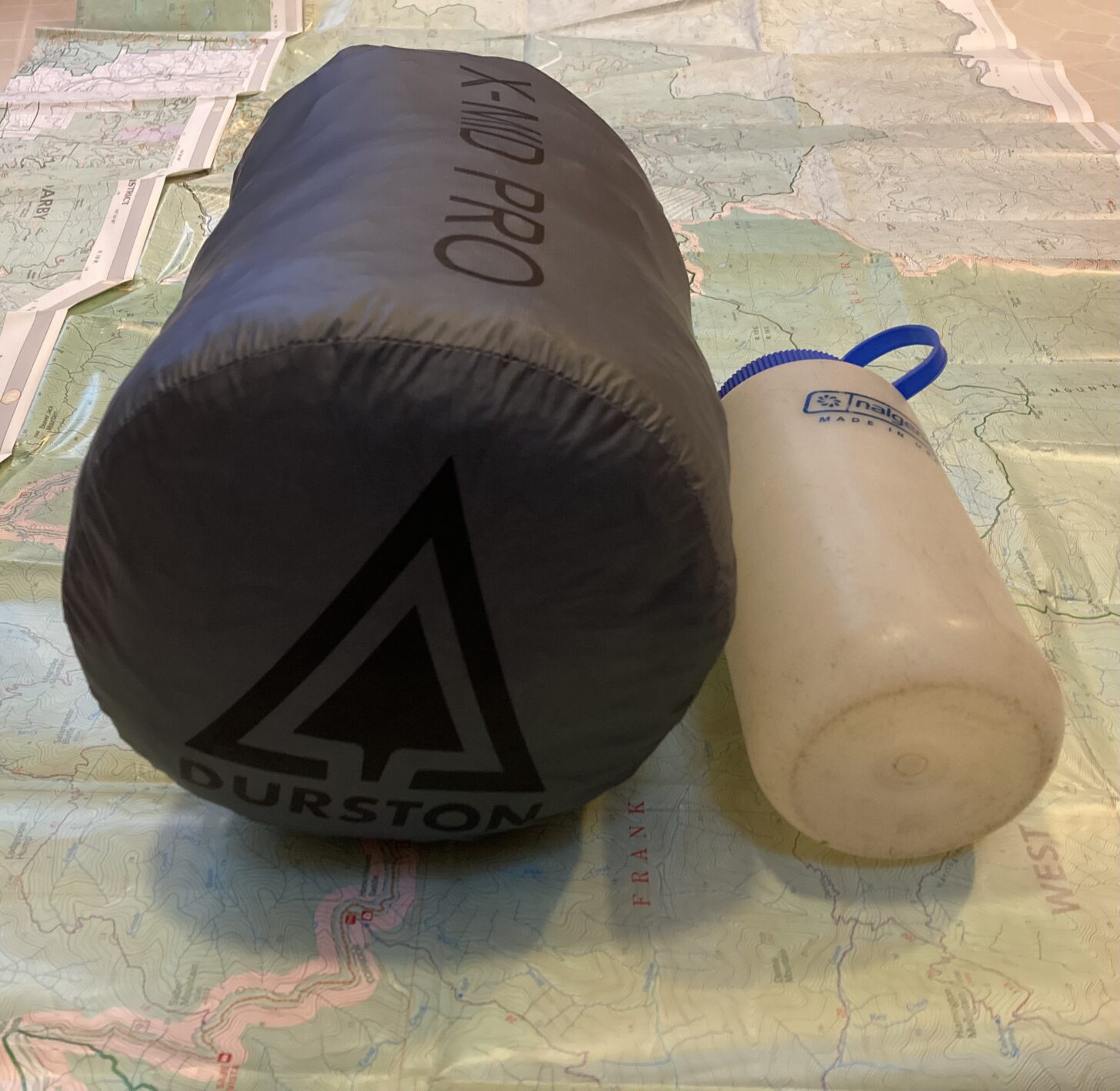
- packed size: 12 x 6 inches (30 x 15 cm)
- rectangular design allows the tent to be pitched with four stakes
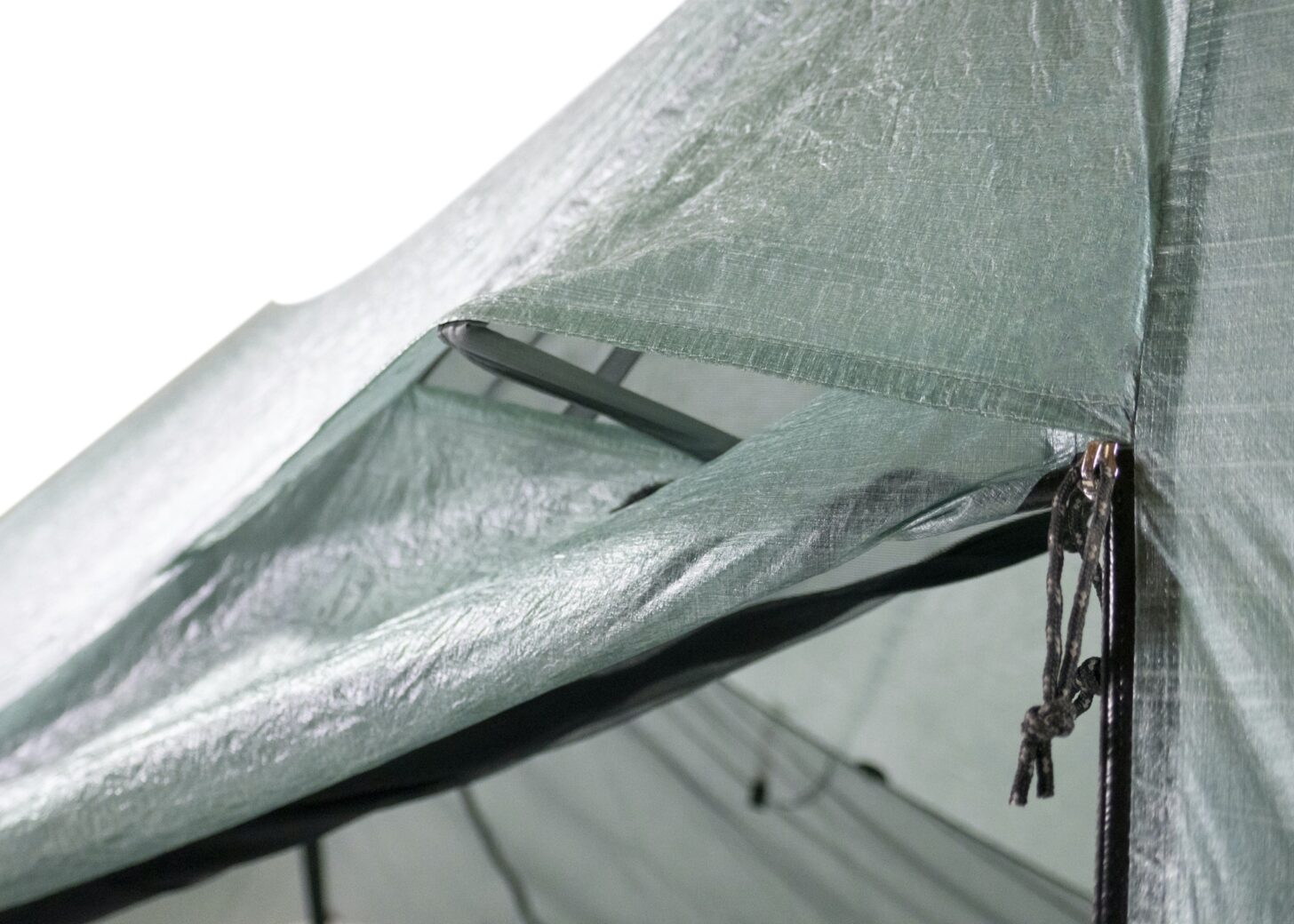
- dual peak vents help manage condensation
- bonded construction instead of sewn construction
- offset pole design allows for easier entry and increased interior volume
- two doors with dual vestibules, waterproof zippers on vestibule doors
- 15 denier nylon floor doesn’t require a footprint in most conditions
- floor lays taut when pitched and tensioned properly, instead of simply hanging
- vestibules provide ample room for storing packs and other items not brought into the shelter
- door zippers are easy to operate one-handed
- magnets allow for the vestibule and/or the mesh tent door to be easily rolled up
Testing Context
This review was conducted using both pre-production prototypes and production models of the X-Mid Pro 2.
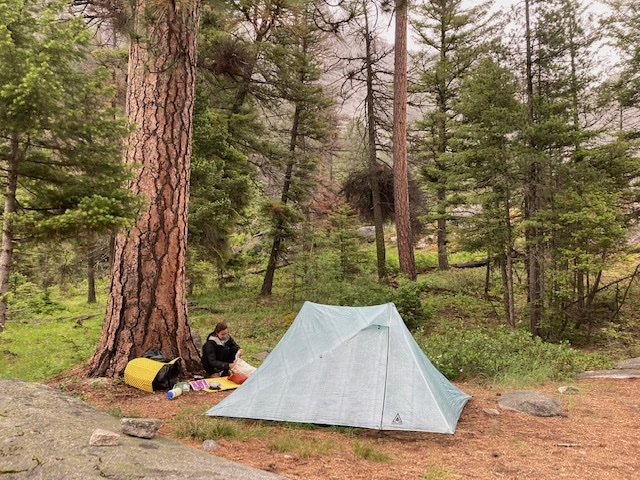
I used the Durston X-Mid Pro solely on summer and fall backpacking trips in the Northern Rockies. It was used for 27 nights. For 22 of these nights, I was the only occupant (the remaining nights were shared with a partner). This tent was tested in national forests and designated wilderness areas that did not require camping in designated sites; therefore I was able to choose locations at my discretion. Whenever possible, I chose sites that had ample room for the tent to ensure a proper pitch, soil that was easy to place stakes into, and natural features (boulders, trees, slopes) which provided additional shelter from the elements. I did not use a footprint while testing this tent and instead tried to practice good site selection and remove small rocks, pine cones, sticks, and other debris before pitching the tent.

I experienced several mild rain events while using this tent, two consecutive days of near-constant rain or drizzle while at a basecamp, three mild-to-moderate thunderstorms, and one severe thunderstorm with approximately 10-minutes of marble-sized hail and gusty winds of around 15-20 mph. I did not use this tent in snowy conditions or excessively windy conditions. Mosquitoes were present, and often in abundance, on roughly half of the nights while using this tent.
First Impressions
As with the popular X-Mid 1 and X-Mid 2, one of the most impressive attributes of the Durston X-Mid Pro 2 is its unique geometric design that incorporates offset trekking pole placements. (Compare this to most shelters that incorporate two trekking poles, which use a direct-opposite placement of the poles.) In addition, the details that caught my attention include its ease of use, livability, and potential performance in inclement weather.
We recommend you read our Durston X-Mid 2 Review to familiarize yourself with some of the design features of X-Mid tents. That review will aid in your understanding of the X-Mid Pro 2 design.
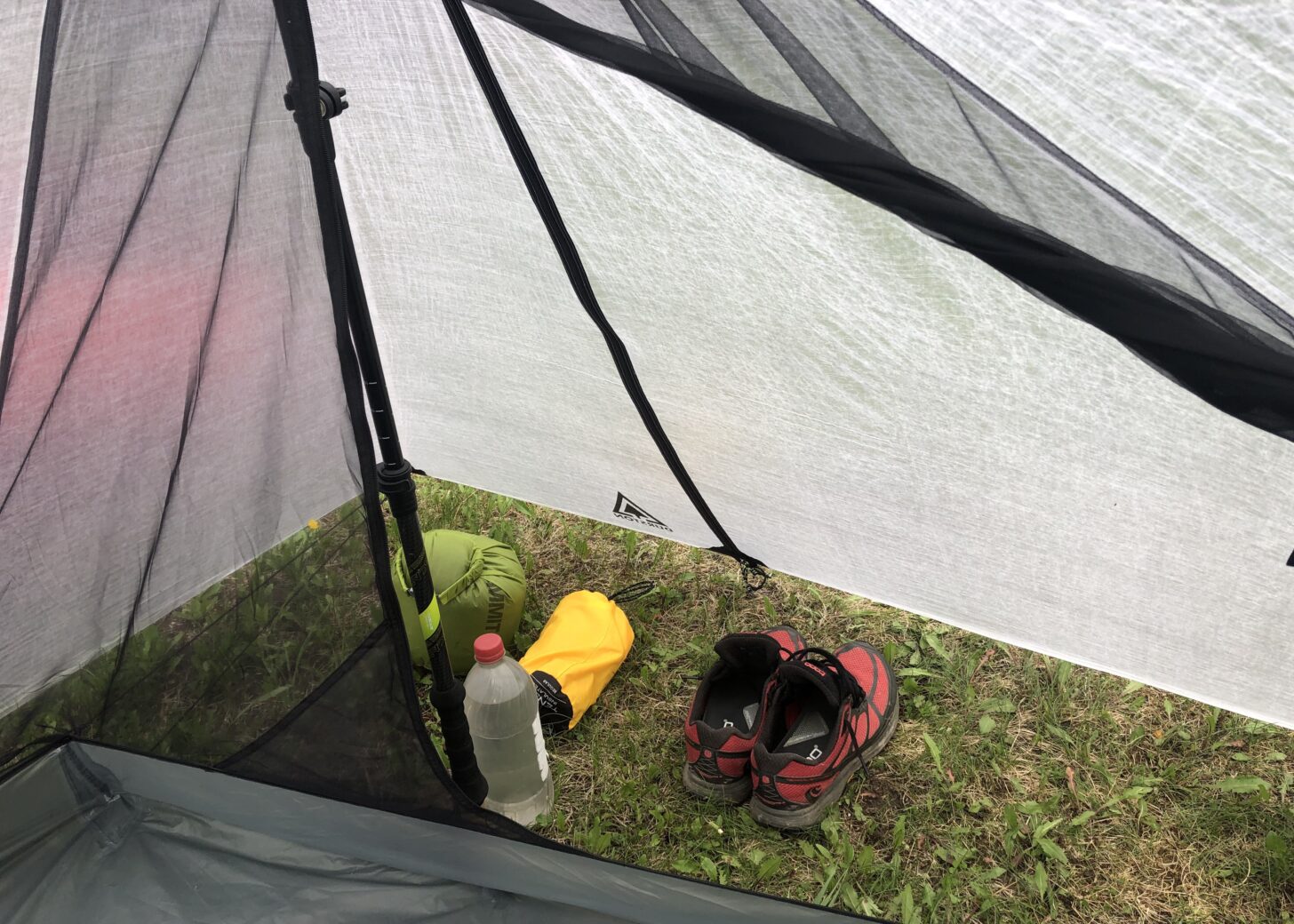
The most obvious unique design features of the X-Mid Pro 2 include:
- an intuitive (rectangular) pitch that requires a minimum of only four stakes;
- a spacious interior (a function of the offset poles and overall geometry);
- integrated fly that extends further to ostensibly provide better coverage in storms than similar tents. The area covered by the fly of the X-Mid Pro 2 is 55.5 sq ft (5.1 sq m), compared to the Zpacks Duplex whose area covered by the fly is 48.6 sq ft (4.5 sq m).
The Durston X-Mid Pro 2 Tent is designed to be pitched using two trekking poles. For hikers who don’t use trekking poles, or for bikepackers and packrafters, Durston Gear has a lightweight, folding pole kit that is compatible with the X-Mid Pro 2 (and other shelters).
“The X-mid Pro 2 can offer more space and function for the weight because it uses genuinely more efficient geometry (e.g. fewer seams, less fabric for the volume, etc.) so we can put more weight into things that matter,” said Dan Durston.
What’s the difference between the Durston X-Mid 2 and the Durston X-Mid Pro 2?
Compared to the X-Mid 2, the X-Mid Pro 2’s footprint is smaller:
- X-Mid Pro 2: 80 x 100 inches (203 x 254 cm)
- X-Mid: 90 x 102 inches (229 x 259 cm)
This allows the X-Mid Pro 2 to more easily fit into tighter campsites. The headroom is almost identical between the two shelters. The floor width of the X-Mid Pro 2 is only 2 inches (5 cm) smaller than in the X-Mid 2. The most obvious difference between the two shelters is that the X-Mid 2 is a double-wall shelter and the X-Mid Pro 2 is a single-wall shelter.
Is the Durston X-Mid 2 Pro easy to pitch?
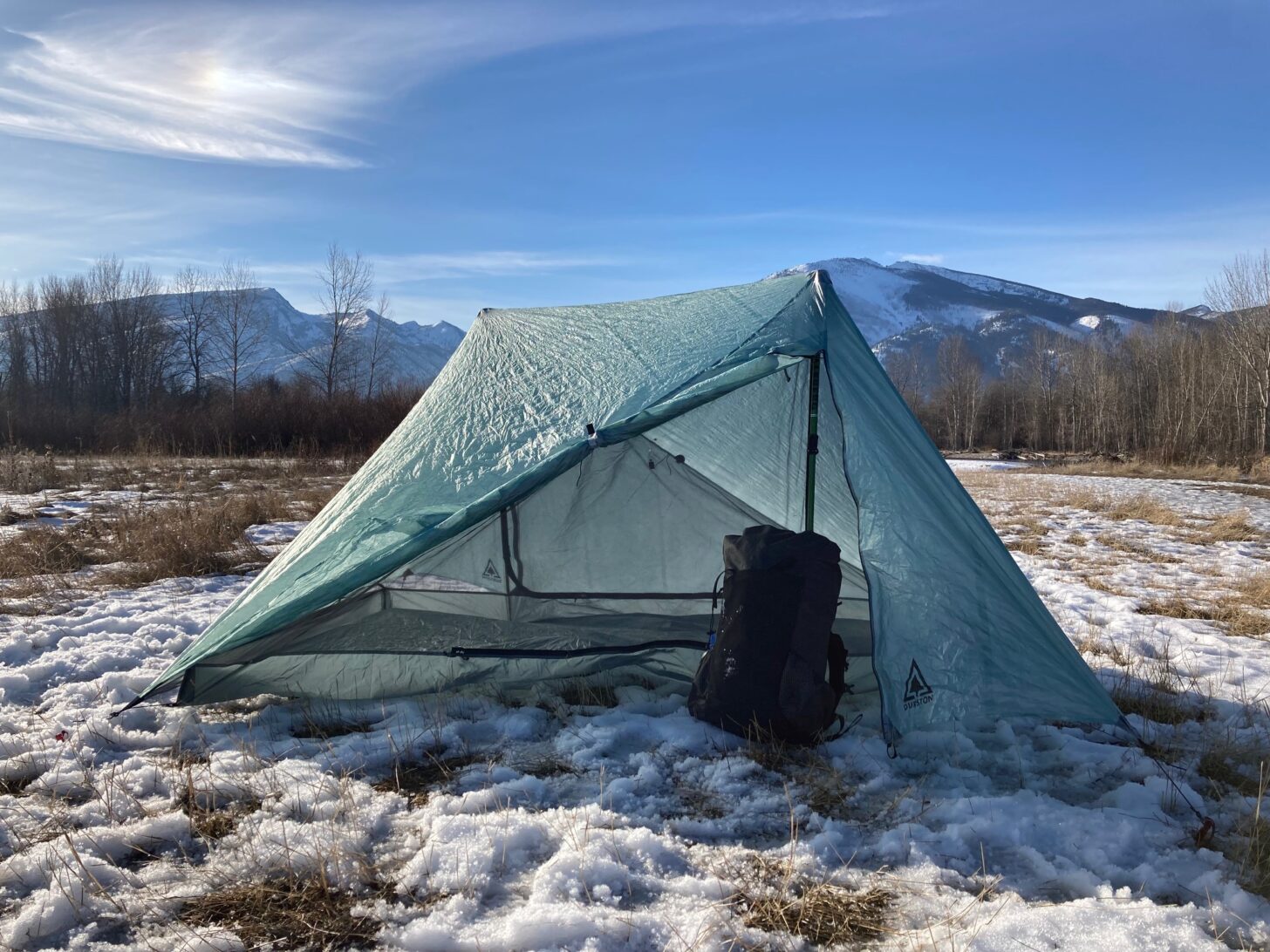
Using only four stakes and two trekking poles, I was able to have this tent pitched in just a few minutes without having to readjust anything. It almost seemed too good to be true. There was no fiddling with pole height, moving stakes around, or tensioning (and re-tensioning) guylines. These iterative steps are often required when pitching trekking pole tents. The zippers – both the waterproof fly zippers and the zippers for the body of the tent – operated smoothly.
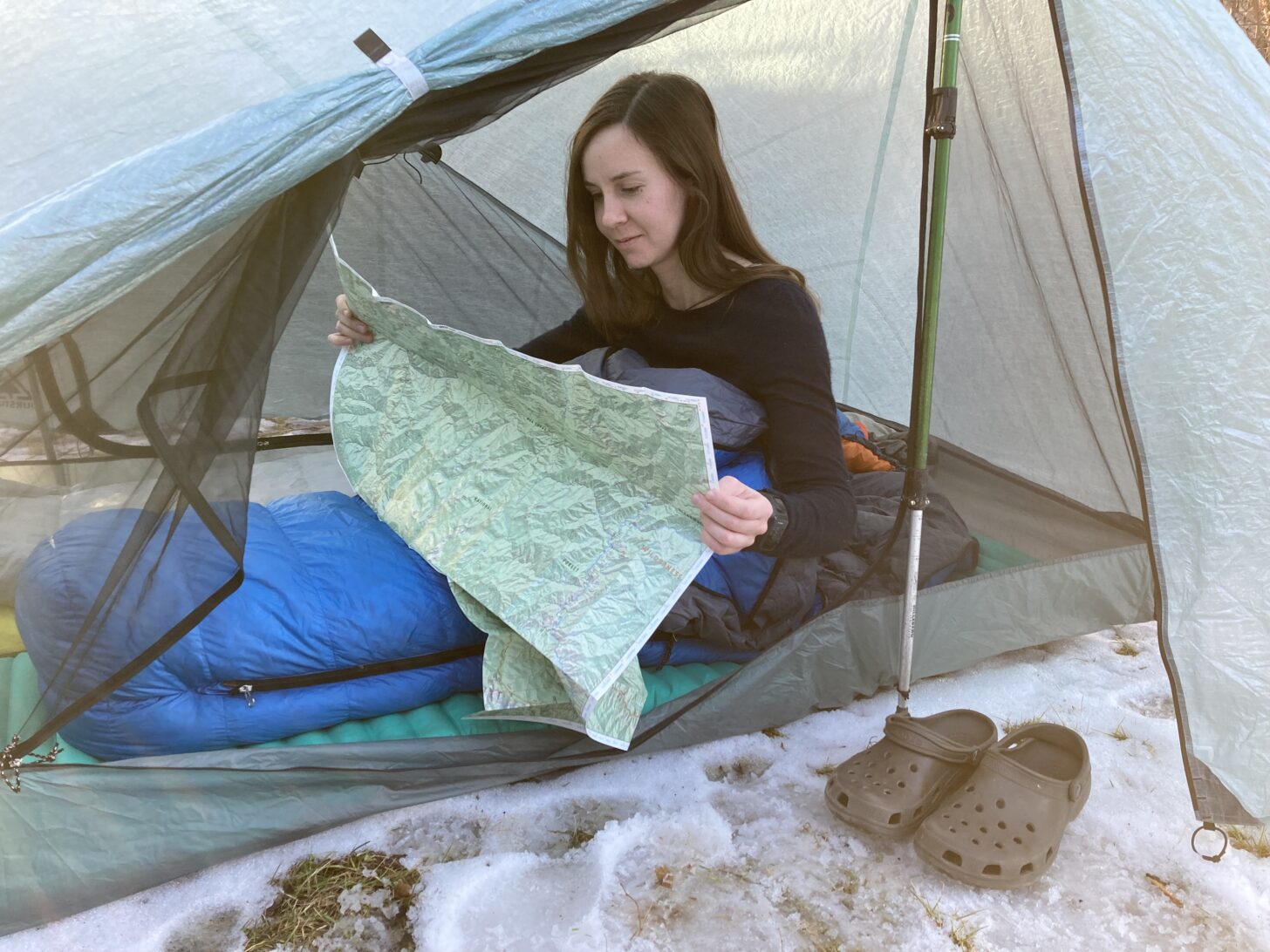
In soils where staking is more difficult than in my yard and in campsites with varying topography, pitching will obviously be a bit more challenging and perhaps require longer guylines or other adjustments to the pitch. However, given how straightforward the mechanics of erecting this tent are, it’s an easier pitch than most trekking pole shelters.
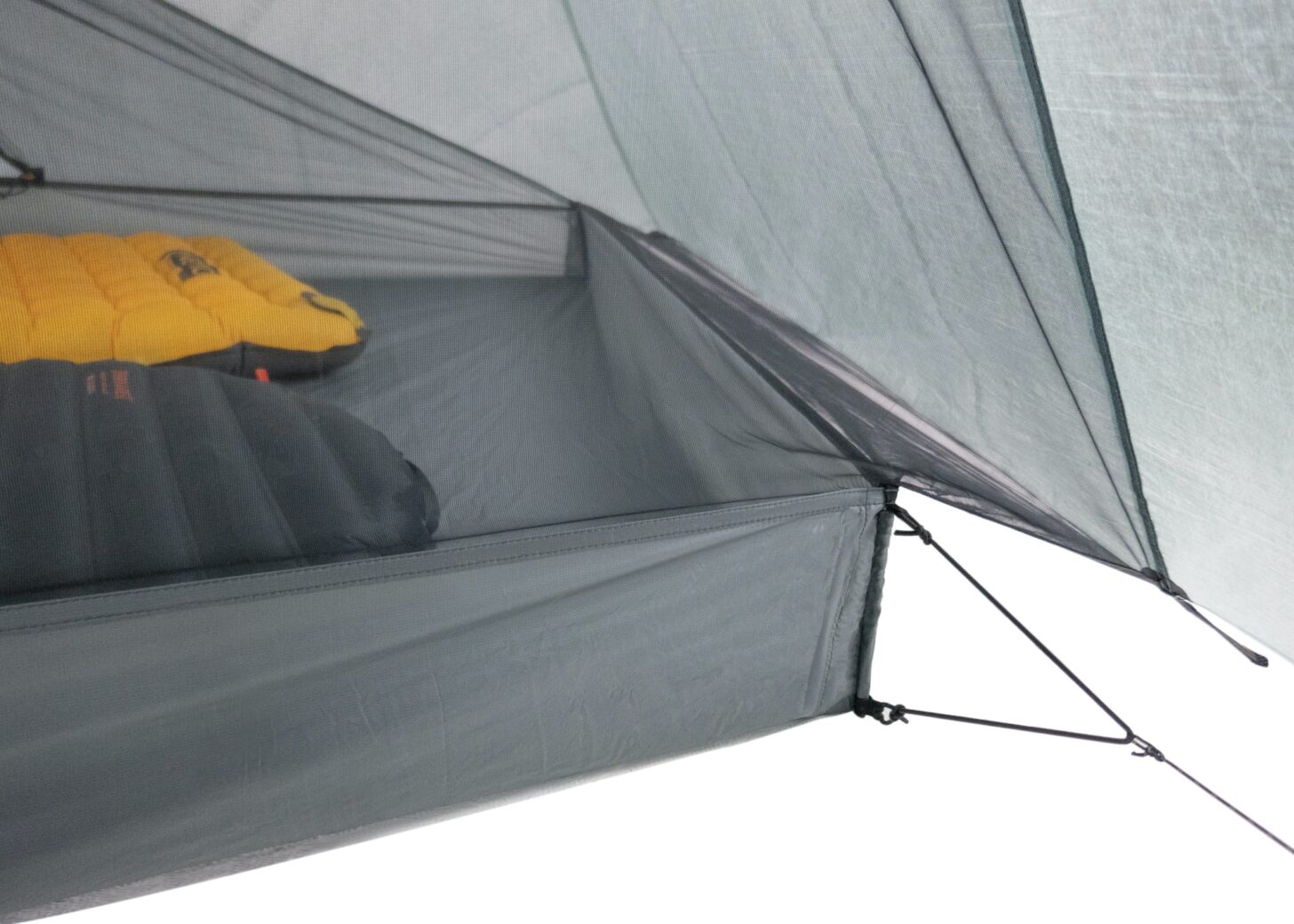
The DCF used for the body of the tent has been used extensively in many other tents by other manufacturers and will last a while for users who care for their gear with intention. One of the most common failure points of DCF shelters is sewn seams; the seams on Durston X-mid Pro 2 are entirely bonded with no sewing. (You can learn more about the advantages and disadvantages of bonded vs. sewn seams in the Dyneema Composite Fabrics episode of the Backpacking Light Podcast and the Dyneema Composite Fabrics Webinar.
Why does the Durston X-Mid Pro 2 have a nylon floor?
A 15-denier nylon fabric was chosen for the floor with the idea that a footprint wouldn’t be necessary for most situations if reasonable precautions are taken with campsite selection. However, hikers using it in conditions where punctures would be more likely (such as rocky terrain or desert environments, with their plethora of spiky things) might want to bring a ground cloth in those specific conditions. The 15-denier floor is similar to the fabrics used in other lightweight tents, including many of those made by MSR and Big Agnes. Many hikers forego using footprints with those tents without experiencing any issues in normal use cases. When asked why the X-Mid Pro 2 uses a 15-denier floor instead of DCF, Dan cited the advantage in packability as one reason.
“We think a 15 denier woven floor is a better choice because it is a similar weight but far less bulk and debatably more abrasion resistant and waterproof in the long term,” said Dan. Using the 15 denier nylon fabric is also less costly than DCF. “Cost is another advantage, although the cost savings are largely offset by our more expensive hot bonding construction process,” said Dan. “We would have used 1.0 osy DCF if we genuinely thought it was better.” Using 15 denier nylon over 1.0 osy DCF results in a less expensive shelter that packs smaller.
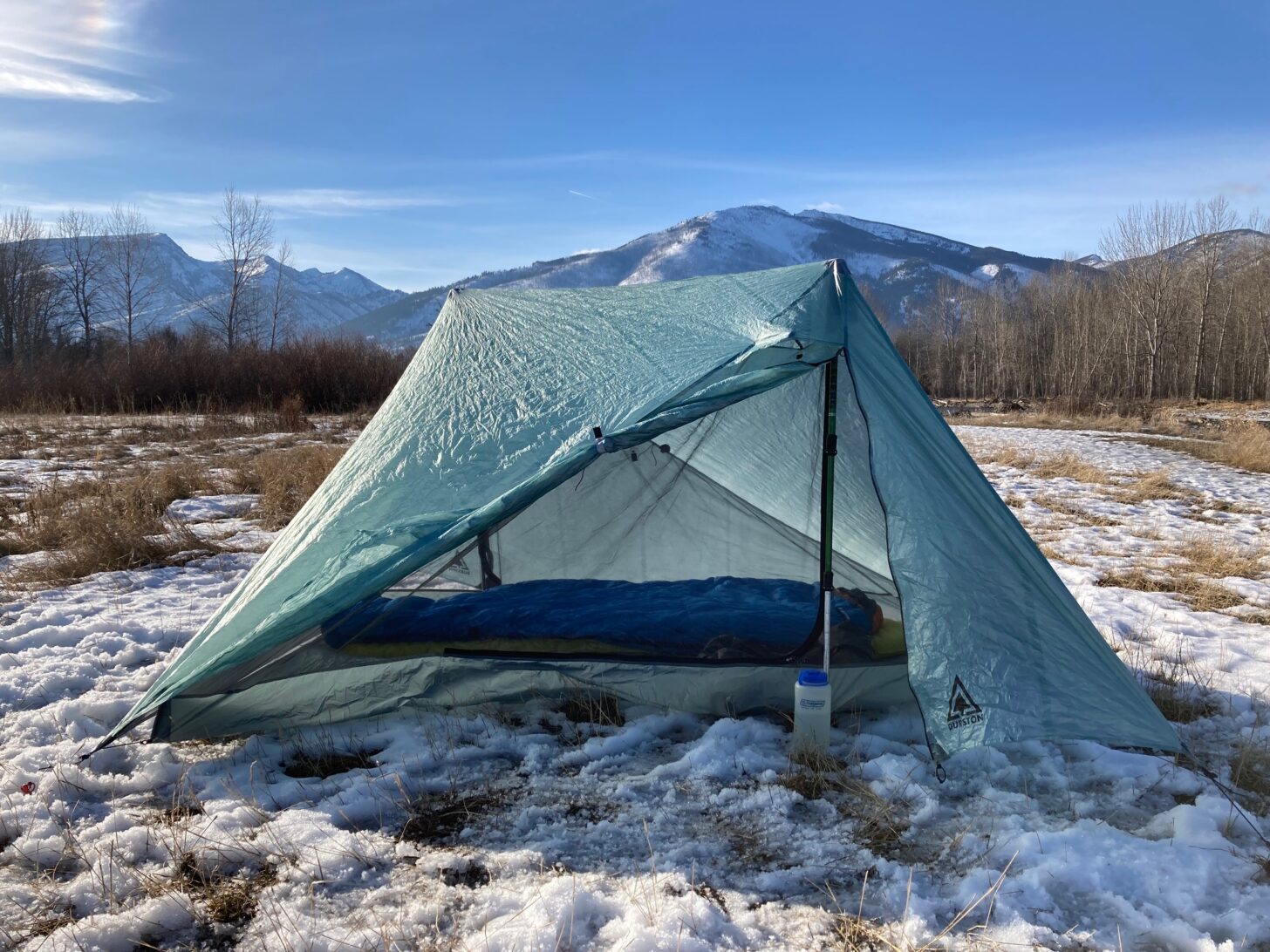
Other similar shelters, such as the Tarptent Stratospire Li, use an offset pole design. One of the advantages of the X-Mid Pro 2 is that it has such a simple pitch in addition to the benefits of having an offset pole design.
When asked how this was achieved without resulting in other trade-offs in performance, Dan said “The X-Mid uses a rectangular base to simplify the pitch (compared to a hexagonal tent) and combines that with two trekking poles (to improve headroom compared to a single pole pyramid). The classic challenge faced by other tents attempting this is locating the poles. Prior tents have positioned them around the perimeter which results in flat walls that catch the wind and mandatory guylines, or they have positioned them along the centerline where they interfere in the sleeping area and/or doorways. The X-Mid uses a new floorplan, where the poles are placed on a diagonal and then the sleeping area passes between them on the opposite diagonal. From the overhead view, these crossing diagonals form the “X” in the X-Mid name. From a functional perspective, they provide a good [larger] living space while avoiding all the common pitfalls (e.g., poles in the doorways, poles in the living area, mandatory guylines, flat walls).”
The Durston X-Mid Pro 2 Compared To…
| weight | MSRP | wall design (single-wall vs. double-wall) | floor dimensions | maximum peak height | floor material | canopy material | |
|---|---|---|---|---|---|---|---|
| Durston X-Mid Pro 2 | 20.4 ounces / 578 g | $639 | single | 48 x 90 inches (122 x 229 cm) | 46 inches (117 cm) | 15 denier nylon | 0.5 osy Dyneema Composite Fabric |
| Zpacks Duplex | 19.0 ounces / 539 g | $699 | single | 45 x 90 inches (122 x 229 cm) | 48 inches (122 cm) | 1 osy Dyneema Composite Fabric | 0.55 osy Dyneema Composite Fabric |
| Tarptent Stratospire Li | 27.5 ounces / 780 g | $699 | double | 45 x 86 inches (114 x 218 cm) | 45 inches (115 cm) | 1 osy Dyneema Composite Fabric | 0.51 osy Dyneema Composite Fabric |
| Gossamer Gear The Two | 23.5 ounces / 666 g | $375 | single | 42/48 x 84 inches (107/122 x 213) | 43 inches (109 cm) | 10 denier nylon ripstop | 10 denier nylon ripstop |
On paper, the Durston X-Mid Pro 2 bests many tents in its category (two-person, two-door, side-entry, dual-vestibule trekking-pole shelters) on a number of metrics. It is either lighter, roomier, less expensive, and in certain cases, all of those things. But how a shelter looks in a table is only part of the equation – one which we are increasingly less inclined to emphasize as shelter builders shave ounces at the expense of other important factors. Craftsmanship, quality control, user-friendliness (ease of pitching), livability, stormworthiness, and aesthetics all come into play. These are the performance metrics consider in this review.
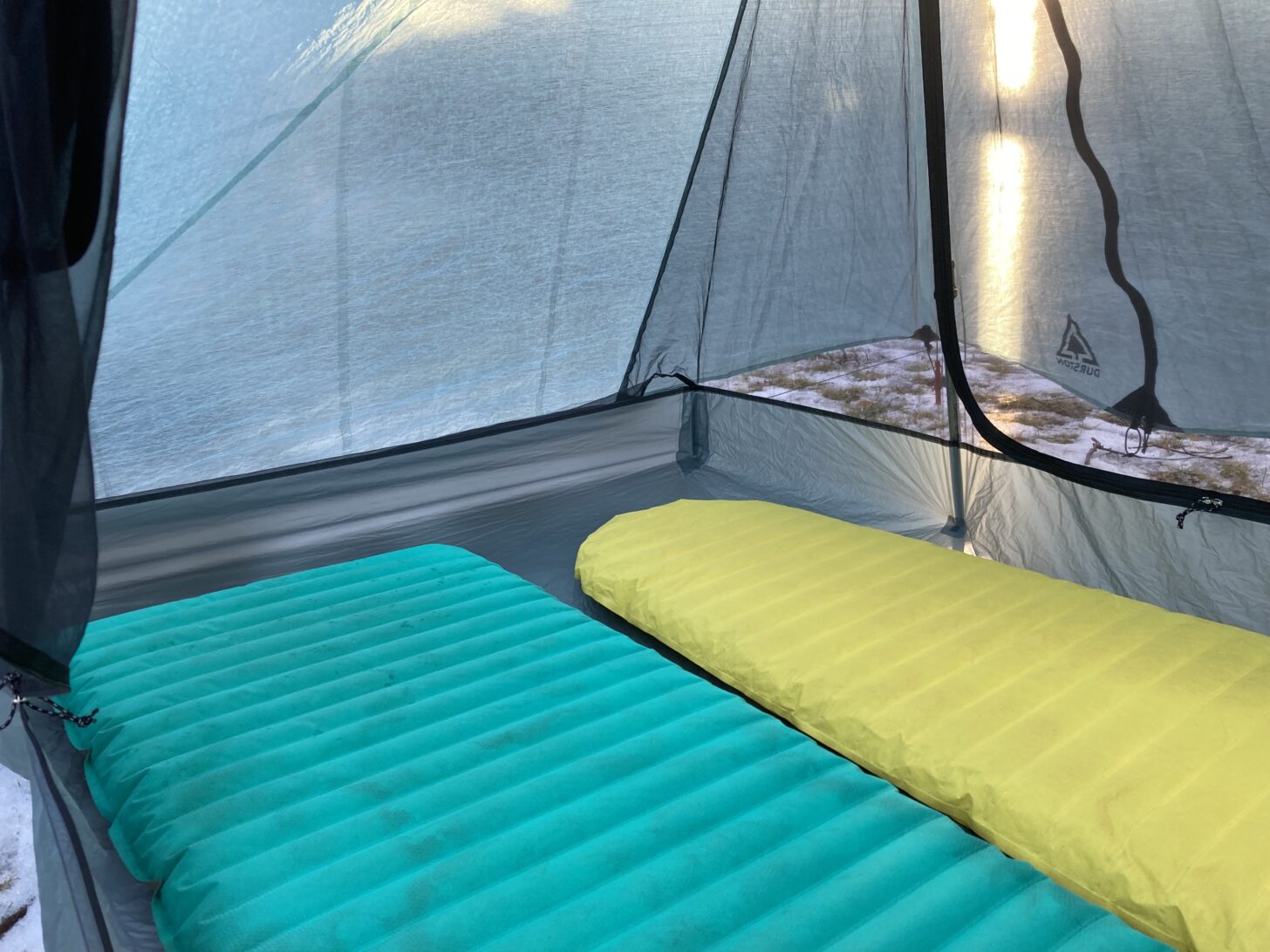
Long-Term Performance
In this section, we evaluate:
- Pitching
- Livability
- Stormworthiness
- Fabric
- Durability
- Weight
- Finish quality/aesthetics
- Price
Member Exclusive
A Premium or Unlimited Membership* is required to view the rest of this article.
* A Basic Membership is required to view Member Q&A events


Discussion
Become a member to post in the forums.
Basic tarps are more of a pain to set up than a trekking pole tent like the X-Mid Pro 2. Yes, you get a bit more options and versatility with a basic tarp, but you have a bit more to think about when you’re pitching it. I used an Integral Designs Sim Shelter for years and loved it, but it definitely required more thought and planning to pitch it, otherwise you’re going to be doing a bit of readjusting. The X-Mid is pretty simple. Stake out the 4 corners as recommended, then insert your poles. For most applications you’re done. If you want to add more stakes, stake out guy lines or do a skinny pitch it’s an option but not a requirement in most situations. SO for those confused and overwhelmed or think it’s too complicated, keep in mind these skinny pitch and alternate ways to pitch are merely suggestions to add versatility, but aren’t required for the standard pitch.
My experience is with the non pro but these points will apply to the Pro as well
Many Ontario Provincial Park back country sites designate tent pads. My regular Xmid2 fits on a pad, but requires skinny pitch if sharing with another tent which can be tricky given the pads are often fouled by large roots and pointy rocks. Definitely trickier than my previous freestanding tent but shouldn’t at all be an impediment to purchase, its all doable and not too hard.
Other Park pitch sites can be anything from bare rock to sandy loose soil. I switched out all the guy lines for longer to support dead man anchors on rock, and switched out the bishops hooks and Ti pegs for MSR Groundhogs to get better grip in loose soil.
I’ve taken it in high wind and rain bombardment. In driving rain shoulder season, the short bathtub requires a trade off between splashback (pitch fly low) and condensation (pitch fly up). I added guy line to the center end panels and carry two extra stakes to pull them out a bit to create a bit more airflow with some but not too much splashback.
I add 2 more stakes to support the peak guylines for really hard rain. I’ve deployed all 8. I carry a bit of extra line for drying clothes but can deploy that on the mid panels using stick and rock as dead anchor if needing to really reinforce in nasty weather, so 8 pegs is a sweet spot for me.
It can get tricky to get the 90 degree pitch if on sloped or uneven ground. I had to do this a few times to avoid swimming in bed in the morning, but the longer guylines make it all possible. The stock short guylines would make this much less flexible.
For Canadians, liteoutdoors carry cost effective cord, line locks and pegs. I used their cord: it doesn’t absorb water & is far more visible than the stock guylines reducing chance of tripping. It doesn’t slip but is stiff (dyneema core). I also added their line locks to areas of the tent that could use them.
It’s easy to jury rig up a DIY stargazer mode using the peak guidelines. This mode really rocks with this tent.
EDIT: Kaviso’s support is amazing. I ordered a patch repair kit and both Dan and Kaviso were all over it and very helpful. Dan is so responsive I wonder if he’s really an AI?
Sorry I’m late to this party but I’m in purchase mode and I’m hoping for some clarification on one section that is a little confusing to me. The long term review states “At the end of the testing period, I noticed no areas of wear on the tent or issues with seams, netting, zippers, discoloration or distortion of fabric, or anything else that would indicate issues with durability. While issues related to the longevity of DCF are becoming more known and documented, it does not appear to me that any of those issues would be made worse by any inherent features of the X-Mid Pro. ” Is the author saying there is NO deformation common to DCF shelters or that it’s no worse than other shelters?
I can’t speak for the author, but I think they are saying they didn’t notice any durability issues while also noting that DCF does have general limitations. With the X-Mid Pro tents we are using pre-shrunk DCF so distortion/deformation should be less than most other brands of tents which don’t use this. DCF still has some limits to it’s lifespan though, since eventually it fatigue and start to deteriorate. Most people will never see that because it takes 100-200 nights of use, but this is why the lifespan of DCF shelters is often considered to be about “1 thru hike” (referring to the AT/PCT/CDT which take usually 100-150 nights).
I considered the Pro when I bought my X-Mid2, but ultimately decided that, as a tall hiker, I wanted the larger size of the “regular” 2. Cool to see a 2+ size Pro available now, perfect for tall guys like me and with my wife and I both using wide pads.
Tough decision whether I keep the regular 2 or sell it and get the 2+ Pro version. Obvious weight savings for the Pro, but versatility and condensation benefits for the regular version. The latter is not insignificant here in the humid and often calm, upper Midwest of the US.
So many preach that condensation concerns are overblown. I don’t know. For me, it came down to these questions:
1. Do I want to lose ability to set up fly and sit under it (on a stool or in a chair, maybe with a friend) for meal shelter?
2. Do I want to lose the ability to pack everything up including the dry inner under the shelter of the fly?
3. Do I want do lose the convenience of quickly stuffing the tent in the pack or in a pocket?
Lose these things for lighter weight and a simpler tent. It can be a hard call!
@Jason, exactly. I commend Dan for offering both versions, so people can make their own choice.
Indeed, when set up outer only, I could squeeze 3 or 4 people inside for a lunch break in the rain.
Become a member to post in the forums.