

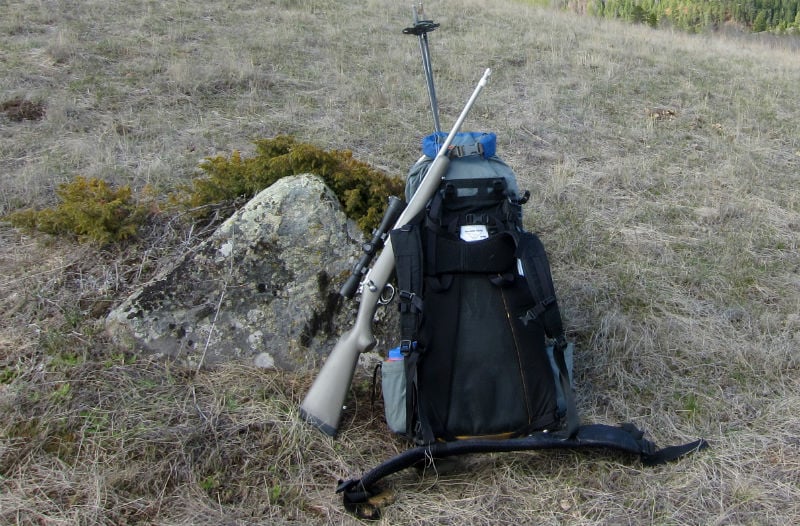
…there’s several thing to be taken into consideration before trying to go on a 5-7 day hunt with 27-35 lbs. I would personally say DON’T TRY IT, as the people posting these weights have either 1) never actually tried doing it and are guessing 2) are very experienced and have their kit dialed in 3) only do ONE backpack hunt a year and can get away with taking very little food 4) haven’t had s**t hit the fan yet and leave a lot of gear home that could help keep them on the mountain.–Aron Snyder
Introduction: That Other Ultralight
Backcountry hunting is a categorically different pursuit than backpacking and its variations. I’ve tried to make this point a stark one with the epigraphical quotation, a forum post from Kifaru rep, Rokslide.com co-founder, and famous internet hunter Aron Snyder. Backcountry hunters obsess about and discuss pack weight just as fervently as backpackers, but as the above figures reveal, the foundational assumptions used by the two camps are very different. In this article I will attempt two tasks: first to describe the conceptual gulf between backpackers and backcountry hunters and how it explains the difference in ultralight pack weights between the two, and second to make an initial foray towards establishing a numerical standard for an ultralight backcountry hunting base weight.
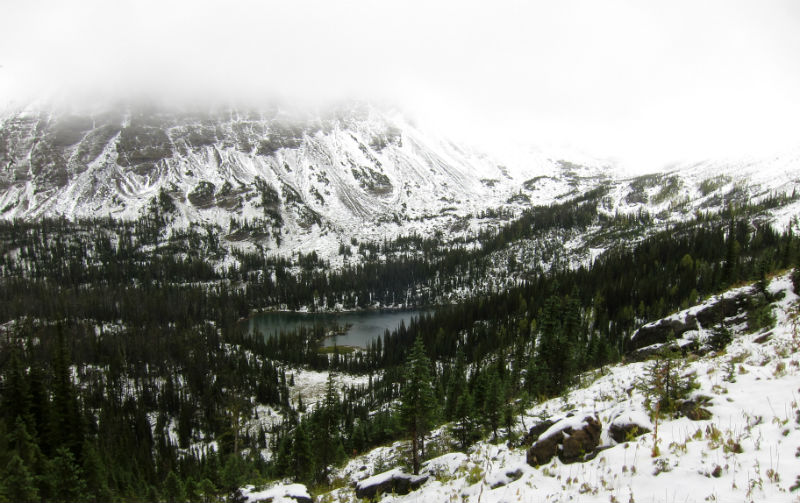
When it comes to the evolution of gear, technique, and mindset, the ultralight standard of less than 10 pounds base pack weight (i.e. everything but consumables) has been around for an eternity. More than long enough for the term to become co-opted for every imaginable marketing angle, for cottage companies and garage tinkerers to push gear well past the ultralight threshold, and for mainstream companies to at last make gear which easily fits into an ultralight gear ensemble. I still don’t put much credence in Ron Moak’s infamous 2012 pronouncement that prior to the early “oughts” an ultralight baseweight required “black arts,” but his larger point from the Ultralight: State of the Revolution series of blog entries is inarguable: advancements in technology have stripped much of the relevance out of the accepted ultralight standard of 10 pounds. It is much easier than it once was, if not just outright easy, to build an ultralight kit and use for just about any trip you might conjure up in (for example) the temperate latitudes of the northern hemisphere between April 1st and November 15th.
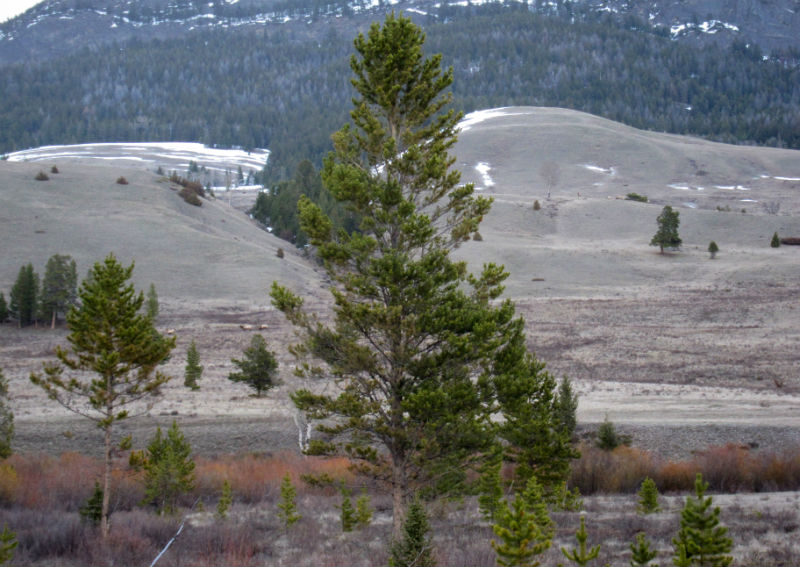
A hard metric for ultralight backpacking baseweight is useful for the same reason it is useful in anything, we humans love to ask for exceptions. Be it a higher baseweight figure for those over a certain height, or an extra SUL pound if you exceed a certain mean elevation, however compelling the excuse, the e-word remains nothing more than an attempt to get away with something rather than embrace the extra challenge of meeting an objective standard. There’s no inherent value in pack of a certain weight, the value can only be found in the trip such a hiker can only now do, as well as the extra consideration and learning meeting a rigorous weight standard can bring about. As Ryan Jordan wrote in 2013, “For me, SUL as a mindset has motivated me not only to be very intentional about what I take on the trail, but also to be very intentional about how I count the costs of all sacrifices that I make with time, finances, material possessions, and relationships.” Establishing a rigorous comparative standard with no wiggle-room helps you learn more. As will be discussed below, when it comes to hunting such things are highly relevant.
Backpacking is the prime mover of overnight ski touring, wilderness packrafting, and to a large extent alpine rock climbing and mountaineering. One does these things to travel through a given landscape in a certain fashion and see what is to be seen along the way. Even climbing is most often dedicated to experience in the landscape more than reaching a summit, witness the profusion of excellent routes which end when the good climbing does. Hunting is different. While pursuing animals in the backcountry is a good way to talk yourself into visiting and looking closely at some obscure, rough, gorgeous country, in the ends it’s like Fight Club. The first three rules of hunting are that to succeed you must kill something. If you spend five days in the mountains you went hunting, and probably succeeded in executing a fantastic backpacking and nature-watching trip, but you did not have a successful hunting trip, however satisfying the overall. I say this not as a value-based statement, but to highlight the principle around which any standard for an ultralight backcountry hunting baseweight must be built. If it will help you kill your prey, it makes the cut, no matter how heavy. As will be seen below, this is a hugely important distinction, because the backpacking pieces of an ultralight hunting pack will be among the lightest items on board.
Building an Ultralight Hunt
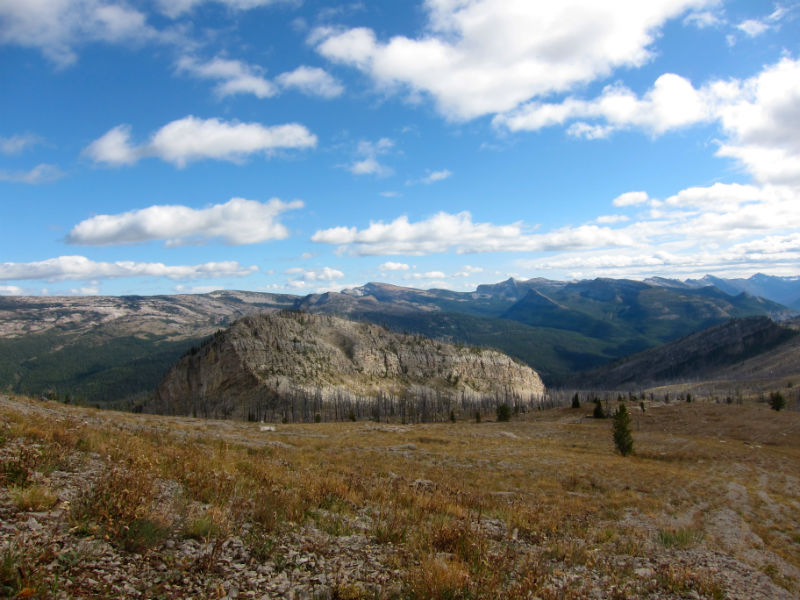
Because hunting has different motivations than backpacking, it often goes into very different places, and does so in different ways. Late September in the Northern Rockies of the United States provides a good example of this distinction. Mixed precipitation is common, as is standing snow in the higher elevations, though daily and nightly lows are usually relatively mild (read: below 20 F is uncommon). A common ultralight backpacking strategy for these conditions is to modify summer gear only a little, perhaps with warmer socks, and if particularly cold and wet conditions are present maintain warm feet via a brisk and steady pace, with perhaps a fire at camp. If the day’s high pass is exceptionally cold, a still stronger pace and an hour of minor suffering is usually all that is required. Hunting the same areas and conditions demands a different approach. Deer, elk, or sheep are likely bedded in invisible locations through the height of the afternoon squall, and descending to find dry wood is likely to spook whatever animals are nearby. Not only does the hunter need to move slowly and quietly through the area to find a high spot with good visibility for when the weather lifts, but he or she must be prepared to stay stationary during and after the storm to glass for and then locate suitable quarry. The ensuing stalk may be fast paced and help warm up cold feet, but might be interrupted at any moment by a forced wait behind a boulder midway across a talus slope, all while exposed to both the wind and the keen eyes of alpine ungulates.
The ultralight backpacker deals with challenging conditions like these with a judiciously selected kit, and adapts to the conditions by varying the pace and manner of travel. The ultralight hunter must adapt to the way the animals respond to ambient conditions, and have the equipment to do so.
All of which is to say that the ultralight hunter will have a much heavier pack, and for good reason. But how much heavier? Ultralight has in hunting, just as in other outdoor pursuits, become a potent marketing buzzword, with whole companies producing products lines devoted to “ultralight hunting.” A baseweight standard should be rigorous enough to push end-users towards defying dogma when choosing their gear. It should also provide consumers with a tool which can help hold gear-makers feet to the fire, and help foster innovation in content rather than marketing.
The following chart is a suggested list tailored to generic autumn conditions; early October in the US Rockies, early September in the Alaska Range, or mid-April in New Zealand’s southern Alps. As can be seen, the weight gets up there in a hurry. The maximum suggested hypotheticals I have here assembled come to a baseweight (worn clothing, food, and fuel not included) right around 36 pounds.
| Category | Item | Example(s) | Example Weight (oz) | Upper limit weight (oz) | Category limit total (lb/oz) |
|---|---|---|---|---|---|
| Camp | 3+ season shelter for two | Seek Outside BT2, with pole and 10 stakes | 36 | 40 | 4 pounds 9 ounces |
| 20 degree sleeping bag | Zpacks regular/long | 18 | 24 | ||
| sleeping pad | Thermarest Prolite XS | 8 | 10 | ||
| Packing | 80+ pound capable ~4000 cubic inch pack | Paradox Unaweep, Stone Glacier Solo | 52 | 64 | 5 pounds 12 ounces |
| Game bags | 3x medium TAG bags | 10 | 20 | ||
| Drybags for gear, contractor bags for meat | Sea to Summit Ultrasil, Hefty | 8 | 10 | ||
| Cooking | stove and ~1 liter pot | MSR Windpro, Cat can alcohol w/ Evernew pot | 15 | 20 | 2-3 pounds |
| fuel | fuel | 1.5 oz/day/person | |||
| Misc | 100+ lumen headlamp, skinning knife, rope, tags, first aid, repair gear, PLB, hygiene, water bottle etc | Havalon Piranta, Petzl Tikka XP, McMudro Fastfind, satellite phone, etc | 48 | 48 | 3 pounds |
| Clothing (carried) | Durable raingear | Arc'teryx Alpha FL jacket, Rab Xion pants | 21 | 24 | 4 pounds 6 ounces |
| fleece midlayer | Rab Micro pull-on | 8 | 8 | ||
| Insulated jacket | First Lite Uncompahgre | 20 | 20 | ||
| Windshirt | Black Diamond Alpine Start | 7 | 8 | ||
| Light, snug gloves | Black Diamond Mont Blanc | 2 | 2 | ||
| Rain mittens | Outdoor Resarch Revel | 3.5 | 3.5 | ||
| Insulated hat | Original buff | 1.5 | 1.5 | ||
| Spare socks | Smartwool PhD Nordic medium | 2 | 2 | ||
| Clothing (worn) | Midweight pants | Patagonia Simple Guide | 15 | 16 | 6 pounds 10 ounces |
| Baselayer top | Patagonia Merino 1 longsleeve crew | 5 | 7 | ||
| Orange vest | poly mesh construction vest | 3 | 3 | ||
| Boxer briefs | Patagonia silkweight capilene | 2.5 | 4 | ||
| Ball cap | Arc'teryx Neutro visor | 1.5 | 2 | ||
| Socks | Smartwool PhD Nordic medium | 2 | 2 | ||
| Light boots | Zamberland Crosser Mid GTX | 36 | 40 | ||
| Gaiters | Kuiu Yukon | 12 | 14 | ||
| Trekking poles | BD Alpine Carbon Cork | 16 | 20 | ||
| Food | High calorie, palatable foods | Bars, Mountain House, etc | 22/day | 28/day | 28 ounces/day |
| Shooting | .25-.338 caliber centerfire rifle with scope, compound or tradition bow, .45-.50 caliber muzzleloader with scope | Kimber Montana in .308, Leupold 6x36, appropriate rings/bases | 92 | 112 | 8 pounds 8 ounces |
| 12 rounds of ammo, 6-8 arrows | 12x 165 grain Federal Fusion | 10 | 16 | ||
| Scope cover, sling, gunbearer, release, etc | Neoprene scope cover, nylon webbing sling | 4 | 8 | ||
| Optics | 6-10x bioculars with strap or chest rig | 6.5x32 Meopta Meopros with cord harness | 23 | 26 | 8 pounds 4 ounces |
| spotting scope | Vanguard Endeavor HD 65S | 51 | 64 | ||
| tripod/head | Vortex Summit SS | 30 | 32 | ||
| binocular mount for tripod | Outdoorsmans | 2 | 2 | ||
| rangefinder | Vortex Ranger 1000 | 8 | 8 |
This list, and thus I would suggest any ultralight hunting gear standard, must be tailored to account for not only the added weight of weapons, optics, and meat processing equipment, but for a pack which can haul very heavy loads, a shelter which can be pitched in places optimized for game spotting, and clothing which will allow for the aforementioned hanging around and bushwacking in bad weather. Many aspects of the above list will be subject to change depending on location and the species pursued. You’ll need more game bags on a moose hunt than on a deer hunt, for example, and a spotting scope and tripod may not be necessary for hunts in thicker country or for larger, less elusive species like elk and caribou. Later season hunts will demand a warmer sleeping bag and more clothing, while early-fall hunts or hunts in warmer locales might allow for less. Traditional bowhunters will shave pounds off their weapon weight compared to rifle or compound bow hunters. It was my intention however to make this list as close to the median as possible, and to make the individual selections rigorous, but not esoteric. Thus, I propose that the cutoff for ultralight backcountry hunting be a baseweight below 35 pounds (knocking a pound off the total to make for an even figure and account for a certain degree of laziness on my part).
35 pounds: The debate begins
There is, intentionally, a lot to argue about with this list and the 35 pound cutoff for ultralight hunting. I’ll address a few of the point-by-point particulars below.
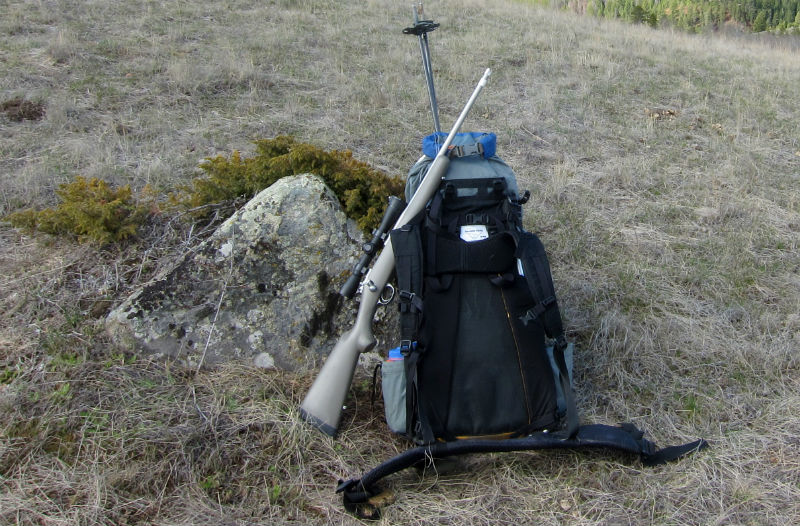
Having a rifle which comes in below 7 pounds is fairly simple with a non-magnum mountain rifle and a smaller fixed or variable scope. In the US such a combination can be had for little more than $1500. Hunters who cultivate the ability to make shots over 300 yards, and prefer the larger variables and magnum calibers which often go along with such an approach, can still have a sub-7 rifle, but will need to invest a lot more money and be prepared to cope with a hard-kicking gun. Skimping on ammo is also a good way to fail in seeing the big picture. In theory you’ll only need one round, but you never know when you’ll miss once or twice, have to check scope zero after a bad fall, or have to help dissuade a bear from coming in to your camp to check out the meat hanging in a tree. Ultralight will always come with sacrifices, but they should be the right ones.
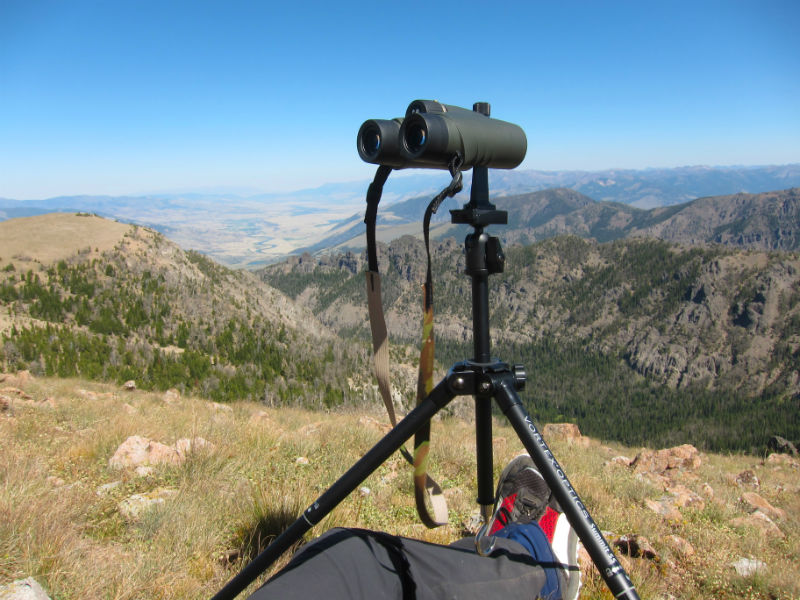
Some of the questions concerning the necessity of 8+ pounds of optics have been hinted at above, but insofar as hunting can be described as finding the best way to see the deer (or elk, bear, etc.) optics are essential, and skimping here is an almost surefire way to reduce your odds of success. Compact binoculars are a recipe for headaches and eyestrain, and the value of good binoculars mounted on a tripod can almost never be overstated. New England hunters stalking whitetails in softwood swamps may only need binoculars, but most hunters most of the time will find a tripod handy at one point or another. Again, ultralight hunting is all about making wise sacrifices, always keeping the overarching goal of a dead animal in mind.
Heavier clothing than the typical ultralight backpacking load is also inevitable for backcountry hunting. Even in big wilderness, the charismatic megavertebrates most hunters pursue tend to treat trails like roads, and try to live their lives that one drainage or basin further from the stream of human traffic, however occasional that stream may be. A big part of the reason hunting the true backcountry has become more popular recently is not because it’s easier. The deer in such places, for example, may well be less wary of humans, but there are also far fewer of them per square mile. Hunting the backcountry, and especially hunting wilderness-dependent species such as sheep, is satisfying because it is as close as hunting gets to being absent from larger human influences. This end will be all the better pursued, and success all the more likely, if you get as far into the thick and nasty and untraveled as is possible. Simply put, this requires clothing which can stand up to such use. 2.5 layer PU raingear and Quantum GL-shelled puffy coats will not get the job done here, at least not for long. The options suggested in the chart are the lightest choice currently available which my experience suggests would hold up to a few seasons of non-pro use (say 20-30 days each year).
Footwear is also something where the approach for the ultralight hunter must be very different from the ultralight backpacker. I hardly ever backpack with waterproof footwear, but for fall hunting I’ve found it to be essential. Getting your feet soaked cruising through a snowfield is fine if you can keep rolling at 3.5 mph afterwards. If you need to hunker down to glass instead, dry feet are the only way to have warm feet. Footwear also needs to have enhanced grip and durability for off-trail use, and have enough support and sole stiffness to get that 80 pound load of meat and your camp back to the trailhead. I don’t think the conventional hunting boots, most of which are 2+ pounds a foot and stiff enough to be crampon compatible are necessary or desirable, but something beyond a zero-drop sneaker is probably in order.
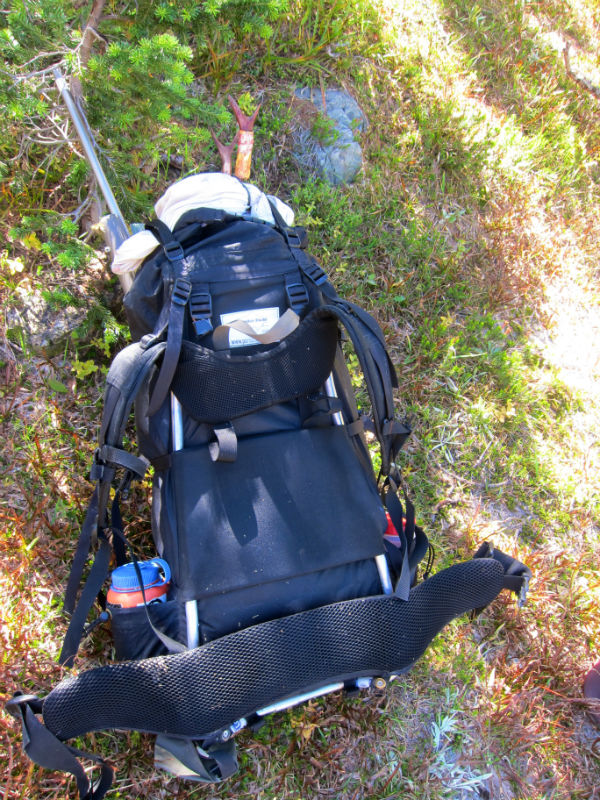
Packs for the backcountry hunter must also have different capabilities, while still being as light as possible. Thankfully, hunting packs have undergone tremendous growth in recent years, and there is no longer any need to go above the 4 pound mark in order to obtain a pack which is large enough for an ultralight load and meat, has functional features and compression, and carries weight as well as your legs are capable. A number of makers not mentioned in the chart make solid and well-regarded hunting packs, but the 4 pound barrier is an interesting one because it neatly divides those who have adapted the core design of their suspension systems to be lighter versus those who have merely come out with lighter components for the same old system. The sort of innovation Stone Glacier and Paradox Packs have brought to market in the last two years is the sort of thing which will need to become commonplace if the 35 pound mark is to become as routine for hunters as 10 pounds is for backpackers.
Conclusion: What’s next
Two things are in the future for backcountry hunting. The first is continued gear innovation, increasingly within the hunting industry itself, which will make lighter baseweights ever easier to achieve. Hunting clothing, which as discussed above is both quite heavy and has many demands placed upon it, is one area where it is easy to imagine major improvement. Quite a few hunting-specific clothing companies have come in being, and seemingly done well, since Sitka went into business in 2006. The overwhelming majority of these offerings are still far too heavy, both because of excessive features and the use of heavy fabrics. If the last 15 years of ultralight backpacking has done nothing else, it has proven that functional durability does not need to be sacrificed to obtain lighter gear, often much lighter than anyone initially thinks possible. In the next two years I expect companies like First Lite and Kuiu to knock 3 pounds off the 10+ that is the worn and carried total, with no loss of function or durability. Any backpacker knows that a 40+ pound pack is darn heavy, and no matter how fit you are it will slow you down. On a hunt, slower means less time in good glassing spots, more time needed to close the distance when game is spotted, and more energy expended overall. The harder the hunt, the more I want my pack lighter.
The second is that the backcountry hunting movement will continue to redefine what hunting is and how is it portrayed in the broader culture. Backpack hunting the wilderness shares many skills with front country whitetail hunting, but in many respects the two have as much to do with each other as backpacking does with golf. I don’t think that bow hunting whitetails out of a treestand over a food plot is unethical, especially given the overpopulations problems virtually all of the midwest and south will face so long as whole states remain deer buffets with few natural predators. But the general public is right to see frontcountry, often road-based hunting as something of a peculiar exercise, shot through with contradiction. Backcountry hunting is more of a holistic experience; experiencing where the game lives, humanely killing the animal, carrying the animal back to your home, before finally butchering it and eating it. The whole process fosters an intimacy with the wild which backpacking and its derivations cannot begin to match. In a world increasingly safe and sterile, where the raw math of how we as individuals stay alive is ever more abstract, backcountry hunting is a perfect antidote, and ultralight backpacking and hunting are ideal bedmates.
(Disclaimer: The author has a non-remunerative position as a product tester and design consultant with Seek Outside/Paradox Packs.)


Discussion
Become a member to post in the forums.
1)By going "gutless" HOW are you removing the hanging tenderloins on an animal?
-The video Chris linked to shows it well and Dave pretty much summed it up. Not truly gutless, as you are eventually entering the abdominal cavity. I wait until I have most of the meat off the carcass, then put a slit in the abdominal wall along the ventral line to reduce pressure; this is important or you'll have loops of intestine popping up in your way! Make a cut below the spine starting at the last rib and working back until you have enough working room. It is dicey, getting into that tight space with both hands and a knife, but doable. I would never leave the tenderloins either. If it is a young elk, I'll get in there for the liver and heart, too, but at the very end.
2) What do you need a ring saw for if you have a good sharp knife?
-Capping the skull to take only the antlers, or getting through all that neck tendon and ligament. I can do it with a knife but WAY prefer a ring saw. It's also real handy for a fire when my digits cry mercy!
BTW, I agree with the 10x binocs, but for a decent exit pupil, I prefer 10x50s
-Yeah, the more light in, the better. Under 40mm is tough to use hunting. Mine are 19 year old Eagle Optics Rangers; some of the best $$$ I've ever spent. Blew a tube two years ago and they replaced one lens, focus knob rubber, both tubes, and both objective rings under the lifetime warranty…without me asking. They'll get my money again.
I think the wide variety of firearms and cost that's why Whelen never went into great details about how much a rifle should weigh.
He went through several different kinds, including his favourite sporterized 1903 Spinfield which would be about 8 lbs, not including scope.
But it's kind of difficult tell your readers to buy this and this specialized rifle when for a lot of people, at the time when book was published, one rifle is all they ever going to own.
Whereas the other stuff he recommends in his writings can be obtained by anyone regardless of class or income.
Okay, looked in his book On Your Own in the Wilderness (1958) on page 52. In addition to the cartridges in the rifles, he recommends two or three in the pockets, 15 big-game cartridges and 5 small-game cartridges in the rucksack. Grouse-loads can be found in his other books Wildcraft and Mister Rifleman. The reason why he recommends so many is: one can shoot meat for the pot or for their pelt. Or in an emergency, a volley of fire can used as distress signals.
Watch, compass and waterproof matches should always be in the pockets of the pants on the person. So I am assuming this is "worn weight".
For butchering large animals like a moose, he recommends hacking with an axe or cutting with a folding saw or hacksaw. For medium-sized games like deer, a skinning knife and a whetstone is all that is required. These should be stowed in the pack.
Packs for one-day hunts should never exceed 10-lbs, and overnight stays or week-long trips should never exceed 15-lbs (page 50). For still-hunting or hunting close to civilization, pack should not weigh more than 10 lbs (page 51-52), and for wilderness hunting (eg. northern British Columbia), 15 lbs.
There is a mention about cameras, but nothing about how much it should weigh. He just says many sportsmen like to take pictures of their trophy. He did say this is optional, and it should only be carried in the backpack.
As for clothes (page 53), down insulated jacket, and mittens specially designed for shooting in cold-weather. Mackinaw recommended by earlier woodsmen like Kephart are not necessary as they are outdated and bulky to wear while walking through the woods. But those are not required of people who live in warmer climates.
This section intrigues me because there's a lot of people out there in the bushcraft community who think down-filled jackets are inferior to mackinaw.
The only extra garment that should be carried by everyone is a woolen shirt if the weather should unexpectedly becomes chilly.
For protection against rain, poncho. Ironically, he also recommends wearing it as a vapor barrier liner in cold weather too. He didn't actually use the term, but he conveyed the concept.
For sleeping, he says a down-filled mummy sleeping bag are lighter, warmer and more compact than woolen blankets of old. One can even supplement the sleeping bag with fire if needed.
For binoculars, he just wears it around his neck; probably why the weight was never included.
For grubs (page 54), rolled oats, cornmeal, egg powder and milk powder is all that is required to sustain a person. Sugar, salt, bacon, tea, chocolate and dried fruits will add variety; and it is recommended to experiment at home. For a hunting trip, he recommends bringing enough for seven meals. He made a slight remark about people carrying too much food. I am assuming he is making another jab at Horace and Nessmuk who like to bring luxuries on them. Wouldn't be surprised as he makes lots of remarks about how woodsmen of earlier decades were doing things wrong.
For cooking, he recommends an old fruit-juice can with a wire bail attached. Those who want a frying pan should use an Army mess-kit, not a pan from home. He recommends bringing only a spoon as one already has his hunting knife and a fork can be replaced with a stick.
In addition to all this, he also recommends bringing a plastic bag about 15 in2 for carrying back offals home.
Shelter is not discussed, but he does go into great length elsewhere several times. His favourite is making a tarp out of plastic or parachuter's nylon.
The hunter's pack should not weigh more than 15 lbs for all the above, including consumables.
Todd, a few questions.
When ranging via mildot, you’re depending on a know dimension within the target, yes? Brisket depth of a given number of inches and so forth. How precise can you get with this method? Seems like beyond 300 yards a laser would still be a worthwhile investment. On the other hand, being able to range and shoot fast between 100 and 200 would be darn handy.
-I tried to find the original article I read on this, but couldn’t. but, yes, the premise is that a bull elk chest from top of spine to the bottom of the brisket is ~32”. A cow is ~28”. A Deer is ~17”. I’ll put up a link to give credit when I find it. First saw concept here and adapted it to mildot after reading this. I found that the Shooter app could do the math for me by happy accident!
To practice, I took a cardboard box and covered one side with white paper, then cut out a 32″ and 17″ rectangle from black paper and glued this to the white background. Looking through the scope you count the number of mils covering your black rectangle. In the Shooter app, the range estimation function asks for the number of mils and the target size. Enter these and it takes you to that distance on the range table- your dope. This gives the number of clicks needed for proper elevation, given your ballistics. I was skeptical, but was within 3 inches of center of mass at all sorts of distances from 50 out to 250 yds and within 6 inches at ranges between 350 and 450 yds. The error grows with distance, so yes, I’d use the rangefinder for looong shots, if I’d been practicing for them.
To make my card, I entered half mil increments into the Shooter app from 1 on up to 6 mils of coverage. The card is really simple w/ two columns- mils covered by the animal’s chest on left and elevation clicks on the right. I started using it this year- it works and is fast.
Regarding plastic meat bags, have you run into any issues with the meat not being able to breath or cool on a multi-day packout in warmer weather?
-To be honest, I try not to hunt when it is warmer than 65 degrees out, unless I’m within a couple of hours of the truck. Ultimately, I’m in it for the meat, and I want it to be as high of quality as possible. If warm out, I’ll hang quarters, then bag when cool to the touch. Flies are not too much trouble where I hunt. I also try to move things into the shade, and down by a creek if possible, especially if overnight. I’ve used mesh game bags, but the plastic keeps the meat cleaner, reduces oxidation of the outer layer, and keeps my pack relatively gore free. This is all anecdotal, mind you. There are definitely others out there with way more experience who could better speak to this.
Wow, it has been a while since I've been on BPL so I didn't catch this story earlier. I was actually surprised that there wasn't any lash back from purest and suggestions that it was more appropriate for rokslide. So praise to DC for the bold step of submitting this article in this forum.
I was also surprised by the responses seeming mostly from the rifle hunters and meat hunters. In my mind, one of the biggest difficulties in using what I would normally use on a light backpack walk with hunting is the noise factor. Most light backpacking gear is noisey when you get within 50 yards of the critter on a stalk. This is especially true of raingear where when even from a stationary position the movement from drawing a bow can be impossible with out the quietest fabrics.
There is also a geograpical and goal difference in the responses. It is apparent that meat hunters doesn't worry so much about sizing up an animal before starting a stalk. However, since I live in an area where free meat is available all winter on the HWY the value of taking any animal in the backcountry to me is extremely low. If I am going to harvest, it beter be worth it to me to pack out. I past up on countless muleys last season because the only two bucks that truly impressed me, I was unable to seal the deal on. However, it was still a great hunt to me because I was in the mix with animals every day including a cat at about 40 yards.
With my goals in mind and the CO high country I hunt and scout, optics are essential. Some of this is for the pure pleasure I get out of just seeing critters in their relaxed natural state and trying to get a good digiscope photo. On the other hand, if it isn't an impressive animal to me I am not going to invest the couple of hours that a spot and stalk can take in country I hunt. I know this is all foreign to someone who lives back east, but I can spot and verify a 350 plus bull 1-2 miles away, but due to the severity of the mountains around here it will take hours just to get in the same basin that bull is in. Thus the hunting goal and geography dictates my optics. My method of take, bow or muzzle loader with iron sights, dictates a precise ranging tool such as a LRF. With that in mind, I will use my LRF like binos and my 11-33 spotter for guaging, digiscoping, or just watching wildlife all without getting busted and pushing critters. Weight well worth carrying for me, but then the harvest is not really my ultimate goal. After the critter is down, it is all anticlimatical for me and just pure work at that point. Obviously your goals, geography, and methods may vary.
Thanks Ian, I've really been gratified by the reception here, and learned a lot from the discussion. This article was a bit too wonkish for Rokslide, I think.
Bow hunting isn't something I have much experience with, beyond the stuff I did out of a treestand growing up in Ohio (where I mostly wore jeans or insulated cotton coveralls). I still have my old Darton bow, but with early rifle season in the Bob starting Sept 15th, archery doesn't really give me any opportunities I don't already have. If I lived in a different state I'd be much more motivated to expand my weapon options.
Is the quieter rain gear from First Lite and Kuiu still to loud for archery hunting? The PU coated plain weaves they're using seem like the best possible compromise between making a WPB quiet while still keeping the face fabric from gaining a ton of weight when it inevitably gets wet. I can certainly see how my Goretex anorak would be less than ideal for archery.
I am still experimenting on rain gear. Unfortunately for the longest time I tried some soft faced rain gear that I found with a saddle and saddle bags in the bottom of a creek one hunting season. However, it was heavy and when the soft face exterior fabric became saturated it was heavier and prone to leakage. I did try a first lite rain jacket this year, but I was unimpressed with it. It seemed especially prone to condensation and could of been lighter. At the same time I was wearing a pair of Kuiu rainpants and was very impressed with the lack of condensation and construction. So right now I am experimenting with a Kuiu rain jacket. If it is raining, there is a reduced issue with noise while the rain is falling. I think it will still be a struggle to draw a bow quietly after the rain has stopped and there is that moment of deep silence in the saturated forest. Maybe this season will reveal that, or maybe not. We can only hunt the rut in CO during ML/archery season and few ML tags will ever be had with out some points saved up.
The one thing that causes me pause about hunting gear is something you alluded to, the bells and whistles to attract the hunter's wallet. I really don't need pit zips and fancy waterproof zippers. A couple of long torso pockets with mesh interiors have always done me well enough for ventialation. I reckon I'm not the target customer since most of the purchases I have made recently were either prodeals or oversized clearance items that I altered with a sewing machine and seam tape.
Under 5 lbs unscoped (they show the weight for other models on the site). Close to $200.
Shorter range, but light ammo. Compact plus one screw takedown.
http://grabagun.com/advanced-armament-corp-h-r-handi-rfl-300blk-16-threade.html
better description
http://www.advanced-armament.com/300-AAC-Blackout–Handi-Rifle_p_630.html
http://www.natchezss.com/tasco-demo-bantam-2-5x20mm-shotgun-muzzleloader-scope.html
for closer ranges, light weight 9 oz. Less than $20
With the rifle and scope you could have the Grease Pot of hunting rifles.
http://www.backpackinglight.com/cgi-bin/backpackinglight/forums/thread_display.html?forum_thread_id=28250
That's a nice option David. I wonder if another 1/2 lb could be shaved off of it.
300AAC is reported to be a great SBR round. Shortening the barrel and then making it legal again by adding a permanently attached flash suppressor might take some ounces off of it. Seems like the stock could be lighter too but with a 12" pull, maybe not by much.
Edit to add: Anyone aware of a single shot break action like this in 6.5? I just skimmed through 6.5 Grendel Forums and didn't see one noted on there although they have a section dedicated to bolt action/single shot. Possibly a re-barrel job on a 7.62×39?
The H & R company just went out of business, Remington owned it and closed it. The company was 150 years old. So these guns are almost half price while they last.
The front of the stock might be replaceable with something lighter. People classically mod that part on their wood stocked models.
The butt stock is hollow, tho there is a long steel bolt to hold that on. You may be able to find some kind of lighter bolt? Aluminum or ti?
The 16" length gives good velocity for the round. Shortening it starts to degrade the velocity. You can compare to the m4's with 9 inch barrels. It already has threads for a suppressor. Make it more LNT by being quieter. No hunting in WA with a suppressor tho.
video
http://www.gunblast.com/AAC-SS300.htm
Thanks Ian. I have what is probably an outdated prejudice against PU raingear, and Kuiu in particular hasn't convinced me otherwise. I like that they are bold enough to, as they just did, come out with a rain jacket with no pockets. I'm not at all sure it will be a commercial success, but respect.
The demise of H&R is indeed sad. I have a .243 youth model Handi for which I bought and fitted an adult-sized stock. It shoots about 2 moa. My rough recollection is 6.5 pounds with a 2.5x Leupold UL scope mounted. The ergos and balance aren't very good, but the break down feature is nice.
It's really sad to see H&R go, but again the local friendly gun-shops made the switch to IZH (now acquired by Kalashnikov Concern), TOZ and Turkish manufacturers as soon the news about Remington acquiring the brand broke.
After talking to the owners of those stores, they didn't like how Remington degraded Marlin guns, and didn't see the point of stocking H&R anymore if other companies offer similar products for much better quality than what Remington could produce for less value.
http://bulletin.accurateshooter.com/2010/04/new-from-new-zealand-jacketless-bio-degradable-bullets/
The bio degradable bullets sound great but I'm concerned about how well/poorly the bullet will expand upon impact. That may be the difference between dropping the deer, or having it run off only to die a slow painful death later on.
I skimmed through the article and if they mentioned it, I missed it.
Re 300AAC
I did some lazy googling and found one article where the author claims to have found a copper round that expands well and is well suited for deer hunting. At $200 and 5lbs, I'm awfully tempted to put that handi rifle into a shopping cart. Even if I never took it hunting, it looks like a fun little plinking rifle. Alas, my lunch money is already spoken for so it'll have to wait.
Re <4lb AR prototype from another thread
http://www.backpackinglight.com/cgi-bin/backpackinglight/forums/thread_display.html?forum_thread_id=90518
This is intriguing. There are a few sub 5lb ARs out there. Here's an example:
https://www.youtube.com/watch?v=IeF7IvWgDfY
My rifles have all been built by someone else and I'll full admit, this is pretty far outside my area of expertise. I wonder if the same rifle could be built with a 6.5 Grendel upper with no or little weight penalty. Also, from what I've read, the New Frontier polymer lower seems to get pretty good end user reviews. I wonder if it would shed even more weight from the rifle in this video vs the magnesium alloy lower he's using.
For the money, the Savage 11 6.5 Creedmoor lightweight hunter looks like a nice compromise of an affordable rifle, suitable cartridge, and lightweight at 5.5lbs before optics.
I know Locus Gear CP3, Ruta Locura Yana and Gossmear Gear LT4 are pretty popular in thru-hiking, but what would be considered as the bare minimum in backpack hunting?
My main concern would be the lateral stress of a 130 to 200 lbs individual with 80 to 130 lbs backpack on the down-hill descend.
Any idea? I would like to replace my Black Diamond Contour Elliptic Shock with something else. I would order GG, but the inability to stow them away inside the pack bugs me a bit.
I picked up a pair of Carbon Fiber Ultralite Vario 4 Trek Poles from MLD when they had them on sale before Christmas. I used them for snowshoeing and cross-country skiing and they seemed really sturdy. MLD did their research to find the best and lightest poles. They are spendy, but are the best poles I’ve had so far and I’ve tried a few different kinds. They do break down, so would fit nice on the side or inside of a pack. Here are the comments direct from the MLD website:
Why We Love This Pole!
1: 145cm- longer than most poles- no need for any pole jacks in the Duomid, SoloMid and SpeedMid in the normal low pitches. Allows higher pitching of Tarps and TrailStars.
2: Very Strong carbon- not the weaker thin wall 3- 4 oz carbon poles that are always breaking tips and shaft connections.
3: Very Light weight. Yes, it is about 1- 1.5oz more than the very lightest CF trek poles- but these are Full Length, Full Strength and Full Featured. These are the lightest 145cm three section full strength poles available.
4: Adjustable top section uses a cam lock for no slip reliability. The bottom two sections can not slip.
5: Strong enough for winter snowshoe and touring ski travel, interchangeable snow basket available (not included).
6: Excellent swing weight and balance. They even feel lighter than they are and fit just right in the hand making for less grip fatigue.
7: A single pole can be stripped of the handle and strap with the end capped to make a 5oz super strong tarp or pyramid shelter pole
The BD Alpine Carbon Corks are still unmatched in this category; lightish, compact, and remarkably strong. You can cut quite a bit of weight by replacing the grips.
I've never seen the Komperdell pole MLD sells in person, but I'm finished with the avy-probe style collapsible poles. Seen too many jam in a way which was hard if not impossible to get unstuck.
Interesting.
I know on Rokslide, Z-Poles from Black Diamond are widely used. On paper, those Komperdell would be super for the weight-saving benefit.
In practice, I am not sure. Seems like hunters who use their trekking poles as shooting rests, tipi-poles or monopods use an adjustable. But, on the other hand, there is no point in carrying an adjustable if one doesn't plan on using a shooting rest.
Might have to buy both.
Thanks for the suggests, David and Jeremy.
They may be spendy, but buying new hiking equipment is cheaper than getting a new rifle.
I just noticed that Sierra Trading Post has the 145cm version on sale right now. $129.95 Pretty sweet deal!!
I have had in total three sets of the BD Carbon Corks. I originally bought the newest flicklock version and unfortunately, left them at the trailhead in the North Cascades NP a couple years ago.
Then Steep and Cheap cleared out the older style and I picked up two more. I'm a farily large guy and have had a few opportunities to abuse these poles where they've saved me from a spectacular tumble. You may find a lighter pair of poles but I can confirm that they are indeed tough. I'm fairly meh about he grips and have removed the straps. Next order of business will be to replace the grips.
The Locus Gear CP3 trekking poles were a hit at the Point Reyes GGG this year as there were a few people who hiked in with them. At today's exchange rate, they are $117 before shipping.
http://locusgear.com/products-2/trekking-poles/cp3?lang=en
The pole is skinnier than the BD carbon corks. Jennifer removed the Locus Gear grips and put on the Gossamer Gear kork o lon grips. While I've not had an opportunity to thoroughly abuse a pair of these poles, they appear to be every bit as rugged as my BD Carbon Corks. Everyone I spoke with seemed to confirm that they are indeed built for abuse. If I had to buy some trekking poles today, I'd get these.
It is possible to put the GG grips on the BD Carbon Corks but the poles are thicker and it appears that it can be done if you are careful. Sticks Blog YouTube channel has a video on this.
A few tips on installing GG grips in a sustainable fashion. Watch Chad's videos to see why you need to prepare well to fit the 13mm ID grip over the 18mm OD BD pole. It can be frustrating.
Sand out the first few inches of the grip with sandpaper and a dowel. Taper it out to at least 16mm.
Measure the depth of the grips, and mark that distance with tape on the pole. The grip material stretches and it's easy to make them asymmetrical.
Put a small amount of Gorilla glue down into the grip a few minutes before installation. This is imperative. If you do not lock the end in place the pole shaft will under heavy use eventually push the plug out of the grip, which is annoying.
When everything is ready, immerse the pole end in mineral spirits and immediately work the shaft down into the grip. This will give you ~20 second where if you did the sanding the insertion should go slick and easy.
Twist the grip a little to ensure and even coating of Gorilla glue, and let it dry inverted overnight. This will give you a setup which will wear like iron. The only thing to watch for is mice and other critters, which will chew on the grips for salt.
I did this with some leftover paracords. Of course, BPL probably would endorse spectra, but that material cuts into my shoulders. Plus, I have paracord lying around for shoe-laces. It's not very often I have other materials.
https://www.youtube.com/watch?v=8XBe6_0zK8s (not my video)
It still baffles me archery-hunters would pay $20 for someone (Rick Young) to do it professionally which really amount to 7' to 8' of cord, and some key rings.
Slick.
Become a member to post in the forums.