

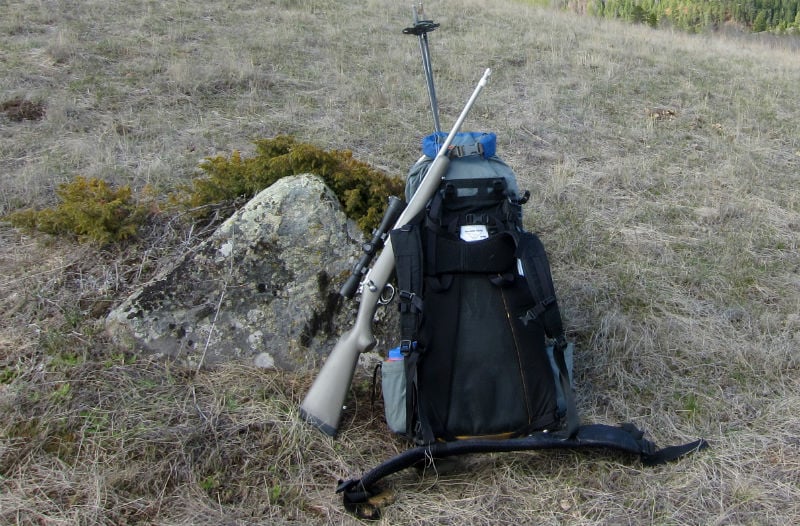
…there’s several thing to be taken into consideration before trying to go on a 5-7 day hunt with 27-35 lbs. I would personally say DON’T TRY IT, as the people posting these weights have either 1) never actually tried doing it and are guessing 2) are very experienced and have their kit dialed in 3) only do ONE backpack hunt a year and can get away with taking very little food 4) haven’t had s**t hit the fan yet and leave a lot of gear home that could help keep them on the mountain.–Aron Snyder
Introduction: That Other Ultralight
Backcountry hunting is a categorically different pursuit than backpacking and its variations. I’ve tried to make this point a stark one with the epigraphical quotation, a forum post from Kifaru rep, Rokslide.com co-founder, and famous internet hunter Aron Snyder. Backcountry hunters obsess about and discuss pack weight just as fervently as backpackers, but as the above figures reveal, the foundational assumptions used by the two camps are very different. In this article I will attempt two tasks: first to describe the conceptual gulf between backpackers and backcountry hunters and how it explains the difference in ultralight pack weights between the two, and second to make an initial foray towards establishing a numerical standard for an ultralight backcountry hunting base weight.
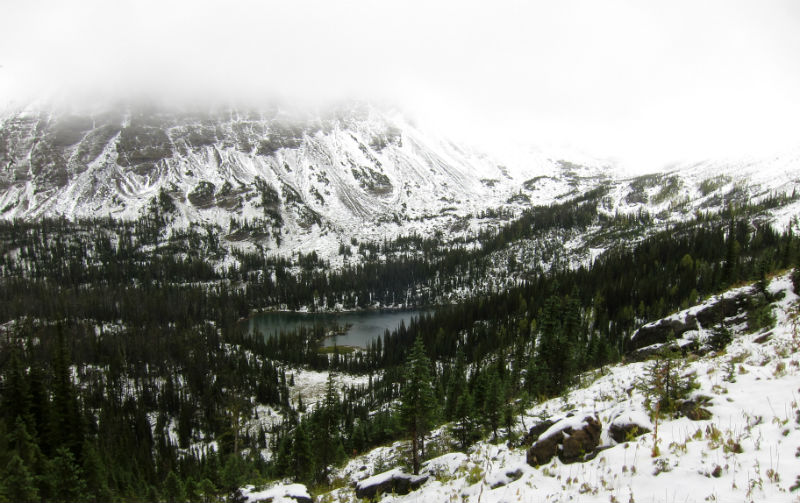
When it comes to the evolution of gear, technique, and mindset, the ultralight standard of less than 10 pounds base pack weight (i.e. everything but consumables) has been around for an eternity. More than long enough for the term to become co-opted for every imaginable marketing angle, for cottage companies and garage tinkerers to push gear well past the ultralight threshold, and for mainstream companies to at last make gear which easily fits into an ultralight gear ensemble. I still don’t put much credence in Ron Moak’s infamous 2012 pronouncement that prior to the early “oughts” an ultralight baseweight required “black arts,” but his larger point from the Ultralight: State of the Revolution series of blog entries is inarguable: advancements in technology have stripped much of the relevance out of the accepted ultralight standard of 10 pounds. It is much easier than it once was, if not just outright easy, to build an ultralight kit and use for just about any trip you might conjure up in (for example) the temperate latitudes of the northern hemisphere between April 1st and November 15th.
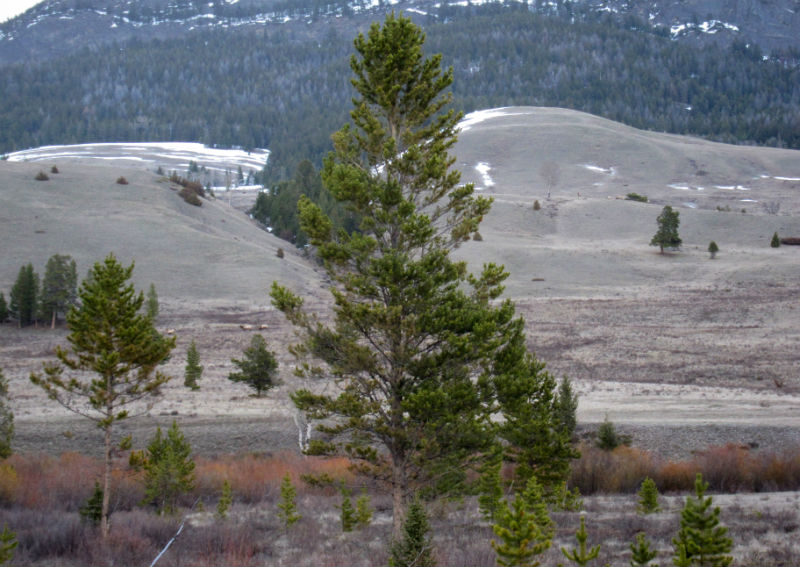
A hard metric for ultralight backpacking baseweight is useful for the same reason it is useful in anything, we humans love to ask for exceptions. Be it a higher baseweight figure for those over a certain height, or an extra SUL pound if you exceed a certain mean elevation, however compelling the excuse, the e-word remains nothing more than an attempt to get away with something rather than embrace the extra challenge of meeting an objective standard. There’s no inherent value in pack of a certain weight, the value can only be found in the trip such a hiker can only now do, as well as the extra consideration and learning meeting a rigorous weight standard can bring about. As Ryan Jordan wrote in 2013, “For me, SUL as a mindset has motivated me not only to be very intentional about what I take on the trail, but also to be very intentional about how I count the costs of all sacrifices that I make with time, finances, material possessions, and relationships.” Establishing a rigorous comparative standard with no wiggle-room helps you learn more. As will be discussed below, when it comes to hunting such things are highly relevant.
Backpacking is the prime mover of overnight ski touring, wilderness packrafting, and to a large extent alpine rock climbing and mountaineering. One does these things to travel through a given landscape in a certain fashion and see what is to be seen along the way. Even climbing is most often dedicated to experience in the landscape more than reaching a summit, witness the profusion of excellent routes which end when the good climbing does. Hunting is different. While pursuing animals in the backcountry is a good way to talk yourself into visiting and looking closely at some obscure, rough, gorgeous country, in the ends it’s like Fight Club. The first three rules of hunting are that to succeed you must kill something. If you spend five days in the mountains you went hunting, and probably succeeded in executing a fantastic backpacking and nature-watching trip, but you did not have a successful hunting trip, however satisfying the overall. I say this not as a value-based statement, but to highlight the principle around which any standard for an ultralight backcountry hunting baseweight must be built. If it will help you kill your prey, it makes the cut, no matter how heavy. As will be seen below, this is a hugely important distinction, because the backpacking pieces of an ultralight hunting pack will be among the lightest items on board.
Building an Ultralight Hunt
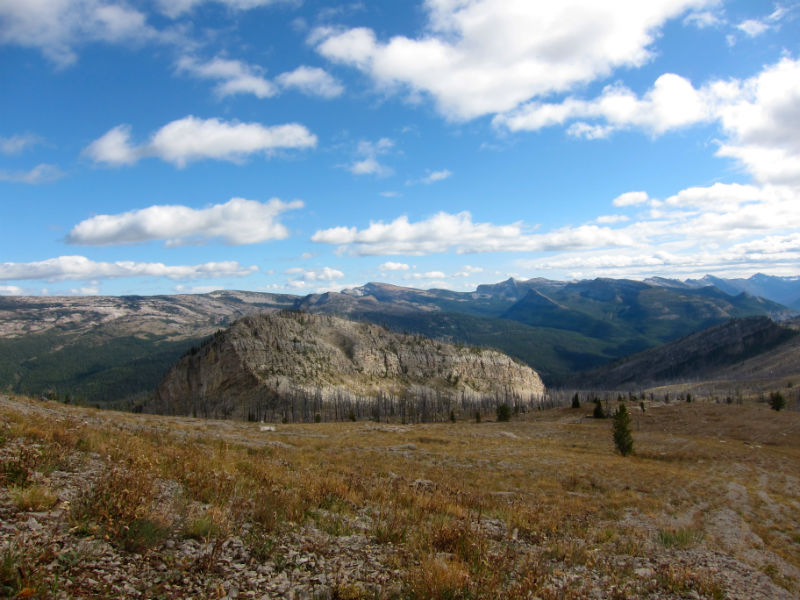
Because hunting has different motivations than backpacking, it often goes into very different places, and does so in different ways. Late September in the Northern Rockies of the United States provides a good example of this distinction. Mixed precipitation is common, as is standing snow in the higher elevations, though daily and nightly lows are usually relatively mild (read: below 20 F is uncommon). A common ultralight backpacking strategy for these conditions is to modify summer gear only a little, perhaps with warmer socks, and if particularly cold and wet conditions are present maintain warm feet via a brisk and steady pace, with perhaps a fire at camp. If the day’s high pass is exceptionally cold, a still stronger pace and an hour of minor suffering is usually all that is required. Hunting the same areas and conditions demands a different approach. Deer, elk, or sheep are likely bedded in invisible locations through the height of the afternoon squall, and descending to find dry wood is likely to spook whatever animals are nearby. Not only does the hunter need to move slowly and quietly through the area to find a high spot with good visibility for when the weather lifts, but he or she must be prepared to stay stationary during and after the storm to glass for and then locate suitable quarry. The ensuing stalk may be fast paced and help warm up cold feet, but might be interrupted at any moment by a forced wait behind a boulder midway across a talus slope, all while exposed to both the wind and the keen eyes of alpine ungulates.
The ultralight backpacker deals with challenging conditions like these with a judiciously selected kit, and adapts to the conditions by varying the pace and manner of travel. The ultralight hunter must adapt to the way the animals respond to ambient conditions, and have the equipment to do so.
All of which is to say that the ultralight hunter will have a much heavier pack, and for good reason. But how much heavier? Ultralight has in hunting, just as in other outdoor pursuits, become a potent marketing buzzword, with whole companies producing products lines devoted to “ultralight hunting.” A baseweight standard should be rigorous enough to push end-users towards defying dogma when choosing their gear. It should also provide consumers with a tool which can help hold gear-makers feet to the fire, and help foster innovation in content rather than marketing.
The following chart is a suggested list tailored to generic autumn conditions; early October in the US Rockies, early September in the Alaska Range, or mid-April in New Zealand’s southern Alps. As can be seen, the weight gets up there in a hurry. The maximum suggested hypotheticals I have here assembled come to a baseweight (worn clothing, food, and fuel not included) right around 36 pounds.
| Category | Item | Example(s) | Example Weight (oz) | Upper limit weight (oz) | Category limit total (lb/oz) |
|---|---|---|---|---|---|
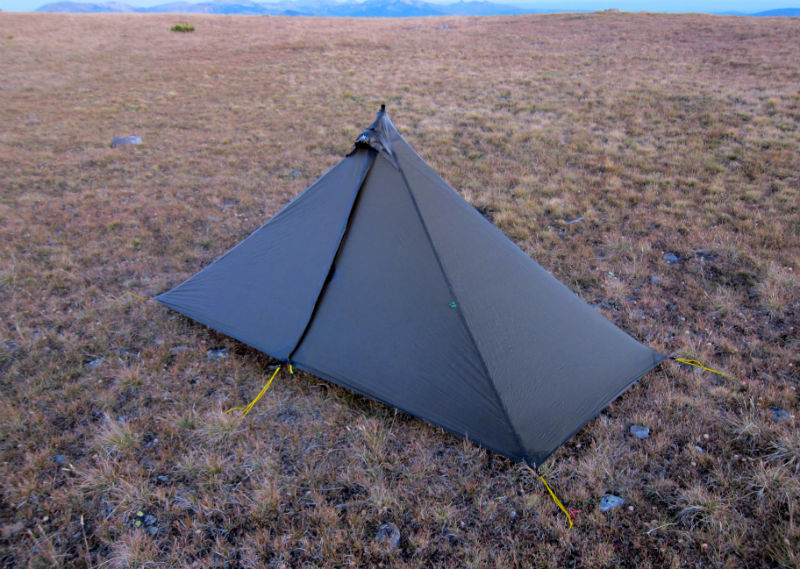
| Camp | 3+ season shelter for two | Seek Outside BT2, with pole and 10 stakes | 36 | 40 | 4 pounds 9 ounces |
| 20 degree sleeping bag | Zpacks regular/long | 18 | 24 | ||
| sleeping pad | Thermarest Prolite XS | 8 | 10 | ||
| Packing | 80+ pound capable ~4000 cubic inch pack | Paradox Unaweep, Stone Glacier Solo | 52 | 64 | 5 pounds 12 ounces |
| Game bags | 3x medium TAG bags | 10 | 20 | ||
| Drybags for gear, contractor bags for meat | Sea to Summit Ultrasil, Hefty | 8 | 10 | ||
| Cooking | stove and ~1 liter pot | MSR Windpro, Cat can alcohol w/ Evernew pot | 15 | 20 | 2-3 pounds |
| fuel | fuel | 1.5 oz/day/person | |||
| Misc | 100+ lumen headlamp, skinning knife, rope, tags, first aid, repair gear, PLB, hygiene, water bottle etc | Havalon Piranta, Petzl Tikka XP, McMudro Fastfind, satellite phone, etc | 48 | 48 | 3 pounds |
| Clothing (carried) | Durable raingear | Arc'teryx Alpha FL jacket, Rab Xion pants | 21 | 24 | 4 pounds 6 ounces |
| fleece midlayer | Rab Micro pull-on | 8 | 8 | ||
| Insulated jacket | First Lite Uncompahgre | 20 | 20 | ||
| Windshirt | Black Diamond Alpine Start | 7 | 8 | ||
| Light, snug gloves | Black Diamond Mont Blanc | 2 | 2 | ||
| Rain mittens | Outdoor Resarch Revel | 3.5 | 3.5 | ||
| Insulated hat | Original buff | 1.5 | 1.5 | ||
| Spare socks | Smartwool PhD Nordic medium | 2 | 2 | ||
| Clothing (worn) | Midweight pants | Patagonia Simple Guide | 15 | 16 | 6 pounds 10 ounces |
| Baselayer top | Patagonia Merino 1 longsleeve crew | 5 | 7 | ||
| Orange vest | poly mesh construction vest | 3 | 3 | ||
| Boxer briefs | Patagonia silkweight capilene | 2.5 | 4 | ||
| Ball cap | Arc'teryx Neutro visor | 1.5 | 2 | ||
| Socks | Smartwool PhD Nordic medium | 2 | 2 | ||
| Light boots | Zamberland Crosser Mid GTX | 36 | 40 | ||
| Gaiters | Kuiu Yukon | 12 | 14 | ||
| Trekking poles | BD Alpine Carbon Cork | 16 | 20 | ||
| Food | High calorie, palatable foods | Bars, Mountain House, etc | 22/day | 28/day | 28 ounces/day |
| Shooting | .25-.338 caliber centerfire rifle with scope, compound or tradition bow, .45-.50 caliber muzzleloader with scope | Kimber Montana in .308, Leupold 6x36, appropriate rings/bases | 92 | 112 | 8 pounds 8 ounces |
| 12 rounds of ammo, 6-8 arrows | 12x 165 grain Federal Fusion | 10 | 16 | ||
| Scope cover, sling, gunbearer, release, etc | Neoprene scope cover, nylon webbing sling | 4 | 8 | ||
| Optics | 6-10x bioculars with strap or chest rig | 6.5x32 Meopta Meopros with cord harness | 23 | 26 | 8 pounds 4 ounces |
| spotting scope | Vanguard Endeavor HD 65S | 51 | 64 | ||
| tripod/head | Vortex Summit SS | 30 | 32 | ||
| binocular mount for tripod | Outdoorsmans | 2 | 2 | ||
| rangefinder | Vortex Ranger 1000 | 8 | 8 |
This list, and thus I would suggest any ultralight hunting gear standard, must be tailored to account for not only the added weight of weapons, optics, and meat processing equipment, but for a pack which can haul very heavy loads, a shelter which can be pitched in places optimized for game spotting, and clothing which will allow for the aforementioned hanging around and bushwacking in bad weather. Many aspects of the above list will be subject to change depending on location and the species pursued. You’ll need more game bags on a moose hunt than on a deer hunt, for example, and a spotting scope and tripod may not be necessary for hunts in thicker country or for larger, less elusive species like elk and caribou. Later season hunts will demand a warmer sleeping bag and more clothing, while early-fall hunts or hunts in warmer locales might allow for less. Traditional bowhunters will shave pounds off their weapon weight compared to rifle or compound bow hunters. It was my intention however to make this list as close to the median as possible, and to make the individual selections rigorous, but not esoteric. Thus, I propose that the cutoff for ultralight backcountry hunting be a baseweight below 35 pounds (knocking a pound off the total to make for an even figure and account for a certain degree of laziness on my part).
35 pounds: The debate begins
There is, intentionally, a lot to argue about with this list and the 35 pound cutoff for ultralight hunting. I’ll address a few of the point-by-point particulars below.
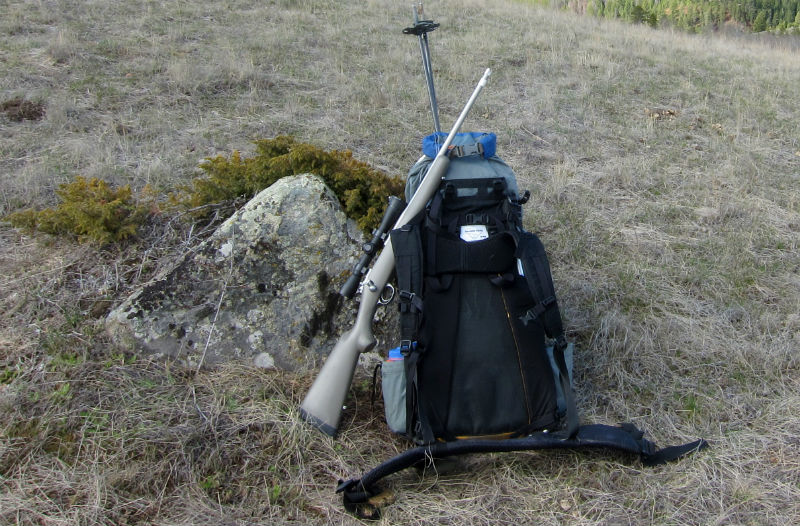
Having a rifle which comes in below 7 pounds is fairly simple with a non-magnum mountain rifle and a smaller fixed or variable scope. In the US such a combination can be had for little more than $1500. Hunters who cultivate the ability to make shots over 300 yards, and prefer the larger variables and magnum calibers which often go along with such an approach, can still have a sub-7 rifle, but will need to invest a lot more money and be prepared to cope with a hard-kicking gun. Skimping on ammo is also a good way to fail in seeing the big picture. In theory you’ll only need one round, but you never know when you’ll miss once or twice, have to check scope zero after a bad fall, or have to help dissuade a bear from coming in to your camp to check out the meat hanging in a tree. Ultralight will always come with sacrifices, but they should be the right ones.
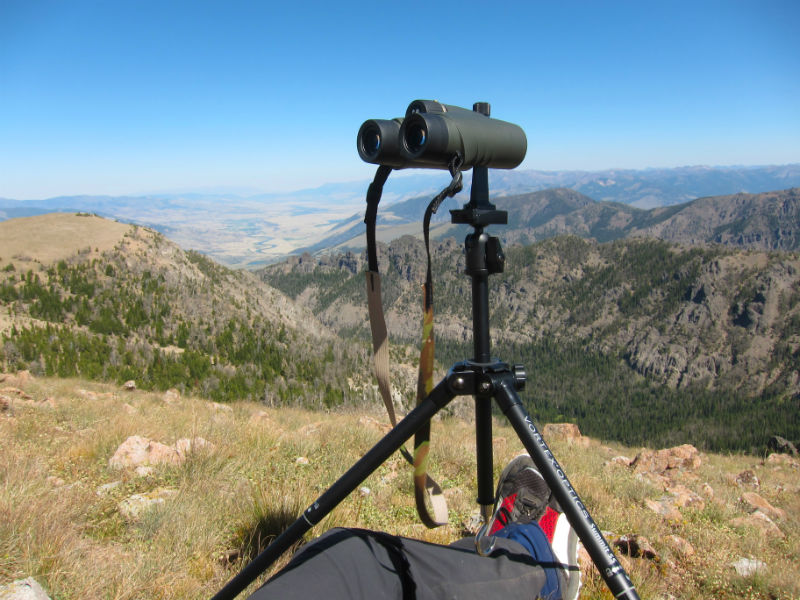
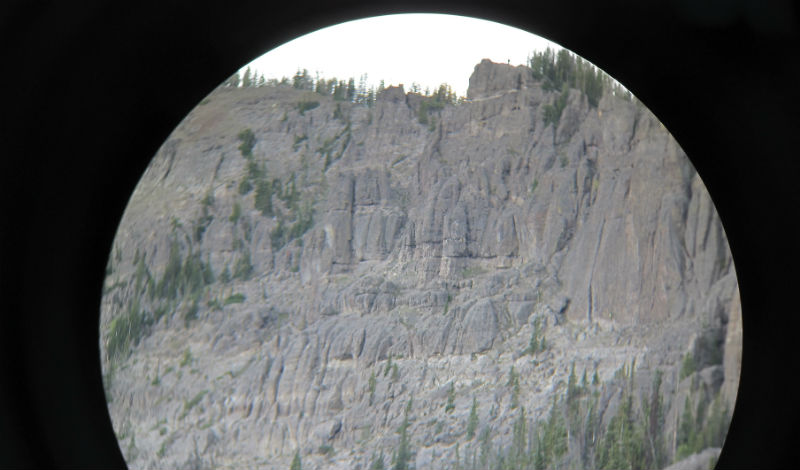
Some of the questions concerning the necessity of 8+ pounds of optics have been hinted at above, but insofar as hunting can be described as finding the best way to see the deer (or elk, bear, etc.) optics are essential, and skimping here is an almost surefire way to reduce your odds of success. Compact binoculars are a recipe for headaches and eyestrain, and the value of good binoculars mounted on a tripod can almost never be overstated. New England hunters stalking whitetails in softwood swamps may only need binoculars, but most hunters most of the time will find a tripod handy at one point or another. Again, ultralight hunting is all about making wise sacrifices, always keeping the overarching goal of a dead animal in mind.
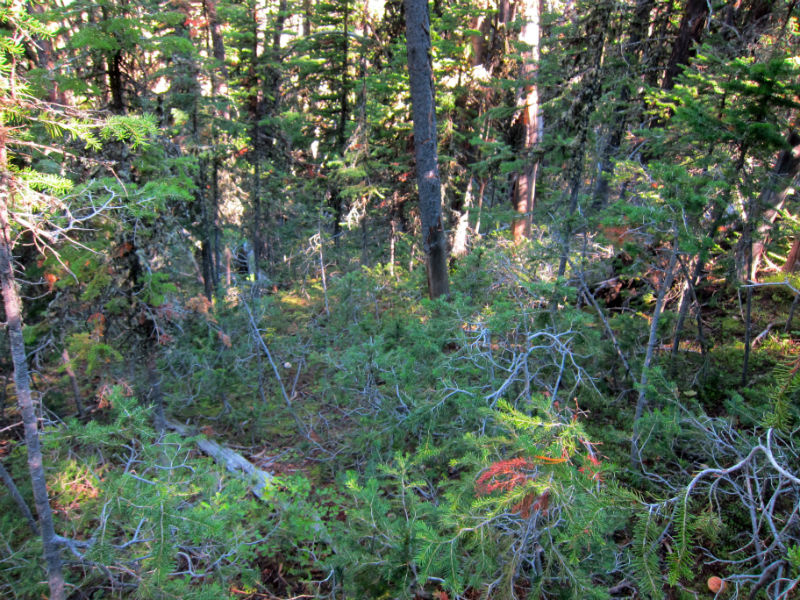
Heavier clothing than the typical ultralight backpacking load is also inevitable for backcountry hunting. Even in big wilderness, the charismatic megavertebrates most hunters pursue tend to treat trails like roads, and try to live their lives that one drainage or basin further from the stream of human traffic, however occasional that stream may be. A big part of the reason hunting the true backcountry has become more popular recently is not because it’s easier. The deer in such places, for example, may well be less wary of humans, but there are also far fewer of them per square mile. Hunting the backcountry, and especially hunting wilderness-dependent species such as sheep, is satisfying because it is as close as hunting gets to being absent from larger human influences. This end will be all the better pursued, and success all the more likely, if you get as far into the thick and nasty and untraveled as is possible. Simply put, this requires clothing which can stand up to such use. 2.5 layer PU raingear and Quantum GL-shelled puffy coats will not get the job done here, at least not for long. The options suggested in the chart are the lightest choice currently available which my experience suggests would hold up to a few seasons of non-pro use (say 20-30 days each year).
Footwear is also something where the approach for the ultralight hunter must be very different from the ultralight backpacker. I hardly ever backpack with waterproof footwear, but for fall hunting I’ve found it to be essential. Getting your feet soaked cruising through a snowfield is fine if you can keep rolling at 3.5 mph afterwards. If you need to hunker down to glass instead, dry feet are the only way to have warm feet. Footwear also needs to have enhanced grip and durability for off-trail use, and have enough support and sole stiffness to get that 80 pound load of meat and your camp back to the trailhead. I don’t think the conventional hunting boots, most of which are 2+ pounds a foot and stiff enough to be crampon compatible are necessary or desirable, but something beyond a zero-drop sneaker is probably in order.
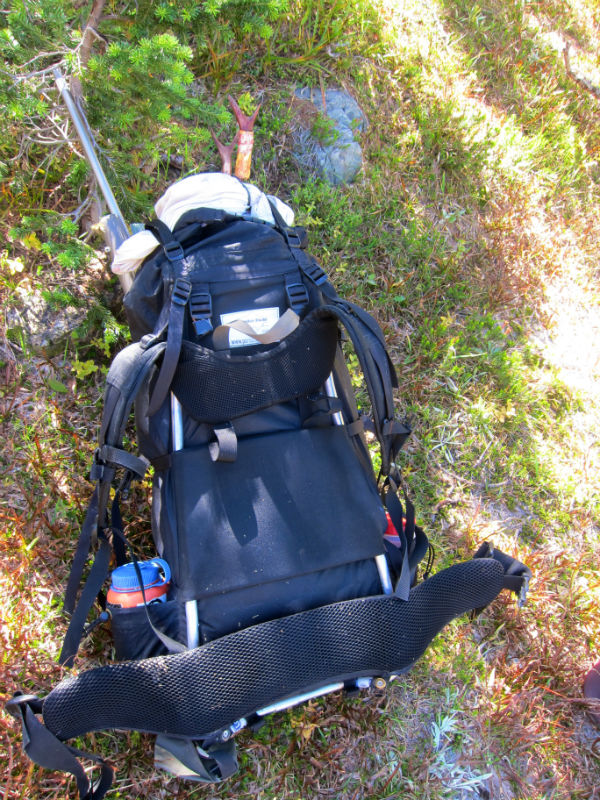
Packs for the backcountry hunter must also have different capabilities, while still being as light as possible. Thankfully, hunting packs have undergone tremendous growth in recent years, and there is no longer any need to go above the 4 pound mark in order to obtain a pack which is large enough for an ultralight load and meat, has functional features and compression, and carries weight as well as your legs are capable. A number of makers not mentioned in the chart make solid and well-regarded hunting packs, but the 4 pound barrier is an interesting one because it neatly divides those who have adapted the core design of their suspension systems to be lighter versus those who have merely come out with lighter components for the same old system. The sort of innovation Stone Glacier and Paradox Packs have brought to market in the last two years is the sort of thing which will need to become commonplace if the 35 pound mark is to become as routine for hunters as 10 pounds is for backpackers.
Conclusion: What’s next
Two things are in the future for backcountry hunting. The first is continued gear innovation, increasingly within the hunting industry itself, which will make lighter baseweights ever easier to achieve. Hunting clothing, which as discussed above is both quite heavy and has many demands placed upon it, is one area where it is easy to imagine major improvement. Quite a few hunting-specific clothing companies have come in being, and seemingly done well, since Sitka went into business in 2006. The overwhelming majority of these offerings are still far too heavy, both because of excessive features and the use of heavy fabrics. If the last 15 years of ultralight backpacking has done nothing else, it has proven that functional durability does not need to be sacrificed to obtain lighter gear, often much lighter than anyone initially thinks possible. In the next two years I expect companies like First Lite and Kuiu to knock 3 pounds off the 10+ that is the worn and carried total, with no loss of function or durability. Any backpacker knows that a 40+ pound pack is darn heavy, and no matter how fit you are it will slow you down. On a hunt, slower means less time in good glassing spots, more time needed to close the distance when game is spotted, and more energy expended overall. The harder the hunt, the more I want my pack lighter.
The second is that the backcountry hunting movement will continue to redefine what hunting is and how is it portrayed in the broader culture. Backpack hunting the wilderness shares many skills with front country whitetail hunting, but in many respects the two have as much to do with each other as backpacking does with golf. I don’t think that bow hunting whitetails out of a treestand over a food plot is unethical, especially given the overpopulations problems virtually all of the midwest and south will face so long as whole states remain deer buffets with few natural predators. But the general public is right to see frontcountry, often road-based hunting as something of a peculiar exercise, shot through with contradiction. Backcountry hunting is more of a holistic experience; experiencing where the game lives, humanely killing the animal, carrying the animal back to your home, before finally butchering it and eating it. The whole process fosters an intimacy with the wild which backpacking and its derivations cannot begin to match. In a world increasingly safe and sterile, where the raw math of how we as individuals stay alive is ever more abstract, backcountry hunting is a perfect antidote, and ultralight backpacking and hunting are ideal bedmates.
(Disclaimer: The author has a non-remunerative position as a product tester and design consultant with Seek Outside/Paradox Packs.)


Discussion
Become a member to post in the forums.
Companion forum thread to:
Ultralight Hunting: Towards a Coherent Definition
https://www.backcountryhunters.org
Just learned of them in the local paper. They are helping with access issues, for example issues surrounding attempts to give Federal land to State and private interests.
There is a meeting coming up in March where I live and hope to have a booth there and to learn more about the organization.
Yeah David Olsen, there are forums and websites specific to biking, fishing, mountaineering, rafting, photography, cooking and hammocks as well.
I think most backcountry hunters carry way more than they need, but geography will dictate different equipment list.
Here in California hunting season begins in the late summer heat and rarely calls for cold weather gear at all. (duck season excluded). 35 pounds is easily attainable depending again on geography.
I do like to see regular backpacking gear pressed in to service though, no need to have two completely different kits without overlap.
Good stuff David. Hope to read more of these in the future.
"there are forums and websites specific to biking, fishing, mountaineering, rafting, photography, cooking and hammocks as well."
Your point?
I probably mistook your link for a complaint about BPL discussing hunting at all. If so, my apologies.
Unlike skiing, packrafting, or fatbiking, hunting isn't something I see myself doing even over the next 5-10 years. But it's always refreshing to read a thorough and well-conceived analysis of a subject even if it's only tangentially related to one's interests. Dave's work continues to set the high water mark for outdoor adventure writing these days. I thoroughly enjoyed reading this article.
I have little to add to the technical content, other than a few observations which are admittedly qualitative and personal:
-Even when hunting, I can't imagine needing 20 oz for a cooking system. Even 15 oz for a stove and pot seems excessive these days with plenty of options in the 6-7 oz range.
-Similarly for the shelter – plenty of absolutely bomber options these days in the ~25 oz range without resorting to cuben. If we are trying to be rigorous and provide a standard to urge participants to push their boundaries, 40 oz is difficult to justify.
-At 51 oz for a spotting scope and 23 oz for binoculars, I have to ask, do you truly need both? I guess this is more of a philosophical distinction. "If it will help you kill your prey, it makes the cut, no matter how heavy." Is this really a rigorous definition when looking through the lens of ultralight? Seems to me, that you should bring the minimum of what you need to be successful, and no more. Ultralight has always been about finding ways to make do without or to make one piece of equipment fulfill multiple roles. It's important to qualify this comment; it comes from a non-hunter.
I don't think I'll be doing in fatbiking, packrafting, or ski touring any time soon. However, I have been looking into hunting so this article is interesting to me.
Thanks Dave.
>"-At 51 oz for a spotting scope and 23 oz for binoculars, I have to ask, do you truly need both? "
Yeah, my thought, too. Binocs, spotting scope, scope on rifle – that's an awful lot of lens doing really similar tasks. I suggest just going somewhere with more animals. And a tripod? Maybe because there's a black bear on most hillsides and the caribou keep wandering through, I don't know trad hunters that carry all that stuff, much less someone going UL. If you want to know more about the animal, dial the rifle scope up to 9x and take a look. Like what you see? Pull the trigger. Or more commonly, do your stalk and then set up the shot. That said, out of 4-5 guys, there are probably 2 binocs along.
My bigger reaction (and it's also an Alaskan reaction) is to "If it will help you kill your prey, it makes the cut," because I think in terms of "If it helps HARVEST the meat, I'll consider it." It's a semi-joke, semi-true that "You're more likely to be arrested for wanton waste than for killing a human." in Alaska. My friends are never trying to kill something, they aim to fill the freezer. Don't shootl something if you're not almost 100% sure of harvesting it (i.e. a clean kill) and harvesting almost all of it (e.g. don't put a .375 through both hind quarters of a little Sitka blacktail and waste a bunch of meat). I fret more about skinning knives, bone saws, and game bags (and keeping those weights down but functionality up) than optics.
We're prepared for snow. We're prepared for ridiculously high winds. We carry over-night gear. And including guns, we're about 15-20 pound base weights going out. One thing my posse does is not everyone carries a gun. You never shoot 5 guns at once, so why carry 5 guns? The best shooters take their best-for-the-conditions rifle and half of us are porters who keep our eyes open.
Obviously a thought-provoking article and as with all of David's articles, well written.
My experience has been more from work and military than hunting but I find that they both fill a purpose. If I was somewhere where I'm not going to see more than 1/2 a kilometer, then yeah, I'd probably leave the spotting scope at home and make due with my binos and scope.
From David C's pictures, he's in the land of wide open spaces. I'd personally use the binos to find the animal and then the spotting scope to figure out of the animal is legal to shoot. Easy enough to figure out if the deer is a 2 or 3 point at three hundred yards with binos (not familiar with Montana's regs for big horn sheep) but I'd hesitate to make that call at some of the distances seen in his pictures.
Confirming this at distance can save a lot of time and effort wasted stalking up on a animal that's not legal to shoot.
My "hunting" experiences have been more backpacking with a rifle so not trying to pretend to be Joe hunter here but how I use the two professionally is basically the same.
Ian: I can see the need for a spotting scope when going for sheep for just the reason you state – to confirm 3/4 or full curl or whatever the local rules are. And, yeah, avoiding hiking from one ridge line to another is a big win.
My hunting buddy says, "You can't eat the horns" and we're always on a meat hunt, so I've never had to make that call.
We have been leaving our spotting scopes at home and bringing powerful zoom (20x or higher) compact point and shoot cameras (well, we normally bring those anyway). When we want to evaluate an animal we take a max-zoom pic of it and review the image on the camera's built in screen which lets you zoom in and pan around. You actually can get better critter data out of a small, light P&S camera than you can out of a pretty expensive and heavy field optic.
Decent 10×42 binos are a must though.
That is an interesting alternative to a spotting scope. I have never used any more than binoculars myself, but someone always has a camera handy…
I have been backpack hunting since the late 1970's and am also an optics geek. I have owned everything from 4 power monocular's to an 85 mm Zeiss spotting scope and more binoculars than I can even remember. For the way I hunt, I now carry my Leica 8 x 20 compact binos both on backpack hunts and pretty much all hunts. They fit my hunting style. They are high quality optics and I tend to walk a lot more than I glass. It has worked well for me as I have taken somewhere around 30 elk plus many deer and several sheep.
That said, my style of hunting and my gear choices aren't what works best for others. I know people that sit for many hours in the same spot, often year after year and they nearly always get their game.
Another consideration is the terrain you hunt. Optics and spending time looking through them is more important in terrain that has dense vegetation than in open country.
Like all gear, it comes down to personal choice and comfort level to do the job the best way for yourself.
Very good article Dave. It is always great to see new perspectives.
I have been hunting the northern Rockies (Canada) for 30 years. I consider a spotting scope essential for sheep, goat mulies etc., not so much for moose. My outfit is relatively light at 44 oz.. I use a Bushnell Elite 15x45x60 (21.5 oz) with the rubber armor removed and a Slik Compact 11 tripod. I have spent the last 20 years lightening my load but still leave on a 10 day solo mountain hunt with a 30 lb pack, 17 lbs of food and a 6 1/2 lb rifle. That's with a cuben duomid, quilt, Stone Glacier pack, ti Jetboil and all the other light gear available.
I appreciate the thoughts everyone. A decent weight standard here will never happen without plenty of debate.
Are we talking small game with a 22 or a .410, or large game with a high caliber rifle or a 12 gauge?
I may take a light gun for small game, but a light 12 gauge is just nasty with slugs or heavy shot. That debate over carrying a knife is moot of course, and there's all the other gear you'll be lugging. Then there's carting out your kill, a few bunny's and a pheasant sure, but that 600 pounds of moose (dressed) isn't going to walk it's self out. That ATV and trailer doesn't quite seem lightweight to me.
Some hunting-specific stuff like game bags can weigh a ton. We use cheap white cotton pillow cases for game bags. They are much lighter than normal game bags and work great. They also fold down small. We use 4 for a Sitka black tail deer (to keep the quarters and cuts separated) but you could carry 3 or maybe only 2 if you stuff them full. These would not work on a larger animal, of course. The new generation of disposable blade knives are also super light and work well.
There are some trekking-pole based DSLR-compatible tripod solutions out there. Is there a reason those wouldn't work with the spotting scope? 30 ounces for a tripod seems like a lot.
A hunter's optics choices and how much they have to bring or get to leave at home rests in the species and terrain they are hunting. Bowhunter extraordinaire Cameron Hanes has a phrase that sums up why a hunter might choose to bring higher power optics into the field and that is so you can "…let the glass do the walking". By choosing a vantage point with sweeping views of multiple micro ecosystems you can keep your body in one place and just paint the hillsides with your optics in search of critters. That 50+ ounce spotting scope may just be a good trade-off to five or 10 miles of walk-scouting all that landscape.
My only two nitpicks with the gear list are a one lb stove system (you must have been intending for snow melt, perhaps?) and the need for a dozen rounds. I read your rationale but think a dozen is high. Solid work, Dave. Thanks for adding this to the annals of BPL.
I usually go out in Oct – Nov somewhere between 35 -40 all in, carrying a days worth of water. I have been as low as 27 or 28 in November near timberline, but that had an intense focus of removing all weight and was cutting it a little closer than I should. I was also using a pack, I thought I could manage the first load and then come back with more of a hauler. You can save a lot of weight splitting stuff with a friend or two. I am not an optics geek, so I spend more time walking and some glassing, but most of the more open country I hunt I can see the animals pretty far away. Further away than I can get to in any reasonable time. Deer, Sheep etc, I think you need better optics by far. My current optic solution is a Range Finder, Small Minox Spotter, Snipe Pod , and some 8X Binocs. Combined the weight is less than 3 lbs and will do most of what I need, with my feet doing the rest.
Ironically, I find what I call "walk spotting" for me , to be just as effective during the mid day as long as you do not blow anything out, especially if there is a little snow on the ground or you hear a bugle in another drainage.
There are lots of lightweight tripod options. Even such things as a 1/4"/20 bolt welded to a wood screw, short spike or even a pair of mini vise grips. I have used all of these and they do work, especially with a small spotter line a Nikon 50mm ED, or a Minox 50 mm.
Not so good on a bigger scope, and you can't glass just anywhere with these.
For serious spotting, a tripod that is stable and quick to adjust is the way to go. Without it the weight of the spotter might be dead weight do to compromised function.
Bigger spotter requires bigger tripod. Lightweight ones are really only suitable for the small spotters.
Not sure why an inverted trekking pole with a few pieces of UL spectra or other lightweight line stretched to create "legs" can't be utilized for the same purpose…?
I've used a very long lens on this type of setup before and no issues – what makes it different with the spotting scope? If this gives a totally immobile and solid base, why go for the tripod? If you already have a trekking pole, 1 oz or 2 of line is all you'd need, weight-wise.
I have never hunted before, so I am curious with this question… I have used a spotting scope and some huge binoculars before though.
Become a member to post in the forums.