

metabolism
- GEAR • Gear Reviews
- GEAR • Market Reports
- GEAR • Gear Guides
- GEAR • Gear Checklists
- GEAR • Make Your Own Gear
- GEAR • Gear Testing & Research
- SKILLS • Tips, Tricks, and Hacks
- SKILLS • Wilderness Skills
- SKILLS • Training
- SKILLS • Trip Planning
- SKILLS • Food Preparation
- PLACES • Trips
- PLACES • Routes
- CULTURE • Essays
- CULTURE • Stories
- CULTURE • Issues
- CULTURE • People
- CULTURE • News
- CULTURE • Media Reviews
- ARCHIVES (Before 30.Nov.2015)
- SEARCH LIBRARY
- TRAILHEADS
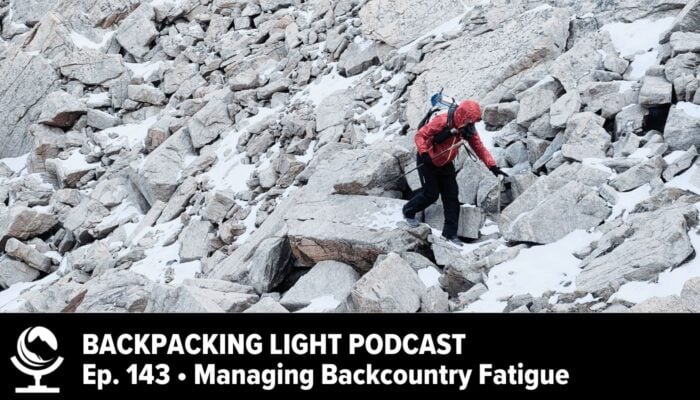
Episode 143 | Managing Fatigue
This episode presents an operational framework for fatigue management in backcountry travel grounded in a non-circular load–fatigue–capacity model. Load is defined as external demand, fatigue as accumulated physiological and cognitive degradation, and remaining capacity as current ability. Risk is treated as the ratio of current load to remaining capacity. The discussion emphasizes field-relevant behavioral levers that reduce load, slow fatigue accumulation, and improve recovery.

Episode 135 | Field Notes – The Metabolic Cost of Bushwhacking
Understand how brush work, impedance work, and hazard work explains the true metabolic cost of bushwhacking and how resistance, rhythm, and stability impact energy.
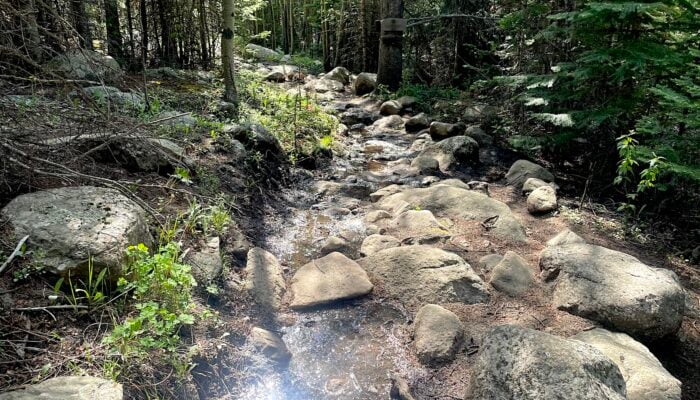
The Metabolic Energy Mile (MEM) Framework: A Systems-Based Approach to Measuring the Cost of Walking a Mile
The Metabolic Energy Mile (MEM) Framework redefines hiking effort beyond distance. It integrates terrain, fatigue, and environment for accurate energy cost prediction.
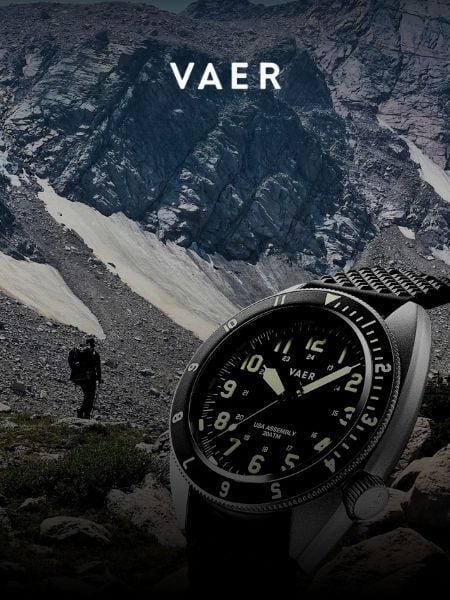 Vaer C4 Tactical Field SolarDurable timepiece for wilderness users - 20ATM (200m) water resistance, 120-click bezel, 316L SS casing, sapphire glass, solar-powered, Epson VS-42 Japanese movement, C3 Lume, USA assembly.
