

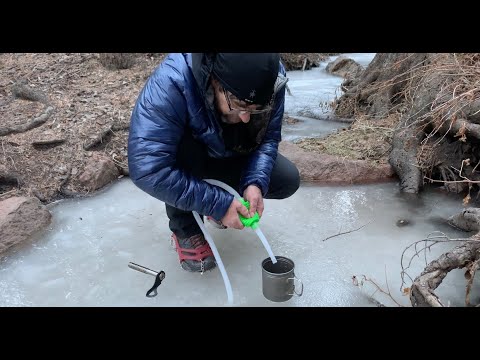
We invited this challenge from our community on the forums and Instagram. Here’s our solution – thanks for your feedback and suggestions!
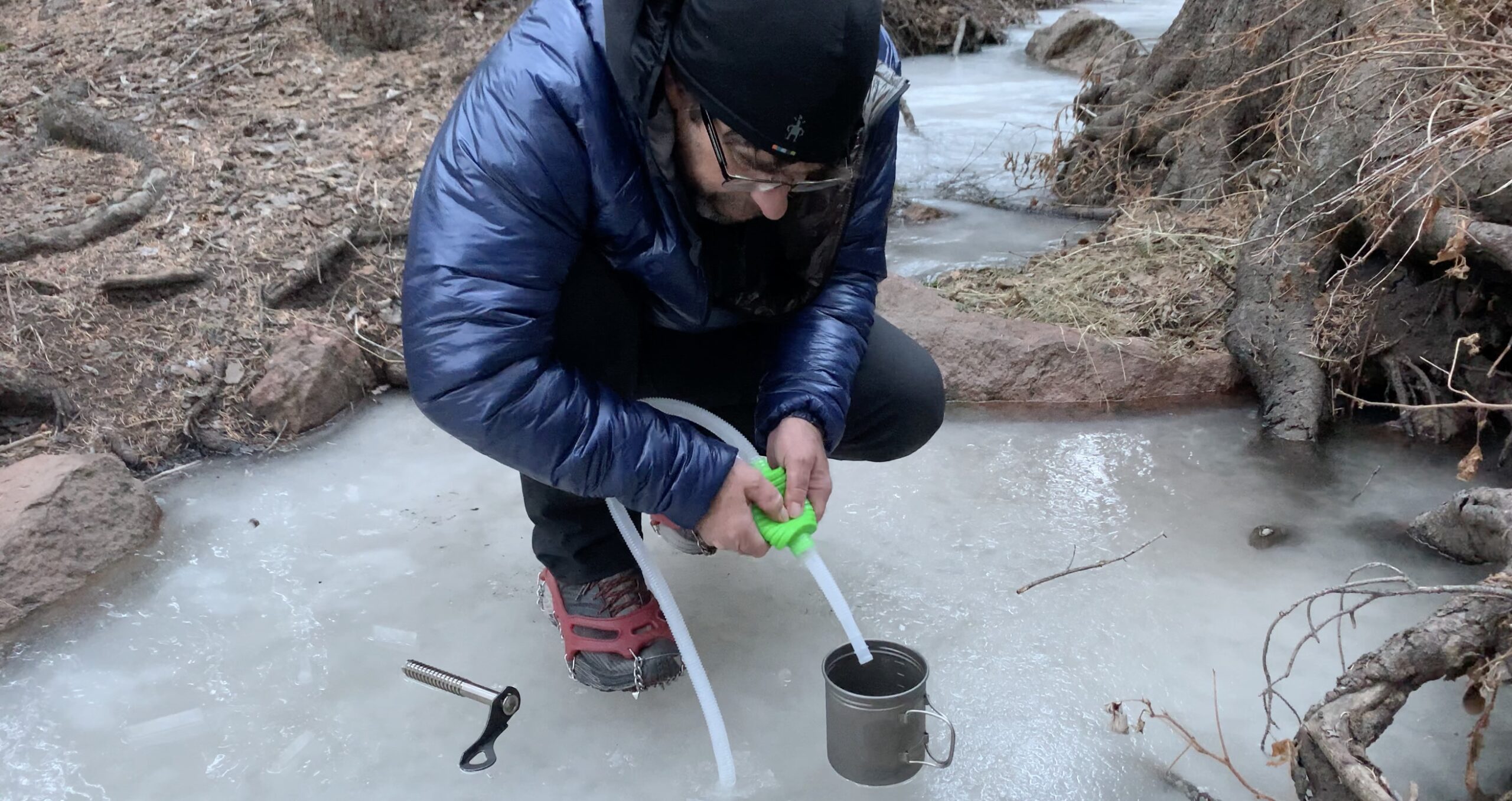

We invited this challenge from our community on the forums and Instagram. Here’s our solution – thanks for your feedback and suggestions!
Ryan Jordan is the founder and publisher of Backpacking Light. Ryan has spent more than 35 years in the outdoor industry as a guide, educator, university researcher, journalist, and publisher. His engineering background (Ph.D., Montana State University), expedition, and multisport experience inform his investigative approach to gear design and performance in response to adversarial conditions in all seasons.
Join Our Community
Unrestricted access to all forums, plus the ability to post and start new threads.
Unrestricted access to all 2,300+ articles, gear reviews, skills, stories, and more.
Post new content to the community including gear swaps, reviews, trip reports and more!
Get unlimited access to all our online education (*Unlimited membership required).
Pack less. Be more. Become a member today!
 © Beartooth Media Group Inc.
 Loading...
Discussion
Become a member to post in the forums.
Did some testing with ice picks and center punches over the past week.
I learned a lot:
1. Using an ice pick without a hammer requires that the pick be quite sharp and aggressively tapered. It works best on brittle ice (very cold temps), and is impractical for elastic ice (warm temps). The titanium ice pick noted earlier is a fantastic tool – it weighs only 1.6 oz, and works like a champ when compared to a steel wal-mart version. Very impressive. A small hammer or rock amps this up, of course. Again, practical only for brittle ice.
2. Same comments with a professional carbide-tip center punch, but it absolutely requires a hammer. Not as effective as an ice pick. Also a bit heavier.
3. We really met our match on today’s hike. Warm temps, so picks were out. Ice was 8-9″ thick, and we couldn’t reach water with the screws. Those are probably hatchet conditions.
Det cord.
Some of my wake-up-in-the-middle-of-the-night ideas are, umm, better than others. Not sure about this one. Rough image for concept only, not to scale.
Many variations possible. Potentially a good use for the tall “lightweight” propane cylinders discussed in many, many threads elsewhere, since propane would work reliably at lower temperatures. Also, should be able to use an invertable remote canister stove burning isobutane in reasonably frigid conditions. Or a Moulder strip.
Spent too much time looking for torches fueled by backpacking butane canisters. They’re out there, but extra weight if you are carrying a suitable stove anyway.
I used an image of a 7-inch gutter nail; many other long skinny pointed metal things, some even used routinely by backpackers, might work. Pick one large enough in diameter to put your extraction hose down. Could even sharpen a chunk of custom-length and -diameter rebar.
Turns out @davidinkenai already suggested something like this over a week ago. Maybe that’s where I got the unconscious inspiration at 2:30 this morning. Sometimes I think best in pictures.
— Rex
Rex, try doing it this winter and let us know how it worked.
Full on winter where I live and play rarely gets below freezing. I’ll leave testing to winter experts.
— Rex
Ryan will give it a try for sure.
Maybe you should try using a road flare. Light it, invert it and let it doe the work.
Replace steel nail with 1/8″ copper wire.
I watched the video again, what a PITA it was for Ryan to find water. Watch again.
Ah, come on: it is all part of the fun!
We can tell he was having fun. Wait till we see a video of him flipping over fences :-)
Fosbury Flop?
Solid copper bare grounding wire is available in a variety of AWG gauges (diameters) and lengths from USA big box hardware stores and online. Pick a gauge at least slightly bigger than your extraction hose, and long enough to penetrate expected ice thickness plus several inches for safe torching. Examples:
6-gauge wire, 0.1620 inch diameter.
4-gauge wire, 0.2043 inch diameter.
Much better heat conductor than steel or titanium. Probably too soft for multi-use as a traditional tent stake, maybe good as a deadman, or other tasks.
Might be able to pick up leftover chunks from electricians at construction sites.
— Rex
Yeah, his pack will protect him while going over.
The old kerosene heater fuel siphon. Ahhh the memories. Priming that thing sometimes involved a little assistance. Kerosene does NOT taste good!
Looks like the steel screw is worth the extra weight.
Ryan this was useful and informative. Thanks!
Looking forward to video of the fence crossings!
You know, a Forstner bit with an aluminium (or even plastic?) extension handle might be another idea. I think someone else already suggested this.
Ha: a Titanium extension handle!
It’s only $4.89
Cheers
Why would you want a Forstner bit? They’re used for drilling flat bottom holes in wood. In this situation you want to just pierce through hard ice. A masonry bit with carbide tip would work better IMHO.
A Forstner bit is sharp and will cut the ice, even hand-driven. It would make a nice hole in ice.
A carbide-tipped masonry drill bit is usually blunt (by design), and it would be hard work without a hammer drill. I have sharpened one (diamond tool&cutter grinder) for drill metal, but why bother?
Cheers
tell him roger why it’s better.
Metal stake for tent, and no, not a UL one……worth the weight in winter.
I have also used a ‘flat wood bit’ for drilling holes in timber. Bolt holes through tough Oz hardwood. They are also available on ebay, even cheaper (steel not carbide), plus they have long shanks.
Cheers
BTW, people do make drill bits specifically for ice. My 2 cents
Doctor: How’d you end up with the bullet wound Mr, Jordan”
–I needed water so I fired a couple of rounds at the ice in a river and a bullet ricocheted the wrong way.
Doc: and the shrapnel?
–well, when the gun failed I set off an explosive and forgot that it would expand up and out.
Doc. I see. And the radiation burn?
–some guys on the forum thought that might melt the ice. No go.
Doc: the puncture wound?
–I was standing on the ice and slipped and, well, hit the vampire ice pick just as my knee was sliding under…
And what’s with all these cuts around your groin and hands and arm?
–well, there were a lot of barbed wire crossings I had to make on my backpacking trip.
doc: I see. did it ever occur to you hike somewhere that didn’t require all these extreme remedies jsut to move around…? By the way, you’re severely dehydrated.
–I never did get to any water under the ice…Gee, it was a fun trip though! Next time I’m taking my wife.
Ha!
Yes, that ‘ice drill’ works fine, but they were not made in the first place for ice. They are made for wood, and I have 4 or 5 of them. They work well. (Some of them are 50+ years old.)
Provided you keep the edge and the tooth sharp, they cut very well. The interesting thing about the design is that, with a modicum of care, you can resharpen then for several inches down their length! That is how they were made in the first place.
Cheers
Become a member to post in the forums.