

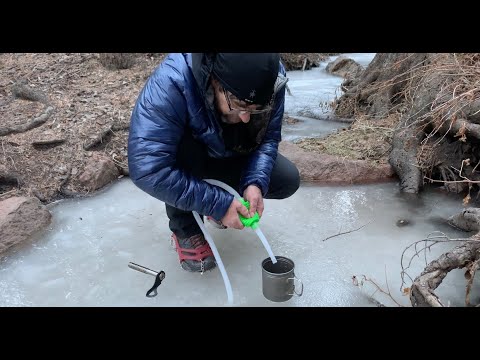
We invited this challenge from our community on the forums and Instagram. Here’s our solution – thanks for your feedback and suggestions!
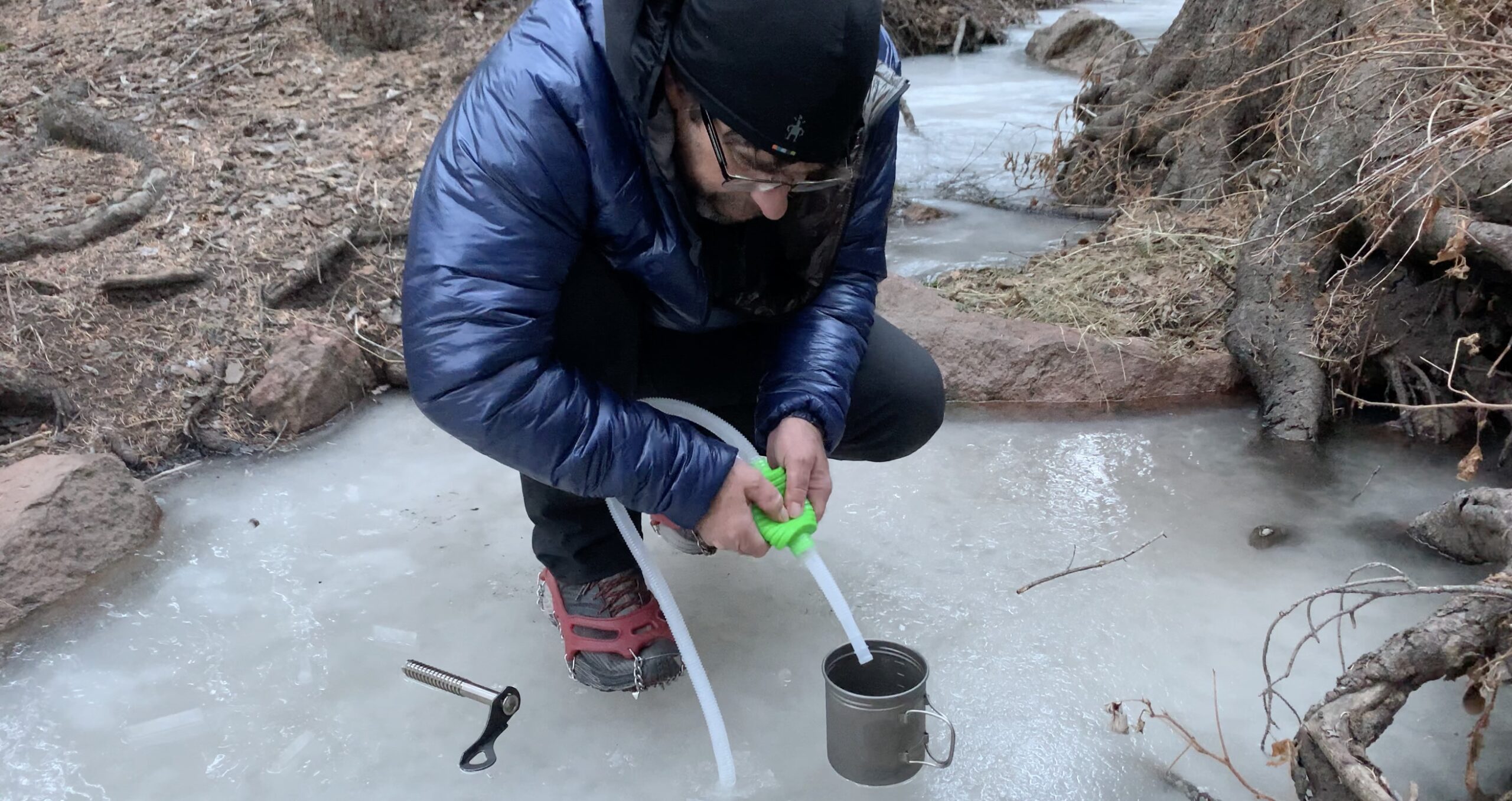

We invited this challenge from our community on the forums and Instagram. Here’s our solution – thanks for your feedback and suggestions!
Ryan Jordan is the founder and publisher of Backpacking Light. Ryan has spent more than 35 years in the outdoor industry as a guide, educator, university researcher, journalist, and publisher. His engineering background (Ph.D., Montana State University), expedition, and multisport experience inform his investigative approach to gear design and performance in response to adversarial conditions in all seasons.
Join Our Community
Unrestricted access to all forums, plus the ability to post and start new threads.
Unrestricted access to all 2,300+ articles, gear reviews, skills, stories, and more.
Post new content to the community including gear swaps, reviews, trip reports and more!
Get unlimited access to all our online education (*Unlimited membership required).
Pack less. Be more. Become a member today!
 © Beartooth Media Group Inc.
 Loading...
Discussion
Become a member to post in the forums.
OK, here’s the problem of the day.
I’m planning a 50-mile trek in SE Wyoming in the next few weeks. Generally below the snowline, but temps are cold here now so water is frozen.
From a scouting trip along part of my route this week:
There is water under the ice, just a trickle, and I didn’t have anything with me that I could break through and access it. The big rocks around the creek could be used, but they were all frozen into the ground.
Other than carrying a geologist’s hammer (I’m not kidding), any thoughts on how you’d manage water on a trip like this, if the only sources were frozen ice, and there’s no snow available?
Two thoughts:
A bit of fallen timber thumped down onto the ice
A boot heel thumped down on the ice
It does seem to me that the ice will be brittle, and if you can pick what looks like a weak point you should be OK. Exactly where you find the weak points – that I am not 100% sure. Maybe a pool a short distance away from a rock is worth a try: the ice might flex but the rock won’t. Pack off for this exercise I suggest, and trekking poles for balance.
Cheers
My first thought was using a small hatchet (or hammer) to hopefully chop through to running water. Otherwise, it seems you’re stuck using something to break the ice into chunks for melting. I’m looking forward to your trip report on this one!
A small coal chisel and you could use a rock for the hammer?
Remote inverted canister stove used as an oxy-torch?
Not entirely silly, mind you.
Cheers
Wouldn’t a nice, solid tent stake that you already carry work? I know you said the rocks were frozen into the water, but I’m assuming that there are other rocks nearby on land that would not be, that you could use as a hammer. If you don’t think the tent stakes are strong enough for pounding like that, carrying a tenpenny nail should do the trick.
Rocks were really difficult to dislodge – they were frozen solid into the ground.
The ice in the creek was several inches thick, and the water running under the ice was just a trickle.
A 20-pound rock thrown into the ice did nothing but dent the surface a little. Boot heel – nope. At least not with Hokas.
A tent stake was futile. It would be a ton of work with any kind of stabbing/chiseling tool.
Someone on Instagram suggested a climbing ice screw. That seems to me to be potentially feasible, and then some kind of suction pump to pull the water out from the hole.
1) Find what looks to be a deep pool, and perhaps dig a hole close to the edge. At some depth, its possible free flowing water will be present.
2) How about whip out the stove and heat up the pot real nice (or your spade), and use that to break into the ice.
It sounds like not much will work, so my updated thoughts would be to go somewhere else… :-)
Ice screw – that sounds more like it.
dig a hole close to the edge.
I suspect not a chance: the soil will have moisture in it from the creek before it froze, and the moisture in the soil will now be frozen for some depth.
A 20-pound rock thrown into the ice did nothing but dent the surface a little.
That is ICE!
Find a large pool which might be more brittle?
A stove would work, but it would take a lot of fuel.
1 gram of C4?
Else, yeah, go elsewhere.
Cheers
Carry a chunk of some pyrophoric material like plutonium. Put it on a string so you can retrieve it after it melts through the ice.
Cordless drill and a drinking straw? :-)
Seriously, though, what about a plain old ice pick to chip out chunks for melting?
Carry a chunk of some pyrophoric material like plutonium
But what about the weight of the lead screening?
And what would BLM/Parks/?? say about that anyhow? What would the NSA say?
Ice pick – or maybe a pterodactyl?
Cheers
You are already putting the plutonium in your water so I figured you wouldn’t worry about any shielding. And you could carry a light isotope, like PU228. Leave the PU247 for car camping.
C4!
Cheers
A bushcraft hand auger, like this one, might work. It weighs ~11 oz.
At 11 oz plus a lever to drive the augur, getting close to rock hammer territory. But a hammer would be much easier to use – with eye protection.
Like this “lightweight” model from Estwing with a 13 oz head:
https://www.estwing.com/collections/geological/products/lightweight-rock-pick
— Rex
My first thought when reading the OP was the Estwing but I wasn’t sure how much it weighed. Are you taking an ice axe anyway? Some have replaceable picks so you could take an extra hardened steel tip. Like the Corsa Nanotech Ice Axe with a claimed weight of 8.8 oz on closeout sale at REI now for $120. Light, but you could pound on the adze with a fat branch.
OK, OK, C4 might be going a bit far, but what about a couple of simple detonators? No C4, just the dets. Lay on ice, stand back, trigger. Fractured ice.
Cheers
Pack some mud on top of the detonators first and it will greatly multiply the effect, but get behind something before it goes off.
Mud? Everything is frozen, that’s the problem.
Maybe a powerful laser…
A heavy, short knife would have less weight penalty than a hatchet or hammer and get you through 3 inches of ice. I carry a BK2 now in the winter instead of a hatchet. (And always the appropriate size folding saw depending on the hike goals.)
yeah, it’s a 16 oz weight penalty…
@geneh_bpl do you pound the knife in, or drive it in with some type of hammer? Or chip out ice chunks that then need melting?
Build a fire on the ice
I’m not opposed to the idea of building a fire on the ice, but we are under Stage II until 11/30…wild times here. No snow, iced rivers, super low moisture % in the wood. I’ve never seen it like this.
Become a member to post in the forums.