Well, I’m beginning to understand why the big brands are so reluctant to introduce new concepts – people seem quick to reject them out of hand without giving them a fair trial.
————————-
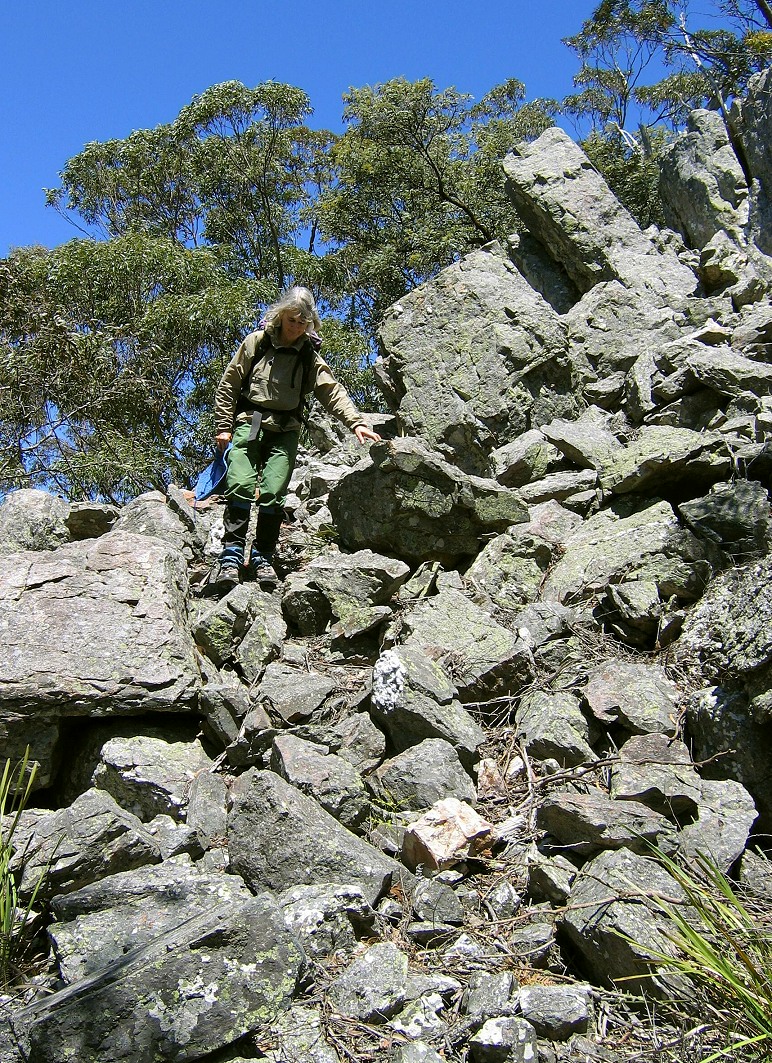
Roger – Aarn users can see their feet! If you couldn’t, then your pack wasn’t properly fitted. It’s a New Zealand company, for goodness sake – a country renowned for challenging conditions underfoot, and it’s endorsed by leading NZ mountain safety experts. Do you think he’d have such a dedicated user-base if the packs were dangerous, or that Ryan would have recommended the design? I routinely use my Aarn on conditions like you illustrate with no problems at all. You’re simply mistaken – I don’t know what more I can say.
————————-
Anne –
Well that picture says a thousand words… I would think on my shoulders the balancing force of the front packs would increase the tension on the upper traps.. A disaster in my case as the left shoulder is pretty darn twitchy. Any front loading on me would have to be on the hip belt.
Actually, the whole concept is to transfer all the load to the hip belt. The shoulder straps simply balance the pack – the vertical and horizontal weight on the shoulders can be adjusted to near-zero if you like. In fact, if you’re prepared to sacrifice the ability to use the backpack without the front pockets you don’t need shoulder straps at all.
This isn’t some gimmick Aarn dreamed up in the bath. It’s the result of a long term collaboration with respected sports-scientist Ray Loyd and his colleagues to find a healthier way to carry loads in the backcountry. The benefits have been extensively studied and verified.
The findings are particularly important for women, as the shorter your spine, the more the drawbacks of conventional designs are intensified and the total forces on the body grow exponentially.
The figures in the diagram below illustrate this clearly. With a balanced 16 kilo load, the total forces on the body are 16 kilos, posture and gait is natural, and there is no pull back on the shoulders. With an average sized guy and a conventional pack the total force climbs to 20.5 kilos, you get significant forward lean, and there is significant backward pull on the shoulders. With an average sized woman, the total force reaches 24 kilos and the lean and backward pull are even greater. Just look at how far the woman’s head has moved from her centre of gravity compared to the guy in the bodypack.
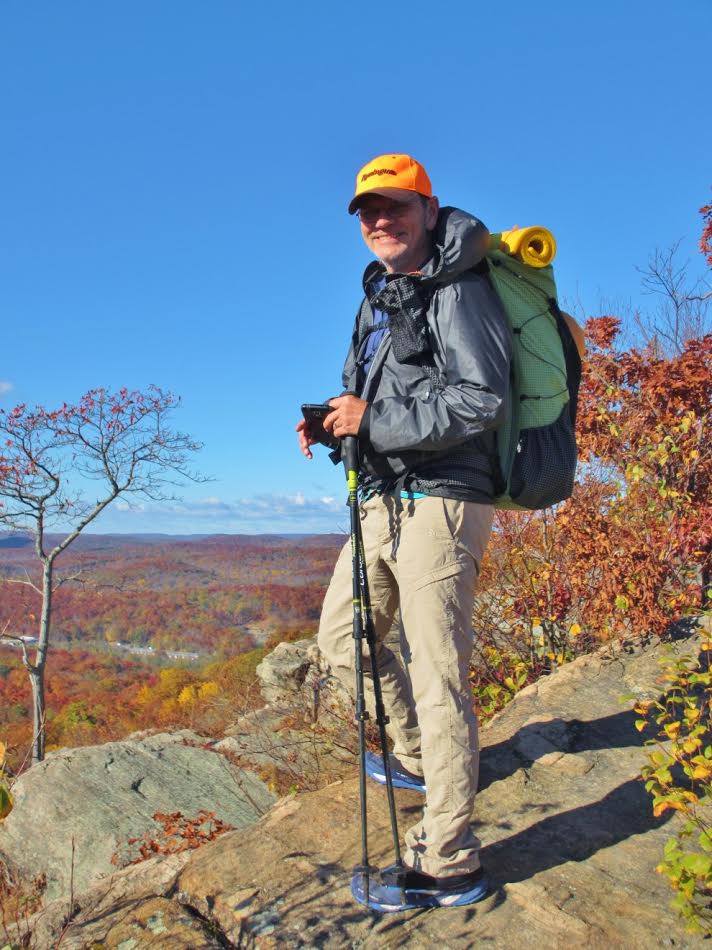
This is simply the laws of physics, and you’d see worse figures with designs such as the Ospreys and the Arc-Blast that move the load even farther back. Just check out pics of thru-hikers. Their base load is light, but once you factor in a few days of food and/or a desert water load they are all leaning forwards at the waist.

The sports science has explored the benefits of a balanced load on the flat, ascending and descending. The results are striking, even though they deliberately measured a sub-optimal weight distribution with the Aarn on the assumption that things won’t be ideal in the field. He’s what they found:
- Forward lean virtually eliminated
- More natural gait with significantly reduced ground-forces
- Substantially reduced energy expenditure
- Far better balance on rough and steep terrain
- Dramatically improved pack stability (ie the amount that movement of the pack disturbs your balance during each stride)
- Virtual elimination of all neck, shoulder and back pain, even under heavy loads.
You’ll find more detail here: http://www.aarnpacks.com/page3 and here: http://www.aarnpacks.com/interview
To summarise, what Ray Loyd has found is that most of the issues with conventional packs are caused by the unnatural gait that they force, rather than by the loads themselves. There’s nothing you can do with a conventional design that will deliver the benefits of a balanced load and a natural gait – it’s just the laws of physics. This isn’t just another minor variation in pack design – it’s an inherently healthier way to carry a load. Add the PacerPoles and lightweight zero-drop shoes and the difference is dramatic: your body can work naturally under load.
If you have a dodgy shoulder, then this is the pack for you. I presume that in Arizona you’ll often have to carry water so there’s a limit how light you can go. Once you’re above 12-15 lbs or so the Aarn comes into its own. The Aarn site has a raft of testimonials from users who found that their back and shoulder problems were eliminated by the bodypack concept. Personally I get shoulder pain even with a lightweight daypack. I’ve used many packs over the years, and this is the only design that has never caused me any back or shoulder pain. No pain at all – zero – nada. Day after day, carrying alpine camping gear and up to a week of food. It’s hard not to become evangelistic when you get a result like that.
————————-
James – thanks for the additional info. It seems that you gave the concept a sincere trial.
But when you say it added load to your shoulders and spine, I know for sure there was something wrong with your design because the result should be the exact opposite – load on the shoulders and spine should be virtually eliminated.
Also, the terrain you describe, with up to 80 degrees of slope, is borderline mountaineering and as I have already conceded this is not ideal for the front-pocket concept. The bodypack idea can be used for technical alpinism – you substitute the front pockets for a design of gear rack that provides similar benefits with weight distribution. But for very steep scrambling your best option is to put everything into the backpack till you hit more reasonable ground, as I suggested above. With my current prototype the pockets will weigh around 80 grams each, so having them in my backpack for a few hours is a small price to pay on a long hike where they’ll mostly be in use. And because they are removable, I can get them out of the way if I need to. With conventional packs the side-pockets can be a real pain when bushwhacking or scrambling.
But the scenario you describe is pretty extreme. For 99% of backpacking the Aarn is ideal.