Topic

Seam sealing eVent mitts

Viewing 25 posts - 26 through 50 (of 77 total)
Tipi Walter BPL Member
PostedMar 13, 2017 at 9:11 pm

Mark—Good points.  I always carry two pairs of socks—one for sleeping only and one for hiking—and two pairs of gloves—fleece and/or down mittens.

Hand heat is subjective and depends also on glove type.  Backpacking in down mittens can cause the hands to sweat.

As you say, once wet, gloves are very hard to dry.  I often cook up a pot of dinner and place the hot pot on top of my wet fleece gloves.

Hiking in a 35F rain in wet fleece gloves is misery—You’ll know when you get to camp and can’t unbuckle your hipbelt or unzip the pack.  It’s a scramble to get the shelter up and in out of the rain.  Hands are blocks of wood.

Once inside the tent—don’t try to write in your trail journal—it’ll look like something written by a 98 year old man.  Sometimes cold weather-wet weather hiking hypothermia (shaking) can take 2 hours of in-tent warmth and warmth layers to return to normal.

Roger Caffin BPL Member
PostedMar 13, 2017 at 9:24 pm

Hi Tipi

Sometimes cold weather-wet weather hiking hypothermia (shaking) can take 2 hours of in-tent warmth and warmth layers to return to normal.
You ARE pushing it a bit, aren’t you!
We don’t mind getting a bit cold, more than 15 minutes is not good.

Mind you, there have been one or two times when my wife has been that cold and wet that she was unable to get her wet clothing off over her head by herself: I had to help her. But that was a rough evening on a ridge.

Cheers

James holden BPL Member
PostedMar 14, 2017 at 2:21 am

If one is getting hypothermia above freezing (especially if it aint too windy), there basically 3 reasona


  1. you arent wearing enough or are wearing the wrong stuff
  2. you arent moving enough
  3. you are dehydrated and disnt eat enough … Probably exhausted as well

we spend plenty of time out around those temps up here where its raining all day

and if you know what you are doing and have the right gear … You WILL get damp, and perhaps somewhat wet …. But you can survive and enjoy it

folks use fleece or wool gloves all the time in cold and/or wet conditions … In fact the dachstein mitts have been uses for decades by mountaineers

dead bird also made a set of fleece mitts to go with a goretex shell for mountaineering .. They used fleece for quick drying .. I picked up a set of these for a climbing partner over xmas

With FUZZY fleece or wool mitts you simply wring em out and wear em dry .. If you want you can bring and extra pair and keep one against ur chest for drying on the move

Our wool and fleece mitts were soaked today, we had maybe 5-10mm+ of rain on the hill at 35-40F … We just wrung em out

as long as you moved decently you were fine…. And when you stopped you zipped up and put on an extra layer

With some skill, the proper gear/nutrition and the right mentality … Hypothermia shouldnt be an issue

my suggestion for folks is to take advantage of the cold rainy weather every night and fo for a walk, even if its just around a few blocks

;)


Bob Moulder BPL Member
PostedMar 14, 2017 at 6:02 am

For fleece gloves or mittens it is very important that they are made of plain 200- or 300-wt fleece. The ones with the leather (especially) or durable plastic palm and finger layers take forever to dry. The plain ones are actually quite hard to find these days; my local REI had NONE of these on the shelves this winter.

With the plain ones, if there is dry snow available it is very handy for absorbing quite a bit of the moisture… the trick is to scoop it up and quickly rub it into the fibers and then very quickly and vigorously shake it out. Wet, gloppy snow doesn’t help.

I’ll take -10°F over 35°F every time. :^(

Tipi Walter BPL Member
PostedMar 14, 2017 at 10:16 am

Yes, but then there’s dayhiking in cold wet weather and backpacking in the same.  Two totally different beasts.  One starts from a car and ends at a car—and so there’s much leeway in what gear is allowed to get compromised.  Dayhikers often get soaked but bail to their cars and blast the heat.

On the other hand, a long trip with 15 or 20 overnights requires careful planning and diligence to keep as much as possible dry.  This is why I end up hiking in my minimal baselayers under my arcteryx rain jacket during a long winter rainstorm—just to keep my all-important capilene midlayers dry and NOT under my rain jacket—unless it’s cold with no rain.  If it’s dry and 10F I can hike in whatever I dang well please.  A 35F rain changes everything.

What this means in reality is I have to keep moving in a cold rainstorm so my rain shell will provide the sweaty warmth I need to survive—and whatever is underneath is minimal and is allowed to get wet.  The hands could/may/will become blocks of wood eventually.

The hard part comes when I stop moving and prepare to set up camp.  Then the mad rodeo rush to get the pack off (with wood hands) and the tent up fast as I’m starting to shake.  The payback for this shaking is having minimal wet baselayers (under the shell) but maximum warmth layers once inside my tent.

It’s the delicate dance between your clothing, 35F temps, a rainstorm, constant forward movement with heat generation—and then stopping to set up camp.  To really stay warm in a 35F rainstorm while backpacking would require wearing your baselayers and your capilene/merino midlayers—You’ll be warm for sure.  But it won’t work because your valuable midlayers are now wet from the all-day cold rain.

The other preferable option on all day winter rains at 35F is to pull in-tent zero days—Eat, read, look thru your camera pics—and wait for the crappy weather to end.  I’ve done plenty of such winter zero days.

Btw, you can pay $30 and get a pair of North Face fleece gloves on the right; or pay $6 at walmart and get an even better pair of fleece gloves on the left.  The walmart’s are warmer and last longer.

Ian BPL Member
PostedMar 14, 2017 at 11:51 am

OP,

For me, I’ve found that a pair of Smartwool merino glove liners, ZPacks Fleece Mittens, and the MLD eVent shells are a match made in heaven.

I live in the PNW and agree with others that it’s near impossible to put in the miles and climb any amount of elevation in the rain and stay dry.  I’d have to slow my pace to something at or below 1 mph to do this.  I just make peace with the fact that I’m going to get damp and bring an extra set of base layers to wear when I’m sleeping and put my wet/damp clothes in a waterproof bag that I’ll sleep with to keep warm.

If glove liners, fleece mittens, and shells can’t keep your hands warm in these conditions, I’d recommend bringing some hand warmers.

James holden BPL Member
PostedMar 14, 2017 at 12:34 pm

tipi …

thats the problem … youre using actual capilene … try reverting back to a good fluffy 200 weight classic or thermal pro (preferably hi loft) fleece

one can easily wring out and wear to somewhat dry a FUZZY and FLUFFY fleece even at 35-40F temps … and if yr in camp you can boil a hawt nalgene to help the warmth/drying process

those form fitting thin capilene style mid layers are less than ideal because

  1. they tend to be snug enough that they increase the water contact with the skin
  2. they dont have enough of an air gap

remember there is NO wicking when materials are totally saturated, without wicking the capilene is just a wet soggy cloth … proper hi loft fleece still has a good airgap (dont size it snug)

while i applaud you wearing as little as possible under yr rain jacket in order not to sweat it out … this should never be pushed to the point where one is at real risk of hypothermia

and this varies greatly from person to person … for example my favorite climbing partner is a short thin woman and she NEEDS to wear a fleece under her rain jacket at these temps, and she barely sweats when going uphill with them on

this article gives a general gist of how to rewarm when wet

https://www.sitkagear.com/experience/a-navy-seal-rewarming-drill

bob …

marmot makes plain jain 200 wt gloves as do some other manufacturers … a quick google search will show em

;)


Mark BPL Member
PostedMar 14, 2017 at 1:14 pm

I’ve read about the wringing stuff out a few times, how does that work in reality?

I’ve tried myself and if it’s raining heavily then the base/mid layer gets just as wet as before i wrung it out by the time i have my shell back on and zipped up.

Not only that the inside of my shell gets wet as well

If it was drizzling and you were quick it might work, but then if it’s only drizzling then why on earth would you be wet enough to require wringing out your clothing.

Think about it,

You need to remove your rucksack

Remove your shell jacket

Remove your mid layer

Remove your base layer

Stand there in the cold wet and likely windy weather stark naked (on the top 1/2)

Wring out your base layer

Put your base layer back on again

Wring out your mid layer

Put your mid layer back on again

Put your shell back on and then expect your under layers to be reasonably dry.

Insanity


Hate to be the negative neddy again, but navy seals are in prime physical and mental fitness, by the time they get to that stage of training they will have a substantial amount of body mass made up of muscle.

For the average Joe or janine it’s not only unreasonable to expect them to be as fit and muscular it’s downright dangerous if they go into a wilderness environment and expect to be able to pull off a drill like that.

If needs must and it’s about survival then all bets are off, you do whatever you need to do, but to expect that the average hiker is fit enough both mentally and physically to do that is again, insanity.

It gets even worse when you consider that most hikers are using down sleeping bags


James holden BPL Member
PostedMar 14, 2017 at 1:30 pm

ummmm mark ..

you can ALWAYS wring out yr fleece gloves …

as to your fleece jacket … wring it out once yr in camp and set up yr tarp (first thing you set up) and under said tarp (or tent)

thats really all there is to it

while you might not be a seal (ork ork ork) … ANYONE can rewarm dynamically with the proper gear and technique …

hell most folks do a version of it anyways even if they dont understand it … if your cold and wet put on a fleece and keep moving… folks have been doing this for decades

to put it simply if yr ALREADY cold and wet, overheating isnt something you should be worrying about … keeping warm is

;)

Roger Caffin BPL Member
PostedMar 14, 2017 at 3:42 pm

navy seals are in prime physical and mental fitness, by the time they get to that stage of training they will have a substantial amount of body mass made up of muscle.
For the average Joe or janine it’s not only unreasonable to expect them to be as fit and muscular it’s downright dangerous if they go into a wilderness environment and expect to be able to pull off a drill like that.

Well, yes, but no (imho).
I don’t think that the ‘substantial amount of body mass’ is all that significant, as they are not going to be much different from the average person. What is different is the amount of training. We could expect that a trained SEAL not only knows exactly what to do, but has substantial experience in doing it and also knows how far he (she) can push themselves. In this they may be very different from Joe Average.

That said for the SEALs, one could say something similar for experienced walkers: they too have substantial training, experience in doing and self knowledge. Of course, they may have taken 20+ years to get this. Hum … sounds a bit like a SEAL Instructor, doesn’t it?

In short, I suggest that handling extreme conditions is really a matter of knowledge (or experience).

Cheers

Susan D BPL Member
PostedMar 14, 2017 at 8:59 pm

Great ideas, everyone!  Matthew – yes, the problem is more the gloves remaining wet at night than being wet in the day.  (Yeah, Roger, I’ve learned the hard way that it’s a bad idea to try and dry things out in a down bag!)  I find very cold hands and/or feet to be quite uncomfortable and impossible to ignore.  Down socks/spare socks solved the cold feet problem; guess it makes sense to think about a second set of gloves.  I did wear my sleeping socks on my hands at night at least once last year because gloves were wet.  Lots of good suggestions on ways to dry things.  I have tried to dry things by putting them on top of my baselayer just above the hip belt – didn’t do as much as I’d hoped.

Eric – thanks for the suggestion to test the mitts in water – seems obvious in hindsight, but I’d never have thought of that (despite having tested jackets in the shower).

While I haven’t been hypothermic, I’ve been very thoroughly chilled and shivering when it took hours to thaw and warm – mostly in very wet, mid-30s to low-40s temps.  Last year, I discovered the wonders of a cup of soup rather than a hot drink right after stopping hiking for the day.  Did it every day, helped warm me up tremendously.  Sometimes I’d have two cups before eating dinner.  (I wish I could find here the choices of “cup of soup” packets as I did over in the UK – sold everywhere; huge amount of choices.  Tomato is the only veggie kind I can find here.)

I’ll probably only have 3 or 4 days of backpacking at any particular time before running into another town, but I’m trying to prepare for foul weather and prevent the possibility of getting soaked on the first day and having to cope with two or three more days and nights of rain and wind.  Great suggestions here!

Mark BPL Member
PostedMar 14, 2017 at 9:32 pm

Eric,

As i say, in my experience i’ve found it almost impossible for my hands to create enough heat to dry out my gloves.

If i’m camped i’ll use my water container filled with hot water, if i’m moving i’ll move my gloves around various pockets or locations until they’re nearly dry, on my hands though i’m not able to generate enough heat to dry them.

Really not trying to get into a tit for tat argument, i do think it’s worth clarifying though.

If you are stopped and under your tarp/tent then you’re NOT going to be moving to generate enough heat to dry your layers, the body heat drying effect needs a fair bit of exertion to work, more importantly it needs a fair bit of time.

Think how long your fleece top needs to dry if you put it on a radiator for example, most house radiators are set around 50c to 60c, your clothing is open to air to vent yet still it takes hours.

Our skin is usually around 32cm, throw in some wind and wet clothing though and that will drop significantly.

As i say, i’m not being argumentative here, i’ve tried what you are suggesting and in my experience in cold wet weather it’s just not realistic.


Roger,

Agree with you on the training

My point about muscle mass is that in my experience, having been slim, fat, fairly muscular, fairly muscular and fat i noticed a significant difference in how much heat my body generated when i was carrying more muscle.

Even my Mrs noticed, she said i was like a furnace when sleeping.

i know the typical thought is fat insulates, it may do, but i’m certain you can generate more heat the more muscle you have.

Also worth thinking that, if you’re more muscular then it’s almost certain you’ve been training, this means you’ll be able to sustain enough effort to get and keep warm for a longer period of time.

I wish i could agree with you about hikers, it might be that i’m getting to the “miserable old fart” age, but it never ceases to amaze me how stupid people can be, even people you’d consider seasoned hikers.

There is also a vast difference in abilities and skills needed depending on where you are hiking.

If you were to pluck say a PCT hiker off the trail and dump them in Scotland or New Zealand i don’t think most would fare too well.

Experience is a poor judge, you can have someone thats been doing something for many years, if they’ve been doing it wrong it doesn’t matter how many times they’ve been doing it though.

There was a case a few years ago of a woman that disappeared on one of the US trials, the initial media reports said she was a experienced hiker, the reports coming out later from those who knew her said she had very poor map reading skills, in the end her body was found less than a mile from the path.

To drag it back onto topic, your experiences suggest you are guaranteed to get wet if it rains, and you seem to prefer a poncho, as i say i have finished a vast majority of wet walks with dry clothes, i’ve done multi-day hikes in the pouring rain and even had dry feet, for the areas i hike in a poncho wouldn’t last 30mins.

2 different people that have been hiking for many years, in different areas with 2 different experiences.

Who’s right?

Our hobby encompases vast areas with massivly different terrain and weather, we all have different goals, 1 op won’t slow down to 1mph, i’d be happy to plod along for days at 1 mph as i don’t bother with goals when hiking anymore, i’ll walk till i think i’m done then find a spot to camp, if i do 20 miles in a day great, if i do 3 miles, so be it.

So taking into account all those variances i think blanket statements and opinions are not much use.

James holden BPL Member
PostedMar 14, 2017 at 10:09 pm

mark …

set up yr tarp … wring out or put on yr fleece under the tarp … and then put on yr synthetic poofay (which you should have brought if you know its going to be cold and wet)

if you need to move around more then do so … moving will help the drying process alot … the moisture will migrate out of your ultra thin base layer into the fleece then into the synth …. if you run cold when wet consider a synthetic bag/quilt

PROPER unlined fuzzy and open weave fleece gloves are pretty easy to dry to damp status … wring em out and then turn em INSIDE OUT (you want to dry the inside) and either wear em dry …. or if you run cold put em against yr chest and put yr hands in yr pockets (or bring a second pair for this which is what climbers do)

so in short you should have

– ultra thin base layers
– fuzzy and fuffy fleece jacket/vest, gloves and beanie
– 100 g/m or so synthetic poofay, or even thicker if you run cold
– rain jacket/pants that can fit over all that if needed
– if its really really wet (our 10-50mm rain days each day in a row) then consider a synthetic bag or quilt … you can go to sleep damp and wake up dry … also make sure any bag (especially down) has a 10F+ margin for those conditions

none of us are saying here you should get SOAKED deliberately, as one should dry to manage the moisture … but rather that eventually you will get wet sooner or later … and if you dont practice what to do you may well be screwed

all it takes is one SLIP in on a muddy down slope or a STUMBLE crossing a rain engorged stream for all the “dryness” to go out the window

for example everyone says theyll keep there WPB shoes/boots dry … until they need to cross streams thats higher than the knees …

for the other BPLers remember these basics

  1. you ca be COLD OR WET … if both you die
  2. better to be WARM and WET than COLD and WET … and eventually you WILL get damp, and likely wet at some point
  3. movement and excercise generates heat, if you feel cold MOVE … if you have no insulation or fire you MOVE or die (theres been a few rescue here where the folks help walking around in one spot overnight and lived)
  4. it takes SKILL and PRACTICE to not get soaked when it rains hard cold and wet … practice this during by hiking around in the worst possible rains, even walking to the local supermarket … just be safe about it
  5. everything should insulate somewhat when wet … and fleece is king .. FLUFFY and FUZZY means more air gap, less skin contact and quicker drying …. same with THIN base layers
  6. you will expend MORE CALORIES and FUEL in cold wet environments …. malnutrition and dehydration leads to hypothermia

;)

Mark BPL Member
PostedMar 14, 2017 at 10:33 pm

Have you tried your procedure Eric?

Reason i ask is that it’s fundamentally flawed

  1. What happens if you’re cold and wet during the day?
  2. The system you describe does not work unless you’re really really active, a normal walking pace won’t generate enough body heat (in my experience), any type of calisthenic exercise helps (situps, pushups, leg raises etc) but you really have to be going for it to get enough heat out your body to dry clothing
  3. What if you’re tired?
  4. What if you have a down sleeping bag?
  5. Even if you do generate enough heat to dry out your clothes, chances are you’ll be sweating THAT much by then your clothing will still be very damp

It’s great looking at how those navy seals do things, in an emergency anything you can do to better your situation is better than doing nothing, BUT if most the members here rely on the method you describe they’ll be in major trouble.

If in doubt, hike out

If it’s cold and/or wet keep your sleep kit including a spare set of warm clothes in a dry bag

I do agree 100% that synthetic materials are the way to go though, wool and especially Merino is a terrible choice for hiking, especially in damp weather.


To sum up,

If you select your kit wisely you CAN stay dry even in extended heavy rain, in my experience lightweight shell jackets/trousers do not work in extended rain, you really need heavier weight jackets and trousers.

If it’s cold and/or wet carry a spare pair of gloves, socks and hat

Don’t rely on what you’re wearing to keep you warm after you’ve stopped or pitched camp, carry dry kit with your sleep kit in a sealed dry bag.

Sorry for the long posts

James holden BPL Member
PostedMar 14, 2017 at 11:10 pm

mark i “try it” all the time …

if youre cold and wet during the day put on another layer under the rain jacket … and keep moving … thats all there is to it

no mark you really do not “have to be going” … again simply put on all your synthetic and fleece layers and walk around the camp … you can easily test to see what amount if insulation you need for this by short trips or walking around in said conditions … if you want to be more realistic set up the tent in yr backyard and dont go inside at night

if youre tired then you simply put on all the synthetic/fleece insulation you have and make a hawt nalgene … then go to sleep after you eat, a good high protein and fat meal will warm you up quite well

if its going to rain like a biblical flood then you should bring a synthetic quilt/bag or an overbag … something for the moisture to migrate too …

and no mark .. you wont sweat very much as the damp layers cool you while your moving, and yr managing yr output … as indicated in the article the KEY is to move or be active at a good enough level to be WARM, but NOT enough to sweat profusely

if anyone is going out in the cold wet rain they have better know these basic techniques … and practice em …

as even the best folks cant GUARANTEE to keep dry … a single slip or fall can get you soaked, never mind the conditions themselves

nor can you “always hike out” … the river crossings may be too high for days, banks or trails might have collapsed (happens alot), etc … or you partner might have slipped and torn something (remember a chopper rescue only happens in decent flyable weather) … or you might just be too far to walk out in a single day

of course for such situations you practices you firestarting skills in the freezing rain and brought the proper firestarters hopefully

the below shows the power that the winter rains have out here …

http://www.cbc.ca/news/canada/british-columbia/squamish-forest-road-washout-strands-hundreds-of-campers-1.2691879

and heres another of hikers needing to get rescued because they couldnt cross rain engorged stream at the end of a multiday …

“Everything was going well for a solid bushwack,” White said. “It was moving along until we got to a creek called Disc Creek. It was far too swollen because there was too much snowpack this year. We spent half a day going up and down the creek trying to find a place to cross. We weren’t able to do that so we camped the night.”

Overnight, it began to pour. On Monday morning, the group decided to check the creek one more time, but after realizing it would be impossible to cross, they began to backtrack.

“All the creeks we passed before had become so swollen we weren’t able to go out the way we came in,” White said.


http://www.jocosarblog.org/jocosarblog/2011/08/bc-fools-gold-tricks-three-hikers-.html

;)


Roger Caffin BPL Member
PostedMar 14, 2017 at 11:36 pm

Hi Mark

It is probably fair to say that most experienced BPL members (and we have a fair few) would be in full agreement with Eric’s points.
However, your replies might create a bit of disagreement, thus:

What happens if you’re cold and wet during the day?
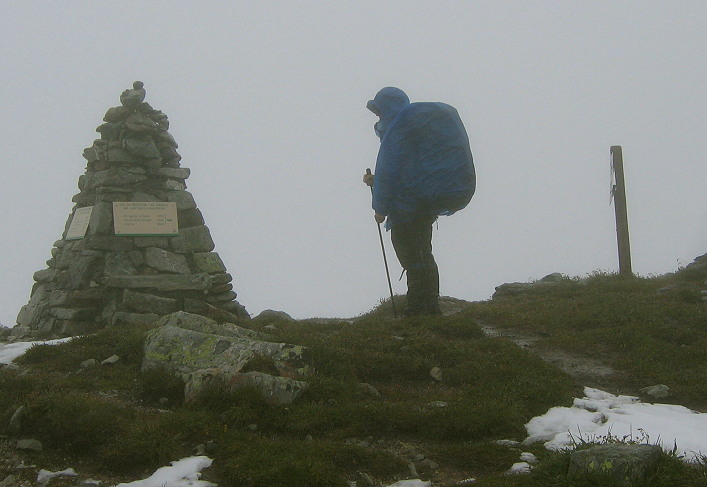
That is pretty common. So you keep walking hard. See photo below.

The system you describe does not work unless you’re really really active, a normal walking pace won’t generate enough body heat (in my experience),
Walk faster. I can get very sweaty if I try.

you really have to be going for it to get enough heat out your body to dry clothing
I doubt any of us expect to actually dry our clothing that way. All we need to do is keep warm.

What if you’re tired?
When you get too tired for YOUR safety margin, you stop and camp.

What if you have a down sleeping bag?
I am tempted to suggest you strip, dry off, and get into it – under shelter.

in my experience lightweight shell jackets/trousers do not work in extended rain, you really need heavier weight jackets and trousers.
We will have to differ here. There is zero difference in rain shedding due to fabric weight. That is just old-school GoreTex thinking. Most of us went through that stage years and years ago.


Col du Bessans in the French Alps, in summer. The other side of the col was all snow. It was bucketing down rain at the time. We were wearing silnylon ponchos and UL overtrousers on top of Taslan shirt and trousers. We were warm enough, but we WERE working hard. Actually, my memory of the occasion was that my chief complaint was that there was icy water under the snow, and we were wearing light joggers. My wife just told me to get on with it.

Could it be that we have really experienced different conditions? It might seem so.

Cheers

Mark BPL Member
PostedMar 15, 2017 at 3:53 am


I really do not know enough about materials to question what you are saying in any technical terms, i do have both lightweight and heavyweight shells, the difference is noticeable in heavy sustained rain and not only the material used.

The cut and features of a jacket make a MASSIVE difference in heavy continuous rain.

Trying to find comparison pics, but i don’t take many pics these days, and oddly enough even fewer when it’s raining, only one i can find is from a few years ago

 photo 20150601_144132_zps0e9rfih0.jpg

That’s a Zpacks challenger jacket in the pic, i’ve heard it said before, but on that day it rained to the point where if you stood under a good shower it probably wouldn’t give the same amount of water, it rained like that for the entire day.

If you look at the pic you’ll see 2 streams of water coming off the peak, they were streams (rather than drops) of water the entire day it rained THAT hard

To make matters worse the wind was strong enough that in gusts, (every 3 mins or so) it was strong enough to take us off our feet and drop us up to 3 meters away, we literally had to drop to the floor and hug a big rock every time one of these gusts hit.

The rain shell was absolutely useless in those conditions, it wet out within the first hour (was a 11 hour hike that day), no stiffener on the peak meant the peak flapped around and creased, the lack of fine adjustment in the hood meant that with the wind pushed the rain around my face and let gravity do the rest, the neck collar didn’t come high enough, the zip leaked (no overlap on the inside), the wrists leaked (only elastic, no way of tightening them).

My brother was wearing a heavier weight shell jacket that had more adjustments on the hood, adjustable cuffs, better cut, heavier weight material and overlapping fabric behind the zip.

He did get wet on his chest, but this was because he insisted on wearing a cap, (every time he lifted his head up the rain would run down the cap peak onto his face, some on that made it through) everywhere else he was bone dry.

By the time we made it to the camp spot i was wet through, exhausted and had hypothermia had set in to the point where i had stopped shivering, we should have hiked out but i was confused and was exhausted to the point where i couldn’t face another 2 hour hike, so i decided to throw the tent up.

I’m absolutely certain that if i didn’t have dry clothes in my sleep kit things would have gotten very serious, even though the doors of the tent leaked and my sleeping bag got wet, with dry clothes, stuffing our faces with food, drinking plenty of water and doing as many situps as i could muster we recovered enough to walk out in the morning.

If i’d have had on my heavier weight shell i’d have been drier and warmer, i’m certain if drier and warmer we’d have just hiked out that day.

As i say it’s easy for us to sit here warm, dry and stress free to say this or that, the reality is very different, having a set of warm, dry clothes (or in this threads case, spare gloves) gives us a safety buffer.


Yes i have gotten wet through when rain shells have failed, leaked or were not designed for the conditions i used them, i looked into why they leaked and either replaced them or don’t used them in really bad conditions anymore.

It seems the common thread on here is that folks wear a lightweight shell, it fails or isn’t up the task or heavy sustained rain, so rather than judge it on it’s limitations or the 50 times it kept you dry previously, folks just write off the entire philosophy.

Yes they do fail, or like my brother with his cap, we do silly things, or like my case above, we use kit that really isn’t up to what we ask of it.

You CAN do prolonged hikes in the rain and keep dry, shells may leak, boots may leak but it’s not every hike or even a majority of hikes

Tipi Walter BPL Member
PostedMar 15, 2017 at 8:06 am

Eric Chan says—

tipi …

thats the problem … youre using actual capilene … try reverting back to a good fluffy 200 weight classic or thermal pro (preferably hi loft) fleece

one can easily wring out and wear to somewhat dry a FUZZY and FLUFFY fleece even at 35-40F temps … and if yr in camp you can boil a hawt nalgene to help the warmth/drying process

I do carry a fleece jacket on my winter trips (used as a warmth layer over my patagonia capilene midlayers—and also used rarely when backpacking at 0F)—But it’s never getting wet and I’ll never wring it out except as a last resort.

As mentioned, on a long winter trip every piece of warm clothing layers must stay dry at all costs—except for some baselayers under my rain jacket.  The only good thing about a cold rain is that it’s never that cold, i.e. 10F or 0F—so with enough exertion my rain shell over my silk long sleeve baselayer (under my polyester t-shirt) will keep me warm.  My fleece jacket remains in the pack, thank you.

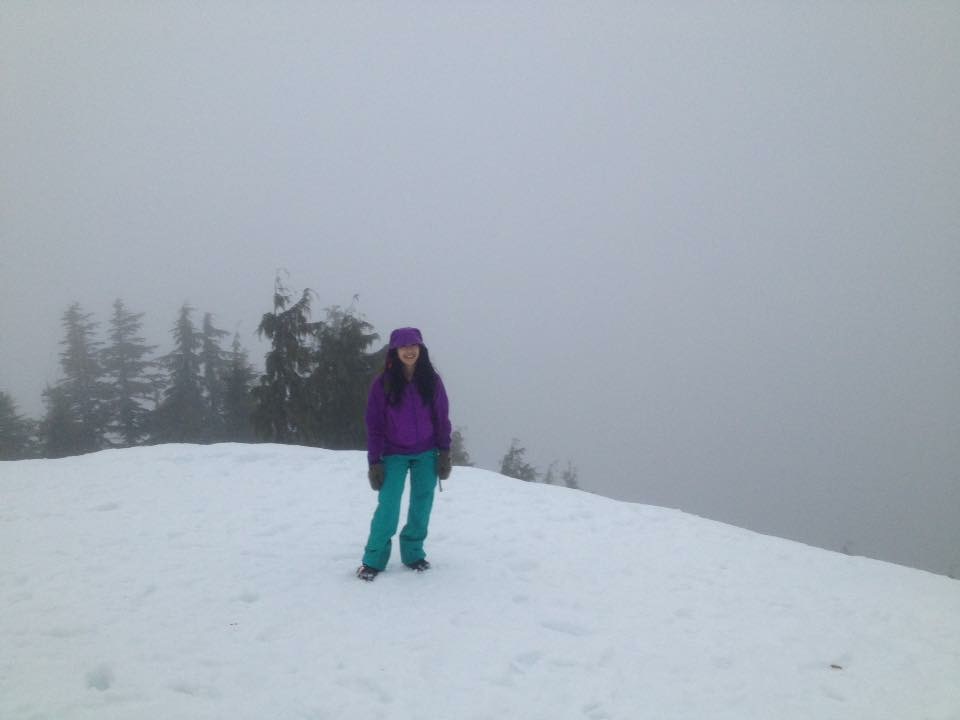
And Mark—I have a similar “comparison” pic—It was taken on an 18 day trip in March 2011 and could layer up a bit more since it wasn’t technically Rain but Sleet—almost as bad.  So I’m wearing my Icebreaker balaclava and zipneck tops under the shell.

This was the trip whereby my fleece gloves got soaked in the sleet and my hands became blocks of wood.  When I got to the gap where I was going to camp a stiff 35mph wind was blowing and I seriously doubted my hands (or brain) could set up camp.  After this trip I purchased the MLD eVent shell mitts.

James holden BPL Member
PostedMar 15, 2017 at 12:13 pm

Tipi

The only good thing about a cold rain is that it’s never that cold, i.e. 10F or 0F—so with enough exertion my rain shell over my silk long sleeve baselayer (under my polyester t-shirt) will keep me warm. My fleece jacket remains in the pack, thank you.

Wait a sec here i thought both you and mark were going off about how dangerous cold wet rain is … And how its more or less impossible to rewarm up enough by moving or take like 2 hours or something

As to the mitts of course if its windy cold and wet use a shell mitt …

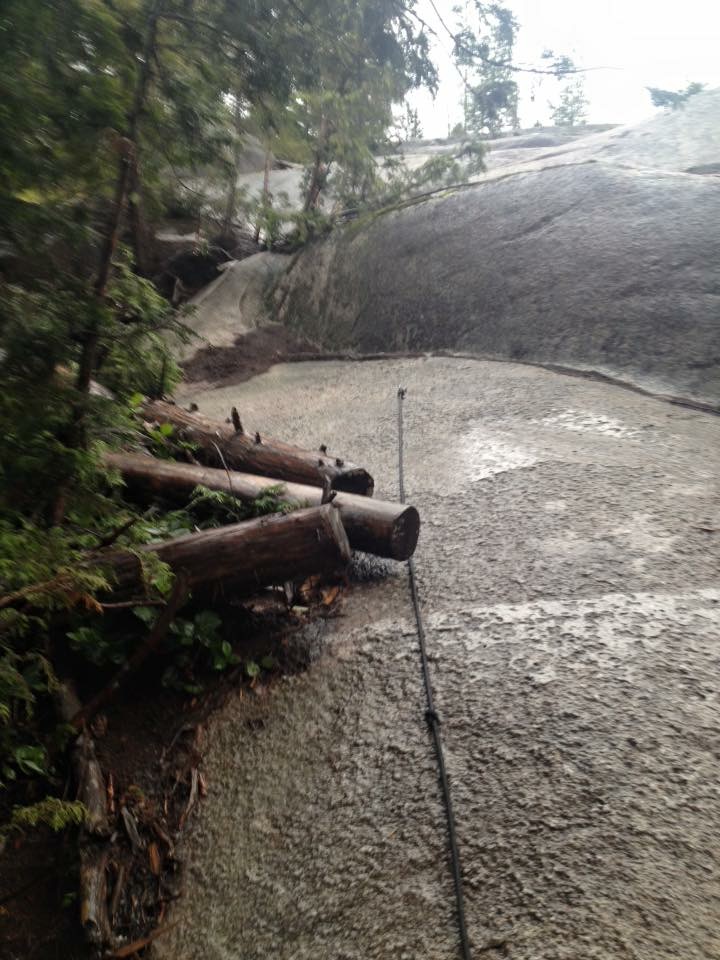
But if you need to reach up and grab stuff …. Fixed ropes/chains, branches and rocks water will eventually into yr gloves even if you overlap yr sleeves with em…

Out here scrambling sections with fixed lines and such is not uncommon even on popular well travelled hikes ….folks do em rain shine or snow …

;)

keep going straigh up the slab  and into the notch in the rain

Bob Shuff BPL Member
PostedMar 15, 2017 at 12:48 pm

Following the discussion with a morbid curiosity.  Maybe because my recent experience is so limited because of where I live.  However, we have had rain this year in So-Cal on a consistent basis and I love hiking in the rain when I can.  It would be stretch to call it cold, but then I’ve been taught that many cases of hypothermia occur above freezing, where maybe otherwise “prepared” hikers misjudge the deteriorating conditions and their ability to respond.  There are some dramatic old (70s?) movies that we show to the boy scout troop about what can go wrong when mountain weather turns bad.

My main interest is for mountain treks above freezing, deteriorating conditions where objectives to reach a camp or the car or some shelter becomes challenging.  I really appreciate the fine points about avoiding excessive sweat while trying to walk-dry, fluffier fleece that can be wrung out better, and having dry clothes for sleeping – or when you punt and setup the tent and head for the quilt to re-warm.  My kit is all designed around adding layers while hiking that can be soaked if it happens, but having a safety net of dry sleeping clothes for night or emergency “bivy”.

I’m curious if fire is an real option in anyone’s experience.  The old videos and my own boy scout training suggests when other options are exhausted, find what shelter you can and start a fire.  This wouldn’t be possible all the time, but heat or even warm liquids will have both physical and emotional boost that could help immensely.  It could be like a reset button that stops a hypothermic spiral.  Fires are not allowed where I live, but if I was lost and in trouble in the California mountains, I would use those (redundant) fire-starters I have in my kit.  Hopefully this question is relevant enough for the OP and the discussion.

James holden BPL Member
PostedMar 15, 2017 at 12:55 pm

bob …

if you can make a fire on a 10-20mm+ rain day (or more) out here in the temperate rain forest where everything is soaked or covered in moss … then go for it (as long as its allowed)

im not saying you cant … hunters and other “rugged” folks do it …

but its not exactly easy either …

also … youre very correct about not responding soon enough …

cold and wet isnt the same as cold and dry … if youre cold and wet even when moving (especially if soaked) dont wait till camp or other such to put on that fleece under your rain shell

thats basically asking for hypothermia right there …

youre better off warming up with that fleece and movement and at least staying warm and wet … rather then cold and wet for hours, then cold and somewhat damp in camp as you never warmed up

when its cold and wet remember …

;)

Ben C BPL Member
PostedMar 15, 2017 at 1:13 pm

Unfortunately fires are the hardest to make just when you need them the most.  It can also be difficult to get good use of a fire when it’s raining and windy and you want to be in your shelter.

Tipi Walter BPL Member
PostedMar 15, 2017 at 2:29 pm

Eric says—

Wait a sec here i thought both you and mark were going off about how dangerous cold wet rain is … And how its more or less impossible to rewarm up enough by moving or take like 2 hours or something

I never once used the word “dangerous” in my posts about cold wet weather hiking.  And I never said it’s “more or less impossible to rewarm up by moving”—in fact moving is the only way to keep warm short of setting up camp.

Eric continues—

cold and wet isnt the same as cold and dry … if youre cold and wet even when moving (especially if soaked) dont wait till camp or other such to put on that fleece under your rain shell

thats basically asking for hypothermia right there …

youre better off warming up with that fleece and movement and at least staying warm and wet … rather then cold and wet for hours, then cold and somewhat damp in camp as you never warmed up

when its cold and wet remember …

They’re both the same—cold and dry and cold and wet—as hypothermia is coming in either case.  Try hiking with just a rain shell over a t-shirt at 0F.  You’ll get dang cold.  (“Soaked” also comes from sweat, btw).

When hiking in a cold rain the last thing I want to do is dump the pack, pull out the fleece, take off my rain shell, put on the fleece and then the shell—all in the pouring rain.  Fleece immediately compromised

Remember, it’s 35F and not 0F, so exertion under rain gear with minimal layers generates heat, also dependent on hill climbs and pack weight. (Also dependent on personal metabolism and heat-generating abilities).

Finally, your quote—“. . . then cold and somewhat damp in camp as you never warmed up . . .”

If this were true I would’ve been dead long ago.  I always warm back up in the tent even if it takes two hours.   What’s “somewhat damp in camp” is just my baselayers and rain gear and possibly socks—which are quickly removed as I layer up with midlayers, sleeping socks, merino leggings and fleece jacket (down parka and down pants in reserve).

Now the HARD PART is putting these wet baselayers back on in the morning and get moving down the trail.  It’s all part of the game—Putting on damp socks and baselayer tops oh and frozen boots.  But all these comes the Day After—so far we’re talking about the Actual Day of Winter Wet Weather Hiking.

James holden BPL Member
PostedMar 15, 2017 at 2:49 pm

so tipi basically youre saying what most of us are saying (except mark) … is that you DO get damp and wet … you just minimize WHAT get wet …

i have to say that cold and wet is definately not the same as cold and dry … otherwise we wouldnt be having pages and pages of “wet and cold” on BPL over the years …

the biggest difference is that in the cold and wet rain you cant simply pull out a big down belay poofay and put it at every stop … as you do when its cold and dry

remember that not everyone can hike in just a base and shell in the cold rain and stay warm … my favorite climbing partner being a smaller female needs a fleece in those conditions (small thin female) …

as to rewarming in camp … mark story above where he changed into dry clothes, ate a bunch and went to sleep pretty dry but never warmed up much …

well everyone is different

as to wet base layers … a nice synthetic bag or overquilt takes care of that quite nicely … ive went to sleep damp plenty of times and woken up mostly dry .. not to mention WPB socks (wet shoes? HAHAHA)

;)

Tipi Walter BPL Member
PostedMar 15, 2017 at 3:16 pm

so tipi basically youre saying what most of us are saying (except mark) … is that you DO get damp and wet … you just minimize WHAT get wet …

EXACTLY.  Minimize what gets wet.  Why?  Because you have 15 more days of the trip.

as to rewarming in camp … mark story above where he changed into dry clothes, ate a bunch and went to sleep pretty dry but never warmed up much …

He probably didn’t have overkill (and heavier ) clothing like down pants and a down parka . . . and a -15F WM down bag.

as to wet base layers … a nice synthetic bag or overquilt takes care of that quite nicely … ive went to sleep damp plenty of times and woken up mostly dry .. not to mention WPB socks (wet shoes? HAHAHA)

A technique used by some but rarely me.  Occasionally a moist fleece hat is worn in the bag—as you say it’s dry by morning.  But nothing much else.  My bag is not a clothes dryer.  Goose down performs best in cold or wet temps with totally dry sleeping layers.  You mentioned a synthetic bag and my experience has been with down since 1981—before that I used a polarguard bag . . . Anyone remember the North Face Bigfoot bag??

Viewing 25 posts - 26 through 50 (of 77 total)
Loading...