You’re right John, for weather conditions most people face silpoly will hold up, however Trekkertent has the 40D silnylon option that many Scotts choose and for good reason. Scottish winds are legendary. But I only had to experience disaster once with 50 mph plus winds at the brunt of a thunderstorm to appreciate more durable materials. But if weather predictions for trips less than a week don’t include volatile hot and cold air masses colliding I often just pack a 7D tarp.
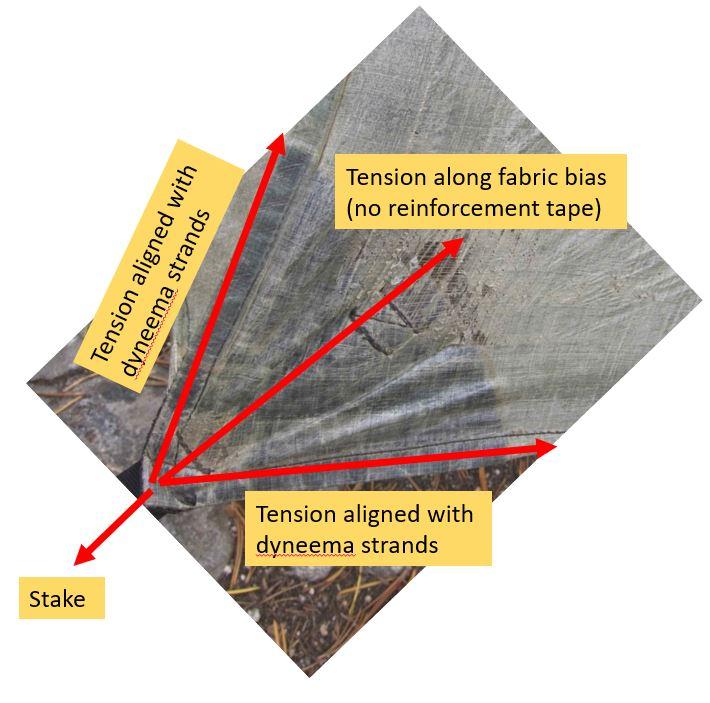
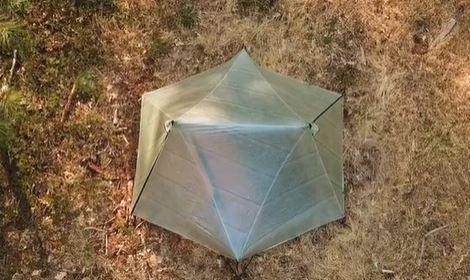
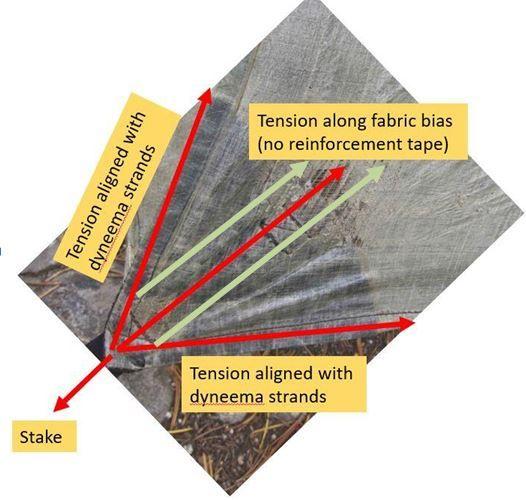
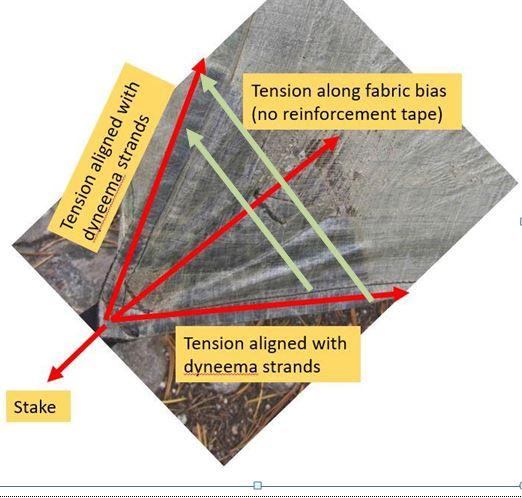
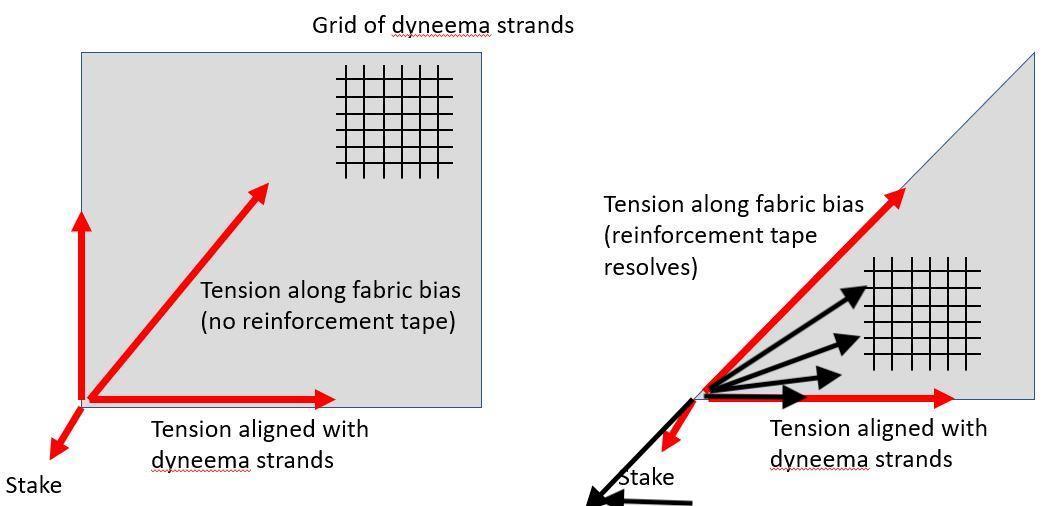
I’m going to put the silpoly tarp I just made to rigorous testing this Winter. It’s constructed with Dutchware Xenon Sil Wide and the material comes in at 1.18 oz per square yard on my scale. With sleveage removed it’s 70″ wide. Dutch is very high on the material and swears it has an HH of at least 4000. I wouldn’t mind seeing other independent tests to corroborate that though. It’s a little expensive at $11 per yard. I bonded same material reinforcements on for each tieout. I believe this is the same silpoly Borahgear uses on their solo tarps. And correct me if I’m wrong, but I don’t think the Borahgear tarps have bonded reinforcements. At $67 I don’t see how they could with all of the extra time and labor properly bonding reinforcements involves. I could be wrong so if I am please correct me. Nevertheless, I’m convinced that reinforcements greatly increases the durability in strong winds.
I hope my reservations about 20D silpoly are wrong and it’s stronger than I think. It sure would be nice because it certainly does hold less water than silnylon and has less stretch. I don’t like the feel of silpoy when working with it as much though. I know many will say they find it easier to sew than silnylon because of its lower stretch, but I don’t. And when I shake a piece of the silpoly hard it has a very brittle sound to it. Seems stiffer and not as supple. As has been mentioned in other threads, a little stretch in strong winds might be a good thing. Anyway, we always get very windy days during the Winter in Southern Indiana so I’ll see what the field testing bears out. I’m not a materials expert, but I figure challenging real world conditions are the best way to evaluate.